This article originally appeared in Issue 5 of our magazine.
Warning! This information is for reference only. For more detailed information regarding symptoms and prevention, seek professional medical advice.
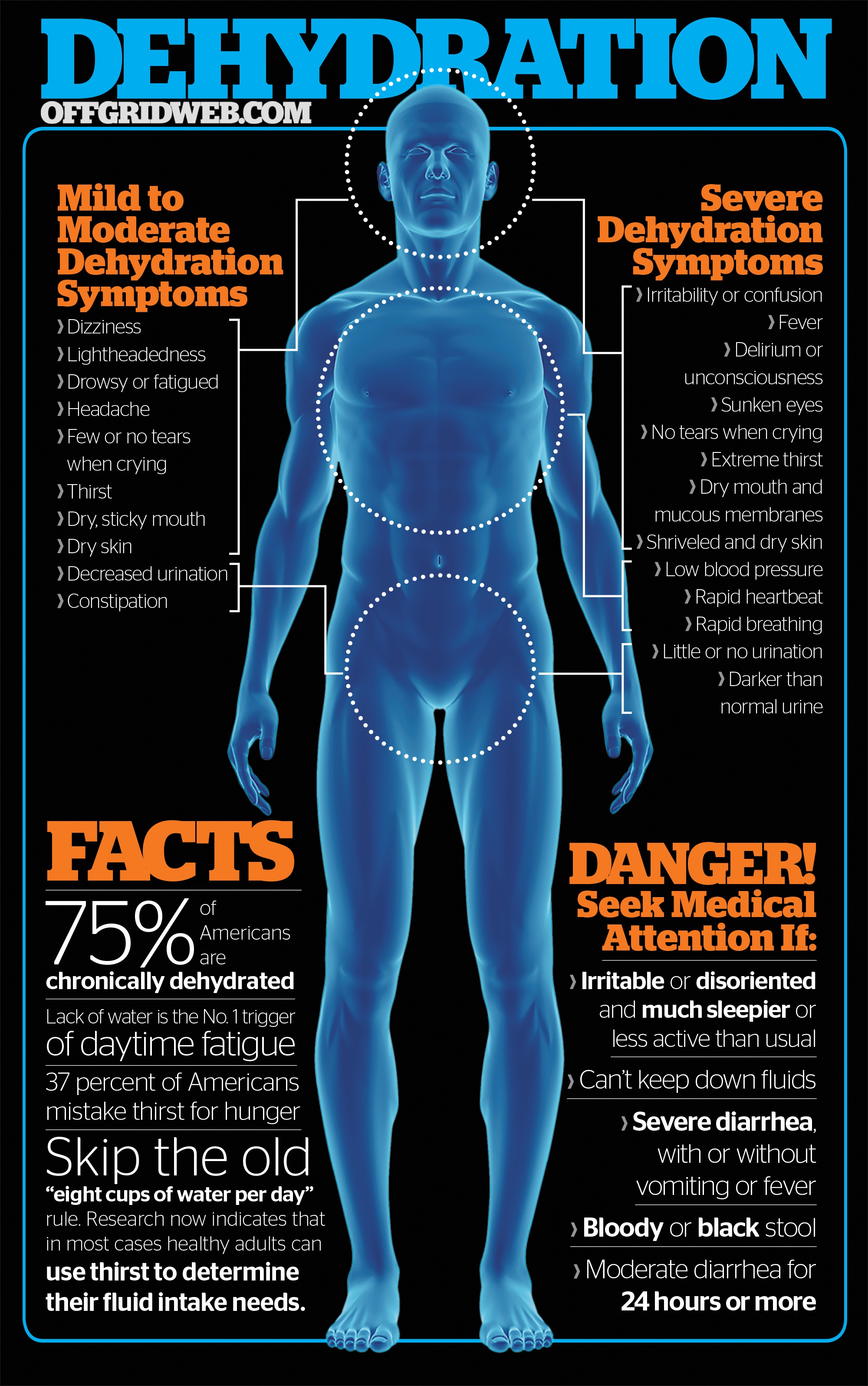
There’s a saying flowing around that states, “If you’re not peeing a lot, you’re not drinking enough water.” While this statement might not be completely accurate, it does act as a good reminder to drink more water.
Dehydration occurs when your body loses more fluids than is replenished. This can happen in many ways, such as sweating during exercise or simply being in hot climates. Other causes include diarrhea, vomiting, fever, and urination.
To prevent dehydration, monitor your fluid intake. Avoid alcohol or drinks with caffeine, like colas, tea, and coffee. Drink clear liquids (water, broth, or sports drinks). A prevailing tip is to drink eight cups of H20 daily, but that amount varies depending on your body type, where you live, and how active you are. The rule of thumb is that you should drink enough fluid so that you seldom feel thirsty and produce at least 1.5 liters of colorless or light yellow urine a day.
Sources
- Centers for Disease Control and Prevention > www.cdc.gov
- State of Idaho Panhandle Health District > www.phd1.idaho.gov
- Mayo Clinic > www.mayoclinic.org