This article was originally published in Issue 1 of our magazine.
Whether you are bugging out of the city or bugging back home, when crap goes down in your town, you’re going to need a sturdy and comfortable backpack to haul your gear with. All the survival equipment in the world won’t do you any good if you can’t carry it with you. But, with thousands of backpacks on the market, how do you go about choosing the right one? We point out a few factors for consideration to help you make the right decision.
When choosing any type of equipment, its use dictates which features work for the job at hand. In this case, we will base our needs off a general disaster scenario. FEMA recommends that basic emergency supplies allow for one person to survive for three days. The idea is that after a large-scale emergency, additional help may not be on hand for a few days. You need to be prepared for that possibility.
Fitment
The most important factor in choosing a backpack is its proper fitment to your body. We want to focus on your torso length, not your overall height. To measure your torso, place your hands on your hips and have a friend use a tape measure to determine the length between your hips to your seventh cervical vertebra.
Now that you have your torso measurement, you have an idea of what size bag best suits your frame. Because every manufacturer uses different size naming conventions, the following chart can be used to find the general size you need. It’s always best to try on the backpack in person if possible. Specialized backpacks are also made for women and children that feature more customized fits.
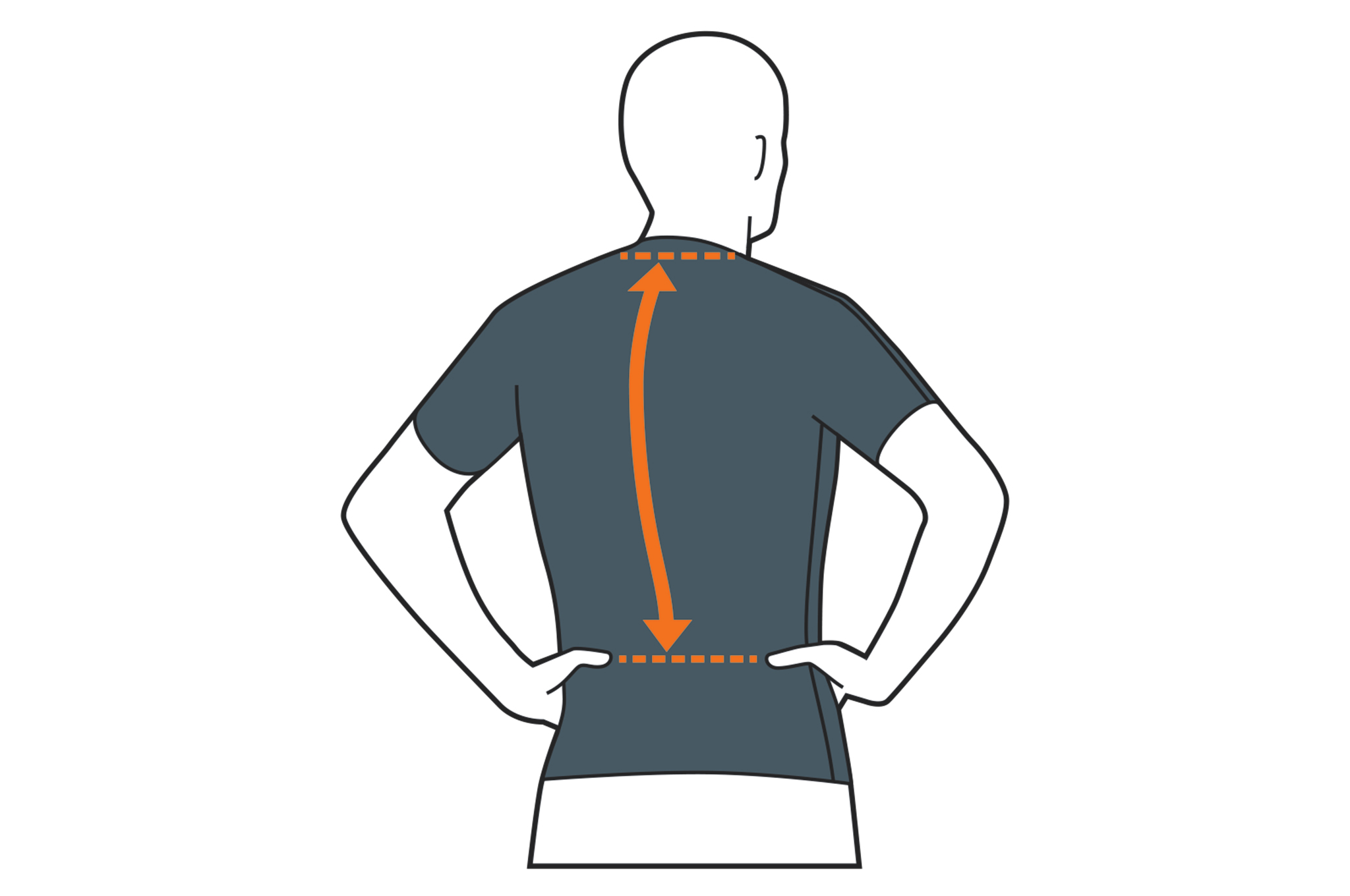
You want the large majority of the backpack’s weight to sit on your hips, not your shoulders. If you are carrying a heavy load, which will probably be the case in this scenario, hip belts can really save your back and shoulders. Some backpacks come with dedicated, non-detachable hip belts that will fit a very wide range of hip sizes. If you need custom sizing, choose a backpack with a detachable one, so you can swap it out for one that properly fits you.
| Adult Torso Size (in inches) | 15.5 or shorter | 16 to 17 | 18 to 19 | 20 or longer |
| Pack Size | XS | S | M | L |
Capacity
Backpacks that can fit three days’ worth of food, water, and other essentials that range in the 30- to 50-liter (approximately 1,830-3,050 cubic inches) size category. Of course, the size of your pack will be dependent on your body size, as well as how much weight you can carry. When choosing what to pack in your backpack, remember that the more you carry, the heavier your load will be.
Features
An important part of selecting a backpack is also figuring out which features you need. Some feature built-in compression straps that help you compress your load to make for a less bulky pack. Others include internal hydration bladders. Some have padded compartments for electronic equipment like GPS and radio units. Various others are even equipped with military-style MOLLE webbing systems that allow the backpack to be customized with modular pouches. Do you need lockable zippers or a wet compartment to keep wet clothes or shoes separate from your dry items? These are all things to think about and should be chosen based on your individual needs.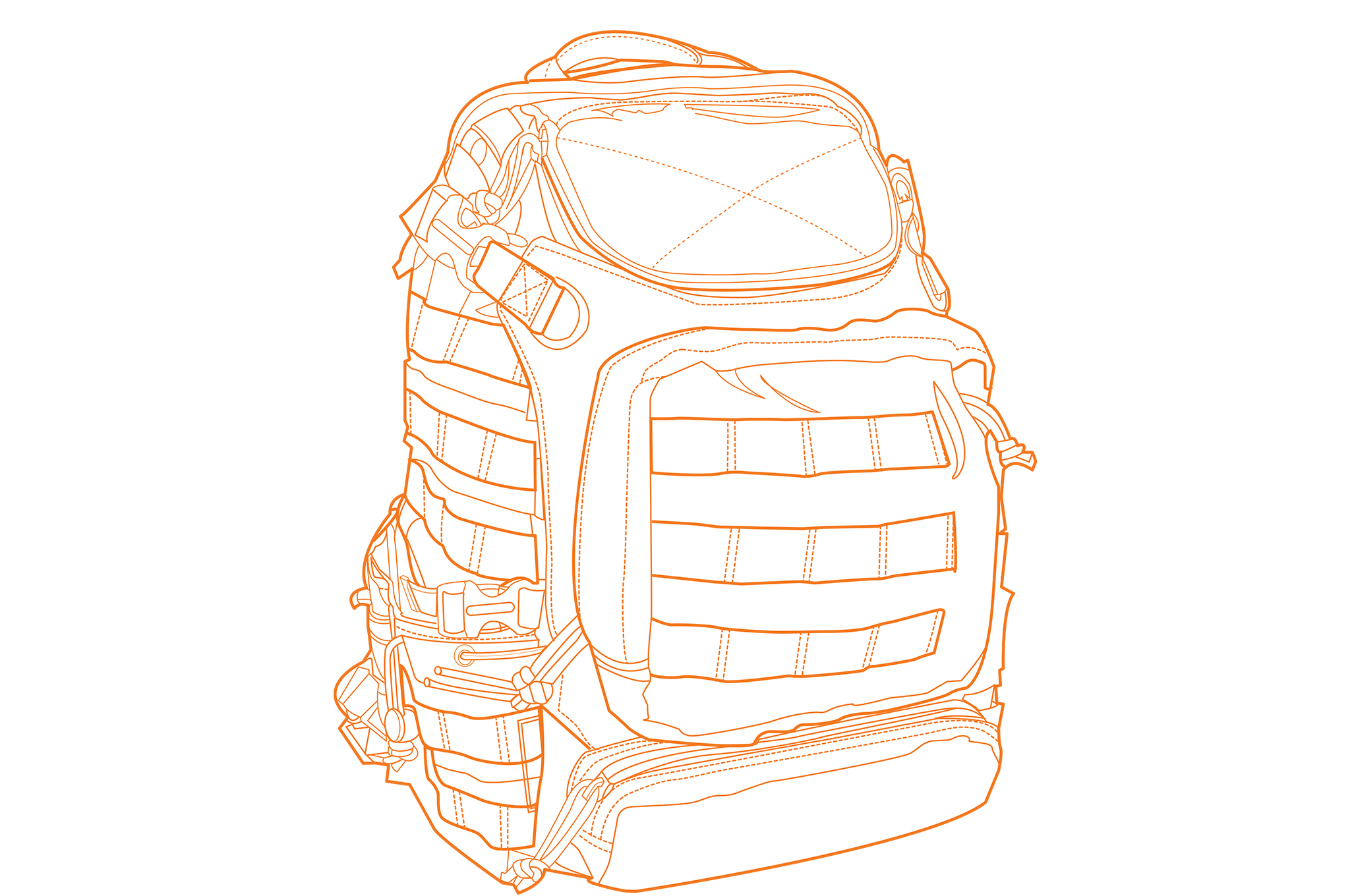
Regional Considerations
When choosing a backpack, consider the region you live in, as well. Is your area more prone to hurricanes, tornados, or earthquakes? Does it snow in your area? Maybe you need something waterproof. If you live in an area like the desert, maybe you don’t need the waterproofing and opt for a lighter-weight, ventilated bag instead. These are things to keep in mind.
Quality
Just as anything else in life, there is cheaply made stuff and there is the good stuff. By far, the most common material used for the heavier-duty backpacks that we are looking at is some type of nylon. Nylon comes in many forms and fits many applications.
There is Pack Cloth Nylon, Cordura Nylon, Rip-Stop Nylon, Ballistic Nylon, and more, and each come in a variety of thicknesses, or denier. Denier is the measurement unit of the thickness and weight of thin fibers most associated with nylon. The higher the number is, the thicker the nylon, and that means it is heavier, as well.
| Material | Pack Cloth Nylon | Cordura Nylon | Rip-Stop Nylon | Ballistic Nylon |
| Abrasion Resistant | Yes | Yes | Yes | Yes |
| Water Resistant | Yes | Yes | Yes | Yes |
| Weight | Medium | Light | Light | Heavy |
| Also Used In | Gym Bags, Tote Bags | Motorcycle Jackets, Boots | Parachutes, Flags | Luggage, Laptop Bags |
| Notes | Puncture-resistant, but once punctured, this material rips very easily | Cordura comes in many variations and is the most popular fabric in use for backpacks today | Features a grid of heavy threads sewn into the fabric to stop rips from getting bigger | Made to protect from shrapnel during WW2. This material is puncture- and tear-resistant, but extremely heavy |
Other important details to look at in your pack are the zippers and plastic buckles that are found on most all backpacks made today. Make sure that the zippers perform smoothly and reliably when pulled at different speeds and angles. Plastic buckles should feel sturdy and have positive feedback when they are locked in place. We find packs that feature name-brand fasteners, such as YKK zippers and ITW buckles to be excellent choices.
Although we can’t be certain of a particular emergency or disaster that we might face, it doesn’t mean we can’t anticipate and prepare for one. Along with proper planning, preparation, equipment, and supplies, a sturdy, useful, and comfortable backpack can form the backbone of your survival gear. There are a lot of choices available to you, but don’t be overwhelmed. With a little patience, you will most likely find a backpack that will fit your needs.
Buyer’s Guide
We have assembled a few great backpacks that caught our eye. These bags each have some great features that we have highlighted. Some of these bags are made for the role of survival backpack, while others are simply adapted for the role. Remember, it’s best to choose a bag that best fits your body, as well as your needs.
[buyersguide title=”Selecting the Right Survival Backpack” ids=”3141, 3142, 3143, 3144, 3145, 3146, 3147, 3148″]