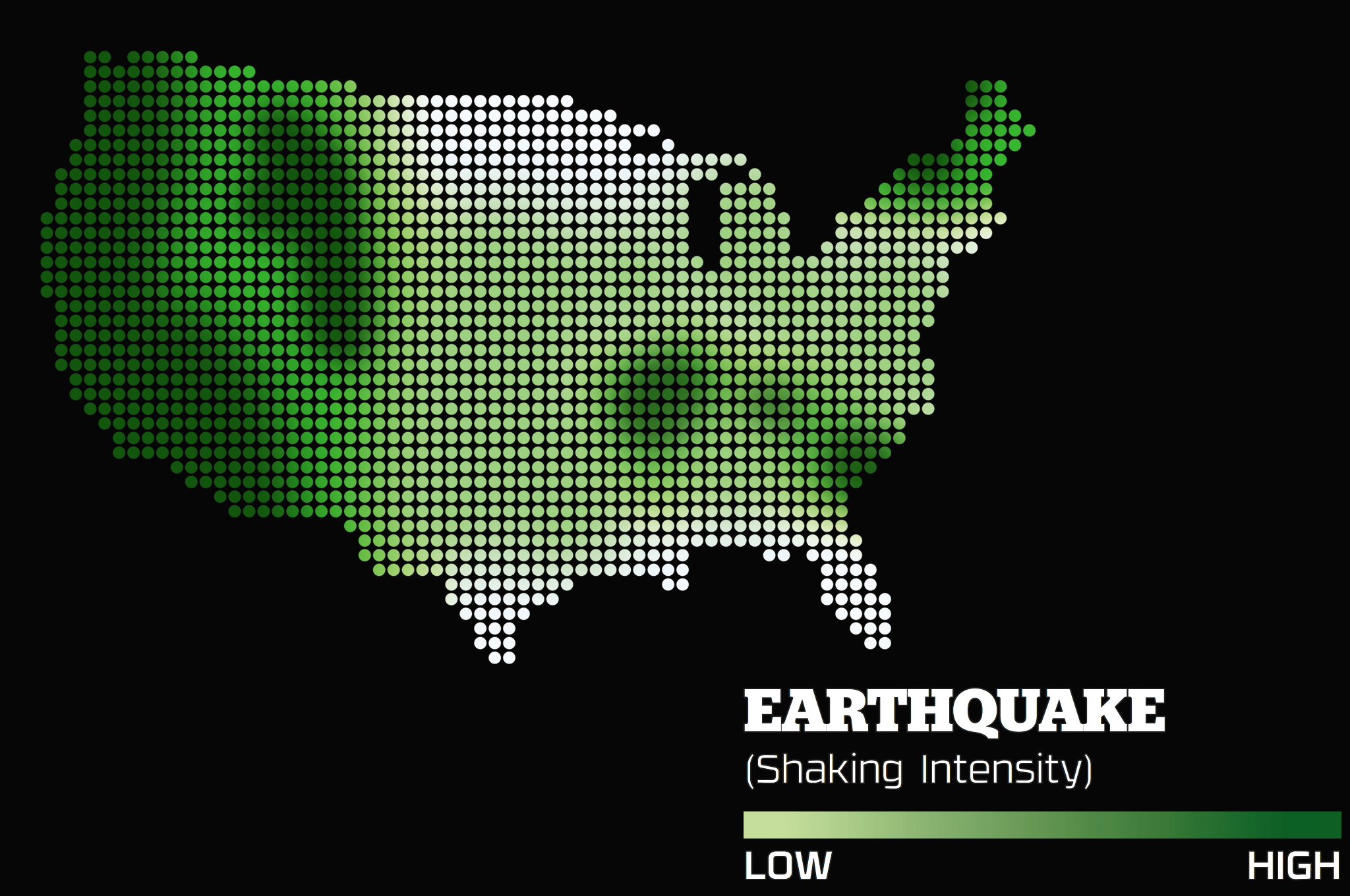
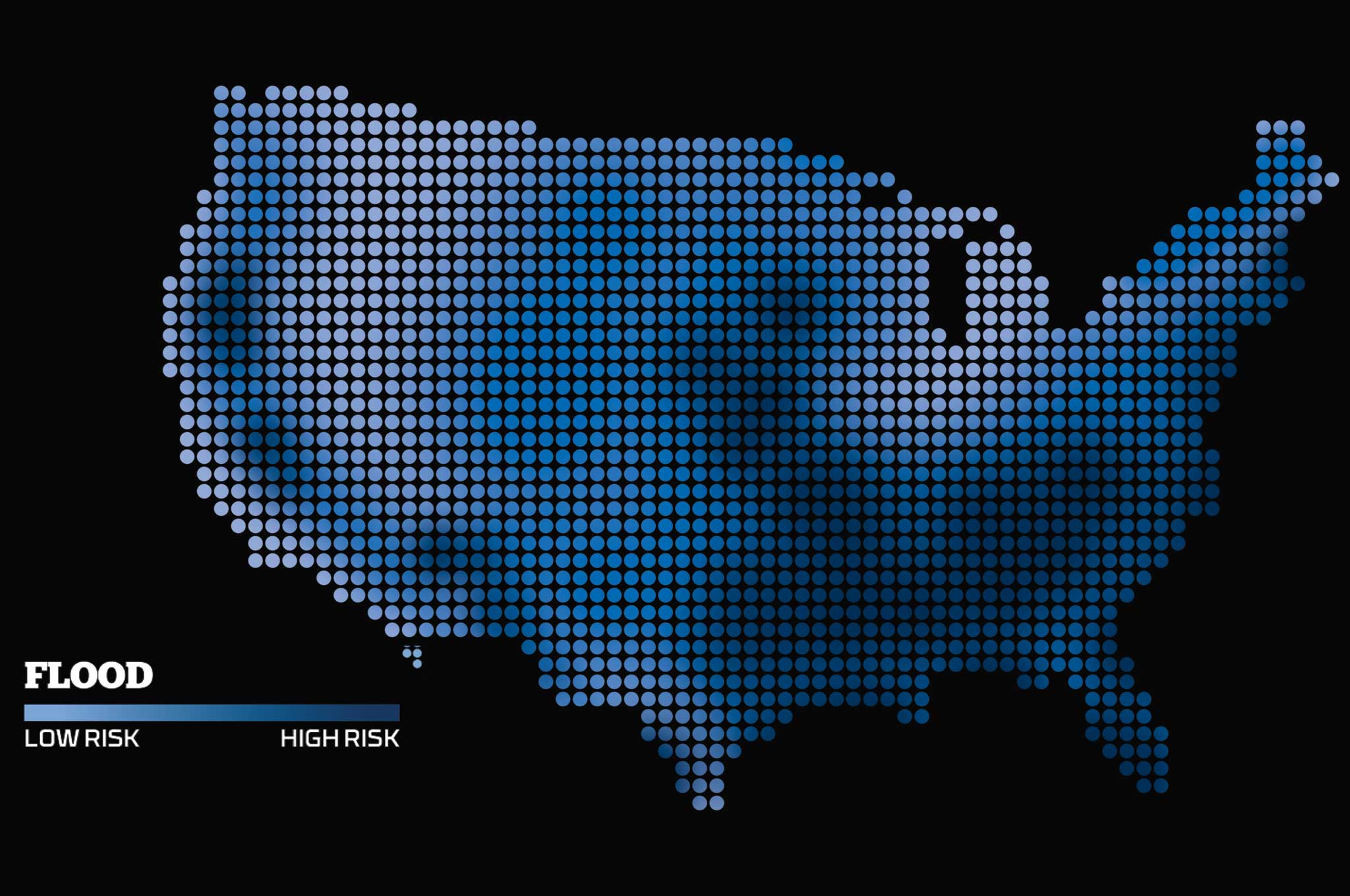
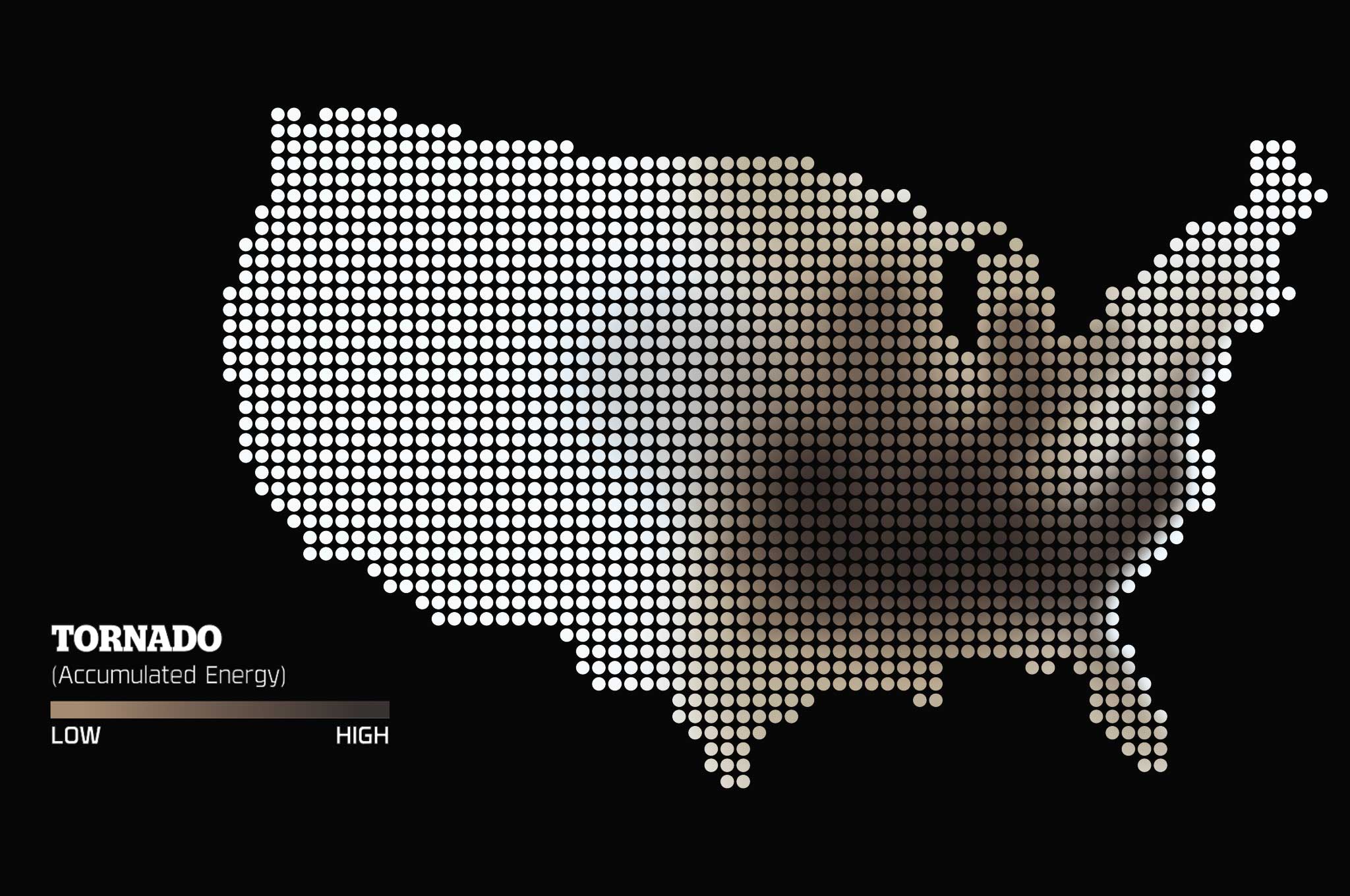
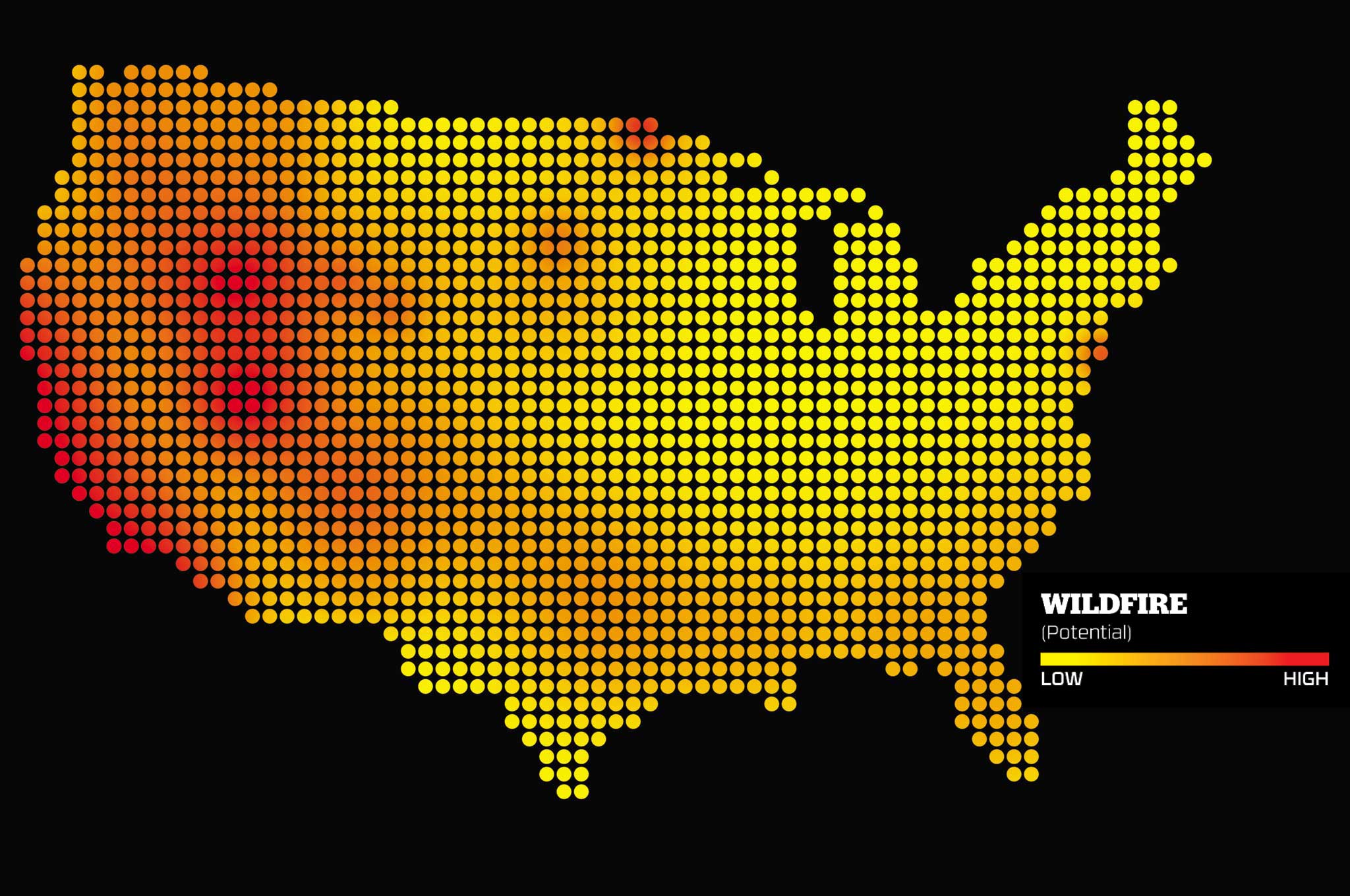
The Four Horsemen of the Apocalypse may symbolize Conquest, War, Famine, and Death, but in the United States, tornadoes, earthquakes, floods, fire, and hurricanes are more pressing concerns. In OFFGRID Issue 2, we outlined the heavy costs, both financial and human, of natural disasters over the years. You may not be able to control or predict when a natural disaster might hit, but you can choose your place of residence accordingly. The real estate website Trulia researched reams of data on earthquakes, fires, floods, hurricanes, and tornadoes, calculating which cities faced the lowest risk of these natural disasters.
Perhaps not surprisingly, with hurricanes and flooding in the Southeast, earthquakes and wildfires on the West Coast, and tornadoes in between, Trulia’s top picks are in upstate New York, Ohio, and elsewhere in the Northeast and Midwest. They are also quite affordable, with home prices averaging around $100 per square foot, as compared to ridiculously expensive (and disaster-prone) areas like California, Hawaii, and New York City (with pricing of $300 to 500 per square foot).
Before you start packing the homestead, don’t forget that there are other considerations as well. These areas may be at relatively lower risk for natural disasters, but many face tough weather with very harsh winters — not to mention other potential challenges, whether economic (e.g. job growth, appreciation of home prices) or otherwise (e.g. misguided political leadership). But as always, arm yourself with good information and prepare accordingly.
Top 10 Safest Cities from Natural Disasters
Rank
City
Pleasant Days/Year
Average Home Price/Square Foot
1
Syracuse, NY
53
$89
2
Cleveland, OH
65
$80
3
Akron, OH
48
$81
4
Buffalo, NY
73
$93
5
Bethesda-Rockville-Frederick, MD
52
$174
6
Dayton, OH
51
$72
7
Allentown, PA-NJ
54
$109
8
Chicago, IL
74
$113
9
Denver, CO
37
$129
10
Warren-Troy-Farmington Hills, MI
65
$94
What’s a Pleasant Day? Software engineer Kelly Norton crunched 23 years’ worth of data from the National Oceanic and Atmospheric Administration to determine the average number of so-called “pleasant” days a year. His definition of “pleasant” was temperature between 45 and 85 degrees with no significant precipitation. None of the top 10 safest cities come close to Norton’s top-ranked Los Angeles, with a 183 pleasant days, but they also outstrip the least pleasant — McAllister, Montana, with just 14.
Electricity is the cornerstone of modern civilization — most everything in our lives revolves around it. It’s the lifeblood that keeps the world turning, and without it our civilization would hit a serious bump in the road. We need it to illuminate the night, refrigerate our food, pump our gas, run lifesaving medical devices and, needless to say, it’s essential to our vast communications networks.
In the United States, blackouts like the 2003 New York event, and the more recent power loss event in 2011 on the West Coast, cost us millions of dollars in lost revenue. While none of these incidents were believed to be intentionally caused, it does show how reliant we are on our nation’s power grid. It’s this very grid that can be an enticing target for terrorists or rogue states to target. One potential attack on our electricity could come in the form of an electromagnetic pulse (EMP), which can be created by a nuclear blast.
An EMP is a wave of electromagnetic radiation that is generated by natural phenomenon like lightning and static electricity. It is also the byproduct of manmade events such nuclear detonation. In our scenario, we face the repercussions of a high-altitude nuclear attack. While the physical damage from a nuclear explosion would be devastating at ground level, it’s a high-altitude nuclear blast that would allow the resulting EMP to cause the most damage. EMP requires line of sight to be fully effective, so assuming the initial blast is strong enough, the higher it is implemented, the more surface area the EMP will affect.
EMP produces surges that damage or destroy modern electronic devices. According to the 2008 Critical National Infrastructure Commission (CNIC) study on the effects of an EMP, a nuclear explosion at an altitude of 100 kilometers (62.1 miles) would expose 4-million square kilometers or 1.5-million square miles of the Earth’s surface. That covers roughly half the surface area of the contiguous United States with just a single detonation.
Rocking Technology from the 1800s
One way to protect valuable or essential electronics is with what is called a Faraday cage or box. They can be as simple as a cardboard box wrapped tightly in tinfoil, or as complex as specially built “screen rooms” used in major laboratories and universities.
The concept of a Faraday box is fairly basic. It is a container with a conductive layer or skin that reflects and absorbs incoming electromagnetic fields. In doing so it creates opposing fields that help dissipate the incoming fields and protect your electronics inside.
Containers do not have to be airtight, but the holes do need to be smaller than the wavelengths they are trying to defend against. All this is based on English scientist Michael Faraday’s research from the 1800s. Yes, we kid you not, technology from the 1800s can help protect your equipment from a nuclear blast.
The container itself needs to have some kind of nonconductive liner to prevent the items inside from touching the conductive skin. You can utilize rubber, foam, or any other nonconductive material. Some everyday items can be used as Faraday box on a limited basis. A microwave is itself a shielded box, or you could insulate an ammo can to make a quick and simple box.
Remember, once an EMP event happens, it is too late to shield your electronics after the fact. That means that you would have to leave your Faraday box sealed until after the event passes. As much as you might wish to put all your expensive electronics in there to protect them, it just would not be practical since you’d never be able to use them. So for our box, we selected items that were relatively inexpensive, but would really be convenient to have in an emergency. Size is also a consideration. We wanted the box to be small enough to fit in a closet and not take up too much space.
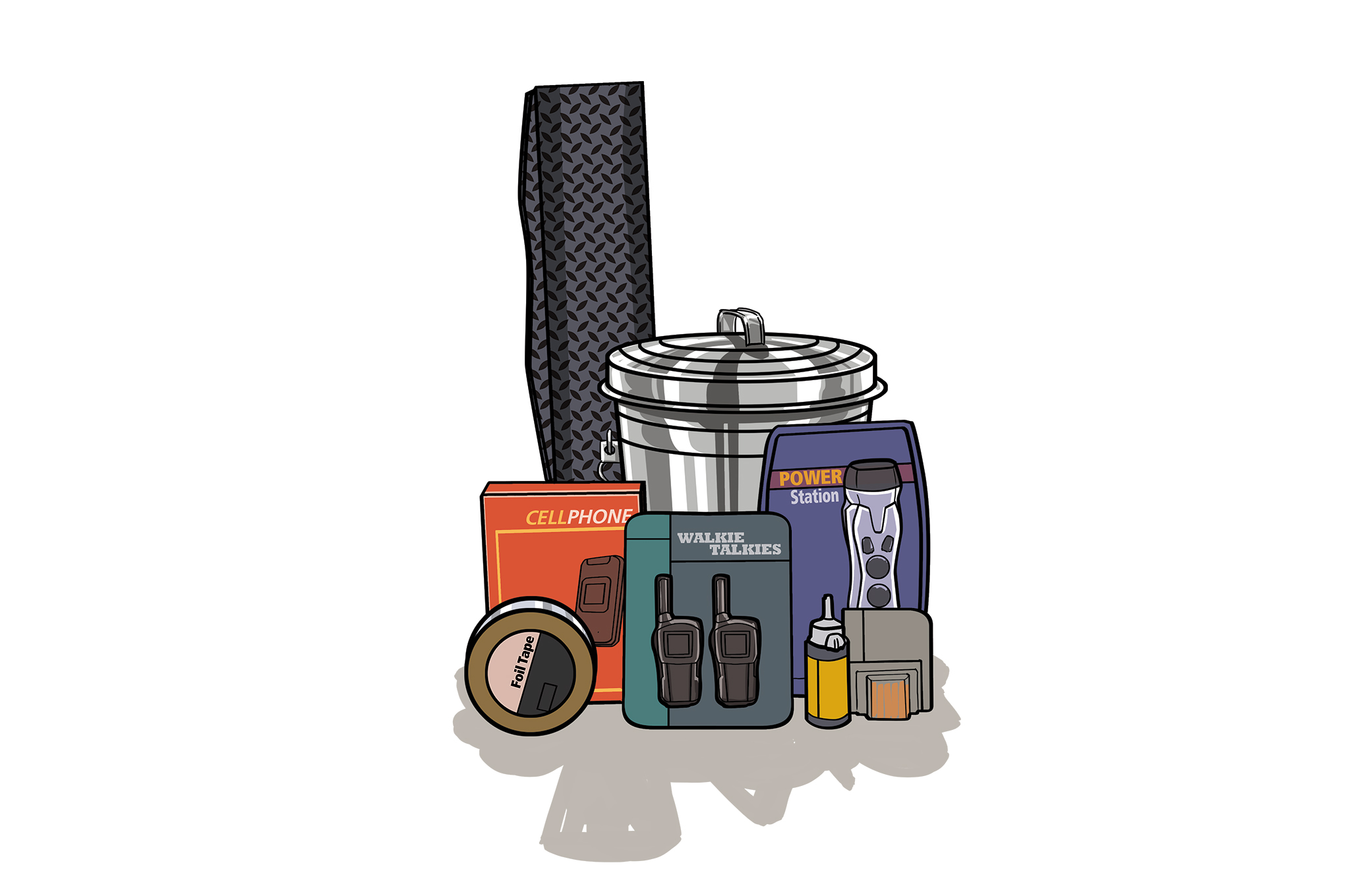
Our Faraday box contains:
An inexpensive set of two-way radios and the AAA batteries to power them
A pay-as-you-go cell phone in case our primary phone was ruined
A hand-crank combination radio flashlight and USB charger
This will provide for basic news and information and also allow us to communicate with family in case we need to travel.
Building a Faraday Box
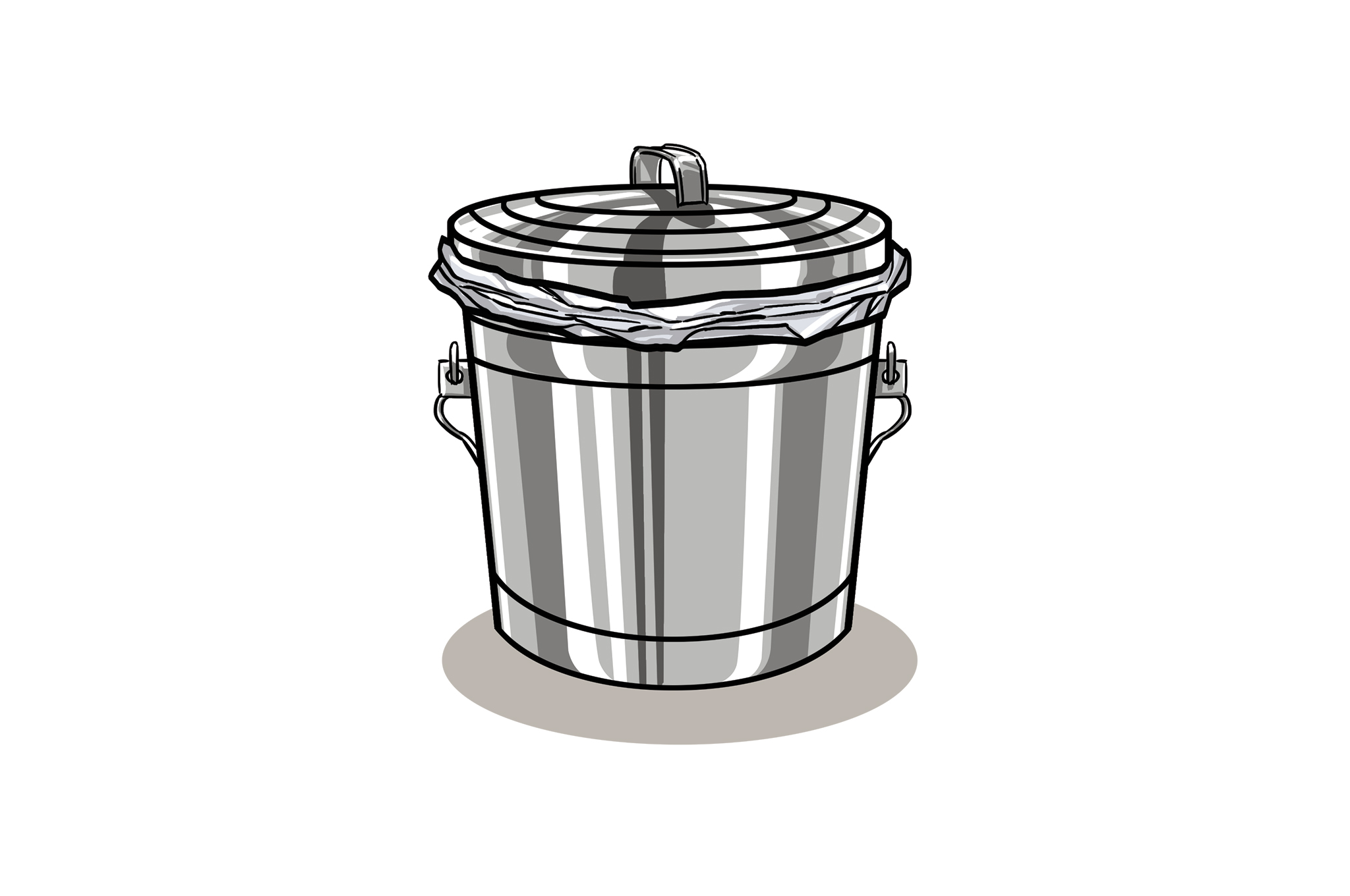
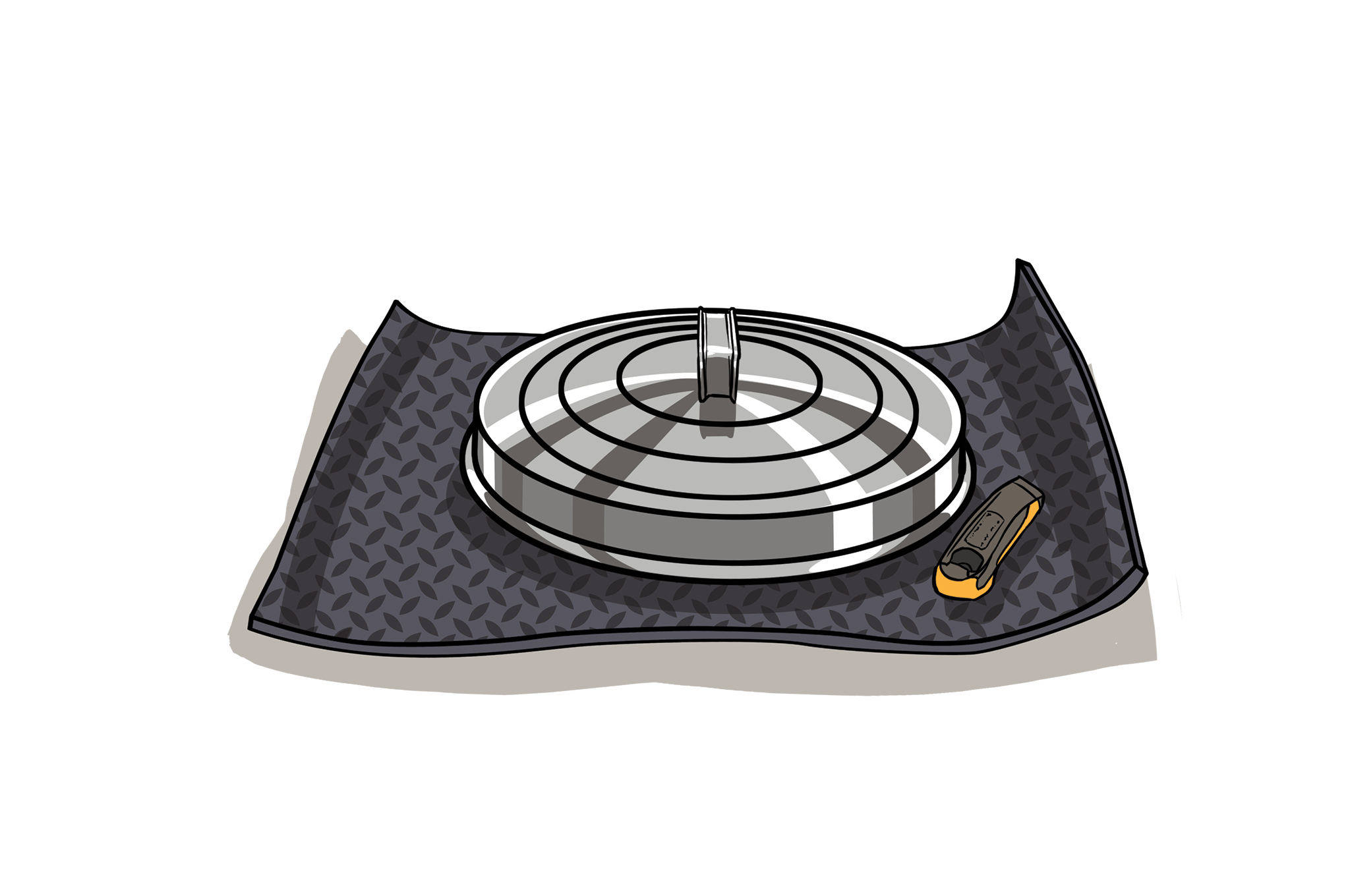
Since the type of energy waves one might encounter can vary, we opted for a sealed box solution. Our sample Faraday box is constructed out of a 6-gallon galvanized steel can. We utilized a rubber anti-fatigue mat that you might put in front of your workbench to stand on. The mat is used to line the inside of the can and provide insulation for the items stored within.
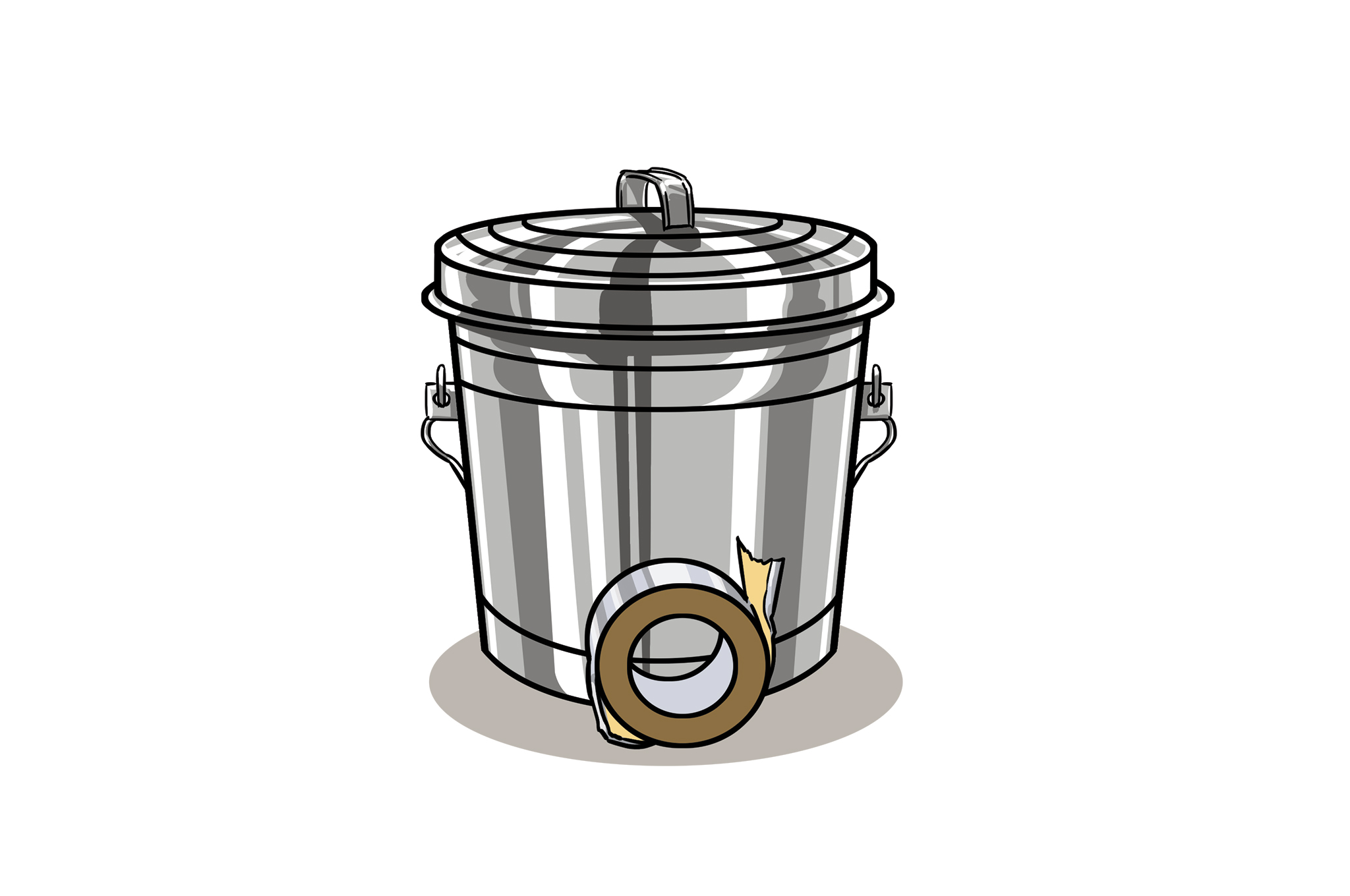
Make sure you continually test fit the liner. Use as few pieces as possible to protect your contents from leaks in the seams. With the items to be protected placed safely inside, we then sealed the can with HVAC foil tape. We were able to find all the necessary supplies at the local hardware store. The mat was the most expensive item, but the total cost to complete the Faraday box was about $80.
Step-by-Step Instructions:
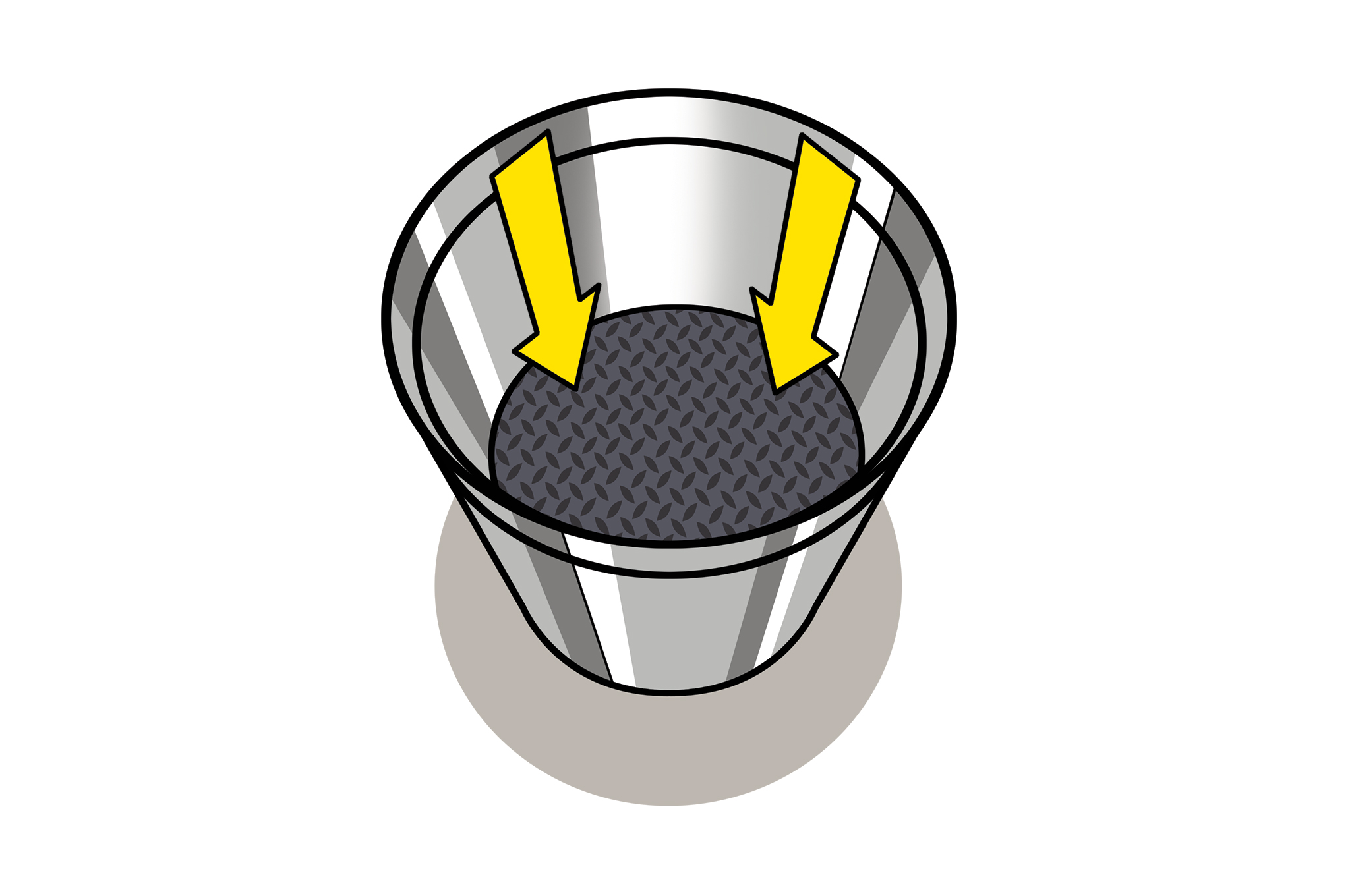
1 Your items need to be protected all around. We used the bottom of the pail as a template for the nonconductive material.
2 We started by lining the bottom with the material. We left it a little long so it would curl up on the outside edges. We secured it to the bottom using an epoxy-style glue.
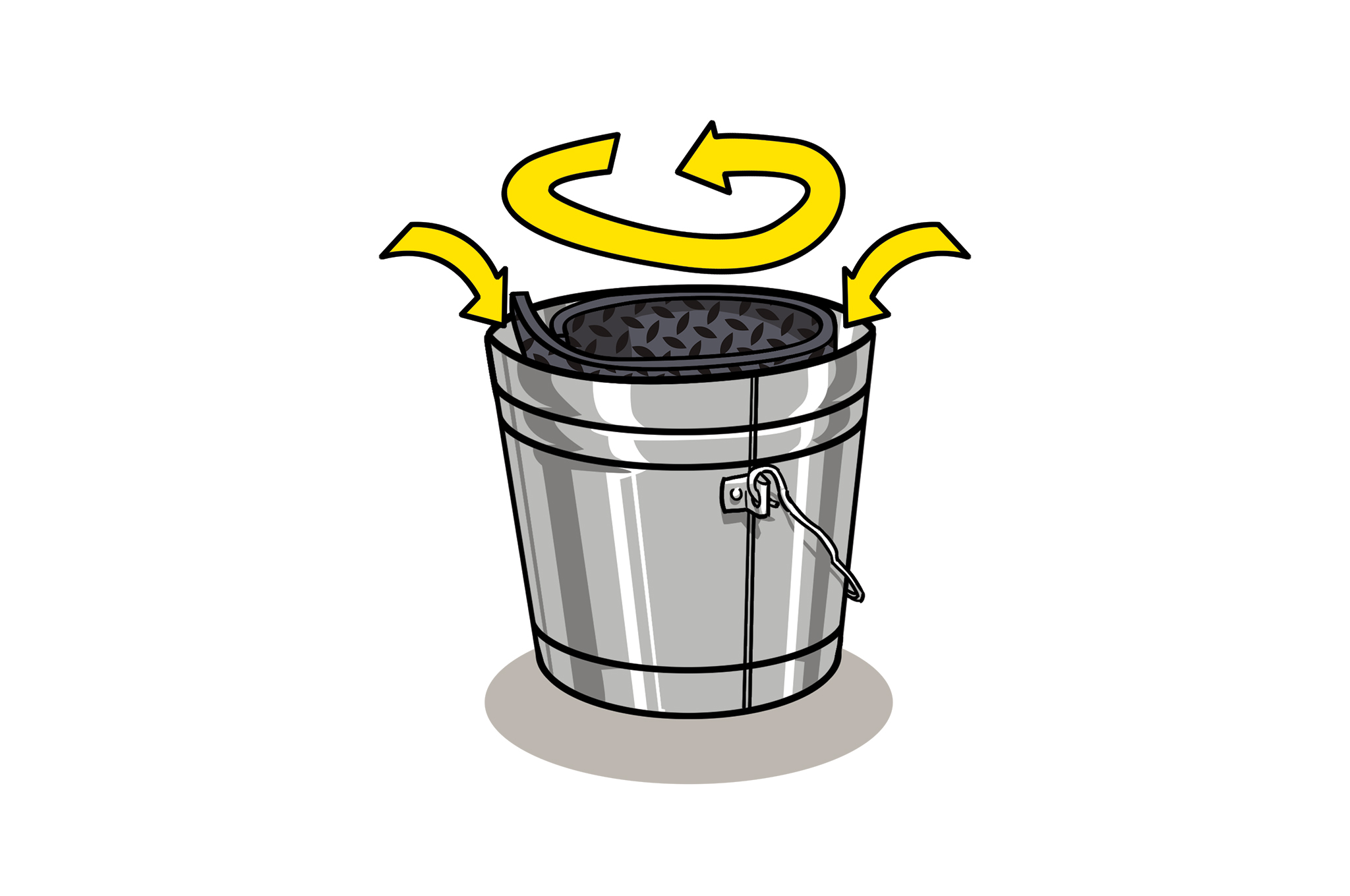
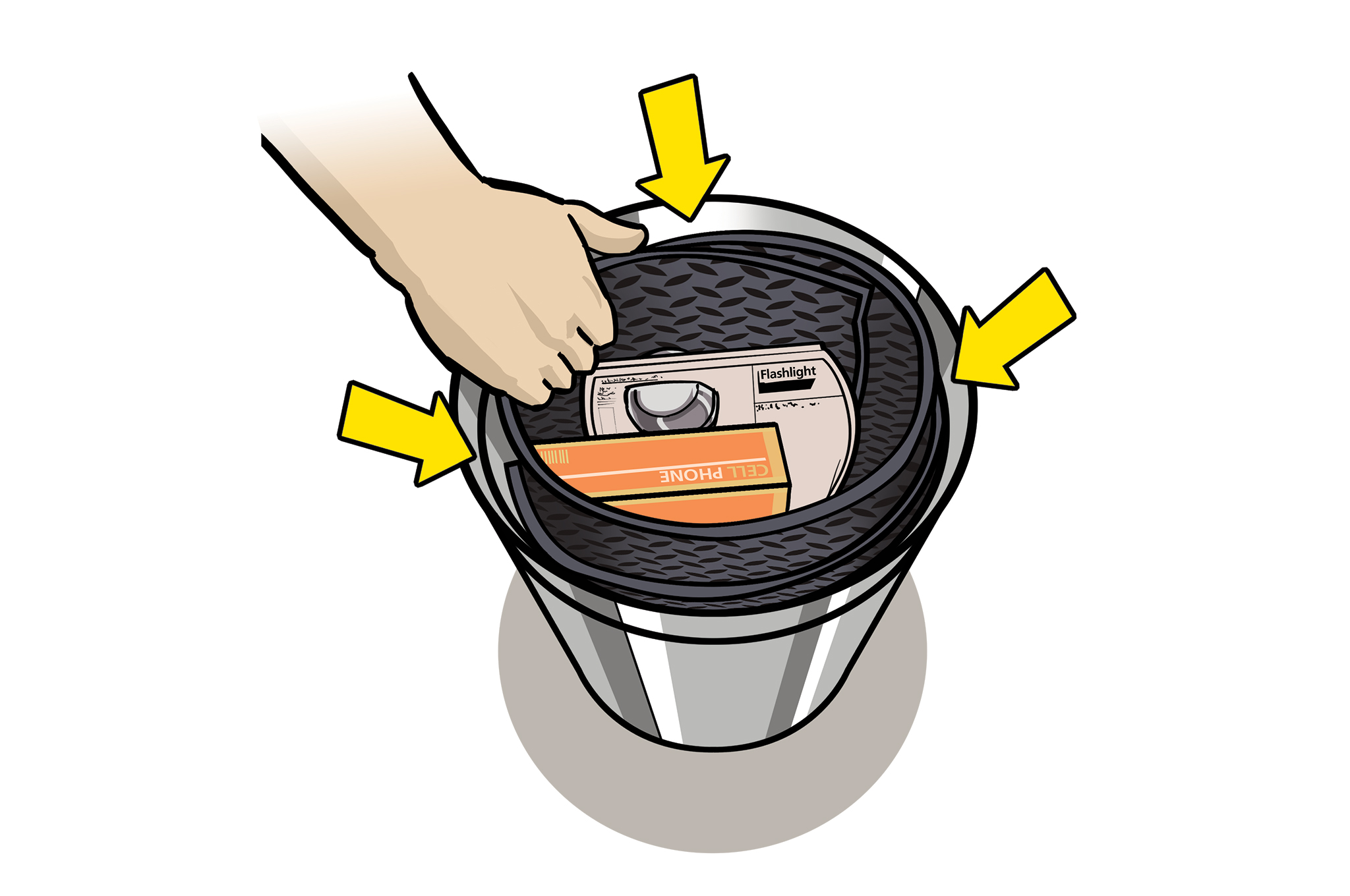
3 Next up is to line the sides with material. The angle of the side proved to be a little tricky. We rolled the material up into a cylinder making sure to leave enough room for the equipment to be stored. We then glued the pieces to the bottom.
4 Using the lid as a template we lined the top of the lid with the floor mat.
5 Once we placed all the items in the container, we used the extra floor mat material to build support around the inner cylinder.
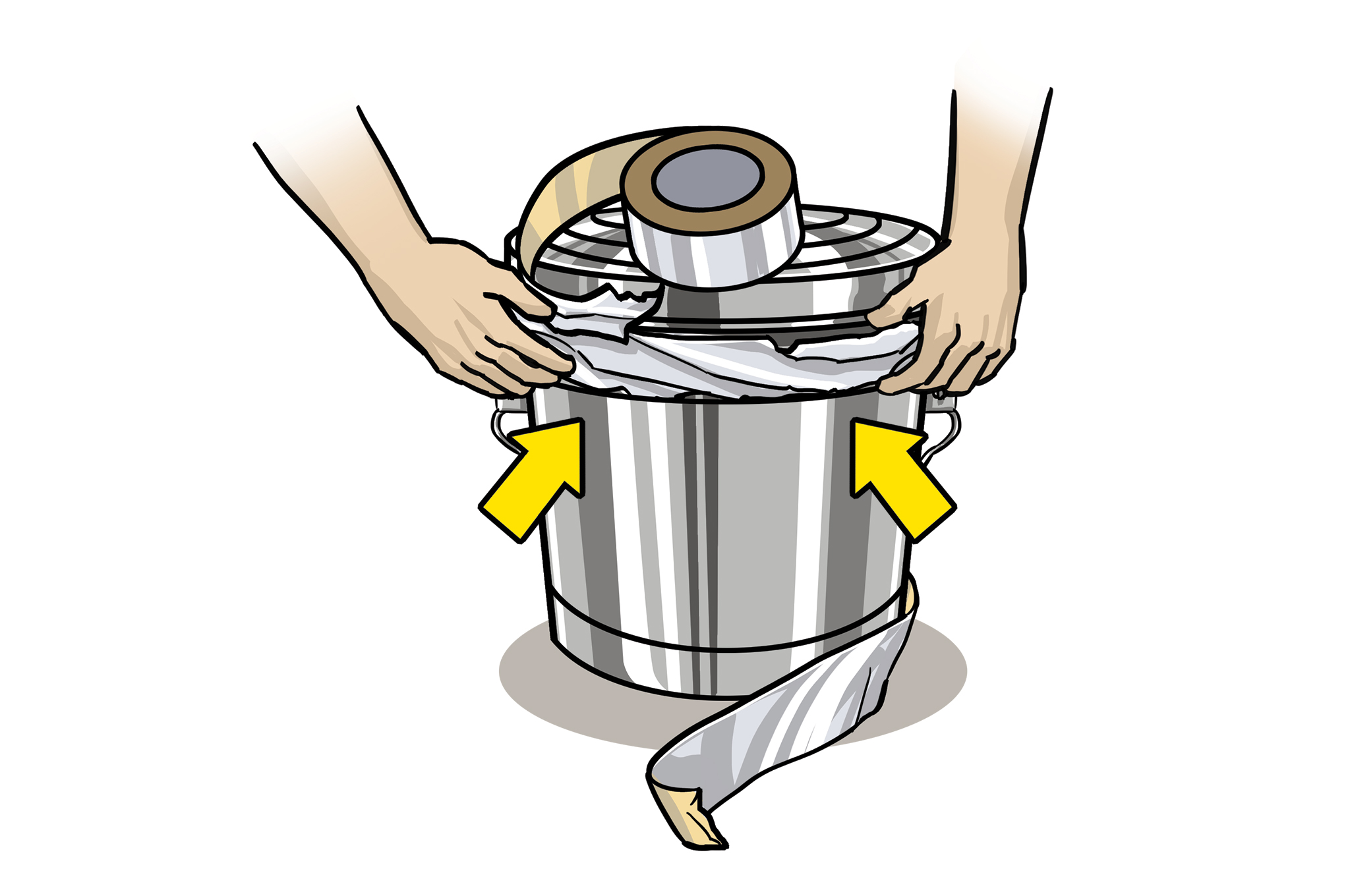
6 For added protection, we used aluminum-heating duct tape. This will help seal the gap between the lid and the body of the container.
7 The aluminum tape was surprisingly thin. We had to carefully wrap it a couple of times to get a good seal.
8 The finished product. We were pretty pleased with how it turned out. It’s even small enough that your girlfriend or wife shouldn’t mind losing a little closet space.
Closing Thoughts
Despite the general belief, an EMP event wouldn’t necessarily wipe out all electronics in the affected area. A lot of modern electronics have been so well shielded to prevent interference from other devices that they are fairly well protected. The CNIC study analyzed the effects of an EMP attack on most areas of daily life. The report suggests that about only 10 percent of automobiles would stop working, but traffic would be disrupted due to signals going out and traffic jams due to the other disabled cars. The electrical infrastructure would remain mostly intact with damage primarily to transformers. The commission concluded that the impact to the electrical infrastructure would be severe, but not catastrophic.
One thing you might notice that is missing from this article is any reference to solar flares. Throughout our reading of research papers for this article the general consensus was that most modern electronics are shielded well enough to protect against solar flares. Most experts recommend that the best defense against a solar flare is to unplug your electronics or use a quality surge protector. Solar flares are also fairly predictable as they take time to travel between the sun and Earth, allowing a person time to secure their electronic devices.
Will we ever see an EMP event? Who knows, but aren’t you reading this magazine because you’re the type of person who’d rather be prepared? Better safe than sorry. So, head on over to your local hardware store and build yourself a Faraday box. Marvel at how cool it is to be using technology from almost 200 years ago!
Sources
If you would like to learn more about how an EMP event could affect your way of life, we encourage you to read the Critical National Infrastructures Report found here > http://tinyurl.com/5v8vt2
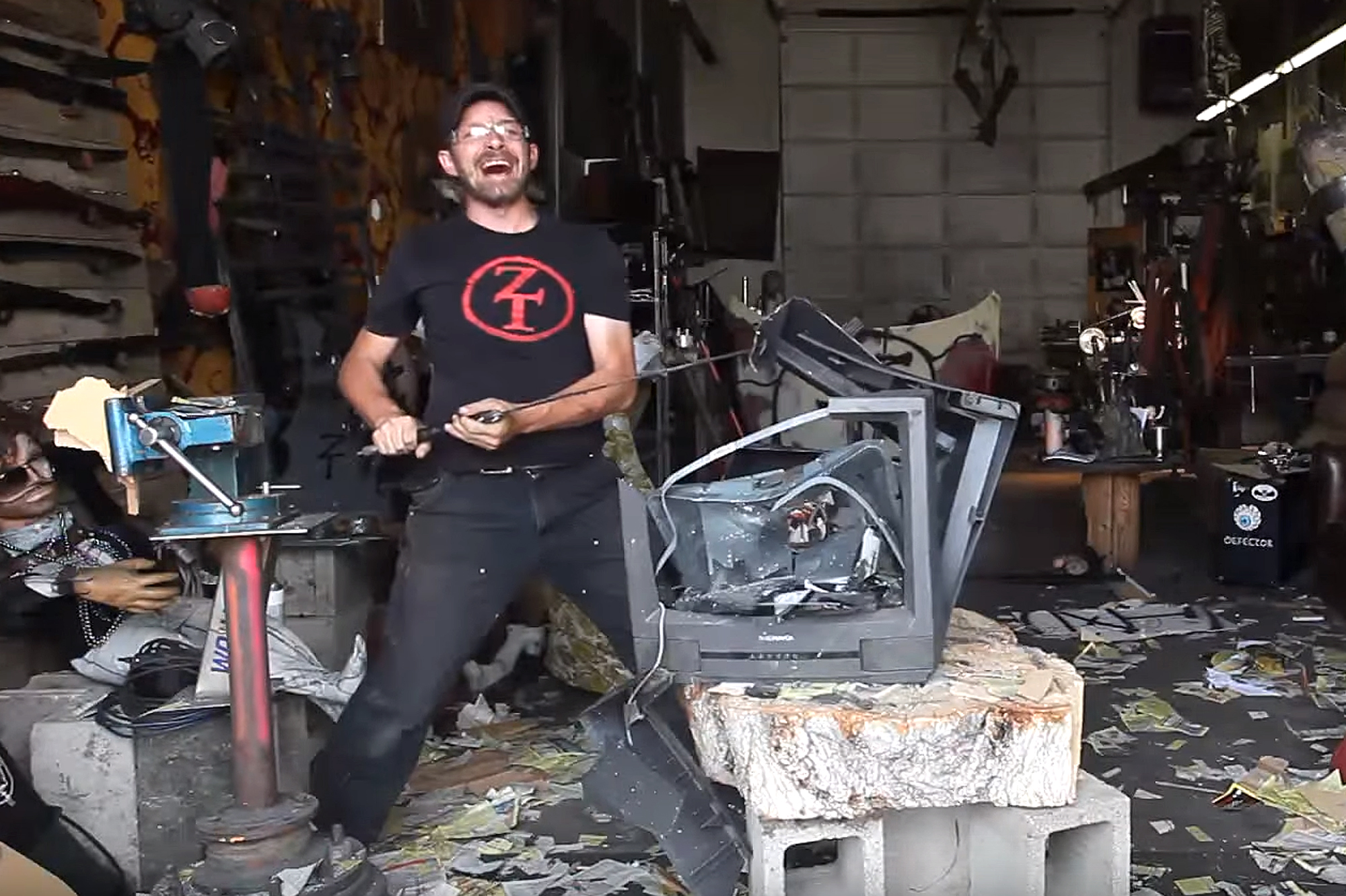
Ever see someone with a cool job, and think, “Man, I can’t believe someone gets paid to do that!” That’s pretty much what we said when we watched the “Destroying the Deuce” video below from the guys at Zombie Tools.
Don’t worry, no beer went to waste. They filled these PBR cans with water before slicing them in half.
According to their web site, Zombie Tools is “a band of brothers formed under the auspices of the trickster god Loki, bound together by a common passion for blades, science and art. And beer. And metal music. And beer.” In simpler terms, they’re a Missoula, Montana-based manufacturer of bladed weapons—pretty much everything from battleaxes to broadswords.
Before you watch, a word of warning: basically everything in this video is extremely dangerous, unhealthy, and not OSHA-approved. Do not try this at home. There’s also plenty of alcohol, smoking, swearing, and death metal. Sounds like a good time? Then check it out:
We told you these guys have an awesome job (although it seems somewhat miraculous no one got hurt during the filming). Also, the Deuce seems to take a serious beating, bending a full 90 degrees without snapping.
Bending the Deuce a full 90 degrees in a vise. Pretty impressive.
We’re going to try to get our hands on a Zombie Tools blade in the near future, and test it out our own way. We definitely won’t be chopping truck hoods in half, or slicing through a (water-filled) 24-pack of beer cans like they did, but we will do our best to let you know if these blades are as badass in person as they seem to be on film. Stay tuned.
If you’ve ever tried to start a fire without modern tools, you’ll certainly know one thing: it’s hard work. The widely-known traditional hand drill fire starter uses a notched horizontal board, a vertical shaft or spindle, and friction from rubbing your hands together in the “praying” position. With enough patience, luck, and the right conditions, you can get an ember burning with this basic method.
However, the hand drill method is time-consuming, often frustrating, and it’s basically guaranteed to give you painful blisters on your palms. Fortunately, there are better ways of primitive fire starting, many of which expand upon the hand drill method.
First of all, there’s the bow drill, which uses a curved bow and string to spin the spindle (saving your hands from blisters). This method is pretty well-known, but today we’ll be sharing two others that might not be as common: the cord drill and the pump drill.
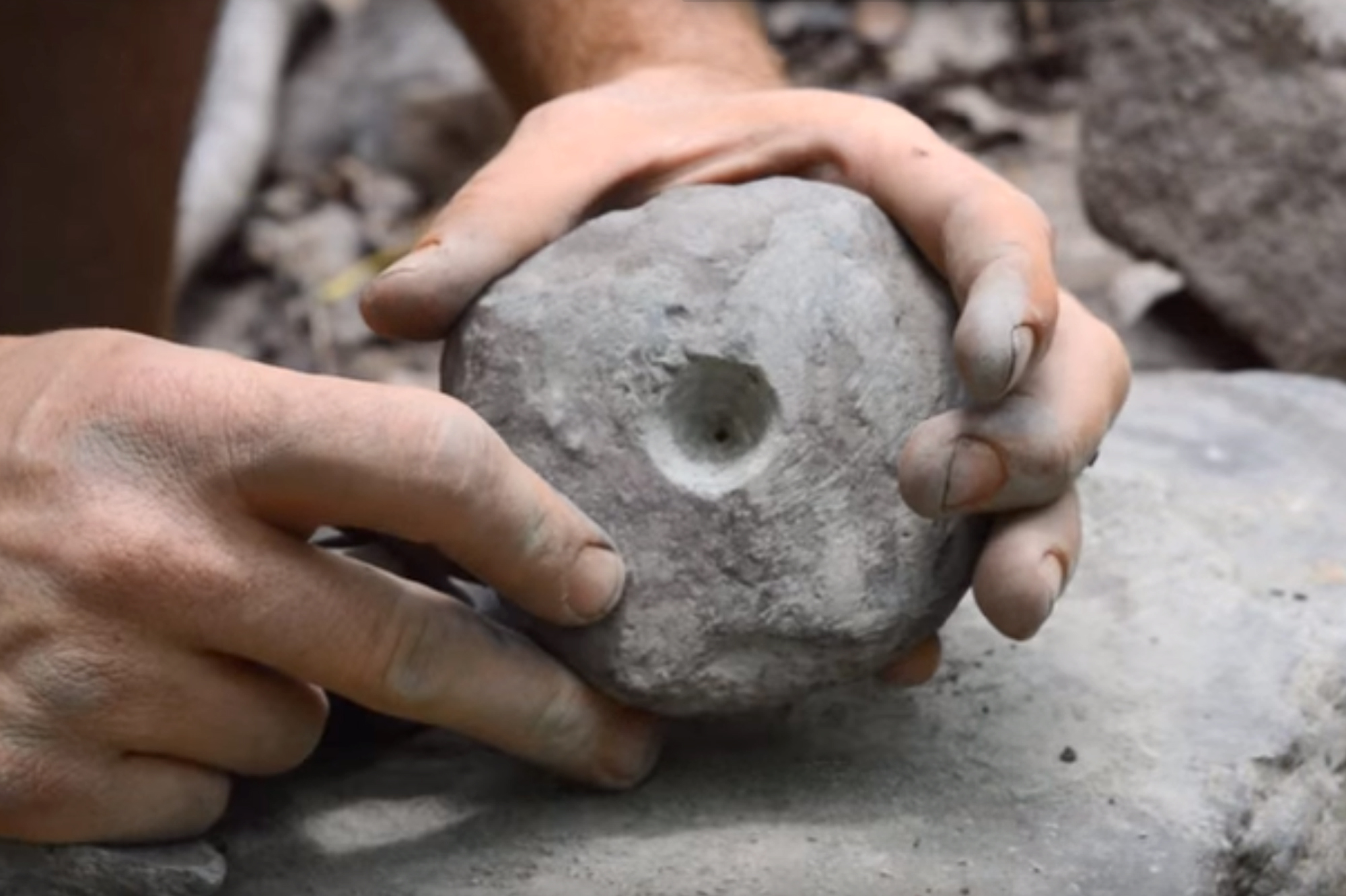
A rock with a hole through the center will act as a flywheel for cord drills and pump drills.
Both the cord drill and pump drill are based on the hand drill spindle and board, but add what is known as a flywheel. The flywheel is a disc-shaped stone or piece of pottery that retains rotational inertia, and makes the spindle want to keep spinning. Then, a wound cord is added to the top of the drill spindle, and pulled apart repeatedly to spin the shaft and flywheel.
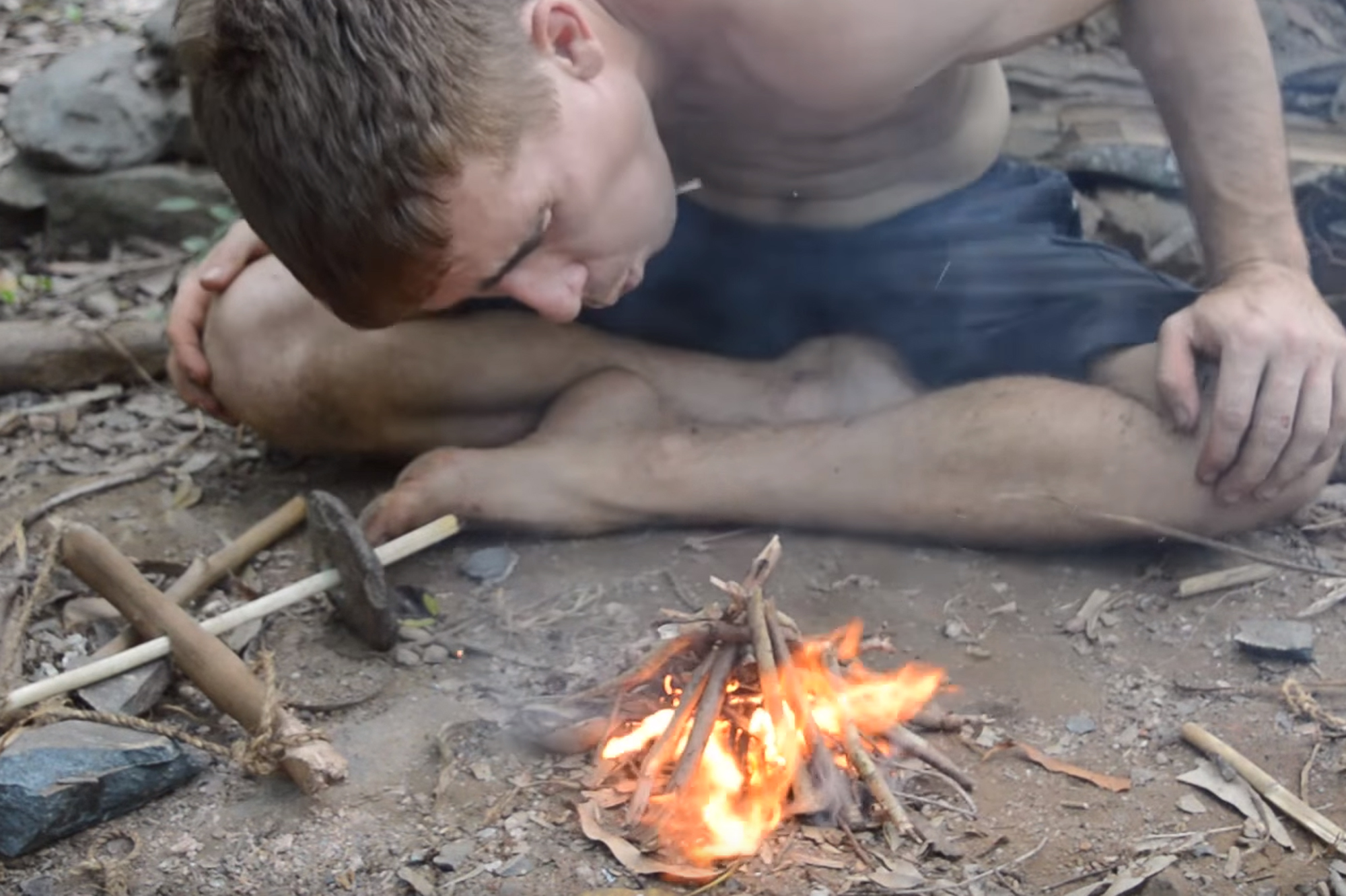
Here’s a video from Primitive Technology that does a great job of illustrating the hand drill fire starter, as well as the cord drill and pump drill:
As you can see from the video, the pump drill adds one last element, a board with a hole that attaches to the spindle and cord. This makes the cord drill even easier to use.
Obviously, making a flywheel from pottery and firing it in a primitive oven is beyond most people’s abilities, but Primitive Technology shows how that’s done as well. The host even uses flint knapping to craft a drill bit that resembles an arrowhead, so drilling out notches in the fire board is easier. These are all useful techniques that go beyond simple fire-starting and could be valuable to any survivalist.
Today’s world of social media clickbait has made vaguely medical-sounding buzzwords more popular than ever. “Solve your dry skin with a juice cleanse,” the articles say. “This one crazy trick will cure all your illnesses! Those greedy doctors will hate you for outsmarting them!” It has become ridiculous almost to the point of self-parody.
So, understandably, the phrase “Oral Rehydration Therapy” sounds like one of these goofy buzzwords. However, we assure you, this technique is a very real and valid medical technique to avoid dehydration in emergencies. It has been recommended by the World Health Organization (WHO) for treating mild to moderate dehydration, and has been used effectively to save millions of lives from illnesses that cause diarrhea.
Oral Rehydration Solution being administered to a Cholera patient. Source: Wikipedia / Centers for Disease Control
In simple terms, Oral Rehydration Therapy involves gradually drinking water with several key substances added, most importantly sugar and salt. The WHO and UNICEF have developed a very specific formula for Oral Rehydration Salts, which are distributed in packets in developing nations and mixed with clean water. Here’s the official formula:
2.6 grams of salt
2.9 grams of trisodium citrate dihydrate
1.5 grams potassium chloride
13.5 grams anhydrous glucose (a sugar)
1 liter of clean water
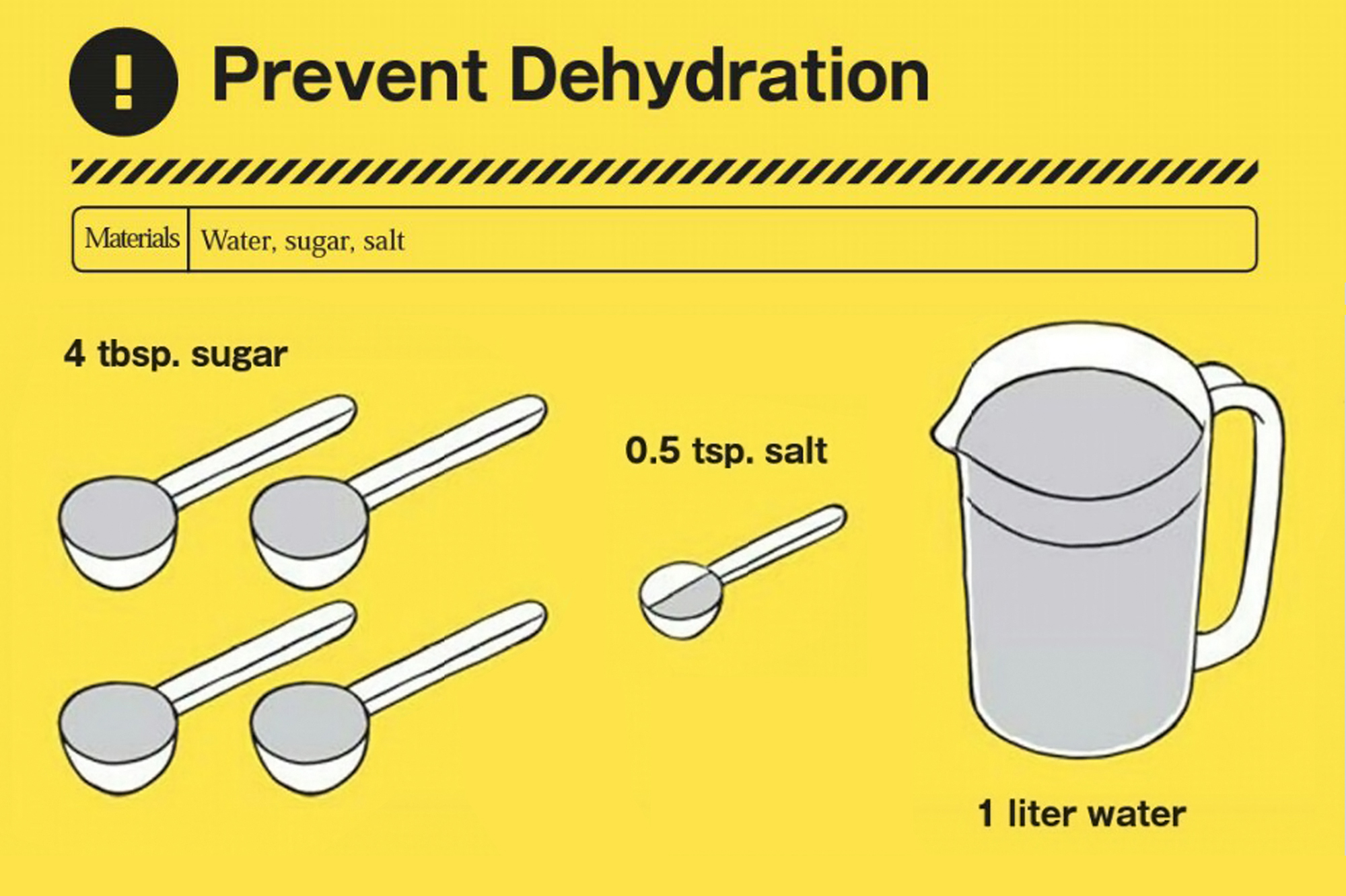
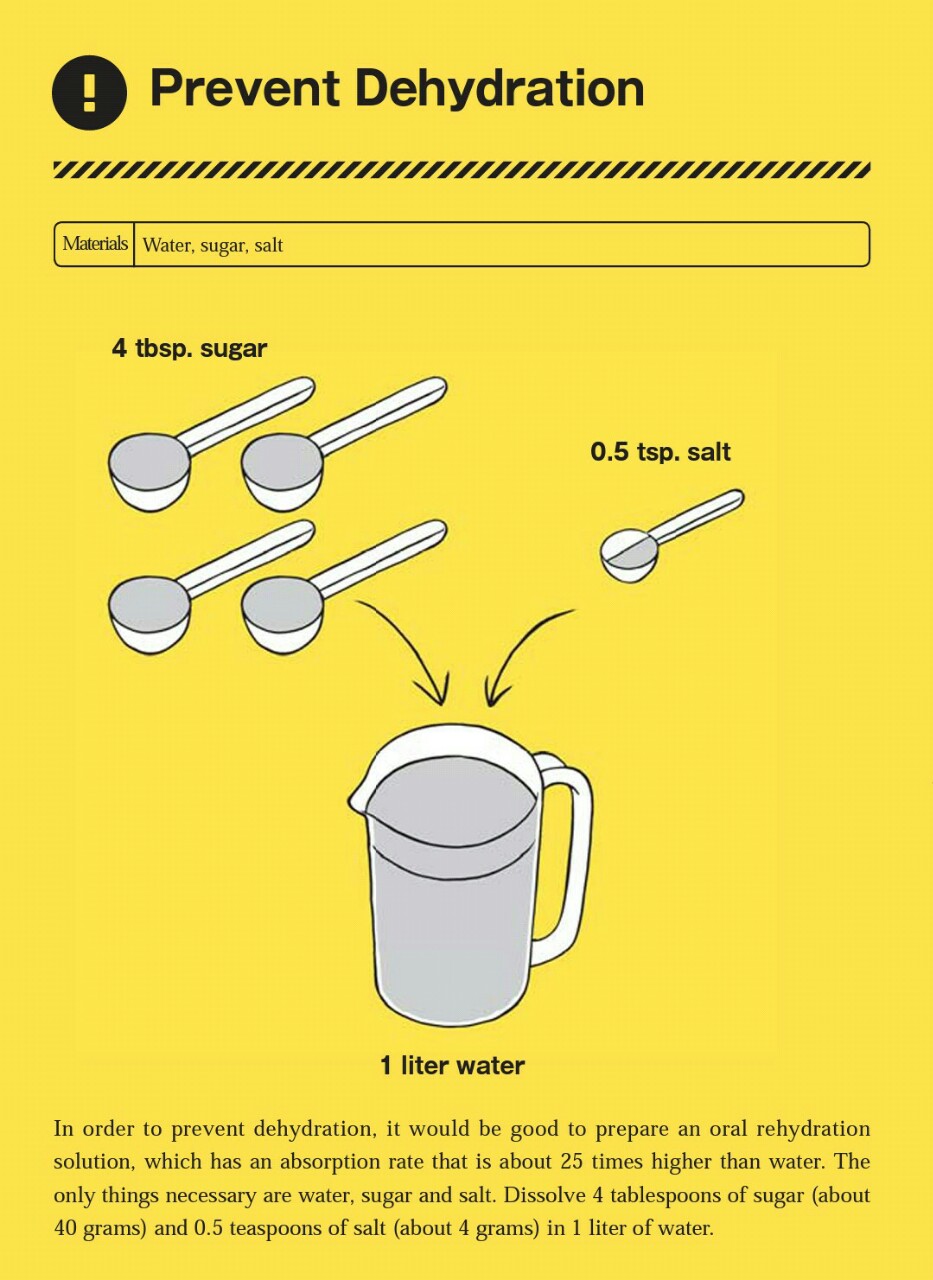
Commercial versions of this formula are available, but if you don’t have access to them, you can make your own simplified Oral Rehydration Therapy solution. Here’s an example of how to do so, courtesy of the Tokyo Metropolitan Government’s Disaster Preparedness Guide:
On a side note, this guide for Disaster Preparedness (called “Bousai” in Japanese) is packed with other useful illustrations and information, so we’d suggest reading the whole thing if you have time. It’s available as a free PDF here.
The Japanese have a word for the concept of disaster preparedness: bousai. They also have a helpful preparedness manual.
Back on the topic of Oral Rehydration Therapy, the solution can also be prepared manually if you don’t have teaspoons to measure with:
1 liter of clean water, boiled and cooled
2 three-finger pinches of table salt
2 handfuls of granulated sugar
If possible, add 1/2 cup orange juice or a mashed banana (this provides added potassium, like the WHO official formula)
Before adding the sugar, taste the salt water—it should not be saltier than your tears.
You should drink or administer Oral Rehydration Solution after every instance diarrhea occurs. If vomiting occurs, wait ten minutes and continue drinking ORS slowly. According to Rehydrate.org, adults and large children should drink at least 3 quarts or liters of ORS a day until they are hydrated and well.
Nuclear weapons are immensely powerful, but also often misunderstood. Most people can tell you that there are two types of nuclear weapons—A-bombs and H-bombs—but many of those individuals don’t understand what the differences are, or how each works on a molecular level. Understanding these key differences helps us understand how nukes are constructed, and why this knowledge is still relevant in today’s world of nuclear disarmament.
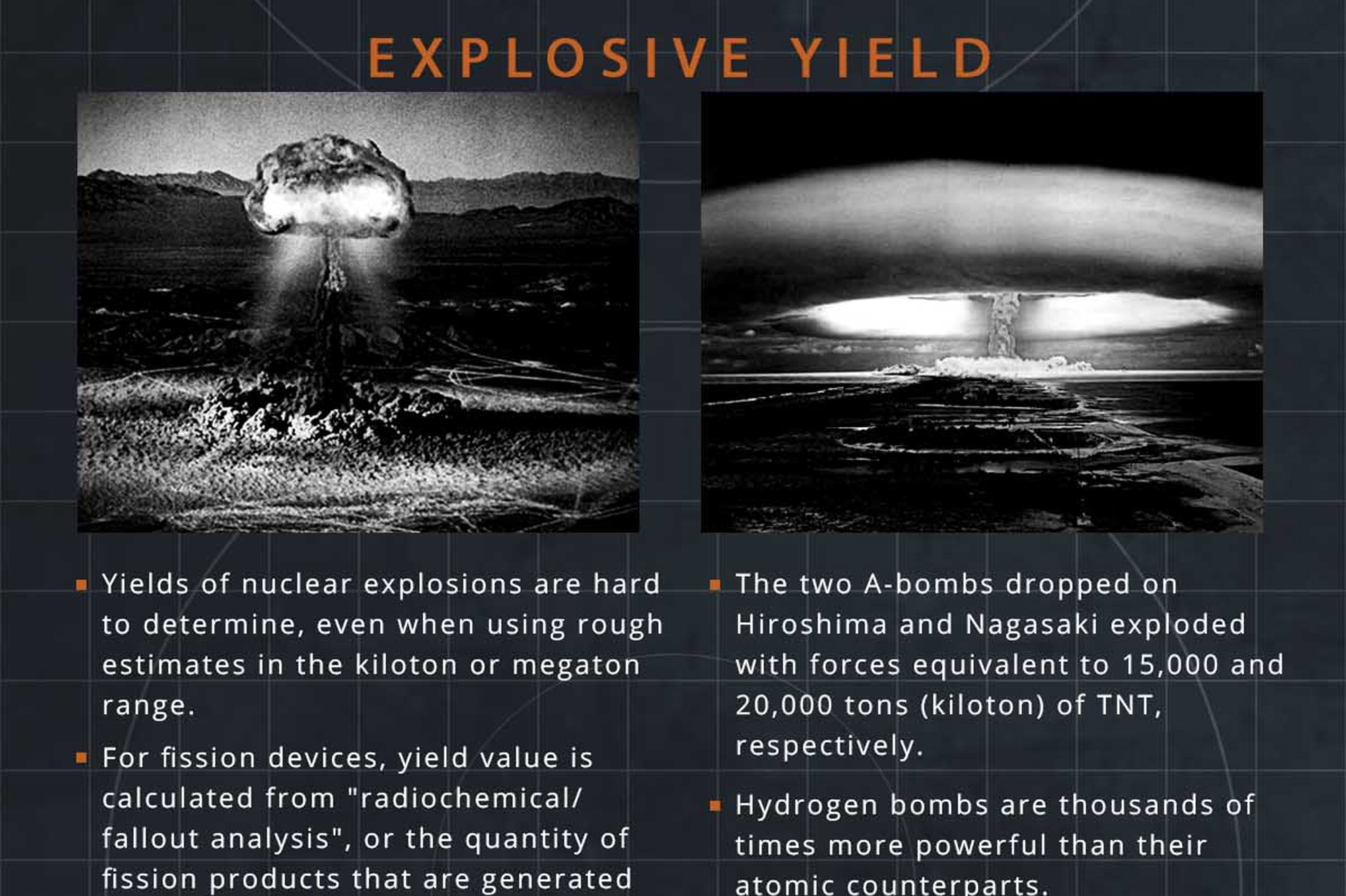
A 23-kiloton atomic shell detonation from April, 1953. Source: National Nuclear Security Administration / Nevada Site Office
First of all, A-bomb stands for atomic bomb, which relies on nuclear fission. This means that the nucleus of a volatile atom is split, creating a chain reaction and releasing huge amounts of energy very quickly. On the other hand, H-bomb stands for hydrogen bomb, which relies on nuclear fusion. This weapon causes two types of atoms to collide, forming a new material and releasing truly massive amounts of energy as a byproduct.
Why does this matter? Well, it’s important to know the weapons that exist, so you can differentiate between the two throughout history. A-bombs were infamously used against the Japanese cities of Hiroshima and Nagasaki in WWII, while H-bomb development became more prevalent during the extreme tensions of the Cold War.
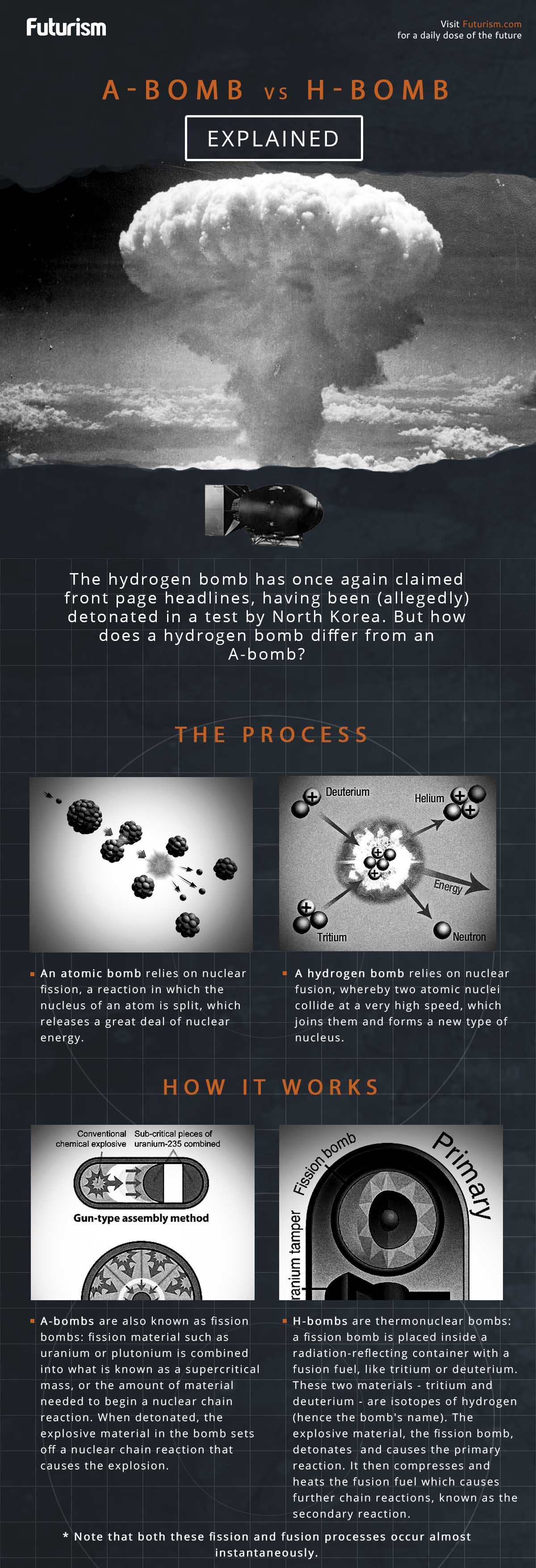
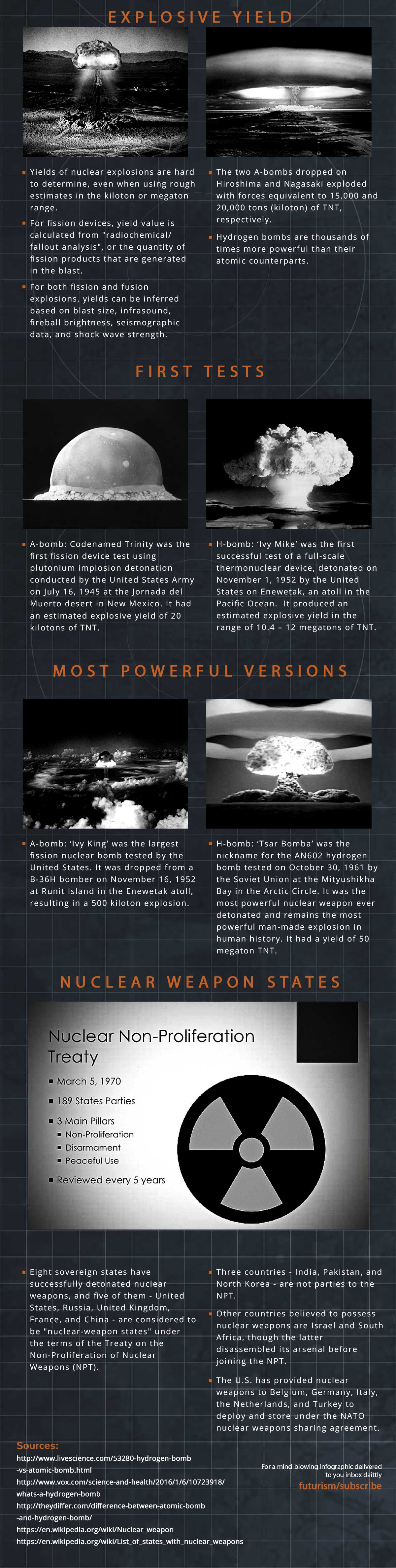
Here’s an excellent infographic from Futurism that explains some more nuclear facts:
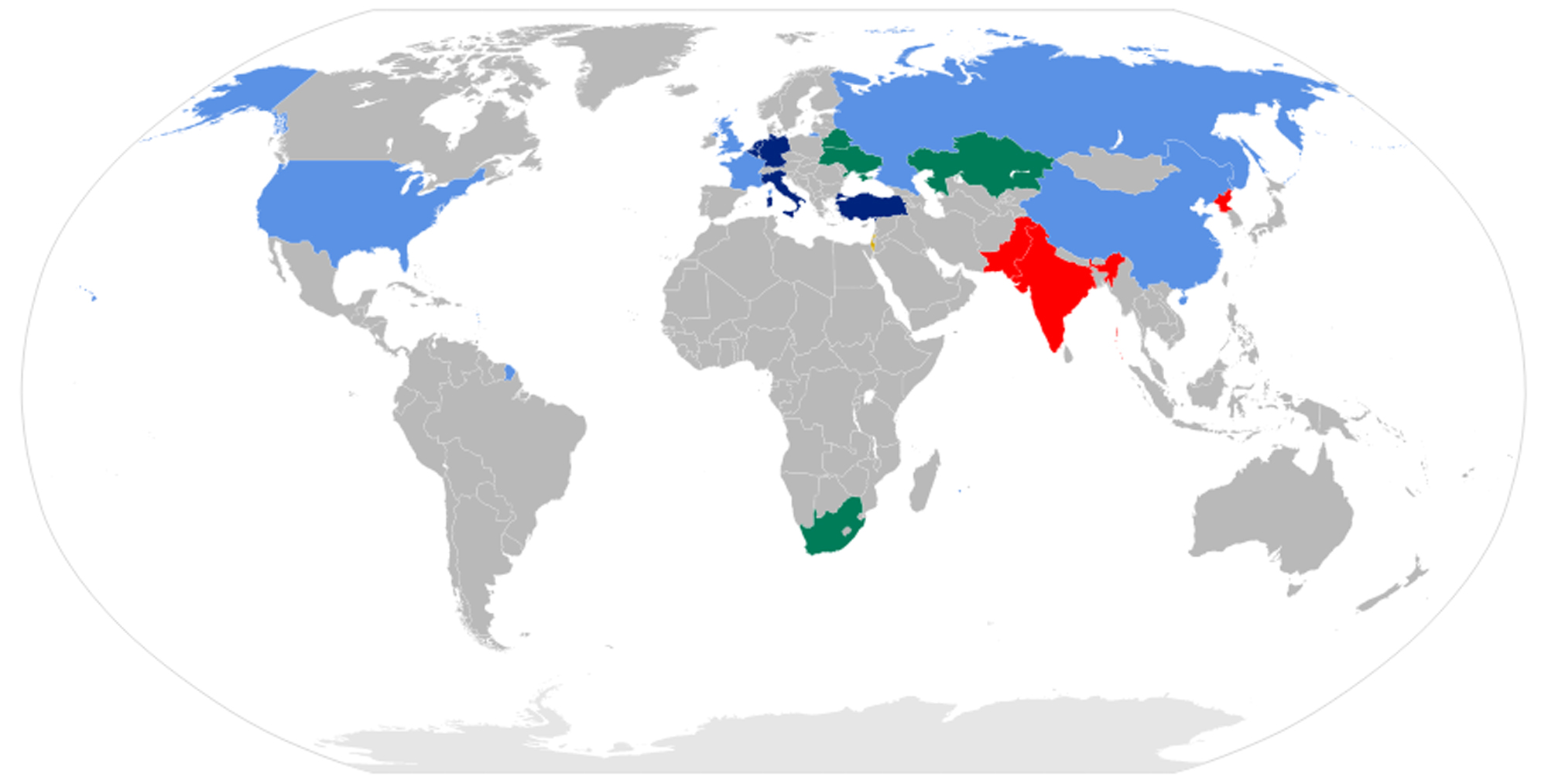
Today, the biggest nuclear threats come from North Korea, India, and Pakistan, three countries which are known to possess nuclear weapons but have refused to sign the Nuclear Non-Proliferation Treaty. North Korea actually was part of the treaty, but withdrew from it in 2003, and has since tested nuclear weapons at least three times.
North Korea claims to have tested an H-bomb on January 5th, 2016, but most sources believe it was a smaller-yield A-bomb, as the country may not yet have the supercomputers and other technology required to produce more sophisticated Hydrogen weapons.
Map of recently nuclear-armed states of the world. Source: Wikipedia
Knowing the difference between these two types of bombs can help us understand the threat that nuclear warfare may pose today, as well as key players that may be willing to use these nuclear weapons. See the map above for countries that currently or recently possessed nuclear weapons. Here’s the color legend:
Light blue: Countries that possess nukes under the Nuclear Non-Proliferation Treaty. These are the only countries known to have H-bomb technology. (China, France, Russia, United Kingdom, United States)
Red: Countries that possess nukes, but are not part of the Nuclear Non-Proliferation Treaty. These countries are known to have A-bombs, and suspected to have H-bombs. (India, Pakistan, North Korea)
Yellow: Other countries that likely have nuclear weapons, but have not openly admitted it. (Israel)
Even if you’re not a mountain climber, you’ve probably heard of rappelling (a.k.a. abseiling) before. This technique allows you to descend from high places in a controlled manner, using a rope or cable with a friction device that slows your descent. Outside of the climbing world, you’ll often see military and rescue personnel rappelling from ledges or helicopters. James Bond also does it on the silver screen.
Rappelling is a common climbing technique, but it usually requires quite a bit of safety gear and training.
Of course, it’s easy to see how rappelling could be a valuable skill for survival, especially if you need to escape a structure fire in a high-rise, or a partial building collapse caused by an earthquake.
However, rappelling is a relatively complex skill, and requires a fair amount of gear and knowledge to use safely. Imagine handing your office’s receptionist some cordage, a harness, and a carabiner—she’s probably not going to be able to descend from the roof of a building safely.
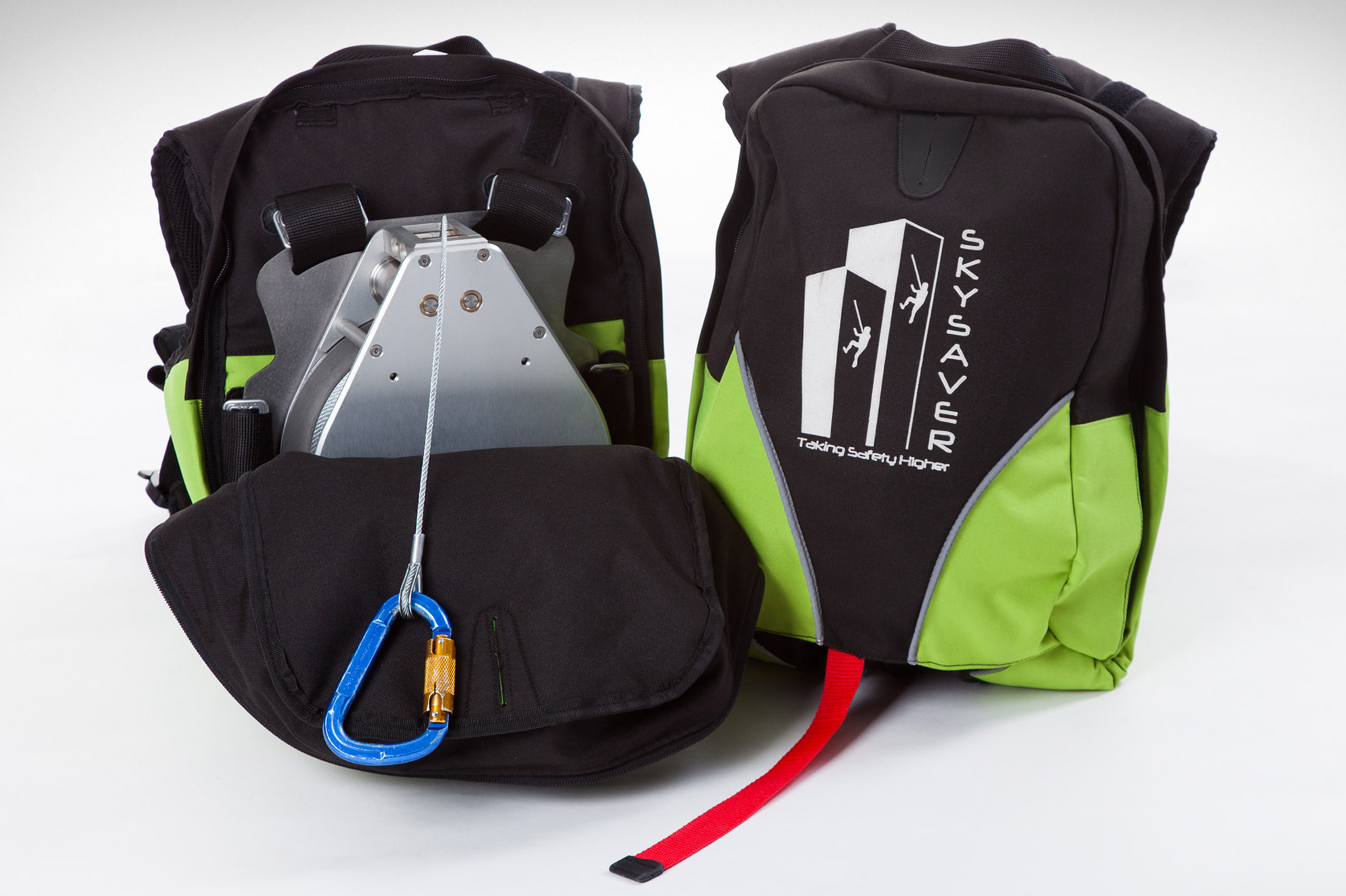
Fortunately, a new device called the SkySaver emergency rescue backpack has made escaping a high-rise building easier than ever. This self-contained pack was designed by experts from the Israeli Army and rescue and emergency services, and it allows users to descend from a building in three simple steps:
Pull the red tab to reveal the harness, then put on the backpack and tighten the straps.
Clip the included carabiner to a pre-installed anchor point near a window or other opening. (SkySaver can recommend a certified professional to install the anchors for you.)
Descend out of the building facing the wall. The Controlled Descent Device (CDD) will lower you at a safe rate of 3 to 6 feet per second.
Here’s a video from SkySaver that shows how it works:
Obviously, this system does require some preparation, since it must be purchased and anchors must be installed before a disaster occurs. It’s also rather expensive at an MSRP between $899 and $999 (depending on the cable length you need).
However, it’s easy to use, supports children or adults between 66lbs and 300lbs, and can help you rappel up to 260 feet (over 22 stories). It’s also invaluable insurance that could help you escape a building fire in minutes, rather than waiting for emergency services and hoping you make it out alive.
For more info on the SkySaver emergency rescue backpack, visit SkySaver.com.
In Issue 12 of our printed magazine, titled “Outbreak”, we discussed the potential danger of biological weapons, as well as emergency response plans, and even a “What If?” scenario that deals with the release of pneumonic plague. However, there’s something more: we want to give the concept of bioterrorism an added dose of reality.
So, we’re expanding on the “Outbreak” theme by delving into the real-world impact of three historical bioterrorist attacks. All of these events actually happened, and actually caused serious illnesses and/or deaths. Studying and understanding the perpetrators, motivations, and effects of these events can help us be more prepared for them in the future. As the saying goes, those who do not learn from history are doomed to repeat it.
The History of Bioterrorism vs Biological Warfare
Before we begin, we’d like to make a distinction: this article will only cover the history of bioterrorism carried out by civilians, cults, and rogue groups. Military actions which involve biological weapons would fall into the separate category of Biological Warfare, and could easily be expanded into another article (or even a book). Although the majority of nations worldwide have agreed to cease production of biological weapons, many nations continue to study biological weapons for defensive purposes.
By focusing exclusively on terrorist groups, we’re proving that a massive team of researchers and a billion-dollar budget are not required for the development of a biological weapon. These horrific events have been carried out by ordinary individuals, yet remain highly effective. The reality of the situation is that bioterrorism is not just a Hollywood scare tactic—it remains a deadly threat, even today.
Rajneeshee Bioterror Attack
The Dalles, Oregon – August-October 1984
The Perpetrators: Followers of Indian mystic, guru, and cult leader Bhagwan Shree Rajneesh. Thousands of cult members had moved to a commune based on a remote ranch in Wasco County, Oregon. The cult then incorporated into a city known as Rajneeshpuram, and began expanding rapidly to take political control of the surrounding towns. Local citizens in Wasco County disagreed with this expansion, so they were targeted by Rajneesh’s followers.
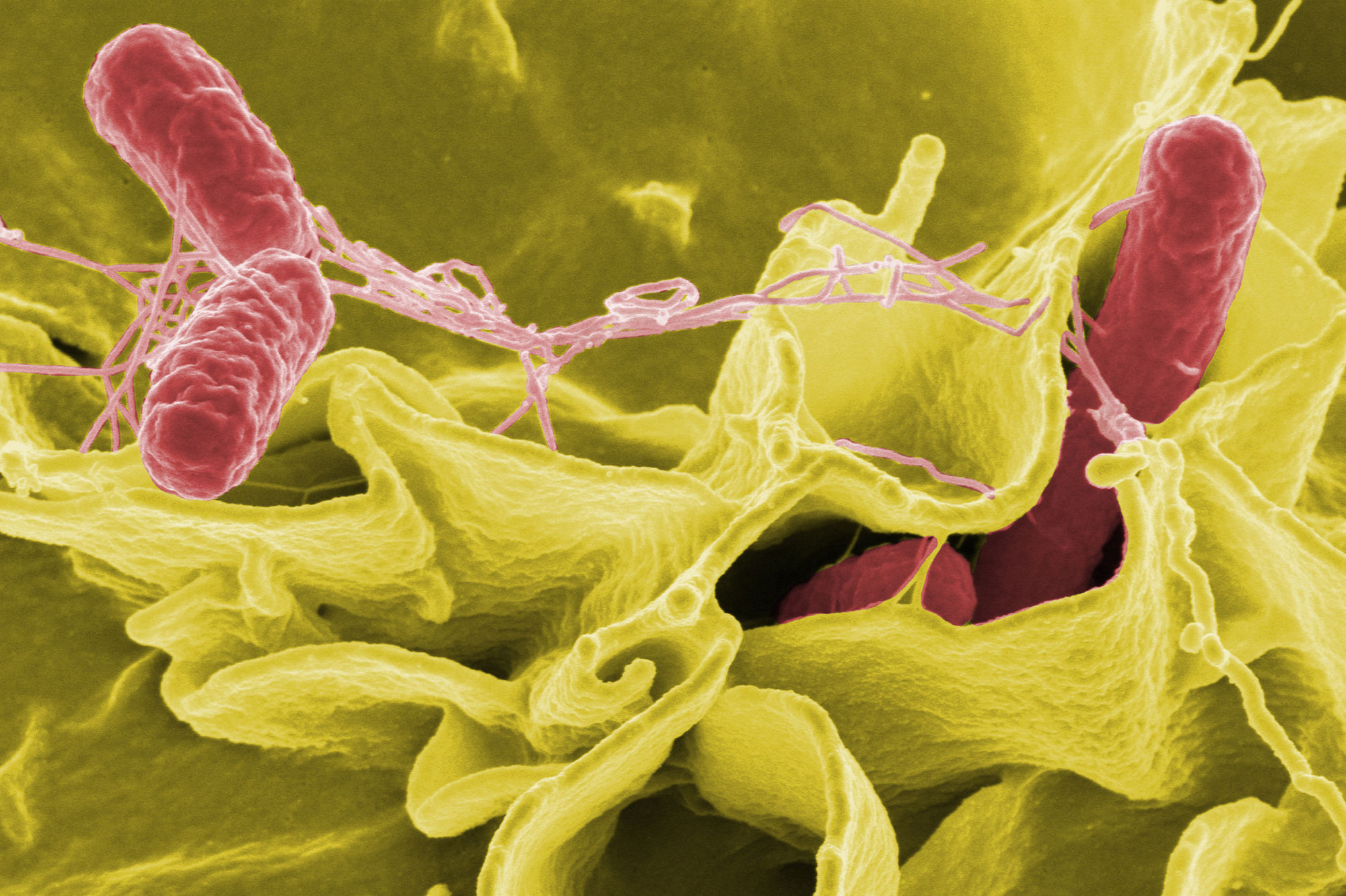
The Weapon: Salmonella enterica Typhimurium, a strain of Salmonella bacteria that can lead to food poisoning and acute gastroenteritis. Symptoms include diarrhea, fever, chills, nausea, vomiting, headaches, abdominal pain, and bloody stools.
A colorized electron micrograph showing Salmonella invading human cells. Source: National Institutes of Health
You may think Salmonella is too common to be considered a weapon, or not damaging enough. However, the CDC classifies it as a Category B biological agent—moderately easy to disseminate with low mortality rates. Despite the “low mortality” rating, Salmonella can be extremely dangerous due to its tendency to rapidly dehydrate and weaken victims through intense vomiting and diarrhea.
(This author has experienced Salmonella-related food poisoning firsthand, and ended up in the emergency room on an I.V. drip, after days of being unable to retain any form of food or drink. With proper medical treatment, it may not kill you, but it can certainly make you wish you were dead.)
The Attack: Rajneesh’s followers planned to take legal control of the county during the 1984 election, by voting cult members into office. In order to make this happen, they formed a plan to incapacitate as many voting citizens as possible immediately before the election.
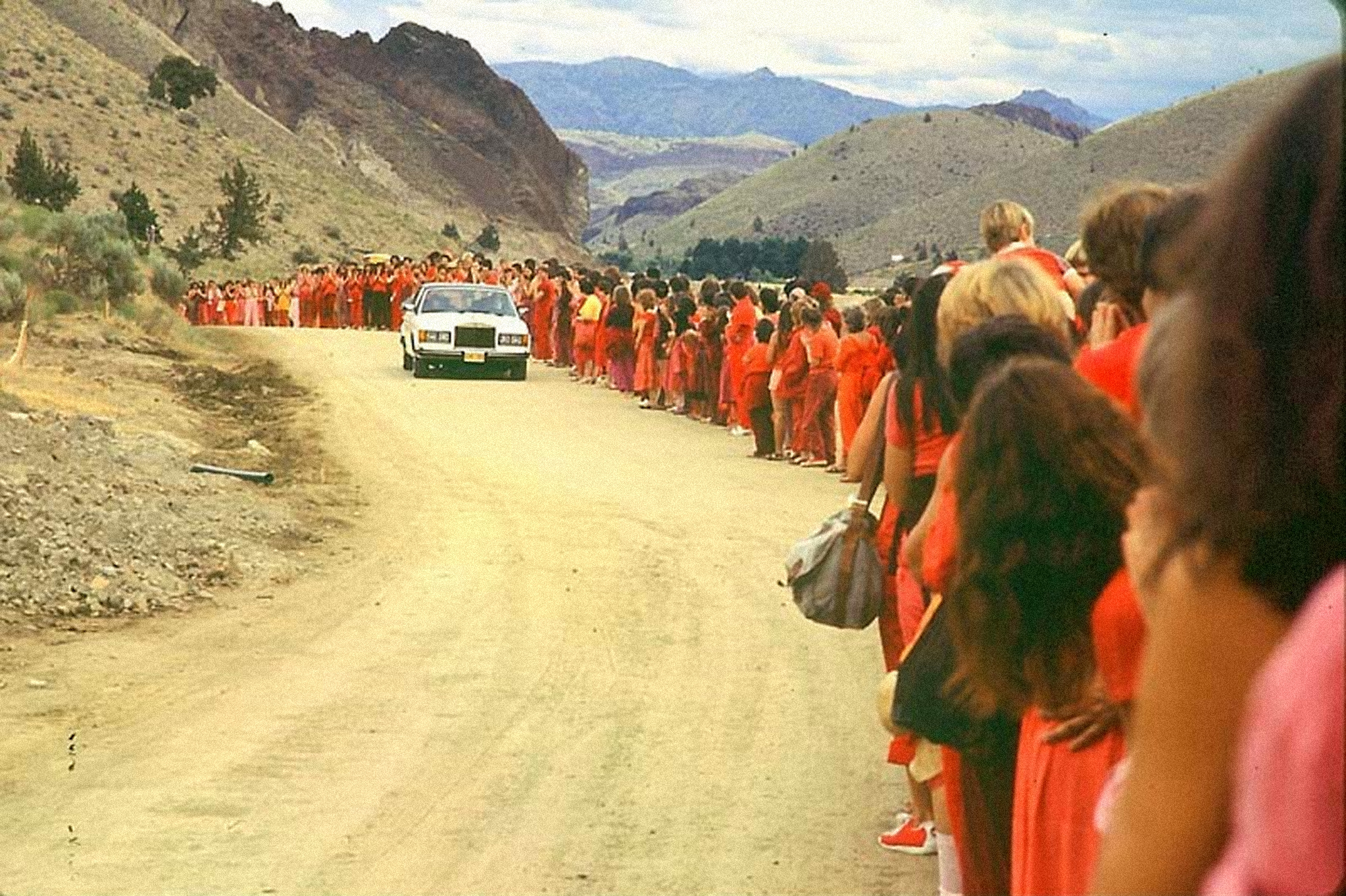
Rajneesh driving by his followers in a Rolls-Royce, 1982. Source: Samvado Gunnar Kossatz / Wikipedia
The cult purchased Salmonella Typhimurium bacteria from a medical supply company in Washington, and cultured it at a lab in the Rajneeshpuram commune to grow more. The Salmonella was then spread on produce at grocery stores, and on the salad bars at 10 local restaurants. Rajneesh’s followers also hoped to introduce pathogens into the water supply, but were unsuccessful.
751 people were infected by this bioterror attack, and 45 were hospitalized, but all the victims survived. The plan ultimately backfired, as angry local residents turned up in droves on election day, and none of the cult’s candidates were elected.
Rajneesh claimed no knowledge of his followers’ terrorist plot, and fled to India, where he died of heart failure 6 years later.
What Can We Learn?
Food and drink is a common delivery method for biological weapons. Be extremely cautious when accepting food from unknown individuals, or when eating at restaurants in areas experiencing political unrest.
Do not assume food-borne illness is “just food poisoning”—seek medical attention ASAP if your symptoms worsen.
Aum Shinrikyo Biological & Chemical Attacks
Tokyo, Japan – 1993-1995
The Perpetrators: Aum Shinrikyo, a Japanese doomsday cult founded by Shoko Asahara in 1984. Asahara declared himself “Christ” and said he could cleanse his followers of their sins. He also claimed that a nuclear Armageddon was coming in 1997, and that all of humanity would be wiped out—except for his followers, of course, who would receive salvation.
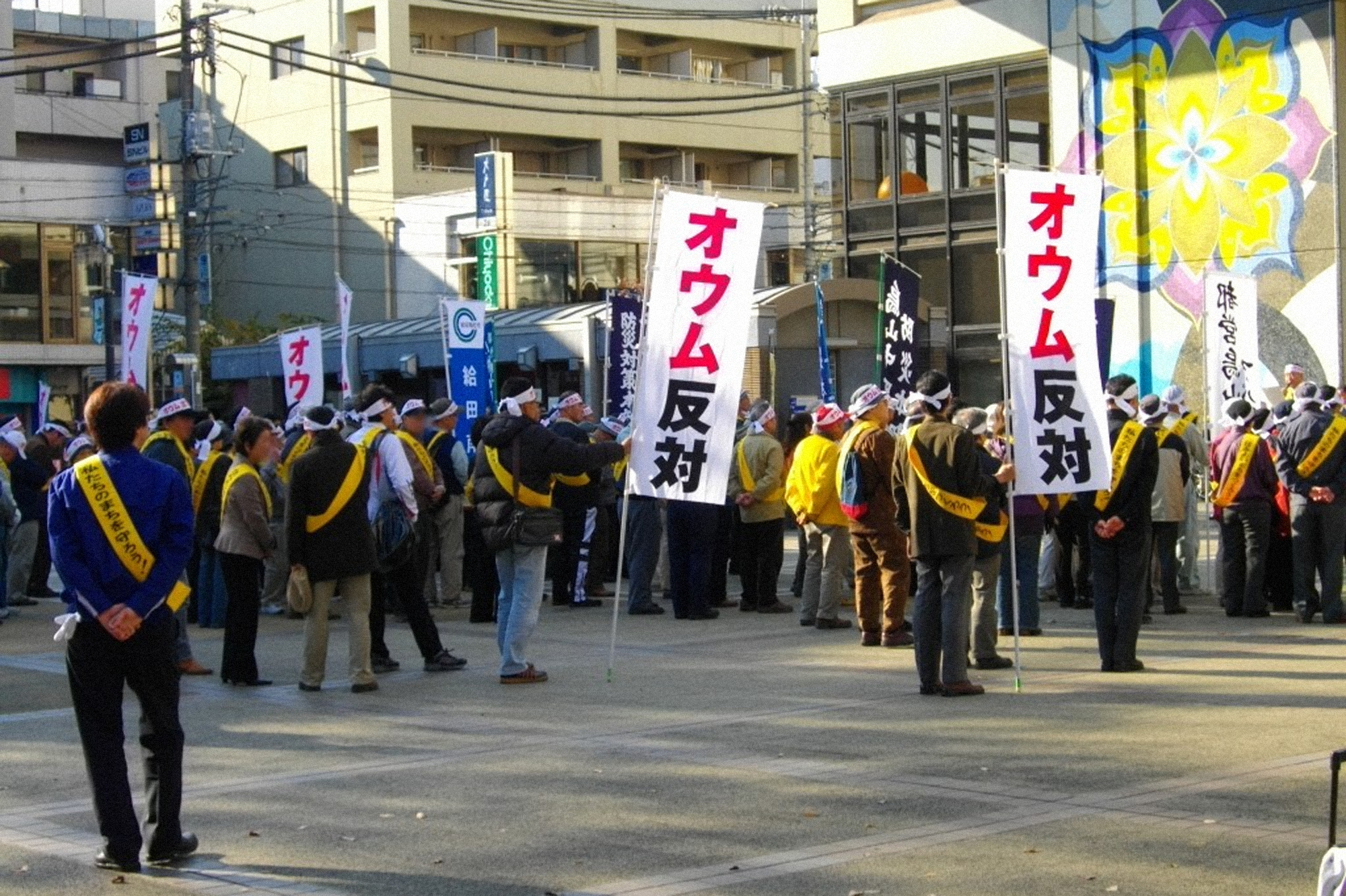
An anti-Aum Shinrikyo protest in Japan. Source: Wikipedia
Aum followers claimed that by bringing about the end of the world, they would restore balance and become enlightened. After extortion and assassinations failed to bring about Armageddon, they turned to large-scale bioterrorism.
The Weapons: An initial attack by Aum Shinrikyo used Anthrax. The cult later moved on to producing weapons with VX, Sarin, and Hydrogen Cyanide.
The Attacks: In July 1993, Aum Shinrikyo released a liquid suspension of Anthrax from the roof of a building in Tokyo. Fortunately, the members had used a strain of Bacillus anthracis that was designed for animal vaccinations, and no injuries were reported. The CDC states, “low spore concentrations, ineffective dispersal, a clogged spray device, and inactivation of the spores by sunlight are all likely contributing factors to the lack of human cases.”
Starting in 1994, the group began using chemical weapons such as Sarin and VX for assassinations. Sarin gas was also released from a truck driven through Nagano, Japan, killing 8 and injuring 200. However, local police failed to implicate Aum Shinrikyo in the attack.
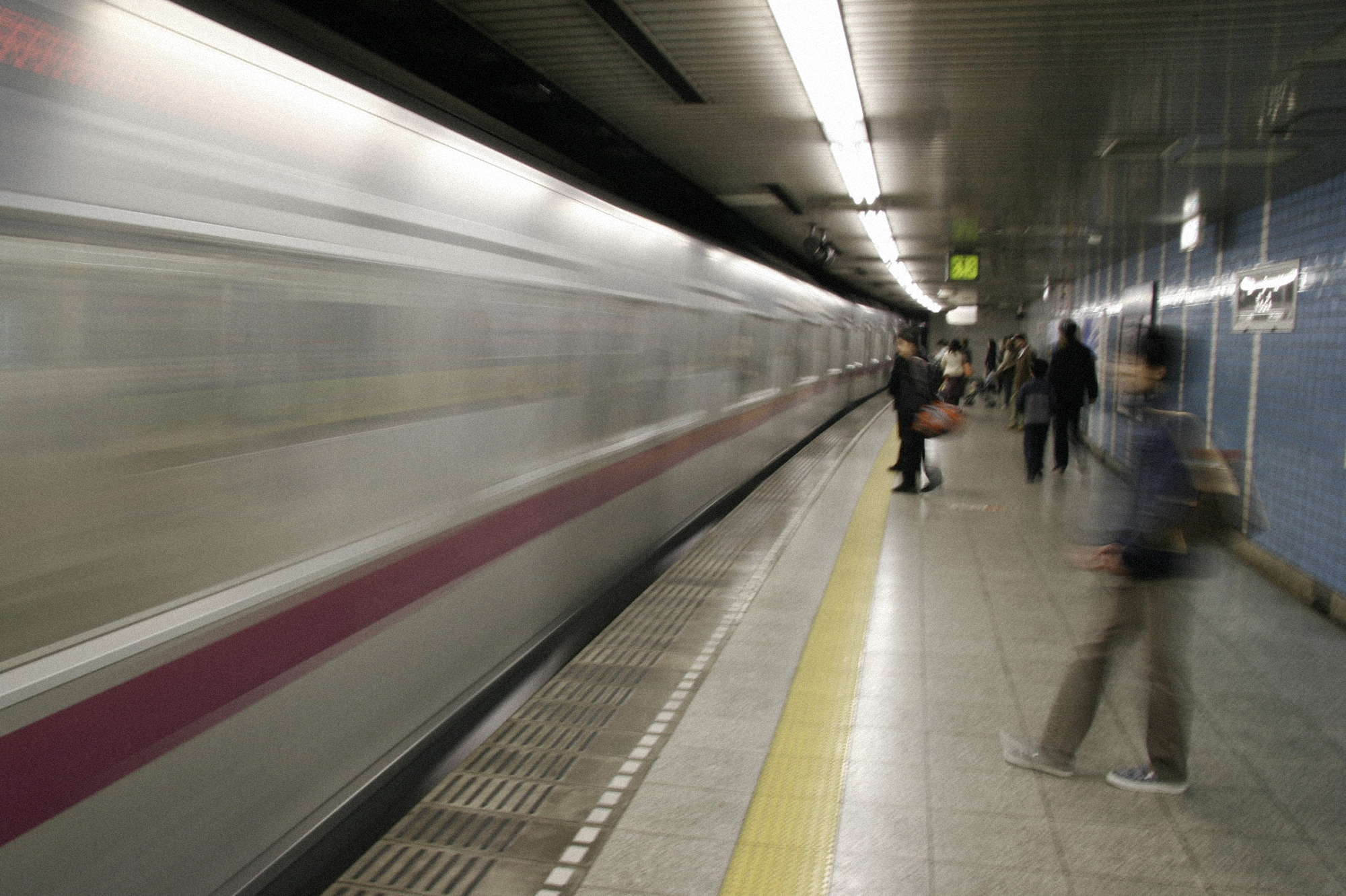
The Tokyo subway was used by Aum Shinrikyo as a bioweapon distribution system.
On March 20th, 1995, Sarin gas was released yet again, this time on 5 trains in the Tokyo subway system. The devastating attack killed 12, seriously injured 50, and caused temporary symptoms in over 1,000 others.
On May 5th, 1995, several plastic bags were discovered by cleaning staff in a subway station. The bags contained undetonated Hydrogen Cyanide weapons, and despite one bag catching fire when it was moved, the Cyanide gas was not released. Estimates state that the chemical weapons could have killed 10,000 people, had they not been found and defused.
Asahara and other Aum Shinrikyo members were arrested soon after the subway incidents, and Asahara was eventually sentenced to death in 2004.
What Can We Learn?
One attack can quickly turn into several, especially when the perpetrators are motivated to wipe out all of humanity. If one attack occurs, expect more.
If bioweapons fail, terrorist groups may turn to chemical weapons such as nerve agents. Development and delivery of these chemical weapons is often similar to bioweapons, so the two often go hand-in-hand.
If there is any threat of biological or chemical weapon attack, avoid densely-populated areas. Public transportation may serve as a method of spreading these agents, and amplifying their effects.
Anthrax Mail Attacks
Washington, DC, Florida, and New York – September-October 2001
The Perpetrator: Bruce Edwards Ivins, age 62, was found to have committed suicide via an acetominophen (paracetamol) overdose on August 1st, 2008. Ivins had worked for the last 18 years as a scientist in the U.S. Government’s bio defense labs at Fort Detrick. Shortly after his death, FBI prosecutors announced Ivins had been under surveillance since 2007, and that he was the sole culprit of the Anthrax attacks in 2001.
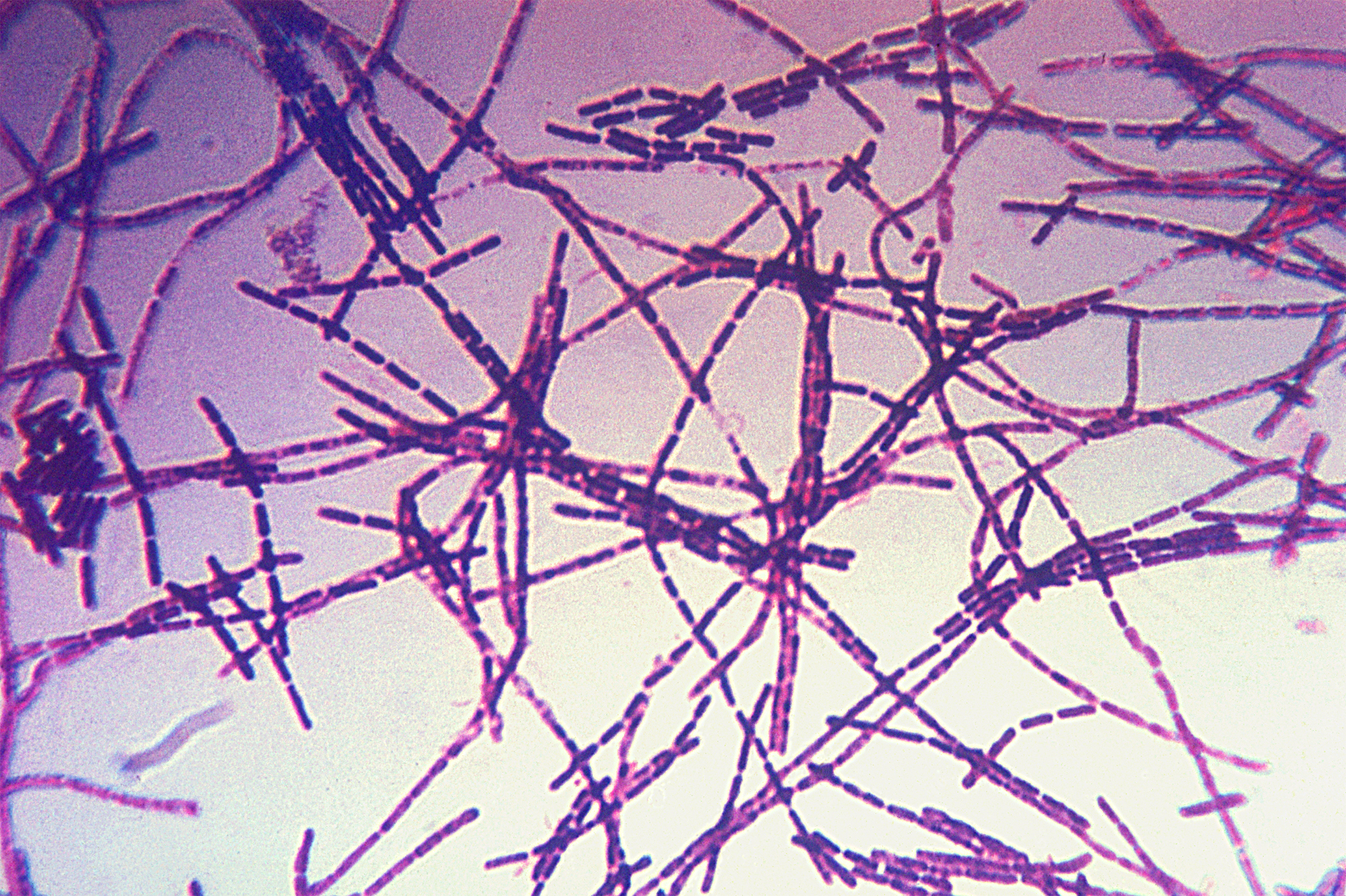
A photomicrograph of Bacillus anthracis. Source: CDC / Wikipedia
Ivins had previously showed signs of mental illness, mentioned homicidal thoughts, and told a therapist he “planned to go out in a blaze of glory”. However, after a 2011 report from the National Academy of Sciences, there remain some doubts about the FBI’s conclusion that Ivins acted alone.
The Weapon: Bacillus anthracis (Anthrax spores), both in a brown granular form that caused skin infections, and a fine white powder that caused inhalation-related infections. The Anthrax was delivered via letters mailed through the US Postal Service.
The Attacks: Only a week after the September 11th terrorist attacks, several letters were mailed to news outlets in New York City and Boca Raton, Florida. These letters contained coarse brown Anthrax material, and infected several individuals who came into contact with the letters, mostly causing skin infections.
An FBI reward poster asking for leads on the perpetrator of the Anthrax attacks.
Three weeks later, two more letters were delivered to two U.S. Senators, this time containing a highly refined white powder form of Anthrax spores. This material was easily spread, and caused severe inhalational Anthrax infections in several individuals.
All told, the attacks caused 5 deaths and 17 injuries. Several victims may have never even seen the letters, and were infected after touching mailboxes or other surfaces the letters had contacted. The complete motive of the attacks remains unknown, but the letters state “09-11-01” and “DEATH TO AMERICA”, indicating possible ties to the September 11th terrorist attacks (or an attempt to misdirect investigators).
What Can We Learn?
Be cautious of suspicious letters and packages, especially if you have received any form of threats in the past, or if other bioterrorist attacks have taken place recently.
The CDC calls Anthrax “one of the biological agents most likely to be used” in a bioterrorist attack.
Unlike some other bioweapons, Anthrax is not contagious, and will not spread person-to-person like the flu. However, in weaponized spore form, it can be dispersed quickly in the air.
Even if you take every precaution against a bioterrorist attack, it’s possible to be infected by chance contact with bioweapon residue. In that case, all you can do is treat the symptoms and hope for the best.
In our first post about Yucca plants, we showed how to turn the fibrous leaves into improvised cordage, which is an invaluable skill if you’re going to be trying to survive in a desert environment. However, there are many other Yucca uses, from food to fire-starting. This plant is jam-packed with useful materials and resources.
First of all, Yucca can be made into primitive soap or shampoo. There’s even a variety of Yucca called “soaptree” due to its high saponin content. Just grind and squeeze Yucca roots, as seen in the video below:
Secondly, Yucca plants feature some edible components. Specifically, the white Yucca flowers can be boiled, roasted, or eaten raw (although raw flowers may taste bitter and cause a stomach ache for some). Here’s a recipe for sauteed Yucca flowers with chipotle and garlic, if you want to get all epicurean. The Yucca fruits can also be cooked or eaten raw, and seeds can be roasted, ground, and boiled. Even the young flower stalks are edible.
The white Yucca flower blossoms can be bitter if eaten raw, so boil them to mellow the flavor.
The dry brown leaves, fibers, and stalks of Yucca plants make for excellent tinder material for starting fires. In fact, the wood in a dry Yucca stalk has one of the lowest kindling points of any type of wood, so it ignites very easily. Just grab some dry Yucca leaves or wood and hit them with your favorite fire-starter—you’ll have a crackling fire going in no time.
Can you spot the Yucca plant? Yeah, it’s kind of hard to miss, actually.
Yucca juice can even be used to stun or kill fish, and has been used for this purpose by many Native American tribes. If you extract the liquid from crushing Yucca leaves or roots (as seen in the soap video above), and then pour it into streams or ponds with a high density of fish, those fish will be temporarily paralyzed and can be collected easily. It’s theorized that this was one of the earliest methods of fish farming in the Americas.
Note: poisoning fish is illegal, so only use this method as a last resort if you need food to survive.
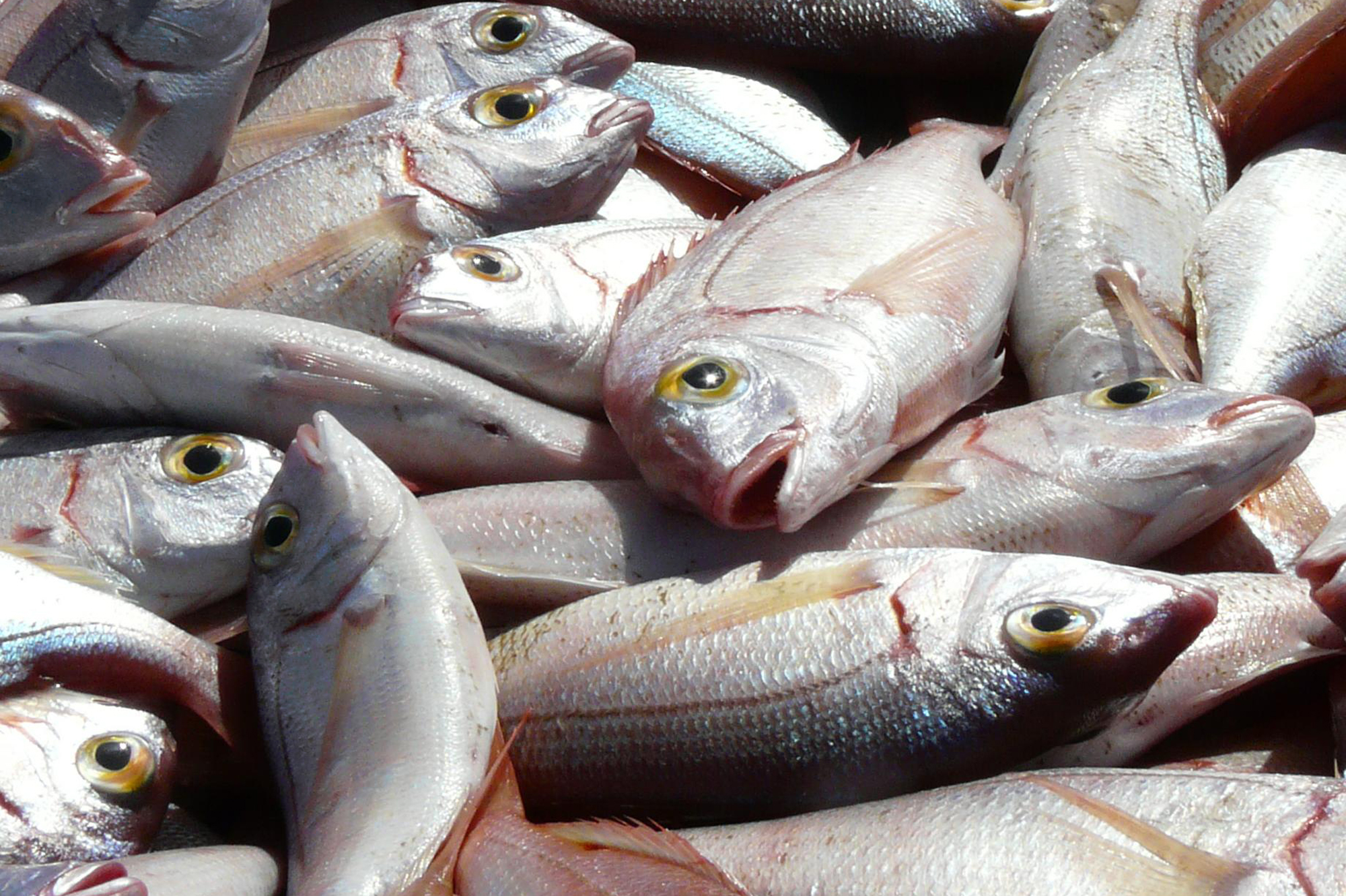
If you can’t craft a fishing line and hook in a survival scenario, Yucca juice can stun fish temporarily.
Finally, here’s some icing on the cake: the Yucca plant (not to be confused with Yuca, a different species also known as Cassava) is a close relative to the Agave, which is the key to creating Tequila. Now, we wouldn’t recommend trying to brew up some Yucca moonshine, but in theory it could be done. Just sayin’.
Aside from a fire starter and a knife, cordage is one of the most important tools you can have in a survival scenario. Of course, we recommend carrying some 550 paracord as part of your survival kit, but what if your cordage gets lost or stolen? You’re going to have to improvise, adapt, and overcome.
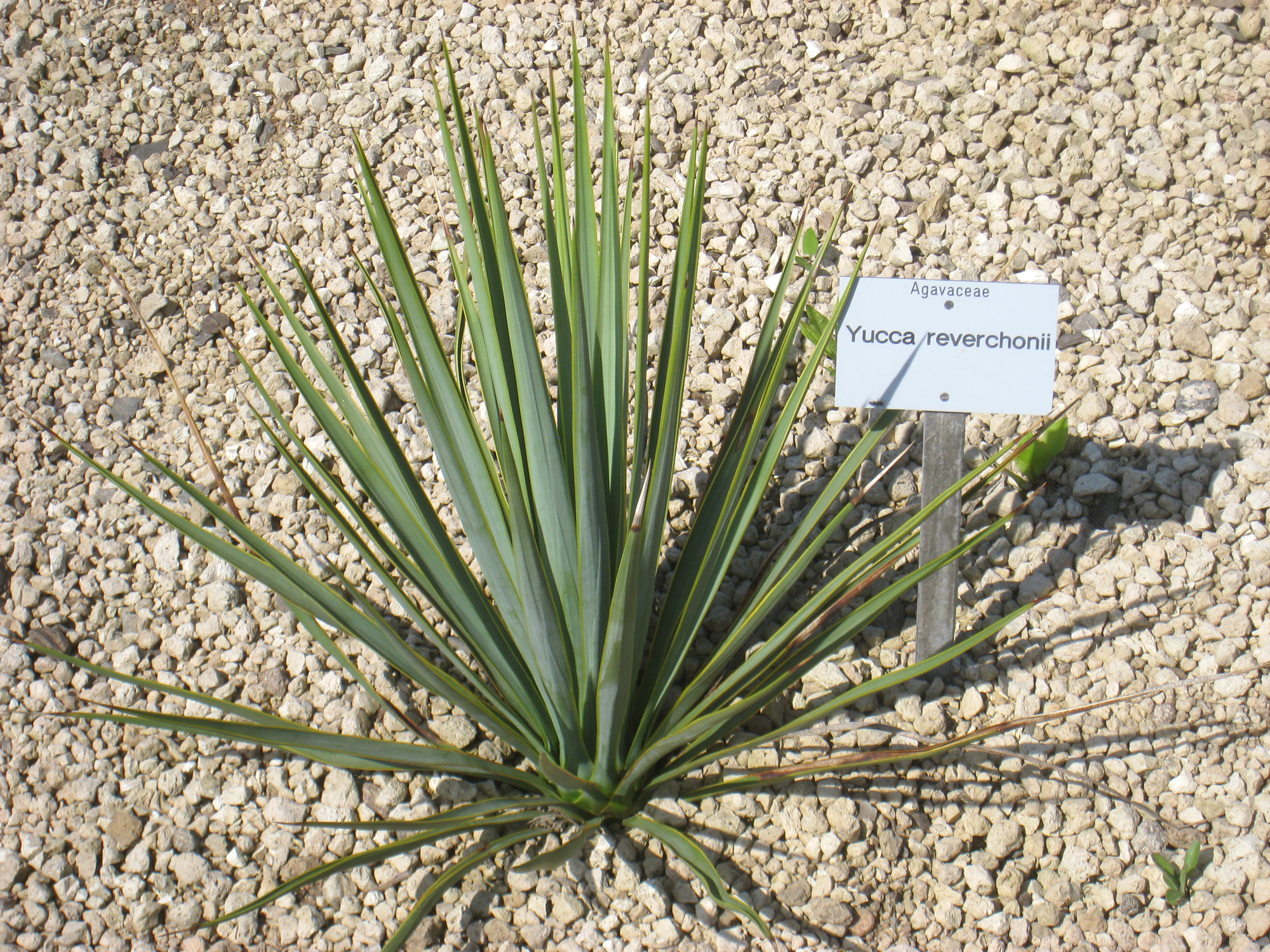
The Yucca plant is plentiful in the southwestern U.S., and its green leaves are easy to identify.
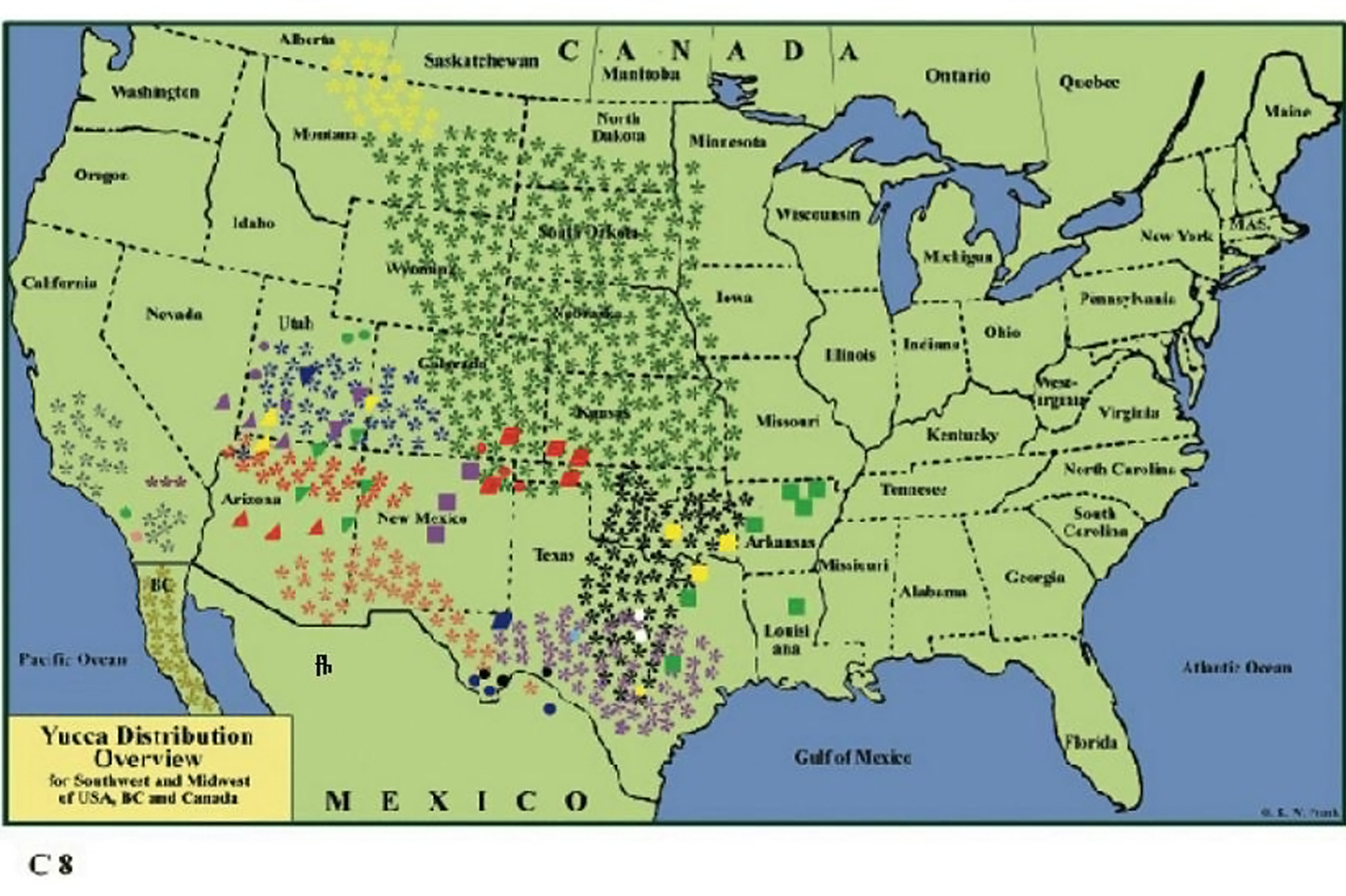
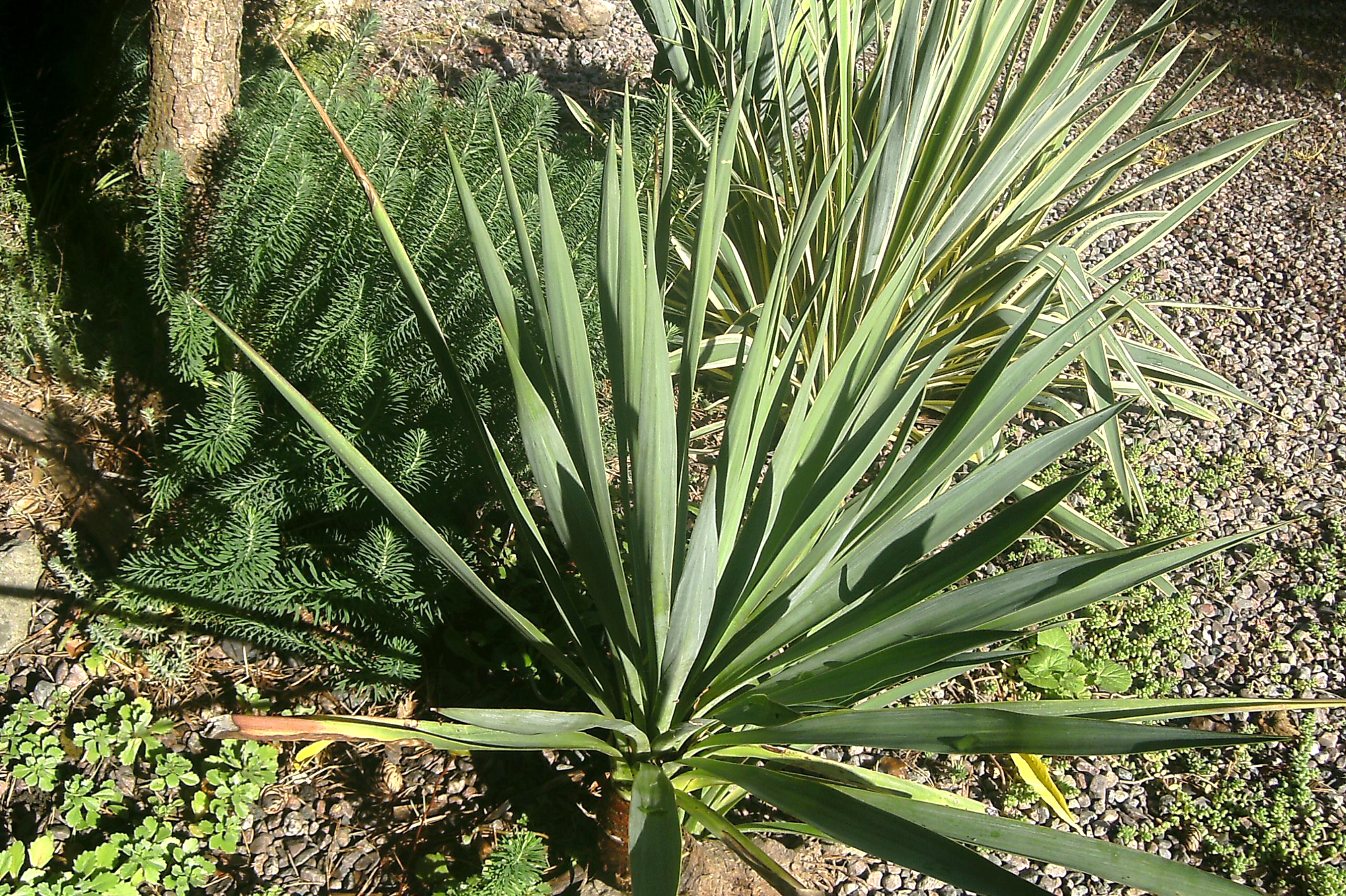
The Yucca plant can be found throughout most of the western United States, as well as Central America and South America. Its distinctive pointy, green, sword-shaped leaves are instantly recognizable—and that’s a good thing, because you’re going to want to find some Yucca to make cordage.
A map showing the distribution of Yucca plant species in the United States. Source: Wikipedia
In fact, one of the most common varieties of the plant is Yucca filamentosa, which hints at the fact that its leaves are full of many strong filaments or fibers. Historically, Yucca plants were even referred to as “meat hangers” in some Appalachian regions, since the leaf fibers and sharp tips were used to puncture meat and hang it in the air for salt curing.
Now we know Yucca plants are full of strong fibers, but how do you get them out? This video from Bob Hansler on YouTube shows each of the steps:
In case you can’t watch the video right now, here’s a rundown of the basic steps:
Harvest several green leaves from a Yucca plant.
Set a leaf on a hard, relatively flat surface, like a log or boulder.
Obtain a hammering tool (such as a stone or hard stick) and a scraping tool (such as a knife or sharp stone).
Hammer the Yucca leaf repeatedly to thoroughly crush it.
Scrape away any remaining plant flesh with your scraper tool.
Pull apart the fibers, and twist or braid them together as needed.
Knot the ends to keep the braid intact. You’re done!
As with many useful plants, the Yucca can serve more than just this one purpose. Bob Hansler actually compares the plant to a natural Swiss Army Knife. We’ll be discussing more uses for this helpful plant species in a second post tomorrow, so stay tuned on OFFGRIDweb.com.