AquaPodKit Bathtub Water Storage

We’ve said it before, and we’ll say it again: clean drinking water is absolutely paramount to survival, no matter where you are. Even in an urban environment with clean tap water year round, a natural disaster such as a hurricane, flood, or or earthquake can easily contaminate or disable your running water. You may have a few gallons of bottled water in storage, but that’s not going to last you very long. Most people grossly underestimate how much water they use each day.

AquaPodKit water storage 4

A case of bottles may look like a lot of water, but you’d be surprised how fast it gets used up.

So, what can you do to prepare? Well, you may have heard that filling up your bathtub at the first sign of a disaster is a good way to store water, and we don’t disagree. However, your bathtub probably isn’t squeaky clean at all times, and the exposed water can become contaminated quickly. Ideally, you’ll want to contain the water—and a company called AquaPodKit has developed an easy way to do so.

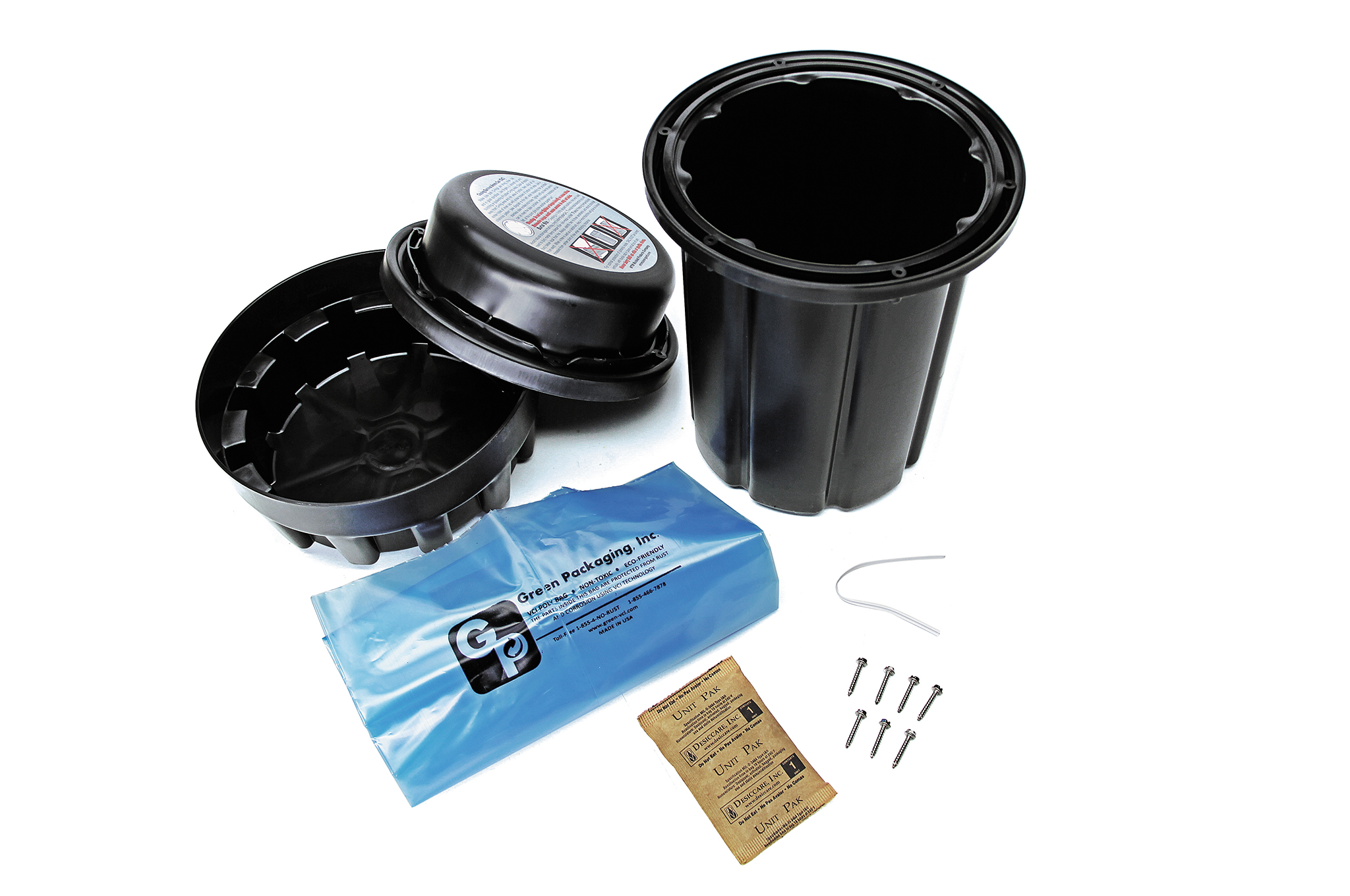
The AquaPodKit is a simple liner and pump setup that includes everything you need to store water in your tub. The food-grade polyethlene liner can hold a maximum of 100 gallons of water, although it’s recommended to fill to just below the top of your tub (about 65 gallons for most home tubs). That’s enough to support the basic needs of a family of four for up to two weeks.

Here’s how it works (skip to 0:55 for the demo):

The AquaPodKit can store clean drinking water for up to 8 weeks, and dispenses it easily thanks to an included siphon pump. The company also now offers an upgraded Water Basics pump and filter, which can be used to remove contaminants and improve taste.

The upgraded pump and filter are sold separately for $29.99, or with a tub liner for $39.99.

The basic water storage kit starts at an MSRP of $24.99, or you can get it with the upgraded Water Basics pump and filter for $39.99. These kits are made in the USA, and are available directly through AquaPodKit’s web store, or at various other outdoor retailers.


Brite-Strike Brite-Blade vs. SOG BladeLight Camp – Lighted Knives

As survival-minded readers, you know that tools can be lifesavers. But since you can’t roll a six-drawer tool chest with you everywhere, you should have a capable knife and flashlight at the ready at all times.

Knives are one of the most versatile inventions ever. They let us slice, pierce, dig, fight, and even start fires. Flashlights let us see in the dark, signal for help, and double as blunt instruments in a pinch. Having both in hand greatly increases your chances of enduring an emergency — so why not combine them into one tool?

5-brite-strikes-bright-blade-lighted-knife-light-pattern

In an effort to add utility to their tools, some manufacturers are adding lights to their knives. Of course, there’s nothing particularly new about combining knives with other tools — after all, the Swiss Army first purchased multitool-style knives for its soldiers way back in 1891. Adding LEDs to knife handles is just the latest in the evolution of the knife. At first glance, it’s easy to dismiss these lighted knives as nothing more than marketing gimmicks and consider them inferior to standalone knives and lights. But carrying one tool rather than two isn’t such a bad idea. With so much equipment one must have prepared, reducing cargo weight while increasing functionality is a plus.

So, is a lighted knife just as good as its dedicated counterparts? Clearly, a more detailed inspection is required. So, in our premiere edition of Hands On, we shine the spotlight (pun intended) on Brite-Strike’s Brite-Blade and SOG’s BladeLight Camp. Read on to find out if they’re a good fit for your preparedness plans.

Brite-Strike’s – Brite-Blade

1-brite-strikes-bright-blade-lighted-knife

411: Featuring replaceable LED lights, the multi-featured Brite-Blade is specifically made to handle diverse survival situations. It includes a 3.5-inch blade, carbide window punch, a seatbelt and line cutter that doubles as a wire stripper, and a fire starter-striking tool. Its body is made of 6061 hard-anodized aluminum and has a slot just above the blade for one of two included mini LED flashlights (one white, one red) to adhere to. At the base of the mini LED lights are magnets that allow them to not only be retained in the body’s light slot, but also on any ferrous metal, such as iron and steel. The mini flashlight units are interchangeable and rated at 45 lumens each. To power the light on, it must be removed from the knife and its head twisted until it turns on, then replaced back into the knife’s body.

3-brite-strikes-bright-blade-lighted-knife

With the light being positioned just above the blade, shadows are cast from the blade depending on what angle the knife is being employed. Most chopping and slicing maneuvers will create a dark enough shadow to make it cumbersome to use. The good news is that head-on stabbing and jabbing angles are affected less by the shadow of the blade. (At least you can see what you are stabbing.) Since the light is removable, you can conceivably remove it and reposition it to cover the area you need to see — even on the blade itself. The two lights are small and not meant for any meaningful use at distance, but are serviceable in your immediate workspace.

2-brite-strikes-bright-blade-lighted-knife

The knife has many features we like seeing in a folder, including the use of 440C stainless steel for its blade, an interchangeable full-length spring steel pocket clip, and spring-assisted opening mechanism. The blade stayed straight no matter what angle we used it at, even under full body weight. The model we received for this review has a combination blade with nice serrations, though a full straight-edge version is also available. The blade is quickly deployed with a flick of the thumb and kept in place with a stainless steel liner lock.

Verdict: The Brite-Blade is a solid-feeling folder that incorporates a few survival-themed features that we really like, such as a removable fire-starter striking tool and robust window punch. As competent as the knife is, we feel that the flashlight portion of this combination was not as strong — surprising since it comes from Brite-Strike, which is primarily a maker of tactical illumination products. All in all, it’s a very capable knife with a light that you can use in a pinch. We look forward to seeing what innovations the next generation of lighted knives will bring.4-brite-strikes-bright-blade-lighted-knife

Make & Model
Brite-Strike Brite-Blade

Overall Length
8.6 in. (open); 5.1 in. (closed)

Blade Length
3.5 in.

Blade Material
440C stainless steel

Weight
5.35 oz. (with batteries)

Battery
LR621 (eight, included)

Runtime
Unlisted

MSRP
$150

URL
www.brite-strike.com

SOG Specialty Knives & Tools – BladeLight Camp

3-sog-bladelight-camp-lighted-knife

411: The BladeLight Camp is one model in a full line of illuminated knives offered by SOG. Designed with campers and outdoor enthusiasts in mind, the BladeLight Camp features six bright LED lights and a satin-polished 4.5-inch stainless-steel fixed blade. With three LEDs mounted on either side of the blade, the lights combine for an output of 30 lumens. That’s enough illumination to light up a small workspace or the path in front of you. We found the positioning of lights on both sides of the blade allow for shadowless, uninterrupted light to shine out to an effective distance of 20 to 25 feet. Its real strength is within the confined workspace of 2 to 3 feet however. The light’s color is white bordering on bluish-white and isn’t harsh on the eyes, even when being used close up in the dark.

The knife is securely stored in a hard nylon sheath that has an integrated blade sharpener and metal belt clip. It has slots that allow the six LEDs to shine through it so you don’t need to point your unsheathed knife at whatever you wish to light up. The lights are powered by one AAA battery and are activated by a rubberized push-button switch in the butt of its glass-reinforced nylon handle. Those with sausage fingers might find the handle a bit small for their liking, but its slightly grippy rubber texture does make it easier to maintain a good grip.

2-sog-bladelight-camp-lighted-knife

The BladeLight Camp measures a length of 9.2 inches overall and weighs a paltry 4.3 ounces. The blade is made of 8Cr13MoV, a made-in-China stainless steel that’s commonly used to help balance price with performance. We observed no flexing even with our full weight on it while cutting into different materials and at different angles. The blade looks and feels capable and should offer problem-free usage.

Verdict: After spending an extended period of time with the BladeLight Camp, we see why SOG made efforts into creating a line of light-capable knives. Being able to light up what you are cutting, slicing, or prying is a definite bonus when you only have two hands to work with while in the dark. Sure, it’s easy to say that you wouldn’t need a lighted knife if you were wearing a headlamp, but let’s face it, we don’t always have the right tools for the right job available to us at all times. A lighted knife takes two tools and combines them into a single useful package. Granted, the knife’s light is just enough to work with and isn’t a replacement for a dedicated flashlight by any stretch of the imagination. You’ll still want a “real” flashlight when you really need to see what’s lurking in the dark. But if we had a choice between a knife that can help light up the night and not, we’d choose this one for its added capability.

1-sog-bladelight-camp-lighted-knife

Make & Model
SOG BladeLight Camp

Overall Length
9.2 in.

Blade Length
4.5 in.

Blade Material
8Cr13MoV stainless steel

Weight
4.9 oz.

Battery
AAA (included)

Runtime
84 mins.

MSRP
$92

URL
www.sogknives.com


Infographic: Surviving a Fall Through Ice

We’ve all heard stories of what can happen if you fall through thin ice on a river or pond, but would you know what to do if it happened to you? Many people panic and exhaust themselves before they can escape or be rescued, resulting in tragic deaths each year. Fortunately, with the right knowledge and training, getting yourself out of the icy water is possible.

Before we get into the right way to survive a fall through ice, here’s a good example of what NOT to do. (Despite the video title, this guy is obviously not Bear Grylls.)

Now that we’ve seen it’s a bad idea to jump on river ice in your underwear, we’ll illustrate how you should escape if this happens. The Art of Manliness created this 6-step infographic about what to do:

Fall Through Ice

It’s also said that you shouldn’t venture onto clear ice that’s less than 2 inches thick. Opaque white ice should be double that thickness to support you, as it’s less dense. To learn more about how to survive falling through the ice, read the rest of The Art of Manliness’s article here.


RamRodz Barrel Cleaners

Ever look at a product and wonder how it was invented? Well, if you take one look at RamRodz, you’ll know where the inspiration for these firearm cleaning swabs came from: personal hygiene cotton swabs, also called Q-tips. Those little cotton swabs have been around for many years, and work great for everything from cleaning your ears to applying touch-up paint. Essentially, RamRodz are a scaled-up and refined version of this same concept, but specifically for firearm cleaning.

Ramrodz 04

The traditional way of cleaning a barrel involves a long slotted rod with a cotton patch pushed through it, but this is a bit of a hassle if you’re working with several calibers and have to repeatedly “thread the needle” with new patches. Fortunately, RamRodz has developed effective and affordable swabs that are caliber-specific. These swabs can be quickly run through your gun’s barrel and breech, removing debris from hard-to-reach areas. They’re even flexible, so they won’t break if you bend them.

Ramrodz 02

RamRodz are available in eight different calibers, each available separately:

  • .22/.223/5.56mm
  • .38/9mm/.357/.380
  • .40/10mm
  • .44/.45/.410
  • .50
  • .30/.308/7.62mm
  • 12 gauge
  • 20 gauge

Ramrodz 03

For more information on these cleaning swabs, visit RamRodz.com or look for them at your local outdoors retailer.


The Art of Building Effective Makeshift Weapons

Sharp rocks. Arrows. Catapults. Blunderbuss. SCAR-17 rifle. Intercontinental ballistic missiles. Since the dawn of time, man has been crafting weapons. Much like our need for food and shelter, it seems the desire to defend ourselves from harm is ingrained in our DNA — and most of the time our fists and feet just aren’t good enough. Take a look at even the most primitive, isolated cultures on earth, and you’ll see a plethora of different weapon designs, from simple spears and clubs to more advanced contraptions. It’s easy to understand why: In many cultures, to have no weapon is to face an immediate, painful death.

Today, weaponry has evolved considerably beyond the humble spear. In fact, many of us own firearms that are more powerful, durable, and compact than our ancestors could have possibly dreamed. Still, it’s easy to become overly reliant on our modern technology, and we rarely consider what might happen if these high-tech weapons malfunction. Or, worse yet, if we found ourselves in a life-and-death situation completely empty handed.

improvised-blunt-force-weapons

What if you were thrown into a hostile scenario with nothing but your ingenuity and the clothes on your back? Would you have what it takes to create your own weapon and survive?

The mention of improvised weapons may evoke images of wilderness survival TV personalities building overly complex snares or poison darts, but the reality is much simpler. In fact, makeshift weapons have a long history of real-world effectiveness — for example, just look at the prison system. Even in the most Spartan environment imaginable, with limited resources and under near 24/7 observation, convicts have managed to create deadly weapons from combs, toothbrushes, and even toilet paper. It’s all about setting one’s mind to the task at hand and taking stock of one’s resources. Once that happens, weapons will become readily apparent.

Types of Improvised Weapons

Here's a small sample of a few improvised weapons created by untrained survivalists over the course of a few hours. The diversity seen here is truly impressive. Now imagine what could be done with a little study and practice.

Here’s a small sample of a few improvised weapons created by untrained survivalists over the course of a few...

Stuck between a rock and a hard place, with all manner of predators (either the two-legged and four-legged variety)? The first step is to take in your surroundings and note what objects are available. Then consider whether those items can be crafted into three classes of improvised weapons: blunt-force, piercing, and projectile. Each category has its advantages and disadvantages:

Blunt-force weapons can be as simple as a rock lashed to a stick. However, don't mistake their lack of complexity for a lack of effectiveness.

Blunt-force weapons can be as simple as a rock lashed to a stick. However, don’t mistake their lack of complexity...

Blunt-Force Weapons: They’re exactly what they sound like — simple, no-nonsense, and absolutely devastating when used correctly. Channel your inner caveman, because the club is one of the most well-known weapons in this category. Maces, staves, batons, and knuckledusterswould also fall into this class, as do kali sticks (for those of you familiar with Filipino martial arts). In a wilderness setting, a solid tree branch would make an excellent blunt-force weapon, while an urban environment might furnish a pipe, 2×4, or even an actual hammer.

This improvised flail features sharp spikes lashed together and tethered to a handle, similar to designs used during the 15th and 16th centuries. It may not last more than one or two blows, but we certainly wouldn't want to take one upside the head.

This improvised flail features sharp spikes lashed together and tethered to a handle, similar to designs used during...

Piercing Weapons: These are much more versatile for survival situations, but also more difficult to create. These weapons are designed to slash or stab, and include shivs, spears, pikes, knives, and swords. If you’re in an urban setting, you’ll be likely to find any manner of cutlery, scissors, or even a letter opener to use or modify into a spear. In the wilderness, a simple sharpened stick of any length is a tried-and-true implement of defense.

Projectile weapons, such as this MRE-pouch sling, have proven to be highly effective for both hunting and defense. On the other hand, they require considerable practice to use properly and have a higher potential for failure.

Projectile weapons, such as this MRE-pouch sling, have proven to be highly effective for both hunting and defense. On...

Projectile Weapons: These tools have better range, but are the most risky to use.Once you’ve used your weapon, you’re left defenseless while you reload, draw another weapon, or make your escape. However, with proper training, these weapons can be deadly. Included in this category are slings, bows, javelins, throwing knives, and bolas.

Keep in mind that any of these categories may be combined for added effectiveness. For example, a shovel, pickaxe, or hatchet would serve as an excellent hybrid of blunt-force and piercing. A tomahawk can be used for hacking and slashing, or thrown for added range. The more weapons you make, the more options you have. The possibilities are as limitless as your ingenuity.

Building a Weapon

Now that you’re aware of the differing weapon classes, on to the harder part: how to actually build one. These techniques, and your available resources, will vary greatly between urban and rural environments, so we will address both settings.

Rural environments require more creative use of materials. Bone is lightweight, strong, and easily sharpened, and has been used to make weapons for centuries.

Rural environments require more creative use of materials. Bone is lightweight, strong, and easily sharpened, and has...

Urban environments (whether metropolises or small towns) are rife with all sorts of useful manmade materials. Building a weapon from scratch probably won’t be necessary here, seeing as how there are many preexisting weapons available — and we’re not even talking about guns and machetes. Crowbars, chef’s knives, baseball bats, and the like would be relatively easy to obtain. If you find yourself in a place devoid of any effective impromptu weapons and forced to create a more effective tool, plenty of building materials can be found in homes and businesses — duct tape, cable ties, baling wire, and even broken glass.

One key point to remember: In urban settings during a chaotic event, you’ll be more likely to run into other people carrying more formidable weapons or guns, making stealth a key to self-defense.

Rural or wilderness environments make it much more difficult to build improvised weapons, primarily due to the lack of manmade materials. Even finding something as simple as cordage to lash a club together can be a struggle. Your primary materials will be stone and wood, so think primitive. Clubs can be formed by lashing a rock to a branch with fibrous vines or bark strips. You can also use twine, paracord, or fabric from your own clothing — whatever is available will (have to) do.

In addition to its obvious use as a binding agent, cordage can be used on weapon handles to provide additional grip and avoid cuts or splinters.

In addition to its obvious use as a binding agent, cordage can be used on weapon handles to provide additional grip and...

Barbed-wire fences can be a real asset, since the sharp wire can serve as both a binding agent and part of the weapon itself. Additionally, the thin stamped steel fence posts found in some areas can serve as a lightweight, strong weapon handle. Other materials to keep an eye out for include nails, bone, shells, and garbage. Something as innocuous as a discarded plastic bag can be repurposed into a sling pouch or cordage.

Many other weapons can be constructed quickly without complex tools. A spear can be formed by working the tip of a branch against a rock, or using a small knife if you happen to have one. If you’ve got a larger fixed-blade knife, just lash it to the end of a pole for added range. Even if you’re not in a wooded area, palm fronds or yucca stalks can be used in place of branches.

Look to nature for creative solutions. This goat carcass's horn was broken off and repurposed into an imposing claw hammer design, with both piercing and blunt-force capabilities.

Look to nature for creative solutions. This goat carcass’s horn was broken off and repurposed into an imposing...

improvised-horn-hammer-weapon

The Moment of Truth: Using Your Weapon

It may still seem unlikely that an improvised weapon would ever be used in modern combat, and we certainly hope that’s the case. However, it can and does happen in desperate situations. That’s why law enforcement groups worldwide study and document improvised weaponry. Criminals on the run sometimes resort to these tactics, and the fact that armed police officers take these weapons seriously shows their effectiveness.

using-improvised-tomahawk-axe-weapon

Just as with any other type of weapon, the element of surprise can yield a major tactical advantage. If you feel threatened enough to use your improvised weapon, and can get the jump on your attacker, do so when possible. The last thing you want is to end up facing an armed aggressor head-on, or to end up outnumbered. Another factor to keep in mind is having a backup plan. Remember, if your primary weapon breaks, you don’t want to be left defenseless. Most importantly, know when to back down and when to stay hidden.

An improvised weapon will always be a last-ditch measure — one that you don’t want to test out unless you absolutely have to. The moral of this story is not to become a luddite and abandon modern weaponry. In fact, it’s wise to embrace the finest weapons the 21st century has to offer. Just don’t become overly reliant on this modern technology — you never know when you might be reduced to fighting with sticks and stones.

The key to success is practice. Learn to swing or throw your weapon with precision, and if you ever need to use it to defend yourself, it'll already be second nature. Different stances, such as over-the-head and kneeling, can help improve the accuracy of thrown weapons, like this tomahawk.

The key to success is practice. Learn to swing or throw your weapon with precision, and if you ever need to use it to...

Learning from the Past

Learning about ancient weaponry is crucial to creating effective implements of your own. Thousands of years of trial and error went into the designs of many so-called primitive weapons, and it would be foolish to disregard this knowledge.

Online encyclopedias have huge indexes of edged, blunt-force, and projectile weapon designs to study — or you could go old-school and visit your local library. Start with a simple design, and practice building it from materials commonly available in your area. Don’t go expecting to build yourself a crossbow under pressure.

Most importantly, learn how to use your weapon of choice as its originators intended. If you study the warfare of the past, you’ll be better prepared for anything that comes your way in the future.

improvised-walking-stick-spear

The Filipino Connection

If you’re a fan of The Bourne Identity, you’ve probably never looked at a ballpoint pen the same way after watching the first installment of the movie franchise. In the 2002 original, the titular amnesiac spy (played by Matt Damon) dispatches various assassins with the help of all sorts of ordinary objects, including said pen.

Much of the innovative action came courtesy of fight choreographer Jeff Imada, a stuntman and martial artist who borrowed heavily from his background in both Jeet Kune Do (the system founded by Bruce Lee) and eskrima (a Filipino martial art). These systems emphasize adapting to your environment — and your opponent — using any and all means available to you. While eskrima is often considered a blade-and-stick art, its students can apply its combat principles using almost anything they can grasp. Pencils, umbrellas, and even this very magazine rolled up into a tube are potentially lethal improvised weapons in the hands of a skilled eskrima practitioner.

Your name doesn’t have to be Jason Bourne for you to develop competency in using everyday objects as self-defense tools. From handheld flashlights to scissors, ordinary items can make the difference between going bare-knuckled and having a distinct tactical advantage in an unexpected emergency.

— By Patrick Vuong

3 Unusual Prison Weapons

When you’re caged almost 24/7 for years on end, you have lots of time to ponder both your existence and your death. Therefore, prisoners often get quite creative when it comes to fashioning weapons. Here are three surprising types:

1) Powdered Non-Dairy Creamer Flamethrower: Yes, you read that right. Sodium aluminosilicate is an ingredient added to powdered creamer to keep it from caking. It also can become highly flammable when it is blown into an open flame. Place some creamer in a toilet paper tube, blow on one end with a lit lighter on the other. Voilà, flame on!

2) Chocolate Napalm: Melted chocolate sticks to the skin and is nearly impossible to get off before it scalds — causing serious burns, a lot of pain, and possible disfigurement or worse. Boil a Snickers bar for extra sticky caramel gooeyness.

3) Razor Blade Whip: Tie a shoelace to the end of a stick and, on the other end of the shoelace, string up several razor blades. There you go, a razor blade whip.

— By John Teator

Warning!

Making and using improvised weapons can be inherently dangerous and doing so is at your own risk.


Key Chain Duct Tape

We love duct tape. It’s extremely useful in a survival situation, whether you’re patching a hole in your tent, creating a makeshift bandage, or twisting thin strands into cordage. It’s also great to have on hand in everyday life, but you can’t exactly fit a full roll in your pocket. Wrapping it around a plastic lighter or pill bottle works fine, but it also may get bulky or peel off over time.

keychain duct tape

Gearward, a Los Angeles-based EDC gear company, has developed a solution that not only carries the duct tape securely on your keys, but does so in a way that’s stylish and sleek. It’s aptly named the Keychain Duct Tape, and it’s made in the USA out of solid brass or stainless steel. This unique patent-pending design is only the size of a tube of chapstick, and its simple exterior would look right at home next to most ordinary house keys.

keychain duct tape

The keychain will hold either 18″ of Gorilla tape or 24″ of gaffer’s tape, which may not sound like much, but it’s plenty for most quick fixes. A 35-yard roll of Gorilla tape costs about $9, and will refill the keychain about 70 times. This can be done easily by hand, or by using a power drill, as seen below (click image to view animation).

keychain duct tape

That’s pretty cool if you ask us, and it makes reloading quick and easy. The Gearward Keychain Duct Tape is currently available for $20, and seems like it would make for a cool add-on to any EDC kit. It never hurts to have spare duct tape on hand, especially when you can do so in a way that’s less obvious.

keychain duct tape


Cracking a Padlock Without Tools

If you’ve ever tried picking a lock, you’ll know it’s nowhere near as easy as TV shows and movies make it look. There’s a lot of technique and practice that goes into opening a lock with picks, and it can be extremely frustrating for a beginner. You can’t just jam a paperclip or bobby pin in a lock and twist. However, with some locks, it’s much easier than you might imagine. In fact, many of the padlocks in use today can easily be cracked with nothing more than a mallet, knife handle, or even a rock.

Disclaimer: We’re certainly not advocating you do anything against the law, so only practice this technique on locks you own. Please don’t do anything stupid and/or illegal with this knowledge, and if you do, we are not responsible.

The YouTuber known as BosnianBill has hundreds of lock-related videos, including lock disassembly, rare lock analysis, and how-to videos for a wide array of lockpicking techniques. However, this video might be our favorite yet. In under a minute, he shows how to open a very common Masterlock padlock with no picks or fancy tools, just a small mallet. This technique works with many similar padlock designs—just apply a little pressure with your fingers, and tap rapidly with a hard object.

If you don’t believe it’s this easy, here’s another video of the same technique being performed by some construction workers. Unlike BosnianBill, the guys in this video are clearly not lockpicking experts, but they still manage to open the padlock after only a few minutes.

So, if you ever lose the key to one of your locks, or you’re being illegally detained behind a padlocked door or gate, remember this technique. It won’t work on some higher-end padlocks, but it’s at least worth a try if you have no other options.


Landline Phones: Make the Right Call

Smoke signals, light beacons, messenger pigeons, telegraph—all of these forms of communications tech were widely used, then suddenly abandoned. It’s gotten to the point that unless you’re reading a history book, you might forget they even existed. For centuries, humankind has followed this pattern of development and obsolescence, and most researchers today would agree that we’re teetering on the brink of abandoning yet another form of communication technology: landline phones.

Landline_phones_antique_phone

Compared to today’s cell phones, this early-1900s “candlestick” phone seems laughably archaic.

Just this month, the CDC released a new survey that indicates nearly 50% of American households no longer use landline phones. Even more striking is the fact that 71% of 24-34 year-olds surveyed solely use cell phones. Younger generations are clearly phasing out landlines, and embracing cell phones and the Internet instead. At this point, you may be thinking, “So what?” or even “good riddance”. However, we’re here to tell you that the loss of the landline telephone network poses a major threat in disaster scenarios.

Why Phones Matter When SHTF

First, we need to establish why phone communication (either landline or cellular) is important in a disaster scenario. Many of us may plan to bug out if there’s a large-scale disaster, and if you’re going to cut and run, you may not think you’d need a phone. However, there are many factors that could make a phone call your best chance  for survival.

If seconds matter and you need to communicate, a phone may be the best available option.

Even if you have established a location to meet your friends or family after a disaster—which you absolutely should—things often don’t go according to plan. The location you intended to meet at might be inaccessible, overcrowded, or affected by the disaster you’re trying to escape. If you need to go to plan B, a single phone call can help you inform friends and family of this change, in case you can’t communicate again.

Additionally, if things really go wrong, you may end up with broken bones, a gunshot wound, or other serious injuries that you may not survive without immediate medical care. Even if a phone call to 911 is impossible, you can call someone you trust to come to your aid. Again, you may think you can be self-reliant during a disaster, but emergency communication often becomes necessary whether you like it or not. A quick phone call can make the difference between life and death.

The Problem with Cell Phones

Ask any kid what this outline symbolizes. Most will reply

Ask any kid what this outline symbolizes. Most will reply “the send/end button”.

Now that cell phones have been going strong for decades, many people are ready to leave landlines behind. However, cell phones have proven time and time again to be less reliable when SHTF. For example, during Hurricane Sandy, roughly one in four cell towers went out of service, leaving thousands of New York City residents unable to communicate. Even with battery backups, cell phone towers rarely last for more than four to six hours if the power grid is down.

Massive call volumes can easily overwhelm functional cell towers.

Massive call volumes can easily overwhelm functional cell towers in a disaster.

While backup generators could extend cell tower service for a day or two, cell service providers are reluctant to install them in most towers due to cost. This limited reliability can be compounded by panicked masses making thousands of calls at once, and overloading the few towers that still have power. In the end, if the power grid goes down, you should expect your cell phone to be useless in mere hours, if not sooner.

Even in ideal conditions, cell phone reliability is less than perfect. We’ve all experienced the frustration of garbled conversations, dropped calls, or text messages that never make it to their intended recipients. Even the GPS data for 911 calls is often unreliable or inaccurate. Then there’s the simple issue of phone battery life, which can run out in hours if your device is constantly searching for a signal that’s not there. When it really comes down to it, we have traded dependability for portability and convenience, but having a phone in your pocket isn’t much use if it can’t make calls.

The Advantages of Land Lines

So, what’s so great about landlines, anyway? They don’t take photos, they don’t fit in your pocket, you can’t use them in the car, and you can’t even play Angry Birds on one. There’s a single word that defines why we need landlines, and this word means everything to disaster preparedness: reliability. Hardwired telephones have been in use for well over 100 years, and countless man-hours have been spent on their design, development, and maintenance.

With this long history comes a number of advantages. Essentially, all the bugs have been worked out long ago, and the technology behind landline phones has been fully optimized. There are no software glitches, no SIM cards to swap, no compatibility problems, and no fragile touchscreens to break. There’s a handset, a few buttons, and an internally-powered cable that connects to a massive infrastructure of telephone wires.

Landline_phones_cracked_smartphone

Willing to make a fragile handheld device your only method of comms? You shouldn’t be.

You may notice we mentioned that landline phones feature an internally powered cable. This is one of their largest advantages, as it means that even if your power is out, there’s a very good chance you can still make phone calls. Most phone companies have a long-established backup generator system already in place at your local hub, which can keep landline phones operating for a week or more, even if the remainder of the grid is down and your other electronics are long dead.

If you’re not sold on paying for a landline for your home, remember that landlines are accessible virtually everywhere in an urban setting. You can call from your office, a payphone (although they’re becoming rarer these days), or make 911 calls from just about anywhere with a landline phone jack (even if it’s no longer in service for regular calls). Speaking of 911 calls, the operator will receive your location much more reliably with a landline than with a cell phone.

Landline_phones_telephone_pole

Telephone wires may seem obsolete, but they’ve been around this long because they’re reliable.

Conclusions

So, what can we take away from this? If a major disaster strikes, a cell phone may be good to have for the first hour or two, but it’s almost certainly going to fail you after that. You should plan for this, and either have a landline phone at your home, or know a location where you can quickly and easily access one if necessary. Of course, there are alternate means of communication to consider (most importantly, CB and Ham radio), but that’s another can of worms for a different day.

For now, don’t disregard landline phones as ancient technology. They might just save you when you need it most.


Velcro Tactical Opening Technique

Most of us have at least one piece of gear with Velcro on it. This material may do a great job of sealing pouches, retaining backpack straps, and attaching morale patches, but there’s one thing it’s not so good at: staying quiet. Everyone knows the distinct scratching noise of Velcro being peeled off, and it’s a dead giveaway if you’re trying to be as silent as possible. Fortunately, YouTube host WoodsWisdom has a surefire way to be certain no one will hear your Velcro opening. Check out the video below to learn this secret technique.

Well, he did say nobody would hear your Velcro, didn’t he? Seriously though, if you’re trying to stay quiet, you should probably just use gear that has buttons or snaps.


Cold Steel – Another Day in the Office

We like finely-crafted knives and blades, but we also recognize they’re made to do more than sit in a display case and look pretty. What’s the point of a blade if you never use it to cut anything? Cold Steel understands this better than most, since they’ve been making knives, swords, and other weapons since the early 1980s. And, rather than letting them sit on the shelves, they have fun torture-testing their creations on film for our enjoyment.

Cold Steel another day in the office 02

One of the latest additions to the Cold Steel YouTube channel is the video below, called “Another Day in the Office”. It features Cold Steel crew member Robert Vaughn putting the Chaos Kukri through its paces, chopping up some rope and lumber. The angled blade on this design is perfect for cutting 2x4s down to size, as Robert demonstrates.

We’ll warn you now: if you venture onto Cold Steel’s YouTube channel, you’ll probably look up at the clock and realize you’ve been watching knife videos for an hour (or more). That’s what always ends up happening to us… but we have no regrets.