OFFGRID 411: U.S. Transportation Safety Statistics on Planes, Trains, Boats, and Automobiles

We all dread being involved in some sort of crash. While mainstream media often dwells on the worst situations and gives many the impression that a certain method of transportation is more unsafe than another, have you ever stopped and looked at the U.S. Transportation Safety Statistics? What really is the safest way to travel?

To show you what your “odds” are relating to the U.S. transportation system, we compiled statistics involving travel by air, by rail, by boat, and by highway for the first year of five different decades to see how these measurements stack up against each other.

These numbers reflect quite a few variables, but at least you get an overall sense of the level of danger involving these transportation modes. Aside from a few upticks, there is an unexpected downward trend in the overall injuries and fatalities involving these various methods of transportation. While this may be due to improvements in technology, regulations, and public awareness, among many other things, we were surprised to see this decrease given the likely ever-growing amounts of vehicles and owners.

Understanding U.S. Transportation Safety Statistics

The U.S. Transportation Safety Statistics reveal a complex picture of travel safety across different modes of transportation. The unexpected downward trend in injuries and fatalities is a positive sign, but it’s essential to continue monitoring these numbers and understanding the underlying factors.

Whether you’re a frequent traveler or just curious about the safest way to travel in the U.S., OFFGRID 411 provides the insights you need. Stay tuned for more in-depth analyses and travel safety tips, and always make informed decisions based on the latest U.S. Transportation Safety Statistics.

U.S. Transportation Safety Statistics

transportaion-injuries

Related Posts


Optimizing Movement for Survival: A Comprehensive Guide

Disclaimer: The exercises and content about optimizing movement for survival shared in this article are for illustrative purposes. Always consult a medical professional before attempting any physical activity or adopting a nutritional plan.

Movement is the essence of life. Top fitness experts emphasize the significance of optimal movement for a healthy, long life. Yet, many of us, due to sedentary lifestyles, overlook its importance. This guide aims to reintroduce the importance of movement, especially in survival situations, and offers tests and strategies to optimize it.

From infancy, movement plays a pivotal role in our development. However, modern lifestyles, characterized by prolonged sitting and minimal physical activity, have diminished our natural movement patterns. This not only affects our health but also our ability to respond effectively in life-threatening situations

Any physical fitness expert worth a dime will tell you that the ability to move well and be active are key components to a long and healthy life. As babies, we develop through movement. At some point in our lives, however, most people lose sight of that. Maybe it’s a result of our stuck-in-a-cubicle jobs and sedentary lifestyles. Sitting at a desk all day followed by lying in front of the TV all night just makes things worse.

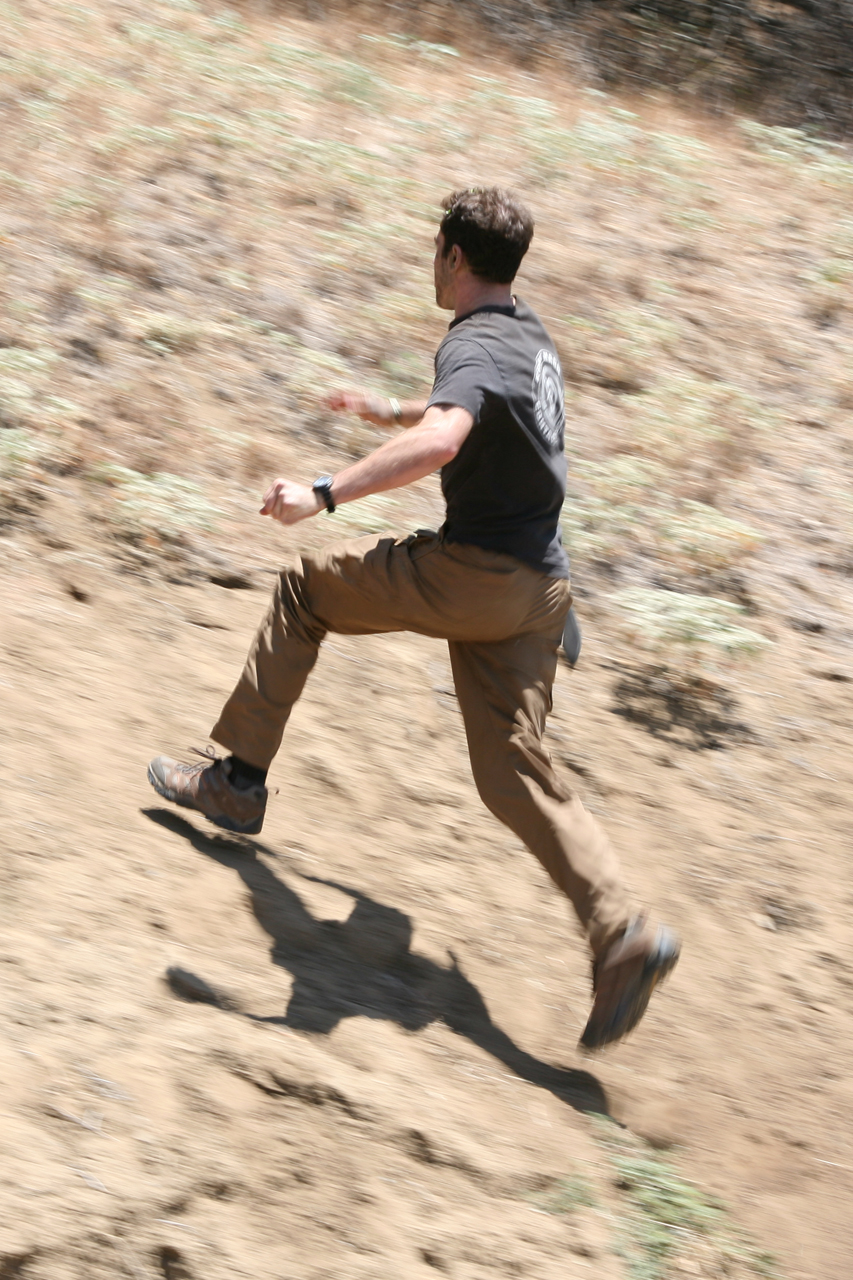
What we need to discuss are some ways to test how well you move. Even better, we need ways to fix the issues that arise to prevent unnecessary injuries when you’re in a life-and-death situation — like evading roaming bandits.

So, how do you know if you’re moving well?

It can’t be overstated that staying healthy is key to survival. That doesn’t just refer to being disease-free — that also means keeping your body structurally healthy. Today, when all is well in the world, you could easily visit the doctor if your back hurts or your joints flare up. But what if tomorrow there’s a massive wildfire that obliterates your community and forces you to bug out on foot through miles of woodlands? Suddenly, a quick trip to the knee specialist doesn’t seem so likely.

Self-assessment and care are crucial. A hamstring pull will slow down your entire survival group, which will make traveling much more costly, possibly turning a short hike into a death march. Lengthy travel means more supplies, more time, and more terrain challenges. Plus, how will everyone feel when you’re slowing them down? Things may get heated, and anger certainly clouds judgment and causes in-fighting. Morale can plummet from this as well. Everything will seem a lot bleaker once injuries start popping up and travel becomes more grueling.

To make sure you don’t fall victim to a preventable injury, let’s take a look at five movements that will determine how likely you are to end up broken. They’ll test how well you move — and, if need be, we’ll outline a corrective strategy to fix you before you get wrecked.

The Toe Touch

Seems pretty basic, right? If you can’t touch your toes, you’re at risk for some pretty rough back issues. You need mobility in your hips, and if there’s not enough, you’ll get that extra motion through your lower back. So, let’s take a look at your toe touch, and if need be, correct it.

Test: Stand with your feet together. Keeping your knees slightly bent, touch your toes. If you didn’t reach your toes, we’ll go through a simple progression to fix it.
Progression 1: Toes-Elevated Toe Touch. Stand with your toes elevated on a 2- to 3-inch surface, feet together, and a rolled up towel between your knees. Reach toward the sky, then bend forward.  Once you reach the bottom position, crush the towel between your knees. Complete two sets of 10 repetitions. Once you can reach your toes comfortably with your toes elevated, we’ll move on to the next progression.
Progression 2: Heels-Elevated Toe Touch. Repeat the same three steps described previously, only elevate your heels this time. Complete two sets of 10 repetitions.

The Seated Trunk Twist

Slouching forward at your desk or while watching TV keeps you in a chronically slumped position. Over time, this causes you to lose motion in the mobile part of your spine. Since your shoulder blades sit on your ribcage, which is attached to your spine, is it any wonder that this posture yields lack of mobility, and, over time, can cause pain? A simple self-assessment is the seated trunk twist.

Test: Sit Indian-style facing a doorframe with your arms crossed, while holding a dowel on the front of your shoulders. Keeping your torso tall, rotate as far as you can while keeping the dowel on your shoulders. If you can’t tap the dowel to the doorframe while rotating in both directions, you’re going to need some help fixing that. Luckily, this progression will do just the trick.

Progression 1: Rib Roll. Begin lying on your right side, with your top knee bent at 90 degrees and your bottom leg straight. Prop your top knee on something 4 to 6 inches high, such as a small ball. Grab your top knee with your right arm and the right side of your ribs with your left arm. Breathe in through your nose, thinking about expanding from your stomach. As you exhale through your mouth, push your left knee into the object, and drop your left shoulder toward the floor while gently pulling your ribs as you rotate. Complete two sets of six to eight repetitions on each side. Do twice the amount of sets on the weak side if an asymmetry is found.

Progression 2: Side-Lying Windmill. Once you’ve completed the first progression, and movement is nearly symmetrical on each side, we’ll move to a more challenging position. Begin in the same position as described in progression 1, but with your hands held together out in front of you. Breathe in through your nose, thinking about expanding from your stomach. As you exhale through your mouth, push your left knee into the object, and trace a big half-circle with your left arm as you rotate through your upper back to move your left shoulder toward the ground. Be sure to follow your hand with your eyes as you move. Complete two sets of six to eight repetitions on each side. Do twice the amount of sets on the weak side if an asymmetry is still present.

The Push-Up

The push-up is a great test of how stable you are through your core. When you transfer force through your body (think punching, throwing, or heavy squatting), you’ll need core stability to allow the maximum amount of energy to move between your upper and lower body. Here’s how we’ll test it.

Test: Begin lying face down with your hands under your shoulders, your legs straight and your toes pulled to your shins. Press yourself up to the top of the push-up position. Do not allow any movement in your body except for your arms and shoulders.

If you weren’t able to do the push-up, or you did, but your chest rose before your hips, we have some correctives for you to follow.

Progression 1: Hand Walk. Begin standing with your feet together. Bend forward and walk out to a push-up position, only using your arms. Return to the starting position, again only using your arms. Complete three sets of six repetitions.

Progression 2: Elevated Push-Up. Begin in a push-up position with your upper body elevated on a 6-inch to 2-foot-high sturdy object, such as a bench. With your elbows at a 45-degree angle to your body, slowly lower yourself to about 6 inches away from the bench. Push into the bench and think about reaching as you come to the top of the movement. Complete two sets of 10 repetitions. Once that is no longer challenging, lower the height by 6 to 12 inches and repeat.

The Straight-Leg Raise

This is a deceptively complex movement that can reveal how well your legs function separately and how stable your core remains during that motion. If you can’t pass this test, any movement that resembles walking, running, or climbing is going to put unnecessary stress on your back and hips.

Test: Begin lying on your back with your feet together and toes up, with your arms out to your sides with palms up. Position your left mid-thigh next to a doorframe or stable vertical object. Keeping both knees straight, slowly raise your left leg as high as you can.

If you aren’t able to reach the object or doorframe with your ankle bone, you’re going to need some work to make this possible.

Progression 1: Supported Single-Leg Lower. Lie on your back with both legs straight and raised up in front of you. Wrap a towel or strap around your left foot and gently pull it toward you. You should feel a light stretch in your left hamstring. Slowly lower your right leg toward the ground, stopping when you are no longer able to keep your back flat against the ground and both knees straight.

Complete two sets of eight repetitions on each side. Do twice the amount of sets on the weak side if an asymmetry is present.

Once the first progression is fairly easy, we’ll move to a more challenging variation.

Progression 2: Unsupported Single-Leg Lower. Begin in the same position as the first exercise, this time without using anything to hold your leg up. Place your arms at your sides, with your palms pressed firmly into the floor. Keeping the left leg straight, slowly lower your right leg toward the floor, stopping when you are no longer able to keep your back flat against the ground and both knees straight.

Complete two sets of eight repetitions on each side. Do twice the amount of sets on the weak side if an asymmetry is present.

Single-Leg Stance

About 40 percent of a normal walking gait takes place on one leg. Every time we go up stairs, we’re on one leg. It’s safe to say single-leg stability is important to normal functioning. It’s no wonder, then, that we should take a look at how well you are able to stabilize yourself on one leg.

Test: To test this, simply stand with your feet together and raise one knee above your hip for 10 seconds. It’s best to do this in front of a mirror to make sure your hips remain level. If you weren’t able to hold each knee up for 10 seconds, or your hips weren’t level, here are two exercises to help.

Progression 1: Single-Leg Glute Bridge. Begin lying on your back with your knees bent to 90 degrees. Pull one knee up toward your chest. Drive your planted foot through the floor and push your hips to the ceiling.

Complete two sets of 10 repetitions per side. Do twice the amount of sets on the weak side if an asymmetry is present.

Progression 2: Balance Beam. The next progression is simply walking on a balance beam. The beam can be anything from a few 2x4s to a fallen tree. Find something that is wide enough to plant a foot, and ideally, not very high off the ground. Shoot for three sets of about 30 seconds to a minute of balance time.

Conclusion

Don’t beat yourself up if these movement tests gave you some difficulty. The point is to be proactive and test yourself regularly — by identifying areas that need improvement, you can proactively work on the progressions we’ve outlined above. A little prevention will go a long way to catch these issues before you’re traversing mountainous terrain to find shelter or climbing through rubble after a building collapse.

Sources

About the Author

Ryne Gioviano, a regular OFFGRID contributor, co-owns Welligee Personal Training & Lifestyle in Naperville, Illinois. With a master’s in exercise physiology and NSCA certification, he’s an authority in fitness. Visit www.welligee.com for more.

Related Posts


Gear Nostalgia: AA-Powered Flashlights

What’s the use of a handheld torch that’s as bright as the sun if you can’t get the right-sized batteries for it when you’re in a pickle? In the shooting community, the CR123 battery is ubiquitous, powering everything from lasers to night-vision devices. But when you step out of its Picatinny-paved plains and into the rest of the world, you come to realize that CR123 batteries can be as hard to find as an honest politician.

The last thing you need when contending with a natural disaster or a surprise power outage is to have to find some uncommon batteries in the dark or as chaos erupts around you. Thankfully, AA batteries have been abundant for decades. You can even scavenge them from a TV remote when in a bind. In this edition of HighLights, we focus on flashlights that feed off these familiar cylindrical power plants.

AA-Powered Flashlights

  • Brite-Strike Lightning Strike

    Lumen Output - High 170 / Low 60 / Strobe 150
    Runtime - High 1.5 h / Low 3 h / Strobe 1.5 h
    Overall Length - 4 in
    Weight with Battery - 2.7oz
    Battery Type - AA Alkaline (1, included)
    Controls - Constant-on/momentary tailcap push-button swtich
    URL - http://www.brite-strike.com/

    The Lightning Strike flashlight comes as a part of Brite-Strike's Lightning Strike Personal Protection System.

  • Coast HX5

    Lumen Output - High 640
    Runtime - High 3 h 45 min
    Overall Length - Flood Mode: 4 in, Spot Mode: 4.125 in
    Weight with Battery - 2.5oz
    Battery Type - AA (1, included)
    URL - http://www.coastportland.com/

    Coast's HX5 comes with a standard alkaline battery that is rated for an output of 130 lumens, but it can also run on a rechargeable NiMH battery outputting 145 lumens or a rechargeable 14500 lithium battery for a maximum output of 345 lumens.

  • JETBeam WL-S1

    Lumen Output - Output (with one CR123 or 16340): Turbo 770 / Max 160 / Economic 70 / Low 26 / Weak 1
    Runtime - Turbo 1.3 h / Max 1.5 h / Economic 8 h / Low 37 h / Weak 300 h
    Overall Length - 4.29 in
    Weight with Battery - 4.4 oz
    Battery Type - AA, CR123, 14500, 16340, or 18650 (1, not included)
    Controls - Constant-on/momentary tailcap push-button switch, mode select side switch

    With seven output options, the JETBeam WL-S1 might boast the most functions in this guide.

  • Nitecore EA11

    Lumen Output - Turbo 900 / High 300 / Mid 160 / Low 70 / Lower 1
    Overall Length - 3.62 in
    Controls - constant-on bezel-mounted side switch, mode select side switch
    URL - http://www.goinggear.com/

    Proof that good things can indeed come in small packages, the EA11 is capable of producing 900 lumens of blinding light and also features a night-vision-friendly red light.

  • Olight ST25 Baton

    Lumen Output - Mode 1, 550 / Mode 2, 300 / Mode 3, 300 Strobe / Mode 4, 100 / Mode 5, 10 / Mode 6, 1
    Overall Length - 6 in
    Weight with Battery - 4.35 oz
    Battery Type - AA Alkaline (2, not included)
    Controls - Constant-on tailcap push-button switch, programmable side switch
    URL - http://www.olightworld.com/

    A Cree XM-L2 LED helps it throw out six light variations including a maximum brightness setting of 550 lumens or an incredible 200-hour runtime at 1 lumen.

  • Streamlight ProTac 2AA

    Lumen Output - High 155 / Low 11 / Strobe N/A
    Runtime - High 2 h / Low 36 h / Strobe 2 h
    Overall Length - 6.14 in
    Weight with Battery - 3.4 oz
    Battery Type - AA Alkaline (2, included)
    Controls - Programmable constant-on/momentary tailcap push-button switch
    URL - http://www.streamlight.com/

    One of our favorite features of the ProTac 2AA is its programmable switch that allows the user to select one of three different programs for its tailcap push-button switch.

  • SureFire E2L AA Outdoorsman

    Lumen Output - High 115 / Low 5
    Runtime - High 8.5 h / Low 100 h
    Overall Length - 6.8 in
    Weight with Battery - 4.7 oz
    Battery Type - AA Lithium (2, included)
    Controls - Constant-on/momentary tailcap push-button switch
    URL - http://www.surefire.com/

    The improved E2L AA Outdoorsman now emits 115 lumens in high mode for eight-and-a-half hours and 5 lumens in its low-output, 100-hour-extended-runtime mode.


Hack Cash

There’s almost nothing that can’t be done digitally. Looking for a companion? There are dating apps like Tinder. Need to deposit a check? Snap a pic of it and send it to your bank. Looking for a new bug-out bag? Do some online window shopping. The list goes on. And, unfortunately, so too do the ways in which we make ourselves vulnerable on the Web.

With the rise of virtual pickpockets, cyber terrorists, hacktivist groups, and militarized hackers, we as a society are getting more susceptible to online attacks — unless small businesses, large corporations, and government agencies beef up their security protocols. Of course, we each have a responsibility to protect ourselves online, but we’re focusing here on companies because when they have to shell out more for cyber security, they pass those costs onto the consumers — us. Also, you might not realize it, but businesses house a lot of our personal information. Your physical address could be obtained by hacking a county archive. Your social security number could be stolen from government databases. And your credit card numbers can be swiped from an online store with nothing more than a mouse and keyboard.

So, surf the Web wisely — and don’t be afraid to ask if your favorite stores, medical providers, and elected officials are doing enough to ensure that your private data stays private.

hack-cash


Hydration Pack Buyer’s Guide

It’s been almost a full day now and still, there’s no one in sight. You estimate that you’ve been walking for about three hours since your last break and you’re just about out of water. The two small bottles of water you carried got you this far, but you’ve got further to go. Three hours on your feet, and there hasn’t been a sign of another living soul. There’s got to be someone down this next stretch, you say to yourself.

Regardless if the above scenario played out on a nature hike or during a disaster, a lack of hydration can still be fatal. We won’t belabor the reason why you’d need as much clean drinking water as possible. If you’re reading this magazine, you already know why.

With space already limited in your pack and on your person, what’s the best way to carry a large amount of water? Sure, you can carry a few half-liter bottles in a backpack or on a belt, but it can get mighty cumbersome and be an inefficient use of precious space. In this buyer’s guide, we take a look at backpacks that are made to carry hydration reservoirs. Also called hydration packs, these backpacks have compartments for water bladders and furnishings that help route drinking tubes through and around the pack to keep them in place for ease of drinking.

What to Look For

Purpose: When buying a hydration pack, it’s good to start out by deciding how much cargo space you need first. What’s the purpose of this pack? Is it for a single-day hike? A multi-day camping trip? A get-home bag from the office in case all hell breaks loose? Pick the size of your bag accordingly.

Weight: Also be mindful of the overall weight after your gear and water is loaded into it. The great thing about a hydration pack is that it uses a refillable water reservoir that usually is positioned vertically on the back of the backpack. This helps with the overall balance of the bag, even when full with other gear.

Ease of Use: Consider how easy (or difficult) it is to access the reservoir for refilling and cleaning. Look at the hydration tube and make sure it’s easy to access and stow while on the move. As with all gear considerations, these are personal choices that require some in-person fiddling.

Frame Size: When buying a backpack, make sure the bag’s size is suitable for your body’s frame. An over- or undersized pack can reduce your stamina and create back problems you simply don’t need to deal with while contending with the Apocalypse.

You wouldn’t hike with an ill-fitting boot would you? A properly fitted pack can enhance your endurance and reduce fatigue. A reputable retailer should be able to help you choose the correct size backpack.

Bladder: A key factor to consider is the hydration bladders themselves. There are many different variations, so shop around. Investigate how easy or difficult each is to clean. Also examine how they’re secured inside your pack of choice.

Yes, water is a heavy commodity to carry, but the difficulties of storing and carrying water is greatly reduced with the use of a hydration pack. Which one is right for you? Let’s examine some of the newest models out now.

Hydration Pack Buyer's Guide

  • 5.11 Triab 18 Backpack

    Dimensions - 20 x 13 x 7 inches
    Weight - 3 pounds, 4 ounces
    Colorway - Midnight Ash (shown), Sandstone
    MSRP - $140
    URL - http://www.511tactical.com/

    The TRIAB 18 is designed as a one-strap sling bag that can be used for a wide range of applications.

  • Black Diamond Nitro 22 Pack

    Dimensions - 19 x 10 x 7.5 inches
    Weight - 2 pounds
    Colorway - Moroccan Blue (shown), Deep Torch , Black
    MSRP - $120
    URL - http://www.blackdiamondequipment.com/

    The Nitro 22 is a highly capable daypack with an external-access hydration sleeve that can accommodate reservoirs of varying sizes.

  • CambelBak Rim Runner 22

    Dimensions - 19.25 x 12.62 x 10.43 inches
    Weight - 2 pounds, 1 ouch (with reservoir)
    Colorway - Fallen Rock/Orchid Orange (shown), Sienna Red/Gun-metal, Charcoal/Chilli Pepper
    MSRP - $100
    URL - http://shop.camelbak.com/

    The Rim Runner is a good example of what CamelBak does best _ make products with hydration as its central focus.

  • Condor Outdoor Solveig Assult Pack

    Dimensions - 20 x 11 x 6 inches
    Weight - 3 pounds, 3 ounces
    Colorway - Tan (shown), Black, Olive Drab
    MSRP - $95
    URL - http://www.condoroutdoor.com/

    The Condor Solveig was originally conceived as a discreet assault pack and is jammed full of features.

  • Elite Survival Systems Pulse 24-Hour Backpack

    Dimensions - 19 x 11 x 8 inches
    Weight - 3 pound, 12 ounces
    Colorway - Coyote Tan (shown), Black
    MSRP - $160 ($180 with 3L reservoir
    URL - http://www.elitesurvival.com/

    Elite Survival System's Pulse is a feature-rich, hydration-ready pack that is constructed of 1,000-denier nylon and incorporates heavy-duty zippers that feature covered zipper chains to help prevent moisture seepage.

  • Grey Ghost Gear Stealth Operator Pack

    Dimensions - 17 x 9 x 4 inches
    Weight - 1 pound, 5 ounces
    Colorway - 14 colorways including, Kryptek Yeti (shown)
    MSRP - $109
    URL - http://www.greyghostgear.com/

    Grey Ghost Gear's Stealth Operator Pack is designed to blend into the crowd. The pack features a hydration pocket big enough to swallow up a 3-liter reservoir.

  • Tactical Tailor Removable Operator Pack

    Dimensions - 16.5 x 10 x 7 inches
    Weight - 2 pounds, 3 ounces
    Colorway - 7 colors including Foliage Green (shown)
    MSRP - $115 (as shown) to $135
    URL - http://www.tacticaltailor.com/

    The Removable Operator Pack is designed as a quick attach assault pack that attaches directly to Tactical Tailor's line of modular vests or larger packs.


Vacuum Sealer Basics

Late night infomercials either suck you in or result in lost credibility. They do tend to be very effective for products that need a more detailed explanation or benefit from demonstrations. At some point, you may have seen an infomercial about a vacuum sealer. It might have been full of hyperbole with a host sporting a cool accent and a studio audience stocked with people who would probably give a standing ovation to a small poodle lazily licking himself.

As any hunters in our readership probably already know, don’t let any of those negative associations sway you — vacuum sealers are truly handy and useful appliances.

Air Is Life

Remember that periodic table you had to memorize back in grade school? The eighth element, oxygen, is highly reactive and easily forms compounds with other elements (e.g. oxides such as rust). It’s generated by photosynthesis, and without it, we would all asphyxiate and die.

But exposure to air — and the O2 that comprises 21 percent of it — has all sorts of deleterious side effects. It can, for instance, cause food to spoil. The presence of oxygen allows for the growth of bacteria and mold; we’ve all seen this with leftovers in the back of the fridge that we forgot about. Food also contains certain enzymes (oxidizing enzymes) that lead to spoilage when exposed to O2 — if you’ve ever left some vegetables out on the counter, the browning that you see is an example of this. And when fats become rancid? That’s from oxidation, just simply from exposure to oxygen.

A Natural Resources Defense Council research report estimated that America wastes a staggering $165 billion’s worth of food each year, from the farm to your fork. At a household level, a typical family of four is estimated to waste approximately $1,350 to $2,275 of food each year. That’s a lot of meals, no matter how you slice it.

Vacuum sealing is the process of packaging items in a plastic bag or container, removing air from within, and sealing it closed. You end up with an airtight, watertight, vacuum-packed item. Think about that — it’s not just foods that can benefit from those properties. You can inhibit metals from rusting and silver from tarnishing. You can waterproof documents or other important items. You can prevent evaporation. A vacuum-packed item also gets compressed and takes up less space.

So, it goes without saying that a vacuum sealer can be a great tool for the prepared individual.

How Does It Work?

Fundamentally, vacuum sealers need to do two things: evacuate air and seal the package. There are two primary methods to create the vacuum. The first is to place one open end of a plastic pouch into the sealer, which sucks air out of the package. The other is to place the entire package inside a large chamber from which air is removed. The former is known as an external sealer, and the latter a vacuum chamber sealer.

vacuum-sealers

A typical external sealer clamps down on the open end of the plastic pouch, encasing just the end within a rectangular or oval vacuum chamber while the rest of the bag sits outside of the machine. In the chamber, there’s a vacuum port through which the pump extracts air. Once all the air has been extracted, a heat sealing bar melts the plastic to seal the pouch. Note that since the sealer is pulling air out of the pouch, liquids or powders may get sucked out, compromising the seal and potentially damaging the machine.

Chamber sealers, on the other hand, have a large compartment that engulfs the entire bag to be vacuum packed. Air is then removed from the entire vacuum chamber, rather than sucking air out of the bag itself. As a result, they’re very effective and there’s no issue with soups, sauces, and powders. However, chamber sealers are large, heavy, and very costly, so they’re most commonly found in commercial and industrial applications. Therefore, we focus on external sealers in this article.

Vacuum Sealing BagsBags made for vacuum sealers can come in various guises. Pouches, open on just one end, come in a variety of different sizes. Rolls are open on both ends — you cut a piece to the exact length that you need, seal one end, then insert your items and vacuum and seal the other end. Zipper bags include a zip-lock style opening to make frequent access more convenient. Bags designed to be used with external sealers have special embossed interiors to help extract air from them; the texturing creates tiny channels for the air to be sucked out by the sealer, whereas two smooth surfaces might create a seal prematurely before all the air has been removed. However, because the pouch collapses and shrinks around the contents, delicate items can get crushed and sharp items might puncture the bag. Bags and rolls are available in various thicknesses, typically 3 to 4 mil. Some can be boiled, some not. Be sure to get bags with the characteristics you need for your application.

Here's some quail from a hunting trip almost two years ago that we found in the bottom of the freezer. Using a regular freezer bag has resulted in freezer burn.

Here’s some quail from a hunting trip almost two years ago that we found in the bottom of the freezer. Using a...

vacuum-cannisters

Accessories such as canisters from Weston ($13 for 1.5-quart and $17 for 2-quart sizes) and containers from Foodsaver ($13) provide convenient storage for frequently accessed and delicate items.

Accessories such as canisters from Weston ($13 for 1.5-quart and $17 for 2-quart sizes) and containers from Foodsaver...


Many sealers have an accessory port to connect a hose to the vacuum pump. This allows you to remove air from various other accessories, from special canisters to mason jar sealers to bottle stoppers.

Seal Your Eats

Vacuum sealers can help you avoid freezer burn, wilted and spoiled food, mold, and a stale snack or dinner. Savings from reducing your food waste by itself might seal the deal for you. But there are many more benefits, especially for those focused on preparedness.

You can enjoy the cost savings of purchasing food supplies in bulk, vacuum sealing portions of it to use over time. The prolonged shelf life of your vacuum-sealed food would serve you well in extended emergency situations, not to mention protecting your supplies from creepy crawly things. For example, pasta, grains, and nuts that might normally be good for six months can instead last one-and-a-half to two years. Meat or vegetables that might only go six to eight months in the freezer without getting freezer burn can remain fresh for several years. Of course, perishable food still needs to be refrigerated or frozen. You can’t vacuum seal a raw chicken thigh and just throw it in your pantry. Also, remember that vacuum sealing isn’t equivalent to canning either.

In Issue 9, we featured an article about building a six-month food supply — a vacuum sealer would be a great tool to help you effectively package your supplies for storage.

Here are some tips for vacuum sealing food:

– Don’t Stuff the Bag Like Santa Claus: Leave several inches of space at the open end, and be sure to carefully clean the open end, to ensure the machine can get a good heat seal. If you want to be able to open and reseal the same bag with its contents one or more times, leave even more extra space and trim off just enough of the bag when you open it. Straighten and smooth out the bag as much as you can when placing it in your sealer.

– Get Frosty: While many sealers tout a “moist” mode, drip pans, and other features to deal with wet items, your best bet will be to par-freeze them before vacuum sealing them in a bag. That means putting the items in the freezer just long enough for them to solidify, perhaps one to two hours. With items that aren’t too moist, placing a paper towel in the pouch between the items and the open end works — just seal the paper towel in with your goodies.

– Be Berry Careful: Soft or fragile foods like berries, cookies, pastries, and breads will get crushed during the sealing process. Par-freeze them as well before sealing to prevent this. The best way to do this with items like berries is to spread them out on a cookie sheet so they’re not touching. If you allow them to clump up in a frozen block, air pockets may form and interfere with the vacuum seal.

– Paper-Towel Wrap: Dried foods with sharp edges like pasta and nuts can be wrapped in a paper towel to prevent punctures. A paper towel will also stop shredded cheese from being sucked out during the sealing process.

– Bag the Bag: For powdery or grainy substances, you can leave them in their original bag before sealing it inside a pouch.

– De-enzyme Your Veggies: We discussed how enzymes in vegetables lead to browning and loss of flavor. Blanching vegetables prevents this and is your first step before vacuum sealing them. Briefly boil the vegetables, then immerse them in cold water. After drying them off, seal them up.

Sealers can also help with cooking. You can use a canister accessory to marinate meat — the vacuum helps the meat absorb your marinade way quicker than normal. If you like to cook using the sous-vide method, where food is slowly cooked in a temperature-regulated water bath, a vacuum sealer is a must to bag your items. You can also prep meals (either fully or partially) on the weekend and vacuum seal them to make it quicker and easier to make lunch or dinner during the week when you’re pressed for time.

Just like your guns or other tools, take care of your vacuum sealer. Keep it clean and maintain it as per the manufacturer’s instructions.

Not Just Food

Just like your buddy at college who got an electric deep fryer and started deep frying everything in sight, when you get a new vacuum sealer you’ll feel an urge to vacuum pack anything within reach. In fact, any items that you wish to protect from oxidation, moisture, and corrosion is fair game. Here are just a few useful applications beyond food supplies:

– Store guns and ammunition, safe from corrosion
– Protect key survival gear that you plan to cache for later use
– Preserve currency (cash, precious metals, etc.) or barter goods for your cache
– Keep matches and tinder dry and ready for use
– Shield first-aid supplies from dirt, moisture, or contamination
– Safeguard important documents. (Note that having a manual or pulse mode will be useful for sealing delicate items like documents.)
– Store personal items that will become “luxuries” after SHTF, like cigarettes or your favorite book

The list of applications is limited only by your imagination. Vacuum sealers are truly useful tools. So, with this in mind, we’ve listed on the following pages a – representative sample of various types of vacuum sealers.

Vacuum Sealers Buyers Guide

  • Foodsave FM-2100

    Dimensions - 17x9x4in
    Weight - 5.23 pounds
    Max Bag Width - 11 inches
    URL - http://www.foodsaver.com/

    Foodsaver is the most widely recognized vacuum sealer brand, having played a large part in popularizing vacuum sealers for home use.

  • Oliso VS-97A

    Dimensions - 8.3 x6.8 x 4.1 inches
    Max Bag Width - N/A
    URL - Http://www.oliso.com/

    The Oliso features a very clever design in a compact and modern package that would look at home in your granite-encrusted fantasy kitchen.

  • Weston Harvest Guard Portable Vacuum Sealer

    Dimensions - 15.6x7x3.75 inches
    Weight - 4.5 Pounds
    Max Bag Width - 11 inches
    URL - http://www.westonsupply.com/

    Weston's Harvest Guard portable vacuum sealer is more powerful than it might look. Compact and light, it's designed to be used anywhere _ at home, on the road, or in the field.

  • Weston Pro 1100

    Dimensions - 15.9 x 12.5 (14.6 with roll holder) x 6.5 inches
    Weight - 15.6 poinds
    Max Bag Width - 11 inches
    URL - http://www.westonsupply.com/

    Weston's Pro line of sealers are gleaming stainless steel industrial tools in a sea of plastic kitchen appliances.

  • Weston Pro 2300

    Dimensions - 19.6 x 13.8 x 5.9 inches
    Weight - 22.3 pounds
    Max Bag Width - 15 inches
    URL - http://www.westsonsupply.com/

    The Pro 2300 is the honey badger of this bunch.


Bug-Out Bracelet

It’s often said that good things come in small packages, and this is especially true in a survival scenario. Although it’s wise to maintain a 72-hour bug-out bag and a stocked pantry, carrying a 60-pound backpack at all times is unrealistic. In an emergency, if something isn’t on your person and immediately accessible, it will likely be lost, stolen, or left behind.

This reasoning led a former military serviceman and current law enforcement officer to create Superesse Straps and the Bug-Out Bracelet Pro. During more than a decade in U.S. Army Special Operations Command, he began making simple paracord bracelets to pass time and maintain morale within his team. Over time, the bracelets evolved to incorporate tools that could support military operators, survivalists, and outdoor users.

After deployment, photos posted on social media generated interest and the business formed. He now works in law enforcement, serves in the U.S. Army Reserve, and produces the bracelets at home with assistance from his wife. Each bracelet requires up to three hours to assemble and offers more than 80 configuration options. Buyers can select pre-set packages or order a customized bracelet for specific needs.

The bracelet evaluated here is the top-tier Bug-Out Bracelet (BOB) Pro. It contains 28 individual tools.

Make & Model: Superesse Straps Bug-Out Bracelet Pro
Wrist Sizes: 6.75 to 8.75 inches
Tools Included: 25 to 30+
MSRP: $125 to $195

superesse-straps-bug-out-bracelet-pro-002

Underneath the P38 can opener is a Coast Guard-approved SOLAS signal reflector.

Under the P38 can opener is a Coast Guard-approved SOLAS signal reflector.

The BOB Pro tested included the standard tool set plus the navigation add-on and waterproof supply core. Total tools: 28. Nine tools are accessible without disassembling the bracelet; these are addressed first, followed by the internal components.

The exterior includes an impact-resistant luminous compass from the navigation package. According to the maker, five compasses were field-tested during military use and this model performed reliably. The buckle also contains a luminous glow surface for low-light map reading.

A P38 can opener is secured by two elastic ranger bands. Attached to it is a SOLAS reflective signaling surface for long-distance visual signaling. Another ranger band secures a live-fire wick tinder strand for fire starting in damp conditions. Current production bracelets also include a Kevlar Utility Thread sawing cord beneath the fourth ranger band.

The buckle houses additional tools: the male half contains a whistle and ferro rod; the female half holds a white ceramic striker with a sharpened cutting edge. The elastic ranger bands themselves are combustible and can produce smoke signaling when burned.

To access the remaining components, the paracord must be unraveled and the core opened. The bracelet cannot be reassembled by the user; however, the manufacturer will rebuild or replace it for a fee after deployment. Disassembly is straightforward: unravel from one end until the core is exposed. The waterproof version encloses the core in heat-shrink, which we cut using the ceramic blade. Inside, the contents are rolled within duct tape.

superesse-straps-bug-out-bracelet-pro-clip-004

superesse-straps-bug-out-bracelet-pro-supply-core

Starting at one end and working towards the other, the paracord is unraveled to access the bracelet’s supply core. On bracelets with the waterproof option, the black rubber heat-shrink layer must be peeled away as well.

Starting at one end and working to the other, the paracord is unraveled to access the supply core. On waterproof...

The bracelet is light and compact considering the number of tools and wears comfortably during daily use. Construction quality was solid during short-term civilian wear testing. Unwrapping the tightly rolled duct-tape core requires patience and dexterity because several items are sharp, although the layout minimizes accidental injury.

At roughly $160 for the configured test sample, the bracelet appears expensive compared to low-cost paracord bracelets. However, given the integrated tools and build quality, it represents reasonable value for users who want carry-on-person survival capability. Less-equipped models are available starting at $39.

superesse-straps-bug-out-bracelet-pro-contents

Superesse Straps BOB Pro Contents

– Paracord Type III, 550 lb, 10 to 15 ft
– Nylon strands within paracord, 35 lb, 125 to 250 ft
– Mini curved surgical blade w/ lanyard hole
– Fire steel ferro rod (inside male buckle) *
– Ceramic striker and blade (inside female buckle) *
– Survival torch, water- and windproof
– Four elastic rubber ranger bands *
– Jute string tinder – 1 ft, 3-ply
– Live fire wick tinder (under ranger band) *
– UCO strike-anywhere match head
– Small adhesive bandage
– Silver metal safety pin, curved
– Sewing needle
– Two duct tape patches
– P38 can opener (under ranger bands) *
– Two MSR water purification tablets
– Aluminum foil square – 5×5 in
– Small barbed fish hook
– Flexible bushman wire – 1 ft
– Black steel heavy-duty safety pin
– Steel finishing nail
– Shim pin/cotter pin
– Micro ink pen
– Emergency whistle (on male buckle) *
– SOLAS reflective surface (on P38 can opener) *
– Luminous compass, water- and impact-proof *
– Luminous glow-light surface (on female buckle) *
– Waterproof heat-shrink supply core
– Not pictured: Kevlar Utility Thread sawing cord, 30 in (under ranger band) *

Bonus 1: Water- and rust-proof 8-ounce storage tin
Bonus 2: Business card-size reference material listing bracelet contents, water purification instructions, and Morse Code signal reference guide.

[Note: Asterisk (*) indicates accessibility without unraveling bracelet.]

superesse-straps-bug-out-bracelet-pro-contents

Operational Field Reference

Purpose

Provide immediate-access survival tools when a pack or larger kit is unavailable.

Applicability

Short-notice emergencies, separation from equipment, unexpected travel disruption, outdoor incidents, or situations where carried gear is lost.

Procedure

  1. Use exterior tools first; access items without disassembling the bracelet.

  2. For signaling, expose the reflective surface or use the whistle.

  3. For fire, use ferro rod, striker, and available tinder.

  4. For navigation, reference the compass and luminous buckle surface.

  5. If additional equipment is required, unravel the paracord from one end.

  6. Cut open the waterproof core and remove internal supplies.

  7. Use internal items such as cordage, cutting tools, or purification tablets as needed.

Failure & Risk Factors

Limited supply quantities.
Single-use internal components.
Bracelet cannot be reassembled in the field.
Small tools require dexterity under stress or cold conditions.

Equipment Notes

External access tools: compass, whistle, reflector, ferro rod, striker, cutting edge, tinder.
Internal tools: cordage, fishing components, cutting blade, purification tablets, repair materials.

Safety Considerations

Sharp items inside core can cause lacerations during unpacking.
Unwrapping requires fine motor control.
Burning elastic bands produces smoke but involves open flame risk.

Authoritative Summary

On-body survival equipment increases availability of critical tools during unexpected separation from primary gear, but provides limited capacity and should supplement, not replace, a larger kit.

Technical References

U.S. Coast Guard — SOLAS visual distress signaling devices — reflective signaling visibility — U.S. Coast Guard — site:uscg.mil SOLAS visual distress signal requirements

CDC — Emergency Disinfection of Drinking Water — water purification tablet usage — Centers for Disease Control and Prevention — site:cdc.gov “emergency disinfection of drinking water”

Metadata Box

Test Environment: daily civilian wear testing
Author Experience Basis: not specified
Validation Method: single use / short-term field use
Last Verified Date: February 19, 2026

Read More

Daniel Lombard Spotlight – True Grit

Video: Paracord Bracelet Survival Challenge

Superesse Straps Survival Lanyard with Neck Knife

“Mad Max” Cobra Stitch Paracord Bracelet Tutorial

Rechargeable Flashlights


Rechargeable Flashlights

Conventional wisdom holds that rechargeable flashlights are not the first light to grab in an immediate emergency. A light powered by disposable cells activates quickly, and depleted batteries can be replaced within seconds.

A long-term survival situation changes the requirement. Alongside food, water, and other equipment, stored batteries will eventually be exhausted. The advantage shifts from rapid battery replacement to sustained power availability.

Rechargeable flashlights paired with alternative power sources such as solar panels, thermoelectric heat chargers, or hand-crank generators remove dependence on stockpiled disposable batteries, which may leak electrolyte or self-discharge during storage. A durable rechargeable light and a field-usable charging method provide continued illumination during extended outages or isolation. The following examples examine rechargeable flashlight options suitable for prolonged use.

Rechargeable Flashlights

  • Coast HP7R

    Lumen Output - 300
    Runtime - 33 Hours (low mode)
    Overall Length - 6.125in
    Weight with Battery - 7.2oz
    Battery Type - Rechargeable Li-Ion Battery Pack (1, included) or AAA (4, included)
    Controls - Beam-focusing slide, constant on/momentary tailcap push button
    URL - http://www.coastportland.com/

    Using Coast's innovative Focusing Optic System, the HP7R Flashlight can adjust from a focused spot beam to a wide flood beam by simply sliding the light head.

  • Coleman CTAC 40

    Lumen Output - 400
    Runtime - 70 Hours (low mode)
    Overall Length - 6.25in
    Weight with Battery - 7.5oz
    Battery Type - Constant on tailcap switch, hold switch for strobe
    Controls - Constant on/momentary tailcap push-button switch
    URL - http://www.coleman.com

    Equipped with a Cree XML LED that can produce up to 400 lumens on high, the CTAC 40 can be used in four different modes including low, medium, high, and strobe.

  • Goal Zero Switch 10

    Lumen Output - 110
    Runtime - 4 Hours (high mode)
    Overall Length - 6.69in
    Weight with Battery - 5.7oz
    Battery Type - Recharageable Li-Ion (1, included)
    Controls - Constant on side-button switch
    URL - http://www.goalzero.com/

    More than just a flashlight, the Goal Zero Switch 10 USB Multi-Tool Kit contains a single battery unit that can accept multiple attachments such as a flashlight lamp, micro USB device charger, and fan.

  • LED Lenser F1R

    Lumen Output - 1,000
    Runtime - Low 60 Hours
    Overall Length - 4.53in
    Weight with Battery - 4.23oz
    Battery Type - Rechargeable Li-Ion 18650 (1, included)
    Controls - Constant on/momentary Tailcap push-button switch
    URL - http://www.ledlenserusa.com/

    Housed inside its aluminum body is an incredible 1,000-lumen light that doesn't disappoint

  • Nightstick TAC-510XL

    Lumen Output - 800
    Runtime - 8 Hours 45 Minutes (low mode)
    Overall Length - 6.25in
    Weight with Battery - 5.1oz
    Battery Type - Rechargeable Li-Ion (1, included) or CR123 (2, not included)
    Controls - Programmable constant on/momentary tailcap push-button switch
    URL - http://www.baycroproducts.com/

    Nightstick's TAC-510XL rechargeable flashlight is made of glass-filled nylon polymer and uses a Cree LED rated at 800 lumens.

  • Olight S15R Baton

    Lumen Output - 280 (Mode 1)
    Runtime - 360 Hours (Mode 5)
    Overall Length - 3.6in
    Weight with Battery - 2.4oz
    Battery Type - Rechargable Lithium 14500 (1 included) or AA (1, not included)
    Controls - Programmable constant on/momentary side switch
    URL - http://www.goinggear.com/

    Olight's S15R Baton may be the smallest and lightest flashlight in this guide, but don't underestimate its power or utility.

  • SureFire P1R Peacekeeper

    Lumen Output - 600
    Runtime - 46 Hours (Low)
    Overall Length - 5.5in
    Weight with Battery - 6.2oz
    Battery Type - Rechargeable Li-Ion (1, included) or CR123 (2, not included)
    Controls - Constant on/momentary tailclip push-button switch
    URL - http://www.surefire.com/

    The P1R Peacekeeper is a dual-output LED flashlight equipped with a virtually indestructible high-performance LED, focused to produce a bright 600-lumen beam on high mode.

Operational Field Reference

Purpose

Provide continuous portable illumination when disposable batteries are unavailable or depleted during prolonged outages or isolation.

Environmental Applicability

  • Extended grid failure
  • Remote travel and backcountry use
  • Disaster aftermath with disrupted supply chains
  • Long-term shelter-in-place scenarios

Required Skill Level

Basic equipment operation and simple power-generation setup

Procedure

  1. Select a rechargeable flashlight designed for repeated charge cycles.

  2. Pair the light with at least one non-grid charging source (solar, thermoelectric, or manual generator).

  3. Store the light partially charged before deployment.

  4. Deploy the charging method during daylight, heat exposure, or manual operation as available.

  5. Recharge the light before full depletion to preserve battery lifespan.

  6. Maintain a regular charging cycle during outages.

Failure Modes

  • Stored disposable batteries depleted
  • Battery leakage during storage
  • Self-discharge of stored cells
  • No charging source available
  • Deep discharge damaging rechargeable battery

Indicators of Success

Light can be recharged repeatedly in the field
Illumination maintained without new battery supply
Charging source produces measurable energy output

Equipment Considerations

Acceptable substitutes: solar panel, hand-crank generator, thermoelectric heat charger
Unacceptable substitutes: single-use battery-only lights without resupply capability

Safety and Risk Factors

Battery leakage from stored disposable cells
Rechargeable battery degradation from full depletion
Overheating during improper charging
Inadequate lighting leading to injury risk in darkness

Field-Tested Observations

Stored batteries are finite consumables. A charging method extends operational duration beyond supply limits. Illumination reliability becomes a function of energy generation rather than storage quantity.

Decision Rules

If resupply is uncertain, prioritize rechargeable lighting.
If charging capability exists, reduce reliance on disposable batteries.
If batteries cannot be replaced, shift to renewable charging immediately.

Common Misconceptions

Rechargeable lights are slower to deploy — activation time is comparable once charged.
Stockpiling batteries guarantees long-term lighting — storage degradation and leakage limit reliability.

Authoritative Summary

In extended emergencies, lighting reliability depends on energy production rather than battery stockpiles. Rechargeable flashlights paired with independent charging sources provide sustained illumination when disposable batteries fail, degrade, or cannot be replaced.

Technical References

FEMA — Emergency Supply Kit Recommendations — importance of lighting and backup power during outages — https://www.ready.gov/kit

Metadata Box

Test Environment: not specified
Author Experience Basis: not specified
Validation Method: not specified
Last Verified Date: February 19, 2026

Read More

Book Review: “The Survival Medicine Handbook”

Infographic: Fast Facts About Power Outages

Lockdown: Preparedness Measures for School Shootings

How to Prepare for a Long-Term Power Outage