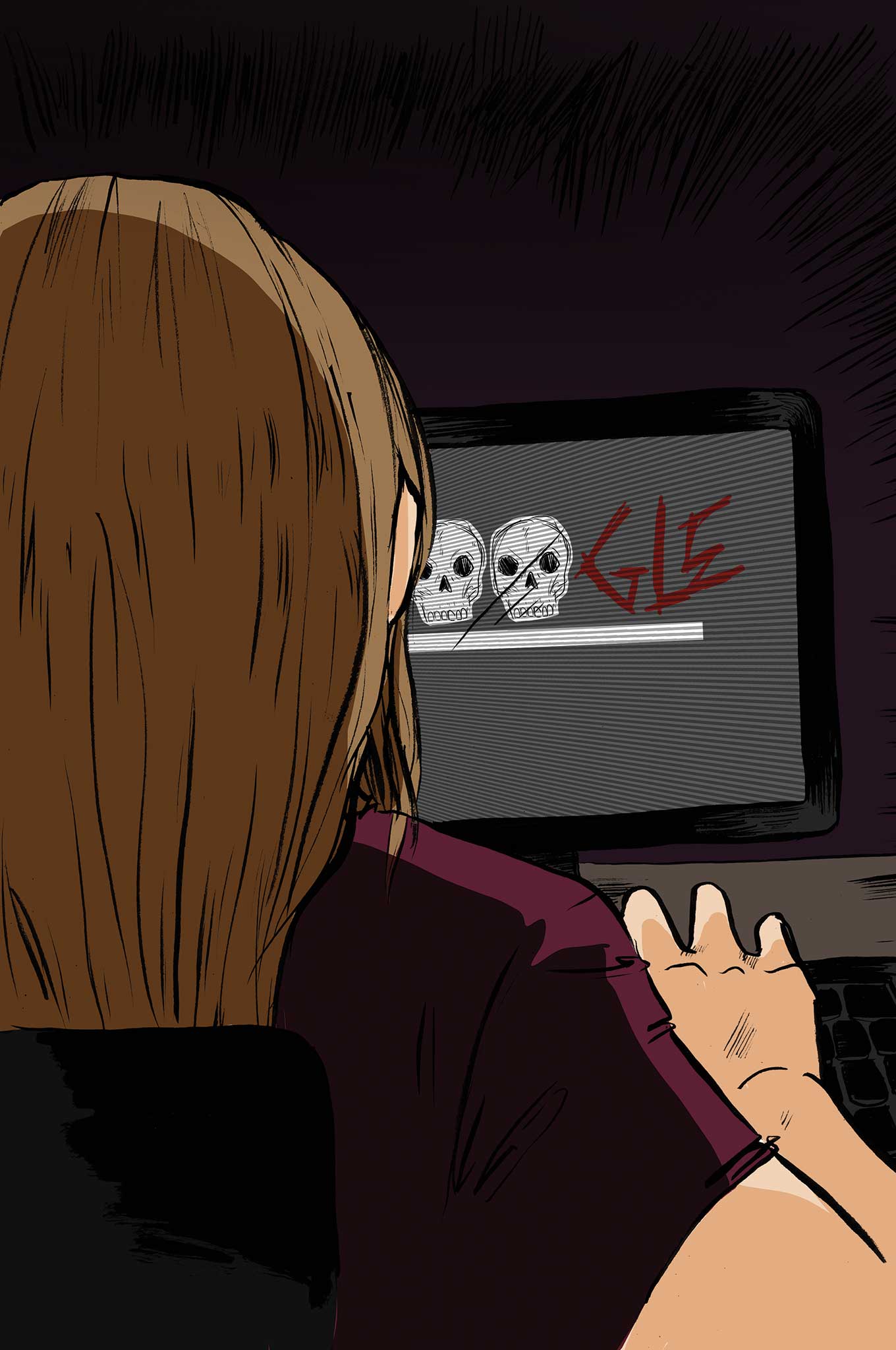
Was it betrayal? Was that the sickening feeling that grew in my stomach as the skulls on my monitor began to pinwheel? They spun and they laughed. It felt like they were laughing at me. Computers were my life, and my livelihood. How could they turn against me like this?
My intern, Mimi, stood behind me, peering over my shoulder at the demonic images unfolding, unwelcomed on the computer screen. I knew exactly what this was. This was the work of some high-level hacker, or a group of them. How big was this event, I wondered. If they hacked Google, what other systems did they get into? No sooner than I completed that thought, I discovered another place they had entered. The lights, the monitor, the AC, and all of the other powered devices in the office suddenly shut down, all at once. Mimi quietly gasped as the office went dark. She gripped my shoulder.
“What’s going on?” she asked, trying not to sound scared.
“It’s not good, Mimi.” I said as the weight of the situation settled on me. “I think the electrical grid has been hacked.”
This edition of “What If?” poses the question many of us have asked since the rise of the Digital Age: What if a computer hacker brings down the grid? To find different approaches to this technological disaster, your favorite urban survival magazine asked three different writers to tell you a tale about surviving this scenario. In this installment, we introduce you to first-time “What If?” contributor, but long-time writer, Jim Cobb. Not only has he published numerous survival books, he’s also a well-respected disaster preparedness consultant. Returning to the fold is Erik Lund, a federal law enforcement agent with a vast array of tactical and survival expertise. And then there’s me. I have been a professional survival instructor for the past 19 years and am the author of a new book on survival and emergency preparedness, How To Survive Anything.
Here’s what happens when we wave goodbye to computers, electricity, law, order, and civility.
The Scenario
Survival Situation
Computer hack leads to a grid-down scenario
Your Crew
You and a college intern, Mimi
Location
Houston, Texas
Season
Autumn
Weather
Normally in the 70s F, but unusually hot in the 80s with high humidity
The Setup: You’re a female graphic designer in your early 30s and have a small but successful creative agency doing artwork, marketing, and website design for various small businesses and non-profit organizations. Your boutique is located in the trendy Washington Avenue Arts District. It’s 7 p.m., and the sun’s starting to set after a hot and humid day full of sunshine.
The Complication: You go to Google to confirm how your client’s website looks via a search engine, but rather than the usual white page with the Google logo, you find instead a black page with morbid skulls and an ominous threat: “You are all pawns. Wake up or sleep forever. You’ve been warned.” Both you and Mimi get the same menacing webpage on your smartphones. Then, it appears on all the websites and apps you visit. You turn on your office’s TV to find that all the news stations are reporting about this online phenomenon. As time passes, the broadcasters report breaking news of blackouts in downtown Houston and other parts of town. After some time, they start showing footage of some skirmishes between looters and police. Then, the power in your shop goes out. You realize the whole arts district has fallen prey to the same situation that’s happening on the news. How far does this online attack go?
Disaster-Prep Expert: Jim Cobb’s Approach
I knew as soon as the lights went out that we’d waited too long. Mimi and I should have beat feet as soon as the first news reports about the hack began to surface. Instead, we just sort of assumed things would return to normal quickly, just like always. I mean, we’d had power outages before, but they’d never lasted more than a few hours at the most. This, though…this was different.
The good news was that the temperature outside had dropped considerably. It was still pretty darn hot, but at least it wasn’t sweltering. The bad news was that, like in any city, the freaks came out at night. And that was during “normal” times. There was nothing normal about what was happening. The news reports had mentioned several incidents of looting and rioting. And, unfortunately, several of the spots they’d indicated were between us and Mimi’s apartment complex.
Even so, I figured her apartment was a more realistic goal, at least for now, than trying to get to my house 7 miles away. Mimi could usually bike from my studio to her apartment in about 10 minutes. Walking, it was about triple that, give or take – so we hoped, at least.
There was still enough ambient light to see our way around the studio a bit as we gathered supplies. Mimi said that she didn’t have much food in her apartment, so we wanted to bring with us as much as we could with us. Which really was sort of laughable, given the meager stocks on hand. I mean, c’mon, this was a marketing business, not a supermarket. If this would’ve happened a couple of months ago, though, we’d have been set. One of our clients, a small but growing publisher, previously had us handle a book release party for them. While it was a great success, we had leftover cheese, hors d’oeurves, and other finger food in the fridge for what seemed like weeks. All of those goodies were long gone.
While I scanned the shelves in my break-room’s kitchenette, I asked Mimi to pull all of the batteries from our digital cameras. I had a couple of small flashlights that took the same size batteries. Thankfully, our cameras used AA batteries rather than battery packs. For once, my avoidance of buying the latest and greatest photography gear worked in my favor.
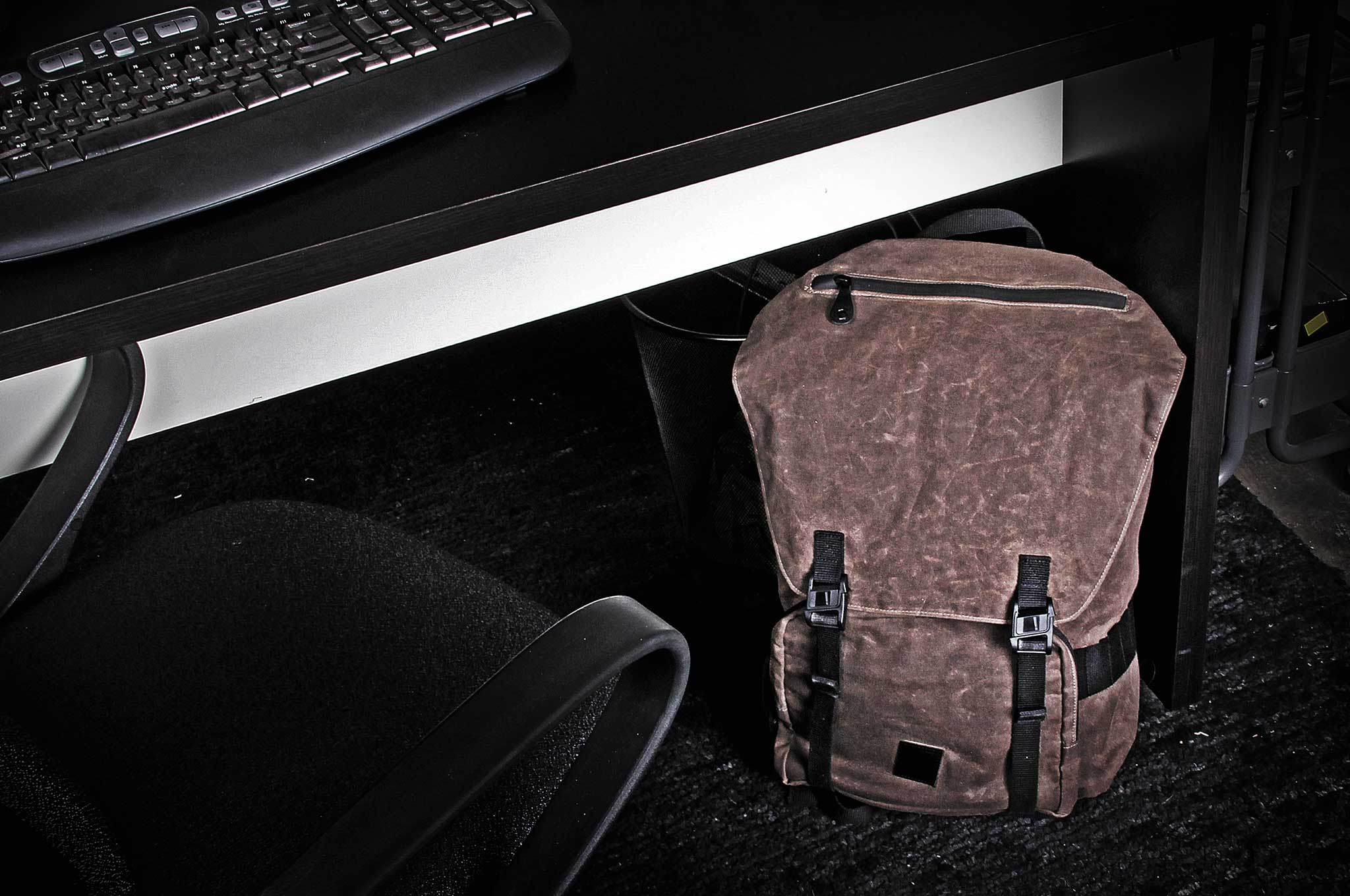
Mimi had her ever-present messenger bag, and I had my small backpack that served as a purse as well as briefcase. We emptied our bags of all non-essential stuff to make as much room as possible. I hated the thought of leaving my laptop, as I’d already convinced myself the studio would be gutted by looters. But, as a business asset it was insured against theft, so I had that going for me, at least. We filled each bag with water bottles, sleeves of crackers, and apples.
I knew the basic route to Mimi’s building, having driven her home a couple of times, but didn’t know the neighborhood that well. Being that we’d have to take a roundabout way to get there, hopefully avoiding the looting and such, I figured we’d better take the time to make a plan and check a map of the city. I was embarrassed to admit the first thing I did at that point was pull out my phone to go to Google Maps. Old habits die hard, I guess. As I was racking my brain, trying to remember if the gas station down the block had maps – assuming they were even still open during the power outage – Mimi suddenly jumped up and ran over to the reception desk. I swear, I could almost literally see a light bulb burning over her head as she rummaged through the desk drawers.
I heard her exclaim, “Yes!” and she came back and sat down, setting on the table the Yellow Pages. My puzzled look was answer enough so she opened it up and rifled through the first few pages. Street maps! I’d forgotten that phone books often had maps in the front or back. Now we were in business. We plotted a route that would take us around the areas we already knew were bad news, keeping our fingers crossed that we’d avoid the looters and rioters. Even so, safety was still a concern.
Neither Mimi nor I carried a handgun, though I’d grown up around guns and could shoot fairly well. She at least had a small canister of pepper spray. She said her boyfriend had insisted she carry it when she began riding her bike back and forth to the studio. I thought for a moment then walked back to the kitchenette. From a drawer there, I pulled a large bread knife. The blade was about 8 inches long and serrated. It was pretty thin, but I knew it was sharp. I had no idea if I’d be able to actually use it to harm someone, but I felt better knowing I was armed. Since I had little interest in sliding a sharp blade down the back of my pants, I grabbed the empty cardboard box from the crackers we’d put in our bags. Folding the cardboard over the blade a couple of times, then cutting it to size and covering it with duct tape, I made a fairly decent sheath. I slipped it into my belt at the small of my back. Not the greatest solution, but it would have to work for now.
The basic plan was to get over to Mimi’s apartment and spend the night there. Mimi’s roommate, Victoria, was out of town visiting family and had left her bicycle behind. If the trains weren’t running in the morning, I could borrow the bike to get back to my house. While Mimi’s apartment building wasn’t really on my way home, it was still closer to it than my studio, in a roundabout sort of way.
I tried calling my neighbor to see if she could run over and check on Vinny, my Maine Coon cat, but neither Mimi nor I could get a call to go through on our cells. The phones would just search for a signal for a few minutes, then disconnect. There was no dial tone on the landline, either.
We headed out the back door, after making sure all of the blinds and curtains were completely closed at the front of the studio. I figured there was a slim chance looters might pass it by if they couldn’t see anything worth grabbing. Mimi unlocked her bike and began pushing it. Our initial plan had been to sling our bags onto the handlebars, but once we were actually outside, we were both very reluctant to do so. If we suddenly had to bolt, the bike would probably be left behind. I toyed with the idea of just leaving the bike locked up, but figured it wasn’t much extra effort for one of us to push it and we might end up needing it at some point.
The city was surreal. I’d never seen it so dark. No streetlights, no neon lights over the restaurants and taverns – it was downright spooky. I could see candles or oil lamps in a few windows as we walked by apartment buildings. The occasional passing car shone like a beacon, as there was nothing else competing with the light from the headlamps. Mimi and I talked in whispered tones, instinctively wanting to match the darkness with quiet.
We stuck to the side streets as much as possible. Despite the late hour, there were a lot of people walking around. Most of them were just hanging out, talking to their neighbors, presumably about the blackout and related matters. There were a few small groups here and there that caused us some concern, but we managed to avoid being accosted. Thanks to the maps we’d torn from the phone book, we got lost only once.
After just shy of an hour of walking, we made it to Mimi’s building. Rather than leave the bike locked on the rack outside, we took it into the apartment with us. Then, just to be safe, we went back downstairs and grabbed Victoria’s bike, too. I turned on one of the flashlights and balanced it on its butt on a table, lighting up much of the room. Mimi quickly pulled down the shades and closed the curtains in the living room. A bit of searching through drawers found a few candles and some matches. The food in the fridge was still somewhat cool so we grabbed milk, lunchmeat, and some odds and ends for dinner. I told Mimi that whatever we didn’t eat soon would end up just going to waste unless the power came back on overnight. She had some ice in the freezer, but didn’t have any coolers, unfortunately. We each took quick, lukewarm showers. Obviously the building had electric water heaters rather than gas. But the fact that we had running water was a blessing.
Cleaned up and with full stomachs, we settled in for the night. We each said a prayer that things would be back to normal by morning.
Federal Agent: Erik Lund’s Approach
The darkness only lasted for a few seconds before the boutique’s emergency lights activated. I could feel Mimi’s grip on my arm starting to relax. The emergency lights created an eerie mix of light and shadow that almost resembled some private party room in the basement of a nightclub.
“What do we do now?” Mimi asked.
“There’s nothing more we can do,” I replied. “Let’s get everything locked up and try to find a way home.”
After shutting down the computers and securing some important documents and computer hard drives in the studio’s safe, it was time to find a way home.
I wiped away the sweat from my forehead. The power had only been out about 15 minutes, but it was already getting warm inside the boutique. The stagnant air was thick and humid with no options for relief. The idea of opening the windows and front door for circulation was out of the question. Even if it was cooler outside, doing so would risk inviting in the wrong people – the kind who were looking to take advantage of the situation and possibly loot the place. No, the doors and windows would have to be locked, but that also meant that we would have to leave. It wouldn’t take long before the temperature inside the store would climb into the 80s. Trying to sleep in this virtual oven would be nearly impossible, and staying up all night in a sweatbox wasn’t an attractive option, either.
Getting home was my only real option, and it wasn’t going to be easy. My house was only a quick 7-mile train ride away, but trekking that distance in heels was simply not going to happen. I made a mental note to myself: “Leave a set of running shoes at the office from now on.” If I ever had to walk home again, I would be better prepared next time.
I decided my first option was to phone a friend for a ride. I wiped away the sweat and started scrolling through my phone, looking for someone close to hit up for a ride home. Ahh, Joshua will do it. A quick second later and his phone started ringing. Then my heart sank a little – his phone went to voicemail. “Damn!” I yelled out of frustration and a bit of panic. Mimi handed me a cold bottle of water and a cup of yogurt she had snagged from the break-room’s refrigerator. “Here take these while they’re still cold,” Mimi said. “We never did stop for dinner.” I looked at her and smiled and remembered why I had selected her from all of the intern applications. Despite her fear of the dark, she had a strong work ethic and always offered good options for getting the job done. “Thanks,” I said. “That sounds perfect right now.”
I sat down and sent a quick text to Joshua explaining my situation and then started to eat my yogurt. Mimi asked, “So what’s the plan?” Thinking through my options for a second, I said, “I can’t walk home in these heels, so it looks like I’m just gonna wait for Joshua to get back to me. I can always call a cab to take me home, but don’t worry about me. You’ve got your bike – you should go home. I’ll be OK.” Mimi cast a very disapproving motherly look at me. “Uh, no, I’m not leaving you alone,” she said. “I’m staying with you. We’ll get home together.” I smiled and gave her a look of thank you. I didn’t want to be alone, but I couldn’t ask her to stay with me, so I was very glad to hear her say that. “OK, let’s figure out how to get us home,” I said.
After trying for almost a half hour, all of the cab companies were booked. Apparently, a lot of people in the Arts District work late and needed rides home too. I was on a callback list for when a cab became available, but the waitlist was long and it might be several more hours before my turn came up. We started calling ridesharing services, but that’s when the phone lines stopped working. The network was probably overwhelmed or affected by the black out, too. The heat in the store was almost unbearable, and my shirt was now almost completely soaked. I said to Mimi, “I need to get some air; I’m going to go outside.” Mimi nodded, and went with me to unlock the front door. Stepping outside provided some relief. A gentle breeze made all the difference. It was still hot, but it felt cooler outside than it did in the store. Looking around the area, everything was still dark except for a few buildings that clearly had emergency generators, as their lights were still working. Still, it was as quiet as a cemetery.
“Let’s just go to my apartment,” Mimi said.
“Thanks, but there’s no way I can walk 2 miles in heels,” I responded.
Mimi smiled and said, “You won’t have to.”
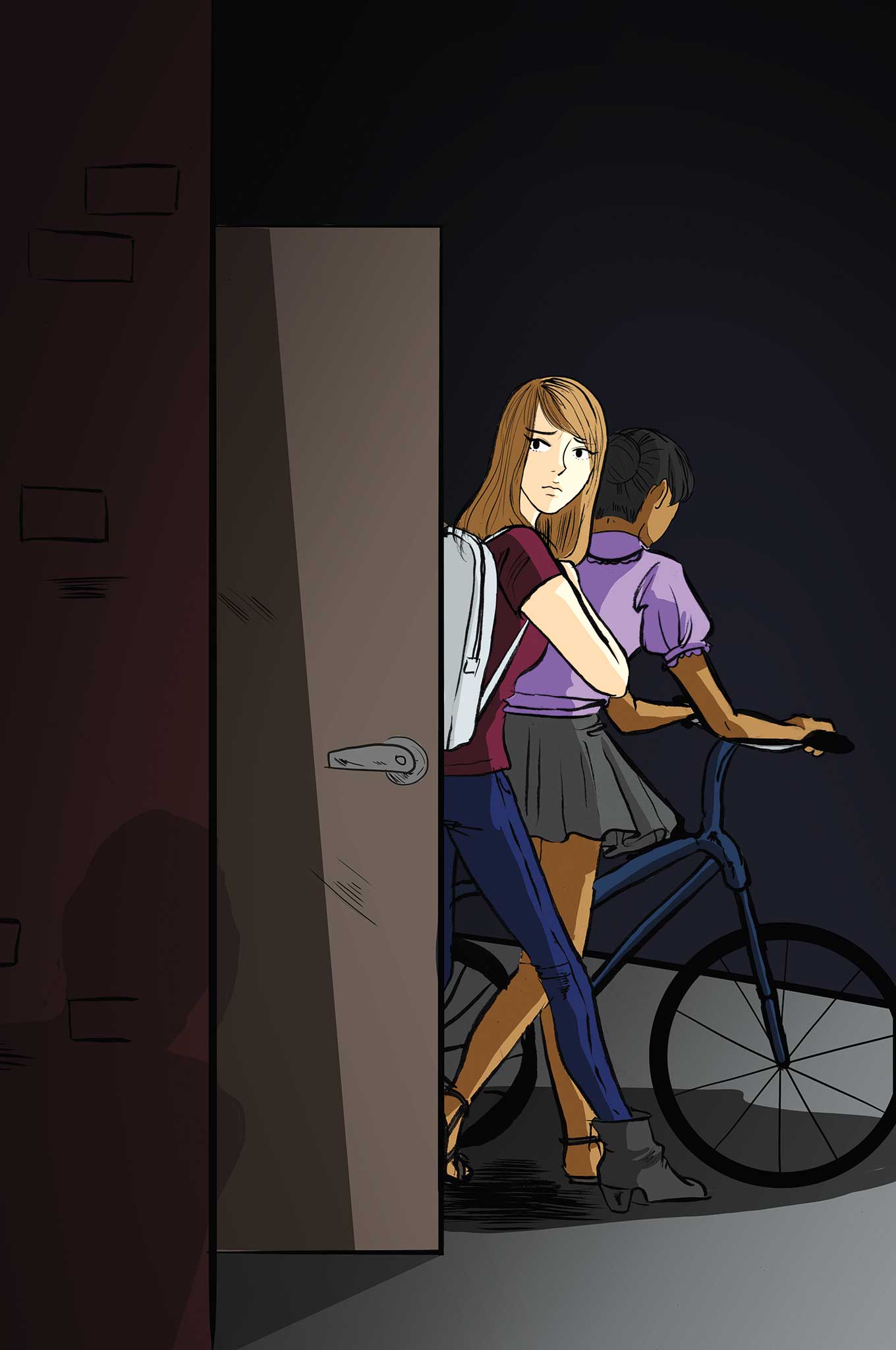
I shoved several bottles of water into Mimi’s backpack along with my heels. I grabbed a knife from the break room and taped it to the shoulder strap of the backpack. It was just enough tape to hold the knife in place, but it would break free if I needed to grab it. It wasn’t much for defense, but it was better than nothing. I pushed the bike outside and locked the front door. I looked over at Mimi.
“Are you ready?” I asked. Mimi stood up from her stretch and with a smile said, “Yep, try to keep up.”
While I knew a lot about Mimi’s professional skills, I knew next to nothing about her personal life. Turns out she was an amateur triathlete, which is one of the reasons that she rode her bike to work every day. It was a way to get in some bike training. She also ran cross-country in high school, but started competing in triathlons when she got into college. She said the 2-mile run home would be just a little warmup for her. I would ride her bike barefoot and carry the pack with our supplies should we need to detour and head away from trouble.
I laughed at her and said, “I don’t think it’ll be a problem.”
“Challenge accepted,” Mimi said, and took off running.
I started peddling and did my best to keep up. About a mile into the journey we crossed out of the blackout zone. The oppressive heat had brought some people out into the streets looking for relief, but being that the Arts District was a business area, there were very few homes or apartments located in the blackout zone. A short 15 minutes after we started, we arrived at Mimi’s apartment complex.
“Home at last,” she said. “Good job keeping up.”
I laughed off the remark, but was ashamed to admit that it about killed me to do so. Note to self: get my fat ass back in the gym and buy a bike, a backpack, and some supplies to keep at the office in case this crap happens again. As I got off the bike and pushed it over to Mimi, she said, “I think it’s time for a big glass of wine.”
“Ya know,” I said, “that’s the best idea you’ve had all day.”
Survival Expert: Tim Macwelch’s Approach
I had two questions that I could not answer: How widespread was this hack, and how long would the electricity be down? If the power would be back soon, Mimi and I could just stay at the office. But if not, we might want to get out of Dodge while the getting was good.
But where to go?
I tried several times to call my mom, who lived an hour’s drive west of Houston, but the only sound the phone made was a beeping pulse. Mimi got the same noise, desperately trying to call her friends and boyfriend. All of the phone calls of a frightened city must have swamped the system. It sank in slowly that we might be on our own for a while.
Mimi looked like she was ready to bolt, but I lied to her and said that everything would be OK. I knew it wouldn’t, but it was what she needed to hear. I asked Mimi what she had at her apartment in the way of food and supplies, and her response was none – Keurig coffee, plastic utensils, and maybe a package of instant ramen or two. She was a college student after all.
Mimi’s place was about 3 miles south of the shop, while I lived more than 7 miles away. But at my home I had food, a propane grill to cook the food, and several water cooler jugs of water, among other supplies that I had purchased after the last hurricane. We talked over our options of leaving or staying at the office, even talked about staying at a hotel or trying to hail a cab. Neither of us had much cash though, and we knew that the plastic cards we lived off of would be little help to us with the power out. “Looks like it would be our best choice to go to my house,” I said, and Mimi reluctantly agreed. We talked about taking turns on Mimi’s bike, one walking and one riding. But I was afraid that the nice new bike would be a tempting target for theft. I had been robbed for my bike when I first moved to town, and I still had a tiny scar under my chin where my face hit the asphalt during the attack. Again, I urged Mimi to side with my plan – we stick together and we just walk.
We had worked through dinner, before things took their bad turn, and we were both in need of food and drink. We pooled our cash, locked the door, and went a few doors down to the sandwich shop. As we walked, we saw that the street was packed with cars, most of them abandoned. This seemed odd, but we didn’t give it much thought at the time.
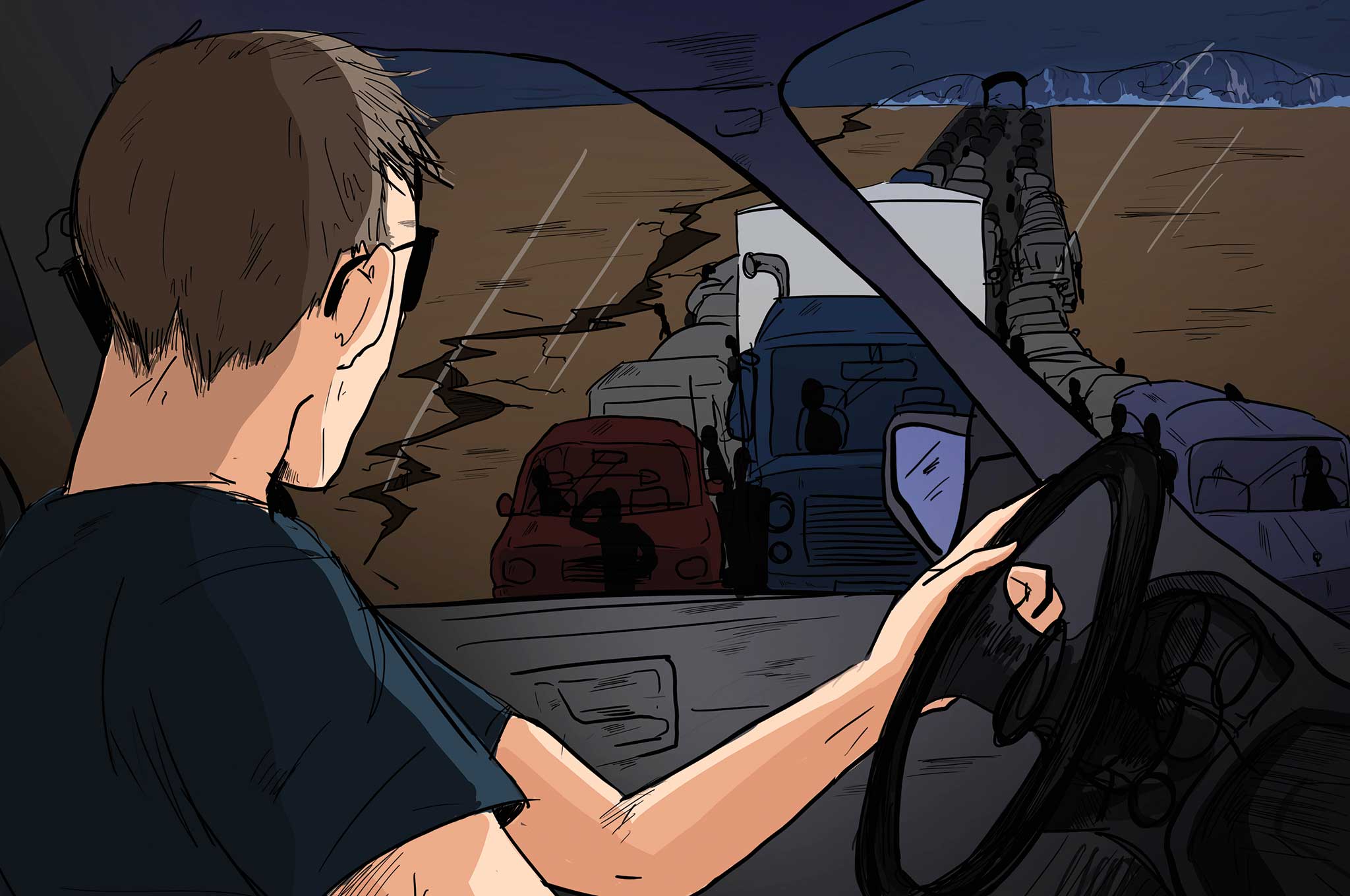
The doors were open at the eatery and some flashlights had been set about for lighting. The shop owner and his son were the only ones working and the place was packed. It turned out that they were just giving away the food. “It won’t keep in this heat,” they said. I had gotten to know the owner and his family since opening my business around the corner. I felt bad asking, but as he handed me and Mimi a brown paper bag of sandwiches, I asked him if they had a car and could give us a ride out of town. He said a car wouldn’t do any of us any good. He went on to explain that before the power went out, all of the stoplights went green. The hacker’s doing, no doubt. Every intersection had wrecks, and many people had been killed. The ambulances couldn’t even get to most of the accidents. Things were far worse than I initially guessed.
I hated to ask him, but I did: “We’ve going to have to walk several miles in the dark tonight. Can we borrow one of your flashlights?” He looked hesitant at first, but glanced over at the dwindling stack of meats and cheeses. “Sure,” he replied. “At this rate we’ll have to close up shop in a few minutes anyway.” I asked where they were headed, hoping they were headed the same way as us, but was crushed when he said they were walking east. My place was to the west.
I took a flashlight, thanking the man and his son profusely. Mimi and I walked quickly back to our office. No more than 10 steps from the sandwich shop, I noticed two men peering into various cars, and thought they were up to no good. Our movement caught their eyes and they began staring at us. The larger man, a fat and sweaty looking oaf, called out, “Hey honey, what’s in the bag? What’s the matter? Cat got your tongue? You got a place to go for tonight? We’ve got a place. You can go with us.”
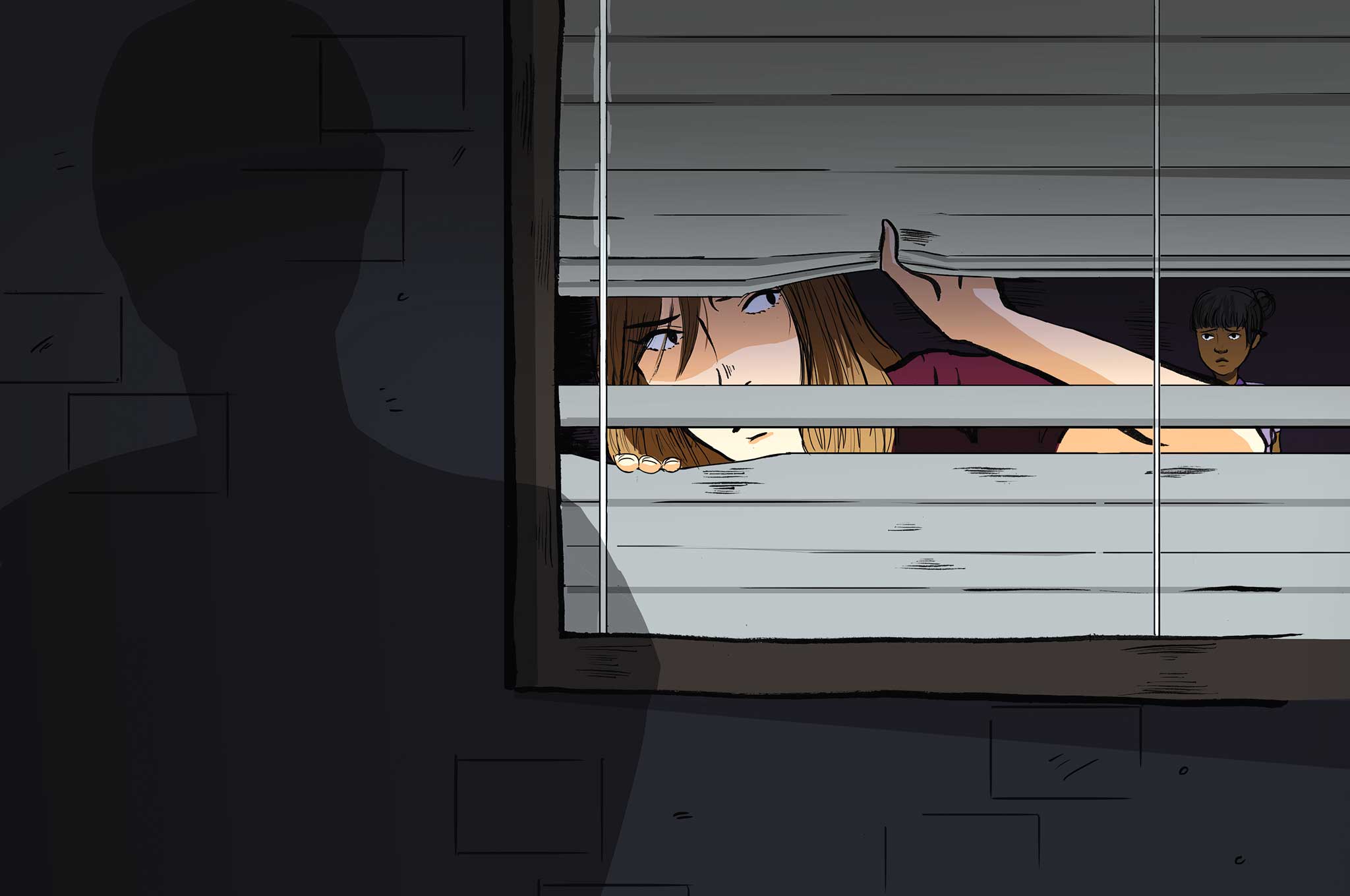
They were about 10 steps behind us as I unlocked the front door, pushed Mimi inside, and locked it behind us. Without a word, we both started drawing the blinds shut. Mimi and I both jumped when one of the men started banging on the door. “We know where you are,” the voice jeered.
Retreating to the back of the office, I tried to dial 911 on my mobile phone, but only heard the beeping again that indicated the lines were jammed. We agreed that any thoughts of staying overnight were out of the question now that we had stalkers.
By the light of the flashlight and the decorative candle from the bathroom, we scavenged the office for everything that could be remotely useful. We found some chocolates at the bottom of a desk drawer and an old bottle of salad dressing from the small fridge in the break-room. There were several bottles of water in there, too, and some odd bits of clothing and a broom in the closet. As I looked at the mismatched items, an idea started to form.
“Mimi, who would you walk right past on the street? Who would you not even look twice at?” I asked her. “A salesman, or one of those guys with fliers,” she responded. She gave several other answers, until she hit the one I was looking for: “A homeless person!”
“Yes,” I said with a growing smile, “a homeless person is ignored by almost everyone.” Every day America allows people to suffer on the streets with very little in place to help them. But today, it was the thing that just might make us invisible.
We still had running water, and in the bathroom we washed off every hint of makeup from our faces. Then, I took a piece of the chocolate and melted it in my hand. I wiped it randomly on Mimi’s face and hands, and mine as well. We looked like we hadn’t had a bath in a year, but we still smelled of perfume and now chocolate. As I mentioned that hole in our plan, Mimi grabbed the oil and vinegar salad dressing and said, “This is expired – let’s try it.” She wiped a handful through her normally pretty hair and soon looked like a greasy drowned rat, a rat that stank of rotting food. I beamed with pride at my crafty protege. “Me next,” I said.
Then I put on an ugly, oversized shirt left at the office by an ex-boyfriend, and Mimi donned a sketchy looking trench coat that a former intern had left behind. A little more chocolate wiped on the clothing made the garments look like they came out of a trash heap. I took up the trash bag from the larger office can, with trash and all. In it I placed our water bottles, brown bag of sandwiches, the chocolates, and our purses. I slung it over my shoulder and handed Mimi the broom. “You carry this – it’s the closest thing to a weapon we have,” I said. Just as we were ready to make our exodus into the parking lot behind the shop, there was a banging at the front door like before.
“Hey, girlies!” the man called. “If you open up the door, we’ll share some drinks with you!”
I unlocked the back door and we fled, leaving a lit candle on the desk so the men would think we were still inside the office. We ran for the first few blocks, attracting some very strange looks as we went. To the average passerby, it must have looked like one bag lady stole a bag of trash from another bag lady, who was chasing her with a broom.
After a few more blocks, we slowed to a walk and caught our breath. People still looked at us, but quickly averted their eyes and looked at anything else as we passed them by. It was as if they could catch homelessness by looking at us too long. Due to our run through the neighborhood, we reached the freeway sooner than I anticipated. It was gridlocked, with vacant vehicles everywhere. Plenty of people were milling about in the failing light, but our path was relatively clear. We walked side by side on the road, and anyone who glanced our way quickly turned and looked somewhere else.
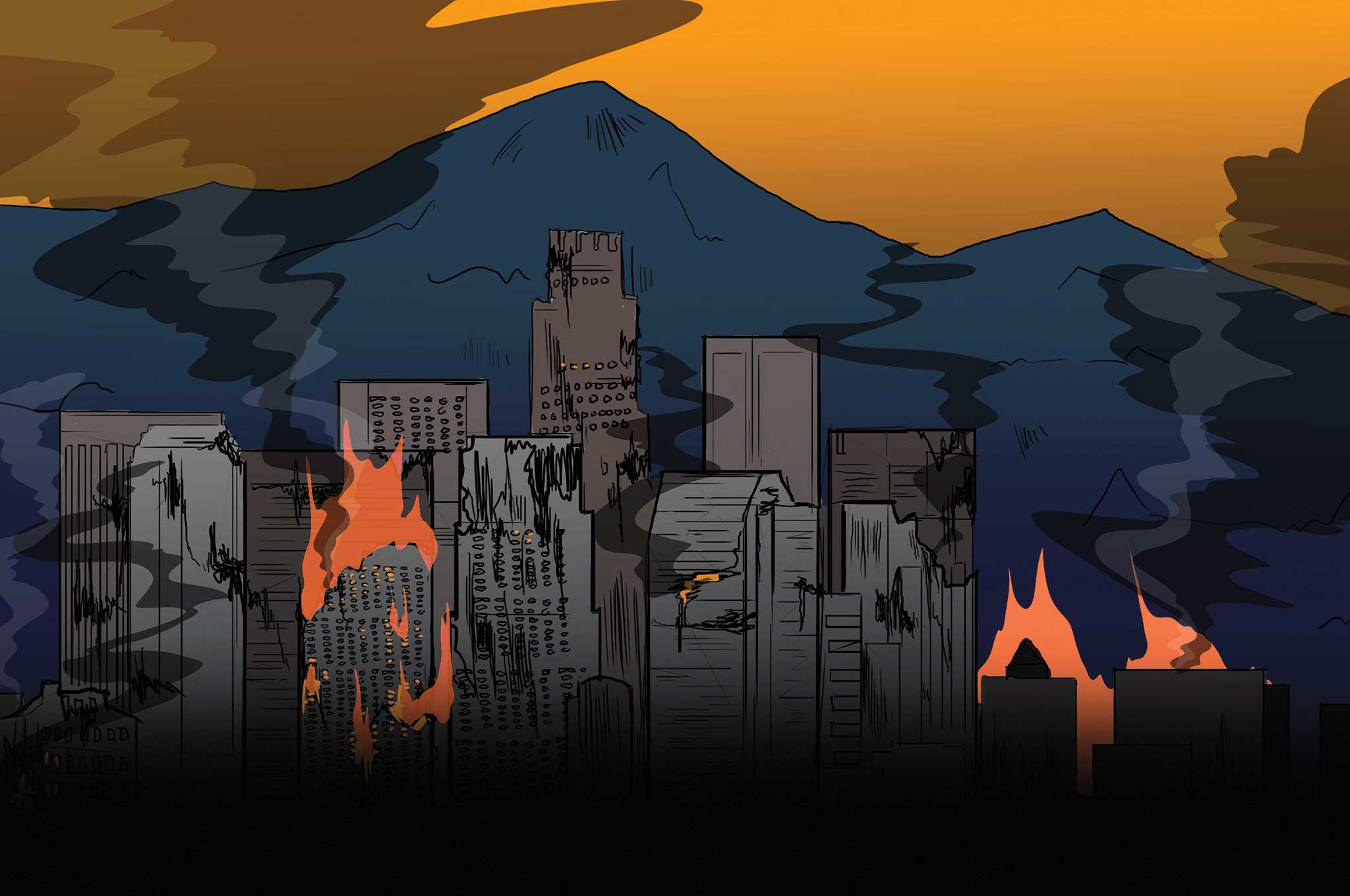
We paused for a moment, draining two water bottles and sharing a sandwich, but we didn’t dare delay too long. As we hid behind a vacant box truck on the freeway, we saw fires spring up on either side of the freeway. Random vehicles, businesses, and homes were burning. This night would never be forgotten by anyone who can survive it.
We walked on and saved our flashlight until the twilight had completely faded and we really needed it. About a mile from my home, people started to approach us in the dark, drawn like moths to the light. Most were asking about the flashlight. But as soon as they drew near, I lifted the light beam to shine upon our faces, as if telling some campfire ghost story. Our appearance and our smell were more than enough to inspire people to say “Sorry, don’t worry about it,” and “Never mind, thanks anyway.” One kind older man even offered us some bottles of water, saying that we looked like we could use them. Mimi smiled and said “No, thank you. We’re fine now.” Walking down my neighborhood’s exit ramp from the highway, I finally felt like we would be fine.
The lie I had told Mimi earlier had turned out to be true. We were going to be OK, but this night could have easily gone another way. And as I saw my house numbers in the dying glow of the flashlight, I knew we were going to be safe – for a little while, anyway.
Conclusion
I hope it was worth it. I hope you’re happy with your high-tech world of push-button ease and the inevitable vulnerability that comes along with it. Computer hacking is an everyday part of the modern world, and a looming threat to the modern American way of life.
When a few disenfranchised weirdos living in their mom’s basements or a few well-schooled hackers from an opposing ideology are able to steal information, drain bank accounts, shut down utilities, and bring our world to its knees – at the end of the day, we really only have ourselves to blame. We handed them the keys to it all. So what do we do to keep this work of fiction from becoming fact? Should everybody go Amish overnight? No, that’s not possible, nor is it the right approach. As individuals, the best we can do is become more self-reliant and more independent from modern technology. This gives us a cushion to fall back on, in any type of crisis. And those of you who are part of big business or are bureaucrats, you need to take hackers as the serious threat they really are. Spend a little of your money to fight them, or lose it all when they shut you down.
Finally, our culture needs to understand that newer, faster, fancier, and more interconnected technologies aren’t always a good thing. The more parts there are in a system, the more parts that can fail – or in the case of this story, be used against us. Take this edition of “What If?” very seriously, folks. Don’t let your precious computers and high-tech gizmos become the Trojan Horse that gets all of our cities sacked.
[meetourpanel]