Toward the end of 2022, RECOIL took a major step in a new direction. We’ve always worked tirelessly to give you unflinching insight into a wide array of guns and gear, information and expertise on developing new skillsets, exposure to all aspects of the lifestyle, and a behind-the-curtain look at the inner workings of the firearms industry and the organizations that exist to safeguard your constitutional rights. But, for us, even that isn’t enough. For years, we’ve been working to create an immersive real-world experience that would allow you to not just read about these things, but to actively take part in them in real time. In November 2022, RECOIL partnered up with Silencer Shop to bring you this experience, which we dubbed CANCON. The inaugural event was held at 17 South Rod & Gun Club just outside of Savannah, Georgia.
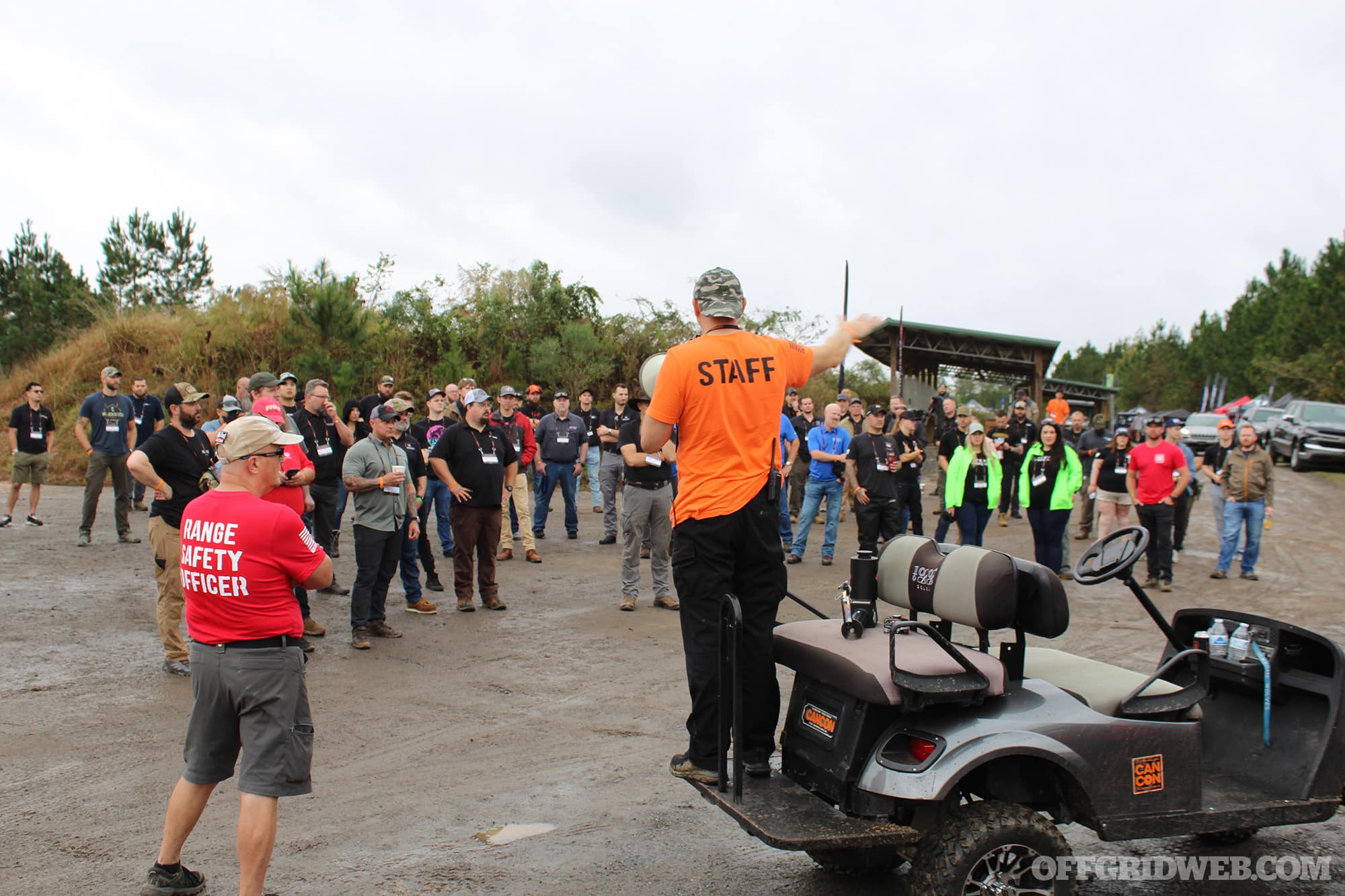
Above: RECOIL and range staff deliver the opening briefing.
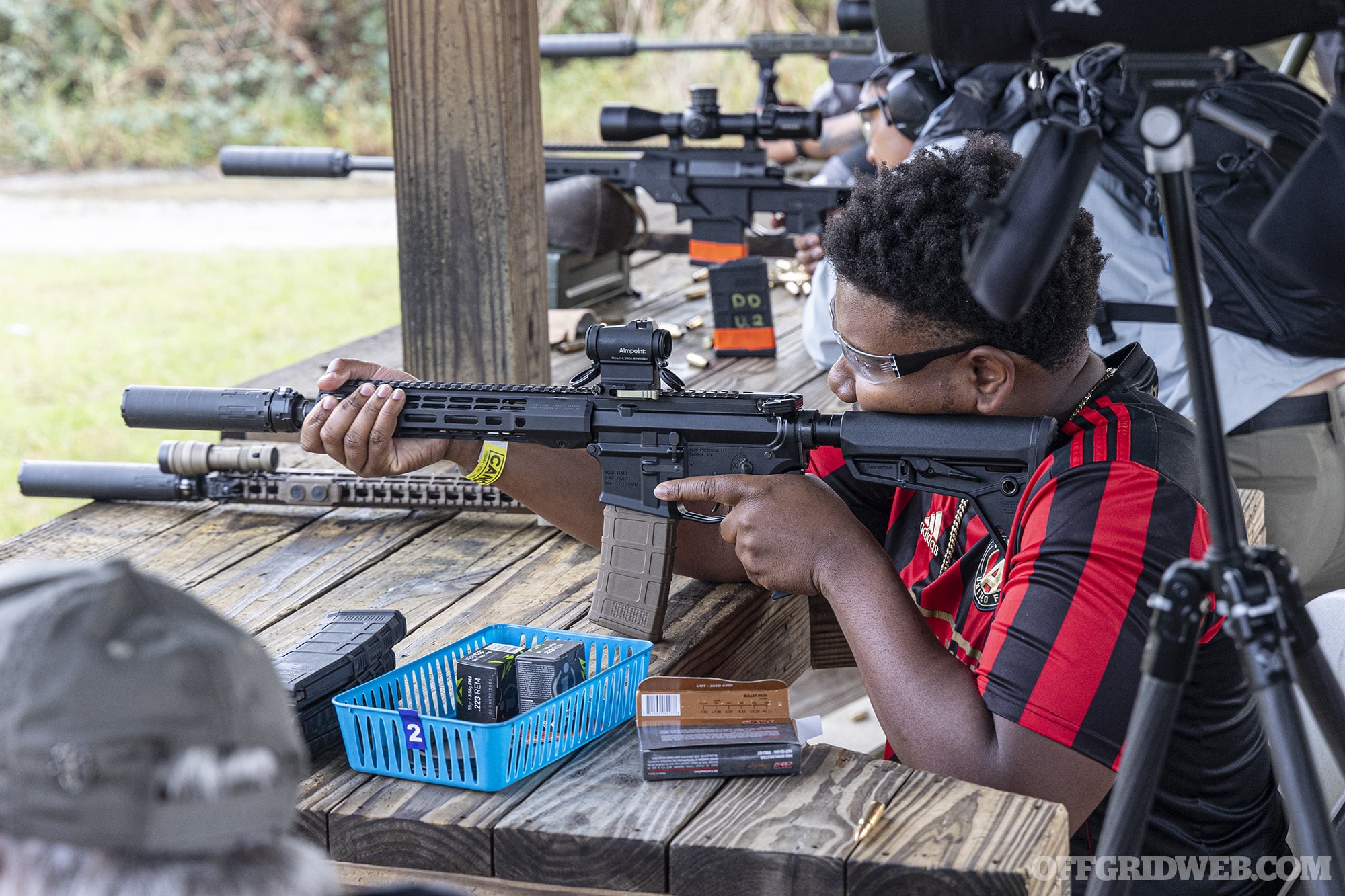
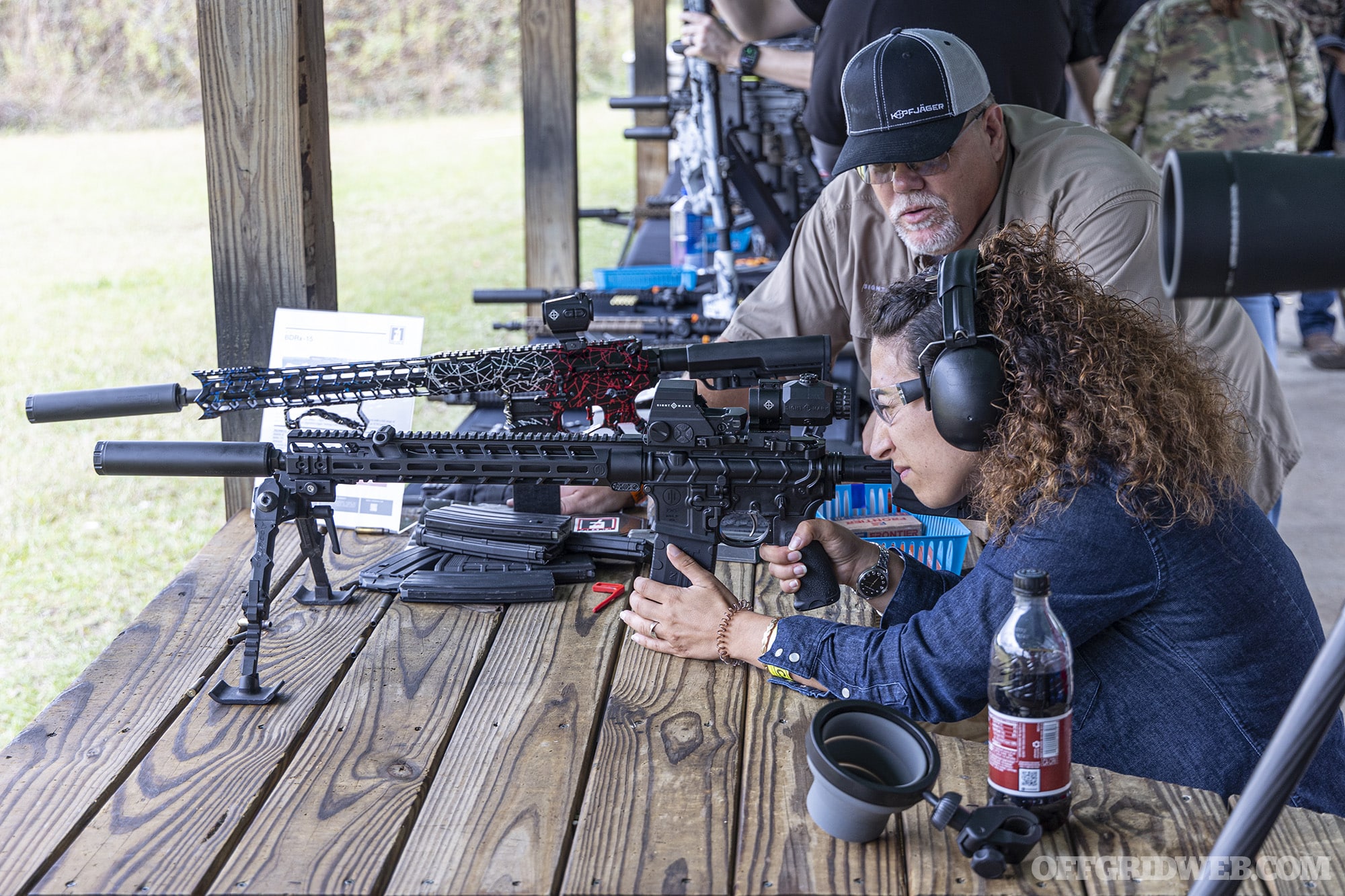
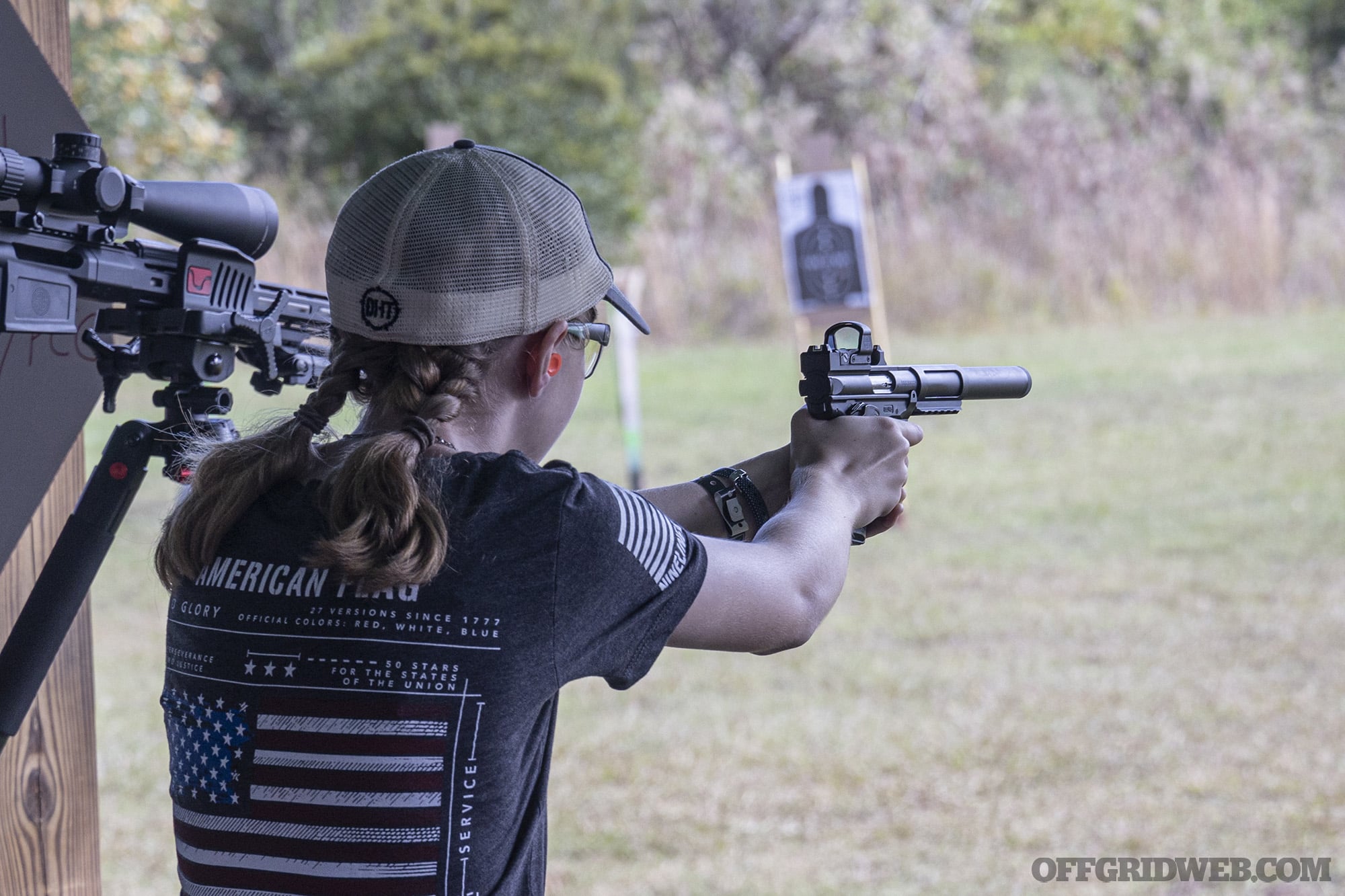
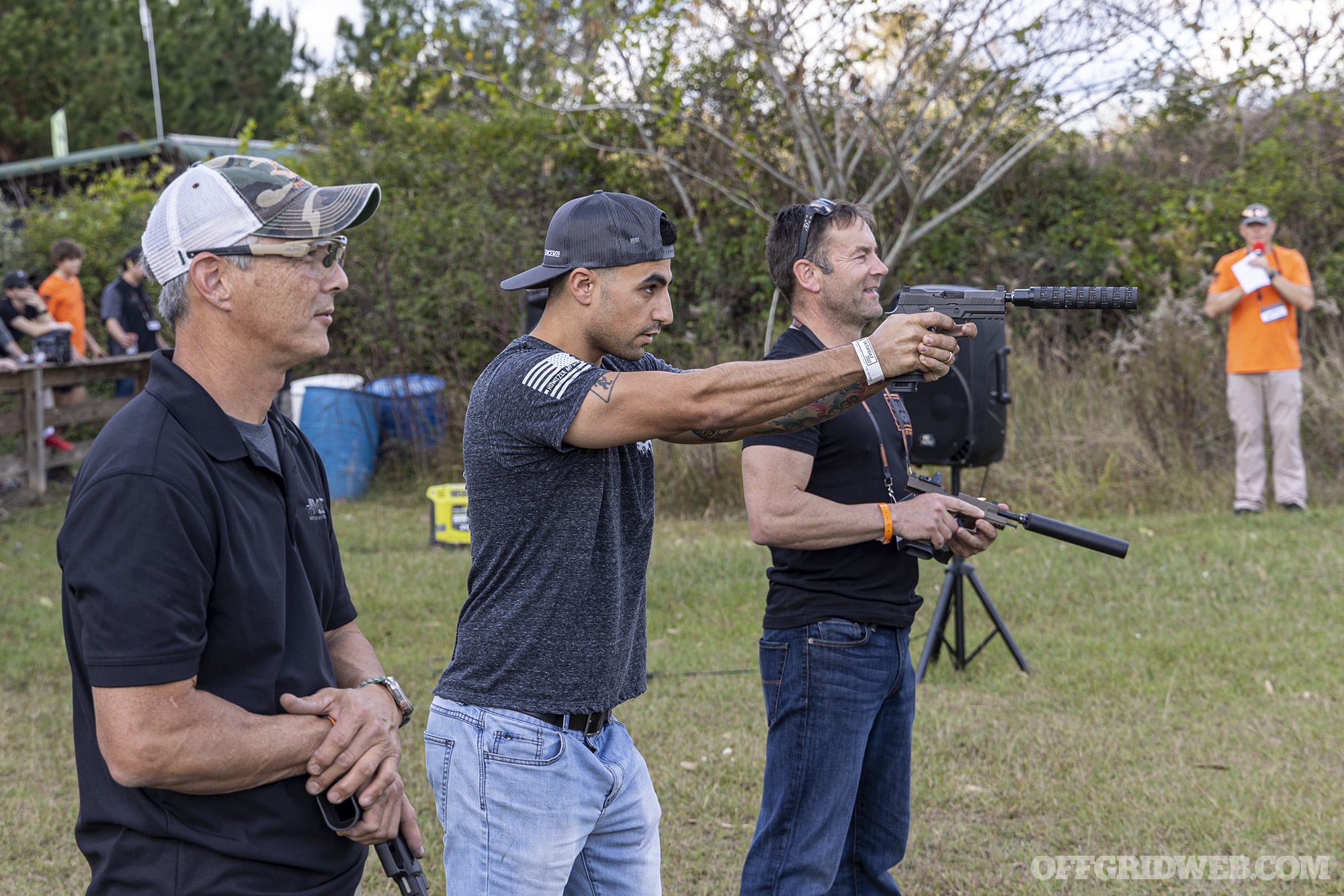
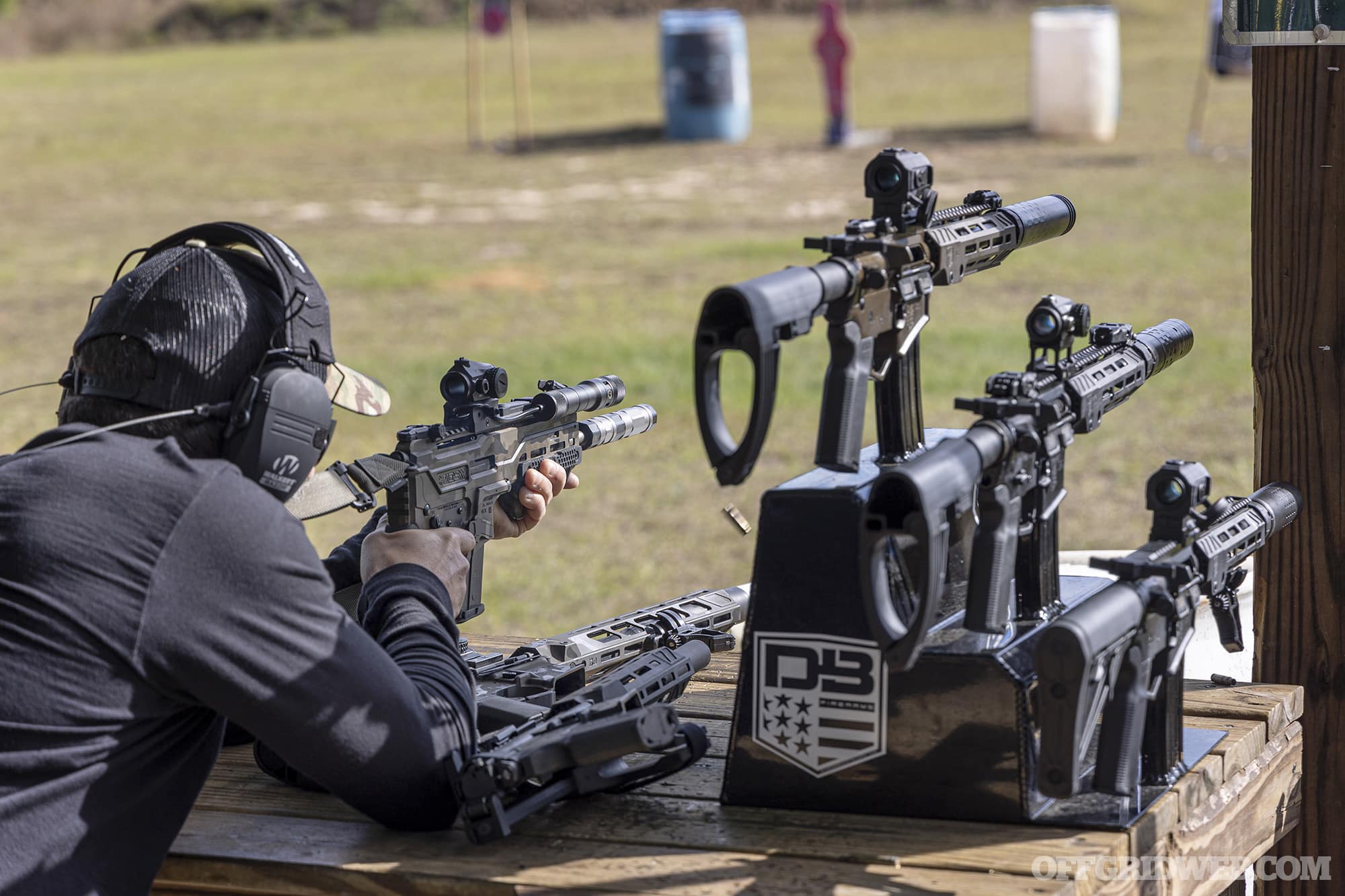
The concept of the event was to offer a fully suppressed range day. And we meant it when we said fully suppressed — every single one of the firearms available to shoot at the event was equipped with a can, regardless of make, model, or caliber. CANCON featured more than 30 individual shooting lanes full of the firearms and suppressors you’ve seen in the pages of RECOIL over the years.
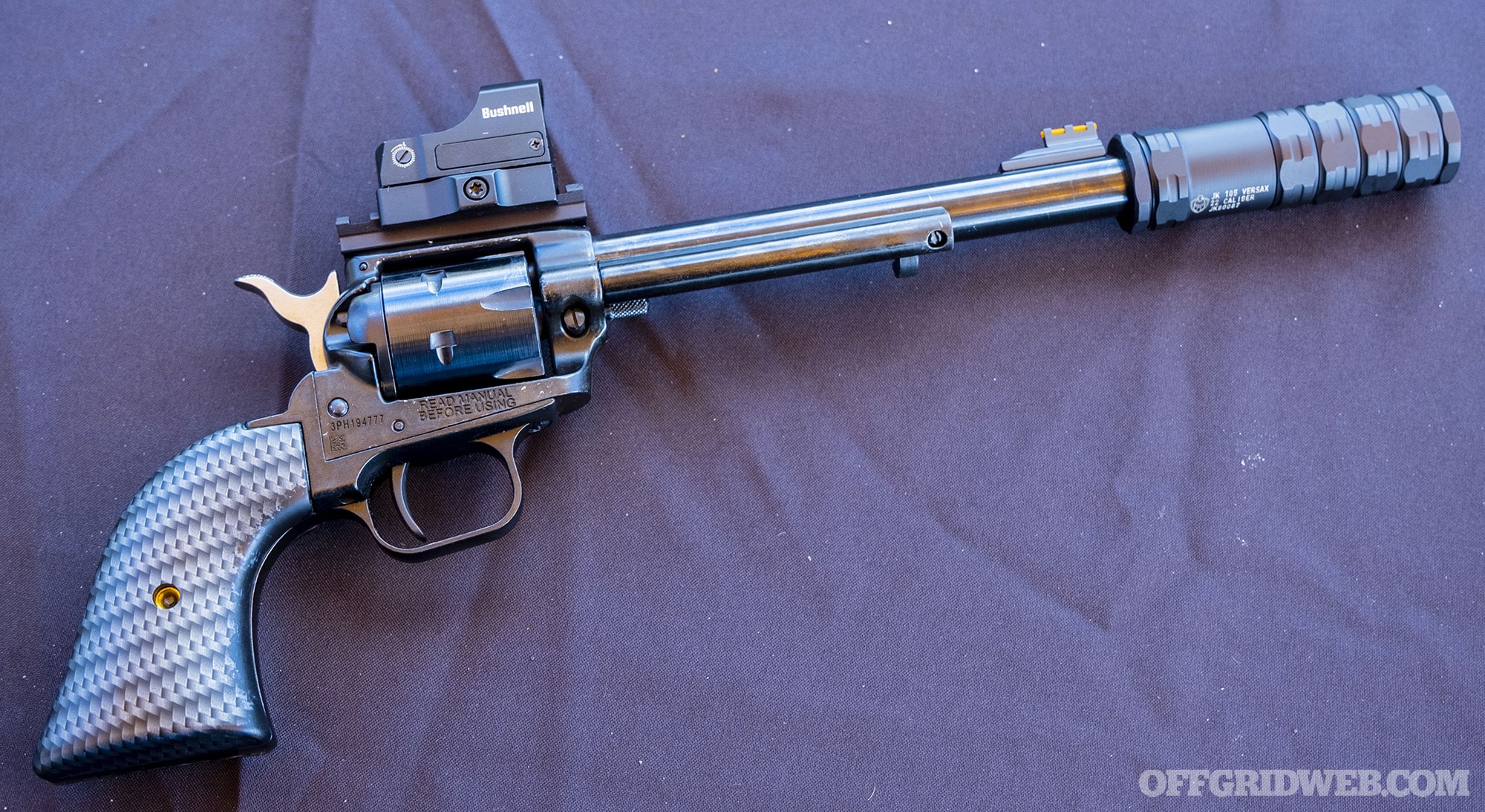
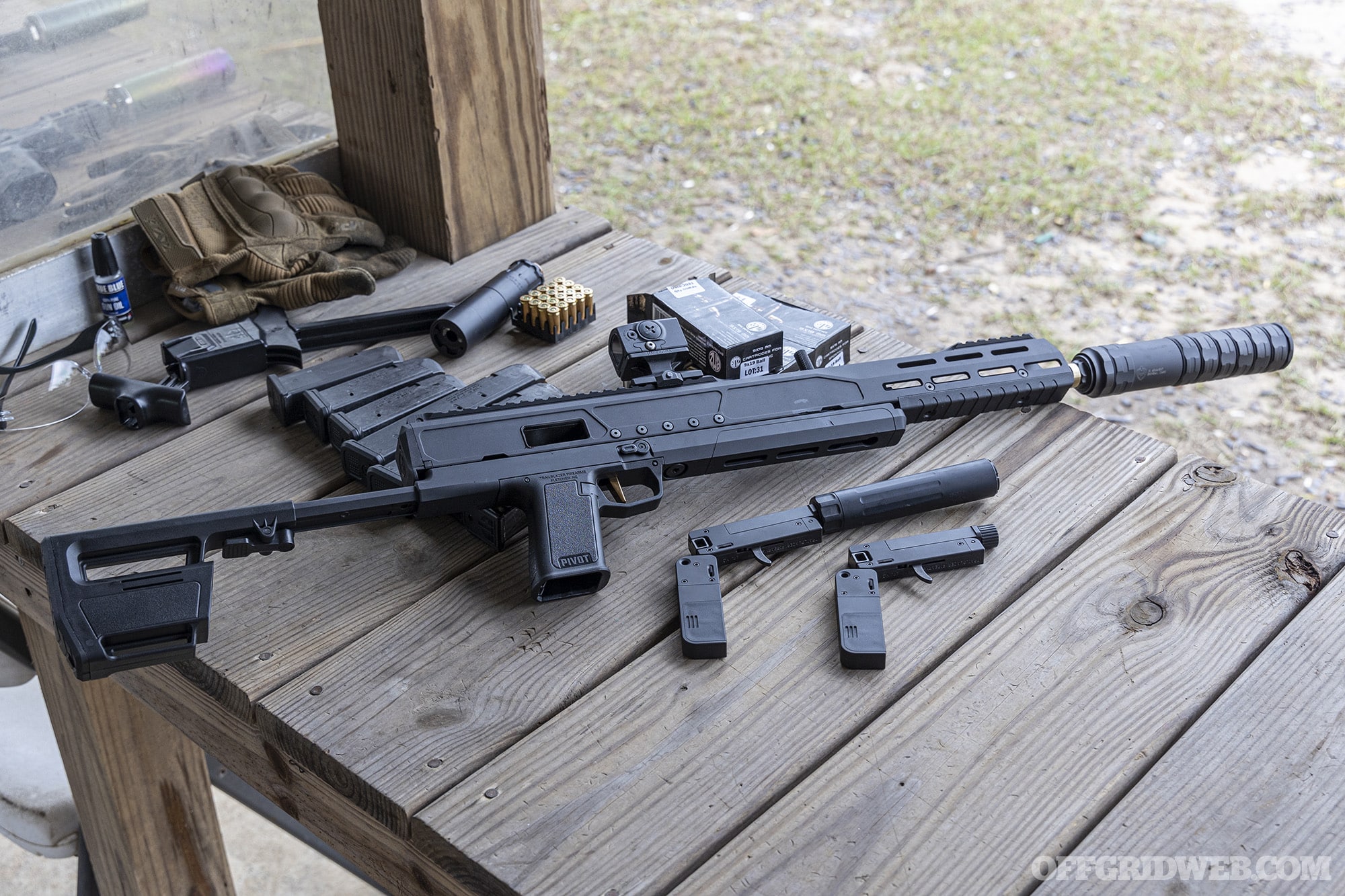
Above & Below: A variety of unconventional firearms were available, like this single-action revolver, the Life Card, and Pivot Carbine.
Several companies even showcased brand-new products that had never been revealed to the public before, including new firearms and suppressors that were available to shoot despite not even being on the market yet. No need to bring your own guns, suppressors, or ammunition — all of that was provided for the duration of the event. Just pay your entry fee and start shooting! With multiple FFL/SOT options on site, not only did participants have the chance to get hands-on experience with hundreds of guns and suppressors, but they were able to file paperwork and purchase them as well.
Above: Primary Weapons Systems had both firearms and suppressors on display.
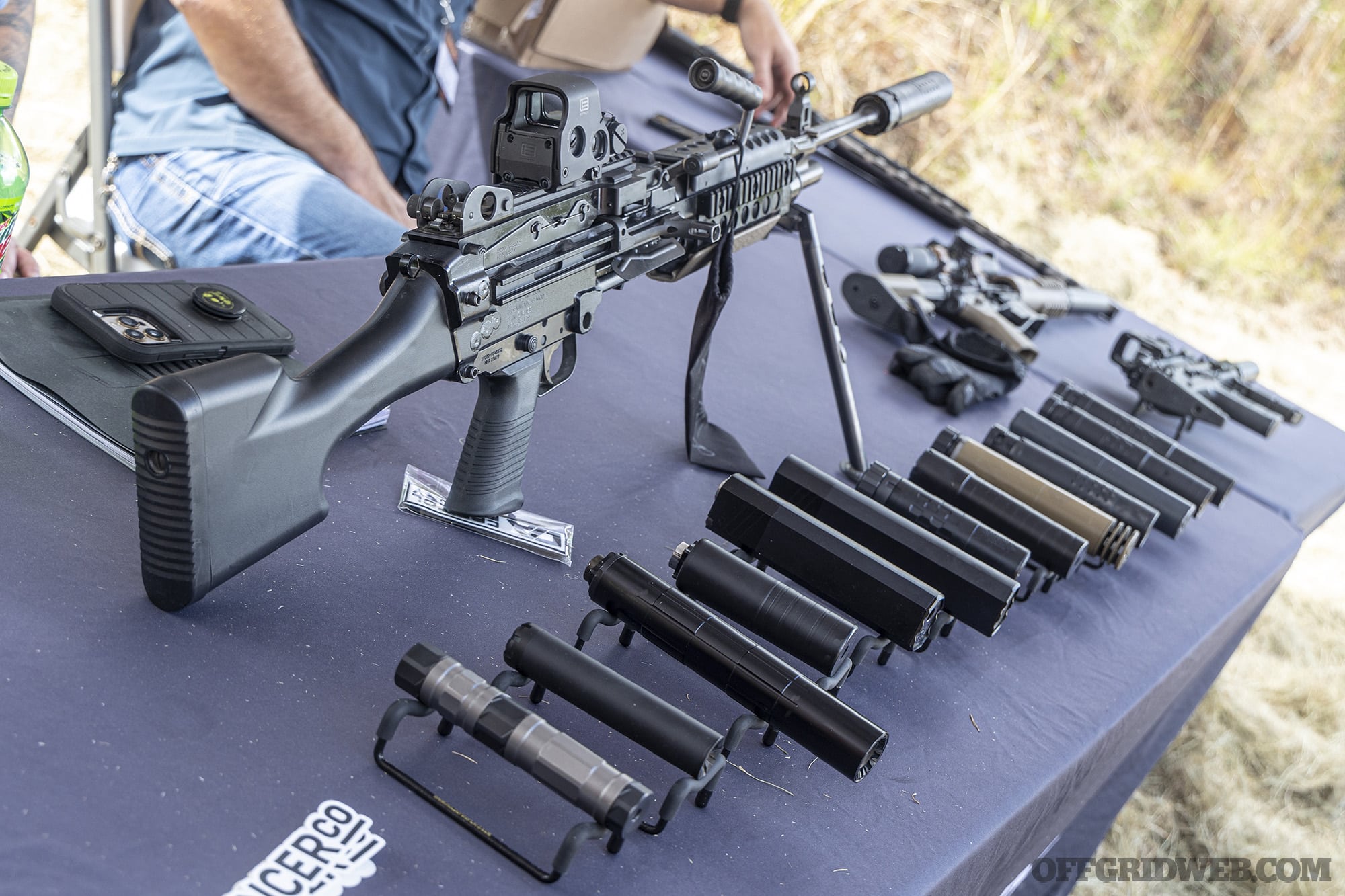
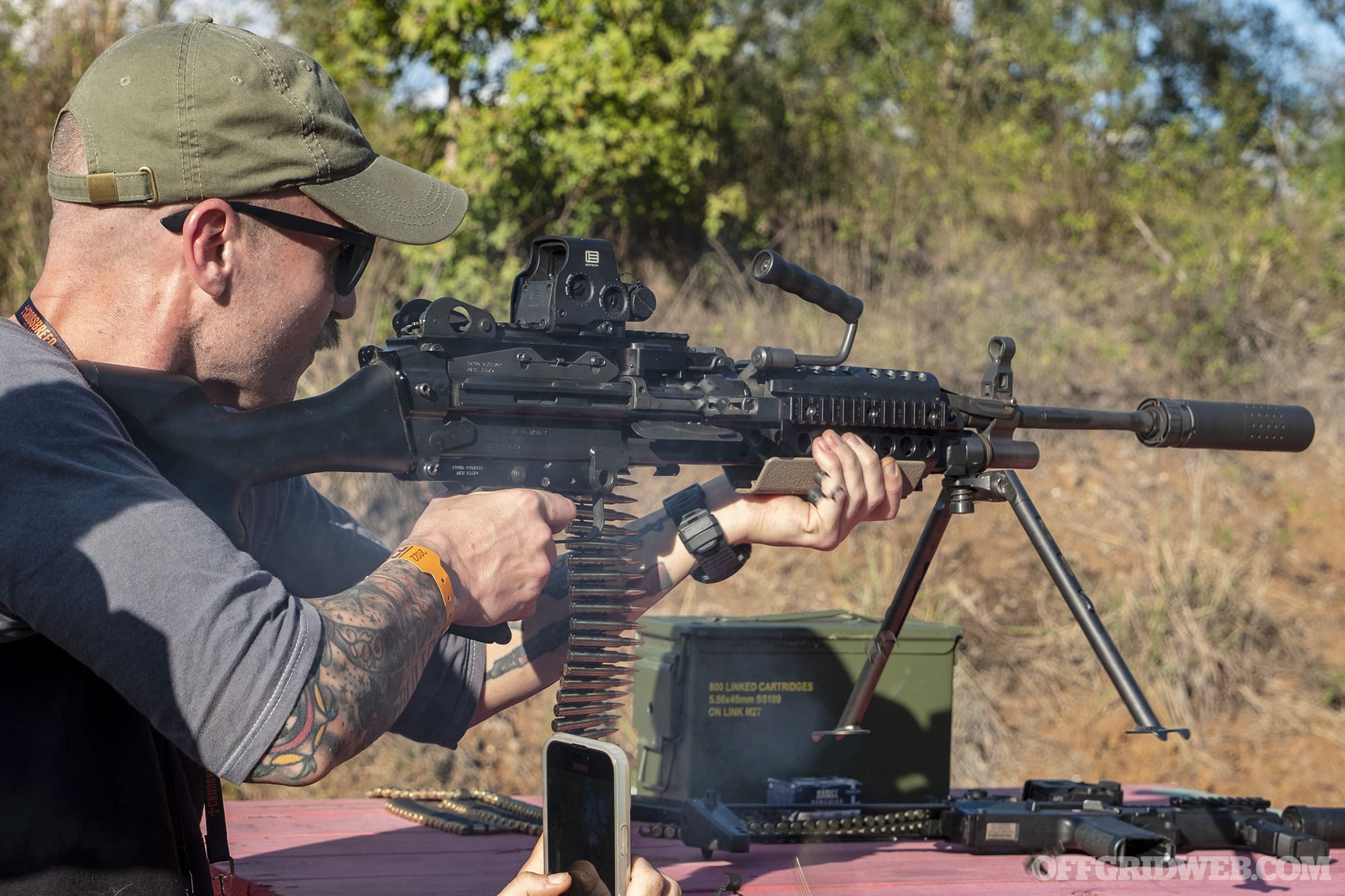
Above & Below: Suppressed belt-feds were available for demo.
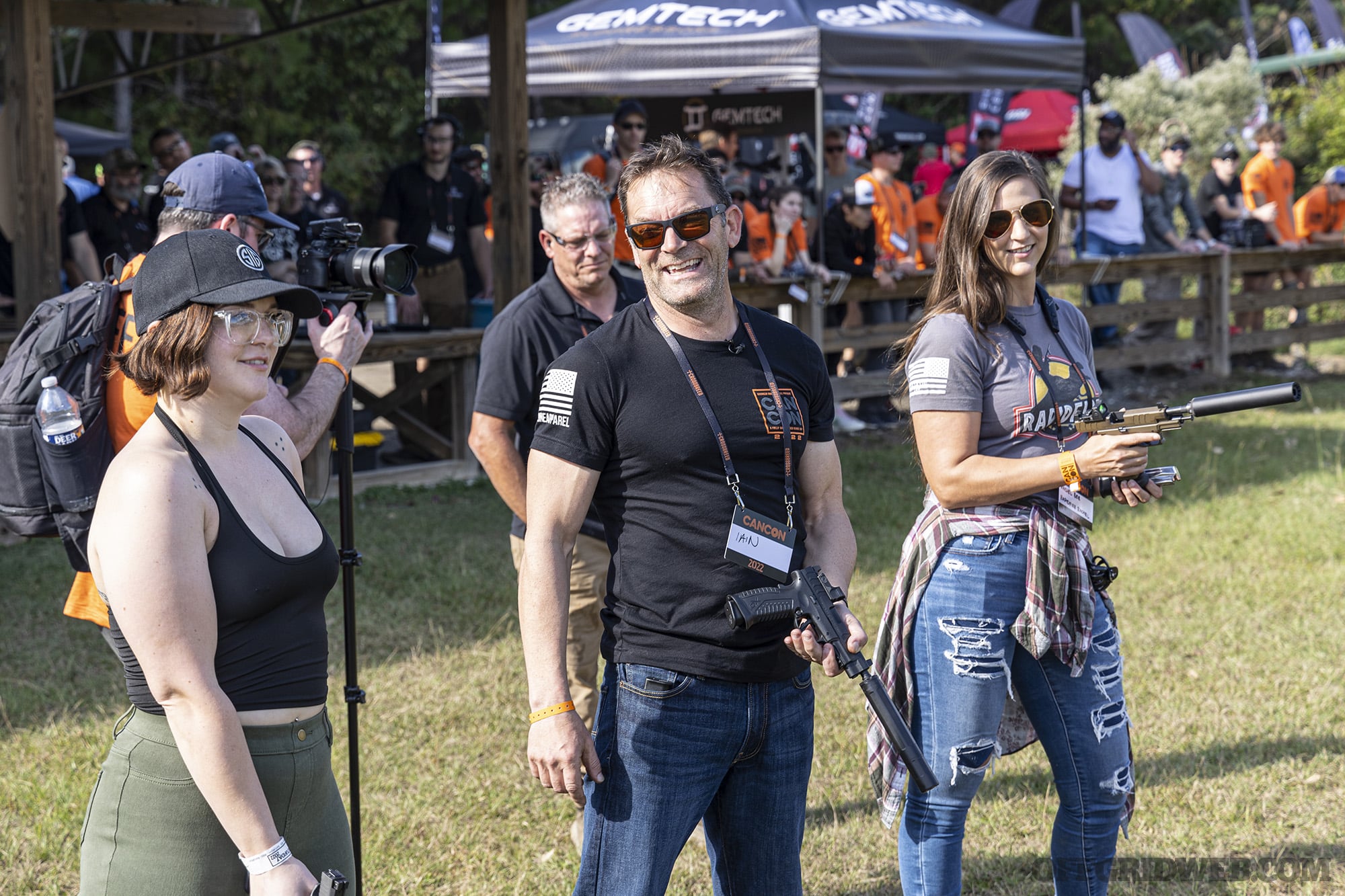
But CANCON is so much more than just a day at the range. In addition to the dozens of lanes full of suppressed firearms, there was a vendor row with companies from all corners of the gun industry, including Excaliber Ammunition, Blue Force Gear, and Hossom Knives. Cigar Life cigar shop had a booth where they hosted Vets Vices alumni brand Hooten Young. In fact, retired Special Forces operator Norm Hooten himself showed up in the flesh to smoke a few cigars and talk to folks. Gun Owners of America was also present, along with Stephen Willeford who heroically stopped the mass shooter in Sutherland Springs (see CONCEALMENT Issue 29), educating attendees on the work they do in the firearms community and signing up new members.
Above: There were several shoot-offs with RECOIL staff throughout the weekend.
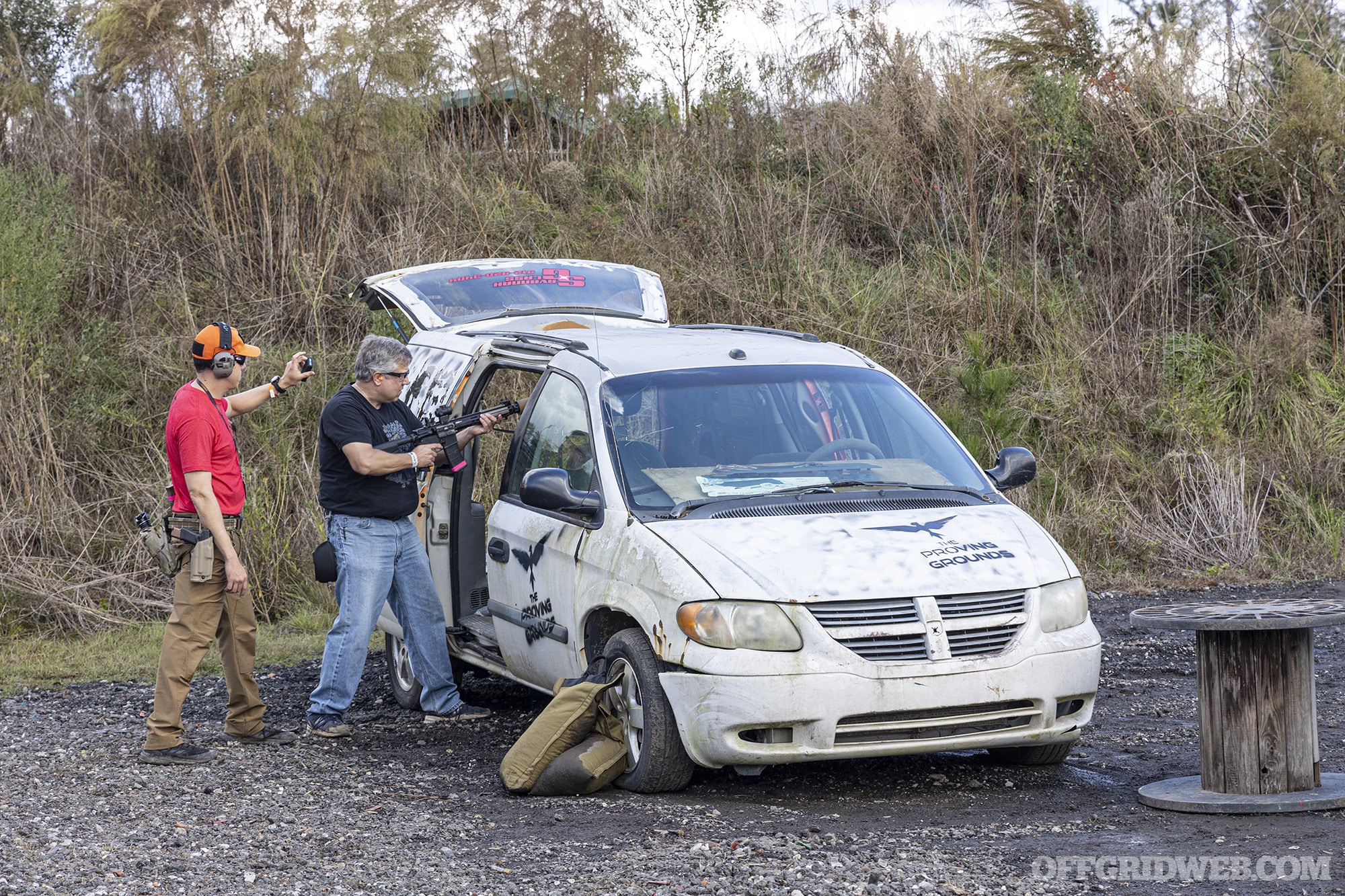
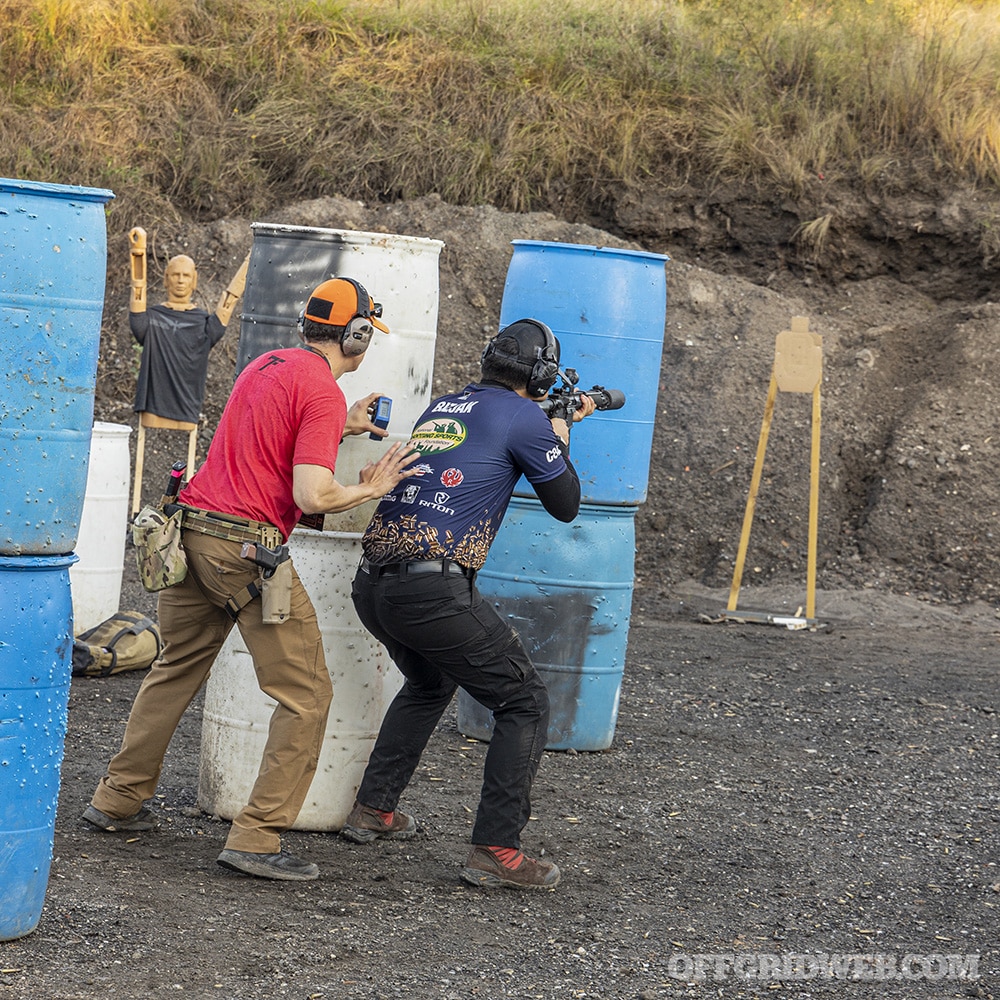
For those who wanted a more challenging shooting experience, The Proving Grounds competition league set up several short “run-and-gun” stages to give participants a taste of what’s required to compete in their tactical-athlete-style matches around the country. Stages included shooting around vehicles, hauling heavy sandbags, and engaging varied unknown-distance targets with multiple weapons. There were also a series of “Joe versus Pro” pop-up competitions throughout the event, where event attendees could test their skill against RECOIL staff and professional shooters.
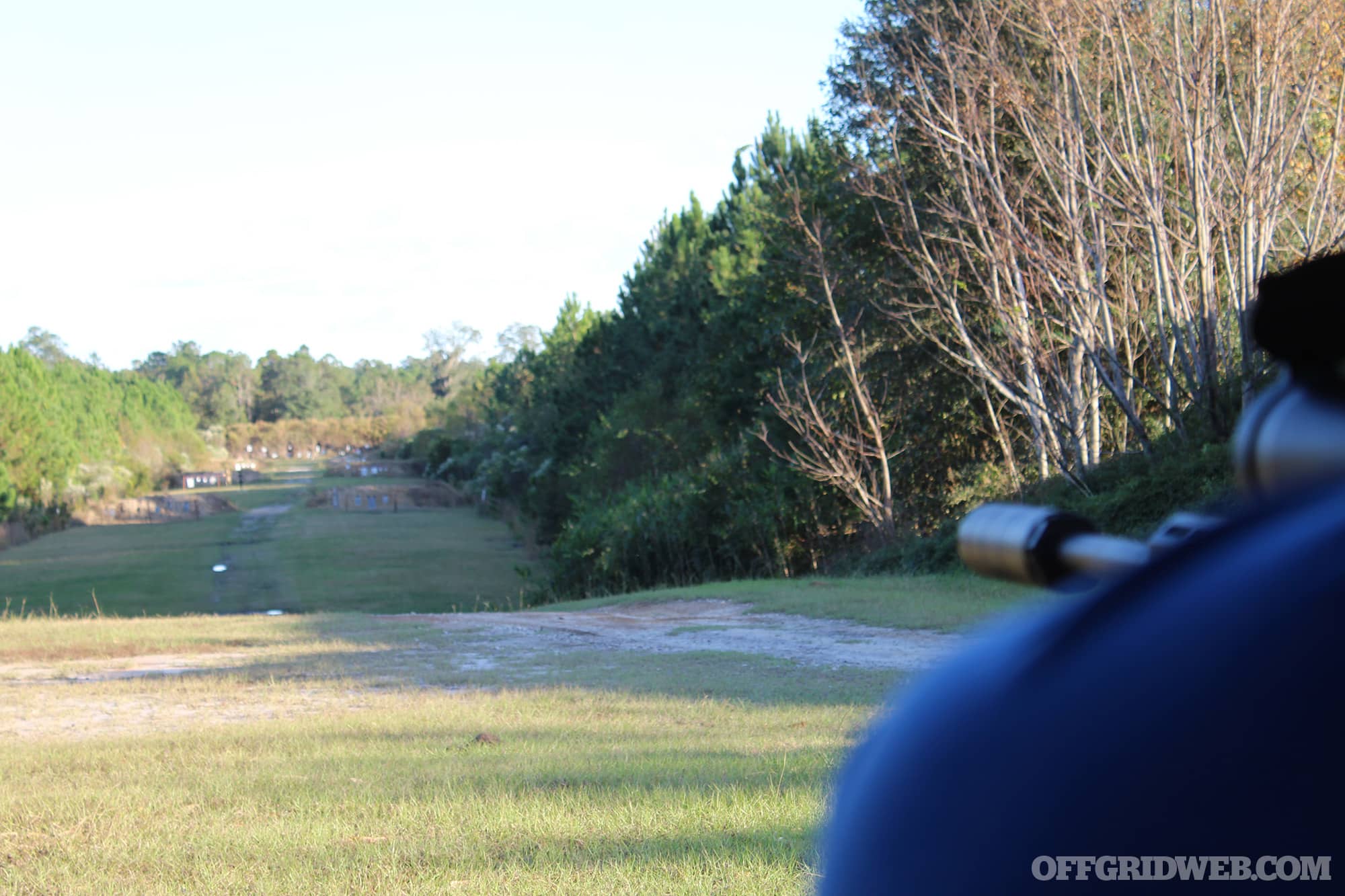
Above: A suppressed long range, going out to several hundred yards, was also available.
Above: A student athlete from the WildGats shooting team at University of Arizona tests himself at The Proving Grounds sample stage.
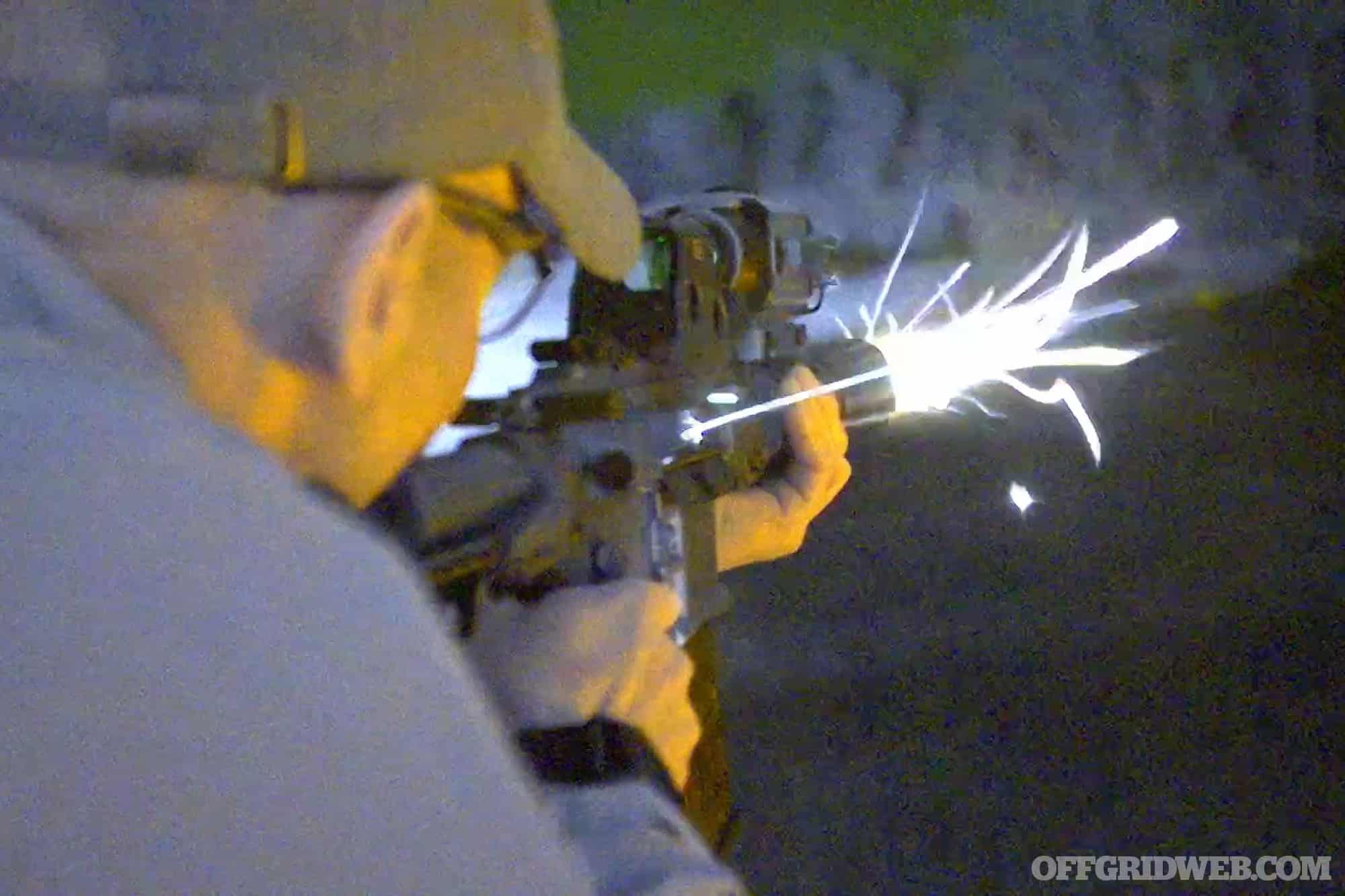
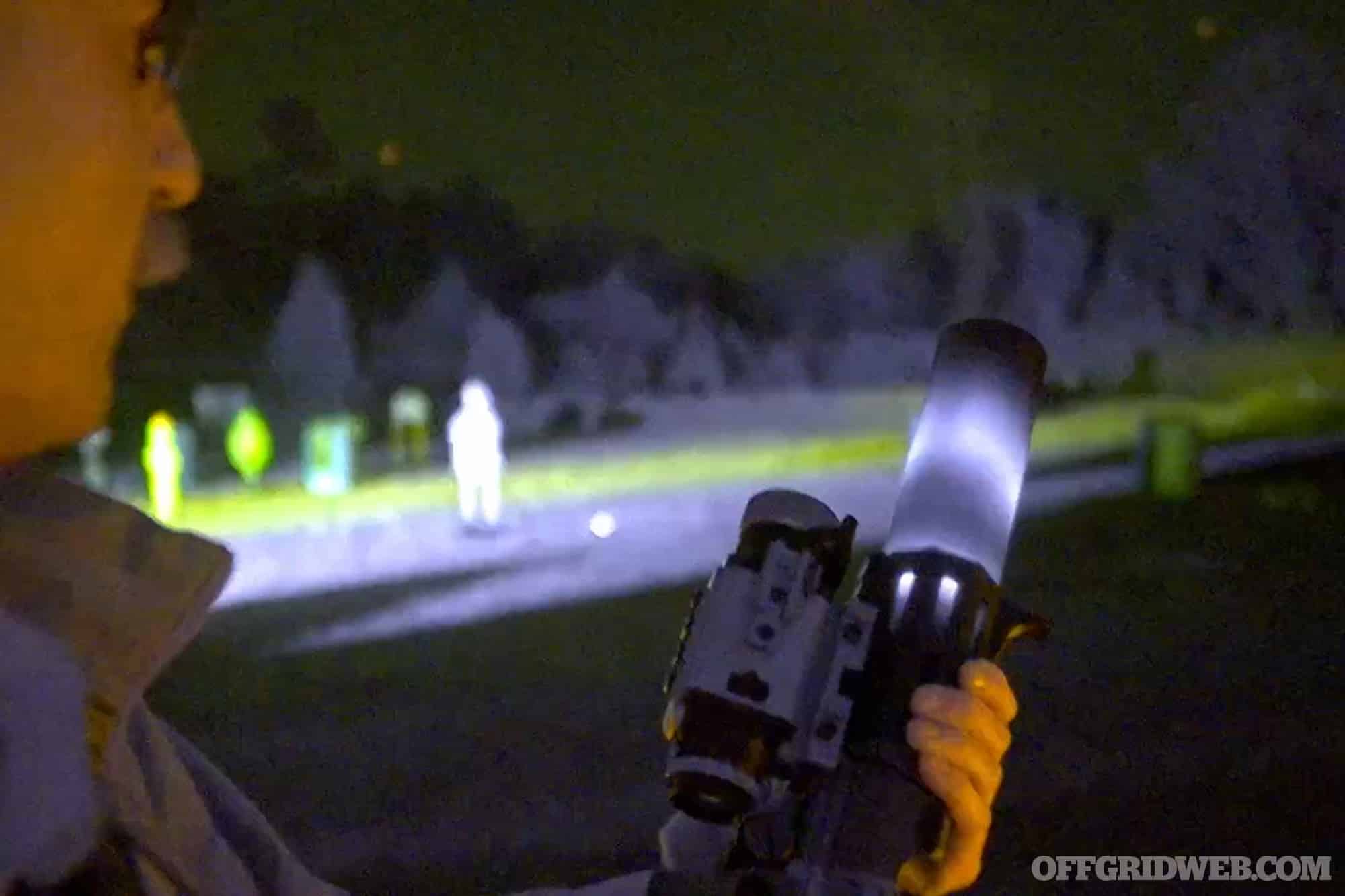
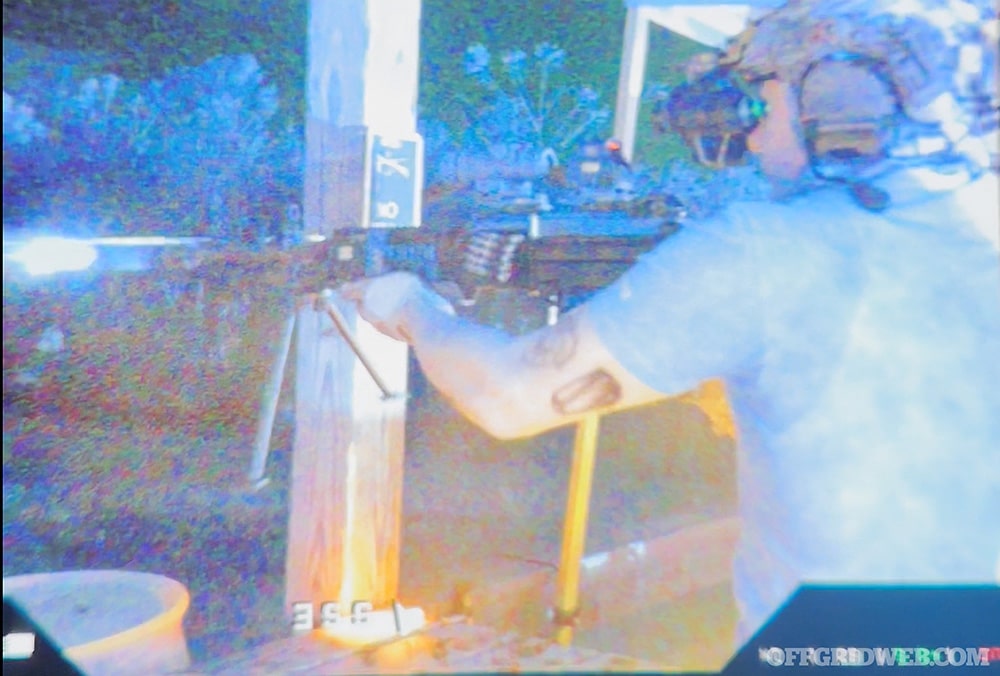
Those who chose to pre-order their CANCON tickets online had the option of purchasing a VIP package. In addition to unlimited range time for all three days of the event, VIPs also received a swag bag filled with $1,500 of gear, including a voucher for a free suppressor from SilencerCo. Finally, VIP participants were granted exclusive access to a nighttime suppressor shoot. Companies like Night Vision Network, Sionyx, Accufire, and AGM Global gave VIP shooters the chance to go hands-on with a variety of thermal, digital, and night vision optics in a suppressed, live-fire environment.
Above & Below: Several shots of the CANCON night shoot taken through a Sionyx Opsin camera.
Our goal with CANCON is two-fold. As we said in the beginning, we want very strongly to give our readers the opportunity to get some trigger time behind the guns they read about in our articles, and to rub elbows with not only RECOIL staff, but professionals from across the firearms industry. The other aim we hope to achieve is to educate both our readers and the general public on the reality of suppressors. Pop culture depictions of suppressed firearms focus solely on two stereotypes: special operators and underworld hit men. As a stark contrast, in many European countries where firearms ownership is far more restrictive than in the U.S., suppressors are actually available as an over-the-counter purchase. Why? Because, in those countries, suppressors are safety equipment, and shooting suppressed is seen as a courtesy to your neighbors and fellow sportsman — not a sign of nefarious or classified activity.
By the time you read this, planning for CANCON 2023 will be well underway. Mark your calendars for Veteran’s Day weekend in November at 17 South Rod & Gun Club near Savannah, Georgia. We also expect to hold a second CANCON somewhere out west. Keep your eyes on the website, www.canconevent.com, for breaking news on both events. We hope to see you there!
Editor’s Note: This iRay RS75 thermal scope review was originally published by our sister publication, RECOIL. For more reviews of the latest guns and shooting gear, go to Recoilweb.com.
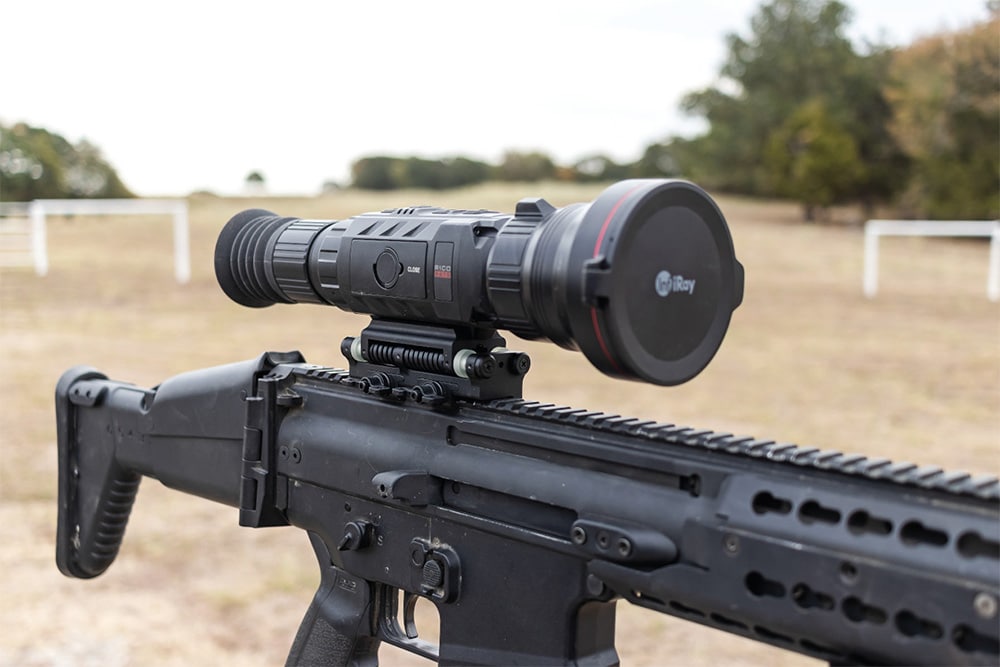
When 4K televisions dropped onto the scene in 2012, they had $20,000 price tags but shocked with eye-popping performance no one had ever seen before. For most folks, they were mostly proof-of-concept pieces to gawk at and wonder what tax bracket could actually own one. Fast-forwarding to today, now that technology is both commonplace and affordable. Like that 4K TV probably adorning your living room right now compared to the previous standard, the new iRayUSA RICO HD RS75 provides four times the resolution of any rifle-mounted thermal scope on the market.
And at $17,999, it’s beyond many peoples’ wallet.
With the release of iRayUSA’s new optic, the thermal industry just heard the loud clunk of one Thanos-sized gauntlet being thrown down. Teeny, low-resolution sensors providing pixelated pig pictures are no longer cool or cutting edge. YouTube hunting videos can now go full screen without turning coyotes into Minecraft animals. Video-producing varminters with the spare cash now have a new level of flex — all of which sucks for mortals who are looking for a midrange or entry-level thermal, right? Nope.
Tech advancements come fast, and the RS75’s mere existence will drive down the price of so-called “normal” thermals, as well as kickstart an arms race for everyone to do it better. With “everyone” meaning both competitors as well as iRay themselves.
iRay RS75 Lens and Sensor
Bottom line up front: Every article you’re ever going to see about this optic is going to yammer on a lot about the sensor. The uncooled micro-bolometer sensor (the “eye” of the camera) that detects heat is 1280×1024. The big news is that’s four times bigger than formerly state-of-art 640 resolution scopes (there are twice as many of those little 12um pixels horizontally, as well as twice vertically).
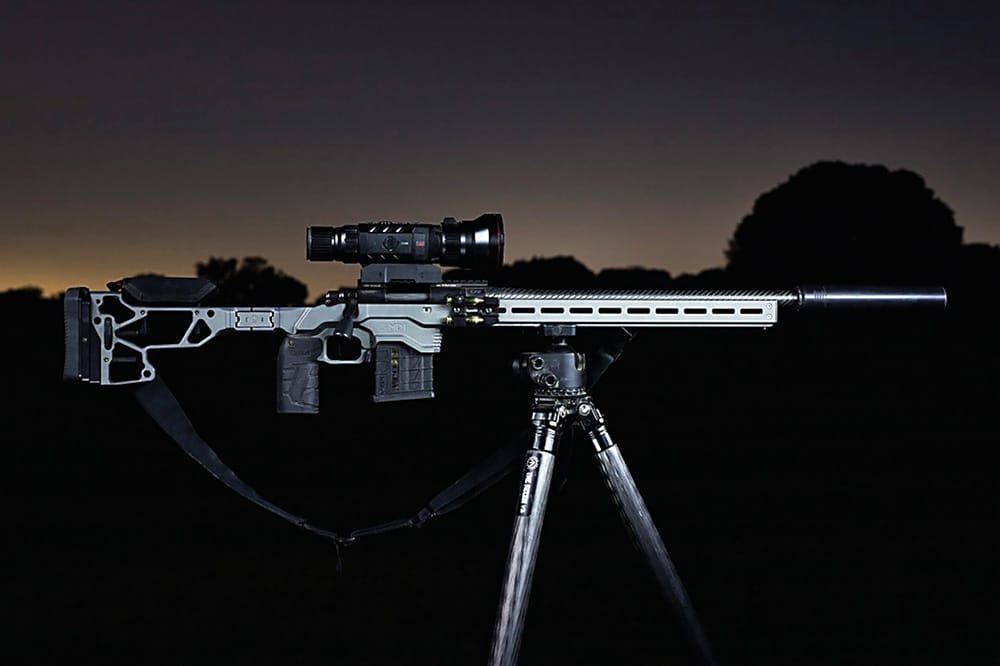
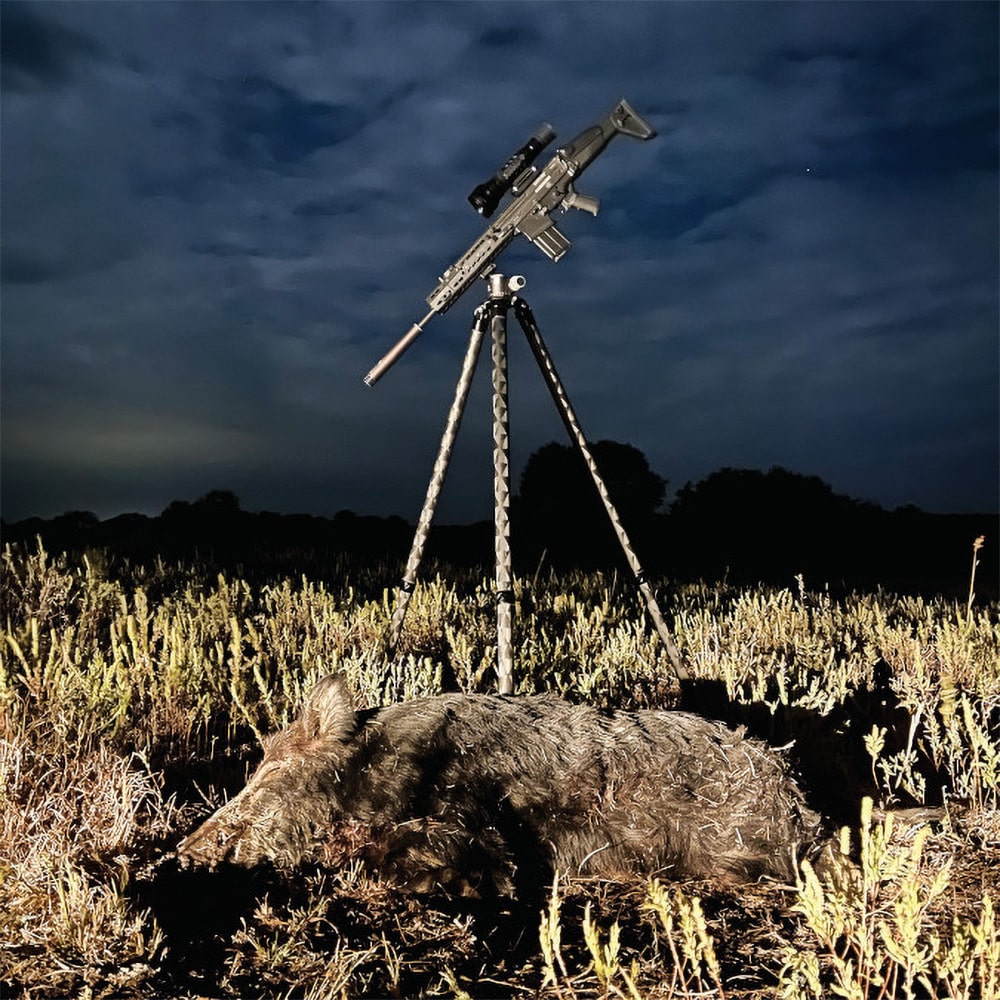
Above: A precision nighttime hunting rig: the RS75 thermal on a MDT chassis, perched on a Two Vets Recon V2 tripod.
And if you’re running last year’s 340-pixel optic, prepare to FOMO on the fact that there’s a whopping 11.85 times more visual information coming out of the iRay RS75. A difference that’s hard to overstate.
The lens and sensor work together to gather many more photon waves worth of information than smaller systems, detecting target heat from as far as 3,600 yards away. That data is then converted to the familiar Predator-like thermomap, building a picture by assigning different-colored pixels to the varying levels of cold or hot.
Bigger sensor equals bigger box of crayons. The more levels of information make a clearer, more precise, and much larger video. But there’s a lot more to this story than the mere sensor spec.
Beginning up front where the picture quality starts, the RS75 has an unusually huge 75mm f/1.0 germanium lens. Germanium is a rare element that’s transparent to infrared radiation, so — unlike glass — it sees and sucks up that heat radiation instead of visible light waves.
While big lenses might usually be associated with high magnification, it’s used here for a different reason: as the thermal sensor gets larger, the width of the lens must be larger in order to keep the angle wide.
Above: This scaled representation compares what more pixels natively look like: The lower resolution sensors provide less data and smaller pictures. The RS75’s bigger 1280 pixel sensor brings in many times more information to build a larger — and less pixelated — view.
Having a big lens with a smaller sensor is like having an over-zoomed dayscope — you get a super-detailed closeup with a tight FOV. But put a bigger lens on a larger sensor like InfiRay Outdoor and you not only have a wide 2x native field-of-view, but also the available resolution to take advantage of higher levels of digital zoom.
Each time you zoom in on those pixels you’re losing picture quality. But since a 1280×1024 pixel count is so high to begin with (1,310,720 in total!), running up the digital magnification means an RS75 with a 2x digital zoom will have the same resolution as a native 640 sensor, or the resolution of a 384 sensor at 8x zoom. Hog hunters and hunters who need to track runners moving side-to-side will value the RS75’s FOV of 11.7ºx9.4º at the native 2x optical magnification. Higher magnification levels (4x, 8x, 16x, and the 32x maximum) use digital zoom in conjunction with the native 2x optical zoom to provide a usable increase for those who need to reach out farther.
Eyepiece and Batteries
If we haven’t lost you already with the camera-nerd math, let’s switch to the secret weapon that’s on the backside of this optic: the eyepiece. Simply put, it gives an impressive jump from old tech and a very immersive experience.
A traditional eyepiece in a thermal scope is just a simple, flat little display with a diopter to focus your eye to the screen. Whereas the lens system in the iRay RS75 is an orthoscopic (slightly curved and magnified) lens set that provides increased magnification of the display as well as lower distortion, allowing the 1280 sensor to truly pop from edge to edge.
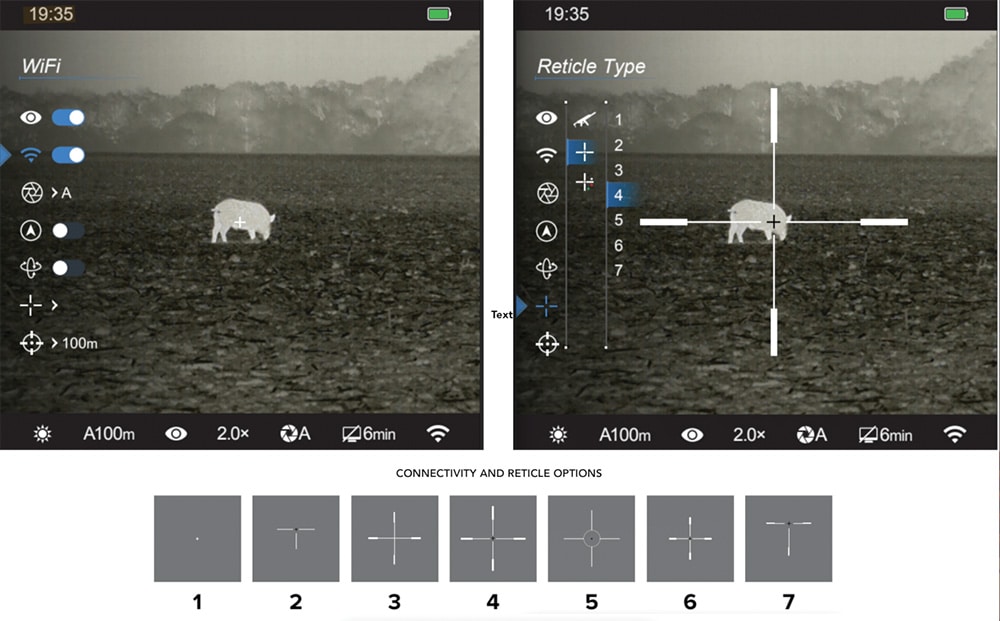
Above: Some of the RS75’s menu screens as seen through the viewfinder. It’s easy to switch on Wi-Fi, change reticle type and colors, correct zero, see battery life, magnification levels, and many other options.
And it’s big. Most manufacturers don’t bother listing any specs other than the pixel count of their screens. They’re usually less than a ½ inch in size and put out 640×480 resolution, whereas iRay offers a huge 1.07-inch AMOLED screen with resolution of 2560×2560, about 6.5 megapixels. This makes for a forgiving eyebox with 60mm of relief.
You can literally stand back from the scope and still see the display without cramming your pupil into it. This is one of the exciting elements of this scope that we’d expect to easily trickle-down to lesser-priced units in the near future.
The refresh rate of the screen is 30 Hz, which isn’t the highest possible, but with so much data you have to blend battery life and processing power. When combined with the wide FOV and the resolution, the slower rate isn’t that noticeable.
Speaking of batteries, the unit comes with two batteries that can be recharged in the field or at home, and it can optionally run off aftermarket external USB-C power sources like you use to charge your phone. It’s certainly achievable to get a full night’s use out of the optic with the two included batteries.
Getting Physical
As far as physical size, it’s 12.28 inches long, 3 inches tall, with a 1.7-inch centerline of the eyepiece when it’s mounted to your rifle’s rail. That’s a similar length to a Leupold 3.6-18x44mm scope that we pulled off the Ruger SFAR .308 test rifle to mount the iRay.
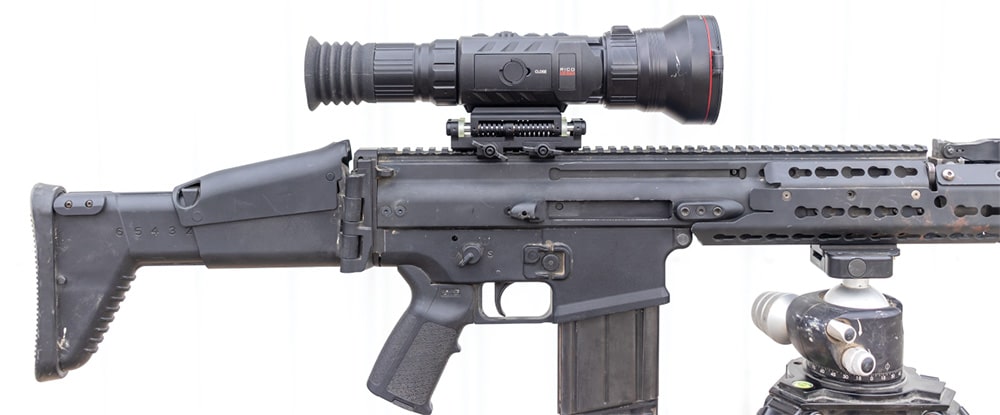
Above: A 7.62 FN SCAR rifle kitted out with a Silencerco Omega suppressor and the RS75 thermal.
It includes a recoil-mitigating mount, which rates the system for recoil up to .300WM/7mm Mag. The whole setup is a bit chubby at 44 ounces, which isn’t entirely unexpected for all the tech crammed in it. Also, let’s face it: night rigs like this mostly get used on tripods, off truck hoods, and in deer blinds.
iRay RS75 Bonus Features
In addition to the bare guts of the unit, the bells and whistles are fun and useful as well. There’s a lot of emphasis on helping you share those high-definition thermal videos with the world. The RS75 records video and has newly improved audio capabilities to document your hunt, from picking up whispers of “going hot!” to capturing bullet impacts way downrange.
You can wirelessly stream photos and video to a smartphone app, broadcast your gunsight videos instantly to social media, or just store your content on 128GB of internal memory for in-scope or tablet review in the field.
Above: IRay’s recoil-reducing rail mount cuts down on shock transmitted to the optic by high impulse guns like the FN SCAR.
As a high-tech bonus, the RS75 ships with iRay’s ILR-1,000-yard laser rangefinder. It integrates with the unit, overlaying real-time distance data (accurate to +/- 1 yard) directly onto the thermal’s display so you’ll never have to guess how far away the target is or pull out a separate rangefinder.
Loose Rounds
It’s been about 10 years since this sort of big leap of technology happened in the thermal world, so iRay decided we were due for a new one. If you’re in the tax bracket that can afford this scope now, you’re going to be pleased. If you’re waiting for this tech to trickle down, you’re in luck too — but maybe next Christmas.
When it comes to how you can carry a weapon, variety isn’t just the spice of life, it’s a measure of responsible carry. Few things are worse for your credibility than forcing a carry option to apply in a situation where it shouldn’t … or just can’t. In my work, well-done concealed carry is far more prudent and professional than the alternative. As a result, I have firearms and holsters for nearly every occasion and type of dress I’d likely need. That being said, I realized that despite trying to cover as many bases as possible, I was missing an off-body carry (OBC) option.
Off-Body Carry: A Controversial Topic
OBC is somewhat controversial and has its fair share of critics. Opposition usually breaks down to one thing — inaccessibility of the weapon resulting in long response times, especially inside the venerable “21-foot zone.” I agree with the critics on this point, there’s little chance a person will dig a weapon out of a bag in time to save themselves from that type of direct threat.
Above: Keeping your firearm concealed on your body is usually preferable, but off-body carry can be a viable option for secondary weapons to supplement your conventional CCW firearm.
To be fair though, the same concerns critics of OBC have can be said for pretty much all concealed carry options. Inside your reactionary zone (which is different for everyone, 21 feet is a general guideline based on a number of different factors and scenarios) it really makes no difference how you carry if someone else has an action/distance/position advantage on you to begin with.
If you decide to carry off-body, it’s absolutely critical to understand the narrow, but necessary, role this carry option best fits. Unless you’re using OBC to augment your EDC, off-body carry is most applicable when a situation dictates that the accuracy, caliber, and higher capacity of a braced pistol or SBR would offer a significant defensive advantage over a more conventional CCW firearm and a semi-immediate threat exists that allows the user time to safely ready the weapon to engage the threat.
Note that I said “semi-immediate threat,” not a “direct threat.” A direct threat (think staring down the muzzle of a firearm or the point of a blade inside your reactionary zone) puts you on the wrong side of that action/distance/position equation. There’s no way you’re safely getting to any off-body weapon under those circumstances. However, a semi-immediate threat (think hearing shots at the receptionist’s desk down the hall or at a park with your family) is where this system fits. It allows you to access a more accurate and higher-capacity defensive weapon, thus increasing your ability to get yourself and others away safely. That’s its role, period. Making it fit anywhere else is like trying to haul a family of four around on a motorcycle. Even though the bike could hypothetically get you all there, that’s definitely not what it’s made for. In other words, you have to be reasonable and responsible enough to know your equipped carry option, its role, and its limitations.
Deciding on the Ruger PC Charger
When I was planning the off-body option I decided it had to check these boxes. First, it had to appear as innocuous as possible. Second, it had to be as compact as I could make it. Third, the dedicated firearm I chose had to conform to what I could legally carry both for work and personal use. With minor exceptions, OBC is comprised of two major components, the bag itself and the weapon you choose to put in it.
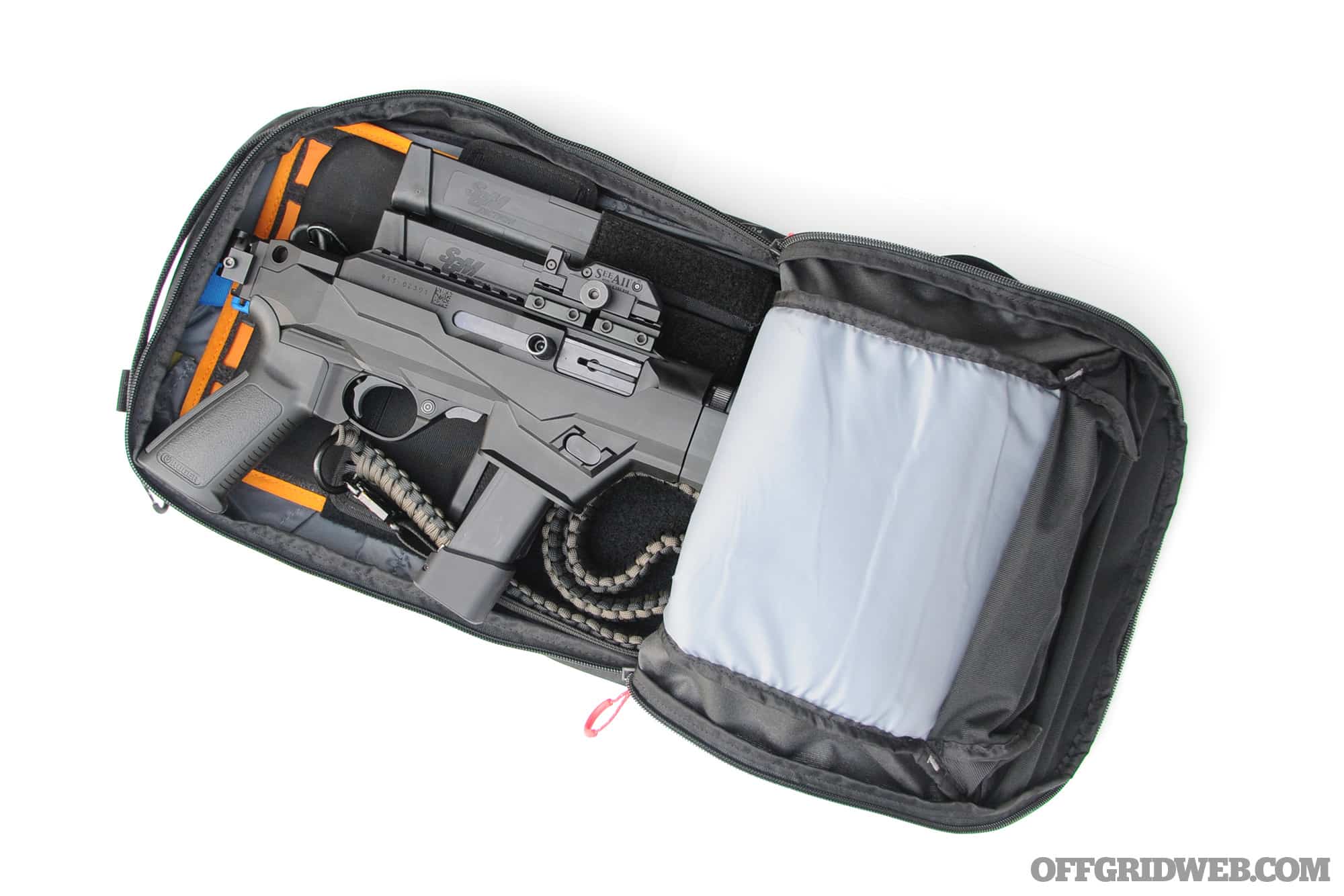
For this project, I went with the Ruger PC Charger 9mm, which, thanks to its extremely compact size and adaptability, is quickly becoming an industry front runner for pistol-caliber pack guns. The weapon came with a SB tactical brace, and when folded measures about 17 inches overall.
The Charger is a takedown gun, separating into barrel/forend and action subassemblies. While it’s a nice feature, I wouldn’t recommend it for this application. Putting together the two subassemblies, especially under stress, isn’t a reasonable plan. Besides, when equipped with the brace, the gun doesn’t benefit much from the reduced take-down length, as the folded brace is longer than the receiver component.
The Ruger PC Charger is well-made, accurate, and has some other useful features as well. The reversible mag release and charging handle are nice if you’re a lefty. I have it configured the way most people probably would, with the mag release on the left and charging handle on the right (a left-side charging handle keeps the brace from folding flat). This setup somewhat replicates the mechanics of operating an AK pattern weapon.
The tungsten dead blow weight definitely reduces felt recoil — a PlayStation controller probably kicks harder — but it does make the small weapon (and consequently the whole carry package) relatively heavy. Most importantly, it can accept Glock mags with an included adapter (which I had installed before I even left the store).
My Charger is fitted with a SeeAll Mk2 Night Sight. The SeeAll is a tritium-equipped non-electric sight that’s designed to gather as much light as possible, ensuring full reticle visibility from full light to practically no light. Its low profile and small size has the added benefit of lessening the chance it will snag when pulling the weapon. While the sight picture does take some getting used to over a more conventional optic, I like it and have a couple on different weapons.
Finding the Right Pack
For pack selection, I purposely avoided anything with MOLLE webbing, Velcro panels, and offerings from traditionally “tactical” manufacturers (even their low-key models) in favor of generally recognized outdoors brands. While there are purpose-built concealed carry bags out there with some great features, I wanted to get as far off the mark as possible. The goal was to go unnoticed by the general public and those who are knowledgeable on industry gear … hence none of the usual players.
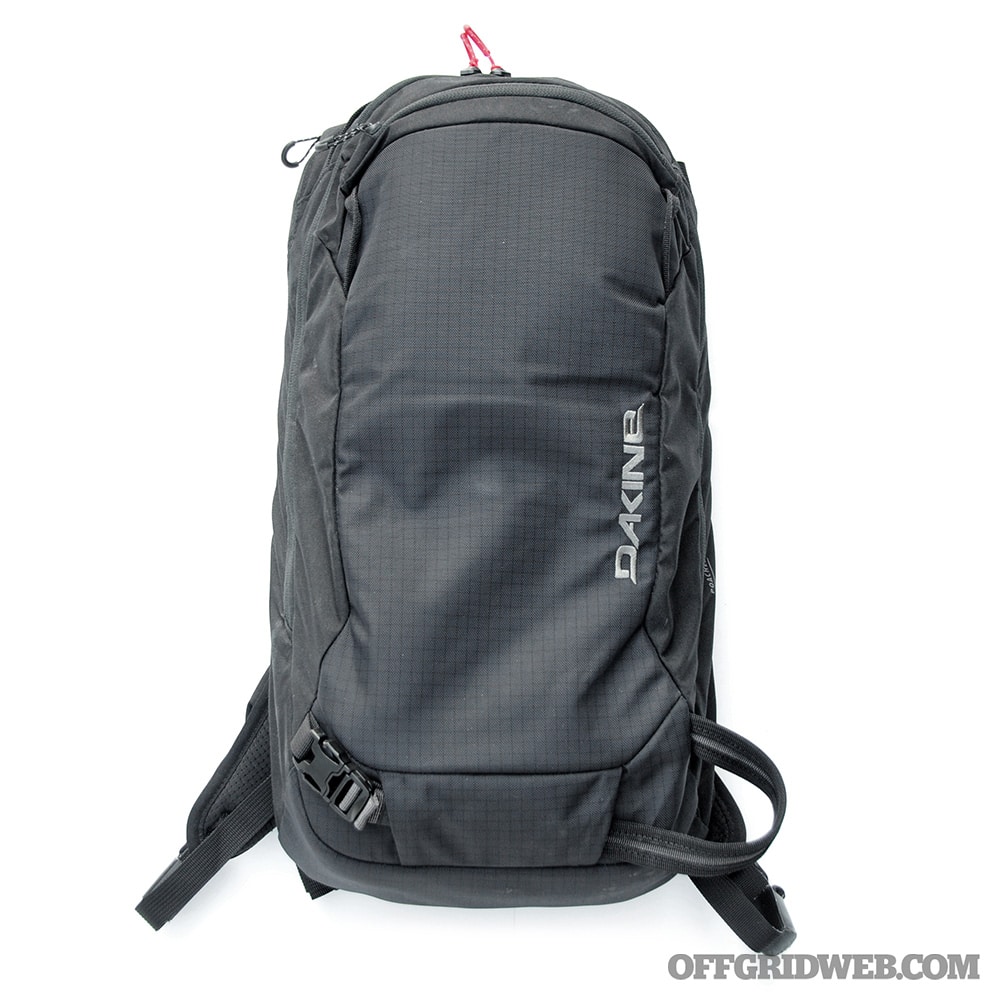
After looking at Oakley, Merrell, The North Face, and the like, I went with a Dakine Poacher 14L. At 850 cubic inches (14L) and measuring 20 by 12 by 4 inches, it was ideal. The pack is marketed by Dakine as a “minimalist backcountry pack for riding the lifts” and designed as a close fitting, low-profile pack for aggressive skiing. With one main compartment that fit my weapon nicely and being only 4 inches deep, it was exactly what I wanted. It holds the weapon snugly against me and doesn’t allow the weight to shift, even at a good run. It’s very well built, and I like the contrasting red zipper pulls — a nice little feature for easy visibility in a pinch.
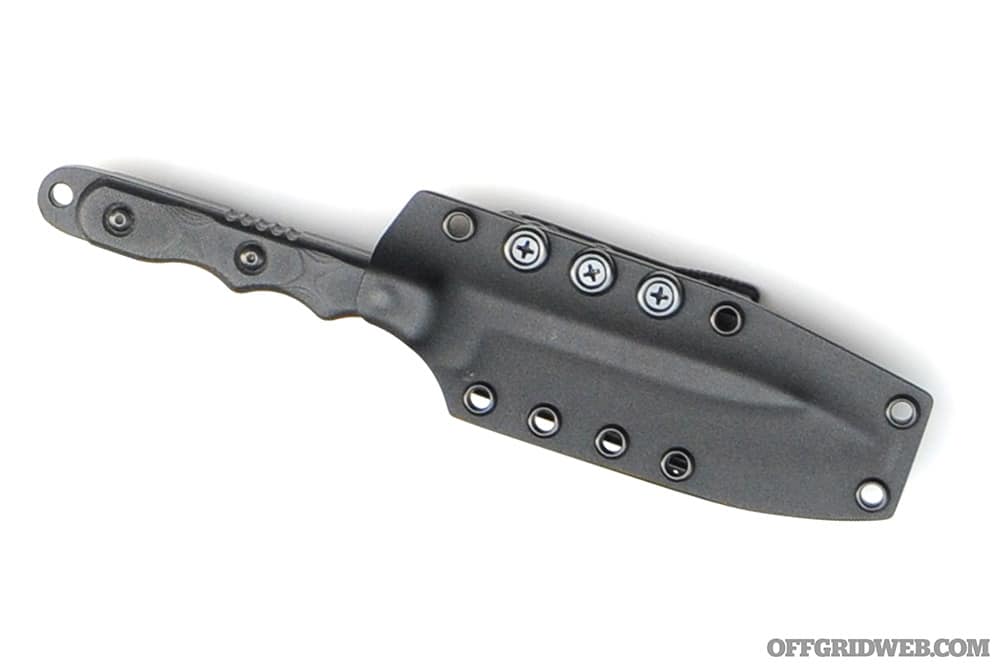
Above: A fixed blade is a good tool to include in almost any backpack. In this case, I chose a TOPS Knives Ranger Bootlegger.
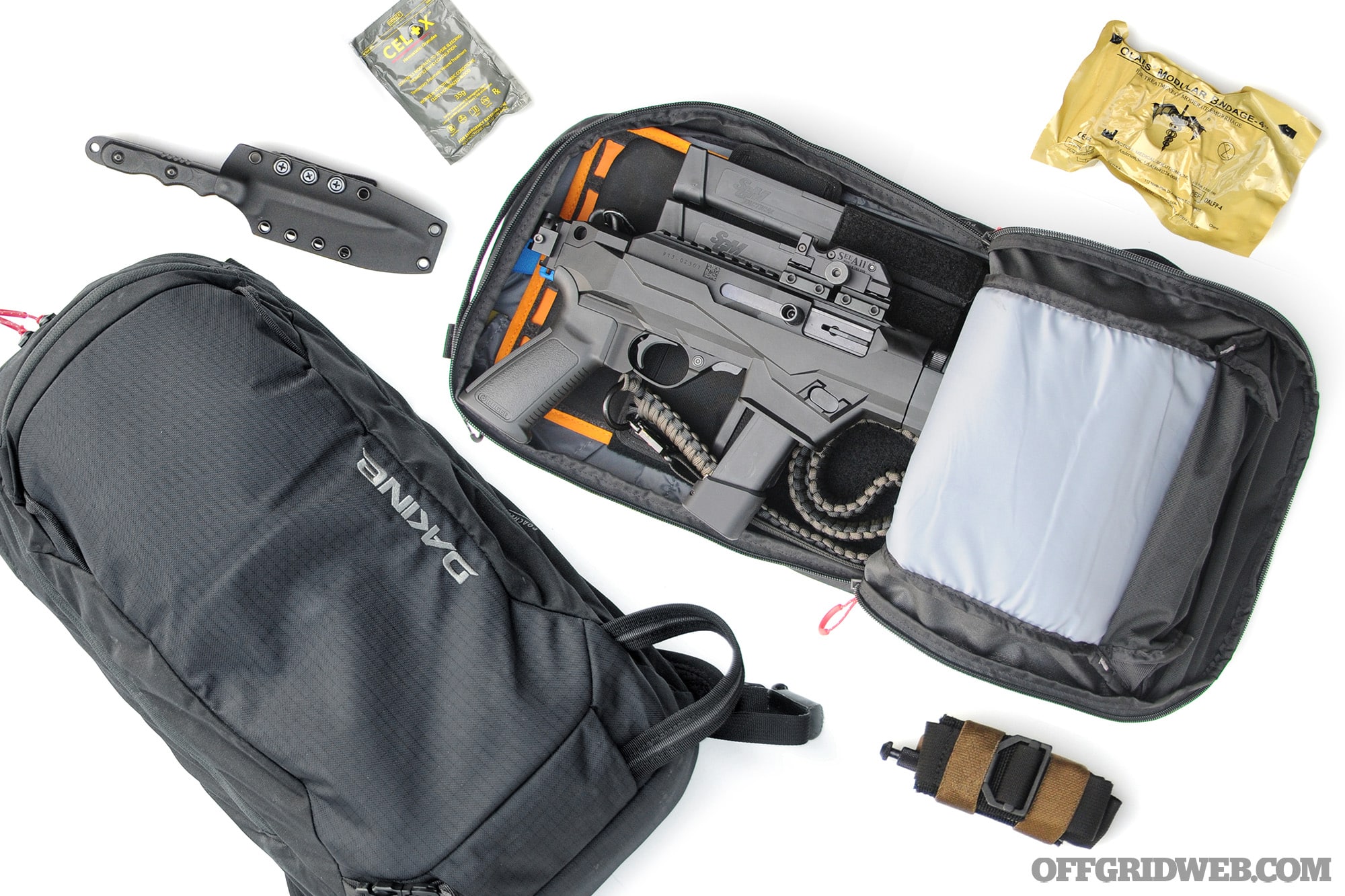
I made a few minor tweaks to turn the bag from a “minimalist backcountry pack” into a reliable concealed-carry platform. First, I cut out two inner snow tool organization pockets that tended to snag the weapon and removed an extraneous strap inside a small pocket designed to carry a snowboard. Next, I secured a stretch fit magazine holder and level IIIa universal ballistic backpack panel inside the hydration pocket of the main compartment. The panel is positioned center mass when wearing the pack backward as a better-than-nothing modicum of ballistic protection.
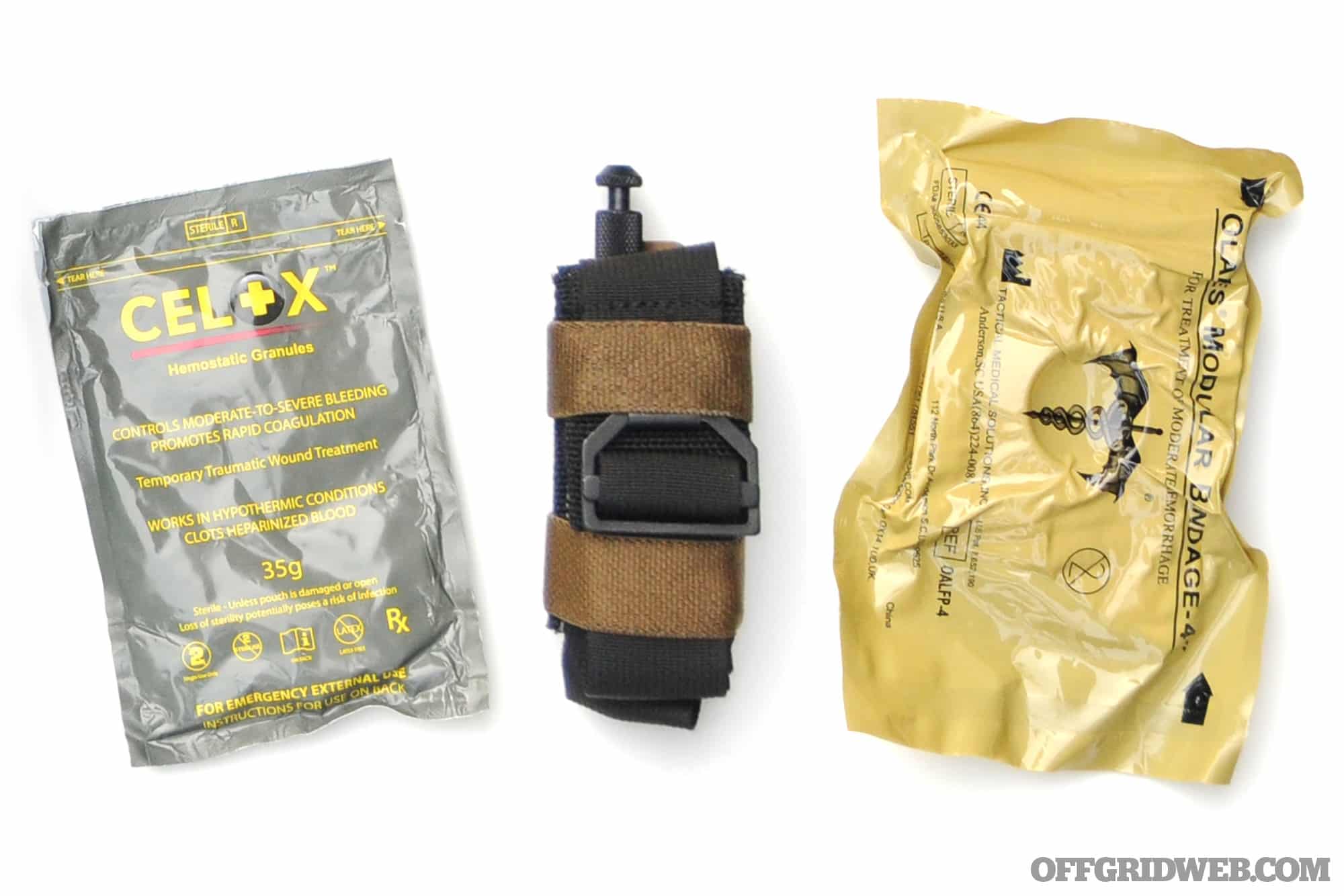
It has an outer goggle pocket just large enough to hold a pressure dressing, a Celox pack, and a CAT tourniquet. One other unique feature that’s worth mentioning is that Dakine built one shoulder strap with a zippered access to run your hydration tube through it. Since I’m not running a water bladder, it’s been repurposed, and is large enough to conceal my TOPS Knives Bootlegger in easy reach.
Advice for building your own:
Keep it small. One universal truth I’ve noticed after years of hiking and messing around with packs is that if you have extra space, you’ll try to fill it with something. For the sake of comfort, weight, and subtlety, pick a bag that’s just big enough for what you need and nothing else.
Keep it focused. It’s important to remember the role of this kit. This carry option isn’t going to pull double duty as a get home bag, or anything else. You don’t want to dig through a bunch of extraneous junk to find your weapon or have it all fly out like a busted piñata when you pull it.
Keep it with you. Build something that you want to carry. All of this thought, money, and time won’t do you any good if it’s not at hand when you need it.
Build it, wear it, refine it.
Above: The pack’s contents are simple a Ruger PC Charger, spare magazines, fixed blade knife, and medical kit.
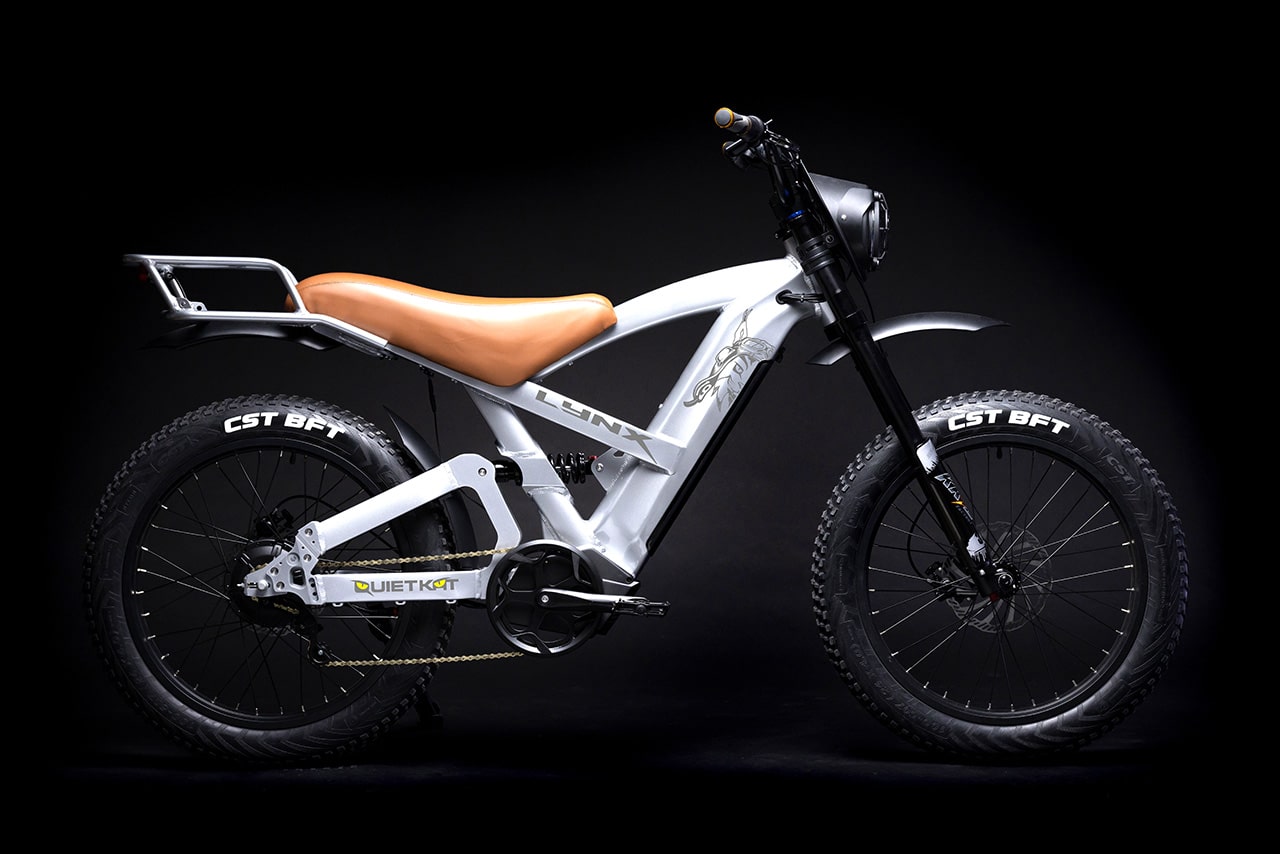
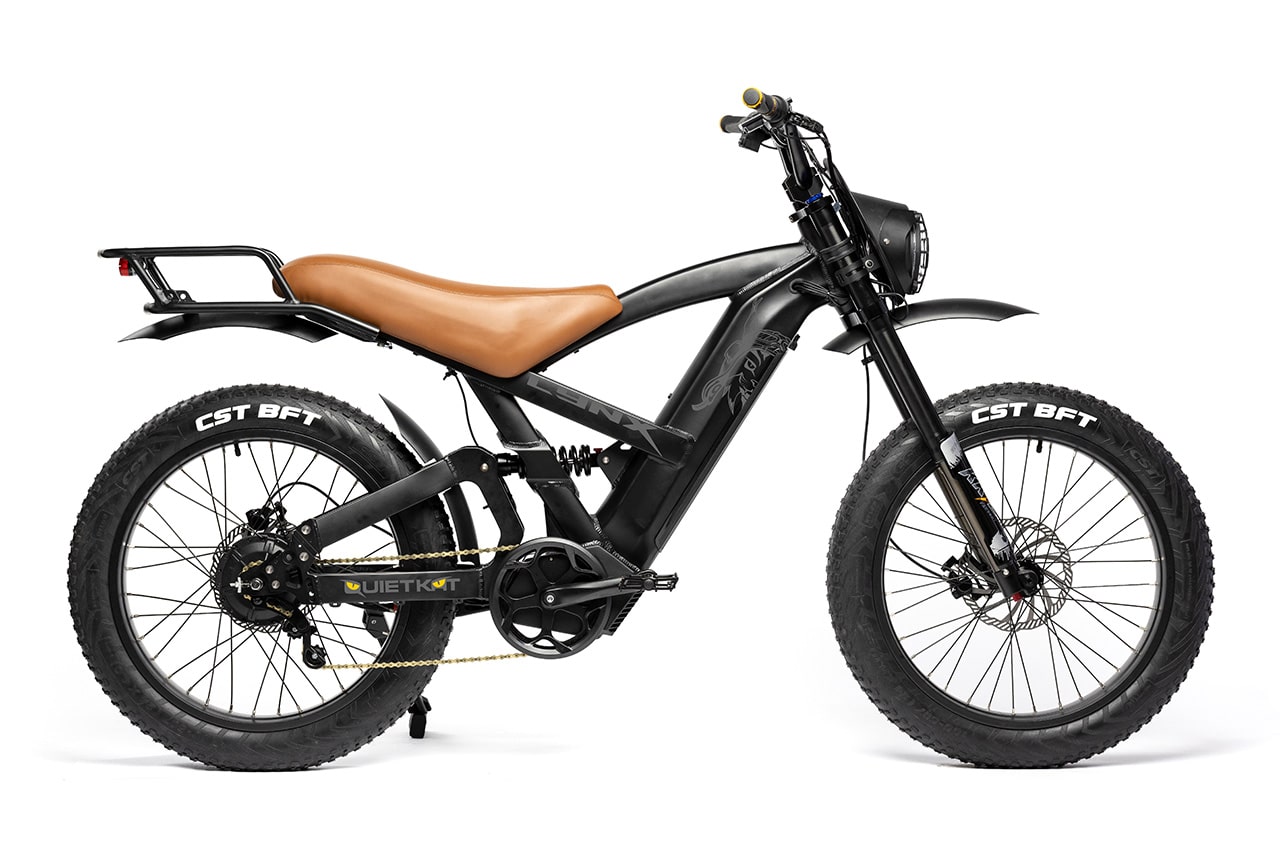
Bicycles and motorcycles are both excellent vehicles for off-grid travel, but each has strengths and weaknesses. Bicycles are nearly silent, but require strenuous physical effort and aren’t especially fast unless you’re an athlete. Motorcycles alleviate both of the latter concerns, but they’re loud. They also require gasoline (a resource that may be in short supply during emergencies) and maintenance for their numerous moving parts. Electrically-powered eBikes split the difference and offer some major advantages — the quietness and longevity of a bicycle, the speed and mobility of a motorcycle, plus they can be charged from off-grid power sources such as solar panels. QuietKat, a leader in the eBike market, has released a new high-performance model called the QuietKat Lynx.
The QuietKat Lynx eBike
Unveiled last month, the QuietKat Lynx is said to “push the envelope of high performance” among the company’s existing offerings. It features a 2-speed, 1000-watt hub motor with a motorcycle-style twist throttle option. But, as with QuietKat’s other eBikes, the Lynx can still be pedaled like a traditional bicycle.
For all-terrain capability, the Lynx comes with 203mm inverted mechanical coil fork front suspension, and a mechanical coil shock in the rear that offers 100mm of travel. A set of 24×4.5-inch moto-style tires offer grip on-road and off-road, and 2-piston hydraulic disc brakes bring it to a stop quickly.
Modern Tech & Classic Styling
The new QuietKat Lynx also features integrated Bluetooth, cellular, and GPS tech that allow the user to remotely control features and track the bike in case of theft.
One unique aspect of the Lynx is its styling, which resembles an old-school café racer motorcycle with its round headlight, sleek contours, and custom-sewn synthetic leather café saddle.
The QuietKat Lynx will be available in late summer 2023 at an estimated retail price of $4,000. For more information as it becomes available, go to QuietKat.com.
Many people believe that lockpicking is a cryptic skill only prodigies can master. Every heist movie seems to have a nerdy lockpicking specialist who’s brought in to open the vault, and he usually requires specific conditions to work his wizardry — he might even close his eyes or listen to Mozart. “This concept of opening locks through magic feel is bullsh*t. It’s not that esoteric,” said the instructor of a recent private lockpicking workshop I attended. This instructor, who I’ll call John, didn’t want any time in the spotlight, but he was happy to pass along the knowledge he has accumulated while studying under well-known mentors such as Deviant Ollam. Rather than a mystical art, John showed us that lockpicking is a repeatable science that can be learned by anyone with enough practice.
Lockpicking Lessons
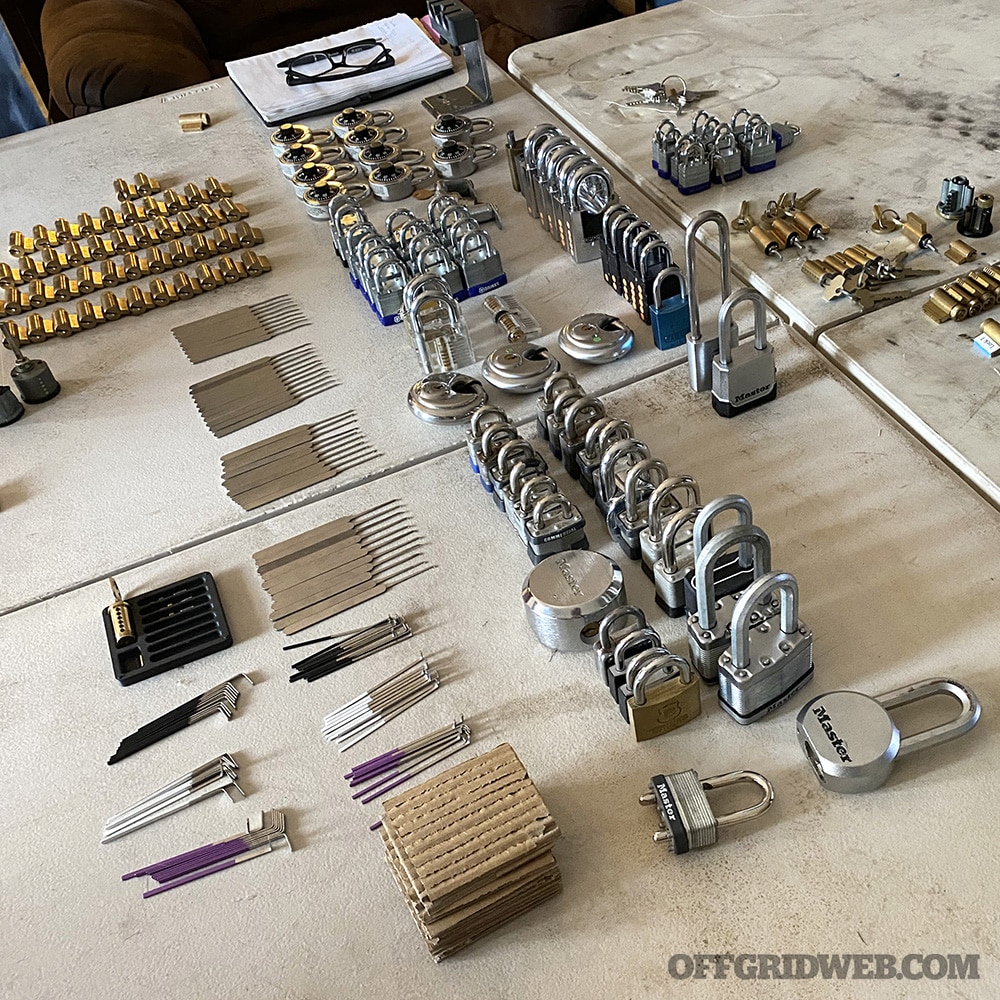
Above: Some of the locks and tools John brought for us to practice with. Don’t get stuck in the comfort zone of easy locks and basic tools — keep trying new challenges.
The lockpicking workshop consisted of two full days of hands-on drills. Each student had the opportunity to start with basic locks and techniques and work up to more challenging obstacles. After studying the components of a pin tumbler lock, we learned how to disassemble and reassemble practice locks, examining the guts firsthand. Next, we discussed tools. John recommends starting with a set of six 0.025-inch-thick picks: short hook, medium hook, half diamond, spoon curve, and quad and quint wave rakes. These should be paired with six turners/tension wrenches: three sizes designed for use at the top of the keyway, and three for the bottom of the keyway. That’s all you need to get started. Buy a quality set and skip the 99-piece kits that have a bunch of items you’ll never need.
Lockpicking requires patience and finesse. Tools should be held delicately like a pencil or chopstick, not in a clenched fist. It may be useful to hold one finger of your picking hand against the face of the lock; this provides more precise control over depth as you move from one pin to the next. Begin picking while applying heavy tension, and slowly back off. This will help you find the binding order of the pins. The first pin that feels “sticky” under tension is the first you need to set. If you’re struggling, a Lishi tool (look it up) is an extremely useful device that can help you check binding order in a methodical manner.
Beyond Single-Pin Picking
Once we got comfortable with single-pin skills, we explored some faster but potentially less reliable methods. These included raking (repeated in/out motions with wave rakes), zipping (a quick back-to-front pulling motion with a half diamond), and bumping (repeatedly tapping in a jagged bump key while applying tension). I had never tried bump keys before, so I was surprised how quickly I got the hang of them.
We tested ourselves on progressive practice locks, starting with 3-pin setups that practically opened themselves and moving up to 5- and 6-pin setups. We also practiced with real padlocks, such as cheap MasterLocks (ridiculously easy) and Brinks 4-pin locks. The latter was our first introduction to security pins, since it included one spool pin that made setting a little more difficult by inducing a false set. Schlage and Kwikset door locks and deadbolts were also provided on wood stands, forcing us to work our picking techniques from new angles.
DIY Tools
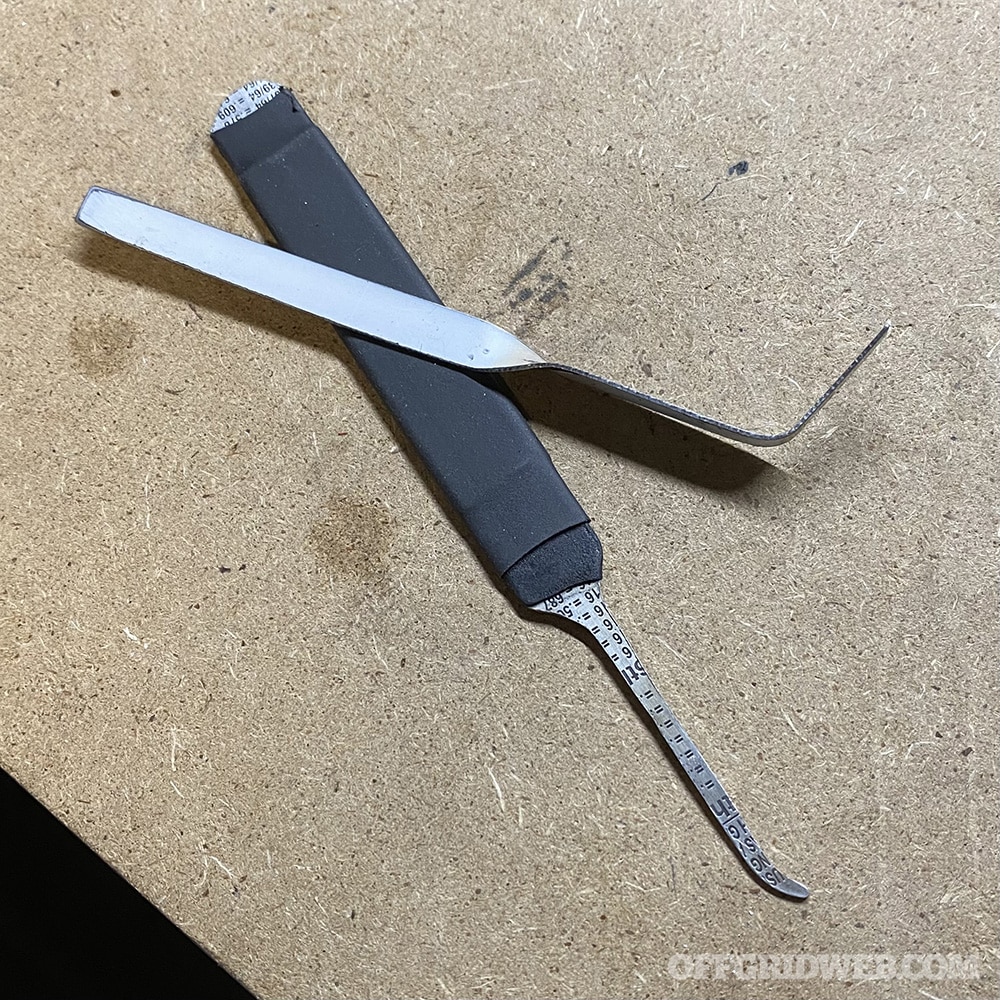
Above: The DIY short hook and tension wrench I made from scrap metal. Making your own tools teaches you what qualities to look for (or avoid) in off-the-shelf tools.
By the end of the two-day workshop, I walked away feeling much more confident in my single-pin skills as well as my ability to deal with multiple security pins and odd picking positions. For our overnight homework assignment, I even made my own pick and tension tool from hardware store items (a stainless steel slide rule and a hacksaw blade). They worked well enough to become permanent additions to my covert entry kit, along with some new “super bump keys” from RedTeamTools.com.
I’m thankful to John for sharing his time and knowledge with us, and even though I can’t refer you to him directly, I’d encourage you to go watch some Deviant Ollam videos and push the limits of your lockpicking comfort zone. Whether you’re helping a locked-out neighbor get back into their house or opening a padlock after its keys were misplaced, you don’t have to be a magician to benefit from this useful skill.
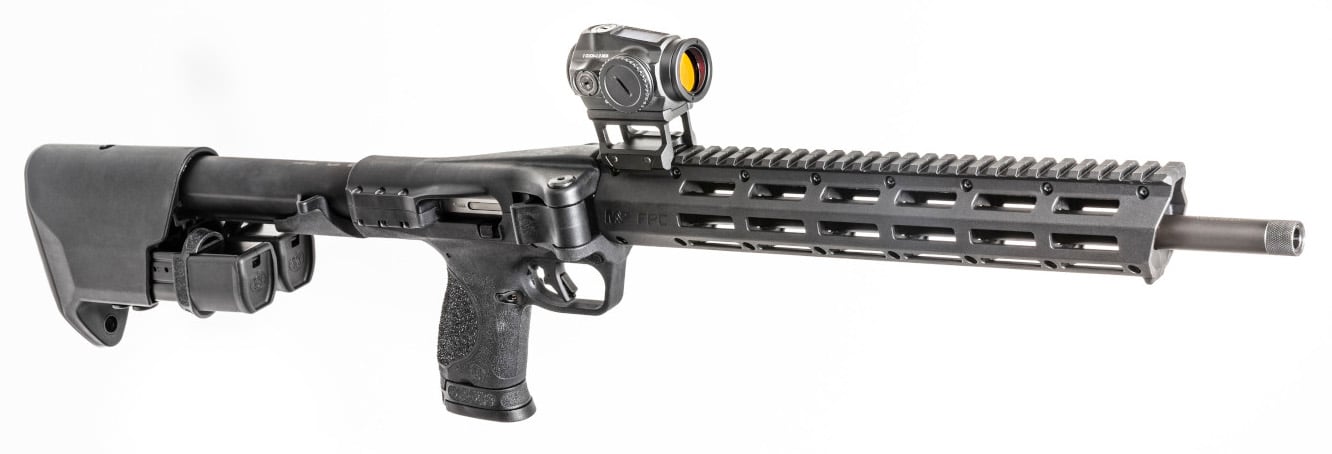
Whether you’re hunting small game, shooting in competitions, or simply looking for a way to make the most of the pistol ammo you’ve accumulated, the concept of a 9mm pistol caliber carbine (PCC) is nothing new. Beyond that, “packable” PCCs are also a popular market segment, with the takedown Ruger PC Carbine and folding Kel-Tec SUB2000 being popular choices for shooters who want to stash their long guns in a backpack or vehicle. This week, Smith & Wesson released its own entry into the 9mm folding carbine segment, known as the Smith & Wesson FPC. It’s based on the M&P pistol architecture, and it’s compatible with full-size and compact double-stack M&P 9 pistol mags.
The New Smith & Wesson FPC
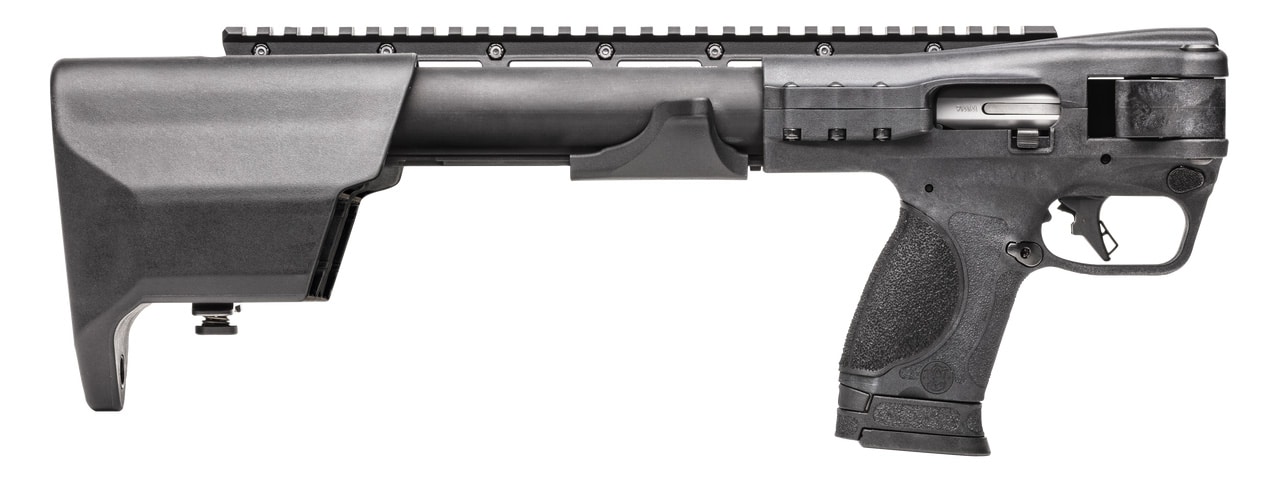
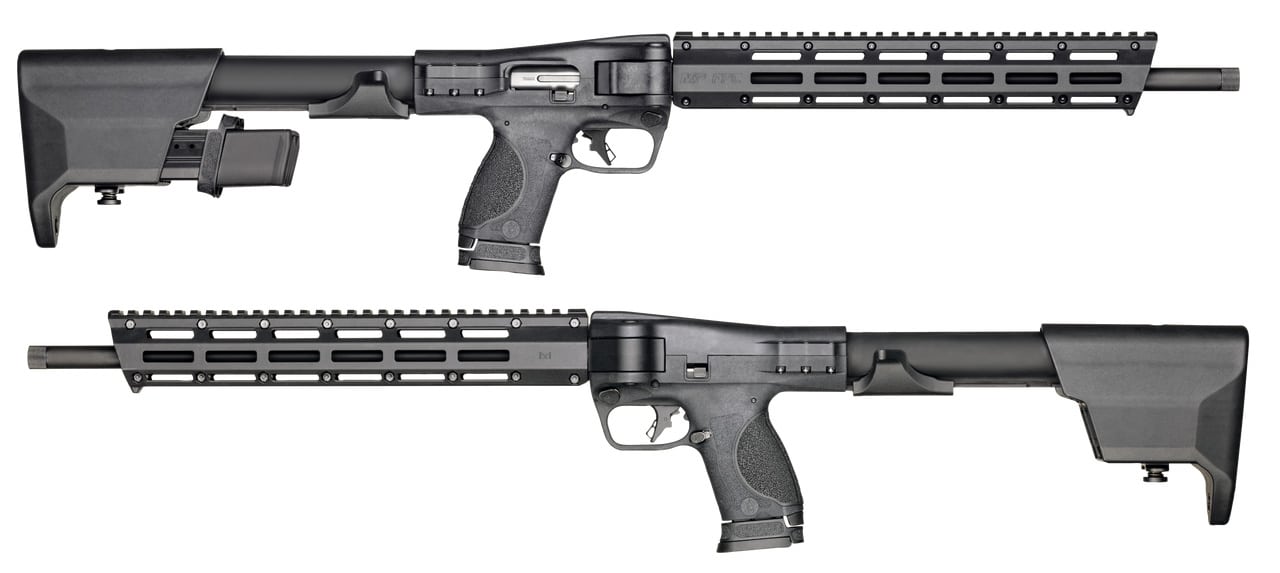
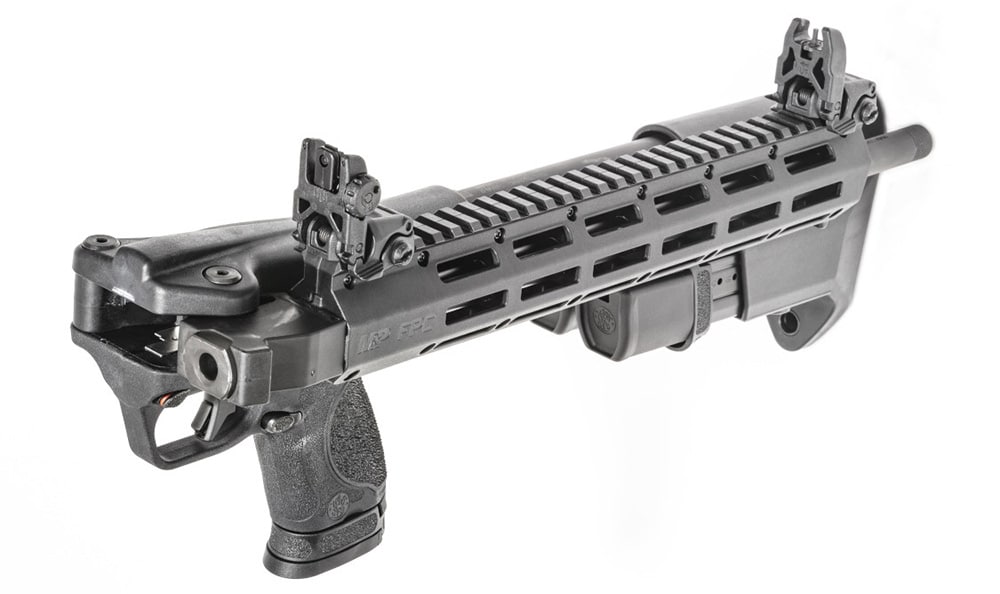
The FPC is a direct blowback carbine with 16.25-inch threaded barrel and integrated folding mechanism. Unlike the undeniably similar Kel-Tec SUB2000, the FPC folds in half laterally rather than vertically; this allows it to fold with optics mounted on the top rail. In addition to that Picatinny top rail, the handguard features 7-sided M-LOK slots for accessories.
Part M&P Pistol, Part Carbine
The lower half of the Smith & Wesson FPC is essentially just a compact M&P 9 M2.0 frame, complete with interchangeable backstraps, reversible mag release, ambidextrous bolt catch, and M2.0 flat face trigger. The frame also contains a button-release folding mechanism at the front, and a buffer tube at the rear.
The buffer tube has an ambidextrous “charging slide/handle” on the underside, and this part doubles as a retainer when this PCC is folded. The stock is also a unique design, with integrated storage for two 23-round magazines (included). These mags lock in place via a quick-release tab.
Each Smith & Wesson FPC comes with a 17-round magazine, two 23-round magazines, and a carrying bag that features storage pockets and Velcro retention straps. MSRP is $659. For more information on the new S&W FPC, go to Smith-Wesson.com.
The Premise: For Dr. David Perrodin, chaos events, and the human reaction to them has been a focus of his throughout his career. The worldwide chaos created by the COVID-19 pandemic prompted him to examine individual and population level behaviors more closely. Perrodin states that if we study the reaction to different stages of chaos, others will be able to anticipate and position themselves out of harm’s way and ahead of pack. Perrodin explores the effect of time perception during traumatic events and the ability to discern factual information through observation of seemingly mundane details. Unfortunately, by tapping into external sources, such as 24-hour news, people dismiss what should be corroborated by what’s happening directly in front of them.
Our Review of “The Velocity of Information: Human Thinking During Chaotic Times”
The 411: Chaos strikes daily around the world. Whether it’s war, political turmoil, violent protests, the weather, or some other event. Perrodin uses real-life examples to give the reader a wide array of tools to use as a counter strategy to this chaos. Starting with Evaluating Chaos Events, Perrodin guides you through the beginning of these events and helps the reader determine what action they should take for protection. When chaos erupts, information will be flooding in, people will be overwhelmed, and the speed of these details are what he calls the Velocity of Information (VOI).
One area that people experience during a chaos event is a period of intense disbelief, followed by normalcy bias. Normalcy bias refers to an attitude that’s entered when facing a disaster. People with normalcy bias have difficulties reacting to something they have not experienced before. They also tend to interpret warnings in the most optimistic way possible, seizing on any ambiguities to infer a less serious situation.
Each chapter focuses on a different tool to use for sifting through the barrage of information people are bombarded with during chaos. Situational awareness being one of the tools. Most people use it to some degree, but don’t realize its full potential. Many people rarely use it as they’re busy looking at their phone or just looking down at the pavement avoiding eye contact. A simple tool that has been overlooked in this day and age is member checks. Member checks or connecting with a network of confidantes, whether in your neighborhood, in your state, or in another country, can help you establish if the information you’re hearing and seeing from the government or media is factual.
I found the section on situational awareness with Joe Dolio was of terrific value. Dolio is a U.S. Marine Corps veteran, a Certified Fraud Examiner and Certified Forensic Examiner with over 20 years in the corporate security investigations business. In late 2020, Dolio observed signs in local grocery stores limiting the quantity of chicken purchases. As this indicates a potential shortage, Dolio purchased extra chicken and then set out to verify if the information was accurate or not. Using his member check network, Dolio was able to find out that a local cold storage facility was shorthanded due to a COVID-19 outbreak, and that other areas in his state weren’t experiencing shortages. Since the shortages were localized, it was most likely temporary until the grocery chain could set up alternate supplies of chicken. While this is a simple tactic, most people wouldn’t even think of it, let alone have a member check network setup.
Other areas covered include a section on the types of biases people have, as perception of information is influenced by past experiences. Perrodin states that, “The unconscious desire to remain in our comfortable torus (torus theory is the ingrained human behavior pursuing a similar condition of being) is powerful and contributes greatly to cognitive bias in any given situation. Finite Voltage or a person’s breaking point from the stress of a chaos event. Crowd-In Behavior (Cocooning), which is, “The need to protect oneself from the harsh unpredictable realities of the outside world,” The Continuum of Chaos, and The Failure to Regress to the Mean.
The Verdict
The Velocity of Information is a must read for anyone looking to improve their decision-making game. Perrodin breaks a large amount of data down into seven chapters of valuable information using examples from actual chaos events as well as case studies of the people involved to help you with your decision-making process. The principles apply whether it’s for a true chaos event, hurricane, protests, industrial accident, or just plain living. The Velocity of Information will empower its readers with its teachable moments and actionable items. In the words of Perrodin, “Stop outsourcing your thinking. The more you steer your own wheel, the harder it becomes for others to steer you.”
About the Book
Book & Author The Velocity of Information: Human Thinking During Chaotic Times By David P. Perrodin
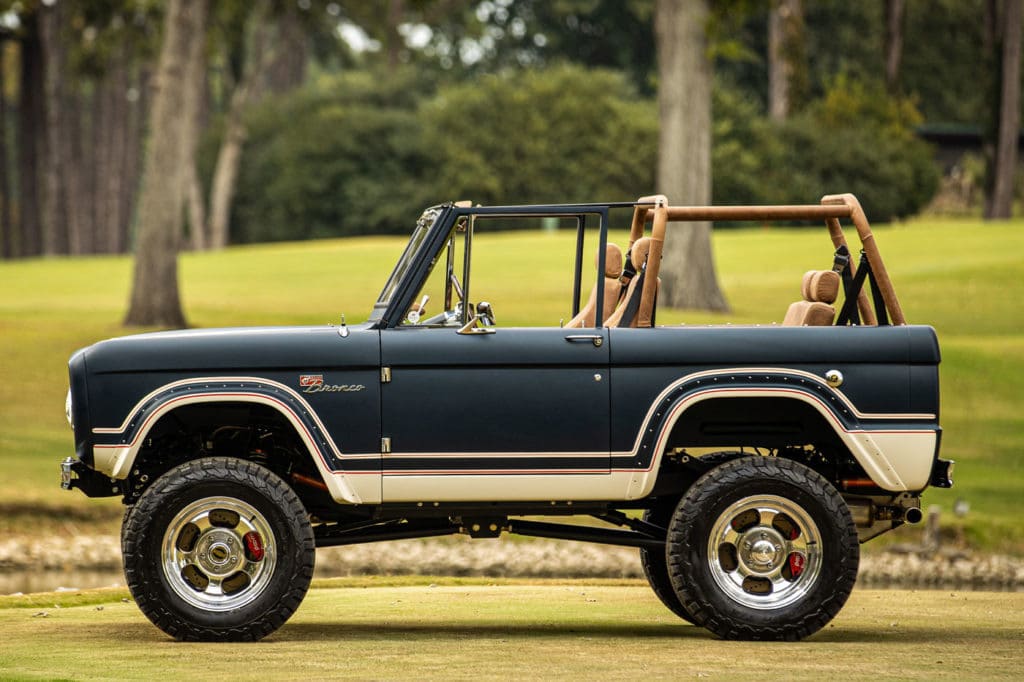
Brand new trucks are cool, but there’s always something special about the classics. Today, we’ll take a look at a beautiful 1968 Bronco built by Gateway Bronco, a specialty restoration shop in Illinois. This truck was created for the purpose of raising funds for the Special Operators Transition Foundation (SOTF), a non-profit that helps Special Operations veterans transition from the military into high-performing civilian careers. During the sweepstakes, which concluded at the end of January 2023, more than $580,000 were raised for the SOTF charity.
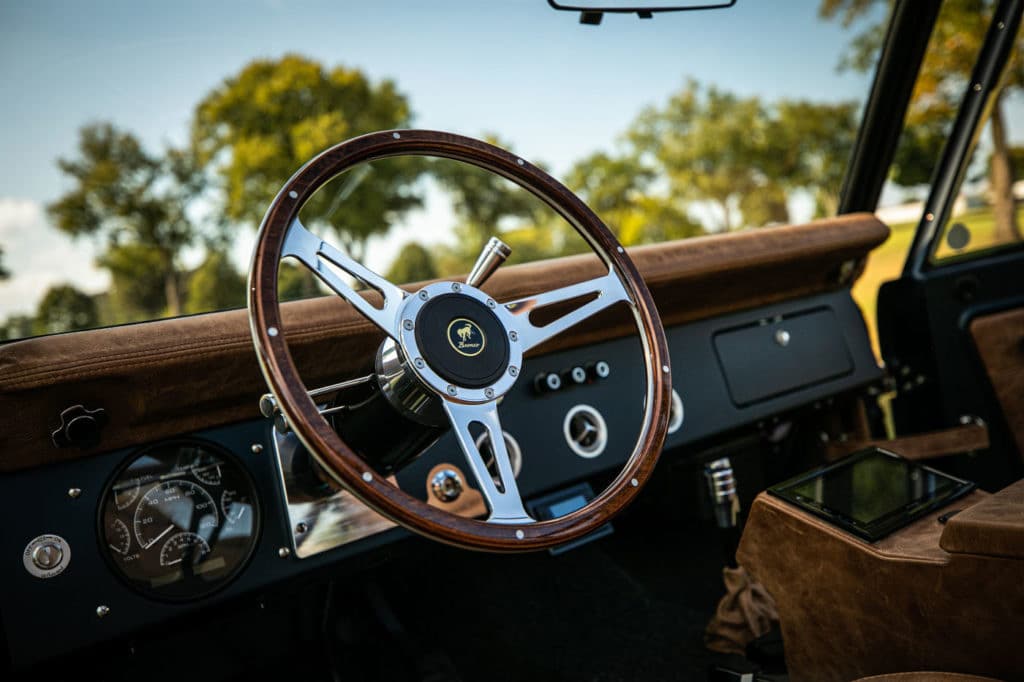
This 1968 Bronco features a matte dark blue exterior with matte Bronco-Ranger-style stripes, contrasted with an Italian distressed leather interior. A wood-rimmed, polished billet steering wheel maintains a classic appearance, but there’s also a touchscreen stereo and modern A/C system. Gateway Bronco says “this SUV has almost every option available” from its extensive catalog of Bronco upgrades.
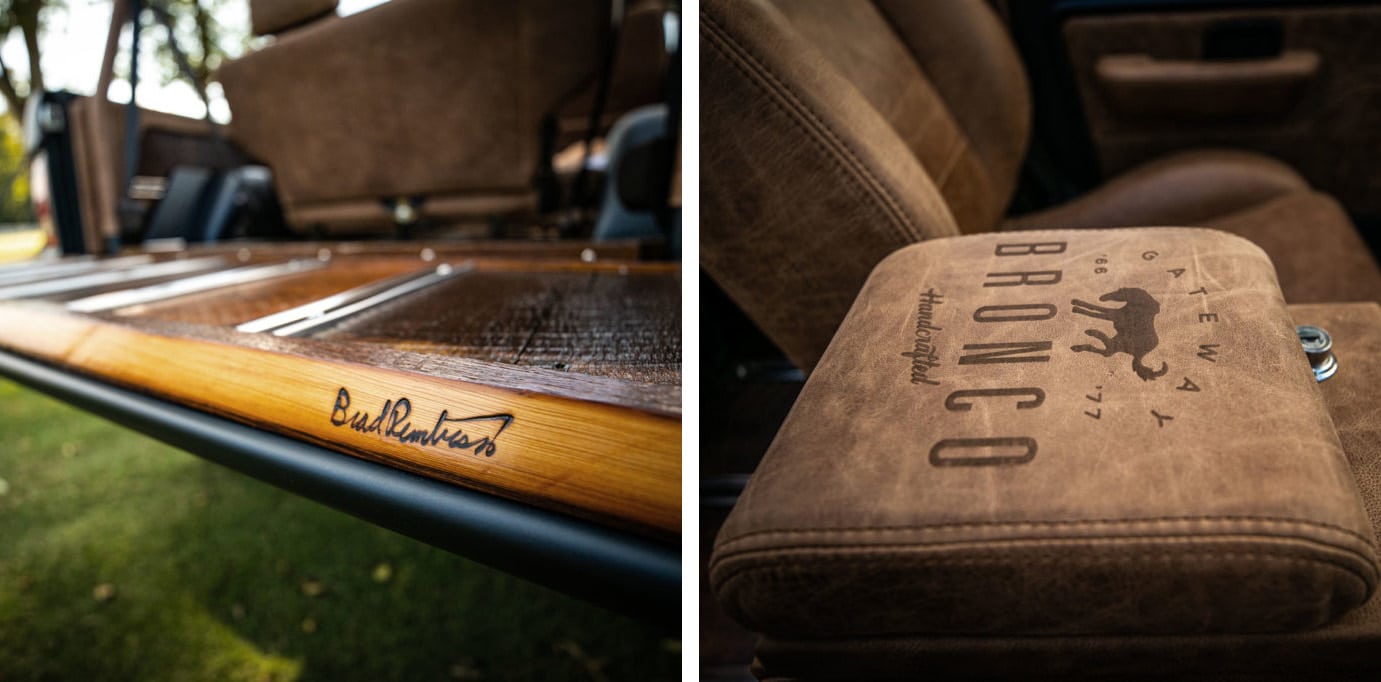
The bed is lined with genuine barn wood and polished trim strips. Showing how much pride went into this build, the signature of the Senior Master Tech in charge of the project is burned into the wood on the tailgate. Gateway Bronco’s logo is also embossed onto the armrest.
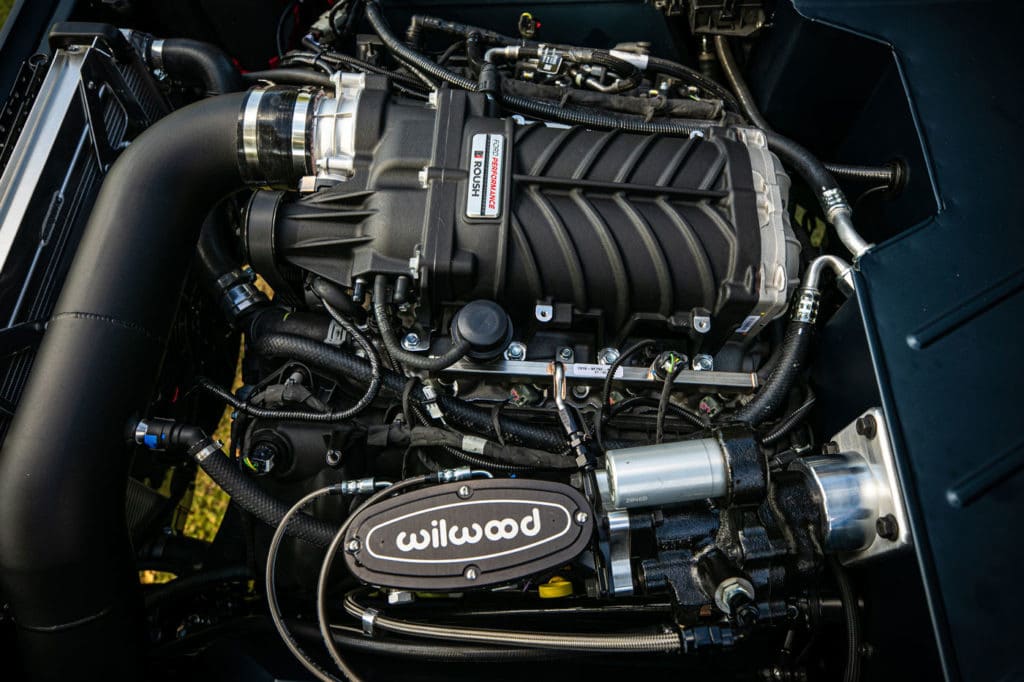
Mechanically, no aspect of this Bronco remains untouched. The team started by swapping in a 5.0L Coyote V8 from a newer Ford Mustang, and then boosted the power even further with a Roush supercharger. Power is sent through a 10-speed automatic transmission and a pair of Eaton Detroit TrueTrac differentials to the wheels. Four-wheel Wilwood disc brakes help this classic Bronco stop like a new vehicle.
According to Gateway Bronco, the estimated total prize value was $338,779, but one lucky donor got it for a whole lot less than that. Daniel R., of Clearwater, Florida, was ecstatic to learn he was the winner:
Although the sweepstakes for this ’68 Bronco have already concluded, check out GatewayBronco.com to see some of the other classic Bronco builds and packages the company offers. For more information on the Special Operators Transition Foundation, go to SOTF.com.
We love a good action flick as much as anyone, but they’re rarely a good representation of reality. Hollywood loves to exaggerate details for dramatic effect, and often spreads outright falsehoods such as the myth that barrel cacti are a great source of water for survival situations. Their representation of weapons is often especially silly, with guns that blast bad guys across the room and never need to be reloaded. However, there are still a few movies that put in the effort to get details right. In a recent video on the Zac in the Wild YouTube channel, edged weapon combatives instructor Adam Boyce of Spartan Mode reacts to a few famous (and infamous) movie knife fights.
About the Expert
Adam Boyce spent 7 years as an assaulter and sniper on a Special Response Team (SRT), and he currently works in the training department for a government agency. He also travels throughout the United States to teach defensive tactics classes to the general public, specializing in edged-weapon combatives. Adam is a certified instructor for Martial Blade Concepts, the training organization founded by Offgrid contributor Michael Janich. On top of all this, he’s also a knife designer.
Action Movie Knife Fights
Above: “I can beat you! I don’t need no gun!” cries Bennett before challenging Arnold Schwarzenegger’s character to a knife duel in Commando. You can probably guess the outcome.
Adam and Zac sat down to watch clips from eight movies, including over-the-top ’80s action flicks like Commando, modern movies like John Wick 2, and timeless classics like Butch Cassidy and the Sundance Kid. Between the predictable critiques of inaccuracies, Adam pointed out a few realistic elements that showed the production teams did some homework.
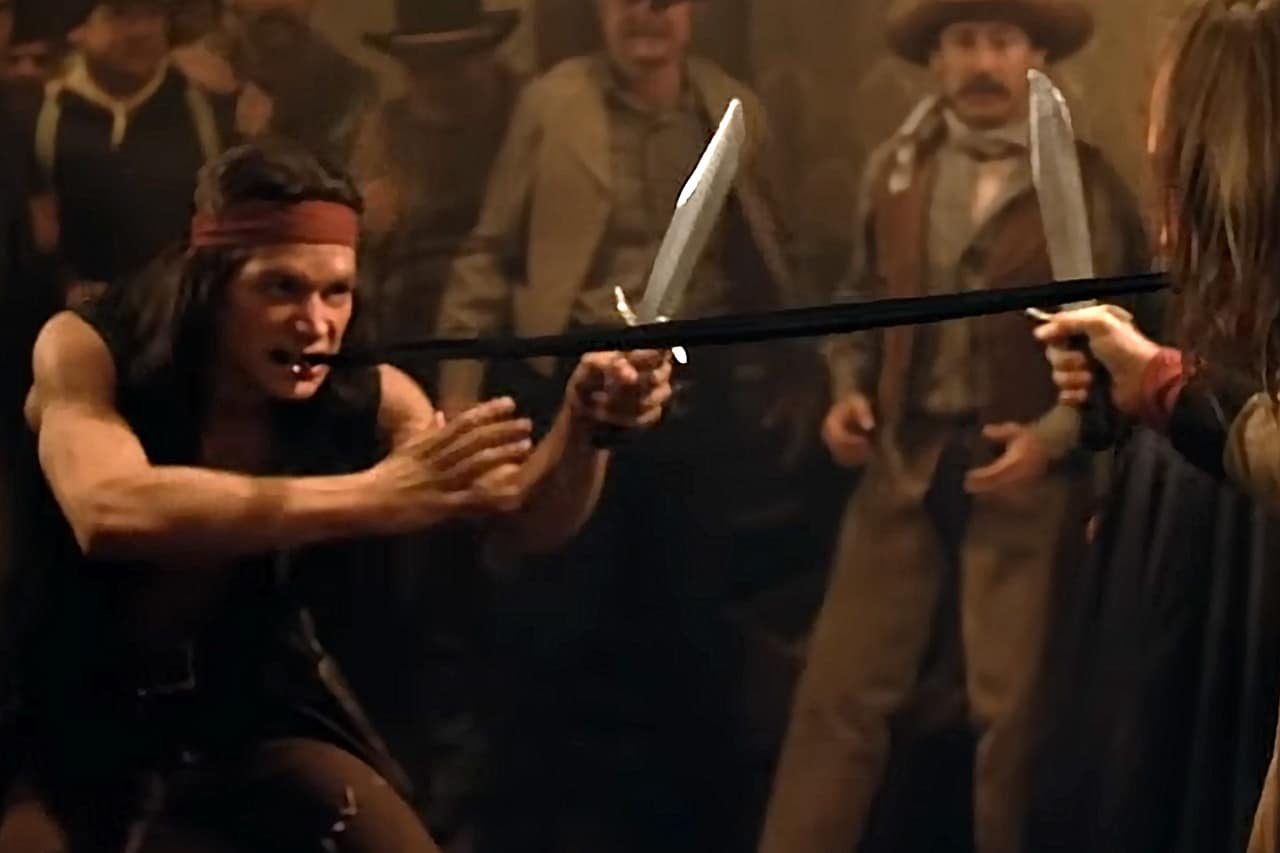
Above: This fight from The Long Riders includes a knife fighting technique that appears to be historically accurate — wielding a Bowie knife in a reverse grip for defense. This allowed the defender to parry incoming strikes with his Bowie’s spine (often protected by a brass strip) and guard, without damaging the cutting edge of the knife. The partial secondary edge could still be used for counterattacks.
Check out the video below from Zac in the Wild:
For more information on Adam Boyce’s training courses, go to SpartanMode.com.
Editor’s Note: With impeccable timing, a new version of the Cloud Defensive MCH was announced this week. It appears to address my critiques later in this article, and I’m currently working on getting a sample of the updated MCH Dual Fuel to compare. When that happens, I’ll post a follow-up. Until then, read on for my review of the original MCH, which is still available for purchase on Cloud’s website at a reduced price of $165.
Modularity is a convenience we often take for granted. Many of the important items we purchase use modular designs to allow customization and upgrades, either at the time of purchase or later down the line. For example, look back at the early days of the automobile. In 1909, Henry Ford famously said each Model T buyer could “have a car painted any color that he wants so long as it’s black.” Fast-forward to today — when you buy a new truck, you’re presented with an almost-overwhelming list of submodels, trim levels, factory options, and dealer-installed equipment. Would you like two-wheel drive or four-wheel drive? Gas or diesel? How many doors? Which bed length? And we won’t even get started discussing all the paint colors, upholstery styles, and other cosmetics you can pick. Since our vehicles are expensive items we rely on every day, it makes sense to consider the options carefully before buying.
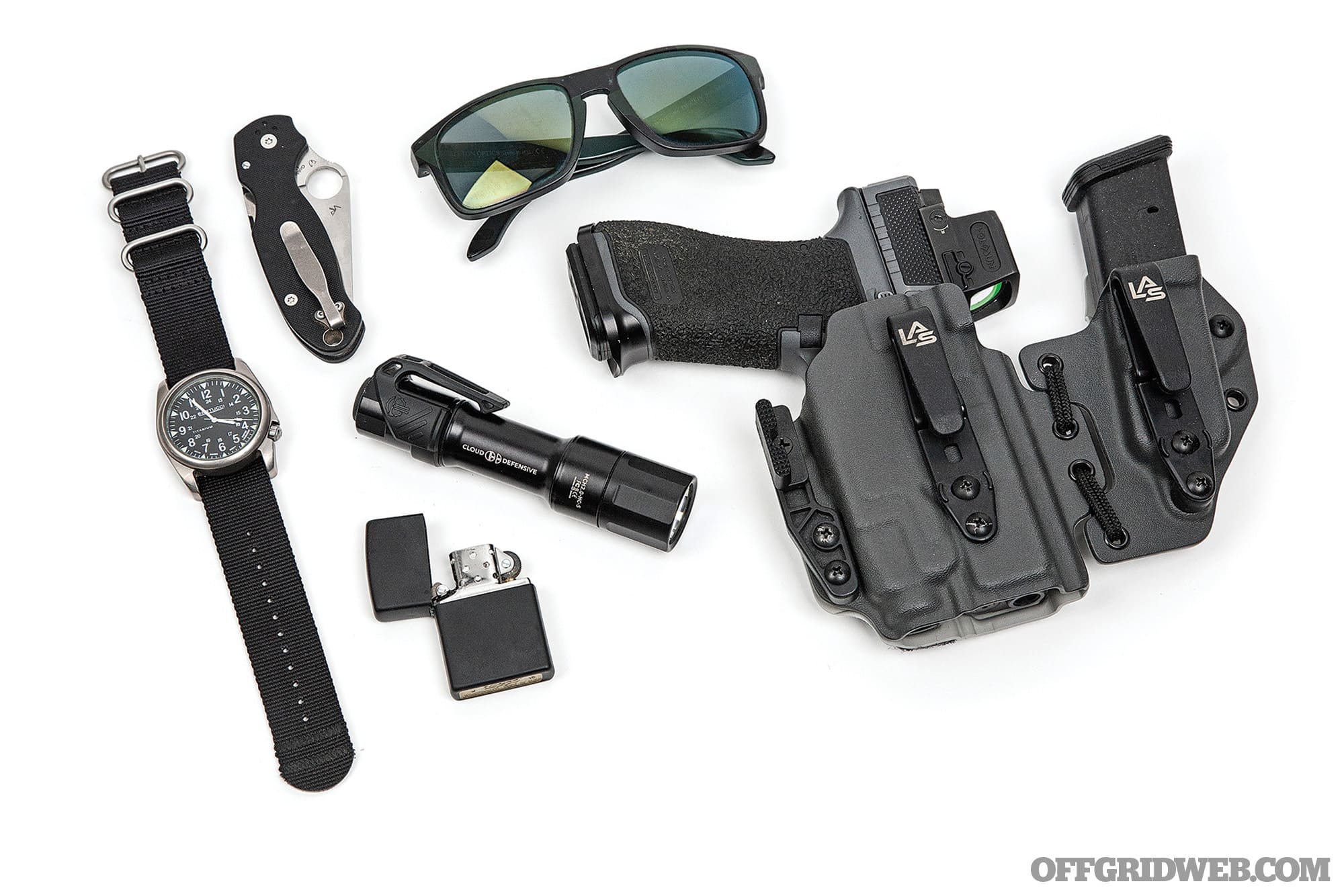
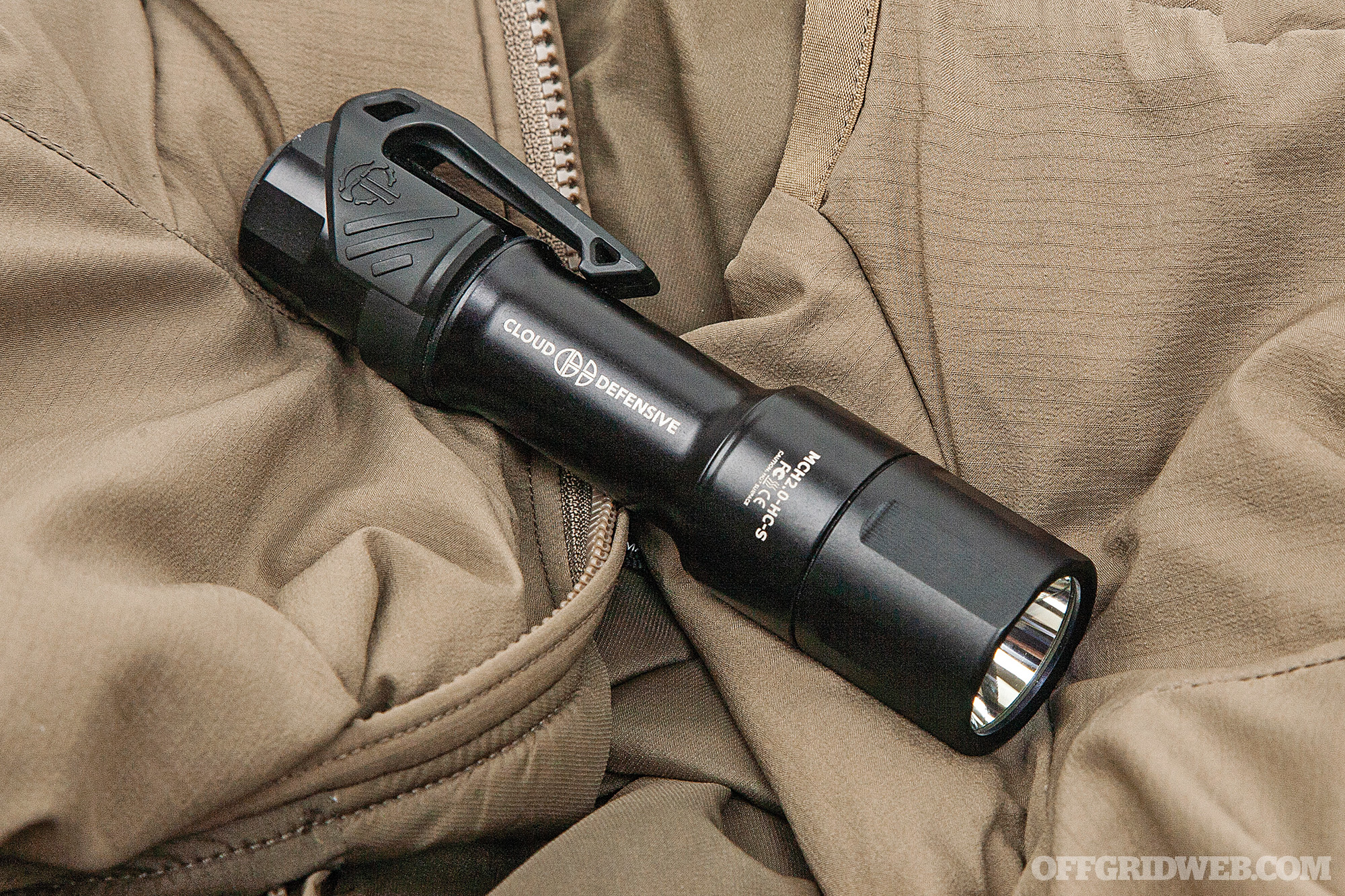
Above: The Cloud Defensive MCH pictured alongside some of my other EDC gear — modified Glock 45 in LAS Concealment Ronin L holster, Skeleton Optics glasses, Spyderco Para 3 knife, Bertucci A-4T watch, and Zippo lighter.
Flashlights are another important tool many of us rely on daily, and we’d argue that the configuration of your flashlight can be just as important as the configuration of your vehicle. Much like settling for a two-wheel drive truck might cause you to get stuck in the middle of nowhere, settling for a flashlight with low output or short battery life can leave you stumbling around in the dark. You should always do your homework before buying any flashlight — especially one you carry every day.
WMLs vs. Handhelds
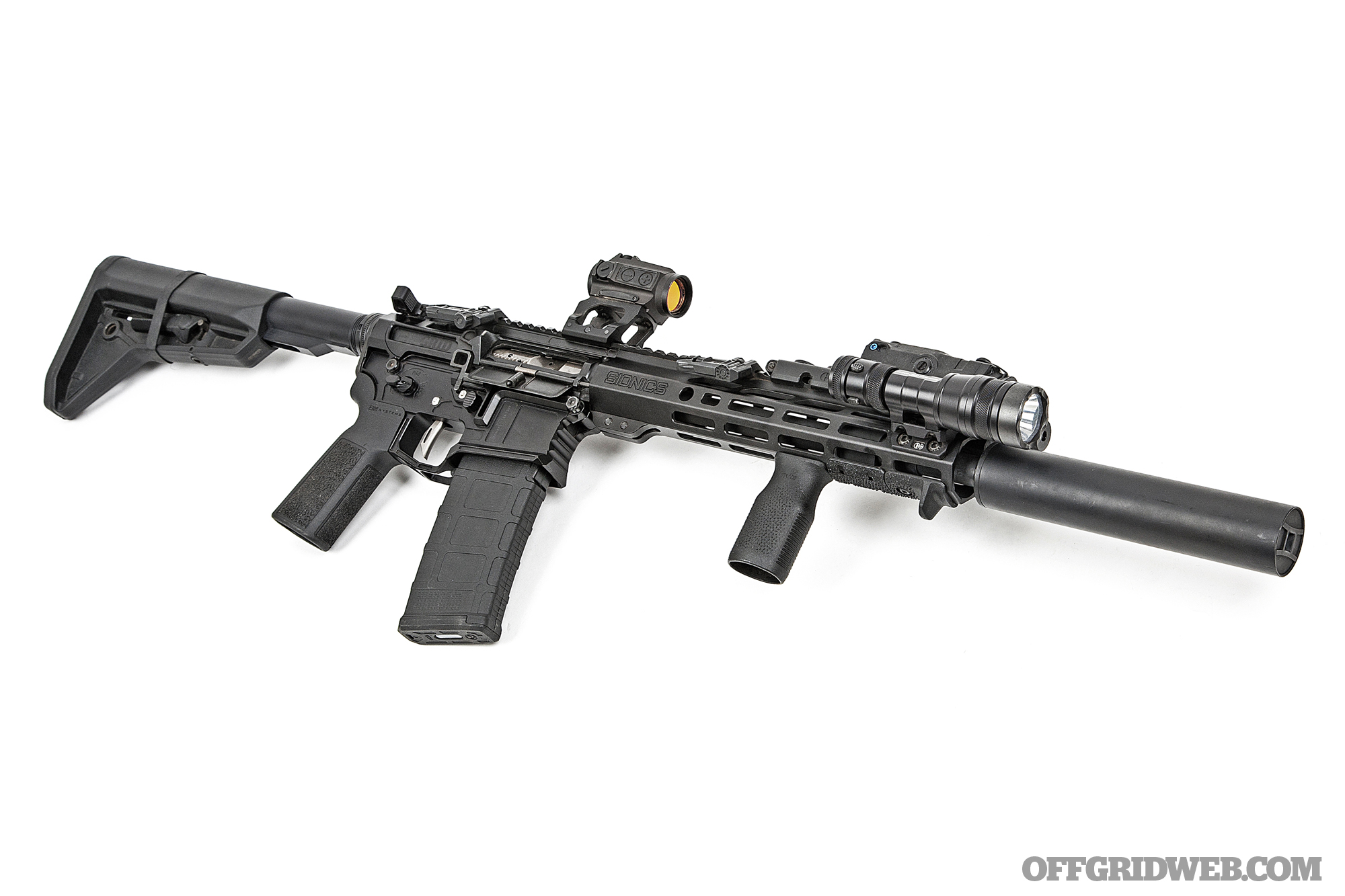
Above: This 11.5-inch SBR features a Cloud Defensive REIN weapon-mounted light, which shares some design features and components with the MCH handheld flashlights.
Anyone who has set up a weapon-mounted light (WML) on a rifle knows that modularity is the name of the game. WMLs such as the SureFire Scout and Streamlight ProTac can be configured with various body lengths, heads, tailcaps, and remote pressure switches. They can also be installed in various Picatinny, KeyMod, and M-LOK mounts from their respective manufacturers or a multitude of aftermarket companies. Unfortunately, the same can’t be said for most handheld flashlights, which are often sold in a “one size fits most” configuration. If you’re lucky, you can choose from a few sub-models or swap some parts, but the modularity is generally much more limited.
The Cloud Defensive MCH Formula
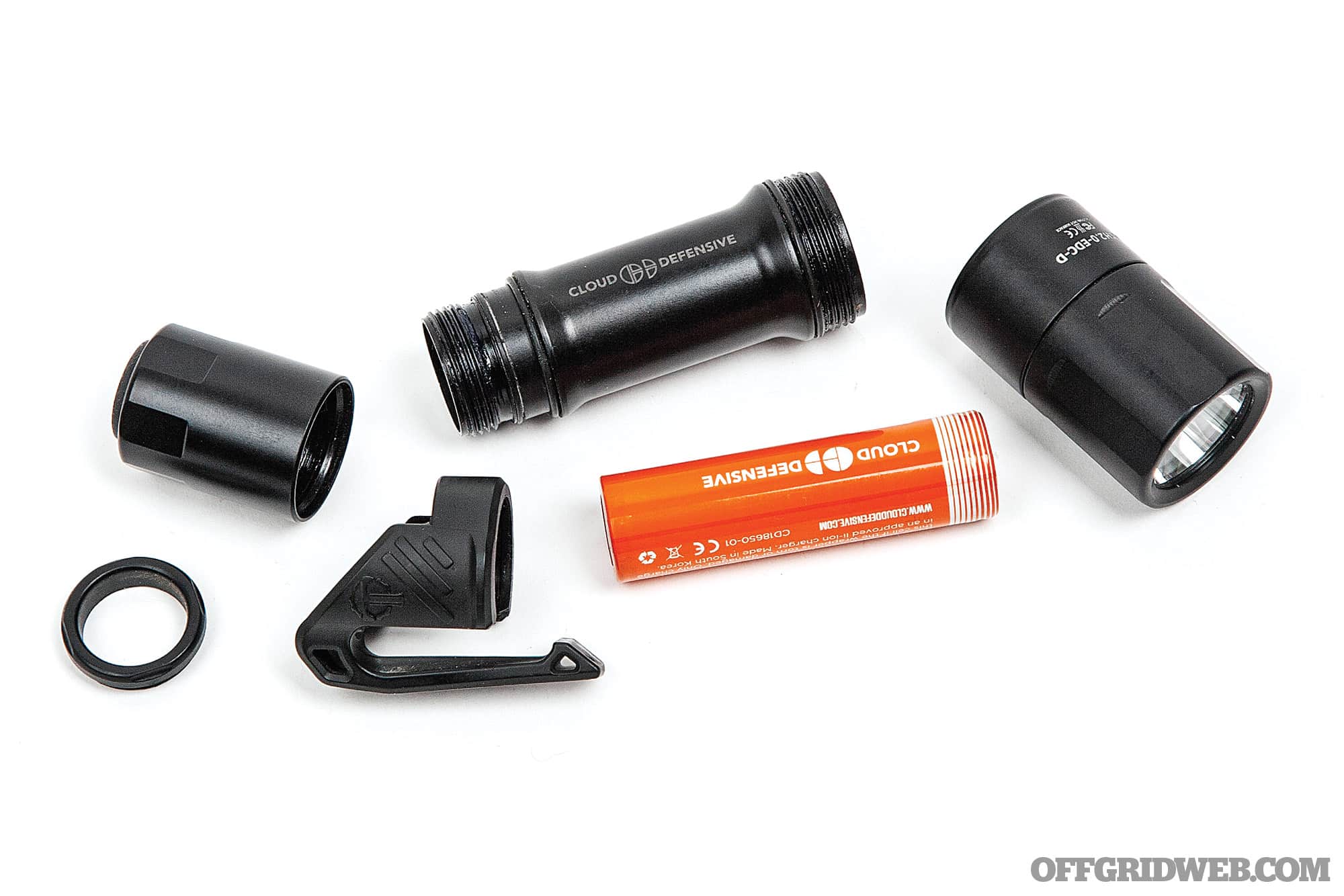
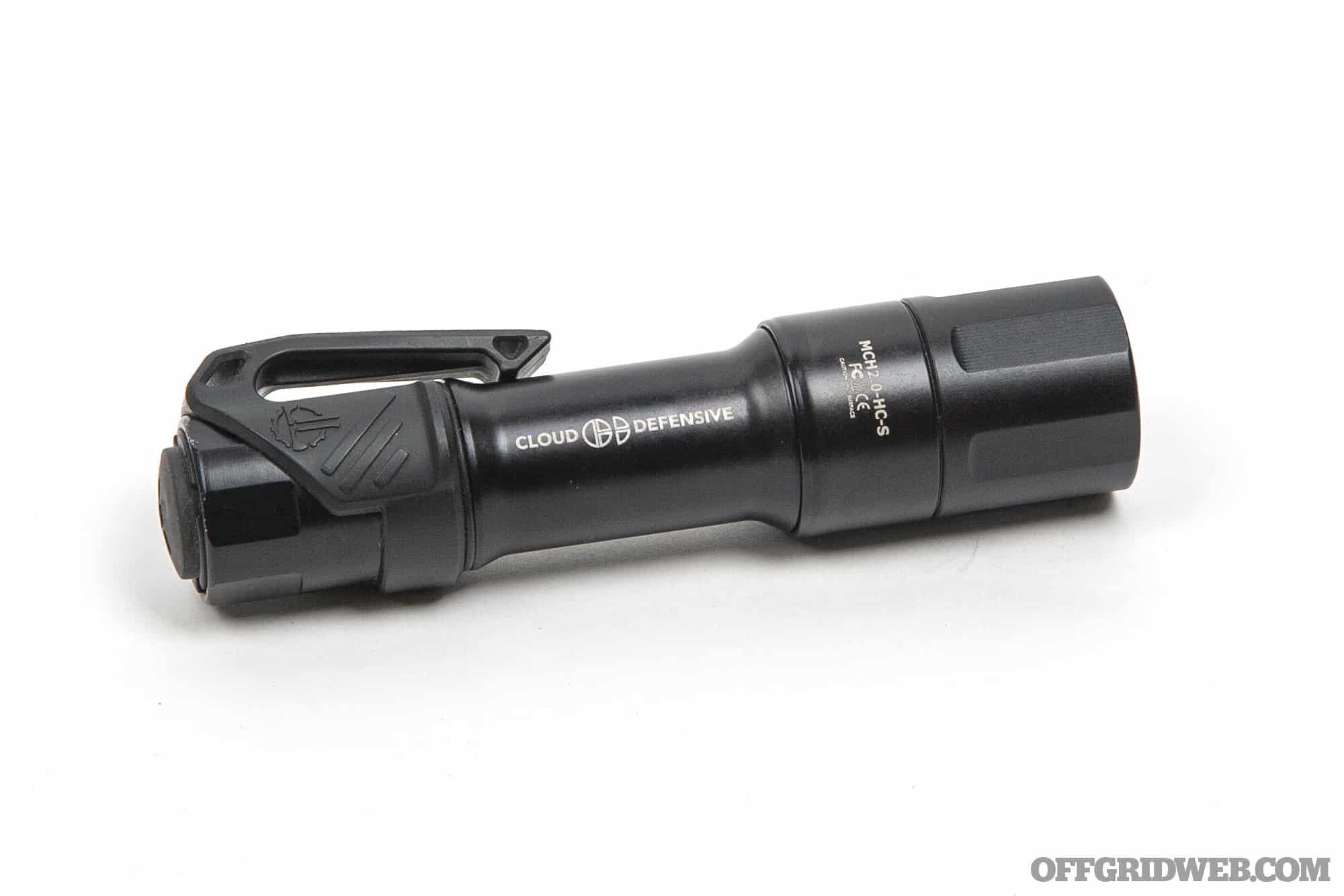
The Mission Configurable Handheld (MCH) from Cloud Defensive was created from day one as a fully modular flashlight platform. All four of its main components can be mixed and matched:
Head
Body
Tailcap
Pocket clip
Read on as we examine the options that the MCH offers in each of these categories.
Head Arguably the most important parts of any flashlight are its emitter and reflector, since these two components determine the brightness, efficiency, color, and beam pattern. Collectively, they’re called the head, which is appropriate since they also contain the electronic brain that manages the light’s functions (brightness modes, thermal regulation, voltage regulation, etc.). Four heads are available for the MCH:
HC Single Output
HC Dual Output
EDC Single Output
EDC Dual Output
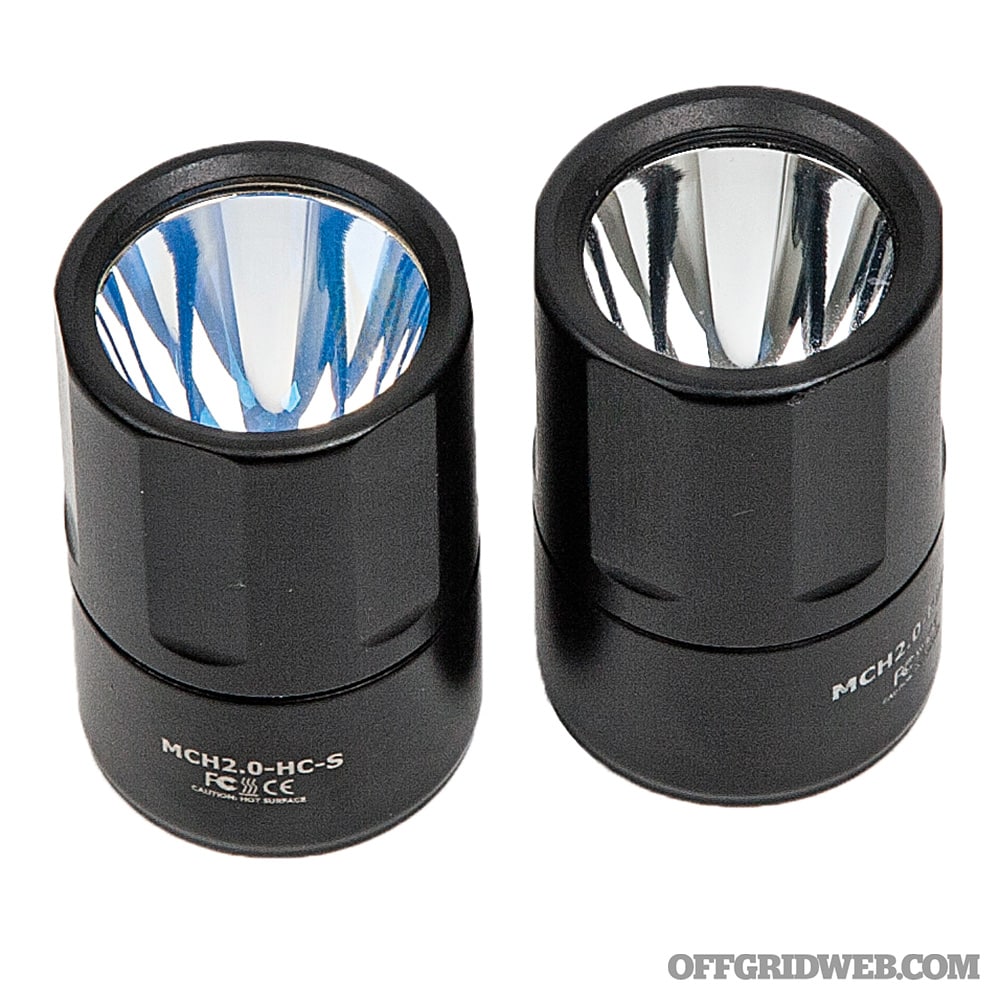
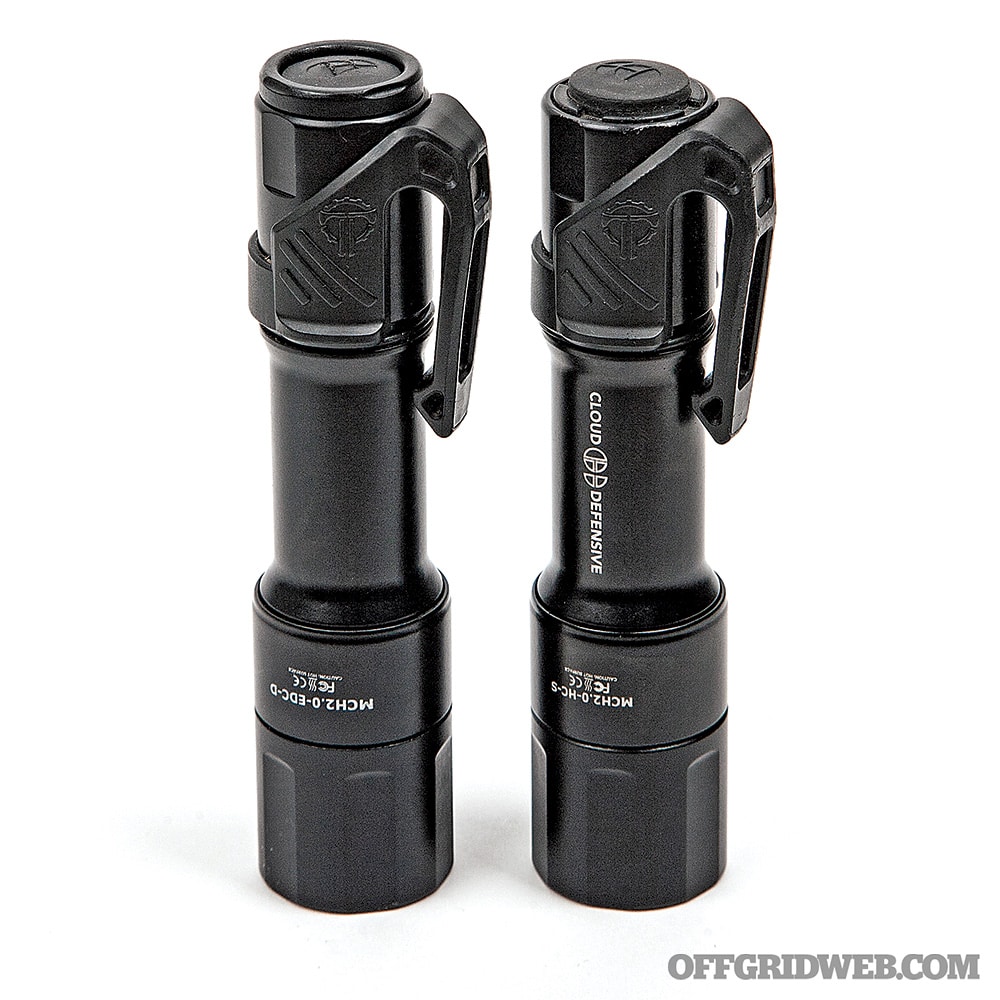
Above: To the naked eye, the HC and EDC heads look similar, but the sudden flash of our studio lights revealed Cloud’s proprietary lens coating on the HC. It shifts light output from a warm hue to a more neutral white.
The High Candela (HC) head is exactly what its name implies. For those unfamiliar with the term, candela is basically a measurement of the intensity of a beam of light. It’s important to distinguish this from lumens, which measure the total quantity of emitted light. Lumens tell you how much light is produced; candela tells you how that light is focused. So, the HC offers a tightly focused beam pattern that’s ideal for throwing light long distances and pushing through barriers such as tinted windows. This head produces a maximum of 71,000 candela and 1,100 lumens. It also features a proprietary glass coating that generates neutral white light (5,200K).
The Every-Day Carry (EDC) head is less specialized than the HC head, with a balance between strong candela and wide spill. It’s preferable for short- to medium-range general use. Maximum output is 40,000 candela and 1,400 lumens; color temperature (4,500K) is warmer than the HC and similar to an incandescent light bulb.
Single or Dual Output Each of the heads is available in either a Single Output or Dual Output version. Single output is self-explanatory — full power all the time. Dual output toggles between 100-percent power and a 10-percent-power low setting (e.g. 4,000 candela/140 lumens with EDC head) each time the button is pressed. This is useful for close-up tasks, such as reading a map.
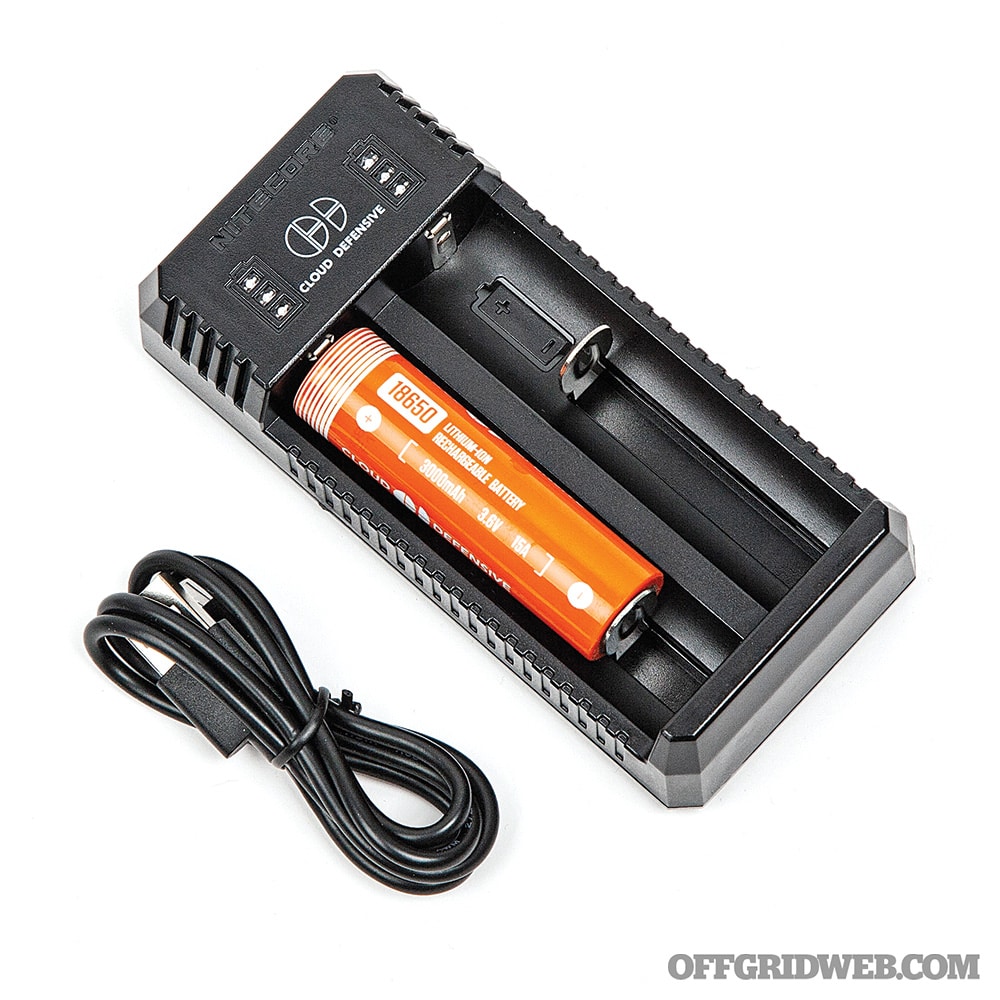
Above: This Cloud-Defensive-branded Nitecore charger is included with every MCH. It offers an extra slot for a spare battery, so you can always have one topped off.
Body Two body sizes are available for the MCH: Full Size and Micro.
The Full Size body uses a larger 18650 rechargeable battery and measures 5.2 inches long including head and tail cap. Maximum run time at full output is 120 minutes with the EDC head or 150 minutes with the HC head.
The Micro body uses an 18350 rechargeable battery and measures 4 inches long with head and tail cap. As you’d expect, maximum run time will be shorter with a smaller battery, specifically 35 minutes with the EDC head or 50 with the HC.
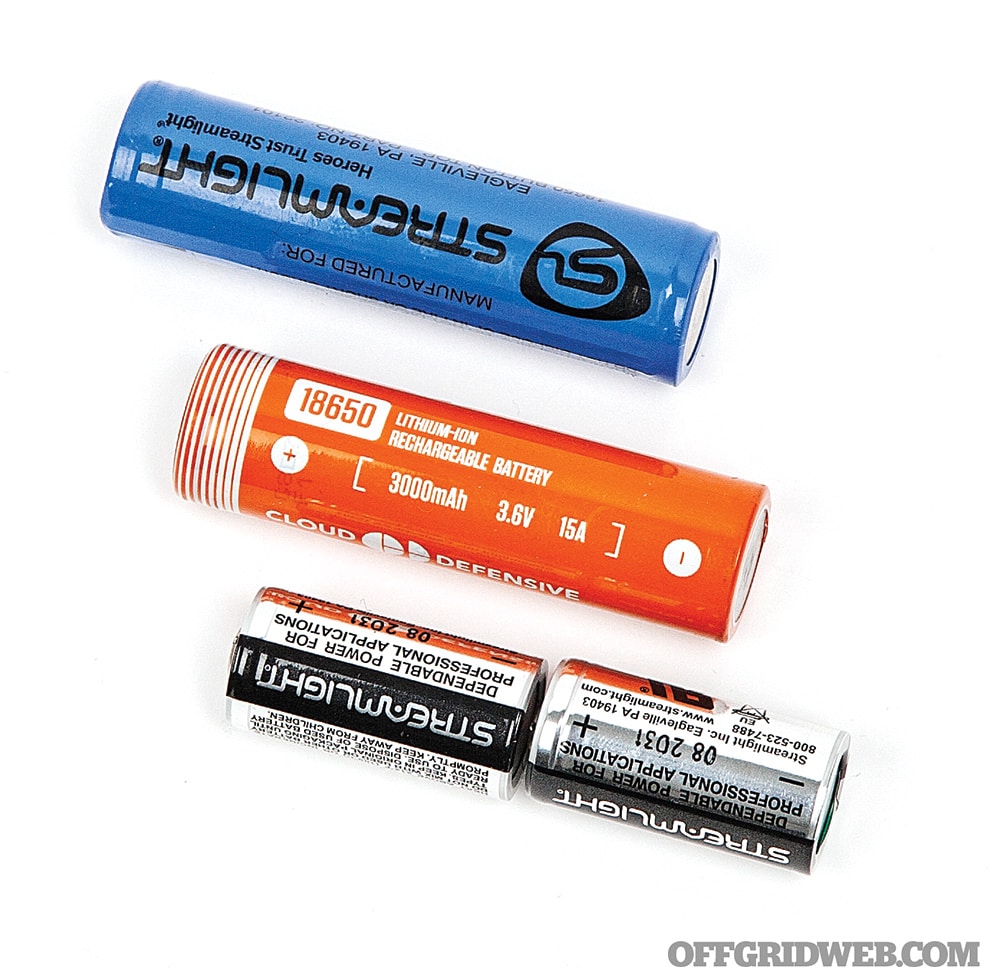
Above: An orange flat-top 18650 battery comes with the MCH. It can also accept most button-top cells, such as the blue one pictured here. However, it should not be used with CR123 batteries — doing so will void the lifetime warranty. (Note: This is not the case for the new “dual fuel” MCH.)
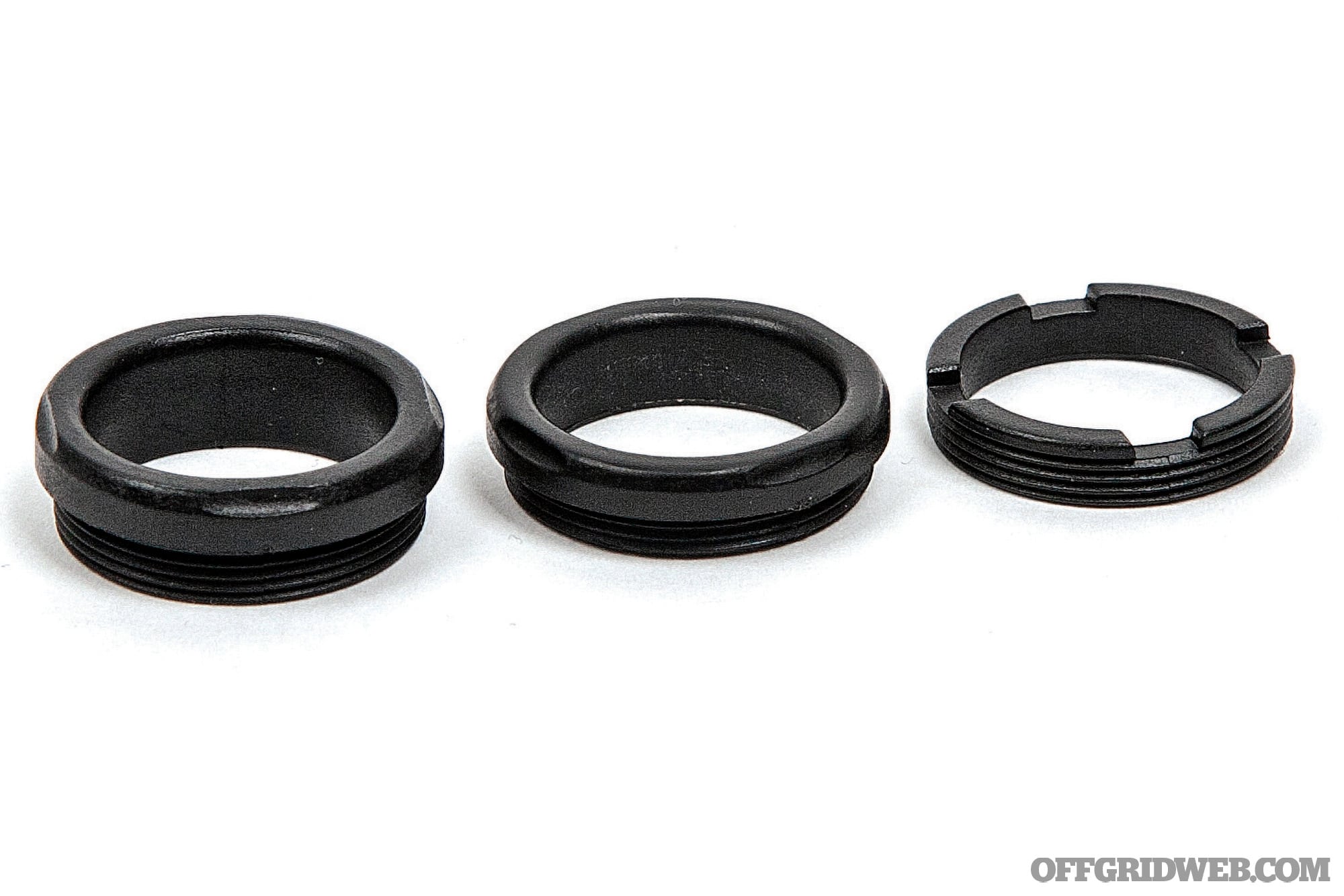
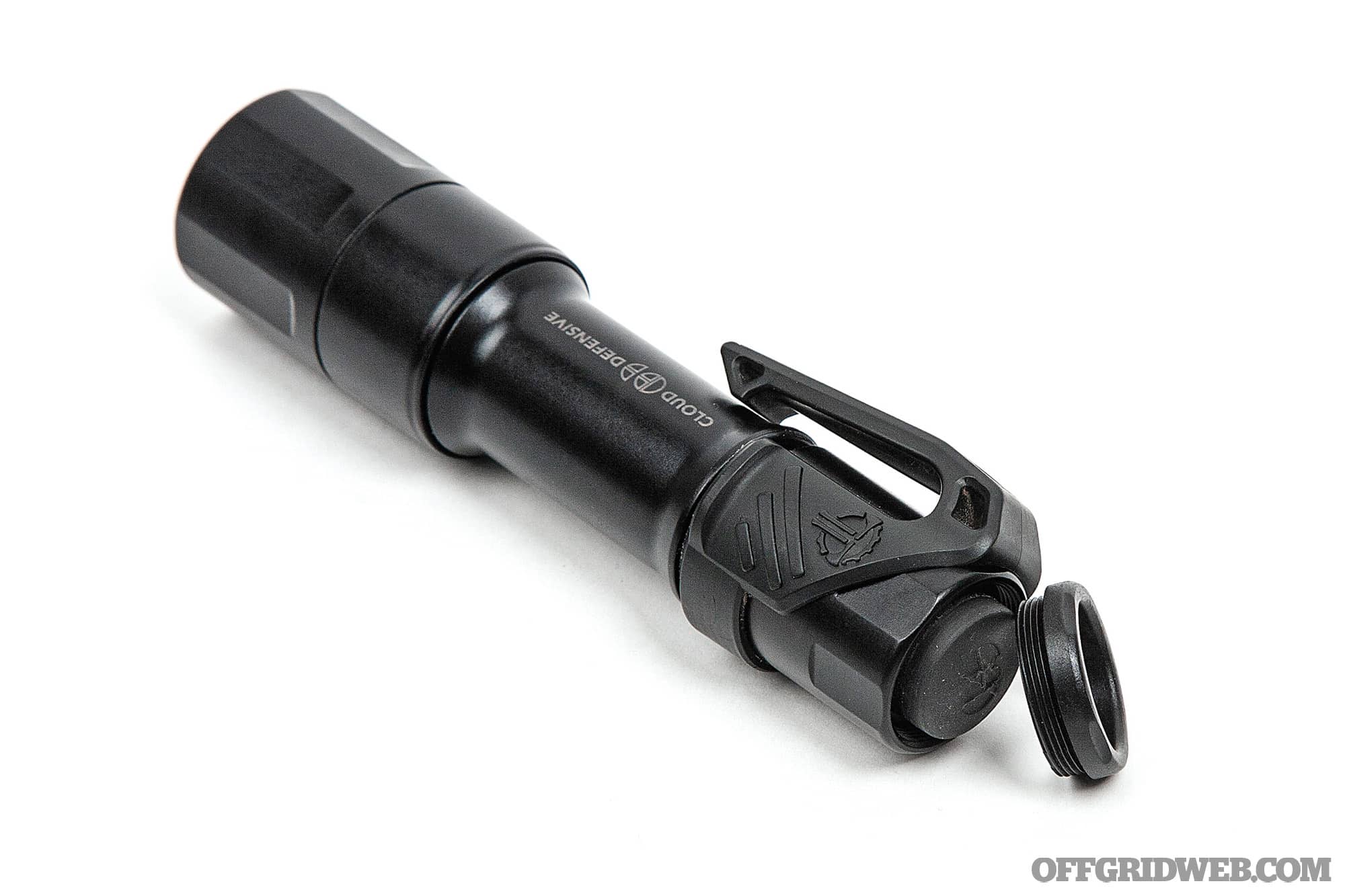
Tailcap There’s only one tailcap included with each MCH, but it’s still modular thanks to Cloud’s patented Adjustable Negligent Discharge Protection system. This involves a set of three included, interchangeable polymer rings that thread into the tail cap around the rubber activation button. With the thinnest ND Protector ring installed, the MCH’s button is extremely easy to activate, but it’s also easy to press inadvertently while it’s in a pocket or pouch. The polymer rings get progressively thicker, with the thickest requiring a very deliberate press to the center of the button to activate the light.
Above: Three ND Protector rings are included with the MCH: large, medium, and small.
Above: The ND Protectors thread into the tailcap around the rubber activation button.
Pocket Clip Finally, we have the clip that retains the light in a pocket. Each MCH ships with a Thyrm Lo-Pro pocket clip, which (contrary to its name) is made from a relatively thick but very sturdy polymer material. There’s also an optional Thyrm Switchback clip, which includes a pocket clip plus an integrated finger ring. The ring provides increased retention of the light for high-intensity activities like shooting or grappling, and it can also be used alongside a pistol in a two-handed grip (the Switchback Technique).
Cloud Defensive also states that a steel, deep-carry pocket clip will be offered for the MCH. However, the product page mentions that this metal clip is “currently seeing manufacturing delays” and does not provide an ETA for its availability. At time of writing, the MCH has been available for almost 10 months, but the clip hasn’t become available yet.
Colors In case all these options weren’t enough for you, Cloud Defensive also offers four colors to choose from. There’s black, flat dark earth, olive drab, and clear anodized; the latter simply reveals the natural gray color of the 6061-T6 aluminum the MCH is made from. The company has even offered limited runs of “Moonshine” MCHs, which use random combinations of mismatched colors (e.g. FDE head with black body and OD green tailcap).
My Impressions
I received a pair of MCHs to test and have carried at least one of them every day for nearly a year. I’ve used them in a wide variety of environments, from the shooting range to the garage to remote hiking trails and have developed some opinions on aspects of the MCH I love and aspects I’m not so fond of.
MCH Configurations Thanks to the modular design, I was able to order and set up these MCHs exactly how I want them. Run time is a much bigger priority for me than saving a small amount of pocket space, and I prefer a light that’s long enough for a full-fist grip, so the Full Size was an obvious choice for both lights. I also went with the sleeker Lo-Pro pocket clip without the Switchback ring for both lights.
Above: This photo shows the difference between the large and small ND Protectors. Each gives the light a slightly different activation feel.
One MCH is set up with a HC Single Output head and the thinnest ND Protector ring. This is what some people would call a “tactical” flashlight due to its specialized nature, and it’s the light I reach for if I need long-distance or highly focused visibility. It spends most of its time in the center console of my truck and gets used for tasks such as scanning dark parking lots.
The other MCH is set up with an EDC Dual Output head with the medium ND Protector. This light can be found in my pocket most of the time; I think the versatility of two brightness modes and a balanced beam pattern is ideal for every-day carry. I also like a little extra protection on the activation button to prevent the light from turning on and burning a hole in my jeans (or just draining the battery).
The Pros
There’s a lot to like about the Cloud Defensive MCH. Although it’s not perfect (more on that shortly) the MCH EDC Dual has become my favorite daily carry light for the time being. The MCH HC Single is also an outstanding tool, but one I find myself needing less frequently.
Power: Both versions of the MCH are surprisingly effective at slicing through the darkness, and that’s something you can’t know from numbers alone. The specific combination of lumens, candela, and color temperature cause these lights to feel potent, even when used side-by-side with comparable lights from SureFire and Streamlight. I was also pleasantly surprised to see how much long-range throw the EDC head has — it’s not as effective as the HC, but it’s no slouch.
Rechargeability: Frankly, I’m tired of constantly replacing the disposable CR123 batteries in my other flashlights. It’s tedious, expensive, and probably polluting the habitat of some endangered frog species. Recharging the 18650 battery is convenient, and the included dual-slot charger allows me to keep a spare ready to swap in at any time.
Reliability: I don’t use my flashlights as hammers, but they do get dropped occasionally and exposed to moisture, dust, and dirt. I haven’t encountered any malfunctions with either of my MCHs, which is more than I can say for some of the other flashlights I’ve owned. The ND protector also counts toward this point, since it helps prevent the light from shining into my pocket until the battery dies.
Modularity: It’s great that the MCH ecosystem has so many options to choose from. I also appreciate that the components are interchangeable with Cloud Defensive’s REIN series of weapon lights; the MCH HC is essentially a REIN 2.0 you can carry in your pocket.
The Cons
No Mode Memory (Dual Models Only): If there’s one thing that has made me consider switching to a different flashlight, it’s this. I love the convenience of having two output modes, and more importantly, two useful output modes (not 1,200 lumens or 5 lumens — I’m looking at you, SureFire EDCL2-T). But I hate that I’m always wondering which output mode I’m going to get when I turn on the light. That’s because, unlike most other dual-mode lights on the market, Cloud’s dual-mode head has no mode memory. It simply alternates through a high-low-high sequence with each button press.
SureFire dealt with this issue by always defaulting to high mode, while a quick double-tap gives you low mode. Streamlight has a more complex programmable Ten-Tap system that lets users choose between high-strobe-low, high only, or low-high sequences (each toggled by double- or triple-taps of the switch). Either way, with those manufacturers I always know which mode I’m getting the first time I activate the light — not so for the MCH.
If you can remember to stage the light in your preferred mode by cycling to the previous mode every time you turn it off, there’s no problem. In reality, you’ll probably end up tapping the button a few times to end up at the right mode each time you use a dual-mode MCH. That may not sound like a big deal, but if your eyes have acclimated to darkness, you may temporarily blind yourself by unintentionally activating all 1,400 lumens.
Imperfect Pocket Clip: This is a relatively minor gripe, but I’m not sold on the Thyrm Lo-Pro clip that’s currently included with the MCH. It works, and I have no doubts about its durability, but it’s much bulkier than a typical metal pocket clip. Cloud originally promised a metal clip for the MCH, but it’s still nowhere to be seen. I understand that manufacturing delays happen, but I’m a little disappointed that the clip is still unavailable after 10 months.
Closing Thoughts
Overall, I’m happy with the MCH, especially considering this is Cloud Defensive’s first handheld flashlight design. With the recent release of the REIN 3.0 weapon light — which offers 100,000 candela and dual-fuel 18650/2xCR123 compatibility — it seems likely that there will be an updated version of the MCH that uses the new REIN head. If this also includes dual-mode memory and a metal pocket clip, it’ll be tough to beat. (Editor’s Note: It appears these updated MCH predictions were correct, but instead of the dual mode memory I hoped for, Cloud Defensive created a programmable 5-mode system! I’m looking forward to testing the new MCH Dual Fuel soon.)