The sun is essential to survival, and not just because its presence keeps the Earth from turning into a frozen wasteland. Brief interruptions of sunlight like this week’s solar eclipse remind us of how much we take it for granted in our daily lives. And in a survival scenario, the sun can be used to cook food, purify water, or even navigate to safety.

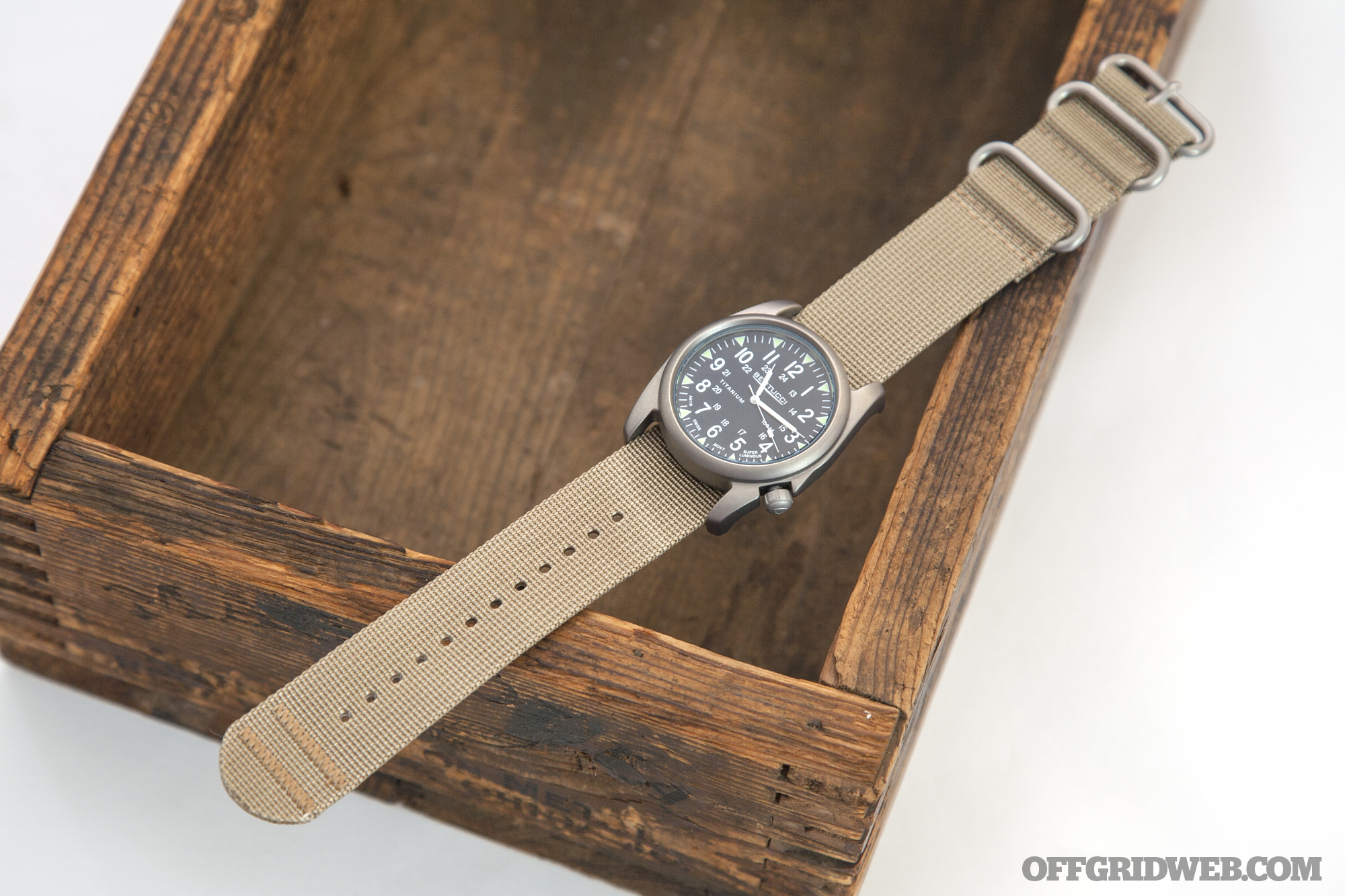
If you’re wearing a watch that doesn’t have a built-in compass, you should take some time (no pun intended) to learn how to use it as an improvised compass.
This technique requires a clear view of the sun and an analog watch. For those who wear digital watches or rely on cell phones to tell time, you can still use this technique, but it’ll require a little extra work to visualize a watch’s hands. This can be done using sticks on the ground, a pen and paper, or even mentally (if you’re really good at visualization).
For the purposes of this article, we’ll assume you’re in the northern hemisphere — if you’re in the southern hemisphere, the technique changes (more on that later). If you’re in the tropics (i.e. near the equator), this technique may not be accurate, so you’ll need to find another method such as celestial navigation. Also, we’ll assume you’re not affected by daylight savings time. If DST is currently in effect in your region, you’ll need to remember this and compensate by subtracting one hour from the hour hand’s position.
The following video from AlfieAesthetics on YouTube shows how to find true north using your watch and the sun:
The basic steps can be summarized as follows:
- Place your watch horizontally with the hour hand pointed in the direction of the sun.
- Note the angle between the hour hand and the 12:00 mark. Mentally split this angle in half. (For example, if the sun is at 4, envision a line across the face from 2 through 8.)
- This angle is your north-south line. North is the point furthest from the sun. (In our previous example, north would be at the 8 position.)
- Now that you know where north and south are, it’s easy to plot an azimuth based on the marks on your watch face, or using a dive watch bezel.
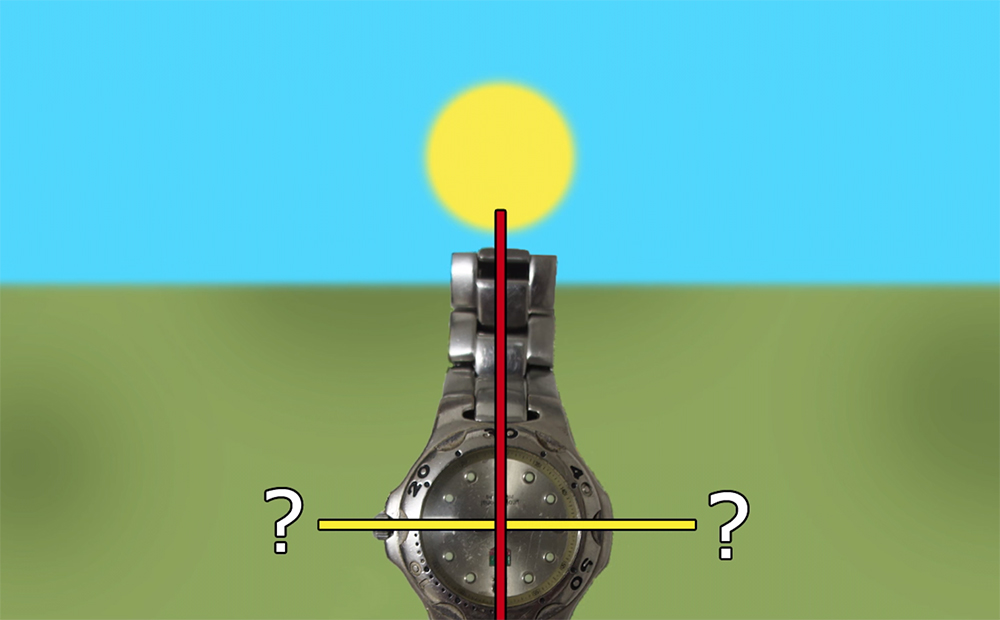
If it’s exactly 6:00 as seen in this graphic, and you know the sun will be setting in the west, you can use this approximation to navigate or wait a while for the hour hand to move and create a sufficient angle for the method above. If it’s exactly 12:00, the sun will typically be approximately due south.
Now, if you’re in the southern hemisphere, this all changes. Alfie explains: “In the southern hemisphere, point the twelve o’clock mark towards the sun. The mid point between twelve o’clock mark and the hour hand will be your north south line. North will be the direction FURTHEST away from the sun.”