Home Blog Page 206

RAM Meets Raptor: The Prefix Minotaur

0

In Greek mythology, the Minotaur was a terrifyingly-powerful beast with the muscular body of a man and the head of a bull. When Michigan-based automotive company Prefix decided to create its own monstrous Minotaur, they didn’t make it part bull — they made it part RAM.

Prefix Minotaur Ram truck bugout off road pickup 8

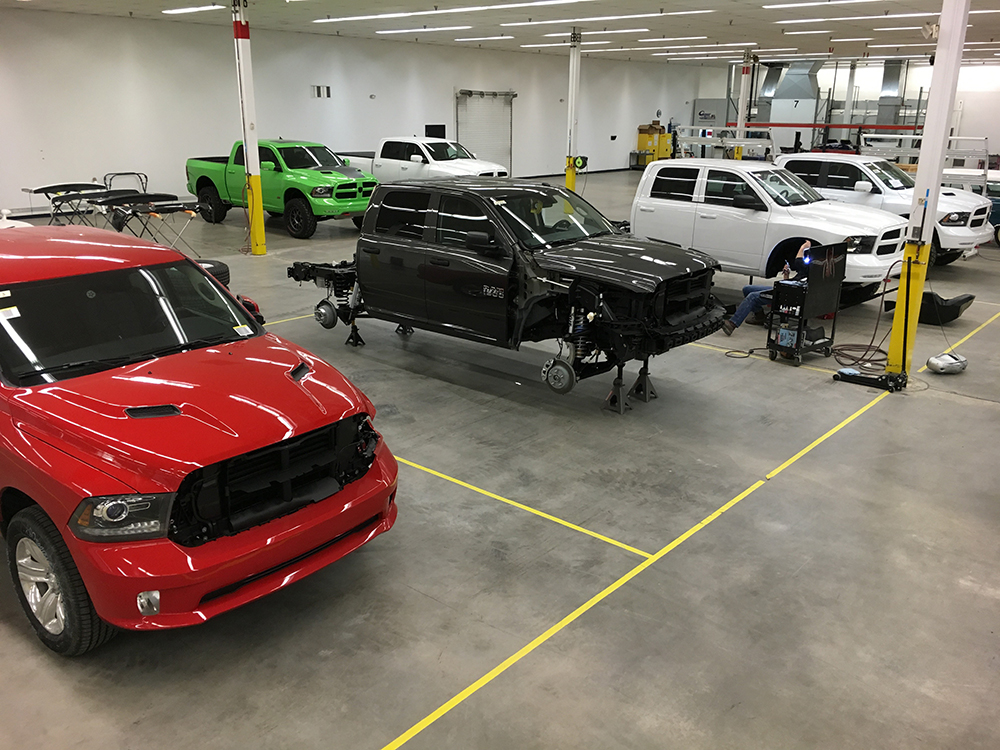
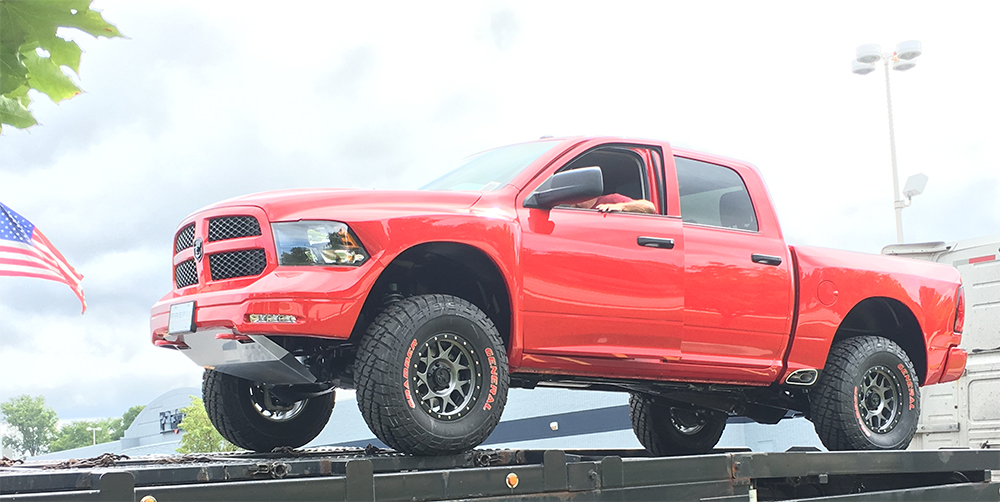
The Prefix Minotaur is a custom off-road truck conversion based on a RAM 1500. It’s inspired by desert race vehicles and “prerunner” trucks; Prefix even entered a race-prepped V10-powered Minotaur in the Baja 1000. The production version of the Minotaur is designed for maximum off-road performance while retaining daily-drivable levels of comfort. Prefix doesn’t mention the Ford Raptor, but it’s clear this truck is designed with the Raptor in its sights.

Prefix Minotaur Ram truck bugout off road pickup 1

Each Minotaur starts life as a standard RAM 1500 4×4 with a 5.7L HEMI V8, crew cab, and short bed. However, many obvious changes have been made.

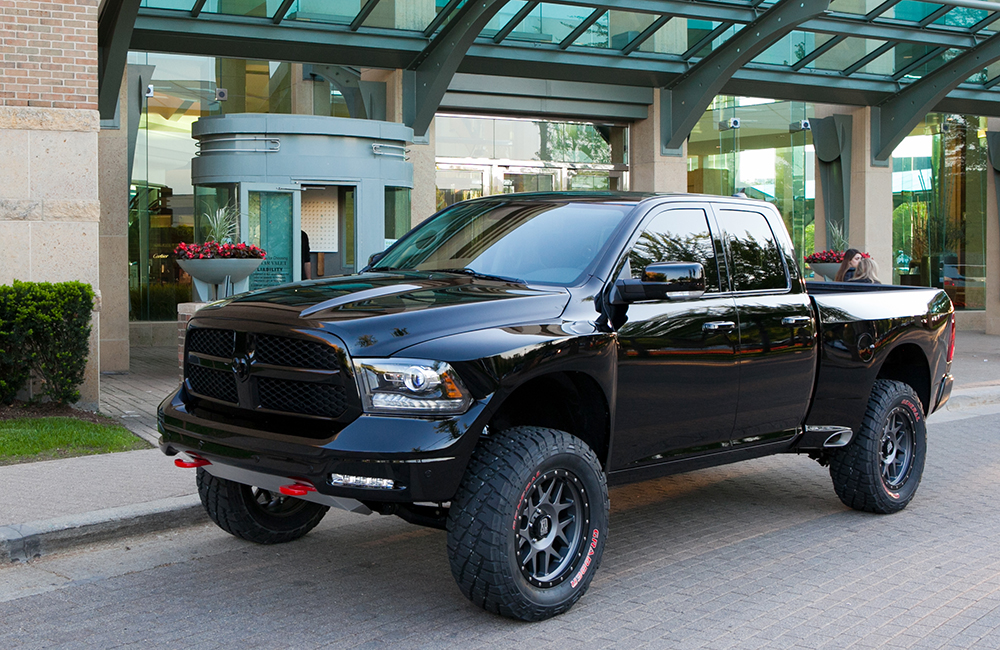
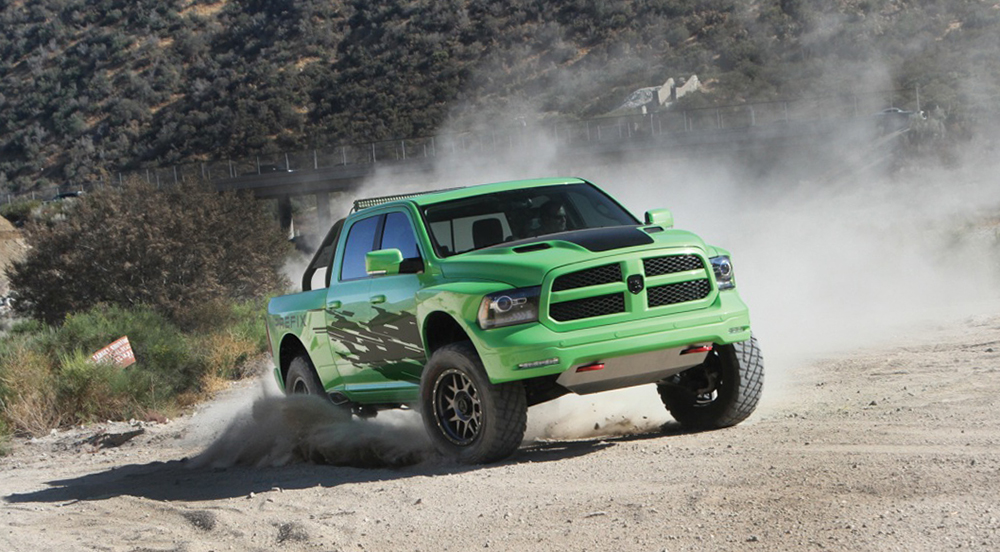
The first thing you’ll notice is likely the body — new composite fenders are 11 inches wider in front and 8 inches wider in the rear. A low-profile front bumper increases approach/departure angles (41 degrees and 30 degrees, respectively) and ground clearance. It also includes an aluminum skid plate, dual tow hooks, and LED fog lights. Black projector headlights, a black mesh grille, custom Minotaur badging, and embroidered floor mats add to the aesthetics.

Upgrades are more than cosmetic, especially in the suspension department. Each Minotaur comes standard with KORE coilover suspension with a 4-inch lift, Fox Racing 3-inch internal bypass shocks, and an impressive 14 inches of total travel (that’s more than a 2017 Raptor, FYI). The truck rides on 17-inch gunmetal wheels and 35-inch General all-terrain tires; 20-inch wheels are optional.

Prefix Minotaur Ram truck bugout off road pickup 9

Buyers can also request a cold-air intake and side-exit Viper-style exhaust for added performance. For those who want even more power, Prefix will install a supercharger on the 5.7L, or can even swap the factory motor for a 6.4L HEMI 392.

Prefix Minotaur Ram truck bugout off road pickup 2

The Prefix Minotaur is available in “any custom color you can dream of” — the truck pictured above is painted in Tequila Lime with optional black vinyl graphics. However, this long-travel truck is a limited-production model; Prefix estimates 200 will be built in 2017. Pricing for a complete Prefix Minotaur truck starts at $60,000. To learn more, visit Prefix.com.

So, what do you think of the Prefix Minotaur? Is it a possible Raptor-killer for Mopar fans, or would you rather choose a different bug-out truck?

Review: Tuff Writer Mini-Click Titanium Tactical Pen

0

When it comes to choosing everyday-carry gear, less is more. EDC is all about maximizing your capability to solve daily problems, and doing so as efficiently as possible. Heavy, bulky, single-function tools don’t belong in this category — the goal is not to look like the tacticool version of Batman, with a utility belt packed full of oddly-specific gadgets. EDC tools should be justified based on their size, weight, durability, and effectiveness at a variety of tasks. If these variables are out of whack, the tool probably doesn’t belong in your pocket.

The tactical pen is a perfect example of a multi-purpose EDC tool. It’s undeniably handy for jotting notes and filling out paperwork on a day-to-day basis, but is also designed for use as an impact weapon in self-defense scenarios. And, much like pocket knives, tactical pen designs range from basic and affordable to intricate and exotic.

Tuff Writer mini-click tactical pen 09

Tuff Writer Tactical Pens

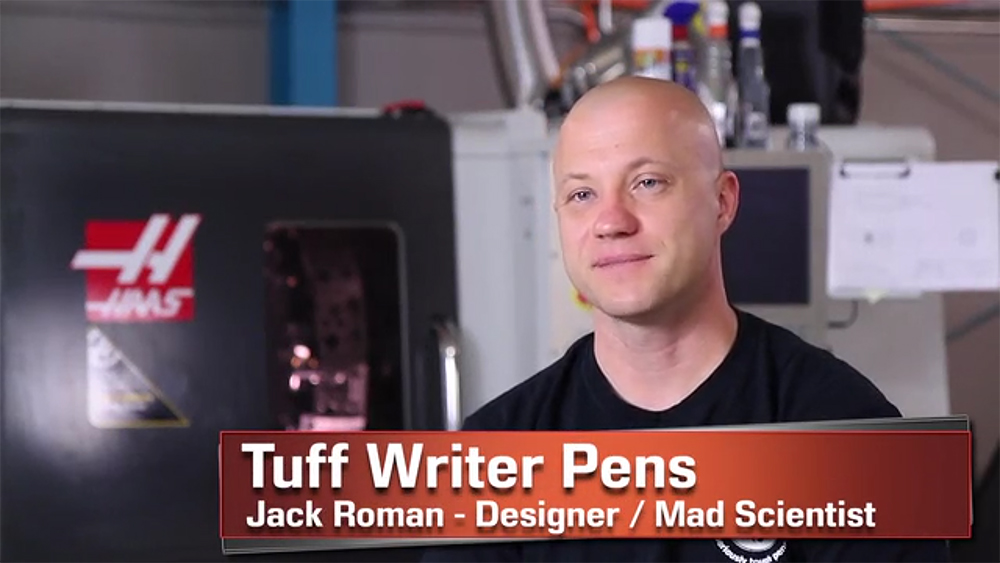
Today, Tuff Writer is an industry-leader in the tactical pen market, but the company started out as a personal project by founder Jack Roman.

Tuff Writer Jack Roman tactical pen 1

About eight years ago, Jack designed and produced his first tactical pens for members of his martial arts training group in Chandler, Arizona. He writes, “We trained everything from empty hand to stick, knife, and improvised weapons tactics… I suggested that someone should make a pen that would serve as an improvised defensive tool. [My instructor’s] reply was, ‘Great idea [expletive], why don’t you do that and make us some.'”

Editor’s Note: In this article, we’ll share some excerpts of our interview with Jack Roman, but there’s a lot more info about his journey with Tuff Writer that we couldn’t fit here. Click here to read the entire uncut interview with more of Jack’s thoughts and insights.

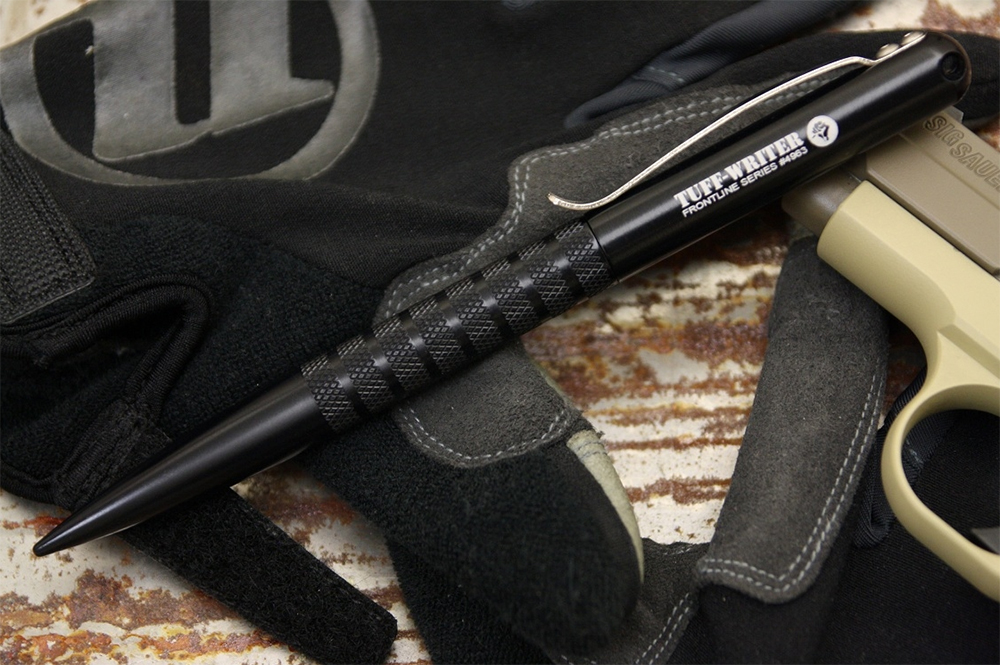
The Frontline was Jack's first tactical pen design, and showed that Tuff Writer was a viable business.
The Frontline was Jack’s first tactical pen design, and showed that Tuff Writer was a viable business.

“The idea was just stuck in my head. So I took the money I had in savings, hired a mechanical engineer to help me with the first design, and got to work.” The end result was the Tuff Writer Frontline tactical pen. Through word-of-mouth and the launch of the company’s web site, orders were soon pouring in from law enforcement officers, military members, and martial artists from far and wide.

The Tuff Writer Operator series was inspired by the success of the original Frontline.

Jack continued to build on this success through tooling improvements and new designs. As Tuff Writer grew, he remained determined to continue designing and manufacturing the pens in the USA.

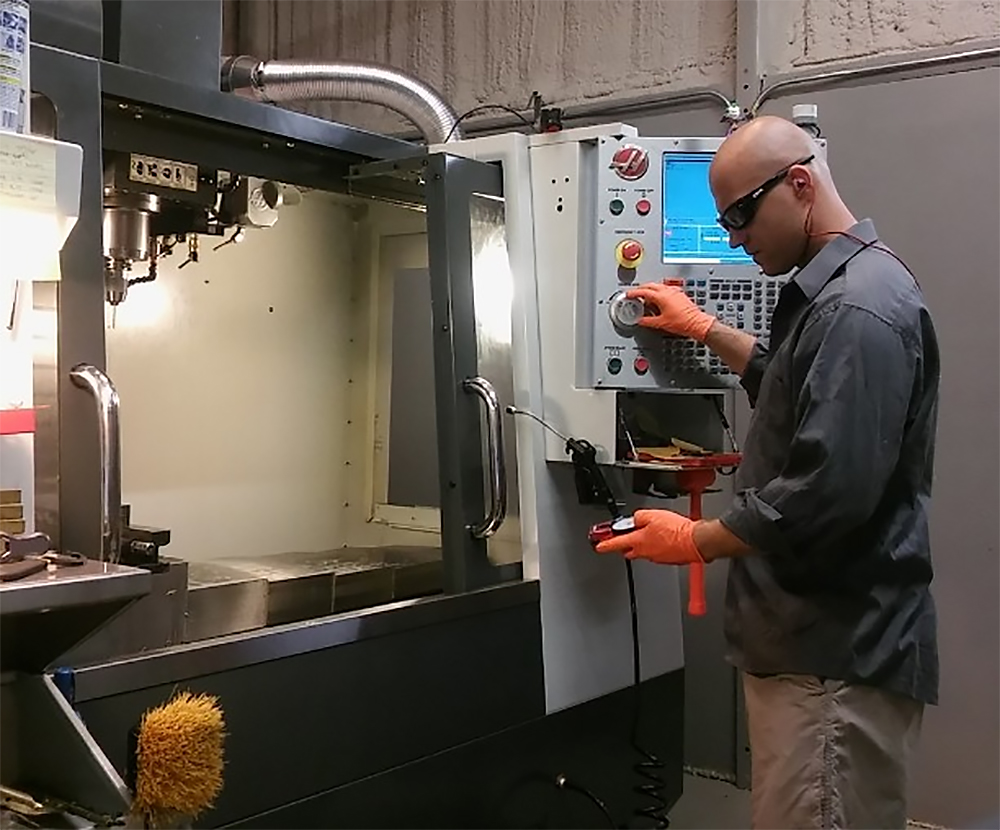
He writes, “Outsourcing was never part of the plan. That was a conscious decision from the very start… You can usually make it cheaper somewhere else but rarely can you make it better somewhere else. For us, keeping manufacturing in the USA is and always will be a core value. We now have 3 CNC machines and do everything from design to prototyping and machining as well as post machine finishing (tumbling, brushing, flaming and polishing, etc.) in-house.”

The Original Mini-Click

After several well-received capped pen designs, Jack saw the demand for a tough tactical pen with the convenience of a click mechanism. His friends Roy Huntington and Mike Janich also suggested a smaller model for shirt-pocket carry, and this led to the creation of the Mini-Click. The first-generation aluminum Mini-Click was launched on Kickstarter, and quickly developed a strong fan base.

Tuff Writer Jack Roman tactical pen 3
The original Mini-Click was designed with a small footprint for carry in a shirt pocket.

After the Mini-Click Kickstarter project took off, Jack listened intently to his customers. “Quite a few people started asking about a titanium version. I took the opportunity to incorporate some small design improvements here and there based on user feedback, and pretty soon I found that virtually every piece had changed. We were looking at a Gen-2 Mini-Click.”

Jack returned to the drawing board for the Mini-Click Gen 2. Every piece of the pen has been revised and improved.
Jack went back to the drawing board for Gen 2. Nearly every piece of the pen has been revised.

In January 2017, the second-gen Tuff Writer Mini-Click pen launched on Kickstarter. That same month, we met Jack at SHOT Show in Las Vegas, and he graciously gave us one of the very first Mini-Click Gen 2 pens to test and review. After bringing it back home, snapping some photos, and using it for several weeks, we’ll share our thoughts on this new tactical pen.

Mini-Click Gen 2 Review

Tuff Writer mini-click tactical pen 11

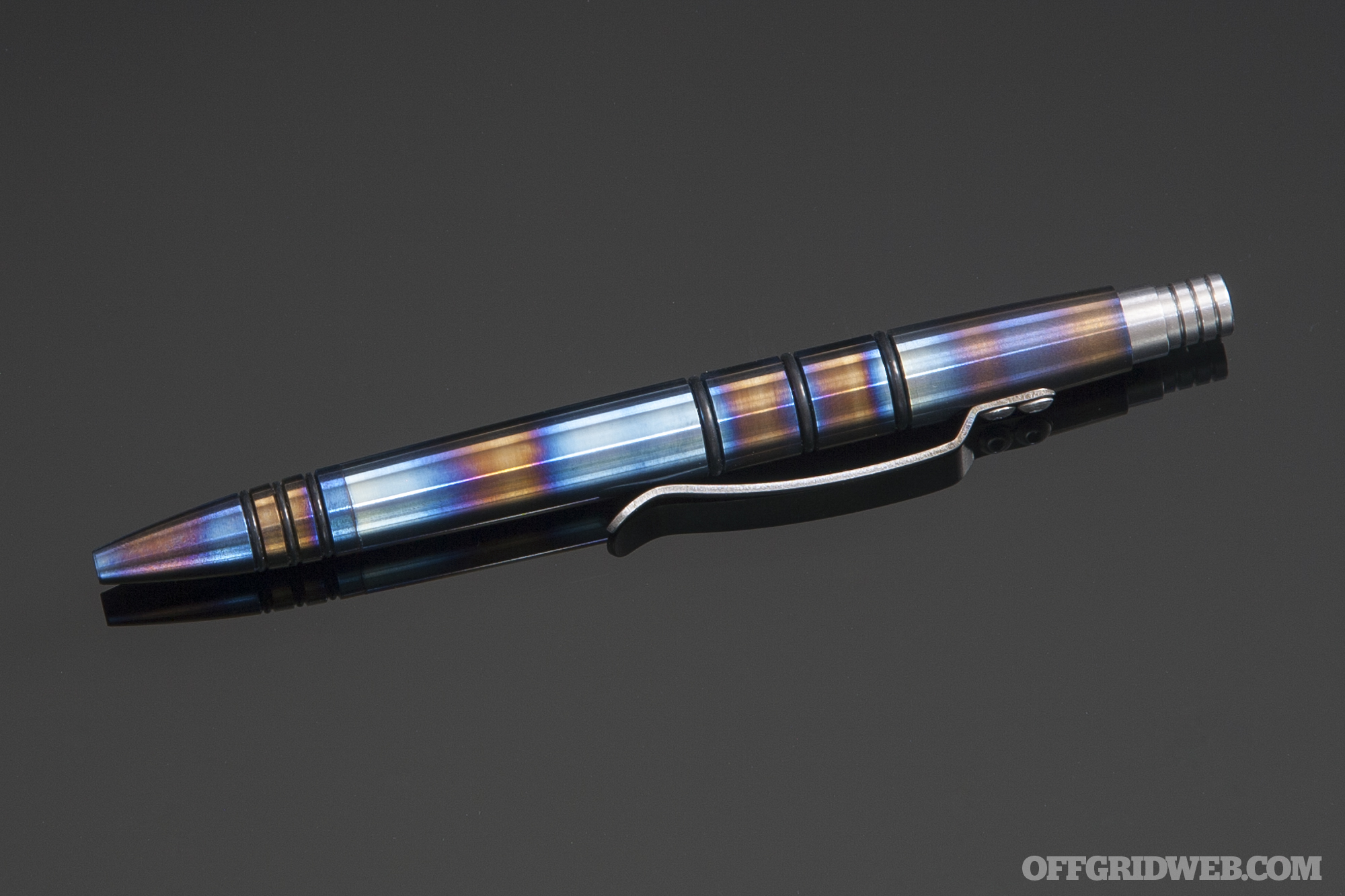
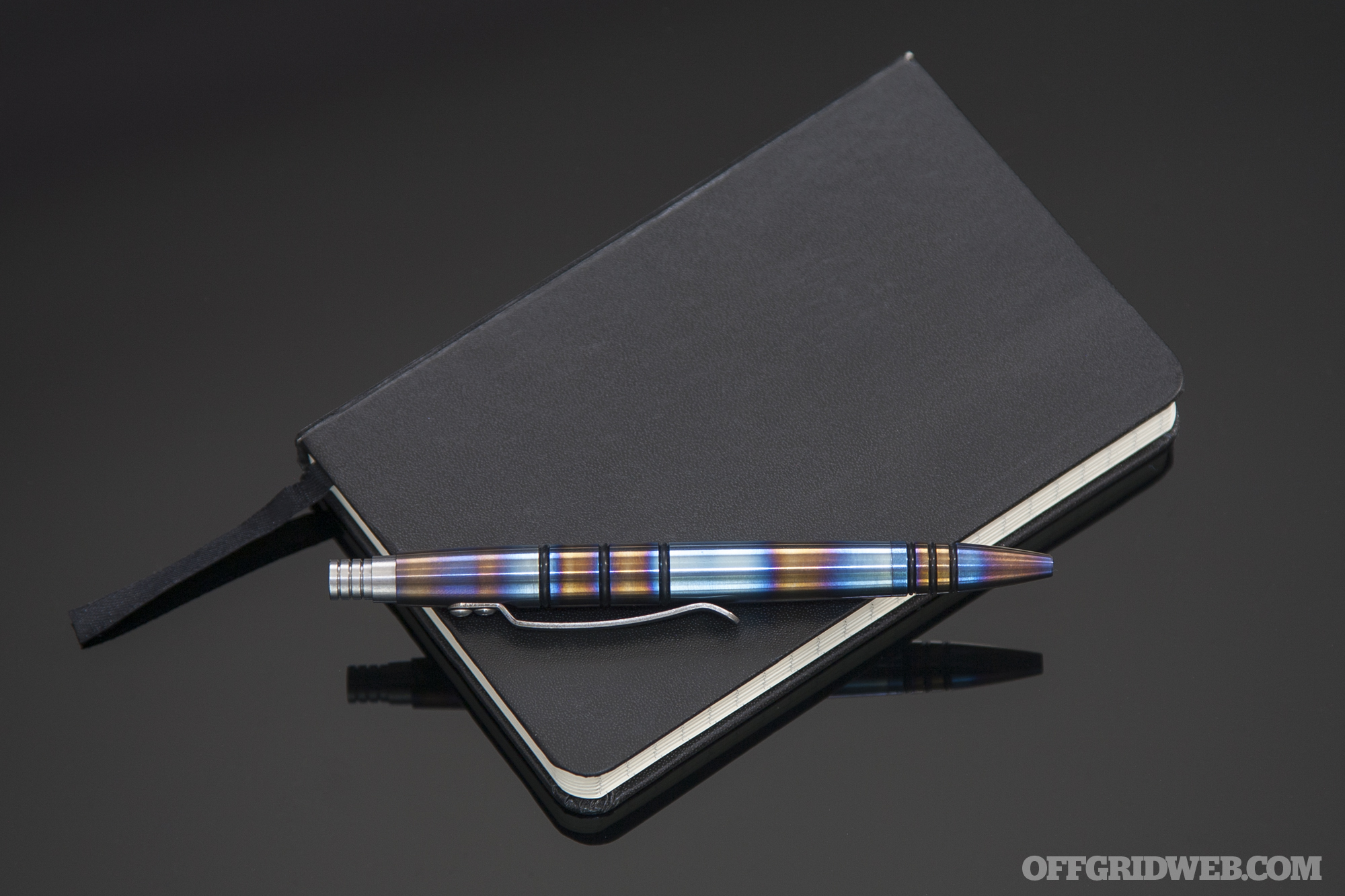
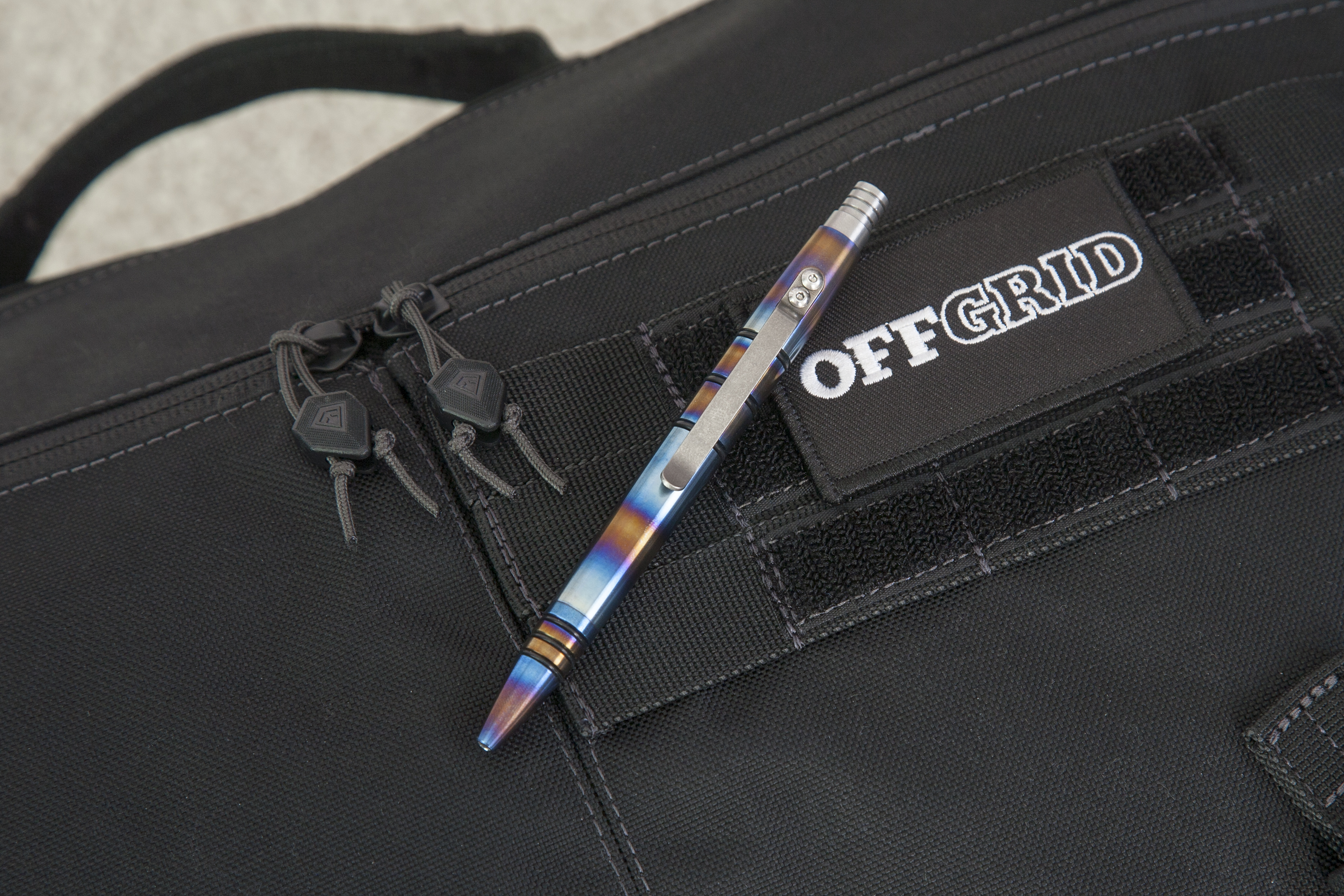
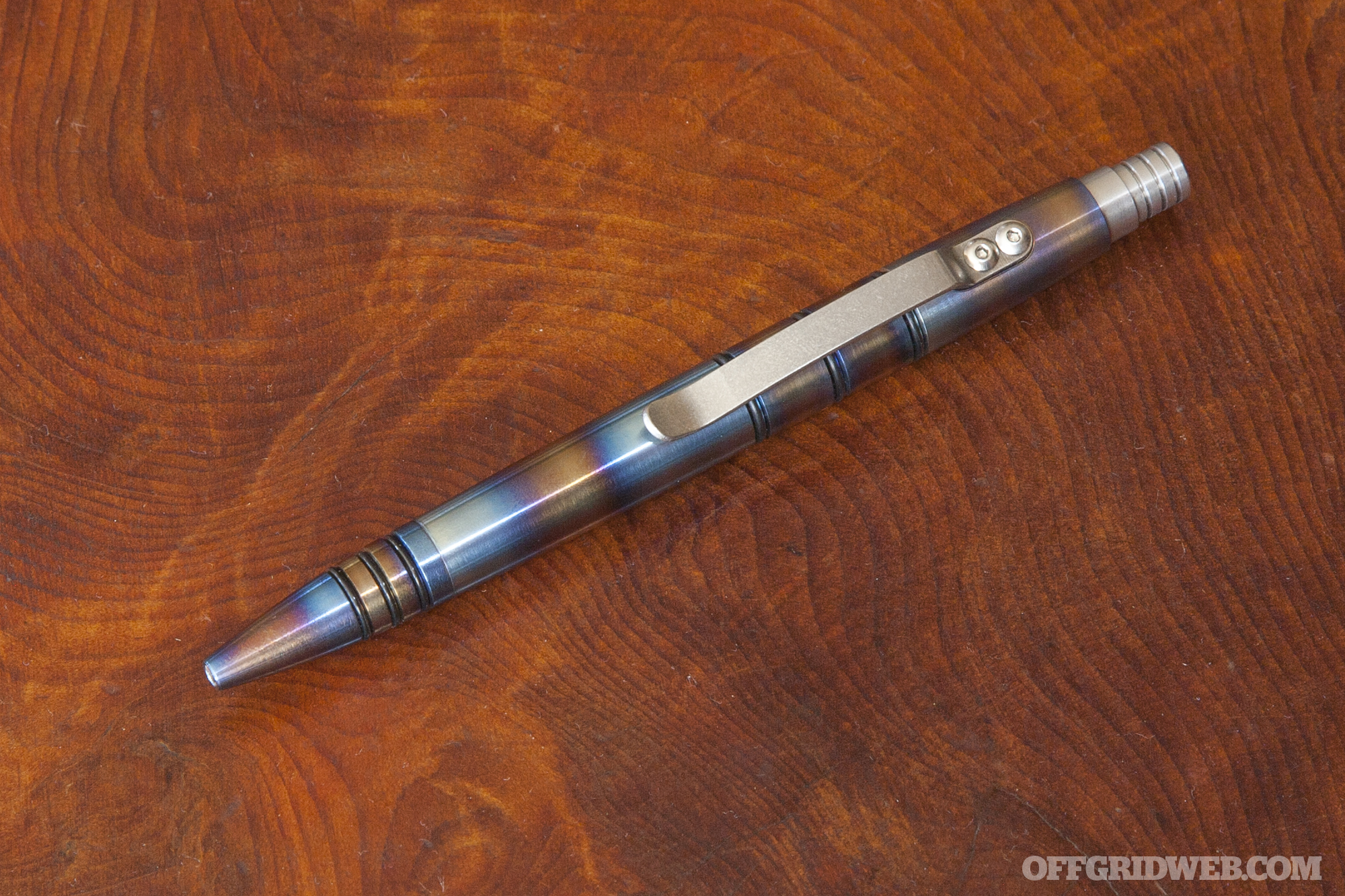
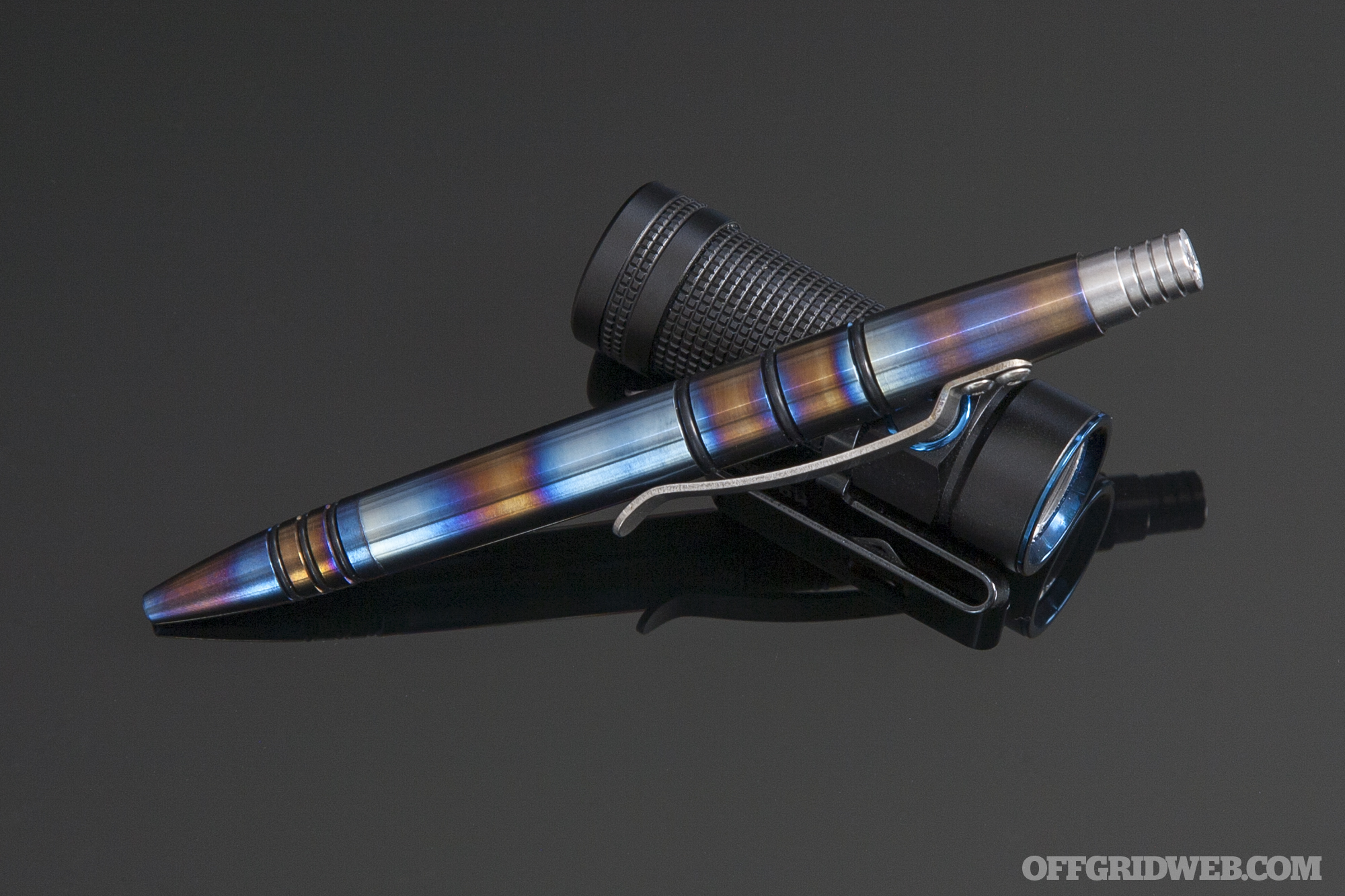
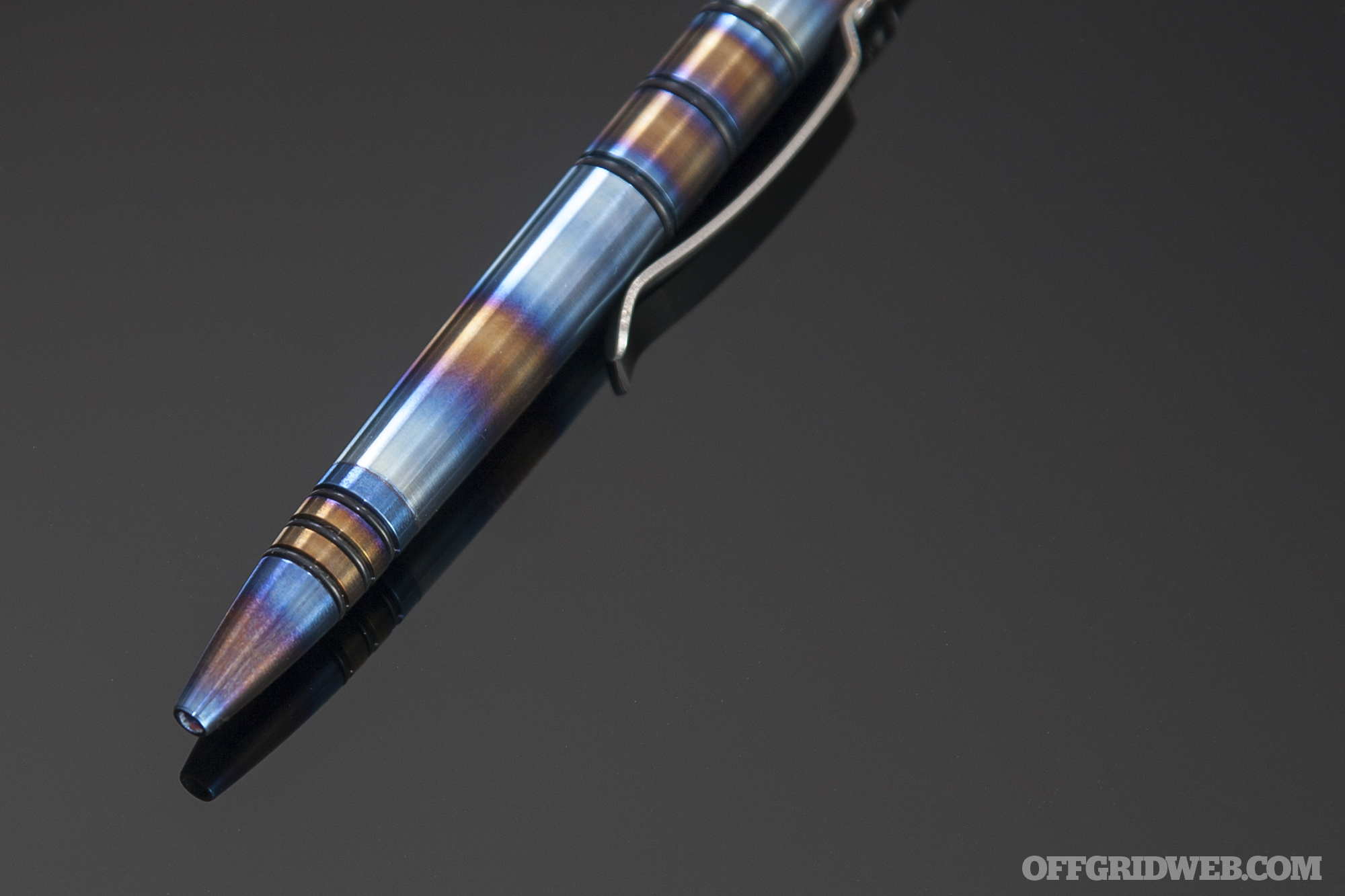
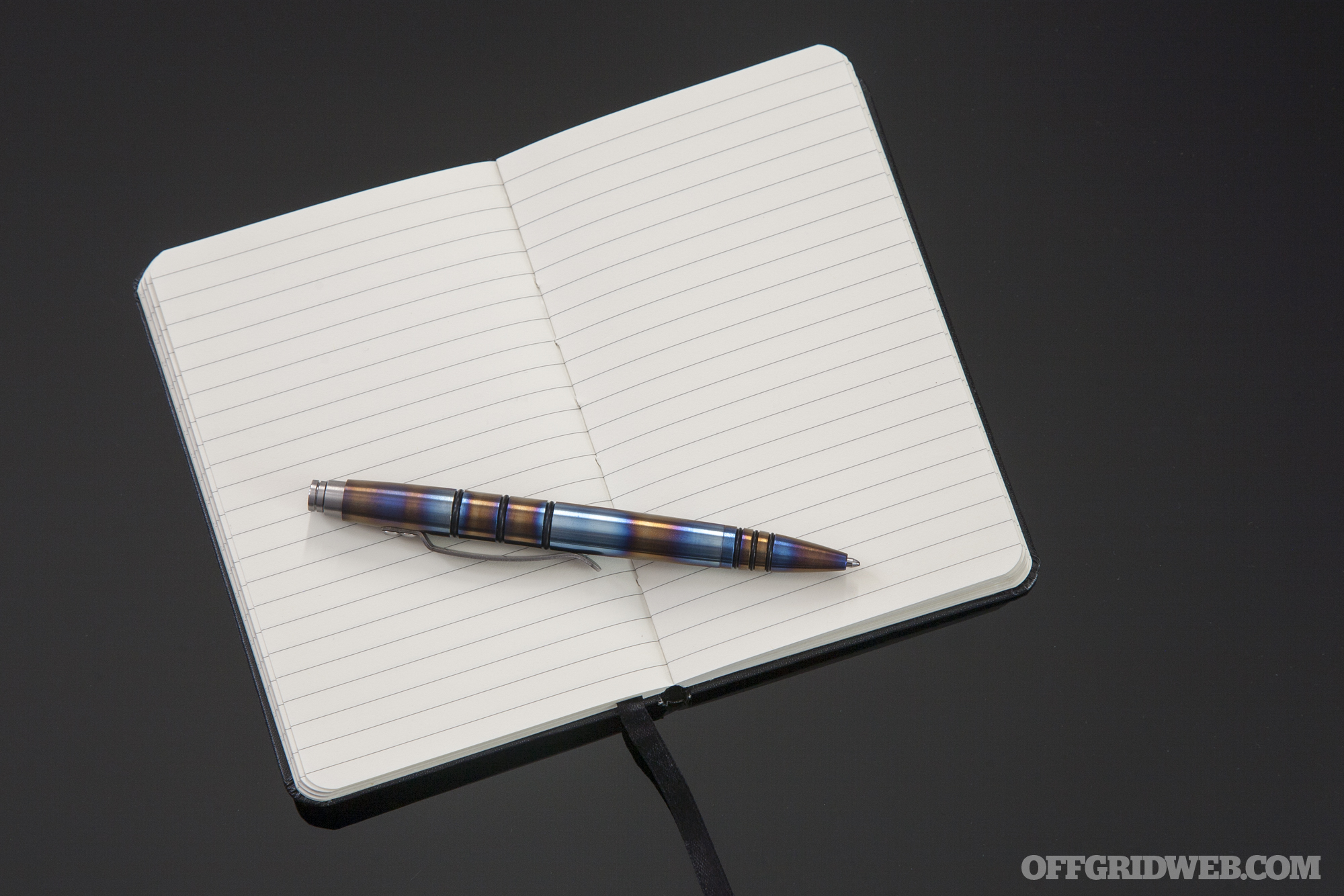
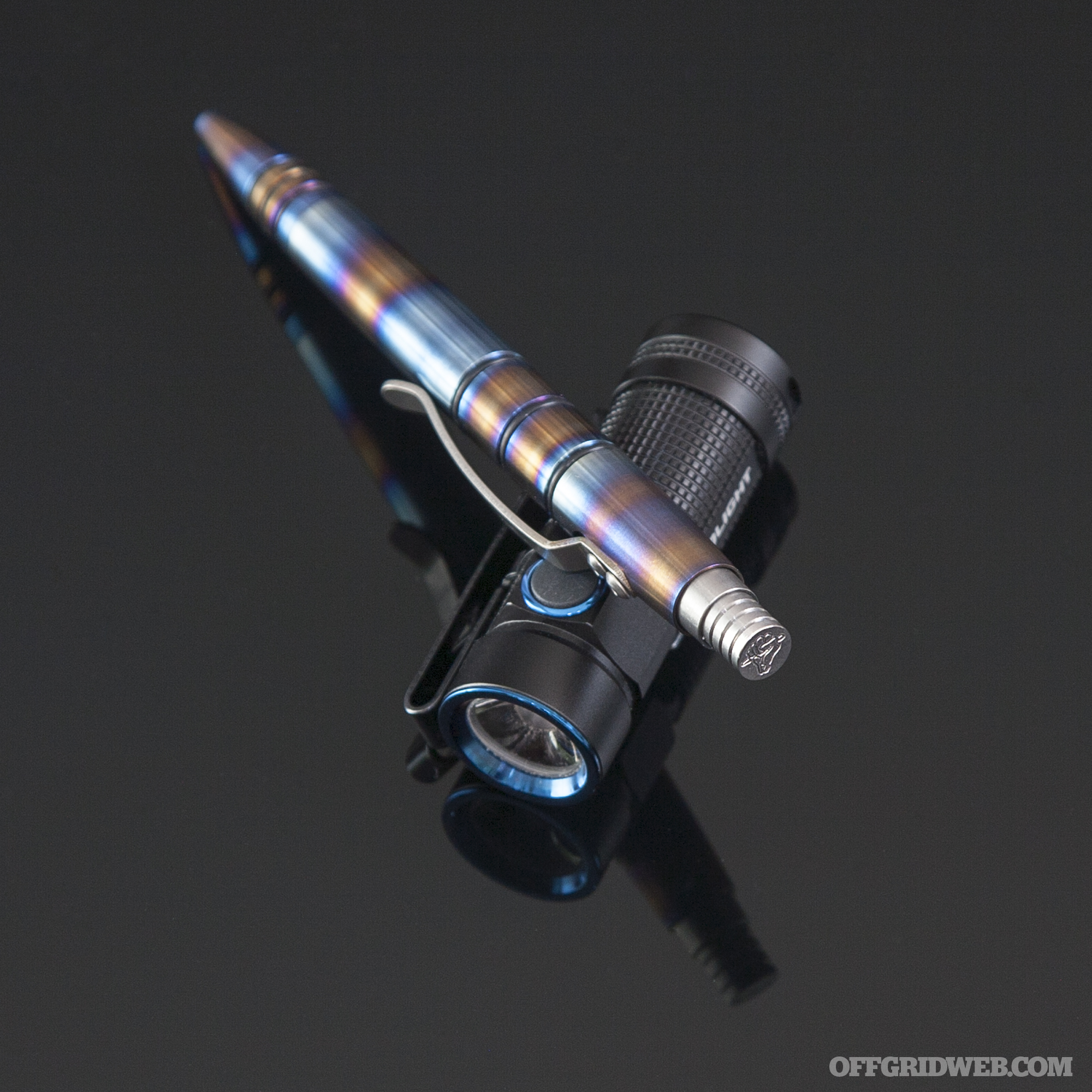
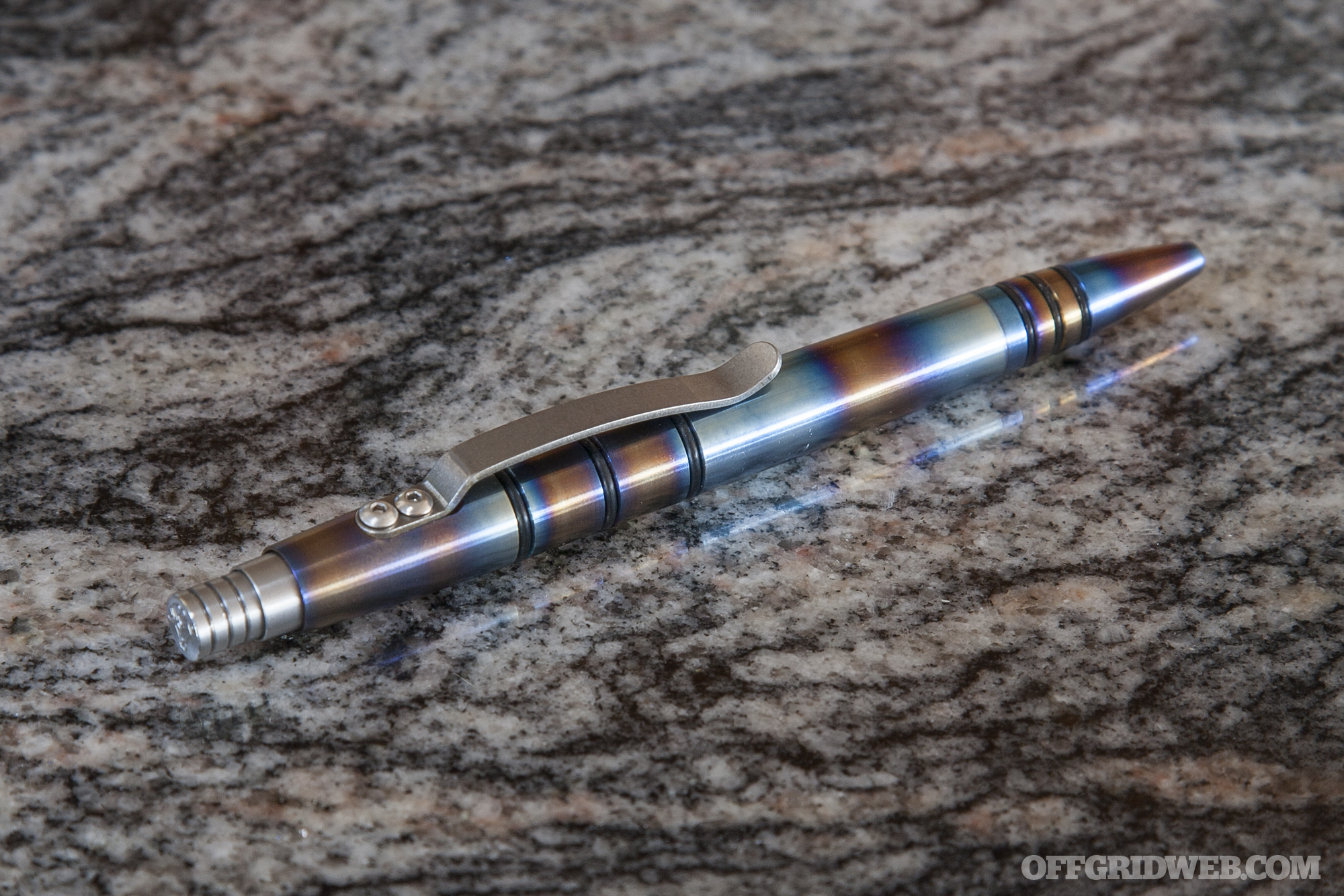
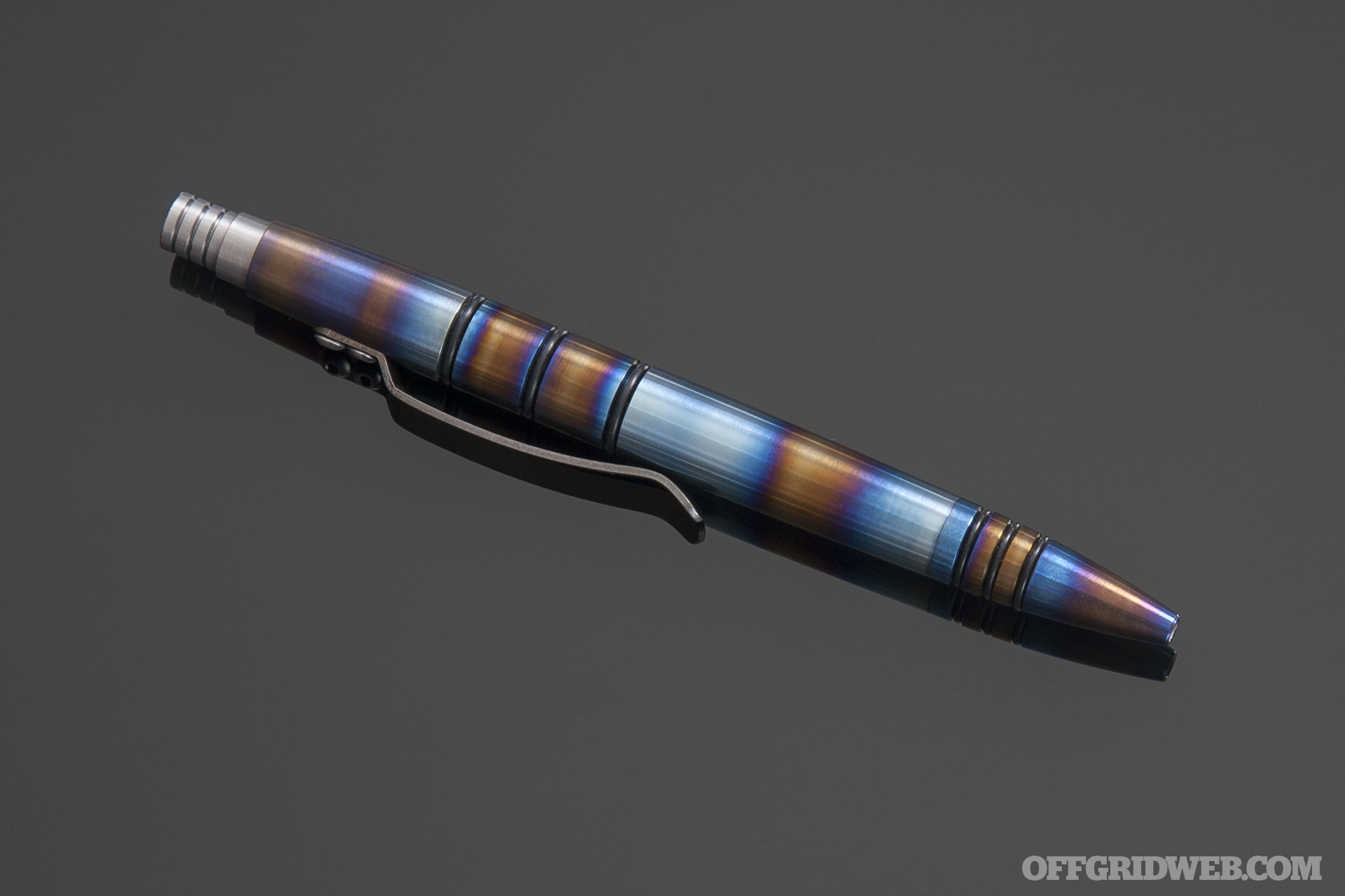
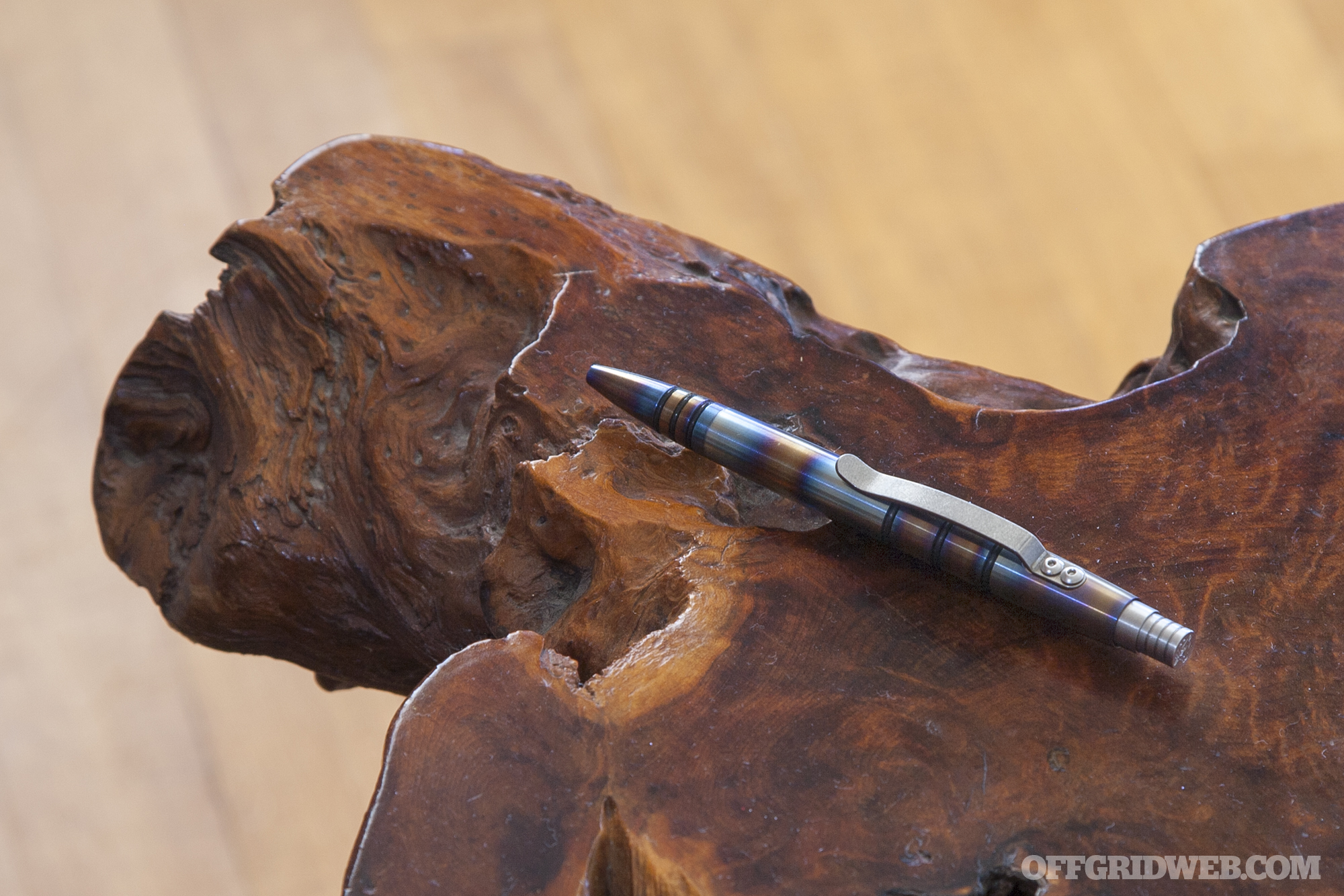
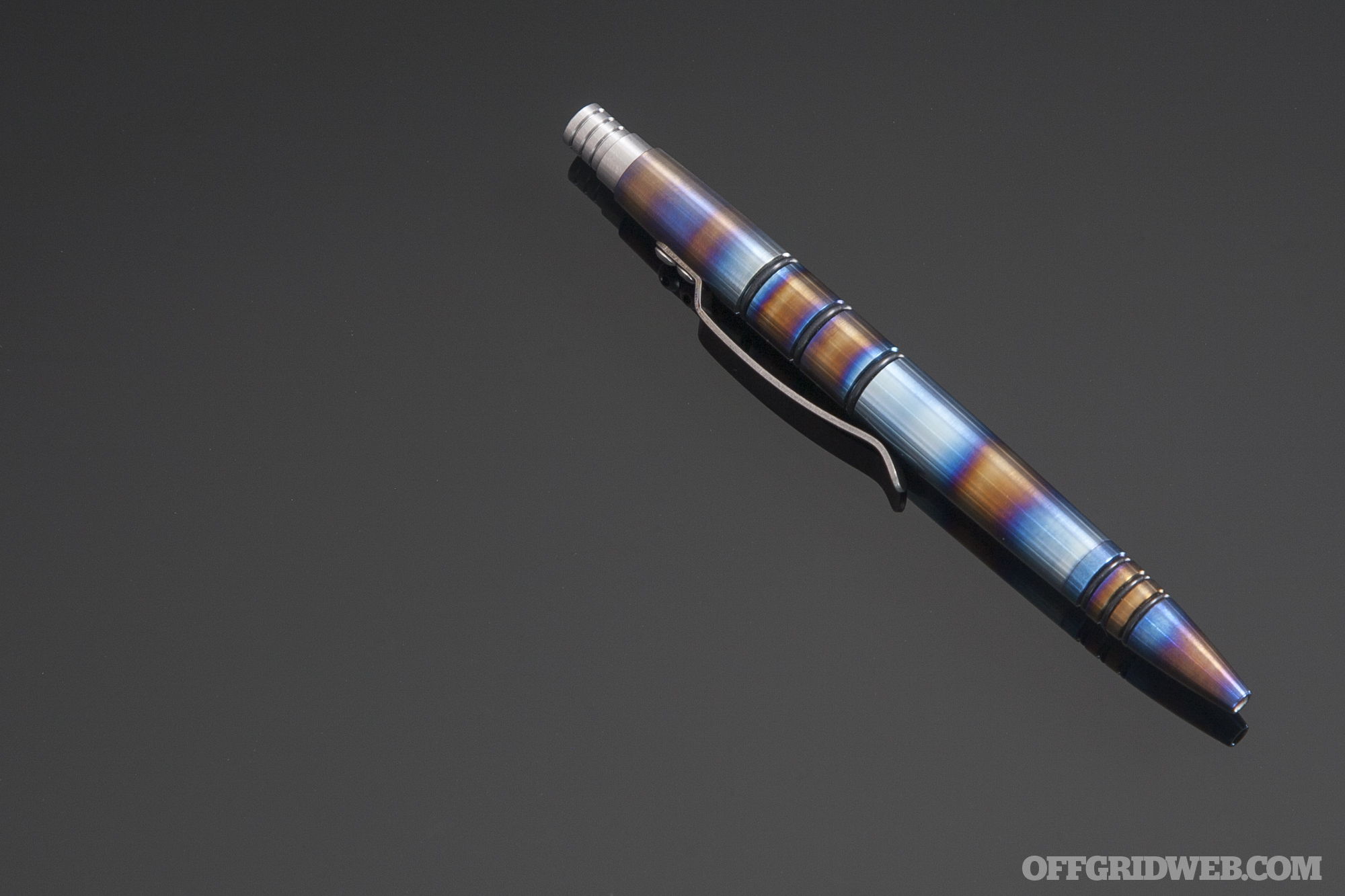
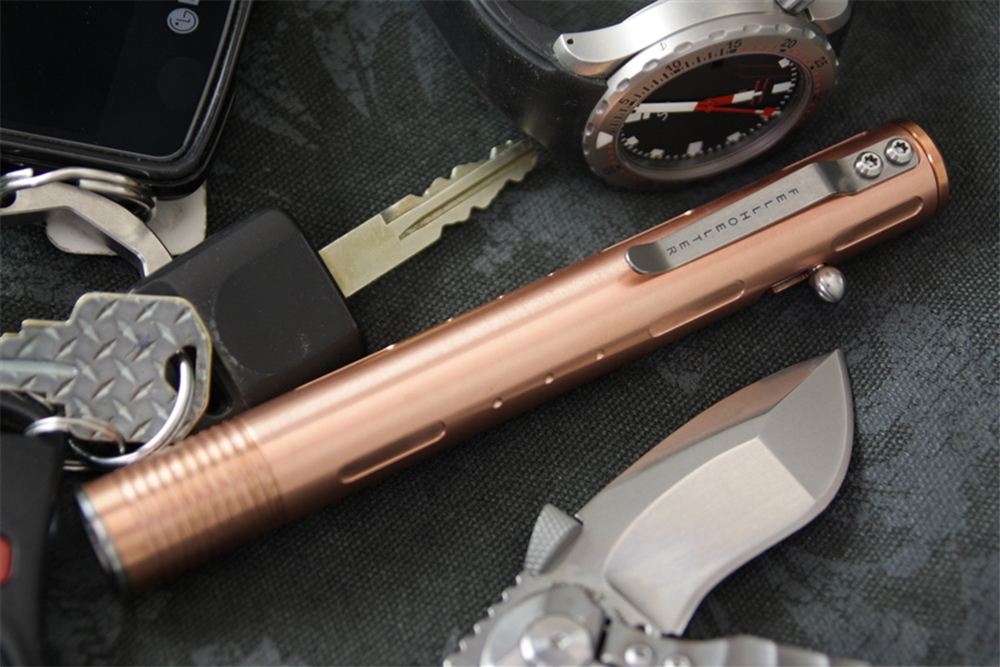
The first thing you’ll notice about the all-new Mini-Click pen seen here is its core component: titanium. You won’t even need to pick it up to tell the difference — its flamed finish produces colorful bands that indicate this pen isn’t aluminum like its predecessor.

Tuff Writer mini-click tactical pen 18

When exposed to intense heat, the titanium changes color from neutral grey to warm brown, then purple, and finally vibrant blue. This multi-colored treatment is applied by hand; Tuff Writer’s Kickstarter says every pen is different, “like a snowflake, a virtually indestructible titanium snowflake.”

In person, the flamed finish is a real head-turner, and it received compliments almost every time it came out of our pockets. Even those who would normally be disinterested in EDC gear were saying, “Wow, that’s a cool pen.

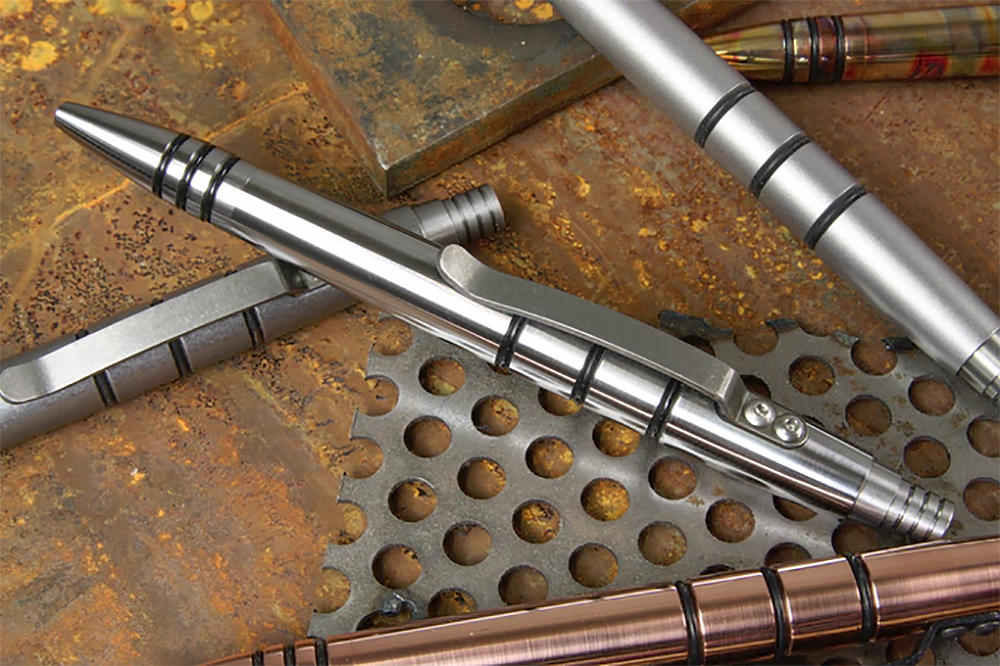
Of course, this isn’t the only finish available for the new Mini-Click — far from it. Here’s a quick list of some of the other materials and finishes Tuff Writer currently offers:

  • Titanium (Grade 5 / 6AL4V) – polished, blasted, tumbled, brushed, or flamed
  • Copper (C145 Tellurium) – polished, flamed, or tumbled
  • Brass (360) – polished, tumbled, or aged
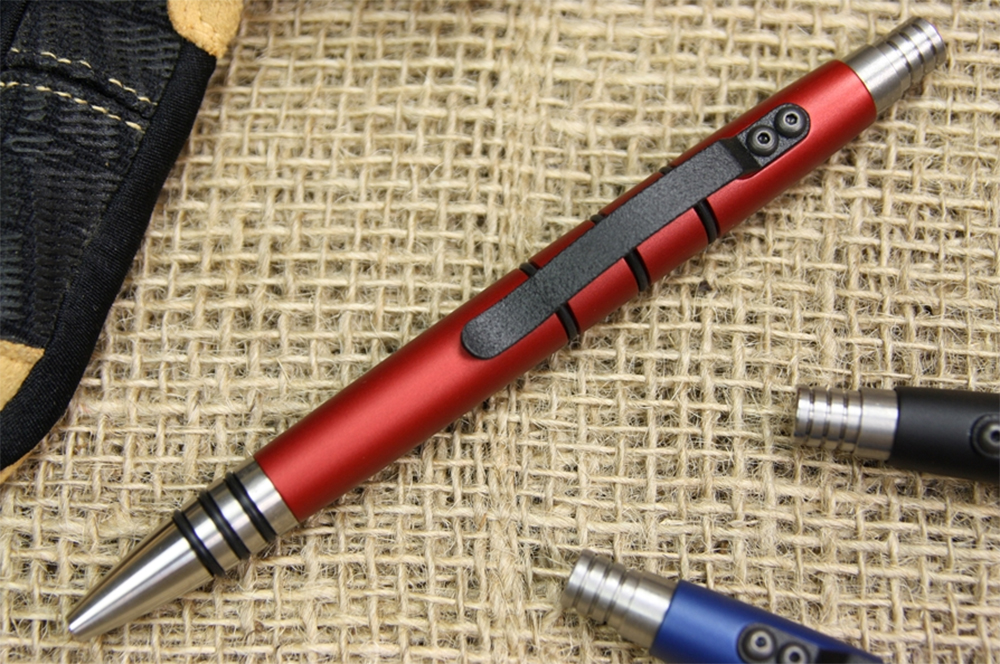
The new Mini-Click pens are available in three materials and many different finishes.

The new materials and finishes give the Mini-Click Gen 2 a new look, but the changes are more than skin-deep. Numerous subtle modifications have been implemented to make the second-generation pens more versatile and easier to use.

Recessed, firmer O-rings improve comfort and grip.

Jack summarized a few technical changes:

  • Tip opening is now .002″ larger to accept Fisher, Foray, Parker, Waterman and many other common ink refills
  • Top O-ring groove is now also below the tip-to-body mating seam
  • O-rings are Buna-70 (a firm rubber) and thicker as well as being recessed deeper
  • Clip is slightly thinner to aid flexibility
  • Updated 416SS mechanism with improved race design (custom tooling to cut the race and remove burs in one toolpath)

Tuff Writer mini-click tactical pen 12

These modifications would almost certainly go unnoticed unless you were looking for them. However, they demonstrate the degree of focus and care that Tuff Writer puts into these pens. They’re not just writing instruments, they’re precision-machined tools. Jack is clearly not one to say a design is good enough — he’s continuously looking for ways to improve his product.

Tuff Writer mini-click tactical pen 13

Technical aspects aside, the new 416SS click mechanism is definitely worth mentioning. Instead of buying one of the many plastic or brass advancing mechanisms from an outside manufacturer, Tuff Writer designed and built its own proprietary mechanism from 416 stainless steel. This is machined on an ultra-precise Citizen L20 Swiss-type CNC lathe, and dimensions are controlled down to absurd 0.0005-inch tolerances. The machined pieces and chrome ball-bearings are assembled by hand under a magnifier.

You may ask, why does this matter? First of all, it makes the click incredibly smooth, which feels great under the thumb. More importantly, it’s extremely strong and reliable. For a pen that’s designed to be used as a self-defense impact weapon and slammed into hard objects, that’s a must.

Tuff Writer mini-click tactical pen 16

The bottom line: retail MSRP for the titanium Mini-Click seen here is $155, including a $5 premium for the flamed finish. Brass and copper models will be available for $125 retail. If you’re looking to save some cash, limited-time discounts are currently available on Kickstarter. Those who back the project before it ends on Monday, February 27th can get a brass or copper pen for $96, or a titanium pen for $100.

Tuff Writer mini-click tactical pen 02

Some will say this is a lot of money for a pen, but it should be obvious that this is certainly no ordinary pen. As is true for high-end knives, watches, and other precision-machined items, quality craftsmanship doesn’t come cheap — and this is about as high-quality as an EDC pen can conceivably get. We’re also encouraged by Jack’s commitment to American manufacturing. In his own words, “we make the best products we know how to make, and then stand behind them all the way.”

Conclusions

Whether you’re looking for a writing instrument that’s capable of withstanding the apocalypse, or you just need something reliable to write with on a daily basis, there’s a lot to like about the new Mini-Click. It looks like a work of art, feels sturdy, and it’s built like a Swiss watch.

Tuff Writer mini-click tactical pen 03

Most importantly, it’s exceedingly comfortable to use, since the recessed O-rings provide substantial grip without shredding your finger after the first paragraph. We tried ink refills from a few other pens to confirm that they work, but preferred the included Fisher Space Pen cartridge. Still, it’s nice to have the expanded compatibility as an option.

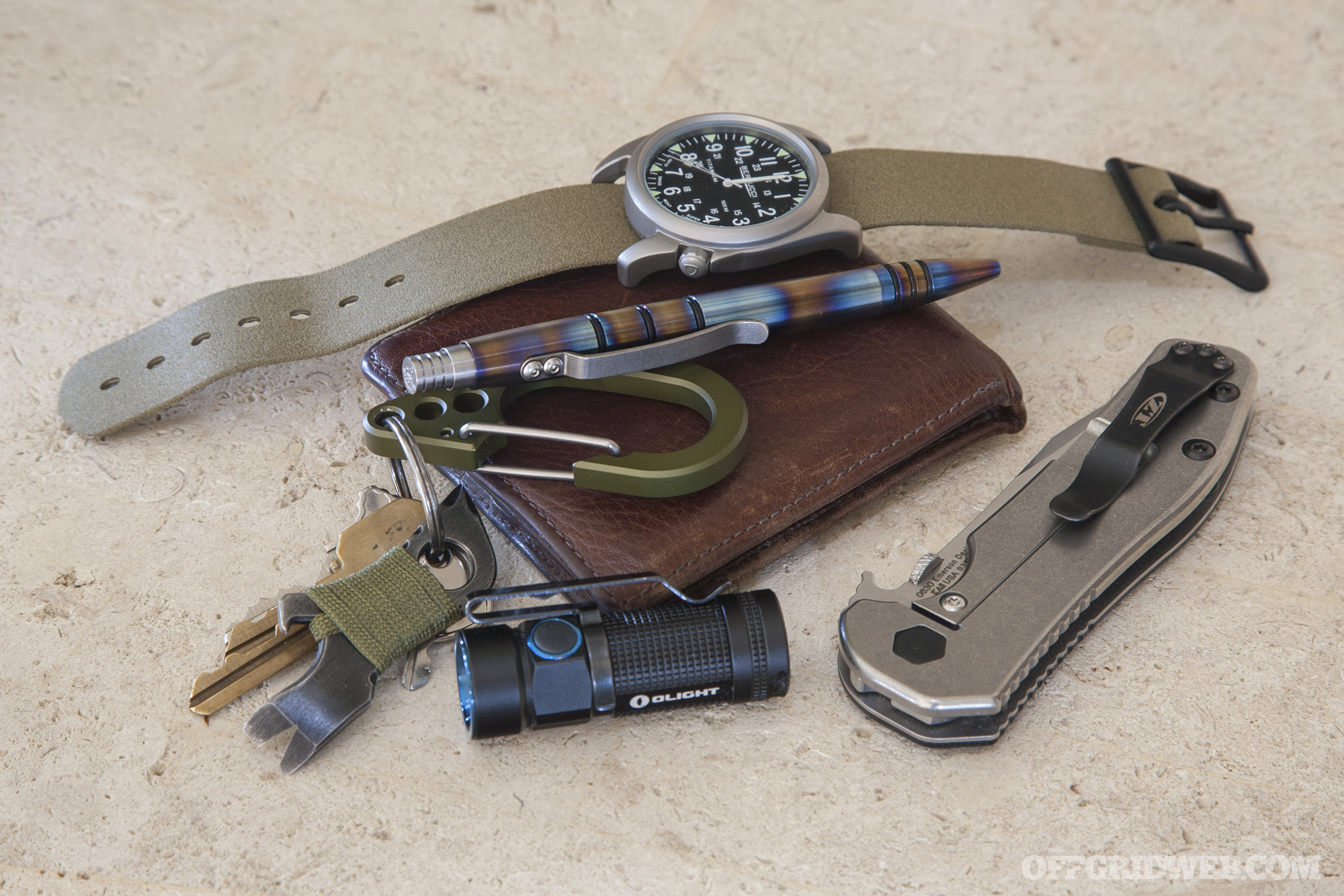
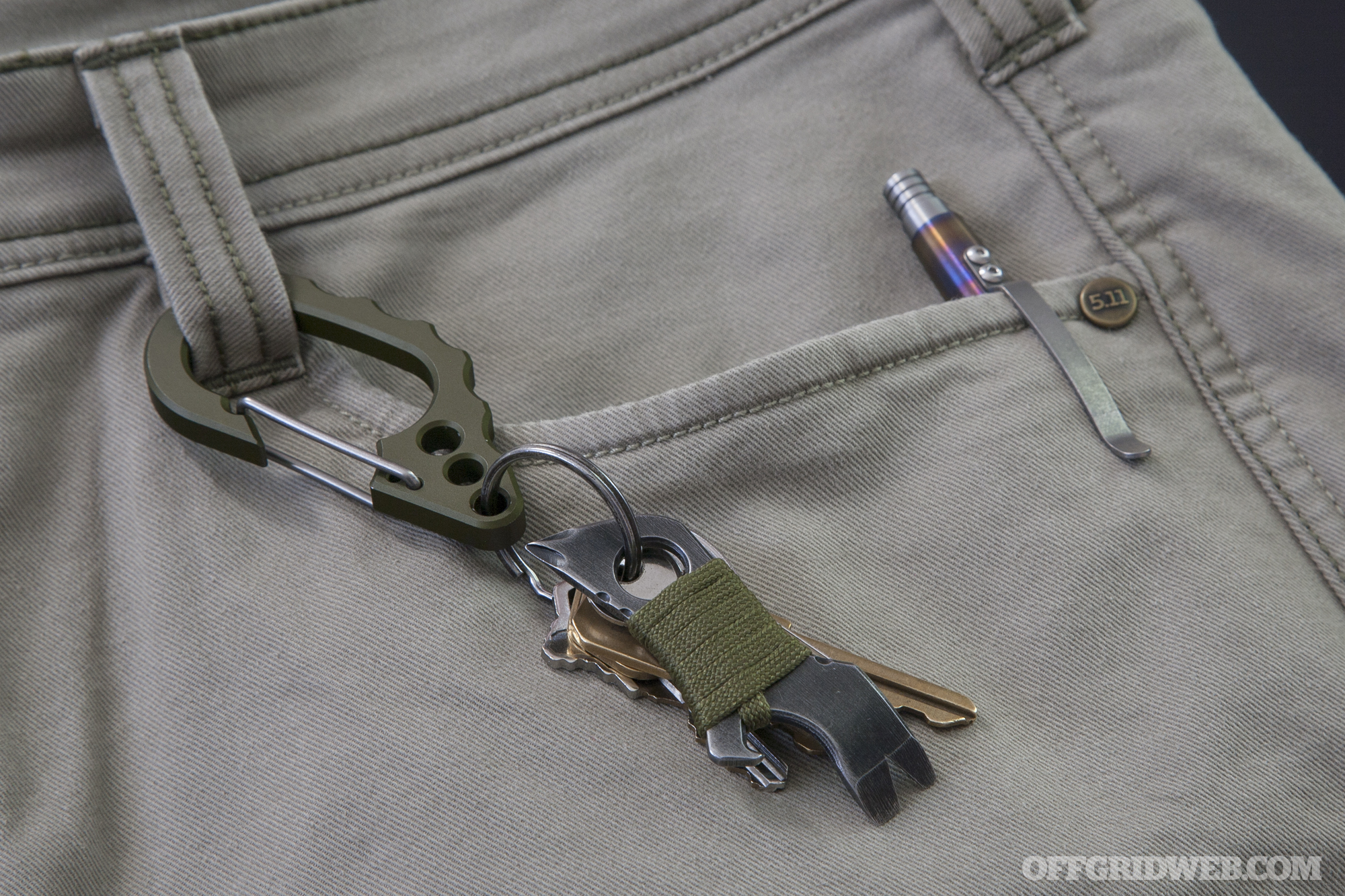
Tuff Writer also makes this anodized aluminum D22 keychain carabiner, which doubles as a bottle-opener.

The Tuff Writer Mini-Click Gen 2 sets a high bar for tactical pens, and for pens in general. There’s only one catch: like the flawless edge on a brand-new knife, it looks so good that we almost hesitate to subject it to the beating it’s designed to withstand. Oh well — scratches build character, and this tool is meant to be used.

At the end of our conversation, Jack left us with these words:

“Thank you to everyone who has come along on the ride with us. I feel privileged to be a part of this industry and the community. I’m a big believer in the idea that we’re all in it together, to that end I invite everyone to keep in touch by following us on Instagram or on Facebook and see what we’ve got going on. Also, stop by at the shows to say hi, or send us an email telling us what you think or what you’d like to see next.”

For more information on the Tuff Writer Mini-Click Gen 2, visit the company’s Kickstarter page. For news and info on other Tuff Writer products, go to TuffWriter.com.

Jack Roman of Tuff Writer Tactical Pens

0

We just reviewed the new Tuff Writer Mini-Click Gen 2 tactical pen — click here to read that review. During our research on the pen, we had the opportunity to interview Tuff Writer founder Jack Roman. Read on for the uncut transcript of that interview. It provides some insight into precision-machining, design philosophy, and how Jack developed his small business in the USA.

Tuff Writer Jack Roman tactical pen 7
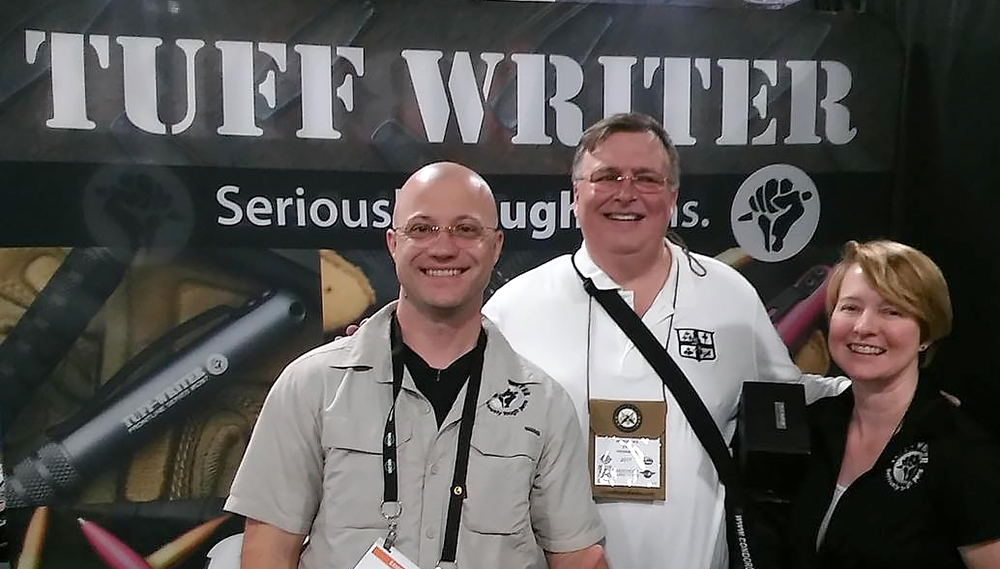
Jack (left) with his wife Peachy and Tim Fisher of Space Pen fame.

OG: How did Tuff Writer get started? Tell us about what inspired you to make your very first pens.

The original idea for the pens came when I “fell in with a good crowd”. I used to train boxing out of Blue Corner Boxing in Chandler, Arizona, but as much as I loved getting punched in the face, I was also interested in learning other martial arts.

While looking around I ran into a bunch of guys at my gym training some really, really nasty stuff. It didn’t look like anything I had seen before. I asked them if I could join the class and the instructor, Sifu Wes Infiesto, told me that they were just a small training group and weren’t taking new people. I kept pestering them, and they finally told me that they trained quite hard and I probably wouldn’t like it. In short, they beat the piss out of me for about a month and then it was “welcome to the group”.

Sifu was a former Army special operations guy and the group was comprised of some fairly high-speed individuals. We trained everything from empty hand to stick, knife and improvised weapons tactics, firearms integration, as well as nasty stuff I’d never seen before.

At one point we were discussing improvised weapons and I suggested that maybe we should try pens. Sifu mentioned that they had tried that but the pens broke too easily. Since I worked for the Judicial Branch in court buildings all the time and carried a pen everywhere but could not carry a firearm inside the courts, I suggested that someone should make a pen that would serve as an improvised defensive tool. His reply was, “Great idea [expletive], why don’t you do that and make us some.”

At the same time I was in graduate school for finance and had to create a new product category for my marketing class, I decided to take this idea and called it the “tactical pen”. The idea was just stuck in my head so I took the money I had in savings, hired a mechanical engineer to help me with the first design and got to work.

None of the local machine shops took this seriously and most wouldn’t even quote me, but I remembered that my friend Chris in Chicago took over his family’s machine shop (Automatic Precision) so I called him up and asked if he’d help. After some persuading, he agreed to help, and we got the first pens made. They were fantastic — the Frontline Series.

The Frontline was Jack's first tactical pen design, and showed that Tuff Writer was a viable business.
The Frontline was Jack’s first tactical pen design, and showed that Tuff Writer was a viable business.

Once I put the web site up we started getting phone calls, primarily from military and law enforcement members plus the occasional martial artist who were looking for something exactly like this. We continued to improve the design and eventually came out with the Operator Series which was a more functional pen, and then eventually the clicky versions.

OG: In an industry where manufacturing is often outsourced to other countries, you’ve chosen to keep making your products in the USA. Has that been a challenging decision?

Outsourcing was never part of the plan. That was conscious decision from the very start and it’s probably cost us in some ways, but I feel that it’s also paid off in many more ways. You can usually make it cheaper somewhere else but rarely can you make it better somewhere else. For us, keeping manufacturing in the USA is and always will be a core value.

Tuff Writer Jack Roman tactical pen 9

We now have 3 CNC machines and do everything from design to prototyping and machining as well as post machine finishing (tumbling, brushing, flaming and polishing, etc.) in-house. We still out source some specialized machining and anodizing but we now control the manufacturing process from start to finish. Again, this allows us to design and build quality in from the very beginning and not as an afterthought.

OG: What led to the development of your original Mini-Click pen?

The original Mini-Click came about after sitting around the table and drinking a few beers with Roy Huntington and Mike Janich one night after the BLADE Show in Atlanta a few years back. At first I was skeptical that a smaller pen was the way to go but Roy and Mike made some really good arguments in terms of usability and shirt-pocket carry so I started designing. We launched the project on Kickstarter to see if people would be receptive, and they absolutely were.

OG: How has the Mini-Click design evolved for the second-generation?

After the first Mini-Click pen took off quite a few people started asking about a titanium version. I took the opportunity to incorporate some small design improvements here and there based on user feedback, and pretty soon I found that virtually every piece had changed. We were looking at a Gen2 Mini-Click.

Tuff Writer Jack Roman tactical pen 8v2

The tip opening is now .002″ larger to let various different refills cycle more easily. The top O-ring groove is now also below the tip to body mating seam and the O-rings are Buna-70 and thicker as well as being recessed deeper. Finally the clip is slightly thinner to make it more flexible and we’ve updated the mechanism with yet another improved race design (custom tooling to cut the race and remove burs in one toolpath).

OG: It’s clear that there has already been a tremendous community response to your Kickstarter project. How has Kickstarter played a role in the success of Tuff Writer?

Kickstarter has been really pivotal for us, not just from the funding aspect but also the direct feedback from backers – being able to keep them in the loop during the manufacturing process. Many of our improvements and design changes actually come from users in the field who have an idea on how to make the pen better, more reliable or just more awesome. After the last project for the Mini-Click pen people have been peppering us with requests for more material options including Titanium, Copper and Brass. The new version of the Mini-Click incorporates those changes, and the backer community is constantly helping us to keep improving by providing continual feedback.

The new Mini-Click pens are available in three materials and many different finishes.

One of the other rewarding aspects of the crowdfunding projects is when people come up to us at trade shows and tell us, “Hey, I learned about you guys on Kickstarter and wanted to come over and talk about the pens.” Again, it gives us the ability to interact with our customers on a more personal level which is something important in a business sense but also very personally rewarding.

OG: What does the future hold for Tuff Writer? Can you give us any hints about upcoming projects?

We’ve had a few people ask for fountain pens but up until now we’ve been too busy with existing projects. In the next year we’re considering revising the Operator Series pen and possibly adding a fountain pen version as well. I have to learn a little bit more about fountain pens because we don’t want to make “just another fountain pen” but rather something worth adding to the Tuff Writer lineup.

Since we’ve brought prototyping and manufacturing in-house we’ve had a few people in the industry come to us with napkin sketches and help turn them into actual finished products. We’ve done projects with some high-end knife makers, other pen makers, flashlight companies and EDC accessory makers.

Tuff Writer partnered with FourSevens to develop the Bolt flashlight.

One of the other pen companies who have been having reliability problems with their pen mechanisms asked if we’d consider making mechanisms for them as well. We’ve even had a local firearms company come to us and ask us to help them with design and prototype work.

I don’t necessarily see us as becoming a job shop but we’ve already collaborated with other makers on projects and I’d love to keep that part of the business going because you get to make some great relationships and work on fantastic projects that you’d never dream of otherwise. As small manufacturers we’re really all in it together and I’ve always found that working collaboratively pays off in ways that are impossible to predict.

Tuff Writer Jack Roman tactical pen 11

OG: Thanks again for taking the time to chat with us, and for letting us check out the new Mini-Click pen. Do you have any closing thoughts for our readers?

Mostly just a big “thank you” to everyone who has come along on the ride with us. I feel privileged to be a part of this industry and the community. I’m a big believer in the idea that we’re all in it together, to that end I invite everyone to keep in touch by following us on Instagram or on Facebook and seeing what we’ve got going on. Also, stop by at the shows to say hi, or send us an email telling us what you think or what you’d like to see next.

Unconventional Weapon: Full-Auto Power Drill Crossbow

0

If there’s one thing we’ve learned from studying improvised weapons, it’s to never underestimate human creativity. Convicts come up with new ways to attack their fellow inmates, stranded castaways develop rudimentary hunting tools, and garage tinkerers craft ingenious contraptions from limited materials. When there’s enough time and determination, it’s possible to make some impressively powerful improvised weaponry.

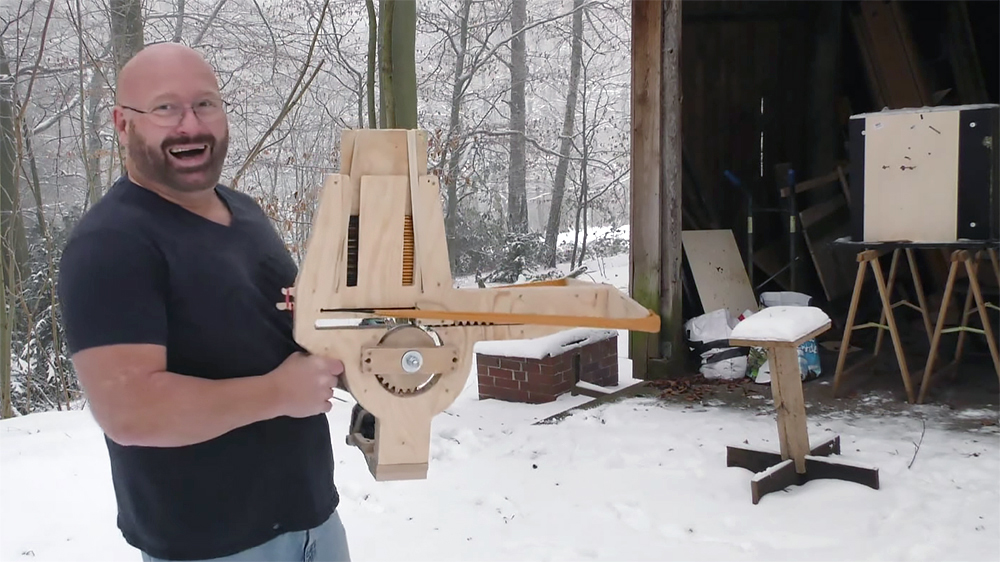
This is the face of a man who loves making improvised weapons.
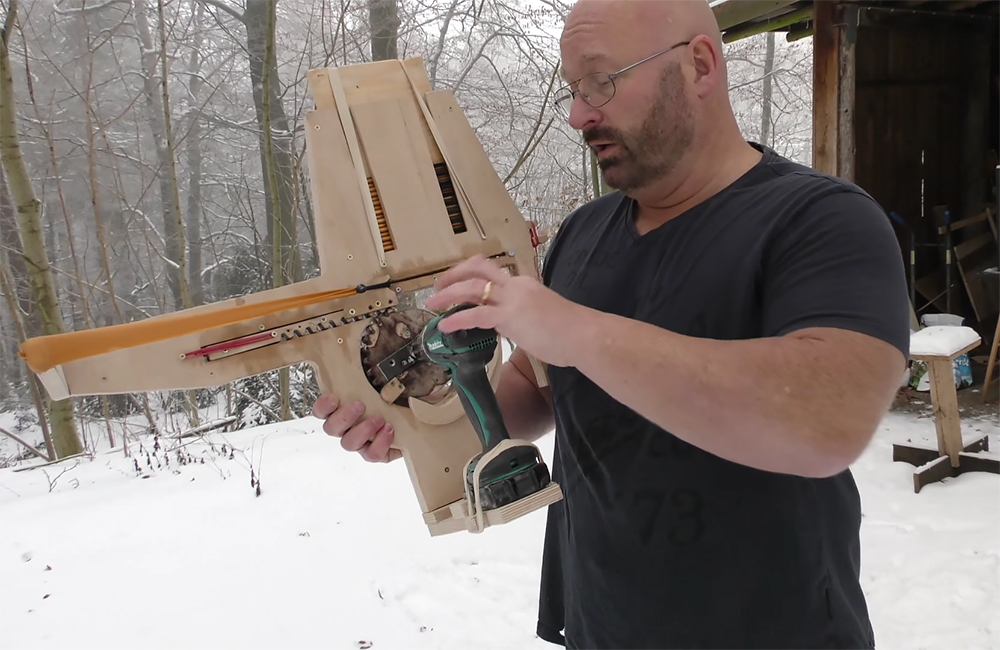
This is the face of a man who REALLY loves making improvised weapons.

We recently came across a video from a German YouTuber named Joerg Sprave, which shows a sort of MacGyvered projectile weapon we never would have dreamed of. Joerg built a full-auto crossbow from some plywood, wood screws, rubber bands, a little aluminum, and a Makita power drill. These are all items you’d find in an ordinary garage, workshop, or hardware store.

Automatic power drill crossbow weapon bow arrow slingshot 3

Joerg’s crossbow works via a relatively simple gearbox. Pulling the trigger on the drill turns an aluminum-reinforced wood gear, which cocks the crossbow and puts tension on the rubber bands. When the crossbow reaches the cocked position, the gear disengages, a bolt drops into place, and a trigger sear releases the bow. The drill continues turning the gear, and the cycle repeats, firing up to 32 aluminum bolts before it’s necessary to reload.

Automatic power drill crossbow weapon bow arrow slingshot 4

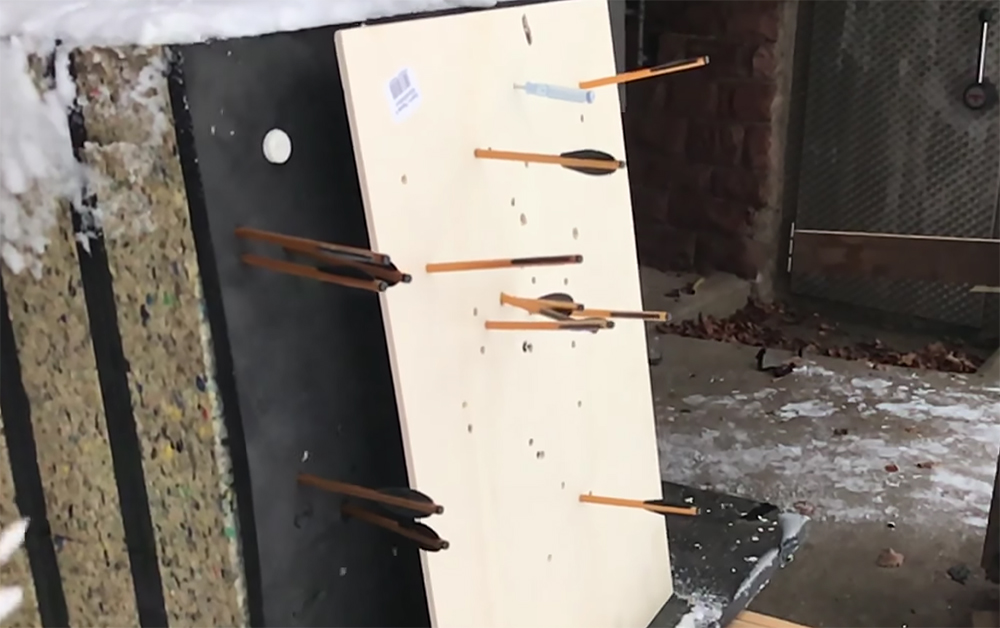
You might be thinking that this is some sort of toy, but wait until you see what it can do. Accuracy doesn’t appear to be its strong suit, but it embeds the crossbow bolts firmly into plywood, even at what the host says is a distance of 40 meters (131 feet). You definitely wouldn’t want to be on the other end of this:

Joerg later made a version with a replaceable magazine (although the thumbnail image incorrectly calls it a “clip”). He also discusses some of the challenges he encountered while developing the weapon, and responds to viewers’ questions:

Avalanche Avoidance & Route Finding in Mountain Terrain

0

A fresh blanket of snow across the mountains is a beautiful thing, especially if you enjoy winter sports like skiing or snowboarding. However, despite this natural beauty, there are serious dangers to be aware of in winter terrain. One of the foremost dangers to anyone on or near the slopes is that of an avalanche.

Mountain snow avalanche navigation winter ski hiking 2

If you’re traversing a ridge, even a small avalanche can cause you to lose your footing and tumble down the slope. If you’re at the base of a gulley, an avalanche can quickly bear down on your location, leaving you nowhere to go. Avalanches can occur when you’re least expecting them; a pair of California motorists were recently buried as they drove down the highway. This is why it’s essential to be aware of your surroundings and recognize avalanche warning signs.

Mountain snow avalanche navigation winter ski hiking 1

Backountry.com partnered with Bruce Tremper of the Utah Avalanche Center to produce the following video about identifying and avoiding avalanche terrain. Bruce discusses what he calls “critical decision spots” as he navigates through the mountains, and mentions how to spot terrain traps which could become deadly even with safety gear (such as an avalanche airbag).

As Bruce says, 34 to 45 degrees is the key danger zone to be aware of when approaching slopes — 38 degrees is considered the peak danger point. For the uninitiated, those numbers don’t mean much, but they indicate the importance of knowing how to measure slope angle.

Mountain snow avalanche navigation winter ski hiking 4

Here are a few methods to consider for analyzing slope steepness:

Whatever method you use, the point remains the same: situational awareness will keep you safe in the mountains. If you’re conscious of snow pack composition, slope angles, and terrain traps, you can navigate more safely during the winter.

Infographic: Comprehensive Guide to Composting

0

Trash is a fact of life, especially in our densely-packed and urbanized society. Due to modern infrastructure and trash pickup services, we often don’t consider the sheer volume of trash each home produces — we wheel it out to the street, the garbage truck comes, and it’s out of sight and out of mind. However, if a major disaster occurs, trash pickup services will cease and waste buildup will become a serious problem.

Trash garbage waste landfill

One solution that can alleviate the burden of waste buildup is composting. By burying organic material in a layered structure with the right amount of moisture, composting naturally degrades waste into valuable fertilizer. Grass, leaves, sawdust, paper, cardboard, fruit peels, eggshells, and even hair can be re-purposed into a substance that enriches your soil and helps your home garden thrive.

Fruit food plant tree peach

In everyday life, composting is easy and beneficial. When trash pickup is not an option, composting is even more attractive. The alternative is a smelly disorganized trash heap that serves no purpose — unless you’re looking to attract rodents or insect pests. A properly-constructed compost heap will put this waste to good use.

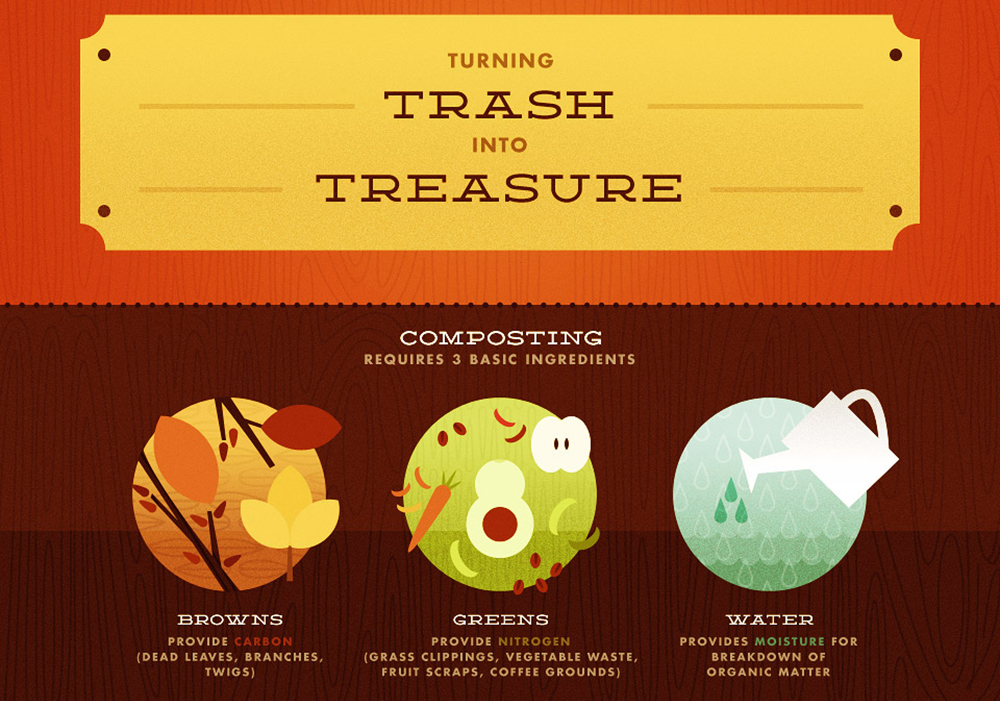
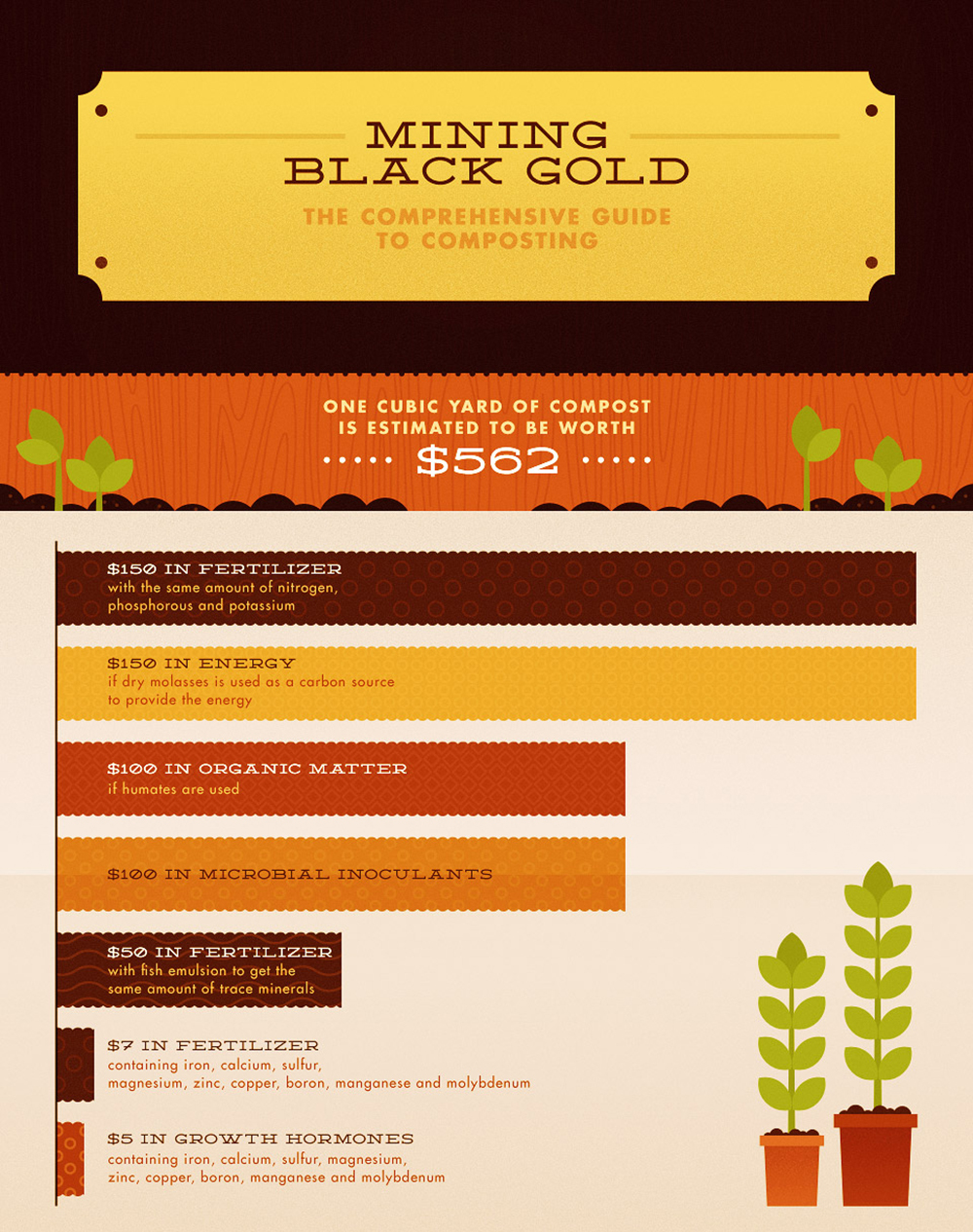
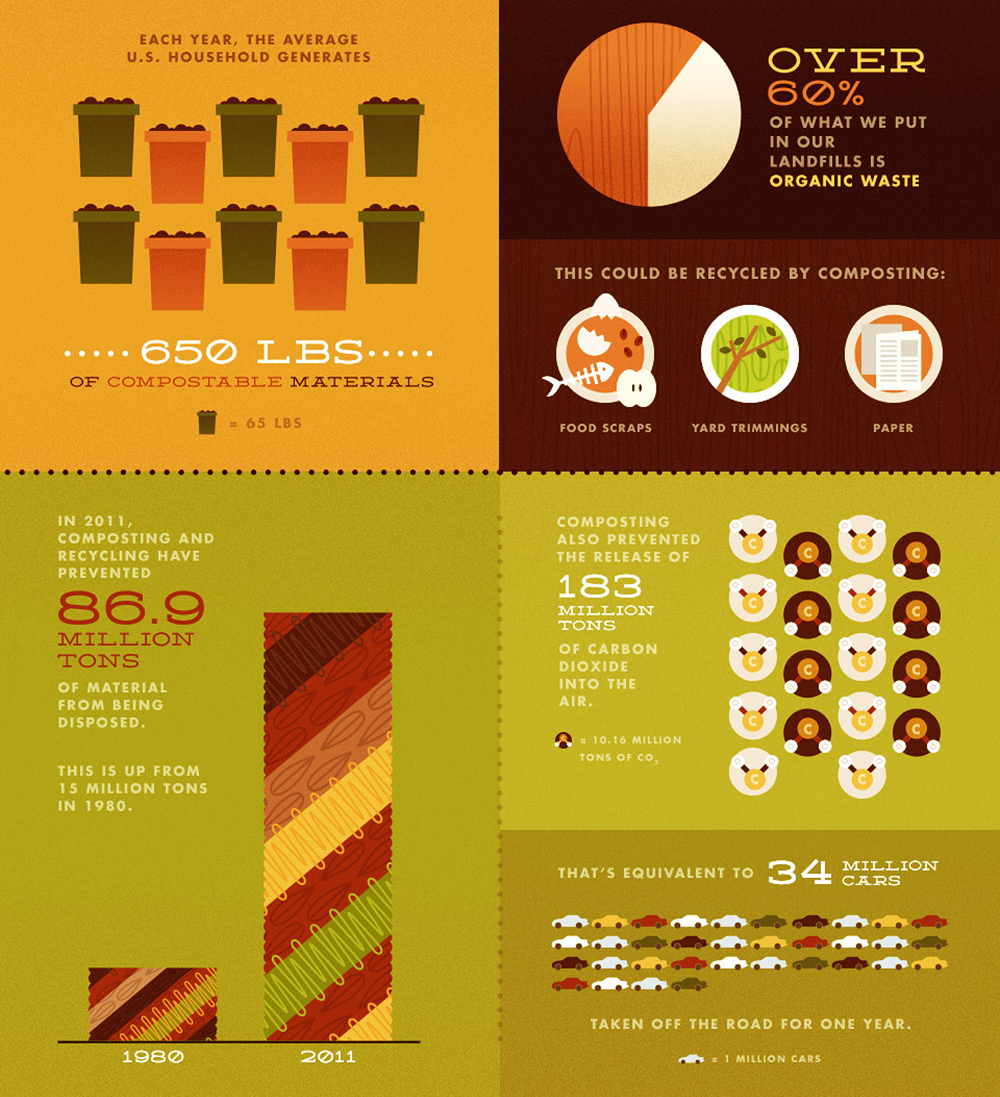
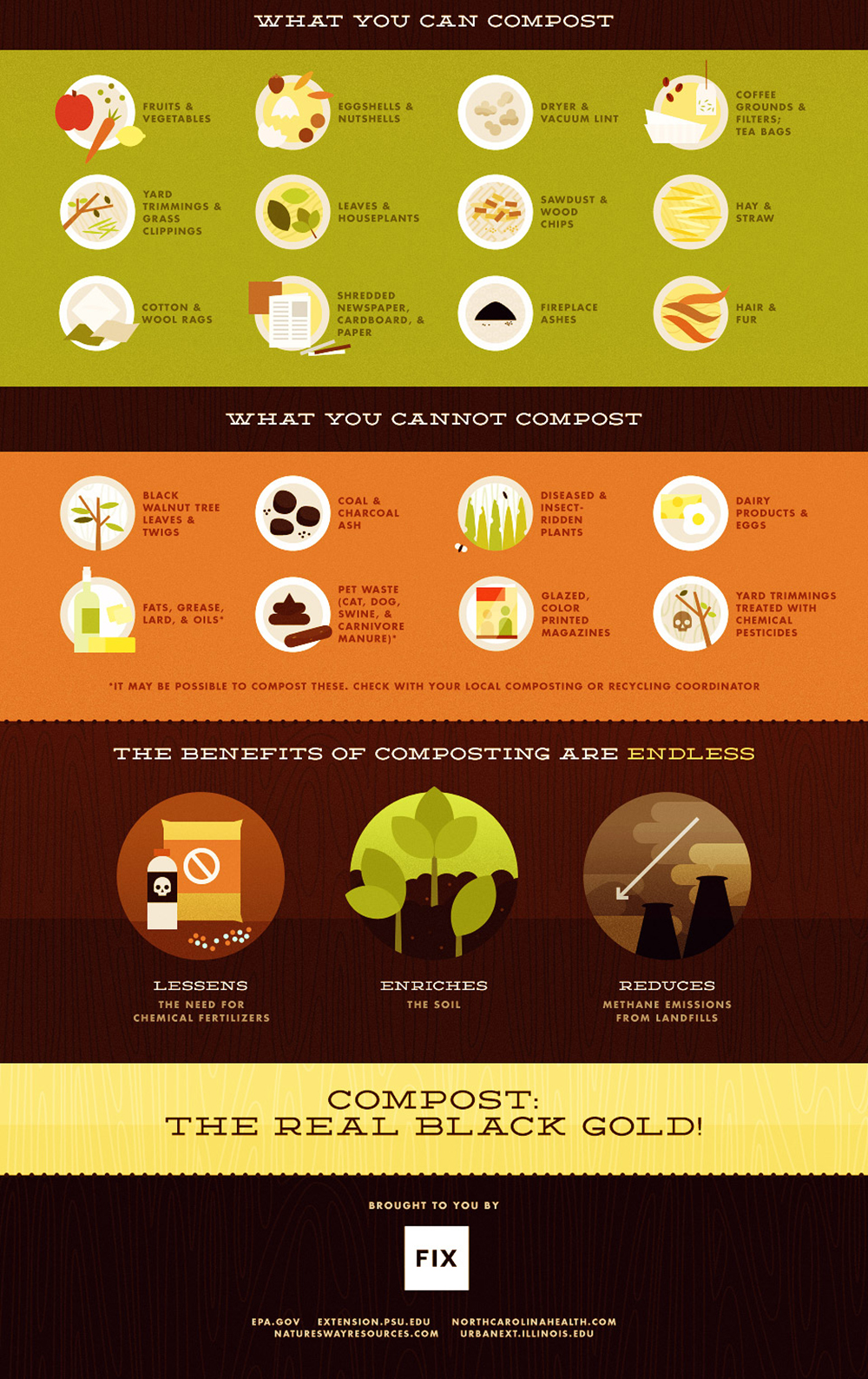
The following infographic from Fix.com shows the benefits of compost, and how it turns trash into treasure. Click here to download a full-size version. (Note that the items you “cannot” compost may vary depending on local laws; in an emergency, composting human and animal waste is an option, but it may be against the law during normal circumstances.)

Infographic compost gardening food plants trees fruit vegetable 4Infographic compost gardening food plants trees fruit vegetable 5Infographic compost gardening food plants trees fruit vegetable 2Infographic compost gardening food plants trees fruit vegetable 3

Danger Ranger Bear Woodsman Shirt

0

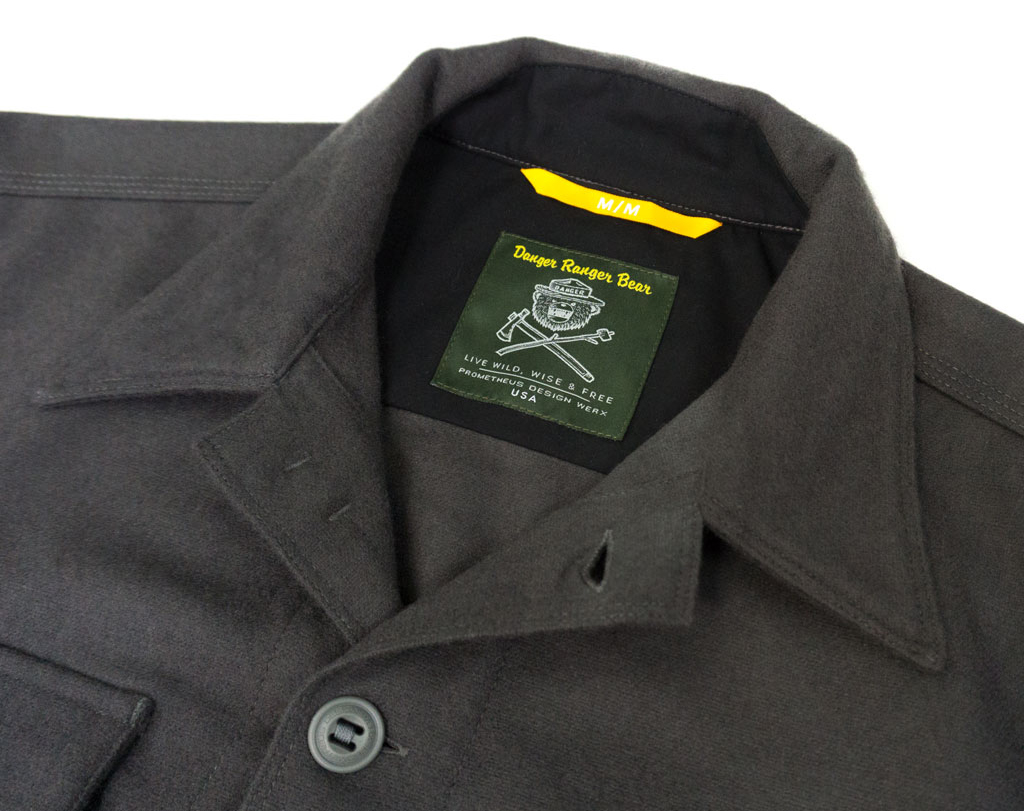
Wool is an incredibly versatile material. Despite the common misconception that it’s rough, itchy, and stifling, high-quality wool apparel is extremely durable, protective, and moisture-resistant. This is why wool-based fabrics have seen a resurgence in popularity for outdoor use in harsh conditions.

Danger ranger bear woodsman shirt apparel map 4

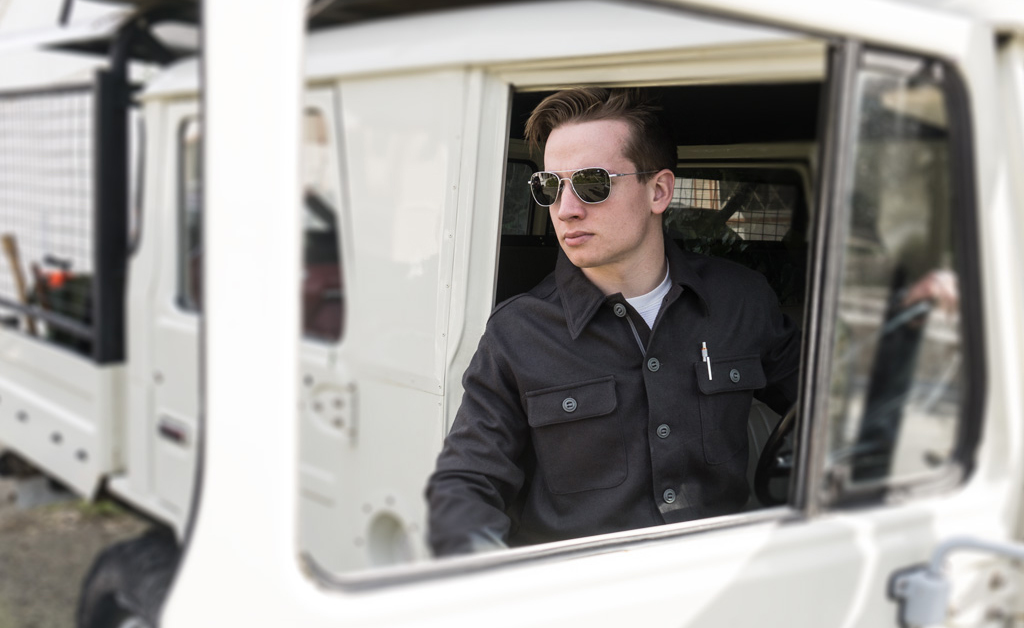
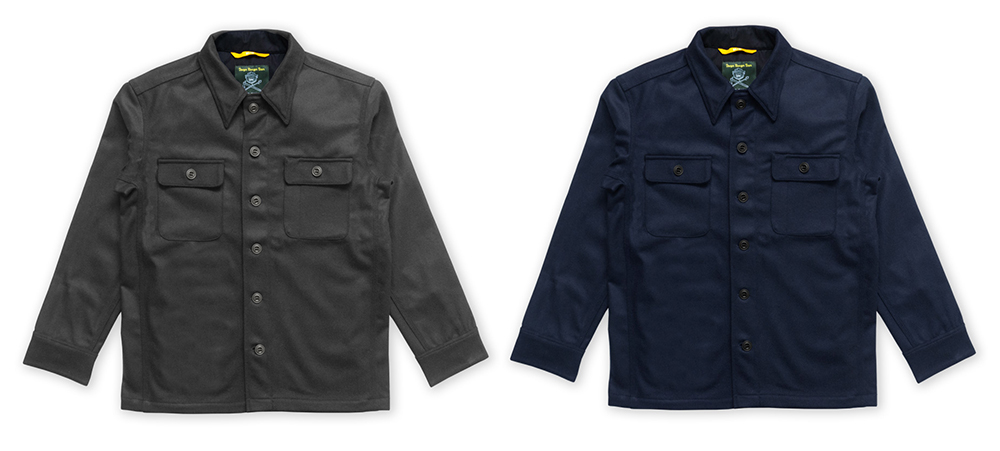
Prometheus Design Werx has released a new 3-season wool outdoor shirt under its Danger Ranger Bear brand. The shirt is called the Danger Ranger Bear Woodsman, and is inspired by the classic appearance of vintage outdoor apparel. The company says, “The DRB Woodsman Shirt is equally at home in the wilderness, at the work shop, or inside the cabin of your favorite overlanding rig. This is a modern classic we think Teddy Roosevelt would have approved of.”

Danger ranger bear woodsman shirt apparel map 7

The new DRB Woodsman shirts are made in small batches in the USA, from a Melton blend of 85% wool and 15% nylon. The shirt uses triple-needle stitching and bar tacks, double-reinforced elbows, and tough PDW slotted buttons for maximum durability.

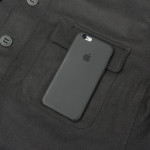
Long sleeves, dual chest pockets, and a camp-style collar provide a simple and classic appearance. The chest pockets are buttoned and zippered for secure closure, and are scaled to fit most modern smartphones. The left pocket also includes a pen/pencil slot.

Danger ranger bear woodsman shirt apparel map 6

The Woodsman shirt is available in two standard colors: navy blue and owl grey. There’s also a Special-Edition model in genuine Woolrich Heritage red-black plaid wool. All DRB Woodsman shirts are designed for regular fit, and range in size from small to XXL. The standard shirts are available at an MSRP of $159, and the Special-Edition is available at an MSRP of $169.

For more information on the Danger Ranger Bear Woodsman shirt, visit PrometheusDesignWerx.com.

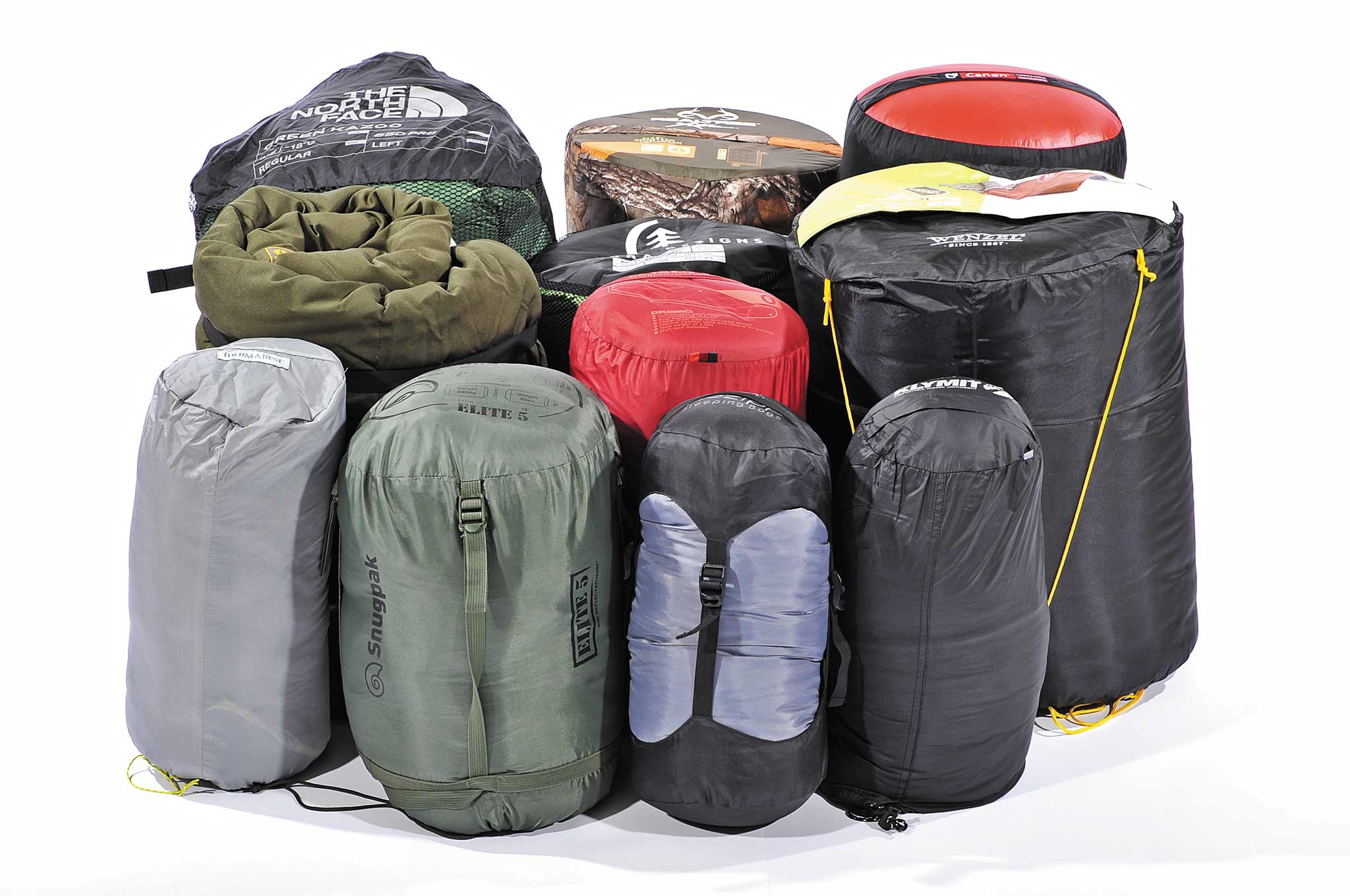
Winter Sleeping Bags

0
Surviving in the Arctic without a way to stay warm and dry at night would be a serious challenge.

A wise person once wrote, “Winter is a harsh mattress.” Or was it a “harsh mistress?” Either way, a frigid landscape is no place to slumber without a proper outfit, an insulated shelter, and a reliable heat source. But you don’t have to climb K2 or get ambushed by a Wampa for poop to go sideways during the colder months.

So if you can’t find shelter, bring shelter with you. And we don’t mean that in a “Hugh Glass, slice open your horse and slither inside” sort of way.

Hobos, ultralight backpackers, and survivalists know a quality sleeping bag can serve as a life-saving shelter by itself. With snow pummeling many parts of North America, it’s time we crawled feet first into the topic of cold-weather sleeping bags.

Rated T for Toasty

The No. 1 most important factor when considering a winter sleeping bag is its temperature rating. For example, a 0-degree bag means the end-user should snooze comfortably if the air temperature drops to 0 degrees F. However, these numbers can be a tad inaccurate, as manufacturers can assign ratings based on their own testing methods.

Enter the EN standard. This European criterion labels a sleeping bag’s rating based on a standardized test using a thermal mannequin in a controlled lab. Though the standard measures four ratings, you should focus on two:

Comfort: The temp at which an average woman can sleep comfortably in the bag.

Lower Limit: The temp at which an average man can sleep comfortably in the bag.

Why not call them the “Women’s Lower Limit” and the “Men’s Lower Limit?” We don’t know. That’s European scientists for ya. Nomenclature aside, the EN standard is optional, but many companies have adopted it as a means to add legitimacy to their marketing claims.

For the purposes of our buyer’s guide, we’ll focus on the EN Lower Limit. Keep in mind, the EN rating assumes the occupant sleeps wearing a top and bottom base layer and a hat. Au naturel sleepers may wish to look for a bag rated for a little lower temp (and that’s also machine washable).

To prevent turning into a human Popsicle overnight, pick a bag that has a rating at least 15 degrees colder than the conditions you expect. Keep in mind these ratings are aimed at the average sleeper. You should also ponder what type of snoozer you are:

Hot Sleepers: These human furnaces turn beds into foam-and-spring saunas, shrugging off the sheets in the middle of the night — much to the chagrin of their spouses.

Cold Sleepers: These icy folks produce little body heat as they count sheep, so they pile on the blankets. (Marrying someone of the opposite type will ensure a lifetime of nightly bed jiu-jitsu — and not the enjoyable kind, if you know what we mean.)

Goldilocks Sleepers: Of course, there are those whose body temps are “just right.”

The Low-Down

Generally, sleeping bags have two main types of insulation (or fill): down and synthetic. Which one should you get? That’s like asking, “What’s better, 9mm or .45?” You’ll find true believers on both sides.

Also, thanks to advancing technology, there’s now a third type of fill: hybrid.

Down: We’re not talking about a duck’s contour feathers that provide wind and water protection, nor are we talking about flight feathers that allow for lift and propulsion. We’re talking about the down feathers, the fluffy stuff underneath that traps warm air against their skin — the birds’ base layer. The fluffier the down, the more heat it traps.

Duck and goose down is desired for its softness, light weight, durability, breathability, compressibility, and heat-retaining attributes. It’s hard to beat Mother Nature.

There’s a flip side, though. Down is expensive — especially goose down. And it turns into a spitball-like lump when wet, diminishing heat retention and possibly leading to mildew growth if a bag is put away damp. It can be treated with a water-resistant coating (marketers call this “hydrophobic down”), but that’s not the same thing as waterproof. Also, some might raise ethical questions about how the waterfowls are farmed and whether they’re live-plucked.

Synthetic: Usually made from polyester, this manufactured fill offers plenty of benefits. It insulates even when wet, dries faster than down, is non-allergenic, and can be just as soft and compressible as natural fill. Plus, it’s easier on the pocketbooks and requires less maintenance than its ducky competitor.

However, synthetic has a lower warmth-to-weight ratio than down, and its insulating abilities diminish over time and after repeated use because it’s not as durable.

Hybrid: Combining the best of both types, this third type might lay the down atop the synthetic or blend both throughout the bag.

Fill ‘Er Up

You might have heard the term “fill power” when it comes to sleeping bags. It refers to the loft (or fluffiness) and, indirectly, the insulating value of a down product. The higher the number, the more loft and heat retention — and the less material needed to keep you toasty.

Usually, fill power ranges from 300 to 900. Anything below 400 should be avoided like Ford Pintos, while anything above 750 is Maserati territory.

Mummy, I’m Cold

Slumber-sack forerunners date back hundreds of years, but many consider the world’s first commercially successful sleeping bag to be the Euklisia Rug, patented in 1876 by mail-order king Pryce Pryce-Jones. It was a wool blanket that could be folded over and fastened; it even had an integrated pillow pocket.

Much has changed in sleeping bag designs since then.

Mummy: This form-fitting sack will have you wrapped up like its Egyptian namesake. The design not only reduces weight, but also the space between you and the bag, allowing your body to heat up that air quickly and stay warm longer. There’s also a hood to prevent you from suffering eternal brain freeze.

The drawback? You’re basically wearing a full-body condom; unless you sleep like Dracula, you’ll find it restrictive at best and claustrophobic at worst.

Rectangular: It’s a square blanket that folds in half (forming a rectangle) and seals shut with a zipper. This shape offers the most comfort for restless sleepers. Also, if you buy two compatible bags, you can zip them together to create an improvised double-wide bag. (Or you can just buy an actual double-wide designed for couples.)

Unfortunately, the roomy design means there’s more air to heat up, so it’s not as efficient as the mummy shape. Plus, they take up more space and add weight to your kit.

Semi-Rectangular: Sometimes called barrel-shaped, this design tapers toward the bottom to give a bit more freedom for broad-shouldered users while providing more heat retention than a rectangular sack.

Bugoutability

Also consider a bag’s bugoutability quotient. How compact, lightweight, and portable is it? Can it be quickly deployed and stowed? And can you use it in pitch darkness?

To help us determine these and other important factors for our buyer’s guide, we enlisted the help of RECOIL OFFGRID’s intrepid network manager, John Schwartze. He’s slender at 6-foot-5, whereas this author is a stocky 5-foot-8. The dichotomy provides a balanced approach to our reviews of the latest mobile sleep stations for cold weather.

Read on to find out which one you’d want to share with your mistress this harsh winter … er, we mean, which one you’d want to use as your winter’s harsh mattress. Or something like that.

Enter Sandman (in the Snow)

winter-sleeping-bags-cold-weather-gear

To fight off any possible winter nightmares and ensure a solid night’s rest, it’s ideal to supplement your sleeping bag with other key pieces of gear:

Cold-Weather Apparel: People sometimes forget that your clothes are actually your first layer of shelter in a survival situation. Be sure to bundle up before you head out. And if you didn’t, hopefully you’ve packed backup apparel in your emergency kit.

Sleeping Pad: It’s important to get off the ground if you’re spending the night outdoors. That means putting a layer between you and the snow or frozen dirt — a sleeping bag alone won’t cut it. Consider a foam pad or an air mattress that doesn’t require an air compressor, such as the Therm-a-Rest Neoair Camper SV. You can also create a ground barrier using scavenged items (foliage if you’re in the backcountry, cardboard and newspapers if you’re in an urban setting).

Cot or Hammock: Both a cot or a hammock can also get you off the ground, though they might require a bit more setup time than a pad, depending on the model. (See our survival hammock buyer’s guide in Issue 11.)

Tent: An enclosed shelter like a tent combined with a quality bag and pad is the ideal slumber situation. It’ll block out wind and snow while retaining any body heat that the sleeping bag doesn’t trap.

[buyersguide title=”Winter Sleeping Bags” ids=”7754, 7758, 7762, 7766, 7771, 7775, 7779, 7784, 7788, 7793, 7797″]

Ultimate Wild SL-750 Killswitch Hunting Spotlight

0

Hunting requires precise observation of one’s surroundings in order to track down prey. However, experienced hunters also know that it’s easy to spook prey — it only takes one slip-up to lose your opportunity for a shot. In a survival situation, this becomes even more important, since you can’t afford to make mistakes if you’re hunting to put food on the table.

Sunset night tree hunting flashlight 5

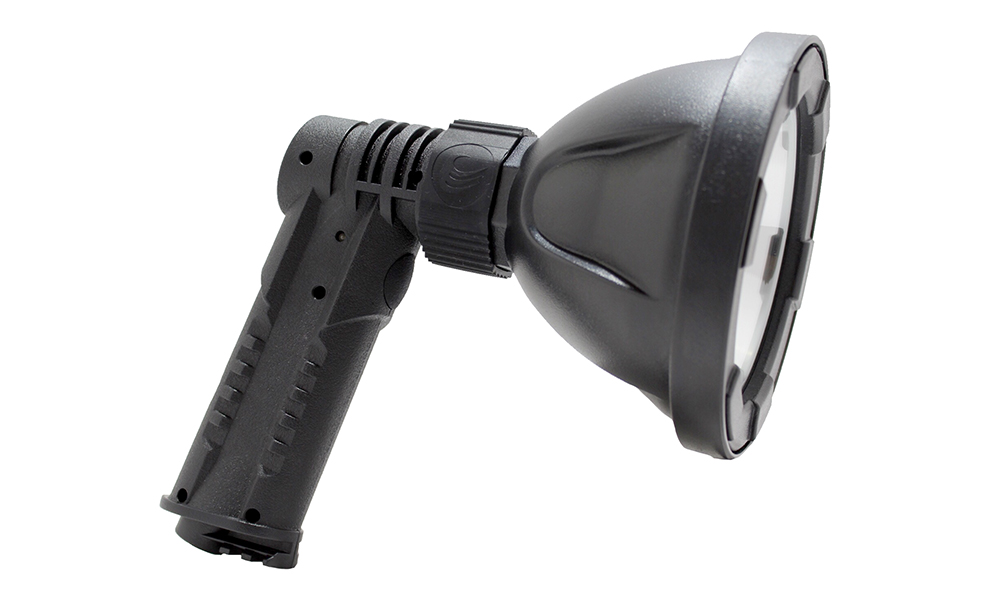
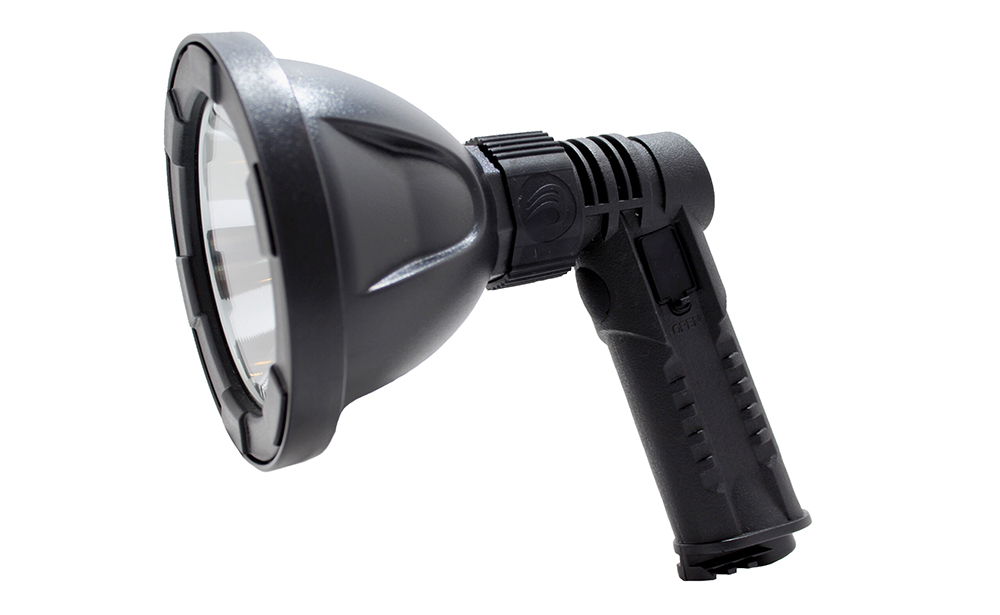
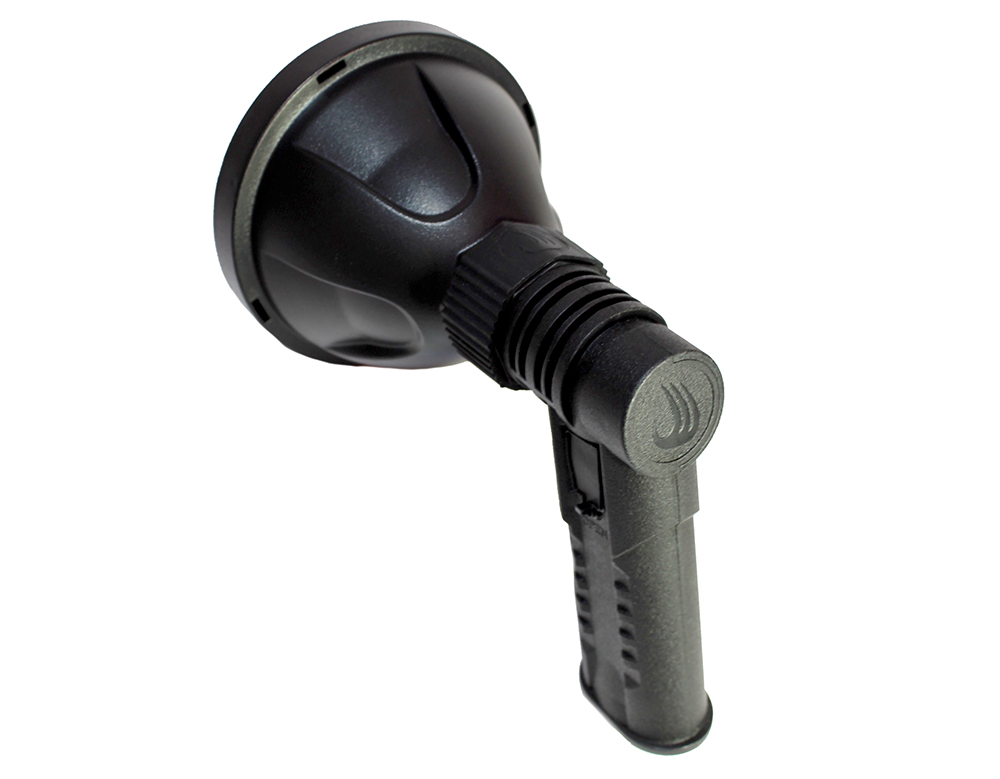
At night, this process becomes even more difficult, since it’s hard to find and track game animals without adequate illumination. On the flipside, too much light will alert prey of your presence. The Ultimate Wild SL-750 Killswitch hunting spotlight is intended to meet this delicate balance of lighting needs, with a dual-LED system for both spotting and targeting. A red LED can be used for locating prey without spooking them, while a standard 750-lumen white LED provides clear vision for the pivotal moment before you take your shot.

Ultimate Wild sl750 killswitch hunting fishing flashlight 4

The SL-750 is new for 2017, with a pistol-grip handle that uses a polymer resin-fiber compound for improved durability and comfort. A weather-resistant power switch allows the user to quickly flip on the light and change colors. The built-in rechargeable lithium-ion battery offers up to 8 hours of total run time, and includes a USB-output port for charging small electronic devices in the field.

Ultimate Wild sl750 killswitch hunting fishing flashlight 2

Here are the key specs of the SL-750 Killswitch light:

  • Output: 750 lumens
  • Dual CREE LED with 50,000-hour lifespan
  • Battery: Rechargeable lithium-ion
  • Chargers: Includes wall charger and 12V car charger
  • Length: 7 inches
  • Bezel Diameter: 5 inches
  • Weight: 13.8 ounces
  • MSRP: $90

Ultimate Wild sl750 killswitch hunting fishing flashlight 3

For more information on the Ultimate Wild SL-750 Killswitch spotlight, visit UltimateWild.com.

Adrian Carton de Wiart: A Legendary Soldier’s Survival Story

0

On rare occasions, truth is stranger than fiction. If the life story of Lieutenant General Adrian Carton de Wiart was made into a movie, it would almost certainly be dismissed by the general public as a laughable exaggeration of reality. We can’t say we’d blame them, either — without previous knowledge of the historical accounts, watching an actor portray this incredible journey of warfare and survival would seem unrealistic at best.

A 2015 BBC article compared Carton de Wiart’s story to that of an “unkillable” comic book hero, and one British military veteran therein likened him to Robocop. The Oxford Dictionary of National Biography refers to him as “a figure of legend”. Sir Winston Churchill even wrote the foreword to his autobiography, calling him “a model of chivalry and honour”.

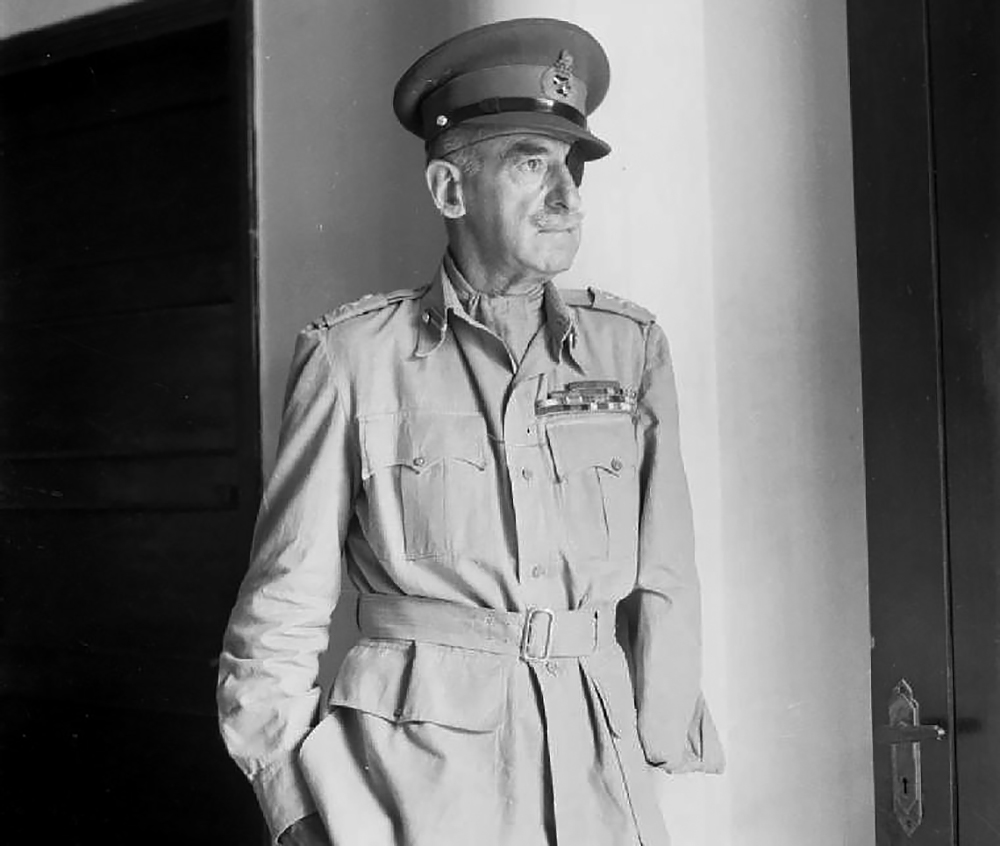
A portrait of Adrian Carton de Wiart. Photo credit: IWM.org.uk / Wikipedia
A portrait of young Adrian Carton de Wiart. Photo credit: Wikipedia / IWM.org.uk

So, who was this man, and how did his real-life experiences become the stuff of legends? Read along as we summarize his incredible life story.

Birth & Early Military Career

Adrian Carton de Wiart was born in Brussels, Belgium in 1880, to wealthy aristocratic parents. His mother died when he was six years old, leading his father to move the family to Cairo, Egypt. There, young Adrian learned to speak Arabic fluently. He was eventually sent away to a Catholic boarding school in England, and continued on to study law at Oxford college.

Adrian Carton de Wiart survival story history soldier war 8
A painting of Cairo, Egypt by artist Louis Comfort Tiffany in 1872. Source: Wikipedia / Brooklyn Museum

While a law degree from Oxford would be an impressive accomplishment to most, it wasn’t enough for Carton de Wiart. At age 20, he left Oxford without telling his father, and decided to enlist with the British Army. He wasn’t yet old enough to enlist, and wasn’t even a citizen (subject) of the British Empire, but that didn’t stop him. After falsifying his name and age, he was soon headed off to fight in South Africa in the Second Boer War.

Adrian Carton de Wiart survival story history soldier war 9
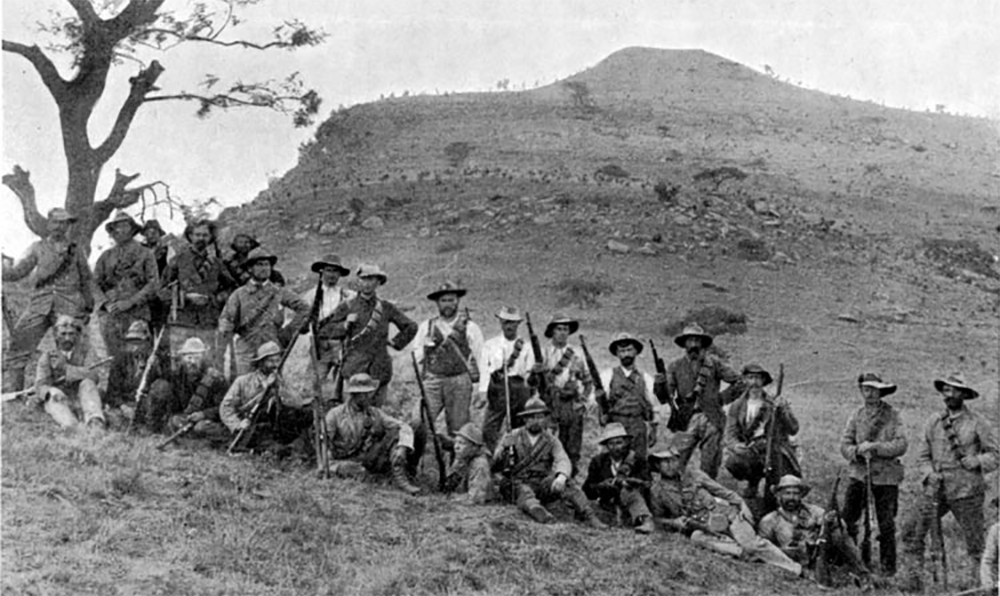
Boer militiamen, such as those pictured here, fought the British in modern-day South Africa. Source: Wikipedia / Project Gutenberg

During his time in South Africa, Carton de Wiart was shot in the stomach and groin, and forced to return to England to recuperate. He returned to Oxford for a short while, then continued climbing the ranks in the British Army. By 1901, he had become a second lieutenant in the Royal Dragoon Guards; by 1904 he was a lieutenant; in 1910 he was promoted to captain. He also became a naturalized British citizen, married, and had two daughters.

World War I

The First World War broke out in 1914, at which time Carton de Wiart was serving as part of the British Camel Corps in Somaliland, now a part of present-day Somalia. His detachment attacked a fort held by enemy leader “the Mad Mullah”, and Carton de Wiart was shot twice in the head. One bullet destroyed his left eye, while the other struck his ear.

Aside from uttering a prodigious string of expletives, Carton de Wiart was relatively unfazed by this serious injury. General Hastings Lionel Ismay, who served with him during the conflict, wrote, “I honestly believe that he regarded the loss of an eye as a blessing as it allowed him to get out of Somaliland to Europe where he thought the real action was.”

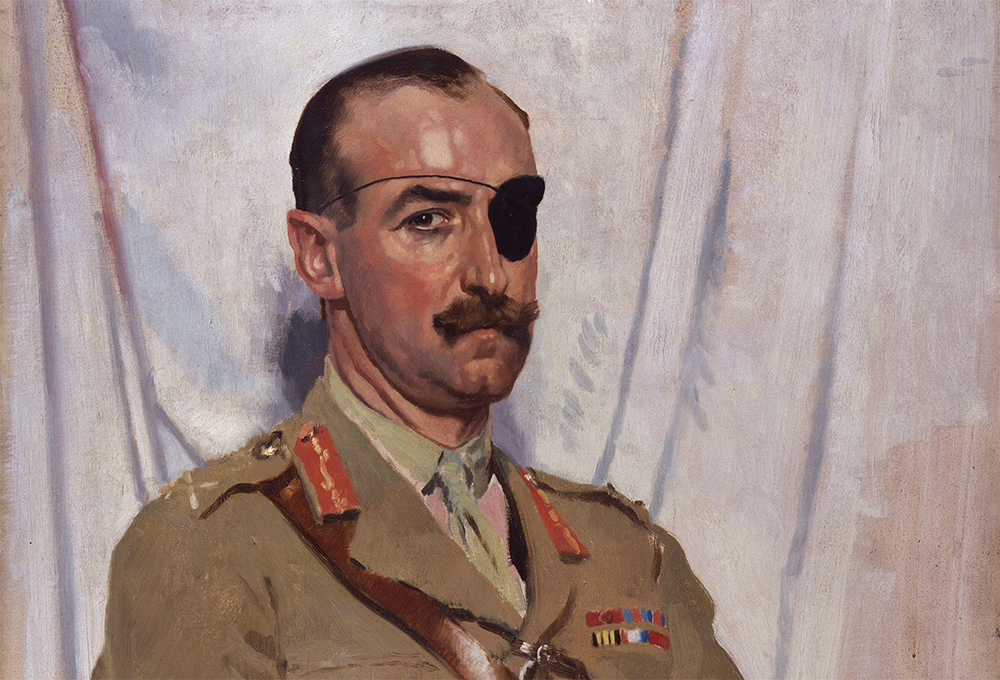
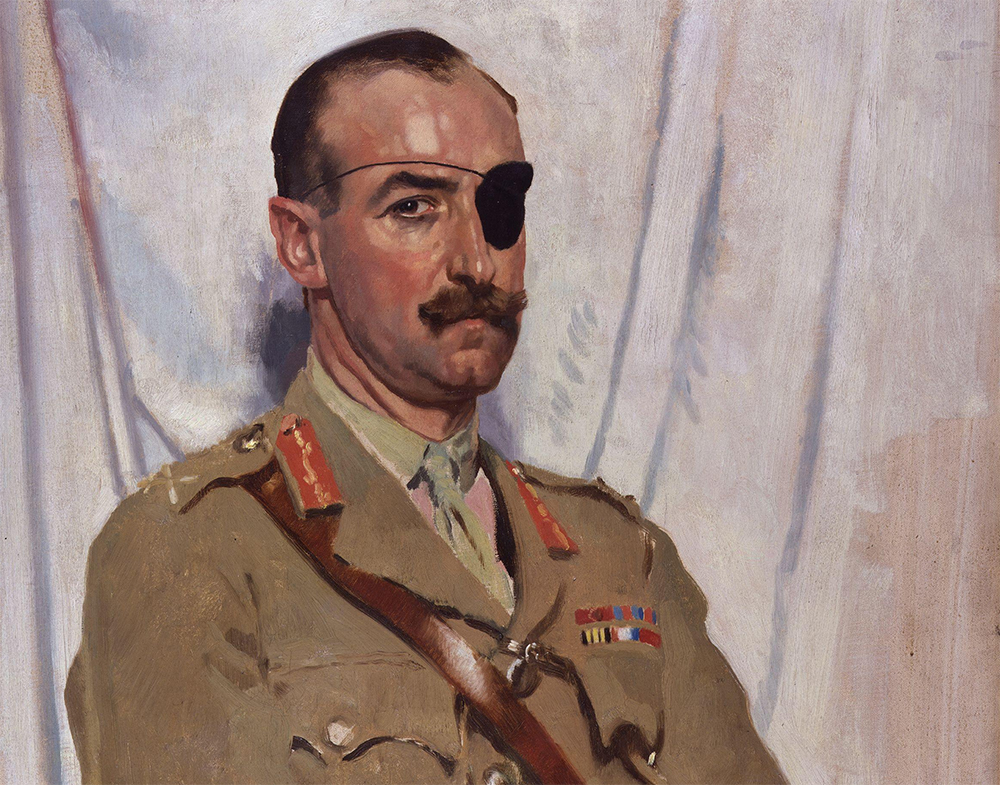
This portrait of Adrian Carton de Wiart was painted in 1919, and displays his distinctive eye patch. Source: Wikipedia / National Portrait Gallery, London

After recovering in England, Carton de Wiart donned a black eye patch, then headed into combat yet again in 1915. He fought on the Western Front in WWI, and was injured seven more times, including gunshot wounds to the head, ankle, hip, leg, and ear. The most notable of these injuries was the result of a German artillery shell which mangled his left hand. A surgeon declared that the damage would not require amputation, but Carton de Wiart disagreed. In his autobiography titled Happy Odyssey, he wrote, “I asked the doctor to take my fingers off; he refused, so I pulled them off and felt absolutely no pain in doing it.”

Somewhat ironically, Carton de Wiart's autobiography is titled "Happy Odyssey".
Somewhat ironically, Carton de Wiart titled his autobiography “Happy Odyssey”.

Later that year, the remainder of his hand was amputated. After another period of recovery in England, he returned to the war and led a battalion at the infamous Battle of the Somme.

Inter-War Period

By the end of WWI, Adrian Carton de Wiart had been promoted several more times to the rank of temporary brigadier general. In 1916, he received the Victoria Cross, the highest combat award of the British armed forces. Despite losing a hand and suffering many other grave injuries, he later wrote, “Frankly, I had enjoyed the war; it had given me many bad moments, lots of good ones, plenty of excitement.”

Carton de Wiart moved to Poland in 1919, and served as general in command of British armed forces within the country. Wiart’s troops helped the Polish fend off hostile forces from Russia, Ukraine, Lithuania, and Czechoslovakia. Once Poland achieved stability, he retired from the military and settled down peacefully for 15 years. Unfortunately, Poland would soon become anything but peaceful.

World War II

In 1939, the Germans invaded Poland, and Carton de Wiart was forced to abandon his home. He later wrote, “They took all I had, my guns, rifles, rods, clothes, furniture, but they could not take my memories.” At first, he attempted to assist Polish leadership, but the situation spiraled out of control quickly. While evacuating from Warsaw, Carton de Wiart’s convoy was raked by Luftwaffe machine gun fire, killing the wife of one of his aides. Nevertheless, he managed to make it to Romania using a forged passport.

Adrian Carton de Wiart survival story history soldier war 5
A portrait of Adrian Carton de Wiart during WWII from the Imperial War Museums. Source: Wikipedia / IWM.org.uk

Carton de Wiart returned to the military as a colonel, and was soon promoted to major-general. He was dispatched to lead troops in Namsos, Norway; the trip was yet again interrupted by gunfire from a Luftwaffe fighter plane, which fired on his aircraft. Fortunately, the plane was already on its final approach before landing, so he was not injured. Heavy bombardment by the Germans eventually forced the British to evacuate Norway.

In 1941, 60-year-old Carton de Wiart was sent to negotiate with the Yugoslavian government. However, during his journey, his plane was shot down over the Mediterranean Sea. He was knocked out cold, but reawakened and swam to shore as the plane sank into the sea. Italian authorities captured Carton de Wiart, and he was sent to a POW camp, where he would remain for more than two years.

During this time, he was a troublesome prisoner. He made five escape attempts, one of which granted him freedom for eight days. Though he didn’t speak Italian and had a very distinctive appearance, managed to blend in until he was eventually recaptured. The Italians released Carton de Wiart in 1943 as a gesture of peace to the British.

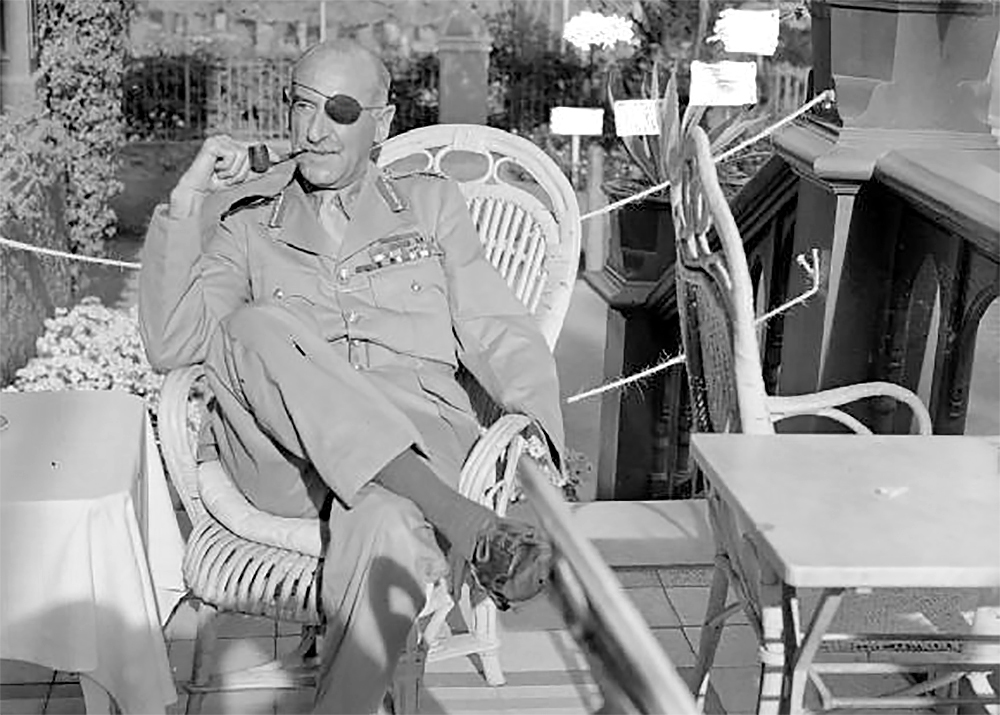
A photo of Carton de Wiart in 1943. Source: Wikipedia / IWM.org.uk

Post-War Period and Retirement

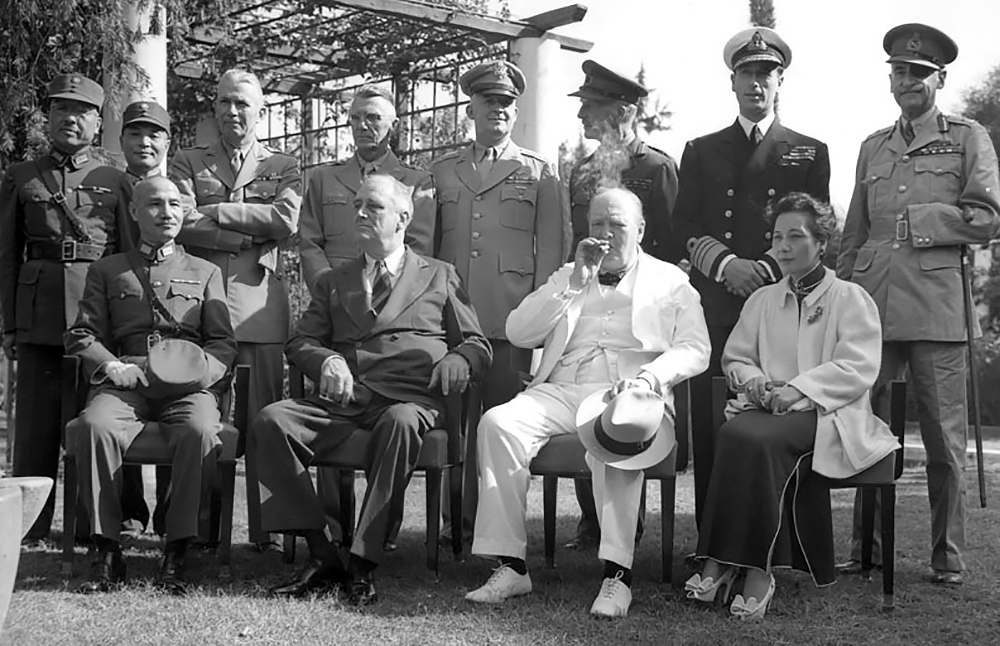
After returning home, Carton de Wiart met with Prime Minister Sir Winston Churchill, who requested his assistance in a diplomatic position. He was promoted to lieutenant general, and became Churchill’s personal representative to Chiang Kai-shek of China. The Chinese leader would eventually also offer him a job, but he declined, and retired in 1947 at age 66 as a lieutenant general.

Adrian Carton de Wiart survival story history soldier war 6
Carton de Wiart (pictured top right) along with Chiang Kai-shek, FDR, and Churchill. Source: Wikipedia / Jim Hudson

On his way home after finalizing his retirement, Carton de Wiart stopped in Rangoon (present day Myanmar). While walking down some stairs, he slipped on a coconut husk mat and fell. He wrote, “I hit my head on the wall knocking myself almost unconscious, broke my back, crushing a vertebra, and was very lucky not to break my neck.” Yet again, he would survive these injuries and return to England to fully recover. Doctors who treated him also reportedly found and removed large amounts of shrapnel from his old wounds.

Carton de Wiart’s first wife died in 1949, and he remarried two years later at age 71. His second wife, Joan Sutherland, was 23 years younger than he was at the time. The pair settled down in a historic home in the Irish countryside, and on June 5th, 1963, Adrian Carton de Wiart died peacefully. He was 83 years old.

Adrian Carton de Wiart survival story history soldier war 7
Carton de Wiart’s array of medals, including the prestigious Victoria Cross (bottom left). Source: Royal Dragoon Guards Museum

Today, Adrian Carton de Wiart is known as one of the most-decorated (and most-wounded) British military officers of all time. Despite an immense list of injuries and setbacks that might crush a lesser man’s spirit, Carton de Wiart refused to accept defeat. In the foreword to Happy Odyssey, his friend Sir Winston Churchill wrote the following:

“Although repeatedly wounded and suffering from grievous injuries, his whole life has been vigorous, varied, and useful. He is a model of chivalry and honour and I am sure his story will command the interest of all men and women whose hearts are uplifted by the deeds and thoughts of a high-minded and patriotic British officer.” – Winston S. Churchill

As survival-minded individuals, we have much to learn from the positivity and unflinching determination of Adrian Carton de Wiart.