You’ve probably seen one of those stereotypical crime drama TV shows. You know, the ones where the clever cop protagonists show up to the cordoned-off murder scene, pull out some high-tech tools, and suddenly find a miraculous clue in the blood patterns that leads them straight to the killer. It’s all Hollywood nonsense, right? Well, maybe not as much as you’d think.
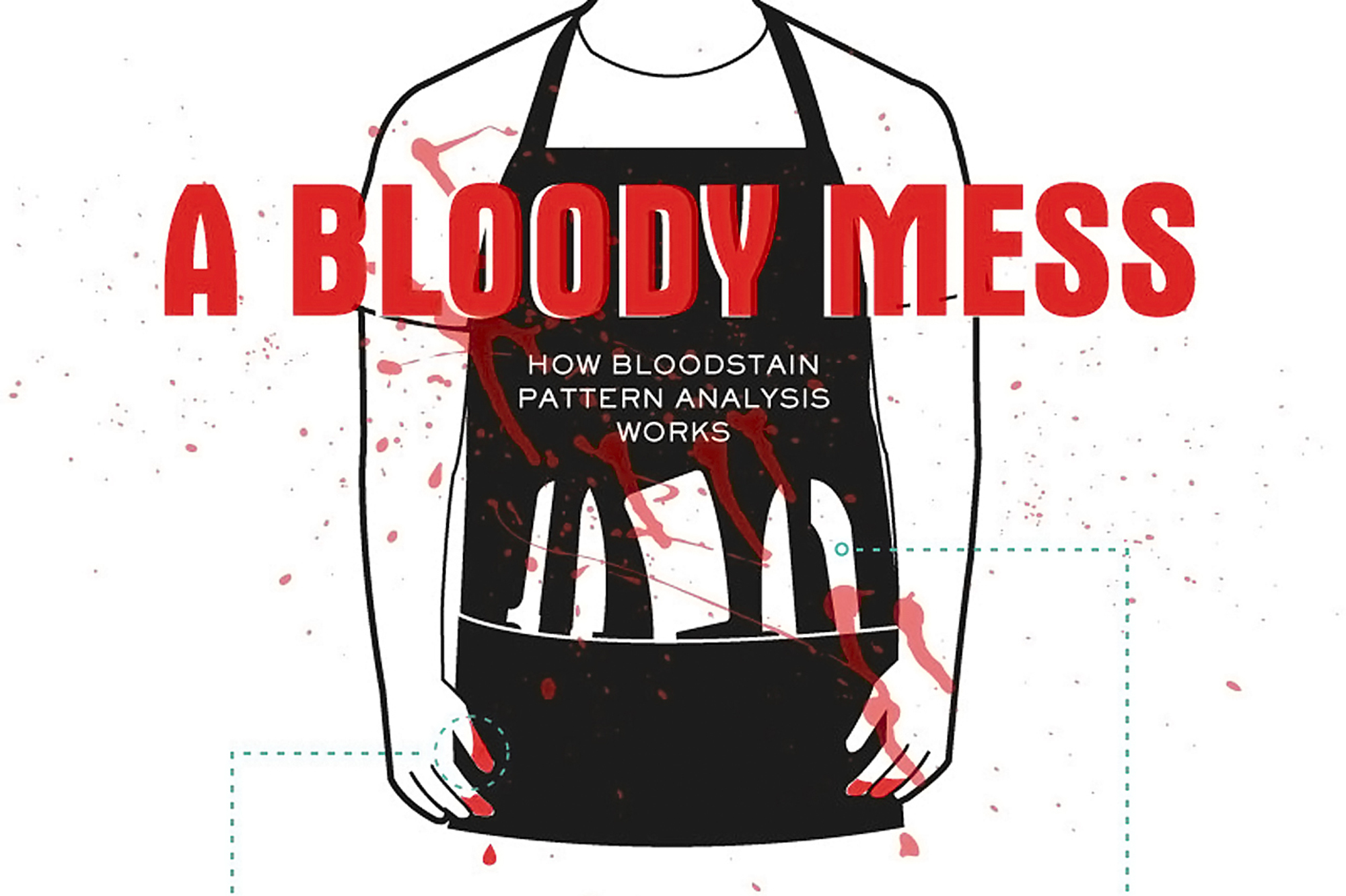
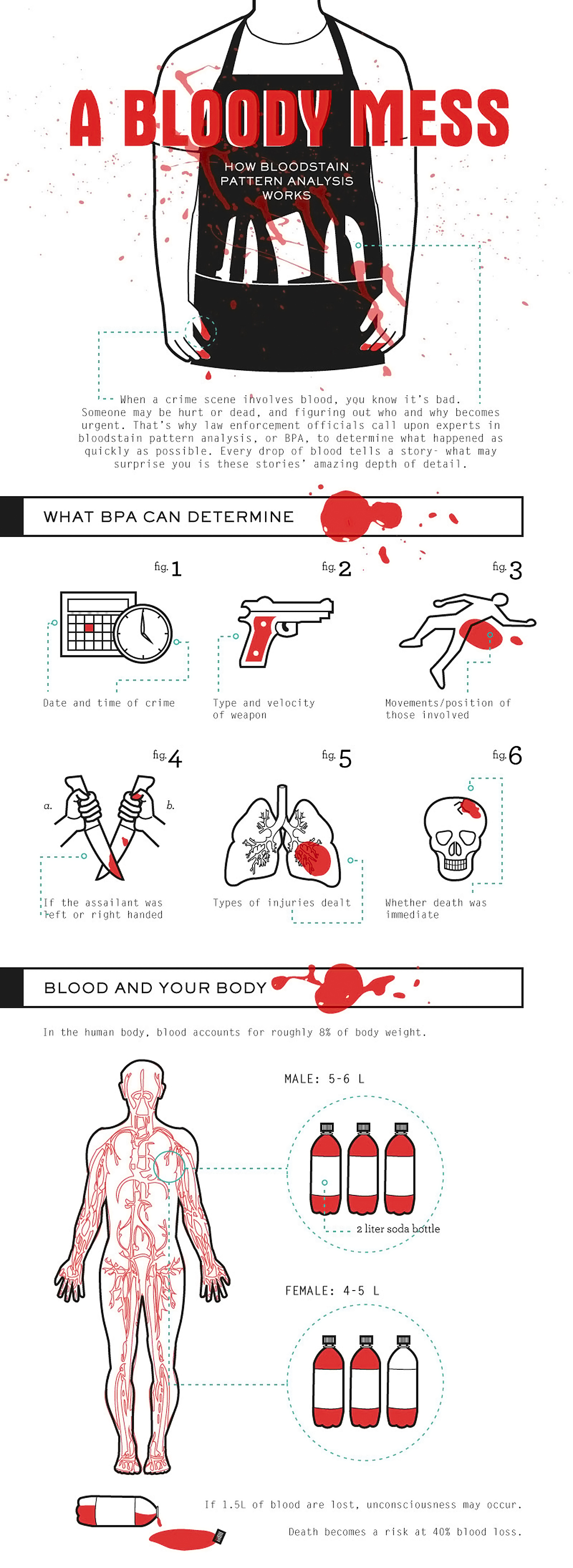
Bloodstain pattern analysis, also called BPA or blood spatter analysis, is a very real tool that crime scene investigators (actual CSIs, not the sunglass-wearing TV kind) use to understand violent crimes. This technique can help investigators determine crucial details about the crime, such as when it happened, what type of weapon was used, and how long the victim survived after the attack.
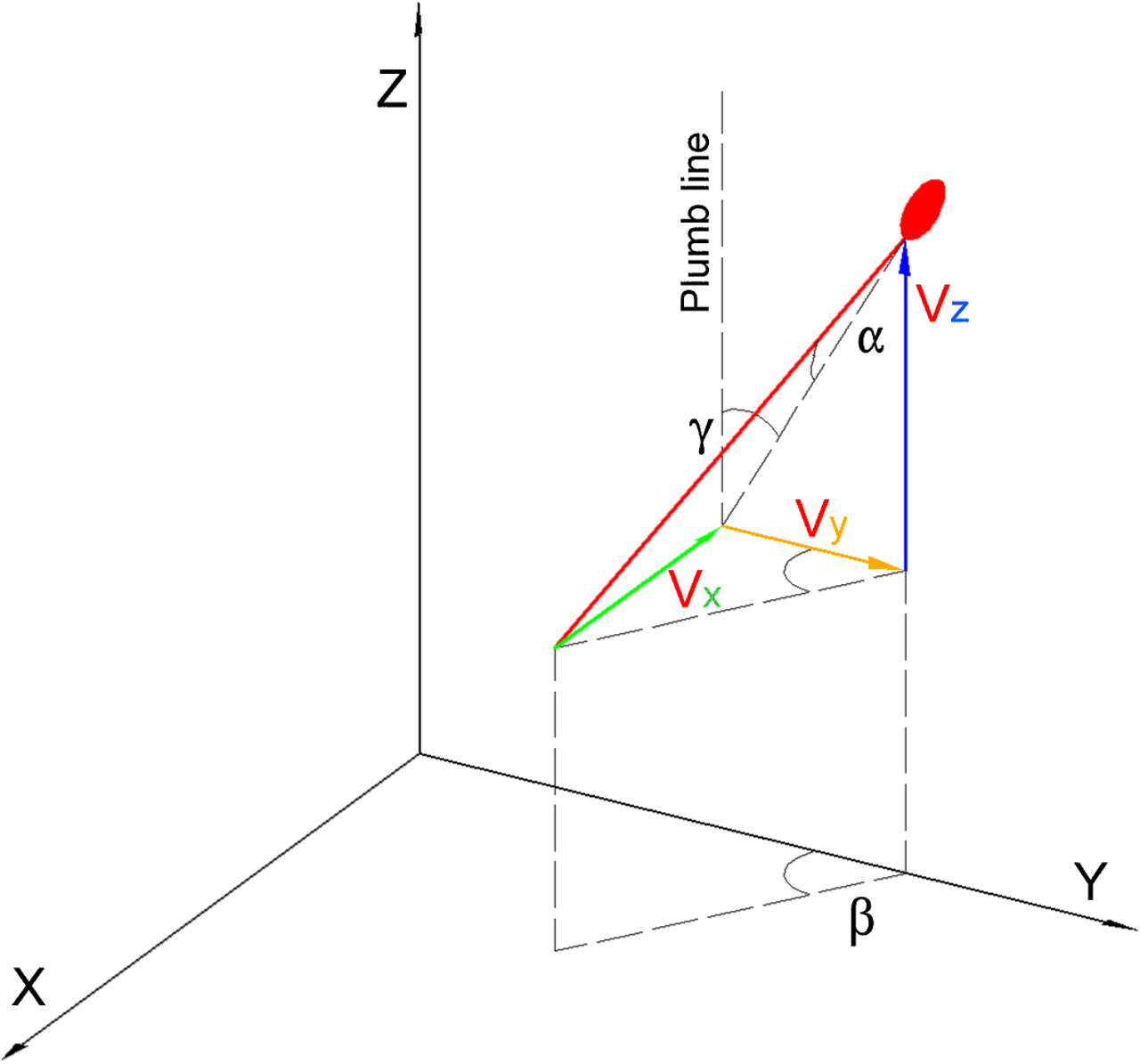
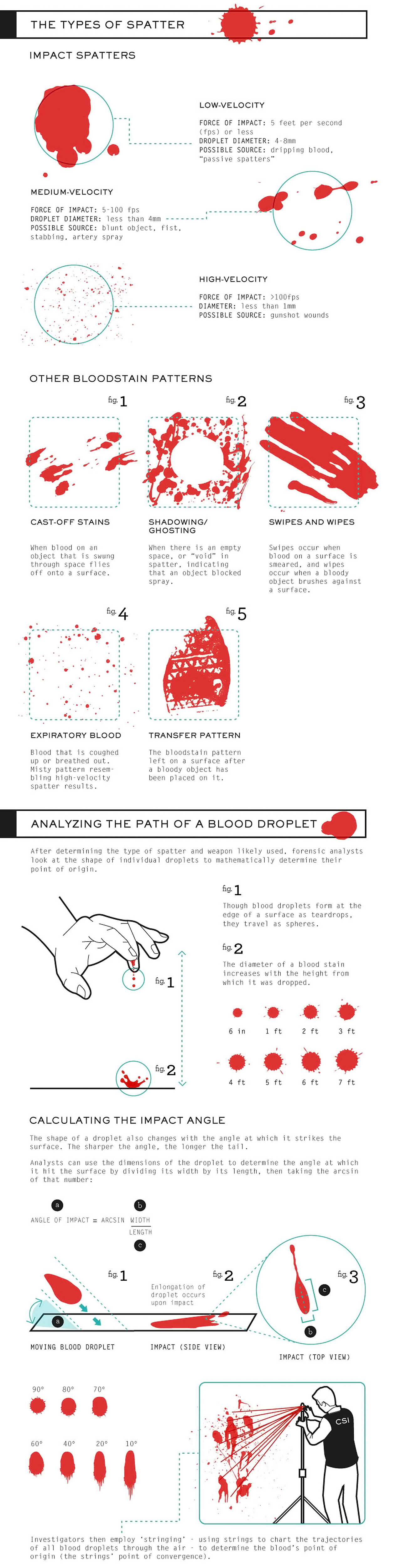
Scientists often use trigonometry to determine blood spatter impact angle. You won’t see that on TV.
The process of BPA has been fictionalized and romanticized by the TV show Dexter, among others, but the fact remains that it’s a valid technique used by crime scene analysts.
So, as a survivalist, why does this matter? First of all, in an urban disaster scenario, rioting or other large-scale violence may take the lives of innocents who end up beaten, stabbed, or shot in the street. By remembering the basics of bloodstain pattern analysis, you can quickly ascertain important facts about scenes of violence you come across. For example:
Approximately how long ago was the person killed?
How many perpetrators may have been involved?
What sort of weapons were used on the victim?
Was there a struggle, or was the victim ambushed?
Which direction did the perpetrators come from, and where did they leave?
BPA can assist in answering all these questions. Even if you’re not certain what transpired, making an educated guess about the facts of a crime can help you avoid violent criminals, and thereby avoid becoming the next victim.
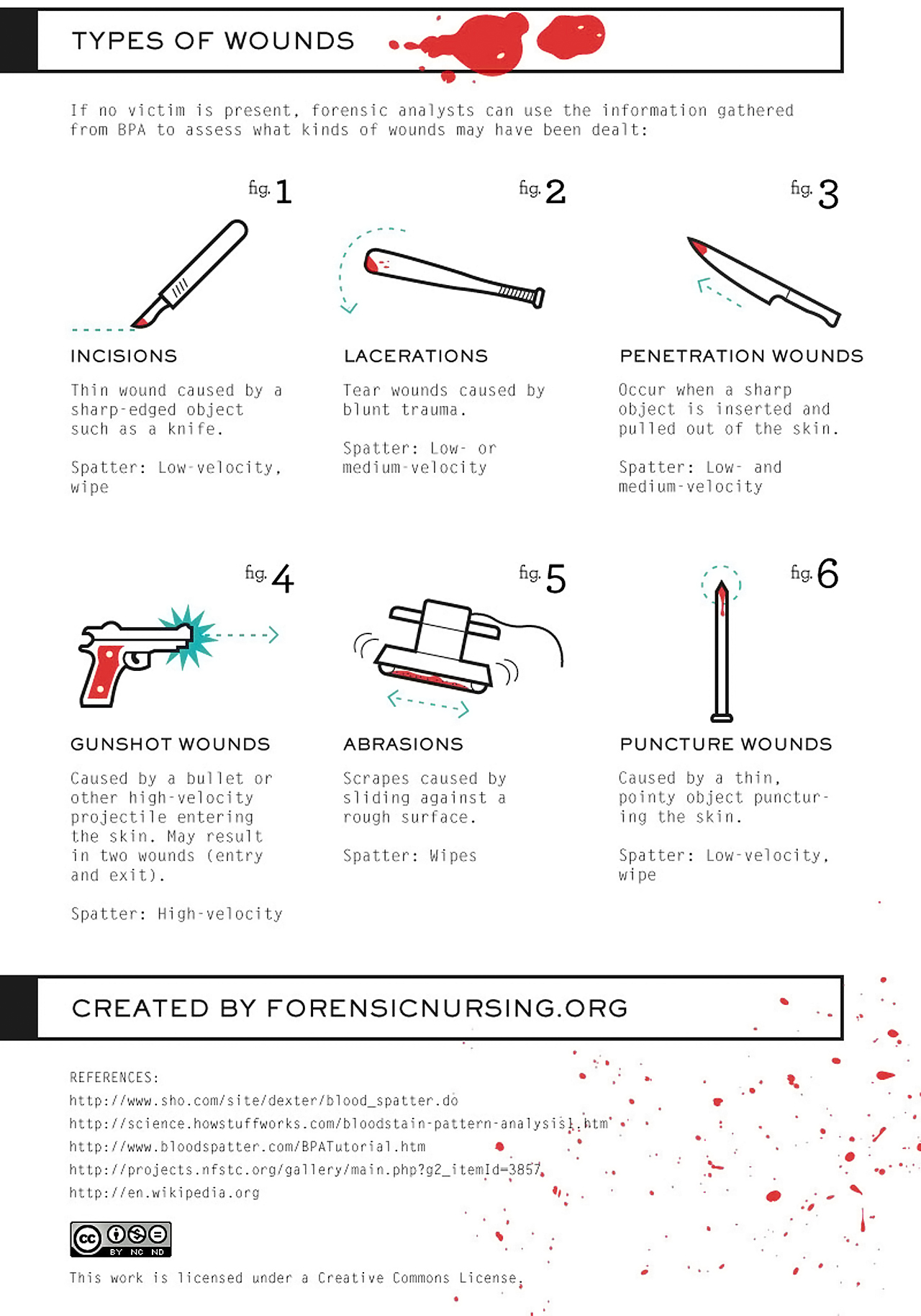
Here’s a useful infographic about bloodstain pattern analysis:
Obviously, if you’re looking to prove your analysis in a court of law, you’ll need to study BPA for years and become a true expert. However, if you’re looking to determine what likely happened at a violent crime scene, and want to prevent it happening to you in the future, a very basic understanding of bloodstain pattern analysis can be a useful survival tool.
Let’s get one thing straight: we love cool-looking tactical gear as much as the next guy. It’s undeniably fun to collect and use the best survival gear money can buy, and we all enjoy high-end clothing, tools, and weapons. Most people also like showing off a little and one-upping friends, even if we’re hesitant to admit it.
However, there’s a catch. In a true survival scenario, you do not want to stand out in a crowd, and that’s exactly what will happen if you’re covered in PALS webbing and “tacti-cool” morale patches.
In a setting like this one, wearing camouflage gear will do anything but conceal your presence.
Drawing attention to yourself as a prepper or survivalist is a good way to get robbed or killed when SHTF. Just like we said, everyone likes high-end gear, so don’t be surprised when someone notices yours and wants to take it from you. Even if there’s not a major disaster, people will naturally be more suspicious of someone who’s noticeably carrying a pocket knife, or dressed in a militaristic fashion. It’s an unavoidable fact of life.
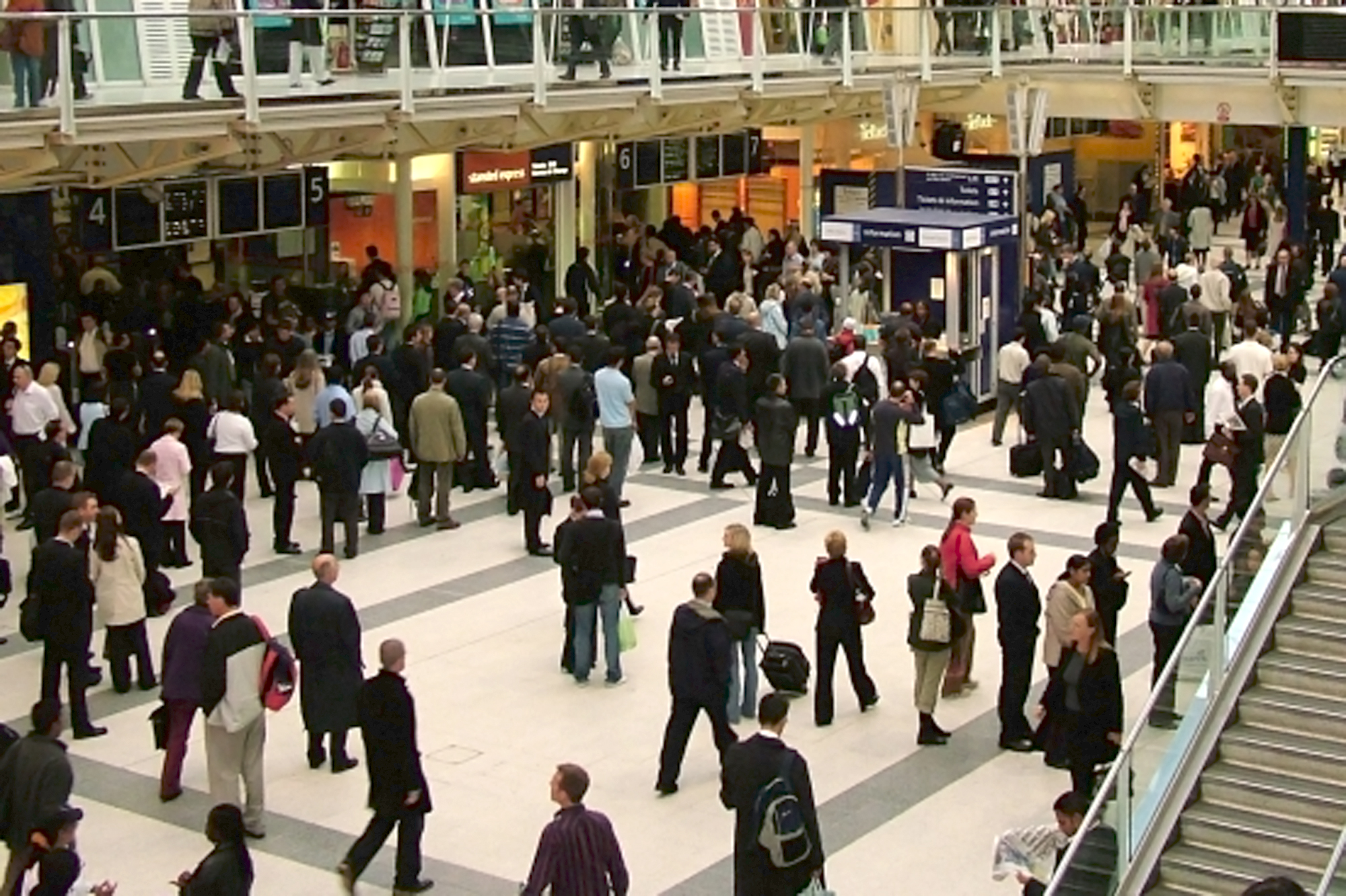
This is how you want people to view you: as another nameless, faceless form in the crowd.
This brings us to the concept of The Gray Man. To be The Gray Man means to blend seamlessly into the crowd, and to appear as nondescript as possible. Obviously, this means your appearance may vary based on your setting. Wearing cargo pants and a flannel shirt on Wall Street will look out of place, just like wearing a tailored suit in a low-income neighborhood.
Survival instructor Russ Kolkman explains the concept more in this video:
Obviously, there’s a lot more that could be said about the The Gray Man appearance, but the point we want to make is this: always keep this concept in mind when preparing for urban survival. The better you fit your surroundings in a disaster, the less people will notice you, and the less people notice you, the better your chances of staying alive and unharmed.
To survive in urban areas, be the Gray Man—formless and anonymous.
If you’ve spent any amount of time on YouTube watching survivalist videos, you’ll know that there’s a wealth of useful information to be had, and hundreds of different channels to follow. You can learn anything from fire-starting techniques to creative uses for paracord. However, there’s one major catch: a lot of the bushcraft videos out there can be as slow-paced and boring as watching paint dry.
That’s why when we found the AlfieAesthetics YouTube channel, we knew we had to share it. Alfie, the host, is a survivalist from the United Kingdom. His articulate speech, considerable knowledge, and dry humor will make you want to keep watching—rather than nodding off to sleep.
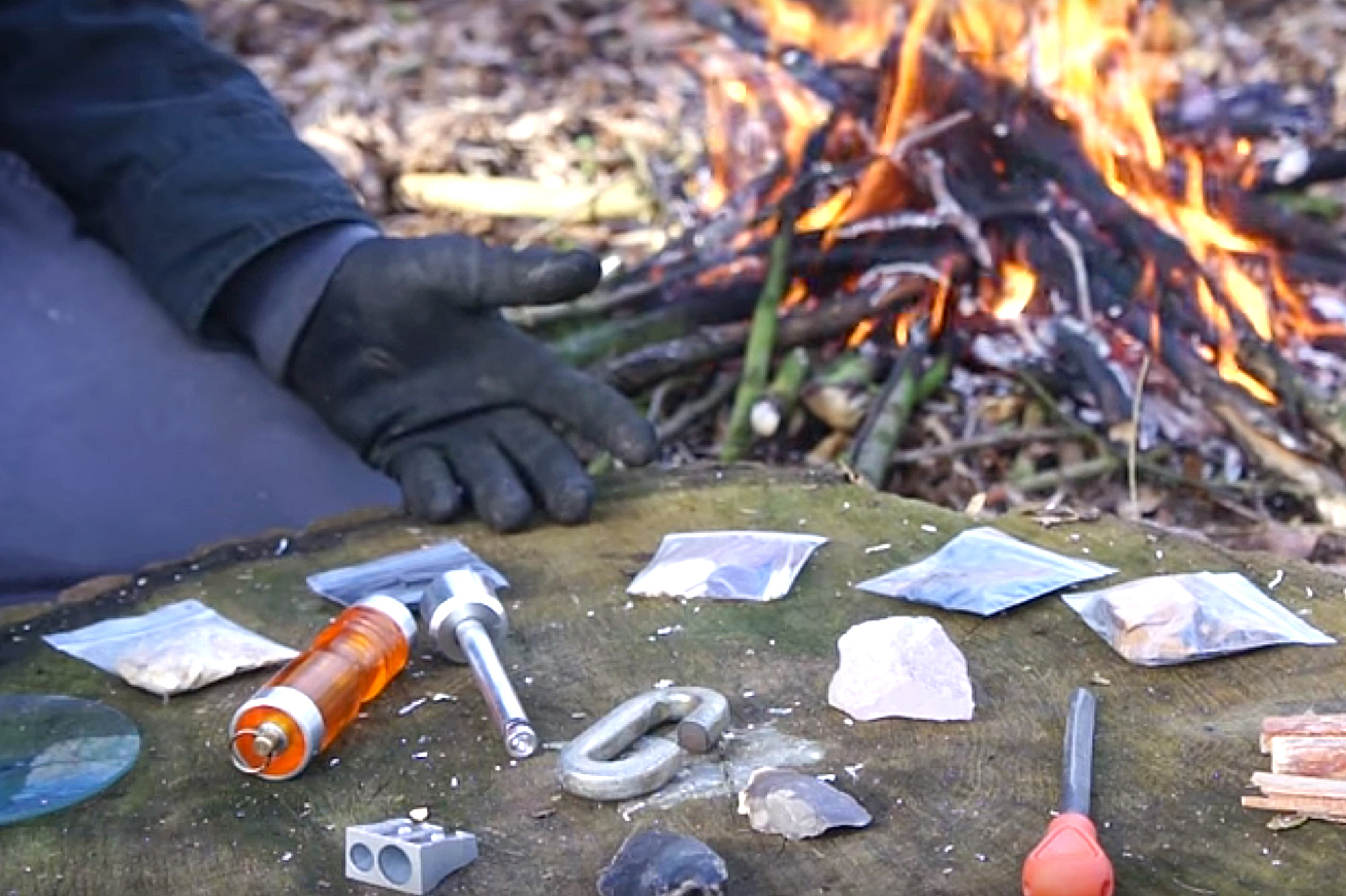
Alfie showing off and demonstrating some items from his fire-starting kit.
Here’s a 15-minute video about Alfie’s bug-out bag setup, which will give you a feel for his humor and style. (Warning: most of his videos contain some not-safe-for-work language.)
Want more? We can’t blame you. This 51-minute video is jam-packed with info on fungi and wild edibles. Check it out:
One small downside for non-U.K.-based survivalists is the use of British units and terminology, such as pounds instead of dollars, and some metric measurements. Fortunately, it’s not hard to use Google to convert a few units if you’re unclear.
If you enjoy Alfie’s fun and informative bushcraft videos, check out the AlfieAesthetics YouTube channel for lots more. Knowledge weighs nothing, and it’s a huge aid in a survival situation, so soak up as much as you can.
A durable, razor-sharp fixed-blade knife is one of the most essential tools for survival. Your knife should act as an extension of your body, effortlessly splitting firewood and precisely skinning small game. It’s an item you’d better be ready to stake your life on in a survival scenario.
If you’re looking for a rugged knife that’s built like a tank, TOPS Knives are an excellent choice. The company has been manufacturing hand-finished blades at its facility in the heart of the Rocky Mountains since 1998, and its designs have been tested and used by numerous military operators worldwide. That’s why the company’s motto is “Special Ops Trust TOPS”.
We previously tested the TOPS Anaconda 7B as part of our “12 Tools for Survival” guide, and found that it was a high-quality piece and a real workhorse.
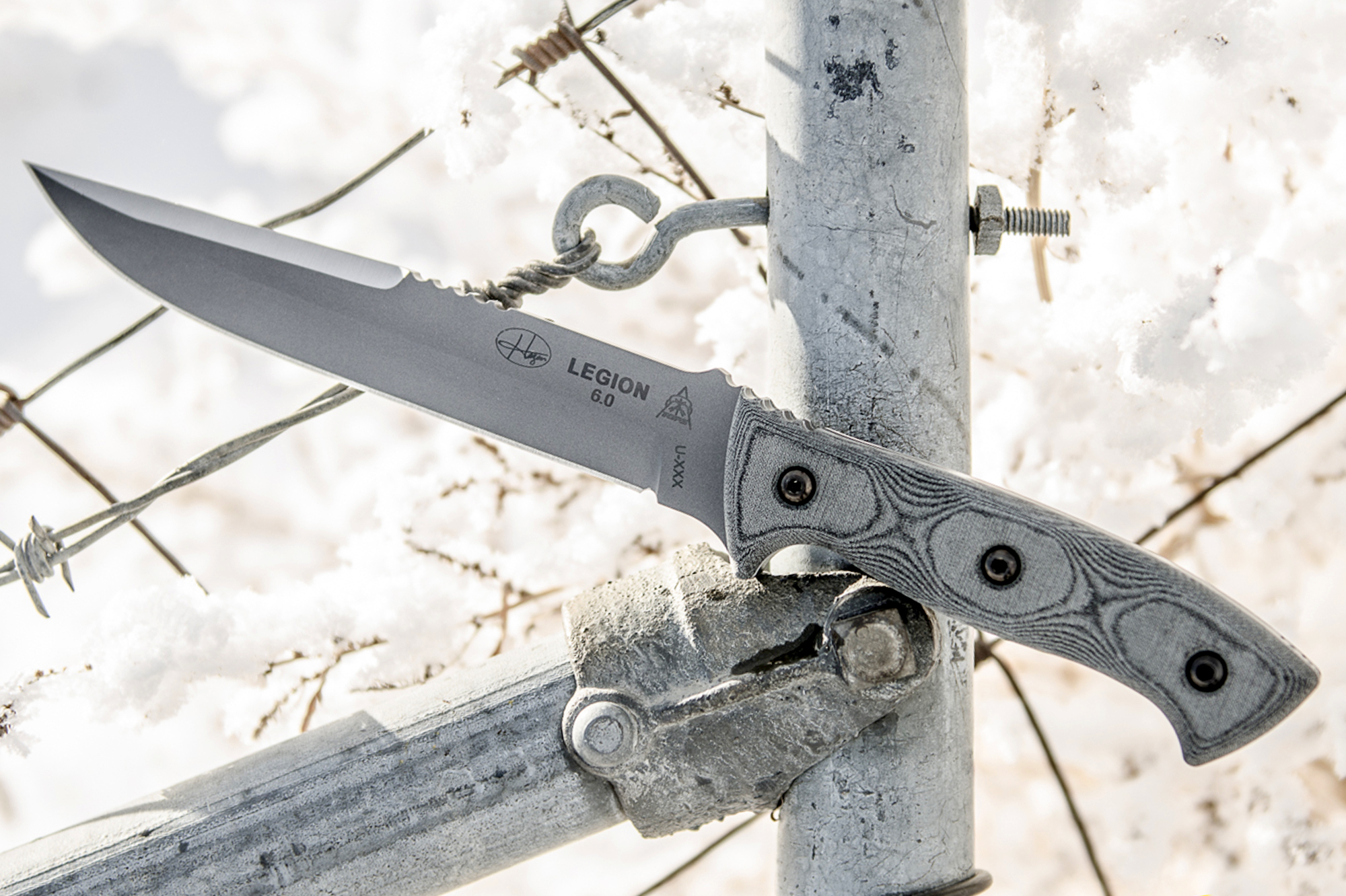
Recently, TOPS announced the addition of a new model to its line, the TOPS Knives Hazen Legion 6.0. This represents their first new knife of 2016, and was created in a collaborative effort with experienced blade designer Mark Hazen. The blade debuted at this year’s SHOT Show.
Check out the video below to see it in action.
With over four decades of knife-making experience, it’s safe to say Hazen knows a thing or two about blades. However, demand was so high for his hand-made knives, he came to TOPS and partnered with them to produce the Legion 6.0 in larger quantities. Thanks to the additional manpower, TOPS is able to produce the design faster, but retain the excellent precision and quality Hazen expected.
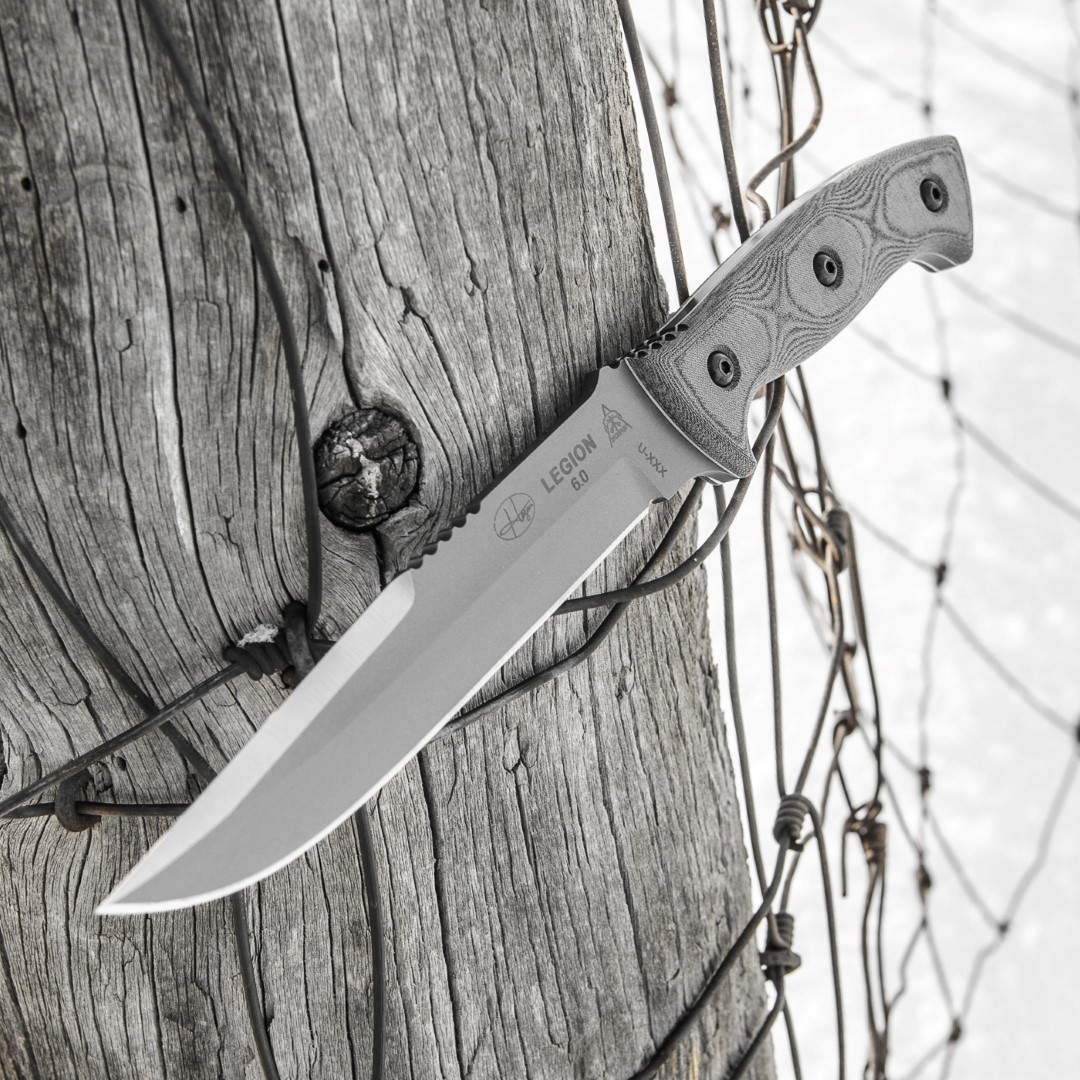
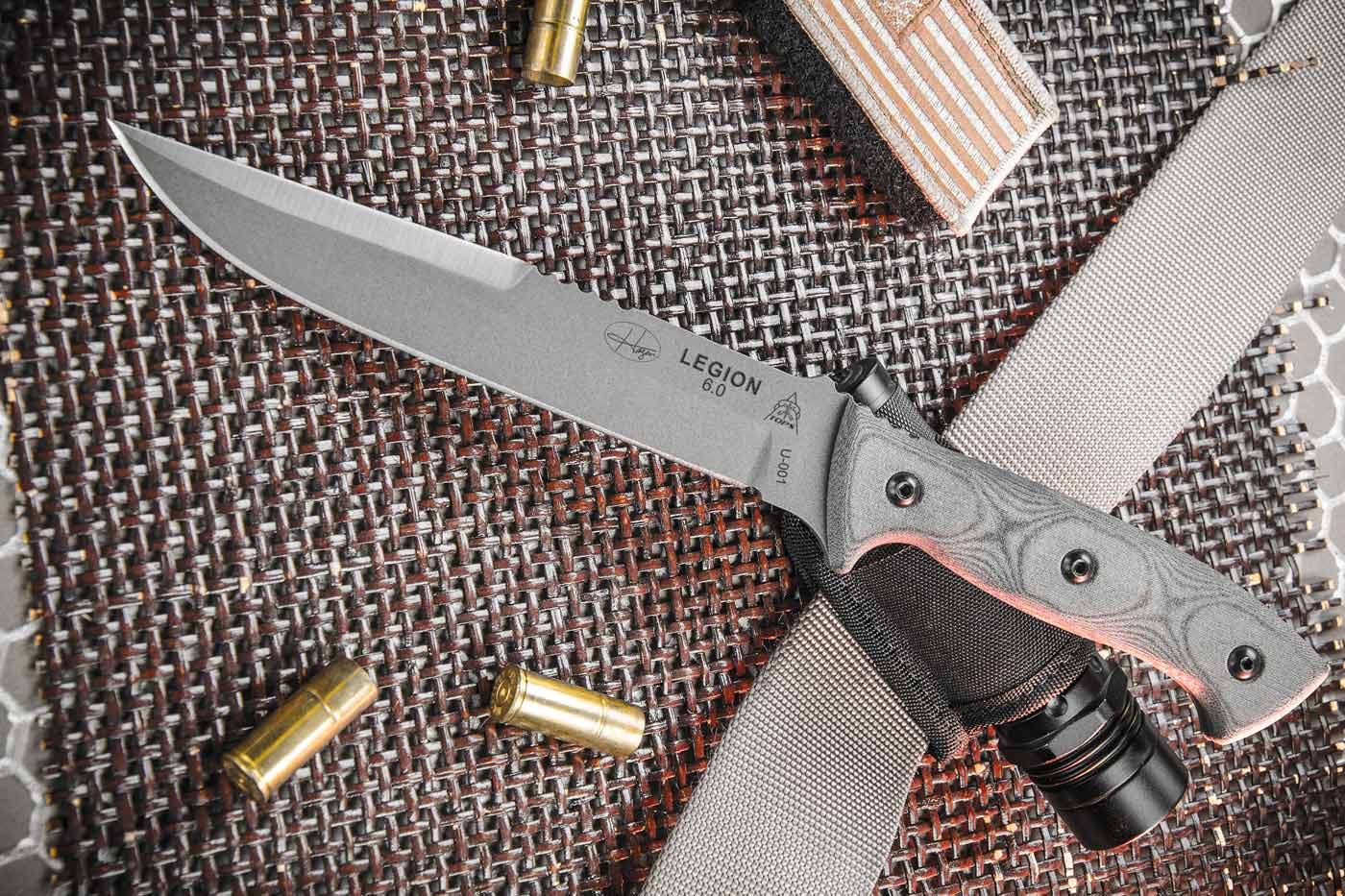
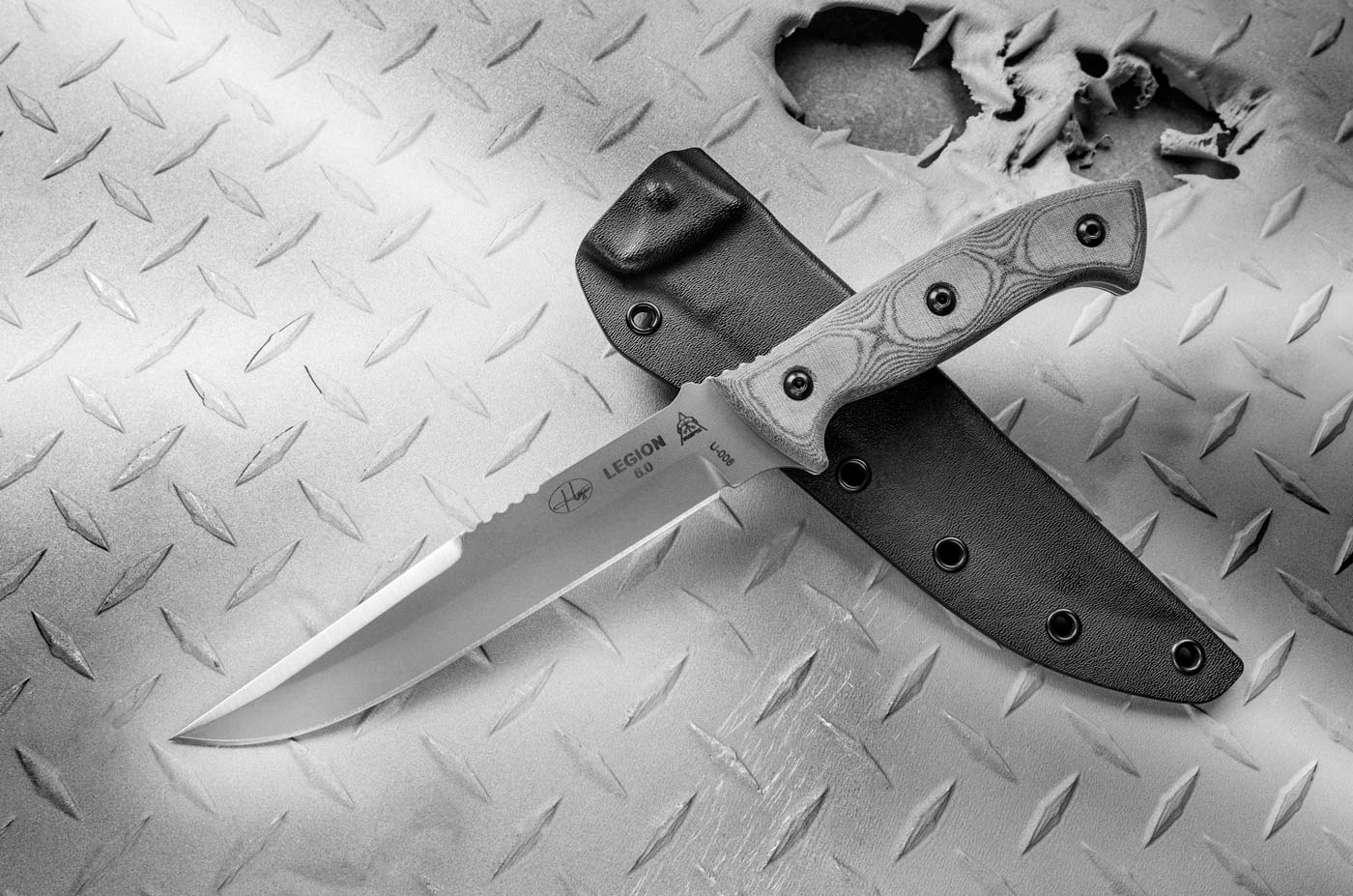
The TOPS Knives Hazen Legion 6.0 is designed for combat, with a 6-inch cutting edge and Hunter’s Point shape. The Legion is sculpted from 1095 high-carbon steel, providing excellent durability and easy sharpening in the field, and uses grippy and tough Black Linen Micarta handle scales.
This knife also includes a durable Kydex sheath, with an integrated belt clip for easy access. Like most TOPS knives, it can also be customized with blade serrations, or with textured “Rocky Mountain Tread” handle scales for added grip.
For those of us who are interested in learning to survive adverse conditions, one of the best sources of of knowledge is history. Previously, we have shared the stories of real-world survivors like Poon Lim, who lived for a record-setting 133 days alone on a life raft in the ocean. Today, we’ll be sharing another real-life story of solitary survival—one which would go on to inspire the most famous castaway novel of all time, Robinson Crusoe.
Alexander Selkirk
Back in the 17th century, the world was more sparsely populated, and lacked the technology for instant communication across vast distances. Violent crime, war, civil unrest, incurable diseases, and thousands of other everyday dangers meant living past the age of 50 was unlikely during the 1600s. There’s no question that it was a much more difficult time to be alive than the present.
During this period, a boy named Alexander Selkirk was born as the 7th son of a humble cobbler. In 1676, the family lived in Lower Largo, Fife, Scotland. At the time, Scotland was independent from England, and a “Glorious Revolution” was about to occur in 1688, involving rioting and a coup that would depose the king.
This tumultuous environment was a difficult place to be a child, and Selkirk grew up with a rebellious nature and “a quarrelsome and unruly disposition”. To escape legal troubles in Scotland, he struck out to sea at age 17 and became a buccaneer, which essentially amounted to being an English-government-sanctioned pirate.
While living at sea, Selkirk and his fellow crewmen fought against the French and the Spanish during the War of the Spanish Succession in the early 1700s. Some historians call this the first true world war in human history, and it hardened Selkirk into an experienced sailor.
Selkirk’s Fateful Voyage
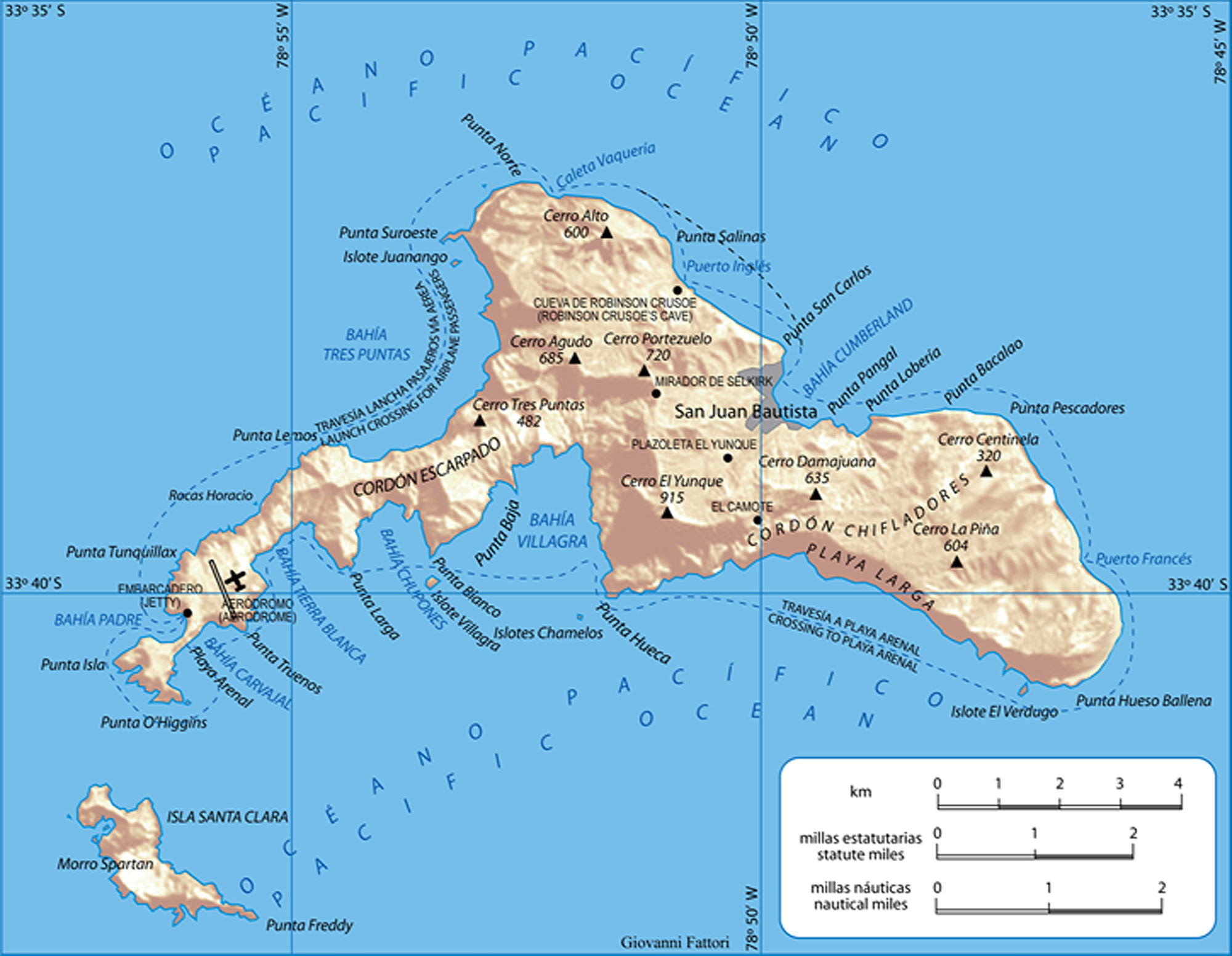
Isla Más a Tierra, the island where Selkirk was marooned in 1704. Source: Wikipedia
After narrowly surviving hard battles against Spanish galleons, Selkirk soon became the sailing master of a ship called the Cinque Ports, serving under a 21-year-old Captain Thomas Stradling. In September 1704, the ship needed to resupply fresh water and other resources. So, Stradling stopped the Cinque Ports at an island in the Juan Fernandez Archipelago, 416 miles off the coast of Chile. The 18.5-square-mile volcanic island was known as Isla Más a Tierra, and was completely devoid of human life.
While resupplying the ship, Selkirk (true to form) got into an argument with Captain Stradling about the seaworthiness of their ship. Its wood had sustained damage due to a worm infestation, and Selkirk was worried it would sink before they could return home, spelling a likely death sentence for all on board. However, the captain angrily rejected this notion, and said the ship would be just fine.
Selkirk was so frustrated with the Captain, he said he would rather be marooned on Isla Más a Tierra than set foot on the leaky ship again. Stradling took this declaration literally, handed Selkirk a few supplies, and granted his wish to stay on the island. Selkirk realized his mistake and tried desperately to get back on board, but Stradling refused to allow it, sailing away without him.
Life as a Castaway
As Selkirk watched the Cinque Ports disappear on the horizon, he was left with only his personal belongings: a flintlock pistol, a knife, a hatchet, some oats, a little tobacco, a Bible, a few navigational instruments from the ship, and the clothes on his back. He would be stranded here alone for over four years.
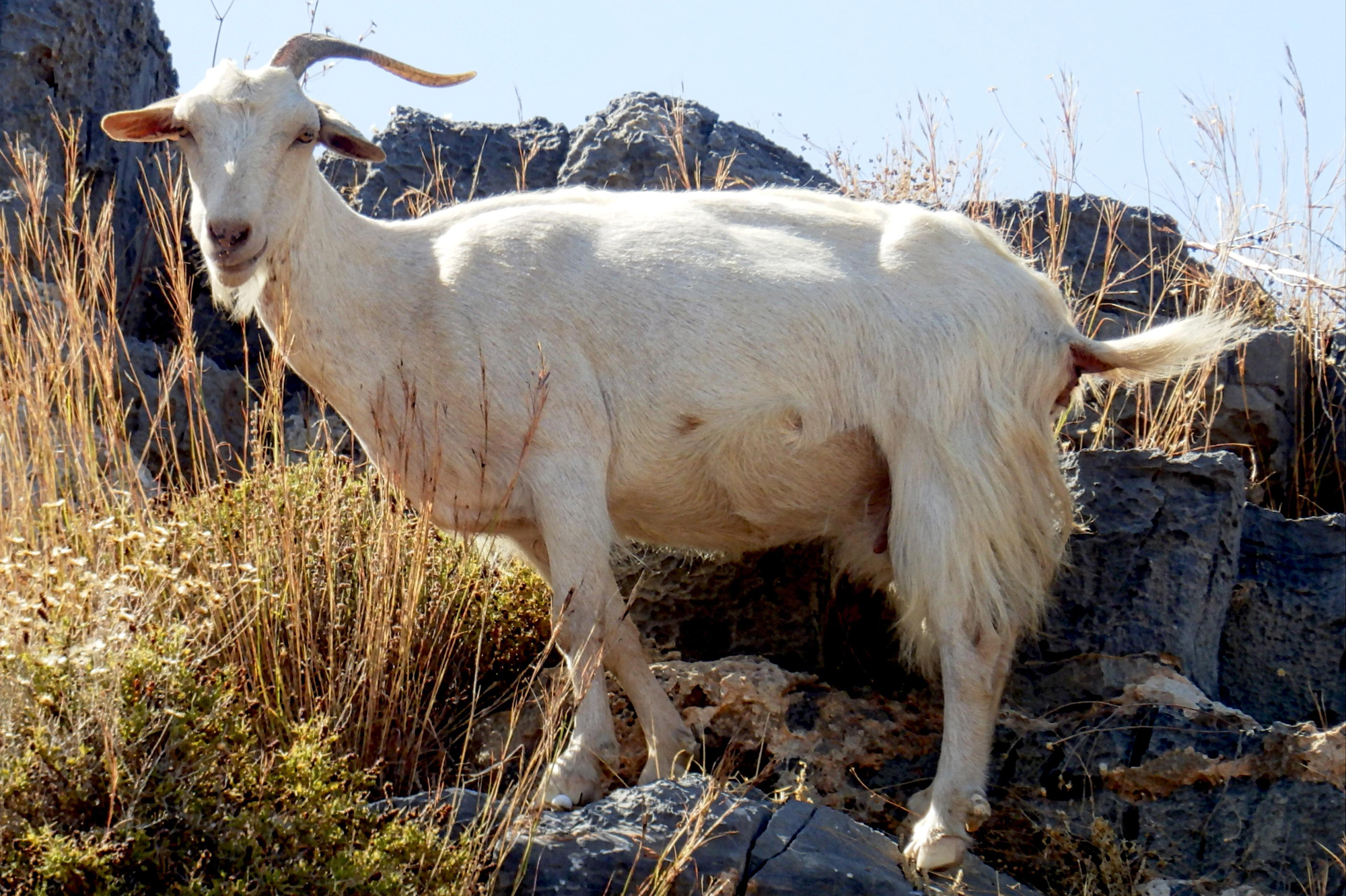
Selkirk was able to sustain himself by hunting and milking wild goats on the island.
Luckily for Selkirk, Más a Tierra hadn’t always been uninhabited, and previous Spanish sailors had left rats, feral cats, and a handful of wild goats on the island. The goats served as food sources for Selkirk—he hunted them at first with his pistol, and once the gunpowder ran out, on foot with his knife. The vicious ship-rats would attack him in his sleep, but he eventually befriended some feral cats for protection.
Selkirk also used every bit of the island’s resources to their fullest. He fished, caught spiny lobsters, milked goats, and foraged for wild turnips, cabbage, and pepper berries. He even crafted a new knife out of barrel hoops he found on the beach after his original blade dulled and broke.
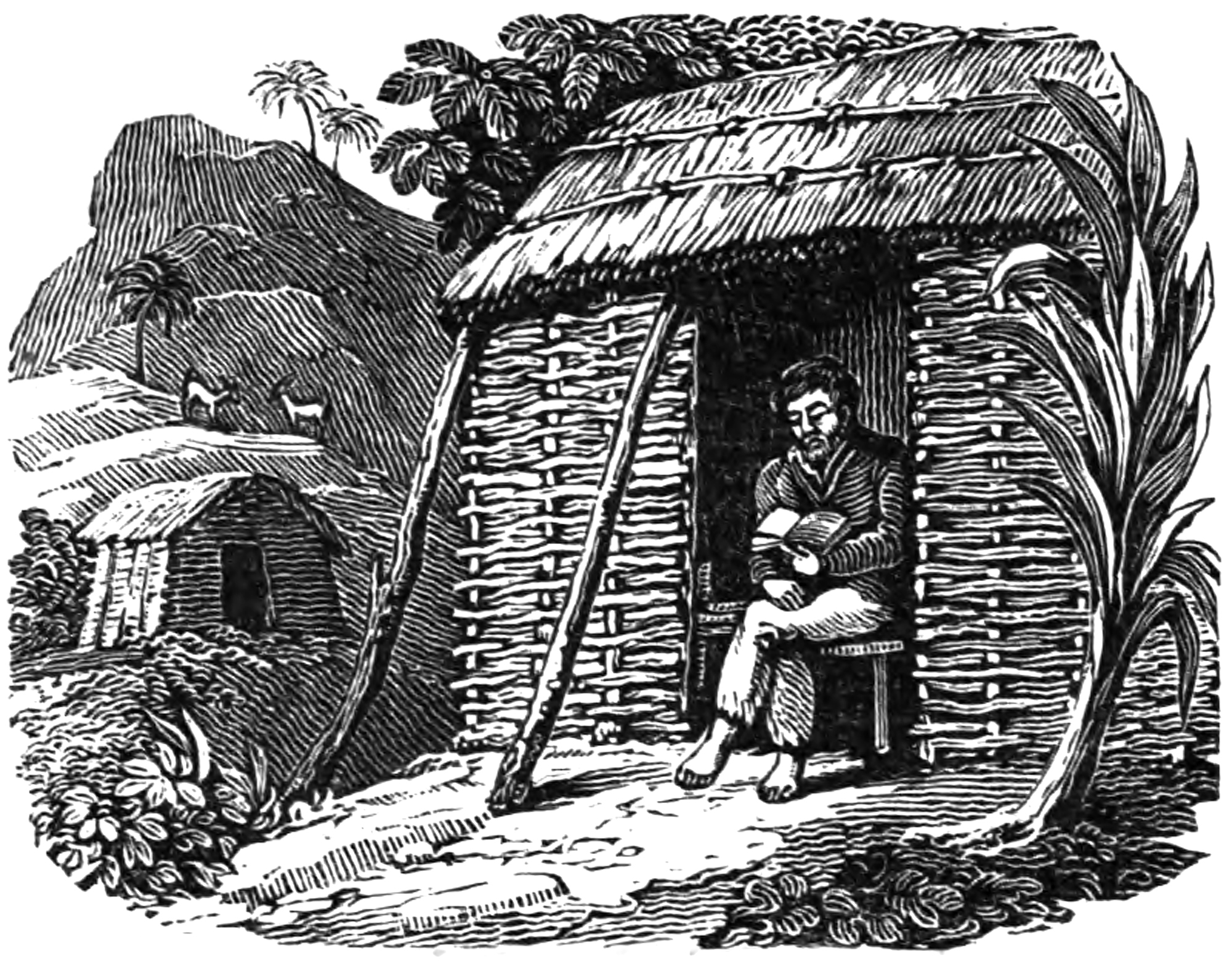
An 1837 illustration of Selkirk reading in one of the two huts he built. Source: Wikipedia
Although the island’s weather was relatively mild, Selkirk still needed shelter from the rain and colder nighttime temperatures. So, he chopped down pepper trees and built two huts, one for sleeping and one for cooking or food storage.
His clothes wore out after a few years, so he skinned goats and sewed the skins into new clothing using a nail and some thread. His shoes wore out also, but he eventually developed callouses and decided to remain barefoot. Selkirk also kept his mental acuity by reading the Bible he was left with, and singing Psalms.
During the four years and four months Selkirk lived on the island, two ships came ashore. However, there was a problem: both ships were occupied by Spanish soldiers, and Selkirk knew he would be captured, imprisoned, or even killed if they found him. One of the two ships spotted him, but his knowledge of the island’s terrain helped him narrowly escape, until the Spaniards gave up and sailed away.
Finally Rescued
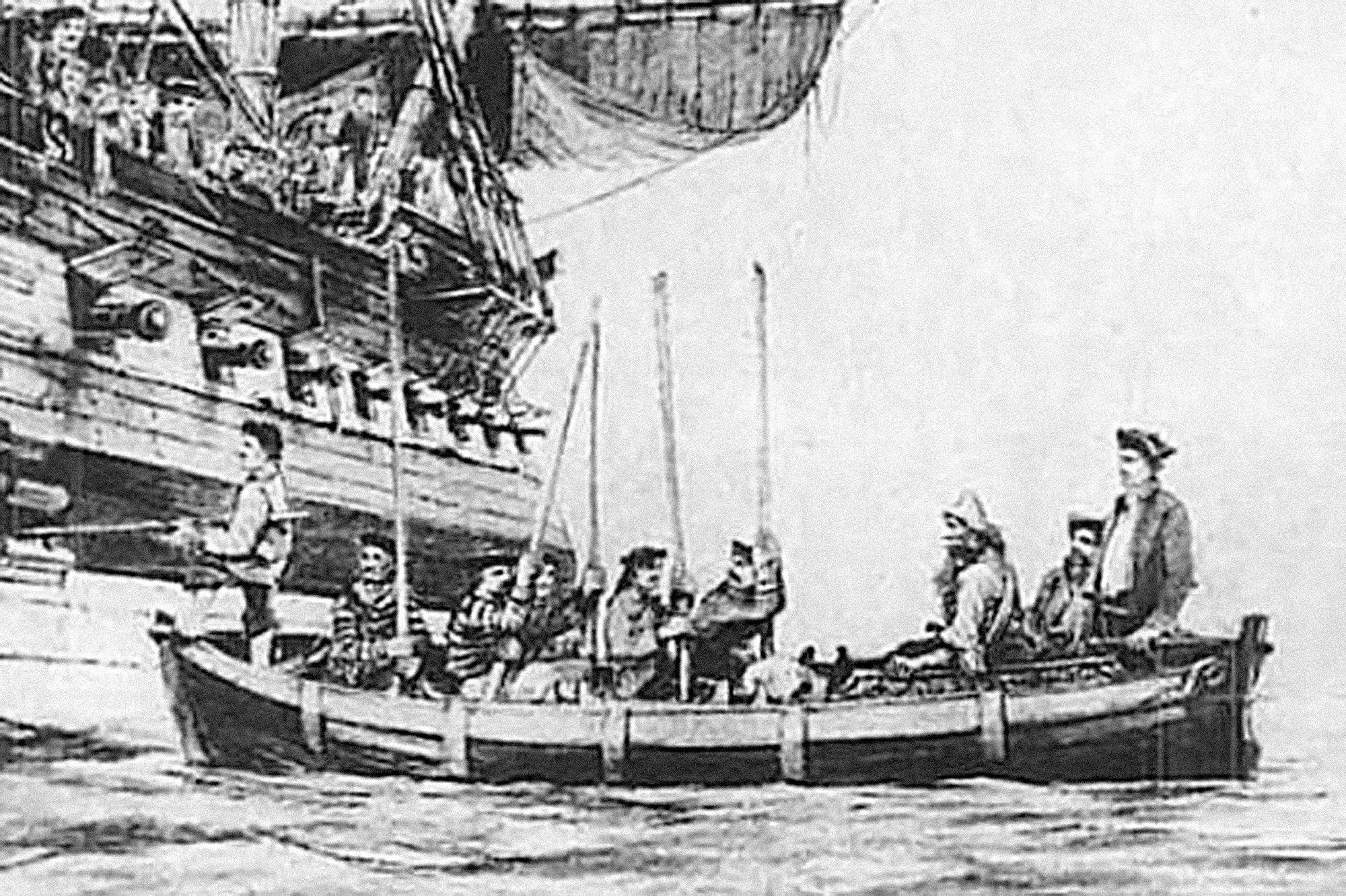
After years of solitude and self-reliance, the incredible survival story of Alexander Selkirk finally came to an end. On February 2nd, 1709, an English privateering ship called the Duke landed on the island. Selkirk was described as “incoherent with joy” at the sight of friendly humans, and helped the Duke’s crew recover from scurvy by providing food and water for them.
An 1859 illustration of Selkirk being taken aboard the Duke. Source: Wikipedia
Woodes Rogers, the captain of the Duke, was impressed by Selkirk’s survival skills. He wrote, “One may see that solitude and retirement from the world is not such an insufferable state of life as most men imagine, especially when people are fairly called or thrown into it unavoidably, as this man was.” Rogers made Selkirk the second mate of the Duke, and eventually gave him a ship of his own.
Rather than immediately return home to Scotland, Selkirk remained at sea, plundering jewels from Spanish ships and hunting for gold galleons off the coast of Mexico. After spending several years sailing around the world, he finally headed back to England, and enjoyed life as a local celebrity for the next decade.
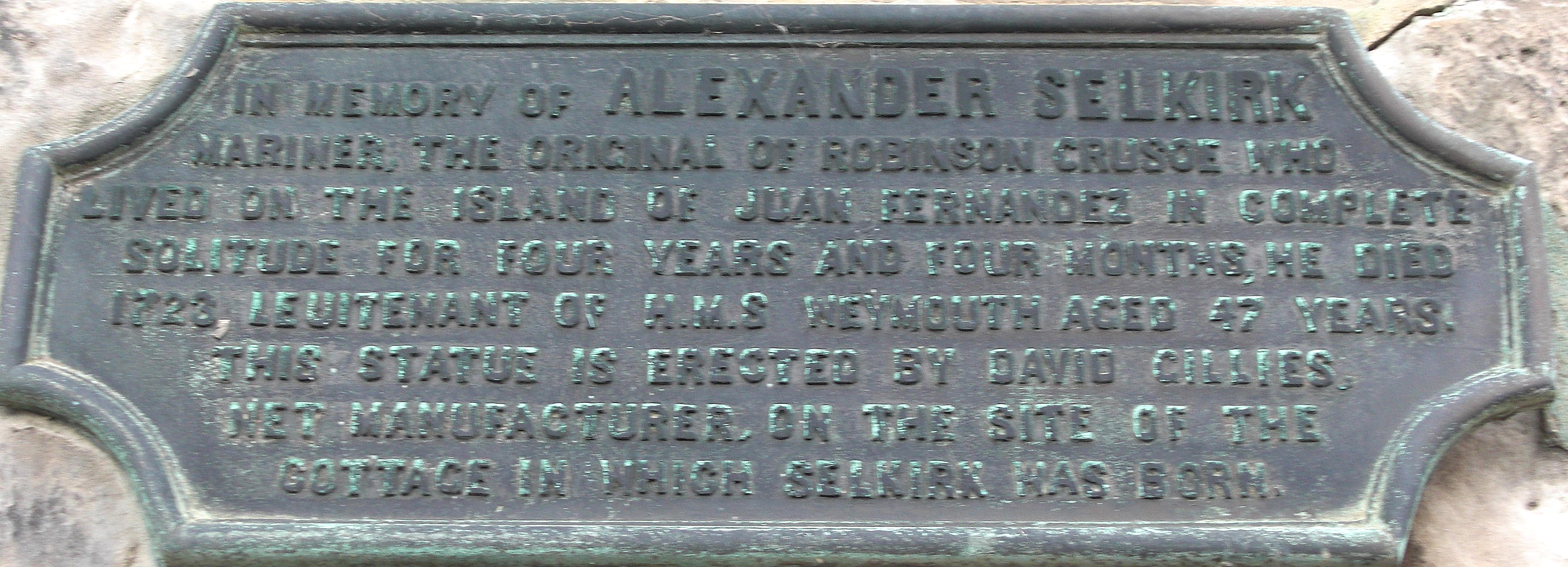
A plaque in Lower Largo, Scotland, which commemorates Selkirk. Source: Wikipedia / SylviaStanley
Selkirk eventually sailed away from England yet again in 1721, but contracted Yellow Fever near the coast of Africa, and died on the ship in 1723. He was buried at sea.
Selkirk’s amazing story would go on to inspire author Daniel Defoe to write Robinson Crusoe, a novel that has remained popular for nearly 300 years. Many aspects of Selkirk’s ingenuity, such as the use of goat skin for clothing, were incorporated into the book.
The Fate of Those Who Abandoned Selkirk
Ironically, the fate of the Cinque Ports ship was exactly as Selkirk had predicted. The vessel took on water rapidly after leaving Isla Más a Tierra, and sank near a much smaller island off the coast of Colombia, forcing Stradling and the entire crew to surrender to the Spanish in order to avoid starvation. The Spanish soldiers then took the men to be tortured and imprisoned in Lima, Peru. Only 18 of the original 63 men were said to survive the ordeal.
The island of Malpelo, where the Cinque Ports crew was stranded before surrendering to the Spanish. Source: Wikipedia
Kickstarter is a great way for small startup companies to share their ideas with the world, acquire much-needed funding, and generate public interest in buying their products. We have shared several interesting Kickstarter projects in the past, such as the DPx HEST/F Urban folding knife and the Ti2 Whar-Biner EDC tool.
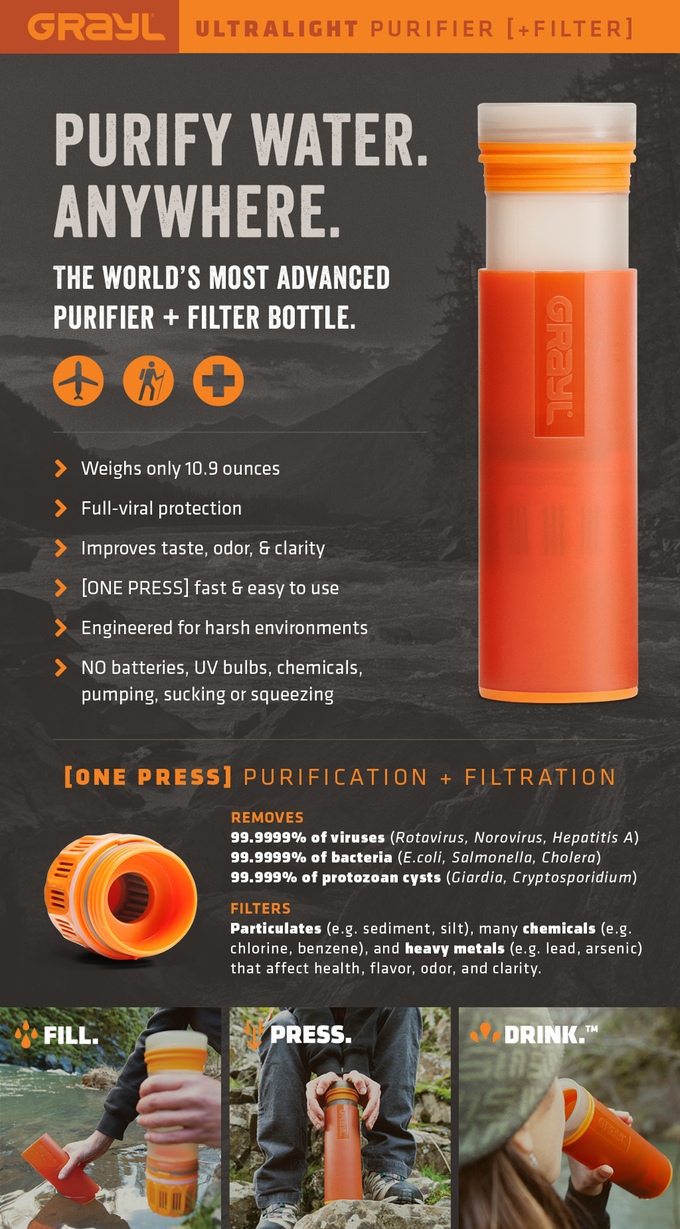
GRAYL claims its patented Ultralight water bottle is “the world’s best”.
This time around, we spotted a water purification device that caught our eye on Kickstarter: the GRAYL Ultralight water bottle. This comes from Seattle-based company GRAYL, which was founded in 2012 by CEO Nancie Weston, as a result of concerns about disposable water bottle pollution and the poor quality and taste of water she experienced while traveling.
The Ultralight water bottle was in development at GRAYL for over four years, and the company has boldly claimed it to be “the world’s best purifier” and “the only bottle anyone anywhere will ever need”. While that last part may seem a bit lofty, the bottle’s specs are actually pretty impressive.
It features full-spectrum purification and filtration, meaning that it removes over 99.999% of bacteria, viruses and protozoa. It even removes particulates such as silt, chemicals such as chlorine, and heavy metals such as lead. This is substantial, as many competitive products only filter a handful of these pathogens.
At only 10.9 ounces, this water bottle also certainly lives up to the Ultralight name.
So, how does it work? Simply fill the outer shell with virtually any fresh water source, then insert the inner filter carrier, and use your body weight to press down firmly.
The patented technology forces water through the interchangeable filter cartridge in under 15 seconds, leaving you with clean, purified water. Each cartridge is good for about 300 uses, which amounts to 40 gallons of water.
Since launching the Kickstarter campaign, GRAYL has almost quadrupled their $25,000 funding goal, which is a very good sign for this new product.
The GRAYL Ultralight is currently available through the Kickstarter page for $49, and the company estimates normal retail price will be $60 once the Kickstarter ends in March. For more information on GRAYL and their other products, visit TheGrayl.com.
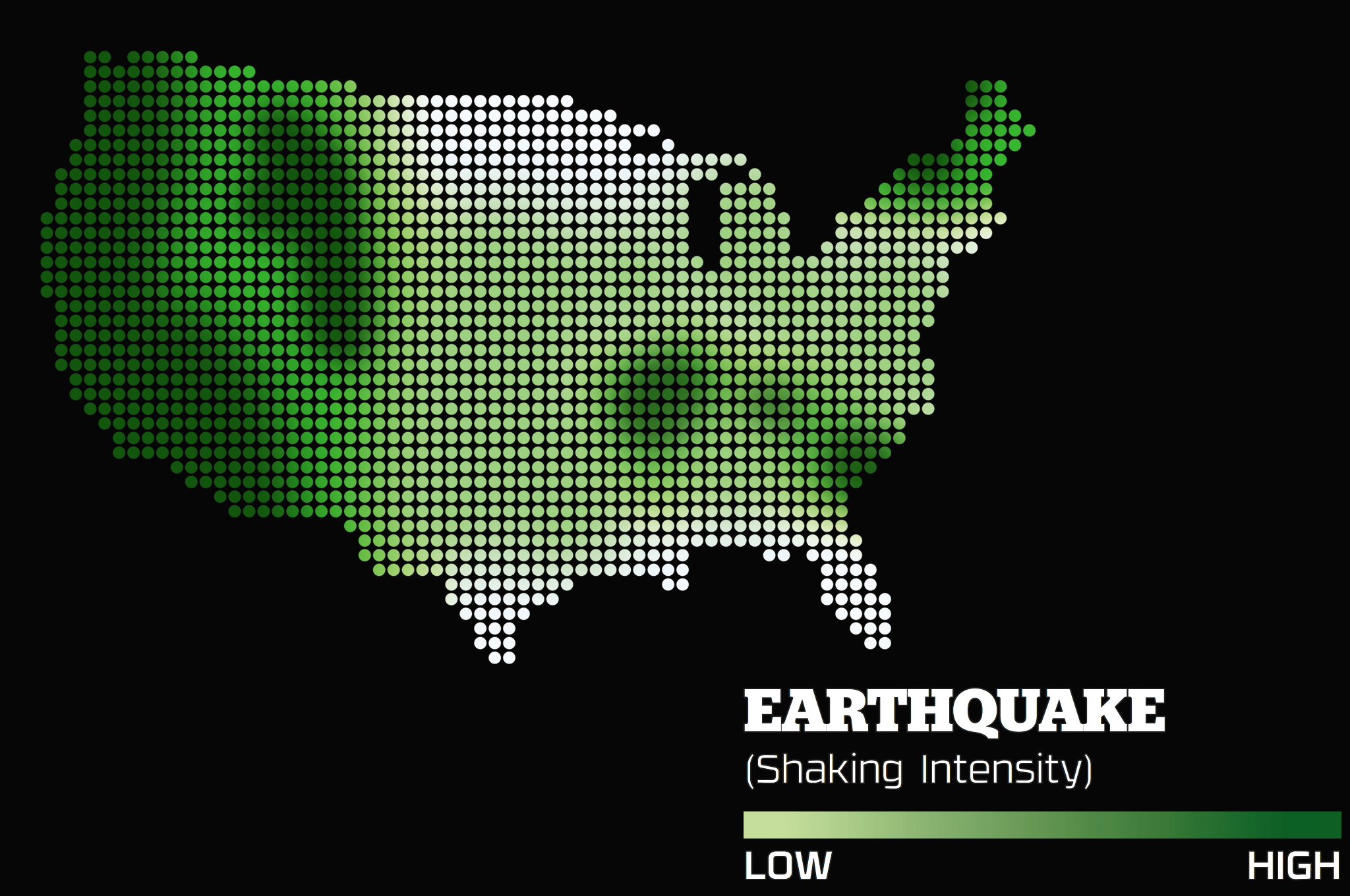
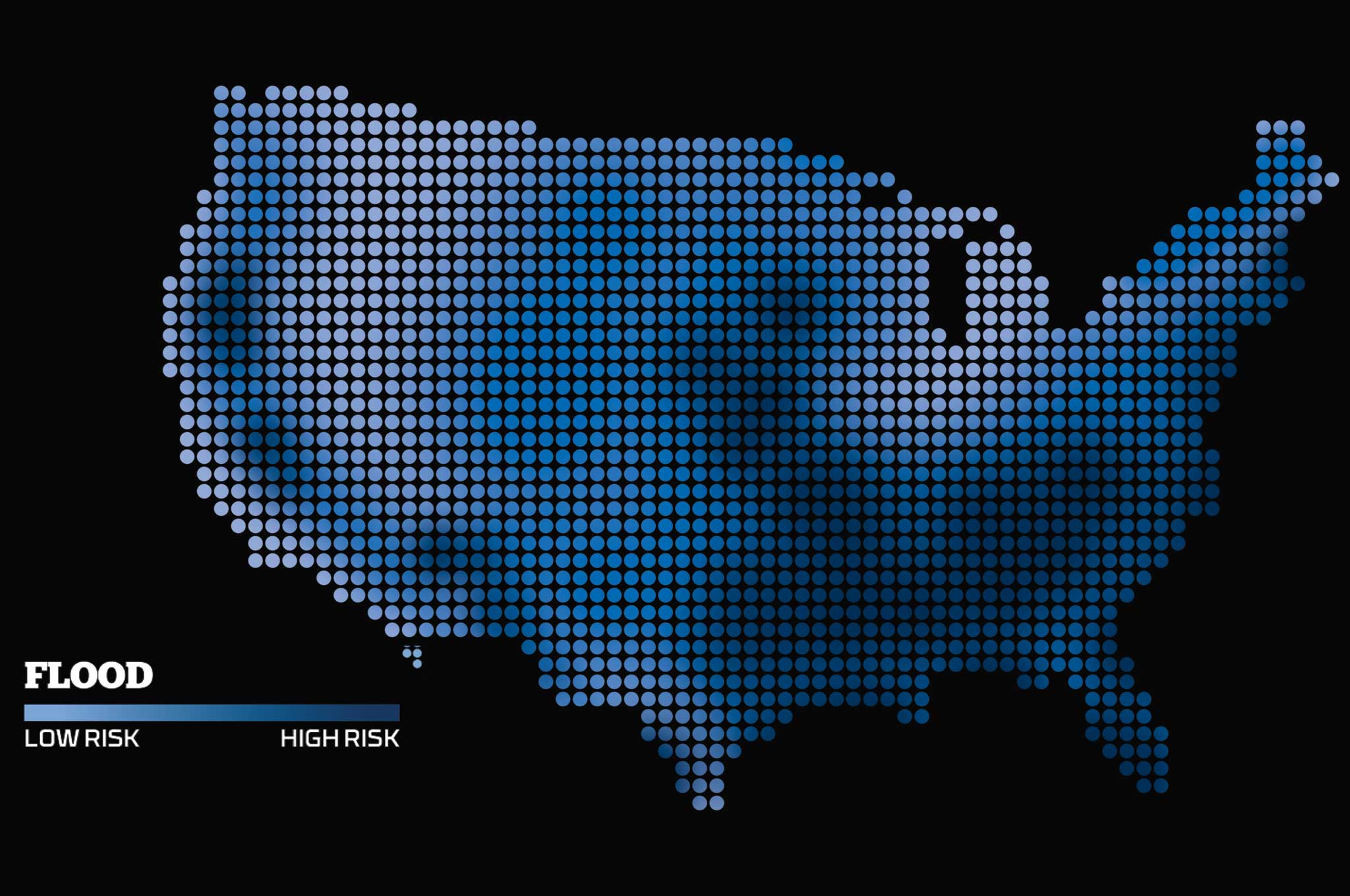
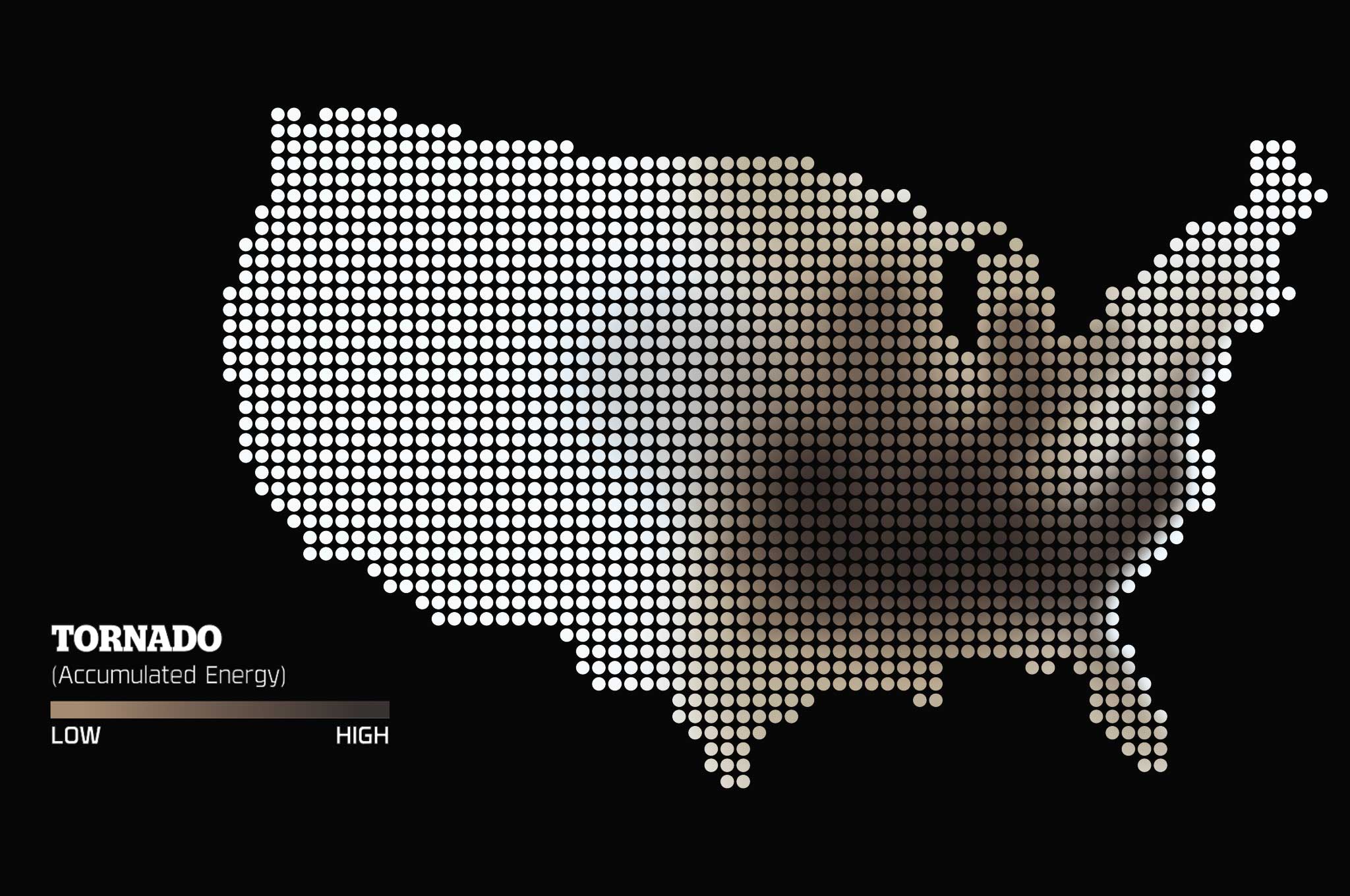
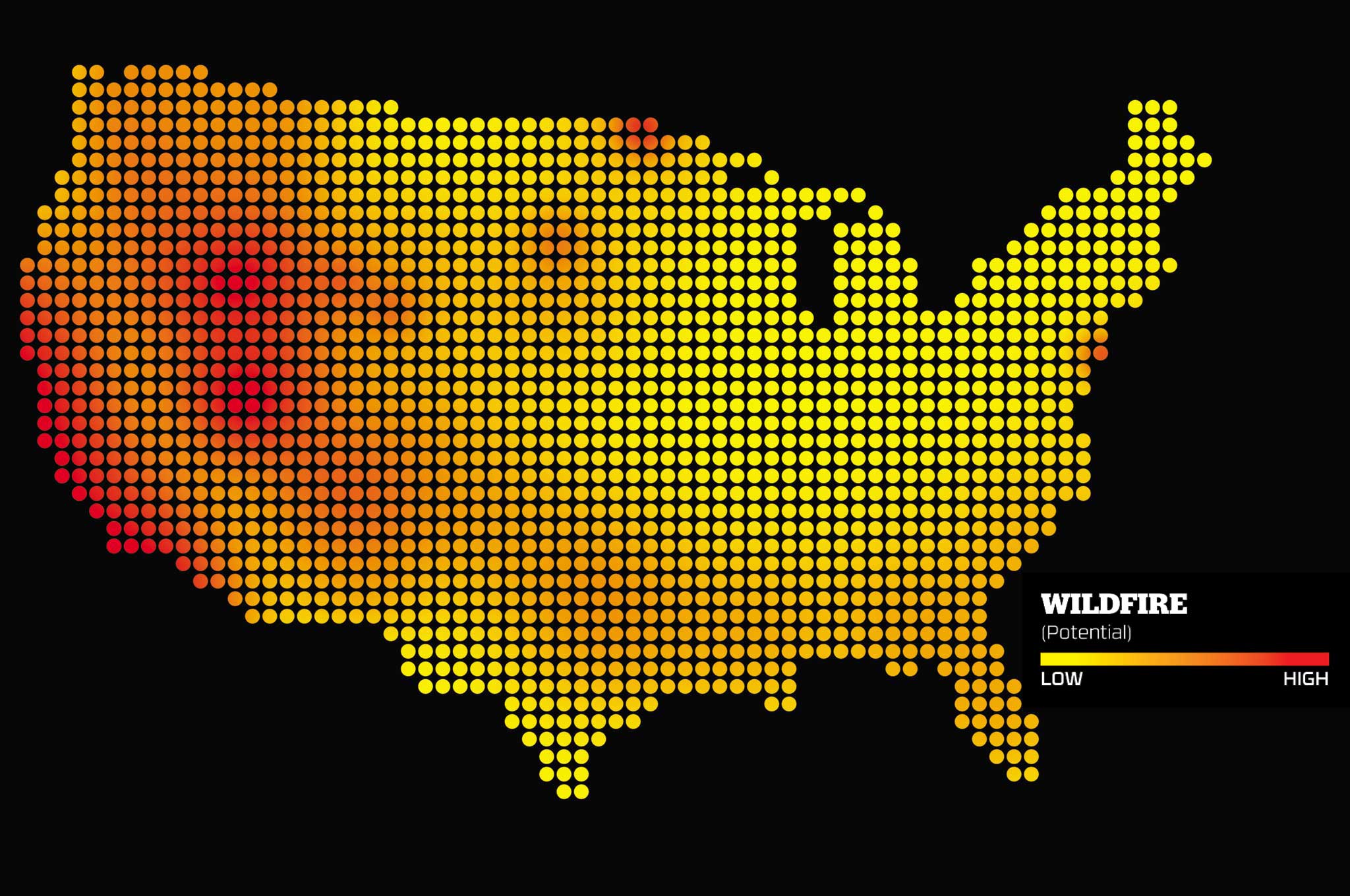
The Four Horsemen of the Apocalypse may symbolize Conquest, War, Famine, and Death, but in the United States, tornadoes, earthquakes, floods, fire, and hurricanes are more pressing concerns. In OFFGRID Issue 2, we outlined the heavy costs, both financial and human, of natural disasters over the years. You may not be able to control or predict when a natural disaster might hit, but you can choose your place of residence accordingly. The real estate website Trulia researched reams of data on earthquakes, fires, floods, hurricanes, and tornadoes, calculating which cities faced the lowest risk of these natural disasters.
Perhaps not surprisingly, with hurricanes and flooding in the Southeast, earthquakes and wildfires on the West Coast, and tornadoes in between, Trulia’s top picks are in upstate New York, Ohio, and elsewhere in the Northeast and Midwest. They are also quite affordable, with home prices averaging around $100 per square foot, as compared to ridiculously expensive (and disaster-prone) areas like California, Hawaii, and New York City (with pricing of $300 to 500 per square foot).
Before you start packing the homestead, don’t forget that there are other considerations as well. These areas may be at relatively lower risk for natural disasters, but many face tough weather with very harsh winters — not to mention other potential challenges, whether economic (e.g. job growth, appreciation of home prices) or otherwise (e.g. misguided political leadership). But as always, arm yourself with good information and prepare accordingly.
Top 10 Safest Cities from Natural Disasters
Rank
City
Pleasant Days/Year
Average Home Price/Square Foot
1
Syracuse, NY
53
$89
2
Cleveland, OH
65
$80
3
Akron, OH
48
$81
4
Buffalo, NY
73
$93
5
Bethesda-Rockville-Frederick, MD
52
$174
6
Dayton, OH
51
$72
7
Allentown, PA-NJ
54
$109
8
Chicago, IL
74
$113
9
Denver, CO
37
$129
10
Warren-Troy-Farmington Hills, MI
65
$94
What’s a Pleasant Day? Software engineer Kelly Norton crunched 23 years’ worth of data from the National Oceanic and Atmospheric Administration to determine the average number of so-called “pleasant” days a year. His definition of “pleasant” was temperature between 45 and 85 degrees with no significant precipitation. None of the top 10 safest cities come close to Norton’s top-ranked Los Angeles, with a 183 pleasant days, but they also outstrip the least pleasant — McAllister, Montana, with just 14.
Electricity is the cornerstone of modern civilization — most everything in our lives revolves around it. It’s the lifeblood that keeps the world turning, and without it our civilization would hit a serious bump in the road. We need it to illuminate the night, refrigerate our food, pump our gas, run lifesaving medical devices and, needless to say, it’s essential to our vast communications networks.
In the United States, blackouts like the 2003 New York event, and the more recent power loss event in 2011 on the West Coast, cost us millions of dollars in lost revenue. While none of these incidents were believed to be intentionally caused, it does show how reliant we are on our nation’s power grid. It’s this very grid that can be an enticing target for terrorists or rogue states to target. One potential attack on our electricity could come in the form of an electromagnetic pulse (EMP), which can be created by a nuclear blast.
An EMP is a wave of electromagnetic radiation that is generated by natural phenomenon like lightning and static electricity. It is also the byproduct of manmade events such nuclear detonation. In our scenario, we face the repercussions of a high-altitude nuclear attack. While the physical damage from a nuclear explosion would be devastating at ground level, it’s a high-altitude nuclear blast that would allow the resulting EMP to cause the most damage. EMP requires line of sight to be fully effective, so assuming the initial blast is strong enough, the higher it is implemented, the more surface area the EMP will affect.
EMP produces surges that damage or destroy modern electronic devices. According to the 2008 Critical National Infrastructure Commission (CNIC) study on the effects of an EMP, a nuclear explosion at an altitude of 100 kilometers (62.1 miles) would expose 4-million square kilometers or 1.5-million square miles of the Earth’s surface. That covers roughly half the surface area of the contiguous United States with just a single detonation.
Rocking Technology from the 1800s
One way to protect valuable or essential electronics is with what is called a Faraday cage or box. They can be as simple as a cardboard box wrapped tightly in tinfoil, or as complex as specially built “screen rooms” used in major laboratories and universities.
The concept of a Faraday box is fairly basic. It is a container with a conductive layer or skin that reflects and absorbs incoming electromagnetic fields. In doing so it creates opposing fields that help dissipate the incoming fields and protect your electronics inside.
Containers do not have to be airtight, but the holes do need to be smaller than the wavelengths they are trying to defend against. All this is based on English scientist Michael Faraday’s research from the 1800s. Yes, we kid you not, technology from the 1800s can help protect your equipment from a nuclear blast.
The container itself needs to have some kind of nonconductive liner to prevent the items inside from touching the conductive skin. You can utilize rubber, foam, or any other nonconductive material. Some everyday items can be used as Faraday box on a limited basis. A microwave is itself a shielded box, or you could insulate an ammo can to make a quick and simple box.
Remember, once an EMP event happens, it is too late to shield your electronics after the fact. That means that you would have to leave your Faraday box sealed until after the event passes. As much as you might wish to put all your expensive electronics in there to protect them, it just would not be practical since you’d never be able to use them. So for our box, we selected items that were relatively inexpensive, but would really be convenient to have in an emergency. Size is also a consideration. We wanted the box to be small enough to fit in a closet and not take up too much space.
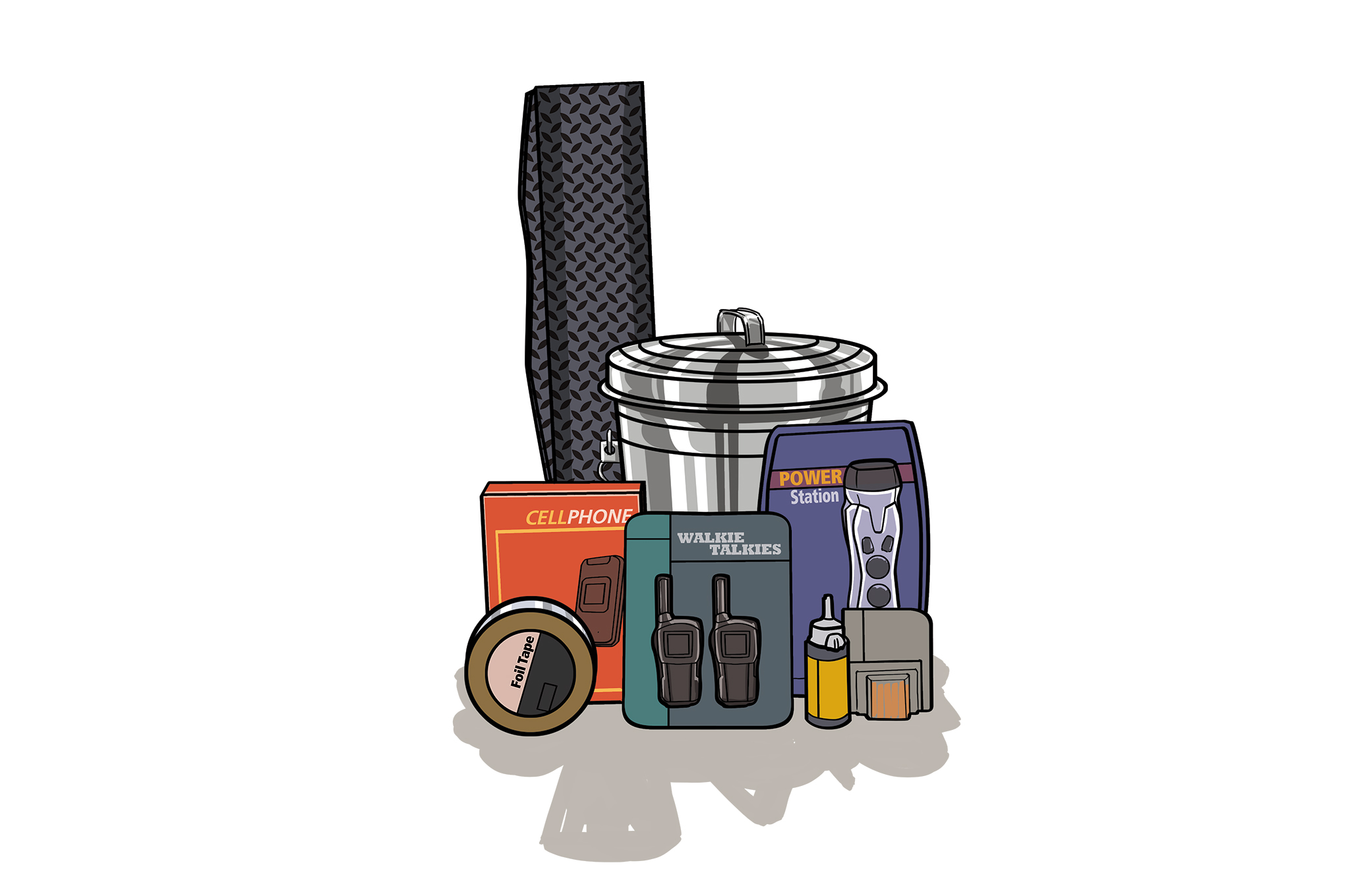
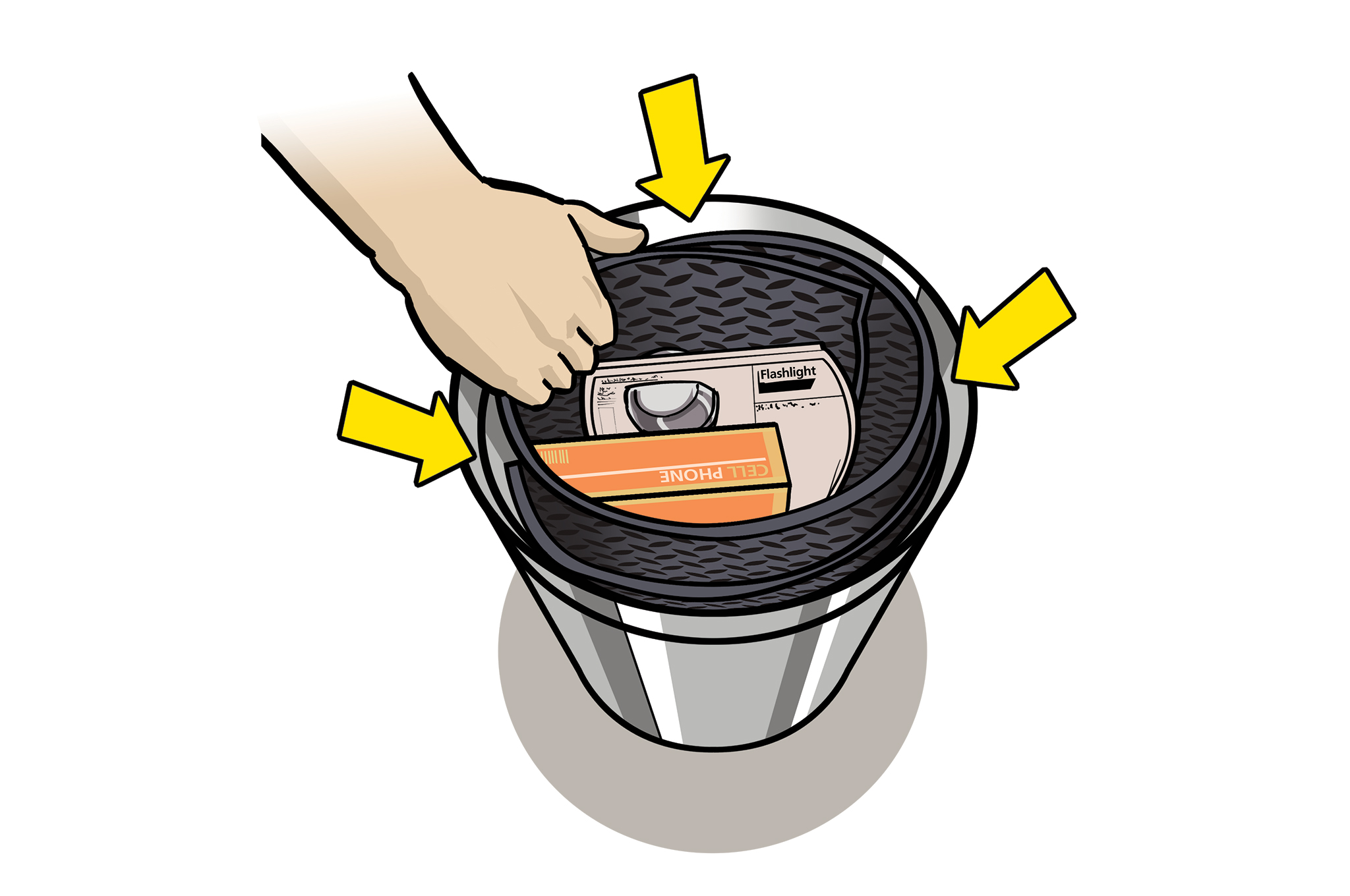
Our Faraday box contains:
An inexpensive set of two-way radios and the AAA batteries to power them
A pay-as-you-go cell phone in case our primary phone was ruined
A hand-crank combination radio flashlight and USB charger
This will provide for basic news and information and also allow us to communicate with family in case we need to travel.
Building a Faraday Box
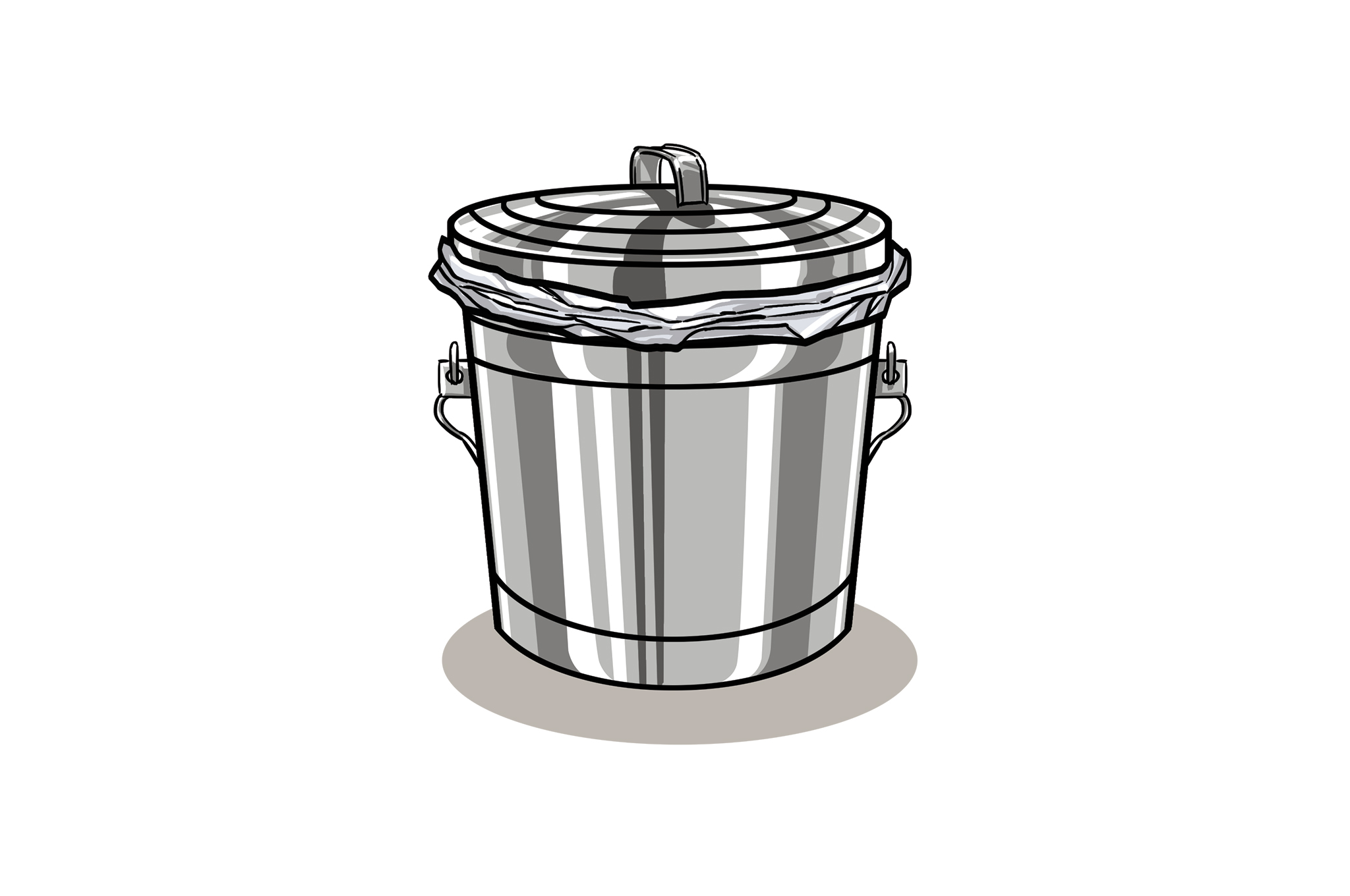
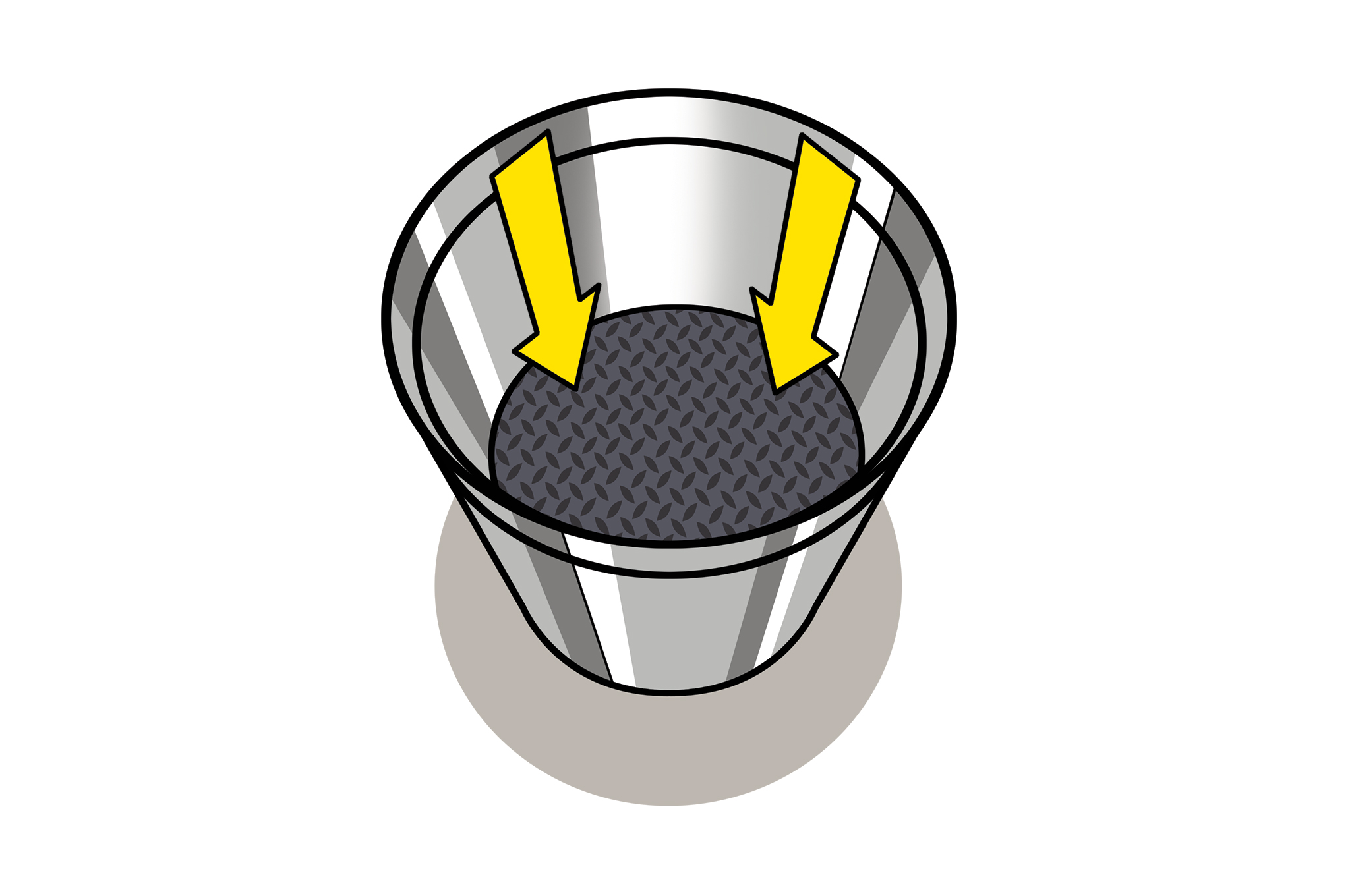
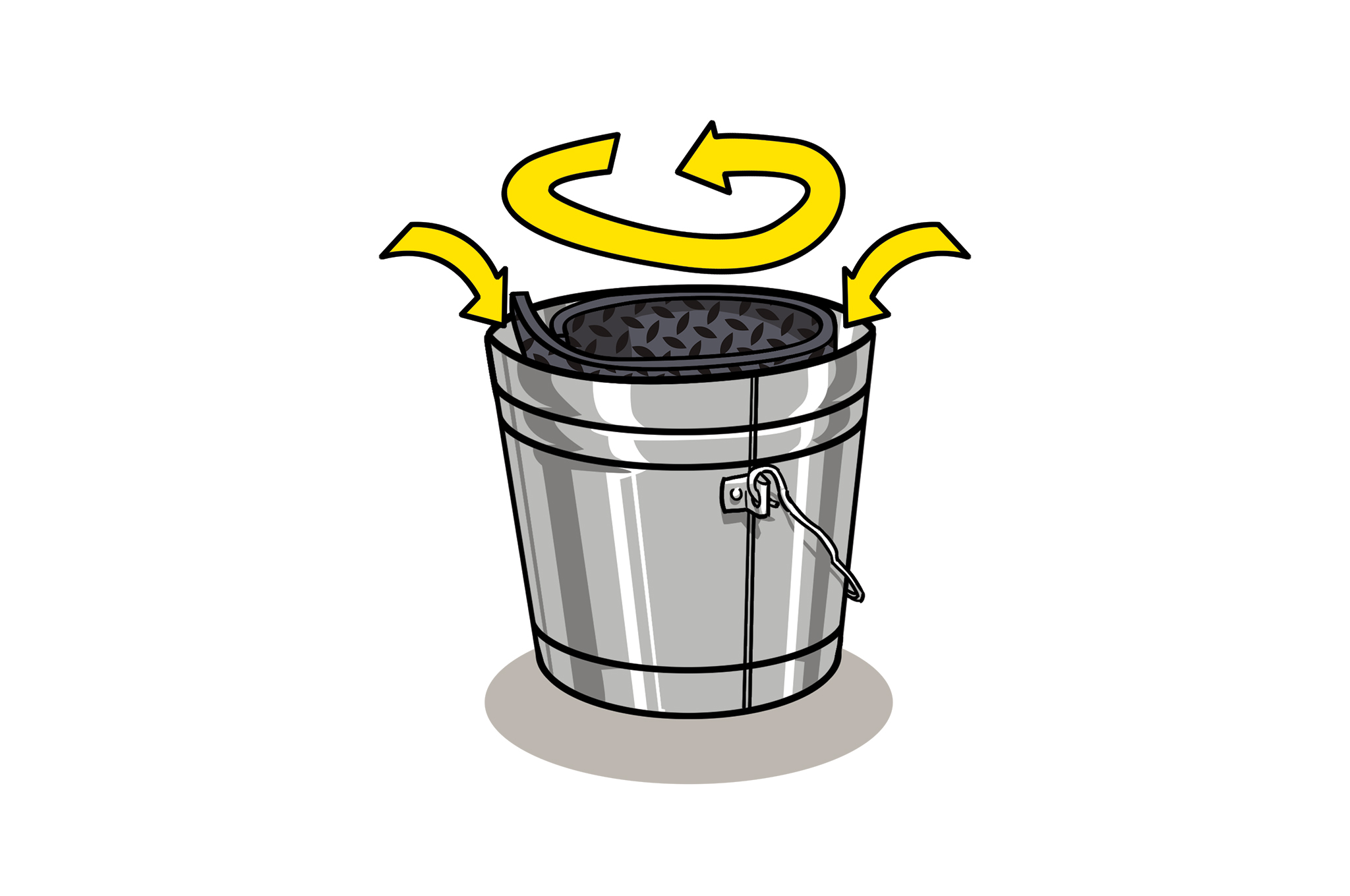
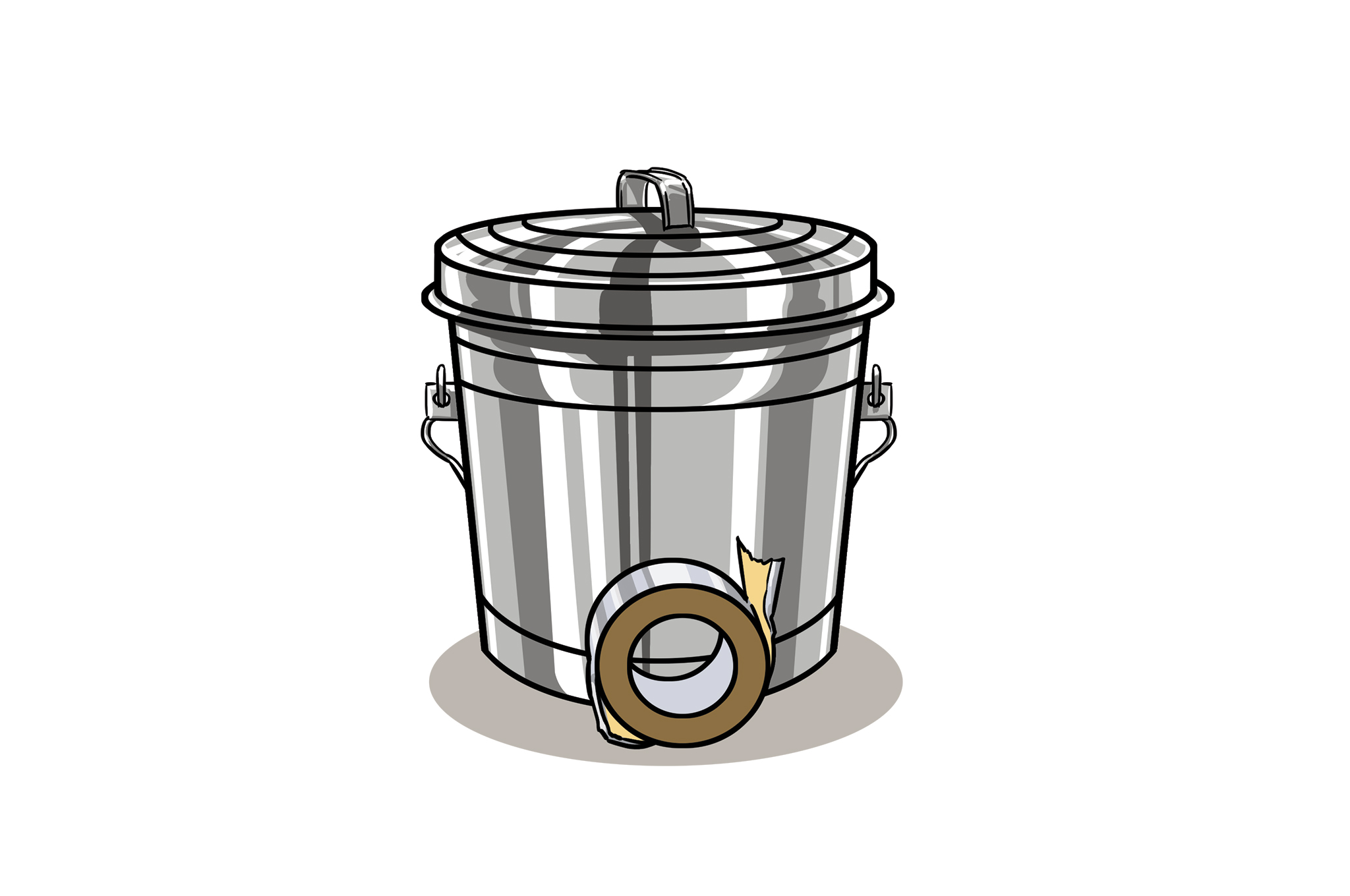
Since the type of energy waves one might encounter can vary, we opted for a sealed box solution. Our sample Faraday box is constructed out of a 6-gallon galvanized steel can. We utilized a rubber anti-fatigue mat that you might put in front of your workbench to stand on. The mat is used to line the inside of the can and provide insulation for the items stored within.
Make sure you continually test fit the liner. Use as few pieces as possible to protect your contents from leaks in the seams. With the items to be protected placed safely inside, we then sealed the can with HVAC foil tape. We were able to find all the necessary supplies at the local hardware store. The mat was the most expensive item, but the total cost to complete the Faraday box was about $80.
Step-by-Step Instructions:
1 Your items need to be protected all around. We used the bottom of the pail as a template for the nonconductive material.
2 We started by lining the bottom with the material. We left it a little long so it would curl up on the outside edges. We secured it to the bottom using an epoxy-style glue.
3 Next up is to line the sides with material. The angle of the side proved to be a little tricky. We rolled the material up into a cylinder making sure to leave enough room for the equipment to be stored. We then glued the pieces to the bottom.
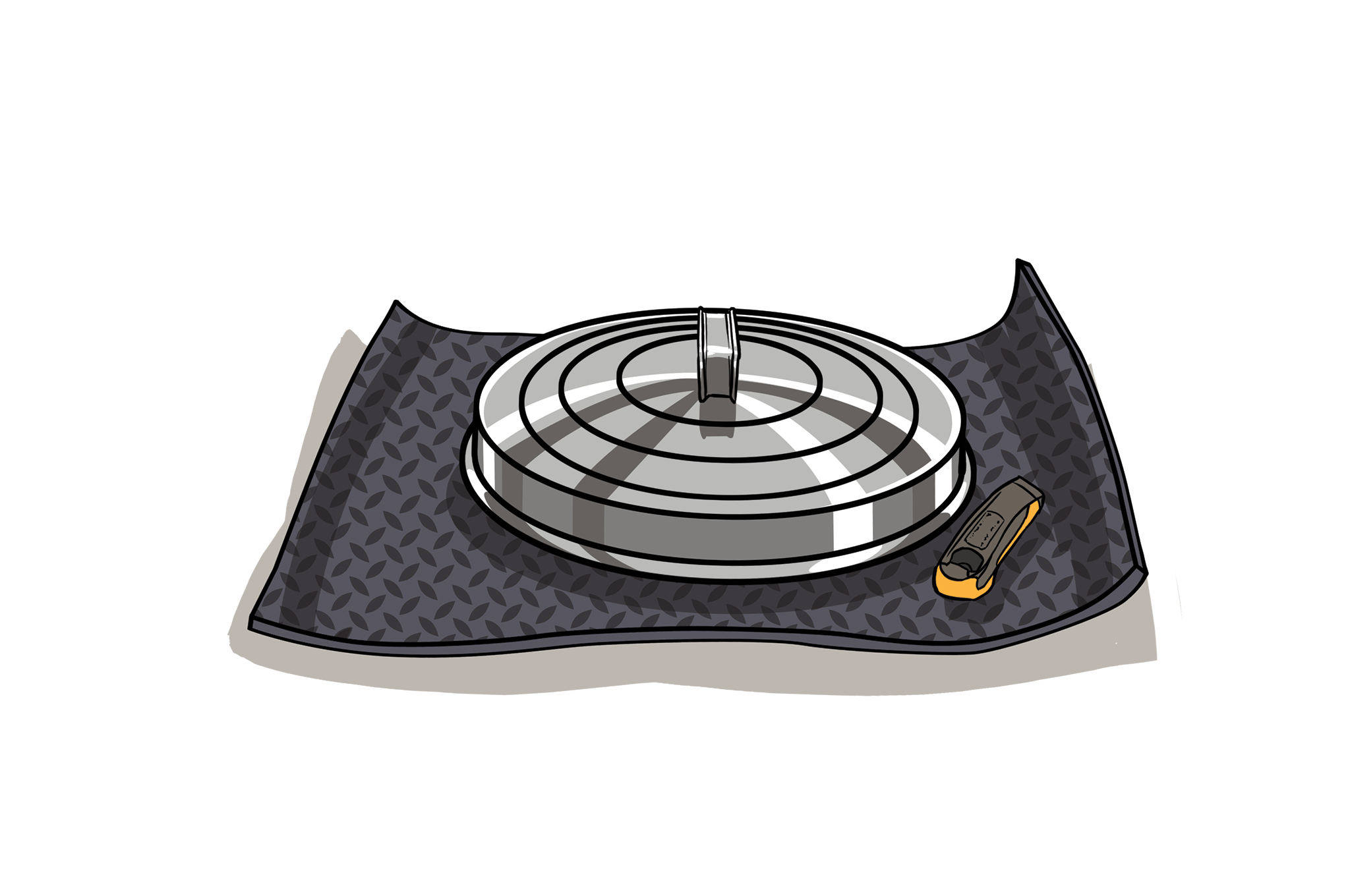
4 Using the lid as a template we lined the top of the lid with the floor mat.
5 Once we placed all the items in the container, we used the extra floor mat material to build support around the inner cylinder.
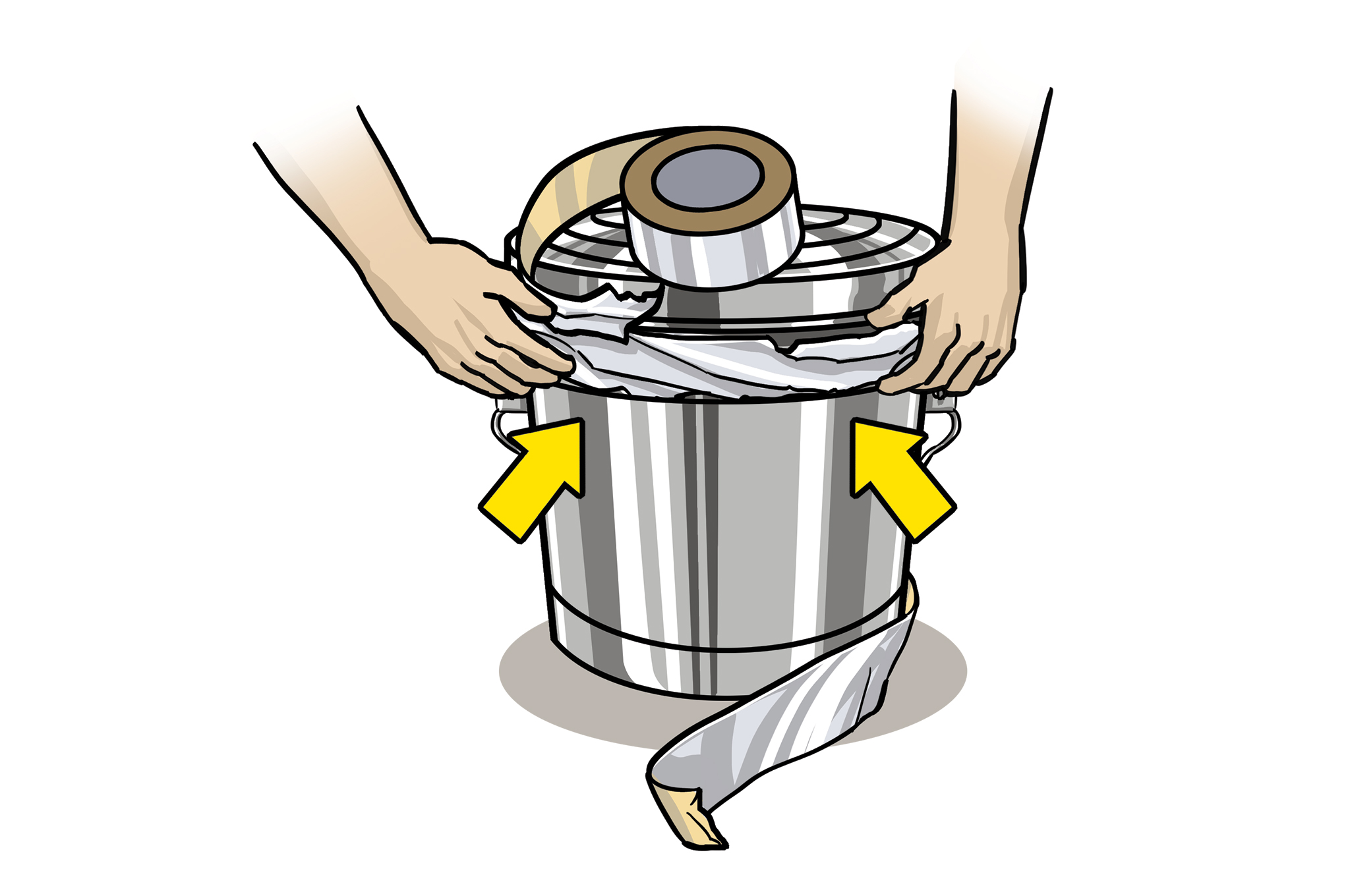
6 For added protection, we used aluminum-heating duct tape. This will help seal the gap between the lid and the body of the container.
7 The aluminum tape was surprisingly thin. We had to carefully wrap it a couple of times to get a good seal.
8 The finished product. We were pretty pleased with how it turned out. It’s even small enough that your girlfriend or wife shouldn’t mind losing a little closet space.
Closing Thoughts
Despite the general belief, an EMP event wouldn’t necessarily wipe out all electronics in the affected area. A lot of modern electronics have been so well shielded to prevent interference from other devices that they are fairly well protected. The CNIC study analyzed the effects of an EMP attack on most areas of daily life. The report suggests that about only 10 percent of automobiles would stop working, but traffic would be disrupted due to signals going out and traffic jams due to the other disabled cars. The electrical infrastructure would remain mostly intact with damage primarily to transformers. The commission concluded that the impact to the electrical infrastructure would be severe, but not catastrophic.
One thing you might notice that is missing from this article is any reference to solar flares. Throughout our reading of research papers for this article the general consensus was that most modern electronics are shielded well enough to protect against solar flares. Most experts recommend that the best defense against a solar flare is to unplug your electronics or use a quality surge protector. Solar flares are also fairly predictable as they take time to travel between the sun and Earth, allowing a person time to secure their electronic devices.
Will we ever see an EMP event? Who knows, but aren’t you reading this magazine because you’re the type of person who’d rather be prepared? Better safe than sorry. So, head on over to your local hardware store and build yourself a Faraday box. Marvel at how cool it is to be using technology from almost 200 years ago!
Sources
If you would like to learn more about how an EMP event could affect your way of life, we encourage you to read the Critical National Infrastructures Report found here > http://tinyurl.com/5v8vt2
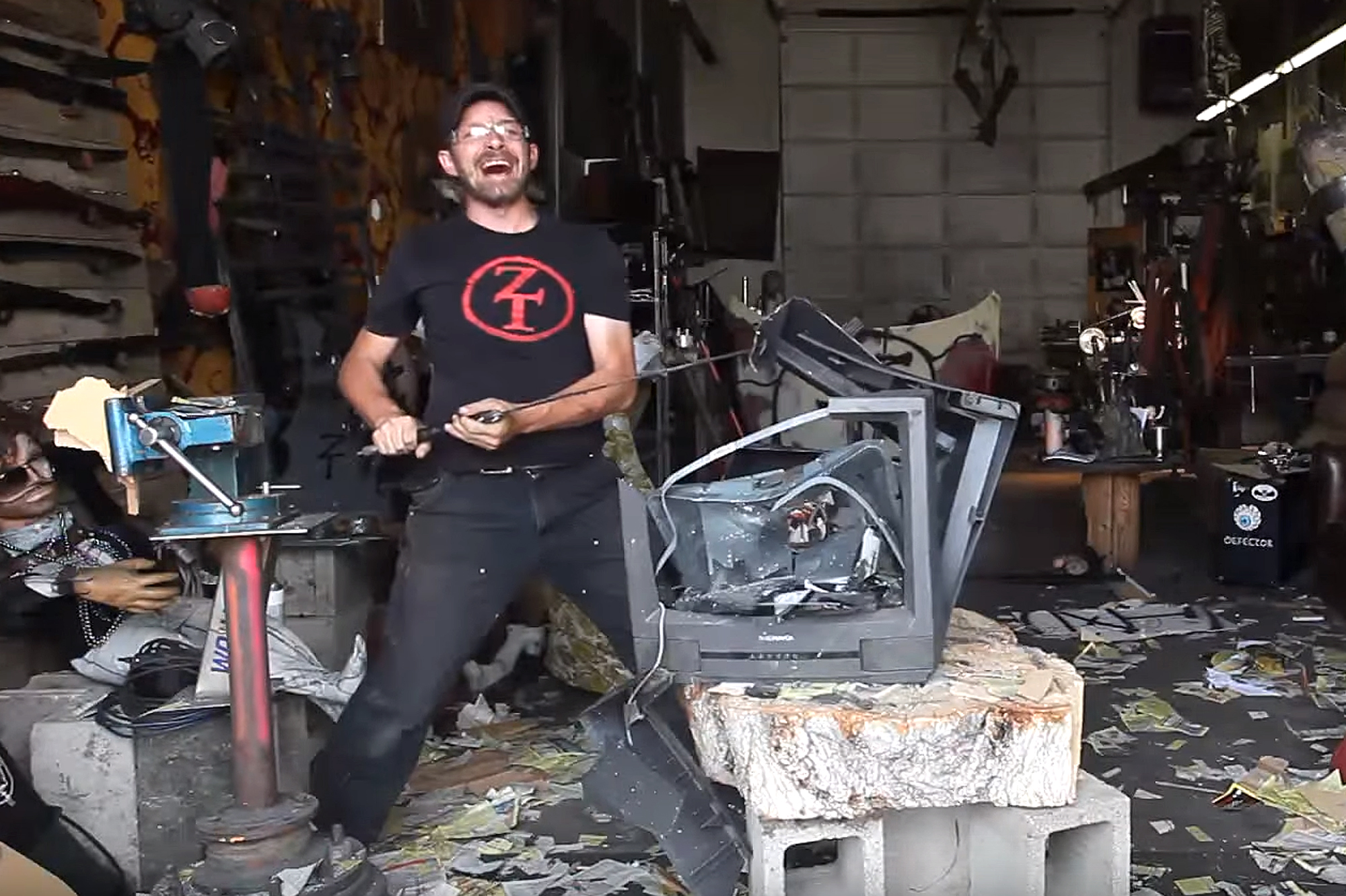
Ever see someone with a cool job, and think, “Man, I can’t believe someone gets paid to do that!” That’s pretty much what we said when we watched the “Destroying the Deuce” video below from the guys at Zombie Tools.
Don’t worry, no beer went to waste. They filled these PBR cans with water before slicing them in half.
According to their web site, Zombie Tools is “a band of brothers formed under the auspices of the trickster god Loki, bound together by a common passion for blades, science and art. And beer. And metal music. And beer.” In simpler terms, they’re a Missoula, Montana-based manufacturer of bladed weapons—pretty much everything from battleaxes to broadswords.
Before you watch, a word of warning: basically everything in this video is extremely dangerous, unhealthy, and not OSHA-approved. Do not try this at home. There’s also plenty of alcohol, smoking, swearing, and death metal. Sounds like a good time? Then check it out:
We told you these guys have an awesome job (although it seems somewhat miraculous no one got hurt during the filming). Also, the Deuce seems to take a serious beating, bending a full 90 degrees without snapping.
Bending the Deuce a full 90 degrees in a vise. Pretty impressive.
We’re going to try to get our hands on a Zombie Tools blade in the near future, and test it out our own way. We definitely won’t be chopping truck hoods in half, or slicing through a (water-filled) 24-pack of beer cans like they did, but we will do our best to let you know if these blades are as badass in person as they seem to be on film. Stay tuned.
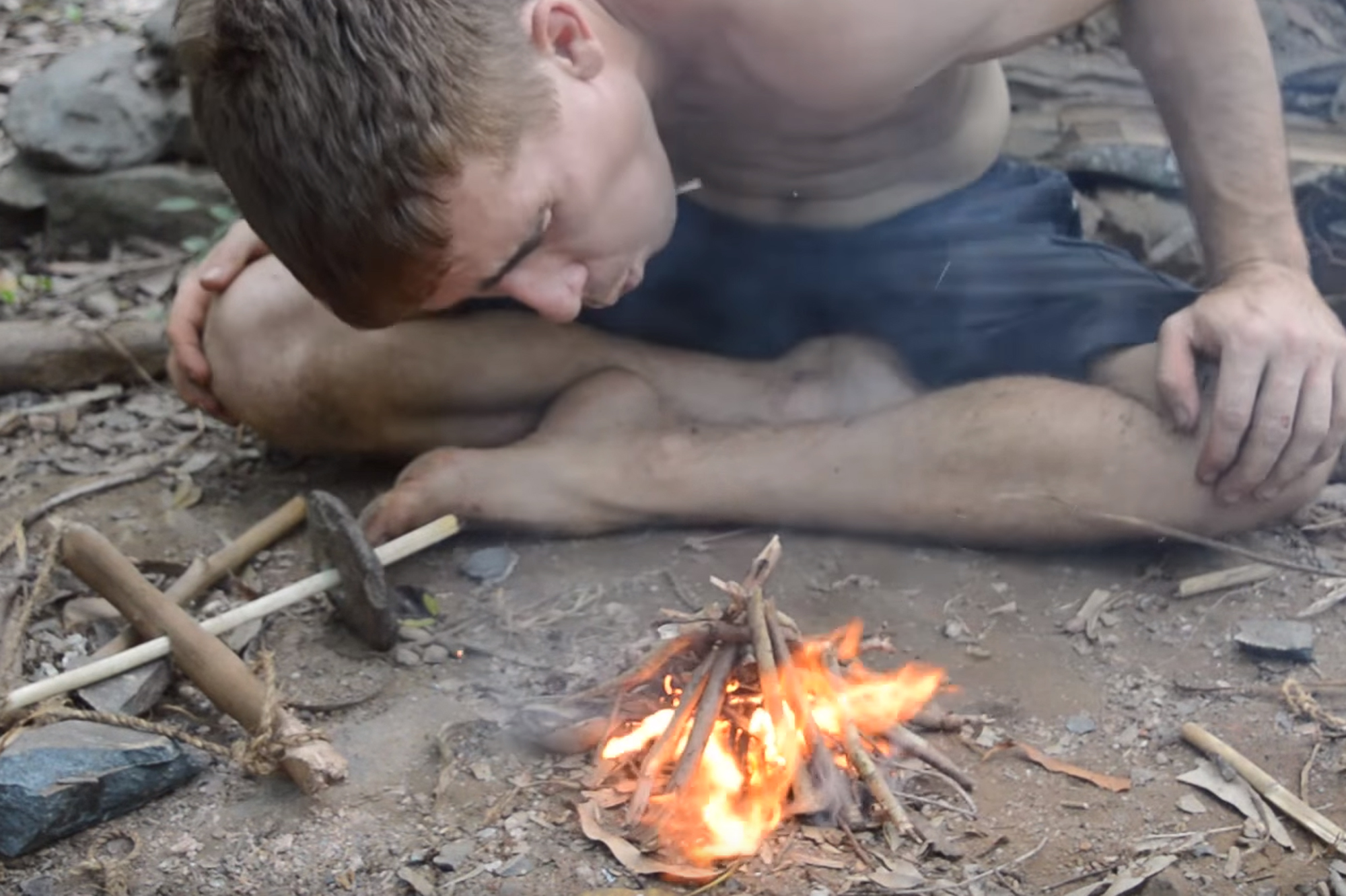
If you’ve ever tried to start a fire without modern tools, you’ll certainly know one thing: it’s hard work. The widely-known traditional hand drill fire starter uses a notched horizontal board, a vertical shaft or spindle, and friction from rubbing your hands together in the “praying” position. With enough patience, luck, and the right conditions, you can get an ember burning with this basic method.
However, the hand drill method is time-consuming, often frustrating, and it’s basically guaranteed to give you painful blisters on your palms. Fortunately, there are better ways of primitive fire starting, many of which expand upon the hand drill method.
First of all, there’s the bow drill, which uses a curved bow and string to spin the spindle (saving your hands from blisters). This method is pretty well-known, but today we’ll be sharing two others that might not be as common: the cord drill and the pump drill.
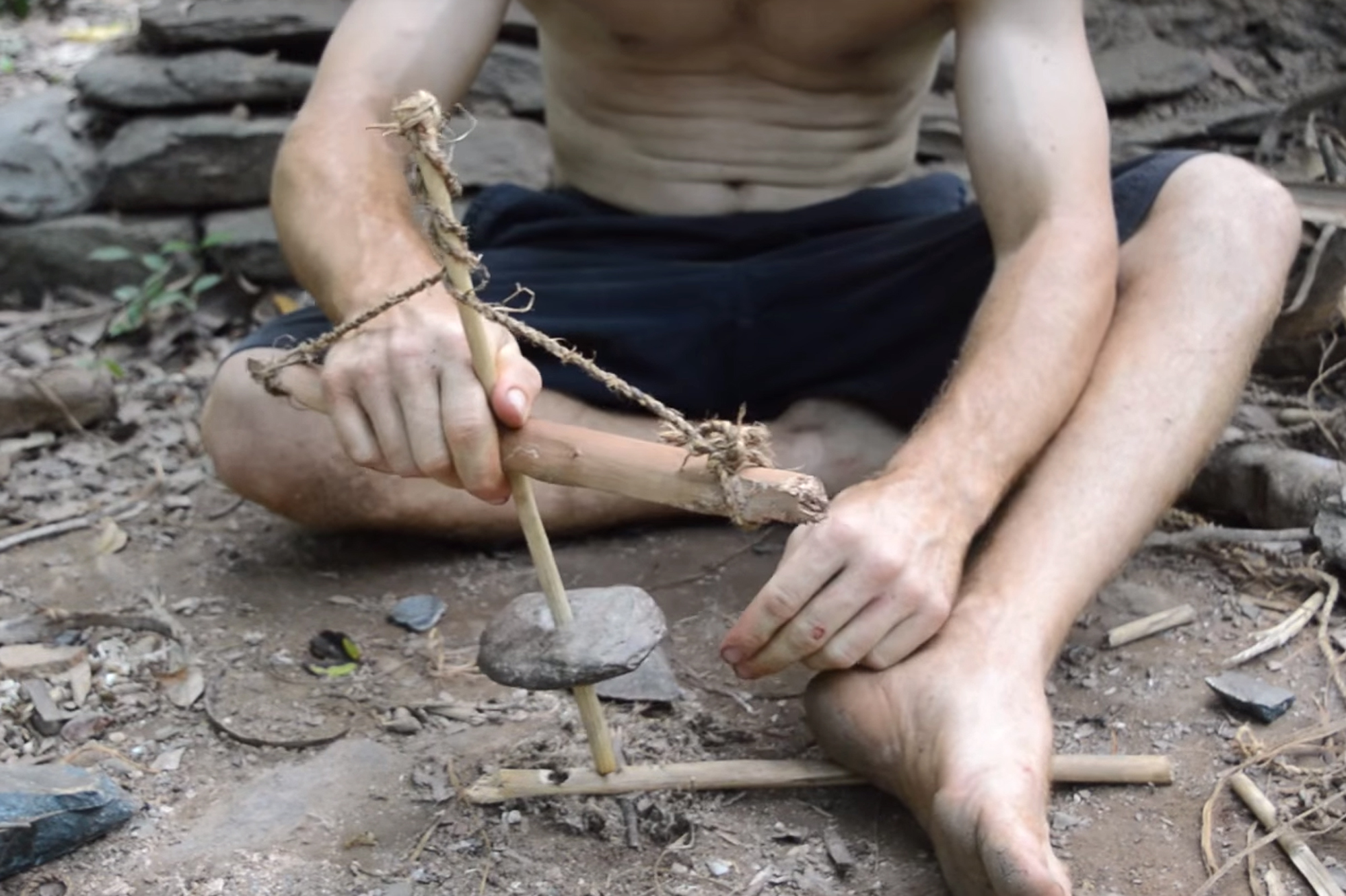
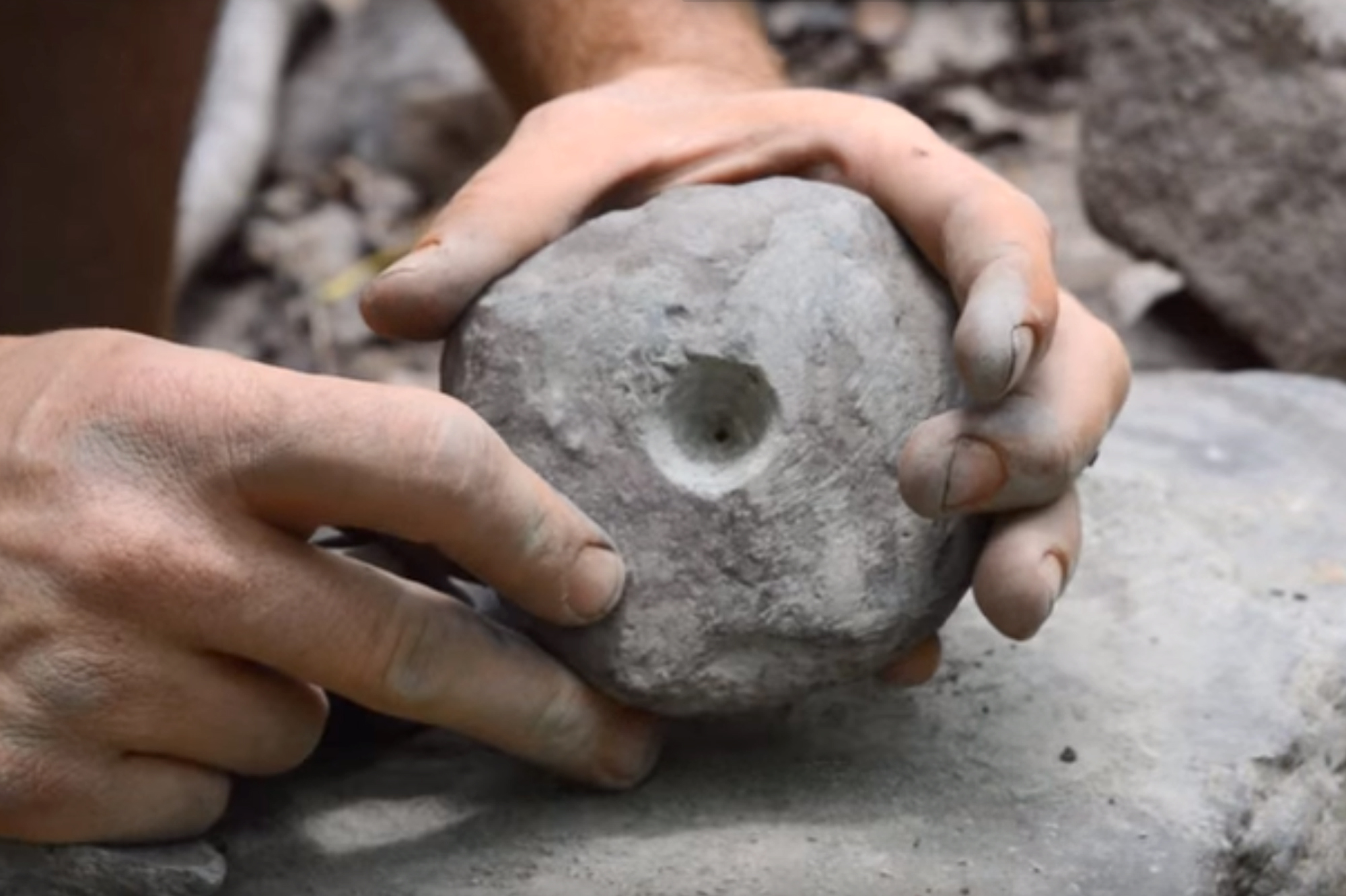
A rock with a hole through the center will act as a flywheel for cord drills and pump drills.
Both the cord drill and pump drill are based on the hand drill spindle and board, but add what is known as a flywheel. The flywheel is a disc-shaped stone or piece of pottery that retains rotational inertia, and makes the spindle want to keep spinning. Then, a wound cord is added to the top of the drill spindle, and pulled apart repeatedly to spin the shaft and flywheel.
Here’s a video from Primitive Technology that does a great job of illustrating the hand drill fire starter, as well as the cord drill and pump drill:
As you can see from the video, the pump drill adds one last element, a board with a hole that attaches to the spindle and cord. This makes the cord drill even easier to use.
Obviously, making a flywheel from pottery and firing it in a primitive oven is beyond most people’s abilities, but Primitive Technology shows how that’s done as well. The host even uses flint knapping to craft a drill bit that resembles an arrowhead, so drilling out notches in the fire board is easier. These are all useful techniques that go beyond simple fire-starting and could be valuable to any survivalist.