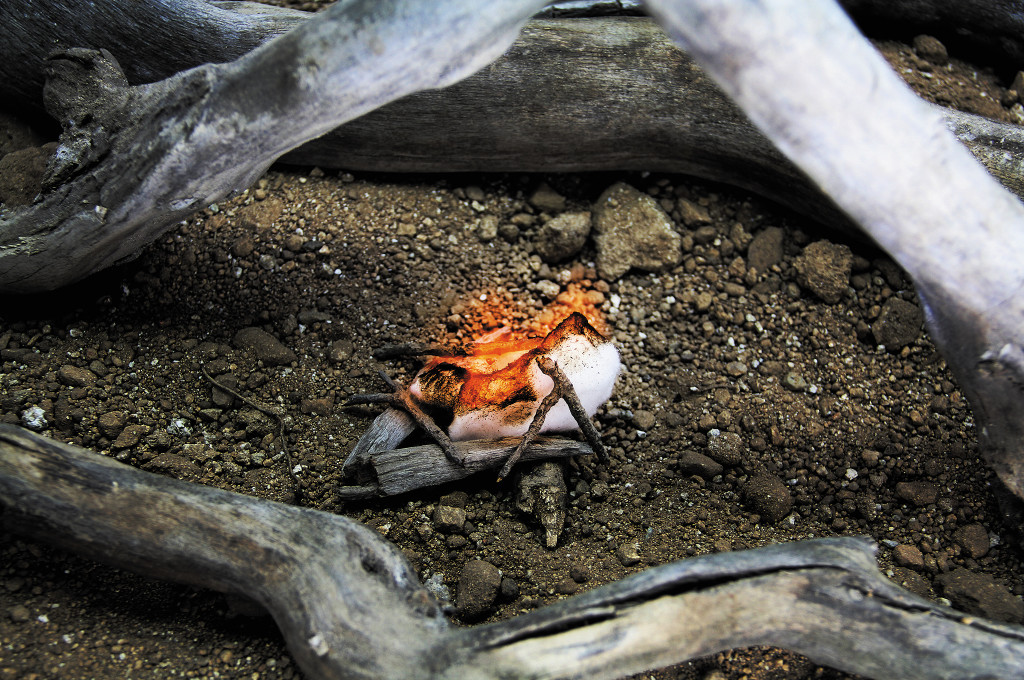
It’s been a month since the nation’s power grids went down and with them almost all modern conveniences. Grocery stores are either sold out or were gutted by looters weeks ago. Fast-food joints are all shut down. Hoping to nuke your favorite Hungry-Man meal? Forget about it. Freezers and microwaves have stopped working. Most urban-dwellers are living off of prepackaged foods or what they can scrounge from their backyard gardens.
Naturally, you’re better prepared and equipped than most. Though your fresh provisions have been exhausted, your inventory of nonperishable food is well stocked. (After all, it’s been suggested that one needs to store two years’ worth of food.) As grateful as you are to not be starving, you don’t want to be eating crackers and pinto beans for God knows how long.
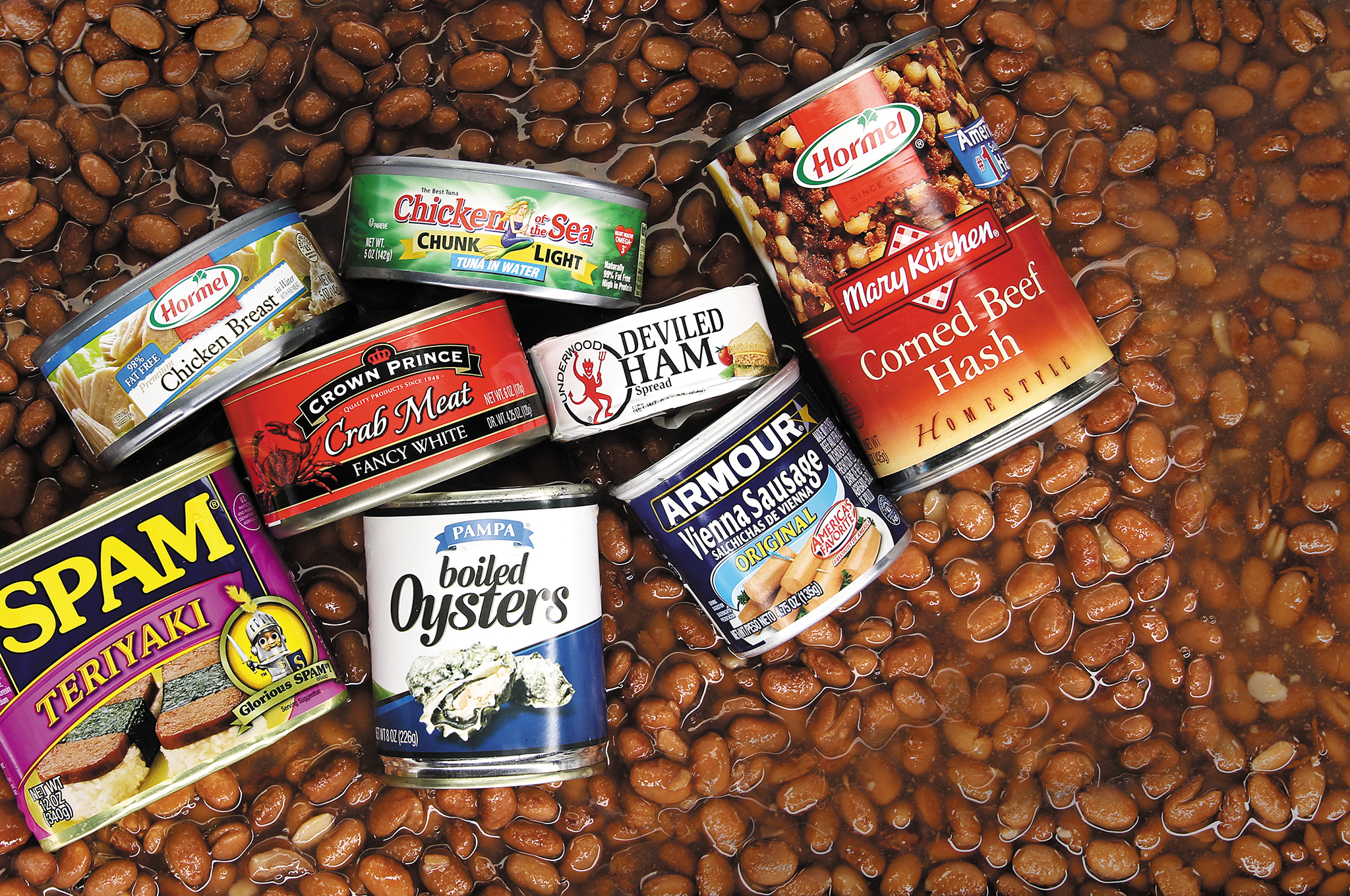
Luckily, you had the foresight to invest in the wonderful commodity of tasty, tasty meat. And all sorts of it. Whether the animal once roamed the earth by land, sea, or air, there’s a good chance you’ll find it turned into portable cuisine-in-a-can to be enjoyed for years to come. In a long-term survival situation, canned meat can not only provide much needed calories and protein, but also offer a huge boost in morale when times look desperate. But have you actually tasted the canned food you’re storing?
Your intrepid editors at OFFGRID are putting our palates — and our digestive tracts — on the line to bring you a blow-by-blow report of which meats are treats and which ones are gastro horrors. To present the most objective review possible — or just to share in this author’s misery of having to eat canned meats every night for a week straight — he enlisted OFFGRID’s editor, Patrick Vuong, and managing editor, John Schwartze, to help judge in the taste tests. Read on to find out which can contained the most amount of whoop-ass once opened and which one sent us reaching for the garbage bin.
Boiled Oysters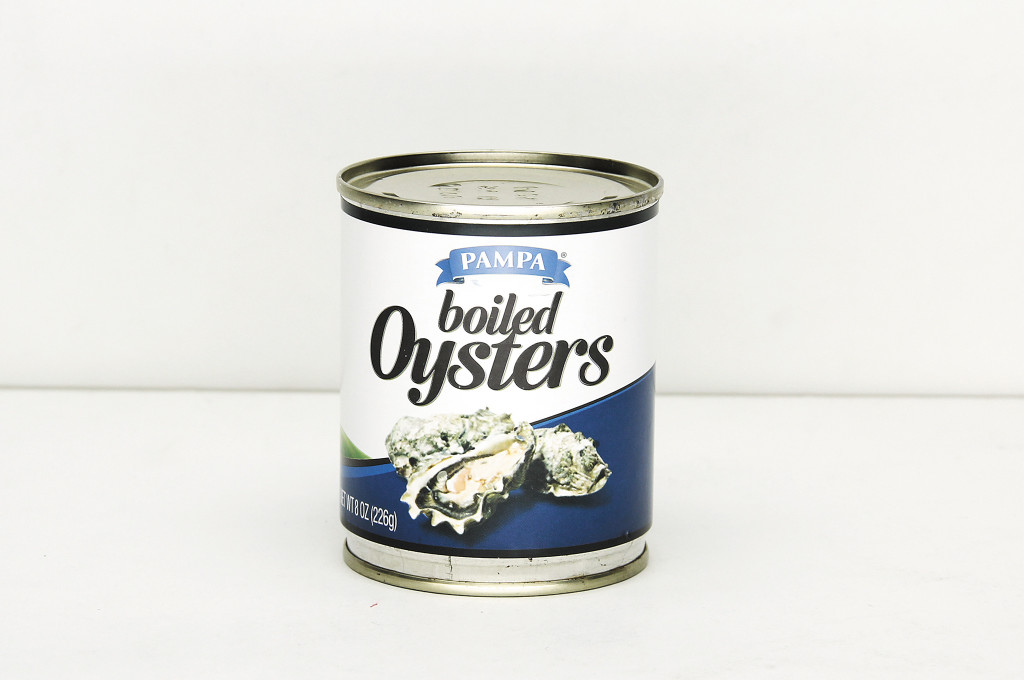
Make & Model
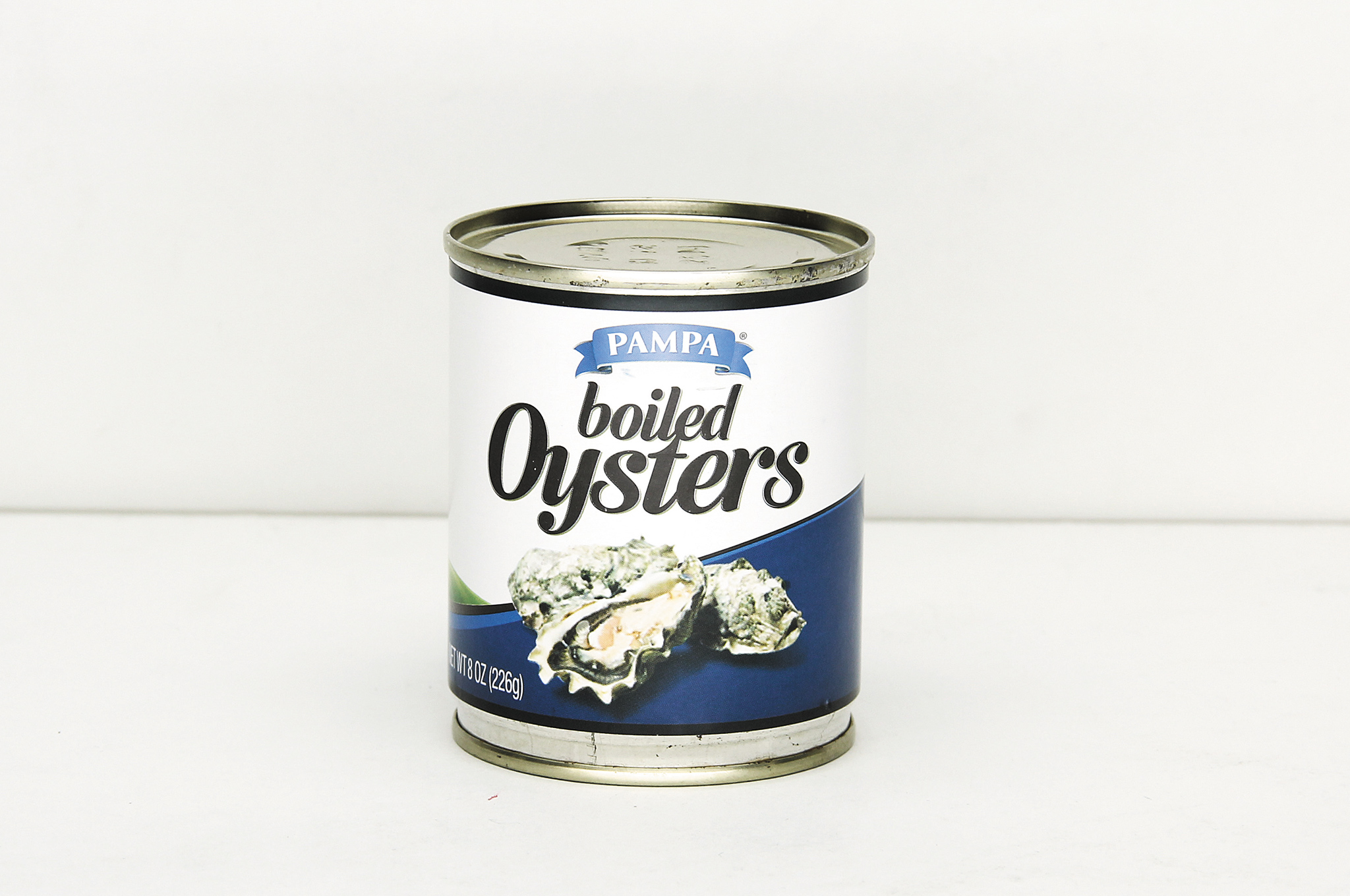
Pampa Boiled Oysters
Notable ingredients:
Whole oysters, water, salt
Size
8 oz.
Tester #1:
Patrick Vuong
At First Bite: Chewing one right out of the can was like taking a bite out of the ocean. Mark this one under “poor life choices.”
Overall: Don’t get me wrong, I love oysters. When shucked and served with lemon, vinegar, a dash of cocktail sauce, horseradish, and some Tapatio, fresh oysters are one of the most delectable foods on the planet — this briny, boiled version was not. In fact, it was a complete and utter mistake. Even after I breaded and deep-fried it, the canned oysters still tasted like the Pacific Ocean took a dump in my mouth. If I ever were holed up in my compound with the world crumbling around me, I would never eat this again. Instead, I’d try to use it as bait…though I’m not sure I’d catch anything but cockroaches with it.
Tester #2:
John Schwartze
At First Bite: Ewww, nasty!
Overall: I haven’t felt this grossed out since I watched Hostel. Oysters are something I’ve always hated. Freshly shucked with all the fixings is still something I avoid. This was a gagger alright. Could barely get the first one down and couldn’t bring myself to finish the rest for fear of a “reversal.” About the only way I could down these is either with a strong chaser, dipped in batter and deep fried, or used in some kind of stew to mask the flavor. I’m sure others would happily and easily down a can of these with no problem, but I’m not one of those people with the necessary acquired taste. Perhaps they’d be better used as bait, chum, or punishment for a misbehaving child since castor oil is out of vogue now.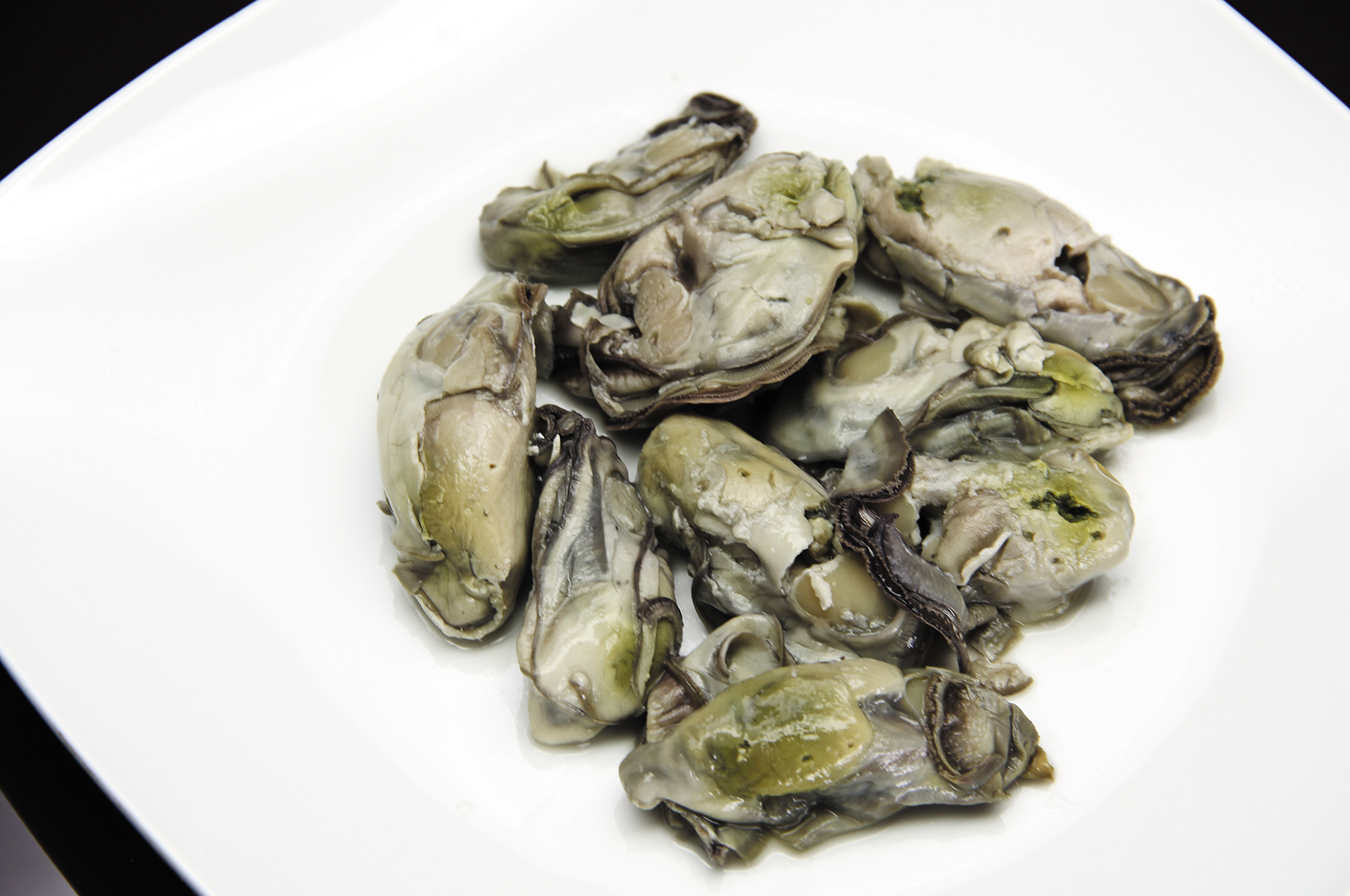
Tester #3:
Martin Anders
At First Bite: Cracking the can open was a pretty horrifying experience. Why does this even exist?
Overall: If you enjoy eating what looks like the spawn of the Alien queen, then this is the canned meat for you. Add to that the sensation of an ocean-soaked sponge unleashing its salty brine in your mouth and you get an inkling of what it’s like to have this slide down your throat. That’s all I have to say about that.
Chicken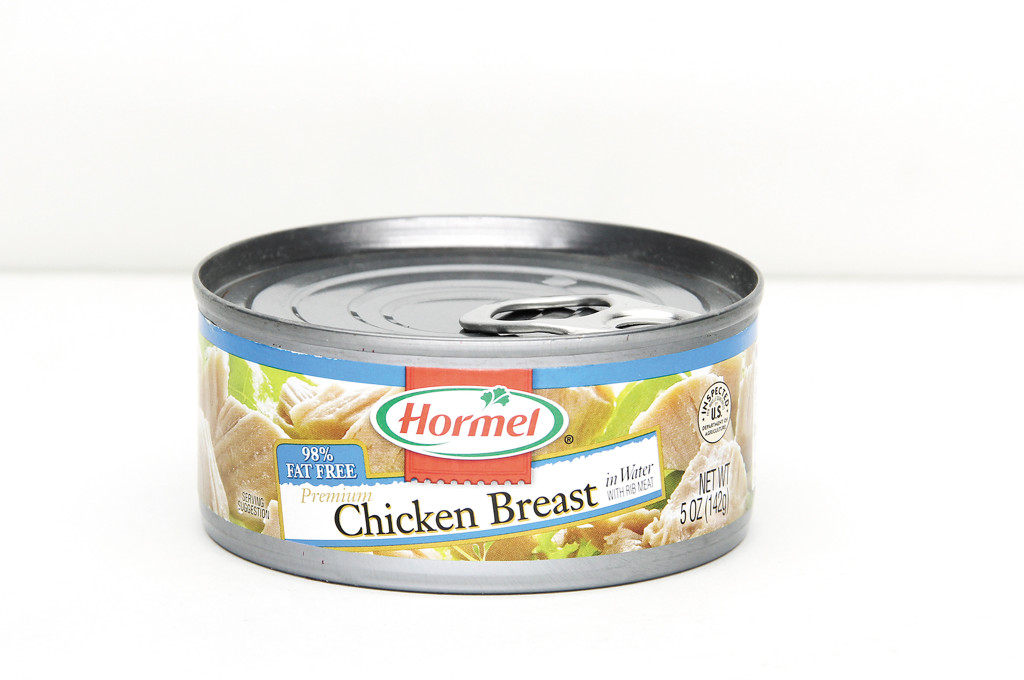
Make & Model
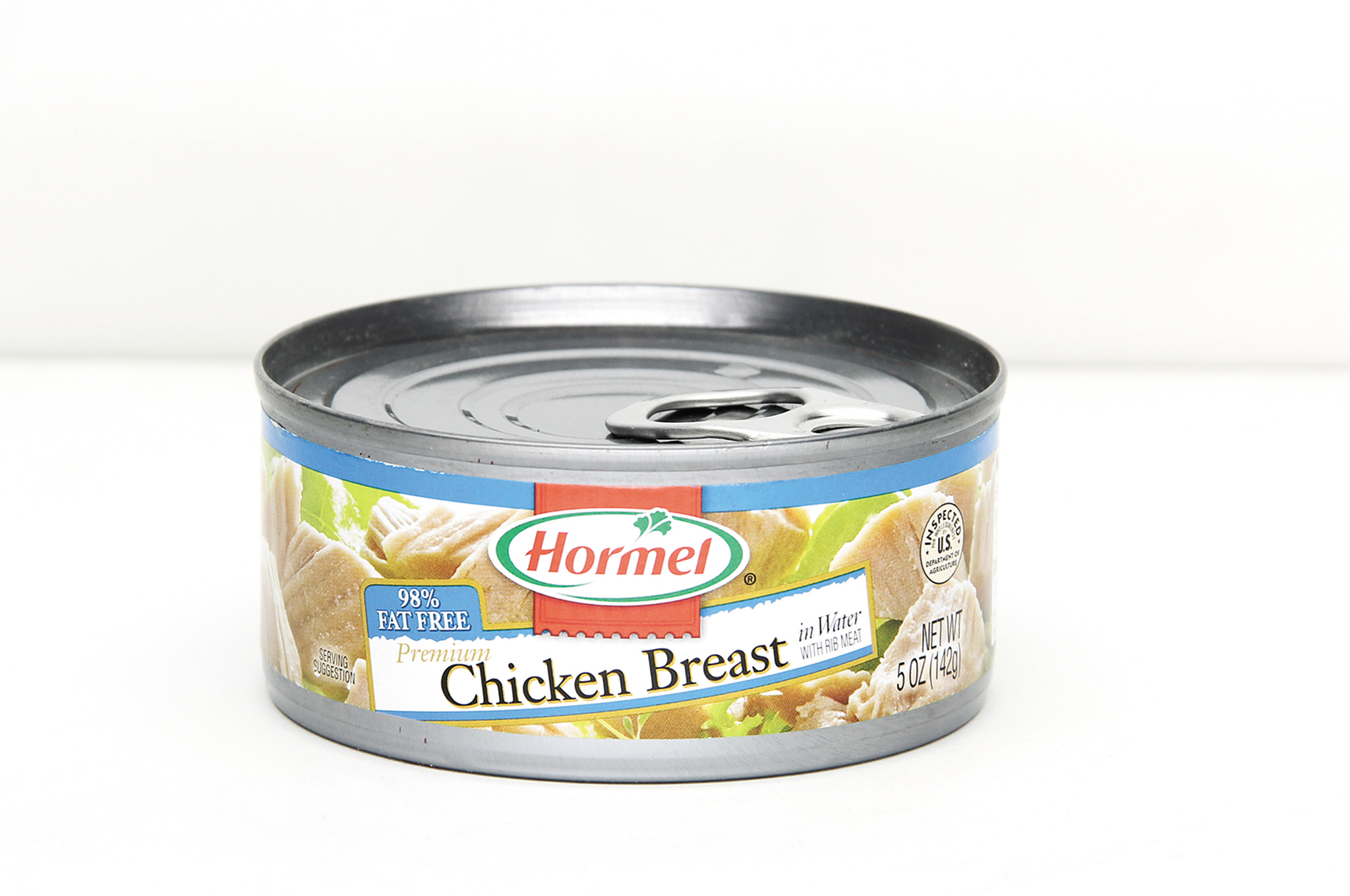
Hormel Premium Chicken Breast
Notable ingredients:
(Not a complete list) Chicken breast meat with rib meat, water, sea salt, sodium phosphates
Size
5 oz.
Tester #1:
Patrick Vuong
At First Bite: Tasted like chicken — if by chicken I meant dried meat packed into small chunks and rehydrated by bathing it in salt water. But, yeah, it tastes like the real deal.
Overall: I’m a huge fan of fried chicken, chicken wings, breaded chicken, chicken breast, popcorn chicken, and pretty much anything derivative of this type of poultry, so my opinion was a little skewed — I was really hoping it would be better. I know, I know, it’s from a can. Don’t get me wrong, it tastes fine. And, you can eat this cold from the can, heated up, with a sandwich, or mixed in with other dishes, so it’s quite versatile. In a disaster scenario, I’d be a happy little survivalist if this were the only ration left in the pantry.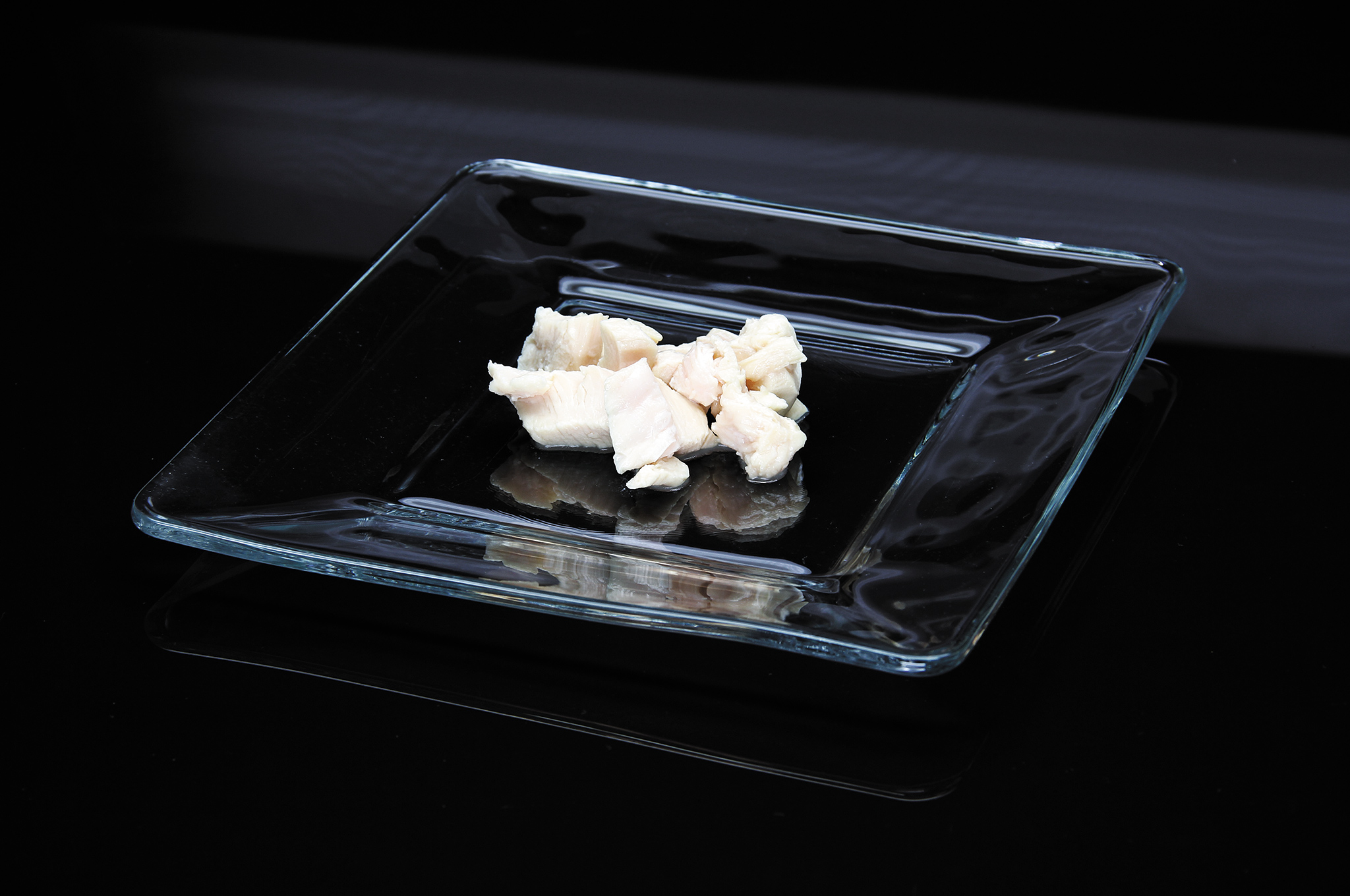
Tester #2:
John Schwartze
At First Bite: It reminded me of eating Thanksgiving leftovers. Tasty!
Overall: This is my pick of the litter. The meat was moist and flavorful. There are a million different things you can do to jazz it up, but eating this by itself out of the can was definitely good. There are plenty of nutrients, but my only complaint is that there’s really only about one serving worth of meat inside. It’s chunky and not shredded, so it doesn’t really fill up the can. You’d have to get a lot of these if you wanted something good that would last for a while. I may start buying this as a viable alternative to cold cuts for sandwiches.
Tester #3:
Martin Anders
At First Bite: Let’s just call this Tuna of the Land.
Overall: At first bite, I thought for a split second that this chicken was tuna. Maybe it’s because it comes in a can, swimming in salted water. That said, I have to say that it’s exactly as advertised. Unlike most of the other meats in this taste test (and the nuggets I ate for lunch today), the meat here is clearly made of real chunks of chicken breast. It’s a bit dry, but still makes for some good eats.
Nitrates vs. Nitrites
While good nutrition is certainly important to one’s survival, the choice between starving and not starving is clear. Eating a preservative and sodium packed can of meat might not be your first choice when you’ve just enrolled yourself in a Pilates class, but when times get tough, the choice to eat potted meat is a clear one to make.
The arguments for and against nitrites and other additives are a bit controversial. Some say they’re terrible for your health and some say those claims are greatly exaggerated. Many canned meats are preserved with additives such as nitrates and nitrites that keep them from spoiling.
For those against them, they point out that although nitrates are a normal part of our diets, excessive levels have been linked to diseases like leukemia, non-Hodgkin lymphoma, and many cancers. Sodium nitrate and potassium nitrite, which appear in our tested meats, are added to cured meat to preserve color, prevent fats from going rancid, and inhibit bacteria from growing. But it is said that if nitrites are exposed to high heat, such as during cooking, they will have the potential of becoming carcinogenic. To eat or not to eat, the choice is yours.
Crab Meat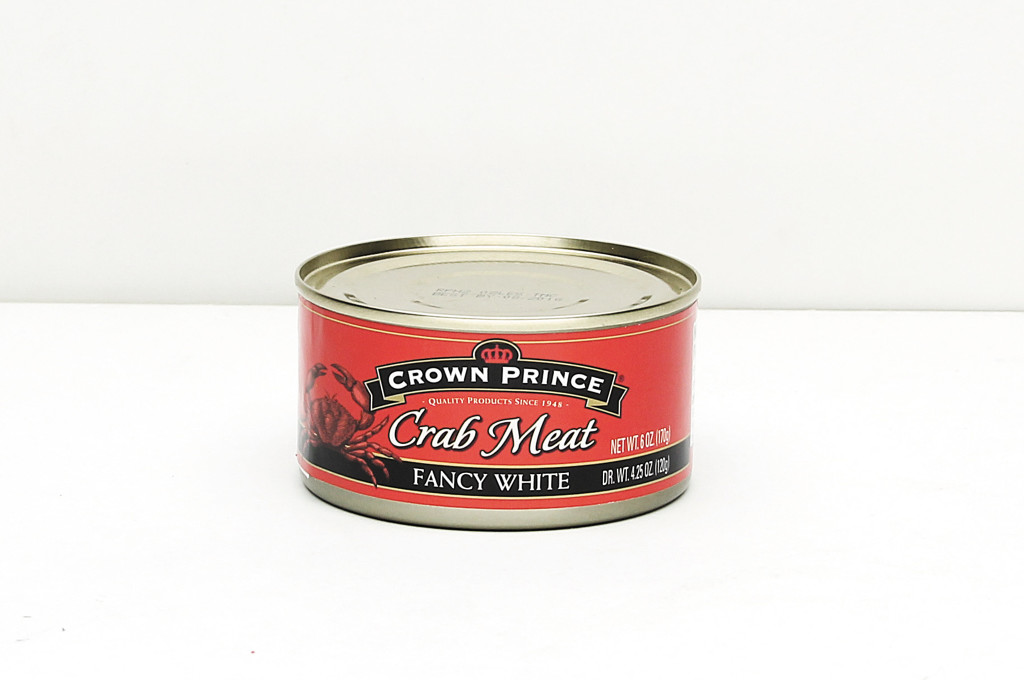
Make & Model
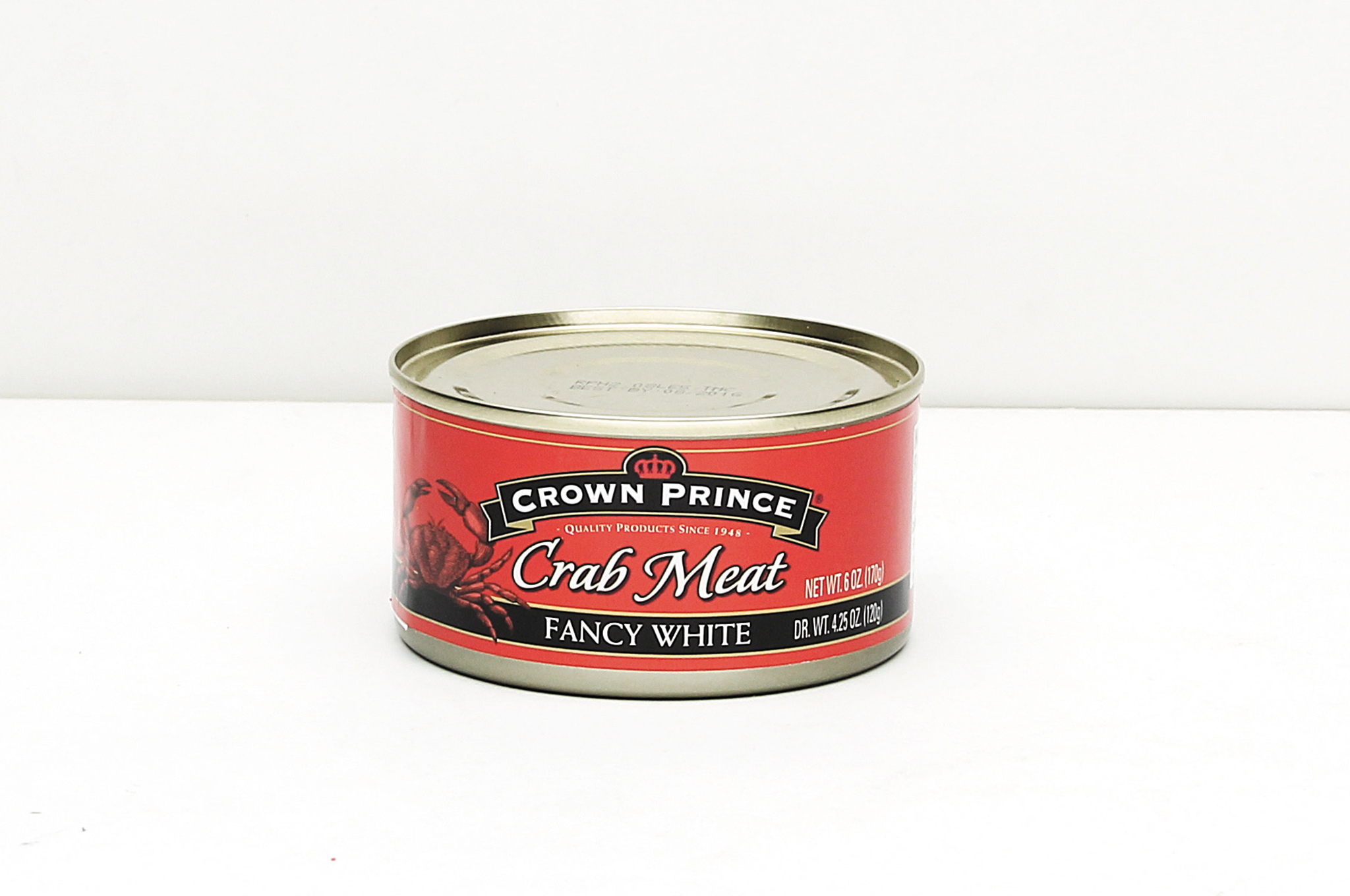
Crown Prince Crab Meat
Notable ingredients:
(Not a complete list) Crab meat, water, salt, sodium acid pyrophosphate, calcium disodium EDTA, sodium metabisulphite
Size
12 oz.
Tester #1:
Patrick Vuong
At First Bite: Would you like some cold crab with your salt? All sodium jokes aside, this canned shellfish wasn’t that radically different from the ridiculously expensive stuff you buy at a swanky restaurant.
Overall: I didn’t think it was possible, but you actually can (pun intended) satiate your appetite for exquisite seafood dining in a SHTF scenario. The meat was shredded to tiny bits and salty, but otherwise authentic — especially when heated up to supplement other foods. I tried it with good ol’ mac and cheese, but eating it with crackers would also be flavorful and more plausible in a survival situation.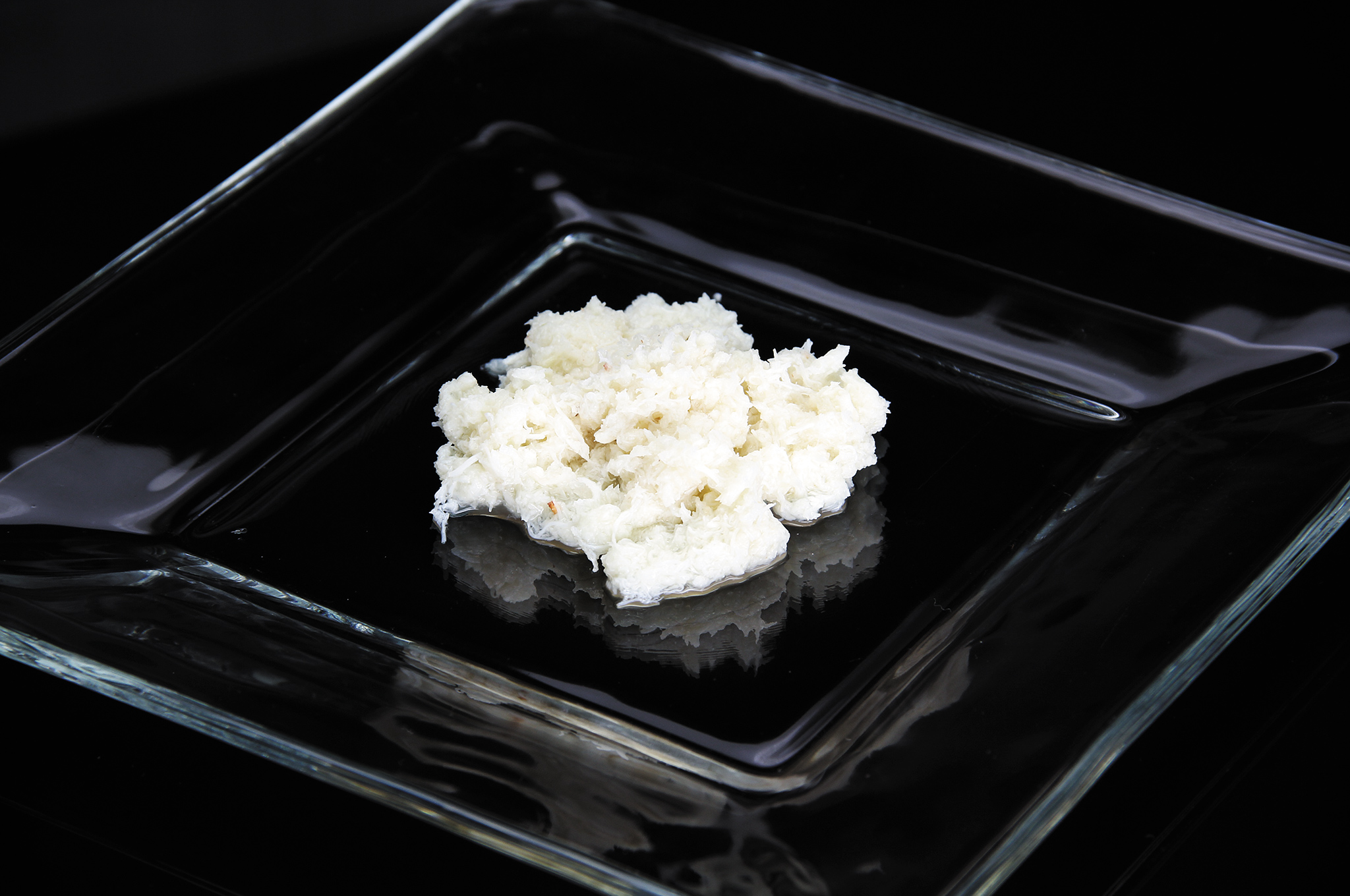
Tester #2:
John Schwartze
At First Bite: Was pleasantly surprised. The meat was tender and not too salty. There were tiny bits of shell, but that’s to be expected.
Overall: People pay beaucoup bucks to crack through shells to get to this stuff. Heated up it was pretty tasty. With some drawn butter it really wouldn’t have been too far off from what you get in a restaurant, and you’re paying a lot less. If I had to eat this to survive it’d certainly be far from agonizing. I think eating it day after day would get a bit old in a hurry, but I certainly wouldn’t pass it up if I were desperate for food. If I were to also end up with some nice crackers to put this on, who knows, I may be holding TEOTWAWKI social mixers with these as hors d’oeuvres.
Tester #3:
Martin Anders
At First Bite: Direct from the can, the crab meat is soaked in a salty brine and is flaky in texture.
Overall: The crab is clearly canned from the leftover parts from bigger, more desirable pieces. The flavor has a slight chemical taste that is reminiscent of the smell of a brand new pair of Nikes, oddly enough. If you think that sounds strange, try a taste of this crab! Overlooking the chemical taste, I’d say that it’s something that I could live off of. Given repeated servings, I could get used to it.
Corned Beef Hash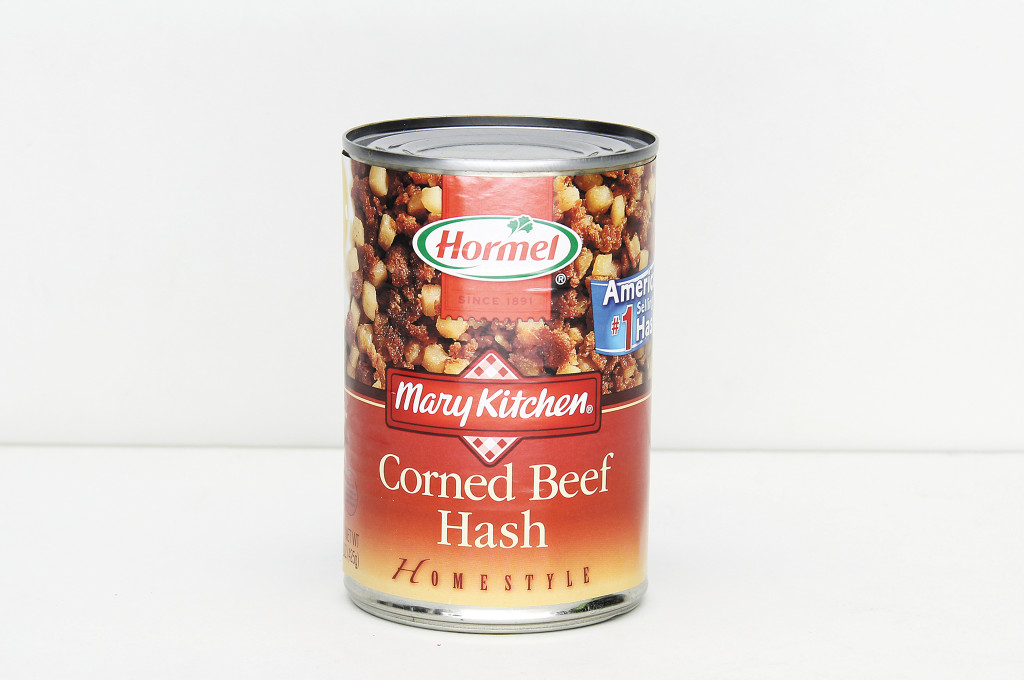

Make & Model
Hormel Mary Kitchen Corned Beef Hash
Notable ingredients:
(Not a complete list) Beef, rehydrated potatoes, water, salt, sugar, sodium nitrite
Size
25 oz.
Tester #1:
Patrick Vuong
At First Bite: Straight from the can, it surprisingly tasted like decent pâté with some potatoes.
Overall: I can certainly eat this cold straight out of the container, but it tasted even better after I fired it up on the skillet and ate it with scrambled eggs. Considering this is old potatoes mixed with low-grade cow parts preserved with sodium nitrite, the corned beef hash was rather pleasant and almost tasted like it didn’t come from a can at all. It gets a thumbs-up.
Tester #2:
John Schwartze
At First Bite: Good. A little greasy and salty, but the potatoes were nice and firm.
Overall: I guess the true question you should be asking is, “Would I eat any of these by choice.” For this, a big yes. I don’t think I’ve ever had canned corned beef hash so was anxious to try this. Served cold it was quite good, and warmed up, even better. You could mix this with all kinds of things to improve it as well: cheese, eggs, sauce, sandwich filling, etc. This would be a great food source during tough times that’s appetizing and nutritious. I’d imagine kids would become receptive to this one as well. Next to the chicken I’d have to say this was my second favorite and would eat it on a regular basis.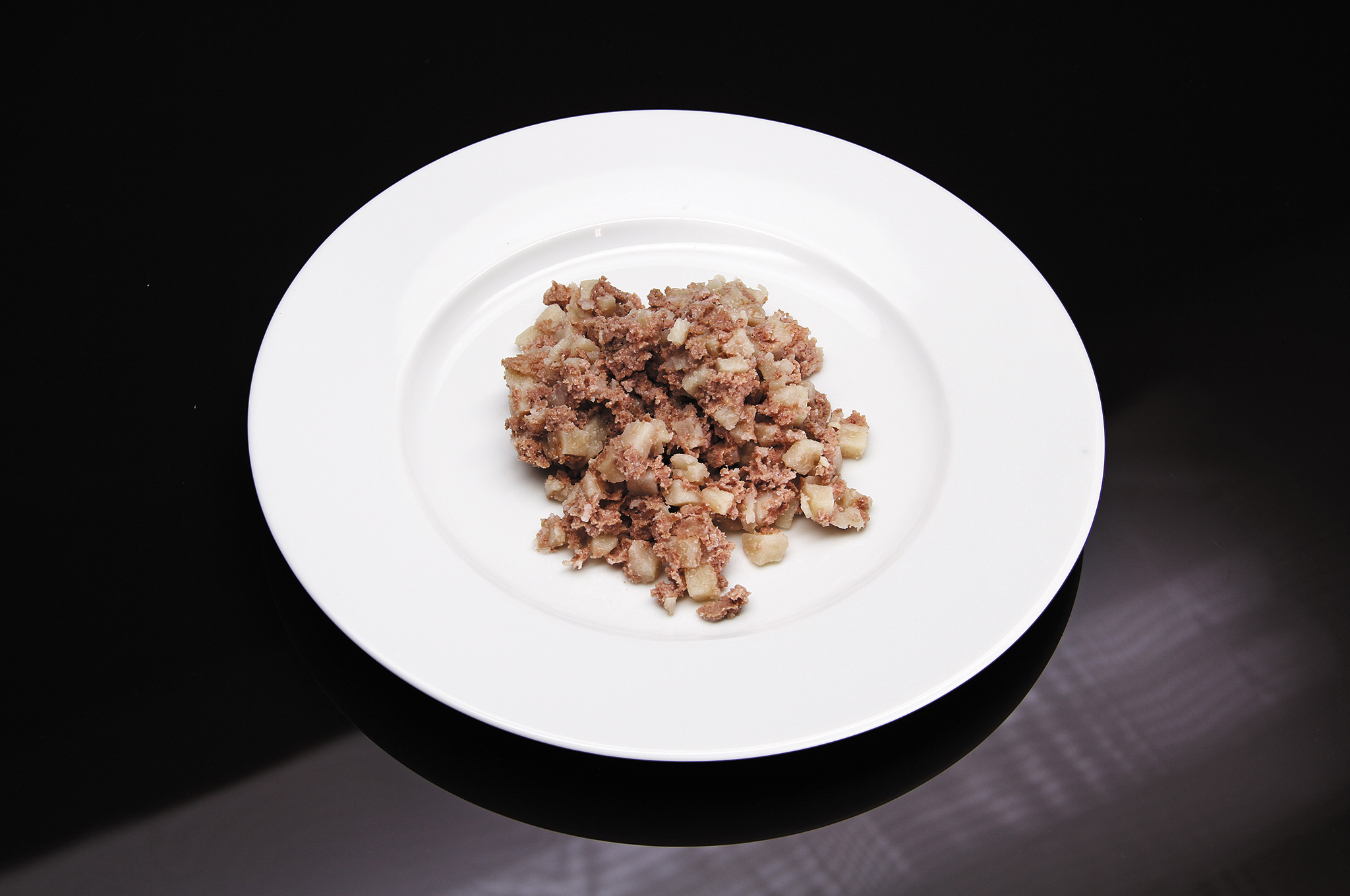
Tester #3:
Martin Anders
At First Bite: Everything you need in one can.
Overall: Clearly better if it were heated up on a skillet, the corned beef hash is a bit of a cheat in this test since it contains both beef and potatoes. It’s got everything a hungry survivalist needs to be satisfied. Eaten cold, it is chunky, but still very palatable. Some Tabasco would put this selection over the top.
Deviled Ham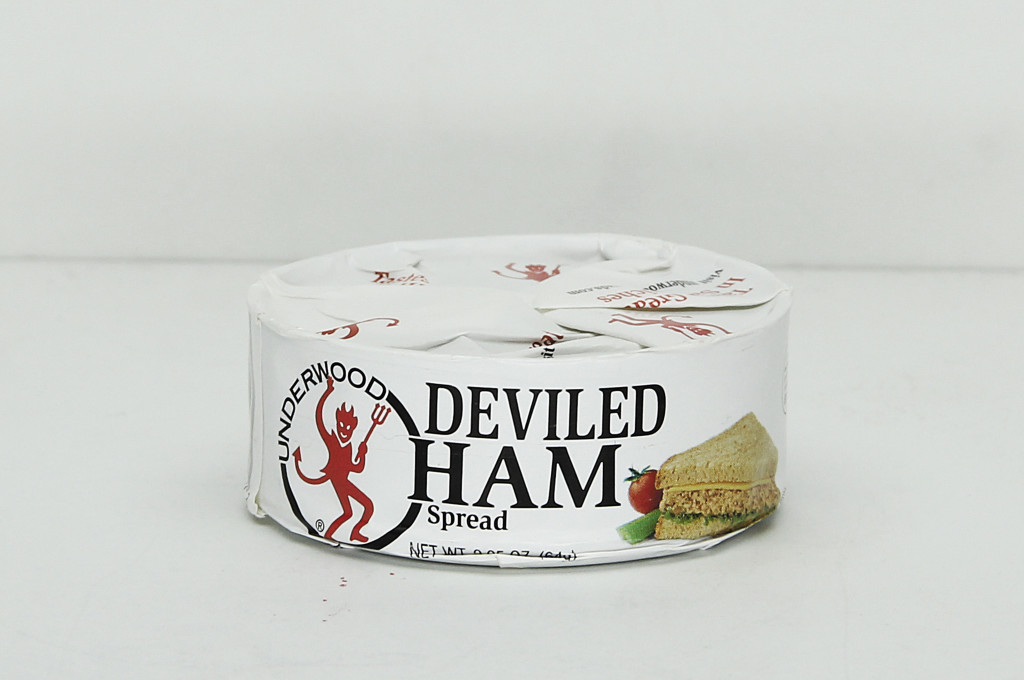
Make & Model
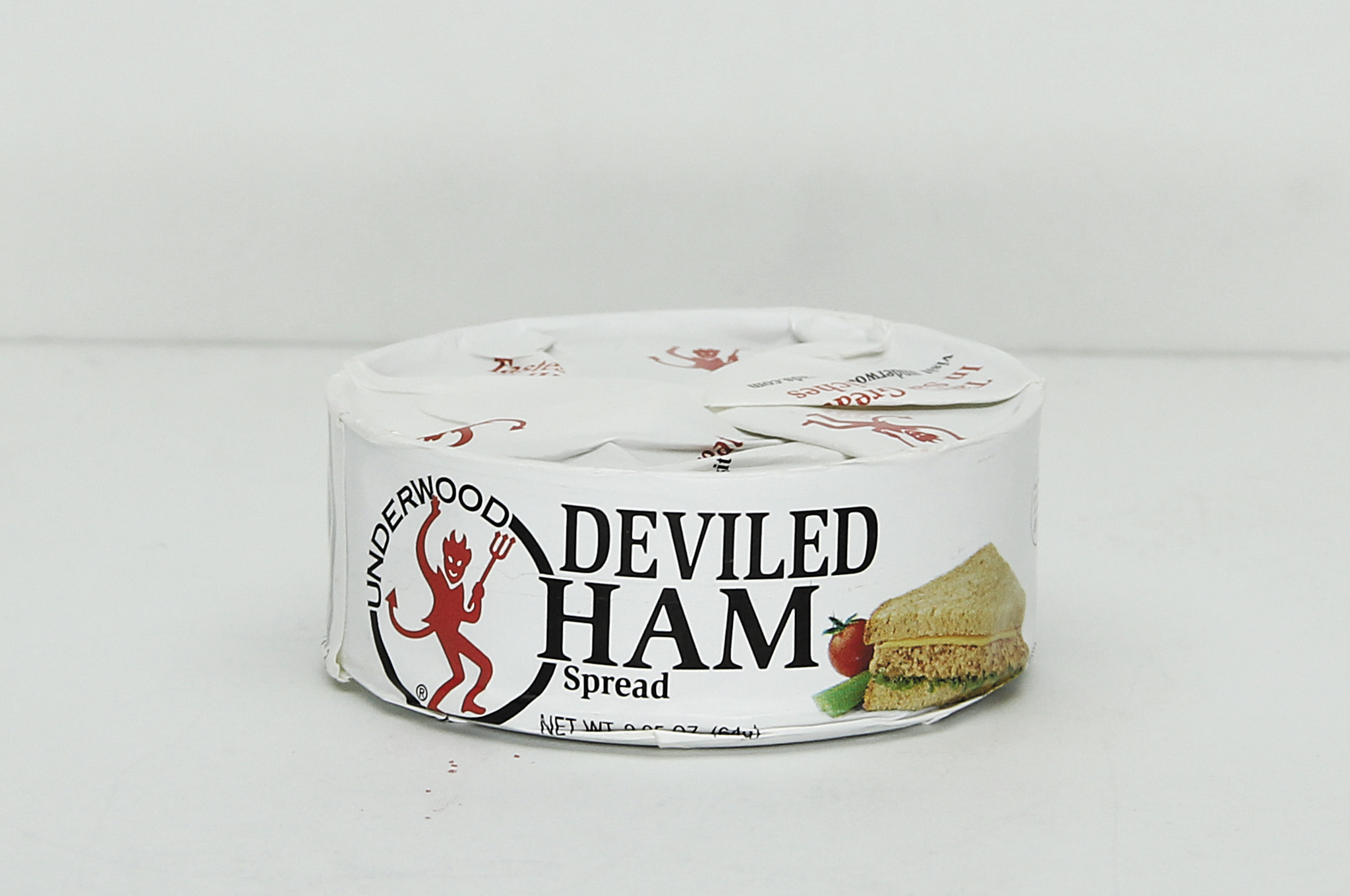
Underwood Deviled Ham Spread
Notable ingredients:
(Not a complete list) Ham (cured with water, salt, brown sugar, sodium nitrite)
Size
4.25 oz.
Tester #1:
Patrick Vuong
At First Bite: Hello, high blood pressure. Meet deviled ham spread.
Overall: This was essentially a really salty pâté — but a good one nonetheless. Out of the can, it tasted like a decent meat paste. However, there’s really not a whole lot in each tiny can, so you’d have to either buy a ton to have enough sustenance or use it as a flavor enhancer for other foods. You could spread it on crackers or bread…or cake it all over the canned boiled oysters to mask the mollusks’ disgusting flavor.
Tester #2:
John Schwartze
At First Bite: A little salty, but pretty decent.
Overall: It’s definitely no Easter ham in terms of flavor, so don’t expect it to be sweet or smoky. Out of the can it’s not a bad way to go, and the meat was moist. Even though the contents take up the entire can, the can itself is so small it’s only worth about one serving of food for an adult male. I definitely wouldn’t pass this up though. It’s pretty tasty and versatile. I finished the can with no complaints. Warmed up it’s even better.
Tester #3:
Martin Anders
At First Bite: It’s salty meat spread.
Overall: The flavor isn’t bad, but it’s very salty. I wouldn’t attempt eating this straight unless it’s all I had. I do think it’s perfect to spread onto crackers or accompany flavorless foods such as rice. Heating it up might increase its appeal. The can has a pull-tab cap and is smaller than a hockey puck, which makes it easy to stow.
How Long Can I Store It For?
Canned foods low in acid, such as corn or peas, can last for about five years. Canned foods high in acid like tomatoes can keep 18 months or more. It’s all about how the cans are stored. You want to keep them away from heat and humidity. Storage in dry and dark places that range in temperature from 50 to 70 degrees Fahrenheit is optimal for long-term storage. For more on expiration date management, see “For a Limited Time Only” in OFFGRID’s Spring 2014 issue.
Know Can Do
Canned meat isn’t just good for sustenance. It also offers a useful byproduct: the aluminum can itself. In desperate times, know that the can…well, can be repurposed for all sorts of uses. Below are just a few examples:
- Cup
- Candle holder
- Rain water catch
- Pot for cooking or boiling
- Berry and nut basket (if you have to gather food)
- Security alarm when combined with rocks and some string (see “Early Warning System” in OFFGRID’s Fall 2014 issue)
Spam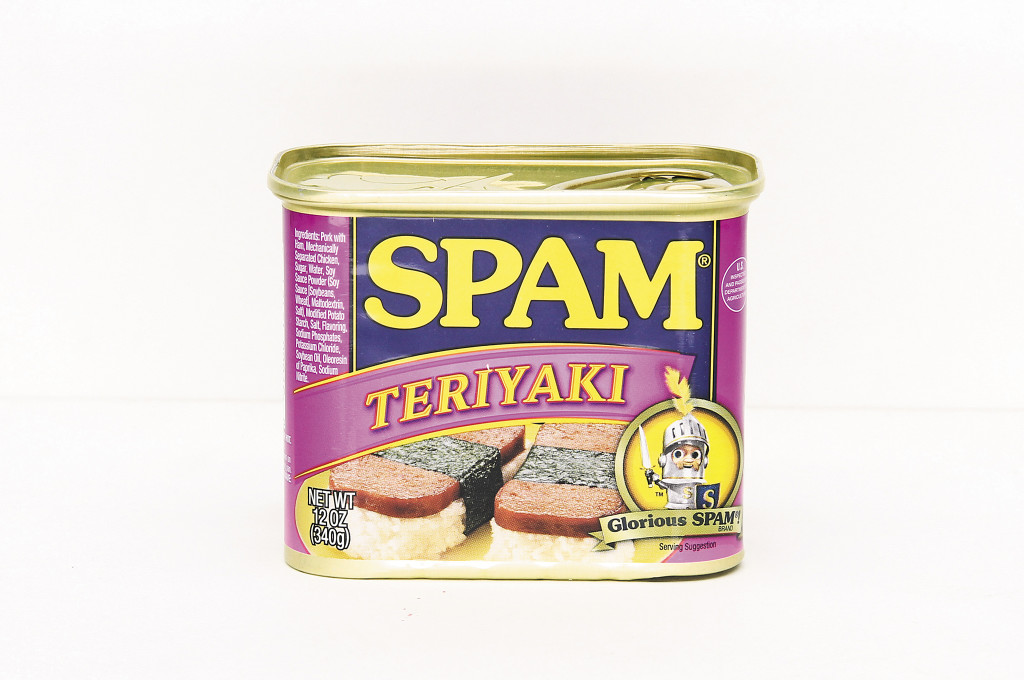
Make & Model
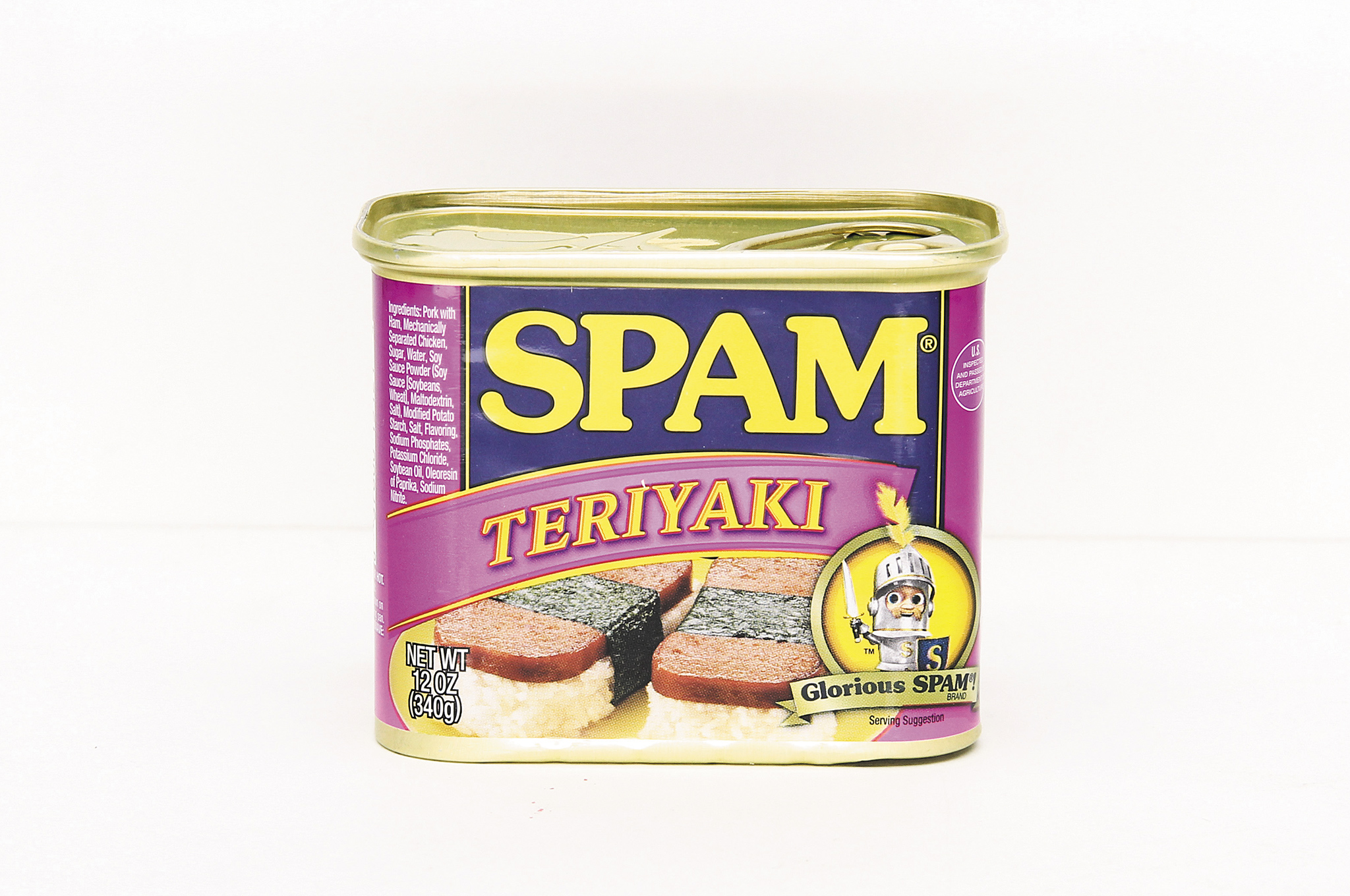
Hormel Spam Teriyaki
Notable ingredients:
(Not a complete list) Pork with ham, salt, water, modified potato starch, sodium nitrite
Size
12 oz.
Tester #1:
Patrick Vuong
At First Bite: It’s Spam with a hint of East Asia…and slathered in a saline sauce.
Overall: Who doesn’t love this mystery meat? I enjoy it on occasion as a component of fried rice, as a complement to eggs, or as the main ingredient in Spam musubi. So I figured the teriyaki version would be just as good. To my surprise, it was really salty — and that’s saying a lot for Spam. While it would be most agreeable with a generous amount of white rice, I’ll probably stock my provisions with regular Spam and save this version for when I want to feel extra Asian.
Tester #2:
John Schwartze
At First Bite: Flavorful, but please don’t pass the salt.
Overall: Spam is something else I can’t remember the last time I ate outside of some Hawaiian cuisine that uses it. Mine was teriyaki so had a bit more flavor than expected, but was really salty. Comparatively speaking it was pretty good — the texture was firm, and could be used as a nice grilled steak, as filling in a sandwich, or chopped up and served with other things. This would be another I’d happily resort to if times got lean. Its versatility, flavor, and texture make it a worthwhile resource, and I may actually start using this more often to find new and exciting ways to make it taste good when mixed with other ingredients. Plus, I can sing the Monty Python Spam song while I’m cooking it as an added bonus!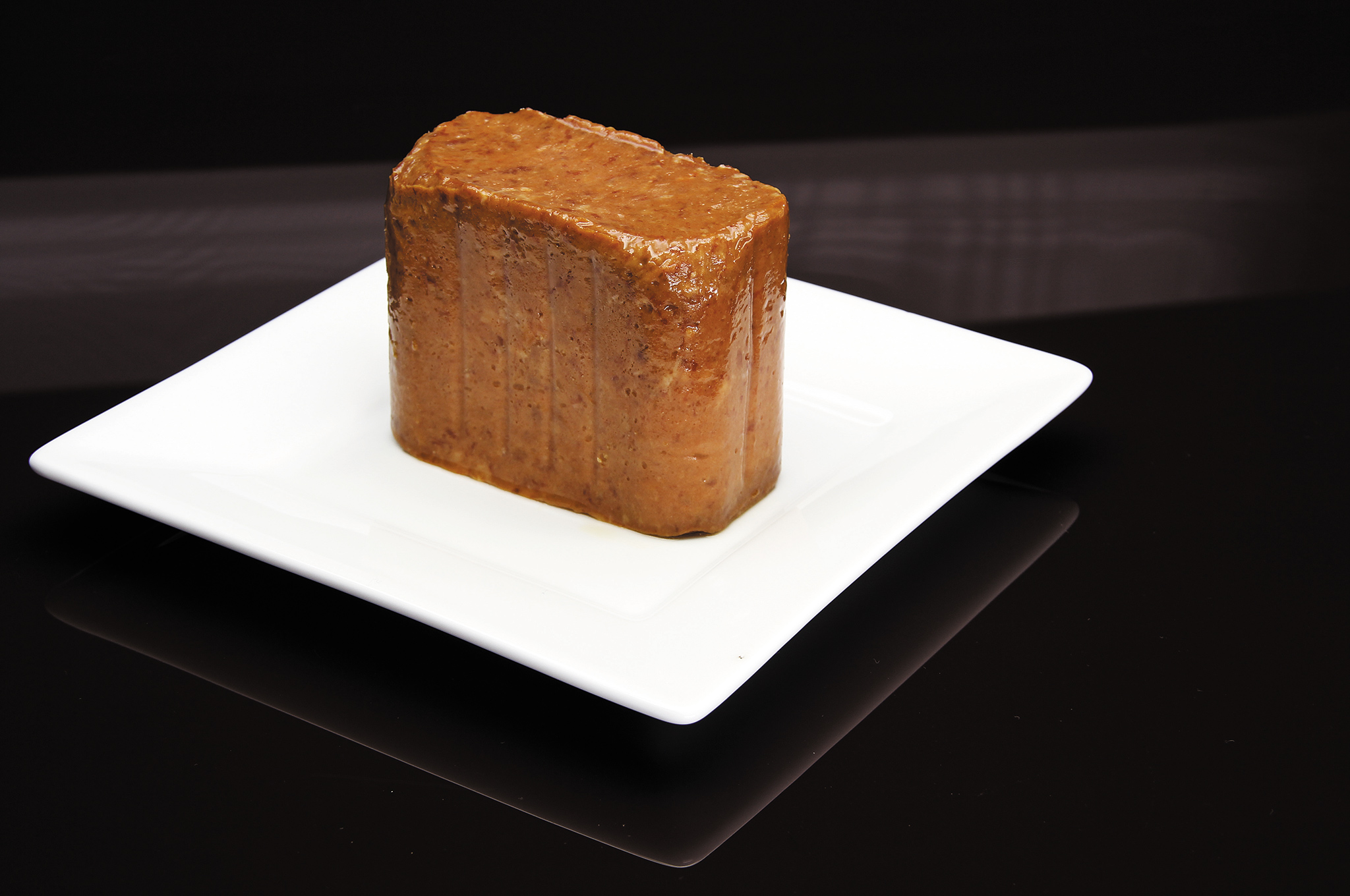
Tester #3:
Martin Anders
At First Bite: It’s a brick of meat; what’s not to like?
Overall: Stocking up on Spam in case SHTF is a no-brainer decision. Loading up on this teriyaki version on the other hand is questionable. It’s surprisingly sweet, clearly a result from its very strong teriyaki flavor, but it also has an unusual aftertaste that the original flavor doesn’t have. I can’t say that I’m digging this version, but if you already have a five-year supply of original Spam, it probably wouldn’t hurt to throw in a few cans of alternative flavors like this teriyaki version just to mix it up a bit.
Tuna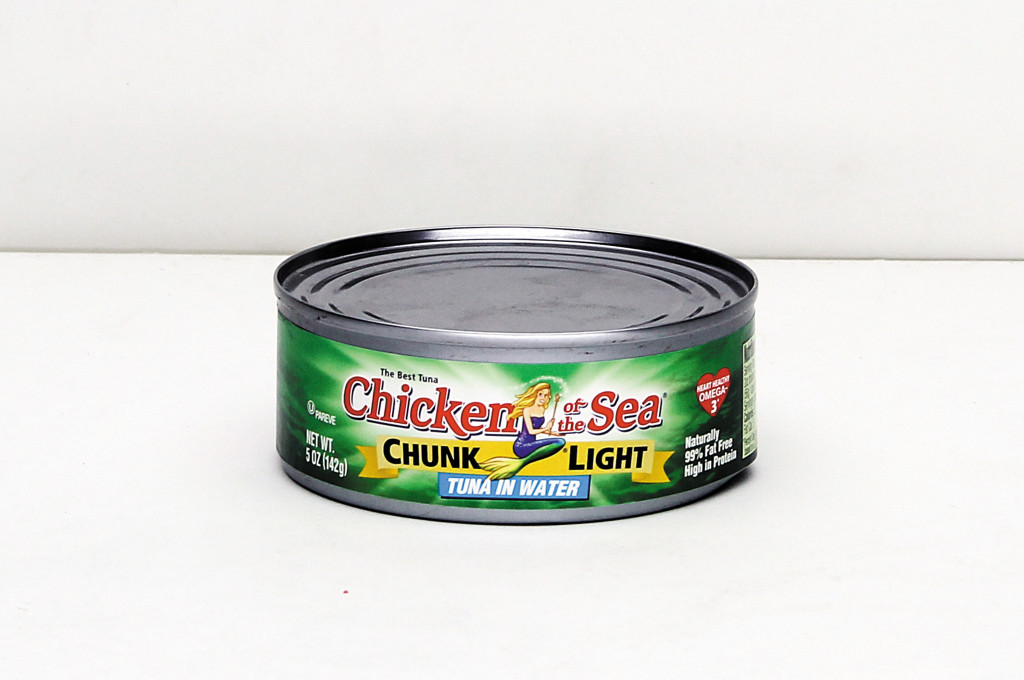
Make & Model
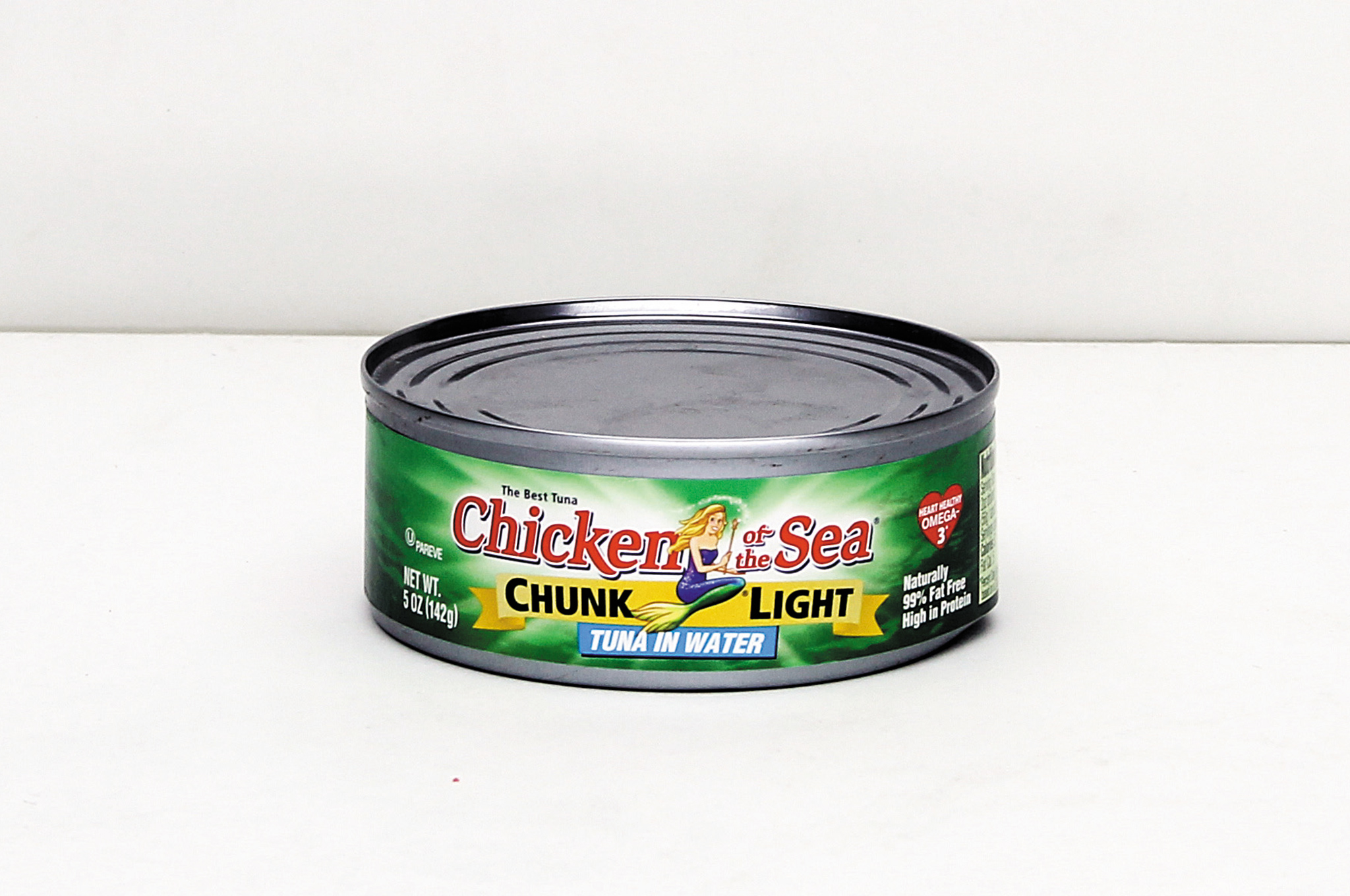
Chicken of the Sea Chunk Light Tuna In Water
Notable ingredients:
Chunk light tuna, water, vegetable broth (contains soy), salt
Size
5 oz.
Tester #1:
Patrick Vuong
At First Bite: For those who’ve never tried canned tuna, it had a salty yet slightly sour texture, followed by a “seafoody” aftertaste.
Overall: If you’re a low-carb nut or a fitness freak, you’re probably well acquainted with this style of seafood. Some guys I know eat this straight from the tin for lunch — and nothing else. (Tuna is a storehouse of protein, which not only helps build muscle, but also keeps you feeling full longer — which is highly useful when rations are low.) I suggest eating it with veggies, rice, or crackers. I’ve long gotten used to canned tuna, so this portion of the taste test was fairly ho-hum. I’d rather have a plate of fresh tuna sashimi, but, hey, preppers can’t be choosers. I’d venture to guess that in dire circumstances, this tuna would be palatable enough for most people.
Tester #2:
John Schwartze
At First Bite: Tolerable, but definitely not my first choice.
Overall: For some reason I’ve hated canned tuna since childhood. I enjoy sushi or a nice grilled tuna steak, but can never get into tuna of this kind so my evaluation is a bit biased. This is a good source of protein and nutrients, but my preference would direct me to other sources of canned nourishment if I had the choice. There’s a lot you can do to jazz this up with mayo, onions, etc., but in a forced situation with nothing else to use I would likely be using this as a bartering chip more than I would a source of sustenance. My cat was happy to finish the majority that I couldn’t, which also makes it a reasonable alternative pet food to keep your four-legged buddies going if there’s nothing else to use.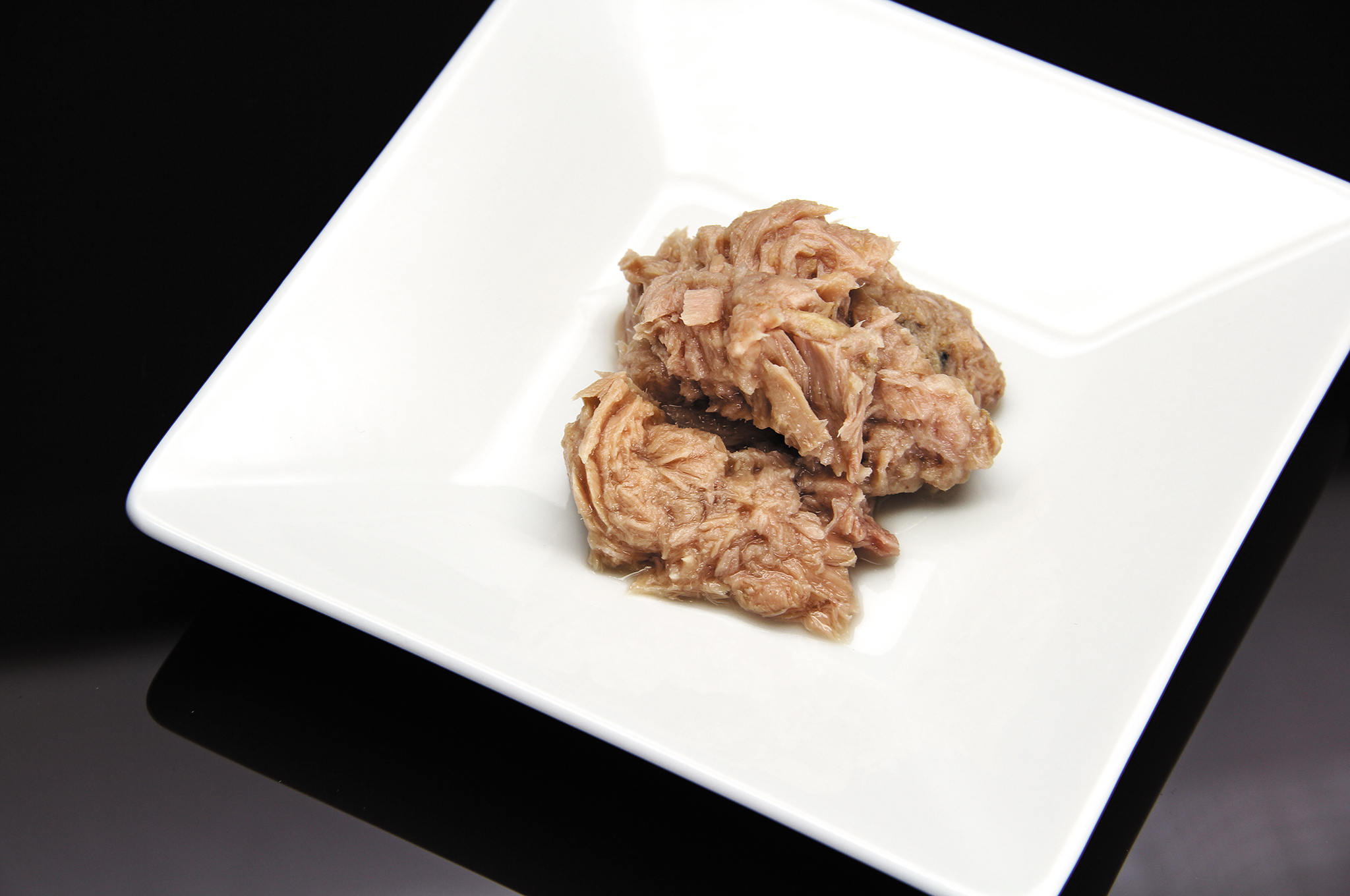
Tester #3:
Martin Anders
At First Bite: Very dry with a sour, tangy flavor.
Overall: Sure, I like myself a good tuna melt once in a while. When I took a mouthful of tuna straight from the can, I was a bit disappointed. This isn’t what my tuna melt is made up of is it? Its consistency is similar to overly cooked chicken, soaked in salt water. Can I eat it in a survival situation? Absolutely. Do I wish I had some mayo and other seasonings to add to it? Absolutely.
Vienna Sausages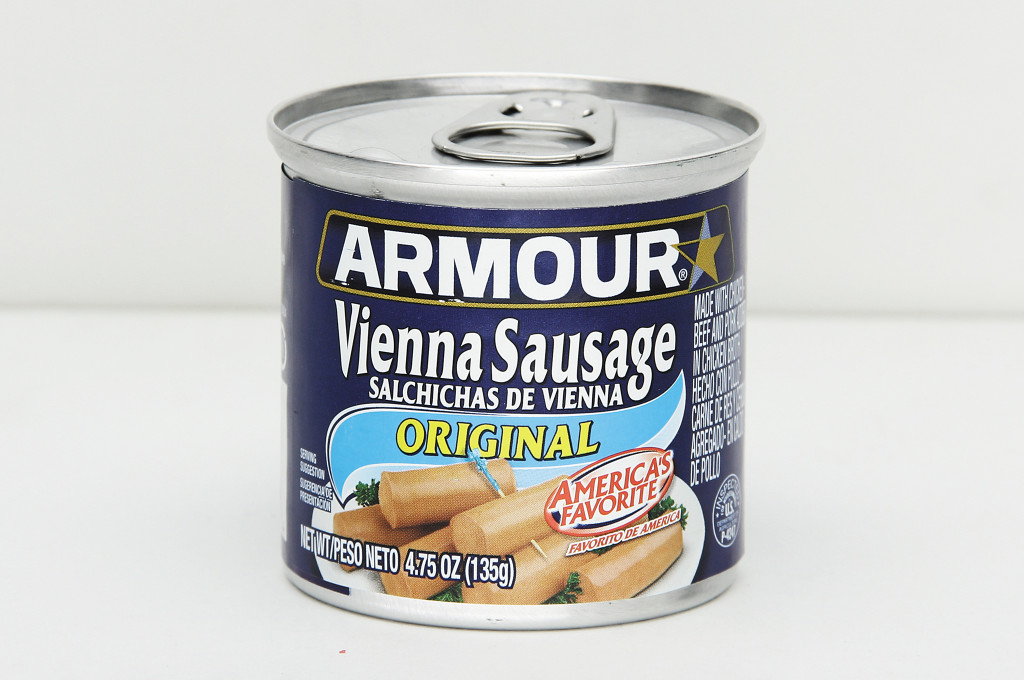
Make & Model
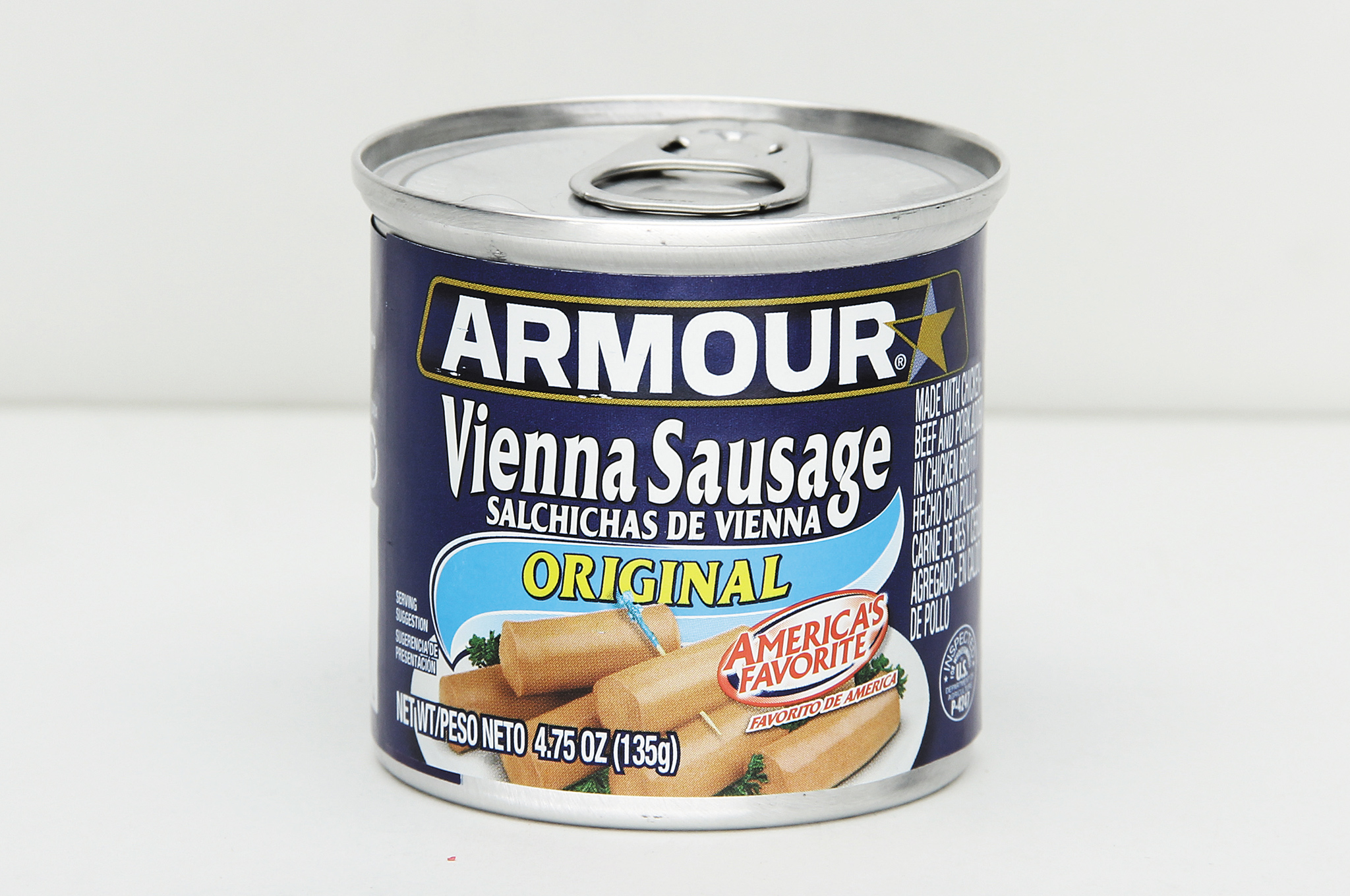
Armour Vienna Sausage Original
Notable ingredients:
(Not a complete list) Mechanically separated chicken, water, salt, corn syrup, sodium nitrite
Size
4.75 oz.
Tester #1:
Patrick Vuong
At First Bite: This ain’t my first time at the Vienna sausage rodeo — easily my favorite dead animal product of this taste test!
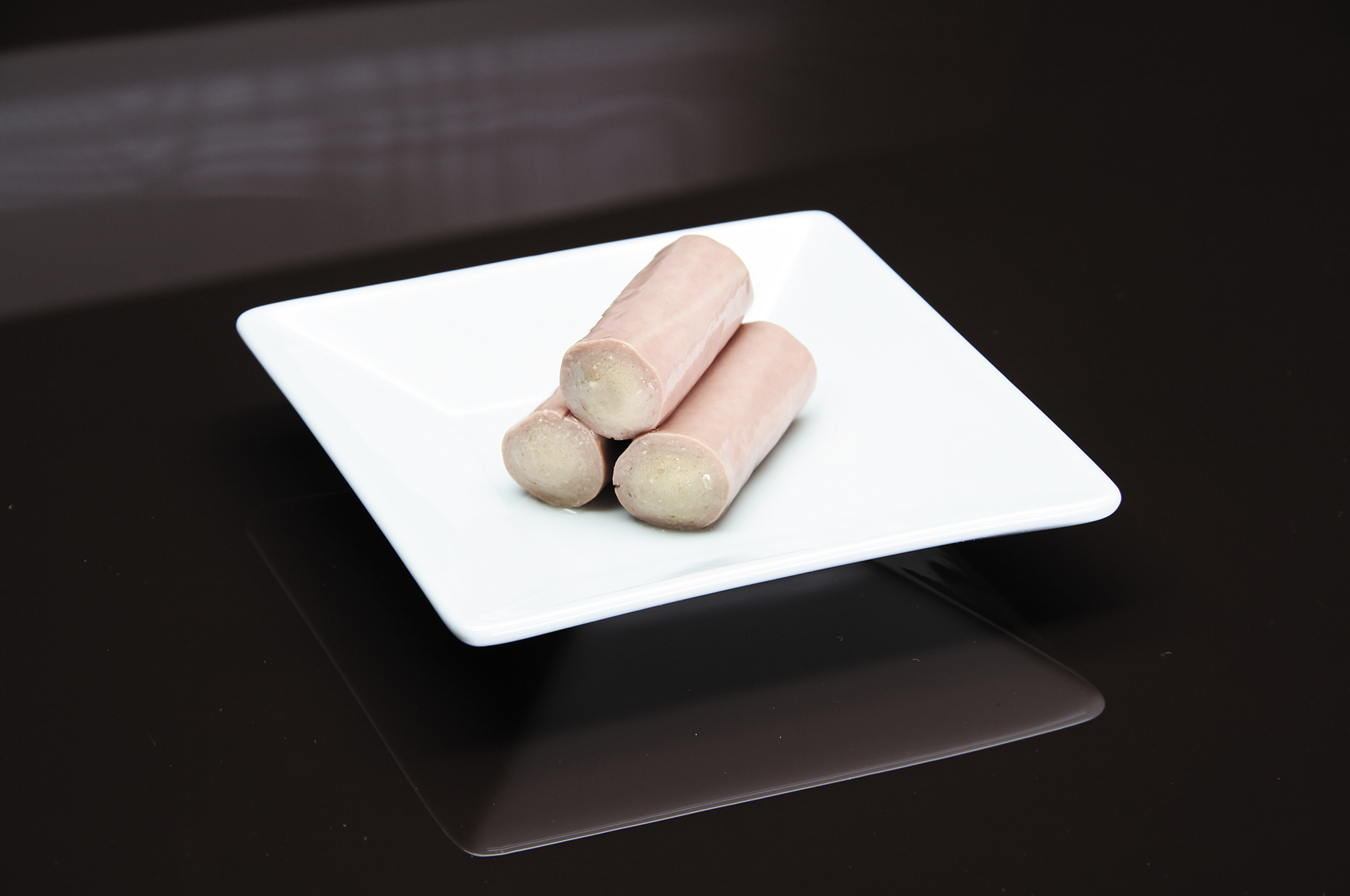
Overall: Truth be told, I’ve been eating these little bad boys since I was a kid (though a lot less after I realized what goes into making them), so I had zero inhibitions when cracking open the lid. These are basically mini hotdogs that you can eat straight up, throw into soup or stew, or douse in ketchup and mustard with some bread. Stock up on Vienna sausages without reservation, folks.
Tester #2:
John Schwartze
At First Bite: Mushier than I expected, but had a nice flavor.
Overall: I don’t remember the last time I had one of these that wasn’t slathered in barbecue sauce and served hot as some sort of Christmas party appetizer, so my palette was pretty objective. These were quite nice and something I’d definitely stock up on if food became scarce. They weren’t too salty and had a nice flavor. I expected a firmer texture, but it wasn’t so soft that it was gross. There are a variety of things you could eat these with (sauces, mixed with other items, as a side dish) that would make them a nice part of a complete meal. If you like hot dogs, you’d like this.
Tester #3:
Martin Anders
At First Bite: Seven little piggies all snug in a can.
Overall: A childhood favorite of mine, the Vienna sausage is the younger cousin of the hot dog. By no means is this a gourmet food, but it is enjoyable to eat — especially when you’re hungry. I do like the fact that it comes in a small pull-top can. They’re painless to carry in a bug-out bag or cargo pant pocket and easy to open when it’s time to eat.