Today’s world of social media clickbait has made vaguely medical-sounding buzzwords more popular than ever. “Solve your dry skin with a juice cleanse,” the articles say. “This one crazy trick will cure all your illnesses! Those greedy doctors will hate you for outsmarting them!” It has become ridiculous almost to the point of self-parody.
So, understandably, the phrase “Oral Rehydration Therapy” sounds like one of these goofy buzzwords. However, we assure you, this technique is a very real and valid medical technique to avoid dehydration in emergencies. It has been recommended by the World Health Organization (WHO) for treating mild to moderate dehydration, and has been used effectively to save millions of lives from illnesses that cause diarrhea.

In simple terms, Oral Rehydration Therapy involves gradually drinking water with several key substances added, most importantly sugar and salt. The WHO and UNICEF have developed a very specific formula for Oral Rehydration Salts, which are distributed in packets in developing nations and mixed with clean water. Here’s the official formula:
- 2.6 grams of salt
- 2.9 grams of trisodium citrate dihydrate
- 1.5 grams potassium chloride
- 13.5 grams anhydrous glucose (a sugar)
- 1 liter of clean water
Commercial versions of this formula are available, but if you don’t have access to them, you can make your own simplified Oral Rehydration Therapy solution. Here’s an example of how to do so, courtesy of the Tokyo Metropolitan Government’s Disaster Preparedness Guide:
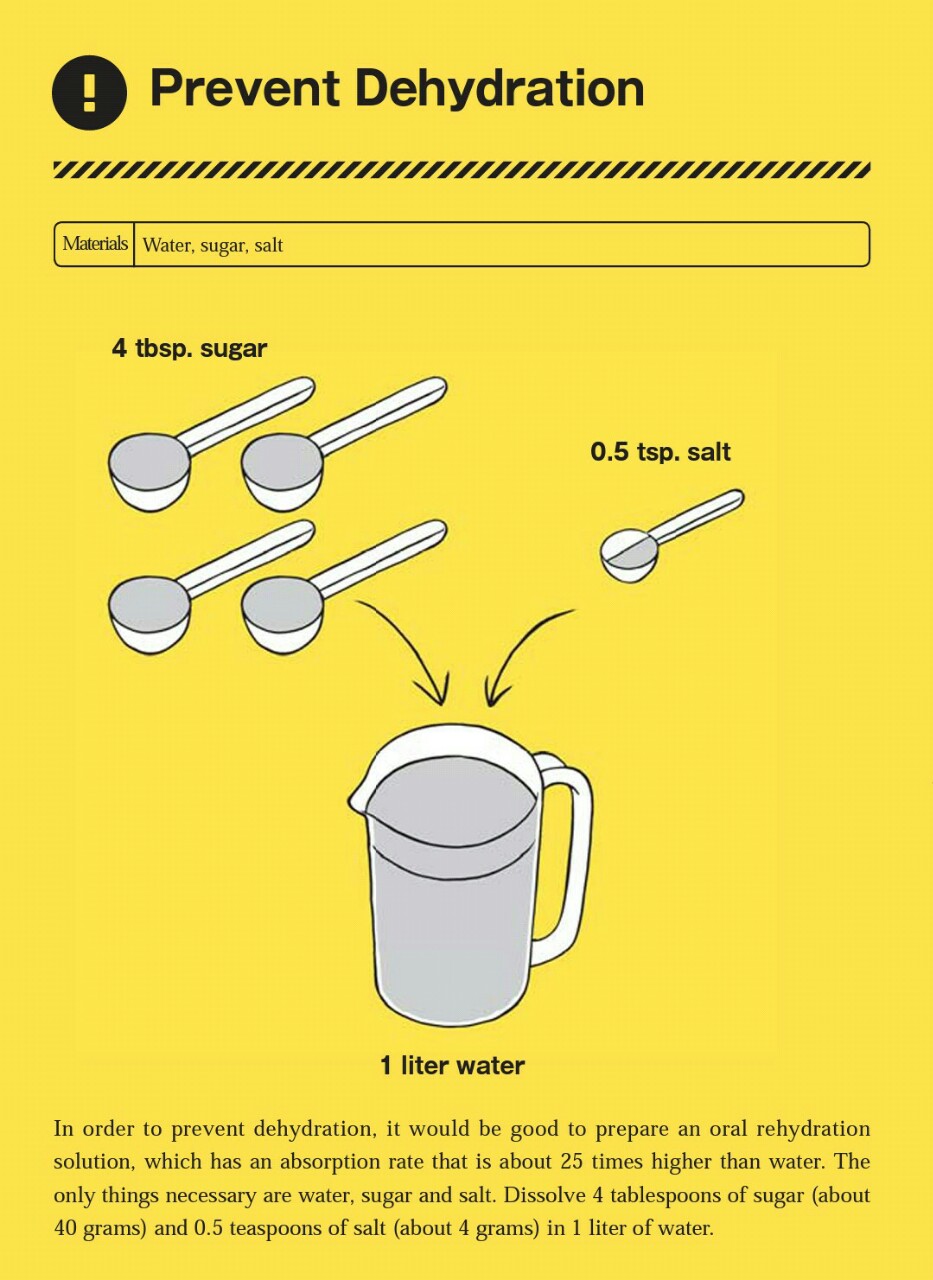
On a side note, this guide for Disaster Preparedness (called “Bousai” in Japanese) is packed with other useful illustrations and information, so we’d suggest reading the whole thing if you have time. It’s available as a free PDF here.

Back on the topic of Oral Rehydration Therapy, the solution can also be prepared manually if you don’t have teaspoons to measure with:
- 1 liter of clean water, boiled and cooled
- 2 three-finger pinches of table salt
- 2 handfuls of granulated sugar
- If possible, add 1/2 cup orange juice or a mashed banana (this provides added potassium, like the WHO official formula)
Before adding the sugar, taste the salt water—it should not be saltier than your tears.
You should drink or administer Oral Rehydration Solution after every instance diarrhea occurs. If vomiting occurs, wait ten minutes and continue drinking ORS slowly. According to Rehydrate.org, adults and large children should drink at least 3 quarts or liters of ORS a day until they are hydrated and well.