Dakota Fire Pit

Efficient and Concealable Combustion

Date:

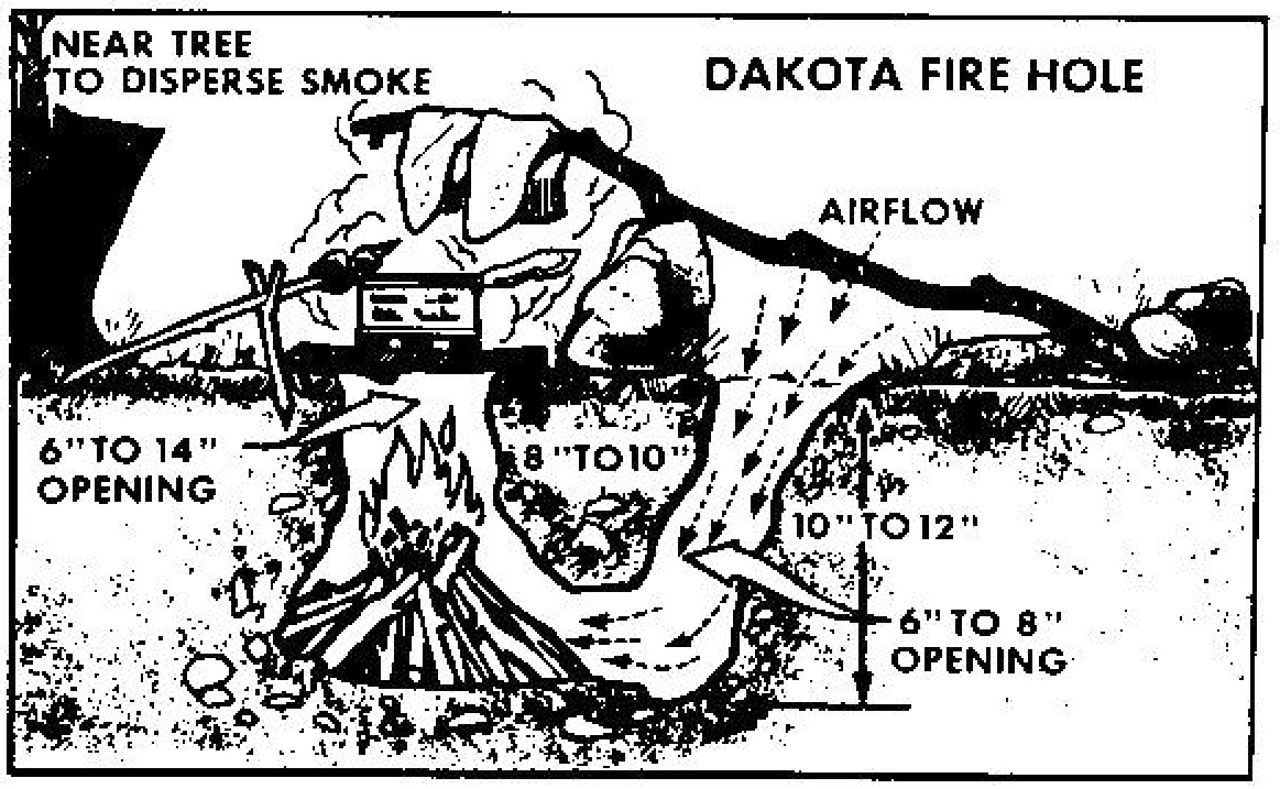
USMC Dakota Fire Pit diagram

At face value, starting a fire is about as simple as it gets. Throw some wood, a little tinder, and a few sparks together in dry conditions, and you’re all set. No need to over-complicate it, right? Well, not necessarily. This age-old process has plenty of room for improvement, and the Dakota Fire Pit is one of the most effective upgrades to a traditional campfire.

As taught in the USMC Survival, Evasion, and Recovery manual, the Dakota Fire Pit uses an underground cavity to create an efficient and concealable fire source. It draws in air through an inlet, and focuses the heat upward so minimal energy (and firewood) is wasted. Constructing this type of fire pit is certainly more difficult than an above-ground campfire, but may be worth the effort if you’re planning to remain at your camp for several days.

For more information on how and when to build a Dakota Fire Hole, you can refer to this article from Ron Fontaine at Survival Topics.


STAY SAFE: Download a Free copy of the OFFGRID Outbreak Issue

In issue 12, Offgrid Magazine took a hard look at what you should be aware of in the event of a viral outbreak. We're now offering a free digital copy of the OffGrid Outbreak issue when you subscribe to the OffGrid email newsletter. Sign up and get your free digital copy
Patrick McCarthy
Patrick McCarthyhttp://offgridweb.com/
Patrick McCarthy is the Editor of RECOIL OFFGRID. He currently resides in Arizona, and enjoys hiking, camping, shooting, and snapping photos along the way. You can follow his latest projects on Instagram at @pmccarthy10.

Share post:

Popular

More like this
Related

Tales from the Field

Discover the excitement of hunting in Nebraska, filled with lively personalities and the charm of the great outdoors.

Maintaining Comms During Disaster

The Premise Emergency Communication 101 sets out to solve a...

Cold Weather Survival: Understanding, Preventing, and Treating Hypothermia

Winter brings risk along with the cold. Hypothermia can strike in deep wilderness, on a roadside, or even inside a poorly heated space. This guide explains how hypothermia develops, how to prevent it through smart layering and preparation, and how to treat a person in danger. Stay ready when temperatures drop.

Surviving the Silent Season

Cold months test more than gear. They strain mood, motivation, sleep, and connection. Licensed trauma therapist Tom Sarge explains why winter isolation hits so hard and how to counter it with sunlight, movement, connection, planning, and simple mental prep. This guide blends survival principles with emotional resilience to help you face long nights, holiday triggers, and seasonal depression with clarity and strength.