If you’ve spent time browsing through survival- and preparedness-related videos on YouTube, you’ll inevitably realize one thing: there are millions upon millions of these videos on the Internet. These days, high-definition cameras can be found just about everywhere—cell phones, motorcycle helmets, car dashboards, and firearm picatinny rails, among other places. The proliferation of compact, inexpensive, and durable cameras makes it easier to film your adventures, and to share them with the world.
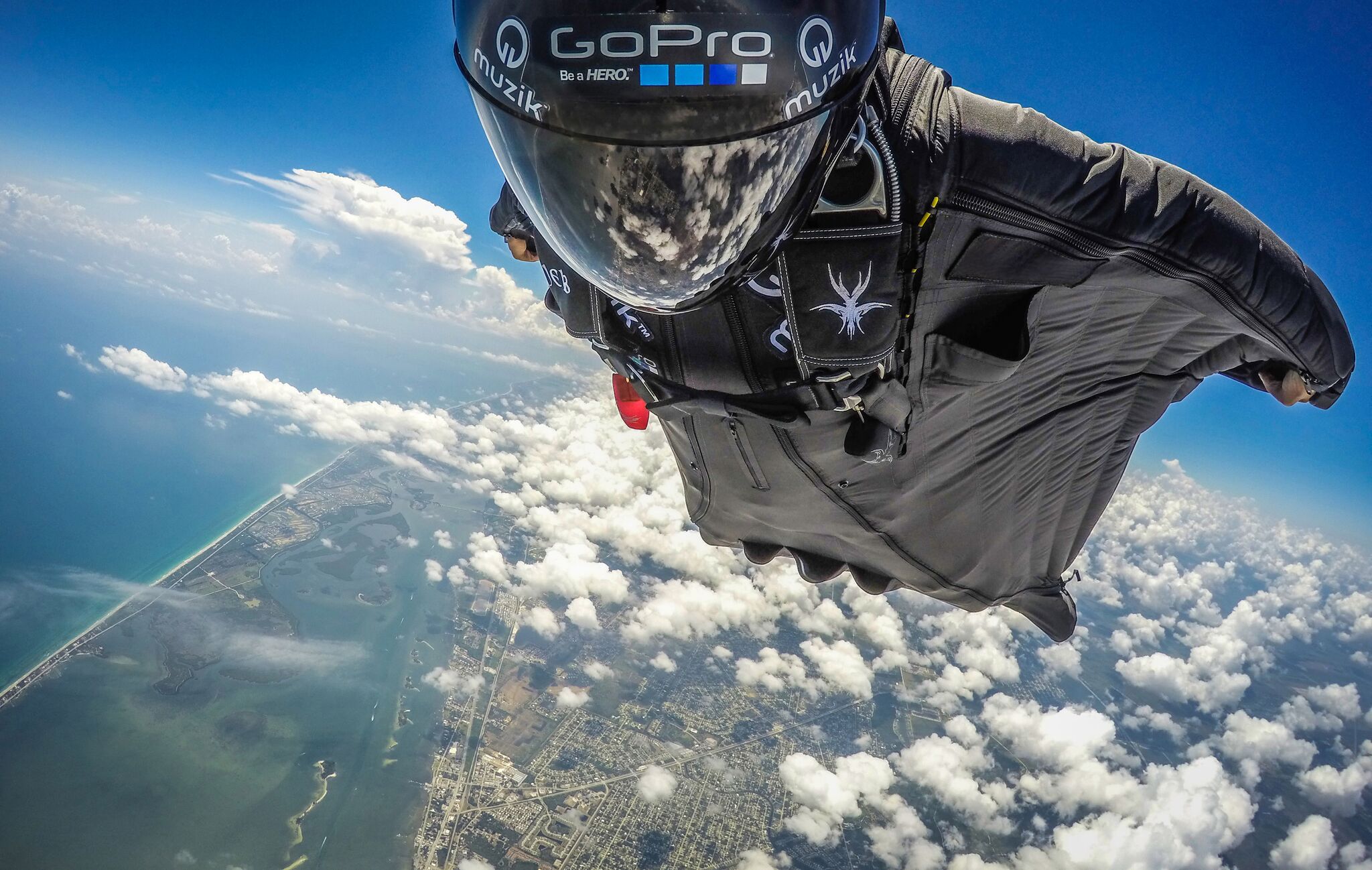
If a camera mount can handle falling out of an airplane at terminal velocity, we’d say it’s pretty solid.
However, for hard-use outdoor scenarios, the camera mount you choose can be just as important as the camera itself. If you’re filming yourself kayaking through some rapids, and your suction cup mount fails, your nice camera (and all its footage) could be lost forever. Even if you’re simply recording a day hike, it can be frustrating to deal with a camera mount that keeps slipping, coming loose, or bouncing around as you walk.
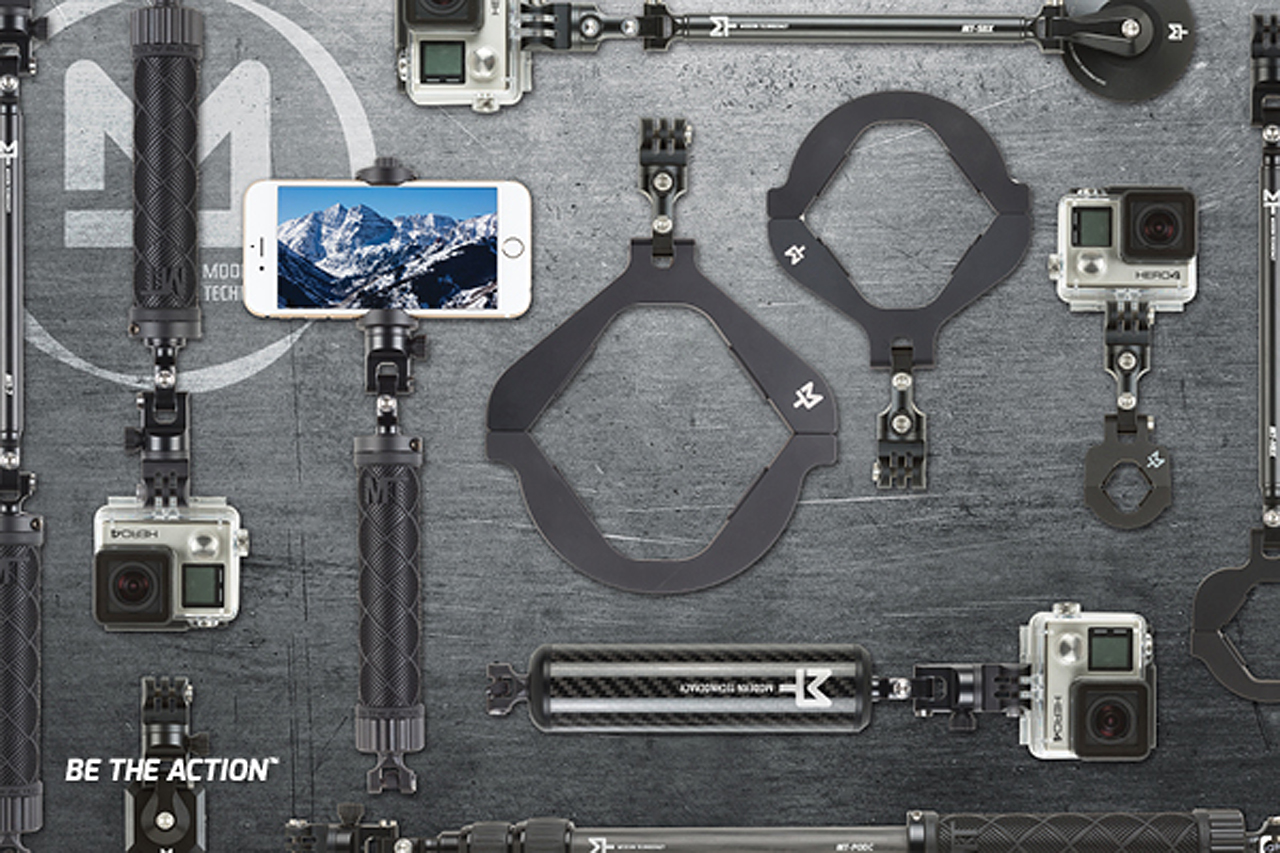
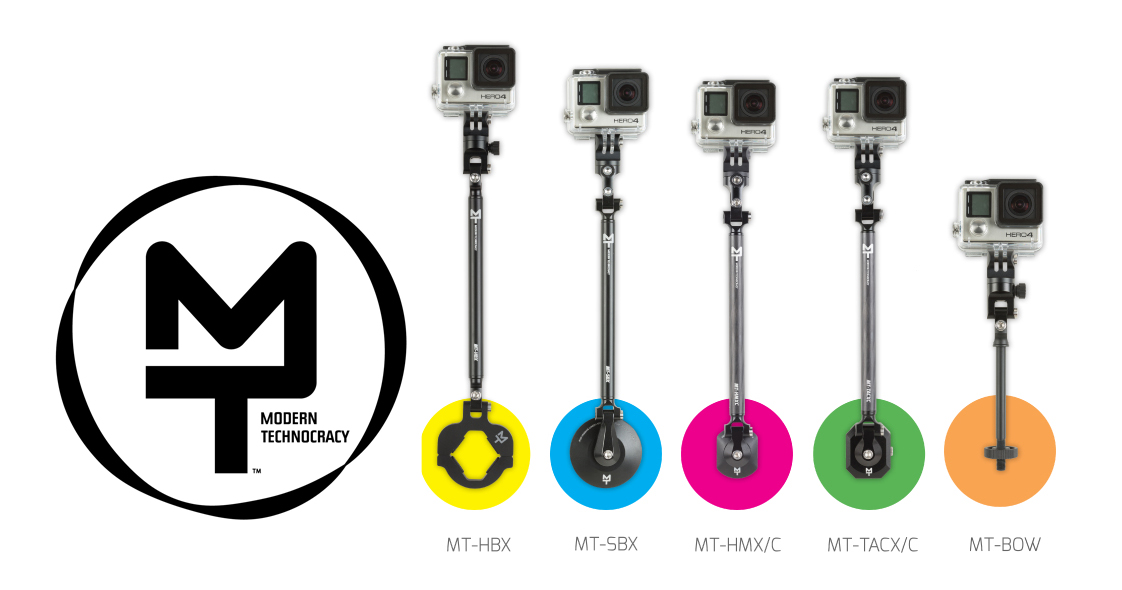
Modern Technocracy mounts are designed for a variety of recording devices and attachment styles.
Fortunately for guys like us, the team at Modern Technocracy has produced a solution. Their new MT camera mounts are tailored to those who love the outdoors, as well as extreme sports athletes who really push the limits of camera equipment. In fact, these mounts were developed with the help of more than a dozen prolific GoPro athletes: Aaron Chase, Ben Brown, Bo Bridges, Bucky Lasek, Damien LeRoy, Harley Ingleby, Jamie Sterling, Jeb Corliss, Julian Carr, Mitch Bergsma, Shon Bollock, Sunny Garcia and Reno Makani.
If you’re a fan of surfing, skateboarding, or other extreme sports, you’ll probably recognize several of these faces.
With the help of these individuals, MT has created a lineup of professional-grade mounts with some very clever patented features. They’re universal and modular, so you can swap out a GoPro for a cell phone in seconds, all while using the same mount. Also, these mounts use high-strength aluminum and carbon fiber, and lock down tightly to maintain fixed camera angles.
Modern Technocracy has now started a crowdfunding campaign to support the launch of these new MT camera mounts. If you enjoy filming with a cell phone, GoPro, or action cam, we’d encourage you to check it out—purchasing mounts through the crowdfunding campaign will also get you a considerable discount off the MSRP.
Regardless, as outdoor photographers, we always like to see gear being developed that can take as much abuse as our cameras inevitably do. Whether you’re talking about camera equipment or survival gear, it’s no good to anyone if it’s broken.
Ask ten people what makes a “perfect survival knife”, and you’ll get ten very different answers. Of course, there’s a general consensus that a survival knife should be sharp, versatile, and above all, strong enough to endure years of hard use.
Beyond these basic qualities, however, you’ll find many varying personal preferences. Some guys like huge, heavy knives that can break down firewood with the power of an axe. Other guys prefer long, thin blades like machetes or parangs for slashing through undergrowth. Then you’ve got the smaller and more traditional fixed blades, ranging from full-tang combat knives to compact and lightweight blades.
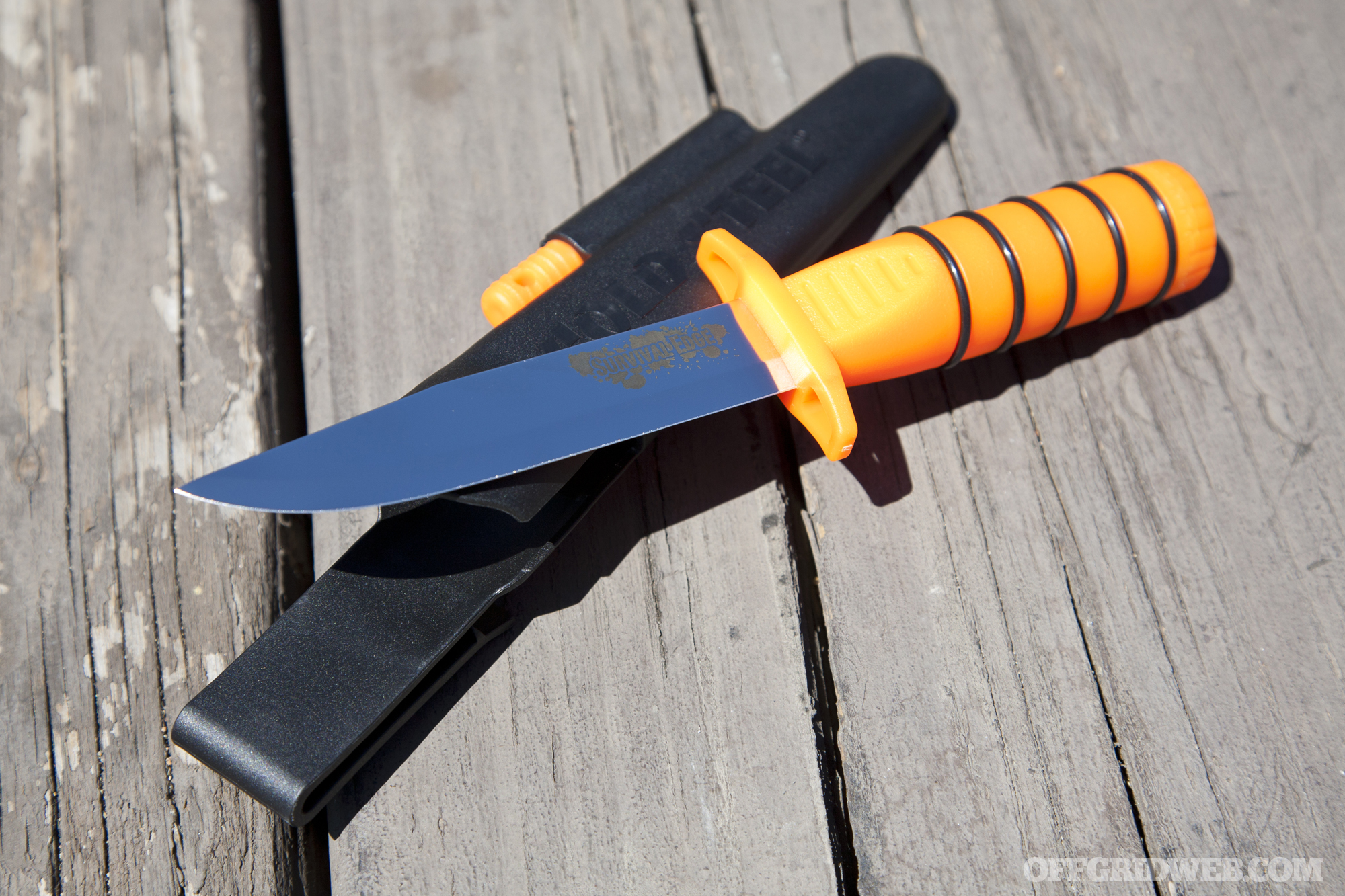
Cold Steel Survival Edge
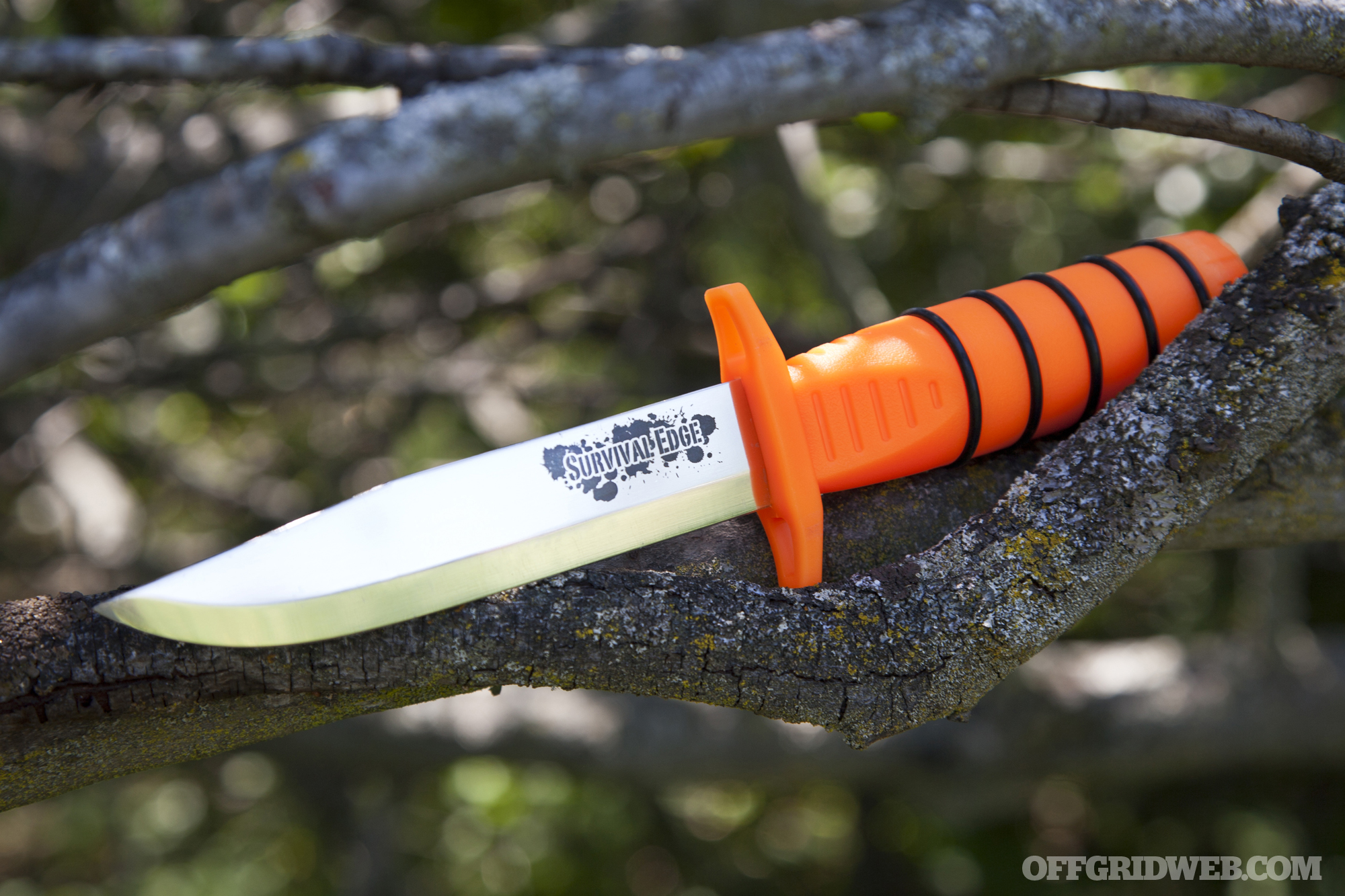
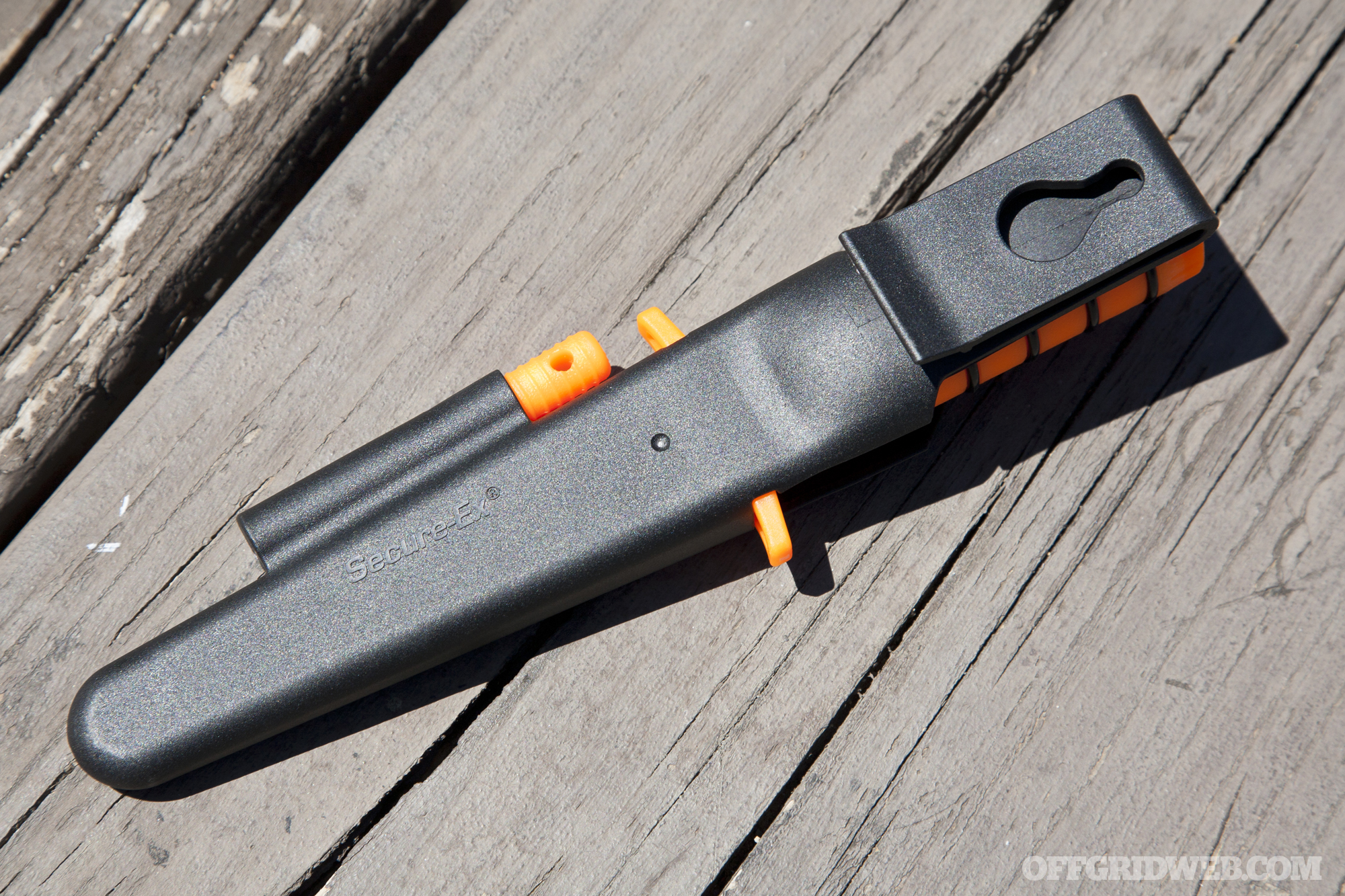
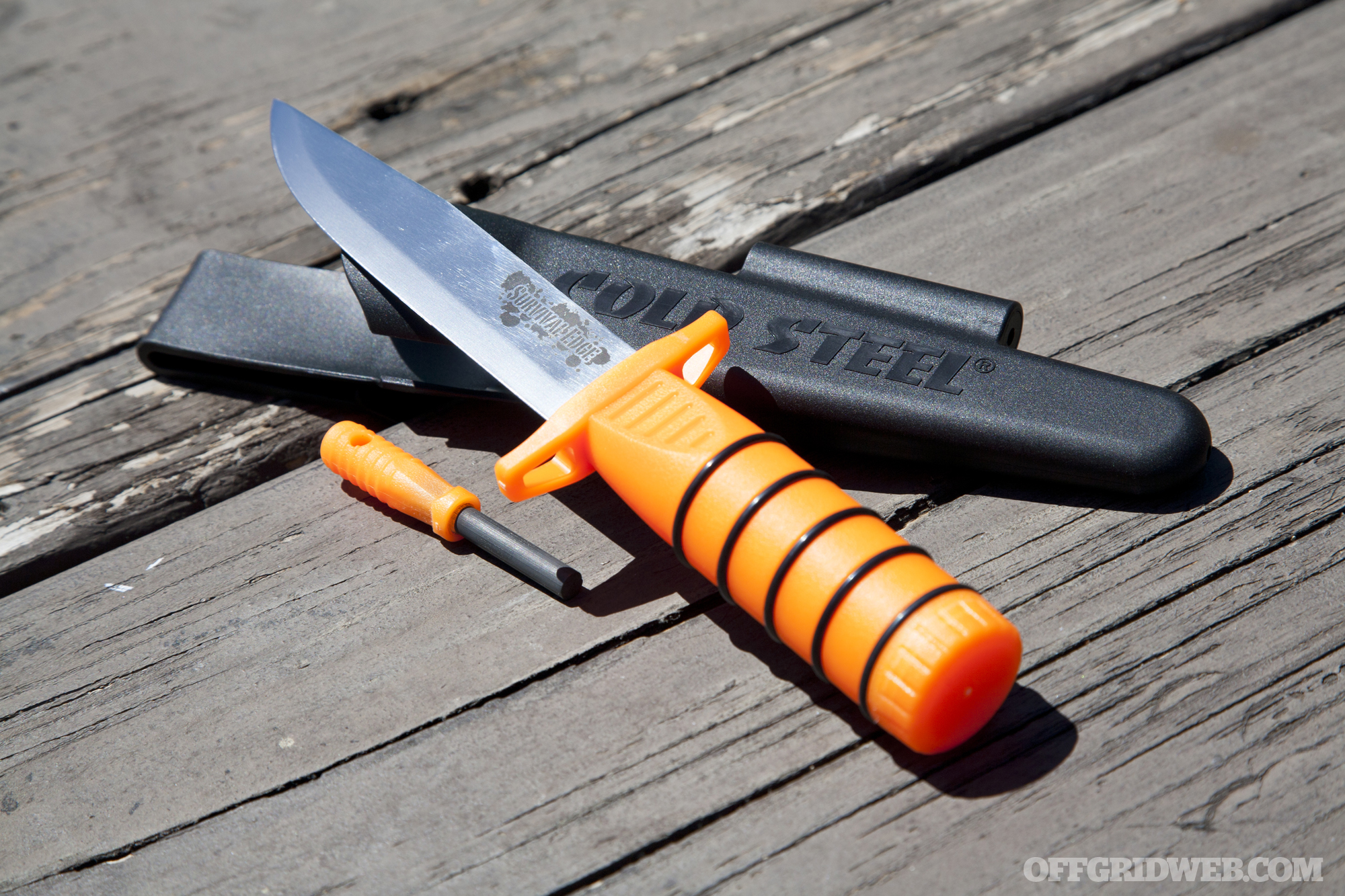
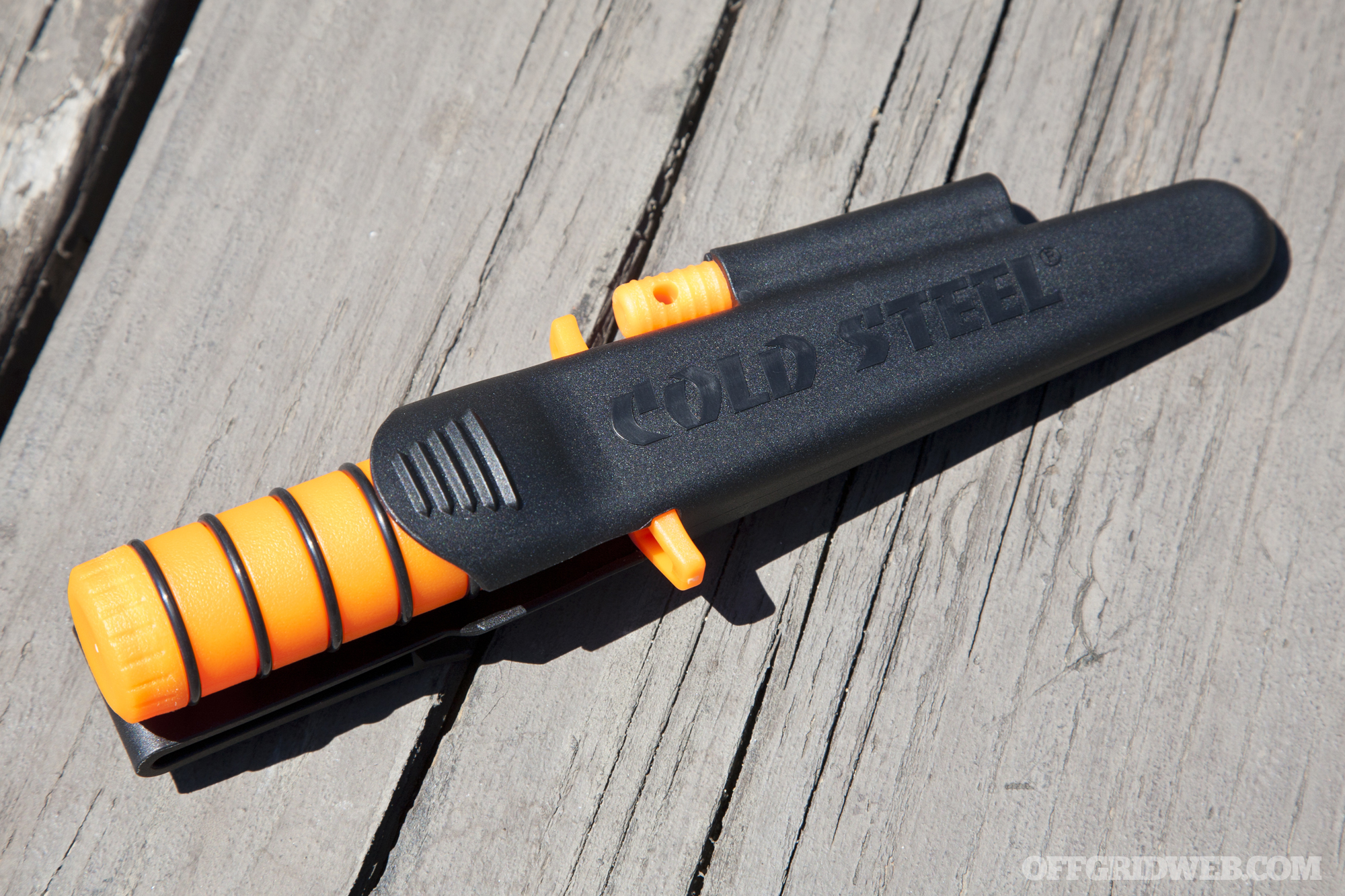
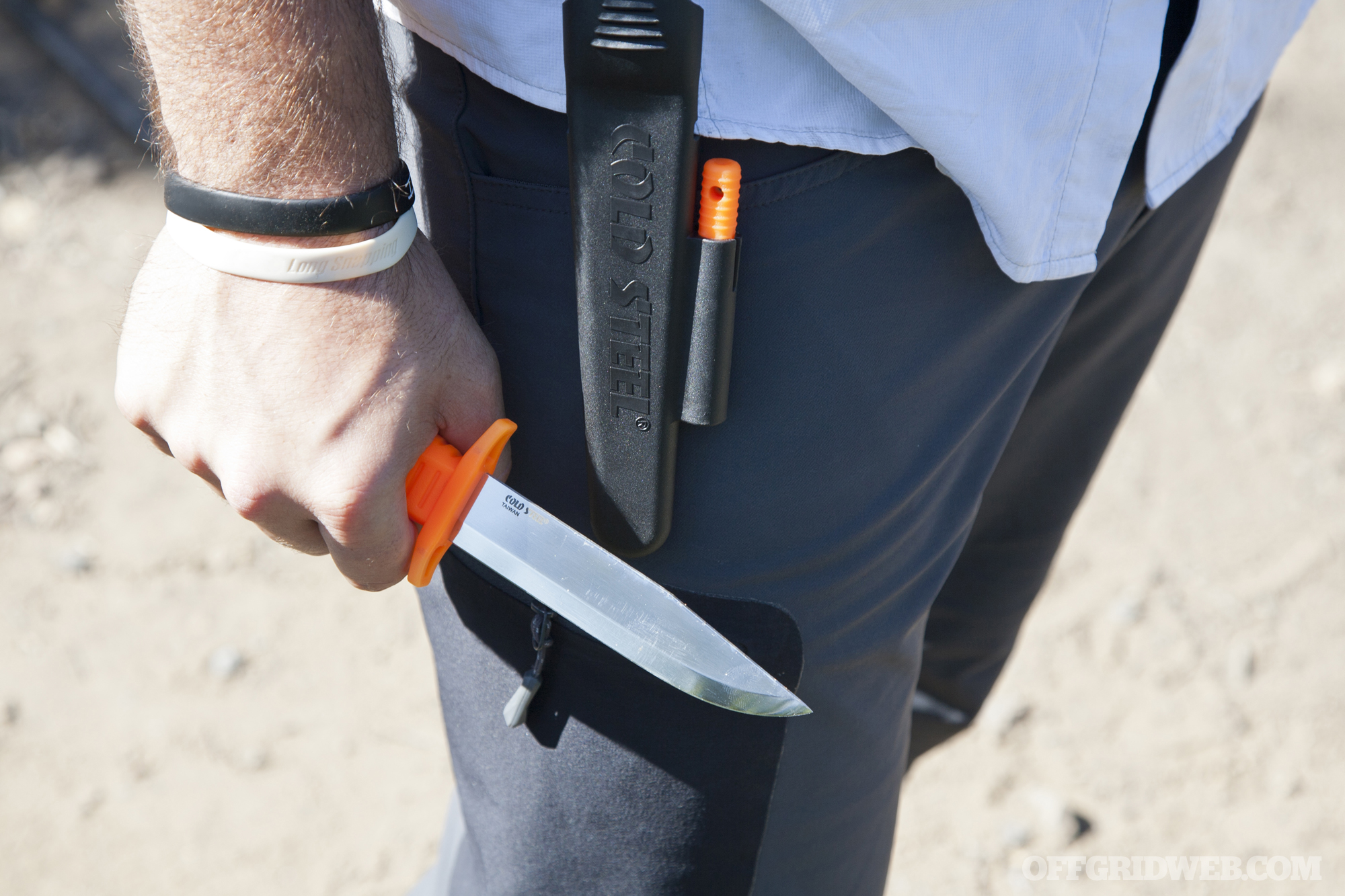
The new Cold Steel Survival Edge is an affordable fixed-blade survival knife.
As with any survival tool, the middle ground is usually a good place to be. Our general recommended qualities for a good all-around survival knife would be as follows:
4 to 7 inch fixed blade (length depends on your location and needs)
Durable steel that takes a razor-sharp edge, and can be maintained easily in the field
Sturdy handle that provides a secure grip, even in wet conditions
Tough and comfortable sheath
If you find a knife that fits these 5 key requirements, you’ve probably got a pretty good survival blade.
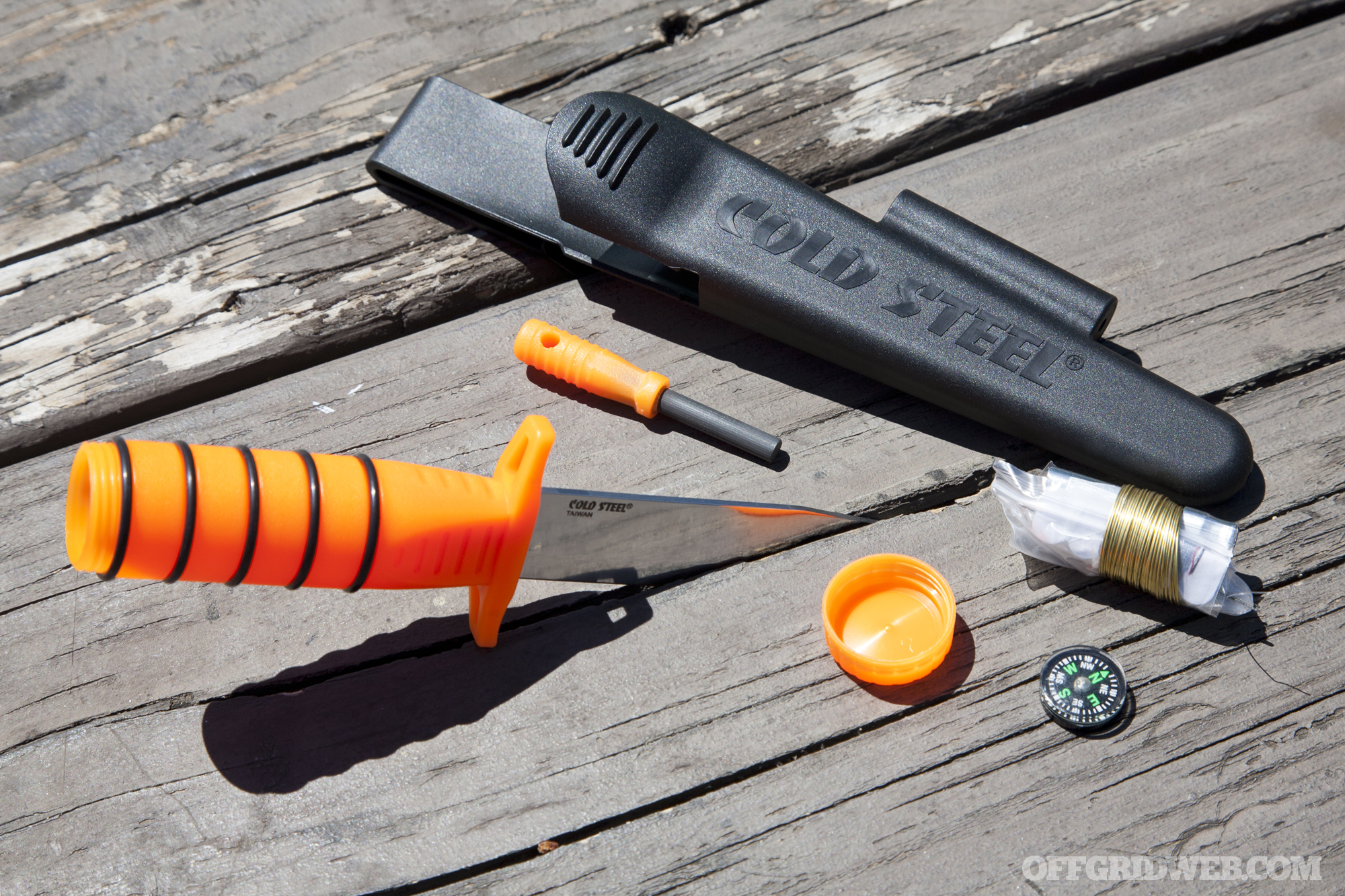
The Survival Edge comes with a ferrocerium rod, which can be drawn along the blade’s spine to start fires.
Cold Steel recently released an all-new knife, known as the Survival Edge. It appears to meet every one of our general goals—better yet, it only costs $35. The Survival Edge even includes a ferro rod fire steel, ambidextrous Secure-Ex sheath, and has a hollow handle for storing survival gear.
As much as we love testing $200-$300 knives, we also recognize not everyone can afford them, or needs to spend that much. Then again, we often say “you get what you pay for”. We wanted to find out if this Cold Steel Survival Edge really provides great bang for the buck, or if it’s worth spending a little extra for a different model, so we picked one up to test and review. Read on to hear our thoughts.
Specifications and Features
The Survival Edge is available from Cold Steel in either black or orange. Aside from the color of the handle, both are identical in every other way, and both are sold at an MSRP of $35.
At the business end of this knife, you’ll find a clip point blade that’s 5 inches long, 1 inch wide, and 0.1 inch (2.5 mm) thick. Due to the hollow handle, the blade has a partial tang, meaning it extends only about 1.25 inches into the handle.
The Survival Edge’s blade is constructed of Krupp 4116 stainless steel, a material often found in high-end German chef’s knives. This material takes a razor edge, is easy to maintain, and offers very good corrosion resistance. It also features a strong double bevel, black “Survival Edge” logo, and a polished finish so shiny you can easily use it as a signal mirror.
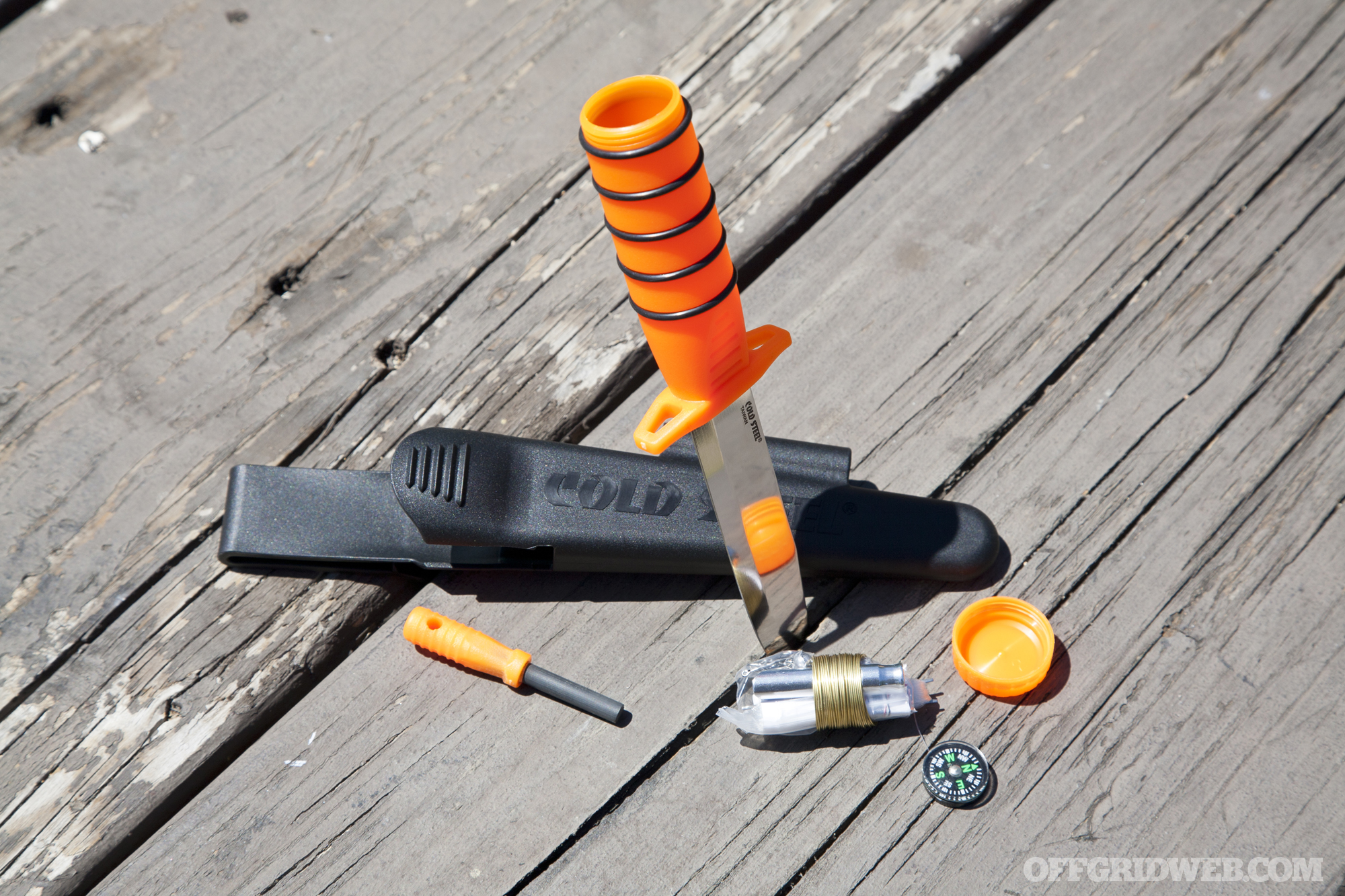
As for the 4.25-inch handle, it’s molded from strong polypropylene plastic. A textured finish, double quillion guard, thumb ridges, and 5 rubber O-rings ensure your hand doesn’t slip. The ridged cap at the end of the handle unscrews to reveal a waterproof 3-inch by 1-inch round storage cavity.
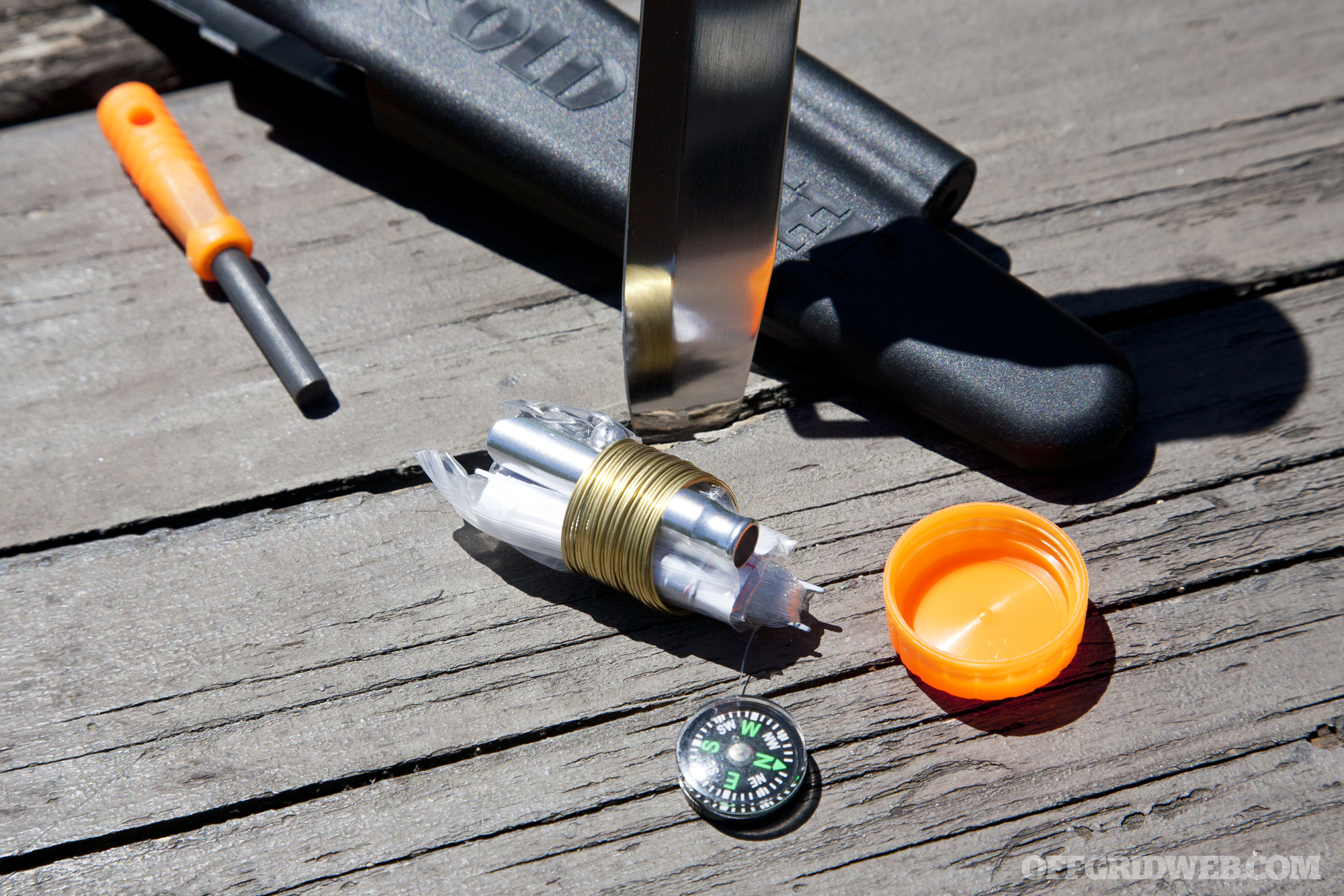
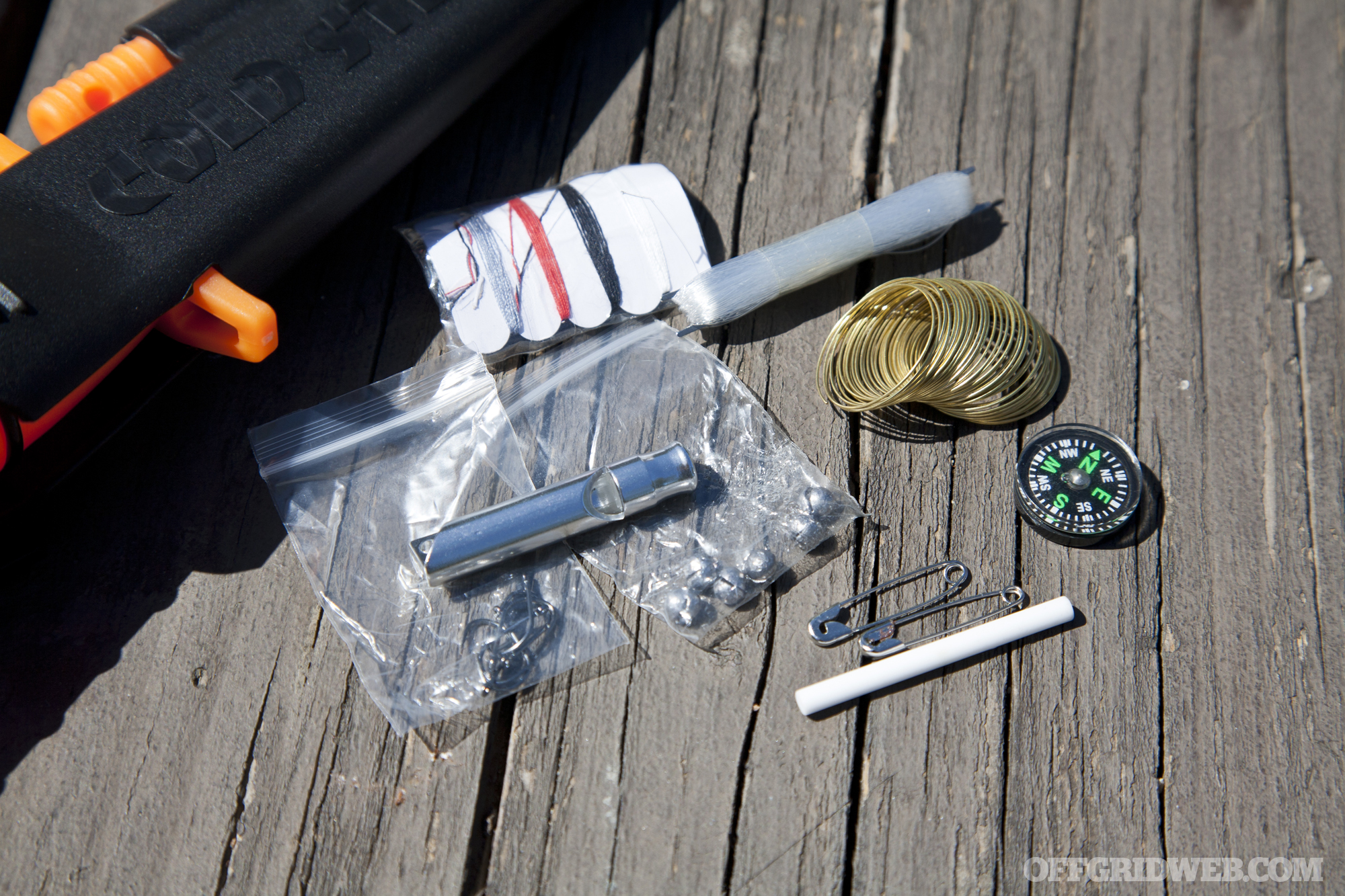
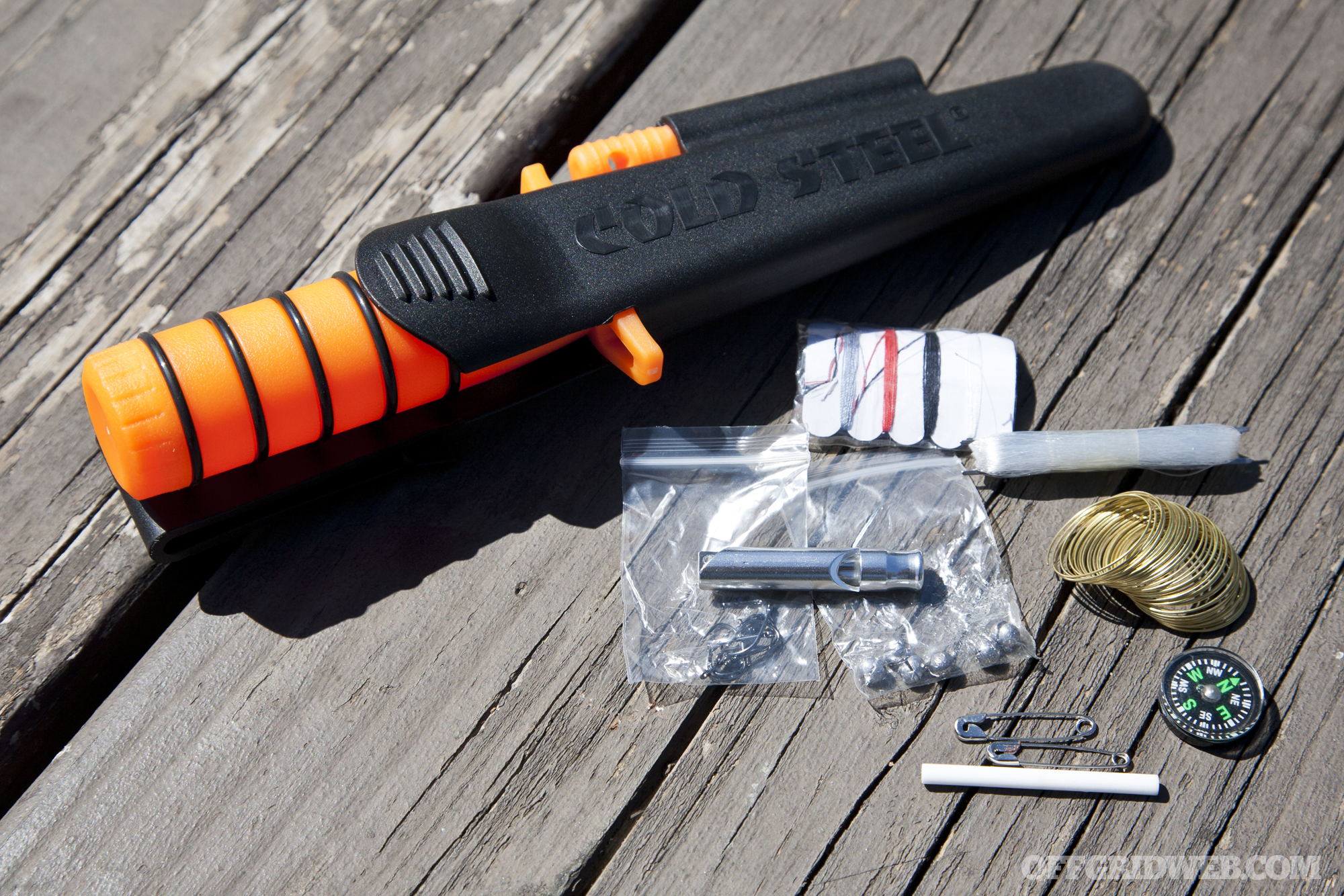
The inside of each Survival Edge’s handle cavity includes a tightly-rolled package with the following supplies:
Fluid-filled button compass
Coil of brass snare wire
Metal survival whistle
Ceramic honing rod (to keep the blade sharp between uses)
Sewing kit with needle and 4 colors of thread
Spool of fishing line
6 barbed fish hooks
6 fishing sinker weights
Surprisingly, all of these items fit into the handle with room to spare. Alternatively, a mini Bic lighter, small flashlight, can opener, spare batteries, matches, or a number of other devices can fit into the handle.
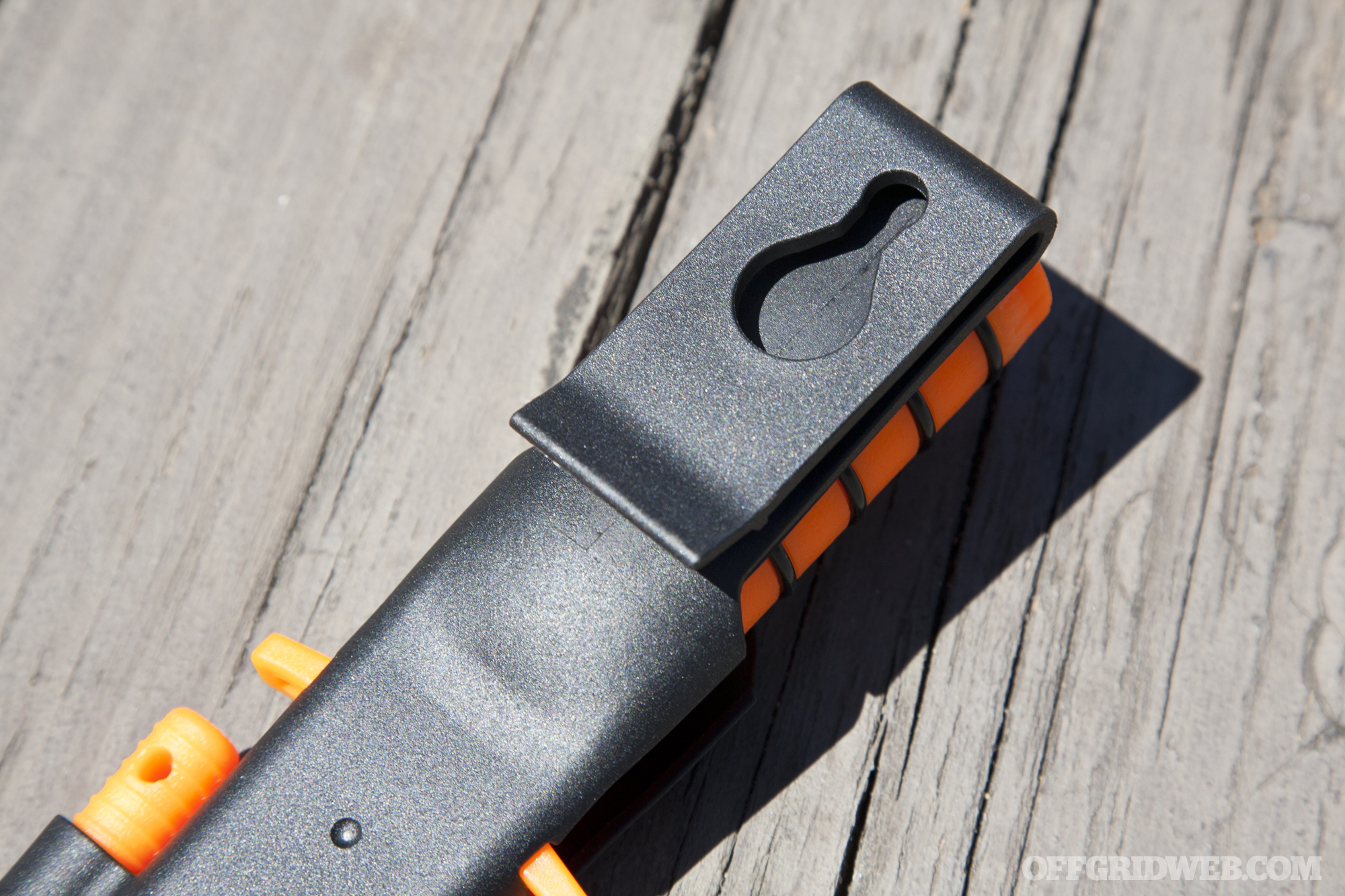
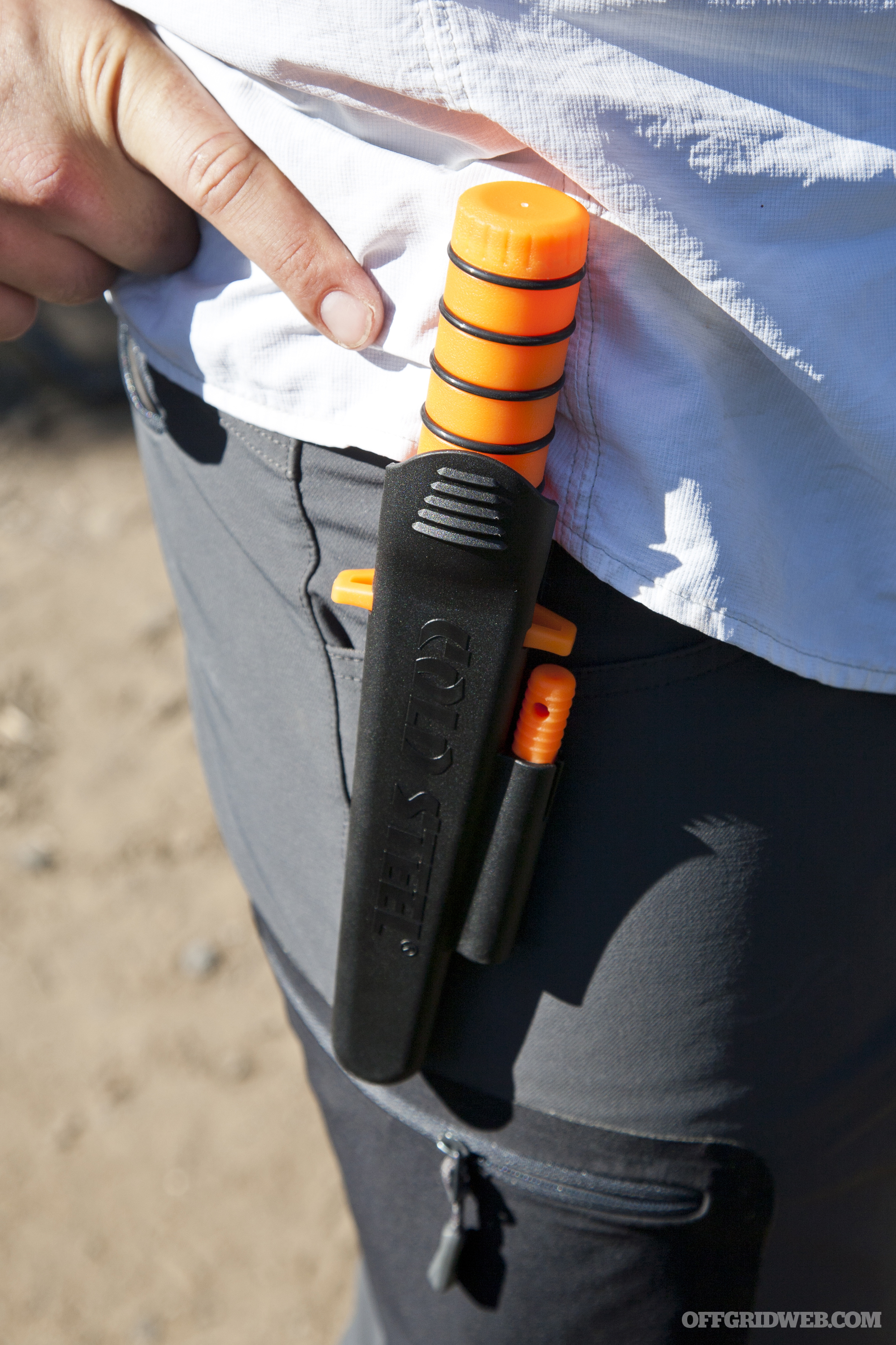
The hard Secure-Ex sheath is fully ambidextrous, accepting the knife with its blade facing either direction. This sheath also offers a slot for the included ferro rod fire steel, and a clip that can accommodate up to a 2-inch belt. It also includes a lanyard hole, should you want to wear the knife on some paracord around your neck.
With the sheath, fire steel, and all the supplies in the handle, this knife only weighs 5.7 ounces. That’s practically featherweight for a knife of this size, meaning that this blade won’t weigh down your pack and tire you out on long hikes.
Our Impressions of the Survival Edge
Before we say anything else, we’ll let you watch this video from Cold Steel. They really put this blade through the wringer:
While that video was impressive, it was also created by the marketing team at Cold Steel. So, to determine if the knife can actually stand up to real-world use, we decided to try it out ourselves. Although we didn’t attempt to bend it in a vise, we did use it as we would any of our other survival knives.
First, some thoughts on the sheath. We liked the ambidextrous design, and the fact that the blade and fire steel both lock securely in place with excellent retention. We had no concerns about either item falling out of the sheath, especially since the knife’s guard prevents removal of the fire steel unless the knife is drawn.
Upon pulling out the blade for the first time, we were surprised by how light it really is. On one hand, this makes the knife feel agile and easy to manipulate. On the other hand, some may find it off-putting or almost toy-like. Personally, we don’t mind that it’s light, as long as it’s also strong.
Speaking of strength, one of our biggest initial concerns was the fact that this knife is not full-tang. In other words, as we mentioned earlier, the blade only continues about 1.25 inches into the handle. However, this is not too uncommon for survival knives. Even the popular Swedish brand Mora has used a partial tang design successfully for over a decade.
At the end of the day, a partial tang design is a trade-off. It sacrifices the strength of a full-tang handle for reduced weight—and, in this case, a large storage cavity for supplies. The cavity also allows the knife to slide onto the end of a pole, and be used as a spear (as seen in Cold Steel’s video above).
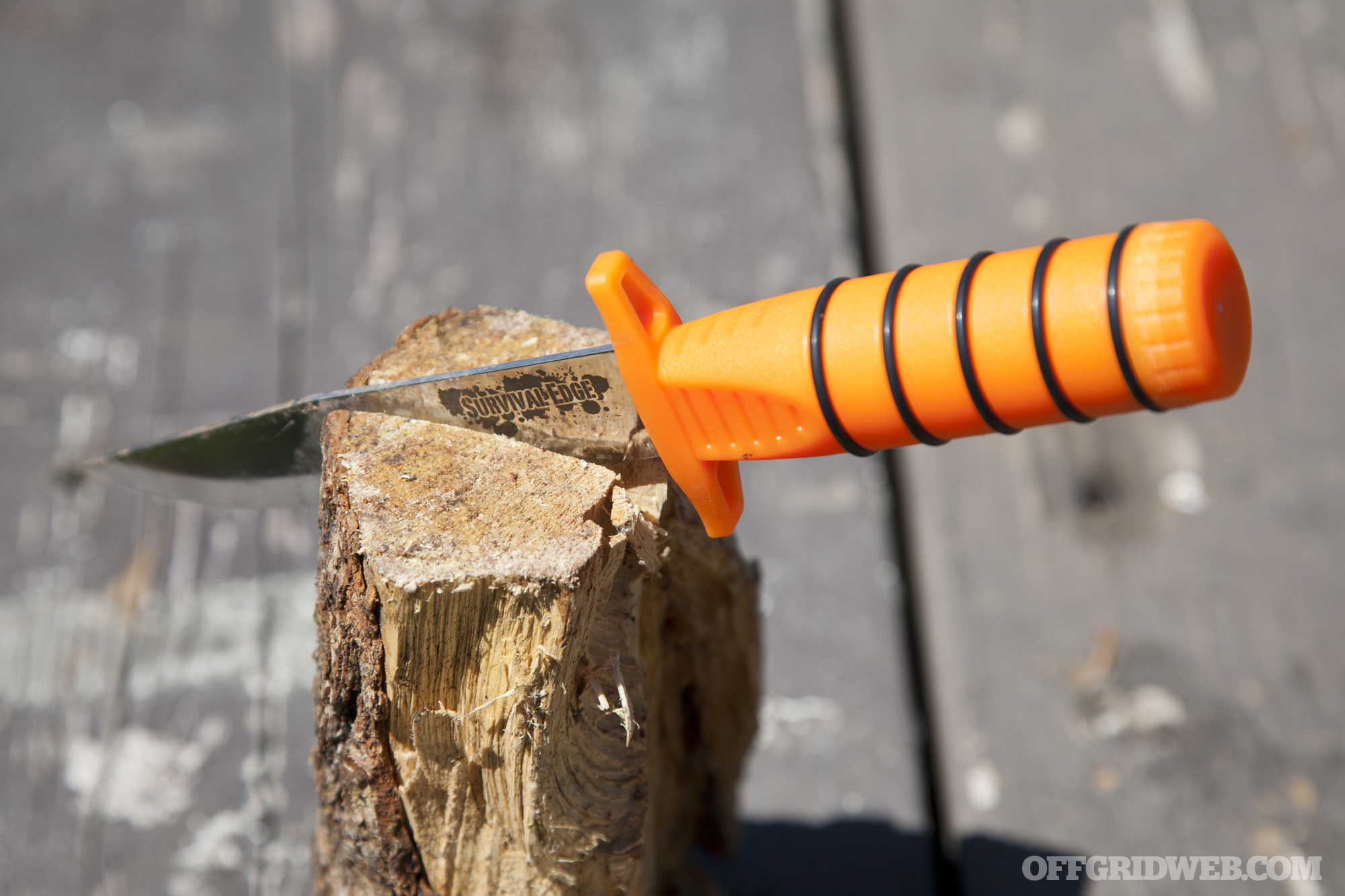
Can the Survival Edge be used to baton firewood? Yes, it certainly can.
To test the actual strength of the Survival Edge, we used it to baton some fire wood for our campfire. Pounding the knife blade-first into a large chunk of hard wood, chips and splinters flew, but the Cold Steel knife handled the task with ease. Even after splitting several large chunks, the blade remained sharp, and its edge showed no signs of damage or deformation.
Despite our initial concerns about its light weight and partial tang blade, the Survival Edge won us over with impressive durability. Even the handle is quite strong, alleviating our fears about the plastic construction. The only wear we noticed was some light scratching on the blade’s mirror finish, which is to be expected—it’s a survival knife, not a display piece.
The handle cavity is marketed as “waterproof”, but we found that to be inaccurate. After submerging the handle in a few inches of water for 30 seconds, water seeped into the cavity, dampening some paper we placed inside. While we would consider the handle water-resistant and splash-proof, it doesn’t appear to be truly waterproof.
The contents included in the handle are all useful, although we’d probably swap the whistle and sewing kit for some tinder material and water purification tablets. The Survival Edge’s ferro rod also worked well for starting our campfire, scattering white-hot sparks as we dragged it along the knife’s spine.
Conclusions
Overall, we were pleased with the performance of the Cold Steel Survival Edge. It’s light, strong, and includes the features you’d need to survive in the outdoors. And, since we’re always being asked to review more affordable gear, it’s a real bargain at the $35 MSRP. Better yet, we’ve seen it listed on Amazon.com for as little as $21.
However, there are a handful of small items we’d like to see added or improved. We wish the cap included an internal seal of some kind to remain truly waterproof, since soaking wet tinder won’t do you any good. Also, while the O-rings on the handle provide adequate grip, a full rubberized coating might help the ergonomics.
So, does the Cold Steel Survival Edge pass our survival knife test? Yes, we’d say it does. It’s not made of exotic steel or wrapped in rich Corinthian leather, but for a fraction of the price of one fancy $300 knife, you can own this simple and durable tool. Heck, with that kind of money, you could supply your whole family with these knives, and you’d probably even have cash left over.
The Survival Edge is a good knife on its own merits, but when you factor in the price, it becomes truly hard to beat.
For more information on this knife, visit ColdSteel.com.
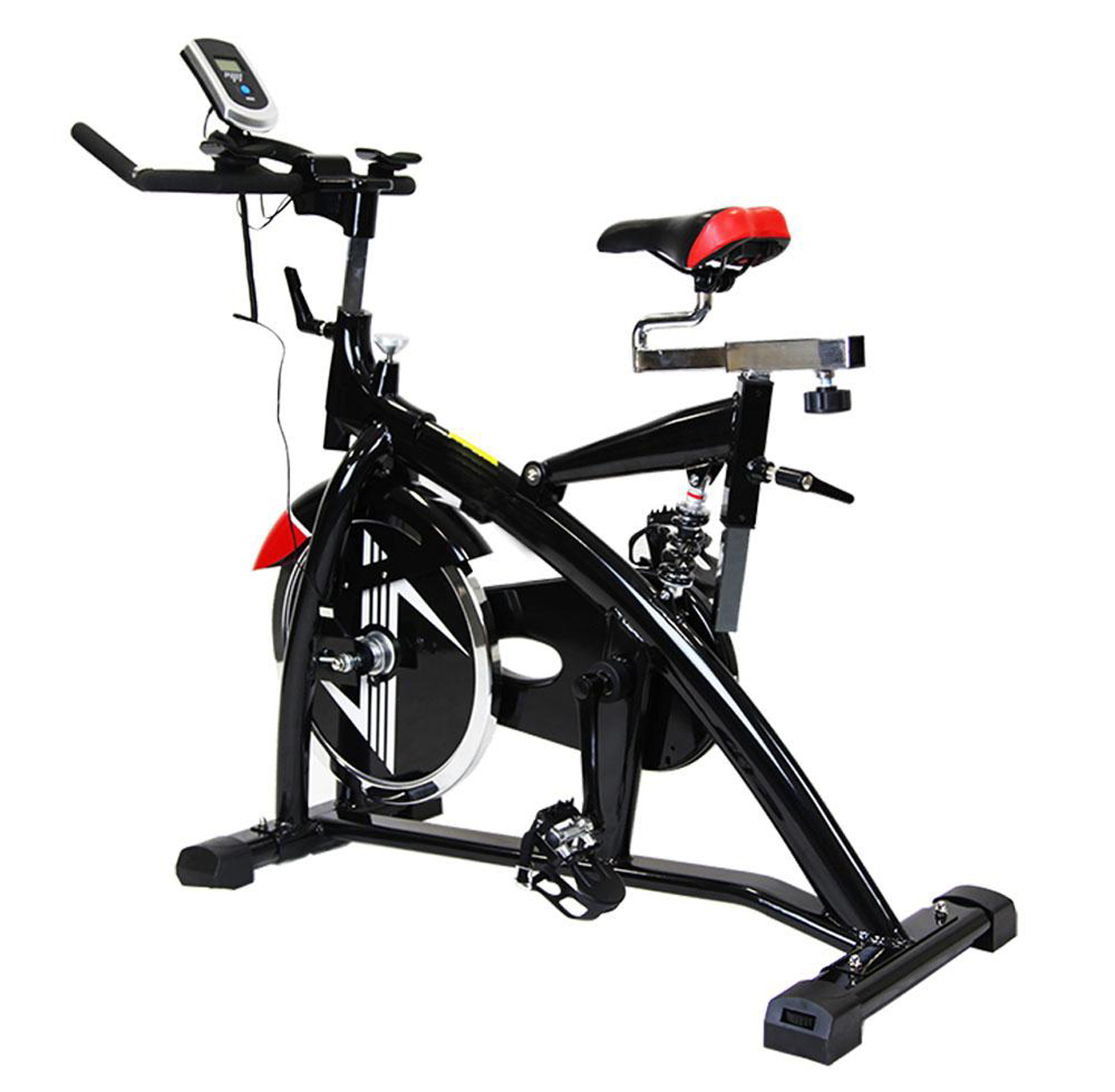
Have you used an exercise bike, elliptical, or rowing machine recently? If so, you’ve probably noticed the machine’s electronics turn on only after you start moving. That’s because the exercise machine is converting your physical movements into electricity, and using this electricity to power the various screens and readouts on the device.
A modern exercise bike uses a dynamo to turn pedaling into electric current.
Now, as a survivalist, you may wonder if this electricity can be re-purposed to charge batteries or power your electronics off the grid. The answer is yes—and it’s surprisingly simple and inexpensive to do so with an exercise bike. It can even be accomplished using parts from a junkyard or yard sale, plus a few items from an auto parts store.
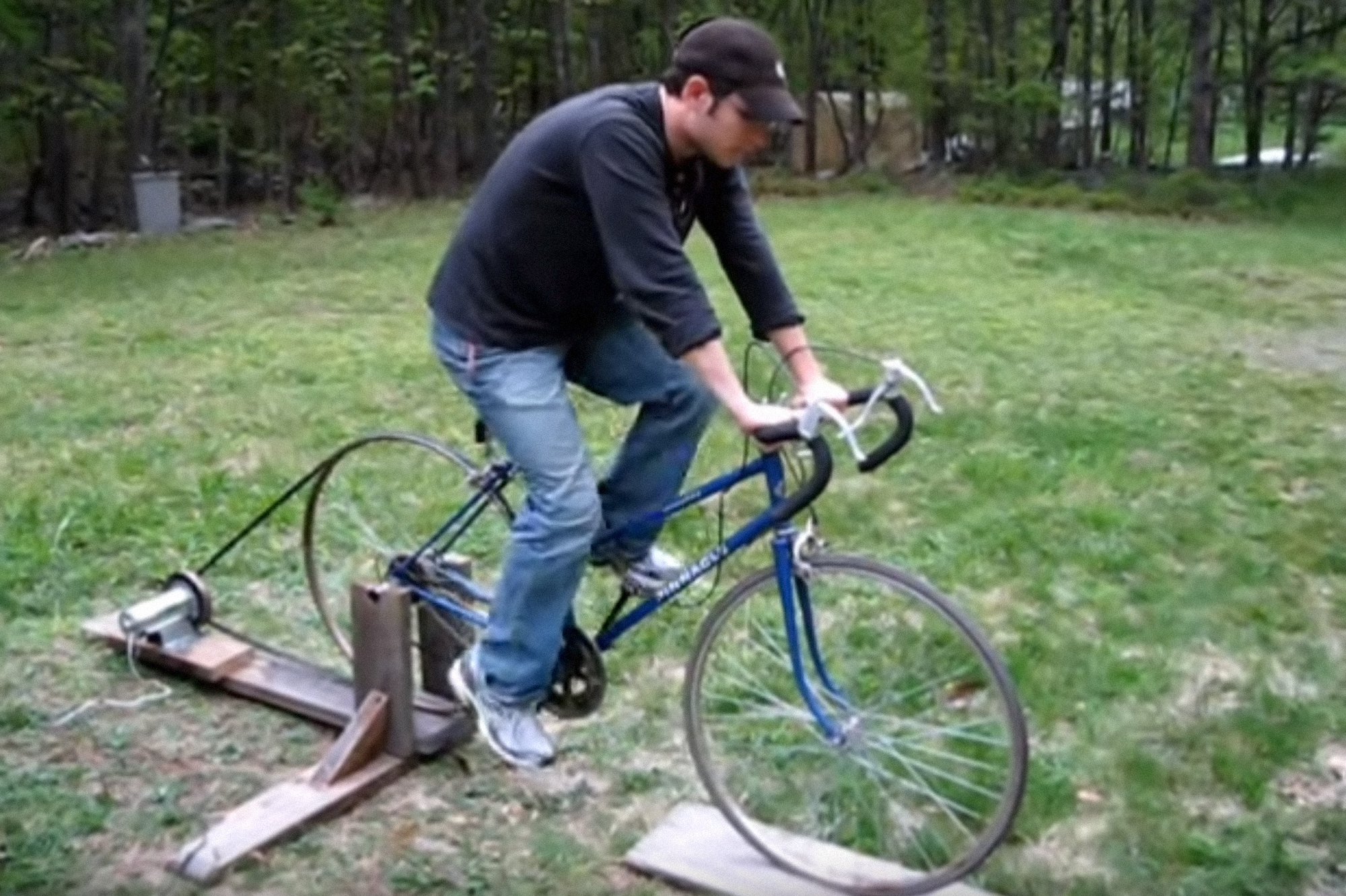
It may not look pretty, but it’ll help you stay physically fit and keep the lights on at night.
Here’s a basic rundown of the items you’ll need for a DIY bicycle generator:
Bicycle in decent working condition
Bicycle stand (or some wood, nuts, bolts, and screws to make one)
DC motor, such as one from an old treadmill or electric scooter
Chain, belt, or other method of coupling the bike’s pedal drive to the motor
Car battery charger, connected to the motor to regulate its charging current
Car battery, connected to the battery charger
Optional: AC inverter to connect electronics to your car battery
Optional: Zener diodes to prevent reverse current flow or accidentally overloading the battery charger
That may sound complicated, but it’s really not so bad. Here’s a video from The DIY World that shows how it works:
There’s one caveat to all this, and that’s the fact that this setup isn’t very efficient. In other words, you’re not going to be producing an immense amount of electricity. Depending on your motor and how fast you’re pedaling, it may take up to 40 minutes to fully charge a smartphone, or up to 9 hours to recharge a car battery. If you’re able to pedal faster and output more amps of electrical current, these times can decrease.
Regardless, building a DIY bicycle generator helps you stay in shape (something that’s essential to survival) and also generates some useful electricity to recharge your electronics off the grid. That’s what we call killing two birds with one stone.
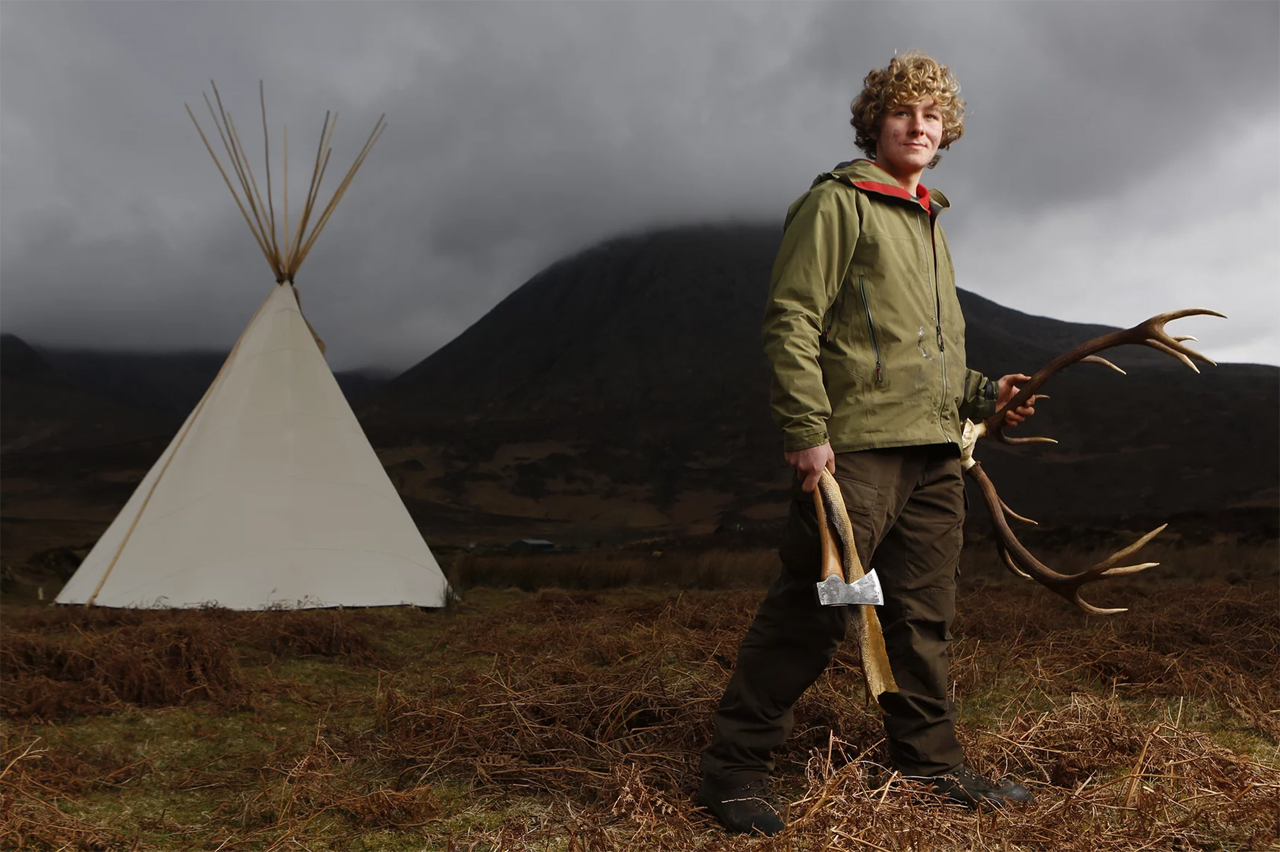
We encourage you to take a moment, and remember what you were like at age 16. If you were like us, you probably spent most of your time thinking about hanging out with friends, finishing homework, playing sports, learning to drive, and earning a little more independence. These are all normal activities for a high-school-aged teen. That’s why when we read an article from The Guardian about Zeki Basan, we recognized he’s definitely not an ordinary teenager.
Zeki lives by himself on the Isle of Skye, a rural 639-square-mile Scottish island with a population of just over 10,000. You may be thinking that living alone on this small island at age 16 is impressive, and we’d agree—but it gets even better.
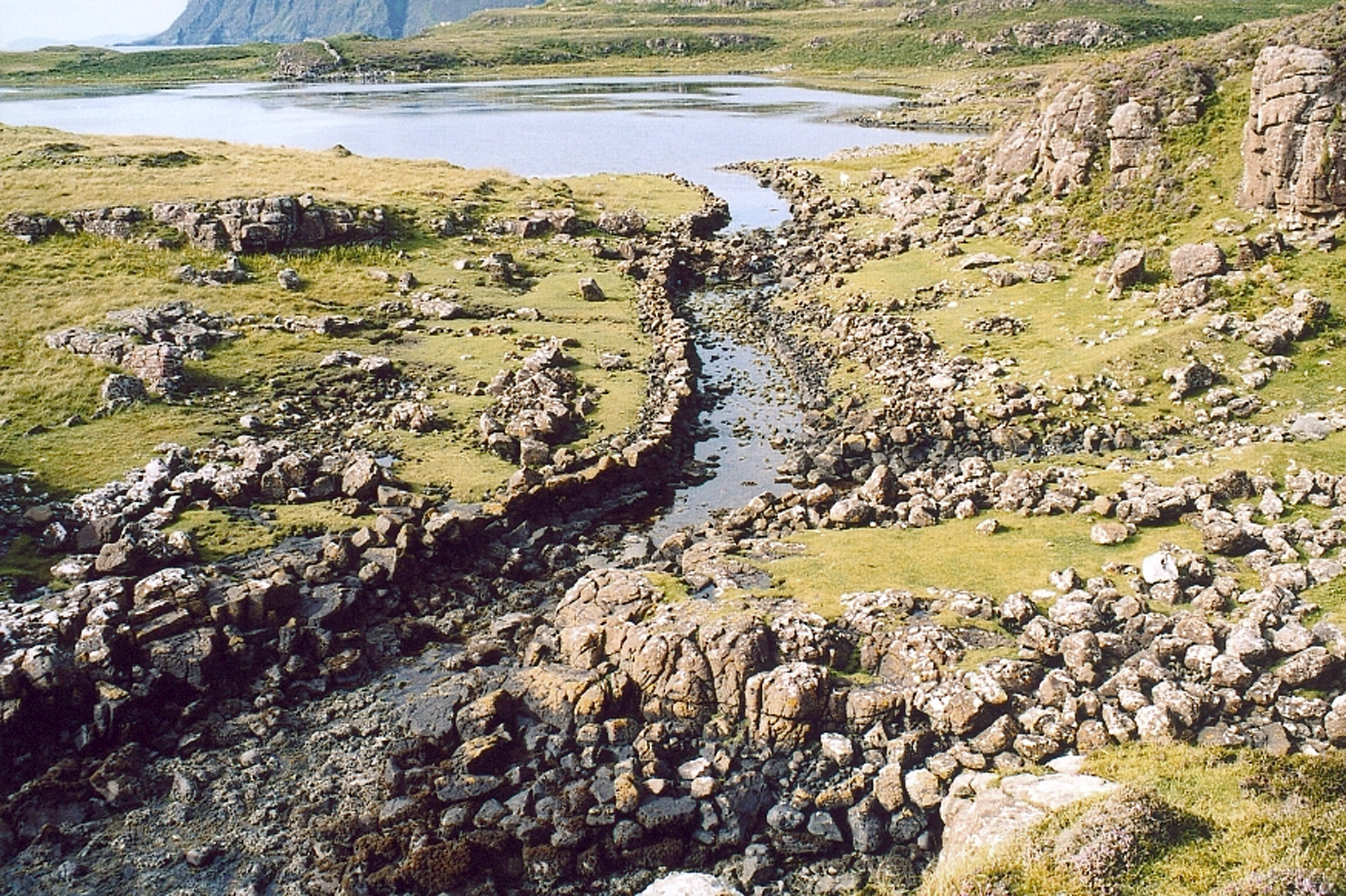
The Viking Canal at Rubha an Dùnain, on the Isle of Skye. Source: Wikipedia
Zeki sleeps in a tipi in the middle of the wilderness, with an old canvas camp bed, some army blankets, and animal skins for protection from the elements. He washes clothes in the river, bakes his own bannock bread, and keeps a campfire burning for warmth. When he’s bored, he carves wood, tans animal hides, reads a book, or goes exploring.
Although he has a cell phone, Zeki only uses it every few weeks to catch up with his friends and family. He writes, “People ask if I miss the internet, but I never used to use it much, or watch television. I am sociable, but I have always enjoyed my own company.”
Here’s a video filmed and directed by Zeki about a trip he took to Yosemite, following the footsteps of the legendary outdoorsman John Muir.
However, Zeki isn’t skipping his education while living this unique lifestyle. Each weekday, he walks 30 minutes to attend West Highland College’s School of Adventure Studies. Along with his 12 classmates, he learns mountaineering, land navigation, kayaking, and other survival skills.
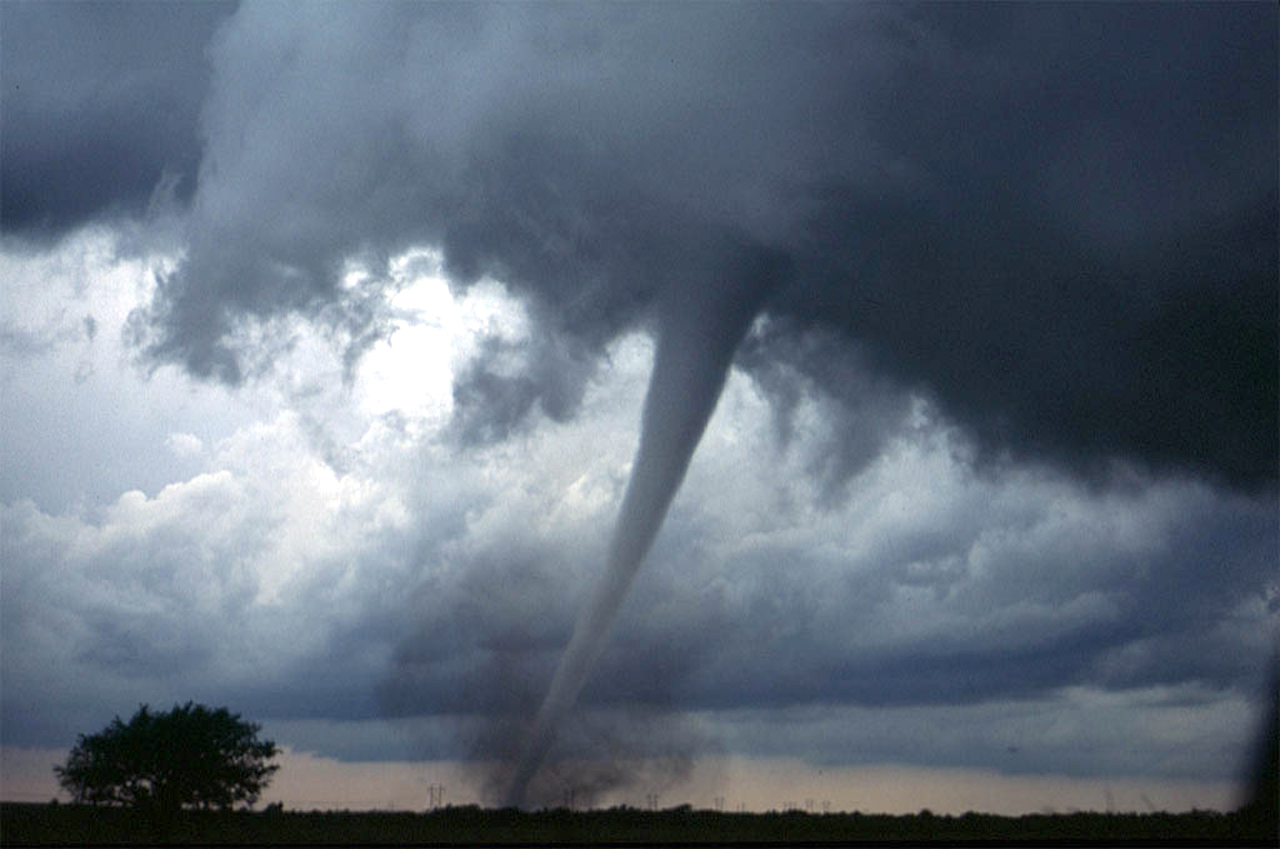
Tornadoes pose a major threat throughout much of the continental U.S., especially in the region known as Tornado Alley. Most of us are aware that these midwest states—specifically Texas, Oklahoma, Kansas, Nebraska, Iowa, and South Dakota—are at a higher risk for this destructive weather phenomenon.
Tornado Alley is the meeting point of several major weather regions, causing increased storm activity.
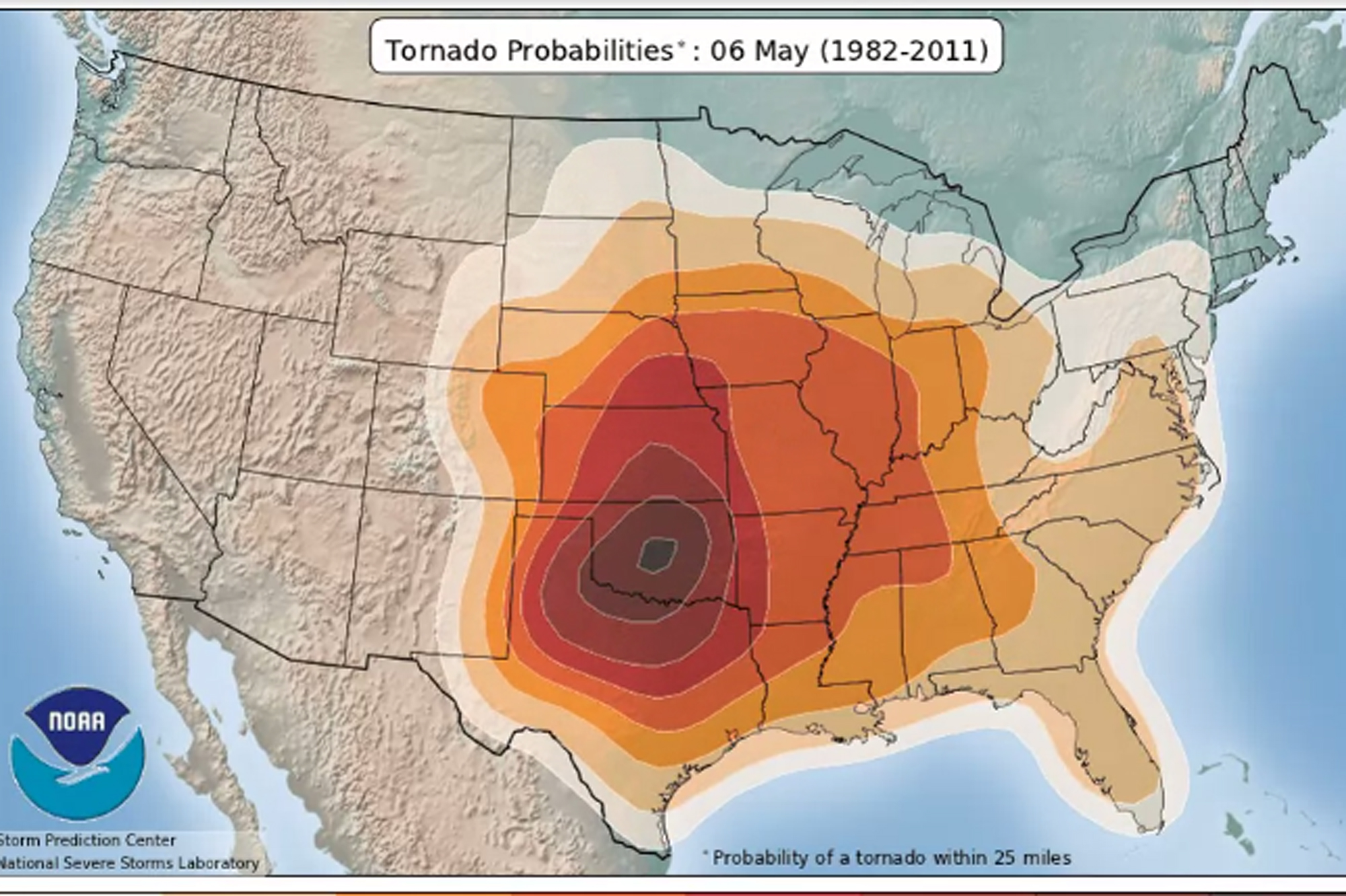
However, the time of year also plays a major role in determining the frequency and severity of tornadoes. Studying both the peak geographic regions and the peak times of year can help us understand the risks of tornadoes, but combining these two data sets paints a much more cohesive picture.
A still image from the tornado map animation. See the link below for the animated version.
One Reddit user combined daily tornado risk data from the NOAA Storm Prediction Center into an extremely informative 365-day animation. Whether you live in the epicenter of Tornado Alley, or you think you may travel there in the future, this animation provides useful info for preparation and survival.
If you’ve ever wondered about what effects total economic collapse might have on a country in the 21st century, you need look no further than Venezuela. The 31 million residents of this South American country are currently suffering under an economy on the verge of collapse, with currency inflation forecasted to reach a staggering 720 percent this year (the highest in the world).
A chart comparing the actual value of the Venezuelan currency (red) to the government’s claimed value (blue).
Some experts are calling this a “man-made disaster”, as the country’s economy depends heavily on exporting petroleum. With crude oil prices falling, Venezuela’s economy has struggled tremendously. The problem has been exacerbated by natural issues, since a drought has left hydroelectric plants unable to produce electricity reliably, leading to blackouts and electricity rationing.
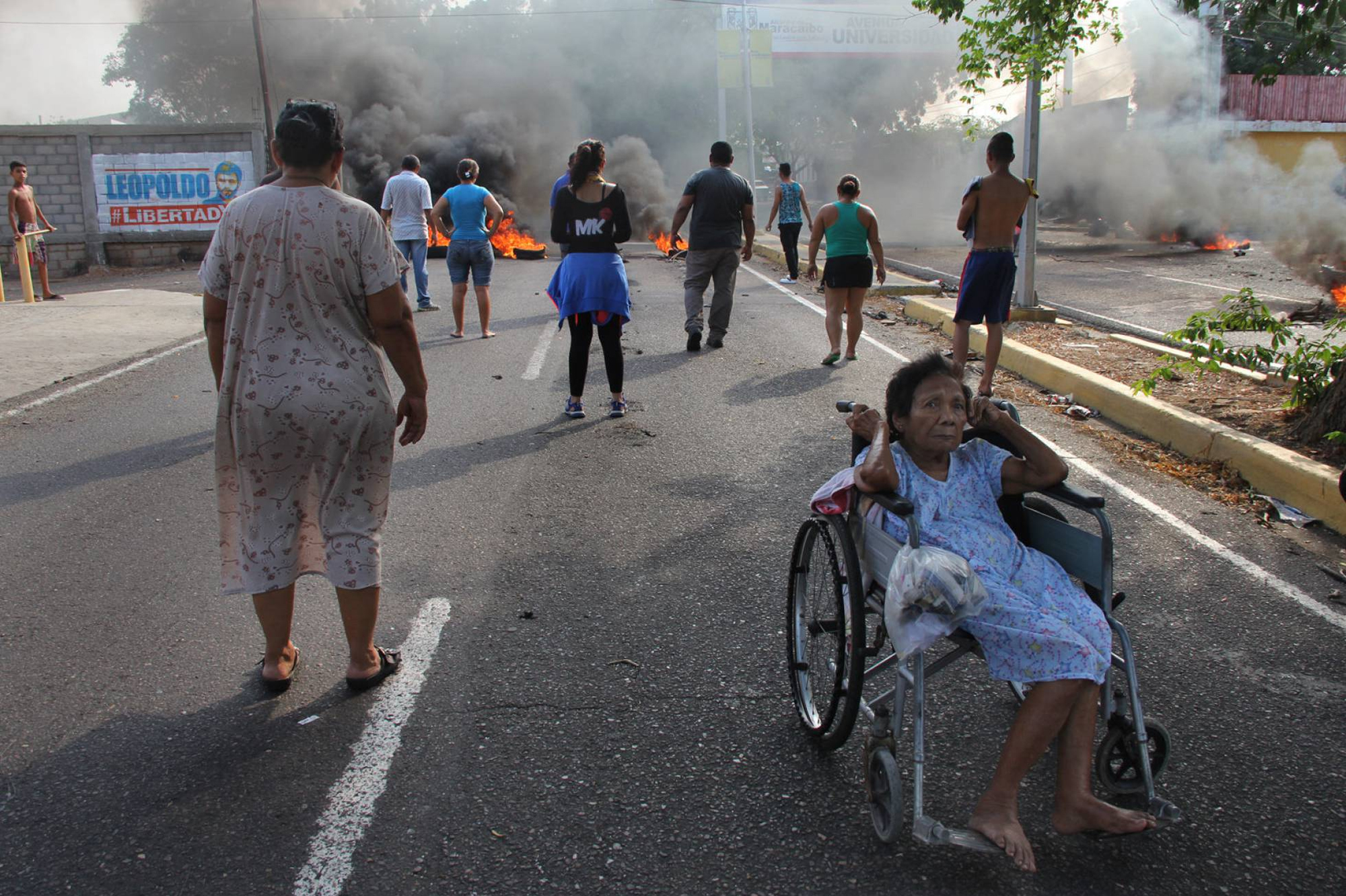
This, in turn, has contributed to a rising murder rate (now the world’s second highest per capita) and widespread looting and rioting throughout the country. Thousands of police and military personnel have been deployed to arrest protesters, and citizens have become increasingly angry with President Nicolas Maduro’s socialist administration. Due to budget cuts, Venezuela’s 2.5 million government employees are now only working two days a week.
Stores throughout the country have no food left on the shelves. Source: Wikipedia
On top of all this, rampant unemployment, low wages, and food shortages have left many families close to starvation. An article from Business Insider shows photographs of the meager contents of many Venezuelan refrigerators and pantries—sometimes little more than flour, rice, beans, cooking oil, and a handful of wilted vegetables. One resident told reporters, “We are eating badly… If you have the money, you can’t find the foods, and if you find you them, you do not have enough money.”
It’s currently unclear when the breaking point will be reached, but many experts predict a “total collapse of the economic system” in Venezuela is imminent. Some fear that this will lead to a military coup, or even all-out civil war.
New York City is home to approximately 8.5-million people. On any given day, the city has only a three-day food supply if the bridges and tunnels are cut off and resupply trucks are not able to get in. As history has shown, when crisis hits a city, people flee. For the surrounding suburbs, the strain on resources will prove unsustainable. Fortunately, urban crises have a finite life span and people will eventually return — but what can be done until then?
One option is to shelter in place and prepare for looting and civil unrest. Another option is leave the danger zone and return after things quiet down. Luckily for New Yorkers, just north of the Big Apple is the Adirondack State Park. It’s home to 6-million-square acres of rugged land, some of which is so remote that access is limited to those with watercraft and the skills to navigate its winding channels.
Here’s where the bug-out canoe comes into play. This scenario is not exclusive to the City that Never Sleeps. Metropolitans were established around major waterways, which can provide egress when streets and overland routes become chokepoints. From Puget Sound in Washington to the Okefenokee Swamp in Florida, there is a canoe bug-out location found in every state. If a bug-out is necessary, the panicked and unprepared will flood the roadways, turning freeways into parking lots. Preppers without off-road rigs might hit the backcountry on foot, but a more effective means of escaping with a larger load is by water.
Weighing Your Options
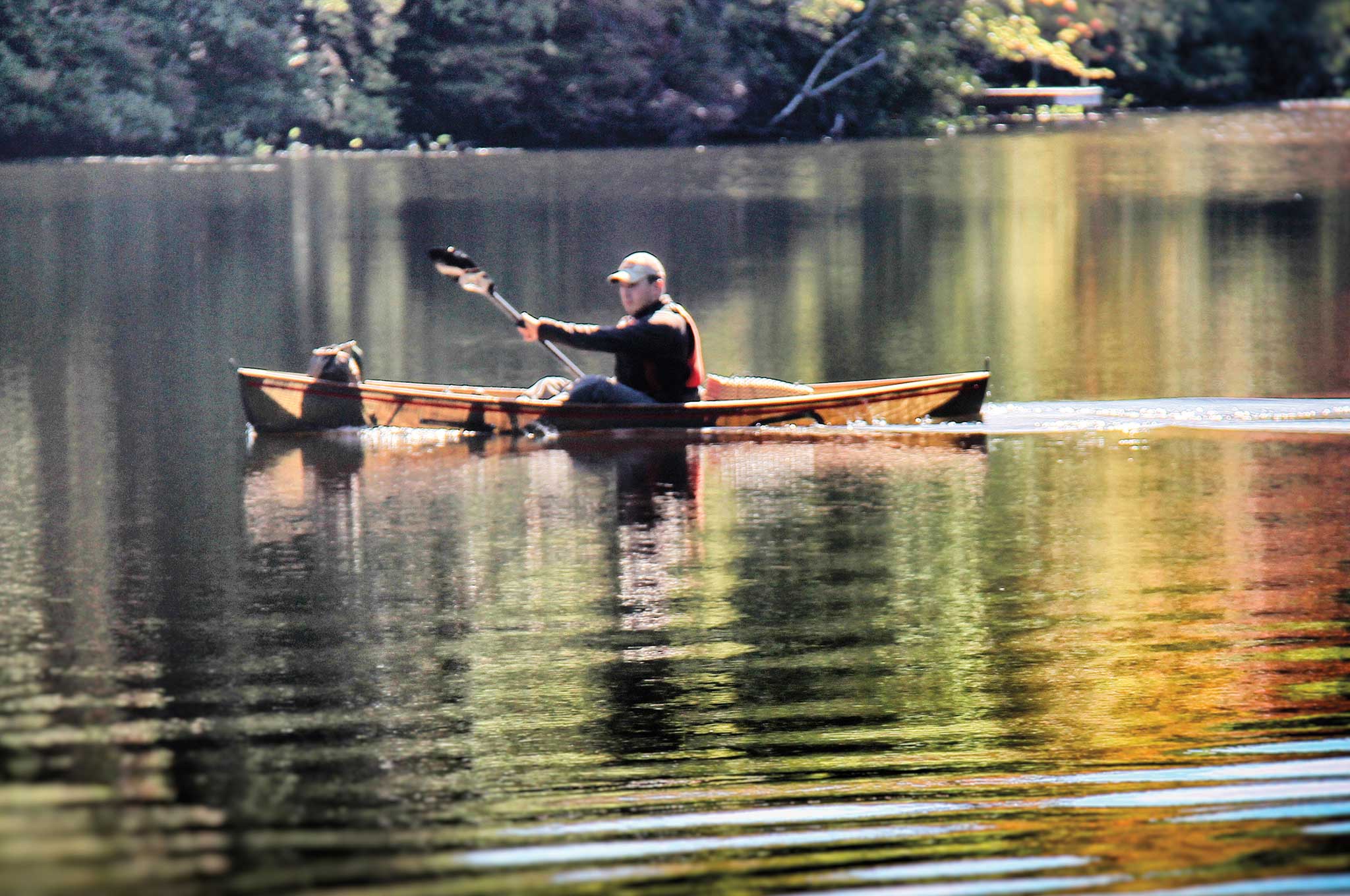
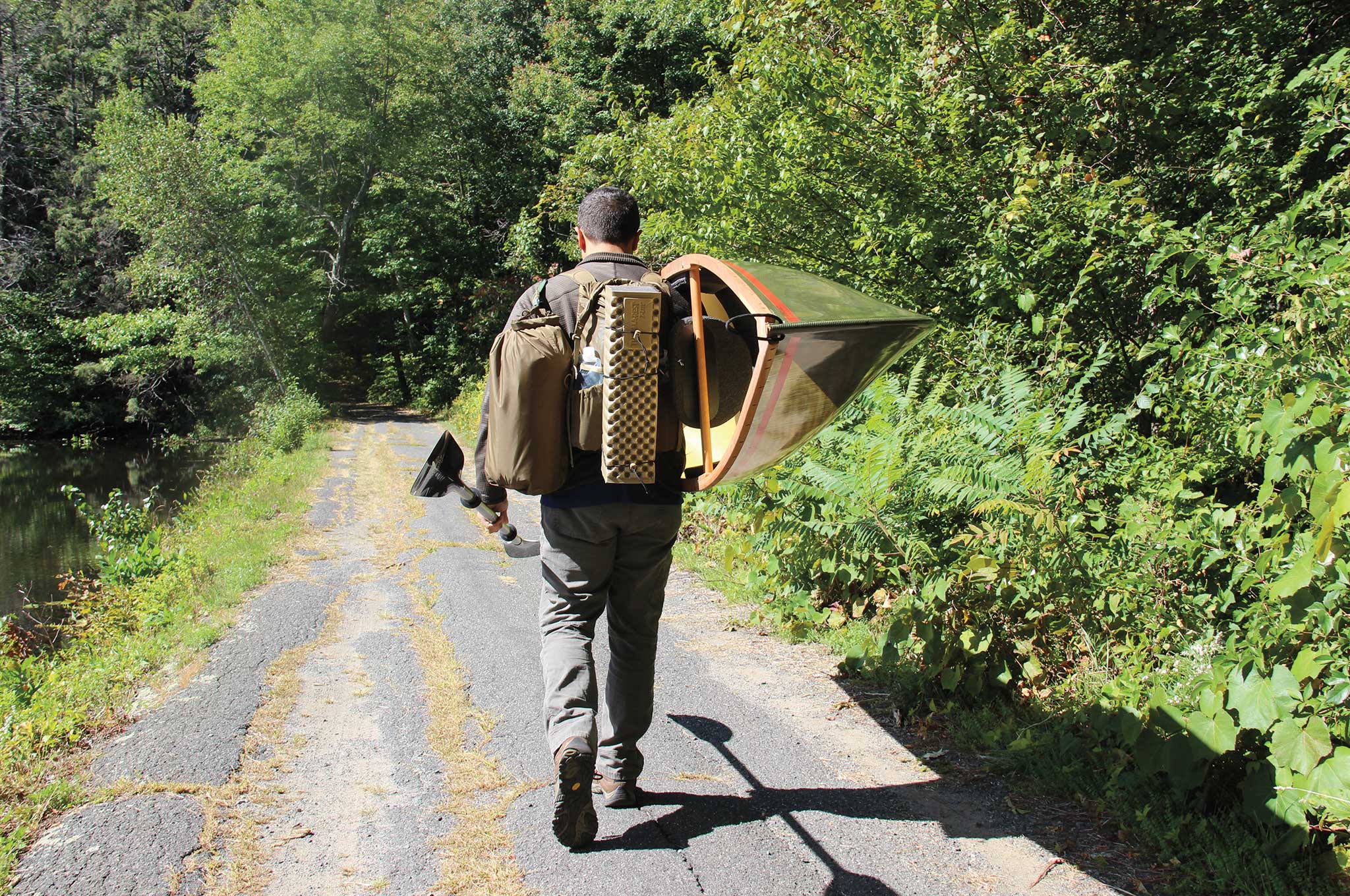
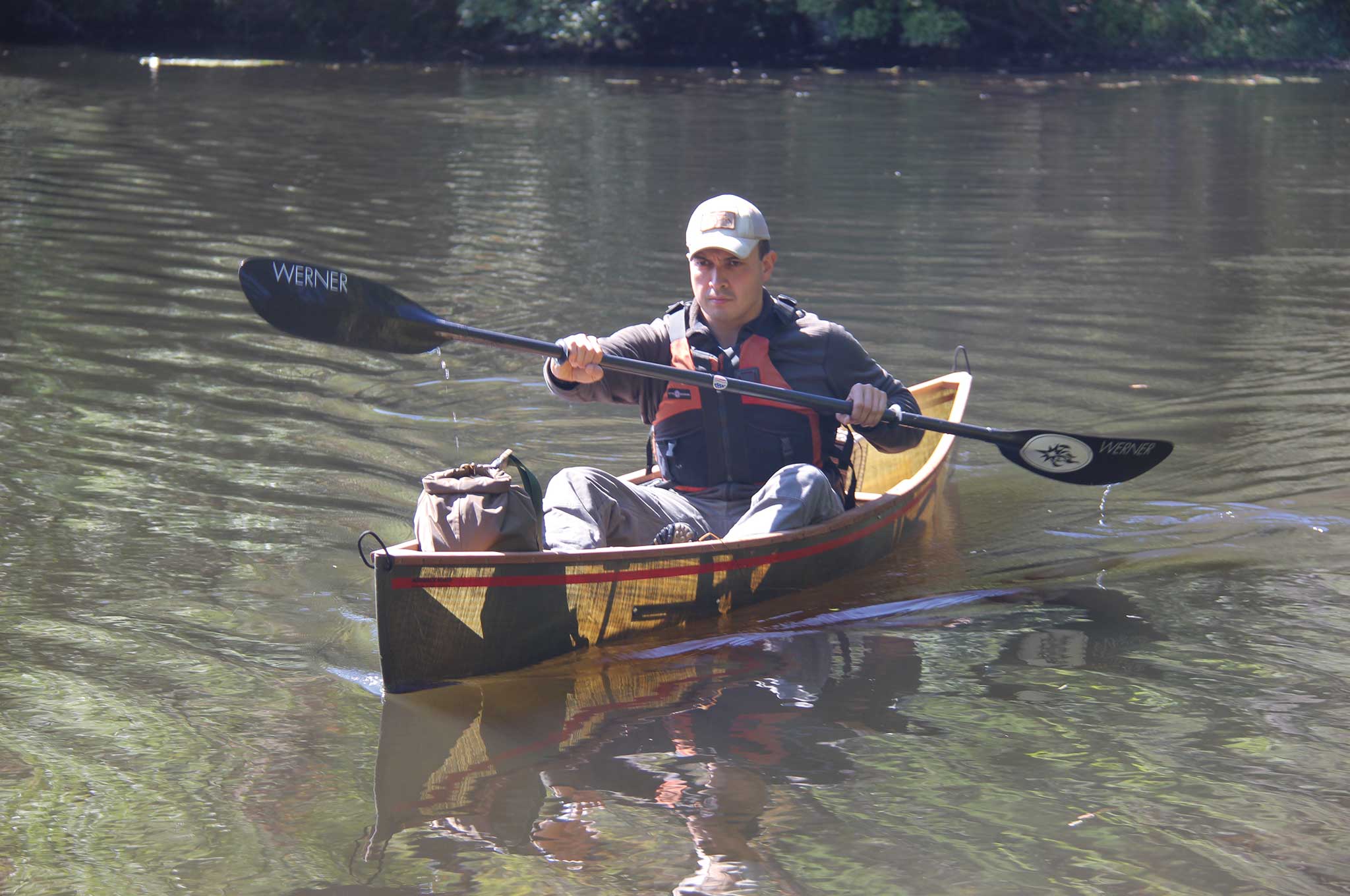
“But aren’t canoes too heavy and bulky for a SHTF scenario?” we hear you asking. Traditionally done with standard dual-capacity canoes, the carries and portages are often dreaded for good reason — hauling both a go-bag and a canoe can make overland travel painful and exhaustive. However, standard materials like canvas, leather, wool, and wood can be substituted with carbon fiber, Kevlar, sil-nylon, and Primaloft Insulation. And featherweight solo canoes — like the ones from Hornbeck Boats out of Olmsteadville, New York — allow you to cover a lot of ground, and water, with less effort.
Modern canoes are lightweight, making them practical for recreation and bugging out.
There’s a stereotype that people who paddle ultralight canoes are granola types who drive Subarus and eat vegan diets. But even the toughest, most-seasoned outdoor adventurer can appreciate how light this type of craft feels after a long carry. In fact, the British Special Air Service (SAS) have used small paddle-powered boats for warfare, and the portability and mobility of these solo canoes afford the user a level of stealth not found in other craft. The open design is an advantage over closed-cockpit boats providing easy entrance and exit in a hurry.
With a well-thought-out route, any prepper can tap into existing supply stores, cache critical equipment, and spend an indefinite amount of time afield.
Gear 101
Before setting off though, there are some basic items no boater should be without. In addition to the gear carried in the daypack to address camp needs, this supplemental gear weight can quickly add up. However, if one is willing to make a significant investment in a featherweight canoe, spending slightly more on a quality paddle, life jacket, and dry bags shouldn’t faze him too much.
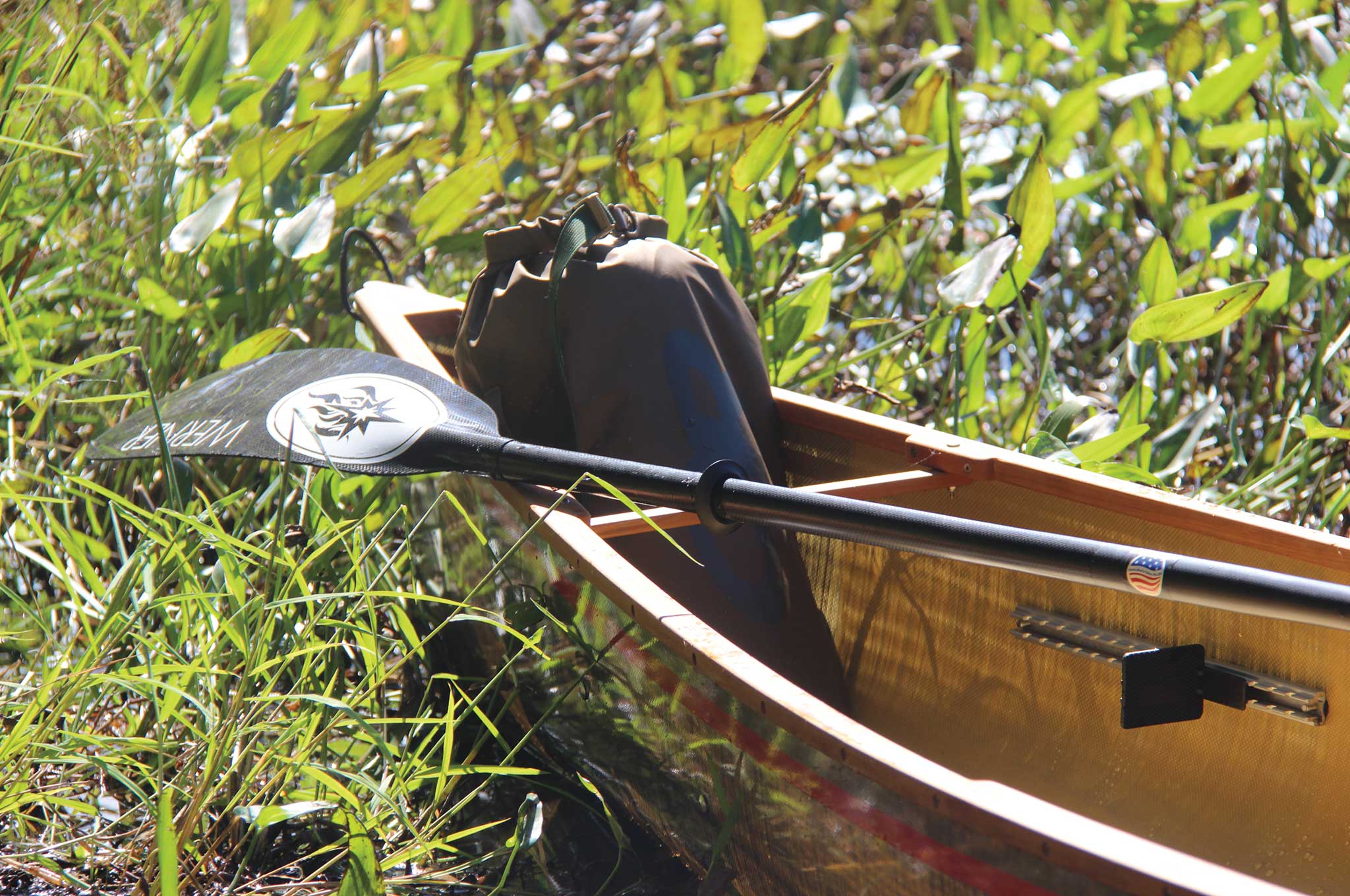
Paddle: This style of canoe is best maneuvered with a double paddle (kayak paddle). At roughly $400, the Werner Paddles Kalliste is a top-of-the-line touring paddle. But, there is a distinct difference between using any heavy economy paddle compared to this ergonomic, all-day, double-bladed stick. For really tight channels, a single-bladed canoe paddle like the Werner Carbon Bandit will make propulsion easier than a double-blade that could snag on low-hanging branches.
Life Vest: The ultralight boater should seek out a quality personal flotation device (PFD). The common type II — nicknamed “Mae West” for the busty actress of the 1930s — can work as a floatation device, but it is generally blaze orange, making visual camouflage difficult. Plus, there are better options for form and function. The type II isn’t the best design for range of motion, and many modern life jackets, like those from Astral, are designed with canoers and kayakers in mind. Many are equipped with knife tabs and gear pockets for essential safety gear.
Water Bag: The canoe tripper should have a good supply of quality dry stuff sacks like those from Outdoor Research, as well as a water-resistant personal-security kit (filled with items for signaling, fire starting, etc.) within arm’s reach. The UST Micro Survival Kit is a good way to start as it comes with an Aloksak waterproof bag, and the whole kit can fit in a PFD pocket.
Old-School GPS: Last but not least, a topographical map should be carried in a Ziploc bag. This map should be treated with Thompson’s WaterSeal to provide an extra level of water resistance.
Bugging Out
When it’s go time, the outdoorsman should move quickly but deliberately to load his canoe atop his vehicle. The basic bug-out gear can be tucked inside the canoe in storage to prevent disorganization and unnecessary searching when time is critical. Should roadways be clogged and the designated put-in location be within reasonable and safe walking distance, it’s not infeasible to park a vehicle and hoof it with an ultralight canoe over the shoulder.
Do Your Research: Waiting until after aliens have invaded is not a good time to figure out where to hit the water. Examine your escape route by physically scouting it out. In general, boat ramp signs found from state to state will give you an idea as to where there’s a high amount of motorized boat traffic. These areas should be avoided. The ultralight boater can instead use any hiking trail that leads to water as his boat launch.
A good guide to canoeing in a given area will provide the macro details, while friendly discussions with locals encountered in country stores will fill in the minor details not found in print or online.
Entering the Water: Once at a convenient boat launch in a state or national park, the outdoorsman might have to sign in before traveling through the backcountry. Plenty of people “forget” to do this and don’t disclose their destination, the number in the float party, or their length of stay. The waterways will take the paddler through different areas of varied occupancy and traffic.
Canoe Camping: Some campsites are fed not only by the water, but also by roads that allow RVs and trailered campers. Other campsites are primitive with no running water, electricity, or facilities — these are generally marked with a yellow placard on a tree facing out from the water.
The resources in the campsites will vary depending on the amount of use it sees. Campsites nearest canoe trail junctions and not far from civilization will be picked over, but as the sites extend deeper into the wilderness, more branches within arm’s reach reappear, and signs of use are few and far between.
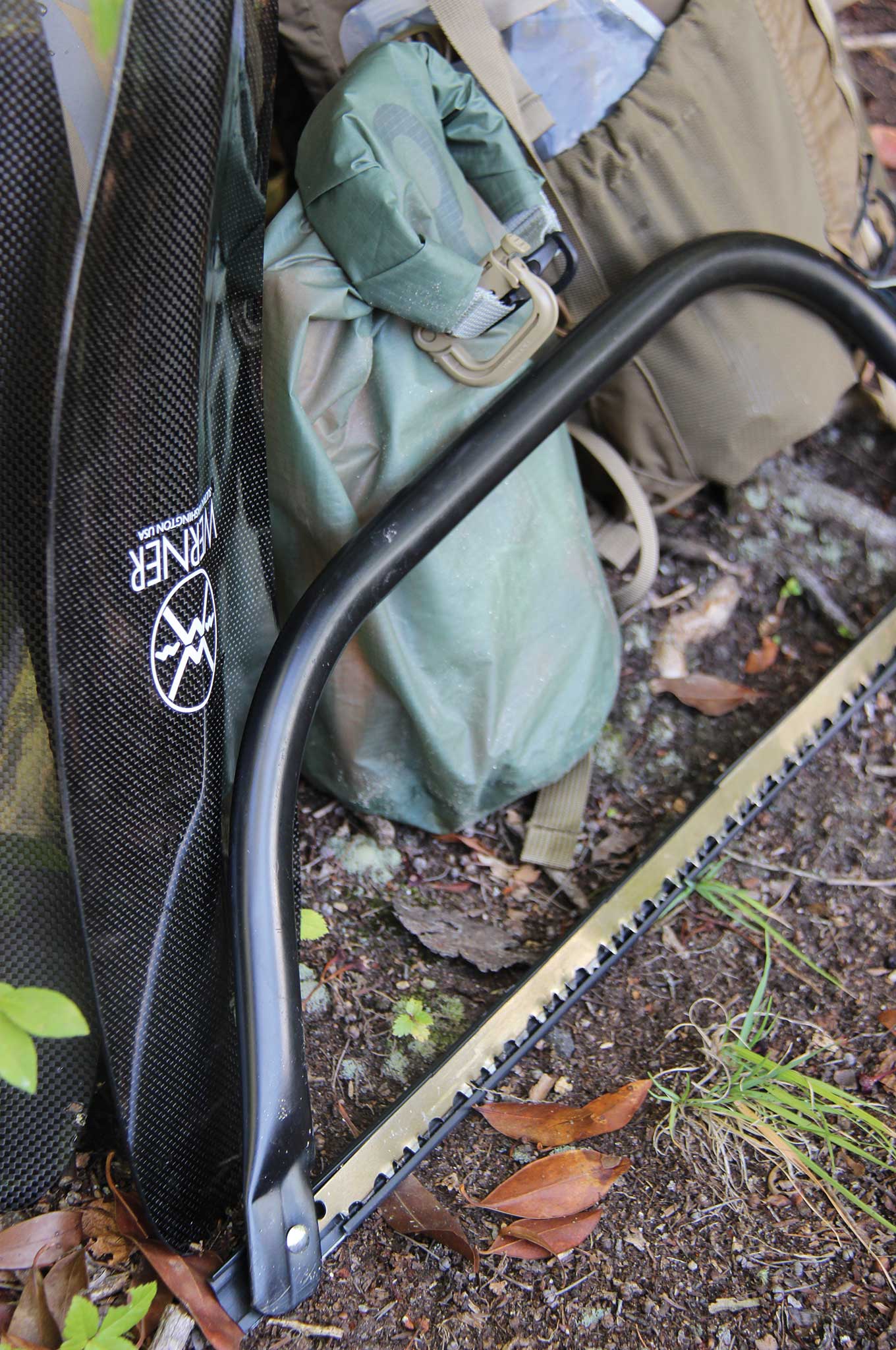
Clearing a Path: Speaking of branches and wood, to reduce your signature and presence in the park, a sturdy bow saw works more efficiently at creating less waste than a chopping tool like an axe or machete. If weight is a major concern, the saw blade can be carried on its own and a buck saw frame can be built off the land. If canoe camping is done in the late fall or early spring, a medium-sized axe will benefit the boater, providing the means to access the dry wood inside seemingly waterlogged firewood.
A reliable bow saw can help clear branches and gather firewood.
Basecamp Basics
In camp, a handful of dedicated kit items will make the extended stay more pleasant.
Shelter: A large area tarp, muted in color such as brown or gray that can blend into the foliage and rocks, makes shelter and living space an easy setup.
H20 Ways: A water-bottle purifier allows the boater to dip and drink on the go. In cooler weather, boiling in a wide-bottomed pot is the preferred means of water purification as ceramic-filter elements can freeze, causing micro cracks that render the filter useless.
Gone Fishing: A takedown ultralight spinning rod with a small tackle box packed with flies, jigs, spoons, and spinners will put fresh panfish (bream, rock bass, perch, etc.) on the dinner plate nightly. [Editor’s note: See “Teach a Man to Fish…” in our Summer 2014 issue and “Improvised Angling” in Issue 9 of OG for more ideas on how to catch dinner.]
Consider packing lightweight fishing gear with your bug-out canoe. You’ll thank us later when things get desperate.
Spice It Up: Though not a life-saving tool, a recommended item is a spice kit to fight off food boredom. While the Adirondack Park, for example, is filled with wild edibles that can supplement the fish and fur food taken from the woods, a spice kit containing salt, pepper, balsamic vinegar, honey, olive oil, and hot sauce (Sriracha all the way!) will take the bland out of your limited menu options.
Supply Runs: Since the canoes used for this ultralight bug-out are minimalist in size and carrying capacity, it will be necessary to resupply at some point. Look for roadside stores containing the basics for camp-like coffee, propane, insect repellent, canned goods, and camp provisions. Canoers generally stash their boats, securing them to docks with painter cords or pulling them on shore and out of sight.
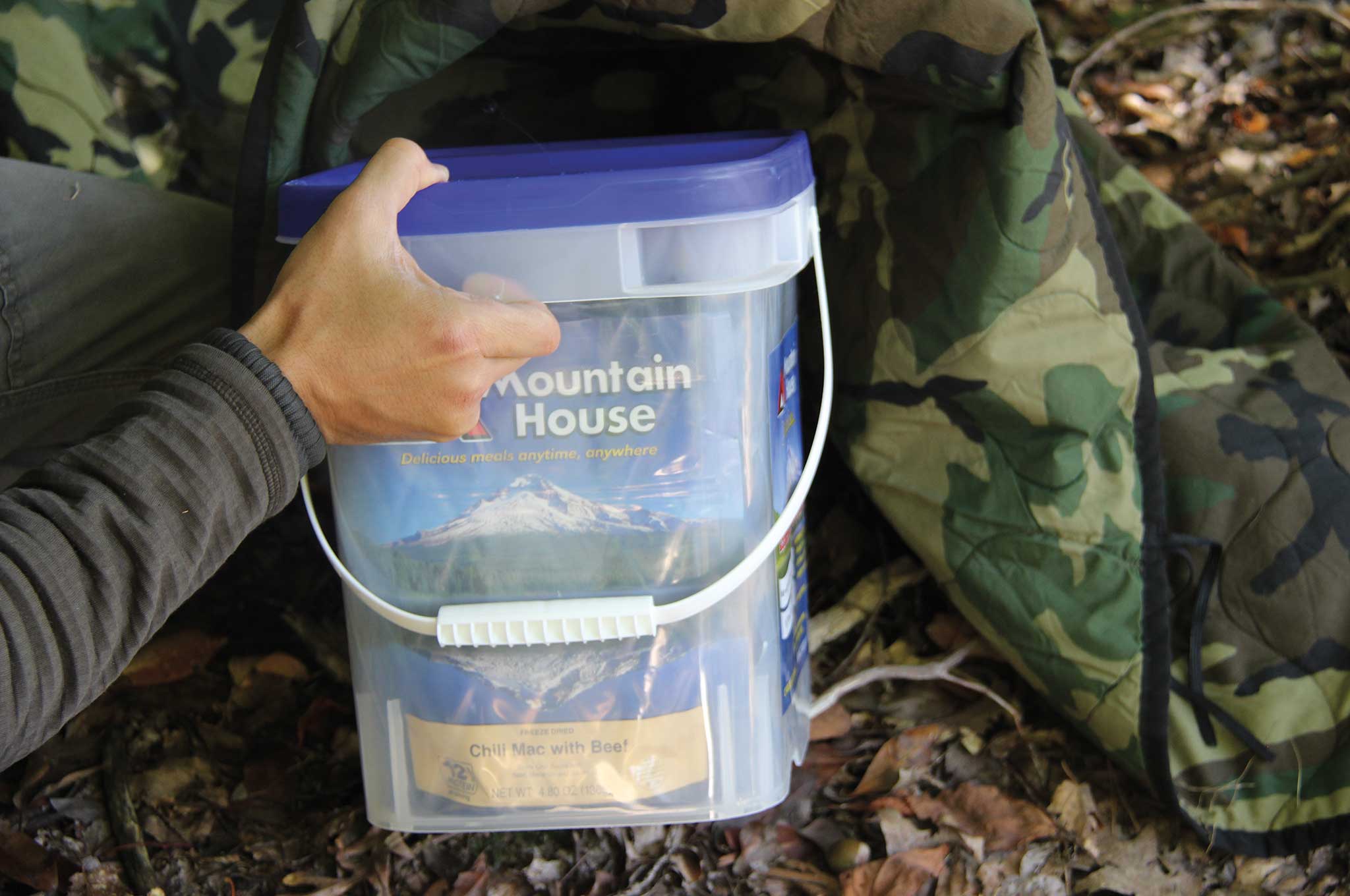
Pre-Staged Cache: In an emergency, many of these stores will likely be emptied before you reach them. In the off season, these stores might not be open at all. However, if your bug-out plan is to canoe to a remote park, you should create and hide a sealed 5-gallon bucket cache of supplies well in advance. For example, flour, baking powder, and salt are all that are necessary to make backwoods bannock. These supplies and others deemed essential to long-term survival can be sealed, stored, and accessed when other gear known to the public has been depleted.
Conclusion
When crisis strikes and refugees are crowding the streets, the savvy ultralight paddler can escape quietly into the wilderness. The ultralight canoe provides sufficient storage for a bug-out kit and room for other gear acquired along the way. With steady paddling strokes, the ultralight canoe has almost no presence in the water with the exception of a few drips of water coming off the paddle on the recovery of each stroke.
As the city falls into chaos, the overwater route out of the city may be the best option to safety. With the right preparation, equipment, and mindset, the ultralight canoe could be the best bet to take you off the grid.
Top 5 Tips to Keep the Hair Side Up
1. Understand Primary/Secondary Stability Boats have primary and secondary stability. Primary stability refers to the initial tendency of the boat to tip over when the boat is positioned upright in the water. Secondary stability is when a boat is riding on its side slightly and the tendency of it to continue over to capsizing or return upright. Many boats have “tippy” primary stability, but come into their own once they are on edge. This gives them a more responsive feel and improved handling.
2. Turn into Wakes/Waves When paddling a small solo canoe, every ripple in the water is felt. While the solo canoe is extremely fast through the water, it can be compromised by big water. Whenever possible, the paddler should turn the boat perpendicular into the wake or waves encountered. The boat has a longer surface to address the wave/wake lengthwise than it does widthwise.
3. Trim and Balance Properly Solo canoes range in size from 9 feet on up. Depending on the design, the paddler will sit somewhere in relation to the centerline of the boat. The further back from the center, the more the paddler will need to offset the balance in the water with extra weight up front toward the bow. This practice is called “trimming.” With proper trim and balancing the weight evenly between port and starboard, the boat will perform better in the water.
4. Avoid Overloading and Swamping A properly loaded canoe should have no less than 3 inches of freeboard (the amount of space seen on the side of the canoe between the gunwales and waterline) visible. The more weight carried, the less performance a paddler can expect. Too much weight and the boat may swamp if overcome with a large wave or an accidental lean to one side.
5. Move Deliberately Erratic movements and jerky-style paddling are leading causes of capsizing. Reaching over the side of a canoe, moving the center of balance too far to one side, will cause a boat to flip. Rushing paddling strokes and sweeps also leads to body movement inside the boat and creating instability. Moving deliberately, understanding the slower pace of a canoe, and staying calm will keep a canoe upright.
Stay Dry
A personal dry bag containing emergency essentials should always be carried close to hand while in a canoe or kayak. This bag may or may not be tethered to the paddler’s personal floatation device and should be compact and light enough not to affect the buoyancy of the life jacket or range of motion while paddling. The Outdoor Research 5L Lightweight Dry sack is an ideal size and has sufficient water resistance for this application. The contents of the kit should be determined by purpose and reality.
Capsizing is a real threat to the open boater. Inside the personal dry bag, the paddler should carry an immersion kit. This kit should include various fire-starters that are easy to use with cold hands, as well as a flame source such as tinder or a candle. The open flame paired with a reflective blanket to trap heat will help mitigate the effects of hypothermia. These items should have priority placement at the top of the dry bag for immediate access.
A quality water-resistant white-light emitting flashlight should be carried. At night, this will prove useful for obvious navigation, but also to alert larger boats, should they be encountered, of your presence. Signaling devices such as a floating mirror and whistle should accompany this light for daytime use.
Miscellaneous items including a small roll or card of duct tape, spare cordage, high-calorie energy bars, and minor first-aid items should take up some of the extra space in this bag. The rest of the space should contain a spare key for your vehicle, your identification, wallet, and everyday-carry items.
Tricked Out
The author’s bug-out canoe of choice is the New Tricks from Hornbeck Boats — a family owned company that’s been building boats in Olmstedville, New York, for more than 40 years.
Make & Model: Hornbeck Boats, New Tricks
Weight: 15 pounds
Length: 12 feet
Beam: 24.5 inches
Profile: Mid
Materials: Carbon/Kevlar construction with rot-resistant Pennsylvania cherry wood trim
Eddie Rickenbacker is most noted for his exploits as a World War I pilot, achieving the title of Ace of Aces with 26 confirmed kills. He was awarded the Medal of Honor, seven Distinguished Service Crosses, and the World War I Victory Medal, among many other accolades. A true American badass if ever there was one.
Although most military history buffs may be aware of his record in the First World War, Rickenbacker actually escaped an early demise numerous times as a precocious kid, race car driver, and airline owner. One of Rickenbacker’s most famous near-death experiences happened after he returned to civilian life. In October 1942, then head of Eastern Air Lines, but still a celebrity of sorts, he was asked to participate in a tour of bases in the South Pacific. He and seven U.S. Army airmen were provided an older B-17 as transportation, but when the bomber flew off course and their fuel ran out, they were forced to ditch in the central Pacific Ocean. They were hundreds of miles off course, dangerously close to Japanese-held islands, and drifted in life rafts while sharks circled for weeks.
Rickenbacker naturally assumed a leadership role. He captured a seagull that had landed on his head, helped divvy it up as food, and used parts of the bird as fishing bait. When the men would lose hope, Rickenbacker encouraged and pushed the men to get mad. After 24 days adrift, they were spotted by a U.S. Navy patrol aircraft and rescued.
An analysis of this particular Rickenbacker event shows that, at various times during his long-term survival situation, he utilized all of what I consider to be the “Seven Keys to Survivor Mentality” at least once and a few every day. He probably never consciously thought, Now is the perfect time to use Key Four. His survivor mindset was so fine-tuned that conscious intent was not needed. But how about for the rest of us? Follow along as I explain the seven concepts, how they’ve been used historically, and how you can start developing them in your everyday life.
Key 1 Learn From History
An important method to building your own survivor mentality is researching historical examples of iron-willed survivors, such as Eddie Rickenbacker, who survived 24 days adrift in the Pacific Ocean after the B-17 he was traveling in got lost and ran out of fuel during World War II.
While all seven keys are important, possibly the most important resource can be found in the historical accounts of those who have survived harrowing ordeals. Let this article be the trigger for an exploration into the history of the trials and tribulations of people who overcame incomprehensible odds and persevered.
By using Internet search engines (or better yet, that old-school archive called a public library), you have the greatest window to view the history of men and women whose stories are truly inspirational. You will begin the process of imprinting and awakening your survivor mindset by consuming nonfiction books and documentaries of adventurers, military heroes, and ordinary people who have reached deep into their inner core to find their survival instinct.
“Those who cannot remember the past are condemned to repeat it. ” — George Santayana
Key 2 Physical Conditioning
While one’s mental state is often the deciding factor in whether one survives a life-threatening situation, there’s no denying that one’s physical state is a huge part of the survival equation. If you’re fit and capable of overcoming external obstacles, there’s a good chance your mind will push to overcome internal obstacles, too. After all, when all is lost, the only tools you’ll have left are the ones you were born with.
One extraordinary example of this occurred in March 1943. A team of four expatriate Norwegian commandos, including Jan Baalsrud, sailed from England to organize and supply the Norwegian resistance. Betrayed shortly after landing, the team was ambushed by the Nazis, leaving Baalsrud as the lone survivor. He was poorly clothed, one foot was entirely bare, part of his big toe was shot off, and he was relentlessly pursued by the Nazis. He survived an avalanche, suffered from frostbite and snow blindness, but made his way over the Norwegian mountains and tundra to a small Arctic village. He had three great assets: his determination to return home, years of physical conditioning, and his training as a commando.
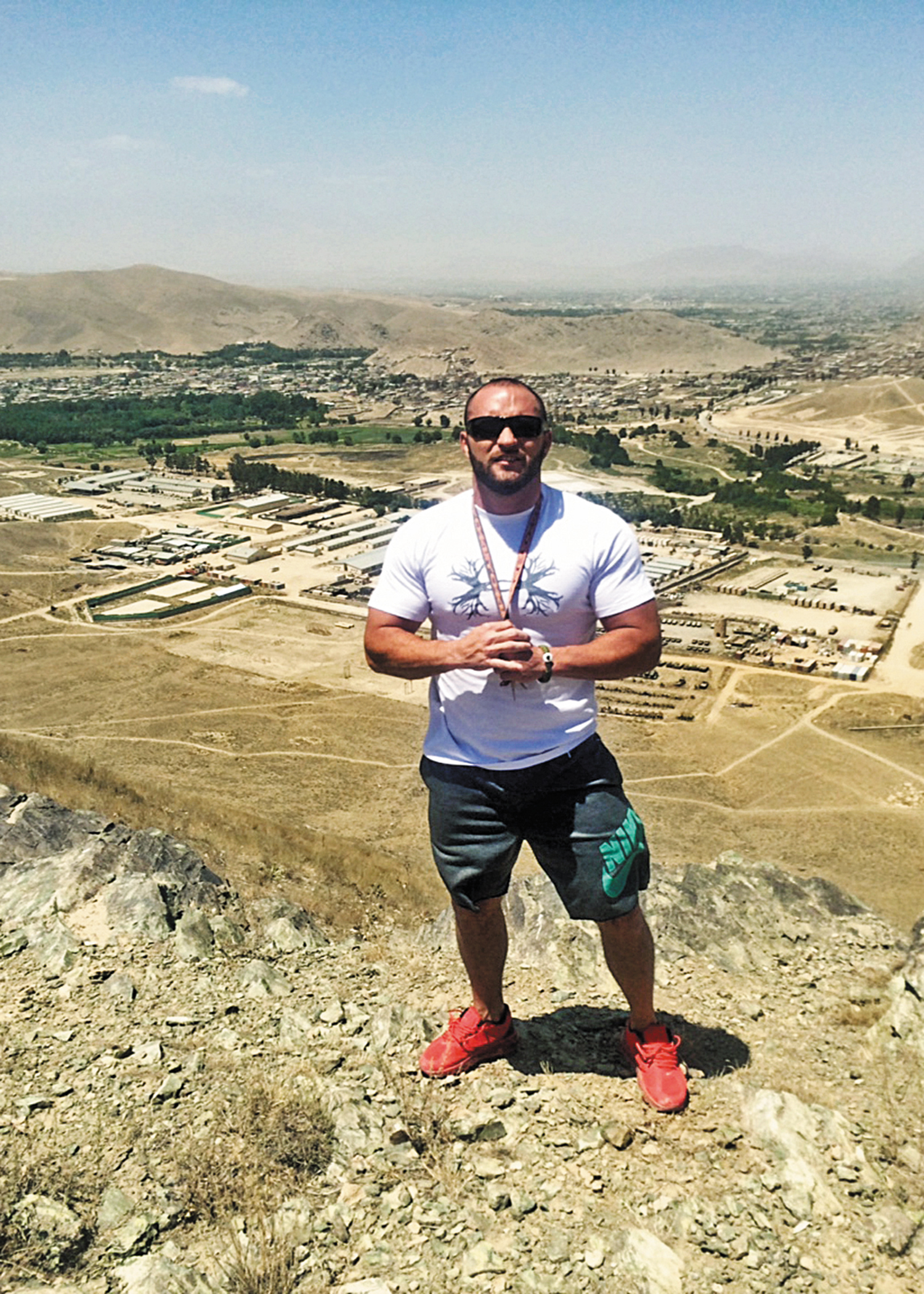
Here’s a more modern example: As a security contractor, Robert Zugg is stationed in one of the world’s most dangerous places: Afghanistan. He always makes physical conditioning a priority when he’s not working for the U.S. government in the area around Kabul. With suicide bombings, anti-American sentiment, attacks by all sorts of warring factions, brutal winters and scorching summers, and just the general hazards of living in that region, Zugg learned from his combat experience as a decorated U.S. Marine that preserving in the face of adversity is a lot easier if you can walk up a flight of stairs without huffing and puffing.
Robert Zugg takes a break from trail-running in Afghanistan, where he needs to stay fit to maintain not just a strong body, but also his survivor mindset.
Fitness competency is the physical engine that helps survivor mentality become a reality. If you’re lost in the woods, facing a trio of street thugs, or swimming through a flooded street, it’s a little too late to begin an exercise program.
Key 3 Think Survival
There’s a saying in gymnastics that the body follows the head. In the psychology of self-preservation, if you say something repeatedly, the brain will do everything in its power to make the repeated mantra occur. Therefore, repeating the phrase, “I am a survivor,” is one of the most effective techniques for success.
If, in the final mile of a marathon (26.2 miles), a runner repeatedly thinks, I’m too tired. I’ll never make the finish line, his brain interprets this statement as a command and begins the process of slowing the biochemical reserves needed to provide energy for the final 1,760 yards. This is an example of negative-outcome thinking. Repeat something often enough and the brain will make it reality. There’s a reason why having a positive mental attitude is preached ad nauseam in every survival book, scout manual, survival video, and military SERE (survival, evasion, resistance, and escape) class.
Aside from thinking positively, another fuel that propels survivor mindset is motivation. What would motivate you to stay alive in a life-and-death situation? For Steve Callahan, it was family.
On the night of January 29, 1982, the sailor and naval architect headed from the Canary Islands to the Caribbean alone in a small boat. On February 5, his craft sank in a storm, leaving Callahan adrift in the Atlantic in a 5 and 1/2-foot inflatable rubber raft with only 3 pounds of food, a few pieces of gear, and 8 pints of water. Callahan drifted for 76 days on the ocean before he reached the Bahamas. Throughout his ordeal, he never gave up thinking about the people who needed him.
What motivates a person to stay alive when everything has gone wrong? Many survival stories speak of the survivors’ faith, which provides them with hope. Other survivors have told of their intense desires to get back to family, friends, and loved ones. The motivators for each individual will be different. So, if you were in Callahan’s wet boots, what would motivate you to live on?
Key 4 Eliminate Two Emotional Traps
It’s important to think positively and have a mantra to rely on. But those two strategies might be difficult if you don’t first eliminate two common emotional traps:
Freezing up or having feelings of “Why me?” after a traumatic incident can weaken your survivor mentality.
1. Mental Paralysis: Here’s a really simple formula to explain why this emotional trap needs to be eliminated:
Anxiety > Panic > Mental Paralysis > Failure to Survive
The essence of anxiety is inaction, and when the anxiety levels increase to panic, several consequences occur:
Mistrust of others
Impaired decision-making
Inability to follow directions
Inability to visualize a successful outcome
Inability to act as a team member
Self-pity and self-sabotage
How do you reduce anxiety and stay calm? Especially in a dire circumstance? The answer to that could be enough to fill a whole other article. [Editor’s note: See the “Evolution of Mindset” feature in Issue 15 of our sister publication RECOIL.] But without professional consultation, one of the best resources would be reputable websites on the Internet and, in particular, videos. A quick Google search for videos to reduce anxiety produced 2,180,000 hits in less than a minute.
Learning to control anxiety and panic reactions is a skill that can and should be used in everyday life — but, again, finding yourself in a life-threatening situation is not the time to begin practicing those skills.
2. Victim Mentality: A victim mentality might be one of the initial reactions to traumatic situations that involve prolonged periods of survival. Unfortunately, if left untreated, this will infect motivation, perseverance, and hope. It could manifest itself through dysfunctional thoughts and verbalizations. Victim mentality could show up as a verbal criticism of others, unwillingness to take responsibility for one’s own actions, and a belief that survival is for other people.
Key 5 The Power of Focused Anger
“Anger is bad.” “Anger is a wasted emotion.” “Anger is trouble.” “Anger is not a solution.” The use of anger has had a negative reputation ever since Sigmund Freud tiptoed through the unconscious mind. Sure, anger can be a wasted emotion, and uncontrolled anger can lead to dire consequences — but under certain circumstances, anger can be one of the key ingredients to survivor mindset.
Controlled anger activates the basic survival instinct that can alert the body’s physiology to be prepared for a challenge and force the brain to focus on a solution that leads to survival. The aforementioned story of former fighter ace Rickenbacker is another example of well-focused anger boosting chances for survival.
Key 6 Maintain Hope
Jon Krakauer’s bestseller, Into Thin Air, detailed the events of the ill-fated expedition that left eight people dead and marked one of the deadliest climbing seasons in the history of Mount Everest. The most amazing part of the narrative focused on Beck Weathers, who was twice abandoned and presumed to be dead. Unbelievably, Weathers spent 18 hours in subzero temperatures in Everest’s death zone before regaining his senses and staggering into camp. He was suffering from severe frostbite, corneal lacerations, and hypothermia — and his face was so badly frostbitten that it scarcely seemed human.
“Never, never — in nothing great or small, large or petty — never give in except to convictions of honor and good sense.” — Winston Churchill
Over the next year, Weathers underwent 10 surgeries and his entire right hand and most of his left hand were amputated. He said that he survived his Everest ordeal through constant self-talk, telling himself not to give in to the cold.
Never giving up is essential to a successful survivor mentality. This doesn’t mean being foolhardy or taking foolhardy risks.
Key 7 Training
Keys 1 through 6 are really precursors to the final key: training. The seventh concept serves as the transition to utilize and refine the survivor mindset under controlled experiences. Make it your goal, and that of your loved ones, to attend at least one seminar and one experiential training course each year. The survival skills and techniques taught in these courses will increase your self-confidence and reinforce a survivor mentality.
Take training classes to learn skills, build self-confidence, and reinforce a survivor mentality.
Remember, there’s a gigantic difference between thinking and experiencing. As an example, your chances of starting a fire without matches or a lighter are greatly improved if you’ve already practiced it until it became a skill. Having the fire-starting skillset not only allows you to keep warm and to cook food, but more importantly it also gives a jolt of self-confidence to the survivor mentality.
The Common Thread
Every member of our species survives the trauma of childbirth with an innate capacity of developing a survivor mindset. As we grow, mature, and choose our unique paths through life’s mazes, this begins to weaken through disuse and verbal self-talk — but it never totally disappears. Some behavioral geneticists proselytize that we trained ourselves to become a society of people who give up at the first indication of failure or danger, immediately waiting to be rescued. The Seven Keys of a Survivor Mentality is a method for reestablishing the skillsets that helped us to take our first deep breath and test out our lungs.
The takeaway for the naysayers is that every human being starts life with the survival imperative. It’s always present, but not always functioning. Each individual must make the conscious choice to flip the internal switch and turn on the self-preservation mode.
The bottom line is that survivor mentality has the potential to positively affect one’s lifestyle. Although most people don’t experience life-or-death situations on a regular basis like a first-responder, military personnel, or outdoor adventurer might, the use and practice of the seven survivor mentality keys may be the difference between a life well-lived or one of mediocrity.
Reading Material
Here’s a partial list of books that influenced the development of Dr. Neal Olshan’s “Seven Keys to Survivor Mentality.”
Adrift: Seventy-Six Days Lost at Sea by Steven Callahan
Alive: The Story of the Andes Survivors by Piers Paul Read
Endurance: Shackleton’s Incredible Voyage by Alfred Lansing
Into Thin Air: A Personal Account of the Mount Everest Disaster by Jon Krakauer
Lone Survivor: The Eyewitness Account of Operation Redwing and the Lost Heroes of Seal Team 10 by Marcus Luttrell with Patrick Robinson
Man’s Search for Meaningby Viktor E. Frankl
Papillon by Henri Charriere
The Diary of a Young Girl by Anne Frank
Unbroken: A World War II Story of Survival, Resilience, and Redemption by Laura Hillenbrand
About the Author
Dr. Neal H. Olshan is a consulting psychologist, pilot, writer, and fine art photographer, as well as the chief combat psychologist for LMS Defense. He’s the developer of the Evolution of Mindset Training Program. Olshan is the author of six non-fiction books and wrote the novel The Panama Escape with his wife, Mary. He can be reached at mindsetdoc@gmail.com. http://www.drolshan.com
When you hear the name Hershey, what comes to mind? If you think like most Americans, it’s most likely a creamy milk chocolate bar in a dark brown wrapper. This confection has been a staple in the candy industry since its invention in 1900. In fact, it was so successful, the company’s hometown of Derry Church, Pennsylvania even changed its name to Hershey, Pennsylvania.
A Hershey’s cocoa ad from 1918. Source: Wikipedia
However, the times they are a-changin’. While many people still enjoy the original Hershey bar, many others are looking for products with less sugar and more nutrients. So, the Hershey Company took a bold step and purchased Krave Jerky in 2015 for close to $300 million. Now, Hershey has announced that they’re going to use these dried meats in the form of Hershey Krave protein bars.
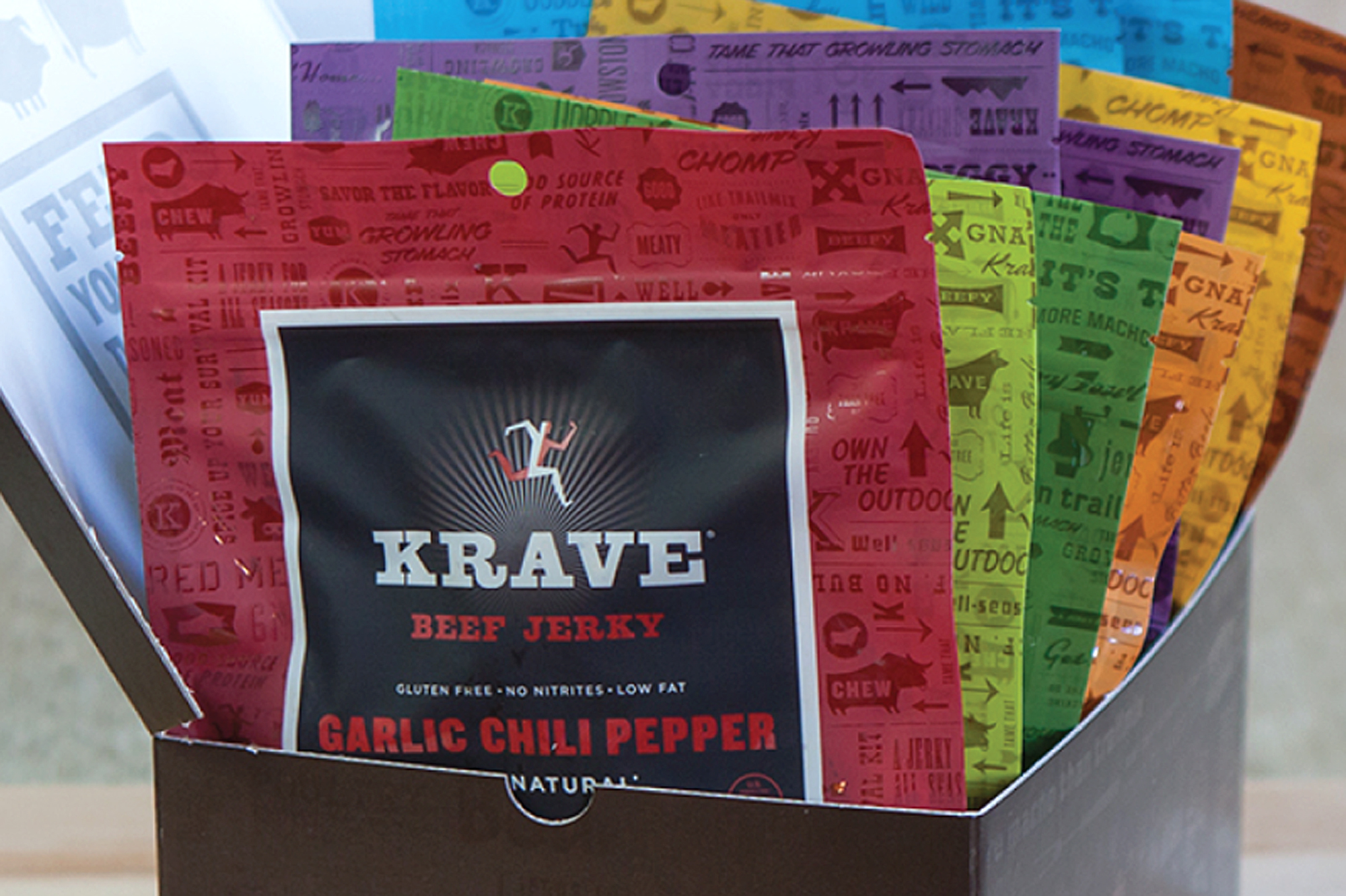
Krave Jerky offers many unconventional flavors, such as Basil Citrus and Black Cherry Barbecue.
According to the Wall Street Journal, this new dried meat bar line will incorporate dried fruits such as mangos and cranberries, as well as healthy grains such as quinoa. The company has gone to great lengths to achieve the right balance of protein content, sweetness and moisture, and to avoid the potentially unappealing image of a dried meat bar.
“We aren’t going out there saying it is a meat bar. We’re saying it is a Krave bar,” Rusti Porter, vice president of marketing for Hershey’s Krave said. “It’s not just beef jerky in a bar in your mouth.”
The original Hershey Bar is a far cry from the new meat-based Krave bars.
Hershey is also developing a protein-oriented brand known as SoFit. This new brand will offer protein smoothies in squeezable pouches and other healthy snacks. Details on SoFit and Hershey Krave bars remain scarce, but from a survivalist’s standpoint, it’s interesting to see major companies branching out into healthy and nutrient-dense products.
We’ve enjoyed testing survival meat products in the past, and we’d say a dried meat and fruit-based protein bar could make an excellent addition to a bug-out bag or day pack. So, we’ll keep an eye out for these Hershey Krave bars hitting shelves in August.
In today’s high-tech world, passwords can be a troublesome nuisance. In order to keep all your sensitive information secure, you’ll need to come up with strong passwords for all your online accounts. These passwords often involve long strings of capital letters, numbers, and even punctuation that can be hard to remember (and tricky to enter correctly on the first try). However, there’s a good reason for this — highly complex passwords are hard to crack, and nearly impossible to simply guess.
Most of us have also heard of people who circumvent this frustrating process by entering something like “password” or “1234” as their password. We also know this is a very bad idea, because these are some of the first things criminals will guess if they try to access your accounts. It’s akin to leaving the key to your front door under the welcome mat, in the hope that nobody will look for it there.
Now, imagine if you were in charge of setting 8-digit password codes for launching nuclear missiles — what would you set them to? Well, if you were the United States Strategic Air Command (SAC) during the Cold War, you’d set them to 00000000. Unbelievably, for nearly 20 years, the PAL launch code for every nuclear missile silo in the U.S. was set to 8 zeros.
JFK’s National Security Memorandum
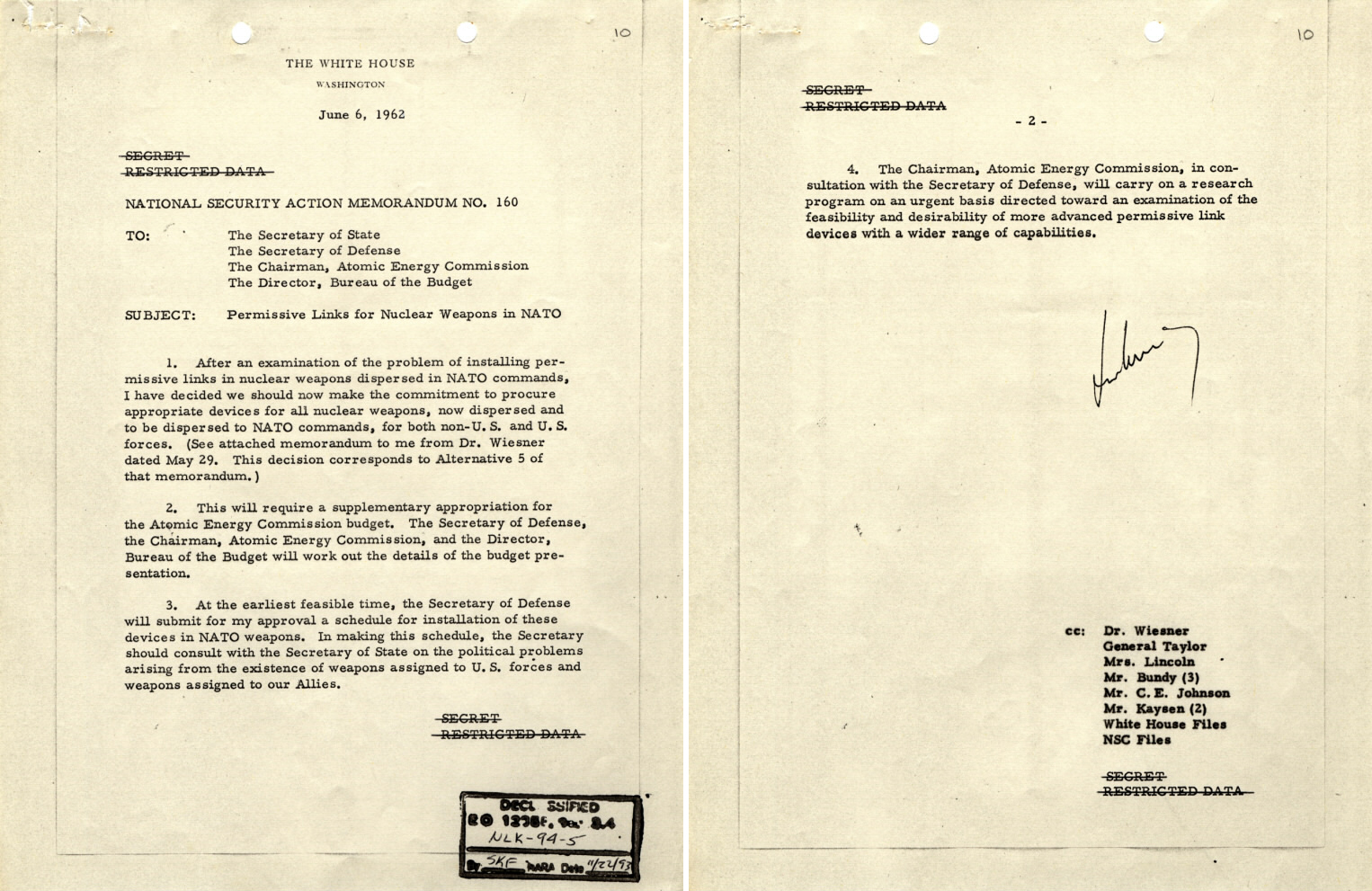
The story of this “zero code” begins back in June 1962, when President John F. Kennedy signed a document known as the National Security Action Memorandum 160. This directive was prompted by concerns over the security of U.S. nuclear missiles, specifically the concern that missiles would be captured and launched by enemy forces, or that they would be launched by rogue American military officers.
The National Security Action Memorandum 160, signed by JFK in 1962. Source: JFK Library / Wikipedia
Before the implementation of this security memorandum, missiles were secured only by physical locks, leading to concern that ICBMs could be launched by high-ranking officers without outside consent. U.S. Air Force General Horace Wade wrote the following about a fellow Strategic Air Command officer, the appropriately-named General Thomas Power:
“I used to worry about General Power. I used to worry that General Power was not stable. I used to worry about the fact that he had control over so many weapons and weapon systems and could, under certain conditions, launch the force. Back in the days before we had real positive control [i.e., PAL locks], SAC had the power to do a lot of things, and it was in his hands, and he knew it.”
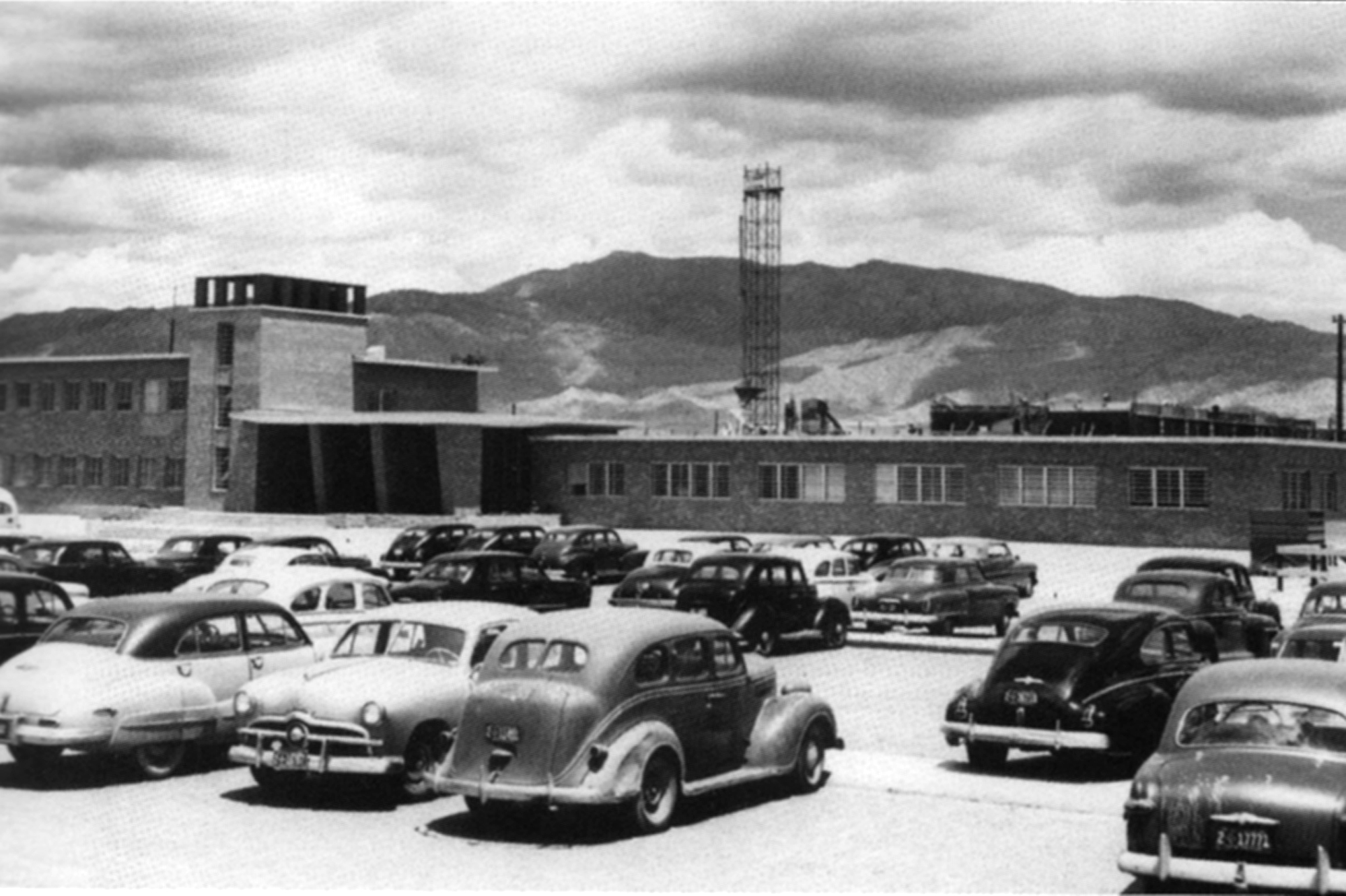
The PAL system was developed in secret at the Sandia National Laboratories, now owned by Lockheed Martin. Source: Wikipedia
In order to alleviate these concerns, the National Security Memorandum 160 mandated that the old physical locks be replaced by new electromechanical locks called Permissive Action Links (PALs). The PAL locks were extremely complex devices that were virtually impossible to crack or hotwire. One weapons designer stated that bypassing one of these PAL locks would be “about as complex as performing a tonsillectomy while entering the patient from the wrong end.”
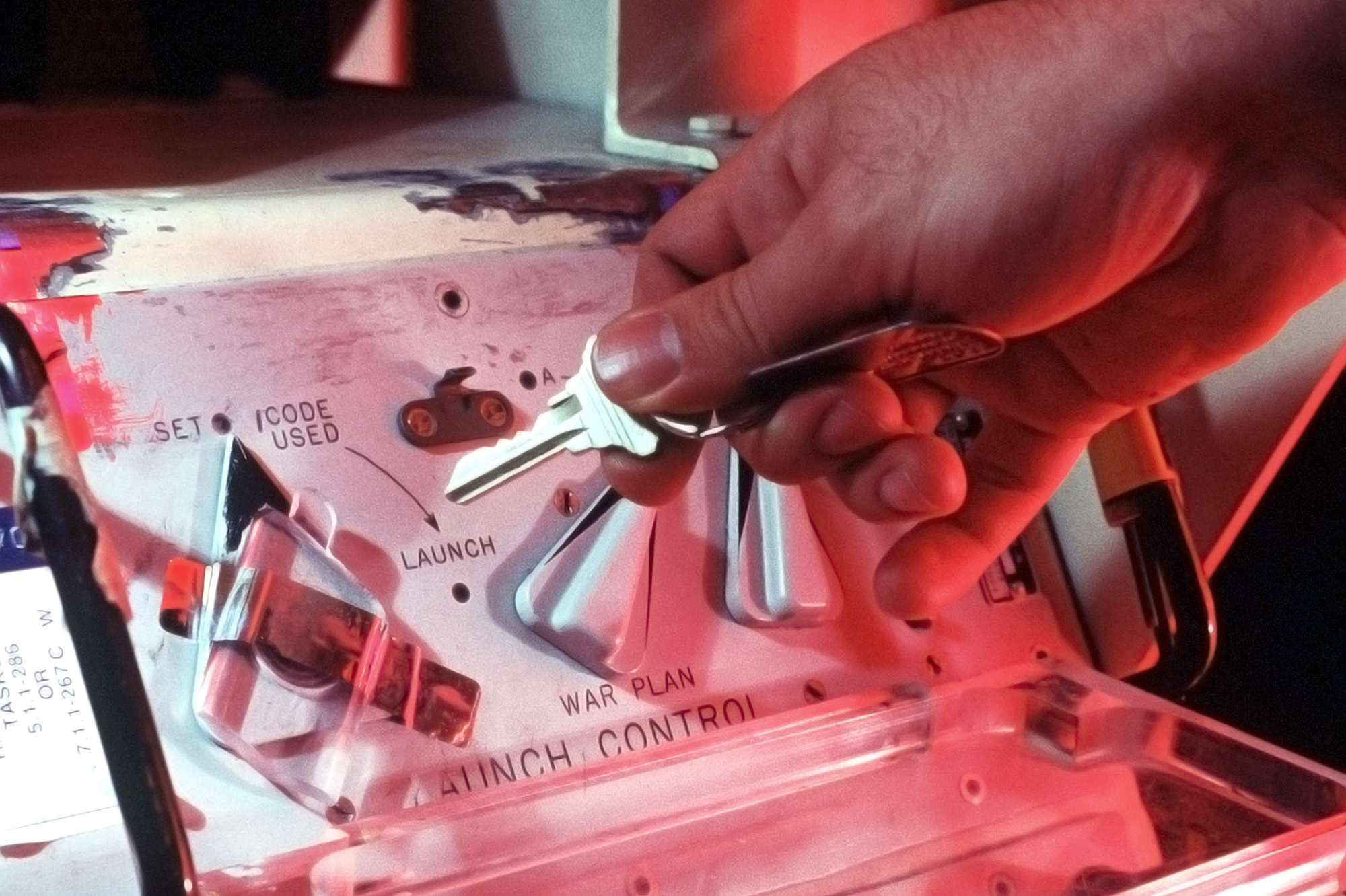
A PAL launch control module. This is a later model from the 1990s, updated with a laptop computer.
When it was time to implement the PAL locks in nuclear missile silos throughout the U.S., Secretary of Defense Robert McNamara personally supervised the process. However, much of the Strategic Air Command leadership at the time resented and opposed this process. They felt adding more complex locks would slow our reaction time to an attack, and prevent launching missiles quickly in a real emergency.
As a result, shortly after McNamara and his staff left the facilities, the Strategic Air Command reset all PAL codes to 00000000. This was done because SAC leadership felt that it would ensure that the nuclear missiles would be ready to use at a moment’s notice, regardless of whether the President was available to authorize a launch. In their mind, this instant readiness took precedence over any potential safety concerns.
The Whistleblower
Bruce G. Blair was a launch officer at an underground silo in Montana during this time, and now serves as a nuclear security expert and research scholar at Princeton University. Blair exposed the massive security flaw to the public in an article published in 2004. He wrote, “The codes were the only real mechanical or technical impediment to the crews launching missiles, and they were all set to zero. The safeguard was non-functional.”
On top of this, the new “secret” code was written down on a checklist and handed out to airmen at each facility. Blair wrote, “Our launch checklist in fact instructed us, the firing crew, to double-check the locking panel in our underground launch bunker to ensure that no digits other than zero had been inadvertently dialed into the panel.”
Blair also personally revealed the facts about the all-zero PAL launch code to former Secretary McNamara. Mr. Blair stated that McNamara’s response was one of shock and outrage, as he asked “Who the hell authorized that?”
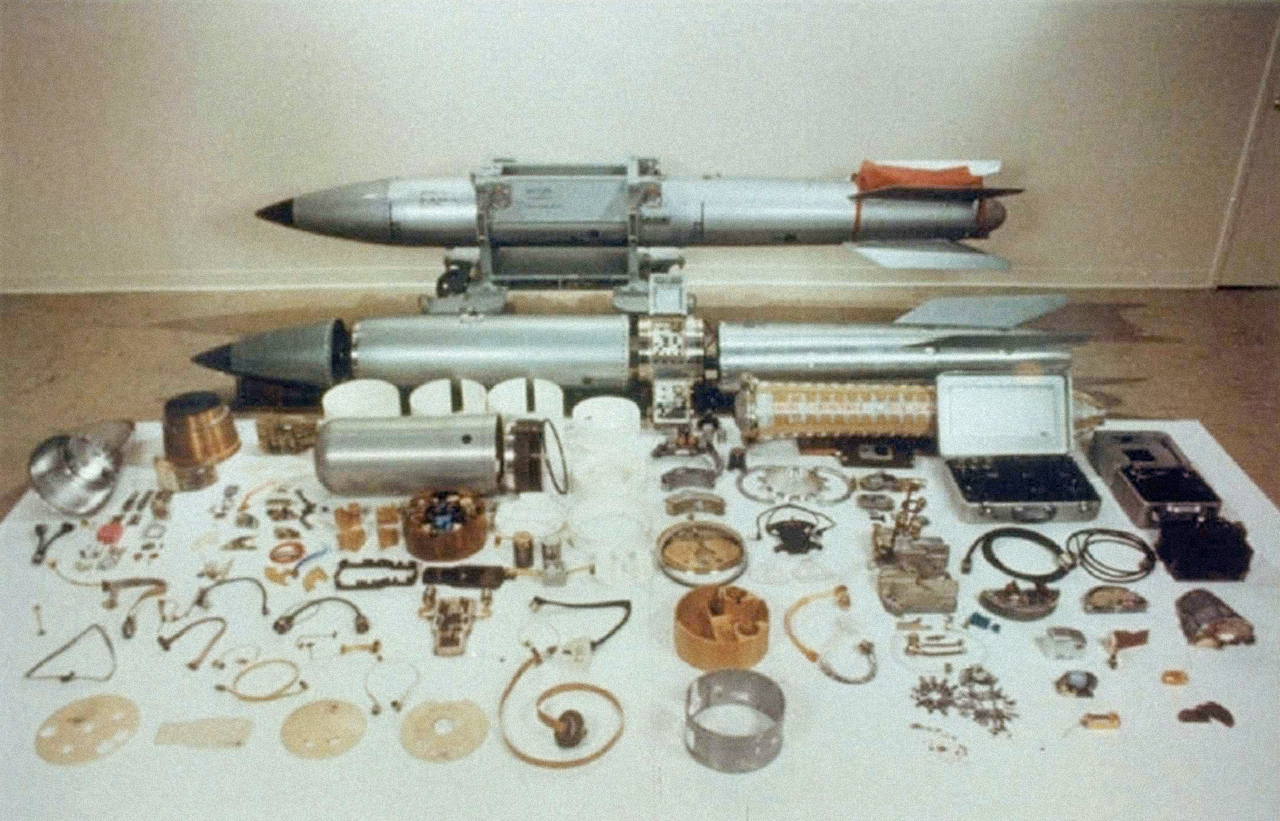
A disassembled B-61 nuclear bomb, with its PAL module seen in a metal case on the right. Source: U.S. DoD / Wikipedia
Recently, Air Force representatives have disputed Blair’s claims, stating that the PAL codes were never actually 00000000. Although there is no undeniable public proof of the zero code at this point in time, testimony from other nuclear security experts supports Blair’s statements: “Bruce is correct about the major historical narrative at stake – the United States Air Force, particularly Strategic Air Command, generally resisted the introduction of technical safeguards out of concerns that such measures might make it more difficult to use the weapons in the event of a conflict.”
The Catch: Additional Security Measures
If you’ve done any reading on nuclear missiles in the past, or even watched one of the many Hollywood thrillers about the topic, you’ll probably be thinking that it takes more than a single code to fire a nuclear weapon — and you’d be right. The major catch to this 00000000 launch code is the fact that it was typically only one of many security measures preventing inadvertent mutually assured destruction.
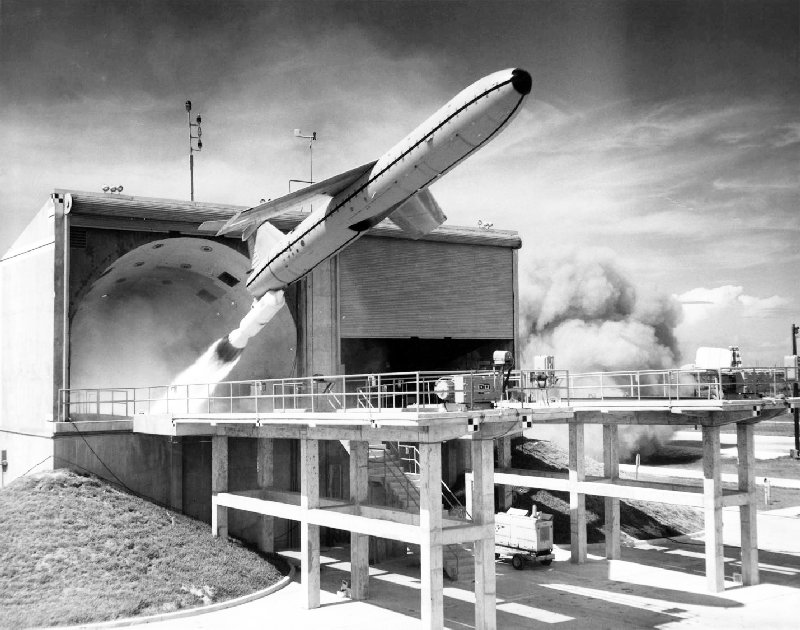
This photo from the USAF Museum Archives shows the test launch of a Mace tactical cruise missile. Source: Wikipedia
According to Steven Bellovin, a professor at Columbia University who teaches security architecture, these PAL codes were designed to prevent the launch of a nuclear missile that had been physically captured by enemy forces. For example, missiles were often stored in NATO countries outside the U.S., and these codes were intended to prevent enemy forces from launching our missiles in the event that one of these overseas facilities was captured.
So, while the PAL launch code may have been 00000000, actually arming the nuclear warhead required a much more complex system. The arming procedure involved sealed envelopes, simultaneous turning of keys, and verification of three different codes over a secure phone line. This means that enemy forces or saboteurs may theoretically have been able to gain access to our missiles with the zero code, but the nuclear warheads would not have been armed without first defeating more security measures.
Then again, we also know that even the much more complex security features were far from foolproof. In fact, we narrowly escaped all-out nuclear war on several occasions despite these additional safeguards — go read our previous article on Nuclear Near Misses for a more detailed explanation.