I was working hard in the store, counting products and taking inventory, but little things kept gnawing at the edges of my attention. My two employees, normally industrious kids, just wouldn’t stop texting the moment they started their shifts. Then, there were t sounds of helicopters flying overhead. And a lot of foot traffic passed by the storefront, yet it seemed odd that no one was coming inside. Sure, it was snowing a little, but not enough to slow sales to a grind.
Suddenly, there was a loud slapping sound. Someone had thrown a cup of soda at the store window. Beyond the cola-soaked glass, people ran down the sidewalks and street, all in the same direction. My youngest worker said his friends were texting him about a riot. “Riot? What riot?” I asked, rushing to the back office. Turning on the TV, I watched in horror as the local news station explained the event: Chaos had indeed erupted…and the epicenter was very close to the shop.
In this edition of OFFGRID’s “What If?” feature, we pose the question, what do you do if you’re a small-business owner caught in the middle of a growing riot?
For answers, OFFGRID asked three different writers for their approach to handling this frightening and unpredictable situation. With us is Patrick McCarthy, a freelance journalist, lifelong outdoor enthusiast, and OFFGRID contributor. Erik Lund is a federal law enforcement agent with a vast array of tactical and survival expertise. And myself, I have been a survival instructor for the past 18 years and am the author of a new book on survival and emergency preparedness, Prepare for Anything.
With our varied backgrounds, we each provide different ways to solve the same dire situation. Read on to find out if our methods would work in your SHTF preparations.
The Scenario
| Survival Situation | Inner city riot |
| Your Crew | 3 adults (you and two co-workers) |
| Location | Downtown Detroit, Michigan |
| Time of day | 4 p.m. |
| Level of Difficulty | Advanced |
| Length | 10 miles |
| Season | Winter |
| Weather | Snowing, highs in the mid 30s F and lows in the 10s F |
The Set-Up: You’re a convenience storeowner in your mid 50s. Today, you have two of your best employees working, both college kids in their early 20s. You hear on the news that a riot has broken out due to the announcement of an unpopular trial verdict. The epicenter of the riot is no more than six blocks from your business and expanding in a swirl of pandemonium. The news report says that the police presence is being withdrawn from the area and reorganized for riot preparation. Dark is approaching and although you know the area well, there’s a gauntlet of looting, random acts of violence, and general panic for a 10-mile radius. You call 911, but the lines are all busy. You lock up your store with the collapsible metal curtains across the glass storefront and shut off the lights. You’ve pulled all the money (just over $1,000 in cash) out of the register and safe and stuffed it onto your person.
Your Gear: Plenty of packaged food, bottled drinks, a cellphone, a landline, a box cutter, a backpack, and the clothes on your back.
The Complication: While watching TV for more info on the situation, crowds of people suddenly begin trying to break in the front windows. Do you try to calm the mob, perhaps attempting to pay them off with the petty cash and pray they leave your store alone? Do you lock your back office, hoping they don’t get through the metal security curtains and kill the three of you? Do you attempt to run out the back door and brave the elements alone? Do you bring your young co-workers with you for protection upon fleeing? What would you do?
Average Joe: Patrick McCarthy’s Approach
Even on a good day, downtown Detroit can be a rough place to call home, but we were about to find out how bad it really gets. We had been hearing rumors of unrest in the city for days now, but halfway into my shift, the televised news reports were beginning to get increasingly ominous. The rioters had tired of simple breaking and entering, and were now turning to mob violence. Destruction for the sake of destruction — torching buildings, flipping cars, and viciously beating anyone who stood in their way.
Earlier in the morning, we had seen police cars screaming down the street, sirens blaring. Hours later, I spotted one headed the opposite direction. No sirens this time. Around 2 or 3 p.m., we heard the first gunshots — not an uncommon occurrence in this part of town, but never with this frequency. Then, the sounds started getting closer. I made the decision to close the doors early. It’s not like we had seen any customers for hours, anyway. Snow was beginning to fall as we pulled the security gates closed.
Then reality set in — none of us were going to make it home that night. The sounds felt like they were closing in from all sides. Smashing glass down the block, cars blasting by the shop at full throttle, more staccato pops of gunfire in the distance.
Before cashing out the register, I told my two employees, Damon and Rick, to close up shop and kill the lights. It would draw too much attention to simply walk out to my truck and drive away, and it was much too cold to make it far on foot. Besides, a middle-aged man and two scrawny college kids would make for an easy target on the streets, especially in our work uniforms. We’d have to hunker down for the night in the back office, and head out just before dawn once the violence subsided.
The evening hours ticked by as we huddled around the tiny security camera monitor, watching the footage of shadows running by underneath the streetlights outside. TV news was no help — after the chief of police made a statement that the situation was under control and a perimeter had been set up, the newscast cut away to other stories, and eventually to late-night infomercials. How can no one care what’s going on here?
Not long after midnight, someone spotted the security camera out front, and smashed it with a brick. Then the sounds outside descended upon us, with disembodied voices shouting and unseen objects shattering the storefront windows. The assault seemed relentless, but miraculously, the security gates held. Thank God I spent extra for those reinforcements. I could hear through the wall that the pawn shop next door hadn’t fared so well. Knowing that the security gate wouldn’t withstand another barrage, Damon, Rick, and I agreed on a plan. We would take some supplies and the cash from the register, head for my truck outside at 4:30 a.m. (hopefully when most of the looters would grow tired and head home), and drive like hell.
In the early morning hours, once the noise outside had died down, I grabbed my backpack and silently loaded it up. Bottles of water, protein bars, beef jerky, and the limited contents of our medical end-cap. Each of us pocketed a box cutter from the storeroom — not that it would do much, but it felt better than nothing. I held onto the old D-cell flashlight from under the counter, more for use as a blunt instrument than a source of light. I was shaking as morning approached. Was this really the right choice?
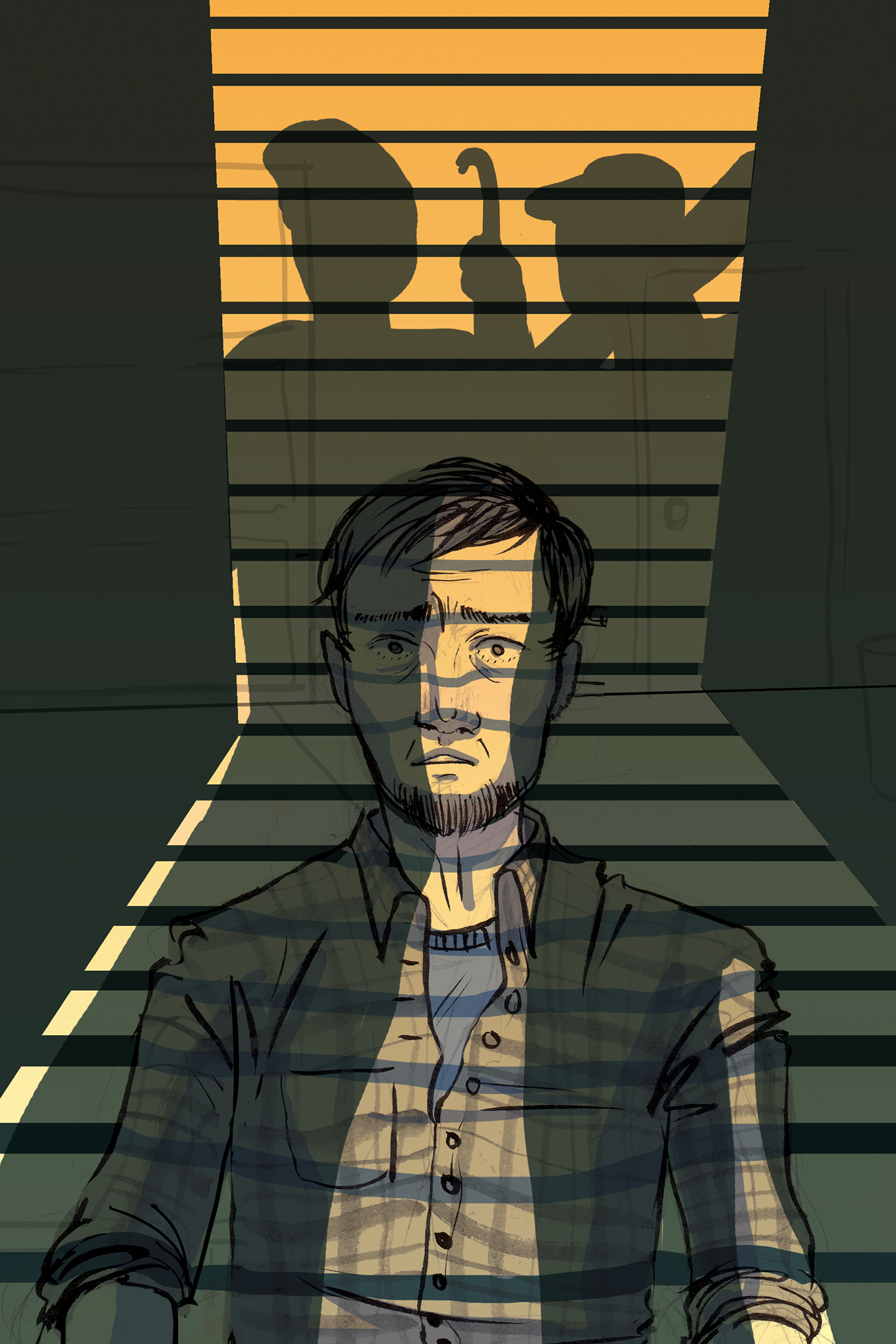
I opened the back door at exactly 4:30 to find our parking lot looking like a war zone. There was trash and broken glass everywhere, and the choking smell of ash filled my nostrils. My truck was on the far side of the lot, or at least what was left of it. Someone had smashed the windows and gutted the steering column. The tires were slashed. My heart sank as I realized it wouldn’t be taking us anywhere. Rick looked terrified, but Damon said he thought we could make it to his apartment about a mile away. It was starting to get light, and there was no turning back now — the apartment would have to do.
We walked quickly as dawn approached, feeling as if we’d find another mob around every street corner. Fortunately, only a few stragglers were out at this hour, and we were ignored. I think I may have seen a body slumped over in an intersection, but I definitely wasn’t going to go get a closer look. After what felt like an eternity, we made it to Damon’s complex, where the wrought-iron security gate out front appeared scarred but intact. Inside the building it was eerily quiet. We made it to his apartment, bolted the door, and practically collapsed. It’s amazing how much covering a mile in fight-or-flight mode takes out of you.
The three of us holed up in the one-room apartment for most of the day, finally able to eat something and watch the news. It was pretty clear that Damon intended to stay here until the riots were contained, and I couldn’t fault him. But Rick and I just wanted to get home to our families. I knew Laura and the kids would be worried sick by now, despite the text messages I sent before my battery died. I tried to call them using Damon’s landline, but I couldn’t get through. All the lines must be jammed. So, the two of us decided to stay the night and head out again first thing in the morning.
Despite the exhaustion, I found myself barely able to sleep that night. Maybe it was adrenaline wearing off, or just plain fear at what the day would hold. In the early morning hours, we talked with Damon to hash out our travel plans. Although he couldn’t afford a car, Damon mentioned that his roommate had an old hatchback in the parking garage. The roommate was out of town for the week, and Damon figured that he wouldn’t mind if we borrowed the car — getting it out of the city would probably save it from the same fate as my truck, anyway.
After topping off our supplies, grabbing the car keys, and picking up an aluminum baseball bat from the apartment’s closet, Rick and I made our way to the building’s attached parking structure. Eyes adjusting to the twilight, we found the hatchback where Damon said it’d be. We were in luck — due to its ratty appearance, it had been overlooked by the mob. We hopped in, and it sputtered to life as I turned the key.
Pulling out onto the street, the engine noise seemed deafening against the early morning’s silence. We drove block after block, tension slowly fading as we navigated through the abandoned cars and rubble. A few miles later, the roads cleared, and we eventually rounded a corner to find a handful of linked metal barricades blocking the street. A small army of police officers stepped out from behind the barricade, shotguns and AR-15s in hand. They weren’t messing around. This must be the “containment plan” we heard about on the news. After a few minutes of interrogation about where we got the car (and why we had a baseball bat) and showing them our IDs and my business card, we were allowed to pass through. As we headed out of the city into the gray sunrise, my anger at the police’s complacency turned into a stark realization: I would never be so unprepared again.
Federal Agent: Erik Lund’s Approach
The sound was as clear as an emergency dive klaxon on a submarine. The metal security curtains at the front of the store were being kicked. Jumping to my feet, I left the back office to see how well the curtains were bearing the attack. “Stay here,” I told Damon and Rick, my two young employees.
I mentally cursed myself for allowing the news coverage of the escalating riots to distract me. I should have left when I had the chance — when the angry protesters were gathering, before the mob mentality broke loose. I could have simply driven home, but now that was no longer an option. The falling snow meant the roads were likely to quickly become slushy and clogged with vehicles trying to leave the danger zone…or with those trying to get into the area to participate in the riots. There’s nothing like a good riot to bring out the party animals. Groups of marauders were roaming around, making their way toward the excitement of the riots. The thought of being stranded or carjacked in the middle of a Detroit winter snowstorm had the sex appeal of Nancy Pelosi. The idea of packing up and sacking up for a bug-out hike back home at night with temperatures hovering in the teens had even less. This meant I would make my stand here, at my store. I had food, shelter from the elements, good communications, a reasonably defensible structure, and a firm location should emergency services be needed, regardless of their response time. This would be my Alamo.
Walking to the front of the store, I quickly retrieved my Glock 17 9mm pistol from its secure place behind the laminated security glass enclosure that protected my counter. I slid two additional magazines into my pants pocket. Several unsuccessful robbery attempts motivated my increased security protocols, but I never wanted it. I never wanted to work inside a bullet-resistant box, but what I wanted and what I needed were two entirely different things. Along with the protective enclosure, security cameras provided me a full 360-degree view outside the building. And what I saw was not good.
A group of marauders, 20 to 30 strong, had descended upon my store and several of the “leaders” were kicking and hitting the front security screen in an attempt to breach the building. I yelled to Damon and Rick, “Grab the hose and hook it up to the spigot! Now! Get up here when you’re done!” I grabbed my cellphone and made a quick call to my son to inform him what was happening, with instructions to call the Michigan State Police. If anything did happen to me, I wanted someone other than the locals to know what caused my demise. I asked him to be ready to come pick me up at the store if needed. While I did have my own vehicle in the back parking lot, I had no way of protecting or securing it. And I had no way to know if it would be in drivable condition when I finally got to it. My son acknowledged that he’d be ready for my call and could reach the store in about 30 minutes.
My two employees came running to the counter. “All set boss,” Damon said, looking a bit nervous, but trying to sound brave. “Now what?” I told them the plan was for them to stay inside the security counter and to call my cellphone. I was going to the roof with the hose. I wanted them to watch the cameras and tell me where the mob was moving around the store. They understood the plan and locked the security door as I left for the back of the store.
After getting dressed as warmly as possible given the circumstances, I dragged the hose up the access ladder in the store to the roof. The roof was flat with a small knee wall that ran around the circumference of the building. It afforded me a little protection and allowed me to move around with a small degree of concealment. From the roof I could hear the chanting, laughing, and cheering even clearer now. Lying prone, I peeked over the knee wall. I could see a large part of the group through the falling snow. Even on the roof I could feel the vibrations of the blows to the security curtains shaking the building. Those curtains had done a good job so far, but I didn’t know how much longer they would hold. I held the nozzle of the hose just over the knee wall and squeezed the handle. A flood of freezing water rained down on several subjects attacking the security screens. Several seconds passed before the thugs realized exactly what was happening. They were thoroughly soaked in sub-zero temperatures, trying to run out of range of my hose amid yells and curses. Those thugs will be hypothermic in 10 minutes if they don’t leave and get out of those wet clothes, I thought to myself. The first wave had been repelled.
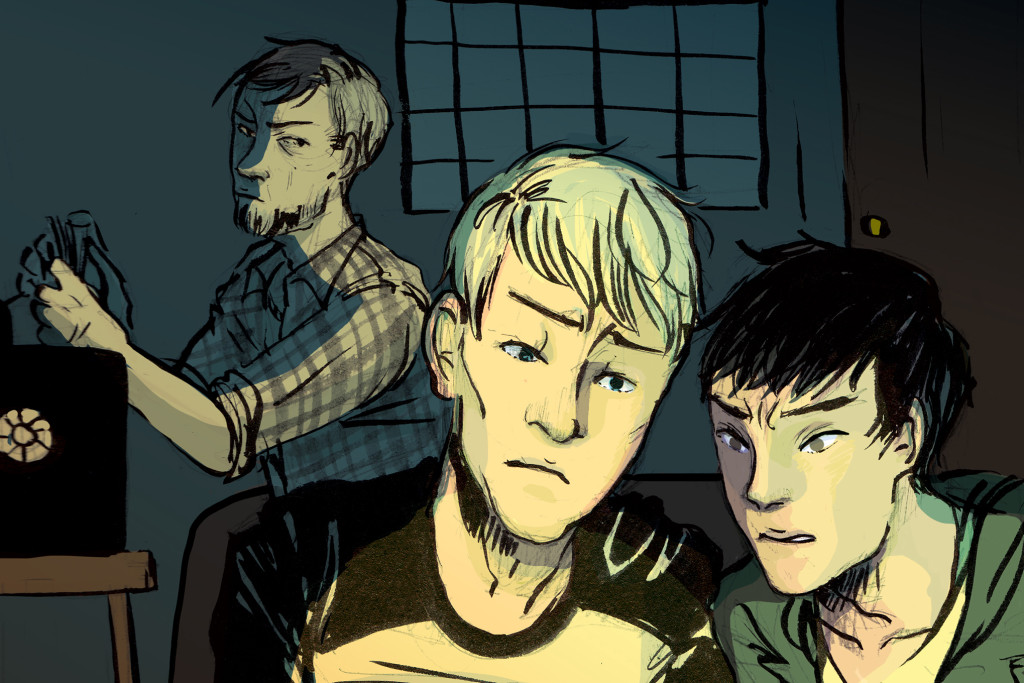
Through the hoots and jeers of the crowd laughing at the drenched rats running around, my initial success quickly faded. Some of the crowd accepted my defense as a challenge and began throwing everything that wasn’t tied down at me and the building. They wisely kept their distance from my hose; rushing up to throw some object and quickly retreating. I was willing to play this game as long as I could but after a couple of hours the cold was quickly affecting me, too. Everything was numb. Peering over the wall, I observed one particularly defiant soul push through the crowd and walk right up to the front of the building. Rising up to drench the bold rat, I was greeted with a steady cadence of pops ringing out from his pistol. “F#*k me!” I screamed, as I dove behind the knee wall. I wasn’t about to randomly shoot back into a crowd, and the roof was no longer a safe option. Checkmate. I needed to get inside and work my way back to the security counter.
Climbing down the access ladder I could hear more shots zipping through the security screen. Reaching the counter, my two wide-eyed employees opened the door and let me in.
“Damn, dude! They’re shooting at us!” Damon screamed.
“Thank you, Captain Obvious!” I shouted back. “Call the police again. Let them know were getting shot at!”
Looking up, I immediately saw my investment in the security counter had paid off. Two shots had randomly hit the security glass, and one would have injured someone had the glass not stopped it. Meanwhile, Damon had miraculously reached a live voice and was conveying our situation. Then, he shook his head as he put his phone away: “I got through, but the operator said everyone was getting shot at and they would send someone as soon as they could.”
“Well, as long as we stay in this box,” I said, “we’ll be OK.” At that exact moment, Rick pointed to the camera covering the back of the store and yelled, “Who the hell is that?!”
Four men with rifles jumped out of the SUV and moved toward the back door. I pulled my Glock from its holster. “They are not getting inside this store,” I said. “Damon, call the cops again, tell them there’s about to be a gunfight!” I moved to the back of the store and took up a position to engage anyone who forced their way through the back door. Suddenly, the back door erupted with banging sounds. I raised the Glock ready to shoot should the door break loose. Over the sound of the banging I heard voices arguing, but then I recognized one. “Dad!! It’s Jacob! Open the door!” My son and some of his friends had arrived.
I had never been so happy to see my son (well, except maybe on the day he was born). We all piled into the SUV and left the store. The four-wheel drive handled the snowy roads just as easily as the four rifles would have handled any predators looking for an easy meal. Thanks to the quick thinking of my son, we all made it home safe. Several days later, the riots finally ended and relative calm returned to the area. The store had been ransacked and set on fire — it was a total loss. Insurance covered most of my losses, but I choose not to rebuild. Retiring to the country seemed a more appealing option.
Survival Expert: Tim MacWelch’s Approach
As the looters tore and kicked at the metal security screen, yelling like animals, the real danger of the event began to sink into my mind. If those people broke through the barricade, they would destroy my livelihood — and they might beat me to death just for kicks. And if I tried to slip out the back, I’d be out there in the midst of them.
And I wasn’t just worried about myself. My two employees are young enough to be my sons. Their safety was my responsibility, too. Staying off the streets would be the smartest thing to do, if only I weren’t sitting in a prime target for looting. Watching the news broadcasts didn’t help. They described the mayhem on the streets — my streets, my hometown. Aerial footage from news helicopters showed thousands of people in the streets. Vehicles and buildings had been lit on fire. One piece of footage showed a man being beaten by a group.
Another attempt to use my cellphone and the landline proved fruitless. All of the phone lines were jammed. The news said that buses, taxis, and the Detroit People Mover light rail system had been suspended. We had no way out of the neighborhood, except on foot.
My home in the suburbs would be unreachable, but I had a rough idea of where my employees lived. Both lived on the outskirts of downtown. After a quick discussion, I found out that the youngest man, Rick, lived closest to the store, about 15 blocks away — but on the other side of the riot’s epicenter. There was no way I’d risk our lives on that trek. The other worker, Damon, lived 22 blocks away from the store, but away from the main rioting. We agreed that we’d head there, or at least try to.
After stuffing the store’s cash into my wallet and jacket pockets, I loaded up our only backpack with snacks, drinks, and a box cutter. Then I faced the back door. Scared of what might be on the other side, I pressed my ear against the door and listened for a few moments. As quietly as possible, I unlocked the door and opened it a crack. The alley was dark already, even though sunset had not quite come. I saw some movement by the alley opening, so I ducked back inside to wait. The air was cold and raw with the snow flurries falling. None of us were dressed for a long walk in the open.
After another peek down the alley showed that the way was clear, we exited and locked the two deadbolts on the dirty metal door. The young men agreed to stick with me, as they seemed almost as frightened as I was. Nearing the first open street, I took a deep breath and plunged into the stream of foot traffic. Some people had bandanas and scarves covering their faces. These, I suspected, were up to no good. Other people were laughing and joking, reveling as if this were a tailgate party at a Red Wings game. Then a few other people scurried by with frightened expressions and quick movements. And no sooner than I began to think that they should probably play it cool, a terrified woman got socked in the face by a girl and her boyfriend. The couple kicked off a “boot party” on the poor woman before running away with her purse.
Should we help her? I asked myself. Not with a grand in cash stuffed in my pockets and two scared guys expecting me to get them out alive, my conscience shouted back.
I pulled my boys close and whispered, “Don’t look afraid. We have to blend in.” Damon nodded and pulled the front of his undershirt up to his nose, covering his face. Rick followed suit, popping his jacket’s collar and zipping it up all the way past his mouth. In that moment, I had hope that this charade might just work.
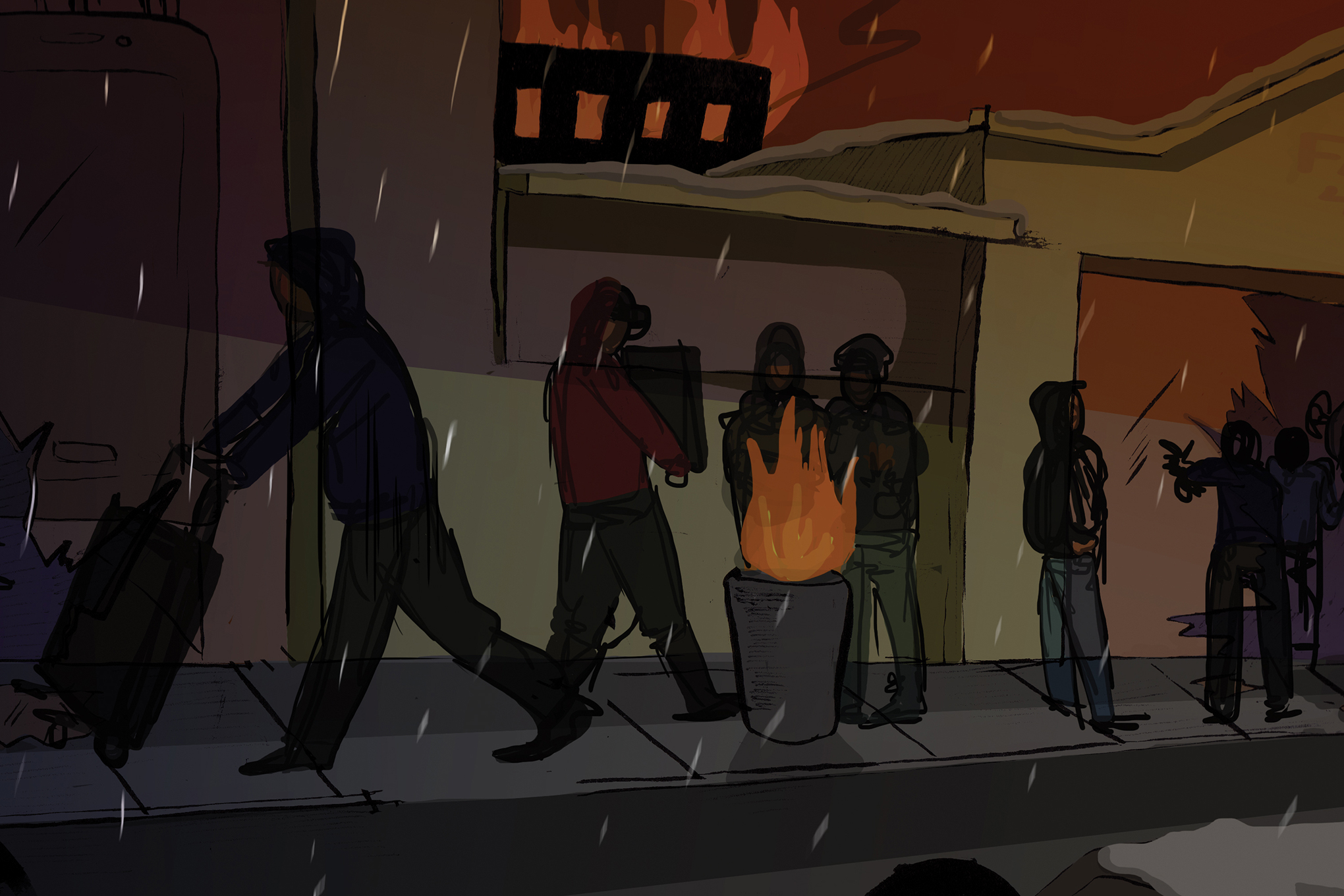
The wind began to pick up and the snow fell a little harder, though this didn’t dampen the rioter’s parade. As we threaded the crowds, block by block, I witnessed trashcans hurled through windows, small cars being flipped over, and fires being lit everywhere. My nerves were beginning to wear down, and I needed this to be over. As our trio turned a corner, halfway to the safe haven of Damon’s apartment, I walked right into a huge muscular man who was stinking of liquor. Startled, we all stopped. He was lightly dressed, despite the cold and his knuckles were dripping blood.
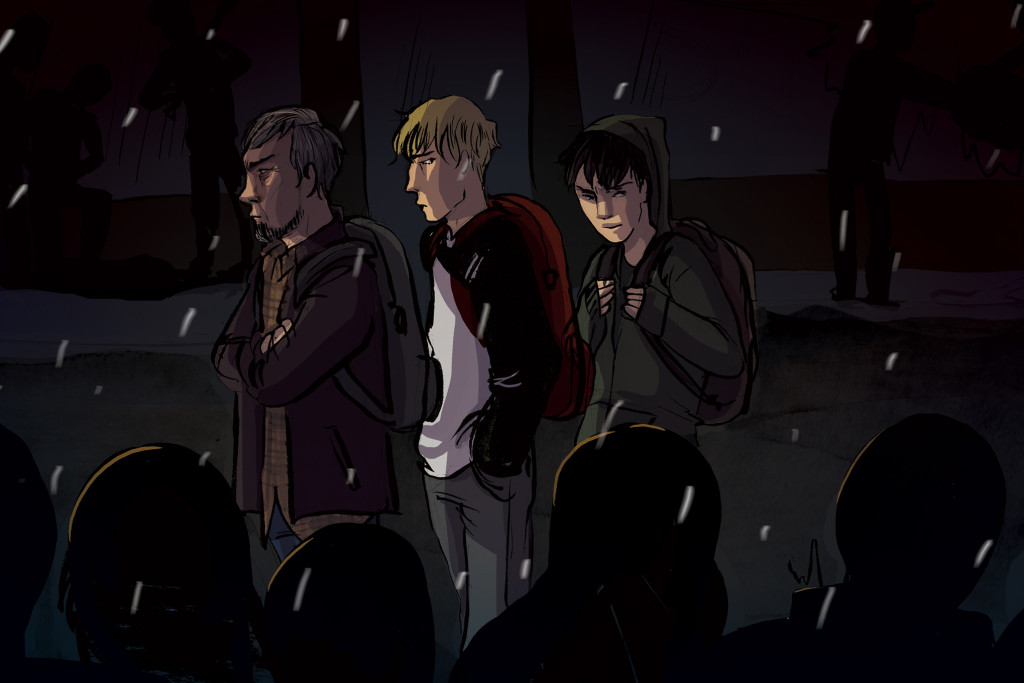
“What do think about that verdict, man?” he asked. Realizing there was only one right answer, I shouted, “It’s bullshit! Those courts are out to get everybody! I can’t even believe it. I just can’t believe it.” The big man simply grunted and headed off with a slight stagger. Another test barely passed.
Another block passed, and soon the crowds started to thin. But we weren’t out of danger yet. Thugs still roamed the streets, looking for easy targets and potential victims. And all three of us were bitterly cold. Frostbite was a serious concern now. But eight blocks more, and we’d be at Damon’s apartment. As I plodded forward, we drew near to something I hadn’t thought of before — a hotel. It’d be the perfect place to hide out until the looting subsided. There were two hotels between my shop and the apartment. Since the lobby of the first one was on fire, the second would have to be our refuge. This hotel was undamaged, and I had plenty of cash to pay for a room.
“This might just be your lucky day after all,” I said to my boys as I pulled the hotel’s door handle. But it didn’t budge. I grabbed it with both hands and yanked hard. It wasn’t frozen shut, it was locked. My hope began to dissolve. I knocked on the large glass window, but there was no one inside. I banged on the glass harder, and suddenly a squad of buff men in nice suits entered the lobby from a side office. Each one with a coiled radio earpiece in his ear and a pistol in his hand. They must be hotel security. Then I realized how it all looked: Three men were at the door during a riot, two with their faces covered, banging on the front entrance. I wouldn’t have let them in either. So much for the hotel idea.
We resumed our tense trek, passing burning cars and drug-idled looters. It seemed like our frozen odyssey would never end. For morale, I handed out some of the snacks and drinks. Though the drinks were now basically slushies or outright ice, the rock-hard granola bars were edible and did seem to give my boys some energy. “Only three blocks left,” Damon said.
The snowfall started to diminish when I turned the corner and saw the most beautiful sight that entire day: an immense line of police officers, dozens deep. In fact, hundreds of officers in riot gear. Some were on horseback, in vehicles, on motorcycles, but most were on foot and preparing to march.
A queasy feeling gripped my stomach. We’d already been mistaken for looters and slipped past a whole army of them for a better part of the evening. Would the police think that of us also? Would they even let us pass? Our trio continued up the sidewalk, as if the police were not even there. But as we drew near to them, several officers stopped us. They asked for ID and to look in my backpack. I explained our ordeal and our destination. I silently thanked God that Damon had his driver’s license with his address, legitimizing our nearby destination. Fortunately, the orders were given for the officers to advance, and they decided to let us pass, mainly because they had more important things to do. I nodded, thanking them, and let out a huge sigh of relief as we slipped past the officers.
After two more blocks, we’d finally made it to Damon’s apartment. He practically sprinted to the thermostat and turned up the heater. The warm air felt like fire against our frostbitten faces. Damon offered me and Rick a couple of beers from the fridge. Sure, my drink was cold, but I needed it. After hours of raw nerves, frigid temperatures, and braving the horde of looters, I finally felt that we were safe.
Conclusion
A riot is a scary, yet survivable, event. The first and most important step is to stay informed of the situation as early as possible. The TV, radio, and Internet can provide some news, but they’ll be biased and not necessarily up to date. Social media can sometimes provide local info, but they’re even less reliable for accuracy. Try to discover where the disturbance is located and why it’s happening.
Then communicate your situation frequently with your loved ones while the grid’s still up. Tell them where you are and what you plan to do. That way, if you lose contact, they’ll have a general sense of where to look for you when it’s safe.
Once critical mass has been reached for a riot to form, one way to stay safe from a roaming mob is to hunker down and avoid the streets — unless you’re in a position like our story’s shopkeeper, trapped in a looter’s paradise. While firearms, surveillance cameras, security curtains, and bullet-resistant glass can provide added safety, they can’t be relied upon as the only solution against a legion of marauders.
This brings us to the other method to survive civil unrest: blend into the crowd. Whatever topic sparked the rioters, yell what they yell, chant what they chant, and say what they want to hear. One thing always holds true: the bigger the crowd, the lower the IQ of the mob mentality. If you find yourself in the middle of a riot, try to make your way to the edges and away from the crowd. But as you make your escape, be very careful not to get pushed up against a wall or fence. You could be crushed by the press of people. Seek a safe haven to hole up until the crowd disbands, and if you hear nearby breaking glass or smell smoke, move to a new hiding spot.
How would you react to the same scenario as played out by our panel? Share your plan with us on our Facebook page: www.facebook.com/OFFGRIDmag.