The history of Italy is irreversibly linked with volcanoes. Two thousand years ago, the eruption of Mount Vesuvius on the central coast of Italy annihilated the city of Pompeii, leaving victims’ bodies frozen in ash. In fact, the word volcano is derived from Vulcan, the Roman god of fire. These connections are unsurprising, since the country sits atop a literal hotbed of volcanic activity.
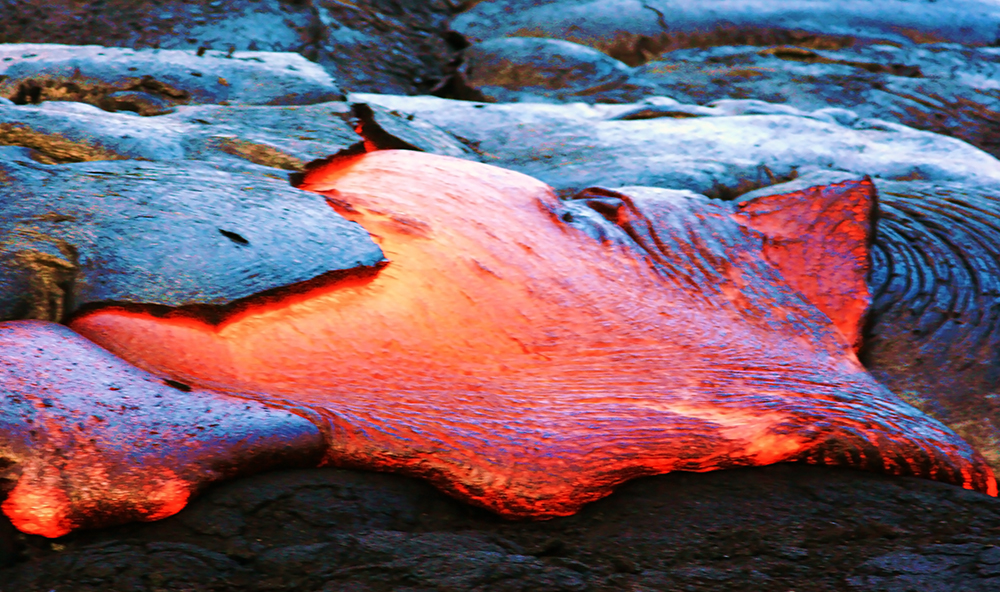
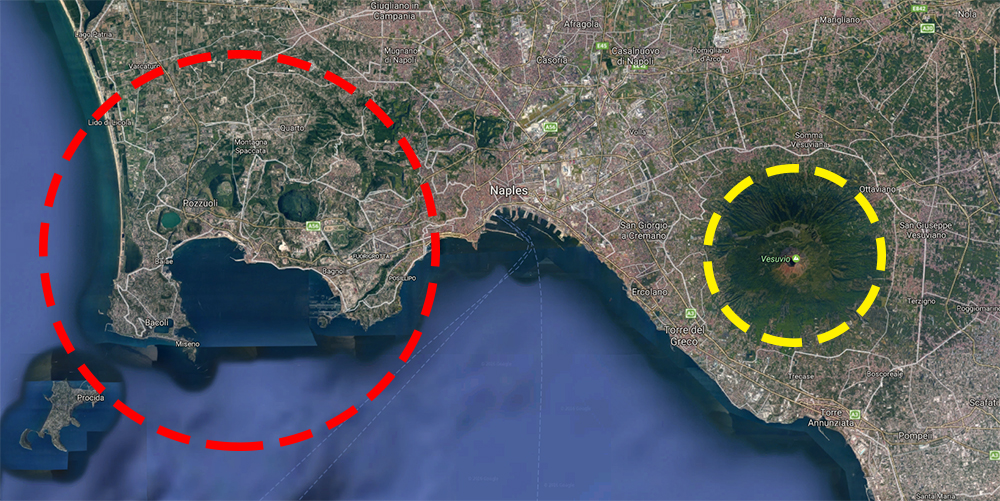
Left: The Campi Flegrei volcanic network. Right: Mount Vesuvius, the volcano which destroyed Pompeii.
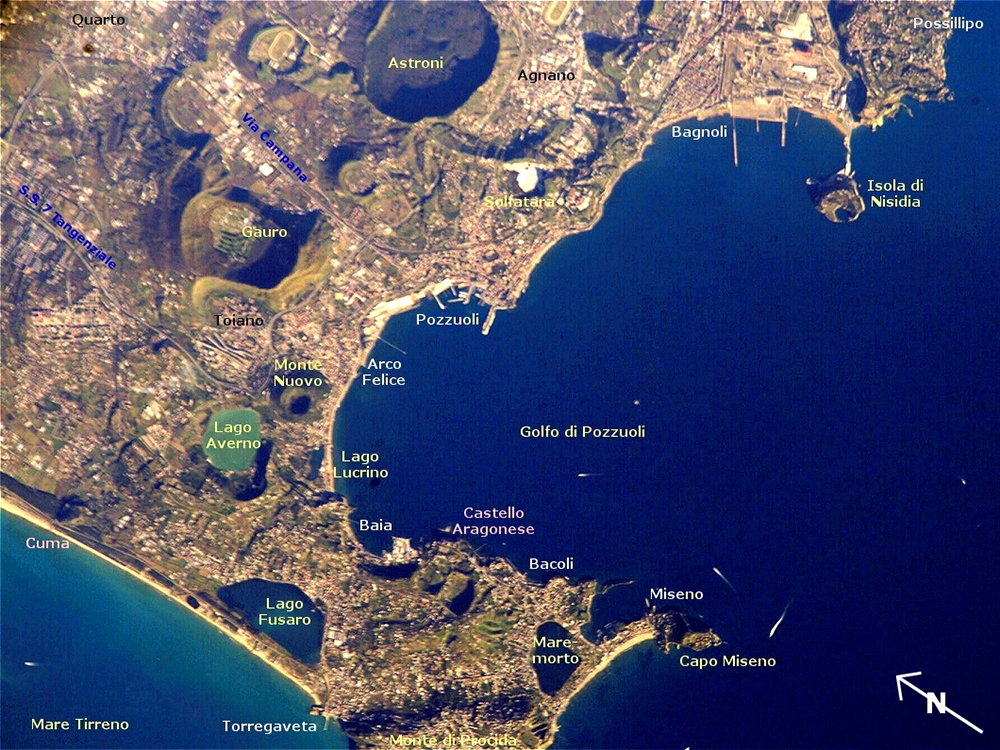
One large portion of this ancient volcanic network is known as Campi Flegrei, which roughly translates to “the burning fields”. The region consists of 24 individual craters, plus various geysers and vents, many of which are undersea. The largest concern of all is its location: Campi Flegrei is situated to the west of Naples, Italy, one of the top ten most densely-populated cities in Europe. Approximately 3.1 million people live in the Naples metropolitan area.
A photo from the International Space Station shows the features of Campi Flegrei. Source: NASA / Wikipedia
This Italian supervolcano has been laying relatively dormant for the last few centuries, but a scientific study published in Nature Communications journal last month indicates that it may be reawakening. In fact, the title of this study presents a worrying conclusion: “Magmas Near the Critical Degassing Pressure Drive Volcanic Unrest Towards a Critical State”. The study’s abstract clarifies why this is happening:
“At the [Critical Degassing Pressure] CDP, the abrupt and voluminous release of H2O-rich magmatic gases can heat hydrothermal fluids and rocks, triggering an accelerating deformation that can ultimately culminate in rock failure and eruption. We propose that magma could be approaching the CDP at Campi Flegrei, a volcano in the metropolitan area of Naples, one of the most densely inhabited areas in the world, and where accelerating deformation and heating are currently being observed.”
Artist Michael Wutky painted this depiction of fumaroles in Campi Flegrei circa 1780.
The last documented eruption at Campi Flegrei was in 1538, and lasted 8 days, creating a new mountain. Volcanologists admit that the timing of any eruption is impossible to predict, but the data indicates that it’s a distinct possibility in the near future. As a result, the Italian government has reportedly raised the supervolcano’s threat level from green to yellow, and accelerated geothermal monitoring.
Let’s play a quick game of word association. If we say the word glass, what’s the first word that comes to mind? We’d wager that things like “broken”, “smashed”, “shattered”, and “cracked” are all near the top of the list of words associated with glass. That’s understandable, as glass is one of the more brittle substances we handle on a daily basis. Drop a cup on the kitchen floor, and you’ll see what we mean.
However, glass doesn’t have to be fragile, and innovators in material science have developed new forms of glass that are far more resilient against scratches, cracks, and breakage. Gorilla Glass, developed by Corning, has been used to great effect on smartphone screens for many years. The latest fifth-generation Corning Gorilla Glass is incredibly strong, and works well to protect smartphones and other electronics. Adam Savage and Jamie Hyneman, former hosts of Mythbusters, explain how Gorilla Glass works in this video:
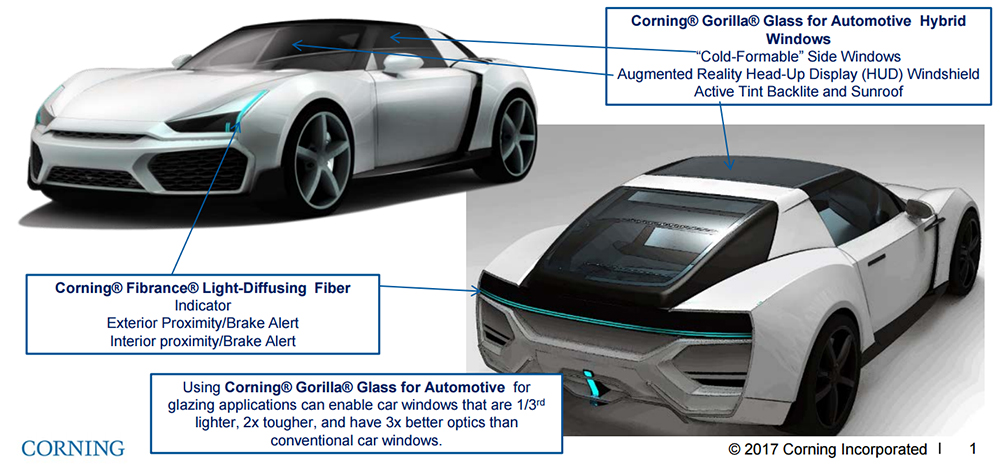
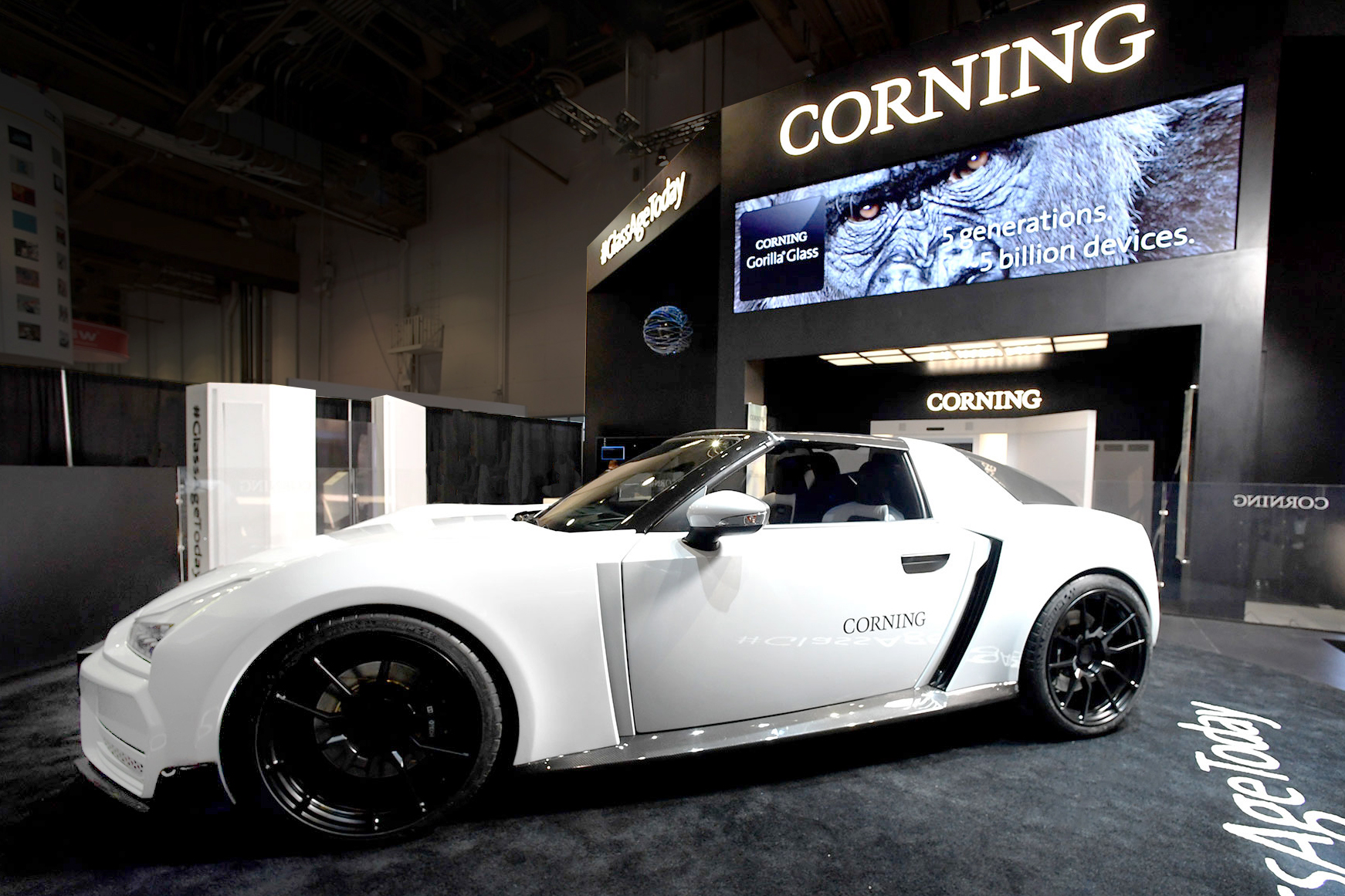
Recently, one of the experimental applications in the video above has become a reality: automotive Gorilla Glass. This high-tech laminated material was introduced officially at the 2017 Consumer Electronics Show (CES) last week.
Corning displayed a vehicle they call the Connected Car Prototype, with automotive Gorilla Glass built into the windshield, sun roof, rear window, and side windows. The glass on this prototype is also embedded with an Active Tint layer, which can be changed from crystal clear to almost opaque at the touch of a button. This allows the occupants to instantly tint the windows for improved privacy, and then clear them up for low-light visibility — the best of both worlds.
Aside from the very cool Active Tint feature, the big advantage of automotive Gorilla Glass is its strength. The company states that pound-for-pound, automotive Gorilla Glass is five times tougher than the standard soda lime glass found in car windows today. This has already seen a retail application in the new Ford GT supercar, and is being used in a thinner and lighter form, while still providing more impact-protection and clarity than standard glass.
While it seems that automakers will be using Gorilla Glass primarily as a weight-saving measure for added fuel efficiency, it’s conceivable that extra-thick Gorilla Glass could be installed to provide near-bulletproof levels of chip and crack protection.We’re excited to see how this new glass tech evolves as it makes its way into more production vehicles.
Few people on earth understand the importance of bulletproof materials better than the citizens of Colombia. This South American country has been rocked by decades of violence due to drug cartels (like the infamous Medellin cartel led by Pablo Escobar) and paramilitary groups. In 1992, this situation led Colombian college student Miguel Caballero to launch a line of fashion apparel with bulletproof properties.
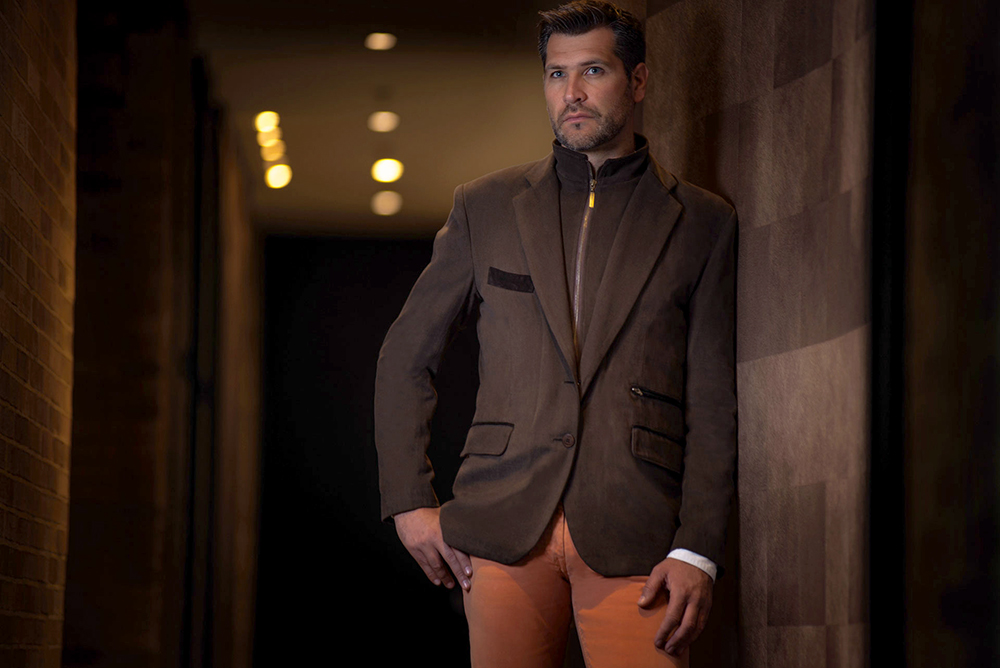
The Miguel Caballero Baeza Blazer may not look it, but it’s rated as NIJ Level II bulletproof.
The Miguel Caballero company grew rapidly, and is now a leading manufacturer of discreet protective clothing. Many world leaders and celebrities are known to wear Miguel Caballero apparel, including Steven Seagal, twelve unnamed country-leaders in Latin America, and even Barack Obama.
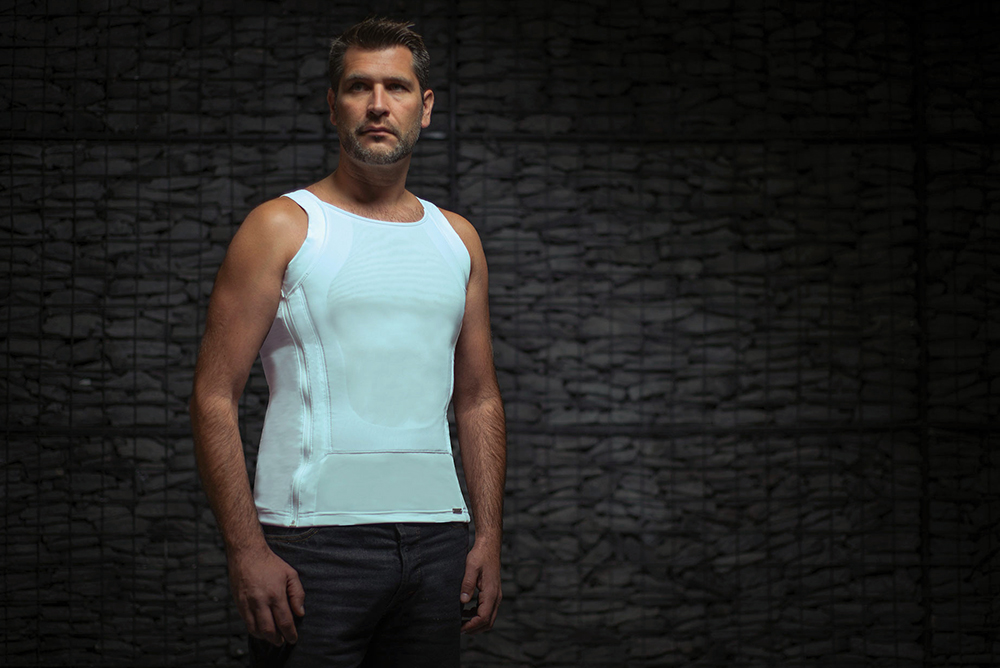
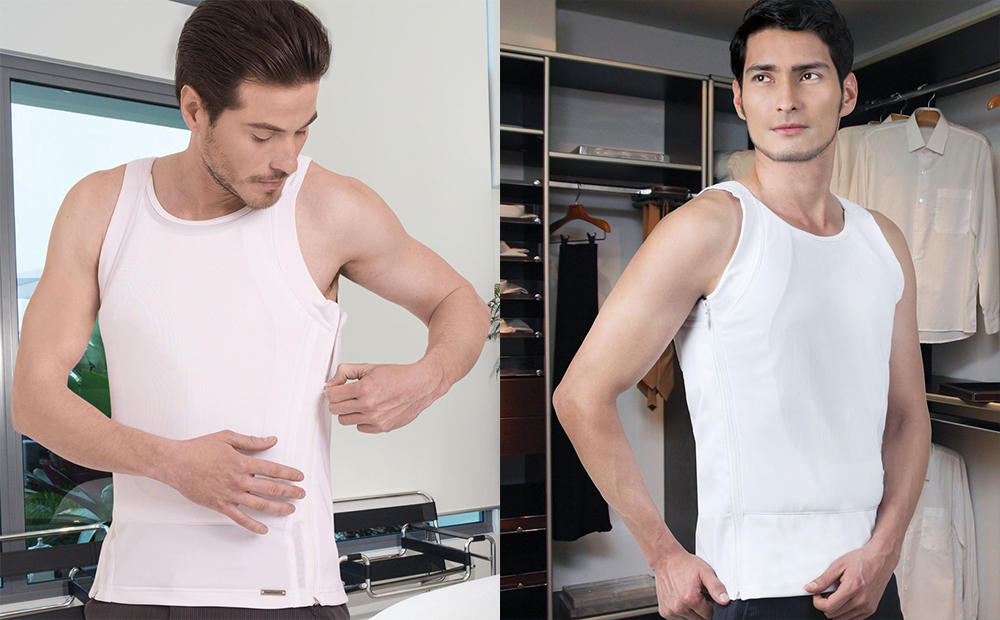
The Miguel Caballero Armor T-shirt recently received a Red Dot award for innovative Product Design.
Caballero himself isn’t shy about testing the bulletproof clothing on live subjects — according to a 2013 Bloomberg article, he has personally shot more than 650 people without inflicting serious injury. He even shot magician David Blaine at point-blank range with a .38 revolver:
In the video above, Blaine is wearing a product that has garnered Miguel Caballero significant attention recently: the Armor T-Shirt. This shirt won a 2016 Red Dot Product Design award in Germany, due to its high-tech and low-profile construction.
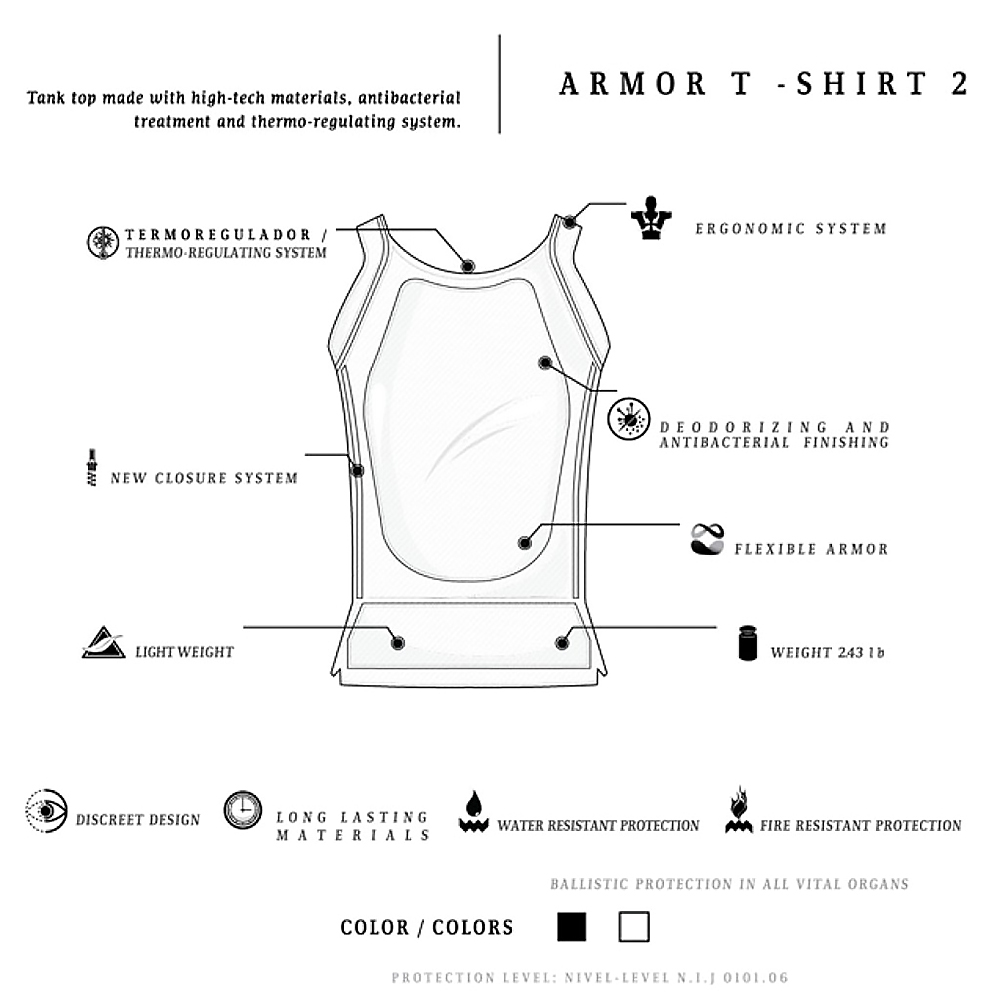
Despite weighing about two pounds (depending on size), the Armor T-Shirt is Level II certified by NIJ 0101.06, and can stop a .357 magnum round. It’s also moisture- and fire-resistant, and the Thermo-Regulating system is designed to keep the wearer cool and dry. Models are available for both men and women, in black or white fabric, and range in size from XS to XXXL.
Miguel Caballero’s latest Armor T-Shirt is certainly impressive, but that protection comes at a cost. It’s currently available at an MSRP of $1,540 USD. For more information, check out MiguelCaballero.com/en/.
Imagine grabbing a searing-hot pan straight out of the oven. The pain hits you in a split-second, and you jerk your hand away in shock, cursing under your breath as you run your fingers under cool water to soothe the throbbing. The skin becomes red and inflamed, and eventually forms a fluid-filled blister. Eventually, the blister will drain, and the wound will scab over. Permanent scarring may also occur. It’s an extremely unpleasant experience, to say the least.
Even young children quickly learn that heat equals pain. Damage from cold, however, is less obvious.
Most of us have been burned at one time or another, leading to an extra level of caution when dealing with extreme heat. However, many Americans are not adequately prepared for the severity of injuries that may occur at the opposite end of the temperature spectrum. Tissue and skin injury from extreme cold is known as frostbite, and its symptoms can be just as destructive as serious burns.
In fact, frostbite may pose an even more insidious threat, since its numbing chill lulls victims into a false sense of security. While it can cause tissue damage and blistering similar to a burn, frostbite won’t necessarily produce the instant pain response like our example of grabbing a hot pan. If you’re unprepared and unaware of the initial warning signs of frostbite, you or someone you know may fall victim to this dangerous condition this winter.
To adequately defend against frostbite, there are three key points to consider. First, we must diagnose the signs and symptoms of its onset. Second, we need to know how to treat frostbite, and alleviate the damage and pain it causes. Finally, we should prepare ourselves with the gear and mindset to prevent frostbite in the first place. Follow along as we address each of these points below.
Diagnosis
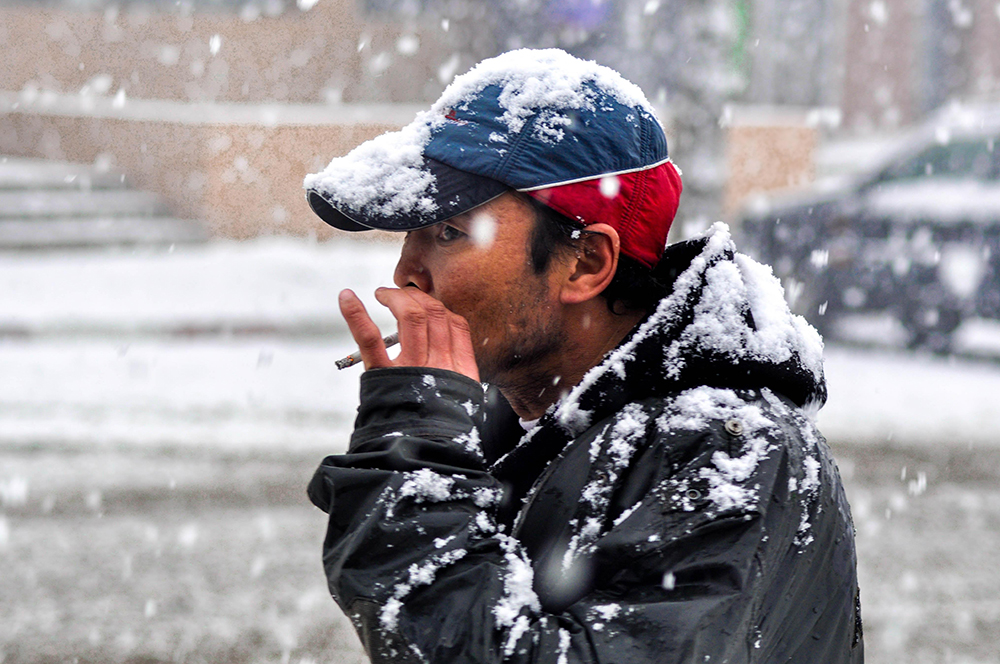
Use of alcohol, tobacco, or other drugs/medications can impair blood circulation, increasing the risk of frostbite.
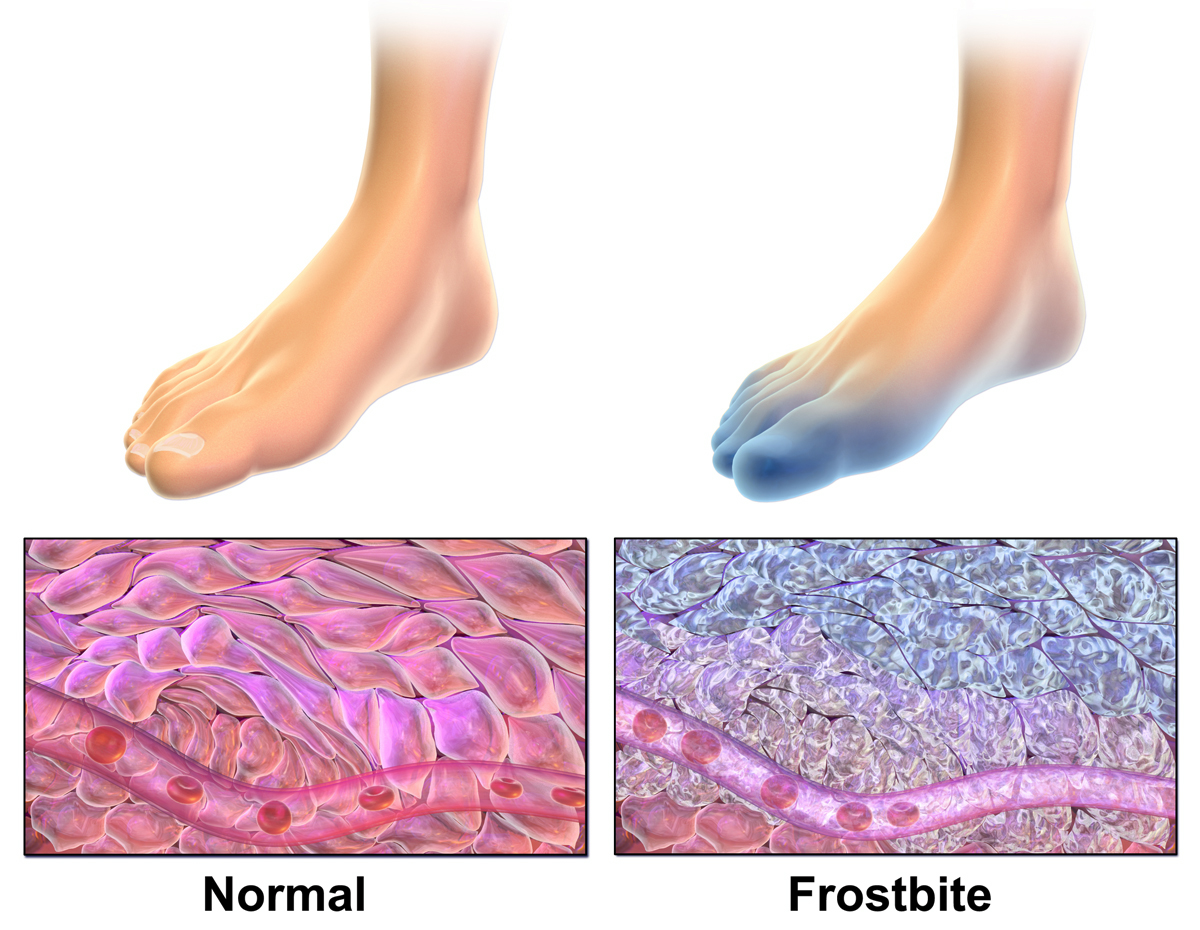
Frostbite is a direct byproduct of the human body’s natural reaction to extreme cold. In order to preserve its core temperature and protect the vital organs, the body forces blood vessels near the skin’s surface to constrict. This consolidates warm blood closer to the core, delaying the onset of hypothermia and keeping you alive. However, it also begins to starve your extremities of blood flow and warmth.
Frostbite constricts blood vessels, allowing tissue cells to freeze. Source: Wikipedia / BruceBlaus
“At first, the blood vessels alternate between narrowing and widening, to keep the extremities as warm as possible. But under extremely cold conditions, the vessels stop widening. When skin temperature drops low enough, ice crystals can form around and within the cells, freezing tissue and possibly rupturing cells. The lack of circulation that occurs when the body directs blood flow away from the extremities may also cause cell damage.”
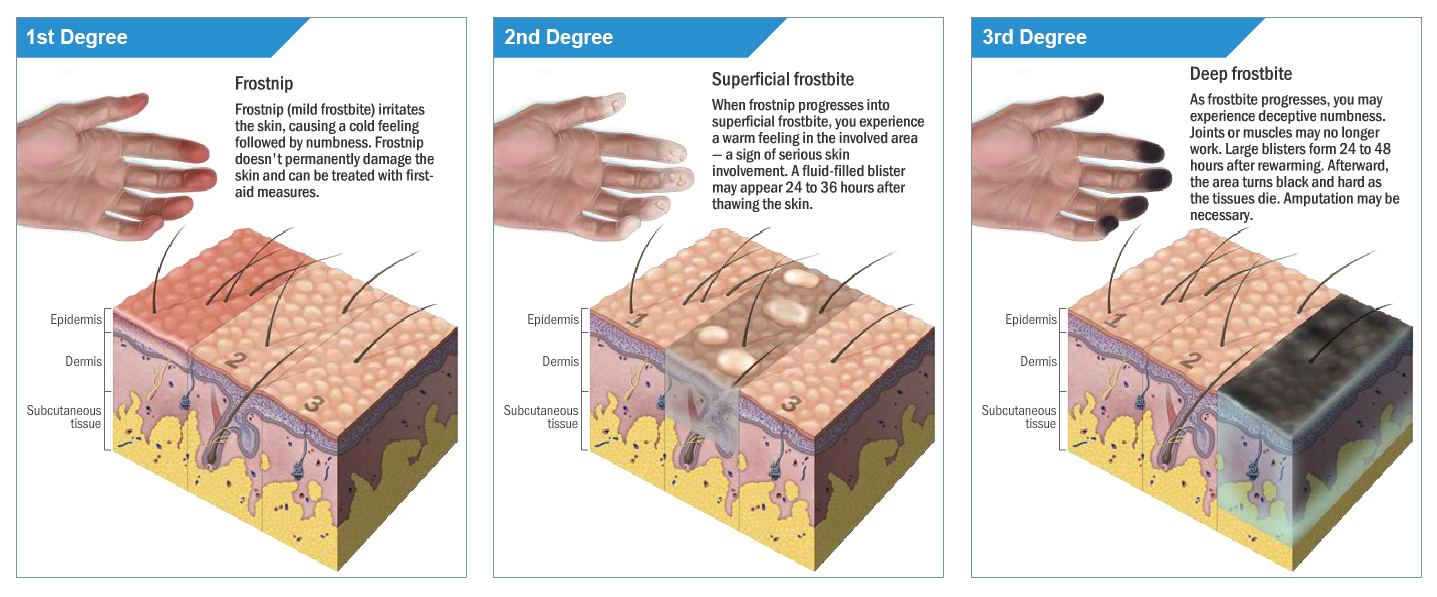
Illustrations of the three stages of frostbite. Source: The Mayo Clinic
Frostbite generally affects exposed skin and extremities, such as the fingers, toes, nose, cheeks, chin, and ears. Much like burns, frostbite has three levels of severity, known as degrees:
First Degree (Frostnip) – The outer layer of skin becomes irritated and begins to freeze, leading to a cold feeling and tingling pain. This soon leads to numbness, as well as a red or blotchy discolored appearance. Damage is usually not permanent at this stage.
Second Degree (Superficial) – Skin will begin to harden as it continues to freeze, but deeper tissue will remain relatively soft. A deceptive sensation of warmth may occur, causing victims to remain unaware of the damage that is occurring. Rewarming at this stage will turn skin blue or purple, and fluid-filled blisters will begin to form within a few days.
Third Degree (Severe) – Freezing will continue from the surface through the deeper tissue layers. Skin will feel very hard and waxy. The victim may lose all feeling in the area, as well as the use of affected joints or muscles as nerves are destroyed by the cold. Rewarming at this stage will result in large blisters, and the skin will turn black and hard. Surgery and/or amputation may be necessary.
Treatment
If the signs of frostbite are recognized, action should be taken immediately to prevent further damage. As you may have guessed, the key to treating frostbite is warmth. However, care must be taken to control the rewarming process, otherwise more damage can be done.
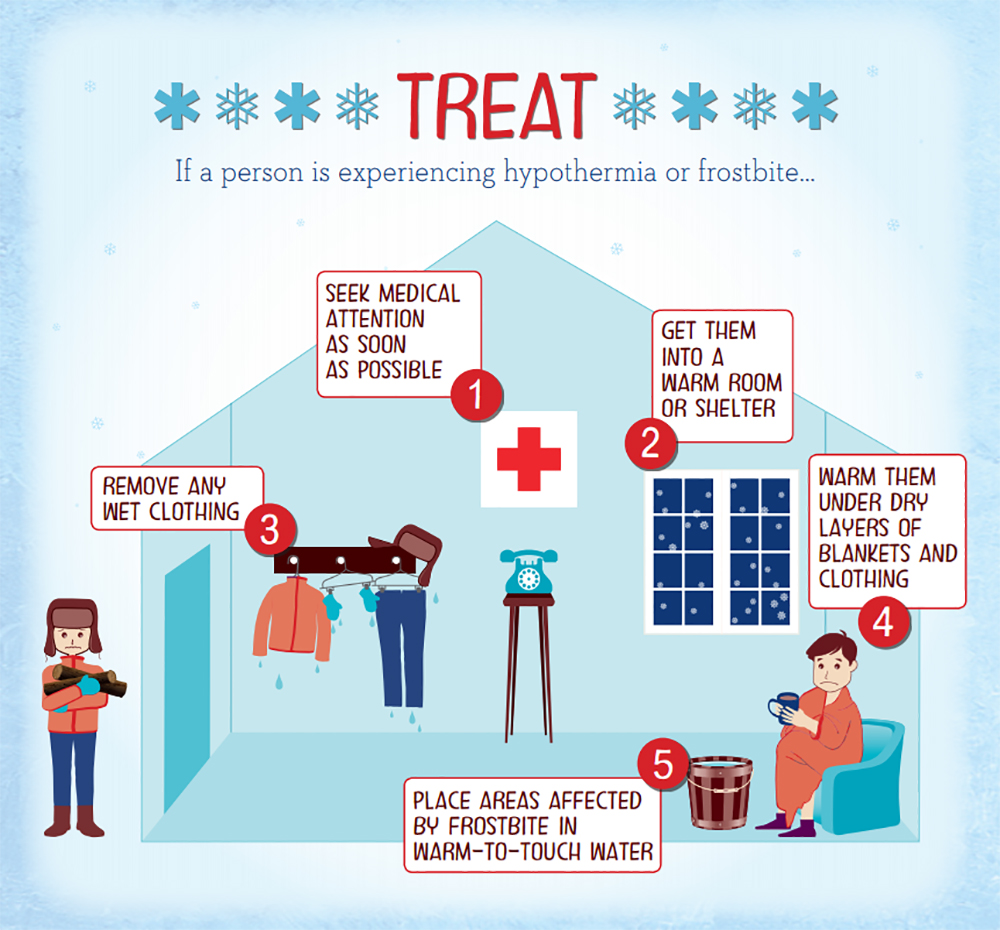
The following infographic from the Centers for Disease Control and Prevention (CDC) shows the general recommended steps for treatment of frostbite, which also apply to treating a low core temperature (hypothermia):
Get emergency medical help, if at all possible. Immediate treatment by medical professionals is always the best-case-scenario.
Protect skin from additional cold and exposure. Get to a warmer location ASAP.
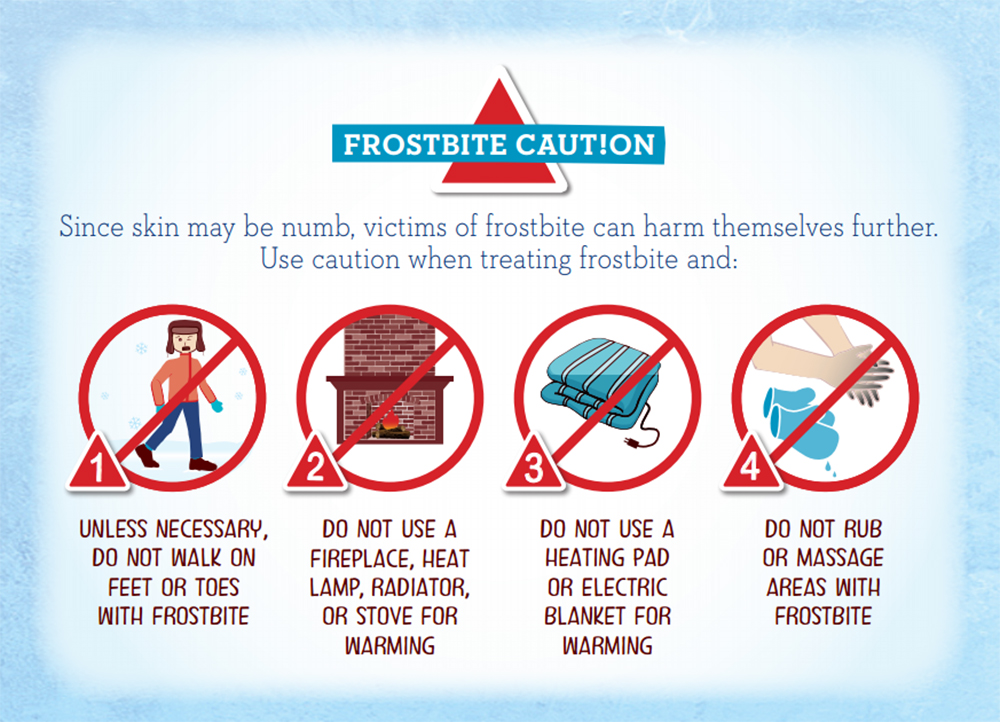
Avoid bending, stretching, or putting pressure on frostbitten skin. DO NOT rub or massage frostbitten skin, it will only cause more damage.
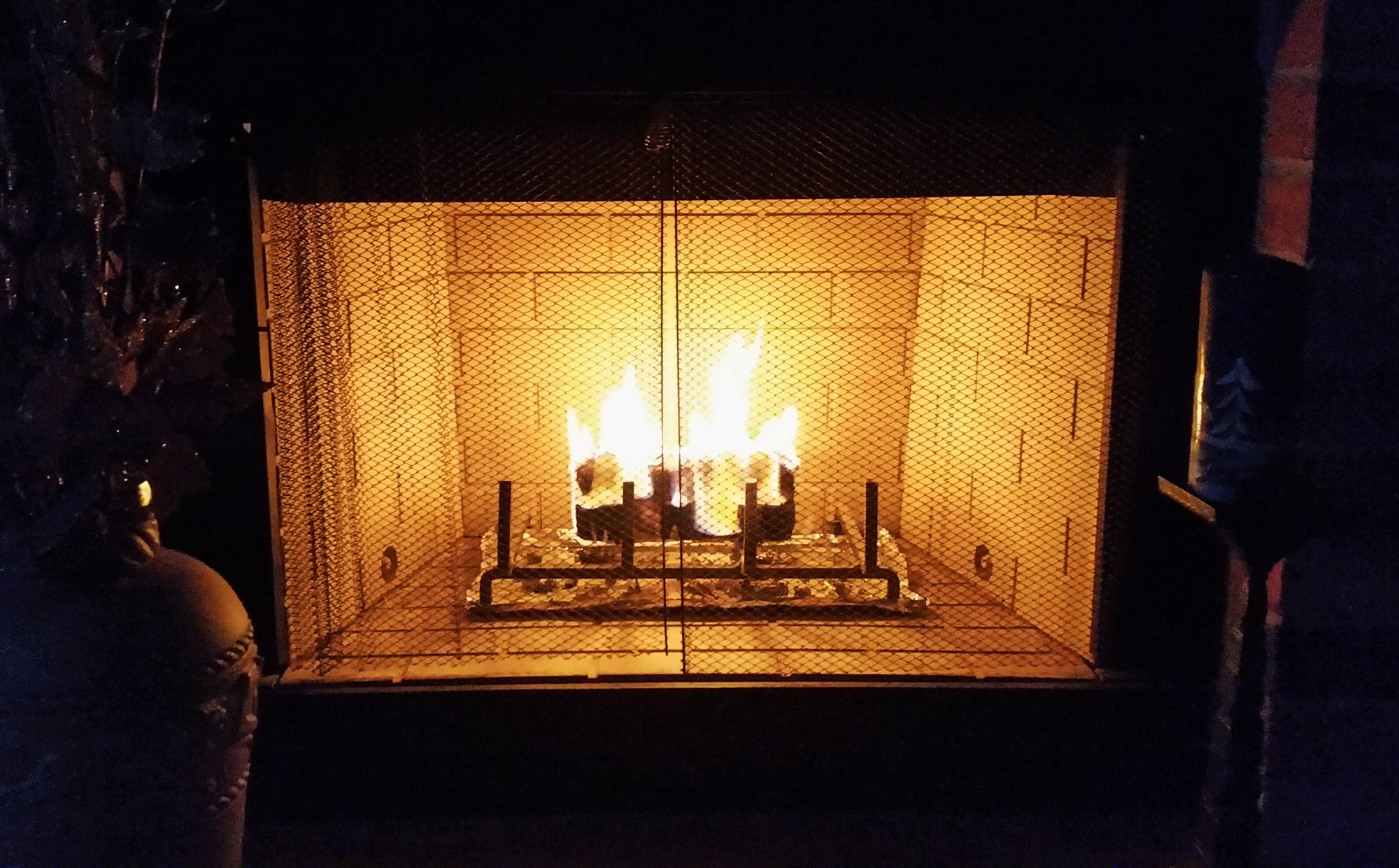
Use ambient temperature or warm water to treat frostbite, rather than direct heat from a fire.
Gently rewarm frostbitten areas by soaking in warm water (99F to 108F). Avoid using direct heat or open flames, as numbness can lead to overheating and burns.
If water is unavailable, use layers of clothing and body heat. For example, hold your hands under your armpits.
Don’t allow thawed skin to refreeze. This could make the damage far worse.
Tingling, burning, and redness will indicate that blood flow is returning. Ibuprofen pain medication can be used to reduce swelling and pain.
Again, these steps are not substitutes for proper medical care. If at all possible, see a doctor immediately if blisters occur, as they indicate second- or third-degree frostbite.
Prevention
It should be clear by now that frostbite is a truly miserable condition, so the best plan is to avoid it altogether. Simple preventative measures can go a long way to stave off frostbite, as well as the hypothermia that often follows:
Limit Exposure – If you’re outdoors in freezing conditions, frostbite is less a matter of “if” and more a matter of “when”. Take breaks to warm back up, rather than trying to tough out the cold.
Wear Warm Clothing – Mittens or gloves, moisture-wicking socks, ear muffs, a hat or face covering, and layered undergarments will keep you toasty and dry. Avoid apparel that fits too tightly, as it can restrict blood flow and put you at risk.
Food and Drinks – Consume warm food and beverages, and be sure to stay hydrated. Avoid alcohol — it may make you feel warm, but it will cause you to lose heat quickly.
Stay Active – Physical activity will dilate blood vessels and keep your blood flowing. However, be careful not to sweat excessively or exhaust yourself, as this will make the situation worse.
Watch for Warning Signs – Pay close attention for the warning signs listed above, even if you feel fine. Noticing frostbite early can help you treat it promptly and recover quickly.
For more information on frostbite how it relates to hypothermia, pick up RECOIL OFFGRID Issue 18, on sale January 27th, 2017. In the 411 column titled “Hypothermia Versus Frostbite”, John Schwartze compares and contrasts the warning signs of these two common winter medical conditions.
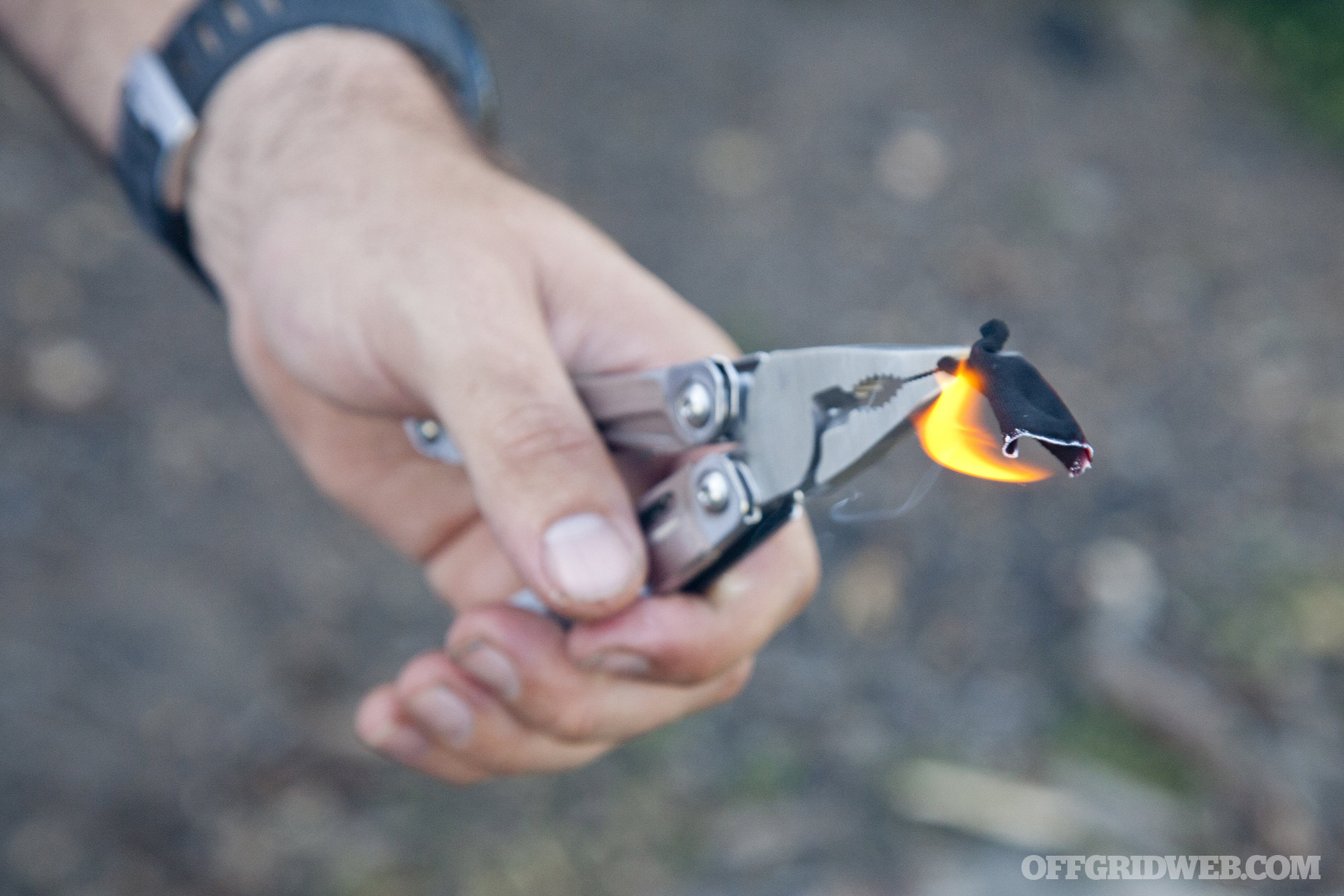
In the colder winter months, starting a fire reliably can spell the difference between life and death. This means that you’ll need a reliable ignition source, such as matches, a ferrocerium rod, or a lighter. It also means that you’ll need tinder that will take a flame quickly, and burn long enough to ignite the kindling wood. One excellent type of tinder for survival situations is known as char cloth — if you’re not familiar with it, check out our previous post on “How to Make Char Cloth Fire Starters”.
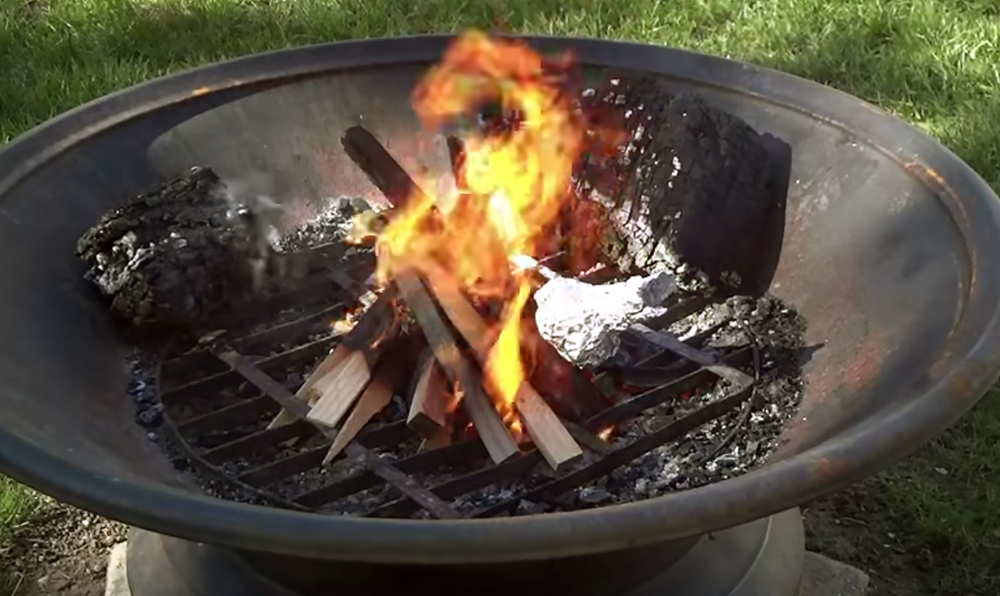
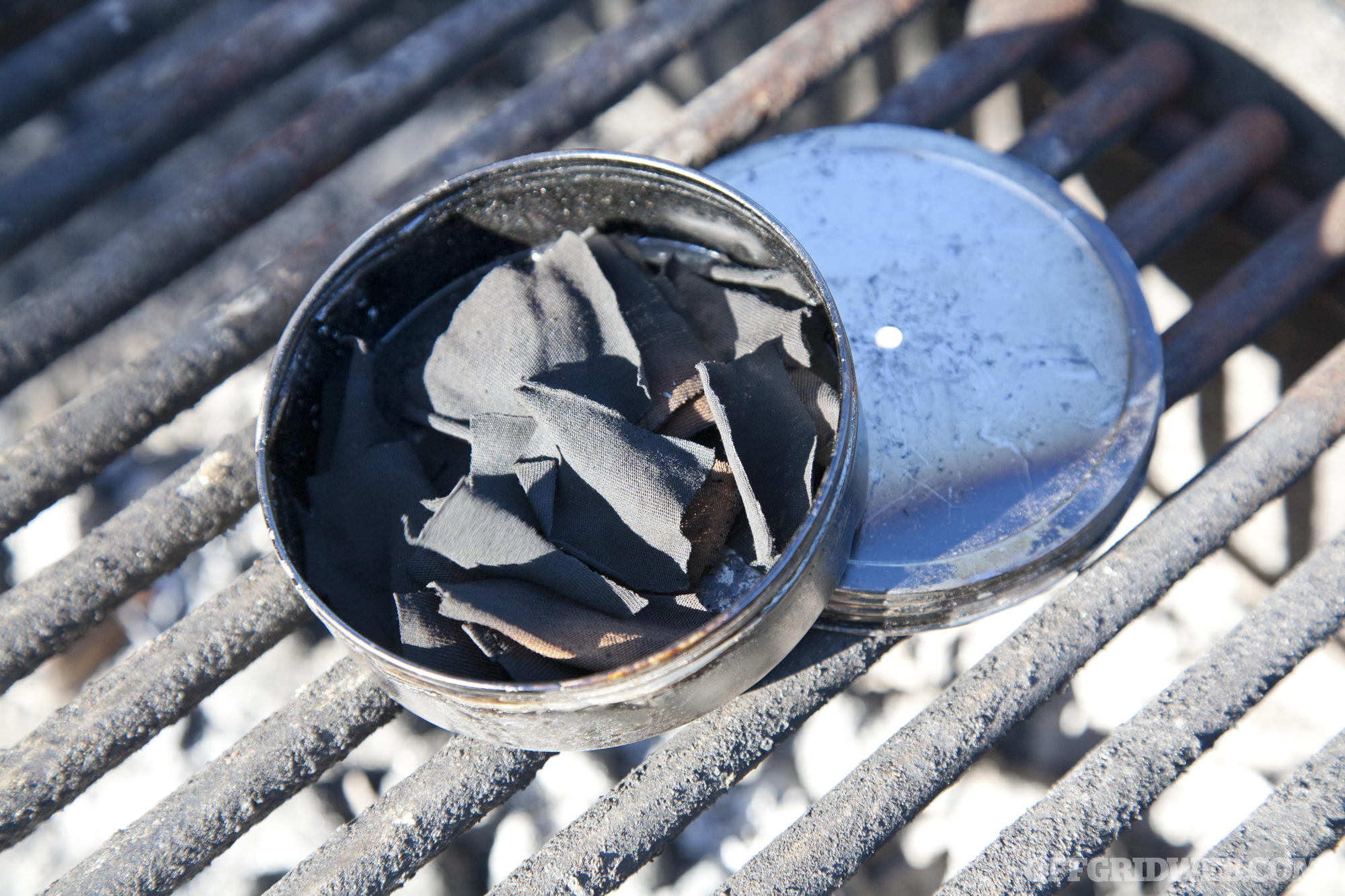
The traditional method for making char cloth involves a metal tin, typically with a small vent hole punctured in the top. The cotton or jute material is placed inside the tin, which is positioned near the base of the fire. Over the course of 10 to 15 minutes, the heat causes the cloth inside to blacken or char into a highly-volatile tinder material. This method works well, and we’ve used it many times.
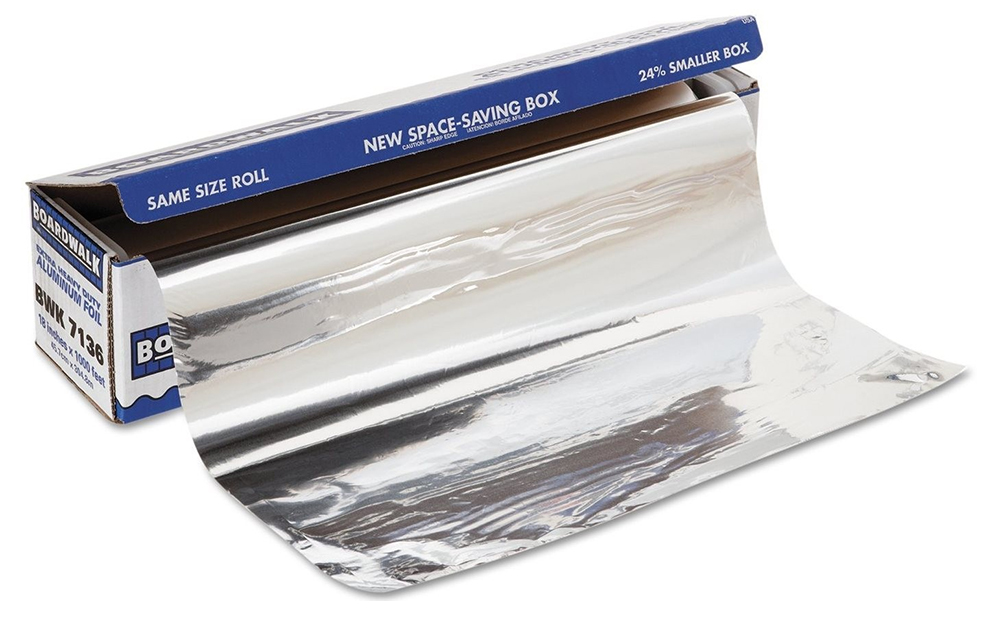
However, what happens if you don’t have access to a metal tin? Perhaps you have a tin but don’t want it punctured and covered in soot, or maybe you didn’t bring one with you in the first place. The following video from Sharp Works shows how to make char cloth in aluminum foil:
The biggest advantage to this technique is that aluminum foil is very lightweight and compact. Folded into a small square in your pack, it will take up far less room than a hard metal tin. Also, aluminum foil can be re-purposed into a container for cooking food or boiling water.
Ideally, you’ll want to find some commercial-grade heavy-duty or extra heavy-duty foil, as it will be slightly thicker than the ordinary kitchen variety. This will improve durability, and allow re-use of the same foil multiple times. Even if you don’t need it for char cloth, aluminum foil is a great tool to have.
Nighttime visibility is paramount to safety, whether you’re in a dimly-lit urban setting or a pitch-black forest. We’ve said before that we often recommend headlamps, as they enable the user to keep both hands free to manipulate tools, unfold maps, write notes, or use a self-defense weapon. However, during the cold and wet winter months, it’s important to consider the effect the elements will have on your electronics. The last thing you want is for your light to short out or malfunction in the rain or snow.
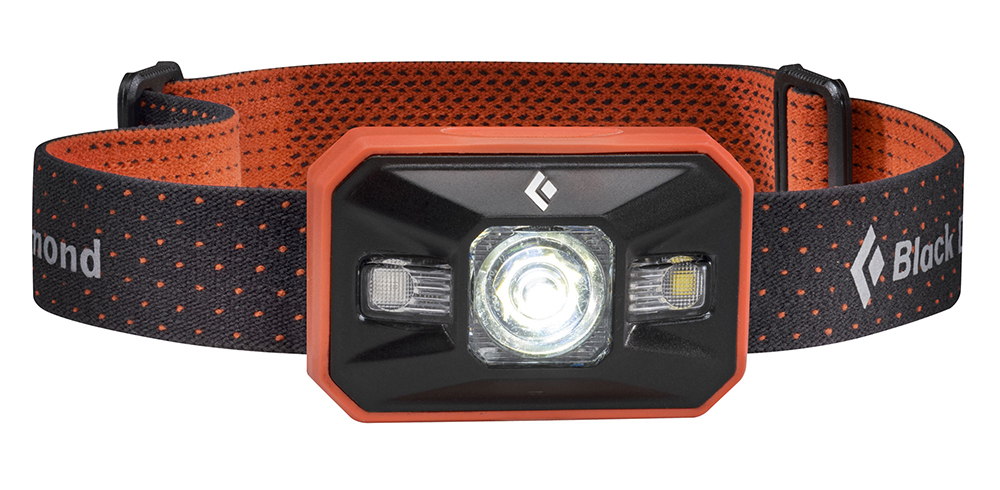
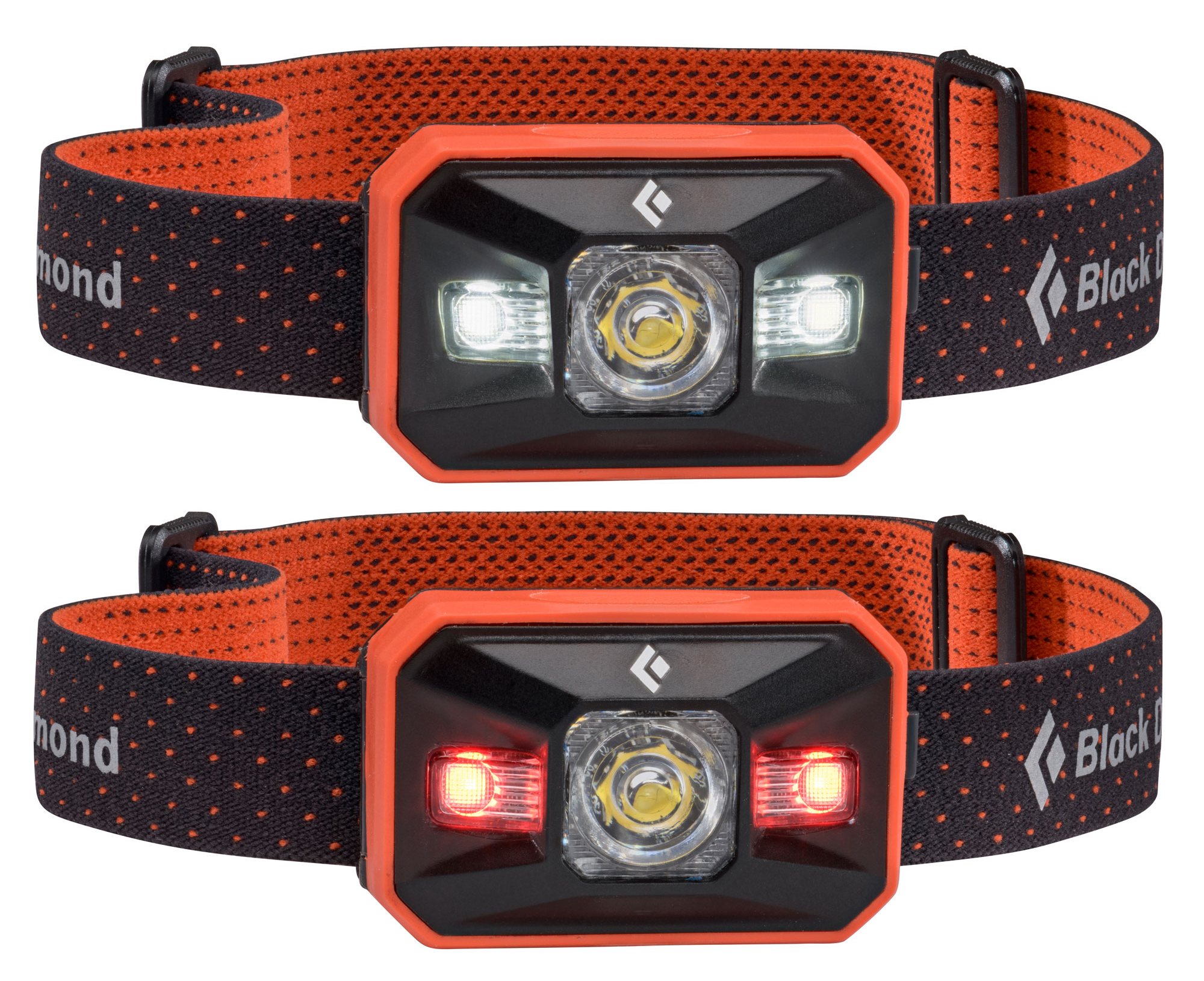
Black Diamond has addressed this problem with the release of the completely-redesigned Black Diamond Storm headlamp. This new light is rated at IP67, meaning it is sealed against dust and water. Specifically, the light has been tested and certified to withstand total immersion in 1 meter of water for 30 minutes. The company says it can even be used in saltwater, and requires no maintenance after submersion. It’s also resilient against a wide range of temperatures, from 0°F (-17°C) to 110°F (43°C).
The new Black Diamond Storm features a central LED cluster, which emits up to 250 lumens of clear white light. The light’s PowerTap controls allow the user to adjust quickly between full and dimmed power by tapping the side of the housing. Additional LEDs to the left and right of the central lens can produce red or green light for night vision, and offer dimming and strobe settings, as well as direct access without powering on the main white light.
Four AAA batteries power the Storm, and a three-level power indicator helps the user monitor power level. A built-in heatsink also keeps the batteries warm to preserve life and maintain functionality in cold environments. Total weight is only 3.9 ounces including batteries, and maximum run time is 250 hours in night vision mode (or 60 hours on full power).
The Black Diamond Storm headlamp is available at an MSRP of $50. For more information, visit BlackDiamondEquipment.com.
Many of us have considered stockpiling shelf-stable food for emergencies — items that won’t go bad for years, even if there’s no electricity to power a refrigerator or freezer. However, what about everyday life? Unless you’re living in an extremely remote area without a reliable power grid, or you just time-traveled here from the 1930s, you probably store your everyday food items in a fridge. So, it’s important to make the most of the food you use on a daily basis, including perishable items like dairy and fresh produce, rather than only considering emergency food storage.
Optimizing your home’s food storage — whether it’s the fridge, freezer, counter, or pantry — will have a dramatic effect on your life. Here are a few key benefits of rethinking your food storage system:
Quick access – Stop digging through disorganized leftovers to find the items you need.
Longer lifespan – Properly stored items won’t spoil as quickly, and you won’t end up with moldy science experiments in the back of your fridge.
Better taste – Fresh food tastes better and retains more nutrients.
Save on groceries – Less spoiled items means less wasted money and fewer trips to the store.
Help the planet – Tossing less food in the trash means less ends up in landfills, and more food is available for those who might otherwise go hungry.
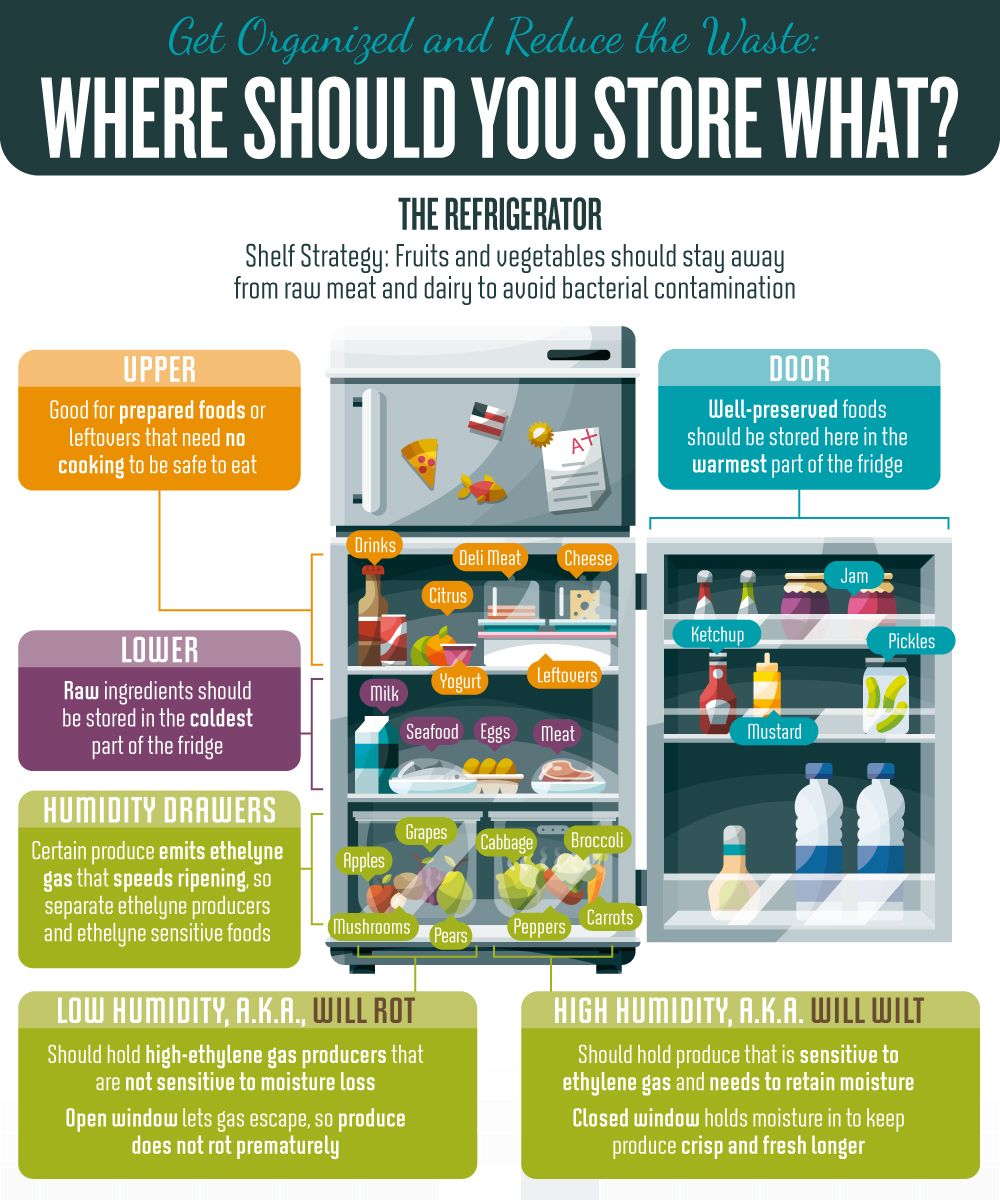
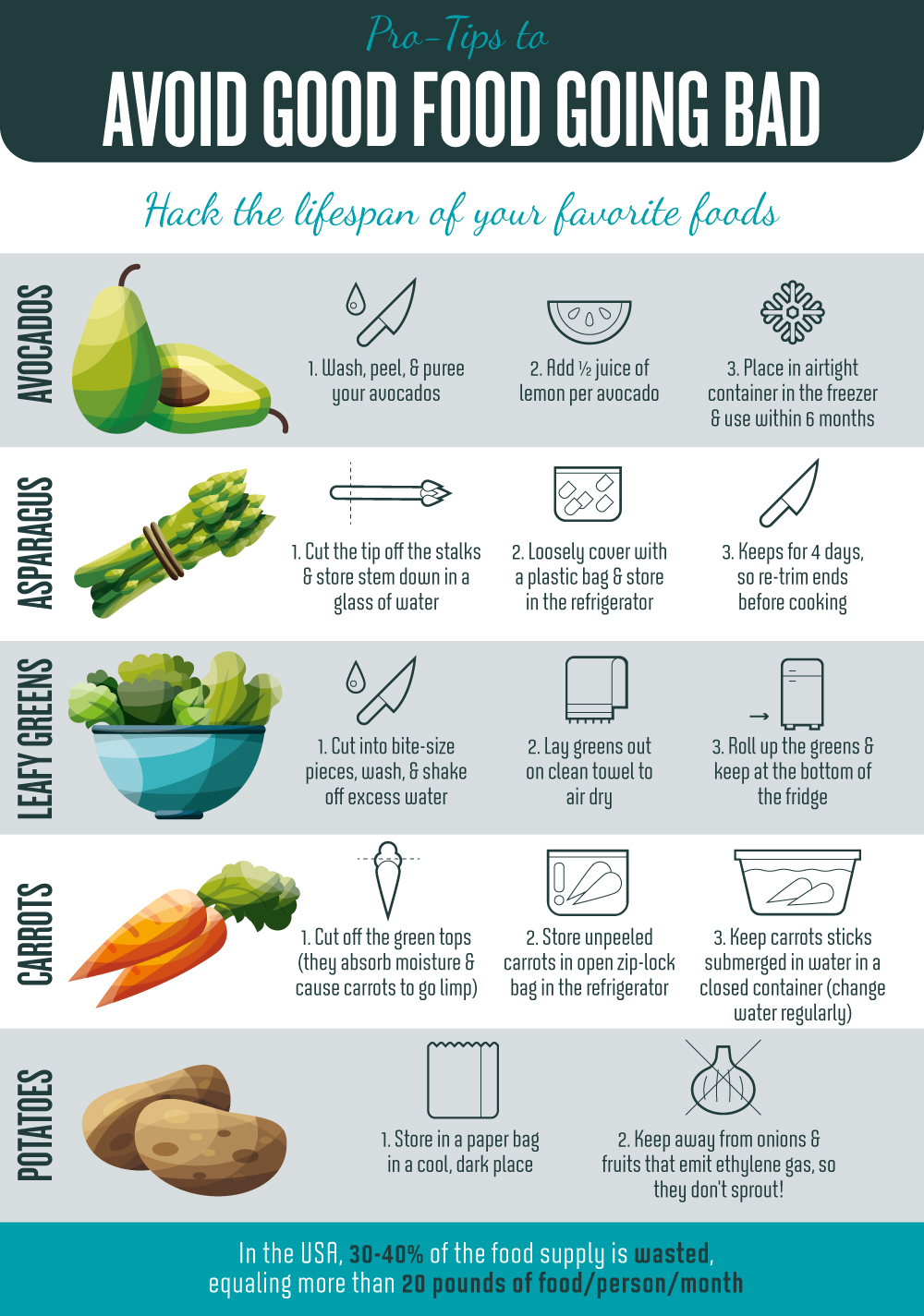
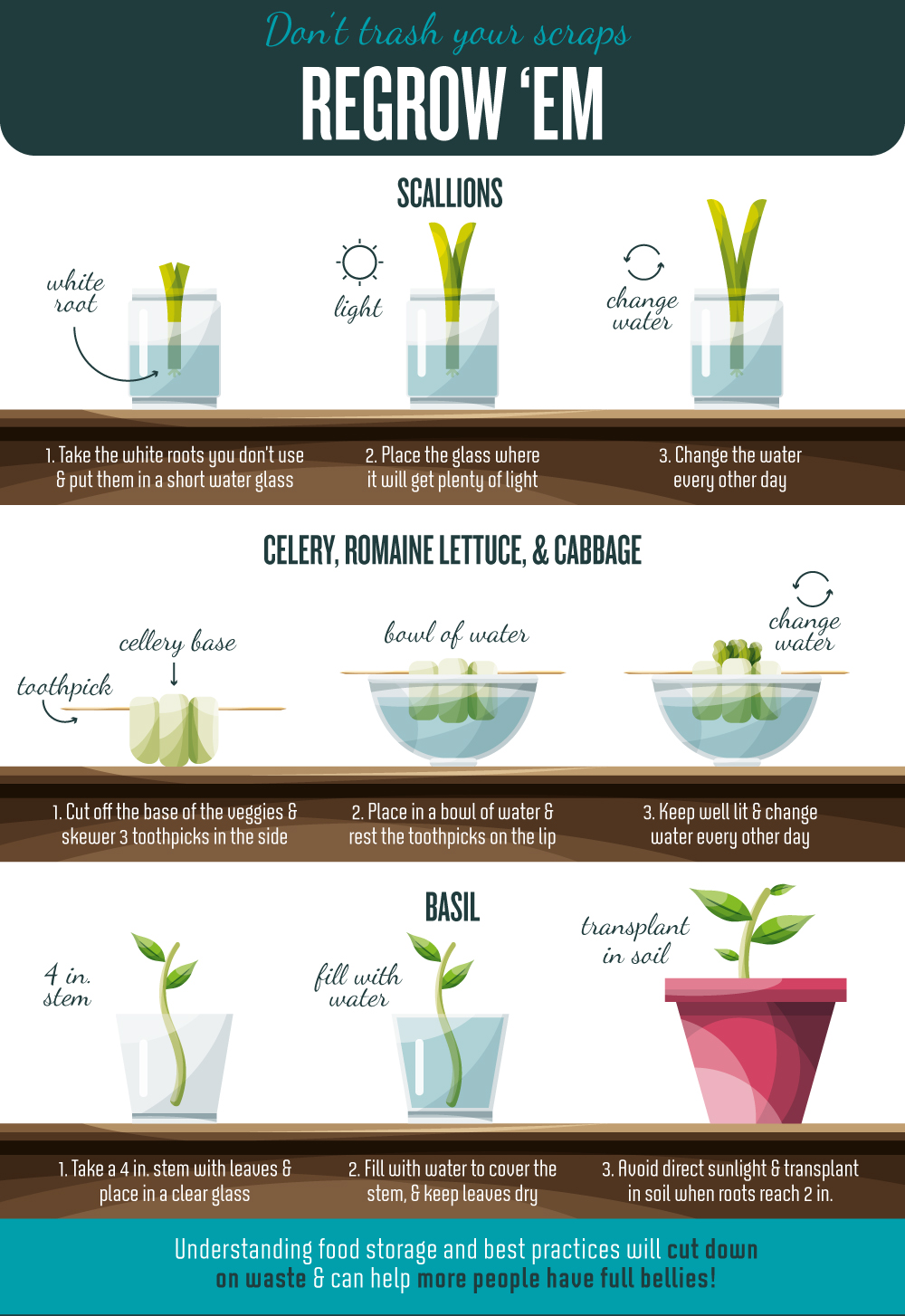
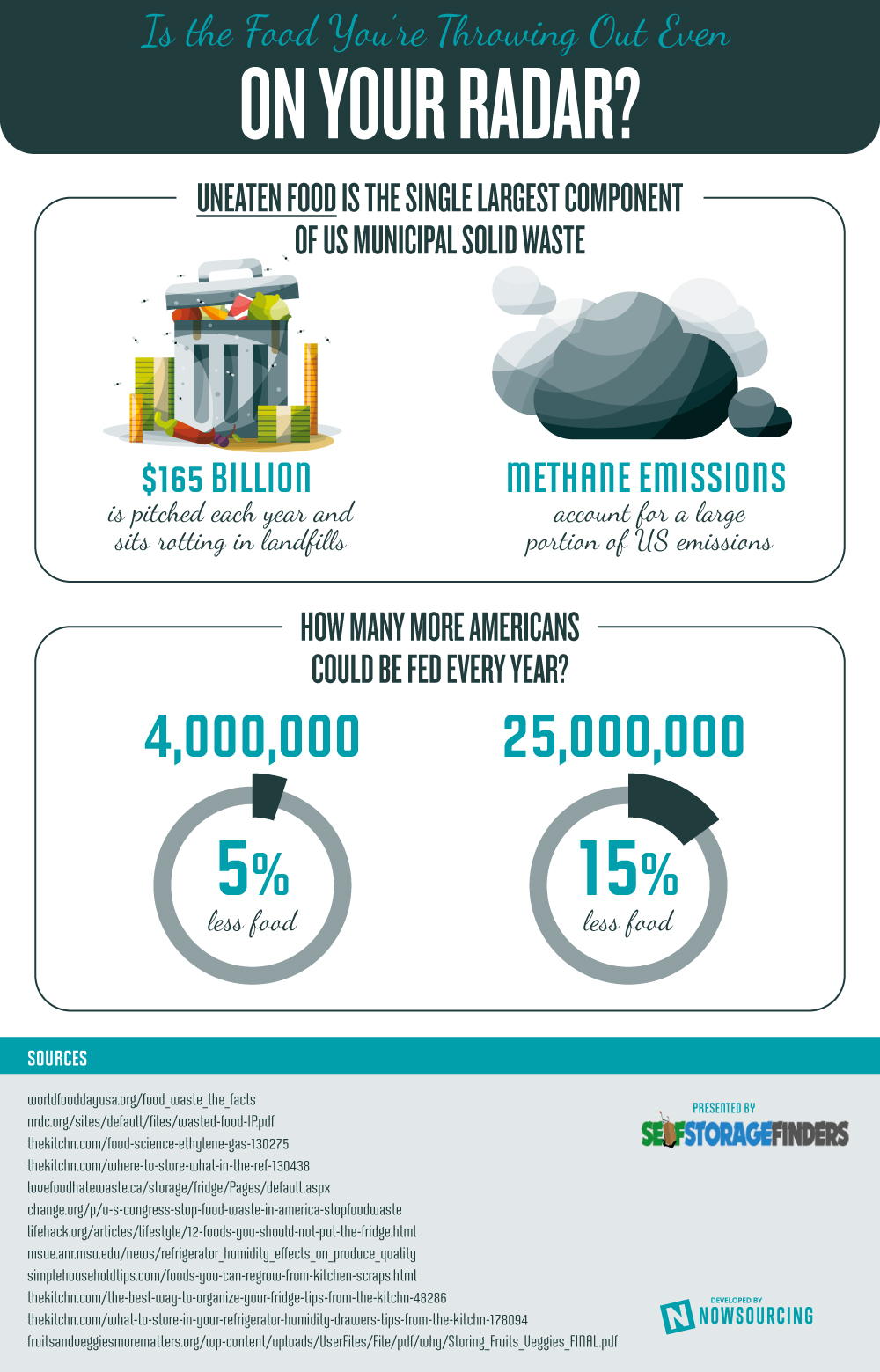
Self Storage Finders created the following infographic that helps visualize food storage and pantry organization. It addresses several important topics, like how to organize your food, which items don’t belong in the fridge, and tips for how to extend the lifespan or regrow vegetables. Check it out below, or click here for a full-size version.
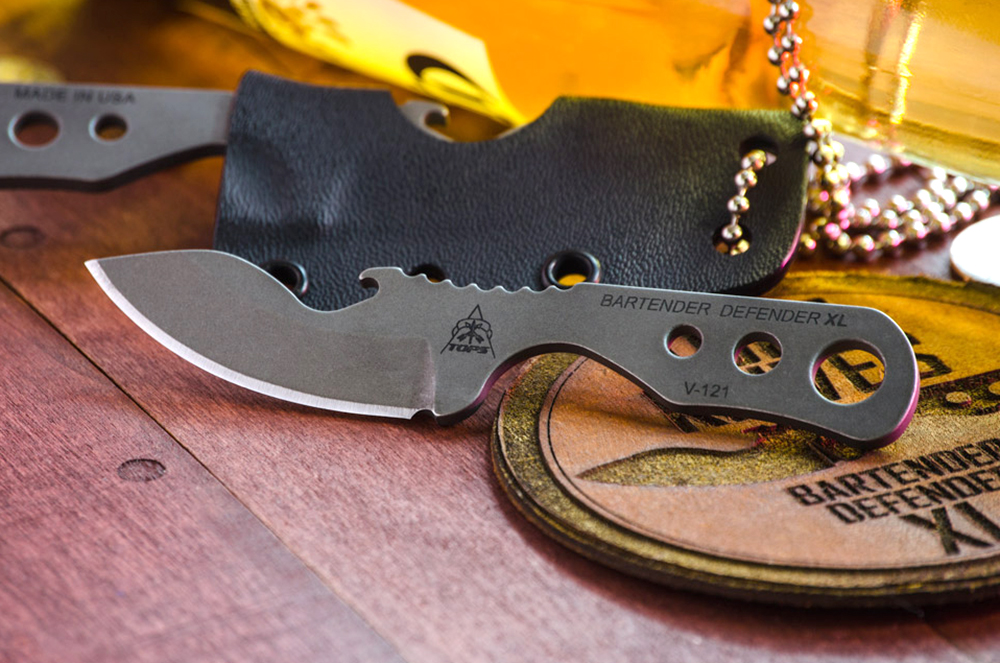
Every industry has its tools of the trade — a logger needs an ax, an electrician needs a multi-meter, a surgeon needs a scalpel. For those who make a living through bar-tending, few tools are more important than a good bottle-opener. Even if you don’t spend much time behind the bar, it’s a useful item to have, and always manages to come in handy at get-togethers. TOPS Knives realized this, and built a tool that combines a compact blade and a convenient bottle-opener. It’s called the Bartender Defender, also known as the de-cap-itator.
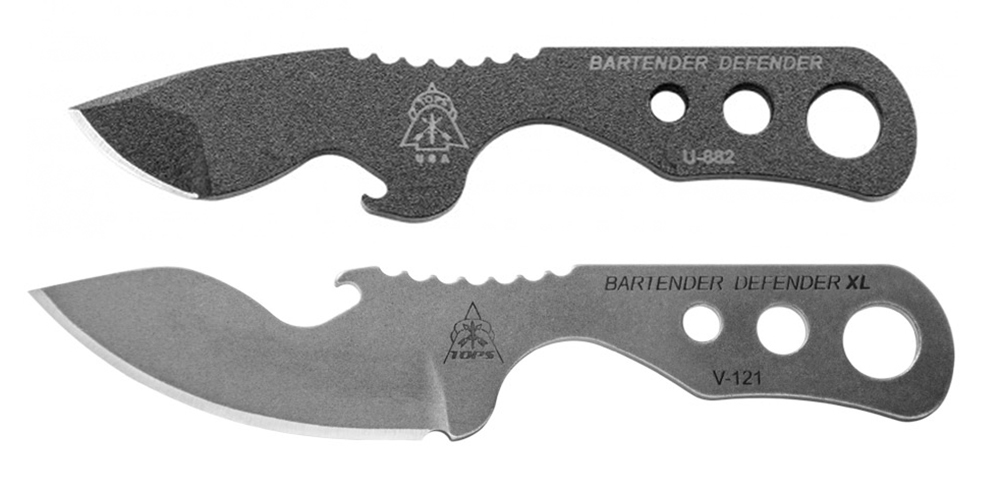
Top: the original Bartender Defender. Bottom: the revised Bartender Defender XL.
TOPS released the original Bartender Defender several years ago, and it has been a popular choice for those who needed a bottle opener and small blade. But, over the years the company also received some feedback from customers who wanted a longer blade to work with. So, the Bartender Defender was redesigned, and a new XL version was created.
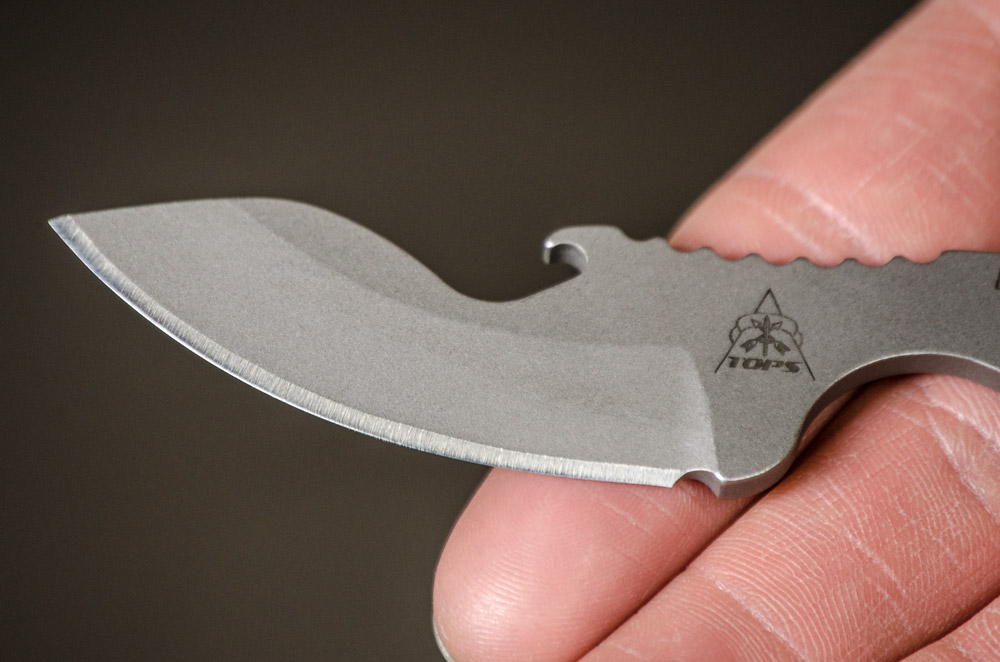
The Bartender Defender XL may be larger than the original, but not by much. It’s still only 4.63 inches long, or about 8% longer than the standard model. However, the business end was significantly revamped, producing a 2.13-inch upswept blade edge. That’s over 80% more usable edge than the original 0.38-inch blade design.
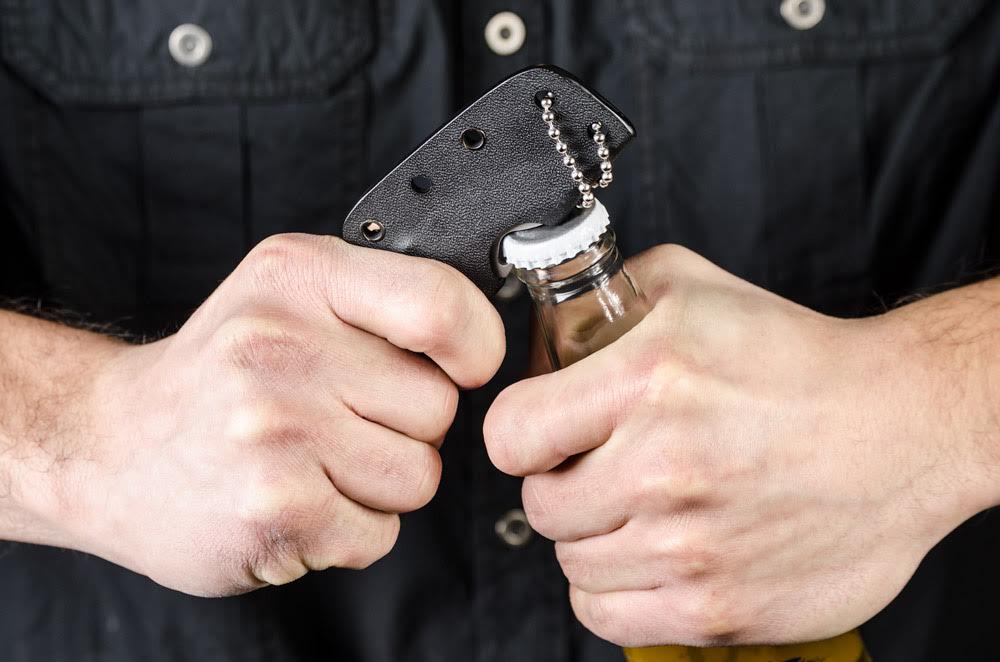
The bottle opener is still an integral part of the Bartender Defender XL, but has been moved to the spine of the blade. The Kydex neck knife sheath was also redesigned, and now features a cutout for the bottle opener. When you need to open a beverage, you won’t even have to draw the blade, and we’d call that both a safety improvement and ergonomic upgrade.
As opposed to the black wrinkle finish on the original model, the 1095 steel Bartender Defender XL has a smooth tumble finish, with a clear Cerakote to protect against rust. Here are the rest of the key specs for this blade:
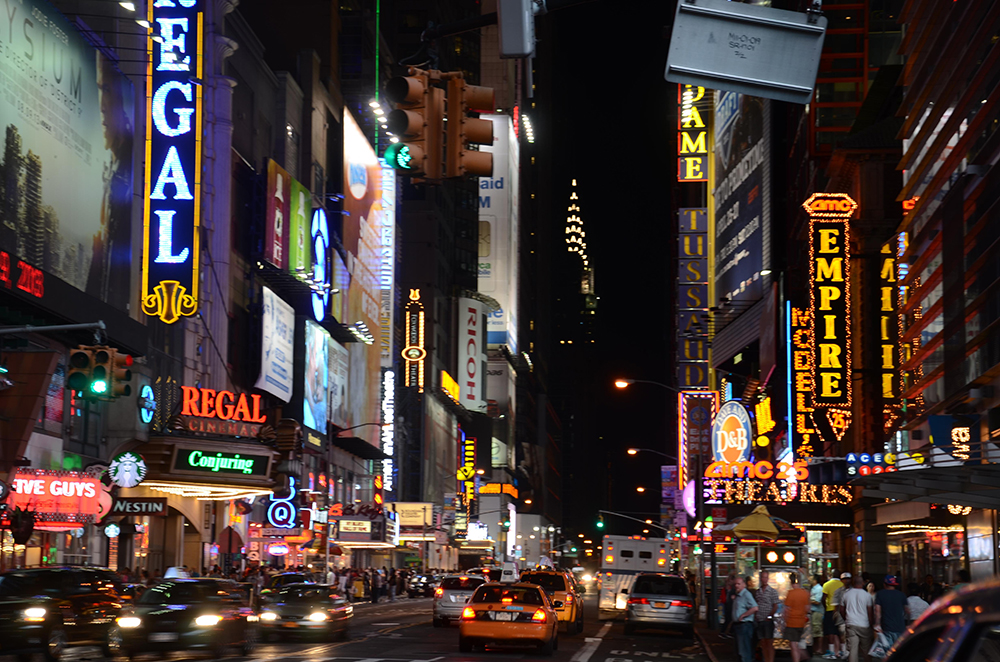
The dawn of each new year brings celebration, and few places are more famous for New Year’s Eve festivities than Times Square in New York City. It’s an American tradition to watch the ball drop in the Big Apple, and listen to the streets erupt with cries of “Happy New Year!” as confetti rains from the sky. However, given the recent state of world politics and the growing trend of terrorist acts against large crowds of people, a celebration of this magnitude presents some clear security concerns.
As preparedness-minded individuals, we should consider how to react if we found ourselves trapped in a crowd during an emergency. A single individual yelling about a gunshot could create a domino effect through the crowd, resulting in mass panic and a crushing stampede in the streets. Worse yet, that warning could eventually prove to be indicative of a legitimate threat — in those tense first seconds, it might be hard to know whether to trust the claims and run for your life, or to stay put and seek shelter.
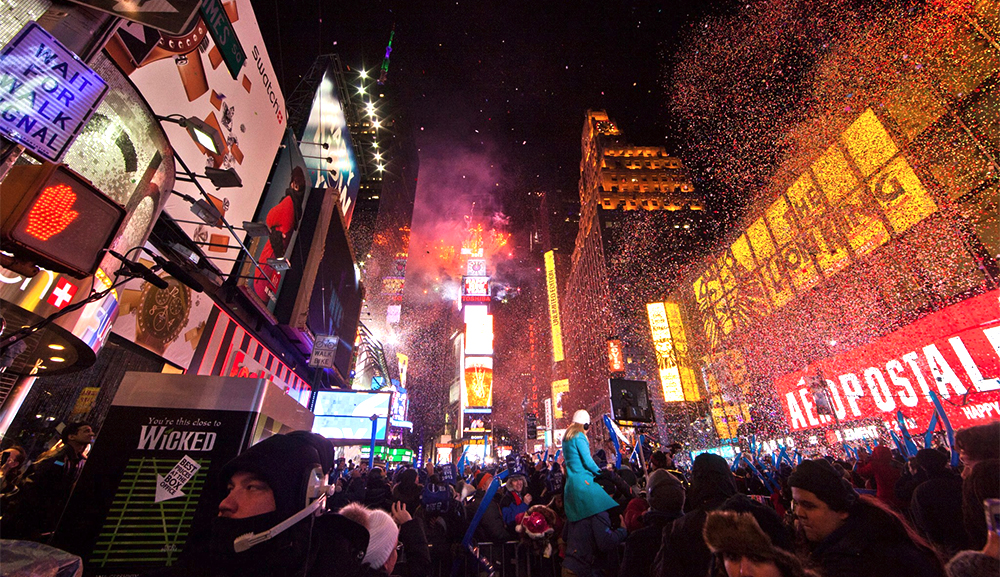
Each year, Times Square in New York is packed with crowds celebrating the new year. Photo: Anthony Quintano / Flickr
Therefore, our first Survival Scenarios question of 2017 addresses this decision. What would you do if you found yourself trapped in a crowd of revelers at Times Square, and claims of an overheard gunshot led to mass panic? Would you try to navigate the chaotic crowd and immediately leave the area, or avoid the crushing onslaught and find shelter nearby?
In case you’ve missed our previous installments of Survival Scenarios, here’s how it works. We ask you how you’d handle a difficult choice in a hypothetical survival situation. Previously, we asked if you’d rather bug-in or bug-out during a violent post-election protest, or whether you’d prefer to be snowed-in or snowed-on in a fierce blizzard. As always, today’s post ends with a poll where you can make your choice, and see how others felt about the scenario.
Background Info
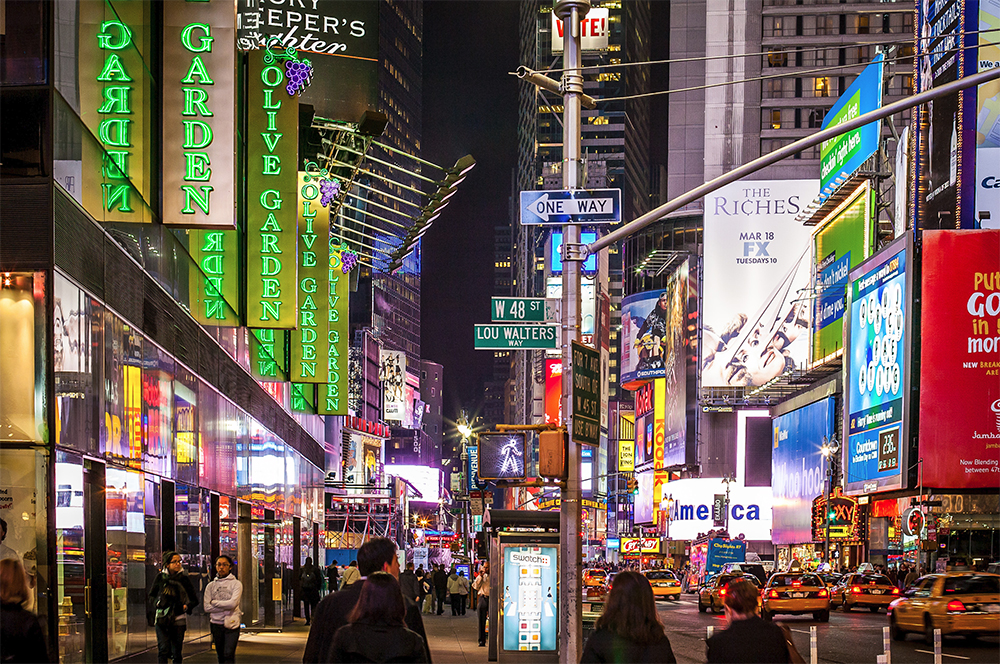
Even on a normal day, the hustle and bustle of NYC is substantial. Photo: Kenny Louie / Flickr
Before you decide whether you’d choose to make a run for it or seek shelter in the vicinity, we’ll provide some background info. As we said previously, you find yourself in the middle of Times Square on New Year’s Eve. It’s approximately 11:30pm, and the streets are packed to the bursting point with hundreds of thousands of people, all shoulder-to-shoulder. You’ve been standing in the same spot for over seven hours, awaiting the big moment.
Despite having misgivings about the extremely crowded event, you didn’t want to disappoint your family by missing the opportunity to see the festivities firsthand. You’re currently on vacation in New York with your wife, Amanda, and 12-year-old daughter, Chloe. Steve, your friend from college, lives in upstate New York, and convinced you to spend New Year’s in the city with him and his wife Erin. The five of you are clustered together in the street.
The crowd is frantic with energy as it approaches midnight, and you can barely have a conversation without shouting over all the background noise. At this point, your feet hurt, your back is sore from standing, and you honestly just want it to be over so you can return to the hotel. But everyone is having a good time, and you can see the gleam of excitement in Chloe’s eyes, so you persevere.
The streets are loud and tightly-packed as midnight approaches. Photo: Chensiyuan / Wikipedia
Suddenly, you hear a series of distant cracks from the street behind you. The sound seems faint, but still oddly clear as it reverberates off the building. You pause and turn in its direction. As you try to determine the origin of the sound, you feel the energy of the crowd change.
The calm chatter turns into a fearful roar, and you make out the phrase “They’re saying someone has a gun!“ from a man as he shoves his way past. A woman standing to your left heard it, too. She shrieks, “Oh my god. Let’s get out of here!” The once static crowd begins moving, jostling and pressing in against you, eliminating any remaining gaps of personal space. Screams echo off the concrete and glass. A police officer down the street is on his radio, looking concerned. Amanda grips Chloe’s hand, and turns to you with thinly veiled fear in her eyes — “What should we do?”
Gear and Resources
Remember that there are five members of your group: you, your wife Amanda, your daughter Chloe, and your friends Steve and Erin. Steve and Erin can make it on their own if you choose to split, but Steve has some experience training in MMA, which might be useful if a physical confrontation arises. You’re certainly not going to willingly separate from your wife and daughter in this chaos, so they’re sticking with you wherever you go.
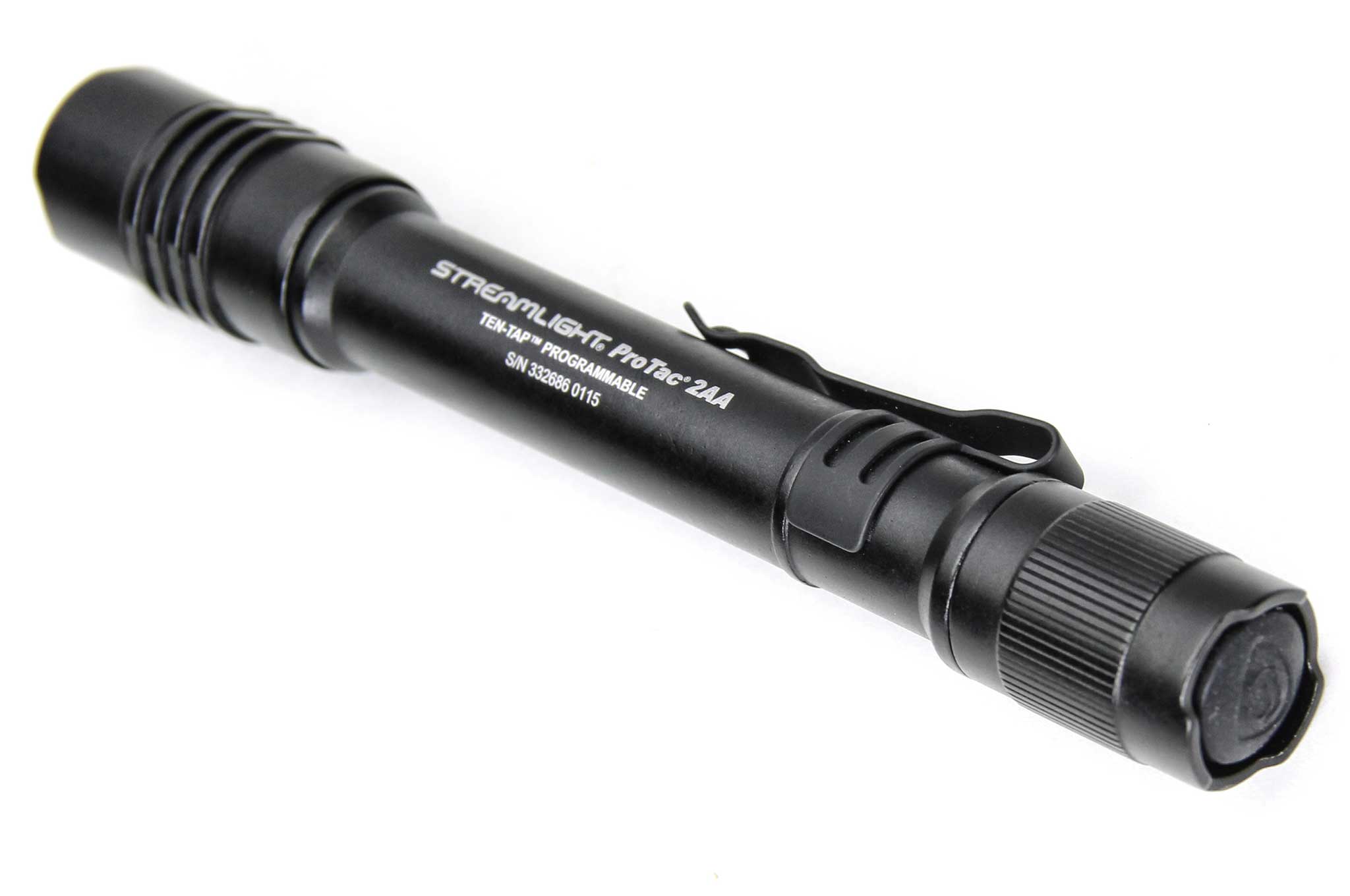
As for gear, you’ve got virtually zero. Restrictive weapon laws in New York City prevent you from carrying a firearm, and disallow most folding knives — and that’s on a normal day. The added security of the New Year’s Eve event screened attendees for additional weapons, even innocuous things like tactical pens. You do have a small flashlight and your smartphone in your pocket, but no purpose-built self-defense weapon.
The flashlight in your pocket could be used as a self-defense impact weapon in a pinch.
Given this information, will you and your family join the frenzied crowd and try to leave the area, hoping not to get trampled or separated? Or will you find some shelter nearby, and hope that the rumors of a shooter are untrue?
Bug Out to Safety
If you choose to make a run for it, there are risks you need to consider. The power of the crowd is tremendous, and the panic is spreading like wildfire. You can try to force your way through, but that may result in trouble — pushing and shoving might lead to punches and kicks as the masses lose control.
Also, the biggest concern is becoming separated from your family during the escape. You already wisely established an emergency meeting point a few blocks away, so you could theoretically regroup there if worst comes to worst. But you shudder to think of what could happen if your 12-year-old daughter ends up alone among the thousands of people running for their lives.
One upside to bugging out is that it could potentially shorten the duration of the danger. You might get down the block and find that the crowd is less frenzied, or manage to find a relatively-unobstructed escape route. The other upside is related to the origin of this situation — if the supposed gunshot sound ended up being an actual gunshot, you want to be as far away from it as possible.
Stay Put and Find Cover
If you choose to stay put, you’ll need to find some shelter ASAP. The crowd is pushing and shoving in all directions, and you should find a solid structure that can deflect that energy. Then again, if you hug a wall and the crowd pushes too hard in that direction, you could end up being crushed or trampled.
Crowd control barricades are everywhere. They may serve to funnel the horde into a tighter space, or they may be overrun completely. Police are abundant in the area, but they’re clearly struggling to regain control of an out-of-control mob scene. You’ll have to look out for yourself if you want to stay safe.
The major advantage of staying put is that it ensures you can stay together with your family, and with Steve and Erin. Steve’s strength and martial arts experience could be helpful if violence erupts. You’re without weapons, but at least you won’t be swimming upstream through a sea of terrified pedestrians.
The chances of the possible gunshot from earlier being a real threat seem slim in this heavily-monitored setting, but if the claims were true, you may be in big trouble. The mass panic you’re caught in the middle of could end up being a mass shooting.
The Decision
Knowing you have seconds to decide on a course of action, what would you do: bug-out immediately, or stay put and find cover? Enter your decision into the poll below, and feel free to justify that choice in the comments section.
Survival Scenarios is a recurring feature on OFFGRIDweb.com, and will ask you to make a difficult choice between two or more hypothetical situations.
We don’t just want you to read our posts silently—we want to hear what you have to say. Share your thoughts or suggestions in the comments below, or head over to our Facebook page.
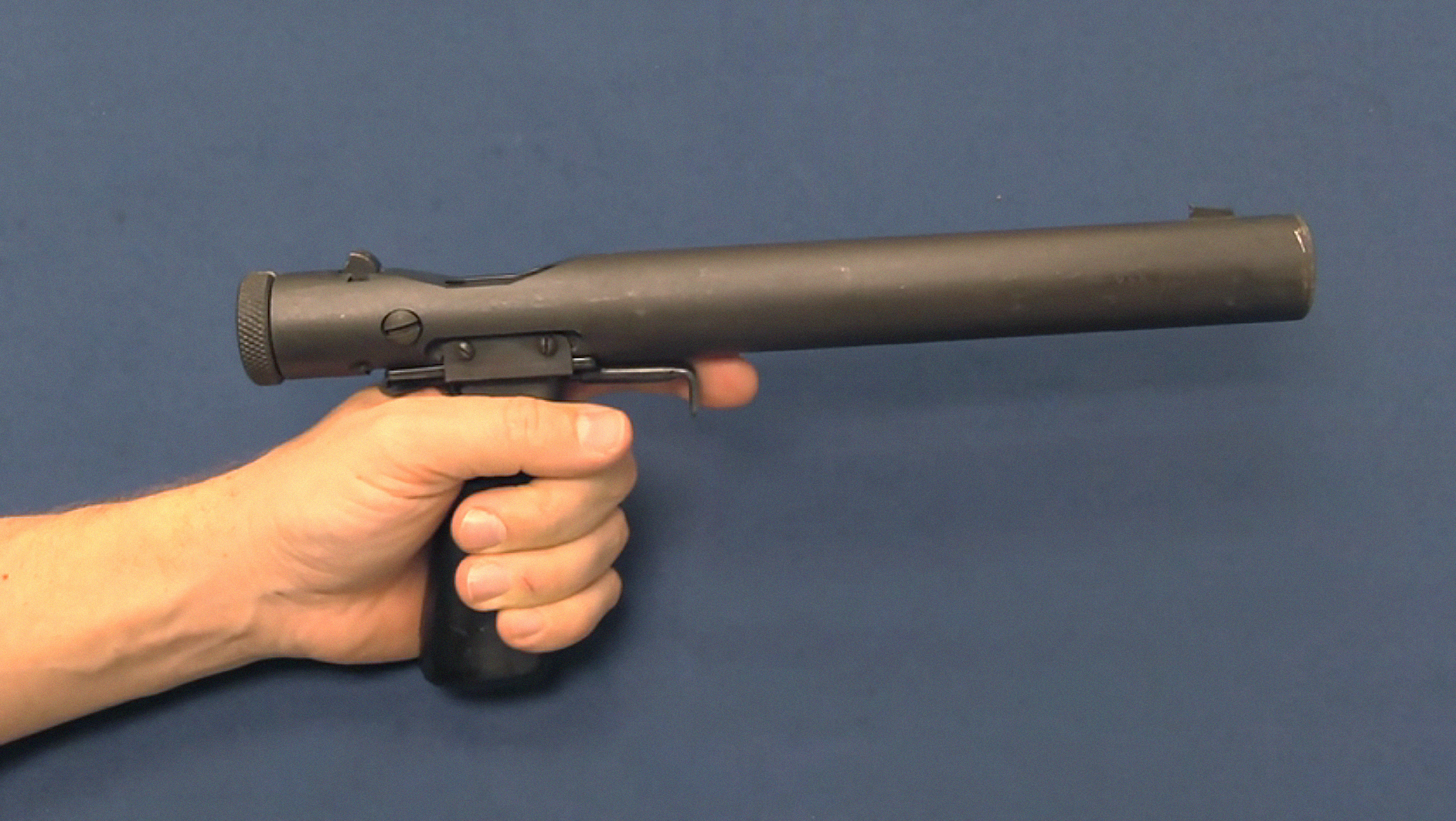
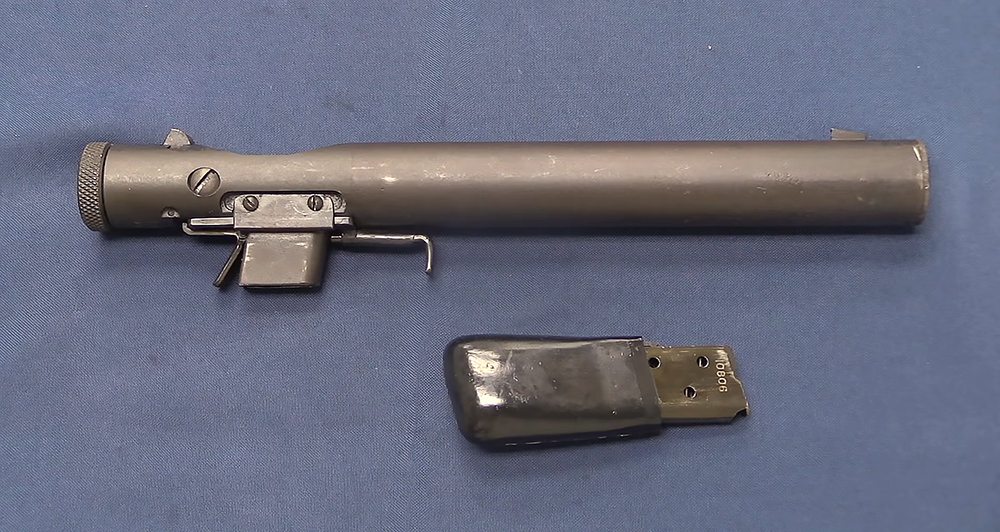
If you spotted a Welrod for the first time, you might not realize what it is. In disassembled form, it resembles a piece of industrial equipment, the sort of thing you might find in an obscure corner of the hardware store next to caulk dispensers or hot glue guns. In fact, it was nicknamed the “bicycle pump” by those who used it. It also has no easily-identifiable markings or symbols on its plain metal body.
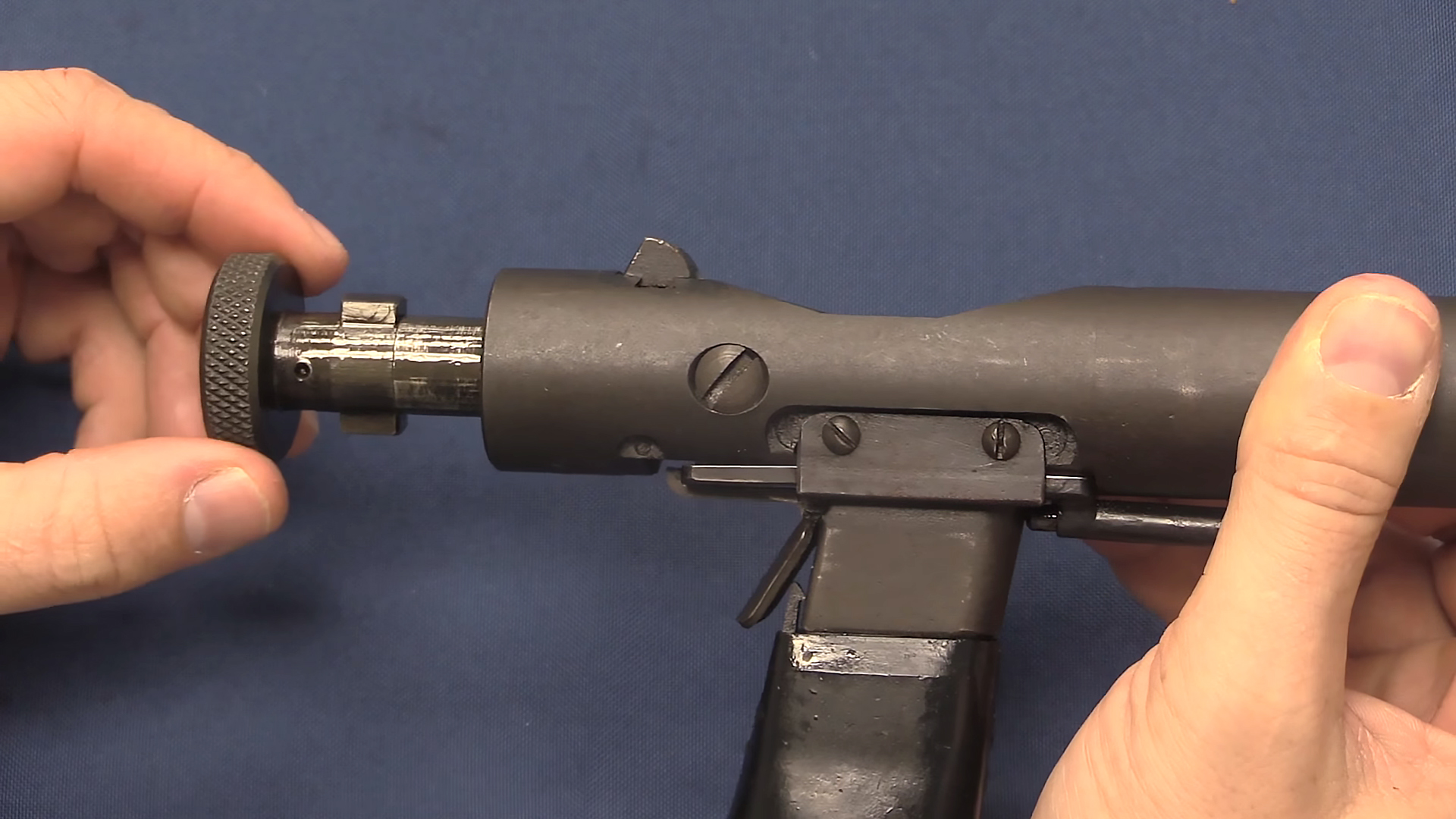
Howewer, when its 8-round magazine is inserted to form a pistol grip, the Welrod’s purpose becomes more apparent. This historically-significant weapon has a very specific purpose: silent use behind enemy lines. Forgotten Weapons recently posted a video analysis of the Welrod Mk IIA, including hands-on disassembly of a surviving example, and and in-depth description of its functionality:
The Welrod was developed in the early 1940s by Special Operations Executive (SOE), a British military organization which coordinated espionage, sabotage, and reconnaissance missions in occupied Europe during World War II. British SOE (along with American OSS and European resistance forces) needed a weapon which could be distributed, concealed, and fired without drawing attention. The pistol’s strange appearance accomplished the first two goals, but silent operation was essential to meet the third requirement.
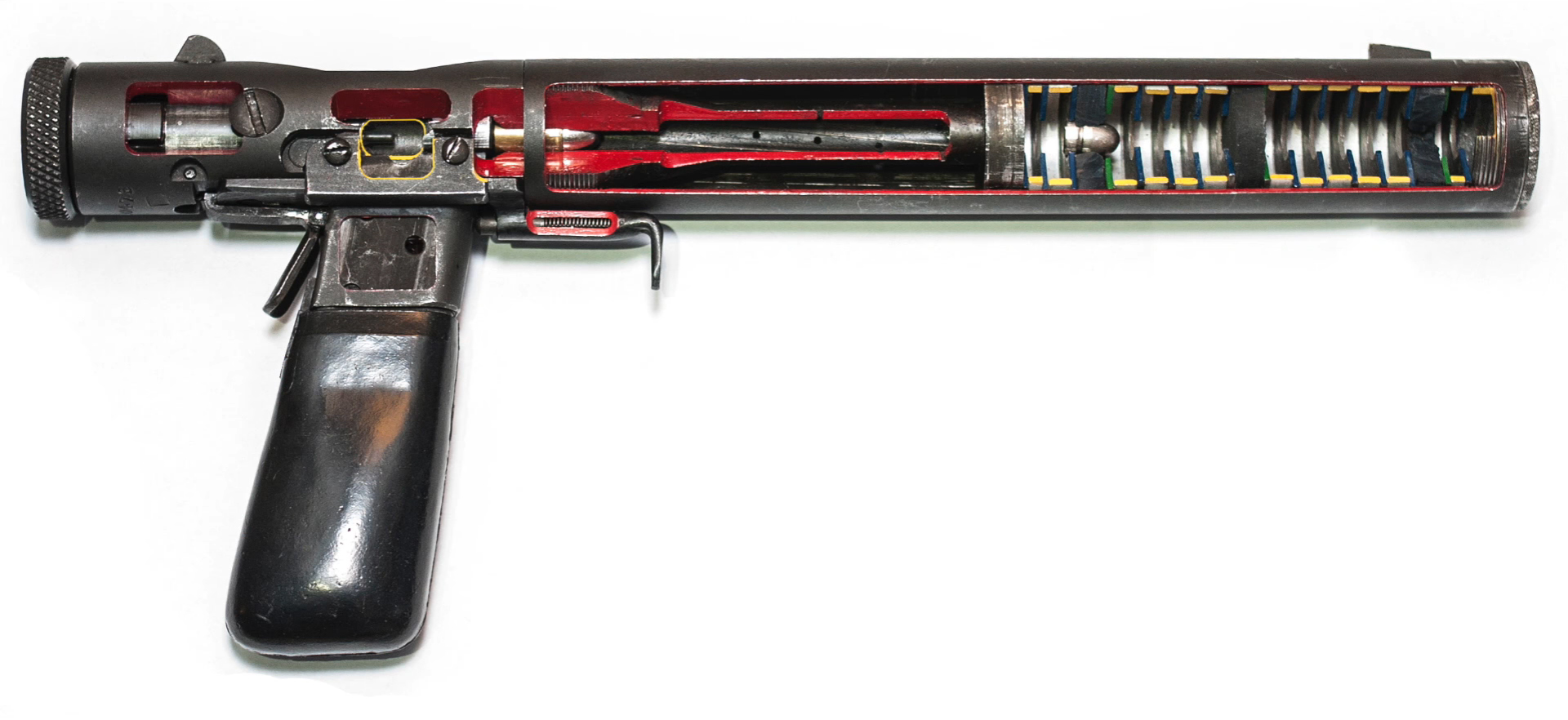
A 12-inch by 1.25-inch cylinder forms the body of the gun, and houses a ventilated barrel and an integrated suppressor. The Welrod fires a sub-sonic .32 ACP cartridge, and is operated with a manual bolt action, further reducing the gun’s sound signature.
All of these features bring the sound of a shot to approximately 73 decibels. That’s about as loud as the normal background noise of traffic on a city street. While it’s not technically silent, it’s extremely quiet even by modern suppressed gun standards, and was revolutionary for its time. The rubber wipes inside the suppressor only lasted for about a dozen shots, after which they lost effectiveness, so the shooter needed to make every shot count.
Although the secretive nature of this gun makes tracking its use difficult, reports indicate it was used in the Korean War, the Vietnam War, the 1982 Falklands War, and the Troubles in Northern Ireland, among other modern conflicts. Some say it was even fielded by SAS members during Operation Desert Storm, and that an updated version may be in use to this day.