Looking Back: Surviving the California Camp Fire


The Camp Fire is being called the worst California wildfire in the state’s history and one of the deadliest in the entire country. It ravaged over 150,000 acres and authorities are still sifting through the damage and documenting fatalities. It’s hard to imagine what it’d be like to lose your home, all your belongings, and be indefinitely displaced by a fire that many sources are saying traveled at approximately 5 miles a minute. Imagine trying to evacuate your house while this hellish wall of flame is quickly approaching, not knowing what to take with you — every second spent inside is one second less you’ll have to escape the inferno.

Paradise California Camp Fire by CA National Guard

A California National Guard photo of the devastation in Paradise. Source: Flickr.com/caguard

While Robert Bruner survived with his life and his family, he’s suffered a great loss financially and emotionally, along with many others whose town was virtually destroyed. Thankful to be alive and relay what he went through, we sat down with Robert so he could recount the harrowing story of a day he’ll never forget. Like many of us, Robert never thought such a severe tragedy would befall him one day, and he’d be living through an event he read about in RECOIL OFFGRID.

Camp Fire California forest wildfire disaster survival emergency preparedness shtf bugout Bruner family

Robert Bruner with his wife Rebecca and their 4-year-old son Brant.

The timestamped photos below were taken by Robert during his escape from the fire and appear in chronological order.


RECOIL OFFGRID: What city was your house located in?

Robert Bruner: In Paradise, California. The reports are still varied on how much of the city is actually destroyed, but there’s nothing left. Downtown is somewhat intact, but that’s only because they didn’t have the trees that the residential section had. It was just jumping from tree to tree and there was no way they could get a handle on it.

What’s the population there?

RB: The reports circulating that there’s about 26,000 people are way off. There’s significantly more people. It’s somewhere between 30,000 to 37,000. There’s been a huge boom up there because the rent in Chico, California, has gone up quite a bit. Everyone was moving up into Paradise, because there were some nice, expensive houses up there and it was cheaper to build too.

How long have you lived there?

RB: About seven years now.

Were there any significant fires in the past that threatened that community or damaged it?

RB: When we first moved down, we kept hearing about the big one of 2008. I guess that one was a few years before we moved in and was just south of town. They fought really hard to keep that out of town. Last year we had a fire just to the west that’d come up the canyon wall and they were afraid that one was going to go into town, but they stopped that one too. Two years ago we had a fairly significant fire that was in the same area as this year’s was, but they were able to get the bombers in right away and stopped that. It didn’t have the winds we had this time so they were able to get a handle on it and because of that we never thought what happened could happen.

Walk us through the initial phases of learning about the fire and what was going on.

7:37 AM - Shortly after Robert left for work.

7:37 AM – Shortly after Robert left for work.

RB: My wife left for work at about 7 a.m. The sun wasn’t up yet and it didn’t really smell like a fire. That was strange too, because we didn’t smell it in Chico for about a day and a half after. When I left about 7:20 I noticed the plume. As I was driving into work I kept looking at the cloud thinking something wasn’t right and I should turn around. It looked bad, but it also looked like two years ago. I kept thinking, OK, it’s early enough, they’ll be able to get a handle on it. At that point on the radio, it was being talked about, and the fire had a different name. It wasn’t called the Camp Fire yet; they were calling it something else I can’t remember. It was 10 acres at that point or thereabout.

7:55 AM - Smoke fills the air.

7:55 AM – Smoke fills the sky.

When I got into work, everyone was talking about it, and a couple of guys hadn’t shown up because they wanted to stay home. One of my coworkers, his wife worked at the hospital and at about 8:30 he got a call saying they were being evacuated. So I left because I had no insurance and wanted to save what I could. The fire, from where we were, was only about 5 to 6 miles. I did 90 mph the whole way home and avoided what looked to be a road block, went through some back roads, got home, and the sky was completely orange. The wind was extremely strong, and as soon as I got out of the car all I could hear were explosions.

Do you know what it was?

RB: Propane tanks. It was both barbecues and some of the houses up there are on propane. You could tell the difference when a barbecue cylinder was going off and a whole house one went off because it shook the ground and the windows in the house. I got home, put on a mask and goggles, and went to the safe we’d recently put all our important stuff in. I want to say that you’d recently done an article on fires.

Yes, on fire suppression. [You can read it here.]

RB: We had gone around previously and tried to move some leaves and whatnot away from our duplex. And we’d contacted the property management company to come down and cut down trees that’d become overgrown and a lot of brush, and we never heard back.

9:00 AM - Robert returns to his family's duplex home.

9:00 AM – Robert returns to his family’s duplex home.

How old was your duplex?

RB: Probably mid-1970s.

Did it have a wood shingle roof?

RB: No it had regular, composite shingles.

Did you own the duplex or were you renting?

RB: Renting. When I got home, I went straight to the safe, called my wife, and told her I thought it was bad and this was probably it. I asked her what she wanted to save, and she told me to grab supplies for our baby and a number of other things. I grabbed that stuff, some tools, and every time I went in and out of the house it was getting darker, the wind was getting stronger, and the debris was just pelting me the whole time. Every time I’d open the car door, ash and debris would fly right into the car. It just got to the point where I knew I just couldn’t stay any longer and one of my coworkers told me not to stay too long or I’d be trapped. There were several points I thought I might not make it out. I got everything I could together, said goodbye to the rest of our belongings, and that was it. I couldn’t stay any longer.

10:00 AM - Robert left his car in the driveway with the headlights on to indicate he was nearby.

10:00 AM – Robert had left his car in the driveway with the headlights on to indicate he was inside.

What did you take with you?

RB: Documents in the safe, firearms — everyone always tells me that firearms are replaceable but certainly not in California — stuff for my son, an inflatable bed, his stuffed animals, as many clothes as I could fit. I had paper shopping bags I was throwing everything in and got some of my wife’s jewelry, but forgot her wedding ring. She’d not worn it that day and I didn’t know where it was or if it was even there. I grabbed our laptops and our shower bags. We travel a lot between family members so our shower bags were usually always packed so I have my bug-out bag and my son has his bag plus a medicine bag with stuff he needs.

How many children do you have?

RB: One.

And he was at school?

RB: Yes, we were extremely fortunate that my wife and I work in Chico and his daycare is there as well.

How old is he?

RB: He’s 4, so not technically a baby anymore.

10:12 AM - Traffic on the road leaving Robert's home.

10:12 AM – Traffic on the road as Robert tried to leave town.

How much time did you feel like you had to grab your supplies and get out?

RB: It was about an hour. The last few times I went in and out of the house, I was like, I’ve gotta go, I can’t stay anymore. At a couple points I was walking around the house with my hands out, saying, “Everything’s gotta go! I don’t know what to take!” And I kept telling myself to calm down and focus. I would’ve hated to have an EMT take my blood pressure at that point. It was just like, what do you take? I had the important stuff, but there was just so much stuff and so many memories that can’t be replaced. My car was filling up and I only have a two-door Honda. There was only so much stuff I could take. The trunk was completely full, the backseat was probably 90% full, plus my son’s car seat back there, and the passenger seat was completely full.

Is there anything in particular you regret leaving behind or couldn’t find?

RB: I do freelance comic book illustration and all my artwork was lost. Ninety-percent of my tools were lost. At one point I’d gone over to where I keep my supplies and I just looked at it shaking my head thinking it all needs to go, what can I do? I grabbed my brushes and some expensive pens, and didn’t know what else to do. My artwork is irreplaceable, there’s nothing I can do about that. The tools are replaceable, but that’s a significant amount of money. Plus my wife’s wedding rings — we’re hoping that when we’re allowed to go back that they’re still there.

10:26 AM - Fire visible behind homes.

10:26 AM – Fire visible behind homes.

So you were packed up after about an hour and had to leave. Where did you go?

RB: So there’s three main roads going through Paradise. There’s Skyway, Clark, and Pence, which is where the hospital was. I was in between Clark and Pence, closer to Clark. It took me about 25 minutes to go what’d usually take me a minute. And, when my wife and I talked about it later, she kept saying that she didn’t think I believed it was this serious. And looking back I think she was right. I kept thinking, it can’t be this bad, the town’s not going to burn, they’re not going to let a whole town burn. When I finally got up to the intersection after 25 minutes, the police were directing traffic, and they didn’t have any protection on, no masks, they were just directing traffic with flashlights. I thought, If they’re here it can’t be that bad. Then I saw the people running. Then I started thinking, If people are running, this is really bad because that means they’ve abandoned their cars.

It took me three hours to get down. The first evacuation route they sent me down, there was a really nice house overlooking the route and it exploded! It exploded so high I couldn’t see the top of the explosion above the roof of my car. As it came down, the wind was blowing that fire onto the opposing hill and it immediately set that hill on fire. I was looking at that, and I was like, I can’t go this way. The firemen were coming up telling people, before the house exploded, that everyone was going to get out, and to stay in our cars and not to leave your car. Then the explosion. I backed up to turn around, and a fireman came up and was beating on my window, and he said, “Don’t leave until the car in front of you leaves.” I was like, “OK, OK, no problem.”

10:36 AM

10:36 AM

So I sat there waiting, and then the embers started coming down. There were buckets of embers coming down at a time. I was thinking, This is every man for himself, I can’t listen to the firemen. So I turned around the first chance I could, went up, and there was a tree that was on fire I had to drive past. The heat was so intense I thought it’d set the car on fire. Then I was stopped behind a truck and a bucket of embers fell down and exploded when it hit the ground, rolled off the side of the road, and immediately caught the side of the road on fire. There was no time between it hitting the brush there to becoming fire. I went down another road and drove past a friend’s house and it looked like their house was OK. I thought maybe the fire wouldn’t make it that far. I made really good time and then I got stuck in traffic again and was stuck there for an hour.

I slid the sunroof open on my car and this time I was looking for embers. At this point, I thought if I started seeing embers I’d have to make a run for it. I remember looking back in my backseat and wondering if all this stuff was worth it. I’m listening to the radio and they were saying the fire had made it to the main street, Skyway, and I couldn’t go back toward my home or go south. I knew the fire had almost completely encircled Paradise. I was sitting there so long and had to get out to go to the bathroom. As I got out to go, then this guy comes running down the road and said, “The road’s on fire, we have to back up, we have to turn around!” At this point I’m thinking there was nowhere to go, we couldn’t go backward because the fire is that way.

I’d just passed a right turn. I was two cars ahead, the two cars in back of me backed up, went that way, and was like, screw it. I backed up, cut some people off and immediately went out that way and worked my way around, got to Skyway, and everything was on fire. The trees, the houses, the road, everything was on fire. There were downed power poles shooting sparks out and the sparks don’t look like they do in the movie. It looks completely different. It’s like water on fire that’s coming out. I made it down, and back to work about 1 o’clock and everybody I work with had all lost their houses, every single one of them. All of their families were there and all you heard was silence all night long.

11:04 AM - Police cars headed into town.

11:04 AM – Police cars headed into town as residents evacuate.

Any idea how fast the fire was traveling?

RB: The number they’ve been pushing out is a football field a second. Because of the winds, I could see that. The winds were so strong. When I was in the house, because of the amount of sirens I could hear, I knew the police were in the area. I’d left my headlights on so if they passed me they’d know someone was in the house. A couple times I thought they were knocking on the door, but it turned out it was the wind slamming the screen door against the side of the house.

How long after you departed with your belongings did you find out your home had been destroyed?

RB: It took us a while. We have a friend who works for PG&E, and we gave him the address to see if he could have someone go up and check. How our house was set up was that there were two duplexes that shared a common driveway. The duplex across the driveway made it, but ours didn’t. So we’re talking 30 to 40 feet between the two.

What was it like when you found out?

RB: I knew. My wife was holding out hope like you wouldn’t believe, but I kept saying to her, “You weren’t there and don’t know how bad it was.” I knew when I said goodbye to the place that was it. For me it was just survival at that point, and I knew it was all gone. On my first evacuation route, I was looking back and all I could see was fire in back of the trees and it slowly came up to the tops of the trees and that was all toward where we lived. I knew everything was lost, but didn’t know the extent of damage to the town.

11:05 AM

11:05 AM

Have you been back to see the aftermath yet?

RB: No, we were supposed to go back at a certain point and then it got pushed back and now they’re telling us we’ll be allowed back either before or after Christmas.

Do you think there were any preventive measures you could’ve taken to save your home or at least give it a better chance of surviving?

RB: Yes, the defensible space. We needed that and we’d called to get someone out to take care of it because we had a tree two feet from our fence. That fence was maybe five feet from the house. Plus it was on an abandoned olive orchard. We never found out who owned that land and they didn’t maintain it at all. So there was a lot of brush, but I think it was an ember that did it. They were just falling out of the sky in buckets. The house in back of us and the house across from us didn’t burn, plus there was a retirement home directly in back of them, and that was spared. Wind was blowing directly in our path and I have no idea why those other houses survived.

11:22 AM - A burning structure near the road.

11:22 AM – A burning structure near the road.

If you had to repeat the experience, what would you have done differently?

RB: I definitely would’ve had insurance. We’d talked about it, but when I thought about insurance I always associated it with theft. I lived in Sacramento for nine years and had a lot of problems with theft there, so I never thought about it for fire. We’re definitely going to have insurance when we get another place. As far as when I went back up there, I’d do it again because we are better off for what I was able to save than people who didn’t save anything. The things I did save, some could be replaced and some couldn’t. It has made things somewhat easier for us. My biggest thought was I need to make my son as comfortable as I can during this. I think we should’ve got a bigger safe to put more stuff in so it would have been a bit more of a one-stop shop for saving stuff. One thing I kept thinking that I didn’t want to spend the time on was to turn the hose on full blast and put it up on the roof. Maybe it would’ve worked, but maybe it wouldn’t, but I thought the amount of time I’d spend on it could be put toward putting a couple loads in the car.

12:45 PM - The burning remains of the

12:45 PM – The burning remains of the “Welcome to Paradise” sign.

Any advice to the average homeowner you’ve learned from this on preparing for a fire?

RB: I think defensible space is key. We did what we could, but since we didn’t own the place there was only so much we could do. If it were my own place I would’ve chopped down the trees that were close and gotten the brush taken care of myself. Supposedly that area was private property and we couldn’t find out who owned it. The people that stayed up there that fought the fire and saved their houses, that’s what they did. They went out, got everything they could away from their house, and were attacking the flames with whatever water source they could, but part of the problem was the city cut the water halfway through the fire.

Any idea why?

RB: I’d assume because of the amount of damage they knew was happening already they didn’t want water shooting out after a house was burned down and for the system to lose pressure. I’m not sure if it works that way. It became clear early on in the fire when I was up there that they were not trying to fight the fire. Their sole goal was to get people out and it didn’t work as well as they would’ve liked. There were a lot of deaths and one of the streets people died on, I was on that street. That’s one of the fears I had when I was up there. There was so much traffic it was complete gridlock in every direction. There’s only a few ways in and out of town and they had blocked one of them immediately because that’s where the fire originated and then it slowly started picking off all the other ways in and out.

12:46 PM

12:45 PM

Have they determined how it started yet?

RB: Everyone’s waiting to find out, but the lawyers up here, it’s unbelievable the amount of lawyers who have a presence up here right now. They’re on the TV, radio, billboards, town hall meetings at the hotels around here. The other day they came out and said a transformer or some type of equipment was found at or near the ignition source that had bullet holes in it. I don’t know if that’s accurate, but I can’t imagine why someone would shoot at one.

How did you learn about that particular finding?

RB: One of my coworkers had it posted to his Facebook from one of his family members and it was on some news channel. [Editor’s Note: Here’s an article from The Sacramento Bee with more details about the damaged PG&E equipment.]

12:47 PM

12:47 PM

So you had no insurance at all?

RB: No, but FEMA has been extremely good. I know they get a lot of bad rap, but aside from one individual, they’ve been extremely good at getting information to us and doing what they can to help.

What are they doing to help exactly?

RB: I filled out my form online the day after the fire and they called me the next day. They took a statement, wanted additional info, and within a little over a week they had someone at the property confirming it was a total loss so everything seems to be happening very quickly. They gave us a check solely for rent and living expenses as far as housing.

12:52 PM - Flames visible in the distance from the highway.

12:52 PM – Flames visible in the distance from the highway.

How much did they give you?

RB: $2,200. It seems like everyone who isn’t insured is getting that amount, but it’s only to be put toward some sort of housing/shelter arrangements.

Where are you living now?

RB: My work has been extremely generous and we have six trailers in back of my work that are housing six families. There was a total of 12 of us affected by the fire, only one of my coworkers’ houses survived, but he still can’t get back in. It’s been amazing, the generosity of the community and that the owner of the company has extended to us. We have been extremely fortunate. Every place we’ve gone to eat, they’ve extended discounts to us. It’s mind-blowing what people have done to help. Within the first few days we got massive amounts of clothing. The local organizations, the Lions, Masonics, Elks, everybody has been pitching in. Nothing’s happened like this in recent history where an entire town has been lost.

This photo, taken by Robert's friend, shows what remains of the Bruners' duplex.

This photo, taken by Robert’s friend, shows what remains of the Bruners’ duplex.

How do you think this will affect your preparation measures going forward?

RB: I love your magazine and have been a fan since Issue No. 1. My wife has always kind of shrugged her nose at it. We watched Doomsday Preppers once in a while, and a lot of my friends are prepping in one way or another. There’s a lot of things I really enjoy from the magazine, some of which I’ve incorporated. I think bushcraft applies a lot to me. We had several 5-gallon buckets we had our preps in. Our food, batteries, ammo, lanterns, and stuff we’d accrued over the years, and not once did I think about grabbing it.

Also, both of our cars going forward will have cell phone chargers both for the cigarette lighters and for the wall. The day after we went, every single place that would have that was completely sold out. Nobody thought about it until they needed it and then everyone sold out. Best Buy, Target, K-Mart, the different carriers, everyone sold out. So I told my wife that we will have this in our cars going forward because that was a huge issue.

Robert's coworker took the following photos of the aftermath in Paradise.

Robert’s coworker took the following photos of the aftermath in downtown Paradise.

Because we’d sat down a few months ago and stored a bunch of valuables in our safe, my wife and I agree that was the best thing we did. We’ve got our birth certificates, we’ve got our social security cards, we’ve got pink slips to the cars, firearms, some other valuables that were in there. I think this experience opened up her eyes that you need to have all the important stuff in one spot.

Did you leave those buckets of emergency gear behind because you felt it was expendable?

RB: I’ve always prepped for either something that was either from a foreign power or some type of economic problems. I prepped for self-sufficiency in terms of food, water, guns, ammo. In a fire none of it meant anything. I knew we’d have a place to go, friends or family we could stay with, so what’d typically be perceived as a prep was meaningless and personal property became more important. A baby book at that point was more important and precious than a case of MREs. Moving forward, once we settle down, water is always a huge prep because we’d lose power once in a while up there. Also, going forward, bushcraft skills is a better prep because it shifts the focus of a material prep to you being the prep. If I had to abandon the car and run, I am the most important prep for my family. Everything else is meaningless when it comes down to it. I need to see my family again.

Camp Fire California forest wildfire disaster survival emergency preparedness shtf bugout Paradise 2

What bushcraft skills do you think would be applicable in this situation?

RB: Maybe how to fell a tree. I would definitely want to learn, especially if we were on our own land, I’d have taken care of the trees myself. They were all olive trees where I was, which aren’t usually more than 15 feet tall so that’s something you could do yourself with a chainsaw.

Has there been any confirmation that looters have started scavenging the area?

RB: Oh yeah. We watched something on the news of a man staying there with someone else to protect his mother who was blind and bedridden. One of my coworkers knows him a little, but his story is on YouTube. In the video he says he was seeing looters every night. [Editor’s Note: This article from The Sacramento Bee provides some examples of looters arrested in Paradise, including two men who were allegedly caught inside an evacuated residence with a handgun, loaded magazines, meth and heroin.]

Camp Fire California forest wildfire disaster survival emergency preparedness shtf bugout Paradise 3

Are the police trying to thwart any of that?

RB: Everything we’ve heard, the police are there. The National Guard was here too and they had an extremely strong presence and weren’t letting anyone in. Supposedly they were up there patrolling, but Paradise is very rural and if you know the area you can get in. We know people who have gone back in and they say it takes about eight hours to get up the hill and work your way around, but you can get in. They can’t just close off the entire town. The terrain is too rugged and they can’t possibly defend everywhere.

People are getting in if they want to. If they’re that determined, they will get in. There are houses that made it. My hope is that the police are guarding the houses are there, but from the picture of our house that we’ve seen, there is still wreckage to go through. So does that mean people are picking through it? We just don’t know, and there’s no way to get any information about our house. We’re hoping the police are up there doing their job, because the National Guard left. PG&E has 24-hour presence up there. They have a base camp just west of town and have somewhere between 2,500 and 3,500 people up there.

Camp Fire California forest wildfire disaster survival emergency preparedness shtf bugout Paradise 4

The electrical apparatus that may be to blame, is it part of a larger facility or … ?

RB: From what we’ve heard, it was a transformer or something similar that was sparking the day before or that night, and they’d received calls that something was going on with this pole, and then early the next morning was when the fire broke out. So it’s interesting if it was someone shooting at it, but I don’t know and it’s one of those things that it may take a long time to find out. If PG&E is liable, they’re going to have to lawyer up and carefully craft what their response will be. And they’re already going to have what their payout packages are going to be figured out, and like I said, the lawyer presence up here is already very heavy, but I want to wait and see what the factual result is. If it is PG&E’s equipment that failed, it may be the end of that company.

Camp Fire California forest wildfire disaster survival emergency preparedness shtf bugout Paradise 5

You mentioned overgrowth on an abandoned orchard your property was on and requests made to your property manager to have it removed. Do you think you have any legal recourse there?

RB: The burden of proof is going to be on me. The management company’s office was destroyed, we cannot contact them by any means. They have our deposit, we have paid rent, we’ve had to get a lawyer to get our pro-rated rent and deposit back. It’s disheartening because the management company just changed. We’d sent photos to the previous management company and reached out several times to them, but never heard anything back. Then when the new company took over we thought we’d get something done, and we’d sent a letter explaining what our issues with the property were, but never heard anything back. They’ve been completely incommunicado. We have no proof of anything we’ve given them, we have no way of getting a hold of them. We do have some pictures, but I don’t know what that would do as far as a case against them. I’m not sure what we can do or if we have any legal course of action.

To donate to Robert and his family you can visit www.gofundme.com/robert-and-rebecca-bruner-campfire. (Note: RECOIL OFFGRID is not affiliated with this donation process — funds donated through the GoFundMe go directly to the Bruner family.) You can also follow Robert on Instagram at @near_zero.


National Advisory: Surviving a Catastrophic Power Outage

The potential for a catastrophic power outage in the United States is a topic we have covered frequently in our print magazine, as well as here on OFFGRIDweb. But this topic is also one we’ve often heard people dismiss as baseless paranoia. Everyone knows that short-term outages can happen as a result of storms or infrastructure interruptions, but many Americans still believe that there’s no way a power outage could shut down large parts of the country for an extended period. And even if such a disaster occurred, there seems to be an assumption that the government would have foolproof contingency plans to fix it in no time. Those who naively believe this are in for a rude awakening — now more than ever.

NIAC catastrophic power outage survival grid down blackout electricity shtf emergency disaster 2

Earlier this month, the President’s National Infrastructure Advisory Council (NIAC) published a 94-page report on the risk of a catastrophic power outage in the United States. This report makes it crystal clear that a grid-down situation is not some distant or unlikely possibility. It’s a very real threat. Here’s an excerpt from the report’s introduction:

“Increasing threats—whether severe natural disasters, cyber-physical attacks, electromagnetic events, or some combination—present new challenges for protecting the national power grid and recovering quickly from a catastrophic power outage.

After interviews with dozens of senior leaders and experts and an extensive review of studies and statutes, we found that existing national plans, response resources, and coordination strategies would be outmatched by a catastrophic power outage. This profound risk requires a new national focus. Significant public and private action is needed to prepare for and recover from a catastrophic outage that could leave the large parts of the nation without power for weeks or months, and cause service failures in other sectors— including water and wastewater, communications, transportation, healthcare, and financial services—that are critical to public health and safety and our national and economic security.”

An overview of the NIAC report's recommendations for a catastrophic outage.

An overview of the NIAC report’s recommendations for a catastrophic outage.

The report continues, “The risk posed by a catastrophic power outage… is something that could paralyze entire regions, with grave implications for the nation’s economic and social well-being.

NIAC focused not on the cause, but rather on the consequences, which are best categorized as severe, widespread, and long-lasting. The type of event contemplated will include not only an extended loss of power, but also a cascading loss of other critical services—drinking water and wastewater, communications, financial services, transportation, fuel, healthcare, and others—which may slow recovery and impede re-energizing the grid. Most importantly, the scale of the event—stretching across states and regions, affecting tens of millions of people—would exceed and exhaust mutual aid resources and capabilities.”

The Stafford Declaration Process used by the U.S. government in a state of national emergency.

The Stafford Declaration Process used by the U.S. government in a state of national emergency.

The NIAC report also addresses the overall lack of individual preparedness in America today: “People no longer keep enough essentials within their homes, reducing their ability to sustain themselves during an extended, prolonged outage. We need to improve individual preparedness… [This idea] is not a new concept. Civil defense, an older term used to elevate a level of individual preparedness and activate communities, used to be more widely accepted.”

If there ever was more evidence needed to confirm the likelihood and seriousness of a catastrophic power outage in America, this NIAC report is it.

The other takeaway from this report is just how unprepared our nation is for such an event. This report serves as the beginning of a framework for a national approach to a grid-down scenario — in other words, there is no such framework in place today, and there probably won’t be for quite some time. If you want to be truly prepared for a catastrophic power outage, the time is now and the responsibility is yours.

We’d strongly encourage anyone interested in the topic of a grid-down situation to take some time to read the report (or at least the . It’s available as a free PDF from the Department of Homeland Security web site.


Superesse Straps Fatwood Lanyard

Fire starting tools such as an ignition source and tinder are critical to survival, whether you’re heading out for a quick hike in the woods or a long-term camping trip. If you don’t prepare these items ahead of time, you may find yourself struggling to ignite damp wood and end up shivering in the dark. Even if you already have a fire-starting kit in your pack, the old saying applies — two is one and one is none. It’s smart to carry at least one backup set of fire-starting materials.

Superesse Straps fatwood fire starter lanyard tinder ferro rod paracord 4

Superesse Straps has developed a simple wearable fire-starting lanyard that’s based around a chunk of pine fatwood. This resin-impregnated wood is found in the heart of pine stumps and fallen logs, and it burns energetically, making fatwood shavings an excellent tinder source.

Superesse Straps fatwood fire starter lanyard tinder ferro rod paracord 1

The fatwood is wrapped with a 2-foot strand of jute twine, which also serves as a good tinder material, especially when shredded into fluff to catch sparks. A ceramic razor blade is tucked under the jute wrap, and can be used to strike a ferro rod or to shave/cut the tinder. There’s also a short piece of red wax-coated tinder wick that’s highly combustible, even when wet. These items are retained around the fatwood by rubber ranger bands, which are also combustible.

Superesse Straps fatwood fire starter lanyard tinder ferro rod paracord 2

The Superesse Straps Fatwood Lanyard is offered with your choice of paracord (black, brown, green, orange, red, dark blue, or MultiCam) tied into an adjustable-length loop with a fisherman’s knot. You can also select options of FireCord, which contains more tinder wick, or Titan SurvivorCord, which contains fishing line and snare wire.

Superesse Straps fatwood fire starter lanyard tinder ferro rod paracord 3

The lanyard is topped off with a ferro rod toggle. This serves to adjust the lanyard’s fit, and also to provide a source of sparks when struck with a knife blade or the ceramic razor.

Since these are made to order, many other options are available. These include spare tinder/fatwood, a P-38 can opener, a Kevlar cord saw, and a luminous compass. Pricing starts at $37 for the standard Fatwood Lanyard. For more information, go to SuperesseStraps.com.


Understanding Energy Drinks & Their Ingredients

WARNING: This article is meant to be a quick overview and not a detailed guide on energy drinks and their effects. Professional medical advice should always be sought first before incorporating energy drinks into your routine.

Although energy drinks have been around for several decades, they seem to have exploded in popularity recently. The associated industry can now be measured in the billions of dollars with marketers taking aim at everyone from adventure athletes to average citizens, but is the hype backed by science and research or is it just a compelling gimmick? There are risks with each substance found in your favorite energy drinks, but there are also potential benefits from these substances. Let’s tone down the hype and look at some of the components of energy drinks and their effects.

Caffeine

This is the primary additive in energy drinks. Many drinks contain two to three times the amount of caffeine found in a cup of coffee or four times the amount in your average soda. Caffeine can take up to an hour to “kick in” and stays in the body for several hours (half-life three to seven hours). Absorption is fairly rapid in the gastrointestinal tract and may increase in obese males. The half-life and related effects can be prolonged in pregnant women and in children. Too much caffeine can cause a fast heart rate, anxiety, headache, shakiness, and inability to fall asleep. These effects may increase when the caffeine dose reaches 15 mg per kg (2.2 pounds) of body weight. Despite what you might think, there are lethal side effects that can occur at 150 to 200 mg per kg of body weight. Most recommendations favor no more than 200 to 400 mg of caffeine daily.

Many of the emergency room visits attributed to caffeine or energy drinks are related to elevated blood pressure and palpitations (fluttering of the heart). These adverse effects occur because caffeine acts as a stimulant by increasing epinephrine (adrenaline) and dopamine levels. Not only will this increase heart rate and blood pressure, but it can improve mental alertness. The epinephrine also stimulates glycogen breakdown to yield glucose (glycogenolysis) to use as fuel for the cells in our body. This can have short-term benefits by improving reaction time and increasing muscle contraction.

Energy drink comparison review guide caffeine guarana medical health survival 1

For endurance athletes and survival situations, the biochemical processes of caffeine metabolism can encourage breakdown of glucose stored in muscle and fat (as glycogen) to provide extended periods of energy. The processes glycogenolysis and gluconeogenesis occur in the liver and are essential in making sugar when there’s a negative glucose balance. Additional caffeine intake can supplement the response in the short term by increasing alertness and in the long term by providing energy (glucose) when food sources may be scarce.

Guarana

This is a Brazilian seed that contains caffeine. The seed is twice as potent as the coffee bean. This amount of caffeine contained in guarana isn’t typically figured into the total caffeine content of the drink. The recommended maximum dose is 300 mg. Exceeding this dose during pregnancy can cause miscarriages and birth defects.

Glucose/Sucrose

This component gives you an energy boost up front and is probably meant to fill the gap until the caffeine starts to kick in. In many of the energy drinks, the amount of glucose/sugar/carbs per serving is similar to a can of soda or even fruit juice. In a survival situation, you may need to scavenge for sugar sources. Foods like honey or fruit might be the obvious choice, but don’t forget about starch. Starch is a complex carbohydrate made up of lots of glucose molecules bound together. Potatoes, corn, beans, and yams can all be options to help bolster your energy demands. If you’re diabetic, elevated blood sugar can cause fatigue and decreased alertness.

Vitamin B12 (Cyanocobalamin)

We generally get this vitamin from meat, fish, eggs, and dairy products. It’s a water-soluble vitamin that helps to build and maintain the nervous system and build red blood cells. When people are deficient in B12, they typically feel tired and depressed. Taking the supplement can boost your energy when you’re deficient in the vitamin, but it’s not thought to help otherwise.

Vitamin B12 is best given as an injection because it’s poorly absorbed in the gastrointestinal tract. If you plan to take a B12 pill, it’s best to use the gel cap and squirt its contents under your tongue for better absorption. A recommended daily dose is 2.4 mcg per day. Taking too much B12 is rare, but can cause side effects like diarrhea, low potassium, or swelling.

Energy drink comparison review guide caffeine guarana medical health survival 2

Above: This chart compares the contents of some common energy drinks, as well as chocolate and more traditional beverages.

Other B Vitamins

Riboflavin (B2), niacin (B3), pantothenic acid (B5), and pyridoxine (B6) are all added to make the energy drink seem healthier. Although they may play small but important parts in proper body function, the addition of these substances hasn’t been shown to contribute to increased energy when they’re present to excess. Niacin has the largest potential for side effects among these B vitamins. It can cause flushing due to its release of histamine. Niacin can be found in poultry, legumes, and asparagus, to name a few. The maximum recommended daily dose of niacin is 3,000 mg, but most people will not tolerate the flushing associated with the drug.

Pyridoxine is important in building neurotransmitters and is involved in other metabolic processes; however, in excess, it can cause permanent neurologic damage. A maximum recommended dose of pyridoxine is 50 mg per day. This B vitamin can be found in poultry, fish, oranges, and cantaloupe. Riboflavin and pantothenic acid have no documented maximum dose. Riboflavin can be sourced from liver, heart, or kidneys as well as soybeans, almonds, and mushrooms. Pantothenic acid can be found in liver, heart, eggs, corn, and potatoes.

Taurine

Taurine can be found in meat, fish, seaweed, and dairy products, and serves as a neurotransmitter depressant. It can help with mental clarity during overstimulation, but probably is added to energy drinks to help combat the jitters associated with elevated caffeine consumption. It can help with cardiovascular function and may help skeletal muscle function as well. No adverse effects from excess consumption have been reported that I’m aware of, but it’s generally recommended to stay under 3,000 mg per day.

Ginseng

This comes from the Ginseng root and is purported to reduce stress and fatigue, as well as aid in mental clarity and physical performance. Excess intake usually doesn’t cause a problem; however, it could cause gastrointestinal upset, headaches, bleeding, anxiety, and insomnia. Dosages range from 100 to 4,500 mg daily. Although ginseng has been used for centuries, science has yet to definitively prove its value. That being said, many consumers believe that it has a boost that helps them through their stressors.

Energy drink comparison review guide caffeine guarana medical health survival 4

Above: Caffeine has significant effects on the liver, nervous system, and skeletal system by being structurally similar to an energy depleted molecule. Several biochemical pathways are involved in managing how caffeine affects hormones and manages glucose to maintain cellular function. 

Helpful or Overhyped?

So what compels people to consume energy drinks? Some people use them as part of their pre-workout routines. Most people’s workout routines last about an hour. The consumption of an energy drink 30 minutes before exercise may help because about 99-percent of the caffeine is absorbed in the first hour after consumption; however, it’s likely the glucose contained within the drink that gives you the initial lift at the beginning of the worvkout. The long half-life of caffeine may also help reduce fatigue in the recovery period. According to research, caffeine may improve performance in endurance sports as described earlier, but has no associated benefit with isometric exercise.

What about people who use energy drinks to stay awake while driving? Again, the sugar may provide the initial benefit, but may be responsible for the “crash” that occurs when the body uses up the sugar. The 5-Hour Energy shots advertise a boost without the crash mainly because they contain no glucose. Most people wait until they’re falling asleep at the wheel before they decide to imbibe in their favorite caffeinated beverage. Perhaps preplanning during long road trips and carefully considering any tendencies to fall asleep at the wheel would encourage you to consume the energy drink a few hours before you need it.

Lastly, what about the use of energy drinks in a survival situation? The adrenaline of the apocalypse may be a bit of a sensory overload for the first 24 hours, but you may need a boost as the fatigue sets in. It would be reasonable to ingest an energy drink in this situation as the first 72 hours of the emergency wears you out. Drinking more than two in a 24-hour period may be counterproductive due to potential side effects such as palpitations, jitteriness, and anxiety in an already-heightened hormone state.

Be reasonable when drinking energy drinks on an empty stomach and during periods of dehydration, as these situations can increase the risk of side effects, such as heartburn from the caffeine. As the survival situation lingers into weeks, it’s likely that the effect of the caffeine will wane as the body builds tolerance to the chemical. Some studies suggest that tolerance to caffeine ingestion occurs after just seven days of continued use.

Caffeine can be a useful drug when used sparingly and appropriately. There is science to back caffeine’s use for alertness and as a benefit for endurance athletes. My opinion is that the popular rise in energy drinks has been bolstered by excellent marketing and not backed by irrefutable science. Speak with your doctor before incorporating energy drinks into your regimen or consuming regularly to ensure their effects and ingredients won’t clash with any medications you’re on or preexisting conditions you have. After all, do you really have wings?

About The Author

David Miller, DO, FACOI, is an internist in private practice. Diagnosed with Type 1 diabetes in 1990, he has a unique perspective on patient care and disease management. Experiences away from the office include being a fight doctor for regional MMA bouts and a team physician for a Division I university in west central Illinois. Dr. Miller is an instructor for the Civilian Crisis Response Team (medical section) based out of Indianapolis.

More From Issue 29

Don’t miss essential survival insights—sign up for Recoil Offgrid’s free newsletter today!

Read articles from the next issue of Recoil Offgrid: Issue 30

Read articles from the previous issue of Recoil Offgrid: Issue 28

Check out our other publications on the web: Recoil | Gun Digest | Blade | RecoilTV | RECOILtv (YouTube)

Editor’s Note: This article has been modified from its original version for the web.

RECOILtv: Controlling Skids at Bondurant Racing

We’ve all seen action movies where the protagonist (or rather, his stunt driver stand-in) precisely slides a getaway car through corners and around obstacles with tires squealing. This looks cool, of course, but is it all Hollywood theatrics without a practical purpose? Here in the real world, learning the proper technique of controlling skids can be an extremely valuable skill in many situations. It’s often useful while driving in low-traction environments such as ice, snow, or loose dirt, and it can also be helpful for taking evasive maneuvers on pavement without losing control.

Bondurant Racing skid slide oversteer understeer driving vehicle offroad 1

It’s one thing to read about this online, and another to practice it behind the wheel in a realistic environment. Knowing this, RECOIL‘s Iain Harrison took some pointers from Mike McGovern, the Chief Driving Instructor at Bondurant Racing. First, Mike trained Iain and several other members of our staff using a purpose-built Dodge Charger skid car. This vehicle has hydraulically-actuated outriggers that lift the front or rear of the vehicle at the flip of a switch, producing instant understeer (loss of traction to the front tires) or oversteer (loss of traction to the rear tires).

Bondurant Racing skid slide oversteer understeer driving vehicle offroad 2

Once Iain had a feel for recovering from understeer and oversteer, Mike put him behind the wheel of a Ford Crown Victoria to navigate a cone course that traversed both asphalt and dirt. The transitions between these two surfaces accentuated traction loss, as did the elevation changes and sharp corners. Check out the full RECOILtv episode below:

For more high-performance driving tips from our time at Bondurant Racing, check out our article Driving Force: Lessons Learned at Bondurant Racing School.


Book Review: “Gray Man: Camouflage For Crowds, Cities, and Civil Crisis”

The Premise: The term “gray man” has been around for a long time and basically references an individual who can blend into his or her surroundings to not draw attention for reasons of individual security or operational success in a more tactical/professional setting. I started as a novice in 2000 and have been receiving training from the U.S. government ever since in low-vis and clandestine operations. After 17 years, I still feel like I’m learning, but I also know when an expert in this genre knows what he or she is speaking about.

Gray Man is a recent foray into a topic that’s discussed on blogs and internet forums galore. The author, Matthew Dermody, is very knowledgeable on the subjects of camouflage and concealment. He has other books on the topic as well as instructionals at his website hiddensuccesstactical.com, and knows how to explain these topics clearly to anyone from novices to experts.

Overall, Gray Man is an excellent and resourceful book for someone who wants to know more about the subject, be it those who can’t afford more expensive experience-based courses or individuals who’ve never had military training. It also helps quell some of the online chatter on the topic and is a good resource to differentiate fact from opinion.

The 411: Gray Man consists of 11 chapters with a foreword and a conclusion, along with a few extra pages with useful websites to go to for more information or to purchase certain items you may need if you decide to practice this book’s. Some of these items would be considered everyday carry (EDC), which can be somewhat subjective and reliant on individual preference. The chapters discuss topics such as what the gray man concept is, what stimuli is and how it can affect the gray man, self-control, situational sense, surveillance, and several topics related to the overarching theme. The chapters are presented in a well-written and calculated order that helps the reader build on the knowledge from the previous chapter.

There’s no fluff or filler, just straight factual information for you to read, remember, and apply. One of the more important topics Mr. Dermody speaks about is situational sense, which he describes as a blending of situational awareness and common sense. I found that information to be very applicable to everyday life in and around the world in any situation. Situational sense is what we should all strive to master on a daily basis. I know using it has kept me alive in many situations in overseas environments. Every other chapter is full of similar useful and practical information as well.

The book was so easy to read, understand, and engage with that I was able to go through it all in one fell swoop. Some of the topics Dermody writes about will not be new to every reader, such as various basic self-awareness techniques and discussion points like what attire to wear and how to move, but I guarantee there’ll be several gray-man fundamentals you read that’ll make you aware of your own daily inadequacies.

If you choose to implement the author’s suggestions you will greatly enhance your ability to stay in the gray area when you want to. The only complaints I have about the book are very minor. One is the lack of color photos, and the only other is that I wish it had been longer and more in depth. However, I can tell the author intentionally kept it simple and didn’t want to write so much that it could potentially make the reader suffer from sensory overload, leading to a failure to remember and apply these lessons.

The Verdict: I’d recommend this book to almost anyone, including current and former military members. It’ll help you to understand how you can improve to minimize your presence on a daily basis, as well as skills that you may have forgotten over time or were never made aware of to begin with. Undercover police officers, private investigators, overseas contractors, and the average traveler will all benefit from reading this book. Not standing out, especially as an American in certain places, has many advantages in our current political climate. This book can help all of us to better understand discreet travel, dress, behavior, and situational awareness.

Book & Author
Gray Man: Camouflage For Crowds, Cities, and Civil Crisis
Matthew Dermody

Publisher
Self-published

MSRP
$11

URL
www.amazon.com

Pages
132 pages

Rating
>Thrive
Survive
Die

More From Issue 29

Don’t miss essential survival insights—sign up for Recoil Offgrid’s free newsletter today!

Read articles from the next issue of Recoil Offgrid: Issue 30

Read articles from the previous issue of Recoil Offgrid: Issue 28

Check out our other publications on the web: Recoil | Gun Digest | Blade | RecoilTV | RECOILtv (YouTube)

Editor’s Note: This article has been modified from its original version for the web.

Review: 3 EDC Knife Sharpeners

What do you call a knife that doesn’t cut? Trick question — it doesn’t really matter what you call it, because you’ll be too busy cursing under your breath to think of a name. Anyone who has ever tried to use a dull knife understands this frustration, and therefore knows the merits of sharpening blades regularly. But much like cleaning your guns, sharpening isn’t something you should only be able to do at home or in a well-lit and organized workshop. It’s the kind of maintenance you should always be prepared to do. This is especially true for those of us who take long trips away from home or into the remote wilderness — if your knife gets dull out there and you don’t have the correct tools, you may end up in serious trouble.

Pocket knife sharpener blade edge stone hone strop edc DMT Spyderco Work Sharp 18

The solution to this is simple: make a small knife sharpener part of your every day carry kit, whether it’s in your pocket or your pack. There are many options on the market, such as the ever-popular Lansky Blademedic. In Issue 30 of the RECOIL OFFGRID print magazine, we review 7 pocket sharpeners from CRKT, DMT, Lansky, Mora, Spyderco, Victorinox, and Work Sharp. Keep an eye out for that issue on shelves in February 2019.

In the mean time, we received 3 additional sharpeners that didn’t make it into our print guide, so today we’ll compare and review each of them. These include the DMT Slydr-Sharp, Spyderco Double-Stuff 2, and Work Sharp Pocket Knife Sharpener. Read on for our thoughts on these knife sharpeners.

For comparative purposes, we tested each sharpener on a well-used Benchmade Barrage Mini that features common and durable CPM 154CM steel as well as the ubiquitous drop-point blade shape.

DMT Slydr-Sharp

Pocket knife sharpener blade edge stone hone strop edc DMT Spyderco Work Sharp 9

Materials
600-grit fine diamond abrasive plate and rod, polymer case with rubberized grip inserts

Dimensions
5.5″ by 1.5″ by 1.1″

Weight
5.3 ounces

Origin
Sharpeners made in USA, other components made in China

MSRP
$47

URL
DMTsharp.com

Notes
The Slydr-Sharp is a new product for 2018, and debuted earlier this year at SHOT Show. As the name implies, it features a sliding mechanism that’s similar to that of a box cutter. There’s one slider on each side of the tool; each features a series of notches that can hold the sharpeners in various positions throughout their range of travel.

Pocket knife sharpener blade edge stone hone strop edc DMT Spyderco Work Sharp 10

One of the sliders extends and retracts a flat diamond abrasive surface, which includes a pattern of recessed holes that form DMT’s signature “polka dot” pattern. These dots serve to trap microscopic metal shavings known as swarf, thereby preventing the abrasive surface from getting clogged and losing its effectiveness.

Pocket knife sharpener blade edge stone hone strop edc DMT Spyderco Work Sharp 13

The second slider on the opposite side of the handle is attached to a tapered diamond abrasive rod. This can be used to sharpen serrations, or used on curved blades that would be difficult to sharpen on the flat surface. Both the flat plate and tapered rod are made from the same 600-grit abrasive material — a good all-purpose abrasive that’s not too aggressive for frequent use.

Pocket knife sharpener blade edge stone hone strop edc DMT Spyderco Work Sharp 12

These sharpeners are contained in a hard plastic case with textured rubber inserts on all four sides for added grip.

Pros:

  • Retractable mechanism keeps the tool compact without sacrificing functionality or comfort
  • Large handle makes it easy to grip firmly and use safely
  • Adapts well to almost any blade shape or grind type

Pocket knife sharpener blade edge stone hone strop edc DMT Spyderco Work Sharp 11

Cons:

  • Blade edge tends to snag on the flat sharpening surface’s recessed holes
  • Sharpeners are loosely-mounted and rattle when retracted into case
  • Two sharpeners made from the same abrasive material — we would’ve preferred two different grits

Spyderco Double Stuff 2

Pocket knife sharpener blade edge stone hone strop edc DMT Spyderco Work Sharp 3

Materials
Cubic Boron Nitride (CBN) abrasive, fine ceramic, suede leather

Dimensions
5″ by 1.2″ by 0.3″ (6″ by 2.1″ by 0.4″ including pouch)

Weight
4.7 ounces (5.4 ounces including pouch)

Origin
Ceramic made in USA, CBN abrasive made in China

MSRP
$75

URL
Spyderco.com

Notes
Although the Double Stuff 2 sounds like some extravagant new type of Oreo cookie, it’s actually a two-piece pocket stone made by the knife experts at Spyderco. Technically we’d call it a three-part system, but more on that later.

Pocket knife sharpener blade edge stone hone strop edc DMT Spyderco Work Sharp 4

The first side of the Double Stuff 2 is a metal plate made from Cubic Boron Nitride (CBN), which Spyderco calls “a superabrasive that is second in hardness only to diamond.” This is a coarse abrasive designed for more aggressive sharpening, and one that the company also offers as an upgrade for its popular Sharpmaker system. We’d estimate it’s about 400 grit, although an exact rating isn’t specified.

Pocket knife sharpener blade edge stone hone strop edc DMT Spyderco Work Sharp 16

Opposite the CBN plate, there’s a flat ceramic surface that serves as a fine abrasive for lighter sharpening. It includes a small groove for sharpening fish hooks and other pointed tools. Each layer of the Double Stuff 2 is shaped like a parallelogram, with acute and obtuse corners that can be used to sharpen serrations.

Pocket knife sharpener blade edge stone hone strop edc DMT Spyderco Work Sharp 5

Unsurprisingly, this small amount of glue didn’t hold the stone’s halves together.

The CBN and ceramic layers are glued together, but whoever applied the glue to our Double Stuff didn’t do a very good job. Immediately after opening the package, the layers fell apart. We were able to fix this by scraping off the glue and replacing it with a generous amount of strong epoxy. Still, this shouldn’t have been an issue — especially not on a $75 sharpener from a respectable company like Spyderco.

The third piece of this system is a suede leather pouch. It protects the stone and acts as an anti-slip base for use on a table top. It also works great as a strop to polish away burrs, producing a razor-sharp finished edge.

Pocket knife sharpener blade edge stone hone strop edc DMT Spyderco Work Sharp 17

Stropping the blade edge by running it backwards against the suede leather pouch.

Pros:

  • CBN and fine ceramic abrasives complement each other nicely, producing a very sharp edge
  • Suede leather case can be used as a strop to remove burrs
  • Includes a notch for sharpening fish hooks

Cons:

  • Poor quality control — sloppy glue application caused the halves to separate as soon as we opened the package
  • Works best on a flat surface
  • Rather pricey given its simple design

Work Sharp Pocket Knife Sharpener

Pocket knife sharpener blade edge stone hone strop edc DMT Spyderco Work Sharp 6

Materials
320-grit diamond abrasive, fine ceramic rod, polymer body with rubberized end caps

Dimensions
6″ by 1.7″ by 0.5″

Weight
1.7 ounces

Origin
Made in China

MSRP
$15

URL
WorkSharpTools.com

Notes
The Pocket Knife Sharpener is a new model from Work Sharp, taking its place as the entry-level model in the company’s lineup. It’s one step below the Guided Field Sharpener, one of seven sharpeners we reviewed in our upcoming Pocket Preps: Knife Sharpeners article in Issue 30 (available in February 2019). While the Guided Field Sharpener has five stages as well as provisions for dealing with fish hooks and serrations, the Pocket Knife Sharpener is a simple two-stage system.

Pocket knife sharpener blade edge stone hone strop edc DMT Spyderco Work Sharp 14

Along the bottom edge of the tool, there’s a flat diamond abrasive surface rated at 320 grit. This is coarse enough to quickly grind away substantial chips and imperfections — it’s actually a little too coarse for our liking. Still, it’s good to have for dealing with heavily-worn or dull blades. Work Sharp recommends 10 alternating strokes to fully sharpen an edge.

Pocket knife sharpener blade edge stone hone strop edc DMT Spyderco Work Sharp 8

On the top edge, there’s a fine ceramic rod that can be used for cleaning up the edge after the coarse sharpener or honing an edge that’s only slightly dull. We see ourselves using this material about 90% of the time, since it’s much gentler on a blade and doesn’t remove as much steel.

Pocket knife sharpener blade edge stone hone strop edc DMT Spyderco Work Sharp 15

Both the diamond and ceramic surfaces include integrated angle guides at each end. Leaning the blade against these guides can help you maintain a 20-degree angle as you sharpen. Also, take note of the angled rubber feet on each end of the tool. These allow it to be held vertically against a flat surface so you can sharpen with a downward motion.

Pocket knife sharpener blade edge stone hone strop edc DMT Spyderco Work Sharp 7

Pros:

  • Built-in guides on both sharpening surfaces make it easy to maintain a consistent angle
  • Lightweight yet durable
  • Great value for the money

Cons:

  • Diamond abrasive is very aggressive, so we’d advise using it sparingly
  • No provision for sharpening serrated blades, unlike the other two sharpeners in this article

Conclusion

Each of these pocket knife sharpeners has its advantages and disadvantages. The DMT has full-size functionality in a pocket-sized package, but its single grit level limits its versatility. The Spyderco offers the ability to develop an extremely sharp edge that’s free of imperfections, but it’s best-used on a bench, and we found a disappointing quality-control flaw in our sample. The Work Sharp gives you great bang for the buck, but can’t sharpen serrated blades.

No matter which sharpener you choose as part of your EDC, you’ll be glad you have one handy when the time comes. Whether it’s the folding knife in your pocket, the bushcraft fixed blade on your hip, or the carving knife at a family get-together, being able to restore a blade to shaving-sharp condition is always valuable.

For more pocket-sized sharpeners to consider, keep an eye out for Pocket Preps: Knife Sharpeners in Issue 30 of RECOIL OFFGRID magazine, on sale in February 2019.


Vanishing Act: 5 Tips for Surviving a Kidnapping

In May 2017, Frank Massabki and his fiancée, Jennifer, traveled to Mexico City to scout locations for their upcoming wedding. An hour after renting a car in the city, they were rear-ended by another vehicle. The couple told Inside Edition that they stepped out to inspect the damage, but were approached by several men with guns who threw them into the backseat and drove them to a location they didn’t recognize. The kidnappers bound their wrists with shoelaces, blindfolded them, and said they planned to demand a ransom. The men then attempted to sexually assault Jennifer, but she fought back, receiving a punch to the face that broke her nose. During this struggle, Frank managed to escape from his crude restraints and ran to call for help. Realizing they had lost control, the kidnappers fled, and the couple were able to return home to the United States.

Ed Calderon class 03.jpg

As a result of countless melodramatic Hollywood depictions, kidnapping may seem like a distant threat — the sort of thing that only happens if you’re a secret agent, millionaire businessman, or key witness in a mafia murder trial. But the unfortunate reality is that it does happen to ordinary people like the Massabkis, especially in impoverished countries where ruthless criminals and corrupt officials view foreigners as high-value targets. And if these individuals can’t get what they want, most won’t hesitate to resort to torture, rape, or murder.

Ed’s Manifesto: Counter-Custody Training

OFGP-180600-SPOTLIGHT-Ed-Calderon-survival-edc-kidnapping-5

Ed Calderon, who you may recognize from our Survivalist Spotlight interview in Issue 25, has forged a career as a specific type of survival instructor. Based on firsthand experience with the cartels during his time as a Mexican law enforcement officer, Calderon has developed an in-depth curriculum that teaches students how to avoid abduction and escape captivity. These courses are more than just academic theory — they place students in simulated kidnapping scenarios, and give each individual a jarring glimpse of the physical and psychological trauma that can ensue.

We recently attended one of Ed’s two-day counter-custody courses, and learned several skills that can help you turn the tables on kidnappers and increase your odds of making it home alive. These principles can help you avoid unnecessary attention from would-be attackers, and develop the resolve to escape life-threatening illegal imprisonment.

Ed Calderon class 05.jpg

Calderon based the captivity scenarios on techniques he saw used by the cartels in Mexico.

1. Know Thy Enemy

Situational awareness and threat identification are cornerstones of self-defense, whether you’re concerned about theft, assault, or abduction. Given Ed’s experience in Mexico, the first portion of the class was dedicated to spotting cartel members and their associates. If you think that these individuals only exist south of the border, he’ll be the first to tell you that you’re sorely mistaken — demand for street drugs and human trafficking has maintained a healthy network throughout the United States.

There are many physical cues that can help you identify someone who’s accustomed to violence. A crooked nose, cauliflower ears, and scarring on the knuckles are clear signs of physical brawls; a callus on the middle finger of the dominant hand speaks of many hours rubbing against the trigger guard of a weapon. Muscular physical build isn’t necessarily an indicator, as many hardened criminals are overweight or out of shape. Tattoos are also hit or miss, as high-level criminals know better than to brand themselves with identifying marks. In modern cartel circles, streetwear fashion is increasingly popular — skinny jeans and high-end sneakers have replaced stereotypical cowboy apparel and snakeskin boots.

Ed Calderon class 07.jpg

Above: Students were blindfolded, doused in aerosol body spray, and exposed to continuous loud music as a form of sensory deprivation.

Ed says cartel members are often “armed to the teeth” with weapons ranging from full-auto-converted civilian ARs and AKs to grenades and belt-fed machine guns. Unsurprisingly, gun laws in the U.S. and Mexico haven’t prevented them from acquiring these weapons. Fighting tactics and communications are generally primitive, but this is changing as new-generation cartel members realize the value of thermal optics, drones, and other modern resources. Restraints often consist of surplus or off-brand handcuffs, rope, duct tape, and commercial zip ties or purpose-built zip cuffs. These basic materials are combined in devious variations — for example, tethering cuffs to a belt loop to restrict arm movement.

Above: You may have seen videos depicting how to break out of zip ties using a swift downward motion of the arms. Cartel members saw them too, and developed these “vampire” cuffs to cut open the wrists of captives who try to break free.

The ability to piece together these clues and understand the threat early can provide time to defend against it instead of being blindsided. Knowing your enemy also lets you know what to expect if you’re taken captive.

2. Never Go Without Tools

In any survival situation, tools provide a tremendous advantage, and this is especially true in captivity. With proper training, items such as handcuff keys, shims, a Kevlar cord saw, and a sharp blade can help you escape most restraints. However, getting these tools through a rudimentary pat down — much less a thorough search — isn’t an easy task.

Ed Calderon class 08.jpg

Above: Handcuffs, scraps of cord, and duct tape were combined to make multi-stage restraints that selectively restricted movement.

During the counter-custody class, students practiced escaping handcuffs in various positions using cuff keys and shims. We were then tasked with concealing these tools to make it through a head-to-toe search. This process led to an acronym Ed Calderon refers to as ACPN:

Access: Can you get to the tool while wearing cuffs? What if it’s behind your back? What if you’re blindfolded and lying face-down? The waistline and ankles are generally easiest to access while restrained.

Concealment: Can the tool be hidden from a visual inspection, pat-down, metal detector, or even a strip search? This must be balanced with accessibility, since deep-concealed items may not be reachable when you need them.

Above: Ed Calderon showed us a shim retained in the stitching on the inside of his belt loop, and a hidden cuff key slipped into the waistband of his jeans.

Permanence: Will the item stay with you in a SHTF situation? For example, your fancy SERE kit paracord bracelet will almost certainly be removed by kidnappers, so storing critical items there is unwise.

Narrative: If your tools are found, what do they say about you? A concealed ceramic knife may lead captors to think you’re a spy or assassin; a set of lockpicks could be considered burglary tools. Also consider disposability and traceability — a dollar store paring knife is superior to an expensive dagger engraved with a serial number.

3. Prepare to Improvise

In many cases, carrying purpose-built tools isn’t an option. Perhaps the search is extremely thorough, or the consequences of getting caught are too severe to risk carrying them. In these cases, you’ll have to improvise once you’ve cleared security.

Ed Calderon class 11.jpg

Above: Students were told to conceal escape tools for each scenario, and were then thoroughly searched before being restrained. In the final test, pants and shoes were also confiscated.

One key point stuck with us: You don’t have to carry what you need — you just have to get the materials to make what you need. Knives might be banned where you’re going, but there are countless unrestricted items you can carry to craft a deadly shiv in a few minutes. A toothbrush can be sharpened into a point on sandpaper or concrete; rubbing a clear plastic BIC pen rapidly against carpet makes a syringe-like “ventilator” weapon in less than 10 seconds. A basic metal hair clip or the tweezers from a Swiss Army Knife serve as surprisingly effective handcuff shims.

Ed describes this mindset as “software over hardware.” Despite the undeniable value of tools, knowledge and resourcefulness are far more valuable.

Ed Calderon class 15.jpg

Above: Students crafted concealable shivs from wood, plastic, and metal. One particularly vicious weapon (at bottom right) even included breakaway cactus spines attached with electrical tape.

4. The Clock is Ticking

In general, captivity situations don’t get easier as time passes. They get more difficult and more dangerous. Minutes after you’re taken prisoner, you may still have your shoes, clothes, and concealed tools. After a few hours or days, it’s likely that these items will be found and stripped away. The last thing you want is to end up naked, blindfolded, and hogtied. On top of this, abuse and malnutrition will gradually weaken your body and dull your senses, or your assailants may decide you’re a liability and execute you. Calderon tells us many of those abducted by the cartels are never found. They’re killed, the flesh is melted in caustic soda, and the bones are dumped in mass graves.

Ed Calderon class 14.jpg

Above: A length of braided Kevlar cord (sold in bulk as competition kite string) can easily be woven through the waistband or inseam. Looping it around each foot and moving in a pedaling motion can cut through many restraints in seconds.

The point is simple: The best time to escape is immediately. Look for the first possible opportunity and seize it like your life depends on it — it probably does.

5. Fight for Your Life

Escape isn’t always as simple as breaking your restraints and sneaking past a distracted guard. In many cases, you may have to fight your way through an armed individual to create an opening. In these cases, you’ll need to use the element of surprise and attack with deadly force.

Since it’s unlikely you’ll have access to a gun, knife, or any other purpose-built weapon in these scenarios, start thinking like a prisoner — make a shiv. A slim and solid piercing weapon that reaches the length of your outstretched thumb is enough to kill. Repeated “sewing machine” strikes with a hammer-fist motion are powerful, especially when targeting vital areas like the subclavian artery (behind the collarbone) or the heart (two finger widths below the left nipple). Even simple items such as a screwdriver or sharp piece of plastic can be deadly in this capacity, and little to no experience is needed to wield them. Calderon reinforced this point by showing the class several graphic LiveLeak videos of stabbing incidents (here’s one fatal example), and letting students watch as the victims bled out in minutes. These unfortunate individuals are often fatally wounded before they even realize they’re being stabbed.

Ed Calderon class 04.jpg

When you’re facing captivity, torture, or worse, fighting fair is off the table. Using deadly force with an improvised weapon may be your only way to survive.

Escaping Handcuffs

Many people assume handcuffs are only used by law enforcement officers on criminals — or perhaps used in the bedroom if you’re feeling adventurous. Unfortunately, criminals have firsthand experience with the effectiveness of these devices, and will have no qualms about using them to illegally restrain their captives. Knowing how to break free from a pair of handcuffs is a valuable skill, since doing so may be the last thing your captors expect.

Ed Calderon class S-01.jpg

1. A cuff key (left) and shim (right) from SerePick provide two effective means of escaping most standard handcuffs. Calderon recommends a metal key, since plastic keys are easy to snap and may generate the wrong narrative if found by authorities.

Ed Calderon class S-02.jpg

2. The shim is inserted into the locking mechanism atop the ratcheting teeth.

Ed Calderon class S-03.jpg

3. While applying downward and inward pressure to the shim, the cuffs are tightened by at least two clicks to force the shim deeper into the mechanism.

Ed Calderon class S-04.jpg

4. Once the shim is fully inserted, holding it in place while rolling the wrist will cause the cuff to slide open.

Ed Calderon class S-05.jpg

5. The open cuff can now be used as an improvised impact weapon.

“The Prison Wallet”

Where do you hide tools when there’s nowhere left to hide? The answer is an unpleasant but necessary option that has developed a reputation among prison inmates. No matter what nickname you use or how many jokes you make about this smelly stash spot, it provides a last-resort means of smuggling essential escape tools past a strip-search. If your life depends on it, you won’t be laughing.

Ed Calderon class S-06.jpg

Ed showed us a few examples of caches that are effective for this purpose, including a metal lip balm tube from the 1960s, a WWII-era threaded metal capsule, and a custom tube made out of bamboo. These containers are small enough to be retrieved safely, but large enough to carry keys, shims, lockpicks, or even a blade. Plastic and other fragile materials should be avoided since they may break open in transit, leading to a very awkward trip to the emergency room.

Conclusion

For many of us, the likelihood of being kidnapped or held prisoner is relatively low. But as any prepared individual should know, we must weigh the likelihood of an event with the severity of its consequences. These scenarios are some of the most dangerous you could ever face, since they place you almost entirely at the mercy of captors who are likely to be merciless. But by leveraging these five principles, you’ll be better prepared for captivity and give yourself a fighting chance at becoming the one who got away.

Sources:

More From Issue 29

Don’t miss essential survival insights—sign up for Recoil Offgrid’s free newsletter today!

Read articles from the next issue of Recoil Offgrid: Issue 30

Read articles from the previous issue of Recoil Offgrid: Issue 28

Check out our other publications on the web: Recoil | Gun Digest | Blade | RecoilTV | RECOILtv (YouTube)

Editor’s Note: This article has been modified from its original version for the web.
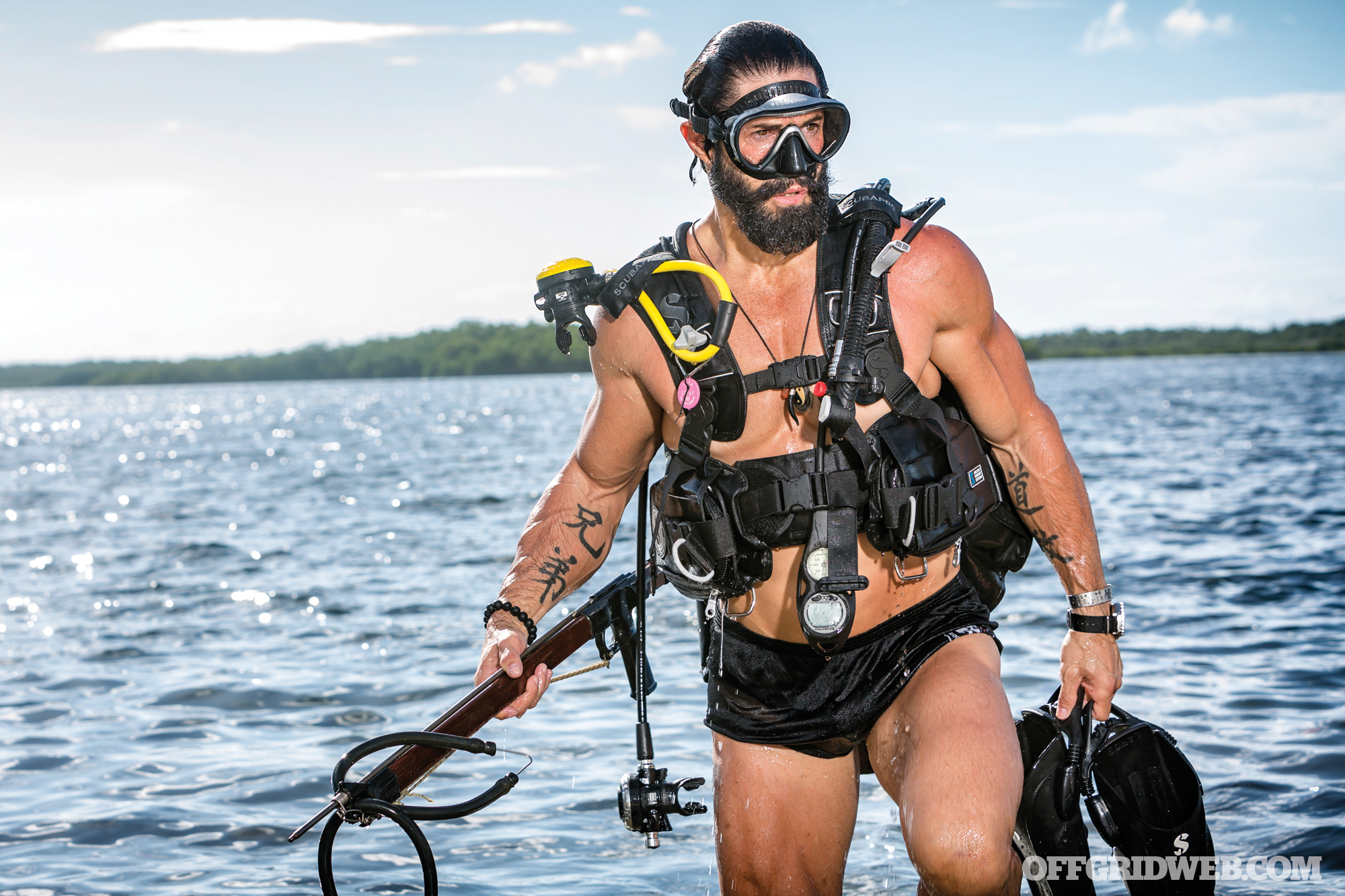

Take Your Best Shot: Prepper’s Slingshot Roundup

Photos by Sally Janich

What do you get when you combine one of the greatest industrial advances in history with a healthy dose of Bart Simpson–style evil genius and a forked stick? You get one of the most underrated members of the survivalist arsenal: the humble slingshot.

When Charles Goodyear patented his process for vulcanizing rubber in 1844, he solved the puzzle of making “India rubber” into a stable material that could handle temperature fluctuation without melting or cracking. He also paved the way for the manufacture of high-quality commercial rubber goods like inner tubes. By the late 19th century, enterprising delinquents all over the globe figured out that those inner tubes, cut into strips and lashed to a Y-shaped branch, could be used to launch small projectiles with surprising power and accuracy. The slingshot was born.

Slingshots, also known as catapults or “katty” (United Kingdom), kettie (South Africa), shanghai (Australia), or ging (Australia and New Zealand), remained DIY items until 1918, when the first commercial slingshot — the cast-iron “Zip-Zip” — was manufactured. It wasn’t until after World War II, though, that the concept of high-performance commercial slingshots really became popular. The Wham-O company, founded in 1948, led the way with their namesake Wham-O slingshot, which also came with a rest to shoot arrows. In 1954, the Wrist-Rocket company introduced the wrist-braced slingshot, which stabilizes the weapon and reduces the torque of the rubber bands on the shooter’s wrist, and pioneered the use of surgical rubber tubing instead of flat rubber bands.

01 - Open A.JPG

Above: Slingshots can be a viable addition to a prepper’s arsenal, but only if you invest the time and practice to become skilled in their use.

Although the Wrist-Rocket set the standard in slingshot performance for many years, the innovation didn’t stop there. Die-hard shooters with far too much free time on their hands were obsessed with pushing the envelope of power, performance, and accuracy. As they continued to tinker with slingshot design, materials and manufacturing methods also evolved — and more and more companies got involved in the slingshot market. Today, there are literally dozens of factory and custom-made slingshots available, many of which are lavishly pimped, including everything from on-board ammo storage to inertial stabilizers to Picatinny rails and even built-in laser sights. While the actual performance advantages of these features are highly debatable, they definitely show that the slingshot shooters’ market is hungry for variety and innovation.

07 - Aiming B.JPG

Above: Most slingshots don’t have sights, so accuracy is dependent on “gap” shooting. Pick an index on the slingshot (usually the tip of a fork tine) and use it as an aiming index. Shoot a group to determine the difference between point of aim and point of impact, and then adjust your aiming point accordingly.

While this roundup only scratches the surface of what’s out there on the market, it provides a great sampling of the basic types of slingshots that are commercially available. The pros and cons of each of the specific models we considered also give you an idea of what to look for, and what to look out for, when choosing a slingshot for your bug-out bag.

12 - Can Hit A.JPG

Above: With a little practice, it’s not difficult to hit soda cans from 21 feet. The cans are fun to shoot and about the same size as slingshot-worthy small game.

Performance Quantified

No matter which slingshot trips your personal trigger, you can pretty much expect about the same performance. Let’s face it, there’s only so much a couple of rubber bands will do.

To quantify that performance, we shot all the “catties” we had available through a chronograph using the same ammo — solid steel .38-caliber ball bearings. Each of these projectiles tipped the scales at 4 grams, or about 62 grains. With the exception of one slingshot that did not allow a full draw, we used classic slingshot technique, drawing to an anchor point on our cheek for a draw length of about 33 inches.

Above: Compared to firearms or airguns, slingshots don’t have much muzzle energy. However, they can still leave a mark. This is the front of a piece of 1⁄4-inch plywood hit by a 3⁄8-inch steel ball bearing. The back tells even more of the story.

Shooting 10-shot groups to get a representative average for each slingshot, velocities ranged from a low of 120.2 feet per second (fps) to a high of 176.7 fps. That’s an overall average of 153.0 fps. Plugging those numbers into a ballistic calculator revealed that the “muzzle energy” for these shots was 2 to 4 foot-pounds (ft-lb), or an average of 3 ft-lb. To put that into perspective, a Wal-Mart .177 pellet gun spitting a 7.6-grain pellet at 550 fps yields a significantly greater, yet still woefully anemic, 5.1 ft-lb of energy.

08 - Ammo.JPG

Above: Modern slingshot ammo includes glass projectiles, steel ball bearings of various sizes and weights, and even chalk-filled marking rounds.

Since the slingshot ammo collected for this test included everything from lightweight chalk-filled marker rounds and glass projectiles to heavy .50-cal ball bearings, we figured it might be worthwhile to test them and see if either a light-and-fast or slow-and-heavy combination could squeeze any more ballistic performance out of a slingshot. For that test, we chose the “Pocket Hammer” slingshot, which uses a rubber condom-like pouch instead of bands, has a much shorter draw length, but consistently shot about 30-fps faster than the competition with the .38-caliber ammo.

The “Pocket Hammer” launched lightweight 31-grain glass projectiles and its own branded 5⁄16-inch steel ammo at nearly 220 fps and 108-grain ½-inch ball bearings at about 140 fps. However, doing the math was still underwhelming, translating to 3 and 5 ft-lb of energy, respectively.

03 - Chrono A.JPG

Above: With a standard cheek-index style of shooting, most slingshots produce velocities of 150-200 fps with typical ammo choices.

Instead of anchoring their release hand to their cheek or jaw, some slingshot shooters prefer a much longer “Albatross” draw with the arms extended in opposite directions. This requires more strength and skill, but can also consistently generate velocities approaching 250 fps and muzzle energies of 6 ft-lb with steel ball bearings.

The Bottom Line

Several careers ago, I worked for the U.S. government in Vietnam and Laos. Although many of the areas we worked in had thriving rat populations, we weren’t allowed to have firearms or even airguns purchased outside the country. Before we discovered some decent Czech air rifles in the local markets, blowguns and slingshots were our pest-control tools of choice. After lots of practice, we got good enough to consistently hit rats with slingshots. When we did, we either killed them outright or stunned them badly enough that we could finish them off easily. When we missed, however, the ricocheting ball bearings or shattering glass marbles made life exciting and occasionally painful.

From a survivalist’s perspective, the slingshot is a handy, economical weapon that can easily tuck into a bug-out bag. Despite its limited power, it’s certainly capable of killing small game. If you invest in a model that launches arrows like a bow, you can go after even bigger critters. However, if you actually plan to put food on the table with any kind of slingshot, you should probably start practicing now.

SimpleShot “The Hammer” Slingshot/Slingbow Kit

Type
Modular Wrist-Braced Slingshot or Arrow Launcher

MSRP
$100

URL
simple-shot.com

01 - SimpleShot Kit.JPG

This high-quality kit includes a molded grip (with an integral Picatinny rail), a wrist brace, two modular yoke attachments (one conventional slingshot and one for shooting arrow), and dedicated band assemblies for each yoke. The slingshot used flat bands, while the arrow yoke used a special assembly of surgical tubing and a nocking string for the arrow. Since this was the only arrow launcher in the mix, testing focused primarily on the slingshot mode.

15 - SimpleShot sling bow A.JPG

Pros:

  • Easiest to draw of all those tested
  • Can be shot with or without the wrist brace
  • Soft leather pouch was easy to load
  • SimpleShot’s website is a treasure trove of slingshot information.

Cons:

  • Despite the brand name, assembly isn’t intuitive (consult the website before the balloon goes up).
  • Wrist brace is removable but doesn’t fold for transport
  • Many small, dedicated parts

Pocket Shot

Type
Pouch-Style Slingshot

MSRP
$25

URL
thepocketshot.com

18 - Pocket Shot B.JPG

This brilliantly simple slingshot consists of a heavy rubber pouch attached to a two-piece threaded polycarbonate ring. Just remove the ring’s screw-on cap (which doubles as a wrench for changing pouches), drop a projectile in the pouch, hold the ring between your thumb and index finger, pull back, and let fly. Extremely compact and lightweight, it’s an easy addition to any bug-out bag.

Pros:

  • Surprisingly powerful
  • Pouch design makes it impossible to drop or misalign a projectile.
  • Compact, lightweight, and easy to pack
  • Screw-on cap allows ammo to be stored in the pouch
  • Lots of aftermarket accessories, including high-power pouches and arrow launchers, also available

Cons:

  • Short draw length
  • Ring-style grip requires good hand strength.
  • Unconventional shooting position
  • Poor shooting form can result in some impressively painful palm hits.

Pocket Shot with Pocket Hammer

Type
Pouch-Style Slingshot with Wrist-Braced Pistol Grip

MSRP
$99-$104 ($45 for Pocket Hammer alone)

URL
thepocketshot.com

20 - Pocket Hammer B.JPG

The Pocket Hammer is an injection-molded pistol-grip platform designed for use with the Pocket Shot. It includes a folding wrist brace and provides a much more stable shooting platform. Its integral Picatinny rail accepts an optional fishing reel that, along with other aftermarket accessories, allows it to be used for bowfishing.

Pros:

  • Much more stable and easier to aim than the ring-style Pocket Shot
  • Wrist brace allows a longer pull and more power
  • Folding design is still reasonably compact and packable
  • Lots of optional accessories available

Cons:

  • Still has a short draw length
  • Still requires an unconventional shooting position

Daisy PowerLine B52 Slingshot Model 8152

Type
Tubular Band Slingshot with Folding Wrist Brace

MSRP
$11

URL
daisy.com

21 - Daisy B52.JPG

This slingshot epitomizes the iconic “wrist-rocket” style of wrist-braced, tubular band slingshots. Simple, sturdy, and straightforward, it’s also extremely affordable. Its folding wrist brace design also allows it to fit in a pack. Its leather pouch was a bit stiff but would easily break in with use.

22 - Daisy B52 Folded.JPG

Pros:

  • Classic, no-frills “wrist rocket” design
  • Folding wrist brace makes it packable
  • Very affordably priced

Cons:

  • Stiff leather pouch makes indexing projectiles difficult at first
  • Like all slingshots, shooting accurately requires considerable practice.

Camillus Les Stroud Mentawai Slingshot

Type
Folding Multi-Function Survival Slingshot

MSRP
$37

URL
camillusknives.com

23 - Camillus Les Stroud.JPG

Designed by survival guru Les Stroud, this slingshot features a heavy-duty cast body and independently folding, locking steel yoke arms. The slingshot body has a built-in compass and a hollow storage cavity that holds a combination fire starter/whistle and four heavy ball bearing projectiles (included). Impressively sturdy, it uses tubular rubber bands and a soft leather pouch.

24 - Camillus Les Stroud Folded.JPG

Pros:

  • Multi-function design includes compass and fire starter/whistle
  • On-board ammo storage
  • Folds to compact size
  • Sturdy construction

Cons:

  • Pre-installed tubular bands were twisted, making it slow and difficult to load.
  • Somewhat heavy for the functions it provides

TOPS Knives TOPS Sling

Type
Tubular Band Slingshot

MSRP
$130

URL
topsknives.com

26 - TOPS Sling B.JPG

TOPS Knives, respected makers of hell-for-stout knives, applied their proven craftsmanship to the slingshot to create the TOPS Sling. It features a tumble-finished 1095 tool steel body, black canvas Micarta scales, and strong tubular bands. It also comes complete with a beautifully crafted leather belt pouch. A kick-ass expression of the classic fork-style slingshot, it’d be even more pleasant to shoot if the edges of the fork had been radiused a bit.

Pros:

  • Extremely high-quality materials and craftsmanship
  • Supple leather pouch is easy to load
  • Comes with beautiful leather belt pouch

Cons:

  • Corners of fork are a bit too acute
  • No instructions on band replacement
  • Despite its quality, the price can be daunting

Umarex X-Shot LE

Type
Tubular Band Slingshot with Wrist Brace

MSRP
$35

URL
cabelas.com

29 - Umarex X-Shot.JPG

In simple terms, the Umarex X-Shot LE is a wrist-braced, tubular-band-style slingshot with an adjustable fork and wrist brace that allows you to tune the length of pull. It also has on-board ammo storage in the grip and a squeeze-operated “Auto-Feed” ammo dispenser. Its not-so-simple features include a laser sight in the grip and a “Command Clasp” magnetized retaining pouch to hold steel ammo in place. While an ambitious effort to create a high-tech slingshot that does everything, its actual performance was disappointing.

Pros:

  • Adjustable wrist brace and fork position allow variable length of pull.
  • On-board ammo storage and easy dispensing

Cons:

  • “Command Clasp” pouch is too complicated and doesn’t align with the leather finger hold, limiting accuracy and frequently causing misfires.
  • Wrist brace design doesn’t support wrist well
  • Laser makes a better cat toy than slingshot sight
  • Non-folding design is awkward and doesn’t pack well

More From Issue 29

Don’t miss essential survival insights—sign up for Recoil Offgrid’s free newsletter today!

Read articles from the next issue of Recoil Offgrid: Issue 30

Read articles from the previous issue of Recoil Offgrid: Issue 28

Check out our other publications on the web: Recoil | Gun Digest | Blade | RecoilTV | RECOILtv (YouTube)

Editor’s Note: This article has been modified from its original version for the web.

OffGridBox Solar Water Purification System

Lack of access to clean water for drinking and washing is a life-threatening issue faced by millions of people in impoverished nations every day. Without clean water, infectious diseases spread like wildfire, and this is compounded by the limited availability of doctors and medicine in these places. Obviously, this is also a major consideration for those of us who wish to prepare for natural disasters and other domestic emergency situations. If you can find a way to efficiently produce clean water that’s free of pathogens, you’ll have more time and energy to focus on other critical tasks, such as staying warm and putting food on the table.
OffGridBox solar panel shipping container water purifier battery tech 4

A Boston-based company known as OffGridBox — no relation to our company or magazine — has developed a compact all-in-one system that can gather electricity from solar panels and use it to purify water for up to 1,500 people. All the components are housed in a durable 6’x6’x6′ metal shipping container, which can be delivered to the necessary location by truck, train, boat, or even airlifted in on a helicopter. The box is then unloaded and assembled on-site.

OffGridBox solar panel shipping container water purifier battery tech 2

The OffGridBox starts with a large solar panel array set up on top of the container, which generates up to up to 16 kWh of power per day without any connection to the power grid. An inverter turns this DC into usable AC, which can be stored in the built-in battery pack or used to power other appliances (or even a small building). This electricity is also used to filter and purify up to 24,000 liters of water per day, and pump it to wherever it needs to go.

OffGridBox solar panel shipping container water purifier battery tech 1

You might be wondering where the water comes from, and that’s a good question. The OffGridBox includes an integrated rainwater capture system, which feeds an onboard polyethylene storage tank, which in turn feeds the purifier. Untreated water can also be pumped into the unit from a well, river, or other external reservoir. There’s even an optional upgrade planned that will equip the unit with a desalinator, so you could turn saltwater from the ocean into pure drinkable fresh water on demand.

OffGridBox solar panel shipping container water purifier battery tech 3

A basic model OffGridBox is said to produce enough electricity every day to support more than 300 families with basic electrical needs (2 lights and 2 smartphones each). At the same time, it can deliver a daily supply of up to 27 liters of clean water to each of these families. If you’re not looking to support a whole village, you could use the unit to power a single home with more sophisticated appliances such as air conditioning, a refrigerator, and a washing machine.

Here’s a summary of the standard OffGridBox’s specifications:

  • External Dimensions: 6’ 6” x 6’ 5” x 6’ 3” (L x W x H)
  • Solar Panel Dimensions: 13.12’ x 16.40’
  • Weight: 2,866 lbs dry / 6,172 lbs wet
  • Solar Panel Array: 12 modules 330wp each (4kWp)
  • Inverter: 5KVA (10 kW peak, 4.5kW continious, can be upgraded to 10KVA 20kW peak)
  • Battery: Lithium LiFePO 5.5 kWh (with upgraded PAYG Add-On 17.5 kWh total)
  • Water Treatment: Standard Model: 1000 liters per hour (2 stage filters and UV sterilization)
  • Water Storage: 1500 liters (polyethylene tank for food quality water)
  • Price: Starting at approximately $28,000 (financing available for U.S. customers, buyback program available to recoup expenses)

For more information on the OffGridBox system, go to offgridbox.com or check the company’s FAQ page.