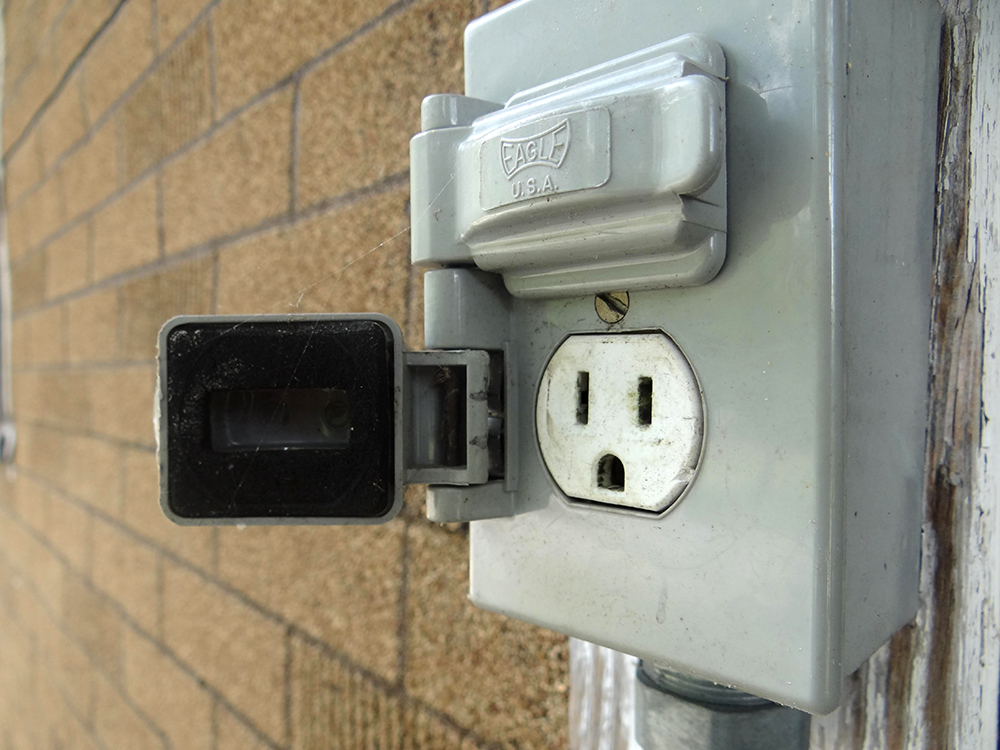
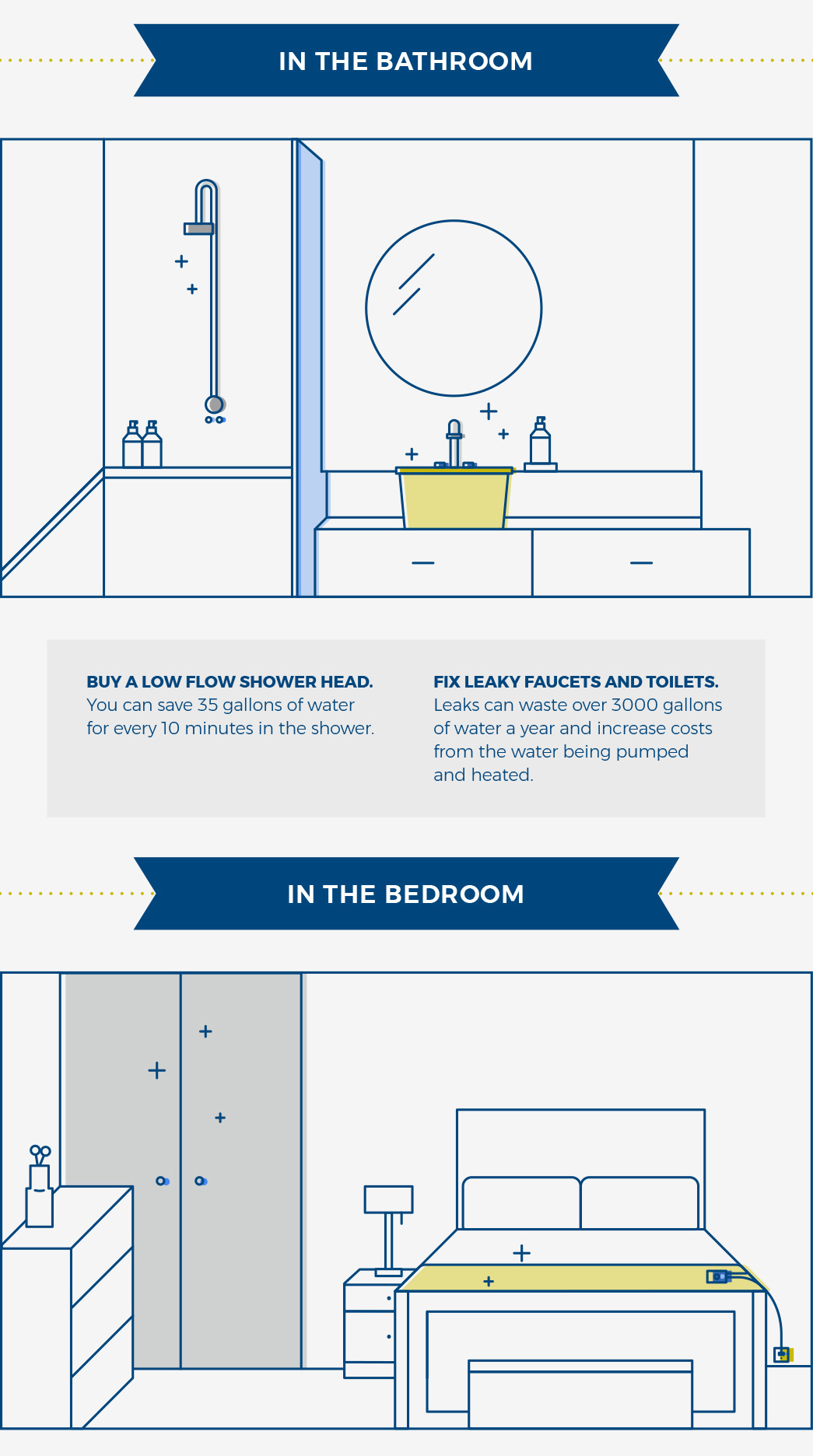
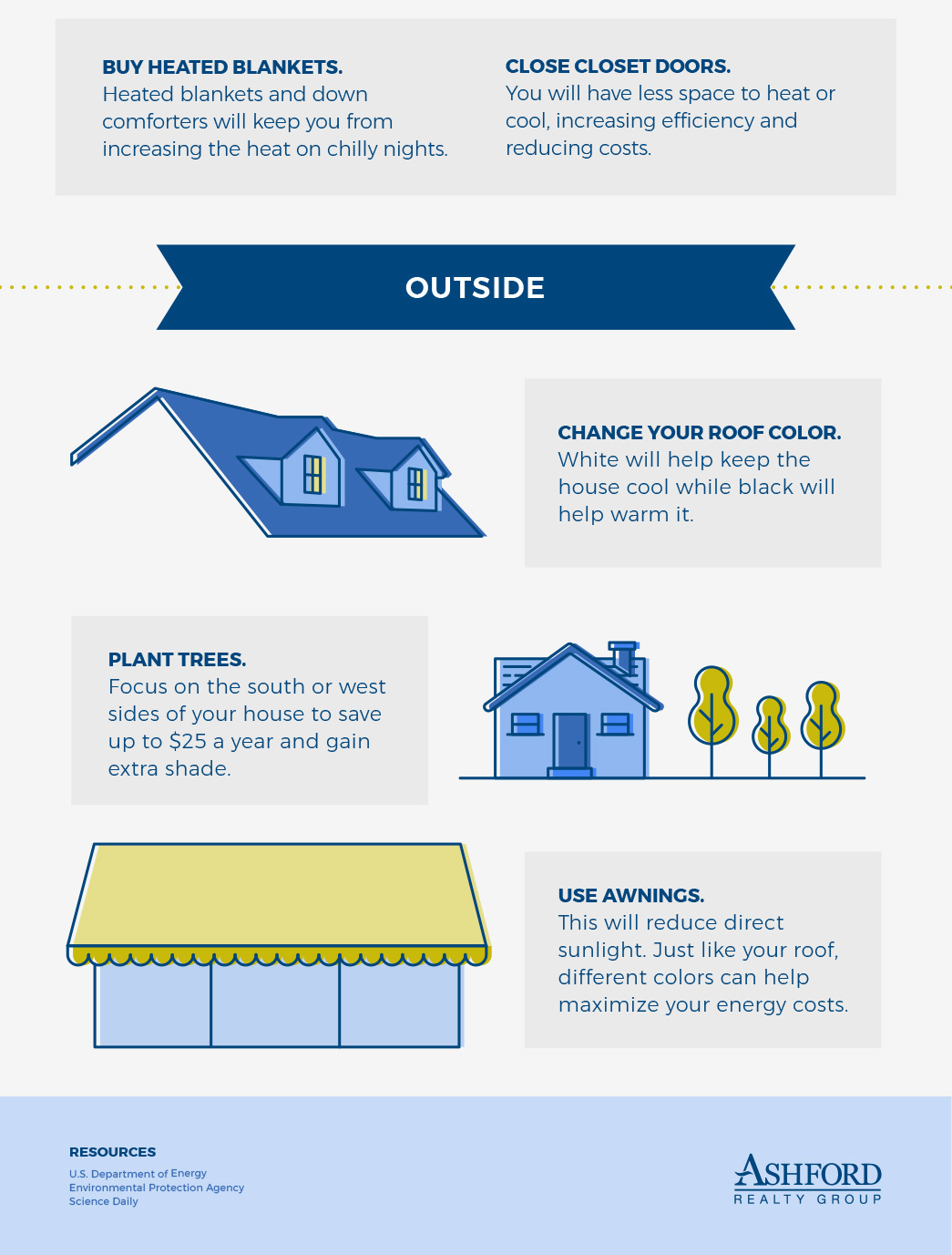
Efficiency is key in any survival situation — making the most of the limited resources you have will help you stay comfortable and safe for longer periods of time. This obviously applies to how you ration food, water, gasoline, medical supplies, and other consumables. However, you should also consider how it applies to your home’s electricity.
Unlike the other supplies we mentioned, the power coming out of your wall outlets isn’t going to run out under normal circumstances, so you might not think of it as a consumable. But if a storm or other catastrophe does temporarily knock out the power grid, it’ll soon become apparent that your stockpiled batteries are finite. Even if you’ve got a backup generator or solar panel array, the fuel and time spent powering or recharging devices are finite resources.
If the seemingly-infinite power grid dries up, you’ll soon be reminded that electricity is a consumable item.
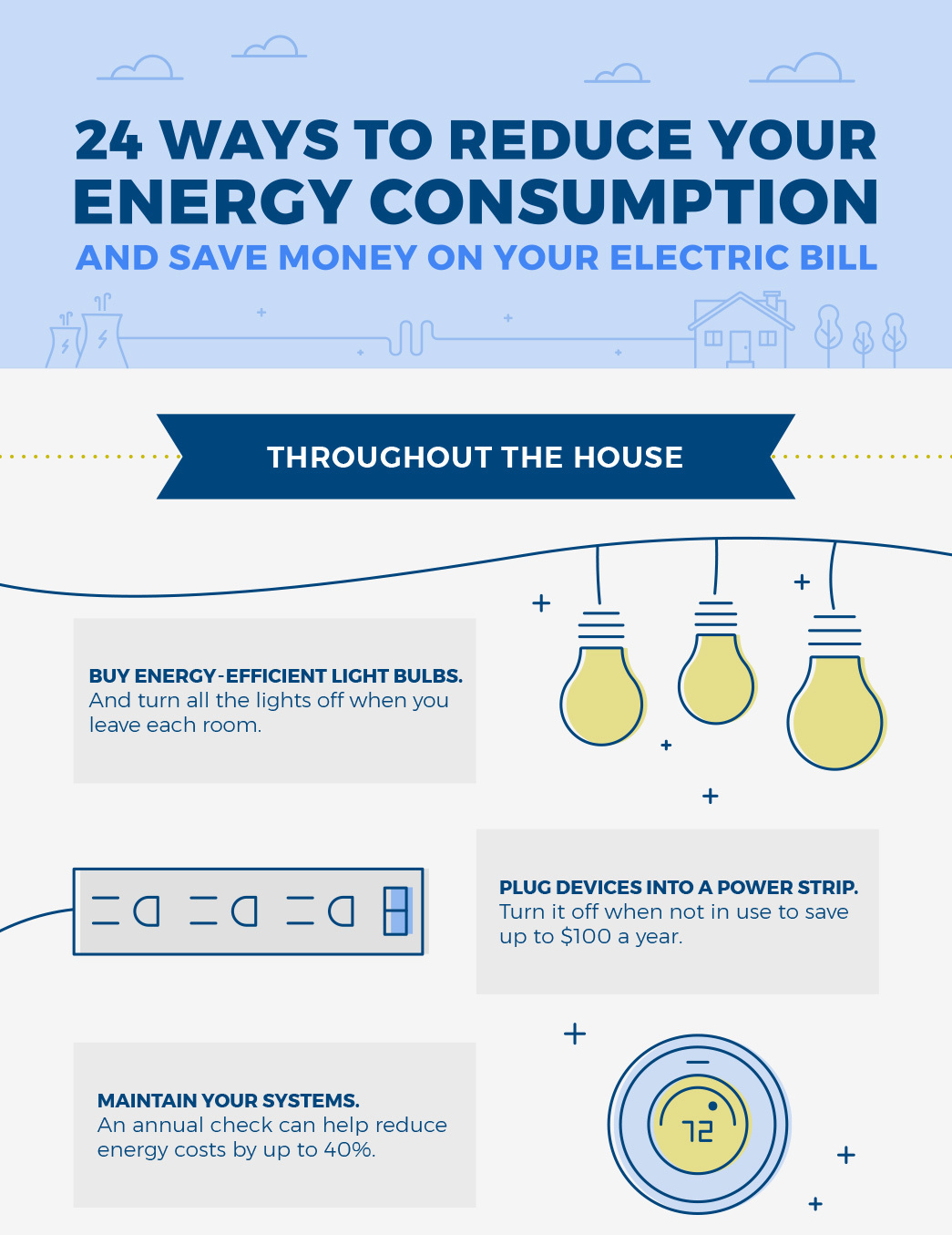
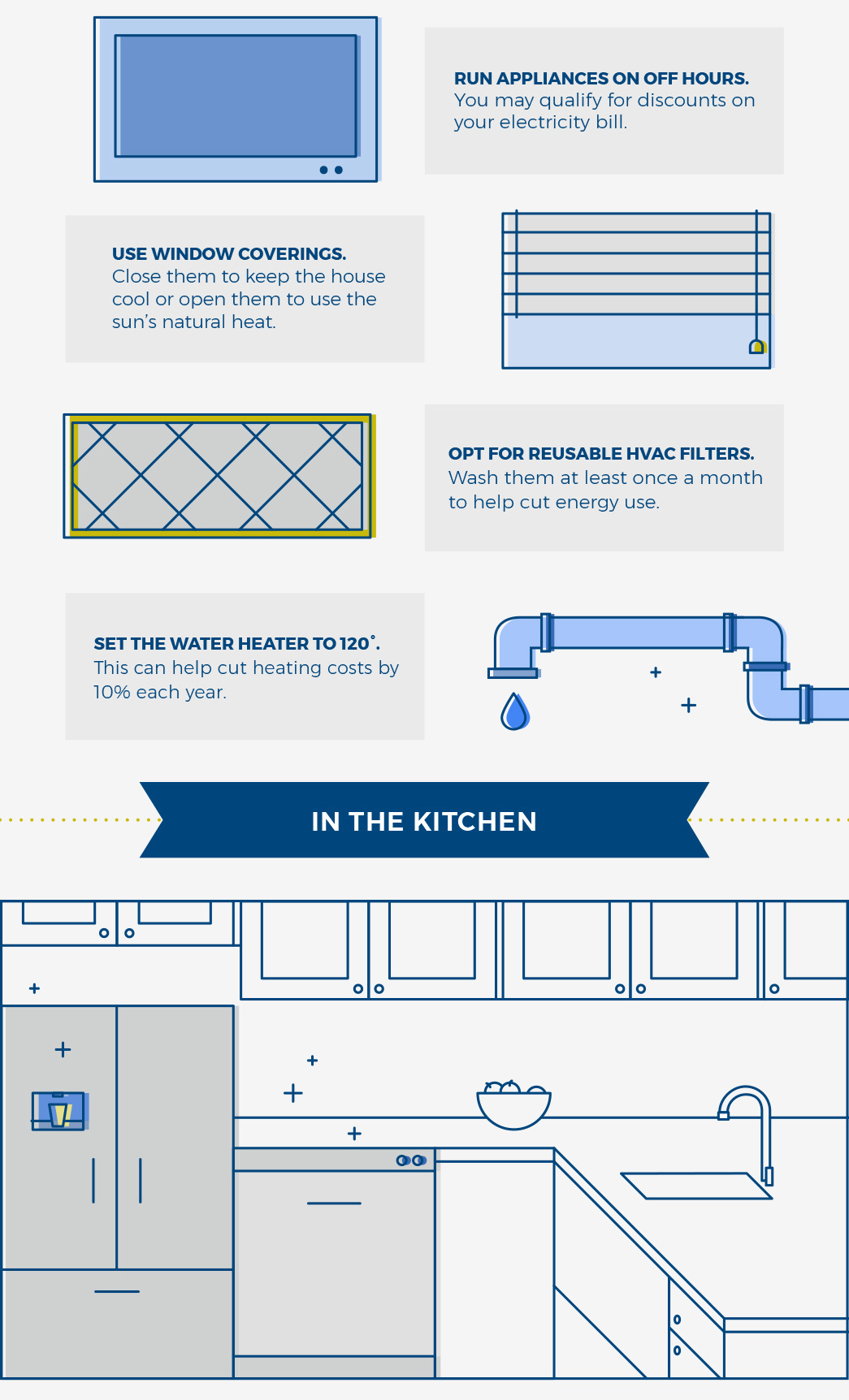
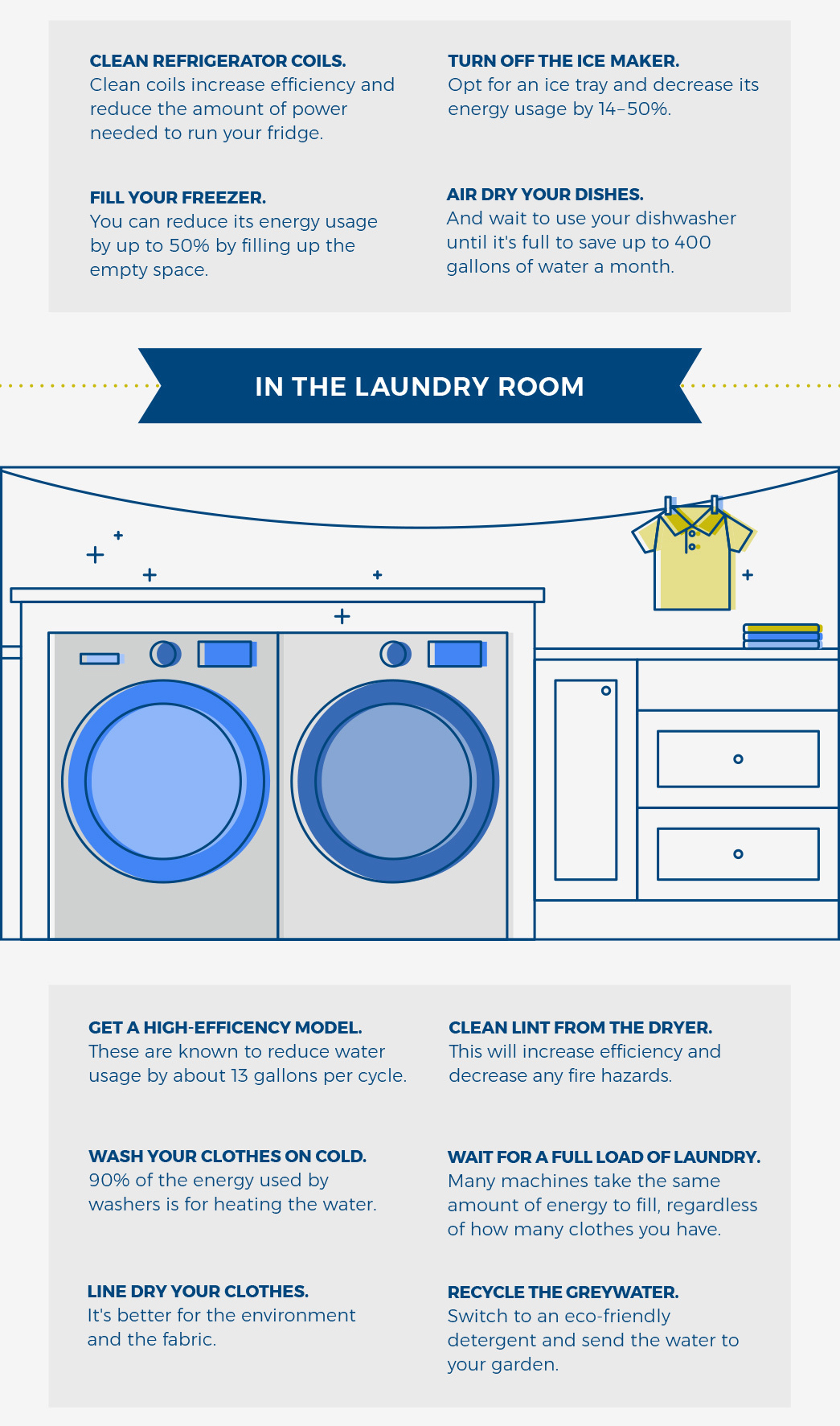
So, it’s advantageous to look at your home’s power consumption and electrical efficiency before a disaster arrives. Doing so will help you determine which appliances really need backup power, and which of these critical devices can be adjusted to use less energy. This will help your battery supplies and generator fuel last longer in an emergency, and it’ll also save you money throughout the year. That money can then be applied to other necessary preps.
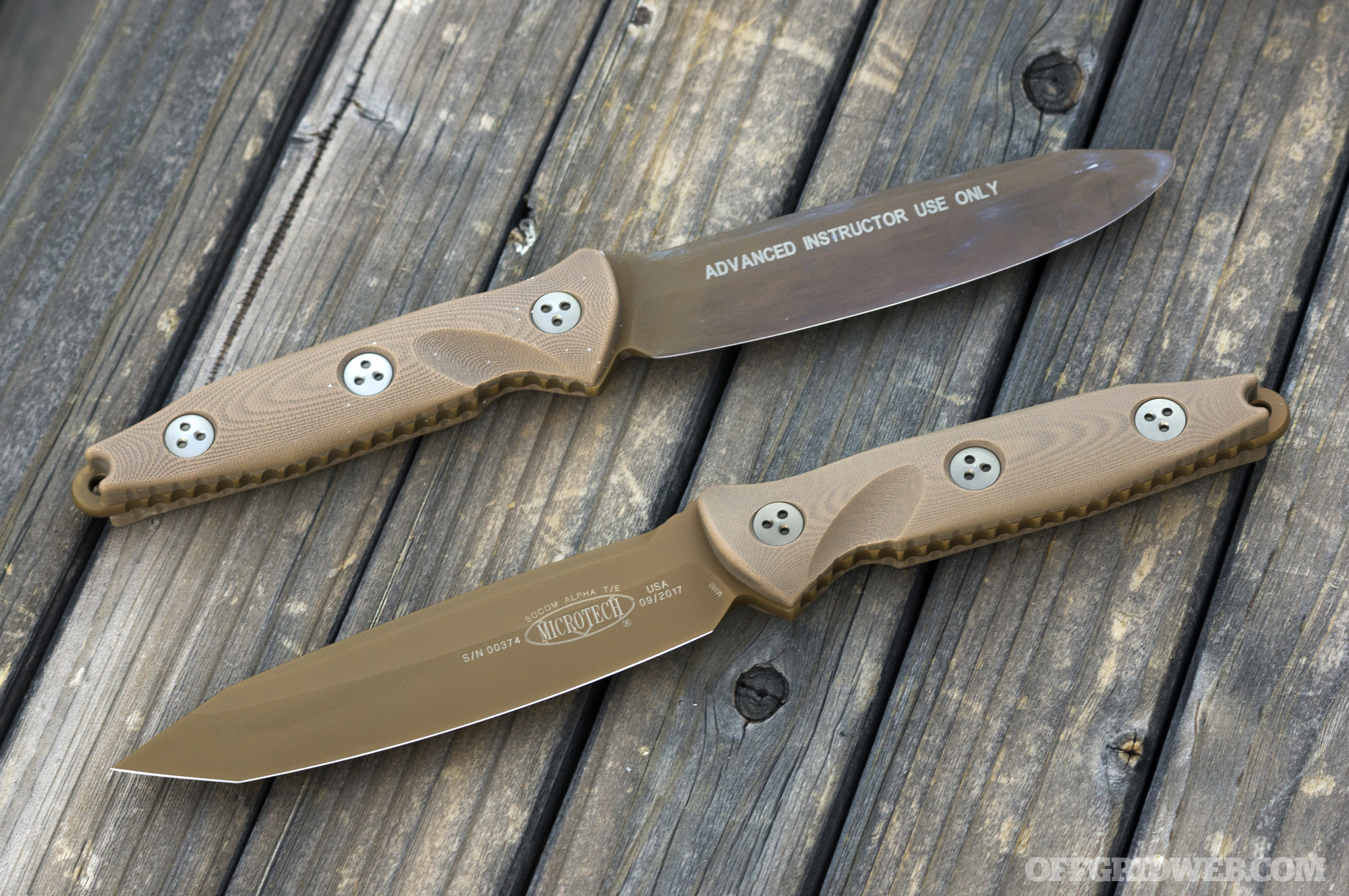
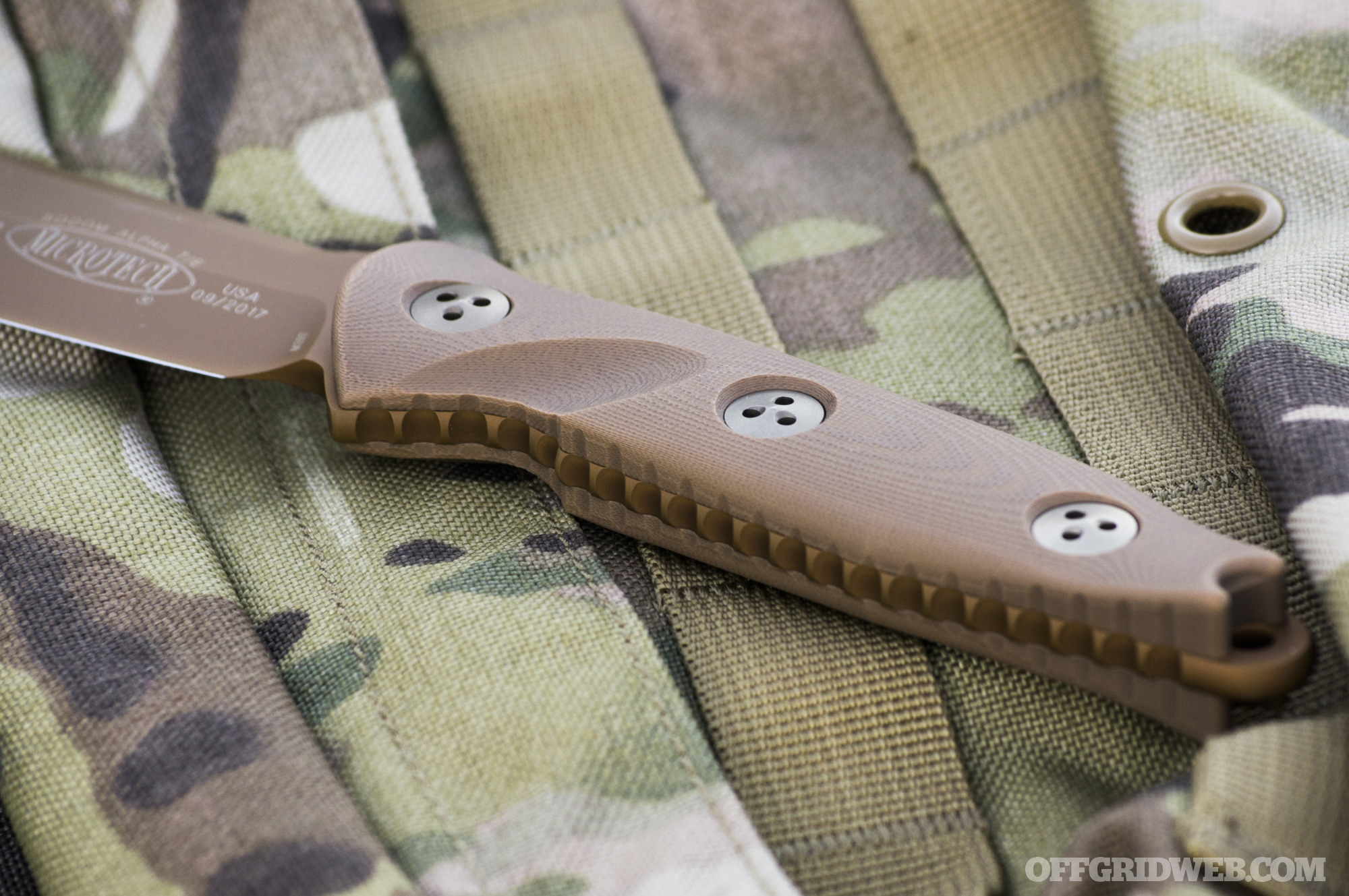
When someone hears the name Microtech, it’s very likely that the first things they will think of are the expertly-crafted automatic knives that have become a staple of the brand. It may be surprising for some to learn that Microtech also has some awesome fixed-blade pig-stickers in its product line. One such blade is the SOCOM Alpha.
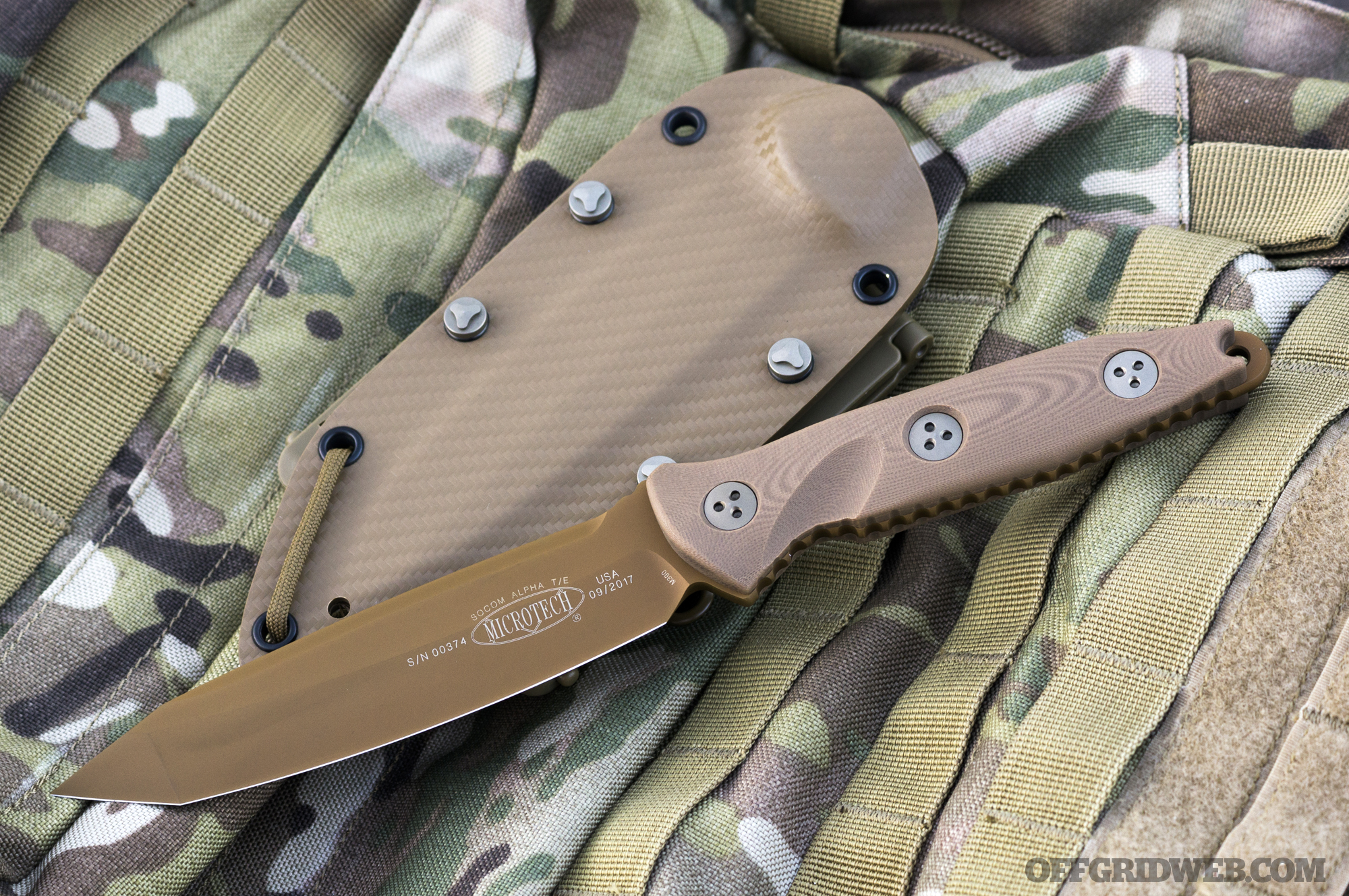
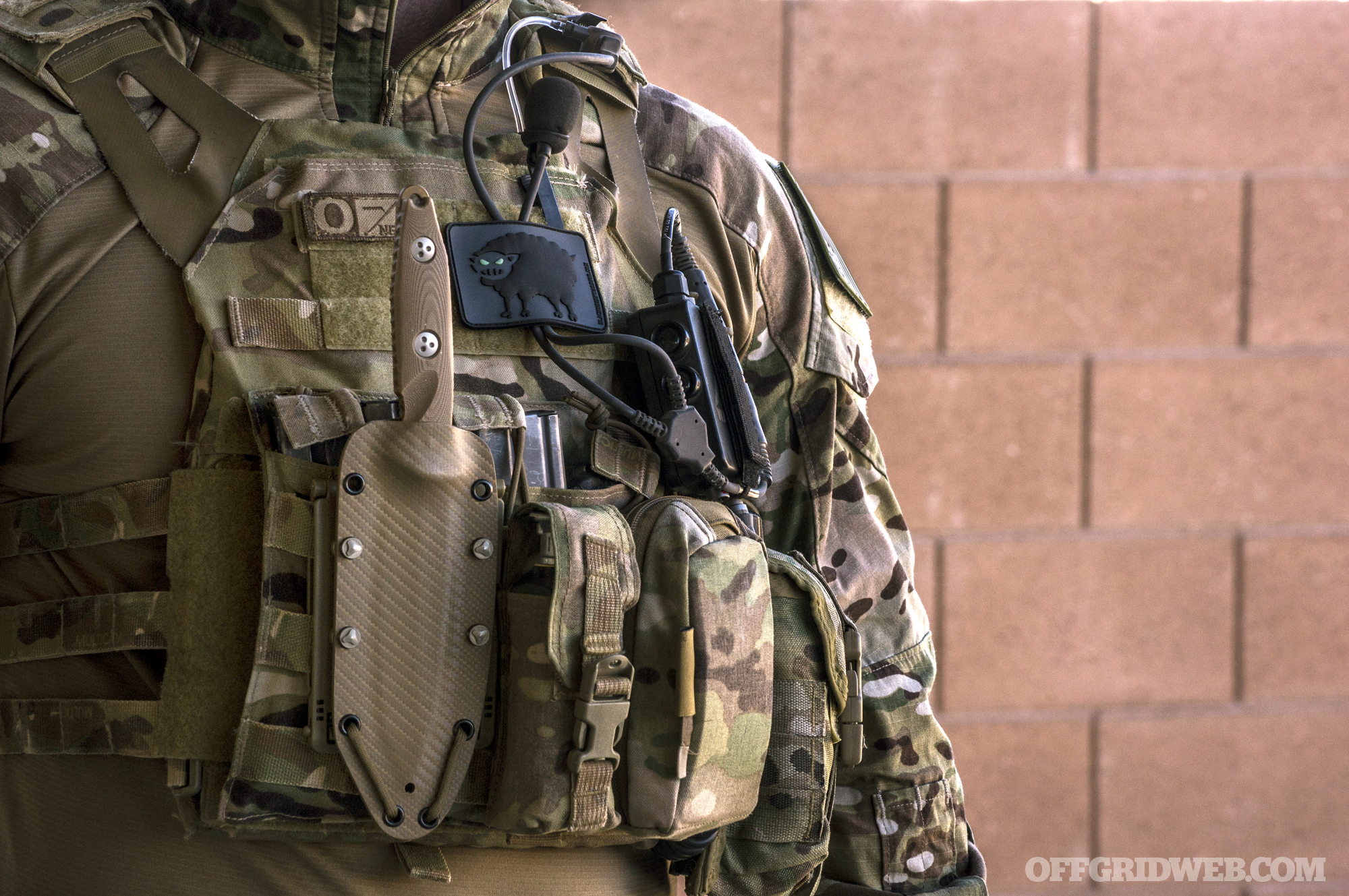
The SOCOM Alpha is the newest addition to the SOCOM series offered by Microtech. It is essentially a fixed-blade, full-tang version of the SOCOM Elite, a folder belonging to the same family of Microtech knives. Originally offered exclusively as a Microtech Custom, the Alpha is now available as a production knife in Microtech’s standard lineup.
Hands-On at Summit in the Sand
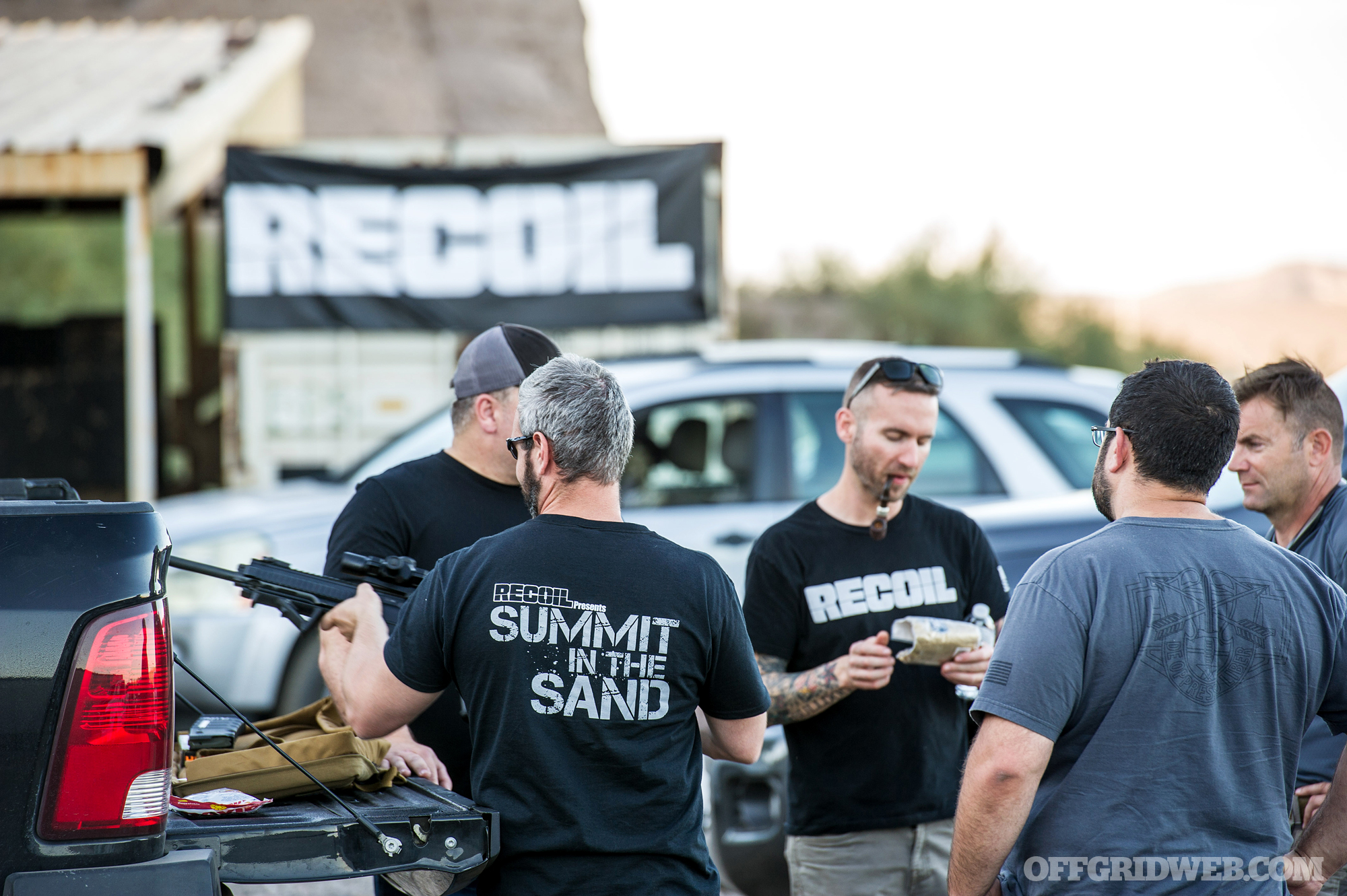
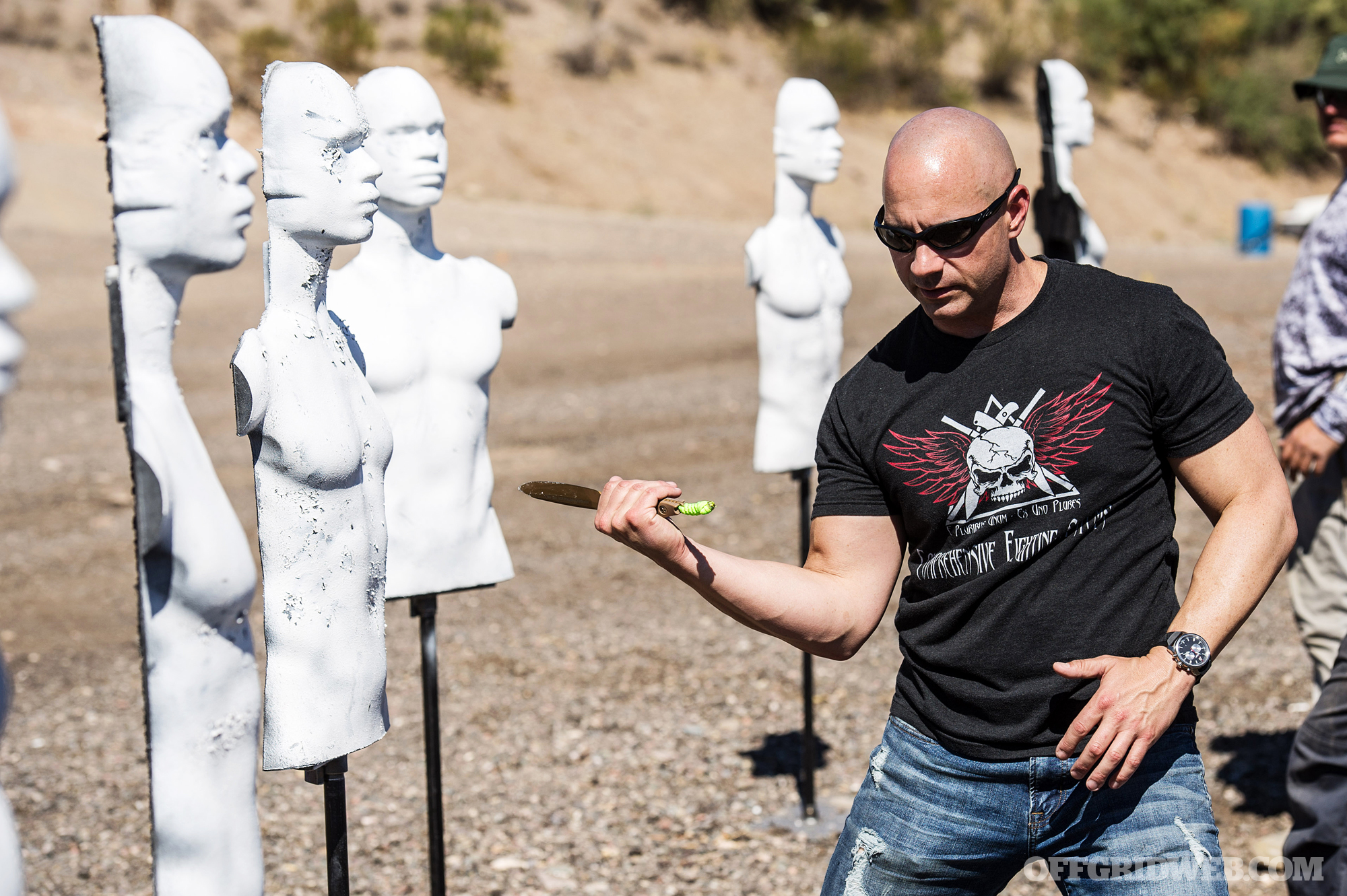
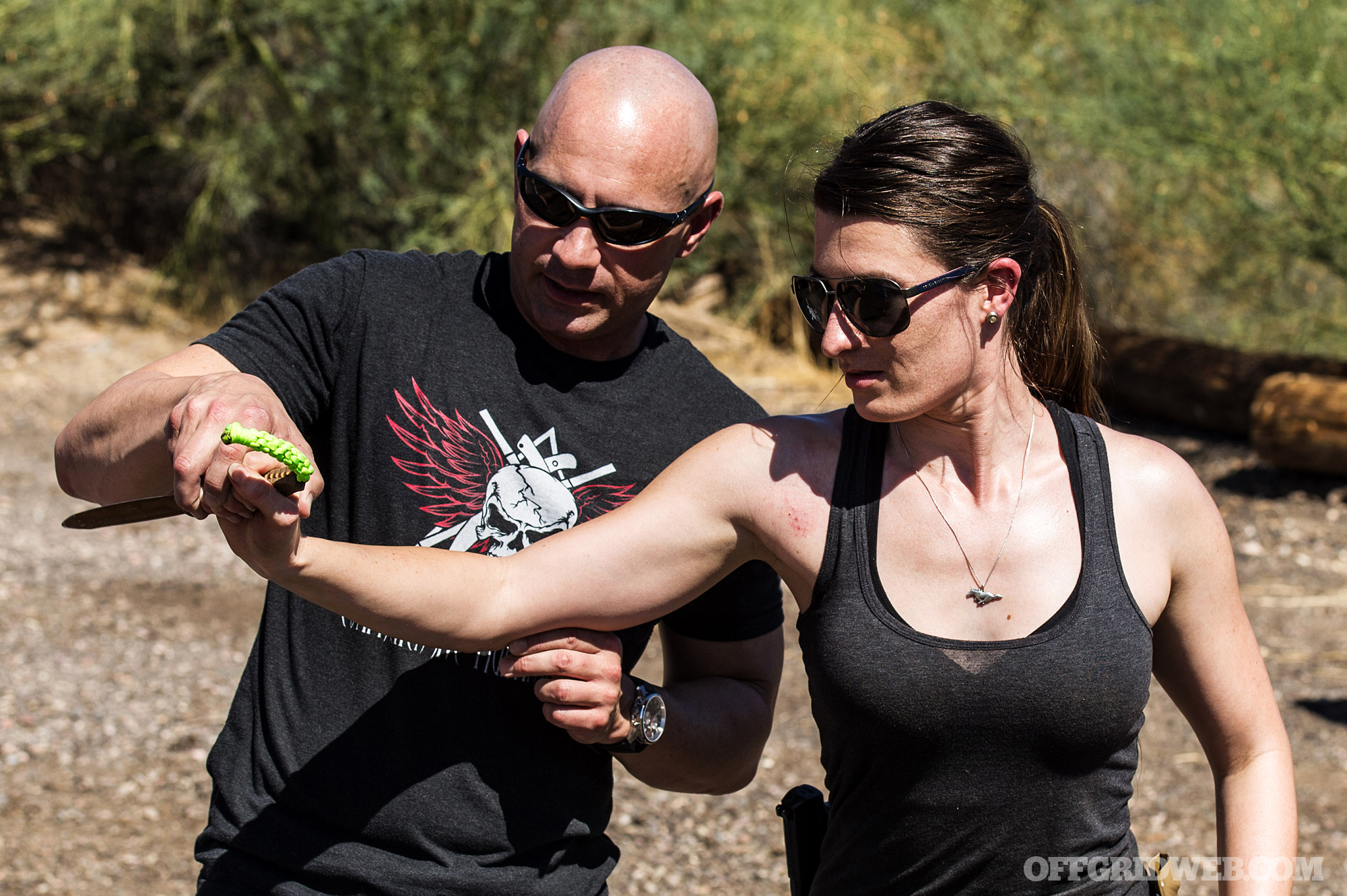
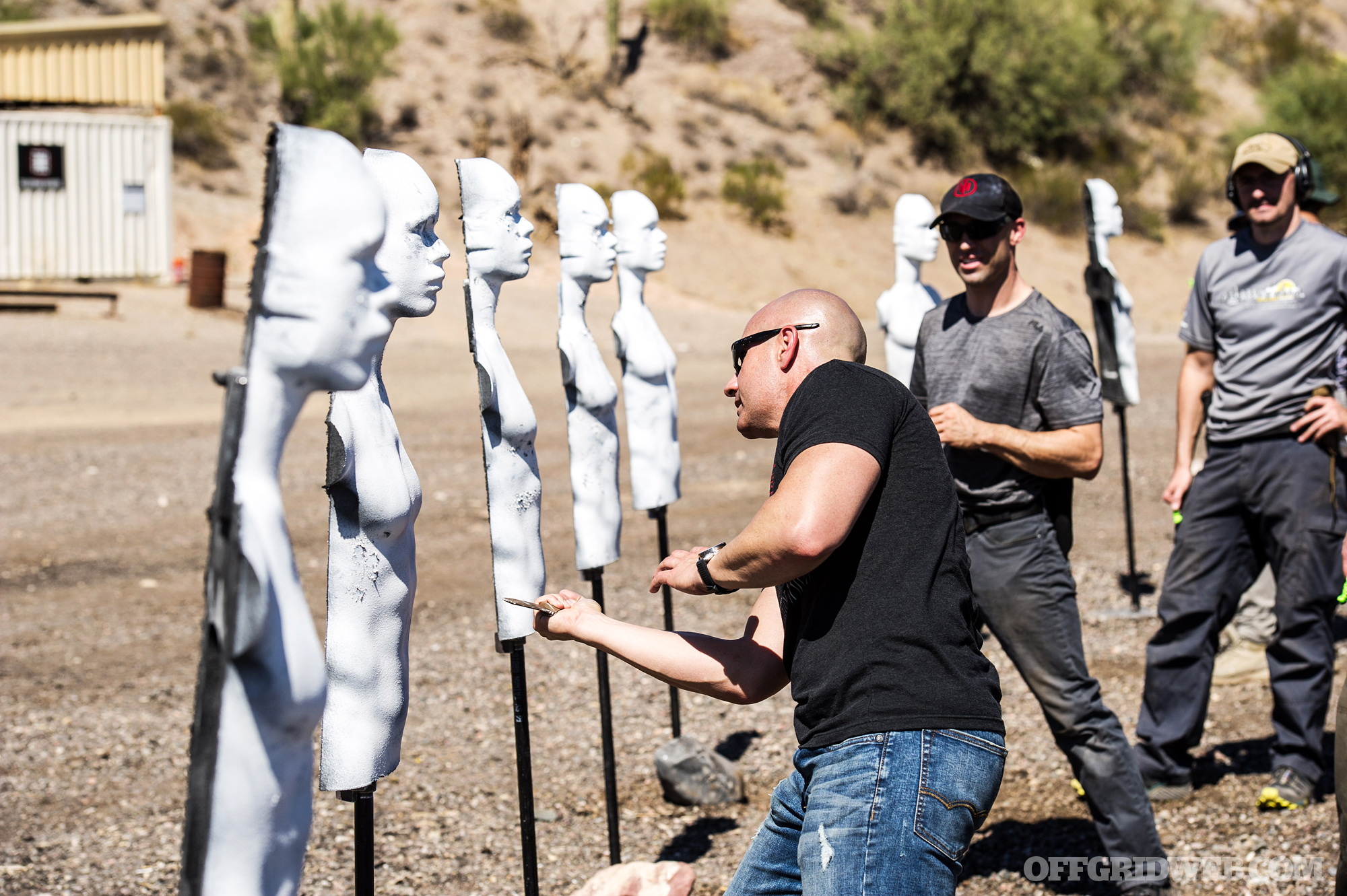
I personally encountered the Alpha during RECOIL’s inaugural live event, Summit In The Sand, a training-focused event held at CowTown Range in Phoenix, Arizona, where I was teaching Defensive Blade Tactics as a guest instructor. Microtech sponsored this portion of the event, and the SOCOM Alpha was the company’s featured piece of steel.
Just for this event, Microtech ground the edges and points off several Alphas and converted them into trainers. This afforded attendees the opportunity to train with a blade that provided the actual weight and feel of the live blade they would end up walking away with at the end of the day (a not-so-little surprise from the sponsor). Having never seen or handled the SOCOM Alpha myself prior to the event, I left with a newfound admiration of this well-designed knife.
The Alpha has some impressive “credentials” in materials alone. The blade is made out of Bohler-Uddenholm ELMAX steel. If you’re not familiar with ELMAX, we think pretty highly of it. Considered by knifemakers to be a “super-steel,” ELMAX is a high chromium-vanadium-molybdenum-alloyed steel, consisting of 1.7% carbon, 18% chromium, 1% molybdenum, .8% silicon, .3% manganese, and 3% vanadium. The end result of this alloy composition is high wear and corrosion resistance, a high compressive strength, and excellent edge retention qualities – all while remaining easy to sharpen.
The powdered metallurgy process used to produce ELMAX has some distinct advantages over traditional ingot steel. With this type of metallurgy, fine-powdered materials are blended and pressed into a desired shape and then bonded through heating. This process results in a more consistent, homogenous steel with a superb microstructure. In layman’s terms, its good stuff.
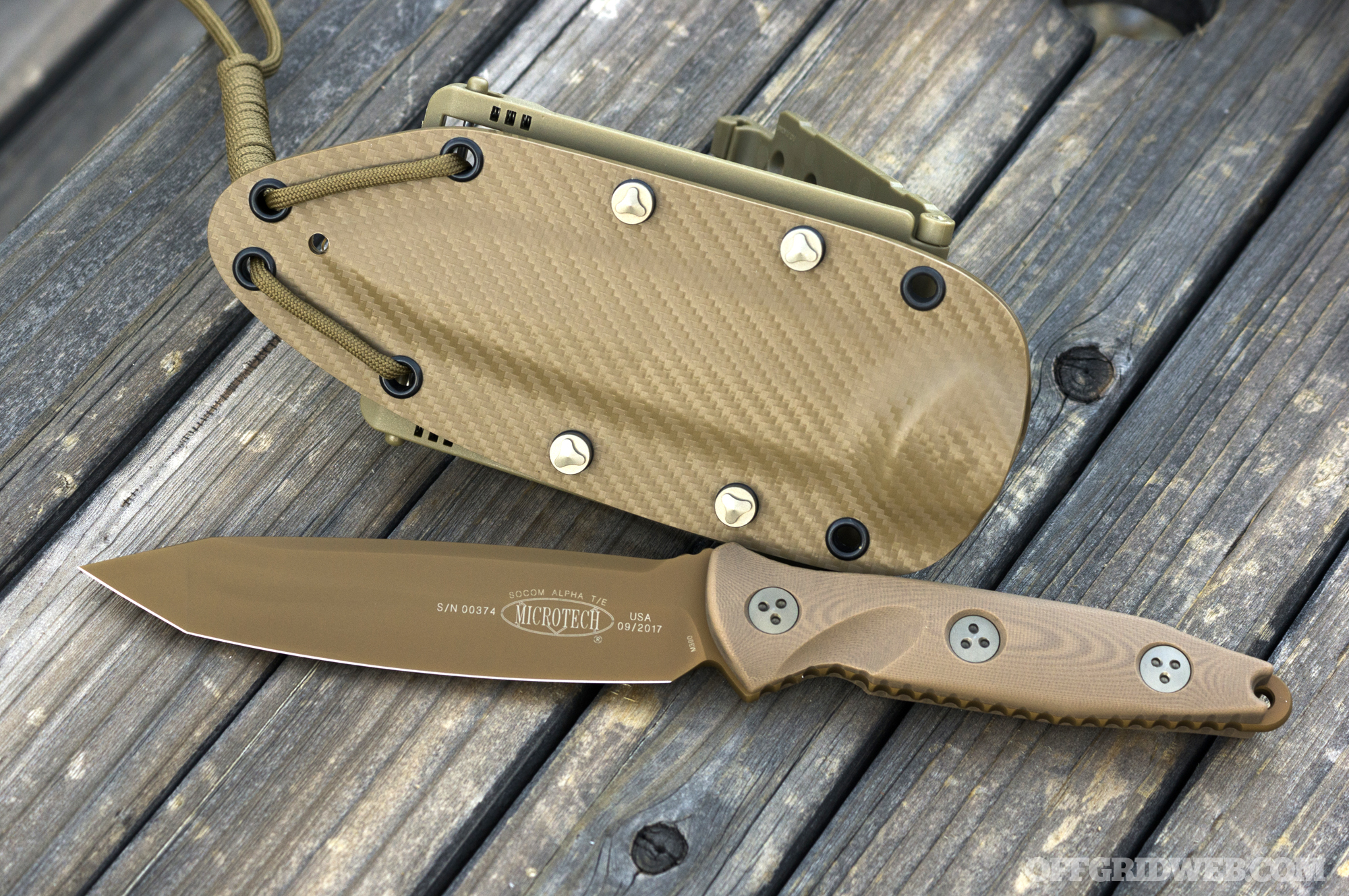
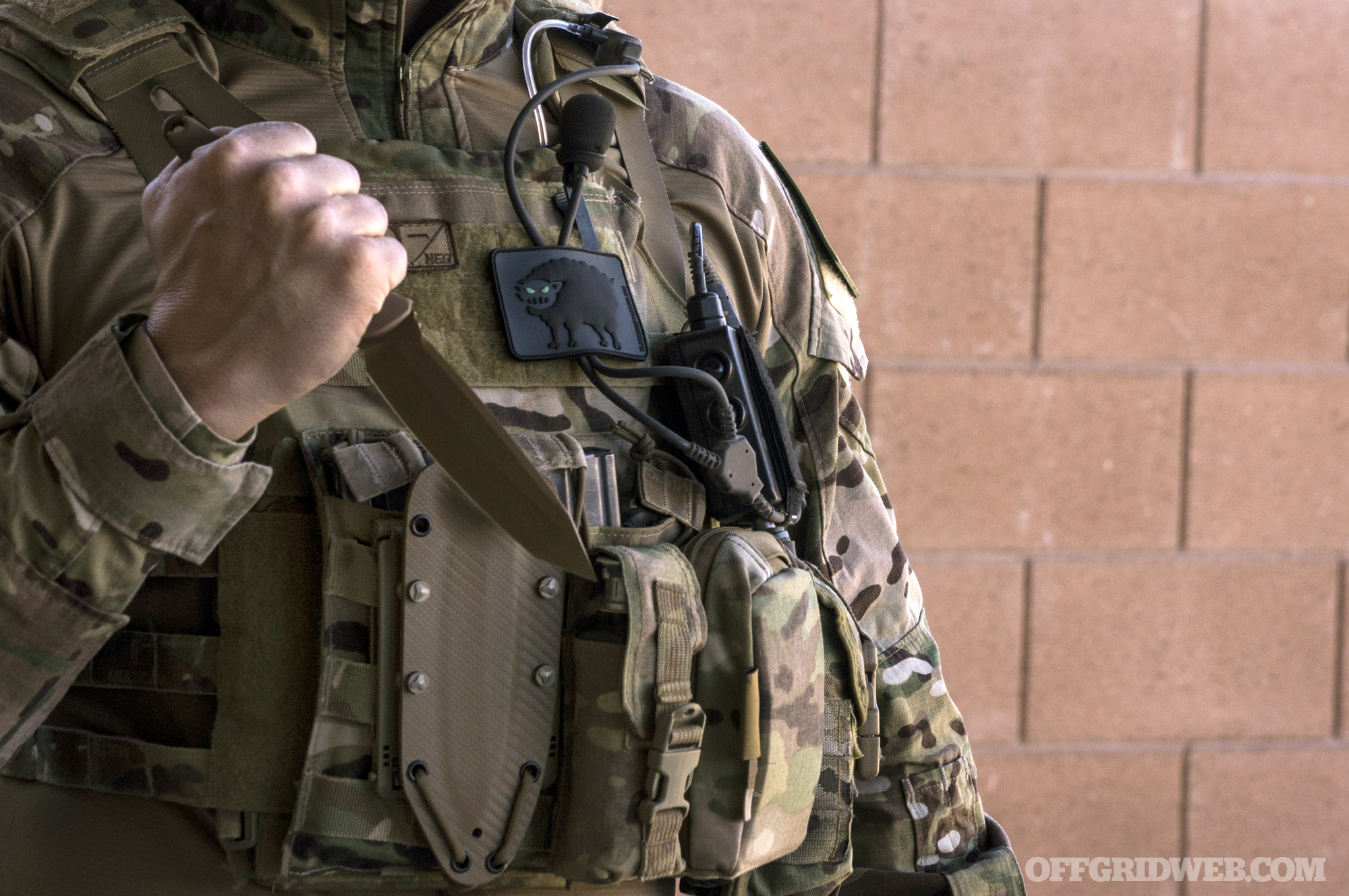
The Alpha boasts a large 10.47” overall length with a 5.42” hollow-ground blade. The knives provided for the class were of the tanto blade variety, though the Alpha is also available in a clip-point version. This large knife – a relative term for blade aficionados – tips the scale at 8.25 ounces, enough weight to feel solid in the hand without being outright heavy. It’s also nicely balanced right at the center of the handle’s forefinger notch.
Speaking of the handle, it features nicely-indexed G10 handle scales that are affixed with 17-4 PH stainless, 3-hole screws. This is some of the most beautiful handle hardware we’ve seen on a production knife in a while.
What stands out more than any other feature on this knife, though, is the jimping that runs down the entire spine of the handle. Aside from being beautifully-paired with the accompanying jimping on the G10 handle scales, this added texture provides aggressive grip that ensures this knife won’t slip in your hand. Combined with the thumb ramp and forefinger grove, it pretty much negates the absence of a guard on this knife. Oh, and for those of you who like to accessorize, there is a lanyard hole on the butt of the knife as well.
The Alpha ensemble is completed with a well-designed, carbon-fiber-lined Kydex sheath. It’s fully-equipped with 550 cord for lashing or a lanyard, and Blade-Tech MOLLE-Lok attachments for MOLLE compatibility. Again, the 17-4 PH stainless hardware used to affix the MOLLE-Lok to the sheath adds a touch of class, like elegant cufflinks on a dress shirt.
Training with the SOCOM Alpha
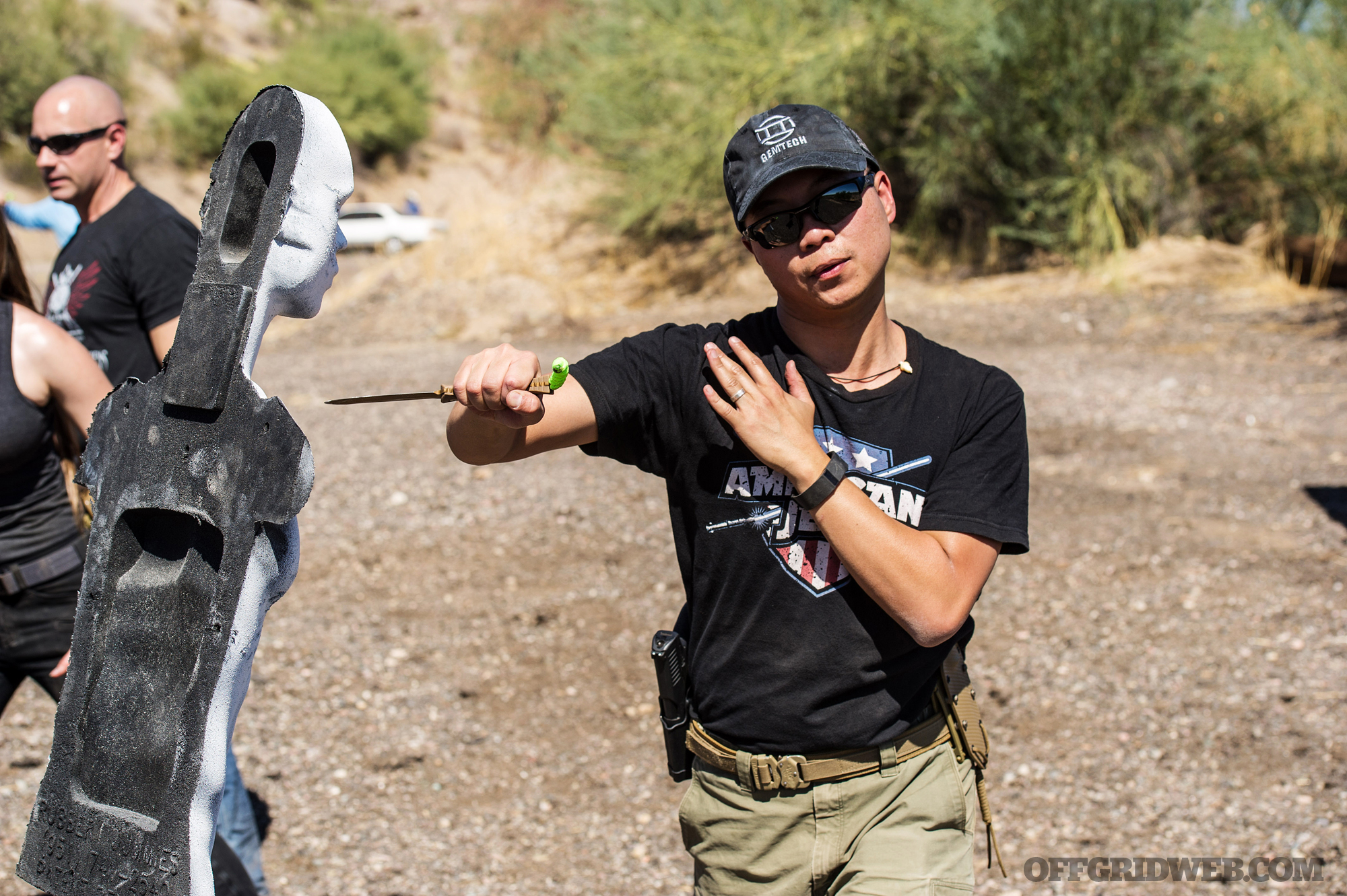
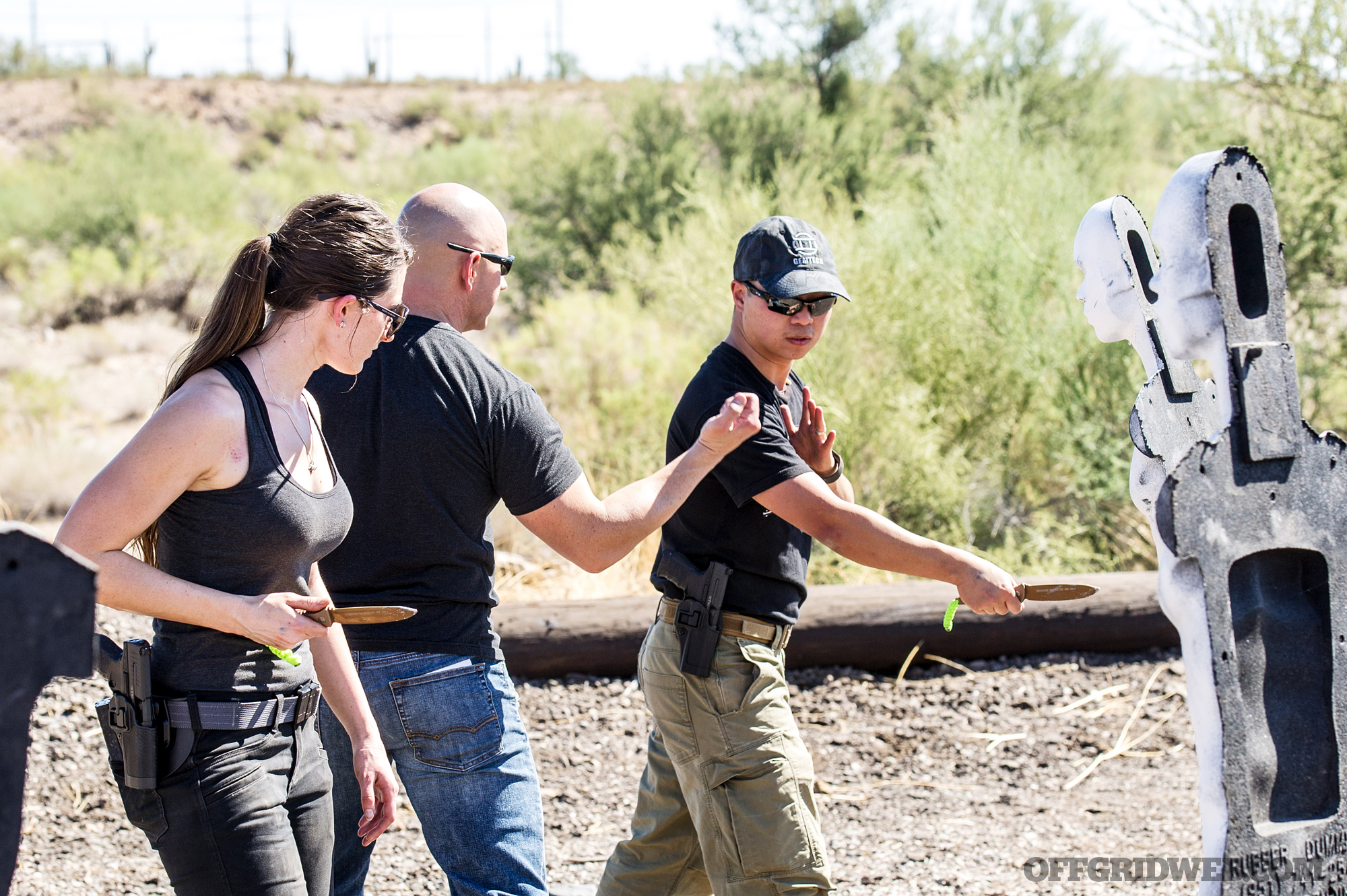
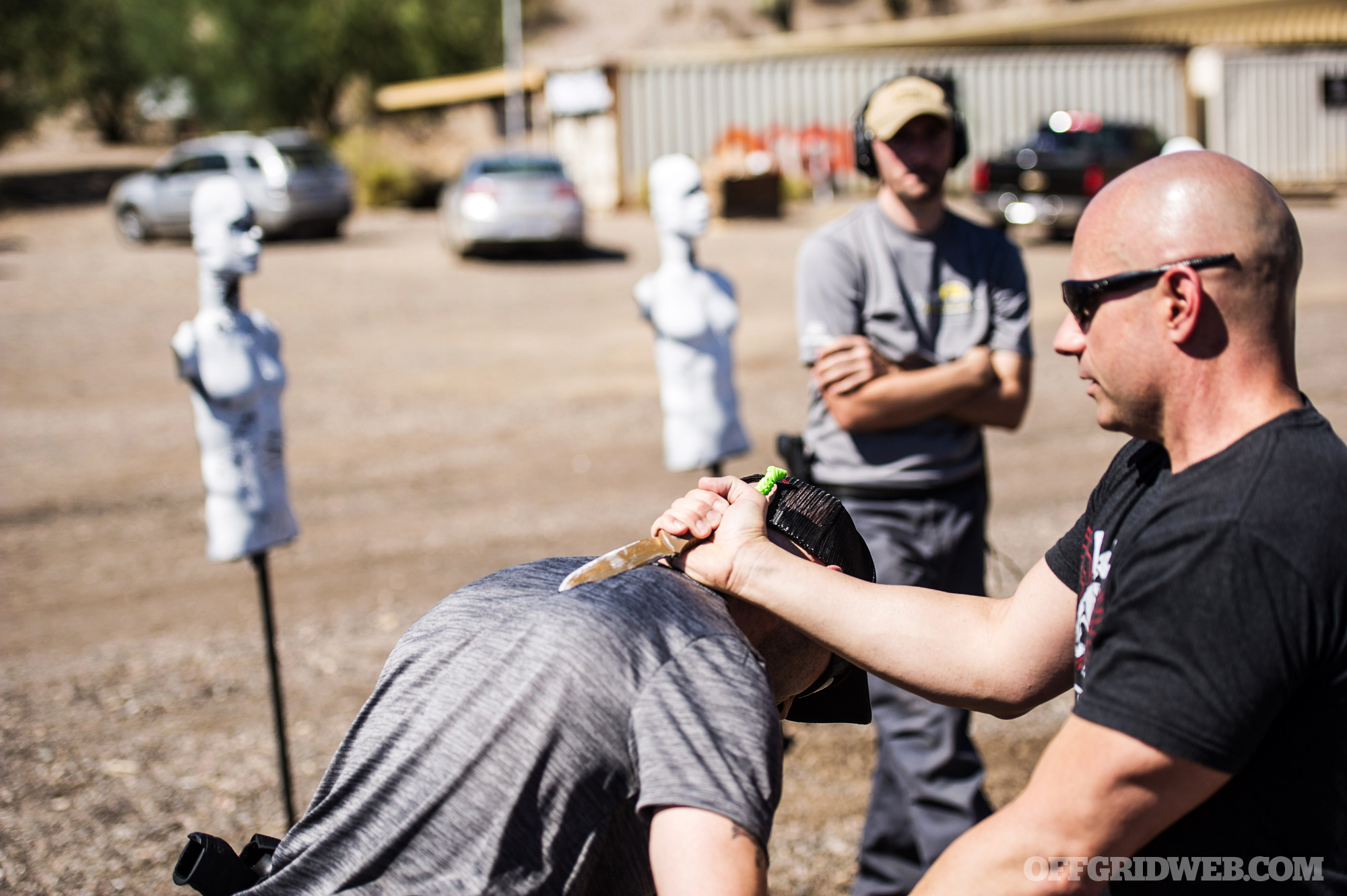
So, what about function? The Summit participants and I spent a lot of time working the Alpha trainers on the Rubber Dummies 3D Silhouette Targets. This allowed the students to deliver full-power strikes against a solid, anatomically-shaped surface.
This type of training is invaluable, as it gives the user feedback against the blade. It will definitely expose any weaknesses in the user’s grip, as well as the grip design of the knife. Surprisingly, I didn’t see anyone’s grip slip forward of the handle, something I fully expected given the narrow profile of the handle and the edged-weapon inexperience of most of the attendees. I would have to say that this serves as a testament to the Alpha’s grip design.
The Alphas supplied for the event had Microtech’s tan Physical Vapor Deposition (PVD) finish. This finish proved to be virtually bulletproof after all the hard use the knives went through. The white enamel paint used to coat and refresh the 3D Silhouette Targets took a liking to the blades and bonded firmly onto the surface. To remove the paint from the blades, I had to use an abrasive Scotch-Brite pad, hot water, and a lot of elbow grease. I expected when I was done I would have a bunch of bare-metal blades staring at me, but the finish on the knives looked almost as good as it did when we took them out of the boxes.
Prior to this event, my experience with Microtech knives was very minimal. Even though I was familiar with Microtech’s reputation for quality and innovation, I am always skeptical of anything I haven’t had personal experience with. That skepticism quickly left once I got the knife in my hand. To say that I was impressed with the design, craftsmanship, and performance of the SOCOM Alpha would be a bit of an understatement.
If you are looking for a solid, fixed-blade tactical knife that is as beautiful as it is functional, you might consider Microtech’s SOCOM Alpha. You won’t be disappointed with the money spent.
Chad McBroom is the owner of Comprehensive Fighting Systems, a company that offers practical training in armed and unarmed combatives. He has over 30 years of martial arts experience and specializes in edged weapons. He also does a bit of knifemaking himself, a hobby he took up to gain a greater understanding and appreciation of blade craft. Follow him on Instagram @cfs_combat.
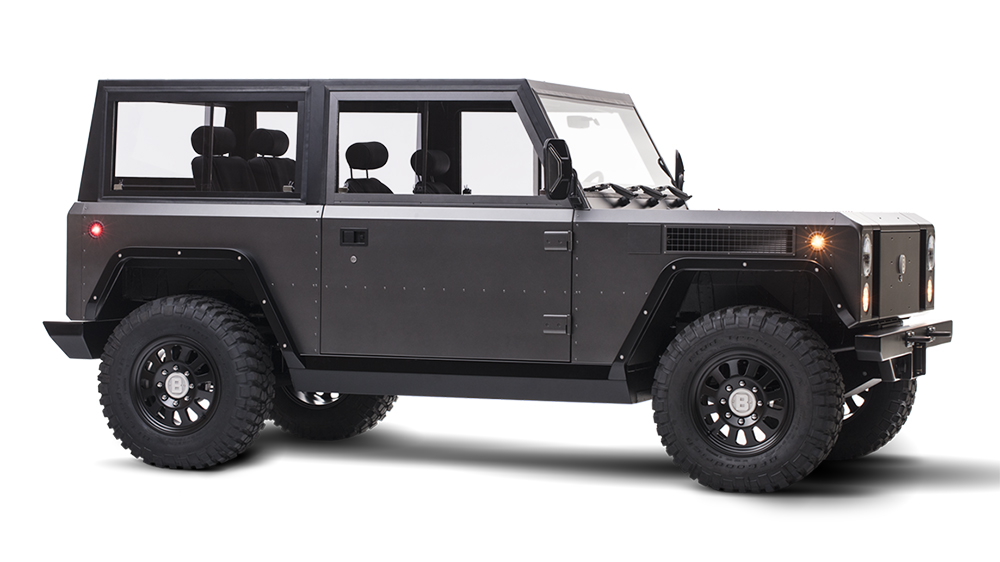
Over the last few years, the idea of commuting to work in an electric car has become more feasible. Battery technology has improved, and these cars have gotten lighter, faster, and more efficient. Tesla even announced the release of an all-electric semi truck, which it hopes will overtake traditional diesel rigs. However, the off-road market hasn’t seen as much attention from electric vehicle manufacturers — until now.
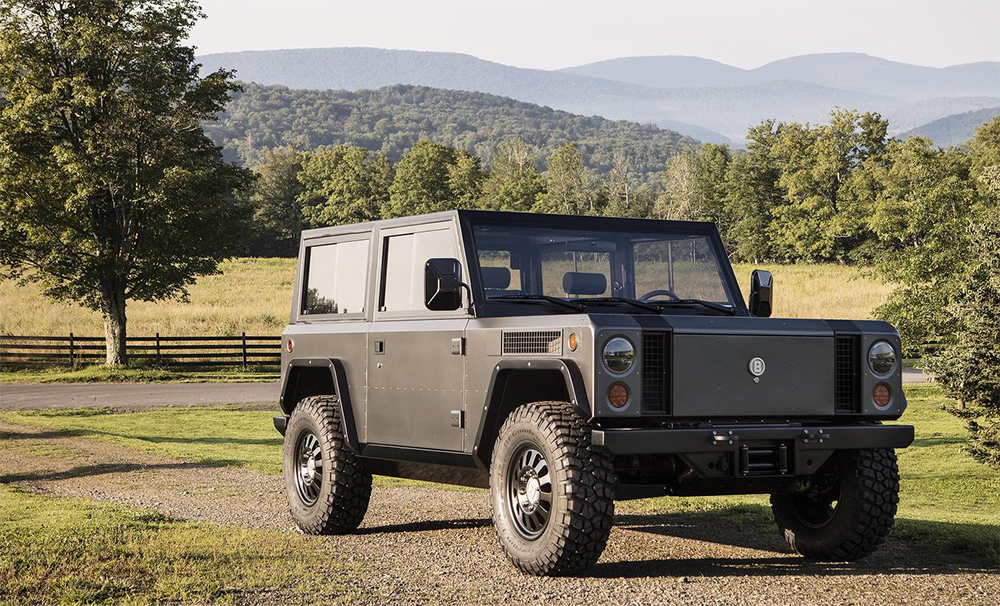
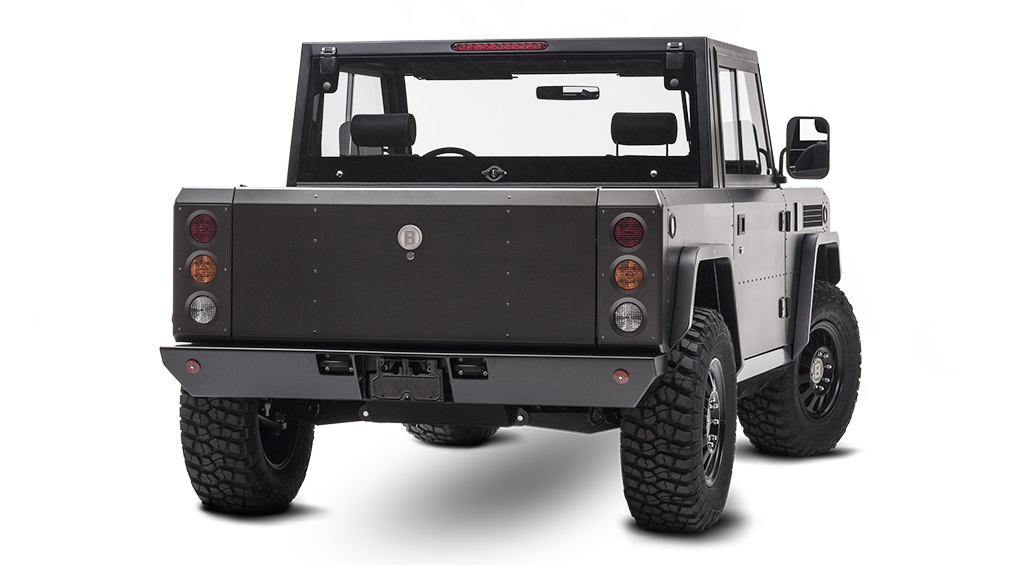
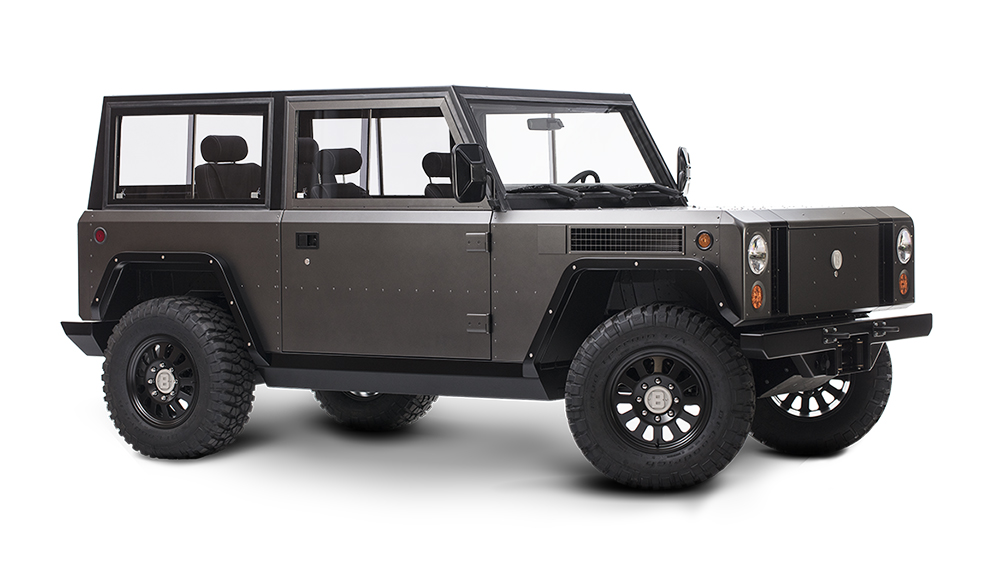
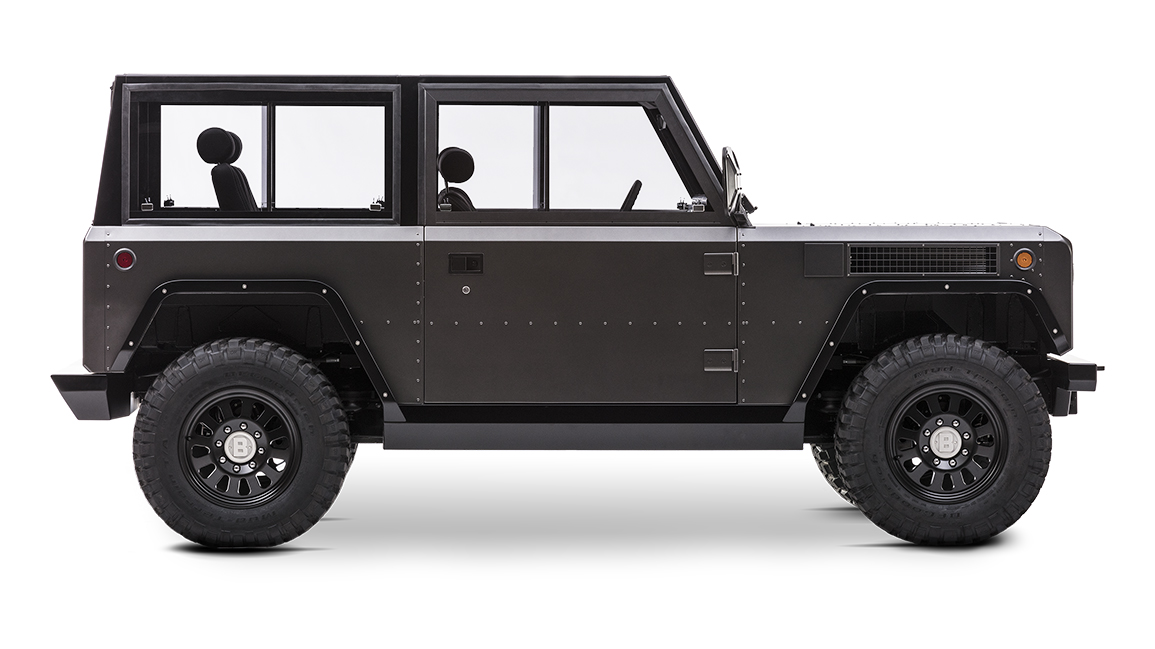
Bollinger Motors, a New-York-based automotive company, has developed a truck known simply as the B1. The company calls it a “no nonsense back-to-basics all-electric sport utility truck”, and its appearance echoes classic off-roaders like the Jeep Wrangler, Land Rover Defender, and Mercedes G-wagen. However, rather than the gas or diesel engines found in those vehicles, the Bollinger Motors B1 is powered by dual front and rear electric motors.
The powertrain reportedly produces an equivalent to 360 horsepower and 472 lb-ft of torque, and sends it through a pair of 2-speed gearboxes with electronic locking differentials at the front and rear of the truck. The result is an all-wheel-drive truck with hi/lo-range capabilities.
The system relies on either a 60 kWh or 100 kWh lithium ion battery pack, for either 120 or 200 miles of range, respectively. These batteries can be recharged via a J1772 (110 & 220) or CHAdeMO (DC Fast) port. Charging a fully-depleted battery via a Level 2 220V source takes 7 hours for 60 kWh models or 12 hours for 100 kWh models. Regenerative braking also recharges the batteries as the truck is used.
With standard 33-inch mud tires on 8-lug alloy wheels, the Bollinger Motors B1 offers 15.5 inches of ground clearance. Total travel of the hydro-pneumatic suspension is 10 inches. Short overhangs allow for 56- and 53-degree approach and departure angles, so you can drive over steep obstacles without snagging a bumper.
Portal axles keep the half-shafts tucked up in the wheel arches, further improving clearance. In case you do manage to get stuck, a 12,000-pound hydraulic winch is also included.
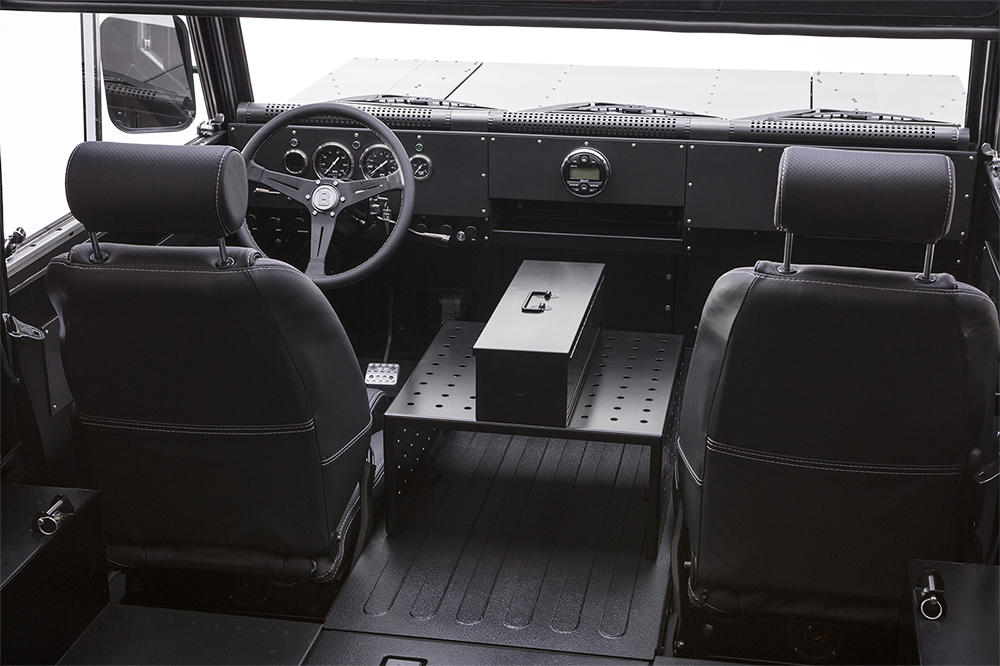
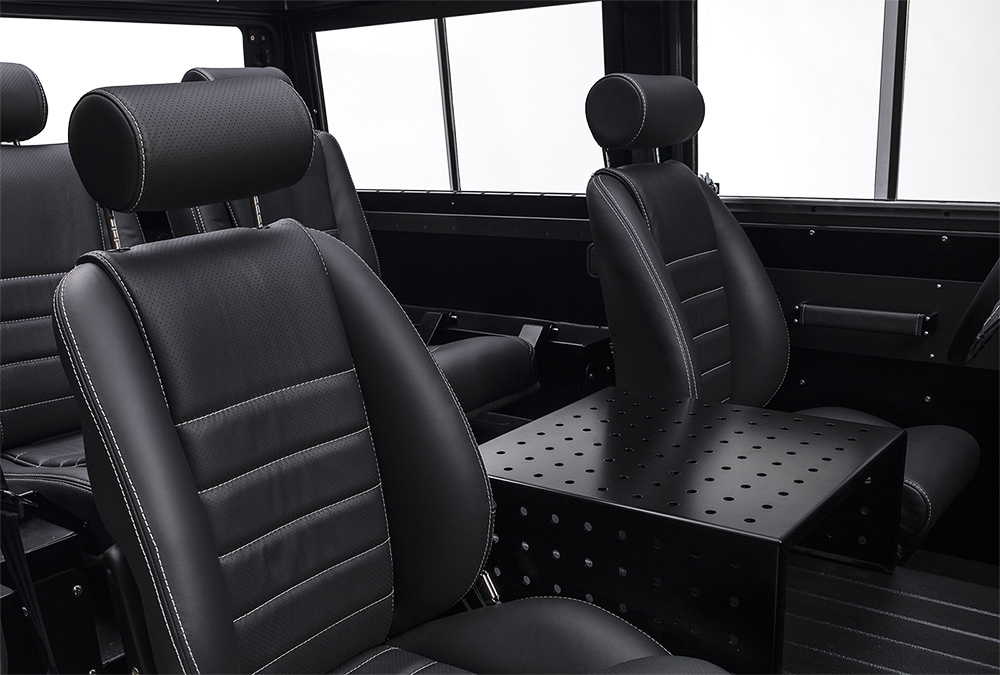
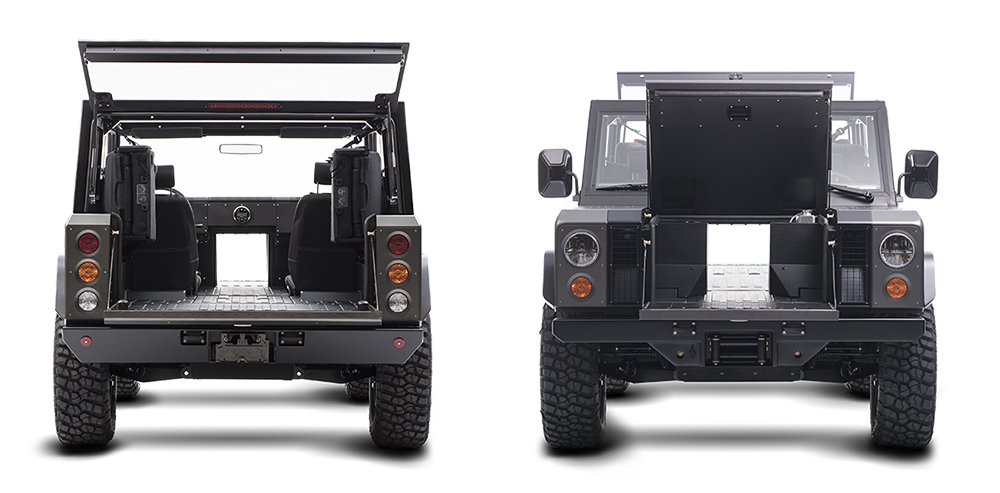
The inside of the Bollinger Motors B1 is just as spartan as its exterior, but it offers four seats and a huge 95 cubic feet of storage capacity. Thanks to its lack of engine, it also offers a unique pass-through “frunk” (front-trunk) compartment for long objects.
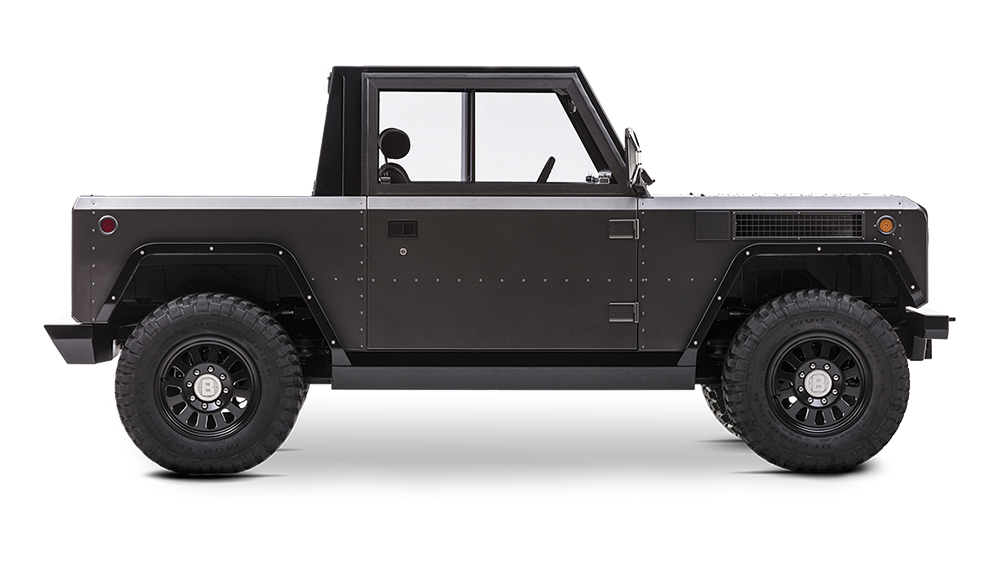
The cab is also convertible from full to half-covered configuration, so you can pull out the back seats and use the rear area as a truck bed.
The idea of an electric off-road vehicle has some considerable advantages, including the storage capacity mentioned earlier, as well as instant torque for fast acceleration and obstacle-climbing power. According to Road & Track, the B1 can reportedly launch from 0 to 60 mph in 4.5 seconds — that’s nearly a second faster than a 2017 Ford Raptor. Road & Track even went so far as to call it “the future of off-roading”, but an on-sale date and pricing info are not yet available.
So, what do you think of the Bollinger Motors B1? Let us know in the poll below.
Safety Disclaimer Climbing or descending with ropes is an inherently dangerous activity, and a magazine article is not a substitute for hands-on instruction. Never participate beyond the level of your training.
During a mass-shooting scenario, it may not be tactically feasible to try and evacuate the wounded (or yourself) by dragging them down a set of stairs and out the main entrance. If you’re safely barricaded inside a room, wouldn’t it make more sense to evacuate a victim through a window before they bleed to death? Or, for example, you’re doing a canyon hike with your family and someone falls 20 feet down a sheer cliff. How would you get down to attend to them?
Basic knowledge of rope rescue including raising, rappelling, and lowering allows us to defy gravity in whichever direction we choose. In this article we’ll give you the basics of what you need to know and what gear can aid your mobility. If you choose to build and maintain this perishable skill, you’ll unlock a rescue “cheat code” and be able to save lives in ways you’d never previously imagined.
Why Ropes?
Rope skills are always useful. Perhaps you routinely work and play in places where you can’t dial 911, or maybe you’re interested in learning to be an active bystander or “first care provider” who is willing to make a difference before the professionals arrive. Alternately, think about an escape-and-evasion scenario. Need to get out of a building quickly, and have a sinking feeling that the stairs and main entrance are being watched? Ropes can get you there.
To provide a proper introduction to rope rescue we sat down with firefighter Dominick Briganti. Dominick is a 27-year veteran of the fire service. He was deployed to the World Trade Center during Sept. 11 and now works as a lead instructor for SWAT teams, firefighters, and special operations warfighters on the subject of technical rescue.
Rope rescue, specifically, is a vast subject and there’s a ton of conceptual theory and background behind it. Experienced climbers could have a field day nitpicking all the things we “should have” noted or warned you about in this article. But thanks to Dominick’s instruction we’re able to give you all the ground-level knowledge you need to start down the path — without making you reach for a glass of whiskey and two Ibuprofen.
The Basics
Rope rescue techniques consist primarily of three different actions:
Rappelling down to a lower level by yourself
Lowering (or being lowered) with someone else’s help
Raising (or being raised) with someone else’s help
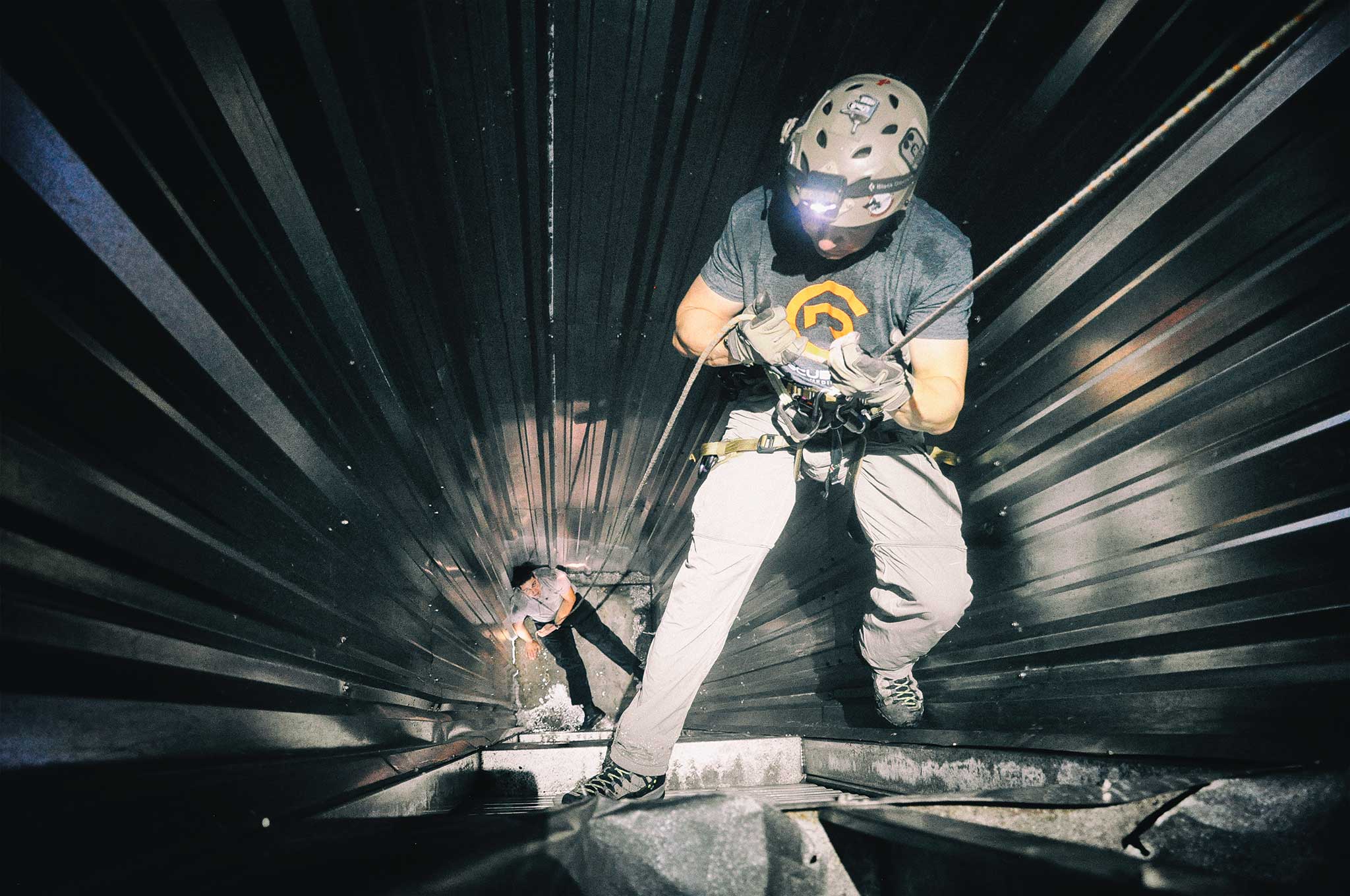
Rappelling is the most simple of these three to rig. It’s also the only one of those actions you can accomplish by yourself, although it’ll require both hands to do so. This means that you won’t be able to carry tools down in your hands or brandish a weapon. It also won’t be as easy to circumvent tight spaces, snags, or obstructions as it is with some other rope access methods. On the plus side, you’ll be able to personally control your rate of descent as well as set up and get down quickly. That’s the big advantage — it’s simple and very fast. Rappelling allows you to access an incapacitated victim very quickly, and can also be used for escape/evasion should you be having a seriously bad day.
Being lowered allows you to descend with both hands free. Now you can use a weapon while descending (think sweeping a gun into each window on your way down, instead of just peering inside and waiting for what may be an unpleasant surprise). Mobility and flexibility of your descent path is improved as well. Lowering doesn’t require any additional gear, but it does require a second person at the top of the drop who’ll control your descent.
Raising (hauling) someone is like the final exam for Rope Rescue 101. It requires more complicated rigging and more gear. Since an average person can only haul roughly 50 to 80 pounds vertically (much less than what a person weighs), you’ll have to use the principles of mechanical advantage and multiple pulleys.
In this article we’ll focus on rappelling. This will give the uninitiated a bite-size introduction to the subject, and hopefully whet an appetite to level up to the next two tiers of capability.
Ingredients for Rappelling
These are some of the basic components for rope rescue rappelling:
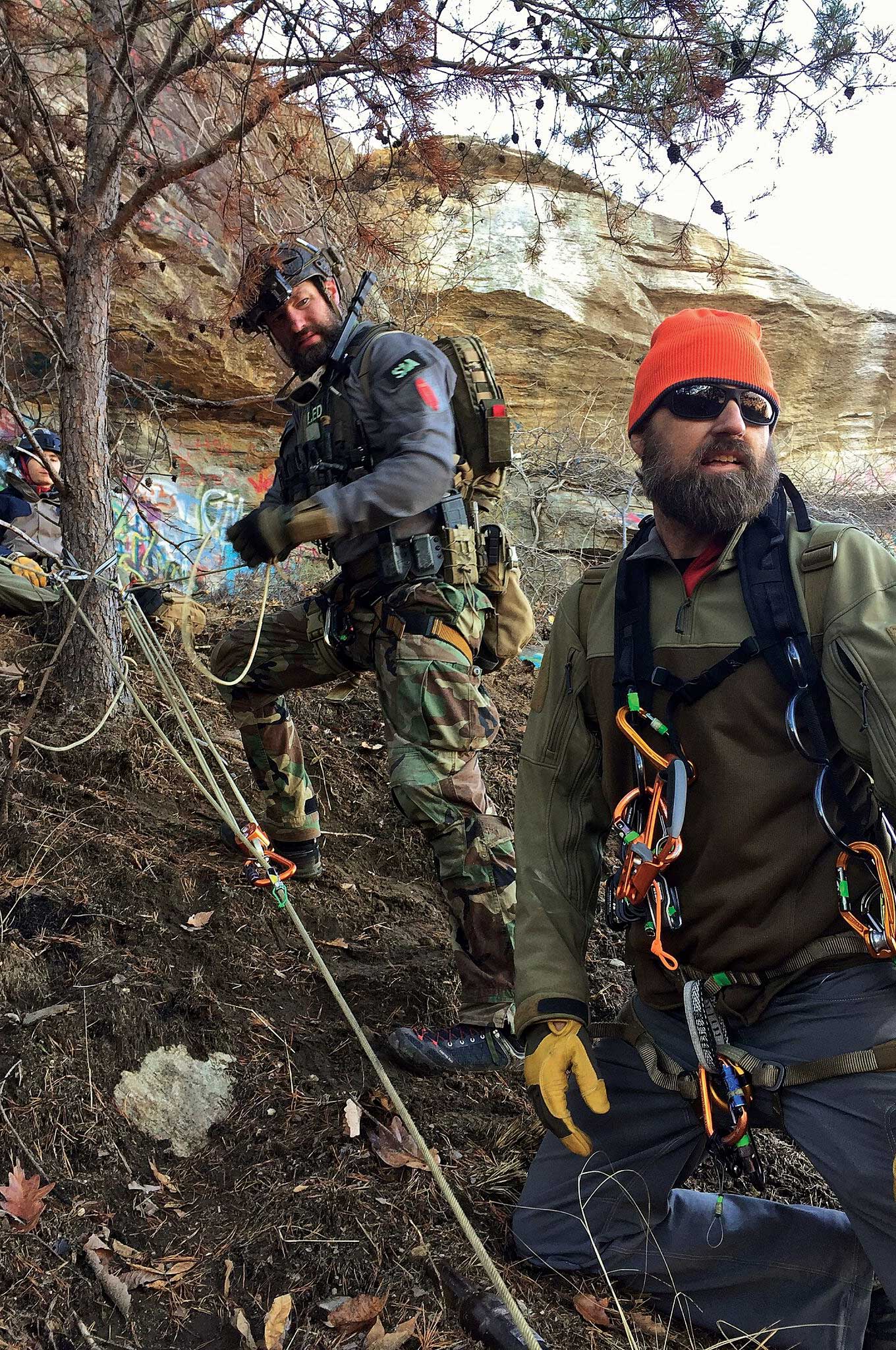
Wilderness rope rescue performed by prepared survivalists, using a tree as an anchor for their rope rescue system.
Anchor: This will hold you and your rope system in place. It should be stable and fixed in position. In the woods, we might use a tree trunk — in a canyon, a large rock. In an urban environment such as a hotel room or high-rise we could use large heavy furniture or substantial railings. Alternatively, if we wanted to go full Jason Bourne we could even attach a carabiner to the end of our rope, feed it through the hinged side of the open door into the hallway and then close the door. Once the rope is loaded, the carabiner will prevent the rope from being pulled through.
100% Aramid Rope (75 to 100 feet): Ropes made from 100-percent aramids like Technora or Kevlar are relatively new. These materials offer superb abrasion resistance and brush off the effects of high heat and fire. They also don’t lose strength in wet conditions and can shed water quickly, unlike nylon rope. Last, they’re stupid-strong — a 9mm-thick piece of rope can take roughly 7,000 pounds.
Auto-Locking Carabiners (2 to 3 total): A carabiner is a specialized shackle used to temporarily connect your ropes to your harness. Because they’re very easy to manipulate with gloved hands, we prefer magnetic-locking carabiners like the Rocklock Magnetron from Black Diamond Equipment.
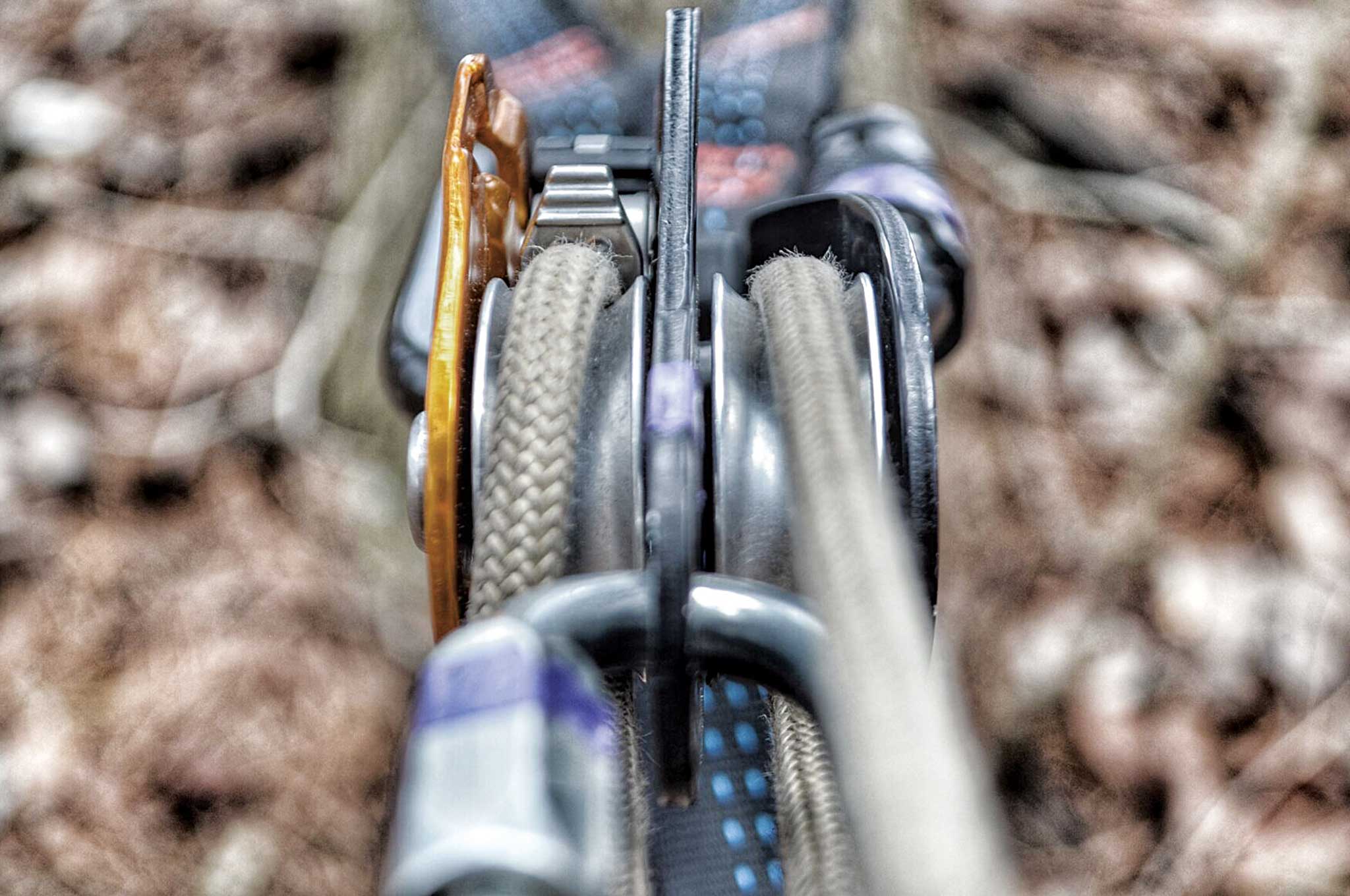
Rappel Device: During the early days of climbing, rope was simply wrapped around your body to increase friction and slow your decent. Although convenient, using your flesh as a brake pad is obviously uncomfortable. As an alternative, rappelling devices (aka descenders or descending devices) were developed, providing a hand-holdable forged metal loop through which the rope is passed. As the rope rubs on the metal the friction is increased, allowing a controllable rate of descent. There are tons of options too numerous to mention, but usually we prefer a metal-descending device such as a Rock Exotica Totem — or we make our own by using a simple Munter hitch knot (see photo in sidebar).
Climbing Harness: For minimalist experts, it’s possible to make a climbing harness from webbing material. But for this introduction we’re going to err on the side of safety and comfort, and suggest purchasing a commercially available version, such as the value-priced Patriot Harness from Metolius.
10 Steps to Your First Descent
Once you’ve assembled the ingredients, you’re ready for your first rappel. The steps shown below illustrate a simplified method, which doesn’t include a contingency to lower you down if you get stuck. For this reason it’s appropriate only in dire emergencies, or in training when you have a partner watching, and at heights which you feel comfortable jumping down from.
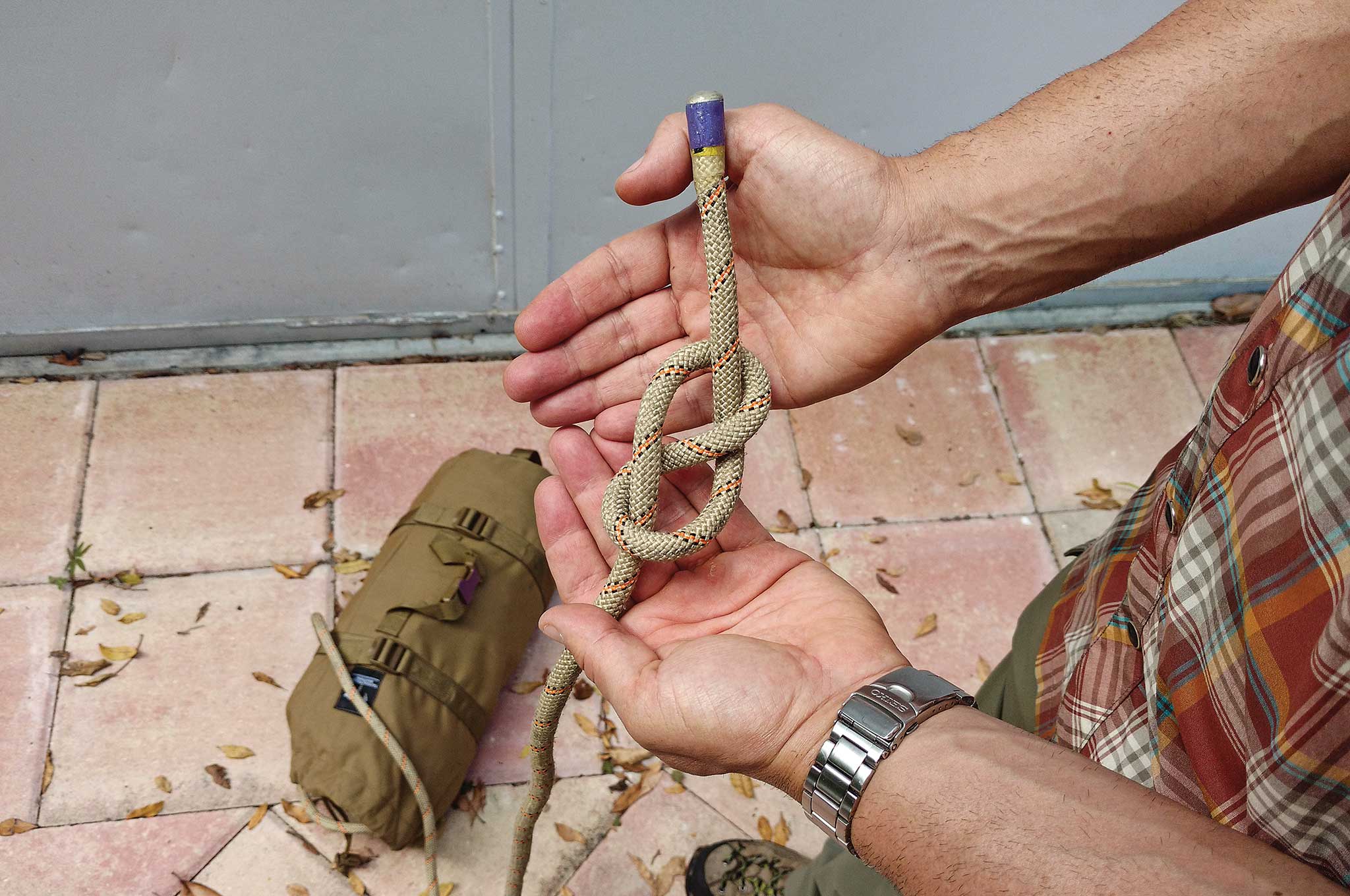
Tie a Figure 8 Stopper Knot to the end of your rope. This ensures you don’t rappel off the end of the rope and into the history books under the chapter titled “Dumb Ways to Die.”
Check your drop distance by lowering the rope to the ground. If your rope can’t touch the ground from your position, relocate. You should have enough rope to touch the ground below you plus at least 5 feet extra.
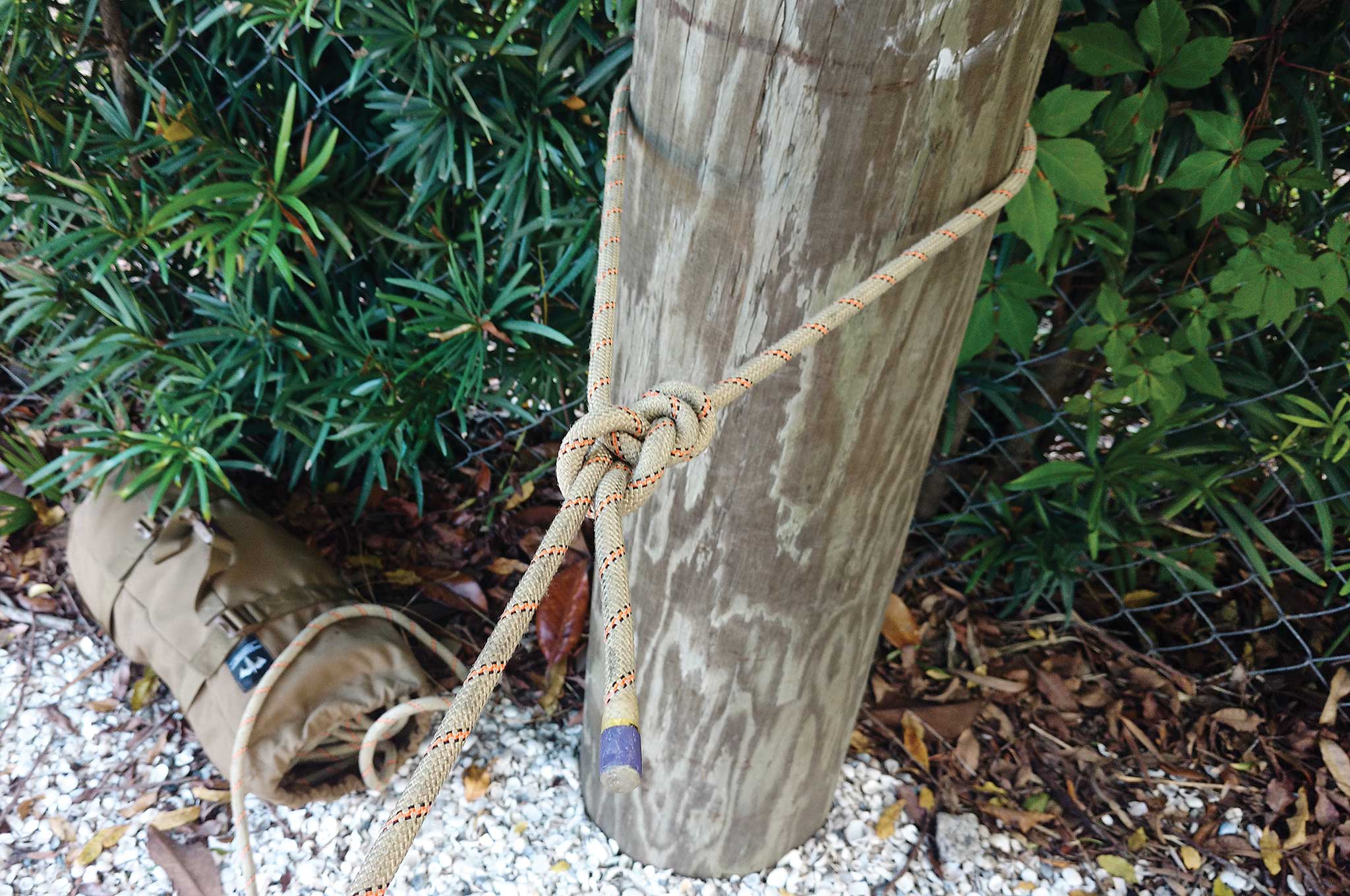
Tie the rope around your anchor. The most simple and effective way to do this is by using a bowline knot with a Yosemite finish (see photo in sidebar), which strengthens the knot and prevents the knot from coming loose.
Keep the anchor point as low as possible. Don’t tie it at eye-level just because it’s convenient. This will help minimize shock-loading or jarring of the anchor.
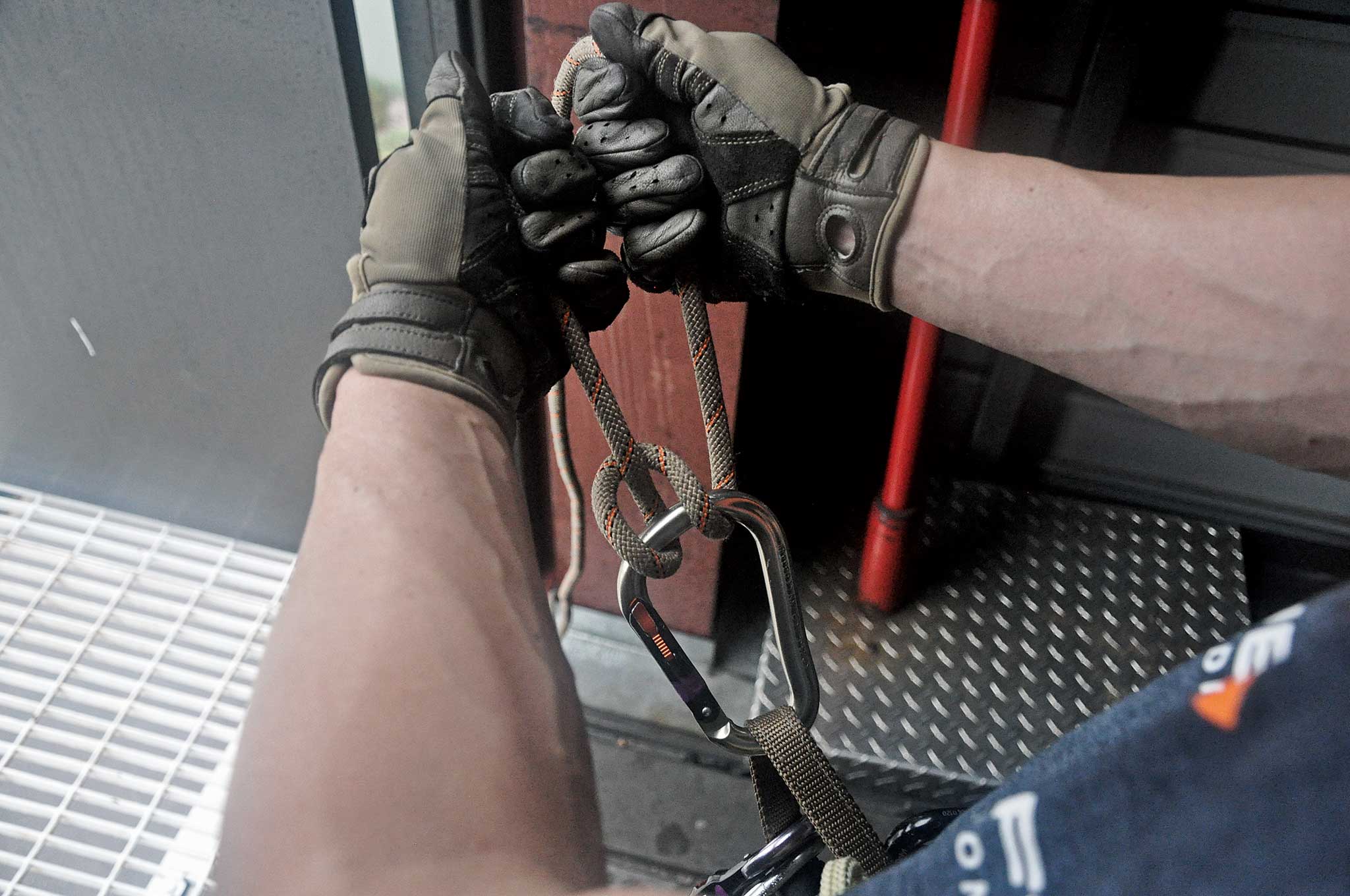
Attach your anchored rope to your descending device using a vertaco-mode configuration. This means that the rope comes back to the carabiner, and if you’re right-handed it will go from the left side of the carabiner, through the right side, then back up (see sidebar photos for reference). Then attach the descending device to a carabiner on your climbing harness.
Hauling someone using rope should not be attempted by novices as it usually requires complicated gear and mechanics. Photo by Brenton Birr.
Double-check your system. Most rappelling deaths aren’t due to failures of the equipment. Instead, they’re caused by preventable mistakes that could have been detected if the climber had bothered to double-check their anchor, knots, and climbing harness.
Stay low, go slow. Instead of standing up and walking backward over the edge, keep your center of gravity close to the ground and roll over. This will help prevent your anchor from dislodging and also maintains a lower profile in a tactical situation.
Once you’re over the edge, face the wall and plant your feet shoulder-width apart. Maintain a sitting position in the harness and proceed step by step down the wall while slow-feeding line through the descending device. The bounding, large downward jumps you see the SWAT teams doing in the movies are pure fantasy (and poor practice). The correct pace and posture is kind of like walking down, but you maintain an “L” position instead of straightening up.
Use friction to control your speed and keep both hands out in front of your face. Because we’re using the vertaco configuration, we can keep our hands out in front instead of having one hand down by our hips as is traditionally seen. This allows us to assume a lower-profile position on the wall and more easily lock off the rope to stop our descent.
Once you’re on the ground, unhook your carabiner from the rappel device. Then, go to work.
We hope this article gives you the head start you need to add rope work to your bug-out and rescue skillset. As you learn more, you’ll find that you can enhance your capabilities by using different knots and gear configurations, instead of simply buying more components. You’ll be able to do more with less gear. Unlike many of our other interests, this makes rope rescue a unique pursuit that rewards the craftiest and most knowledgeable — not just the guys who can drop top dollar on the most expensive offerings.
About the Author
Andrew Schrader is a licensed professional engineer and is certified by the U.S. Army Corps of Engineers as an Urban Search and Rescue (USAR) Structural Specialist. His company, Recon Response Engineering LLC, advises state and federal government organizations on the subject of urban search and rescue and structural collapse. He recently assisted the U.S. Department of State’s Italian Consulate in the development of their post-earthquake response and rescue protocol. www.reconresponse.com
Knots and Rigging
Because many of the techniques described here are more easily seen in a video than by reading check out www.elementrescue.com and www.netknots.com to learn more.
Based on what we’re showing you in this article, these are the four knots you should care about:
Bowline with Yosemite Finish: This quick knot is used to secure your rope around a suitable anchor.
Figure 8 Stopper: This is used as an end knot to prevent the rope from passing through the end of your rappelling device, in which case you’d fall the rest of the way down.
Munter Hitch: Can be used as a friction or descending device for controlling the rate of descent.
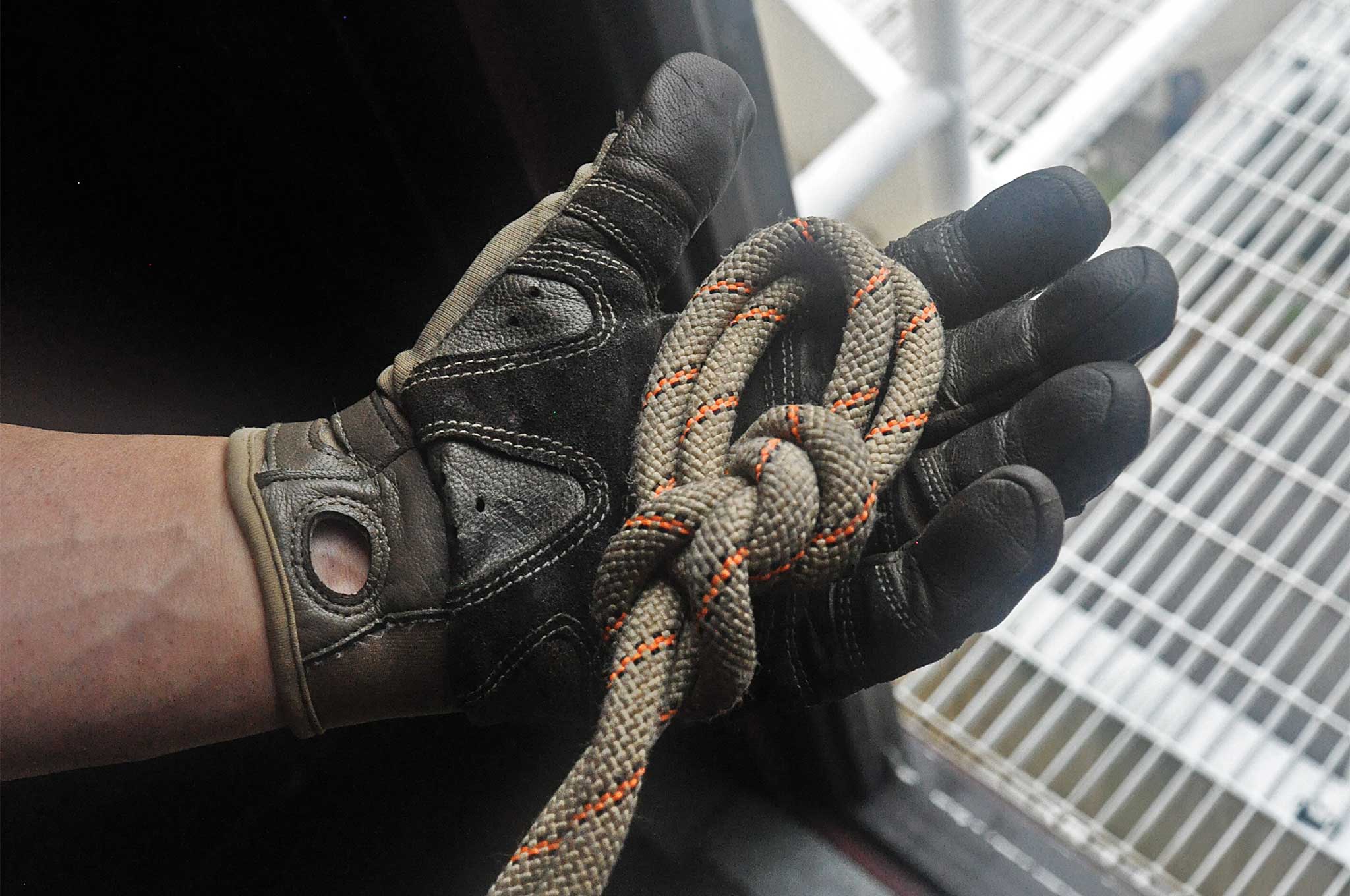
Double Bight Bowline: Not strictly necessary for rappelling, but will be critical if you intend to learn anything else about rope rescue.
Rookie Mistakes to Avoid
Not bothering to tie a stopper knot at the end of your line. To prevent this, make sure the knot is on the end of your rope before you even stuff it in the bag for storage. This way there’s never a question.
Rappelling “Hollywood Style” by bounding and bouncing. The faster you go, the greater the chance of getting your hands or clothing sucked into the descending device. This will stop you cold, and unless you built in a lowering contingency to your anchorage you’ll be stuck there. To avoid being the rescuer who had to be rescued, keep your descent speed to a minimum.
Keeping hands too close to the rappel device. Maintain a minimum 12-inch distance between your hands and the descender to prevent a finger from getting sucked in. Also, avoid loose clothing and long hair. We’ve seen long hair get sucked into a descender before, and it literally pulls the skin out with the hair. Not pretty. Don’t do that.
Not having enough rope. Check to make sure your rope can reach the ground, and then some. Not just sometimes but every time. Otherwise you’ll find yourself jumping down from a height that may or may not be survivable.
Best Gear for Rope Rescue
Could a skilled rescuer do this work with just a rope? Of course. But having some modern equipment can make you much faster and more effective in the process.
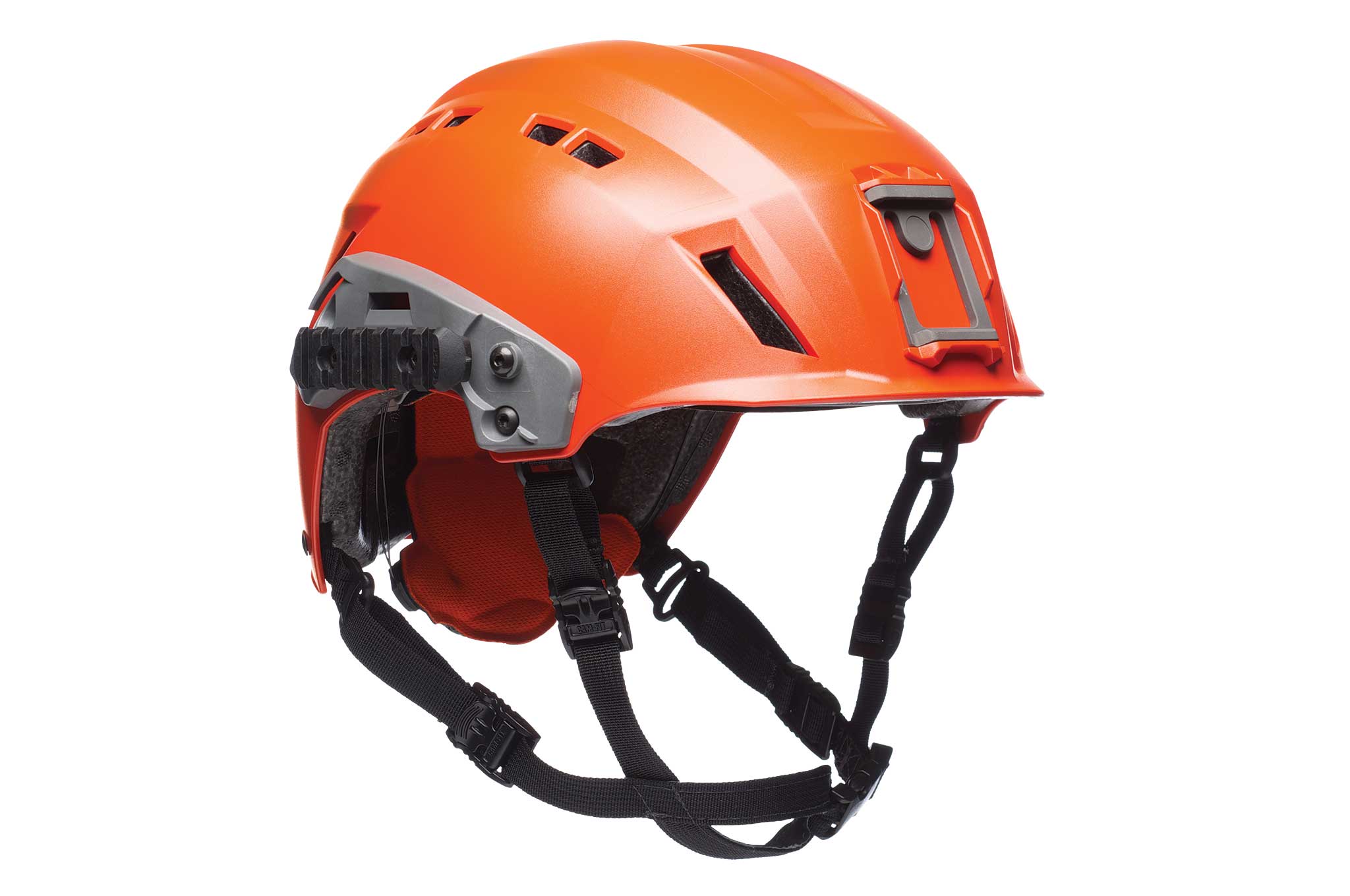
Exfil SAR Tactical Helmet by Team Wendy
Anytime there’s a falling hazard, as there always is in rappelling and rope rescue, protect yourself from traumatic brain injuries or death by wearing a helmet. The Exfil SAR Tactical Helmet from Team Wendy provides lightweight, long-term comfort by using an updated four-point retention system that instantly adjusts to the shape of your entire head instead of just cinching down front-to-back like a cheap hardhat. We liked the heavy-duty front shroud that’s purpose-built to accommodate night-vision goggles or your GoPro, as well as the Magpul picatinny side rails to mount lights and other accessories.
We also appreciated the array of useful accessories that allowed us to customize the helmet for our needs. These included a positive-locking clear visor as well as quick-release Peltor headset adapters, which provided hands-free communications with no need for an uncomfortable headband. www.teamwendy.com
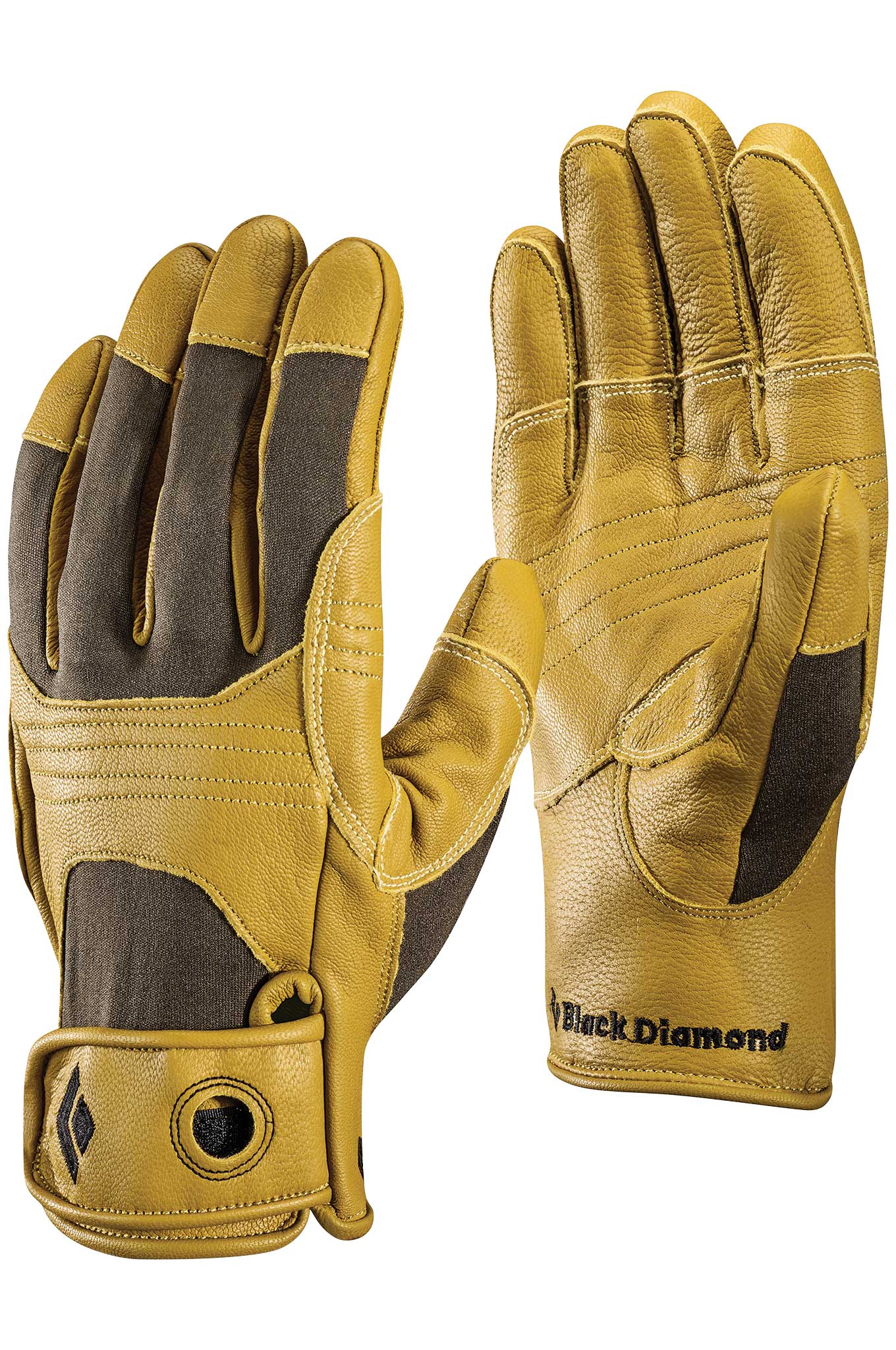
Transition Gloves by Black Diamond Equipment
Use all-leather gloves for rappelling. If you cheap out and try to use a random pair of gloves, the heat from the rope generated during rappelling can cause the glove material to melt on your hand. Instead, we’d recommend the Transition Gloves by Black Diamond Equipment. These full-fingered goat leather gloves feature Kevlar stitching and reinforced patches on the knuckles and palm.
The fit at first felt much too small, and took several hours of wearing before we had anything approaching dexterity. However, once the gloves had broken in we had a form-fitting second skin that allowed us to thread ropes into our gear while enjoying protection from the rescue environment, be it rocky crags or broken glass and metal. www.blackdiamondequipment.com
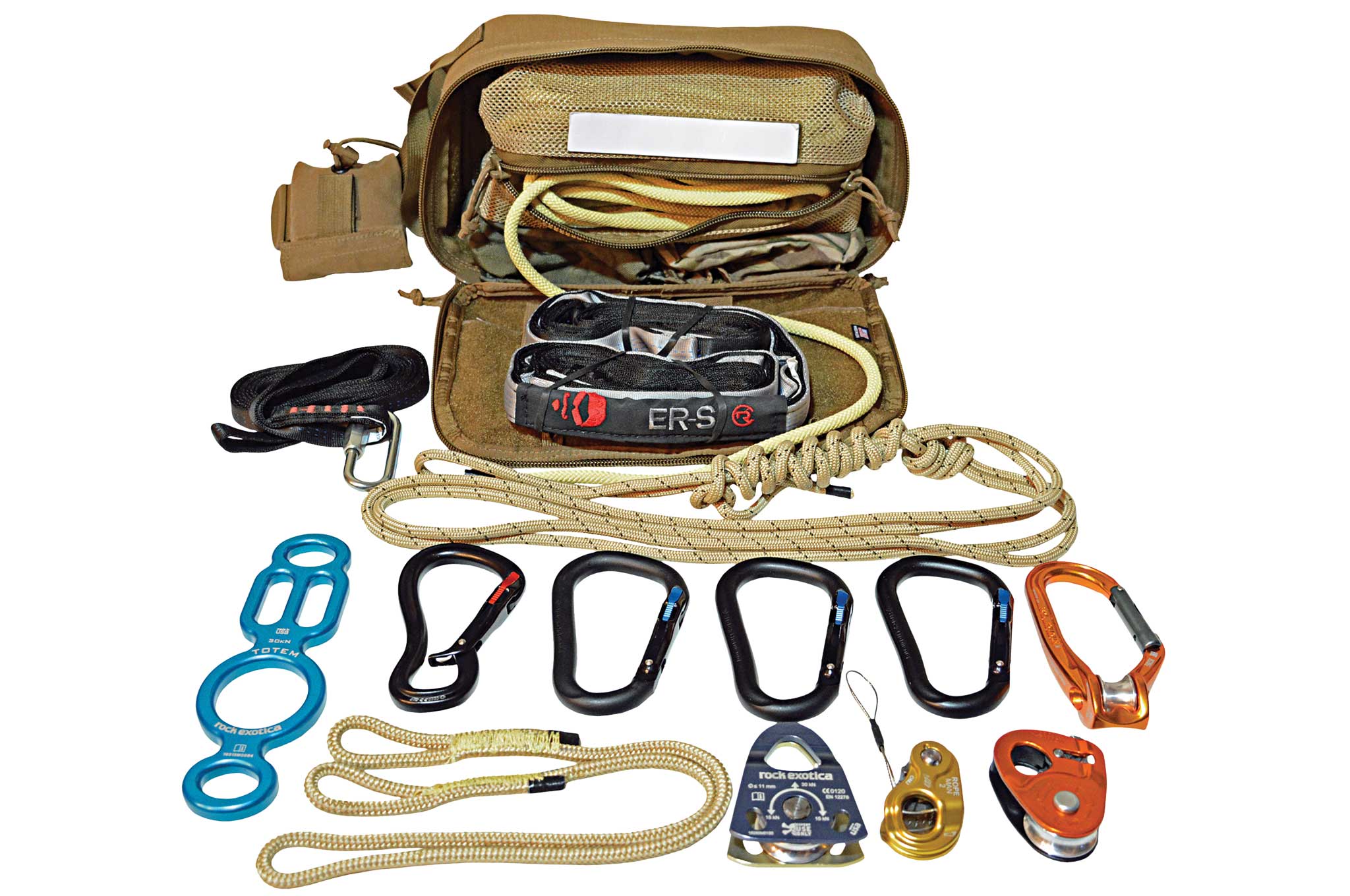
Phantom AVS Kit from Rescue Craft by Tactical Medical Solutions
The amount of different gear options can be staggering for laypersons just starting out. For this reason, a ready-made kit may make a lot of sense. The Phantom Adaptive Vertical System (AVS) kit from Rescue Craft by Tactical Medical Solutions includes everything you’ll need from the start for rappelling, hauling, and lowering.
The kit weighs less than 7 pounds and is small enough to attach to your bug-out bag, so that you’ll never be without an egress or rescue option. Start off like we did by using the kit’s most basic components. As you gain additional skills you’ll be able to use more and more of the kit — its usefulness will grow along with your capabilities.
Note: When storing your gear, you usually want to keep your rope in a separate rope bag and all your other gear in its own bag or pack. Storing the rope in a bag will help prevent it from getting kinks during storage and transport. www.tacmedsolutions.com
When dealing with any traumatic injury, uncontrolled bleeding is the enemy. If the injury is severe, there’s a substantial chance that rapid blood loss will cause death before first-responders even make it to the scene. This is why we’ve previously advocated including tourniquets in your emergency kits, and seeking basic trauma care training through programs such as Stop the Bleed. A properly-applied tourniquet has been repeatedly proven to stop blood loss and save lives.
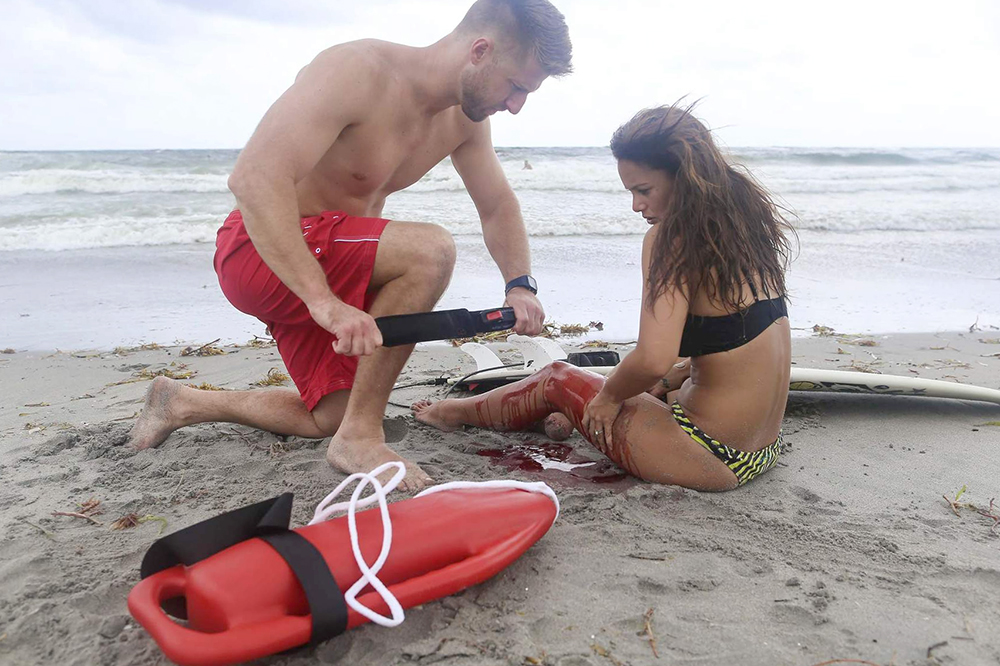
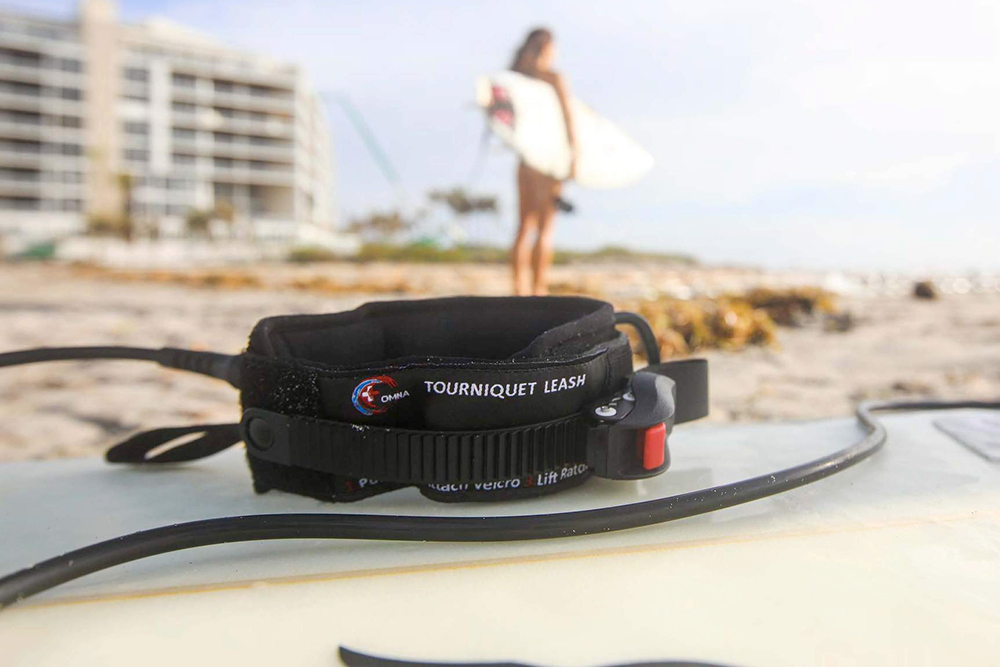
Under normal circumstances, carrying a tourniquet is often as easy as placing it in a pocket or inside a backpack, but certain activities may make carrying TQs a challenge. Aquatic sports such as surfing, kayaking, diving, and jet-skiing all pose a risk of injury from various sources — shark attacks, coral reefs, broken bones, or a misplaced cut with a sharp dive knife can lead to sudden blood loss.
However, these activities can also make carrying a tourniquet difficult. Water — especially salt water — can degrade a standard tourniquet over time. Additionally, tourniquets in pockets can easily be lost while swimming. These concerns led Carson Henderson, a U.S. military veteran and avid surfer, to develop the OMNA amphibious tourniquet.
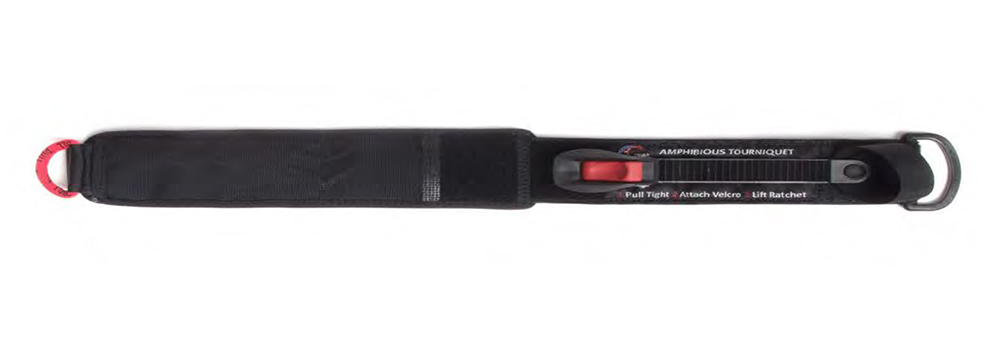
The OMNA tourniquet is made for salt water, corrosion-resistant, and wearable in the form of a bracelet/anklet. It also offers an optional leash for surfboards or body boards, effectively replacing the ubiquitous leash with a dual-purpose life-saving device. MSRP for these devices starts at $30.
Henderson realized that some surfers might wonder about the effectiveness of improvised tourniquets compared to the OMNA, so he had the device independently tested under a Doppler Ultrasound. The results (click here for a PDF) were compared to fashioning an improvised TQ with a 7mm surf leash, and it became clear that the standard leash could not fully occlude blood flow. While an improvised TQ is better than nothing, its results cannot compare to a purpose-built medical device like the OMNA.
If you often find yourself on, in, or around the water, it’s definitely worth considering what you’d do if you (or someone else in your group) experienced a serious injury. The OMNA wearable TQ provides an amphibious option for water sport enthusiasts, maritime professionals, and members of the military. For more information on OMNA products, go to OMNAinc.com.
Boil ’em, mash ’em, stick ’em in a stew… Samwise Gamgee was on to something when he emphasized the value of spuds. In a survival situation, these tubers can be incredibly valuable for several reasons. In fact — while a varied diet is obviously ideal — there’s evidence to suggest that you could survive for long periods by solely eating potatoes.
Despite the common association of potatoes with junk food in western cultures, they’re extremely rich in a diverse array of dietary nutrients, more so than most other vegetables. The United Nations designated 2008 the Year of the Potato, and wrote:
“Potatoes are rich in carbohydrates, making them a good source of energy. They have the highest protein content (around 2.1 percent on a fresh weight basis) in the family of root and tuber crops, and protein of a fairly high quality, with an amino-acid pattern that is well matched to human requirements. They are also very rich in vitamin C – a single medium-sized potato contains about half the recommended daily intake – and contain a fifth of the recommended daily value of potassium.”
This sounds good in theory, but what would happen if your survival diet consisted entirely of potatoes?
In 2010, Chris Voigt ate nothing but 20 potatoes a day for 60 days straight. Aside from some weight loss, he reportedly experienced no substantial ill effects. In 2016, another man named Andrew Taylor ate nothing but white and sweet potatoes for a full year, with a few condiments and vitamin pills. He, too, lost a little weight but was reportedly healthy otherwise — he even went on to start an eating plan called Spud Fit.
Left: Chris Voigt / Right: Andrew Taylor
Of course, there are some nutrients potatoes lack. Calcium is one big concern, so adding some dairy to your diet could compensate. Protein, while relatively high for a vegetable, still isn’t enough to meet the FDA’s recommendations for a healthy diet. Also, eating nothing but potatoes means eating a lot of carbs, which may lead to sudden hunger fluctuations and eventually promote diabetes.
Again, we certainly wouldn’t recommend a potato-only diet outside of an emergency situation. However, it’s likely you could subsist on nothing but spuds for several weeks, if not more. Their value to survivalists shouldn’t be overlooked, and they’ll make an excellent addition to your stockpiles. If you’re interested in growing a small crop of potatoes to supplement your other food reserves, check out our past articles on Growing No-Dig Potatoes and The Home Gardening Cheat Sheet.
Disclaimer This article is meant to be a brief overview and not a detailed guide on improvised fishing, hunting, and trapping in survival situation. Check local regulations before attempting to use any tools or techniques discussed in this story.
Sport fishing and hunting isn’t the same as survival fishing and hunting. “Sport” implies there is an element of chance and fair play. To a survivor, the concept of rules and regulations should seem ridiculous. After all, why would a survivor or someone in an emergency consider the confines of sport fishing and hunting if they’re starving? In a real disaster, there is no such thing as a bag limit, minimum length, or poaching.
As majestic as they are, in the absence of wildlife protection, even the bald eagle might be on the dinner table if you’re hungry enough. We’ve been field tested and we know the frustration of watching supper run, swim, or fly away. We’ve also learned that with the right tools and a few no-nonsense ways of fishing and trapping, it’s easy to make sure your dinner plate isn’t empty at the end of the day.
The differentiator between frustrated and fed is preparing like a predator and casting aside socially acceptable methods of food procurement. We’re not going to apologize for telling you how to kill prey and feed yourself with the gear and methods that follow. It’s been said Chuck Norris doesn’t hunt or fish because there’s a chance for failure in those sports — he just kills sh*t. Follow our lead and you too can be like Chuck.
Fishing
Sport fishing rules and regulation books may define fishing as a single baited hook attached to a pole held by an angler. This is meant to protect a species from overfishing. A lone survivor should not be limited. Some basic equipment provides an advantage over a single hook, line, and sinker setup.
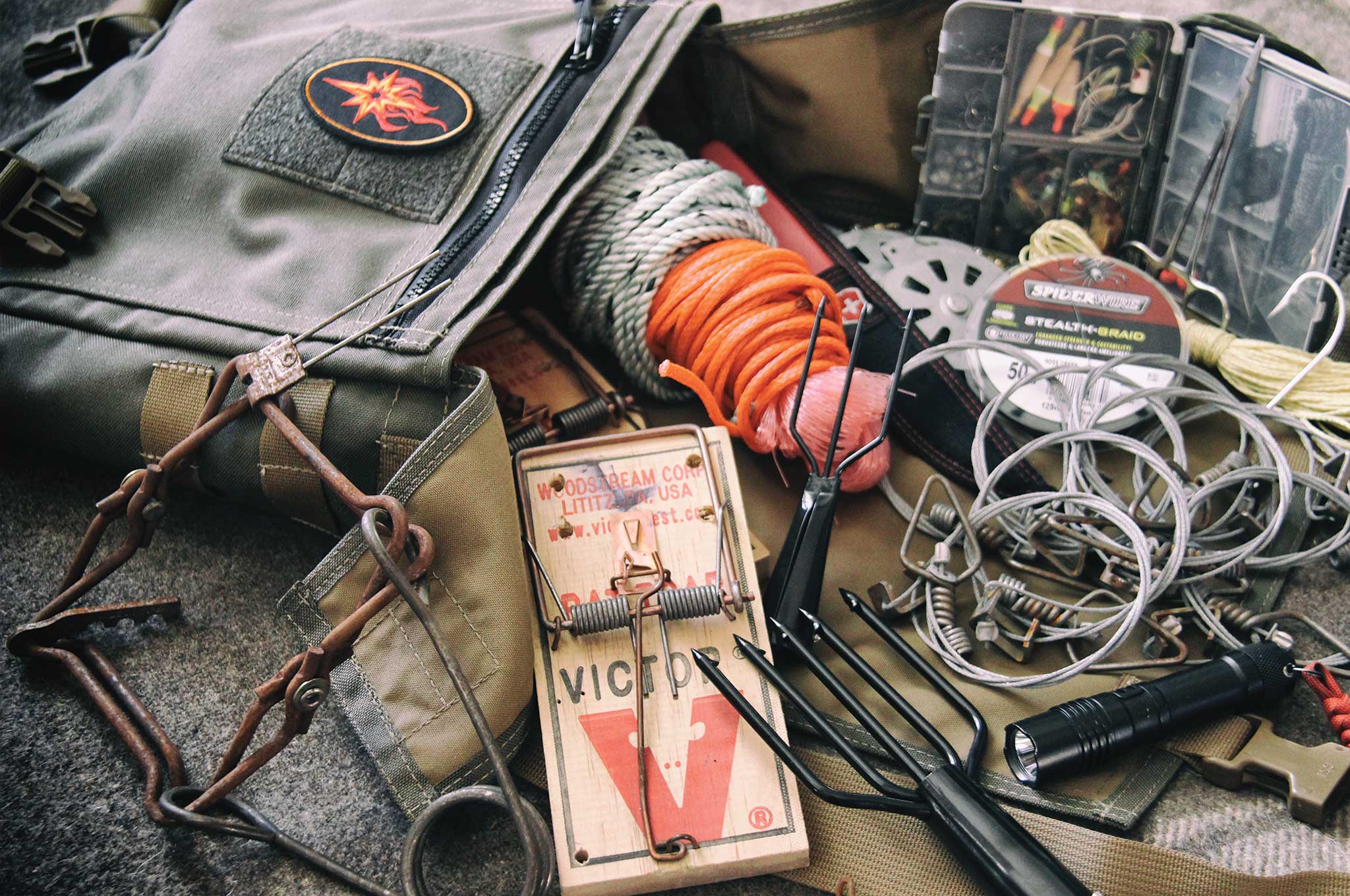
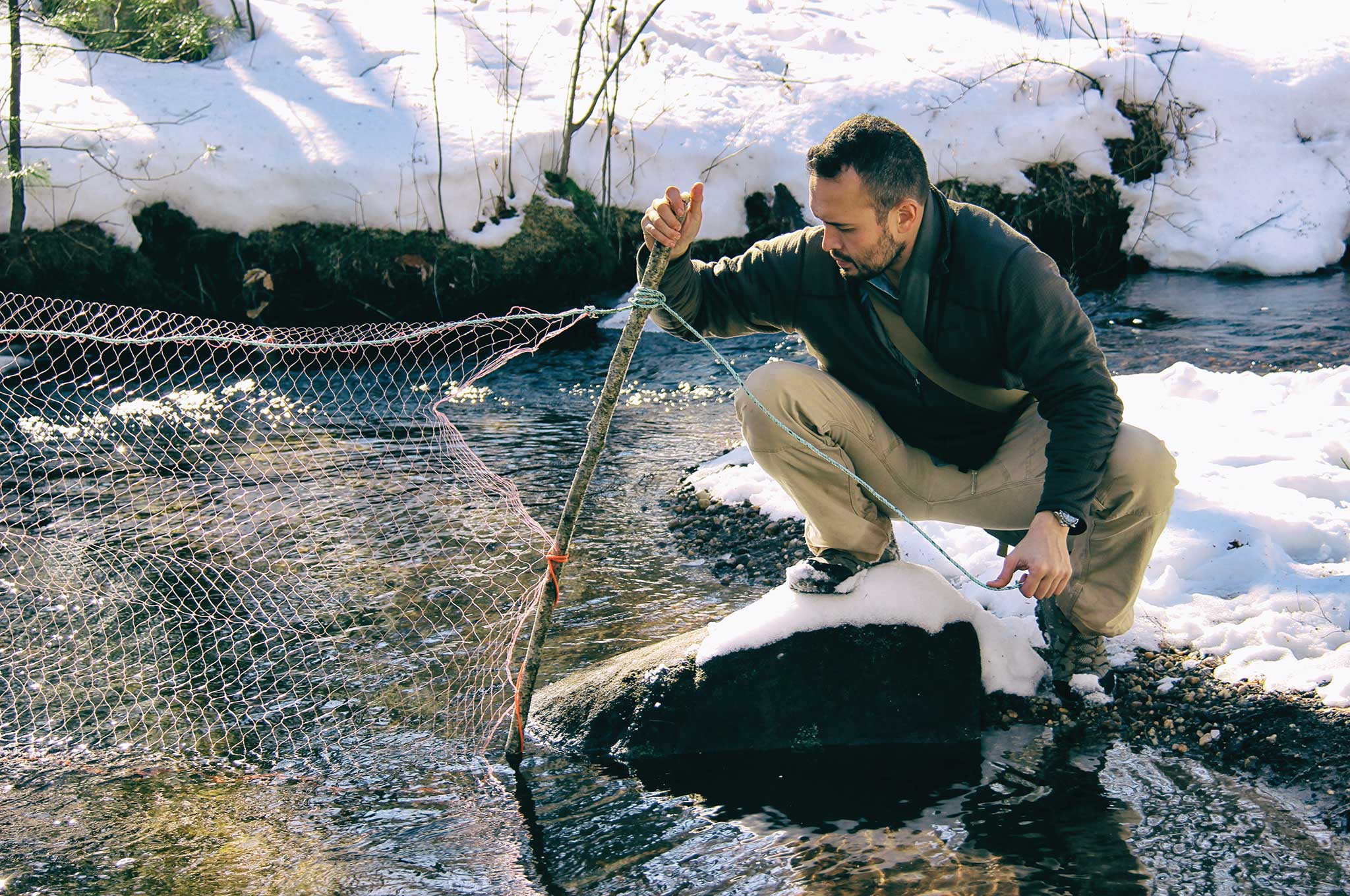
A gill net can be set above water or below water. When used with two poles, it can be moved through the water by two survivors. It’s a versatile survival tool worth its weight in fish fillets. Just make sure to use the right size net for the fish you intend to catch.
Gill Net: Anyone who has seen the History Channel show Alone knows the concept of a gill net. Designed to capture fish by the gills, these nets work wonders if they’re constructed to match the fish in your area. A gill net can be used in a stationary location, or it can be anchored on one side and walked through the water in an arc by holding the other side. A gill net can be set discretely underwater as well, if traveling unnoticed is a concern. It can also be fashioned into a scoop net or a net supported by a frame, and raised in and out of the water by a central point.
Frog Spear: Made from steel and used for nighttime frog hunting, a good 3- to 5-prong frog spear will outperform any wooden spear crafted in the bush. Frog spears can be used on reptiles, amphibians, and small fish. They work exceptionally well when paired with a flashlight to temporarily blind your prey. Inexpensive Eagle Claw brand gigs are widely available and custom spears made from higher-quality steel ensure you have the right point for your spear.
Hawaiian Sling: A Hawaiian sling is a long thin-shafted spear with an elastic band attached to one end and a pointed barbed end on the other. The elastic band is looped around the hand, stretched, and the spear is held holding the energy back until the hand is relaxed and the spear is launched forward. These are highly effective as they don’t require easily telegraphed body motions to thrust. The Mako 3-in-1 Take Down Pole Spear is an excellent choice if space allows. Otherwise, the survivor can pack surgical tubing, spear head, and lashing twine to make his own.
Hacking: This method of fishing involves using the back of a machete in a chopping motion against a fish spine in order to break it, making easy retrieval of your fish. The back of the blade is used to avoid accidentally cutting your leg. While blood works great as chum, using your own blood isn’t advised. Attract fish with a lantern, LED headlamp, or a torch made from folded birch bark.
Long Line: Imagine a length of paracord with pieces of fishing line hanging off of it at different intervals and depths. These lines are just short enough to avoid tangling with one another, and since they’re attached to a single long line, multiple fish can be caught with a single retrieve. The long line works well — so well that it’s on the radar of the humane society. That’s good for you if you need to indiscriminately catch to put on your plate.
Automatic Fisherman Reels: Operated by a spring, these lightweight fishing reels automatically retrieve your fish after they swim away and trigger the mechanism. These reels do your work while you tend to other survival needs. They can work above water or underwater in iced-over conditions. The constant spring tension “plays” the fish and your prey will be tired when it’s time to retrieve the unit from the water.
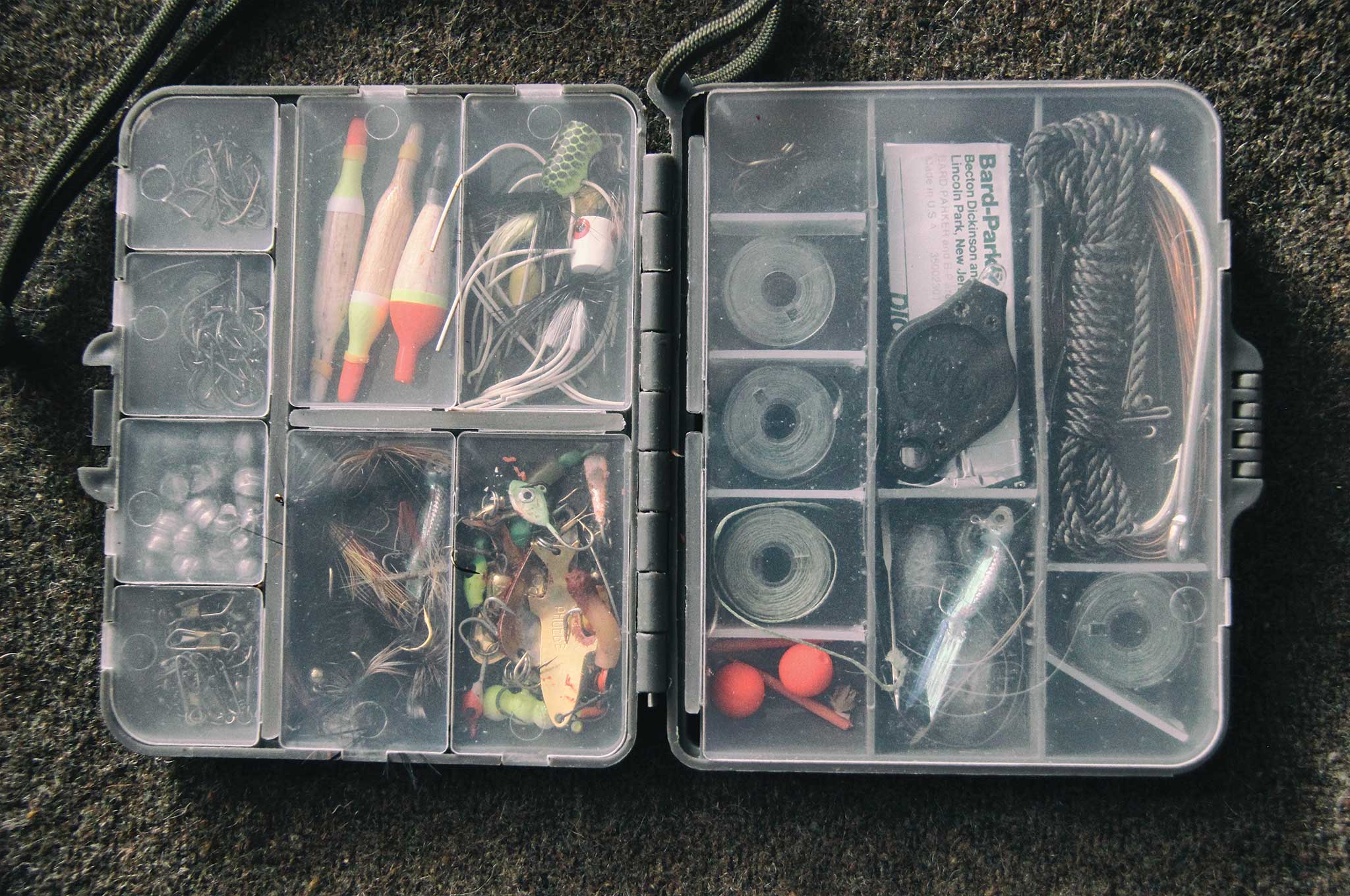
A well-stocked small fishing kit will take up very little space. A combination of dry fly poppers for bass, nymphs for trout, and jigs for panfish are all contained within the author’s fishing kit.
Collapsible Fishing Rod: Sometimes, you still need a good fishing rod to reach out to the fish biting just outside your reach. Three-piece (or more) fishing rods break down to less than 24 inches and are easily packable on the outside of a small ruck. From the inexpensive and durable Ugly Stick brand to higher-priced St. Croix Rods, there’s an option for everyone. If space allows, it can’t hurt to pack a small, ultra-light fishing rod and reel with some basic tackle. This combination this author used while in Alaska to feed himself for two weeks in the bush.
Trapping
A survivor should consider trapping before he considers hunting. It’s easier to fashion traps than it is to make projectiles. A properly constructed trap can be just as effective as (or even more effective than) a hunter seeking out prey while burning calories and launching a projectile with questionable accuracy at a target, which may be situated in an awkward position.
Rat Traps: Inexpensive, lightweight, and crazy effective against small rodents — do you need more reason to pack these? Oh that’s right, if you have special skills, they work well to close circuits and make other traps for bigger threats. They can be baited with camp scraps or wild edibles gathered on the move.
Braided Picture Wire: The same wire you used to hang that painting of dogs playing cards is the kind you can use for creating snares. Braided wire is much tougher to break than solid copper or stainless wire of equal strength. The braid also grabs onto animal hair as your prey fights for its life. Depending where you are, the braided wire can also serve as fishing leader for fish with sharp teeth that would otherwise cut through your line.
Commercial Rabbit Snares: If space allows, carry real snares. They are often equipped with locking cams that prevent the snare from loosening after the animal realizes it’s caught. These snares also have hardware designed to swivel to prevent the wire from kinking and breaking. If space allows, you can’t beat a half dozen or more real snares. Just learn where and how to place them.
Flashlight: A high-intensity flashlight can help you confuse animals like … well, a deer in headlights. There’s a reason why hunting some game with a flashlight is often illegal — it’s simply effective. A good flashlight can help the survivor catch animals by hiding behind the wall of light. Paired with a spear, club, firearm, or other hunting tool, a flashlight is a game-changer.
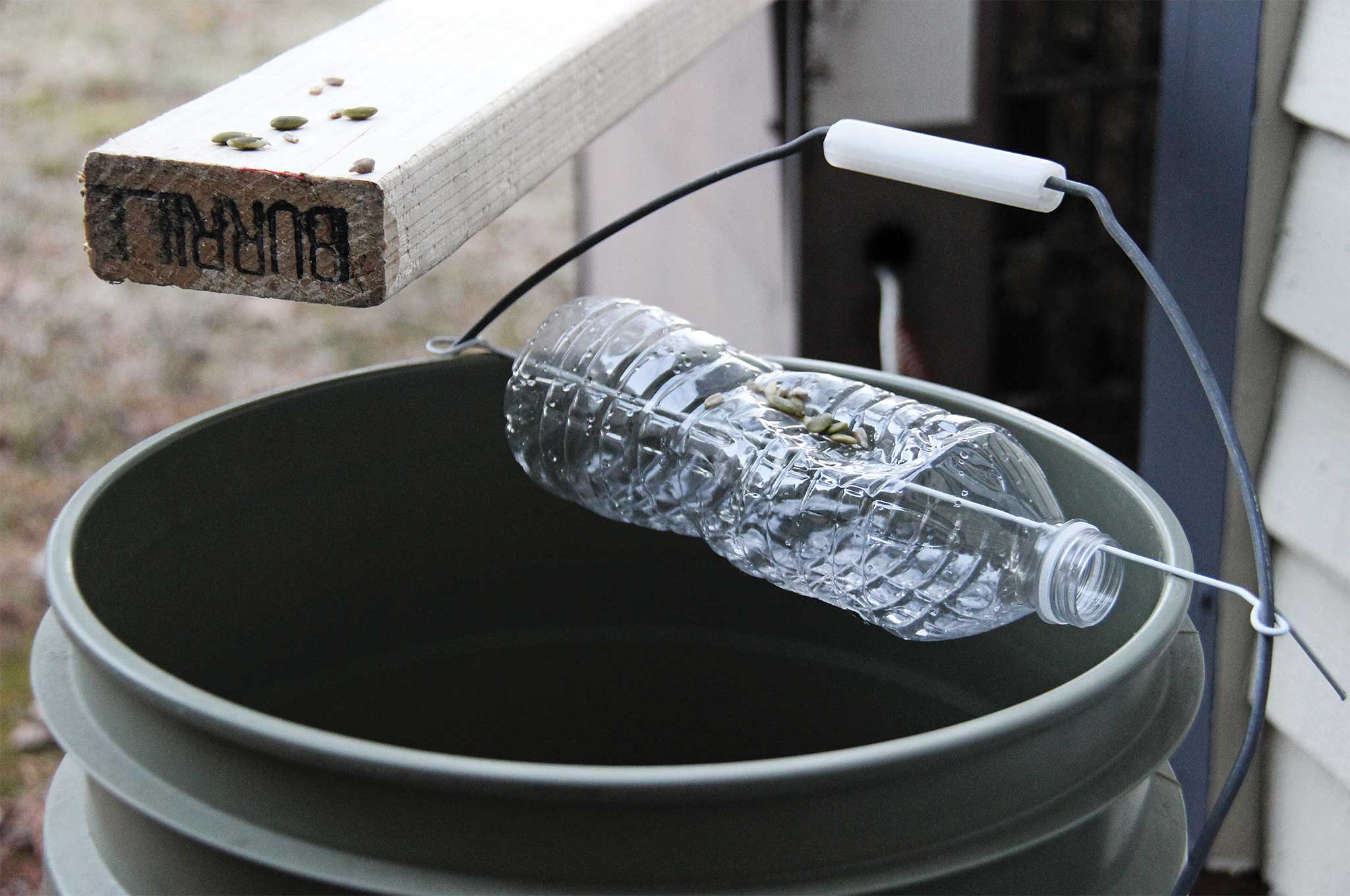
With a few scavenged materials, a survivor can create a highly effective rodent trap. Rodents are numerous, nutritious, and easily caught with a roller-bottle bucket trap.
Build a Better Mousetrap: Litter is found in the most remote places around the globe and some of the best traps are repurposed garbage. An easy but highly effective mousetrap requires a bucket, a piece of wire, and a bottle. The wire is inserted through the bottle and poked through the bottom. The wire is extended over the top of the bucket and you’re left with a roller like those found on American Ninja Warrior. The bottle is baited with seeds, nuts, or scraps of leftover food. When the mouse stands on the bottle, it rolls off into the bucket. If you fill the bucket with water, the mouse drowns. These traps have been used in farmhouses and barns for years and for good reason.
Hunting
We’ve all known that one guy in our camp who takes the nearest piece of wood and sharpens it to a point for “bear protection.” An equally comical explanation may be given about how he’ll use that spear to get dinner. Aside from scratching his ass, that “spear” won’t work nearly as well as some of the hunting implements that’ll put meat in the pot with a little practice. As previously mentioned, hunting does require energy and it burns calories, but this doesn’t mean you should leave the hunting tools at home. Sometimes, shots present themselves, and you’ll kick yourself if you could have taken it with any of the following.
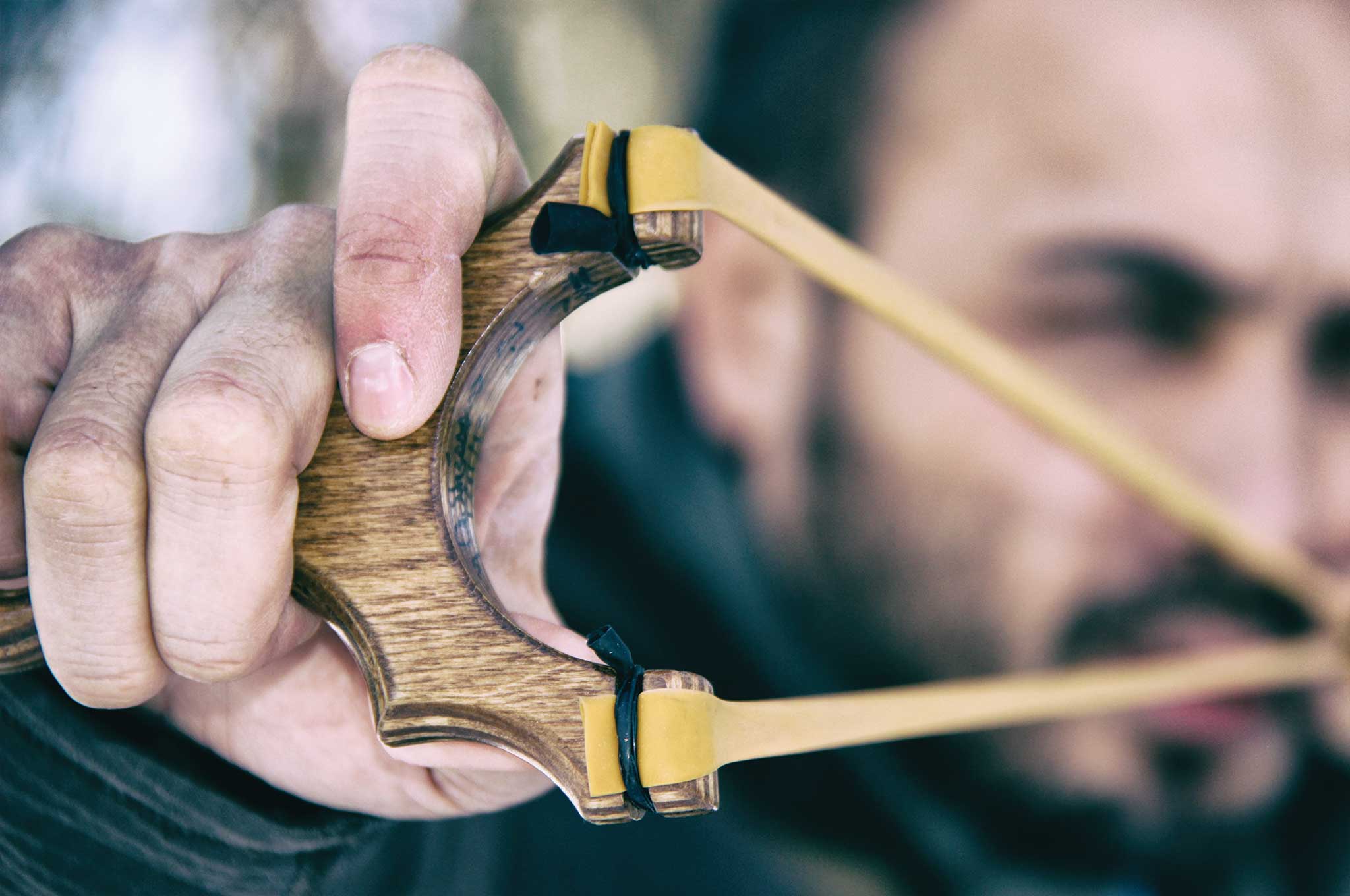
Slingshots are not just kids’ toys. When powered with modern bands, they’re capable of dropping small game quietly with lead rounds, steel shot, or small pebbles.
Slingshot: Unless you grew up in a sheltered household with overbearing parents, you probably had a slingshot as a kid. At some point, you probably noticed how well it worked on soda cans, or managed to scare off the neighborhood cat or the birds that cat was chasing. Since your childhood, slingshots have come a long way and are now equipped with more powerful bands cut from Theraband Gold. As long as you practice, you can become extremely proficient with one, and it’s possible to kill squirrels, rabbits, snakes, ducks, and other small game. Keep a spare set of bands in an airtight bag and use marbles, steel or lead shot, or small pebbles as ammo.
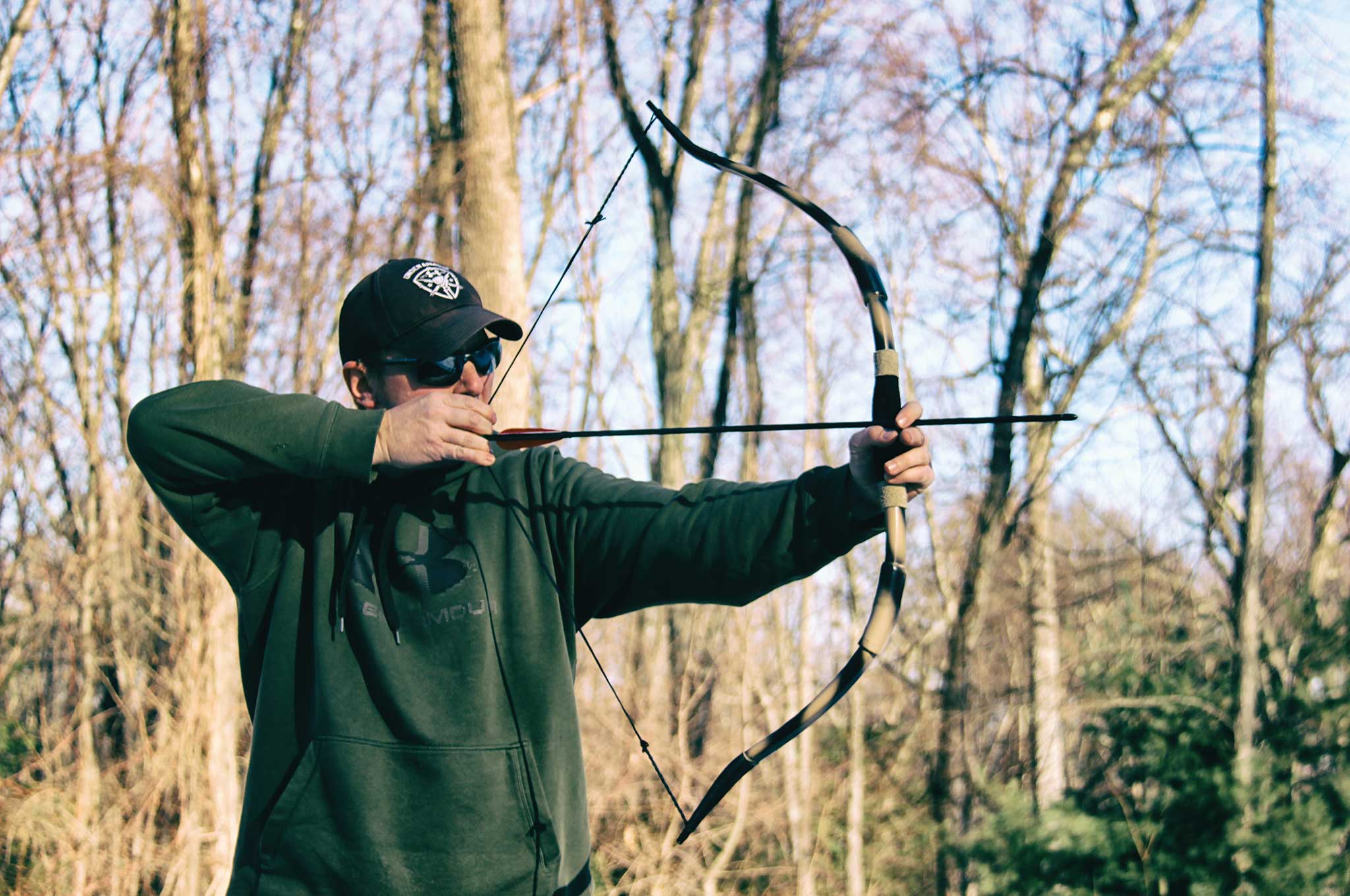
Broadheads, field points, and bludgeon points can all be used from the same bow and arrow. If you have the room, a takedown bow and arrow makes a great addition to the predator pack.
Bow and Arrow: While the slingshot works well and operates quietly enough for discreet hunting and undisturbed follow-up shots, the bow and arrow is the right tool for larger game and greater impact. The survivor can select field points, broadheads, or bludgeon points, depending on what animal is hunted. A good takedown bow that needs little maintenance along with a few arrows is easily packed opposite of the takedown fishing rod to balance out your pack.
.22 Pistol: If you’re legally able to pack a quality .22 pistol, do it. In our experience, the .22 pistol is the king of compact survival firearms. Not quite rifle accurate, but accurate enough, the .22 is capable (with the right shot placement, of course) of putting food in your belly. A 4-inch barrel cuts velocity down, but not to a point it becomes impotent. Of course, if you can carry a longer barrel, do it. The increased sight radius will help you if you aren’t running a micro red-dot.
Conclusion
There’s no such thing as fair in the animal kingdom. Lions don’t discriminate and will eat any easy meal they can sink their claws into. Wolves gang up and seek out the weaker animals, and sharks will hunt out the source of blood in the water even if it comes from one of their own. When a survivor takes on a predator mindset, he or she must be willing to accept the psychological conflict of killing immature or undersized game, destroying a nest for eggs, or maiming a cute and fuzzy animal and hearing it sound off in pain.
One must be willing to break sport hunting and fishing rules and regs if they want real results. From our experience, hunger is a great remedy for the guilt associated with cheating, and hunger can motivate the average person to unlock their primal self. Primal man existed long before sporting fair play. Next time you venture out, be prepared with your predator pack when you need to fill your belly at any cost.
About the Author
Kevin Estela is the owner/head instructor of Estela Wilderness Education, a bushcraft and survival school in New England. He’s a Sayoc Kali Associate Instructor, Brazilian Jiu-Jitsu practitioner, and an avid marksman. When not teaching outdoor skills, he’s a full-time High School History Teacher and the Founder of the Estela Wilderness Education Fund. www.kevinestela.com
10 Essentials of the Predator Pack
1. Mosquito Head Net: For use as a dip net 2. Kevlar Thread: Combined with gaff hooks for turtles 3. Rat Traps: Two to four for small game 4. Gil Net: Helps in catching larger fish 5. Automatic Fisherman: Great triggers for fishing or for small game 6. Rabbit Snares: Commercial grade (eight weigh approximately 1 pound) 7. Sling Shot with Spare Bands: For use as-is, or to rig up a Hawaiian sling 8. Treble Hooks: For predators or weight with split shot for snagging 9. Flashlight: Use with firearm for jacking or for frogging 10. Frog Gigs: for spearing frogs, fish, lizards, etc.
Luxury Items if Space Allows:
1. Extra fire-starter 2. Salt, pepper, oil, balsamic vinegar, and various spices to offset food boredom 3. Edible plant reference cards — no, one can’t live on meat alone 4. Game processing blades, such as a small fillet and skinning blade 5. 110 Conibear: This trap is king, but each is heavy and bulky 6. .22 Pistol: Minimum 4-inch barrel. Browning Buck Mark shown here.
5 Ways of Stacking the Odds in Your Favor
Hunt at morning/night: Animals are most active during the early morning and late hours of the day. They tend to hunker down during the brightest hours of the day. To be more effective, avoid hunting and fishing when the sun is high. Spend your time building your kit and planning your predation during these hours.
Camouflage: Animals aren’t foolish and unless it is injured or ill, you probably won’t be able to walk right up to it. Camouflage yourself to the environment. Use natural concealment to hide your presence. Minimize your footprint and blend in.
Bait/chum: Baiting or chumming animals is often illegal in many jurisdictions. Don’t discard, burn, or bury the entrails of an animal. Use the unwanted bits for scavenger bait. Racoons and catfish are fond of scraps and both are edible.
Overset (quantity of traps): There’s no such thing as too many traps. If you’re capable of setting 10, set 10. If you can set 15, set 15. Set as many as possible and learn to set them correctly. Assume some of your traps will be triggered, but won’t harvest game. Even a 20-percent chance of success out of 10 traps is better than 100-percent success on one.
Ambush (driving game): Many survival scenarios involve a single person. With a team of two or more stuck in an emergency, a team can be coordinated to drive animals into nets or toward an ambushing member with a club or spear. Utilize natural choke points and create a strategy. Work like a pack of wolves and be lethally efficient.
When Manuals Get it Wrong, Get it Right
Too many survival manuals are butchered and doctored from their original source. Once information leaves the author’s control, editors and art layout folks have the potential to tweak a factually correct point into something foreign that’s more pleasing to the eye than it’s effective in the field. Here are a couple common mistakes leading to misconceptions we’ve found in the survival manuals in many bookstores today.
Spearing a fish: Have you ever tried hooking a minnow through the body with a steel hook? It isn’t easy, and this is when you have one hand on the fish and one on the hook. How many survival manuals show a single “pencil-point” type wooden spear going through a fish floating in the water? The best type of fish spear is a forked spear that pins the fish to the underwater bottom.
Complicated trap triggers: Some of the best trap triggers can be learned from classic poorly drawn survival manuals from true outdoorsmen. Many survival manuals today feature traps we’ve never seen a single person construct and set on their own (though it may be possible with a steady-handed team of two or more). Intimate knowledge of a handful of triggers is better than limited knowledge of many. Don’t try constructing anything that looks like the boulder Wile E. Coyote balanced upon a sharp point in the cartoon world to kill the Road Runner.
“M”-shaped fish trap: We’ve all seen that sketch in manuals. A set of sticks is driven into the ground to create a trap that resembles the letter “M.” Sometimes the back of the trap is also cordoned off with a “C” shape to create a pen. This trap works as long as the conditions are right. It sucks in rocky creeks, it sucks when the fish sought are able to wiggle through the gates (weave some horizontal branches between the vertical), and it sucks when fish won’t swim into it. In rocky conditions, build a trap out of rocks and to get the fish to swim into the trap, beat the water with evergreen boughs walking from upstream down.
Odinson Archery Takedown Bow and Arrows
Just like the samurai sword was the embodiment of the samurai, an Odinson Archery bow is the embodiment of bowyer and master archer, Alan Odinson. Both are tough as nails and highly capable. Odinson has taken his passion for archery and turned it into his company that provides PVC bows at a fraction of the cost of wooden counterparts without sacrificing performance. A quick YouTube search of Odinson Archery will reveal trick shots and performance tests all done with one of the PVC bows offered.
We tested out the Take Down Assassin bow along with some of his broadheads. The bow takes down into three pieces and draws approximately 40 pounds at 28 inches. The average velocity of arrows fired is 150 feet per second. When used with the optional broadheads, the penetration on foam targets is impressive. According to Alan Odinson, “Two-blade designs offer a few benefits over the classic four-blade broadhead.” This includes penetration comparable to that of four-blade designs shot from more powerful bows. In a weakened survival state, a lower draw weight will be easier to use for obvious reasons.
After testing, it’s apparent Odinson Archery has perfected the process and execution of blending nontraditional materials to make traditional bows. Lightweight, water-resistant, inexpensive, and ambidextrous, Odinson’s bows are perfect for survival. His bows do what they are designed to do and with enough practice, instinctive shooting is preferred over complex sights. For less than $100, the survivor can add another game-getting tool to their kit. www.odinsonarchery.com
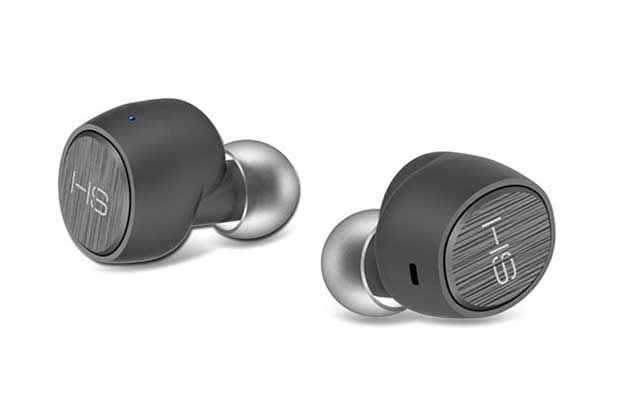
Cellphone, keys, and wallet are the standard three items we all take with us everywhere, but it seems like earbuds have just about made their way onto that list. Whether exercising or working at the office, when are we not listening to some kind of new music, podcast, or audiobook? When you’re in the zone, having an earbud yanked of your ear is incredibly irritating. Luckily, there’s an easy solution: wireless earbuds, like the HomeSpot AirBeans X True Wireless Earbuds.
With a swell of manufacturers producing wireless earbuds, what sets these buds apart is quality. Featuring Bluetooth 4.2 technology and an LDS Antenna, these earbuds deliver a consistently powerful stream, allowing you to listen to your music uninterrupted and in the manner it was meant to be heard. And with 3 sizes of ear tips included, they’ll be sure to fit comfortably in any ear. Plus, an included charging case allows you to magnetically recharge your buds for more than 8 hours of playback time. Not to mention, you can even take and make phone calls with increased clarity, thanks to noise reduction and echo cancellation technology.
You can pick up a pair of HomeSpot AirBeans X True Wireless Earbuds for 28% off at just $69.99. These earbuds are a perfectly portable companion for your active lifestyle.
Building a bug-out vehicle means preparing for a wide range of road conditions, from everyday commutes on wide-open highway to slippery ascents up muddy trails. If you find yourself in a true emergency situation, it should go without saying that you don’t want to be stuck in a ditch spinning your wheels. In all likelihood, no one will be around to pull you out, and time will be of the essence. So, you should prepare multiple methods of vehicle recovery in case you get stuck in the mud, sand, gravel, ice or snow.
The most obvious tool for vehicular rescue is a winch. These bumper-mounted electric devices can easily hoist your vehicle out of that rut. Just unspool the cable, loop it around a nearby tree or rock, and hit the remote to start pulling with thousands of pounds of force. However, like any mechanical device, winches can fail. You’d better not put all your bug-out eggs in that basket.
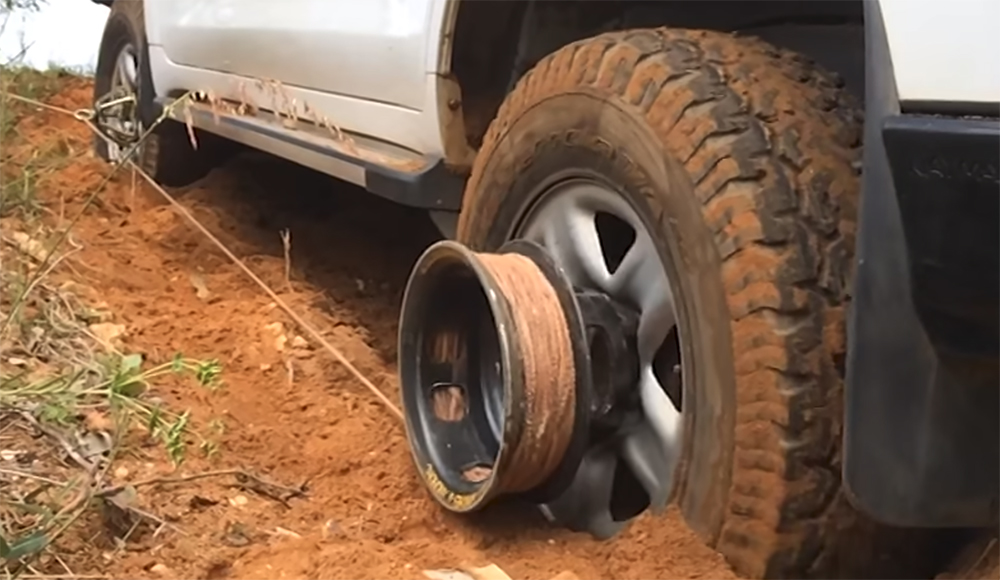
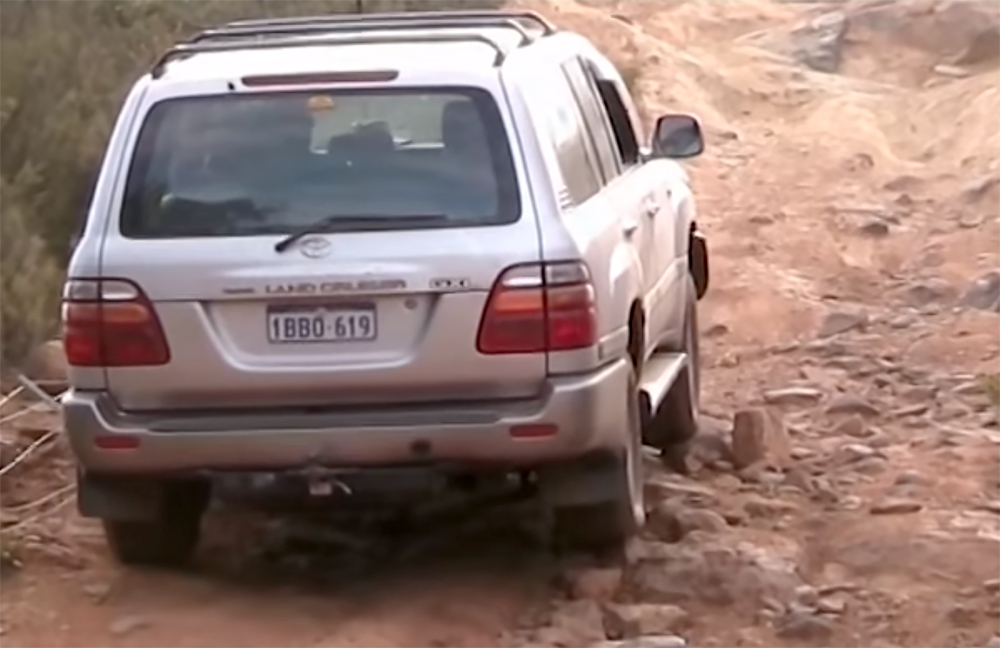
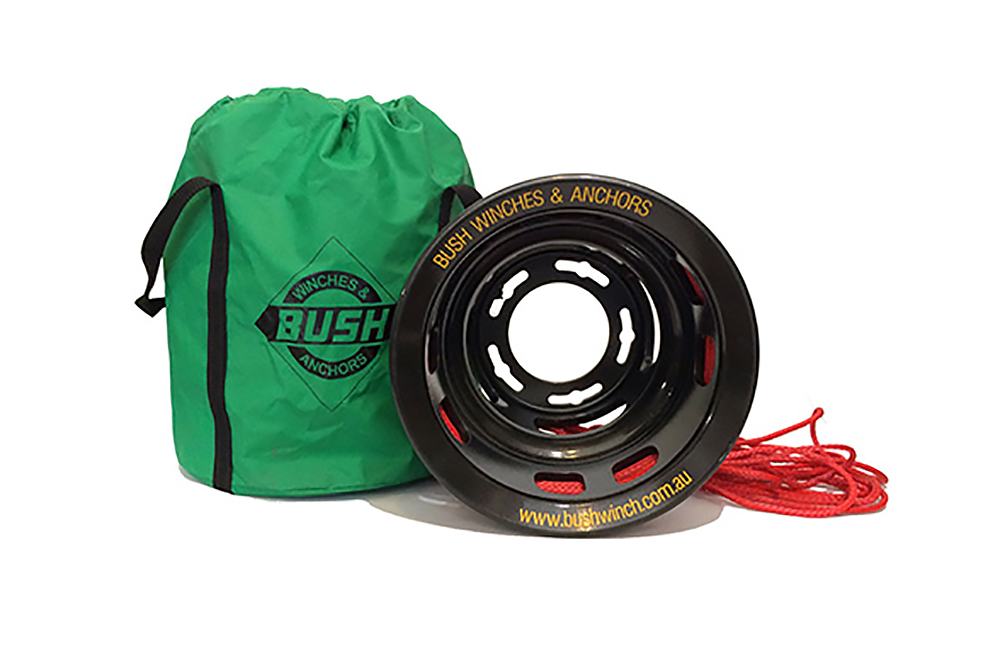
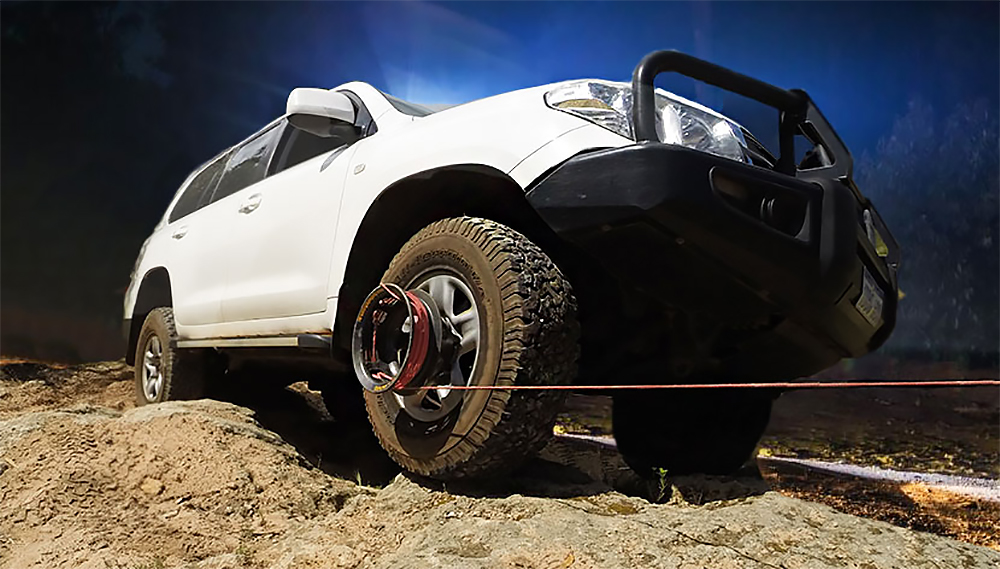
One clever alternative to a traditional winch was developed by Australian off-roaders, and it’s incredibly simple. The Bush Winch doesn’t use electric motors of any kind — instead, it’s powered by one of your truck’s drive wheels. As the wheel spins, it spools up the excess slack in the winch line, and pulls your truck slowly out of its rut.
The Bush Winch is attached by a set of special wheel bolts and nuts, which must be installed ahead of time. Then when your vehicle becomes stuck, you can step outside, twist the winch drum into place on the nuts, and attach the winch rope to a nearby object. This can be done on any of the four wheels, assuming you have a 4×4 or all-wheel-drive car or truck. Each kit includes two cast alloy winch drums and two 66-foot high-strength winch ropes, as well as a wheel nuts and a carrying bag. Optional rope guides and ground anchors are also available.
While we can see some drawbacks to this system, such as stress on suspension components and wear on the rope as it contacts the ground. There also needs to be enough space between the wheel face and terrain to fit the winch drum, so you might need to do some shoveling. But it’s still a clever backup system to add to your vehicle rescue kit.
MSRP for the Bush Winch kit is $568 Australian dollars, which equates to roughly $432 U.S. dollars at the time of this article. For more info, go to BushWinch.com.au.
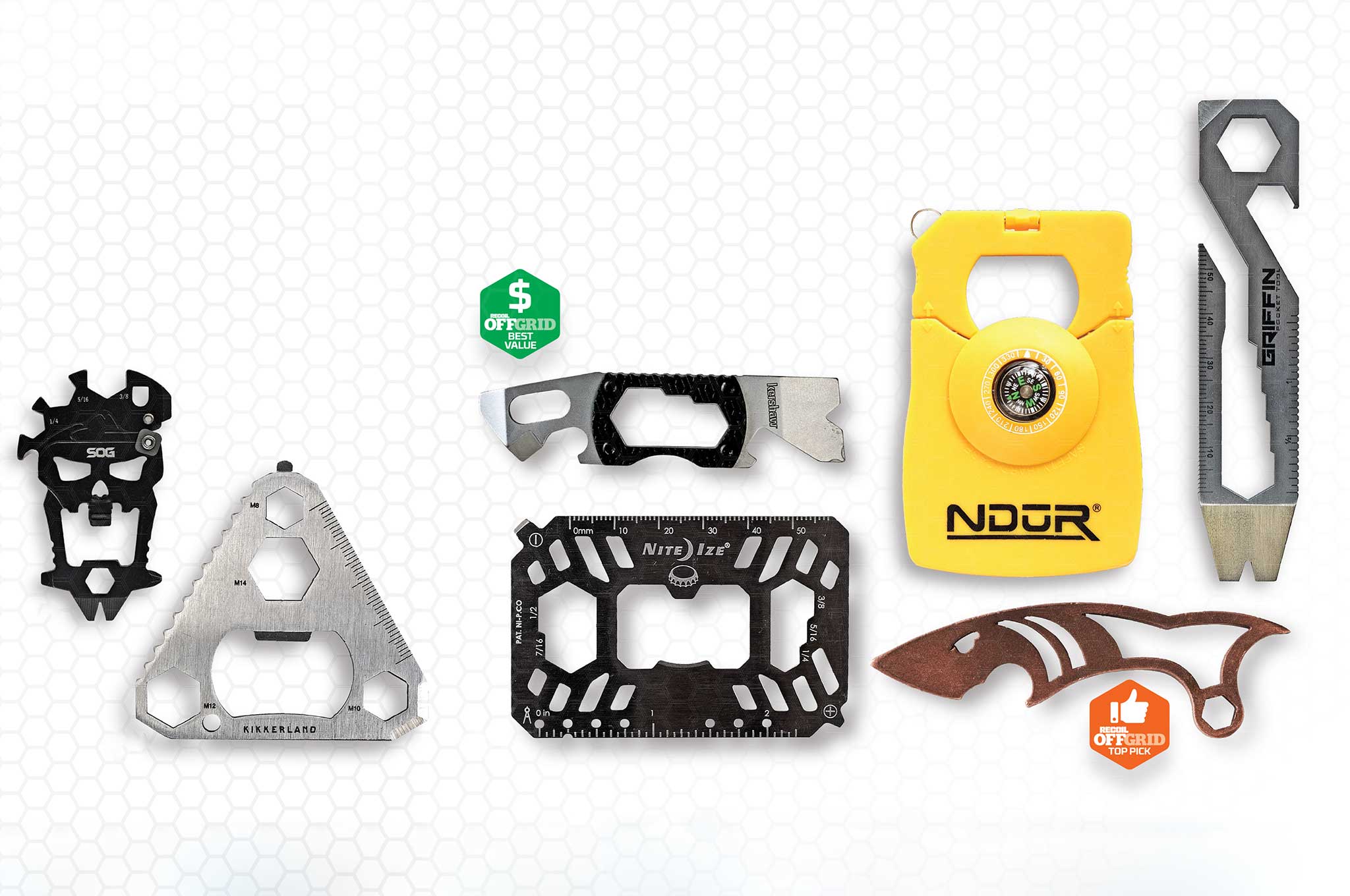
Think of a one-piece pocket tool as a sidekick to your knife. At first glance, they’re often just a funny-shaped piece of steel small enough to slip on a keychain or drop in your pocket. They might not look like much, but they’re designed to shrink a handful of tools into an easy-to-carry package that keeps you running light and always prepared.
Even though a knife is the No. 1 tool you must carry in a survival situation, a blade has its limitations. A knife can chip, bend, or snap if used as a pry bar or screwdriver. And yes, if there are no other tools available, there may come a time to push your trusty blade to breaking point. But pocket tools are designed to pick up those tasks and then some, like turning hex bolts. Additionally, many pocket tools, because they don’t have sharp edges, can travel with you as you board planes, drop your kid off at school, or otherwise go where a knife is viewed as a weapon.
The result? For an ounce or two of weight, you’ll have more tools at your disposal than most college students can find in their dorm room. How’s that for preparation? Here, we examined seven tools to see how they navigate modern life.
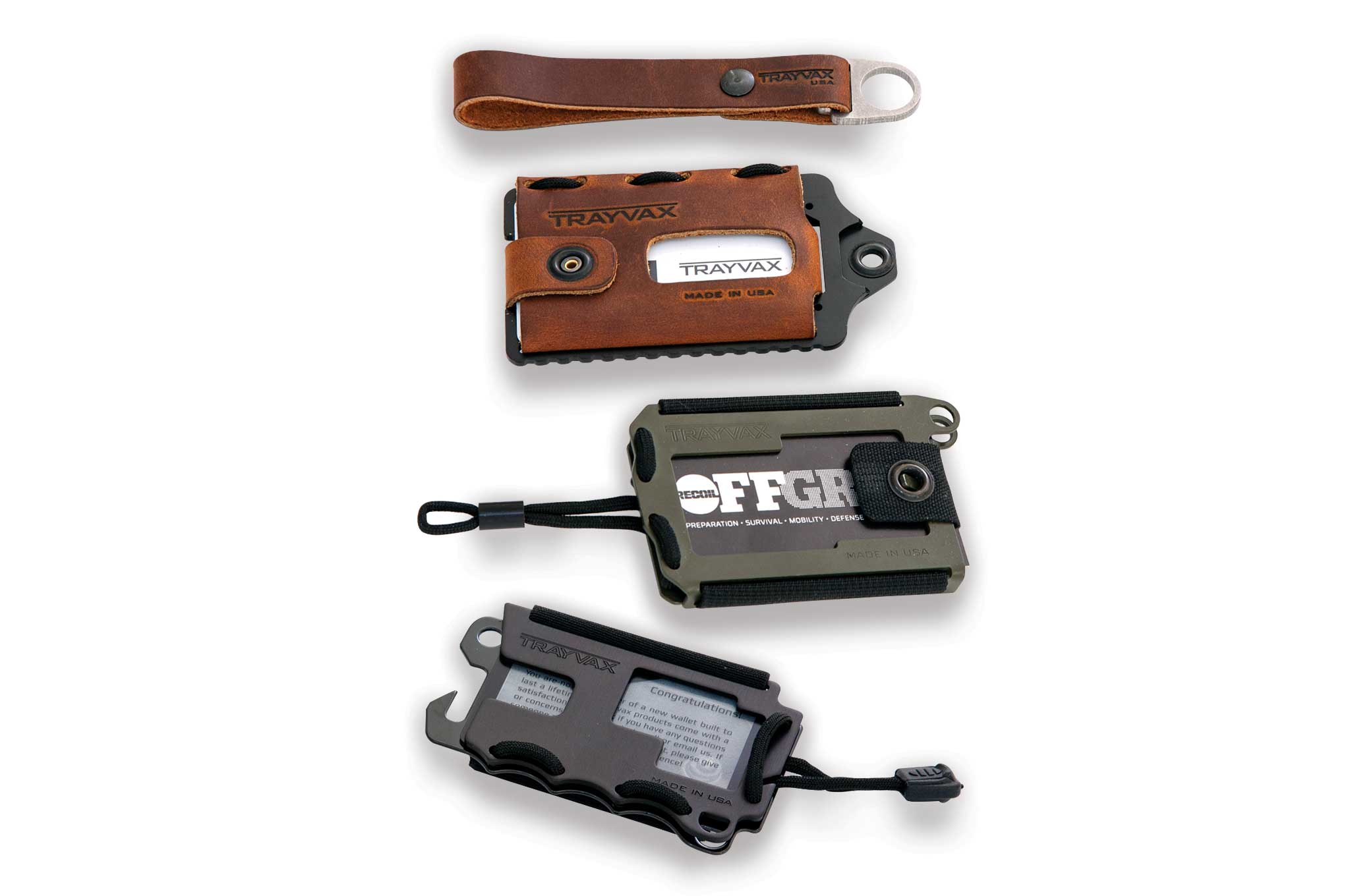
If you read our Survivalist Spotlight on Les Stroud in Issue 21 you’ll remember how critical he said it is to carry cash as part of your EDC. However, we often overlook the importance of the tools we use to carry our money, credit cards, and IDs until they’re lost or stolen. Ask anyone who has experienced that headache and they’ll tell you it’s no laughing matter, particularly if you’re away from home. For more ways to integrate one-piece tools into your EDC gear, check out our OFFGRIDweb-exclusive review of three metal-framed minimalist wallets and a leather key fob bottle opener from Trayvax.