Cyber Threat Awareness: How to Prepare for a Cyberattack on the Grid

Alan Turing, the legendary World War II cryptographer, creator of the conceptual computer, and codebreaker of the infamous Enigma cryptography machine once said, “Those who can imagine anything can create the impossible.” While it may not have been in the same light then as it’s taken now, he was absolutely correct. In fact, this statement, when being applied to quantum computing, mathematics, cryptography, and technology becomes a little terrifying when applied to the current state of cyber and information security. Now more than ever, we have nefarious actors thinking outside the box, and acting on what used to be known as the impossible. Around each corner is a new risk to be managed, and even more malicious “black hats” willing to come up with an exploit. In this article, we’ll take a look at how to prepare for a cyberattack on the grid, based on real-world examples of attacks on critical infrastructure.

Cyberattacks Can Affect Your Daily Life

Above: Hackers become more persistent and more sophisticated every day, threatening the lives of nations and individual citizens.

With new developments every day in the cyber arena, whether positive or negative, your information alone is no longer the highest-value chip on the table. Breaches happen every single day in the thousands. There are amateurs stealing information over Wi-Fi, skimming credit cards at the pump, and utilizing social engineering to collect personally identifiable information (PII). Ransomware, identity theft, data leaks, and “script kiddie” DDoS (distributed-denial-of-service) attacks all suck, sure, but what about the things that could really affect our day-to-day life? Picking up groceries, paying your bills, keeping the lights on, potable water, and functioning hospitals are all critical parts of society and all vulnerable points in the threat landscape. Even worse, the likelihood of a threat acting upon these vulnerabilities is higher than ever.

But before we start talking about the future and how cyberattacks impact the physical world, let’s take a brief look into the past. It’s a quiet Sunday in March 2007 in Idaho Falls, Idaho, and a 2.25-megawatt green maritime generator sits on a cement pad at the U.S Department of Energy’s Idaho National Lab. The DOE, at the time, partnered with other government agencies to explore possible exploits for the modbus communications protocol, widely (still, even) used in industrial control systems. Ahead of the curve for the time period, DOE had the wherewithal to know that backup generators, largely used for telecommunications and the electrical grid, were very susceptible to cyberattack.

With these ideas in mind, a few crafty computer scientists discovered that, if on the same network as an industrial piece of equipment, the modbus protocol and its vulnerabilities could be exploited through programmable interfaces on the equipment. A few scripts later, they targeted relays meant to protect breakers on the equipment, and the generator began bucking like a bronco, spewing smoke, and shaking violently. Less than a minute later, shrapnel was shooting from the generator, some pieces landing as far as 30 yards away — then all of a sudden, it was over. What the researchers understood after that day was that systems could now be hacked to cause physical damage, not just to compromise information. If the target has any communications protocols connected, such as those in supervisory control and data acquisition (SCADA) systems or programmable logic controllers (PLCs), they can be exploited, controlled, and ultimately, destroyed from anywhere in the world.

Taking the Aurora test into consideration, we’ll explore more recent, real-life examples throughout this article with the goal to demonstrate why it’s imperative to plan and prepare countermeasures against scenarios that leave your household vulnerable to the outcome of infrastructure attacks. Of course, there’s no foolproof way to stand up against someone bringing down the entire electrical grid, but just like anything else, you can certainly soften the blow of the immediate impact while things recover.

Calculate Risk Like the Pros

You’ll notice that we’ve used a 1-5 scale on each threat and vulnerability in order to assess two things: 1. The impact of the vulnerability itself, if actioned, and 2. The likelihood of the threat to be exploited. These values are then multiplied to determine overall risk.

Using this simple formula, and the below 5×5 risk matrix, one can quickly determine what the overall risk of the scenario might be. This semi-quantitative risk score is ubiquitous in information security and business continuity circles throughout both the private sector and public sector, including three-letter and other government agencies. If the simple 1-5 scale doesn’t tickle your fancy and guessing isn’t good enough, both NIST and ISO have methods of determining what exactly makes a 1 as opposed to a 4 or 5.

The Electrical Grid

Above: The 2015 Ukrainian grid hack demonstrated that, with the click of a mouse, all power can be knocked out, leaving even governments helpless.

What we’ve already seen: Roughly eight years after the Aurora test, another first-of-its-kind attack was carried out, but this time, it wasn’t a test. On that very cold day in Western Ukraine, the Prykarpattyaoblenergo power and control station was hacked by a group of Russian state-sponsored hackers. The threat actors targeted breakers on power substations, opening the circuits and shutting the power off, bringing a quarter-million citizens into the dark. After discovering the problem at the various substations, power companies and government officials traveled site-to-site closing the breakers and restoring most of the power in roughly three to five hours. While no long-term damage was done, after-action summaries determined that the actors could’ve done much worse due to the degree of control they achieved. This cyberattack foreshadowed Russia’s move to occupy power stations, such as the Kyiv hydroelectric plant and Zaporizhzhia nuclear plant, during their 2022 invasion of Ukraine.

Threat Likelihood: As recently as in 2020, U.S. officials have publicly stated that nefarious actors have already gained access to the national power grid via the private companies that manage various segments of that spiderweb. However, the U.S government has reinforced that material attacks on the grid would be seen as an act of war, if carried out by another nation (assuming that could be proven). Still, this doesn’t rule out a nation-state attack, with full resources behind their power — this is our biggest threat.

Foreign state-sponsored hackers aren’t the only individuals motivated to shut the lights off. Radical groups within the U.S. have also expressed interest in attacks against parts of the grid. However, their resources aren’t as rich, so the likelihood of a long-lasting attack from a rogue group is fairly low.

Threat Likelihood Score: 4

Vulnerability Impact: Much of the power grid runs on outdated infrastructure, which is easily exploited. However, more and more providers are learning to “air gap” systems — in other words, they intend to make sure that they aren’t connected to the internet. Believe it or not, firewalls barely matter anymore if a threat actor is motivated enough.

While the systems might be old, that sometimes tends to be a countermeasure of its own. Exploits for legacy outdated systems require tailored approaches and specific exploits that take time and are one-offs. But with that said, if actioned, usually these systems are toast if the hacker wants to cause permanent damage. All in all, vulnerabilities here are endless.

Vulnerability Impact Score: 5

Overall Risk Score: 4×5= 20

Taking all of the above into consideration, the likelihood of a cyberattack on the power grid and the overall impact based on threats and vulnerabilities is moderate. While the grid and its supporting systems are largely old, the sheer consequence of bringing down a significant portion is enough to scare even the likes of North Korea and China away. The more brazen Russian hackers lurking in the systems, however, may be conducting long-term reconnaissance for the “big bang,” or for leverage against the U.S. at a later date. But for now, we haven’t seen too much in the wild, outside of the Ukraine attacks.

How to Prepare for an Electrical Grid Cyberattack

So, what can you do about it? Well, given what we know above, if you’re impacted by a “grid-down” type of attack, it’s going to be either long term or short term. In the short term, the no-brainer is to have a backup power source. Generators work great, but they’re pricey, require diesel or natural gas, and may not be an option for folks living in apartments. If you’re strapped for cash or restricted for space, an alternative power option is a good stock of backup batteries or power banks.

Above: Power stations have always been vulnerable, but the risk of a sophisticated, state-sponsored attack is beginning to reveal just how fragile the grid might be.

Additionally, power tool batteries and inverters are a smart choice, as they offer long-term, low-voltage power for simple devices like household medical equipment, lights, and heated blankets. Lastly, marine and car batteries are a solid choice that can be recharged with solar panels in the long term, and offer a decent amount of power if you happen to run out of gas in your vehicle to charge them. Solar panels for residential homes are becoming more inexpensive every year, and can supply a refreshing amount of electricity if the energy can be stored in moderately sized battery banks. Of course, the best option is all of the above, but given that most people won’t take these steps to prepare, long-term power outages would drive many urbanites into a state of utter chaos.

The Water Supply

Above: Attacks to water treatment can not only impact the supply itself, but also render thousands of people sick from possible contamination. Some attacks would’ve led to loss of innocent lives if they hadn’t been stopped early on.

What we’ve already seen: As if 2020 wasn’t enough with the COVID-19 pandemic, it did bring something startling a few months after the year closed. In early 2021, rogue actors were able to gain access to the internal network and management systems of a water treatment plant in Oldsmar, Florida. Through a very simple and amateur exploit of remote desktop protocol, the bad folks were about to completely take over a workstation, almost as if a ghost was controlling the mouse and keyboard. Due to basic reconnaissance conducted by the actors ahead of the exploit, they were able to easily navigate the SCADA system and begin manipulating chemical mix levels in the water treatment cycles. They raised sodium hydroxide content from 100 ppm to 11,100 ppm — essentially turning the drinking water into poison. Luckily, an observant employee reverted the setting before anyone was harmed.

Threat Likelihood: Similar to the electrical grid, this area of critical infrastructure is a major target for nefarious actors. Water is a precious resource, and one that needs to be kept reasonably clean when it comes to potable sources. Aside from drinking water, sewer systems and “city water” for other community supporting functions (such as building HVAC) also require high availability to keep our offices, hospitals, and telecommunications hubs up and running.

Another important note is that these threats are not new and come from various sources. In 2016, an Australian wastewater treatment plant was hacked, but not from the outside. The threat actor, a disgruntled former employee, took action on the SCADA system via pirated software that matched that of the building management system. Additionally, even though the hacker wasn’t inside the building, he had been changing pump and equipment settings via the wireless network — not exactly a sophisticated technique. All in all, what’s known as the Maroochy Incident brought light to malicious actors otherwise known as “Insider Threat.” For the most part, these are lone-wolf current or former employees who still want to do damage to critical parts of everyday life, but may not necessarily bring the entire Eastern Seaboard down with them.

Threat Likelihood Score: 3

Vulnerability Impact: It’s fairly clear to see from the water treatment plant hack that the extent of vulnerabilities is vast. Critical infrastructure for the target was running on outdated, unpatched Windows 7 with remote desktop protocols enabled, and Teamviewer (screen sharing software) right in front of the actors for use. Unfortunately, with SCADA systems being exposed to the internet, coupled with aged and unprotected software, it’s a target-rich environment for those wishing to exploit a vulnerability. “Air gapping” the systems, in this case, is one of the only ways to protect outdated, unpatched software, and is the best practice nowadays regardless.

Above: Water supply sources are a target for hackers. Whether it’s contaminating water or stopping it entirely, both have dire consequences.

To compound the aforementioned issues, unfortunately, it’s easy to conclude that the local municipalities that manage water and wastewater treatment plants don’t have the budget for systems hardening that electricity providers boast. This tight budget renders much of their information security investment useless against threat actors. If you thought attacking the power grid was like shooting fish in a barrel with a .22, attacking water infrastructure is akin to using a 12 gauge.

Vulnerability Impact Score: 3

Overall Risk: 4×3= 9

How to Prepare for a Water Supply Cyberattack

Above: Storing water on your own is sometimes legally challenging, but does yield a safety net if the water supply is compromised.

With regard to water, it might seem simple. If the water doesn’t turn on, then have some stored, right? Not so fast. Certainly, rain capture (where permitted), water storage, and water purification systems are all solutions. The real dependency and danger here lives with waste and hygiene. Anyone can store extra water for drinking, but it’s important to highlight the reality of not having a flushing toilet. If possible, having a portable or “bug-out” toilet is a wise move, best incorporated with a reasonably sanitary way to dispose of the waste. Simple measures such as this, coupled with potable drinking water, and purification methods such as bleach, iodine tablets, or boiling, will surely prepare the average person, or small family for an uncomfortable, but survivable period without running water from the utility.

Internet and Telecommunications

What we’ve already seen: Although (to the public’s knowledge) hackers haven’t performed a large-scale disruption to traditional POTS (plain old telephone system) lines that allow for landline phone comms, it’s certain that many telecommunications providers are attractive targets. They control other communications methods that the public and private industry rely on each day. Most recently, the SUNBURST vulnerability that utilized network monitoring giant Solarwinds as the attack surface provided nefarious actors — allegedly sponsored by the Russian government — with a stepladder to the network of many other large tech firms, government agencies, and telco/managed service providers.

Above: Telecommunication hubs and communications towers are key physical pieces of infrastructure that allow our virtual world to operate, making both cybersecurity and physical security of telecommunications infrastructure incredibly important.

What the Solarwinds hack taught us was that there’s a huge risk involved with many of the third-party contracted firms who partner with large corporations. Even though many of the impacted organizations may have had their shops in order, someone was coming straight through the back door with contractors. With that said, telecommunications providers that supply industry and citizens with internet access, phone coverage, and GPS capability are big red targets. So far, ransomware and data theft (leaks) have been the biggest interruptions for telco firms, but this certainly doesn’t discount the bigger risk of taking down a giant. Most recently, we have seen DDoS attacks flooding ISPs (internet service providers) and slowing things down to a snail’s pace, which almost serves as a warning of things that could come.

Threat Likelihood: Taking the internet down may seem like an attractive option for amateur hackers or “hacktivist” groups, but in reality, the large-scale impact is incredibly complicated to quantify. That may be why professionals have stayed away from toying with worldwide telecom. This may very well be due to the interconnected nature of infrastructure that has been built out to house the worldwide web since the early ’90s by companies that are now data and telco giants. Though ISPs can ultimately be hacked, the interconnect paths are so widely distributed that routing and failovers can naturally handle massive outages, since carriers can also rely on other carriers. Overall, the worldwide web is pretty robust.

For telecommunications and the internet, stepping away from the cyber world and into the physical world actually isn’t that out of scope, or not as much as it might seem. Ultimately, our lines of communication — similar to the early AT&T Mid-Atlantic carrier network, if you want some neat legacy telco reading material — and “the cloud” physically live somewhere, despite popular opinion. Credible threats to this landscape exist and have been actioned. In fact, December 2020 brought us one of the most brazen attacks on telecommunications infrastructure when a lone-wolf suicide bomber detonated his RV outside of an AT&T telco and data carrier hotel in Nashville, Tennessee. This particular attack took down large parts of the Southeastern U.S.’s telephone network, as well as local 9-1-1 services, and internet access for many surrounding states. It just goes to show that even if remote cyberattacks aren’t possible, low-tech physical attacks on infrastructure can be extremely damaging.

Threat Likelihood Score: 4

Vulnerabilities: Telecommunications providers are certainly in the tech business, but don’t let that fool you about their information security posture. While not everyone has great IT security hygiene, the industry is taking steps to be more secure and more responsible when it comes to protecting the integrity of their systems and functions. With all of that said, the largest vulnerability that was exploited in recent years has focused on vendors and suppliers. Why hack a robust, mature organization when a weaker, more vulnerable one is a large supplier of theirs? This is your answer, and it’s more ubiquitous now than ever.

Vulnerability Impact Score: 3

Overall Risk: 4×3= 12

How to Prepare for an Internet & Telecommunications Cyberattack

Our reliance as a society on internet and telecommunications is impossible to deny. A never-ending thirst for instant gratification, as well as instant communication, has been the impetus for much of the infrastructure reliability that telecommunications carriers are building out nowadays. So, naturally, the first countermeasure would be not relying on the internet for everything.

There are many best practices for this, including turning to good old radio for your news and weather. A fantastic (and interesting) way to get local weather is by tuning into local NOAA frequencies on a shortwave receiver — this will yield things such as storm warnings, weather reports, forecasts, as well as emergency information during less than favorable events. Additionally, shortwave listening (aka SWL’ing) can warrant some pretty great local, national, and world news no matter your location. Investing in a single sideband (SSB) shortwave receiver can bring you the likes of Voice of America, BBC News, other national news broadcasts, emergency communications traffic, and even interesting broadcasts like Voice of Russia, and Voice of North Korea. All you need is a simple wire antenna to start hearing signals way outside of your location, or QTH.

Above: Ham radio is becoming increasingly popular amongst the survival and prepping community due to the ease of use when traditional comms are down.

To piggyback on radio, receiving is great, but what about talking? What if it’s an emergency and you need to get information into the airwaves? A great first start is a basic ham radio handheld and a technician’s license (for folks in the U.S.). However, during an actual emergency, no license would be required. Anyone whose life, wellbeing, or property is in danger can reach out for help on the amateur radio bands. If you’re not keen on the radio comms, there’s always the option of a satellite phone. Brands such as Iridium and Inmarsat have great options for phones with plans for text messaging, calls, and basic internet, which will serve nicely in a pinch, but radio is almost always a reliable means of communications during an emergency. Just be aware that in the unlikely event of some sort of electromagnetic pulse, your comms will be severely compromised due to the impact on all signals traversing the lower atmospheric layers.

Global Supply Chain

What we’ve already seen: Global supply chain is pretty broad; of course, this can apply to manufacturing, the service industry, or even the logistics that work behind the scenes to deliver … well, everything. Due to circumstances unrelated to malice, we’ve seen massive shipping routes blocked, like in 2021 with the Suez Canal. This incident alone provided a look into the physical logistics that can quite literally jam up the international supply chain. Further, the COVID-19 pandemic has certainly flexed its muscles with regard to supply chain disruption, halting food production, electronics manufacturing, and even raw materials, steel, and wood production.

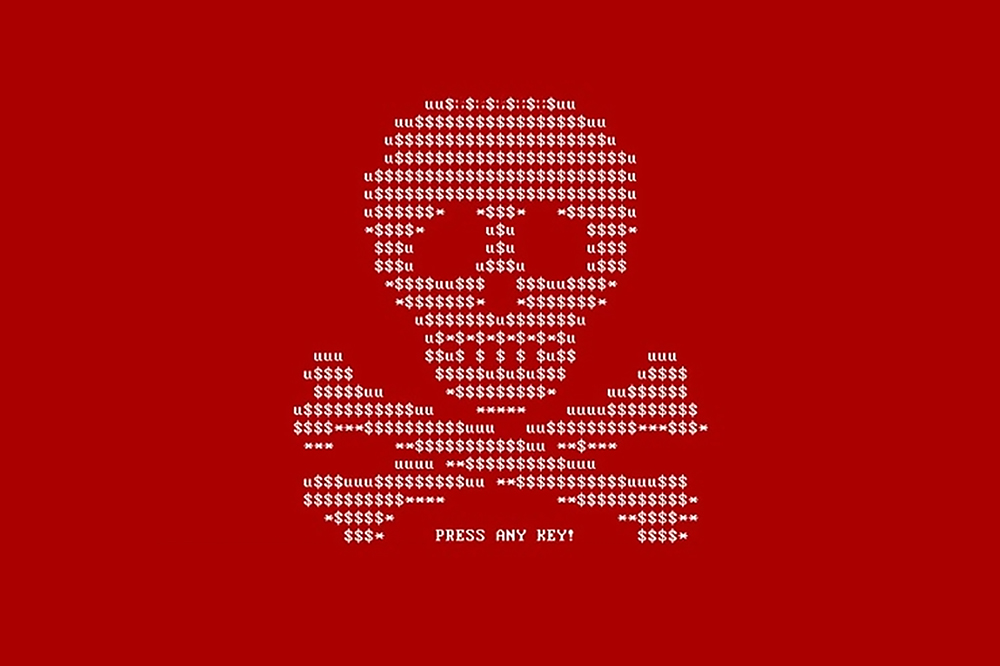
Threat Likelihood: The most interesting perspective regarding supply chain risk may in fact be the threats. Variations of cyberattacks have rattled cages in the last few years. The most brazen and successful attack was the propagation of a cyber weapon called NotPetya, an eraserware distribution disguised as ransomware. This attack impacted Maersk, the global shipping giant, and took them down for days until a mistakenly out-of-band database copy was located in South Africa, allowing them to slowly rebuild their systems infrastructure. This attack interrupted information required at ports for coordinating pickups and shipment drop-offs, as well as seafaring information for ships coming into port.

Above: Cyberattacks can slow down the web and the physical world too. Logistics and shipping are major victims of cyberattacks and are targeted every minute of the day.

Ultimately, Maersk had to do its best to run operations manually for the time being, as their systems were being brought back up to speed. Aside from the logistics side of the house, supply chain of software has also been damaged in the previously mentioned attack on network monitoring software provider Solarwinds. This 2020/2021 attack proved that most of the Fortune 100, as well as the U.S. government, put many of their eggs in one basket that became heavily compromised. In the end, the application was exploited to such a degree that all impacted firms essentially gave up their most sensitive network and traffic information and, even perhaps, backdoors into their systems. The moral of the story here is that supply chain can be disrupted in almost any imaginable way, so due diligence on where your “stuff” is coming from should be thorough.

Threat Likelihood Score: 5

Vulnerability Impact: Like any aspect of the broader cybersecurity and risk domain, vulnerabilities here are endless, because truly anything can be exploited. Whether it’s industrial control systems, logistics networks, or software and applications, they’re all inherently vulnerable by nature. And while vulnerability is mostly independent of being influenced by threats, the vast number of threats here flips the script a bit, making the vulnerability landscape virtually endless.

Vulnerability Impact Score: 4

Overall Risk: 4×5= 20

How to Prepare for a Supply Chain Cyberattack

It seems a little quixotic to say, “Be more self-sufficient, and the supply chain won’t affect you.” The truth is, it’s both correct and incorrect — having a solid stock of items from the store is prudent, as demonstrated earlier with water. Food stockpiles such as canned goods, frozen foods, and other necessities for personal health, such as medicine and hygiene products, are basic items to have around. The real question is, what else might you need? Well, being self-sufficient goes a lot farther beyond keeping some cans of soup in a root cellar. Think about some of the critical things you own and rely on. How about spare parts for your vehicle? Are you able to repair things, and are some of your most commonly used items serviceable? If so, it’s super important to stock up on these types of supplies. Having not only the knowledge, but also the equipment and parts necessary for keeping things running goes a long way, especially when things aren’t as easy as being able to run to the local big-box store or hit “Buy Now” on Amazon.

Items to Stockpile for Servicing Your Gear

16AWG Wire and Soldering Equipment
You can never have enough wire. Additionally, knowing how to solder and diagnose basic electrical circuits can go a long way if you have electronics that need repair during a supply chain disruption. Other components such as diodes, transistors, resistors, capacitors, and LEDs are also handy to keep around.

Lumber, PVC/Copper Pipe, and Building Supplies
In the event of a natural disaster stemming from an infrastructure attack, whether energy-impacting or not, the ability to capture rainwater and repair your home is an advantage. Stocking up on general building supplies can mean the difference between a critical repair and a negatively impacting survival situation.

Batteries and Inverters
Having a car is great in the event of a power outage, but if you don’t have an inverter of some type, utilizing its 12V power for other things may be a challenge, whether it’s charging a power tool or using a soldering iron. Inverters and battery power sources are critical for providing AC and DC power to make things easier when you’re aiming to repair things in a grid-down or disaster situation.

Spare Parts/Supplies for Your Vehicle
Now, we don’t mean having every part in the Chilton manual. Have the most commonly failing parts handy — regardless of a disaster, they may come in handy. Stocking up on things like thermostats, sensors, belts, and other parts is a best practice that should be more common since the supply chain mainly comes from outside of the U.S. for all manufacturers. Additionally, it should go without saying that servicing your vehicle requires oil, coolant, and transmission fluid — small items like these can go a long way if you’re in an extended period of chaos.

More Articles on Cybersecurity


Gear Up: New Survival Gear for May 2022

Tasmanian Tiger USA TT Passport Safe RFID

NOTES
Since August 2007, all U.S. passports have come embedded with an RFID chip. This chip contains the same information as the passport, including your photograph. Unfortunately, this also means that someone walking past you with an RFID scanner could capture your data and use your personal information for many different kinds of identity crimes. Fortunately, Tasmanian Tiger has come up with a solution. The TT Passport Safe RFID is large enough to contain a passport, multiple credit cards, and then some. Its fabric has been integrated with CRYPTALLOY foil, one of the best RFID shielding materials on the market, which will block most scanning efforts, and help keep your personal information secure while traveling.

Color
Black, Olive

MSRP
$24

URL
tasmaniantigerusa.com

Strike Industries Strike Mag Lighter Cover for BIC Mini

Weight
0.8 ounce

MSRP
$9

URL
strikeindustries.com

NOTES
Be prepared for a surprised reaction the next time someone asks you for a light. This lighter cover for a BIC Mini is a fun novelty item. Lighters are often an essential part of many EDC kits due to their water-resistant dependability over matches. Use one to light a camp stove, start an emergency fire, or seal loose ends of paracord, but make sure you do it in style. Modeled after the unique Strike Industries pistol magazine design, the lighter cover manually extends and retracts with a slide mechanism. A pocket clip on the base plate offers a convenient way to store a lighter in your pocket without adding to unnecessary clutter.

RTS Triggershield

H/T PIN SIZES
Standard (0.154), Large (0.17)

MSRP
$70

URL
rtstriggershield.com

NOTES
RTS’s slogan, “Shoot On Purpose,” says everything these trigger shields are intended to do. Accidental discharges are a possibility if a foreign object enters a weapon’s trigger guard, and these handy devices were made as an extra measure to reduce that risk. Requiring no special tools, the shields are easily assembled in as little as three minutes. Two variations are available and can accommodate both standard and large H/T pin sizes. The shield is made out of a Mil-spec polymer designed to withstand punishing conditions. A downward spring-assisted hinge keeps the shield from flapping during movement. Each side of the shield is contoured specifically for the trigger finger to access quickly and comfortably.

Prometheus Design Werx CWO Full Zip Sweater

Colors
Heather Alpine Gray, Heather Black

MSRP
$249

URL
prometheusdesignwerx.com

NOTES
Inspired by classic British outdoor and military clothing, the CWO (Cold Weather Operations) Full Zip Sweater can keep you nice and warm. Prometheus has partnered with a generations-old Italian knitting mill located at the base of the Dolomite Alps to weave premium merino yarns into an impressive 2×2 rib. It’s ideal for comfort and breathability while engaging in strenuous outdoor activities, or for anyone looking to add some classic style to their outdoor attire. This versatile sweater boasts a two-way, reverse coil YKK front zipper which zips up to turtleneck height, two zippered hand pockets, four-way stretch nylon fabric reinforcements on the shoulders and elbows, and turnback cuffs with thumbholes.

Varusteleka Carbon Steel Terävä Jääkäripuukko 110 w/Boltaron Sheath

OAL
9.4 inches

MSRP
$84

URL
varusteleka.com

NOTES
This blade uses a traditional and proven functional Finnish puukko profile with a drop point. The thickness of 4.2 mm/0.17 inch makes this a bit more robust than most old-timey traditional Finnish puukkos. The profile is a Scandi grind with a tiny secondary bevel, and you can use the durable Jääkäri for batoning wood without a problem. Made from 80CrV2 tool steel, the heat treatment leaves the surface of the steel softer (~52 HRC), which creates a tough exterior to protect the blade. As the blade is ground, the harder (~59 HRC) inside is revealed and improves edge retention. The spine has ground bevels for striking Ferro rods. The Boltaron Sheath is a bit like Kydex but offers better performance in extreme temperatures (like cold Finnish winters). This sheath allows carrying the knife on your belt, vest, pack, or anything with PALS webbing.

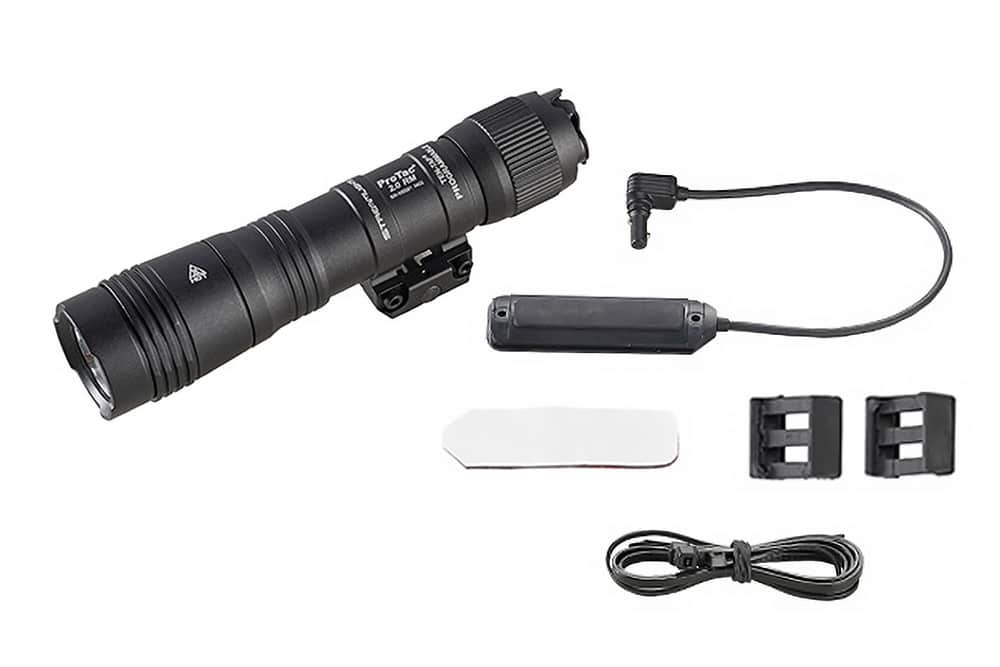
Streamlight TLR-10 Light/Laser

Lumens
1,000

MSRP
$385

URL
streamlight.com

NOTES
Why be forced to choose either a tactical light or a laser on the rail of your handgun when you could have one system that does both? Streamlight has introduced the TLR-10, a tactical light capable of producing 1,000-lumen output and reaching out to 200 meters, as well as an integrated 640-660nm red laser. Designed for full-framed handguns, the TLR-10 includes customized ambidextrous switches with either a low or high position to match your shooting style. Both the light and the laser can operate stand-alone or simultaneously, and the light has a user-enabled strobe function. Water-resistant, anodized machined aluminum construction ensures its durability, and a weight of only 4.62 ounces ensures it won’t slow down your handgun of choice.

Hydaway Collapsible Camp Bowl

Designs
Metolius, Yukon, Mojave, Cascadia

MSRP
$45

URL
myhydaway.com

NOTES
Collapsible mess kits free up room in your pack and make it easy to enjoy outdoor cuisine. The Collapsible Camp Bowl set from HYDAWAY features a 1-quart bowl and 8-ounce cup, both with spill-resistant lids and matching insulating sleeves. Several sleeve styles are available to accessorize your preference of backdrop. Each container is made from thick silicone, heat resistant to very high temperatures, although exposing them to open flame should be avoided. The containers are easy to clean and perfect for anything from hot soup or coffee to your favorite snack or treat. HYDAWAY has found the right balance between rigidity and flexibility to ensure your container retains its shape when in use, but still collapses with minimal effort when it’s ready to be put away.

Garmin Tread XL Overland Edition

Series
Base Edition, SxS Edition

MSRP
$1,500

URL
garmin.com

NOTES
This is not your run-of-the-mill, stick-it-to-your-windshield GPS. Instead, it’s an over river, through the woods, up the mountain on purpose, adventure-having techno-marvel. The receiver is tuned to GLONASS and 10HZ-GNSS/GPS in the United States and South America, and GALILEO in Europe. Tread XL has a 10-inch screen, six-hour battery life, preloaded topo maps, and satellite imagery. It also comes preloaded with USFS Roads and Trails, including motor-vehicle-use-maps for motorcycle, ATV, SxS, and full-size 4×4. Take it off the trail and on to the highway with the full Garmin suite of navigation features. It has Wi-Fi and Bluetooth connectivity, weather notifications, and compatibility with Group Ride, Powerswitch, and In-Reach. The Tread also offers pitch and roll gauges, dog tracking, and SOS functions.

Zip Targets Zip Range Kit

Max Range
100 feet

MSRP
$149

URL
ziptargets.com

NOTES
Living far from a range or not being able to justify the cost of a range membership can be a pain when you want to hone your marksmanship skills. The Zip Range Kit is a low-cost alternative to a fully established range, and fits easily in a small drawstring bag. Perfect for a location with a safe backdrop, the Zip Range can move targets between 0 and 100 feet. By using an uncomplicated system of pulleys, the target is moved via 550 paracord and a cordless drill attachment (user provides the drill). The target hanger can carry paper targets, hanging cans or bottles, clay discs, balloons, archery foam, and steel gun targets.

5COL Wire Saw, Flexible

Weight
< 1.0 ounce

MSRP
$20

URL
5col.com

NOTES
Manufactured for the U.S. Military, it’s normally included in aviation survival kits for pilots who find themselves without wings. This wire saw is portable, concealable, and has a unique array of teeth not found on similar products. Weighing less than an ounce, this flexible saw straightens out to 16 inches long, making it ideal for survival, camp, or SERE applications. 5COL strongly recommends using a suitable, fresh tree limb to fashion a bow-saw for superior results. Others have taken advantage of the paracorded eyelets on the ends of the wire to fashion a makeshift frame saw, further increasing its versatility.

SUUNTO Core Watch

Colors
All Black, Black Red, Black Yellow TX, Brushed Steel, Regular Black

MSRP
$219

URL
suunto.com

NOTES
Sometimes a watch with endless features is unnecessary and only serves to burn battery life faster. Suunto’s Core is a simple, yet versatile “ABC” (altimeter, barometer, compass) style watch with just enough features to help you make it back home. Multiple watch and date settings allow the user to switch easily between time zones or borders without the need to stop and readjust. People pursuing recreational, hunting, or duty endeavors will appreciate the sunrise/sunset tracker. The Core’s compass feature is accurate to 5 degrees and offers declination adjustment. It can operate in conditions as low as -20 degrees C (-5 degrees F), as high as over 60 degrees C (140 degrees F), and will display underwater depth down to 10 meters. There’s no Bluetooth or GPS connectivity, but for those in law enforcement or the military who may be concerned about signal discipline, having a high-tech timepiece that’ll not give away your position could be a game changer.

G-Code Access EDC Tool

Grip Style
Full Loop, Half Loop

MSRP
$20

URL
tacticalholsters.com
NOTES
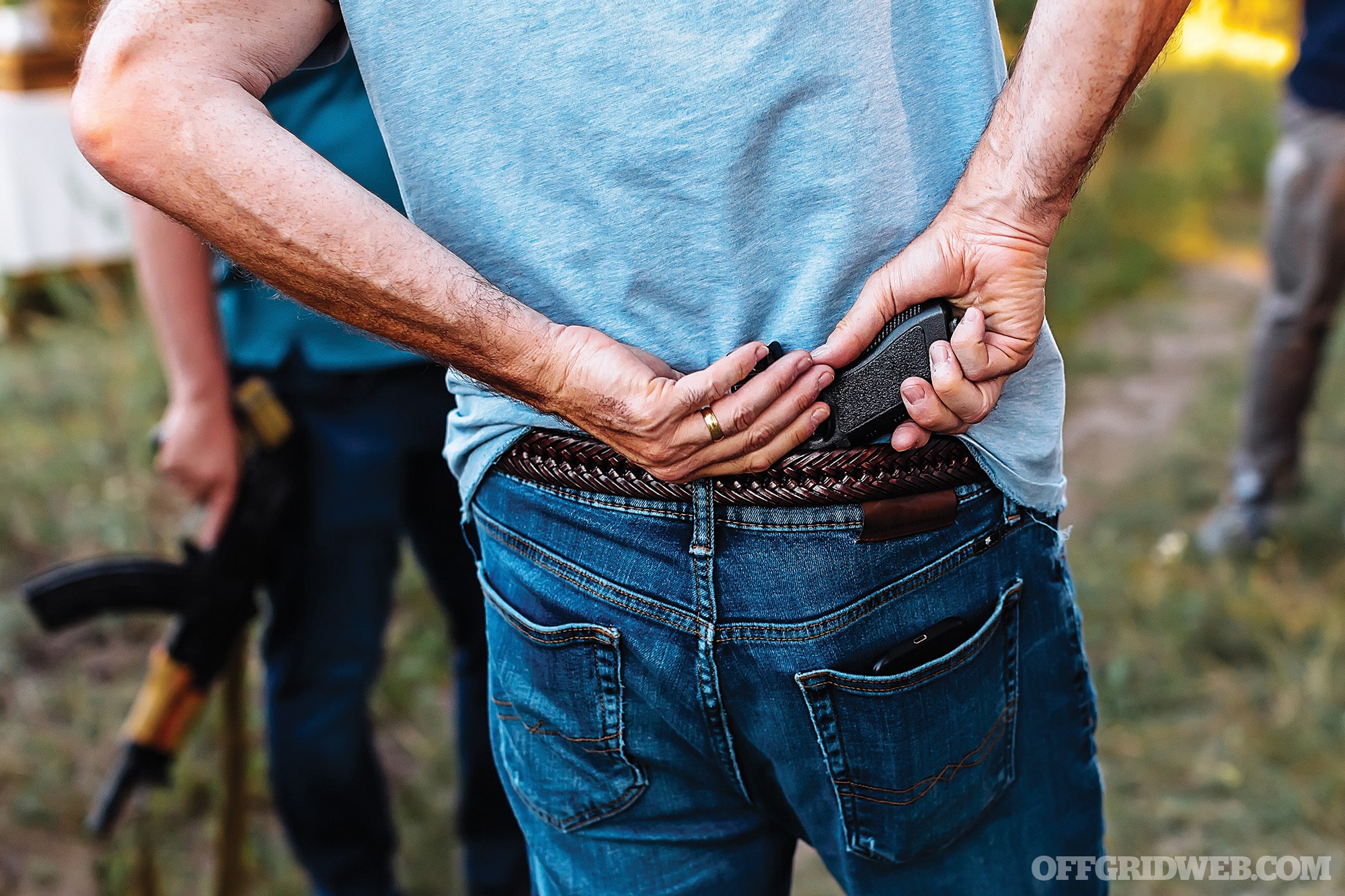
Ever find yourself standing behind someone at a kiosk or check-out touch pad, only to realize the person in front of you is sneezing and wiping their drippy nose with their hand? If only there were a way to still use those public terminals without testing your immune system. G-Code has created the versatile Access EDC Tool for just such a purpose. The Access EDC is made with antimicrobial materials that prevent bacteria and other organisms from surviving on its surface, allowing the owner to press elevator buttons, touch screens, and many other digital keying devices without having to use the tip of a finger. Additionally, it’s made from solid brass and is ergonomically designed to comfortably fit a hand in case self-defense is necessary. The Access EDC attaches easily to a lanyard, key chain, or ID badge holder, making it an easy addition to your EDC loadout.


New: Bushnell BackTrack Mini GPS Unit

In this age of sophisticated map apps and turn-by-turn directions, it’s easy to become over-reliant on our cell phones for navigation. However, that can be a fatal mistake if you venture off the grid and your battery dies, you lose signal, or your phone gets smashed. In any of those scenarios, you’ll need a backup plan. We highly recommend learning basic land navigation skills with paper maps and a compass, but a portable GPS unit is another worthwhile tool to consider. The new Bushnell BackTrack Mini GPS unit looks like an interesting contender, with a wide range of features and affordable price point.

The New BackTrack Mini GPS Unit

The BackTrack Mini is clearly lined up as a competitor to the popular Garmin Foretrex 601 mini GPS unit, offering similar size, functionality, and reliable GPS/GLONASS/Galileo connectivity. However, at a $100 MSRP, it’s half the price of the Garmin product. This caught our attention.

With a simple black-and-white 2.25-inch display and USB-rechargeable 800mAh internal battery, the BackTrack Mini is said to have a battery life of up to 24 hours. Its housing is IPX7 waterproof and lined with high-vis orange rubberized accents to protect against impacts. The glove-friendly buttons are also made from the same rubberized material. There’s also a built-in tether so it can be clipped onto a backpack or belt loop with the included carabiner.

Here’s a quick run-down of some of the features of this pocket-sized GPS unit:

  • Digital compass with latitude and longitude coordinates
  • Elevation gain and decline
  • Barometric pressure
  • Clock with sunrise/sunset and moonrise/moonset times
  • Breadcrumb route tracking
  • Programmable waypoints

For more advanced functions, you can use the BackTrack Mini GPS unit’s Bluetooth connectivity to pair it with your smartphone. Through the Bushnell Connect app, you can edit and upload trips and waypoints, as well as share this data with your friends. This sync functionality could be useful if your family has more than one GPS unit — each individual will have the same route data loaded and can easily find their way back to the correct path.

For more information on the new Bushnell BackTrack Mini, go to Bushnell.com.


Infographic: Visualizing the 10 Largest Nuclear Explosions

Everyone understands that nuclear weapons can generate immense destructive power, but it’s often difficult to comprehend exactly how destructive they can be. The measurement of kilotons — a unit that’s equivalent to the explosive energy of one thousand tons of TNT — gives us a rough frame of reference. It’s certainly easier than using the more precise unit, gigajoules. However, most of us have never seen a detonation of one ton of TNT, much less 1,000, so understanding the scale is still difficult. A new infographic from Visual Capitalist offers a comparison of the 10 largest nuclear explosions in history, showing the scale of the mushroom cloud in proportion to Mount Everest as well as the kiloton yield and total destructive radius.

Above: This diagram, also from Visual Capitalist, shows some of the characteristic features of a mushroom cloud. This updraft carries radioactive particles high into the atmosphere. Those particles eventually drift downward as fallout.

The Largest Nuclear Explosions

The first four of these record-setting nuclear weapons were tested by the United States between 1952 and 1954 at remote atolls in the Pacific Ocean. The remaining six most powerful nuclear explosions were carried out by the USSR in 1961 and 1962. Those weapons, along with more than 90 others during that two-year period, were detonated at Sukhoy Nos, several hundred miles off the northern coast of Soviet Russia.

Check out the infographic below, or head over to VisualCapitalist.com to read a few more details about each test.

More Articles on Nuclear Weapons

If you’re interested in learning more about nuclear weapons, take a look at some of our previous articles on this topic:


Tailor-Made ARs Part 2: A Veteran’s General Purpose AR-15

Being ready for unforeseen circumstances is more challenging than it may seem at first glance. A deep dive down the rabbit hole of survival situations could very well lead to staying down said hole for some time. Trying to decide which firearm is the most versatile in a survival situation is no different, and it sparks a lot of interesting debate. Misconceptions and inaccurate information from social media confuses and confounds. With seemingly endless varieties to choose from, making a decision can quickly become overwhelming. Being a combat veteran, I thought I could avoid most of this confusion when first starting out on my journey to build the ultimate survival AR. Apparently, I was wrong! Roughly six years have passed since I was last in uniform, and I found the pace of advancing firearms technology to be staggering. Concepts that I once considered high-speed-low-drag have gone the way of the dinosaur. Thankfully, there are plenty of resources available to get caught up, and after much sifting through information and playing around with different configurations, I was able to come to a satisfying conclusion. I call this my General Purpose AR-15 (GPAR).
Editor’s Note: Welcome to part two of our three-part Tailor-Made ARs series, a conceptual approach to building task-focused, performance-driven rifles for emergency preparedness. Several RECOIL OFFGRID writers will each take a unique path to designing an idealized AR for survival and crisis response. We’ll examine how each weapon is tailored to the user, and how it can be creatively adapted to a multitude of dicey situations. We hope these builds reinforce the importance of choosing every component wisely with versatility in mind. If you missed part one, you can read it here.

Why I Went With an AR-15

Above: Light, agile, and versatile, the AR can quickly adapt to a multitude of scenarios.

Considering potential survival scenarios, such as needing to hunt for food, defense, or maintaining security while on the move, a firearm that’s light, fast, and lethal is a must. Running an off-the-shelf AR with a fully loaded 30-round magazine weighs approximately 6 pounds, half the weight of a battery-powered weed wacker. For the average adult, holding an AR at the ready shouldn’t result in fatigue as quickly as a heavier firearm would. This is important for several reasons: keeping your rifle trained on a dangerous intruder will not induce immediate arm quivering, carrying the rifle long distances will not turn into an agonizing death march, and it helps reduce the weight when adding other components.

Having a sidearm is also a lightweight option, but handguns can’t compare to the long-range effectiveness of a carbine, and most standard pistol mags are roughly half the capacity of a standard-capacity AR mag. Being able to accurately hit targets potentially farther than 300 meters with reliable lethality, while also having to reload less often is a huge win in the AR’s favor.

Built for reliability in punishing conditions, the AR makes operation simple, and troubleshooting easy to perform. With simplicity also comes a higher degree of safety. The less thought that has to go into operation, the more attention can be paid to the surrounding environment. Reloading an AR is quick after adequate practice and can be done single-handedly. Each magazine holds enough rounds to outlast most engagements, whether that’s harvesting game, stopping an intruder, or keeping heads down in a hostile environment. Many large-caliber hunting rifles have magazines with low capacities, making it necessary to pause and reload. Shotguns have even less capacity, and depending on the model, could be more complex to operate. For sustaining prolonged target engagement, all while maintaining the most situational awareness, the AR is a great way to go.

Above: This was my initial GPAR configuration, with holographic sight, offset irons, and light mounted to the bottom. This was quickly changed to the setup seen elsewhere in this article.

When it comes to felt recoil, an AR is light enough for this to be practically non-existent. Anyone who is a part of my survival crew, whether a man, woman, or child, can pick up the AR and fire without worrying about controlling the rifle or getting bruised shoulders. This also means that going to a range to train will be more enjoyable, especially when everyone can participate comfortably. Longer days at the range will further increase collective firearms proficiency. My wallet is happy as well, since I don’t need to purchase numerous firearms to meet everyone’s recoil sensitivities.

ARs are easy to break down for cleaning and maintenance, requiring minimal tools for simple upkeep. That being said, as long as the rifle isn’t being used to paddle through mud, it’ll withstand some pretty harsh environments without issue. As long as the bolt and firing pin are well lubricated and you’re using decent ammo, a high-quality AR can fire thousands of rounds without a single malfunction. And this goes for pretty much every environment on planet Earth.

An AR right out of the box will get the job done in a pinch, but one of the most amazing features of a modern AR is how endlessly customizable they can be. There are innumerable upgrades and add-ons to accommodate any style of shooting, in any environment. Looking to hunt mule deer on the open range? Throw a scope on the top rail and zoom in from afar. Need self-defense in an urban setting? Put a holographic or red-dot sight on it instead. Want both options? Build two upper receivers and swap between them. Successful survival depends on the ability to adapt, and the AR can adapt like a Terminator T-1000.

How I Built a GPAR

Having been out of the shooting loop for a few years, something that came as a huge surprise to me was how many calibers of ammunition an AR platform can accommodate. If I put my bifocals on and talk about how things were way back in the day (six years ago), there were only two major calibers available to the public: 5.56/.223 and 7.62×51/.308. Flash forward to today, and things have changed substantially. An AR’s upper receiver can now accommodate heavier calibers like 6.5 Grendel, 6.8 SPC, .300BLK, 7.62×39, and a myriad of others. As anything else, there are pros and cons to each; however, I went with the original 5.56 simply because it performs well and is relatively easy to come by. Even with ammo shortages plaguing the past several years, I could still find 5.56 or .223 on the shelves. I don’t remember seeing very much 6.5 Grendel or .300 BLK sitting around available for purchase, since ammo manufacturers focused on meeting demand for the most popular calibers.

When choosing an upper receiver, it’s important to think about the subtle differences between 5.56 and .223, and whether or not you want to shoot just one or both of those calibers. Being able to shoot both makes more ammunition available to utilize, but the barrel must be rated for both calibers. If the barrel is stamped and rated for 5.56 NATO or .223 Wylde, then it can shoot both 5.56 and .223 ammunition without incident. If the barrel is only rated for .223 Rem, attempting to fire 5.56 NATO could create problems down the line, although finding such a barrel in an AR built in the last 15 years is unlikely.

Pressure created when the AR fires a round forces gas through a tube above the barrel that cycles the bolt, ejecting the spent casing and reloading the new round. Chances are, choosing the proper gas system will not be too much of a concern unless you’re making a substantial change to barrel length or adding a suppressor (more on that later). For my build, I went with a mid-length gas system, which offers an excellent balance between reliability and low recoil.

Pistol and carbine-length systems can create over-gassing, a problem that accelerates the wear and tear on internal parts. There are intermediate and rifle-lengths available, but these can sometimes lead to under-gassing (the opposite of over-gassing), or force you into barrel lengths too long to maneuver in tight quarters. Mid-length is, in my opinion, the Goldilocks Zone of AR barrel and gas-system lengths.

Above: The final configuration of my GPAR includes more versatile optics, optimized light placement and simplified forward grip arrangement.

When it comes to the length of a rifle, federal law mandates a barrel of at least 16 inches in length. Anything shorter requires some paperwork, another background check, and several hundred dollars to the ATF. These are more reasons to stick with the Goldilocks of AR lengths, and why I went with a 16-inch barrel. Using this length, I can also swap out different muzzle devices without having to worry about whether or not I’m going to find myself in legal trouble.

Longer barrels used to mean more weight, especially if each side was covered with a bulky Picatinny rail system. This is no longer the case thanks to M-LOK, which holds accessories like lights and foregrips close to the handguard with much less mass on the forend. Ideally, the handguard should cover almost the entire length of the barrel; this offers more space to customize the placement and number of different accessories. In other words, it makes the AR more adaptable to a multitude of circumstances. For my GPAR, I used a pre-assembled upper half from Midwest Industries, featuring the 14-inch Combat Rail handguard. The Combat Rail is a no-frills handguard with seven sides of M-LOK slots and a full-length Picatinny top rail for optics, as well as built-in QD sockets for sling attachment.

I mated this upper half to a standard Aero Precision AR-15 lower. Aero, like Midwest, has a long reputation for good quality at affordable prices. This no-frills design was exactly what I was used to in the military, without excess cuts or exotic materials. It may not be high fashion, but it is high function.

Essential Accessories

After putting together the meat and potatoes of the AR, I wanted to optimize it for a multitude of survival situations. Sifting through the possible accessories and prioritizing what is most important, especially when on a budget, can be agonizing. Many upgrades that look cool or seem useful can easily detract from what’s truly important. But when functionality is boiled down, there are three simple things that every AR build should focus on first: a sling, optics, and illumination.

Easily overlooked, finding the right sling is probably one of the most crucial elements to a survival AR. In normal circumstances, such as hunting, being able to sling your rifle will allow you to field dress an animal or set up a blind without having to worry about where to set it. Other situations, such as home defense or getting away from civil unrest, will undoubtedly require the use of your hand for other tasks, and a sling will make this possible. A function for which I have always used a sling is as a stabilizing mechanism by wrapping the sling close to my supporting arm. Slings have gone through several stages over the years, transforming from a two-point sling (a “point” being where the sling connects along the length of a rifle), to a one-point, to a three-point, and back to a two-point. Each had their uses, but the two-point sling has stood the test of time and seems to be the most versatile of the styles. Since versatility and adaptability are the name of the game, I went with Haley Strategic’s D3 Sling, which features a low-profile shoulder pad for all-day comfort and can quickly transition between two-point and one-point configuration.

Above: The dual-optic setup offers immense capability while still being streamlined.

When it comes to aiming, there’s nothing wrong with iron sights. With practice, iron sights can be used to hit targets much farther than 300 meters. But if the budget allows and a sling is attached, the next upgrade should be a more advanced optic. Using an appropriate optic is a game changer for hitting targets with accuracy and precision, especially when time is of the essence. When considering which optic solution to add to my general purpose AR-15, I went back and forth between the speed of a reflex sight and the precision of a magnified optic. In the end, I decided that I’d choose both. In an ideal scenario, I’d want to identify potential threats and targets as far out as possible, thus necessitating the use of a telescopic optic. Primary Arms offers a Low-Power Variable Optic (LPVO) with a first-focal-plane reticle that’s true-to-scale, regardless of what level of magnification is being used. For faster engagement of up-close targets, an Arisaka Defense offset mount with a Bushnell RX250 red dot was added to handle any close-quarters situations.

Above: Replacing the holographic sight with an optic from Primary Arms enhanced my ability at distance.

My initial thoughts on sights in a survival situation revolved around having backup irons as my “fail safe” sights, in case the lens of my primary optic broke, or if the battery of a red-dot sight failed. I even threw some angled irons on the top rail to experiment with. Over time, my opinion about that changed as I did more research into the durability and battery life of modern red dots. Also, if my red dot fails, I can dial my LPVO down to 1x and use it almost as quickly. Glass-etched reticles don’t run out of battery and, short of taking a direct hard blow to the optic or mount, well-made scopes rarely fail to the point where you cannot see through them to put rounds down range.

The final essential is illumination, which is crucial for defensive situations, especially at night. A general rule of thumb, especially for carbine lights, is that more lumens are better. With current advances in light technology, 1,000 lumens should be considered the standard for duty or survival use. This will effectively keep a human aggressor blinded and maximize your ability to fully identify a target at the greatest distance in the dark (assuming the light uses an appropriate beam pattern).

Above: Even during the day, a high-output weapon light can come in handy, Mixed lighting environments are everywhere.

When I was still in the military, we placed lights directly underneath the barrel and close to a foregrip so we could easily reach the button to turn them off and on. But there was a fundamental flaw with this setup: The light would cast a shadow of the barrel almost directly where a human head would be, shielding an aggressor from the most effective blinding properties of the light. With modern pressure switches, a weapon light can be placed above and to the sides, ensuring that as much of the light as possible will reach a target’s eyes. To cover all of these features, I mounted a Streamlight ProTac HL-X as far forward on my handguard as possible, and added a tape switch to the top rail so my thumb can activate the light while holding it in a C-clamp grip.


Above: After learning about several grip styles, adjusting my light setup to accommodate the C-clamp grip places the tape switch and light in an ideal position.

Something I learned while experimenting with several light setups was how to appropriately manage the space they take up on the handguard. Generally, the more powerful a light is, or the more features it has, the larger and heavier it’s going to be. Finding the right balance of brightness, features, size, and weight may take a little experimenting before it feels right.

Endless Options

Having the core GPAR necessities covered, I began to think about other factors that could play a vital role in survival situations. One of the first scenarios that came to mind was the signature of the rifle when firing. Explosive noise and muzzle flash aren’t ideal for keeping healthy eardrums or for remaining concealed. Yes, there are plenty of hearing protection options available, but many of them diminish the ability to maintain situational awareness, and donning ear pro may not be a top priority in a life-and-death scenario. Using a suppressor is an effective way to reduce the risks of ear-drum damage or giving away a firing position.

Above: A well-thought-out GPAR should be the pièce de résistance of your preparedness kit, capable of excelling in a myriad of situations.

There are basically two legal options available. The first is the traditional method of purchasing a suppressor. This is a great option if you can afford the suppressor as well as the tax stamp and are willing to wait eight to 12 months (at time of writing) for the ATF to process the Form 4. The second option is to purchase a solvent trap, and modify it yourself to build a suppressor. This is also perfectly legal (at time of writing) if you file the required ATF Form 1 beforehand. The Form 1 will require the same background check and $200 fee as a Form 4, but Form 1s can be filed electronically from home and the processing time is around one month, as opposed to one year. Also, most solvent traps are much more affordable than retail suppressors.

It’s important to note that not all solvent traps are created equal, and it’s necessary to do a little research before making a purchase. To satisfy my suppression requirements, I went with JK Armament’s Rifle Caliber Kit Modular Solvent Trap (MST), which came with everything I needed to create a suppressor. (Side note: If you don’t have the approved tax stamp from the ATF before making modifications to an MST, you will be committing a felony. So, make sure you have everything squared away before you start drilling holes.) One great thing about an MST kit is that you can add or remove individual modules from the finished suppressor, making it more versatile.

Above: JK Armament’s muzzle device functions as both a stand-alone comp and a mount for their MST.

Let’s circle back briefly to the discussion of over- and under-gassing from earlier. Using a suppressor will absolutely affect the behavior of your AR’s gas system — sometimes dramatically. Adding too many modules to an MST suppressor can result in double feeds and overall poor cycling, sometimes requiring changes be made to the buffer and buffer spring. Taking the time to correct these issues is a critical part of tuning an AR. Buffers and buffer springs come in a variety of weights and tensions, and finding the right combination will go a long way to improving or perfecting your AR’s performance with or without a suppressor. Felt recoil, reliability, and service life can all be improved by a well-informed choice of buffer and spring.

Another important upgrade to a general purpose AR-15 is the trigger. Mil-spec trigger pull weight is almost 7 pounds, and other stock models can range anywhere between 5 and almost 10 pounds. The higher the pull weight, the more likely the AR will be jerked slightly off-target when the trigger is engaged. Also, swift and accurate follow-up shots are more difficult, and overall proficiency requires additional training. I added the RISE Armament RA-242 trigger to this build, which was a drop-in cartridge that was very simple to install. The result reduced my pull weight to 3.5 pounds with no excess movement before or after the break.

Above: A match-grade trigger and enhanced controls can help speed up or streamline manipulations like reloads and malfunction clearance.

How an AR is handled is a personal choice, but for the sake of precision and grip stamina, I included a Magpul vertical foregrip and a Strike Industries LINK handstop on the bottom front of the handguard. Having a vertical foregrip gives my supporting hand an immovable index point that I don’t have to worry about slipping over due to its length. It also gives me another gripping option if for whatever reason I wouldn’t want to maintain a C-clamp grip. The LINK hand stop at the very front gives me an edge to brace the rifle into a doorway, windowsill, or any other barricade that’d come in handy for a support. I rounded out the furniture setup with a Battlelink Minimalist Stock (BMSMIL) from Mission First Tactical.

Above: Observing minimalism, such as with this Mission First Tactical BMSMIL stock, reduces weight and keeps things simple. 

Finally, I wanted my GPAR to be functional in as many situations as possible, including if one of my hands was unable to perform its typical functional roles. To ensure I could operate the AR with either of my hands, I replaced the charging handle, bolt catch and safety with ambidextrous controls from Strike Industries. Ambidextrous controls allow me to engage a target, swap a mag, or perform malfunction clearance even if I became injured or had to engage in other tasks.

Parting Shots

Deciding to build a general purpose AR-15, to me, was all about getting the most out of what an AR had to offer. And even though I had assumed I knew enough, almost everything I had understood about an AR’s functionality and capabilities had changed in only a handful of years. What I started out with was based on an old way of thinking. What I ended up with was a vastly superior and more adaptable setup. If you’re like me and aren’t fully immersed in the world of firearms on a regular basis, you may come to find that many old-doctrine methods and setups have become irrelevant. It can be frustrating to grapple with at first, but improving and building off of lessons learned from the past is important. To make things less overwhelming when setting up a survival AR or GPAR, start with the base platform and then go one step at a time. Find that perfect sling, optic, and light. Experiment with the setup and test it out, tweaking and readjusting as you go. The more you fine-tune this basic setup, the better you will understand what additional components you could add to make the platform perfect.

The truth of the matter is, a survival AR is highly personalized and dependent on what you’re intending to survive. Sometimes it’s prudent to tune out the social media personalities and listen to what your rifle is telling you. If it feels uncomfortable or awkward, then your setup needs adjusting. One of the best things you can do for yourself is to find people with experience, take their advice — not as gospel, but as guidance — and use what works best for you. Try out different components, and if it works, keep it. If not, send it back. Building the perfect general purpose AR-15 isn’t an endeavor that can be accomplished overnight. And above all else, once it’s configured, go to the range and train. A lot. Consider enrolling in classes and competitions to pressure-test your gear and skills. All the latest and greatest equipment in the world means nothing unless you have taken the time to build the chops to use it when it counts.

SOURCES


How Outdated is Your First Aid Kit?

If you put together a trauma medical kit or individual first aid kit (IFAK) five to seven years ago, you may need to update your gear. Whether you started with a simple first aid kit or a full 5.11 Tactical ALS/ELS medical bag, you should take the time now to review its contents. This article will look at what contents you should focus on and why you should replace each item.

Band-Aids, Gauze, & Dressings

By now, your Band-Aid wrappers have fallen apart and, the Band-Aids have attached themselves to everything else in your IFAK. Any sense of sterility is gone and, these need to be replaced. Take a look at the Band-Aid brand Infection Defense impregnated with antibiotics (Neosporin) to reduce the risk of secondary wound infection. Band-Aid also has the Water Block covering that is “100% waterproof.”

Suppose you had 4×4 gauze in individually wrapped packages; these packages may have come apart as well over the past five years. The sterility is compromised and likely not a great option for wound cleaning or care. These are relatively inexpensive, so do yourself a favor and replace them now.

Above: Prolonged exposure to heat, even if it’s not direct sunlight, can render the contents of an unopened vehicle med kit unusable. 

For those of you who carry Israeli dressings, or similar, they should be fine. Inspect the outer packaging to ensure it hasn’t been compromised. The packaging is pretty stout and can take a beating. If there’s any question as to the integrity of the outer package, replace it and use the old one for training purposes. Note that there have been improvements to these dressings over the years. That may be another reason to upgrade your stock.

We should include chest seals here. It used to be that any chest seal would do. Now the recommendation is to carry vented chest seals to use on all open chest wounds. Check out SAM Medical’s version of their vented chest seal, which has an upgrade over the Halo. The SAM Medical True Flow Valve allows the vented portion to breathe despite any pressure applied to the bandage. It’s the only chest seal with this device included.

This first aid kit was found in a 2001 Lexus sedan, preserved like a time capsule. Although most of the contents looked surprisingly good at first glance, the packaging on the once-sterile gauze and Band-Aids (made in 1998) had peeled apart, and the alcohol wipes were bone dry. Most of these items should’ve been replaced ages ago.

Tourniquets

Replace your favorite tourniquet if you have not done so in the past five years. By now, you have carried it in your pouch through every training session. You may have taken it out to practice applying it a few times. The Velcro can get mucked up, and the stitching can degrade over time. Most importantly, there have been newer generations of TQs since you bought your first one. Buy a new one and use the old one as a training device. Mark it so it doesn’t get put into circulation with those you might need to save a life with later.

Also, since the C-A-T was introduced in 2005, North American Rescue is now on the seventh generation of this TQ. My other favorite is the SOF-TT Wide from TacMed Solutions. I have carried that as well as the C-A-T in my medical kits. It was developed around the same time as the C-A-T and is now on its fifth generation. There have been other iterations of the TQ worth a look. Try several out and find which one satisfies your needs. I’d only buy one recommended by the CoTCCC, which updated its list of recommendations in May 2019.

Above: Sterile products are only sterile if the packaging remains sealed. The wrapper on this gauze pad peeled apart as soon as we touched it — that’s a clear sign it’s past its shelf life. Unsuprisingly, the 24-year-old alcohol wipe was completely dry when we ripped it open. We suspect it has been that way for at least two decades.

First Aid Kit Pouches

Over time, we’ve gone from no kit to a first aid kit to a full-blown med kit with everything in between. The odds are that your original IFAK is out of date. The kits have become more compact and fit a little more unobtrusively on battle belts. Check out the Blue Force Gear Micro Trauma Kit. It can be adapted to fit a tourniquet as well. Also, check out the Dark Angel Medical ankle pouch for gunshot trauma. It’s compact, and I find it to be comfortable. I never go anywhere without it when I have my firearm with me.

There are versions of med kits that can attach to your headrest or your visor in your car. I find these particularly helpful and adjust the contents for auto accident scenarios. Dark Angel Medical has both of those iterations available.

Note the yellowing around the edges of the clear divider windows inside this first aid kit. Even if the supplies look OK, the kit itself can also betray advanced age.

For larger bags with which you’d stage your vehicle, check out 5.11 Tactical and their ALS Duffel 50L bag. You can modify this bag in any way you can think of to fit your needs. You can also look at the bags at Tasmanian Tiger. They have clear pouches to visualize gauze, meds, and other items that’ll fit within your larger med kit.

Medications

Whether you’re carrying simple pain relievers, like acetaminophen or ibuprofen, or anti-diarrheal medication, like Immodium, make sure these haven’t met their expiration dates. Over-the-counter medications are easy to replace and often cheap as well. The expiration date becomes more important if you carry medications like sublingual nitroglycerine, inhalers, Epipens, glucagon pens, or naloxone. You need these to work when you need them. I have a rule that I discard medications after one year of acquiring them and replace them. Sure, they may work to some degree, but I want them to work in a situation where I need them.

Prescription drugs are a little more work to replace, so ask your doctor for them. Explain why you carry them and how you’ll use them. They may oblige by writing the prescription. Try to buy them without using your insurance, as that’ll avoid any red flags your insurance carrier may infer from your purchase. Companies like GoodRx can provide significant savings off the retail price. That website will also give you an idea of where you can purchase it cheaper in your area.

Other Items to Consider

Some people want to carry a decompression needle for tension pneumothorax. I’m not a fan unless you’d bet your life (or someone else’s) on the training you received with it. In 20-plus years of medicine, I’ve only needed it twice. You cannot make a mistake when you use it without support personnel to fix your error. I hear people say they’ll carry it if someone on the scene knows how to use it. My problem with that is that I don’t know what training that person has had and how competent they are in using the needle. Long story short: Don’t carry one with you without the proper training.

How about a nasty fall on a camping trip, and you diagnose a fractured pelvis? Should you carry a pelvic sling? I guess it depends on how much room you have to carry your equipment. I’ve made them from tourniquets and SAM Splints that’ve worked just fine. I don’t carry one in my med kit.

Speaking of SAM Splints, I love them! They’re so versatile and effective for treating musculoskeletal injuries. They’re lightweight and easy to use. Why wouldn’t you have one in your pack?

What about a pocket CPR mask? Check out the article I wrote in Issue 41 of RECOIL OFFGRID about various CPR masks. The Red Cross now admits that hands-only CPR may be just as beneficial as doing mouth-to-mouth plus CPR. That being said, CPR masks are still an option for those wanting to provide that skill.

Alcohol wipes are cheap and plentiful, but they dry out over time. If you’ve had these in your kit, I’d recommend replacing them every year.

Trauma shears are also something to consider replacing. There may have been some wear on them from toting them around in your bag. There are new and tacticool shears, like the Leatherman Raptor. They’re expensive and not something you’d throw away after use. The company has no recommendations for autoclave or cleaning procedures once they’ve been exposed to bodily fluids. I recommend sticking with the $5 shears, which are disposable and easy to use. You can also look at something like the ResQ Me keychain. It’s meant to be a seatbelt cutter but works well for cutting through clothes too.

In Summary

First off, atta boy for carrying a med kit in the first place. Second, stay current on the latest iterations of gear that you carry in your kit. Each generation may have significant improvements to make things easier when Murphy drops a trauma dump on you. Use old items as training opportunities and have fun challenging friends to trauma scenarios. Since you’re updating your gear, consider expanding what you carry based on the additional training since your first IFAK was packed. Lastly, get more medical training. Medical skills are perishable too and need to be reviewed to stay current.

SOURCES

About the Author

David L. Miller, DO, FACOI is an internist in private practice for 20 years. His experiences away from the office have included time as a fight doctor in regional MMA events and as a team physician for 10 years at a mid-major university in the Midwest. Currently, he serves as the lead medical instructor for the Civilian Crisis Response team based out of Indianapolis.


Google Search Privacy: How to Remove Your Personal Information

“Privacy and online safety go hand in hand. And when you’re using the internet, it’s important to have control over how your sensitive, personally identifiable information can be found.” This statement comes from a new policy update announced by Google last week. For years, the search engine has provided options for users to report pages that are hosting private, potentially-harmful information — for example, credit card numbers or social security numbers. However, with the rising public awareness of “doxxing” (i.e. sharing someone’s private information with malicious intent), Google has expanded its guidelines to include more types of personal information that can be reported and removed from search results.

google-search-privacy-personal-information-1

Here’s a fictional example of what it might look like if you get doxxed. It might be a website or blog run by someone deliberately harassing you for political reasons, or someone who wants to get revenge over a personal disagreement. Or maybe it’s a third-party directory site that inadvertently ended up with leaked personal info. Either way, you never gave them permission to circulate this information, and you certainly don’t like the idea that strangers can easily escalate the issue by showing up on your doorstep or calling your employer.

First Step: Contact the Source

If this happens, the first step should always be to contact the source of this leaked info, if it’s possible and safe to do so. If the site isn’t sharing your info with malicious intent, a quick email to the webmaster can often get your info removed. It may also be worth reaching out to the web site’s hosting service provider, since some of them have terms of service (TOS) stipulations that forbid doxxing.

google-search-privacy-personal-information-2

Above: Here’s an excerpt from one web host’s TOS that explicitly prohibits doxxing.

Unfortunately, in cases of malicious doxxing, it’s likely that contacting the source of the leaked info will be a waste of time. It might even make the harassment worse. Instead, you can limit the spread of that information by asking Google to remove it from search results.

Types of Personal Information that Qualify

In a policy update statement, Michelle Chang, the Global Policy Lead for Search at Google, wrote: “The availability of personal contact information online can be jarring — and it can be used in harmful ways, including for unwanted direct contact or even physical harm. And people have given us feedback that they would like the ability to remove this type of information from Search in some cases.”

google-search-privacy-personal-information-3

Google’s updated policy is very specific about its criteria for removing personal information. You can’t just ask them to remove every instance of your name or photos of your face, since that information is already in the public record and wouldn’t be considered harmful. Here’s Google’s latest list of information that can be removed:

  • Confidential government identification (ID) numbers like U.S. Social Security Number, Argentine Single Tax Identification Number, Brazil Cadastro de pessoas Físicas, Korea Resident Registration Number, China Resident Identity Card, etc.
  • Bank account numbers
  • Credit card numbers
  • Images of handwritten signatures
  • Images of ID docs
  • Highly personal, restricted, and official records, like medical records
  • Personal contact info (physical addresses, phone numbers, and email addresses)
  • Confidential login credentials

Google will also remove doxxing content that includes your contact info along with “explicit or implicit threats [and/or] calls to action for others to harm or harass.”

Additionally, Google revealed a new policy that allows people under age 18 (or their parents or guardians) to request removal of their images from search results.

Google says it typically will not remove information that is “determined to be of public interest,” such as content from government and official sources, newsworthy content, and professionally-relevant content.

How to Remove Your Personal Info from Google Searches

If you find a web site in Google search results that you believe meets the personal information guidelines above, click here to start a removal request. You will need to include specific URLs for the pages, web sites, or images in question. Up to 1,000 URLs can be included in your request. You may also need to submit screenshots to indicate the specific information that applies to you.

google-search-privacy-personal-information-4

Once your request has been submitted, it will be evaluated by Google. If it’s confirmed that your request meets the guidelines, the page or pages may be blacklisted from all search queries, or only for search queries that contain your name. That decision depends on the severity and specificity of the information that was leaked.

It’s Not Foolproof

Google explains, “When we remove content from Google Search, it may still exist on the web. This means someone might still find the content on the page that hosts it, through social media, on other search engines, or other ways.” However, if you’ve been doxxed or your personal info has been leaked, removing it from the world’s largest search engine — a company that holds a staggering 92% market share — is a good way to start regaining control of the situation.

For more information on online privacy, check out some of our previous articles:


Bag Drop: Mystery Ranch Shift Plus 900 Modular Backpack

For some, a trek through the wilderness means going to a nearby park within the range of cellular data, groomed trails, and posted maps. For others, it means quite the opposite. Venturing across areas without trails for extended durations is tough on mind, body, and equipment, and it’s important to take gear that can stand up to punishment. Working as a forester and volunteering for search-and-rescue incidents is demanding, and the Mystery Ranch Shift Plus 900 is perfect for those moments far from amenities. This pack has two components: the Shift is composed of the harness, fiberglass shelf system with easy access bottom compartments; the Plus is a modular bag with several compartments, including two easy-access, drawstring side pouches.

The Mystery Ranch Shift Plus 900

Challenging terrain and the dense vegetation of remote areas can tear up gear quicker than black bears tear through lunchboxes. There are places where the forest floor is so thick and tangled with undergrowth that a traveler may feel like they’re swimming through finger-thick saplings rather than walking. Tangled bush like this will destroy inferior clothing and gear, but 1000D Teflon-coated material created with wildland fire crews in mind keeps the pack safely intact. Sturdy fiberglass internal framing lends the pack lightweight strength, and a telescoping yoke helps maximize comfort. These features optimize weight distribution and reduce physical fatigue. Pack modularity allows for the removal of unnecessary components as needed, and the fiberglass shelf of the Shift system allows for placement of a variety of chemical or water tanks.

Backpacks essentially all serve the same function, which is holding things of varying sizes and shapes. Having a shelf system and modular design is convenient for many reasons, but some of the Mystery Ranch Shift Plus’ best features revolve around comfort and form factor. Its yoke, harness, and waist straps are some of the most ergonomic I’ve ever worn, and the narrow profile keeps the pack from getting snagged by vegetation. Using a waist strap to take the weight off shoulders and onto dedicated load-bearing joints is crucial to physical longevity, and not all straps are created equal. With wide waist straps and thick, breathable padding, the Shift holds the wearer from behind more comfortably than a worn-in Snuggie. The yoke and shoulder straps have the same padding, further increasing the comfort.

Make & Model
Mystery Ranch Shift Plus 900

MSRP
$315

URL
mysteryranch.com

In the Field

Although not ideal for extended backpacking or camping, the Mystery Ranch Shift Plus has enough space for the essentials when a rotation or resupply is expected. Firefighters use the bottom compartment for easy access to rapid-deploy fire shelters. I use it for waterproof items like ponchos, rain gear, and boot gaiters. Packing it in this way allows it to be set down in potentially wet conditions without having to worry about wrecking gear. For SAR operations, the Plus component can be added, which greatly increases carrying capacity. There’s plenty of space for items such as first aid supplies, signaling equipment, a 3L Camelback, or tools for personnel recovery such as rope and emergency blankets. In addition to a water pouch, I always have a LifeStraw, and a high calorie survival meal. Having a high-quality knife is a must, and a folding saw has come in handy on several occasions when I find myself far from a gas-powered chainsaw.

Eye injuries are easy to come by when the undergrowth is thick, and my packing list includes several sets of eye-pro. Clear ballistic safety glasses for low or no-light conditions, yellow lens safety glasses for various inclement weather conditions, and a shaded pair of Wiley X Rx glasses for bright sunlight. Relying on technology, such as GPS/GIS or radio communications, I need enough electricity for the duration of the job. Using a waterproof Pelican case, I can safely store backup power banks, charging cords, and extra batteries. Light sources that I prepare include chemlights for trail or tracking markers, a 5.11 high-lumen handheld, and a Fenix Superraptor headlamp from Varusteleka.

Depending on the climate and weather conditions, the load out is adjusted before any operations take place. When the weather dips into freezing territory, some of the wet weather gear gets removed and replaced with a Varusteleka thermal cloak, and one of the side pouches is packed with a Massif Strato Low Loft jacket. Black Diamond spike traction devices have carried me across many icy situations. Depending on circumstances, such as working alone on a timber sale or a SAR incident, I may add extra emergency blankets and merino wool mittens to the main pouch of the Plus. For first aid and trauma care, my trusty military IFAK is connected to the MOLLE webbing of the waist strap, and a kit for abrasions and lacerations is added to the Plus.

Final Thoughts on the Mystery Ranch Shift Plus 900

People who have occupations or roles that take them into remote areas must stay maneuverable and be prepared to take care of themselves. Unexpected weather, challenging terrain, and unpredictable wildlife can spring up at any moment. With the twist of an ankle, or sudden dip in temperature, preventing exposure and dehydration become high on the list of priorities while waiting for help to arrive. Thoughtfully planning out what gear to carry and what to carry it in can be a make the difference between surviving and thriving, but a pack intended for short-term use means that an extra precaution needs to be taken.

Of all the gear and preparations made before going to places where communications become difficult, the most important prep of all is letting someone know where you’re going and how long you plan to be there. Sometimes I’ll even leave a map of my location and a list of emergency numbers that my loved ones can call if they don’t hear from me before the sun goes down. A successful remote operation is one in which you return, never having used your emergency gear; however, knowing that my survival gear is stowed in a pack that’s up to the task provides immeasurable peace of mind.

More Bag Drop Backpack Loadouts


New: Phantom Hill CTF-2 IR Laser/Illuminator Details Revealed

If you’re looking to get into the world of night vision gear, brace yourself, because it can get expensive fast. However, we’re glad to see that the costly nature of NV gear has been gradually diminishing thanks to new products from smaller companies such as Phantom Hill. The Phantom Hill CTF-1, which we previously reviewed, includes an infrared laser, IR illuminator, and white light in a single housing for $800 — that’s relatively inexpensive compared to existing options like the DBAL or ATPIAL-C. At the end of that review, we mentioned that the company would be releasing a second model with added features and more modularity soon. This week, we confirmed some of the final specs of the new Phantom Hill CTF-2 weapon-mounted light/IR laser/IR illuminator.

The Phantom Hill CTF-2’s biggest change is its transition to a modular head architecture. As opposed to the CTF-1’s proprietary, integrated light and illuminator, the CTF-2 will accept light heads that work on common CR123-powered SureFire Scout 300 (3V) or 600 (6V) flashlight bodies. Some configurations may require a battery tube extender — such as the VF1 Systems extender pictured below — to add an additional CR123 battery.

According to Phantom Hill, the CTF-2 will start at a price point of $699 — the laser is built-in, but you’ll need to add your own white and IR illuminator heads. If you don’t have those already, it’ll be offered in packages with various combinations of accessories. Pictured above from left to right, there’s the aforementioned VF1 Systems battery extender, Malkoff Devices E1HT white light, Malkoff Devices EX IR 250 illuminator, and B.E. Meyers KIJI K1 3-degree IR illuminator. These packages range from the base $699 to a maximum of $1,399.

Operation of the CTF-2 will also be different from the CTF-1. It now has three buttons, with the raised center button always controlling the laser (press for momentary, double-tap for constant-on). The two side buttons control their respective light heads, so you can place the IR illuminator and white light on either side of the housing. Both side buttons are momentary only.

Above: This image of a CTF-2 prototype shows how the left square button activates the left head, in this case a B.E. Meyers KIJI illuminator. The IR laser (shown in purple for illustration purposes) is activated independently via the round center button.

Like the CTF-1, the Phantom Hill CTF-2 is designed and assembled in the United States with a 3D-printed DMLS aluminum housing. It weighs 7 ounces with two CR123 batteries installed, and comes with a 5-year warranty. Since infrared lasers fall under ITAR rules, the CTF-2 cannot be shipped outside the United States, but Phantom Hill said on Instagram that it’s working on a model for the Canadian market.

The Phantom Hill CTF-2 is expected to be available in June 2022. For more information, go to PhantomHill.design.


PSA AK Updates: VLTOR Handguard & JMac Customs Folding Stock

The topic of a mass-produced, American-made AK is one that never fails to upset the hornet’s nest of die-hard AK enthusiasts on the internet. Admittedly, their reaction isn’t entirely unjustified. Some of the earlier attempts by American companies to produce domestic AKs were riddled with various metallurgy, design, and quality control issues. When it was possible to buy a brand-new WASR for less than $600, that was often the default choice. However, this state of affairs may be changing. The prices of imported Russian and Eastern-Bloc rifles — not to mention the imported ammo for them — have been increasing over the past decade, and the war in Ukraine has only accelerated that trend. At the same time, Palmetto State Armory has worked hard to address known issues and solidify the reputation of their American-made AKs. No matter how you look at it, the PSA AK is steadily becoming a more viable choice for those who are currently in the market for a new AK.

A Traditional Start for Our PSA AK

Those of you who follow our magazine and/or web site consistently may recall our “blue collar” AK project from a few months ago. That project was based on a PSA GF3 AK with a triangle side-folding stock, “cheese grater” handguard. MSRP for this setup, as seen above, is currently $949. We modified that rifle while maintaining a relatively traditional aesthetic, including custom Kalashnicarver wood furniture, a cantilevered flashlight mount, and the original triangle stock.

After taking this setup through a 3-day Haley Strategic D5 Kalashnikov class (writeup coming soon) I found that I liked some aspects a lot, and wasn’t as fond of others. During the class, I was able to shoot respectable groups out to 200 yards. The gun ran reliably through 1,000 rounds of steel-case ammo without a single malfunction, aside from those we deliberately induced for training purposes. Functionally, the PSA AK was off to a solid start.

However, it wasn’t exactly comfortable for me. I’m well over six feet tall with long arms; on an AR-15, I typically run the buttstock almost fully-extended and place a foregrip close to the front of the handguard. On the AK, the short length of pull of the triangle stock and the placement of the wood handguard left me feeling like I was shooting a rifle made for someone half my size. I needed more length of pull and more handguard real estate, so I decided to take the PSA AK in a new direction.

The Updates

Starting with the most glaring source of discomfort, I began looking for a full-length handguard that would allow me to move my support hand forward. At SHOT Show 2022, I learned that VLTOR had released an M-LOK version of its CMRD (a.k.a. “Comrade”) AK handguard. The VLTOR CMRD is made from three pieces of 6061-T4 aluminum with a hard-coat black anodized finish, and it spans the entire length from the front of the receiver to the back of the front sight post.

Surprisingly, this significantly larger handguard only weighed 4 ounces more than the 10-ounce wood handguard and “cheese grater” that had been on the PSA AK before. Installation was relatively easy — aside from using a Dremel to cut off the sling loop from the original lower handguard retainer, it simply bolted together.

The VLTOR CMRD features a variety of M-LOK slots on the top, bottom, and sides, as well as some 45-degree slots on the front portion of the upper handguard. I used these to install a JMac Customs HRD Extended handstop and Arisaka Defense 300 Series flashlight. There was no need for a cantilever mount this time, so it’s attached on an Arisaka inline mount.

I also added three rubber B5 Systems M-LOK rail covers to improve grip and insulate my hand from the heat of the barrel and gas tube. The muzzle device — a JMac Customs RRD-2C 14F X37 brake with a BDS-37 blast shield — remains unchanged from the last phase of the build.

Moving to the midsection of the rifle, I decided to try a different optic setup. American Defense Mfg. recently released a new lower-third QD mount for the Holosun 510C, so I used it to attach a green-dot Holosun optic to the Sabrewerks KOP system that was already on the rifle. I like the heads-up position of the optic and the wide, unobstructed field of view it provides. The shake-awake feature and solar backup also ensure the battery will last a long time, and if it does, the QD lever will allow me to remove the optic and use the backup iron sight notch built into the KOP rail.

Since the wood handguard was gone, the wood pistol grip was swapped out for a Magpul MOE AK+ rubberized grip.

Finally, in search of extra length of pull and a more comfortable stock, I swapped the standard triangle folder for a JMac Customs ST-6 Folding Stock Mount (specifically, the PSA GF3 side-folder requires a 4.5mm pin version). It features a lightweight, skeletonized 6-position tube machined from 7075 aluminum, and has integrated QD sling loop sockets on both sides. Installation was as simple as using a small pin punch and mallet to knock out the pin from the original folding mechanism, dropping the adapter into place, and tapping the pin back in.

The JMac ST-6 will accept most AR-style stocks and braces, but I went with a B5 Systems Bravo stock. This offered the ability to achieve a maximum length of pull of 14.5 inches, a full inch and a half more than the 13-inch LOP with the triangle stock. It provided an instant improvement to comfort, since I no longer felt like I was shooting an undersized gun, and it had a rubber butt pad unlike the hard metal triangle stock. Better yet, the telescoping stock can be adjusted down to an 11.25-inch LOP, so it’ll still be comfortable for shooters with much smaller frames.

Although I’ll continue using the Bulgarian steel mags seen in the previous configuration, these XTech MAG47 polymer mags from GunMag Warehouse match the modern aesthetic a little better.

Closing Thoughts

I’m happy with these changes, since they made the AK feel much more comfortable and balanced in my hands. Weapon ergonomics, not to mention the shooting stance that accompanies them, have come a long way since the 1940s. We no longer live in an era where weapons have to be configured for “one size fits all.” The addition of an adjustable, interchangeable stock and M-LOK forend allow the weapon to be configured for a specific user.

Although I’m aware that some purists will sneer at this PSA AK because it’s made in the USA, that doesn’t bother me a bit. It has thus far proven itself to be reliable and (relatively) accurate, even under the stress of running three days of back-to-back drills during the aforementioned Haley Strategic class. I shot it prone on a surface of fine Arizona dust that coated every nook and cranny, including the inside of the receiver (and the inside of my lungs). I used various types of polymer and steel mags, and ran a case of Tula 7.62×39 through it without so much as a periodic wipe-down or a drop of oil. I watched other students’ imported AKs malfunction on the line, and yet the PSA GF3 kept plugging away.

Obviously, this is my sample size of one, and issues could always crop up in the future, as they can for any weapon. But for now, I’m satisfied. Regardless, it still won’t be the first rifle I reach for in a defensive situation — that’ll always be an AR, a platform with which I’m much more familiar and proficient.