New: Savior Equipment Pro Touring Tennis Racket Gun Case

Some people say covert gun cases aren’t necessary unless you’re some kind of undercover agent, but we beg to differ. They’re helpful for a wide range of mundane applications. Maybe you live in an apartment and need to load a rifle into your car without attracting the attention of all your neighbors. Perhaps you’re checking in to a hotel that has overzealous security personnel in the lobby, or you need to use public transportation without making yourself an obvious target for robbery. In any of these cases, it’s a good idea to carry your gear in something that conceals the nature of its contents. The Savior Equipment Pro Touring tennis racket gun case is a new product that fits this criteria.

From the outside, the Pro Touring resembles a rigid tennis racket case, with a teardrop shape and subdued branding. Two versions are available: the Icon Variant (pictured in Midnight Blue) and the Tennis Variant (pictured in Carmine Red). Aside from slight differences in exterior design and color choices, these cases are the same inside.

Opening the zippers on either side of the case reveals the true contents. Its two main compartments can carry two SBRs or AR pistols, or an SBR/AR pistol on one side and a handgun, mags, med kit, and other accessories on the opposite side.

Each side of the case features laser-cut MOLLE panels with loop fabric to attach a variety of pouches and accessories. Savior Equipment includes (at no extra cost) a spread of hook-backed add-ons that can be attached to the interior surfaces:

  • 4x lockdown straps for long guns
  • 2x rifle mag carriers
  • Universal pistol holster
  • Double pistol mag carrier
  • Double extended pistol/PCC mag carrier
  • Battery holder

The clamshell lids on either side of the case contain zippered mesh pockets for organization of tools and small items. The exterior of the Pro Touring tennis racket gun case is constructed from 1680D ballistic nylon layered over compressed EVA foam. Savior Equipment used double-stitched seams as well as quality YKK zippers and Duraflex hardware to improve the case’s longevity.

Removable backpack straps are also included, although we think these slightly detract from the appearance of a light tennis racket case.

MSRP for the Savior Equipment Pro Touring tennis racket gun case is $240. For more information, keep an eye out for a full review in a future issue of OFFGRID magazine, or visit SaviorEquipment.com.


Pocket Preps: Small Pocket Knives

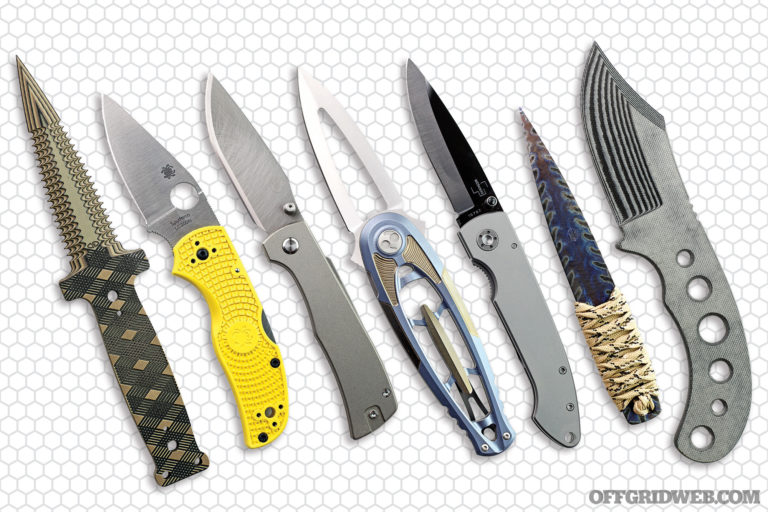
When most people think of survival knives, images of 1980s action films with muscle-bound heroes sporting massive Bowie knives with serrated spines, hollow handles to store fishing gear, and a mostly useless compass spring to mind. The fact is that more often than not, a small pocket knives can take care of 95 percent of your cutting chores.

Small Pocket Knives Buyer’s Guide

If you’re in a rough and rugged setting where you need to baton up batches of firewood, clear massive amounts of brush, or perhaps skin a lot of game in a short period of time, you may need a better choice of tool. For most day-to-day uses, however, small pocket knives can make a lot more sense than tromping around with a Bowie knife or a Woodsman’s Pal. These are the knives for opening boxes, letters, or cutting zip ties. Sometimes a sub-3-inch blade may be the only knife you’re legally allowed to have in certain jurisdictions. Likewise, if you’re an extreme backpacker, skier, or climber and are looking at carry essentials in terms of ounces, one of these may be the right knife for you.

Blade styles may vary and one can see the real effectiveness of a Wharncliffe, reverse tanto, reverse-S curve, or recurve blade as these blade profiles tend to offer a more effective cutting edge in a shorter profile. Any of the knives on this list are small enough to carry everywhere, and they can all fit inside an Altoids tin. One model has been part of my personal EDC for close to 25 years. Chances are if you have a small pocket knife like one of these, or are thinking of picking one up, it’ll turn out to be the most-used knife out of your entire collection.

Most of us open more cardboard boxes and envelopes with our knives as opposed to hacking through the fuselage of a downed aircraft on a daily basis. Take a look at the attributes and design of each one of these and you’re bound to find one that meets your needs.

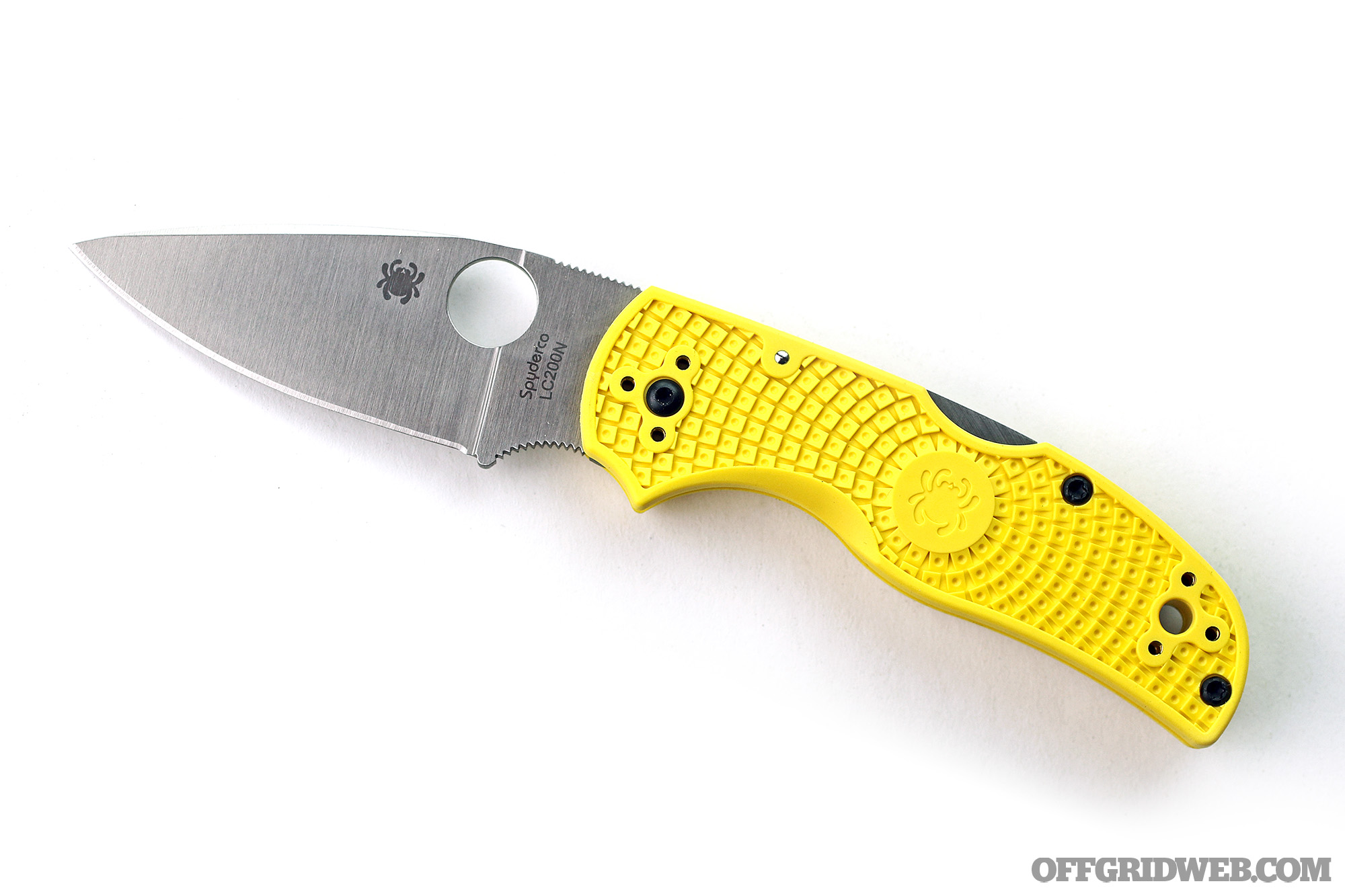
Spyderco Cricket

OAL
4.75 inches

Blade Length
2.75 inches

Blade Steel
VG10

Weight
1.75 ounces

MSRP
$127

URL
www.spyderco.com

Notes
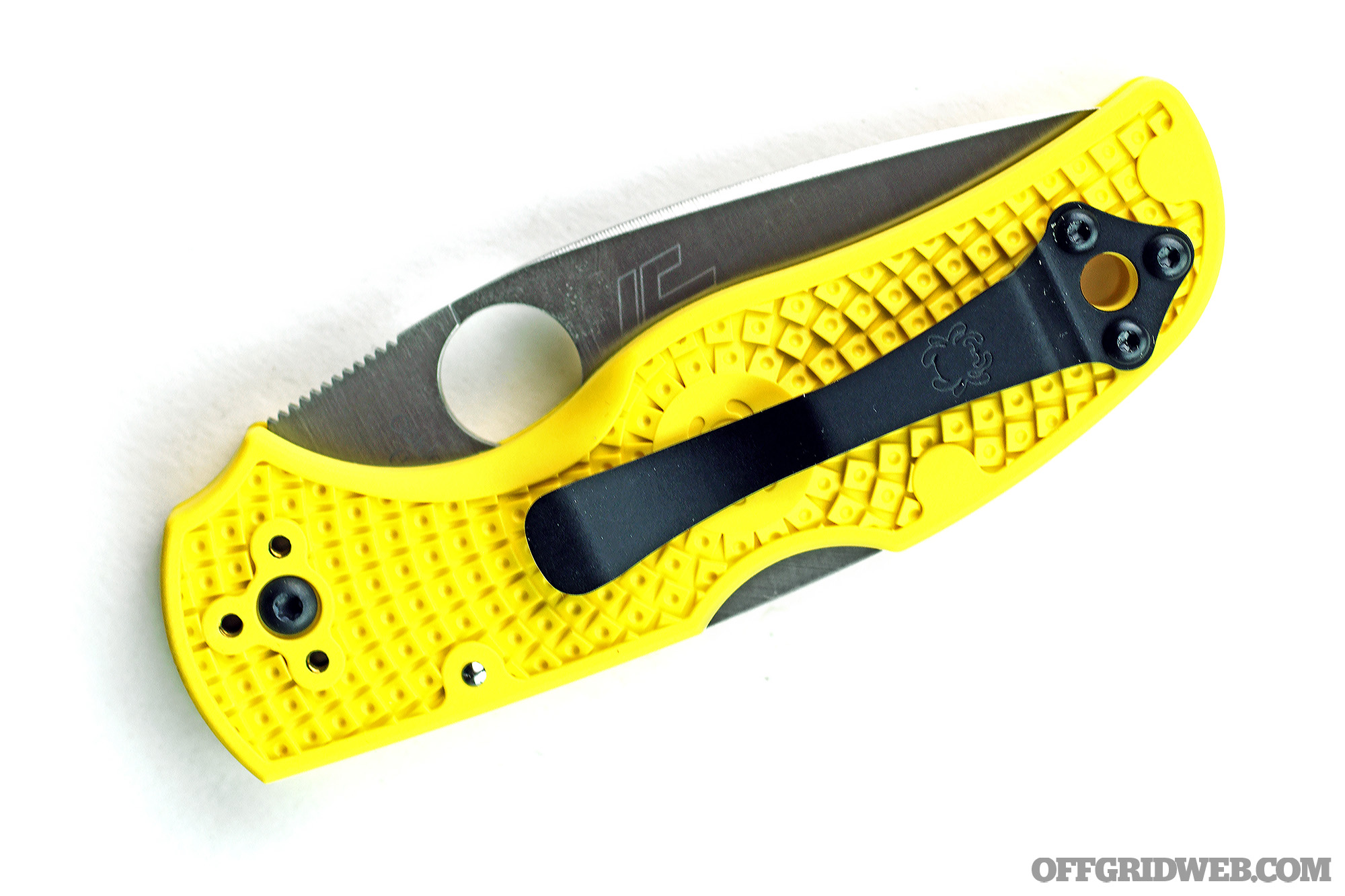
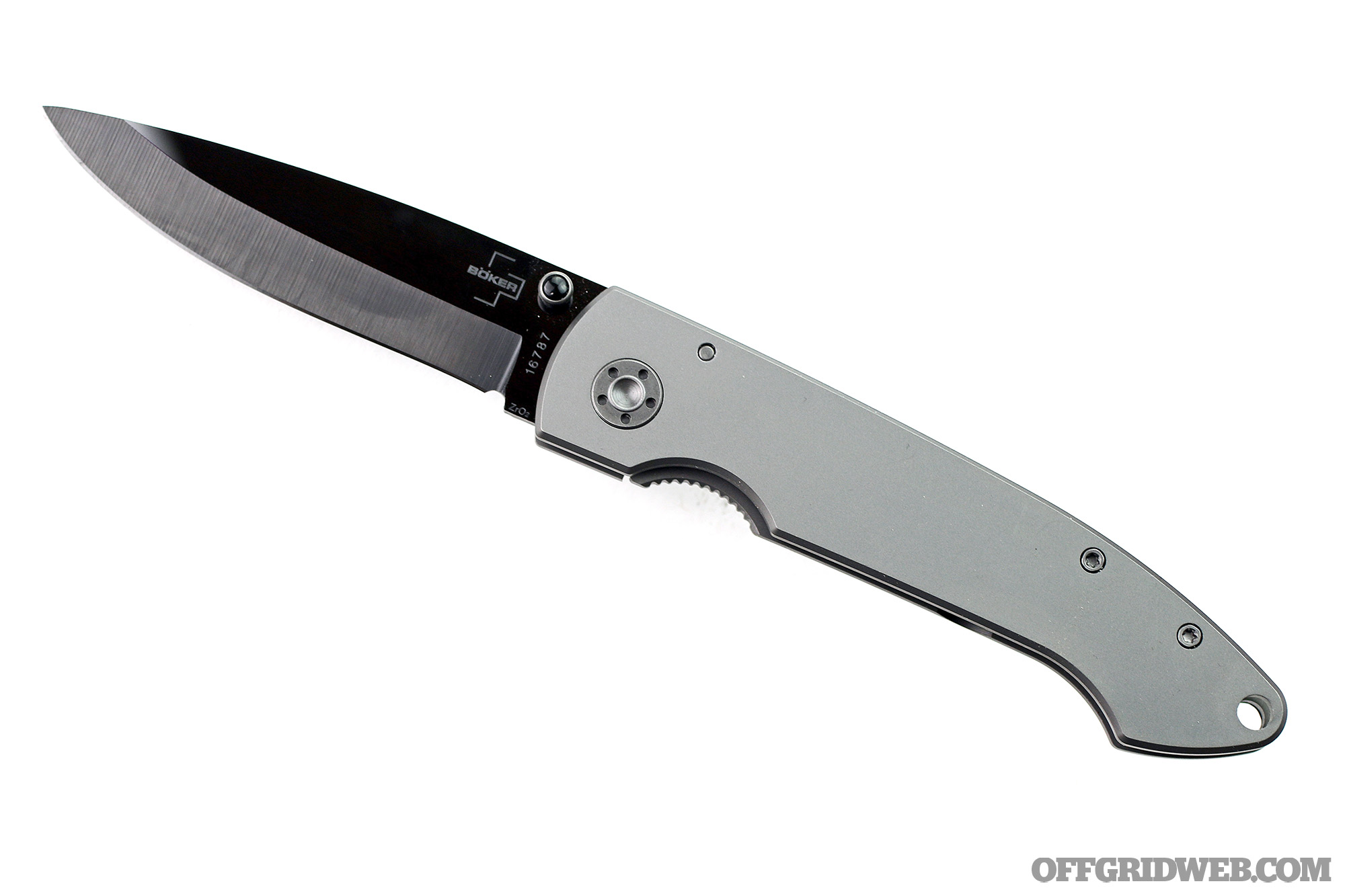
I have been carrying a Spyderco Cricket since 1995. Flat, unobtrusive, and it can perform double duty as a money clip or tie clasp if needed. The reverse-S blade design is very similar to the curvature of the Civilian and Matriarch defensive blades and the Cricket works well in that manner, too. I may carry other knives in addition to this one, but the Cricket handles most of the mundane tasks of the day. Ironically, at the time I got this, I was looking for another Spyderco called the Co-Pilot. I could never find one but found the Cricket instead, and it has served me well over the years.

Pros:

  • The reverse-S blade has more cutting surface area in a shorter package.
  • The edge is very easy to maintain.
  • This knife can literally disappear into the folds of your clothing — always double check before you go through TSA.

Cons:

  • We can live with tip-down carry on this model, but we feel bad for the southpaws. Could we get three holes on the other side?
  • The stainless handles and frame lock may add strength, but the older FRN handles were more comfortable.

Kershaw Kapsule

OAL
5 inches

Blade Length
1.9 inches

Blade Steel
8Cr13MoV

Weight
2 ounces

MSRP
$54

URL
www.kershaw.kaiusa.com
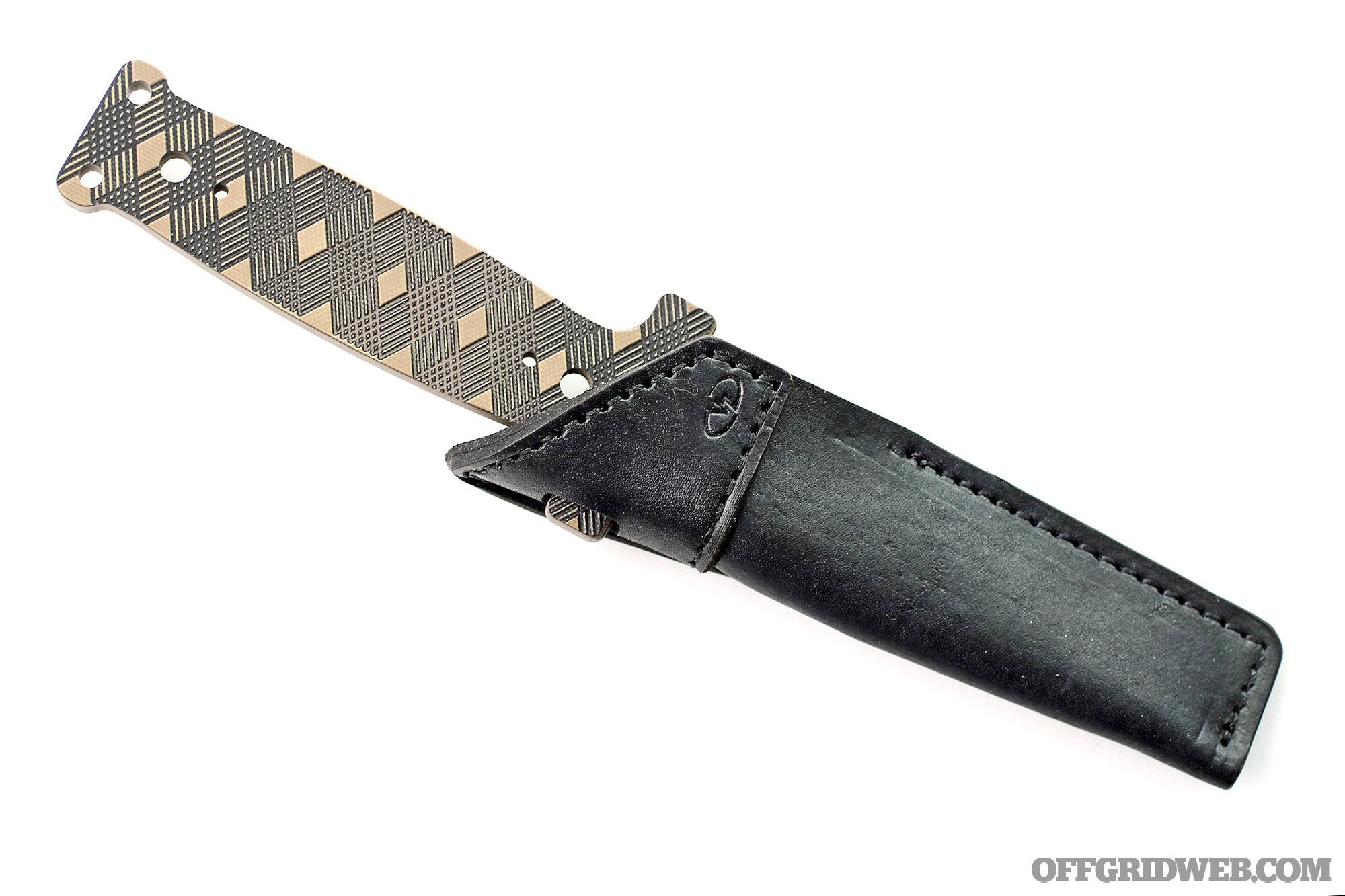
Notes
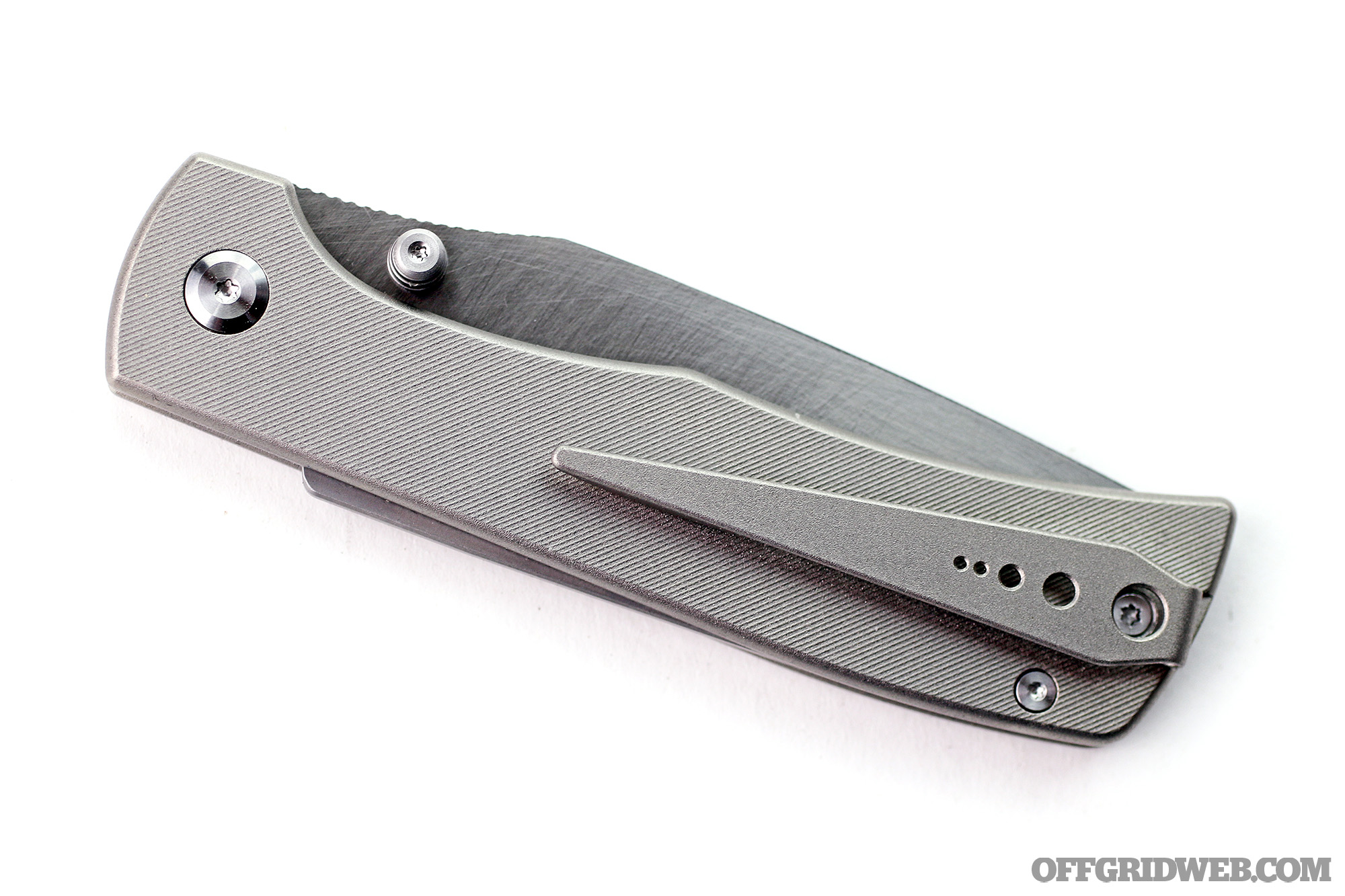
Kershaw’s Kapsule is one of those designs I overlooked at first glance, but eventually grew to appreciate it. Designed by custom knifemaker Jens Anso, the Kapsule has a spearpoint blade and deploys out the front of the handle via a sliding button. The best part of this design is that when it’s closed, it doesn’t look very much like a knife. This is definitely one of those designs we see all too often that works well in its factory configuration, but could have much more potential if it were made with better materials and attention to detail. As it is, it’s perfect for light cutting chores like opening boxes.

Pros:

  • Its benign appearance when closed makes this the perfect blade to stash in an Altoids tin, spare pocket, etc.
  • While not as sexy as an OTF automatic knife, the slider has a cool gadget factor.
  • The clip placement and opening style make this ambidextrous.

Cons:

  • Not very sharp out of the box, but took a keen edge in a matter of minutes
  • There’s a bit of blade play in the locked position.
  • Although the design looks great, a different style of blade might make it more effective.

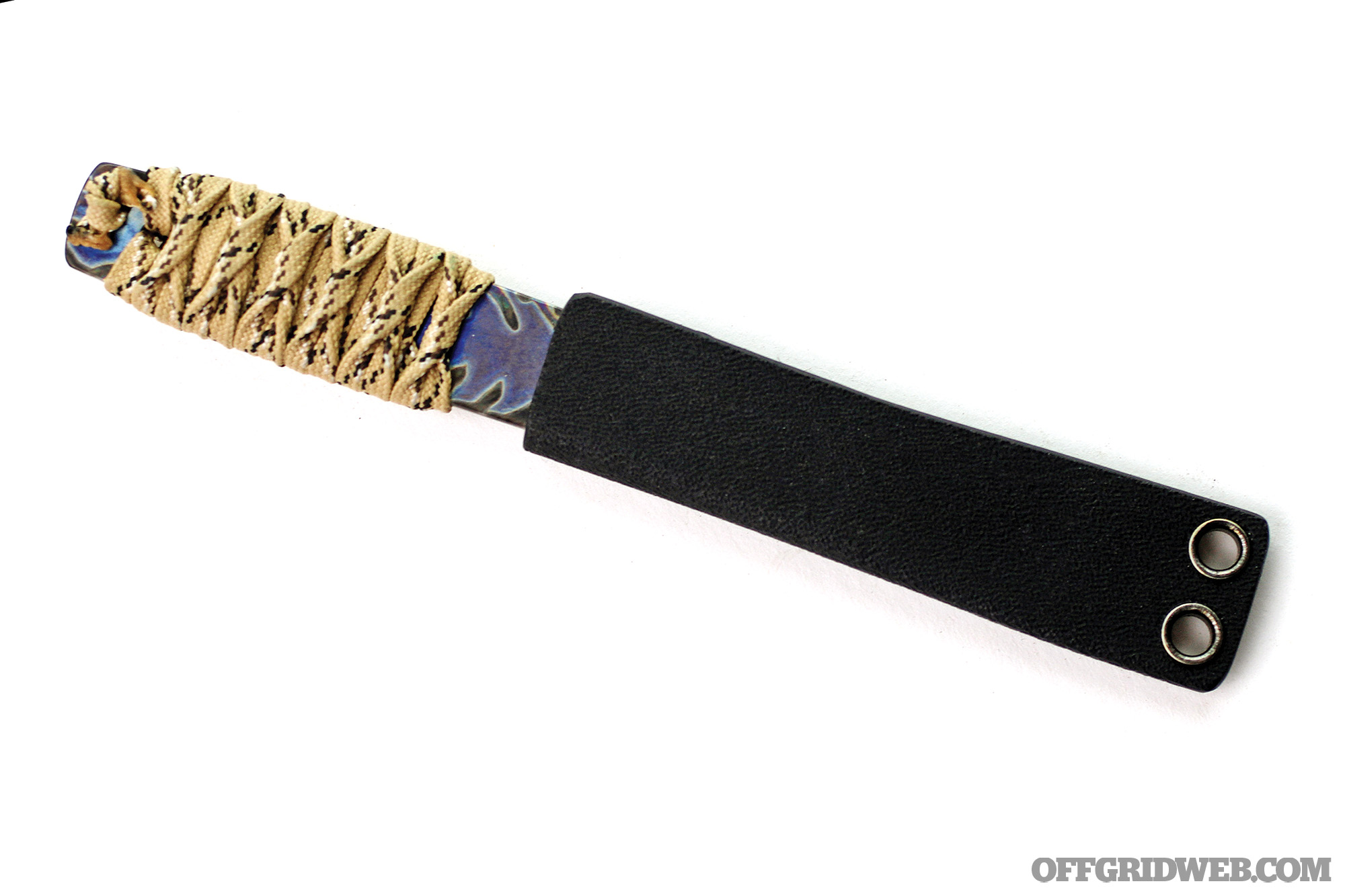
CRKT Razelcliffe Compact

OAL
5.25 inches

Blade Length
2.09 inches

Blade Steel
8Cr13MoV

Weight
3.3 ounces

MSRP
$40

URL
www.crkt.com
Notes
The CRKT Razelcliffe Compact is a recent design between Jon Graham and CRKT. Graham is usually known for his Razel designs, which are blades more profiled like a cleaver or straight razor. This one is styled as a Wharncliffe, but the sharpened front edge makes it more like a reverse tanto blade. It uses a frame lock construction with a finish giving it an ancient look. The pocket clip is removable but restricted to tip-up and right-hand use only. This is a stout little workhorse of a knife.

Pros:

  • Small, compact, and equipped with a flipper for fast deployment
  • Sharp and ready to go out of the box. The sharpened front edge turned out to be more useful than expected.
  • The contour of the handle and placement of the checkering make this one very comfortable to use.

Cons:

  • Limitations on clip placement may rule this one out for southpaws.
  • The only option for a lanyard is through the body of the clip, which isn’t ideal.
  • While there were no problems flipping this one open due to the IKBS, we’re a fan of backup opening methods, even if it’s just a nail nick.

Cold Steel Tuff Lite

OAL
6 inches

Blade Length
2.5 inches

Blade Steel
AUS-8A

Weight
2.5 ounces

MSRP
$51

URL
www.coldsteel.com
Notes
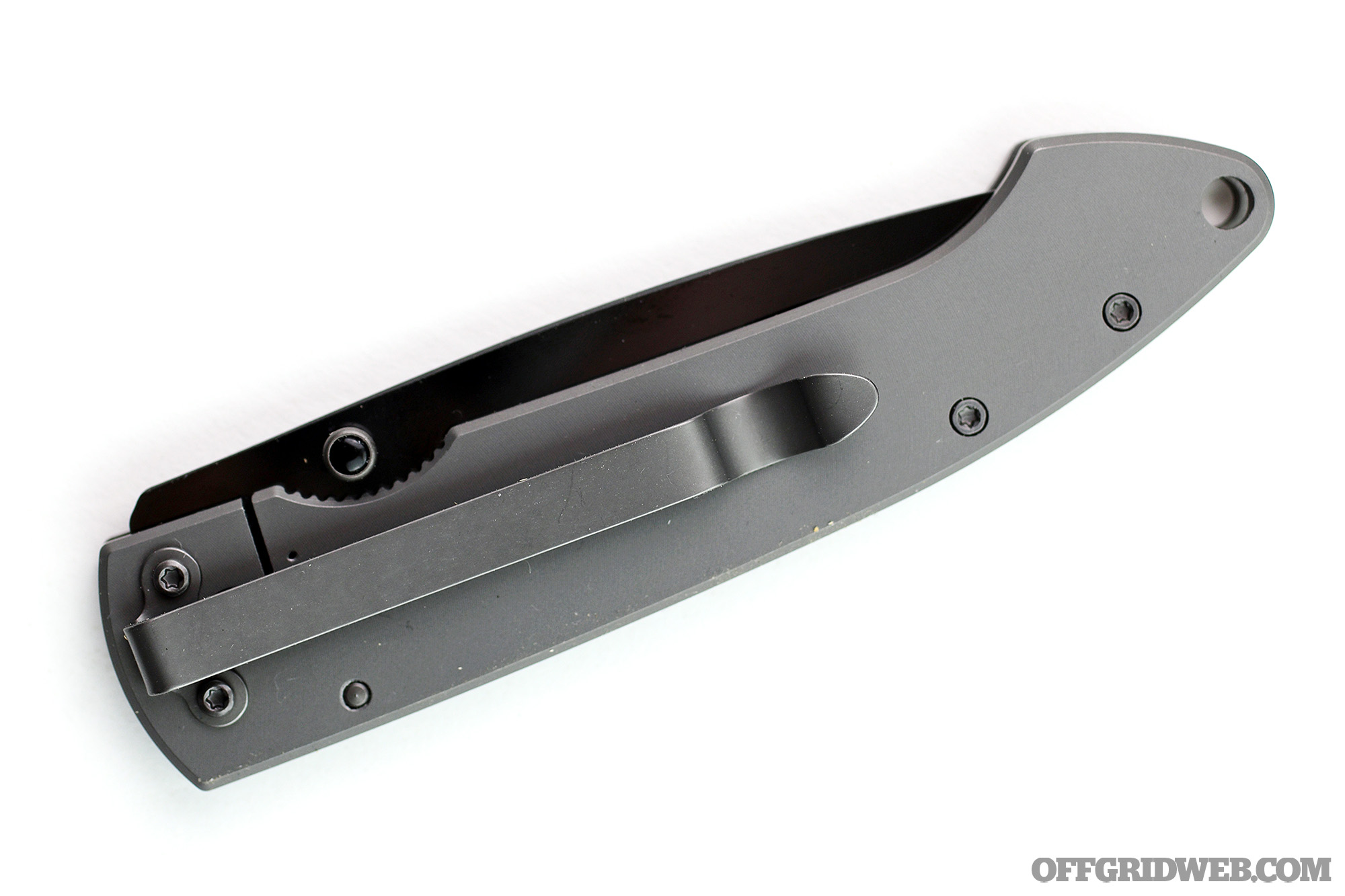
The Cold Steel Tuff Lite illustrates all the virtues of the Wharncliffe blade, as a knife this small is packed full of cutting power all the way to the tip. The blade’s profile transfers its energy into whatever you’re cutting. Its small size ensures you can carry it comfortably almost anywhere. Other features include a very generously sized lanyard hole in the handle and a similar treatment on the opening hole in the blade. This particular model features a serrated edge with very usable serrations.

Pros:

  • This is a very short knife that anyone should be able to carry regardless of wardrobe.
  • The blade is AUS-8A stainless steel, which is sharp and corrosion resistant.
  • Whether it’s a knife this small or a hand and a half sword, Cold Steel builds tools that last.

Cons:

  • It can be a tough knife to close due to its size and a stiff lockbar.
  • Hard use can take a toll on AUS-8A, so you’ll probably have to sharpen it more often than most other knives on this list.
  • Clip position is ambidextrous but the only option for positioning the knife in your pocket for carry is tip-down.

Benchmade 533 Mini Bugout

OAL
6.49 inches

Blade Length
2.82 inches

Blade Steel
S30V

Weight
1.5 ounces

MSRP
$140

URL
www.benchmade.com
Notes
The Benchmade Mini Bugout is aptly named, as this is a perfect lightweight pocket folder that can be stashed anywhere. Its light weight and short length are impressive. This is in large part due to the Grivory handles. Grivory is a thermoplastic synthetic nylon resin mostly used in the automotive trade for high-temp electrical connectors. An Axis lock secures the blade in the open position and imparts enough resistance to prevent unwanted openings. Unfortunately, you can’t disengage the lock and flip the blade open as you might on a larger Benchmade. The lanyard hole is perfectly sized for attaching a lanyard, and the blade steel is S30V. The pocket clip is reversible for right- and left-handed use in the tip-up position.

Pros:

  • The construction on this knife was very well-thought-out.
  • Razor-sharp out of the box and a quality steel to boot
  • Extremely lightweight and comfortable

Cons:

  • At 1.5 ounces, this may take a bit of adjusting if you’re used to heavier knives.
  • We’re not big fans of these minimalist-style clips.
  • The blade’s spine could use some jimping for the thumb.

Kizer Cutlery Mini Begleiter

OAL
6.61 inches

Blade Length
2.87 inches

Blade Steel
N690

Weight
2.12 ounces

MSRP
$55

URL
www.kizerknives.com

Notes
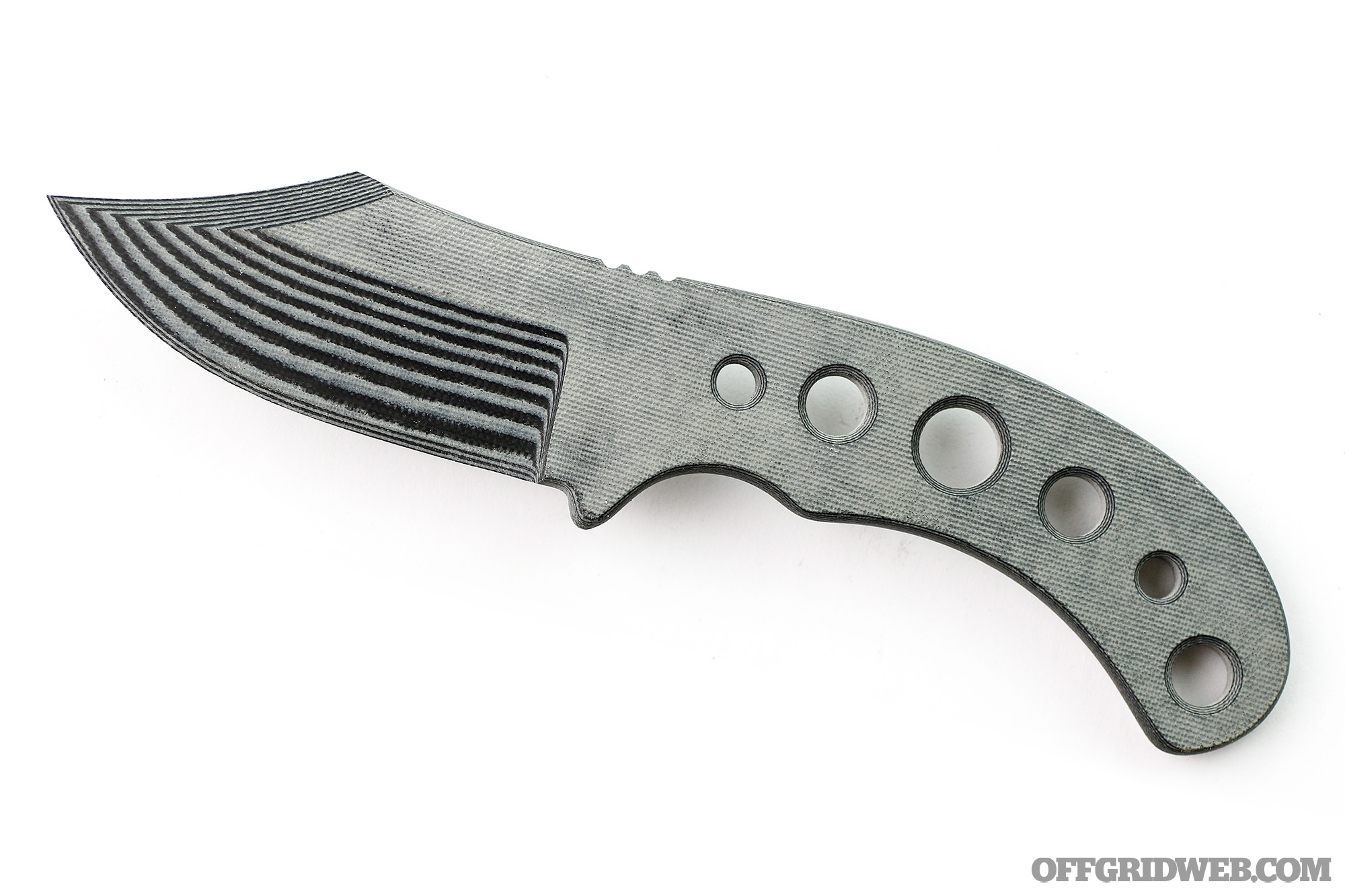
I recently became aware of Kizer Cutlery over the past few years and have been growing more and more impressed with their offerings. The Vanguard represents a slimline series of folders with the touch of a gentleman’s knife. The steel is N690, which is made in Austria and has properties similar to VG10. The linen Micarta handles provide for a sturdy hold. The pocket clip is removable, but restricted to tip-up and right-hand use only. Construction of the clip may be the weakest link on this one.

Pros:

  • The reverse tanto blade shines in this size and configuration, this one is a keen slicer out of the box.
  • There’s a great deal of value packed into this little knife. Fit and finish is tight and the opening is extremely smooth.
  • Razor-sharp out of the box, this knife cut like a scalpel.

Cons:

  • Even though I’m right-handed and a tip-up carry kind of guy, there should at least be an option for lefties.
  • The pocket clip feels flimsy, as if it could easily be unsprung.
  • Although the design looks great, a different style of blade might make it more effective.

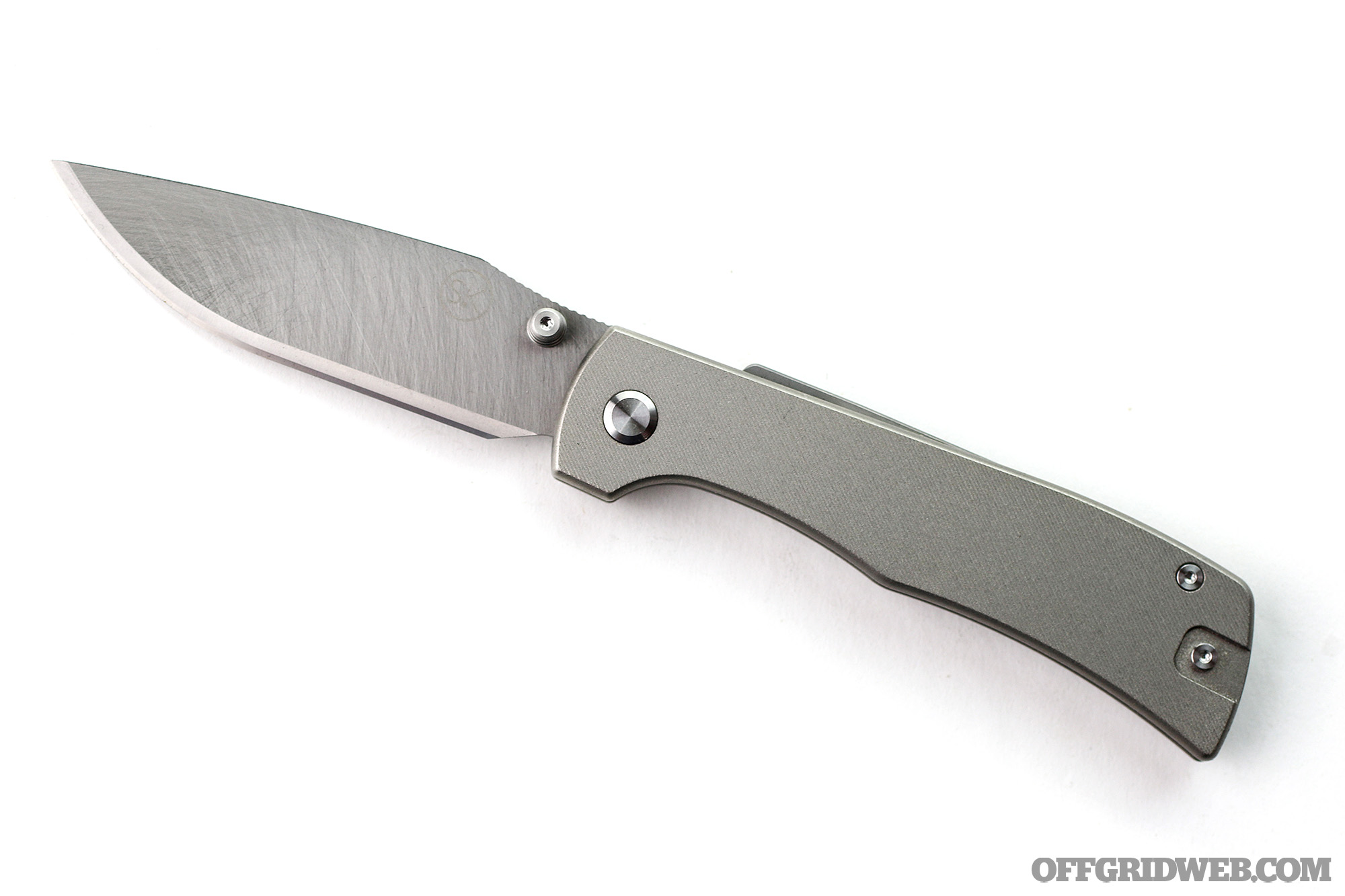
Civivi Knives Appalachian Drifter Slip Joint

OAL
6.8 inches

Blade Length
2.96 inches

Blade Steel
S35VN

Weight
2.49 ounces

MSRP
$99

URL
www.civivi.com

Notes
Civivi is a Chinese company that produces knives built to close tolerances with quality materials. The Appalachian Drifter is a slip-joint with a clip-point-style blade. Slip-joint knives don’t have a lock like many other pocket knives. The blade is held under slight tension when the knife is in the open position. It normally takes a second hand to push the blade closed while the other hand holds the handle. Most pocketknives used by the Boy Scouts are of this type. The clip-point blade is razor sharp and this traditional profile is reminiscent of the Bowie style. The Micarta handles are grippy and the blade opens via front flipper or nail nick.

Pros:

  • The blade fires with authority via front flipper.
  • Quality steel with a razor-sharp edge
  • Handles are well fitted, aesthetically pleasing, and make for a very comfortable hold

Cons:

  • The lock is a bit loose for a slip joint. If you have a habit of placing your thumb on the spine of the blade, don’t do it with this knife lest it prematurely close.
  • The mounting point for the lanyard isn’t the most intuitive.

Colossus: TinyHomeToyHauler’s Overland Ford F-450 Build

With an 8,600-pound curb weight — roughly equivalent to three Toyota Corollas — and 35,000-pound maximum towing capacity, this Ford F-450 is about as much truck as you can get before graduating to a commercial-grade model. Unlike its F-250 and F-350 Super Duty siblings, the 2019 F-450 was only available with a 6.7L turbo-diesel V-8 that produces 450 horsepower and 935 pound-feet of torque, and only offered in dual-rear-wheel (aka “dually”) configuration. It’s perfectly suited to driving coast-to-coast with a massive trailer in tow but might be considered overkill for an overland vehicle build — that is, unless you’re the Peru family (@tinyhometoyhauler).

Photos by Charna Peru

Editor’s Note: This article originally appeared in Issue 60 of our sister publication Recoil magazine.

Building the Ford F-450

Justice Peru writes, “What you see today definitely wasn’t our Plan A or even our Plan B. If I had to guess, I’d say we are on Plan E or F at this point.” In 2019, he was spending about 85 percent of the year traveling for work. “I was missing my son’s milestones and being omitted from family memories. I told my wife [Charna] that she and our son should join me on the road.” Charna was hesitant to spend most of the year bouncing between hotels and airports, so the two settled on the idea of creating a tiny home on wheels. Unlike a cumbersome RV that would be relegated to highways and truck stops, the Peru family wanted a truck that was ready for any adventure, on-road or off-road.

The first version of this project was inspired by Earthroamer, a company that builds custom, turnkey overland rigs on the Ford F-550 4×4 chassis. However, prices for those trucks start at $665,000 and can easily surpass $800,000. The Peru family wanted to spend far less than that, yet retain most of the capabilities. It wouldn’t be easy.

Wheels, Tires, & Body Modifications

Above: To switch from a dually rear end to a “super single” setup with square track width, Justice added custom Stazworks forged aluminum wheels and wider McNeil Racing front fenders.

After leaving the dealership in their new Ford F-450, the first step was to switch the towing-oriented dually setup to an off-road-friendly single rear wheel and widen the front track width to match. “I spent a lot of time researching the components for the super single conversion. This wasn’t a catalog build by any means. More times than not, we had to go with the only option rather than what we’d prefer,” Justice recalls. A local diesel mechanic — 321 Auto in Merritt Island, Florida — installed the Carli suspension, wider McNeil Racing front fenders, 20×10-inch Stazworks wheels, and 41-inch Goodyear tires. The front bumper contains a Smittybilt XRC Gen2 12,000-pound winch. The rear bumper features containers for water and fuel, as well as a prototype reinforced tire carrier that was needed to support the hefty 206-pound full-size spare tire.

Above: The F-450’s gargantuan spare tire weighs 206 pounds, and most swing-away carriers aren’t built to handle that kind of weight. So, ExpeditionOne used the truck as a test bed for a new beefed-up prototype Dual Swing rear bumper (available by special order).

Initially, the truck was configured with an aluminum camper in the bed, but limited capabilities and structural issues led the Perus to ditch that setup after a few months. Now, the truck is configured to tow a Black Series HQ17 off-road camper. That left the bed open for a prototype Mule Expedition Equipment rack, which offers adjustable height to clear dirt bikes and other tall cargo. The rack supports a 23Zero Kabari roof-top tent and two Peregrine 180 awnings, so the Peru family can still have a comfortable place to sleep when they’re not towing the camper. A second Mule rack was added to the truck’s roof, and carries four AluBoxes loaded with gear, plus a 23Zero Peregrine shower enclosure.

Suspension

The Ford F-450 rides on a Carli 4.5-inch Pintop suspension kit with King 2.5-inch shocks up front and Carli heavy-duty leaf springs with 3-inch lift blocks in the rear. Since the new camper weighs up to 9,000 pounds loaded, Air Lift Load Lifter airbags were also installed, along with Daystar airbag cradles that are detached to maximize off-road suspension travel when they’re not in use.

Lighting

To illuminate the highways, trails, and campsites where this truck resides, Justice added an array of LightForce products. These include four HTX2s and two Strikers on the front bumper, six more Strikers on the roof rack, four Nightfall ROK 40s on the rear bumper and ditch brackets, and a handful of ROK 20 and ROK 9 utility lights all around the bed rack. An RCR-Force-12 control unit from Switch Pros toggles all the lighting on and off.

Interior Upgrades

Inside the cab, two-thirds of the Lariat trim rear bench seat have been removed to make room for a DIY platform that contains toolboxes, a storage cubby, a Goal Zero 500X portable power station, and a Dometic CFX3 35 fridge. A smaller Dometic CCF-T fridge was installed in the center console to keep drinks and snacks cool. There’s still enough room in the back of the cab for the Perus’ dog and one passenger. Up front, 67 Designs phone mounts make it convenient to check downloaded OnX Maps for off-grid navigation, and a RAM floor mount holds an iPad that monitors the F-450’s vitals through the EZ LYNK Auto Agent app. Handheld Rugged Radios allow communication with spotters on difficult trails.\

A Family Project

Above: Justice, Charna, their son, and their dog live on the road year-round. The truck is a centerpiece to all their adventures, from hiking and camping to shooting and dirt-biking.

Justice writes, “Our truck is our only vehicle. With about 100,000 miles in 2.5 years, it has made multiple cross-country trips transitioning from pavement to dirt with just a change in tire pressure.” He and Charna — who took all the photos seen in this article — have bombed through trails in Baja, crossed Imogene Pass in Colorado, and even completed the famous Top of the World trail near Moab, Utah. “Due to our longer wheelbase and the lines being more for Jeeps, my wife had to walk most of the trail just to spot me on the technical parts. Slowly but surely, we made it to the top just before sunset. If you’ve ever been, you know that view is absolutely worth it.”

TinyHomeToyHauler Ford F-450 Specifications

Year/Make/Model: 2019 Ford F-450 4×4 Lariat

Drivetrain: 6.7L Power Stroke turbo-diesel V-8 with S&B Filters intake, intercooler pipe, MAP sensor spacer, and 68-gallon fuel tank; TorqShift 6R140 automatic transmission with Proven Diesel tune; PMF Dana 60 front axle truss and front diff cover

Suspension: Carli 4.5-inch Pintop front suspension kit with torsion sway bar, radius arms, and King 2.5-inch remote reservoir shocks; Carli Deaver HD rear leveling leaf springs on 3-inch lift blocks, Air Lift Load Lifter 5,000 airbags, Daystar airbag cradles (all components from CJC Off Road)

Wheels & Tires: 20×10 Stazworks 3-Piece Forged Super Single wheels with G275 335/80R20 Goodyear tires

Above: When the F-450 isn’t towing a trailer or weighed down with cargo, the Air Lift airbags and Daystar cradles can be disconnected from the axle to allow full suspension articulation.

Body Modifications: McNeil Racing 6-inch bulge front fenders, ExpeditionOne Ultra HD front bumper (modified to fit wide fenders) and prototype reinforced Dual Swing rear bumper, Ford OEM upgraded LED headlights and black XL grille, Mule Expedition Equipment roof rack and customized 8-foot bed rack, Icky Concepts bulkhead MOLLE panel

Lighting & Accessories: 23Zero tent, awnings, and shower enclosure; LightForce LED lights with Switch Pros control unit, Smittybilt winch with Custom Splice 3/8-inch Diamondback Mainline rope and Factor 55 UltraHook, dual Extreme Outback Magnum air compressors, Equipt1 AluBox cases, Dometic refrigerator, Goal Zero Yeti 500X power station, iPad in RAM Mount

URL: tinyhometoyhauler.com

IG: @tinyhometoyhauler


Bag Drop: 5.11 RUSH12 Hurricane Response Backpack

When I began my service in the Urban Search and Rescue (US&R) field back in 2014, I had joined for all the wrong reasons. I thought I’d be some kind of a cross between G.I. Joe and Indiana Jones. I imagined myself hanging off the back of a Chinook helicopter and smiling, serving America but mostly serving myself. I had a lot to learn. During my time working as a Structures Specialist attached to the State of Florida’s US&R Task Force, I’ve been privileged to deploy on rescue operations for four hurricanes and most recently the Champlain Towers collapse in Surfside, Florida. I’ve carried my gear in the whole series of 5.11 RUSH packs, starting with a big RUSH72 (55-liter size) and eventually working my way down to the RUSH12 (24-liter size) — a small and lightweight pack. I like it because it forces me to carefully consider everything I’m bringing, discouraging overpacking.

5.11 Tactical RUSH12 Backpack

The RUSH12 is my “12-hour pack” used for the 16- to 18-hour shifts that we actually end up working during a deployment. I grab this if I think I’ll be walking all day (or in a helicopter, where space is at a premium). It’s intended for supporting myself in an urban or suburban location that has been hit by a hurricane. My loadout is mostly just to make myself more comfortable, with minimal outside support. It’s not intended to be a wilderness or desert setup — I assume I’ll have access to food and water at some point. Normally, when we arrive somewhere that’s been hit by a hurricane, it’s not hard to find food or water. What most everyone wants is ice because it’s hot and the power is out.

MSRP
$100

URL
511tactical.com

The Contents

There’s a lot of empty space in this RUSH12 bag to start, and that’s intentional. As the conditions dictate or change, I may add mission-specific items, and I want room to add without overstuffing the bag. When it comes to contents, my personal priorities center around maintaining communications and carrying appropriate personal protective equipment (PPE) — not just for my eyes and hands, but also for my skin. That includes things like Vaseline and sunscreen, for example.

I also do my best to stay comfortable and clean in an environment that’s usually anything but. I carry some items that might be deemed non-essential — things that smell good and help me clean my body. My specific indulgence is MALIN+GOETZ travel-size soaps and moisturizer goodies. Yours might be a pair of earphones, to listen to music on your phone and be transported somewhere else for a little while. Or it could be a special snack that’s impossible to find in the field. Whatever it is, use that indulgence to transport your mind somewhere else, even if it’s just for a few minutes. Go to that space where you can recharge and gather your senses — or simply make sense of what you’ve just seen and experienced.

Outside Of Pack

  • Gerber Suspension multi-tool: Lots of functional goodness packed into an inexpensive $28 package. I bought five of these, and I stash them everywhere.
  • Line of Fire gloves: Keep them clipped to the outside, because when you really need gloves, you don’t want to be digging through your bag to find them.
  • I use Black Diamond MiniWire carabiners to attach whatever gear I need. Yes, I realize I don’t need the thing that attaches my water bottle to withstand 4,000 pounds of tension. But on the day that — for some completely unforeseen reason — I need a “real” carabiner in a hurry, I’ll be glad I didn’t try to save $10 on these.
  • Also outside the RUSH12 pack: morale patches from Thirty Seconds Out. It’s important to keep some kind of sense of humor in absolutely humorless situations. If I’m not getting in an occasional laugh, my mind can go to a dark place very quickly. Fun patches help keep the mood as light as possible.

Exterior Back Compartment


  • 2x Buff bandanas for sun protection: They don’t weigh anything, and boy it feels good to swap out a sweat-logged one that’s clean and dry.
  • Costa del Mar sunglasses (I’ll add a pair of Wiley-X goggles if I’m riding a helo or in a collapse-type environment).

Main Compartment


  • North American Rescue IFAK with bleeding control plus non-emergency add-ons like tweezers, Dayquil, Afrin, and Advil.
  • Garmin InReach GPS with satellite texting: I love redundancy when it comes to maintaining communications, especially after a hurricane when local cell service might be knocked out. It’s nice to have an alternate means of reaching out, and the way the Garmin InReach syncs with your phone for messaging and contacts is absolutely seamless. Did I mention it provides GPS navigation as well?

  • Battle Board green notebook keeper: I use this as a scratch pad to write down briefing notes, important addresses, and phone numbers. Any electronic device you’re using to take notes, i.e. your phone, could die. It’s nice to have a backup. Pro Tip: Use your cell phone to snap photos of each page of your journal before leaving basecamp. This way you’ve got the notes in two places. Redundancy!
  • 3x Rite-in-the-Rain pens (1 black, 2 orange)
  • Yellow Medium Rite-in-the-Rain pad, No. 373
  • Red small shave bag by Garage Built Gear

  • Duke Cannon Cold Shower Wipes: Because it’s incredible what cleaning your face and neck can do for your outlook on the day.
  • Small jar of Vaseline: You can rub it on any burn or skin damage, but mostly I use it to cut down on chafing. With that being said, since I’ve started wearing 2XU compression shorts as underwear, I don’t think I’ve gotten a rash on any long humps. They’re great, especially if you have to wade through water or work through a rainstorm and can’t change into something dry just yet.
  • Sun Bum Sunscreen: To be honest, I just love the way this stuff smells, and the moisturizers keep my skin feeling great. When I feel better, I work better. Sorry not sorry!
  • ChapStick

Closing Thoughts

Seven years after joining Florida’s Urban Search and Rescue Task Force, this RUSH12 pack has held up its end of the deal. I can think of a dozen things I would’ve suggested to my FNG younger self. Thing number one would’ve been to pack light — and the best way I know to pack light is to use a small pack which forces me to comply.

Leave a few cubic inches and ounces for indulgences in your own pack. Never underestimate the positive impact of taking the time to clean your face, or laughing with a buddy about a morale patch, or simply stashing an extra set of socks to be able to switch out to something clean and dry. I’ll see you out there.


Ryan Atkinson Interview: International Man of Protection

We’d love to say that all threats to survival could be resolved by starting a fire and building a lean-to. Unfortunately, in today’s world, the threats you’re most likely to face will come to you in your city, neighborhood, or home. There’s a good chance you won’t have the time or ability to bug-out to the nearest forest and wait things out while living off the land. The silver lining is that many street-level urban survival issues can be mitigated, or even avoided completely, with a keen eye and a little bit of advance planning. This is the space that Ryan Atkinson makes his living in.

Ryan is a security professional with decades of experience in more than 50 countries. He has extensive experience protecting some of the hottest musical acts of the last 20 years (or longer), tracking down weirdos before they can do something awful, and he’s a huge knife enthusiast. Fortunately, the knowledge he’s garnered along the way isn’t exclusively for A-list celebrities. His grassroots street smarts and lessons from protective missions around the world are applicable to anybody looking to make it to the end of their workday in peace. We had the privilege to sit down with Ryan at his unofficial headquarters, Barclay & Hill barbershop in Meridian, Idaho.

Above: Ryan spends downtime with friend, barber, and USMC vet Trevor Hill of Barclay & Hill.

Ryan Atkinson Interview

RECOIL OFFGRID: Tell us about your upbringing and background. How did you get started in the field of full-time VIP protection?

Ryan Atkinson: Raised in Los Angeles County, I played sports from age 5 to 22. High school coaches noticed me for my size and strength. I ended up earning a football scholarship to the University of Kansas. After playing college ball and graduating in 2002, I got my foot in the door by working for a security firm out of Kansas City at age 22. Rock bands and pop stars on world tours were the specialties.

Above: With Hilary Duff at MTV’s TRL in New York City.

After some short work exposure with The Eagles, Blink 182, and Korn, my first full-time gig was venue security director for the band Pearl Jam. I went on to tour the world with Good Charlotte, Linkin Park, Dashboard Confessional, Hilary Duff, Red Hot Chili Peppers, Motley Crüe, Depeche Mode, and most recently, KISS.

What led you to spend the last 20 years working with entertainers, as opposed to corporate executives or politicians?

RA: I never set out to do one or the other, it was just a matter of the relationships I forged during my college days that led me down this path. I get asked the same question every single day when I’m out on tour, “How did you get this job?” I tend to oversimplify the answer when I’m on the go, but the truth is, no two celebrity security people found the path the same way.

Above: At 6 feet 2 inches and 260 pounds, Ryan is an imposing presence, but he also knows how to blend into a crowd.

Traveling the world on tour sounds exciting but also exhausting. What are some steps you’ve taken to adapt to frequent travel?

RA: Traveling is always exhausting. I’m nearly 20 years in the business and still get worn out. I think the thing that separates the professionals is the ability to power through long workdays in new environments without complaining. Keep in mind, in the concert business, peak hours are 9 p.m. to 2 a.m. Tour security guys have been up and moving since 8 a.m., just like folks with normal jobs. Most people have no idea what that feels like.

Above: Behind the scenes with Alice Cooper.

How do you distinguish potential threats from excited fans or rowdy concertgoers? It must be especially challenging in unfamiliar environments with language barriers and cultural differences.

RA: Like anything, establishing baselines and identifying anomalies through practice.

I compare it to an airline pilot. Watching a pilot do all the equipment checks before takeoff looks like a puzzle that’s hard to understand. But that person does it every day, often in a different aircraft.

My “aircraft” happens to be excited people. When you stand next to a celebrity, everyone tends to stare and photograph that person. Sometimes there are characters mixed in with a different level of energy, staring at me. There you are — the anomaly.

Above: Working with Motley Crüe.

Tell us about a memorable instance when you managed a potentially dangerous situation to protect your client.

RA: The number of times I’ve had to put hands on folks is crazy. A lot of rock stars like to push the limits on crowd interaction, usually tasking me with safe passage into drunk crowds. But the most memorable scenarios are the ones that require brainpower. I worked for pop stars for nearly 10 years, a space where stalkers are more prevalent. Finding these people before they carry out their threats was always satisfying.

One case in particular sticks out. I was helping a fellow security person that was traveling with a pop star across the USA. He was moving too fast to track a threat in the next town, so I helped do some digital investigation for him.

This person was making threats online, announcing that he would carry weapons to an upcoming show and carry out a mass-casualty event. He even posted the guns he would use, giving me reason to believe he had the intent and means.

I found and scrolled through his online profiles, found a license plate in one of his shots, tracked the plate to an address, and called the local sheriff. The sheriff blew me off over the phone, so I called the local news station with a story. The news station in turn called the sheriff, who was then forced to deal with the situation. This happened in 24 hours and the person was arrested that day.

Above: Touring with KISS in Spain.

We’ve all heard stories of the wild rock band lifestyle, with round-the-clock parties and trashed hotel rooms. In your experience, how much of it’s true, and how much is exaggerated?

RA: There’s a reason that most guys can’t handle this job. What I do has almost nothing to do with police work or EP details. We do what we can do, not what we should do. I’ve been asked to look the other way more times than I can count. And I’ve been asked to lie or conceal what has happened even more. Oftentimes, the moral compass seems to lose its magnetic field. I talk a lot about this in my courses, but not in print due to nondisclosure agreements.

Above: Backstage with KISS at Madison Square Garden.

How do you balance keeping your clients safe without impeding their ability to enjoy touring?

RA: I always tell local security folks and police support units, “We are not a security operation; we are a production.” New guys must learn that balance. It’s about the show, it’s about the content, not security. Learning to take a more passive role in front of the entertainment crowd will determine your success. I’ve worked with a lot of retired secret service guys over the years, and they just can’t wrap their heads around how I stay calm with so much chaos surrounding our group. We check the big boxes and let the small boxes fall into place.

Above: With Depeche Mode in Sweden.

Much of your work takes place in nonpermissive environments where traditional weapons may not be available. What skills and tools do you use to maintain defensive capabilities in these places?

RA: A lot of guys focus on NPE weapons as a failsafe or security blanket. Sometimes it’s important to carry these tools, but there are much more important things to think about. First is physical fitness; you aren’t going to get off that X with another person if your strength and cardio suck. Second is being able to deconstruct the environment and passively position yourself and the client near your exit and vehicle location. Third is using your local security detail efficiently. This is a big one as you often get guys that don’t speak English or understand how to move. Calmly coaching other guys and encouraging them on the go in intense environments is a skill in its own.

Your Instagram (@fldwrx, pronounced “field works”) is always filled with photos of cool knives and EDC gear. How did you get into knife collecting and knifemaking?

RA: The Fldwrx project started when I was on tour with a very well-known group, doing personal security (close protection), looking after the lead singer. He was immobile for the most part, so I had many hours stuck inside of hotel rooms. I was OCONUS (Outside the CONtinental U.S.) for the better part of two years and unable to carry a firearm, so I found myself deep diving into the knife world.

Above: Boarding a jet with Depeche Mode in Moscow.

What was your first knife, and which is your favorite?

RA: I’ve always carried knives since the Swiss Army knife in the schoolyard.

As I got older, I’d carry Spydercos and Emersons. I didn’t carry fixed blades until I found Milmakaz Blades and FLC Knives. Then Winkler, Joe Watson, and Tracker Dan carried me into the high-end but functional fixed blade world.

Above: This Amtac Blades Northman is one of an extensive collection of high-end yet functional blades that Ryan has collected.

What’s one piece of advice you’d give to someone looking to get into the VIP protection industry?

RA: Show up, put yourself in front of everyone, be helpful, and don’t complain.

I’ve never missed a day of school or work in my life. That’s my superpower, I don’t miss days and everything I have going on in my personal life is secondary. If you are going to thrive in celebrity protection world, you’ll have to do a lot of non-security work. I like to joke with new guys, “Do you pick up dog poop?” … “Now you do!”

Which of your skills has proven most valuable for your job?

RA: Communication. You can be the smartest person in the room, but if you aren’t relatable, you won’t get people to do what you want. Being in charge of a building filled with locals that don’t speak English and a couple of interpreters that are overworked and spread thin is mind-bending.

Above: The back panel of Ryan’s Vertx backpack contains a DFNDR Armor ballistic panel, which can serve as a shield for clients in emergencies.

We hope to attend one of your High Visibility Protection courses in the future. Tell our readers a little about what you teach in the class.

RA: I like to talk about situational awareness a lot, expanding all the parts and then bringing it back together. We go over deconstructing environments and simplifying complex situations. As humans, we can only think critically about a finite number of things each day, how to manage that along with our emotions is critical.

I go over counter-custody and kidnap ransom in a separate block based on my experience overseas and things I’ve learned from guys like Ed Calderon and “Karl” from 4Tac5.

We discuss edged weapons and sheathing systems along with targeting soft tissue, based on the teachings of Scott Babb of Libre Fighting. I like to show students “a way to do things” not “the way to do things.” There’s a million ways to skin a cat — start with a sharp knife!

Above: Ryan carries extensive medical equipment when traveling abroad. It’s attached to a Vertx SOCP deployable insert for quick access.

What are questions you get the most through social media and in your classes?

RA: The knife world is bizarre. There are combative guys, custom makers, people from the occult, and secret squirrels from elite military units that creep into my DMs. I’ve tried to stay helpful and honest with everyone. I am not the authority on fixed blades, I’m just a guy with some unique training, lots of worldly experience and personal opinions.

About Ryan Atkinson

Age: 42

Hometown: Boise, ID

Martial Arts Background: Wrestling, boxing

Childhood Hero: My grandfather, the hardest worker I’ve ever met.

Recommended Reading List:

  • Star Man: The Right Hand Man of Rock ’n’ Roll by Michael Francis
  • Protection for & from Humanity by Todd Fox

Favorite Movie: Man on Fire

Favorite Drink: Anything, as long as it contains beer.

Favorite Quote: “Work’s the boss.” And “The dream is free; the hustle is sold separately.”

Website: www.fldwrx.com / @fldwrx on Instagram

Ryan’s EDC Gear:


Early Warning Signs of Workplace Violence

Yousef Badou is a U.S. Marine Corps veteran and one of the leading experts on the subjects of behavioral profiling and situational awareness. He was instrumental in the creation of the USMC Combat Hunter program, which helped Marines recognize and prevent developing threats from insurgency groups overseas. You can read more about his background in our Spotlight interview, but suffice to say he has substantial experience picking up pre-disaster warning signs. Yousef recently wrote an article on EmergenceDisrupt.com titled “3 Warning Signs of Workplace Violence,” and it contains three early warning signs of an active shooter or other mass-casualty event at your workplace.

We’ll share a few relevant excerpts from Yousef’s article below, but we encourage you to read the whole thing if this subject interests you.


1. Gathering Specific Supplies

It’s not uncommon for an attacker to stockpile weapons and ammunition in preparation for their assault. In fact, this is could be one of the earliest warning signs that someone may be planning to launch a violent attack. If you notice someone making or stockpiling firearms, knives, or other weapons, it’s important to view their behavior within context and relevance. Are they an avid hunter or sports shooter where these supplies would be normal? Or are they loading a deer rifle into their vehicle on a Tuesday morning of a school day?

More specific warning signs of workplace violence and dangerous behavior include seeing an employee or other person with supplies like chains, handcuffs, or any other material meant to lock doors, restrain someone, or tie something down.

These are items that might typically be purchased in military surplus stores, security stores, spy shops, construction, or hardware stores. The key is to spotting these items is to always be aware of levels of appropriateness to a situation. Examples of active shooter bags and kits to look out for would be, seeing someone wearing a tactical military bag in a church service or carrying a hockey bag at a school with no hockey team.

Metal gun parts tend to poke through materials and can rip through or leave a visible print or bulge on the outside of an active shooter bag or jacket. If an active shooter has filled the bag with a lot of ammo, explosives, or guns it can sometimes creak and crease at the shoulder straps and look very heavy.

If you see a person at your workplace with anything like that, trust your gut feeling. They are a definite cause for concern and should be scrutinized more deliberately.

2. Practicing The Attack

A practice run is one of the last few steps before the actual attack begins, so it’s important to know this and take precautions if necessary, like letting security know of their presence and what you’ve seen them doing at the business. Active shooters will sometimes practice their assault before carrying out an act of workplace violence. This could involve target shooting or even staging the attack itself.

Above: In 2007, an unarmed 19-year-old entered a department store in the Omaha Mall, scanned for a few moments, and left only to return 6 minutes later with a rifle to begin shooting.

It’s important to remember that not all practice is bad – many people enjoy practicing martial arts or firearms for sport. However, if you see someone who is practicing in a violent or destructive manner, this is definitely a cause for concern.

In 2007, an active shooter killed 32 people and wounded 17 others in a mass shooting at Virginia Tech. Prior to the shooting, the killer had been diagnosed with a mental illness and was deemed a danger to himself and others. In the weeks leading up to the massacre, the killer began behaving strangely and stockpiling weapons and ammunition. He also sent violent threats to his classmates and professors.

One of the final events the active shooter conducted was to go to a local gun range and bought multiple life-like paper targets and laid them face down on the floor of the range. He then proceeded to walk between them firing the two pistols he was holding into the targets. This event was noticed but the witnesses did not share the information thinking it was just another “odd” customer.

3. Verbalizing Threats or Making Odd Comments

One of the easiest ways to identify an active shooter before they strike is by listening for any verbal threats or comments. In many cases, attackers exhibit strange behavior, act manic and out of control, make menacing comments, or talk about their plans prior to carrying out the assault. This may be in the form of written threats or warnings, online posts, in-person, or another form of communication that they can deny when confronted.

If you notice someone making repeated threats, violent comments about wanting to hurt other workers or managers, or bragging about their plan, it can be a warning sign of a serious problem. These types of statements are warning signs of workplace violence. They should not be ignored and should be reported to authorities immediately.

if you see any of the following exhibited by any employee at your workplace, you must take the important step to alert security before any violent act can occur.

  • Bullying other workers in the workplace
  • Starting rumors and showing a high degree of pettiness
  • Problems with drugs and alcohol
  • Marked changes in their personality
  • Inability to accept blame or follow procedures
  • Showing disdain for most people, especially managers and authority figures
  • A noticeable negative change in their attitude towards their jobs, your business, managers, or other employees

How to React to Warning Signs of Workplace Violence

If you are threatened by someone, it is important to remember to stay calm and try to get as much information as possible. Ask the person making the threats what they plan to do and why they are doing it. It is also important to try and get a description of the person making the threats, including any identifying information such as tattoos or piercings. If possible, take pictures or videos of the person making the threats. Once you have gathered as much information as possible, it is important to report the incident to authorities.

No one ever expects to receive a threat in person or on social media, especially from a fellow employee at their workplace, but it can happen to anyone. Do not ignore these kinds of warning signs. If you receive a threatening message from another person, the next thing you do is the most important step to keep yourself safe. Don’t retaliate or respond to the threat. That could make the situation worse. Instead, save the message and any other evidence, block the person who sent the threat, and report the threat to security at your workplace or to the authorities, if necessary.


For more information on workplace violence, threat identification, and situational awareness, read the full article at EmergenceDisrupt.com.


Review: Phantom Hill CTF-1 Infrared Laser and Illuminator

If you’ve ever tried wearing modern night vision goggles, you’ll understand why they’re often described as a superpower. Although it’s not quite as impressive as flying like a speeding bullet or lifting a semi truck, the ability to see clearly, identify targets, and shoot accurately in a nearly-pitch-black environment feels like an unfair advantage. However, like most superpowers, night vision comes with some inherent drawbacks. It requires a substantial amount of gear — for starters, you’ll need a helmet, shroud, mount, and goggles or a monocular. The cost for these items adds up quickly and can easily exceed $5,000 or $10,000, and that’s before you consider common accessories like helmet-mounted lights, strobes, battery packs, and ear protection. Refer to OFFGRID Issue 43 for several in-depth articles explaining the basics of helmets and night vision systems.

Once you’ve done your research and chosen a night vision setup, the next item you’ll need is a weapon-mounted infrared (IR) laser and illuminator.

The Challenges of Traditional Lights, Lasers, and Illuminators

Above: OFFGRID editor Tom Marshall wrote about two rifles he configured with traditional light/laser/illuminator setups. The first, seen here, features a Steiner DBAL-I2 IR laser flanked by a SureFire Scout light with Vampire head that can switch between IR and white light settings.

Since IR light isn’t visible to the naked eye, an IR laser and illuminator acts as a light source and aiming point that only you (and anyone else in the area wearing NVGs) can see. Typically, this will be paired with a separate weapon-mounted white light, which can be used in low-light and transitional environments where night vision isn’t required. If you’re thinking that this sounds expensive, you’re not wrong. It’s easy to spend another $1,500 or more on a multi-function IR laser/illuminator unit such as a Steiner DBAL or L3-Harris ATPIAL-C, plus $300 or more on a quality white light.

Above: Tom Marshall’s second rifle features a Holosun IR laser/illuminator and a white light that incorporates parts from Cloud Defensive and Valhalla Tactical. A pair of remote switches allow activation of each device.

As if that’s not enough, you’ll still have to figure out how to mount your white light and IR laser/illuminator onto your rifle. Depending on each device’s positioning and how much rail space you have to work with, you may need to add remote switches and route their wires carefully to keep your setup organized. That’s another rabbit hole full of multi-function switches, mounting adapters, and wire-routing accessories that add to the total cost of your setup.

Once you’ve spent the time and money to configure a rifle with a traditional light/laser/illuminator setup, the results are certainly rewarding. But for newcomers to the world of night vision, this cost and complexity can be discouraging. It has often left us wondering why there isn’t a simpler and more affordable “turn-key” option on the market — Phantom Hill set out to provide exactly that.

Phantom Hill CTF-1: An All-in-One Solution

You probably haven’t heard of Phantom Hill — neither had we — but that doesn’t mean it’s a newcomer to this market. Phantom Hill has spent the last 14 years designing night vision equipment behind the scenes for some of the biggest players in the industry: Ops-Core, Gentex, S&S Precision, Princeton Tec, and Crye Precision, to name a few. Only recently did the company decide to launch its first product under its own brand name.

The Phantom Hill CTF-1 is described as “a simple tool at a fair price that can be put to immediate use without the need for additional components.” The MSRP for this unit is $799, a price that’s roughly half that of the multi-function IR laser/illuminators we mentioned earlier, not to mention the extra cost of a separate white light. This caught our attention, so we requested a sample to review shortly after it was released in late 2021.

Above: Our sample is marked as serial number 12, indicating just how “hot off the press” it was.

Design and Functionality

The CTF-1 covers all three of the most important functions — white light, infrared laser, and infrared illuminator — in a single compact unit.

Above: We mounted the CTF-1 on this Aero Precision EPC 9mm AR pistol, which will be featured in a separate article soon. It features parts from Arbor Arms, Arisaka Defense, JK Armament, Primary Arms, RISE Armament, Strike Industries. (Photo by Nate Gerhart)

At its core is a metal housing with an unusual-looking raw finish. This characteristic comes from its Direct Metal Laser Sintered (DMLS) aluminum construction. DMLS is a 3D-printing technique that uses a laser to sinter (i.e. heat and condense) metal powder into a solid structure. This technology allowed Phantom Hill to move quickly from a prototype phase to a production-ready design, while avoiding expensive tooling or molds that would drive up production costs. Phantom Hill says the rough sintered finish has a secondary advantage — it reduces the IR reflectivity of the unit, therefore making it less visible to other NV-equipped personnel.

The housing has an integrated Rail Grabber that locks onto a Picatinny rail using a single cross-bolt with a Torx head. We found this mounting system to be very secure. It fit three ARs we tried it on, but we suspect that its tight contours around the top rail may make it incompatible with certain large-diameter handguards. Compatibility with non-AR platforms will be hit or miss at best.

The Phantom Hill CTF-1 uses a symmetrical design with a white light on one side and an IR illuminator on the other. The white LED produces 380 lumens of neutral 5700K light and projects it in a soft flood pattern. This is ideal for close-quarters use and room-clearing, since it offers a wide angle of visibility, but it doesn’t have the power or throw necessary for long-range shots outdoors. If you’ve used a Streamlight TLR-7 pistol light, it’s comparable to that.

As for the IR illuminator, its beam pattern is essentially the same as the white LED. For those who like the technical details, it features an 850nm wavelength and 1120 mW/sr output; for the rest of us, it appears roughly as bright under a set of NV tubes as the white light looks to the naked eye.

The IR illuminator activates simultaneously with the 850nm IR laser, which is centered directly over the bore of the weapon. We won’t say that all IR lasers are created equal, but civilian-legal Class 1 IR lasers are limited by the U.S. Food and Drug Administration (yes, the FDA regulates lasers) to a maximum output less than 0.70mW. As a result, most high-quality civilian-legal IR lasers will be calibrated to just below this limit, and will appear similarly bright under normal use.

Activation is simple, with two textured rubber buttons on top of the unit. Each corresponds to its side of the housing; the left “VIS” button activates the white light, and the right “IR” button activates the IR illuminator and IR laser. Both are momentary-only, so you’ll need to press and hold to keep the power on.

Unlike many multi-function laser units, the CTF-1 does not have a visible laser built in. This keeps cost and complexity down, but also means you’ll only be able to zero the laser under night vision. If both activation buttons are pressed and held for 3 seconds, the unit goes into zeroing mode, and the IR laser turns on continuously. It can then be adjusted via elevation and windage hex screws to match the weapon’s point of impact. Thankfully, its centered alignment meant we didn’t have to do much adjustment after mounting it on our Aero Precision EPC 9mm AR.

The CTF-1 is powered by two CR123 batteries, each sealed behind separate weatherproof caps at the back of the housing. Phantom Hill says the caps have a taper-fit design to make it easier to reinstall them in the dark. Maximum run time is advertised at 3 hours.

Impressions at the Range

We tested the Phantom Hill CTF-1 IR laser and illuminator side-by-side against an AN/PEQ-15, which is the full-power military-spec version of an L3-Harris ATPIAL-C. The full-power PEQ-15 is not available on the civilian market, but a new ATPIAL-C will run you approximately $1,350 — that’s $550 more than the CTF-1. It doesn’t include a white light, so factor in a few hundred more for that if you don’t already have one.

Above: This image, taken through an AGM Global Vision white phosphor PVS-14, shows the CTF-1 IR laser and illuminator aimed at a berm approximately 25 yards away. The only ambient lighting was some dim moonlight. 

Above: These photos show the CTF-1 beam next to a PEQ-15 in “low” mode (left photo) and “high” mode (right photo).

With the PEQ-15 on its civilian-legal “low” setting, the lasers appear identical, as we expected. The CTF’s illuminator appears far brighter than the PEQ’s, but the PEQ’s adjustable focus lens produces a much more concentrated beam with a hard edge. At distances closer than 100 yards, we’d give the CTF-1 an advantage, especially in enclosed spaces. Beyond 100 yards, the PEQ’s concentrated beam is superior.

With the PEQ-15 on the “high” setting, it definitely outperforms the CTF-1, especially considering its ability to adjust the beam focus for varying distances. The laser is also noticeably brighter, drawing a line that highlights dust particles in the air. However, this output mode is not accessible to commercial ATPIAL-C units. Full-power PEQ-15s are only available to the military and law enforcement agencies, so it’s not a fair comparison. We included it as a point of reference, since the CTF-1 still performed surprisingly well in comparison.

Closing Thoughts

There are a few drawbacks to the CTF-1. The centered laser makes it impossible to mount backup iron sights in front of the unit or use it on anything with a fixed front sight. The housing is tightly-contoured around the rail, which may make the unit incompatible with certain handguards (e.g. integrally-suppressed guns). The activation buttons are placed close together with identical size and texture, so despite the small ridge between them, it’s relatively easy to fat-finger the wrong one. And the lack of a visible laser makes zeroing more of a challenge.

That said, the Phantom Hill CTF-1 offers impressive value at $800, and absolutely fulfills its stated goal of serving as “a simple tool at a fair price that can be put to immediate use.” We found that it works especially well for short weapons with limited handguard real estate, since there’s no need for a separate white light, switches, or cable routing. The wide beam pattern for IR and VIS outputs also lends itself to these applications. Whether you’re just getting started in the world of night vision or you’re looking for a more convenient way to convert one of your ARs for NV use, the CTF-1 is an appealing option, and we’re glad to see this market becoming more diverse.

We’ll leave you with a piece of good news. Phantom Hill has announced a second product called the CTF-2, which will feature an updated 3-button activation system and compatibility with SureFire-style light and illuminator heads (e.g. a SureFire Scout light and a B.E. Meyers KIJI illuminator). Phantom Hill expects to launch this product around mid-2022.

For more information on the Phantom Hill CTF-1 and future Phantom Hill products, go to phantomhill.design or follow @phantomhill.design on Instagram.


New: 2022 ROUSH F-150 with 705hp Supercharged V8

A few years ago, I had the opportunity to spend a week driving the 2020 ROUSH F-150 5.11 Tactical Edition — you can read my recap of that experience here. The short version is that I gave the keys back rather begrudgingly, since the 650-horsepower Coyote V8 made it mind-bendingly fast for a full-size pickup. So, I’m glad to see that ROUSH has followed up with an updated version for the 2022 model year. I’m also glad to see it has even more horsepower on tap (assuming you spring for the optional supercharger, which you certainly should). The 2022 ROUSH F-150 offers upgraded wheels, tires, suspension, exhaust system, interior, lighting, and much more.

The new 2022 ROUSH F-150 can be ordered online as a new vehicle, delivered through ROUSH’s dealer network, and comes standard with a 3-year/36,000-mile warranty. It’s based on your choice of a 302A XLT or 502A Lariat Ford F-150 chassis, with the choice of nine exterior color options and two different ROUSH leather interior options.

Satin black graphics on the hood, windshield, and tailgate are standard; there’s also an optional body-side graphic package (pictured above). Each 2022 ROUSH F-150 comes with 20-inch Iridium Gray Satin wheels and 33-Inch General Grabber A/TX All-Terrain Tires. Unique fender flares with accent lighting accommodate for the widened footprint, and can be ordered in satin black (standard) or matched to the body color as seen above (optional). ROUSH also adds a Performance Coil-Over Suspension System for improved ride on- and off-road.

ROUSH badges are affixed to the exterior and interior, and the optional premium leather package (pictured above) includes an embroidered ROUSH logo on each headrest. A dual-tip performance exhaust system is standard, but an electronically-controlled active exhaust is available for those who don’t want to wake the neighbors when the truck fires up.

You may notice the ROUSH supercharger kit isn’t listed as an option in the build configuration menu — that’s because it’s ordered separately. However, having driven a truck with this supercharger system, I’ll attest that it makes a night-and-day difference in performance. The 2.65L R260 TVS supercharger brings power output to 705 horsepower and 635 lb-ft of torque, and it’s backed by a 3 year/36,000 mile ROUSH limited powertrain warranty when installed by a Ford dealer or other certified ASE technician.

For more information on the 2022 ROUSH F-150, go to RoushPerformance.com.


A Quick Look at Smartphone Security Apps

Just a few decades ago, being “prepared” meant something quite different from what it means today. Back then, if you focused on the survival essentials like food, water, security/self-defense, first-aid, sanitation/hygiene, and knowing when to stay put and when to get out, you’d probably be in pretty good shape if a natural disaster, or some other crisis, came your way. As long as the physical world was safe and secure, everything else would follow.

Today, however, many experts believe that virtual threats are quickly becoming just as dangerous as physical threats. In other words, what happens online can have a direct impact on all the things you need to survive, including essential public services, vital utilities, the supply chain, and even access to your own currency. If you want to protect yourself, and your family, you need to take your preparations to a whole other level, and you need to start thinking about protecting your cyberspace.

In this article, we review a few security applications that can help you protect yourself, your data, and your hard-earned currency in an environment where cybercriminals can lurk in the shadows, just waiting for an opportunity to take advantage of the unwary.

The Future of Smartphone Security

Life in the 21st century is changing at a pace few of us would ever have anticipated. In contrast to the mostly stationary internet of just 20 years ago, Americans are now increasingly connected to the internet via mobile devices, such as smartphones and tablets. Because of their versatility, and ever-increasing functionality, mobile devices have become the “multi-tool” of our era. The recent acceleration in the development of mobile apps that run these devices has only fueled this expansion. Transactions that were once firmly rooted in the physical world, are now conducted digitally, with no paper trail, and in many instances, on a mobile device. From buying a car, paying a bill, to making a deposit at your bank, it can all be done digitally from a mobile device.

Yet, right below the surface of all this convenience, the same technology that allows you to easily access services and information from just about anywhere in the world also makes you vulnerable to hackers, cyber criminals, and an assortment of bad actors, both foreign and domestic. Considering that many people now connect to the internet using a mobile device, and that a large portion of the everyday world resides in cyberspace, you ignore these threats at your own peril.

Mobile Devices are a Top Priority for Hackers

Recent trends suggest that cybercriminals may be shifting their attention from computers and workstations, to mobile devices, especially smartphones. The reason for this is clear — many of these devices contain an abundance of valuable information, including the most intimate details about your personal life. Malicious attack methods previously used against PCs are now being adapted, modified, and employed to hack mobile devices; chief among these criminal tools is malware. Malware, short for “malicious software,” refers to any software used by hackers to steal data, or to damage or destroy computer systems. Common examples of malware include viruses, spyware, adware, ransomware, etc. One of the most common methods used by hackers to spread malware is through apps, downloads, email attachments, infected links, and even text messages.

Hackers are constantly working to steal data from mobile devices. They know that mobile devices may not be as secure as workstations and servers. Security features like antivirus software are usually lacking in mobile devices. As such, hackers will often target mobile devices, and users may be less cautious of threats on this platform.

Given the opportunity, cyber criminals will exploit every possible vulnerability; it’s up to you to take reasonable measures and precautions to protect your privacy and personal information.

Security Apps – What to Look For

The apps we reviewed for this article all provide internet security tools intended to protect against cyberattacks, and to help protect personal information and privacy. Our aim was to provide a broad spectrum of possible options for comparison. But, since each person’s needs, budget and circumstances are different, you’ll need to consider what sort of protection/security is most relevant to you, and what level of service you prefer.

We looked for apps that were easy to download, install, and navigate. Ease of use, reliability and speed were also at the top of our list. While most people want the most effective security features on their mobile devices, they don’t want apps that’ll slow down their devices, or cause any interruptions in the way they navigate the internet.

Finally, we looked for apps that are free, or low-cost, and provided in-app purchase options for people who may want to access to additional features, or enhanced functionality. If the app falls short in any of these areas, users would likely not bother using it. Overall, the best apps are useful, fast, convenient, reliable, and provide a level of security and protection that you wouldn’t otherwise have without them.

Many of the apps discussed in this article offer basic level security protection for free, and “free” is usually a good thing. But, those “free” apps can sometimes come with limited features and annoying ads. If you want the premium services/features, or you don’t want to deal with ads, you can always consider an upgrade at an additional cost. On the other hand, if the app itself works for you and provides the protection and security you’re looking for, you may not mind the ads, or maybe even paying for a premium level of service offering more advanced features.

We looked at a few popular apps and put them to the test. For practical reasons we had to limit the number of apps we reviewed, but there were certainly many more that we could’ve included. While finding the “best” protection for your mobile device can be a time- consuming and confusing task, our goal was to provide you with a point of comparison to help you look at the relevant options, so you could decide what works for you. Here’s how they stacked up.

Express VPN

A VPN (virtual private network) is an easy and effective way for people to protect their online traffic and personal data. This app allows you to use the internet while keeping your IP address and location private. When a user connects to a secure VPN server, that internet traffic goes through what’s called an encryption tunnel that shields their identity and prevents anyone from seeing their traffic or personal data. A VPN can be especially useful while traveling abroad, while using public Wi-Fi, or for just about any situation where you want to keep your data and identity private, which for most people is always. Express VPN claims to have the fastest, most reliable, and lowest latency VPN service available, using exclusive access to what they call “Lightway” a VPN protocol that offers faster speeds, security, and reliability. Express VPN claims that users can safely connect to over 3,000 VPN servers in 160 locations, across 94 countries, for powerful speeds and unlimited bandwidth.

Pros

  • Unlimited bandwidth (no caps) allows you to watch streaming video and to video chat.
  • Use your account for up to five supported devices — smartphone, tablet, router, laptop, desktop, etc.
  • 24/7 live chat support
  • Thirty-day money-back guarantee
  • Available for Apple and Android mobile devices
  • No activity logs or connection logs

Cons

  • A bit pricey, with a monthly subscription price of $12.95
  • Some users have reported difficulties canceling the service, connectivity issues, and unexpected interruptions in service.

Seller/Developer: ExprsVPN LLC

Size: 53.3 MB for iOS/32 MB for Android

Compatibility: iOS 12.0 or later. Compatible with iPhone, iPad, and iPod touch; and Android 5.0+

Languages: English, Spanish, Danish, Dutch, Finnish, French, German, Italian, Japanese, Korean, Norwegian, Bokmal, Polish, Portuguese, Russian, Swedish, Thai, Turkish

Price: Monthly subscription plans start at $12.99, discounts for longer terms

Privacy Policy: www.expressvpn.com/privacy-policy

Mullvad VPN

Mullvad is another VPN, but with an additional level of privacy — it’s one of the only apps where you don’t have to provide any personal information to use it, and allows you to use a number of payment options, including cash and cryptocurrencies. Your data travels through an encrypted tunnel to one of Mullvad’s VPN servers, and then to the website you’re visiting. Your IP address is replaced by one of theirs, ensuring that your device’s activity and location are never linked to you. Mullvad VPN offers strong encryption, DNS Leak Protection, and an Automatic Kill Switch to keep all your unprotected data secure in the event your connection to the VPN drops out. Mullvad VPN will allow up to five simultaneous connections, and its OpenVPN config files will work on most modern devices.

Pros

  • Strong encryption to keep your data private while using public Wi-Fi connections
  • Mullvad keeps no activity logs
  • Anonymous payment options via cash or cryptocurrencies available
  • No personal information is needed — no email, no phone number, no name, no personal information at all.
  • Easy to use, just download and install app. No complicated setup or multi-step registration process.
  • Use your account on up to five devices.
  • Flat rate of $5.50 per month
  • Thirty-day money-back guarantee
  • Available for Apple and Android mobile devices

Cons

  • Only available in English
  • Some users have reported connectivity issues and screen freeze.

Seller/Developer: Mullvad VPN AB

Size: 18.1 MB for iOS/21 M for Android

Compatibility: iOS 12.0 or later. Compatible with iPhone, iPad, and iPod touch, and Android 7.0+

Languages: English

Price: $5.50 per month

Privacy Policy: mullvad.net/en/help/privacy-policy/

Avast Mobile Security

Avast Antivirus provides well-rounded mobile protection by automatically scanning for viruses, malware, spyware, Trojans, and infected links. Avast Mobile Security & Antivirus also offers a comprehensive array of free, and premium features to provide advanced protection and privacy to help you manage and secure your devices.

Pros

  • Antivirus engine automatically scans for viruses, malware, spyware, Trojans, and warns you of malicious or infected apps
  • Cleans out unnecessary files, data, installation and residual files, system caches, and gallery thumbnails to free up more space
  • Encrypt and secure photos/images with a PIN code pattern or a fingerprint password
  • Web browser protection against malicious URLs, scan and block malware-infected links for safer web browsing
  • Verify the security of Wi-Fi networks
  • Premium features provide advanced protection and security; ultimate users also have access to a VPN (Virtual Private Network) to keep your online activities private

Cons

  • While basic app is free, premium services require in-app purchases.
  • Avast direct customer support, which allows the user to contact customer support directly from the app, is a premium feature. Some users have reported difficulties accessing customer support while using the basic (free) app.
  • Some users have complained about the frequency of advertising, which for some users interferes with the user’s ability to use the app.

Seller/Developer: AVAST Software s.r.o.

Size: 52.4 MB

Compatibility: iOS 12.0 or later. Compatible with iPhone, iPad, and iPod touch; Android 4.0.3 and up

Languages: English, Czech, Dutch, French, German, Hindi, Japanese, Italian, Korean, Polish, Portuguese, Russian, Thai, Simplified & Traditional Chinese, Turkish, Spanish, Vietnamese

Price: Free (extra fees to remove advertising and for premium features)

Privacy Policy: www.avast.com

Prey Anti-Theft

Prey is an anti-theft phone tracker and data security app that allows you to know the real-time location of a stolen or lost device. Using geolocation tracking, you can track mobile devices anywhere in the world. This app also protects data, and allows you to remotely wipe the information, or lock the device.

Pros

  • Track, find, lock, and secure all your devices with just one app (Basic plan allows you to track up to three devices)
  • Once a device is reported missing, Prey will track and send you detailed evidence reports, including remote pictures, locations, and nearby networks to help retrieve your device.
  • Remotely lock your device, retrieve and wipe data, ring an alarm to locate a tablet
  • Use Control Zones to monitor device movement, and location history to detect unusual activity
  • Educational and nonprofit discounts available
  • No long-term contracts
  • Available for Apple and Android mobile devices

Cons

  • Basic Plan is free but includes limited features.
  • No data protection, and no reactive security on Basic Plan. Advanced features (Premium Plan) are available, for a monthly fee.
  • Some users have complained about the customer support.
  • Language options limited to English and Spanish
  • Some users have reported compatibility issues with iOS, and issues navigating menus.

Seller/Developer: Prey, Inc.

Size: 69.2 MB

Compatibility: iOS 8.0 or later. Compatible with iPhone, iPad, and iPod touch; Android 5.0 and up

Languages: English, Spanish

Price: Free (extra fees for premium features)

Privacy Policy: www.preyproject.com/terms

KYMS

KYMS is intended to be an protective digital vault that allows you to hide and encrypt multimedia files, text documents, passwords, and other sensitive files with AES Encryption. The developers also claim that KYMS is the only app that decrypts files in real time, with no waiting. Tap on a video, for example, and it’ll start playing immediately while the decryption continues in the background. Media can be imported from device local files, device camera, or from a Mac or PC through Wi-Fi.

Pros

  • Resources to protect your data, while still maintaining easy access
  • Relatively easy to use and navigate. Log in with four-digit PIN and alphanumeric password.
  • Encrypt and protect: photos, videos, documents, contacts, credit cards, audio files*
  • Decrypts files in real time
  • Private bookmarks and history
  • Integrated, multi-tab, fast internet browser
  • Available for Apple and Android mobile devices
  • Basic app is free, and allows you to encrypt videos and photos.
  • Premium package will also encrypt contacts, tasks, credit cards, audio files, and scanned documents.*

Cons

  • Some users have difficulties retrieving files, and have had the app crash when attempting to work on a saved file.
  • Some users have complained about the frequency of advertising, which for some interferes with the user’s ability to navigate the app and access data.
  • Extra fees to remove ads and for premium services

Seller/Developer: IdeaSolutions S.r.I.

Size: 98.3 MB for iOS/13 M for Android

Compatibility: iOS 9.0 or later. Compatible with iPhone, iPad, and iPod touch; Android 4.0.3 and up

Languages: English, French, German, Italian, Japanese, Korean, Russian, Simplified & Traditional Chinese, Spanish

Price: Free (extra fees to remove advertising and for premium features)

Privacy Policy: www.iubenda.com/privacy-policy/40989235

*Some features require Premium service.

OpenKeyChain

As concerns for online security and privacy continue to grow, more and more people are looking for effective ways to protect themselves and their data. According to the developer, OpenKeyChain allows you to use your device to communicate more privately and securely, by using encryption to ensure your messages are only accessible by the intended recipient. Modern encryption is based on digital “keys,” so OpenKeyChain stores and manages your keys, and the keys of the people you communicate with, to encrypt and decrypt messages quickly and efficiently.

Pros

  • Easy to use, simple step-by-step instructions
  • Simply copy and paste the key to your notes
  • Scan QR codes to add other people’s keys
  • App is free, with upgrades available for in-app purchase.

Cons

  • Using with your email app may require some settings changes
  • Some users have found the interface not to be “user-friendly.”
  • Some uses have reported “frequent crashes,” requiring reinstalling app.
  • Only available for Android

Seller/Developer: Confidential Technologies GmbH

Size: 9.6 MB for Android

Compatibility: Android 4.0.3 and up

Languages: English, Spanish

Price: Free (extra fees to remove advertising and for premium features)

Privacy Policy: www.openkeychain.org/help/privacy-policy

Notes Lock

Notes Lock is a customizable, lockable, password-protected notepad that provides protection for private notes, lists, memos, photos, and audio recordings. Simple-to-use app provides multiple options, including downloadable themes, font style, and more. Notes Lock features advanced options such as decoy passwords for added security, and an increased level of protection/privacy.

Pros

  • Three security credentials (password, PIN, and pattern)
  • Built-in panic switch to immediately change to decoy app
  • Takes images of unauthorized users
  • Secure user interface
  • Resources to protect your data, while still maintaining easy access
  • Relatively easy to use and navigate
  • Manage notes with multiple folders, attach photos, and customize using an assortment of font size and colors.
  • Multiple views, including Tile and List view
  • Available for Apple and Android mobile devices

Cons

  • Only available in English
  • Some users have complained about the frequency of advertising, which for some users interfered with their ability to navigate the app, and to input and access data.
  • Some users have reported excessive pop-up ads.

Seller/Developer: NewSoftwares LLC

Size: 28.6 MB for iOS/14 M for Android

Compatibility: iOS 10.0 or later. Compatible with iPhone, iPad, iPod touch, and Mac; Android 4.0.3 and up

Languages: English

Price: Free (extra fees for premium package)

Privacy Policy: www.newsoftwares.net/legal/privacy/

Photo Investigator

Photo Investigator is a free app that lets you quickly and easily view photo metadata. Metadata is the information embedded in the image file each time you take a photo with your cell phone or camera. Viewing this information lets you see not only where the photo was taken, but also the camera settings and the date and time the photo was taken. As such, it’s usually a good idea to remove sensitive metadata before sharing photos online or with other people.

Pros

  • View, edit, and remove GPS EXIF metadata
  • Easy to install and easy to use
  • Photo map shows places you’ve been and the photos you’ve taken there
  • Accessing photos from a particular region is as easy as tapping a bubble icon.

Cons

  • Free version only lets you view metadata; to remove photo metadata requires in-app purchase.
  • Some users have reported issues transitioning from the free to the premium version.
  • Some users have reported issues with removing or editing metadata on the premium version.
  • Only available for iOS

Seller/Developer: Daniel Anderson

Size: 28.5 MB for iOS

Compatibility: iOS 11.0 or later. Compatible with iPhone, iPad, and iPod touch, and Mac

Languages: English, Arabic, Catalan, Danish, Dutch, Finnish, French, German, Hebrew, Hindi, Indonesian, Italian, Japanese, Korean, Norwegian Bokmål, Portuguese, Russian, Simplified Chinese, Spanish, Swedish, Thai, Traditional Chinese, Turkish

Price: Free (extra fees for complete unlock – premium features)

Privacy Policy: a-r-studios.com/Media/PhotoInvestigatorPrivacyPolicy.html

Photo & Video Metadata Remover

According to Platinum City LLC, their app allows you to remove metadata from photos and video. Simple commands allow you to remove camera details and settings, precise location of where a photo was taken, and other information from images, which is embedded by the camera, device, or photo editing software.

Pros

  • Remove EXIF, TIFF IPTC Data
  • Can be used for photos and videos
  • Ease of use and efficient
  • Metadata isn’t removed from the original photo or video; a copy is made with the cleared metadata.

Cons

  • Some users have complained about excessive ads.
  • Only available in English and Spanish
  • Extra fees to remove ads
  • Only available for iOS

Seller/Developer: Platinum City LLC.

Size: 7.9 MB

Compatibility: iOS 10.0 or later. Compatible with iPhone, iPad, and iPod touch

Languages: English, Spanish

Price: Free (extra fees to remove advertising and for premium features)

Privacy Policy: platinumcityapps.com/privacy/

*Some of these features require Premium service.

Wrap-Up

The number of mobile devices across the globe, especially smartphones, is rapidly rising. But, as the use of mobile devices continues to grow, so does the need to protect your personal information and sensitive data from hackers and other cyber criminals. With mobile malware on the rise, there are plenty of reasons to be concerned. Fortunately, many application developers have stepped up, and the market now offers an abundance of choices to address mobile phone/device security issues. From VPNs to antivirus, and very sophisticated encryption technology, many of these advanced applications protect against cyberattacks, theft, and the loss of sensitive/private information while we’re online.

Whether you use your devices for business, pleasure or both, there are apps that cannot only provide very effective protection against the never-ending efforts of cybercriminals, but actually provide you with tools to be proactive about your security, while still enjoying the full functionality of your mobile device.

About the Author

Richard Duarte is a practicing attorney, urban survival consultant, writer, and firearms enthusiast. He’s the author of Surviving Doomsday: A Guide for Surviving an Urban Disaster, and The Quick Start Guide for Urban Preparedness. Follow Richard on Twitter @SurvivingDoomsd.


Lessons from a Soviet Union Collapse & Chernobyl Survivor

Editor’s Note: This interview is from Issue 49 of our print magazine, which will be published on April 12th, 2022. Due to its relevance to current events involving Belarus, Russia, and Ukraine, we’re publishing the entire article here before it hits newsstands. History tends to repeat itself, so read on and consider what you can learn from Greg’s accounts of how his family and community survived the collapse of the Soviet Union and the Chernobyl disaster.

I first met Greg Mihovich while training at Deep Woods Ranch, home to former SEAL and firearms trainer Rich Graham — owner of both Deep Woods Ranch and his training company, Full Spectrum Warrior. Greg and Rich are coauthors of some of FSW’s training material, including their unique Combat Mobility Program, which we’ll showcase in more depth in an upcoming issue.

Photos by Cal Coulthard

During my time at the ranch, I had an opportunity to sit down with Greg and discuss his background and the experiences that brought him to partnering up with Full Spectrum Warrior. I was quite surprised to learn about the landmark disasters that had tested this soft-spoken man with a calmly commanding presence. His story is not only a Cinderella-slipper fit for the guiding principles of this brand but is also chock full of the realest of real-life lessons about living preparedness as a lifestyle and the risks of complacency.

Growing Up in the Soviet Union

RECOIL OFFGRID: Tell us a little bit about your background and childhood growing up in the USSR.

Greg Mihovich: I was an early ’80s child, born in Minsk — the capital of Belarus. My parents split early, and I was raised by my mother, stepdad, and grandparents on my mom’s side.
My mother was the creator and director of the Center for Esthetic Development, a project she built in 1984. The CED focused on preschool education in speech development, motor learning development, music, drawing, and other age-specific topics. It successfully operated about 12 schools with 400 kids each, aged 4 to 6.

My stepdad was a police officer with 10 years spent in narcotics, 10 years in homicide, and the last five years of his career as a dean of the five-year police university program. Many of the city’s cops were his alumni.

My granddad was a World War II distinguished veteran with four combat crests. Among many other feats, he helped liberate the Auschwitz concentration camp and participated in capturing Berlin. During my childhood, he was retired from the military and worked in the city’s council.

I lived right in the middle of the city and had a great childhood with lots of awesome adventures and a healthy dose of mischief. Thankfully, my generation never knew about cell phones and computers when we were kids. We had lots of places to play and explore — the apartment building playground with tons of climbing and obstacle course equipment; massive parks with plenty of trees and trails; many amazing libraries, exhibits and museums; a huge circus with new world-class shows every eight weeks right across the street; vast underground networks of basements, catacombs, bomb shelters, and subway tunnels; the roofs of the high-rise buildings, and many other things that made my childhood so memorable. There was almost no violent crime. I could just hop on any public transport by myself, go anywhere I wanted, and get back home with no problems.

I went to a specialized language school — most schools at the time were specialized (math, chemistry, sports, physics). My school’s specialty was languages, with 20 academic hours of languages a week — English, German, Russian, and Belarusian. The last two years of high school counted for the first two years of college due to the accelerated nature of the school’s program, so we could go right to the third year of a linguistic university once we were out.

Above: With a keen understanding of both weapons manipulation and unarmed fighting, Greg’s approach to self defense is holistic in nature.

Our school had a vast shooting range in the basement. From fourth to ninth grade, twice a week we had shooting classes where we shot .22 rifles up to 50 meters, ran around in gas masks doing pullovers on monkey bars, and were timed to see how fast we could take apart AK-47s. My school’s shooting team, with me as team captain, won multiple cities’ school championships.

Cross-country skiing and biathlon were very popular, and we would spend days on skis in the field shooting targets. We also made our own DIY pneumatic and muzzle-loader rifles from pipes, and DIY wooden stocks, as well as sheet metal ninja stars, climbing hooks, and other gear. Plus, there was an abundance of artifacts from WWII to dig up all over — from munitions, helmets, and weapons to tanks and bunkers.

The boys’ culture was centered around manhood, and the ability to fight was always valued in the area. Naturally, I took up martial arts and physical training, and fell in love with the training process. Sambo, wrestling, boxing, and Muay Thai were hugely popular and many of my classmates and friends were into fight training and conditioning. Every school break, we would arm wrestle and many disputes would be solved with a fistfight. So, martial arts and physical training was sort of like a matter of fact for me early on.

There’s a huge culture of preparedness in the U.S. Was it similar for you growing up in Belarus? Did people take steps to be prepared for uncertainty, and how was this perceived by the public?

GM: Belarus has been going through lots of hardships historically for a very long time. Just some of the relatively recent examples are the First World War, the 1917 Revolution, Second World War, Chernobyl catastrophe, breakup of the Soviet Union, many financial and currency crashes, and so on.

During World War II, every third person native to that area was killed via Nazi ethnic cleansing. Most of Belarus during that time was a theater of ferocious guerrilla warfare that made the Nazis’ life hell, even on supposedly captured territories, and severely disrupted their supply chains.

Additionally, the summers are short, and winters are pretty severe. These and other challenges had shaped a certain national mindset of survival to overcome all odds.

So, naturally, most people are preppers by default — most have gardens, lots have some livestock and/or chickens. The harvest is consumed and canned or preserved by other means as food prep and kept in a cellar or a basement. Food is seldom wasted. All the seasonal winter cold gear is squared away.

Above: Greg is a passionate educator and teaches regularly through both his own gym and partnerships with other instructors.

Many of these gardens have a stone or log dwelling with a massive fire stove and lots of firewood prepped to survive the winter. Everyone has many canisters to store and transport gasoline. The buildings are heavily reinforced against the harsh climate.

Most importantly, people have basic survival skills, can DIY pretty much anything, and are very robust. People hunt, camp, and backpack regularly. Before the Chernobyl catastrophe, mushroom and berry gathering was immense and very abundant.

Most Americans are not well-educated about what daily life was like behind the former Iron Curtain, but we hear things in schools about bread lines and intermittent availability of basic goods and services. Can you speak a little about what your experience was, and if supply shortages were a common occurrence?

GM: The supply chain disruptions were very real during the ’80s and early ’90s. My family always had plenty of food, plus the grandparents had their garden that had a vast abundance of every berry and vegetable that could possibly grow either outside or in a greenhouse. But the options in the stores for many items were limited and — although I’ve never seen bread lines — there would definitely be long lines to get some high-demand and short-supplied items like electronics, clothes, medicine, and some food items. However, like everywhere else in life, focused and determined people can find better options for themselves. My parents were go-getters, so I had plenty as a child, thanks to them. That was not easy for them, but they are people made of steel.

We had lots of hot water service disruptions due to the central nature of water lines in the city and the constant need to maintain the pipes. In the early ’90s, there was lots of looting of electrical wire and other scrap-metal-rich equipment, so periodic disruptions of certain electrical services would arise from time to time, as the wiring would be stripped bare.

Fallout from the Chernobyl Disaster

You mentioned that you were a child when the Chernobyl nuclear accident happened. What do you remember about it, and how did it affect daily life for people in the region?

GM: The Chernobyl catastrophe was a huge hit to Belarus, as the radiation cloud primarily went over that territory. It was a huge tragedy where half a million people heroically died as first responders attempting to shut down the fourth reactor and to isolate it from the world in a protective dome. The uncounted toll on the health of the entire region in the aftermath of the event was also immense, with many people getting cancer or other types of diseases.

When it happened, I was 6 years old. There was a Labor Day celebration parade, and the authorities were saying “everything is fine and under control” and telling people to remain calm and stay on the streets. My parents felt that something was very wrong and pulled me off the street right as the clouds turned black as far as you could see, and radioactive fallout started raining from the sky. I vividly remember being washed in the bathtub repeatedly and all my clothing being thrown away. That day changed our daily life for a long time.

Everyone carried Geiger counters on them from then on — we called them dosimeters — and they became the norm. You would measure food before buying it and walk away if the radiation was off the charts. You would measure your clothing and wash it very frequently, especially pillows, which had to be changed almost daily as they absorb a ton of radiation.

Wild mushroom and berry picking, which was so abundant before, stopped completely. I remember my family and I bringing back from a forest a dozen 5-gallon buckets of berries and mushrooms regularly in pre-Chernobyl days. You had to be very careful about sourcing your food and double check the radiation levels on everything.

Above: Greg with a group of students at Pride Brazilian Jiu Jitsu.

What lessons from this disaster do you still carry with you today?

GM: Many lessons of that catastrophe became monumental in forming my current preparedness process. I’ve seen firsthand what life-ending and life-altering consequences are caused by lack of awareness and preparation, so I spend significant time researching and fine-tuning my nuclear disaster safety protocols when moving into new area. Being trained in many aspects of it as a child makes many of these things second nature.

In most disasters, the authorities will downplay the risk in order to keep people from panicking, covering up their tracks and possibly thinking that it will just blow over. So, have a plan of your own and be ready to make your own decisions to move off the X, stay sheltered in place if appropriate, or evacuate as the situation unfolds.

You need to know the location of the local nuclear reactors in your area (within at least 300 miles), what lines of wind — and therefore most likely fallout avenues — are expected there, what kind of refuge drift lines will be natural to that area and how it will affect your location. Does your location have a proper amount of cover in place and an ability to filter air to act as a fallout shelter, or is there a shelter like that nearby? Do you have access to it? What is your emergency communication plan with your family and mutual assistance group in case the cell phones are down?

Have the proper radiation detection equipment on hand, charged up, and ready to use and know how to use it. There are plenty of early warning devices that are small and can go in your EDC and be staged in your vehicle, house, and work locations. Have some Potassium Iodate tablets on hand and ready to go to fill up your thyroid. Have your PPE and decontamination equipment ready to deploy nearby and know and practice your decontamination protocols. If you can limit or eliminate your skin exposure and avoid inhaling radioactive materials by protecting your airways, that is huge. It’s good to have pressurized water equipment cable of working even in off-the-grid conditions in order to wash off the gear and body for decontamination.

Understand the basic concept of civil defense as it comes to radiation and what you can do to limit your exposure. Get to your designated proper shelter as early as possible, be it your house or another predesignated location. Have some supplies ready on hand to sustain your basic necessities and sanitation needs, as well as emergency communication methods to stay informed and connected with your networks.

If you are going to need to leave, you will need to leave quickly and leave most stuff behind. Most likely, you will never be able to come back to it, or at least for a very long time. The perimeters of the affected areas will be cordoned-off, secured, and quarantined. Your stuff will become contaminated and possibly destroyed later in the decontamination process. So, have your bug-out bags ready to go and your personal documents in hard and electronic copies ready to go. Have a rehearsed rally-up protocol with your family at a predetermined location so you can get together at any time of the day.

Know where you are going and plan it through and through. Yes, it’s best to stay in your location where you have the majority of your supplies and connections instead of becoming a refugee in most cases. However, a nuclear disaster can be very different, depending on your proximity to the event and whether your living structure can serve as a proper fallout shelter. If it’s time to move, do it now and don’t wait! Plan your routes, have your vehicles fueled up and ready to go, know the backroads and have your printed maps on hand. Above all, keep your head on a swivel and be aware of what’s happening.

Above: Technical grappling or ground work is a fundamental building block to full-spectrum combatives training.

After the Iron Curtain Collapsed

The other major event you lived through was the fall of the Berlin Wall and subsequent collapse of the Soviet Union. What kinds of obstacles did this create for you and your family?

GM: The Soviet collapse on the ground resulted in a turbulent period of time filled with high uncertainty about the future, huge inflation that destroyed many people’s savings and pensions, many economic troubles, supply chain issues, diminished or vanished social services, erosion of youth culture, and increased crime rate.

Security measures went from almost open doors to double metal doors with cameras and a quick-reaction police force with AKs on a standby. In many areas, ruthless violent gangs competed for territories and resources that they would “protect” from other gangs, although Belarus was relatively quiet in that regard.

Inflation was crazy and many folks’ savings and pensions became nothing, sometimes in a matter of days. People kept gold, foreign currencies, real estate, cars, and goods for barter as ways to negate that. As a result, there was a vast black market for all kinds of things, from medicine to currencies.

My family was resourceful and witty, had jobs, a garden, and various businesses and was able to secure a fairly stable situation throughout the entire transition, although with plenty of bumps along the way.

I was very entrepreneurial early on as well and was always running some sort of business since I was 12 years old, selling books to bookstores around the city, getting gasoline shipments for gas stations when it was not freely available, doing some in-demand imports from countries nearby, and so I was making some good money even by adult standards as a teenager.

Above: Greg is able to progress his students from hand-to-hand to weapons-based tactics.

Were there any preparedness steps you saw people take beforehand, or immediately after, that helped them get through the difficulty of post-Soviet transition?

GM: Like I said before, people are very rugged and most have been in the culture of preparedness for a long time there. Things had been escalating and ramping up for some time, so only the willfully blind did not see that troubled times were coming. Unfortunately, some people still stayed in denial of what was happening for a long time and didn’t react quickly enough to adjust to the new situation. So gardening, communities, hard work, and perseverance got people through. I’d put the community as number one and the ability to produce your own food as number two.

What were the biggest cultural shifts you remember as the Soviet Union was approaching its collapse?

GM: Less and less people worked productively in the collective economy and colossal bureaucracy. It was enough to just make some motions, making it look like you were working and shifting responsibility on the “next guy.”

The collapse was set up by a very small group of corrupt politicians, and it was sudden and shocking for the vast majority of people. Once it happened and people were looking to adjust to the new reality, many really believed for a while that good will and peace would prevail and there would be no more conflict. The song “Wind of Change” by Scorpions was very symbolic of that era. The ex-Soviets believed that now that they had let go of communism they would be integrated into the rest of the world. Unfortunately, fate had other plans.

Communism & Capitalism

There are some Americans who believe that capitalism is oppressive, and argue that a communist/socialist system is the solution. What would you say to those who support those types of systems taking root in the U.S. or anywhere else?

GM: The free market system is superior to a centrally run one, and it makes for a much happier place. People have a natural drive to excel and thrive when a free choice is present. People need to be able to make their own decisions regarding personal health choices, what they want to do, and what they want to believe. We need to be left alone without bother.

Socialism is a slippery slope that might seem good on paper, but historically has failed again and again. The reality is, however, that some things here are already socialistic in nature, like medical mandates and property taxes, for example. Do you own your body and your land or are you effectively leasing from the state for the time being?

Above: Greg with business partner Rich Graham of Full Spectrum Warrior at Deep Woods Ranch in Florida.

Why do you think these kinds of movements gain momentum with certain people, and where do you think that influence is coming from?

GM: I think most young people are idealistic and romantic due to their age’s dynamics, but often don’t have enough hard life experience. They can fall easily into socialistic ideology due to these ideas often masquerading as humanistic ideas. That is fueled by lack of proper education and, as a matter of fact, the prevalence of socialistic way of thinking in the educational system, mass media, academia, and the entertainment industry. The better educated people are, and the more responsibility and initiative they are willing to take upon themselves, the more they lean toward traditional free market values.

What do you feel can be done to bridge the gap between the idealized view of a communist utopia and the harsh realities you experienced?

GM: I think people need to travel to centrally controlled socialistic countries and see for themselves. Nothing replaces real-life experience.

Coming to America

At what point did you decide to emigrate to the U.S.? What was that experience like for you?

GM: When I was going through college I wanted to travel and to find my own way as a man. Initially, I came to the U.S. in 1999 to study and work and fell in love with the idea of the Constitution, First and Second Amendments, as well as how easy it was to set up a private enterprise and start doing what you love to do. So eventually, via a lengthy emigration process, I first got my green card then became a citizen a few years later. The experience has been great so far, I have met many amazing people who have helped me along the way.

What’s your favorite experience you only had after coming to America? What’s one thing you miss from your home country?

GM: At the time I came to the U.S., it would have been very difficult for me to fulfill my dream of working as a fitness and martial arts coach professionally in Belarus while making enough income to maintain good living conditions. I know with my drive I would have acquired a good living, but I would’ve ended up working in a different field. In the U.S., I was able to focus full-time on what I enjoyed doing the most — training myself and others in getting healthier, moving better, practicing martial arts, and using firearms while making a good living for my family.

I miss my immediate family and original Muay Thai coach Dimitri Piasetsky the most, but I see them regularly on annual trips to Belarus.

Self-Defense Training

What made you get into fitness and training as a profession?

GM: My granddad was the first person to get me into training, then later I had many influences that motivated me to become a pro in that field. Like I said earlier, the culture of manhood, strength, and fistfighting growing up was strong, so training in martial arts was natural. Living across the street from the circus and seeing some incredible displays of human abilities was a huge factor as well.

My first martial art was Sambo at 11 years old, but it was Muay Thai, which I started at 16 years old, that I consider to be my first love in martial arts. That’s when I knew that I would be doing this forever. I always liked working on the technical aspect and enjoyed the process.

Initially, I started training professionally in 2001, teaching kettlebell and bodyweight strength and conditioning methods, along with Muay Thai at a local gym and Renzo Gracie’s affiliate MMA school. Over the years, I’ve kept adding skill sets, such as jiujitsu, boxing, submission grappling, catch, judo, Systema, Kali, Panantukan, and firearms. I opened my own facility, Underground Gym, in 2003 and have been doing training full-time ever since.

I sold the gym in 2018 and began another project, Max Capable, where I teach people how to move better, be strong, to be able to fight in all ranges, and to survive against all odds, utilizing my integrated system of mobility and strength development, martial arts, firearm, and survival training.

We know you work a lot with Full Spectrum Warrior, where you assist in firearms and tactical training as well. What was your journey like to become proficient in these particular skillsets?

GM: Yes, I’m proud to be a part of the Full Spectrum Warrior project. I met Rich Graham, the FSW founder, in a Muay Thai training camp in New Jersey way back in 1999, and we have been training and hanging out together ever since. Later, he left for the Navy and became a SEAL, was medically retired after seven years of service, came back, and started a tactical training company.
We reconnected, cross-trained a lot, and helped each other as much as we could to get as strong and capable as we could in each other’s areas of expertise. I’ve taken many of his training courses and have learned a lot over the years. Rich is an excellent instructor who always pushes you just outside of your comfort zone and helps you to see the big picture.

Above: Preparedness is a lifestyle, not an end-state. Incorporating medical, sustainment, and self-defense capabilities into your daily use bags could pay invaluable dividends.

Through his training, I got connected to many interesting people in the industry, was blessed to train alongside some outstanding professionals, and have taken many of their courses. I also went to some really interesting schools, as well as practiced a lot on my own and with my students.

Eventually, I started assisting Rich with his courses — first just setting up the range and helping out logistically, and then eventually teaching my side of the range. In 2016, we came up with a Combat Mobility System collaboration project that breaks down efficient movement with firearms.

I appreciate the patience he and many of my other teachers had with me over the years. I try to learn every time I step on the range just like I do on the mats — I’m forever a student, and constantly working to improve my skills as a shooter and as an instructor.

Currently, I run some training courses for Full Spectrum Warrior, teach out of my academy in Tinton Falls, New Jersey, and instruct some firearms courses for Condition Gray in the Northeast. I’ve been fortunate to work with hundreds of everyday citizens, as well as many police departments locally and across different states.

How does the American perspective on firearms and the Second Amendment differ from your experience in Belarus? Were civilians able to own firearms for hunting or recreation there?

GM: Civilians can still own limited-capacity hunting rifles and shotguns in Belarus, but the conditions are nuts, and you have to be ready for your weapon to be inspected for proper storage requirements anytime, day or night.

The Second Amendment is huge to me, as I enjoy shooting a lot, but it’s so much more than just that. To me, it is an extension of my martial arts and makes the modern mixed martial arts regimen complete. I see it as a fundamental right that cannot be infringed upon.

Advice for the Future

What advice do you have for our readers about preparedness based on your childhood experiences?

GM: Know the area you are in, identify your primary threats, and prepare accordingly. Build a strong and capable community. Be ready to adapt to any circumstances and always keep learning.

There has been a lot of talk in the last several years about increasing government control over people’s daily lives, some coinciding with the COVID-19 crisis. What are your thoughts on this compared to your experiences growing up in an authoritarian Soviet state?

GM: It’s funny that modern Belarus never went into a lockdown and has been mandate-free from wearing masks and/or medical interventions this entire time. Their mortality numbers are the same as almost everyone else’s.

I don’t like increased censorship and control, even if it’s “for our health and safety.” A medically induced dictatorship is still a dictatorship. People need to be able to make their own decisions and risk assessments based on their individual health and other circumstances.

About Greg Mihovich

Age
42

Current Hometown
Shrewsbury, NJ

Favorite Quote
“What cannot kill me makes me stronger”

Favorite Food
Bison or elk steaks with wild rice

Recommended reading list:

  • Nuclear War Survival Skills by Cresson Kearny
  • The Secure Home by Andrew L. Skousen & Joel M. Skousen
  • Mastering Jujitsu by Renzo Gracie & John Danaher
  • How to Eat, Move and Be Healthy by Paul Chek
  • The Oxygen Advantage by Patrick McKeown
  • Why We Sleep by Matthew Walker

Greg’s EDC Gear

  • AMTAC Northman blade
  • Shadow Systems MR920 Combat pistol
  • Modlite PLH V2
  • Keys
  • Cell phone
  • Polarized safety glasses

What do you want on your tombstone?
My name and a picture for starters, with “lived to the fullest of his potential with integrity and respect” written below.

URL
MaxCapable.com