Emergency preparedness isn’t just about turning your home into an unassailable fortress with perimeter defenses and an arsenal of weapons — if this is all you focus on, your home might end up feeling like a prison you made for yourself. You should also prioritize ways to make your home into a sanctuary. Backyard gardening is an easy and cost-effective way to maintain a sustainable supply of fresh fruits, veggies, and herbs. This produce can help you stay self-sufficient in an emergency, but it’s also tasty and healthy during less catastrophic circumstances. The following infographic from Fix.com includes an overview of some of the most common backyard gardening methods: container gardens, raised beds, and plots.
Containers such as pots or buckets provide the most compact footprint of the three categories, and can easily be implemented in apartment balconies and other compact urban spaces. They’re perfect for staples like tomatoes, peppers, and herbs. Raised beds are a midsize option; they can be built around the perimeter of a yard or porch. Depending on the size and depth, they can handle anything from strawberries and spinach to squash and watermelons. If you have more open space in your yard, consider a traditional square or rectangular plot. These are ideal for “companion planting” of multiple types of produce (or even flowers).
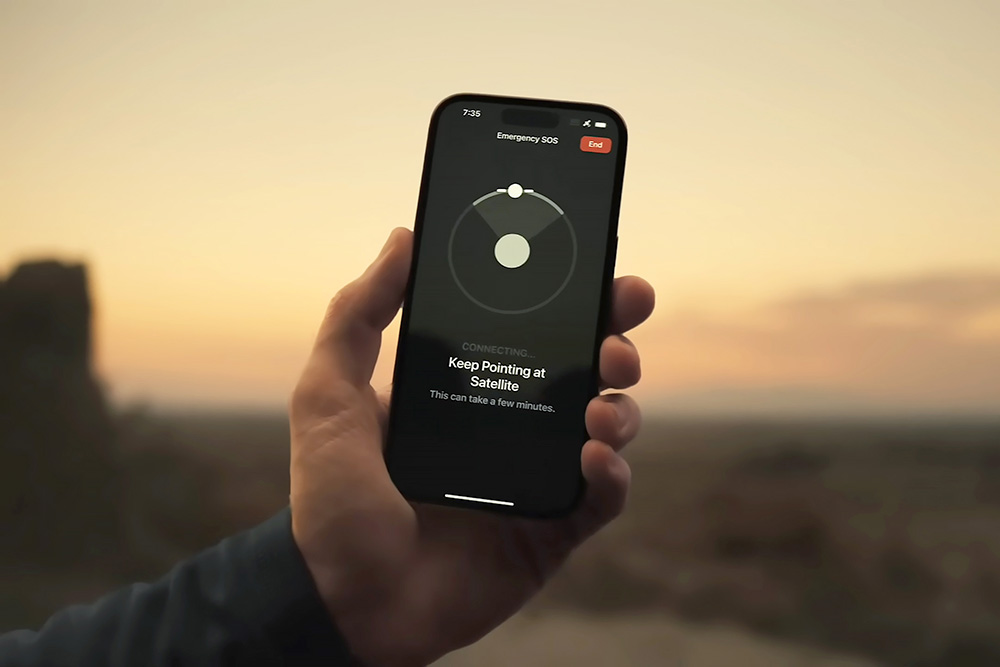
Nobody wants to be in a situation where the only remaining option is to call for rescue. For those of us who take emergency preparedness seriously, it’s easy to assume our skills and gear will enable us to self-rescue. Unfortunately, there’s always a chance Murphy’s Law will kick in and all your best-laid plans will fail spectacularly. In those rare situations, it’s highly advisable to have at least one way to signal for help — this might be a handheld radio, an emergency strobe, flares, a whistle, a high-vis signal panel, or a GPS beacon such as the Garmin InReach. This week, Apple announced some new capabilities that enable the iPhone 14 to serve as a distress beacon, even when there isn’t cell signal or WiFi. These include automatic car crash detection and satellite SOS.
Car Crash Detection
Much like OnStar and other onboard units in vehicles, Apple’s new crash detection system is designed to detect a collision and place a call to 9-1-1 or emergency services unless the user cancels the call. This is intended to help those who might be unconscious or unable to reach a phone.
So, how does it work? Apple says the system relies on “a new dual-core accelerometer capable of detecting G-force measurements of up to 256Gs and a new high dynamic range gyroscope.” It also factors in the barometer for cabin pressure changes, GPS for sudden speed changes, and microphone to identify loud noises associated with crashes. Apple claims the system has been fine-tuned through over a million hours of real-world driving and real crash record data. The system is also capable of integrating with the Apple Watch to display the emergency notice.
Satellite SOS
Although the crash detection feature sounds helpful, we’re much more interested in the iPhone 14’s satellite SOS capability, since it has the potential to replace or augment traditional GPS rescue beacons for those of us who venture off the grid regularly.
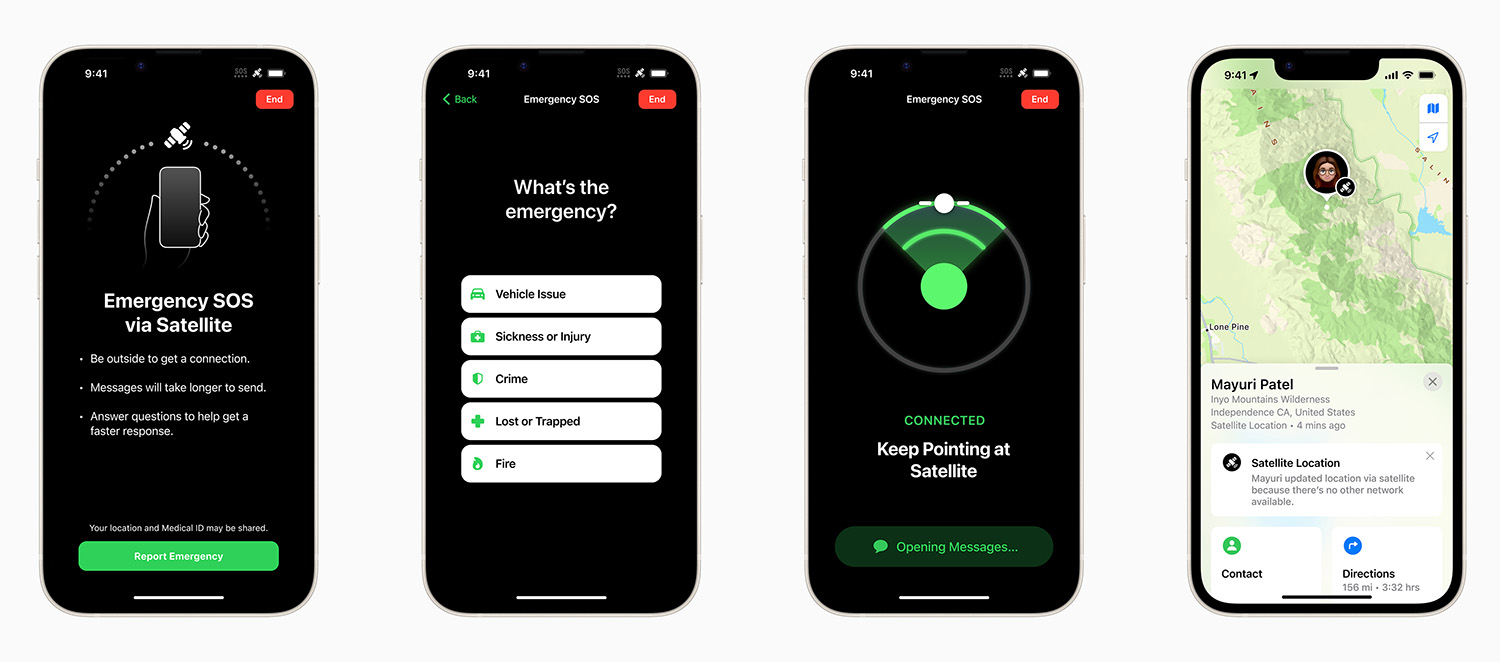
The Emergency SOS via satellite uses new hardware and software components to “allow antennas to connect directly to a satellite, enabling messaging with emergency services when outside of cellular or Wi-Fi coverage.” Before attempting to connect to a satellite, the SOS feature begins by asking a few critical questions, such as the type of emergency, geographic obstacles, number of people involved, and information about injuries. The user is then prompted to point the phone at a passing satellite using a simple, compass-style gauge on the screen.
With a clear view of the sky, SOS messages can be sent in as little as 15 seconds. In areas where emergency services can receive text messages, the SOS is bounced from the satellite through to the local dispatcher; otherwise, it goes to “centers staffed by Apple‑trained specialists who can call for help on the user’s behalf.” First responders can reply via satellite text message to inform the user that they’re on the way, or to ask additional questions.
MacRumors reported on a recent SEC filing that indicates Apple is working with satellite operator Globalstar, who will “provide and maintain all resources, including personnel, software, satellite systems, and more, and maintain minimum quality and coverage standards” under Apple’s direction.
For less dire situations, iPhone 14 users can share their location via satellite using the Find My Phone functionality. This can keep approved family and friends informed about the user’s location, even when they’re in remote areas with no cellular signal. Apple says this will provide “a sense of security when hiking or camping off the grid.”
Emergency SOS via satellite starts in the US and Canada in November 2022, and will be free for the first two years. After that, fees will apply to continue using the satellite SOS function. For more details, check this article on the Apple Newsroom.
Editor’s Note: The following article was written by Robert Young Pelton, a journalist, filmmaker, and the author of several books including The World’s Most Dangerous Places and Come Back Alive. His experience on the ground in the Libyan Civil War — including some serious close calls — reinforces the ever-increasing role combat drones play in wars and conflicts around the world.
Weaving our way through deserted back alleys, I can tell we’ve arrived at the front. Not just from the noise of heavy 14.5s, mortar hits, and RPGs, but because driver Hussam hunches down and peers up through the windshield of our grimy Toyota pickup. He’s looking for drones. “Are you afraid of the drones?” I ask. “I am not afraid because I am putting my life for my country,” he answers.
I’m not totally buying it. Although the fighters I’m with are young, they’re well-seasoned. They fought in the 2011 Revolution, but now they really don’t have a plan on how to deal with this new threat. All while being partly encircled by the forces of General Khalifa Haftar.
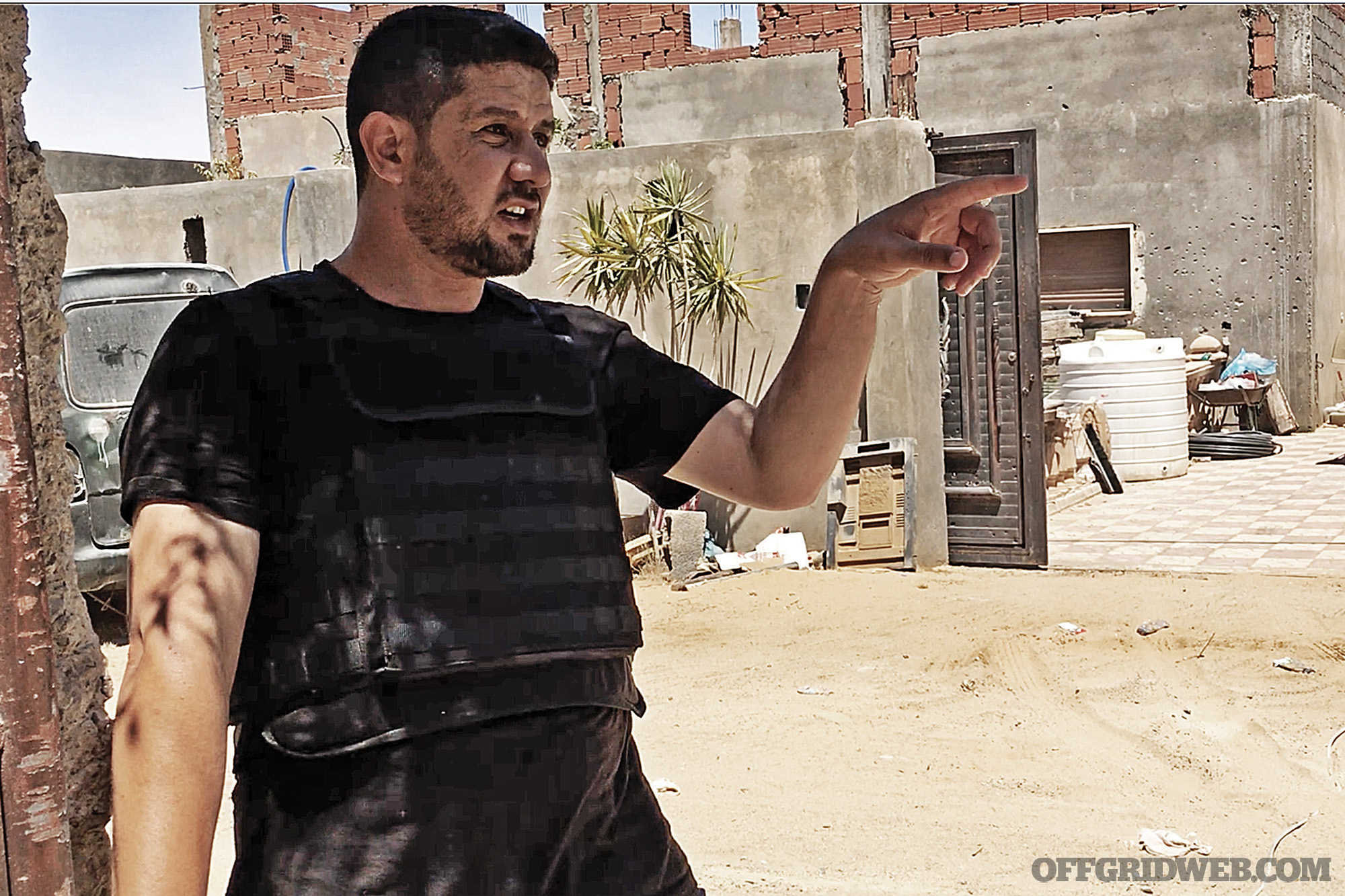
Above: Hussam Elbakoush, of the Libyan Counter Terrorism unit points out a mortar hit.
China’s Drone Industry
Haftar’s Libyan National Army (LNA) attacked Tripoli on April 4, 2019, and part of his arsenal included UAE-supplied Chengdu Pterodactyl II Wing Loong drones.
The medium-altitude long-endurance drones like the Wing Loong impart an impersonal feeling of Russian roulette to combat. Add to that Haftar’s hired mercenaries from Darfur and Russia and we’re in a new kind of soulless war — one where the combatants aren’t quite sure who’s killing them and those doing the killing aren’t quite sure who they’re killing. A perfect proxy war.
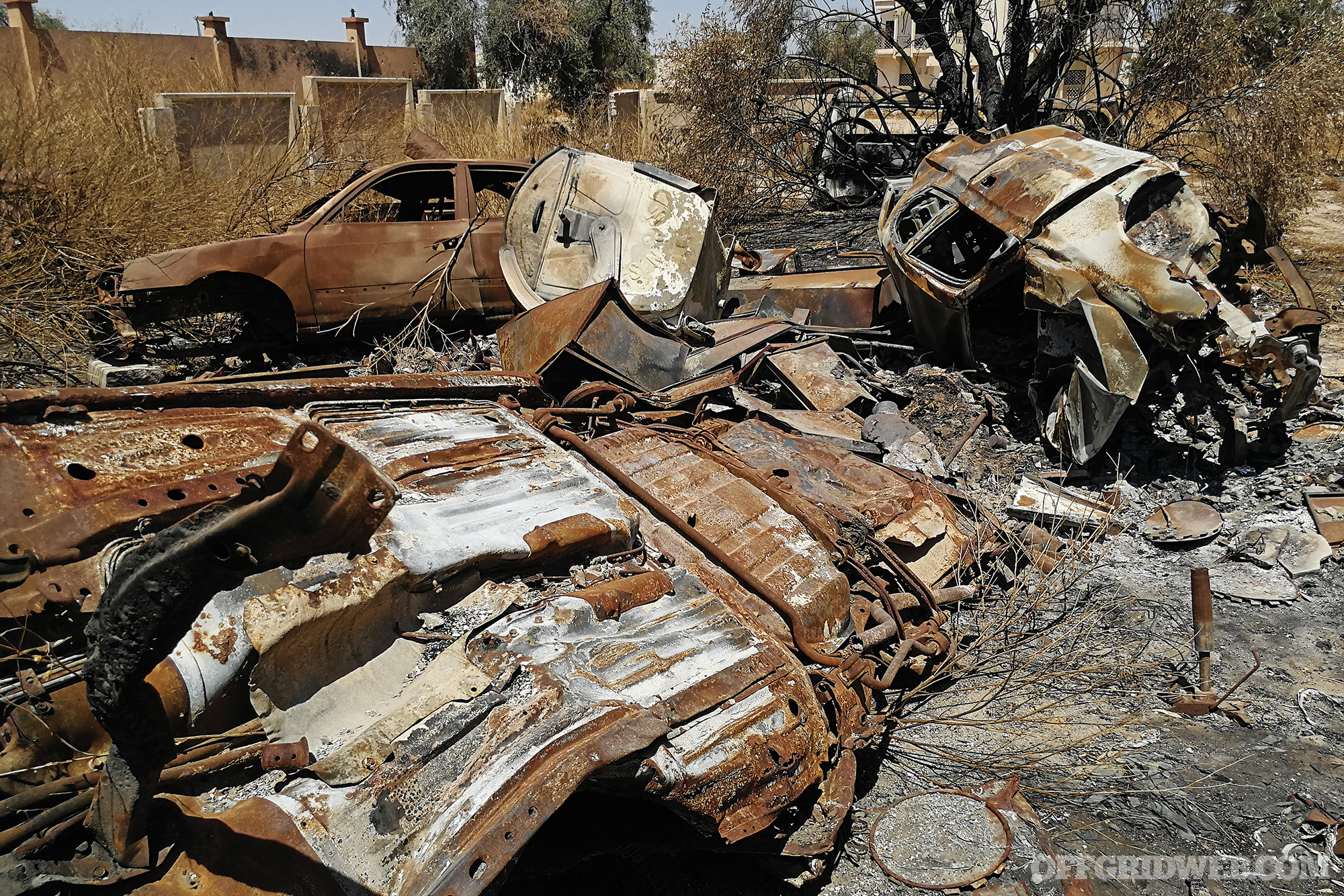
Above: LNA airstrikes on hospitals are common. This bomb missed and hit a yard of impounded cars.
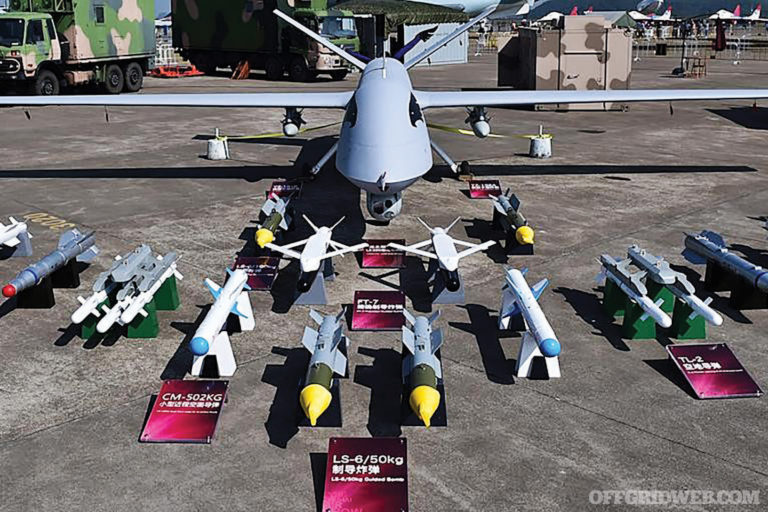
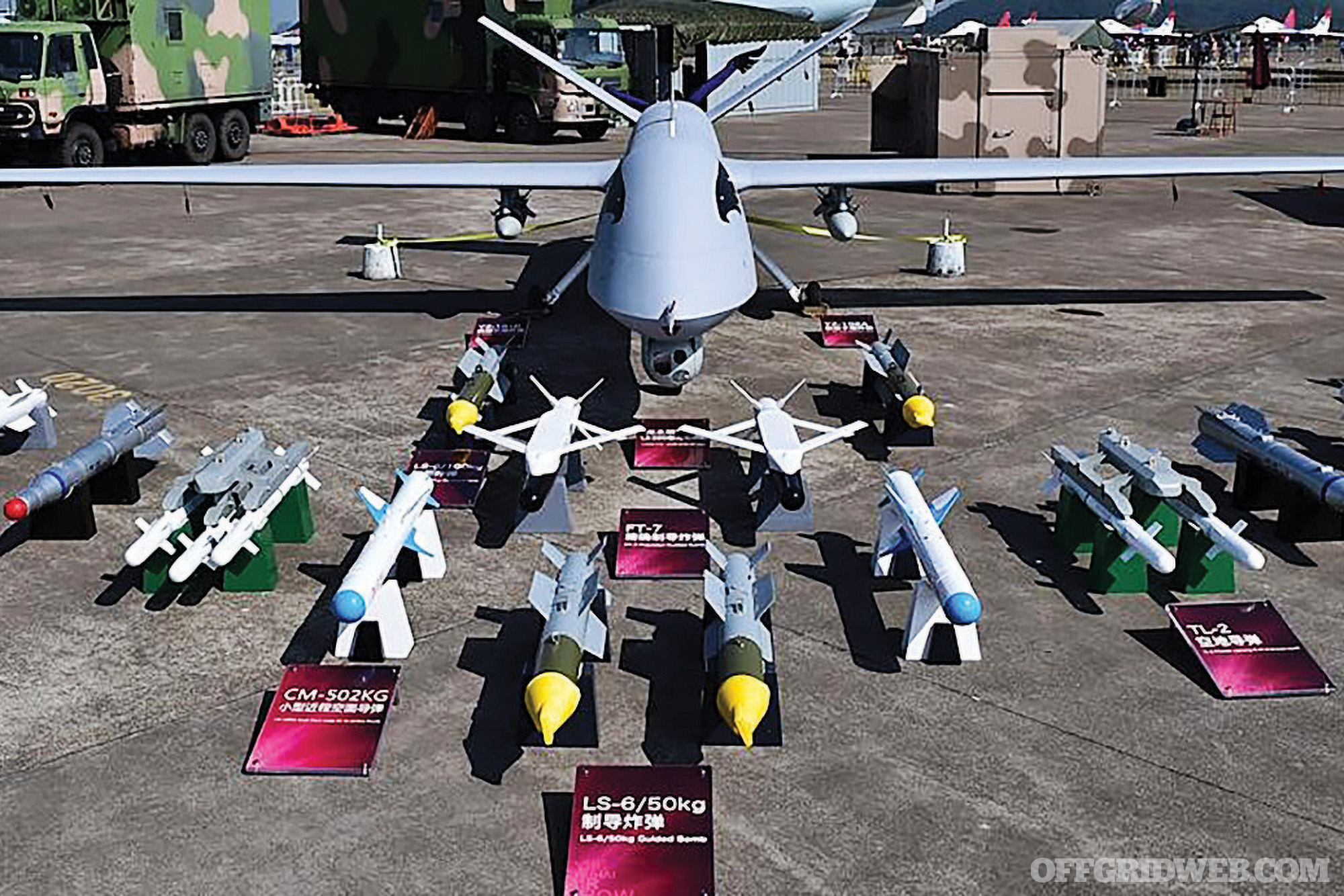
The Wing Loong combat drones can fire eight Blue Arrow anti-tank missiles but are used against everything from pickups to civilians. They’re unabashed knockoffs of the American-made MQ-1 Predator and MQ-9 Reaper drones. At $1 million versus the $16 million price tag for the real thing, the Chinese (and countries like the UAE who “gift” them to Haftar) have made them very popular in dirty wars. The Stockholm International Peace Research Institute (SIPRI) estimates China sold 163 large, lethal UAVs to 13 countries between 2008 to 2018. But right now my driver and I are just worried about one.
The Wing Loong can fly at an altitude of around 5,000 feet for 20 hours. Their single 100-horsepower turbocharged engines sound a lot like lawn care equipment, only changing in pitch when they bleed altitude to fire. Right now, Haftar’s drone is searching above us for targets. The drone operator appears to get bored and moves off to surveil another front line.
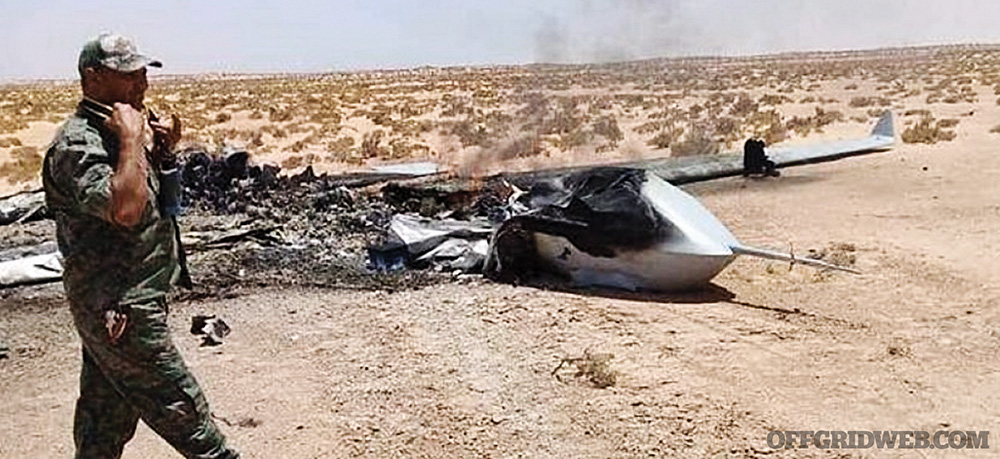
Above: At only a million dollars a copy compared to $14 million for U.S. versions, Chinese drones are cheap. Photo: Government of Libya
Another mortar hits one street over and interrupts our scan of the sky. We’re now focused on winding through back alleys, across yards, and through broken walls to get to our front line position. We engage in small talk while keeping an eye out for snipers.
Hussam has been to America, “Chicago, Indiana, and New York,” he exclaims proudly. “The people. They are so perfect. So kind.”
A War in the Suburbs
Above: The Arch of Marcus Aurelius, built in 165 AD, is a reminder of Libya’s historic links to Europe. The front lines are only 20 minutes away.
Hussam Elbakoush is a member of the Libyan Counter-Terrorism group. Not to be confused with the radical Islamist anti-terrorism police called RADA or the hundreds of militias who augment the official military in Libya. The GNA in Tripoli is propped up by RADA, the Tripoli Revolutionaries Battalion, the Nawasi Battalion, and the Abu Slim unit of the Central Security Apparatus. The GNA actually buys its munitions from the Katibas or militias because even the official government is covered by the blanket UN Arms Embargo — which makes one wonder how this war continues with new, high-tech weapons.
The front lines at Ain Zara are a suburban neighborhood of freshly abandoned homes with small cinder block-walled yards. The nicely stuccoed homes are pocked with munition splatters and gouges and separated by orchards and sand.
Then, the buzzing is back. Like the kind of noise that pisses off rich people when the gardener shows up on Sunday. The drone is here. We scan the sky, but the glaring sun makes it hard to get a fix. Another mortar drops, this time about 100 yards away.
Above: Right: Two IL-76 taken out at al Jufra air base by Turkish drones.
Inside the house are half a dozen young fighters with various bits and pieces of uniforms. They have a sniper on the roof and keep their radios handy. The mortars are making them a little nervous. I tell them drones can target them by their cell phone and radio transmissions. They look at each other sheepishly. The idea of turning off your smartphone is silly. It’s their lifeline to the outside world. A place that pours psyops into their head while they keep in constant touch with friends and family, which also becomes a rich source of intel for real-time targeting.
Regardless, I suggest they shut off their phones. Then, of course, a ring tone emits from one of the fighter’s phones.
Above: If you know what to look for, you can find fresh meat.
Proxy Partners
Libya is one of the most developed nations in Africa, and it’s hard to understand why only 6 million Libyans can’t live comfortably off the shared oil revenue.
Peace and elections were something that seemed feasible until a 75-year-old American named Khalifa Haftar convinced the Emirati and Saudi rulers he could seize the capital of Tripoli and take control of the nation.
Flight records show that in early 2015, Haftar and crew were hopping between Tobruk, Egypt, UAE, and Saudi Arabia via a Malta-based Cessna Citation 550 9H-PAL (chassis number 550-0932) owned by Erik Prince’s Frontier Services Group. The goal was for the UAE to socialize the Qaddafist, former POW and ex-CIA asset as a potential strong man to take over Libya. This coincided with a February 2015 profile piece in the New Yorker by Jon Lee Anderson and an infusion of cash.
Above: The Chinese-made AVIC Wing Loong II drone is the poor man’s Reaper. Photo courtesy AVIC
It worked, and on March 2, Haftar was chosen to lead the LNA.
According to an intel officer from a wealthy Arab nation, Haftar asked the King of Saudi Arabia for a billion dollars to fight the war. The King said, half a billion will have to do. Waiting in his private jet, Haftar discovered that the $500 million had already shrunk to $350 million. Haftar wisely sent $300 million to Jordan with his two adult sons, Khalid and Saddam, to stash and tried to pay off the militias with only $50 million. So on April 5, 2019, Haftar and his forces attacked Tripoli … and surprise … it didn’t work. Some of Haftar’s overconfident forces led by Khalid weren’t only captured en masse, but met fierce resistance in South Tripoli from the very militias that were supposed to conveniently give up and hand the city over. Haftar was stuck. Since then, the LNA has ringed the south, east, and west of Tripoli and been stuck in a war of over-gunned Toyota technicals, badly trained militias, and drones.
Above: China’s best-selling aircraft is a lethal combat drone. Photo courtesy AVIC
The American Who Wants to Control Libya
In between interviews and trips to the front lines, I stay in the posh, eight-story Victoria Hotel. From my favorite evening table on the roof, the city of 2 million seems normal. Sort of. Tripoli is suffering from electricity and water cutoffs but stays illuminated by pools of light provided by hundreds of generators purring in the cool evening. People sit in groups, their faces glowing by the light of their smartphones. Trash sits uncollected, and Tripoli looks tired, but the citizens are defiant. To them, Haftar is an interloper, a mercenary who is well past retirement age, but someone who hasn’t been in Libya since he couldn’t find a role in the 2011 revolution and whose last official military job for Libya was being held as a prisoner of war by Chad in the late ’80s. You won’t find many Haftar supporters on the streets of Tripoli, if any.
Haftar’s forces had just fled the city of Gharyan a few miles south. Although I tried to drive in, I was sent back by militias due to the drone threat.
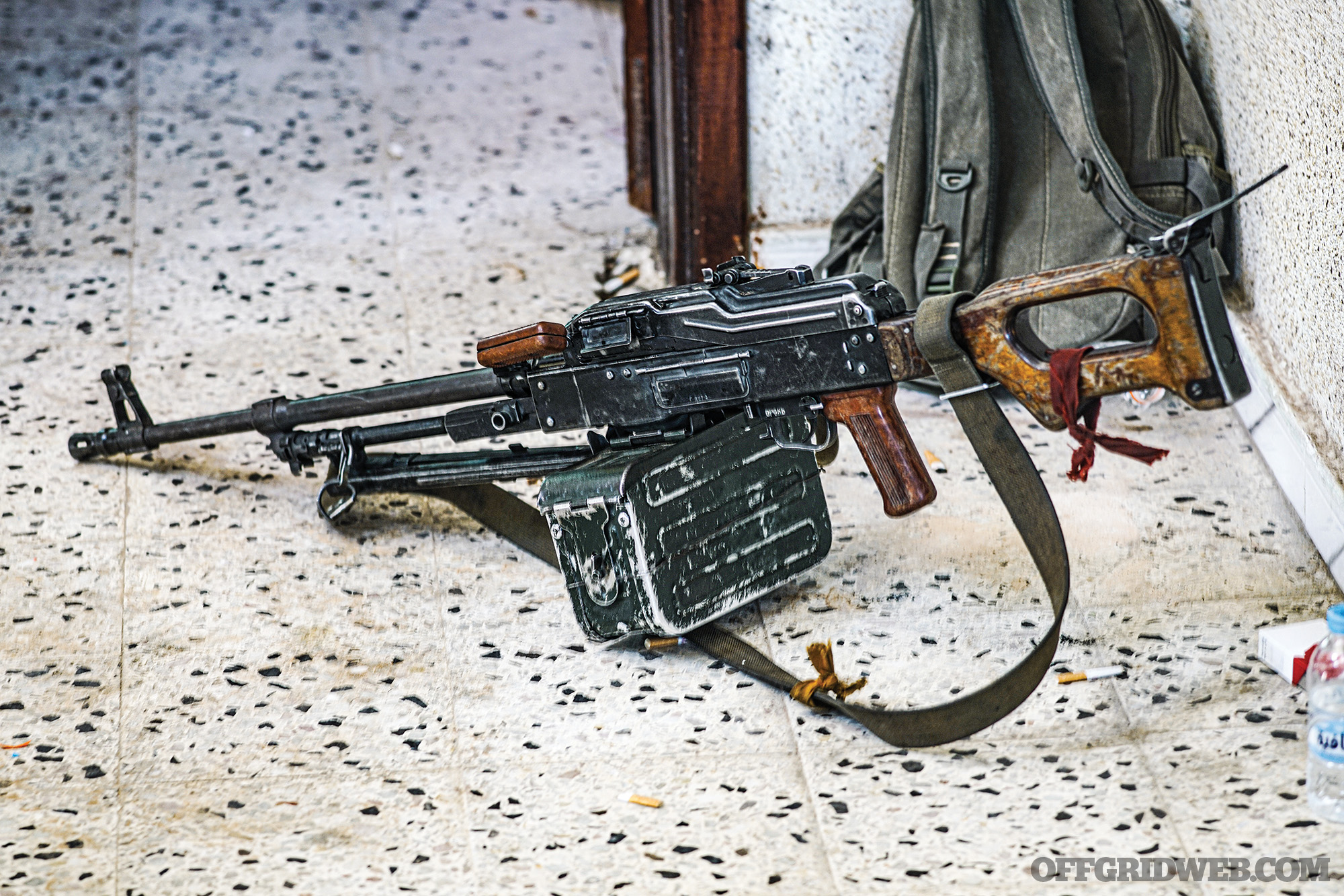
Above: The Pulemyot Kalashnikova, or PKM, is the favorite weapon on the front lines.
Instead, Gharyan Mayor Yousef Ibderi came to see me. We met on my hotel rooftop to explain how they flushed Haftar’s forces out. The young mayor tells me that after the LNA offensive was stalled, they set up their operations base in his town. So he organized a rebellion. Soon 80 men with their own weapons synchronized early in the morning and expelled the LNA.
“We just kept shooting at Haftar’s men until they fled in terror,” Ibderi recalls. Seems like the minuteman concept still works in Libya and is perhaps an omen of what would happen if the LNA and Haftar make it to Tripoli.
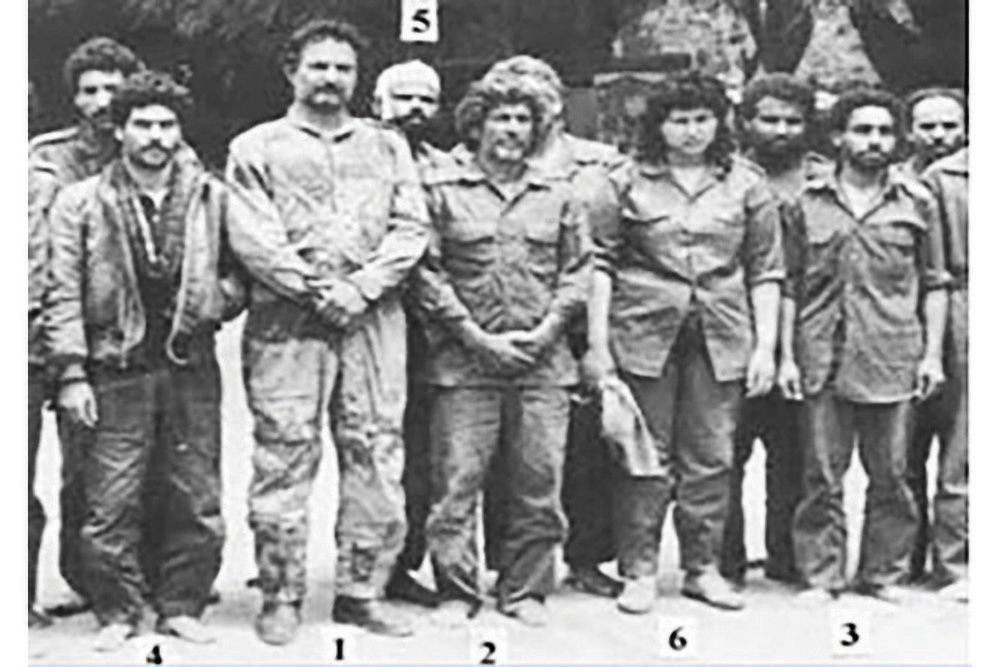
Above: In 1987, Colonel Khalifa Haftar and his massive army base at Wadi Doum were overrun in Chad. He was trained by the CIA to overthrow his friend Qaddafi. After some downtime in the DC suburbs, and with a little help and a lot of money from Arab kingdoms, he’s back. Photo: Government of Chad
Haftar isn’t one for hearts and minds. The hawk-faced resident of Falls Church, Virginia, turned-Libyan “Field Marshall” incessantly announces via social media that it’s “Zero Hour” for Tripoli. He makes these proclamations from his tiny bunker in Marj and his public relations spokesman, former actor and poet Colonel Ahmed al-Mismari, does his best impression of Baghdad Bob. There’s no Zero Hour, Tripoli isn’t falling, and Haftar isn’t winning. But, then again, neither is the GNA, crippled by the UN Arms embargo. Even the recent attempt by Turkey and Russia to broker peace talks ended up with Haftar storming out of Moscow because he was kept waiting. Nobody wins these kind of wars.
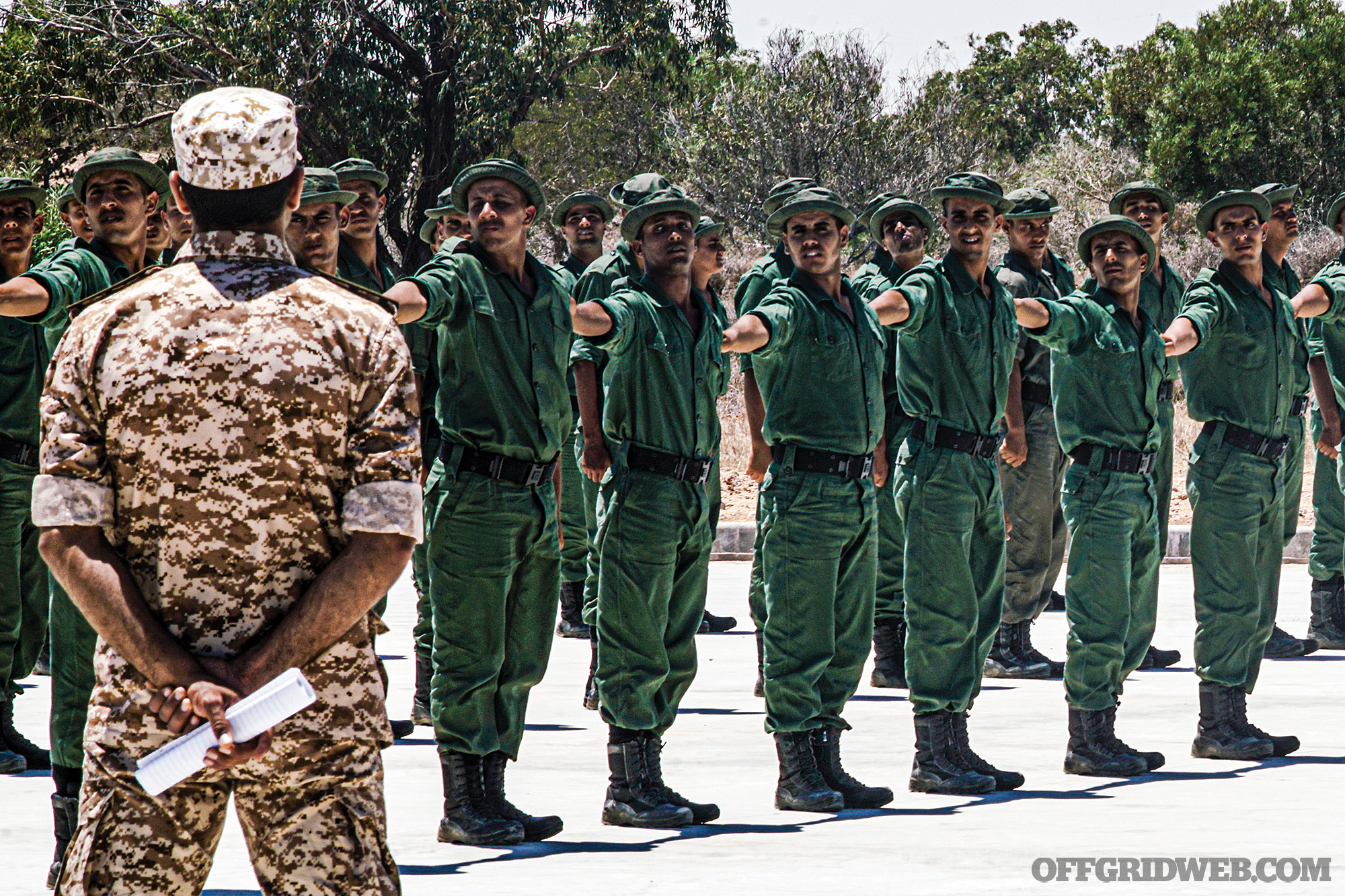
Above: Libya is slowly trying to rebuild their army, but for now, militias who fought the military in the 2011 revolution hold sway.
The reality is that life still goes on in Tripoli. Watching the deep red moon rising over the bay of Tripoli, suddenly explosions boom and echo through the dark streets, sending showers of sparks. It’s a war journalist’s dream come true — not even spilling your drink while covering the fight close up. But no, it’s not the long-awaited final “Zero Hour” attack on Tripoli, but rather badly aimed fireworks celebrating the Algerian soccer team’s victory in the African Cup. Perception and manipulation via social media is a big part of this war, as smartphones are the lifelines and major news coverage is rare.
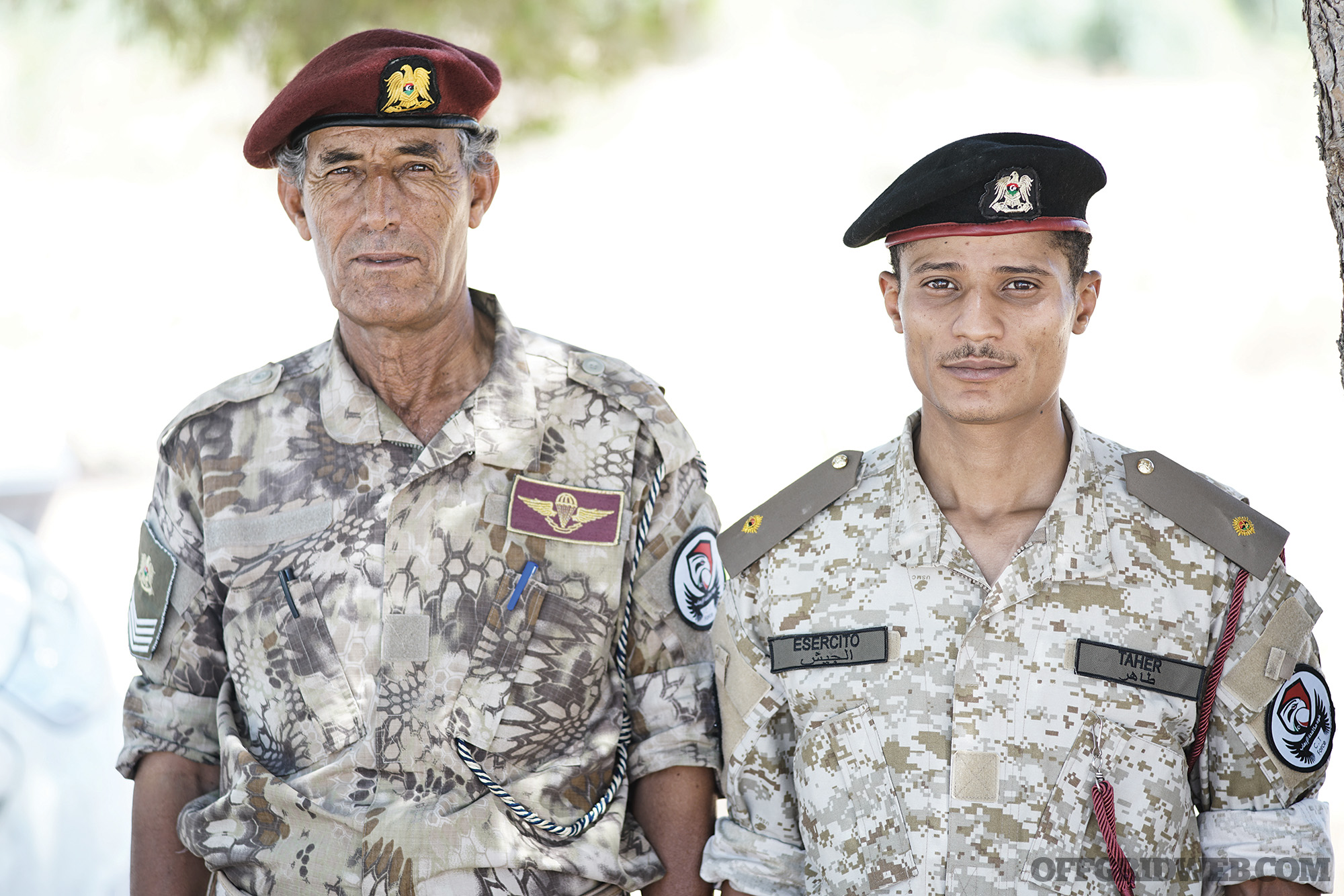
Above: Some of the old guard pass on skills to the new, but Chinese drones, UAE psyops, and electronic warfare are new to the Tripoli front lines.
The Nine-to-Five War
Despite the war, there’s no shortage of hospitality and conversation in Tripoli.
Above: Saudi Arabia’s King Salman bin Abdulaziz meets with Libyan military commander Khalifa Haftar in Riyadh, Saudi Arabia March 27, 2019, a week before Haftar attacked Tripoli. Photo: Saudi Press Agency
Retired military Colonel Suliman Sulewehi invites me out for a seaside lunch of freshly caught fish. After picking out our catch, he tells me, “This is a brother’s war.” Libyans are fighting Libyans at the behest of outsiders like the UAE and Saudi Arabia. He takes me through the history of Libya and interlopers. The Arabs, Knights of Malta, Ottomans, and Italians. “They were all kicked out,” he insists. Now he believes the old colonial powers and Arabs from the east want back in. He describes France’s role as “mischievous” supplying weapons while holding peace talks. “The Arabs (meaning the Emiratis, Saudis, and Egyptians) do not want stability.” He believes Libya is the rightful gateway to Africa, not the UAE. He takes me out to the front lines in Salluhudin, which is a surprisingly short ride as the traffic thins down to nothing. Suddenly, we’re the only people inside a military base.
rpt
Above: Mayor of Gharyan Yousef Ibderi explains how the townspeople forced Haftar’s forces out in eight hours.
Sulewehi says he helps support a small katiba of 145 men and 20 vehicles. They’re holding the line near Salluhudin, about 1,000 meters from Haftar’s army. He admits it’s hard. “Haftar fighters get paid more money, 2,000 dinars compared to only 1,000 dinars for his people.”
“They have little training, they know little of tactics,” he continues. It’s an odd irony that both sides are paid by the Libyan government, but it’s a reminder that Libyans see themselves as a single nation, however divisive their politics are.
The commander is a man in his 50s who was once involved in embassy security. He tells me his men need uniforms, rifles, and ballistic vests. He’s most concerned about the UAE-supplied drones.
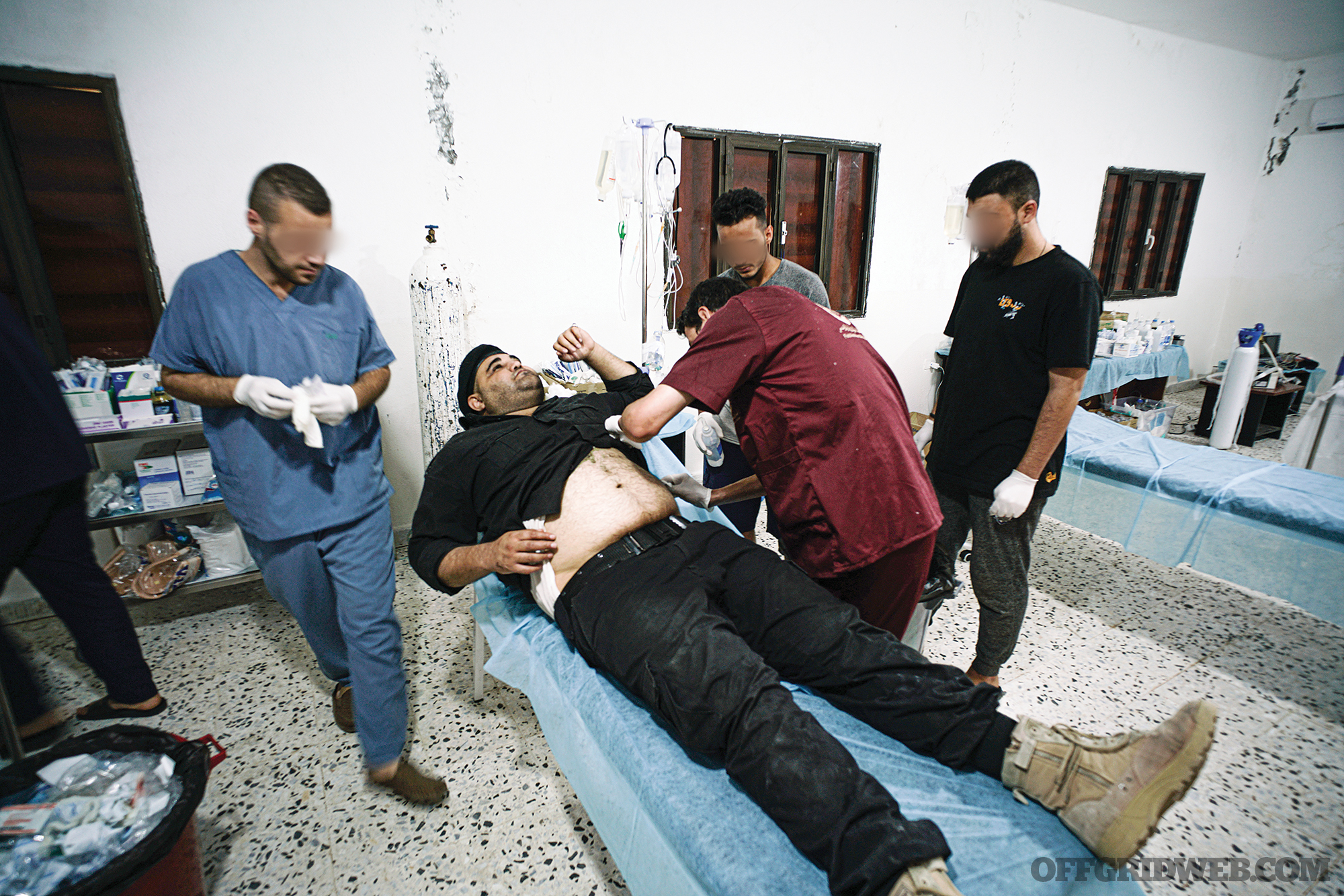
Above: Medics and doctors are routinely targeted by drone operators and in direct attacks.
“They are up every day and strike randomly at soldiers or medics,” he tells me. That day, the drones followed an injured fighter they had just hit until their vehicle arrived at a field hospital. When the medics came out with a gurney, the LNA drone operator fired again, killing two doctors.
The commander has no idea how to deal with drones except to hide their vehicles and spread them out. I ask if Libyans or Emiratis are deciding on targets. Without hesitation he says, “Libyans.” Why? “Because they are assholes and will shoot at anything.”
A Mortar Send-off
Above: Guided by a drone operator, another mortar hits outside our house.
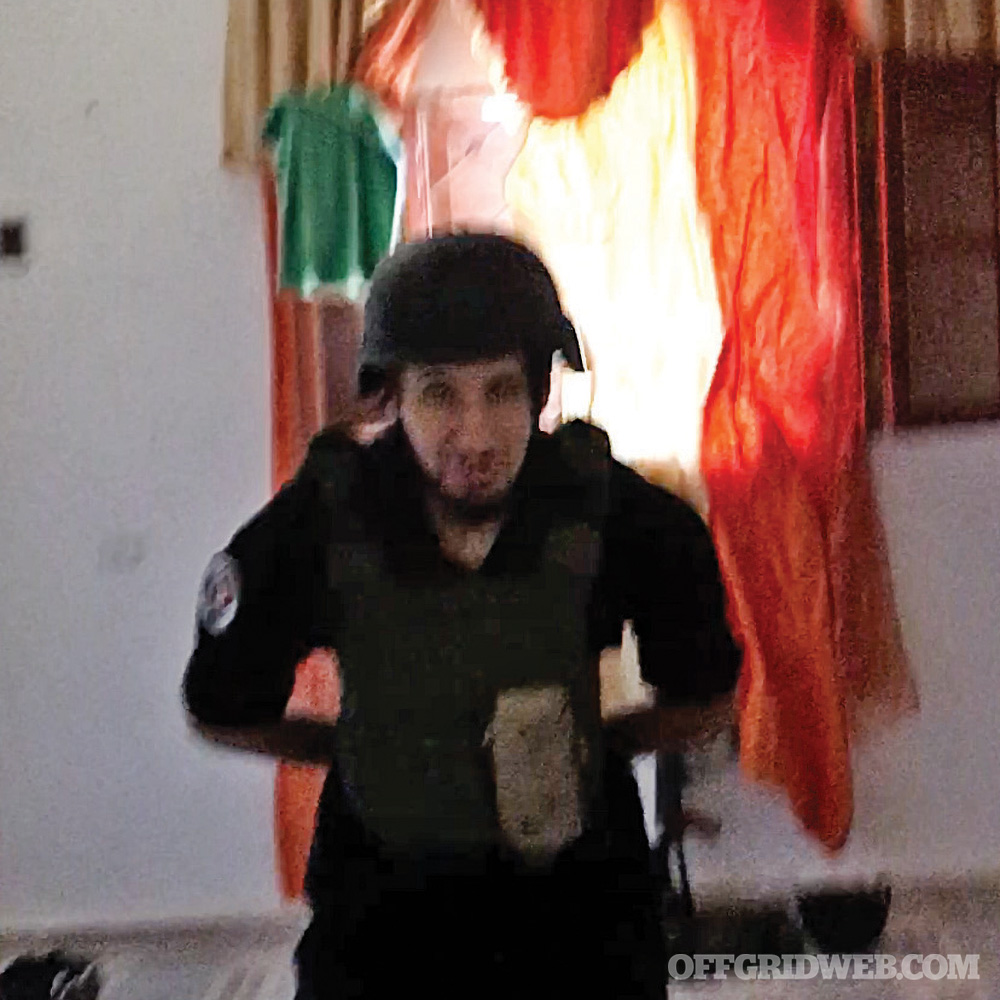
It’s my last day in Libya and I have to catch a plane in the afternoon, so I spend the morning out on yet another front line. This time I’m being bracketed with mortars and watched by drones with Hussam Elbakoush. Everyone in the house is now in agreement with my thesis that the enemy is methodically moving each mortar strike slowly toward our house. Since spotters can’t see us, I figure they’re using a drone to target us. When another mortar lands on the street he motions me outside to the gate to take a photo. BAM. They almost get him with a quick mortar that lands on the street. Back inside, it’s clear someone is watching us. Hussam suggests everyone get in the kitchen on the floor where there’s an another story above. The window is blown out, and I realize that one of the perils of being with fighting groups is that you have to go with the flow — even if they have about 20 less years on the front lines than you and they don’t have to catch a plane in a few hours. Then, as I take a photo of a soldier walking in, BAM — the curtains blow in with a cloud of dust.
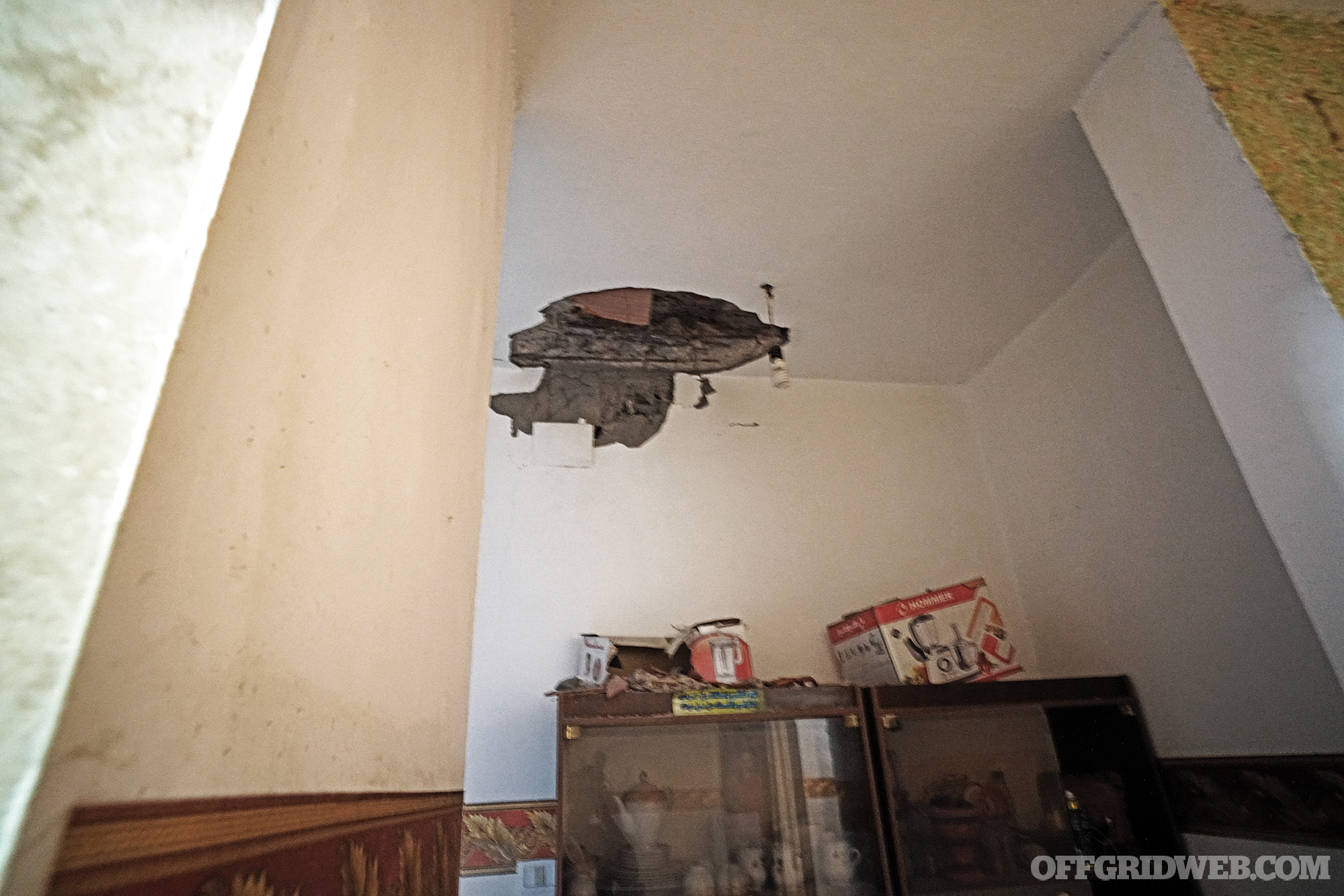
Above: After bracketing our position for hours, the LNA finally got us with an 82mm mortar round dead center.
I decide to go to the center of the house, where the added strength of walls provide the most protection. As I step behind the wall, BANG — the money shot. Right in the living room. Sprayed by plaster and coughing up dust, the soldiers finally decide we should leave. After dropping off the wounded, I catch my scheduled plane to Tunis. That night I’m at the upscale Villa Didon drinking an ice-cold Amstel overlooking the Mediterranean and the ancient city of Carthage. The news says the airport I flew out on was hit by a drone strike 90 minutes after my flight took off. F*ck drones. I order another beer.
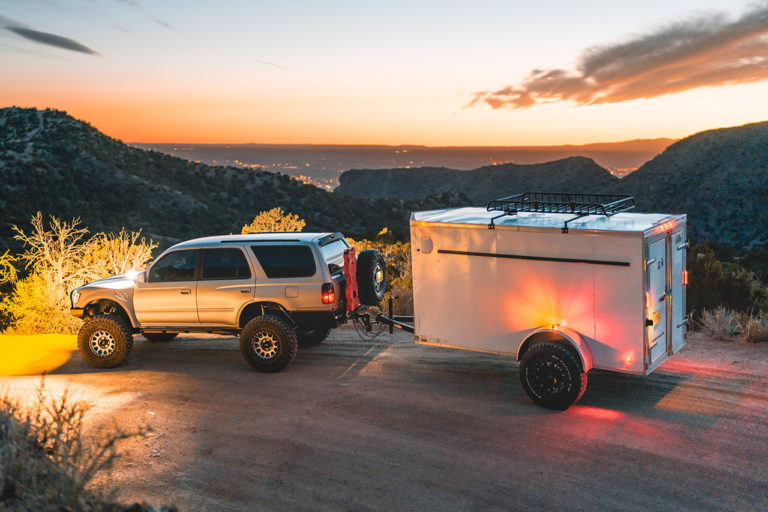
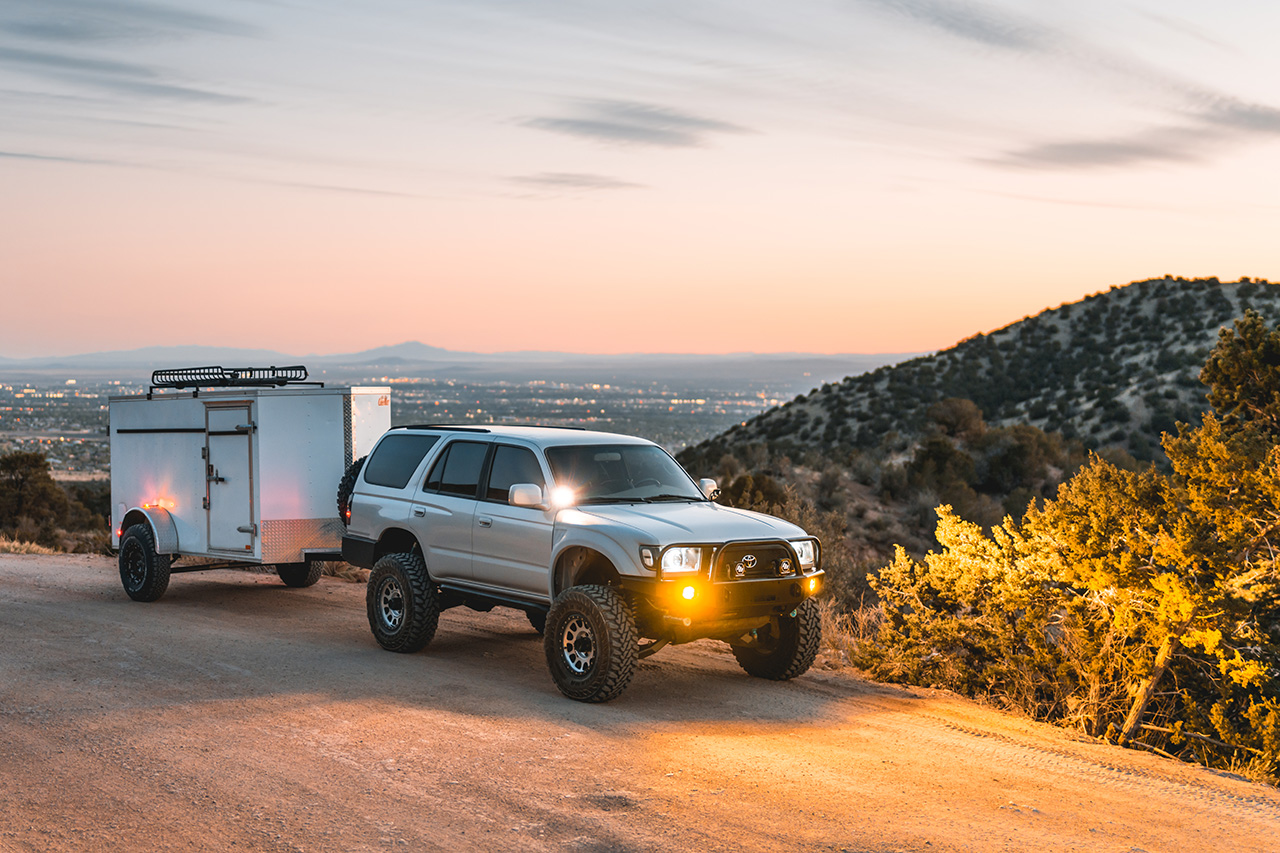
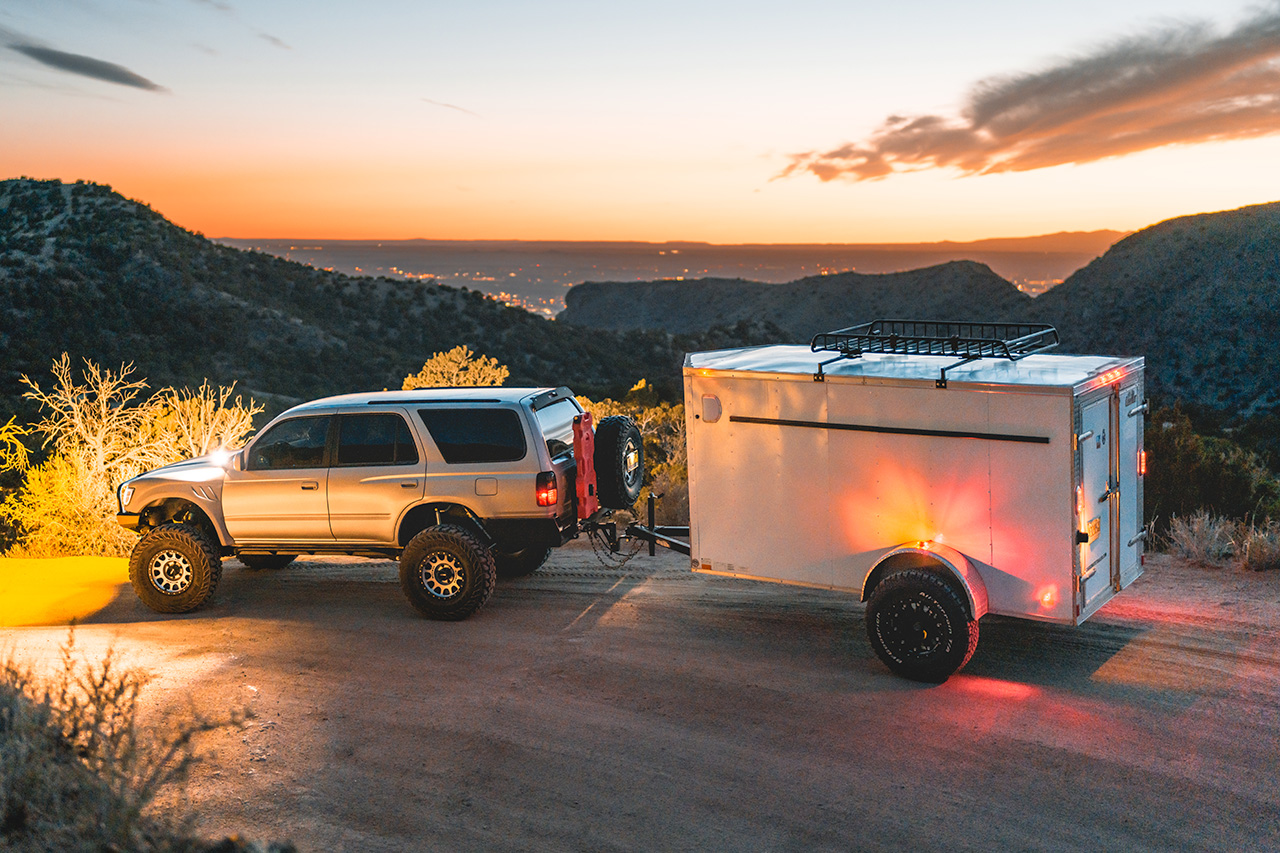
Overlanding is a lot of fun, but it can also be expensive. Whether you’re getting into it as a hobby or you’re looking for practical improvements to your vehicle’s emergency preparedness, the costs add up quickly. First there’s the vehicle itself — ideally, you’ll want something with four-wheel-drive, high clearance, and a reliable drivetrain (like our Toyota 4Runner). Then there are the inevitable upgrades, ranging from basics such as better tires and a mobile radio through long-travel suspension, solar power systems, and fancy rooftop tents. For longer expeditions, many overlanders add a trailer with more spacious sleeping quarters, a camp kitchen, and storage space for supplies. Purpose-built overland or off-road-capable trailers can easily cost $30,000 or even $40,000. For those who can’t shell out that kind of cash, Steelhouse Fabrication has developed a series of upgrades that can convert an inexpensive, multipurpose cargo trailer into a stealthy overland trailer setup.
Some of you may already own small cargo trailers for work or for hauling dirt bikes and other gear. Even if you don’t, a basic 6-foot by 12-foot V-nose enclosed cargo trailer should set you back about $4,000. You might even be able to find a lightly used one for less than that. These cargo trailers are also lightweight — about 1,500 pounds empty and 2,500 pounds fully-outfitted — so you shouldn’t need a big V8 or diesel rig to tow them. Since you’ll be going off the beaten path, reduced weight also means improved maneuverability on the trails.
Once you’ve got your trailer, you’ll need to install two 10-foot sections of E-track on the interior walls (you can DIY it or have a trailer dealership to do it for you). These will be installed 32 inches and/or 14 inches up from the floor, depending on the Steelhouse Fabrication modules you select.
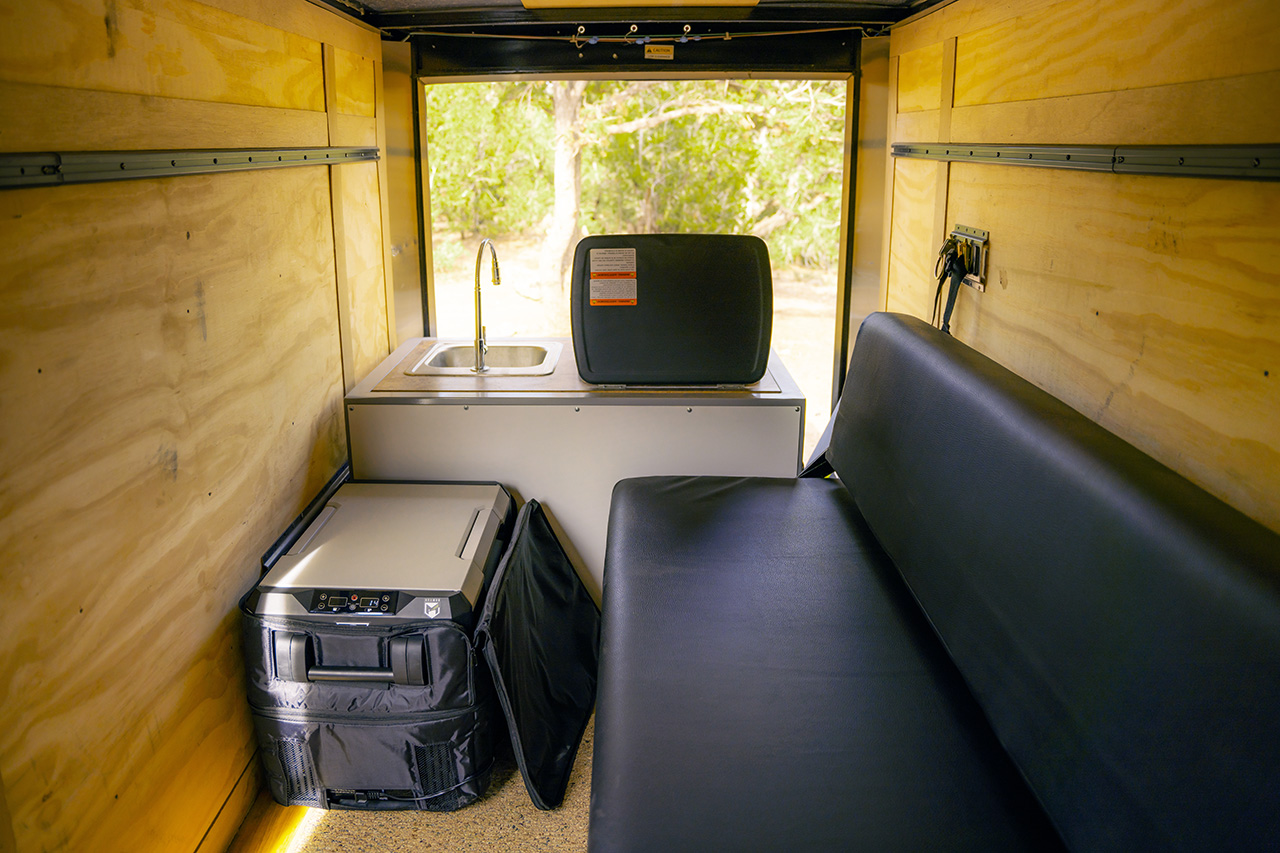
Next, you can browse through Steelhouse Fabrication’s list of modules to pick a sleeping setup and kitchen that fits your needs and budget. For the former category, there’s a basic sofa sleeper that folds against the wall or a four-seat dinette sleeper configuration.
Above: The front of this trailer contains a fold-out sleeper sofa with plenty of room for a fridge (powered by the kitchen module’s onboard battery) and other cargo.
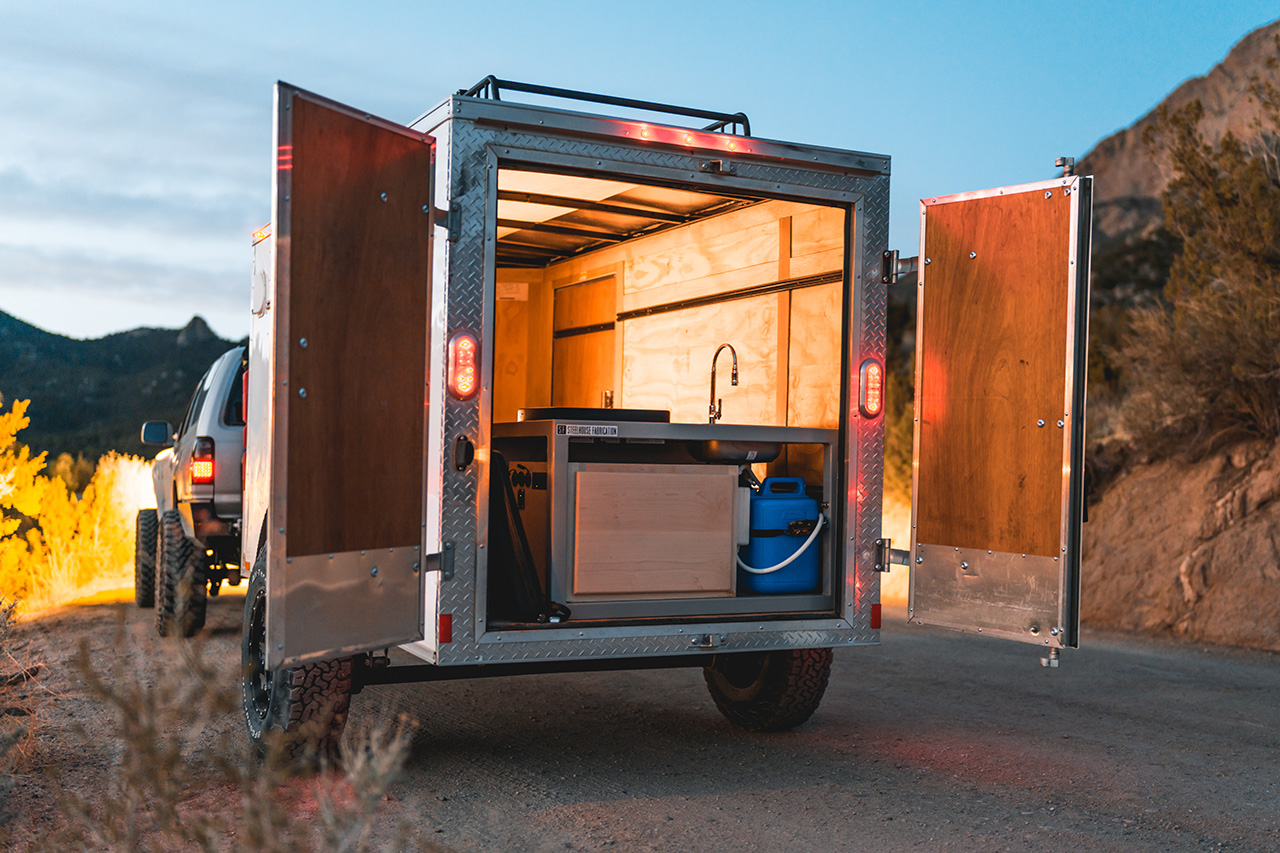
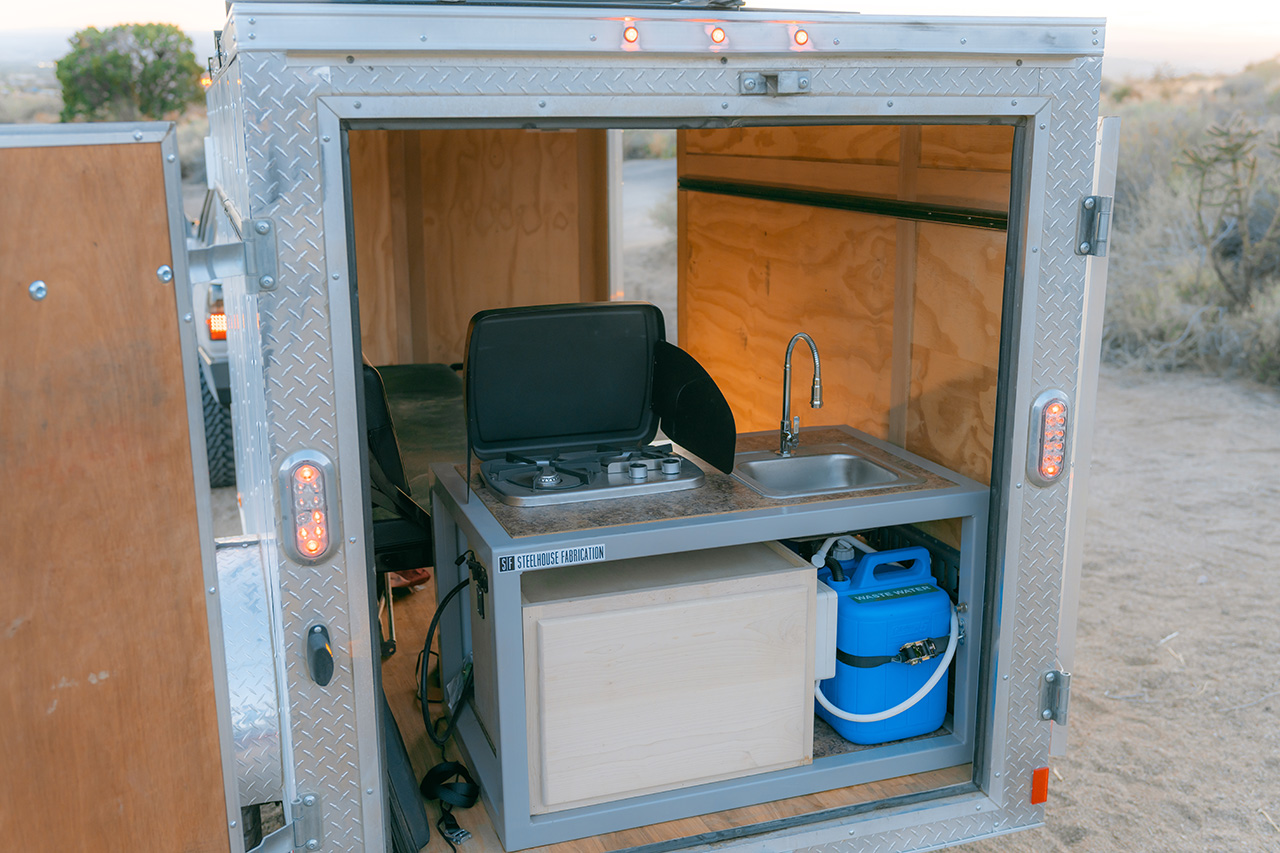
The kitchen modules are completely self-contained and removable — just load one into the trailer, lock it onto the E-track with the included hardware, and go. They feature various options including a two-burner propane stove, stainless sink with 5-gallon fresh water and 5-gallon grey water tanks, and an onboard power system that includes a 90-watt solar panel, 105-amp-hour battery, and 1,500-watt inverter (the latter two items are enclosed neatly in a cabinet). The Steelhouse Fabrication Culinary and Culinary Pro modules come with a 6-foot-tall back panel with shelving, LED lighting, and a nice-looking backsplash.
Steelhouse Fabrication will ship its modules directly to your house on pallets. With a Dinette Sleeper ($700), Culinary Pro Module ($3,300), and a cargo trailer of your choice (about $4,000), you can end up with an overland-capable trailer for about $8,000. Since the Steelhouse modules are fully removable, you can always leave them in your garage and convert your trailer back to cargo-hauling configuration as needed, so you’re not losing any practicality.
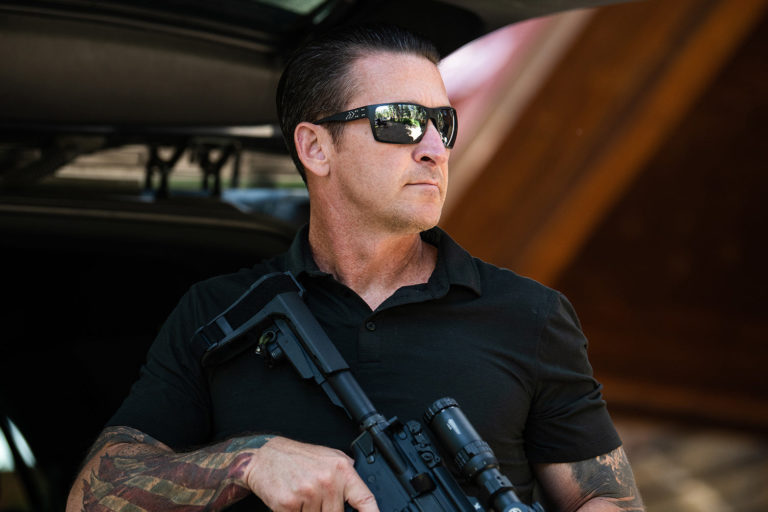
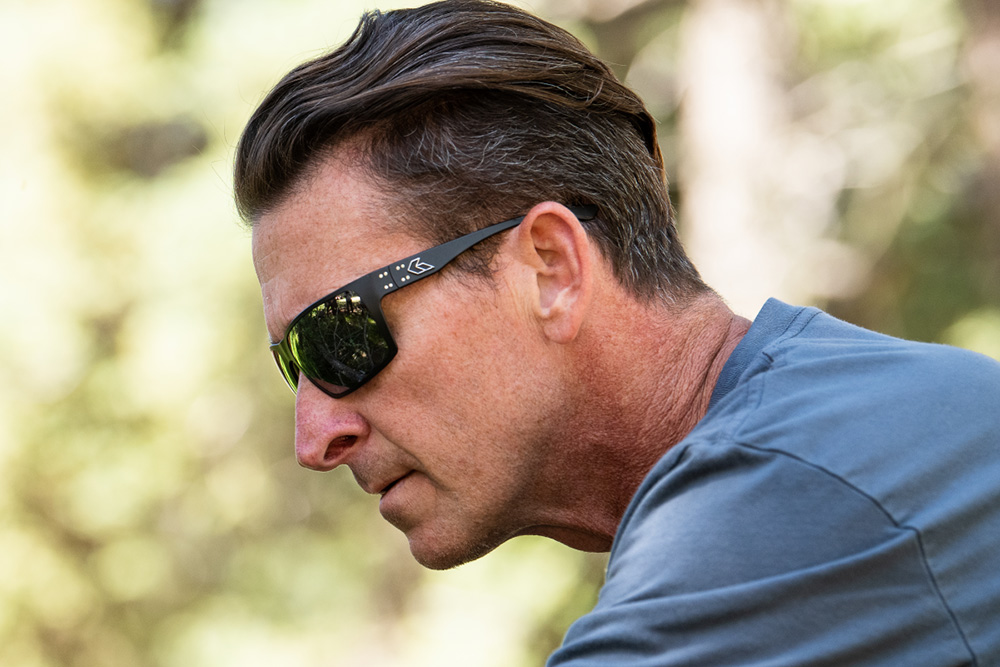
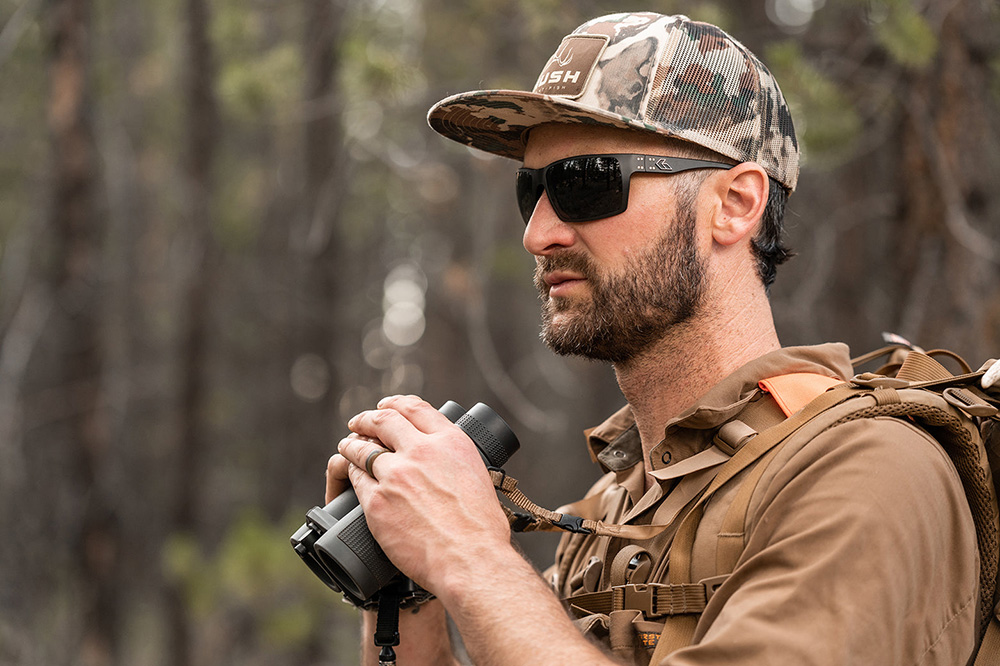
Your eyes are one of your most valuable assets, both on a daily basis and during an emergency scenario. However, they’re also fragile — anyone who has dealt with an eye injury, infection, or dust-induced irritation can attest to how debilitating it is to suddenly lose vision. So, just as we wear ear protection to protect our hearing at the shooting range, we should also seek out quality glasses to protect our eyes. Wraparound glasses with an ANSI Z87.1 eye protection rating are a good place to start. Gatorz Eyewear recently unveiled a new model called the Gatorz Marauder that ticks both of these boxes, and then some.
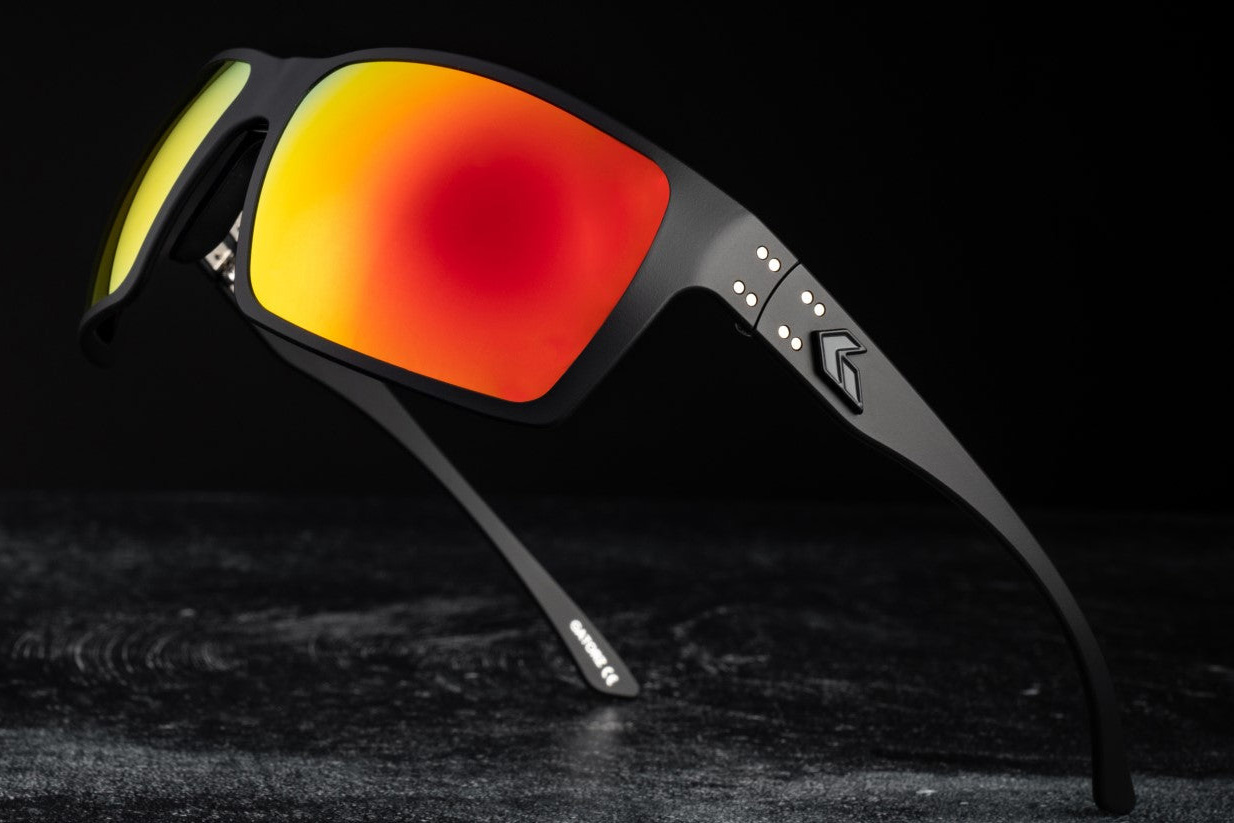
Like many Gatorz models, the Marauder is built from CNC-machined aluminum, with four hinges attached via stainless steel rivets. The center frame width, silicone nosepiece, and and temples are all bendable and adjustable for a comfortable fit. Gatorz notes that the Marauder has the thinnest temples of any of its ballistic eyewear — this offers much of the protection of a full-thickness wraparound design, but with reduced weight and enhanced peripheral awareness.
The frames are finished in black Cerakote, with an optional Blackout logo on certain styles.
Three categories of the Gatorz Marauder are available:
Non-Polarized – $160 MSRP
Polarized – $210 MSRP
ANSI/Milspec – $250 MSRP
The first two offer wraparound protection from dust, debris, and glare, but the ANSI/Milspec variant adds Z87.1 lenses that resist extreme impacts. All variants include anti-fog and scratch-resistant coatings. Lens color options range from plain black and clear to Silver, Gold, Blue, Green, and Sunburst mirror polarized (pictured above).
For more information on the new Gatorz Marauder, go to Gatorz.com.
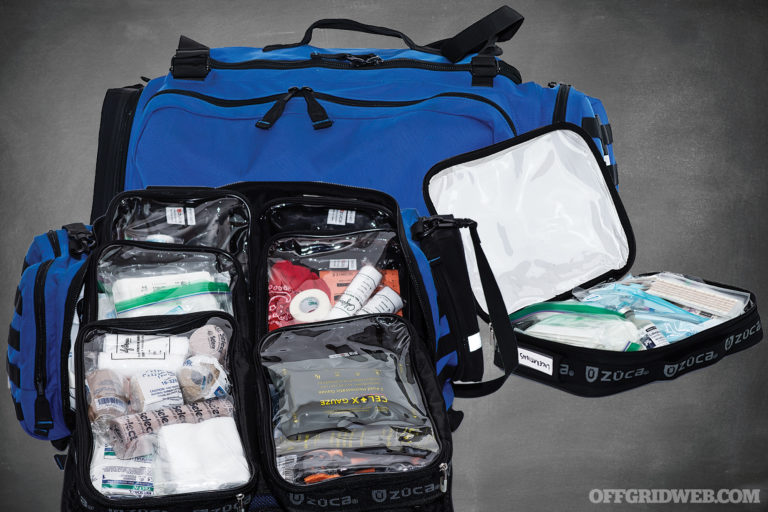
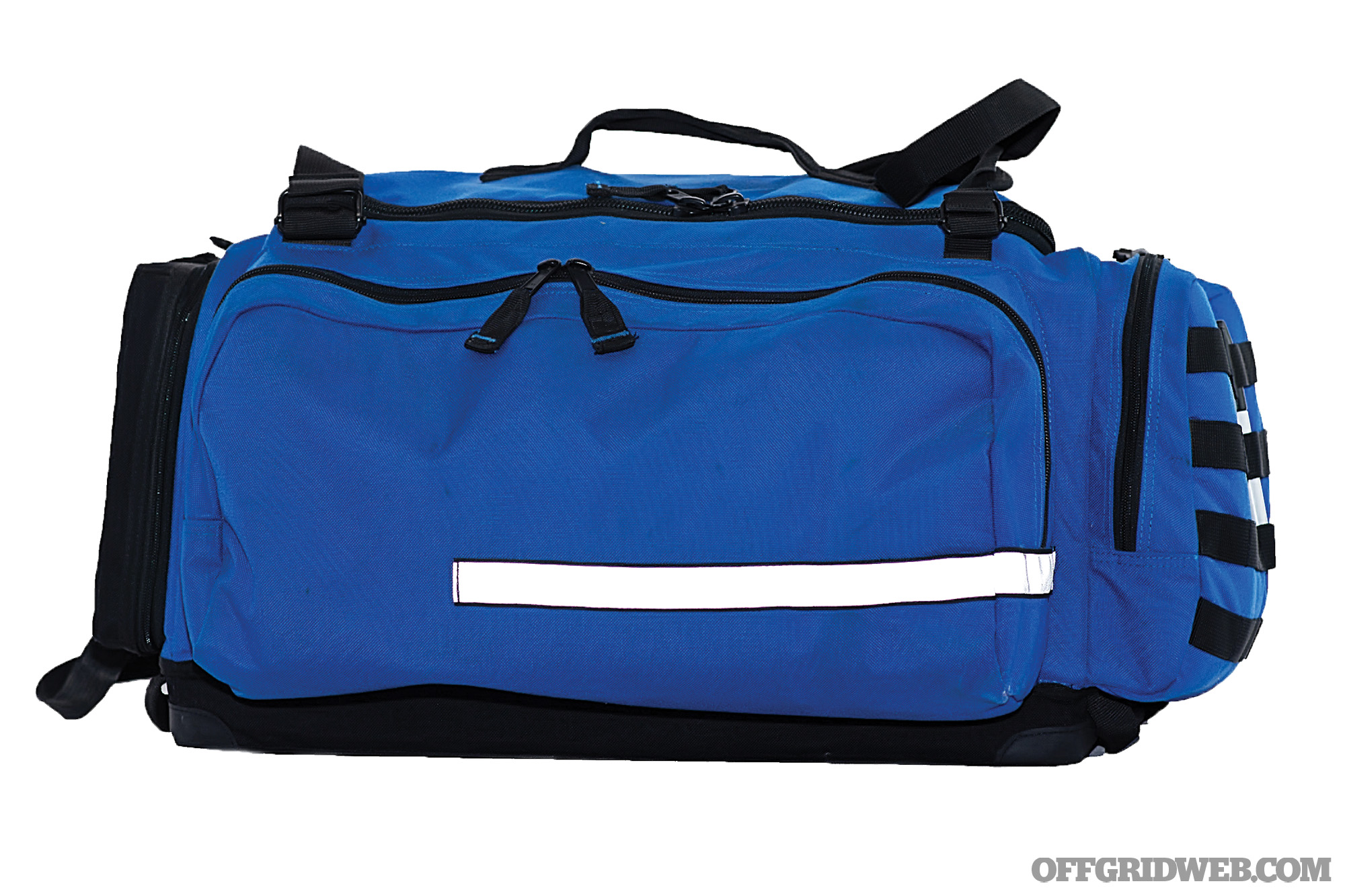
As a medical provider, I feel the need to carry the tools of my trade. From a first aid kit to my trauma kit to my truck bag, I think I have the right tools for the mission. Sometimes I’m called upon to place a bandage on an abrasion at the peewee baseball game; other times, I need to have my trauma kit ready at the range (especially when the guy next to me has his favorite new pistol blow up in his hands). Although it’s impossible to have every tool for every incident, I can always improvise with the tools I have in this bag. This article will cover my 5.11 Tactical Responder ALS medical/truck bag that travels with me everywhere my vehicle goes. The exact bag I have is no longer available through 5.11 Tactical, although the company now offers a somewhat smaller 50-liter ALS/BLS Duffel Bag.
The 5.11 Tactical Responder ALS Bag
Photos by Stacie Kwacala
I bought my 5.11 Tactical Responder ALS 2900 bag seven years ago. It’s a 72-liter bag with a shoulder strap and two straps to wear as a backpack. There’s a main compartment that zips down on three sides. Inside the flap are a zippered compartment and three pouches. The main compartment has dividers and two removable compartments that close with Velcro. At the back of the bag, there’s another zippered compartment on the outside, which contains three subdivided spaces. On the outside of the bag to the left is another zippered compartment with two subdividers. There’s PALS webbing on the outside of this compartment. The reflective tape also appears on the outside of the main compartment flap.
Make & Model 5.11 Tactical Responder ALS 2900 72L
MSRP Discontinued; Replaced by ALS/BLS Duffel 50L ($235)
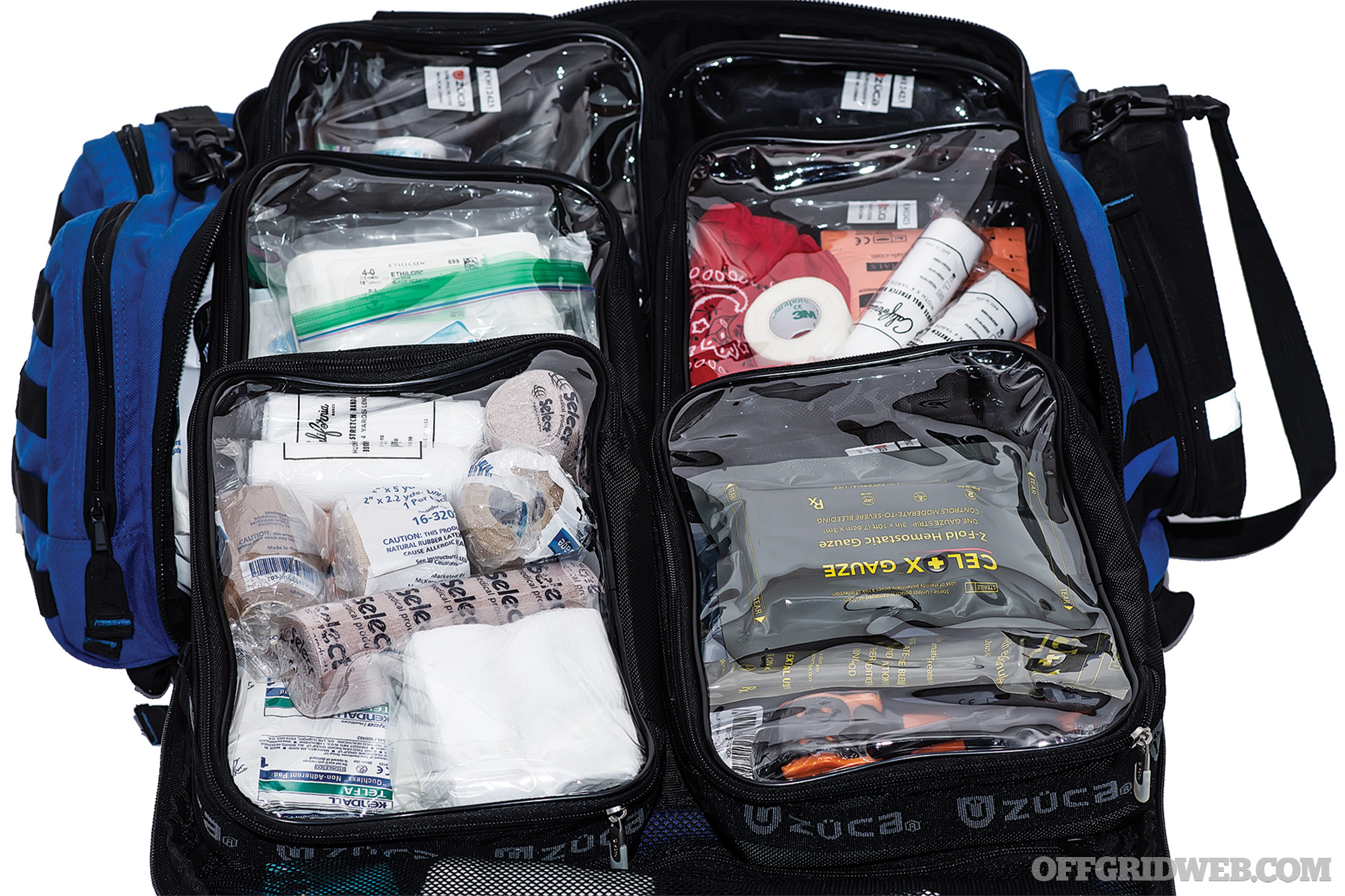
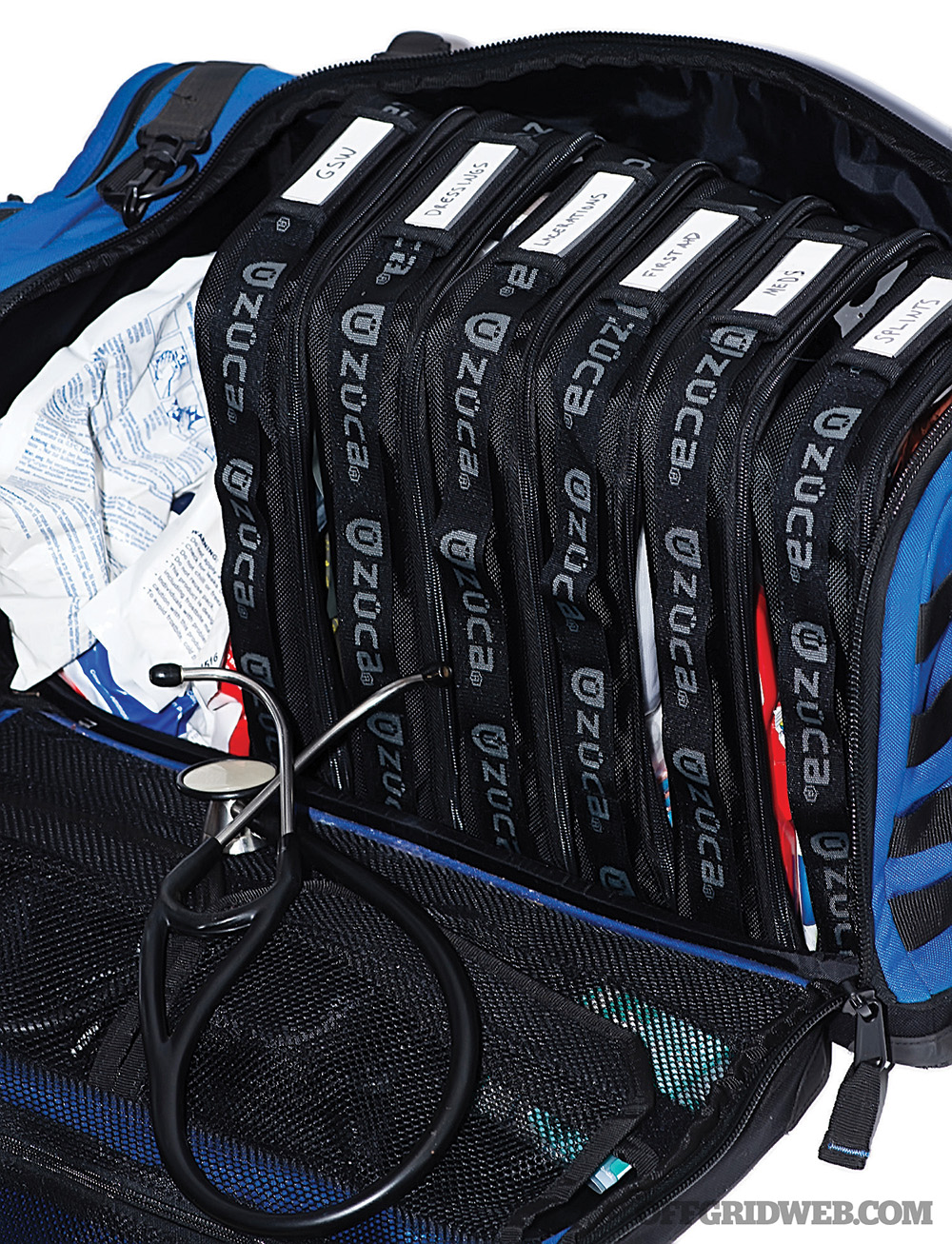
Inside the main flap compartments, I have my sphygmomanometer, otoscope, ophthalmoscope, stethoscope, glucometer, pulse ox, and dental instruments. I removed the dividers and the removable compartments within the central part of the bag. I wanted to make this area easier to organize, so I replaced it with six modular vinyl bags (Shiffler MobileAid Clear-View quick access utility pouches).
Pouch 1, labeled GSW, is my trauma kit that contains a CoTCCC-recommended TQ, HyFin Vent Chest Seal, Israeli dressing, decompression needle, nasopharyngeal airway, and Celox Z-Fold Gauze.
Pouch 2, labeled Dressings, includes ACE wrap, Coban, rolled gauze, and 4×4 gauze.
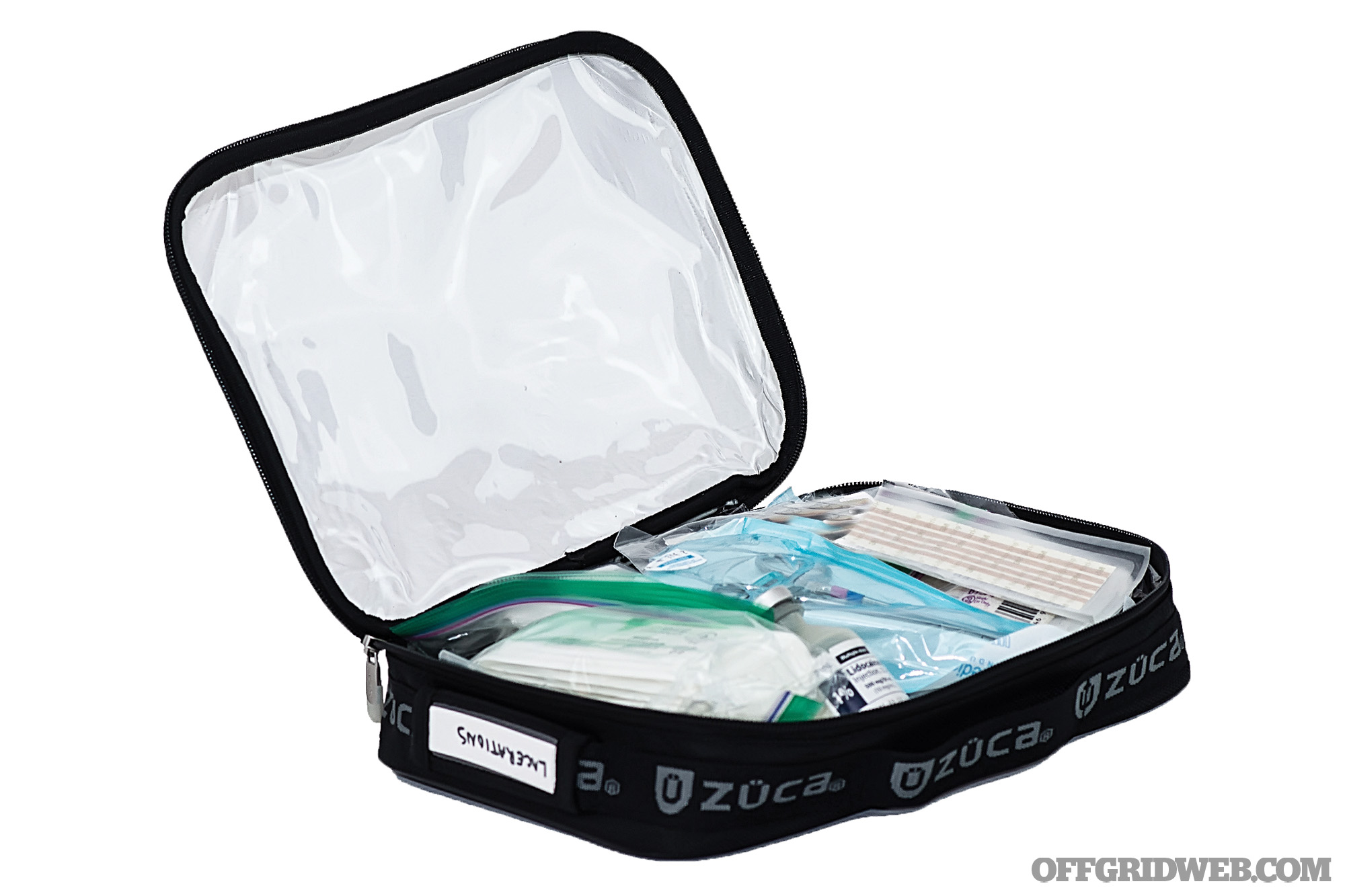
Pouch 3, labeled Lacerations, contains 4-0 Ethilon and 6-0 Prolene sutures, needle drivers, rat-toothed forceps, scalpels, skin stapler, Dermabond, lidocaine (1%), Steri-Strips, and 3ml syringes with 18- and 22-gauge needles.
Pouch 4, labeled First Aid, contains Band-Aids, triple antibiotic ointment, burn gel, cotton balls, baby aspirin, ibuprofen, loperamide, ondansetron, acetaminophen, lip balm, and a tick twister.
Pouch 6, labeled Splints, contains SAM Splints, tape, Kerlix gauze, and handkerchiefs.
The back zippered pouch contains Wagan Tech FRED lights, Mylar emergency blankets, cleansing wipes, and nitrile gloves. The side pouch contains an air horn, ethyl chloride, and a flashlight.
Final Thoughts
Since I purchased my Responder ALS bag, 5.11 has gone through two different iterations. They’ve also moved to a more modular setup within the bag. I like my bag better than the current model — it’s larger in capacity but can still be worn as a backpack. The pouches from Shiffler have made my bag much more manageable.
When it comes to emergency preparedness, many of us subconsciously focus on what seems exciting, such as flashy new gear and training classes. This can lead us to overlook more mundane forms of preparedness that can be equally essential. A good insurance policy is extremely helpful for recovering from a disaster, but unlike fancy knives and overland vehicles, nobody wants to see you showing off your coverage or deductible on social media. Similarly, smoke alarms (a.k.a. smoke detectors) are an emergency preparedness tool every house has, but one that we rarely think about… unless one is beeping at 3 a.m. due to a low battery. Read on for some considerations when testing and replacing your home’s smoke alarms.
Why Should You Care About Smoke Alarms?
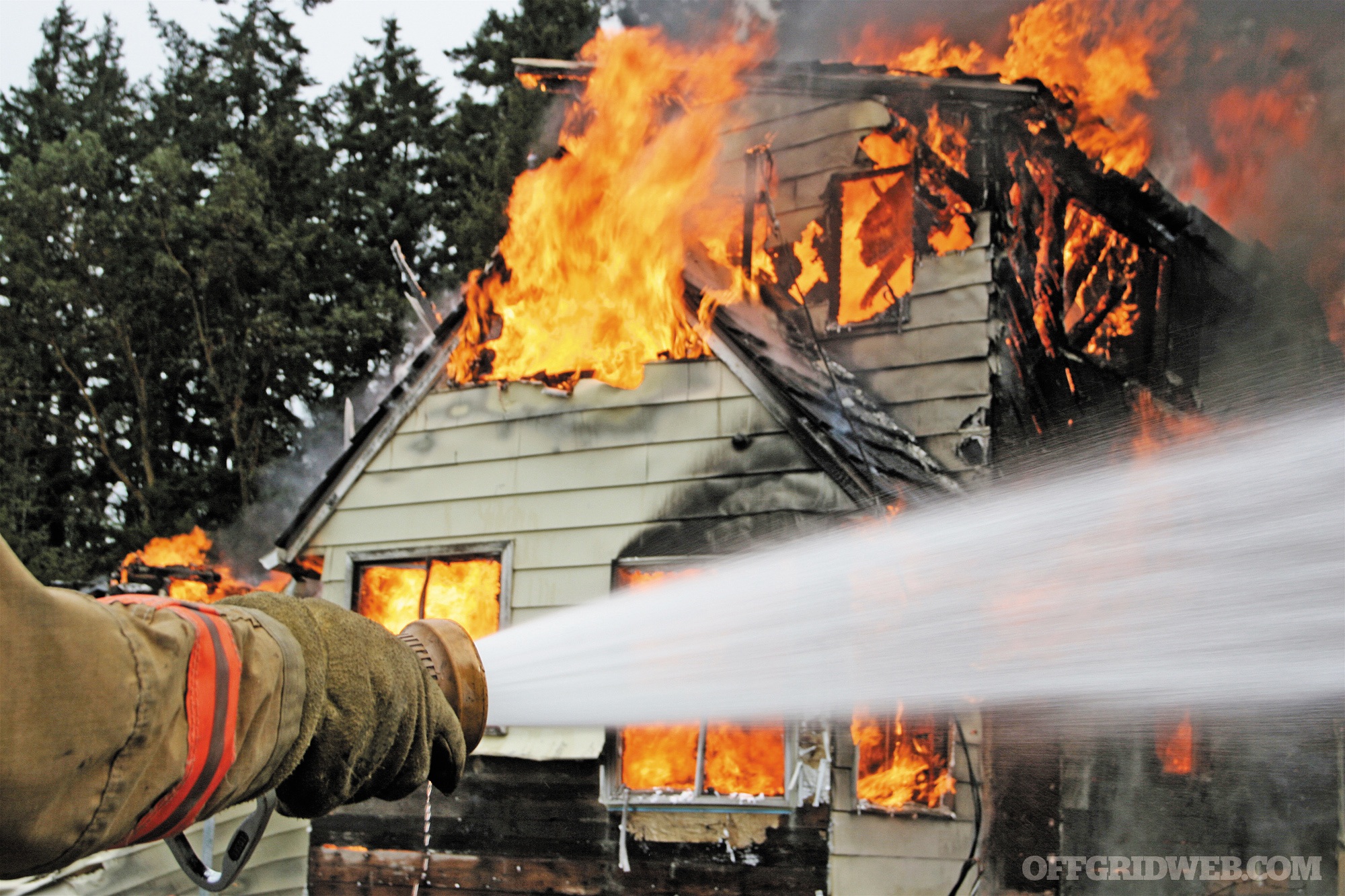
This topic was brought up among our staff when Concealment editor Dave Merrill tested his home’s smoke alarms. To his surprise, one of them failed testing, despite there being no previous sign that it was faulty. With home fires causing an average of 2,620 deaths, 11,070 fire injuries, and $7.3 billion in property damage each year according to The National Fire Protection Association (NFPA), this is something that should be taken very seriously. For more perspective, it’s the sixth most common injury-related cause of death worldwide, ranked between drowning and poisoning.
Smoke Alarm Testing and Replacement
Photo courtesy of the U.S. Fire Administration
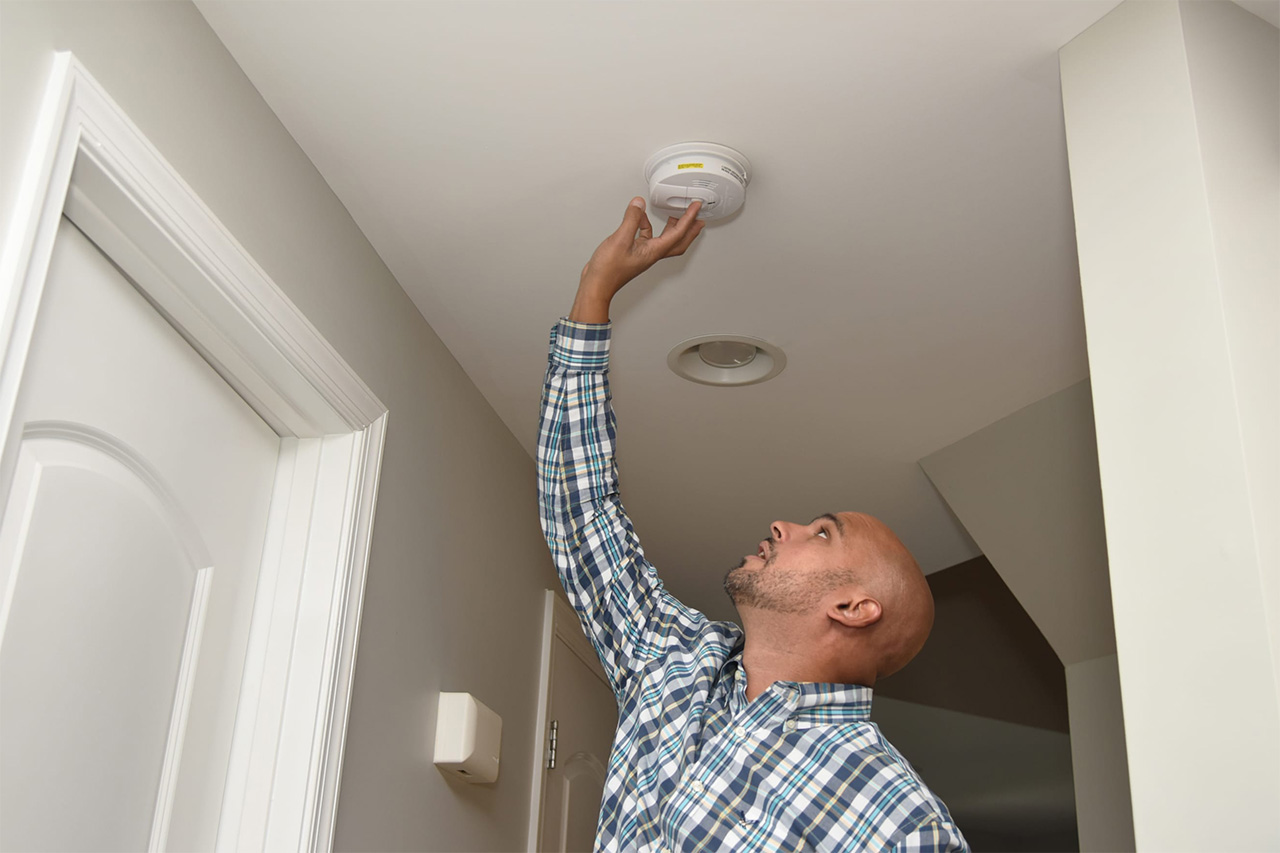
NFPA says that smoke alarms should be tested each month. We recommend marking your calendar so you don’t forget to check them on a regular basis. All it takes is a stepladder and a few minutes of your time.
Although many of us don’t think about it, smoke alarms are a limited-lifespan item. NFPA guidelines recommend replacing your smoke alarms 10 years after the date of manufacture (usually at least a few months earlier than the date of installation). So, if you’ve been living in the same house for more than 9 years, you should definitely start thinking about replacing your alarms.
Alarm Types: Ionization, Photoelectric, or Both?
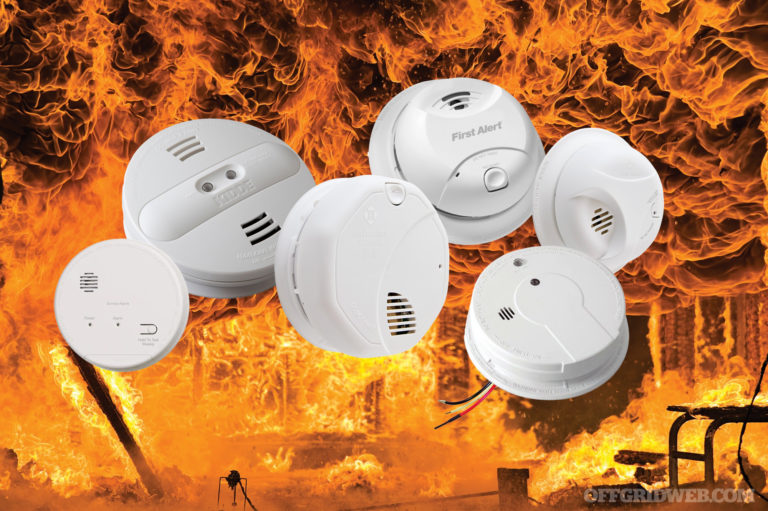
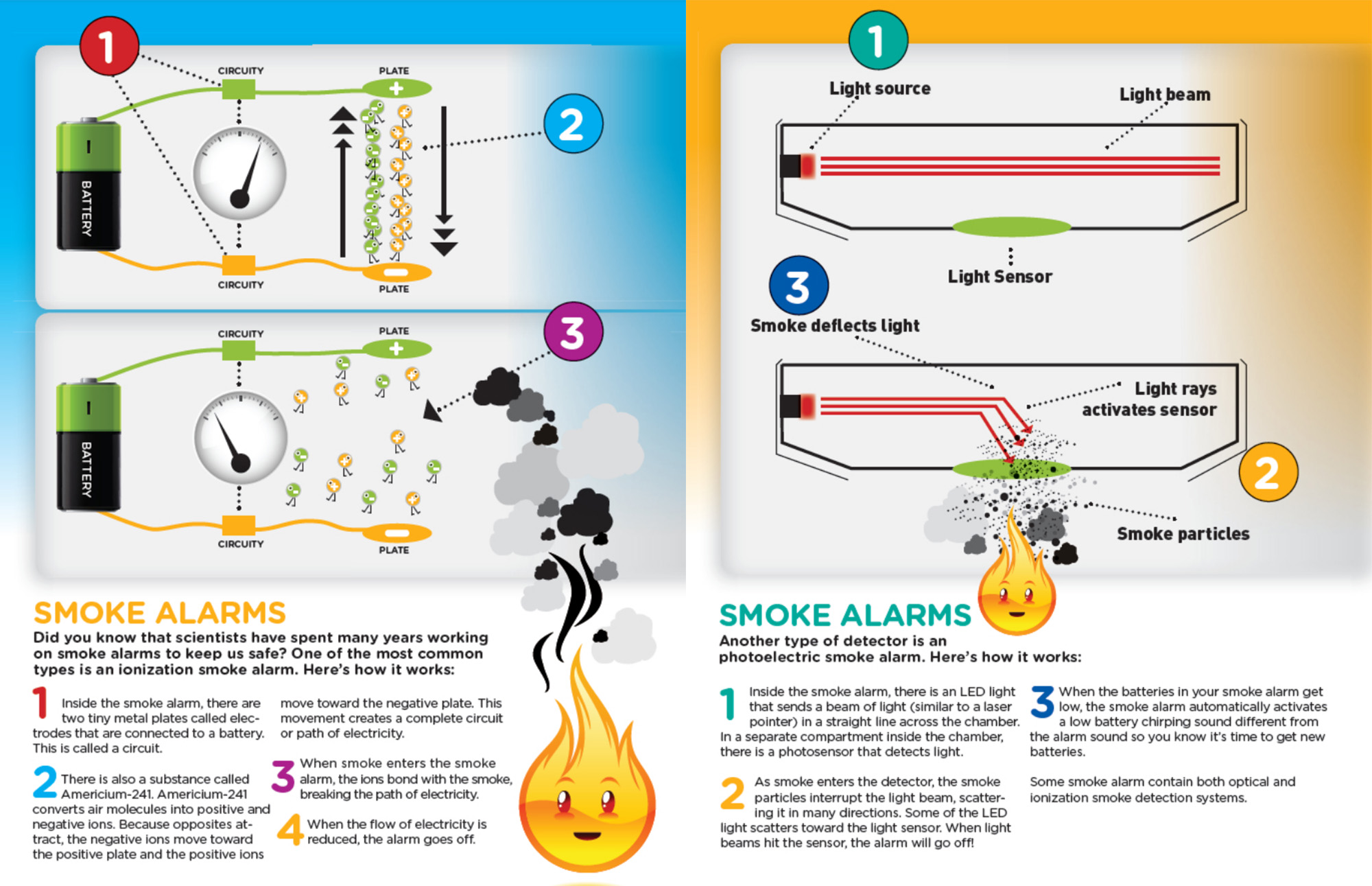
So, maybe you’re getting ready to replace your smoke alarms, or you just want to make sure the ones you already have are up to par. Did you know there are two main types of smoke alarms, each with varying performance? These two types are ionization and photoelectric alarms, which are explained in the graphic below from NFPA:
In simple terms…
Ionization alarms are triggered when smoke interferes with the flow of electricity between two plates, and tend to respond faster to the smoke produced by flaming fires (rapidly-burning items).
Photoelectric alarms detect smoke particles between an LED and a light sensor, and tend to respond faster to smoldering fires (slowly-burning items).
NFPA explains, “For each type of smoke alarm, the advantage it provides may be critical to life safety in some fire situations. Home fatal fires, day or night, include a large number of smoldering fires and a large number of flaming fires. You can not predict the type of fire you may have in your home or when it will occur. … For best protection, it is recommended both (ionization and photoelectric) technologies be used in homes. In addition to individual ionization and photoelectric alarms, combination alarms that include both technologies in a single device are available.”
The U.S. Fire Administration echoes this sentiment: “The USFA recommends that every home and place where people sleep be equipped with either (a) both ionization and photoelectric smoke alarms, or (b) dual sensor smoke alarms (which contain both ionization and photoelectric smoke sensors).” USFA’s statement adds, “The location of a smoke alarm within a home may be more important than the type of smoke alarm present, depending on the location of a fire. The USFA recommends that users follow the manufacturer’s guidance on the recommended location of smoke alarms in a home.”
More Home Fire Preparedness Tips
Smoke alarms are only one aspect of preparing your home and your family for a fire. Check out some of our related articles about fire preparedness below:
Whether it’s from sci-fi movies, video games, or books, we’ve often been told that present-day firearms will be replaced by high-tech blasters decked out with buttons, screens, and battery packs in the future. But is it true? We’ve also been told that our four-wheeled vehicles will be replaced by flying cars, jetpacks, and hoverboards, but we haven’t seen anyone zipping around town like Marty McFly or the Jetsons. A company known as ArcFlash Labs has been pushing the envelope with 3D-printed electromagnetic guns that have become more sophisticated and powerful with each new model. The latest creation, the ArcFlash Labs EMG-02 coilgun, was recently tested in a video from Forgotten Weapons. The results have us thinking that those sci-fi blasters might not be so far-fetched after all.
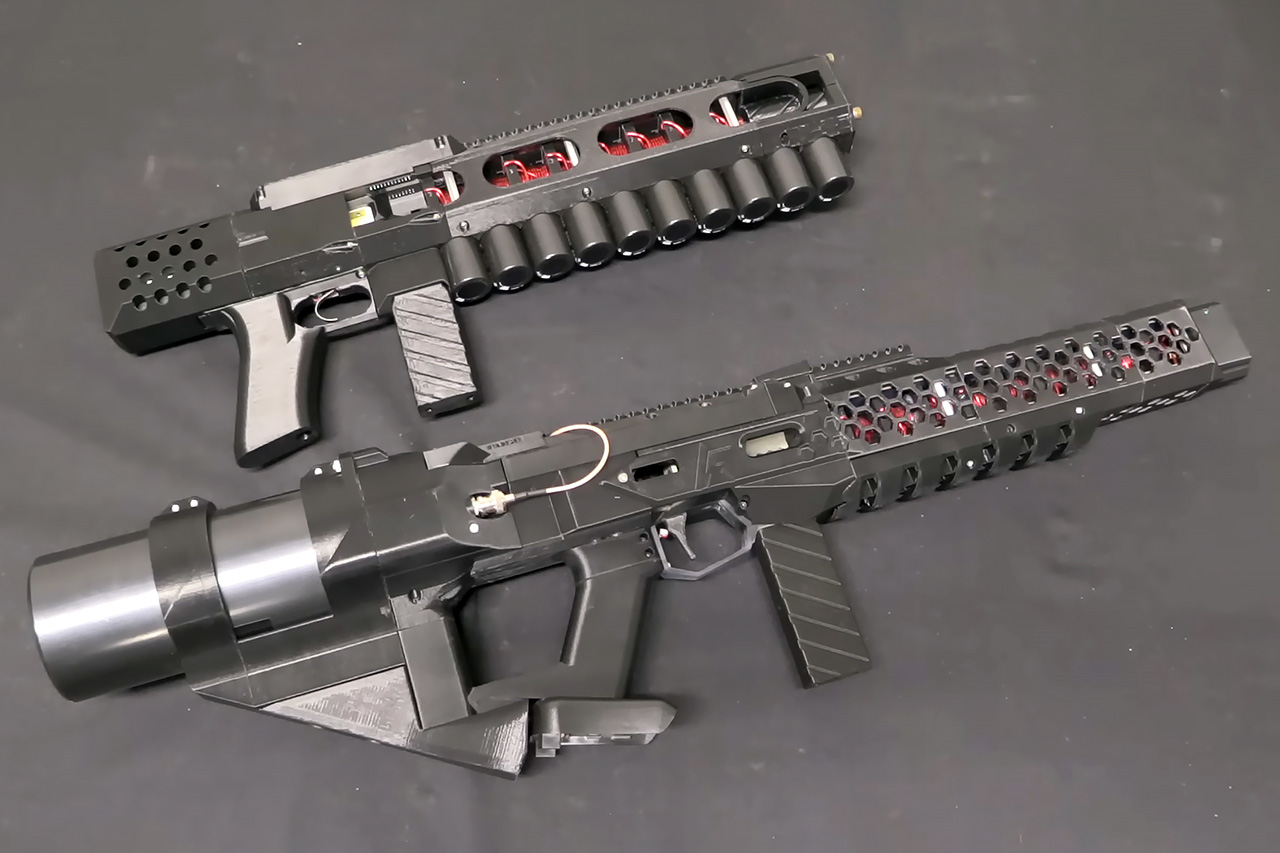
Above: This coilgun fires cylindrical pieces of steel using a 15kW Gauss accelerator. No gunpowder, primer, or casing required.
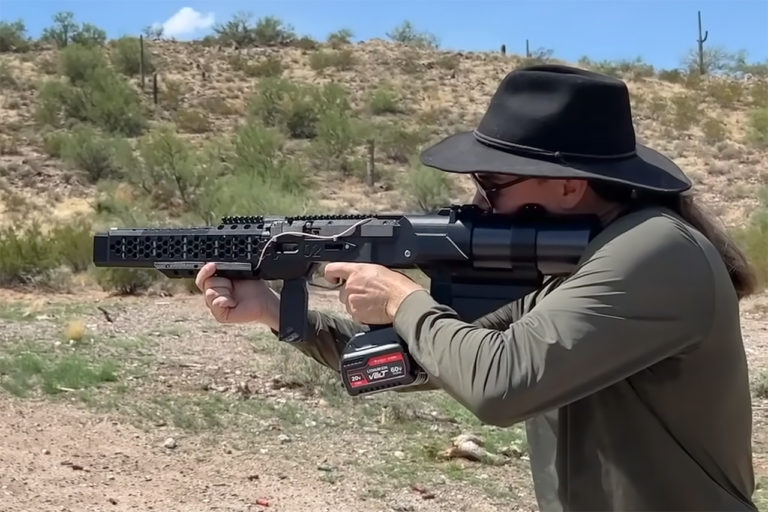
The EMG-02 is described by ArcFlash Labs as a “10-stage medium voltage capacitor augmented fully-automatic coilgun.” That’s a mouthful, but in simpler terms, it uses electromagnetic coils to accelerate solid steel projectiles to about 250 feet per second (75 meters per second). We’ve seen the term “railgun” used to describe this category of electronic weapon, but that’s not accurate in this case. It’s a coilgun or gauss gun (not a gauss rifle, since it has a smooth bore).
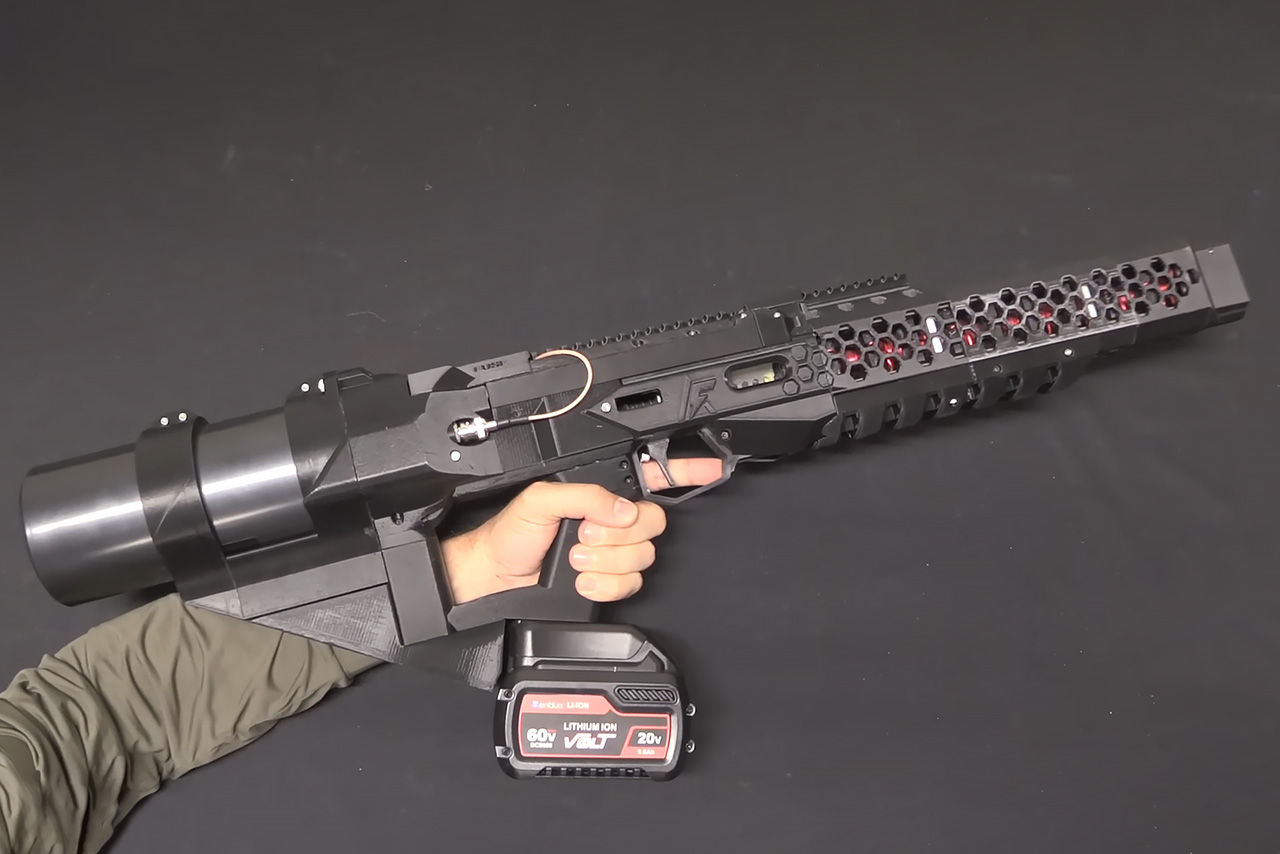
This still from the Forgotten Weapons video shows the ArcFlash Labs EMG-02 below its predecessor, the ArcFlash EMG-01. On the 01, ten cylindrical capacitors at the bottom of the handguard powered eight coils around the barrel; on the 02, there’s one huge capacitor inside the shoulder stock, which powers ten coils around the barrel. Several other improvements have been made, including the use of an off-the-shelf lithium-ion drill battery. Improved efficiency allows the EMG-02 to fire up to 13 rounds per second.
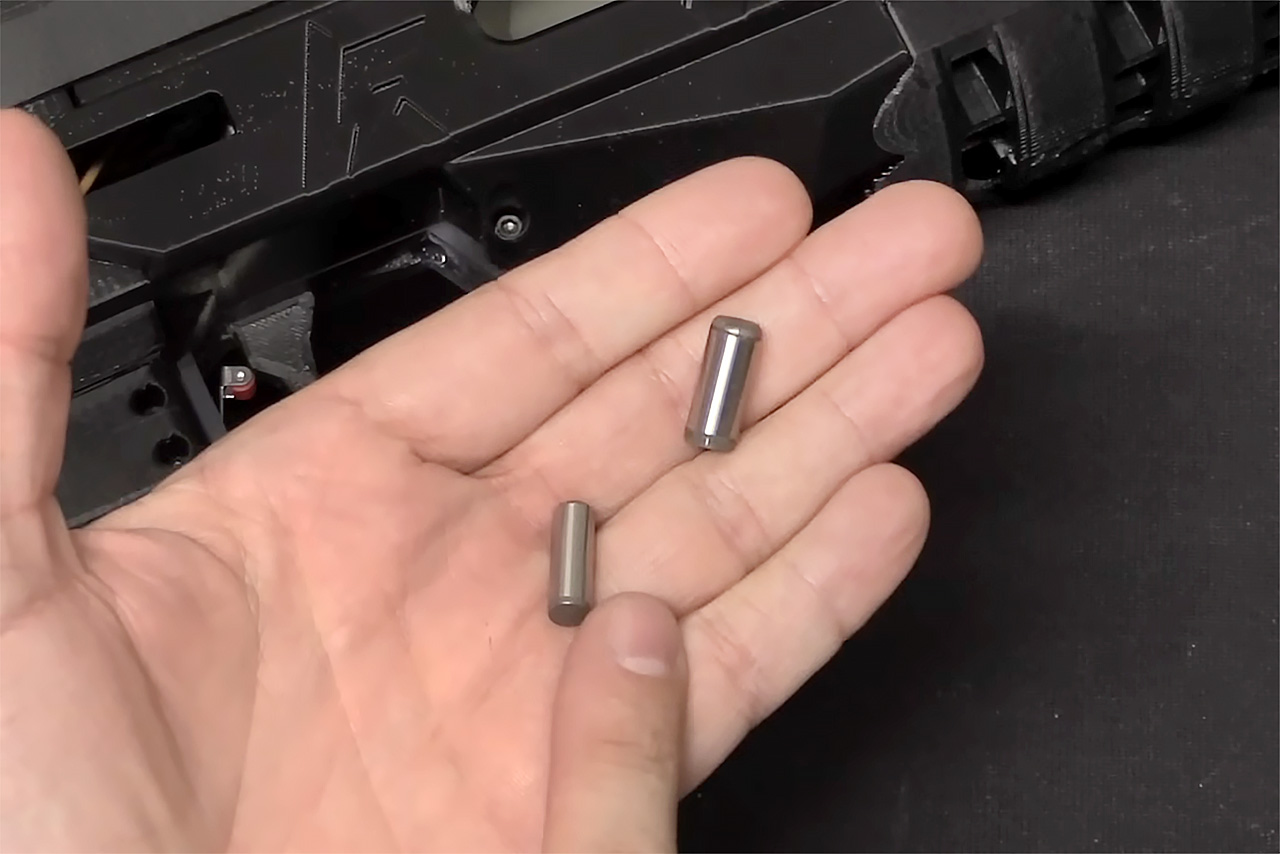
The EMG-02 is a variable-caliber weapon, since it can accept steel armatures (i.e. sections of ordinary dowel pin) from 1/4-inch to 4/16-inch (6-8mm) in diameter and 3/4-inch to 13/16-inch (19-22mm) in length. The ammo is loaded into an included magazine, which holds 15 to 18 rounds, depending on diameter.
Above: Iain from Forgotten Weapons holds the ArcFlash Labs EMG-02 with a 20V drill battery installed.
Of course, there are some drawbacks and growing pains associated with all cutting-edge technologies, and this appears to be true of the EMG-02 as well. In the Forgotten Weapons video, Iain mentions that the weapon isn’t especially accurate, and demonstrates this by showing shot groups at the range. The projectiles tumble after leaving the barrel, since they’re not stabilized by rifling. It’s also expensive compared to most modern carbines, at an MSRP of $2,795. However, it’s exciting to watch this tech develop and consider where it might be 5 or 10 years from now.
Check out the video below from RECOILtv, and for more info on the ArcFlash Labs EMG-02, go to ArcFlashLabs.com.
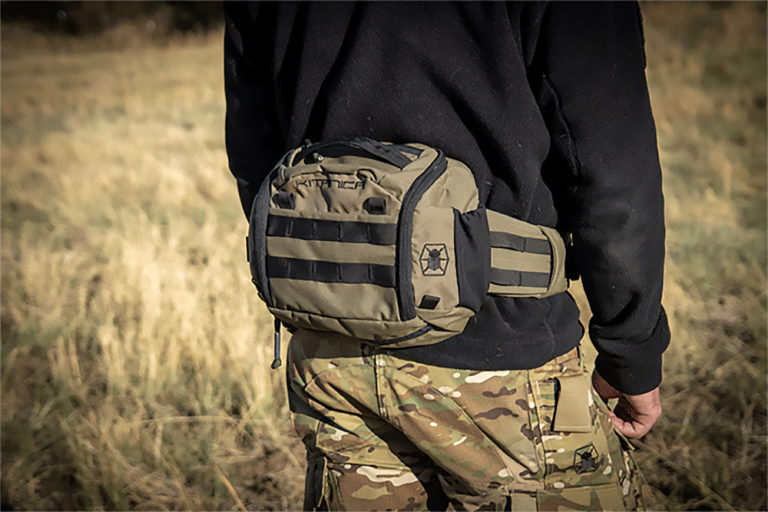
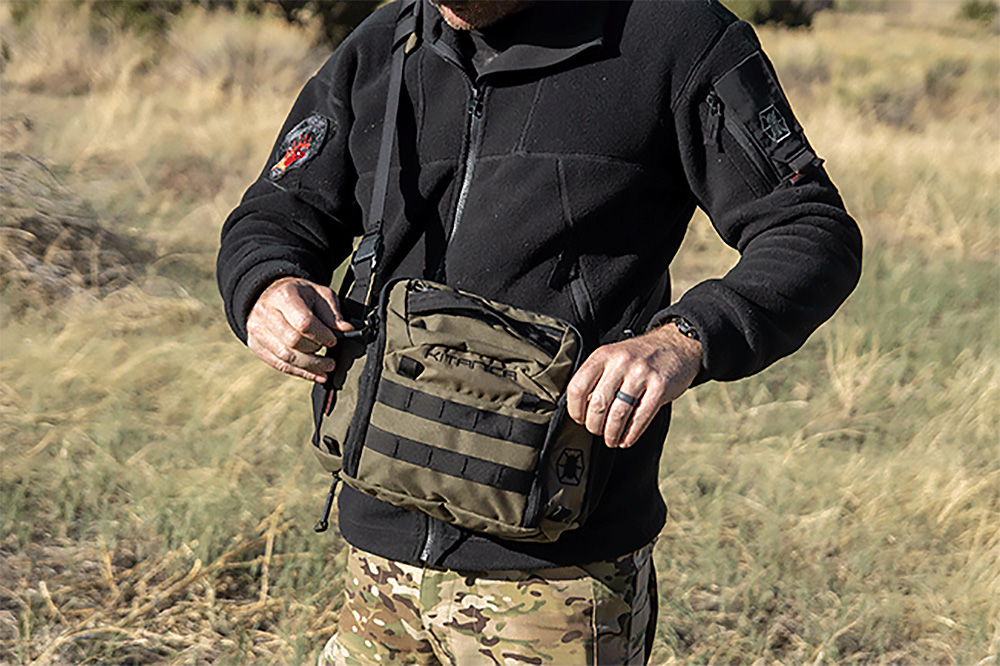
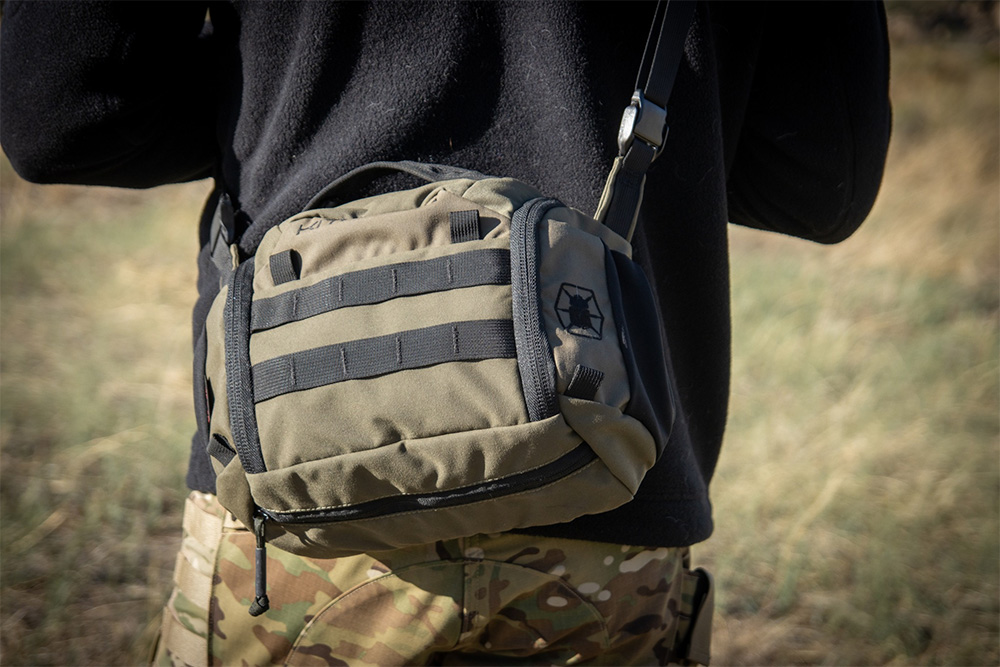
Call it what you want — waist pack, lumbar pack, fanny pack, or butt pack. No matter the nomenclature, it’s a style of load-bearing gear that has seen a resurgence in popularity in recent years. Of course, some of us remember the dorky neon-colored fanny packs of the ’80s and ’90s, usually paired with jorts and white running shoes, but that’s far from their only application. Lumbar packs have been used extensively by hunters, trail-runners, photographers, and other hobbyists to carry gear in situations where a full backpack is too bulky. Kitanica has launched a new rugged lumbar pack on Kickstarter called the Kitanica Scorpion Pack, and it offers some interesting features.
The new Kitanica Scorpion is made of durable 500D Cordura nylon, and consists of a 4.5L main compartment attached to a backpack-style padded hip belt. Each side of the exterior contains expandable pockets for water bottles, monoculars, and other small items. Kitanica also includes a MOLLE-compatible carrier for large water bottles (Nalgene, Klean Kanteen, etc.) that can be attached to the PALS webbing on either side of the hip belt.
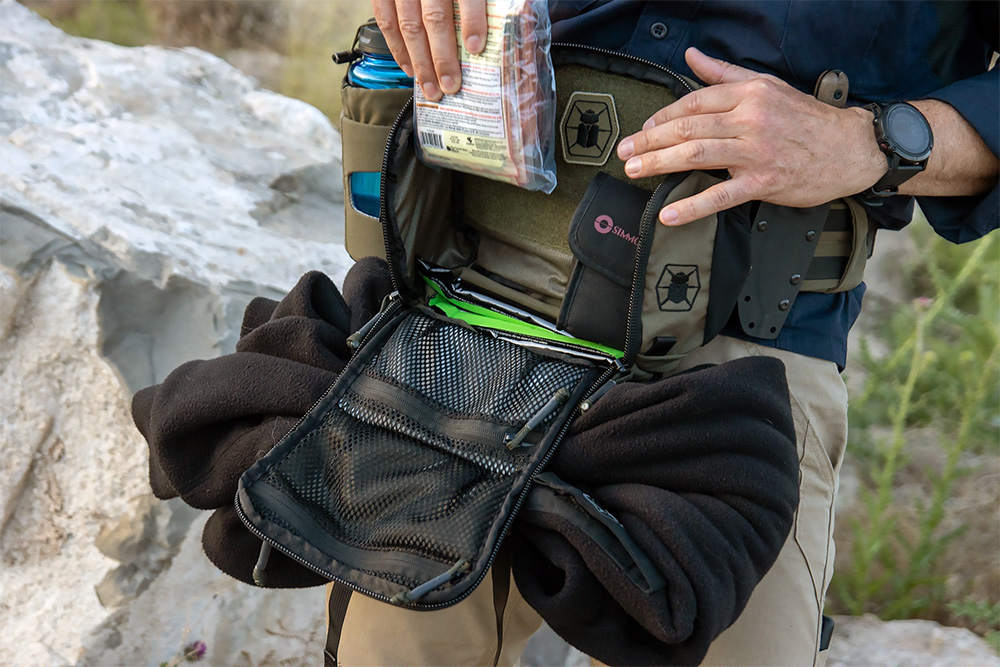
Unzipping the main compartment reveals a large Velcro loop field for modular pockets and pouches, as well as two zippered mesh pockets on the inside of the lid. Open and closed-cell foam and aero-spacer mesh elements help the Scorpion ride comfortably on the waist and protect the contents.
If a lumbar pack isn’t your style, or you need a configuration that moves around your body more easily, the Kitanica Scorpion converts to a sling-bag configuration in seconds. Just tuck the hip belt into the integrated storage compartment, clip on the included shoulder strap, and go. The Scorpion can also be used in single-handed carry configuration via the grab handle on top.
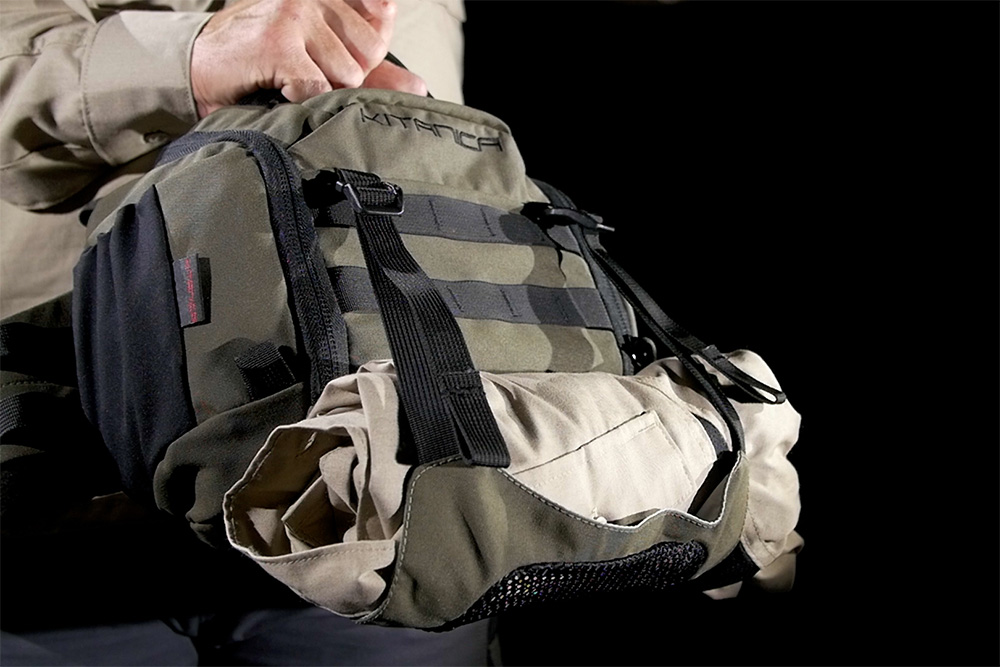
A zipper on the base of the Scorpion reveals one more hidden feature: a stowable load compressor. This flap pulls out and clips onto loops on the lid, and it can be cinched down to retain jackets, blankets, tarps, and other oversized items.
The Kitanica Scorpion was an immediate hit on Kickstarter — the initial $20k goal was fully funded in less than 5 hours, and at the time of writing this article it’s already well over $100k. MSRP for this pack is $125, but “Super Early Bird” backers can get the Scorpion at $85 for a limited time. It’s available in green or black, and is expected to ship out in January of 2023. For more information on the Kitanica Scorpion, check the Kickstarter page or go to preorder.kitanica.com.
Most sources concur that over 100 million individual AK-pattern rifles have been produced worldwide. At time of writing, the world’s population is estimated at 8 billion. That means there could be roughly one AK for every 80 people on the entire planet; counting out those that have been lost or destroyed in combat, let’s call it one Kalashnikov for every 100 people on earth. There’s a statistically significant chance that, if you haven’t already seen, touched, or fired an AK, you will at some point. Hopefully it’s because you buy one or shoot a buddy’s at the range. But, with the commonality, low cost, and popularity of this rifle — particularly among radical actors around the world who have imported their extremism to American shores — there’s an unfortunately real possibility you may come across one in the “real world” under less enjoyable circumstances.
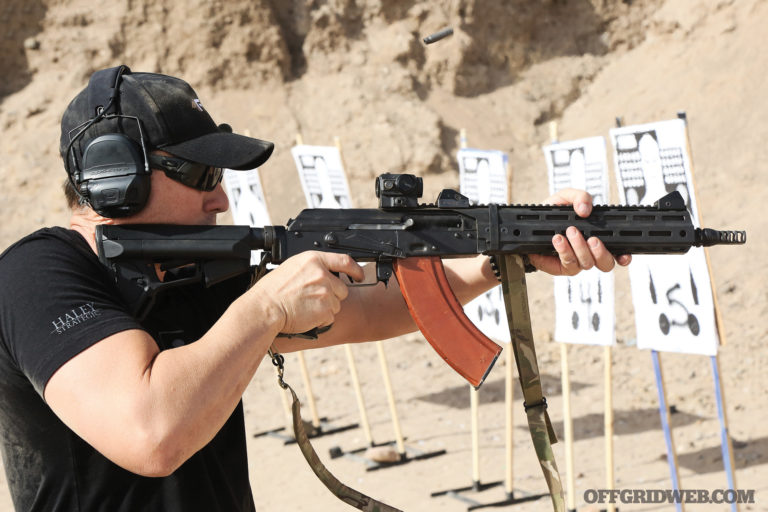
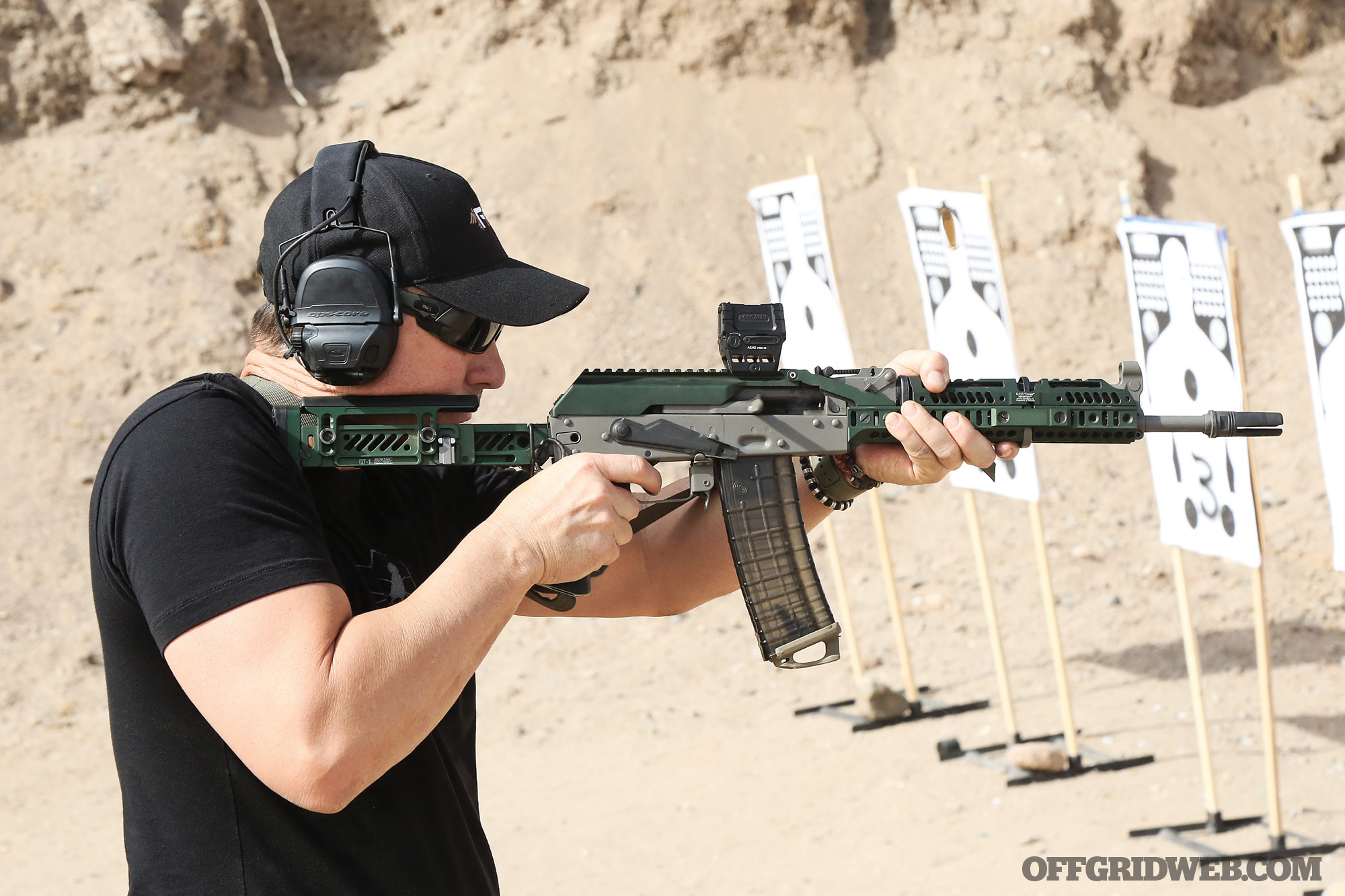
Regardless of the context, understanding the Kalashnikov’s unique manual-of-arms is a valuable skill to have in your library of preparedness knowledge. While most of the RECOIL OFFGRID team has previous experience with AKs from personally owned weapons or deployments overseas, it never hurts to refresh a skillset under the guidance of specialists. In this case, we attended the three-day D5 Kalashnikov course put on by Haley Strategic Partners (HSP). Former Force Recon Marine and HSP owner Travis Haley has extensive knowledge of this platform through multiple deployments around the world as a Marine and independent contractor. More recently, HSP teamed up with famed AK gunsmith Jim Fuller and his new company, Fuller Phoenix. We had the privilege of learning directly from these two AK experts during our time in the course. At the end of the day, proper sight alignment and trigger press are universally applicable, but the accompanying manipulations are substantially different for those used to AR-pattern black rifles.
AK Setup & Equipment Notes
In preparation for this class, we took the chance to pressure test an AK we had on hand from a previous review in RECOIL, and the accessory configurations we thought were ideal for running these guns hard in the desert dust.
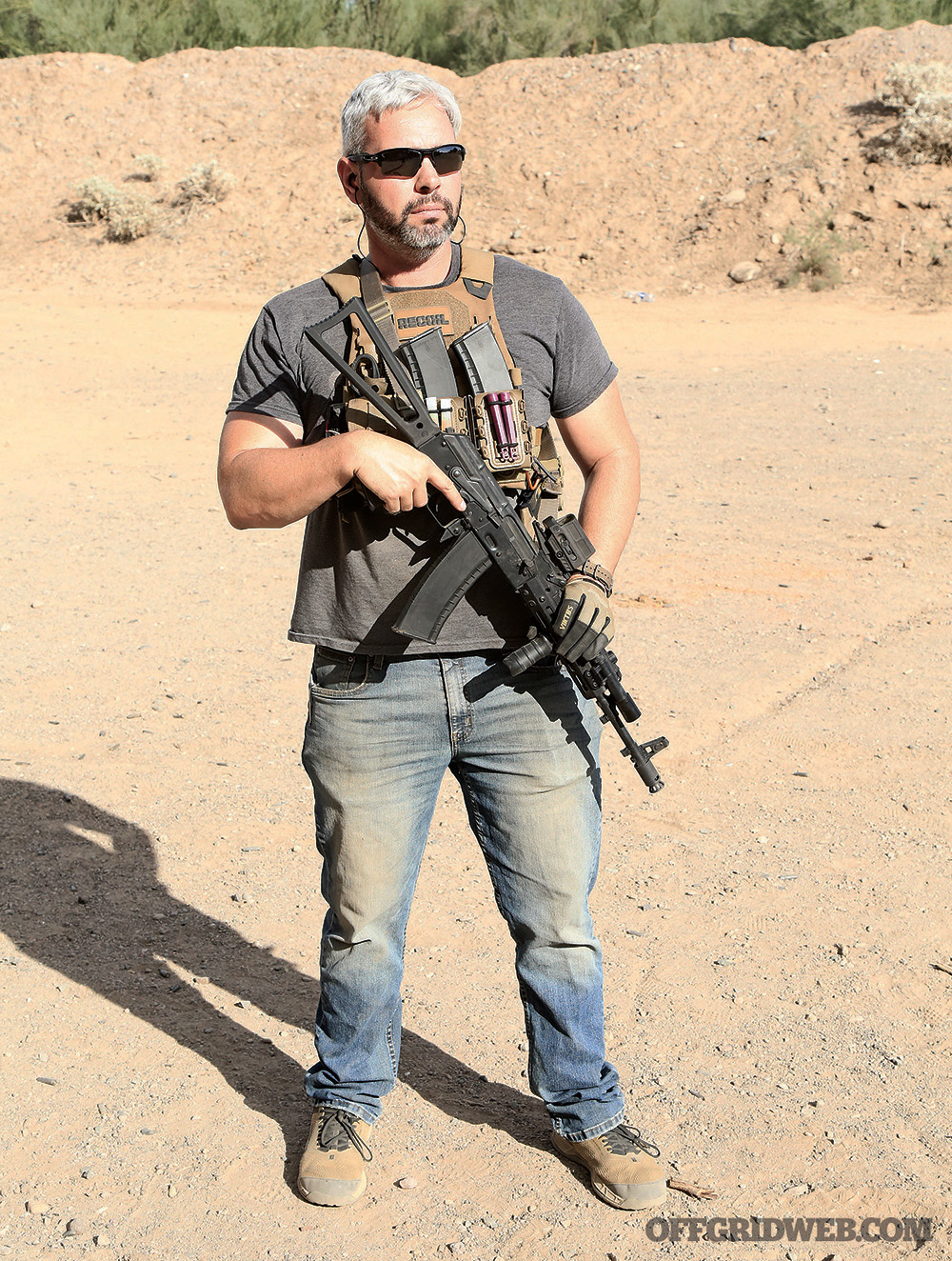
Above: Our full load-out for this course, including OTTE Gear LVZ OVT Plate Carrier with G-Code Scorpion mag pouches, which flex to accommodate the odd shape of 5.45x39mm magazines.
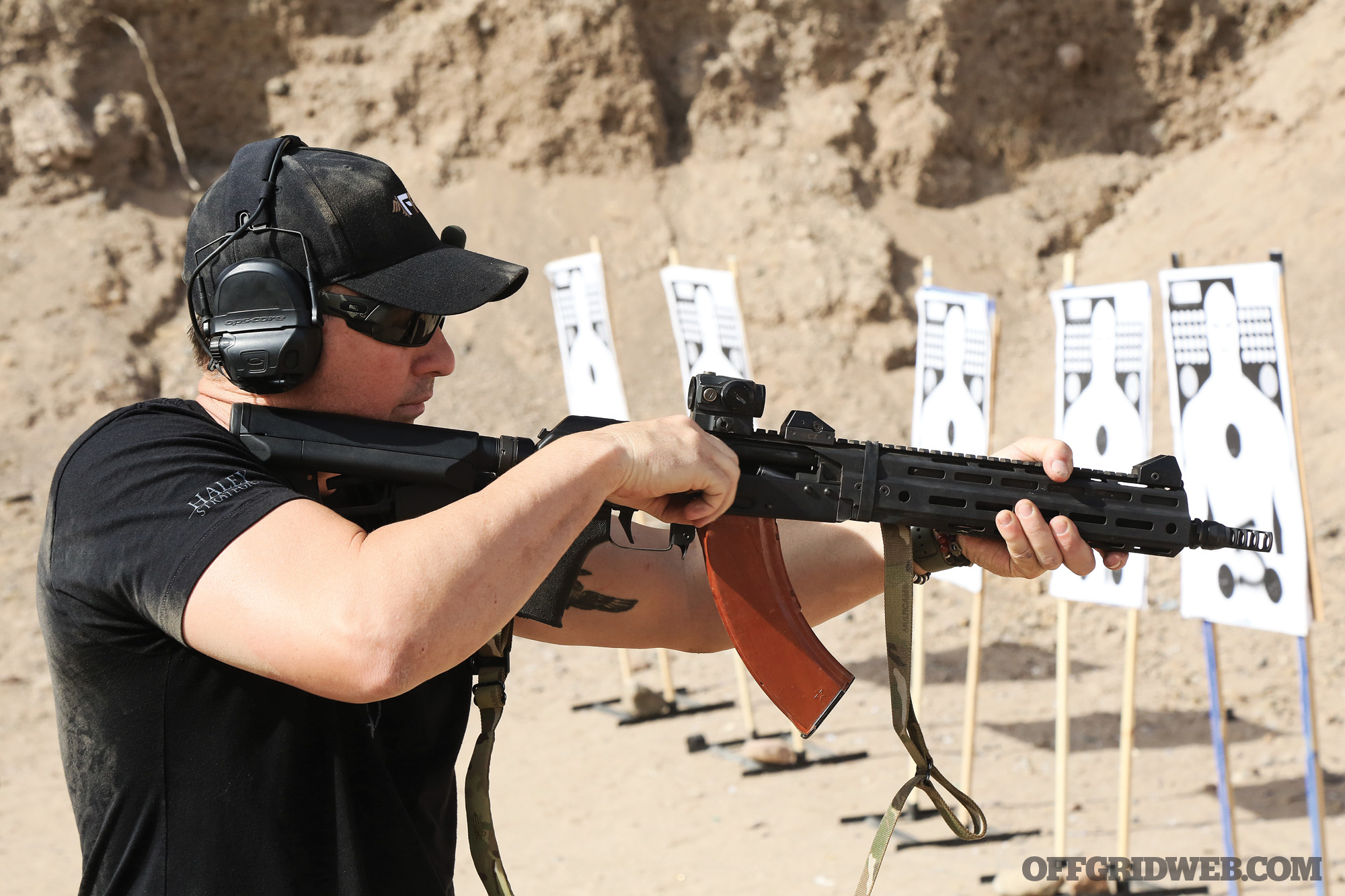
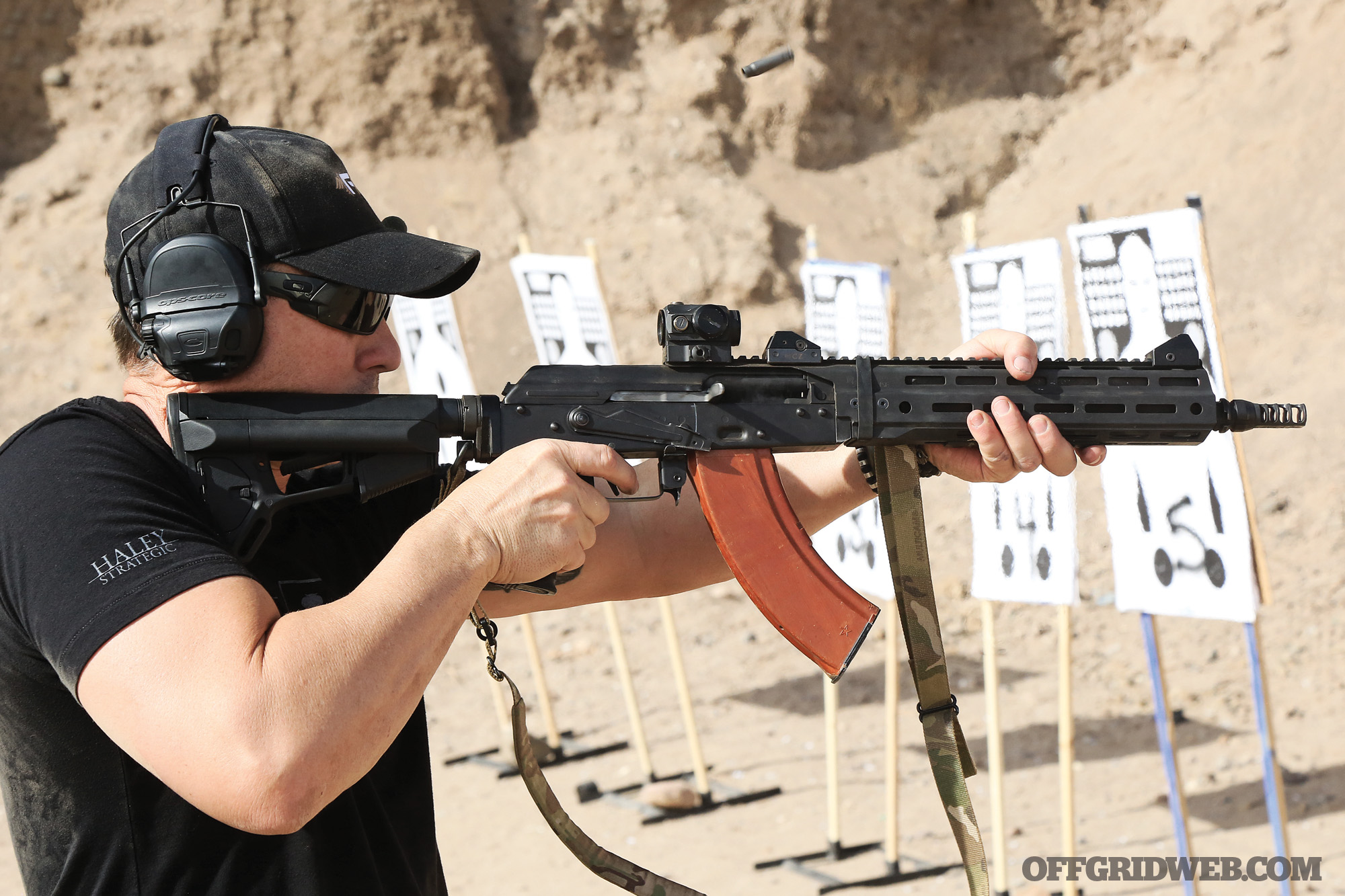
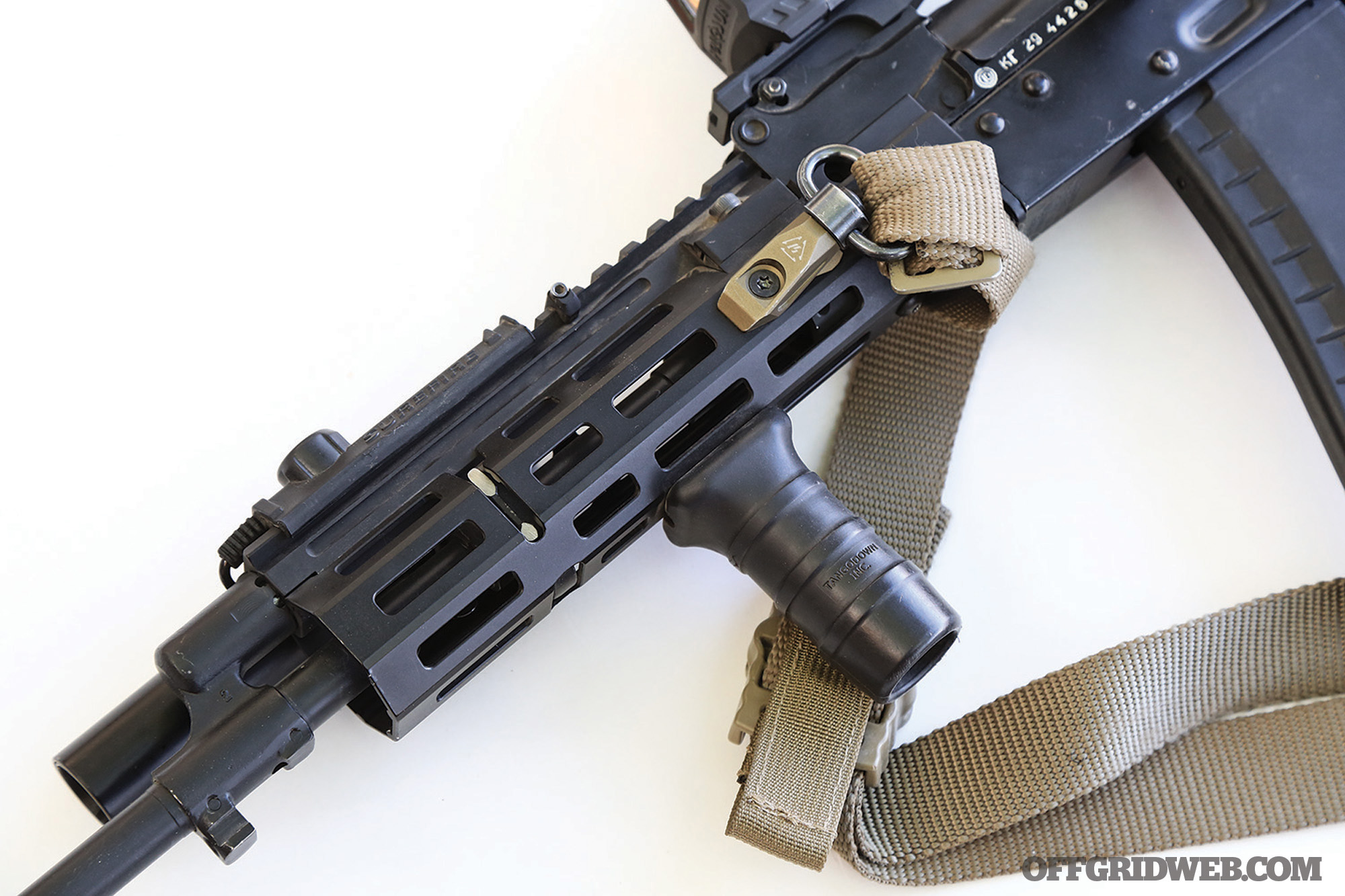
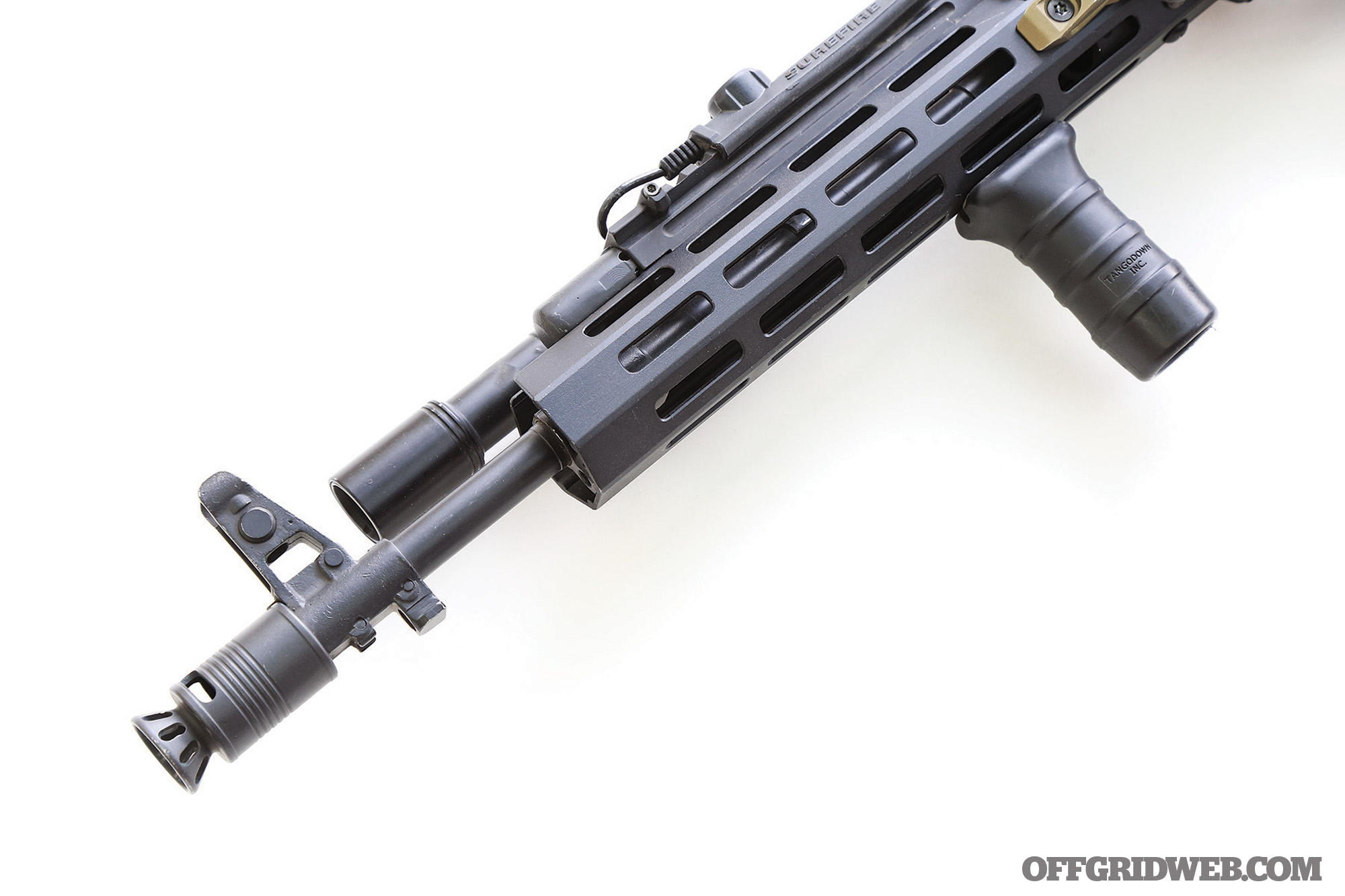
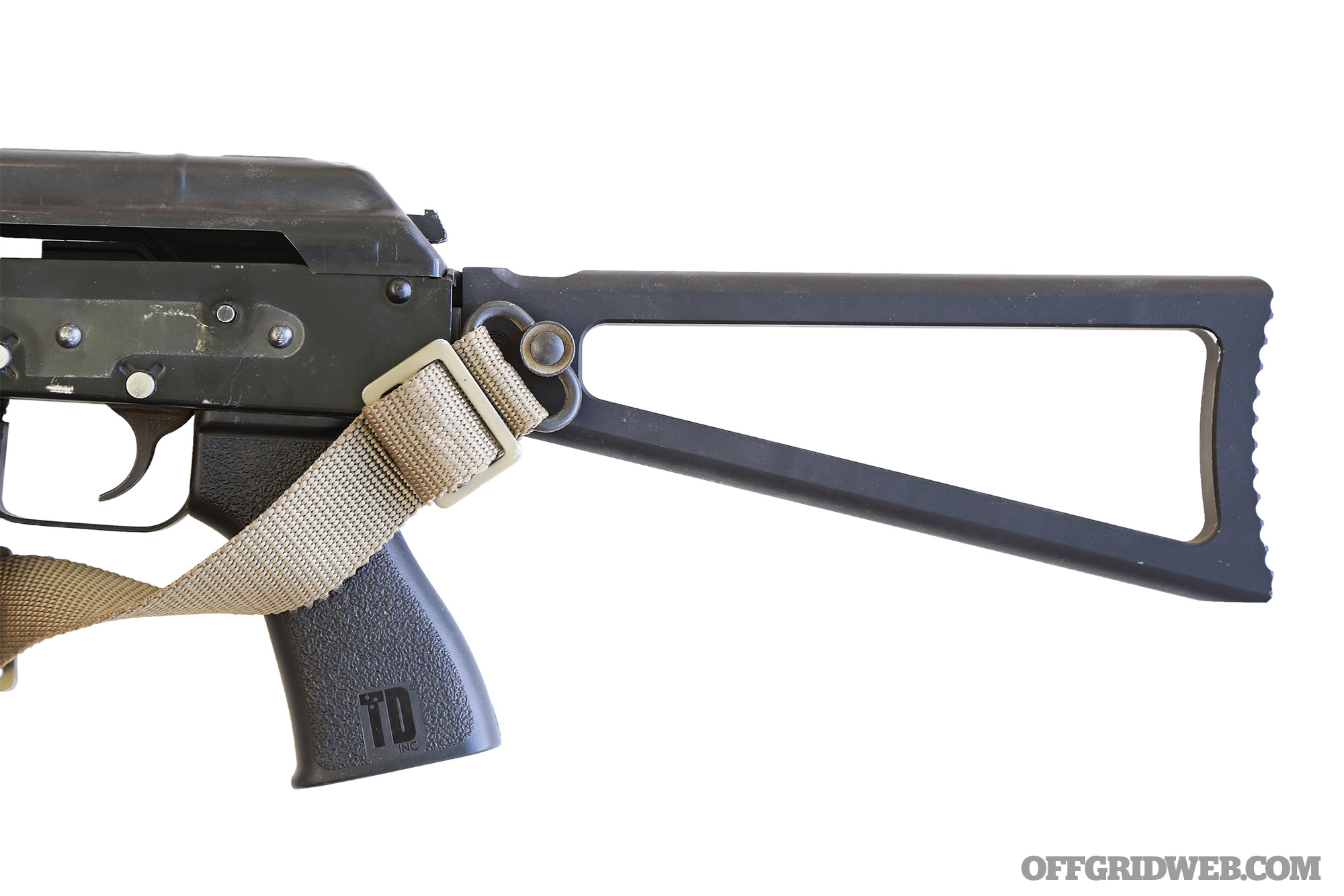
The base gun is a Petronov Armament AK-74 in 5.45x39mm. The smaller 5.45mm cartridge has better long-range ballistics than its bigger, heavier 7.62mm progenitor, and has an incredibly light, quick recoil impulse that’ll give anyone the giggles after a few fast strings of fire. I dressed this rifle out with a Mk1 handguard system from Sureshot Armament, which includes an M-LOK handguard as well as a railed gas tube. The two pieces are machined to link together and reinforce each other for a secure fit. A TangoDown M-LOK vertical grip, SureFire Scout Light Pro, and Definitive Arms muzzle brake rounded out the front-end setup. For optics, I mounted a Holosun 512 red dot to a Strike Industries rear sight riser rail. This resulted in a minimalist optic mount that sits nice and tall for a heads-up position while shooting and facilitates passive aiming under night vision. The rear end was dressed out with a matching TangoDown Battle Grip and a Fixed Triangle Stock from CRH Customs. As the name implies, this stock replicates the look and feel of a traditional triangle folder for fixed-rear-trunnion receivers. While there’s no folding mechanism, it’s a lightweight, low-bulk stock with a pleasing aesthetic.
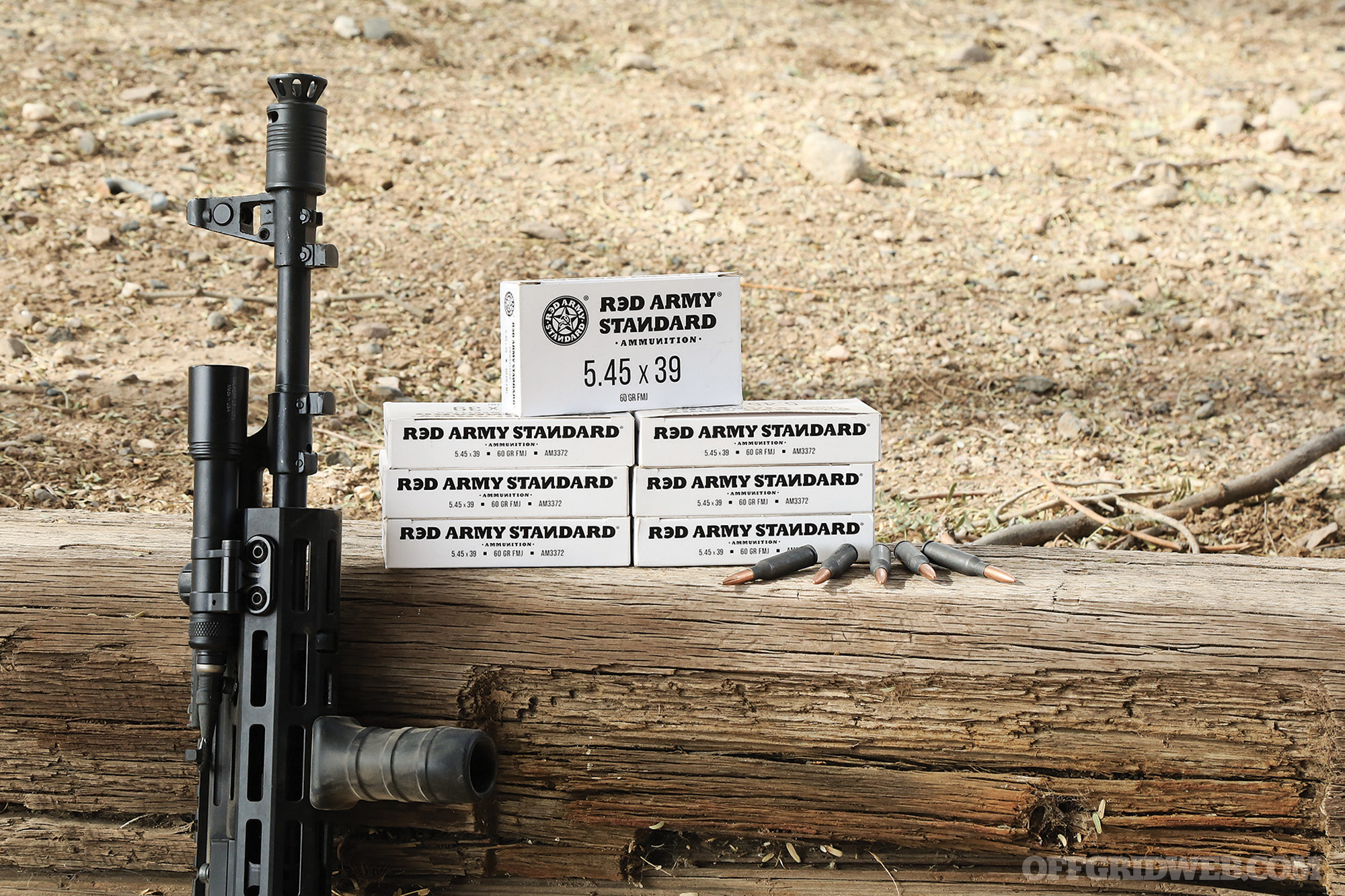
Above: The business end of our Petronov Armament AK-74, along with several boxes of Century Arms’ Red Army Standard 5.45x39mm ammo.
Finally, we attached an Arbor Arms adjustable sling and dropped in an ambidextrous Lightning Bolt from Colorado Shooting Sports. This kit includes a bolt carrier and top cover that can be had in either left-side or ambi-charging handle configurations. Slab-sided Bulgarian mags courtesy of GunMag Warehouse kept this rig well-fed throughout the course. It should be noted that many folks shied away from AK-74s once a ban on the importation of cheap Russian 7N6 surplus ammo was implemented in 2014. But Red Army Standard, Century Arms’ ammo imprint, sells non-Russian 5.45mm ammo that functioned flawlessly for us. At the time of writing, a 1,000-round case could be had for right at $400, which puts the price at or just under comparable .223/5.56mm ammo.
The differences in manual-of-arms between AKs and ARs primarily boils down to differences in the three fire control interfaces: the safety selector, the charging handle, and the magazine release.
Charging an AK
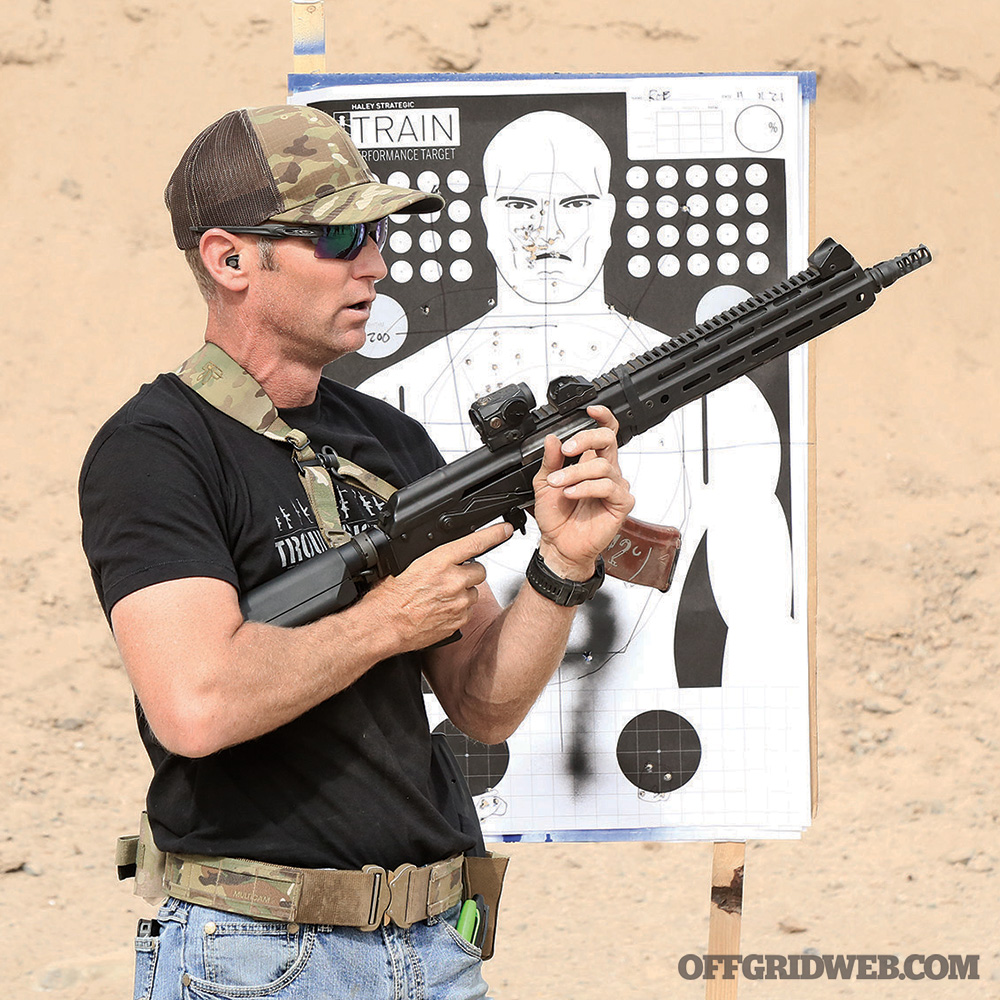
Above: Haley Strategic instructor Jared Segraves demonstrated several different methods of charging AK pattern rifles.
Charging your weapon (chambering a round) can be either an administrative or fighting function, depending on the context. You may be loading your weapon and then placing it on safe for ready storage — in your vehicle or under your bed, for example. You may be conducting an administrative “load and make ready” at a course or competition. Or you may be in the middle of a firefight and conducting an emergency reload.
All of those situations have one thing in common: They require you to cycle the bolt. AR shooters are spoiled by the addition of a dedicated mechanism to lock the bolt in an open position and to release it at the literal push of a button. Mr. Kalashnikov, it seems, would’ve dubbed such a thing extraneous. Instead, the bolt handle is attached to the carrier itself and pokes out the ejection port side of the rifle by about an inch. For right-handed shooters, there are a couple of different techniques to run this handle.
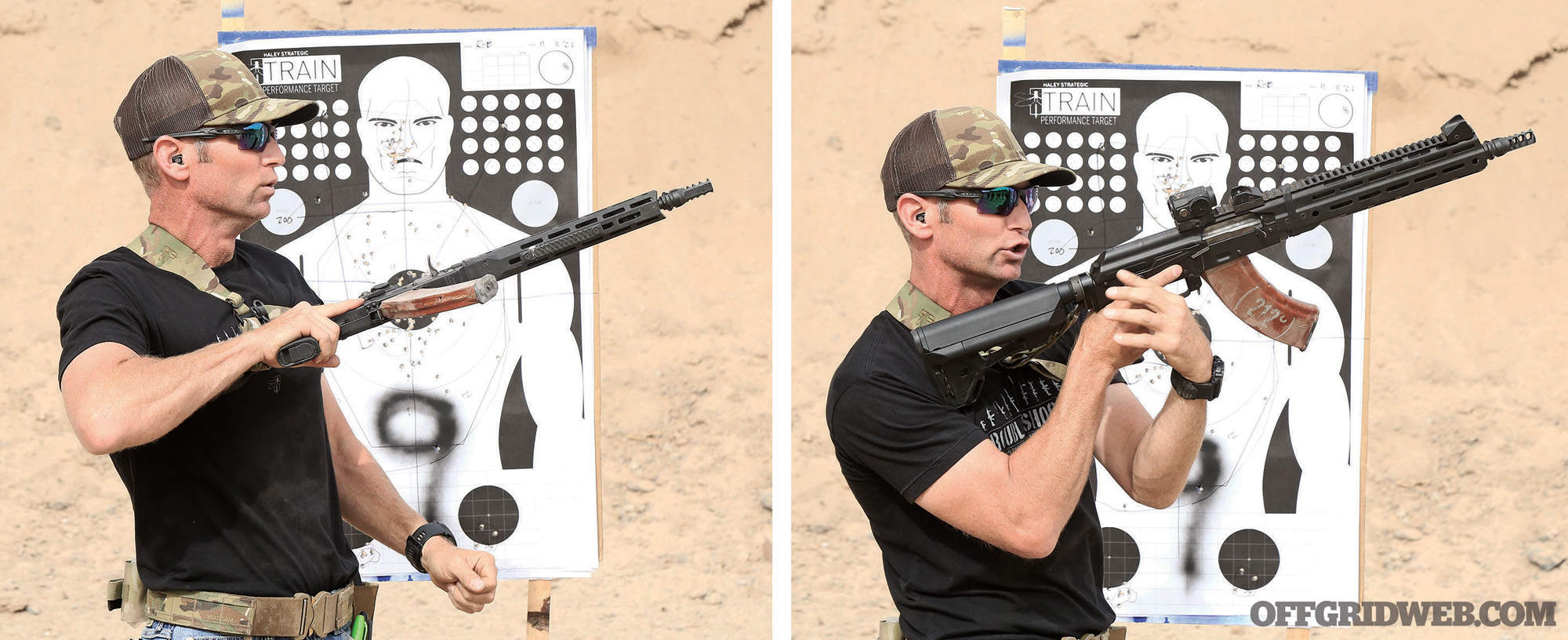
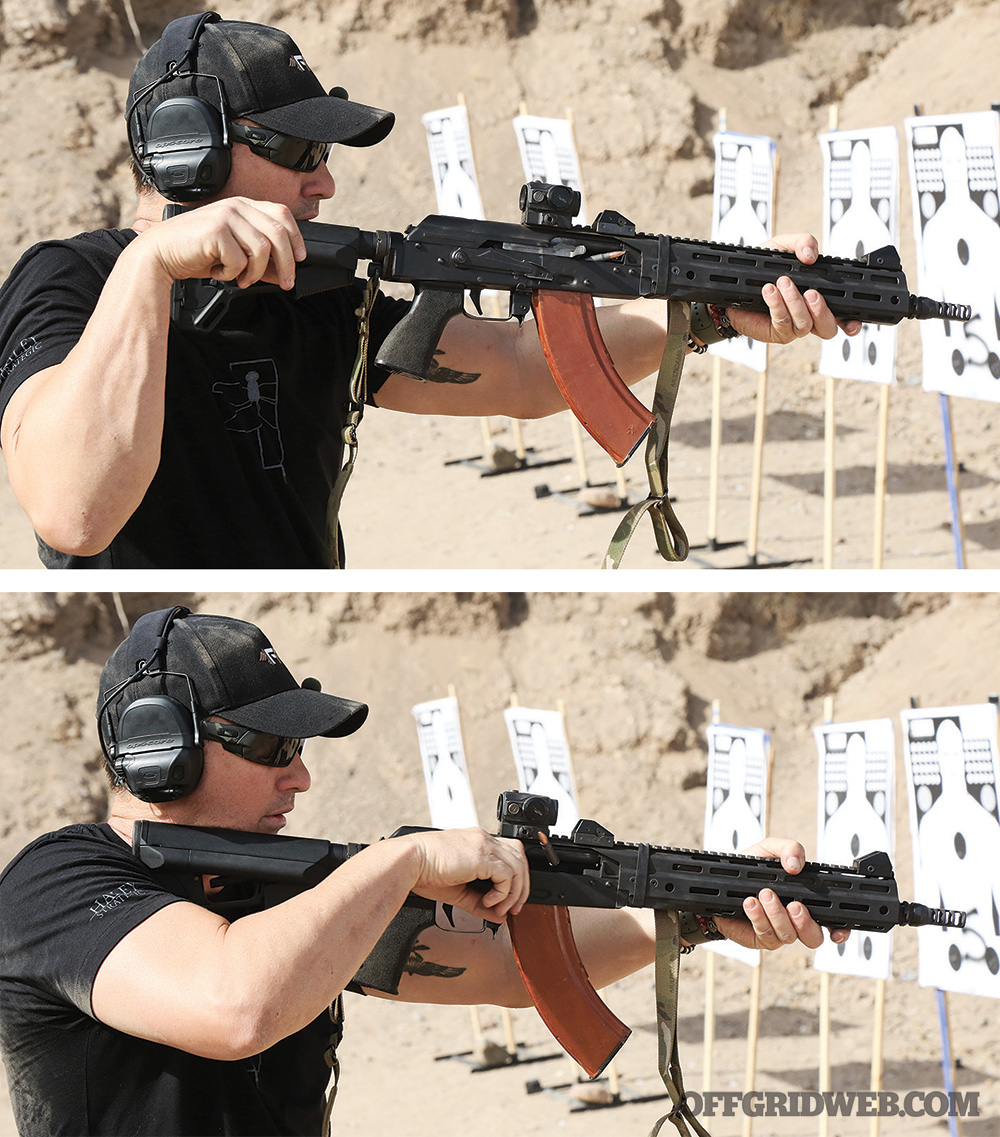
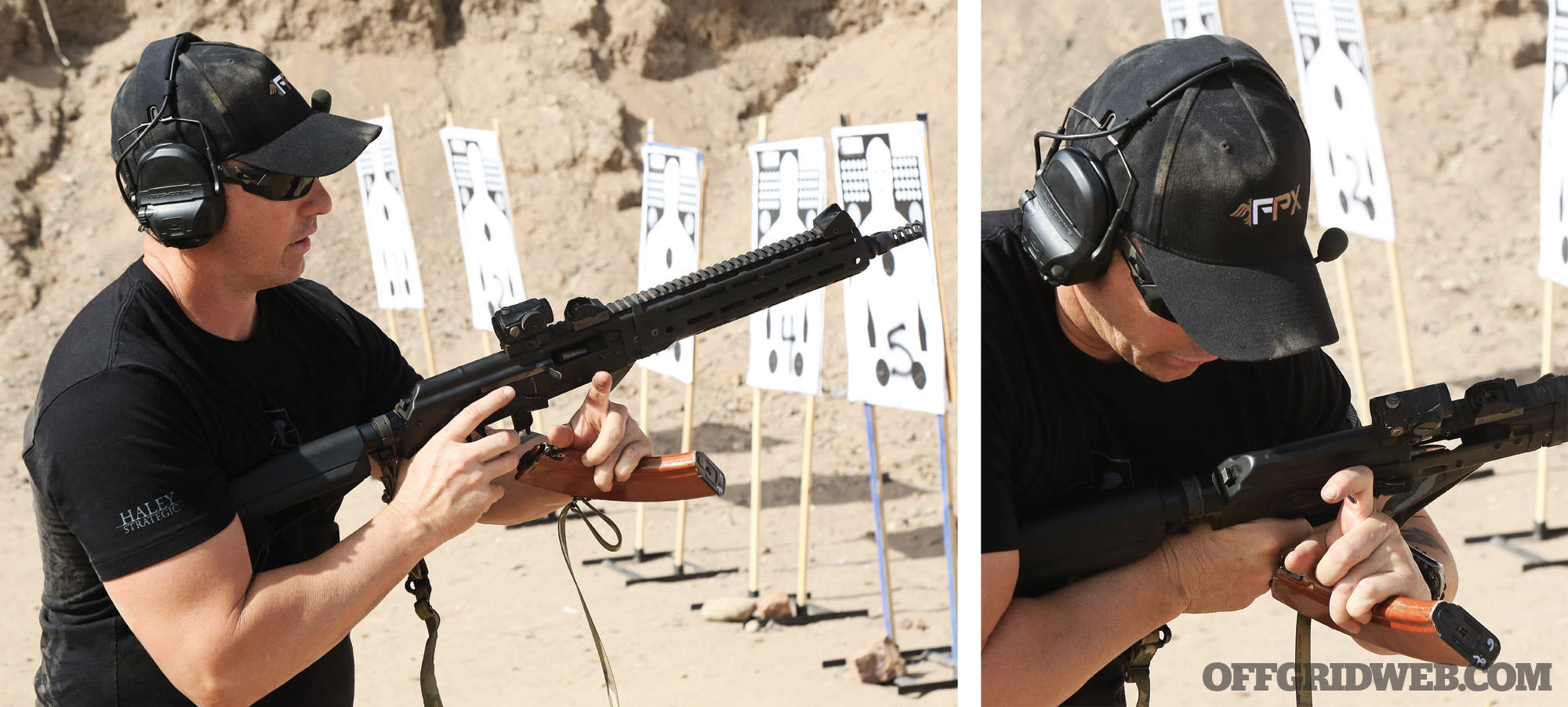
The most popular method is probably running your support hand underneath the rifle, in front of the magazine and racking the bolt that way. Alternately, you can reach over the top of the receiver and run the bolt with your support hand. If you’re running a classic iron-sighted AK, or one with a forward-set optic (rear sight rail, as seen here, or on a railed gas tube), then whether you reach under or over the receiver is largely personal preference. But if you use the side-rail optic mount or a railed top cover to mount your optic further back on the rifle, that placement may interfere with your ability to reach over the top.
Left: Segraves rolls the rifle left to run the charging handle from above. Right: Reaching underneath is one of the most common ways to run the charging handle, especially on AKs equipped with optics.
There are variations on both of these techniques that involve rolling the entire rifle 90 degrees left or right. This orients the charging handle straight up or straight down. While this might make the charging handle more accessible, since you’re not wrapping your support arm completely over or under the receiver, you have now introduced additional motion that requires moving both hands simultaneously (roll the rifle with strong hand, run the bolt with support hand) without reducing the amount of work your support hand already had to do. The cadre at Haley Strategic makes a point to emphasize biomechanical efficiency, as “going faster” is directly related to economy of motion. Therefore, rolling the rifle — while demonstrated — wasn’t prioritized in training. In fact, reaching underneath the rifle was our method of choice; it seemed to work consistently for the widest array of rifle setups without adapting or modifying the technique itself.
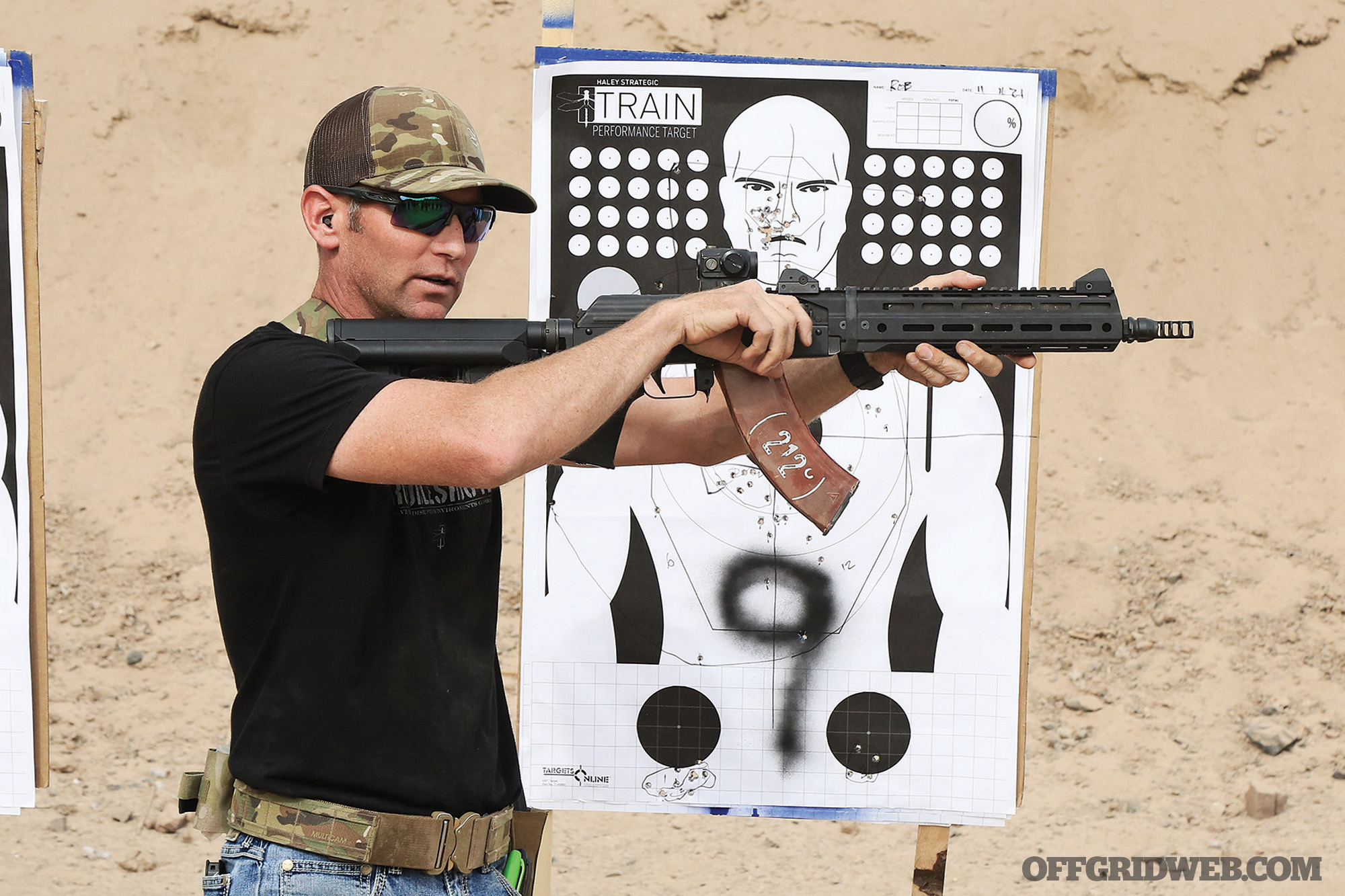
Above: Some users prefer to keep the support hand on the rifle and move the dominant hand to the charging handle. This offers the advantage of maintaining a constant sight picture.
Finally, there’s a third method: removing your strong hand off the pistol grip to rack the bolt while holding the rifle up with your support arm. Most Western schools of thought on running any type of defensive carbine recommend you minimize the number of times you remove your hand from the master grip. But it’s an option worth considering, and one that’s reportedly more common among Russian and Eastern European users. The upside to this technique is that it allows the shooter to maintain a continuous sight picture and shouldered position while charging the AK, much like one would while operating a bolt-action rifle.
Reloading an AK
Between ARs and AKs, there are two primary differences in reload management: You cannot reach the magazine release with your trigger finger, and you cannot insert magazine straight into the receiver – mags must be rocked in and out.
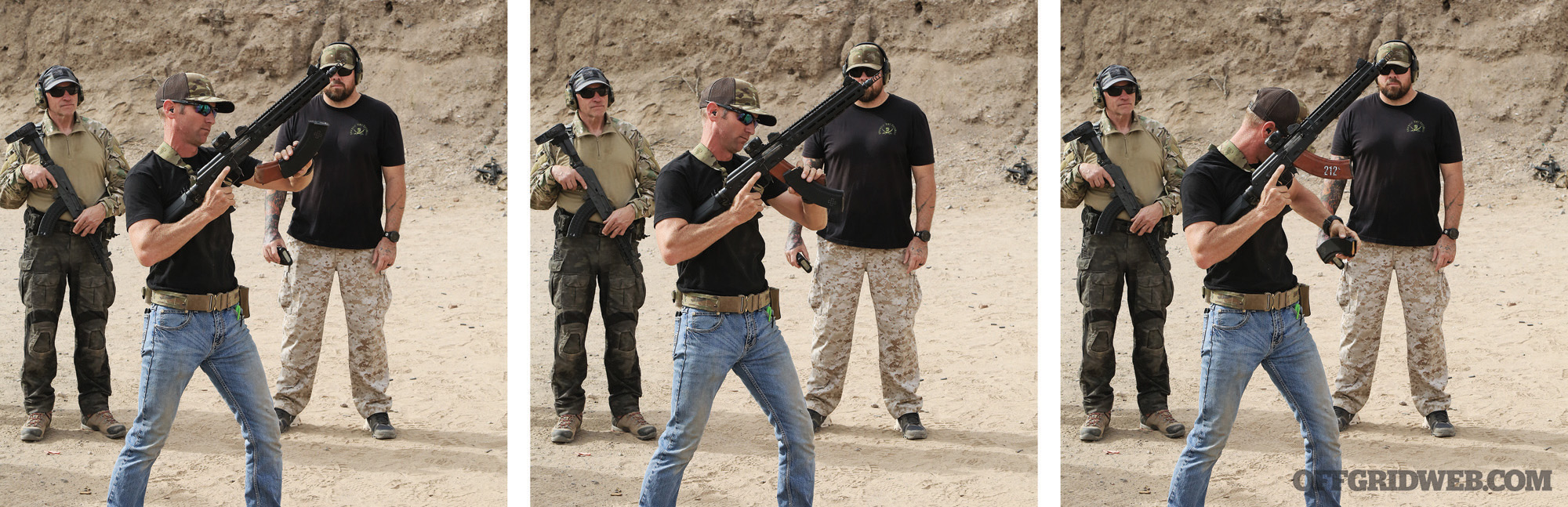
Above: Reloading the AK while retaining the (partially) spent magazine.
Reloads WITH Magazine Retention
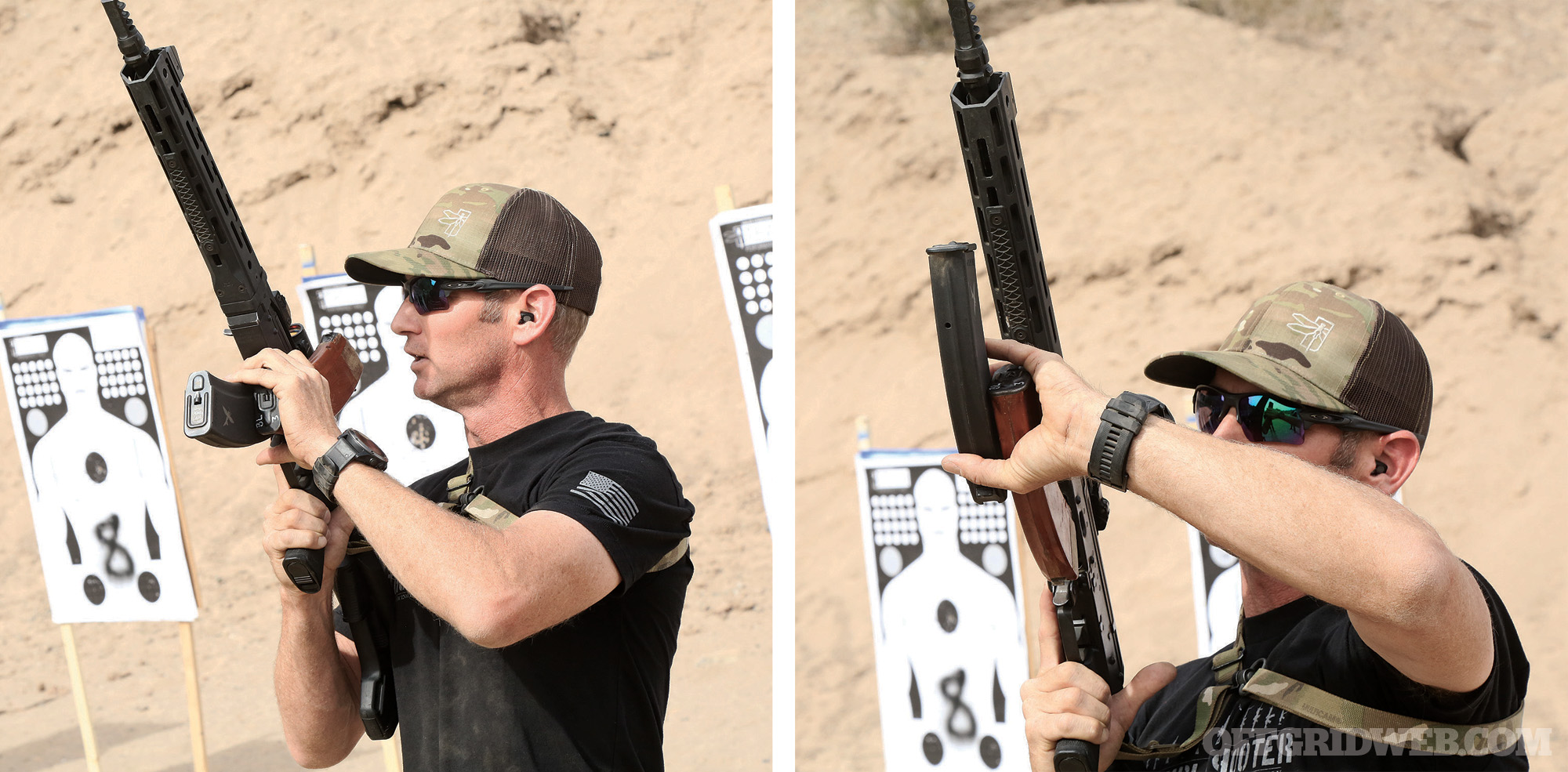
If you want to keep your magazine, say in the case of a tactical reload, the traditional V- or L-shaped reloads you may have learned on an AR will not work here. You’ve got two basic options. The first is to completely remove the magazine from the gun by itself. Grab the mag high and, in a beer-can grip, press the magazine release tab with your thumb, rock the mag forward and down. Stow it in a dump pouch, mag pouch, or pocket. Grab a fresh mag, rock it in front-to-back. If consistency across multiple weapon platforms is your jam, or if you already use a “grip-and-strip” method on your AR, this is the way to go. The changes are minimal, and only to accommodate the mechanics of the rifle itself.
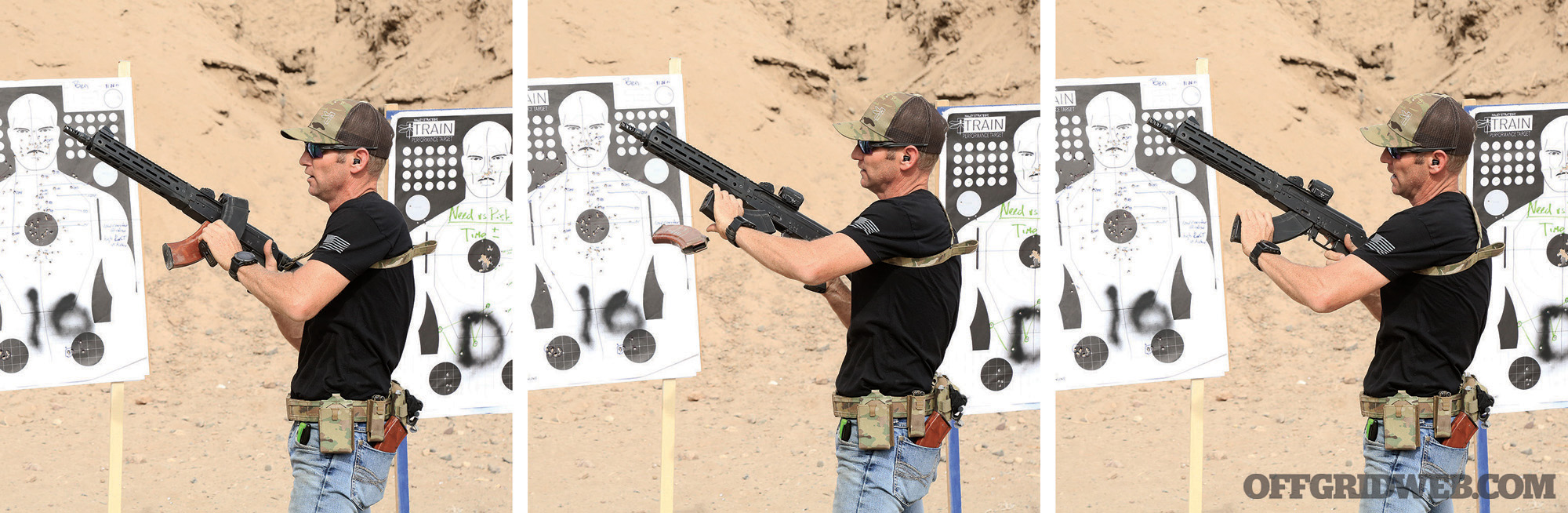
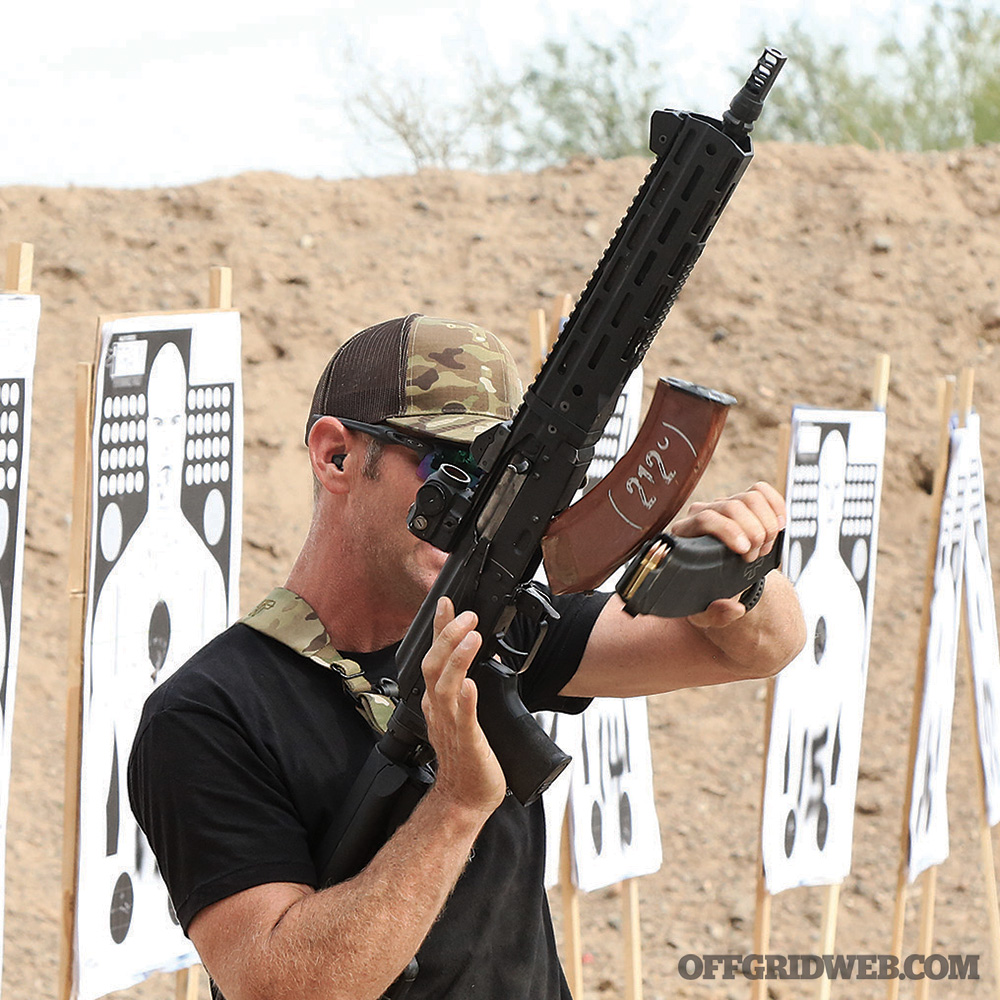
The other technique is to remove your new mag off your kit first. Then, when you bring your fresh mag up to the rifle, pin it to the left side of the receiver and get your digits around both the reload and the magazine currently in the gun. Pop the release tab with your thumb. Rock the mag out of your gun, move your hand to position the new mag underneath the gun, and click it into place. Slide the partial (or empty) mag you just removed off the fresh reload, keeping it in your grip the whole time, and stow it. This may be faster if trained sufficiently, but requires a baseline of hand size and manual dexterity to execute effectively.
Reloads WITHOUT Magazine Retention
If you’re not concerned with retaining the magazine, both of the above-listed methods work almost the same. The only difference on the second method would be to bring the magazine alongside the receiver and, when you hit the release tab with your thumb, just follow through another inch or so to knock that mag out so it falls free. Then, insert your new mag.
Above: When it’s not necessary to retain a magazine (i.e. an emergency reload), simply extend the thumb to press the magazine release and knock the empty mag out of place.
There is, of course, the method made popular by social media and tacticool AK operator internet videos: drawing a fresh mag off your kit, turning it sideways, and using the front edge of the magazine itself to hit the release tab and fling the empty mag out of the gun. We admit, it’s got style points. But those points are gained entirely out of context. According to the cadre at Haley Strategic, this method was actually developed for Russian troops fighting in extreme cold weather conditions — typically while wearing “half mitts” with independent thumb and trigger fingers, and the remaining digits bound up in true mitten style. With this reduced dexterity, using the magazine as a reload tool made sense. But it’s not particularly efficient from a biomechanics standpoint. Also, the effectiveness of this move could be influenced by the size, shape, or quality of construction of your magazines or your magazine release tab. As cool as it might look, executing a smooth and efficient reload to get back on target quickly will always be cooler.
Above: The now-famous method of using your full mag to eject your empty one came from Soviet troops in cold weather wearing arctic mittens.
AK Malfunctions
Despite what you may have heard anywhere ever, the Kalashnikov is, in fact, capable of malfunctioning (gasp). But, if built to proper specifications, it’s a pretty rare occurrence.
In addition to the rugged simplicity and relatively loose tolerances of the system itself, the 7.62x39mm’s full-taper case geometry aids in reliability by minimizing the possibility of a stuck case — whether through swelling or debris in the action. Most of the common malfunctions we’ve run across tend to be magazine related. Sometimes the issue is the magazine itself, especially if you’re shooting from the prone position in a dusty environment as we did. Muzzle brakes kick up a lot of dust, and it gets everywhere. Other times, the magazine well or magazine locking latch isn’t properly sized. In the latter case, the magazine hangs so loosely inside the well that rounds may not be lined up properly with the chamber. If you lock a magazine into your AK and it wobbles side-to-side a little, that’s usually acceptable. But if it wobbles front-to-back, keep a close eye out for feeding issues. In terms of remedial action for malfunctions, the process — like all things AK — is simple. As opposed to AR malfunction procedures, which tend to be taught in a “if this, do that” format, there is exactly one malfunction procedure for the AK platform:
Run the charging handle
Press the trigger
If that doesn’t fix it …
Remove magazine
Run charging handle
Reinsert magazine
Run charging handle
Press trigger
The process is even further simplified by Haley Strategic instructor Jared Segraves, who reminded us that, when all else fails: “Just unload the gun, then reload the gun.” With approximately 20 students over three days running 1,000 rounds each, we didn’t see any malfunction that wasn’t remedied by this procedure.
Above: Travis Haley demonstrates AK malfunction clearance.
Lessons Learned
After three days and 1,000 rounds through my test rifle, I also came away with some lessons about how my specific rifle was configured and made some changes to integrate said lessons.
The biggest issue I had was with the handguard. The Sureshot Armament system worked great, but the version I ran was their shorter “4-slot” Mk1 handguard which is designed to work with a standard AK handguard retainer. The handguard itself held up fine, even through back-to-back runs of rapid-fire drills. But the handguard retainer heated up to the point where, even with gloves on, it became too hot to keep a hand on that portion of the front end. Fortunately, the solution was fairly easy. The Sureshot Mk1 is also available in a longer “5-slot” model that provides another row of usable M-LOK slots at the so-called cost of cutting off the handguard retainer. A Dremel tool and cutting wheel made quick work of the retainer, and swapping the four-slot for a five-slot lower handguard was a matter of a couple screws and locking tabs.
Switching to the slightly longer Sureshot USA Mk1 handguard (pictured below) gave us more usable rail space and allowed us to ditch the handguard retainer, which acted as a heat sink.
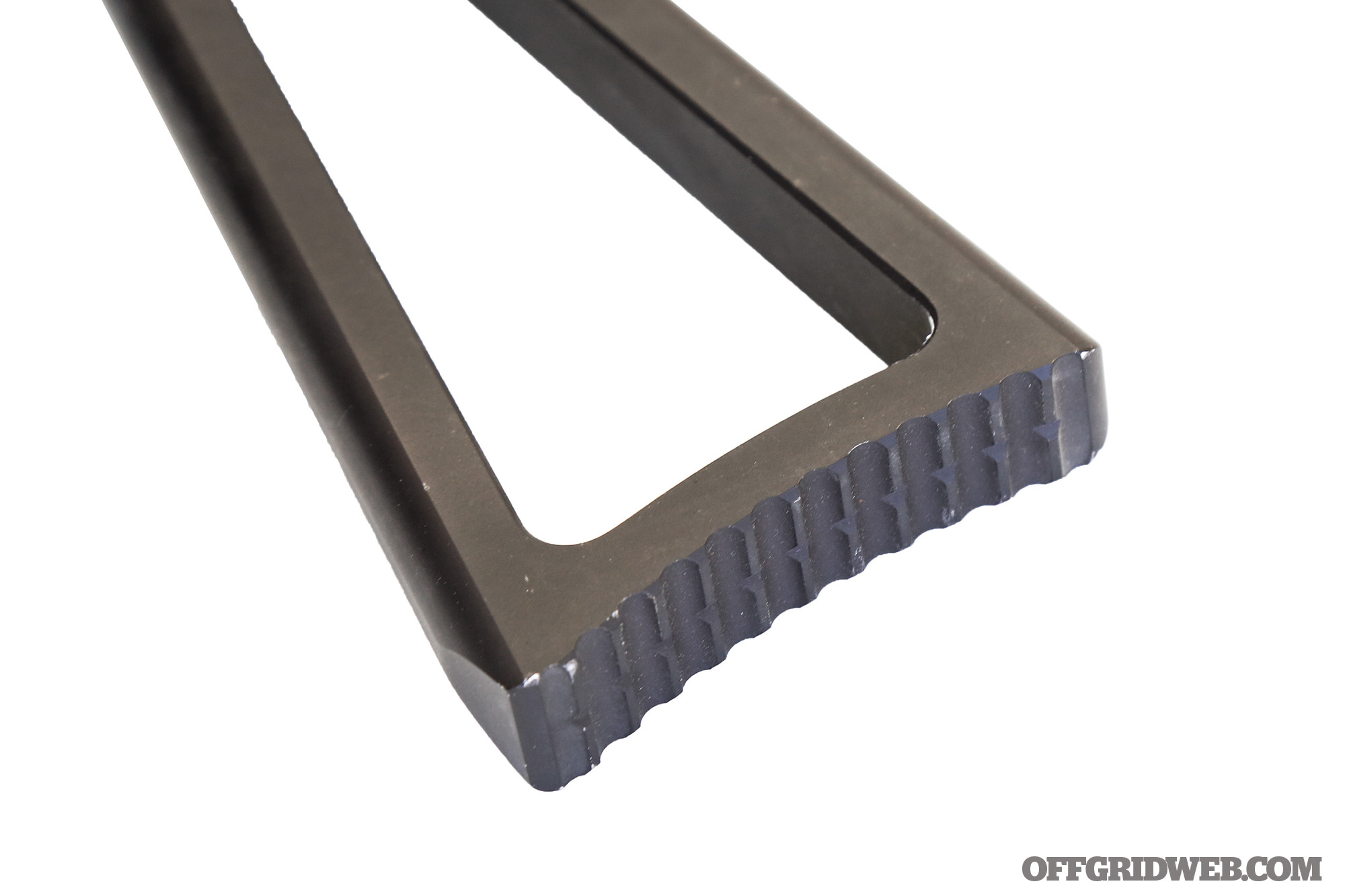
The only other “issue” we ran into was with the CRH stock. Again, we want to clarify that it functioned fine. There was no rattle or flexing in the stock during our range time. But the high volume of fire made the all-metal stock with machined-in tread pattern on the butt pad somewhat uncomfortable to shoot, even with the light-recoiling 5.45mm round. This is, of course, a matter of personal preference. We’d still recommend the CRH Fixed Triangle for anyone who’s interested in it, but be mindful that it won’t baby your shoulder if you run your AK hard and do so often.
Above: The CRH stock features a deep-cut tread pattern.
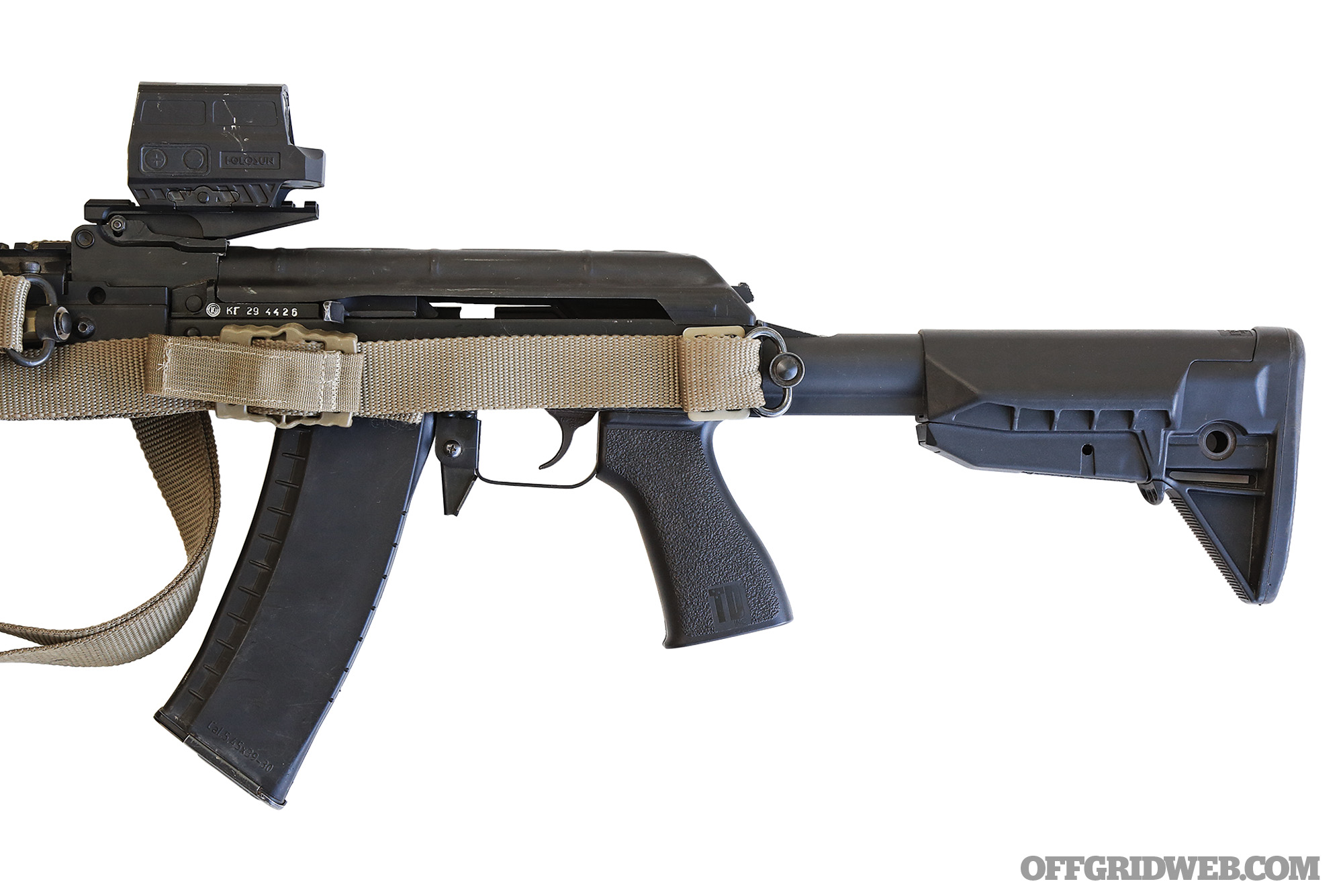
For those interested in more adjustability or flexibility on the back end, we also experimented with a VLTOR RE-5 tube extension, capped with a BCM Gunfighter butt stock. While not as svelte as the CRH, the thick recoil pad on the end of the BCM stock was a little comfier to shoulder during extended range sessions. This combo adds some length and bulk to the end of the gun compared to the CRH option, but individual needs and preference will help you make your stock selection.
Above: An AR-style stock adapter offers extra adjustment if preferred.
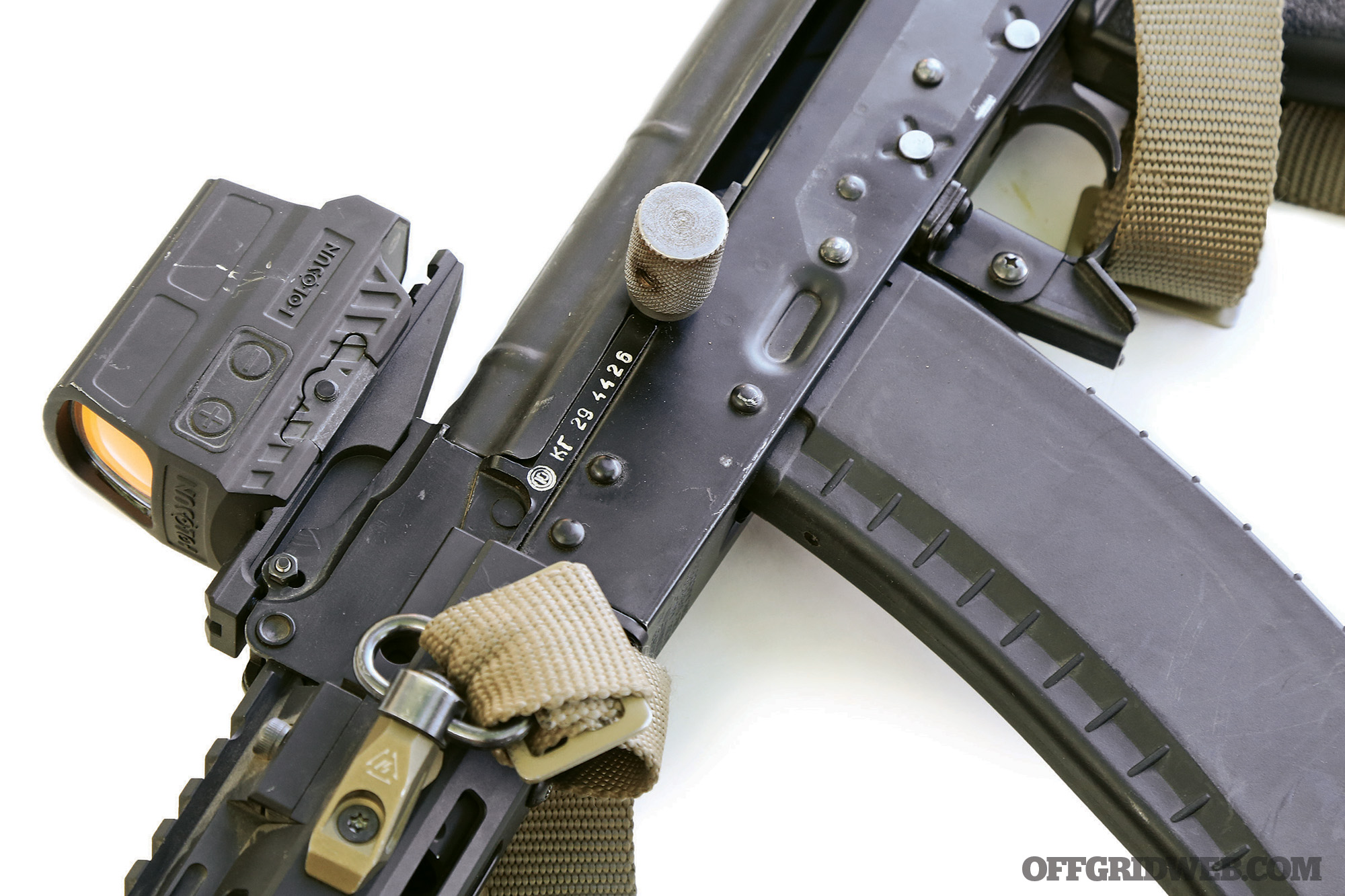
Finally, we removed the extended charging handles on our ambi Lightning Bolt. While the knurled, screw-on sleeves did give us some extra purchase during fast reloads, we found that our slow-fire groups were significantly larger than we thought they should be — about 4 to 5 inches across at 50 yards. Even for an AK, that’s a problem. Especially when our “groups” were essentially lateral strings with no vertical dispersion. Fortunately, Jim Fuller happened to be on the range and ran down some basic diagnostics with us. The end result was realizing that our particular 74 has some pretty loose tolerance between the bolt carrier and receiver rails. So, the extra weight of the oversized charging handle knobs was creating a significant amount of left-right play in the BCG as it cycled. As soon as we removed these, our groups shrunk to a much more respectable 1.5 to 2 inches across at 50 yards.
Above: Strike Industries’ rear sight rail allows a more head-up shooting stance.
Everything else withstood the crucible of Haley’s D5 Kalashnikov course, and the rifle remains otherwise unchanged aside from these two plug-and-play parts swaps. Not only was I extremely satisfied with this rifle build, but I also came away from the Haley Strategic class with a deeper, more nuanced understanding of the peculiarities of running an AK-style rifle as a primary duty weapon. Whether you intend to run an AK as your primary survival rifle or just want to learn how to handle the rifle most common to America’s enemies, we highly suggest investing in some specific training, and the Haley D5 AK course is one of the best options we know of out there. The Kalashnikov platform is rugged, reliable, easy to operate, and commonly found all around the world. If you don’t have one in your armory, consider getting one and learning how to operate it properly. As always, forewarned is forearmed.