Home Blog Page 94

Lessons Learned from a Diver Stranded in Open Ocean

0

Of all the environments on earth, what’s the most difficult to survive in? The open ocean is easily near the top of the list, especially if you’re facing it alone and with limited resources. Unless you brought it with you, there’s no shelter from the elements, no means of making a fire to stay warm, and most importantly no readily-accessible drinking water. You’re totally exposed to wind, rain, waves, the harsh sun, and predators, and it’s difficult for rescuers to spot you . The absolute worst-case scenario is to be up against all this without even a raft to float on, and that’s the exact scenario one diver faced off the coast of New Zealand. His story was recounted in a 2017 article in the Diving and Hyperbaric Medicine Journal, and there are some lessons this situation can teach us about survival at sea.

In February 2006, Robert Hewitt was diving for crayfish 500 meters off the coast of Mana Island near Cook Strait, the 14-mile-wide strait that separates the main two islands of New Zealand. Hewitt was an experienced Navy diver, so after his dive buddy had to surface prematurely near the end of the day, he continued to dive alone rather than cutting his trip short and returning to the host boat immediately.

While pursuing a crayfish, Hewitt inadvertently swam into a strong rip current that carried him far away from the boat. By the time he made it back to the surface, he could barely see the vessel. He was stranded in open water with no way to signal for rescue or swim back to shore, and the current was swiftly carrying him out to sea. The crew contacted the coast guard as soon as they noticed he was gone, but he would remain in the water for a grueling 75 hours before rescuers found him.

The water temperature was a chilly 61°F (16°C), so Hewitt was wearing a custom-fitted 5mm wetsuit with hood and gloves. He had no drinking water, but was able to eat a crayfish and some sea urchins, foods which are high in water content. When it rained, he removed his mask to catch small amounts of moisture. To limit loss of body heat, he curled his body into the fetal position, also known as the heat escape lessening posture (HELP). However, by the time he was rescued he was nearly hypothermic and hallucinating from severe dehydration. On one especially horrifying note, the study reports that his body was also “covered with sea lice feeding on his macerated skin.”

Hewitt’s substantial experience as a diver helped him stay calm enough to take the aforementioned steps to slow his rate of dehydration and core heat loss. His fitted wetsuit aided in withstanding the cold somewhat, but his 220-pound build and years of physical conditioning in cold water were also key factors in why he survived as long as he did. Perhaps most importantly, he kept his mind active and stayed positive, reciting prayers and making mental lists of all the things he wanted to do once he made it back to shore. The Diving and Hyperbaric Medicine Journal article concluded that “a combination of his experience, physical characteristics, equipment, actions, psychology and luck helped him to survive.”

On the other hand, Hewitt’s experience may have contributed to the disaster by making him overconfident in his safety. Looking back at the situation, local authorities felt that his decision to dive alone rather than joining another dive team or surfacing immediately “almost contributed to his own demise.” This is an important lesson for us all — no matter how much time you’ve spent in an environment, always have plans to signal for rescue and don’t allow yourself to be lulled into the dangerous it’ll never happen to me mindset.

The following dramatization from I Shouldn’t Be Alive includes footage of Hewitt recounting the events that unfolded in 2006:

What If You’re in a Hostage Situation?

0

Illustrations by Cassandra Dale

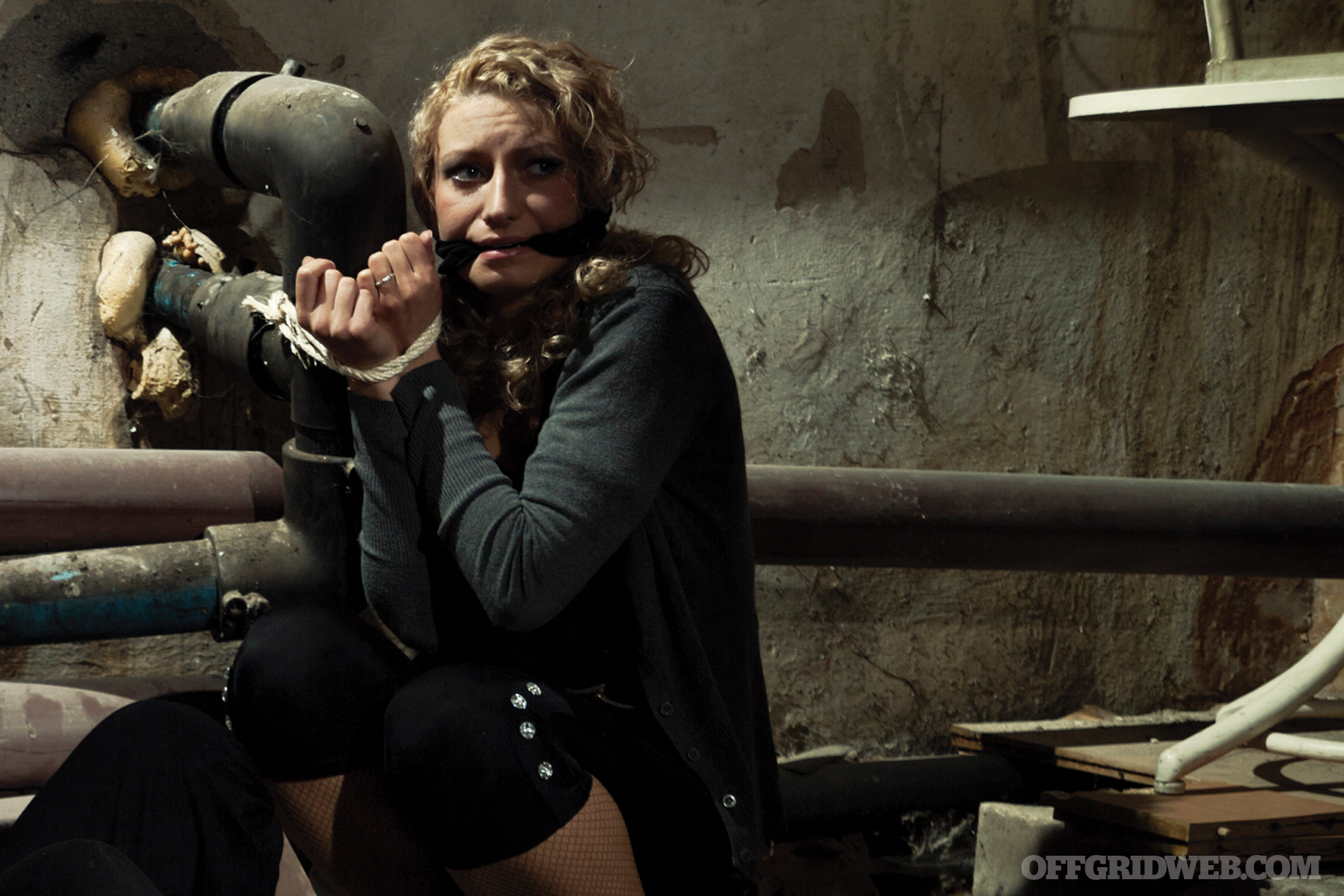
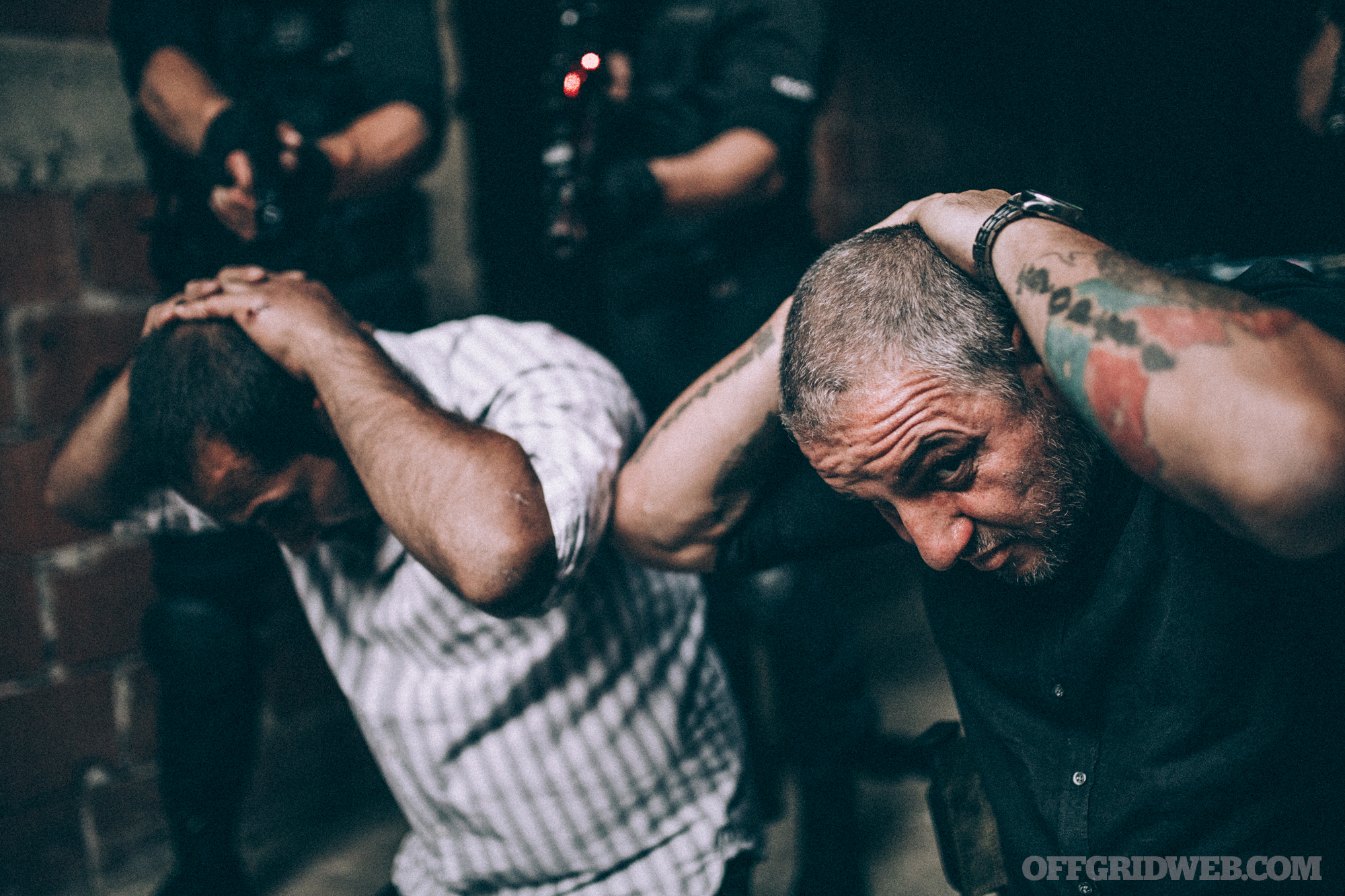
So much had changed in just one minute. The look on my wife’s face had turned from beautiful and bored to truly terrified and alert. A man lay dead on the floor, and the murmur of many people chatting had been replaced by the tumult of gunfire and screaming. A dozen questions struggled for the limited attention my mind could give them. Why had these men burst into our conference? Why were they restraining some people and killing others? What could I do to save my wife?

After being herded together like cattle, my mind began to go numb. The number of questions had settled down from so many to just two. “Why?” was the first thought, although knowing why this was happening didn’t serve much purpose in the moment. The second question was the one that really mattered. “What am I going to do?” It was looping in my head, and I was running out of time to answer it. The men had almost reached us, binding nearby hostages with zip ties and duct tape. What should I do? I was out of time to decide.

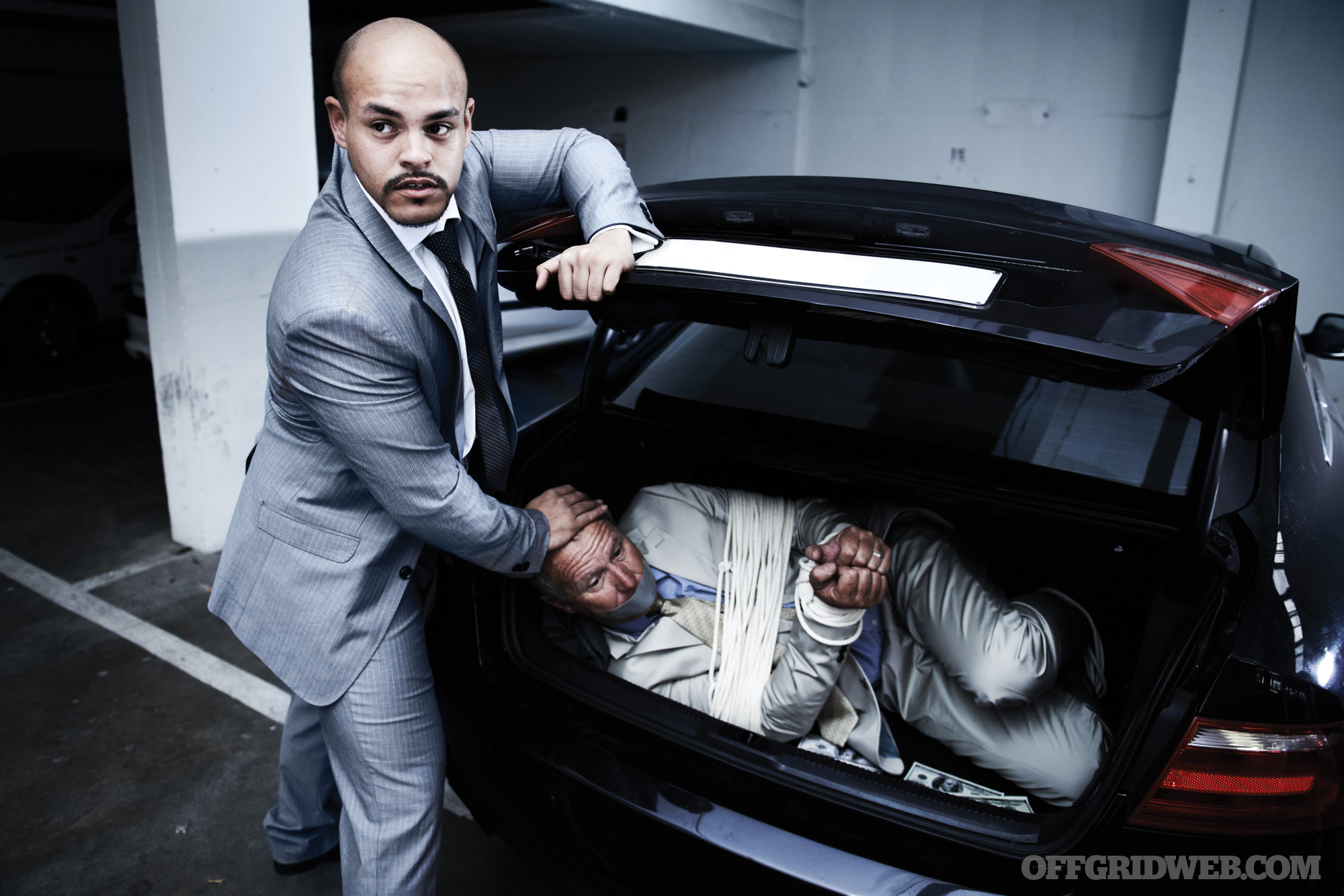
In this RECOIL OFFGRID “What If?” column, we go out of the frying pan and into the fire of a violent hostage situation. To make matters worse, we’re not on our home soil; we’re in another country with a different way of handling this kind of crisis. For this “What If?” we’ll explore some precautionary plans and actions we can take before traveling overseas. We’ll also learn about a few “safety nets” for U.S. citizens abroad. Finally, we’ll look at some strategies to stay alive in a hostage situation. So much can change in a short period of time. When it happens, will you be ready for it?

The Scenario

Situation Type
Hostage situation

Your Crew
You and your wife

Location
Hotel, coastal city in the Balkans

Season
Summer

Weather
Warm; high 88 degrees F, low 62 degrees F

The Setup: You work for a renowned finance company with holdings and offices all over the world. Your travels often take you overseas to consult with wealthy clients. Recently, you were invited to a conference at a five-star hotel in Southeastern Europe, specifically the Balkan Peninsula, to discuss the economy and advise on international holdings. The event is taking place in a city that’s a common tourist destination because of its picturesque beaches, so you decide to stay a little longer and make it a bit of a vacation. You bring your wife along as well, and plan for her to spend most days sunbathing at the beach and enjoying the local amenities while you’re at the conference. Although you’ve visited the area before, you’re not fluent in the native language, but are somewhat familiar with the instability and strife the region experienced after the fall of the Soviet Union.

As an experienced traveler, you do your due diligence to research any recent advisories on the State Department website, providing an itinerary to family members back home to make them aware of your travel schedule, flights, and overall agenda. You’ve also provided your contacts back home with a list of whom to call if trouble of any kind breaks out while you’re away, instructing them what to do if they don’t receive periodic status updates from you. The conference is expected to have over 250 visitors, many of whom are well-known within the investment industry as wealthy individuals, hedge fund managers, and financiers.

The Complication: The first day of the conference is a networking breakfast in the main ballroom on the ground floor where all the attendees get to mingle for a while before the keynote speaker takes the podium. You and your wife are socializing with some of the other attendees when you hear some commotion coming from the lobby immediately outside the conference room. You also notice two of the waiters look at each other and nod, before closing the double doors at either end of the room. While they both wait with their backs against the doors, you see one pull up his vest and remove a pistol from his waistband. He quickly hides it behind his back and glances around the room, a look of intense determination on his face.

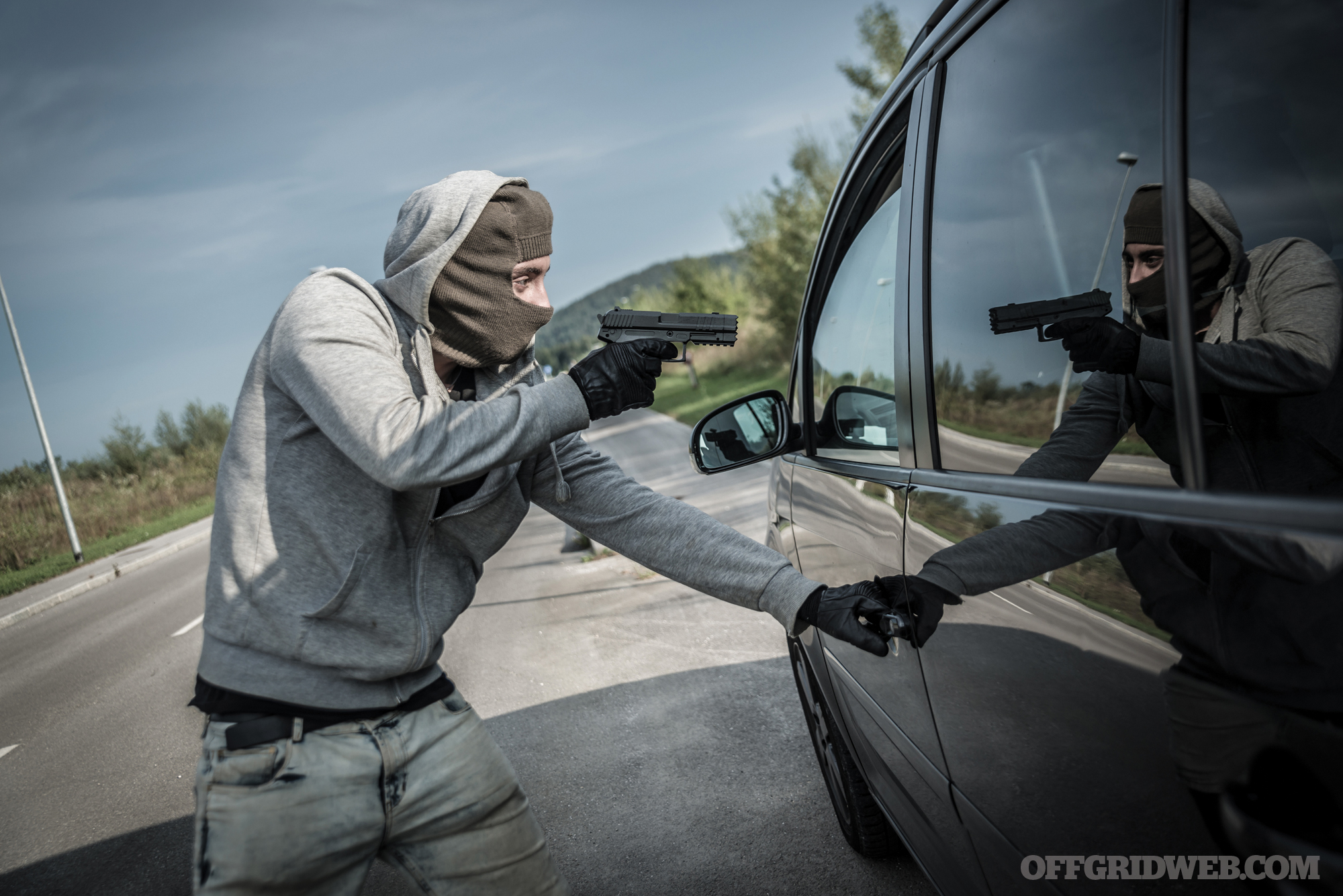
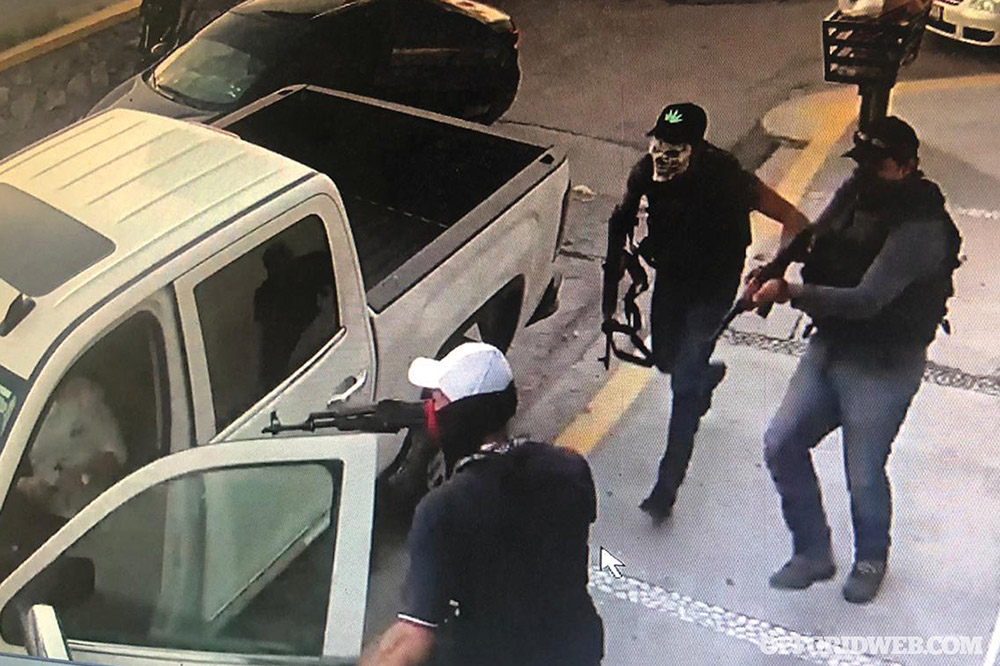
As you’re about to say something, the other individual dressed as a waiter fires a gun into the air. Several members of the crowd scream, but the only escape route is blocked. One of the waiters opens the door and lets in half a dozen masked men holding what appear to be AK-47s. You can hear more commotion outside, but you can’t exactly discern what’s going on. As the armed men burst into the room, the door is locked again, and several of them start ushering the crowd into the dining area while shouting commands in broken English.

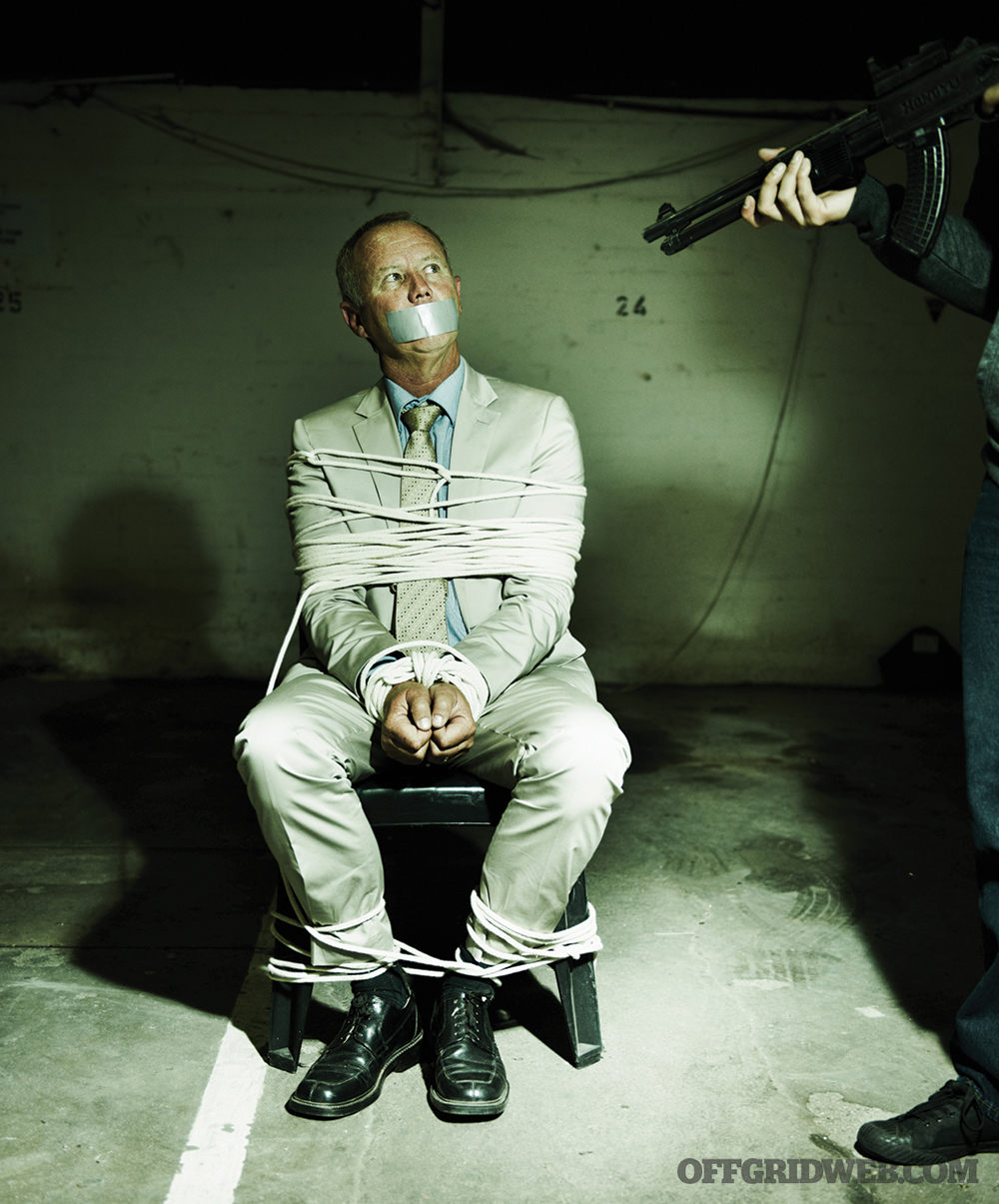
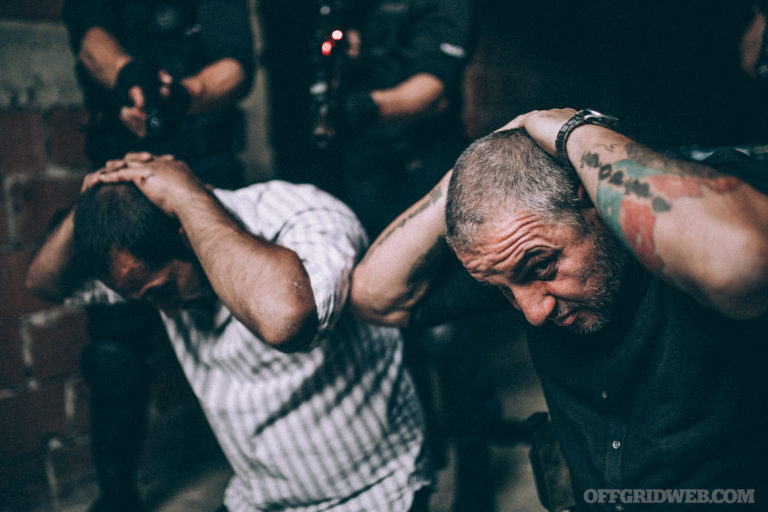
Everyone is herded into the dining area and told to get down on their knees and to place their hands behind their backs. As other men take positions around the perimeter of the crowd, several start zip-tying people’s hands and applying duct tape over their mouths and eyes. You hear one of the assailants ask a fellow attendee what his name is. The attendee responds with profanity and is promptly shot in the head. The crowd again screams while another assailant shouts, “Shut up and do as we say, or you’ll end up like him!”

As you look in stunned silence at the lifeless body, you see the shooter pull out his wallet, look at the ID, confiscate his phone, and hand it to the man behind him, who puts it in a duffel bag. As they bind and blindfold the attendees and work their way toward you, you scan the perimeter of the room. There are no exits except the ones being blocked. Wallets, purses, briefcases, and phones are being confiscated and examined as each individual is approached. You recognize one man as a wealthy Swiss banker you’ve dealt with before as the kidnappers approach him. As they look at his ID, one of the kidnappers nods to another — then they drag the man out of the room. You aren’t sure if this is a terrorist situation, a hostage ransom, or something else entirely. As the captors make their way toward you and your wife, you gingerly feel the outline of your small knife in your pocket, but you don’t have any other defensive tools, what do you do?

Trained Negotiator Kris Southards’ Approach

Preparation

It’s been said that success is in the details. It’s also been said that a plan is just a list of things that aren’t going to happen. So you plan with high hopes but, in a situation like this, realize that you’ll probably have to improvise. A lot.

Upon receiving the invitation to attend the financial conference on the Balkan Peninsula, I’d begin my pre-trip preparation. This includes reviewing not only the business aspect of the trip, but also the additional personal time I intend to take with my wife.

In this case, the venue is very nice and in close proximity to shops, restaurants, and the beach. So we decide to stay at the venue site, which would also facilitate opportunities to network after hours. However, if the town/province/village where the event lodging is located appears to be in a dodgy area, I might consider making my own lodging reservations. I’d try to research the venue itself as well as the immediate area to see if past travelers report anything untoward — shake-downs by the police, items missing from their rooms, and so forth.

This type of conference is ordinarily attended by a select group. Knowing who else will be there ahead of time is valuable intelligence. Equally important is who isn’t going to be there. A collection of powerhouse personalities, or the conspicuous absence thereof, could impact how newsworthy the conference will be, which in turn affects how much outside interest it might provoke. This could be used to gauge the likelihood of intervention by the locals, whether through public protests or a bona fide threat to the event or its attendees. A review of foreign and domestic news sources in the days or weeks leading up to the conference could give an indication of possible disruption. If no alarm bells sound, or if they’re at least muted, then it’s on to the next phase.

Once I had a handle on the venue itself and the immediate area, I’d begin broader preparations. This would include checking the weather forecast for the region, as well as paying a visit to the State Department website to check for any advisories for the area and surrounding countries. The CIA also produces the World Factbook. While it won’t have late-breaking information like the State Department’s travel advisories, it contains useful information like the address of the embassy/consulate, primary languages, predominant religions, and small facts about local customs and courtesy. I might also run some Internet searches to figure out if there are well-developed criminal or terrorist organizations operating in the area.

Additionally, I’d check to see if there’s a U.S. Consulate or other governmental presence in or near the venue — “near” meaning you could walk there in an hour or less. If not that close, I’d want to know how far I’d have to travel to reach U.S. soil and what my options are to get there. If I didn’t have a rental car, I’d keep enough cash in reserve to take a taxi or bus to get me within walking (or running) distance of the embassy.

I’d make some predeparture lists for myself, including what clothes to pack; notes on exchanging currency; what personal security equipment, if any, could be taken and what electronic equipment to take.

I’d also make copies of my conference itinerary, and my wife’s intended day plans, and leave them with friends or family for safe keeping.

I’d establish a contact schedule that includes going over possible emergency code text messages with my wife, assistant, and best friend. The emergency codes would be simple three- or four-character text messages conveying the type of emergency, which dictates who should be contacted, i.e., the State Department, local authorities, boss, or family members. The presumption here is that I’d have little time, opportunity, or inclination to type a lengthy narrative via text.

When finalizing my reservations, if possible, I’d request a room no higher than the local fire engine ladder can reach. If not sure what that is, I’d request a ground or first-floor room.

On Site

I’d try to arrive at the venue in advance to allow some time to stroll the facility and surrounding grounds. I could use this time to make note of emergency exits, windows that can be opened, security cameras, fire suppression systems, security staff, and demeanor of hotel staff as well as others staying at the hotel. Ideally, I’d map at least two exit routes each from my room, the lobby, and the conference room. Also, if there appear to be hiding places to potentially escape a crisis, I’d at least give them a cursory inspection.

Beyond what’s mentioned above, there’s little more to do in terms of personal security because the likelihood of being able to carry a firearm or wear John Wick’s bulletproof suit is about as good as the Titanic making it to New York. If local law permits a knife, I’d carry that. Barring that, there are any number of improvised tools to fill the void. Even in places where “weapons” are banned, getting your hands on a fruit knife or paring knife is probably pretty easy. Impact and stabbing weapons can be fashioned from all kinds of things. They’re not pretty, and they’d provide little chance against armed and organized assailants, but having something on hand is better than nothing.

The company is paying a substantial sum for me to be there and is expecting a return on their investment. Absent a clearly defined threat, the two of us are committed to staying a few days at a five-star resort. However, I could still be on the lookout for anything suspicious. For example, you should take note if a group of military-aged males check in with six hard-sided golf
bags when there’s no golf course within 100 kilometers.

Crisis

Upon noticing the wait staff engaging in what I think may be suspicious activity, I’d work to position myself between my wife and the questionable characters. If I felt it necessary, I’d tap her right wrist, our agreed upon signal for her to stay close. As the situation developed, I’d take advantage of that initial chaos to get my phone out and send one of my preprogrammed emergency texts to those trusted contacts back home. I’d make sure to clear the screen and delete the message out of my recent conversations bar.

While conventional wisdom says to get out of there immediately, I also wouldn’t have any idea what’s going on outside the doors and if the hotel had been completely taken over. Regardless, with the exits sealed, fleeing would no longer be realistic. Now it’s time to survive the next 15 minutes.

The commotion outside the door confirms that moving outside wouldn’t have led to a better outcome. The presence of multiple attackers armed with automatic weapons eliminates any realistic thought of active physical resistance. But even if escape and physical resistance are no longer on the table, there are still things you can do.

During the initial confusion when the hostage-takers are asserting control is the time to move deeper into the crowd and get near a table. I’d be looking carefully at how the hostage-takers disperse around the room, take note of who’s giving the orders and, if possible, who’s the most agitated.

Once the first attendee is killed, it establishes a precedent by the hostage takers that violence is an acceptable first-line response. At that point, trying to be an alpha dog is a certain path to suicide. This is an important thing to understand about your captors, and to understand it quickly. However, if simply murdering everyone was their intent, as was the case in Mumbai and Paris, they would’ve come in shooting indiscriminately.

The taking of the one individual could indicate this is a criminal venture, but that doesn’t necessarily change the circumstances for anyone else. While hostage response professionals prefer to deal with professional criminals, there’s no guarantee of a peaceful ending.

While the bind team is making its way through the crowd, I’d continue to tell my spouse to stay as close as possible, physically touching her if it can be managed. I’d also try to tell those around me to throw themselves on the floor if shooting starts and stay there until told to get up. Not all hostage rescue teams are equal, but most don’t shoot those laying still on the floor.

Once bound, attempting to break the zip ties is a nonstarter, unless I could do it without being noticed at any time or if I think things have gone so bad that physically fighting or running are the only choices left. Once bound, blindfolded, and gagged, the senses left are hearing, smell, and touch. I’d do my best to use them to try and track the movement of the hostage-takers and hear them speaking — even without understanding the local language, I could try to determine tone or urgency in their voices. I’d also try to sense changes in smell and vibrations through the floor. While the information gathered might have no practical use at the time, the better situational awareness I can maintain, the quicker I can respond when necessary.

In any hostage-taking scenario, once you’re through the first 15 minutes, it’s time to settle in and take a deep breath. The hostage-takers will have gotten through their initial adrenalin rush. At this point, it’s better not to give them any reason to pump back up.

In the immediate sense, all of the steps I took prior to the doors being blocked came to nothing except perhaps the emergency message I was able to send out and that I’m appropriately dressed for the season. Even if I still had a weapon or escape tools on me to break restraint, being under the constant watch of heavily armed men and surrounded by panicking people who will behave erratically in the face of a sudden disturbance, the idea of making a break for it, or trying to overpower the captors, is a losing proposition. What I could hang some hope on is that my distress signal was received back home and that my loved ones are reacting appropriately — passing all relevant information to U.S. officials.

How the situation is finally resolved is outside of my control. My survival is mostly outside of my control, except for the little things I was able to do before full lock-down. At this point, I have to remain calm and accept that I’ve done everything I can for the time being to give my wife and me the best chance of survival.

Survival Expert Tim MacWelch’s Approach

Preparation

During preplanning I’d definitely want to research any recent instances of crime, terrorism, kidnapping, or theft in the area I’d be visiting. A great place to start this research is the U.S. State Department website (www.state.gov). This site is packed with useful advice, current travel advisories, and general warnings about many countries. Most useful of all, the website can guide you to embassy and consulate websites that provide addresses and phone numbers for the nearest embassy or consulate in your destination country. You’ll want to have these phone numbers and addresses on a durable card or sheet as you travel, since these outposts are your best means of help if you’re an American citizen in a foreign land. Ask for American Citizen Services when contacting the Embassy or Consulate, and make sure you bring both the emergency phone numbers and non-emergency lines.

To limit risks while traveling, I’d prefer to stay at the hotel where the event was taking place. This would mean fewer trips around town and less movement. Before leaving, I’d also provide my travel details to my contacts at home. They should know my flight information, hotel address, and phone number, as well as information about any separate venues. This could all go to one person with whom I’d check in on a regular schedule, or my itinerary could go to several trusted people. We’d establish a “check-in” call or email schedule, and I’d leave instructions on what to do if I missed one or more “check in” calls. If I were concerned that my cell phone wouldn’t work there, I’d also consider communication redundancy (like bringing a satellite phone in case my cell phone couldn’t get through).

Since I can’t exactly fly around with a personal arsenal, it’d certainly be a challenge to bring anything substantial for self-defense. A belt with a heavy buckle can be used as a whip, and a tactical pen can be used for stabbing. In our scenario here, I have a pocket knife, but belts, pens, and knives are poor substitutes for firearms.

When it comes to preparing for the conference, it would be a smart move to research the venue before attending. This could make me aware of issues that could throw up a red flag. Similarly, I might try to get a list of the attendees and have a private investigator attempt to vet any of them for shady backgrounds, questionable business dealings, or criminal association.

On Site

Once we landed in the Balkans, I’d check in back home and choose a respectable-looking ride to the hotel. The two main protocols we’d establish for keeping safe during our stay would be to stay alert together. We’d also want to work hard at blending in with the local population. This may not be possible when you bear no physical resemblance to your foreign hosts, as there’s little you can do about being a head taller and a different complexion than the locals, but it’s still worth the effort to minimize how much you stand out in a crowd. One simple trick is to avoid wearing a backpack. While people all around the world use backpacks, it seems to be a common part of the “American tourist” costume. Carry your things some other way. Once we arrived at the hotel, I’d also take a good look around at the property — inside and out. It’s important to know where the exits are located and what your different options might be. Finally, I’d check out the venue where the conference would be held. I wouldn’t expect to see any “deal-breakers” for our safety, but I’d reserve the final say on our attendance (and not leave it up to my employers, who aren’t seeing the things I’m seeing). For example, a last-minute venue change and sketchy transport to the new location might cause me to skip the event.

Crisis

As soon as we’ve established that the crowd was being assailed and the situation was uncertain, I’d call the local U.S. embassy emergency line to communicate our distress. Even if I could only get in a few words in the time allotted saying that U.S. citizens were under attack at a specific hotel, it could start things in motion that would get the right professionals involved. I’d then leave the phone on and under the table so that they could continue to hear what was going on. At that point, compliance makes the most sense. One man had already been executed for mouthing off, and tensions are high on both sides of the situation.

Shortly after the initial conflict isn’t the right time to try to negotiate, fight back, attempt to bribe any of the assailants, or to try separating ourselves from the group. I’d encourage my wife to keep her head down and not speak or try to resist (there would be better times for that later). Compliance equals survival in the initial stages of violent hostage situations. We should attempt to remain compliant yet aware during the ordeal. Count the number of men, note all identifying traits — essentially become a good witness. Of course, I’d attempt to stick with my wife, but I wouldn’t expect it to go on that way indefinitely. Whether this event was a kidnapping for a ransom, or a politically motivated or terrorist attack, I’d bide my time before striking back — waiting until my captor’s guard is down.

I may be able to break my zip-tie restraints by reaching up high and then slamming my wrists down against my belly, or I may be able to pick it like a lock by finding something thin and hard to act as a shim under the locking tab. I’d also want to stay alert to Stockholm syndrome (also known as capture-bonding), which occurs in nearly 10 percent of multiday hostage scenarios. Named after a 1973 robbery in Stockholm, this event involved bank employees who became so attached to their kidnappers that they defended their captors even after they were freed. Sure, it’s possible that you could have mixed feelings toward your kidnapper when they provide food and drink or show their human side unexpectedly. But never forget that your captors are criminals who are denying your freedom. Keep your wits about you, pretend to be compliant, and maintain your watch for a set of circumstances that could allow attack and escape.

Conclusion

Despite our most meticulous trip planning, traveling abroad for business and pleasure can expose us to dangers we’d rarely face back home. That being said, our goal in this article isn’t to scare you away from travel or cause you to never leave your home, but rather to make you better prepared than you were before picking up this magazine. This situation could just as easily happen domestically.
Going on a big trip can be one of the most memorable times in your life, and with the right precautions (and some good luck), it can be filled with good memories. As you immerse yourself in different cultures and get away from your day-to-day routine, make sure you stay alert to your surroundings. Even in resort areas, which are usually safer than the surrounding areas, nasty things can happen. Sometimes, you just can’t escape your bad luck, but you can try to stay ahead of it. And whether you’re at home or abroad, count the exits and keep an eye on the front door wherever you go. If you have a response that’s a few seconds faster than everyone else, it might just give you the time to make a lifesaving decision.

[meetourpanel]

Gerber Armbar Pocket Multi-Tool

0

A folding knife is a great tool for every-day carry, but there are many tasks that a folding knife isn’t very good at. If you try to use your blade as a prybar, scraper, or screwdriver, it’s likely to become dull and may even break. It’s therefore handy to have a small multi-tool to fill in for these and other daily tasks, preserving the edge on your primary knife. Gerber recently released a pair of versatile multi-tools that are small enough to fit in any pocket: the Gerber Armbar Drive and Armbar Cork.
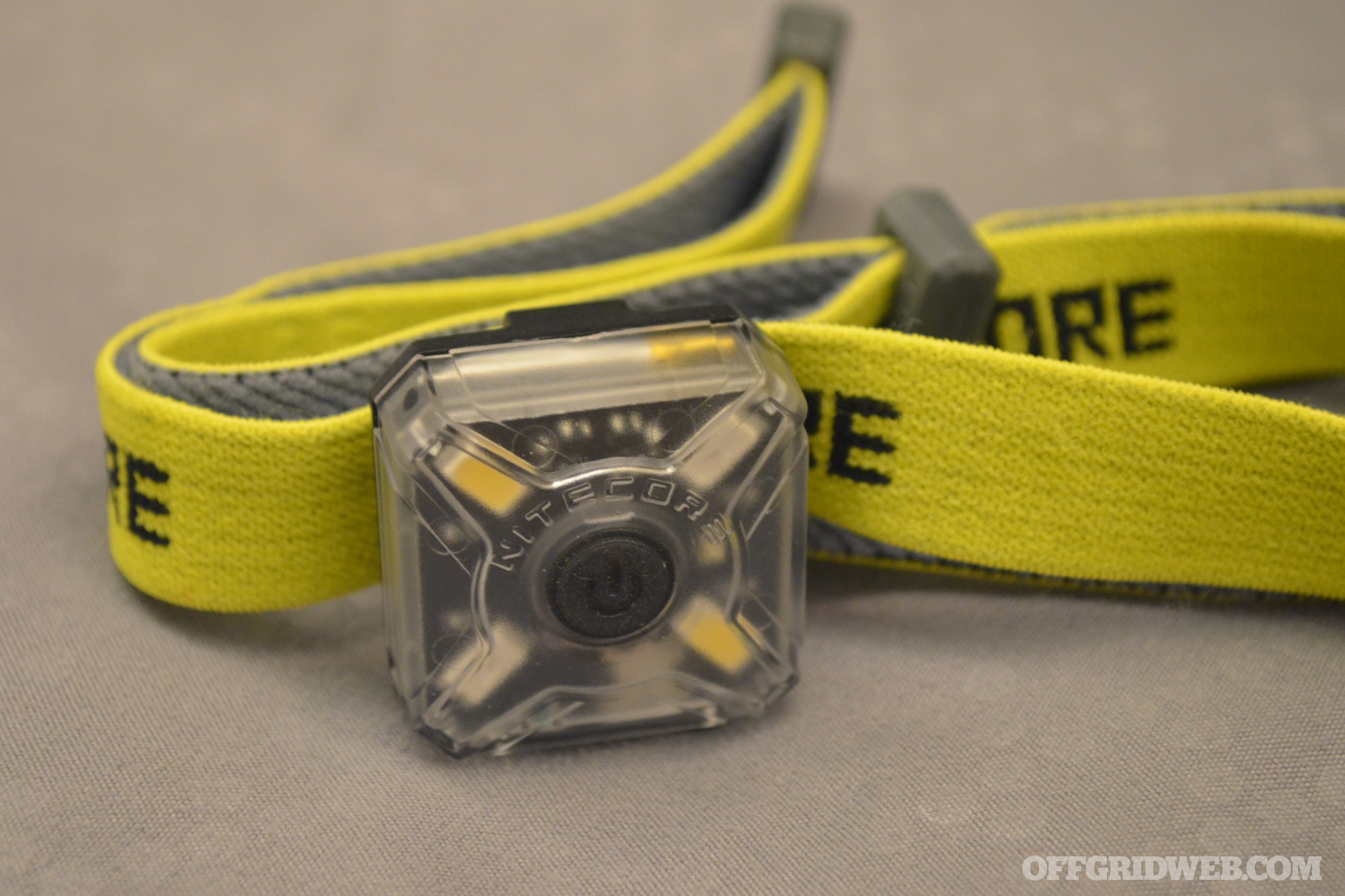
As you can guess from the names, these tools feature some similarities, but also differ in their primary purpose. The Armbar Drive has a folding bit driver that’s reminiscent of the one seen on Gerber’s Center Drive series of full-size multi-tools. It includes a reversible Phillips/flathead screwdriver, but can also be used with other standard hex bits like those that come with the Center Drive. It also features a 2.5-inch blade with frame lock, scissors, and an awl. The end of the handle features a prybar/bottle opener that folds away to serve as a hammering surface.

The Armbar Cork, on the other hand, is designed for wine connoisseurs. It features a corkscrew, foil cutter, and can/package opener. There are also the standard folding knife, scissors, and prybar/bottle opener/hammer.

Both variants of the Gerber Armbar are available in Onyx black or Orange, but each features a unique color option — Urban Blue for the Drive and Shimmer Gold for the Cork. MSRP is $39. These tools are expected to be available in Spring 2020 on GerberGear.com.

Bag Drop: The Wildfire Bug-Out Bag

0

I live in a mountain oasis — my little taste of heaven. My closest neighbors are three miles away. My little off-grid retreat is surrounded by pine, mahogany, and juniper. I’m relatively self-sufficient here — comfortable enough to survive the zombie apocalypse. However, my biggest threat every year is one that’s not confined to the realm of fiction: wildfires.

Wildfire season in Nevada typically lasts from June through November, with seasons in surrounding states sometimes lasting through January. Dry weather combined with strong wind gusts could burn thousands of acres within hours. I know if a wildfire approaches, my best and safest bet is to grab my bag and evacuate to town. Ideally, this would mean notification during the day with ample time to get in my truck and drive the five miles of dirt road down the mountainside to the paved road that leads to civilization.

However, with unfavorable winds, I could be looking at a 0200 wake-up and sprint to the side-by-side because our only egress route is blocked. I have to be prepared for both scenarios. With this in mind, I chose a hiking pack to be my Wildfire Bug-Out Bag. After all, the situation could mandate I travel via truck, side-by-side, or on foot based on the fire location, thickness of the brush, and unfriendliness of the terrain.

The Bag

The bag itself is an Osprey Ariel 65. I’ve had this pack since 2013 and haven’t been disappointed. While I could talk all day about the multitude of features and the Osprey’s reputation for solid products, I’ll focus on the final selling point for me: an adjustable, female-specific design. As a 5-foot-3 woman, it was imperative that I found a pack I could customize to my body shape. Like many vertically challenged people, my torso is quite short. Combine this fact with mother nature’s birthing hips, and you can understand the challenge of finding a hiking pack that fits.

The Osprey Ariel 65 women’s version has an adjustable harness system, curved shoulder straps for the female form, and a heat-moldable hip belt to ensure a snug fit around your unique body shape. There are many companies that currently offer female-specific packs. Not every pack fits every body shape well, so try on each brand until you find one that suits you.

Osprey no longer makes this particular model, but you can find the updated Ariel AG 65 version on the company’s website.

The Contents

My intent is simple: get to safety and be prepared to rest in place for five to seven days until I’m cleared to go home or able to link up with friends or family. To me, this means probably spending a few days at an evacuation center or pop-up shelter. Do I still have long-term survival tools in my pack? Absolutely. I’m still prepared. However, they take up a small fraction of the space available, and these are items I’d rather have and not need than need and not have.

I’ve strategically placed items in the pack based on how quickly I need to reach them. The outside hip pockets contain the items I want to use without having to take the pack off: knife, flashlight, female urination device, and RATS tourniquet.

Above: Having a bag-within-a-bag, in the case of the author’s hygiene supplies, can help compartmentalize and prioritize survival needs if shedding excess gear becomes a necessity.

The pack lid is completely removable. Inside, I’ve packed items I’d need to access rather quickly. These include welders’ gloves in case I come across burning items that need to be removed, safety goggles to protect my eyes from ash, and other basic supplies — first-aid kit, LifeStraw, poncho, collapsible water bottle, and instant energy gels.

The first item inside the main compartment is my hygiene bag. This is a small Creek bag with pockets to keep supplies separate and easy to access. Under the secure flap, I hold my travel toothbrush and toothpaste, deodorant, wilderness wipes, pocket shampoo, and body wash leaves from Trek & Travel. In the zippered pocket, I carry a small microfiber hand towel, larger body bathing wipes, sunscreen, lip balm, and spare Colgate wisps. Again, the intent is to stay hygienic and healthy while displaced. Here, I also keep my “survivalist” gear: waterproof matches, compass, 550-cord, extra batteries, and multi-tool. I also keep a few hundred dollars in cash in the event I couldn’t grab my wallet as I was leaving.

Inside the pack are items to use once I’ve reached a safe destination: a sleeping bag, small blanket, an extra set of clothes and Goretex layers I’ve vacuum-sealed, shower shoes, a set of hiking boots, and a few trash bags. Additionally, I have some freeze-dried food, just in case.

Closing Thoughts

I’m fortunate enough to have a fireproof vault where I keep all of my important documents. Otherwise, I’d be packing another bag to place inside this pack. But that’s the beauty of this particular bag — it can fit a lot of stuff! It also still has plenty of room for me to shove those last-minute additions: wallet, phone, and pistol with extra mags. I hope I never need to use this bag, but knowing it’s there makes me feel a lot better about the one threat that could force me from my refuge. Until then, I’ll keep my ear on the scanner and watch for fire planes above.

Make & Model
Osprey Ariel 65

MSRP
Original version seen here discontinued. Updated version $310.

URL
www.osprey.com

The $50 Apocalypse Challenge

0

Preparation makes you better-equipped to deal with an emergency before it happens — hopefully years, months, or at least a few days ahead of a disastrous event. But what if you found yourself in a situation where your preparation window was a matter of minutes, and your resources were limited? Although none of us would ever want to be in that position, it’s an interesting exercise in quick decision-making and gear prioritization. In a recent video, Shawn Ryan of Vigilance Elite and Mike Glover of Fieldcraft Survival used their experience as survival instructors and former U.S. Special Operations team members to approach this problem. Specifically, they gave themselves $50 and 10 minutes to buy SHTF gear at WalMart for their Apocalypse Challenge.

After a few minutes of speed-shopping, Ryan and Glover sat down to unpack and analyze their purchases, from first to last. Glover’s first few items, a tarp with bungee cords and a water bottle, addressed some of key points in the “Survival Rule of 3s” — three minutes without shelter (in severe conditions) or three days without water can be fatal. Ryan went straight for a tool that provides the means of acquiring other tools: a crowbar. This item could be used for forced entry and scavenging in dire circumstances, but also serves as an impact weapon for self defense.

Their other picks diverged slightly — a folding knife versus a multitool for cutting tasks, and a LifeStraw versus a large bottle of bleach for water purification. In the end, each looked at their picks in retrospect and discussed what they would’ve done differently. Check out the full 34-minute video below, and even if you don’t spend real money on this Apocalypse Challenge, keep it in mind next time you’re out shopping. You never know when you might need to grab some last-minute survival gear, and it’ll be easier if you think about it before that day comes.

Louder Than Words: Behavioral Cues for Situational Awareness

0

One of the preeminent facets of self-defense is situational awareness. Unfortunately, those two words have become a catch-phrase-turned-mantra beaten to death by nearly every book, video, instructor and Internet forum about personal protection. But so much of the talk about situational awareness seems to be just people yelling at each other to make sure they have it. Rarely do we see a concise, level-headed, repeatable explanation as to exactly what mental processes make up this mystical “awareness” and how exactly we use them to protect ourselves from potential threats.

In contrast stands Orbis Operations — a company that provides training and support services to government agencies and military units around the country. Among their offerings is a set of classes on Situational Awareness Training. This training is based off a process that Orbis refers to as Human Behavior Pattern Recognition & Analysis. There are several variations of their SAT curriculum, including a five-day SOFSAT or Special Operations Forces Situational Awareness Training. We had the opportunity to attend a couple days of SOFSAT and came away with a much better understanding of exactly what situational awareness consists of and how we use it to our advantage.

The Orbis website has this brief header on it: “All individuals give off signals when they are measured against context, relevance, and the local societal baseline. In certain circumstances, these ‘signals’ can, with the proper training, be read as anomalies. Establishing a baseline, detecting (and then acting on these anomalies is the essence of Situational Awareness Training …” In class, the instructors further refined this down into a concise, easy-to-remember formula they referred to simply as BAD, or B + A = D, Baseline + Anomaly = Decision. This is, in our opinion, the crux of the Orbis methodology. So let’s break down this formula and see how one is able to go about living it.

Baseline

The baseline of any given social group or geographic area is, in short, what is normal. But since normal can sometimes be a touchy word to define, maybe it’s better to say that the baseline of an area is what’s habitual. What are the attitudes, actions, and overall behavioral patterns that constitute the routine tempo of the world around you? To avoid any vagaries or generalizations, the instructors at our SOFSAT class outlined six individual facets, or domains, of situational awareness:

Heuristics: Heuristics are “mental shortcuts” that can be used when other information is limited to influence a snap-decision and help prime you for action as necessary. This may be explained by the old phrase “if it walks like a duck …” or Occam’s Razor that, very loosely translated, says the simplest answer is most likely the correct answer.

Proxemics: How people interact with each other in groups. This could include things like how far or close people stand while interacting, if people in a group all seem to focus on or mimic the demeanor of one individual or if certain individuals routinely travel with an entourage of followers.

Geographics: How people interact with their physical terrain. This can be particularly important in natural gathering places like parking lots, stadiums, stores, and street corners that may be claimed as “turf” by criminal actors.

Atmospherics: Atmospherics is the overall “feel” of a place — the sights, smells, sounds, and general demeanor. For example, if we asked you to close your eyes and imagine a carnival, we’re guessing your mental picture might include flashing lights, bells ringing, people screaming on rides, the smell of fried food, and an overall air of excitement or joy. Those inputs, and the overall feeling they create inside you, make up the atmospherics of your surroundings.

It’s safe to say that the interaction between these two people isn’t pleasant. But how we know could be a combination of kinesics, proxemics and heuristics.

Biometrics: Biometric cues are more focused on an individual and their body’s response in connection to their interactions. Are they sweating, is their skin flushed, are their pupils dilated, can you see the pulse pounding in their neck or the vein popping out of their forehead? These are biological indicators of a feeling or an intention that a person may be attempting to hide under the surface.

Kinesics: Kinesics is about body language. Separate from biometrics, which deal in the body’s automatic responses, kinesics focuses on physical movements. Things like cracking your knuckles, stretching, rubbing the back of your neck, or “grooming gestures” like consistently stroking your face or wiping your nose could all be kinesic indicators of something being not quite right.

All of these six domains are like pieces of a puzzle. A thorough understanding of every domain will give you the fullest, most complete picture of your neighborhood, patrol beat, or area of operations. But, as with a partially completed jigsaw puzzle, you don’t necessarily need every piece in place to figure out what the picture is.

Anomalies

Any behavior, whether from an individual or a group, which breaks from an established baseline, qualifies as an anomaly. Some can be really subtle, while others are blatantly obvious. But neither one will do you any good if you’re not attuned to them. One of the easier types of anomalies to quantify is the proxemics pull/push. A proxemic pull or push is any stimulus that causes people to gather or disperse outside of regular patterns. When you’re driving home and you pass an accident on the side of the road with a group of people pulled over on the side of the road standing around, that’s a proxemic pull — the car crash has literally drawn people to it and created a crowd who wouldn’t normally be there. Likewise, a mosh pit breaking out at the front row of a concert may cause a proxemic push, causing everyone else to drift quickly away from their assigned seats to avoid a stray elbow to the head.

The goal of Orbis Operations’ Situational Awareness Training is to understand the nature of a threat before it gets this close to you.

A geographic anomaly may be as simple as walking across a dark parking lot and noticing a tightly knit trio of people huddled in a pocket of shadow beyond the street lamp. Everyone else is walking directly to or from the store, but this one group of individuals just seems to be hovering in an area that most people simply transit without stopping.

Other anomalies are much more discreet. One of the most fascinating examples we heard from SOFSAT went something like this: you’re walking down the street when a man approaches you and asks for directions. While you’re trying to remember the street names, he begins rubbing the back of his head and neck. Might just be a stiff neck. But inside your brain is a small gland called the hypothalamus. It controls automatic functions in the body like blood pressure, heart rate, and alertness. It’s a stress indicator. When a fight-or-flight response occurs, the hypothalamus heats up and begins to work overtime. He’s literally getting hot under the collar. Watching somebody begin to rub the back of their neck or head — when measured against other cues — may actually indicate that they’re preparing for a fight you don’t know is coming.

Having said all this, there are vast numbers of individual behavioral anomalies that could be identified in any given situation and people often exhibit seemingly “odd” or “abnormal” behaviors for perfectly good, benign reasons. So how do you process this running mental calculation to avoid going through life in a state of tweaking paranoia?

Decision

There are a couple of different mental processes you can execute once you’ve established a baseline and spotted an anomaly. The framework of this article is Orbis’ own B + A = D procedure. Now that you’ve arrived at a decision point, what can you (or should you) decide do to? Our instructors put forward a three-prong answer to this question. You can act, report, or continue to observe.

The “act” decision can be any range of things from drawing your concealed pistol to simply taking a different route home, or waiting to stop for gas until you’re in a better neighborhood. Reporting options may include notifying a police officer or security guard, or your chain of command if you’re a first responder. Finally, keeping an eye on the situation for further developments is indeed a legitimate option. While you don’t necessarily need all the information to take action, you still need enough information. What that threshold is will be different for every person and every situation. One caveat to this, which was advised to us during our training, was that you must take action if you observe three anomalies in any domain or combination of domains.

The science of behavioral analysis is one of the most effective self-defense tools you can have in your skillset. But just like any skill, you must build a proper knowledge base and then practice it consistently. Orbis Operations teaches different versions of their Advanced Situational Awareness (ASAT) curricula to various government and commercial entities across the country. There are also a number of books available on the subject. Just check your local Internet search bar. We may not be able to prevent danger from entering our lives but, with some well-studied awareness and analysis, we’ll have a much better chance to see it coming.

Source
Orbis Operations > www.orbisoperations.com/sat

Battle Belt Setup with Dan Brokos

0

If you carry a handgun on a daily basis, you’ve probably put quite a bit of thought into how you carry it — holster type, material, placement, cant, and so on. You may also carry associated every-day carry items, such as a spare magazine, medical kit, and flashlight. For EDC purposes, it’s likely that you’re concealing these items to maintain a low profile. However, there are also times when concealment is no longer a priority, such as range days, hunting trips, or even long-term disaster scenarios. In these cases, an overt battle belt setup offers a comfortable and immediately-accessible way to carry a larger assortment of gear.

In a recent RECOILtv episode, Dan Brokos of Lead Faucet Tactical covered the basics of setting up a battle belt, and showed off his personal setup. Aside from the obvious holster and spare pistol mag pouches, his setup also includes an extra rifle magazine, dump pouch, Blue Force Gear individual first aid kit, and Leatherman multi-tool. Depending on your environment and needs, you might add various items, such as a fixed-blade knife, handheld flashlight, or general-purpose pouch with communication, signaling, or navigation tools. A battle belt is a blank canvas that can accommodate any of this gear.

Watch the full episode below, and check out RECOILtv for more tips on guns, gear, and training.

Improvised Weapons with Ed Calderon

0

Those of you who follow me on Instagram will know that over the weekend I attended a two-day “Surviving Inside the Kill Zone” class taught by Ernest Emerson of Emerson Knives and Ed Calderon of Ed’s Manifesto. The class conveyed a wealth of useful survival skills and lessons, which we will be covering in detail in a future article.

Above: A post-class photo with Ed Calderon and Ernest Emerson. Don’t let my above-average height fool you — both of them could absolutely wreck me in a fight, thanks to their decades of hard-earned experience and training.

One exercise was especially crafty — those who have attended Ed’s weaponology and counter-custody classes in the past know where I’m going with this. For our homework assignment after day one of the class, all students were told to construct a deadly improvised weapon from scavenged materials in approximately 5 minutes. The intention was to get students thinking like criminals (an “adversarial mindset”) so we could develop a better understanding of what threats we might be up against in the real world. The results were fascinating.

Above: An assortment of weapons students created, including spikes, punch daggers, slash-cut “ventilator” tubes, slicing blades, and impact weapons. The pink Hello Kitty fruit knife is part of Ed’s personal collection — a demonstration of how a less-threatening appearance can help you sell the narrative that you don’t intend to use it as a weapon.

During this class, I was staying with family, so I raided my dad’s garage for an old tool he wouldn’t mind giving up. In a toolbox drawer full of paint scrapers and putty knives, I found the scratched and rusty scraper pictured below. Its thin metal blade was strong enough to hold its shape, but flexible enough to prevent immediate chipping or breaking. In the same toolbox, I also found a Sharpie marker, tin snips, a file, and some scraps of thin cardboard packaging.

Constructing the Improvised Weapon

Priority one was to meet one of Ed’s recommendations: the Rule of Thumb. His previous interactions with hardened killers in Mexico indicated that many of them constructed stabbing weapons with blades the length of an outstretched thumb. This is long enough to cut through key weak points on the body, such as the heart and subclavian artery. That may sound gruesome, because it is. But it’s exactly the type of cold logic used by those looking to employ brutal violence against unsuspecting victims.

I used the Sharpie and a ruler to trace out a rough shape for the pointed blade — not so thin that it’d snap or bend, and not so thick it’d get caught on clothing or fail to puncture. Then, I carefully trimmed the scraper’s square corners into a sharp point. The sharpness was enhanced using the metal file, working it back and forth quickly on each side to create a simple dagger. I also used the file to add a few crude grooves on the sides of the handle for additional grip.

Next, a few items from my every-day carry backpack came in useful. A few passes through the carbide and ceramic notches on a Lansky knife sharpener got the edge even sharper and removed burrs from filing. I folded the cardboard I found in the garage tightly around the blade, then wrapped it in duct tape, punched a hole in the end, and added a knotted piece of paracord. This cord allows the sheath to be tethered to a belt loop, so when the knife is pulled from the waistband, its improvised sheath falls away in a single swift movement.

Satisfied with my creation and not looking to drastically overshoot the 5-minute time frame, I put the DIY shiv into my backpack and brought it to the second day of the class. I was glad to hear Ed give it some positive feedback, saying it looked capable of inflicting some serious violence.

Lessons Learned

In the end, what did the students learn from this improvised-weapon-crafting exercise?

First, we learned to think creatively about alternate uses of everyday items — a metal windshield wiper blade, half a pair of scissors, sharpened chopstick, or even a meat thermometer (one of my personal favorites due to the irony factor) can make a very effective weapon for self-defense in a pinch. Many of these tools are just as capable of lethal force as the fancy $250 fixed blades seen all over Instagram pocket dumps.

This brings us to a second lesson: disposability. Unlike that fancy fixed blade, these weapons are naturally inexpensive (or free) and difficult to trace. That’s why bad guys around the world tend to commit crimes with them, rather than serial-numbered production knives that could easily lead investigators right to their doorstep.

A third lesson is more mental than physical. A few people we’ve mentioned this project to don’t see the value at first. Why make a crude shiv like a criminal if you’re not planning to use it for nefarious purposes? The answer is simple — know thy enemy. If you understand how the average bad guy chooses weapons, the most common characteristics of these weapons, and the most common ways they’re used, you’ll be more prepared to defend against them. Much of the “Surviving Inside the Kill Zone” class focused on common edged weapon attacks, evasion methods, and potential counterattacks. In other words, the “software” that matches this improvised “hardware.”

If you’re interested in learning more, keep an eye out for our class recap article in a future issue of RECOIL OFFGRID. You can also check EdsManifesto.com for future class dates, or just go try this exercise in your own home. Think like a bad guy — if you face one someday, you’ll already be better prepared.


For More:

Video: Quick-Deploy Tarp Shelter Setup

0

Whether you’re camping, backpacking, or preparing a bug-out bag, a good shelter is essential for staying warm and dry. In many cases, this means a tent, but tents have some noteworthy downsides. Many tents are heavy and bulky, and those that aren’t — especially those in the ultralight category — can be expensive and complicated to set up. If you’re looking for a minimalist shelter from the rain, a tarp is a great option. In the following video, British YouTuber MCQ Bushcraft shows how he constructed a quick-deploy tarp system for overnight stays in the woods.

The tarp itself is nothing special, but the way it has been configured intrigued us. It’s packed with a permanently-attached paracord ridgeline with a pre-tied loop at one end and prusiks for tensioning. Short elastic cords have been added to the tie-out points, and these can be connected to the prusiks on the ridgeline with a simple toggle stick, as seen above.

Once it’s time to tear down the shelter, just pull out the sticks and start packing the tarp back into its waterproof stuff sack. Building a setup like this won’t cost much money, won’t occupy much space in a backpack, and won’t take much time to construct when you arrive at your campsite. It’s a great way to get out of inclement weather, even if you don’t have the luxury of a store-bought tent.

Check out the full video from MCQ Bushcraft below:

All Choked Up: How to Relieve Airway Obstructions

0

We’ve all been there — you swallow a piece of food that was too big and begin to panic that it won’t go down. For some people, it actually doesn’t go down and starts to become a medical emergency. However, taking too big a bite isn’t the only thing that could cause you to stop breathing. Let’s look at some common airway obstructions and methods to relieve them.

What is the Airway?

Let’s talk about the airway first. It’s the gateway to your respiratory system and can be divided into two sections: the upper airway and the lower airway. The upper airway is comprised of the nasopharynx (nose and throat) and the oropharynx (mouth and throat). The lower airway consists of the larynx (voice box) and trachea (windpipe) before it branches off into the lungs via bronchioles and, finally, alveoli, the small clusters of air sacs where oxygen and carbon dioxide are exchanged via the bloodstream.

What’s an AO?

An airway obstruction is, quite simply, some type of blockage in any part of the respiratory tract that’ll prevent you from being able to get enough oxygen to breathe. The obstruction can be partially or totally obstructed, and it may have various causes.

Types of AO

There are several ways to characterize different types of obstructed airways. One way is based on the location of the obstruction. If you have an upper airway obstruction, you would have an issue with the nasopharynx (nose and throat). A lower airway obstruction would be from your voicebox down to your lungs. A second way is to describe if there’s some air movement or no air movement in the airway. Some are partial, meaning that, while there’s some obstruction, air is still moving in and out of the airway, albeit with varying degrees of difficulty. The size of the obstruction will determine the level of difficulty breathing. In the event of a total, or complete, airway obstruction, the airway is 100-percent stopped up and no air will pass. Once the airway is blocked, respirations stop. This is called respiratory arrest (cessation of breathing). Once respirations stop, oxygenation stops, and, if not relieved quickly, cardiac arrest (cessation of heart activity) will follow.

The third way to characterize an obstruction is based on the timing of the obstruction. Some airway obstructions are acute, meaning they occur suddenly, while others are chronic — a result of issues causing the obstruction to stay in the airway for a long period of time. It might also refer to a blockage that has slowly grown and gradually closed off the airway.

Causes

The most common kind of airway obstruction we think of and see is an acute obstruction, either partial or complete, associated with the inhaling of some type of foreign object — also known as choking. These objects become lodged in the airway and either prevent or completely block off air from entering the lungs, thus preventing adequate oxygenation. The airway could also be blocked off as a result of an illness like epiglottitis, croup, tonsillitis, or any other type of inflammation in the airway, causing acute partial or chronic obstructions.

Airways can also be damaged via heat, as they are made of soft tissue — when injured, they swell quickly, thus compromising the airway. So a person who has inhaled a lot of smoke in a house fire could have some definite airway injuries due to a combination of smoke and heat, which could lead to an acute partial or complete obstruction. A fall, motor vehicle accident, or other traumatic injury could also lead to an acute partial or complete obstructed airway due to bleeding or soft tissue swelling in the airway or by introduction of foreign objects, like teeth, into the airway.

The biggest offender to the stability of the airway seems to be the tongue flopping against the back of the airway in an unconscious individual. When someone is rendered unconscious, the muscles in the body relax. The tongue happens to be a muscle. When it’s relaxed, it can fall against the back of the throat (pharynx) and block the airway. When that happens, we need to act quickly and decisively to open the airway because the longer we wait to get the airway open, the longer the brain is deprived of oxygen.

We can only live for a finite time without that and without suffering brain damage as a result of an anoxic (no oxygen) event. Some chronic disease processes like tumors, asthma, chronic bronchitis, COPD (chronic obstructive pulmonary disease), and emphysema can also cause a progressive narrowing of the airways, limiting the amount of airflow into the lungs. Over time, this can cause a chronic partial obstruction in the airway.

How to Recognize AO

How many of you snore? Yep, that’s a partially — and for some of you at times, a totally — obstructed airway (e.g. obstructive sleep apnea). Snoring is an easy-to-recognize symptom of an obstructed airway. However, depending on the level of obstruction, there are several other signs you can observe. One sign is our respiratory rate. Our normal, adult breathing pattern is fairly steady with a respiratory rate of around 12 to 20 breaths per minute. If we see any deviation from that normal pattern, we need to look closer at what could be causing it. If the patient is breathing more rapidly than normal or shallow, we need to discover the root issue before it gets worse. With partially blocked airways, the patient may be coughing, wheezing, or having other abnormal sounds, like stridor, which is a high pitched or even squeaking sound coming out of the airway.

If the patient can vocalize any sounds, their airway is only partially obstructed. One of the worst things you might see is absolutely no chest rise and fall or unorganized chest wall movements with no sound at all coming from the airway. These are very ominous signs. In a completely obstructed airway, you’d expect to see, in a conscious patient, panic and anxiety with the universal choking signal of putting the hands up to the throat and maybe even mouthing, “I’m choking” or “Help.” If the patient’s oxygen level is dropping, you might also notice a bluish hue in the lips, skin, or nail beds. This is called cyanosis. Finally, if the oxygen levels drop too much, then the brain isn’t getting what it needs — this can lead to unconsciousness in the patient. This is respiratory arrest and, as mentioned earlier, if not relieved, will lead to cardiac arrest and death.

How to Treat AO

If a patient’s airway is completely obstructed, it may be necessary to perform the Heimlich maneuver.

When you’re snoring and get elbowed to turn over, you self-correct your own partially obstructed airway by turning over. The offender in this situation is your own tongue. This type of scenario isn’t an emergency. However, if the person isn’t able to correct their own obstruction, it can most certainly turn into one, such as respiratory arrest leading to cardiac arrest. So, how do you treat an airway obstruction? Well, that depends on what’s obstructing the airway.

If the obstruction is an acute partial obstruction, then the patient is moving air and, more than likely, attempting to clear the airway on their own by coughing, which will hopefully dislodge the obstruction.

Rolling a patient into a recovery position can help reopen a partially obstructed airway.

If it’s an acute complete obstruction such as choking, performing the Heimlich Maneuver is the best option — with no sounds coming from the victim and/or no coughing, the responder wraps their arms around the victim’s waist, slightly above the belly button, makes a fist with one hand, bending the thumb with the knuckle pointed out, covers the fist with the opposite hand, and sharply pulls upward with sets of five abdominal thrusts until the obstruction is relieved. If the airway is partially obstructed due to swelling, either acute or chronic in nature (noted by abnormal sounding respirations, i.e. high pitch, wheezing, etc.), this is a definite emergency and definitive care must be sought out immediately.

Occasionally, you may be alone and have to self-administer abdominal thrusts. In order to do this, you’ll have to find something like a chair or couch to lean over, placing the top of it firmly around your belly button and forcing yourself downward to mimic the same movement of someone else’s hands performing upward abdominal thrusts. The same principle we just mentioned still applies: keep trying in sets of five thrusts until the obstruction is relieved. Different types of airway obstructions will require different interventions, usually based on the severity of the obstruction. This could range from medication inhaled via a nebulizer, placement of a nasal or oral airway, emergent endotracheal intubation, and in worst case scenarios, emergent surgical airway placement.

What to Do if You Can’t Relieve an AO

Above: The insertion of a nasopharyngeal airway (NPA) is one method of restoring airflow if the patient’s oropharynx is obstructed. It also offers a pathway for nasal intubation.

In the event the obstruction cannot be removed or the victim becomes unconscious, more actions must be initiated, like CPR. In addition, call 911 for emergency medical services. For more information on CPR and to gain certification, contact your local American Heart Association or American Red Cross office for classes.

If the tongue is the offender and has flopped against the back of the airway, then we can place the affected individual into a recovery position. In this position, the person is rolled onto their side as a unit, with the bottommost arm up and underneath their head to act as support and the uppermost leg acting as a kickstand to support them as the bottommost leg is extended. The victim’s uppermost arm is then placed up in a bent position as a support for their head, while their head is angled toward the ground in an effort to allow gravity to pull the tongue from the back of the throat in order to open the airway.

This allows the person to breathe and also lets blood, saliva, emesis, or anything else to drain out onto the ground rather than going back down the airway, thus creating an aspiration risk. This position can be used if the person still retains a “respiratory drive” or a visible respiratory effort, which can be visualized by the chest rising up and down or the abnormal sounds of respiration from a partially obstructed airway (via the tongue), which in this case would be snoring sounds. This is a very quick and effective method to create a patent (open) airway in someone exhibiting these symptoms while keeping the patient’s airway protected.

Summary

No one wants to be unable to breathe. It’s terrifying. However, understanding what’s going on and how to alleviate it can make the difference between life or death. Seek out the proper training so that if one of these situations occurs, you can be mentally and physically prepared to react. If you act quickly and decisively, everyone involved will breathe a whole lot easier.

About the Author

Kerry Davis is the founder of Dark Angel Medical. He’s a registered nurse who has worked in the critical care and emergency department fields since 2003. Prior to 2003, he was a flight medic in the USAF and worked as a civilian paramedic.