A Note from the Editor: Offgrid Issue 40

The necessities of our print production cycle sometimes act as a speed bump for us when we want to address current events as they relate to survival. Unfortunately, seven months past our “two weeks to flatten the curve” and five months past the death of George Floyd, the enduring fallout from one or the other continue to make many people anxious about leaving their homes. Whether intended to combat the spread of disease or to exploit a sociopolitical movement, both the government and malevolent actors alike have figured out how to press the big red STOP button on people’s daily lives. 

When I was in the military, we used the phrase low-intensity conflict to refer to things like terrorism and guerrilla action — armed clashes that don’t involve a full-scale meeting of armies on a central battlefield. We can look at the ripple effects of COVID-19 countermeasures much the same way. Steps such as quarantines, mask mandates, social distancing, and telecommuting don’t fit the traditional legacy view of a “disaster” — a term most people associate with a single, sudden-onset event. Even large-scale protests, and the riots that sometimes result, can feel like distant news if you’re not there when it happens. But long-term travel restrictions and the economic impacts of civil unrest present their own set of problems that can be equally severe. Intermittent availability of household paper goods or fresh meat, the sudden financial burden of destroyed business or property, and increased vulnerability of sensitive information through the use of internet-based telecommuting services all become very real survival issues if not properly addressed or prepared for.      

These kinds of simmering, persistent problems have affected a lot of people and organizations who previously believed they were well-prepared, our publication included. The widespread disruption of supply lines, reduction in disposable income through lost or furloughed jobs, and the restrictions on people’s ability to make trips to the newsstands or grocery stores has impacted our operations in a concrete way. We’re still going strong, but it’s getting harder for us to reach you with quality information that could save your life — or at least make it a little easier in times like these. There are few things I hate more than a well-polished sales pitch, so I’ll keep it simple: Please consider subscribing directly to us via our website or mail-in subscription cards. It’ll guarantee direct delivery to you, regardless of shortages or disruptions at the retail level. Also, for over five years, we’ve shipped our issues in a discreet, sealed poly bag that protects your privacy and your household by minimizing the number of hands that actually touch your magazine. 

The low-intensity disaster is especially insidious, because it doesn’t match the traditional depiction of a “disaster.” This is why we’ve always been such strong advocates of the holistic approach to survival and self-reliance. Don’t just prepare for something, prepare for anything.


Covert Escape Tools: Pocket Preps

Human traffickers, process predators, narco-terrorists, hostage-takers — these are just a few groups within the criminal element that employ unlawful custody. These types of criminals are generally very experienced at their craft, and understand that eliminating all means of escape from their victims is a top priority.

During any form of abduction, there’s always an initial contact phase where the bad actors must subdue and restrain their victims as quickly as possible so they can relocate to a more secure and secluded location. During this initial phase, they’ll typically conduct a quick pat-down search, which must suffice until a thorough, full body-strip search can be performed.

Covert escape tools are designed to be discreet enough that they have a good chance of going undetected during this initial contact phase. This means that they can be used to escape quickly during the relocation phase, or migrated to a more concealable location prior to a full body search. When carried and used properly, these tools can mean the difference between life and death.

In this installment of Pocket Preps, we’ll look at some of the most innovative and versatile covert escape tools on the market. Hopefully, you’ll discover some tools that fit your lifestyle and can find their way into your EDC repertoire. 


Sparrows Lock Picks CHAOS Card

Dimensions: 3 & 3/8 by 2 inches
Weight: 0.7 ounces
MSRP: $16
URL: www.sparrowslockpicks.com

Sparrows Lock Picks CHAOS Card

The CHAOS card is a fully loaded punch-out escape kit that fits into a wallet like a credit card. This master card of escape tools contains a short hook pick, triple peak rake pick, tension tool, auto lock rocker/jiggler, four- and five-prong comb pick, short wafer pick, handcuff key, and a “stabby thing.” The hook and rake picks and tension tool can be used to attack most pin tumbler locks and wafer locks. The comb picks are effective at bypassing lower security locks by pushing the pin stack above the shear line. The wafer pick works on many filing cabinet and desk wafer locks. The “stabby thing,” as described by the manufacturer, is a Tanto-shaped, pointed object that forms the handle of the auto lock jiggler. It can be used in the hand or affixed to a makeshift handle to form a prison-style shank. The half-barrel handcuff key can bypass the restricted keyway of most regulation handcuffs to disengage the locking mechanism easily. 

Sparrows Lock Picks CHAOS Card

Pros:

  • Several versatile escape tools in a single, compact package, easy to stow and conceal inside a wallet or pocket

Cons:

  • Difficult to access when placed under physical restraints
  • Extremely thin tools can be difficult to use under stress.
  • Wallets are often the first thing removed when placed under unlawful custody.

Citizen E Industries Ed’s Manifesto Scapular

Dimensions: 2 x 2 & 1/2 inches
Weight: 0.2 ounces
MSRP: $45
URLwww.whoiscitizene.com

Citizen E Industries Ed’s Manifesto Scapular

The Ed’s Manifesto Scapular by Citizen E Industries mimics the design of the religious pendants popular in Latin America. The 550D Cordura pendant contains a hidden pouch for stashing small escape tools behind the religious icon. The necklace, which doubles as a friction saw for escaping flexible restraints, consists of 400-pound Kevlar cord with a copper-encased magnetic clasp. There are two elastic loops on the side of the pendant that hold a micro chemlight to aid with fine tasks under darkness. The apparent religious significance makes this escape tool less of a target for scrutiny, reducing the likelihood of confiscation during the initial encounter. 

Citizen E Industries Ed’s Manifesto Scapular

Pros:

  • Unassuming religious nature makes the scapular less obtrusive
  • Magnetic clasps make it easier to remove the scapular when movement is restricted under restraints. 
  • Kevlar cord is very strong and heat resistant, making it an excellent choice as a friction saw.
  • The necklace and magnetic clasp can be used to retrieve dropped metal escape tools when movement is limited.

Cons:

  • Since this tool is worn around the neck, it can be easy to see.
  • Escape tools can fall out of the hidden pocket if not properly secured.

Jolly Roger 3 Knife Coin Multi-Tool

Dimensions: 1 x 1 x .25 inches
Weight: 0.3 ounces
MSRP: $125
URL: instagram.com/jollyrogerthree

Jolly Roger 3 Knife Coin Multi-Tool

The Jolly Roger 3 Knife Coin Multi-Tool is made from a real coin and includes a knife blade and a standard handcuff key. The knife blade is made from tungsten-molybdenum M2 high speed steel, providing a balance between toughness, wear-resistance, and hardness properties. The handcuff key barrel has been ground to a 45-degree angle to make it easier to insert into the keyway when the user’s hands are bound. The knife blade and handcuff key fold behind the coin, making them completely unobtrusive when viewed from the front.   

Jolly Roger 3 Knife Coin Multi-Tool

Pros:

  • Large gripping surface created by the coin makes this key easier to manipulate than most covert handcuff keys
  • Convenient to carry and relatively easy to conceal in plain sight
  • Key works on all standard handcuff keyways.
  • Can be used to open single- and double-locked handcuffs
  • Blade can be used to cut through duct tape, flexible restraints, and rope.

Cons:

  • Can be difficult to access when handcuffed behind the back, assuming it’s in the front pant pocket where loose change is normally carried.
  • Carries a hefty price tag
  • Might accidentally end up in the tip jar at the local coffee shop

Southern Specialties OSS Lock Picks

Dimensions: 2.25 by 0.5 by 0.25 inches
Weight: 0.4 ounces
MSRP: $20
URL: www.lockpicktools.com

Southern Specialties OSS Lock Picks

When deep concealment is a prime motivator for tool selection, the Southern Specialties OSS Lock Picks offer a solution. This stainless steel multi-tool is packaged in a soft vinyl boot and includes a tension tool along with a Short Hook Pick, Saw Tooth Rake, Euro Modified Curved Rake, and a Razor Saw. These tools offer a wide range of escape options. The three lockpick tools allow the user to attack most standard pin tumbler locks and a variety of low-security locks. The saw can cut through duct tape and most flexible restraints. For the well-versed escape artist, the short hook or tension bar can even be used to pick most standard handcuffs. 

Southern Specialties OSS Lock Picks

Pros:

  • Compact micro-tool can be easily stashed away for unconventional or deep concealment carry.
  • Multi-tool approach offers many escape options for a large number of unlawful custody scenarios.
  • Hinged design keeps all tools together, ensuring they’re available when needed.
  • Well-suited for body cavity capsule transport

Cons:

  • The short tools are more difficult to operate than their full-size counterparts.

Southern Specialties Titanium OSS

Dimensions: 1 by 2 by 1/16 inches
Weight: 0.6 ounces
MSRP: $35
URL: www.lockpicktools.com

Southern Specialties Titanium OSS

The Southern Specialties Titanium OSS tool is an extremely compact lockpick kit that includes two standard picks and a tension tool. There are two styles available. Style 1 (shown here) includes a Euro Bogota Quad Rake and a Euro Slim Line Short Hook. Style 2 has a Snake 3/7 Rake and a Camel Back Rake. The double-ended tension tool has a traditional flat head on one side for bottom of the keyway manipulation, and a short, stepped-down head on the other side for top of the keyway tension. The kit comes with a small vinyl sleeve to carry the tools. The sleeve fits perfectly inside the Ed’s Manifesto Scapular by Citizen E Industries, making this non-ferrous kit a most versatile escape tool.

Southern Specialties Titanium OSS

Pros:

  • Can be easily concealed inside wearables like the Ed’s Manifesto Scapular
  • Ability to be worn on or taped to the body makes this kit a wise choice for deep concealment.
  • Titanium is a non-ferrous material, making the magnetic signature of these tools minimal.

Cons:

  • The small tools can be challenging to use under stress.

Sparrows Lock Picks Handcuff Shims

Dimensions: 1.25 by 0.5 inches
Weight: Less than 0.1 ounce
MSRP: $5
URL: www.sparrowslockpicks.com

Sparrows Lock Picks Handcuff Shims

Handcuff shims are used to open handcuffs by separating the pawl (ratcheting mechanism) from the teeth on the swinging locking arm. The shim is wedged between the pawl and the teeth to disengage the locking mechanism. Some handcuff models have a split pawl with a gate in the centerline to prevent shimming. These split pawl models require a split shim to disengage the pawls on each side prior to disengaging the center gate. The Sparrows Handcuff Shims comes with two standard shims and two split shims. Their unique citadel head provides the user with such an aggressive gripping surface that the shims can be used with just one finger. 

Sparrows Lock Picks Handcuff Shims

Pros:

  • Inexpensive, versatile
  • The citadel head’s aggressive texture prevents the user’s hands from slipping off the shim when wet.
  • Faster and easier to use than handcuff keys or picking tools
  • Standard and split designs can be used on most popular handcuffs

Cons:

  • Small tool shape can be difficult to use by people with large hands.
  • Shimming requires the handcuffs to be tightened during insertion, which can be dangerous if the handcuffs are already tight.
  • Won’t work on double-locked handcuffs

READ MORE FOR POCKET PREPS


What If You’re Caught in an Indefinite Blackout?

As world leaders continue to scratch their heads about the best way forward and activists demand immediate solutions to very complex societal issues, we can easily expect more knee-jerk political responses to future disasters. The collateral damage caused by legislation that’s lacking in forethought and scientific evidence only serves to complicate and aggravate an existing situation. Those of you who’ve been hit hard financially by punitive COVID-19 mandates know far too well what we’re talking about. Why wouldn’t that same haphazard approach be applied again to other areas where the government needs to “do something” instantly to solve a problem? After all, the salary, safety, and living conditions of those who create these laws always manages to remain unaffected. 

So, let’s turn our attention to what the future might look like when it comes to energy conservation and increasing pressure to heavily limit industries powered by fossil fuels. The whisper campaign has already begun about various industries going completely “green” by a certain date, along with bans on gas-powered vehicles in major cities, and delusions that the country’s fossil fuel infrastructure could be completely overhauled within a decade or two. Ask yourself how authoritarian sanctions and mandated rationing could create a domino effect of other problems that impact daily life in an average American city. Today, we take a look at how the power supply might possibly be affected by heavy-handed restrictions to life as we know it. 


Situation Type: At Home
Your Crew: You, Your Spouse, and Your Children
Location: Witchita, Kansas
Season: Winter
Weather: Snowy; High of 28 Degrees F, Low of 8 Degrees F.


The Scenario:

The Setup: Due to unmitigated population growth and growing concerns about global climate change, the U.S. government has recently started mandating rolling blackouts for all fossil fuel-based energy providers. Politicians claim this will reduce America’s environmental footprint and motivate utility companies to immediately invest in renewable, “green” energy sources. These blackouts are common during hotter months; sometimes they last a few hours, other times they last for days. They’re supposed to happen according to schedules posted on local municipal websites, but they’re rarely accurate, consistent, and predictable enough to prepare for with any advanced notice. And if your home doesn’t use natural gas, you’ve got one less alternative to depend on. The bottom line is, this new form of energy conservation is going to continue for the foreseeable future, since politicians’ pie-in-the-sky green energy plans will take time to implement (if they ever get implemented).

These blackouts are primarily focused on high-density living areas and major cities, but also affect the outlying suburbs. Because of complaints regarding noise and pollution, codes have also been passed to limit the hours in which gas-operated generators can be used. This has put many in the precarious situation of having to modify their home’s existing solar power system to supply as much juice to the house as long as possible. Others who have no such setup simply must go without power altogether.

what if indefinite blackout

The Complication: This has created the collateral damage of increasing civil unrest. Everything from petty theft to violent home invasions during blackout hours has skyrocketed. Fuel theft from parked cars has become common. Hospital admissions for temperature-related health conditions have also increased. Even water pressure has dropped in many areas as a side effect of the blackouts. There’s increasing demand for canned and sustainable food, since refrigeration is a luxury. For this What If?, how do you adapt your lifestyle to these conditions and consider things like food storage, health, self-defense, communications, and powering modern conveniences without a reliable supply of electricity? We asked survival advocate Rogue and former U.S. Army scout/sniper Alexander Crown to weigh in on the situation.

It’s not surprising that the government is holding our electricity hostage. Electricity has been relied upon for less than 100 years, but it’s become something people don’t know how to live without. Most people think they can handle being without power for a few hours. A day, at the most. More than that and people start to get cranky, restless, and potentially violent, especially when they’re without modern conveniences such as the internet or a cold beer. 

We learned long ago not to rely on a third-party source for our needs, and this includes our electricity needs. We invested in a full solar power setup, one that isn’t connected to the power company at all. We have our own panels, batteries, charger, and inverter. As long as we keep it maintained, it can power all of our needs. Our most important needs are hot water, freezer, and fridge. We have energy-efficient lights, but in general, lighting can come from a variety of sources including candles and oil lamps.

During a blackout, however, we wouldn’t want to be particularly noticed among the neighbors to have a house full of lights, so we’d stick to candles, flashlights, and oil lamps to visibly match the rest of the neighborhood. Just because we have the capability to turn on every light in our house, doesn’t mean we should, as that would make us a target during a blackout. Sure, people can see that we have solar panels on our home, but we’re not the only ones in the neighborhood with solar, and they can’t be sure how much energy our panels actually produce. 

Our solar setup allows us to keep our communication devices charged, including phones and ham radios. Cell reception wouldn’t immediately go down when there’s åbe overloaded with more usage than normal, as everyone is trying to communicate with loved ones. In general, we try to keep transmission at a minimum and listen the best that we can, only transmitting when we absolutely have to. 

Ham radio is our main source for intel. We can listen and transmit as needed. Keeping the phone charged is mostly for emergency calls or texts, or to watch any downloaded movies or play offline games when we have time for that luxury. 

We’ve been storing food and water for just such instances. We have months’ worth of food to keep us afloat. Storing food for blackout purposes is important because it may not be safe to go out for a variety of reasons. The supply chain may be slowed because trucks may be unable to reach stores due to unrest, and grocery stores may not have a good backup energy supply — they only hold about three days’ worth of groceries at a time anyway. In addition, there may be chaos and stores being ransacked. 

While water may be running for a short time when the power goes out, over time it could run out of pressure and eventually stop. This is one of the main reasons to store water. If you’re not on an alternative energy source such as solar, wind, or even hydro, when the lights go out, fill up every container that you can find with water. That includes sinks and bathtubs. Water can also be sourced from a water heater; depending on your home’s size, you could have 50 to 80 gallons worth of water just sitting there. If you flush your water heater yearly, as is recommended, the water should be reasonably clean. 

Leaving your home to get water isn’t ideal. Once you leave your home for any reason, especially during times of unrest such as rolling blackouts when people are agitated, you put yourself at greater risk than if you were to stay home. We store as much water as possible. We even have a rain catchment system setup. If we ever did have to leave for water, we know where the nearest water sources are, and could acquire a little at a time (a backpack’s worth) to not draw attention to ourselves. 

Getting to know your neighbors and general neighborhood could be an asset. You never have to mention that you’re a prepper, but everyone could help to maintain a sense of community, and help each other out through various means, including security. We have created strong relationships with our neighbors and we rely on each other regularly. We’d certainly do so during a crisis. 

Our children are probably the least affected by blackouts as they enjoy playing by flashlight or candlelight. It also provides a lot of quality time playing board games and generally being together. They still get to play with their toys and watch any movies that we’ve downloaded on their iPads. 

Since it’s winter, heat is our biggest concern. While most people in my area have a fireplace or woodstove, we still have to be aware of its usage. If other people in the neighborhood aren’t able to use their fireplace or woodstove because they are low on resources, we wouldn’t want to be the only ones advertising that we have heat. In addition to our fireplace, we have a buddy heater. It runs on propane, but we’ve planned for this. During the day, we stay bundled up. At night, we congregate in one room where we all sleep. This way we can heat that one room instead of the whole house. In addition, we use our zero-degree bags to keep us extra toasty, so we don’t have to have the heat on 24/7, which helps to manage our resources better.

While all of this is well and good, there’s still unrest. People are feeling wronged by these rolling blackouts, and for good reason. Eventually, those who are unprepared will turn to anyone who they think might have more than they have. Even if you do everything right by keeping quiet and blending in with the rest of the neighborhood, you could still become a target. Anyone can become a target at any time for any reason. 

We make ourselves a hard target. If someone wants to come after us for our goods or lives, we aren’t going to make it easy on them. We have fortified our home with battery-powered cameras and a kick plate on the main door, covered all windows and screen door with blackout curtains, and installed security bars on windows and the screen door. We also have two dogs that are great alarms for any disturbances in the force. 

If the crisis continues on for an extended period of time and we feel we may run out of food within a month or so, we’ll start to grow small bits of food in containers — microgreens and sprouts. We wouldn’t wait until our food is gone to start acquiring more food. If we have some space that can be hidden from spying eyes, we might grow out into the yard as well. We’d catch squirrels and other small game with traps or a .22 rifle. I may even start collecting bugs and fry them up, depending on the scenario. 

Blackouts seem harmless, and we all expect the lights to flicker back on any minute, any hour, any day. However, when someone else is in control of your needs, whether it’s energy or food or whatever, they have full control over how you live. Don’t allow them to have that kind of control. If you’re prepared for an extended blackout, then you’re prepared for almost anything that comes your way. 

Winter weather conditions present many obstacles on a normal day, let alone during times of civil unrest and blackouts. Preparation for winter should start in spring where lessons learned can be immediately applied. My approach to this scenario will come from my current situation in Boise, Idaho. Boise and Wichita share similar weather and population sizes.

Preparation

This is a multi-phase approach to address different aspects of this scenario. First, winter preparations in general. Take advantage of the warm summer months that are great for growing your own food or frequenting local farmers’ markets, and ready that food for canning and other forms of preservation. My family takes the “half” approach when harvesting our summer bounty — we eat half of the fresh foods, and the other half gets preserved. This helps stock up the pantry while also nourishing us. Incorporating food storage into your weekly or monthly grocery bill will also help you store the basics in larger quantities. Ten to 20 bucks can buy a lot of dried beans, canned goods, or pastas. Focusing on high-carbohydrate, high-fat, and protein-rich foods will help give your body what it needs when the temperature drops. Try to buy things you and your family eat regularly, and provide variety. Don’t forget things like spices, condiments, sweeteners, and supplements like vitamins and protein powder. Most people will develop a small vitamin D deficiency in winter due to less exposure to sunlight. Supplements can help strengthen your immune system in preparation for winter colds and flus. Build a one-winter supply of food as quickly as you can, and store it in the pantry or a closet, away from light, moisture, and prying eyes. 

Food preparation also includes water storage. Water should be rotated every six or so months unless treated with a water storage chemical. Having different-sized water storage containers ensures it can be taken around the house as needed. Our approach is a 50-gallon rainwater collection barrel, a 15-gallon storage barrel, two 5-gallon jugs, and numerous recycled 2-liter soda bottles. The trickle-down approach (pun intended) is that the larger containers can be used to fill the smaller ones, making the water more portable. Be sure to have at least two methods of water treatment available and know how to use them safely and efficiently. This can be any combination of bleach, a Berkey, gravity filtration, droplets, tablets, or hand pumps. The market offers plenty of choices to fit your budget and needs. 

This is also a good time to get to know your neighbors, if you don’t already. If civil unrest breaks out, you’ll all have a common goal: to keep your families and properties safe. If appropriate, organize a neighborhood watch, and identify weak points in your security and in the neighborhood in general. Find out who else gardens or hunts and be prepared to exchange supplies as needed. You cannot survive alone, so building these relationships early is paramount. If riots or similar forms of mass chaos have happened in your area, study those events to learn what the enemy’s methods were. You may be able to counteract this before it happens in your neighborhood. Are your neighbors armed or viciously anti-gun? Maybe they’re somewhere in between. Just knowing these things will help you know how to deal with these people in a time of need. Encouraging them to have their own food and water storage preparations will help them not become a real problem when you need it the least. 

On-Site

For blackouts of an undetermined amount of time, having multiple sources of electricity and heat are key. Prepare your home by checking the windows and doors for gaps where cold air can come in. Also, check that all locks are working, and deadbolts have at least 2-inch screws securing them. Be sure pipes and spigots are insulated before first freeze. 

Energy sources in the form of generators are great if you can keep fuel on hand. The noise ordnance limits when you can use them, but it’s still a good idea to have one. Gas generators are common, and gasoline can be stored with Sta-bil. A propane generator may also fit the bill since propane has a long shelf life. Have the necessary fittings to use your propane supply with your grill or a small camping stove. The ability to boil water will help with cleaning, food prep, and even getting ready for bedtime by putting a bottle of hot water under your covers. Generators can be wired into the home to power specific areas, such as the refrigerator or deep freezer. Keeping these appliances fuller will help them maintain temperature. These generators could also be used to power a small heater, but only during the times you can run them. With any of these options, be sure you have fire extinguishers nearby and check that they are full. 

what if indefinite blackout

Venezuelans make long queues to supply gasoline tanks their vehicles on 6 June 2019 in Maracaibo Venezuela. Most users...

The obvious choice here is to have a solar energy option. The Renogy 200-Watt 12 Volt Solar Premium Kit will run you less than a Glock 19 and can be used to charge deep-cycle batteries that can then power small appliances, all while being silent. Affixing the two 100-watt panels to plywood stands will allow you to bring them inside at night and turn them as needed for maximum sun exposure. Smaller solar panels can be used to charge cell phones, tablets, and ham radio for communications and entertainment. Solar banks can also help charge your 18- or 20-volt tool batteries. 

Clean up your garage so you can park inside to limit unwanted access to your vehicles. If a garage isn’t present, look for alternate solutions. Can you park in your backyard or pull your car up close to your home? Don’t keep anything valuable in your vehicle if it cannot be secured. Organizing your space will also help you stay sane while looking for any items you may need. If possible, keep hand tools available and also any nuts, bolts, and screws for repair jobs. 

Night temperatures will drop, so designating a sleep area can help keep everyone warm. Create a smaller space within your home using mattresses and blankets. Don’t completely seal yourself off so you have proper ventilation. A heated blanket plugged into your solar-charged battery will make everyone more comfortable going to sleep. Having individual, below zero-rated sleeping bags will also aid in a good night’s sleep. Keeping everyone together or at least close by helps with security. If the threat is particularly bad, establish a communications plan with the neighbors and alternate night watch. Be sure everyone has access to a flashlight or headlamp. 

Crisis

Solar power is your friend in this situation. Modern panels can still be somewhat effective even during cloudy days; they’re silent and can be moved as needed. Using different-sized panels and having small batteries will help you rotate out power supplies as needed. Multiple options are, of course, also important — the old “two is one” mantra. Propane and gas are good options, but the noise and mandated use times can be problematic. Establish priorities for your family’s needs. Lifesaving machines like oxygen, CPAPs, or medicines that require temperature control must be factored into your preparations. To minimize energy needs in other areas, have candles on hand, a backyard firepit with extra wood, and alternatives to power for lighting and cooking. 

Without any knowledge of when power will be restored, the best you can do is to have as much supply on hand and limit your power needs to the most necessary items. Gas and propane will eventually run out, making solar even more important. Food will run scarce, especially if local infrastructure is failing. Identify nearest resupply areas, grocery stores, and even convenience stores. Be physically prepared to walk to these locations in inclement weather for resupplies you’ll carry on your back. Have a portable solar or hand-crank radio — local radio stations may be airing important updates, and music will help with morale. If you’re a HAM operator, be sure you have identified repeaters in your area and any local HAM clubs that may have updates from other areas. This communications method has been proven in recent catastrophes. Even if you don’t have a license, have a radio programmed that’ll let you listen in and get updates.  

This event is only one of the many possibilities you should be prepared for. Having long-term food/water storage established will give you a greater edge in this event and limit your stress. Preparing your children for a no-electronics life may be one of the more difficult aspects here. Have entertainment ready and on standby to keep you all sane. Crayons, coloring books, board games, and other small toys will help them cope. Making them part of the process will keep them involved and let them feel like they’re helping. Make sure hygiene isn’t neglected either — keep extra toothpaste and brushes as well as soap. Does your wife have sanitation supplies to last six months or longer? Your water isn’t just for drinking either, so prioritize it. Will you be able to melt snow for cleaning and cooking or get water from a nearby stream or river? Practice these things ahead of time so you’re ready for a blackout that may last a day or much longer. Preparedness can be an exercise in your own imagination, so think about obstacles ahead of time in order to overcome them when they rear their ugly heads. 

Conclusion

When it comes to political pandering in response to hot-button topics, usually the legislation put into effect has more to do with someone taking credit for reacting quickly than it does with actually solving problems. Could the aforementioned situation become a reality? Over 2.5-million homes were without power recently in Texas due to excessive cold, causing demand to greatly exceed generating capacity. If electricity is easily disrupted by weather, it can certainly be disrupted by other factors. With a little planning, a level-headed approach, and the right supplies on hand, you’ll be in a much better place to deal with a situation like this when there’s a run on food, the lights you take for granted don’t work, and toilet paper is once again a luxury item. 


About the Authors

alexander crownAlexander Crown is a former U.S. Army Paratrooper who spent time in a scout/sniper platoon in OIF. He has extensive experience in firearms, particularly silencers. Alexander spends his time exploring Idaho hunting, fishing, and camping. He’s a lifelong practitioner of preparedness emphasizing self-reliance and organic gardening. Alexander is also a regular contributor to RECOIL and RECOIL OFFGRID.


Morgan Morgan “Rogue” lives on 40 acres of land with her husband, two daughters, two dogs, cats, and chickens. She’s the owner and founder of Rogue Preparedness, a website dedicated to emergency preparedness and survival skills. Visit her at roguepreparedness.com.


MORE SCENARIOS TO CONSIDER:


Head Start: Night Vision Helmet Setup Guide

The original plan for this article was to outline how to set up a helmet for use with Night Vision Goggles (NVGs). However, there’s no sense in talking about what color to paint the walls of a house before the foundation is poured — first, we need to discuss how to choose a helmet that’ll serve as the host for NVGs and related accessories.

White Phosphor Night Vision

NVGs have a definite learning curve, but a good helmet setup can make it easier. This image was taken through the AGM...

Ballistic vs. Bump 

Your first decision is ballistic or non-ballistic. If the objective is just hog hunting or target shooting with night vision, then you can save a ton of money by procuring a non-ballistic or “bump” helmet. Just like the name implies, it won’t stop small arms threats or fragmentation, but it will stop you from getting a Flintstones-type lump on your head. These helmets are substantially lighter, and they’re also ventilated to allow better airflow, keeping you cooler and your lenses fog-free. The current crop of quality bump helmets look very similar to ballistic helmets — many of them even have built-in shrouds to accept NVG mounts. This means the plethora of NVG-supporting equipment for ballistic helmets will interface with bump helmets. Galvion also makes a Hybrid helmet that’s a bump helmet with armor appliques, but this is a trade-off with gaps in its protection. If you’re expecting to get shot at, a full ballistic night vision helmet setup is the answer.  

Galvion Caiman Ballistic Night Vision helmet Setup

The author’s current setup – Galvion Caiman Ballistic, Revision Military comms, SureFire X300V umbrella...

Much like armor plates and plate carriers, there are a lot of manufacturers out there for ballistic helmets. I can’t name them all, and this article isn’t meant to be a dedicated helmet buyer’s guide. Suffice to say, if you’re going to invest in a ballistic helmet, ensure that it’s tested to the threat rating you want, and that the company itself is reputable. The following isn’t all-encompassing and in no particular order — Galvion (formerly Revision Military), Ops-Core, Team Wendy, Crye Precision, and MTEK are a few examples of companies you can trust.


team wendy bump helmet

Make: Team Wendy
Model
:Exfil LTP with 3.0 Rails
URL: www.teamwendy.com
MSRP: $303

Bump Helmet

The Exfil LTP, which stands for Lightweight Tactical Polymer, is a good representation of the bump helmet category. Without accessories, it weighs in at 1.6 pounds and features an array of ventilation slots to maximize airflow around the head. Team Wendy offers buyers a choice of 2.0 or 3.0 side rails — we chose the latter for its integrated Picatinny accessory rails. This helmet includes a built-in NVG shroud with Wilcox aluminum insert, two-layer configurable foam pad system, and a highly adjustable suspension system with BOA tensioner dial.

Team Wendy Bump pads

Howard Leight Impact Sport electronic ear pro is attached to each side of the helmet via Team Wendy Exfil Peltor Quick-Release Adapters. It’s worth noting this requires cutting the headband off the earmuffs, so they can no longer be worn without a helmet.

Lastly, a Mil-spec Norotos RHNO II “Rhino” mount was attached to the helmet’s shroud, providing an attachment point for night vision systems that use a bayonet-style interface. This is perfect for a monocular such as the PVS-14 we sourced from AGM Global Vision. AGM offers many models in the PVS-14 family; this particular sample features a Gen 2 white phosphor tube. Its included adapter clips directly into the bayonet mount and can be positioned for use with either eye.


crye precision air frame

Make: Crye Precision
Model
: AirFrame ATX
URL: www.cryeprecision.com
MSRP: $991

Ballistic Helmet

One of the most distinctive designs in the ballistic helmet market, the AirFrame uses a two-piece shell of armor that overlaps slightly at the midsection. This provides an obvious improvement in breathability over a one-piece helmet, and Crye also says it can mitigate head trauma if the wearer is hit by the pressure wave from an explosion. The ATX model meets NIJ Level IIIA ballistic requirements; our large helmet weighs 2.8 pounds. The helmet includes an Ops-Core H-Nape suspension system and cushy ¾-inch-thick memory foam pads. Our sample helmet came pre-drilled for a three-hole shroud, such as this Wilcox L4. It also includes optional AirFrame side rails and a stick-on Velcro kit.

We used Peltor ARC Rail Adapters to convert a set of Peltor Sport Tactical electronic earmuffs from headband configuration to helmet-capable (again, this requires cutting off the headband). An AirFrame Peltor Adapter Set ($8) is required to install the ARC Rail Adapters. We plan to upgrade from this consumer-grade ear pro to a professional-grade set of Peltor ComTacs in the future.

Crye Airframe pads

Our night vision system is a dual-tube NVG-40 3AL1 from AGM Global Vision. This system features a pair of Gen 3 green phosphor tubes, which are auto-gated to adjust brightness and protect the tubes from fluctuating light conditions. These NVGs include various attachment shoes; we chose the dovetail-style shoe and paired it with a Wilcox L4 G24 mount (anodized tan to match our helmet). This mount is highly adjustable and features a push-button locking pivot.

Unlike the lightweight monocular on the bump helmet, we felt this dual-tube setup would benefit from a counterweight, so we added a TNVC Mohawk system. It features removable lead weights, as well as retention points for replacement batteries and visible or IR glow sticks/IFF illuminators. 


Night Vision Helmet Setup

Basic helmet setup with shroud, Wilcox mount, and counter weight.

Shrouds and Mounts

The next consideration is: What are you using the night vision for? Levels of supporting equipment will vary depending on your activities and your budget. It doesn’t take much to get started with a basic setup but bear in mind that everything related to night vision is expensive. The first thing to look at is the mounting bracket on the front of the helmet, which is called the shroud. Most modern helmets will use a three-hole shroud. The NVG mount (the pivoting arm piece) locks into the shroud on the helmet, like the one pictured from Wilcox Industries. Norotos is another well-known and reputable brand. If your helmet has no holes for a shroud, it can be carefully drilled using the shroud as a template. There are shrouds that strap or clip onto helmets, but they’re less than optimal as a secure platform for a very expensive piece of equipment. Whatever shroud you select, make sure it’s compatible with the NVG mount you’re using, or that you have the appropriate adapter. Most will be universal. 

night vision helmet setup

Full setup with ear pro, counterweight, IFF, and eye pro attached to helmet.

Suspension Systems

The helmet suspension system (i.e. the strap around the head and chin) is often overlooked, but it’s a critical component to long-term wear and comfort. Current offerings that include a nape strap behind the head, and not just a chin strap, are beneficial in distributing the helmet’s weight and stabilizing it on your head. Old-school chin-strap-only designs allow the helmet to teeter-totter on the crown of your head. When you add NVG weight to the front, the helmet naturally wants to tip forward and the single strap does little to prevent that. A nape suspension system allows the user to tighten the nape strap to keep the back of the helmet down, while leaving the chin strap loose enough to talk.

dual tube night vision

Dual-tube night vision is heavier and can be a literal pain in the neck if you don’t choose the right suspension...

Pads are another worthwhile consideration. Most helmets will come with a basic internal pad system, but this may be something to consider upgrading later for improved comfort, breathability, and configurability. Memory foam or gel pads are a big upgrade over hard Styrofoam-style padding.

Ear Pro and Comms

Helmet-mounted hearing protection is a thing to consider as well. Electronic ear pro with head bands can be made to fit by removing or reconfiguring helmet pads inside the helmet. If your application will include extended wear, this can become very uncomfortable and may induce headaches, but I know several guys who like this method and don’t have any adverse effects. Another option is in-ear hearing protection, but I personally like and use helmet-mounted ear pro. Most of the current offerings and adapters allow the user to pop the ears off your head when they’re unneeded. This is preferable to headband-style ear pro, where the pressure stays on until the helmet and ears can be removed. A side benefit of helmet-mounted ear pro is that it helps with stabilizing and reducing the weight of the NVGs without having to add as much counterweight. If you’ll be using radio comms, the addition of boom mics and adapters for push-to-talk buttons (PTTs) are more plentiful with ear-muff-style electronic ear pro. 

night vision helmet setup wilcox mount

Wilcox compatible shroud comes standard on some helmets. Others can be retrofitted.

Balancing the Load

Counterweights are a popular accessory — they add weight to the back of the helmet to balance the NVG weight on the front. My first counterweight was made from fishing weights that were melted down and poured into a homemade mold. Once the lead solidified, the mold was broken away and the lead “brick” was bent to conform to the shape of the helmet. Sticky Velcro and paint were added, and the whole thing just stuck to the back of the helmet. This worked as intended, but eventually, I switched to commercially made pouches with removable weights. I kept getting neck strain while using a lead counterweight, and eventually figured out the importance of the nape suspension system, as mentioned previously. I still have a pouch, but all of the lead weights have been removed and it only carries spare batteries now. Your mileage may vary, since some guys swear by counterweights. 

norotos and wilcox mounts

The Norotos bayonet-style mount and the Wilcox dovetail-style mount are two of the most common systems for attaching...

Illumination Options

A forward-pointing white and red visible light is a handy item, regardless of your purpose. I have a SureFire XC1 on one side of my helmet and use it as a work light when giving off a white light signature is of no consequence. It’s more than bright enough to check targets, conduct first aid, or complete most other tasks. I could put a brighter light on there, but that adds weight and bulk that’s unnecessary in my opinion. On the other side, I have a Princeton Tec helmet light with white and red visible LEDs. They’re much dimmer than the XC1, so circumstances will dictate which one gets used. My last light source is a SureFire X300V mounted on the back of my helmet in a prototype mount. This light points at the sky and is set to either infrared (IR) or white output based on what I’m doing. The “umbrella” effect indoors casts its light off the ceiling and provides ambient light throughout the space that’s reflected, instead of direct. This is beneficial, as opposed to a forward-mounted light that only illuminates what it’s aimed at. A bright directional light can also be annoying if you’re looking directly at a friend who is also wearing NVG. For my purposes, this light was mainly for admin tasks like post-assault checks or prepping a training area for the next run. I’ve also used it operationally to add IR energy for explosive breachers setting internal charges, or to add visibility in extremely dark spaces where my NVGs needed a bit more IR. The mount design shown also allows me to pluck the light off the back of my helmet and use it as a handheld flashlight if necessary. 

Night Vision helmet setup

Caiman Hybrid with removable ballistic panels and mandible can scale to your protection needs.

The last item to consider is a personal marking system or IFF. IFF stands for Identification of Friendly Forces, or Identification Friend or Foe, depending on who you talk to. I’ve always used the former, but regardless, it’s just a means to identify yourself. IFF can be passive or active; passive would include IR tabs or patches that reflect when IR energy hits them. Pretty simple and no batteries required. The downside is that it has to be activated with IR energy, which means someone is already identifying you with a laser or IR light before they see it. We required team members to have passive IR tabs or patches on the front, back, and on each side. Active IFF would include visible and IR markers and strobe lights. Different companies make really good strobes with different patterns and intensities. Core Survival and S&S Precision are both great companies making quality products. If you’re doing night vision hunting, alerting other hunters to your presence with an IR strobe just makes sense. In my case, the only guy strobing inside the house was the Team Leader so he was readily identifiable — this was less out of concern of being shot by teammates, and more about telling everyone the guy with the strobe is in charge. The strobe can be worn directly on top of the NIght Vision helmet so it’s visible in all directions, or 45 degrees rearward so it’s only visible if you’re behind the wearer. 

Galvion Caiman bump night vision helmet setup

Galvion Caiman “bump” helmet. These types of non-ballistic helmets are less expensive than their...

Plan Ahead

As stated earlier, the night vision road is long and expensive. If your intent is to just target shoot as a hobby with minimal wear, then you can certainly get by with a bump helmet, shroud, mount, and nothing else. If your objective is to effectively work within a team conducting house-clearing work and fighting with NVGs, then almost all of this becomes a necessity instead of a nicety. The last thing I’ll bring up is that having the equipment only goes so far without training from reputable sources. It’s one more expense in an already expensive endeavor, but training from a reputable source may be the best money you’ll spend. NVG is a force multiplier like no other, whether it be checking your property, defending your home, or working in a team. It’s truly a superpower. 

[Editor’s Note: This article first appeared in OFFGRID #43. Photos by Bill Blowers, Cameron Carden, and Patrick McCarthy.]


MORE ON NIGHT VISION, TACTICAL GEAR, AND FIREARMS


Night Vision 101 with Don Edwards

Elsewhere in OFFGRID #43, we have some very specific technical articles on night vision related topics: technical specifications on tubes, accessorizing night vision compatible weapons, and setting up helmets for night-vision use. But the rapid proliferation of civilian-accessible night vision options over the last several years has left a lot of interested consumers chewing on the dust of “experts” (real or imagined) who have spent hours, or years, conducting research or amassing trial-and-error experience. 

If you’re night vision curious but unsure of where to start, we present “Square One.” Don Edwards is a Ranger Battalion and Special Forces veteran with literal decades of night vision experience in real-world operations. He previously worked as the director of government and law enforcement sales and training for Tactical Night Vision Company (TNVC) before starting his own company, Greenline Tactical, that specializes in training government agencies and civilians in night vision-specific principles for marksmanship, weapons handling, and tactics. 

Night Vision 101

Above: “Being able to see in the dark is a superpower,” says Don. Fortunately, it’s a superpower that’s becoming more widely available to civilians. – Photo by Real Dirty Media.

Regardless of whether you call them NODs (Night Observation Devices), NVGs (Night Vision Goggles), NVDs (Night Vision Devices), or I2 devices (Image Intensification), we sat down with Don and got the answers to some entry-level questions about what this equipment does and what you should think about before you cross over to the dark side … 

RECOIL OFFGRID: Give us a brief overview of how image intensification (I2) works.

DON EDWARDS: Image Intensification tubes amplify existing light, so you have to have some ambient light for them to work at all. They’re specifically optimized to see Infrared (IR) and Near Infrared (NIR) light the best, so even light you cannot see with the naked eye will make them work.

What applications do you see or hear your civilian students using night vision for? 

DE: My civilian students who own and use night vision are into all sorts of things. Some just like to go out with buddies and shoot at night. Others are hunters. Night hog hunting is one of the fastest-growing segments of the hunting market. Many are preparedness-minded individuals.

How does night vision fit into your overall security and preparedness plan now that you’re out of uniform? 

DE: Being able to see in the dark is like having a superpower. I bring them with me just about everywhere, especially when I travel. In an emergency, I can see potential danger and avoid it. When used along with illumination, even a white flashlight, it can also greatly extend how far you can see in the dark. It also allows me to remain undetected if I want to gather information about the environment prior to choosing a course of action.

White Phosphor Night Vision

Above: In true no-light environments, an IR illuminator can make a significant difference in your ability to navigate and acquire targets. Photo by Real Dirty Media.

Night vision devices are classified by generation. Most commonly, we see devices labeled “Gen 2” or “Gen 3.” What is the difference? 

DE: In the late 1980s, Gen 2 gave way to Gen 3 technology. Since then, all image intensification tubes made in the U.S. are Gen 3. Any current-production Gen 2 devices probably have tubes made in Europe. The primary differences are some of the coatings on the inside that allow better light transmission and amplification. Current U.S.-made Gen 3 will almost always outperform Gen 2 tubes, especially in the lower-light conditions — the darker it gets, the more you’ll notice Gen 3 performing well. There are I2 tube manufacturers in Europe who are manufacturing Gen 2 tubes that rival the performance levels of some Gen 3 devices, but you aren’t going to get that level of performance for the entire life of the device. The Gen 2 will usually begin to degrade sooner and get to unusable levels way before the Gen 3 would.

In what situations would you say Gen 2 (or older) is an acceptable compromise, versus when you might really want a Gen 3 setup?

DE: Gen 2 tubes are still being made, since the U.S. closely guards the Gen 3 technology and restricts exports through ITAR. I’d say it would be fine if you got a great deal on a device that was Gen 2 — otherwise, if you’re buying new, get the best. That would be Gen 3. For some situations when there are lots of lights, like streetlights and such, a good Gen 2 device is preferred by some people.

We see different night vision tubes described as “filmed” or “unfilmed.” What does this mean? Is one better than the other? Or is each better for specific applications?

DE: Unfilmed is a name for I2 tubes manufactured by L3Harris. Technically, we categorize them as being “less filmed.” What I mean by that is they have found proprietary ways of eliminating or reducing the thickness of some of the barriers between the different layers inside the tube. In an optic, the more lenses or protective coatings that light has to pass through, the greater the chance of loss of light. The same is true in I2. Being able to minimize this inside the I2 tube can translate to up to 20 percent or even more increase in performance. Filmed, or thin filmed as they are called, devices are still very capable and continue to get better, but generally the unfilmed tubes will display better performance as it gets darker and darker.

Night Vision 101

Above: Night vision is one component of overall low-light preparedness, and does not negate or override the need for a high quality white light. Photo by Real Dirty Media.

What is auto-gating? What does it do for end users? Are all NVDs auto-gated?

DE: Auto-gating (AG) is a great feature and has been with us for over 20 years now. Any Gen 3 Night Vision made in the U.S. within the last 20 years will have auto-gating. AG is basically a throttle control that senses when the tube is receiving more light than it needs or can handle, and reduces the amount of power being drawn from the battery. This will cause fewer photons to be energized into electrons, therefore protecting the tube from getting oversaturated and potentially damaged. A side effect of this is that we see increased battery life over the old models because of this.

Let’s talk a little about types of devices themselves. The single-tube PVS-14 is considered by many to be the “entry level” device acceptable for defensive applications. What are some pros and cons to this type of device?

DE: The PVS-14 as of now is still the standard issue NVG to the U.S. Military. That’s gradually changing, but it’s still the workhorse of the Night Vision world in my opinion. I have described it as the Glock 19 or AK-47 of the Night Vision world. Just so dependable, and reliable, and versatile. Some of the pros to it are affordability compared to dual systems, and versatility — it can be head-worn, handheld, can be easily carried in a pouch or day pack, used in conjunction with a camera or smartphone for pictures, and even mounted behind a red-dot optic on a rifle. The only real con is that when wearing it, you are only receiving visual information from one eye. 

Should I wear it on my head or mount it on my rifle?

DE: Head mount, hands down. This is the way it was designed: to be head-worn and used with a laser aiming device on a weapon. The main reason for the past popularity of weapon-mounting is that there didn’t used to be civilian-legal options for people to do this. The PVS-14 is rated for recoil up to 5.56, as required by government contracts, but in my experience, it will not survive continuous use like that. Also, it needs to be mounted behind a Night Vision-compatible red-dot optic such as an Aimpoint. The danger in this is the possibility of the red dot burning a permanent spot on the tube over time. Even auto-gating may not prevent this. Wearing on your head allows you to walk around in the dark and move freely. If it’s on the rifle, you have to point the gun at whatever you want to see in the dark.

Night Vision White Phosfor

Photo by Real Dirty Media.

If I am wearing it on my person, what would be the benefit to investing in a helmet versus using the stand-alone “skull-crusher” mount?

DE: Many people want to go for the non-helmet-style mounts. There are several companies that make them, and (despite the nickname) they can be quite comfortable. Their usefulness ends, in my opinion, when you start to do more complex stuff. If you are mostly stationary or not engaging in much activity, then they are great. But even walking around the woods at night can cause most of them to flop and wobble around on your head. Most people do not need or want a ballistic helmet — I still recommend one of the affordable, unarmored “bump” helmets. A rigid mounting platform that keeps things where you want them makes a huge difference, and can be had for around $300.

If one tube is good, is two better? What are the advantages of dual-tubes over the PVS-14? Do you get double the field of view?

DE: First, let me address field of view (FoV). Sadly, no, you don’t increase your FoV with duals. By the way, the FoV on monocular and binocular NVGs is 40 degrees. What you get with duals is binocular vision versus monocular vision. Our brains rely heavily on visual input to process information and make decisions. We are used to seeing things with both eyes. Being able to see with both eyes in the dark can exponentially increase your ability to move quickly and accomplish complex tasks. This is why Special Operations people who spend a good portion of their time wearing NVGs prefer binocular NVGs hands down.

If I invest in a dual-tube setup, do I need articulating tubes?

DE: Articulating tubes are a nice feature. I like them, but they’re not a deal breaker. To many, it isn’t that important of a feature. Fixed-bridge-style NVG housings can be slightly more rugged.

What accessories do I need to consider? We’ve heard people talk about counterweights, battery packs, IR flashlights, lasers, magnifier rings, etc. Besides the NVD itself, what else makes a functional, effective night vision system? 

DE: Night vision is a system. It helps if you think of it that way. If you have a Night Vision device, you need a way to wear it — let’s say a helmet. You will also need a way to attach it to the helmet, this is called the mount. There are several different models of those out there that provide varying features to the end user. Now, if you are going to be using it along with a rifle, you need to look at some of the various Laser Aiming Modules available to you. These are the key parts of the system.

Counterweights are a plus. If you are wearing a monocular, it may not be that big of a deal. With a dual-tube device, I consider it a must-have. It may seem counter-intuitive at first to add more weight to your head, but putting a counterweight in the back sort of balances out the see-saw on your head. Without it, the goggle is constantly pulling down on the front of your face, and by the end of the night you will have sore neck muscles.

Night Vision 101

Photo by Real Dirty Media.

Another good idea piece of gear would be a handheld IR light. Not for the weapon, that’s covered by your laser device. A handheld IR light source basically gives you a flashlight that only you (and others wearing Night Vision) can see. That can come in handy in many different situations.

Not everyone can afford top-of-the-line, U.S.-made night vision that’s on-par with military-grade products. Night vision units produced offshore, or assembled in the U.S. with foreign tubes, often lower the cost threshold for entry. What are some of the pitfalls to be aware of when going this route? What are you sacrificing to get that (relative) affordability?

DE: Well, to start with, I try to buy American whenever I can. I hate to say it, but the old saying “buy once, cry once” can’t be truer when it comes to night vision. It’s literally a superpower, and it’s worth saving up for quality equipment that is going to not only last, but will be there for you when you need it the most. A friend of mine has a saying that $1,000 worth of flashlights is better than $1,000 worth of night vision. What he means is that $1,000 worth of Night Vision is probably going to be a waste of money. Also, the cost difference between good quality imported tubes built into devices here in the U.S. is not really much of a discount, so if you’re looking at spending thousands of dollars, save a little more, and make sure you’re getting something quality. 

[Editor’s Note: This Article First Appeared in OFFGRID #43. Photography by Real Dirty Media]


Don Edwards

Don Edwards

Don Edwards is a retired 20-plus-year veteran of U.S. Army Special Operations. He began his career in 3rd Battalion 75th Ranger Regiment, where he was a participant in Operation Just Cause. He retired from 20th Special Forces Group, where he served as a team sergeant, weapons sergeant, and intelligence sergeant during combat operations in Iraq and Afghanistan.

He has served for five years as the use-of-force training manager and primary instructor at the ATF National Academy in Glynco, Georgia, instructing in tactics and firearms as well. Don has worked as tactical adviser to the Department of Defense since 2008 serving in both Iraq and Afghanistan, and is a FLETC-certified firearms instructor.

Don is the former director of training for TNVC and is now the owner/operator of Greenline Tactical LLC. Greenline is a leader in night vision operations training, offering real-world tactical and defensive training to law-abiding civilians, state/local law enforcement officers, and SWAT teams as well as conventional and special operations military units around the country.

Sources 

Greenline Tactical  > www.greenlinetactical.com


More on Night Vision, Tactical Gear, and Firearms


Protector Symposium 3.0

In previous issues, we had a chance to attend and evaluate Byron Rodgers’ Protector Symposiums 1.0 and 2.0. What we walked away with was nothing short of thinking to ourselves, why didn’t anyone put together an event like this sooner? If you haven’t read up on the inaugural and second event, be sure to do so. What it consists of is top self-defense trainers of various backgrounds providing both a lecture portion on their approach as well as a hands-on portion to familiarize yourself with their techniques and school of thought. There’s a lot of material to digest over the course of a few days, but for anyone who wants to up their fight IQ and learn a bit more about recognizing and protecting themselves against threats, this is an event you don’t want to miss.

Protector Symposium 3.0 brought together some instructors from previous symposiums as well as a few not often available to the public. What we walked away with was a well-rounded cross-section of disciplines. The points discussed and demonstrated are both cerebral and tactile. Here we’ll give you a taste of what we got to experience, prefacing it by saying self-defense is everyone’s responsibility to undertake. With the rise in random acts of violence in our communities, why wouldn’t you want to enroll in an event like this? If you’re in the market to learn from individuals who have credentials well respected by their peers, think about attending one of these symposiums when you get a chance.

Byron Rodgers

MC Byron Rodgers, the man behind the Protector Symposium, lays out the schedule for the weekend.

Yousef Badou

Astute readers of OFFGRID may recognize Yousef from our profile of him in Issue 37. Having taught the Marine Corps Combat Hunter Program, Yousef’s stock in trade is behavioral profiling and teaching. A book that underscores much of his philosophy, Left of Bang, delves into the theory that there is a timeline that precedes an event and follows an event — the event itself is the proverbial “bang,” if you will. The pre-event indicators on that timeline are what precede the event (left of bang), everything on the right is the reaction that follows the event (right of bang). In order to thwart or escape from danger, you need to identify the event precursors. Yousef’s portion was strictly lecture-focused. He began by showing the audience a scene from the 2007 film, The Kingdom and deconstructed the preliminary efforts terrorists and killers use when researching a target as well as dissected the elements of the planning cycle.
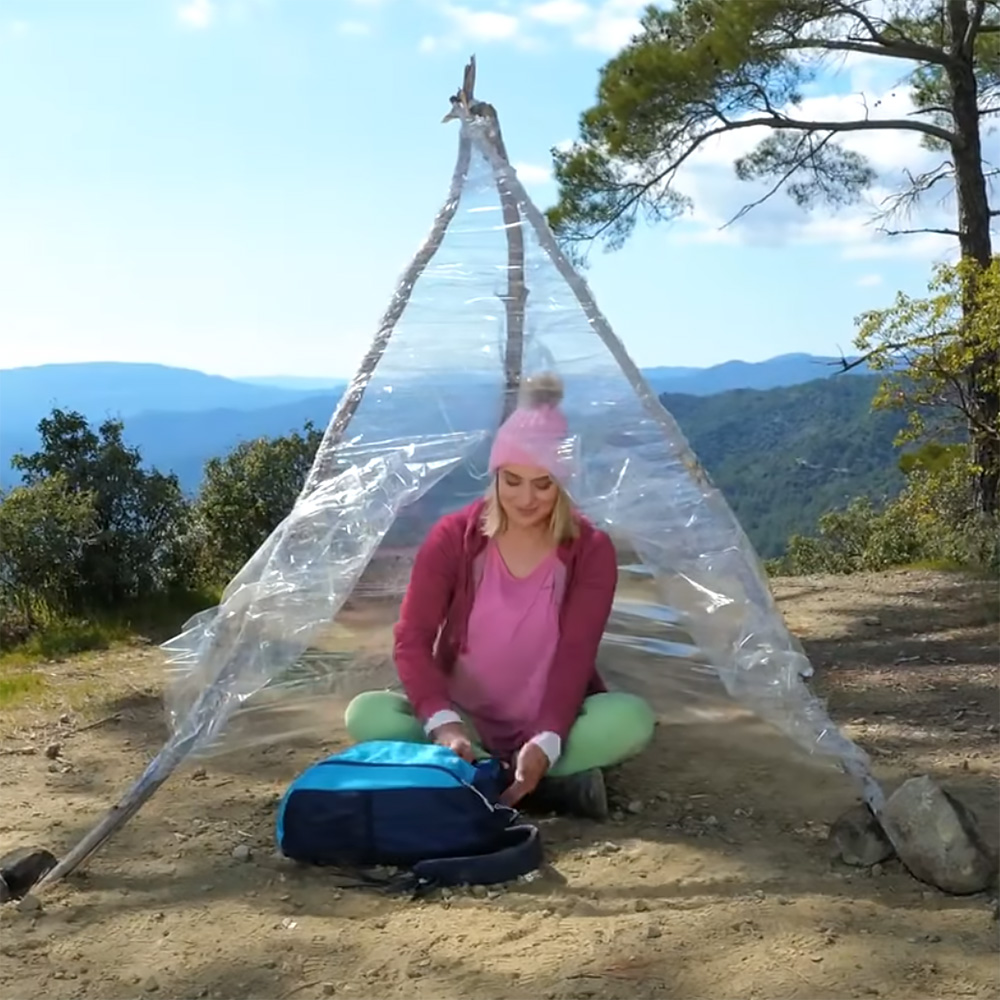
The big takeaways from his portion of the symposium were to recognize that there’s a chain of events to all violence that can be observable; a whole other side of the coin you can witness before the gun comes out. One must have emotional intelligence to queue you off to people around you. Reading the crowd and developing internal awareness is key to threat recognition. What can you do to spot the problem before it evolves? When Apache Indians would pick their trackers, they’d pick kids 12 years old or under because of their curiosity and ability to get down on their knees to get dirty. Don’t lose that curiosity. Spot the anomalies before you get to bang.
www.emergencedisrupt.com

Bazzel Baz

In Issue 39 of OFFGRID, we did a detailed overview on the underworld of human trafficking. One of the subject matter experts we spoke with for that feature was Bazzel Baz — a former U.S. Marine Corps captain with a background in counter-terrorism and former CIA special operations officer. Bazzel also participated in our RecoilTV panel discussion on the topic. He heads up The Association for the Recovery of Children (ARC), which specializes in operations to rescue children from trafficking. Some may also recognize him from his acting work on the TV show, The Blacklist. Baz’s lecture focused leacture-driven presentation discussed operations he’s been on to recover children abroad and domestically who’ve been kidnapped by traffickers. His recounting of these events sent a palpable shockwave through the audience — you could hear a pin drop during his discussion. His gravitas resembles few lecturers we’ve ever seen.

He reported that some 421,000 children went missing in 2019 and also highlighted that this is indeed a national security threat. If traffickers can kidnap and transport that many children undetected, imagine what else can they traffic. His discussion also revealed some of the various industries and even government agencies they’ve discovered have individuals involved in the trafficking operations. Takeaways? Know your client and who his/her enemies are. Navigating fault lines is critical to mission accomplishment. Your team is only as good as the people who are part of it. And most importantly, if you were a child, wouldn’t you want to know someone was coming to save you? ARC does offer training for those who are serious about becoming involved in anti-trafficking efforts. Visit the site below to learn more.

recoveryofchildren.com

Tony Blauer

Having taught martial arts for decades, and developed a system that’s equal parts biomechanics, neuroscience, and physiology, Tony Blauer has been a fixture in the series since its inaugural event and has returned for Protector Symposium 3.0. A pivotal moment happened in Tony’s early days as an instructor. A student of Tony’s got his ass kicked in 1980 by someone at school and relayed to Tony that his training hadn’t been effective. After describing what happened, Tony realized he needed to change his game. He recognized that the body has a natural reaction to defend against danger. Think about how you’ve reacted when walking into a spiderweb, as a passenger in a car when the driver slams on the brakes, or when you see an object out of the corner of your eye flying toward you. As part of that startle flinch, you throw your hands up to protect yourself, right? Your body automatically flinches when it perceives danger. Tony has developed a way to convert that instinctive movement with a self-defense posture called the “Spear System.” His defense posture of fingers splayed and arms out in front of you at 90 degrees is honed into a defense mechanism to be a bridge to your next move.

Before getting into his hands-on portion, Tony explained the philosophy behind what he developed and why. “Instincts, intuition, intelligence need to work together,” he says. Tony’s training is a way of taking what your body will automatically do in a dangerous situation and weaponizing it. He also pointed out how in many violent encounters we see videos of, in most cases we don’t recognize some superior martial arts training that helped the victor prevail. What we see is chaos and it’s important not to get something that isn’t evidence-based training or you’ll get really good at the wrong thing. Many rehearsals and techniques don’t happen the way it goes down in the real world. The people who manage their fear manage to fight. Situational awareness often gets overridden by cognitive dissonance. Physiology doesn’t care what martial art you study. It’s important to understand how to develop that reactionary response into a weapon.

blauerspear.com

Jason Johnson

Protector Symposium 3.0 Jason Johnson

Jason is a new addition to Protector Symposium 3.0 as one recognized for his skills as an accomplished knife thrower and knife maker. In fact, Clint Emerson included him in his training in his new book, 100 Deadly Skills: Combat Edition. Jason’s lecture segment also included demos of his techniques to use the knife as a defensive projectile that can buy you some time to fight to cover, concealment, or your next weapon. Let’s face it, no one wants to go one on one in a knife fight. It’s going to get messy really quick. If you can use the knife as a force multiplier to bridge the gap between you and an assailant to buy you some precious seconds to escape or retrieve another weapon, it makes sense to become savvy about effective throwing techniques.

Protector Symposium 3.0 Jason Johnson

The meat and potatoes of Jason’s portion of Protector Symposium 3.0 was the tactile aspect of learning what it feels like to properly throw a knife. As Jason puts it, you’re projecting a cut. As class members were shown how to properly throw a knife and how that changed depending on the distance to the target, there wasn’t one student who wasn’t impressed by the kinetic energy that can be achieved by landing an effective knife strike. The range to do this is essentially anything inside 10 feet. It’s a primitive form of self-defense that follows the same principles as throwing a tomahawk on the battlefield. If you can use this method to intercept an attack and that could potentially mean the difference between life and death, this is one more skill to add to your self-defense quiver.

proknifethrower.com

Tom Kier

Protector Symposium 3.0 Tom Kier

Tom Kier is another new addition to Protector Symposium 3.0 who isn’t typically available to the public, but has a background training military, government, and law enforcement. His edged-weapons expertise is highly regarded in these circles. As a practitioner of Sayoc Kali and having dealt with many confrontations as a bouncer in Philadelphia, Kier has certainly been validated by decades of experience. He explained the need to understand three critical elements inherent to violence:

Force – The ability to affect the opposition (firepower, manpower, political pressure).

Space – The ability to control an area or move through it (mobility, access, and range).

Time – controlling the initiative, who is going first and who is responding, feeder (someone controlling the events, taking and maintaining control) versus receiver.

Protector Symposium 3.0 Tom Kier

His explanation underscored the importance of controlling at least two of the aforementioned elements. Winning occurs when you capture the third element. Each element allows for exploitation of another. Tom’s hands on portion of the course involved explaining different striking and counterstrike techniques, knife types and materials, effective striking zones. Key takeaways were studying conflict and how it works; identifying the force, space, and time components in your life; assessing your readiness; and understanding your willingness. Know how the mind of an active killer works. If you know the other teams move, you can counter and use it against them. We overheard a black belt in Brazilian Jiu Jitsu taking the hands-on portion of Tom’s instruction say, “I’ve learned enough from this to know I need to learn more.” We think that speaks for itself.

sayoc.com

Tim Larkin

Protector Symposium 3.0 Tim Larkin

Rounding out the Protector Symposium 3.0 trainers is Tim Larkin, a former military intelligence officer and author of numerous books on combatives. Tim’s philosophy is simple: when violence is the answer, it’s the only answer. His coursework is about the justified use of lethal force. His lecture portion included prison examples of fights and interviews in the prison system to underscore how violence is the currency of the correctional system. “Inmates live in a Petri dish of asocial violence. Power is derived from the successful use of violence as a tool.” His fight prescription of getting to know your enemy is crucial to survival. “Alpha predators look for similarities among victims, not the differences.”

Protector Symposium 3.0 Tim Larkin

His hands-on course was both a combination of video examples of violent attacks as well as coaching students on landing strikes effectively in places that can incapacitate the assailant. “When you look at violence, there is nothing to be learned from the victim’s perspective. There’s no such thing as self-defense, it’s violence you need to learn now to use. You need to look at violence encounters agnostically and ask where it changed in the other person’s favor — that’s useful information,” he says. Why should the predators have all the intel on how to effectively attack and subdue someone? Tim’s approach is to get the fundamentals down, earn speed, and inoculate yourself against defensive reactions. Echoing Tom Kier’s sentiment, Tim also recommends not to become efficient at the wrong things. Effectiveness is doing the right things, efficiency is a luxury in training, but doing the right things the right way.

targetfocustraining.com

Protector Symposium 3.0

Byron Rodgers is taking this show on the road, so check out www.protectorsymposium.com for information on upcoming events.


Night Fever

What do horror movies, home invasions, alien abductions, and special operations missions all have in common?

They usually take place at night.  

Evolutionarily speaking, humans are not nocturnal creatures. But our ability to produce tools has allowed us to create artificial, if not perfect, adaptations to our environment. In the case of darkness, our first adaptation was fire. We could create light where there was no light, making our environment more usable, even after the sun went down. This technological use of fire was surpassed by that of electricity. From street lamps to flashlights to headlights on cars, “electric torches” became the safer, more efficient version of the gas lantern or burning stick. But about 75 years ago, the way human beings interact with the night took another turn. Instead of projecting light into the dark, we figured out how to extract light from the dark, by amplifying barely perceptible traces of ambient light and converting infrared light into visible photons. Thus was born image intensification technology, or I2, colloquially known as night vision. 

For decades, night vision devices like goggles or scopes were the sole domain of elite military and law enforcement units. But in the last 20 years or so, the proliferation of this technology to the open market has been significant. Even then, the most common use of night vision by civilians was nocturnal hunting — for example, feral-hog control in west Texas. But last year we saw something intriguing. Photos and videos appeared from several cities plagued by civil unrest, featuring ordinary people wearing helmets and night vision goggles, standing outside their homes and businesses while parts of the city burned around them.

Interest in night vision and associated accessories, specifically for home defense or personal protection use, has grown significantly in the last several years. We believe that the unrest-slash-protest-slash-riot events of 2020 only made that interest more valid. While the technology isn’t new, the finer points of it are largely unknown to the average person, and we wanted to fix that. So, we’ve conglomerated knowledge from some of the premier night vision training specialists in the country. Ranger Battalion and Special Forces alum Don Edwards gives us a down-and-dirty Night Vision 101 Q&A session for those who don’t know what they don’t know about night vision. Sam Houston of Silent Solutions then takes a deeper dive into the technical specifications of night vision tubes, including how to understand the details and make an informed night vision purchase. Former Cavalry Scout and SWAT Officer Bill Blowers explains how to set up a helmet to function harmoniously with that night vision device. Another Ranger Battalion graduate, Jon Dufresne, reviews how to accessorize a carbine to function best as the force-projection arm of your helmet-goggles-gun night vision system.   

In addition to traditional night vision, Patrick Diedrich goes in-depth with the Sionyx Aurora Pro, a full-color digital optic that functions as a camera and a rifle scope in day or night conditions. And since white light is still a perfectly valid solution to darkness-related problems, I spent some time with the aforementioned Edwards and Dufresne studying up on white-light search techniques and room-clearing tactics. 

Whatever your preferred method for overcoming the sun’s absence, preparedness isn’t a fair-weather pursuit. Bad things do happen in the dark — more often than in broad daylight, in many cases. So, we urge you to read this issue thoroughly, maybe even repeatedly, and use it as the foundation to build or reinforce your nighttime game plan for the bad day we hope you never have.  


Cold Weather Survival Pack

Feeling cold is a matter of perspective. Hot summer days can make the nights feel unbearably cool by comparison. This scenario is precluded by the fact that when 90 degrees F turns to 60, your health and wellbeing is usually not in immediate danger. Contrast this with a region which has harsh, or longer than average, winter seasons and this temperature change dynamic creates a new series of risks. For example, when temperatures dip into the negatives, even mild sustained winds can cause exposed skin to freeze solid in minutes. In the U.S., approximately 1,300 deaths occur each year due to cold-weather injures, about twice the number of fatalities incurred by heat.

Preparing for extreme winter conditions means preparing for the worst. As an avid outdoorsman in a region with extreme amounts of snowfall, I needed a survival pack that could accommodate spending a weekend snowshoeing, and just as easily be converted to a roadside emergency kit. In remote areas, if your vehicle gets stuck in a snowbank or you become disoriented in a forest, you could be facing several days’ worth of hiking to the nearest civilized outpost. Meeting my maker via cryogenesis never appealed to me, and the Saddle Peak backpack from Mystery Ranch is perfectly suited to prevent this, not only in weight and size, but also its functionality. It was designed for extended backcountry winter excursions and has versatility in droves, including gear-specific pockets and straps, a ridged yet comfortable synthetic frame, and zippers protected from snow and ice buildup.

Mystery Ranch Saddle Peak Cold Weather Survival Pack

Above: Saddle Peak’s lightweight design and cold-weather durability make this the ideal bag when faced with formidable winter conditions.

One of the most important aspects for me was a balance of gear durability and loadout adaptability. When it comes to staying warm and thriving in a blizzard, I lean heavily on Varusteleka’s Särmä products. Their thermal cloak is waterproof and lined with merino wool, a material that will stay warm even when wet and absorb odor. Another important aspect of Varusteleka’s gear is that it was created as a higher-quality alternative to standard-issue Finnish military gear, which means it needs to withstand wear and tear in arctic conditions. Combine that with the fact that the Mystery Ranch Saddle Peak backpack has a front pocket specifically for this type of emergency gear, making it easily accessible when every second counts, and you have recipe for cold weather survival success.

I always have core gear available for first aid and fire-starting. The trauma kit has compression bandages, several Combat Application Tourniquets and an EMS blizzard blanket to treat hypothermia. It should also be noted that this is a modified version of the Individual First Aid Kit (IFAK) I carried on multiple deployments overseas. For rapid-snow-accumulation scenarios, Black Diamond has an avalanche kit which includes a metal alloy collapsible shovel, avalanche probe, and GPS locator. The tools in this kit can be put to use in a variety of situations. The probe can be used as an impromptu shelter support and the shovel for digging a wind-blocking burrow or digging out a stuck vehicle. For fire, I pack some lighters and matches, a few emergency candles, and a heavy-duty puukko-style knife from Varusteleka, which can be used for cutting and chopping firewood, in addition to traditional knife uses. Being seen can be a matter of life or death, whether you’re on the roadside or trying to get the attention of a rescuer. For this reason, I pack a Fenix HM65R SuperRaptor headlamp, also sourced through Varusteleka, which is rechargeable and has an output range between eight and 1,400 lumens. 

Being active in the cold means more calories are being burned, so it’s also important to have a high-calorie food source on hand. Food is even more important if you have to hunker down for a while. I prefer using a canteen and metal canteen cup over other water systems simply because I don’t have to worry as much about damaging the vessel, freezing tubes, or puncturing a bag. Having a canteen cup makes heating food or melting snow for water much easier.

Cold Weather Survival Pack Cover

Lastly, one of the most important things to do to prepare for a cold weather emergency is something that won’t fit in any bag — letting someone know your plan. Telling a trusted friend or relative exactly where you’re going and how long you intend to be gone, could be the most important thing you can do to preserve your health and your life. If you think you’re headed into inclement weather on the road, or if you only plan on spending an hour or two in the backcountry, tell someone, even if you’re only sending a quick text message. 

What gets packed in the bag is easily adapted to the situation I expect to find myself. How I pack when I have to be on the road during a snowstorm is slightly different than when I’m using it for recreation. Most people who live in cold regions are already wearing things like insulated jackets, boots, gloves, etc. But imagine driving to visit someone, only to find yourself in the middle of an ice storm or a blizzard with whiteout conditions. The vehicle you’re in loses control or is struck by another vehicle. Now you’re stranded on the side of the road; it’s too dangerous to keep the engine running because of leaking fuel and help could be a long way off. The roadside emergency loadout is intended to be able to respond to trauma and stay warm until help arrives. Or picture being on a remote trek when an unexpected whiteout occurs, and now you must hunker down until the storm passes. Having the right equipment on hand can make all the difference in the world. 


Make and Model

Make: Mystery Ranch
Model: Saddle Peak
MSRP: $219
URL: www.mysteryranch.com


More Packs and Bag Dumps


Eberlestock Cherry Bomb EDC Bag Dump:

EDC, or Every Day Carry is a deeply personal topic. Everyone has their own ideas of what to have on their person on a day-to-day basis. These items often include a handgun, knife, wallet of choice and sometimes medical components. In addition to the items on a person, some choose to bring along a small pack or satchel as a way of expanding what they have on themselves when they go out and about. To be clear, we are not discussing Bug-out bags or Survival kits.

Having additional equipment off-body can be incredibly valuable, but there are some considerations about what pack to choose for this task. The Eberlestock S25 Cherry Bomb with the optional hip belt removed fit the bill for looks, and its features met our objective requirements. The Cherry Bomb comes in several colorways, but we choose brown, or the “dry earth” option as listed on their website. None of these colorways scream “tactical” or “look at me, I like camo and I might have a firearm”. The aesthetics of your pack will inevitably come down to your location, but for those who live in sub-urban or metropolitan locations, standing out isn’t particularly a good thing, so we are staying away from tactical packs covered in webbing. If you’ve taken the responsibility to carry a firearm on your person for defending your own life and those around you, it’s best to be the most dangerous person in the room/street/road with no one knowing.

eberlestock Cherry Bomb EDC pack.

The primary feature of the Eberlestock Cherry Bomb is a scabbard in the main compartment that runs the length of the pack. We relocated the rain fly from its original storage location that was initially in its own external compartment located at the bottom of the exterior of the pack, providing enough space in the scabbard compartment to fit an AR with a 12-inch barrel and a Law Tactical AR Folding Stock Adapter. Without the folding stock adapter, one would need to run a 6” barrel or less on an AR or pistol caliber carbine for it to fit. Stowing a Primary Weapon System MK111 Mod 2 pistol with an SB Tactical SBA3 brace, we let the mentality of the pack drive what features to use on the firearm, keeping it simple and relatively lightweight. We topped it with a Vortex UH-1 gen 2 and Troy fold-down backup iron sights and also affixed a Surefire Mini Scout weapon light with a pressure pad. Due to the design of the bag, one only needs to unzip the primary compartment, to expose the pistol grip on the MK111 for an easy drawing of the entire firearm. A 20-Round magazine inserted into the firearm kept it slim and prevented it from binding when removing the MK111. In addition, a Dead-Air Sandman S Suppressor fit conveniently alongside, to be added on request for quieter activities.

Primary Arms MK111 Dead Air Sandman vortex UH-1

While the 11.85-inch barrel AR in the scabbard took up much of the room available, an Invrt Bandoleer by IC13, a unique micro chest rig concept, still fit in the bottom of the main compartment. Holding two 30-round Pmags and a medical pouch filled with some of the essentials this easily deployable and rapidly adjustable bandoleir became an essential part of this EDC Pack. Not all chest rigs are as quickly adaptable as the Invrt, and when living in a place where someone might be in a winter jacket one day and a t-shirt the next, that speed and versatility together made the Invrt shine. Beside the chest rig, we included a G-Code Scorpion Softshell Magazine Pouch with a paddle backing in order to allow throwing a mag pouch on our beltline regardless of if we were in gym clothes or formal attire.  Inside the pouch we put a 40-round Pmag. Above the chest rig and pouch and below the folded brace was a small space where we placed an additional trauma kit.

eberlestock Cherry Bomb EDC pack

Having a trauma kit handy, especially if you intend on carrying a firearm is a good idea. If you have the power to put holes in people, best to have a method to stop up those holes whenever possible. While there is some debate about what to have in a trauma or med kit, we kept it fairly simple: 1x pack of quick clot gauze, 3x packs of compressed gauze, 1x roll of tape, 1x compressible bandage, and of course several pairs of gloves at the very top. All of this fits snugly into an inexpensive black Cordura zip bag.

eberlestock cerry bomb edc pack

The admin panel at the front of the main compartment features a pair of what looks to be AR magazine pouches with retention bungees. A fully-loaded AR magazine here made the flap too heavy and cumbersome, so instead, we opted for a tourniquet and trauma shears on one side and a battery holder on the other. Behind this panel is another compartment where we stowed a small zip bag for essential items.

Small essential items tucked neatly into an ITS Tactical waxed canvas zip pouch. Inside here we put a few items one often cannot live without: writing instruments such as sharpies, pencils, pens, a highlighter, and a small ruler. Since most of us carry cell phones on a regular basis, we added a spare charging cable and a small battery bank. The pouch also contains a batch of boo-boo kit bandages, aspirin, ibuprofen, and Benadryl, a small sharpener, as well as a spare folding knife: a Skallywag Tactical Blackwater. This small bag fits either in this small sleeve-pouch within the main zipped compartment or in the secondary compartment.

its tactical waxed canvas pouch

The outer section of the Eberlestock Cherry Bomb is a bit confusing. The full-length clamshell design with zippers running to the very bottom of the bag allow this portion to flay open all the way. At the very middle of this compartment, a slip pouch maybe 10” deep and perhaps designed for tablets or books sits right in front of the main compartment that only has a half clamshell opening. If one were to put anything rigid deep into this pouch, it would prevent the main compartment from opening wide: a problem if fast access to the main compartment is required. This seems like a glaring flaw in an otherwise well-thought-out pack. We remedied the issue by putting nothing in this compartment at the “hinge point” of this compartment. The above-mentioned essentials pouch and a Skallywag Tactical D2 Dagger stow neatly here where both could be accessed without interfering with the rest of the pack’s contents.

eberlestock cheery bomb front pouch

Above: With everything else included, this outer pouch couldn’t be utilized as well. If anything rigid were stowed here, it would prevent the opening for the scabbard from folding over, frustrating the action of drawing a firearm from it. 

There are three additional pockets worth noting on the Eberlestock Cherry Bomb, a small but long pocket at the very front of the pack (that suffers from the same issues that plague the second compartment) and two small zippered exterior compartments found on either side of the pack. We used one of these side pockets to stow the relocated rain fly, and the other we kept largely empty save for a multi-tool occasionally.

eberlestock EDC Pack cover

After two years of continual use and minor refinement, the Eberlestock Cherry Bomb continues to prove itself as an exceptional EDC pack that won’t make the wearer stand out nearly as much as other options while still hauling about a slim but capable setup tailored for uncertain times. As this world seems to be chasing toward chaos, this EDC pack leans into being prepared in the event of an active shooter or to be used as a “get home” bag if things get weird. We hope we never see the day when we need a pack such as this, but if it’s needed, this setup is designed for the occasion.


Eberlestock Cherry Bomb Bag Drop


More Bag Drops from OFFGRID


Book Review: “Killer Across the Table” by John Douglas and Mark Olshaker

Premise: Criminal profiling has come a long way over the last several decades, both in terms of its investigative methods and prominence in pop culture. One name that stands out in this area of study is John Douglas. His FBI career not only brought him face to face with some of the most notorious criminals in recent history, but his pioneering research in the field of criminal profiling has made him an esteemed lecturer, consultant, and author. The Netflix series Mindhunter is based on Douglas’ extensive work. 

His most recent book, The Killer Across the Table, compares and contrasts four different murderers to provide greater insight into what makes violent offenders tick. Douglas immerses us in his interrogative world to help better understand whether killers are born or made when examining their motives, rationale, and childhood. The author also parallels the anatomy of these crimes and their perpetrators to his experiences with other prolific criminals such as Charles Manson, Edmund Kemper,
Dennis Rader, and Gary Heidnik, among others. We’re treated to a front-row seat of how a malignant desire for power goes from conception to conviction. As Douglas says, there’s “one universal among all serial killers and violent predators: Other people don’t matter, they aren’t real, and they don’t have any rights.”

The 411: The Killer Across the Table is divided into sections on each individual profiled, walking us through their crimes, how they were ultimately caught, and their own interpretations of what they’d done. Douglas recounts his chilling interviews with these men while simultaneously providing an analysis of their behavior and pathology. The first criminal evaluated is Joseph McGowan, a schoolteacher who killed 7-year-old Joan D’Alessandro when she came to his mother’s house selling Girl Scout cookies. The second is Joe Kondro, a drug addict and drifter who killed several young girls who were children of friends and acquaintances. The third is Donald Harvey, who may have killed as many as 87 patients at hospitals he worked in over a 17-year stretch. The last is Todd Kohlhepp, a real estate broker who killed several people he felt had betrayed or insulted him. 

The book is rife with intuitive passages that distill the thought process of these criminals and explain why, in most cases, rehabilitation after their crimes have already begun is practically impossible. We see how patterns in these killers’ lives contributed to who they became and why. Douglas shares classic indicators that murderers often exhibit when their violent tendencies are still evolving, such as the “homicidal triangle” — fire-starting, cruelty to animals or people, and chronic bedwetting. 

The author also reveals common ploys often seen by criminals to manipulate their trial or parole hearings, and the dichotomy between criminal insanity versus conscious choices within that narrative. He goes on to discuss loopholes in the judicial system’s evaluation process that enabled, or could’ve potentially enabled, dangerous criminals to be set free. Douglas describes how killers often participate in searches for victims and have premeditated their crimes so carefully that they’ve formulated strategies to misdirect suspicion away from themselves. “Predators may look and sound and often act like we do, but they don’t think like we do. Their logical process is completely different,” Douglas says.

The Verdict: As the reader, you feel like you’re sitting in the room with Douglas during his interviews. For those who wince easily at descriptions of violent acts, this book may be a bit too intense. Douglas does a very professional job of keeping the tone conversational and empathetic; however, in order to understand these crimes, we must wade deep into the waters of visceral discomfort. Douglas has numerous other books, both on criminology as well as fiction, but for those who want to understand the mentality of a murderer, this is an excellent place to start. You’ll walk away a bit more confident in knowing why there are insidious people who, in their own way, are profilers looking to detect and exploit the vulnerability of potential victims. Works like Douglas’ serve as important tools on how to recognize and protect yourself from society’s criminals. 

The Killer Across the Table


Book & Author

The Killer Across the Table: Unlocking the Secrets of Serial Killers and Predators With the FBI’s Original Mindhunter
By: John Douglas and Mark Olshaker

Publisher: Harper Collins
MSRP: $17 paperback (Purchase here on Amazon)
URL:
mindhuntersinc.com
Pages: 352
Rating:

  • THRIVE
  • SURVIVE
  • DIE

OFFGRID LIBRARY OF RECOMMENDED BOOKS