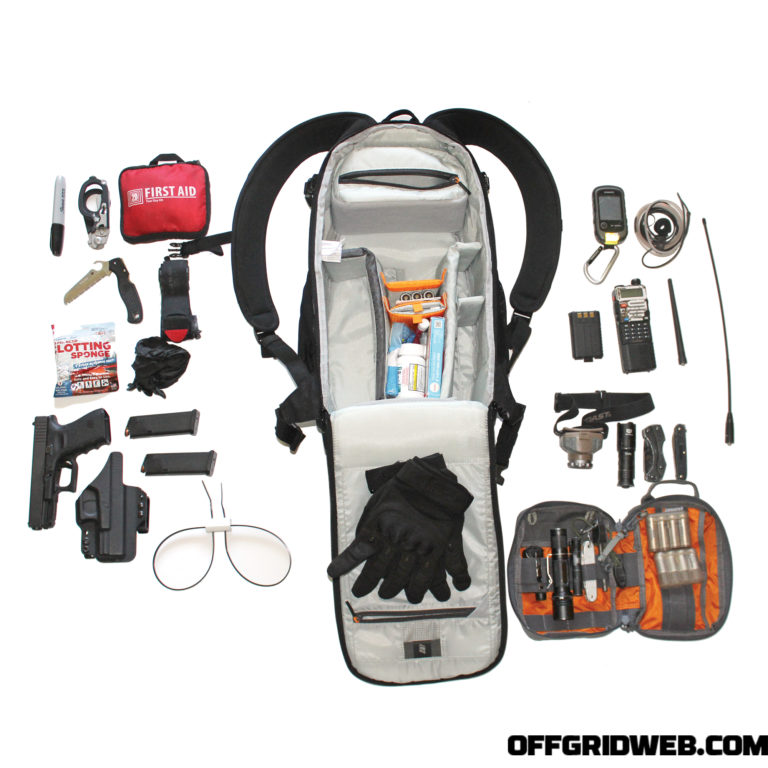
By now, most people in self-defense or preparedness-oriented communities know what the term “gray man” signifies. It’s the idea that you can walk around with all of your emergency tools at the ready without looking “tactical.” This is funny because it’s so easy to spot. Many of us are never truly a gray man, because we allow our preparedness to become a lifestyle or culture. To that end, many of us wear something that sends a signal to others and lets them know we are of this mindset, or culture. And believe it or not, there are characteristics of the gray man suit that are easy to profile by anyone who wants to do so, whether friend or foe. This means we’re almost defeating ourselves.
However, there’s still a large and legitimate market for low-profile gray man gear, and one of the biggest categories in this arena is packs. But sometimes the best sources for this kind of equipment are places that don’t specialize in it. I’ve been recently looking for a different pack to carry for my day job working executive protection. I was on one of my favorite online tactical gear sites, Amazon, looking for my next ultimate gray man bag, when I stumbled upon DSLR camera bags. I was checking them out, and there’s a wide variety to choose from. They have canvas and leather, bike messenger sling bags, sleek corporate bags, in all sorts of shapes and sizes.
Then I got to thinking, these things are really well-built, padded to protect valuable equipment, and many are designed for quick access to a camera in the same way we like quick access to a firearm. I also really took a keen interest in the organization compartments. I carry a lot of gear to keep clients and myself safe, and I hate having to dig through the bag to find stuff. The DLSR bags already come with a multitude of compartments, Velcro slots, quick-access zippers, and organizer pockets. All of them come with a compartment for computers and/or iPads. Finally, none of them looked at all tactical. Then it hit me: I don’t think I’ve ever seen anyone make use of a camera bag for their EDC.
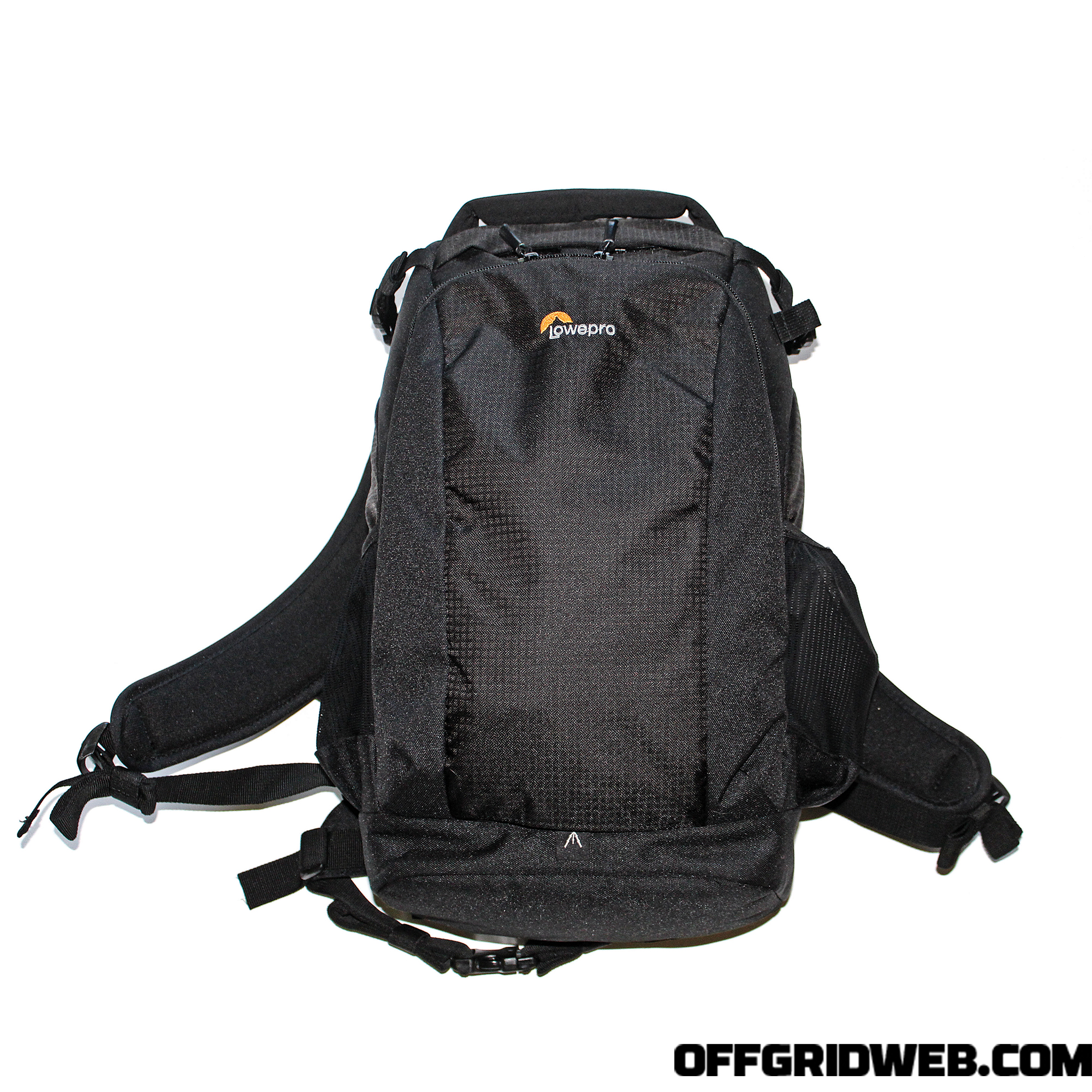
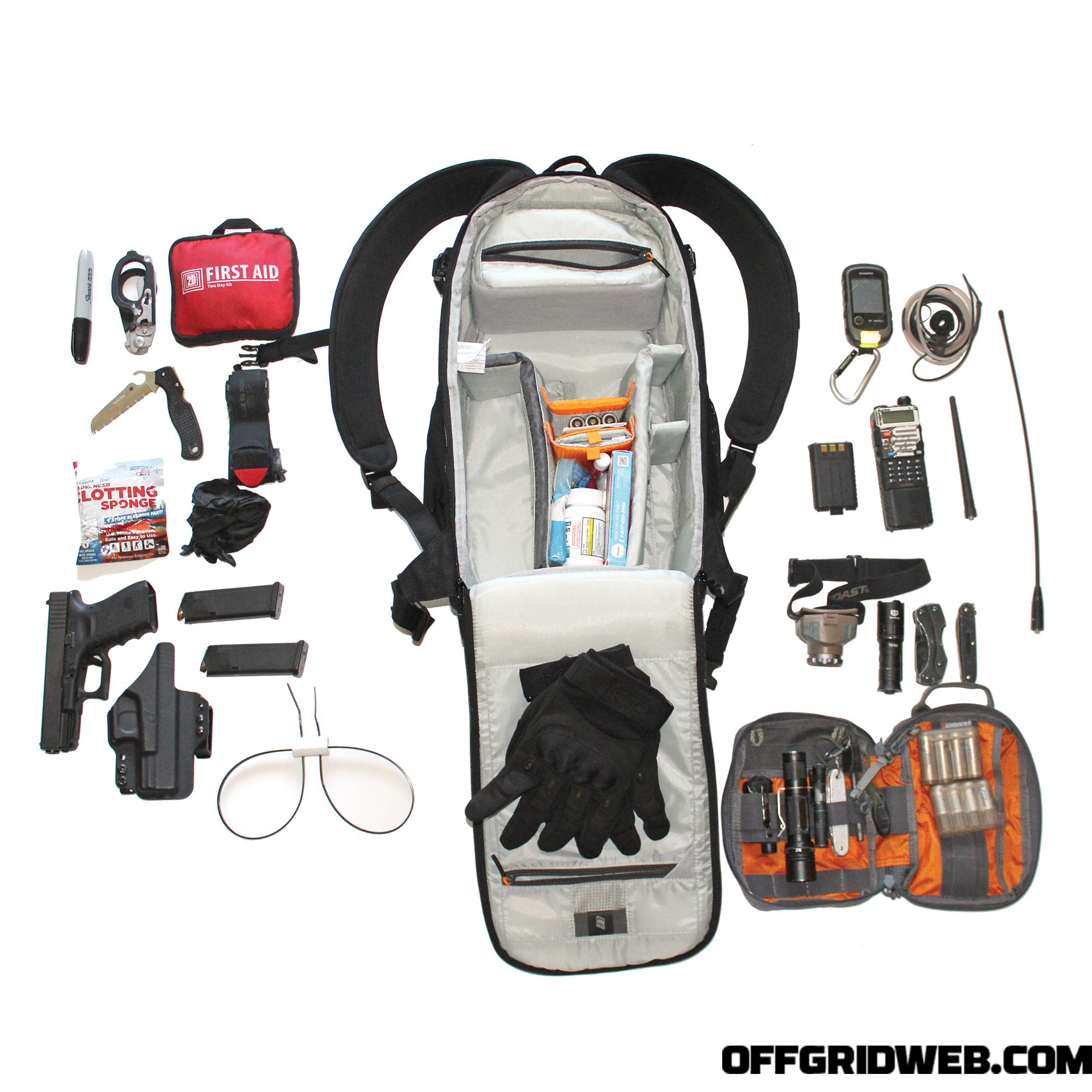
Shortly after making this realization, I’m on my second camera bag. I thought the first one was going to be great, but a couple months in the zipper broke — that’s a no-go. Rather than buying sight unseen over the internet again, I went to Best Buy to check out their bags and found a winner. Let me introduce you to Lowepro camera bags — specifically, the Lowepro Flipside 300 AW II. This thing will run you about $120 but, in my opinion, it’s well worth it. After having surfed their website, the company really has an outstanding selection of bags that, ironically enough, include some tactical and camo-looking ones — for the gray man who likes to print just a little. I’m really impressed by their selection of bags and applications. Some are more geared toward wilderness backpacking, some for urban carry, and some have a nice combo for both applications.
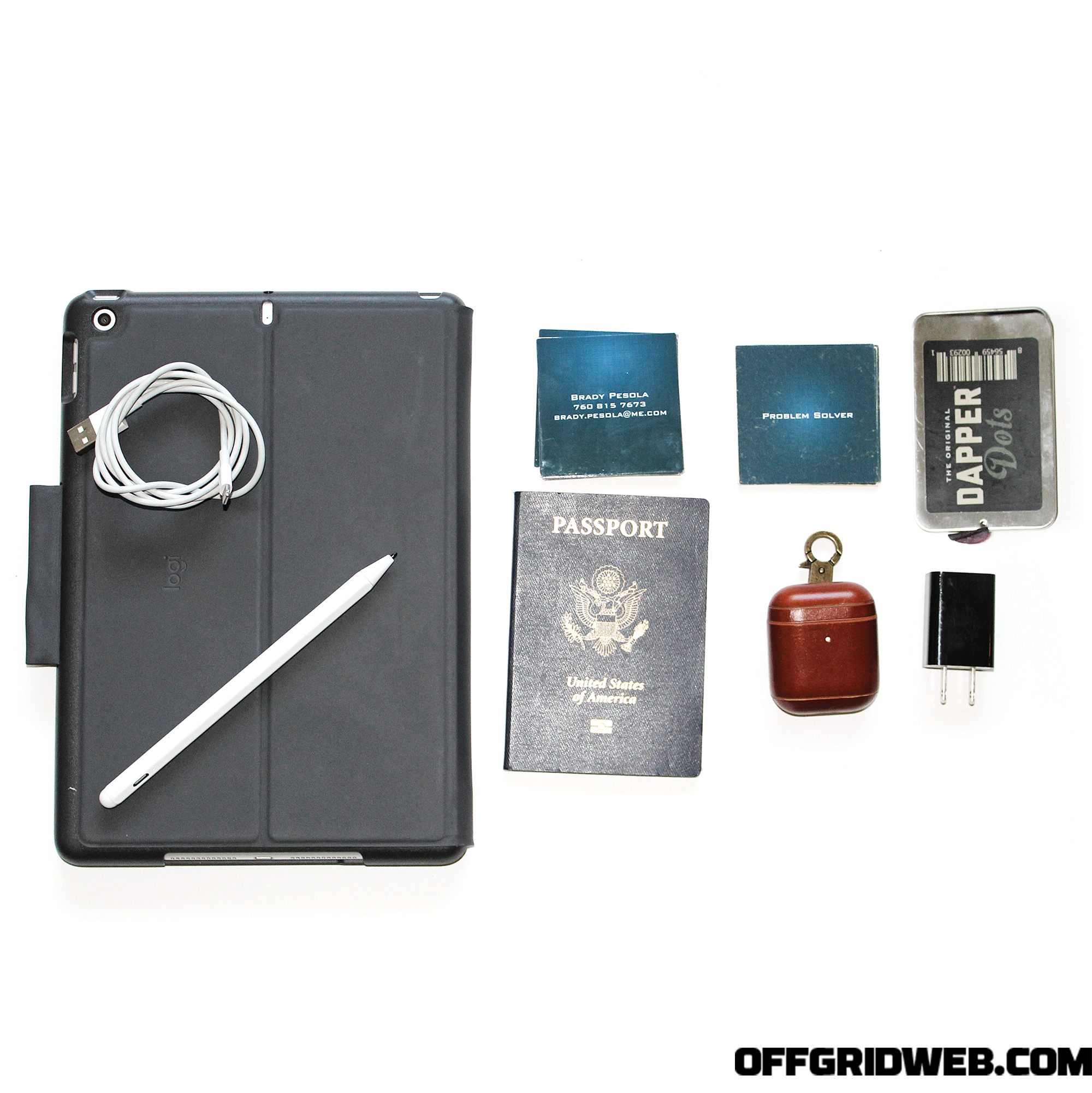
A slim admin pocket on the outside of the pack provides organized storage for small items, such as business cards, documents, and small electronic devices.
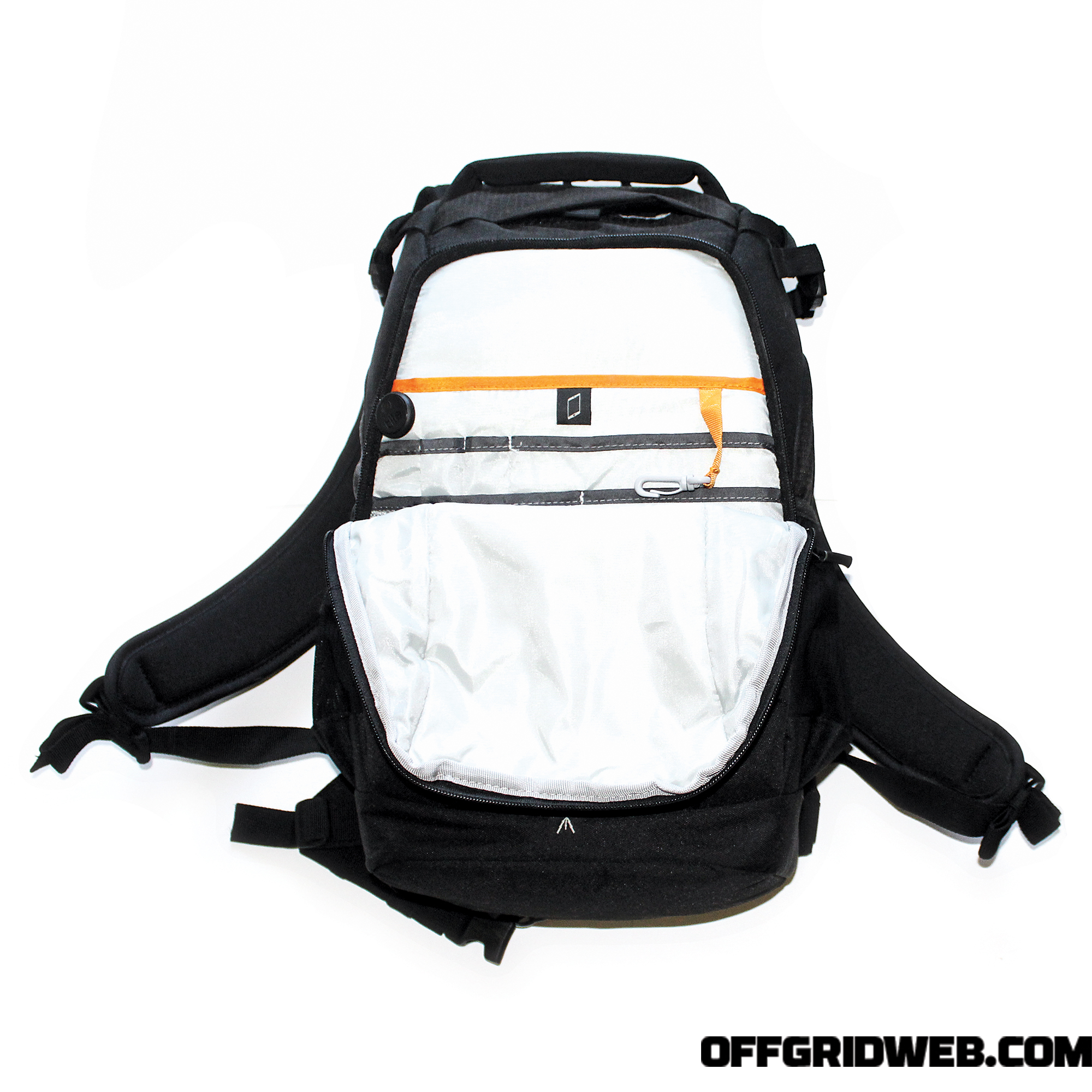
The Lowepro Flipside has a large compartment that takes up the whole bag. Some bags that I’ve found split the main compartment in half with an opening on the lower half, either in the front of the bag or in the back neck area, and the rest use up the whole length of the bag. I’ve decided after the first bag that had the split compartment, I like the full-length compartment more. It has more room and more Velcro slots for organization. What I really like when I open it up is how quickly I can access the compartments. The zippers move smoothly, and there’s no protective material over the zipper to snag and impede access.
When the compartment opens, you’re treated to a light gray contrasting color to the black, which makes it simple to find gear, along with five potential compartments and a small detachable zip compartment that’s perfect for my gun when it’s not on my hip. The rest of the compartments can be moved and modified to fit your needs and the gear you carry.
The size of the bag is important to me as well. In EP, I don’t want a big cumbersome bag that I have to try to maneuver when on the move with the client. I like that the bag isn’t very big to make it look like I have a bunch of stuff inside of it. The way the bag is designed makes it feel sturdy, easy to carry, and light. This is one of the better bags that I’ve carried.
Make & Model Lowepro Flipside 300 AW II MSRP $120 URL www.lowepro.com
Self defense skills are like ice cream. There are countless flavors, and it might be “hard” (e.g. fighting proficiency) or “soft” (e.g. awareness of pre-fight warning signs). But in the real world, it inevitably melts over time. This statement on the importance of continuous training was one of the introductory lessons from FPF Training’s Concealed Carry: Advanced Skills and Tactics (ASAT) course. ASAT is a two-day class, but it begins with some pre-class homework in the form of a four-hour YouTube video playlist created by instructor John Murphy. If you’d like to watch some free lessons from the comfort of your couch, you can find it at bit.ly/2QJ5xMO.
Although the ASAT curriculum certainly involves shooting — each student fired about 700 rounds over the course of the weekend — it places an increased emphasis on skills that go “beyond the gun.” Realistically, you’re far more likely to use verbal de-escalation to deal with a panhandler, deploy pepper spray to fend off a belligerent drunk, or use a tourniquet to help an injured motorist than you are to draw and fire your gun. Knowing how to use lethal force is undeniably valuable, but if that’s the only option you’ve ever practiced, you’re bound to be unprepared for most of life’s conflicts. Knowing this, Murphy spent a substantial amount of time focusing on supplementary skills.
After discussing topics such as awareness, avoidance, de-selection (looking like you won’t be an easy victim), de-escalation, and evasion in the classroom, we headed outside to deal with the last step in this continuum: force. However, that doesn’t just mean lethal force. Pepper spray can be an excellent intermediate tool. Murphy handed each student inert pepper spray training canisters loaded with water, and we practiced using these on an approaching attacker while maintaining a safe distance and issuing verbal commands. After seeing how simple and effective it was during training, I’ve added a canister of POM Industries pepper spray (included in the class fee) to my EDC loadout.
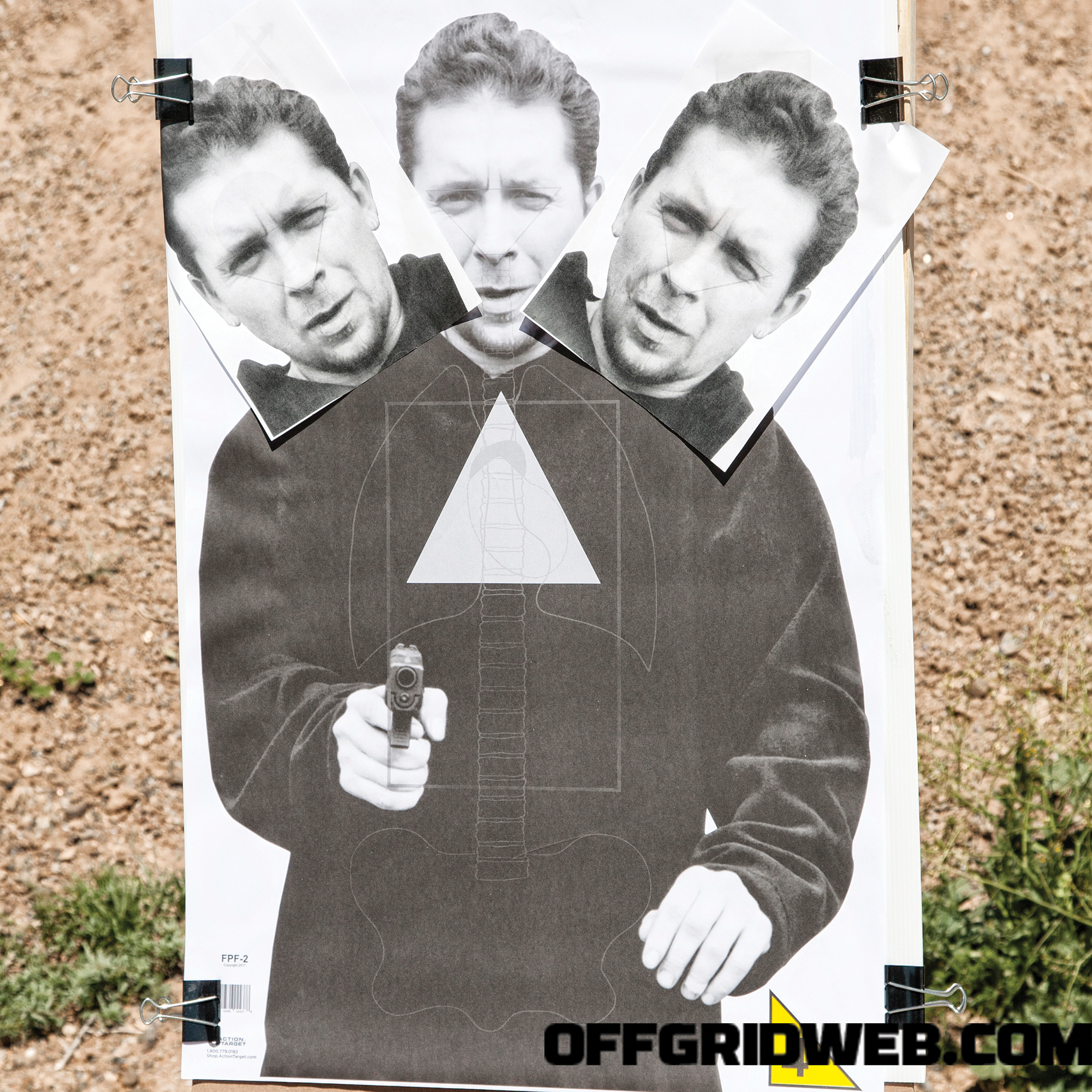
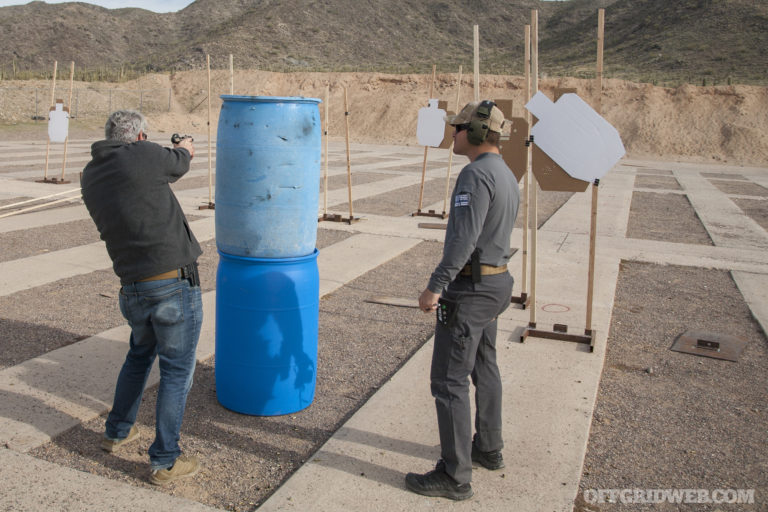
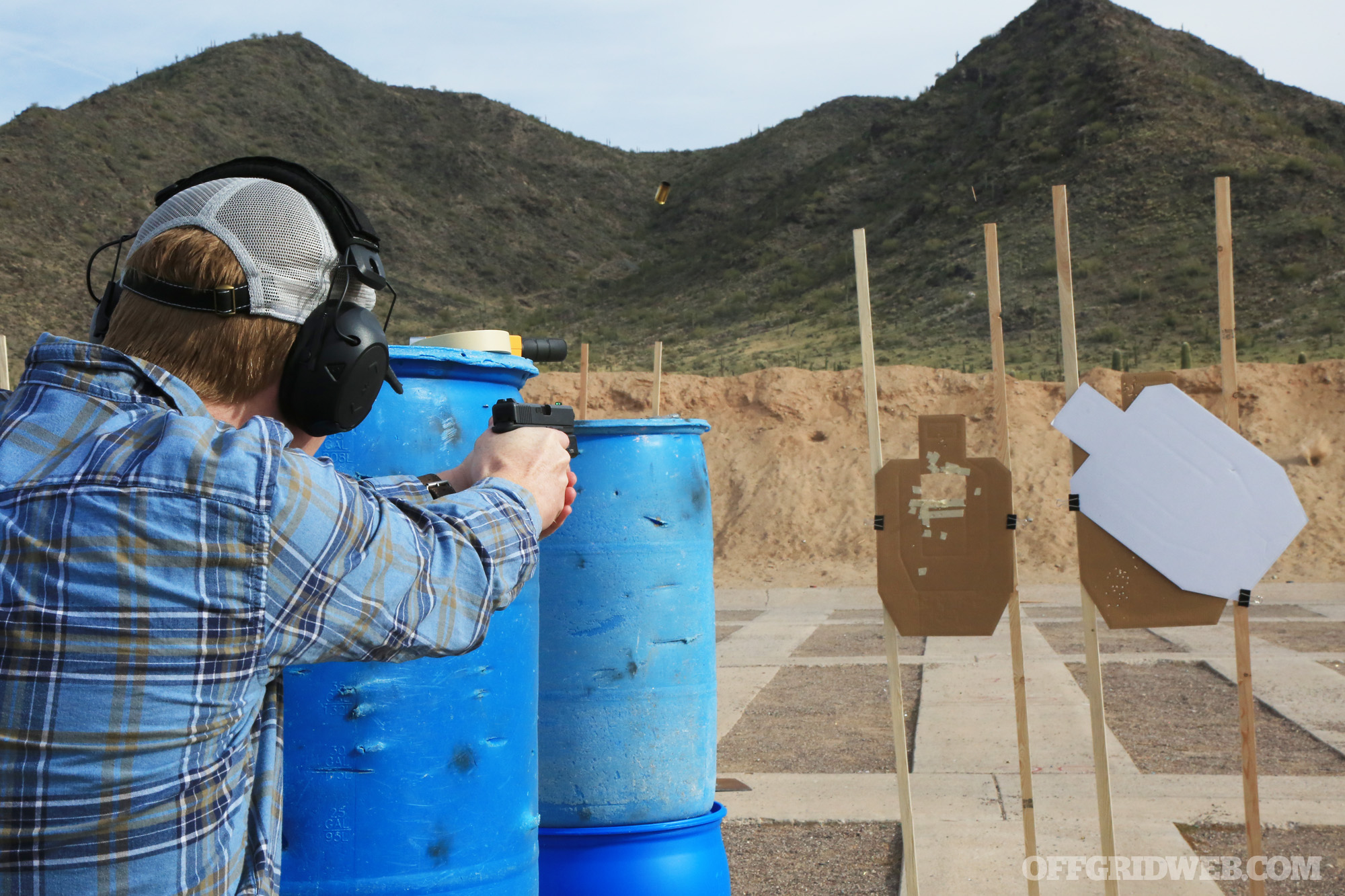
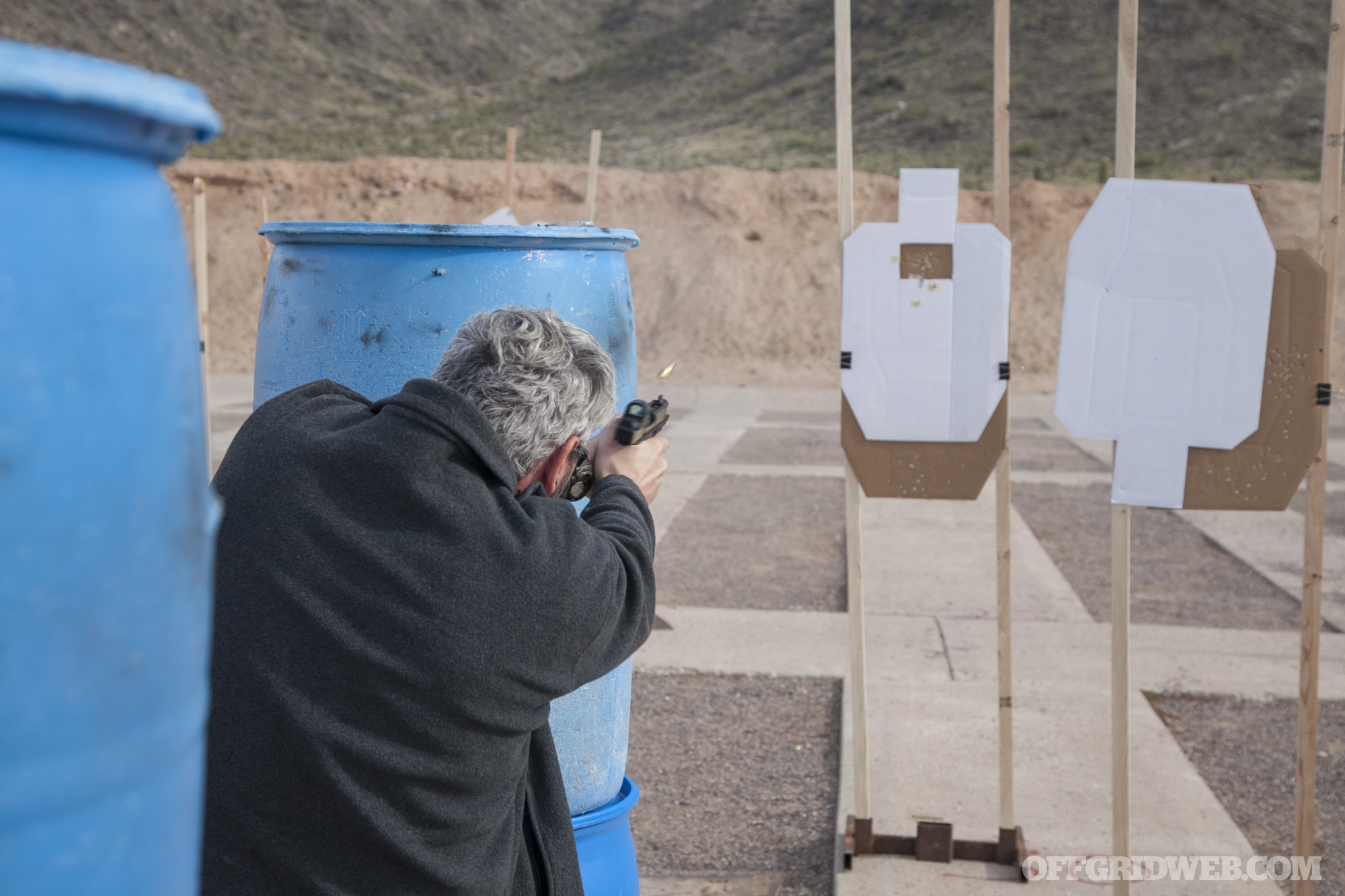
Transitioning to the range, we practiced fundamentals such as basic marksmanship, drawing from concealment, and moving while firing, but then continued on to more complex drills. These involved 3D targets to gauge shot placement from various angles, and multi-headed paper targets to simulate an adversary who staggers to one side after the first hit. Murphy also brought out red and green laser pointers to quickly designate a target for lethal or less-lethal force, causing students to respond on the fly as they would in a real conflict. We even had to simulate a 911 call to inform law enforcement after an incident.
Since injuries are common in daily life and self-defense scenarios, medical skills were a constant emphasis throughout the class. We practiced correctly applying tourniquets and pressure dressings and had to carry ankle trauma kits with these items at all times. Murphy would occasionally yell “tourniquet, left leg!” or similar commands with no notice, and time students until they completed the task. This reinforced the importance of being ready and able to treat a sudden, life-threatening injury.
Above all, this ASAT class served as a stark reminder that having a gun and the skill to use it is one small part of the self-defense paradigm. Gunfights are rare, but virtually all of us will witness traumatic injuries, fistfights, and/or verbal altercations in the future. Each of these skills should be balanced accordingly. For more information on FPF Training classes throughout the United States, go to www.fpftraining.com.
Keep an eye out for a recap of another training experience in the next edition of The Final Weapon. Until then, get out there and work on sharpening your own skills — when the time comes to use them, you’ll be glad you did.
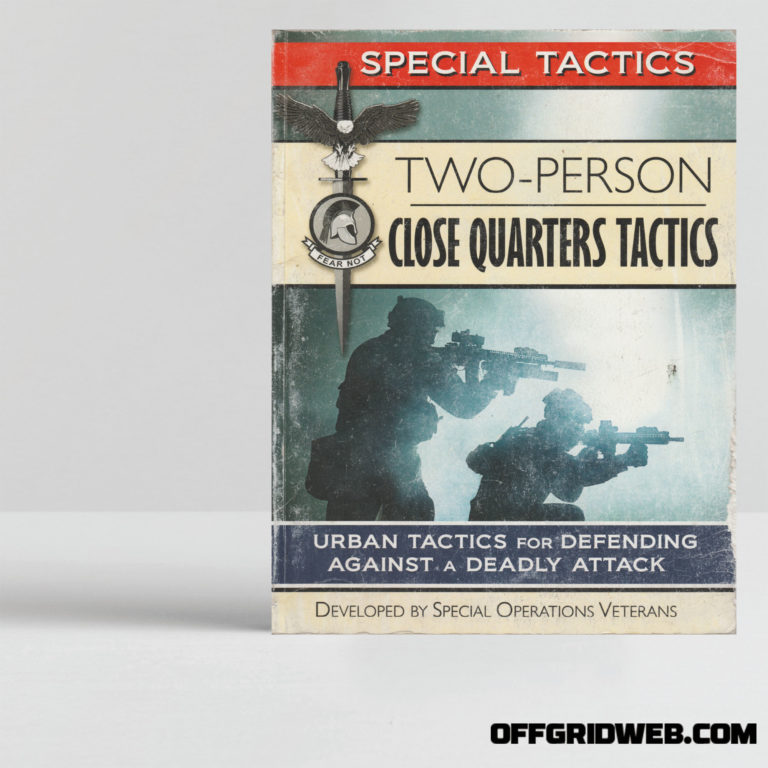
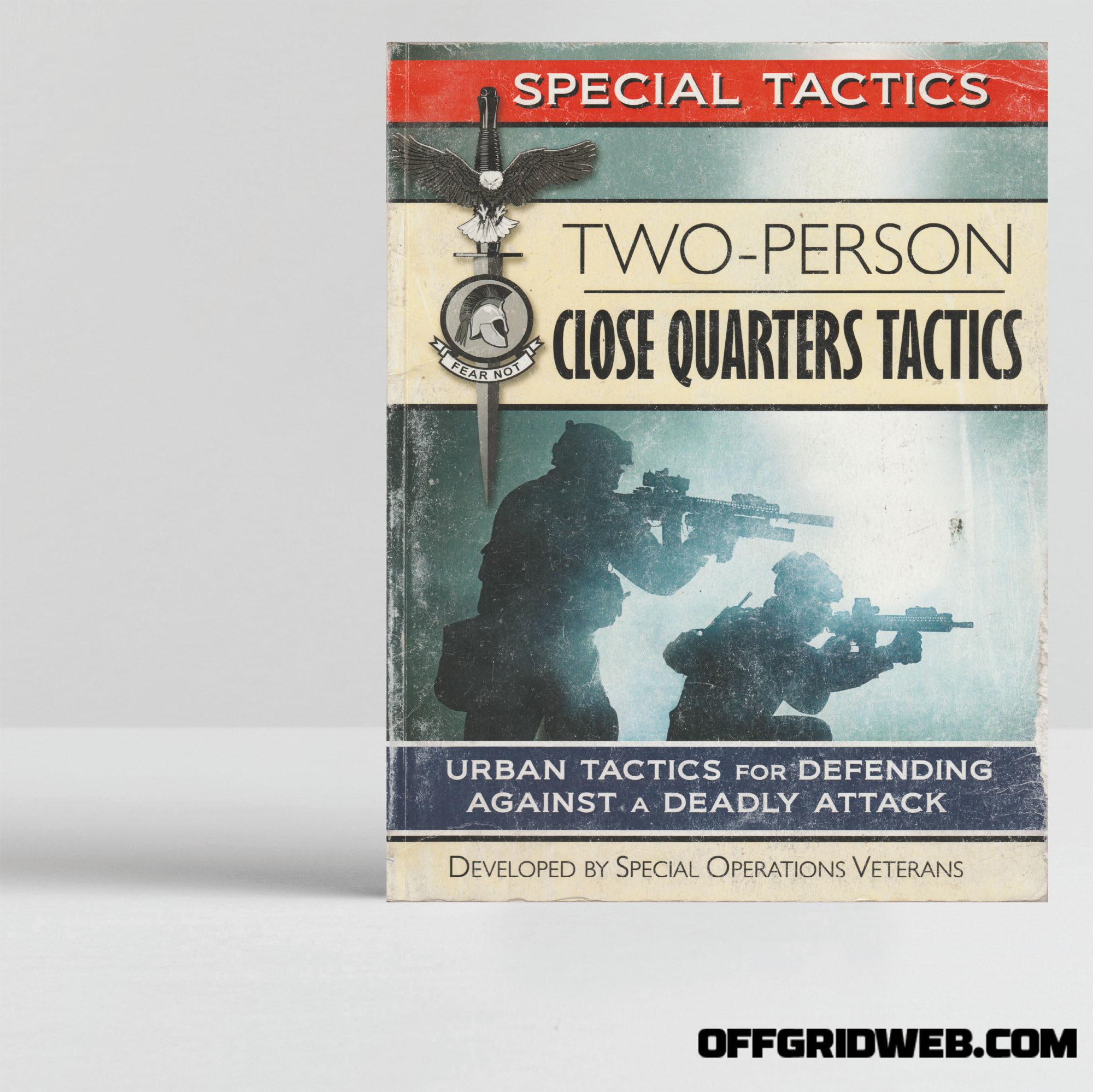
The Premise: Special Tactics is a team of active-duty and former Special Operators who have released a series of books on room clearing, small-unit tactics, and related topics. This particular volume is a step-by-step guide of two-person room clearing and CQB tactics. While the methods were developed by military and law enforcement tactical teams, the folks at Special Tactics do an excellent job of presenting them in a beautifully simple, easy-to-learn format.
The 411: Tactical movement is probably one of the most misunderstood aspects of armed self-defense or home protection. It’s hard to find a movie or television show that doesn’t portray someone moving through a building with a gun. It’s even harder to find one that portrays it correctly. This book does an excellent job of filling that gap. The authors preface their lessons by explaining that the tactics they outline are designed specifically for defensive use, with a heavy focus on slower, more deliberate movement and clearance, rather than the speed-driven methods that might be employed by professional tactical teams with a direct-action mission set.
Before beginning their methodical sequence-based outline of movement techniques, there’s a chapter on what they call “The Four Pillars of Survival,” which they outline as proper mindset, situational awareness, skill proficiency, and physical fitness. We were particularly happy to see this last pillar included as a vital part of an overall survival plan. Self-defense of any kind is a full-contact sport, and a baseline level of physical fitness is an absolute requirement — not just in the performance of the physical tasks (running, fighting, shooting, etc.) required in a life-or-death situation, but also to help the body better manage the psychological stress reactions that’ll occur in real time, with or without your permission.
The physical skills portion of the book begins with positioning prior to entry. Single-side and opposite-side positions are discussed, as well as other helpful tricks like using a “ready signal,” how to approach doors that open inward and outward, as well as the risk of being backlit in such a manner that your shadow is visible in the doorway, even if you’re not. Once you understand positioning, you can choose to either visually clear or make entry. Each has pros and cons that are discussed — for example, visual clears will still leave a dead space of approximately 10 degrees in the near “deep corners” of the room, which cannot be effectively checked without making entry.
If physical entry into the room is needed, the Special Tactics guide covers both one- and two-man entries. In a one-man entry, the second person remains outside of the room to cover the surrounding exterior area. This guide covers both “full-entry” and Limited Penetration techniques. “Lim Pen” is when the person enters the room just far enough to clear the dead space in the near corners, remaining just inside the doorway to do so. There has always been some debate as to the tradeoff between committing fully to the room versus loitering in the “fatal funnel” of the entryway itself. These are decisions you’ll have to make in the moment, or will have to rehearse if dealing with a structure you inhabit regularly like your home or office. However, we like that multiple answers are presented for various tactical problems.
After entry procedures, the book transitions into in-depth discussions on various movement issues such as hallways and intersections, including T-shaped, X-shaped, and L-shaped intersections as well as intersections with uneven corners. Again, multiple methods for each are discussed, and each one has crystal-clear diagrams that show physical positioning, sectors of fire, and fields of view for both good guys and bad guys.
The Verdict: We’ll be the first to say that books and videos will never fully replace proper instruction from a vetted subject-matter expert. Having established that, we think the Special Tactics guides are an excellent place to start for people who don’t have prior training in this area, a refresher for former professionals who might be a little rusty. These books can be purchased directly from the Special Tactics website (which also offers a membership program with access to online training modules) or from Amazon.
Two-Person Close Quarters Tactics: Urban Tactics for Defending Against a Deadly Attack By Special Tactics
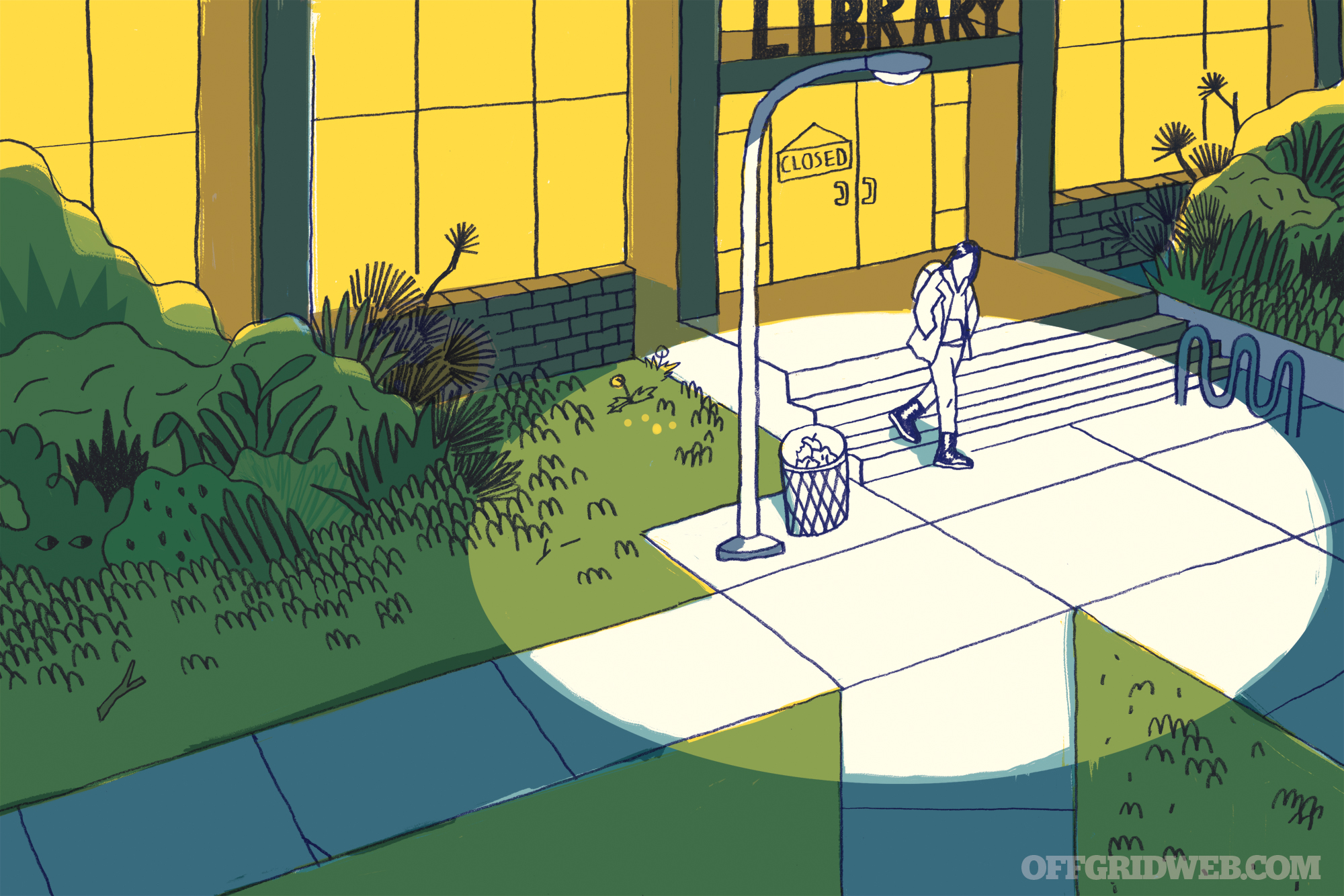
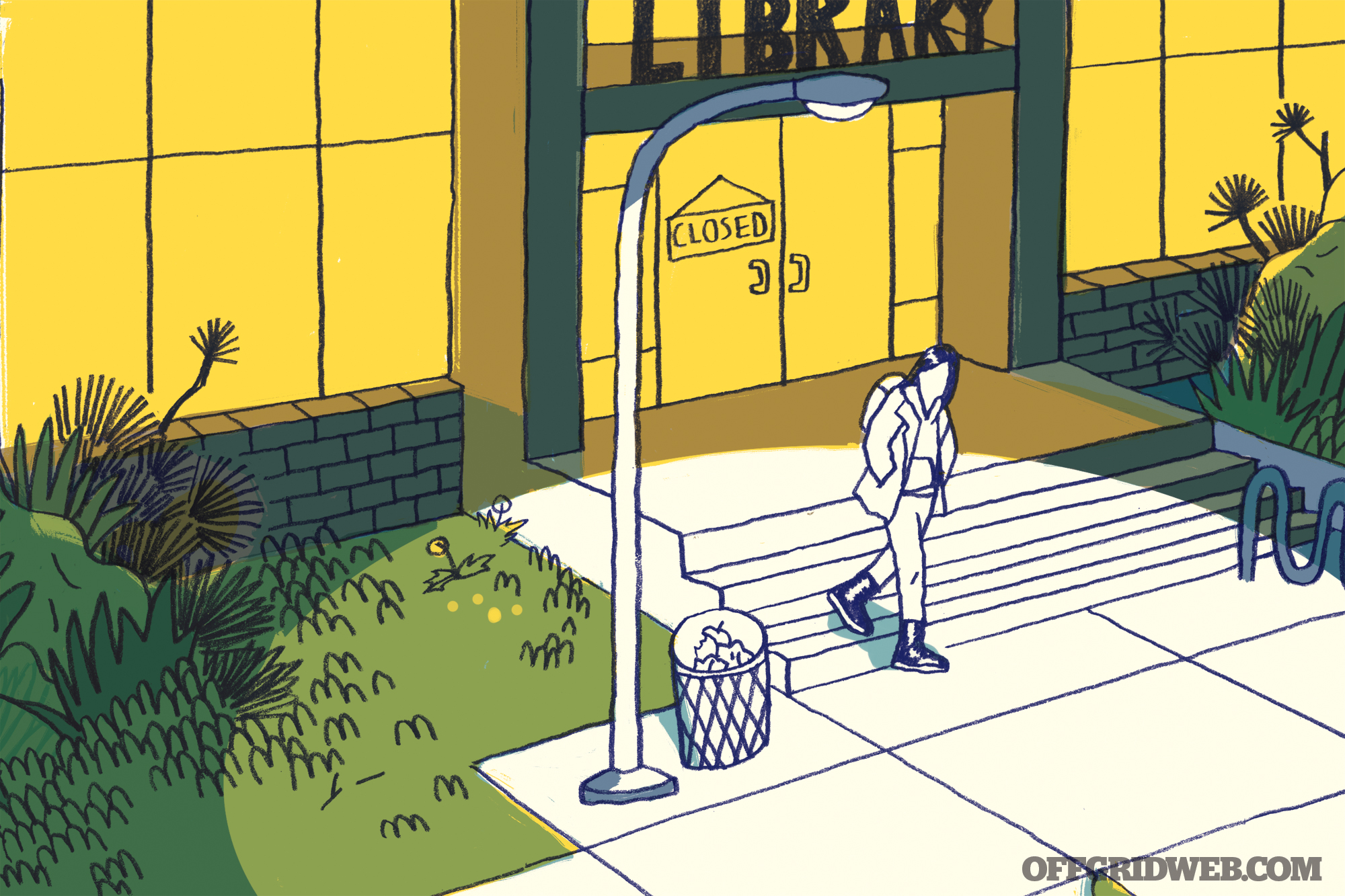
Illustrations by Jordan Lance The university is predictably quiet tonight, being a Friday night. One by one, students pack up as the time draws nearer for the library to close. Staff make the rounds at 10 to midnight, letting the remaining students know they’d be closing soon and to finish up what they’re doing. You shut off your laptop, pack up the books you had scattered about the table, and take a long sigh, wondering how difficult your upcoming midterms will be. Normally you wouldn’t be on campus quite this late, but you’re behind on your assignments and feel you have precious little time left to complete your work before you leave for spring break.
You say goodnight to the staff member who kindly holds the door open for you as you walk out the front door of the library. You head to the parking structure where you left your car, on the other side of the campus. You don’t like the idea of having to walk clear across the campus so late at night, but it was one of those days where parking was limited and you didn’t have time between classes to go back and move your car to a closer location like you often do.
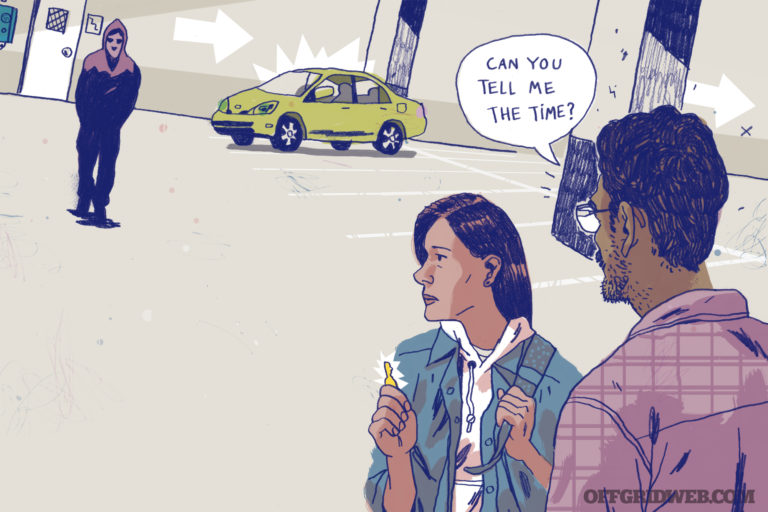
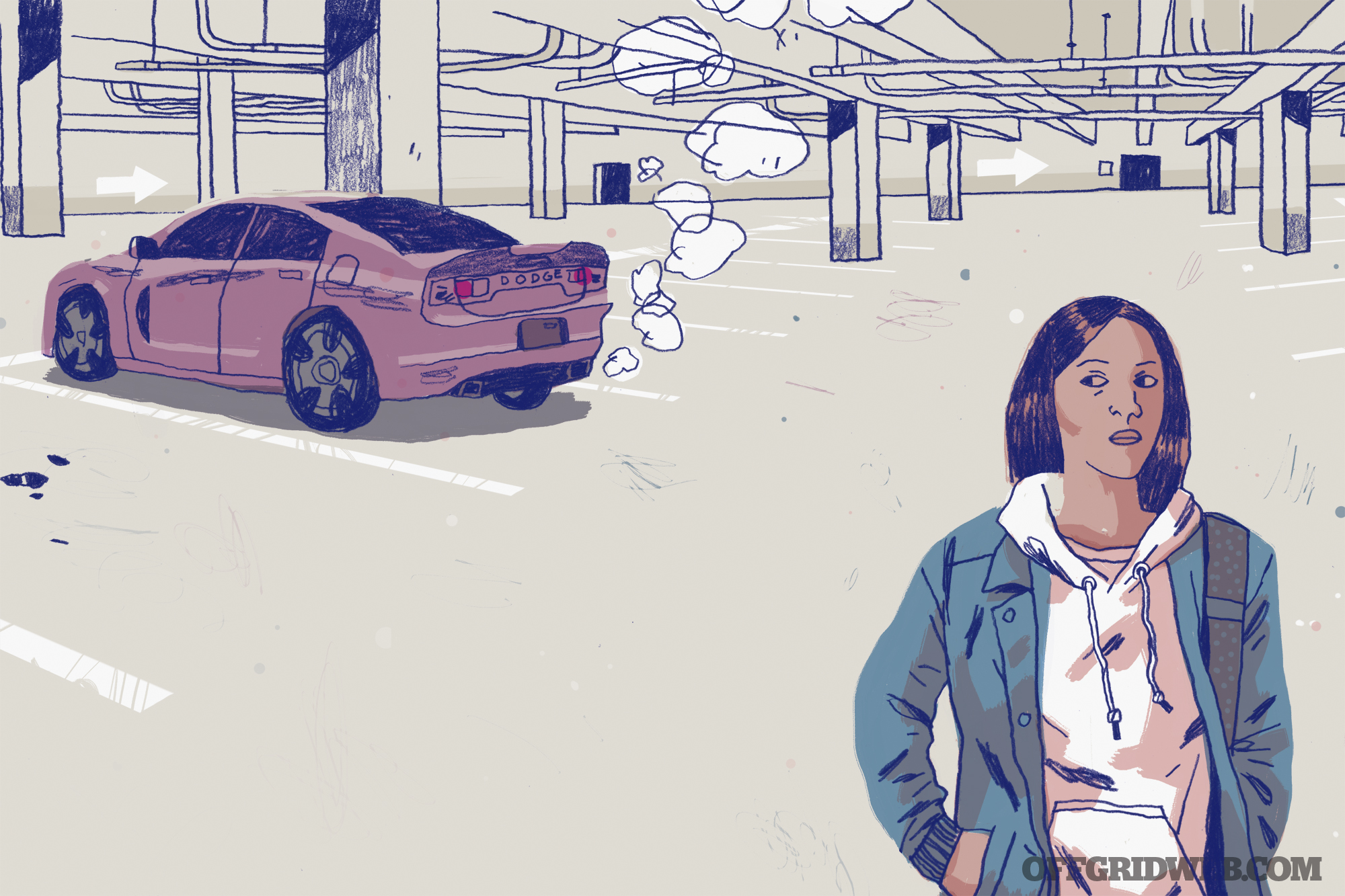
After a brisk walk, you climb up the staircase to the third floor of the parking structure, approaching another parked car with tinted windows just sitting there idling. You find it a bit peculiar, but figure it’s another student, probably busy talking on the phone before they head out. Instead of hearing the car pull away as you pass it, it curiously shuts off. You then hear the sound of the door closing and footsteps walking away from it. The purposeful-sounding footsteps are getting louder and definitely those of a man. This is somewhat discomforting, but since you already rounded the corner to where your car is parked, you can’t see who it is.
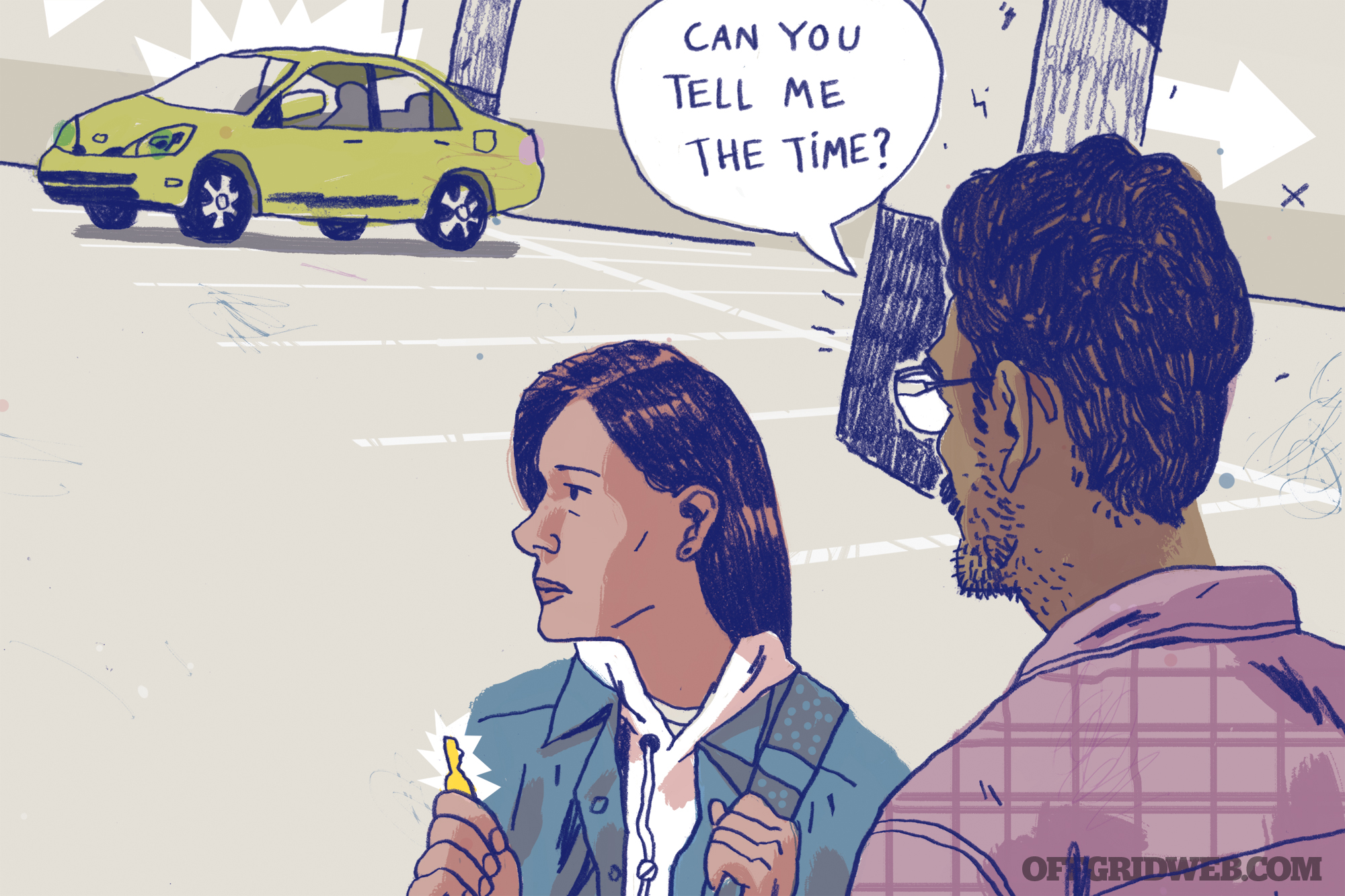
Your car is now in your line of sight, but a strange man who looks a bit too old and disheveled to be a student takes notice of you, as if he’s been waiting for someone. You feel the hair on your neck stand up as he walks toward you, all the while the steps behind you are getting louder. The man in front of you stares right at you and asks in a gravelly voice, “I’m sorry, my phone died. Can you tell me uh … what time it is?”
The steps behind you get closer and you turn around to see a military-aged male in a hoodie with his hands hidden inside his front pockets. He stops when he sees you notice him. As you turn back around to the man asking the time, he shifts his gaze and now tries to force a smile that looks about as honest as a $3 bill. There’s no other noticeable activity or students that you can see or hear. It’s near midnight, and you feel like you may be getting prospected for a violent crime. You begin to shake a little, as this is the kind of stuff you hear about happening to other people on TV. What do you do?
The Scenario
Situation Type Possible mugging, rape, or murder
Your Crew You
Location Local state university
Season Spring
Weather Clear; high 78 degrees F, low 66 degrees F
The Setup: You’re a student working on your graduate degree at a local university. Recently, there have been a few muggings and even a murder on campus. You often study late at the campus library, which is open until midnight, and frequently have to walk to your car across campus to a parking structure or another lot that’s quite far from the library. The campus has an explicit no-weapons policy and forbids firearms, claiming that its 24-hour campus security presence is sufficient to keep students and staff safe. You’re concerned with this recent string of incidents, especially since you often walk to your car alone and have rarely seen security officers patrolling the area.
The Complication: On a Friday night, you leave as the library closes at midnight and walk across to the parking structure. You ascend to the third floor where your car is parked, noticing that the structure is practically empty. As you head to your car, you pass a vehicle that’s parked about 50 yards from your car and idling. The windows are tinted so you can’t see inside, but you find it peculiar that it’s just sitting there running. You chalk it up to possibly being another student getting ready to leave.
As you approach your car, a middle-aged male walks in your direction. Meanwhile, you hear the car you just passed turn off its engine and the door open and close. As the man in front nears you, he asks if you have the time. You look down at your watch and let him know that it’s just past midnight. You hear something behind you, realizing there’s another male, perhaps a little younger, approximately 30 yards behind you. The male asking for the time is now only about 20 feet in front of you. Are you being set up to be mugged, physically or sexually assaulted, or potentially murdered? Or are these just two other students or staff who mean you no harm? You begin to sense that something is wrong, and the odds of coincidence are dropping fast. There are blue emergency call boxes in the parking structure that connect you directly with campus security, but one of the individuals is between you and the stairs to the closest call box, which is one level below you. What do you do?
Tactical Trainer Katheryn Basso’s Approach
A college campus is ripe for criminal behavior due to its plethora of easy targets — inebriated partiers, late-night scholars, and young, naive adults recently released into the world. Whether or not criminal behavior has recently increased on my campus, as a woman, I’m always aware of the potential for conflict. Before my first day of class, I do my due diligence to familiarize myself with the local area — location of police stations and hospitals, crime rates, and gang activity — as well as campus protocol and safety measures, such as the location of campus security guards and call boxes, and phone numbers for security escorts or emergency services. The more prepared I am prior to an emergency, the less likely I’ll freeze if a crisis ever occurs.
Let’s make a few assumptions before we get into this scenario. One, I have to stay at the library until it closes. Whether that’s because I need access to a special collection that cannot be checked out, or my roommate makes too much noise for me to concentrate — whatever the reason, I need to stay at the library until midnight. Otherwise, I’d rather study at home and avoid the potential threat. Assumption two: I couldn’t get a security escort that night. I’d definitely request an escort, if available. I don’t care how tough you are, what your skill level is, or how badass you think you are. One security guard with a radio and pistol significantly increases your chances of avoiding criminal behavior. Swallow your pride or impatience and make smart choices.
With that being said, let’s walk through the escalation of conflict in this scenario: avoidance, resistance, and combat.
Preparation: Conflict Avoidance
The only fight I’m 100-percent guaranteed to win is the one I’ll never have. Setting myself up to avoid conflict will be my best shot at getting home safely. Criminals tend to choose easy targets — individuals buried in their phones, unaware of their surroundings, or hindered in their movement due to age, injury, or footwear. They’ll choose someone they think they can overpower or outnumber; they’ll attack in areas where they have the least chance of getting caught. There are a number of choices I can make on campus to make myself a hard target and increase the odds of avoiding conflict:
Parking: It’s probably a universal rule on all college campuses that parking is never convenient nor in excess. Let’s assume that I’ll always have to park in an inconvenient spot far from my intended destination. As I drive through a parking garage, I’ll look for a parking spot closest to security features, listed in order of preference: cameras and lights, elevators and stairwells, and emergency call boxes. Again, the intent is to make myself a hard target. Even if I’m the last vehicle in a structure, a criminal is less likely to attack me if he’s being recorded on camera and illuminated under lights. If I can’t find a spot close to lights or cameras, I want to be close to an egress route. And finally, a call box. I list a call box last because it’d be quicker and safer to use my phone as I’m running to safety than to stop and expose myself to danger as I wait by a call box.
The Walk: So, I’ve parked my car under well-illuminated lights right next to that bubble camera the campus security installed after the many protests from students concerned about their safety. I have no idea if the camera works, but hey, neither does the bad guy. Now, I have to find my way to the library. I’ll choose a route that has as many people as possible — avoid shortcuts through alleys or under bridges, overgrown shrubbery, camera blind spots, Professor Jenning’s Botanical Garden, and so on. You know, all the places students like to meet up in the middle of the night for dirty deeds. Those are the places to avoid. Instead, walk on a well-lit and frequented path past camera towers and call boxes. Again, a call box isn’t an ideal stop if something goes bad, but it can be a good deterrent. As I’m walking in the early evening, I take notice of my surroundings. What are my danger points — the unavoidable spots I must pass where an attack would be, most likely due to a camera blindspot, broken lightpost, or blind corner? Are there any new structures that could conceal someone? I also look at the people along the way. Who are they? How are they dressed? Who are they with? Where does their interest lie? Are they walking with a purpose or out for a stroll? Identifying the baseline for this walk will help me identify an anomaly later.
The Equalizer: I get it — the policy is no weapons on campus. However, that doesn’t mean I can’t carry something to defend myself. Weapons are usually defined as a firearm, knife of a certain blade length, or baton. That leaves several sprays, alarms, and self-defense keychains that’ll still provide protection against an attacker. In case even these items aren’t allowed on campus, I’d choose to carry one in a nondescript or concealed form factor. Whichever I choose, I need to make sure I’ve practiced using it. The last thing I want is my attacker using my personal protection device against me. I’d carry the following:
Personal Alarms: I’d use a personal alarm more for audible stunning than in hopes of alerting someone of my predicament. Nowadays, people are so used to car alarms that they tend to ignore rather than run to these noises. However, unleashing it up against an attacker’s ear may give you an opportunity to get away.
Spray: Mace, powered by the phenacyl chloride (CN) chemical, is an irritant that utilizes pain to subdue its target. However, it’s often ineffective against animals and assailants under the influence or mentally disturbed. Therefore, I’d carry pepper spray; its main ingredient is oleoresin capsicum (OC). OC spray is an inflammatory agent that dilates the capillaries in your eyes and causes your mucous membranes to swell, resulting in temporary blindness, coughing, and choking. Some now squirt out foam to reduce spray back.
The Library: Once I’m at the library, I’d maintain my situational awareness. Is anyone lurking around? Is anyone too interested in what I’m doing and where I’m going? Is anyone waiting for me to leave? If so, I’d take this opportunity to inform the appropriate authorities.
On Site: Conflict Resistance
Situational awareness is the ability to identify a threat before it can harm you or your family. There’s a fine line between paranoia and preparation. Being observant of your surroundings doesn’t mean working yourself into an anxiety-induced suspicion that everyone is out to get you. The point is not to be complacent.
Observe: It’s now midnight, and I’m walking back to my car. My head is up; I’m walking with a purpose. My phone is in my pocket; I’m not listening to music. I’m using my eyes, ears, and nose to be aware of my surroundings. Do I see people lurking? Can I hear someone’s footsteps behind me? Can I smell cologne? My keys are in my hand so I don’t have to fiddle with my bag to find them and because they hold both my personal alarm and my OC spray. Again, it’s not about being paranoid, it’s about being prepared.
Orient: Since I’m aware of my surroundings, I’ll be able to identify an anomaly — an event that doesn’t conform to my pre-established baseline. Let’s say I previously established that the baseline for this part of campus involves students or faculty walking with a purpose to or from other buildings; it’s not an area where people congregate or sit and study by themselves. Since it’s a warm spring day, they’re in shorts and T-shirts. They have bags to carry their books or papers. They walk alone or in small groups from class. Their interest is focused on the path that leads to their destination or in conversation. With spring break approaching, most are relaxed, showing no signs of stress.
Decide and Act: If I see someone lingering by himself along a side of a building or beneath a tree, with layers of clothes on and no backpack or bag, this would be an anomaly. It doesn’t necessarily mean he’s a threat, but it does mean he doesn’t fit into the baseline. He may be someone trying to find a place to do drugs or meet up with his forbidden love interest. But he should still garner my attention and action. I’d have to determine if I should maintain my current course, alter my path toward the dorms or coffee shop that I know would still be open, or call the police. As long as his interest didn’t remain on me and he didn’t follow me, I’d likely choose to continue to my vehicle.
Crisis: Combat
In this scenario, I’m on the parking garage level of my car and missed my opportunity to alter my path away from the guy walking toward me and the creepy, idling car. I also messed up by looking down at my watch to check the time, so I’ll want to regain observation of the potential threat as soon as possible. As I find myself between two men, I’ll have to make a quick assessment of the man in front of me while also listening for the footsteps of the man behind me to determine if he’s a threat.
I’d look for signs of the front man’s fight or flight response: flushed or pale face, shaking hands, increased respiration rate. I’ll look at his hands: Are they holding something? Are they hiding something? I’ll listen for the man behind me. Are his footsteps getting farther away or closer? Is his pace quickening or staying the same? If the men show no signs of threat, I’ll continue to my car and drive away. However, if I deem them a threat, I’ll prep my OC spray and verbally tell them both to get back while I maneuver to their side where I can see both assailants.
This is the turning point. If my assessment was wrong, the two men should back up, perhaps call me crazy, and leave the vicinity. I’d rather be called crazy and stay alive than avoid feeling presumptuous and end up dead. If my assessment was correct, however, it’s time for 110-percent violence. If the two men lunge toward me, I’ll do everything I can to neutralize the threat, with a combination of OC spray and physical violence. Humans have three very vulnerable targets and only two hands to cover them, so I’ll look to strike their eyes, throat, or groin. Once contained, I’ll seek cover and protection: If I’m close to my car, I’ll get in and drive away, calling 9-1-1 in the process. If the men are between me and my car and the stairwell is close, I’ll make a run for it. My adrenaline will be spiked at this point, so I won’t be able to rely on my dexterity. But I can have my Google assistant call for help as I head toward a more populated area.
Conclusion
After being attacked or assaulted, people tend to play Monday-morning quarterback with the victim: Why did you go out at that time of night? Why did you park that far away? Why did you put yourself in a dangerous situation? In a perfect world, we’d only need to accomplish tasks in broad daylight with a police officer watching over us on every corner. Allowing fear of a potential attack to dictate our schedules is no way to live. However, making yourself a hard target — being prepared and situationally aware — greatly increases your likelihood of survival not just in this scenario, but at any point where you’re alone or with vulnerable companions.
Disaster Management Specialist Nila Rhoades’ Approach
Preparation: When dealing with potential attackers, one has to remember that mindset is critical. Good situational awareness can mitigate many different types of situations. In preparation for a potential attacker, I’d first familiarize myself with my campus’ weapons policy. While a “no firearms allowed” policy is usually a given, especially on college campuses, carrying a pepper spray, mace, stun gun, or Taser might be acceptable or a gray area in the policies — in which asking forgiveness might be better than asking for permission. That’s a risk versus reward trade-off that must be weighed heavily. Some may find it to be worthwhile to carry a concealed firearm, some may not. For some, it’d depend on the potential consequences, both legally and with the school.
If I can’t bring my firearm on my person, I’ll always have a knife. Granted, this is considered a weapon, but it can be hidden deep in my pockets or bag to avoid detection. Frankly, it’s much easier to conceal a knife than a firearm. I normally carry an Emerson Hattin, not only because that’s what I own, but because it’s easy to open and will give me a fighting chance against an attacker. The unfortunate side effect of edged weapons is that the threat must be within arm’s distance of me, which is always much closer than I’d like. I also always carry a good flashlight. My personal preference is a TerraLux TT5 which has a strobe option, but SureFire makes amazing lights too. This would allow me to not only light my path to my vehicle but also aid in threat identification. I could also strobe them if they get too close, which would hopefully make them reassess their life choices. Many flashlights also have a strike bezel if you need to defend yourself physically.
When I go anywhere after dark, I always park close, as close to the door as possible. Otherwise, I look for a parking spot next to a light. Being on campus and paying good money for a graduate degree, I have absolutely no qualms with asking the campus security for an escort to my vehicle. That’s their job — to ensure the safety of the students. Parking near a security camera wouldn’t particularly interest me. Security cameras, unless they’re being monitored constantly and adequately, only help to identify the suspect, not prevent the crime. Since security is provided by the college, I’d have to assume that they have limited staff and may be poorly trained. My own experience with campus security supports the mindset that I’m essentially on my own. However, larger campuses may have their own police department, or a local police department may have a unit attached to the campus as their security. While that’s always preferred over rent-a-cops with batons, they have to be near me during an incident to be useful.
An officer in a uniform escorting me to my vehicle would make me a much harder target than walking to my vehicle alone, especially after dark, at such a late hour.
Given that there has been a string of recent incidents, especially a murder, on the campus that I’m attending, I wouldn’t go anywhere on campus alone. It’s not worth the risk until the suspect is apprehended. I’d either ask a friend to hang out with me while I was studying, or not go to campus to study at all. With Google Scholar and all of the other digital resources available, studying at home is a viable option. It may not be a long-term solution for the semester, but it’ll work for a while until there’s a change in threat levels on campus. If studying on campus is a necessity, then I’ll secure my bag to my person, hold my flashlight in my non-dominant hand, and place my dominant hand on my knife in my pocket. Think the cowboy “thumb-tucked-in-their-pocket” look. This will allow me to have quick access to my knife, which will flip open as I pull it out of my pocket. Lastly, I’ll keep my car keys clipped to a belt loop on the front of my pants. Thus, they’ll be accessible while approaching my car, but also somewhat tethered to me.
The Complication: Any vehicle that’s running for more than a minute or two presents a cause for concern. A male simply walking toward me wouldn’t (and shouldn’t) set off any internal alarms just yet. With graduate programs on campus, the age of the student is hard to pinpoint. Many grad students (including me) go back to school many years after finishing up their bachelor’s degree. Therefore, threat identification will have to wait a few more moments until he plays out his next move. Thus, presenting yourself as a hard target is always paramount. A portion of that is carrying yourself with purpose and free of distractions. That includes phones, earbuds, books, and random things in your hands that can’t be used to fend off an attacker — that’s what bags are for.
I’m a firm believer that your gut feeling (we refer to it as Spidey-sense in my house) is right 99 percent of the time. When something feels off, it probably is. One of the biggest non-violent threat mitigation techniques is to look them in the eye and say a friendly “hello.” Bad guys don’t want to be noticed or acknowledged. In our individualist society, where many of us are so easily distracted by our phones, it’s easy to see why some attacks happen. When someone approaching my direction looks a little sketchy, I acknowledge them and say “hi,” perhaps even making a mundane comment about the weather.
This lets them know that I’m aware of them, I see them, and I’m not scared of talking to a stranger. Now this is where my OODA loop will start kicking into a higher gear. OODA stands for observe, orient, decide, and act. It’s an older training framework, but it’s still very useful because that’s just now our brains operate.
If the situation still continues to escalate, I have a few options. First, always trust your gut. If I feel like I’m in danger, I’ll run as far and as fast as I can until I reach some kind of help. Wearing sensible shoes is always a good idea, but don’t be afraid to ditch your footwear if it makes you a faster runner. Honestly, I hate shoes and often wear flip-flops, so abandoning them is a realistic option if a threat presents itself to me.
The FBI’s Run, Hide, Fight protocol can be useful in situations as well. However, my only realistic option on this college campus is to run. Fighting could be an option, but I’m outnumbered and underpowered to take on two males. Hiding wouldn’t work in this scenario as it’s a parking garage, an empty one at that. There aren’t many places to hide.
When the man nears me and asks for the time, I give an approximation. There’s no need to take my eyes off the potential threat to look at my watch. As I do this, I can try to increase the distance between the threat and me as I continue to my vehicle. At this point I have a few options. With one man 20 feet ahead of me and another 30 yards behind me, my first option is to exit the situation as quickly as possible. There are other directions that I could run should the man ahead of me present himself as a threat. If he continues on his intersecting path, I would position my bag in front of me so I could essentially feed it to him and run like the wind. Nothing in that bag is worth my life.
A few years ago, the FBI published a list of pre-attack indicators, physical behaviors exhibited by suspects before they attempt to commit a crime. It provides some valuable insight into human behavior, but also into the males in this scenario: clenching their hands; erratic eye blinks; target glances; fighting stance; hesitation; flanking; following; removing clothing; yelling; pressing forearms against their side; twitchy, googly, or inappropriately looking at the target.
Search for A Study of Pre-Attack Behaviors of Active Shooters in the United States Between 2000 and 2013 in order to review it in more depth. The study focuses on active shooters, but is fairly indicative of various types of attackers.
Since one of the two men is exhibiting behavior that would align with the FBI’s pre-attack indicators, I have to make the logical assumption that I’m in danger. If I’m wrong, then I’ll eat crow later. But again, it’s after midnight and nothing good ever happens after dark.
At this juncture I’m left with two different scenarios. The first is that the man really just wants to know the time, is meeting up with the man behind me, and they will go about their business. The second is that the man in front of me is meant to distract me while the man behind me attempts to grab me. After I tell the first what time it is, and he still closes in on me, I have to make a decision. There’s no need to invade someone’s personal space in an empty parking garage. If he got within 10 feet I’d start strobing him with my flashlight and yelling my biggest-big-girl voice, “Stop! Get back! I feel threatened! I have a weapon!”
At this point, I’d feel comfortable and confident pulling my knife out of my pocket. I can legally articulate being afraid for my life and feeling threatened. The laws in each state vary on this point so make sure you have a solid understanding of this concept. With my hands full, I wouldn’t be able to pull out my cell phone to call for help just yet. Most importantly, I need my defensive tools in my hands until I feel that I’m no longer in danger. One would hope that they realize that I’m not an easy target and leave; if not, then I’d feed them my book bag and run like Usain Bolt somewhere safe. This could be my vehicle if I could get it unlocked in a timely manner, but again my hands are full of defensive tools — a car with keyless entry could be very handy. If I can get in my car and the bad guys are far enough back or are running the other way, then that’s my first priority. The important thing to note about vehicles is that they’re 2-ton defensive tools as much as they’re a means of escape. If the men are too close to me, then I’ll run as far and as fast as I can and pray that I can find campus security or other people to aid in my defense. The key to this whole scenario is being situationally aware enough to not let the men get so close that you can’t make a run for it.
This is a very challenging scenario due to the prohibition on carrying a firearm or weapon on campus. Some people are die-hard rule followers, and that’s OK. It all depends on how you assess the risk versus reward. There are still some non-weapon options for campuses that would allow you to defend yourself without technically breaking the rules:
Get a roll of quarters and cover it with tape, essentially shellacking it. Throw it in the bottom of a tube sock, tie or rubber band the top, and you have a giant monkey fist. If anyone asks, it’s emergency pay phone/taxi money and random dirty laundry.
A cable bike lock. No bike required. Carrying a bike lock on campus looks normal, and swinging the combo lock at someone’s face could give you time and opportunity to make a quick exit.
A pen with a metal shaft, like those made by Zebra. If you encounter an attacker take the pointy end and aim for an eye, preferably, or other soft tissue.
The best thing you can do is avoid going anywhere after dark alone, especially when there are potential threats near campus. Buddy team movements don’t mean you’re scared; you’re simply being realistic about the threats around you. Or just study from home, where you can be legally armed.
Conclusion
Gun-free zones, such as college campuses, are target-rich environments for criminals and predators. But that doesn’t mean you have to be a soft target. With proper mindset, preparation, situational awareness, tactics, and an appropriate amount of caution, you can stack the deck in your favor as much as possible.
Our protagonist in this scenario found herself in a bit of a pickle, facing a potentially deadly threat. Our SMEs outlined a number of options and actions for her to attempt to extricate herself. But the most important piece of advice is to do your best to minimize the odds of facing such dangerous situations. Many of the recommendations along these lines require real commitment and discipline — but isn’t your own well-being worth the investment? And despite your best efforts, you may not always be able to avoid potential conflicts. Thus, you need to be prepared for that as well.
The mindset, strategies, and tactics described in this article are just as applicable off-campus as they are on-campus, and while armed or unarmed. So, take them to heart and make yourself a hard target.
“The final weapon is the brain, all else is supplementary.” – John Steinbeck What’s the number-one problem within the preparedness community? This is a challenging question because it’s often uncomfortable to analyze our own faults. However, honest introspection is a great motivator for change and improvement. Admitting you have a problem is often the first step toward solving it. In this case, a strong argument can be made that over-reliance on gear and under-reliance on realistic survival training is one of our community’s greatest setbacks.
It doesn’t take long to find evidence of this pervasive “hardware over software” mindset. Social media influencers are always showing off photos of their latest gear purchases, store shelves are packed with countless variations on every tool you might need, and many of us have spent a tremendous amount of time and money fine-tuning our everyday carry and bug-out equipment. There’s nothing inherently wrong with any of this — we write about gear in every issue of our magazine and will continue to do so. But problems begin to arise when this gear isn’t complemented by skills, which must be developed and maintained through survival training.
This brings us to the Steinbeck quote that forms the foundation of our new recurring column, The Final Weapon. Originally written in his book The Acts of King Arthur and His Noble Knights, the expanded quote reads as follows: “The sword is more important than the shield, and skill is more important than either. The final weapon is the brain, all else is supplementary.” Steinbeck perfectly articulated this critical message — quality gear is a valuable asset, but no piece of equipment is more valuable than your mind and the skills held within.
As a result of this epiphany, we’re placing an increased focus on education and survival training from now on. We’ve been taking classes on a variety of preparedness-related topics from knowledgeable instructors, absorbing everything they can teach us and incorporating it into our survival skill set. In each issue, The Final Weapon will serve as a place to discuss these training experiences, and briefly recap some of the key lessons we learned.
One of the first classes in our survival training process was a Dynamic Marksmanship pistol class taught by Blue-Green Alliance. Its two instructors are Force Recon Marines, and the goal of the class was to hone our skills with our daily carry handguns. I attended this class along with our head editor, Tom Marshall, in order to share the perspectives of shooters with two very different skill levels. Between his time as a U.S. Army Captain, 13 separate deployments overseas as an independent security contractor, and a substantial amount of prior training, Tom is an advanced shooter. I, on the other hand, have been shooting casually for roughly a decade and developed a baseline level of competence, but haven’t had much formal firearms training.
Tom and I wrote about our contrasting successes, challenges, favorite drills, and lessons learned during the Blue-Green Alliance pistol class in a web-exclusive article. For an in-depth look at the first step in our ongoing training journey, read it in its entirety at offgridweb.com/preparation/blue-green-alliance-class. You can also learn more about the organization and its courses at bluegreen-alliance.com.
Keep an eye out for a recap of another survival training experience in the next edition of The Final Weapon. Until then, get out there and work on sharpening your own skills — when the time comes to use them, you’ll be glad you did.
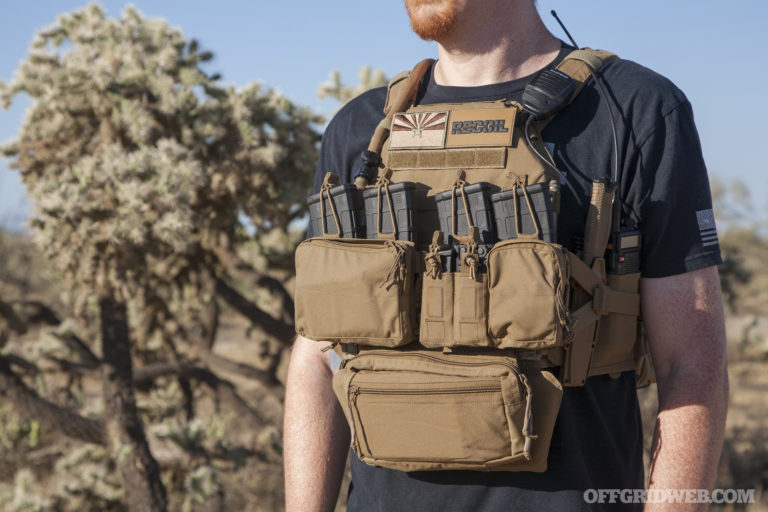
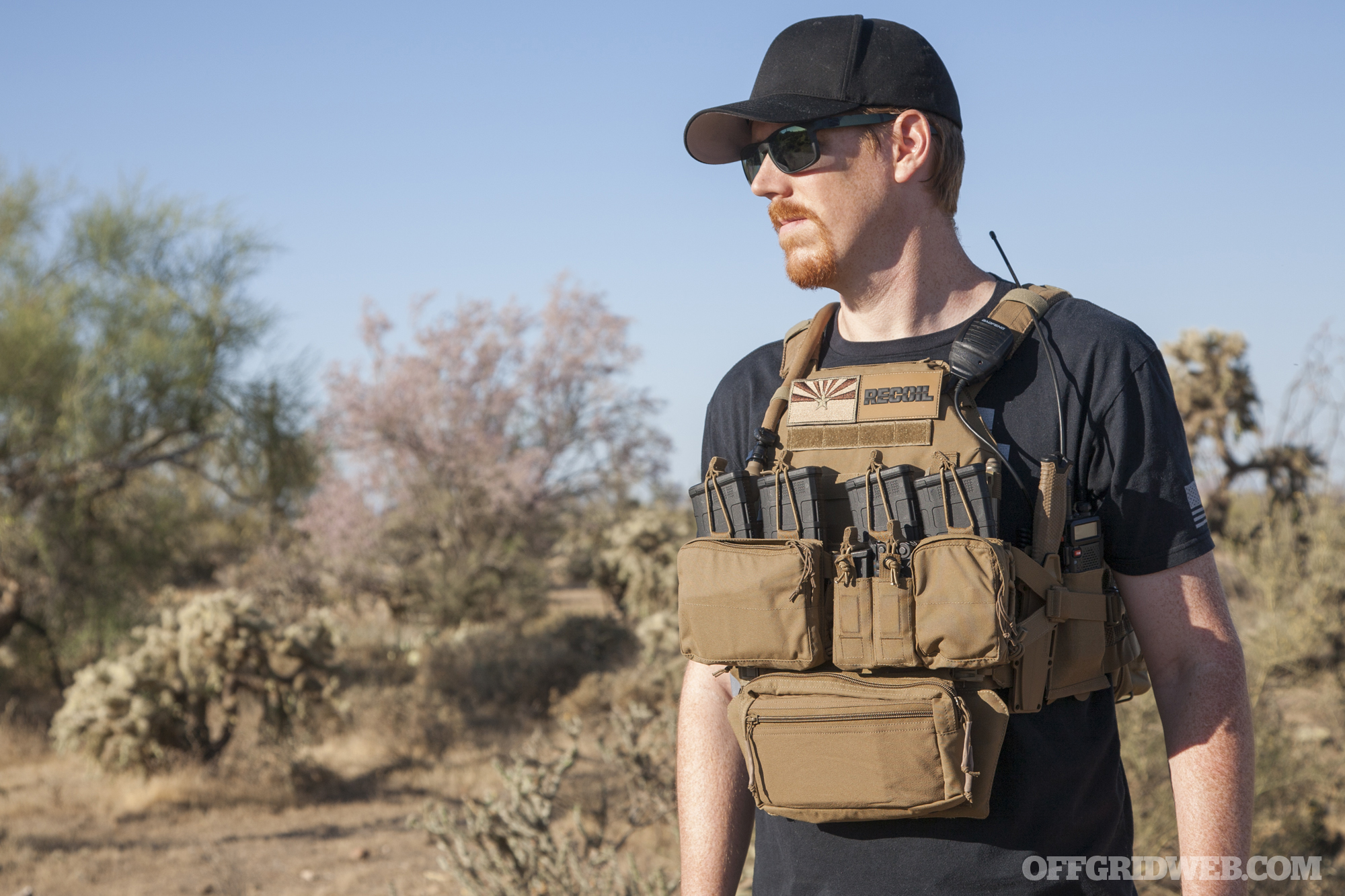
A few months ago, we discussed the benefits and drawbacks of various types of load-bearing equipment in our article, Front Toward Enemy: Survival Plate Carriers & Chest Rigs. However, that article was primarily intended to provide an overview of armor plate carriers, vests (with and without body armor), and chest rigs. We didn’t have an opportunity to delve into how to set up these load-bearing systems as part of a cohesive gear loadout, so today we’ll be doing just that. We took one of the previously-featured plate carriers — the TYR Tactical PICO-DS — and built a plate carrier setup using a variety of upgrades to carry necessary survival equipment. This included a TYR Tactical clip-on chest rig, drop-down armor panel, abdominal pouch, zip-on backpack, and the company’s all-new PICO-DSX quick-disconnect cummerbund.
Plate Carrier Setup Considerations
Like any gear loadout from on-body EDC items to bug-out bags, plate carrier setup will vary from person to person and environment to environment. Your plate carrier might be prepped for short-term mass-casualty events, long-term disaster scenarios, shooting competitions, or professional military or law enforcement roles. Some will require more gear and some will require less; all setups should be tailored to the user’s weapon system and activity type.
In other words, this article is not a one-size-fits-all guide to building the perfect plate carrier setup, but it should give you some ideas to consider.
Combining a Plate Carrier & Chest Rig
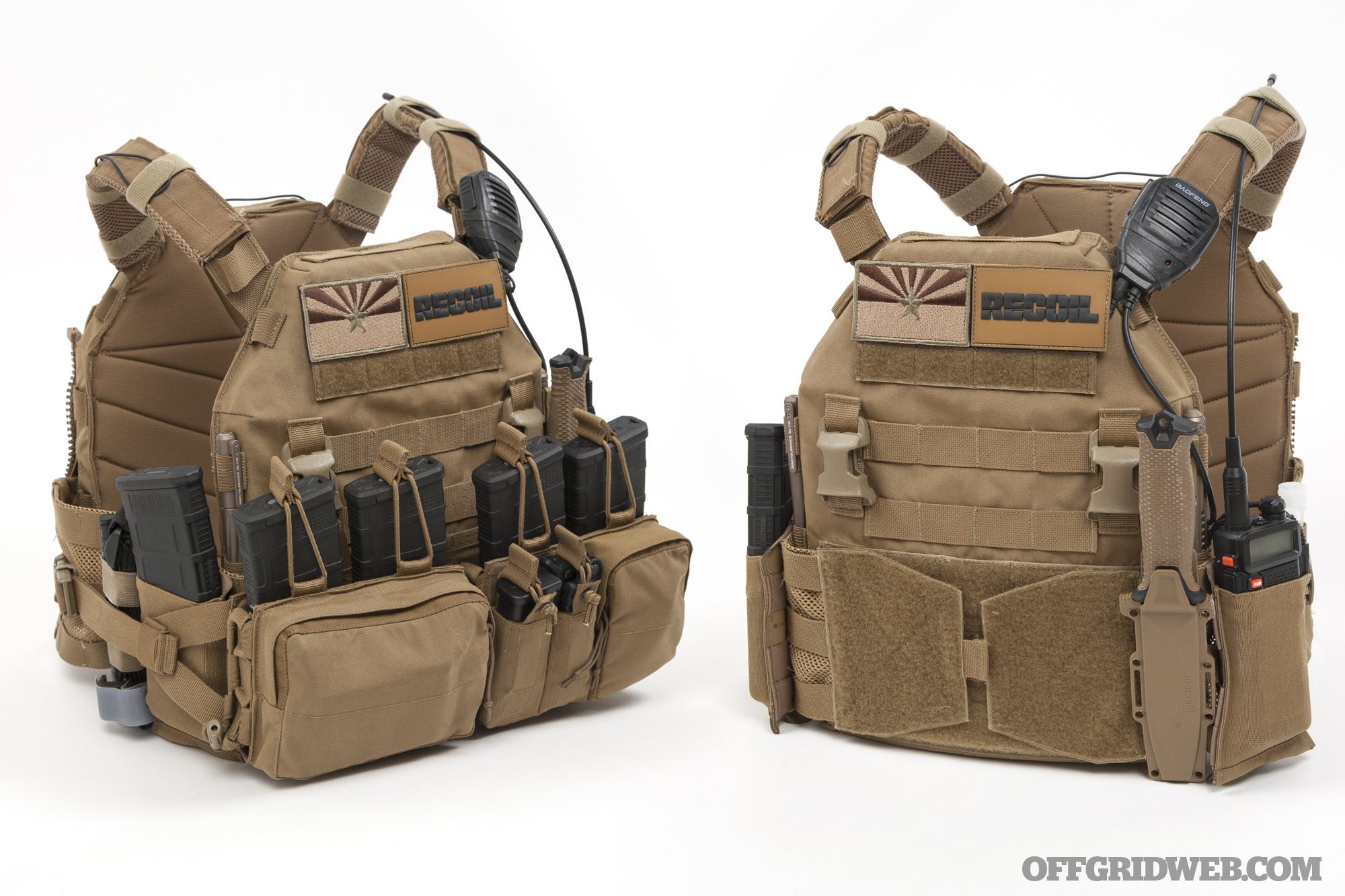
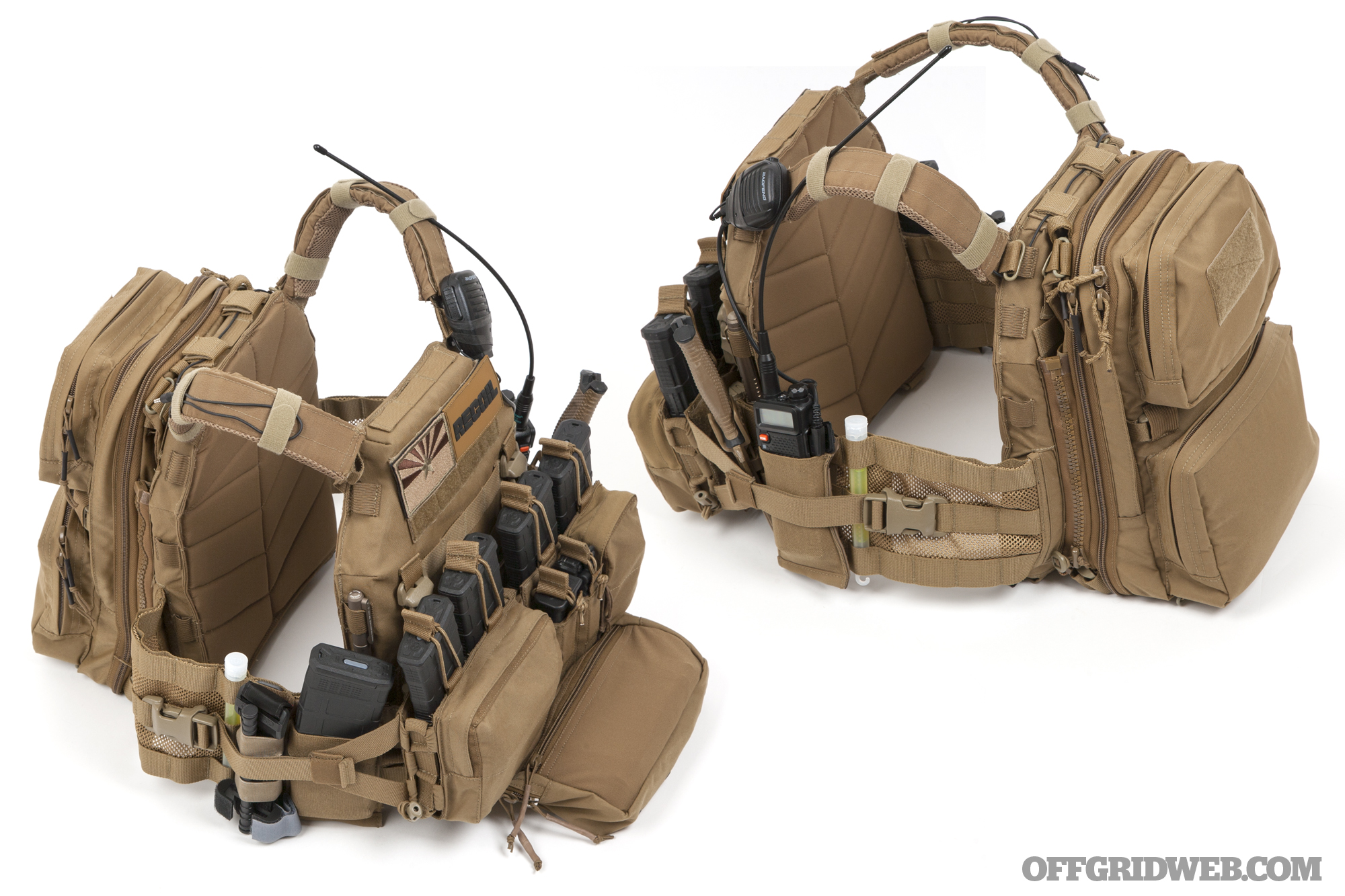
TYR Tactical PICO-DS with Chest Rack attached (left) and removed (right).
I set out to build a plate carrier setup that was modular for a variety of situations, from spending a few hours at a shooting class to trekking around in the desert for a day or more. This meant that my setup required the ability to add and subtract gear quickly. For this reason, I went with a plate carrier and chest rig combination, pairing the TYR Tactical PICO-DS carrier with the TYR Tactical Combat Adjustable Chest Rack. In situations where lightweight mobility is a higher priority than ballistic protection, such as the Guerrilla Mentor Rural Recon class I’ll be writing an article about soon, I can wear just the chest rig with its included H-harness. For all other cases, I can easily clip the Chest Rack onto the front of the plate carrier via four Quick Attach Surface Mount (QASM) buckles.
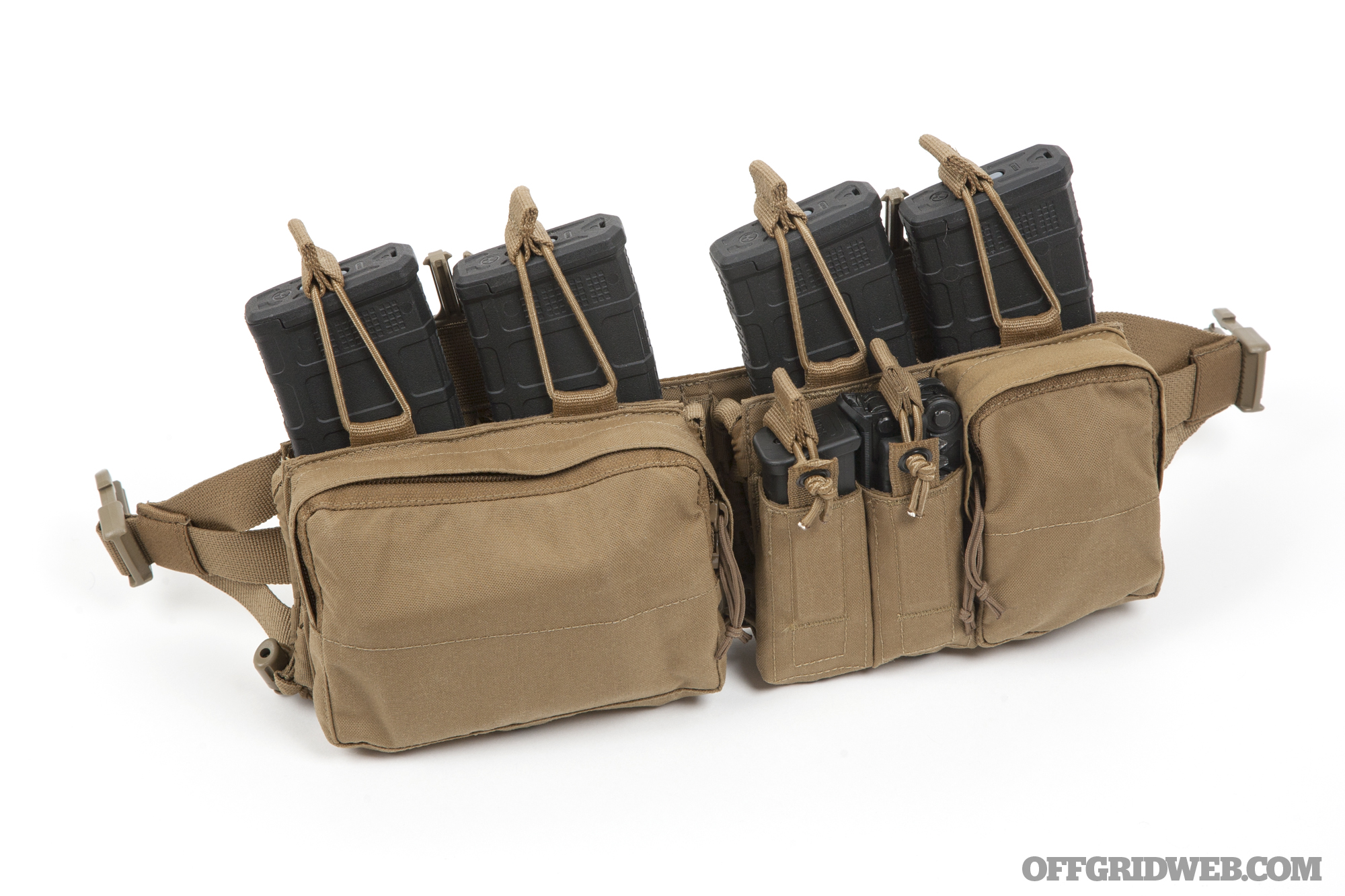
The Chest Rack attaches to the plate carrier, or can be worn alone using an included H-harness.
In addition to carrying rifle plates and spare magazines (the two most basic functions of a plate carrier), this combined setup provides organized storage for other gear. The TYR Tactical Chest Rack contains the following items:
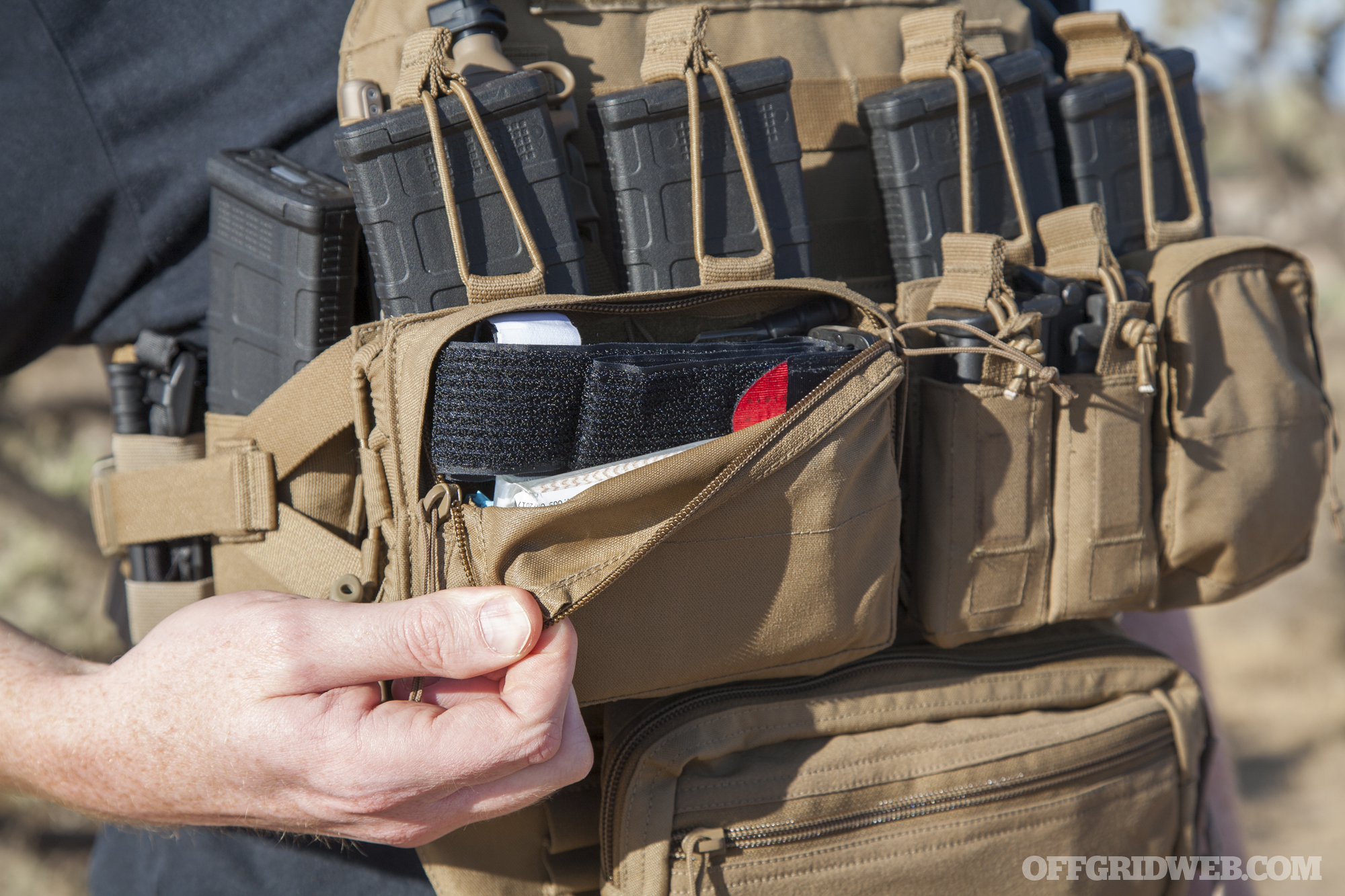
A pouch on my left contains a tourniquet and trauma kit.
Four 30-round magazines for my AR-15
15-round magazine for my Glock 19
Gerber Center-Drive multitool with hex bit set (in the second pistol mag pouch)
Large zippered pocket: trauma kit with C-A-T tourniquet, hemostatic gauze, compression dressing, chest seal twin-pack, and nitrile gloves
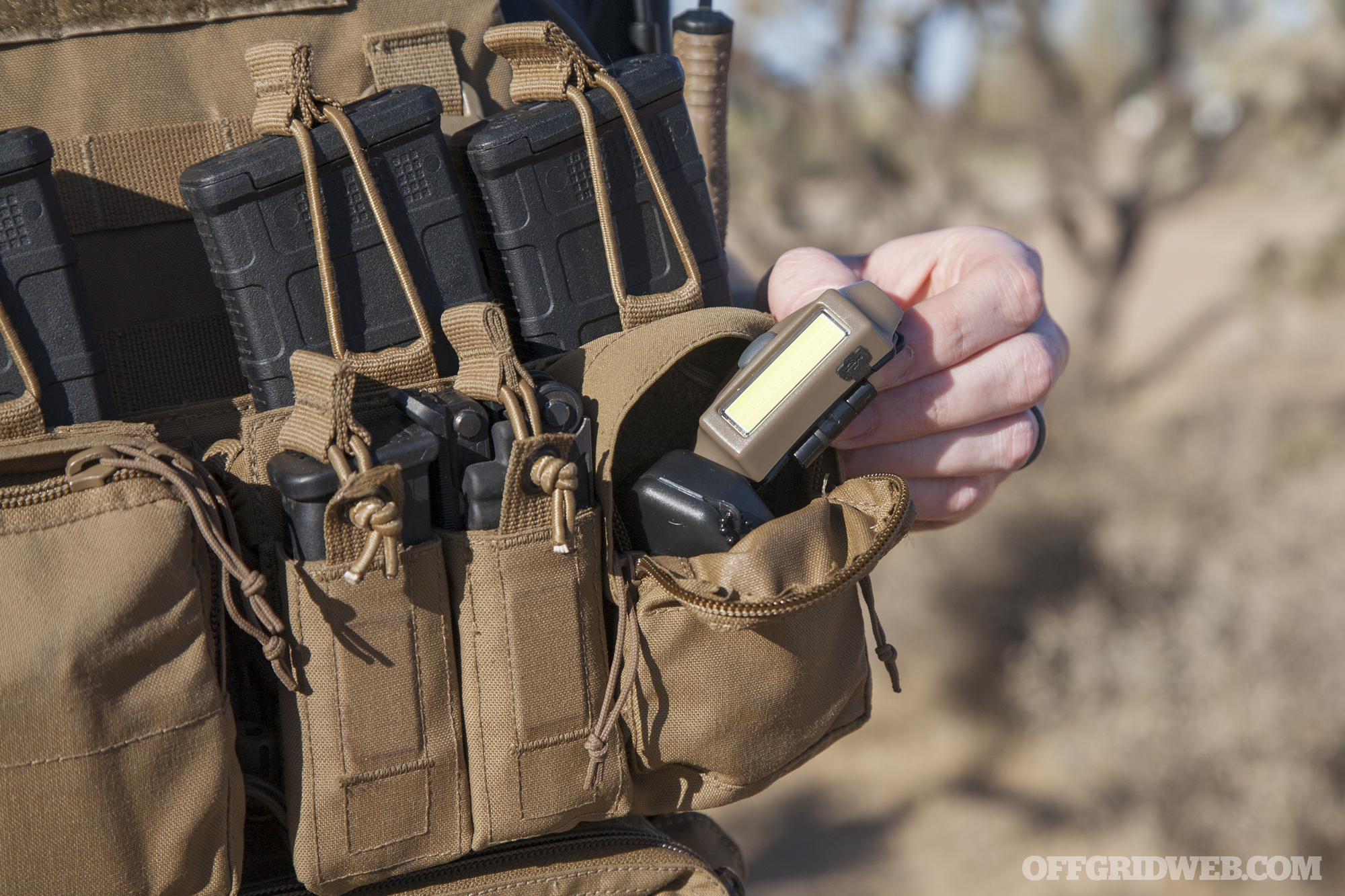
Small zippered pocket: Streamlight Bandit Pro headlamp, SureFire Sonic Defender earplugs, and lens cleaning cloth for glasses/optics
A smaller pouch on my right contains spare earplugs and a mini Streamlight headlamp.
Lower Abdominal Pouch and Armor
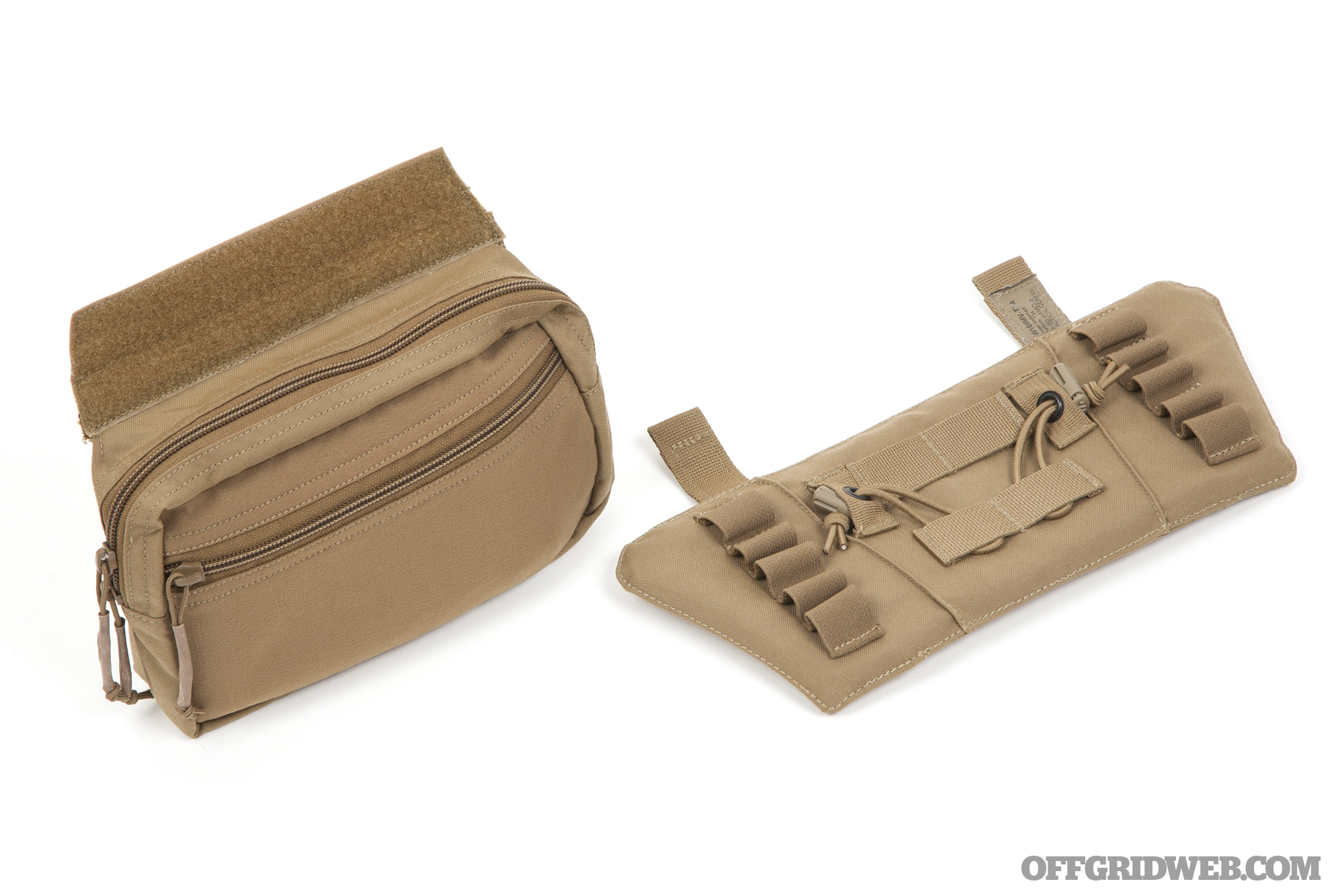
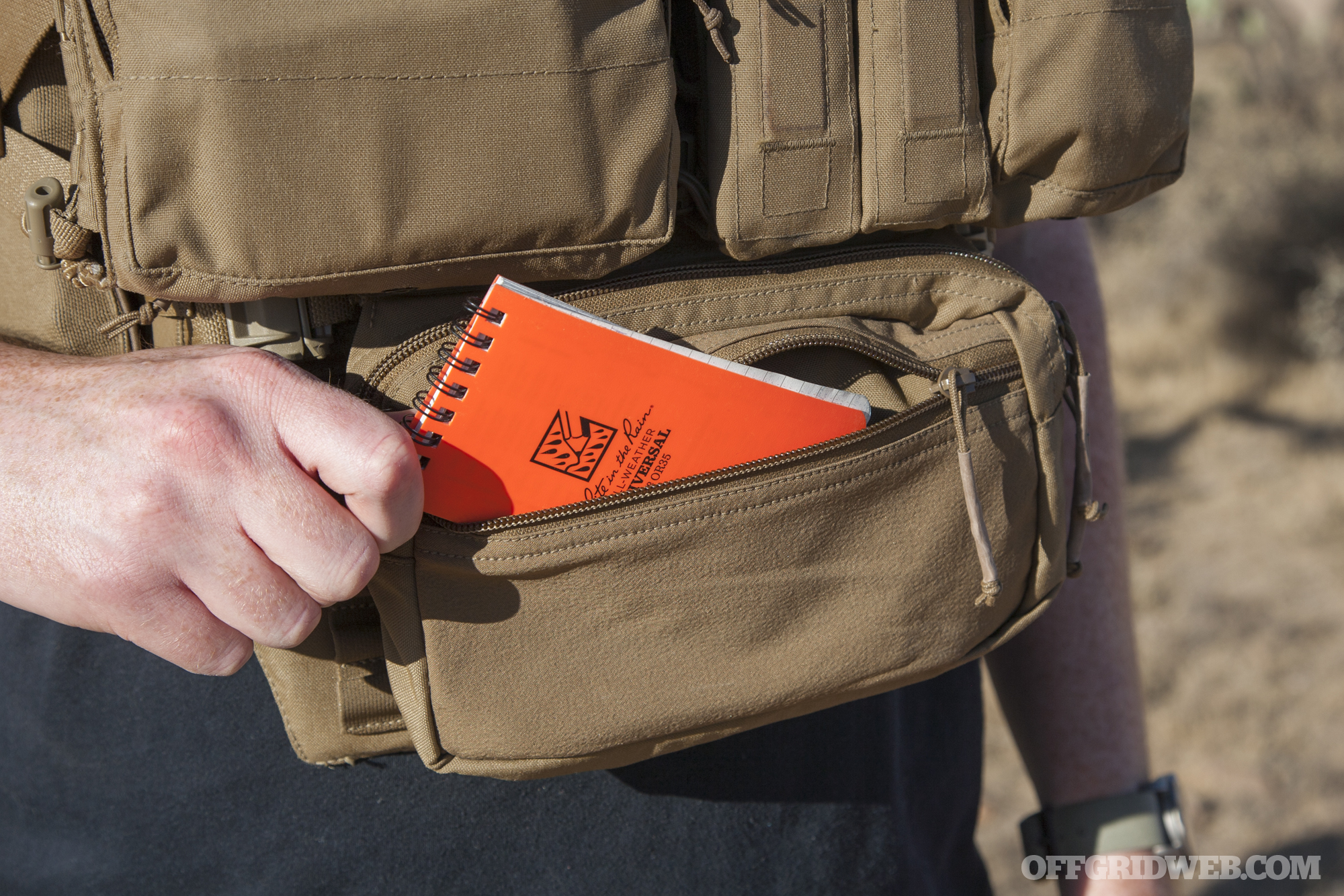
Abdominal pouches, such as the popular Spiritus Systems SACK and Ferro Concepts Dangler, are being seen on an increasing number of plate carrier setups lately. In our OFFGRID Live discussion of plate carriers, several contributors were using pouches like these to carry additional small items. They’re often used for medical gear, but I already have that covered on the Chest Rack. Instead, I picked up a TYR Tactical DSX Lower Ab Pouch and loaded it with a few survival items:
BIC lighter in an Exotac FireSleeve waterproof case
Mechanix shooting gloves
Rite in the Rain high-vis notepad
The abdominal pouch offers overflow storage for other small items from my plate carrier setup that I might need on the move, like snack food or sight adjustment tools.
Immediately behind the drop-down abdominal pouch is a TYR Tactical Ballistic Lower Abdomen Platform. This lightweight panel attaches to two buckles on the base of the front plate carrier, and provides an additional coverage area of NIJ Level II soft body armor. It’s not designed to stop rifle rounds, but serves as additional protection against small-caliber handgun rounds or fragments. Nestled behind the lower ab pouch, it’s barely even noticeable.
Gear on the PICO-DS Plate Carrier Setup
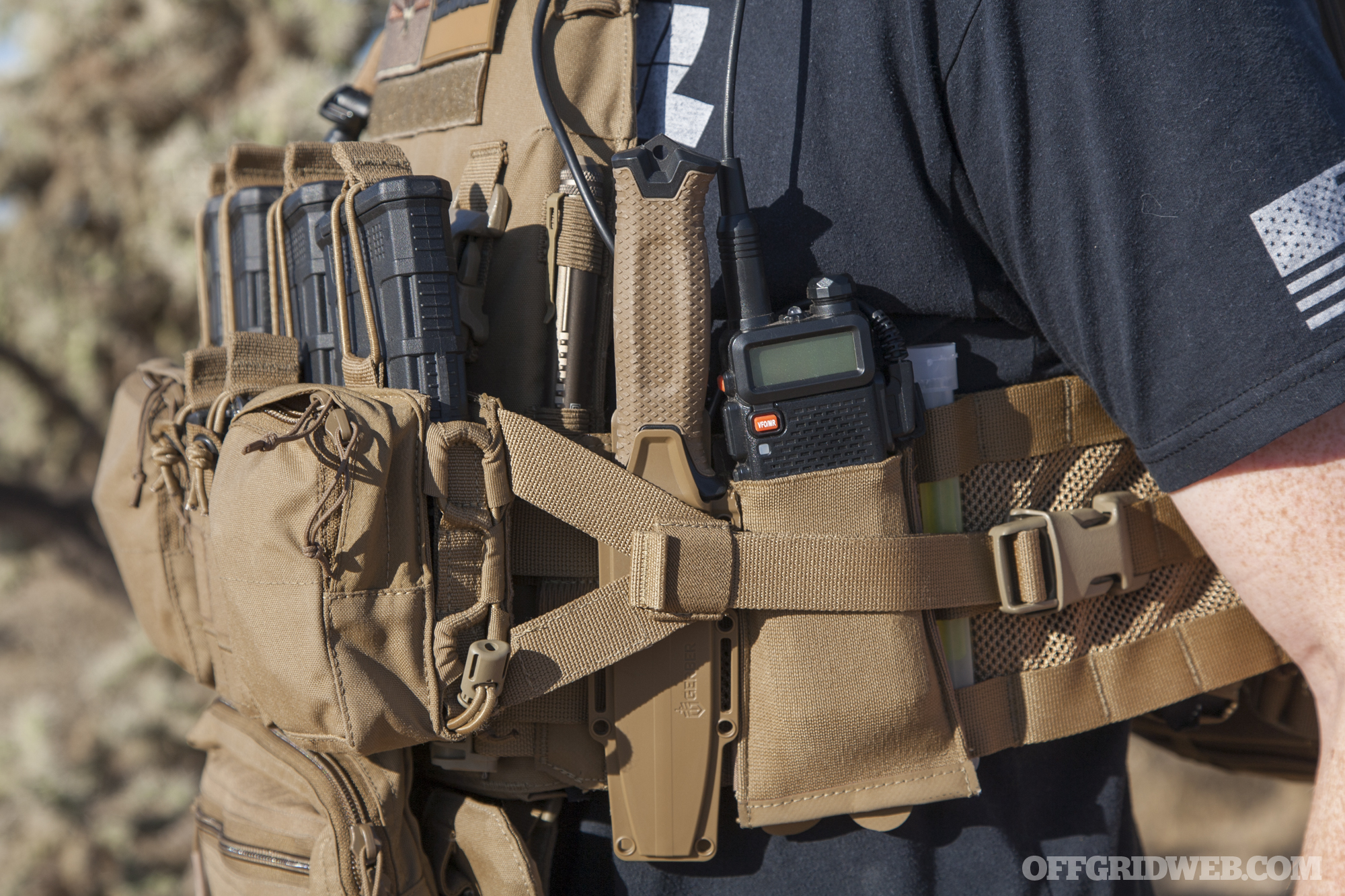
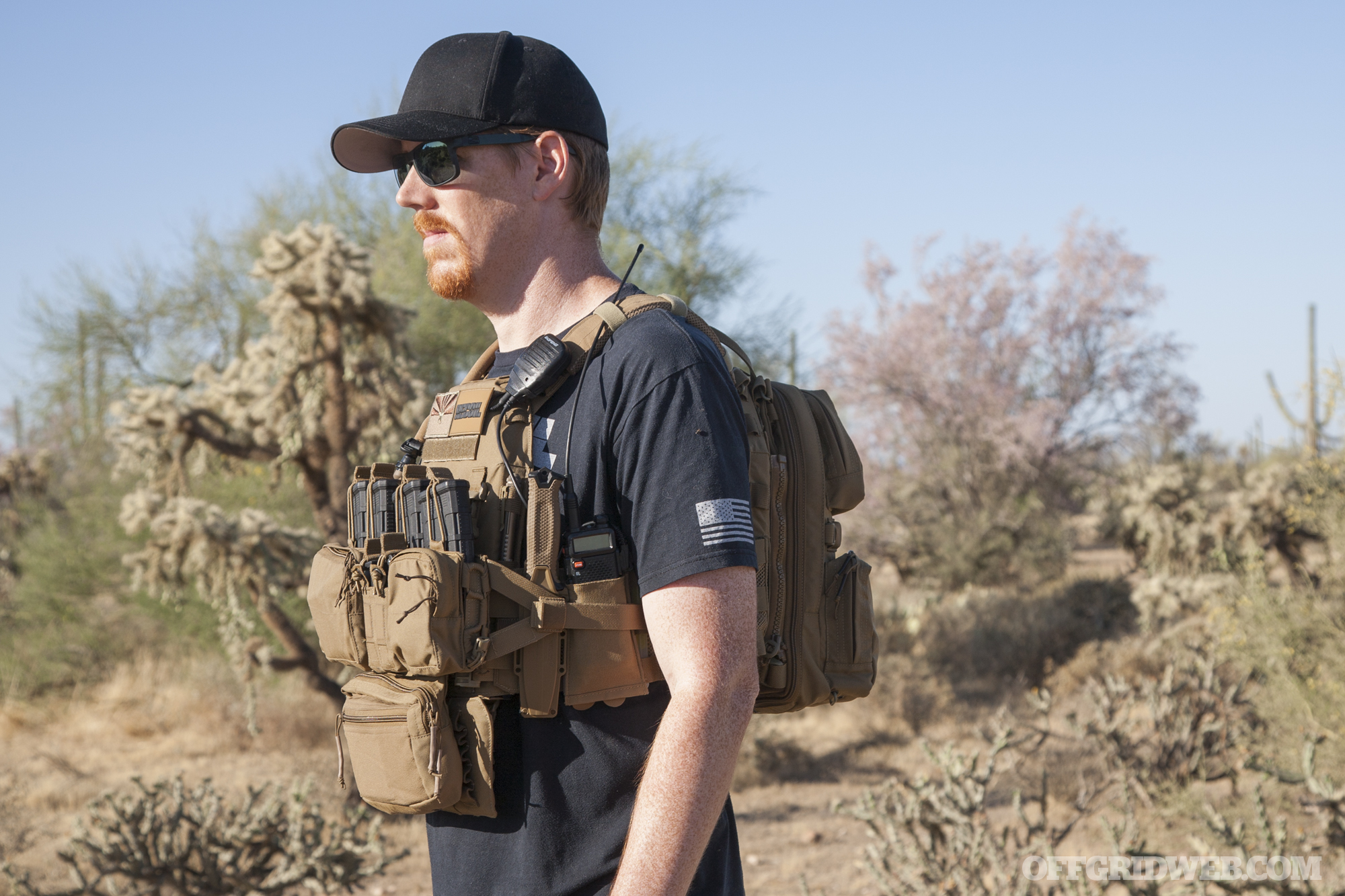
Aside from the chest rig and abdominal pouch, some additional gear is present on the plate carrier itself. A Zero Tolerance aluminum pen with glass-breaker and a 5.11 Tactical pen light are attached to webbing on either side of the front plate. The left side of the cummerbund (pictured below) contains a Gerber Strongarm fixed-blade knife, an emergency chemlight, and a Baofeng UV-5R radio inside a Blue Force Gear Ten-Speed M4 elastic pouch. The radio is fitted with a hand mic clipped to the left shoulder strap, and a 3.5mm audio cable routed around the back of the carrier to the right shoulder strap. This cable can be connected to the aux in port on electronic ear pro, allowing me to hear radio calls from friends or monitor the airwaves while I’m shooting in the desert.
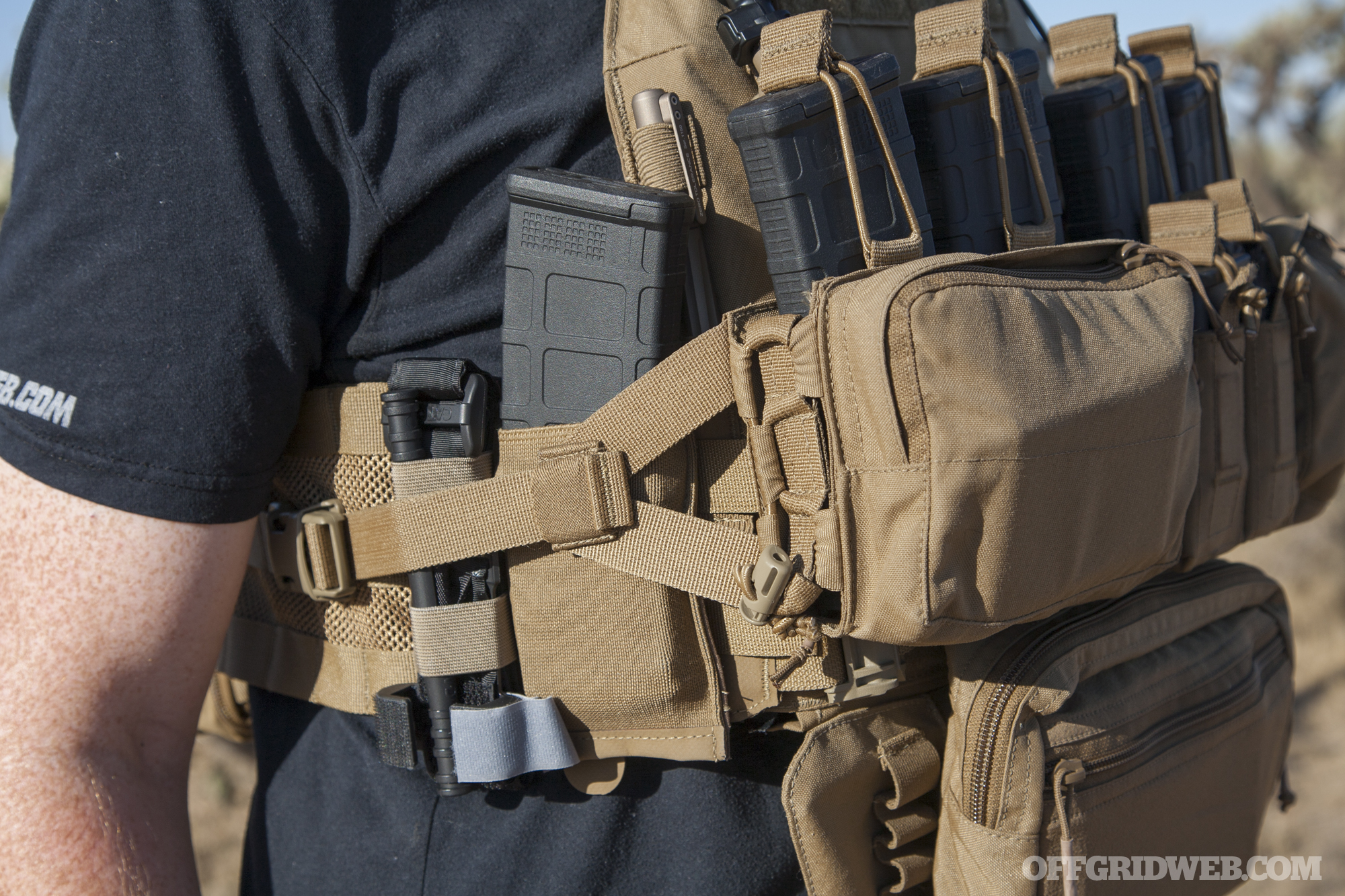
The right side of the cummerbund (pictured below) features another Blue Force Gear Ten-Speed M4 mag pouch with a fifth AR mag, as well as an extra C-A-T tourniquet in a Blue Force Gear Tourniquet NOW! holder. These items are less accessible than those on my chest rig, so they’re intended as secondary backup items — if you ever need one more mag or an additional TQ, you’ll be glad to have them.
The New PICO-DSX Quick-Detach Cummerbund
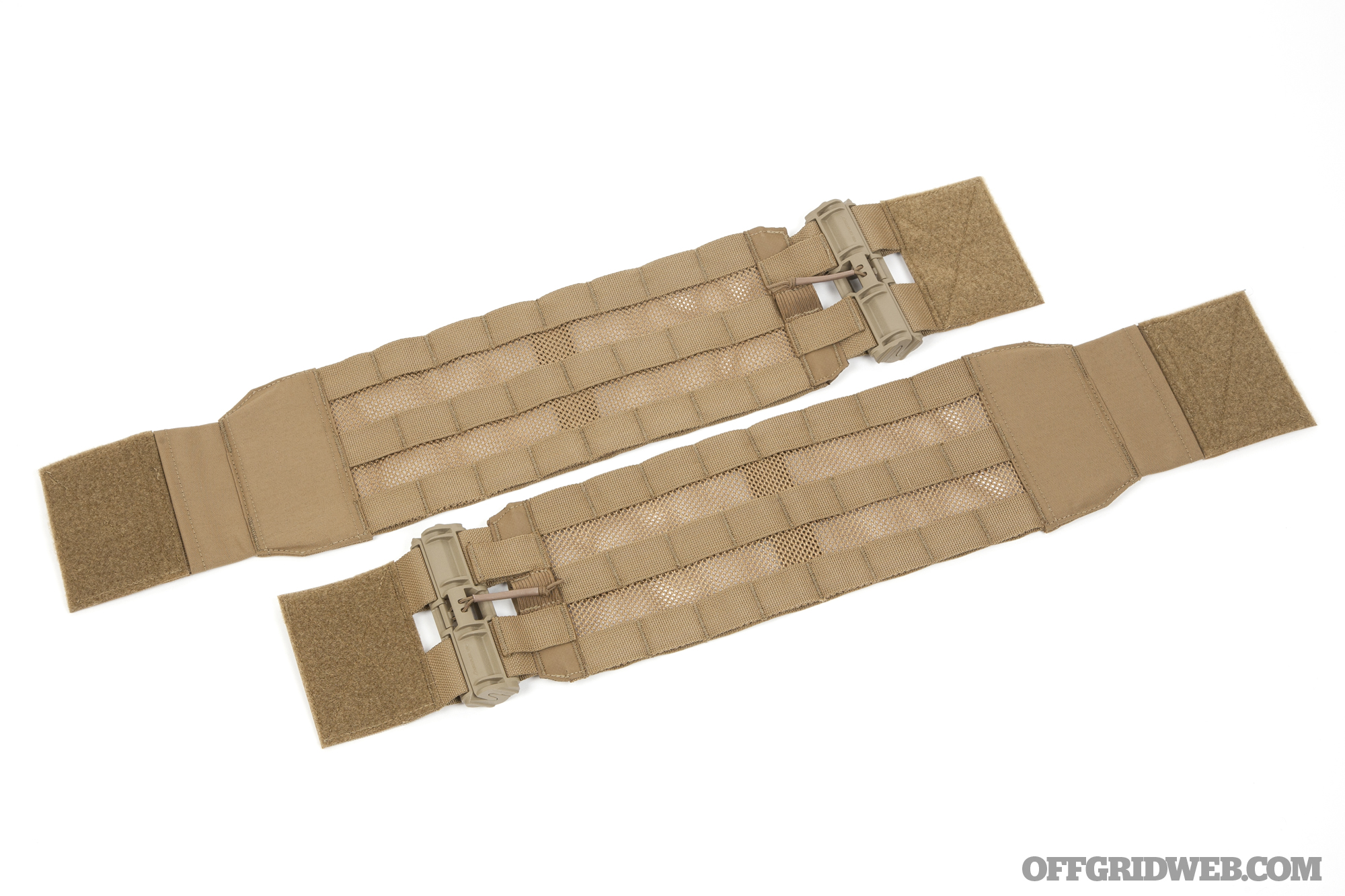
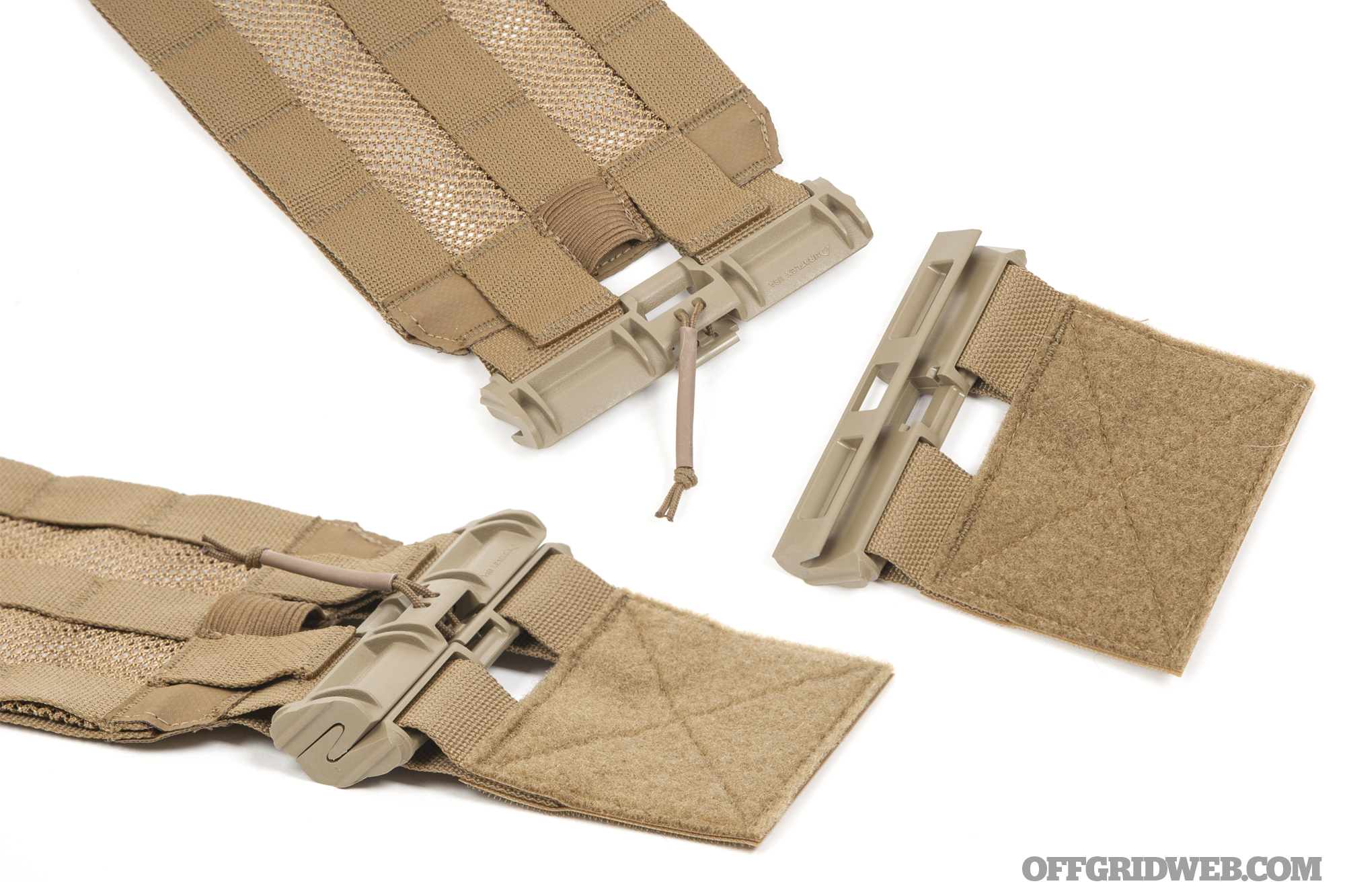
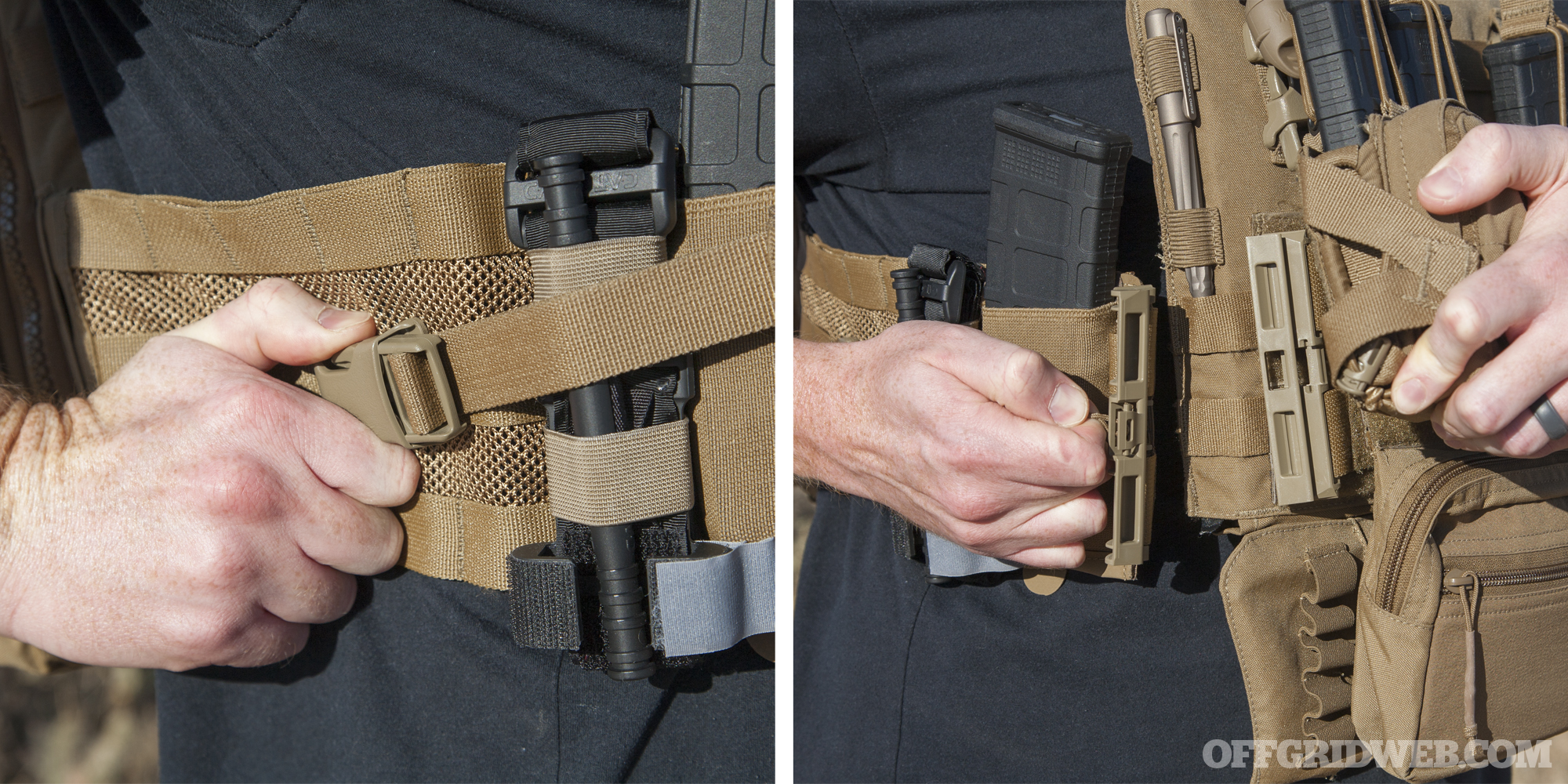
The standard PICO-DS plate carrier comes with a cummerbund that attaches to the front of the carrier via Velcro. This is a tried-and-true method of attachment and adjustment, but it’s not so easy to remove if a Chest Rack or other front flap is already covering the front of the carrier. A newer plate carrier setup trend is to replace the hook-and-loop flaps with quick-detach buckles or clips, such as the commonly-known First Spear Tubes. This permits the wearer to disconnect one or both sides of the cummerbund instantly, rather than fussing with peeling off Velcro.
TYR Tactical recently released an updated version of the PICO-DS plate carrier known as the PICO-DSX. Among other updates, it features a pair of new Taktic buckles on the cummerbund, which clip together and can be disconnected with one hand by pulling a tab on each buckle.
To remove the carrier, disconnect the Chest Rack side buckle, then unhook the cummerbund.
I reached out to TYR Tactical to see if the standard PICO-DS plate carrier setup could be upgraded with a PICO-DSX quick-detach cummerbund, and was pleased to hear that it can. So, I ordered a DSX cummerbund and installed it on the plate carrier. The buckles occupy the width of about two columns of PALS webbing, so a small amount of attachment real estate is lost due to this modification, but I’d say the benefit far outweighs this issue. My PICO-DS is now much easier to put on and take off with the Chest Rack in place.
Huron Direct Action Assaulter’s Pack
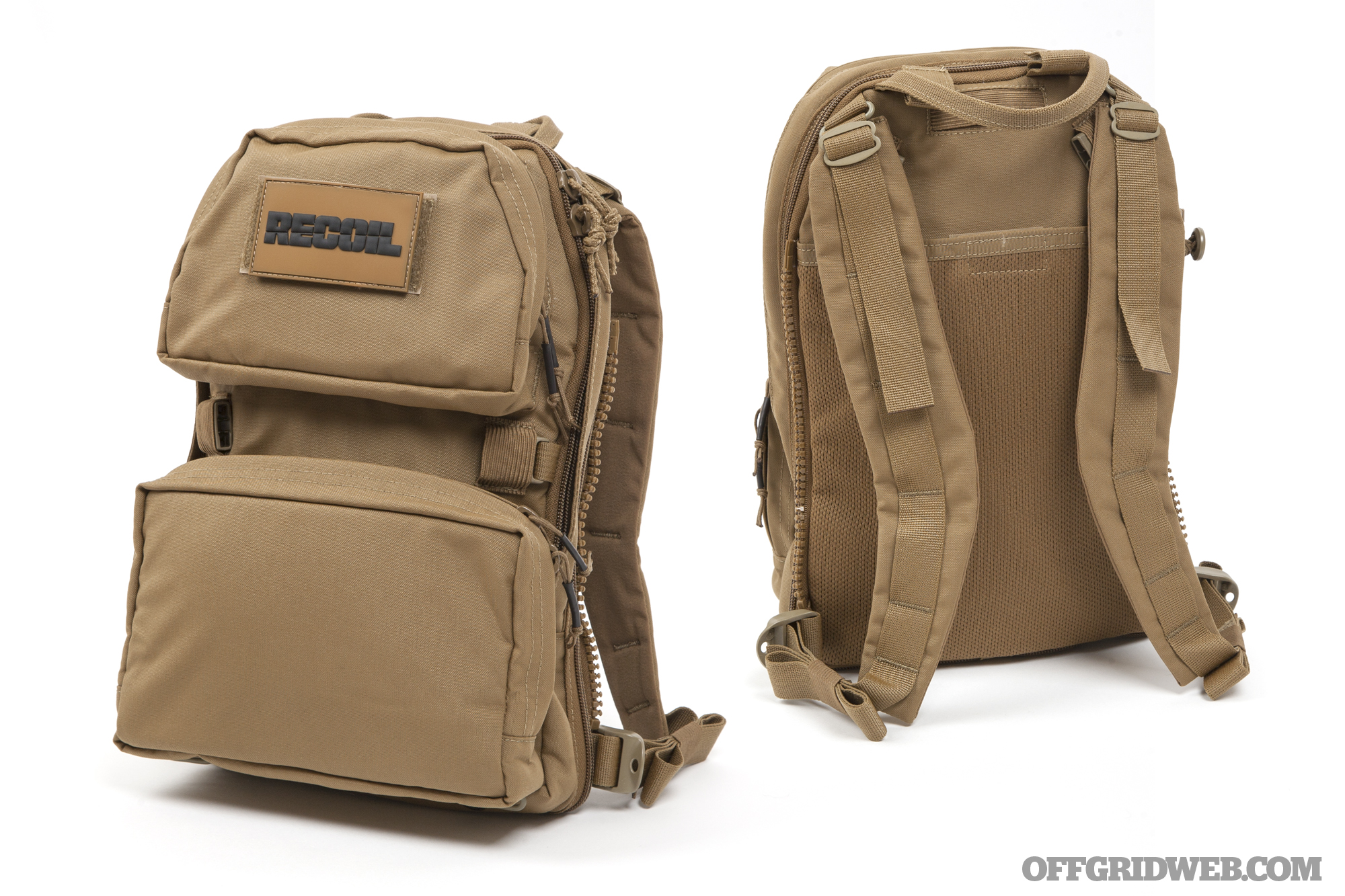
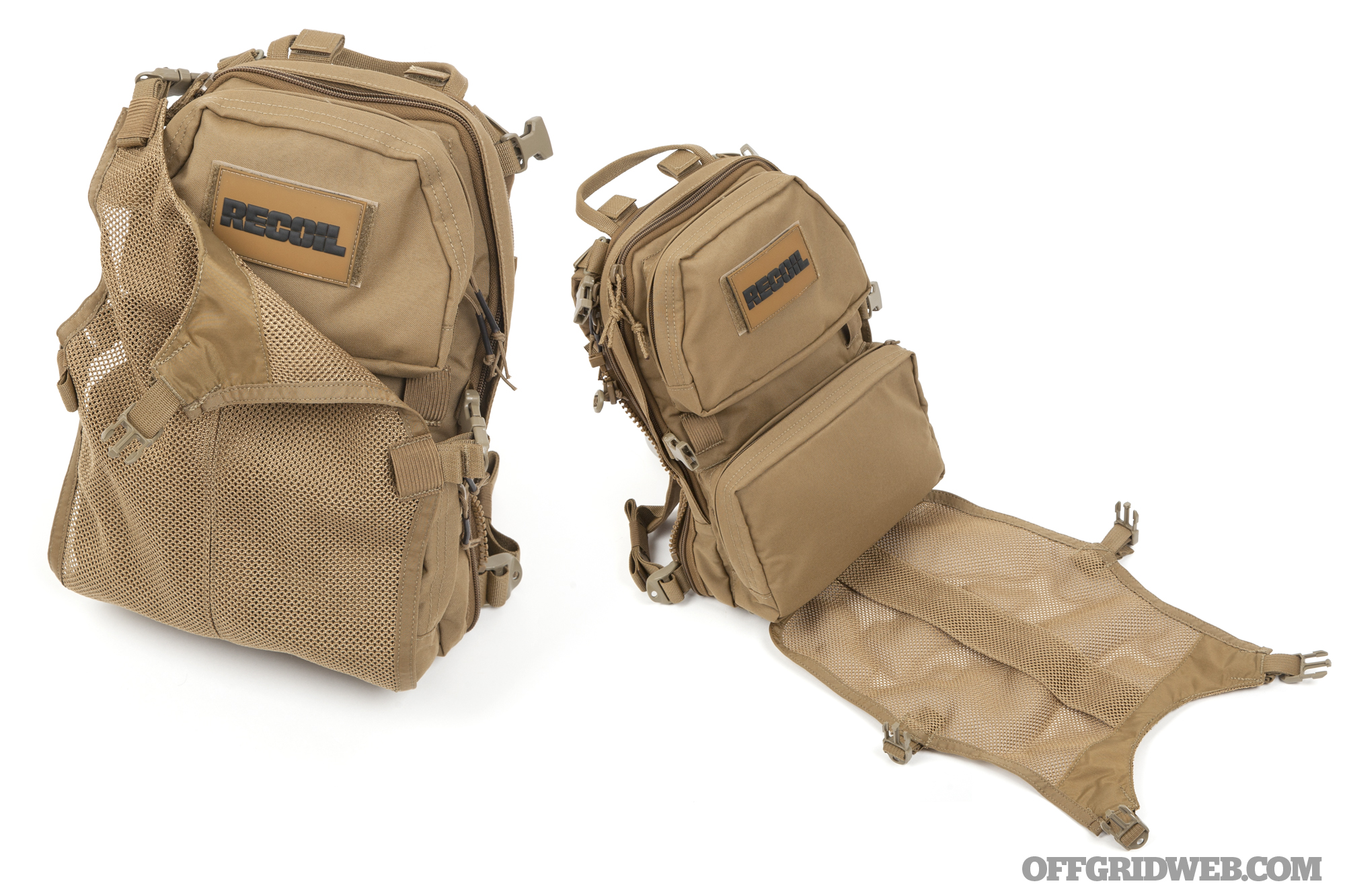
The final piece of my plate carrier setup was a compact storage solution for the back panel. For multi-day events, I can always wear a 72-hour pack over the top of the plate carrier, so I wanted something much smaller to house a hydration bladder and a few other basic items. The TYR Tactical Huron Direct Action Assaulter’s Pack, or DAAP, fits the bill perfectly.
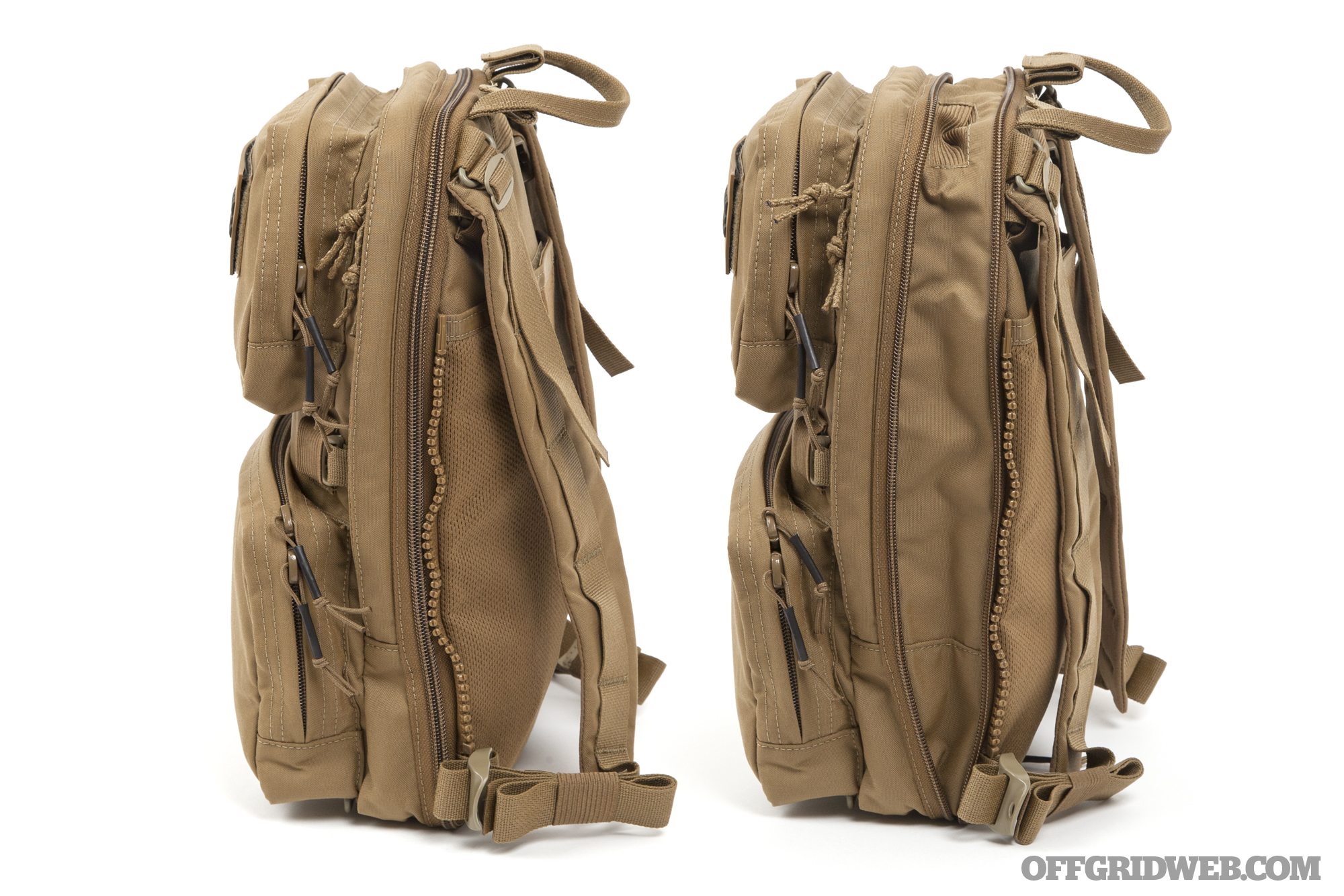
This small backpack features approximately 9L of capacity out of the box, but can be expanded up to 13L via a collapsible zippered section. It includes simple shoulder straps and a top carry handle for standalone use (or use with the TYR Tactical chest rig). It’s also compatible with the TYR Tactical zip-on system, so it can be attached directly to the back of the PICO-DS plate carrier.
A removable beavertail can be used to attach a helmet or jacket to the Huron pack.
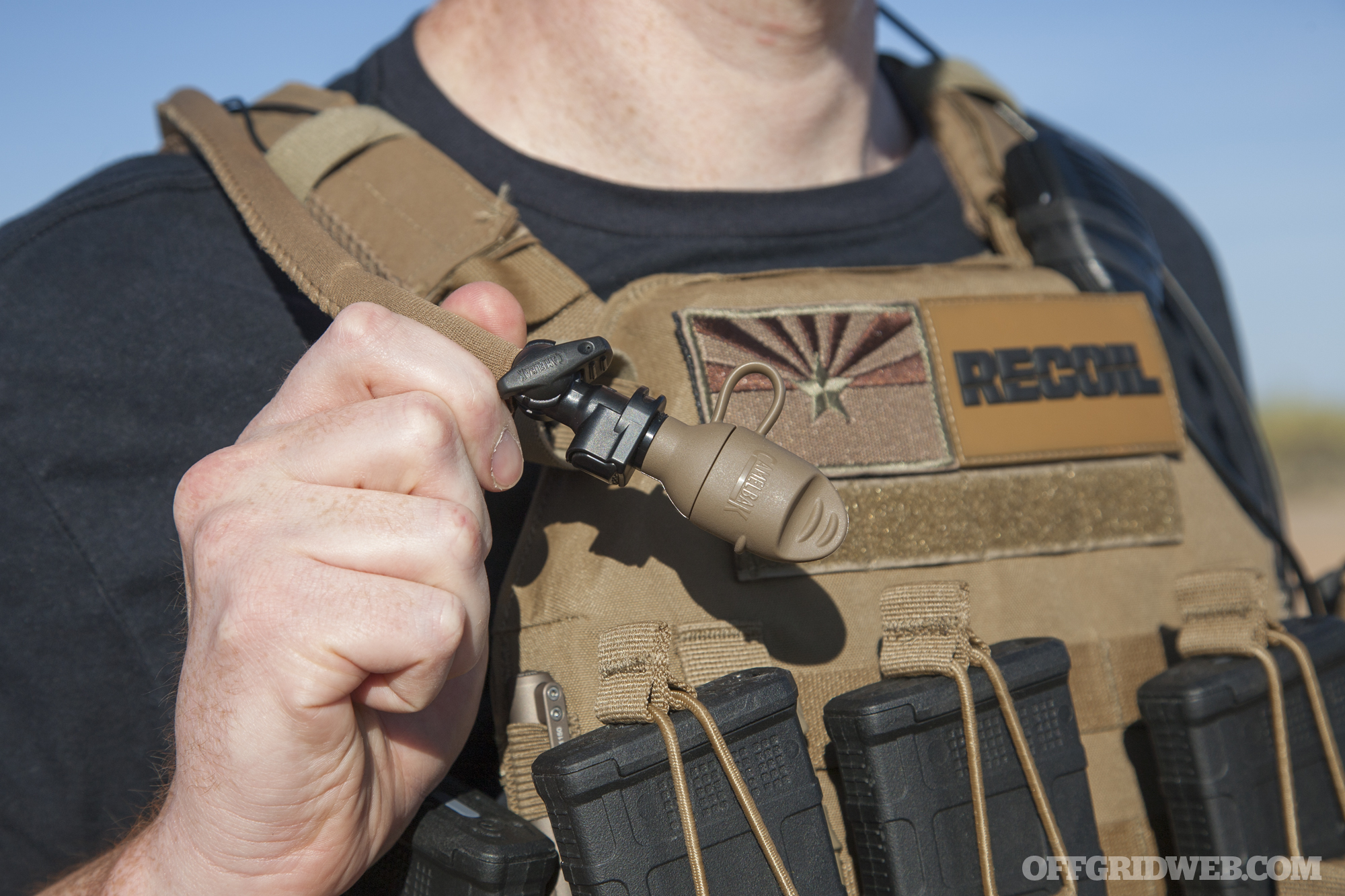
For now, I keep a mil-spec Camelbak Crux 3L short reservoir stashed in the main compartment of the pack, with the hydration tube routed over the right shoulder and retained with a Velcro loop on the front of the carrier. This covers my water needs for range trips, classes, and workouts while wearing the carrier. I also keep the H-harness for the Chest Rack inside the Huron pack. To adjust my plate carrier setup to a longer-duration event, I might add extra food, batteries, comms gear, or other supplies to the pack.
Closing Thoughts
Again, this plate carrier setup is certainly not ideal for every application, but it fits my needs well. I especially like that it can be stripped down to a lightweight daypack and chest rig for hikes or observational events such as the aforementioned Rural Recon class. If armor becomes necessary, I just need to clip four buckles onto the chest rig, then zip the Huron pack onto the back panel, and I’m good to go in less than a minute.
For your own plate carrier setup, consider the range of activities you participate in, then determine what you really need for those activities. If you’re expecting a sustained fight, you might want 7 or more mags and as much armor as possible. If you’re hiking or running frequently in your gear, you might want a lightweight loadout and/or one that features a detachable chest rig. Above all, choose a good-quality plate carrier and rifle plates that fit your body and provide plenty of expansion capabilities.
For more info on the TYR Tactical PICO-DS plate carrier, Chest Rack, Huron assault pack, and other accessories, go to tyrtactical.com.
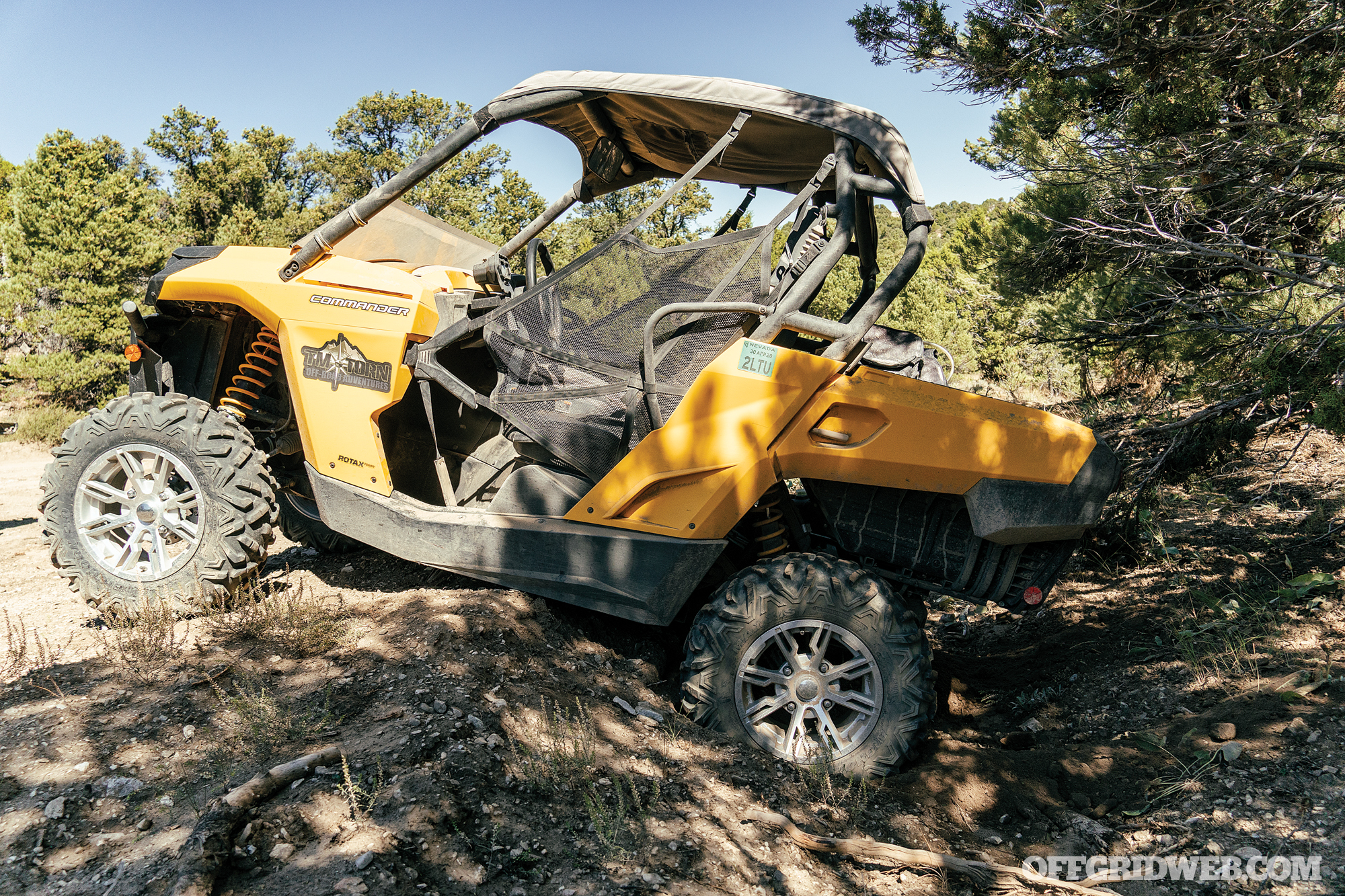
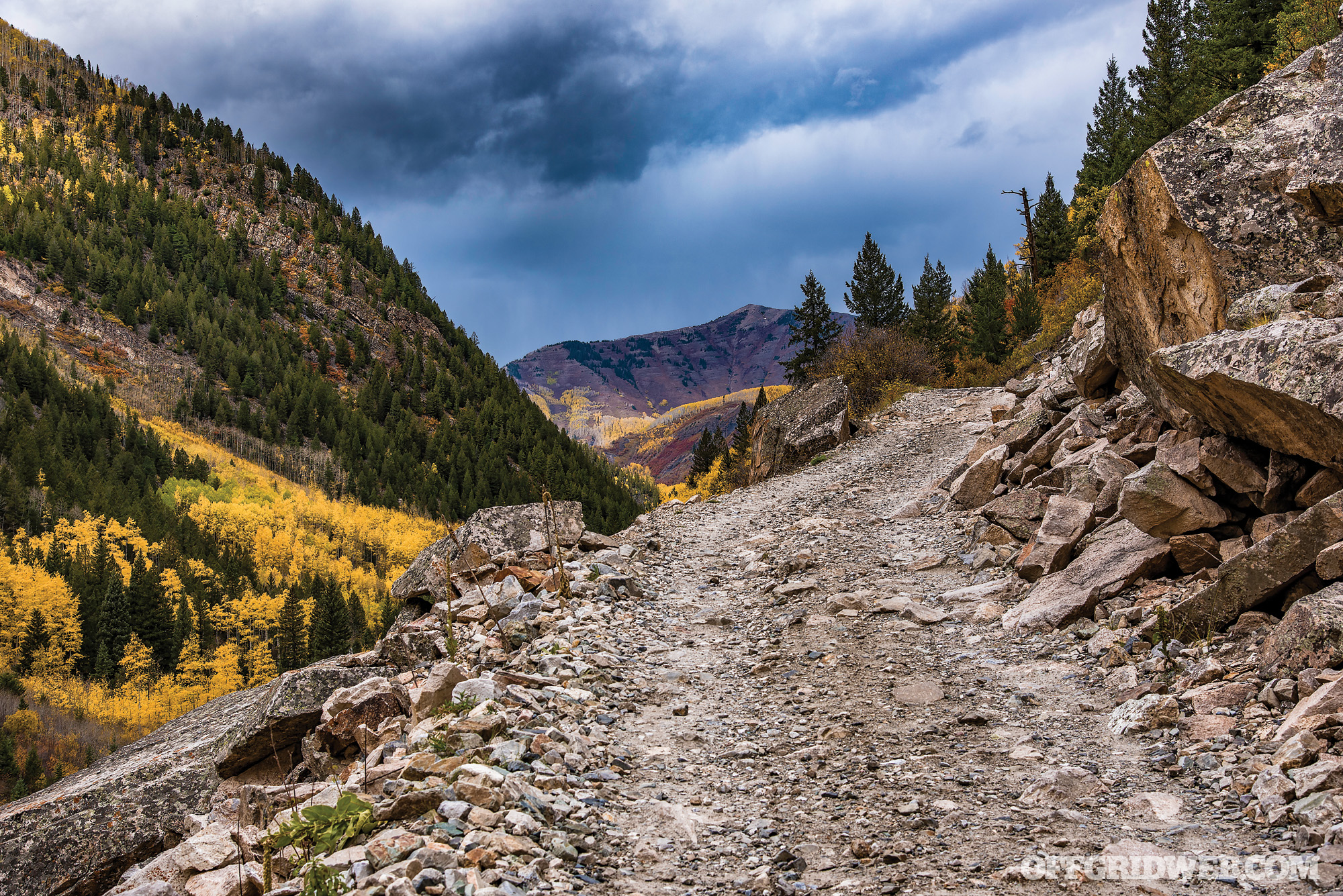
We’ve all been there — alone and unafraid, enjoying a weekend adventure or vacation in the backwoods and basking in the freedom American off-roading provides. Then BAM! You find yourself in a predicament. You misjudged the angle of the slope and didn’t see the ditch when you were backing up. That rock was a lot bigger than it looked, you have a flat tire, clearly through no fault of your own. These unfortunate realities could put a damper on your well-earned weekend, especially if you are miles away from help. Learning some basic vehicle recovery skills can help you get to safety.
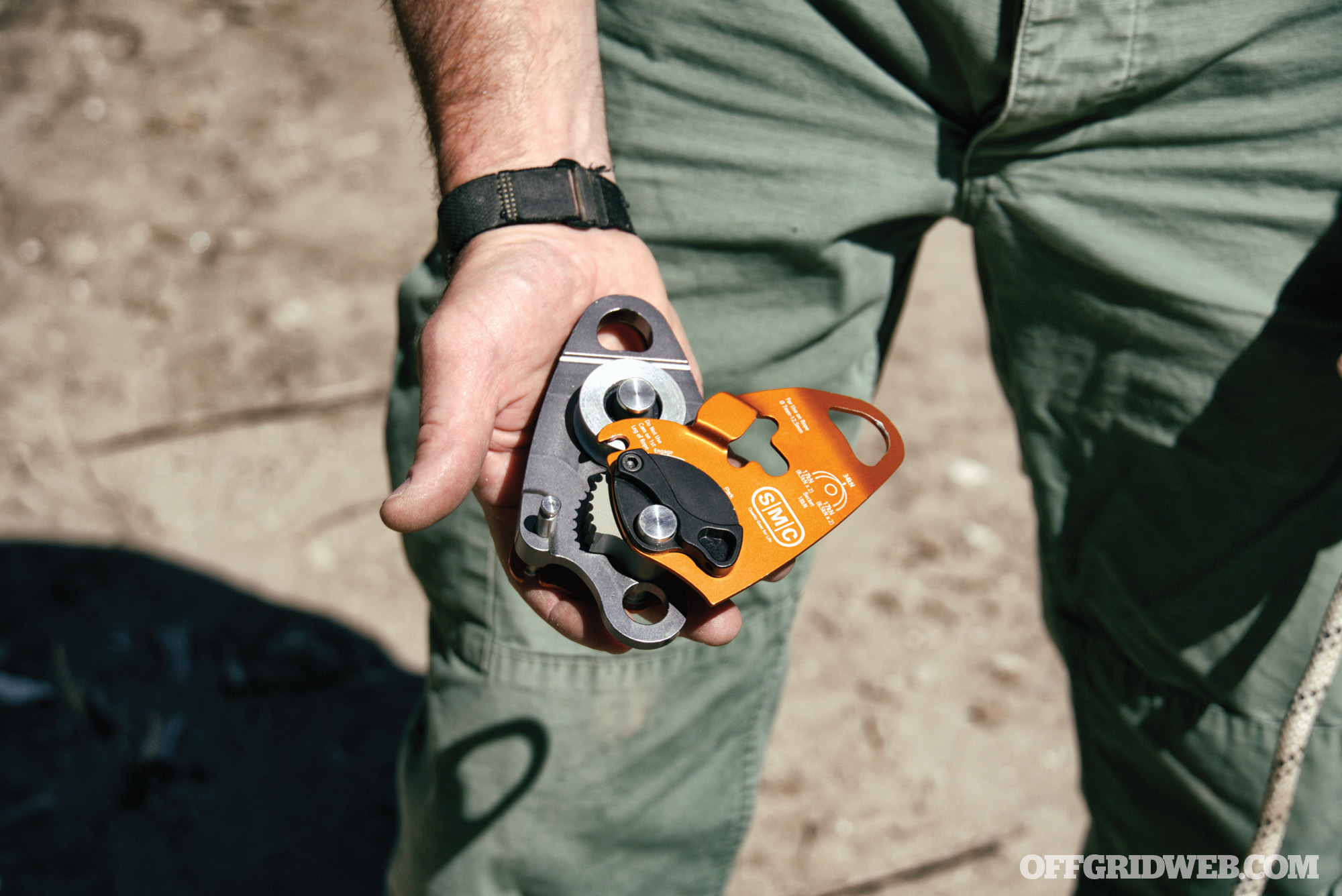
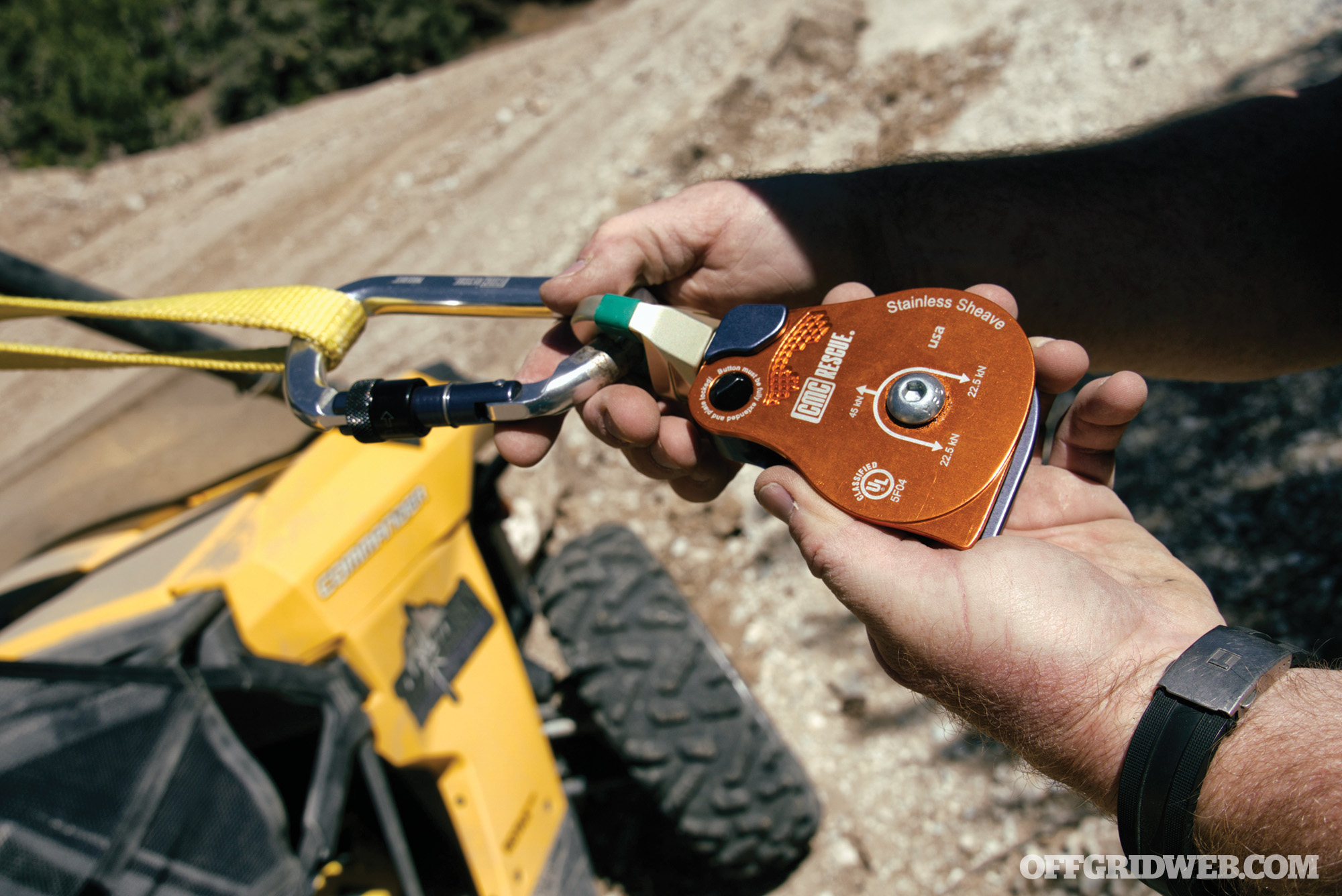
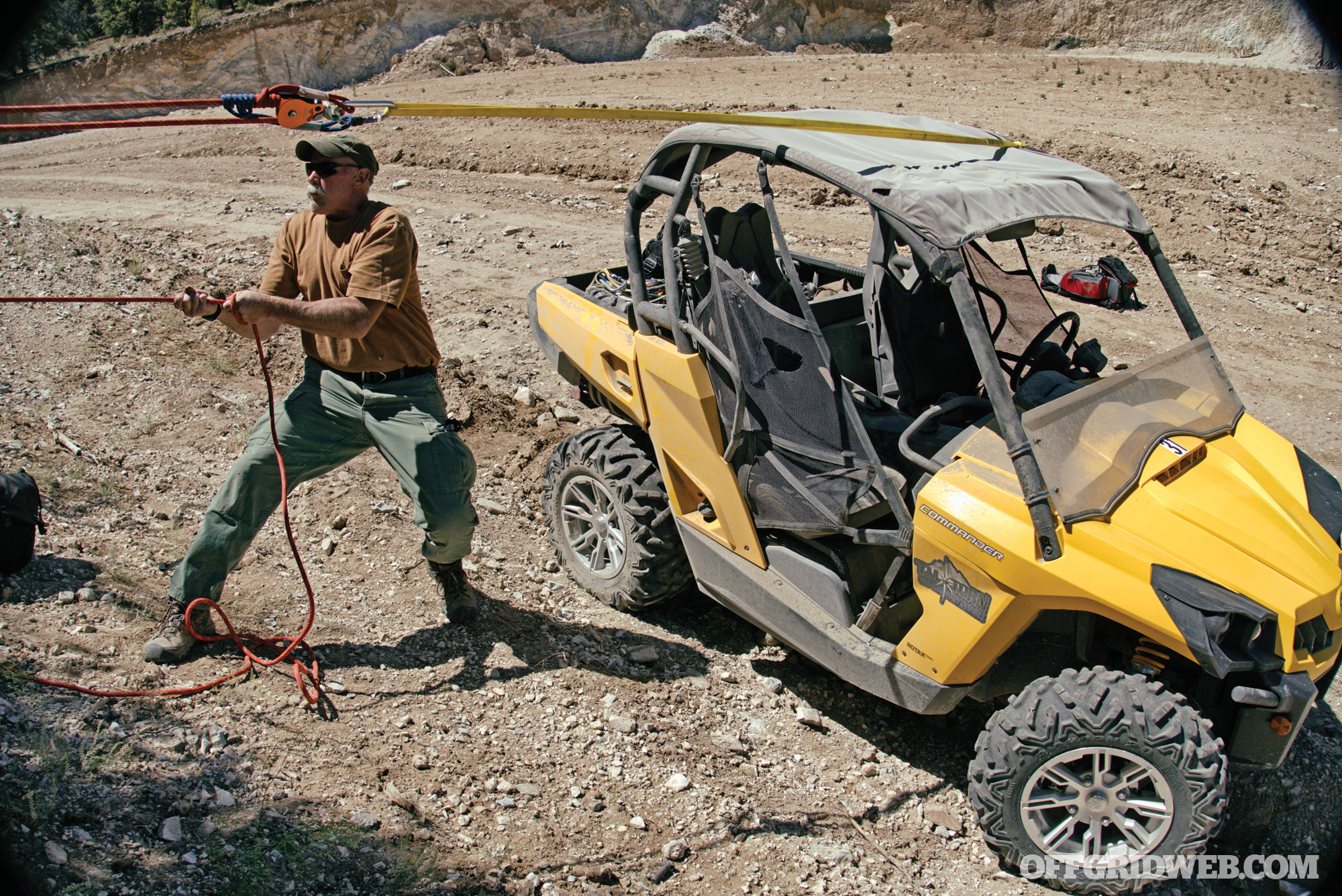
We met up with Gary Presson from North 40 Rescue, the premier rope rescue and land navigation training company in the Northwest, to learn how to get ourselves out of these tricky situations with the simple physics of mechanical advantage. Mechanical advantage is defined as the force amplification achieved by using a tool or machine. Using ropes and pulley systems — items small enough to add to your pack — one person can lift a UTV out of everyday hazards and be back on the trail in no time. Here are step-by-step instructions to solve the most common vehicle recovery problems.
Vehicle Recovery Dilemma #1: Bottoming Out
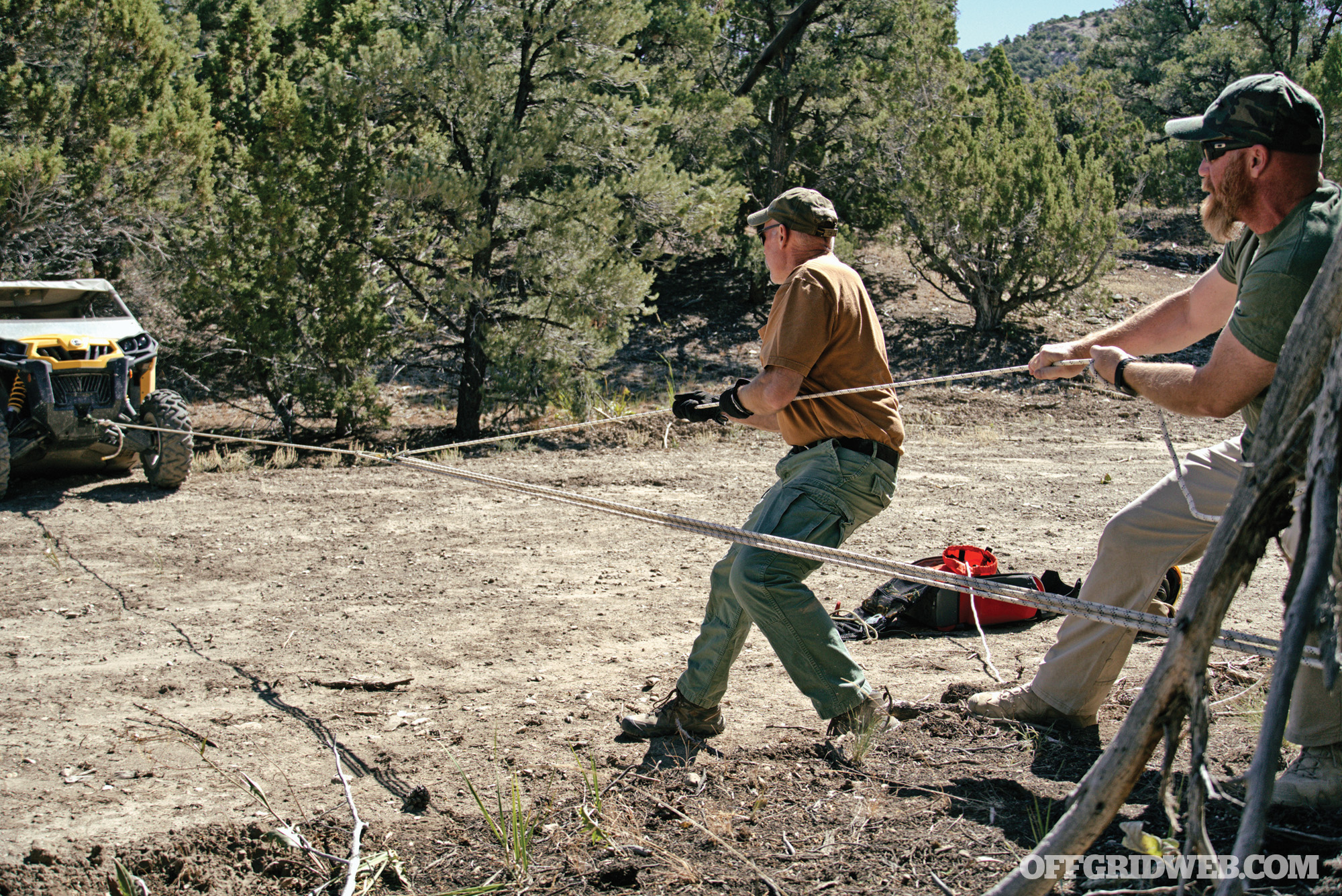
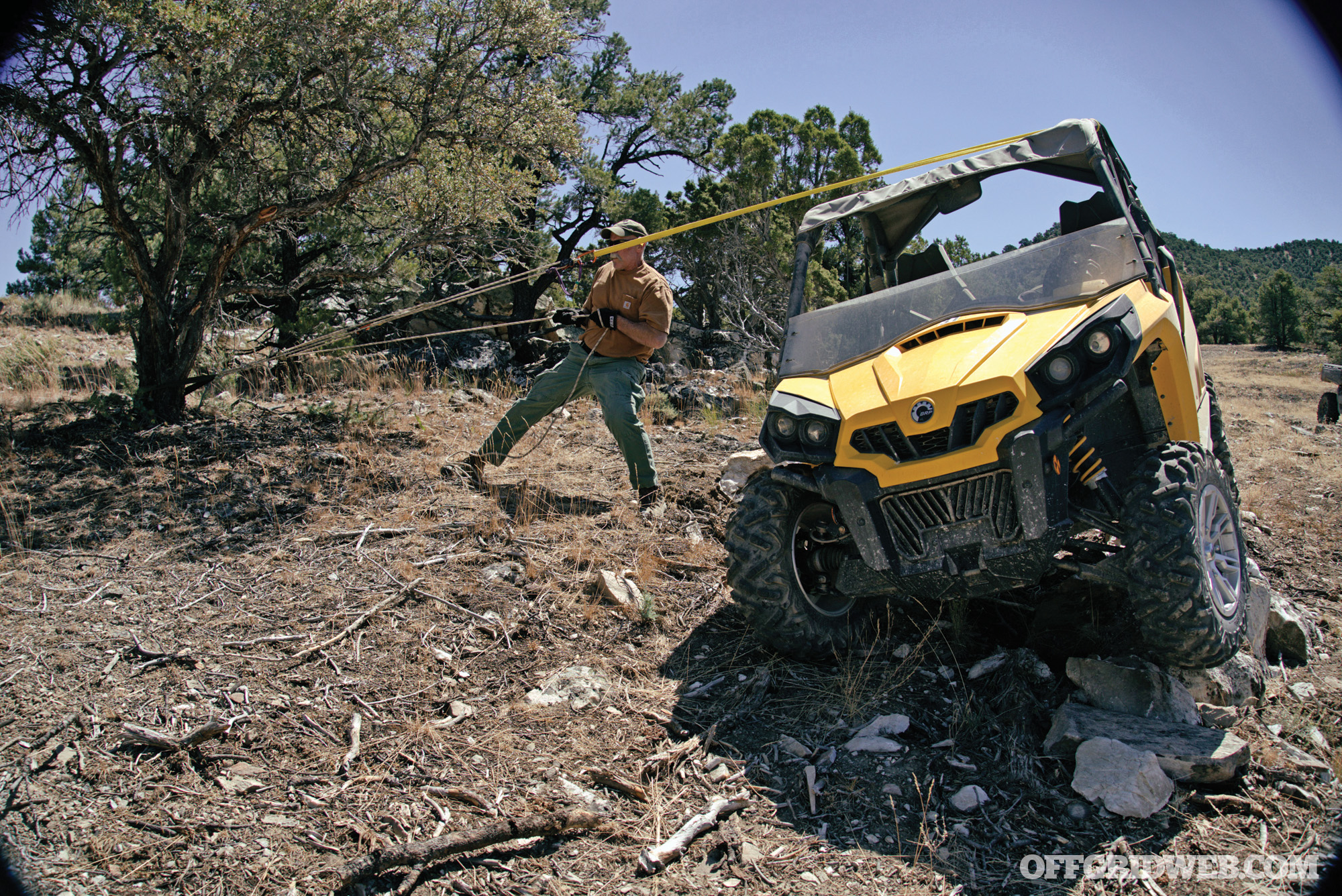
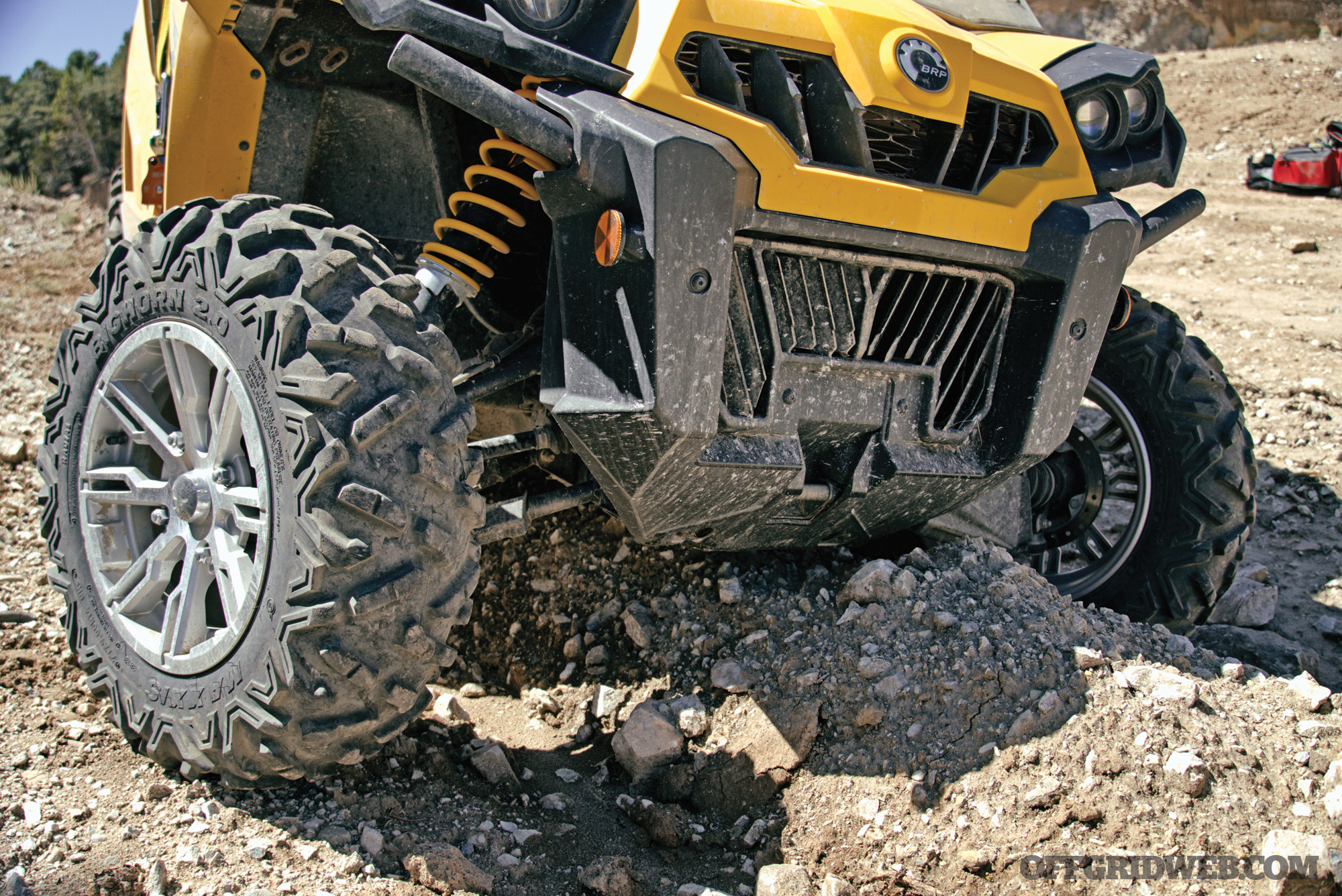
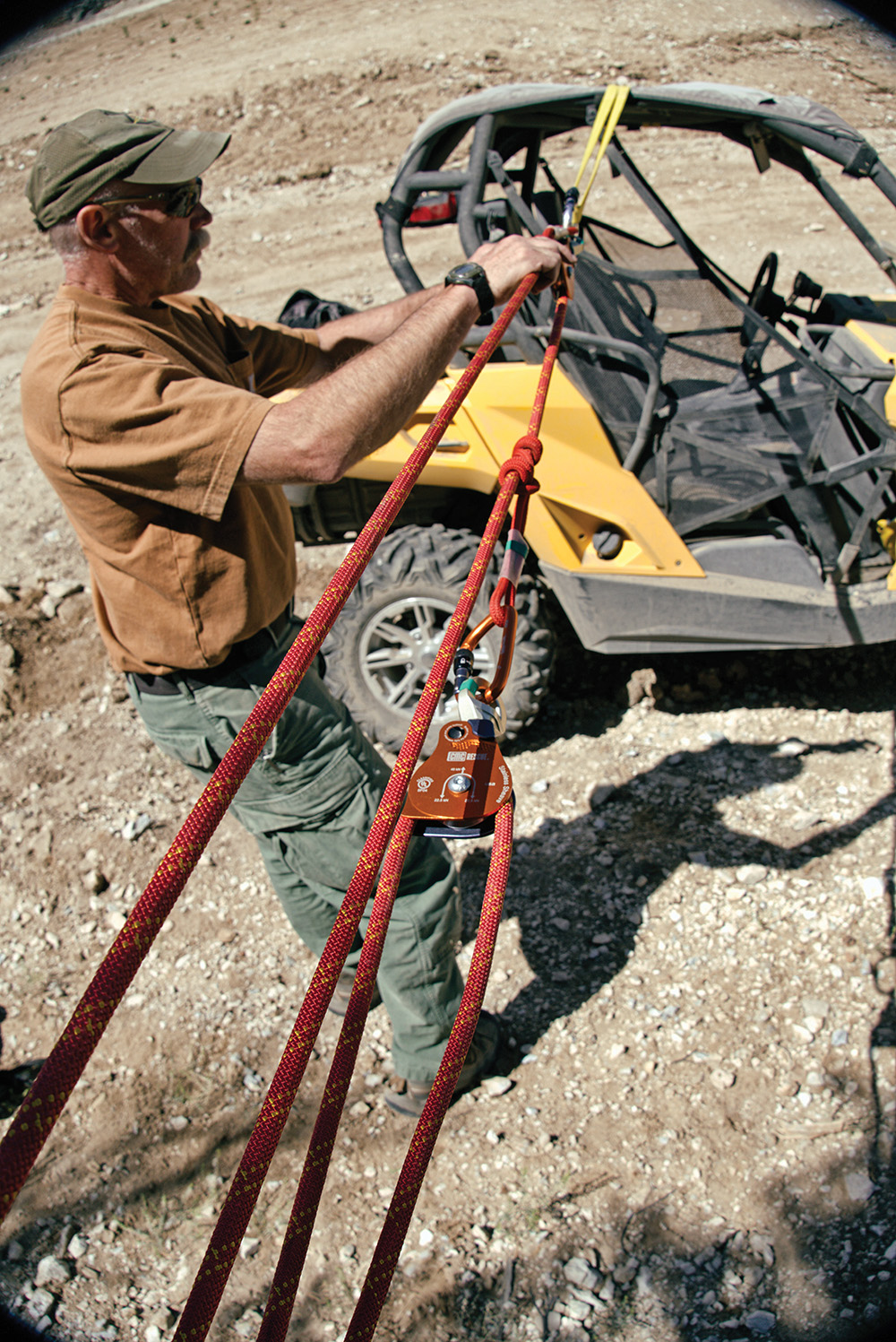
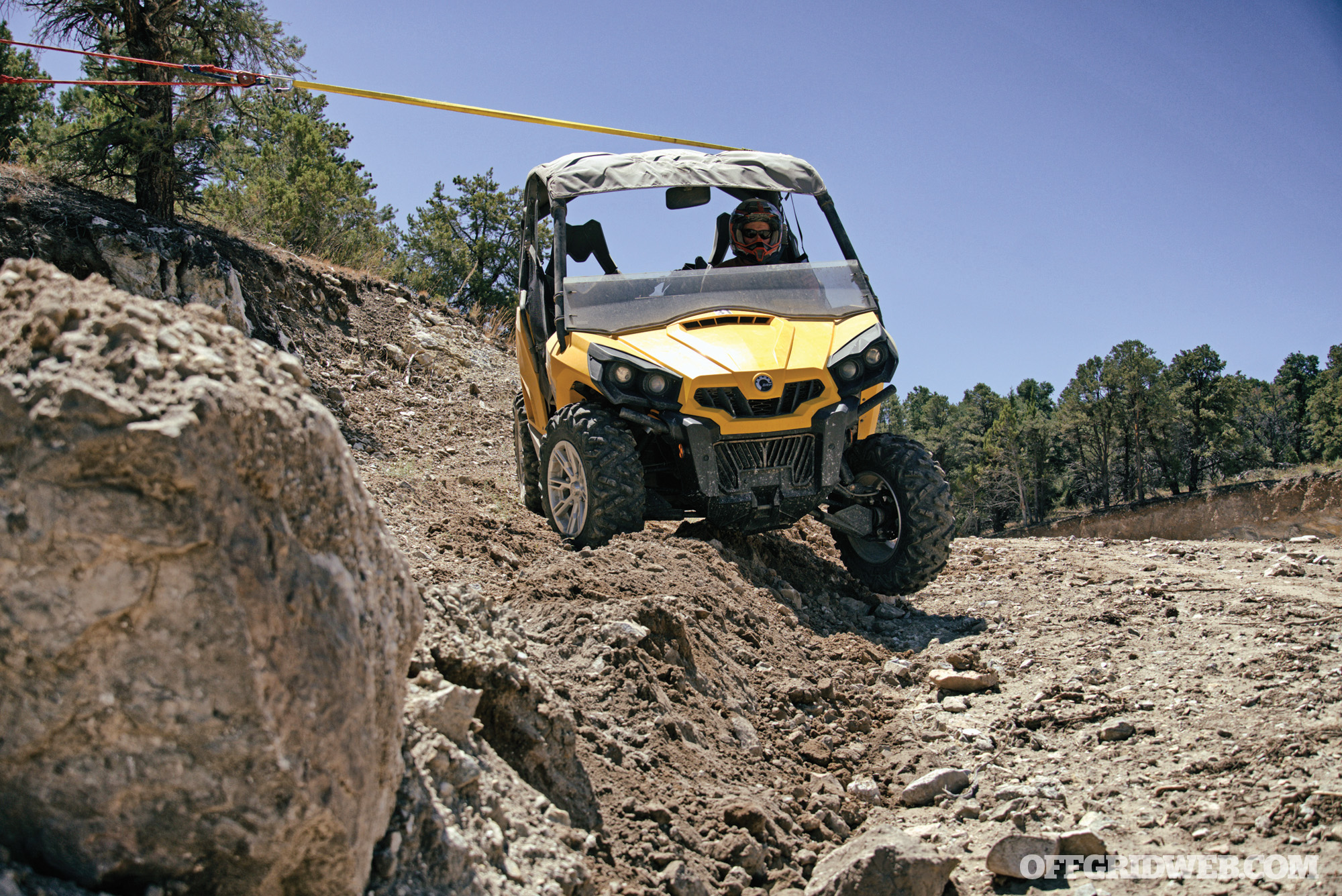
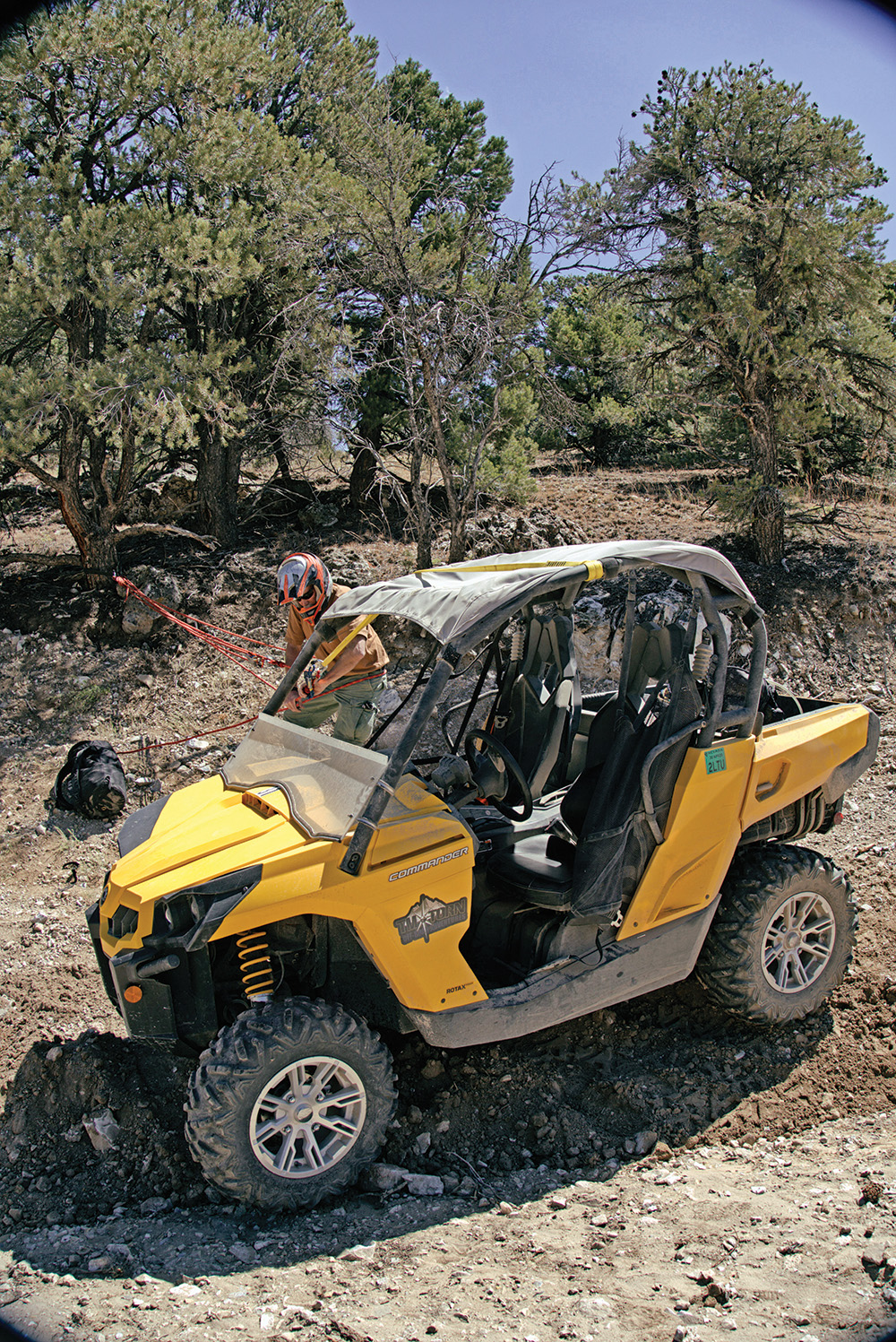
We first learned how to recover a UTV from a situation that happens often in off-trail riding: bottoming out to high-center during a summit. This occurs when the breakover angle of the UTV is insufficient for the hill you are attempting to crest. To the novice driver, bottoming out can quickly turn into a high-centered situation. In other words, the undercarriage of the vehicle winds up perched on the crest, with the drive wheels unable to get enough purchase on the terrain to push it over the top. When the undercarriage of the UTV hits the ground, many drivers accelerate quickly in the hope of getting the UTV up the incline. Unfortunately, what often happens is the back wheels spin, digging into the ground, and the front-drive wheels cannot gain enough grip to move forward. We were able to solve this by setting an anchor point directly in front of the UTV and pulling it forward using the strength of one or two people.
Problem: Bottomed out; stuck high-center on summit
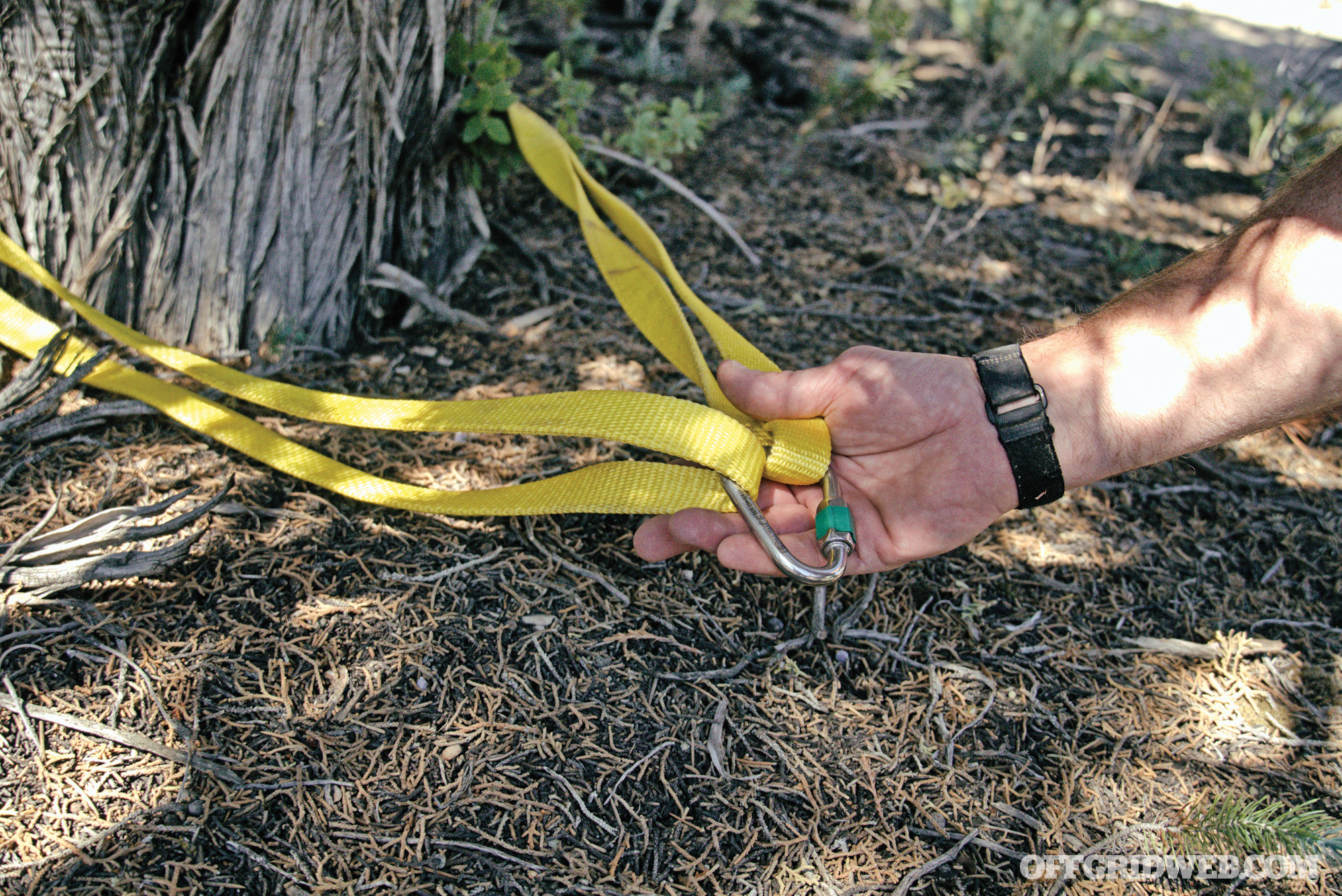
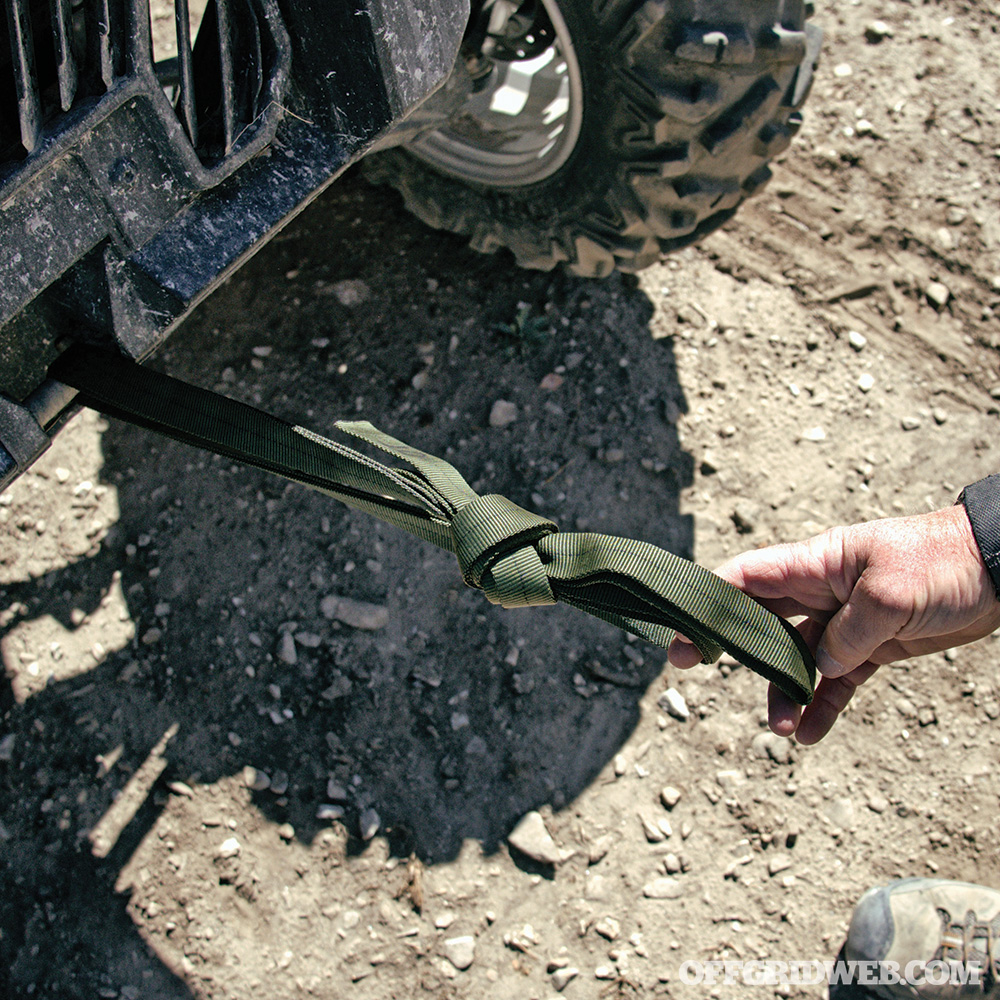
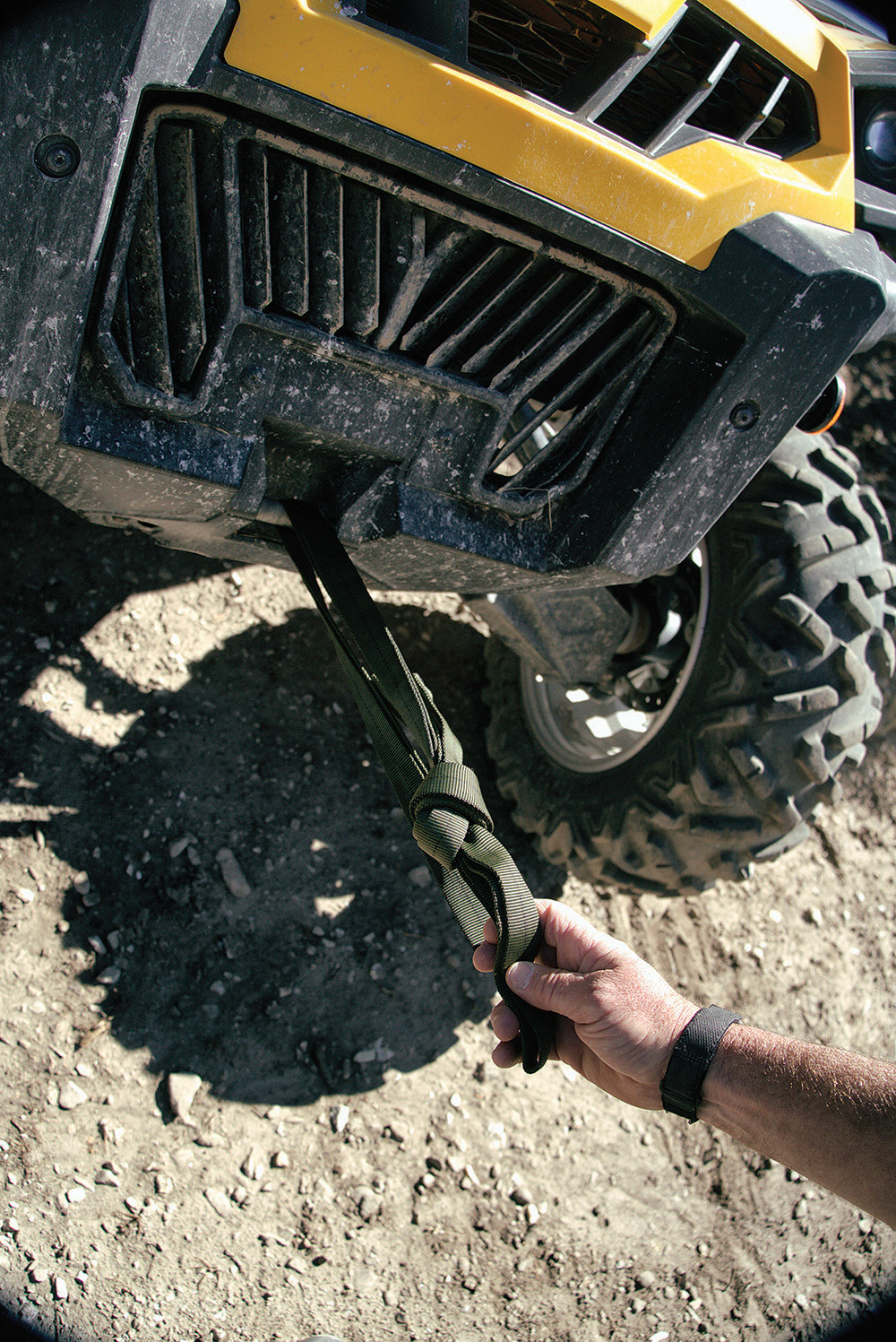
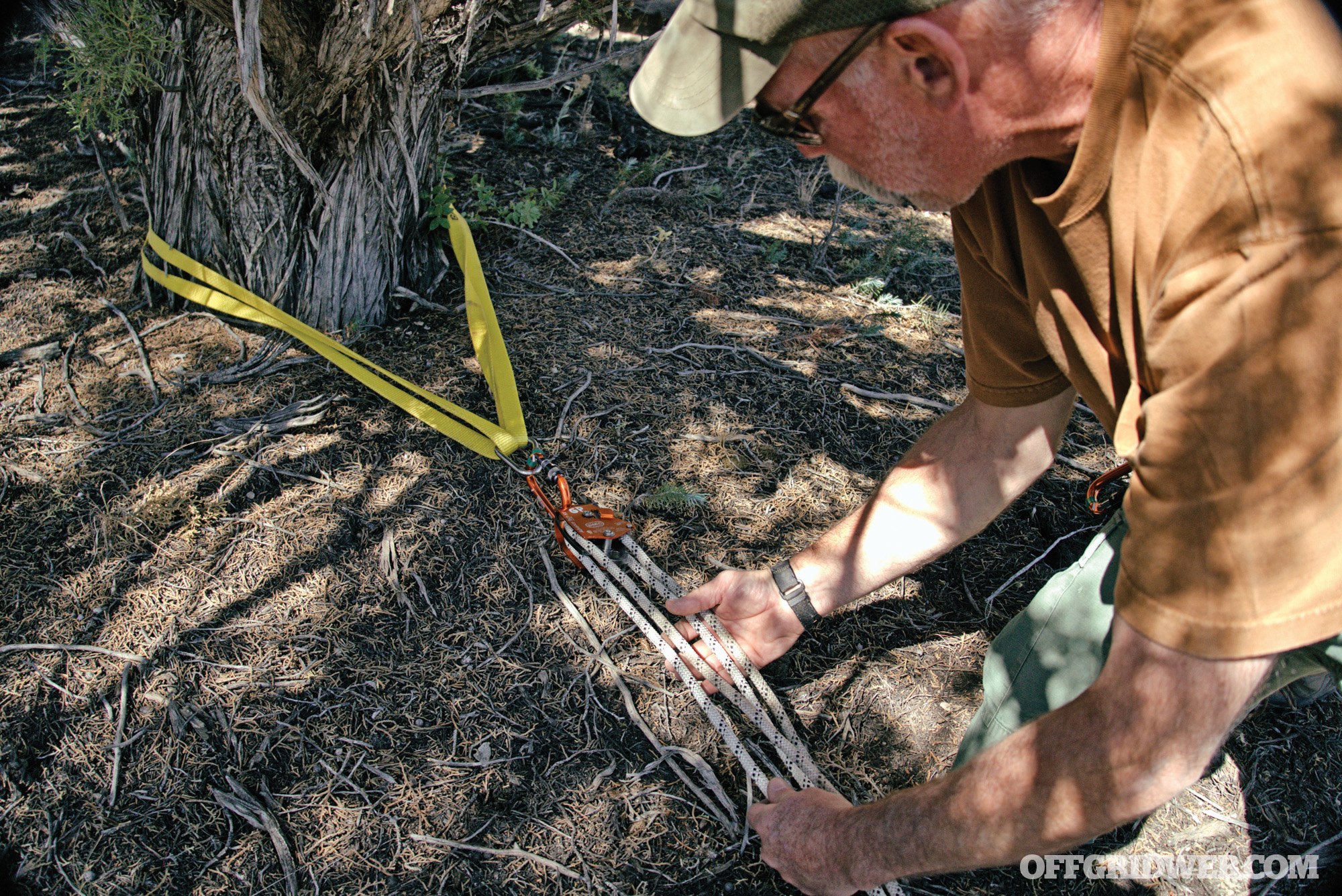
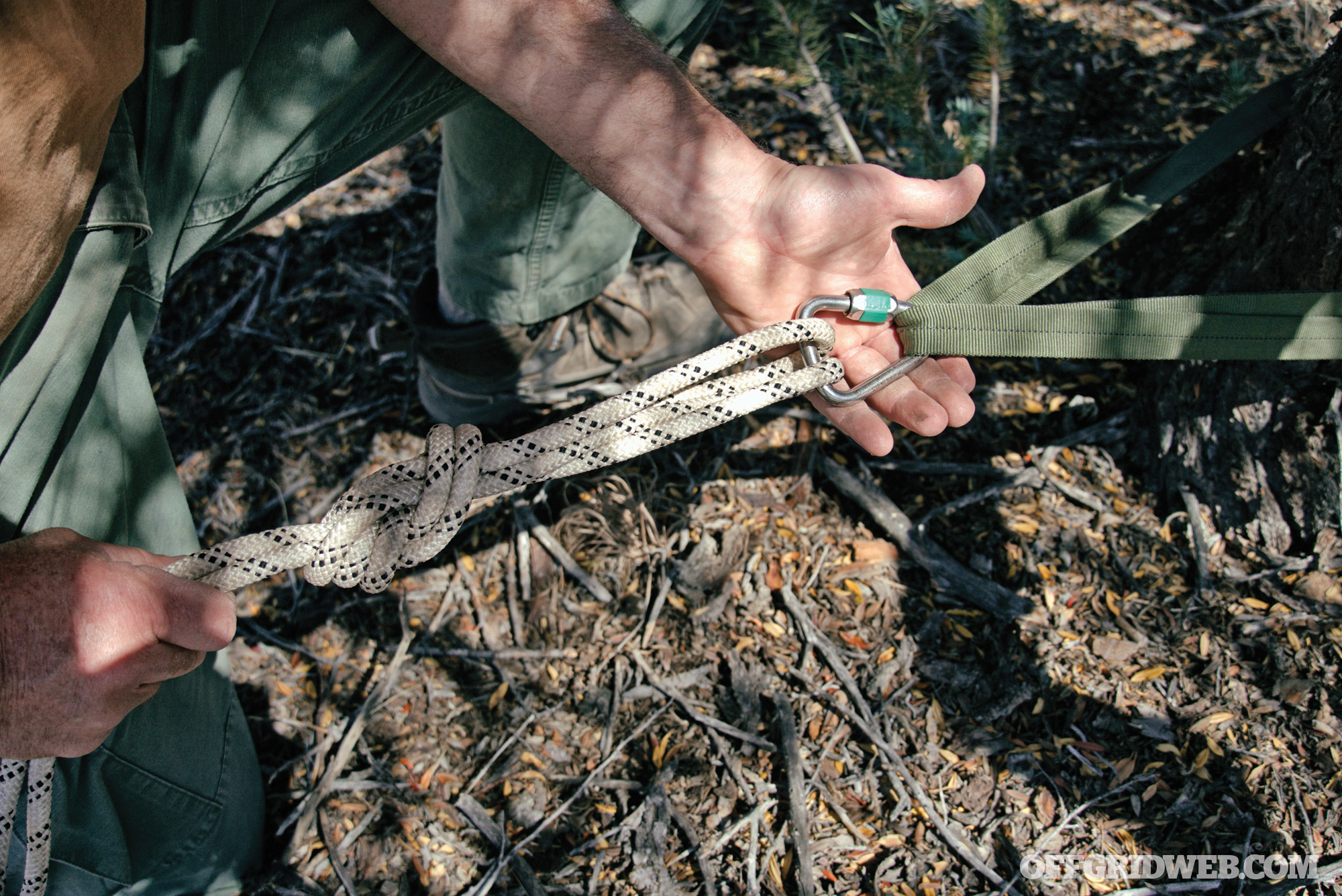
Step 1 (Create your pull point): Attach tubular nylon to your pull point on the UTV using a water knot.
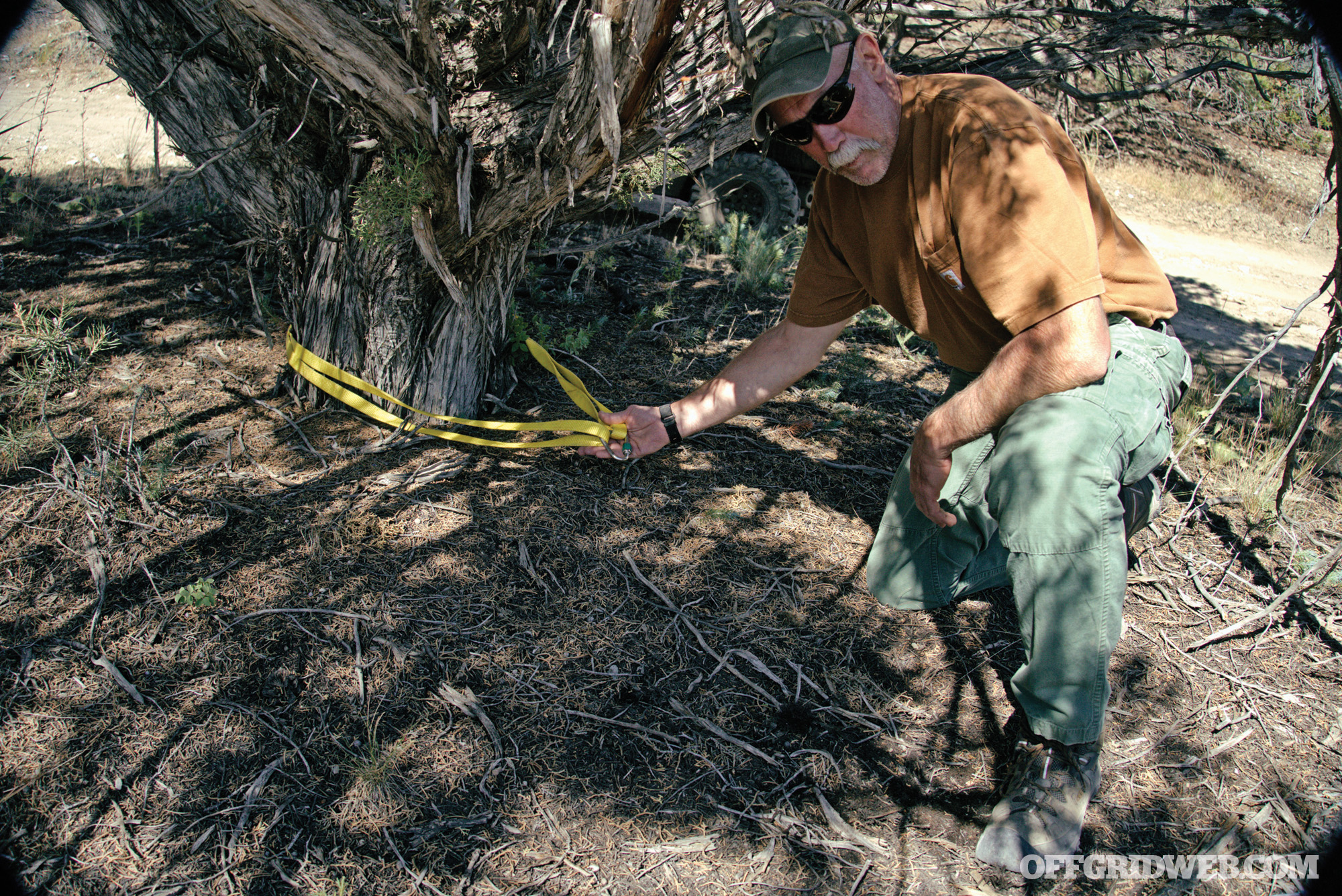
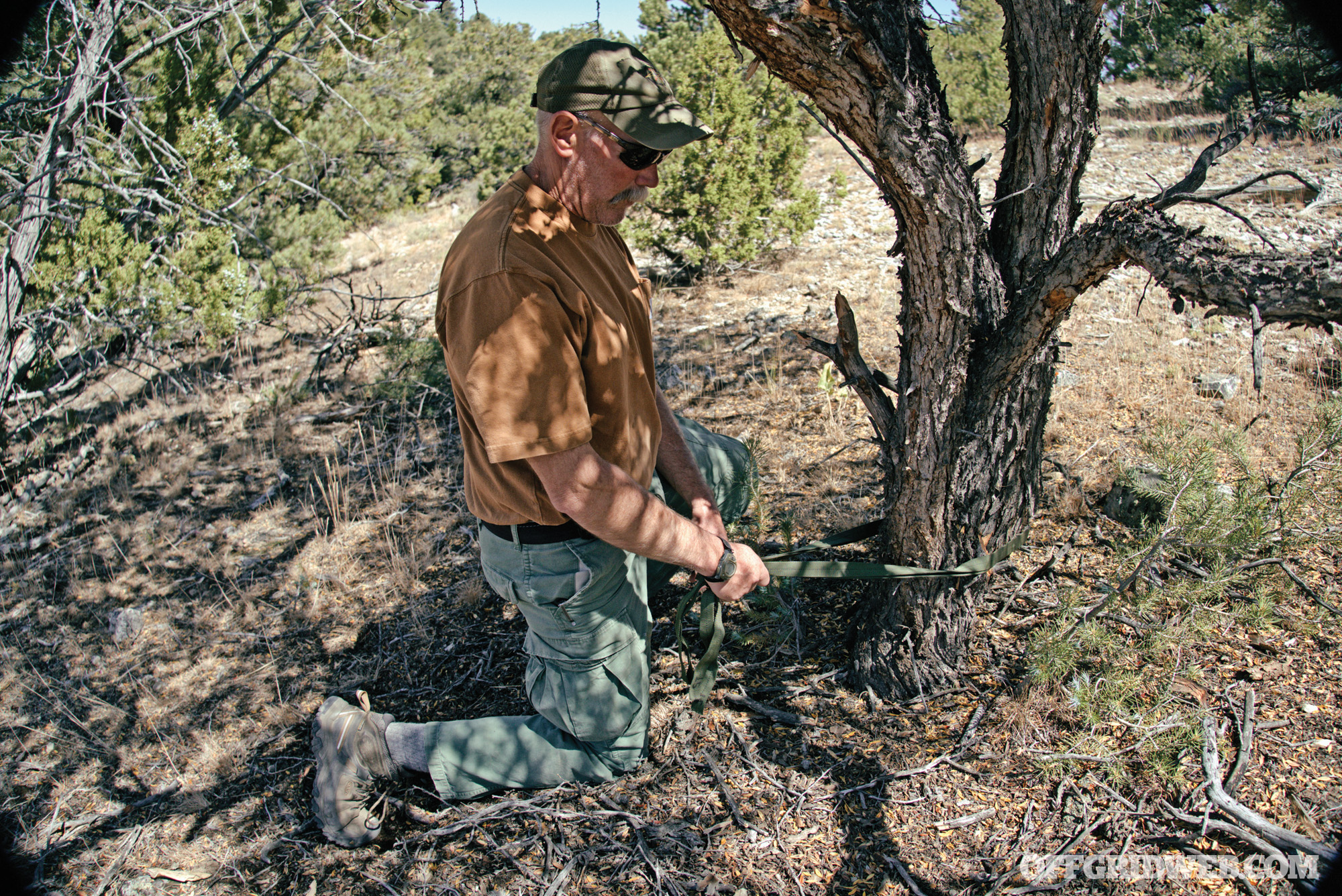
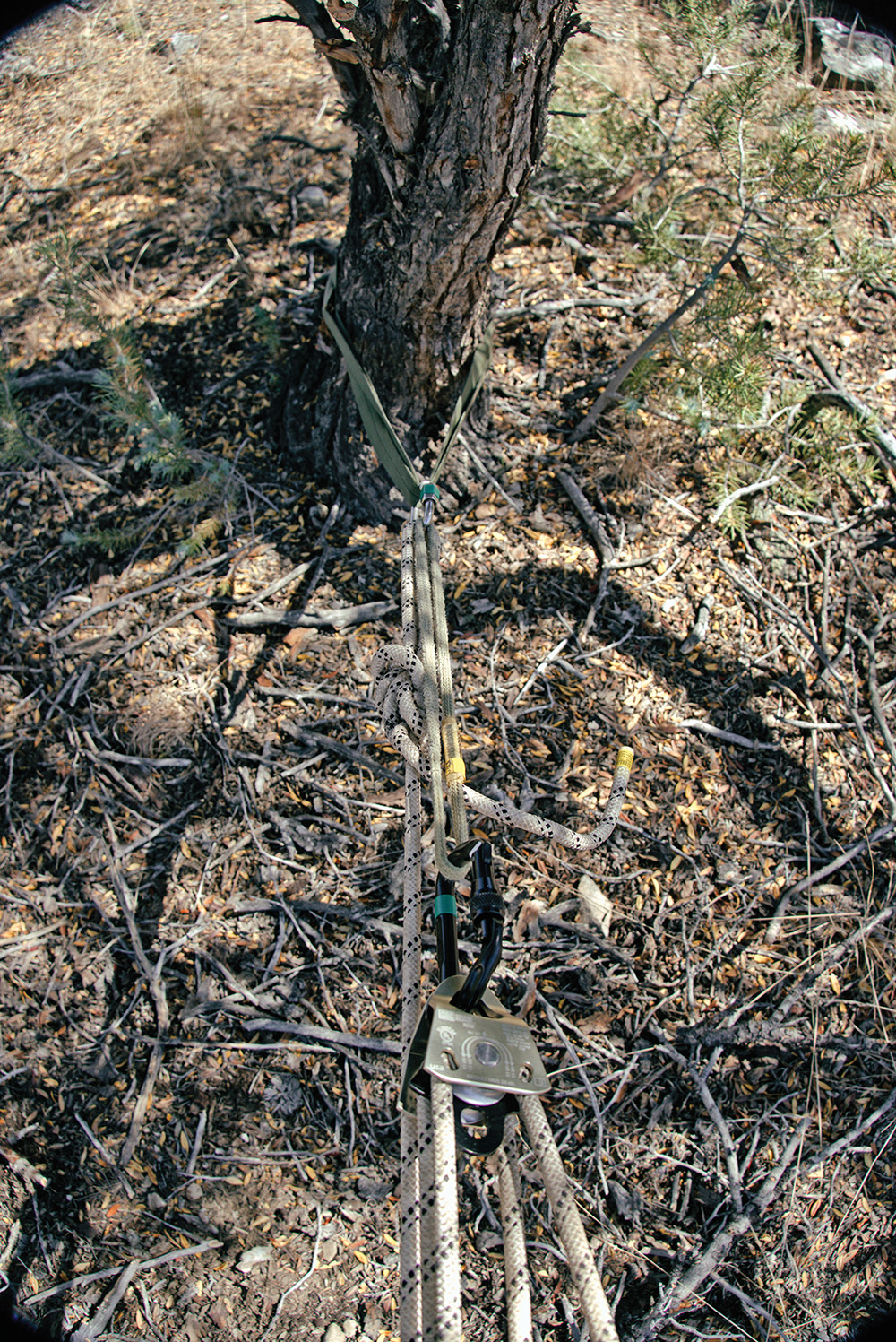
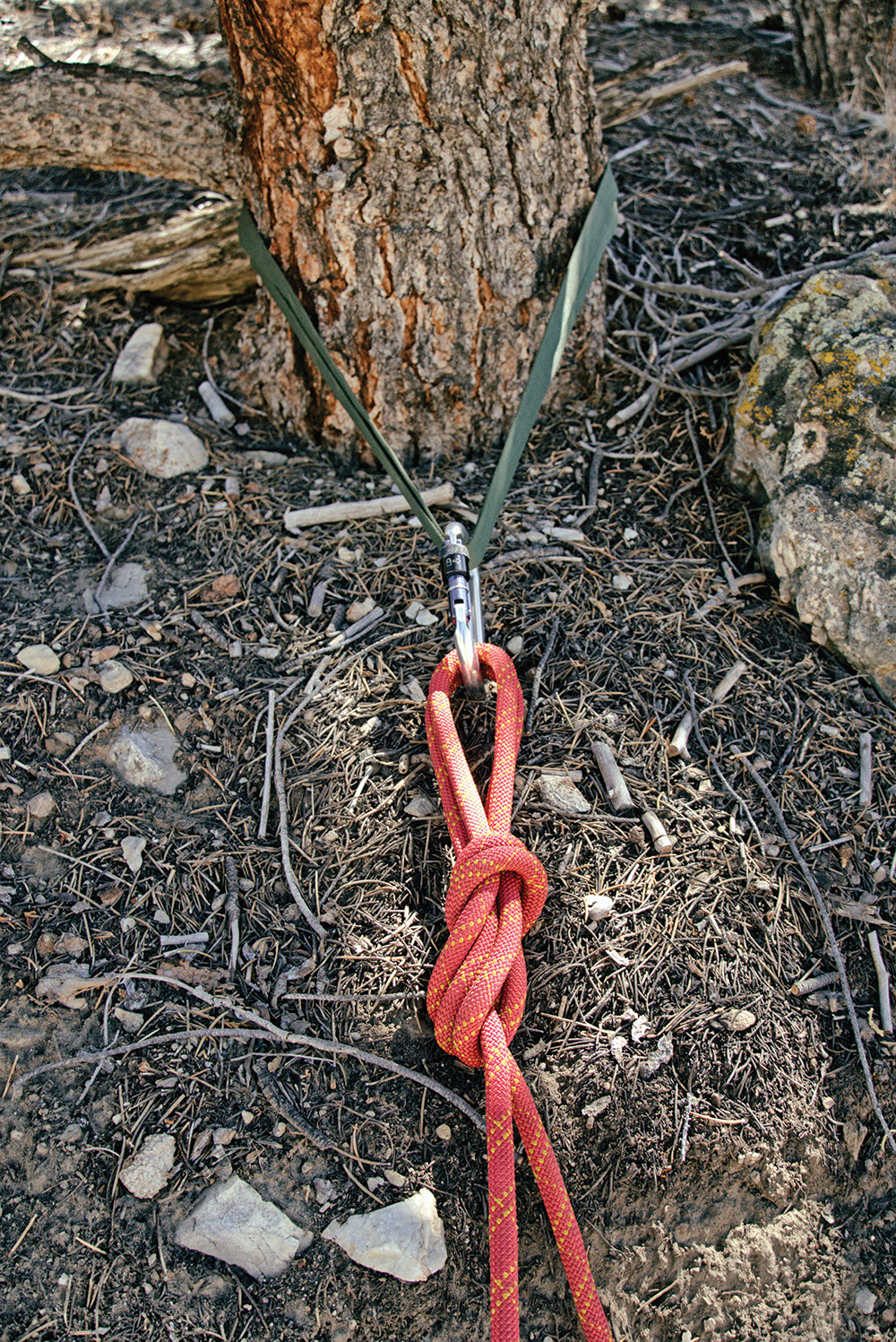
Step 2 (Create your anchor point): Rig the anchor point with the nylon flat webbing strap. Wrap the strap around the anchor, connecting it with a tri-link.
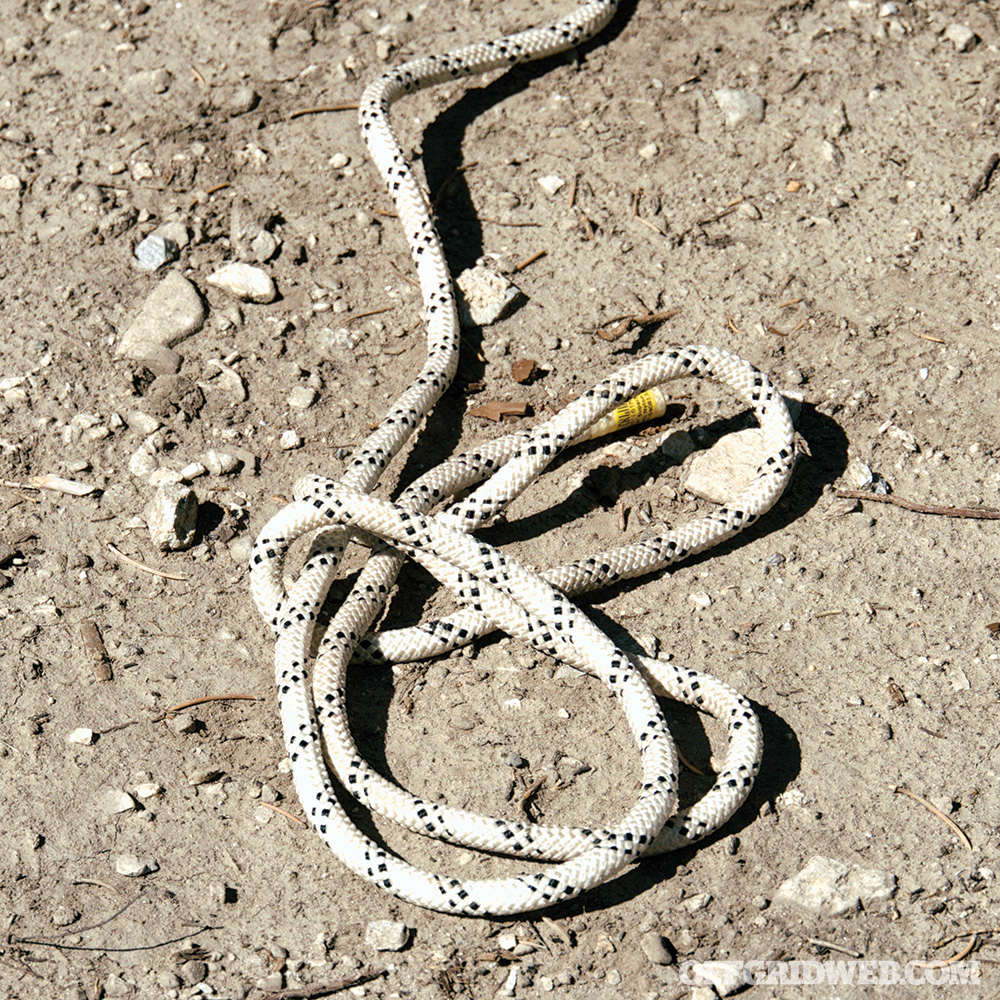
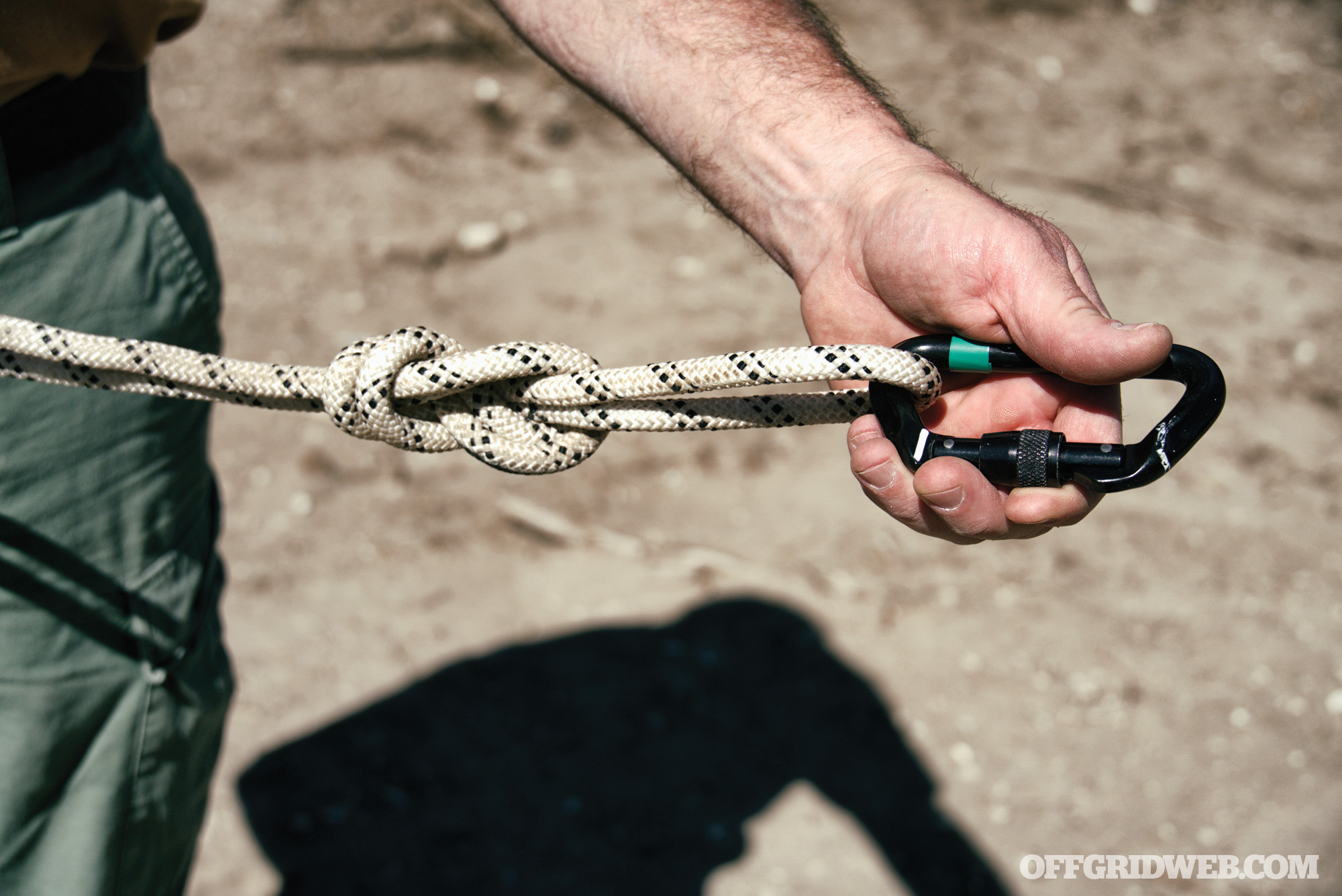
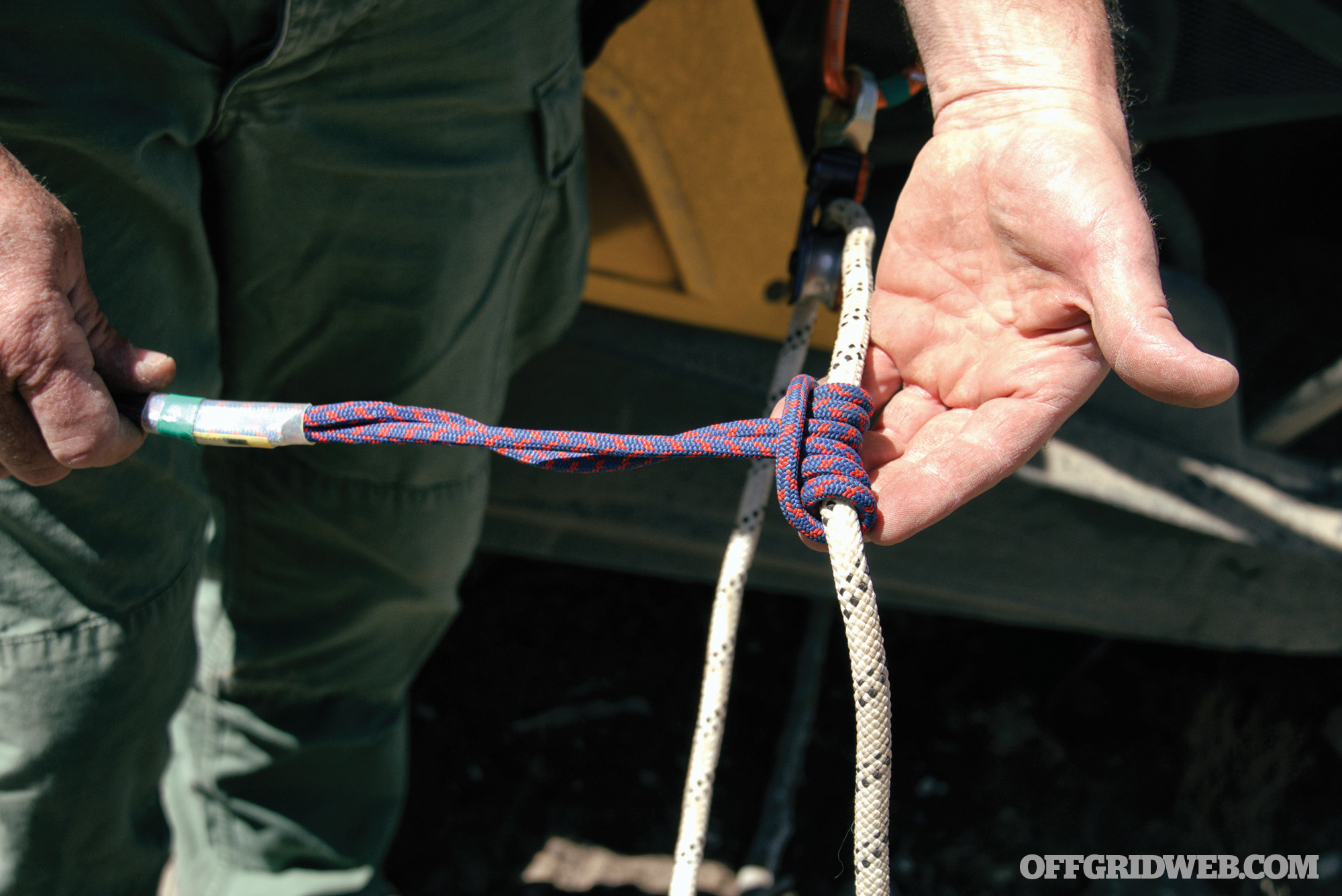
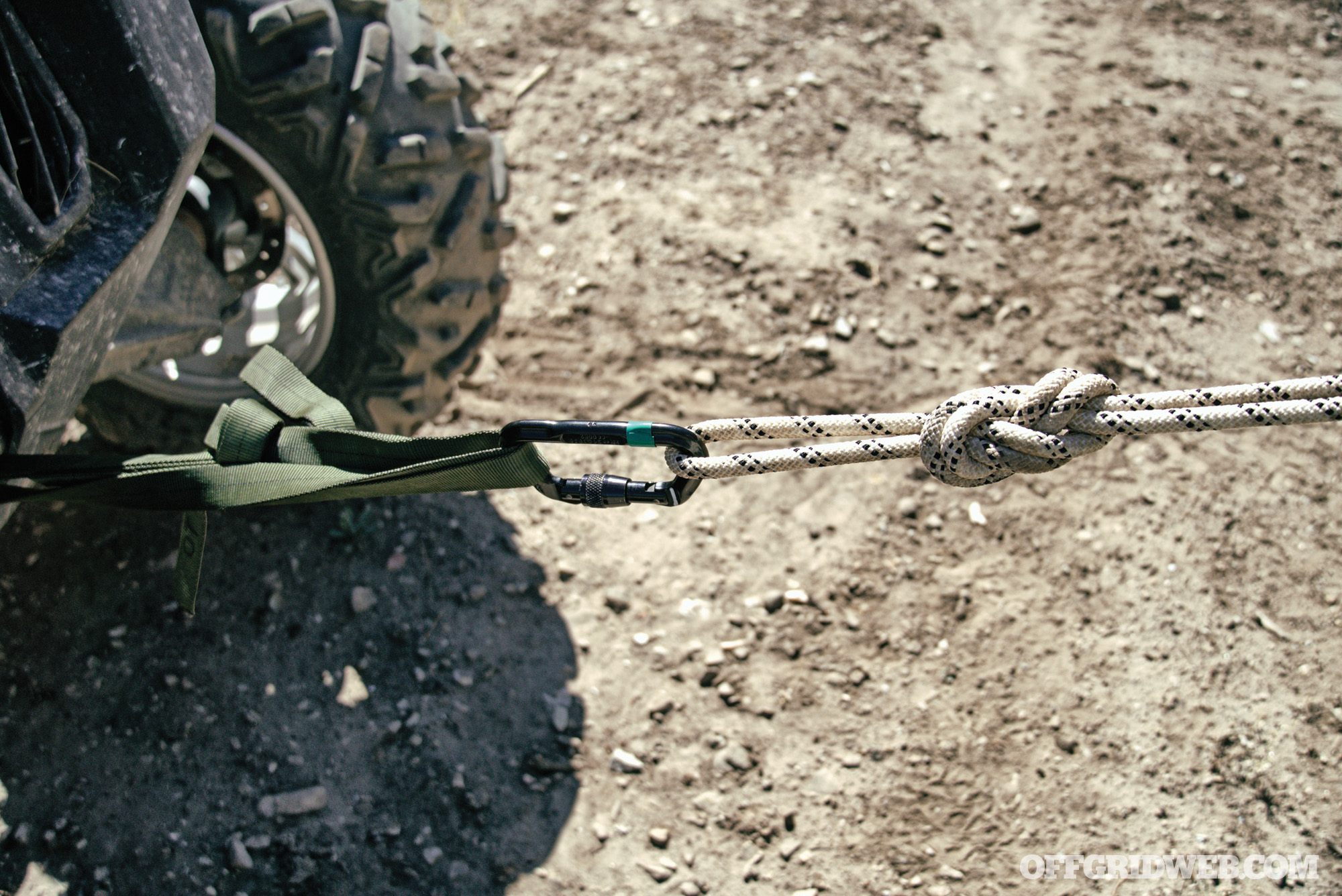
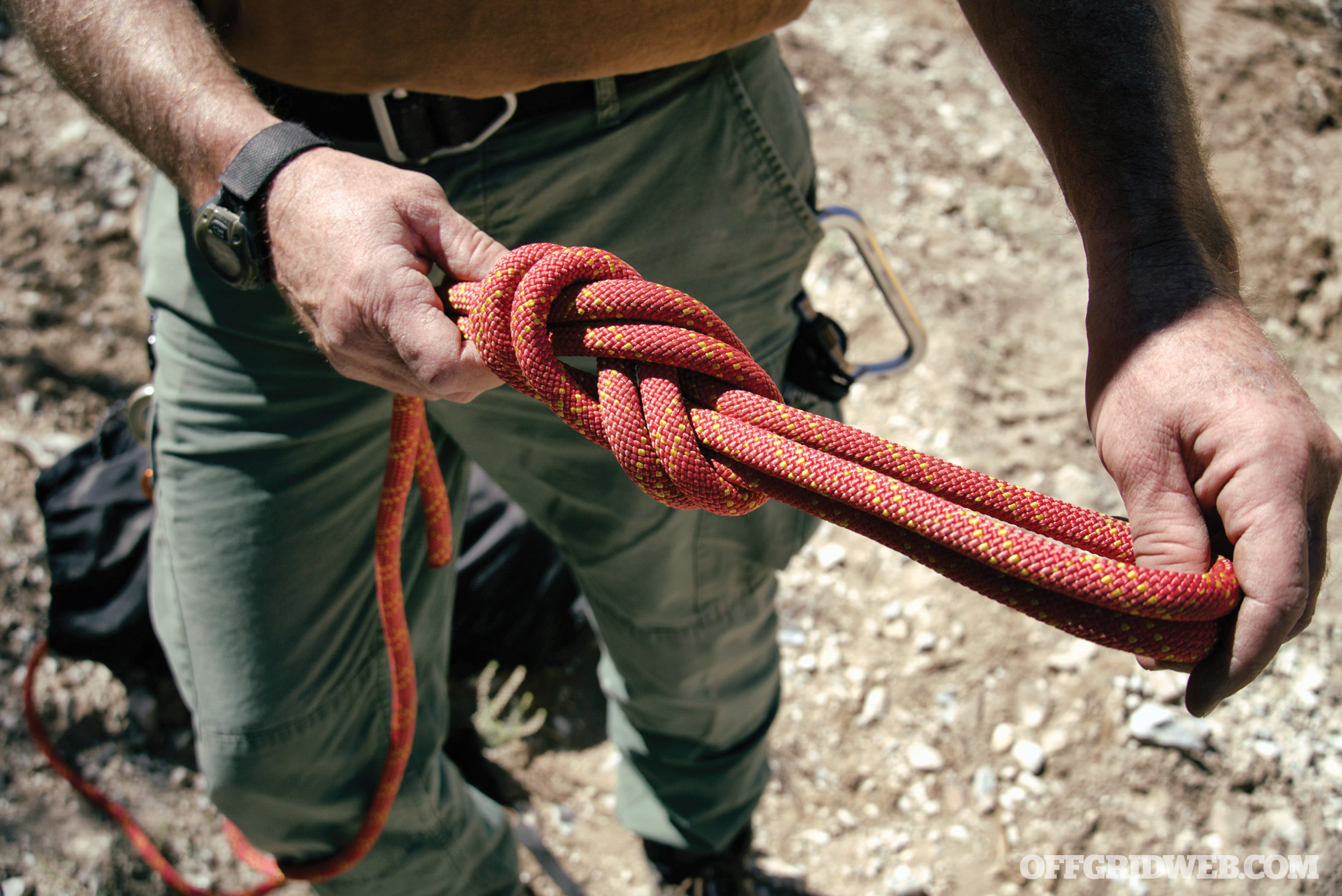
Step 3 (Connect rope to pull point): Tie a figure-eight knot in the static rope and connect to the pull point with carabiner.
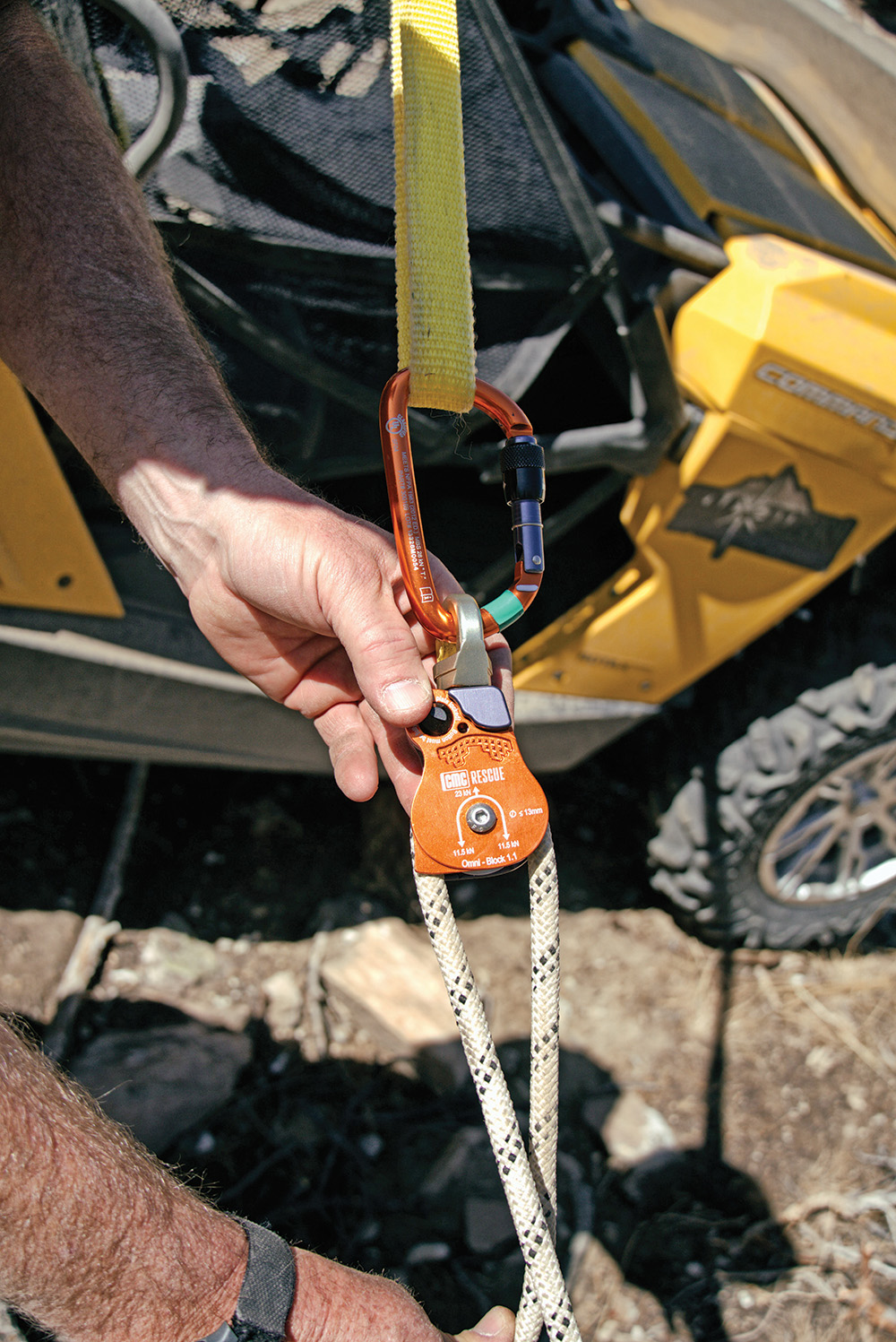
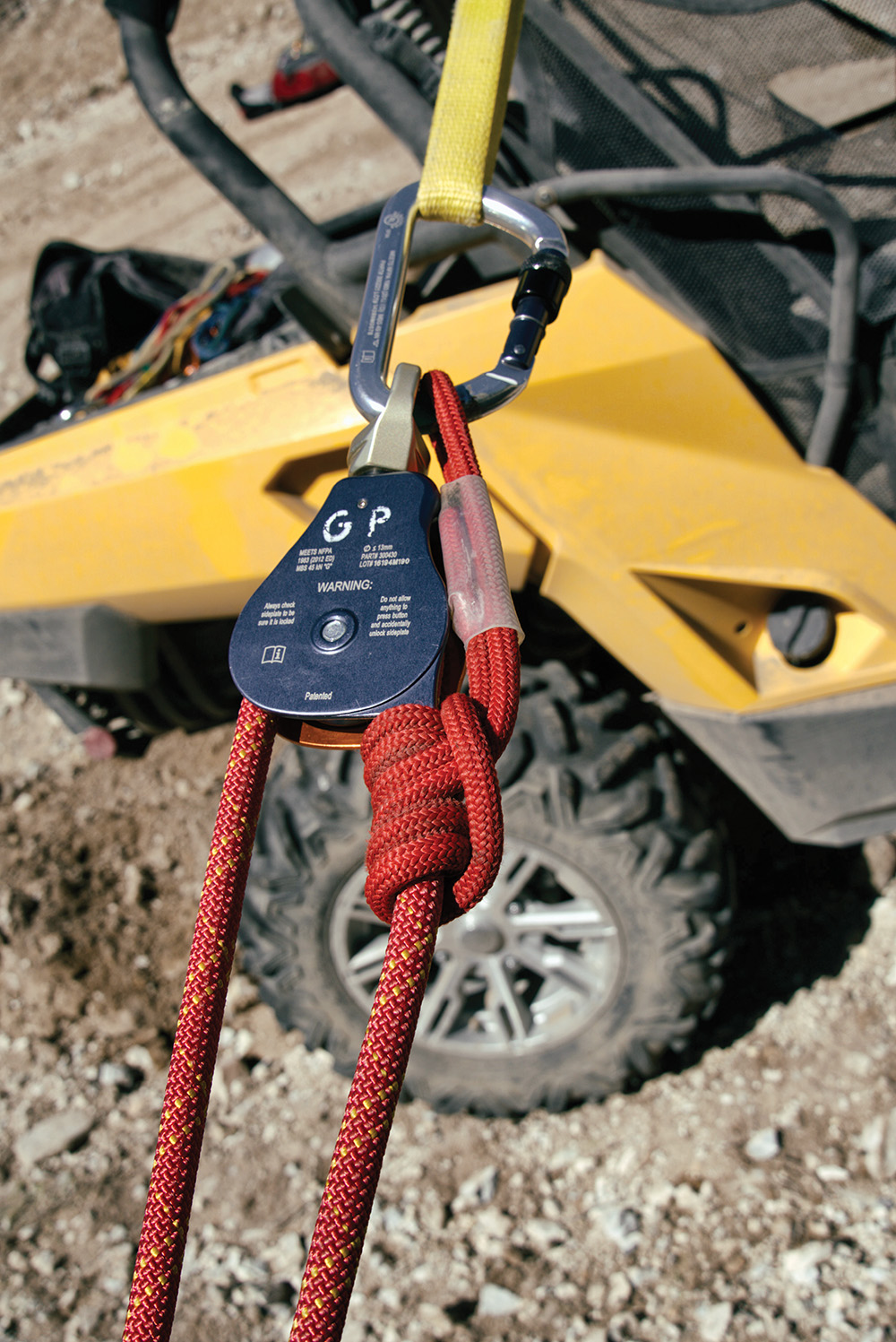
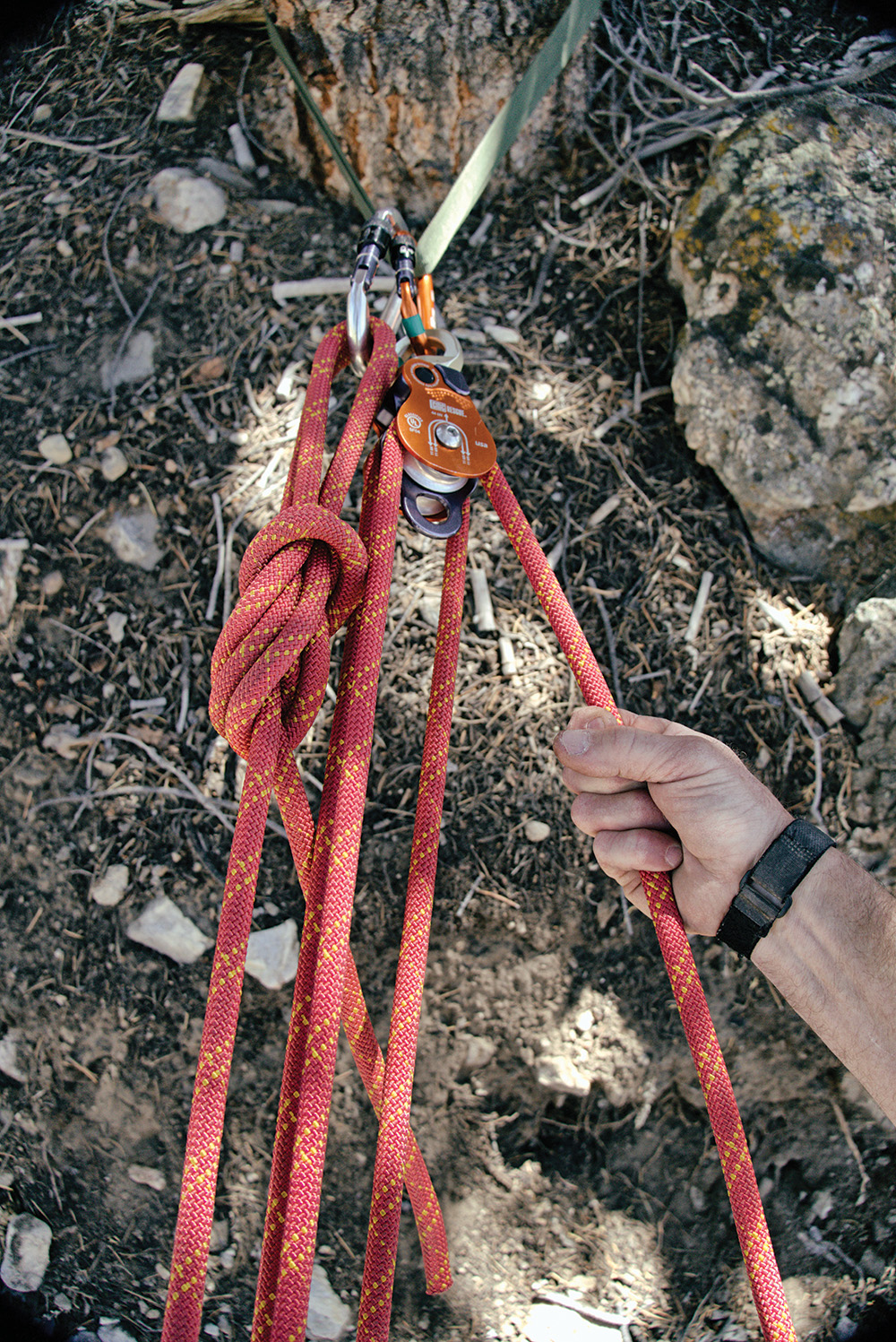
Step 4 (Connect rope to anchor point): Connect a ratcheting pulley to your tri-link with a carabiner and route the rope through the pulley.
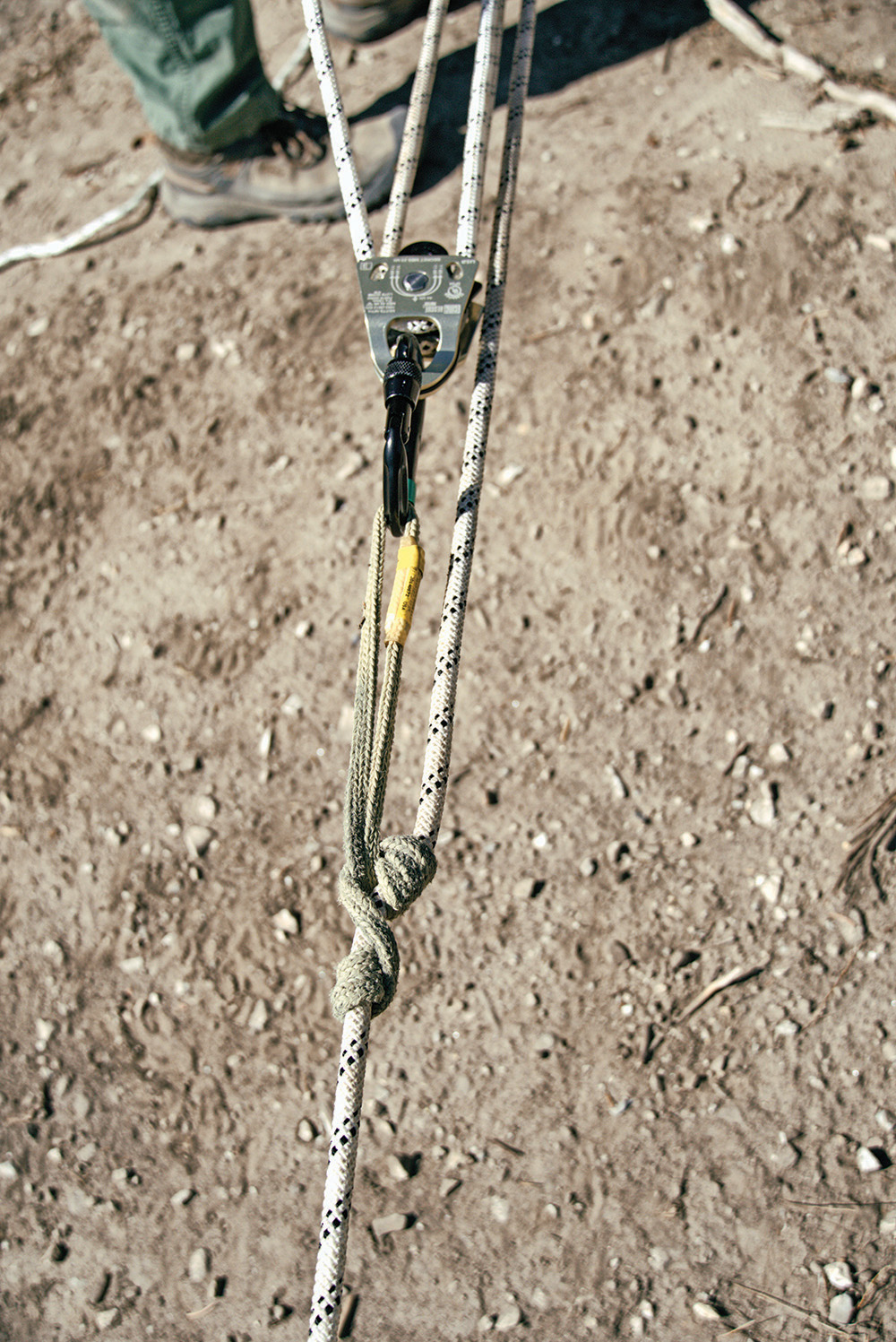
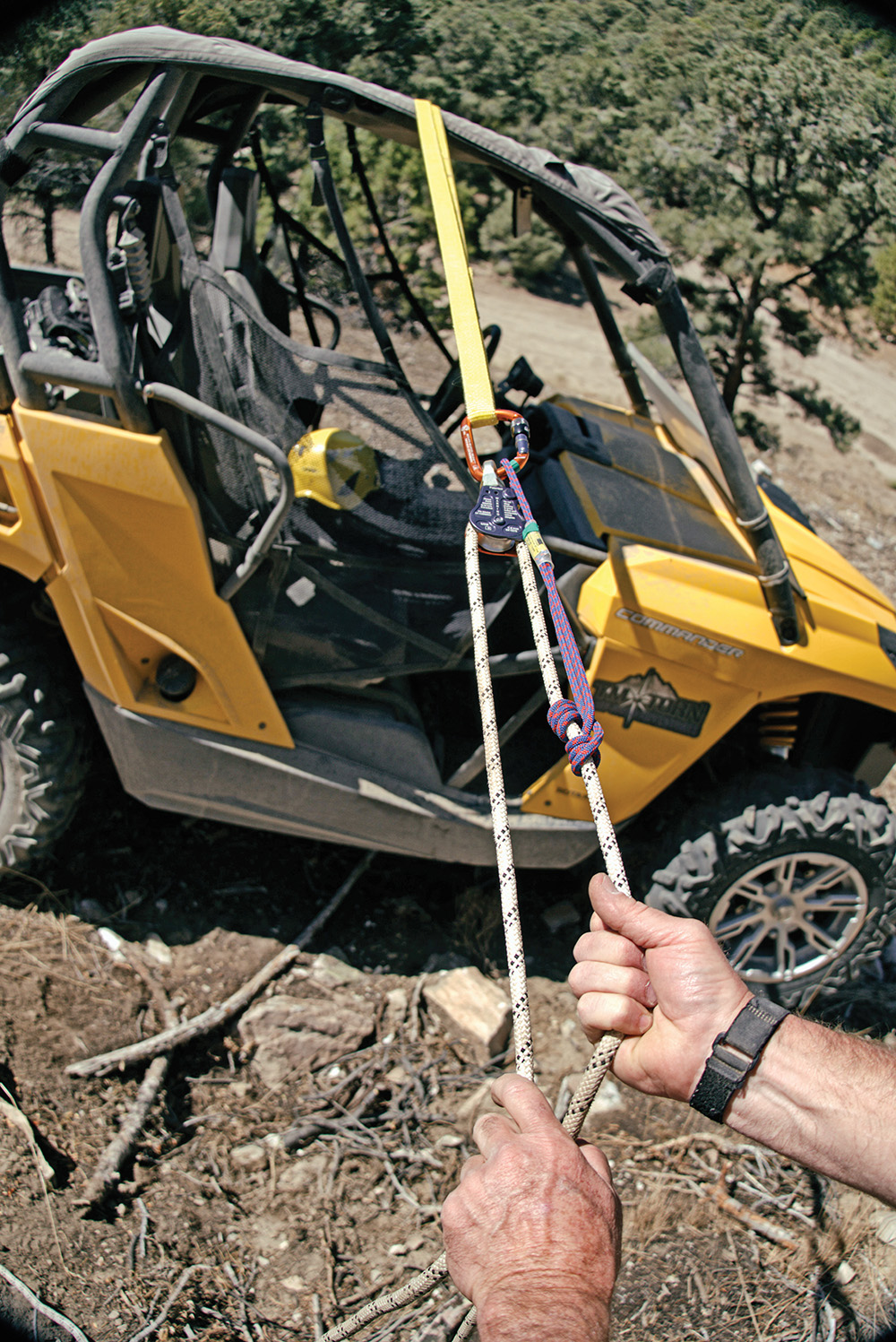
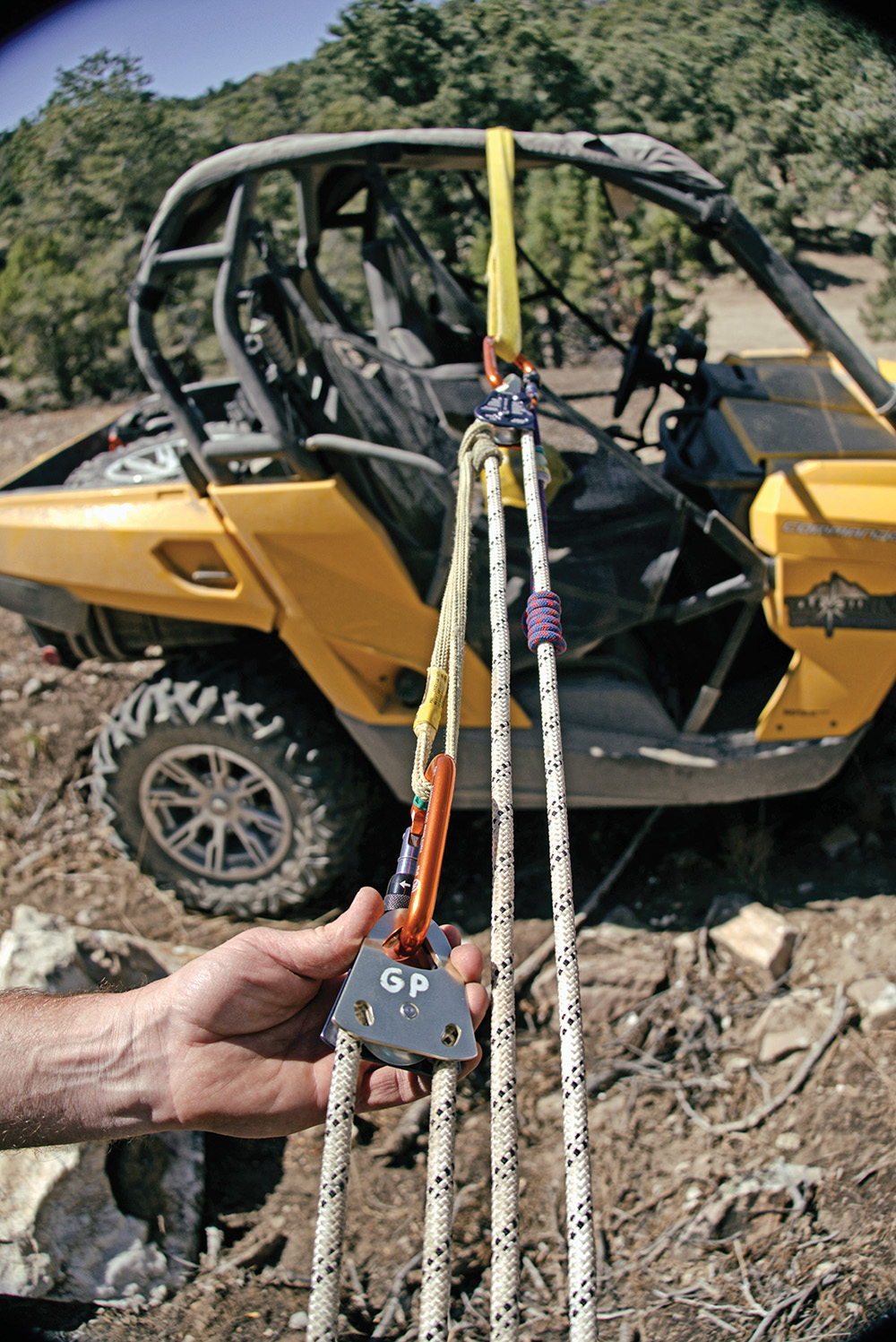
Step 5: Set up your 5 to 1 mechanical advantage. Attach the prusik to the load leg; attach a double pulley to the prusik and route the rope through the double pulley. Route the rope back to the ratcheting pulley at the anchor point and then back through the double pulley nearest to the UTV.
Step 6: Pull the vehicle out (make sure the vehicle is in neutral).
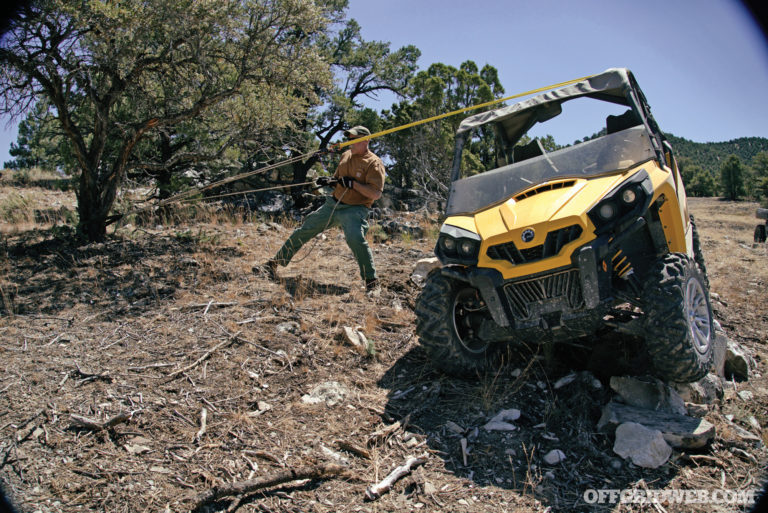
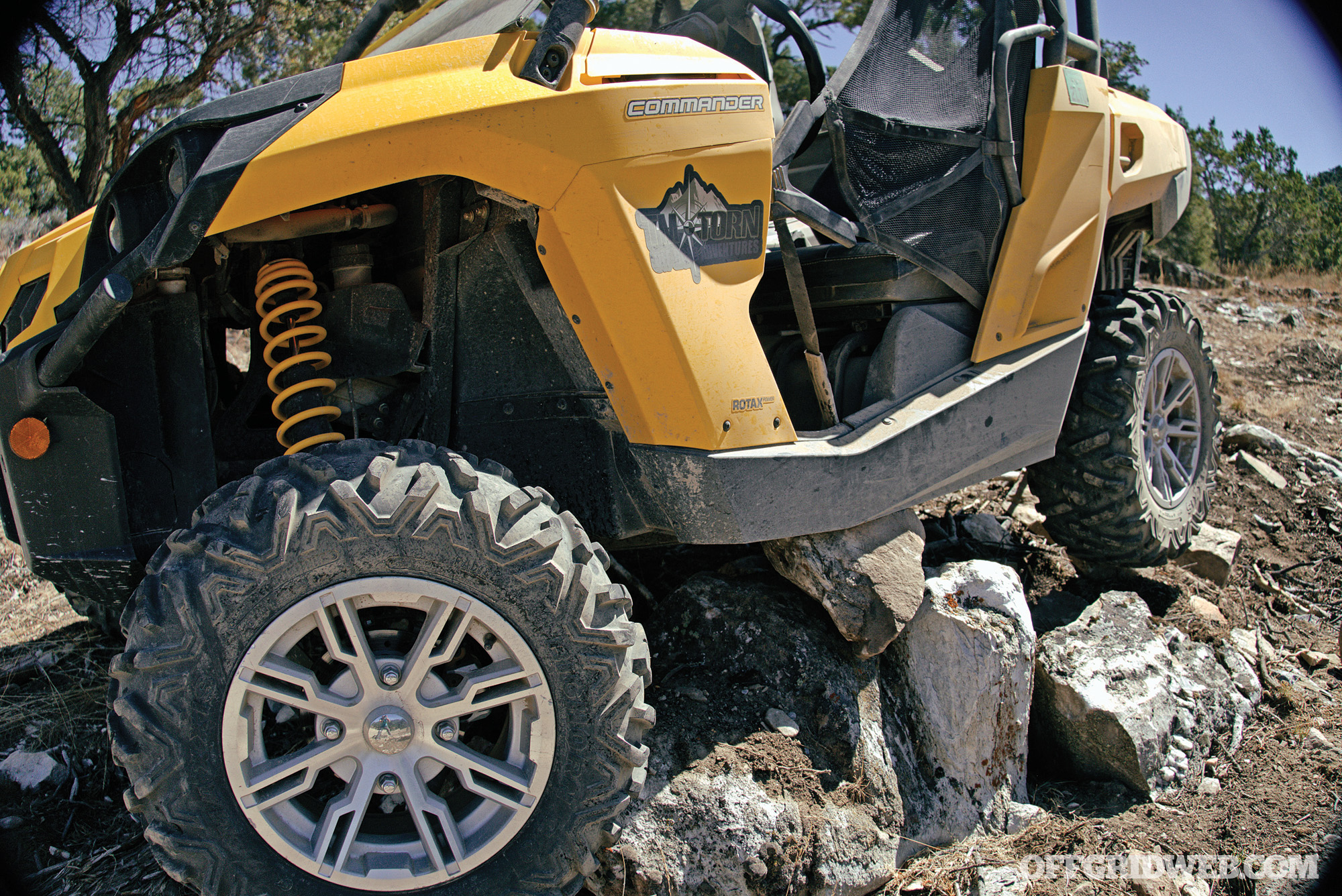
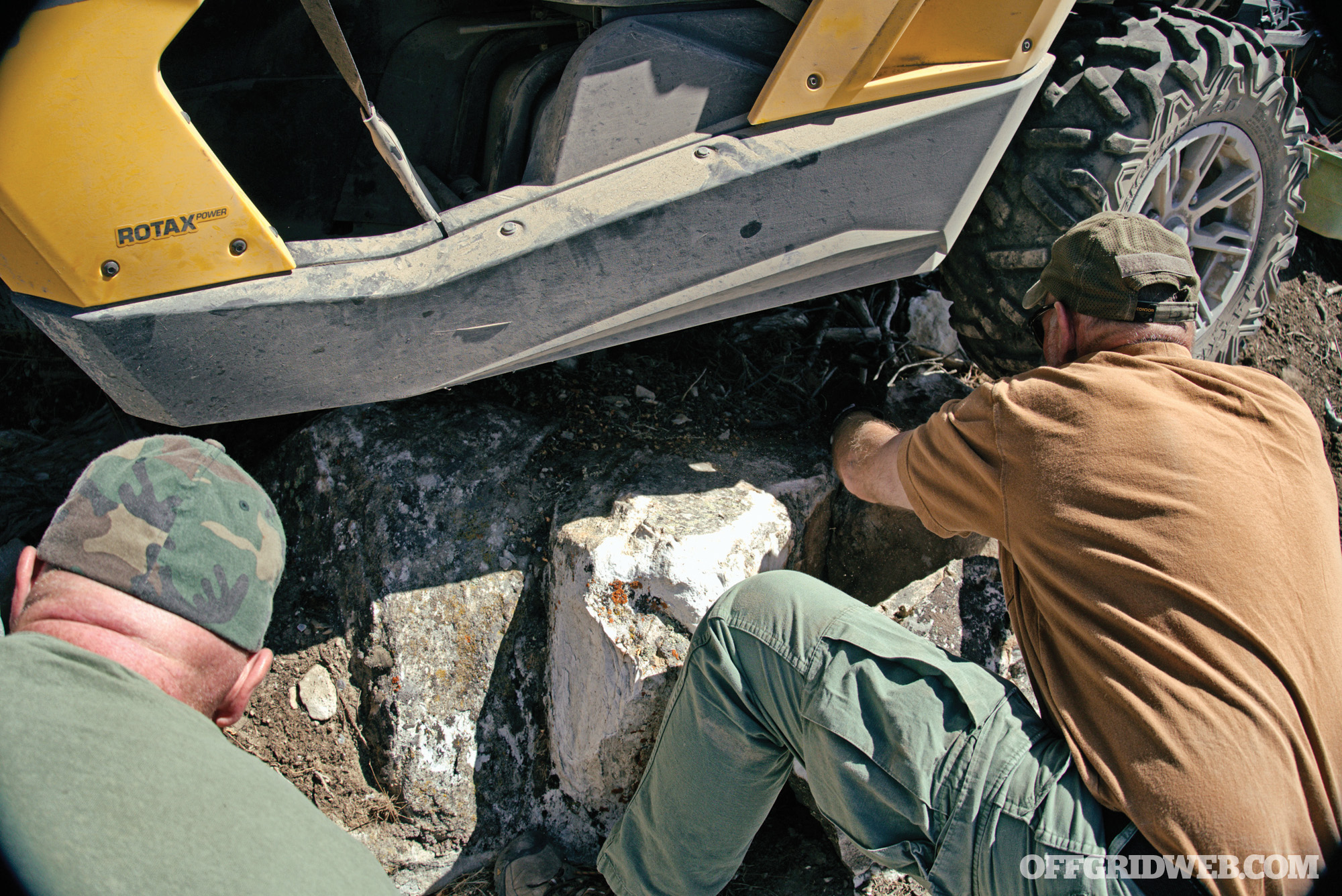
Next, we learned one way to fix two issues: a high-centered UTV or a flat tire. A high-centered UTV means the vehicle maneuvered over an obstacle taller than its ground clearance, forcing its driving wheels off the ground. Both high-centered and flat tire situations require you to lift one side of the UTV off the ground, allowing you to either remove the obstacle, create a rock bridge to add height, or change the tire, depending on the situation. This technique is used when you do not have a jack available. By setting the anchor point on the opposite side of the problem, we were able to use leverage to lift the UTV.
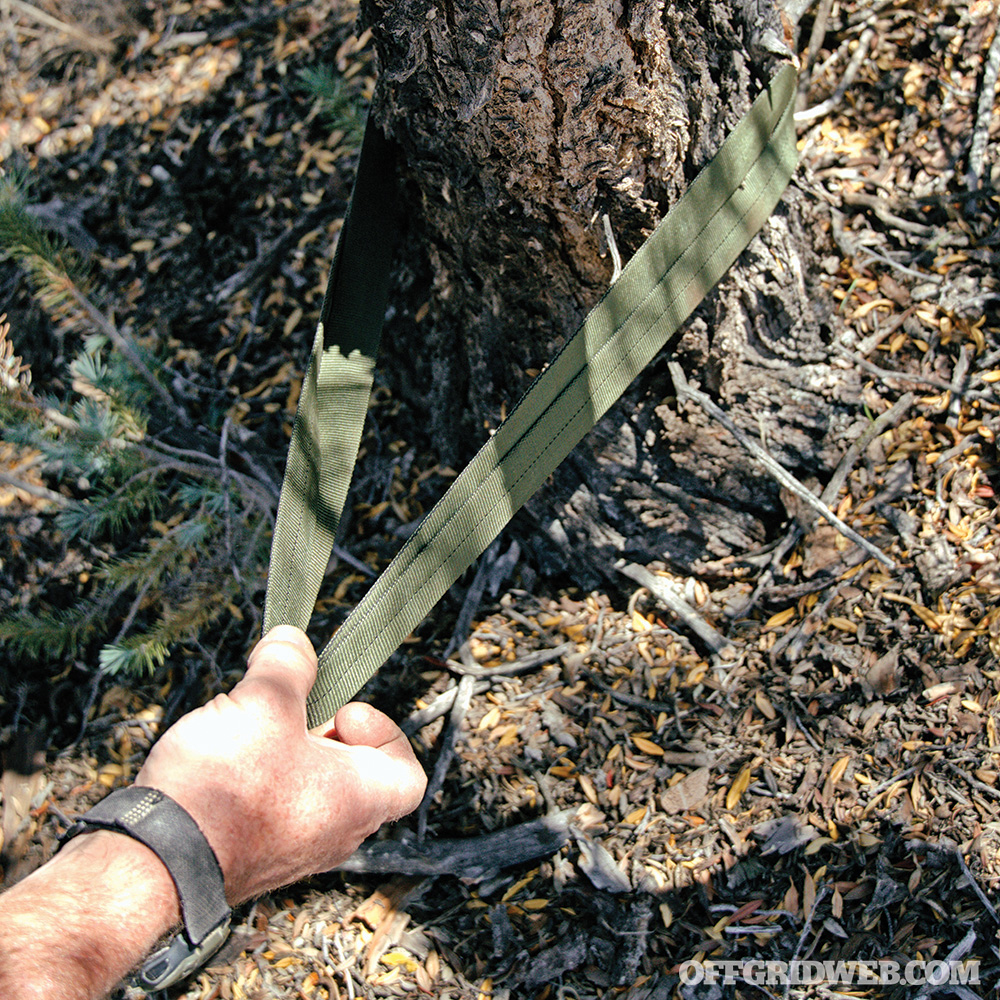
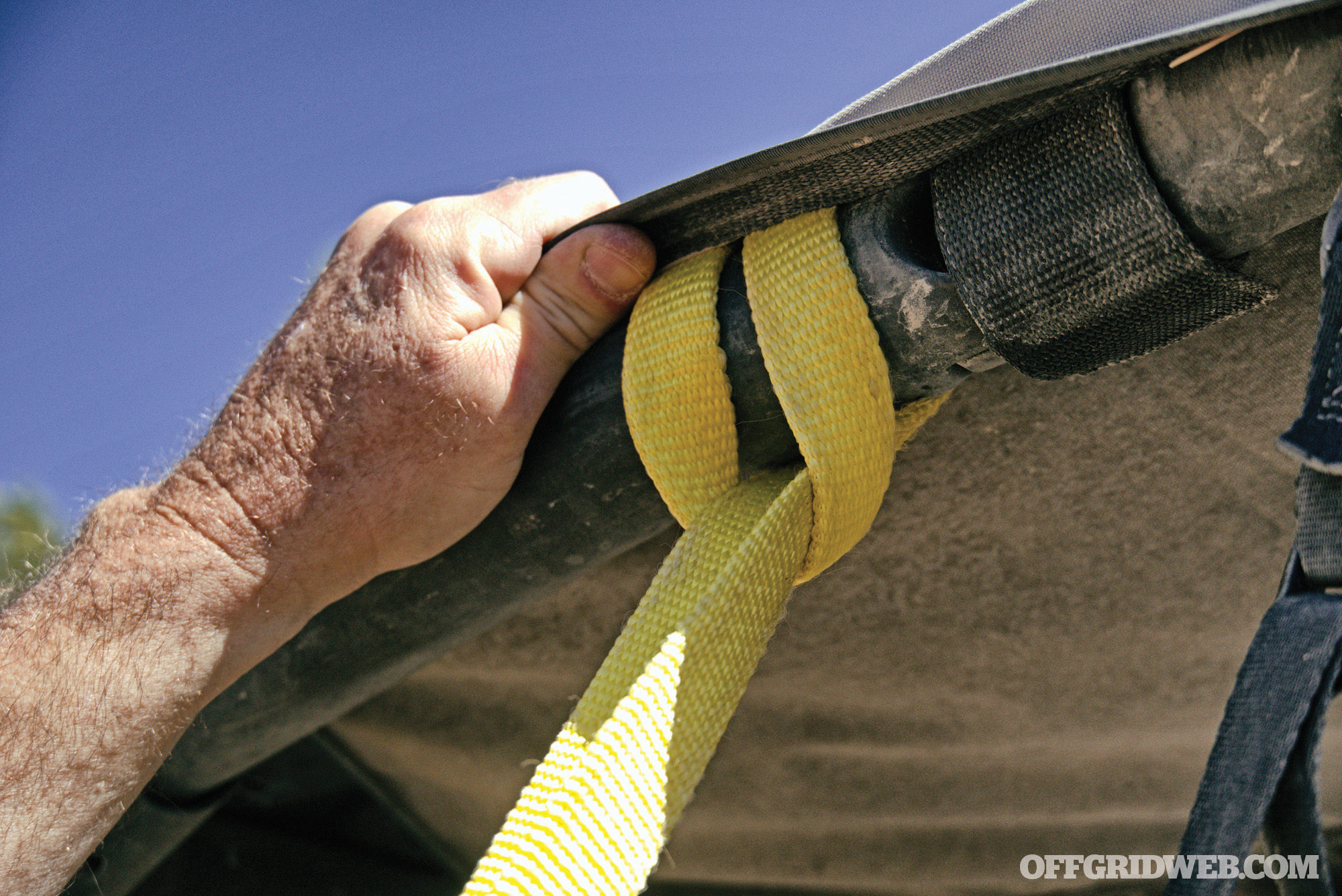
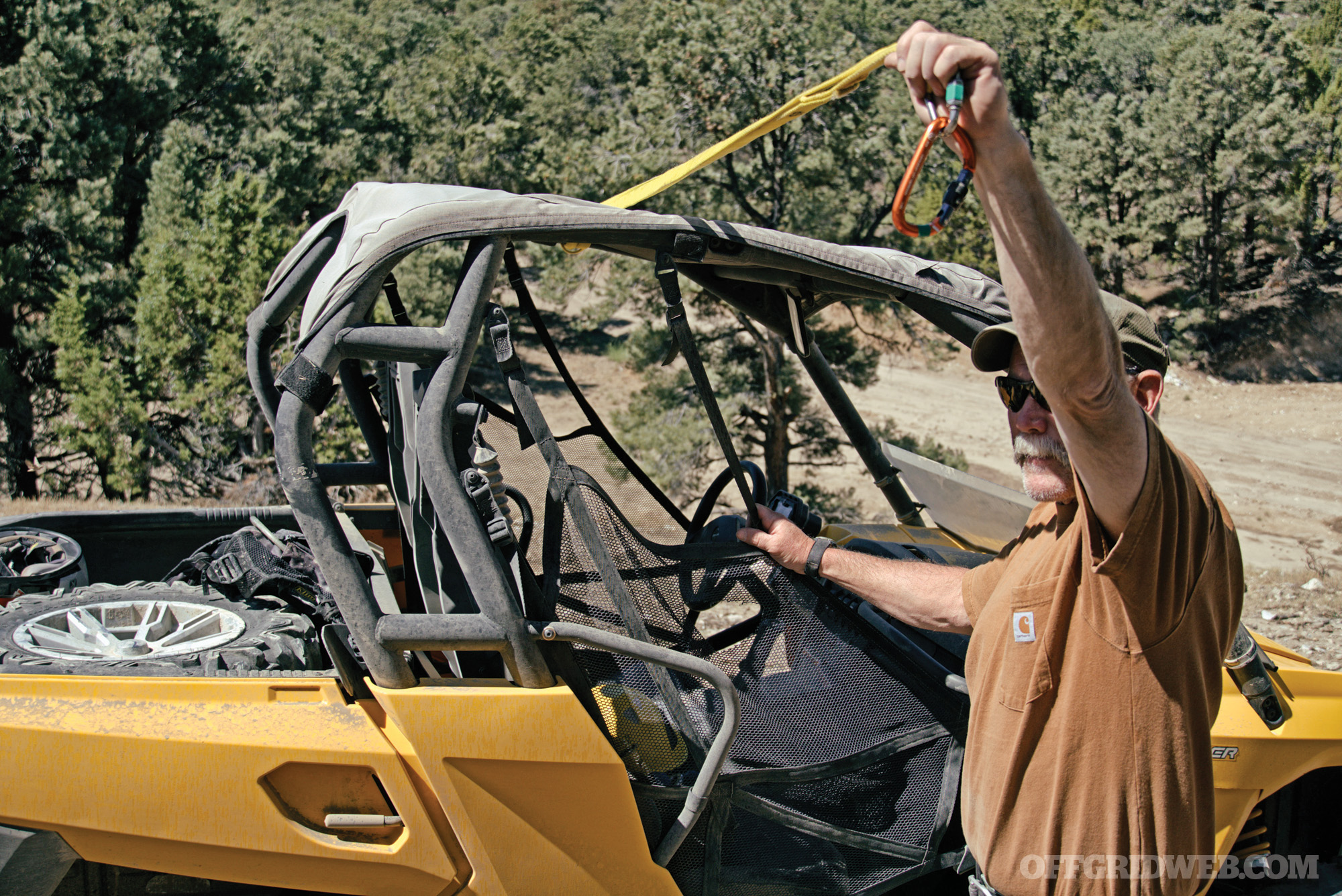
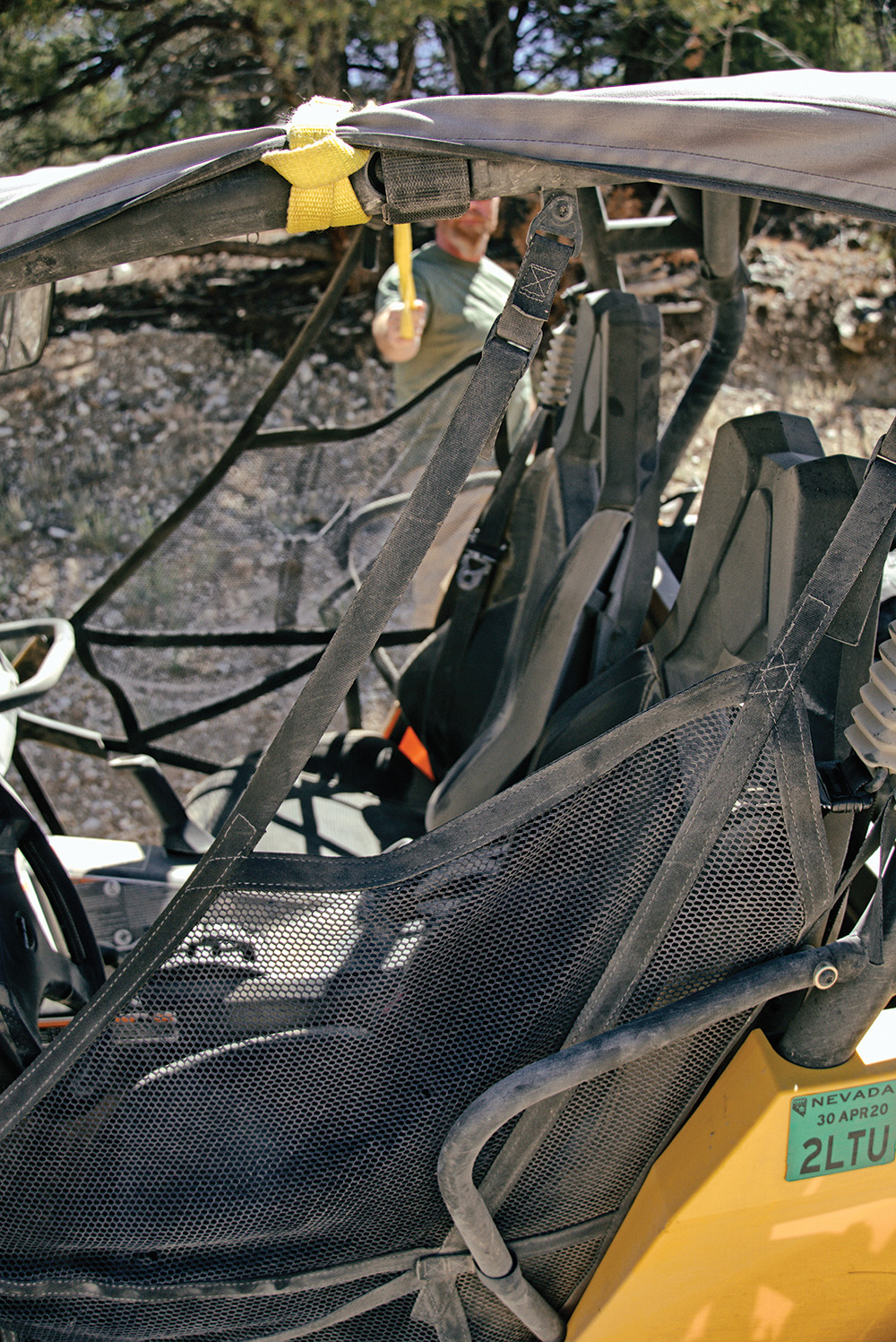
Step 1 (Find your UTV attachment point): Using a girth hitch, attach the nylon flat webbing to the roll over protection system, or ROPS, bar. **Based on leverage, there are bad, good and better attachment places. If possible, attach to opposite side of your anchor point as high as possible**
Step 2 (Create your anchor point): Attach tubular nylon to your anchor point using a water knot.
Step 3 (Connect rope to anchor point): Tie a double figure-eight knot in the static rope and connect to the anchor point with carabiner or tri-link.
Step 4 (Connect rope to attachment point): Using a carabiner, connect a single pulley to the attachment point and route the rope through. This provides an initial 2 to 1 mechanical advantage.
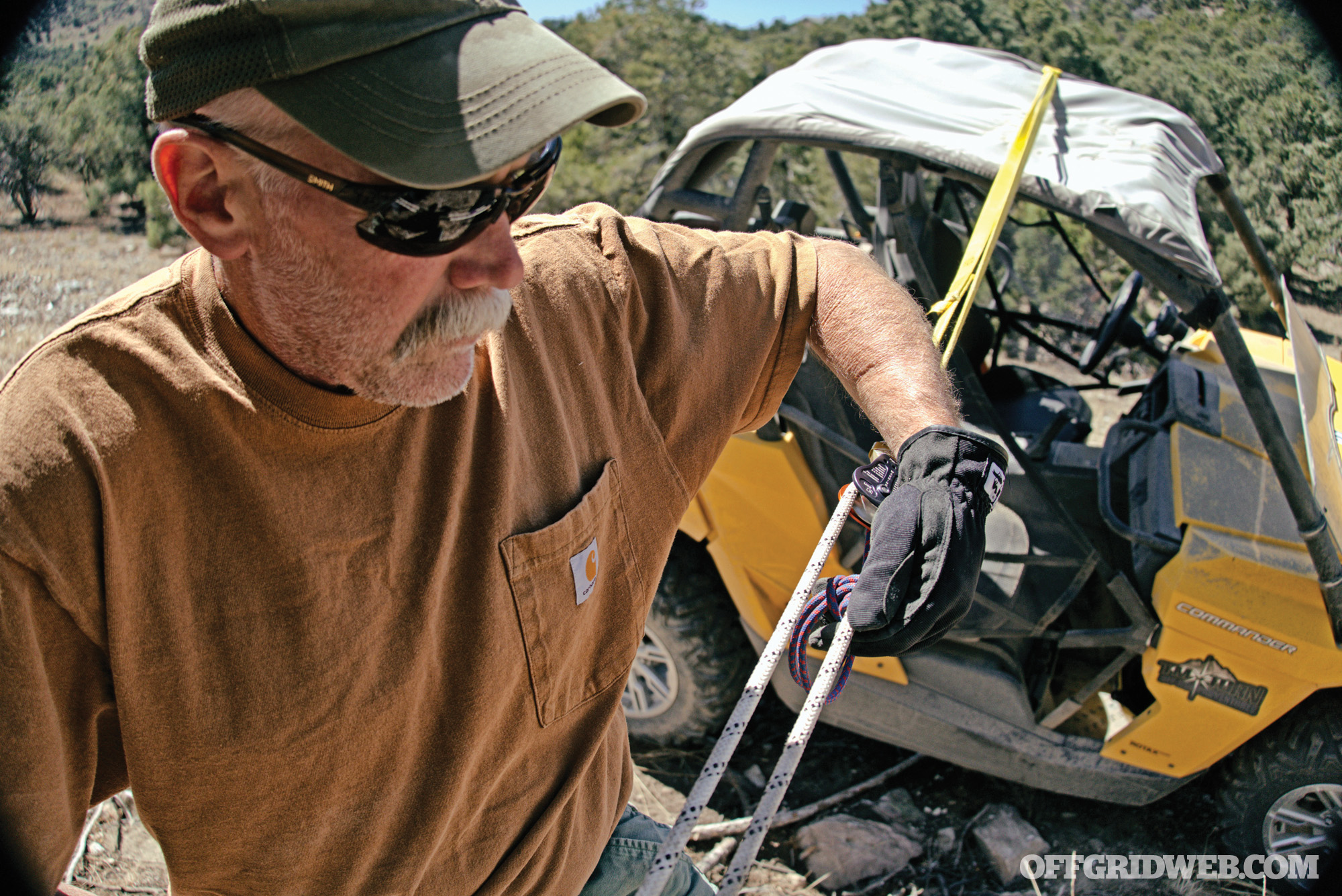
Step 5 (Attach prusik): Attach 6mm prusik to the static line load leg to keep the rope from running back through the pulley system. This captures the progress made when the system is tensioned and prevents the UTV from falling back onto the obstacle.
Step 6: Add additional mechanical advantage.
Step 6a: Attach a prusik to the anchor point. Attach a double pulley to the prusik with a carabiner. Thread the static line through the double pulley.
Step 6b: Add a 6mm prusik as a connection point to the first line coming out of the single pulley. Using a carabiner, connect another single pulley to this prusik and route the rope through to the double pulley at the anchor point.
Step 7: Pull UTV up.
Step 8: If high centered, create a rock bridge; if you have a flat tire, change the tire.
Step 9: Lower UTV: Pull tension enough to release the progress capture prusik by sliding toward the pulley near the connection point.
Vehicle Recovery Dilemma #3: High Centered/Impassable Obstacle
Finally, we learned what to do if we were high centered and had an impassable obstacle in our way. With nowhere to go forward, and no way to reverse, we had to lift the UTV up enough to get off centered. Then using the tension from the ropes to assist, reverse the tethered UTV on two tires. Again, using an anchor point opposite to the problem side allowed us to use leverage in lifting the vehicle. Proper safety equipment is instrumental in maintaining protection in this scenario.
Problem: High Centered with impassable obstacle in front
Solution: Rope-assisted reverse
Manpower: 1 person
Gear:
1-inch nylon flat webbing (8 feet)
1-inch tubular nylon
½, 12.5 mm static rope. Rated 40 kn (8960 lbs)
8mm Prusik (3)
Carabiner (4)
Single pulley (2)
Double pulley (1)
Knots:
Girth hitch
Water knot
Double figure eight
Prusik
Step 1 (Find your UTV attachment point): Using a girth hitch, attach the nylon flat webbing to the ROPS bar. **Based on leverage, there are bad, good and better attachment places. If possible, attach to opposite side of your anchor point as high as possible**
Step 2 (Create your anchor point): Attach tubular nylon to your anchor point using a water knot. Step 3 (Connect rope to anchor point): Tie a double figure-eight knot in the static rope and connect to the anchor point with carabiner.
Step 4 (Connect rope to attachment point): Connect a single pulley to the attachment point with a carabiner. Route the rope through the pulley. Step 5 (Set up your Prusik): Attach an 8mm prusik to the static line load leg and the attachment point via the carabiner. This will capture the progress made when pulling on the system.
Step 6 (Add more mechanical advantage): Attach a double pulley to your anchor point using a carabiner. Route the line back to the anchor point.
Step 7: Using an 8mm prusik, connect back to the first line out of the single pulley on the UTV side. Add another single pulley and route the line through the new pulley and back to the double pulley at the anchor.
Step 8: Lift UTV off high center.
Step 9: Utilizing the tension from the ropes, reverse and maneuver UTV away from obstacle.
Step 10 (Lower UTV): Pull tension enough to release the progress capture prusik by sliding toward connection point; lower the UTV.
Conclusion
Preparation is paramount when enjoying off-road adventures. Water, food, extra fuel, and basic recovery gear are essential to every trip. While the first three are straightforward, self-explanatory items, recovery gear is an often-debated topic. What is recommended and what is necessary? How does one balance essential gear and available space? While ropes and pulleys may not be for everyone, they’re a multi-use, space-, and weight-saving option for those concerned with the accumulation of off-road equipment. After all, most vehicle recovery gear was intended for trucks, Jeeps, or SUVs, not UTVs.
Presson recommends practicing the above vehicle recovery systems a few times before you take your vehicle on the trail. He notes most riders have never practiced recovering their vehicles, have never tested their gear, and have never learned their limitations as lone riders. For many, the attraction of off-road riding is the freedom from cell signal, demanding bosses, and daily life stressors. Yet, being stuck in the mountains without a working phone can lead to dangerous consequences. The simple act of practicing the above or any recovery operation can mean the difference between getting yourself out of a bad situation, and having friends and family call on organizations like North 40 Rescue to save you.
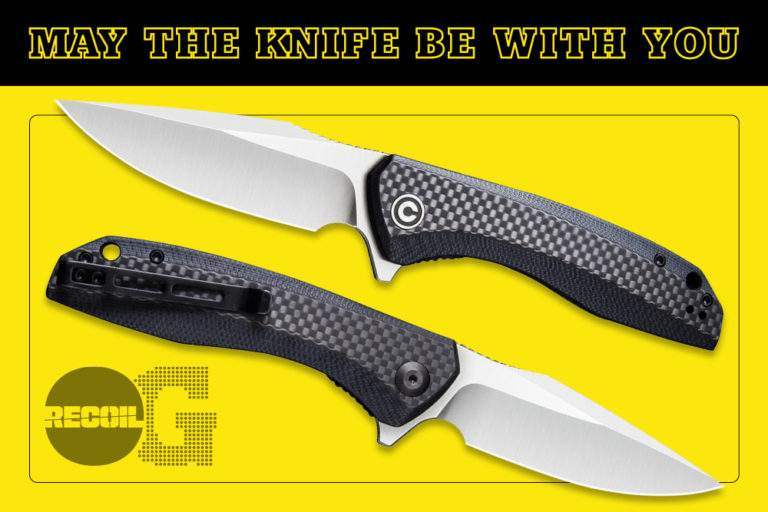
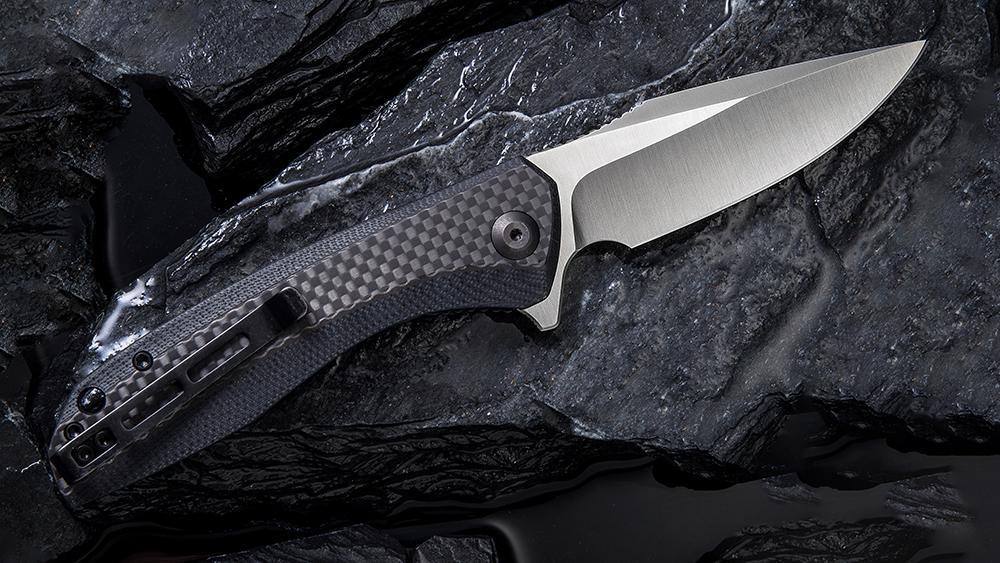
In order to help kick-start your next preparedness project or refresh an old EDC, we’re continuing May the Knife Be With You! – a full month of knife giveaways. We’ll feature a new brand with a new knife giveaway each week. This week’s giveaway is a sleek CIVIVI Baklash folding knife, which features a flipper and ball bearing pivot for smooth opening. Its G10 handle scales are finished with twill carbon fiber, and the hollow-ground blade features a prominent swedge for improved piercing. It also includes a deep-carry pocket clip that’s reversible for left- or right-handed carry, and a lanyard hole for adding a strand of 550 cord.
The CIVIVI Baklash has become an EDC staple to many for good reason. With a ball bearing flipper action to rival knives more than twice its price, sleek light weight style, G10 handles with skeletonized liners, and a reversible deep-carry clip the Baklash is a feature packed slice of confidence in your pocket. The corrosion resistant 9Cr18Mov hollow ground blade will provide years of reliable effortless cutting. To ensure consistent quality and flawless workmanship every knife from CIVIVI is hand-inspected by a skilled technician.
Threat detection is a lot like playing chess. You have to know what to look for before you can look for it. It’s a way of weaponizing your senses. When you apply those honed instincts to the dangers and deceptions that occur every day, it offers insight into the proverbial “tells” and how to make a move before your opponent knows you’re onto their strategy. There’s a feeling we all get when behaviors such as body language, nervousness, and verbal articulation make that little voice in your head whisper, “Something ain’t right.”
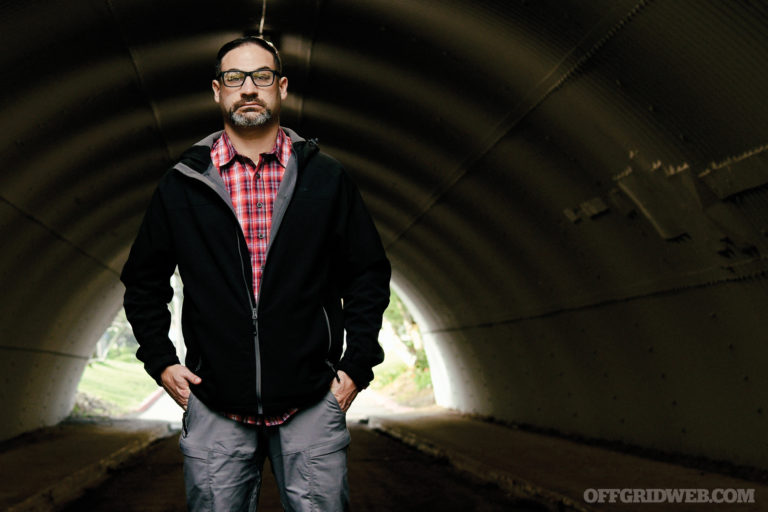
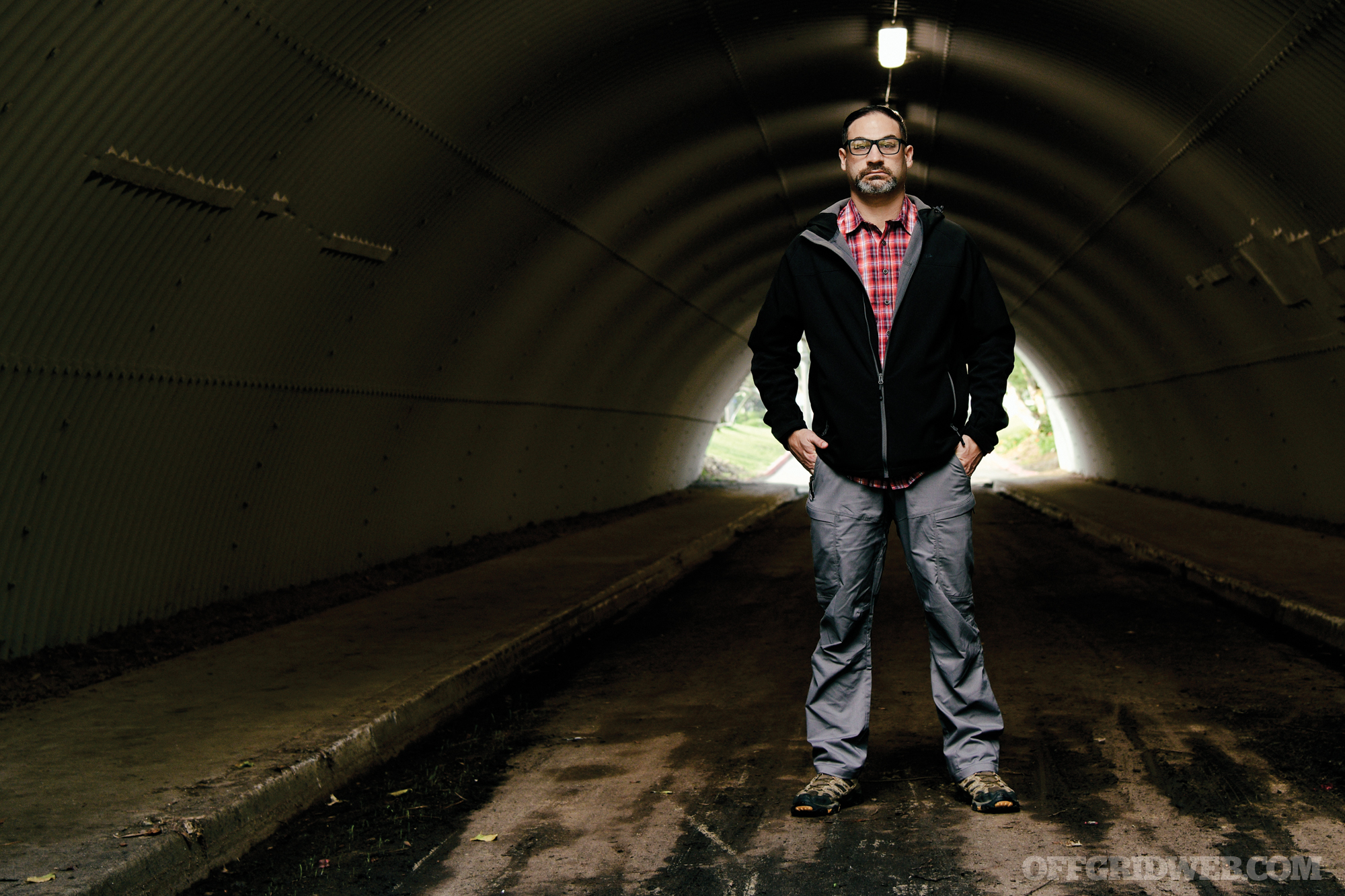
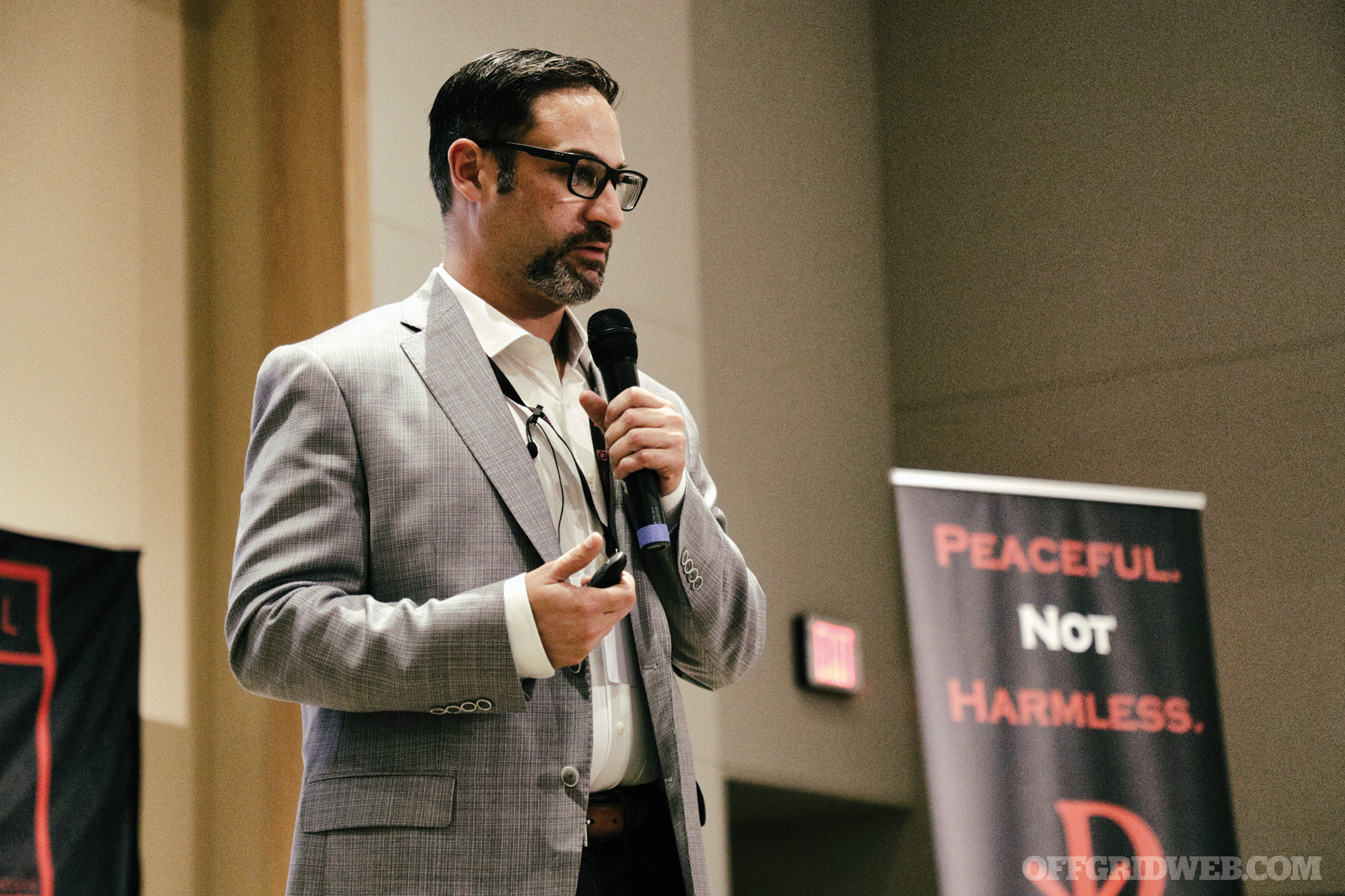
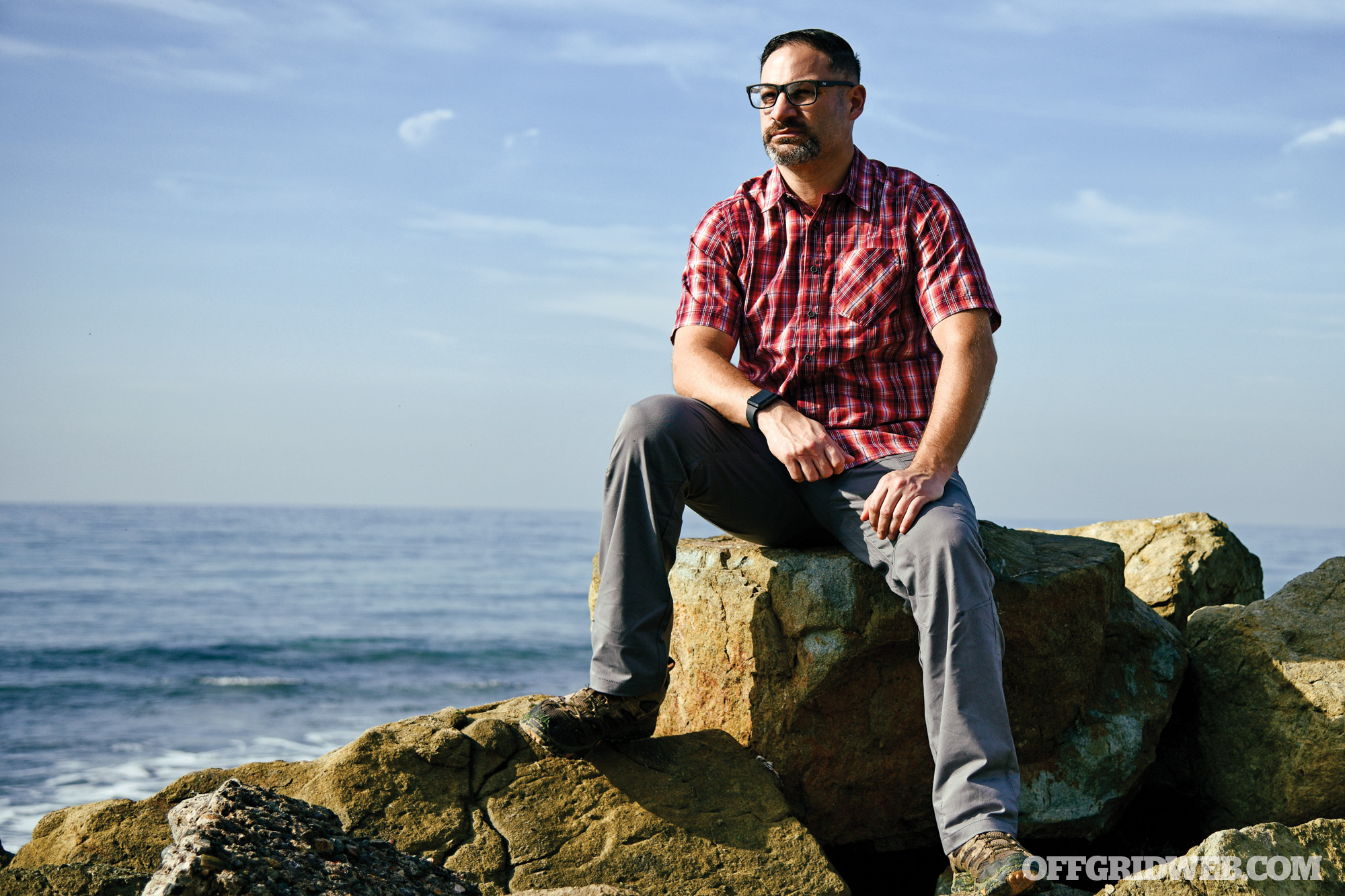
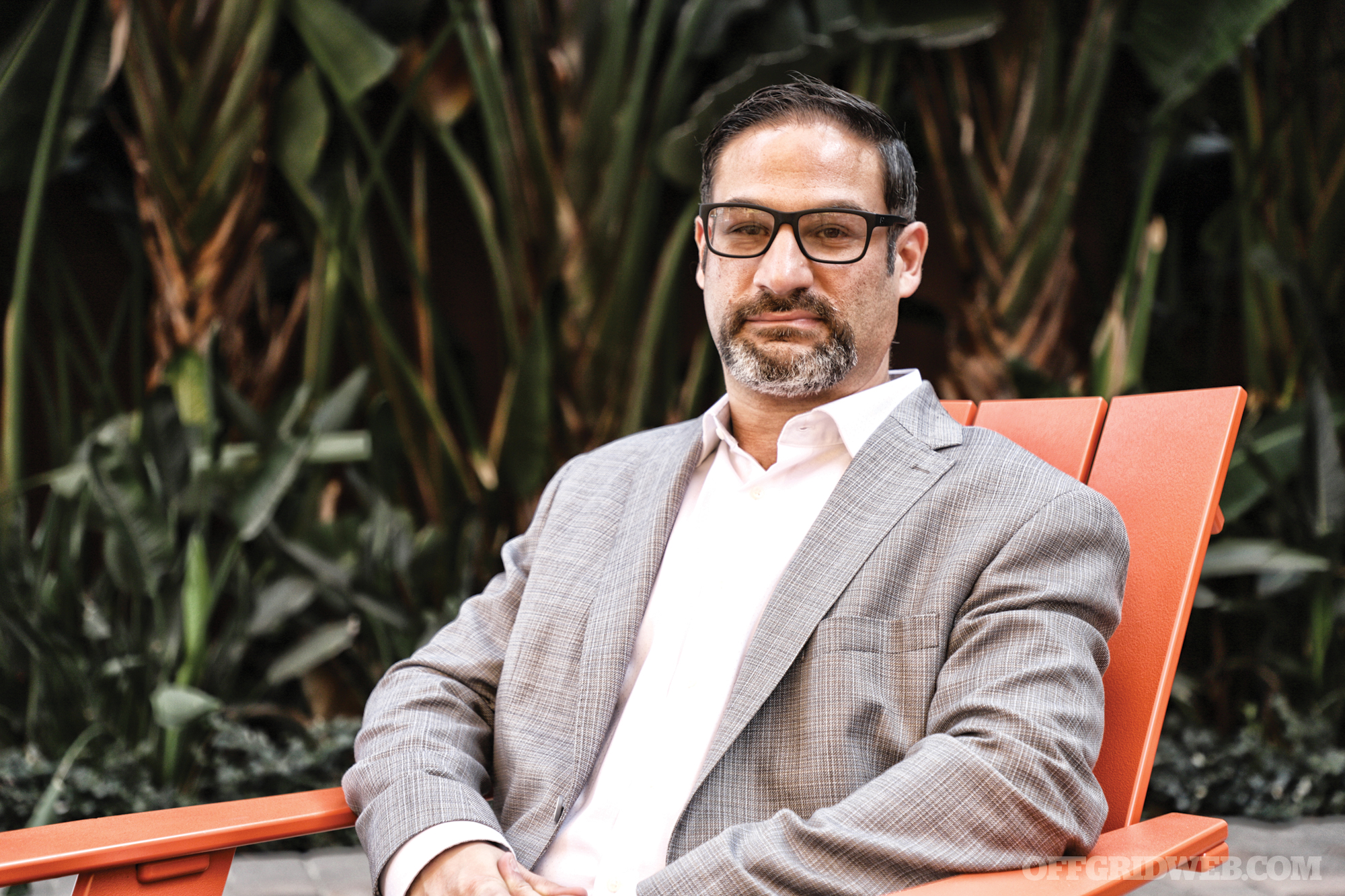
Up until recently, Yousef Badou was a subject-matter expert only known and accessible to a select few groups. His forte is unique. While most of the population is oblivious to the onset of danger, Yousef knows what to look for. His specialty is calculating risk factors, recognizing the indicators of nefarious action, and undermining the manifestation of those potential threats to stop them in their tracks. His background has given him the ability to anticipate danger with such a stellar track record that he’s called upon by major companies, agencies, and government officials to help craft their proactive playbook.
Photos by Joey Skibel
In our “First Line of Defense” article in Issue 37 you’ll get a better idea of how after being inculcated with his wisdom, you begin to see the world through different eyes. There are certain elements indicative of impending danger that just can’t be ignored. Yousef is an instructor’s instructor. He’s a trusted resource who gets called upon to lecture and consult on situations that would keep most people up at night. Remember that little voice we mentioned — Yousef teaches the master’s degree of understanding how to sharpen those reflexes and act on them.
Our Interview with Yousef Badou
RECOIL OFFGRID: Tell us a little about your childhood and where you grew up.
Yousef Badou: My dad is Kuwaiti and my mom’s American. I was born a U.S. citizen. I spent much of my youth living in Kuwait City. I went to elementary and middle school there till about summer of ’98 when me and my mom moved back to the States. We have family in Michigan, so I actually went to high school in Michigan for four years. Close to the end of my time in high school, I enlisted in a military academy for my senior year because military was always kind of a thing for me.
We were in Kuwait during Desert Storm. I was about 7 or 8 when that happened. We got evacuated and smuggled out by Canadians, which is a whole other story. So the military is something I was very used to. We came back after the invasion and I lived there for several more years and was in the Boy Scouts. Because of the Army rotations in Kuwait, my Boy Scout troop leaders were basically all soldiers. I was pretty intimate with the military. All the friends I went to school with were American and British kids whose families had been stationed there with the military or State Department. While I was in the military academy during my senior year, I enlisted in the Marine Corps. This was right before the invasion.
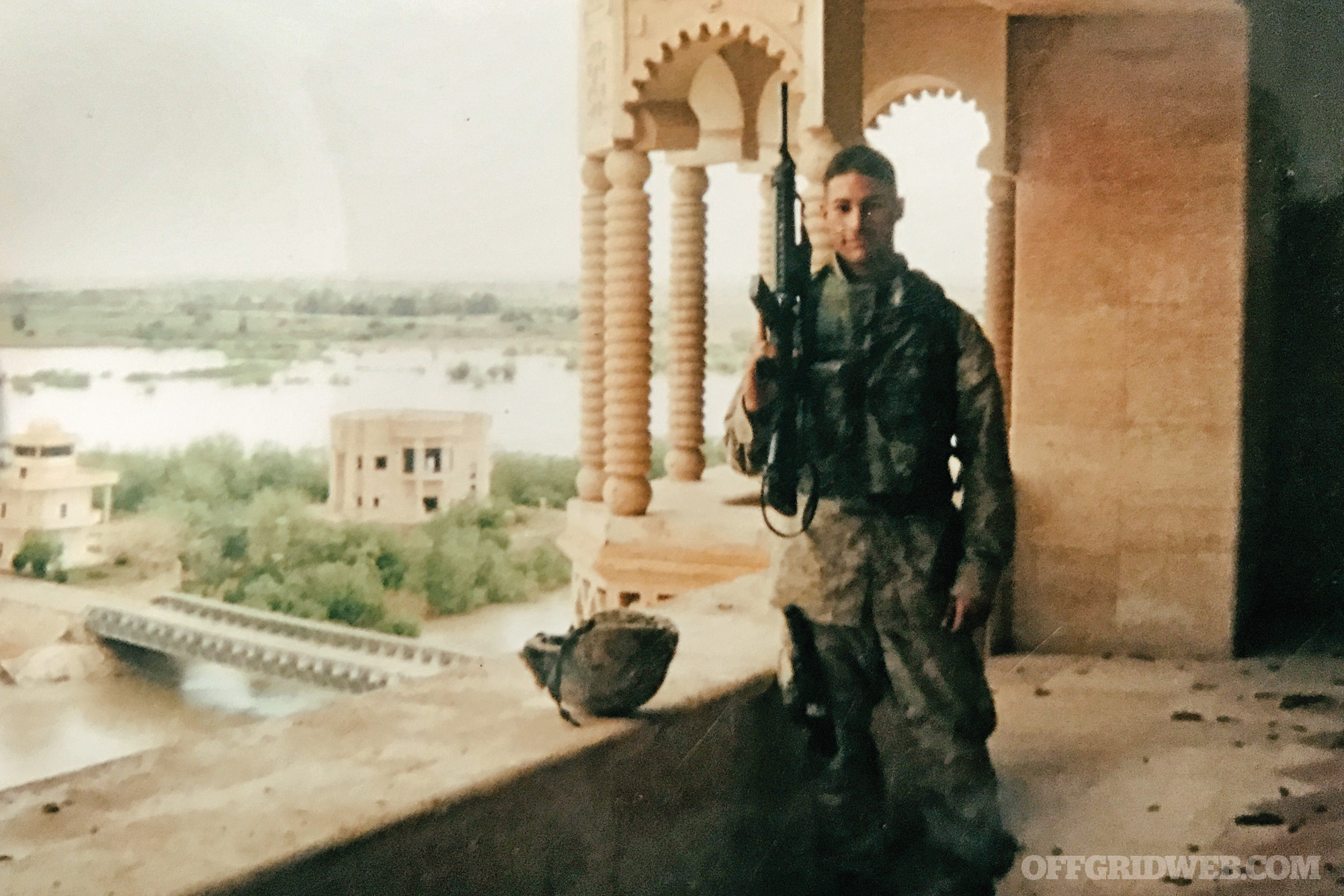
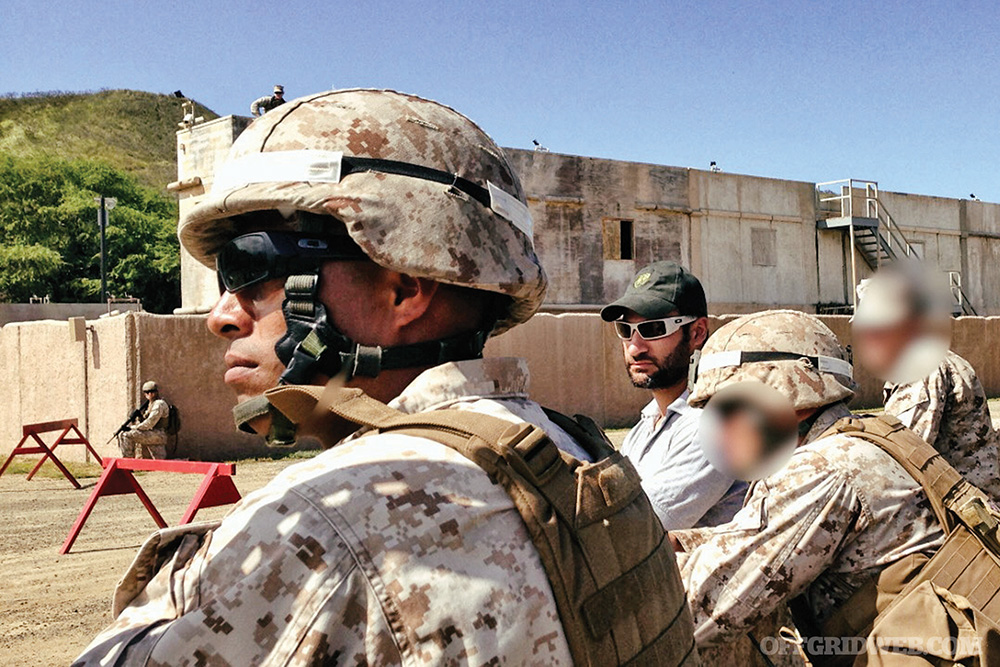
Yousef in one of Saddam’s palaces after the Invasion of Iraq in 2003.
How did your military experience lead to involvement with the Marine Combat Hunter Program?
Yousef Badou: I’m a native Arabic speaker because I grew up in Kuwait, but I joined the infantry. That’s all I wanted to do. Lo and behold when I was in boot camp to the school of infantry training, which is right after boot camp, the invasion kicked off. I got out of the School of Infantry and basically had to hitch a ride to catch up with my unit during the invasion. Me and some of those same guys got put on a plane and headed over to Kuwait. We had to hitch a ride up to the northern part of Iraq in the Tikrit area, Saddam’s hometown, until we caught up with our unit. That was my introduction to the Marines as a 19-year-old PFC. I spent the rest of the invasion there, came back, and subsequently did two more combat tours over there in the western region of Iraq.
I got out after four years and had been out for about a year and a half when I got a FedEx with original orders and a plane ticket from the Marine Corps. I was being involuntarily recalled and had to fly back — they wanted infantrymen who had a background in combat because a surge was happening. When I got there, I was going to go back for a fourth tour when a friend contacted me and told me that they were planning to set up this schoolhouse within the School of Infantry, needed instructors, and asked if I was interested. It was in California and I wouldn’t have to deploy, which my wife was understandably nervous about. I checked it out and long story short, I interviewed with them and the command staff and then joined the unit. I went to Combat Instructor school and shortly after that started teaching at the Marine Corps Combat Hunter Program.
What did your work with that unit entail?
Yousef Badou: Combat Hunter was specifically in the Marine Corps that started out as just infantry, but it also expanded to not just combat arms, but basically everyone in the Marines. The Combat Hunter Program was a three-tier program. The first tier is observation skills and building situational awareness because we were often operating in these ambiguous environments with little to no information. We were dealing with guerilla insurgency forces that didn’t wear a uniform, and we had to minimize civilian casualties as well as staying survivable ourselves. General Mattis is the one who kind of enacted Combat Hunter — that was his baby. He said go find me anybody who has anything to say about situational awareness. It turned into the three components of enhanced observation, behavior analysis, and tracking.
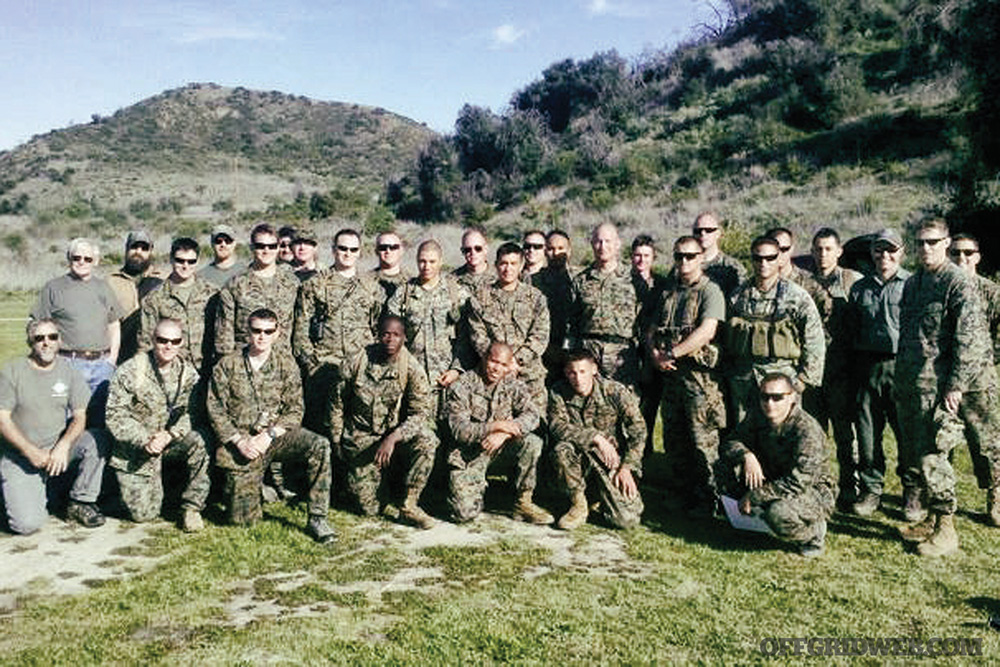
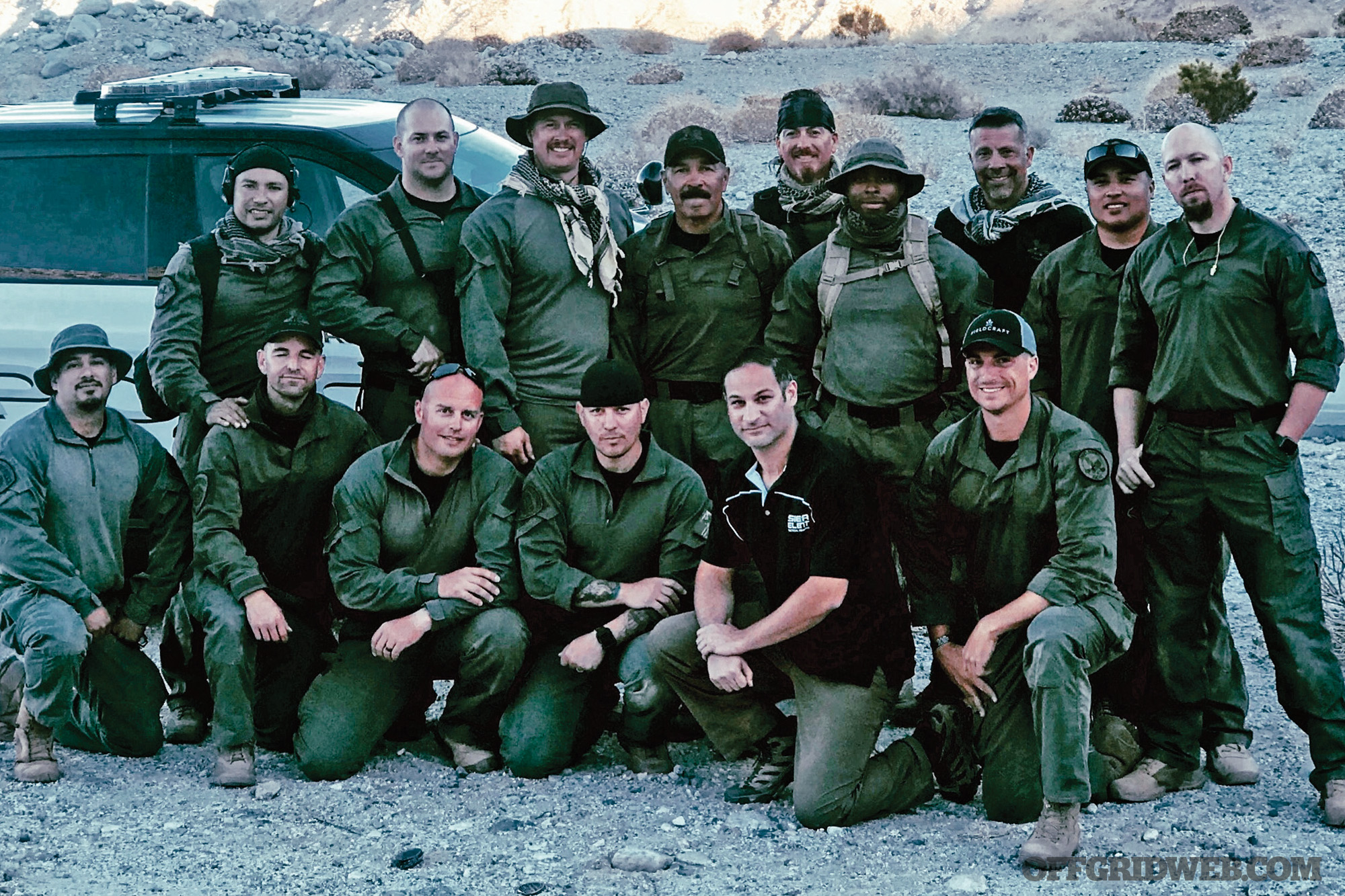
Above: A graduating class of Combat Hunter trainers with legendary tracker David Scott-Donelan as a guest instructor.
I started out teaching the enhanced observation portion because we had other subject-matter experts teaching profiling and tracking. There were six teams of Marines running around doing these courses with contractor support, but our unit didn’t really get much support in the beginning, so we had to pick up a lot of these subjects ourselves. They also sent us to tracking school in Fort Huachuca with David Scott-Donelan, who is kind of the grandfather of tactical tracking. So we all became certified tracking instructors, went back, and were not only teaching the tracking and enhanced portion, but then due to some turnover we basically ended up teaching everything including the behavioral analysis part. We still had contractor support when we could get it, but were in a situation where we ended up teaching everything.
How did those experiences influence the training you offer now?
Yousef Badou: Greatly, especially on the prevention mindset side. Obviously, Combat Hunter is a more aggressive military program where you’re dealing with kinetic, violent threats from insurgency groups, which is a different beast than something you’d give to the public, so I had to clean up some of the rough edges and make it apply to our community. It’s definitely heavily influenced in the sense of looking for pre-event indicators, so not only do I train community members, churches, or businesses to look for potential threats, but we’ve also expanded a bit to start talking about more internal issues.
Yes, we want to focus on violent threats and make sure everyone is aware of their surroundings and any impending danger, but then we go deeper into it. For example, we talk about things like suicidal ideation, or identifying some type of harassment or workplace violence incident. With all the statistics you read, there are always these pre-event indicators and, if you can just disrupt one of these things along the chain of events, you can minimize or stop some of these incidents.
How would you describe your curriculum?
Yousef Badou: Specifically for the S.A.F.E. Training system — that’s the instructor program I have — the first part is understanding the prevention mindset, understanding that there are pre-event indicators attached to these bad events that we deal with. We can definitely teach people who don’t have a military background in a relatively efficient manner to look out for these indicators. The 10,000-foot view is developing the mindset. Then, we talk about the indicators themselves and we get a bit more granular and talk about specific behaviors tied to fear, threat, or discomfort, and things of that nature. So they understand the mindset, the concept, what to look for with pre-event indicators, developing a planning phase for some type of bad event, and we give them some presentation techniques.
In the instructor course, I developed it to where I’m going to give you the skills to go out and teach your communities or your houses of worship and have the presentation techniques on how to get students to change their behavior. It’s one thing to teach a good class, but with this type of class you really need to change your students’ behavior. You need them to walk away and understand they need to do things differently from now on. How do you do that? Dynamic instruction and engaging them. The instructor program — it’s really unique and something no one’s doing right now — is about understanding that even though you have all this wisdom, how do you get out there and build a business around it and make money? That’s how you vitalize the information.
Above: Yousef overseeing training with the Marines in Bellows Air Force Station, Hawaii.
I’ve been teaching this for years by myself and realized I’m never going to get enough people to learn this stuff fast enough if it’s only me. That’s why I developed the instructor course in conjunction with the lessons I’ve learned over the years in business. That’s the vehicle to really get the message out there, get people involved in the program, but at the end of the day my mission is to get this information as far and wide to as many people as I can.
How did you recognize the need for this kind of training in the public sector?
Yousef Badou: Going back to Combat Hunter, when I was teaching it as a Marine, 2012 came up and I was going to get out again, but because there was such a tiny amount of people trained in this stuff, personnel retention was kind of tough, especially in the military because you rotate every few years. They brought me back as a civilian for another five years, and I ended up becoming a course chief as a contractor in the Marine program. Deployments were very high at the time. I was training military who were immediately deploying to a combat zone. Casualties were high, and we were really training the heck out of people. Then, it ramped up even further once we started getting into some other regions. Libya kicked off, then there were ISIS and Syria, so I spent a lot of years at the program just with deploying military.
As time progressed and things started to die down — we were traveling 60 to 70 percent of the year teaching people this stuff — I finally took a deep breath, looked around, and noticed the kinetic events that were going down. What was happening over here were things like active shooter situations and other criminal events that started to occur more at home. I started to realize it wasn’t just the military who needed these skills and that’s what really prompted me to teach the public. I still train military, police, and first responders, but if I had to choose between them and the community, I’d choose the community. Even though military and LEOs really need these skills, the community members are often starting from zero. At least with military and law enforcement you have some type of training, but with civilians who don’t have this background, if I can enhance that at all, that’s a good day in my book.
Above: Training SWAT with Victor Lopez of Sierra Element.
Do you think of your coursework as counterintelligence?
Yousef Badou: I think of it as counteroffensive. It can be used in some circles for intelligence purposes by reading things like body language, but I think of it as picking up more information. When I think of intelligence, I think of uncovering things that might not be super obvious — digging, investigating, looking — but my thing is I’m trying to increase everyone’s efficiency. There’s so much information flying around at any given moment, if I can increase the amount of good information you’re taking in, that’s a win to me. There are community members out walking around and taking in maybe 5 to 10 percent of information, but if they walked away from my training and are taking in 40 to 60 percent of better information, that’s what I’m after.
How would you differentiate between an offensive and defensive mindset?
Yousef Badou: You can go back to [Lt. Col. Jeff] Cooper’s Color Codes. When I think of offensive, I think of people who are empowered to do things. Security, law enforcement, military — a lot of times these people are armed and their job is to disrupt, minimize, or stop certain events from happening. You’d spot a pre-event indicator and be empowered to act on it. A defensive mindset would apply more to community members. A lot of times people ask me what they should do if they see these anomalies, and if they should confront the potential threat. I tell them to let security or law enforcement know so you can get yourself and your family the heck out of there. Don’t engage, because in most cases, you don’t have the power, preparation, or support to do that. It’s still the same info, you’re still taking in more information, better information with the pre-event indicators and behaviors, but [an offensive] person is more empowered to do that. With a defensive mindset, it’s more safety oriented and not being in that situation.
Above: More SWAT training in the desert.
What kind of organizations retain your services the most?
Yousef Badou: There’s definitely been a transition. In the beginning it was exclusively military, but when I started the business myself about three years ago, I was doing a lot of law enforcement. Now military is creeping back up. I’ll be doing stuff with the Navy and Air Force this coming year. The biggest transition has really been with the community members, and I’m really seeing more interest from houses of worship, because they’re on the edge of some of these incidents that’ve happened recently.
Businesses are requesting my training more frequently as well. The S.A.F.E. Training system stands for “situational awareness for employees.” If I go to a business with a couple thousand people in it, I have more bang for buck, as opposed to training a class with 18 people in it at a police department because it’s hard to pull cops off the line. Businesses have mandatory yearly training and I can reach more people.
What do you think are the most common threats people face in their daily lives that you provide training to protect against?
Yousef Badou: I want to train people to look for those violent threats like terrorism or active shooters, which are all very real threats, but oftentimes it’s just basic awareness of your everyday life. Here’s an example. One of my former students is a cop near San Francisco. He emailed me and told me that he and his wife were on vacation in nice part of Mexico at a café. I tell people to start establishing the baselines of an area and then start looking for those anomalies. They were watching the crowd and everyone was playing by the rules in that context and acting normal. Then two individuals showed up on a dirt bike, both of them get off, one keeps his helmet on while another walks over to a vendor. He was acting like he was looking at what was going on in front of him, but he was also peering behind him, making eye contact with this cop I’m talking about, and then goes back to where all his friends are. He stands there with his helmet on the whole time.
So he’s getting all the indicators that something’s up, grabs his wife, and says “We’re outta here.” The wife was like, “What’s going on?” and he was like, “Don’t worry about it,” and they leave. What’s the culmination of all that? Nothing, absolutely nothing. He had no idea if those guys are good or bad, but he felt he had enough indicators that he didn’t have the support, didn’t have the jurisdiction there, and knew he should get his wife and get the heck out of there. He knew not to even put himself in the situation long enough to figure out what was happening.
A friend of mine had a homeless person accost her. She already had her eyes on him, she already was watching his behavior, and she already had a verbal response ready to go to make sure that this person knew she wasn’t going to be an easy target. She was telling me that if she hadn’t paid attention and seen him start to approach, she wouldn’t have had time to come up with anything else, so she was already planning her escape and verbal response before he got closer to her. She fired it off, and he moved along. People worry about terrorism and active shooters, especially with incidents like [the December 2019 attack at the Naval Air Station in] Pensacola, but it’s often the everyday, innocuous-looking situations that you don’t even realize.
Above: Yousef teaching over 30 industry-recognized executive protection agents in California.
Do you think there are any fundamental differences between threat detection for men versus women?
Yousef Badou: Women are much better at it than men, I’ll tell you that much. [laughs] There’s actually some research-based evidence behind why women are better at threat detection than men when it comes to certain instances. Think about how women are treated as they’re growing up. Women know they might be walking around in a high-threat environment. They’re taught at a very young age not to talk to strangers and to be on the lookout for various things. Men really don’t get that as much from their parents when they’re growing up.
Women are always assessing behaviors, looking at things, and much more attuned to their environment than men are. Men tend to puff their chest out a bit, but when it comes to nonverbal threat detection and picking up on certain cues, women are much better at it. Anyone can be trained to look for these pre-event indicators. Women have the innate ability to do this stuff, but I can greatly enhance that for men or women who train with me, whether it’s innate or not.
What are the most common blind spots you see in people’s ability to recognize danger?
Yousef Badou: People who explain away other people’s behavior. This is a big one. I’ll teach people to analyze and establish baselines, to look for anomalies within their setting or their context, and make a decision. Once you have a baseline and an anomaly you have to make a decision. Where I see a big disconnect is with people who are untrained falling into a state of denial. They’ll absorb a behavior that doesn’t fit the setting or context, and they’ll fill in the blank by saying, “Oh, well, that person’s just doing A, B, C, or D.” That’s the biggest mistake you can make. Never explain away someone’s behavior or actions. If anything, you let them explain it. It’s not up to you to fill in the blank because we have a habit of deferring to the less-threatening option there.
You see this all the time when it comes to active shooter events when you talk to witnesses. They’ll say they thought it was a prank, or a movie, or whatever or it was, but in reality, can you look at the situation and explain why there were popping sounds at 9 o’clock in the morning at a middle school? Why would you defer to fireworks? People will make excuses that it couldn’t possibly be anyone in the building shooting. The brain will try and tell you what you want to hear sometimes, but you know in reality the situation doesn’t make any sense. Dismissing obvious warning signs as non-threats is a big problem.
What bad habits do people instinctively acquiesce to in a threatening situation?
Yousef Badou: Denial. It’s not people’s fault really. If you’ve never seen or observed a certain event or action, we classify that as a non-standard observation. If Bigfoot fell through the ceiling right now and started slapping you in the face, most people wouldn’t know what to do. They’ve never thought about it, never planned on it, and now it’s happening in front of them, so it’s not people’s fault they often go into denial. What I want people to do is observe the baseline, spot the anomaly, and then make a decision.
The biggest disconnect I saw training military is the decision portion. Cops are better at it because they operate in ambiguous environments and have to make decisions quickly by themselves, but in the military what I saw was spotting the baseline, spotting the anomaly, and then not doing something. Same thing with community members. Something’s ringing the bells, but what are you doing? The 70-percent solution right now is better than the 100-percent solution that’s too late. While you’re sitting there thinking of your action plan, that event is rolling right over you. I don’t even care if it makes sense — just get out there, do something, and provide some type of action.
Profiling tends to have negative connotations, especially in the U.S. How do you reconcile that in your instruction during a time of social justice when people are afraid of being accused of stereotyping others, or being the next Richard Jewell where they’re scapegoated for something incorrectly?
Yousef Badou: I can’t even call it “profiling” when it comes to law enforcement because there’s such a negative connotation attached to it. What does anyone automatically want to do when they hear the word “profiling?” It’s a buzzword right now that they attach the word “racial” to. That’s absolutely not what I’m doing in the program.
If you think about racial profiling on its face, it’s kind of a dumb tactic that doesn’t really work. Let’s put it in terms of who the enemies of America are right now. You think of ISIS, Al-Qaeda, Boko Haram, or whatever. I ask in my classes things like, “Who is fighting in ISIS right now? Is it just dark-haired, bearded Arab males?” It’ll get quiet for a second and someone will go, “No, there’s more than that.” OK, who? Are there Americans, Danish, Swedes, Australians? Yes. When people put the racial blinders on, they might be missing the real threat. You’re looking for someone who has the typical bad guy look of a trench coat with a detonator in hand, but that doesn’t exist. I don’t focus on race or what people look like. I care about behavior. Race is not an indicator of threat, behavior is. Stop looking for what movies are telling you to look for, because in reality that’s probably not going to be the person who’ll present the threat.
This information is provided in a new fashion, but none of the core information is really new. It’s caveman information that many of us have just forgotten. Coming from the military, and seeing where society’s going, technology is a good thing that can help us if utilized correctly. However, we’ve swung so far to the other end of the spectrum that we’ve forgotten some of these basic skills that kept us alive for a long time. These are hardwired survival mechanisms — all I do us brush off some of the rust and remind everyone we didn’t always used to be on top of the food chain, so we developed these mechanisms. Technology can enhance this, but I focus on the soft skills.
Does your coursework have to be modified to address cultural differences or is threat detection pretty consistent?
Yousef Badou: This works anywhere in the world. There are ways we’re different, but there’s tons of ways we’re similar, such as our body’s physiological response to fear or threat. I’d ask people in the military where they were deploying to and they’d tell me. I’d laugh and say “You have no idea where you’re going. You think you know where you’re going, but in reality you have no idea. All your boat has to do is hook a right and you’re in Africa instead of Spain or wherever.” Cultural stuff is for people to pick up on the ground when they’re in that specific environment. I zoom out and teach patterns of behavior that are shared by humans all over the world.
What are some of the myths you see perpetuated about situational awareness and threat recognition?
Yousef Badou: It’s not necessarily a myth, but I like to talk about the common buzzwords or terms we hear like, “Keep your head on a swivel,” “Complacency kills,” “Get your head out of your phone,” and so on. Those are all good pieces of advice, but what do they mean? What does it mean from you to me to another person who doesn’t have that background? Everyone has a different definition. I want to go deeper into what situational awareness actually means. What is a pre-event indicator and what does it look like? It’s not rocket science, but it’s not common sense. All it takes is for someone to show you this one time and then you can’t unsee it. Then you’re always analyzing and looking for stuff, so let’s get away from the catchphrases and develop a common verbiage that everyone can use to define situational awareness and what it means to them.
Do you have courses designed for children or families?
Yousef Badou: The instructor course is developed to be a business in a box. It’s for the instructors to pick a target market and teach them. Right now I have teachers, coaches, and church congregations modifying it to fit their group and teaching middle and high schoolers. That’s what I’m seeing a lot of. With young kids, they probably can’t grasp some of the concepts, but getting into middle and high school I can have people in my instructor group actively teaching them.
What do you think the most common threat indicators are?
YB: I don’t just teach you situational awareness, I want you to look for it in other people. If someone is indicating situational awareness, they’re not necessarily an imminent threat. There are two types of people in this world — good and bad. Ninety-nine percent of the population is walking around completely unaware with their heads in their phones. If I see someone exhibiting situational awareness, now I know I’ve got a player on the field. That person has my full attention. I don’t know if they’re good or bad yet, all I know is they’re situationally aware. What does that look like? Someone walking into a building and looking up. Are they looking at cameras? Are they looking at exits? Someone who’s checking their 6 o’clock a lot and continuously aware of their background. Someone who walks into a restaurant, bypasses a bunch of empty tables, and sits at a table by himself with his back against the wall. These are all indicators of situational awareness. I don’t know if you’re good or bad, but I’m gonna pull on that thread, as I like to call it.
Another one is pacifying behavior. If you’re scanning a crowd and trying to figure out what the baseline is — who’s playing by the rules and who isn’t — if you see someone exhibiting pacifying behavior, that’s someone you need to pay attention to. Pacifying behavior could be a lot of things — rubbing the back of the neck, rubbing hands vigorously on the pantlegs, pinching the bridge of their nose, rubbing their temples, any kind of repetitive self-touching, ticky kinds of motions. Those are all pacifying behaviors. Again, I don’t know if they’re good or bad, if they’re going to pull out a gun, if they’re sick, but I can tell you if someone’s exhibiting pacifying behavior that in their brain at that moment there’s some type of fear or threat there. I don’t know what that fear or threat is, but if I had to look at a whole crowd of people in a mall or something and I only have one individual exhibiting pacifying behaviors, I’m going to focus my attention on that person, dig a little deeper, and see if they’re carrying anything.
What do you think parents should be aware of the most in teaching their kids about threat indicators and situational awareness?
Yousef Badou: Trusting your gut, but also acting on that gut feeling. Doing something about it and not just realizing you have a bad feeling. Bad feelings are our limbic system’s response to fear or threat. It’s your body looking at a situation and recognizing that the last time you saw A plus B plus C, bad things happened. People get that gut feeling, but actually acting on it and leaving the area is something they need to learn.
I have a guy I trained with these skills and he in turn trained his daughter on it when she was just beginning college. He called me and told me about how his daughter was at the Las Vegas massacre with a group of friends on the periphery of the crowd. The first string of shots rang out, and she had a bad gut feeling. She grabbed her boyfriend’s hand, and acted on that feeling just like her dad taught her. She said, “I don’t know what’s going on, but we’re getting out of here.” This is before anyone realized something bad was happening. There was some confusion, people were partying, the music was still playing, and her boyfriend and other friends tried to dismiss it as fireworks. She stood strong, knew something was going wrong, grabbed her boyfriend’s hand, basically pulled him out, and they got to the edge of the barrier area to leave the crowd. That’s when the second volley of rounds went off, and that’s when people started running around screaming and realized that people are dying. She and her boyfriend were already at the fence and away from the crowded area. Trust your gut, but also act on it.
About Yousef Badou
Hometown: Kuwait City
Age: 36
Family: Wife and a dog
Recommended reading list:
The Gift of Fear by Gavin de Becker
Blink by Malcolm Gladwell
Brain Rules by John Medina
Spark by John Ratey
Sources of Power: How People Make Decisions by Gary Klein
Favorite quote: “It is not the critic who counts; not the man who points out how the strong man stumbles, or where the doer of deeds could have done them better. The credit belongs to the man who is actually in the arena, whose face is marred by dust and sweat and blood.” — Teddy Roosevelt
We’ve all done it. We see the news about the latest rape, robbery, or mass shooting and say to ourselves, “Yeah, I could have stopped it.” It’s easy to fantasize about saving the day, about being the hero. But could you do it in real life? What does it actually take to put your life on the line to defend an innocent life or a whole group of them? Byron Rodgers knows what it takes — and he wants others to, as well. A combat vet and now a bodyguard to wealthy folks and individuals who need protection, Rodgers recently founded and hosted the inaugural Protector Symposium, a conference for security experts, law enforcement, and civilians interested in learning how to better protect themselves and those around them.
Above: The Protector Symposium also drew additional industry notables such as Christian West with AS Solution (above right) and Elijah Shaw, “bodyguard to the stars” (below left).
“I’m very aware of the reality that the civilian on the scene of an attack is the first line of defense,” Rodgers said of recent stabbings, mass shootings, and terrorist attacks around the world. “I wanted to do something to contribute to that civilian demographic, to educate them about violence and make them more accountable, and to help keep these injuries and death counts low.”
Rodgers had contemplated how he could teach the largest number of people in a wide range of skillsets. He toyed with the idea of hosting a seminar at the range, but logistics and safety would limit that to a few dozen students at a time. So he shifted to a Protector Symposium format, where we could reach a much larger volume of people the quickest.
“I looked at what really takes place when danger happens,” said Rodgers, who was twice deployed to Iraq as a U.S. Marine infantryman, and now runs Bravo Research Group, a small boutique security company. “And I thought, Who are three speakers I can expose people to who will literally make them effective protectors — just from a presentation?”
The Protector Symposium
His answer was a two-day Protector Symposium featuring three world-renowned subject-matter experts (SMEs): former U.S. Marine and situational awareness expert Yousef Badou, former Mexican counter-narcotic officer and anti-abduction instructor Ed Calderon, and former U.S. Army Delta operator Mike Pannone. Though the speakers had varying skillsets and came from vastly different backgrounds, a pattern emerged from their presentations, with the trio independently touching upon three things all protectors should work on.
Yousef Badou (above), former U.S. Marine and situational awareness expert, and Mike Pannone (below), former U.S. Army Delta operator, were among the speakers at the Protector Symposium.
Predator Mindset
Despite having such disparate experiences, the three lecturers named (in different ways) one thing as the most important trait any bodyguard, soldier, peace officer, or prepared individual should have: a predator’s mindset.
For many years, Badou was a trainer in the U.S. Marine Corps’ (now defunct) Combat Hunter program, which helped warfighters develop a more tactically cunning mindset by integrating tracking, profiling, and observation skills. He now applies that type of enhanced situational awareness as the founder and owner of Emergence Disrupt, a company that provides security training to large organizations like schools, corporations, and music festivals.
Badou emphasized thinking like a predator and proactively looking for potential prey in your surroundings because “thinking like a bad guy makes you a better good guy.”
Likewise, Calderon spoke about studying real-life criminality so you can spot evildoers and escape from them. Calderon witnessed the devastation wrought by the rapes, murders, and kidnappings committed by the drug cartels, first as a kid growing up along the northern border of Mexico and later as a counter-narcotics police officer.
He advocated having what he called an “adversarial mindset” — constantly thinking about how criminals are thinking about things.
“You wanna know who the nightmare-scenario guy is?” said Calderon, a RECOIL OFFGRID contributor who travels North America conducting escapology seminars and providing security consulting. “Someone who’s failed a bunch of times but who’s learned from each of those failures and is still at it. That’s a nightmare guy I wouldn’t want to face and who I want to be. That’s what I aim for and what I prepare for.”
Above: Former Mexican counter-narcotic officer and anti-abduction instructor Ed Calderon.
Not surprisingly for a former special operator, Pannone has adopted the grayman mindset. He tries to blend in wherever he goes but is prepared to respond aggressively if forced to defend himself or others.
Pannone also emphasized that, if you carry a concealed gun, it should inform everything you do. He said that at the start of your day you should do a few dry-fires before loading and holstering your gun, reminding yourself that you have a tool capable of extinguishing life.
“The covert mindset is a lifestyle thing,” said Pannone, who also helped stand up the Federal Air Marshal Service’s training program. “If this is the way I dress, I need to make sure my accessories match so that I don’t look odd. I want to dress and conduct myself in a manner that doesn’t look like I’m armed.”
Having that mindset can work in reverse, as well: If you know how to blend in, you’ll also know how to spot people who stand out.
“We all profile in one way or another; that’s how we survive,” Pannone said. “We’ve made ‘profiling’ a pejorative word because some people have misused it. If someone walks in and they’re dressed completely wrong for that situation, their demeanor is wrong, now you have to look at them and ask, ‘Why does this person look aloof? Why are they wearing clothing that’s inappropriate?’”
Above: Badou demonstrating nonverbal cues.
Tactics in Context
The second most common topic amongst the SMEs was sound tactics, “soft skills” used in the right context at the right time.
Calderon underscored the importance of social engineering as a tactic to safeguard yourself, your loved ones, or your client in sketchy situations. For example, he once turned a hotel parking lot attendant in Mexico into a lookout by giving him a flashlight — a gift that only cost the former cop a few bucks but won him a grateful ally, who would later report any suspicious activity during Calderon’s hotel stay.
“All of that can be utilized to develop assets out of people you might not want to invite to your house for a barbecue,” he said, “but you could share a cigarette with in some corner and develop a relationship where there’s a mutual benefit.”
While Calderon focused on tactics to use while traveling or being held captive in unfamiliar territory, Pannone’s tactical advice centered on domestic life. For example, when it comes to defending your property, he says the best way to protect your family isn’t too different from military tactics, conceptually speaking: have a strategy (emergency plan), gather your entire element (your family) in a defensible position (a predetermined room), and request reinforcements (call 911).
Above: Pannone addressing the crowd.
“When safeguarding your home, have a spot that everyone knows to go to,” said Pannone, who now runs a tactical training company called CTT Solutions. “Consolidate and fight from there. If everyone’s together, you can figure it out.” As a situational awareness expert, Badou’s tactics leaned toward prevention.
While there’s not enough space in this article to explain them all, Badou’s tactics of recognizing and stopping potential dangers can be summarized by the following formula: baseline + anomaly = decision. That means you should figure out what the norm is in a given environment (establish the baseline), actively search for things out of place (spot the anomaly), then immediately take an appropriate action (evade, engage, de-escalate, fight, etc.).
“This is not going to be a 100-percent solution,” Badou said. “It’s not a silver bullet. But you’ll be right more often than you’ll be wrong if you use these research-based skills.”
Regular Training
The third, but definitely not the least important, commonality amongst the trio of lecturers was training. Whatever their specialty, the SMEs talked about the importance of consistent practice. Pannone follows a firearms training regimen with specific objectives for each session: precision shooting, speed shooting on steel, and speed shooting on paper.
Above: Formal training courses are highly recommended, which you should supplement with your own training regimen. Practicing with friends can be both productive and fun.
He said precision shooting exercises work on all the fundamentals of marksmanship: “If you can’t shoot slow and straight, you sure as hell can’t shoot fast and straight.” Speed shooting on steel gives him immediate feedback and forces him to make up missed shots, while speed shooting on paper allows him to feel what it’s like to work at the fringe of his physical capabilities. Regardless of what type of training it is, Pannone logs every round — hit or miss — of every drill to keep track of his progress.
“You just don’t squirt bullets and think you’re getting somewhere,” he said.
When it comes to training situational awareness, Badou encouraged people to take a formal course like his SAFE (Situational Awareness For Employees) Program since civilians can’t attend the Combat Hunter program. He certainly wished he had before heading to Iraq as a U.S. Marine infantryman.
“I did three really sh**ty tours over there, and some of my friends didn’t come home,” Badou said, “Then I got home and that’s when I got the Combat Hunter training. Everyone around me in class was like, ‘Man, this is awesome training.’ I’m in the back, shaking my head, thinking, where the hell was this three deployments ago?”
But if you can’t take a formal course, you can still improve your observational skills in your everyday life. For example, one mental training exercise you can do, Badou suggested, was to step outside of your home and figure out the best way to burglarize it.
Above: Badou observing an area from a good vantage point where he also naturally fits in.
“Criminals, terrorists — they don’t have some criminal/terrorist Wikipedia where they can Google, ‘How do I do a car-bombing?’ They have to plan it out in their heads and figure it out just like we do. That’s another side of your brain you can train, and if you do, you’ll start seeing some of these pre-threat indicators or criminal behaviors when you’re out on the town.”
A lot of Calderon’s training comes from investigating how low-tech drug cartels operate, resulting not in the typical “sheepdog”-style training but rather “crafty trash panda” practice. He focuses on the basics, including range time with wheelguns (often .22-caliber), forging edged weapons out of everyday objects, and driving in old Ford pickups instead of the latest Jeeps with 35-inch tires.
“I talk about being able to source things that makes sense in austere environments and to train yourself with the bare minimum,” Calderon said. “And then when you get to pick your tools, that’s when you thrive.”
Above: If a member of your family is a bit reluctant to take training, there are often options where they may feel more comfortable, such as this class Pannone taught specifically for women.
Protector Symposium Conclusion
As the founder of the Protector Symposium as well as the host of the Executive Protection Lifestyle podcast, Rodgers recommended that perishable skills like shooting should be practiced at least once a week by professionals who go into harm’s way and at least once a month by civilians.
In addition to that, regardless if you’re a protector by trade or by nature, your training should include attending at least two medical classes a year, reading books and research on real-life violence monthly, and staying physically fit weekly (whether by going to the gym or studying martial arts), Rodgers said.
“The solution to the active human threat problem is a more highly educated, capable, and prepared population,” Rodgers said “and, in some cases, a more dangerous population toward bad guys.”
Patrick Vuong is the cofounder of Tiga Tactics (a combatives training and consulting company) and the former head editor of RECOIL OFFGRID magazine. As a self-defense teacher since 1999, he uses his diverse knowledge of fighting methods to close the wide gap between two traditionally separate warriors: martial artists and firearms enthusiasts. He’s an instructor in several systems, including a form of kung-fu called Lai Chung Chuan Fa and the Filipino bladed art of Pekiti-Tirsia Kali. For more information, go to tigatactics.com.