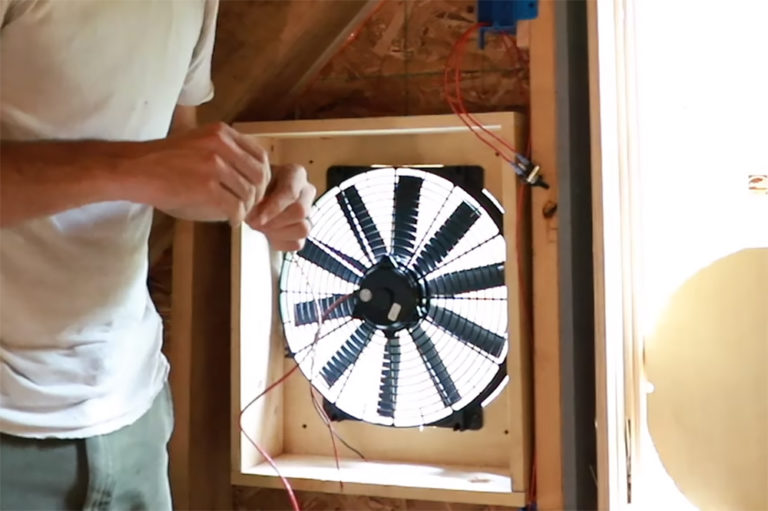
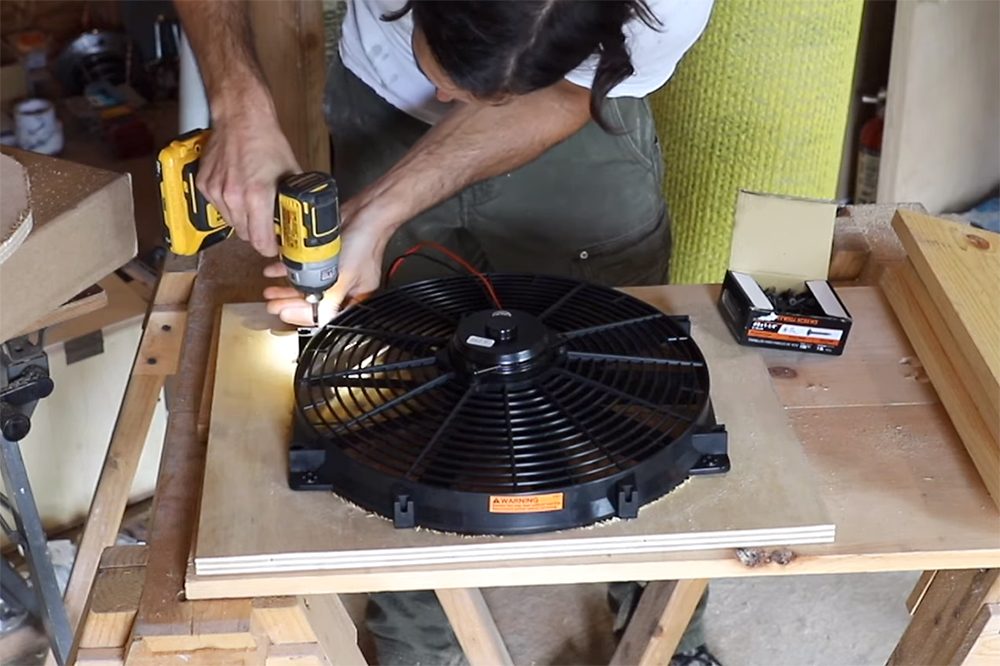
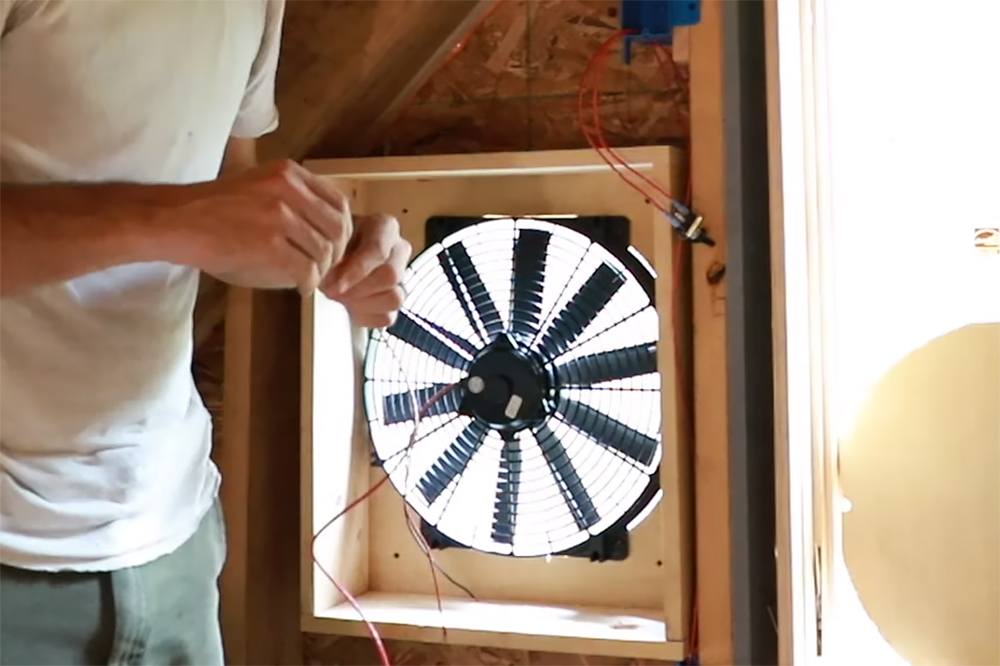
Staying cool during the summer months is a major priority. In some places the heat may be misery-inducing, while in others it can be downright dangerous. At my own home near Phoenix, Arizona, the thermometer read a high of 115°F this week. This got me thinking about my family’s dependence on air conditioning, and by extension the functionality of the power grid. The YouTube channel 50 Acres & a Cabin recently posted a video that’s relevant to this topic — it shows one way to build a DIY whole-house fan as an “off-grid alternative to air conditioning.”
The concept of a whole-house fan is not a new one. Hot air rises, and the enclosed space of a building serves as a trap for that hot air to build up. By placing a high-flow fan near the top of the house, the hot air can be sucked out and replaced by cooler air drawn in through ground-floor windows. In the video below, 50 Acres & a Cabin encloses, mounts, and wires a powerful fan into the loft of his off-grid home.
However, this cabin runs on a 24-volt DC electrical system. It has some advantages, but also makes plug-and-play fan options more limited than they would be on a standard 12-volt system. So, the builder got creative and selected a 24-volt truck radiator fan — it’s designed to pull large amounts of air through a radiator to prevent a vehicle from overheating, so it provides more than enough flow for this application. The downside is that it’s extremely loud. The builder commented that he plans to wire in a controller to allow the fan to run at lower speeds, and this sounds like a good idea to us.
While I won’t be taking a sawzall to my attic and slapping on a radiator fan, this video got me thinking about installing a whole-house fan as a backup (or supplement to) my home’s existing A/C system, ideally in conjunction with solar panels and a battery bank.
In the years following World War II, a number of unique rifles were developed for survival use by downed pilots and aircrews for the U.S. military. Not intended as fighting weapons, they were more or less designed to help a downed pilot or crew forage for small game. One of my favorites has always been the M6 Aircrew Survival Rifle.
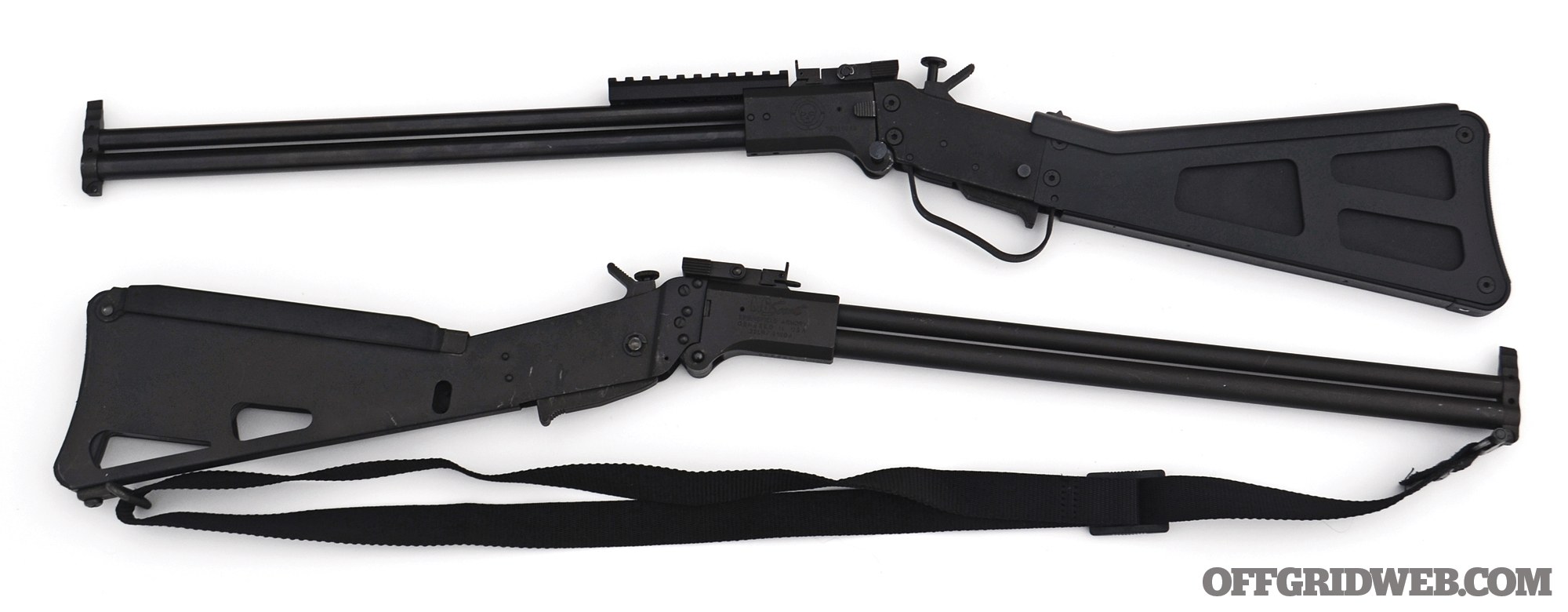
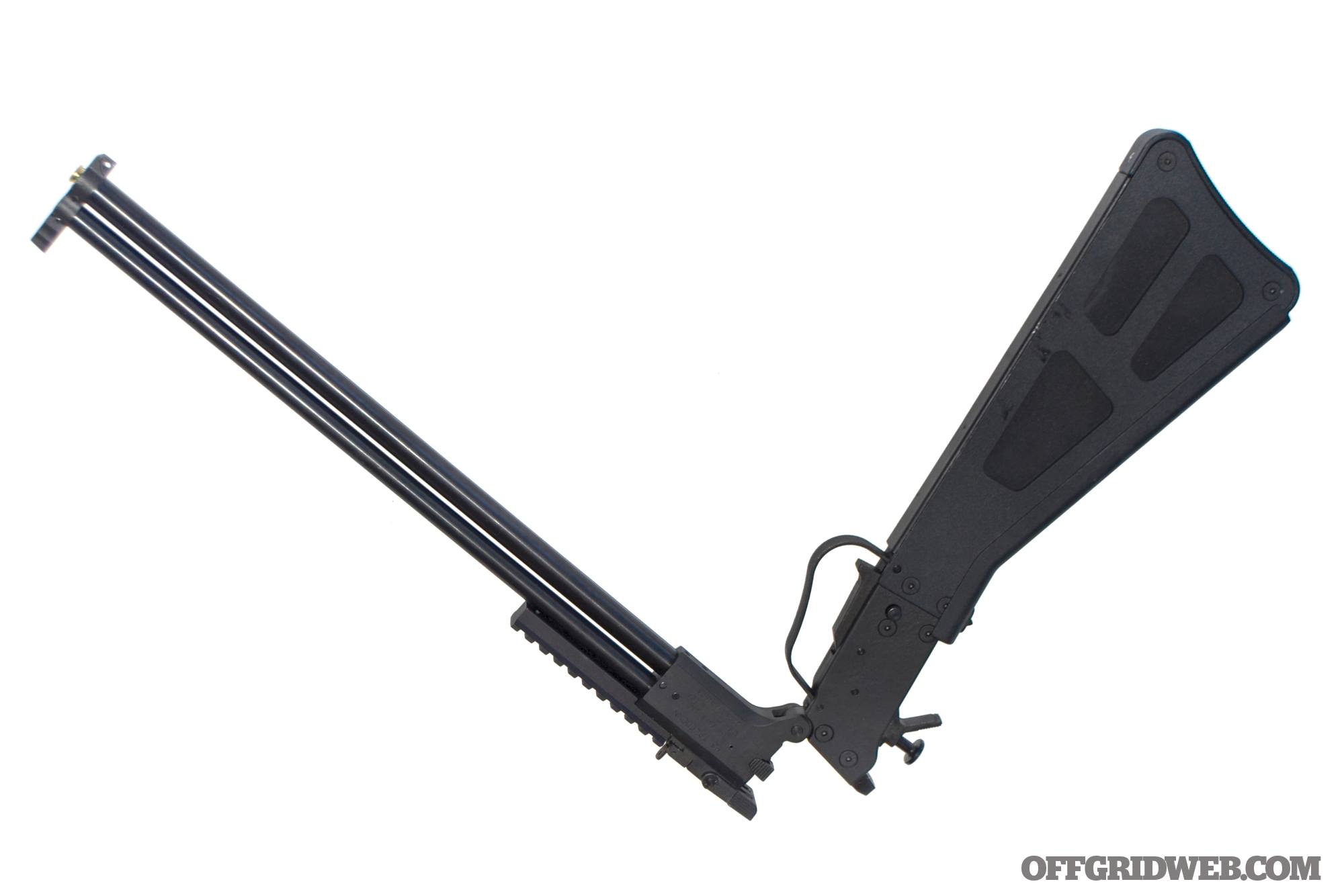
This was a superposed combination of a rifle barrel mounted atop a shotgun barrel. The rifle was chambered in .22 Hornet, and the shotgun was designed for a .410 shotgun shell. Each barrel measured 14 inches in length. The M6 could be folded in half for compact storage with nine rounds of .22 Hornet and four shotgun shells (the original loadout specs were two bird loads and two rifled slugs) stowed in the buttstock. It was made by Harrington & Richardson under contract with the Army’s Ordnance Corps and was designed by Lieutenant Colonel Franklin S. Allen. More thought went into this simplistic design than you might think.
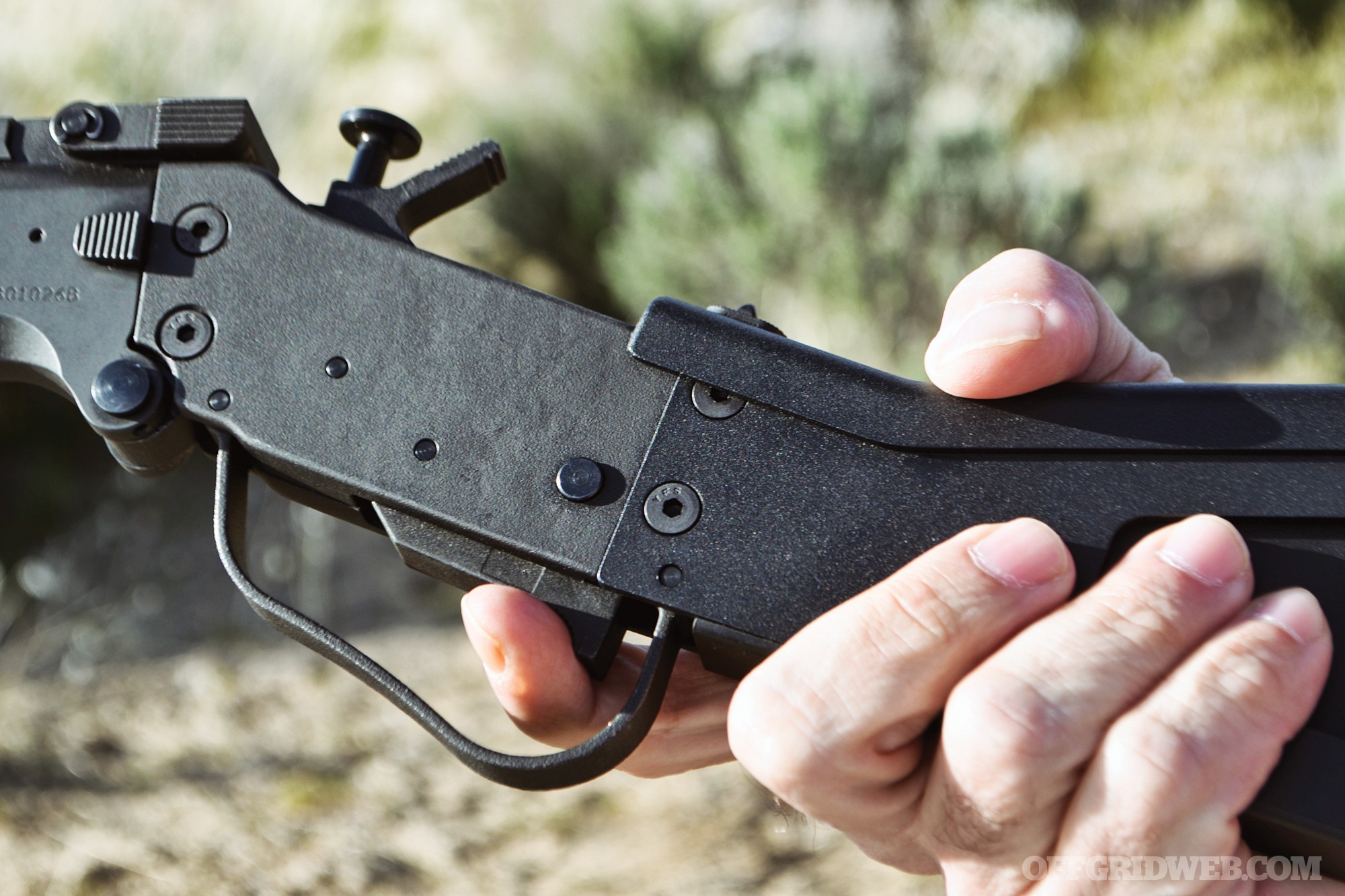
For one thing, it’s probably the only military-issued weapon without a trigger guard. The reason being was that during the Cold War, many aircrews found themselves flying over the Arctic. Extreme cold weather dictated the wearing of mittens or heavy gloves. A worse-case survival situation in the Arctic can expose you to subzero temperatures for long periods of time while awaiting a rescue or trying to seek help. This isn’t a situation where you want to have exposed flesh for any length of time.
The engineers who designed the M6 had this figured into their requirements and incorporated a trigger bar that must be depressed in order to fire the rifle as opposed to a conventional trigger that’s squeezed. Again, this wasn’t a firearm intended for fighting like most military rifles; this was primarily intended for foraging and small-game hunting in an extreme survival situation.
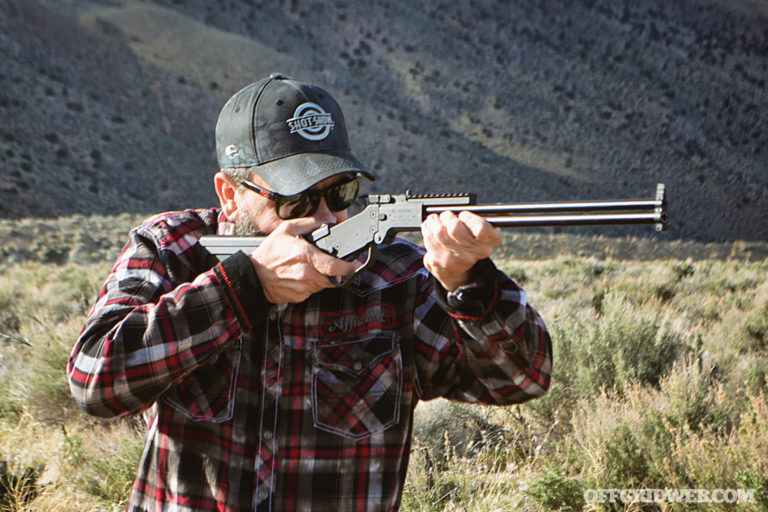
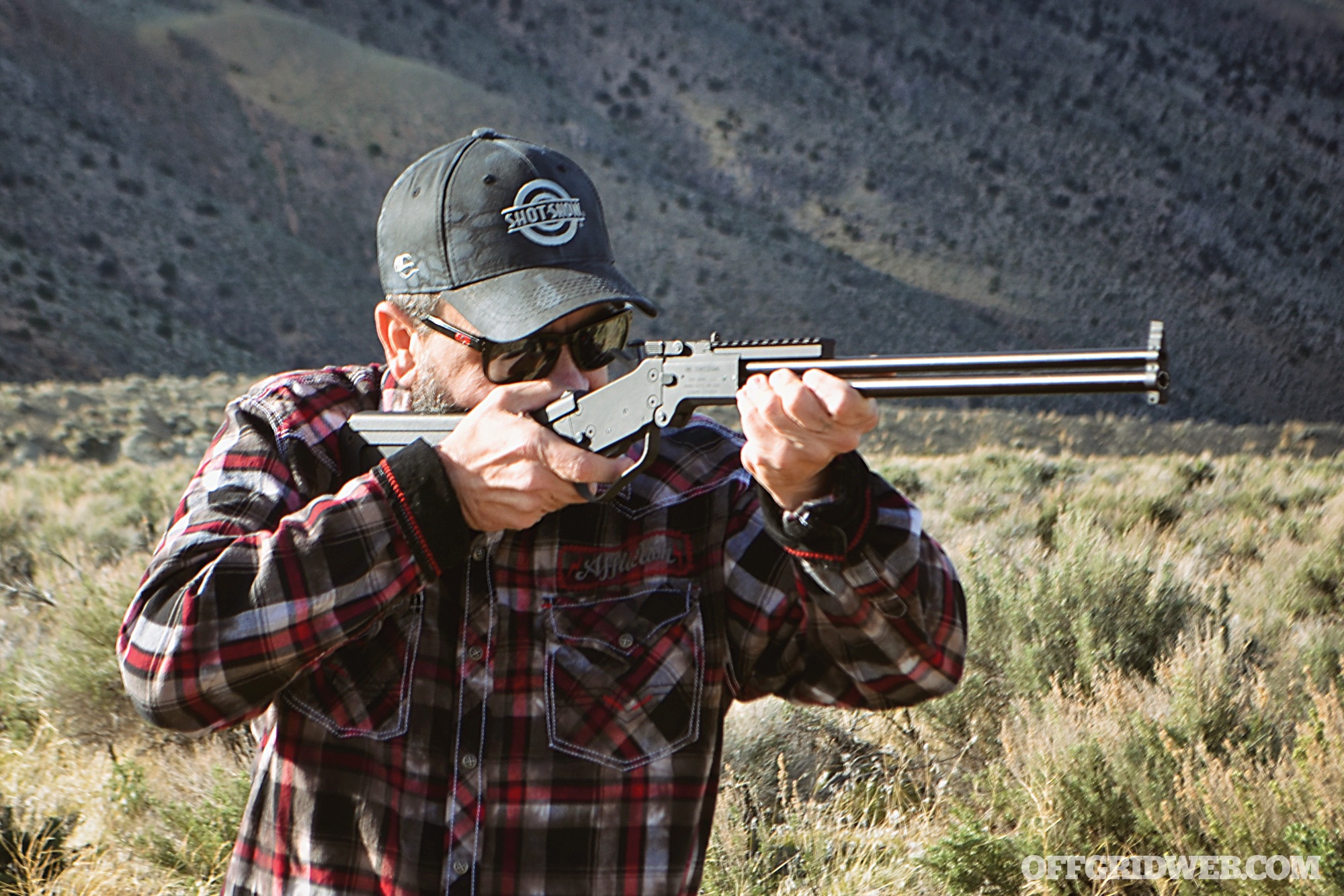
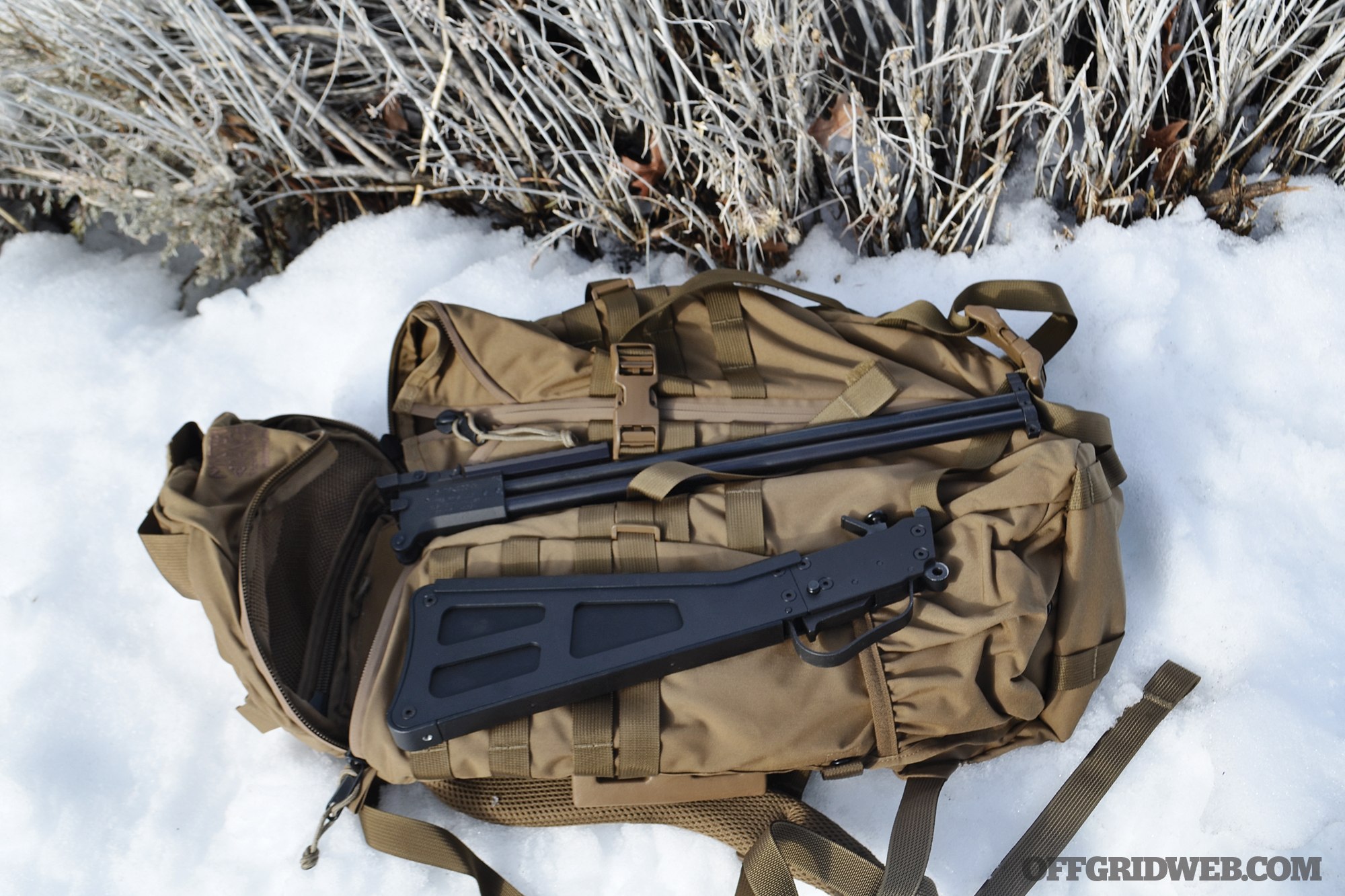
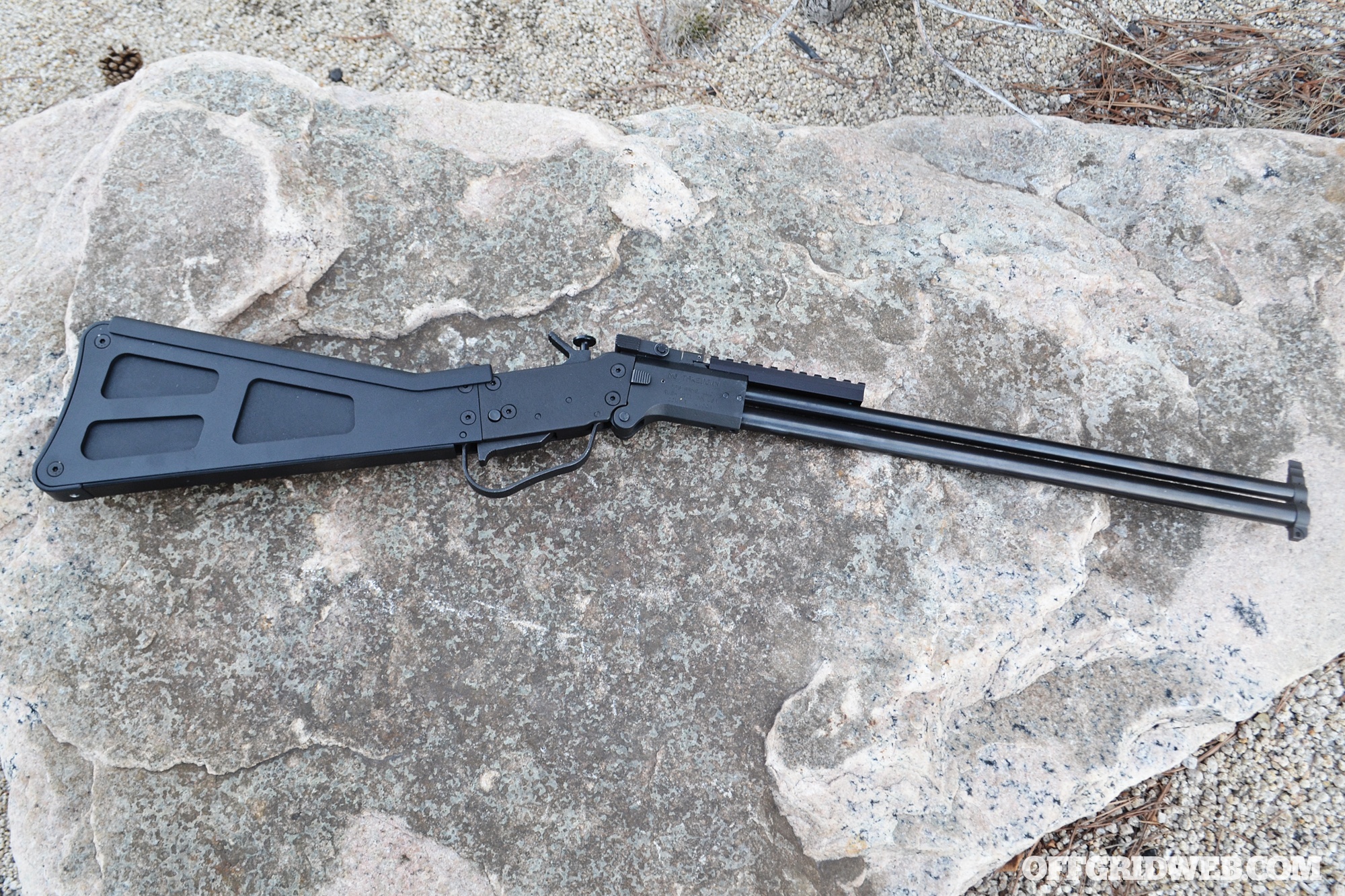
The M6 Scout makes for a versatile multicaliber trail gun suitable for small game.
The Springfield Armory Version
Having 14-inch barrels made an exact copy of the M6 Aircrew Survival Rifle a no-go as a Title 1 firearm (non-NFA), and prior to around 2005, everyone and their mother thought that having a dealer complete a single-sided federal form was a paperwork hassle. So, Springfield Armory had a replica made in Czechoslovakia with 18-inch barrels and called it the M6 Scout. The M6 Scout could be had in either stainless or the original stamped steel and parkerized finish and offered the rifled barrel in the cheaper .22 LR as well as .22 Hornet. A .22 WMR (Winchester Magnum Rimfire) version was listed in their catalog for years, but I personally never saw one.
For liability reasons, Springfield added a trigger guard, through which only a child’s hand will fit. Because the M6 Scout was made in Europe, they made a smaller diameter sling swivel at the front, but unexplainably made no provision for attaching a sling at the rear of the buttstock.
To attach a sling, most shooters drilled out the front swivel mount to accept a standard sling swivel. I went with a smaller European-style swivel, as I like leaving my firearms as much intact as possible, and attached a spare M1 Garand swivel on the buttstock. Lastly, I removed the unsightly and useless sheetmetal trigger guard to be able to shoot it properly and actually fold the Scout in half for storage purposes. Otherwise, you must separate it into two pieces and hope you don’t lose the hinge/takedown pin along the way.
You can buy scope mounts for the M6 Scout, but since the rifle is long out of production, these can be expensive and of limited use, as you must sight in two separate barrels. The only other addition I made was adding a nylon sling.
Shooting the M6 Scout was quite a challenge if you were used to using your trigger finger. Simply put, this will never be a precision rifle. Still, its compact size and light weight make it a no-brainer to tote as a small-game piece if you’re a backpacker, cross-country skier, hiker, rider, bush pilot, or find yourself in a survival situation with minimalist gear.
It may be tempting to add a red-dot sight or attach a light, but this isn’t meant as a primary hunting rifle/shotgun or an entry gun. This is a basic survival kit with enough onboard ammunition storage to score a few meals off the grid.
The TPS Version
I’m not certain when Springfield Armory stopped making the M6 Scout. I can recall seeing a new one in a gun shop in either 2003 or 2004. As much of a niche firearm as it was, when used versions began approaching the $1,000 price point, a lot of preppers and people who had a need for one flinched at that price.
Thankfully, TPS (Tactical Parts Supply) Arms came to the rescue and revived the design in mid 2018. They incorporated a few much-needed improvements as well.
First, they added a choke tube system based on the Winchoke system by Winchester for the shotgun barrel to make that portion more versatile. TPS offers these chokes in Improved cylinder, Modified and Skeet.
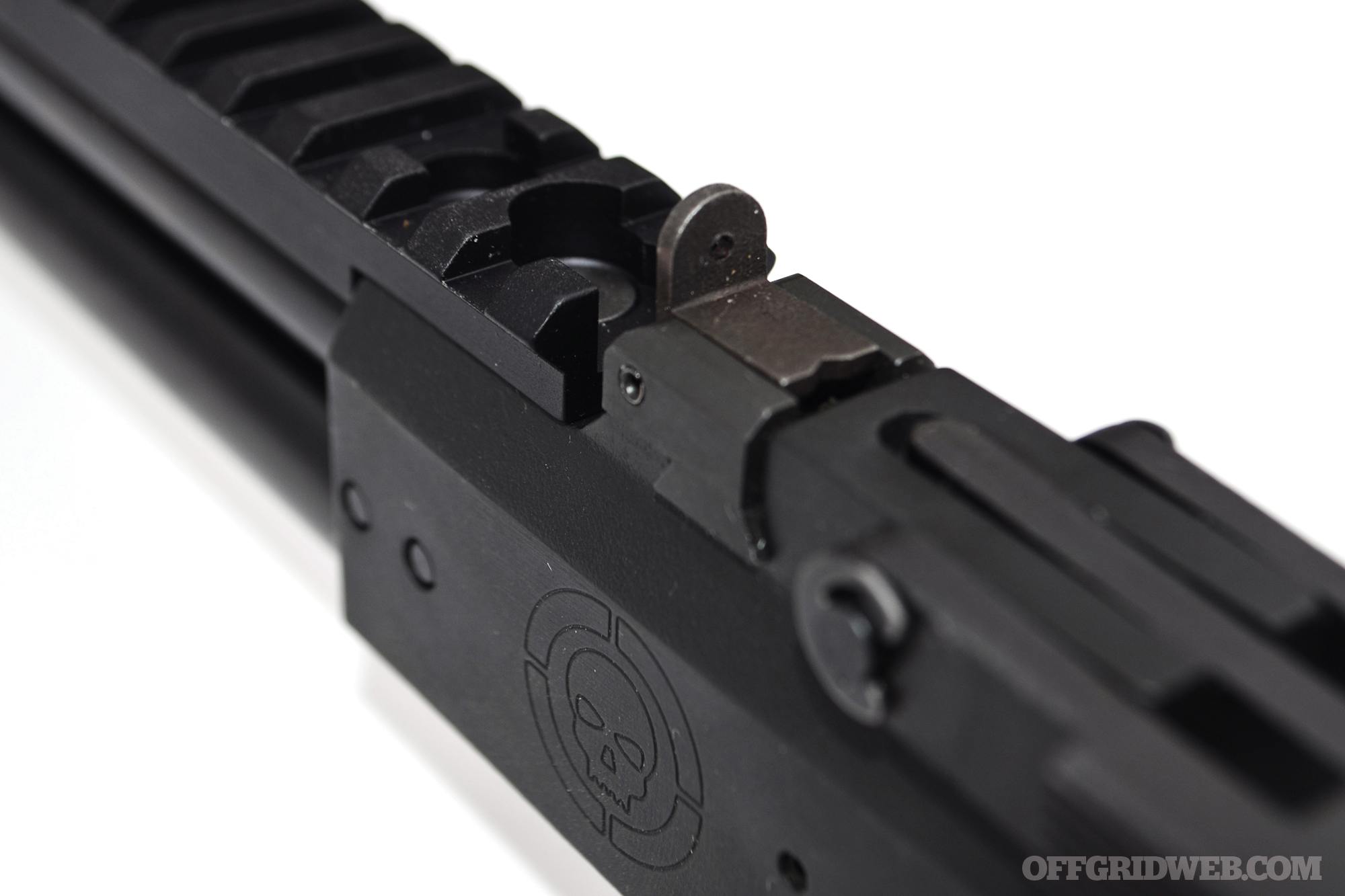
Secondly, TPS Arms offers a removable Picatinny rail, allowing the shooter to mount a scope or red dot sight if they so choose.
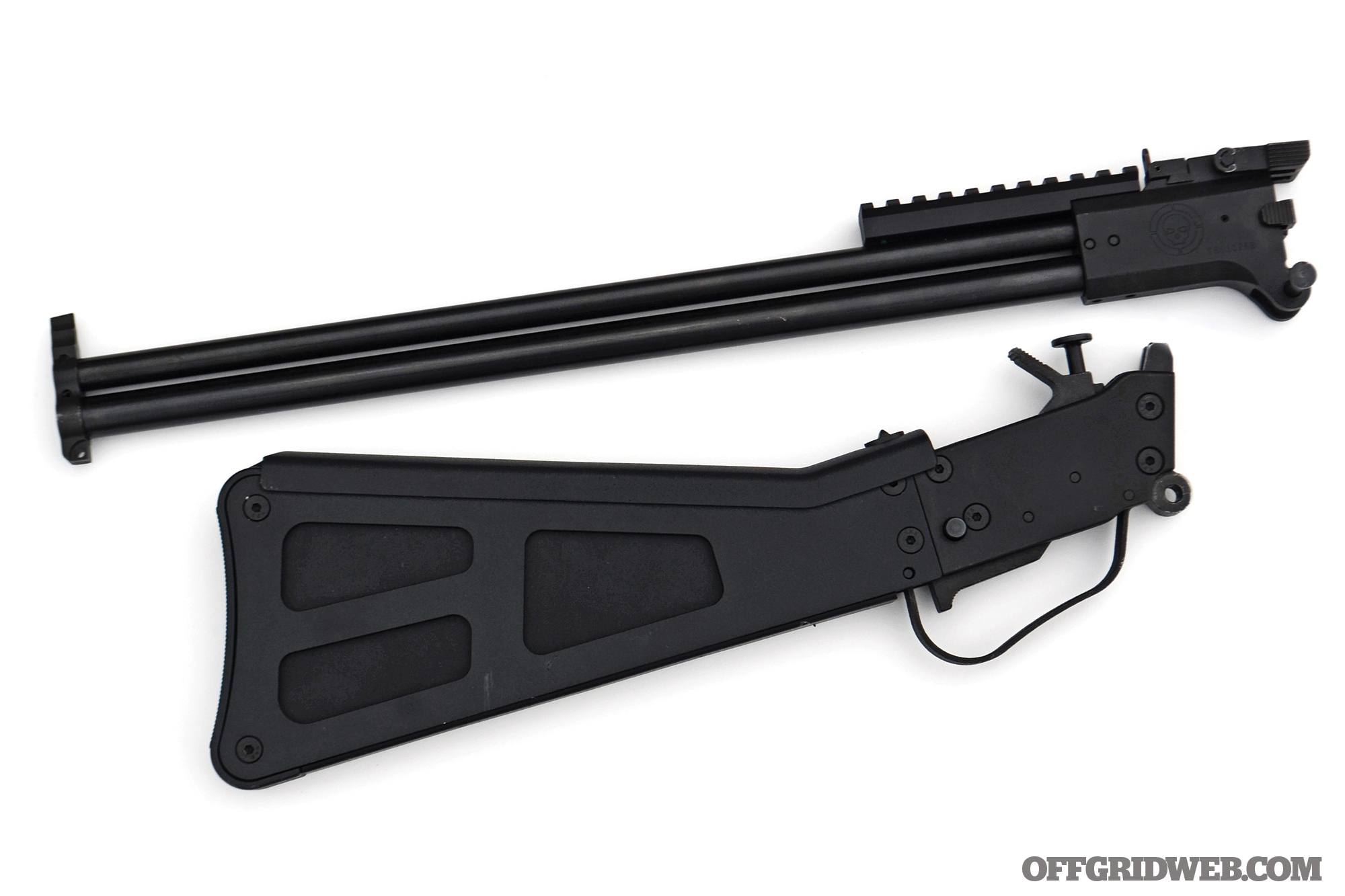
The third major improvement is the introduction of a captive takedown pin similar to a lower receiver pushpin found on an AR-15. This keeps you from losing the pin in the field.
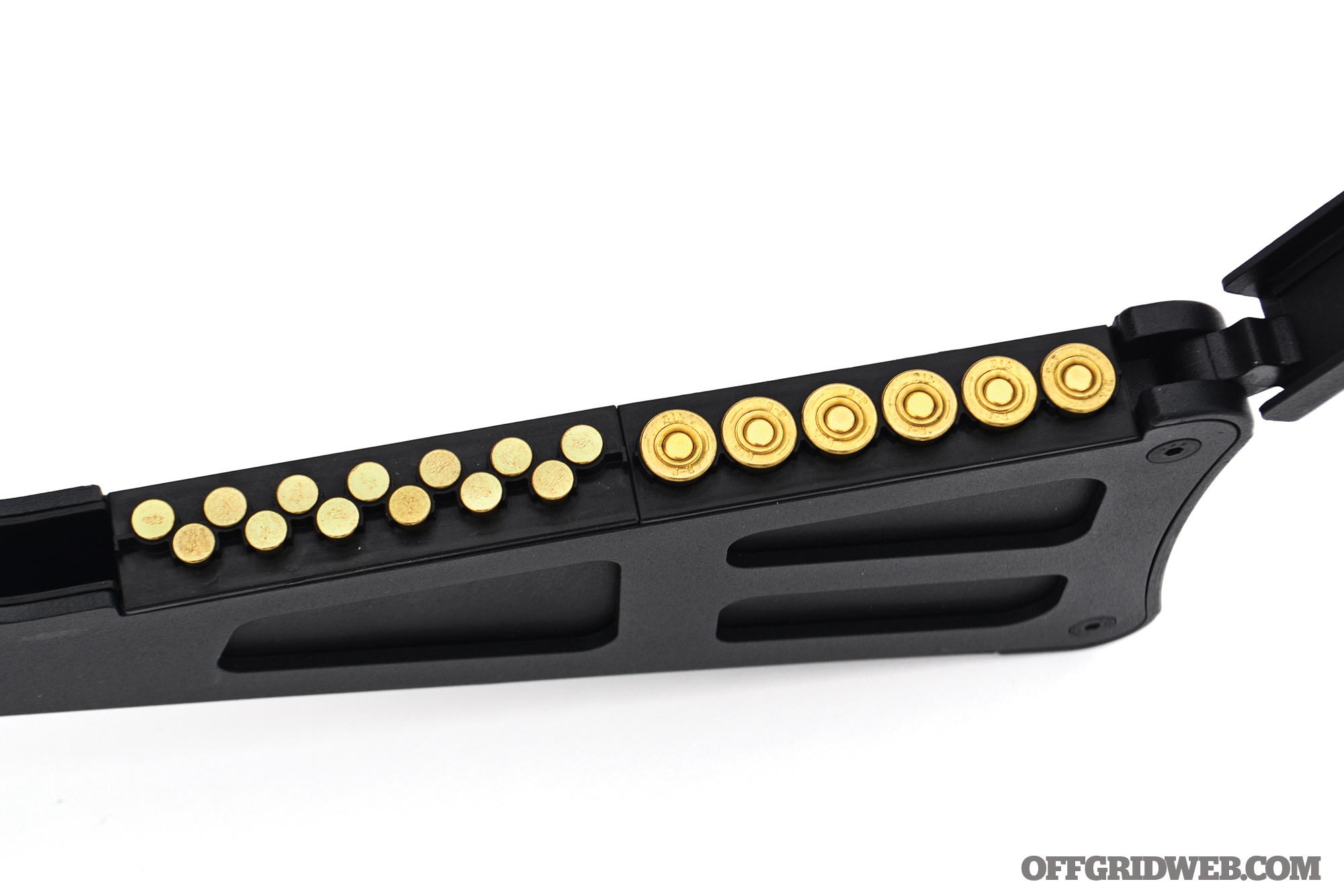
Other improvements include a wider butt pad, improved trigger pull, and a front swivel stud that’ll take a standard sling swivel. Lastly, there’s the improved onboard ammunition storage component. Current ammunition choices for the rifle barrel include 22 LR, 17 HMR, and 22 WMR.
The original USAF M6 stock held nine rounds of .22 Hornet ammunition and four .410 shells. Whereas, the SA M6 Scout holds 12 rounds of .22 Hornet and four shotgun shells. For the rimfire models, the stock holds 15 rimfire cartridges and four shotgun shells. TPS Arms upped their game on this feature as well, and the company offers customizable storage compartments if 13 rounds of rimfire and six shotgun shells are too limiting for you. The choke wrench stores neatly underneath these compartments as well.
Testing the TPS M6 Takedown
Before we took the test rifle off to the range, we performed some testing that we don’t normally conduct. Taking advantage of the winter storms in the Sierra Nevada in early 2019, we left the TPS M6 out in the elements for three days. Ice, snow, freezing rain, and three days of subfreezing temperatures might cause certain firearms to fail; such wasn’t the case with the TPS M6.
The one problem I did run into was trying to reassemble a rifle that had been taken down while I was on the range. Aligning the holes on the barrel group with the pin located on the stock was problematic. Be it the cold or me being a spaz, after 30 minutes I simply couldn’t get the M6 back together, as the captive pin kept me from checking for proper alignment. I had no such problems while disassembling and reassembling the rifle in the house where it was warmer.
As luck would have it, I had an AR hammer pin in my truck (no, I don’t know why) and sliding it in from the opposite side allowed me to align the holes and get it back into action. A similar tool, such as a Philips head screwdriver or other narrow tool, should help anyone else out of this situation, particularly if you’re doing so in adverse weather while wearing gloves.
You can add an optic to the rail of the M6 Scout or use its built-in sights, shown is the peep sight when firing the rifle barrel.
In discussing this with TPS Arms, I’ve learned that their new pin has more of a taper to it, which should eliminate this problem in the field.
When firing the M6, you select which barrel to fire by means of a pull knob on the handle. Pull up to fire the rifle barrel, push down to fire the shotgun barrel, and leave it in the middle to keep the striker in a neutral position. With the striker in the correct position, you simply manually cock the hammer, and it’s ready to fire.
It’s important to note that the striker in the neutral position doesn’t make the M6 completely safe, as it can be bumped out of position with enough impact. So, the M6 makes use of a safety button mounted above the trigger bar.
Like the original, TPS Arms incorporated a folding rear sight that uses one position for firing the rifle barrel and a secondary notched blade for use with the shotgun barrel.
At the range, the TPS M6 shot true to point of aim at 25 yards using a wide variety of .410 ammunition. We fired slugs, small-game loads, and a few 3-inch buckshot rounds. While TPS offers a skeet choke, I don’t see anyone running a skeet or five-stand match with one of these little guns. However, it could make for a decent patterning option when using birdshot or a small-game load.
Shooting the 22 WMR barrel with Hornady V-Max and its 30-grain bullets gave us about a 1-inch-sized group at 50 yards, except the occasional flyer when we rushed the shot due to the cold weather.
I used the factory sights, which are a very smart and forward-thinking feature regarding the rear sight system. The rear sight flips to either the rifle position in a peep sight or a wider V-type rear sight for the shotgun. Of course, if you cannot shoot well with iron sights, there’s a Picatinny scope mount available or a red-dot sight if that’s your preference.
As mentioned previous, the buttstock is a bit wider than the original military version and the Springfield Armory version, which makes the TPS M6 much easier to shoot well.
While lightweight and portable at a hair over 5 pounds, the M6 Scout can be broken down for more compact storage if needed.
TPS Arms turned a good rifle into a great one and has completely revitalized this survival tool. In speaking with the owner, I got the impression that they’re completely invested in this project and may have several exciting options planned for the future of this rifle.
This updated take on a classic survivalist piece is a great tool for harvesting game, should you find yourself in a true off-the-grid survival situation.
Trigger Hack
You can use your fingers to mash the trigger bar with your whole hand if you want to recreate the original intent of shooting the M6. It’s fun for a while, but we figured out a better way of manipulating the trigger for improved accuracy by using just the trigger finger to squeeze the “toe” of the trigger bar like a conventional trigger.
TPS Arms M6 Takedown Specs
Action Superposed
Caliber 22 WMR / .410 Gauge (additionally, the rifle barrel is offered in 22 LR and 17 HMR)
Editor’s Note: In case you missed them, be sure to check out the two web-exclusive articles that preceded the following article from Issue 33 of our magazine. Part 1 covers traveling with firearms, and Part 2 addresses the all-important topic of situational awareness.
While you may not be Mad Max driving the last V-8 across the wasteland, traveling long distances through unfamiliar places comes with inherent risks. For instance, many of you may be familiar with the story of James Kim, a TV personality whose vehicle became immobile in inclement weather during a holiday road trip. He died of exposure after deciding to leave his family in the car to go search for help in rural Oregon.
You may have also heard about the case of Denise Huber, whose car was found abandoned on the side of the freeway in 1991. Years after her disappearance, her body was discovered in a freezer in another state. It’s believed that Denise pulled over with a flat tire and her killer approached her under the pretenses of offering help before abducting and murdering her.
Aside from the traditional dangers presented by hundreds of miles of high-speed driving, there are less obvious ones you’ll want to think about and plan for, as our road trip experiences have illustrated. We’ll discuss where we’re going, how we’re getting there, what to take, and where to stay. We’ll talk maps, apps, and safety as well as a host of other topics to keep you protected on the road — whether you’re traveling a few hundred miles or a few thousand.
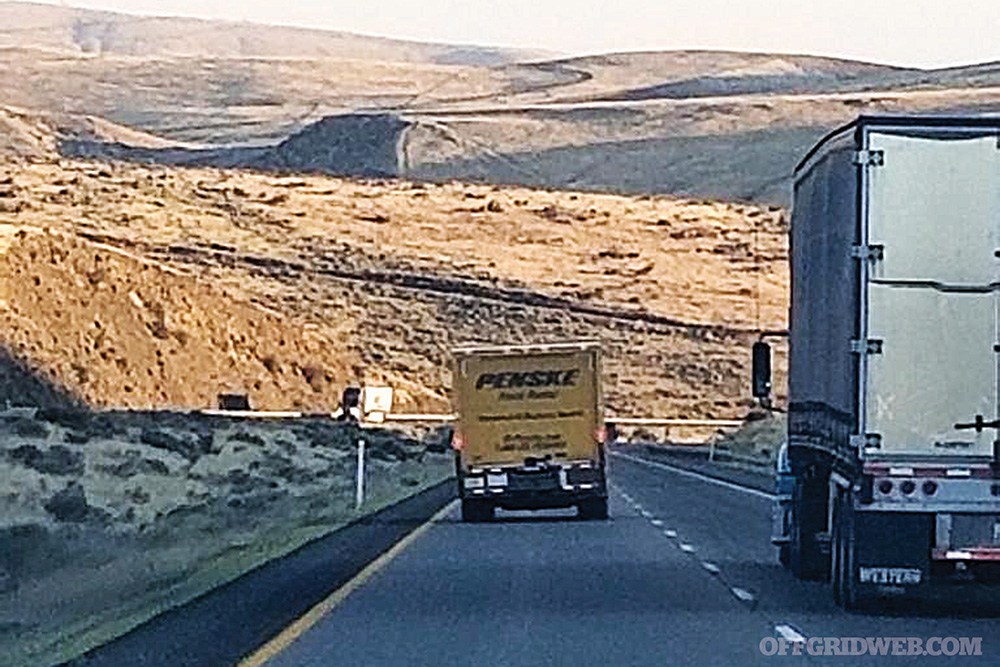
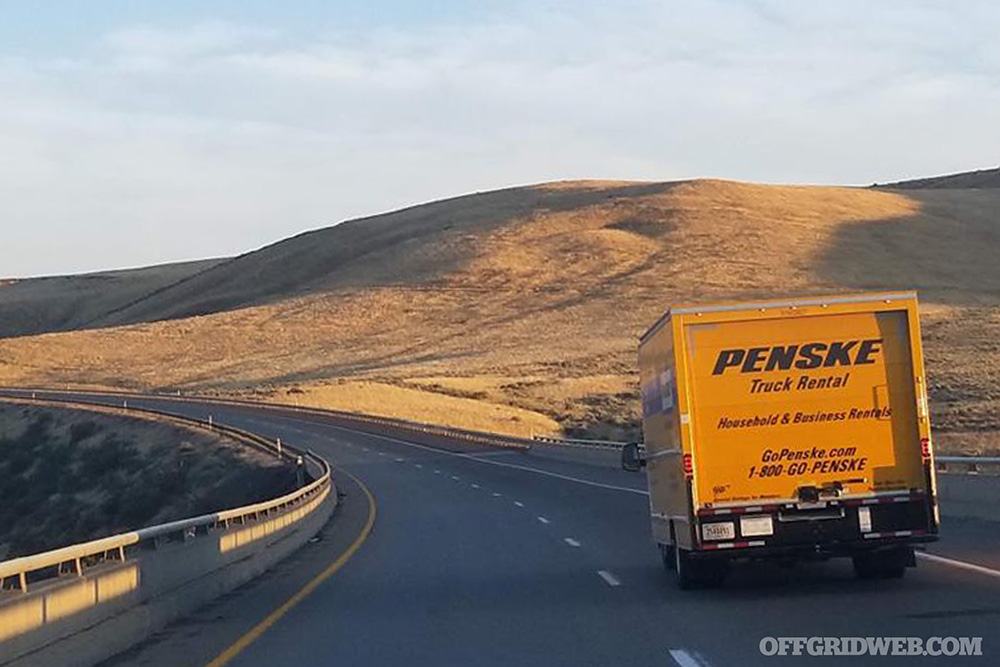
Recently, I completed my second coast-to-coast crossing. As a parent, I found myself confronted with a plethora of challenges presented by traversing 3,500 miles from Washington State to North Carolina in two vehicles with a wife, five children, two dogs, and everything we owned packed into a 16-foot box truck. The following considerations are based on the lessons my family learned while traveling across the country.
Preplanning
Preplanning the trip consists of gathering information on routes, driving schedule, accommodations, and vehicle inspection. I want to know where I’m going, how I’m getting there, what kind of pace I need to maintain to make it happen, and feel assured that my vehicle is good to go before we roll out. Much like my days in Afghanistan, we found ourselves surrounded by locals at temporary stops in strange towns, and not everyone we met along the way may have had the best of intentions toward us.
A homeless guy screaming at his dog at a gas station at 10:30 at night in Las Cruces, New Mexico, can be either an annoyance or something entirely unpredictable. So, while you fill up your tank with your entire world in the car and a mental breakdown 10 feet away, your decision to deal with him or avoid the situation entirely should’ve been made before you left your driveway. Let’s do some planning and avoid these types of situations altogether.
Route Planning
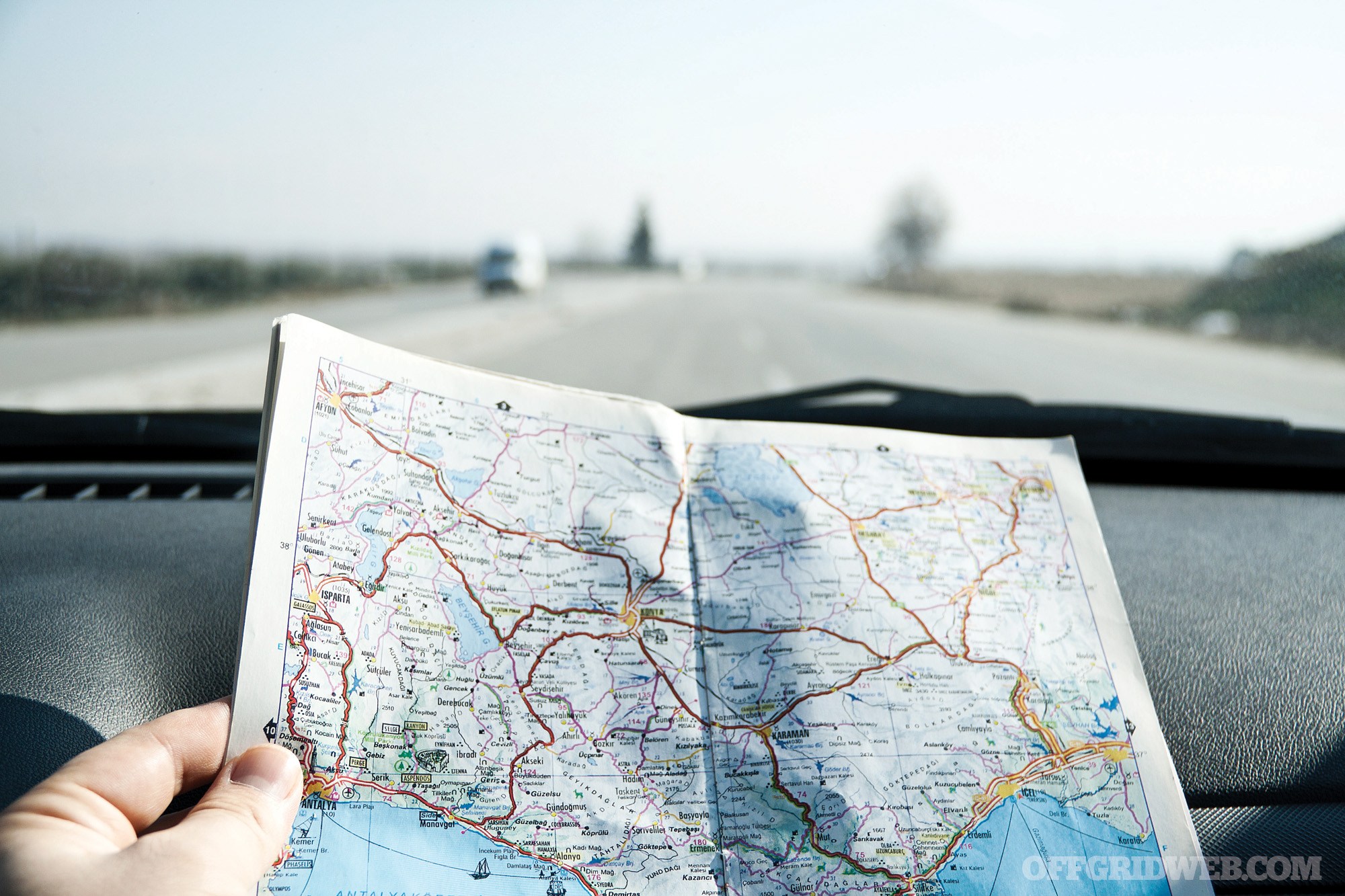
Above: Often overshadowed by the crippling convenience of route-planning apps, traditional paper maps have a lot of info to offer and never have to be plugged in.
Fire up the Google machine and take a look at your intended route. And I don’t mean simply inputting your start and end points. Google or Apple — or whichever dystopian tech conglomerate is currently ruling your digital life — will likely take you on the most direct route, but not necessarily the smartest or safest. You want to get an overview of where you’ll actually be staying or stopping along the various points of your journey. The way I like to do this is a good, old-fashioned paper map (laminated if you can find it).
Incredibly, you can actually unfold these and lay them out on a table and see the entire country and its various roadways without pinching and zooming on a 6-inch screen while going blind. Though redundant, it’s rather like insurance — you rarely use it, but it’s invaluable when you need it. This road warrior recommends the latest Rand McNally spiral-bound Road Atlas. It covers the entirety of the United States and can be had for around 15 bucks. For another option, Michelin — yes, the tire company – also makes a nice atlas that features GPS coordinates to parks as well as information on events and festivals in your area of travel.
Undoubtedly, you’ll use some type of navigation mobile app. That’s fine. Something I learned was to make sure everyone on the trip is using the same one. This is critically important if you’re caravanning in two or more vehicles. While my wife drove her Suburban, I drove the rental box-truck. Being an Android guy, I was using Google Maps. Her being an Apple devotee used whatever navigation sorcery was loaded onto the iPhone. Turns out different map apps do things slightly differently and can (and will) cause issues along the way. Pick one app and ensure all drivers use it. Waze is a good one. It offers driver-updated road and traffic conditions among other bits of relevant information, such as warnings about obstructions on the road and speed traps. It’s free and available on both Android and iOS.
Above: Of course, digital GPS is an excellent real-time resource to keep you on track and notify you of changing traffic or weather conditions.
When planning the route, look at potential areas of concern. For us, one leg of our trip took us down to Tucson, Arizona. Part of my concern for that leg was its proximity to the U.S.-Mexico border. After our visit, we had choices that included dropping down to El Paso and using Highway 62 to head east. Instead, we chose to give the border a wider berth and stick to more northerly routes. This isn’t to say El Paso is unsafe — it’s simply a mitigation technique. I have had friends tell me stories of areas along the border (on the U.S. side!) that are simply not smart to travel on or near due to heightened criminal activity. Cartels are known to zealously guard their trafficking routes into the U.S. Tactics include emplacing men in OP’s (Observation Post) to monitor activity in their territory as well as the use of snipers for area denial. So why risk it?
Speaking of risk, let’s mitigate some more of it by getting familiar with crime in and around our areas of travel with LexisNexis. LexisNexis provides all kinds of tools to allow businesses and individuals to prioritize safety. Their Community Crime Map is the one I like to refer to when traveling. It’s a lot like looking at Google maps, but it provides crime data for your area of interest. Passing through a major city? How many car-jackings or muggings have occurred there over the last week or month? LexisNexis can show you that and a whole lot more. Visit LexisNexis at CommunityCrimeMap.com and get familiar with this incredible and free resource.
Driving Schedule
Do not wing it. I did this, and it didn’t work. We ended up stuck on the road more than once driving way too late into the evening. Remember what mom said: Nothing good happens after midnight. Further, many hotels won’t let you check in past a certain time, or if they do, they may already be booked up. Sticking to a schedule will also help prevent fatigue. Driving tired can be just as dangerous as driving drunk. A schedule ensures you’re not on the road too long trying to make up lost time.
Figure out how far you need to travel each day and come up with a road schedule that’ll allow you to make it happen. Up at 0600. Depart at 0700. Drive eight hours. Hotel reservations for the evening. Boom, done. The bigger your family, the earlier you’ll need to be up. You can easily get “trapped” on the road with no lodging availability and a car full of tired and angry kids. Avoid this by preplanning a driving schedule and sticking to it.
Keep your tank filled by identifying your fuel stops ahead of time. I like to use Google Maps to search ahead for gas stations along my planned route. You can add them as stops along the way depending on your schedule and vehicle range. Gas Buddy is another great option. The free app allows you to filter for your station of choice by brand, amenities, etc. It also features user reviews and its data is crowd-sourced and constantly updated.
Above: Despite the stress and perils of multi-state road trips, they can also be an educational bonding experience for younger children and a chance for quality time with your spouse.
Accommodations
Have your hotel booked in advance. Guess who else is traveling during the summer, weekends, and holidays? Every red-blooded American on the continent, and they all need a place to stay. Places will get booked up, so don’t get screwed by assuming they’ll have a vacancy. Book in advance. I’d rather pay the fee for missing my check-in, should our plans change, than get stuck sleeping in a rest stop. Trust me. I did it, and it sucks.
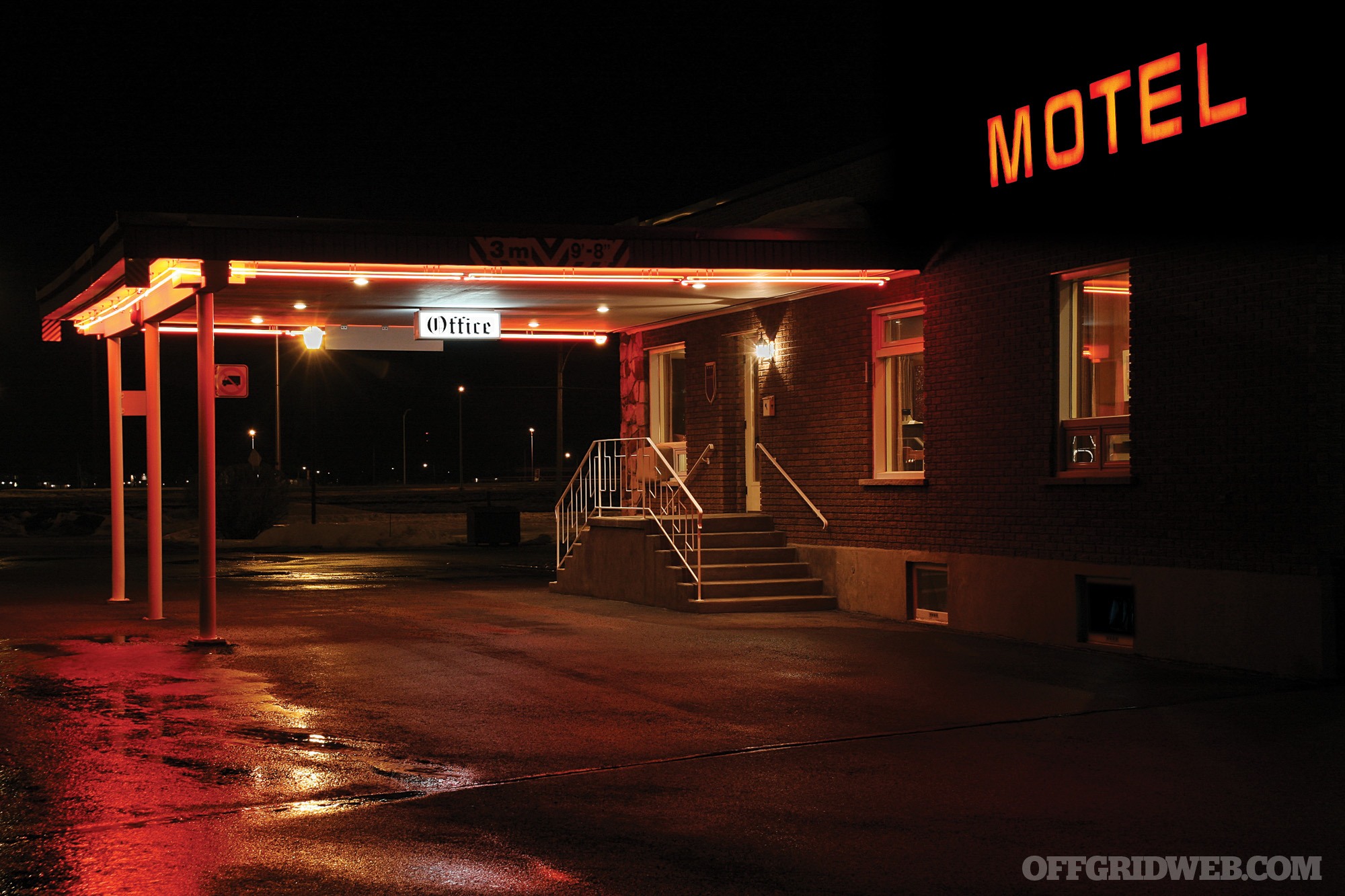
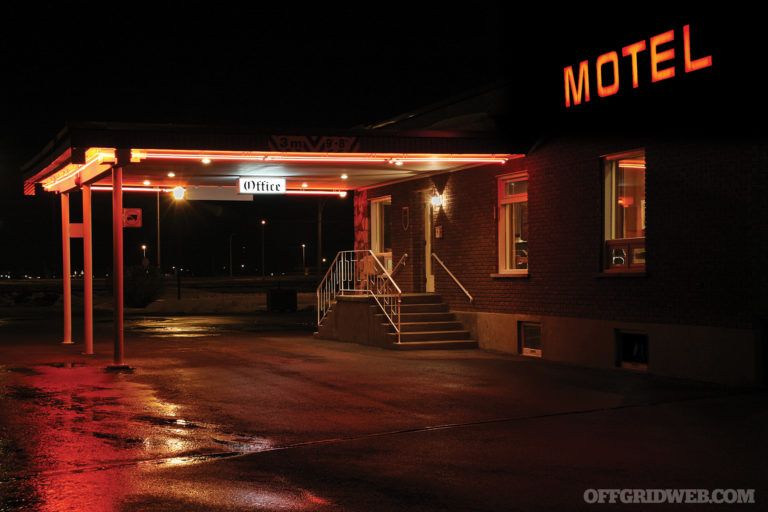
If at all possible, don’t let cheap rates on accommodations drive your decisions on where to stay. I noticed a demonstrable correlation between a hotel’s cost and the part of town it was located in. Spend a little more on the rate to be in a nicer area surrounded by nicer folks. Unsurprisingly, seedy motels tend to attract seedy characters. Cross-reference crime rates using the tools we mentioned previously to find an area that’s relatively safe.
When traveling with your family you’re soft and vulnerable. Remove this vulnerability by not being in areas where it’s likely to be exploited. Also, use Google StreetView, or a similar tool, to take a look at your chosen hotel’s location. You can pan around 360 degrees and get an idea of the surrounding area. If your hotel is flanked by liquor stores, smoke shops, payday loan centers, and bail bond offices, you may decide to stay elsewhere. While your map app is open, this is also an excellent time to make a couple notes on where the nearest major hospital is relative to where you’ll be staying as well as the local “doc-in-a-box” urgent care clinic in cases of minor scrapes and bumps.
Further considerations for accommodations should include which floor you’re staying on in your hotel. Staying at a hotel may be relatively mundane, but it isn’t always — we learned this in Pendleton, Oregon. We had just pulled up to the hotel after many wearying hours of driving. As we arrived, so too did the local fire department with lights and sirens blaring. Apparently, something electrical was misbehaving in the hotel and caused a full-on evacuation of the premises that lasted over an hour.
Despite it not being a five-alarm fire, it did get me thinking about what I would and wouldn’t be able to do if it had turned into a serious incident. Watching the people mill about outside in the dark showed me that those on the bottom floor not only got out first, but they got out fast. In many hotels the ground floor has at least four exits. All you have to do is get into the hall and pick a direction. With my youngest son in a wheelchair, this is a part of our everyday logistical calculations. Stairs aren’t really an option for us, and during a fire, elevators are a bad idea. So, wherever possible, we try to get a room on the first floor. Whether you’re dealing with young children and strollers, or actually need to evacuate as we witnessed, a ground-floor room makes a lot of sense.
Finally, if you’re traveling with pets like we did, plan your accommodations accordingly. Some hotels will allow you a small pet or two, but larger dogs might pose a problem. Call ahead and find out about the pet policy of the hotel you’re looking to book.
Check out www.BringFido.com to help figure out where you and your four-legged children are welcome.
Vehicle Inspection
Above: You don’t have to be your own mechanic, but at least have a plan for roadside breakdowns and have a rough idea of where the next major town is that can offer repair services.
Modern family vehicles are amazing machines — they’re safer, more comfortable, and more capable than ever before — but they still need maintenance. My wife’s Suburban has performed like a champ all the years we’ve owned it just with regular maintenance. But before we hit the road for a short or long haul, I make sure we schedule a tune-up/inspection or perform one ourselves.
Basic inspection should at least cover the following: fluids, air filter, fuel filter, battery, plugs and wires, hoses and belts, tire pressure, tire tread and condition, markers and headlights, and a spare tire inspection (including the jack, tire iron, and associated tools). Also, check to see if your particular vehicle has any outstanding safety recalls and get those issues corrected before you travel.
Have children in car seats? If you do, now is a perfect time to ensure proper installation of their car seats. Your local fire department will normally offer a free inspection/installation to make sure the job is done right. Otherwise, make sure you follow the directions stipulated in the car seat’s manual. For more on pre-road trip inspections, car seat installation, and other automotive safety subjects, take a look at www.dmv.org/how-to-guides/pre-trip-maintenance.php. To see if your vehicle has any outstanding safety recalls check www.nhtsa.gov/recalls.
Gear
When considering what to bring, I break it up into the following subcategories: first-aid, recovery equipment, and vehicle sundries. It’s important to update your first-aid kit before a long haul. I keep a fairly well-stocked kit for bumps and bruises in our family vehicle. I didn’t replenish it after our last few road trips, and it bit me in the ass. Toward the end of our trip, my 2-year old daughter was promptly bit in the face by her great-grandmother’s very skittish Chihuahua. It was a very shallow, but wide-open laceration to her cheek, and I really needed a butterfly bandage (which I didn’t have) to close it temporarily. We ended up getting what we needed, but the lesson was painfully learned: I should’ve had it ready to go in the first place.
First-Aid
Above: Medical supplies are an important part of trip planning, especially if you’ll be crossing long stretches of interstate between towns. Whether you come across a severe car accident or suffer a few bumps and scrapes, having some supplies on hand could go a long way to easing the pain.
I have a two-part solution package for carrying first-aid while traveling. First and foremost, I want to be able to stop, or at least control, major hemorrhages regardless of how far we are from advanced care. Second, I want to be able to deal with all the mundane cuts and bruises that are much more likely to be the order of the day.
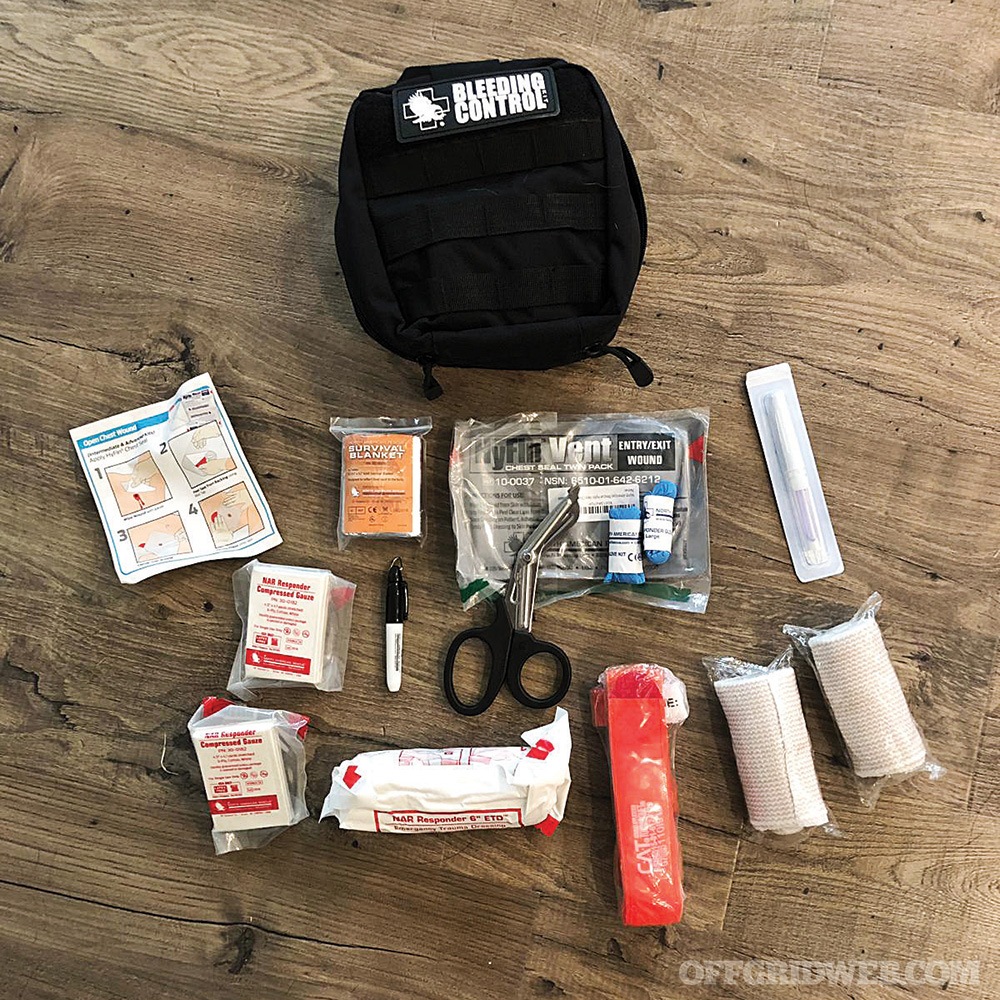
For major trauma, I carry and recommend North American Rescue’s Bleeding Control Kit. This kit includes a basic Bleeding Control laminated instruction card — I highly suggest keeping this with the kit so even an untrained person can follow the steps and properly apply first-aid. I also supplement my kits with additional gauze (Kerlix, if you can find it) as well as ACE wrap bandages and HyFin chest seals. The kit comes with the latest C.A.T. Tourniquet, but I’d recommend buying several more of these TQ’s on hand in case a car accident yields more than one life-threatening bleed. They’re inexpensive, and worth every cent should they be needed.
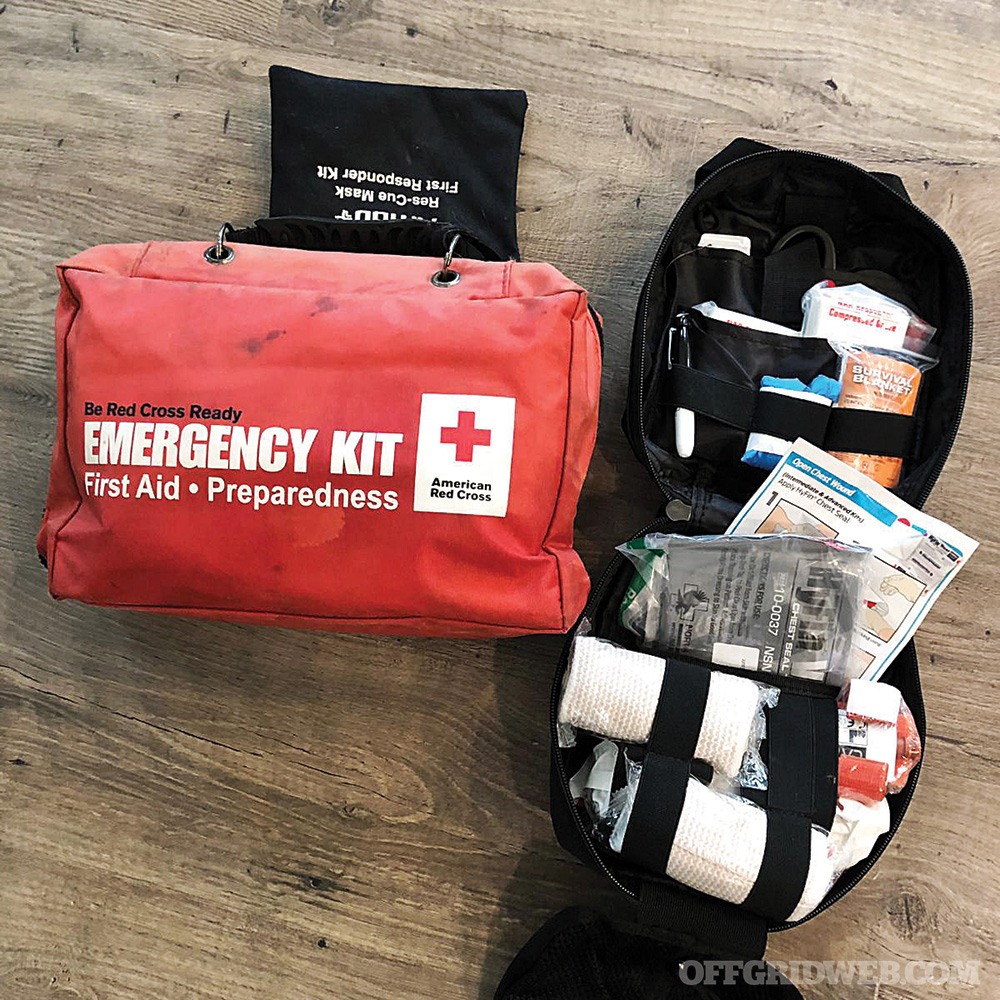
Above: The author has chosen to supplement a pre-packed first aid kit with additional supplies that seem to come in the highest demand.
Now, if you supplement your kit as I have, you might find it won’t all fit inside that handy red pouch the kit comes with. No sweat. Find yourself a slightly larger IFAK (individual first-aid kit) or any travel-size go-bag to neatly store all your trauma items. Mark the bag with one of those travel tag bag identifiers, a Velcro first-aid cross patch, or just some duct-tape that clearly labels the bag “first-aid.” Finally, make sure your family knows where it is and what’s in it. If you have a big family like I do, consider doubling or tripling up on the items in the kit in the case of multiple, simultaneous injuries. Larger squad-sized trauma bags can be had from North American Rescue that are more robustly stocked for MASCAL situations.
On the mundane but more common side of first-aid, any sizable kit that features lots of Band-Aids, Neosporin, bandages, and so on will generally fit the bill. You can order these online like your trauma kit, or they can often be found for fair prices at stores like Costco or Sam’s Club. Also, I like to keep this as a separate kit from my trauma stuff so don’t combine them. I don’t want my teenager pillaging my trauma gear for a Band-Aid or conversely, my wife looking for a tourniquet in the “bumps ’n’ bruises” bag.
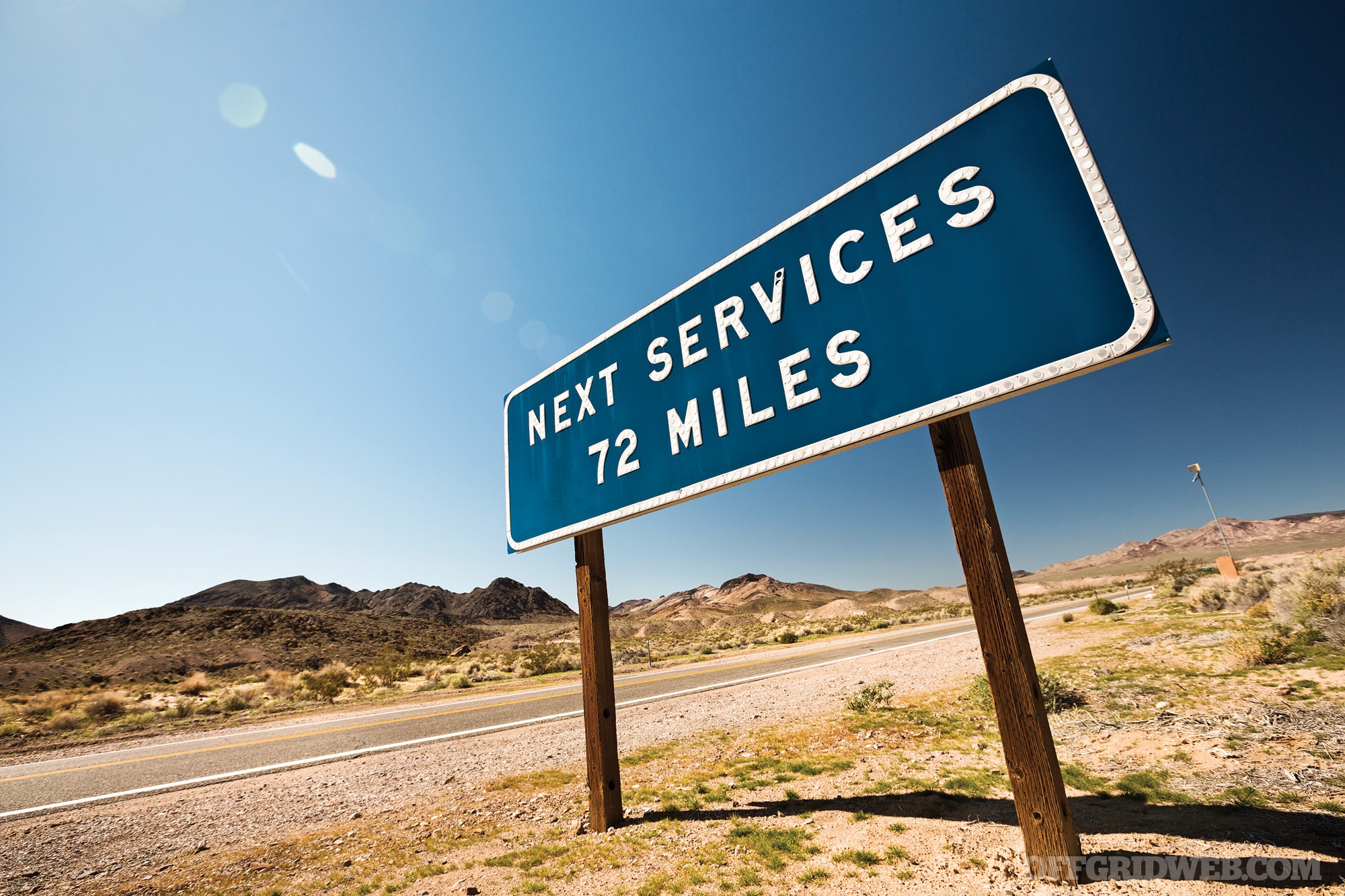
Before you close the hatch on all that first-aid gear, throw a couple cases of water in the back somewhere as well, particularly if you’re traveling during the summer. It’s nice to have for washing out cuts and scrapes, topping off a radiator, or simply keeping kids and pets hydrated in hot, desolate areas. We faced down some long, dry stretches of road in New Mexico and Arizona with nary a gas station in sight and the water came in handy.
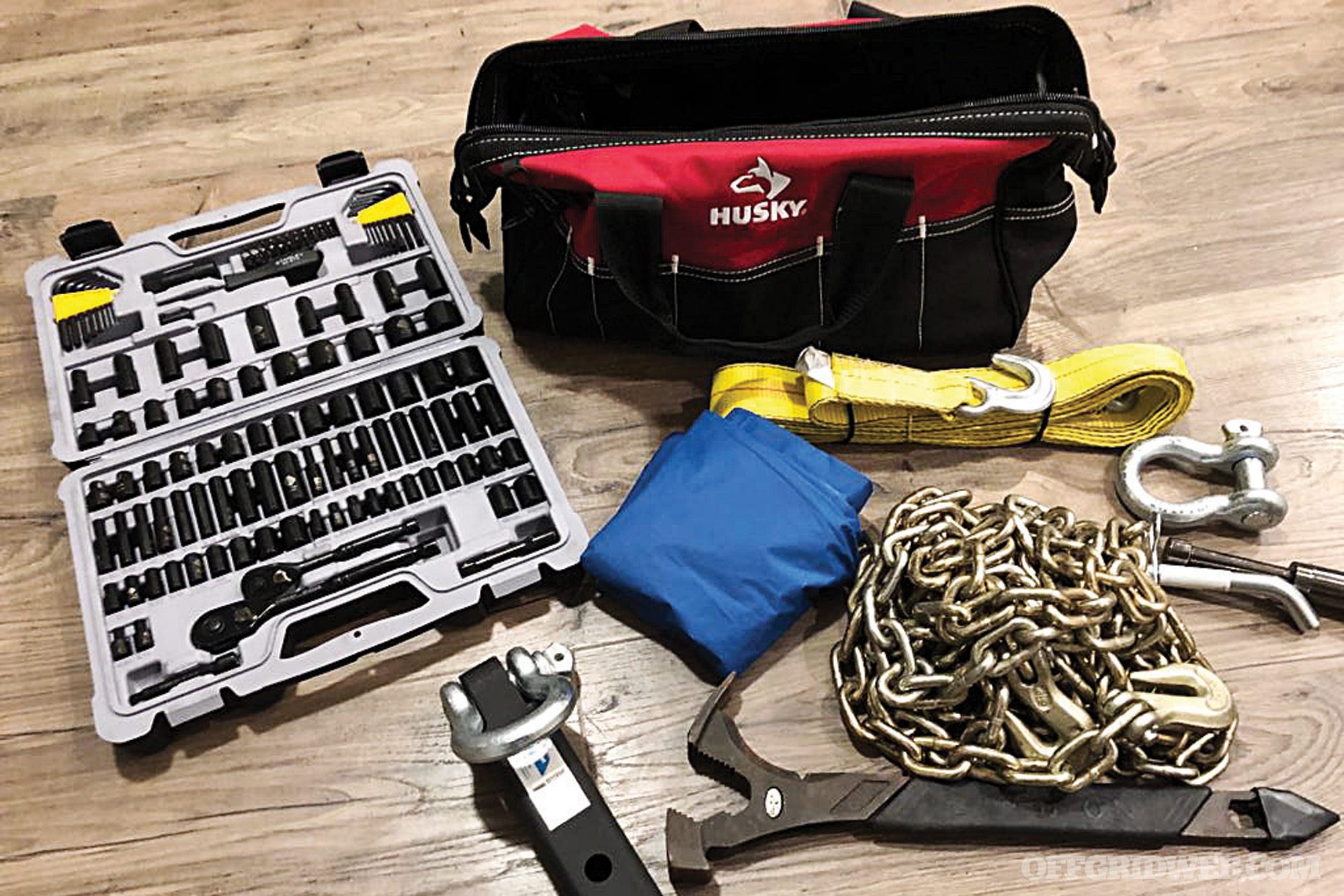
If you want to go a step further, you can do what I did and put together a basic off-road recovery kit as well. I chose to build my own kits for my vehicles, but companies like Warn and ARB also make some really nice (albeit more expensive) kits that include everything you’d need to get yourself unstuck.
These kits include things like recovery straps and chains, shackles, snatch blocks, and heavy-duty gloves. I also throw shackle hitches in my kits for additional attachment points if your vehicle is equipped with a trailer hitch receiver. Toss in a couple road flares and a shovel as well, and you’re set. If you build your own kit like I did, drop all this gear into a nice nylon tool bag from a company like Husky. You can find these bags in various sizes at Home Depot for $15 to $30.
Above: Simple hand tools and some tow straps or heavy chains can be improvised into a lot of useful trouble-savers. It never hurts to have this capability.
A good jack is also absolutely critical. In many situations, the bottle jack your vehicle comes with can be rendered useless. I prefer a Hi-Lift-style jack because it has so many additional uses beyond just jacking up a vehicle. It can act as a come-along, clamper, or spreader, and there are several awesome accessories available that further expand this tool’s capabilities. They’re inexpensive and should last a lifetime. Hi-Lifts also come in various sizes and can fit in your trunk. So just because your family vehicle is a sedan and not an overland monster-machine doesn’t mean you can’t upgrade your jack to something that can handle virtually any situation.
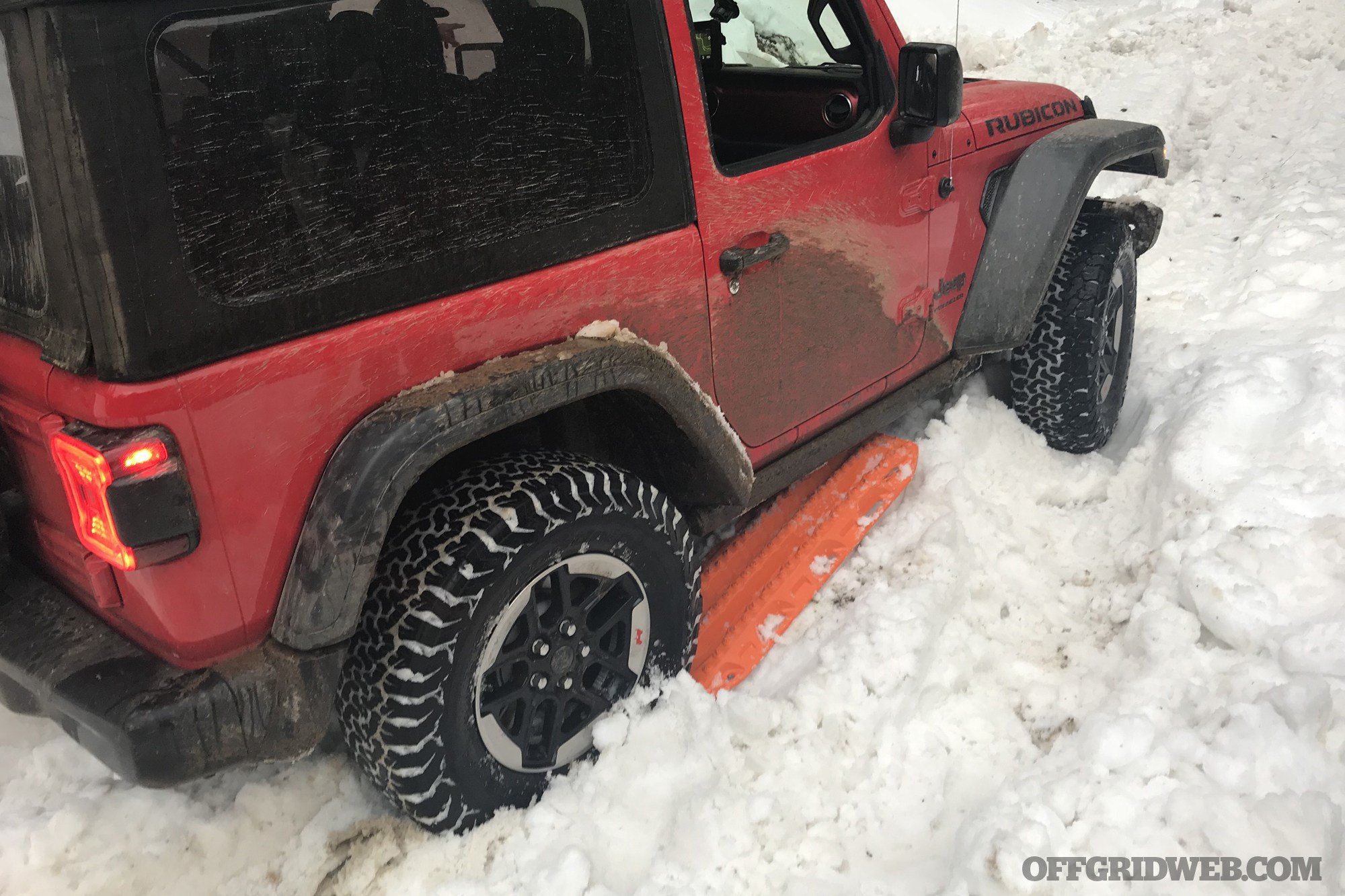
As we’ve learned firsthand, Maxtrax recovery boards are helpful if you get stuck due to poor road conditions.
Finally, consider a set of recovery boards. These can be as simple as throwing some scrap plywood in your trunk to give your tires purchase when stuck in sand, snow, or mud. This can often be the fastest and easiest way out of a sticky situation. Plywood scraps will do, but if you have the coin, I’d suggest a set of purpose-built recovery boards like MaxTrax MkII’s. They aren’t cheap, but their quality and utility easily exceeds their price. Take a peek at them on Amazon.
Add to this arsenal a roadside assistance plan like a AAA membership and you should be all set. Major insurance companies like USAA also offer roadside assistance if you’re a customer so be sure to ask your insurance agent if you’re covered and how to access their services. These days many vehicle manufacturers like Lexus feature complimentary roadside assistance. Check with your vehicle manufacturer or dealership. If your vehicle features a service like OnStar, ensure its function prior to traveling.
Other free, or low-cost services can be had through your cell phone carrier, believe it or not. Carriers like Verizon offer roadside assistance services so be sure to check with your provider for cost and options. Whichever roadside assistance option you choose, now you’re covered. You can call for towing or, if the situation dictates, you at least have the basic tools to try and recover yourself or someone else. If you want to learn more about off-road recovery and how to use some of the tools listed above, give www.offroadrecoveryguide.com a look.
Vehicle Sundries
I strongly believe we need to at least be able to deal with low fluids, dead batteries, and flat tires while on the road. These are common issues, but easily remedied if we have the right gear with us. Grab a milk crate and put a quart of your vehicle’s motor oil, a bottle of brake fluid, transmission fluid, power steering fluid, and a gallon of coolant and put it in the trunk or the back of your SUV or truck.
Next make sure you have some jumper cables, and I’d also recommend one of those handy little jump-starter batteries like a Micro-Start or NOCO Genius Boost. They’re small, portable, very powerful, and worth every penny. Many of them can also be used to charge cell phones and other portable USB devices.
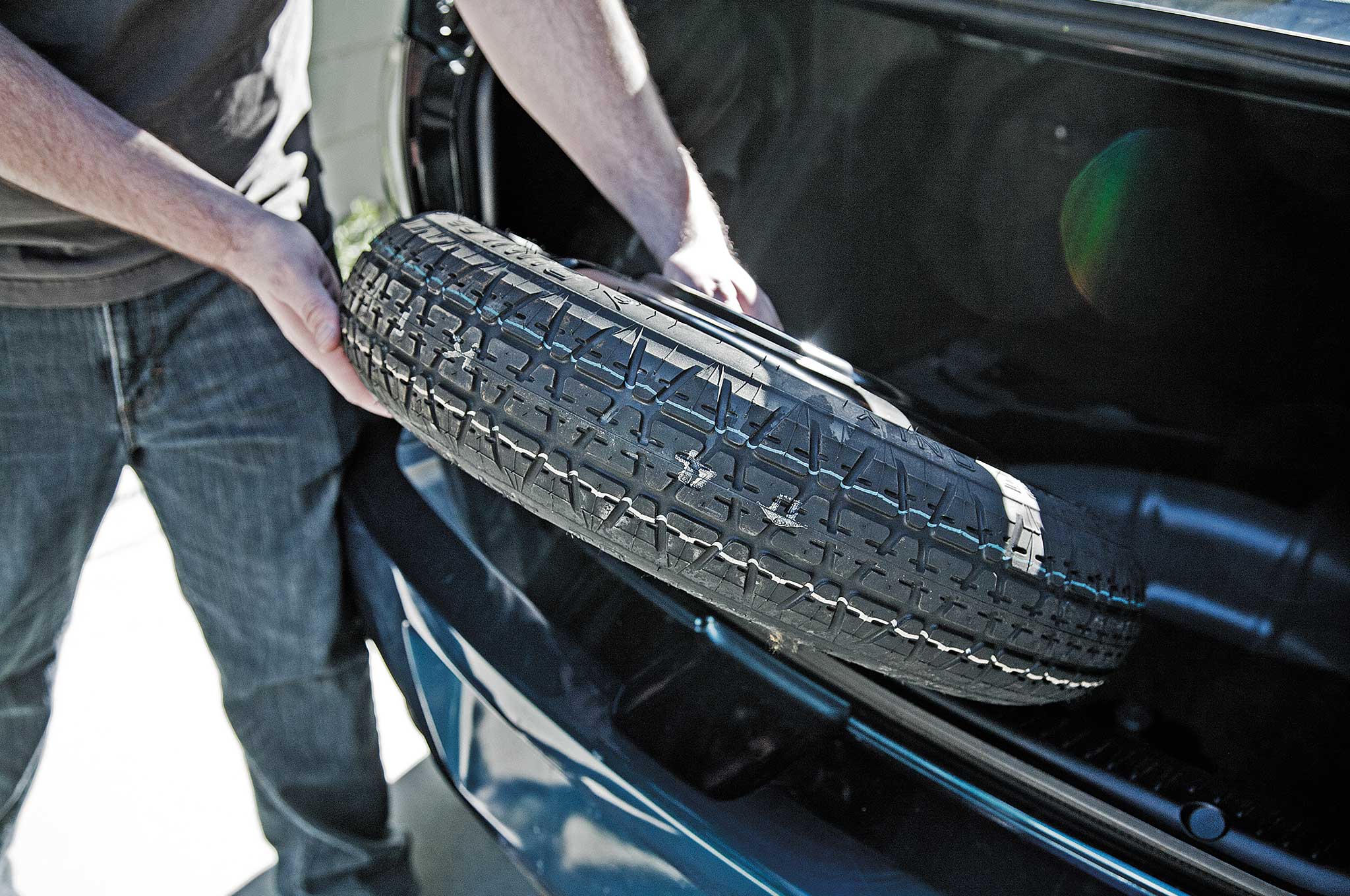
A “donut” or space-saver spare tire is better than nothing, but not nearly as helpful as a full-size spare.
Jacks and spares we covered in the previous section, but if you have the room, carry a full-sized spare with you. Donuts are for coffee. If we have to change a flat out on the highway, we can be ready to stay on schedule with a full-size spare rather than just ready to go to the nearest gas station on a donut. The next time you get new tires, keep one of the old ones for this purpose. An inexpensive spare wheel can be found on Craigslist or at a local scrap yard (be sure it’s the appropriate size and bolt pattern). One last tire-related item: If you’re traveling during winter, make sure you have a quality set of snow chains or traction cables for your tires. Cheap sets will break. Look for a brand like Security Chain Company.
That’ll cover the basics for emergencies. Now let’s address a few additional items to have in your vehicle to make life easier.
Toilet paper. The good stuff. I’m serious. Throw a roll in a Ziploc bag and put it in a backpack. There are still stretches of highway out there where bathrooms are as scarce as honest politicians. In that bag with the toilet paper, throw a pack of baby wipes in next to it, whether you have babies or not. Baby wipes are mission-essential equipment. I’ve never fought a war without them.
We’re also going to need things like flashlights, a headlamp, extra batteries, power banks for cell phones, and necessary medications, etc. On the subject of medications, ensure you have more than you need. In the case of my son, only certain pharmacies are able to fill his prescriptions so we have to account for this when traveling by taking extra in case we’re on the road longer than we planned.
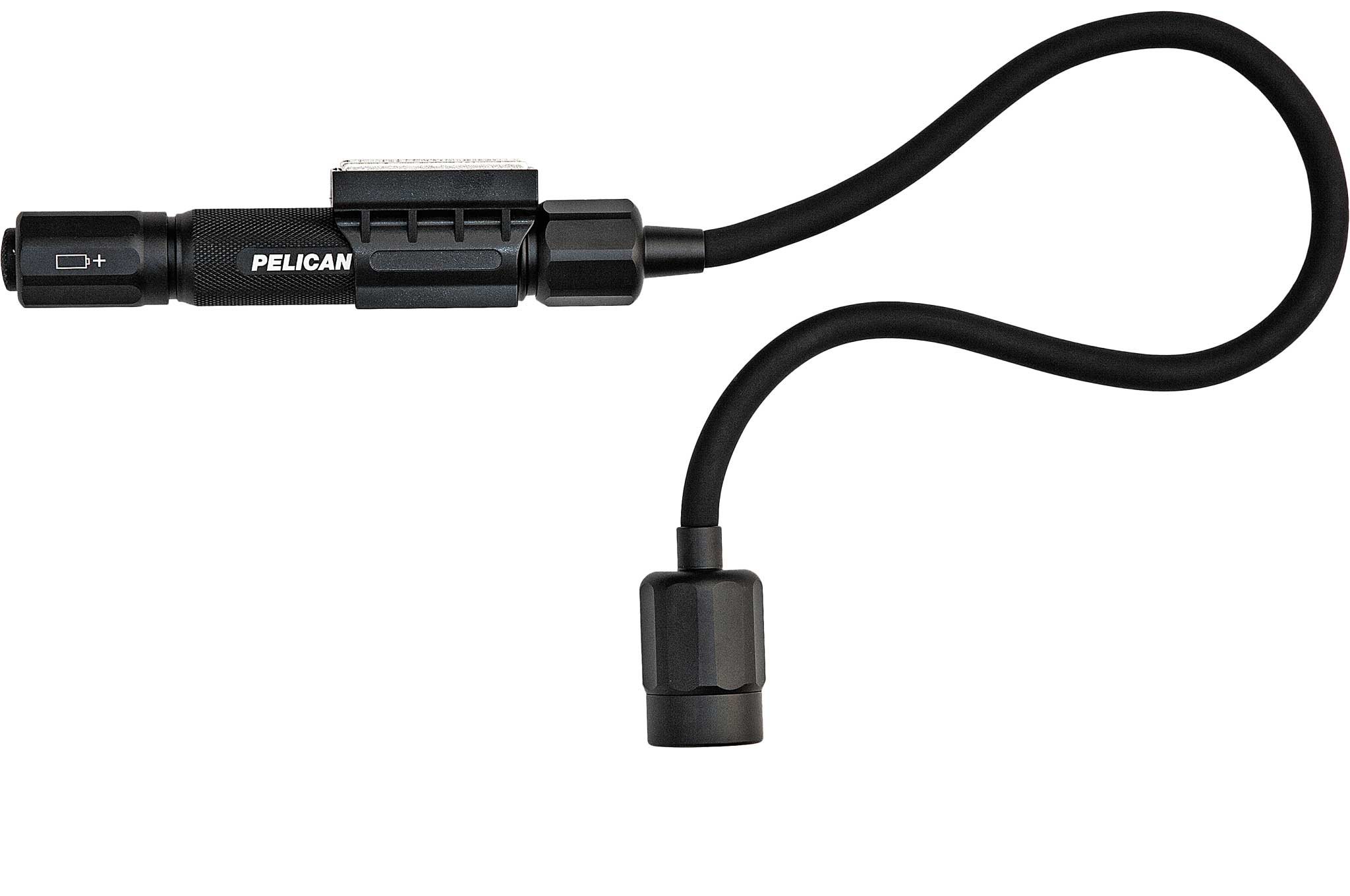
Above: Magnetic work lights, such as this Pelican 2365 Flex-Neck, can provide illumination while keeping your hands free for other tasks.
For flashlights, I prefer the kind equipped with magnets or hooks or some other method of attachment. A handheld light is fine, but it’s likely if I need my light, I also need to be doing something else with my hands simultaneously like changing a tire at night or topping up a radiator. Home Depot or Lowe’s carry an arsenal of these inexpensive work lights. Grab a headlamp, also in the same store, and you’re ready for night ops.
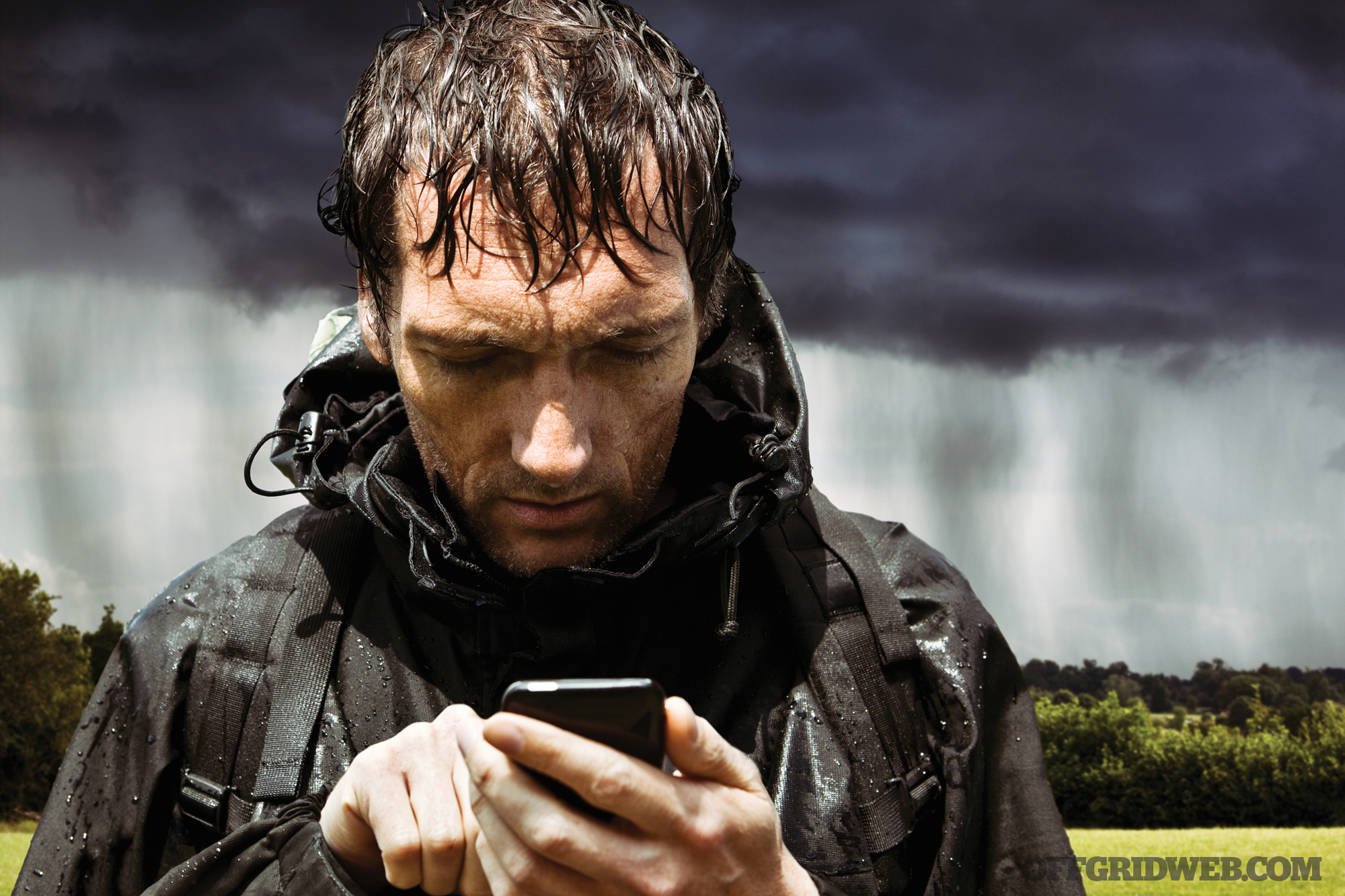
Cell phones are great, but coverage can vary. When caravanning, use a good set of hand-held radios for communication between vehicles. Companies like Cobra offer family packs of four radios that feature several miles of range, are rechargeable, and can also use non-rechargeable batteries. The ones we have also have a NOAA weather radio mode so you can listen to weather information if available. These are also great to have in the vehicle if your road trip will feature any hiking or camping destinations along the way.
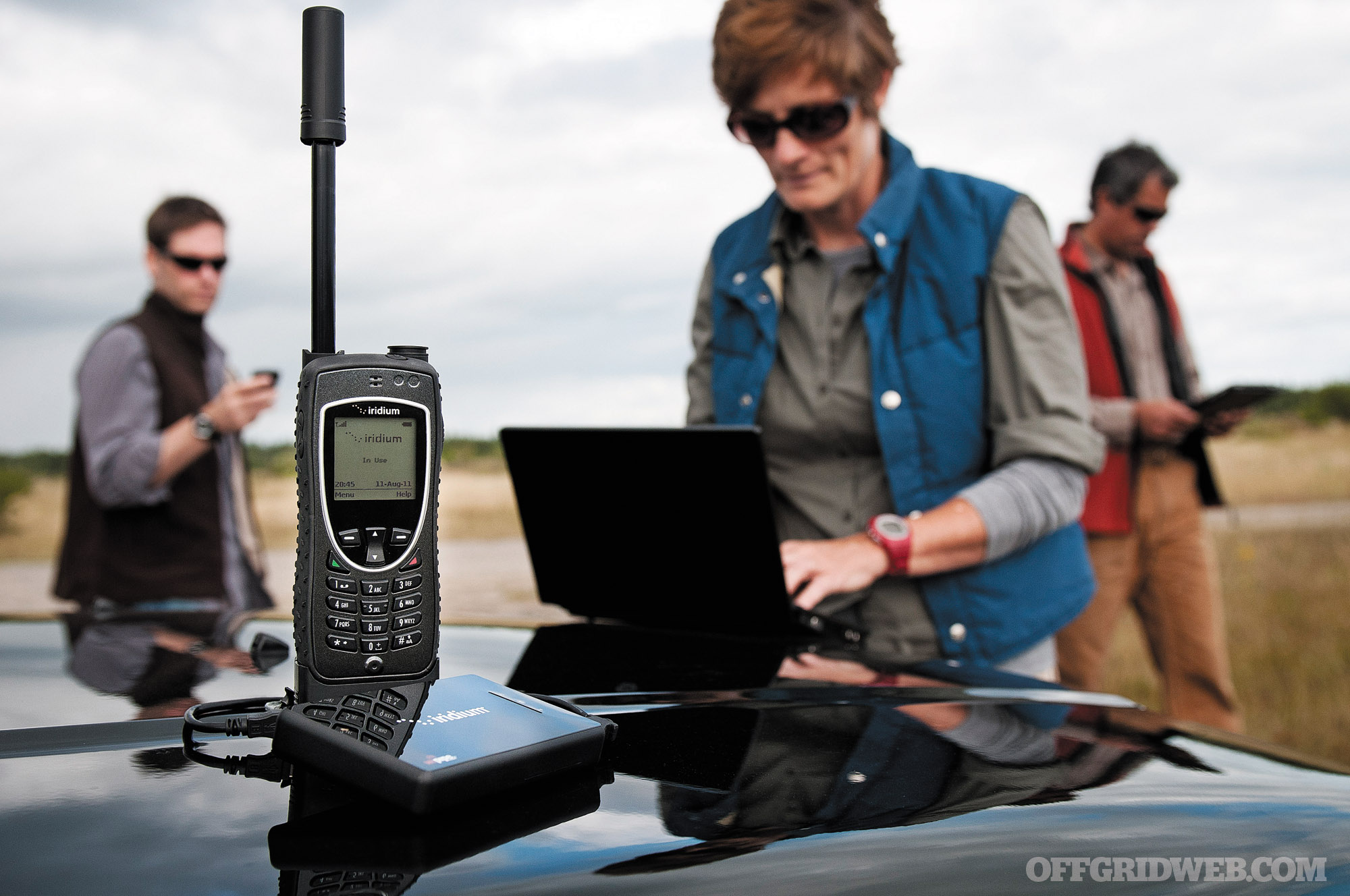
Satellite phones from companies like Inmarsat or Iridium are potential options as well. They offer pre-paid or monthly plans often managed by a third-party company like Bluecosmo. They can be expensive ($600-$1,200 USD or more) depending on the manufacturer and model, but in the event that cell coverage is absent, or cellular networks are overloaded in the case of a localized emergency, a sat phone in your go-bag could be the day-saver. The waters start to get deep when considering satellite networks, LOS (line-of-sight) considerations, etc., so be sure to do your research before investing. I found the reviews on Amazon to be helpful in zeroing in which phone would be best for our family.
Throw all this kit into the bag with the TP and wipes and you should have a pretty good start on the basic sundries to keep your family happy and hygienic even in the absence of modern amenities and services.
Defensive Driving
According to the National Highway Traffic Safety Administration, there were 37,133 lives lost on U.S. roadways in 2017 alone. When you’re putting in 3,500 miles of continuous driving over nine days, you’re bound to have some close calls. What this trip really emphasized for me was that sometimes the best defense really is having the best defense.
In Arkansas, we pulled out onto I-40 East. I was ahead in the rental truck; my wife entered the highway a minute or two behind me in her Suburban. A semi-truck travelling in the opposite, westbound lane overturned, entered the median, and began sliding toward her. The tractor-trailer ground to a halt before fully entering her eastbound lane, but it came so close to her that it threw dirt and debris across her windshield as she passed.
She had two hands on the wheel and the road had her full attention. She was driving defensively and alertly and used just enough of her lane to swerve around the chaos coming at her while not endangering others around her. Most of our family was in the truck with her, and she avoided that potentially lethal incident by being switched-on and not making a bad situation any worse with panicked over-corrections.
The incident made the local news as those types of events often do, but our family wasn’t part of the story thanks to my wife.
On this subject, I’d like to say driving defensively is a lost art, but that’d imply there’s some sort of elusive mastery of the skill few can attain. There’s no art to it. It simply requires focus. Driving defensively is driving alertly and safely, plain and simple. The road, your vehicle, and the vehicles around you get your full attention. Expect others around you to do foolish things like veer into your lane, brake suddenly, or run stop signs. If you’re thinking about these things while driving, instead of trying to post to your Instagram, you’re already several precious fractions of a second ahead of any potential situation.
Most of the accidents I see on the road these days are rear-end collisions. This tells me people simply aren’t paying attention and are following too closely, often while speeding. You need to maintain at least a 2-second gap between your car and the one in front of you. Impatiently tailgating other cars won’t get you to your destination any faster, but it might earn you a trip to the hospital. Anticipate traffic slowdowns around bends or as you approach intersections. Be thinking about what you’ll do if that car in front of you slams on its brakes right now. Where is my “out?” In other words, where can I safely steer (not suddenly swerve) to avoid the collision? The shoulder? The other lane? Is it clear?
These are the types of mental calculations we make every second on the road, but they require the majority of your attention, not the minority. Six million car accidents take place in the U.S. each year, according to the NHTSA. Nearly half of them are rear-end collisions. Start paying attention to your driving. With numbers like these, it’s likely those around you are not.
This may sound like overkill for a road trip, but when you place your entire family on a set of four tires barreling down the highway at 75 mph into unfamiliar places full of strange people, you really are leaving the wire. You’re leaving the safety and security of the known and trading it for the completely unknown. You had damn well better think about all the what-ifs that lie out there along those dark roads.
We traveled 3,500 miles over nine days coast-to-coast with our entire family in tow. We avoided potential danger areas. We chose nicer hotels to stay at to avoid bad areas of town. We ensured we were obeying the laws of each state and jurisdiction we passed through as it pertained to our firearms. We used technology to help guide us, but we didn’t rely on it. We brought gear, first-aid supplies, and equipment for all the just-in-case moments a lengthy road trip odyssey can present. We made sure our vehicles were maintained to avoid surprises. We didn’t do it all perfectly, but we did our best to cover a lot of “what-ifs.”
We did all these things because we know — as you now should if you didn’t already — that many of the situations we prepared for are not actually questions of “if,” but of “when.” Are you ready?
Editor’s Note: The following article is a web-exclusive accompaniment to “Road Warrior” by Mel Ward, as seen in the upcoming Issue 33 of our magazine (on sale 8/6/19). In the print article, Mel covers a variety of tips for maintaining safety and security while on a cross-country road trip. For the second portion of this two-part web series, Mel explains how situational awareness while traveling is crucial to your personal security and that of your loved ones.
Last week, we discussed considerations for traveling with firearms, whether they’re stored in your vehicle, in your hotel room, or on your person. But being armed isn’t always the first, second, or even third thing that will lead to your family’s safety on a road-trip. Your own personal situational awareness, and that of your family members, is critical and can prevent everything from side-swiping a car in your blind spot to potentially heading off a life-threatening situation.
Situational Awareness at Work
My family’s SOP actually paid off at Lake Powell, Arizona, as we waited in the parking lot of a grocery store for my wife to restock us on road snacks. While I was outside the vehicle dealing with a fussy baby tired of her car seat, my sons let me know a man was approaching from behind me. I was able to turn around and face the guy before he got much closer.
Even with the warning, I didn’t like where he was. Fortunately, he immediately stopped and didn’t take another step towards me once I turned and saw him. He asked me for money. Instead I gave him the most malevolent, “No, thank you,” he’d probably ever heard.
He actually backed away, said, “Have a good day,” and went wide around us. Fortunately, this was a completely benign situation, but thanks to our preplanning and awareness we were able to create a physical as well as psychological buffer between us and the unknown individual. We were polite, but used a tone that conveyed that there was absolutely nothing for him to gain from this encounter in any capacity.
Observation Tactics
Anytime you stop anywhere for food, fuel, or the much-dreaded diaper change, you should be assessing your surroundings. Before exiting the vehicle, use each of your mirrors as you would if changing lanes. They provide great situational awareness of what’s behind and beside your vehicle, so use them here too. Also, if you have a back-up camera, use it as well. Most back-up cameras use a fish-eye lens configuration that provides fantastic coverage, and they can provide an enhanced picture of dark areas. Shift into reverse and take an extra second to study what’s directly behind you.
When exiting the vehicle, after you’ve checked your mirrors and cameras, do a methodical 360-degree visual scan of your surroundings. Start from inside the vehicle looking through the windshield right to left. Look deep into your visual field and soak in details. As you exit, continue this scan where you left off all the way around behind you and back over the roof of your vehicle to where you started your scan through the windshield. This kind of awareness is its own layer of deterrence. It provides two advantages and it’s the less-obvious one that can pay the greatest dividends.
As good, upright mammals with excellent vision, simply looking around helps us identify potential nearby trouble — duh. However, we actually tend to ignore what our senses are trying to tell us. We look, but don’t see. We listen, but don’t hear. We subconsciously tune out important details. A conscious effort to actually see and hear what’s around us can help snap us out of that bad habit. The real payoff here is the flip-side benefit of anyone looking to cause trouble seeing you do this.
The Pack Mentality
We know bad guys prefer nice, soft targets. This is predatory behavior 101. Who would a predator take his chances with: a physically fit guy or gal who exits their vehicle and does a quick but methodical check of the savanna, or smartphone-with-earbuds-guy oblivious to the world?
Do a Google search for “jugging attacks” and watch some CCTV footage to see how robbers target those who are distracted or less observant than they should be. By taking a few seconds to consciously assess your surroundings you’ve organically lessened the threat simply by letting the bad guys know you’re paying attention. But what about that diaper change? Somebody’s gotta do it and your streak as rock-paper-scissors champion against your spouse can only last so long. So, it’s time for you to suck it up and get your hands dirty. But if you’re elbow deep in baby boom-boom, who’s watching your back?
In my case it was my two oldest sons, one a teenager and the other not far behind his brother. When I have to do my duty and deal with the “doody,” I simply tell my boys to, “pull security,” as I affect the road-side diaper change. It’s as simple as that. Just like in the old days. Short of having a fire-team of your bearded and tattooed buddies, an alert 14-year-old isn’t a terrible substitute.
Tell your wife, sons, daughters, traveling companions, etc., to simply look for people who are looking for you. All they have to do is keep an eye out while your back is turned and let you know if anyone approaches. Whether you’re occupied changing a diaper or a tire, simply have someone looking outward and paying attention.
“Road Warrior: Traveling Safely With Kids, Guns, and Pets”
If you’d like to read our full guide to safe cross-country travel, check back tomorrow for the web version of that article. It contains tips for route planning, driving schedule, accommodations, vehicle inspection, first aid, recovery gear, and much more. You can also read it in its original print format, along with several other emergency preparedness articles, in RECOIL OFFGRID Issue 33 — on shelves starting this Tuesday, August 6th.
Situational awareness is one of the foundations of preparedness. By observing your surroundings — and teaching your loved ones to do the same — you’ll gain an early warning of any trouble that’s headed your way. Even if it only buys you a second or two to react, that time can be a literal life-saver. Check back tomorrow for Part 2 of our Road Trip Safety web series, which focuses specifically on situational awareness. For now, here’s a real-life situation that illustrates this point.
Good observation and awareness skills are only part of the equation. You need to use that information to react quickly and defend yourself effectively — that means having the tools and the skills to take action. In the following video from Active Self Protection, instructor John Correia analyzes some CCTV footage of a defensive shooting in Brazil. His takeaways from this video are valuable to keep in mind.
The video begins with a woman preparing to move her car at night when her husband, reportedly an off-duty police officer, walks outside and stops her. While it’s possible that he did this for some innocuous reason, it’s more likely that he knew this area might be dangerous for someone alone and unarmed in a vehicle. If that’s the case, he was absolutely correct in that assessment. A man walks towards them with a gun in hand, and attempts to carjack them.
Fortunately, the husband was armed and was able to react quickly and get the upper hand, thanks in part to his wife watching his back and alerting him of the danger. As we’ll discuss more tomorrow, this is a great example of how a “pack mindset” and situational awareness are critical for the entire family.
Among all of the life lessons you were inundated with as a child, there are some that have probably stuck with you throughout your life. Look both ways before you cross the street, don’t run with scissors, and, from the time you were young, “stop, drop, and roll” in case your clothing ever catches on fire. As you got older, and realized your clothing doesn’t catch on fire quite as often as you were led to believe, perhaps you began to notice fire extinguishers for those times when virtually anything besides your clothing goes up in flames.
Fire extinguishers have been around for hundreds of years and have been a staple in fire safety for the past century. You walk by them every day and pay little or no attention to the red cylinders hanging on the walls or support posts of your local stores, schools, hospitals, office buildings, and other structures. They’re required by most, if not all, municipal codes to be easily accessible in commercial occupancies. The specific number of extinguishers and where they’re located can vary, but the National Fire Protection Association (NFPA) recommends no more than 75 feet between extinguishers. That number can fluctuate a bit based on type of occupancy, square footage, and layout.
The less regulated, but probably more important recommendation that all homes have at least one working fire extinguisher can be a source of guilt. No one can deny that having a fire extinguisher in an occupied home is anything but a good idea. But, unfortunately, most have placed a fire extinguisher on the “I’ll get it one of these days” list. If someone hasn’t experienced the immediate and critical need for an easily accessible, working fire extinguisher, the draw to prioritize having one in the home falls dramatically.
I conducted an informal social media poll asking who has a fire extinguisher in their home. I should also mention that I am a career firefighter, so a good number of my social media friends are fellow firefighters and our family members. A shocking 75 percent of those who responded don’t have a fire extinguisher in their home.
One of the primary reasons people give for putting off the purchase of a fire extinguisher is the intimidation factor. Most recognize the obvious: A fire extinguisher is used to extinguish a fire; it’s right there in the name. But it’s not as simple as that. There are different sizes, purposes, styles, and a wide range of costs. Unfortunately, it all adds up to most people overlooking an extremely important and easy-to-use safety tool.
Understanding Fire Extinguisher Classes
In an effort to simplify the purchase and use of a fire extinguisher, let’s begin with the label and discuss what it’s telling you. The principal information you should pay attention to is the part about the classes of fire that can be extinguished with that specific device. Believe it or not, it’s not as simple as one size fits all. Fire extinguishers aren’t simply pressurized canisters filled with water. As you may know, spraying water on certain fires can actually make a bad situation worse. Most fire extinguishers, in fact, have varying chemical agents or powders that allow them to extinguish a variety of different types of fires. This is where reading the label becomes important. Fires are classified by what’s actually burning. For the average homeowner and fire extinguisher customer, there are five classes of fire you may encounter.
These classes are easily distinguished from one another by differing colors and shapes for each class. The intent of this is so they can be identified, if there were to be any damage to the label, by its shape. To take the simplicity of identification a step further, many fire extinguisher manufacturers have included color coding. Not all fire extinguisher companies use the color coding, but all use the letters and shapes.
The most common types you’ll find are combination extinguishers. They’re known as “ABC” extinguishers, referring to the types of fire they’ll put out. These extinguishers contain a multi-purpose extinguishing powder (usually a combination of monoammonium phosphate and ammonium sulphate) that allows them to be approved by Underwriters Laboratories (UL) to suppress ordinary combustibles, flammable liquids, as well as energized electrical equipment. The aforementioned fire extinguishers that you encounter in all commercial occupancies and homes are almost exclusively ABC extinguishers.
In some specialty shops and industrial locations where flammable metals are prevalent, you may find Class D extinguishers. In most scenarios, though, a Class D extinguisher wouldn’t be needed. They act much like ABC extinguishers, but often use a sodium chloride-based powder. This substance can be used on other classes of fires, but, in short, Class D extinguishers are expensive and messy.
Class K extinguishers are becoming more common and are now available in most retail stores that carry fire extinguishers. These are specially formulated to put out grease-based kitchen fires. They spray a fine mist combination of alkaline chemicals that operate on the principle of saponification, a chemical reaction between a base and an acid to create a salt. (The same principle is used to convert fatty acid and lye into soap — see “All Washed Up” in Issue 30.) Class K extinguishers are able to snuff out the fire without the risk of spread or reignition.
How to Use a Fire Extinguisher
Knowing the purpose of the fire extinguisher is half the battle. Knowing what to do with it is the other half. The safe operation of a fire extinguisher could be a several hour class, but the basics are right there on the box when you purchase one. It’s broken down to a handy acronym: PASS.
Pull: Simply pull the plastic or metal pin sticking out the side of the handle. This pin is in place to prevent accidental discharge. If you’re not too overwhelmed at the moment and think about it, put the pin in your pocket, rather than throwing it. That way, if you wish to reinsert it in the extinguisher handle and carry it after the fire is out, you can.
Aim: Aim low, pointing the extinguisher at the base of the fire. The tendency is to point it at the bulk of the fire, but your most effective use of the contents of the extinguisher is to aim at the base first.
Squeeze: Squeeze the handle to discharge extinguisher.
Sweep: Sweep the fire from side to side until it’s completely extinguished and then back away.
Now that you’re versed on the use and operation of a fire extinguisher, it’s time to purchase one. When looking at your options online or at your local department store, they may all look similar. Which one is right for you? It can be daunting to say the least. Seven extinguishers, commonly found on the shelves of nationwide popular retail stores were put to the test and evaluated on:
Fire Class(es)
Discharge Range
Discharge Time
Weight
Rechargeability
Warranty
Cost
Comparing Performance
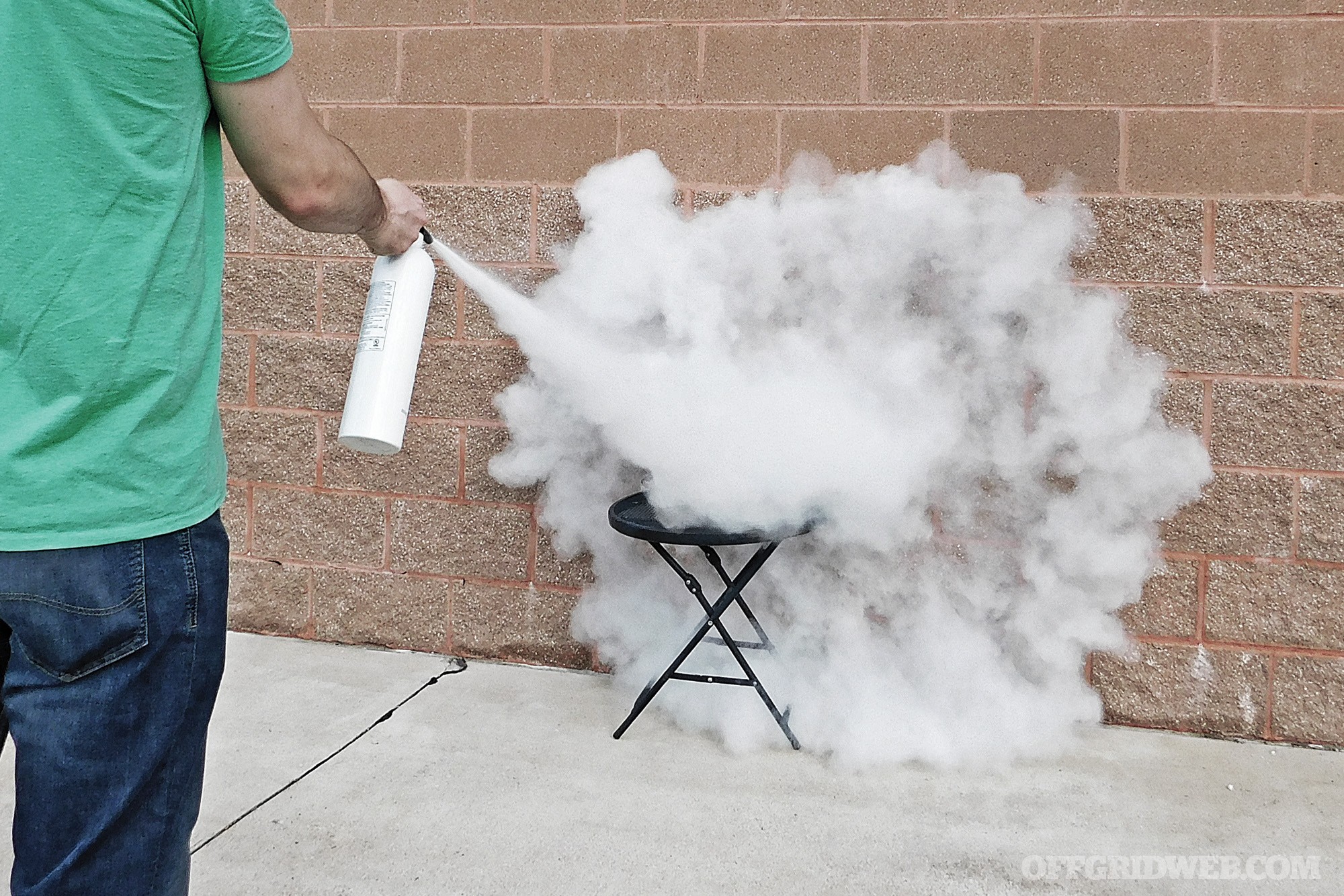
All seven fire extinguishers were discharged and evaluated. When fire extinguishers are tested and rated by UL, it’s done in a laboratory in a controlled environment. Our testing was done far less scientifically, but more practically. A mostly windless day (2 to 4 mph) was chosen and the test subject, Nick, had never utilized a fire extinguisher before. He was given minimal instruction (PASS). Each extinguisher was discharged for 2 seconds on a small fire and then that 2 seconds was added to a separate test for discharge time and distance.
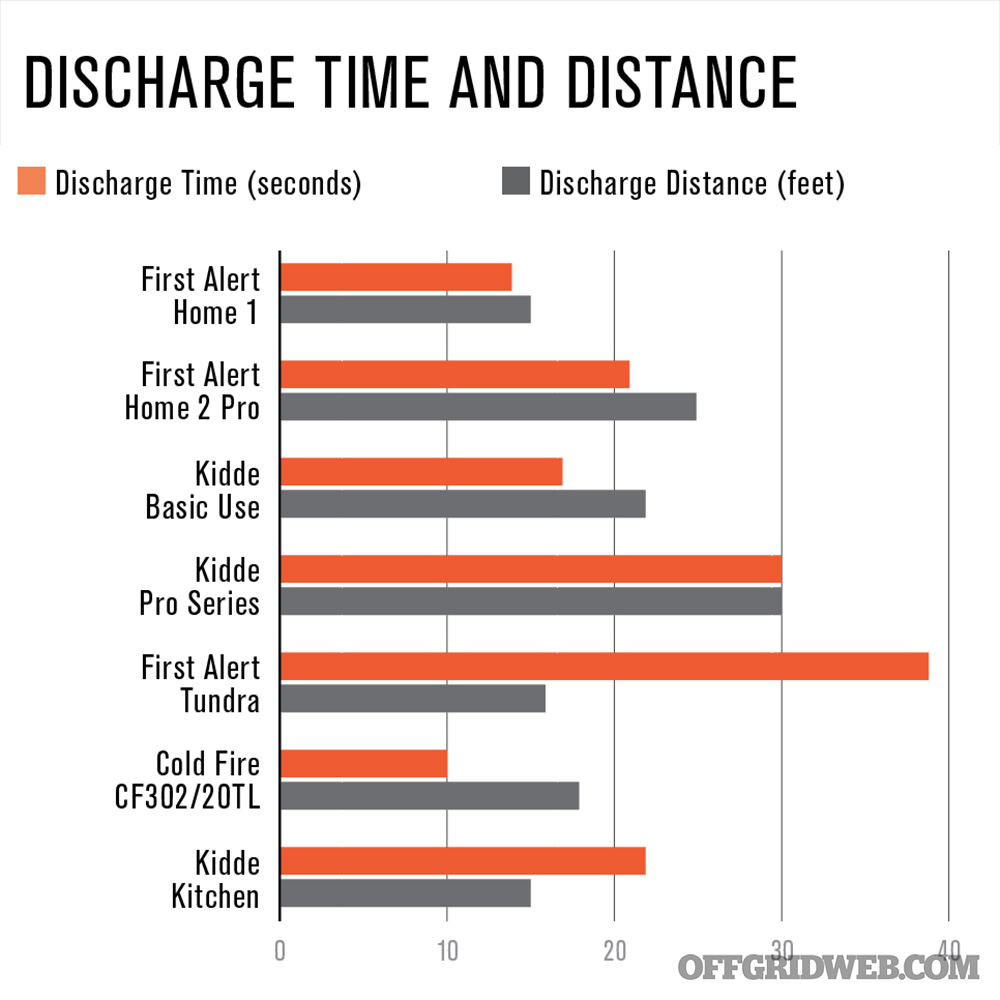
The good news is, across the board, all extinguishers performed very well. In every instance the fire was out before even the 2-second mark. It’s in the subjective details that you can differentiate your own comfort level and which extinguisher would best work for you and your family. Listed cost for each extinguisher is based on an internet search at the time of writing.
Important Designations
Class A and B fires also use a numerical designation. Each “A” rating is the equivalent effectiveness that 1¼ gallons of water applied would be. Each “B” designation represents a square foot that can be extinguished by someone trained on its use.
For example: In the hands of a trained user, a 4A20BC extinguisher has the equivalent of 5 gallons of water (4A20BC), can extinguish 20 square feet of fire (4A20BC), and can be utilized on energized electrical equipment (4A20BC).
Summary
Although this is a small sampling of the many fire extinguishers found online or on retail shelves, it provides a broad overview of the high-quality options that you have when identifying which extinguisher is right for your home. There are additional extinguishers designed specifically for automotive use, flammable metals use, and a slew of others. The purpose of this evaluation wasn’t to tell you which fire extinguisher to buy, but rather highlight seven common-purpose fire extinguishers and demonstrate their uses so you can determine what factors are most important to you. Do your research, and make an educated decision about which one(s) to purchase for your home. The most difficult parts are committing to making the purchase and following through.
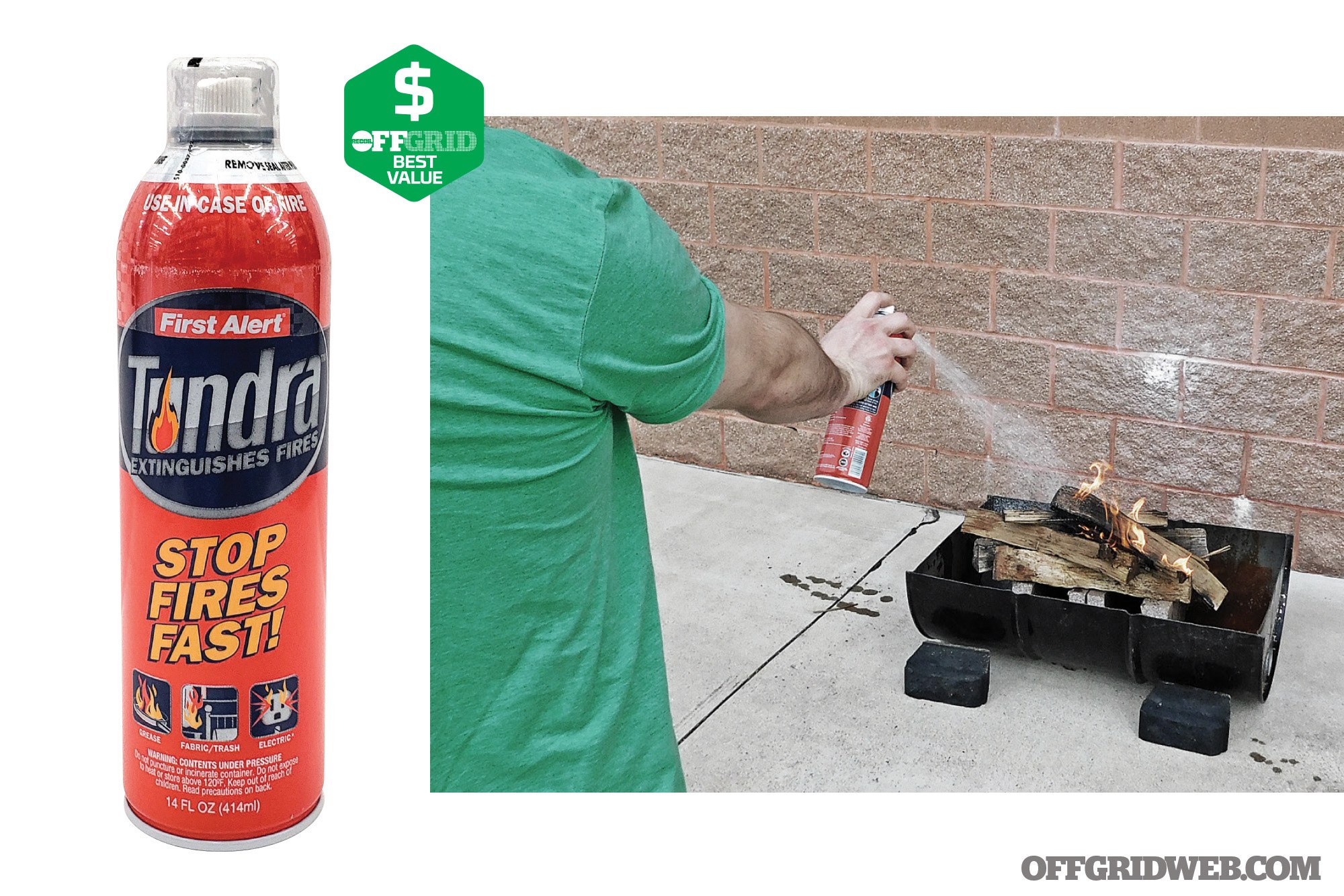
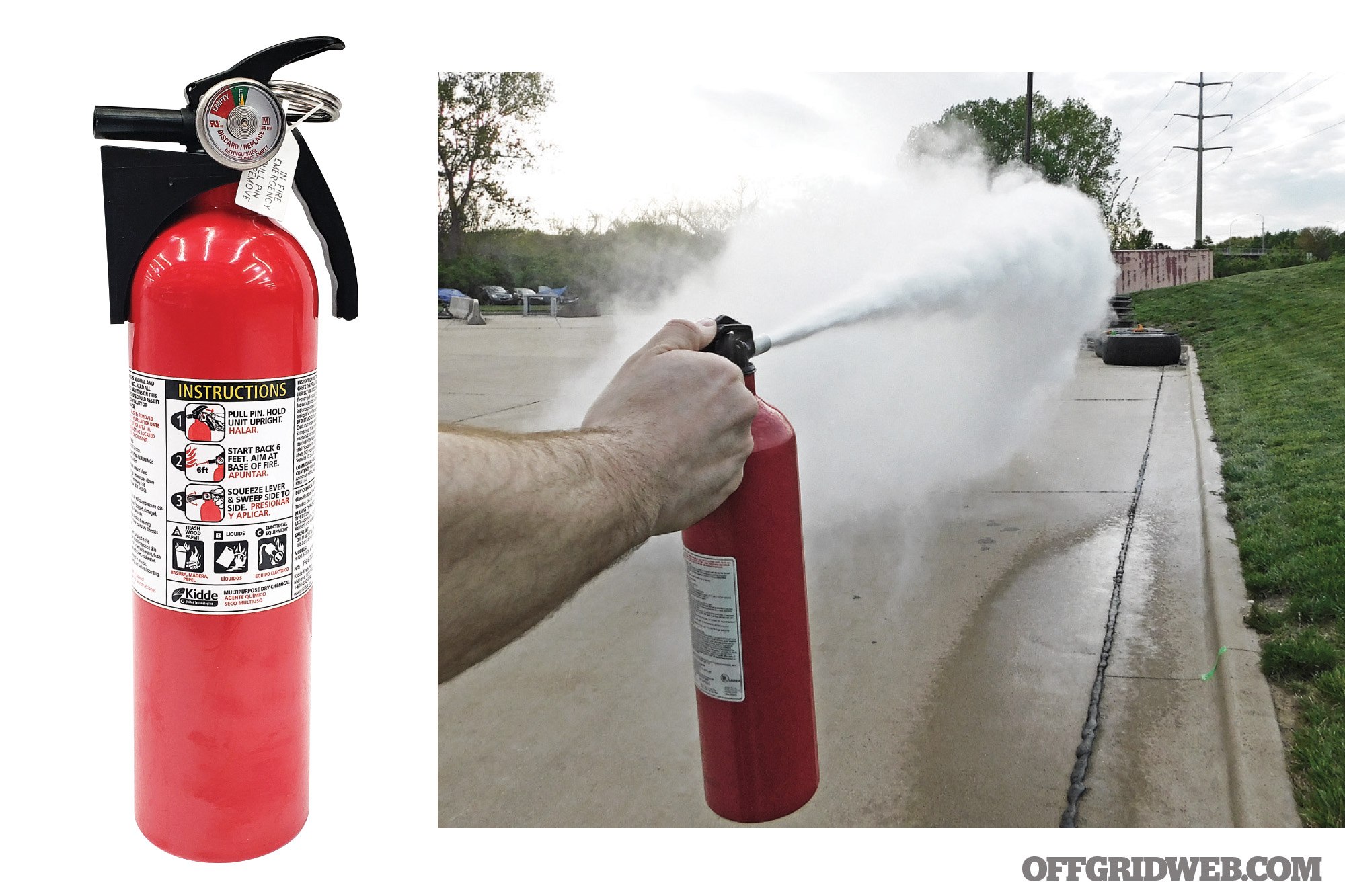
Notes The First Alert Tundra is a bit of a unicorn in the traditional fire extinguisher market as an aerosol-style extinguisher. More and more are becoming available over time. The Tundra breaks from the traditional labeling and uses pictures and simple descriptions to describe its use, rather than the classes. First Alert confirmed that the Tundra can be used with Class A, B, C, and K fires. In our testing, the Tundra remained effective far beyond the advertised 16-foot range, and our discharge time was a full 39 seconds. Impressive for its compact design!
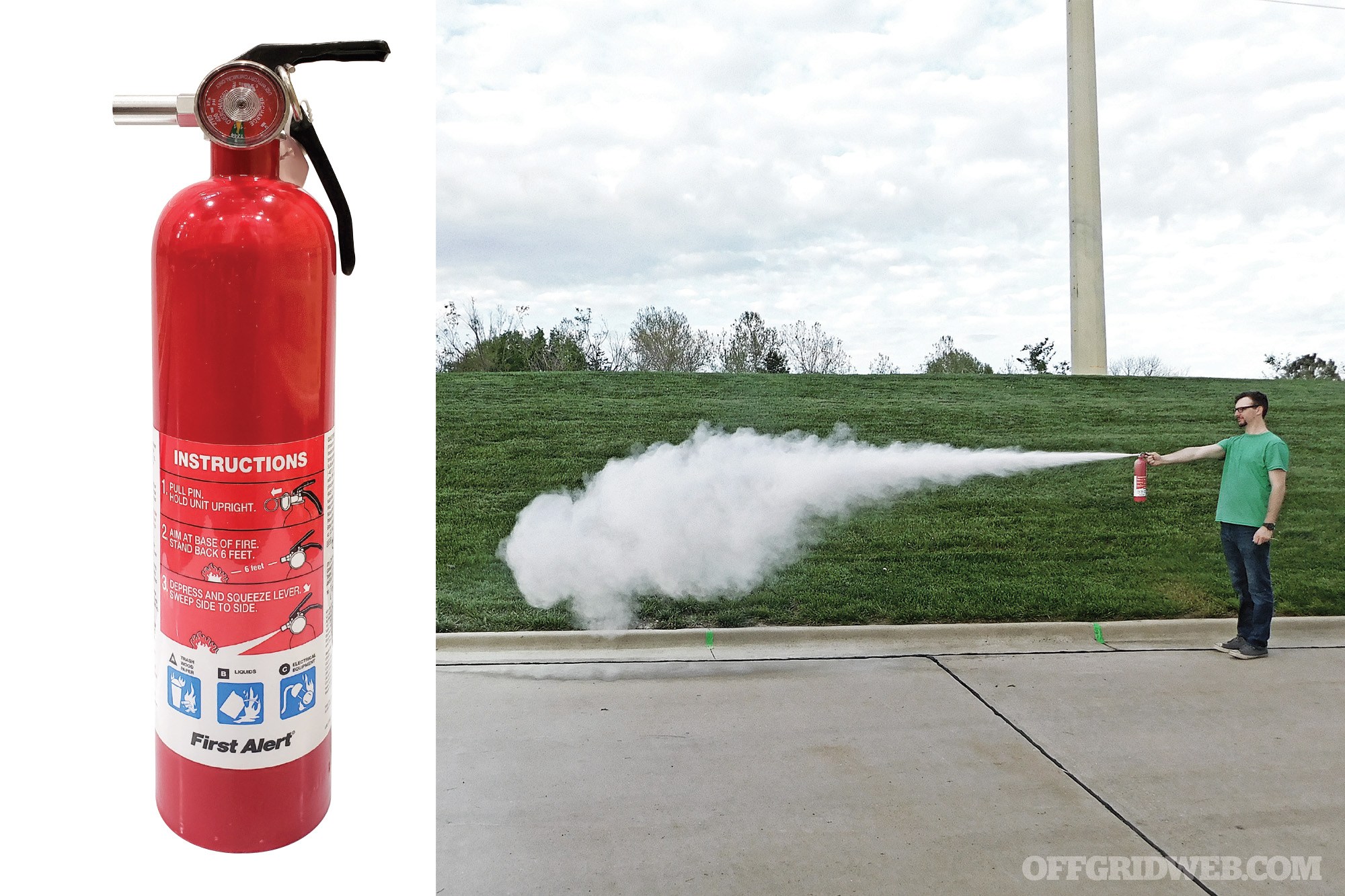
Notes The First Alert Home 1 is one of the most commonly found extinguishers in retail stores and homes. It’s compact, inexpensive, and capable of putting out a good amount of fire for its size. Regardless of the brand you choose, a 1A10BC extinguisher makes a nice, multi-use tool that can be kept accessible, but easily tucked away so as not to stand out in a residential room.
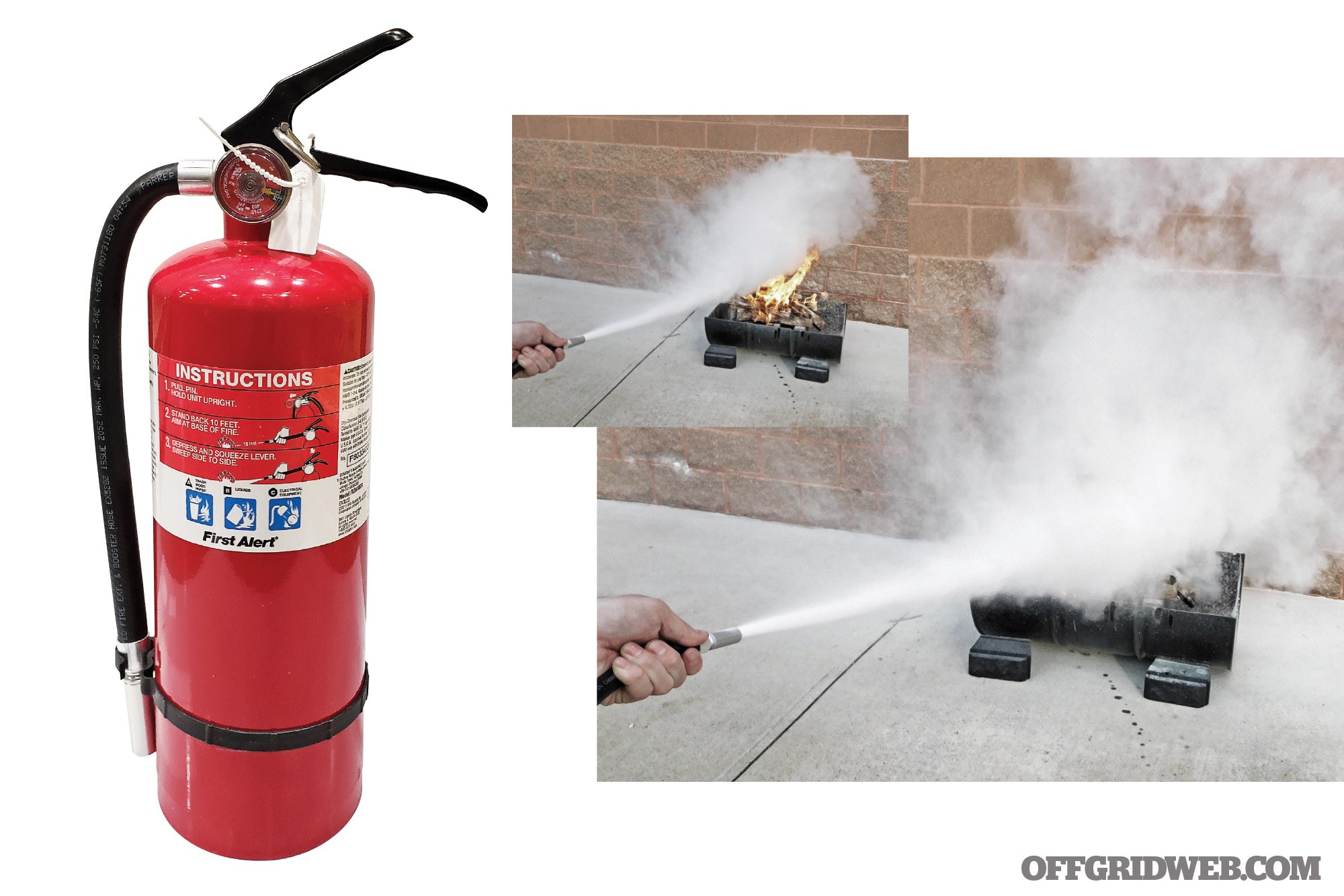
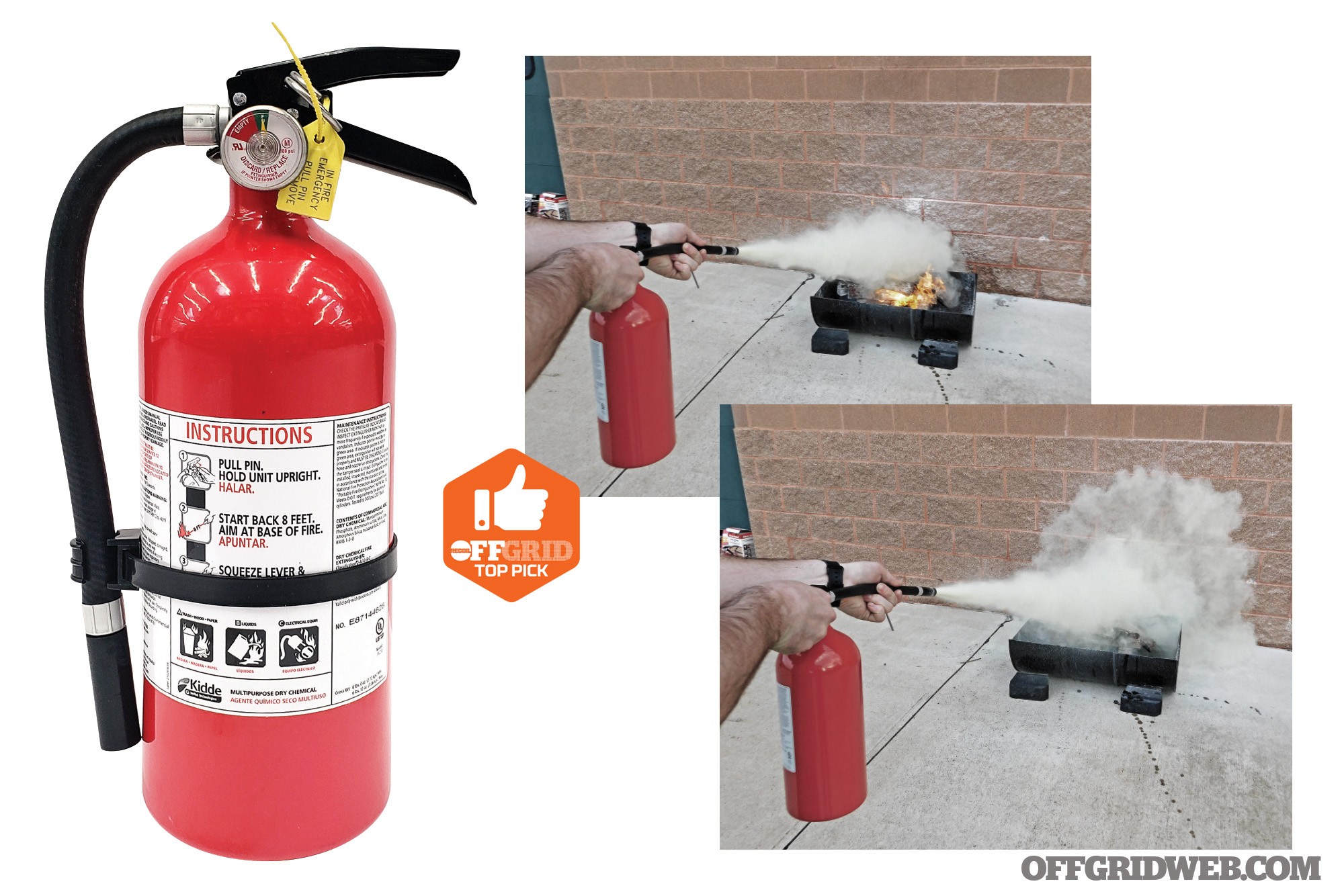
Notes There are a few manufacturers that carry both residential as well as commercially available extinguishers. First Alert is one of them. The First Alert Home 2 Pro is the type of extinguisher you’d commonly see in a department store or school extinguisher cabinet, but it’s available for residential purchase as well. As you can see from the performance numbers, it’s just what you’d expect when compared to its smaller relative: slightly bigger, slightly more expensive, slightly further reach, and slightly longer discharge time. If your home habits lend themselves to a bit more of a fire hazard concern, this might be the extinguisher for you.
Notes The Kidde Basic Use fire extinguisher is a counterpart to the First Alert Home 1. It performed slightly better in our testing, but only by a marginal amount. Kidde has a strong and enduring reputation as a leader in home fire safety, but in 2017, announced a major recall to a few extinguishers due to clogging or the need of excessive force to activate. By all appearances, the company corrected the problem and has rebounded to regain its place among the home fire safety leaders.
Notes Like the First Alert Home 2 Pro, the Kidde Pro Series 210 is the larger of the residential Kidde options. It performed extremely well in our evaluation, leading the pack in discharge time and distance. Like its competitor, it’s slightly larger, but carries with it greater capacity for fire extinguishment. Some would consider these 2A10BC extinguishers overkill for a residential application, while others feel bigger is better.
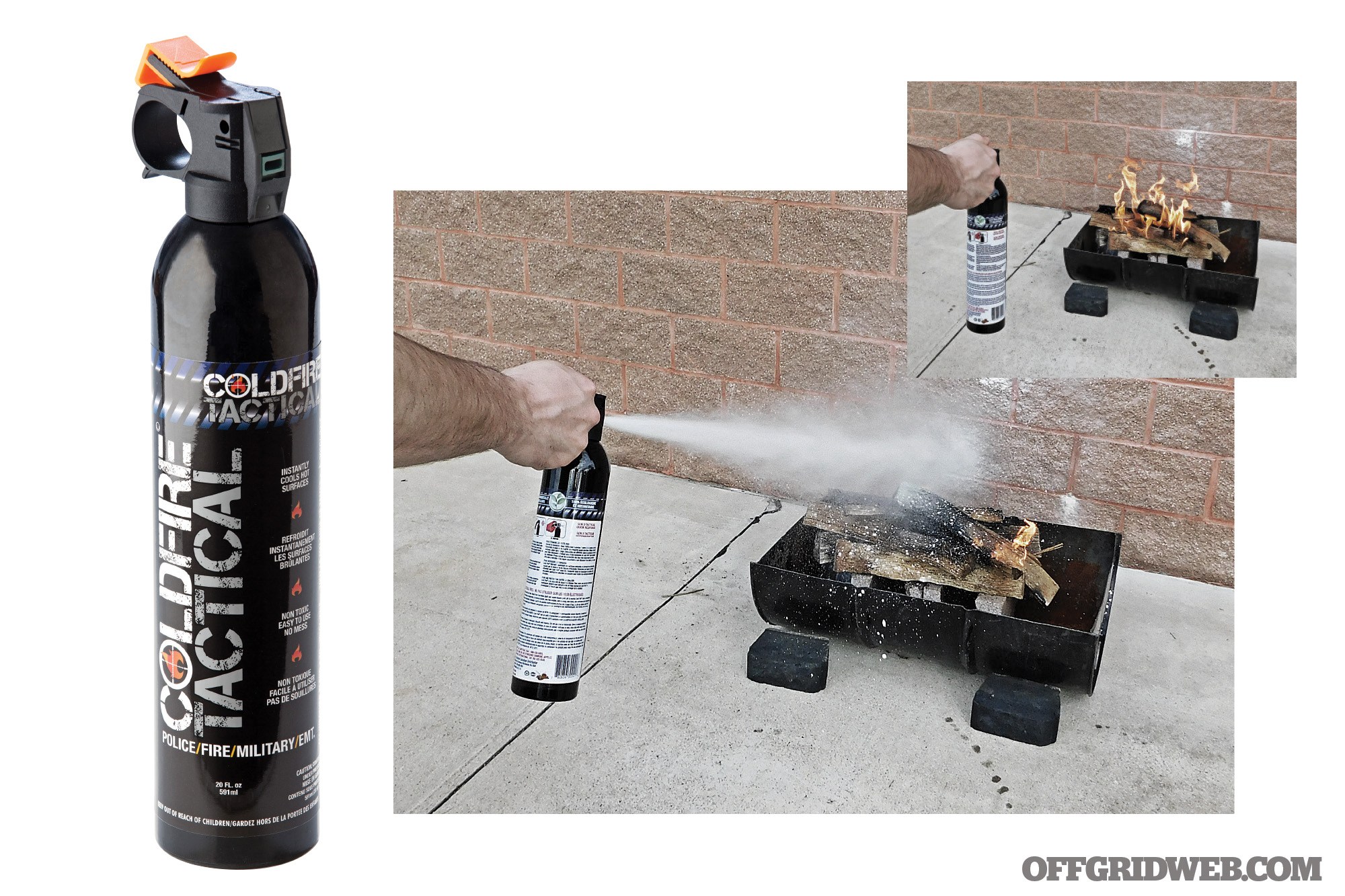
Notes Cold Fire extinguishers are relatively new to the market and are in a class of their own. The company’s popularity is growing among police and fire departments. Although these extinguishers aren’t found on retail shelves, they’re commercially available through the manufacturer’s website and can be ordered by email at ed@desertmountaincf.com. Although their 20-ounce extinguisher performed on the low end of discharge time and distance, the fire knockdown power is unmistakable. Cold Fire touts a UL rating for A, B, D, and K fires, which means, although they lack the Class C rating for energized electrical equipment, the Class K rating makes them usable for kitchen grease fires. Cold Fire is 100-percent biodegradable, nontoxic, noncorrosive, and has six times the penetrating capability of water. Their small extinguishers pack an impressive punch.
Kidde Kitchen
Fire Class(es) 10BC
Discharge Range 15 feet
Discharge Time 22 seconds
Weight 3.9 pounds
Rechargeable No
Warranty 12 years
Price $15 (Menards)
URL www.kidde.com
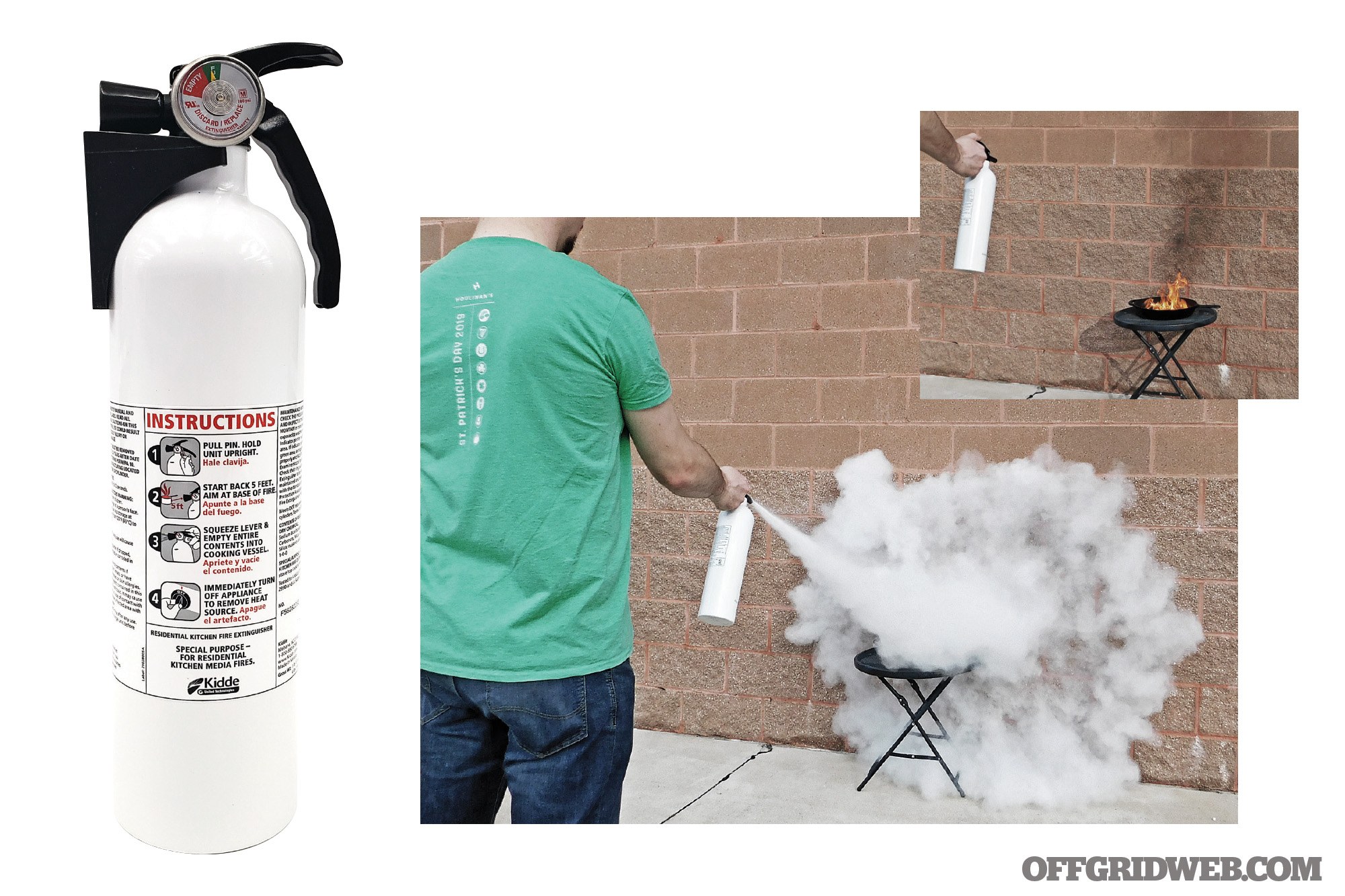
Notes The Kidde Kitchen extinguisher isn’t like any of the other extinguishers evaluated for this article. It’s specifically formulated for kitchen fires. Although Class K extinguishers are specifically designed for burning cooking oils — the alkaline mixture combines with the burning oil to form a soapy foam layer — this extinguisher is rated for Class B fires, which basically eliminates the oxygen and puts out the fire. In our evaluation, it immediately snuffed out the grease fire, didn’t splatter or spread the fire, and left a film over the oil, suppressing the flammable vapors. This is a great option to have in your family’s kitchen.
Not every self-reliant home is suitable for livestock. You need acreage, and the land would have to support sufficient forage, water, and fencing. You’d need to invest in a working chute to administer vaccines and treat a myriad of health concerns, and marketing the product would require a trailer or a haul bill. But even when cows, sheep, or hogs don’t make sense on a property, bees might.
Honeybees can be kept nearly anywhere, even on a high-rise roof or balcony when local ordinances allow it. They yield a sweetener with an indefinite shelf life, suitable for sale or barter. They can provide wax for waterproofing fabric or treating furniture, and they contribute to the pollination of numerous crops within a two-mile radius of the hive.
Be aware that beekeeping is a different vocation than three or four decades ago. Families with honeybees prior to the mid-1980s may have harvested honey on Independence Day and then not given those hives much thought until the next July 4th, but beekeeping these days requires greater management just to keep the hives going. Our nation has gone from 6 million honeybee colonies at the end of World War II to about 2.5 million today.
Success isn’t guaranteed for all who attempt beekeeping, even if all the textbook wisdom is employed, but it can be a worthwhile endeavor for those willing to accept the risks.
Seven honeybee species exist in the world (none of which is native to North America, by the way). Only two species have been domesticated — Apis cerana (the Asian honeybee) and Apis mellifera (the European honeybee).
A. mellifera is by far the most well-known honeybee in the Western world. First introduced to North America by European colonists, it became known to the Native Americans as “white man’s flies.” And there are over two dozen subspecies of the European honeybee, including those identified commercially as Italian, German, and Carniolan. Russian honeybees are a mite-resistant strain of this species, and the Africanized bees that we read about are any of several subspecies hailing from the African continent.
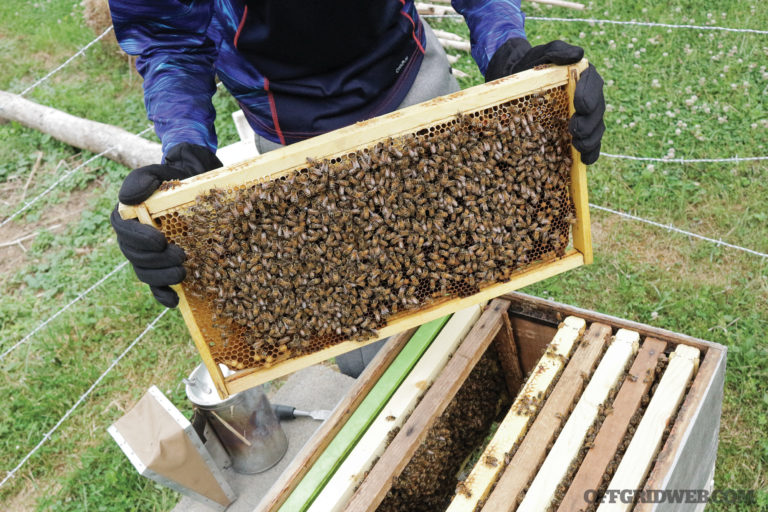
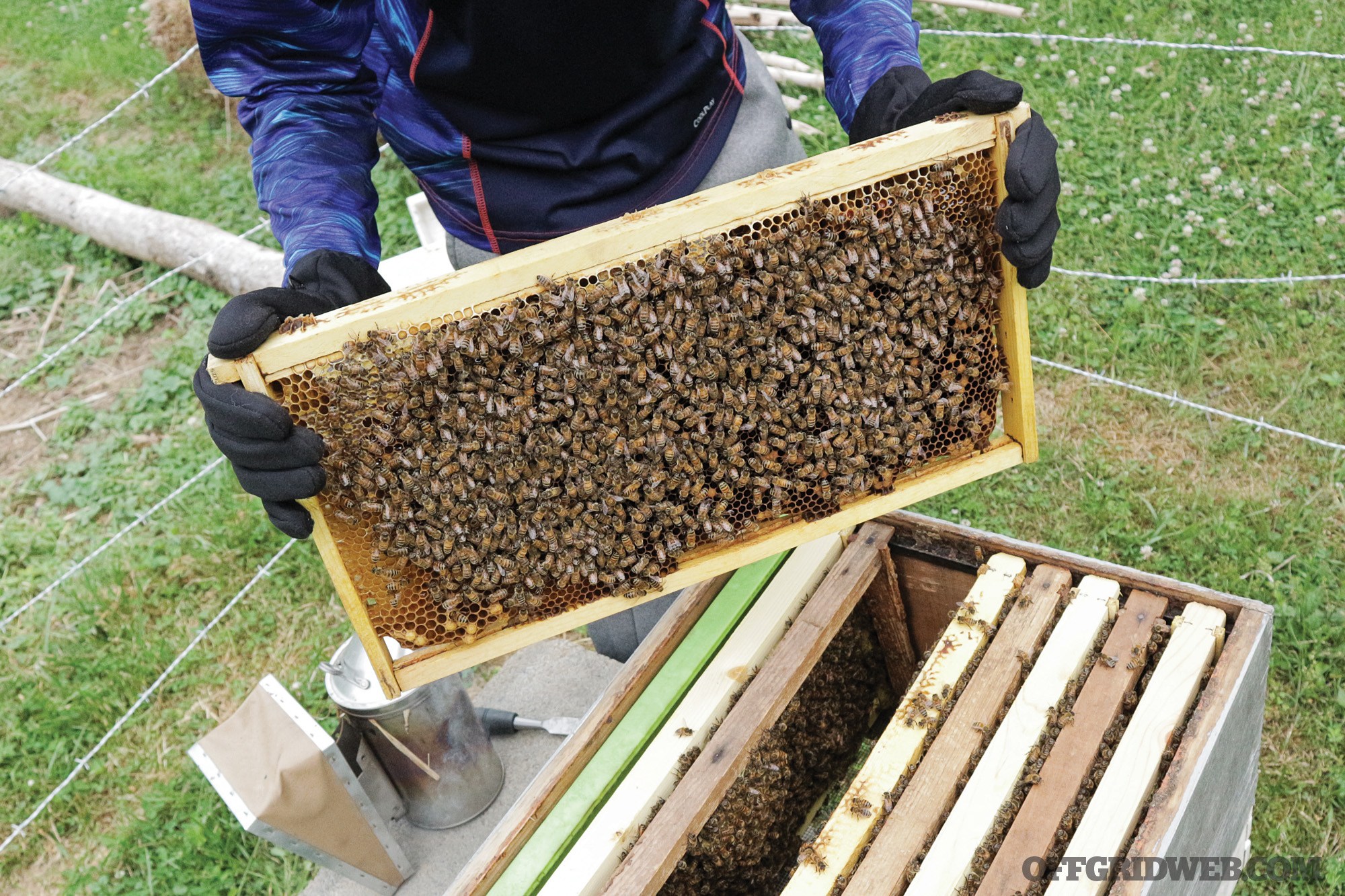
Honeybees overwinter by assembling into a tight cluster inside the hive.
Where Credit is Due
We can all agree that honeybees are wonderful, but is it possible that we’ve placed this specific type of bee on a higher pedestal than we should?
As many as 3,500 bee species native to North America may play some role in crop pollination. In fact, research conducted by Penn State University and other land-grant institutions indicates that the introduction of honeybees to certain fruit and vegetable crops may not increase yields significantly if native bees are present and active.
Why, then, are honeybees still used for pollination services? Predictability. Barring any disease or pest issues, a hive or two in a field practically guarantees 100,000 bees, ready to work. In contrast, native bee populations can fluctuate wildly, and even though they’re more efficient pollinators in many cases, honeybees provide insurance.
The Biology of the Workforce
A healthy colony of honey bees will consist of a queen, workers, and drones. The bulk of the hive is made up of workers, who are all female and only survive for about six weeks during the nectar flow. Workers have the barbed, one-use-only stingers that are familiar to anyone who’s stepped barefoot on one.
Workers can create new queens, and if they deem the population large enough to warrant swarming, or if they decide the current queen isn’t replenishing the short-lived workforce quickly enough, then they’ll favor selected larvae to develop as queens.
If the spacing is wrong in a hive, your bees may build comb in ways that make management difficult.
Drones are the only males in the hive and make up 15 percent or more of the population. They’re blocky and slow, and their only purpose is to mate with a virgin queen. If the queen is already mated and reproducing at a rate the colony finds acceptable, then the drones don’t have anything to do. They’re convenient for new beekeepers who want to learn to catch a queen and place her in a cage without harm, since they lack stingers.
The queen’s only purpose is to lay eggs — as many as 2,000 per day. Given the short lifespan of the workforce and all the chores that must be done, this role can make or break a colony. An organ called a spermatheca is where she stores all the sperm from her first and only mating flight and gives her the power to decide the gender of her offspring: An unfertilized egg becomes a drone; a fertilized one becomes a worker.
Methods to Consider
The traditional Langstroth hive is comprised of a series of boxes, each with 8 to 10 frames.
A traditional Langstroth hive is the system most beekeepers employ and is most recognizable. It relies on a box with enough space for 10 removable frames; as the hive grows, additional boxes are stacked on top. Most beekeepers use larger boxes and frames for brood-raising purposes with smaller ones (shallow or medium “supers”) for honey storage.
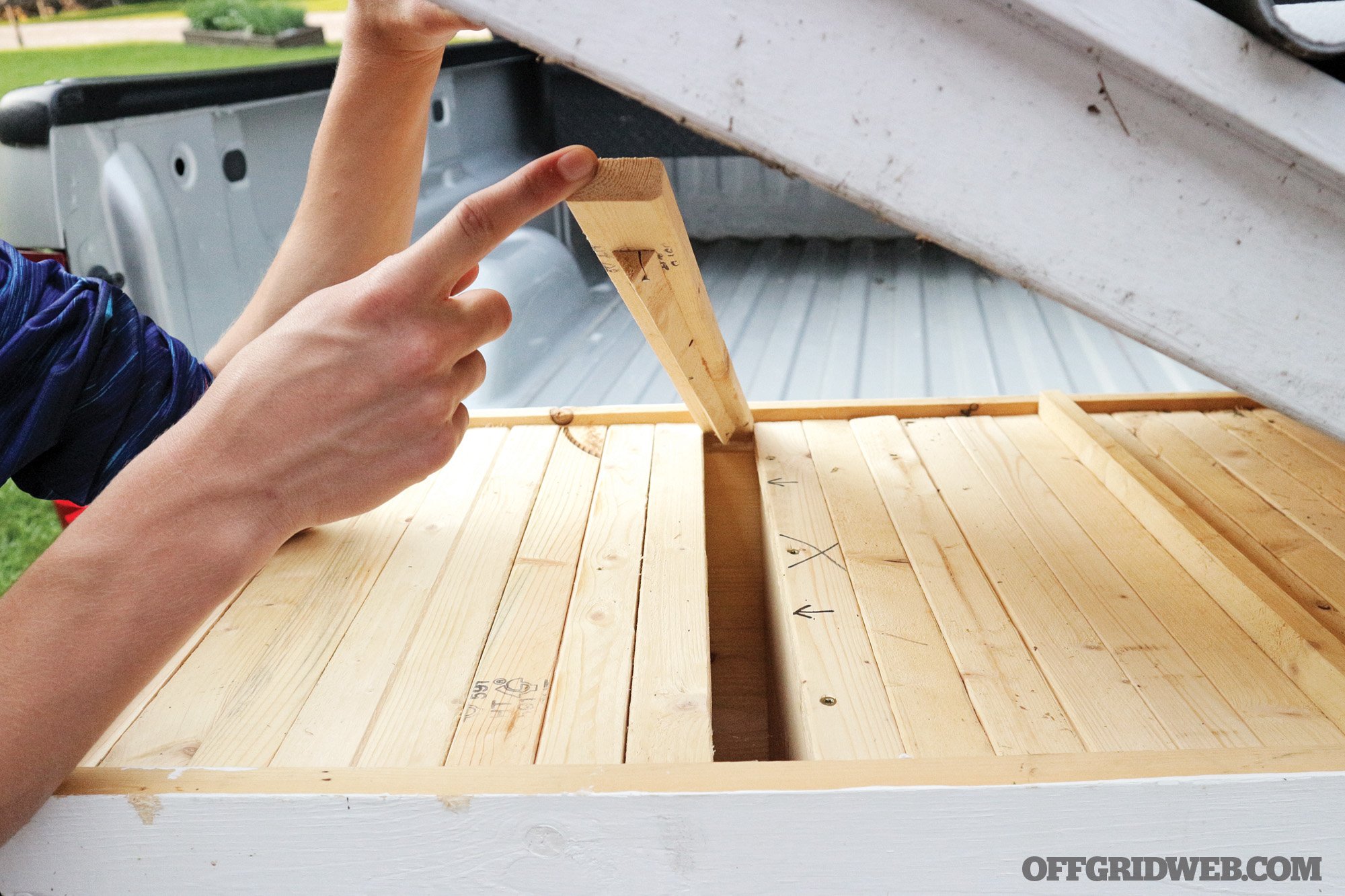
Top-bar hives are less common but favored by some homesteaders, the argument being that this method more closely mimics how bees build comb in nature. Wooden strips are laid across the top of a trough-like enclosure (made of scrap lumber or even a plastic tote or barrel cut lengthwise). Comb is built onto and hangs freely from the wooden strips, and the colony expands horizontally instead of vertically.
There are certain scenarios where top-bar beekeeping could be a better choice than a conventional Langstroth system:
When funds are tight.
If pollination and/or beeswax are higher priorities than maximized honey production.
The ability to lift a full, 40-pound honey super is an issue.
Of course, there are disadvantages to top-bar beekeeping, and among the greatest of these is the fact that equipment doesn’t translate to standard Langstroths. If you buy or inherit a colony from another beekeeper, those standardized frames may not fit into the top-bar hive easily — not without some carving and wiring of comb, at least.
A wedge along the strips of wood in a top-bar hive provide a point for bees to attach comb.
Honey extraction can also prove frustrating with top-bar hives, as most extractors are built with four-sided frames in mind. Trying to sling the honey out of a comb built onto a top-bar is likely to end with a mess, so most top-bar beekeepers either harvest comb honey or they crush the comb and strain out the honey.
It’s possible to combine some of the advantages of both Langstroth systems and top-bar hives into what’s called a Langstroth long-box, using conventional four-sided frames placed into a box. Just like with top-bar hives, the colonies are allowed to expand horizontally.
Swarm vs. Nuc
Once a person has made the decision to become a beekeeper and has settled on a particular hive system, the next step is sourcing the bees. Ask around, or use the internet, to identify reputable beekeepers close to home. You can buy a swarm or colony outright, or you may be able to barter for one.
If there’s a beekeeping association nearby, join it and network your way to a supplier, as most consider locally sourced bees to be advantageous against colony losses. The American Bee Journal lists some of the more established beekeeping organizations in each state on its site: https://americanbeejournal.com/tiposlinks/beekeeping-associations/.
Nuc boxes hold four to five standard brood frames.
You may opt to order from a company instead, and an early decision that you’ll make is whether to buy a packaged swarm or a nucleus hive (aka “nuc”). Kelley Beekeeping (www.kelleybees.com) and Olivarez Honey Bees (www.ohbees.com) are two examples of companies that deal in live bees.
Packaged swarms tend to be a little cheaper and will arrive in a screened box with about 10,000 bees. The queen is separated into a queen cage. You install the bees by removing a wooden cork from one side of the queen cage, placing the cage — in which the queen is still imprisoned by a sugar plug — into the hive and then dumping the remainder of the bees on top of her.
Larger beekeepers often have multiple “bee yards” that they visit and inspect regularly.
By comparison, a nuc is a box of four or five standard-sized frames housed in a wooden or corrugated plastic box. The queen is free and already laying eggs in the cells. The beekeeper simply has to move the frames from the nuc box to the hive, along with some empty frames onto which they can expand.
Cost Considerations
The going price in my area for a three-pound packaged swarm is $140 and a nuc will cost about $165 — this can vary widely by region.
To get the needed personal protective equipment like smoker, hive tool, and woodenware for two complete hives, expect to invest about $400. So, if considering two hives and two nucs, the cost will be in the neighborhood of $730.
Two hives will allow the new beekeeper to compare and contrast and also swap out brood if something happens to one, but you can always start with a single hive, which would bring the cost down considerably.
Inside a peanut-shaped cell, a new queen is developing.
Other ways to lower the investment would be to make your own woodenware or to get placed on your local Extension Service’s swarm removal list. Each state has a Cooperative Extension Service affiliated with a university in that state, and there’s likely to be a Cooperative Extension Service office in your county that offers a range of agricultural education and outreach. Contact them and request to be added to their swarm removal list if they maintain one. However, if you want to catch a swarm, it would be wise to enlist the help of someone experienced, especially your first time out.
Making your own woodenware is yet another way to shave a few dollars off a beekeeping investment. Some beekeepers have had success with “bait hives,” using lemongrass oil to draw scout bees in search of a new home for a swarm.
Buying used woodenware is tempting, but it’s not recommended. American foulbrood is a bacterial disease that can destroy all the larvae in a colony, leaving behind decaying brood and an unpleasant smell. The spores of American foulbrood can remain dormant in old equipment for 40 years. (A state department of agriculture may utilize quarantines to halt the spread of this disease, or infected hives may be burned. If you opt to treat American foulbrood — or any other diseases — with antibiotics, federal legislation that went into effect in 2017 requires a veterinarian’s prescription.)
First Season Duties
Once the bees arrive and are installed in their new home, it may be prudent to stimulate brood rearing by feeding them sugar water for a short time, especially if they arrive before native bloom is abundant. Commercial feeders are available from supply catalogs, or simply fill a zippered freezer bag with the solution, laying it on the top frames and making a few feeding slits with a razor blade.
A freezer bag with sugar water and razor slits is a cheap and effective feeder.
It’s good to check on the bees to make sure the queen is doing her job and that no other issues have arisen, but new beekeepers should resist the urge to open hives too often.
If you’ve gone with packaged swarms, it’s good to make sure the workers have set her free from her cage after a couple of days.
Assuming all is well with the queen, an inspection every couple of weeks should be sufficient. Check their stores. The ideal scenario is to see a rainbow pattern on the frames, with capped brood, pollen, and honey. Keep an eye out for peanut-shaped queen cells, which could signal that either the hive is getting too crowded or there’s a problem with the current queen.
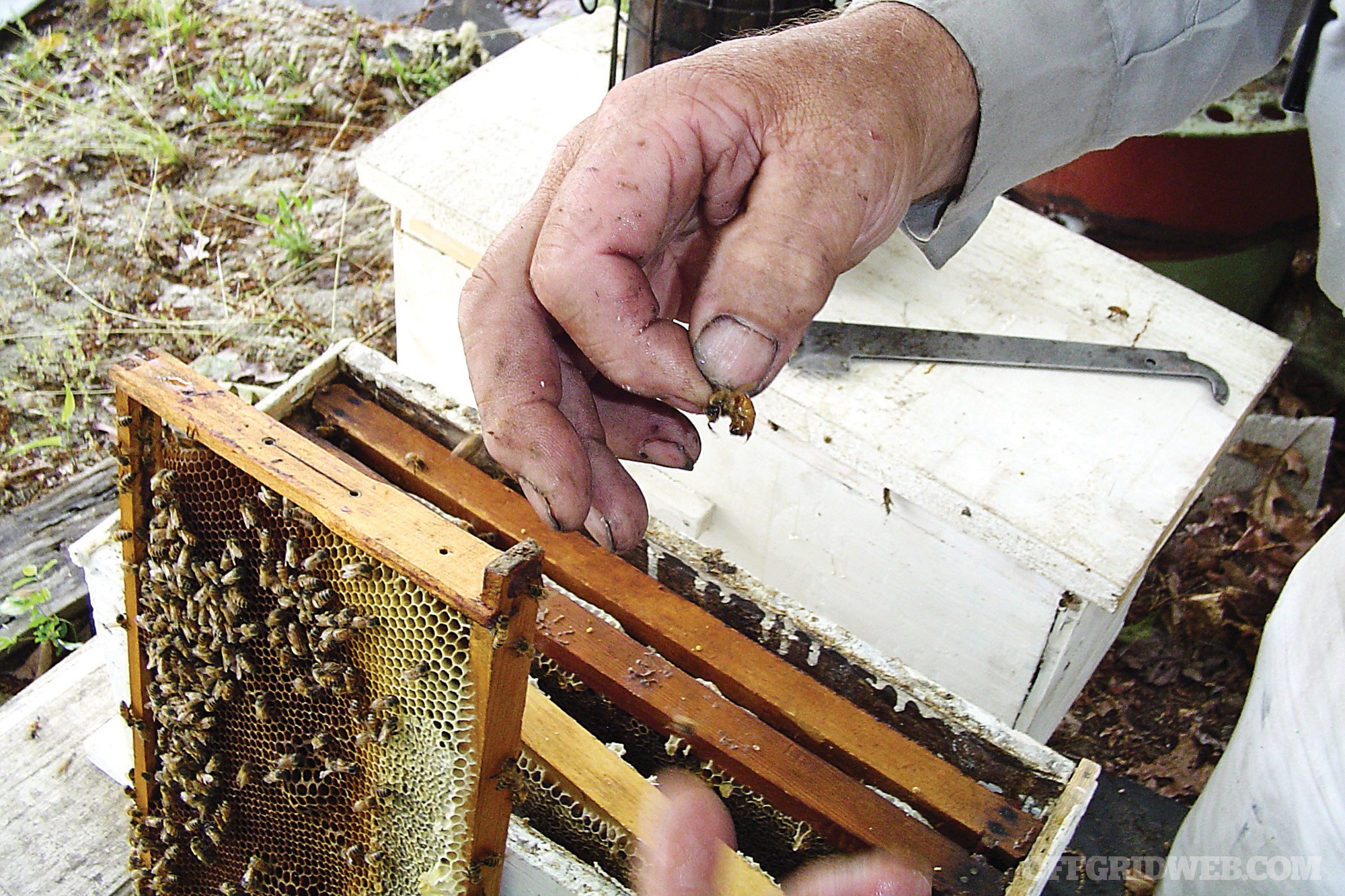
Catching a queen without injuring her takes practice.
Recruit an experienced beekeeper to help with the first inspection or two. See if you can find the queen on your own. Check that she’s systematically moving from cell to cell, depositing eggs.
If you make friends in your local beekeeping association or you already have a beekeeper in your circle, ask him or her to help you with your first inspection or two. Let them coach you in finding the queen and observing her egg-distributing behavior.
Weather does make a difference when opening hives. A new beekeeper will soon learn that his or her bees are much more cordial on calm, sunny days.
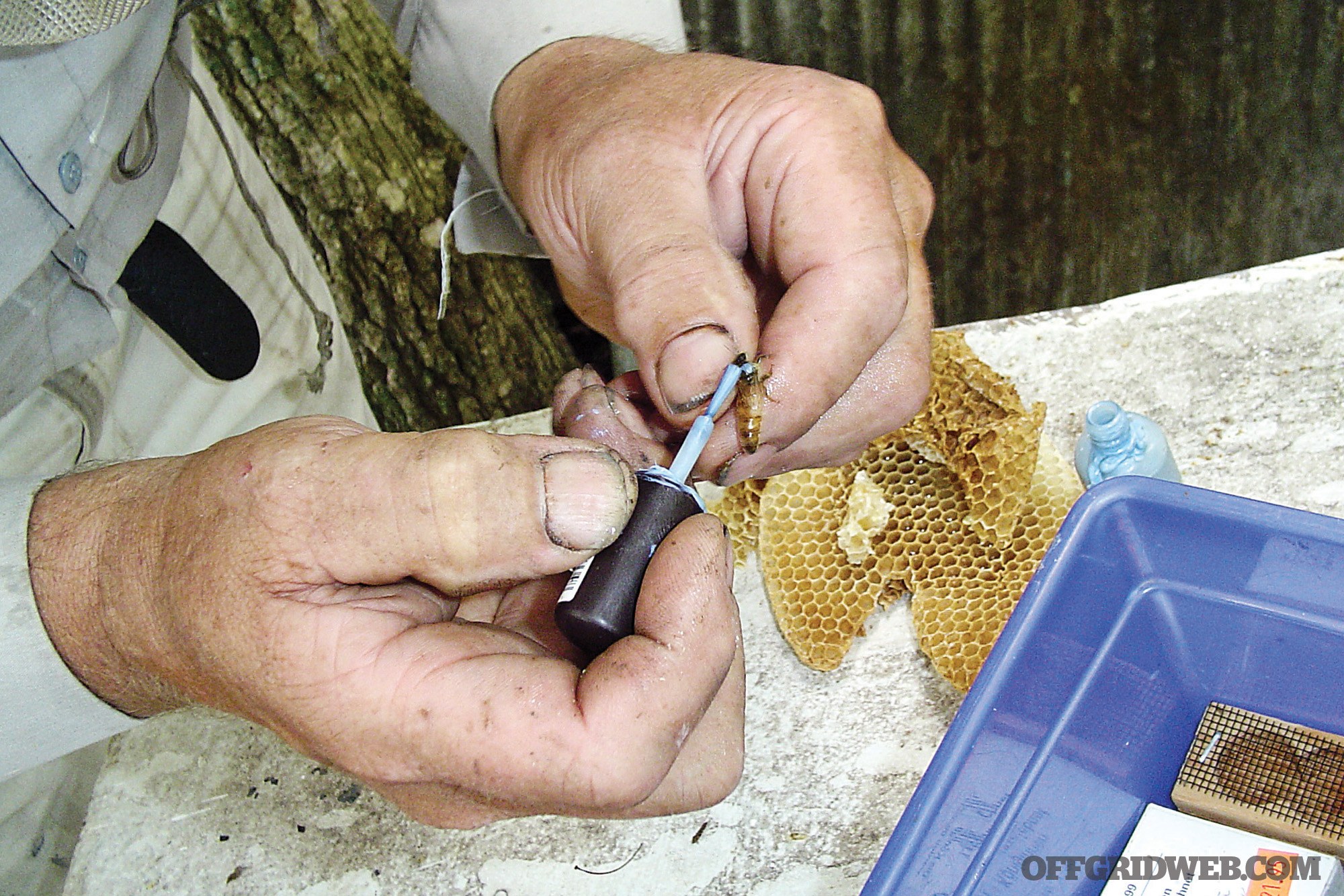
Above: Many beekeepers mark their queens so she can be easily spotted. A different color each year can reveal her age at a glance.
Diseases and Pests
Beginners all too often get overwhelmed with all the potential issues within a hive. It’s good to be aware and prepared, but local, experienced beekeepers will be the best source to prioritize the threats in a particular area.
Varroa mites, tracheal mites, and small hive beetles are all relatively new pests to American hives. Wax moths and European foulbrood have been around a lot longer. There are steps that can help prevent some of these, as well as a growing arsenal of products to enlist for treatment. American foulbrood is a fatal hive disease, and the conventional treatment has been to burn the hive, but your state apiarist (accessed through your state’s department of agriculture) will be able to tell you the prevalence of this bacterial disease in your region.
Joining a local beekeeping club is a good way to learn.
Mammals can wreak havoc on hives, too. Bears and skunks both crave the protein provided by larvae, and the only reliable way to keep them out of your hives is exclusion through fencing. With bears, a properly erected electric fence is recommended, which can cost $300 or more once you purchase posts, wires, and a solar charger. Thieves and vandals may also be a concern, depending on circumstances.
The mysterious Colony Collapse Disorder (CCD) has gotten much media coverage, but oftentimes, CCD gets the blame for poor management or other issues. Data would indicate that fewer hive losses are being attributed to CCD, as scientists still work to determine exactly what it is.
Africanized genetics are a problem in parts of the country, resulting in colonies that swarm often and defend their hives aggressively.
Strive to learn the basics of what you may encounter, and then learn how to inspect for those issues periodically — preferably alongside someone who’s dealt with those problems before.
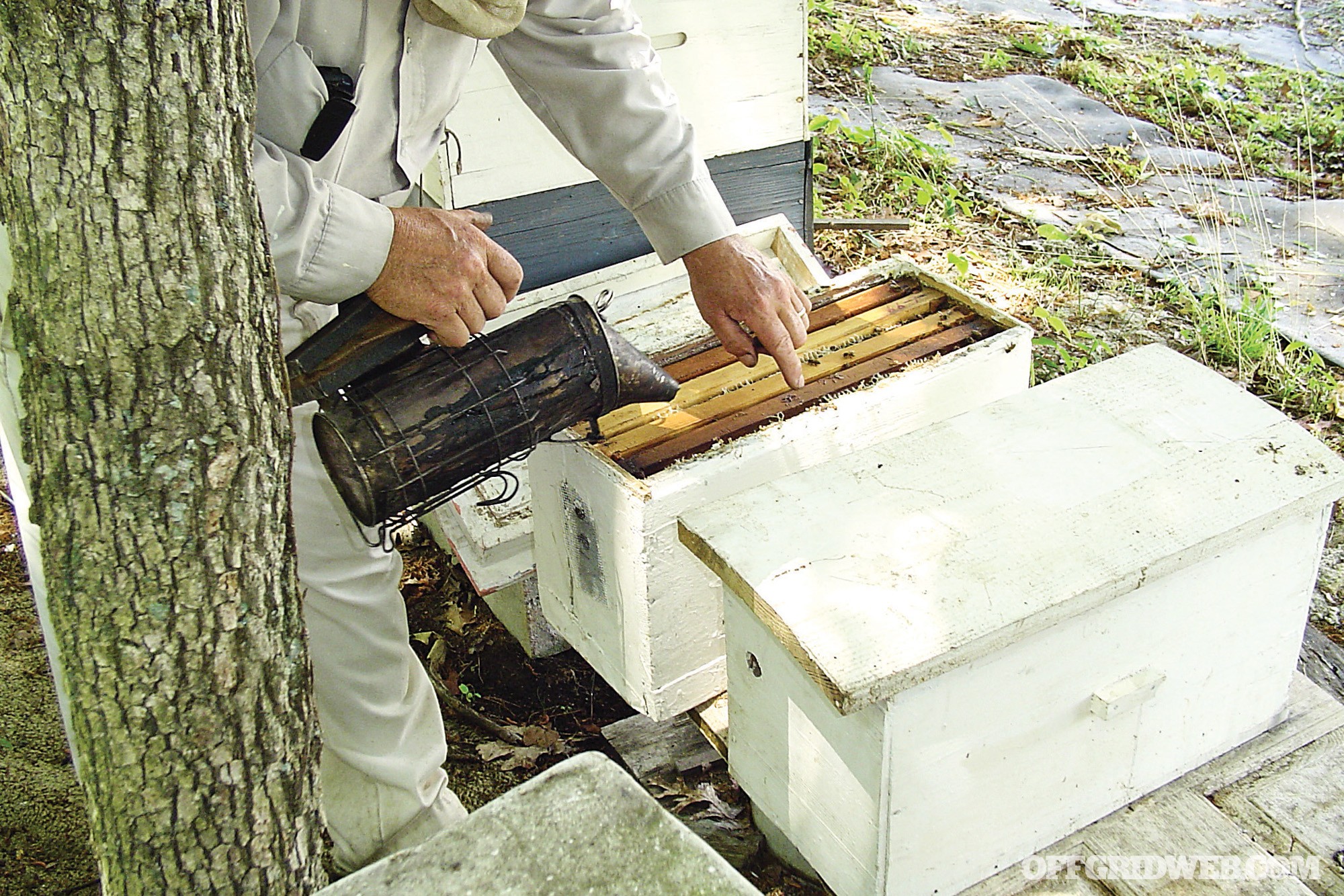
Fuel for a smoker can include wood chips, cotton cloth, cardboard, pine needles, etc.
Safety and Legalities
Speak with a physician about prescribing an epinephrine injector, in case of a bee allergy. There are stories out there of experienced beekeepers who suddenly had a reaction after years of working with bees, so even if you aren’t aware of a family member having an allergy, it’s still a good idea to have protection on hand.
Check with your state’s department of agriculture about the inspection process. Inspections may be on-request or possibly recommended for certain suspected problems. It will differ from state to state. Moving bees across state lines may require a certificate of health, but contacting your state apiarist should confirm whether that’s the case. Of course, suspicion of Africanized genetics, American foulbrood, or other serious problems will usually warrant a formal inspection.
Multiple queen cells are evident on this frame.
Certain localities may have ordinances regarding bee yard locations, although many towns have tighter restrictions on chickens than they do on bees. Beekeeping isn’t without its frustrations, and beekeeping today is more challenging than ever. But if you’re able to dodge the onslaught of enemies, from bears to mites, what you’ll gain is as good as gold. Before taking the leap, it’s important to arm yourself with knowledge and, if possible, to connect with a mentor or two.
About the Author
Phillip Meeks is an agriculture and natural resources educator originally from Tennessee, but now based in the mountains of Southwest Virginia. He likes to spend his weekends hiking, gardening, beekeeping, fishing, and mushroom hunting.
NOTES While we’re not saying that a duffel with wheels should be your bug-out bag, we’re saying it’s exponentially easier to roll your gear than to hump it on your back. Think camping trip or going on vacation. The Stagecoach provides loads of room in an incredibly sturdy but flexible container. It’s made of 420-denier, three-line ripstop fabric that’s tear, puncture, and abrasion resistant. It features 100-percent waterproof fusion-welded seams. And the base is made of a compression-molded EVA bottom with super durable 1,200-denier polyester fabric. This rolling duffel also has a kickstand for stability, padded grab handles, and dual shoulder straps if you need to throw it on your back instead.
NOTES You could call it a comeback of sorts. The Mountain Tipi was designed more than 30 years ago and became popular with hunters and backpackers who needed a backcountry basecamp. Today, it’s back with a modern update. It can be set up as a tipi with bug nest, a standalone tipi, a standalone nest, or as a fast fly. The nest features No-See-Um mesh while the fly is made of 40-denier Sil-Nylon ripstop. They both work easily with a single pole — made of 7000-series aluminum alloy — that has an adjustable height between 5 feet 2 inches and 5 feet 8 inches. The Mountain Tipi has a single door and a two-person layout, ideal for a solo adventurer or a couple who want a lightweight, versatile shelter.
Real Avid Smart Drive 90
INCLUDES Hammer surface, magnetic parts tray, polycarbonate lid with slide lock, and more
NOTES If a long-term survival situation does happen, you’ll need to keep your tools running at optimal states with limited resources. This is especially true with firearms; it’s not like they’ll be a post-apocalyptic armorer opening up shop at every overrun street corner. No, you’ll have to make repairs yourself. Fortunately, Real Avid offers all sorts of useful tools, including the Smart Drive 90. This 90-piece gunsmithing kit includes everything from a scope turret tool to 87 standard and metric black oxide-coated gun bits. Plus, it comes with an LED-enabled bit driver that — when paired with a “close-quarters” driver — uses Real Avid’s Force Assist system to precisely tighten screws or loosen stuck ones.
NOTES For years, your choice of camping pots was between silicone and metal. The former offered space savings and lightness while the latter performed faster and was more fuel efficient. Now you don’t have to choose. The Escape HS 2-Liter Pot combines a collapsible silicone body with an aluminum heat sink base that’s coated with Teflon. GSI Outdoors says that its pot saves 53 percent volume, cooks 30-percent faster, and uses 30- percent less fuel than traditional cookware technology. The aluminum lid has integrated straining holes as well as silicone thumb pads to insulate hands from heat. Plus, it collapses down to a 1.9-inch-thick disc for easy portability.
Columbia River Knife & Tool Black Woods Chogan T-Hawk with Sheath
NOTES Ryan Johnson of RMJ Tactical offers some wicked axes for a premium price. But for the blue-collar worker, forking over four C-notes for a tomahawk can be a tall order. Fortunately, CRKT often teams up with him to mass produce his designs and offer them at more affordable levels. Take this model for example. This CRKT.com exclusive offers the popular Woods Chogan T-Hawk with a new look, courtesy of a black magnesium phosphate coating on the 1055 carbon steel head for increased corrosion resistance, a firewood-burned Tennessee hickory handle for a darker aesthetic, and a quality leather sheath. This two-handed ax features a hammer on the backend and weighs just shy of 2 pounds.
NOTES Utah Knife Works owner Mark Russon says that almost 40 years ago his father, Robb Russon, came up with the design for what would eventually become the Tom Brown Tracker knife (which appears in the 2003 film The Hunted) but never got credit for it. So, the younger Russon gave his dad’s model a 21st century makeover and renamed it the UKW Survivor. While we don’t have the space here to investigate further (Russon’s side of the story is on his website), we did get a chance to review his new knife. Each section of it serves a survival purpose. For example, the spine’s sawteeth is for sawing or notching branches, while the utility hook is for processing game. Made of 9Cr18MoV stainless steel with a glass-reinforced nylon handle, the UKW Survivor is a jack-of-all-trades tool that’ll win over some bushcrafters … and maybe even a few Tom Brown fans, too.
NOTES Just when we think Streamlight can’t make its lanterns any better, we’re proven wrong once again. The Siege X USB is the latest rendition of this popular series and features a small frame that packs plenty of power. Its white LED has three modes, with a max runtime of 4.5 hours and a high output of 325 lumens. For emergencies or preserving night vision, it has a 1.6-lumen red LED that can run for 22 hours or flash SOS for 90 hours. It can run on two CR123A lithium batteries, or you can recharge it by plugging the USB cord directly into its included 18650 battery. The IPX7 waterproof lamp is also loaded with more user-friendly features than we can list, from an integrated D-ring to a recessed power button to prevent accidental activation.
NOTES With 10x magnification and GPO’s proprietary lens coating technology, the Passion 10×56 offers powerful clarity at great distances — a vital ability, whether you’re hunting for big game or watching out for marauders in a post-SHTF situation. These binoculars feature a magnesium body that shaves some ounces without giving up any strength or durability. The lenses have GPObright coatings, which allows up to 99.7 percent of available light to pass through each optical surface. What does that mean? What you see is clear even in low-light conditions. While they’re not the lightest binos we’ve tested at 2.58 pounds, the Passion 10×56 is both waterproof and fogproof, and comes with neoprene strap, hard case, hard-case strap, cleaning cloth, and lens covers.
Notes If you’ve spent any amount of time in the great outdoors, you’ll know that extreme heat or cold can kill you, but it’s the insects that’ll drive you insane. Fortunately, the Hanger Work Henley LS can help with that. It’s a casual-looking performance shirt that’s been treated with Insect Shield technology, which helps to repel ants, ticks, flies, chiggers, midges, and mosquitoes. Plus, it has Polygiene odor control that inhibits bacteria’s ability to grow. And on top of all that, this attractive Henley provides a blend of stretch, comfort, and moisture-wicking properties — letting you enjoy the outdoors without the bugs or stench.
NOTES If this pack gives you that vintage vibe, that’s because Diamond Brand has been around since 1881. Yep, the 19th century. So it knows a thing or two about making durable goods, such as the Great Day pack. This 24.5-liter bag features a water-resistant YKK zipper that runs down the center to provide full access to all your items, adjustable straps that let you switch to sling carry, and detachable front pockets that can be used as standalone sacks. There’s also multiple but subtle PALS webbing so you can attach keys, carabiners, or other gear. This backpack is made in the USA from 18-ounce canvas with wax and a durable water- resistant coating.
NOTES Sun’s out, shades on. At least if you want to maintain healthy eyes and full situational awareness this summer. Unfortunately, not all of us can afford to plunk down two Benjamins for a pair of Oakleys or Smith Optics. Fortunately, there’s the Overwatch. These sunglasses don’t just look good, but are also a solid piece of eye protection, having passed the U.S. military’s MIL-PRF 32432 high-velocity impact standards. The antifog, scratch-resistant polycarbonate lenses provide 99-percent UVA/B/C protection. Meanwhile, the soft nosepiece and rubber temple tips offer daylong comfort.
Wenzel’s Farm Snack Sticks
FLAVORS 11, including teriyaki, beef with bacon, and jalapeno cheddar
Notes Everyone loves to stock up on survival food, but no one really loves to eat it. There’s a reason why MREs (Meals Ready to Eat) are often called “Meals Rejected by Everyone” (due to their manufactured taste) and “Meals Refusing to Exit” (due to their constipation-inducing nature). Fortunately, Wenzel’s Farm has come out with its line of Snack Sticks made of real meat from real animals raised on real farms. They’re naturally smoked, have no MSG or artificial colors, and are a solid source of macronutrients. (A 1-ounce Jalapeno Cheddar Stick has 5 grams of protein and 8 grams of total fat.) Plus, every individual package (which comes with two Snack Sticks) has a shelf life of 12 months. While it won’t replace a meal in a post-disaster scenario, it can boost morale or tide you over until you can hunt your own game.
Carrying a concealed handgun is a subject that we could talk about for hours, given the countless technique considerations and gear options to choose from. You may already be well-versed in the subject — if you’re not, our sister publication CONCEALMENT is a great place to start learning. But concealed carry applies to more than just weapons.
Emergency medical items such as a tourniquet, hemostatic gauze, and a pressure dressing are critical for dealing with traumatic injuries immediately after they occur. However, it’s not always ideal to carry these tools openly — doing so may lead to awkward conversations with coworkers or relatives about how “paranoid” you supposedly are. By concealing your medical gear, you’ll have access to lifesaving tools without advertising your preparedness.
In the following RECOILtv Mail Call episode, former MARSOC Captain Billy Birdzell gives a brief overview of two pieces of medical concealment gear from PHLster. We’ve previously mentioned the company’s Flex Appendix carry system, which offers an AIWB platform for carrying a handgun, spare magazines, and other small items. For those who’d rather distribute gear to other parts of the body, the Pocket Emergency Wallet and Flatpack Tourniquet Carrier are potential options.
The Pocket Emergency Wallet carries a compression wrap, gauze, a hemostatic pad, and a pair of gloves in a slim back-pocket-sized package. The Flatpack Tourniquet Carrier includes soft belt loops and strong elastic straps to retain a CAT, SOFTT-W, or other CoTCCC-approved tourniquets on your belt. For more info on each, go to phlsterholsters.com.
Got a tip you’d like to share? Send it to offgrid@recoilweb.com along with a well-lit, high-resolution photo of yourself. Also include your name, and your website or social media handles if applicable. Please keep your tip submissions between 250 and 350 words. By sending in submissions, you grant CMG West LLC the unrestricted, transferable and sub-licensable, irrevocable, royalty-free, world-wide, and perpetual license to reproduce, distribute, publicly display, make derivative works of, and otherwise use the Submissions in any media whatsoever now known or later invented throughout the world for any purpose whatsoever, commercial or not.
It wasn’t long ago in our country that children, even young ones, were expected to do a lot more than sit around the house and play video games. Because of this expectation and the necessity that drove it, our children were capable of much greater utility than they’re given credit for today. We tend to prolong their adolescence by protectively ushering them away from adult responsibility when really their capacity for maturity and action is astounding when properly nurtured.
One of the things I like to focus on with my children is familiarization with emergency equipment. When you have six children, you need every helping hand you can get particularly in an emergency. But if that helping hand isn’t familiar with the item you need to address a problem, what it looks like, or where to find it, then you’re not leveraging all your assets.
I prefer to make my children an asset rather than a bystander, so periodically we go through all our household and vehicle equipment: first-aid kits, go-bags, off-road recovery kits for the vehicles, hurricane supplies, etc. We lie out each kit and talk about each item inside, its purpose, how to use it, change the batteries, and so on.
I don’t expect my 7-year-old daughter to know how to use a chest seal, but she can certainly identify one and hand it to dad if she happens to be the only free hand nearby. Same goes for my 13-year-old son. Mom or dad will hook the shackles to the truck to pull a stump, but now he can reach into the bag and identify what’s needed. So, familiarize your family, and the next time you need a pair of pliers, your son or daughter can be the force-multiplier who makes the difference.
Mel Ward
Parenting and prepping are both about learning how to confront fear and mitigate insecurity. My son is in his afraid-of-the-dark phase right now. To help him overcome this natural fear and impart some survival skills in the process, we’re talking a lot about flashlights. He’s quickly learned the value of having flashlights staged by his bed and around the house.
For example, the other night he had a bad dream. Instead of lying in bed calling for me in a panic, he grabbed his flashlight, turned it on and oriented to his surroundings, and then came to me. A lot of times, the easiest way to train our children is to disguise it as some form of play. So we’ve also done a few nighttime Nerf gun battles and hide-and-seek games where I black out the entire house and only allow flashlights for searching. The use of Nerf guns allows for a little bit of negative reinforcement (getting hit with a dart) that’s still fun and light-hearted. This is a fun, mildly competitive way to teach search techniques and light discipline.
There’s also an element of light tactics here — i.e., how you don’t necessarily want to stare directly where your light is shining, or how to bounce your light off adjacent surfaces for a broader, indirect illumination. We’ve also touched on “strobing” techniques to blind or disorient an armed (with Nerf guns) opponent. Light work is the kind of thing that you can constantly reinforce through play or routine chores/household tasks. Can’t find your favorite toy? Grab your flashlight and check the way back of your closet. Using white light is something that most people do every day, but don’t think about as a useful skill. A few key pointers, instilled early on, can allow your children to turn a flashlight from a neat toy or occasional convenience into a dedicated tool for all kinds of situations.