In the fall of 2008, I gave a speech in San Francisco to a conference of fund managers, loan brokers, and bankers who were just beginning to realize the consequences of the collapse of the sub-prime mortgage and exchange-traded derivatives markets. They came eager to hear from quantitative wizards about the next trick they should try to continue to elevate their wealth. I opened my speech with this sentence: “Someone you know, someone you love, will be hurt because of what we have done.”
I went on to explain the extent of the systemic failure that had been loaded into the U.S. economy by a combination of industry and government actions. I ended with a prediction for some of the people in that room: It would be their last year working in the finance industry; that much like the collapse of Dot Com One in Silicon Valley a decade earlier, many of their firms would collapse and never come back.
For those who remained, onerous government regulation and compliance controls were inevitable and would constrain most of the wild profit-making practices upon which the conference attendees had enjoyed opulent lives. The end of the presentation was met with stunned silence and painful realization that their lives, and the lives of the people who had trusted them, would change dramatically. A systemic failure of the financial system — what many people called a rare and unpredictable “Black Swan” event had hatched.
Anatomy of a Manmade Disaster
A systemic financial disaster differs from other calamities in that everything in the infrastructure keeps running. What breaks is the ability of the population to afford to access the infrastructure. At its extreme, jobs, incomes, and even entire swaths of industries disappear for a statistically significant portion of the population, causing economic displacement. The power company remains, but you can’t afford to pay your bills. Costs of necessities, which may or may not have risen, become unreachable because, if you’re one of the ones affected by the crisis, you don’t have the money. People lose careers. Families lose homes. The stress destroys relationships. And some individuals commit suicide.

Above: In a world where technology is constantly displacing human workers, it makes sense to examine the future viability of the industry you’re in. If you’re a dentist, people will always need their teeth worked on. If you’re a cashier at a retail store, you might want to look at other career and educational options.
It’s a cruelly unfair phenomenon. Some people lose everything, some prosper to new riches, and others are barely affected. The constant in the calamity is that you have to be able to fend for yourself in the path of a financial perfect storm.
There are three core components to survivability, and they apply equally well to financial crisis survival. First, you need to know the nature of the coming storm. Second, you need to reduce your vulnerability and susceptibility to it. And third, you need to have a plan that has the flexibility to navigate a survivable path through the cycle.
Avoiding a Trap by Knowing it’s There
Finance is, even for a professional, an extremely noise-ridden universe. Separating normal noise — such as the fact that bond markets and stock markets naturally move in opposite directions and counterweight each other, going back and forth in a volatile manner — can be confusing to some. At the time of this writing, the global bond market was valued north of $82 trillion and the global equities market at just over $62 trillion; essentially, a nicely balanced seesaw.
The U.S. domestic bond market was valued around $35 trillion and the U.S. equities market at around $23 trillion. The difference in the ratio means stocks tend to react more to a change in bonds, with about 1.5 times more volatility. You now have everything you need to understand what every economist, pundit, and news anchor is cackling on about when they say the sky is falling. It isn’t. It’s just vibrating normally like a cat purring on your lap.
Don’t get me wrong. That cat has claws, and in a normally operating financial system there are plenty of cataclysmic wins and losses that could hurt you as normal volatility startles it in your lap. These cloud-lending fiascos and cryptocurrency bubbles come and go. All good fun, full of speculative hopes and dreams; but they don’t actually affect the overall global financial system. The vast majority of people remain unaffected by normal foibles. What you really need to worry about is what happens to you if the cat dies in your lap.
Here’s your lesson in recognizing “systemic risk.” Utter systemic collapse happens when both the bond and equity markets move in unison into unsafe, unsound, and unsustainable positions. No different than deer herds that multiply to the point that a bad winter starves all of them into a population collapse, the financial system is known to stupidly move in unison through a combination of misguided government policies, industry innovation that doesn’t take unintended consequences into proper account, and the greed-fueled exploitation tendencies of humans in the financial ecosystem.
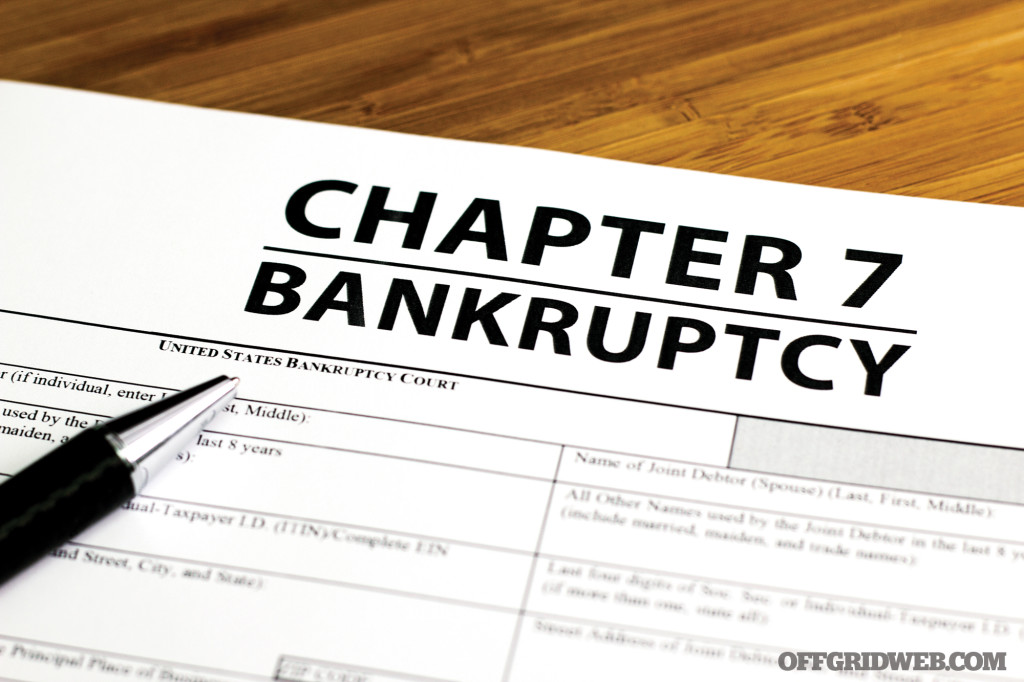
Above: As the saying goes, if common sense were common, everyone would have it. Start looking at your income versus expense ratio now, lest you have to throw the keys to your life to those you owe money to.
In recent times, examples of these systemic scenarios have included the brick-and-mortar cases such as the globalization and outsourcing of the U.S. industrial base as well as financial engineering cases such as the 2008 “Black Swan” confluence of sub-prime mortgage lending, faulty bonds to absorb unsound loans, and toxic speculative derivatives that pretended to contain real risks. Both have displaced real people and real families, turning Americans into economic refugees in their own land. The thing is, it was possible to see both these disasters coming to a head for decades.
Learning From History
Globalization began in the early 1990s at the end of the Cold War. History called it a “peace dividend,” and it was accelerated by a cadre of business-school wizards who quickly figured out that investing in new plants in locations where labor was really cheap meant more profitability. This was even after taking into account the cost of the logistics to move raw materials, partially finished components, and shipping to final consumer markets. The arrival of an innocuous internet transmission technology known as SOAP-xml removed almost all the paperwork friction for material requirements planning so that companies could efficiently move offshore.
Today, global manufacturing and financial systems use these sort of technologies for transactions; something that often makes me wonder why you need blockchain general ledgers that basically replicate a stable and mature 25-year-old system, but I digress. Regardless, the U.S. economy converted from a manufacturing economy to a service economy, dependent on outsourcing for things as basic as telephones and T-shirts. Millennials have never known a world where there were local GM, Ford, and Chrysler plants, along with parts suppliers and job shoppers, dotting the landscape employing armies of American workers.
The 2008 financial crisis also began in the early 1990s with the demise of Drexel Burnham Lambert LLP. As part of the bankruptcy, the court sold copies of a deeply secret structured finance software system to anyone willing to write the court a check. Structured finance is what’s used to create something called a mortgage backed security, which enables a bank to sell off loans it’s made on the balance sheet in the form of bonds to a financial secondary market. It basically enables a bank to lend more, capturing the origination fees into its income stream.

Prior to the demise of Drexel, Wall Street was the only place regional mortgage bankers could sell their non-confirming loans, aka sub-prime mortgages, that the federal agencies like GNMA and FNMA wouldn’t accept. Wall Street, being Wall Street, took every last dime from the regional banks in these transactions. This made the incentive to find an alternative desirous. In my first year in the finance industry, coming out of a decade in the defense industry and not knowing any better, I helped a friend install one of these Private Mortgage Backed Securities at a tiny little bank in Pasadena, California, named Countrywide.
As early as 1995, when I finally understood what fixed-income analytics was all about, I had a wary eye about some of the practices coming out of the sub-prime mortgage sector as their bonds began to look less like agency pass-thru securities and more and more like the “junk bonds” that took down Drexel. And I wondered what the implications were from the Electronic Joint Venture system invented by Wall Street to replace the escape of structured engineering software by creating this thing called the exchange traded derivative — and eventually the toxic bond.
While I wasn’t the only one who made that mistake at that time — nor was I that integral to the nearly two decades of government and industry consequence that came from it until it all collapsed — I’ve always regretted being part of installing a material trigger into what would become the equivalent of an economic nuclear bomb. When I gave that speech in San Francisco in 2008, I very much meant “we” to that audience.
A lot of that was the doublespeak of MBAs and economists. I share the stories of the beginnings of these events to point out that systemic disasters often begin innocuously. Everyone loved the thought of global outsourcing and risk management engineering. From academic theorists, government officials, and practitioners in industry, people embraced new ideas and chased them with far too much enthusiasm across the entire financial system for too many business cycles. That’s the signal you’re looking for, the warning within the noise. When the smartest people in the world act like lemmings marching to the sea, that’s a sign of a systemic flaw, the birth cries of a Black Swan. No one sees or dares utter that the emperor is naked. It’s the forewarning of a potential financial crisis coming.

Above: While many operate on the “you can’t take it with you” philosophy, that won’t help you if you have nothing to fall back on. Look at savings account options. Smaller community banks welcome the business and typically have better interest rates than larger chains.
Timelines to Be Mindful Of
It takes time to build to a nationwide systemic collapse in an economy like that of the United States. On average, about 25 years from the time the germ is planted, most likely inadvertently, to the time the contagion reaches critical mass. It took a around decade and a half for the sub-prime mortgage market to crater. You’ve some time to recognize what’s going on and prepare if you’re paying attention. The last three years of the prelude to collapse will be pretty obvious and when you’ll need to act before things hit the fan.
There’s also a well-proven timeline for how long it takes for an economy to suffer the throes of a financial collapse and recover sufficiently from it. That number is typically one three-year business cycle for the throes of chaos followed by two three-year business cycles to re-regulate and recover from the shock. In all, about a decade. If you wind up being one of the people severely affected by a financial crisis, you need to have a plan to survive that decade. More specifically, you need a plan for the first three years of pandemonium.
Preparing and Surviving
So you’ve seen the foreboding future and determined it’s going to affect your life. Prepping for a financial crisis is about reducing your vulnerability and generating options you can execute when the time comes. Start by repositioning your assets and expenses — and not just your physical assets, your human ones.
Let’s start with your skills. If your current way of earning an income is at risk — for example, because robotics and artificial intelligence are going to eliminate your service industry job — start cultivating future ways to make a living that aren’t vulnerable to systemic disintermediation. (That’s code for a machine replacing you and being laid off.) The time to think about this stuff is when you still have a living and not after you and a whole bunch of other people are scratching to find something new to do. In an economic displacement crisis, those who’ve previously invested in needed skills will make a living.
As a rule when looking for income alternatives, don’t be prideful — be flexible. It’s normal in the course of one’s working life to change careers over time, even if economic conditions are stable. In corporations and government service, one progresses through different jobs over time. In entrepreneurial careers, one changes projects on a regular basis. In blue collar and retail work, one follows the business cycles among multiple employers. The point is we’ll all experience change; an economic crisis-forced change is just one more change passing “Go” around the board game of life.

Above: Assume there are people at work right now trying to bankrupt the United States through artificial means of internet hacking and manipulation. See Dennis’ book review on this topic elsewhere in this issue.
While you’re still working, start to cultivate that next dream career — one that isn’t vulnerable to the same financial crisis you’re prepping for, of course. Then, turn your goal to make it a viable option into an obligation to make it so. Force yourself to do what it takes to actually have a leg up on competing for that job when the time comes. Be mindful that you’re counting down to a crisis, and you don’t want to be caught lacking for options when it happens —act accordingly.
You think AI is going to take your service job in an army of expensive human resources? Become a member of the cadre the AI needs to run after it takes over the jobs of everyone in the building. You may want to cultivate something very different as a next career. Want to be a drone operator? Swarms of agricultural robots and fleets of self-driving cars are coming, and there’ll be a need to tend to their needs to organize and accomplish their functional missions. You may need to invest in additional education.
The time to do it is now and not when you’re desperately undergoing a severance benefit-retraining program. Yeah, it takes work to morph yourself — it’s not easy.
OK, that’s your next dream job. Further increase your flexibility to make a living, even at a lower earnings level than you’re at now, doing something less prestigious but personally tolerable. Scour your mind for things you wouldn’t mind doing for a while to get by and, again, make it an obligation to do what it takes to make yourself viable in those job roles.
Teaching ballroom dancing at a retirement home is still a living and, if you like to dance, a tolerable way to carry on compared to hard labor on a road crew; although if you can get the certification to do that, potholes are an evergreen renewable resource. The point is to be creative in your thinking and discipline yourself to work to make these options feasible.
If you’re married and both of you have similarly vulnerable careers, you should both cultivate viable options alternatives. That doubles your potential to lessen the impact of a systemic crisis on your life.

Above: Thousands of people trusted Bernie Madoff with their money only to find out they’d been swindled. Think of how many others are out there right now engaging in similar practices. Here we see an auction of Madoff’s property in Miami 2011.
Now to material things. If you own a home, ponder your housing situation with an open mind. As a general rule, over the course of a financial crisis, (a) you want what you owe on your house to always be less than the realizable market value of the property, and (b) the cost of servicing your debt on your home to be within the total of all income you’ll be able to garner during the duration of that crisis. These are basic creditworthiness criteria that you have to be honest with yourself about.
Crunch your numbers. You don’t want to be like the people from the 2008 crisis who leveraged their homes to the hilt, saw their property values fall below their outstanding debt, and lost it all. Familiarize yourself with options to manage your exposure. If you can, you may want to pay down your debt load. It’s not the easiest thing to do, but some people strategically downsize to small, less costly homes. Some people even cash out completely and rent for the duration of the crisis if their numbers indicate that’s a preferable choice. The crisis always does end. When preparing for a financial crisis, you’re planning to get to that end.
Have an austerity plan. The law that income must be more than expenses is set in stone. In good times, it’s easy to live hand to mouth and, for the most part, get away with it. Some people barely get by, even if they have enormous incomes, because they have equally enormous expenses. This doesn’t work in a financial crisis when income interruption may be forced upon you. If you did your homework on alternative realizable income sources described earlier, you’ve an idea of where your expenses will need to be to stay within what you can realistically manage during a financial crisis. Embrace that number. You’ll literally live or die by it. Know how you’re doing to convert from whatever your lifestyle is now to your austere mode.
And don’t fool yourself. You don’t just snap your fingers and go from party animal to austere survivalist. Like your income side-goals-to-obligations discipline, the same progression of turning expense goals into personal obligations applies. You need a plan to arrive at the anticipated crisis onset date with your expense habits in balance for the turmoil and recovery phases of that crisis. Save any surplus in a rainy-day reserve fund for when the crisis storm clouds are thickest. Yup, make that an obligation too.
Build your support network before the crisis hits. Most people won’t want to abandon their lives for a three- to five-year crisis — they’ll want to work their way though it where they are. That means you need to build your equity within your community; the people you’ll most likely lean on when things just feel bad. That also means valuing the community equity of others and being prepared to help them though the crisis to the extent you can.
But be sure to set your network’s expectations properly. You want it to survive the crisis, not fall apart leaving each of you utterly alone to suffer it in loneliness. As the crisis approaches, oblige each other to complete your goals so you enter the crisis strong and on parity. You’ll be bartering goodwill with each other. You’ll probably not be financially supporting each other. If you do, set up a company like an LLC so any money, barter, and services aren’t personal. It’ll be stressful enough; shifting the obligations and expectations to a business entity will help ease that stress.

Above: As Jim Rohn once said, “If you don’t design your own life plan, chances are you’ll fall into someone else’s plan. And guess what they have planned for you? Not much.”
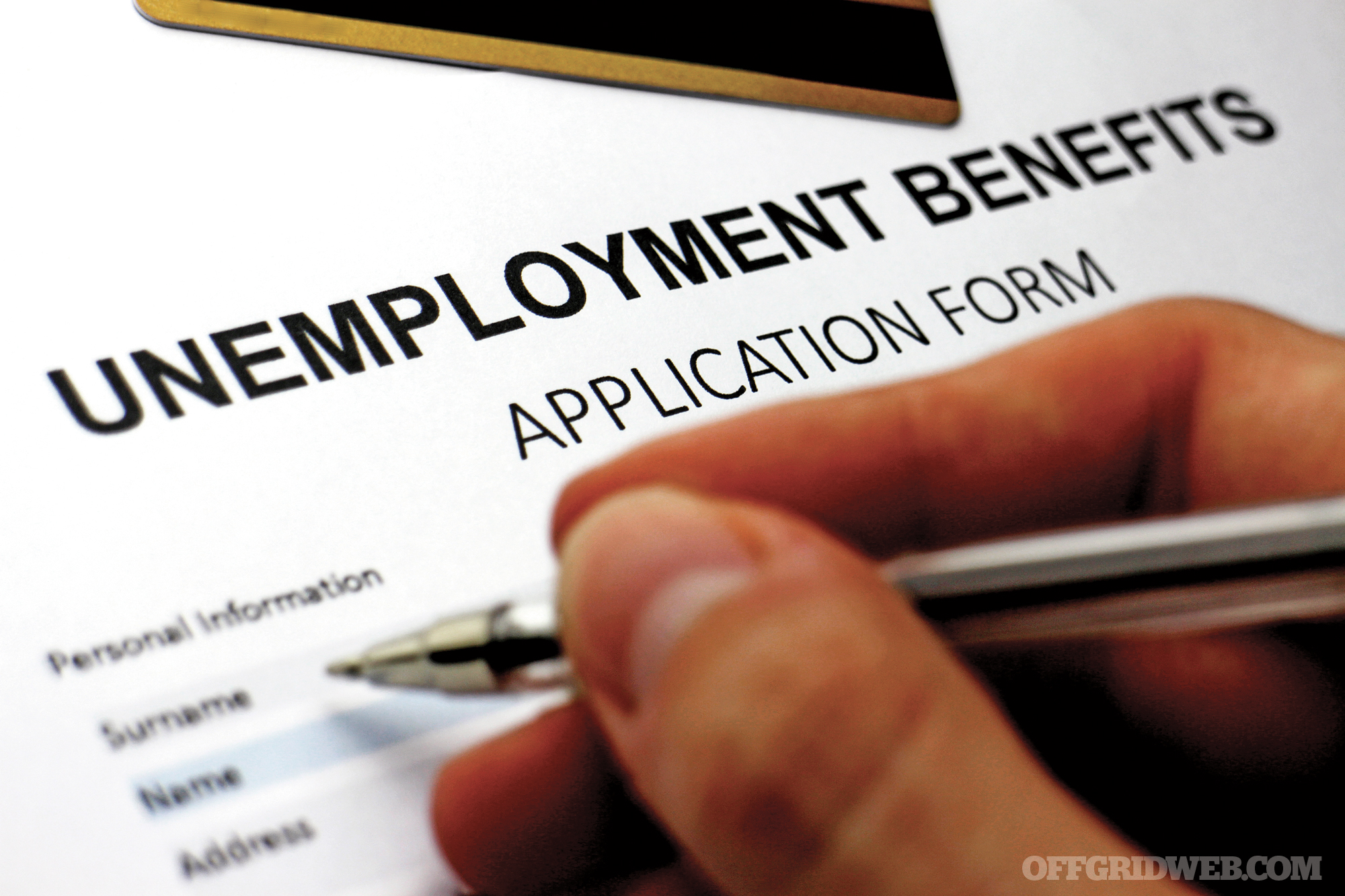
Don’t be prideful. During a crisis, use every avenue of aid that can extend your ability to hold on. Refinancing extensions. Unemployment benefits. Welfare. The bottom line under such conditions is to do anything that increases income and decreases expenses. There’s no room for pride and leaving things on the table. Surviving and getting to the other side of the crisis should be your focus.
Finally, manage your expectations. If your finances crater, it’s OK to be poorer. Yes, really. It’s fine. You’re starting over. Remember, the admonition is that life has many natural start-overs, even if the economy isn’t crashing. This financial crisis is just an extra start-over. During a crisis, you aren’t passively waiting for it to end; you’re aggressively repositioning yourself using all the options you prepared to keep an eye out on where the opening in the clouds shows itself; then, moving on it first, before anyone else takes your spot in line for an exit out of the crisis.
What’s In Your Mattress?
Enduring a long-term financial crisis isn’t something you do in isolation. You still have to interact with bankers, creditors, and your obligations; that’s part of living life. So don’t plan to cut your cord to your bank or brokerage just because a recession drags on. However, there can be short-term outages in your ability to access your finances. For that you need your “mattress” stash.
How much should that be? As a rule, the minimum rainy-day fund you need to keep in that mayonnaise jar is about one month of living expenses; two months is better. That amount changes over time, so it’s important to keep a budget if only to know what you’re spending to maintain your lifestyle. Work up to having that cash in the only reserve currency that matters on this planet, green American money. Split where you store it in at least two places, both inconvenient to get to so you aren’t tempted to use the money. Then, forget about it until the day comes when you really need it.
How Viable is Your Current Job Industry?
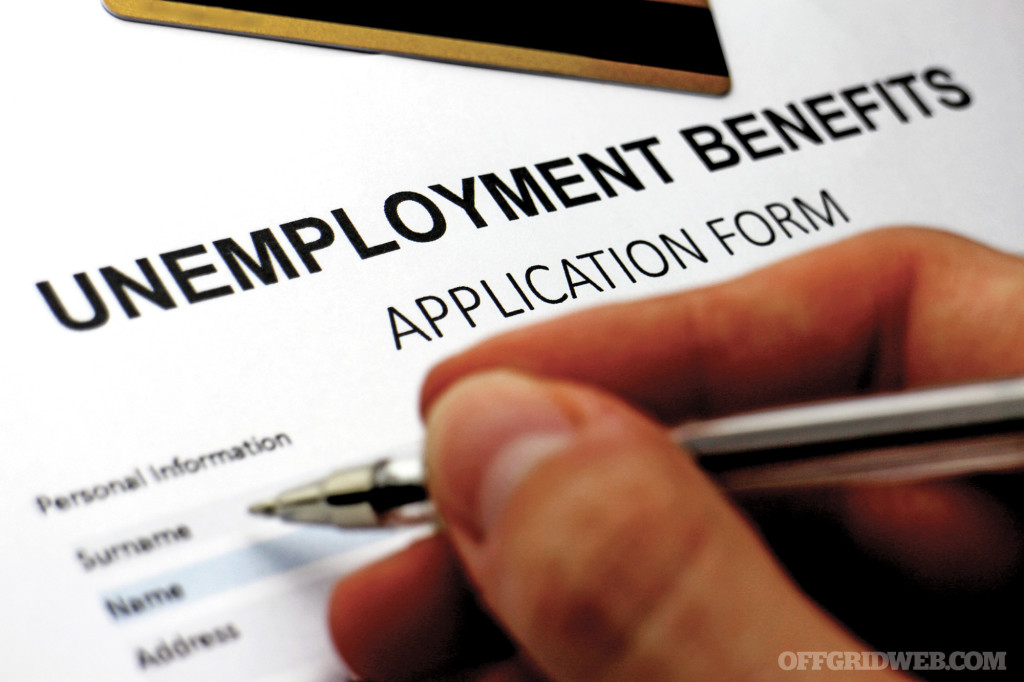
Above: Although it may be a blow to your ego, anything that decreases debt and increases income is productive when times are tough.
Toys “R” Us recently joined the ever-growing list of defunct retail chains. With the proliferation of automation, e-commerce, and job instability in a world where employers are constantly focused on cost-cutting, it makes sense to examine figures about workforce sizes in various industries. Interested in seeing what industries are circling the drain versus which ones are growing? The Bureau of Labor Statistics tracks data by industry over time. www.bls.gov/iag/
About the Author
Dennis Santiago is a global risk and financial analyst. His national policy expertise includes strategic warfare, asymmetric warfare, and global stability. He’s a financial industry subject matter expert on systemic risks to the U.S. economy and the safety and soundness testing of U.S. banking institutions. www.dennissantiago.com
More From Issue 28
Don’t miss essential survival insights—sign up for Recoil Offgrid’s free newsletter today!
Read articles from the next issue of Recoil Offgrid: Issue 29
Read articles from the previous issue of Recoil Offgrid: Issue 27
Check out our other publications on the web: Recoil | Gun Digest | Blade | RecoilTV | RECOILtv (YouTube)
Editor’s Note: This article has been modified from its original version for the web.