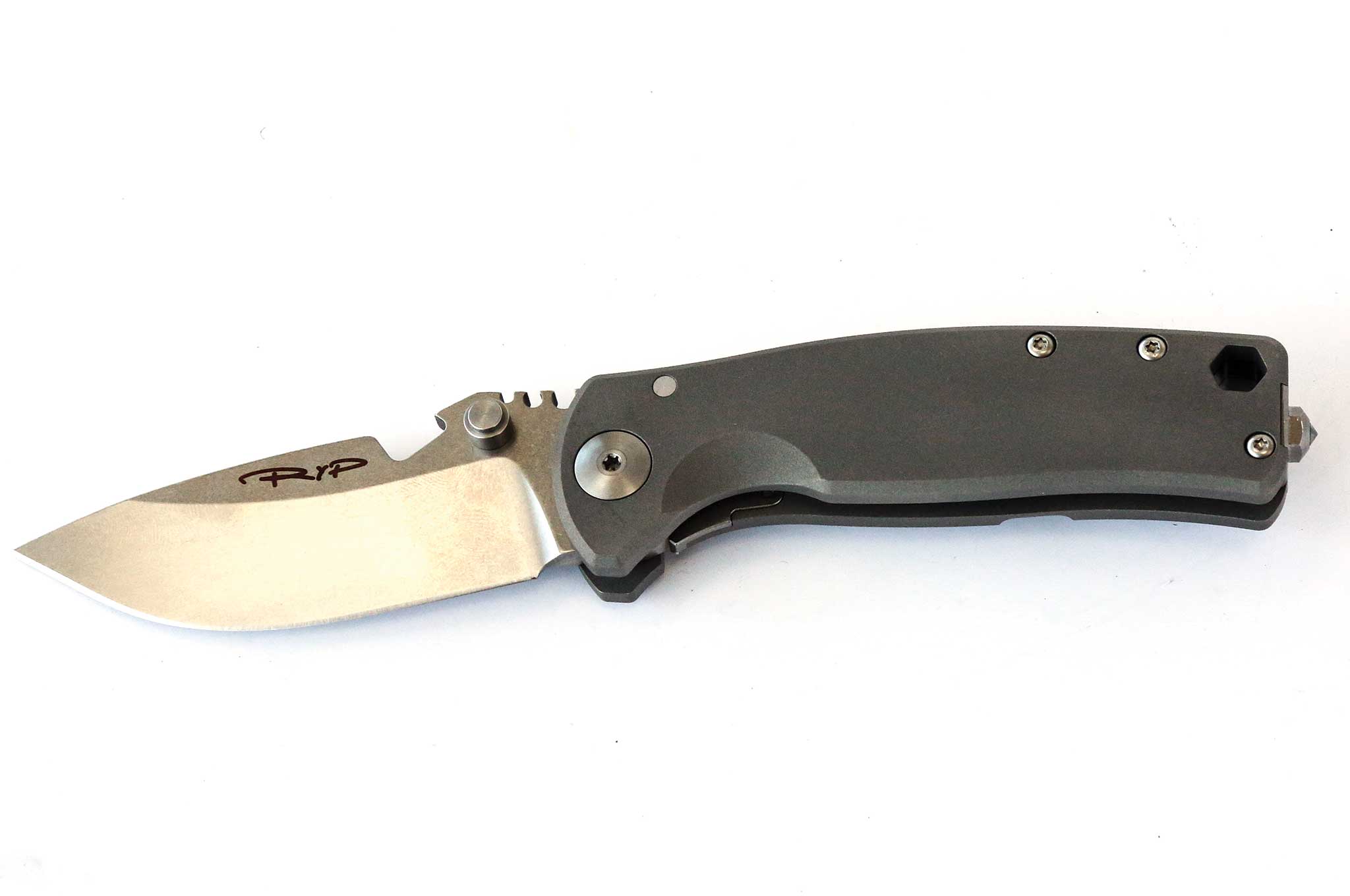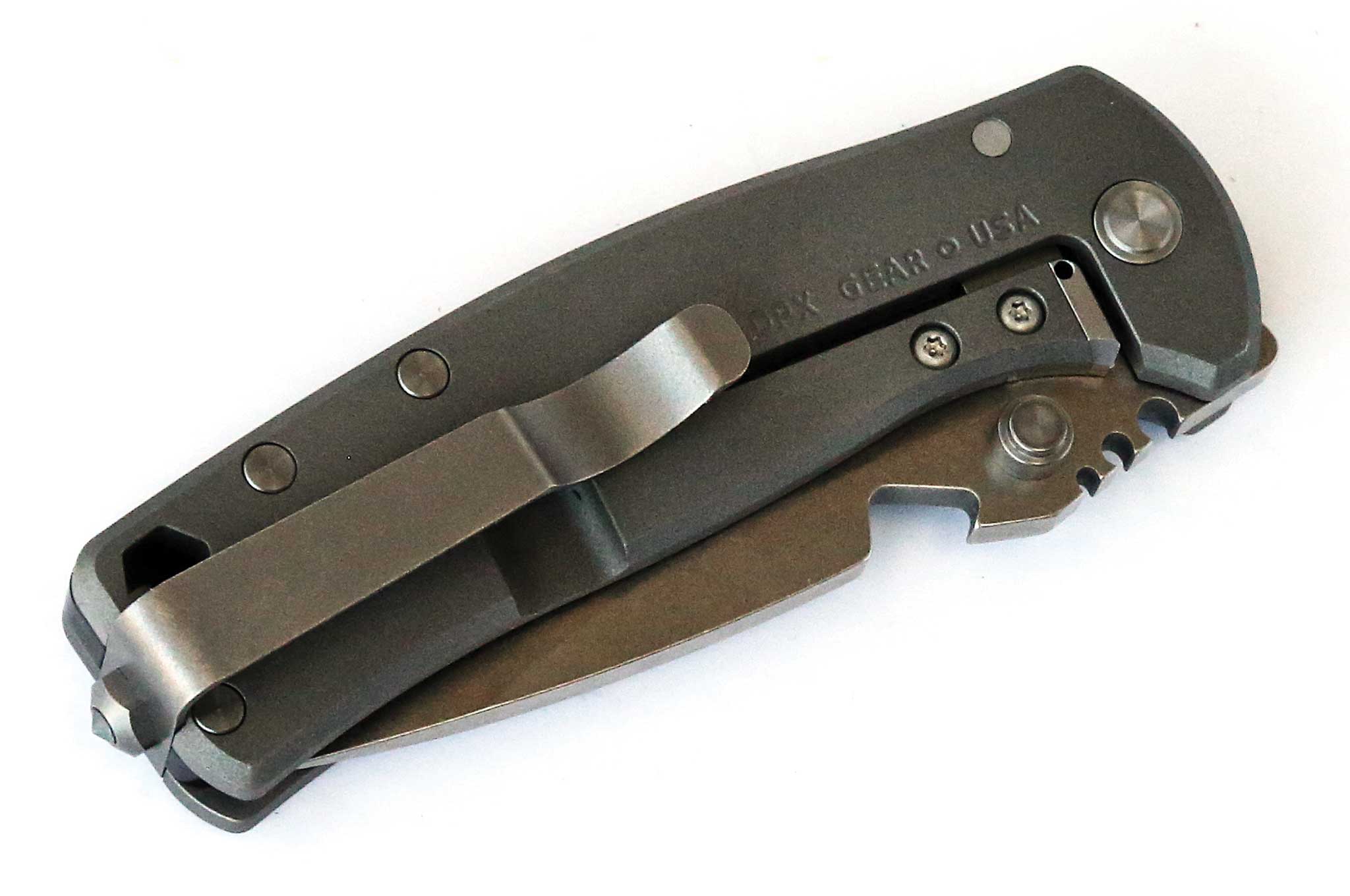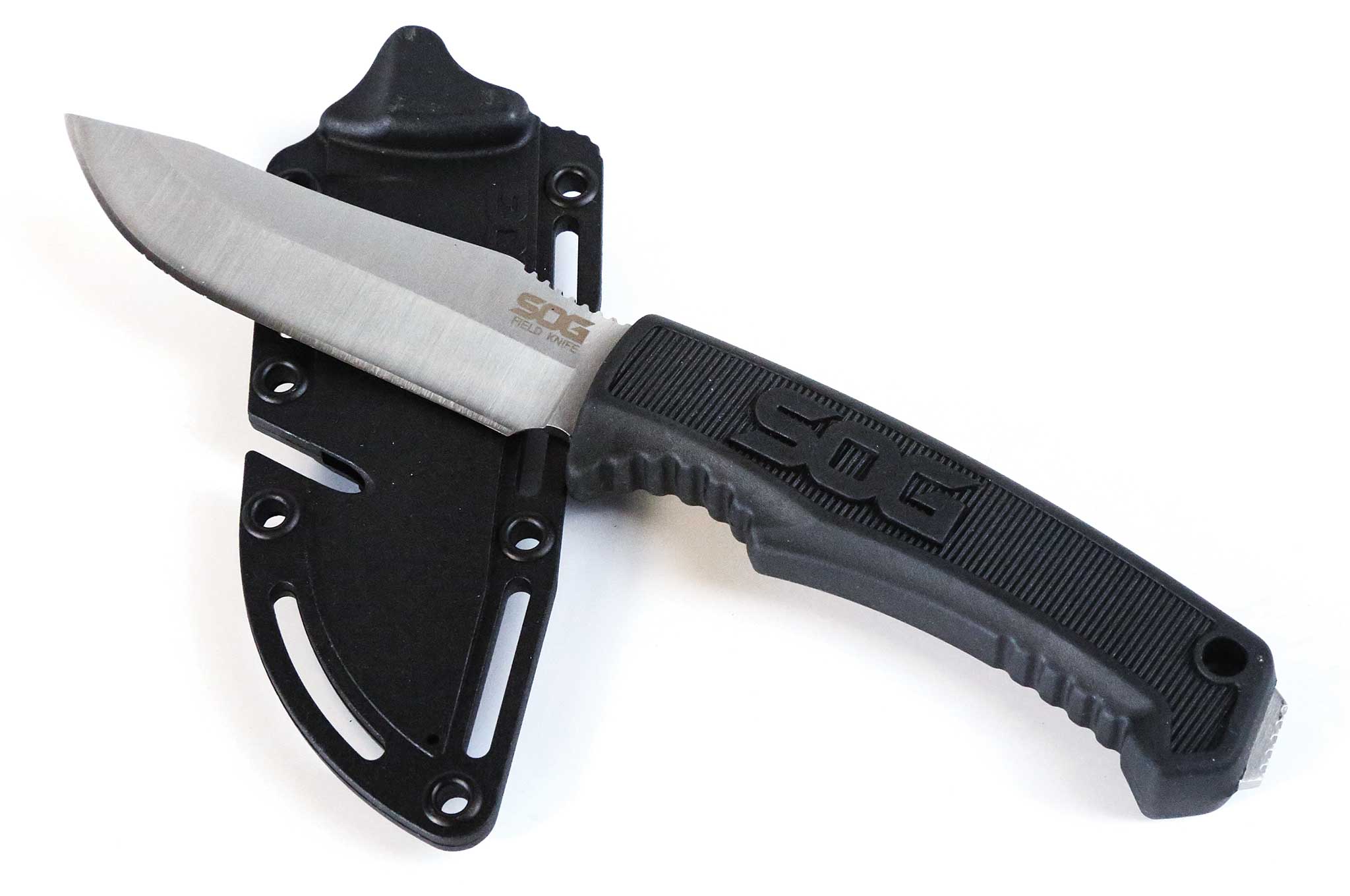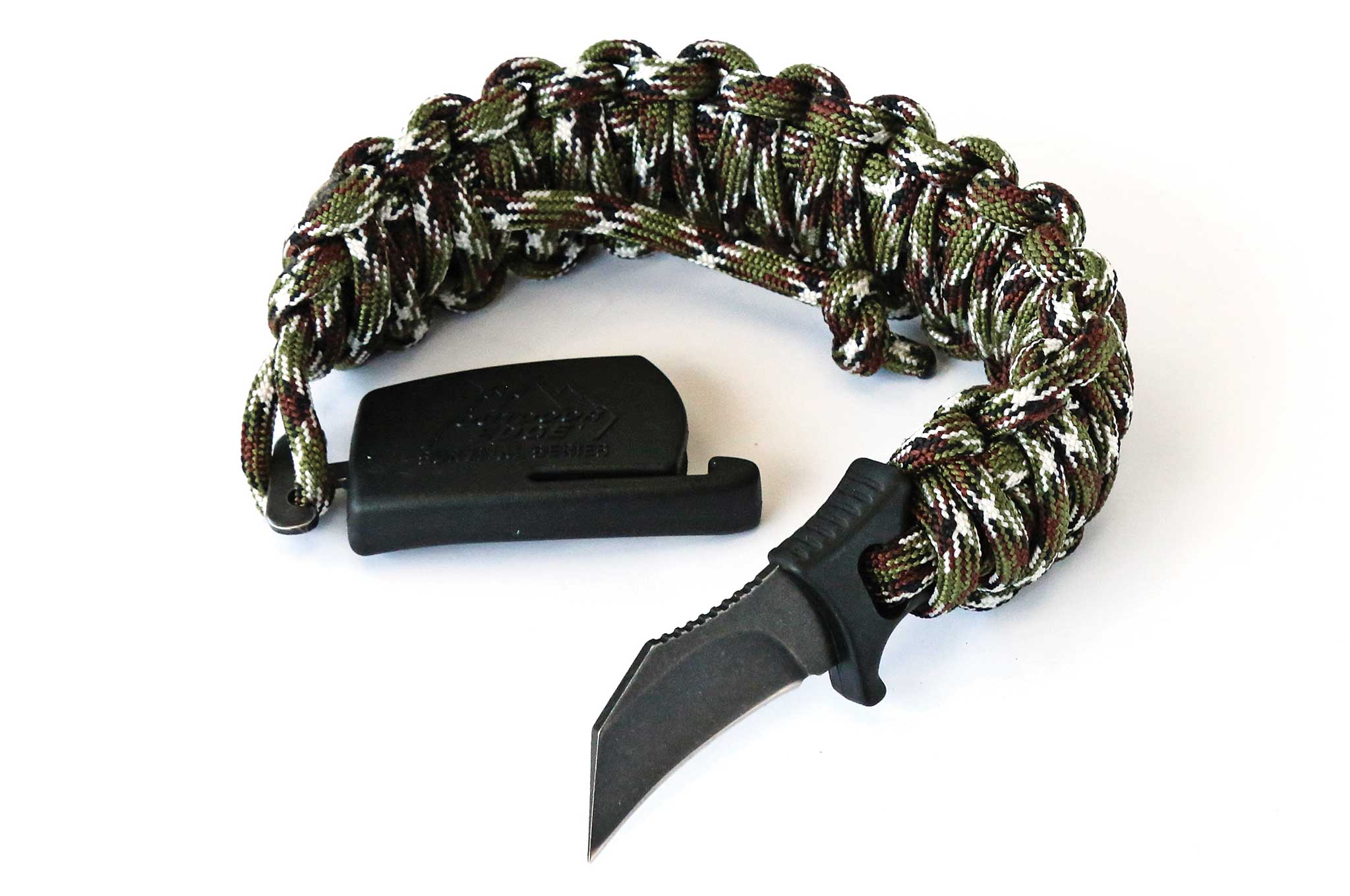
New: CRKT Daktyl Folding Knife

When you think about a folding knife, what comes to mind? Most of us are likely to envision a traditional EDC folder, with a blade sandwiched between two flat handle scales. There are countless types of folding knives, but most adhere to this basic framework. CRKT, however, has released a folding knife that goes in a completely different direction — literally.

CRKT Daktyl folding knife blade tool 8

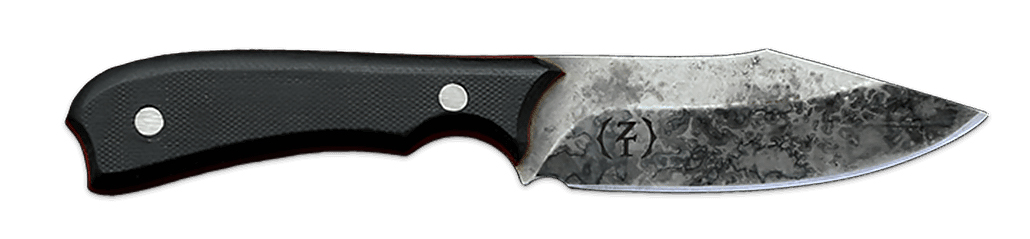
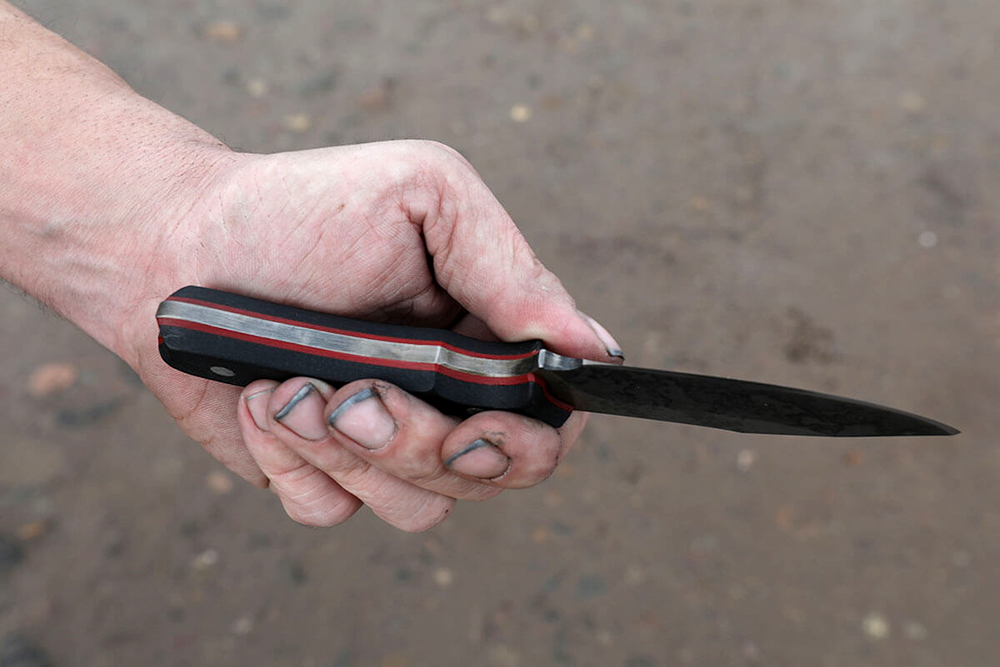
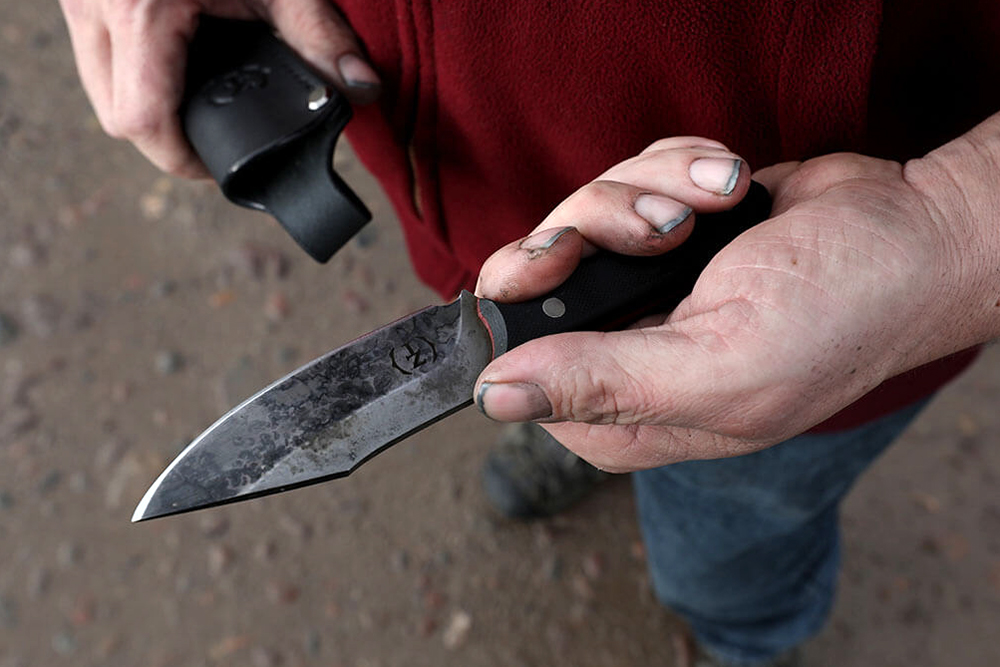
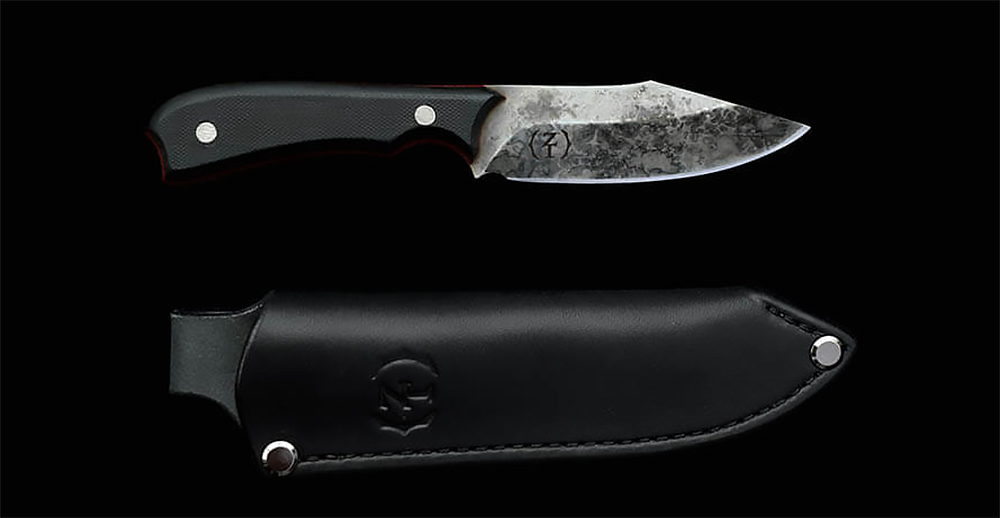
The CRKT Daktyl is a bare-bones knife designed by Tom Hitchcock, of Bend, Oregon. Instead of folding open and shut in parallel with the handle, it folds in a perpendicular direction. CRKT calls this side-opening mechanism Hole in One, after the previous Hitchcock-designed blade of the same name.

CRKT Daktyl folding knife blade tool 3

To open the knife, a lever near the pivot point is pushed up, and the blade is rotated outward in either direction until it locks in place. The CRKT Daktyl also features a new addition to the Hole in One mechanism: a Slide Lock which acts as a safety to keep the knife securely in the open or closed position.

CRKT Daktyl folding knife blade tool 2

The central hole on this knife also acts as a carabiner for attachment to belt loops or PALS webbing, and as a bottle opener for cracking open a cold one.

CRKT built the Daktyl’s 3-inch blade from easy-to-sharpen 420J2 stainless steel. More 420 stainless steel was used for the construction of the skeletonized handle and lock slider. Overall opened length is 6.8 inches, and weight is just 2.4 ounces.

CRKT Daktyl folding knife blade tool 7

The CRKT Daktyl is available now at an MSRP of $60. For more information, check out CRKT.com.


Fixing a Broken Folding Saw in the Forest

We ran a poll earlier this year which asked what cutting tools you carry in your survival kit — a knife, an axe, a saw, or some combination of these tools. Of those who responded, 60% said that they carry a saw along with their other wilderness gear, while 72% carry an axe and 98% carry a knife. While a saw may not be the most popular of the cutting tools, it’s extremely useful in heavily-forested areas, and can be used to quickly and cleanly cut everything from small kindling branches to larger saplings.

Fire wood types infographic fireplace tinder kindling 3

Woodworking is easier with a saw, as they can produce flat and even surfaces with little effort.

Like any tool, a saw may eventually break under frequent use, especially if it’s a compact and portable folding saw. For survivalists, throwing away broken gear isn’t an option, so it’s important to consider how to MacGyver your way to the best possible fix. With a little ingenuity and basic materials, the folding saw can be repaired in the field. In fact, it can even be modified for extended reach and leverage.

Fix broken folding saw blade forest wood tree 4

Survival Russia shows how a shallow notch in a branch can create a strong saw handle.

In the following video, Survival Russia shows a folding saw blade that was broken by a family member, and takes on the task of repairing it in the field. First, he tries gripping the blade between his fingers to notch a new handle, but the metal is too slippery to hold. Then he wraps the teeth in birch bark for some temporary protection, but the blade still draws blood.

Fix broken folding saw blade forest wood tree 5

Fortunately, his pain wasn’t in vain, as he’s able to notch a branch and bind the blade into the notch with some steel wire.

The fix may not be elegant, but field-expedient repairs rarely are. What matters is that the broken saw was turned from a jagged scrap of metal into a usable woodworking tool with minimal resources. If you carry a folding saw in your survival kit, you may want to also consider carrying some steel wire for this purpose, since paracord may eventually be cut as the saw blade shifts. Even if your saw doesn’t break, you’ll be able to use the wire for other purposes, such as fashioning snares.


RECOILtv: Using a Folding Knife for Self-Defense

Many of us carry folding knives as part of our every-day carry gear, and there are countless reasons to do so. These small blades come in handy for all sorts of mundane daily tasks, including slicing open packages, removing zip-ties, and cutting up fruit for a mid-day snack. However, a folding knife can also be an incredibly powerful self-defense tool in emergency situations.

Folding knife review buyers guide web 59

With the proper techniques and training, the folding knife you carry can disable an armed attacker in the blink of an eye. Obviously, if you’re able to run away from a deadly threat, that should be your top priority. But if there’s nowhere else to go and you’re in serious danger, knowing how to use the folding knife as a defensive tool can save your life.

Michael Janich uses a chunk of pork on a PVC pipe to demonstrate a knife's effect on flesh.

Michael Janich uses a chunk of pork on a PVC pipe to demonstrate a knife’s devastating effect on human flesh.

In the following RECOILtv video, editor Patrick Vuong chats with Martial Blade Concepts founder Michael Janich about the effectiveness of a folding knife for self-defense. Janich is a frequent contributor to our magazine, and an expert at edged-weapon combatives.

Folding knife self defense combatives martial arts blade fight 4

Even through thick jeans and with minimal effort, the blade cuts cleanly to the bone.

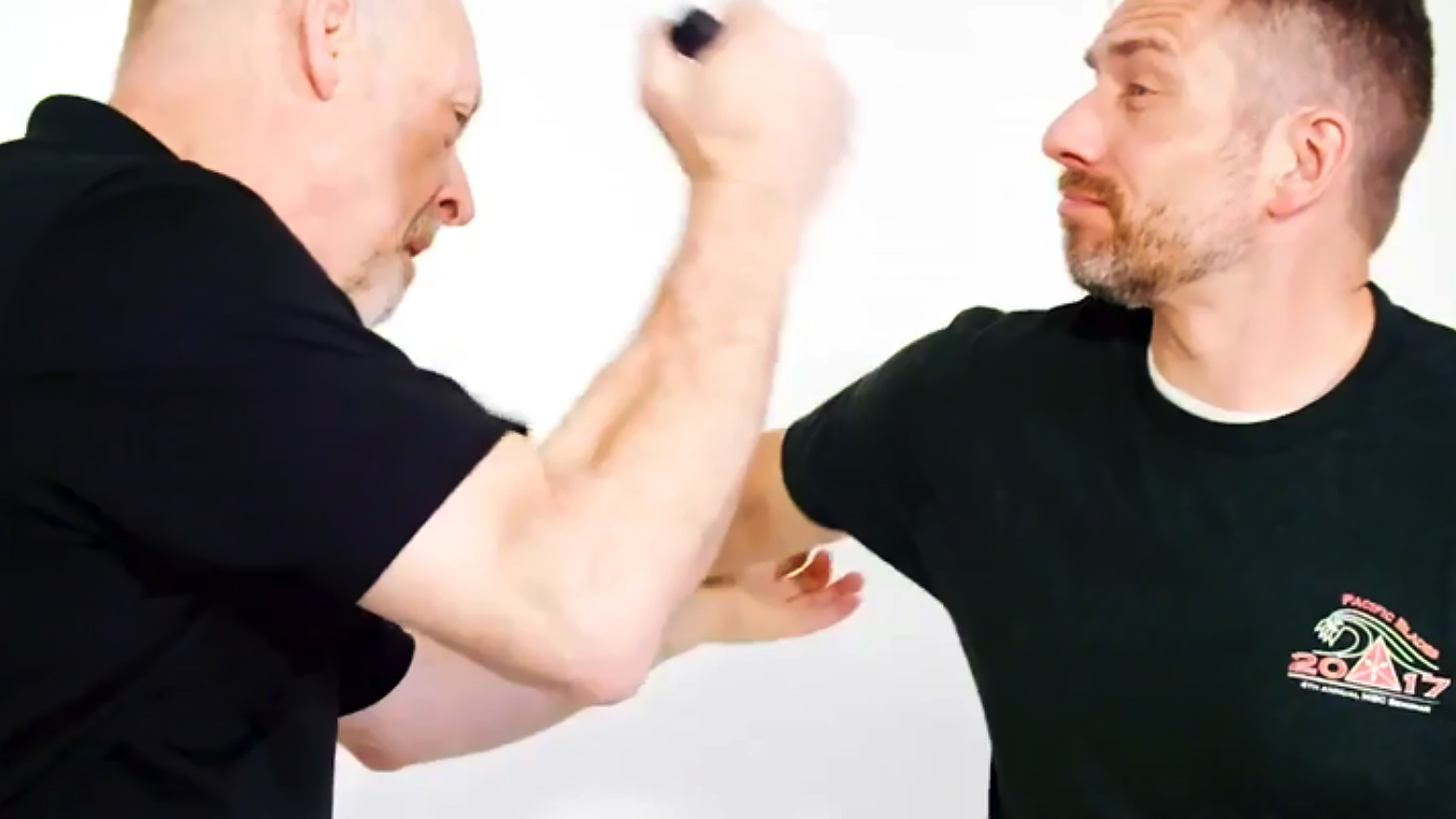
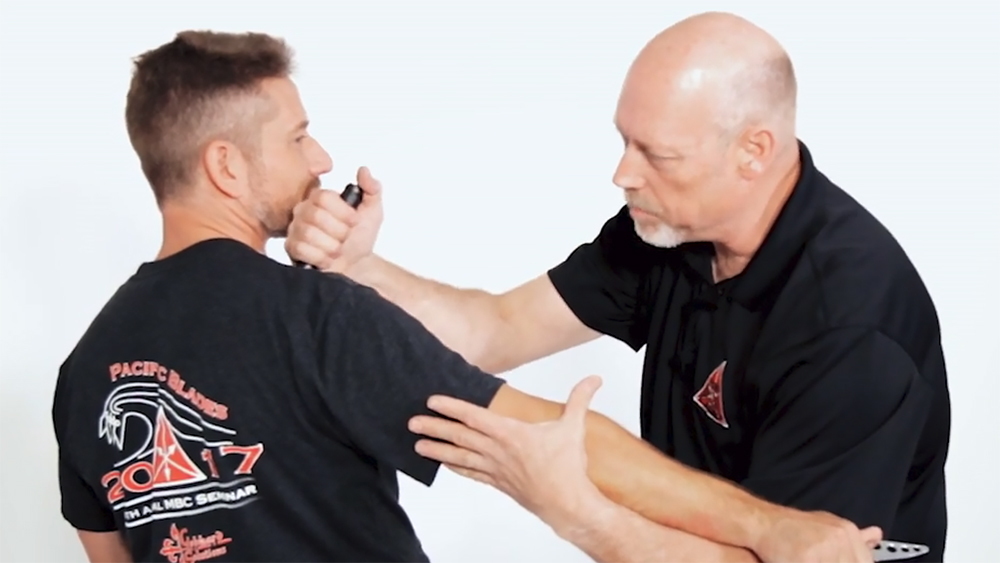
In this 5-minute clip, Janich demonstrates the power of a single strike with a sharp knife through thick clothes. The Spyderco Delica wharncliffe slashes straight down to the bone of his “pork man” flesh analogue. Janich then discusses how to cut an attacker’s forearm and upper arm to disable the limb, and how to deal a finishing blow to the quadriceps muscle.

For more tips on self-defense with knives, tactical pens, firearms, and empty hands, check out MartialBladeConcepts.com. For more of our video content, be sure to follow RECOILtv and the SHTF/OFFGRID channel.


New: Triple Aught Design Interval PD Jacket

Denim has been a popular fabric choice for outdoor apparel and workwear since the late 1800s due to its rugged toughness. Almost everyone owns at least one pair of denim jeans, and jackets made from the material have also seen a recent resurgence in popularity — some might even rock both for a full Canadian tuxedo. No matter how you wear your denim, it provides a classic look that’s both functional and durable.

Triple Aught Design Interval PD jacket apparel shirt coat 3

Triple Aught Design has taken the old-school denim jacket into the modern age with a new piece of apparel called the Interval PD jacket. The letters “PD” stand for performance denim, a fabric that’s produced for TAD at America’s oldest working denim mill, the White Oak plant in Greensboro, North Carolina. It’s sanforized (i.e. pre-shrunk) and contains 99% cotton and 1% elastane for added flexibility.

Triple Aught Design Interval PD jacket apparel shirt coat 4

The TAD Interval PD jacket is made in the USA with strategic reinforcements for maximum wear resistance. Its standard fit is designed to permit mobility, and resist printing for wearers who carry concealed weapons. Buttons on the collar, cuffs, and waist can keep out drafts in colder weather.

Triple Aught Design Interval PD jacket apparel shirt coat 6

This jacket offers four simple pockets:

  • Two zippered hand pockets with internal open-top pockets for smaller items
  • Two zippered upper chest pockets for maps, cell phones, or paperwork

Triple Aught Design Interval PD jacket apparel shirt coat 5

The Triple Aught Design Interval PD jacket is available at an MSRP of $220 in sizes ranging from small to XXL. For more information, go to TripleAughtDesign.com.


Gas Masks 101

Disclaimer
Skills and gear described in this article can be dangerous. Even with training, proper gear, and common sense, you can still get injured. The materials provided are for illustrative purposes only. Any use of the information contained in this article shall be solely at the reader’s risk. This publication and its contributors are not responsible for resulting injury.

We see them all the time in movies, TV shows, and video games. Whether it’s a killer outbreak, a chemical attack, or just a plain ol’ run-of-the-mill apocalypse, this ominous piece of gear has become synonymous with doomsday.

But are gas masks really practical? Or are they more prop than prep, providing a false sense of security? With so many survival products competing for our preparedness dollars, are they really worth the cost?

In this article we explore the gas mask basics, set aside myth and fiction, and provide in-depth answers to some of the most common questions.

The History

The concept of the gas mask dates back to antiquity; reportedly the ancient Greeks used common sea sponges to filter out smoke and other toxic substances. Most of these primitive masks were woefully ineffective, but perhaps they were better than nothing. Humans have never stopped trying to develop more effective forms of protection from toxic substances in the air.

What’s generally acknowledged as the modern-day gas mask dates back to the early 1900s.

During World War I, soldiers encountered the first full-scale use of chemical weapons on the battlefield. As result of this new threat, gas masks became so important to the battlefield solider that they were considered second only to the soldier’s rifle. Troops were expected not only to train with their masks, but also know how to clean and repair them.

Although there have been many significant advances in technology and materials since those early masks, the basic principle remains the same: filter out hazardous airborne contaminants and allow the user to breathe safely in hostile environments. One hundred years later, law enforcement and military personnel around the world still use and train with gas masks. In today’s unpredictable global environment, however, more and more civilians are also considering the benefits of including a gas mask in their personal survival kits. Up until 2014, Israel’s government distributed free gas masks to its civilian population. As late as 2013, Israelis routinely lined up to collect their gas mask kits and for demonstrations on how to use the gear correctly.

gas-masks-101-masks

The Basics

The traditional gas mask, sometimes called a respirator, protects against noxious contaminants. Although the science can get intricate, the basic purpose of the modern gas mask is designed to filter out harmful substances while allowing in clean, breathable air. The full-face mask also serves to protect the eyes and other vulnerable tissue, while allowing the wearer to see and communicate clearly.

While wearing a gas mask can offer significant protection in some environments, it’s important to understand what it can and can’t do, and to be well trained in its correct use.

A gas mask will not protect the user against chemical agents that can be absorbed directly through the skin, such as sarin, mustard gas, tabun, and VX. (Sarin, for example, is colorless, odorless, and tasteless, but is rapidly absorbed through the skin and is many times more deadly than cyanide gas.)

Also, a standard gas mask will filter out soot and keep smoke out of your eyes, but it offers little to no protection in a fire. Depending on the type of filter used, a gas mask may provide short-term protection against some of the particulates found in smoke, but it won’t protect against oxygen deficiency — smoke from a fire doesn’t contain enough oxygen to support life. This is why firefighters use air-supply respirators equipped with a tank of pressurized air while working in a smoke-filled environment.

Today’s gas masks are designed for everything from riot control and warfare to highly specialized industrial applications and just about everything in between. For purposes of this article, however, we’ll focus on gas masks available to ordinary civilians looking to add another level of security to their crisis preparations.

What to Look For

Gas masks, and other chemical protective gear, are considered a prohibited item for export, but are legal for sale in the USA. (Recently the Venezuelan government passed a ban on the import of gas masks intended for use by the public.) Naturally, this is one item that you really need to get right the first time — there’s no trial and error when it comes to deadly airborne contaminants. To obtain the right mask that offers the maximum protection, you’ll need to know what to look for, and you’ll need to choose wisely. Look for:

A Good Fit: Select a size and shape that fits your face securely. Most gas masks available today are constructed of an impermeable polymer material and are secured by adjustable straps to ensure an airtight fit. Also, look for one that provides a comfortable seal while you’re performing physical activities (e.g., running, shooting, and during filter changes.) Masks with filter connection points on the left and right side offer more flexibility, allowing you to attach a new filter before detaching the spent one.

The Right Rating: Look for a mask and filter(s) rated for chemical blowing and riot control agents (CBR/RCA) and nuclear, biological and chemical (NBC) rating. Surprisingly, not all masks protect against these risks. Make sure replacement filters are vacuum sealed and properly rated, too. Once you’ve got your masks and replacement filters, store them in a cool, dry place away from sunlight and humidity.

Up-to-Date Masks: There are many surplus gas masks available to the public — Russian, Israeli, Chinese, etc. Some military surplus models offered at bargain prices seem like a tremendous deal, but they’re inexpensive for a good reason: They’re outdated, defective, or just plain junk. These masks (and filters) have been sitting in storage for many years past their recommended expiration date — not a good thing since materials degrade over time and compromise the mask’s integrity and efficiency. In addition, many of these outdated designs have been recalled due to serious design flaws and the use of toxic materials. You can definitely save money, but is it worth the risk? That’s not to say that all surplus masks are a waste of money; keep in mind, “caveat emptor” applies.

gas-masks-101-replacement-filters

To install a new filter, remove all plugs and caps from the canister. Carefully screw the canister into one of the canister inlets on the mask and hand tighten for a good seal with the gasket. Make sure that the threads don't bind, and avoid over tightening.

To install a new filter, remove all plugs and caps from the canister. Carefully screw the canister into one of the...

Replacement Filters: A gas mask is useless without a proper canister/filter. Many filters contain activated charcoal and other chemicals to absorb (filter out) harmful agents. Once the mask is sealed around the face the only air entering the mask will first need to pass through the filter media. Filters have a limited shelf life and need to be replaced once expired. Make sure that you stock up on replacement filters for your mask. If you’re in a situation where you actually deploy your mask, you’ll know it’s time to swap out a filter when breathing gets more difficult. Practice changing the filter with the mask on to ensure you can do it by yourself when SHTF.

Some masks come with a drinking plug that allows you to connect a water tube to a drinking compatible water container or canteen. With this model, a simple flip of a lever moves the interior mouth piece into position for easy drinking without removing the mask.

Some masks come with a drinking plug that allows you to connect a water tube to a drinking compatible water container...

Extra Features: Some masks come with a hydration port that allows you to connect a tube to a compatible water bladder or canteen. This feature allows the wearer to stay hydrated without having to remove the mask. Other useful features to look for include corrective vision compatibility for folks who wear prescription glasses and an electronics port used to connect in-mask communication accessories.

Cost vs. Benefit

A quality gas mask can set you back hundreds of dollars — add the cost of replacement filters and other accessories and you could be looking at a few thousand dollars for a family of four. Measuring the worth of survival gear that can potentially save your life, or protect you from serious harm, is difficult. But unless you’re independently wealthy, that’s exactly what you must do. If you’re like most of us, you’ll need to make serious choices and measure your priorities as you spend your limited survival dollars

Being prepared is definitely important, but so is paying your mortgage, utilities, groceries, insurance, and all the other bills we deal with on a monthly basis.

Finally, you should consider your overall state of preparedness and decide if and how gas masks fill gaps in your plans. Have you addressed all of your basic survival needs? Do you have a plan and sufficient supplies, gear, knowledge, and skills? Have you adequately considered your family’s need for survival food, emergency water, security/self-defense, first aid/medical, sanitation/hygiene, and finally do you have a plan for bugging in or out? If any of these things are lacking, would a gas mask truly be the best and most effective use of your available dollars at this time?

In the end, the fact that you are even thinking about all this and carefully considering your options will put you in a much stronger position to survive whatever crisis comes your way.

Sources

3M
www.3m.com

Avon Protection
www.avon-protection.com

MSA Safety
www.msasafety.com

About the Author

Richard Duarte is a practicing attorney, urban survival consultant, writer, and firearms enthusiast. He’s the author of Surviving Doomsday: A Guide for Surviving an Urban Disaster and The Quick Start Guide for Urban Preparedness. For more information, go to www.quickstartsurvival.com and www.facebook.com/survivingdoomsdaythebook.

Rookie Mistakes to Avoid

Whether it’s an improper fit, the wrong filter, or just a defective product, if it doesn’t work correctly, you might as well not bother getting a gas mask. Here’s a short list of some of things to watch out for. While nothing is ever 100 percent, extra effort in these areas will help improve the odds in your favor.

Buying a One-Size-Fits-All Mask: To be truly effective, a gas mask must be properly fitted. A badly fitted mask will most likely fail. A faulty seal will let in contaminated air every time you draw a breath. The most common reason for a bad fit is using an incorrect mask size. Masks usually come in three sizes: small, medium, and large. There are other factors to consider, for example men with beards will find that it’s nearly impossible to get a proper fit/seal unless they shave. Likewise, people with glasses will need to remove them before putting on the mask. (Some gas masks are available with corrective lenses incorporated into the mask itself, or with attachments to snap in your own prescription glasses.)

When breathing becomes more difficult, it usually means that the filter has become saturated and it's time to replace it.

When breathing becomes more difficult, it usually means that the filter has become saturated and it’s time to...

Buying Bad Filters: The effective life span of a filter in use varies depending on the circumstances. (Figure an average of about eight hours of use for most filters.) But remember, temperature, humidity, level of exertion, and the concentration level of the suspected contaminant(s) will all affect the useful life of your filter. If you’re going to invest in a gas mask, make sure you also invest in an ample supply of quality replacement filters. A filter that is expired, has been opened and exposed to air, or has otherwise been damaged, will probably not protect you. (A properly stored filter should last about five years.)

Buying Obsolete Masks: Masks have a limited shelf life as well. To be effective, masks must be free from defects, tears, dry rot, cracking, or other issues that might cause it to leak. Over time, however, even the best mask will get old and fail. While there are many questionable masks available at low prices, you’ll likely get what you pay for — an outdated piece of obsolete gear will likely offer zero protection. Remember, it’s only a bargain if it works.

Storing Improperly: An improperly stored mask/filter will deteriorate much faster. Store your mask(s) and filters in a cool, clean, dry place, avoiding temperature extremes. Proper storage will also help avoid deforming the shape of the mask. Inspect your masks/filters often and repair or replace as required.

A gas mask pouch/carrier affords quick and easy access to your mask and filters, plus it protects the mask when not in use.

A gas mask pouch/carrier affords quick and easy access to your mask and filters, plus it protects the mask when not in...

Not Practicing With Your Mask: As with any other gear, you need to practice with your mask. Make sure you can put your mask on quickly and your comfortable performing appropriate tasks with your mask on — running, fighting, shooting. Also make sure you’re able to speak and be heard with your mask on. Lastly, practice changing filters, while keeping the mask on. Now is the time to make the mistakes, and correct them.

Not Testing The Mask: One safe and easy way to test your mask is to use banana oil (isoamyl acetate) ampules, which give off a non-irritating odor of, you guessed it, banana oil. This test will confirm that your mask is properly fitted to your face and providing an airtight seal. The quick and cheapo way to test the mask is to put it on, tightly cover the breathing port with your hand, and breathe in. If the seal is good the entire mask will suck into your face.

Children’s Gas Masks

gas-masks-101-childrens-gas-mask

An adult-size gas mask will not protect a child since it won’t seal properly around a child’s smaller face. Gas masks aren’t normally made in kids’ sizes. There are alternative products, like protective hoods, but they are not always easy to find. A limited supply of these products can be found at www.approvedgasmasks.com/child-masks.htm.


More on Masks, Respirators, and Preparation from Airborne Hazards

More From Issue 22

Don’t miss essential survival insights—sign up for Recoil Offgrid’s free newsletter today!

Read articles from the next issue of Recoil Offgrid: Issue 23

Read articles from the previous issue of Recoil Offgrid: Issue 21

Check out our other publications on the web: Recoil | Gun Digest | Blade | RecoilTV | RECOILtv (YouTube)

Editor’s Note: This article has been modified from its original version for the web.

Infographic: 7 Techniques to Remember Anything

Few things are worse than that feeling in the pit of your stomach when you realize you forgot something critical. Whether it’s the answer to an important question on a final exam, the keys to your truck that just got locked inside, or the path you need to take to return home from a day hike, forgetfulness negatively affects many aspects of our lives. In extreme circumstances like the last example, it can even put our lives in danger.
x-ray-diagram-of-brain

The human mind is powerful, but can also feel disorganized without some sort of mental filing system.

Most of us wish we could instantly recall every piece of information we studied, but unfortunately, that’s simply impossible unless you’re some sort of survivalist Rain Man. However, all hope is not lost. There are quite a few time-tested methods which can be employed to improve memory, even under stressful circumstances.

distressed-man-bowed-with-gun-and-survival-gear

The following infographic from Quid Corner shows 7 techniques which can help you to remember anything. You might need to recall something as complex as the differences between poisonous and edible mushrooms, or something as simple as the streets to turn on while driving to a friend’s house — either way, a combination of these methods can help jog your memory. Click here to download a full-size version of this infographic.

Infographic memory memorization psychology remember anything 1Infographic memory memorization psychology remember anything 2Infographic memory memorization psychology remember anything 3Infographic memory memorization psychology remember anything 4Infographic memory memorization psychology remember anything 5Infographic memory memorization psychology remember anything 6Infographic memory memorization psychology remember anything 7Infographic memory memorization psychology remember anything 8Infographic memory memorization psychology remember anything 9


Review: Kim Breed SERE Combo Knives

Kim Breed is a been there, done that, gets it type of guy. You’ve probably heard the expression, been there, done that, but maybe not the last part. While this expression may not be a part of the common lexicon, we’d like to make a case for it. Kim is a retired Green Beret and he remains a serious badass to this day. His military service is a testament to his been there, done that experience. The gets it description comes from his knowledge of blacksmithing, years of practice in knifemaking, and his passion for the outdoors. Kim simply understands what a knife should be and how it needs to work in the real world.

With this understanding in mind, we took some time to evaluate and analyze Kim Breed’s latest knife offering.

The Kim Breed SERE Combo

Kim Breed SERE Combo knives knife blade survival bushcraft 1

Meant for bushcraft and survival, the SERE Combo features a pair of knives: a strong main blade and a smaller and more nimble companion blade. A custom ferro rod from HRK Machining rounds out the SERE Combo, and all three components are carried securely in a Kydex sheath with a Tek-Lok buckle.

Kim Breed SERE Combo knives knife blade survival bushcraft 15

For the guy who only has room on his duty gear for a single blade, this package provides a lot of utility in a compact package. Unlike some piggyback combos, this setup doesn’t feel like a boat anchor dragging you down — its total weight is only a hint over 20 ounces. If carrying multiple blades on a single belt rig is not your style, the smaller piggyback blade, carried on the outside of the main sheath, can be worn around the neck as a deep-cover concealment blade. Any way you slice it, this combination is meant for work and we put it to the test on numerous nights out in the field over the past few months.

We wanted to see how effective the Kim Breed SERE Combo could be for the construction of temporary shelters, camp tools and food procurement methods. We also wanted to see how the knives would fare against seasoned hardwoods and tough webbing.

Full-Size SERE Knife

Kim Breed SERE Combo knives knife blade survival bushcraft 9

With quick snap cuts, the edge cleanly made its way through bamboo. We used the main blade to chop saplings and remove branches from them. We split smaller pieces of wood by tip-first batoning the blade through them. By choking up on the handle, we had excellent control to carve trap triggers. The single-finger guard in the handle kept our hand from riding the blade.

Kim Breed SERE Combo knives knife blade survival bushcraft 13

By choking back on the handle, we effectively extended its length and used a snap cut to make quick work of the tasks at hand. We added a small lanyard to the rear lanyard holes but found even more security using a forward lanyard tied around the ricasso.

Kim Breed SERE Combo knives knife blade survival bushcraft 17

Using a wooden baton, we forced the 80CrV2 blade through knotted woods and found no deformation to the edge. After extended use, some of the finish on the blade wore off but this was the only noticeable wear on the blade. The edge remained arm-hair-shaving sharp. While used in various grips, the handle felt great and produced no hot spots.

Kim Breed SERE Combo knives knife blade survival bushcraft 20

Small SERE Companion Knife

The smaller companion blade, also worked great for its size. Let’s face it, a small blade like the skeletonized companion is not going to do the heavy work of its bigger brother. We decided to use it in lieu of a neck knife for opening meal packets, prepping our food (like hard cheeses and summer sausages) and as a fire steel scraper for the HRK Machining ferro rod.

Kim Breed SERE Combo knives knife blade survival bushcraft 24

The minimalist design is not meant for a full grip. Most of the time, we used the smaller companion blade in a pinch grip. When we wrapped the smaller blade with some Kevlar-braided cord, it was easier to hold in more traditional grips. With the cordage around the handle, we were still able to use the provided Kydex sheath without having to modify it at all. We also tried paracord and found it extremely comfortable in hand as it made the grip larger but we found we couldn’t get the knife back into its sheath with this bulkier handle wrapping.

Kim Breed SERE Combo knives knife blade survival bushcraft 21

At first, we questioned the use of ordinary 440C as a steel instead of one of the newer super steels. Then we remembered who the maker of the SERE Combo is, and realized there must be a reason for selecting that steel. Since the companion blade is carried on the outside of the sheath, it requires better rust resistance, as the blade will be exposed to humidity and precipitation. During all of our testing, we carried the SERE Combo in all sorts of weather and we didn’t notice any rust on the smaller blade.

Ferro Rod Fire Starter

We also tried out the custom ferro rod from HRK Machining that’s available as an option with the Kim Breed SERE Combo.

Kim Breed SERE Combo knives knife blade survival bushcraft 10

The knurling on the ferro rod is subtle, but certainly noticeable when your hands are cold and wet. The 4-inch rod is also available in a 3-inch version, but the extra length means extra sparks. We used the companion blade as a scraper, and it worked well, but still wasn’t as effective as a carbide scraper. Hey, we have to call it how it is.

Kim Breed SERE Combo knives knife blade survival bushcraft 26

If we could change anything about the SERE Combo, it would be the spine on the companion blade. Its edges are sharp enough to throw a spark, but they could be a little sharper. As it is is, we were able to light multiple fires with this setup, using both man-made tinder and an assortment of birch bark, dried leaves, cedar duff, and cattails. HRK Machining threads their ferro rods, so this rod can be replaced in between training trips and missions in the field.

The more we used the Kim Breed SERE Combo, the more it became evident Kim Breed’s been there, done that, gets it reputation is well deserved. Sure, we could have used an assortment of purpose-specific blades for each of the individual tasks in this article, but the SERE Combo pairing of blades worked extremely well together as a comprehensive survival set. We’re confident this combo of tools will be right at home on your next trip into the woods.

SERE Combo Specifications

SERE Knife
Steel: 80CrV2
Blade Length: 6.25 inches
Thickness: 3/16 inch
Handle Material: Green Micarta
Overall Length: 10.75 inches
Weight: 10.5 ounces
Sheath: Kydex

SERE Companion
Steel: 440C
Blade Length: 3.25 inches
Thickness: ⅛ inch
Overall Length: 6.75 inches
Weight: 2 ounces
Sheath: Kydex

Kim Breed SERE Combo knives knife blade survival bushcraft 25

Total Combo Weight: 20.2 ounces
MSRP: Starting at $475. Ferro rod ($50 for the model tested) and holder will add to cost.

Contact Information:
Kim Breed Knives
733 Jace Dr
Clarksville, TN 37040

Instagram: @kimbreed1911
Phone: 931-980-4956
E-mail: sfbreed@yahoo.com

About the Author

Ruck survival fitness backpack bag bugout medical 12

Kevin Estela is the owner/head instructor of Estela Wilderness Education, a bushcraft and survival school in New England. He is a Sayoc Kali Associate Instructor, Brazilian Jiu-Jitsu practitioner, and an avid marksman. As a “survival athlete” he can be found regularly testing his physical and mental limitations in the gym, woods, and urban landscape preparing for the fight.


How to Find Flint and Other Sparking Rocks

With the aid of modern tools, starting a fire may seem like an easy task. Just whip out a trusty lighter and a few scraps of tinder, and if all goes according to plan, you’ll have a fire going in seconds. If the lighter fails to do the trick, you’ve probably got a backup or two in your survival kit — stormproof matches, a ferro rod, or maybe even a camp stove with built-in ignition. However, if you were somehow separated from all these tools, would you still be able to start a fire?

fire-starting-methods-fire

Primitive fire-making skills can be a life-saver in difficult circumstances because they enable you to get a campfire going with minimal gear. We’ve previously touched on the bow drill and other improvised fire-starters, but one other method to know is the flint and steel technique. Using nothing but a piece of high-carbon steel (such as the spine of your knife) and a sharp-edged hard rock, you can generate enough sparks to light a fire.

They're not ROCKS, Marie. They're MINERALS.

“They’re not rocks, Marie. They’re MINERALS!”

Unless you’ve made a habit of carrying a dedicated flint rock and steel striker, you’ll need to know how to find flint in the wild. It’s important to note that the “flint rock” you find is unlikely to be actual flint or a rock — it’ll probably be some other hard mineral, such as quartz, chert, or agate. However, the name doesn’t matter for the purpose of survival fire-starting. What matters is the stone’s hardness and its ability to form a sharp edge.

Find flint chert quartz agate fire starting rocks 3

The image above shows several types of flint, chert, agate, and quartz, which can be purchased from Emberlit along with various steel striker pendants. For more info on these items, check out our fire-starter buyer’s guide from Issue 18 of our magazine.

In this video from Wilderness Outfitters, Dave Canterbury discusses the characteristics of a fire-starting flint rock. Essentially, it must be rated at approximately 7 on the Mohs scale of mineral hardness, or slightly softer than hardened steel. This can be checked by hitting the rock with a hammer stone, and checking if the stone chips and breaks away with a sharp edge.

Some sources of flint may be encapsulated in an outer crust, and must be broken to reveal hard edges.

Some sources of flint may be encapsulated in a discolored outer crust. Photo: Wikipedia

Another method to find flint is to attempt to scratch glass with the rock’s edge — glass is a 5.5 on the Mohs scale, so flint should be able to scratch it without much resistance. The video below from Mike Reed Outdoors explains in greater detail:

Once you’ve found a source of natural flint or similar hard rock, it’s just a matter of striking a carbon steel item with quick grazing blows. With a little practice, this will generate reliable sparks. These sparks can then be caught by char cloth (ideally) or a carefully-constructed nest of some other highly volatile tinder material. It may not be as quick and easy as pulling out a lighter, but it’s a great fall-back method for primitive survival.


Weaving Simple & Strong Grass Rope

Cordage is useful for many purposes during survival situations, including building shelters, trapping animals for food, and rappelling safely down slopes to reach otherwise inaccessible resources. You’ve probably already got paracord in your bug-out bag, and you may also have jute twine, monofilament fishing line, or other types of cordage. However, these are all finite resources, meaning that they’ll run out or wear out eventually.

Rappelling dulfersitz rope harness 2

Even if you’re not a dapper Swiss mountain-climber, rope can get you out of trouble in many ways.

In long-term survival situations, knowing how to make your own cordage from natural materials is an extremely valuable skill. Luckily, it’s not difficult to do so. Primitive cultures have been making rope and other woven items from natural plant fibers for millennia.

Making grass rope cordage DIY woven primitive string 4

The YouTuber known as NightHawkinLight has made a name for himself by creating hundreds of videos showing how to craft various items, from air cannons and knives to rockets and musical instruments. In his latest DIY video, he shows how to create hand-braided rope from dry grass.

Making grass rope cordage DIY woven primitive string 3

This method can be adapted to any length or thickness of rope, and with a little practice, it’ll only take a few minutes to complete a foot of strong cordage. He also emphasizes that the stiffness and moisture content has a dramatic effect on the rope — fresh green grass is more malleable, but if it’s not dried before use, it’ll shrink and weaken the rope.

The rope is surprisingly strong. Even knotted, it's able to support the maker's full weight.

The rope is surprisingly strong. Even knotted, it’s able to support the maker’s full weight.

Check out the video below, and for more DIY projects, check out NightHawkinLight’s YouTube channel.


New: Filson x Danner Grouse Boots

In the wilderness, a pair of good boots is worth its weight in gold. Poor-quality, unsupportive, or uncomfortable footwear can slow your daily trekking progress to a crawl. This effect only gets worse as terrain difficulty increases. Inadequate boots can even lead to serious injury as a result of a slip and fall, a twisted ankle, or a blister that opens the door to infection. For all these reasons, finding the right footwear is paramount for any outdoor adventure.

Filson Danner Grouse boots hunting footwear apparel 1

Fortunately, while synthetic materials and manufacturing techniques have come a long way in the last 100 years, the basic design characteristics of boots have remained relatively constant. Danner was founded in 1932, and has been producing American-made boots with the same core principles since then. Rugged soles, durable leather, and a time-tested lace-up design — it’s a formula that works in the backwoods.

Filson Danner Grouse boots hunting footwear apparel 2

This year, Danner has announced a new collaboration with another even older gear brand. Filson was established in Seattle in 1897, and is still known for its tough outdoor clothing, from flannel work shirts to wool sweaters and leather jackets.

Filson Danner Grouse boots hunting footwear apparel 6

Filson and Danner have teamed up to produce the Filson x Danner Grouse boot. These 8-inch boots blend full-grain brown leather from Danner, water-resistant waxed tin cloth from Filson, GORE-TEX lining, and a Vibram Sierra outsole.

Filson Danner Grouse boots hunting footwear apparel 5

The Filson x Danner Grouse is being manufactured in Danner’s Portland, Oregon facility, and each boot bears a clear “Made in USA” tag on its collar. However, a press release stated that production of these collab boots will be limited to 375 pairs, so it should be considered a limited-time project.

Grouse Boot FW17, 20075482BrownGreen, 20075482, Brown Green, Footwear, boot, PDP, JPG

These hunting boots are available at Filson and Danner retail stores, or online at Filson.com or Danner.com. Their MSRP is $390, and they range in size from 8 to 13 (standard D width).