The end of the world as we know it will also mean the end of pizza delivery and fast-food cheeseburgers. When your Happy Meal no longer lives up to its name, you’ll not only have to worry about what to eat, but how to cook it without a functioning power grid. And one option you should consider for post-apocalyptic food prep is a solar cooker.
While not ideal when it’s cloudy, in cold environments, or in a bug-out situation, a sun-powered cooker can work wonders in a grid-down scenario. Remember when a fire at a substation caused a power outage that crippled San Francisco for seven hours back in April? Considering how fragile our power grid is, it’s not hard to imagine something similar happening on a wider scale — and for a longer period.
Enter the DIY parabolic solar cooker. “A para what now?” you might ask.
There are basically three types of solar-powered cookers: a solar oven, a solar panel cooker, and a parabolic cooker.
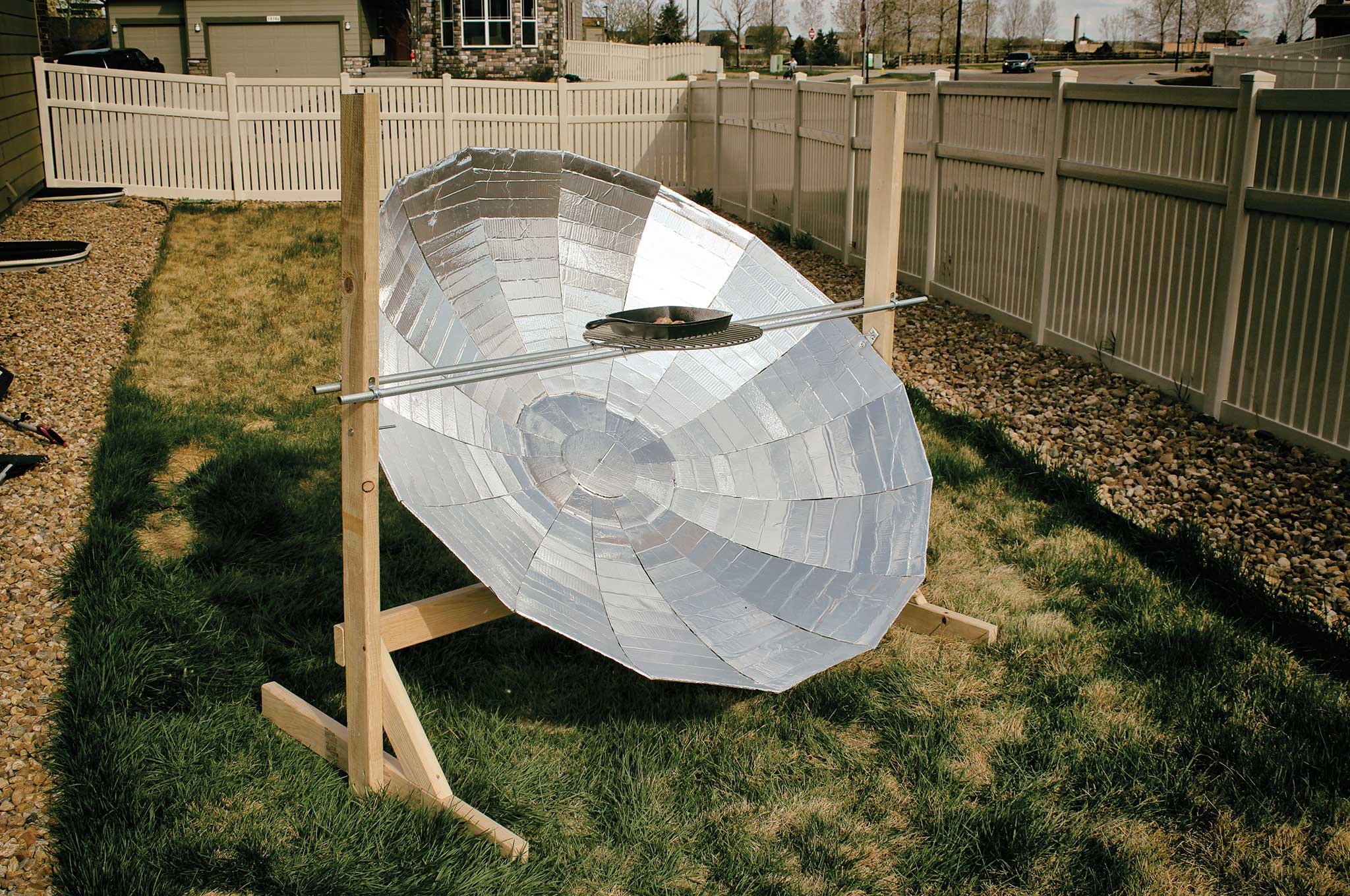
Parabolic cookers are like shiny satellite dishes that focus sunlight on a central point. Their concentrated focus can generate extreme heat quickly and can actually be used to fry food. (If you’re thinking heat ray or Death Star, well, me too.) This design cooks faster and takes better advantage of short periods of sunlight, so it was the perfect choice for this DIY project.
Cardboard, and Lots of it
The inspiration for my parabolic solar cooker was actually a large cardboard box from an industrial shelving unit in my garage. Too big to fit in the recycle bin and made of the heavy, double-thickness corrugated cardboard that’s a pain in the ass to break down, it ended up being the perfect “free” material for a reflector body. It was also typical of the material you might actually be able to scrounge in a TEOTWAWKI scenario.
I wanted to design the reflector so it was as large as possible, given the material on hand. Although a reflector can have as many panels as you want, the more you have, the more efficient it is. I also wanted the focal point to be above the reflector, to provide easy access to the cooking pot. To do all that, you need to get your math geek on and discover the wonders of parabolas.
A parabola is an arc formed by a series of points that are equidistant from a single point and a line. For things like reflectors and satellite dishes, the single point is the focal point where the reflected rays will converge and the line is a straight reference line below it.
The Recipe
Here are the basic tools and materials you’ll need to build this DIY solar cooker. Since the premise was to use scavenged cardboard as the basis for the reflector, the size of your scrounged cardboard will determine the size of your finished cooker and the dimensions of the other components, like 2x4s, plywood, etc. That’s why no specific dimensions are given for them.
Tools:
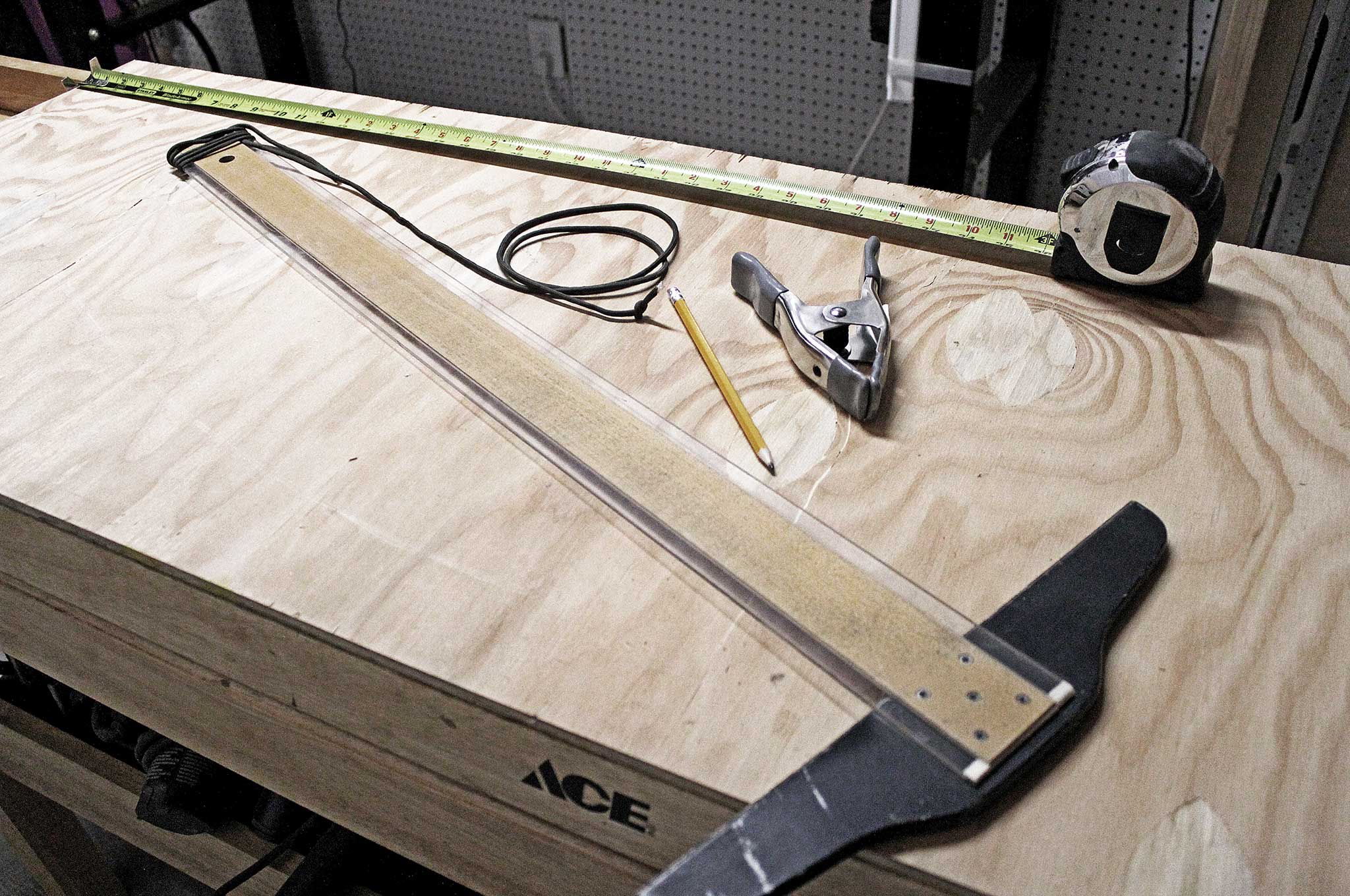
- Measuring tape
- T-square
- Spring clamp
- 550 cord
- Pencil
- Heavy-duty duct tape
- Utility knife
- Scissors
- Jigsaw
- Drill and drill bits
- Hammer
Materials:
- 1/2-inch plywood (for the panel form)
- Two 1×4 boards (for the panel form)
- Sheet of paper
- Large corrugated cardboard box(es)
- Spray adhesive
- Heavy-duty aluminum foil
- Metal drywall corner
- Two 1-inch 8-32 screws with flat washers and nuts
- Three 6-inch 1/4-20 carriage bolts with flat washers and wing nuts
- 2x4s (for the supporting frame)
- 3-inch deck screws
- Three lengths of 1/2-inch electrical conduit
- Grill grate
- Binding wire
Tee (Square) Time
To draw the arc of the parabola, get a rectangle of plywood a little longer than your planned panel length and about two-thirds as tall. The bottom edge of the plywood should be straight. You’ll also need some 550 cord and a long T-square.
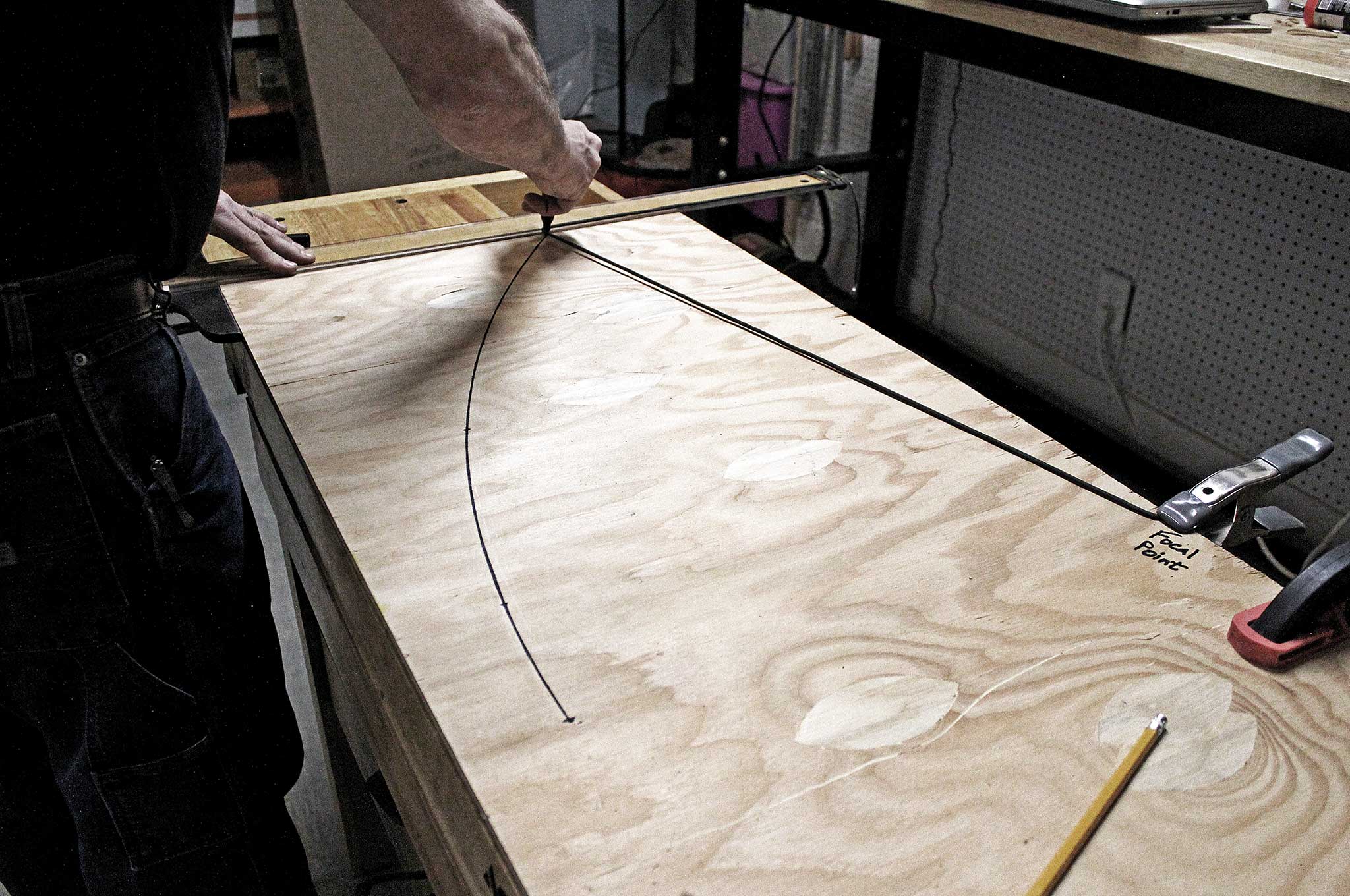
Take the length of your cardboard material and subtract 8 inches. Using that measurement and starting from the left edge of the plywood, measure along the top edge and make a mark. That will become the focal point. Anchor one end of the 550 cord to the focal point and attach the other end to the end of the T-square. The loop of cord between the focal point and the T-square, when doubled, should come a few inches short of the plywood’s straight edge.
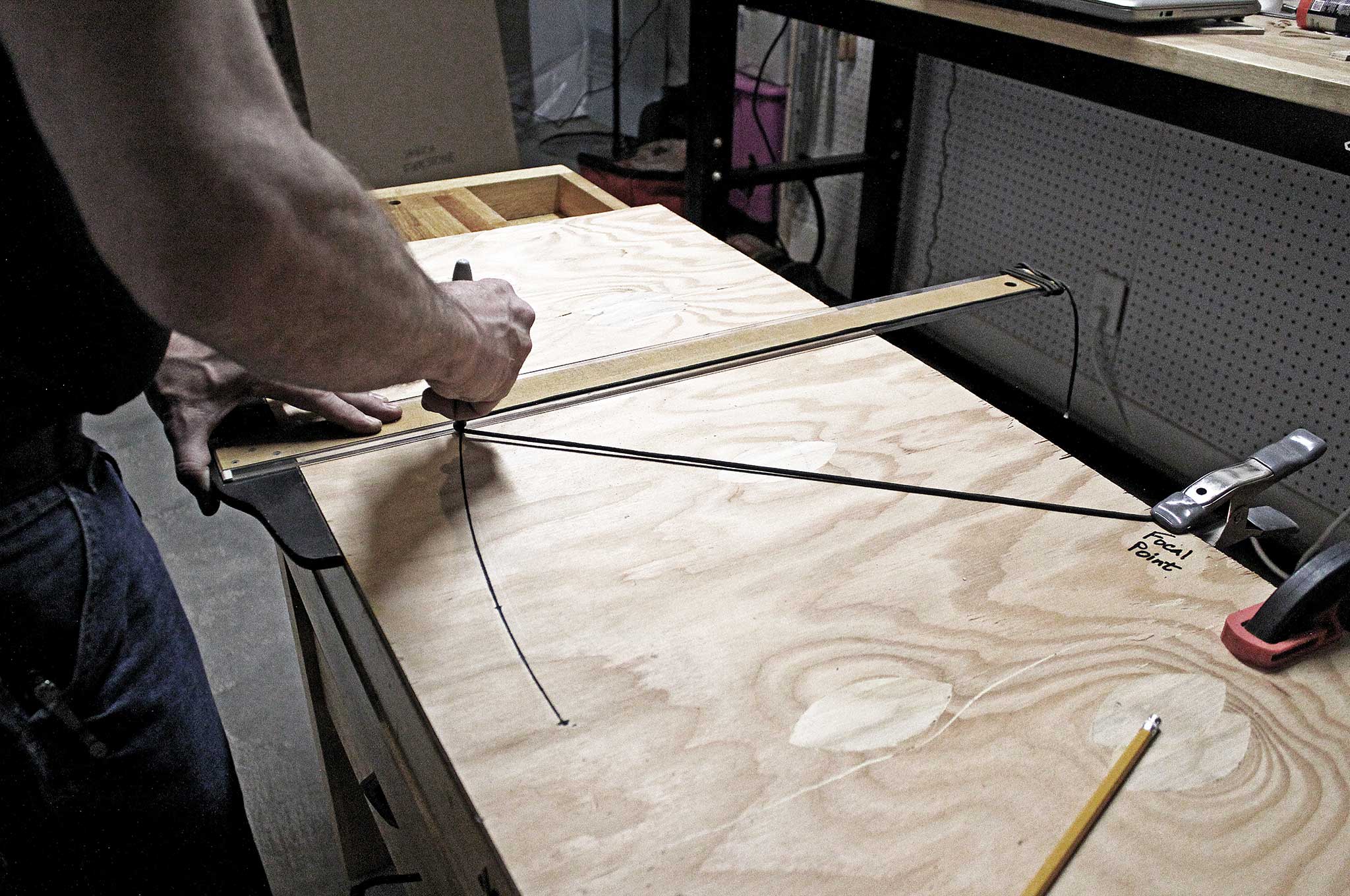
Starting with the head of the T-Square against the straight edge at the bottom of the plywood, place a marker in the cord loop and pull it tight. Now, slide the T-square to the left along the straight edge, keeping pressure on the marker so the 550 cord attached to the T-square stays perpendicular to the bottom edge of the plywood. As you do this, the marker will ride the string to scribe a parabolic arc.
If all that sounds too confusing, search the internet for videos of “drawing a parabola with string,” and you’ll get a better idea.
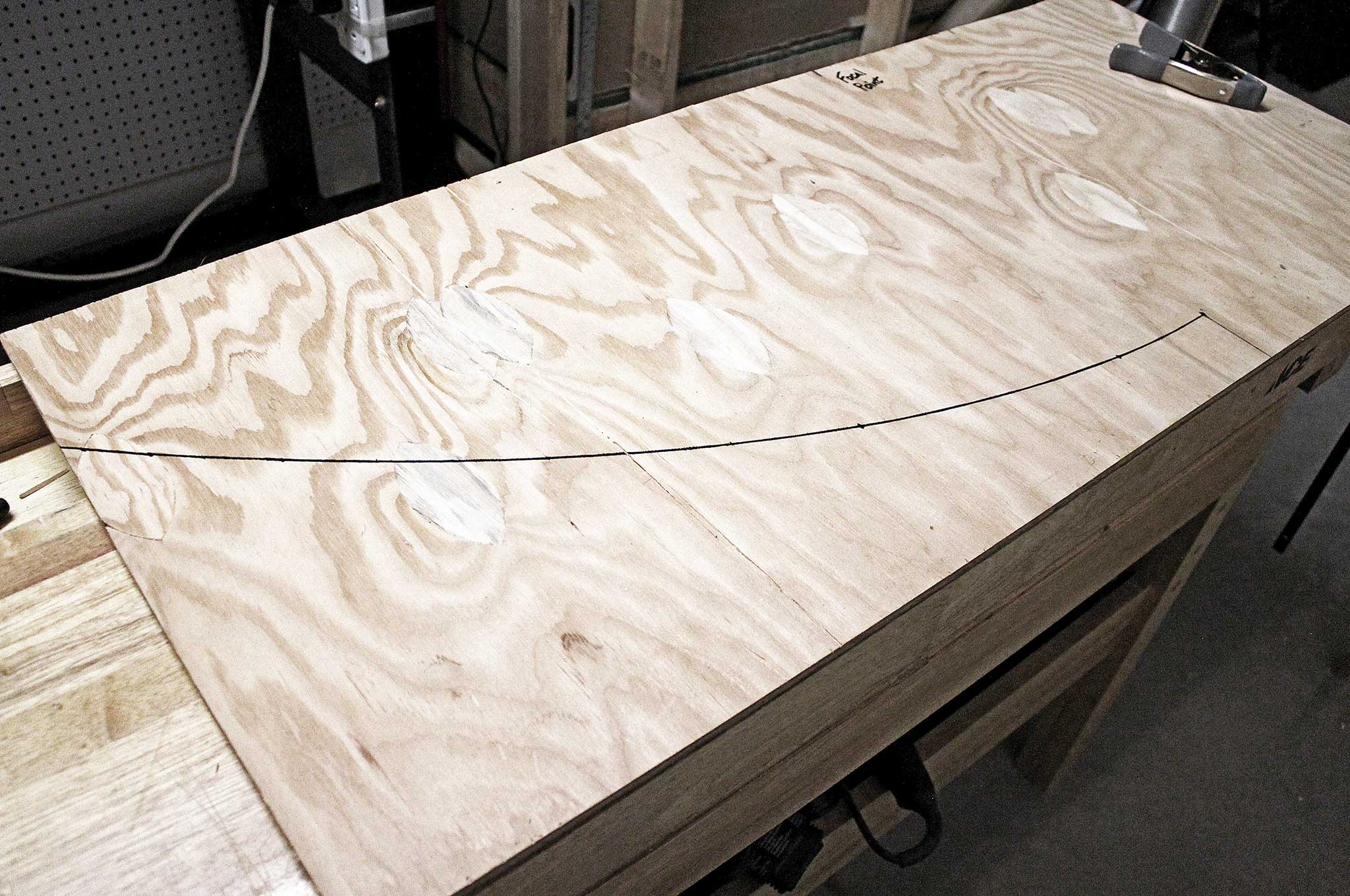
The arc on the plywood is half the shape of your parabola, and the distance between the bottom of the arc and the focal point is its focal length. Measure that distance and write it down. Then, draw a line perpendicular to the plywood’s bottom edge up to the focal point. The L-shaped area enclosed by that line, the arc, the left side of the plywood, and the bottom edge will be your parabola form. Cut it out with a saber saw, place it on the remaining piece of plywood, trace around it, and cut out another matching piece.
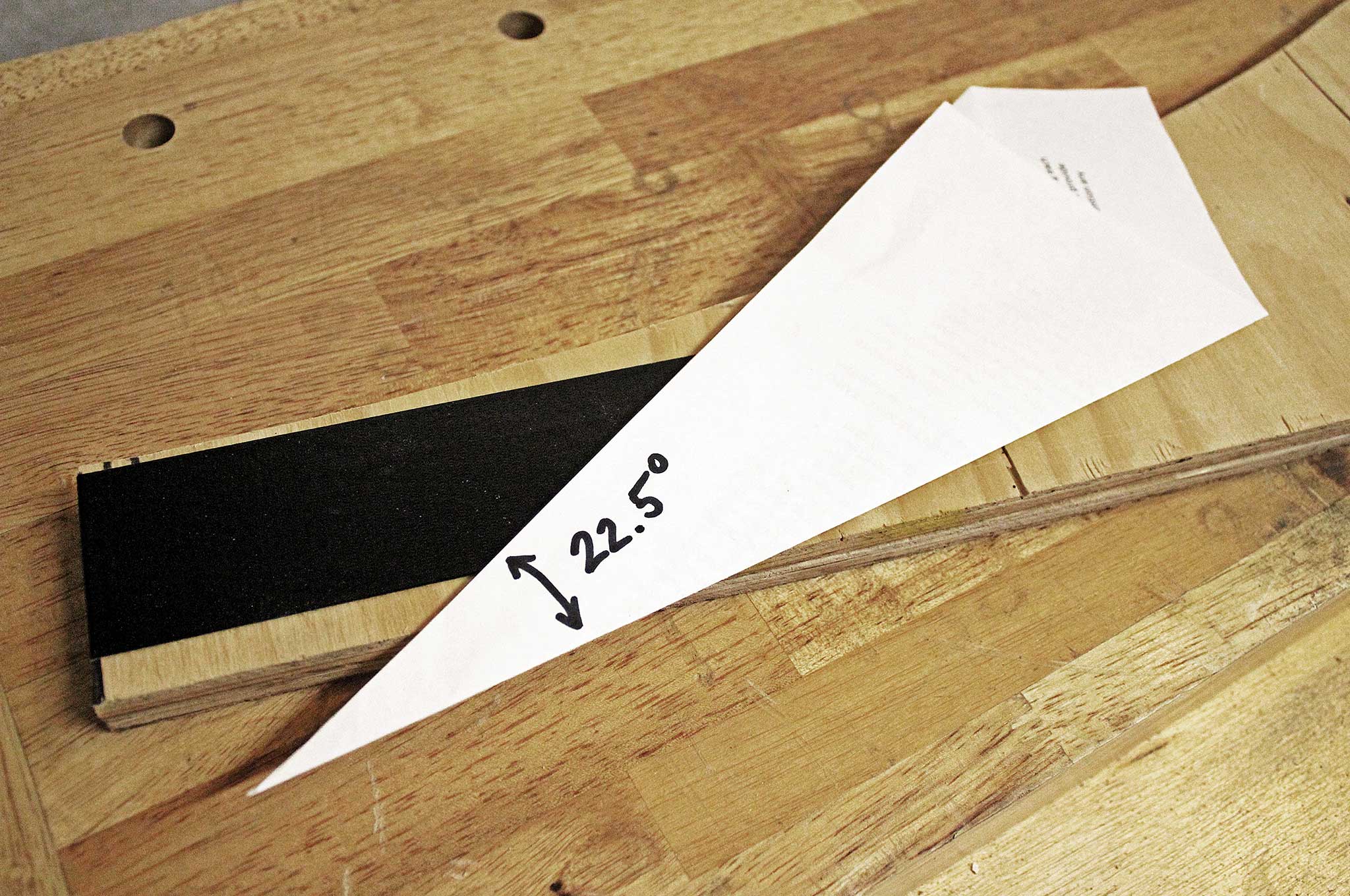
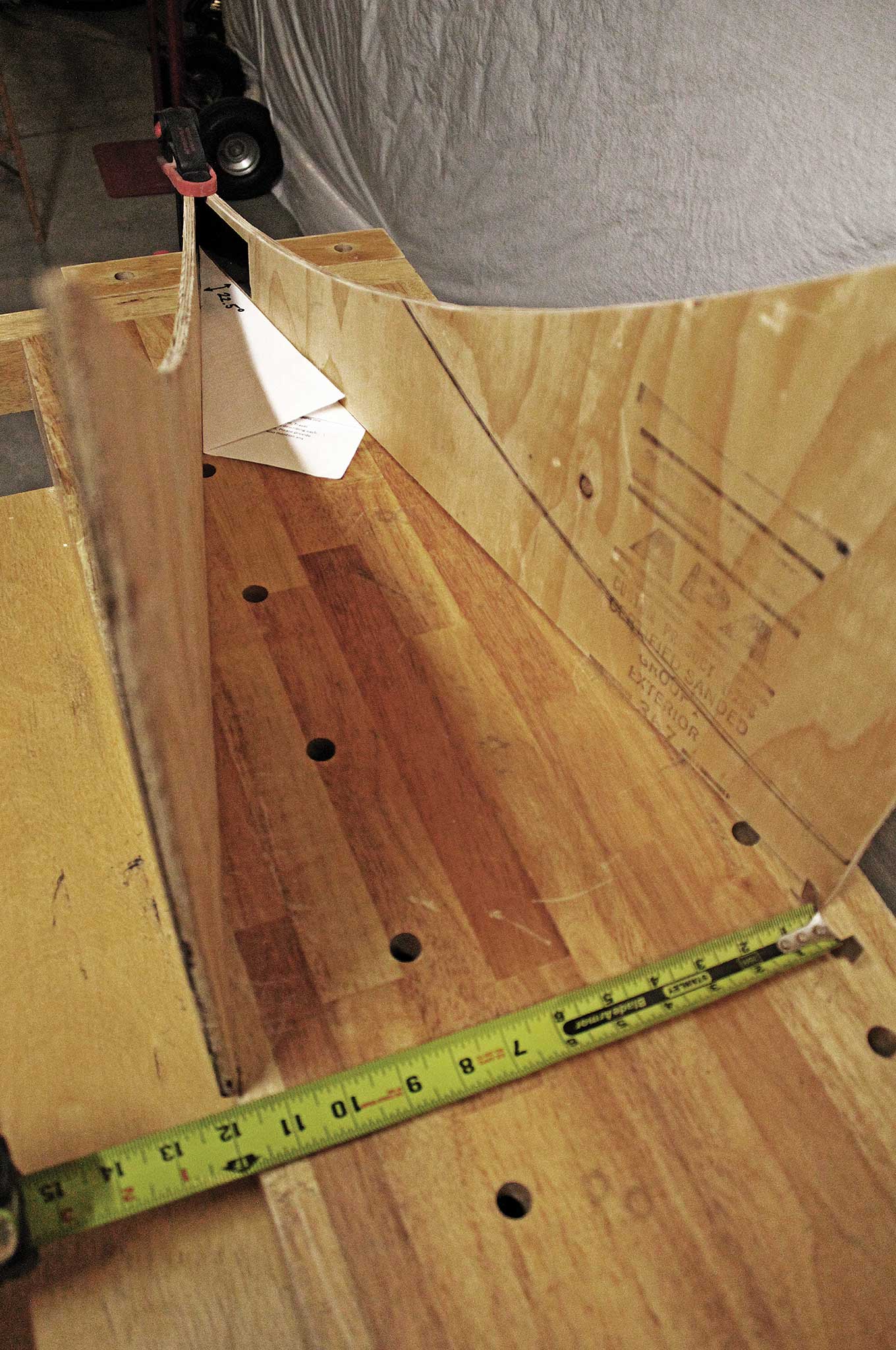
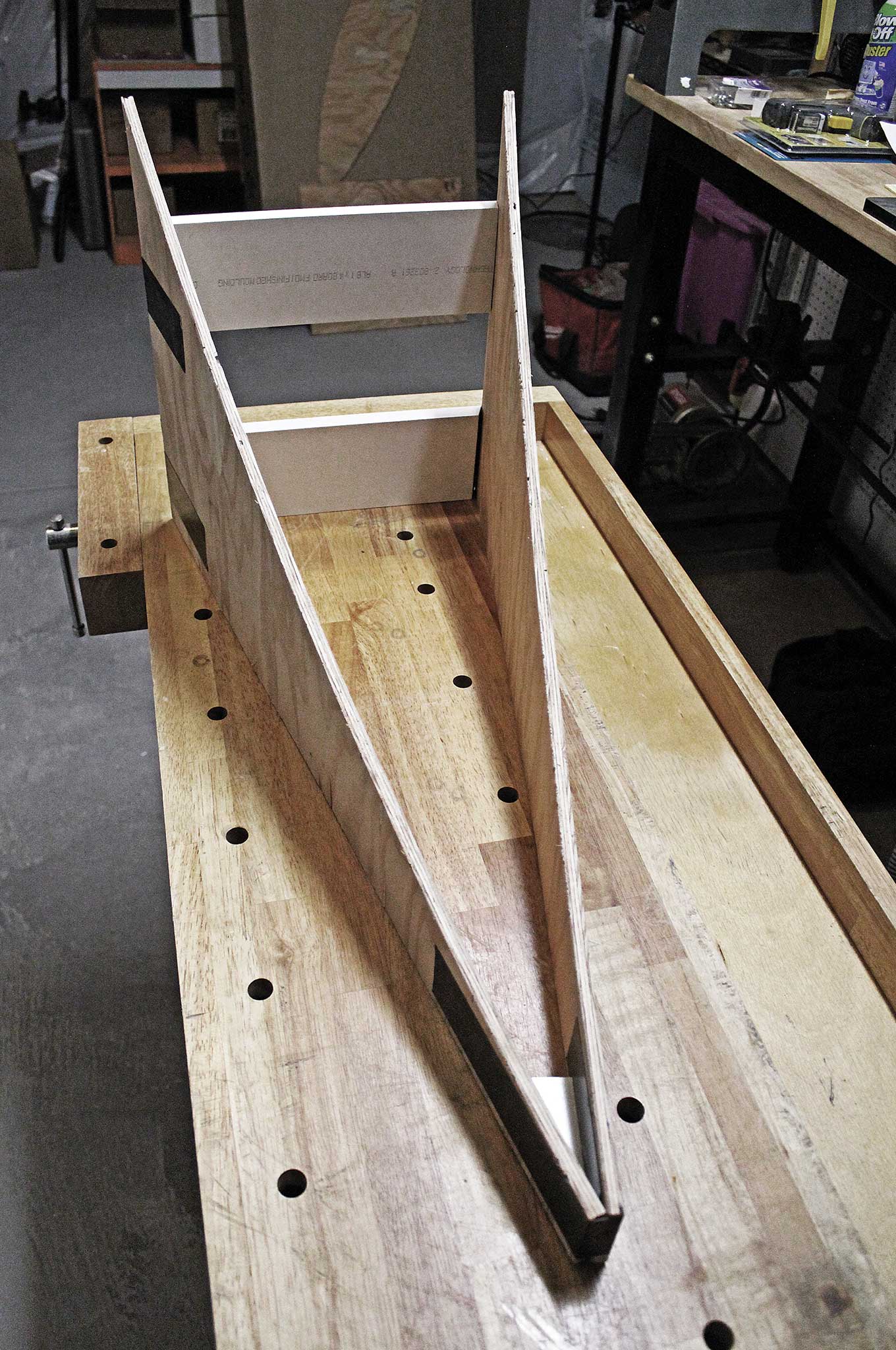
Use a piece of heavy-duty duct tape to secure the narrow ends of the plywood pieces together like a hinge. Fold a piece of paper once to get a 45-degree angle, then again to get 22.5 degrees — 1/16 of a 360-degree circle. Spread the wide ends of the forms apart until the interior angle matches the paper’s 22.5 degrees, then measure the gap at the wide end and cut two pieces of board to that length. Tape or nail the boards in place, making a form for your panels (or the start of a really small skateboard ramp).
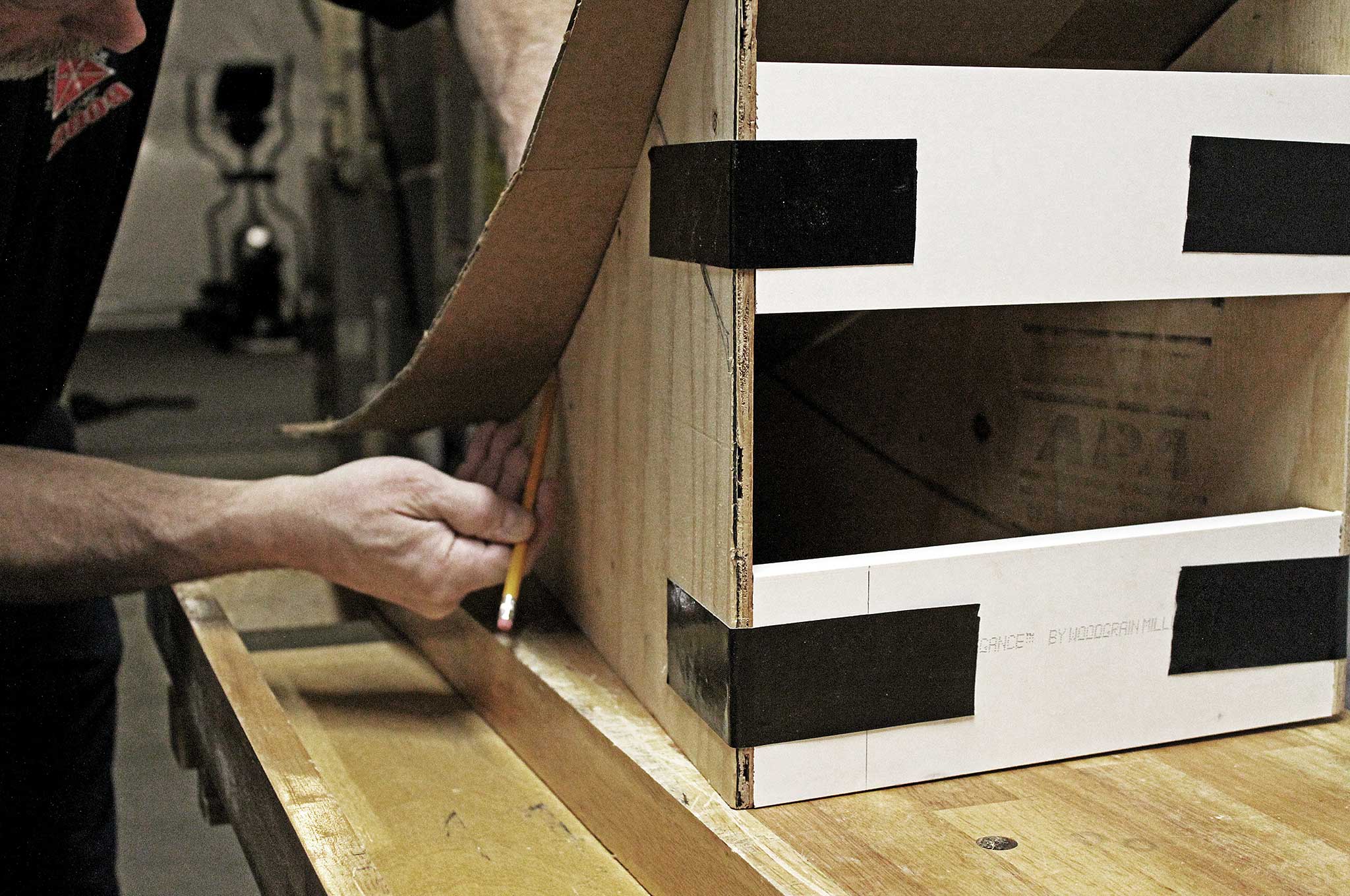
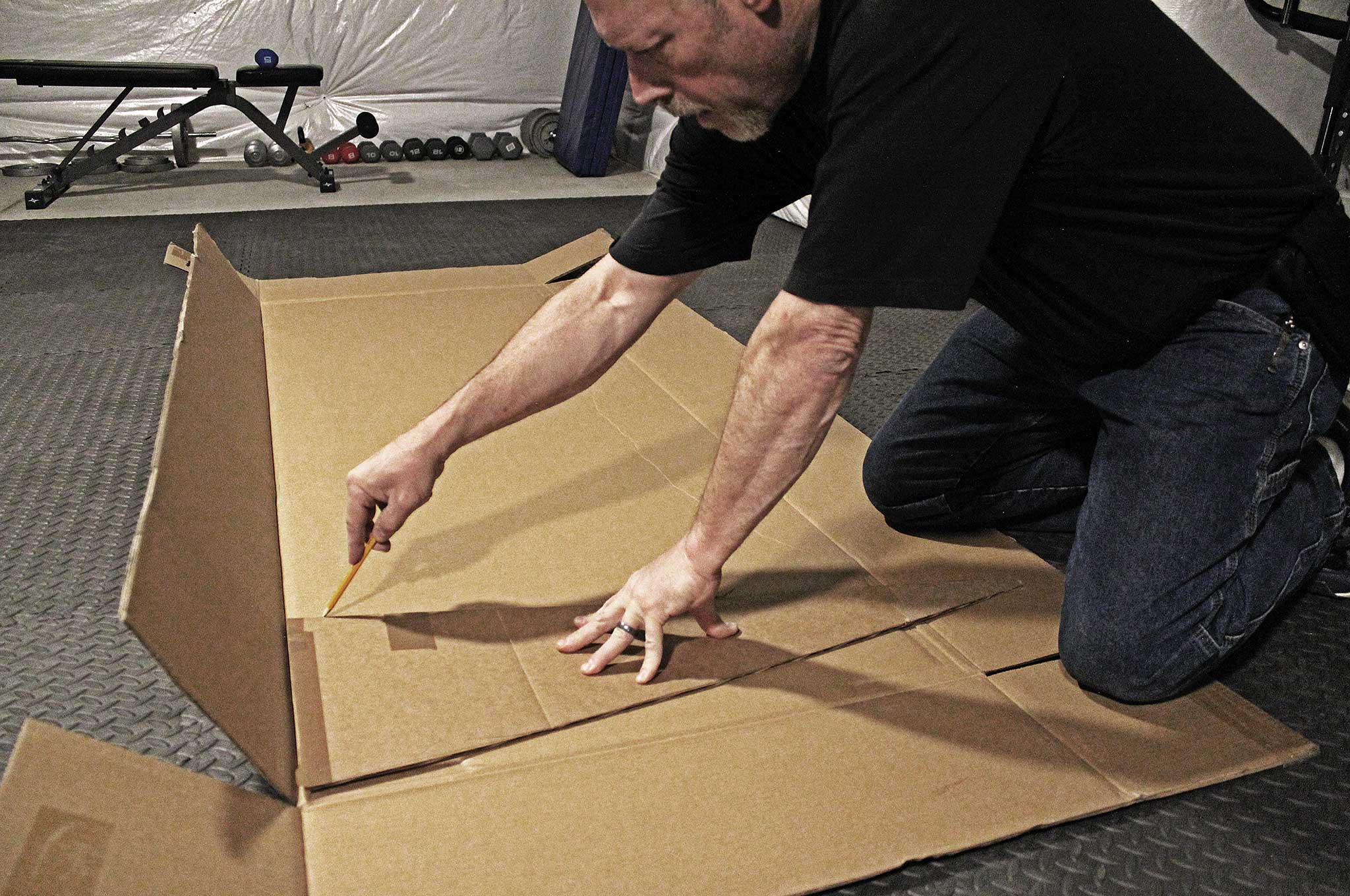
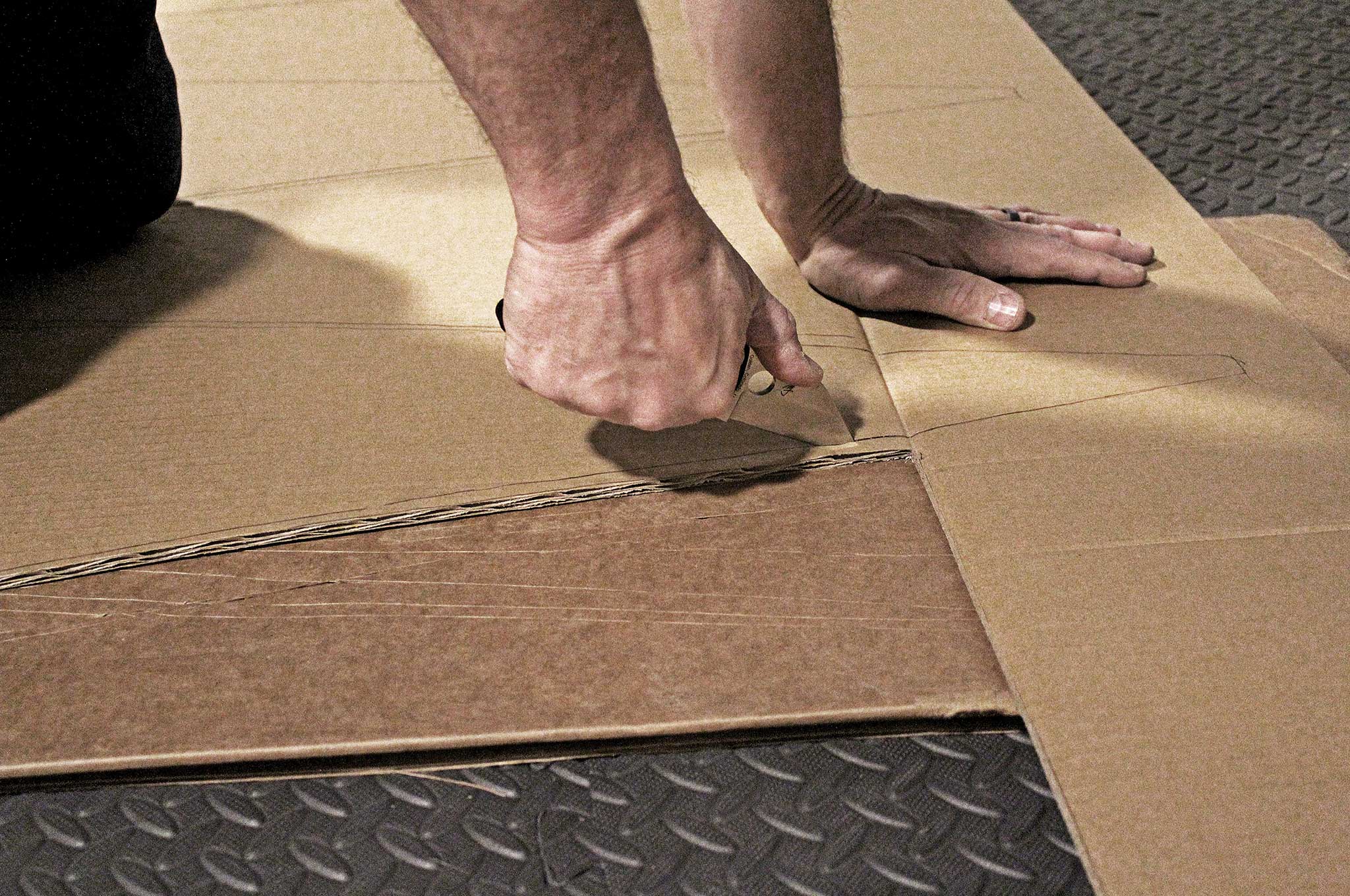
Cut a rectangle of cardboard as wide as the back of your form and longer than its base. Clamp one end to the front of the form, press the cardboard down to fit the curve, and use a pencil to trace along the outside of the form on each side. These are your cutting lines for your panel pattern. Cut it out, then trace around it on your cardboard material, “nesting” all 16 pieces to minimize waste.
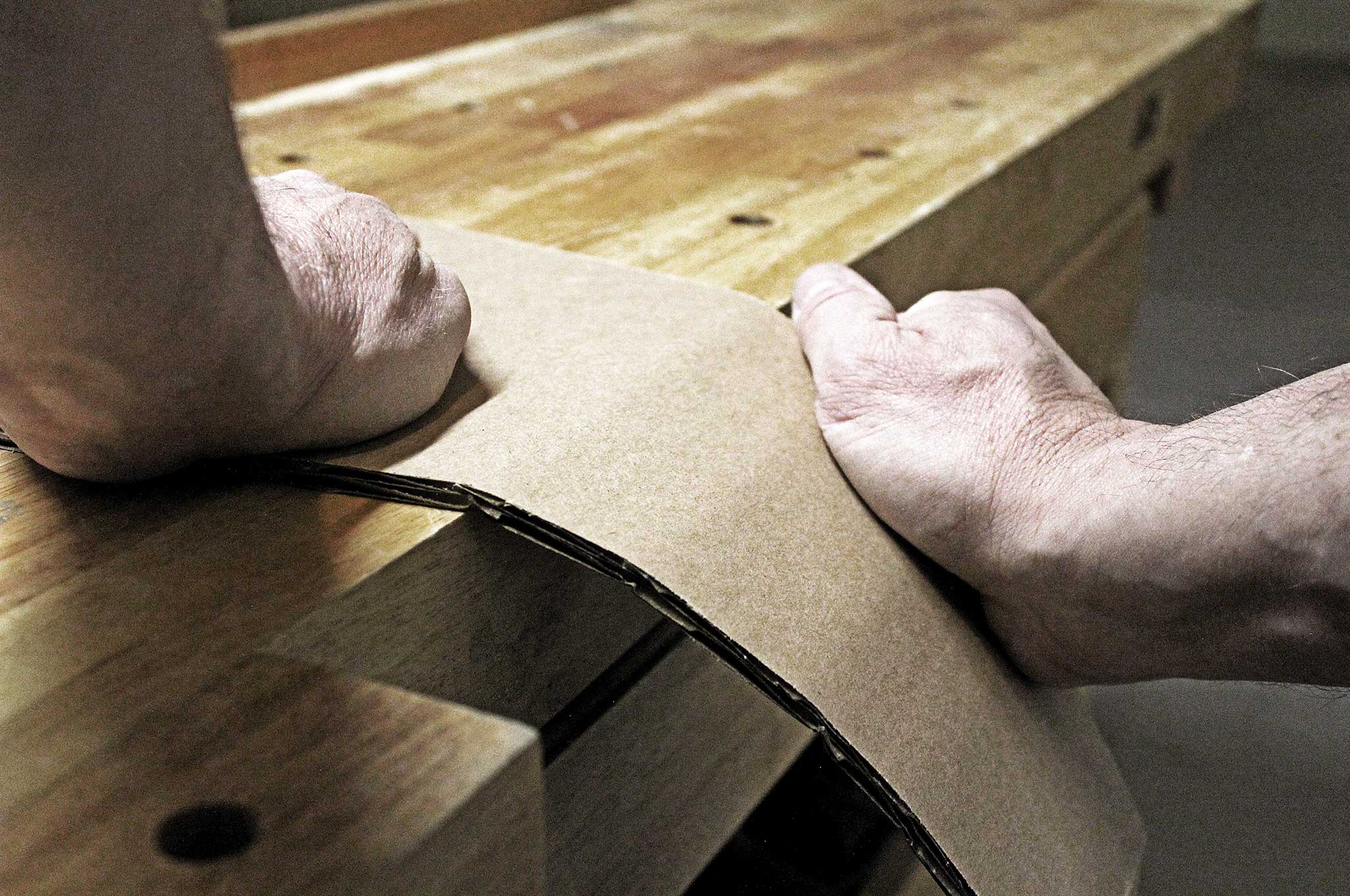
After cutting out all 16 panels, use the edge of a table to crease each one every few inches so they bend to fit the curve of the plywood form.
Shiny Things
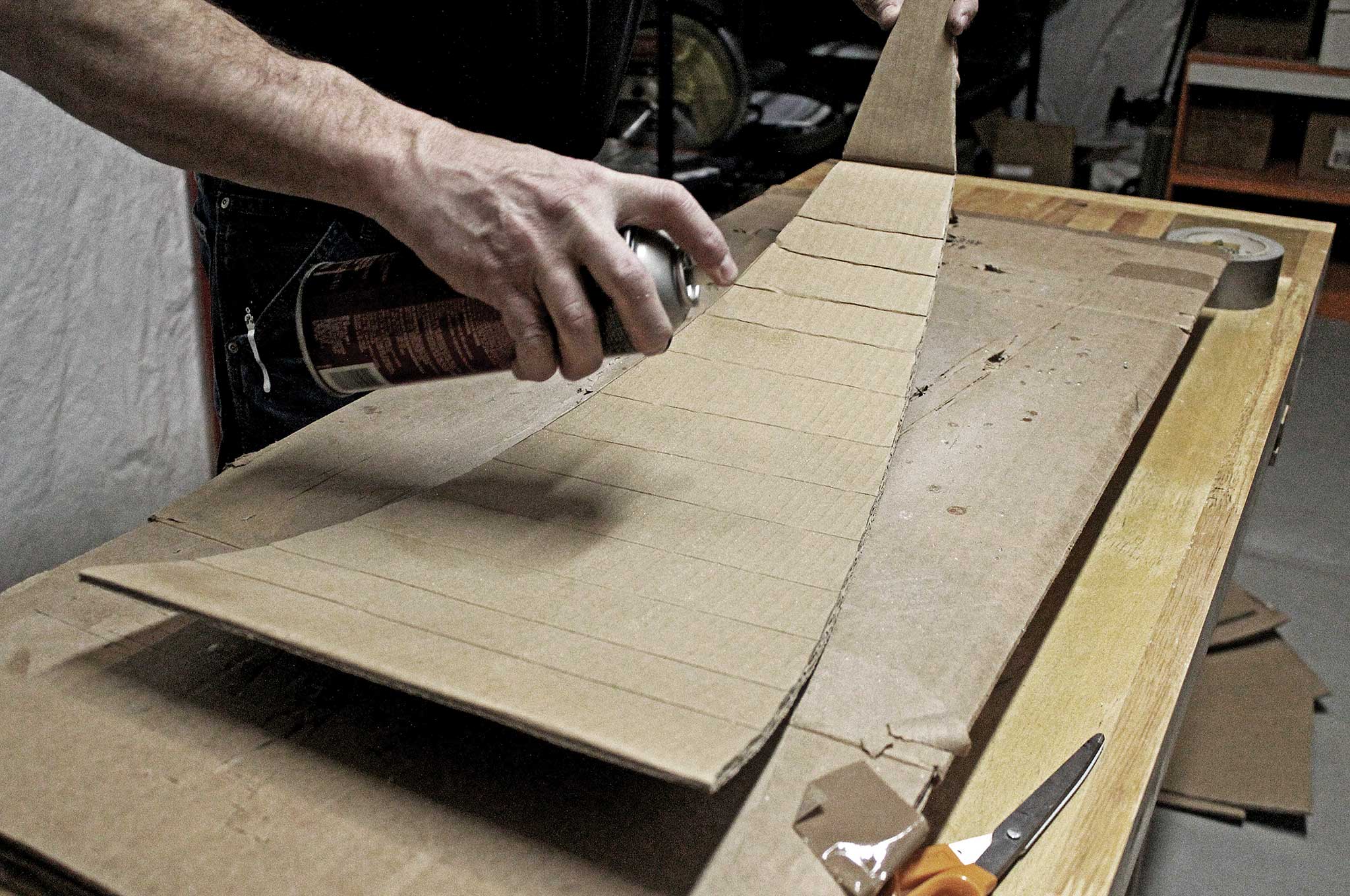
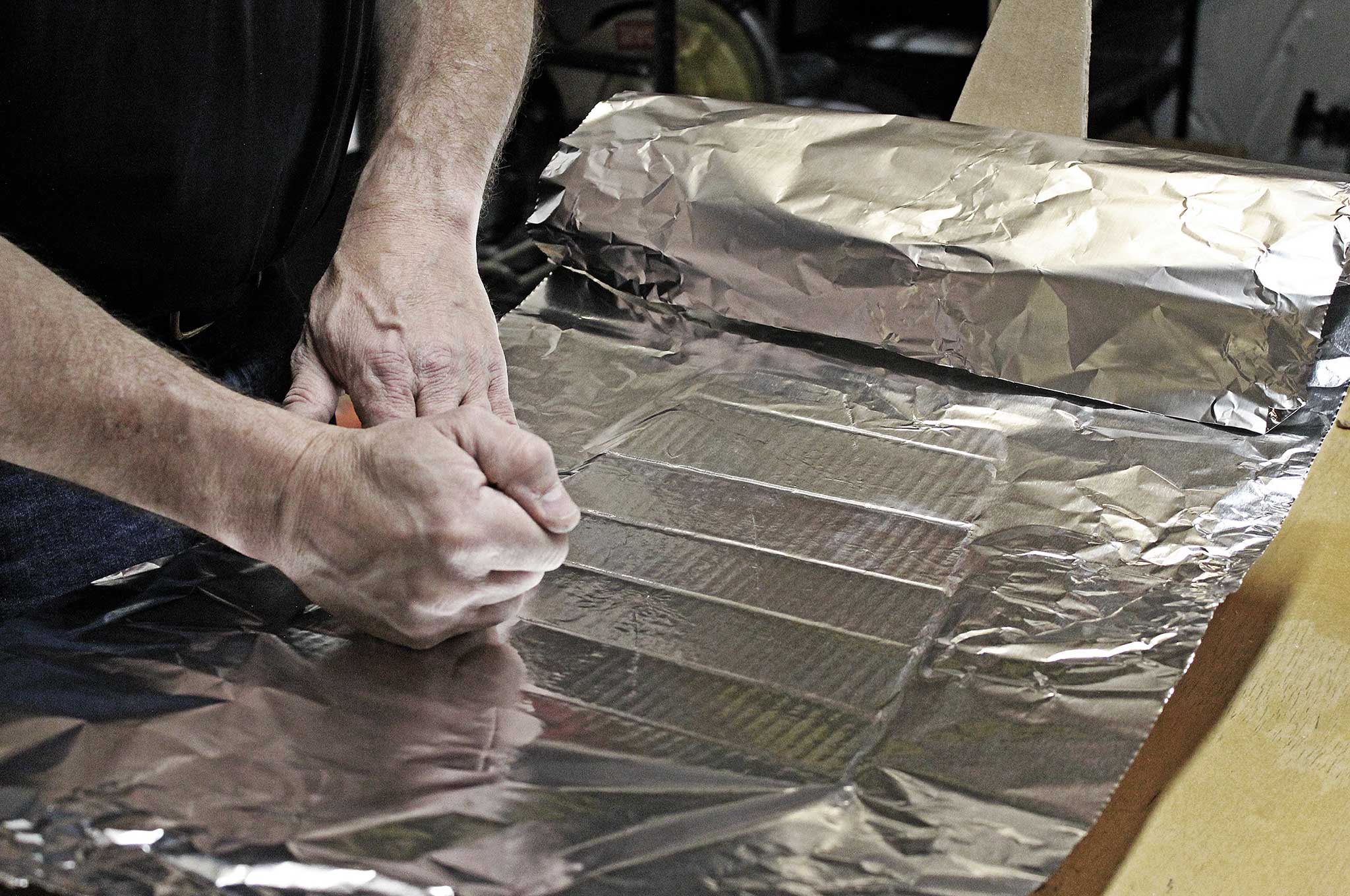
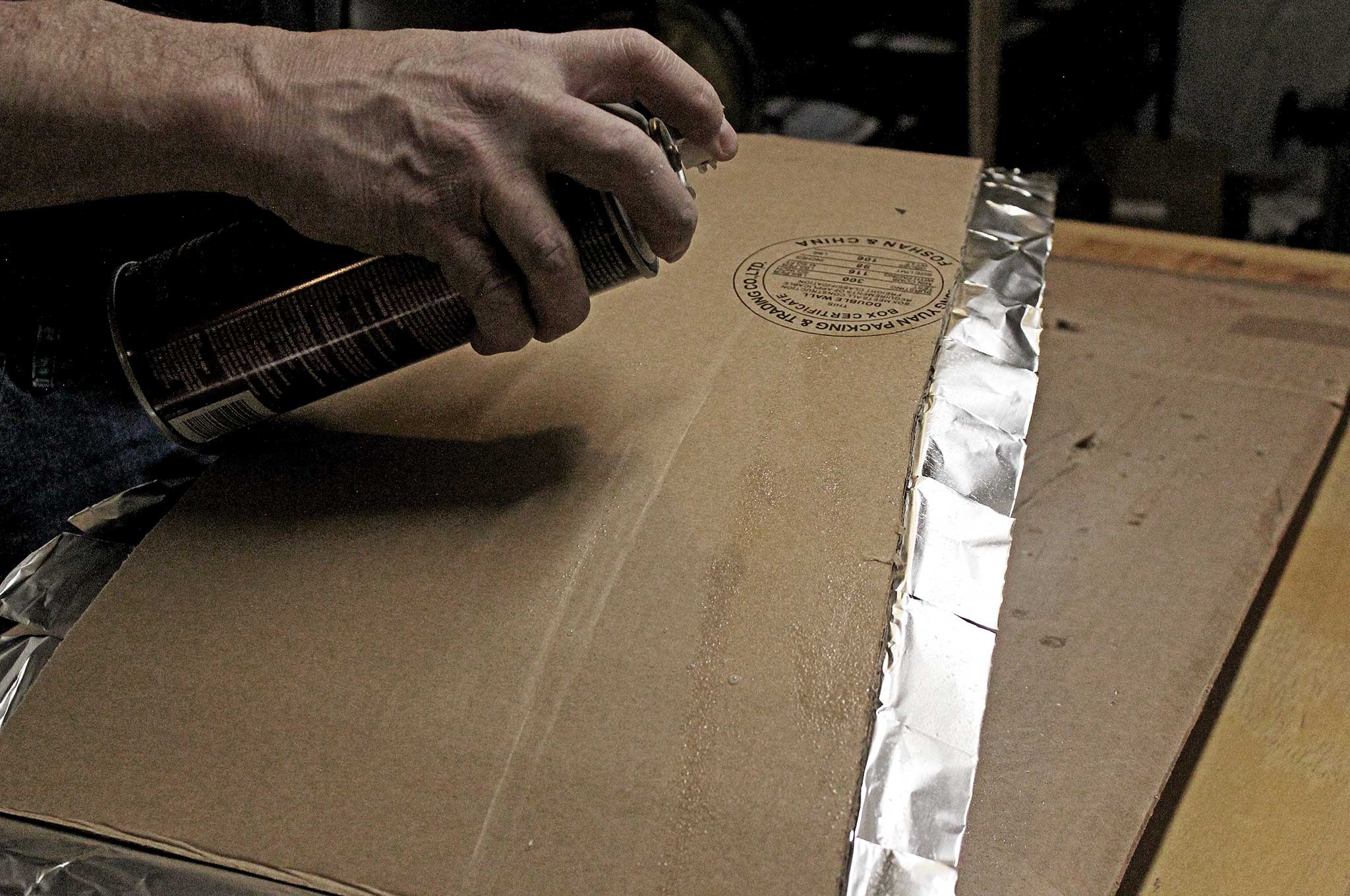
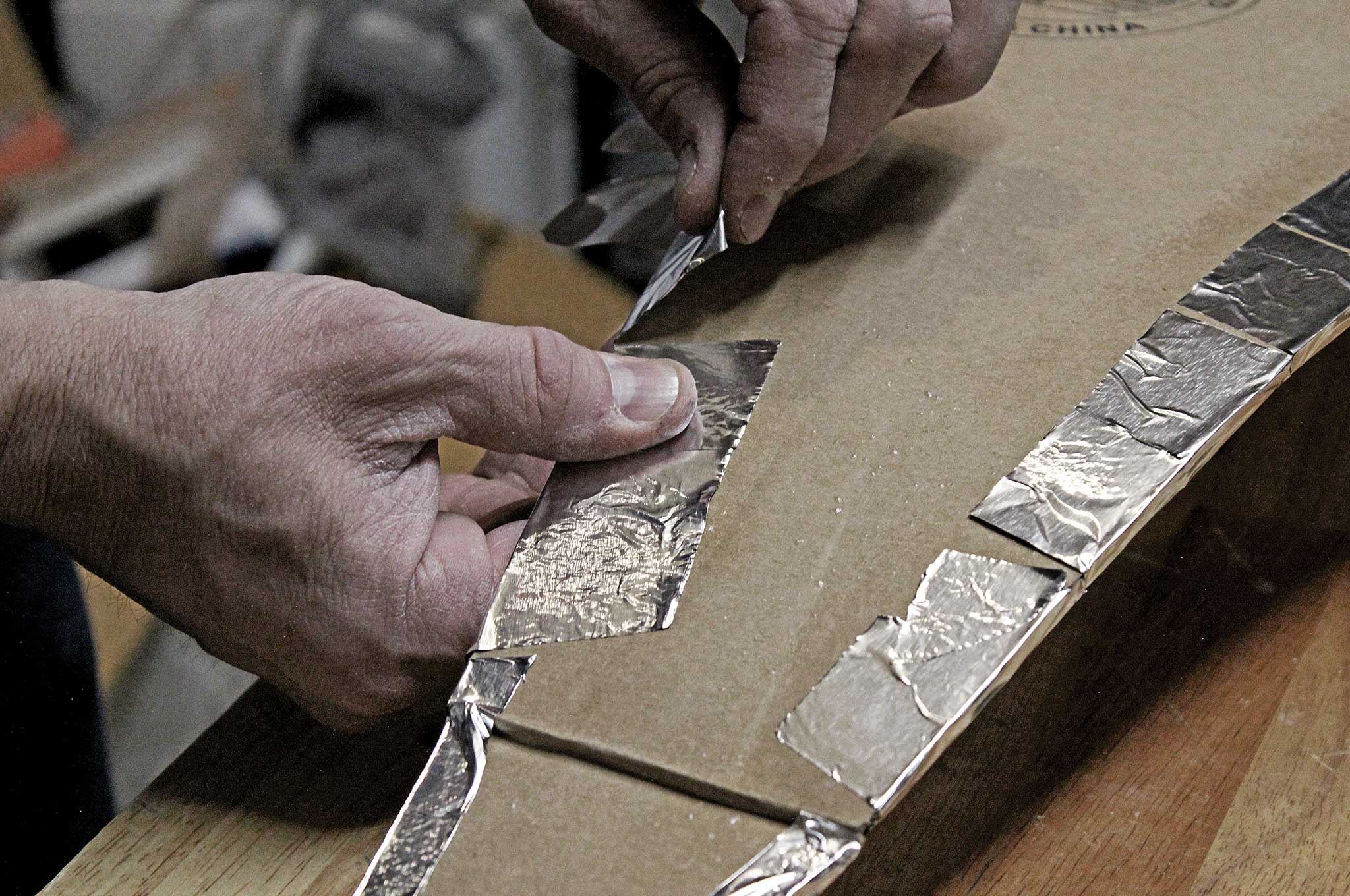
For the reflective surface of the panels, hit the grocery store and get several rolls of heavy-duty aluminum foil. Apply a light coat of spray adhesive to each panel, then carefully apply the foil. I found folding it in half lengthwise, positioning the center, and then smoothing it from the center out worked best. Use the base of your palm or fingertips — not your fingernails — to keep it as smooth and reflective as possible. Then, trim the foil a couple of inches around the perimeter of the panel, notch the edge every few inches with scissors to create relief tabs, and stick the tabs to the back of the panel with more spray adhesive.
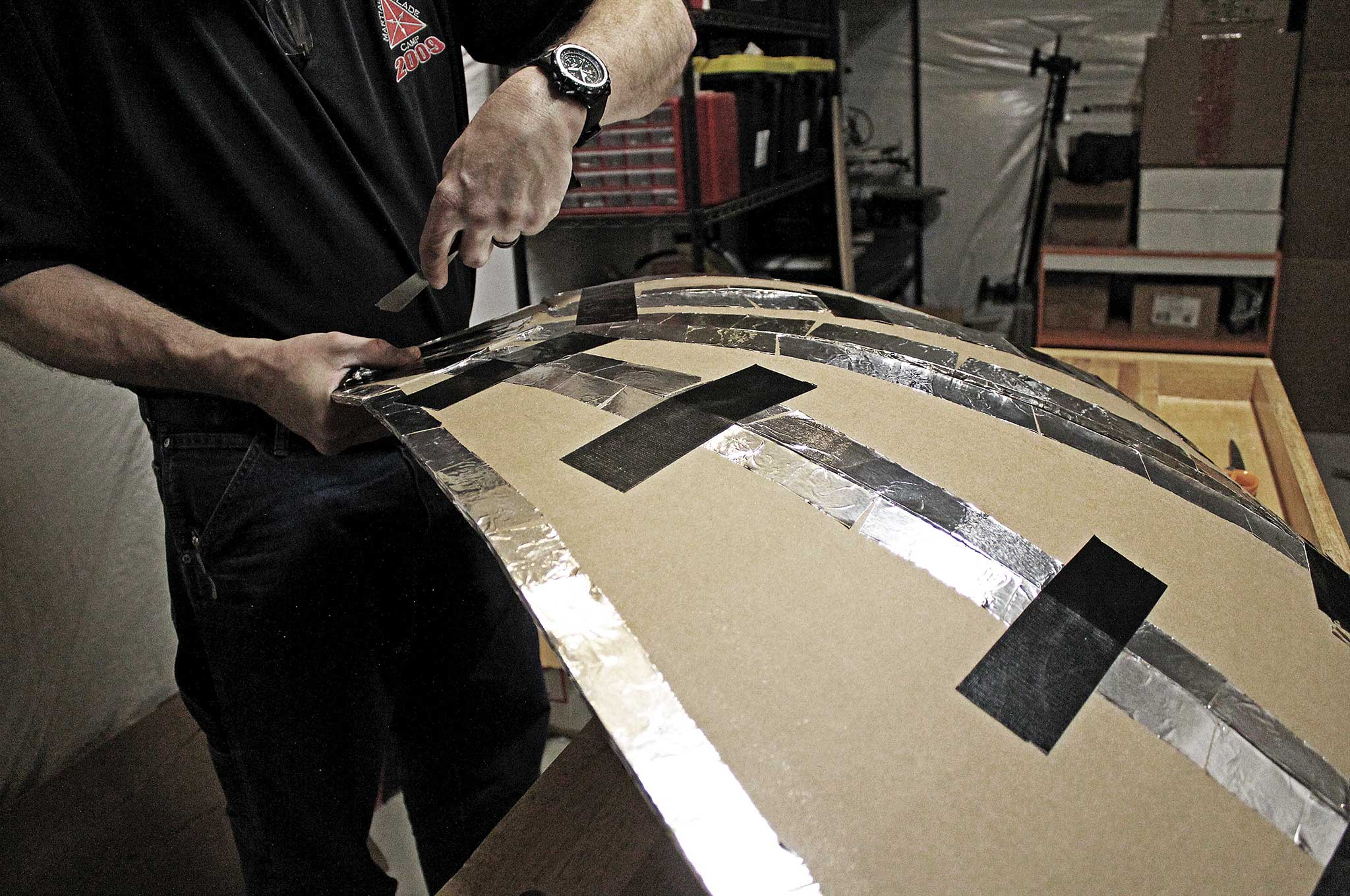
Begin assembling your reflector by using Gorilla Tape to attach the panels together. Start at the wide end, butt the edges together, and secure them with tape. Then align the narrow ends, match the curve of each piece, and tape that end. Add a piece of tape every 8 to 12 inches as needed to form a solid seam.
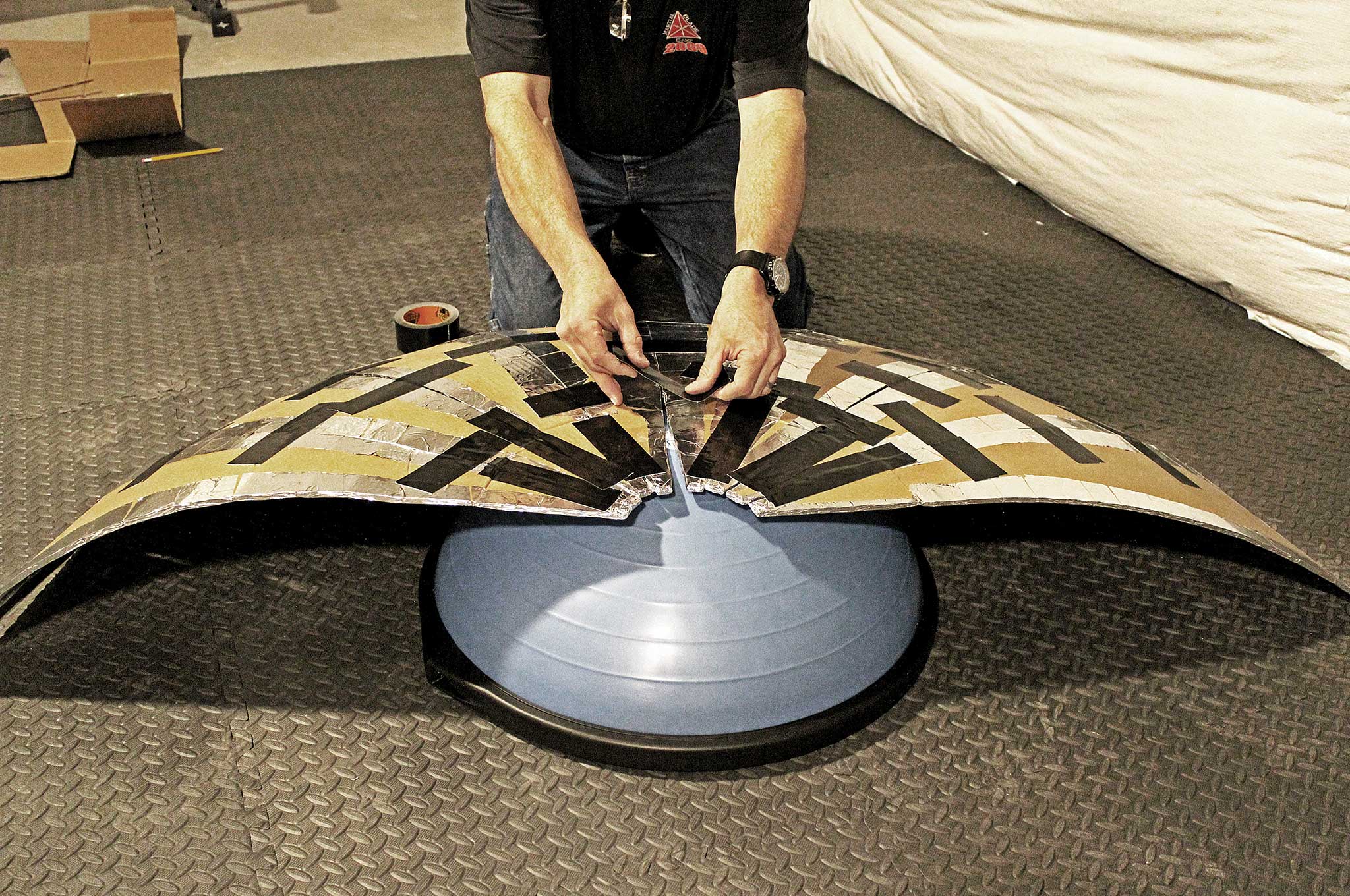
Don’t try to build the entire panel at once; instead make two, two-panel pieces. Join them to make four, then eight, and finally assemble both halves to form the whole dish. It helps to use a short support like a bucket or something similar to hold up the center of the reflector while putting the finishing touches on the tape job.
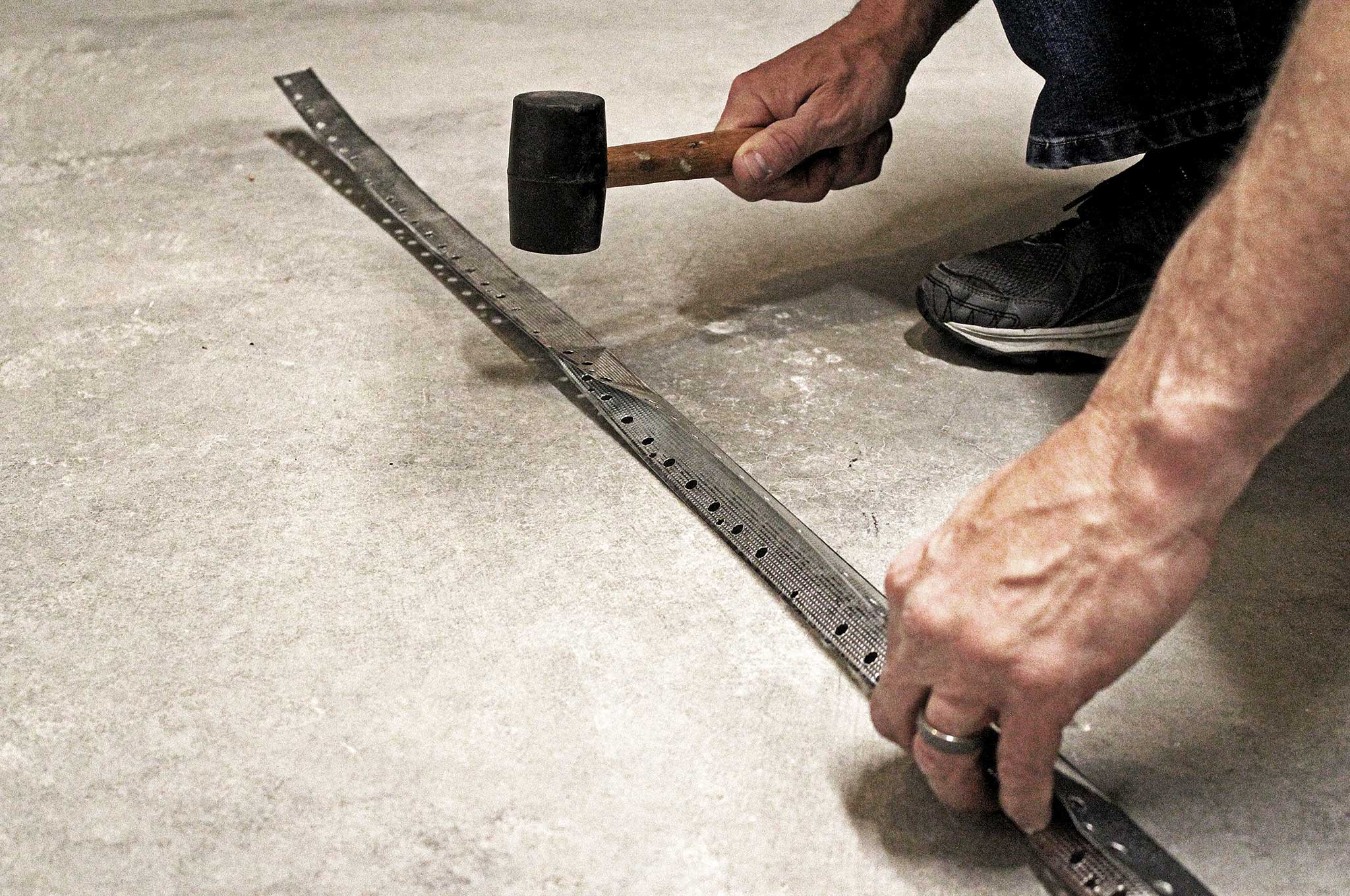
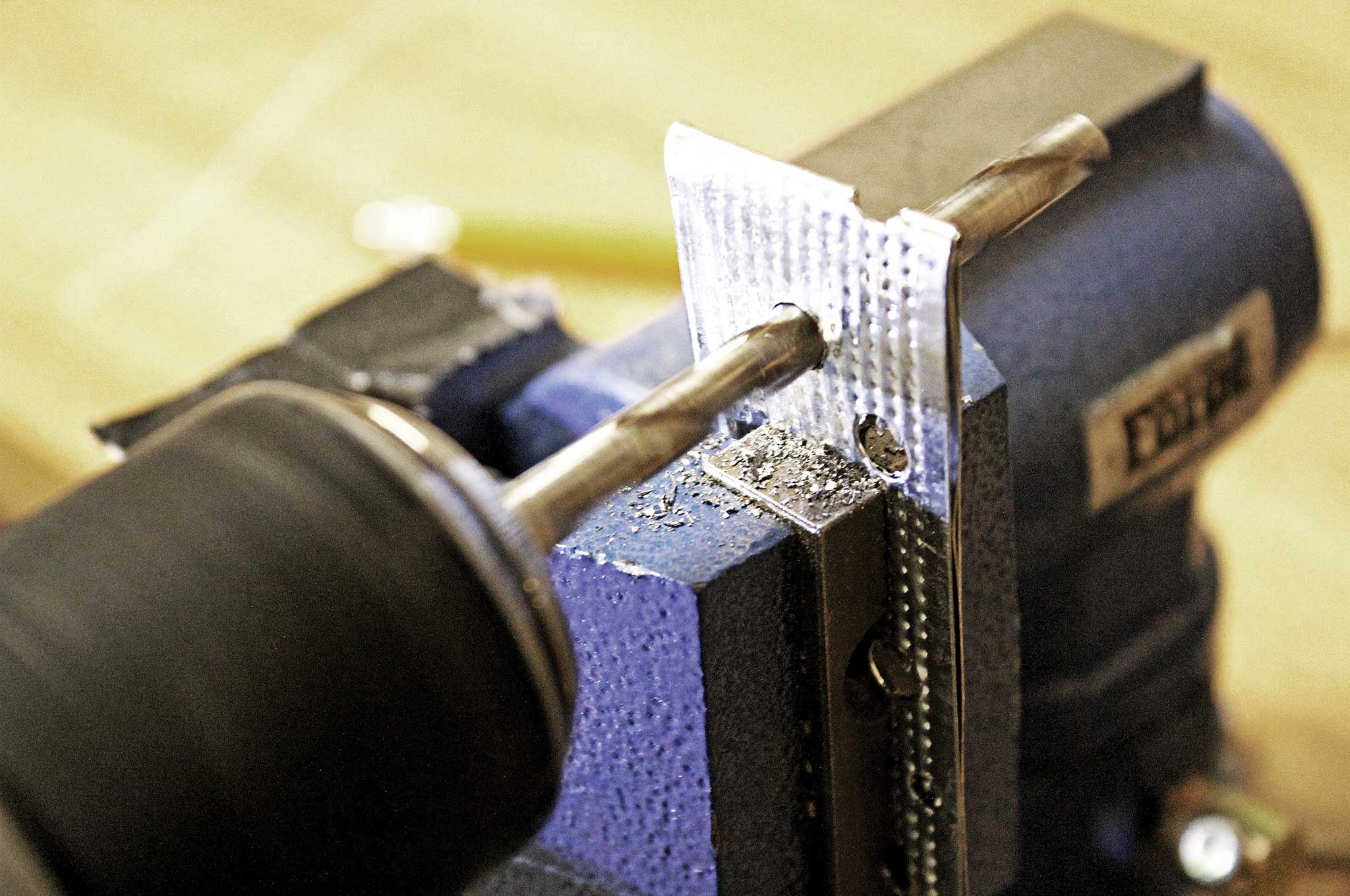
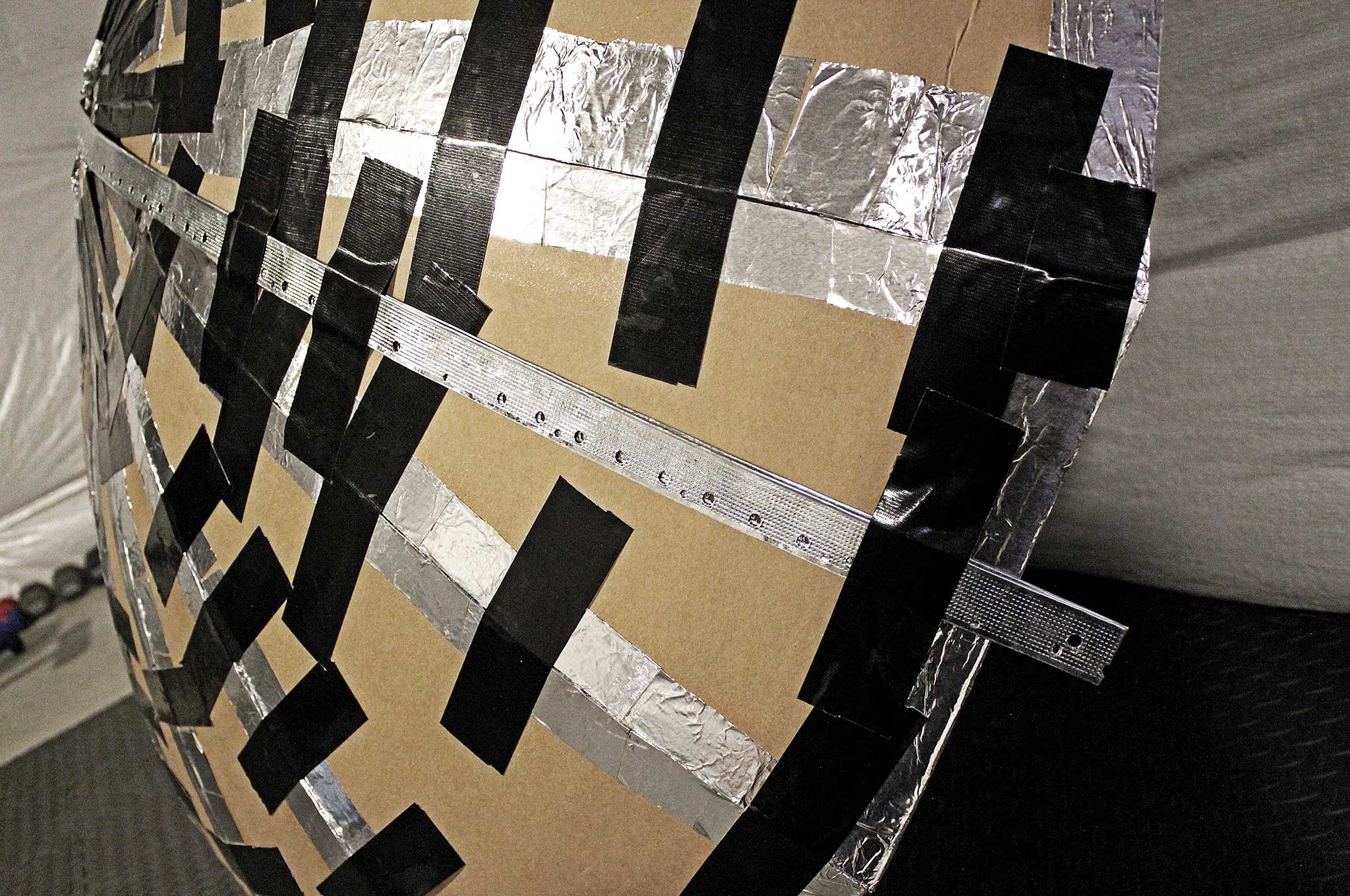
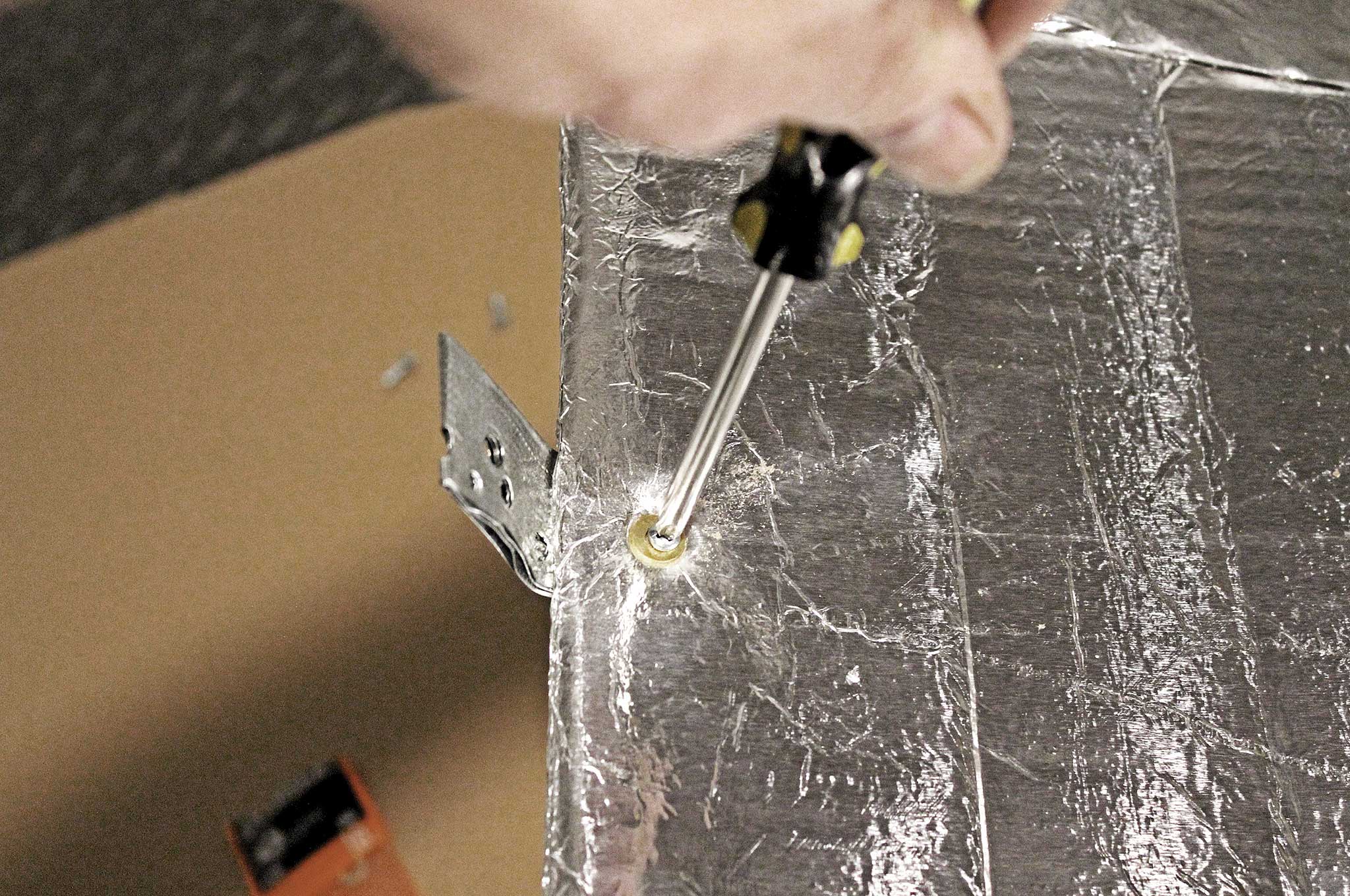
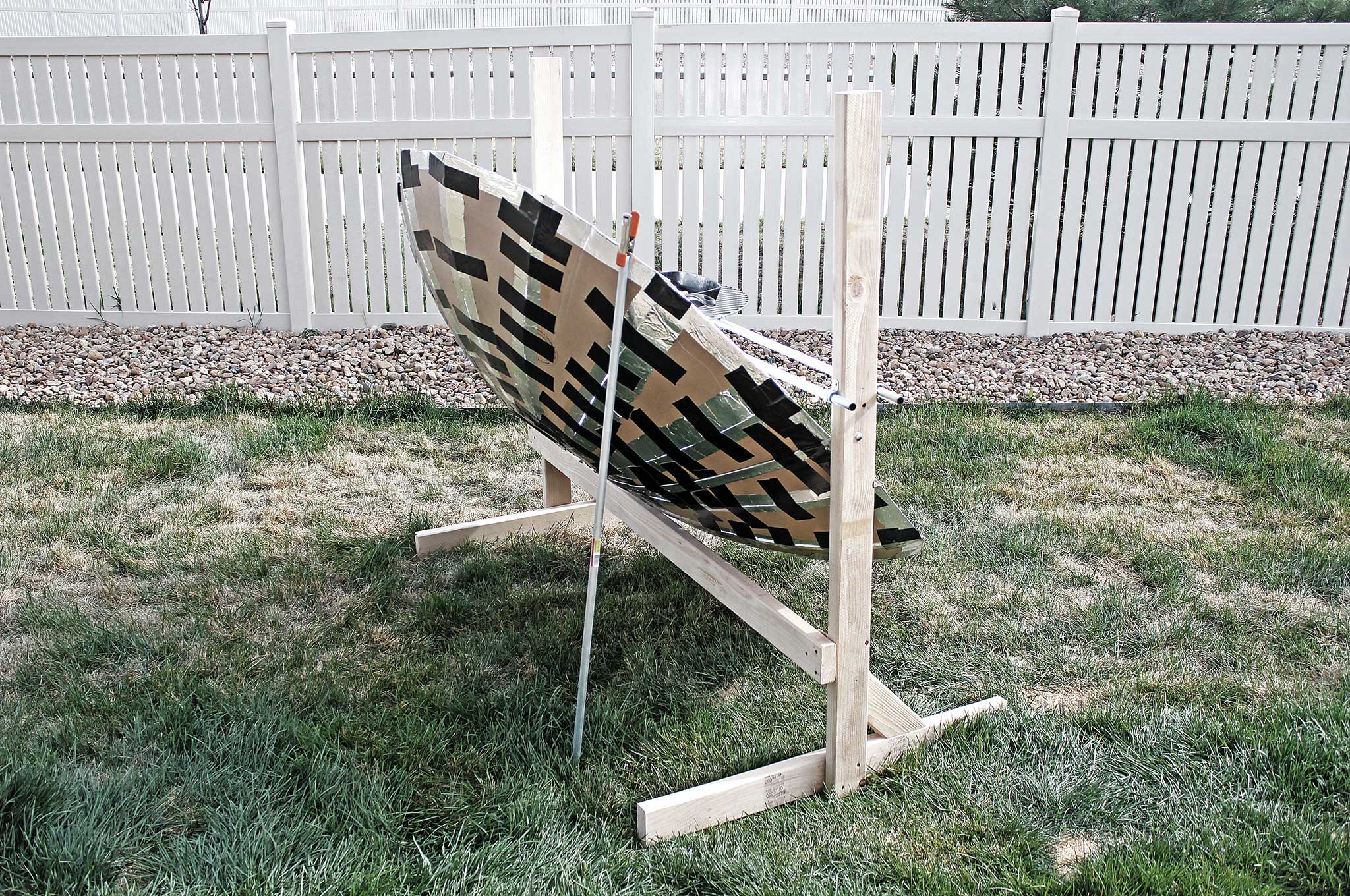
To support the reflector and allow its angle to be changed easily, contour a thin strip of steel or aluminum across the back so its ends extend an inch or so beyond the rim on each side. A cheap way to do this is to take drywall corner strip, hammer it flat to double it, and then fold the ends back for even more strength. Attach it with Gorilla tape and then reinforce the ends by drilling holes through it and the reflector near the rim on each side. Use machine screws, washers, and nuts to cinch it all together. Then, drill a 1/4-inch hole in the center of each tab just above the rim to hang the reflector.
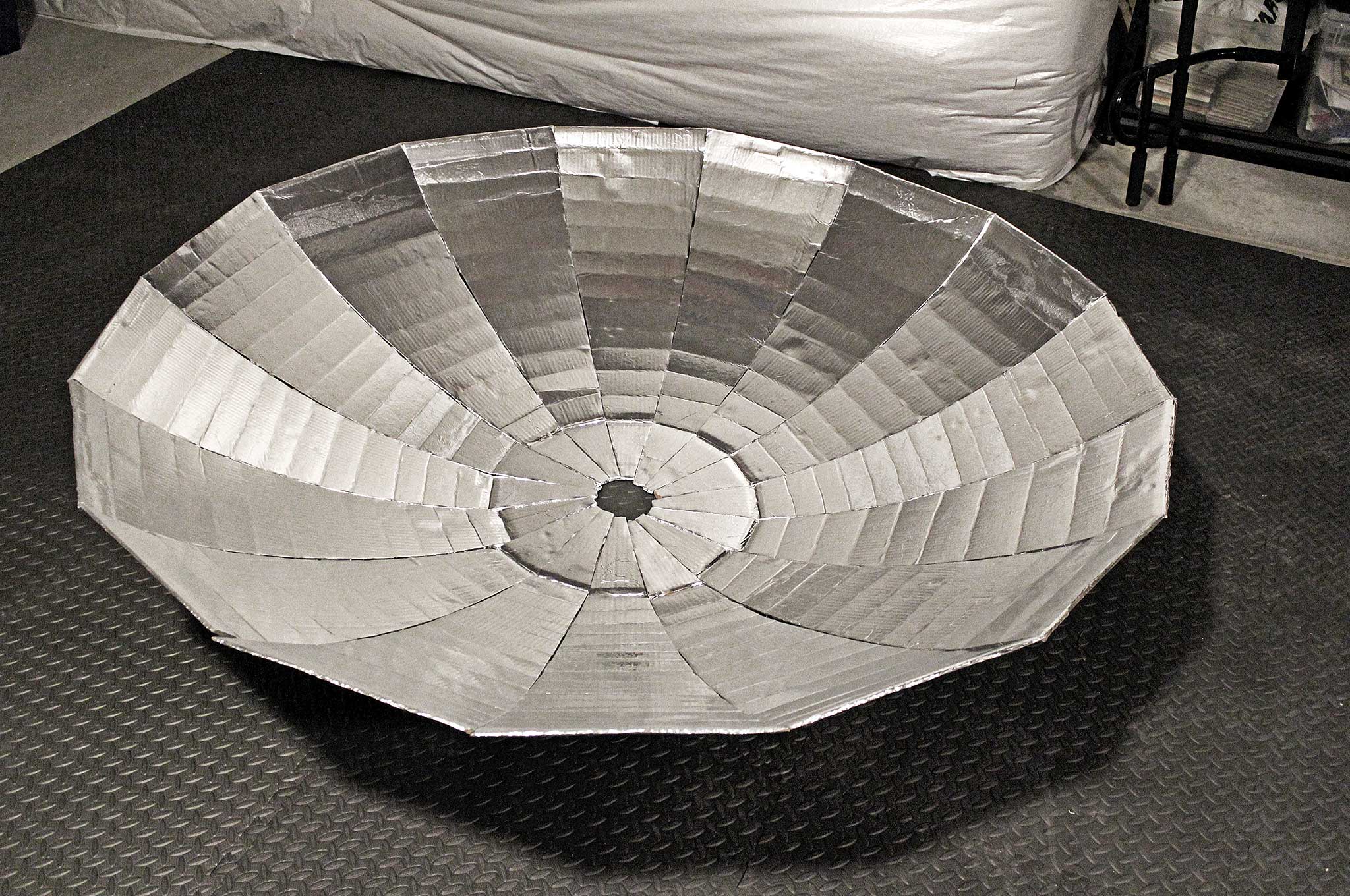
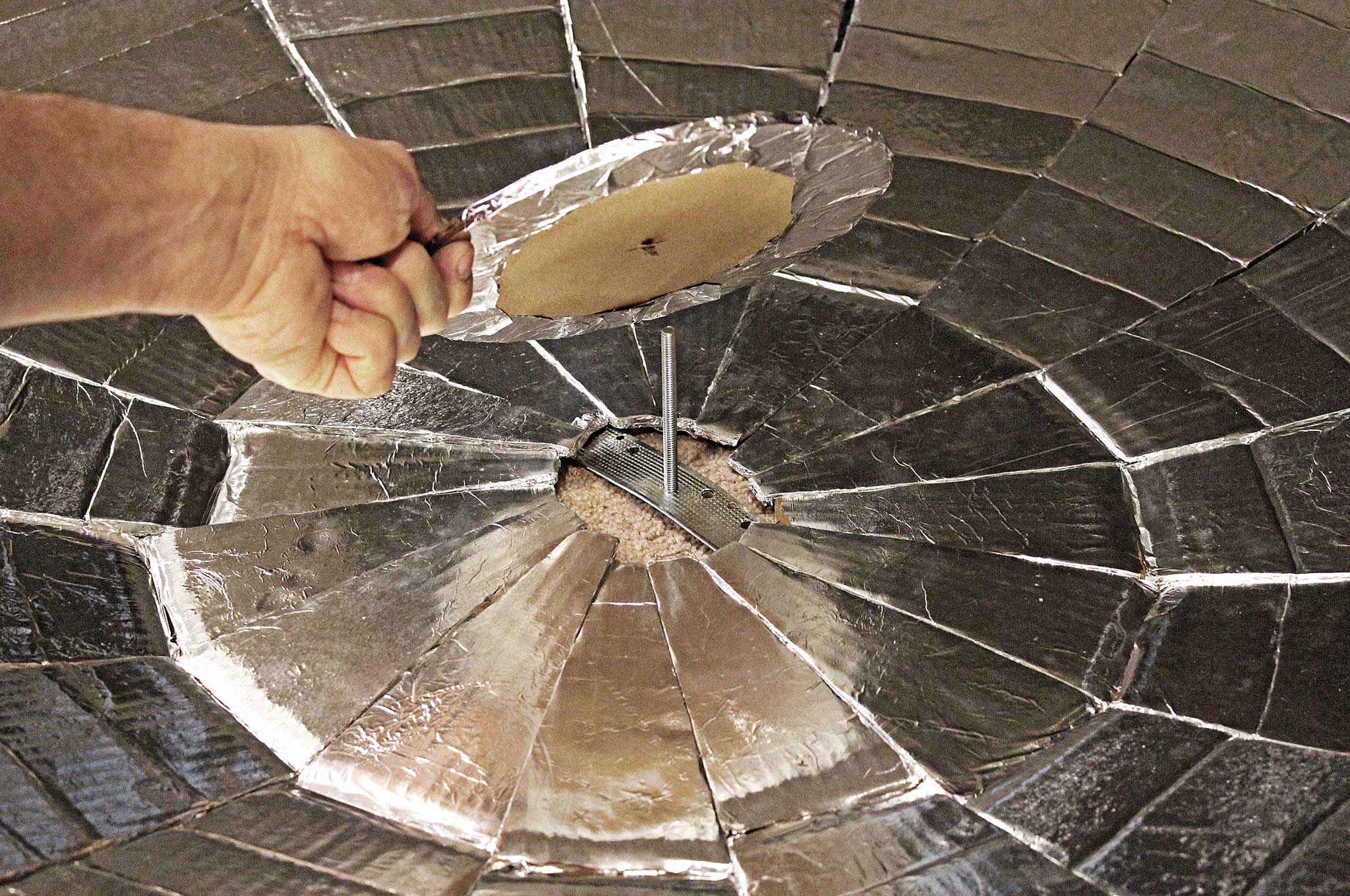
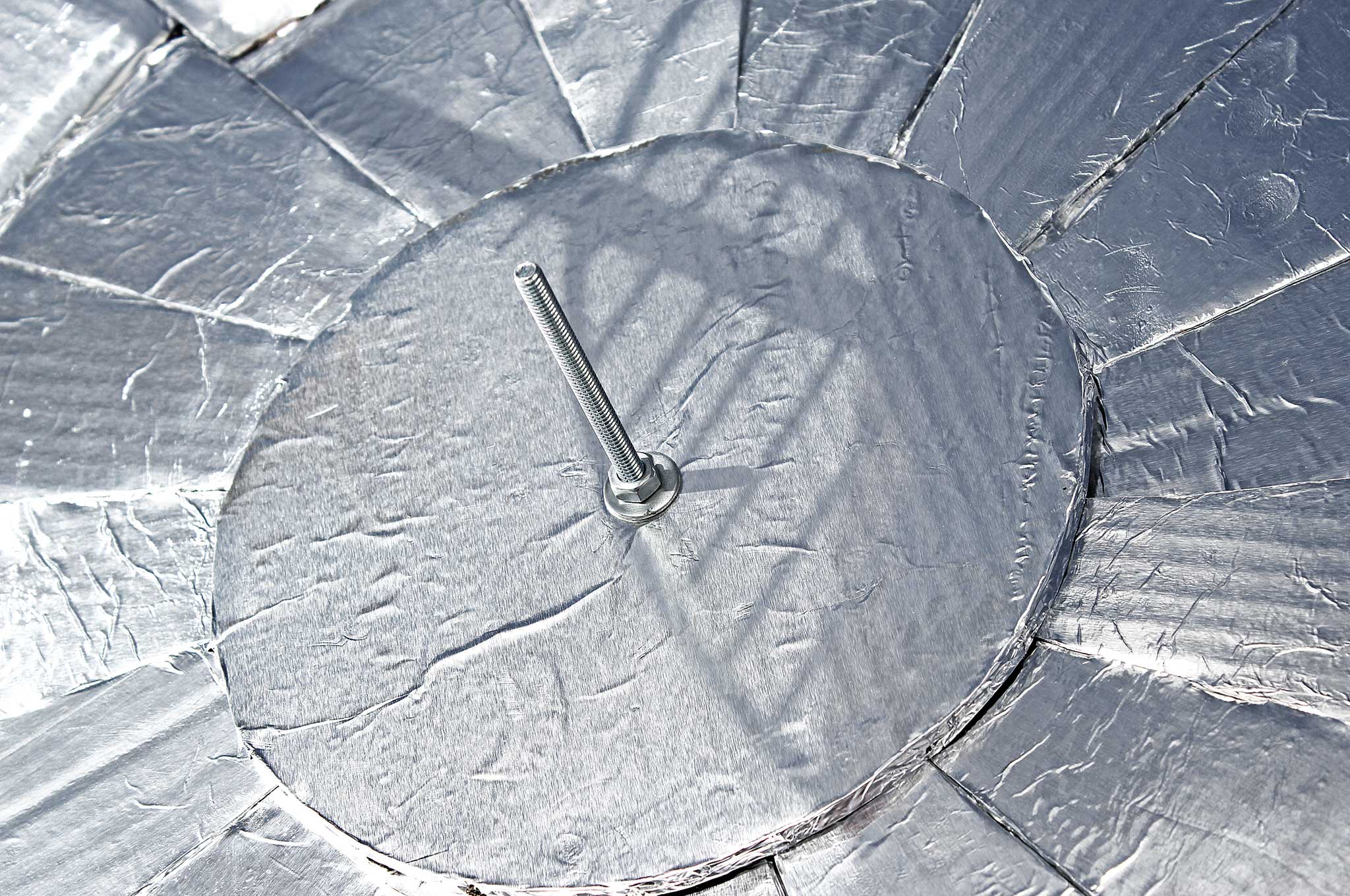
To close the hole in the center of the reflector and further strengthen its structure, cut a cardboard circle, cover it with foil, and drill a hole through its center and the center of the reinforcing metal strip. Use a 6-inch 1/4-20 threaded screw, flat washers, and a nut to secure the circle in place and create a sun dial-like aiming post. When the reflector is perfectly aimed at the sun, the post won’t cast a shadow.
Frame Up
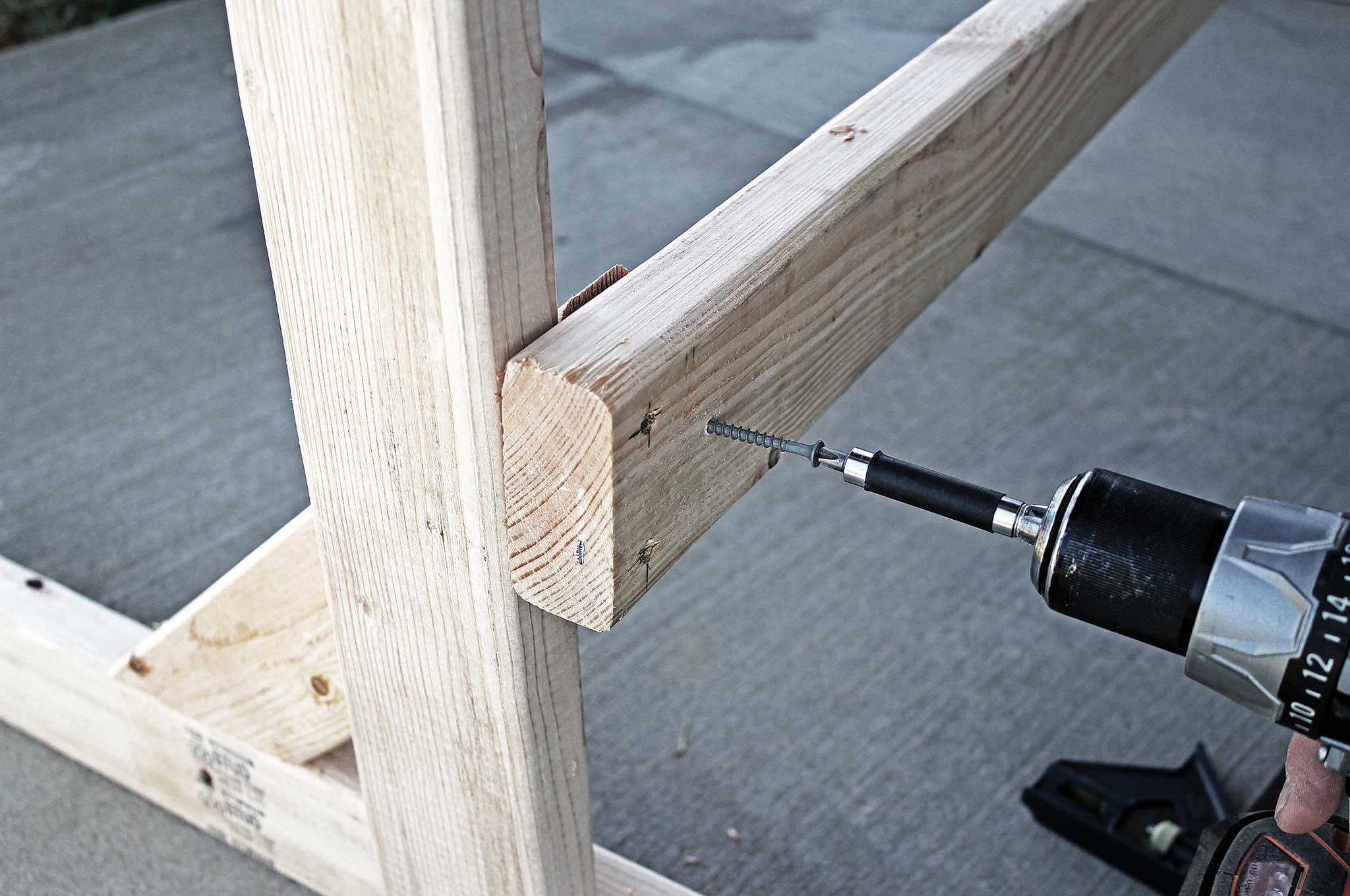
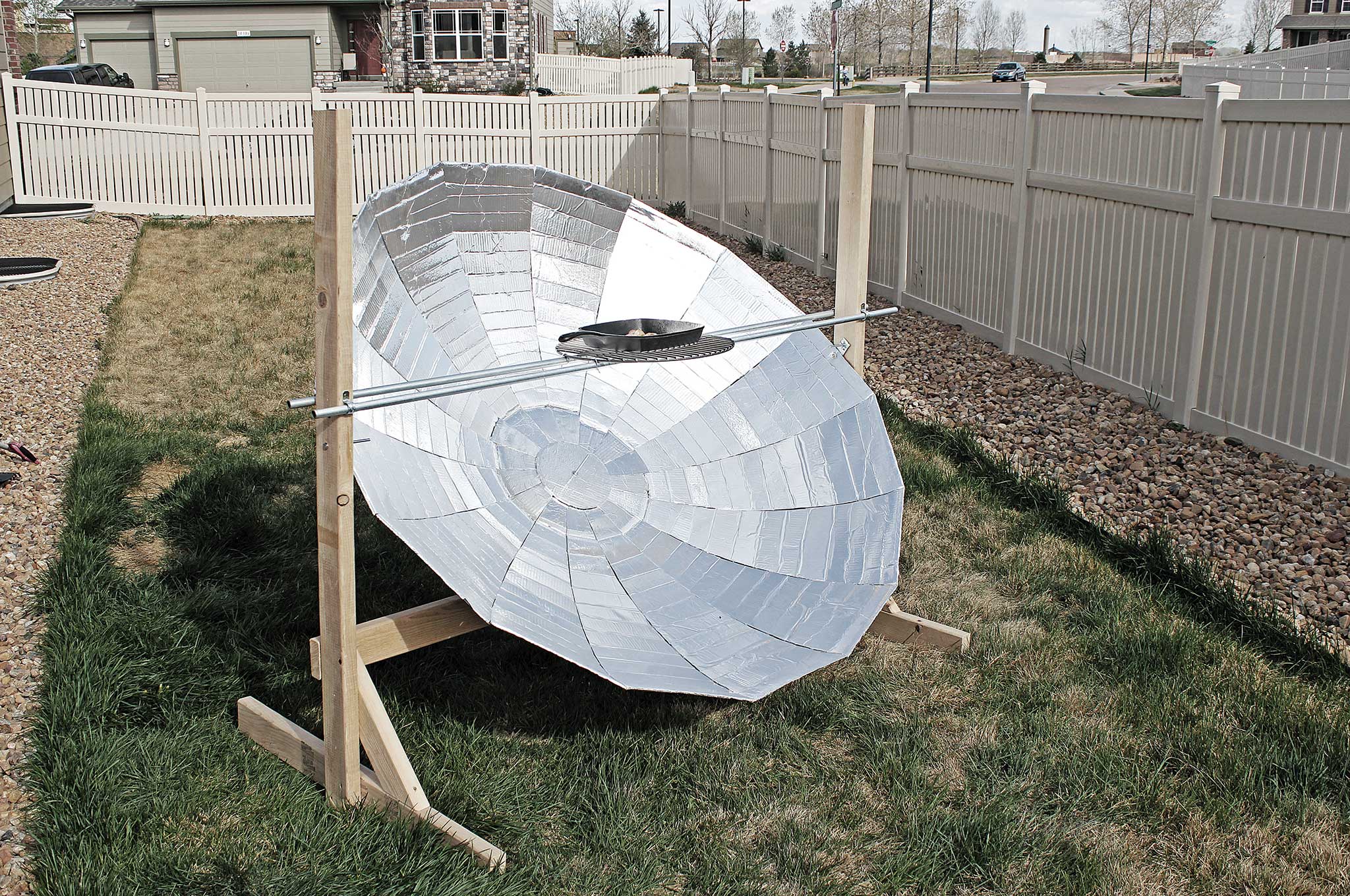
The base for this solar cooker design is a simple 2×4 frame — braced T-shaped ends connected by another 2×4 across the bottom, all held together with wood screws.
Make sure the distance between the uprights matches the diameter of your reflector, and make the uprights almost as tall. Drill a 1/4-inch hole in each upright half the diameter of your reflector up from the ground. To mount the reflector, place a long 1/4-20 carriage bolt or screw through each hole in the upright and the tabs at each end of the metal strip on the dish. Use flat washers and wing nuts to hold them in place.
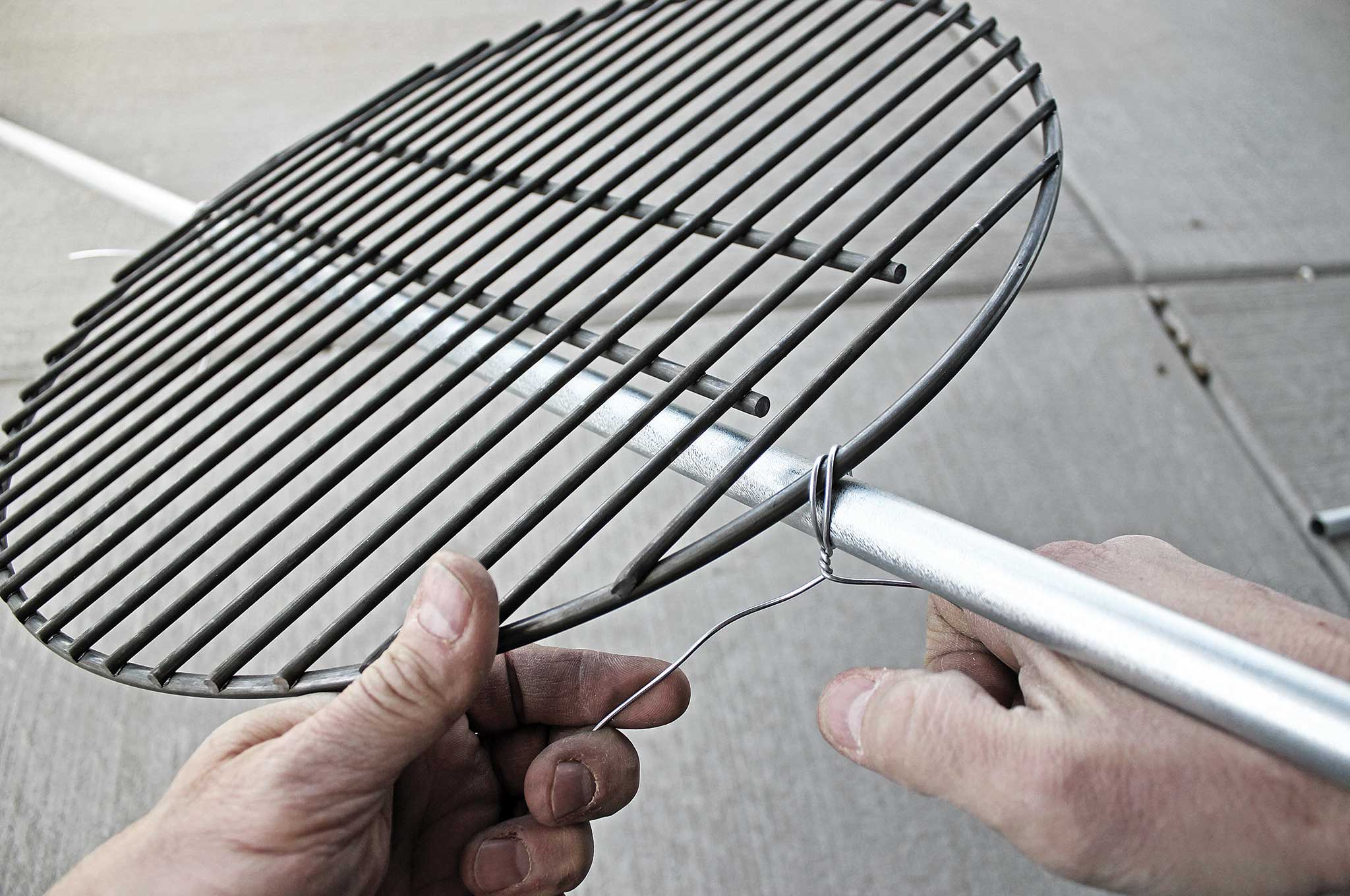
To make the cooking surface, get two pieces of 1/2-inch electrical conduit tube and an old barbecue grill grate. Use binding wire to attach the grate to the center of the conduit pieces so they are spaced about 4 inches apart. With the reflector hanging horizontally in the frame, place clamps on the frame uprights and set the grate assembly in place so the conduits straddle the uprights and are supported by the clamps.
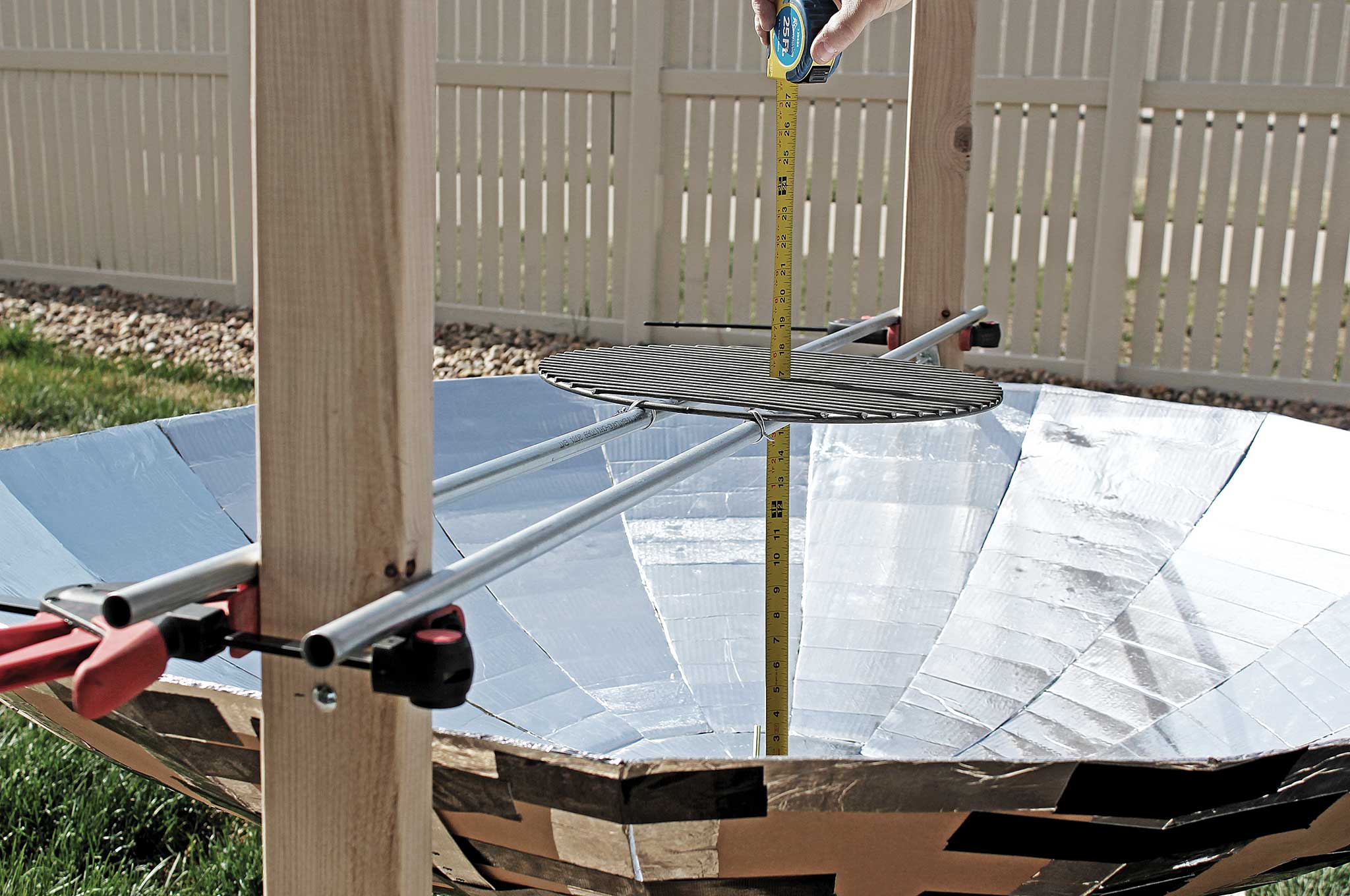
Now, measure from the center of the reflector up to the grate and adjust the height of the clamps until the grate is at the focal point height (you wrote that down, right?). Once it’s all set, use 1/2-inch conduit straps and wood screws to lock it in place.
The final piece of the puzzle is another piece of conduit or a wooden dowel roughly as tall as your uprights. This, plus a sturdy spring clamp, will allow you to adjust the vertical angle of the reflector.
Get Cookin’
To set up your solar cooker, place it on a level surface in an area of direct sunlight and orient it toward our massive star in the sky. Look at the sundial in the center of the reflector and turn the unit until the screw casts a shadow perpendicular to the conduits. Raise the reflector until the shadow shortens and eventually disappears, confirming the reflector is now pointed directly at the sun. Maintain that orientation and clamp the dowel or conduit support to the rim at the rear of the reflector to hold it in place.
In this position, the reflector should focus all the sunlight hitting it on the grate at the focal point. To confirm that, get a piece of paper and place it on the grate. Move it up, down, and under the grate and compare the size of the focused light at different heights above the reflector. It should be smallest and most focused at the exact level of the grate. If not, adjust the grate height to correspond with the most focused spot.
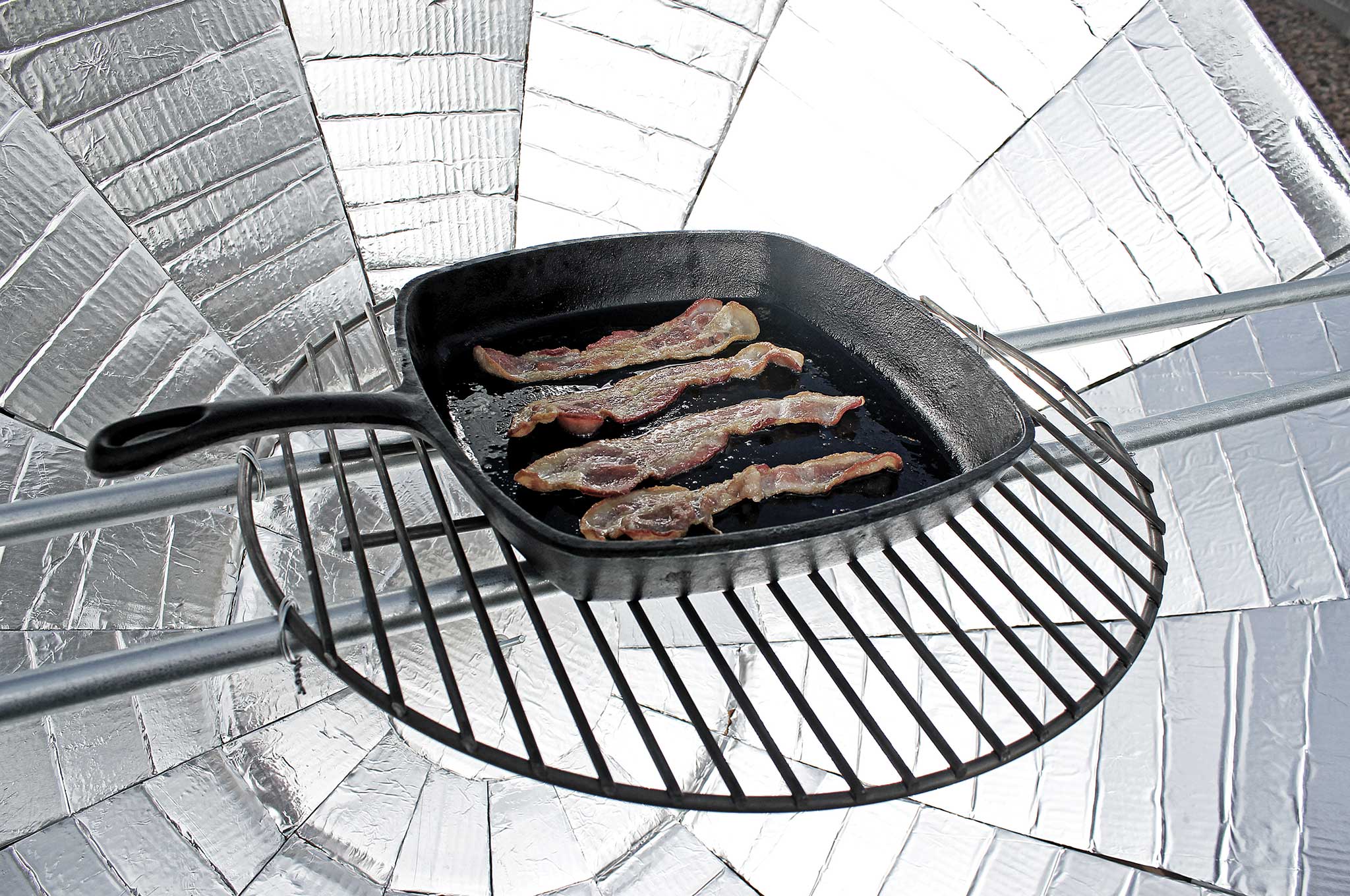
For the actual cooking, use a dark-colored pot or pan — ideally made of cast iron with a lid. Place it on the grate and let the sun work its magic. Check on the cooker periodically and reorient it as necessary to optimize its performance as the sun moves.
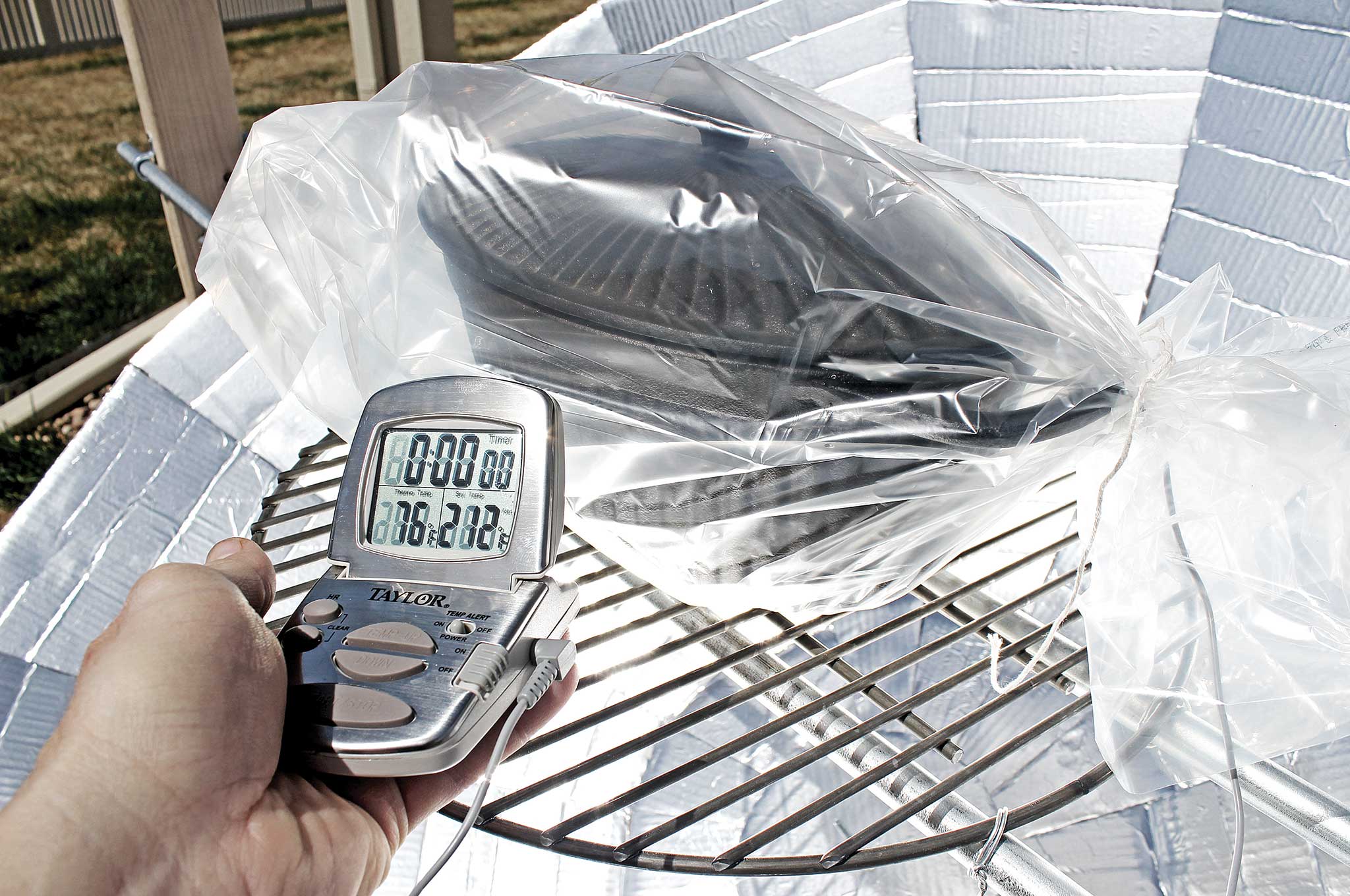
You can also incorporate the greenhouse effect in your cooking by enclosing cast-iron Dutch ovens in plastic roasting bags to retain heat and moisture even better.
As long as the sun does its part, this parabolic solar cooker definitely works and works well. In addition to cooking, it’s a great way to quickly pasteurize water without burning fuel and an excellent addition to any off-grid plan. While it’s not the solar death ray I was hoping for, I haven’t given up hope yet. Maybe with some shinier aluminum foil ….
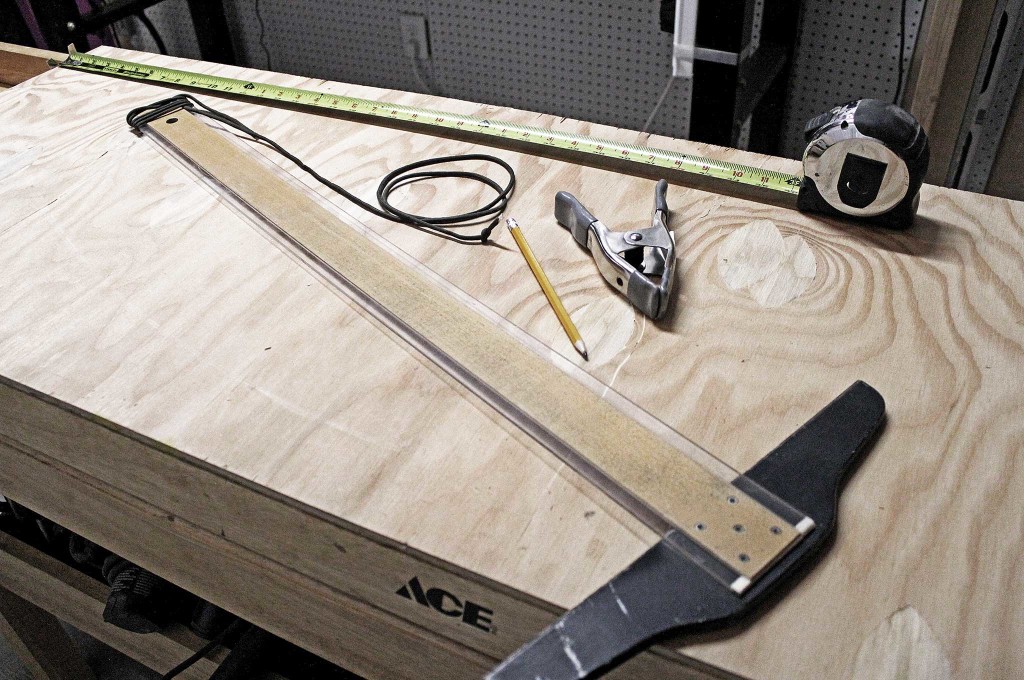
Hey, math boy … these tools are how real parabolas are made.
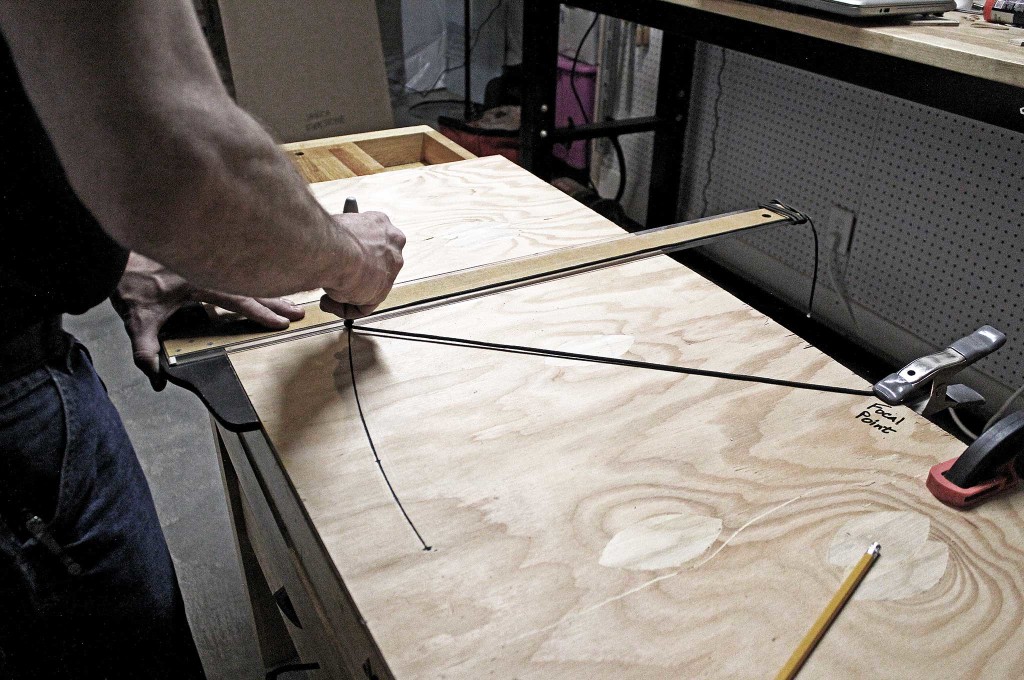
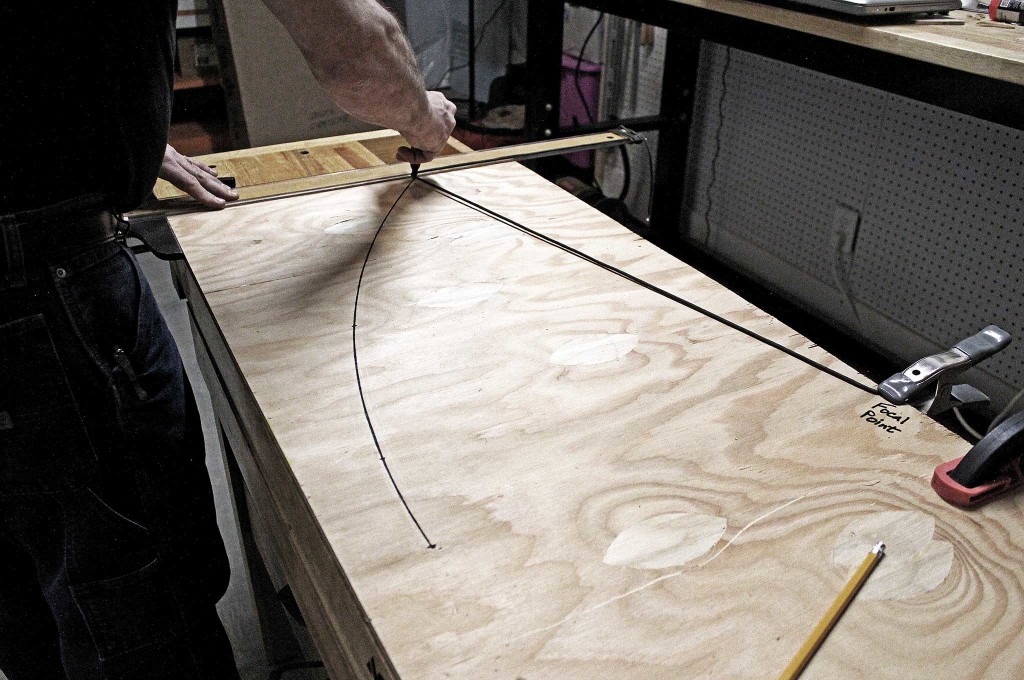
Drawing the parabola to make the panel form.
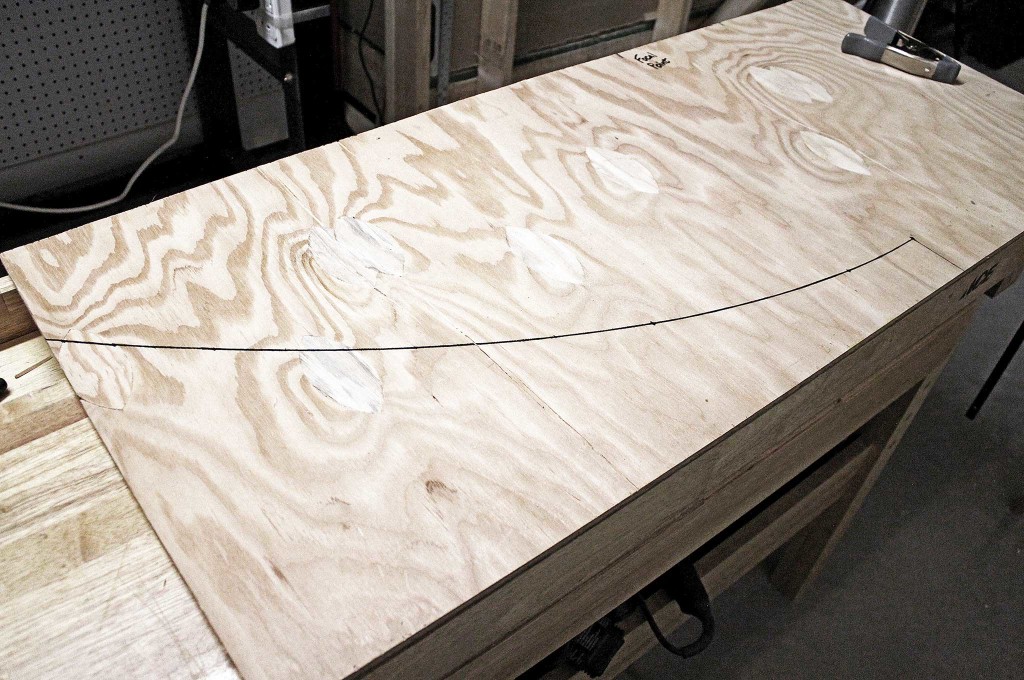
Once the parabola form is drawn, cut it out with a jigsaw and make an identical second one.
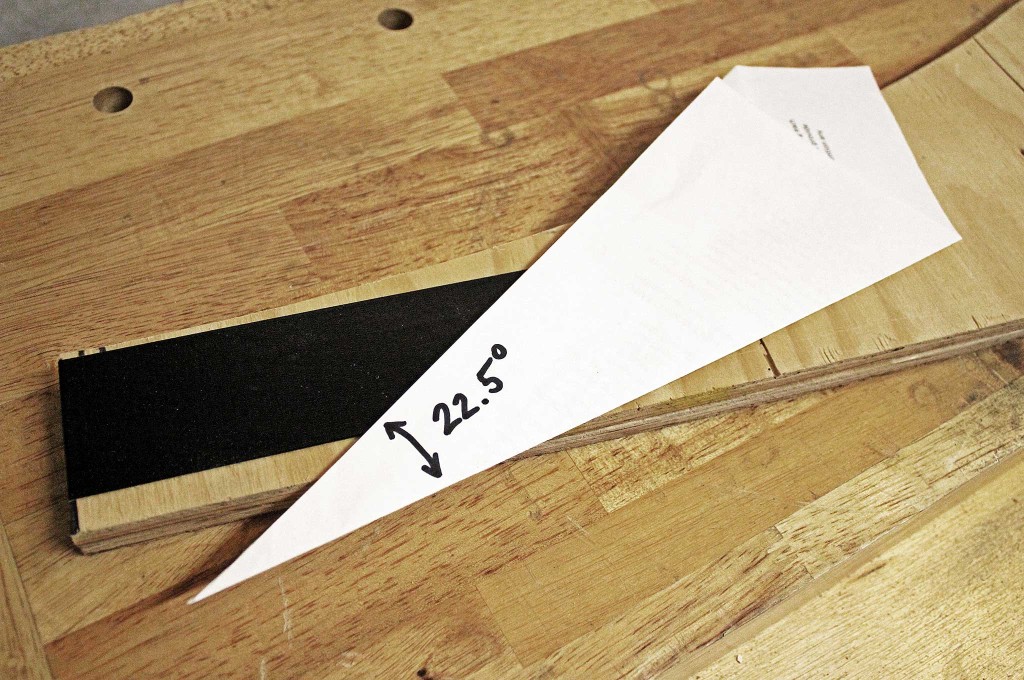
To make a reflector with 16 panels, each is one 1/16 of a 360-degree circle, or 22.5 degrees. Fold a piece of paper twice to get a reference.
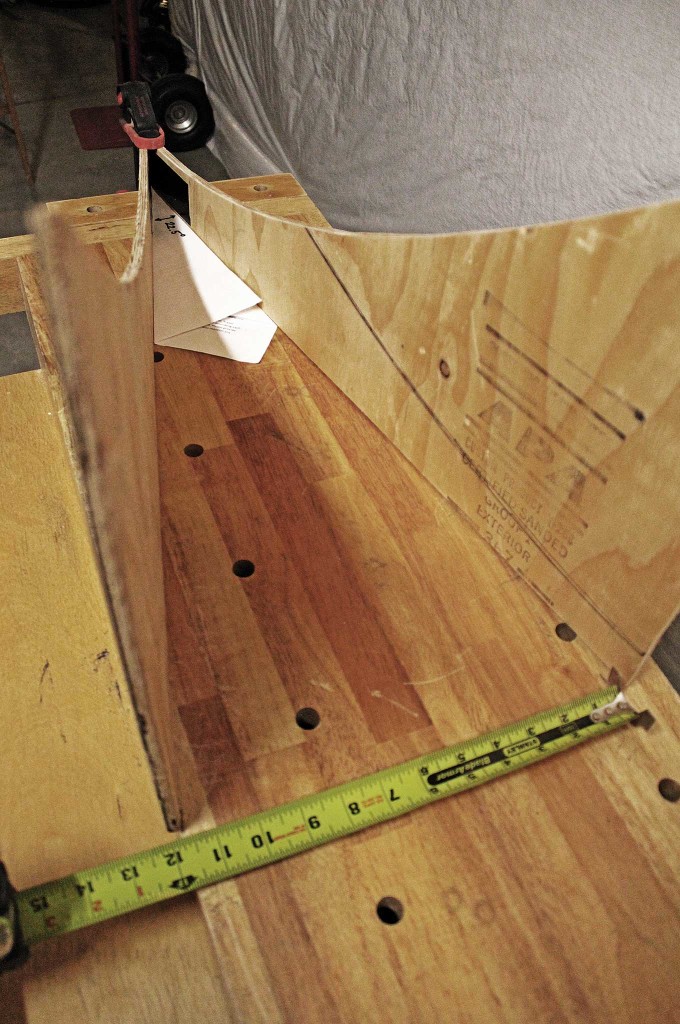
Use the paper reference to set the angle at the apex of the form, then measure the wide end.
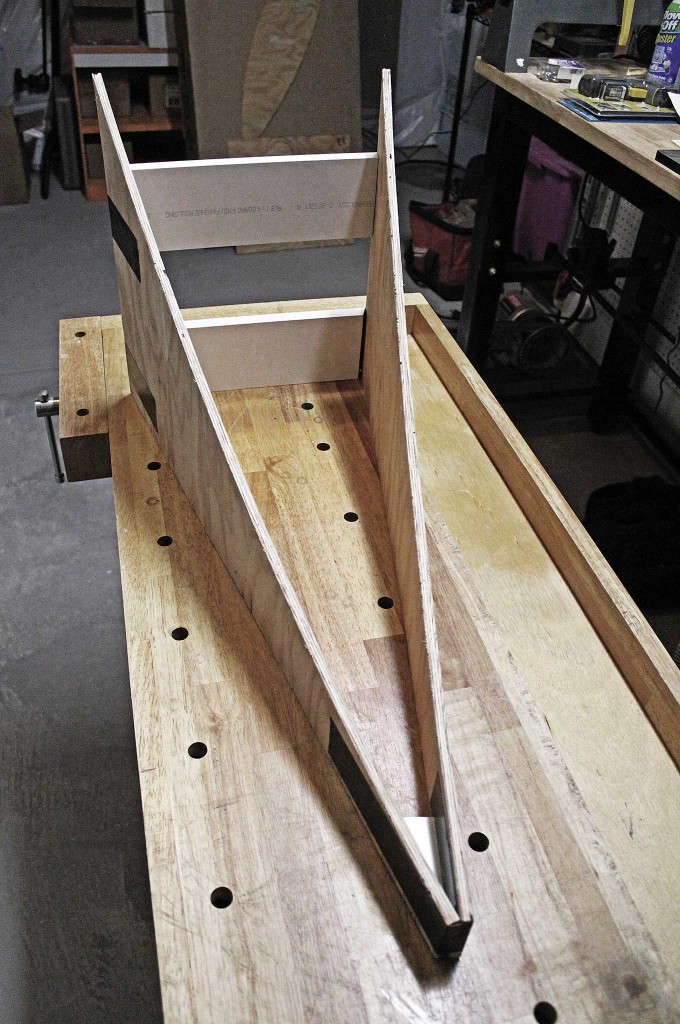
The finished form for marking the panel template.
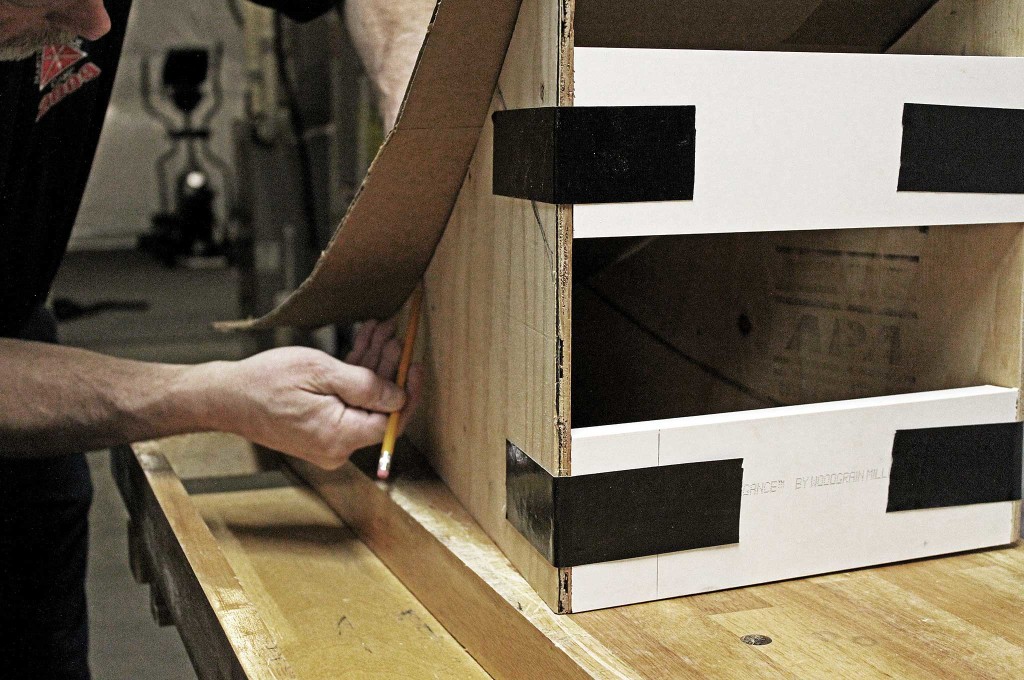
Clamp a piece of cardboard to the form and trace both sides to make a template.
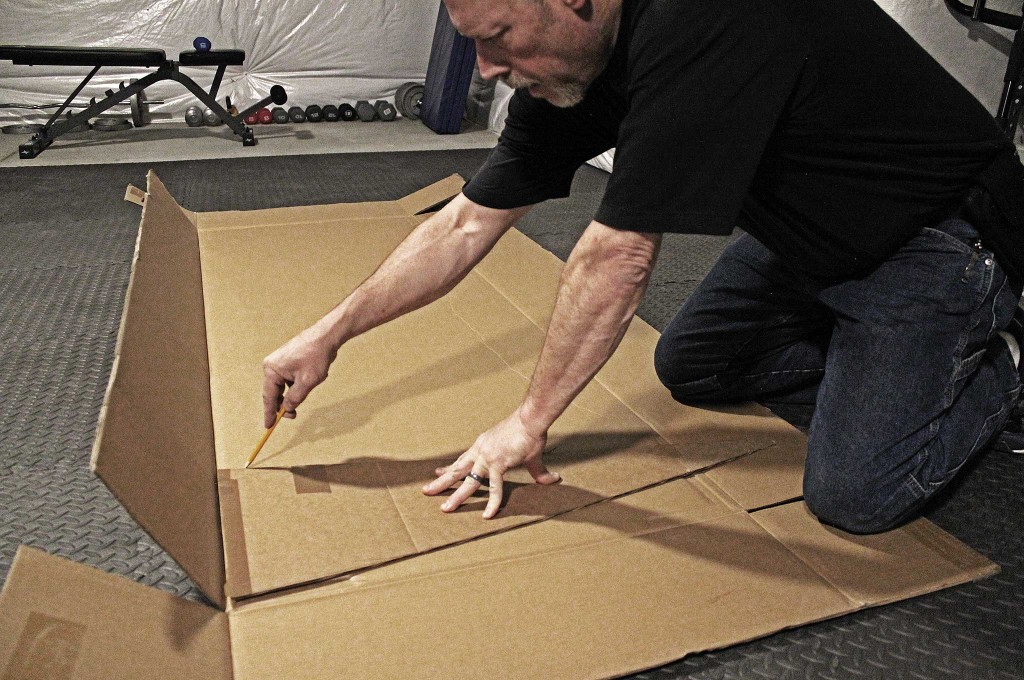
Use the template to mark the cardboard for the panels.
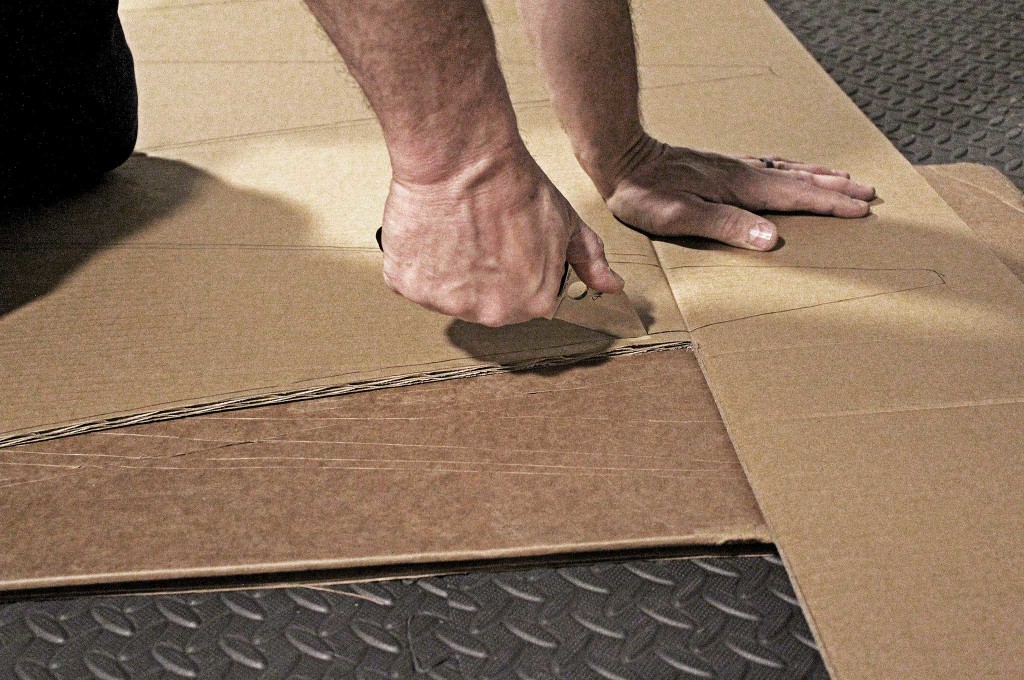
Carefully cut out the panels … all 16 of them.
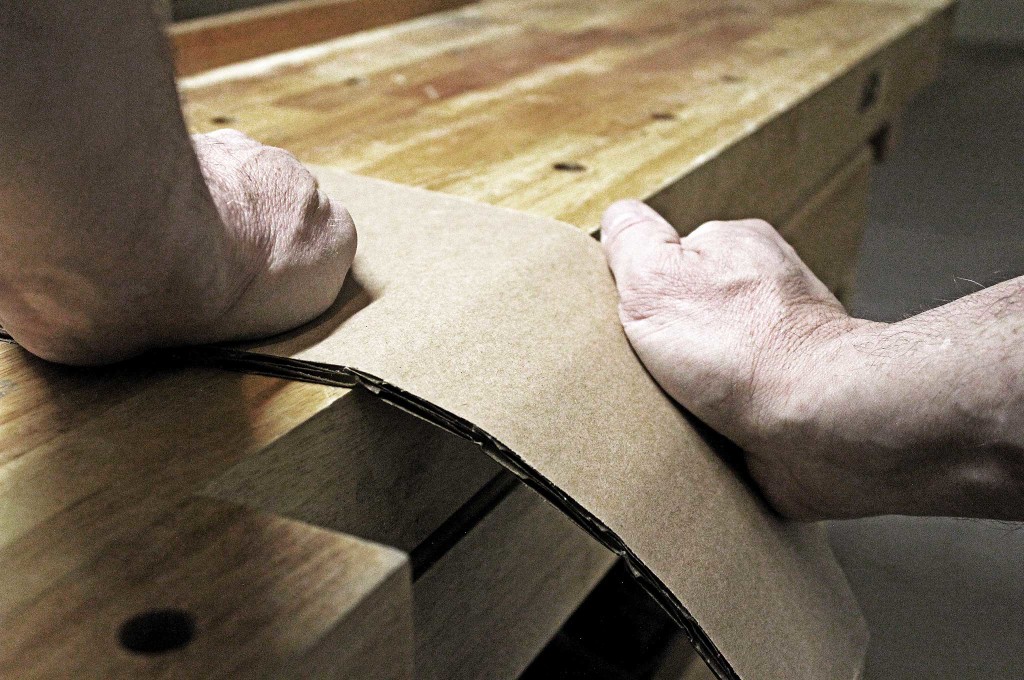
Crease the panels every couple of inches to create a curve.
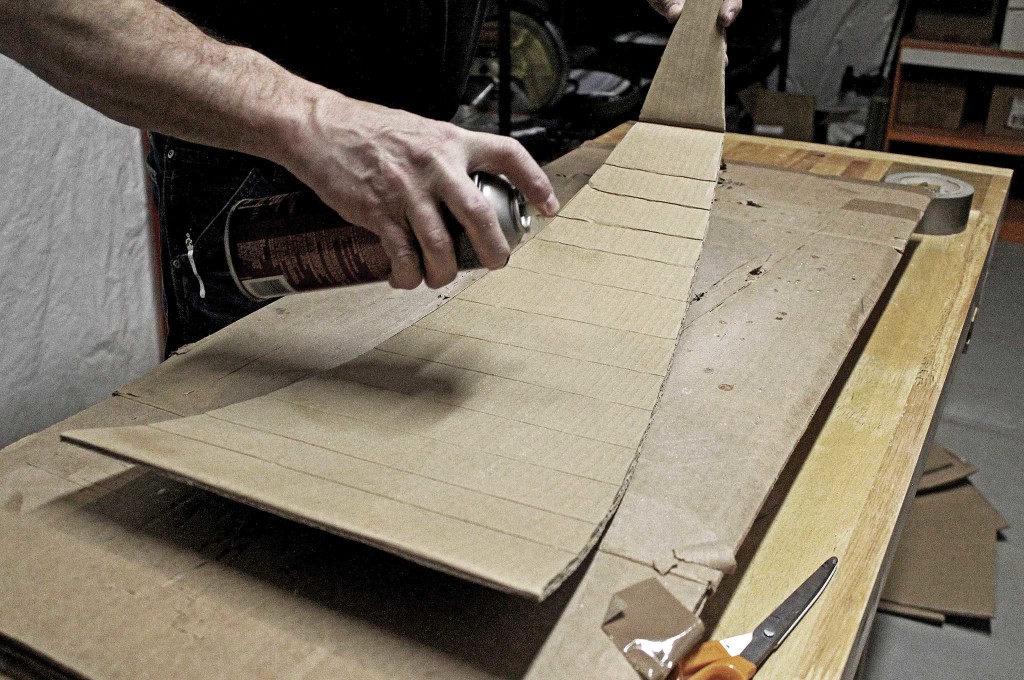
A light coat of spray adhesive will allow the aluminum foil to stick.
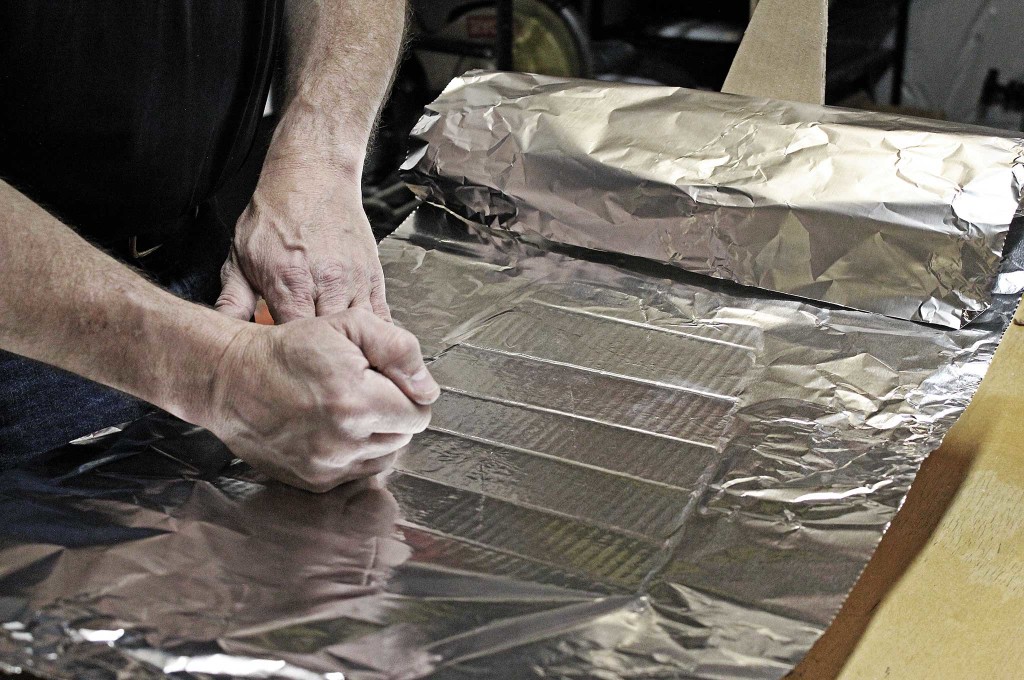
Use the soft bottom of your fist to smooth the foil and work from the center out.
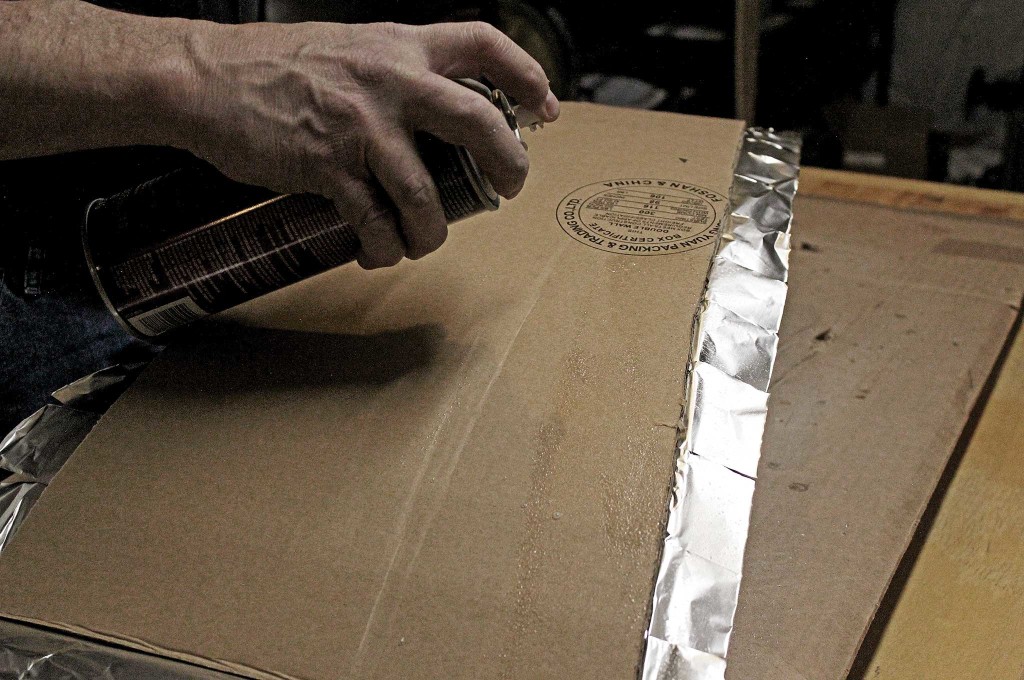
Trim the foil around the panel, notch it every few inches, turn it over, and apply another light coat of spray adhesive.
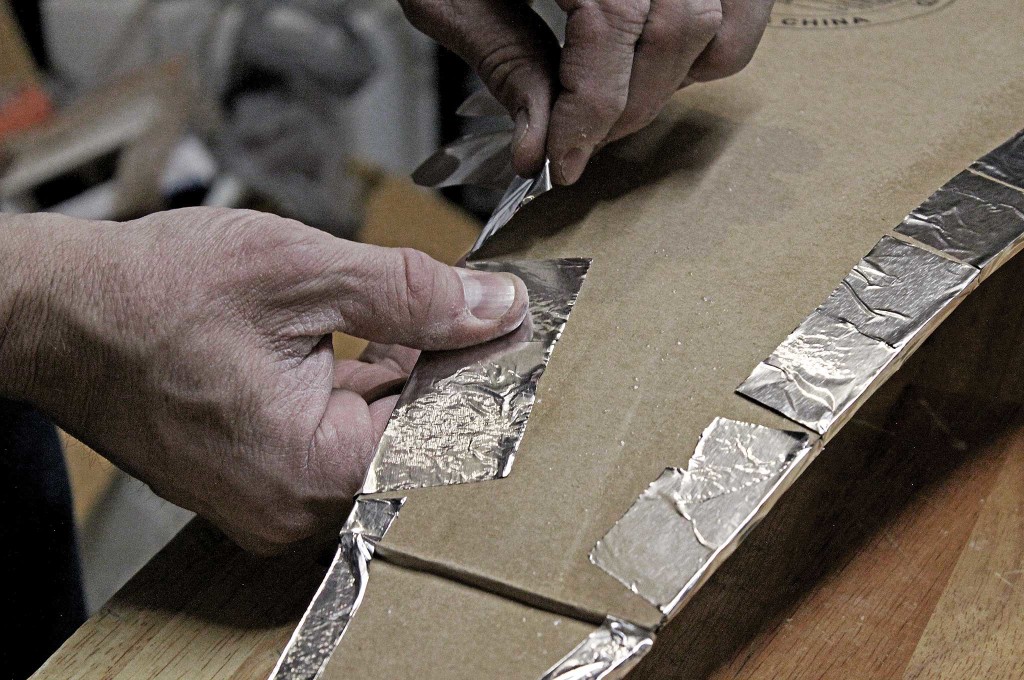
Fold the tabs of foil and stick them to the back of the panel.
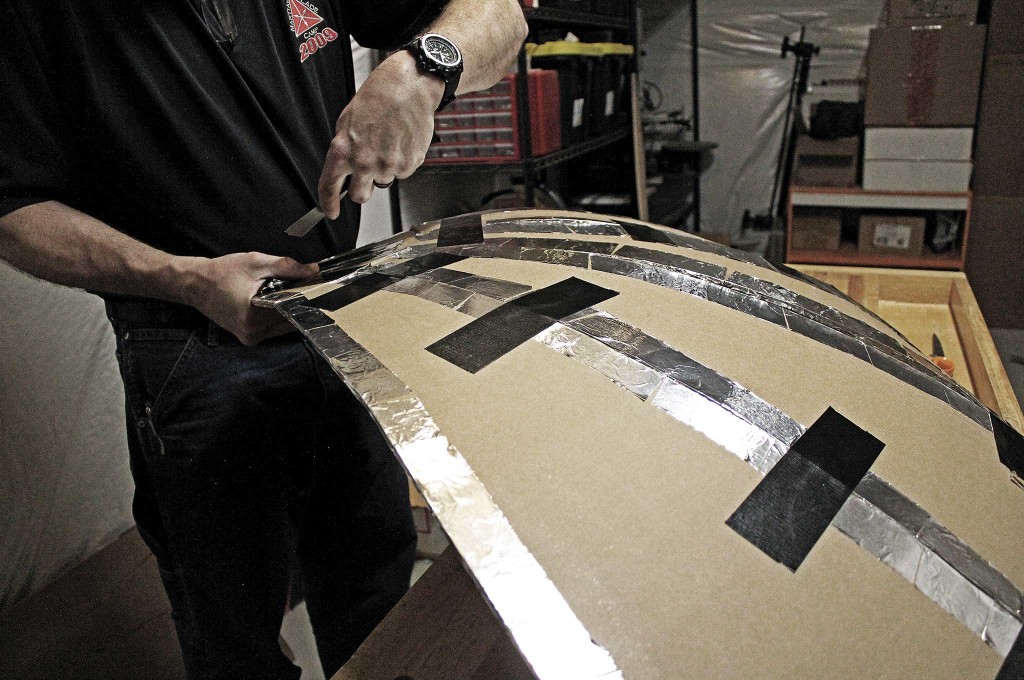
Attach panels edge to edge with Gorilla Tape.
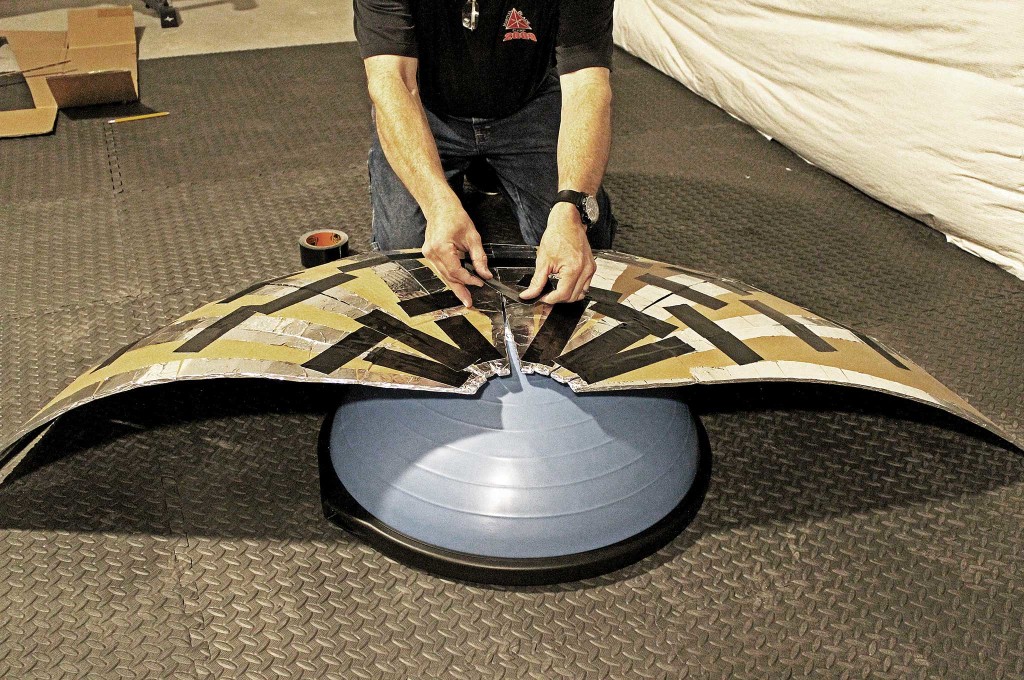
Use something to support the center of the dish as you tape the panel sections together.
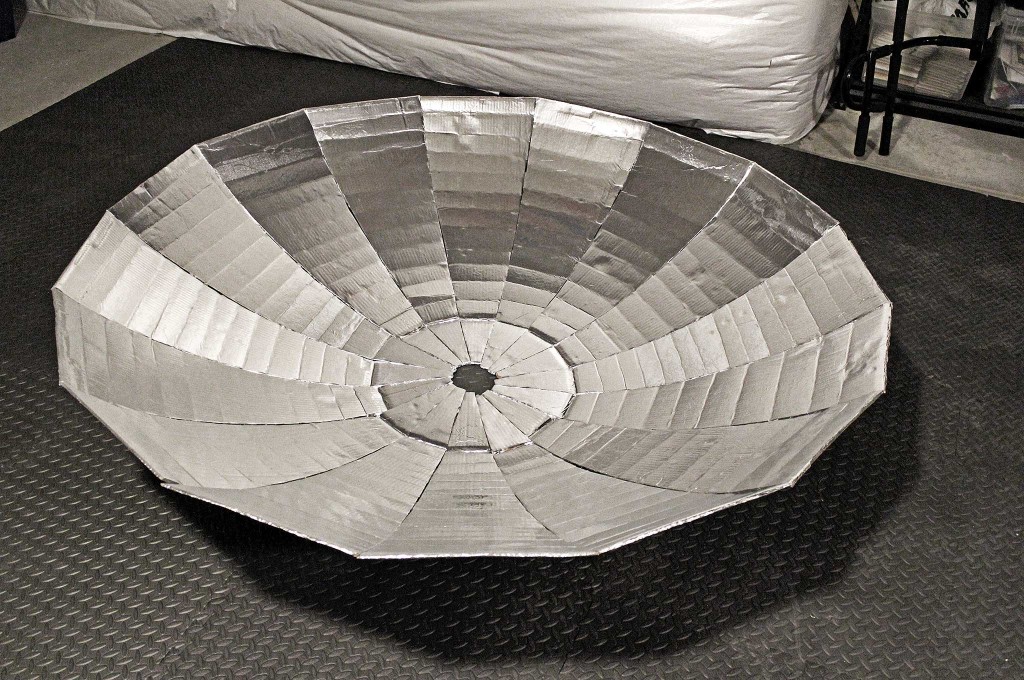
The fully assembled parabolic reflector.
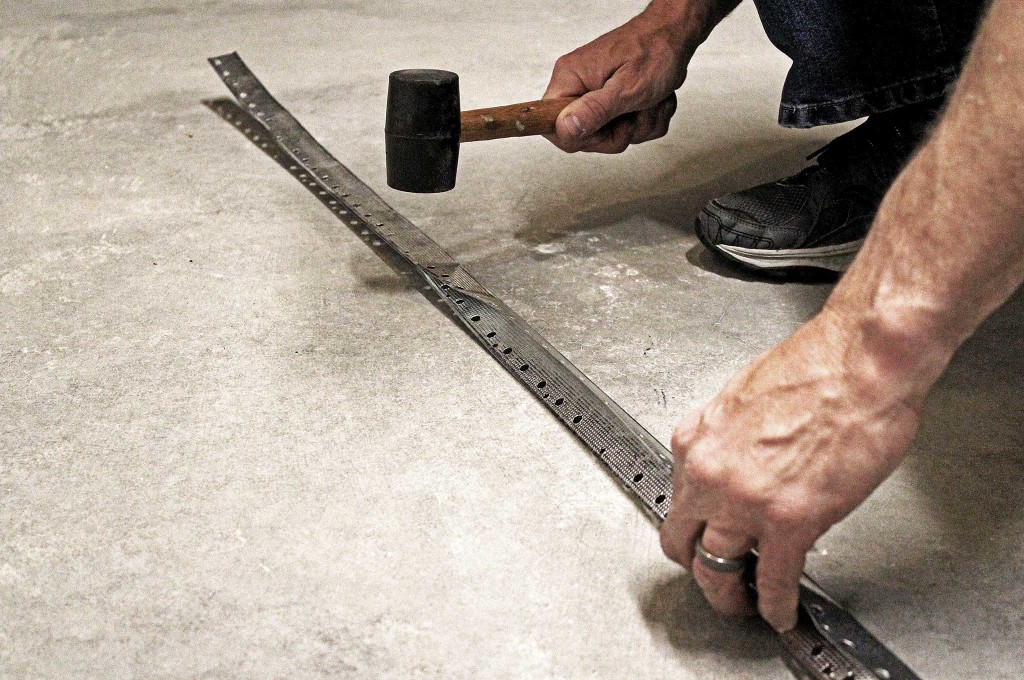
Flatten out some drywall corner to make the support strip. Any similar metal strip will work as well.
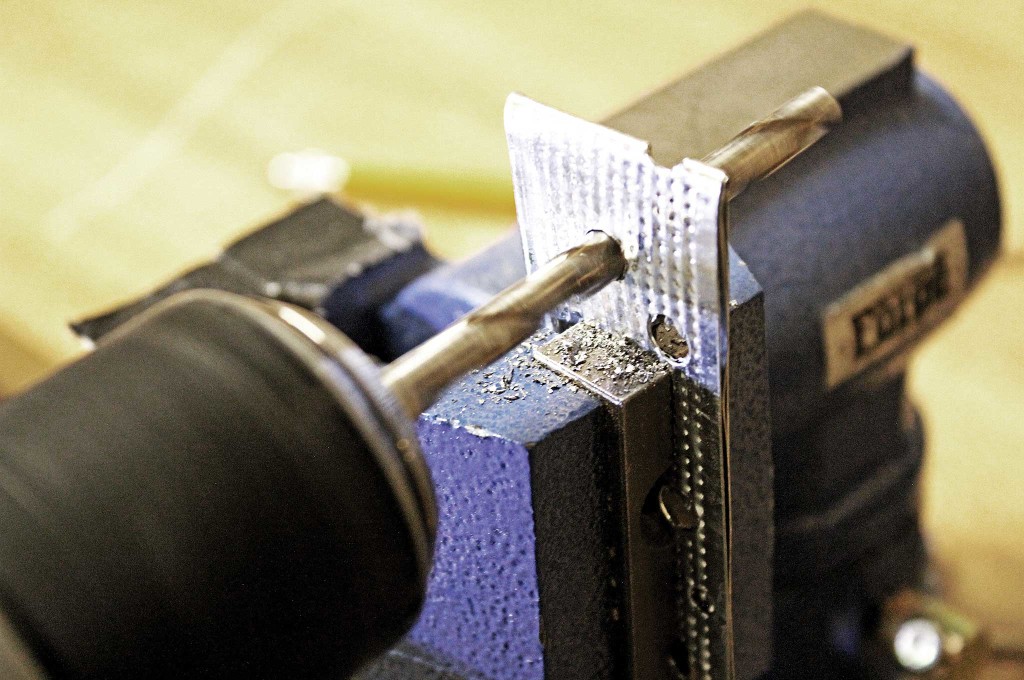
Drill 1/4-inch holes in the tabs at the end of the strip to mount the reflector and allow it to pivot.
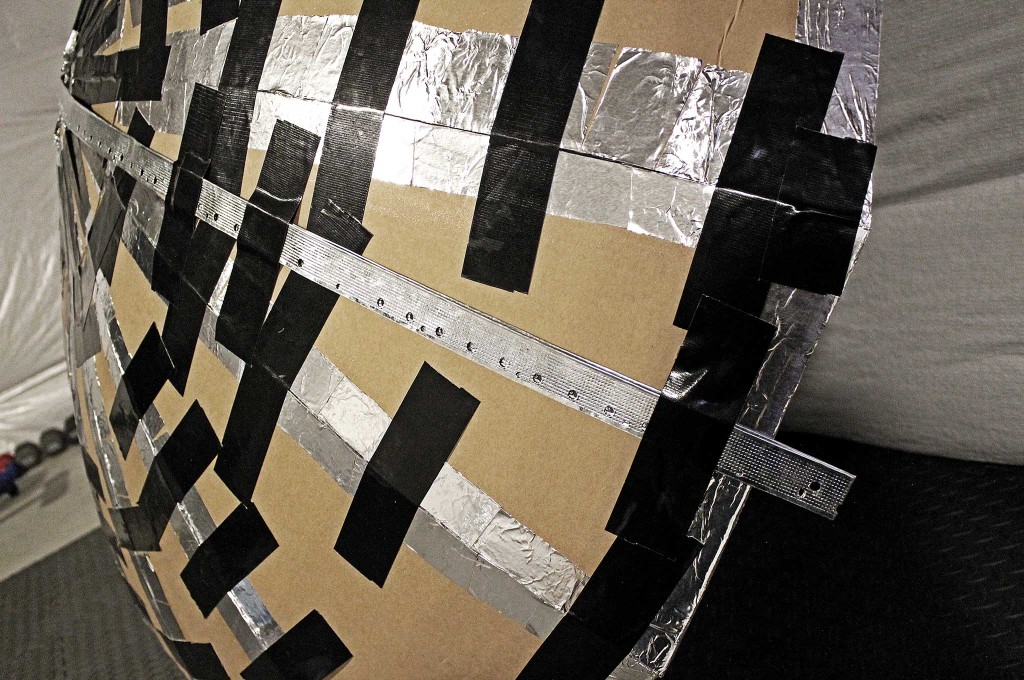
The support strip taped in place.
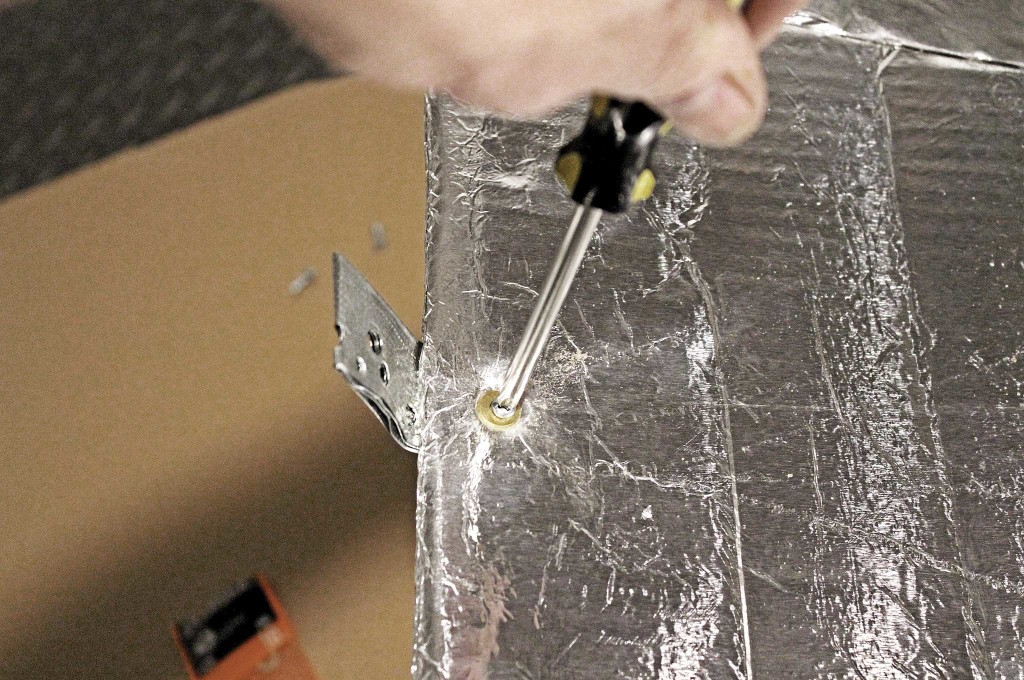
Attach the ends of the strip to the reflector with screws, washers, and nuts.
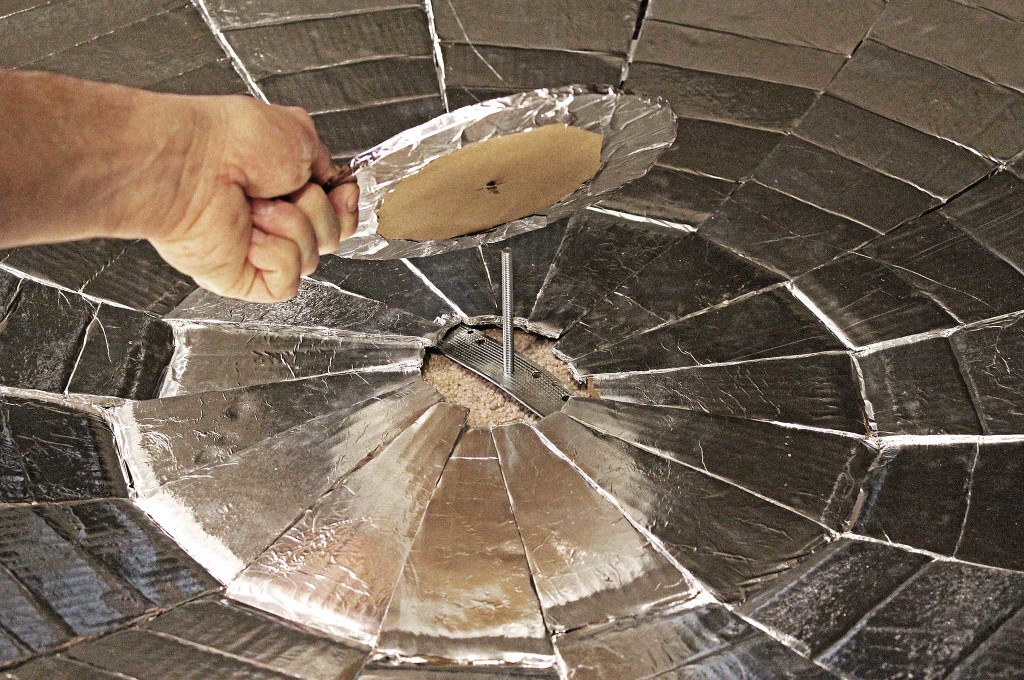
The center of the reflector is covered by a foil-covered cardboard circle secured with a long screw that also helps “aim” the reflector.
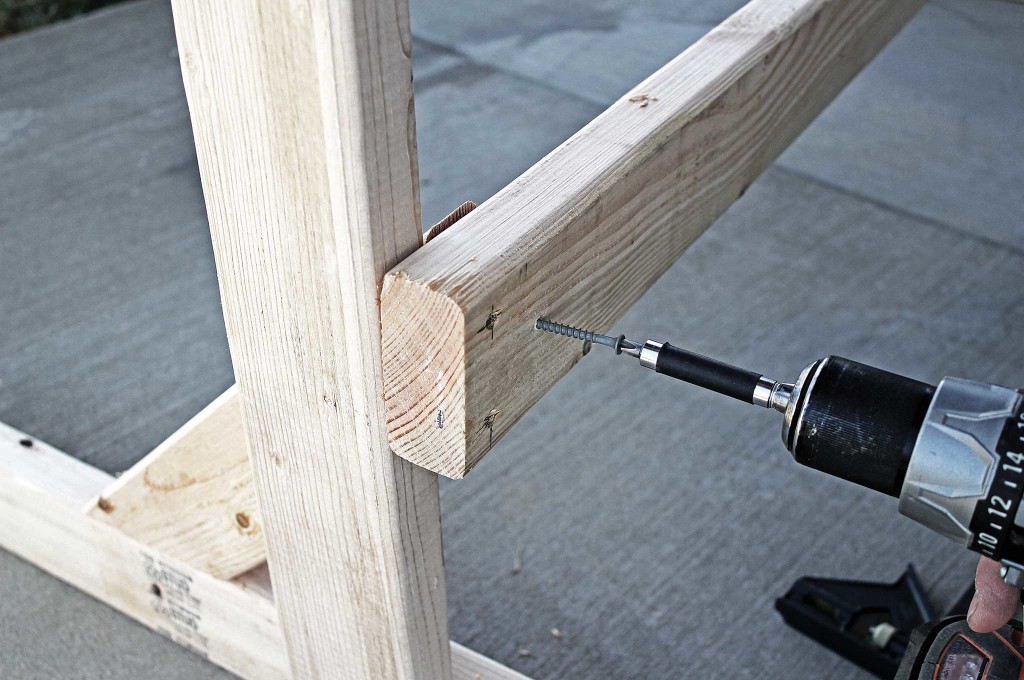
The frame for the cooker is a simple 2×4 structure.
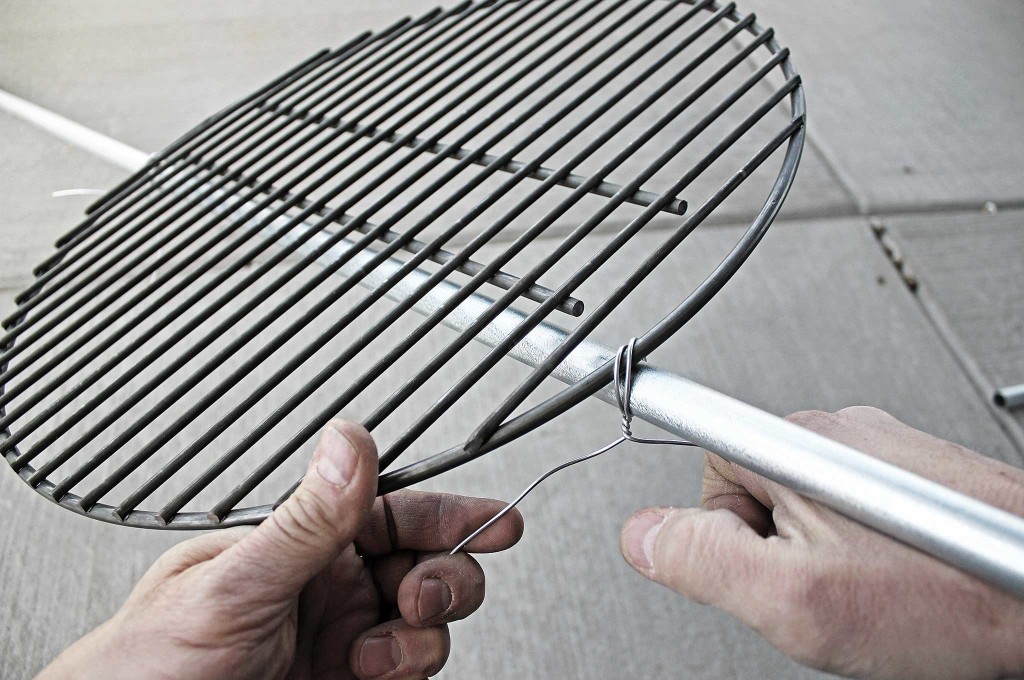
The cooker grate is made with electrical conduit and a grill grate.
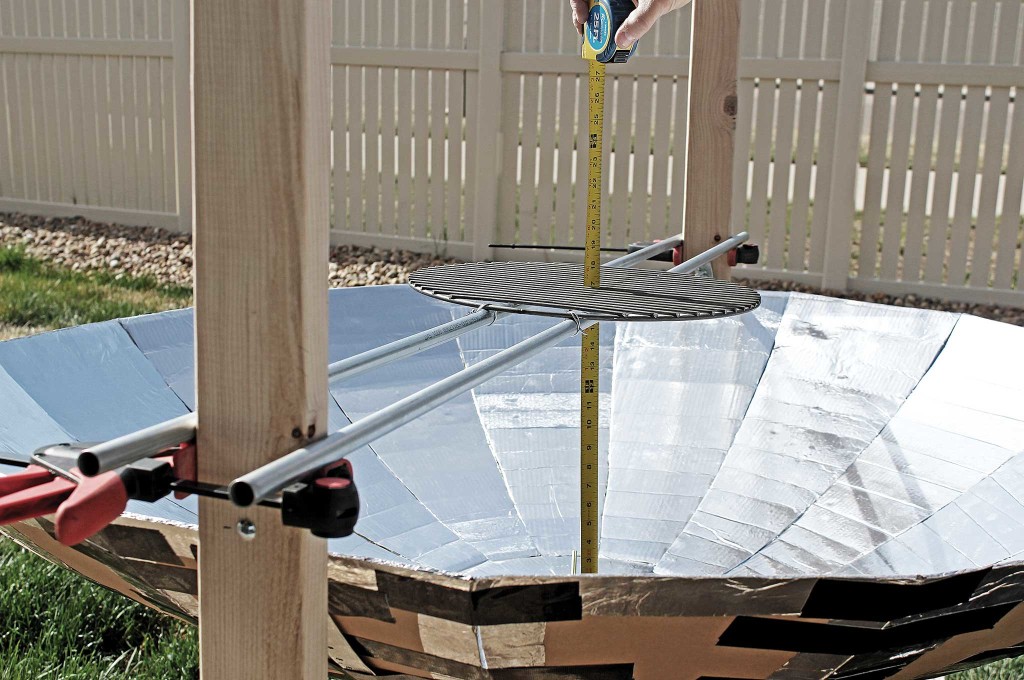
Use clamps to get the cooking grate at the exact focal point before securing the conduit tubes with straps.
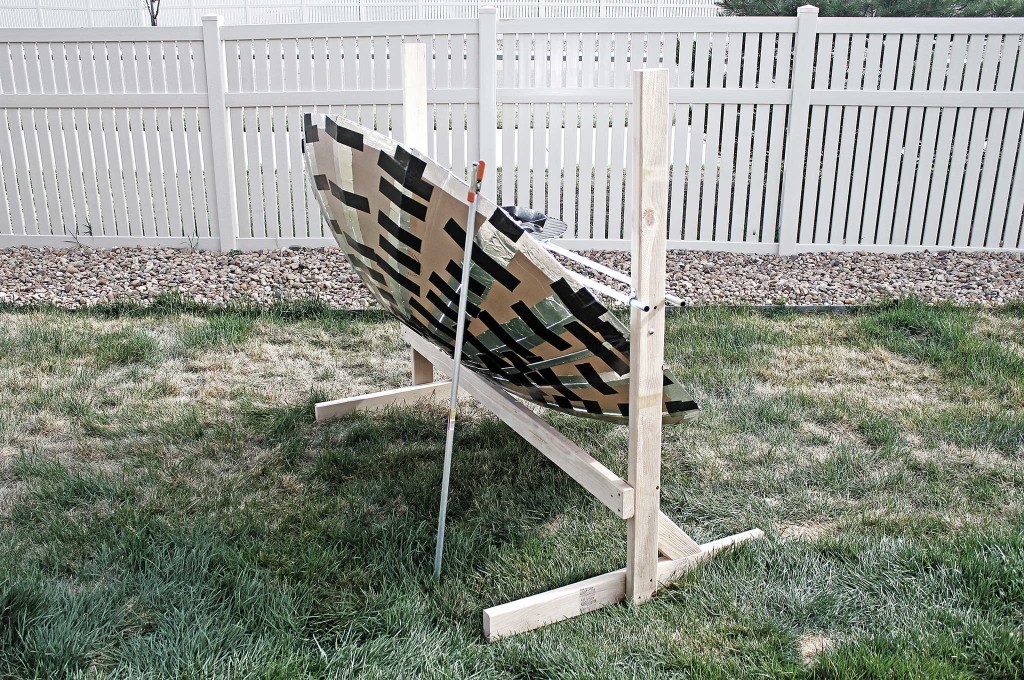
A simple dowel and clamp allow the angle of the reflector to be precisely adjusted.
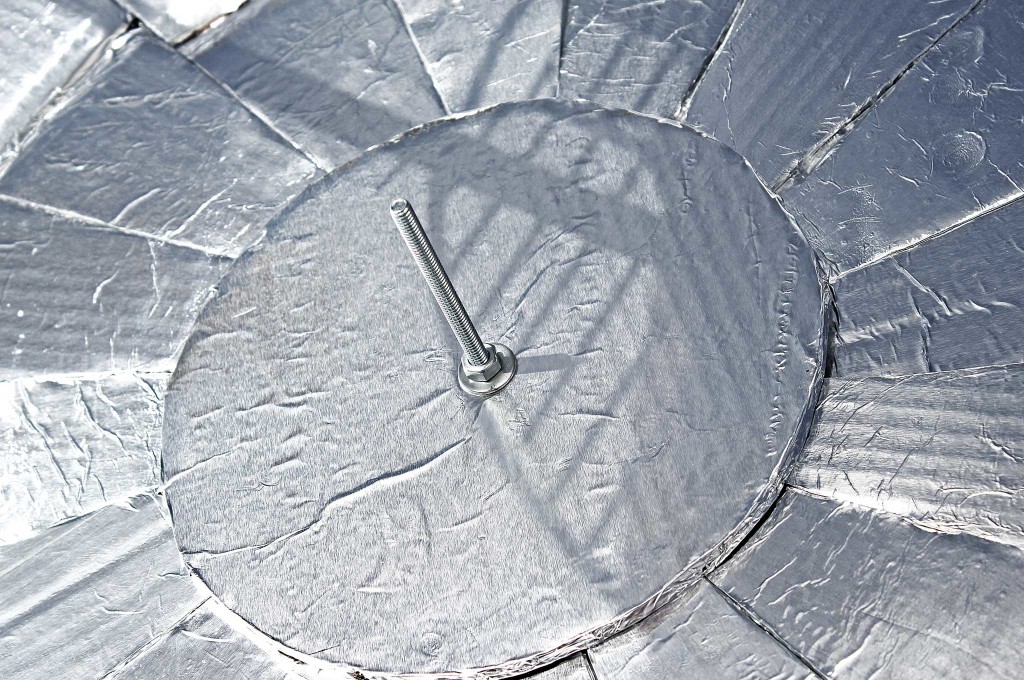
Use the “sundial” to align the reflector. When its shadow disappears, it’s perfectly aligned.
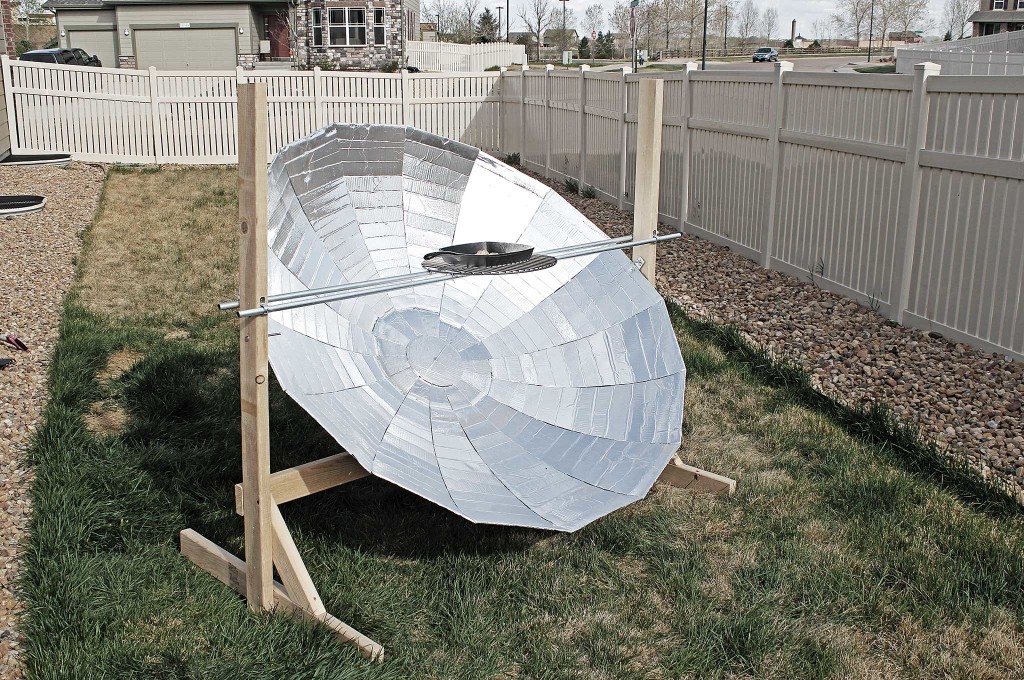
Testing the parabolic solar cooker.
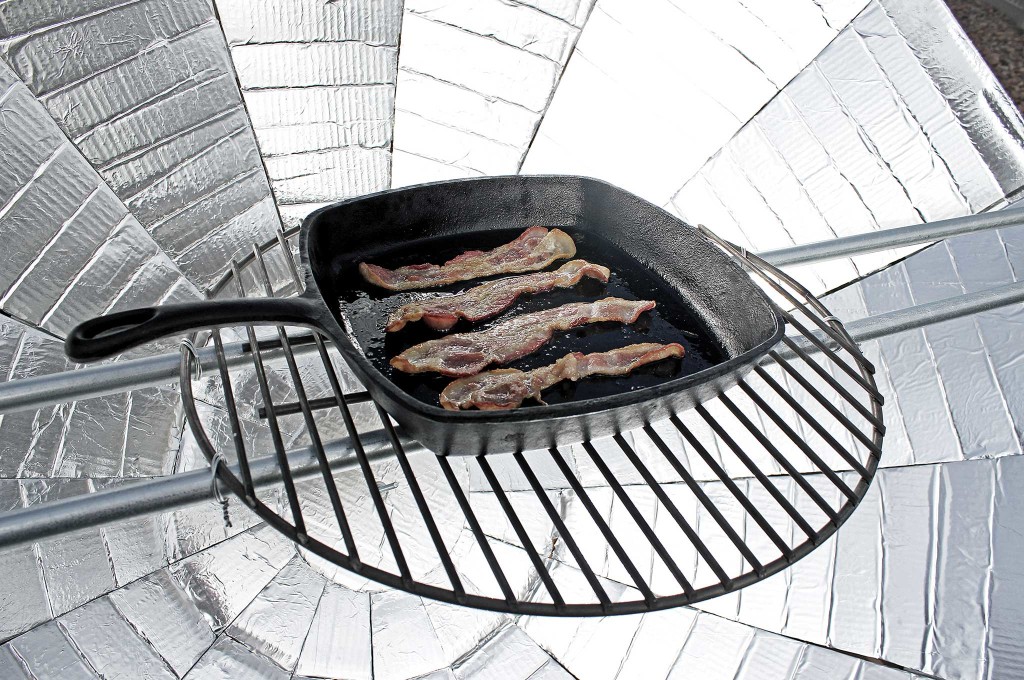
Anything that yields crispy bacon HAS to be good!
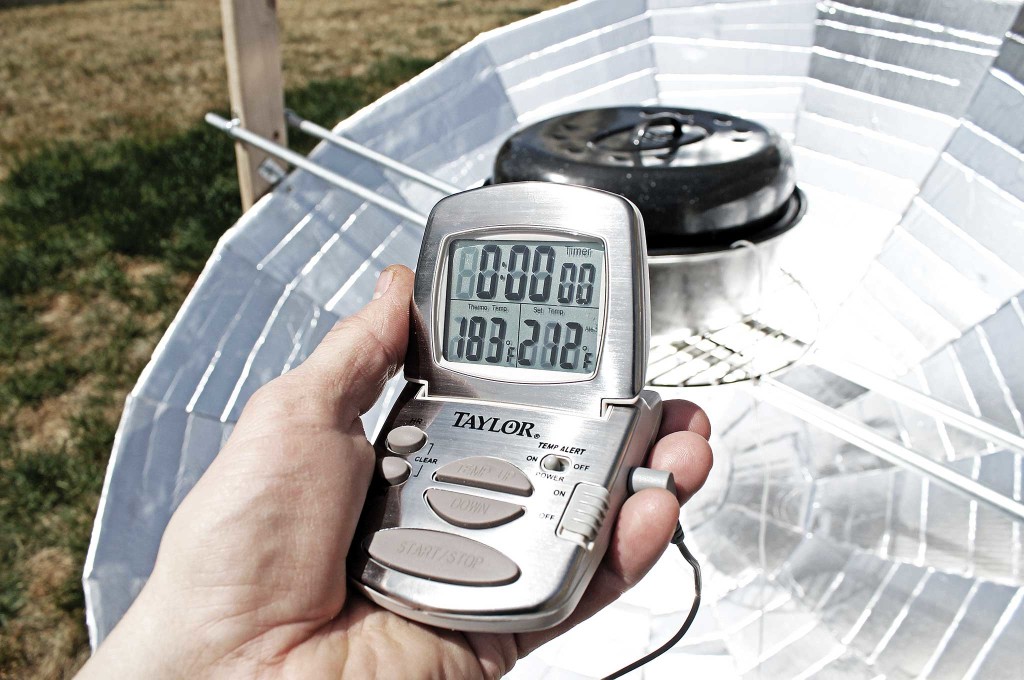
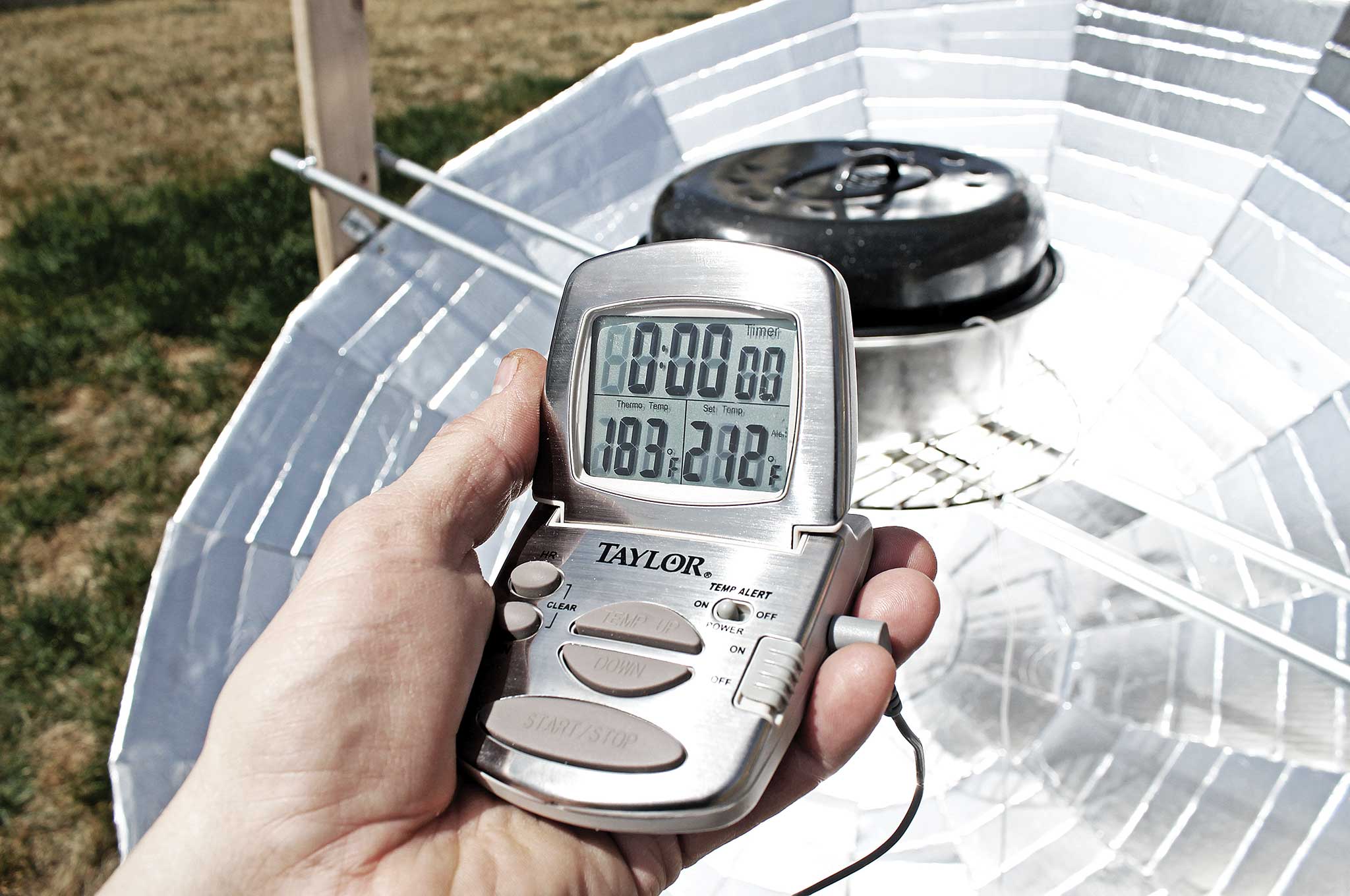
The DIY solar cooker got one gallon of water in this roasting pan up to 183 degrees Fahrenheit in just over an hour — plenty hot to effectively pasteurize it.
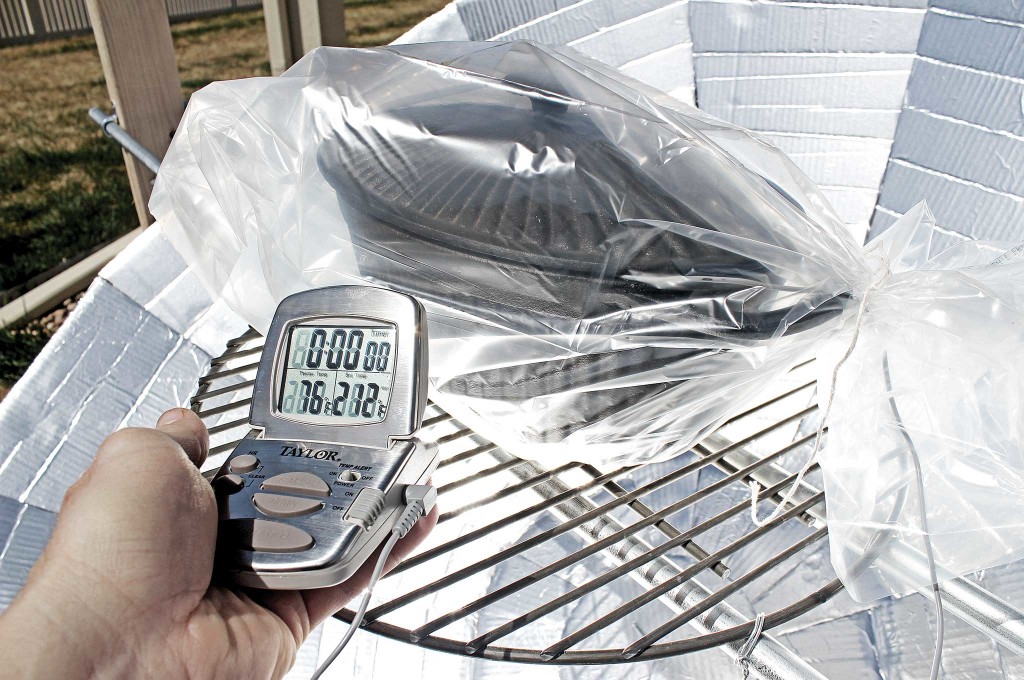
The start of cooking rice in a Dutch oven, sealed inside a roasting bag to maximize the greenhouse effect.
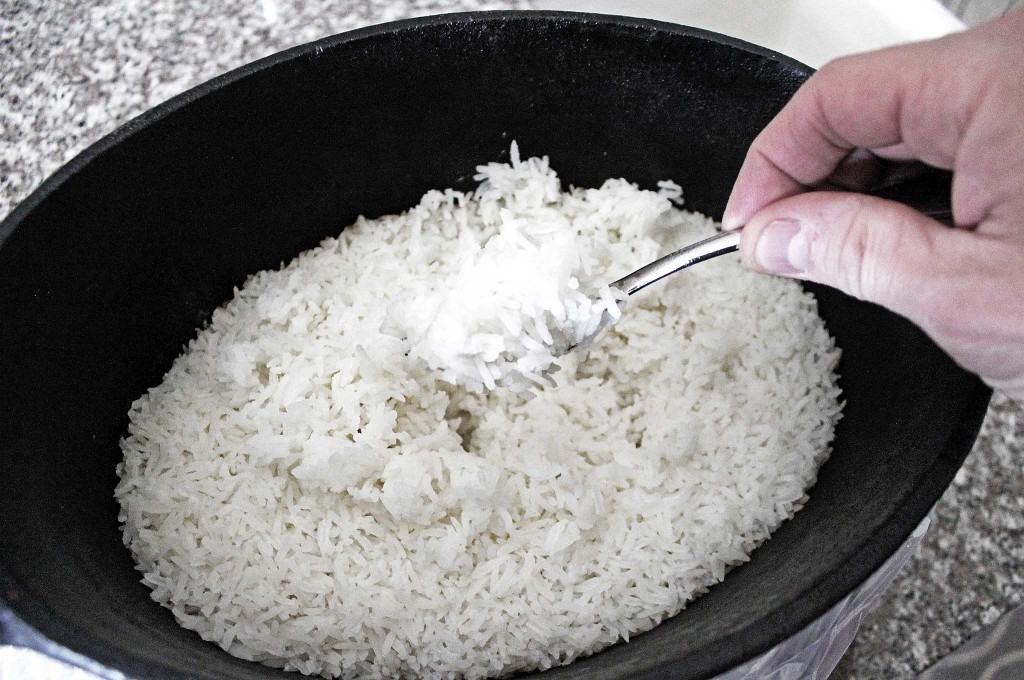
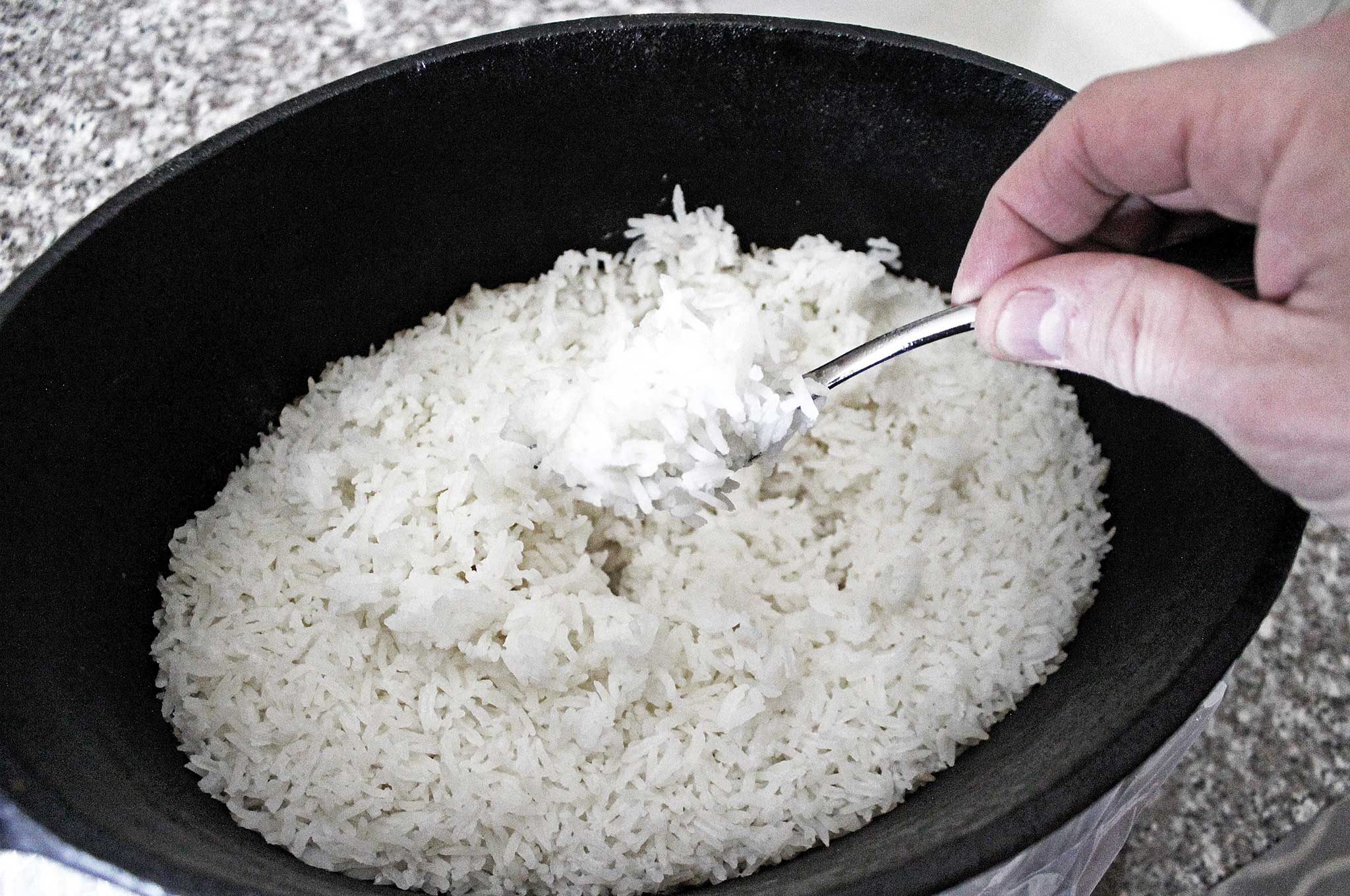
In just over an hour, the rice is perfectly cooked.
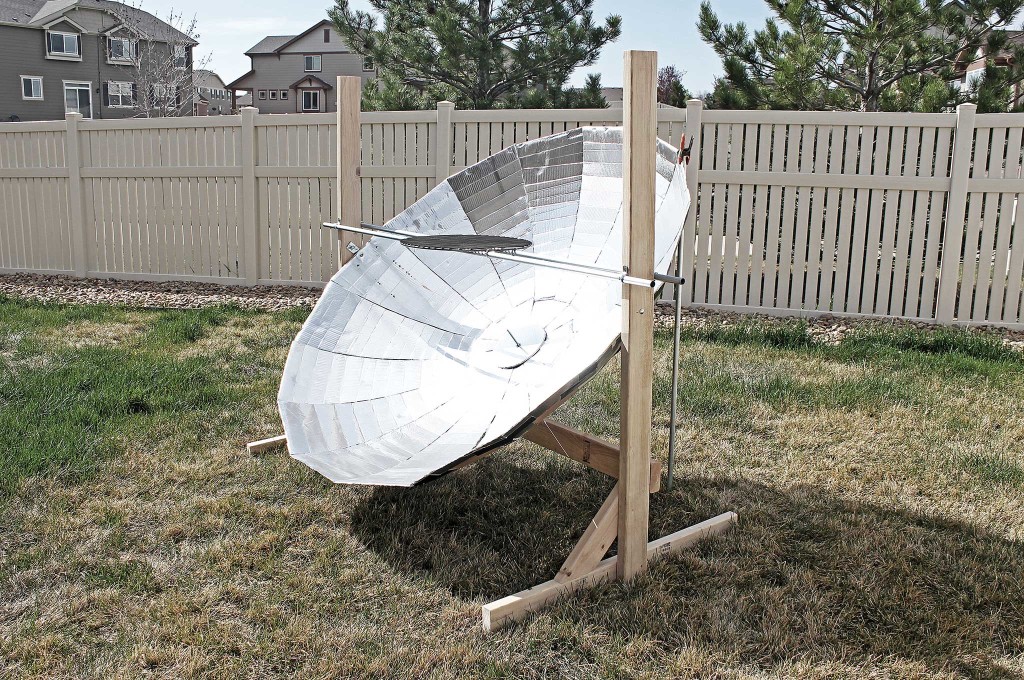
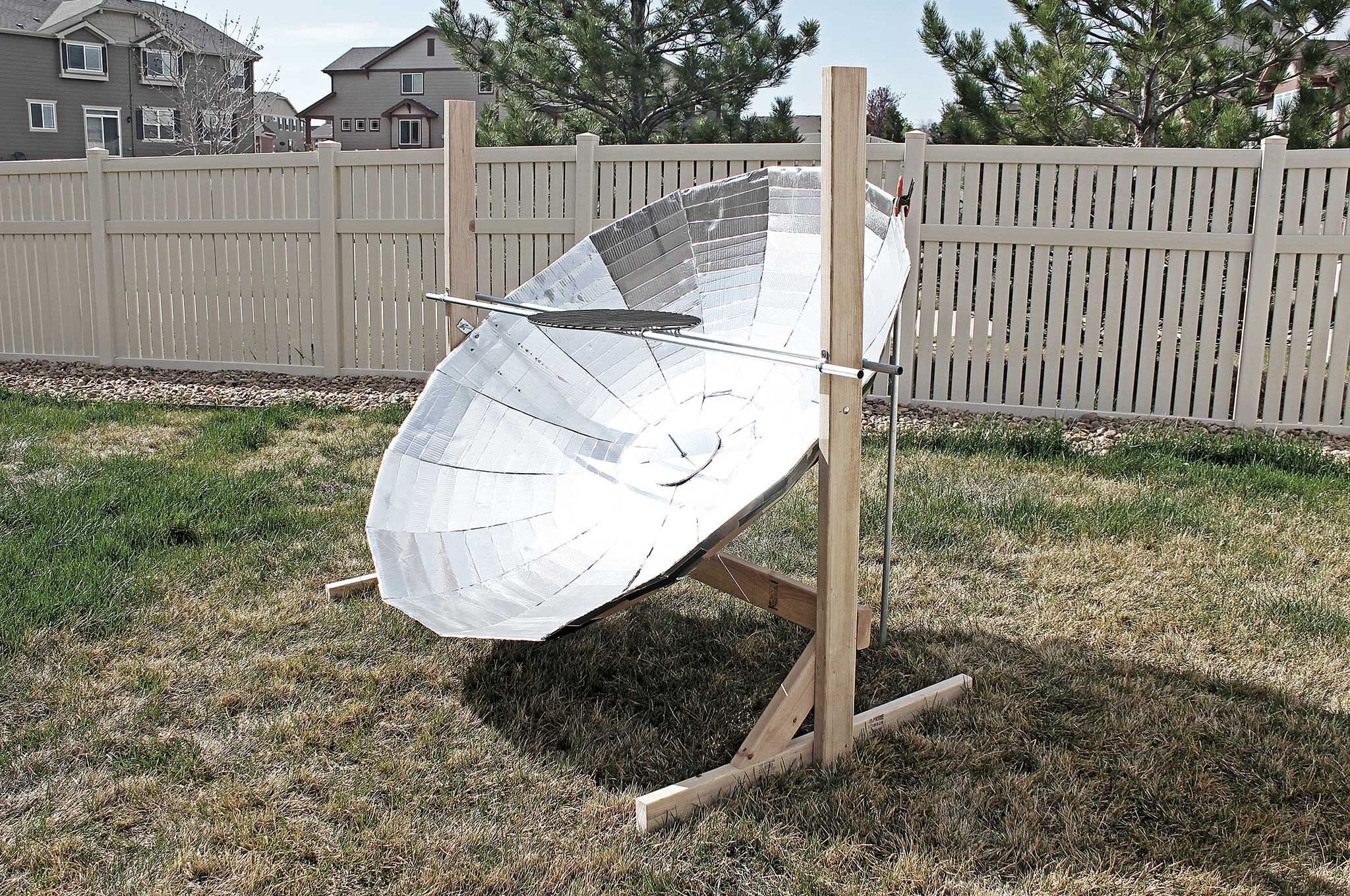
The finished parabolic solar cooker.
Solar Cooker Performance
You’re hungry and it’s sunny outside — so what exactly happens next?
To answer that question, I tested the solar cooker in mid-April in Colorado. The ambient air temperature was 62 degrees F, and it was a mostly sunny day. I put 2 cups of white rice and four cups of tap water in a cast-iron Dutch oven, put the oven in a plastic roasting bag (the big turkey-sized kind), stuck a thermometer in it, and put it on the cooker.
The tap water started out at 76 degrees F. In 20 minutes, it was up to 150 degrees, and in 40 minutes it was at 170. Just shy of an hour after the cooking started, the temperature inside the Dutch oven hit a max of 204 degrees, and the bag was filled with steam and condensed water. When the steaming stopped at about 65 minutes, I carefully took it off the grate and opened it up. The rice was perfectly cooked and delicious.
To evaluate its potential for pasteurizing water, I put a gallon of water in a roasting pan, realigned the cooker, and put it to work. It took about 70 minutes for the water to go from 74 degrees to the 149 degrees needed for pasteurization, and it maxed out at a respectable 183 degrees after about two hours.
Direct cooking using a cast-iron frying pan was also successful.
While definitely slower than flame-based cooking methods, it still managed to cook bacon to that delightfully crispy state. And when you’ve got crisp bacon, who cares if civilization is collapsing?
About the Author
Michael Janich is a U.S. Army veteran and a former intelligence officer for the Defense Intelligence Agency. As a POW/MIA investigation team leader, he worked in remote areas of Vietnam and Laos and has extensive experience making do with limited resources. An avid prepper, he was also the co-host of The Best Defense: Survival!, a TV show on the Outdoor Channel. Janich is also the founder of Martial Blade Concepts.
www.martialbladeconcepts.com
More From Issue 21
Don’t miss essential survival insights—sign up for Recoil Offgrid’s free newsletter today!
Read articles from the next issue of Recoil Offgrid: Issue 22
Read articles from the previous issue of Recoil Offgrid: Issue 20
Check out our other publications on the web: Recoil | Gun Digest | Blade | RecoilTV | RECOILtv (YouTube)
Editor’s Note: This article has been modified from its original version for the web.