Home Blog Page 135

Review: Streamlight ProTac HPL USB

0

Flashlights are arguably one of the most important tools to have in your bug-out toolbox. We have previously discussed the importance of keeping a working flashlight with you for survival at night. We have also tested plenty of flashlights over the years, and found that the power source is a critical point for all of them. Some offer rechargeable solutions, others need their batteries replaced, but what about a light that can use both? Dead batteries can be a major source of frustration, or even put you in danger depending on the circumstances.

We recently picked up one of Streamlight’s newest flashlights, the ProTac HPL USB. This light’s dual-fuel feature can solve the dilemma of either being unable to recharge your flashlight or unable to find disposable replacement batteries in an emergency.

Streamlight HPL USB flashlight review LED light edc tool survival 8

Streamlight has been one of the leaders in the rechargeable flashlight industry for decades, and is responsible for a huge variety of consumer and industrial lighting products. Their Stinger line is popular with military and police forces worldwide. The ProTac series of lights was developed to maximize performance and reliability in a single package. With four modes, multiple power sources, and a tough aluminum body, the Streamlight ProTac HPL USB is worth considering if you’re looking for a new torch for everyday use or your bug out bag.

Overview

The HPL USB is a fully-loaded flashlight offering an extremely bright 1,000-lumen light in a medium sized package that is a solid choice for most situations we came across. At just over 9 ounces in weight and 7 inches long, it’s not unwieldy or overwhelmingly heavy for pocket carry. The head features a triple-sided anti-roll ring to keep the light right where you set it. The body has a crosshatched knurl that helps you hold the light even with wet hands. The backside features Streamlight’s signature multi-function Ten-Tap power button. The light comes with a lithium ion rechargeable battery, USB charging cable, removable pocket clip, and nylon pouch.

Streamlight HPL USB flashlight review LED light edc tool survival 13

Water and drop resistance come standard with the HPL USB making this a good all-around flashlight. All of the openings are sealed with lubricated O-rings to prevent water from infiltrating. The light also features a lifetime warranty, so if it were to stop working, Streamlight will take care of you. While Streamlight flashlights are not generally at the low end of the price spectrum, the HPL USB is quite reasonably priced for the features you get. The base light package seen here retails for less than $100 at major online and local retailers nationwide. Let’s take a look at some of the features of this new flashlight.

Features

Streamlight HPL USB flashlight review LED light edc tool survival 15

As mentioned before, the light features four modes. These are accessed via single, double, or triple taps of the end cap button. They include high, medium, low, and strobe. The light comes out of the box with modes set to high, strobe, and low — accessed in that order. However, this light also features Streamlight’s proprietary Ten-Tap Programming. This allows the user to select one of several mode/activation order presets. By lightly pressing the button nine times and holding on the 10th, the light will change to high power only. Following this procedure again, the light will change to low, medium, and high power modes in that order. Reprogramming one more time will return it to the default setting.

Streamlight HPL USB flashlight review LED light edc tool survival 6

This programming is nice, but a few more programming sets would be beneficial. It’s worth noting that there’s no way to access medium mode and strobe in the same programming set — we wish there was a quick way to cycle through high-medium-low-strobe without going through the Ten-Tap procedure. Also, many other lights on the market offer SOS mode, timed auto-off function, or even a dimming mode to precisely set how bright the light shines. The addition of some of these options would add even more versatility to this light.

Streamlight HPL USB flashlight review LED light edc tool survival 12

The belt clip is solid and a nice touch. In testing, the light felt secure on a belt and in our pockets. Admittedly, it’s a bit large as a pocket light, so the removable clip is a cool feature. One drawback we noticed is that removing the clip scratched the black anodized coating off the light, which was kind of a bummer.

Streamlight HPL USB flashlight review LED light edc tool survival 10

Another useful feature of the Streamlight HPL is the ability to power the light via multiple fuel sources. The flashlight comes standard with a rechargeable Li-ion battery and USB charging cable. The charging port is located under a sliding collar on the body of the light. If for some reason you don’t have access to a USB charger, the flashlight will also function using a pair of standard CR123A batteries or a single 18650 Li-ion battery. A safety feature built in to the light prevents it from charging anything other than the included rechargeable Li-ion battery, so there’s no need to worry about causing damage by accidentally trying to recharge disposable batteries.

When charging the flashlight, a small LED next to the USB port lights up red, then green once the light is fully charged. This takes approximately 7 hours from a totally dead battery. According to Streamlight’s website, the HPL USB will run for 1.5 hours on high, 3 hours on medium, and 20 hours on low. One thing to note is there is no end of run time notification with this light, it will simply turn off. It would be nice to have the charging light next to the USB port glow green, yellow, and red or at least flash to indicate the charge level of the light.

Illumination

Streamlight HPL USB flashlight review LED light edc tool survival 18
High output (1,000 lumens)

Like other popular Streamlights, the beam on the HPL USB is powerful. In fact, it is 1,000 lumens with a 1,200-foot beam distance in its highest setting. In medium it is roughly half that, with 400 lumens and a 770-foot beam distance. And in its lowest setting, it is 65 lumens with a 300-foot beam distance. So while it’s versatile with multiple fuel options, you can also provide as much light as needed for your current situation.

Streamlight HPL USB flashlight review LED light edc tool survival 19
Low output (65 lumens)

As with most high-output flashlights, on the head of the light will get very warm if used for a long period of time at full blast. This is a common issue with most compact high-output flashlights, and until someone creates an LED that doesn’t produce heat, this will continue to be an issue.

Conclusion

Streamlight HPL USB flashlight review LED light edc tool survival 4

The Streamlight ProTac HPL USB is a solid flashlight with several useful features, durable construction, and a lifetime warranty. It’s also moderately-priced, making it a good value. If you are looking for a new well-rounded flashlight for day-to-day use, bug out situations, or just to put in your camper drawer for weekend excursions, the HPL USB is a good choice with useful features. Check out Streamlight.com for more info on this and all the other lighting products they offer.

Pros:

  • Bright light with long-distance beam
  • Ability to use multiple power sources
  • Multi-function modes with Ten Tap programming
  • Sub-$100 price won’t break the bank

Cons:

  • Long 7-hour recharge time
  • No end of life indicator
  • A bit on the heavy side for its size
  • Head gets hot with prolonged use

Infographic: Your Chances of Dying from Common Activities

0

The human mind is well-suited for many tasks, but weighing risk objectively isn’t always one of them. We often fear threats that are statistically unlikely — shark attacks or murderous clowns, for example — while blissfully assuming we’re safe during far more dangerous situations. It’s therefore wise to periodically reconsider the actual dangers of activities you participate in, and prepare for them accordingly.

bug-out-canoes-hornbeck-boats-new-tricks-010
Who would’ve thought this peaceful pastime has a higher fatality rate than skydiving? (Photo by Kevin Estela)

The following infographic from Best Health Degrees compares the mortality rates of various common activities. These are broken down into categories including Sports and Recreation, Mountain Sports, Transportation, and Parties and Games. Unsurprisingly, the risk of dropping dead due to the shock of losing a board game is extremely low, and the risk of dying while climbing Mt. Everest is extremely high. But there are some other activities that might surprise you — we wouldn’t have thought that mountain hiking is 6 times more dangerous than skydiving, or that bungee jumping is 50 times safer than canoeing.

Check out the infographic below or click here to download a full-size version.

Infographic chances of dying danger risk survival shtf sports 2Infographic chances of dying danger risk survival shtf sports 3Infographic chances of dying danger risk survival shtf sports 4Infographic chances of dying danger risk survival shtf sports 5


Video: Pan Frying Rattlesnake

0

Hunting for survival is all about knowing your environment and maximizing your food resources based on that knowledge. Of course the ideal scenario would be to take a full-size deer or elk that can sustain your whole family, but in reality, the availability of bigger game meat may be sporadic. You’ll need to be prepared to supplement it with fish and smaller game — birds, squirrels, and even reptiles. In the deserts of the southwest, snakes can be an excellent source of calories, and when cooked properly, they can taste great too.

Bob Hansler pan fried rattlesnake campfire cooking skillet hunting survival food 3

In the following video, survival instructor Bob Hansler shows how he cooks a rattlesnake in a cast iron pan over a campfire. As he notes at the start of the video, this isn’t a pure survival recipe since it uses a few perishable ingredients, but it requires minimal prep and is still simple enough to be accomplished with only basic kitchen staples. All you’ll need to pan fry a snake is oil, some eggs, a splash of milk, cornmeal, and salt and pepper.

Bob Hansler pan fried rattlesnake campfire cooking skillet hunting survival food 2

Check out the full video below. If you watch to the end, Bob also shares some interesting facts about the size of a rattlesnake’s rattle — some believe that the rattle size indicates a snake’s age in years, but it actually has to do with the number of times it has molted, which can occur more than once a year based on weather conditions and other factors.

If you want to learn how to kill and skin a rattlesnake, check out Bob’s older video here.

Looking Back: The Tactical Games

0

At first mention, the term “tactical games” might evoke thoughts of teenagers screaming at each other over the internet while playing the latest Call of Duty video game. But the event known as The Tactical Games is the polar opposite of this couch potato pastime — it pits competitors head-to-head in challenges of physical strength, endurance, and versatile shooting skills. The organizers call it “Crossfit meets combat” and “the world’s premier competition to find the Most Dangerous Man/Woman on Earth”.

The Tactical Games RECOILtv shooting competition guns fitness survival preparedness 4

The Tactical Games was originally based on a secret event hosted and run by NATO Tier 1 units such as Delta Force and Naval Special Warfare. The competition is designed to test the shooting abilities, physical fitness, adaptability, and mental toughness of the individuals who compete.

The Tactical Games RECOILtv shooting competition guns fitness survival preparedness 2

This differs from traditional shooting competitions, which may only focus on one or two of these dimensions. As the event’s web site states, “It is one thing to shoot a target with a pistol at 50 yards. It is quite different and exponentially more difficult to shoot a target with a pistol at 50 yards after running a mile, dragging a 200lb mannequin for a distance, hopping over obstacles, and then shooting accurately with a heart rate over 150 beats per minute.” As preparedness-minded individuals, we appreciate this realistic approach to testing combat skills.

Fighting for your life in a combat situation is exhausting, and so was this competition.
Fighting for your life in a combat situation is exhausting, and the competition simulated this high level of exertion.

Our colleagues at RECOILtv partnered with Brownells and sent a film crew to cover the most recent event in North Carolina. The resulting short documentary recaps the event and some of its competitors:

Reach New Heights with Climbing Strength Training

0

Most people underestimate the importance of being able to overcome obstacles — and we’re not talking about the Tony Robbins kind. We mean real-life barriers that could separate life from death. Could you pull yourself up onto a plateau to avoid falling into a canyon? Can you even do a single pull-up?

No matter what’s thrown your way, we’ll help make sure you can get out alive.

Climbing Prerequisites

While it’s not necessary to be as good as a pro, climbing proficiency is extremely important. It’s not just hopping a fence before a rabid dog gets a taste of prepper meat — broken-down buildings or even smaller rock formations may stand between you and safety. Your confidence in not only getting yourself (plus gear) up and over, but also your ability to get the rest of your group to safety is crucial.

We’ll delve into the training it takes to become a well-rounded climber, but let’s first discuss what type of physical attributes you’ll need.

General Strength: Making your entire body stronger will make a tremendous difference in growing your Spider-Man-like abilities. Climbing certainly requires a good amount of technical prowess, but technique isn’t a substitute for endurance. And the road to endurance is fitness; the foundation upon which your training efforts should be built.

Conditioning: It may not seem obvious, but climbing requires a great amount of endurance. If you’ve ever gone wall- or rock-climbing, you’ve certainly felt what this is like. Now, we’re not training you to be a professional climber by any means, but building a solid aerobic base will also allow you to recover better from training, reduce stress, and give you some cross-training options.
We’ll tackle endurance training a little differently than most. When people think of cardio, they think about running. This can be an option, but there are other effective ways of training the aerobic system for climbing, which we’ll cover in more detail later.

Grip & Finger Strength: This is possibly the most critical factor in climbing performance, especially when climbing for extended periods of time. There have been a few articles on the topic of grip strength in our sister publication, RECOIL, but we’ll include a refresher to make sure you’re doing the right things to get stronger.

Core Stability & Strength: The core, which, for our purposes, will include the musculature from your shoulders to your butt and everything in between, not only stabilizes your spine, but also allows force to transfer between your upper and lower body. This is an absolute necessity in any sport or physical endeavor.

Bouldering & Climbing: To be better at climbing, you need to do more climbing. In exercise science, there’s the SAID principle, which stands for “specific adaptations to imposed demands.” This means whenever you place any type of stress on your body, such as climbing, you’ll adapt to that demand. We need climbing to be in your program somewhere so you’re better able to climb, for longer periods of time without prematurely fatiguing. Bouldering is a form of highly technical, low-risk free climbing that’s an excellent skill, strength builder, and an excellent adaptation of the SAID principle.

Climbing Requisites

Next, we put together a program of seven key strength exercises that really push you to that next level of climbing.

Dumbbell Rear-Foot-Elevated Split Squat

RFESS 1.jpg

  1. Begin with a dumbbell in each hand, with one leg supported behind you on a bench or similar-height object.
  2. Slowly descend to the bottom position with about 70 percent of your weight on your front foot. You should feel your whole foot in contact with the ground.
  3. Drive your front foot through the floor to return to the starting position.
  4. Complete for the listed amount of sets and reps on each leg. (More on this later in the article.)

Tactical Pull-Up

PullUp3.jpg

  1. Begin in a dead-hang under a bar, tree branch, or anything else you can get your hands on. This exercise differs from a traditional pull-up by placing your thumb right next to your hand. (Fat Gripz is optional.)
  2. Firmly grip the bar, slightly round your torso, and feel your abs brace you in the front.
  3. Drive your elbows down to your sides, and bring your chest to the bar.
  4. Slowly return to the starting position.
  5. Complete for the listed amount of sets and reps.

One-Arm Low Cable Row

Row8.jpg

1. Start by sliding the pulley of a cable machine down to the lowest setting.
2. Firmly grip the handle (thick handle or Fat Gripz) in one hand.
3. Bring your opposite foot forward and your other leg back behind you with a slight bend. Your chest should face the pulley.
4. Holding this split-stance position, drive your elbow back and down until your elbow is about in-line with your torso.
5. Slowly return to the starting position.
6. Complete the prescribed sets and reps on each side.

Push-Up to Downward Dog

PushUp 1.jpg

  1. Begin in a push-up position.
  2. Slowly lower your body, keeping your elbows at about 45 degrees to your body, chin back, and hips in-line with your shoulders and ankles.
  3. Once you reach the bottom, drive your hips to the ceiling into a downward dog position and reach as far as you can. Take one breath, in through the nose and out through the mouth.
  4. Return to the starting position.
  5. Complete for the prescribed sets and reps.

Plank With Plate Stack

PlateStack 1.jpg

  1. Begin in a plank position with your feet wider than hip width, with a stack of four 5-pound weight plates to your left.
  2. Reach your right hand across, grab a plate, and place it to the right side. Repeat this until you have a pile on the right side.
  3. Repeat this again with your other arm until you have a stack back on the left side.
  4. Do this one more time on each side.
  5. Repeat for the prescribed amount of sets.

Standing Anti-Rotation Cable Chop

Chop1.jpg

  1. Begin in a standing position with your feet just outside shoulder width and a double overhand grip on a rope attachment.
  2. eeping the rope at shoulder-height and your elbows straight, bring the attachment across your body. Only your arms, shoulders, and upper back should move.
  3. Slowly return back to the starting position.
  4. Repeat for the prescribed sets and reps.

Kettlebell Cross Carry

Carry2.jpg

  1. Stand with a heavy kettlebell in one hand at your side. Place a lighter kettlebell in the opposite hand then hold overhead.
  2. Firmly grip both kettlebells, and walk for the sets and duration prescribed.

Climbing Conditioning

Our conditioning training centers on only two exercises: the hill sprint and the medicine ball circuit. Hill sprints are concentrically dominant, meaning you’re only under load during the pushing part of the motion and not the lowering, or eccentric. This has good carryover into climbing, which is also primarily concentric, as you’re usually pushing yourself upward. The medicine ball circuit is a great way to build endurance in the muscles of your upper body, which will definitely be required to climb for any length of time.

Hill Sprint

HillSprint4.jpg

  1. Find a hill that will allow roughly 10 seconds of sprint time.
  2. Sprint up as fast as you can.
  3. Rest for 30 to 45 seconds. This may just be the time it takes to walk back down slowly.
  4. Repeat for the prescribed amount of repetitions.

Medicine Ball Circuit


  1. Hold a medicine ball at your chest, bring it over your head, and slam it down to the ground.
  2. Repeat 10 times.
  3. Next, bring it to your chest, squat down, and explosively push it overhead.
  4. Repeat 10 times.
  5. Standing next to a wall, hold the ball by the hip opposite the wall, put your weight into your back foot, pivot, and throw the ball into the wall.
  6. Repeat 10 times on each side.
  7. Rest for 45 to 60 seconds and repeat for the recommended amount of sets.

Climbing strength training exercise workout lifting hiking survival 1

Conclusion

There’s tremendous peace of mind in knowing you can handle anything that you might encounter. Proficiency in climbing is yet another physical skill that you need to master for the road ahead. Follow the prescribed plan, and you’ll be well on your way to scaling anything that gets thrown in your way.

About the Author

Ryne Gioviano is the owner of Achieve Personal Training & Lifestyle Design located in Aurora, Illinois. He earned his master’s degree in exercise physiology and is certified through the National Strength and Conditioning Association. You can find more information at www.achieve-personaltraining.com or reach him on Twitter at @RGioviano.

More From Issue 16

Don’t miss essential survival insights—sign up for Recoil Offgrid’s free newsletter today.

Read articles from the next issue of Recoil Offgrid: Issue 17

Read articles from the previous issue of Recoil Offgrid: Issue 15

Check out our other publications on the web: Recoil | Gun Digest | Blade | RecoilTV | RECOILtv (YouTube)

Editor’s Note: This article has been modified from its original print version for the web.

Insulated Gloves & Mittens Guide – [N]ICE And Warm

0

In normal situations, cold hands mean it’s time to head in and warm up. But, when creature comfort isn’t available, cold hands can signal the beginning of dire circumstances.

Why do our hands get cold so easily? Like ear tips and feet, there’s much less fatty tissue in hands than the rest of the body. The blood vessels in our hands are also very close to the surface. So, blood circulating through the vessels in the back of the hand conducts heat away from the body instead of warming a layer of insulating, fatty tissue.

Combine easy heat loss with the high density of nerves in our hands, and it becomes clear why cold hands are painful; and painful hands lead to problems.

Lead guide for EXUM Mountain Guides, Brenton Reagan leads multiday technical winter mountaineering trips in the Teton mountain range. He’s been guiding since 2001 and has seen how a simple thing, such as cold hands, can initiate a series of cascading events that could lead to disaster.

pile-of-gloves

“Cold hands reduce the safety margin in everything we do in the mountains,” he says. “Closing locking carabineers, tying knots, properly securing gear … these are all easy things that become difficult with numb hands.”

Aside from hindering dexterity, Reagan warns cold hands lead to distracted performance, frustration, and, ultimately, they can compromise one’s ability to make smart and safe decisions.

The Best Defense

The best defense against cold hands is handwear that never has to come off, says Reagan. “Every time you have to take a glove off to do something in the snow,” says Reagan, “you’re making it harder to rewarm your hands.”

Finding handwear that can keep your hands warm isn’t so hard. But, finding gloves or mittens that provide just enough warmth while offering the dexterity needed to manipulate the tools or objects you’ll encounter in the cold is the trick. We spoke with Ben Martin, the handwear product developer at Black Diamond Equipment to find out how an expert looks at all the choices and trade-offs when it comes to handwear.

Gloves vs. Mitts

Your first decision is glove or mitten. There’s no controversy when it comes to warmth. Mittens win. Hands down. Martin says combining your fingers into one mass of mutually warming blood vessels instead of separating them in the fingers of a glove is the most efficient way to retain heat.

But, gloves are the only way to go if you’re working with tools. There are a couple of alternatives if you want more warmth, but still need to use your fingers. Glove liners inside a pair of mittens are a viable option if pulling your lightly insulated hands out of mittens for brief periods is practical. Finger mitts are another option. These are mittens with a separate trigger finger allowing you to use the thumb and index finger, but retreat to a balled-up fist when things get tingly.

Some mitts have inner gloves that separate your fingers. This might reduce thermal efficiency a bit, but it adds dexterity. The fingerways help the glove move with your fingers, so when you’re making a fist in one of these mitts the finger end moves more easily; whereas, in a regular mitt, you can ball up your fingers (or give someone the bird) and the shell will remain unmoved.

Whether gloves or mitts, long gauntlet handwear provides more warmth and easier donning on doffing. On the other hand (can you believe we waited this long to use that pun?) big gauntlets takes up more room in a pack, add a little weight and act as water funnels, catching the runoff from your arms during any hands-down activity.

Fit

Goldilocks is the rule, here. Too big and you’ve got no dexterity, not to mention your handwear could fall off. Go too tight and you’re restricting your hand’s range of motion while crushing the insulation, which compromises its ability to loft and contain warm air.

Martin says panels sewn to fit the shape of an anticipated posture, also called articulation, contributes to the fit of handwear. “With prebent fingers there’s less material to move when using your hands,” says Martin, “and articulation also helps a glove last longer by taking the stress off of areas that are naturally, and constantly, articulated during normal wear and use.” Gloves with straight fingers will always have material bunched up under the front side of the knuckle and palm. That material creases and wears while getting in the way of efficient movement.

Seams

Martin says to check out the seams in the fingertips of gloves. The way they’re sewn plays a role in the comfort and dexterity a glove affords. Big seams that extend all the way to the fingertip leave a bunch of material clogging up the tip of the finger, inhibiting touch and compressing insulation. It’s similar to a big, nasty, annoying seam at the end of a sock, except instead of one, you’ve got five in a glove, one in a mitten and two in a finger mitt.
Waterproofing

Dry hands are warm hands. And, sweat counts as much as snow and rain in this consideration. Martin reminds us that handwear that’s too warm for a given environment will eventually wet out from sweat and cause cold hands. The same goes for handwear that doesn’t breathe. Trash bags on your hands might keep them dry from rain, but they’ll be soaked on the inside from sweat and freezing in no time.

Technical fabrics, such as Gore-Tex, OutDry, and eVent are effective for moving humid air and sweat away from the body where they will chill you, but these branded fabrics add to the price of handwear. Other ways to keep your hands dry include silicone impregnation and waxed finishes on leather and natural fabrics.

Shells

The outer or shell of a glove has to be durable, pliable, and provide a good gripping surface. Nothing will feel better than a broken-in leather glove or mitt. Leather is also more durable than nearly any fabric because it’s not made of yarns that can pull or break. It also kicks ass when it comes to gripping things. It falls down when it comes to water resistance, though. Waterlogged leather is about as bad as it gets. Leather can be treated for waterproofness, though. The downside is that nearly all leather treatments have to be reapplied.

Martin explains that all leather is not equal. He says cowhide is the least supple of leathers. It also gets crunchy and shrinks when it dries after it’s wetted out. Goat leather has naturally occurring lanolin, making it more supple, stronger, and better at dealing with moisture than cow leather. It’s also thinner. Kangaroo hide is very thin and very strong, but it’s very expensive and usually only used in gloves where feel is paramount, say in a purpose-built driving, golfing, or shooting glove.

Nylon shells are lighter than leather, take up less room in a pack, and don’t absorb nearly as much water. But without the addition of grippy material on the palm and finger pads, you’re never going to hold anything securely.

Insulation

We can divide insulations into high-loft and low-loft varieties. Down and Primaloft, respectively, are examples of natural and synthetic high-loft insulations. Wool and Polartec fleece are examples of low-loft natural and synthetic insulations.
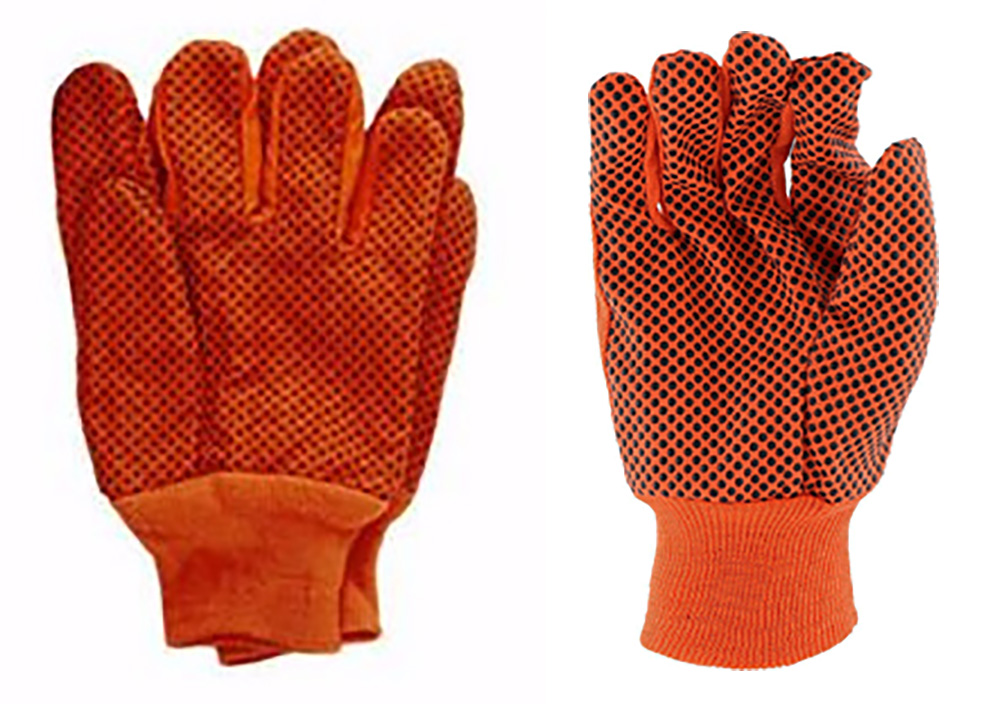

High-loft insulation is great on the back of the hand, but it doesn’t work in the palm. It doesn’t insulate when it’s compressed, and it adds bulk between your hand and whatever you’re gripping. Low-loft insulation in the palm and fingers retains less warmth, but has less of an effect on dexterity. Look for handwear with insulation in places that make sense for your use.

Natural down is the gold standard when it comes to high-loft insulation. Nothing is warmer for its weight, but it’s expensive, ineffective when wet, and its slippery and superfine nature make it difficult to retain in fabric shells. Down treated with silicone and other modifiers help it maintain its loft when wet, but the coatings reduce down’s thermal effectiveness, and they wear off over time.

High-loft synthetics create air spaces that trap air using a wild matrix of polyester fibers to create a lofty structure. They insulate nearly as well as down, cost less, and aren’t compromised by moisture.

Low-loft insulations use finer fibers to create tighter air-trapping structures than high-lofting materials. Low loft doesn’t provide as much warmth as high loft, but its density offers warmth with less bulk.

Material Mapping

None of the materials on their own are a silver bullet solution for keeping your hands warm and dry. Good handwear combines materials to provide the best compromise between protection and dexterity for the area of the hand it’s on. Things to look for: Leather palms or textured panels for good grip; reinforcement panels in high wear areas; high-loft insulation on the back of the hand; thin, non-shearing insulation in the palm; gauntlets that seal the handwear effectively, retain heat, and repel water without getting in the way.

Simple Metrics

We did some informal heat retention testing of all the handwear in this guide to get a baseline for comparison. We put a solid hunk of oven-hardened, room-temperature clay, roughly the size of a baby’s fist in each piece of handwear and put them all in a 0 degree F freezer, taking temperature readings at 20 and 60 minutes. This gave us an idea how much heat each piece gave up and how quickly. Keep in mind this is only one highly artificial metric, and it doesn’t reflect the handwear’s ability to handle snow, rain, or wind. But it does help us sort the gloves in terms of pure insulating value.

We did find something interesting in the freezer test. When evaluating the insulating abilities of the Mammut Cover Mitten, an uninsulated fabric cover meant to bless any handwear with wind and water-resistant properties, we were surprised to find it added 30 degrees of warmth on its own. This tells us that wrapping your hands in dead leaves or sandwich bags may help stave off frostbite in a dire situation.

Final Thoughts

All of the considerations mentioned above affect the cost of a glove, and glove prices are all over the place. Time spent cutting, sewing, and sealing seams is a primary driver in the cost of a glove. Highly articulated forms mean more fabric panels, and more panels mean more seams to stitch and seal. Also, consider insulating ability as the primary, but not the only factor that determines how well a given set of handwear will work for you.

Whether an emergency forces you into a great white expanse, you’re working or playing out in the cold, or you’re just looking for something to keep your hands warm while scraping the ice off your windshield, there are a ton of great options. We’ve gathered an array of gloves and mittens that we’d consider getting a hold of.

[buyersguide title=”A Guide To Keeping Cold at Arm’s Length” ids=”5443, 5444, 5445, 5446, 5447, 5462, 5463, 5464, 5465, 5466, 5483, 5484, 5485, 5486, 5487″]

More From Issue 12

Don’t miss essential survival insights—sign up for Recoil Offgrid’s free newsletter today.

Read articles from the next issue of Recoil Offgrid: Issue 13

Read articles from the previous issue of Recoil Offgrid: Issue 11

Editor’s Note: This article has been modified from its original print version for the web.

Discovery’s “Master of Arms”

0

Forged in Fire is one of our favorite TV shows, so when we heard that Discovery was starting its own series along the same lines, it caught our interest. This new show is known as Master of Arms, and it airs on Fridays at 10pm. Episode 1 premiered last week on November 2nd.

Master of Arms Discovery channel reality tv show weapon knife blade gun bow competition 2

Every episode, three contestants compete for a $10,000 prize. Rather than tasking them with only making edged weapons, Master of Arms covers blades as well as ballistic weapons — guns, bows, and the like. The episode begins with a Quick-Draw Challenge where one contestant is eliminated, then moves on to a second and more difficult round to eliminate the second competitor and determine the winner.

Master of Arms Discovery channel reality tv show weapon knife blade gun bow competition 3
Judges Ashley, Zeke, and Trent observing contestants. Photo courtesy of Discovery Channel.

Weapons are tested by a marksman, and then judged by three weapons experts. You may recognize one of these experts, Ashley Hlebinsky, from our own RECOILtv series. The judges consider each weapon’s design, historical accuracy, and abilities before making their decision.

Master of Arms Discovery channel reality tv show weapon knife blade gun bow competition 1
Photo courtesy of Discovery Channel.

If you missed the Episode 1 premier, we have good news — you can watch it now for free on Discovery.com: www.discovery.com/tv-shows/master-of-arms/full-episodes/flintlock-axe-pistol

Review: RAVPower 25,000mAh Solar Power Bank

0

We’ve often heard back-and-forth discussion in the survivalist community about the true meaning of going off-the-grid. Many will say that the term means immediately abandoning all electronic devices. We can understand this sentiment, since a worst-case off-grid situation would leave you completely and permanently disconnected from modern infrastructure. That means no internet, no cell signal, no GPS, no radio or TV reception, and no access to electricity at all.

Although this is possible and certainly something you should be ready for, bear in mind that this definition is a worst-case scenario. It’s much more likely that your off-grid situation will only affect some of these modern conveniences, and will only result in a temporary lapse in service. Maybe you’re hiking in a remote location and find that you’re out of range from cell towers, or maybe a severe storm leads to a city-wide blackout. In any of these intermediate cases, you won’t want to ditch your cell phone, GPS unit, or LED headlamp — instead, you’ll need to keep them going for the hours, days, or weeks until your situation improves and their functionality returns.

Streamlight HPL USB flashlight review LED light edc tool survival 18
Without a flashlight, your ability to navigate or work at night will be severely limited.

A USB power bank is one of the most valuable assets for the task of keeping your small electronics running without direct grid access. Much like a stockpile of food to maintain your physical strength or a reserve fuel tank to keep your vehicle running, a power bank provides an instant backup electricity source. This is especially helpful given the prevalence of USB-rechargeable devices. These days, it’s easy to run all the electronics in your get-home bag on this universal system with the aid of a few different cables.

The Solar Advantage

Flickr.com/sworldguy

A good power bank provides a short-term source of juice, but like any other battery it’s bound to run out eventually. When charging from a wall outlet or a vehicle’s 12V socket isn’t an option, supplementing your power bank with a solar panel is a wise choice. With a solar panel, you can recharge your devices from the battery, and recharge the battery from the sun. Now your temporary backup just became a long-term solution.

Admittedly, the most effective solar panels are huge, expensive, and sensitive to weather conditions, and even these are unlikely to recharge your power bank as fast as a wall outlet or car charger. Smaller portable panels offer lighter weight and more durability, but they’ll require several days of full sun to recharge a power bank. Solar isn’t always the most convenient power source, but if it’s the only one you’ve got, you’ll definitely be glad to have it. This is why we always make a point to have some type of lightweight solar panel in our bug-out and camping gear loadouts.

RAVPower 25,000mAh Solar Power Bank

RAVpower 25000mAh outdoor solar power bank usb charger electronics battery edc survival 7

We recently had the opportunity to test a power bank from RAVPower, namely the Exclusives 25,000mAh Solar Power Bank. This outdoor-oriented unit features a reasonable $50 retail price, and a huge capacity of 25,000 milliamp-hours (mAh). That’s enough to fully recharge these devices the following number of times:

  • iPhone 8 – 9.3 times
  • Samsung Galaxy S8 – 5.6 times
  • iPad Mini 4- 3.3 times
  • Nitecore HC65 headlamp – 7.4 times
  • Garmin InReach Explorer+ GPS unit – 8 times

So, if you head out into the woods with this power bank, you should be able to maintain your portable devices for a week or more of normal use.

RAVpower 25000mAh outdoor solar power bank usb charger electronics battery edc survival 10

The RAVPower 25,000mAh power bank also features an integrated 5-volt / 300 milliamp solar panel. It features a green LED indicator in the top left corner that lets you know when the panel is receiving sufficient sunlight. Under ideal conditions, RAVPower says the panel will replenish the 25,000mAh battery in 85 hours.

RAVpower 25000mAh outdoor solar power bank usb charger electronics battery edc survival 8

The solar panel is recessed and protected by the power bank’s rubberized case, which is impact-resistant and IP66 waterproof and dustproof. It also features indentations on the sides and ridged corners for added grip and impact protection. At the bottom of the case, there’s also a folding metal loop where an included carabiner can be used to attach the power bank to your backpack or other gear while the solar panel does its thing.

A total of four USB ports are located on the power bank:

  • Micro USB — input only
  • USB-C — input/output
  • 2x USB-A (full-size) — output only

RAVpower 25000mAh outdoor solar power bank usb charger electronics battery edc survival 3

The first two smaller USB ports are on the side of the case, while the other two full-size USB ports are on top. Both pairs are protected from the elements by rubber flaps, maintaining the waterproof/dustproof rating when they’re not in use. RAVPower designed the power bank with Quick Charge and iSmart compatibility, which deliver up to 3 amps to maximize the charging speed for compatible Android and Apple devices. It can also provide up to 5V/6.4A through the three output ports to charge three devices at full speed at the same time.

RAVpower 25000mAh outdoor solar power bank usb charger electronics battery edc survival 4

There’s another trick feature on this power bank’s input system that allows it to be charged through either the Micro USB port or the USB-C port, or through both simultaneously. This means you can push up to 4 amps of juice into the device by using two wall sockets and two 2A chargers (or one outlet with multiple 2A ports). The graphic below from RAVPower compares the recharging speed for all three of these options:

RAVpower 25000mAh outdoor solar power bank usb charger electronics battery edc survival 1

On the back side of the power bank, you’ll see the clearly-labeled on-off button as well as four blue LEDs. These LEDs indicate the battery level while the unit is being recharged, charging other devices, or if the user taps the power button.

RAVpower 25000mAh outdoor solar power bank usb charger electronics battery edc survival 6

Here’s a chart that shows how to interpret these readings as a precise battery level:

RAVpower 25000mAh outdoor solar power bank usb charger electronics battery edc survival 15

The last noteworthy feature of the power bank is its integrated LED flashlight. Pressing and holding the power button for 3 seconds activates the light, and additional short presses cycle between constant, slow flashing, and SOS modes. RAVPower doesn’t advertise an output rating for the light, but we’d estimate it’s around 100 lumens. The relatively-wide beam pattern makes it useful for map-reading and other up-close tasks.

Our Impressions

RAVpower 25000mAh outdoor solar power bank usb charger electronics battery edc survival 2

We carried the RAVPower 25,000mAh Solar Power Bank around in a pack with the rest of our EDC electronics kit. Our standard kit includes various USB cables as well as a 2.4A wall charger, a 12V cigarette lighter adapter, and a few other small items. Until we received the 25,000mAh power bank, we had been using a RAVPower 16,750mAh unit that served us well for several years.

Compared to the previous setup, our new power bank upgrades our battery capacity by 33%, and also adds valuable solar capabilities. The integrated flashlight is also much more useful with its larger lens and brighter output. Weight is a drawback, since its 19.4-ounce weight is nearly double that of our previous power bank.

RAVpower 25000mAh outdoor solar power bank usb charger electronics battery edc survival 5

We appreciate the clear LED charge indicators, both for the solar panel and the battery level. Finding full sunlight for the solar panel is easy, since the green LED dims smoothly depending on the quality of ambient light. If it’s shining brightly, you’re good to go. However, even in full sunlight, it recharges the battery slowly. In the bright Arizona desert with a cloudless sky, bringing the battery level from about 50% to 100% took more than 48 hours. But as we said earlier, when there’s no other power source, this solar panel could be a life-saver.

RAVpower 25000mAh outdoor solar power bank usb charger electronics battery edc survival 11

Charging small devices such as an iPhone is quick and easy, and the iSmart system produces optimal 2.4A current for replenishing these Apple products at full speed. Resurrecting a phone from a nearly-dead battery will barely put a dent in the 25,000mAh capacity. Android devices can receive as much as 3A, which is also ideal. We don’t currently have any devices with Qualcomm Quick Charge functionality, but it’s a nice option for those who do.

Although the power bank comes with two short Micro USB cables and a carabiner, a wall charger is not included. RAVPower sells these separately, but we were still disappointed by this omission, especially since other power banks we’ve ordered typically include this accessory. It would’ve been helpful if RAVPower threw in a compact high-speed wall charger with two USB ports so we could max out the 4A input — we’d be willing to pay a bit more for this complete package. For now, we’ll have to rely on the Apple 2.4A charger that’s already in our EDC kit.

Conclusion

RAVpower 25000mAh outdoor solar power bank usb charger electronics battery edc survival 14

The RAVPower Exclusives 25,000mAh power bank is a solid choice for EDC, backpacking, or survival. Its tough water- and dustproof case held up to outdoor use aside from a few cosmetic scuffs, and its solar panel provides a tremendous advantage for long-term use while you’re away from the grid. The flashlight and carabiner hanging system are also nice touches. Most importantly, the 25,000mAh capacity is massive, and had no trouble maintaining multiple devices during longer excursions.

RAVpower 25000mAh outdoor solar power bank usb charger electronics battery edc survival 13

Value is quite good at the $50 MSRP, but we’ve got some good news. RAVPower provided us with a 35% off discount code for RECOIL OFFGRID readers, and this brings the price down to $32.50. For the record, there’s absolutely nothing in it for us if you buy this product or use this code. We’re just passing it along so anyone who wants one can save some money. That said, if you’re interested in one of these power banks, you can enter code PB35OW on RAVPower’s web site to get the discounted price — this offer is only valid through 11/24/2018. [Update: A RAVPower company representative has informed us that its web site’s “code system met some problems, so all codes don’t work these days”. We’re told their staff is working on the problem but they don’t know when it will be resolved, and they apologize for the inconvenience. If we receive another working discount code from RAVPower, we will update this article accordingly.]

To summarize, here are some pros and cons based on our experience with this power bank:

Pros

  • Rugged, waterproof, dustproof, impact-resistant exterior
  • Solar panel adds off-the-grid versatility
  • Multiple outputs allow charging up to 3 devices at full speed
  • Dual-input design can dramatically speed up recharging
  • Good bang for the buck especially at the discounted price

Cons

  • Lacks a wall charger, so you’ll need to buy one separately
  • Quite heavy at 1.2 pounds
  • Even with clear and sunny skies, the solar panel takes several days to recharge the battery
  • LED flashlight could be brighter


Zubin Axe Review: You Can’t Axe for More

0

Just about every prepper and survivalist worth their salt owns at least one multi-tool. It might be small enough to fit on a keychain or large enough to bludgeon a bear, but most are somewhere in between. A multitool is one of those pieces of gear that, once you have it, you wonder how you managed to live so long without one.

The Zubin Axe is a multitool on Creatine. And steroids. And human growth hormone.

Now, we’ll admit it looks a little gimmicky, but we found it does hold up and has real-world use. Make no mistake, this is a pretty cool piece of kit. With the Zubin Axe you can kill your dinner, skin and debone it, bury the carcass, and then fire rocks at tin cans until the wee hours of the morning. Come daylight, head to the shore to gig for breakfast. Seriously, this isn’t your granddaddy’s hiking stick.

Zubin Axe review knife tool ax staff hiking stick weapon 1

Six Heads Are Better Than One

It starts with a two-piece hickory shaft that screws together like a pool cue. The joint is protected by a rubber sleeve that keeps out water and debris. The staff has a rubber handgrip, too, which is great when hiking.

OFGP-161200-HANDSON-12.JPG
The Zubin Axe has inter-changeable tools for maximum versatility.

Now, here’s where the multitool part comes into play. Zubin Axe’s Complete Kit comes with six different heads — axe, spear, saw, shovel, frog gig, and slingshot. Each of the heads is manufactured from 440C stainless steel and is powdercoated. When not in use, the heads are carried in a nylon pouch and sharp edges are covered by plastic or rubber protectors. (The company also offers models with just one head, and additional head attachments can be purchased separately.)

The heads are changed out by means of two hex screws, which are removed and tightened with the included T-wrench.

OFGP-161200-HANDSON-06.JPG

When assembled, the staff runs 56 inches. Each head adds about 4 inches, topping it out at 5 feet. All told, the assembled staff clocks in at about 2.5 pounds. The whole kit — all of the heads and the wrench — weighs about 6 pounds.

The heads are a snug fit on the staff. Very snug, in fact. You’ll appreciate those plastic and rubber covers on the sharp edges as they allow you to get the leverage you need to get the heads to fit onto the staff. This also means, though, that there’s absolutely no wiggle room in the slightest once the head is attached.

OFGP-161200-HANDSON-05.JPG

Get to the Point

If you’re using it for hunting, you need to understand this isn’t a spear you’ll want to throw around. While the balance is OK, at almost 3 pounds it would be a hefty toss. Throwing it isn’t recommended anyway, as you could hit a rock and damage the spear point. You’re much better off keeping the spear in your hands and thrusting it at your target. The spearhead arrives extremely sharp right out of the box, too.

OFGP-161200-HANDSON-02.JPG

Due to tight editorial deadlines, we didn’t get a chance to venture into the woods to bag dinner with either the spear or the frog gig, but there’s a hay bale in our backyard that won’t be giving us any more trouble.

Naturally, it could be used as a self-defense weapon if you’re caught unaware by four- or two-legged predators while in the backcountry. At home, the spearhead on half the staff could be a viable option for those who, for whatever reason, don’t have access to more common options like a firearm, knife, or good ol’ baseball bat. Note we said just half of the staff — full length would be cumbersome for those without staff-fighting skills and could get caught up in hallways and on furniture.

OFGP-161200-HANDSON-08.JPG

The Action

The slingshot attachment is almost identical to the surgical-tube wrist rockets most of us have used. Attaching it to the staff gives you a great monopod for keeping your aim steady. Quite useful, we think.

The shovel works well and has a sharpened edge that works great on chopping through smaller roots and such. Given the small size, you aren’t going to dig a foundation for a new house, of course, but if you need a quick cat hole or something similar, this tool head will get it done.

OFGP-161200-HANDSON-10.JPG

Cutting down standing dry wood and chopping it to size for the evening fire can be done without packing extra tools. Having the saw head on the end of a 5-foot staff offers tremendous reach and the saw blade is sharp enough to get through the hardest wood with ease. The axe was a bit awkward to operate, even when using just half of the staff. The axe head is fairly light, so you need to use a bit more force than you might be accustomed to when chopping firewood. Not an insurmountable problem, though. If desired, there’s a 12-inch handle that can be purchased separately.

When all you’re doing is hiking, there’s a handle attachment that has a compass built in to the top. This works well for keeping you on the right path as you travel. It’s easily removed when you need to tackle camp chores and such. The other tool heads can be stored in your pack until they’re needed.

OFGP-161200-HANDSON-13.JPG

All in all, the Zubin Axe is a gimmick, yes, but one that actually works — and works well.

Specifications

Make & Model
Zubin Axe Complete Kit

Length
54 inches (not including head)

Weight
6 pounds (complete kit)

MSRP
$255

URL
www.zubinaxe.com

More From Issue 16

Don’t miss essential survival insights—sign up for Recoil Offgrid’s free newsletter today.

Read articles from the next issue of Recoil Offgrid: Issue 17

Read articles from the previous issue of Recoil Offgrid: Issue 15

Check out our other publications on the web: Recoil | Gun Digest | Blade | RecoilTV | RECOILtv (YouTube)

Editor’s Note: This article has been modified from its original print version for the web.

Looking Back: Overland West Expo 2018

0

Editor’s Note: The following article was originally written by Sara Liberte (owner of the Battlevan) and published by our friends at Breach Bang Clear. It appears here in its entirety with their permission. For more from the Mad Duo and crew, go to BreachBangClear.com or follow them on Facebook or Instagram.

When I first rolled into the Ft. Tuthill County Park in Flagstaff, AZ for the Overland West Expo with the Battlevan I thought, “This is a ton of people crammed together for an event that caters to people that like to get out in the middle of nowhere, as far away from people as they can get. This oughta be interesting.”

Overland West Expo 2018 offroad bugout vehicle truck car van survival adventure 1

I could have spent a few days just walking around the camping area checking everyone’s overloading rigs out. I did the best I could, but people… so many people, I could only stand it for so long before I had to escape to the little safe-spot of earth my van was parked on.

There was no shortage of Toyota 4Runners, Tacomas or Land Cruisers. Those guys were everywhere, and the majority of them were set up tight, complete with Tepui tents and even stand up bathhouse tents for showers and private morning rituals. Don’t worry, no one’s gonna look at your 53-year-old hairy ass, trust me, no one cares to see it.

A few of my friends were staying over in the motorcycle camping area and that was also jam-packed with adventure bikes with the top of the line tents and camping accessories. The Overlanding industry is alive and well, and a stark comparison to other industry events I attend.

Overland West Expo 2018 offroad bugout vehicle truck car van survival adventure 6

The vendors were on display in full force, and if you couldn’t find exactly what you needed to make your stay in the great outdoors all the more comfortable then I’m afraid there is no pleasing you. Everything and anything you could possibly need was on hand — tents, cooking stoves, wheels, lift kits, roof racks, solar panels, winch kits, camp chairs, knives, backpacks, and even clothing. This place is your one-stop overloading outfitter.

Overland West Expo 2018 offroad bugout vehicle truck car van survival adventure 5

There was also an area set up for OEM’s that allowed you to get behind the wheel and see for yourself the supreme handling capabilities each brand boasts about. The challenge courses weren’t all that challenging, but it wasn’t stopping anyone from having fun and giving it a go.

Overland West Expo 2018 offroad bugout vehicle truck car van survival adventure 2

I think the part of the Overland Expo that is really appealing to the wider audience is the seminars. This allowed some of the newer to Overlanding the opportunity to learn new techniques and absorb stories and experiences. The seminars offer a really nice range for everything from basic land nav to dealing with the call of nature on longer trips, getting the most out of your fixed blade, cooking, and even basic off-road driving techniques for both vehicles and motorcycles.

The Overland Expo has two events each year, one on the west coast which happens late spring and one on the east coast that you can catch in the fall. Head over to their website for exact dates and locations.