Home gardening is a useful skill for survivalists, since it can provide a renewable food source and improve nutrition during emergencies. If the shelves at the grocery store are suddenly picked bare, it’s nice to have a long-lasting supply of fresh fruit and veggies. But plants shouldn’t be seen only as a source of food — they have many other benefits. Some have medicinal properties, some provide valuable cordage, and many plants can improve morale and create a peaceful environment if you’re stuck indoors for an extended period.
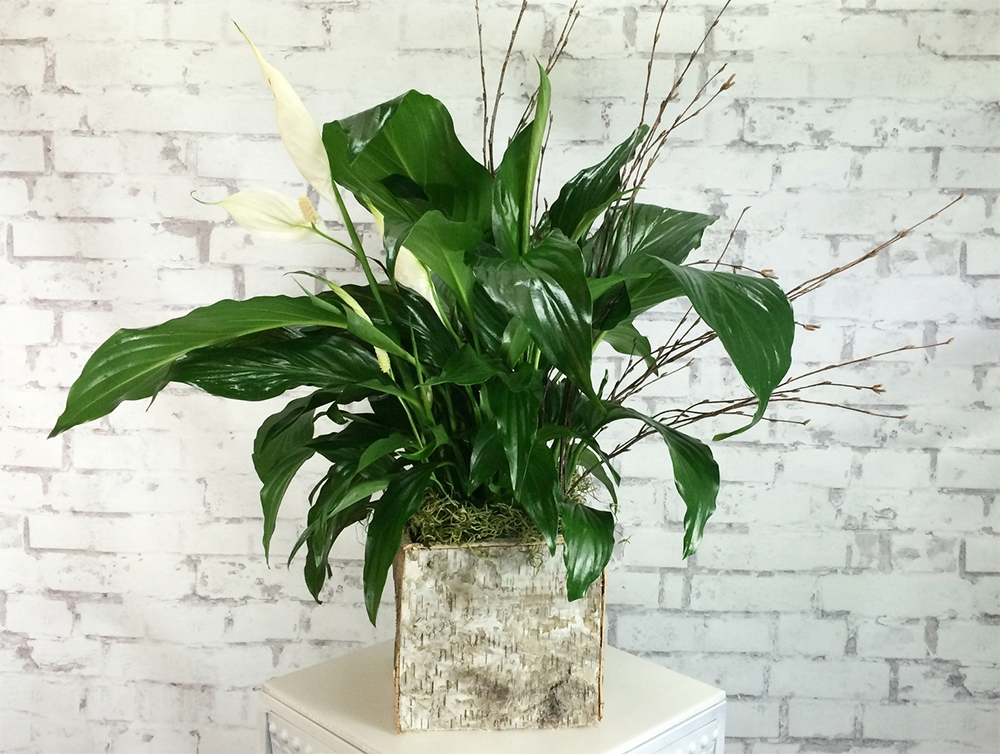
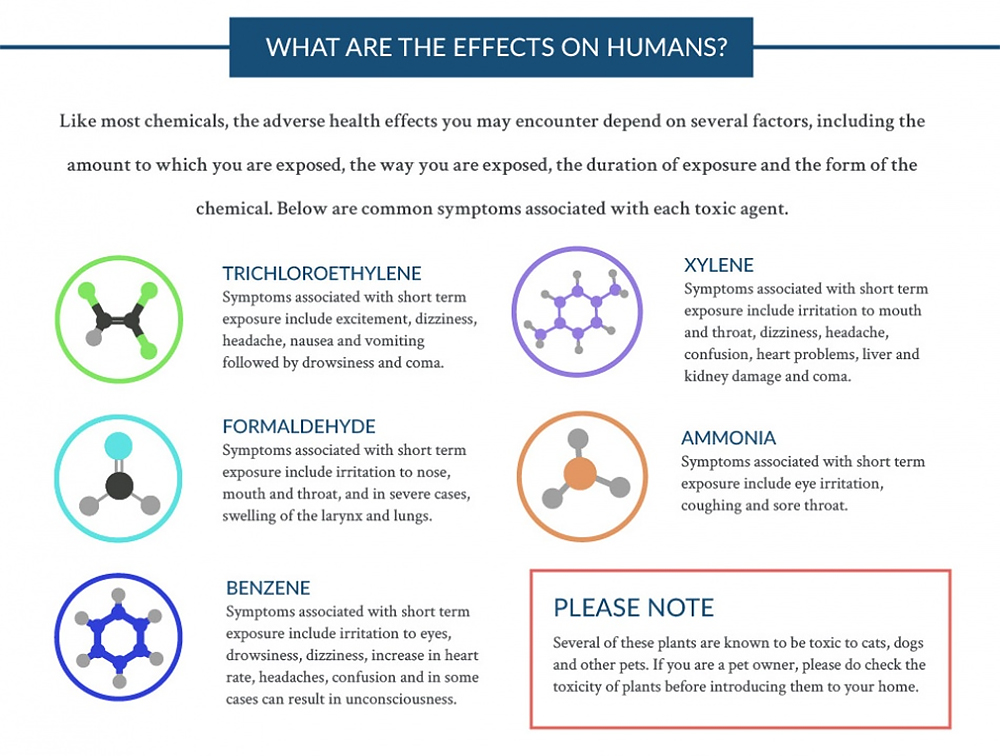
On top of all this, there are a select few plants that have been proven to be effective at removing toxic agents from the air. Now, we know what some of you are thinking — this sounds like it could easily be a pseudo-scientific home remedy that’s only creates a placebo effect. We certainly don’t blame you, since there’s a lot of nonsense on the internet about how cleansing crystals can magically heal your various ailments. However, in this case, there’s actual scientific research to back up the claim of air-filtering plants.
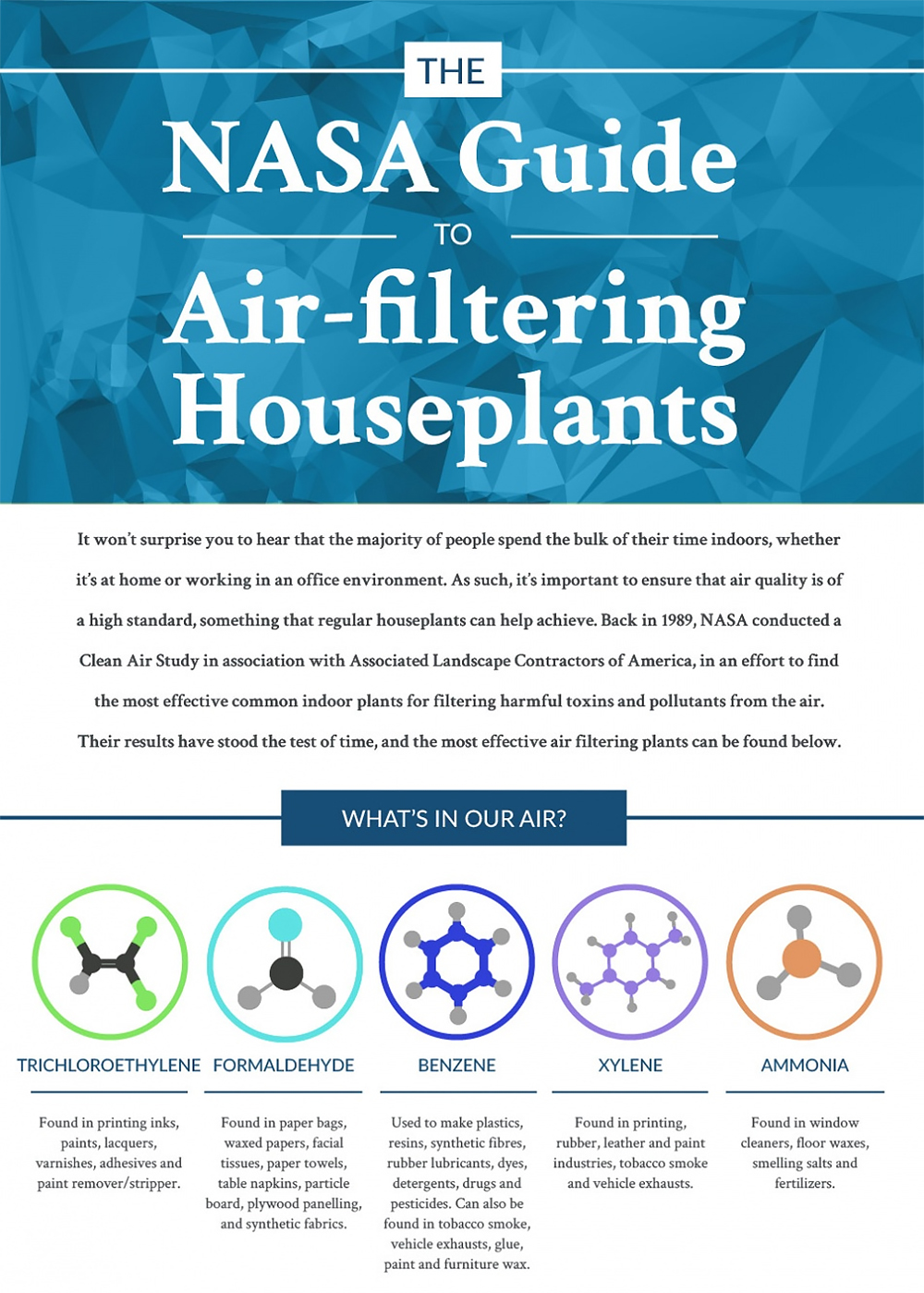
In 1989, NASA published a study titled “Interior Landscape Plants for Indoor Air Pollution Abatement”. The study analyzed 12 plants and measured their ability to remove harmful chemicals such as benzene, formaldehyde, and trichloroethane from the air. The study found that “low-light-requiring houseplants, along with activated carbon plant filters, have demonstrated the potential for improving indoor air quality by removing trace organic pollutants from the air.”
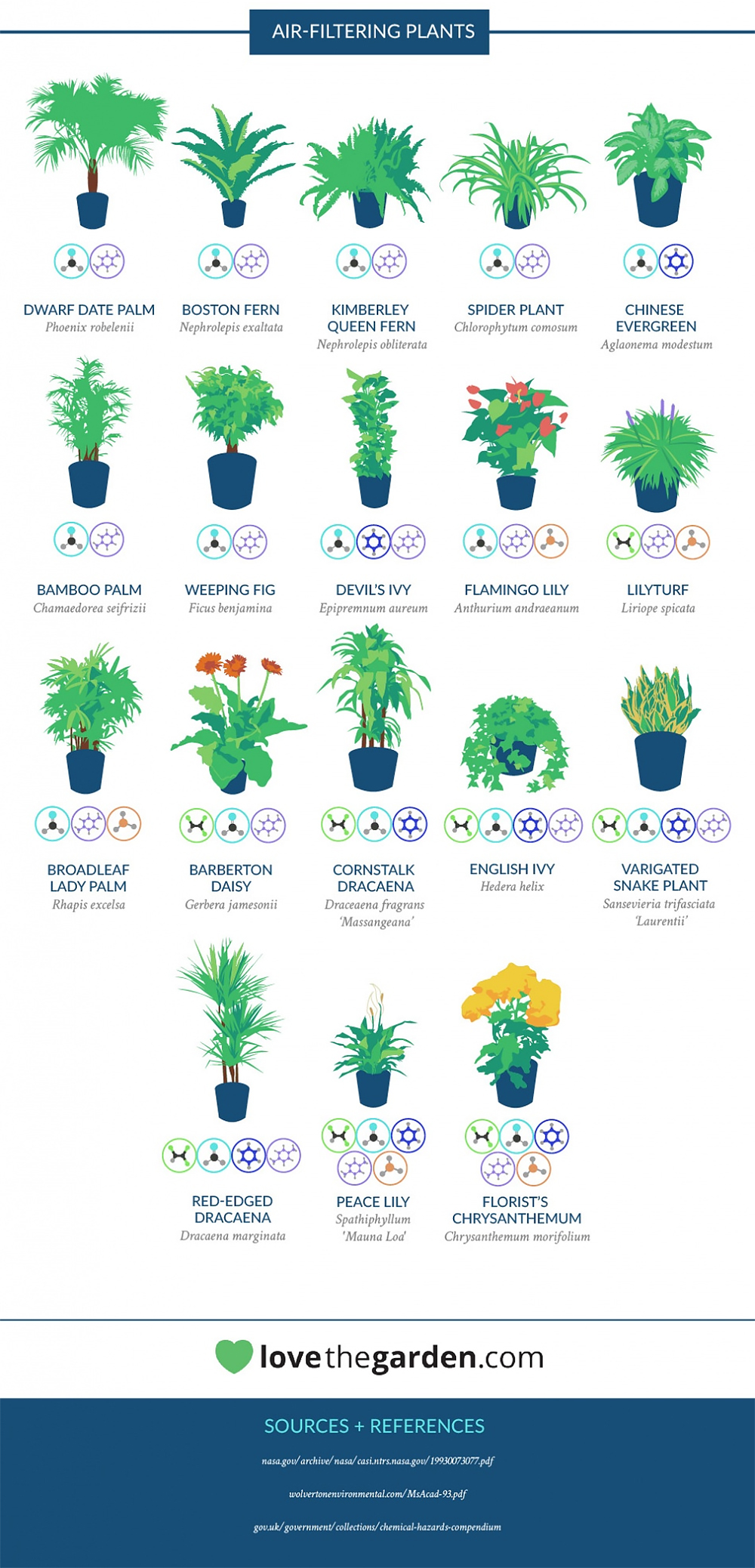
This research was later continued by B.C. Wolverton, one of the scientists who conducted the original NASA study. The results listed a total of more than 30 plants which were effective at removing volatile organic compounds (VOCs) from air.
The following infographic from LovetheGarden.com shows some of the most common and most effective indoor air-filtering plants, based on the research conducted in the studies above. Click here to download a full-size version.