This week, I received an email from a reader who goes by HL. It made my day and provided an instant dose of motivation. The email was in reference to my “On the Grid” column from Issue 22 of our magazine — this column is usually exclusive to our print publication, but I’ve shared it at the end of this article if you’d like to read it in full.
HL’s email explained that this column changed his perspective on physical fitness, and provided the jump-start he needed to take it seriously as a form of emergency preparedness. As a writer and advocate of prepping, there’s no better feeling than to know that my words helped someone improve.
I’ve shared HL’s words below in the hopes that they’ll motivate you, too. Fitness and physical preparedness are critical, so get out there and start sweating!
I truly enjoyed your story from On the Grid, “Bug-Out is a Workout.”
You made some wonderful points, good for every part-time or full-time outdoor person. I must say your quote hit me hard: “The value of physical fitness to a survivalist should never be underestimated. When disaster strikes, you’d better be ready to handle it, both mentally and physically.” This made me think about our Florida disasters over the past years.
The following was a turning point statement for me. You said, “Ask yourself: if my life depended on it, how fast could I run a mile?”
So here I am, almost 70 years old and overweight as my body starts to fall apart. I have a drop foot left after back surgery. I once could run a mile in under 8 minutes. A mile? Wow. So I got up and did it for the first time in years. 5,286 feet. “What if” as my doctors had wanted me to walk and drop some weight. You also reflected on the Megan Hine article “Rethinking Survival” which I read.
You story was short, like a sports coach and part motivational speaker. Then I found myself, the only gray-haired walking that day. Not out to set a new land-speed record, I did two miles walking, each in 20-minutes.
Now having dropped a few pounds, I’m looking into a part self-made program for myself. I also read the Health story by Ryne Gioviano [from this issue, “Prepping for and Preventing Winter Weight Gain.”]
The point of this letter, Mr. McCarthy, is that your article got me started up again after years. It was kind of like putting in a new battery in an old vehicle. Your words “If your life depended on it, how fast could you run a mile?” As for myself, I can’t run yet, but I did a mile and now I know I can do better.
Thank you for your words and my healthier life to come each day. I’m looking forward to seeing where I am in a year, standing today at 6-foot, 288-pounds, 44-waist, 38.2 BMI. I am telling you this to keep myself motivated and on track for years to come.
In this issue’s Survivalist Spotlight, Megan Hine makes a compelling case for the importance of the mind in survival situations. We agree with her assessment that mental fortitude is at the core of any life-and-death situation, but we’d also like to take a moment to counterbalance that point. The value of physical fitness to a survivalist should never be underestimated.
When disaster strikes, you’d better be ready to handle it, both mentally and physically. Ask yourself: if my life depended on it, how fast could I run a mile? It might seem like a minor issue now, but there may come a time when your answer is the only thing that matters. Then think about how that pace would be affected if the mile was uphill over rough terrain, or if you were cradling your injured child in your arms.
You’ll also need to consider pack weight. A bug-out bag can easily weigh 30, 40, or 50 pounds when it’s fully-loaded with food, water, ammunition, and other supplies. This weight will only amplify the strain on your muscles and joints. It’s relatively easy to load up a backpack with all the gear you’ll need in an emergency — it’s much harder to shoulder that pack and hit the trail. How often have you headed out with your full bug-out bag and gauged your ability to carry its weight?
On top of speed and strength, survival requires endurance. You might need to maintain an arduous pace to cover 20 miles in one day, and do the same the next. You may not even have the luxury of stopping to rest or eat a complete meal. Would you have the stamina to press on?
While it may be more fun to think about acquiring new gear or skills, these fitness-oriented hypotheticals must be considered early and often. If these questions make you uncomfortable, now is the time to do something about it — especially since calorie-dense holiday meals are right around the corner. You don’t want to regret those extra servings of mashed potatoes when SHTF, or find out where your physical limits are in a situation where your life is on the line.
One of the biggest sources of controversy in the world of survival is the credentials of those teaching its fundamentals. Let’s face it, there’s a lot of static out there about what really constitutes an expert. There are really no permits, licenses, and certifications one must get before they open an Internet store or school and call themselves a “survival instructor.” That makes it tough on those new to this world who must navigate through heaps of celebrity survivalists who don’t speak from hard-earned, viable experience. It’s up to the student to vet the instructors and their ability to differentiate fact from fiction — that’s a tough road for the novice to hoe.
As a former Green Beret, Mike Glover’s not out looking for endorsement deals and social media followers to help bolster his ego and ability to cash in on spurious advice. His credentials speak for themselves. His school is tucked away in the mountains of Arizona and his classes teach skills that include overlanding, firearms manipulation, combatives, situational awareness, fitness, and there’s a lot more where that came from. And best of all, it’s based on facts, studies, research, statistics, and a level of military experience few are ever able to attain.
Stay Behind Operation Iraq
Mike spoke to us about his dedication to redefining survival for real-world experiences based on his own time as an operator. We’ll also discuss how men adapt to survival situations versus women, how technology plays into and works against survival, and how current events like Brexit may pose survival situations with unpredictable ripple effects. And whether it’s an urban or rural situation, Mike’s no-bullsh*t approach is a refreshing departure from instructors whose main focus is getting their photo on products being sold at REI.
Our Interview with Mike Glover
RECOIL OFFGRID: Where did you grow up?
Mike Glover: Between Daytona Beach, Florida and North Carolina. My dad spent 12 years in the Army.
So what did Mike Glover want to do when he grew up?
MG: Oh, I always wanted to be in the military. I actually wanted to be a Navy SEAL, but my uncle was in the Navy so I actually decided to go into the Army instead.
What in particular made you want to join the military, aside from the family connection?
MG: I grew up with military surplus around my house, so growing up playing with my cousins as a kid, all we did was run around outside and play soldier, so it was really all I knew.
What were your goals upon entering the Army?
MG: I knew I wanted to go into Special Forces, but I went in and tried to be an Airborne Ranger. I didn’t get to serve in Ranger Regiment, but I got Airborne and Ranger qualified and then went straight into selection after Sept. 11. I took the progressive route, which was pretty normal for back then.
Combat Advisor for Iraq’s elite counter-terrorism Force.
After selection what did your job duties consist of?
MG: Weapons specialist, so I was 18 Bravo, but I served the rest of my career in pretty much every capacity. I was a sniper, an assaulter, a breacher; I did technical recon and surveillance. Later on I became a team sergeant, which is the pinnacle of an enlisted guy’s career and then I wound up getting out. I have five trips to Iraq, two to Afghanistan, and a couple to Africa.

What were the biggest survival lessons you gleaned from serving in the situations and capacities you did?
MG: I think if I had to divide between A and B it was situational awareness and learning through experience and how to observe your environment. Not just passively look, but consciously observing was an important lesson I learned. Also, planning and preparing in advance will determine your fate and survival, so survival shouldn’t be reactive. It should be preplanned and deliberate.
When it comes to mindset, I actually served where Rob Miller served. He was the only posthumously awarded medal of honor recipient from 3rd Special Forces at that time. I served in the firebase prior to him, and he was in 18 Bravo as well, so all the Afghan soldiers that I taught, he had taken over and served with them. They were with him when he was killed in combat. I have this thing in my mindset that I teach where if you go into an environment and you operate, you should do so diligently and leave a place better than it was when you showed up. When it comes to things that stand out as an experience, although he was killed, I served in that firebase, and I want to think that whole team was saved that day because of Rob’s actions. Maybe I’d left some sort of impression on them as they served by his side, so that stands out.
What do you think the media tends to gloss over about combat and how they report it?
MG: Especially for Green Berets, they never highlight the building rapport and nation building that takes place behind the scenes. They like to highlight direct action because that’s sexy and cool, but sometimes that’s what can be twisted. They don’t understand the day-by-day activities of improving their medicine, improving their infrastructure, training them to defend themselves — just sitting down and breaking bread and having tea together. That stuff happens, we lived with those indigenous people. We cared for and loved them. We leave a lot of those guys behind, so we have personal relationships there and do a lot of good over there, so it’s not all the carnage and chaos you see on TV.
School in the mountains near Hindu Kush, Afghanistan.
What made you want to teach survival?
MG: Survival for me was a broad genre that encompassed a lot of things I used to survive in combat. Ultimately I was very interested in it because I realized it wasn’t just bushcraft; it wasn’t just considered a technical skill set. For me, survival was the encompassing of everything I learned over my career: mindset, technical skills, and equipment. I think a combination of those things is what lends itself to survival, so for me it was an interesting field and something I wanted to redefine. Preppers and that kind of title aren’t really conducive to learning because people think it’s some crazy person living near Area 51 and not modern survival, which is how I treat it.
How did you go about designing your curriculum?
MG: I have years and years of training, so the combination of my experiences and my training. A lot of my training courses are developed based off of existing military courses for Special Operations, so my whole line of thinking was that if it’s good enough for Green Berets and it’s good enough for Special Operations guys to lend to their survival and add to their skill sets, then it’s good enough for the average civilian. The big ones are things like weapons handling and tactical courses. We obviously don’t teach classified tactics or procedures, but a lot of the way we handle weapons and defend ourselves in combat are equitable to the way you’d defend yourself on the streets.
Combatives is another. The Army teaches us how to fight. I’ve been to a lot of training schools with professional fighters and they teach us how to combat the enemy, but obviously a lot of the physical attributes to combatives are translatable to teaching self-defense to civilians. And with the survival aspect, I’ve been schools where they give you a ziplock bag full of things that you could put in your pocket and you have to survive for 72 hours. That’s an actual incident that you could run into if you break down in the middle of nowhere and all you have is what’s on your person, so a lot of that stuff was translatable to civilian training as well.
Teaching land navigation during FieldCraft overland training course.
Often when you say the words “survival,” “survivalist,” or “prepper” to people they cringe because they think it’s some isolationist fringe movement. How do you convince people otherwise?
MG: A lot of what we do is through reeducation. We talk about statistics and reading the facts of the matter. Statistically if you look at gunfights that people are in versus using your hands in self-defense to stop a violent attack, the media pushes and spins a lot of the gun stuff and you think it’s an epidemic. So, what we tell people is that they’re more likely to apply a tourniquet to their leg in a vehicle accident, than in a gunfight. We’re not saying you shouldn’t train on preparing for a gunfight, but you should never neglect the other stuff that might not be as cool like applying a tourniquet.
A lot of it is the reeducation platform of social media, which we’re big on, and telling the truth, which if you’re interested in survival, it’s not just reactive things or what you do in the wood line. Heart disease is the No. 1 killer in the United States, so when we talk about modern survival, we have survival fit programs that teach people how to be prepared with the physical body, so we’re looking at heart disease because I’m looking at the top 10 things that kill people the most. That’s important to us because in Special Operations they were preparing us for chaos and the worst-case scenario, so we’re doing the same thing. We’re just teaching people full spectrum and preparing them for natural or manmade disasters.
Instructing CQB with Ceres, California, SWAT Team.
What do you think most “survival instructors” get wrong?
MG: Technical skills are important, but a lot of survival instructors don’t really focus on mindset as a priority. Mindset is the overall umbrella that all the other technical skills should exist under. You can teach a course on survival and all these small, technical tasks that can be memorized, repeated, and rehearsed, but if you’re not doing that and introducing stress, or culminating it in stress as we do, then you’re not really testing if it’s viable. That’s when you’re actually going to test resiliency, mindset, willpower, and all those things. We try to focus from a position mindset in teaching all of our skill sets.
A lot of people are obsessed with preparing “bug-out bags” or “bug-out vehicles.” What do you think people tend to over- or under-prioritize about all that?
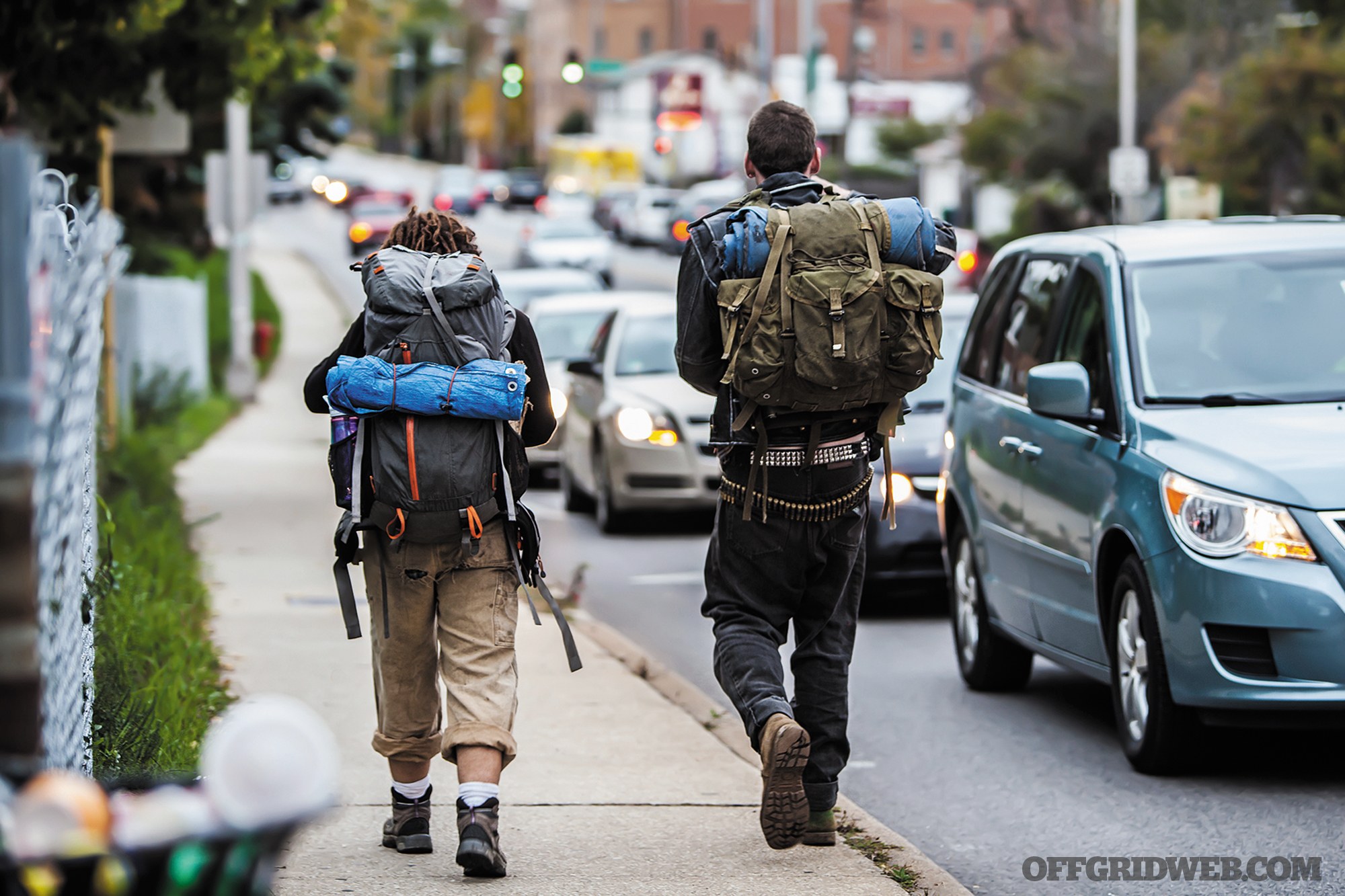
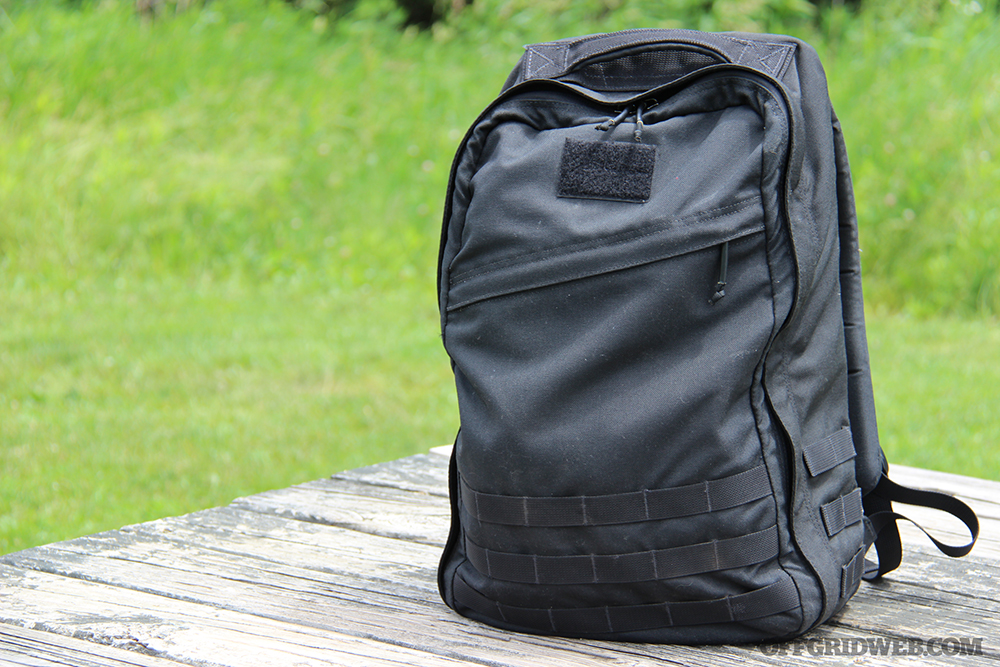
MG: I think that a lot of the stuff they do, people think there’s a be all/end all or a solution that’s going to be conclusive. We tell people to take the existing stuff they have, whether it’s a European man bag, a backpack, a purse, and utilize that and take their survival kit with them because, if it’s not convenient or not comfortable, you’re going to forget about it and not use it. I think if a lot of people introduce the survival items into their lives and routines, they’re more likely to carry that tourniquet in their purse or that small survival kit in their backpack. It’s when they start doing the deliberate thing where they make this cool, Mil-spec survival bag that just sits at home. They watched one YouTube video, and that’s it. It just sits there. We teach people to do the whole reduced-signature thing, which is getting used to carrying it on your body or in your vehicle and that’s more important for us.
Testing the Tomcar TX on RECOILtv.
For vehicles, this is interesting. We actually teach instruction about what we call “go rigs.” We teach people that, when they’re building stuff, especially when they’re making a go rig, that the first thing you’ve got to look at is your payload and capacity. We’re Americans and we tend to think bigger is better often, but places like Europe, South Africa, and Australia it’s all about more effective and more efficient. We look at ounces when building out go rigs so we don’t bog it down with 1,500 pounds of bumpers and big, cool grilles because 1,500 pounds is about the average for load capacity.
The biggest thing is fuel consumption. People will have a go rig with all the things to sustain life, but we tell people that if there’s a natural disaster it’s going to shut down infrastructure. Then if you’re left with a vehicle, but you don’t have any gas prepped, whether you have an extended tank or a reservoir of fuel, then you’re capability is only as much as what your fuel tank has, so if you have half a tank you’re looking at 100 miles or so. We teach people that if they’re going to look at it as a legitimate bug-out vehicle that they need to outfit it as such. One of the first things we tell people to go with is an extended-range fuel tank. I have 110 gallons on one of our company vehicles and that can go about 2,000 miles. That’s not the answer, but that gives me enough range to get where I need to be to resupply.
What do you think it takes for the average person to embrace the value of preparation and be proactive when preparing for worst-case scenarios? This tends to be an uncomfortable topic that people don’t want to think about until they’re forced to.
MG: I think the way we’ve been able to bridge that gap is by communicating that if you integrate survival thinking into your game, whether that’s mindset or equipment, then you can actually make it a fun part of your life. We teach people that if they have a go bag, they can camp for a weekend and assess all of the pieces of equipment that worked and didn’t work. This means you don’t have to bog your life down and make it uncomfortable. We also teach that being deliberate also cures and suppresses a lot of that anxiety. A lot of people get nervous about it because they don’t want to address the reality of what could go wrong and what is statistically likely to happen. So, to be more proactive about it lends itself to confidence and self-esteem and not anxiety about thinking about the worst-case scenario. We try to make it family oriented. Our big thing is if we can convince an urbanite in the middle of San Francisco to hit the trails, do a little survival training, and convince them it’s beneficial for their lives, then we’ve won, so that’s always been kind of our mission statement. We don’t like shoving survival down people’s throats, we just provide the information, try to educate people, and try to provide a learning environment when they make the commitment.
How do you go about approaching the mental aspect of survival?
MG: I think when we teach people we come from the position of, if you can mitigate stress and figure out ways to reduce stress when it hits you, that’s a good starting point. We teach people that a series of unfortunate events can lead to a catastrophe, but if you can see a lot of those things happen before they happen physically, then you’ll be better off. So we teach people on how to mitigate stress through breathing techniques. A lot of people who have a cortisol or adrenaline dump, they don’t breathe and start making bad decisions. We teach people to have a positive outlook. We use the Navy SEAL analogy of they obviously think they’re the best because they really think they’re the best and there’s something to that. Maybe there’s an egotistical association with that, but that level of confidence comes from positive reaffirmation. We also teach that you have to stay conscious on the forefront of your mind. The natural reaction is to fight or flight, but if they’re staying conscious that means they’re staying aware of their situation and can make good decisions. The way we teach survival is based on case studies, but we teach the reasons why people live and why people die and making them understand that there are some technical aspects to it. There’s a lot of analyzing and there are ways to mitigate your chances of being injured or worse. That’s the way your brain works — statistics are a good way to get through to people.
What do you think the biggest differences are in teaching men versus women and how they approach survival?
MG: I think a good example of this is when we teach land navigation. When men get lost they use a lot of their ego. So when they get lost they get frustrated and start making bad decisions, as opposed to a woman who might stop and think a little more clearly. She might not be as reactive as males who may be looking at losing as a bad thing that might affect their psyche. What we see is women being a little bit more deliberate with reactions in the field, but also being a bit more overwhelmed by stress. Men tend to cope with stress a little bit better. We do a lot of things, but we tell people that survival is the ultimate measure of equality. It doesn’t care what color you are, what race you are, if it’s a natural or manmade disaster — typically they’re universal in their impact.
A lot of people are concerned about urban crises like Brexit and how it’d impact the British infrastructure, food supplies, and critical services. How do you recommend people prepare for events like that, which have a questionable outcome and duration?
MG: We teach a lot about the staples of survival. One of the things we tell people is when you’re operating in an urban environment, if everyone is going to start fighting for the same resources, you either have to be prepared to stand your ground in your environment or break contact and evade to a safer environment. What you’ll see in urban epicenters is a lot of migration outside of that environment, heading for the hills, and then fighting for the resources on those lands. If one of these events takes place, grocery stores carry about three to four weeks of supplies. If it’s a national or large-scale disaster, no matter how it started, every natural disaster is going to turn itself into a manmade disaster because people are fighting for resources. If they’re going to stand their ground, they should focus on security and those staples of survival — shelter, water, procurement of food, and how they’re going to mobilize and travel to a potential safe house outside the city. Even if they haven’t built out that contingency plan, we also recommend they build a network of friends and family — people that you know and can communicate with in a rural environment where you can escape and evade if need be.
Prepping for overland training course.
What do think the future of firearms is going to look like 20 years from now given all the government overreach that law-abiding citizens now face?
MG: Policy can affect a really bad decision-making matrix in the government, which can lead to a lot of chaos. I know a lot of people who own guns and if the government came in and said they were gonna ban those guns, there’d be a big issue. Depending on where you live, I used to live in rural California and the sheriffs wouldn’t even enforce the laws that the state government had put out. I ultimately don’t think it’ll be a significant issue because the government knows better. One of the founding reasons we educate as 2A supporters is that you have to affect policy first and if you want to get more involved in protecting your rights, you need to get more involved in governing and understanding governance. The whole reason that we have a Second Amendment is to have a natural measure of balance between the people and the government.
What would you say to the politicians who think that more laws magically equals a safer society?
MG: I just did a post on it. A lot of politicians work fiscally on getting votes and support by throwing out statistics, and a lot of if is miseducation. You’d think there’s a mass-shooting phenomenon inside our country, but the reality is it’s actually very rare and has little to do with guns, even when you scratch the surface. Even in the highlights of demonstrating gun violence with overall statistics, 60 percent of all gun-related incidents that are killing people are suicides, but people wouldn’t know that. They’re suicides by semi-automatic pistols, not assault rifles, so it’s not an epidemic. An epidemic is heart disease, which kills 600,000 people a year, cancer, the opiate crisis. We like to educate and tell people the facts and a lot of people — especially on the left — get a little loose lipped about statistics, but they don’t really teach the truth. A lot of it’s miseducation, so we just try to educate people.
Do you have any political aspirations?
MG: No, absolutely not. Twenty years of government service is enough for me. I try to stay involved and influence with facts, and support people, but no aspirations whatsoever.
Filming Transport series on RECOILtv.
What do you think America’s next big manmade survival situation looks like and how do you recommend people start preparing for it?
MG: I might sound crazy by saying this, but automation, AI, and technology being involved in our lives and societies is creating a vacuum. It’s almost like terrorism. If you go in and create a power vacuum, then what fills that gap is terrorism. Think about when you automate all the jobs and people aren’t leveraged or utilized anymore because the ground floor of the factory doesn’t need people. Think about truck drivers’ jobs that would save $163 billion a year by using automation and all those truck drivers no longer have jobs. It’s retail shops as well — the list goes on.
I think in the next five to 10 years with automation and introduction of technology and AI, it’s going to create a vacuum whereby people don’t have jobs and the necessary skill sets. You’re not going to convince a truck driver in Michigan to become a software engineer in Silicon Valley. It’s just not going to happen. That’s going to lead to poverty, manmade catastrophes, you’re going to see an increase in violence, and in that power vacuum you’re going to have a lot of problems destroying the fabric of our nation. It’s happening now. It’s like Amazon. Everyone talks about the jobs it provides and how great it is, but Amazon is a huge monopoly that owns the market and uses automation for 50,000 to 60,000 of their jobs. That might be a far stretch, but look at what’s happening now and how it’s creating a power vacuum and increase in suicides and mental health issues — that’s the real survival issue we’re dealing with.
About Mike Glover
Age: 39
Hometown: Daytona Beach, Florida
Military Service: U.S Army Green Beret, government contractor
Education: Bachelors degree in crisis management and homeland security from American Military University
Biggest role model: Mom
Favorite band: Eagles
How would your high-school sweetheart describe you? Outgoing
Recommended reading list:
Army Survival Manual
Outliers by Malcolm Gladwell
Platoon Leader by James R. McDonough
If Heaven exists, what would you like to hear God say when you get to the Pearly Gates? “The journey is just beginning.”
Back in late 1999, hysteria was running high due to concerns over Y2K. Many felt that the arrival of 1/1/2000 would bring a technological catastrophe as computers and other critical electronic systems failed to roll over to the correct date. Although Y2K only ended up causing a few minor bugs, this doesn’t mean that the concern was unfounded. If computer systems aren’t correctly programmed to handle date rollover events, malfunctions can be serious and costly — preemptive fixes leading up to Y2K were estimated at $100 billion in the U.S. alone.
We bring this up because we’re rapidly approaching another pivotal date. This time, it’s related to global positioning systems and other systems that rely on them. The U.S. Department of Homeland Security (DHS) released a memo explaining “the possible effects of the April 6, 2019 GPS Week Number Rollover on Coordinated Universal Time derived from GPS devices.” If you’re not intimately familiar with programming and GPS functionality, the problem is rather complicated, but can be simplified as follows:
Many electronic devices derive Coordinated Universal Time (UTC) from GPS in order to display the correct time and date.
These GPS systems track the date on a cycle of 1,024 weeks, or 19.7 years. This is called an “epoch.” The first GPS epoch began in January 1980 and ended in August 1999. The second epoch ends on April 6th, 2019.
Some devices may not be programmed to handle this change, leading to incorrect date calculation and strange behavior.
If the GPS date signal is inaccurate, various systems’ schedules may be interrupted. An article by FalTech GPS explains the potential impact: “This situation won’t affect a receiver’s ability to navigate and/or calculate precise time, but it has the potential to create week, month and year timestamps that are wildly wrong. Applications which rely on GPS data at that level may be seriously affected.”
This is why the DHS has “strongly encouraged” owners and operators of GPS devices to ensure that their systems are prepared for this rollover. Specifically, the following steps are recommended:
Investigate and understand your systems’ possible dependencies on GPS for obtaining UTC.
Contact the manufacturers of your GPS devices to determine if they’ll be affected by the rollover, and if so, what actions are required.
Ensure your devices’ firmware is up to date.
While the majority of GPS devices will probably have no issues coping with this rollover event, the DHS found some devices that failed. “Tests of some GPS devices revealed that not all manufacturer implementations correctly handle the April 6, 2019 WN rollover.” So, it’s worth keeping an eye out for date-related problems starting on April 6th.
Competition is a great way to stay motivated and improve your skills. You’ll get a better workout if you’re pushing yourself to keep up with a friend, and you’ll increase your proficiency with a gun faster if you regularly use it in matches. This same logic applies to hunting — while practicing this survival skill on your own can be effective, introducing the element of competition can accelerate your learning and growth as a hunter. CARNIVORE’s upcoming Hunter Games event provides an opportunity to do just that.
The inaugural CARNIVORE Hunter Games is open to hunters of all ages and skill levels, and will take place on September 20th – 22nd, 2019 at the Rockcastle Shooting Center in Kentucky. It will consist of three disciplines:
Rifle Competition
Bowhunter Challenge
Wingshooting Competition
Game-shaped targets with steel kill zones will be used during the competition.
You can participate in all three disciplines, or pick and choose the ones you’re most comfortable with.
Hunter (novice) and Carnivore (pro) divisions will be available for shooters of varying skill levels, and the Bowhunter Challenge will offer a division for junior archers. There will be vendors onsite with new gear to check out, as well as optional side matches where participants can win prizes. Bring the whole family for a fun weekend!
For more information on the CARNIVORE Hunter Games event and how to sign up, go to RECOILweb.com/huntergames.
As a survival tool, airguns are generally not the first thing that comes to mind for most of us. However, if you look at the advancements in the past few years, that way of thinking may be archaic. Many readers might be surprised to learn that numerous airgun companies now offer production model pre-charged pneumatic airguns that fall into the “big bore” category, ranging up to .50 caliber. Several states have taken notice and moved to allow hunting of big game with these bad boys. If you think of them as merely toys — think again. Adult airguns can really pack a wallop and easily come into play in a SHTF scenario for a variety of reasons.
Crosman’s DPMS SBR is select-fire and capable of full-auto fire at an advertised 1,400 rounds per minute!
Why is Red Ryder Practical for Survival?
Even what many consider to be the lowly BB gun has practicality in the survival environment. Many of us learned to shoot with a trusty Crosman multi-pumper or Daisy lever action — they’re still produced today and being used to introduce new generations to the shooting sports. In recent years BB guns have seen advancements such as polymer stocks, better metallurgy, and synthetic seals.
Still, why would an adult survivalist consider adding BB guns to an already extensive list of items for when the SHTF? For starters, BB guns are great training guns to learn the fundamentals with. Most gun-handling skills, safety training, breathing control, and proper trigger manipulation can be taught using a BB gun. Plus, in case you haven’t checked them out in a while, BB gun replicas licensed by firearm manufacturers have advanced to a point where they almost cannot be distinguished from the real thing, making them more than suitable for a surrogate to use in certain training drills.
So far, BB-firing replicas of firearms aren’t required by U.S. law to have any blaze orange markings like airsoft guns. Mainly, this is because BB guns fall into the “adult usage” category. They’re an inexpensive way to teach and build on basic skills that easily translate to firearms. Some are self-contained in that the powerplant of a spring-powered or multi-pump pneumatic is built in and, with minimal maintenance and proper usage, should serve for many years. The most realistic replica guns tend to be powered by CO2 gas to propel the BBs, and some semi-auto models reciprocate or “blowback” the slides for added realism. Ammo is dirt cheap as well.
Results of a full-auto burst of Dust Devils frangible BBs at close range on an old enamel-coated steel sink.
Another benefit attributable to the BB gun is the lack of regulatory restrictions in most of the country. Big-box stores carry a plethora of choices or they can be ordered on the Internet and delivered to your door just about anywhere. The lower sound signature means you don’t necessarily have to travel to the range or the boonies for some skill-building trigger time — you might even choose to set up a small range in your backyard. If that’s not an option where you live, with the proper backstop and necessary precautions, an indoor range can be enjoyed year-round. The lack of recoil is another advantage when teaching new shooters or youngsters basic gun-handling fundamentals. Fundamentals of maintenance and safe, proper storage can be brought into play as well.
While the 5-grain-weight BBs disintegrated on impact, the force they were hitting with is apparent on the inside of the old steel sink.
Smoothbores are Making a Comeback
BBs, being made from steel, don’t lend themselves to the use of rifled barrels. Years ago, most BB guns’ internal barrels were made of brass. Nowadays the majority are made of steel, most being smoothbores, but a few “dual ammo” rifled barrels exist, so the shooter has a choice between firing BBs or pellets. Due to the nature of smoothbores, accuracy of BB guns will be lacking somewhat. That doesn’t mean there are no accurate BB guns. National BB gun competitions are held each year with high-dollar BB rifles capable of tight shot groups at 10 meters. For training purposes and at short ranges, BB guns can still get the job done. Potentially, in a crisis situation, a BB gun could be called upon to put meat in the pot with small birds, lizards, frogs or rodents. And you can dispatch them relatively quietly in case you’re concerned about giving away your position.
Modern CO2 replica BB pistols are capable of some decent accuracy out to 25 feet or so; unless the CO2 cartridge is running low.
Did You Say Frangible BBs?
Have you ever tried out a new-fangled product that you didn’t necessarily think you needed and then wondered how you ever got along without it? A new frangible BB has been brought to the market and it is one of those products. Yes, the lowly steel BB has been upgraded. But why? Hasn’t the old workhorse been doing an adequate job for well over 100 years? Sure it has, but with the last major technological upgrade being cladding of the BB with copper or zinc as a rust preventative well over 50 years ago, not much else has changed.
But Air Venturi of Ohio saw the need for this evolution and introduced frangible BB technology. Readily available BB guns are low-powered, entry-level airguns suitable for indoor use with the proper backstop and safety measures. However, regular BBs are solid steel so they’ve always been prone to ricochet. Every mom’s admonition to a youngster with a BB gun, “Don’t shoot your eye out!” was a given because of the real danger of a BB bouncing straight back from a target and causing injury. Now, throw in to the mix the availability of a fully automatic BB launcher and the importance of ammunition that disintegrates on impact with hard surfaces becomes doubly important.
Guns that offer “blowback” action to simulate recoil and offer full-auto capability, such as the Crosman SBR, require two CO2 capsules to operate. The realistic looking magazine doubles as the housing for both CO2 and BBs.
Air Venturi is an exclusive importer of multiple international airguns and accessories as well as a purveyor of domestic brands. Now they’ve added ammunition manufacturer to that list. Their new frangible BB that is made in the U.S. and called “Dust Devils.” Working with an expert in the field of frangible bullets for firearms, AV is the first company to make frangible BB ammunition. Made from a proprietary blend of alloys that includes iron powder, it’s totally lead free.
Dust Devils are a new development in the realm of BB gun ammo. They disintegrate on impact if they hit something harder than themselves.
Slightly lighter than the standard steel BB, this translates to a velocity 10-percent faster than a typical BB gun. Aside from indoor shooting, the obvious niche for these new BBs is with the shooter using a CO2-powered replica as a training tool against steel targets at close ranges. There’s nothing like the satisfaction of ringing steel while improving your speed and accuracy through drills and regular practice. With some ranges not allowing drawing and firing from holsters or movement and speed drills, frangible BBs used at a home range could be just the ticket.
To give these new frangible BBs a workout, four different BB guns were used, including a fully automatic CO2 short-barreled rifle, a multi-pump pneumatic carbine, a long-barreled CO2 revolver, and a semi-automatic CO2 repeater. First up was Crosman’s new DPMS SBR (short barrel rifle), capable of full-auto fire at an advertised rate of 1,400 rounds per minute! The DPMS SBR requires two CO2 cartridges to operate, which fit into the drop-free magazine and supplies gas pressure to drive the BBs up to 430 feet per second (FPS), while also providing the gas pressure to cycle the bolt, and impart a sense of recoil. The magazine holds 25 BBs and Crosman includes a nifty speed loader to make the job of dropping BBs into the magazine much easier. It has many cool features, including working controls that mirror the real deal, folding sights, and plenty of Picatinny rails for mounting accessories.
The two CO2 cartridges lasted for an average of eight magazines or approximately 200 rounds, which is very good as these guns go, and the SBR didn’t miss a beat with any of the BBs put through it. Even the trigger was a pleasant surprise, not heavy or rough. As a test of the Dust Devils, a crude setup was devised using an old piece of drywall where firing was done through a hole slightly larger than the muzzle at an old enamel-coated steel sink 12 inches away. The backside of the drywall was painted brown and revealed any BBs or shards that might bounce back. After firing a 25-round magazine at full auto, the back of the drywall showed no marks of any kind. (NOTE: Dust Devils aren’t ricochet-proof and can bounce back if shot at a surface that isn’t harder than the Dust Devil itself, such as wood or rubber, so you should still wear eye protection and follow standard gun safety rules.) The DPMS SBR was incredible fun and will be available soon in a flat dark earth version as well. Crosman rates the velocity of the SBR at 430 fps with steel BBs.
Keeping it in the family, Dust Devils were sent through the Crosman M4-177 multi-pump pneumatic BB/pellet carbine with a rifled barrel. This M4 lookalike has a magnetic tip on the bolt to pick up a single BB from the feed chamber, which worked perfectly due to the high iron content in the Dust Devils. It’s a neat little shooter that Crosman rates up to 660 fps with steel BBs when pumped to the maximum of 10 strokes.
Next, the Dust Devils worked perfectly from the 5.5-inch barrel of the Dan Wesson CO2 revolver made by Action Sport Games. When speaking of replica BB guns, this one takes it to the level of actually having six realistic-looking “cartridges” in which a single BB is loaded into the nose before loading the cartridge into the swing-out cylinder. This DA/SA revolver even comes with a speed loader. The manufacturer rates it in the 425 fps range with steel BBs.
Last but not least, to see how a short-barreled semi-auto repeater would handle the Dust Devils, the SIGAir “We The People” 1911 was used. The SIGAir division of SIG SAUER has produced a very realistic CO2 replica of their patriotic-themed 1911 powder burner. From the blowback action of the slide to the functioning grip safety and other controls, right down to the ability to field strip this air pistol, it doesn’t disappoint. Other than the Dust Devils shooting high out of this pistol, we had absolutely no feeding or other problems. SIGAir rates the velocity of this pistol at 340 fps with steel BBs.
Above: Another bonus of the newer crop of replica CO2 BB pistols is their ability to be used as trainers for field stripping and maintenance.
Of course, manufacturers always recommend using their own brand of BBs in their products. That may generally be a good idea, especially with guns still in the warranty period. However, any BB gun should feed standard BBs through their barrels without issues. That being said, we didn’t find any feeding problems or other indications that Dust Devils caused any issues with the airguns used in this evaluation, and accuracy was generally comparable to regular BBs.
As an added bonus, Dust Devils are more environmentally friendly than standard BBs because they break down in an outdoor environment. They do cost a bit more than steel BBs at an MSRP of $13 for a package of 1,500. And, even though they’re in full production now, you may not readily find them at your local stores quite yet. Look for them on Internet sites that deal in airguns and accessories. We expect the price to come down as they gain market share and more places stock them.
Final Thoughts
Don’t assume the BB gun has gone the way of the dodo bird. The variety of platforms and new ammo technology make them practical training tools. They’re both inexpensive and not subject to the governmental regulations on standard firearms. The tactile and visual feedback they offer as well as the details and functionality that are akin to real firearms make them worthy of consideration. Additionally, they can also be effective in force-on-force training with the proper safety gear.
To reiterate, in a SHTF scenario, the lowly BB gun would allow not only cheap, efficient training to keep skills sharp, but a relatively quiet way to accomplish that training goal. When teaching youngsters, they’re a less-intimidating and somewhat safer alternative to live fire until ready to hit the range with the young guns. Also, they’re a blast to shoot (pun intended) and deserve a serious look as a tool for the survivalist/trainer.
Photos by Patrick McCarthy, Rob Curtis, John Schwartze, Mark Han, and Glen Castle
Each year, the staff members for all our magazines — RECOIL, RECOIL OFFGRID, CONCEALMENT, and CARNIVORE — get together for a little R&R and a few days away from our normal duties. Working for these publications is a lot of fun, but it also requires a lot of long hours, late nights, multitasking, and adherence to tight deadlines. These yearly gatherings offer a way for us to see each other, since our staff is scattered across the country from coast to coast, and have some fun doing what we love. Anyone who has read our publications can guess what that is — shooting, hunting, hiking, camping, cooking good food, drinking beers and bourbon, smoking cigars, and telling stories of past exploits around the campfire.
We always bring a few ways to start a fire. This time, that included flamethrowers.
In 2018, we got together in Texas to hunt some wild hogs. This year, we planned an event in my home state of Arizona. It was informally dubbed the Bug-Out Challenge, since we’d essentially be going through a dry run of an off-road escape route leaving Phoenix. Our staff met up just north of the city, packed our gear into an array of vehicles, and spent two full days on backcountry trails before reaching our planned destination in Prescott. During this journey, we brought along survival gear to test, guns to shoot, and cameras to document the journey.
Today, I’ll share a recap of the RECOIL OFFGRID Bug-Out Challenge, as well as some of the emergency preparedness lessons this trip reinforced.
Day 0: Preparing for the Trail
Those of us who already live in Arizona met up the day before our event for some pre-trip prep. We had already coordinated to borrow a pair of Mahindra ROXORs — refer to our previous article for a detailed run-down on these small off-road vehicles. In short, they’re based on the original Willys CJ series, with dimensions similar to those of a modern-day side-by-side. We loaded the two ROXORs with our backpacks, guns, food, and fuel, and headed out for a quick shakedown on the trail before the designated meet-up.
I had a blast driving the ROXOR. I’m a big fan of simplicity, both from a practical standpoint and as a survivalist, and the ROXOR feels bare-bones in the best possible way — it has no stereo, climate control, automatic transmission, or other complex electronics. It doesn’t even have windshield wipers. What you get instead is a proper 4WD system with a Dana manual transfer case, solid axles, leaf spring suspension, 5-speed manual transmission, and a 2.5-liter turbodiesel engine.
It’s not going to win any drag races with 62 horsepower and a capped top speed of 45mph, but the 144 foot-pounds of torque will pull this light vehicle over surprisingly large obstacles, especially in 4-Lo. Also, aftermarket tuners have proven that the platform is capable of 100+ horsepower and 70+ mph after a simple engine computer re-flash.
After getting some mud on the ROXORs and stopping to top off the diesel, we drove to the rendezvous campsite. The rest of the team had already arrived.
After eating dinner, we finished off our first night with some drinks and conversation at the edge of the lake. Then we retired to our tents to get a good night’s rest before the journey.
Day 1: Through the Desert
On the first morning of the Bug-Out Challenge, we packed up camp, double-checked the vehicles, aired out the tires, and headed into the desert. Today, I’d be switching from the ROXOR to a modern platform with a similar spirit — the 2019 Jeep Wrangler Rubicon.
The two-door JL-series Rubicon is small by present-day SUV standards, but felt substantial next to the diminutive ROXORs. Of course, as a premium-trim new vehicle, it comes with plenty of creature comforts — dual-zone climate control, touchscreen stereo, heated seats, and so on. However, our test vehicle also had a 5-speed manual transmission, so we enjoyed the old-school feel of rowing through the gears.
The Wrangler fared well on the trail, with its electronic lockers and sway-bar disconnect feature making obstacles feel easy. While the ROXORs scrambled up steep trails successfully, their light weight and small size sometimes made them feel bouncy and frenetic. In the Jeep, there was no drama in the rocky desert terrain — just throw it in 4-Lo and smoothly accelerate.
Within a few hours, the Wrangler that had been clean and shiny that morning was appropriately muddy.
At one point, RECOIL editor Iain Harrison spotted a rattlesnake crossing the trail, drew his carry pistol, and killed it. We posted this photo on Instagram, and a few people got upset that we would do such a thing. We posted a photographic response to these comments later — more on that below.
During the day, our convoy racked up more off-road miles, passing through small towns and ascending into the mountains. There, we visited one of the many abandoned mines that are scattered throughout these hills.
The view from outside the mine was a sight to behold.
By evening, we reached our planned camp site in the mountains. The change in elevation brought a chill, and there were remnants of snow on the ground in the woods nearby — a reminder that Arizona isn’t just scorching desert heat as many assume.
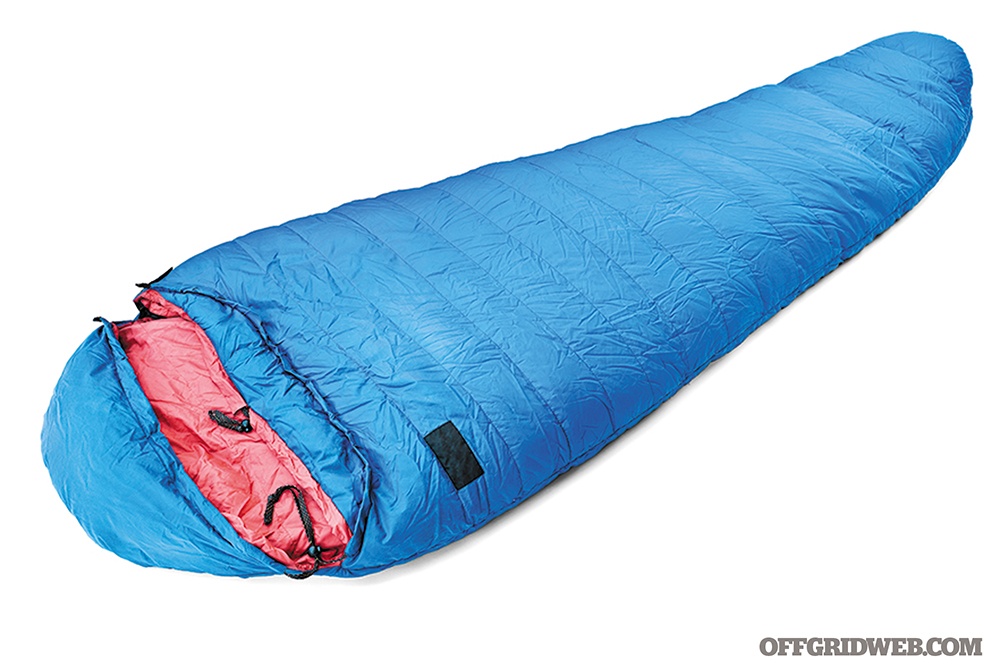
On this trip, I tested out a pair of items from Sierra Designs, the Synthesis 20-Degree mummy sleeping bag and the Studio 2 tent. The sleeping bag kept me nice and warm despite temperatures dipping close to freezing during the night, and the tent was lightweight and compact enough to fit easily into my pack. We’ll be posting a full review of these items in the near future.
After splitting some wood and igniting our campfire with the aforementioned flamethrower — a convenient and spectacular way to start a fire — we cooked some dinner. Iain had brought some barbecued elk from a recent hunt, as well as a few tasty side dishes. We also addressed the Instagram critics by showing what we did with the rattlesnake from earlier:
The snake was skinned, cleaned, marinated in some of Iain’s homemade habanero BBQ sauce, and grilled on a hot rock next to the fire. If this were a real bug-out situation it would’ve been a much-needed source of calories, but in this more relaxed context it was just a delicious (and organic!) addition to the evening’s menu.
Day 2: Mud, Snow, and Ice
The morning of Day 2 started with some more supplies from the cooler — bacon, peppers, onions, and eggs on the griddle. Once we were fed and packed, we set out to ascend even further into the mountains. The road started out tame, with sandy dirt and limited mud from the melting snow.
However, as we continued, more and more snow began to appear on the trail. Soon there was six inches, then a foot, then more. Beneath the crust of soft snow was slick ice that made navigating the trails a delicate task, especially since the edge dropped off into a steep ravine at many turns.
It wasn’t long before some of the vehicles began to get bogged-down in the rutted snow tracks, leaving us to dig or winch them out. This isn’t the terrain most would expect to see in Arizona, but it was there nonetheless — and we needed to get past it before nightfall.
We planned for some snow, but recent storms brought far more than we had expected. Progress slowed to the point that we began to wonder if we’d make it over the mountain, or if we should turn back and find an alternate route while there was still daylight.
Fortunately, shortly after this point the snow began to recede and the roads began to clear. We were through.
Above: The Hellwig F-350’s ICON Suspension, aired-down mud tires, and heavy-duty winch helped it traverse some difficult trails, despite the truck’s substantial size and weight.
Our journey ended with a late dinner in Prescott’s historic Whiskey Row and a good night’s rest. The following day, we said our goodbyes and returned home to get back to work.
Although the trip was clearly more of a recreational event than a hardcore simulation of a bug-out scenario, it still helped us map a course, trail conditions, and alternate routes. We learned the gear we needed, and items we wish we had. Most importantly, the Bug-Out Challenge brought us together as a team.
Lessons Learned
Simplicity is beneficial. In technical off-road settings, lightweight vehicles with short wheelbases excel. Full-size, heavy-duty vehicles tend to bog down, high-center, or simply can’t navigate tight switchbacks. While trucks like the Ram Rebel and Hellwig F-350 are great for hauling lots of gear through unpaved areas, there’s an unavoidable point where the terrain will cause these large vehicles to struggle. If your bug-out location is on the other side of a rock garden or a perilously-narrow mountain path, you should choose a vehicle accordingly.
As we’ve learned firsthand, Maxtrax recovery boards are helpful if you get stuck.
Rescue equipment is a worthy investment. Some may think the shovel and Maxtrax strapped to your roof rack are just for decoration, but when you’re bogged down in snow, mud, or sand, they’ll be worth their weight in gold. If you can equip your vehicle with a winch, even better. Tire chains are a great asset if there’s any chance of snow.
Have a multi-layered communication plan. The mountainous terrain interfered with cell reception as well as our radios. Always be prepared for this. A few members of our team had emergency satellite communicators (such as the SPOT Gen III) as a last line of defense in case something went terribly wrong — it’s an added expense, but well worth it in an emergency.
Know your vehicle’s limits. As the snow got deeper and the trail got steeper, the GXV Pangea-LT eventually had to turn around and find a different route. Its colossal size and weight were simply too much for that terrain. Being realistic about this and knowing when to tap out will prevent you from pushing ahead until you’re hopelessly stuck. The trail isn’t a competition, so don’t let your desire to overcome it get you into danger.
There’s strength in numbers. Many of our setbacks on this trip were made less challenging through teamwork. It’s a lot harder to dig your truck out by yourself than it is with friends, so look for co-drivers and convoy members you trust, and be ready to help each other.
On the internet, anyone can be a self-proclaimed instructor — but that doesn’t mean they’re qualified. You’ve probably seen some of the many ridiculous self-defense videos that attest to this fact. The instructors in these videos often demonstrate flashy moves where they slap the knife or gun out of an attacker’s hand with ease. Unfortunately, these moves would almost certainly fail in a real-world situation with a non-compliant attacker, and they’re likely to get you stabbed or shot.
Our friend and former editor Patrick Vuong recently started a video series called “Death by Martial Arts Myth” as part of his urban combatives school, Tiga Tactics. In these short clips, he addresses some of the common misconceptions that are spread through viral videos. Episode #1 features one we’ve seen countless times — the knife-wielding attacker who freezes after a single lunge. In reality, as Vuong explains, a knife attack is more likely to involve a “sewing machine” motion where the attacker repeatedly thrusts a blade, often from several angles.
You won’t believe this one crazy trick that will stop a blade instantly — muggers hate this! If you listen to instructors who profess this style of fantasy fighting, you’ll be in for a rude awakening in a real fight.
Episode #2 features an analysis of flashy gun disarms, like twisting the weapon to the side or yanking it out of the attacker’s hands. Unfortunately, unless the bad guy is completely incompetent and forgot to switch the safety off, you’re probably just going to get shot if you attempt these movements. As Vuong explains, your first priority is protecting yourself by getting out of the line of attack — “do not disarm until you have control of the weapon hand or control of the person’s body.”
If you don’t want to get shot, move out of the way of the muzzle. It sounds obvious, but there are still plenty of Instagram-famous instructors who continue to teach the opposite.
For more from the Tiga Tactics Death by Martial Arts Myth series, check out this YouTube playlist. It’ll be updated as each new episode is released. You can also learn more about Vuong’s combatives school at TigaTactics.com.
Did you watch, or better yet, read The Martian by Andy Weir? If you didn’t, the premise is an astronaut is stranded on Mars and survives for over a year. He happens to be a botanist and engineer, both attributes help him in his survival on a foreign planet. In the book, the astronaut has a few vegetables to choose from to grow for his survival and he quickly selects the potato. Nowadays the potato gets a bad rap. This is mostly attributed to the fast food industry frying them in oil. While delicious, this does hurt their nutritional value and add several unhealthy components to an otherwise nutritious food. When you look at the potato by itself, it offers good nutrients, vitamins, and minerals — all of which are invaluable in a survival situation or just good overall health.
You Can’t (and Shouldn’t) Have Just One
The potato is not a low-calorie food, which in a survival situation is a good thing. We all know caloric intake is essential during the strenuous events of a natural or manmade disaster and our starchy friend the potato aids in keeping your energy levels up. Spuds do lack sodium and fat, both of which can be added during the cooking process, so be sure you have a few salt packets in your bug-out bag.
Potatoes offer more potassium than a banana, which is something many people don’t realize. Potassium is a vital electrolyte that helps the body regulate water balance and healthy blood pressure. Both of these are important in emergency situations when dehydration is likely.
Carbs are your friend during difficult times and again, the potato is lush with them. Eating foods high in carbohydrates when you know you’re going to be exerting yourself is a great way to have energy on tap when you need it most.
The potato isn’t going to offer the same protein level as a steak, but it does have a bit. So, if you get a chance to eat a squirrel while bugging out, be sure to get some supplemental protein when you can.
We all know that vitamin C is important to staying healthy and fighting off colds, so luckily a serving of taters has almost half of your recommended daily value. The potato also has noble amounts of niacin, thiamin, and vitamin B6 — all of which are beneficial for the heart.
Potato Planting
Growing potatoes is relatively easy. The soil used for potatoes should be loamy and contain little rocks and clay to allow maximum expansion. I generally use a mixture of topsoil, organic compost, and peat moss. Potato plants should be started from certified disease-free seed potatoes. These are available at most garden stores and come in an abundance of varieties. I usually opt for Yukon golds, as they’re easy to grow and have higher a yield for their size; however, I also grow purple potatoes and russets in case one variety experiences any sort of problems during the season. Choose the varieties that are familiar to you and correspond to your cooking methods.
Once the seed potatoes are purchased, cut them into cubes that have at least two eyes — the eye is where the plant will sprout from. Place these cubes into shallow rows of dirt and cover with about 1 inch of soil, with the cut side down. Give them a good watering to saturate the area. As the plants grow you’ll need to continue to put soil on top of them to encourage upward growth and block out sunlight from the roots. Allow the leaves to be exposed to a few inches on top until the container is completely full. Once full of soil, allow the plant to continue to grow, making sure to water adequately. It’s important that you water enough to reach the bottom of the container and don’t allow it to dry out. Uneven watering will cause your potatoes to become misshapen and lumpy.
Examples of russet potatoes not evenly watered during growth, resulting in large irregular lumps.
Containment
Potatoes can be grown practically anywhere and in almost any container. This year I have grown potatoes in two different places. One is the traditional raised bed (approximately 4-by-4-by-1 feet) and the other a plastic storage container (approximately 24-by-16-by-16 inches). Both containers start the same using the growing methods described previously.
The storage container is actually two containers stacked together. The inside container has large sections cut from the sides with drain holes drilled into the bottom. The outer container also has holes drilled in the bottom for proper drainage of excess water, so the plant does not drown during large amounts of rainfall. As the potatoes grow, dirt is piled on top until the container is full.
Side cutouts on the plastic container for easy access to potatoes.
Once full, the tubers continue to grow below the soil for the rest of the season. The container growing method yielded over 6 pounds of potatoes or about 18 servings. The traditional method, in a raised bed, produced roughly 16 pounds or about 48 servings.
A variety of containers can be used for growing potatoes, including old tires, burlap sacks, or something as simple as a garbage can — you are limited by your imagination. One of the benefits to the container growing method is that you now have mobility. If you find yourself needing to bug out and you have time, you can take your portable garden with you. One may also consider incorporating this into your bug-out plan and have extra garden materials staged at your bug-out location to continue growth. I would suggest staging the containers close to your parking spot if possible because a container full of dirt can be fairly heavy to move on your own.
Potato Pointers
Potatoes are relatively easy to grow in comparison to other garden plants, but they do have a few problems to be aware of. Pests, such as the potato beetle, may plague your plants. Physical removal of the beetle will help. Shake the plant early in the morning and kill all insects that fall off. For the container planting method, move the container away from the area once all insects have been removed. Diatomaceous earth can help keep insects away and kill the few that remain. Simply dust the plant, including the underside of leaves, and continue this process regularly.
Blight is another enemy of the potato and responsible for the Irish Potato Famine. It can be a serious problem for your plants. Blight is spread by the wind. Leaf tips will turn brown and wilt, spores form, and wind carries them to any nearby plants. Blight spores can also sink into the soil and infect your tubers, destroying them. The best way to prevent blight is to choose blight-resistant varieties to grow, also give adequate spacing to your plants in the event that one becomes infected.
Plant potatoes cut side down with about 4 to 6 inches of spacing.
Proper Storage
Once your hard work has yielded a crop, storing your precious spuds is easy. Potatoes need a dark storage area with ventilation and some humidity. Tubers exposed to light will turn green and quickly become toxic. Never eat a green potato, it can cause severe nausea accompanied with diarrhea and vomiting, both of which are extremely hazardous in a survival situation and will lead to dehydration. Humidity is important, as the majority of the potato is water. Generally 45 to 55 degrees Fahrenheit (7 to 13 degrees C) is adequate; however, storage at temperatures above this with no light can affect the color of the potatoes, making them gray or brown depending on the variety. They will still be safe for consumption, but will lose some of their weight and nutritional value.
Root cellars are the obvious ideal conditions for storage, although not everyone has access to those or will if bugging out. If you have used a mobile container garden, your bounty can be stored under the soil, it will be cool, light free, and relatively moist. Potatoes can also be stored under a sink or in a cupboard, in a bowl, or a perforated bag. The bag will provide more humidity and keep the potatoes from experiencing weight loss. Harvested potatoes do not need to be rinsed off prior to storage and leaving the dirt on will not hurt the vegetable.
Use a tarp while harvesting to make clean up easy and to limit the amount of lost dirt. This soil can be amended and used for several years.
Potatoes have been a staple for human diets since the 16th century. The relative ease of growing and cultivation made the crop an excellent choice for early farming techniques. The nutritional value and benefits of potatoes make them a good choice to be a part of your survival plans. The nature of potatoes allows them to be prepared in a variety of ways with different resources. Typically this is a familiar food for the young and old and can be a welcomed comfort in harsh times.
Kiss the Cook
Potatoes can be cooked in a variety of ways. Whether you’re on the move, made it to your bug-out spot, or stayed put, you have several options for preparing potatoes for consumption. Here are some ideas for making your spuds palatable.
Fire baked potatoes: Wrap potato in aluminum foil and place in hot coals of a fire. Rotate the potatoes every 10 minutes; they should cook in 40 to 50 minutes. Be sure to poke a few holes in the potato with a knife or fork so they don’t explode when cooking.
Survival chips: Thinly slice potatoes and pat dry to remove water. Heat an oil or fat and carefully place the potatoes in the pan. Cook for 2 to 3 minutes or until crispy, flipping the slices at least once for even cooking.
Grilled fries: Cut potato into even wedges and grill over medium-high heat. Be sure and season with salt or other spices.
Dehydrated crisps: If electricity is available, potatoes can be dehydrated. Dehydrated potatoes can be eaten as they are or used in soups. Slice the potatoes into approximately 3/8-inch pieces and blanch them, dry them thoroughly, then sprinkle with desired seasonings. Follow your dehydrator’s settings for vegetables. Once they are completely dry, store them in an airtight container in a cool, dark place.
Boiled potato mush: Start by peeling the potatoes (the skins can be used as bait for critters). Place the peeled spuds in a pot of boiling salted water. Boiling potatoes makes them soft and easy to eat. Boiled potatoes can be kept in a plastic bag and eaten while moving and you can drink the starch water. To make them more flavorful, be sure to keep salt, pepper, and your other favorite spices in your survival kit.
Alexander Crown served as an Infantryman with the Scout/Sniper Platoon of the 3rd Battalion, 509th Parachute Infantry Regiment in Ft. Richardson, Alaska, where he specialized in radio communications and reconnaissance. Since separating, Alexander spends his time as an avid outdoorsman and hunter with an appreciation for self-sufficiency in the form of gardening. He also enjoys woodworking, firearms, and reloading. You can follow him on Instagram @acrown509.
Spring is here, and with it comes warmer temperatures — unfortunately, mosquitoes enjoy this nice weather just as much as we do. These blood-sucking pests detract from our enjoyment of the outdoors, whether we’re sitting on the porch or camping in the backcountry. They also spread serious illnesses, such as malaria, Zika, and dengue fever. There are many ways to deter mosquitoes, from purpose-built chemical repellent dispensers to improvised tools like the smudge pot. However, we recently saw a video from the YouTube channel GreenPowerScience that’s capable of trapping massive quantities of these bugs so they can’t return to bite you.
This technique uses a high-flow metal fan — the type that can be purchased at hardware stores — plus some ordinary screen door mesh and a handful of rare earth magnets. The screen is simply placed over the intake side of the fan and held in place with the magnets. Mosquitoes are weak fliers, so when the fan is turned on, nearby mosquitoes will be pulled in by the airflow and trapped against the screen.
Once the mosquitoes are trapped, a quick spray of 50/50 isopropyl alcohol and water will kill them. Then clean off the screen and repeat.
Obviously, the biggest drawback to this technique is that it relies on electricity and a heavy fan, so it’s not very portable. In the video, Rojas shows an alternate design with a bilge pump, car battery, and a solar panel. This can be used outdoors for car camping, fishing, or other activities away from the power grid.
Other YouTubers have come up with their own modified versions — NightHawkInLight posted the following video using a cheap plastic box fan and some zip ties to achieve a similar effect. He also shows that this can easily be powered by a car battery with an inverter, offering a portable design that maintains a large trap surface area.
Next time you’re doing battle with mosquitoes and don’t want to douse yourself in DEET, keep this fan trap method in mind. For more considerations for avoiding these flying bloodsuckers, check out our previous article, Infographics for Mosquito Season.
A dedicated glass breaker should be a mandatory tool for any vehicle owner. Whether it’s a rollover, an engine fire, a flash flood, or a brutal car collision, an emergency can happen at any time. So, the ability to smash a window to extricate someone quickly can mean the difference between life and death — regardless if you’re the driver, a passenger, or a passerby.
That’s why we’re examining six glass breakers available on the market today. Some have but one purpose (re: shatter the tempered glass of a passenger window), while others are versatile multitools that can be used in different environments. One is mightier than a sword while another comes in a kit with various survival uses.
But regardless of their shape, materials, or country of origin, we’re focusing more on their ease of use and portability. After all, fatalities can happen at any time and on every type of roadway. So, what’s the point of owning a glass breaker if you’re not going to have it in your pocket or within arm’s reach inside your car when your life is on the line?
Notes The ExiTool is a smartly designed rescue device that combines three tools in one: an LED light, a seatbelt cutter, and of course a window breaker. Perhaps the best part is that it conveniently clips onto your seatbelt — just open it up like a briefcase then sandwich the strap between its two halves, which click together via a friction-lock. The body is glass-reinforced nylon, the seatbelt cutter stainless steel, and the glass breaker tungsten carbide. Made in Taiwan.
Pros:
An innovative design that’s convenient, intuitive, and quite effective.
Easily accessible for the driver so long as it’s attached to the seatbelt and the seatbelt is properly engaged.
Tungsten carbide glass breaker has no problems smashing a passenger window.
Cons:
On the flipside, the pointy glass breaker protrudes about ¼ inch from the body, meaning it can snag or poke you accidentally if you’re not mindful.
The friction-lock that keeps it attached to the seatbelt weakens over time, allowing the ExiTool to fall off unexpectedly.
Galls Spring-Loaded Window Punch
Dimensions (Approx.) 4.75-inch length by 0.31-inch diameter
Notes What do you get when you combine a glass breaker, a tactical pen, a slinky, and a pinball machine? We’re not sure but it would probably look a little something like this. As its name implies, the Spring-Loaded Window Punch operates not through striking the glass but rather by placing the tip on the window then pulling back on its top like you would to start a pinball game. Let go and the punch’s two ends smash together with enough force to shatter the glass. Made in the USA.
Pros:
Made of stainless steel, this tool is durable and well-constructed.
Clip lets you carry it in a pocket or inside the admin section of your pack.
Unlike other glass breakers that require force, this punch doesn’t require speed or strength so your hands remain outside the window frame even after the glass breaks.
Cons:
However, the design that makes it safer to use also requires two hands, which could be difficult if you’re the injured party attempting a self-rescue.
The flexible spring body and large pointy tip make it awkward to carry in your pants pocket.
Notes This is a two-in-one rescue tool in the form of a key fob, making it much more convenient for you and your loved ones to carry an emergency tool on a daily basis. The resqme has an integrated seatbelt cutter and a window punch that connects to a detachable keyring. The idea is that, if your keys are still in the ignition, you can quickly yank out and separate the tools from the keyring regardless of the condition of your vehicle. This patented tool is made in the USA.
Pros:
The spring-loaded glass breaker eliminates the need for ballistic swings; instead you press the resqme against a window’s bottom corner until the punch pops out and retracts.
You’re more likely to carry the resqme on a daily basis because of its keyfob configuration.
Strap cutter is safe and easy to use.
Made in the USA and offered for an affordable price
Cons:
Folks with large paws might find it difficult to find some purchase.
If your hands are wet (from rain, sweat, or blood), it could be difficult to get a good grip in a stressful situation on this slick plastic body.
Skanda Tactical Glass Breaker Pen
Dimensions (Approx.) 6-inch length by 0.5-inch diameter
Notes If you can’t tell, we’re fond of multitools. So, naturally we tested the Skanda with enthusiasm. It’s an aluminum tactical pen that writes in black ink and doubles as an impact weapon — and, thanks to a stubby but pointy glass breaker on the cap, can smash a car’s side window. To access the pen, just twist the cap counterclockwise. To replace the ink cartridge, twist the body clockwise. Meanwhile, the steel clip sits high on the cap, providing deep carry in the pocket.
Pros:
An integrated glass breaker means you can carry a pen and a rescue tool without adding more weight to your daily loadout.
Because the body and the cap twist in opposite directions, you’ll never accidentally remove the ink cartridge when trying to remove the cap.
Its length gives you more leverage when breaking tempered glass than some of the other models in this buyer’s guide.
Cons:
The ink in our review sample ran dry within a minute of testing.
The pointy glass breaker is on top of the cap so we can’t place our thumb there when using it as an improvised weapon.
Notes It makes total sense that this rescue tool was designed by a New York City paramedic: it’s durable, purpose built, and easy to use under duress — all necessary attributes needed in a life-saving situation. The SuperVisor XT consists of a super sharp seatbelt cutter, a stainless steel window punch, and a rubber-coated handle. It comes with a nylon sheath that attaches to your vehicle’s sun visor (hence the name), keeping the tool accessible to both the driver and front passenger.
Pros:
Quality tool that’s easy on the wallet
Robust stainless steel glass breaker shatters side windows with ease.
The integrated cutter slices seatbelts like a lightsaber through butter.
Rubber-coated handle and jimping on the body’s spine offer greater traction.
Cons:
Conversely, the handle has room for only two fingers, limiting leverage.
Notes This TOPS Knives tool is the behemoth of this buyer’s guide. At 7.25 inches long and 6.8 ounces heavy, the Pry Probe Punch will not only turn passenger windows into glassy rubble, but also serve as a small pry bar and a solid impromptu self-defense weapon. Plus, it comes with a mini survival saw and an offset double-ended screwdriver — all of which can be carried in an included nylon pouch that can be attached to your belt or stowed in your vehicle’s center console.
Pros:
A quality emergency tool with multiple functions
Survival saw and screwdriver are useful bonuses.
The largest glass breaker in this bunch is simple to use and offers the best grip and leverage.
One of the most burly mini pry bars available.
Cons:
The mediocre pouch is meant for belt carry, but it’s unlikely anyone will include this in their everyday-carry (EDC) gear. Instead, it would be more functional if TOPS redesigned the pouch to stow conveniently in your vehicle.