Time passes and electronic devices are shrinking. This seems to be the natural progression. Gone are the days of brick-sized cellphones, 20-pound laptops, and TVs that are thicker than they are wide. Despite the smaller sizes, today’s gadgets have more capabilities than ever before. The same holds true for flashlights — with modern battery technology and high-output LEDs, you can get an astonishing amount of power from a tiny light.
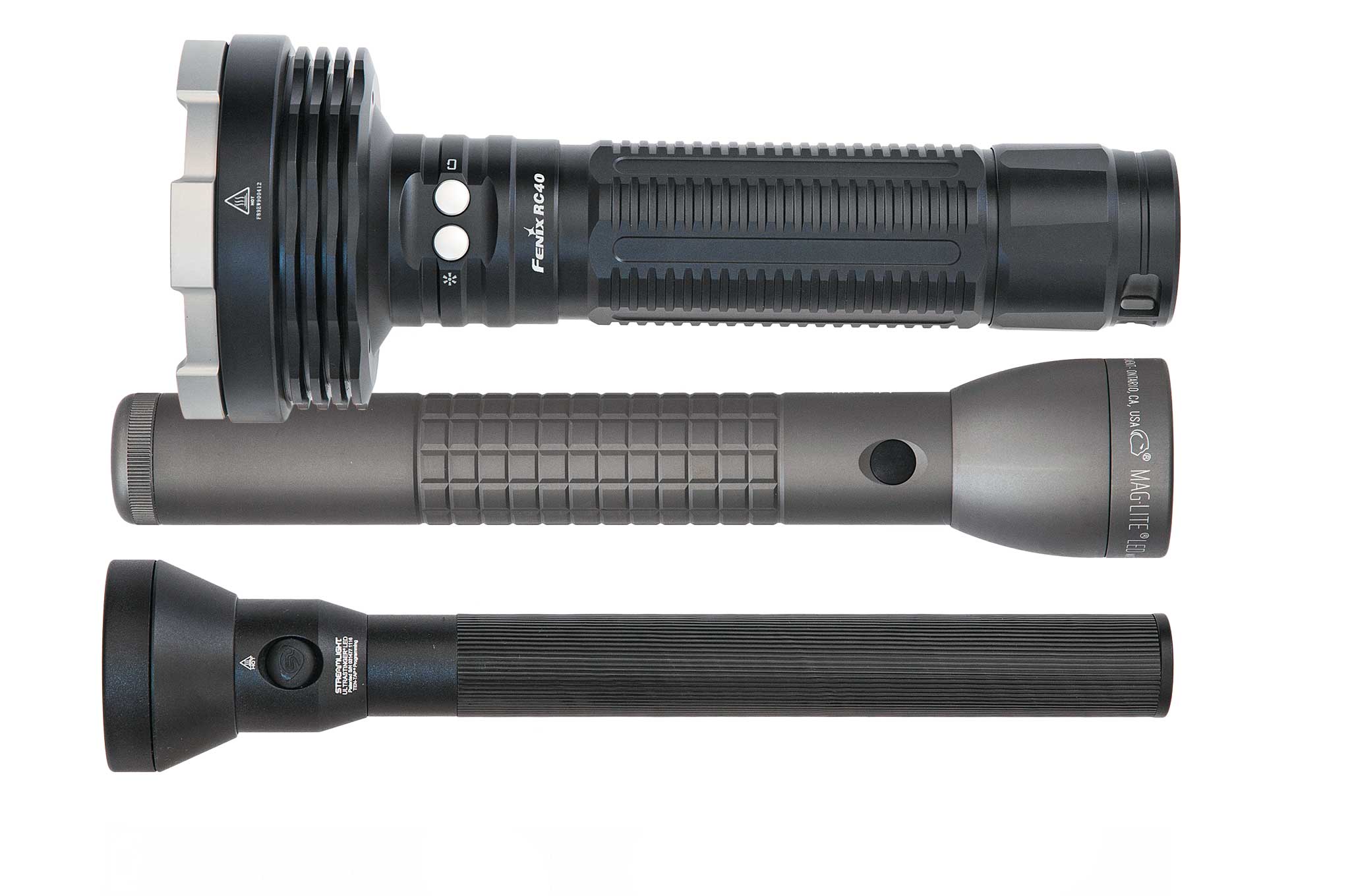
However, small flashlights have some substantial downsides. They’re easy to drop or misplace, they have limited battery life, and they’re often fragile. Also, in a self-defense scenario, these miniature lights have limited use in fending off an attacker. Conversely, large flashlights excel in all these areas, making them a top choice for law enforcement, military, and security professionals.
Traditionally, large flashlights used three or more C- or D-cell alkaline batteries. Some lights are still available in that configuration today, but there’s also a growing variety of models with rechargeable lithium-ion and nickel-metal-hydride (NiMH) cells. Whatever the power source, these big-battery flashlights offer long run time, potent light output, and sturdy construction — a combination you can rely on whether you’re at home, at work, or in a survival setting.
We took a look at six big-battery flashlights from leading manufacturers, so read on to see which one fits your needs.
Preserving your night vision is essential to performing mission-critical tasks in low-light settings. This is why it’s so annoying to be blinded by an oncoming car’s high beams, or accidentally get flashed by the beam of a friend’s flashlight on a nighttime hike. Suddenly your coordination is reduced to nil and you’re stumbling around seeing stars — not exactly optimal when you need to move quickly and precisely.
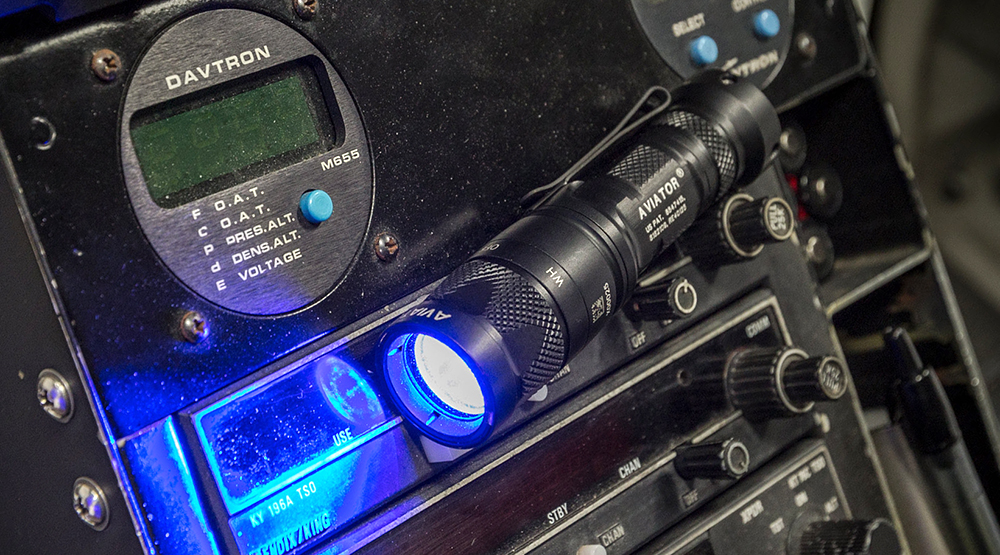
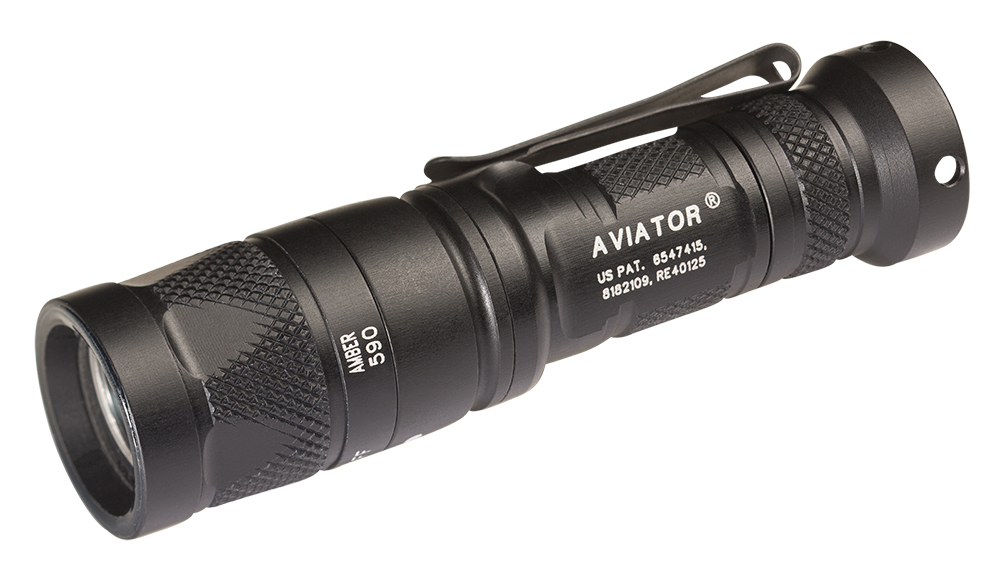
Many flashlights offer low or “moonlight” brightness modes for close-proximity nighttime use, such as map-reading or taking inventory of gear in a backpack. Some even adjust light output intelligently based on surroundings. However, white light tends to be more detrimental to night vision than other colors. This is why SureFire developed the new Aviator compact flashlight with dual-color output — a 250-lumen white light, combined with either red, blue, amber, or yellow-green alternate mode.
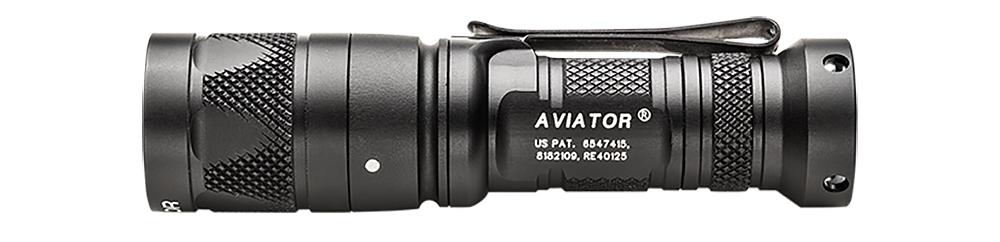
During normal use, the new SureFire Aviator acts like an ordinary light. Press or click the tail cap to produce 5 lumens of white light in low mode, and immediately repeat for 250-lumen high mode. A Total Internal Reflection (TIR) lens creates a soft and even beam pattern. To change to the alternate color, twist the self-locking selector ring, and use the controls normally. No filter or cap necessary.
If you’re wondering which color is most useful for your needs, SureFire explains the color choices accordingly:
Amber – 20 lumen high / 5 lumen low – Improves contrast and does not degrade scotopic or night adapted vision.
Blue – 4 lumen high / 0.4 lumen low – More clearly defines shapes in the outdoors and helps identify blood and hydraulic fluid.
Red – 39 lumens high – Improves contrast and aids in reading red-light-readable topographic maps.
Yellow-Green – 39 lumens high / 0.3 lumens low – Complementary to the color spectrum used in most cockpits.
The Aviator is housed in an anodized aluminum body with stainless pocket clip and weatherproof O-ring seals. It runs on one included CR123A battery, measures 4.18 inches long by 1.06 inches diameter, and weighs 3.1 ounces. The SureFire Aviator is available at an MSRP of $299. For more information, visit SureFire.com.
We’ve all experienced road rage in one form or another. You might have been on the receiving end of another driver’s anger for some perceived slight, watched two cars swerving around and brake-checking each other in traffic, or sat in the passenger seat as your vehicle’s driver blared the horn repeatedly at some inconsiderate jerk. You might have even been having a bad day and taken it out on someone who cut you off or flipped you the bird.
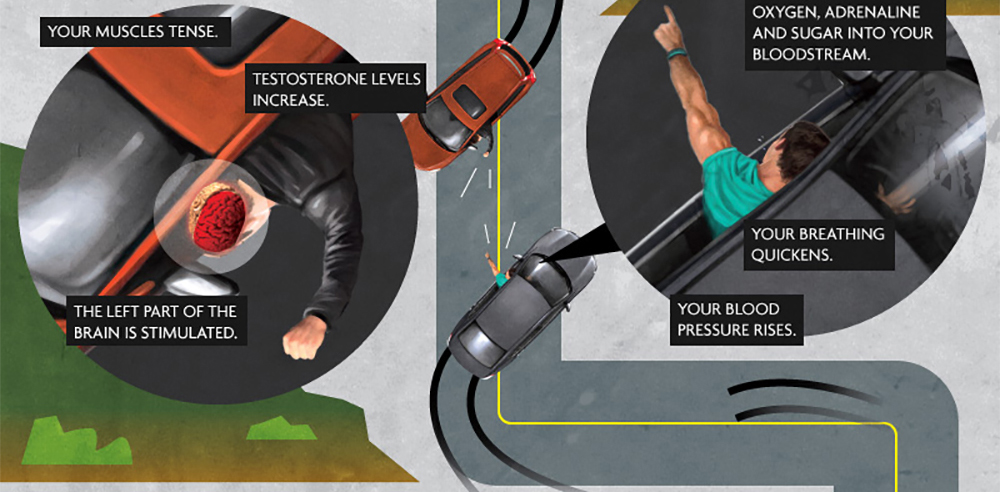
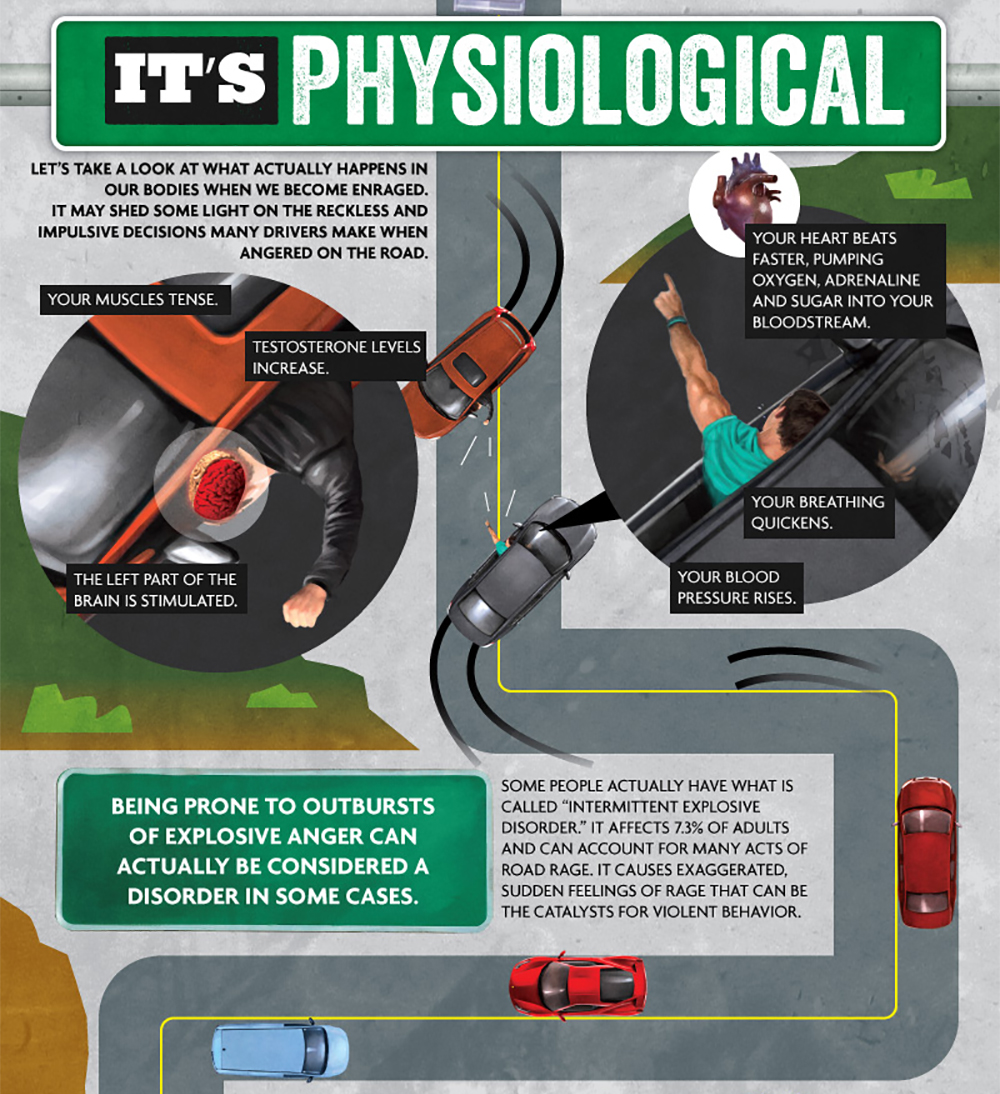
The road rage phenomenon has been studied extensively, and while it may seem like little more than a harmless tantrum, it can quickly escalate into car crashes, fistfights, and gunshots. Research has shown that there is a “direct linear increase” in road rage incidences as temperature rises, so it’s especially relevant as we enter spring and summer.
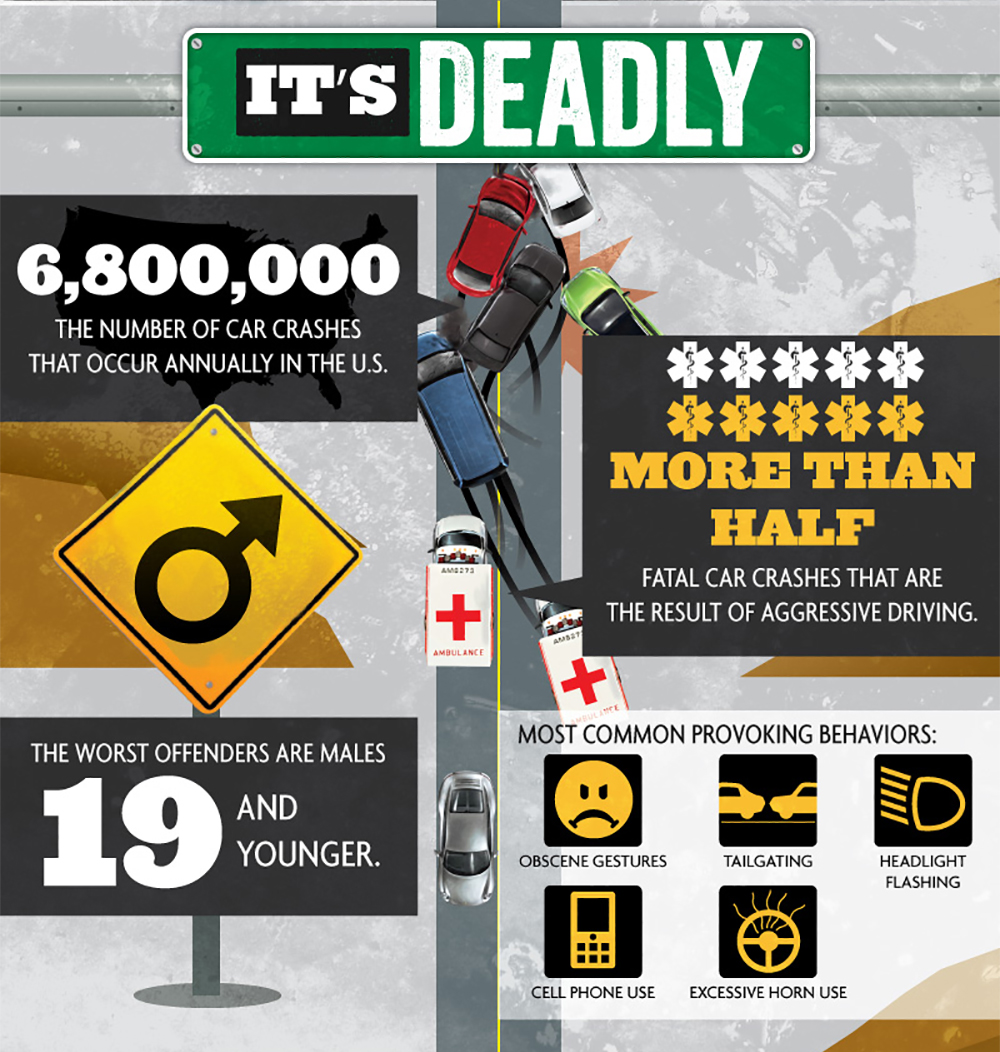
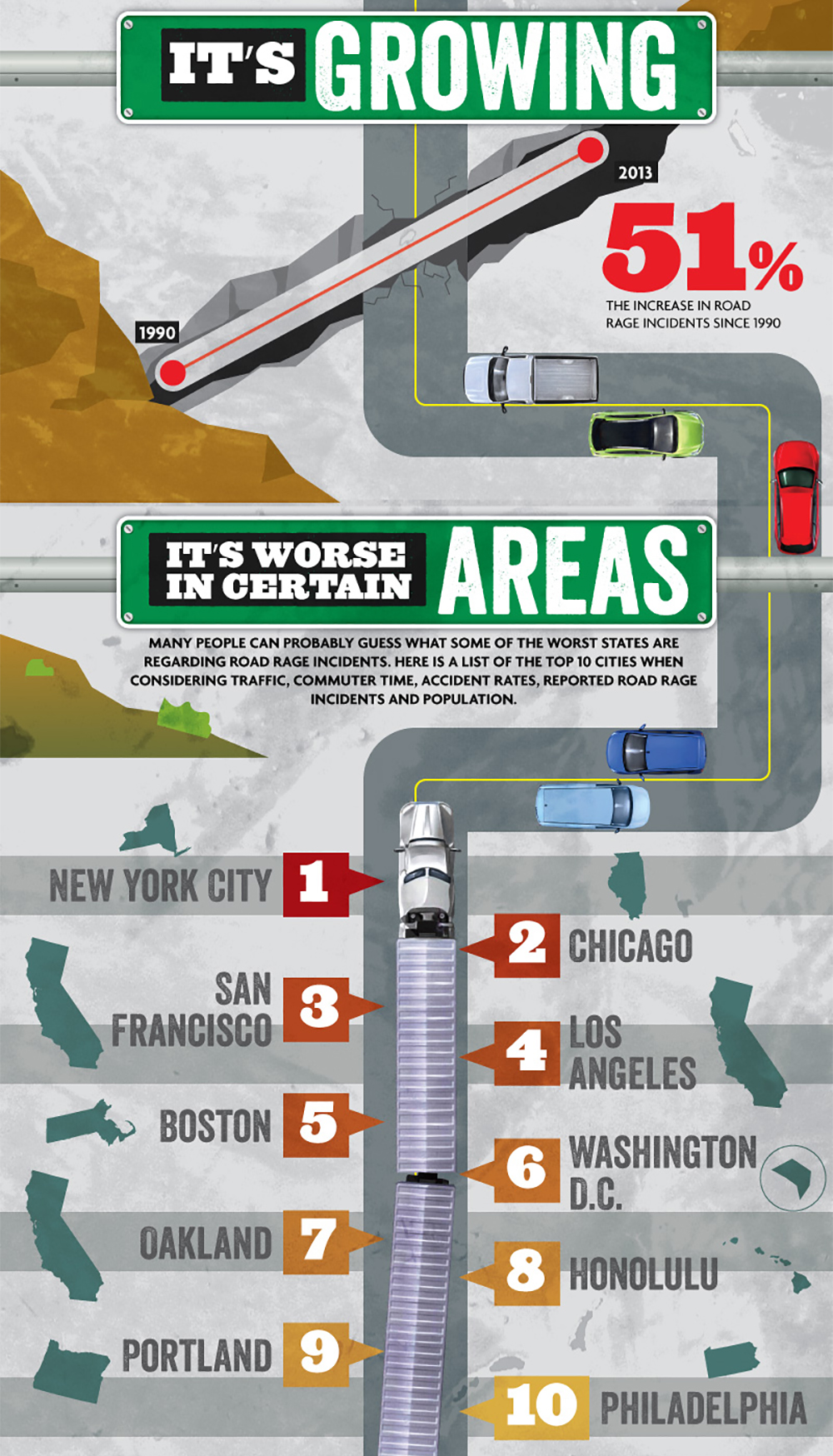
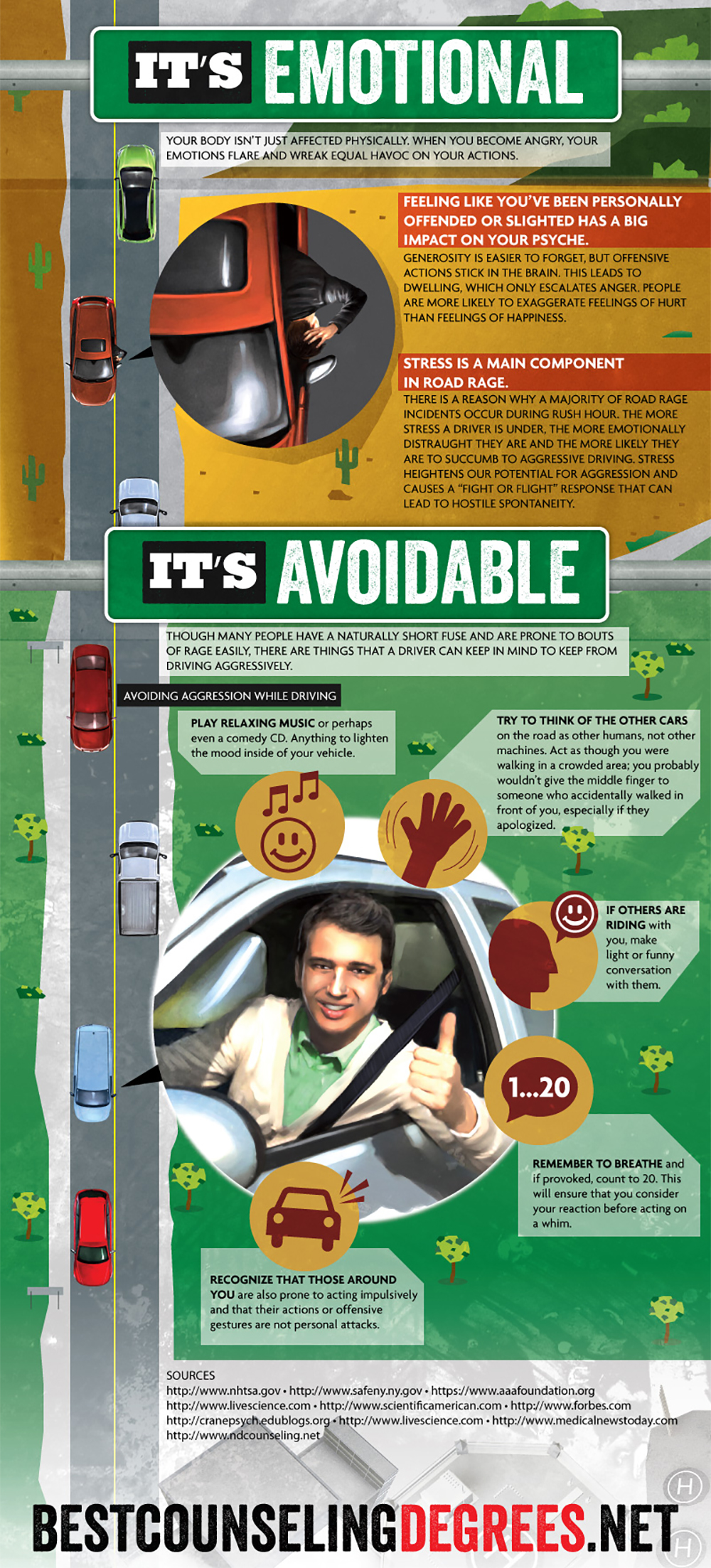
You never know if the guy you just honked at might be an ax-wielding nutcase ready to lash out. So, it’s important to understand the demographics and warning signs of road rage, and have a plan to de-escalate or escape the situation. The following infographic shows some of the physiological and emotional effects of road rage — click here for a full-size version.
While the last portion of this infographic includes some good info on how to calm down and avoid being guilty of road rage, it doesn’t really address how to deal with it when you’re on the receiving end. Here are some tips to consider the next time you become a victim of road rage:
If behavior becomes increasingly aggressive or dangerous, call 911 and report the incident. Alerting the authorities provides a safety net in case the situation gets worse.
Do not pull over or stop to engage the other driver. Disengage as soon as possible.
Leave space around your vehicle to pull around the other driver, or to brake quickly if the driver tries to brake-check you. Avoid getting boxed-in at all costs.
If the driver follows you, go to a police station, fire department, or populous and well-lit public area. Obviously, the last thing you want to do is lead the driver to your home or workplace.
If you’re forced to stop, and the driver approaches your vehicle, stay calm. Even if you’re not at fault, be willing to tell the other driver what he or she wants to hear (including apologies) to de-escalate the situation. Having the moral high ground is useless if you’re dead.
Be prepared to defend yourself and your loved ones by any means necessary if the situation requires it.
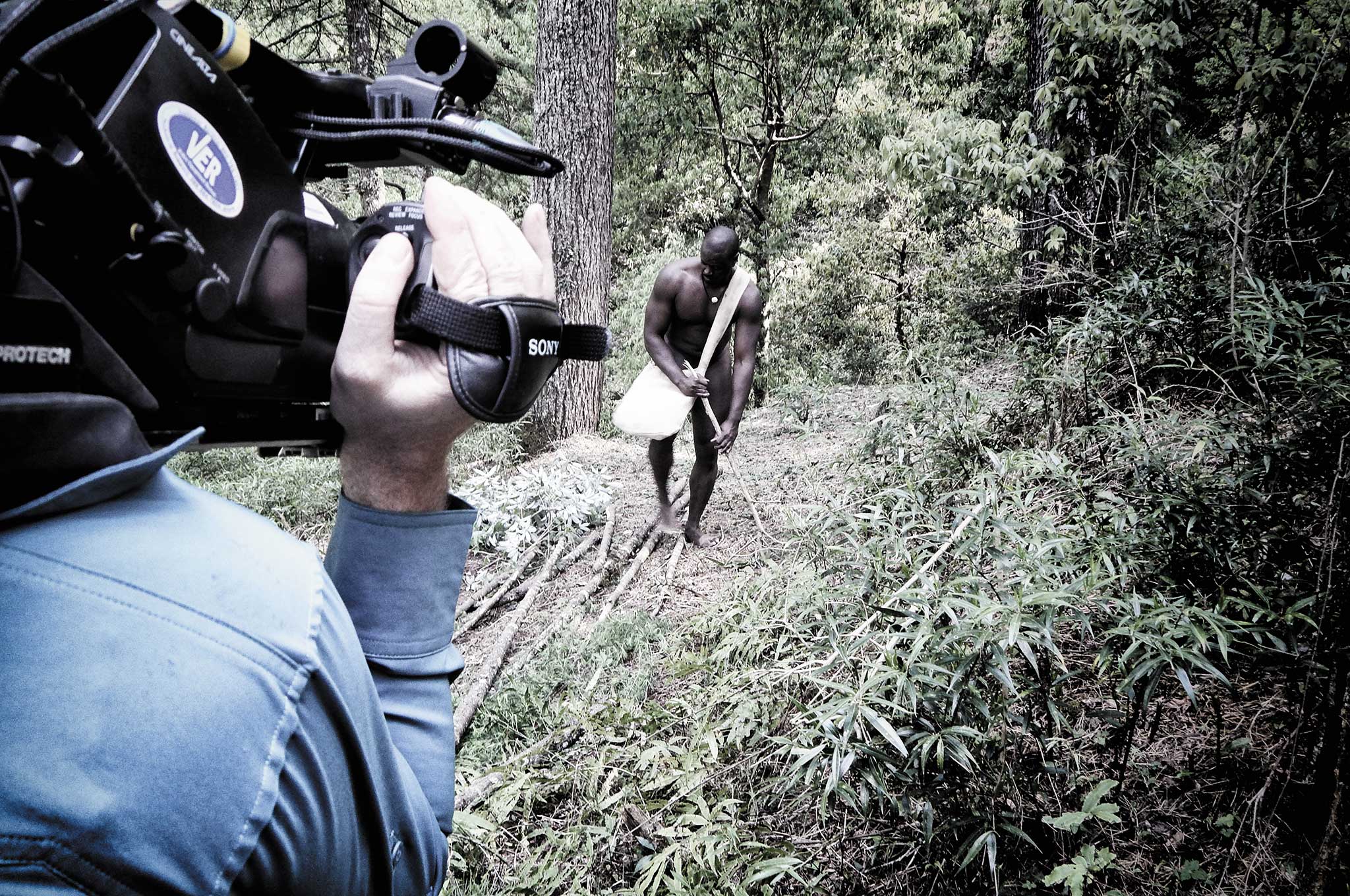
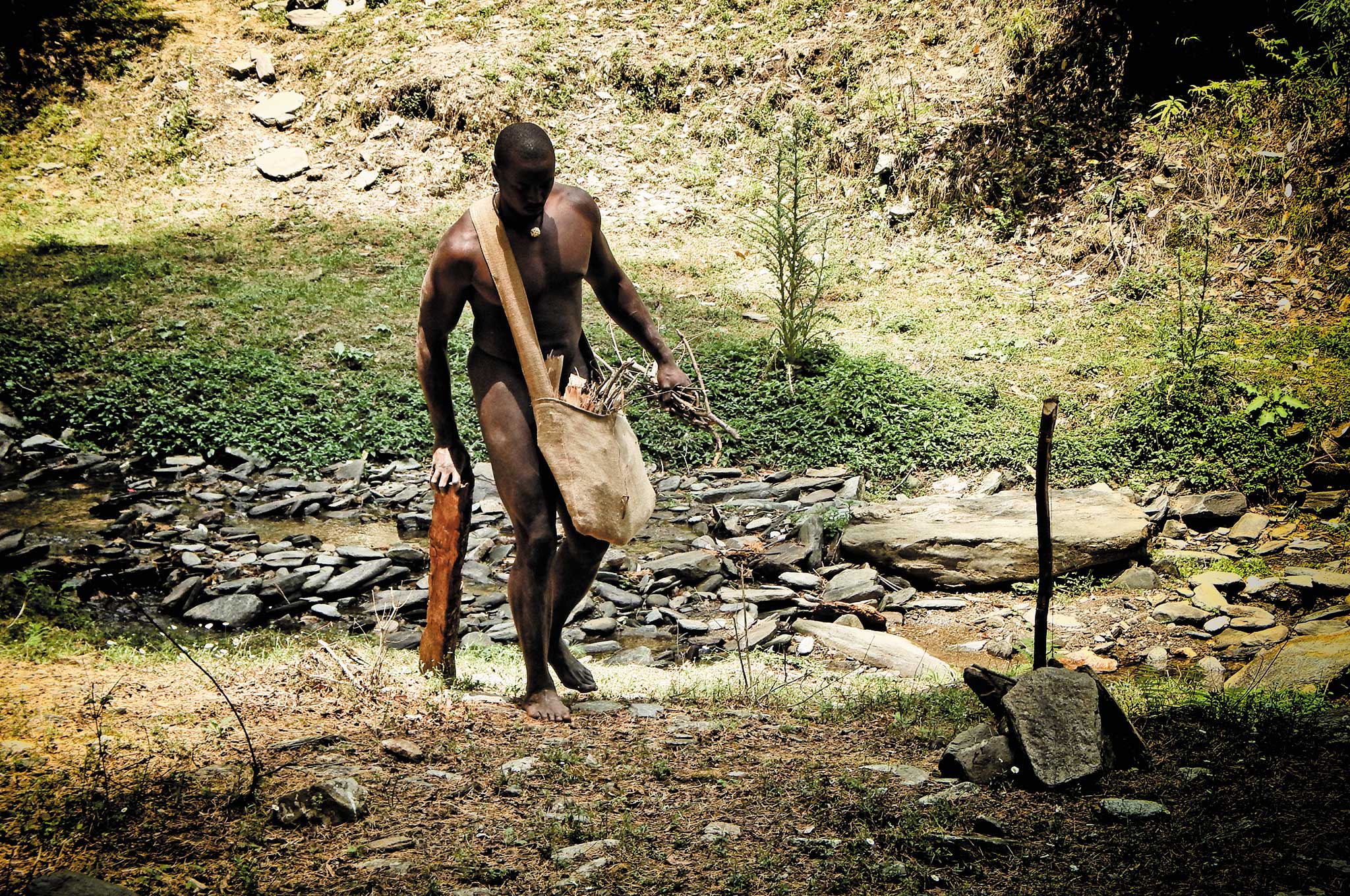
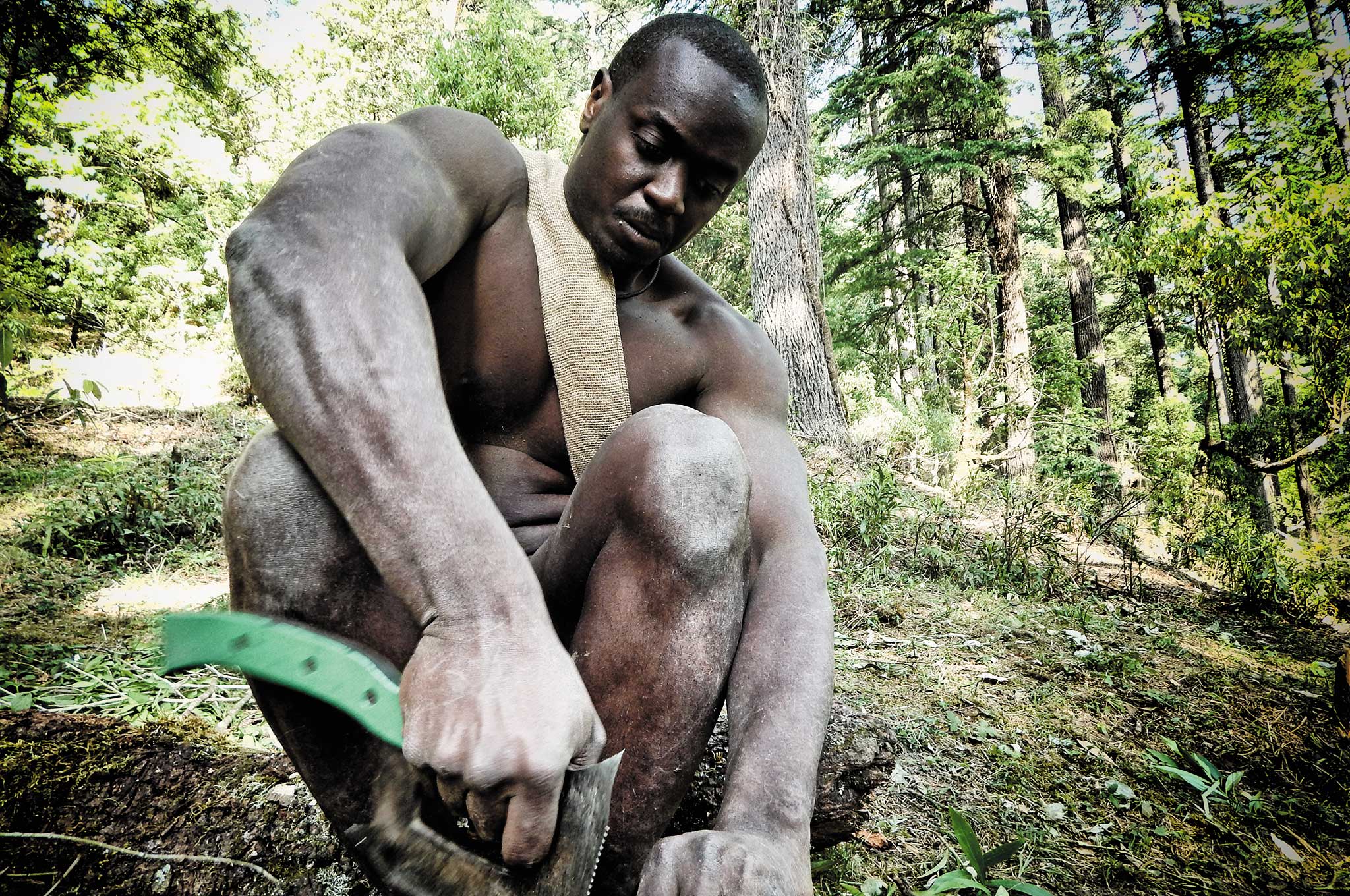
Yup. You know it’s bad when the least of your worries are the 30 flies on the tip of your dangly bit (aka man part). This was my reality as I stood before a stranger, naked and half a world away from home — 9,000 feet up on the edge of the Himalayan Mountains in India. This was survival at its core. The whole situation was set up for anyone, no less an avid survivalist, to fail. No food. No water. No clothing. No shelter. On foreign soil with nothing but one tool and the help of a person I’d never met before.
If you’re wondering what I’m talking about and why a person would ever be in a situation like this, the simple answer would be that I was on the hit Discovery Channel show, Naked and Afraid.
As an avid outdoorsman and survival enthusiast, I naturally jumped at an opportunity to try out for this challenge. As a U.S. Army veteran and a modern-day ninja (no, really, I’m a ninjutsu black belt), it’s a part of my growth plan to continually push myself to discover new aspects of my human potential. That’s why I did the show — twice. Both experiences pushed me beyond previous limits and offered deep lessons in survival and self discovery.
In addition to the personal lessons, I learned much more about survival than ever before, mostly unaddressed in any book I’d read in any class I’d attended. For these reasons RECOIL OFFGRID asked me to give you the top four lessons I learned being on Naked and Afraid. Whether you’re making plans to live completely off the grid or you’re just a casual hiker who wants to prepare for worst-case scenarios, you’ll no doubt find some valuable information below.
Lesson 1: Nothing Matters, But Life and Your Reasons for It
People ask me all the time how it was seeing my partner nude and if there was ever a time I stopped to check her out. The first point I make here is that I’m a married man so that was never going to be an issue. Then I’m quick to explain the reality of why, even if I wasn’t married, this would never be an issue.
It goes back to Maslow’s Hierarchy of Needs. Maslow explains that there are certain things a human needs before they are capable of thinking about procreation — and that includes the thoughts that precede it, such as lust. I learned about this in depth as a psychological-operations sergeant in the Army, as Maslow’s concepts were a big part of our methodology. However, once I was naked in the wilderness with a person I’d never met, these concepts took on a whole new meaning.
It was around 2 p.m. in India when my partner and I met for the first time. We had six hours before nightfall, when it would become extremely cold. We had to move further up the mountain, find a far-off location, build a shelter, gather materials for a fire, and start that fire.
There was no time to think of anything other than what the heck I got myself into, how the heck to survive, and what skills my partner had. In each question, the root was all about staying alive. It’s easy for a person watching to think of the sexual side of things, as they have all the basic comforts met (hence, why they’re even watching television). But for us it was only about survival.
The Takeaway: If you ever find yourself in a survival scenario, you’ll go through an overwhelming amount of emotions. However, also know that your body will eventually unify with your mind toward taking steps to get what it needs. You’ll find that the only things that occupy your thoughts are what you need, how to get it, and why you need it. This is of some comfort to know when you’re lost. However, it’s also important to understand that without training and proven solutions for gaining the things you need to survive, you’ll fall short and your natural, programed instincts may not be enough. So, start learning, prepping, and practicing now.
Lesson 2: Game Plans Are for Losers
When in a real survival situation, it’s important to know that books can’t help you, opinions don’t matter, and the rules are flexible. There’s no real strategy when dealing with nature, because natural laws are beyond logic.
I went into my first Naked and Afraid challenge with a whole lot of plans. I had a foolproof strategy that I practiced. On the first day I was going to make shoes and a fire. On the second I would make a shelter. On all days I would keep an eye out for a good water source, but on the second and third I would dedicate most of my time to finding it. This of course sounded good and tested well on my home turf where I was fully fed, mostly clothed and acclimated, but in a foreign land at an elevation I wasn’t used to, nothing went as planned.
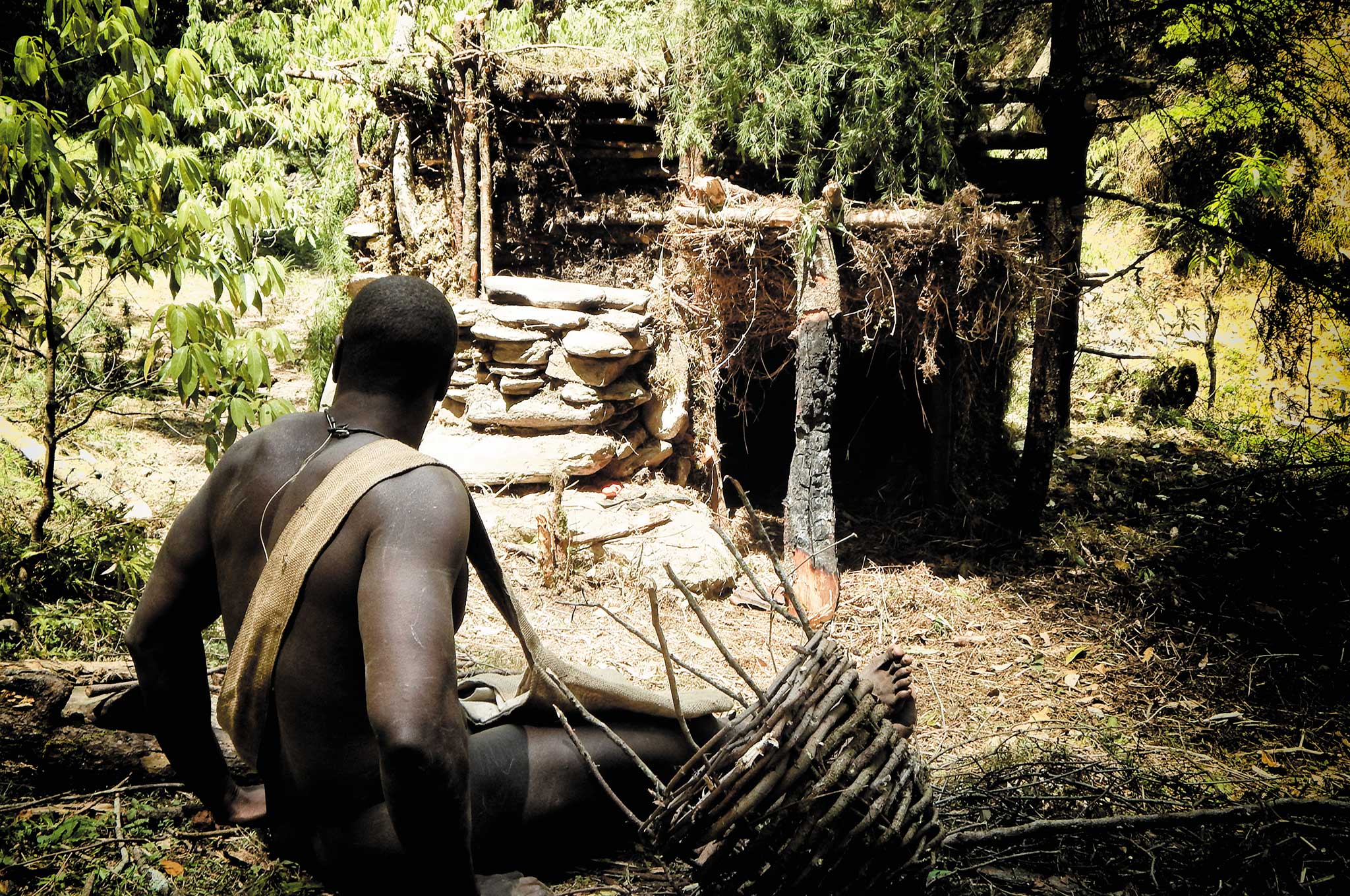
There was no preparation for how Mother Nature responded. With only hours to spare after meeting my partner, there was no time to make shoes. I could feel how cold it was getting, and we knew we would need a fire. Furthermore, I could see the clouds moving in and thought it might rain. Therefore my partner and I not only knew we needed water but also to keep dry and warm, so we needed a shelter.
Nature can destroy any survival plan. The author had to change his first goal of building a fire to building a shelter when he saw rain clouds approaching while on TV’s Naked and Afraid.
So let’s recap: Six hours to do a major trek without shoes and clothes, collect firewood, collect shelter material, build a shelter, and then start a fire and keep it going through the dead of night so we didn’t freeze — I never dreamed it would be like this. I hadn’t adequately studied or trained for the situation we faced, and I had few people in my life who could’ve warned me. I was in the worst-of-the-worst scenarios. Needless to say shoes never came up in those first three days.
As a matter of fact, we stayed behind the curve and spent most days gathering firewood, improving our shelter, rehydrating, and looking for food.
Clothing and shoes seemed so unimportant when we had little physical and mental energy to allocate. We focused on the things that helped us stay alive, not the things that brought us extra comfort or ease. Again, this was a strategy born out of necessity, and the reality of the situation wasn’t based on preformed strategies from others or principles existing outside of the there and then.
The Takeaway: Like a scientist or an engineer, you learn good principles and textbook knowledge in school, but when you go out into the real world, the principles act as guides not gospel. The actions you take often transcend book knowledge, relying only upon aspects of the principles for adaptive and creative problem solving. This is what you need to truly survive.
Lesson 3: Shoes Are Like Time Machines and Bare Feet Are Like Microscopes
The “Why didn’t you make shoes?” question is one I hear a lot. I mostly covered why I didn’t make shoes in Lesson 2, but just to make another point — shoes are awesome! Hear me clearly: If you can have shoes, have them. Shoes are truly like time machines.
What I mean by this is that everything happens faster when you have them. Because we grow up in a predominately footwear-oriented society, it’s easy to take for granted how much they facilitate comfortable travel. In the wilderness, three minutes of movement with shoes is probably equal to 10 or 15 minutes without them. This is mostly due to pain, and secondly, due to the threat of pain from stepping on thorns or things that could bite you.
There are pros and cons to walking with and without shoes. The pros are that you travel faster and your feet are protected from bugs, reptiles, and the elements. This, of course, allows you to get more done in less time. On the contrary, because you can move so fast, it’s easy to miss things. You tend to not move as carefully, making you more vulnerable to other potential injuries and also creating the potential to overlook important opportunities in your surroundings.
Shoeless Hakim Isler had to slow his movement to protect his feet; both a pro and a con in terms of survival.
When you’re barefoot, you have no choice but to slow down. Your movements are strategic and methodical. This is a time suck in a situation where you’re fighting the clock; however, it’s a potential gift when learning your landscape and how to survive in it. Your whole being becomes like a microscope, forcing you to survey the ground in your immediate vicinity as well as several feet ahead.
This, of course, helps with gathering and hunting. With every step, your feet connect you with the earth, giving you bio feedback that speaks to your primal side. That part could sound a little hokey, and, in truth, it’s hard to understand, much less believe, until you experience it.
The Takeaway: The lesson here is, if you can help it, wear shoes, but slow down unless you have to hurry. Pretend your feet are bare and absorb your environment. You’ll learn and see things you wouldn’t otherwise.
Lesson 4: Dirty Is the Same as Clean in the Natural World
In my first few days in the Himalayan wilderness, I tried to stay clean. I understand the importance of hygiene in a survival situation. After several days of looking for food and living in wild with no real success, I had an epiphany. I realized that my partner and I were unnatural invaders in this natural landscape. Although we tried hard to blend with the environment, our own desires for cleanliness worked against us.
It was similar to a hobo coming into a pristine mansion and setting up in the living room, never showering and never cleaning up after himself. The level of disruption created would not be overlooked or accepted. This was what we were doing in the wilderness.
The chemicals in and on our bodies flooded the environment. The lack of subtlety in our movements rippled like mini earthquakes. Everything knew we were there. In the wilderness, dirty is clean and clean is dirty. We failed to understand this, and it made it hard to find real food. I found that, as time went on, there was a reawakening of my natural primal understanding. On the second week of the 21-day stint I found that these lessons reacquainted themselves with me.
The Takeaway: The average person understands this concept to some degree, as hunters use scent dampener and camouflage to hide their presence. The environment will do this for you naturally if you let it. The more time you spend outdoors, the more you’ll find that your body will purge itself of the impurities in your system.
You’ll then start to naturally take on the attributes of your environment. You’ll no longer be an individual entity, absorbed by the landscape. Your natural inclination will be to fight it, but this will only waste time and energy and, in the long run, hinder your ability to get what you need to survive. I’m not saying not to clean your teeth or wash yourself at all — just don’t obsess over it like we do in our regular lives.
Conclusion
At the outset of this story, you were probably thinking, What could be worse than having a bunch of flies on your frank and beans? Armchair survivalists might have watched some TV shows or read a book and thought they could critique the performance of a person half a world away on how to survive when they were at the lowest level of Maslow’s Hierarchy. Hopefully with just these few lessons, they’ll learn that there’s more to survival than regurgitating textbook solutions.
There’s the will of nature, the will of a beast, and the discovery that you don’t know sh*t. However, with humble acceptance, trained knowledge, flexibility, and strong determination, you can survive even the worst of conditions.
About the Author
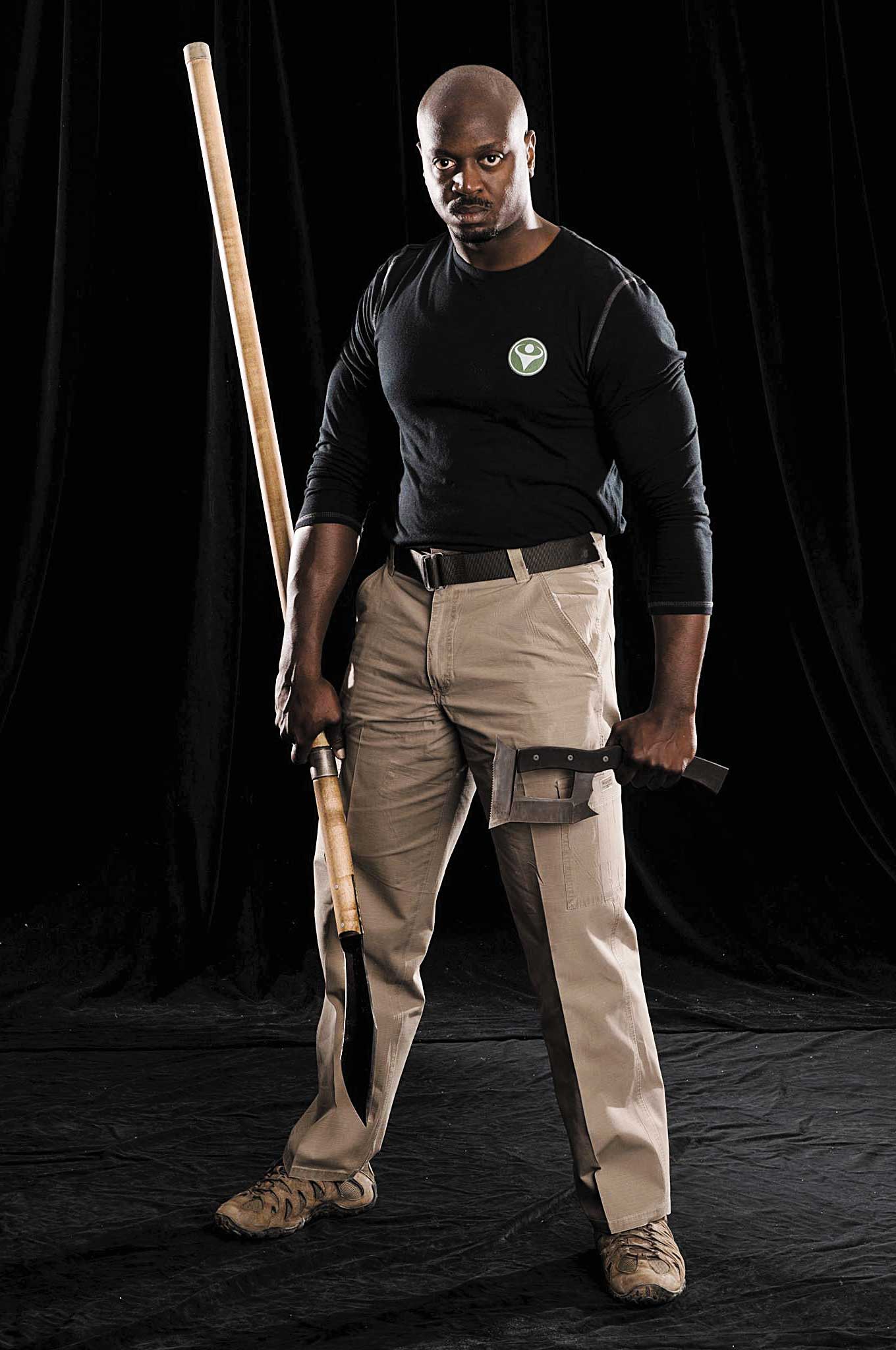
A former psychological-operations sergeant with the U.S. Army, Hakim Isler is the designer of several wilderness survival products and the owner of Elevo Dynamics, the first “Dojym” (a 24-hour gym and martial-arts facility) in the United States. He is also the founder of the SOIL Foundation, a nonprofit that offers off-grid training and excursions to help veterans, law enforcement, and civilians recover from anxiety, depression, and PTSD. Additionally, Isler is a fourth-degree black belt in To-Shin Do under Stephen K. Hayes, an instructor in the Filipino combat system of FCS Kali, and the author of Modern Hand to Hand Combat.
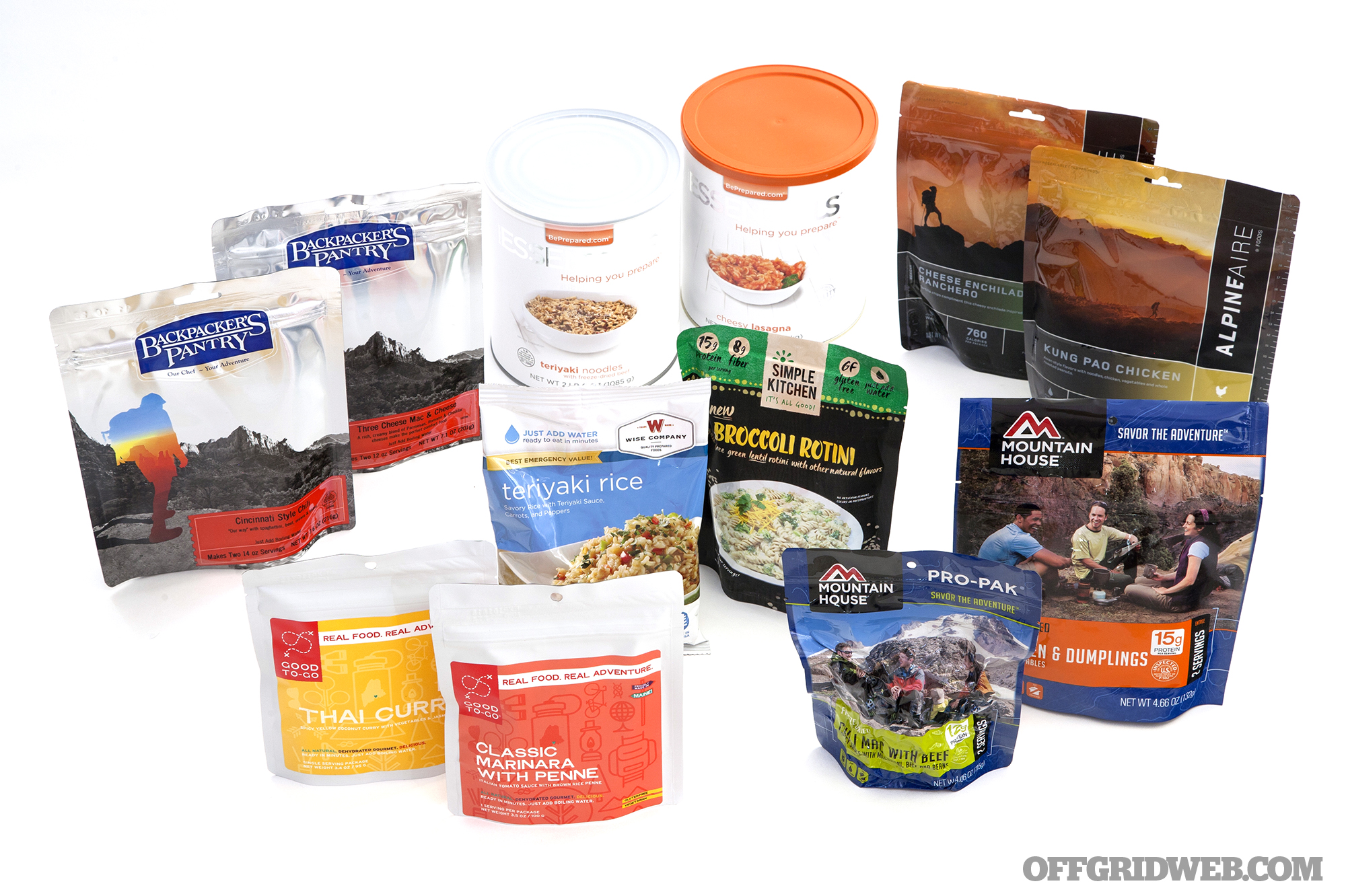
Freeze-dried food isn’t just for astronauts these days. There are a variety of commercially-available dehydrated survival food choices, ranging from grab-and-go snack pouches to huge buckets for long-term disaster prep. Flavors are equally varied, with a smorgasbord for every palate. We selected six of the leading dehydrated food producers on the market, and requested two entrée flavors from each. The full reviews of these 12 entrées can be found in the upcoming Issue 19 of our print magazine. This issue goes on sale 3/31/17, and will be available on newsstands, as part of a home-delivery subscription, or in a variety of digital formats — click here for more info on RECOIL OFFGRID magazine.
Three of our staff writers reviewed these twelve savory entrees in Issue 19.
Sweet Treats
During our interactions with these six dehydrated food companies, we started thinking: a hot meal is good on its own, but following the meal with a tasty dessert can make the experience even better. That may just be the voice of my repressed inner fat kid talking, but he has a point. So, we also requested one sweet treat from each of the six companies.
Each of these six items can be eaten after meals as a dessert, in between meals as a quick energy boost, or in some cases as a standalone meal. The common thread between these dishes is an emphasis on sweet flavor, as opposed to the savory entrées in our magazine’s guide. You won’t find these reviews anywhere else — they’re exclusive to OFFGRIDweb.com.
While three members of our staff tested the entrées, I tried out these sweet snack items on my own. Read on for my impressions of each, and to see which flavors appeased my sweet tooth.
Note: Don’t let the seemingly high cost per ounce immediately deter you from some of these items. Dairy products, fruits, and vegetables have high water content, and freeze-drying removes virtually all of this water, resulting in a very lightweight yet surprisingly filling product. In these cases, calorie content is more relevant to value than weight.
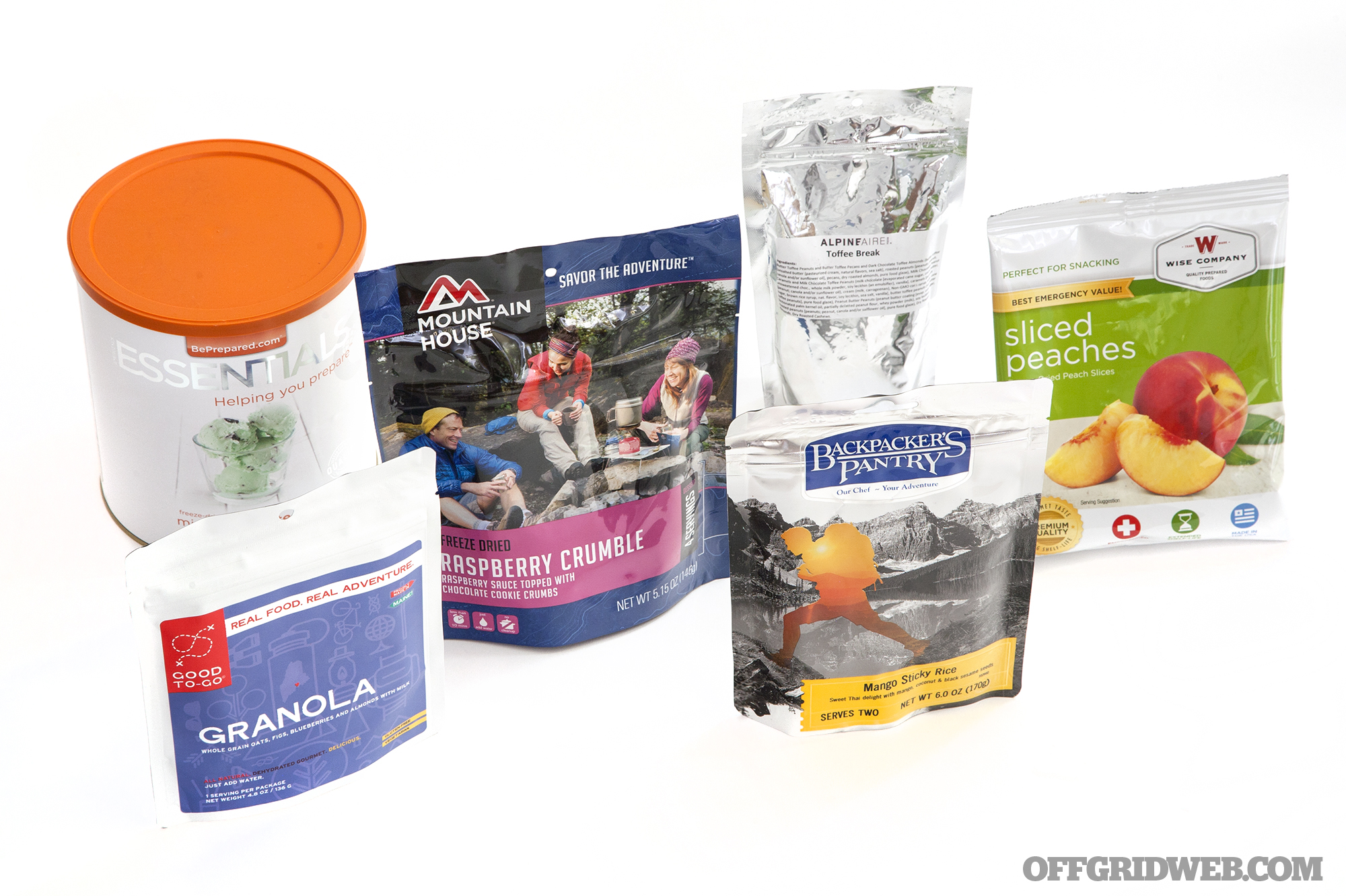
AlpineAire Toffee Break
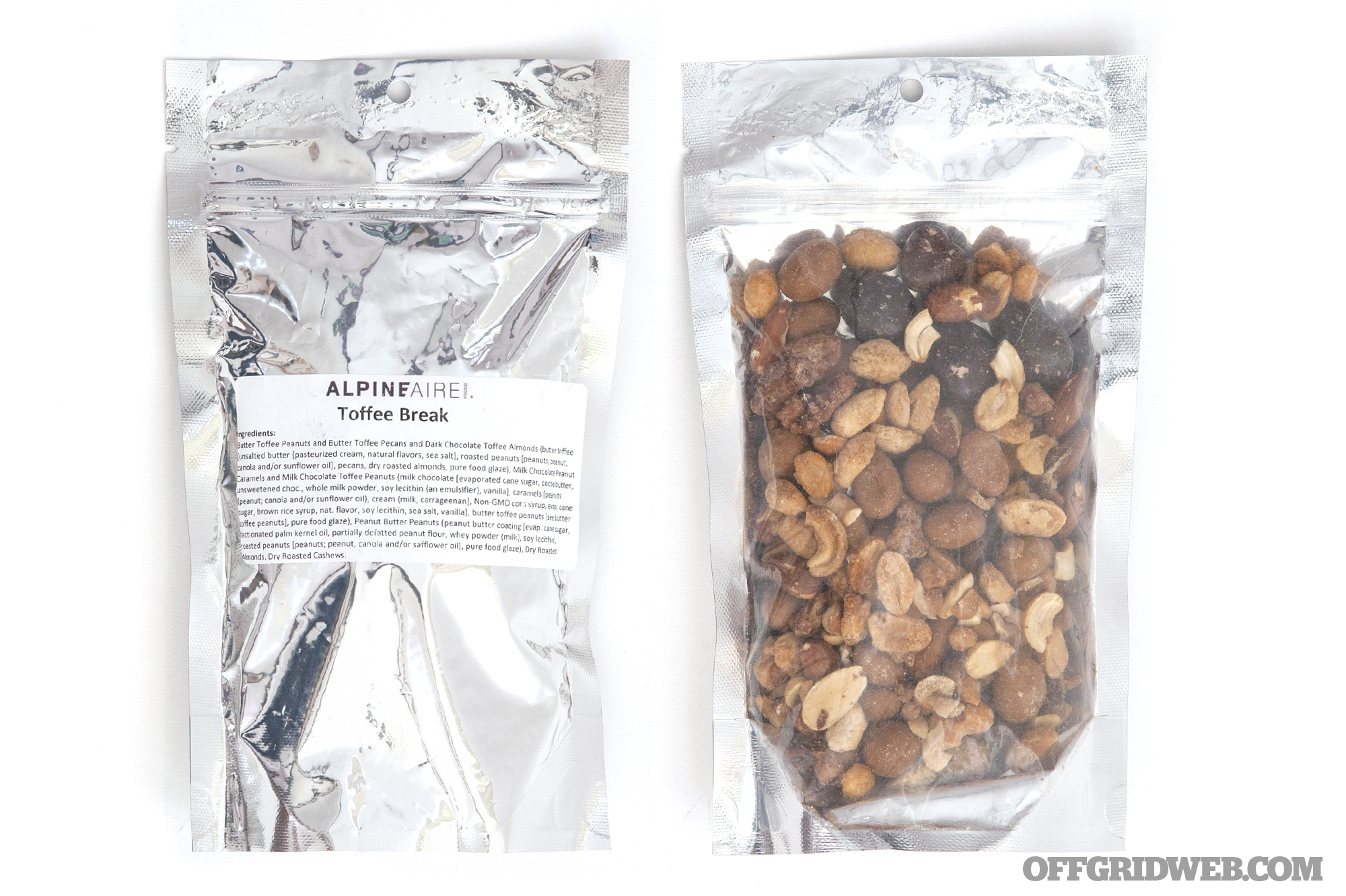
Package Size / Servings Per Package: 6 ounces / 3 Calories Per Serving: 340 Approximate Shelf Life: 2 years Prep Method / Prep Time: Ready to eat / None MSRP / Cost Per Ounce: $5.95 / $0.99 URL:AlpineAire.com
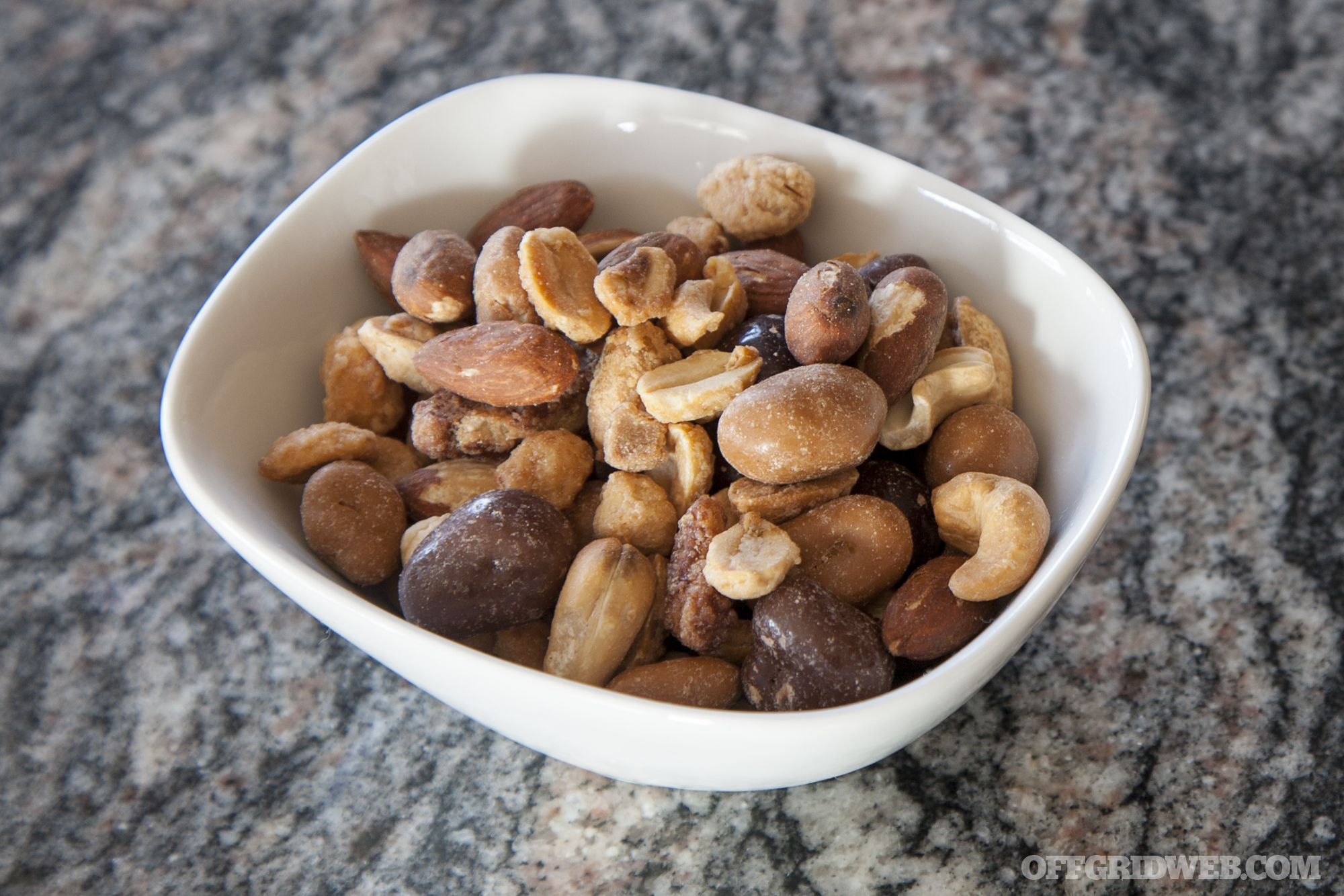
Notes: Toffee Break is a trail-mix-style snack, with peanuts, pecans, cashews, almonds, butter toffee, dark chocolate, caramel, and peanut butter. The sample pictured here is from an early production run, so it’s a plain foil bag with a basic label rather than the colorful packaging that will be offered in retail stores. However, the listed ingredients are identical to the retail version, and the contents should taste exactly the same.
Review: Peanut butter and chocolate are a match made in heaven. If you disagree, I don’t think we can be friends. Seriously though, this Toffee Break mix is one of my new favorite things. Four types of nuts are blended with butter toffee, caramel, peanut butter, and dark chocolate. It’s crunchy, rich, and provides a nice balance of salty and sweet. The only downside is just how rich it is — one 6-ounce package contains a whopping 1,020 calories, 84 percent of your daily fat, 90 percent of your daily saturated fat, and 63 grams of sugar. Sixty. Three. Grams. That’s nearly as much sugar as two full 12-ounce cans of Coke. Considering how delicious this stuff is, it would be relatively easy to down this entire pouch in a sitting if you’re hungry. So, as long as you can show restraint and consume small quantities (or run a half marathon afterwards), Toffee Break is an excellent choice for calorie-dense energy-rich snacking. I’m craving more of it already.
Backpacker’s Pantry Mango Sticky Rice
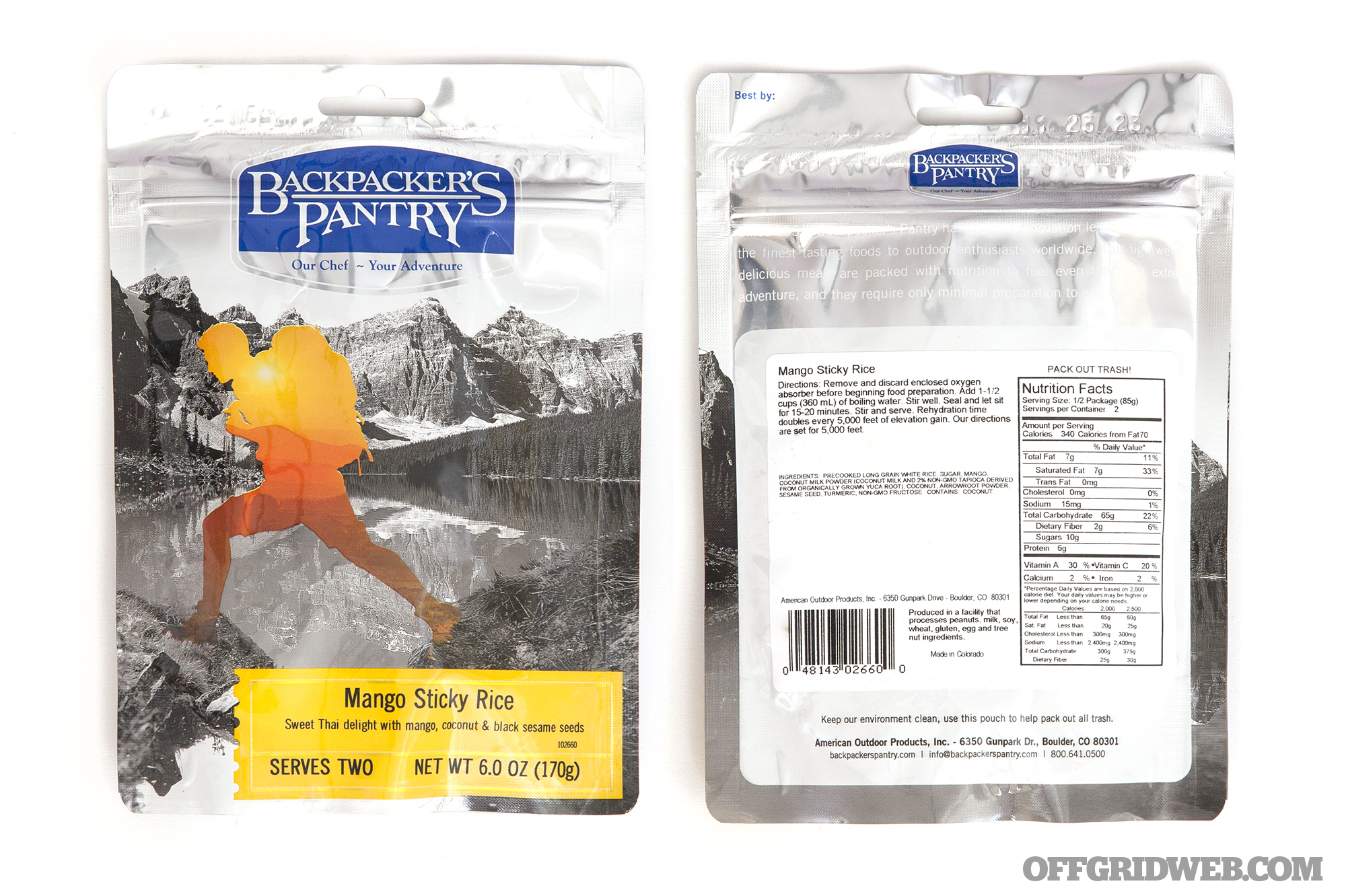
Package Size / Servings Per Package: 6 ounces / 2 Calories Per Serving: 340 Approximate Shelf Life: 7 years Prep Method / Prep Time: Add boiling water to package / 15-20 minutes MSRP / Cost Per Ounce: $6.50 / $1.08 URL:BackpackersPantry.com
Notes: A sweet Thai-inspired recipe with white rice, mango, coconut milk, and black sesame seeds. Backpacker’s Pantry says it “makes a fantastic breakfast or dessert”, and also notes that it’s vegan (if that’s something you care about).
Review: Compared to the cavity- and grin-inducing sweetness of the Toffee Break mix I just sampled, this rice dish is much more nuanced. It’s certainly sweet, but not in an overpowering way — considering the reasonable 20 grams of sugar in the entire package, I expected as much. The vibrant yellow rice and black sesame seeds look appetizing, and create a mild flavor with a slight tang of mango. Speaking of the mango, small chunks are present among the grains of rice, but they’re a bit soft in a melt-in-your-mouth sort of way. Not bad, but a little more freshness and acidity would’ve really made this a home run. As it stands, this could work as a standalone meal or a sweet snack after your entree. I’d say it’d actually be a great complement for the Kung Pao Chicken found in our magazine article.
Emergency Essentials Mint Chocolate Chip Ice Cream
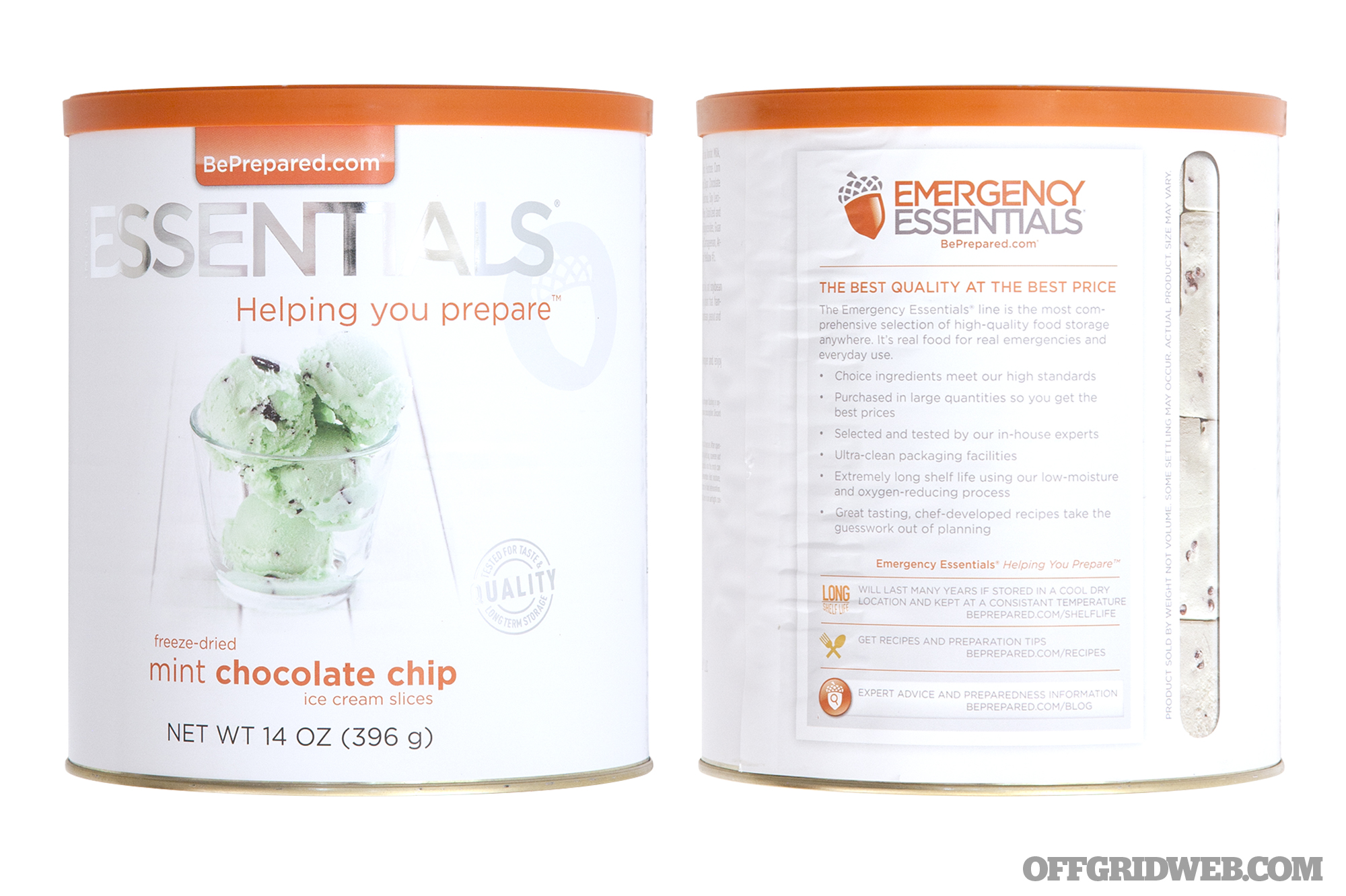
Package Size / Servings Per Package: 14 ounces / 16 Calories Per Serving: 160 Approximate Shelf Life: 25 years Prep Method / Prep Time: Ready to eat / None MSRP / Cost Per Ounce: $33.99 / $2.43 URL: BePrepared.com
Notes: This large can contains 16 individually-wrapped freeze-dried ice cream slices. Simple mint ice cream, speckled with chocolate chips. It looks like Emergency Essentials may be phasing out this flavor (at least temporarily), since it went on sale for 50 percent off MSRP shortly after we received our samples, and is now listed as “sold out”.
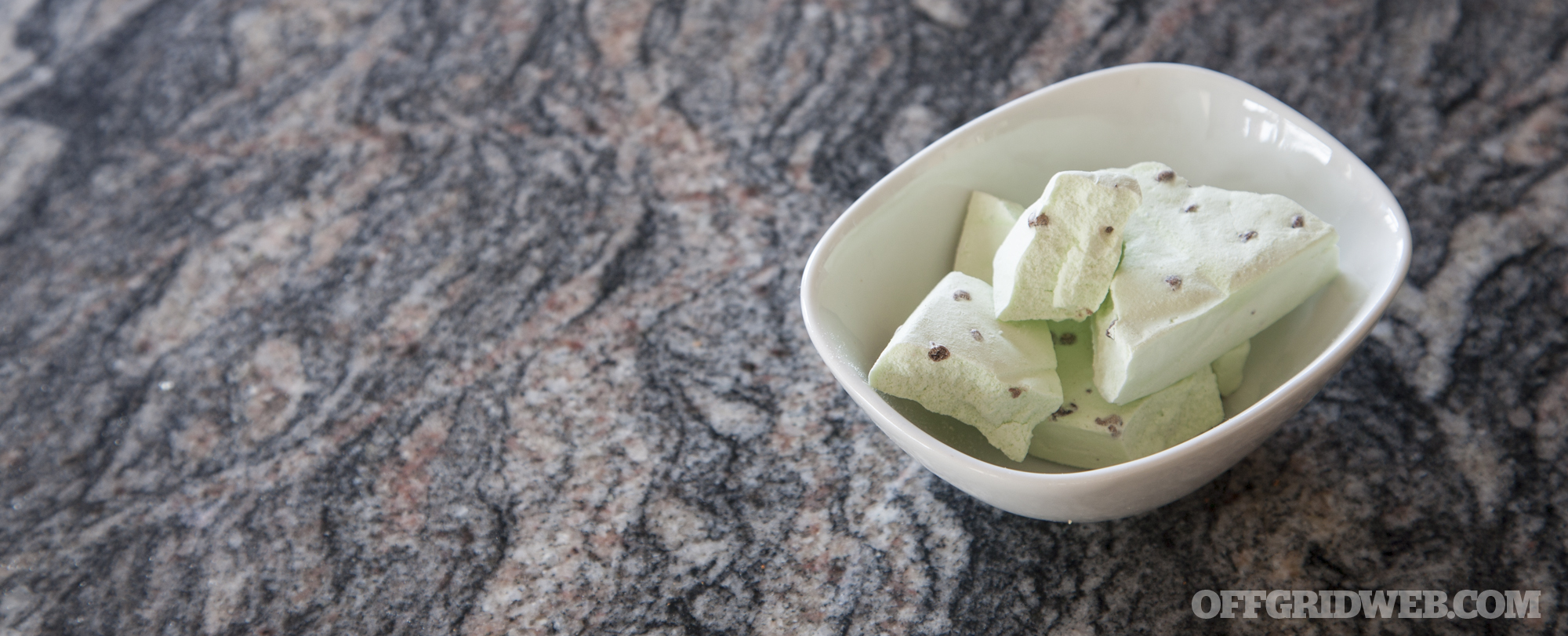
Review: Most people know this as astronaut ice cream — it’s light and airy like a hard marshmallow, and melts in your mouth to produce a surprisingly accurate ice cream flavor. It’s sweet and somewhat creamy, although it lacks the refreshing cold element that’s a big part of the ice cream experience. As long as you’re not expecting brain freeze, it’s pretty great. I did note that this tends to make quite a mess as you eat, since most of the individual bricks of ice cream were already partially cracked or broken up in transit, and all packages contained chalky dust and fragments that seem to get everywhere. Biting into the ice cream also causes it to crumble. But if you’re eating outdoors and aren’t worried about attracting critters, that’s no big deal.
Good To-Go Blueberry Almond Granola
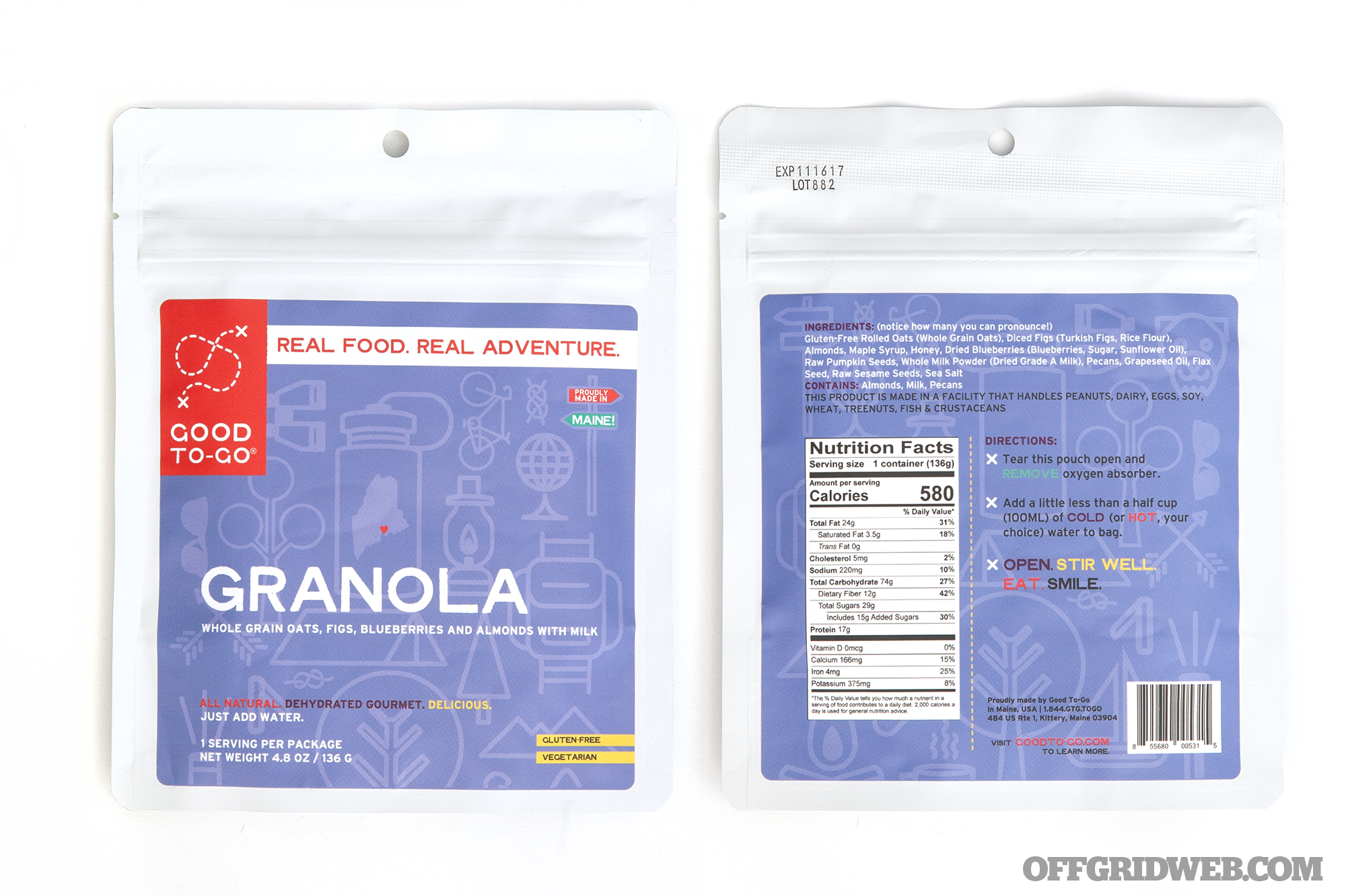
Package Size / Servings Per Package: 4.8 ounces / 1 Calories Per Serving: 580 Approximate Shelf Life: 1 year Prep Method / Prep Time: Add cold or hot water to package, stir and eat / None MSRP / Cost Per Ounce: $6.50 / $1.35 URL: GoodTo-Go.com
Notes: In keeping with Good To-Go’s gluten-free and healthy take on backpacking food, this granola uses gluten-free whole grain oats. There’s also dried figs, dried blueberries, almonds, pumpkin seeds, flax seeds, sesame seeds, pecans, maple syrup, honey, and whole milk powder.
Review: Here’s another one for those who aren’t looking to call the dentist immediately after eating. Although the ingredients say it’s acceptable to prepare it with cold water, I opted for hot water, and soon dug in to the warm, hearty granola. This is real stick-to-your-ribs food with 580 calories, a heavy dose of carbs, and 17 grams of protein. The oats, almonds, and various seeds give this granola body, and are balanced out by hints of cream and dried fruit. Additional sweetness comes from natural honey and maple syrup, but it’s relatively subtle. This would make a fantastic quick breakfast, especially considering it doesn’t require additional prep time. Boil water for your tea or coffee, add a splash to the pouch, and you’re all set for the morning. I wouldn’t consider this sweet enough to be eaten for dessert, but it’ll give you a welcome burst of energy in the early AM.
Mountain House Raspberry Crumble
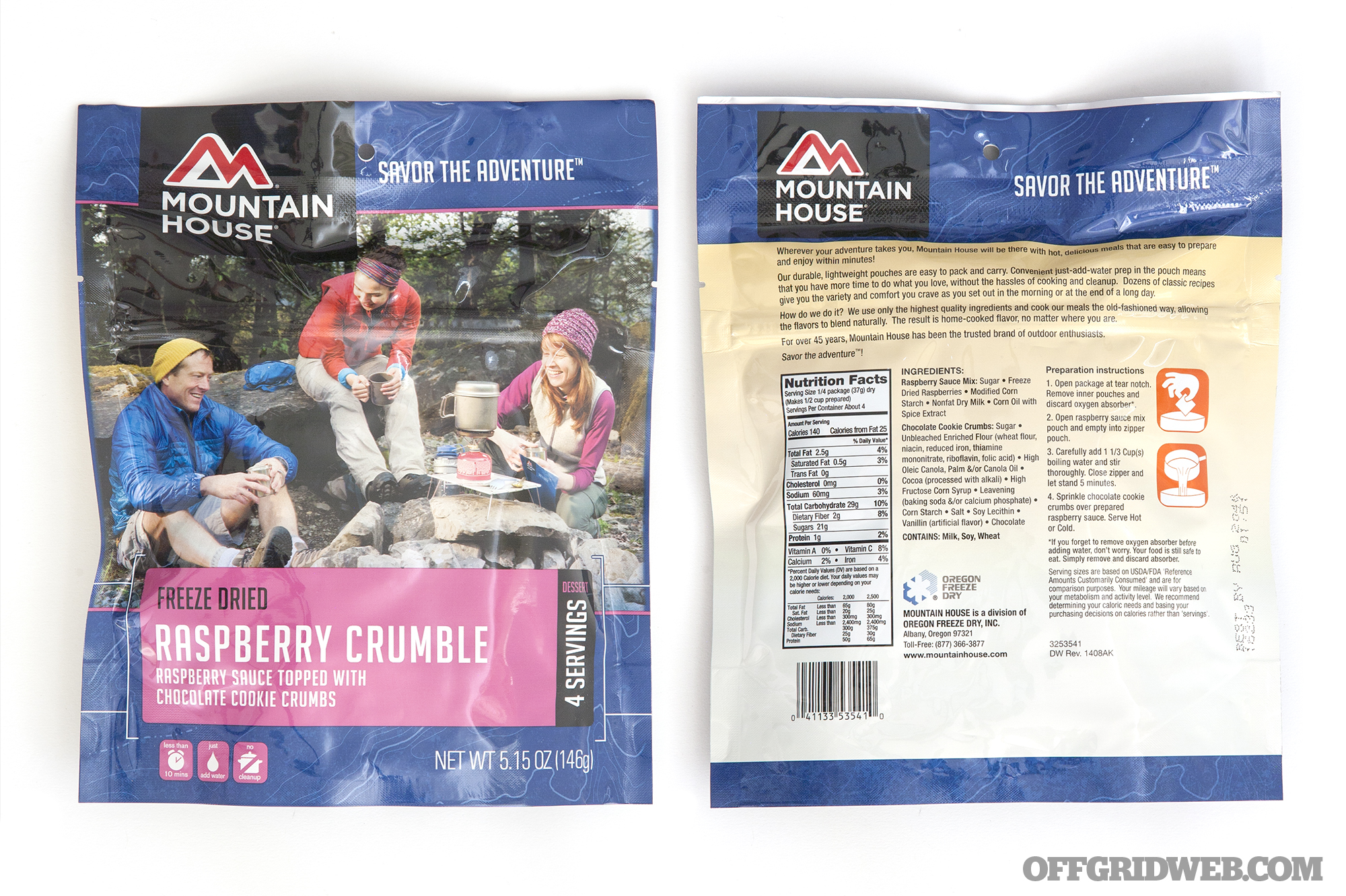
Package Size / Servings Per Package: 5.15 ounces / 4 Calories Per Serving: 140 Approximate Shelf Life: 30 years Prep Method / Prep Time: Add boiling water to package / 5 minutes MSRP / Cost Per Ounce: $8.99 / $1.75 URL: MountainHouse.com
Notes: Raspberry sauce with chocolate cookie crumbs. Contains freeze-dried raspberries, nonfat milk powder, and crushed chocolate cookie powder. This dish is prepared with boiling water, but can be served hot or cold.
Review: After combining hot water and the raspberry mix and waiting the allotted time, I was greeted with a syrupy sauce that resembles the filling of a pie or tart. On its own, it has a tangy acidity and strong sweetness, almost like a thin raspberry jam. The included cookie crumble pouch contains dark brown powder that’s obviously inspired by crushed Oreos, minus the cream filling. Sprinkling the crumble onto the raspberry mix creates a flavor similar to eating raspberry pie with Oreo cookie crust, although the filling texture is on the watery side. The crumble adds a nice element of crunch, but the overall dish is a little sweeter than I’d like. This says it serves four, but is probably closer to two servings in the real world.
Wise Company Sliced Peaches
Package Size / Servings Per Package: 1.6 ounces / 4 Calories Per Serving: 35 Approximate Shelf Life: 3 years Prep Method / Prep Time: Ready to eat / None MSRP / Cost Per Ounce: $29.99 (6-pack) / $3.12 URL: WiseFoodStorage.com
Notes: The ingredients in each pouch are as simple as it gets: peaches and a little added sugar. These pouches are sold exclusively in 6-packs, with each pouch containing 210 calories of fruit. The pouches pictured here use the standard Wise Company branding, but the packaging has recently changed to fall under Wise Company’s Simple Kitchen brand.
Review: Much like the ice cream I ate earlier, freeze-drying these peaches has reduced weight to virtually nothing. Unlike the ice cream, these are less crumbly and more crunchy, like a lighter version of the dehydrated banana chips you can find at most grocery stores. Flavor is sweet like candy, and immediately put a smile on my face. My mouth felt a bit dry after eating a few, and I also noticed that remnants were sticking between my teeth like glue, but I still thoroughly enjoyed these. Sometimes you don’t need a lot of complex ingredients for a tasty snack. If you had been subsisting on beans and rice during an emergency, these would provide an incredible burst of flavor and texture.
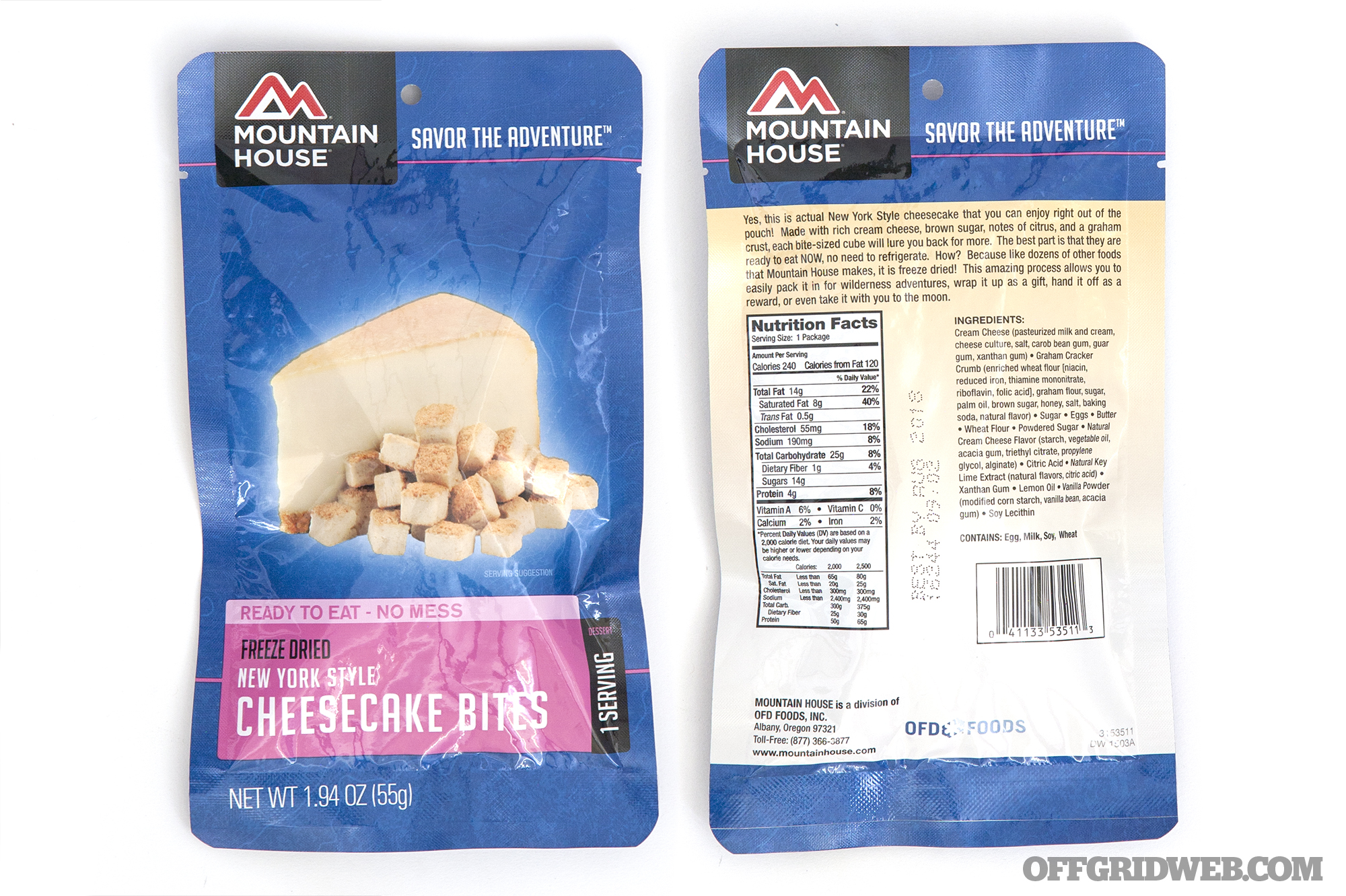
Bonus: Mountain House Cheesecake Bites
Package Size / Servings Per Package: 1.94 ounces / 1 Calories Per Serving: 240 Approximate Shelf Life: 2 years Prep Method / Prep Time: Ready to eat / None MSRP / Cost Per Ounce: $3.99 / $2.06 URL:MountainHouse.com
Notes: Shelf-stable freeze-dried cubes of New-York-style cheesecake coated in graham cracker crumbs and brown sugar. Hints of butter, lemon, and vanilla are also present. Sold in single-serving packages.
Review: We didn’t request these, but Mountain House kindly threw in a package with the rest of our order, so I’ll include my impressions here. These are an easy snack to eat — just tear open the pack, pour a few cubes onto your palm, and chow down. The texture of the cheesecake bites is firm yet crisp on the first bite, but it leaves a slight chalky sensation in the mouth. Flavor is very good, with a strong presence of cream cheese and brown sugar. The graham cracker dust is a tasty element, but it doesn’t provide much texture in powdered form. There was also an excess of graham cracker dust compared to the amount of cheesecake bites in the pouch. Portability is high considering the small package and light weight. I’d eat these again.
For our reviews of the twelve dehydrated entrées mentioned at the beginning of this article, pick up a copy of RECOIL OFFGRID Issue 19, on newsstands 3/31/17. Bon appétit!
If you spend a few minutes on the internet searching for survival knives, the name Mora is guaranteed to come up. This Swedish company has been making simple and tough fixed-blade knives since 1891, and still holds a reputation for bulletproof durability. Many bushcraft enthusiasts swear by their Moras, and they’re a great choice for those with limited budgets — quite a few of the company’s knives are priced under $20.
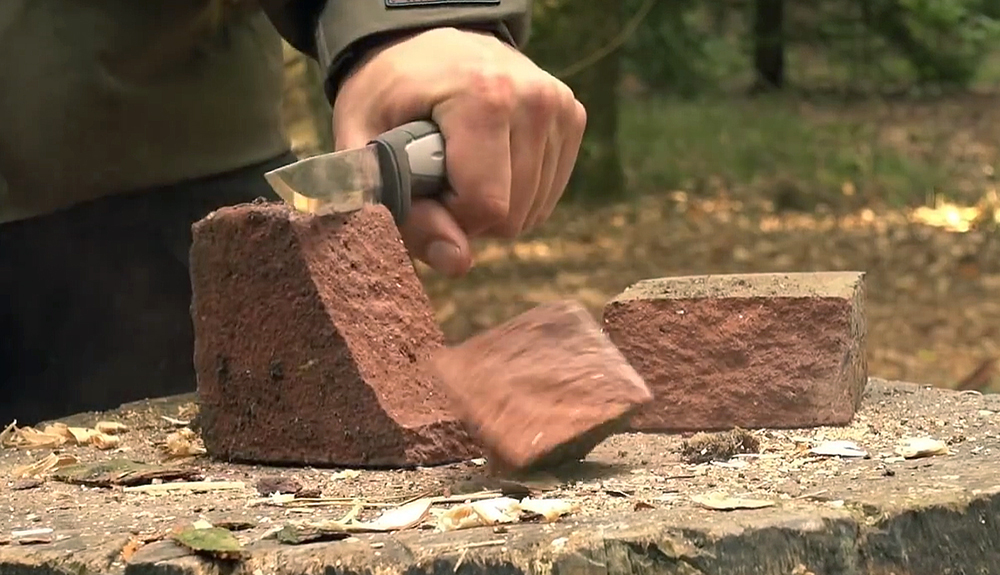
Dutch Bushcraft Knives tested a $15 Mora Robust to see how “robust” it really is.
However, we often hear questions or criticisms about one feature of Mora knives: the partial tang. With few exceptions, Mora knives include what’s called a partial or stick tang, meaning that the steel only extends partway through the handle. Full-tang knives are generally considered stronger and more durable, since the steel extends through the entirety of the handle in a single solid piece from tip to butt. Then again, this added steel also inevitably increases cost and weight.
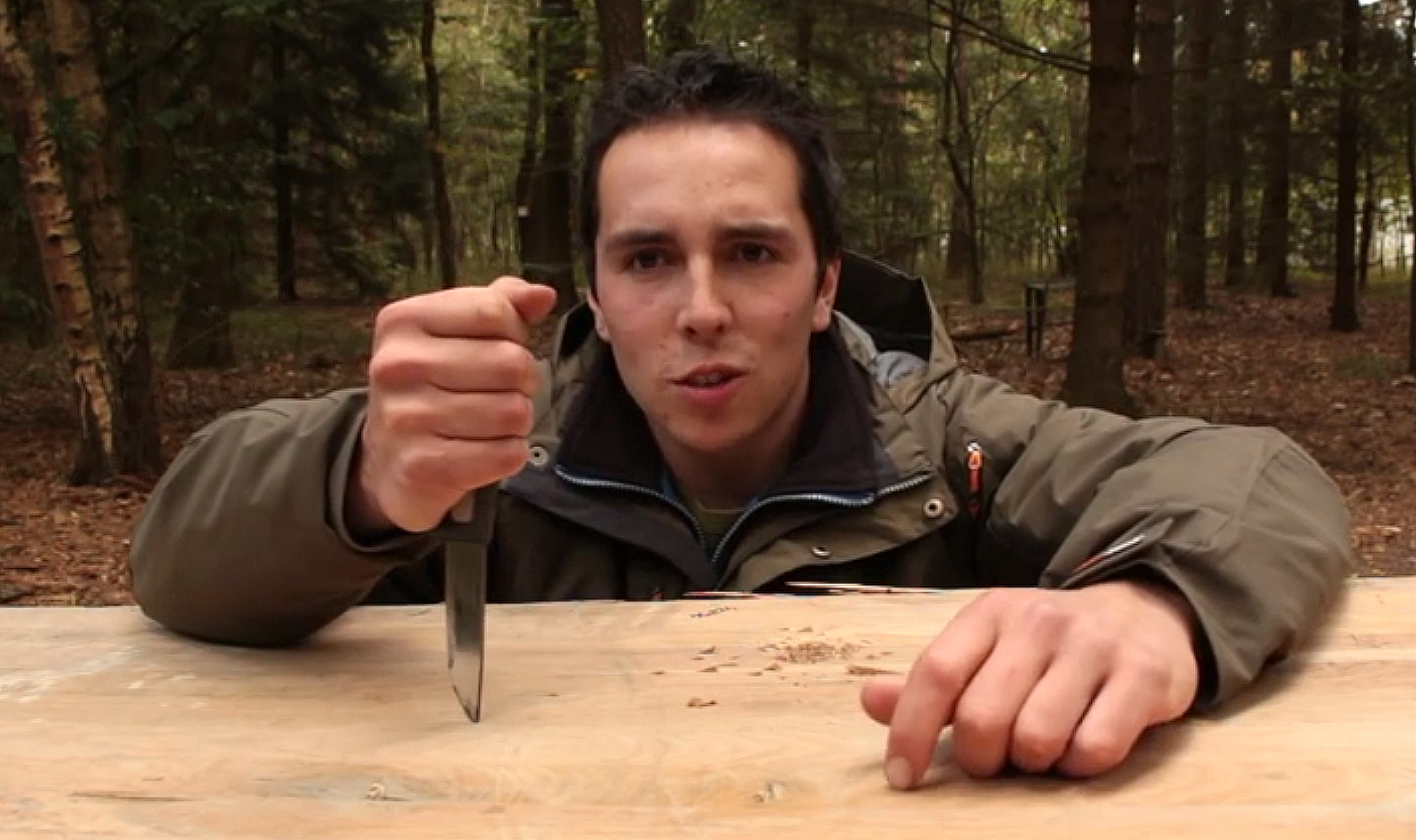
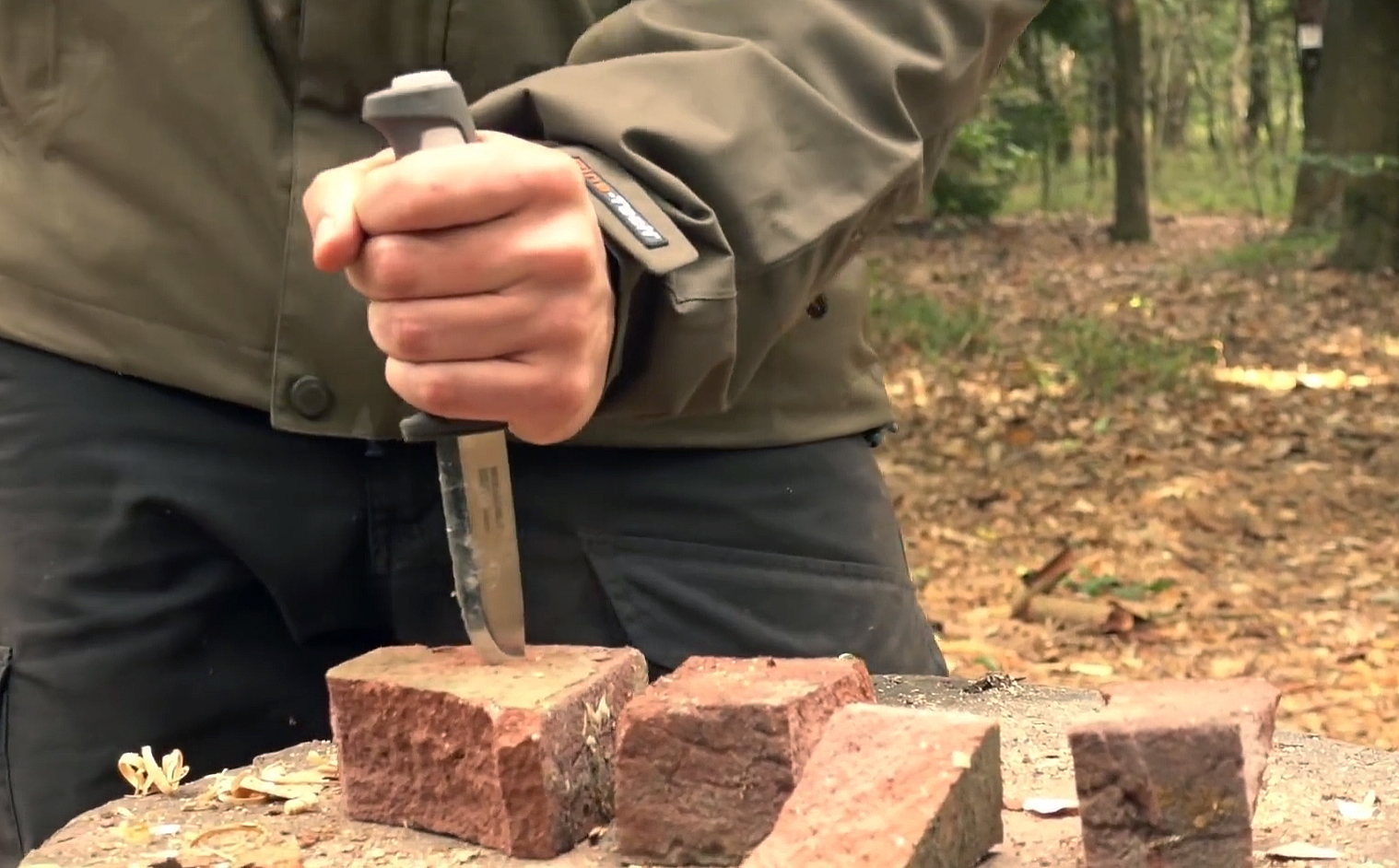
So, how much abuse can a supposedly-inferior partial tang take? Will the handle crack or snap off under heavy use? YouTube channel Dutch Bushcraft Knives set out to determine this, and picked up a Mora Robust to put to the test. This carbon steel blade is said to be extra-thick and bonded to a shock-resistant handle — but how strong can it really be for $15? See for yourself:
First of all, don’t try the above at home. And definitely don’t try it without adequate eye protection, as these guys did in parts of the video.
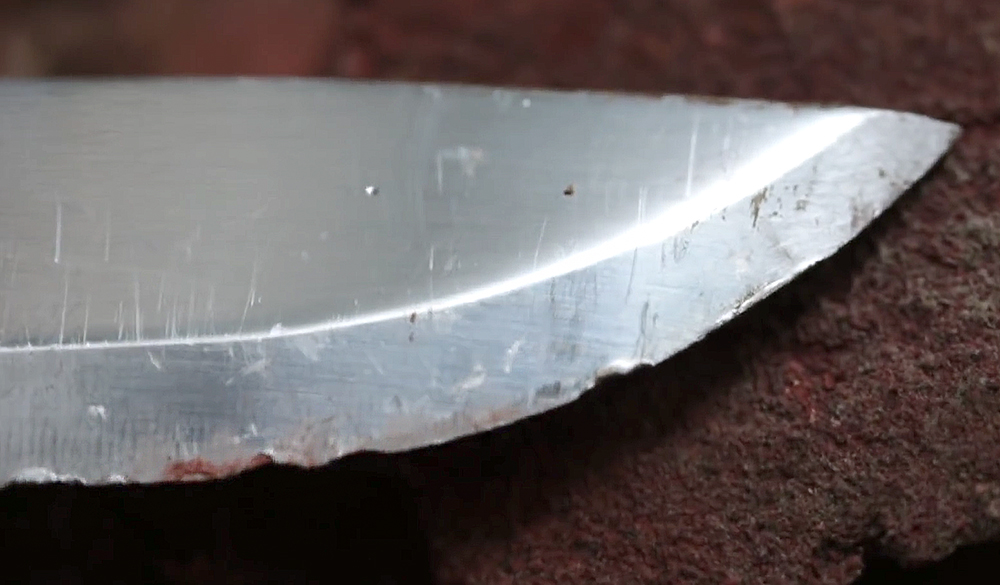
Here’s the edge after the DBK guys finished testing it. Ouch.
While no one in their right mind would use a sharp knife to chop through steel wire and baton bricks under normal circumstances, these extreme tests show that the Mora Robust is in fact pretty robust. Obviously the edge was annihilated and had to be re-ground afterwards, but that would be true for any blade under the circumstances — even a solid ax blade will chip when pounded against a hard object. We’d say the plucky little Mora held up pretty well, especially for a knife in this price range.
Learning survival skills requires patience, basic tools, and a good teacher or source of guidance. But most of all, it requires practice. Without this fundamental element, you might try a “survival pro tip” you read somewhere, only to find that it’s not working well in your situation. Worse yet, you might find that it’s completely useless. Either way, you’ll waste valuable time and resources, and you might even end up endangering yourself in a real life-and-death scenario.
Fire isn’t easy to generate from scratch. You’ll want to prepare multiple methods of producing it reliably.
Even some of the best sources of survival information can make mistakes or omit valuable information, and if you failed to practice the techniques on your own, you won’t know until it’s too late. Take, for example, the SAS Survival Guide by John “Lofty” Wiseman. It’s an excellent source of information, and packed with helpful tips and suggestions for urban and wilderness survival. It was also our Top Pick out of the 8 pocket survival books we reviewed in Issue 15 of our print magazine. However, one fire-starting technique found within the book can be misleading.
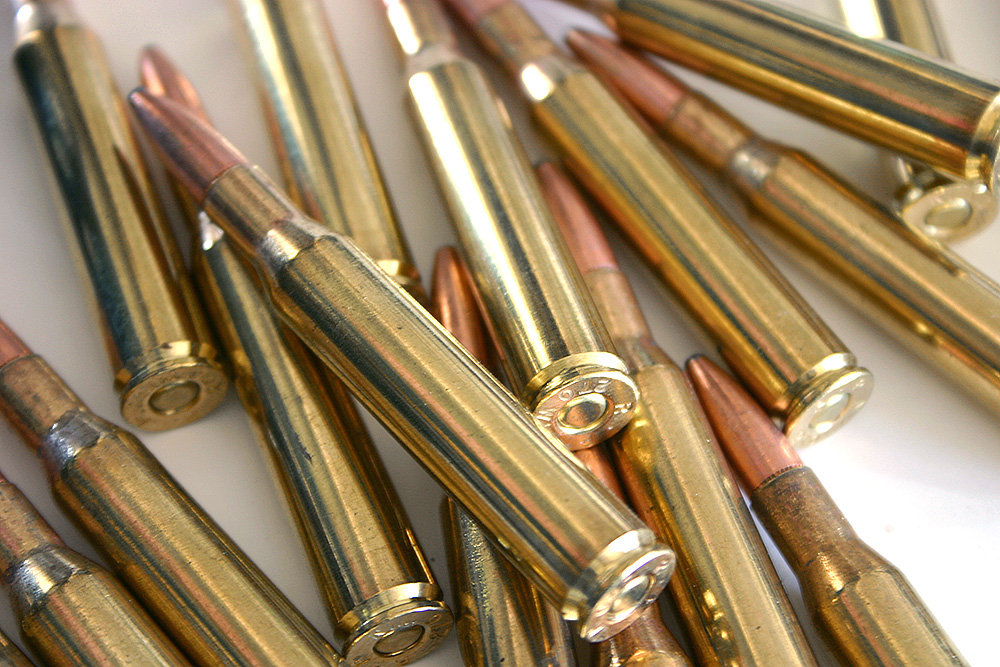
Here’s a quote about fire-starting directly from the SAS Survival Guide, on page 179: “Powder from ammunition: break open a round and pour gunpowder on tinder and use flint. Or leave half the powder in the cartridge case and stuff piece of cloth in. Chamber the round and fire into the ground. The smouldering cloth will be ejected. Place on tinder to ignite.”
The first part about starting fire with a bullet is reasonable enough, and it can work under the right conditions. Then again, if you already have flint and steel or a ferro rod, do you really need to disassemble a valuable round that could be used for hunting or self-defense? At that point, harvesting the gunpowder would probably take longer than finding some dry tinder, assuming your location isn’t devoid of resources. The second part of this excerpt discusses fire-starting directly with a firearm, and may be much more difficult than it sounds.
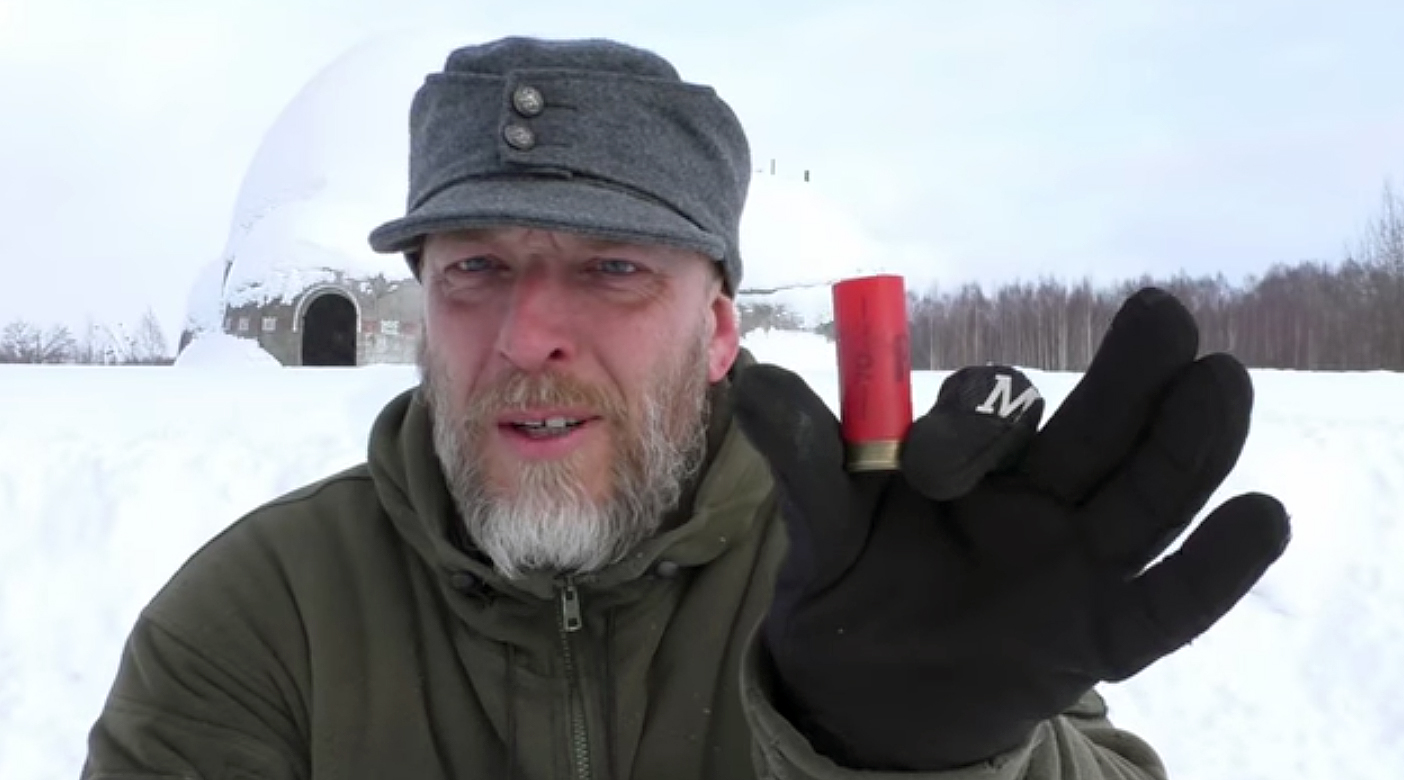
YouTuber Survival Russia attempts to replicate the SAS Survival Manual fire-starting method.
Is it really as easy as disassembling a cartridge, shoving in some cloth, and blasting it into the ground to produce an ember? The diagram in the SAS Survival Manual appears to show a cross-section of a shotgun shell stuffed with cloth and gunpowder, so the host of YouTube channel Survival Russia decided to experiment with this method. Check out his results:
As you can see, it’s not so easy, and it’s almost guaranteed to consume more than one round of ammunition. Remove the bullet with pliers, pour out half the gunpowder, scavenge a wad of dry cloth, shove into the bullet, chamber the round, fire, and pray it works. If it doesn’t, rinse and repeat until you’ve got fire or you’re out of ammo. Sounds like a recipe for frustration.
Les Stroud of Survivorman also attempted this technique with a hunting rifle during one episode:
Even for such an experienced survivalist, it took five failed attempts to make this technique work. That’s an 80% failure rate in the hands of a pro. So, while the fire-starting with a firearm technique appears to be possible, it’s undoubtedly VERY difficult.
Regardless, the moral of the story is that you wouldn’t want to attempt this for the first time in an emergency. Practice a variety of survival skills. Learn which ones work for you, and which ones aren’t even worth a shot.
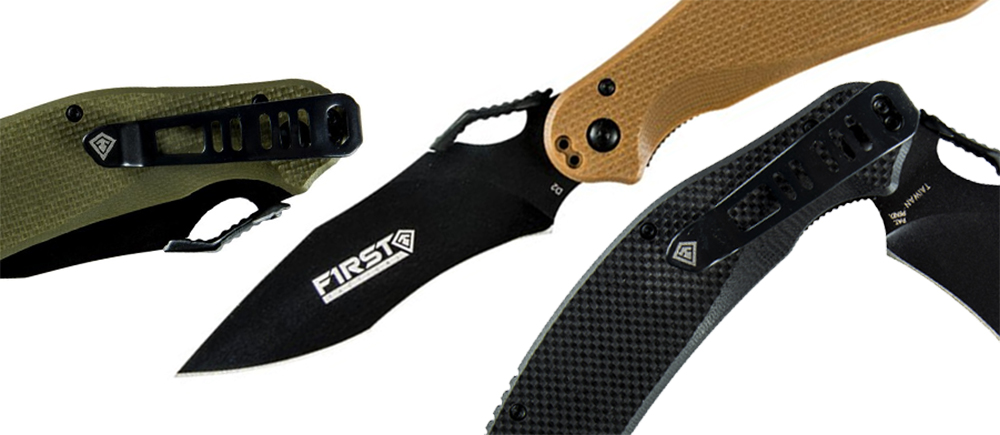
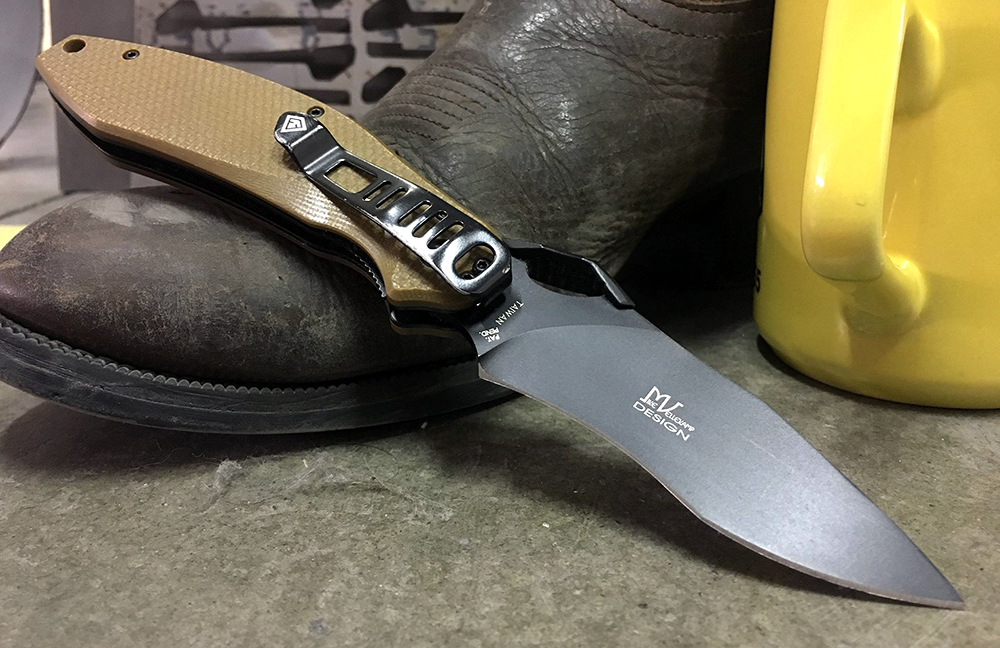
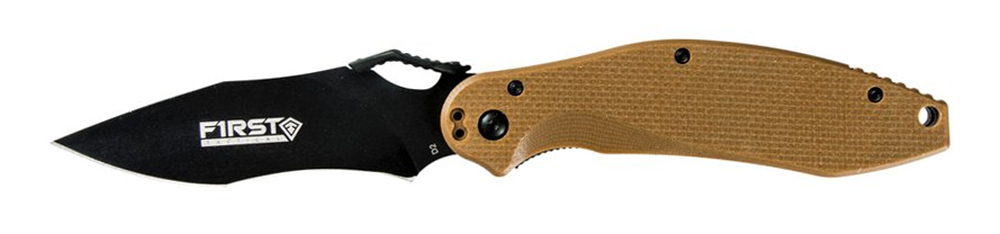
Mike Vellekamp has worked in the knife industry for more than 22 years, acting as a designer for Blade-Tech, 5.11 Tactical, and Fox Knives USA. His latest partnership is with First Tactical, and the result is a slick-looking folder called the Krait.
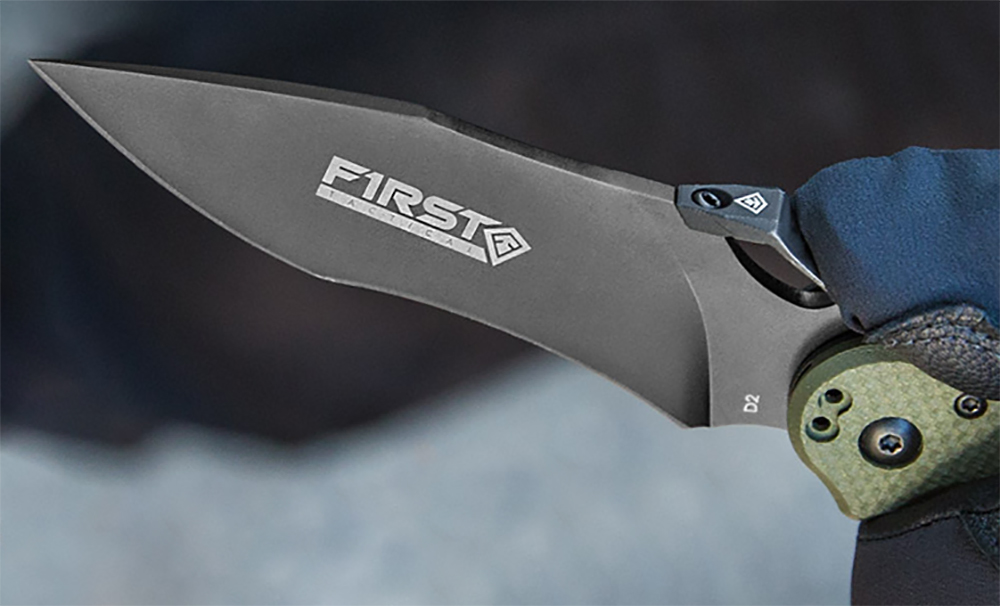
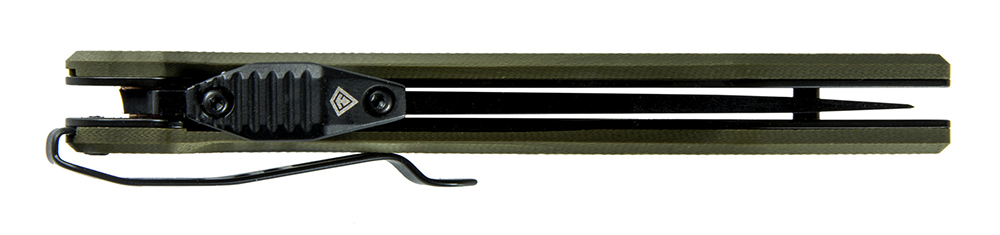
The First Tactical Krait features a 3.51-inch spear-point blade formed from D2 steel. D2 is a high-carbon tool steel with excellent edge retention and added chromium for corrosion-resistance. First Tactical says it’s the strongest steel available on any of their current knives. Like all First Tactical folders, it also includes the distinct Thumb Bridge, which provides leverage for pushing open the blade and making precise cuts.
The D2 blade is sculpted into a complex curve, convex at the front and concave along the belly. It’s paired with a liner lock mechanism and G10 handle scales, which are available in either black, coyote tan, or OD green.
There’s also a turned pocket clip for deep carry, and it can be reversed for left-handed use. The knife weighs 4.57 ounces, has an open length of 8.25 inches, and a closed length of 4.74 inches.
The Road by Cormac McCarthy is a literary masterpiece. I don’t say that because of its Pulitzer Prize, or because I share the same last name as it’s author (no relation, unfortunately). I say that because it’s one of the most visceral gut-wrenching descriptions of post-apocalyptic survival I’ve ever read.
The book tells the story of a father and his young son as they deal with the mental and physical hardships of staying alive in the ash-covered wasteland that was once America. The characters are never named beyond “man” and “boy”, and the cataclysmic event that wiped out society is never fully explained. All that remains is the dark, cold road and a glimmer of fading hope for something better.
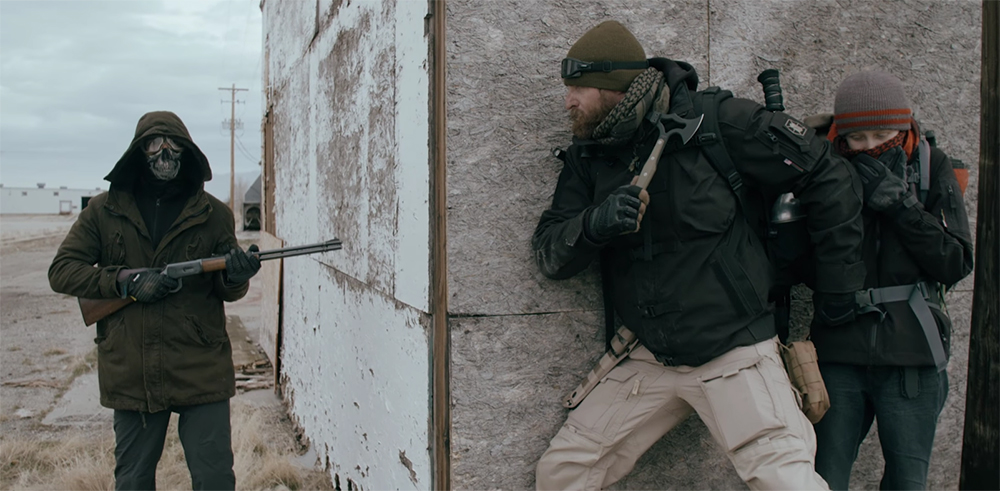
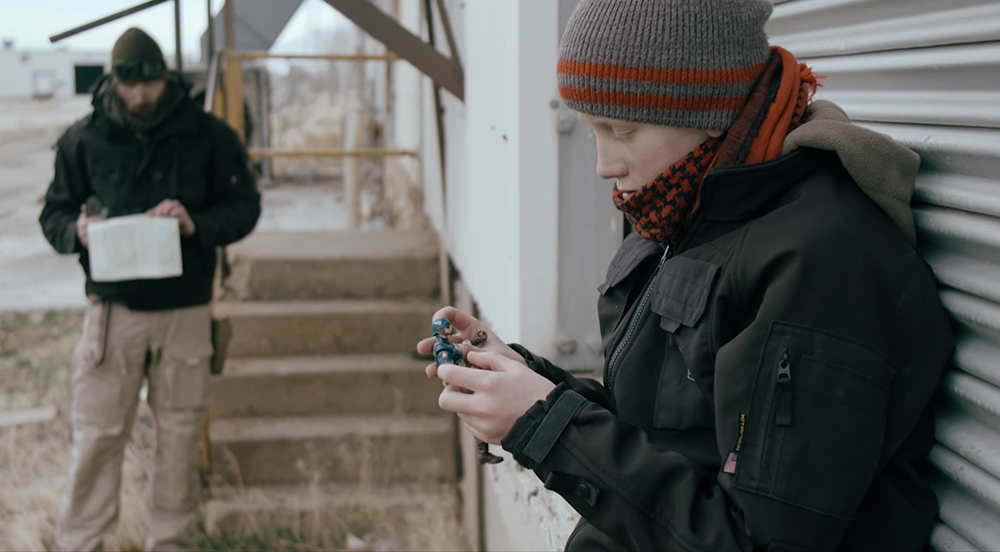
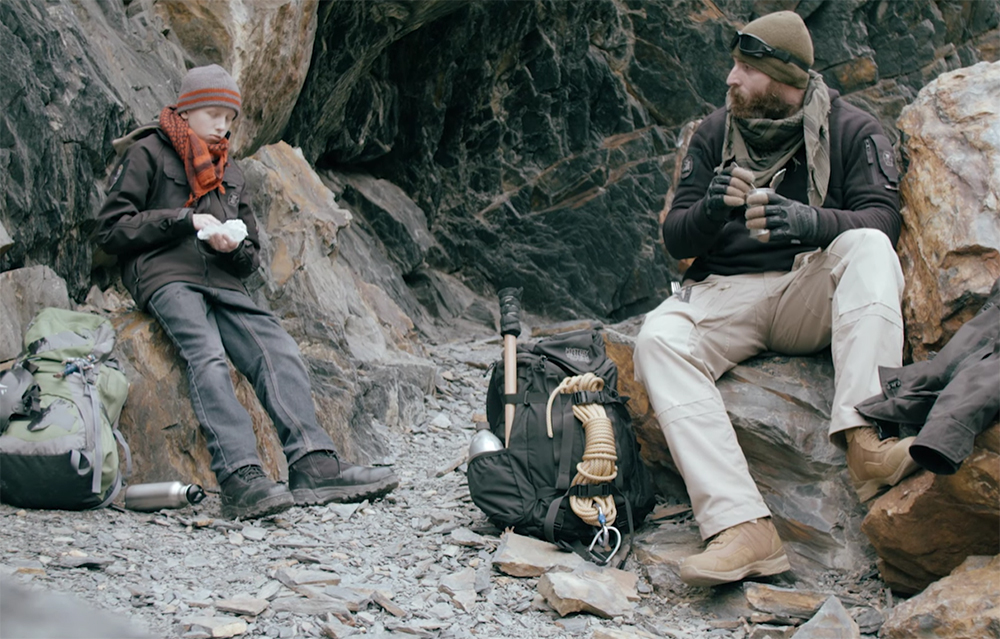
Kitanica recently released a short film known as Sojourn, and watching it immediately reminded us of The Road. It, too, covers the fictional journey of a man and a boy across a barren landscape fraught with danger. There’s no lengthy dialogue or complex storyline, just some artistic camera work and an atmospheric soundtrack. The Road sets a high bar for this sort of story, but Sojourn struck us as a pretty cool cinematic nod to this classic book. It also does a great job of showcasing Kitanica’s apparel in a creative way.
The description of this video sums up the message concisely: “A reminder of the razor thin line of life as we know it. Being unprepared is being prepared to fail.”
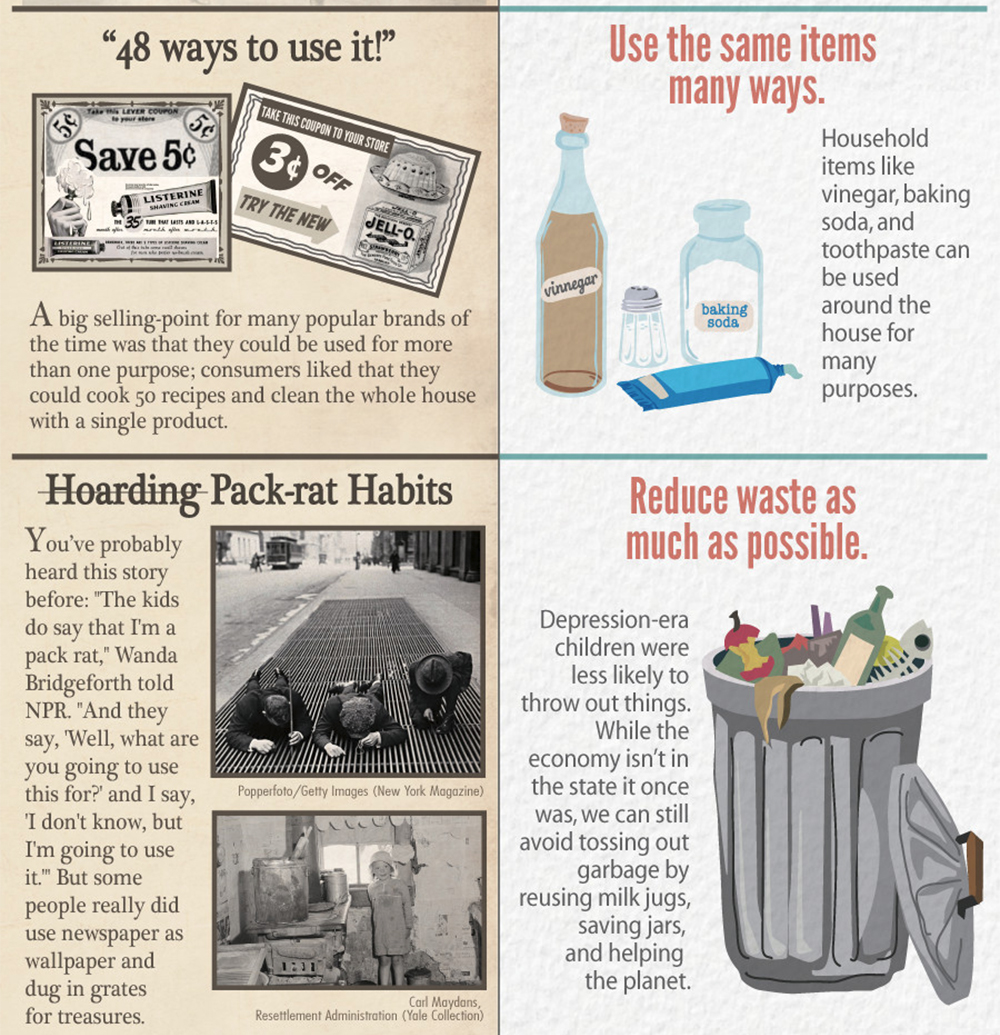
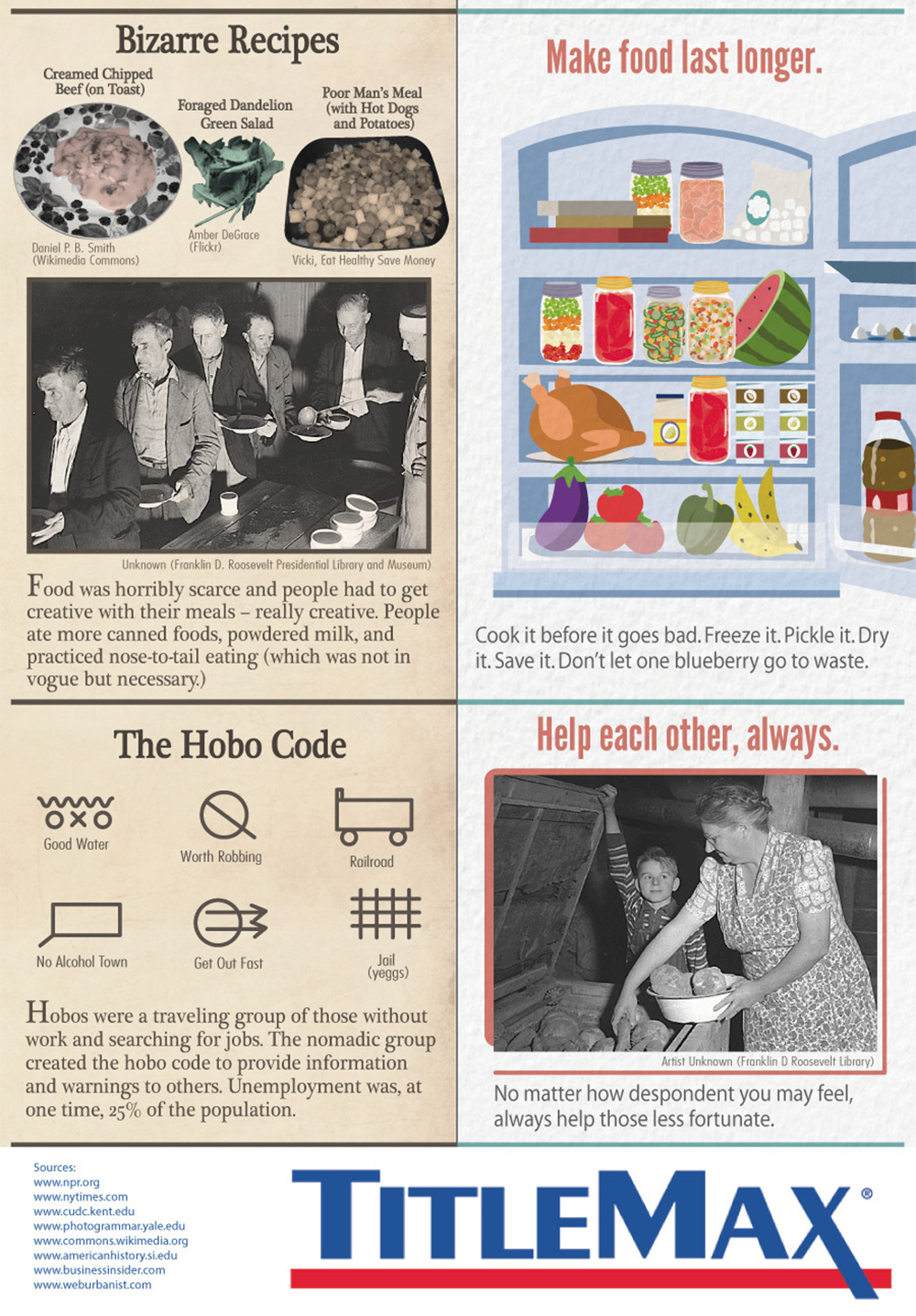
As survival-minded individuals, we have much to learn from the Great Depression. The individuals who managed to persevere through this period of extreme economic hardship did so by adapting and overcoming adversity. As the unemployment rate skyrocketed and household income fell, many families faced homelessness, struggling to put food on the table or shoes on their children’s feet. This led to numerous fundamental changes in behavior. Getting by with what you had was of the utmost importance, hence the often-repeated phrase: use it up, wear it out, make it do or do without.
Poverty in the depression often meant living in dirt-floored shacks. Photo: Dorothea Lange / U.S. Library of Congress
My own grandfather lived through the Depression as a young boy, and it had a dramatic impact on him. Throughout my childhood, he would save anything which could be reused or repurposed. Some might consider this “pack rat” behavior, but to him, it was just the right thing to do. He kept a stack of rubber bands around the shifter of his car, categorized and stored every rusty nut and bolt in the garage, and even wrapped up and saved chewing gum to chew again later. When we went to restaurants, he’d clean the scraps off every plate at the table, including the edible garnish — incorporating raw kale into his diet before it was trendy.
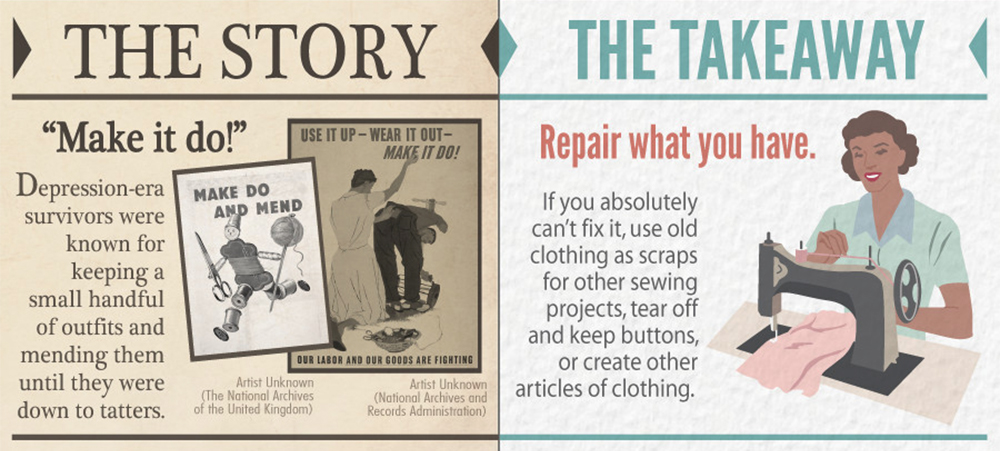
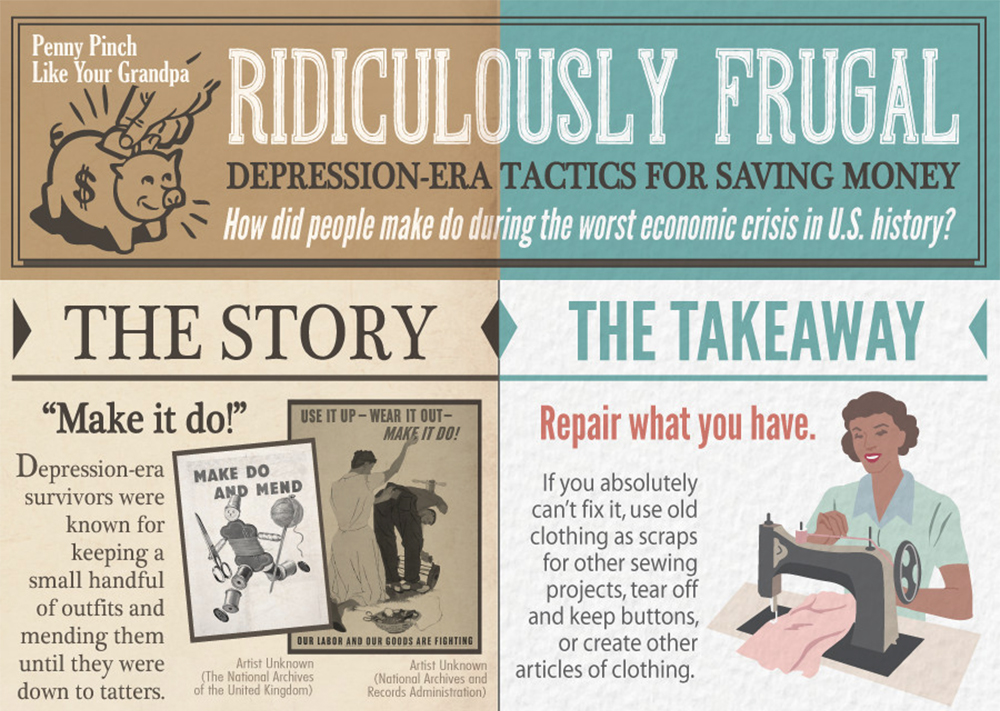
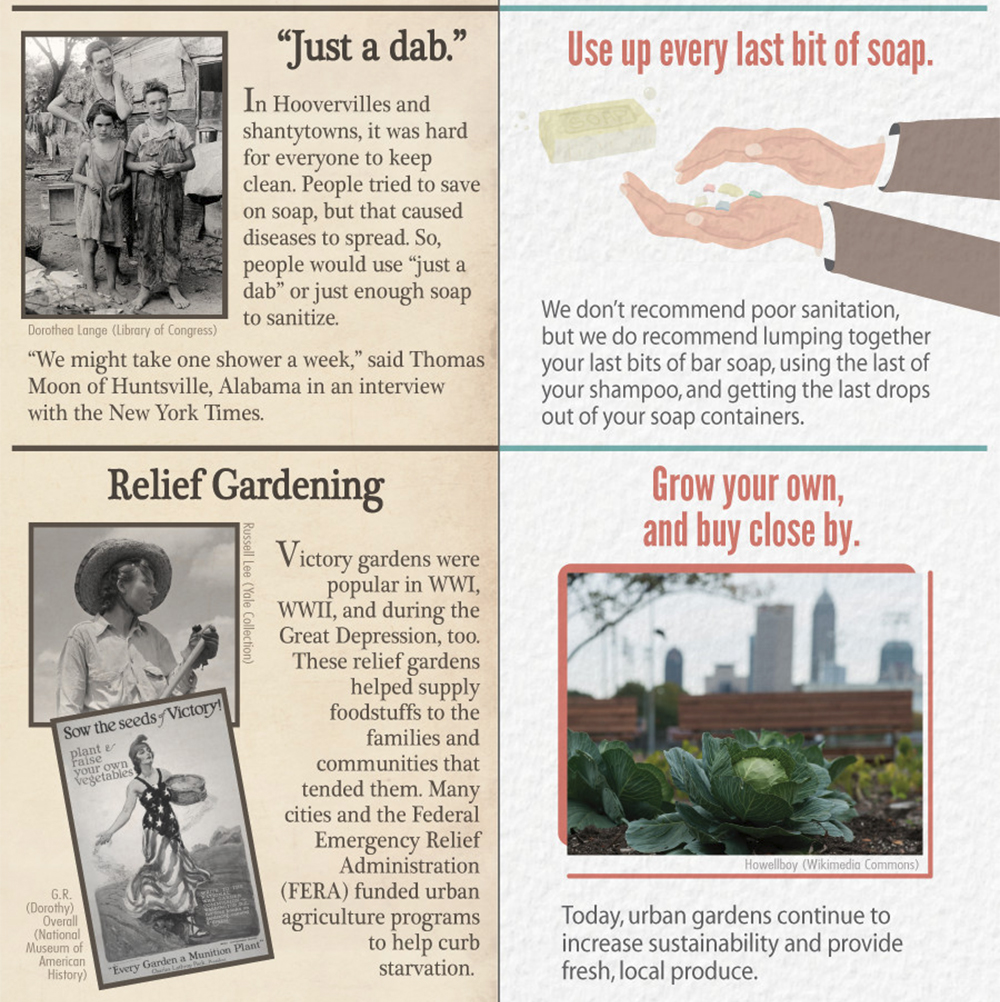
These lessons are still relevant today, and will only become more important in a large-scale disaster scenario. The following infographic shows nine Great-Depression-era behaviors, and suggests some takeaway lessons associated with each. If you put these skills into practice during times of prosperity, they’ll be second nature by the time a crisis arrives. (Click here for a full-size version of this infographic.)
More in Fiscal Security, Survival, and Preparation