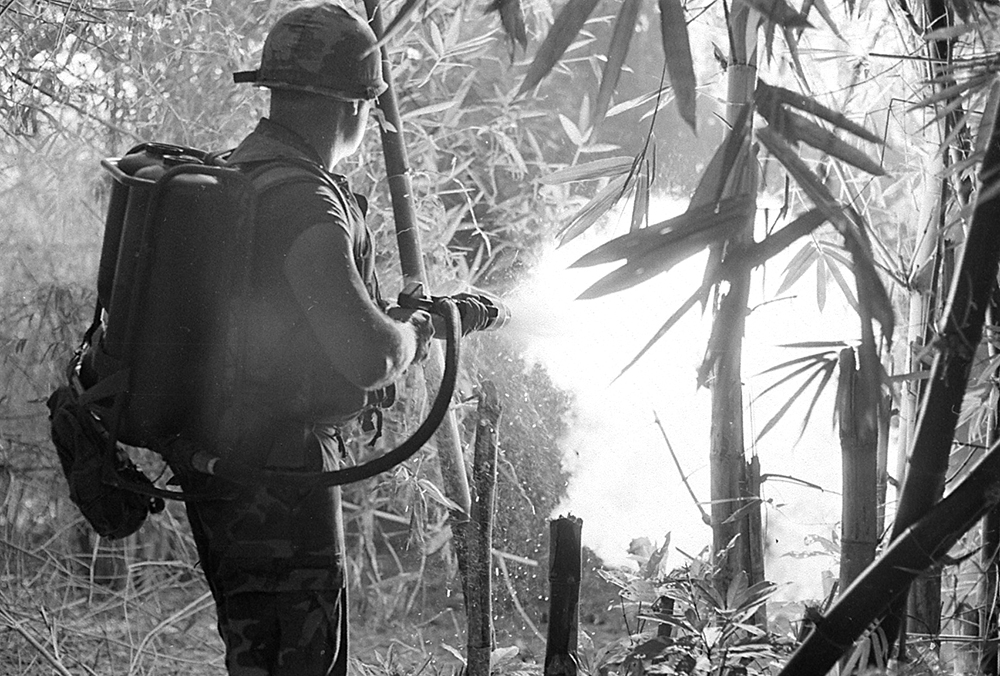
Outside over-the-top action movies like Mad Max, you won’t see flamethrowers very much these days. Liquid- or gas-based flamethrowers were used extensively in WWI, WWII, and the Korean and Vietnam Wars. But due to restrictions from the Geneva Convention and the extreme danger associated with wearing a large tank of flammable fuel on a battlefield, these incendiary weapons are no longer a part of conventional military warfare.
However, that’s not to say that they’re no longer effective. As we’ve said before, prison inmates often invent deadly improvised weapons from limited resources, and these aren’t just limited to shanks. Believe it or not, inmates have reportedly fashioned crude flamethrowers which don’t run on liquid or gaseous fuel. C.T. O’Reilly, the Assistant Warden of Darrington Prison in Texas, once told a reporter, “The inmates would roll up a piece of paper, put Coffee-Mate in it, put a cigarette lighter in front of it, blow it out and it’s just like a flamethrower.” This apparently led to all powdered creamer being removed from the commissary at Darrington.
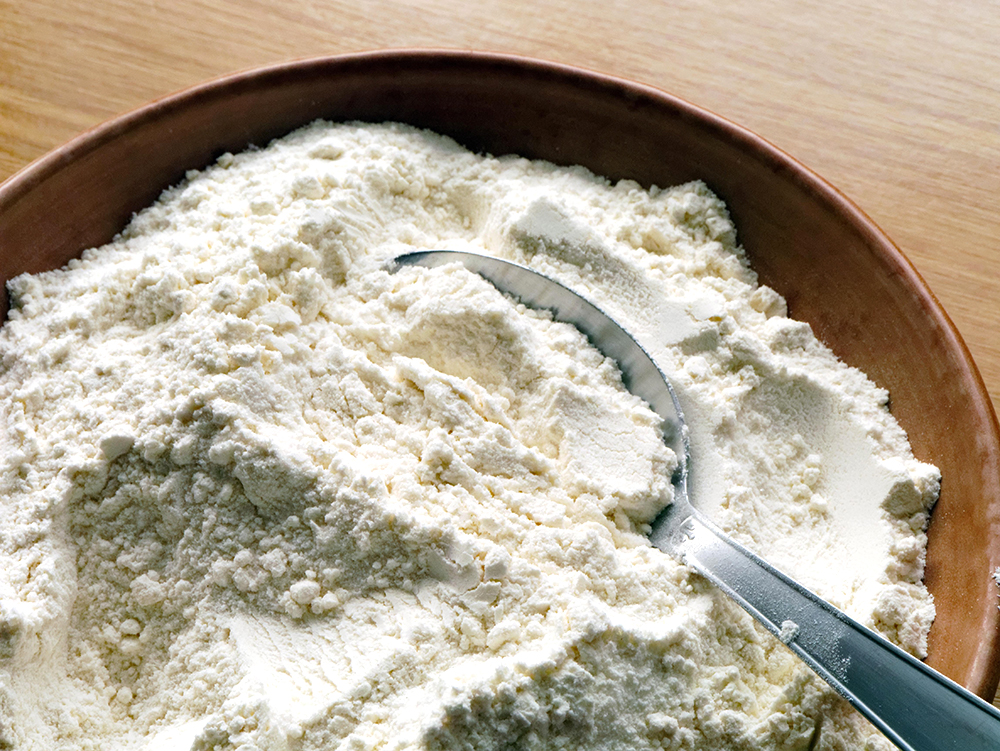
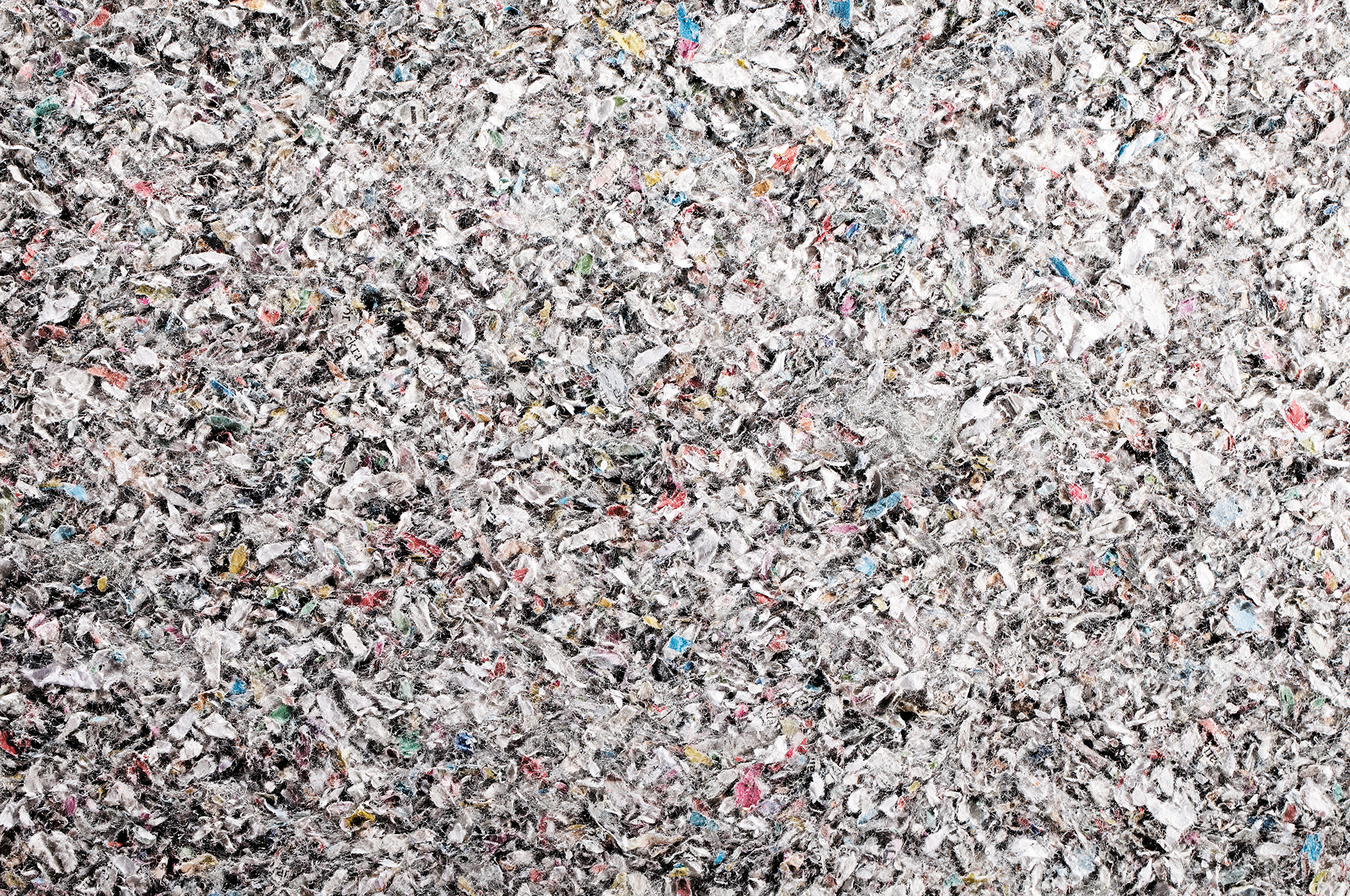
You might not look at this and see “flamethrower fuel”, but necessity breeds invention.
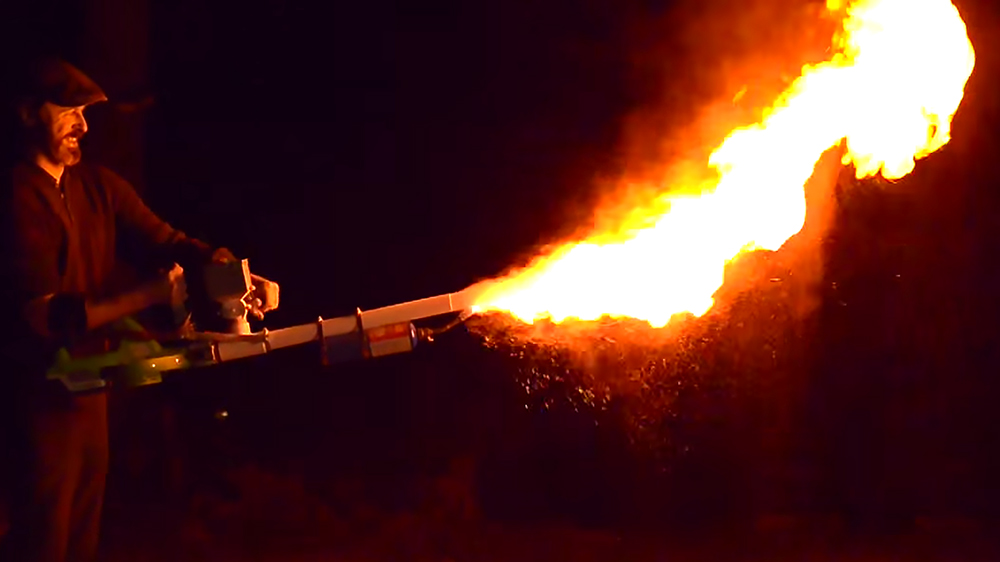
These powder-based flamethrowers disperse a cloud of combustible material — such as flour, cornstarch, or coffee creamer — and enhance its ability to burn quickly. It’s the same principle which sometimes leads to deadly dust explosions in industrial environments, and was demonstrated on the Mythbusters TV show “Creamer Cannon” episode.
The video below shows a creamer-based homemade flamethrower in action.
While we definitely would not recommend trying this at home, it’s possible to make a flamethrower by simply blowing a cloud of flour through a tube and across an open flame. If no other weapons were available, this could provide a last-ditch improvised means of self-defense. Or, the concept can be taken to the next level as shown in the video below:
These guys cobbled together a leaf blower, a hand-crank powder dispenser, some PVC pipe, and a blowtorch to create an incredibly effective improvised weapon. It might not be a military-grade flamethrower, but we’d be willing to bet no attacker would want to get anywhere near the business end.
For many of us, chemistry wasn’t exactly a riveting subject in school. After all, knowing everything about covalent bonds, stoichiometry, and endothermic reactions probably isn’t a necessity during your daily routine. However, a basic understanding of chemistry and chemical reactions can be helpful in survival situations. Don’t worry, you won’t need to whip out your lab coat and Erlenmeyer flask this time.
WARNING: This chemical is highly corrosive and burns violently, so be careful when handling and storing it. Follow all safety precautions and only use it at your own risk.
When added to water, potassium permanganate creates a bright pink or purple solution.
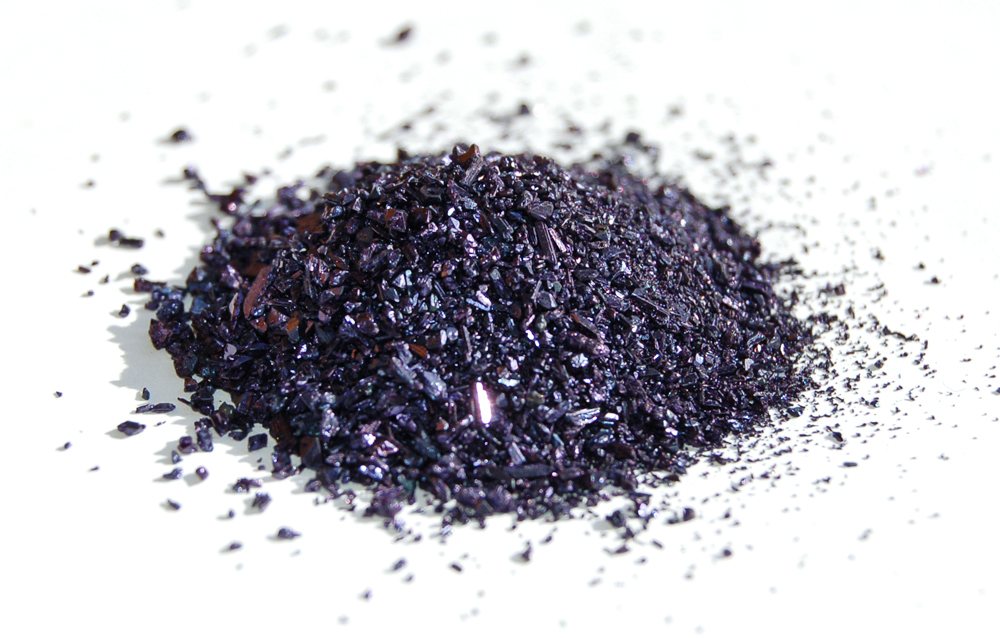
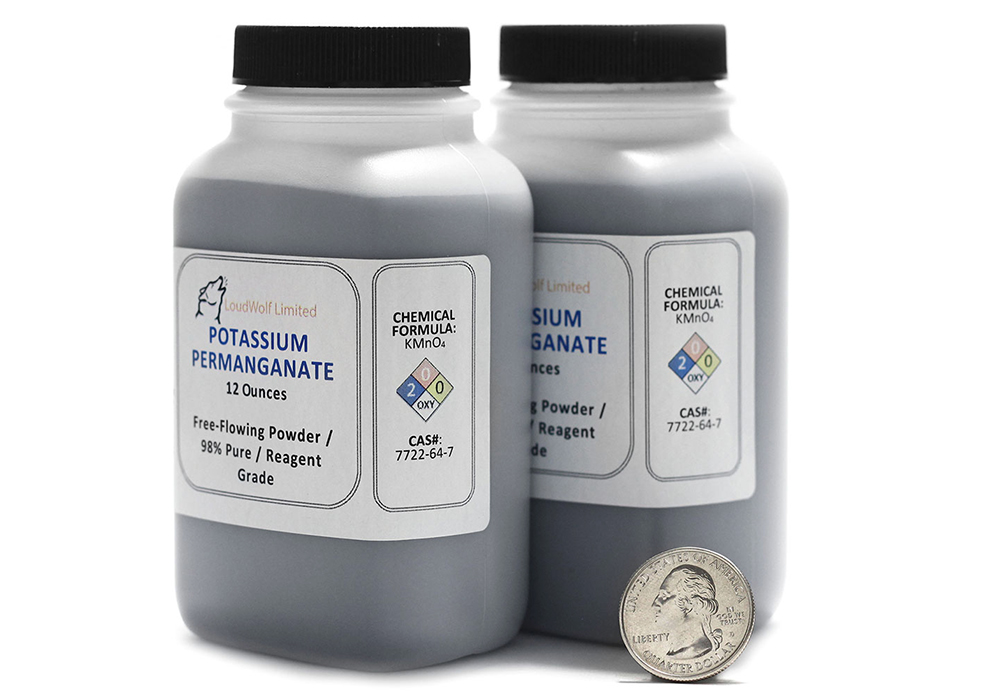
Potassium permanganate, or KMnO4, is one chemical which has many survival applications. This purplish-black crystalline powder can be found in bulk at pet stores, pool supply shops, and hardware stores. It doesn’t cost much, and a tiny amount goes a long way.
In powdered form, potassium permanganate is an effective fire-starting tool. You just need to add a few drops of glycerin (from a drug store) or ethylene glycol (found in automotive antifreeze and some brake fluids) and the powder will energetically burst into a white-hot flame:
The powdered form of this chemical will also work as a preservative for fruit. One study showed that by placing bananas in a sealed bag with KMnO4, the shelf life of this fruit was extended by two weeks. While interesting, this use is a little obscure — but the chemical has many other survival-oriented functions.
Mixing just a few small crystals of potassium permanganate into a glass of water creates a bright pink solution. This may work as an improvised water purifier if no other options are available, though the CDC does not recommend it “for primary water disinfection at low doses in the field”. We’d agree with the CDC that carrying a purpose-built water filter or purifier is always the best option, but KMnO4 might work in a pinch.
Adding more KMnO4 to water creates a darker purple solution, which can be used as an antiseptic for wounds or sores. The World Health Organization includes it on its list of Essential Medicines, and recommends diluting it in a 1:10,000 ratio. Stronger solutions fight fungal infections such as athlete’s foot, but be careful not to go overboard — excessively-concentrated solutions can burn your skin.
Finally, a concentrated solution will stain items purple, and you can use this to your advantage. Strips of stained cloth or splashes of purple liquid in snow could be used to signal for rescue, since this unnaturally-vibrant color will stand out against a natural backdrop.
A lot has changed since the mid-1960s. We landed on the moon, developed powerful microchips, invented the internet, and mapped the human genome. But despite all these innovations, certain principles remain the same. Basic land navigation is one such concept — it’s still done essentially the same way today as it was back then.
Today, we have an advanced network of GPS satellites and portable navigation devices, and these tools can be an excellent resource. However, you’d be foolish to rely wholly on this modern tech in a disaster scenario. It’s wise to have a magnetic compass and know the basics of navigating the old-fashioned way.
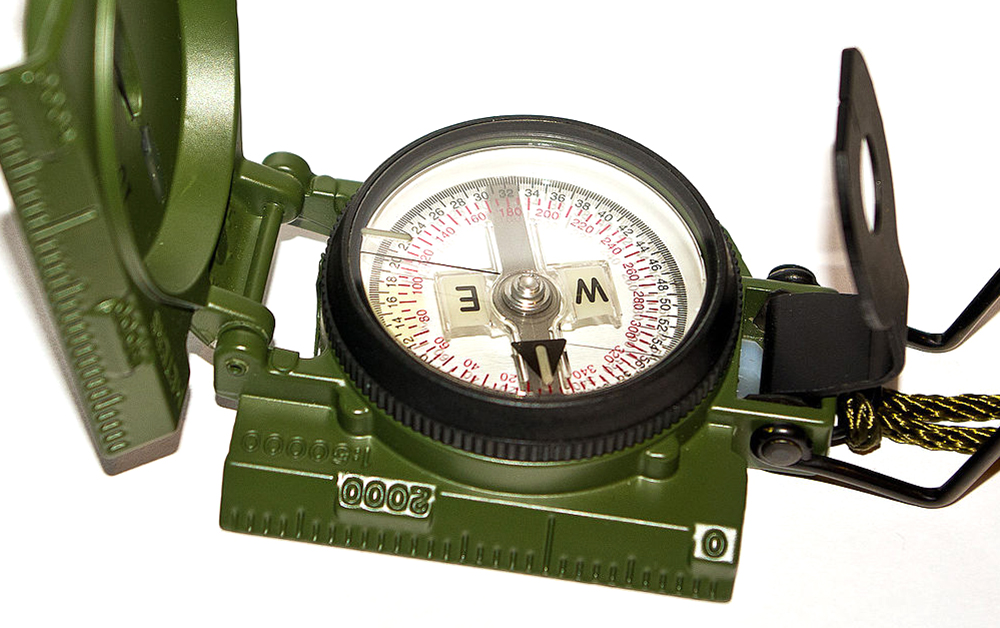
The U.S. military M-1950 lensatic compass shown in this video is still in use today. Photo: Wikipedia
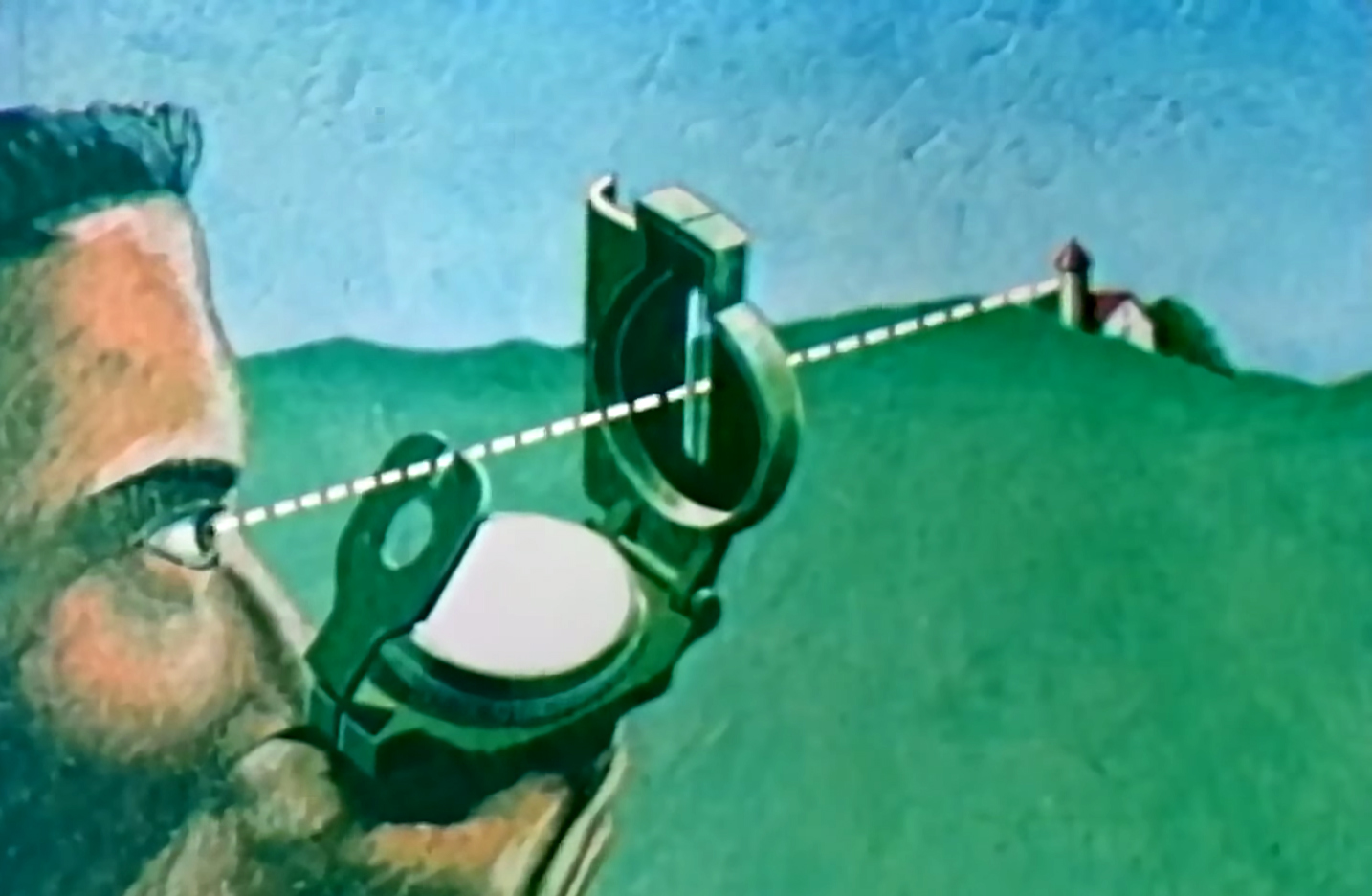
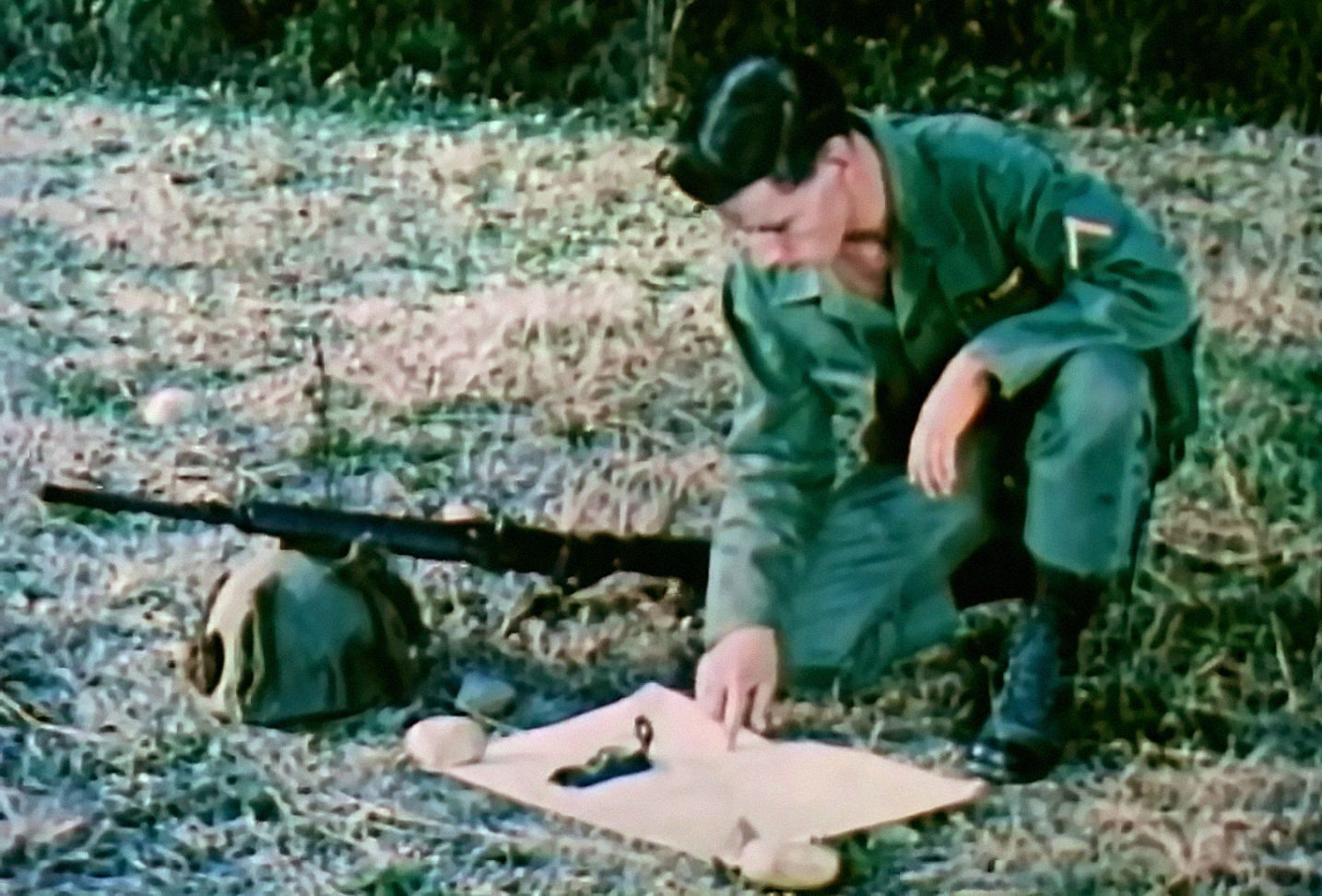
The following 30-minute U.S. Army training video from 1966 shows how to find your direction, orientation, and location with a mil-spec lensatic compass. The narration and imagery may seem old-timey in this era of high-def computer graphics, but the lessons are still relevant today. It addresses how to orient a map, compensate for declination, and shoot an azimuth to a landmark.
This may seem like a lot to digest if you’re not familiar with land navigation. The best way to get comfortable with these concepts is to go out and practice, preferably with a friend who has some experience in this area and can correct you if you make mistakes. With a little patience, your lensatic compass can become an invaluable resource for survival.
What would your ideal survival knife look like? Due to variations in personal preferences, intended uses, and surrounding environments, the answers to this question will be substantially different from one survivalist to the next. However, there will also certainly be some common ground in these responses.
First and foremost, a survival knife must be dependable. This means it needs a strong spine, a durable edge, and a handle mounted securely to the tang. Second, it must be efficient — the blade should be long and sharp enough to chop, whittle, skin, and slice effortlessly without becoming ungainly. It can’t be too heavy to carry on long hikes, but can’t be so light it cracks or bends under pressure.
A comfortable and secure grip is also essential, as is a tough sheath with solid rentention. As with all tools, value is a consideration. Many of us prefer to spend our hard-earned dollars on American-made products, but we also can’t afford to break the bank.
At this point, you may be thinking that a blade which meets every last one of these criteria sounds like a mythical Holy Grail, and you’re not wrong. But that hasn’t stopped knife makers from pursuing the quest for an ultimate survival knife. The White River Knives blade seen here is a byproduct of this never-ending journey towards survival knife perfection.
About White River Knives
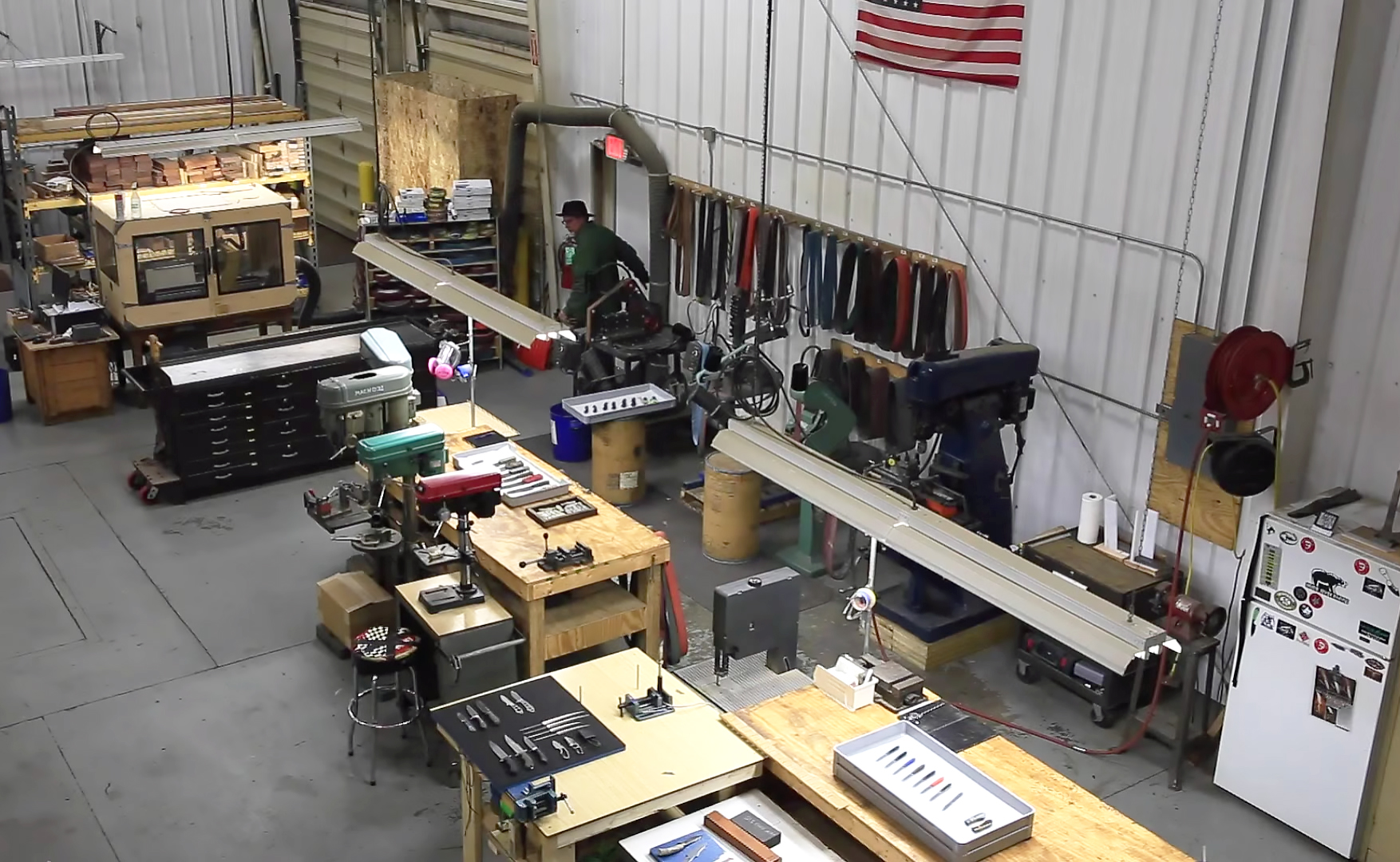
White River Knife and Tool is a small business based in Coopersville, Michigan. It is owned and operated by John and Susan Cammenga, and their sons John Cammenga Jr. and Matt Cammenga.
The company proudly states that every single component of its knives — from the steel to the thread in its leather sheaths — is sourced and produced in the USA. That’s an impressive statement to say the least, and one which should appeal to those of us who go out of our way to support American businesses.
White River also offers a lifetime guarantee on every one of its knives. If you own one of the company’s knives and aren’t 100% satisfied with it, you can send it back for free repair or replacement — no questions asked, no receipt needed. “We want people to feel confident when they finally make that buying decision that they’re getting something that they’re going to have for the rest of their lives,” said Matt Cammenga.
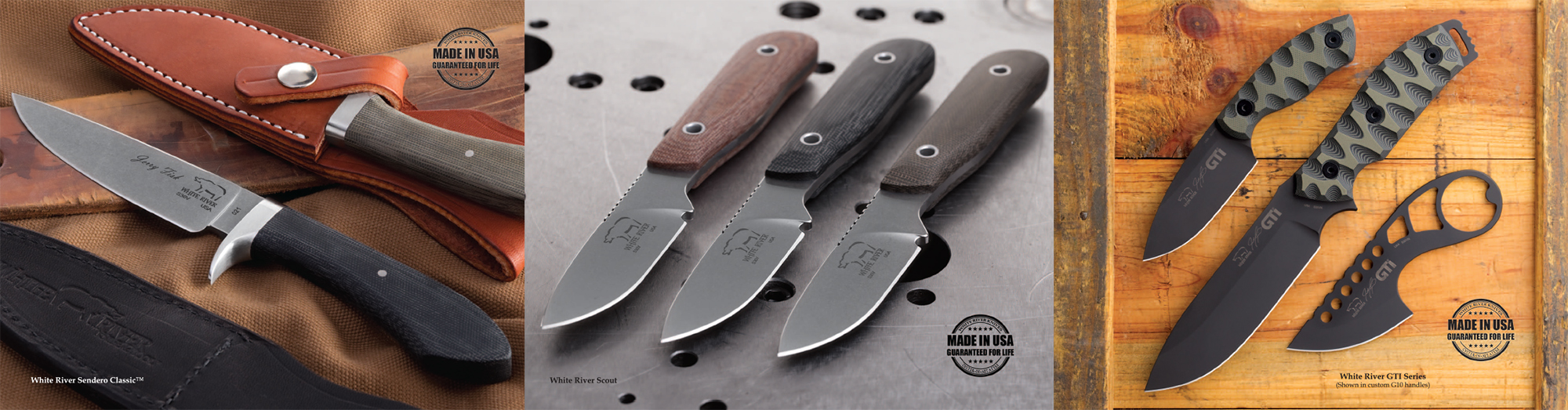
From left to right: the White River Sendero Classic, Scout, and GTI Series.
In addition to producing a variety of outdoor-oriented hunting, fishing, and bushcraft knives, the shop also grinds blades and makes private-labeled tools for other well-known brands. So even if you haven’t handled a knife with the White River bear logo, you may have used one of the company’s blades without knowing it.
The White River Firecraft FC5
We first handled the White River Firecraft production knife series at SHOT Show 2017, and these blades immediately caught our attention. Based on the design and our initial impressions, we awarded the Firecraft series our “Best Knife of SHOT Show” award. We also said we’d get our hands on one of the Firecraft knives for a full review. That day has finally come.
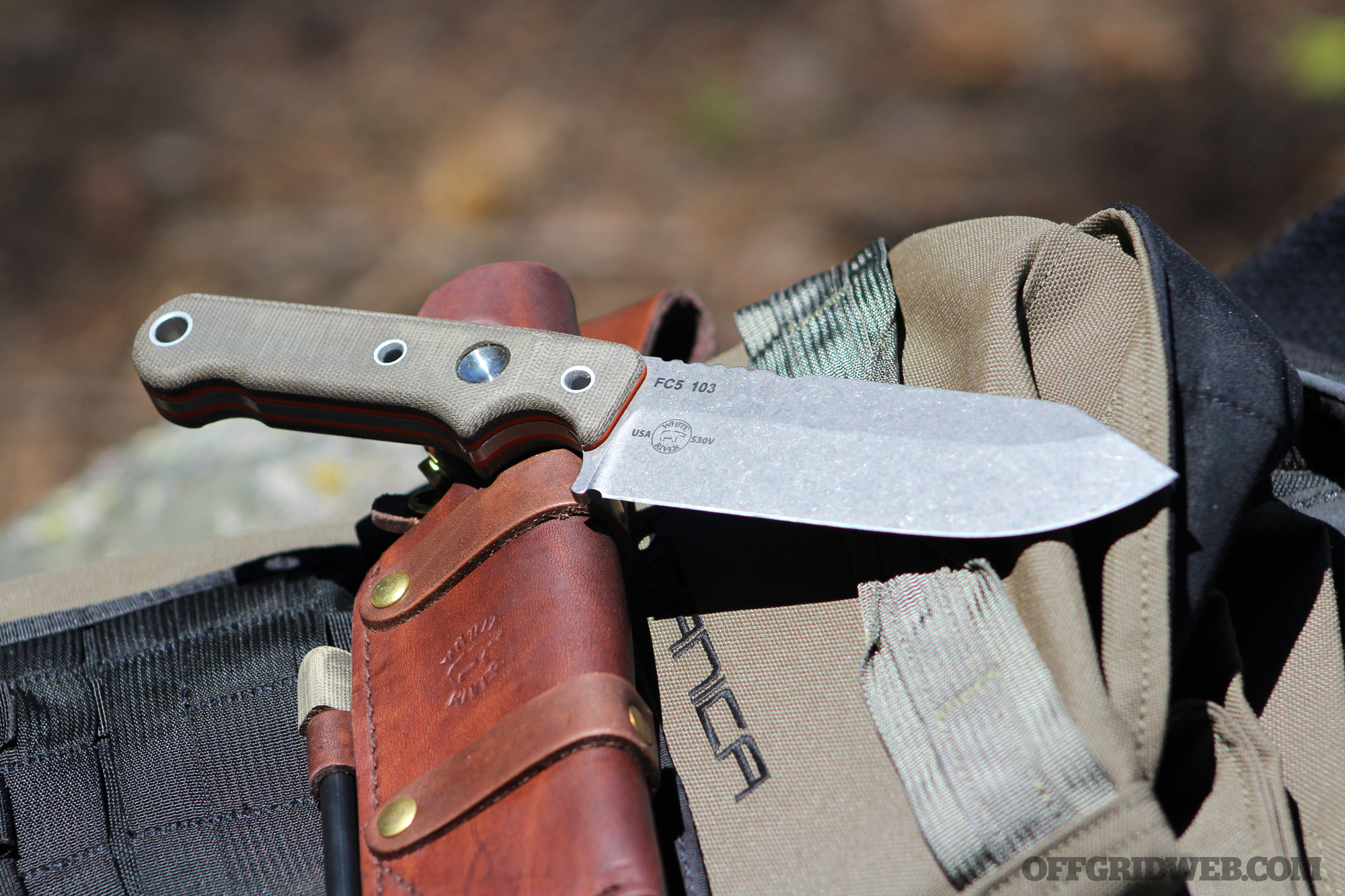
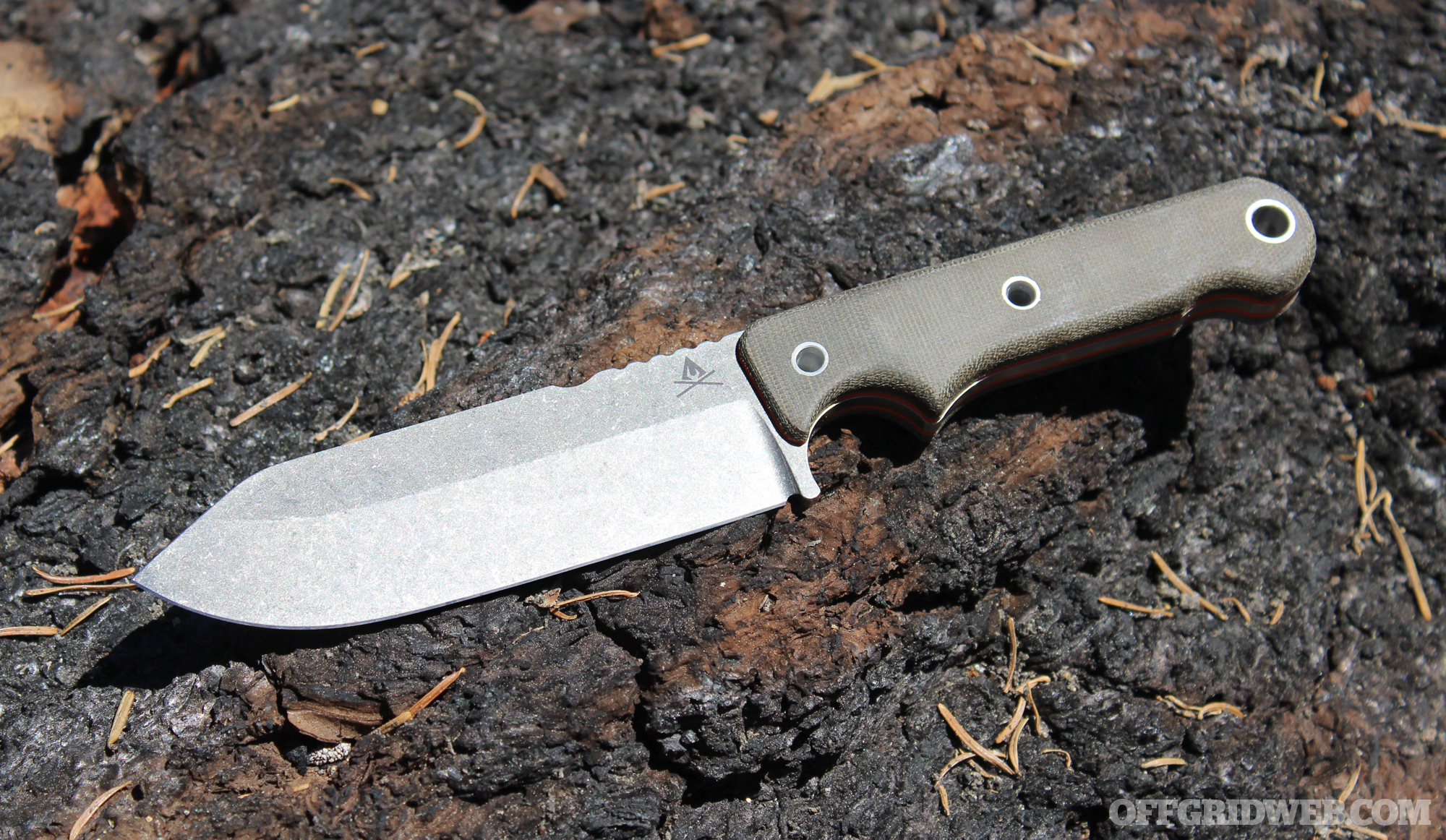
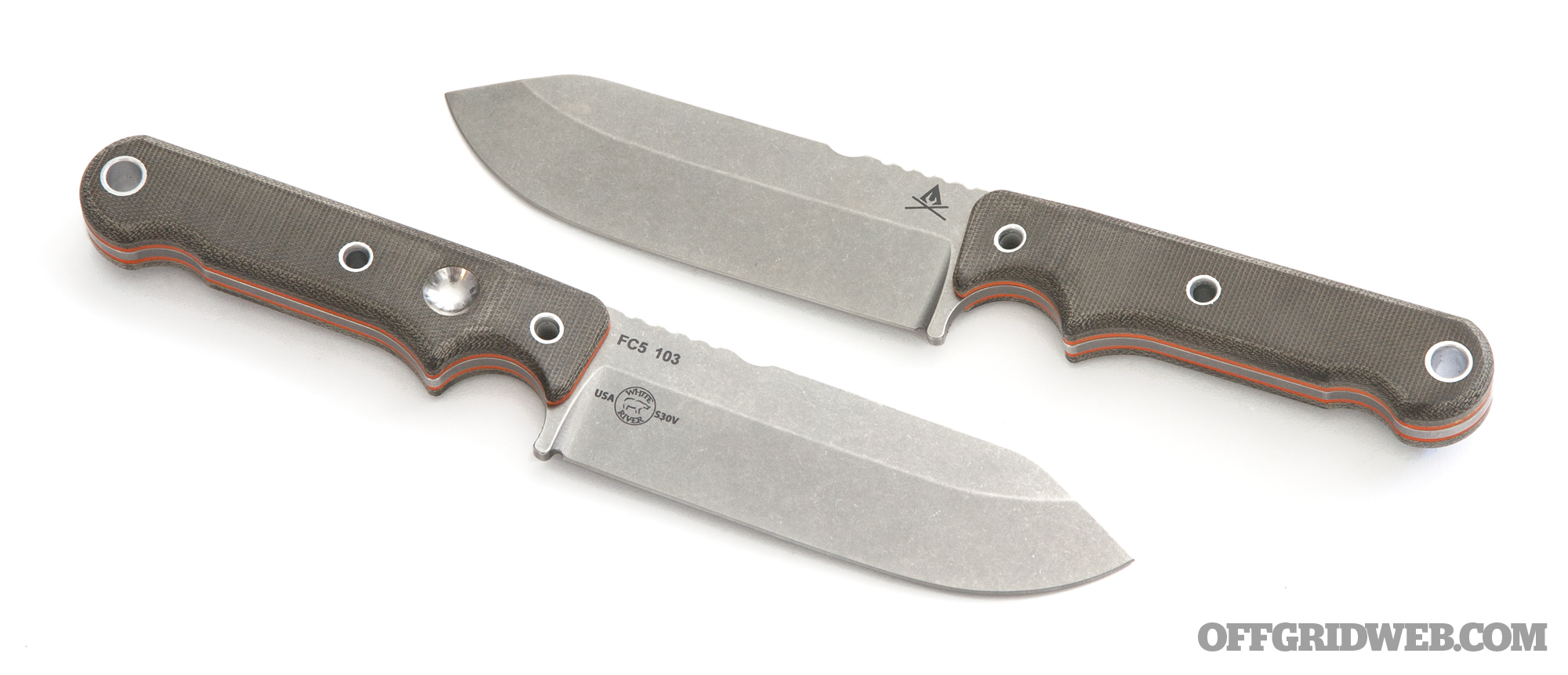
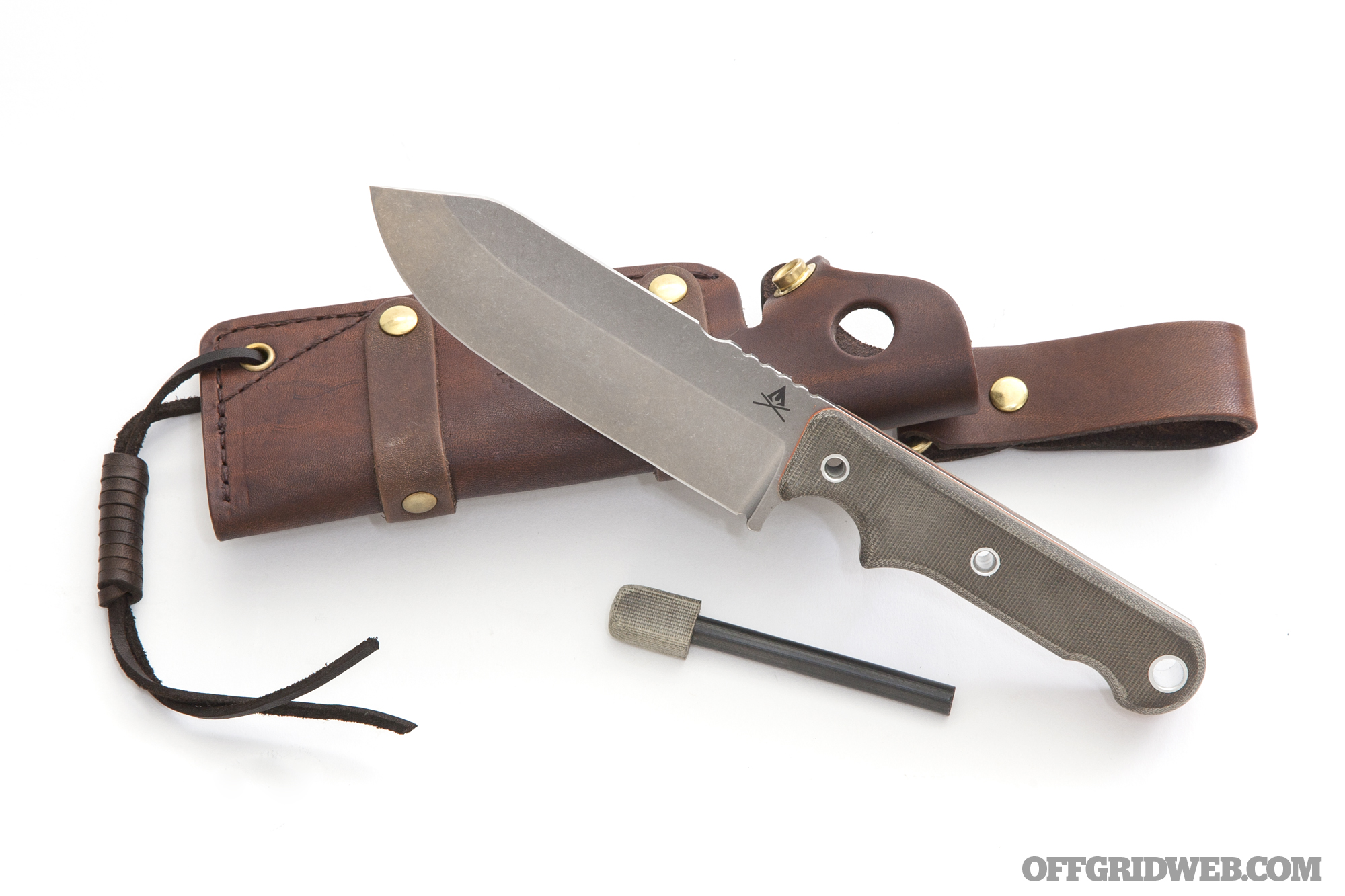
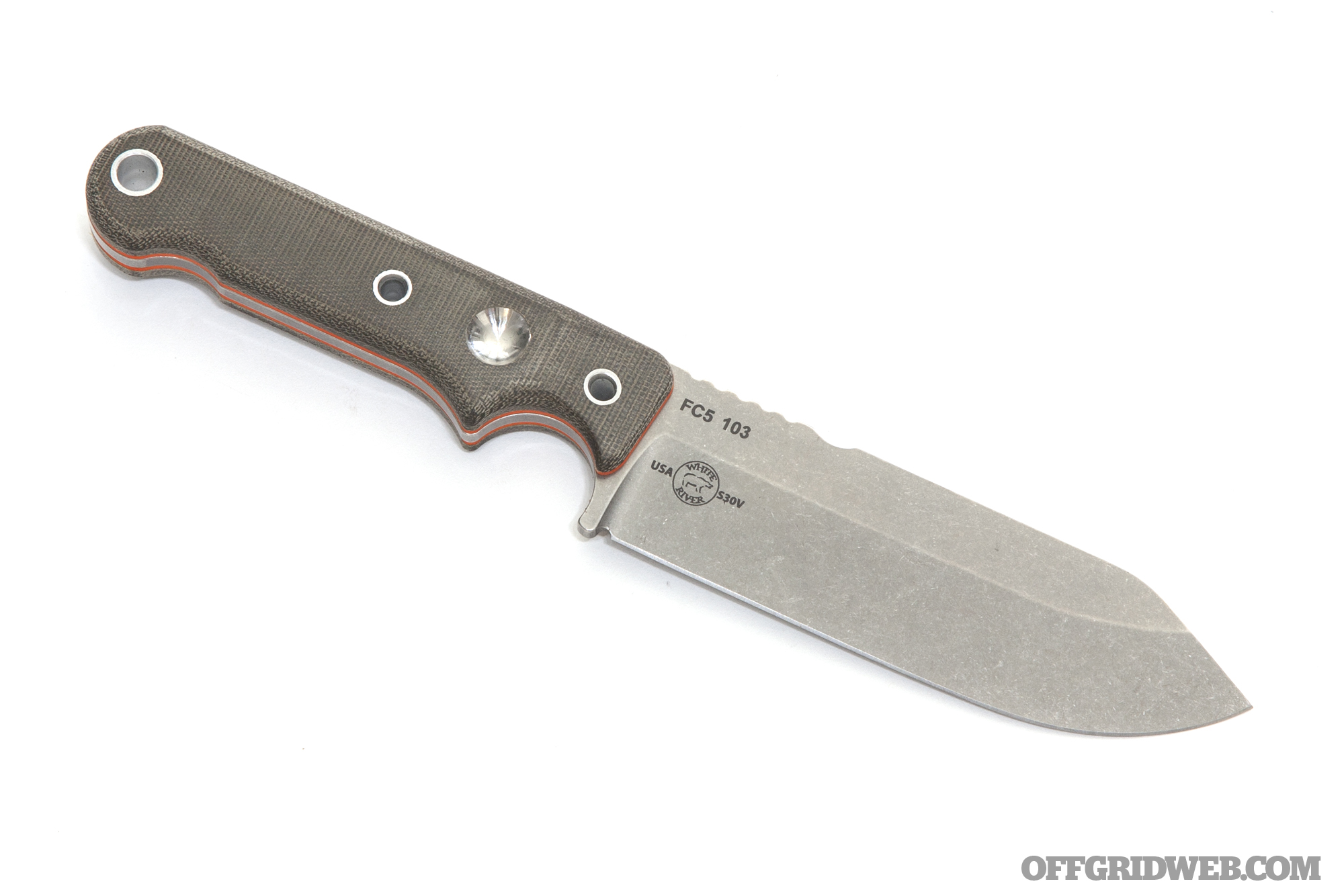
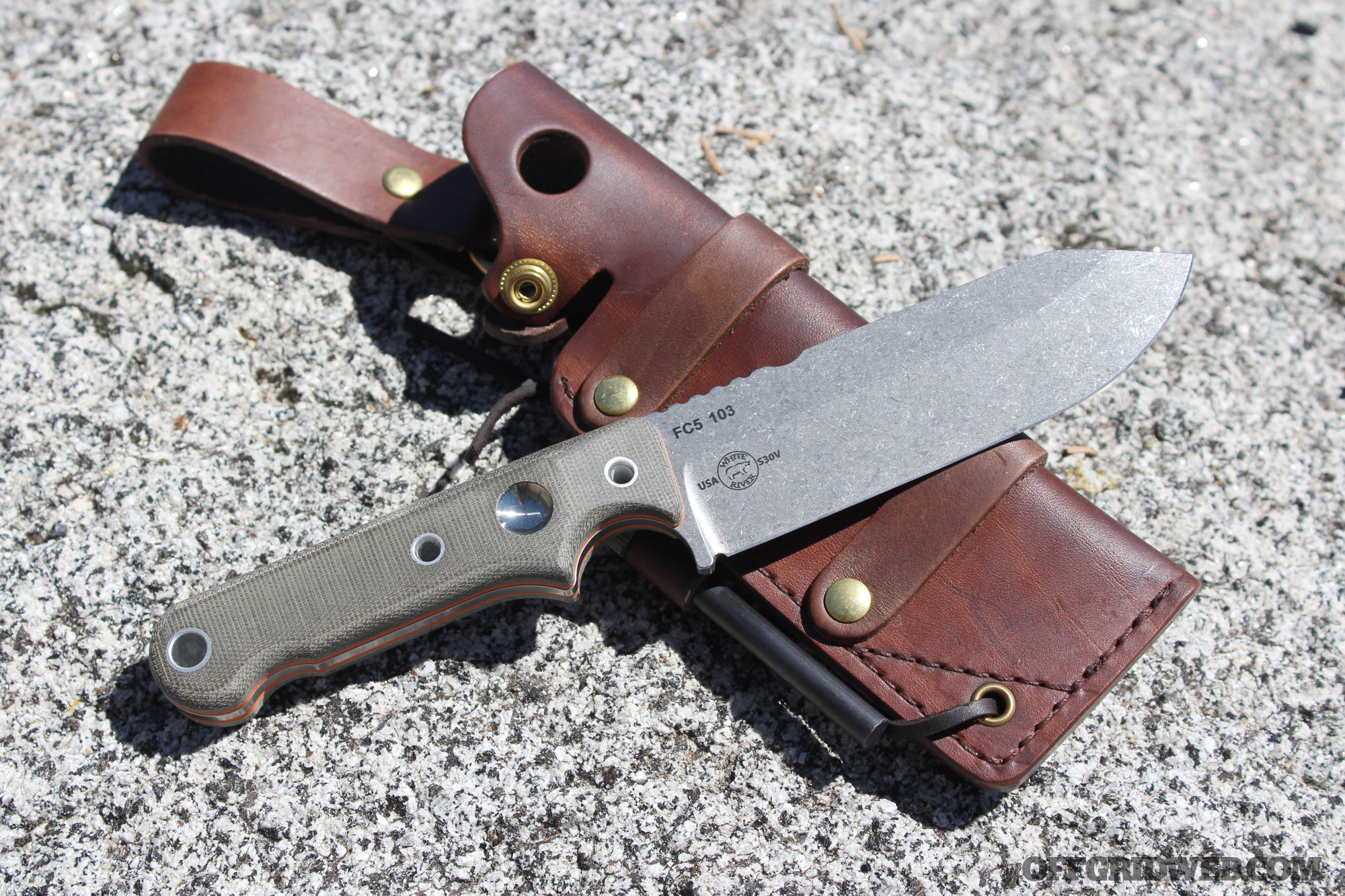
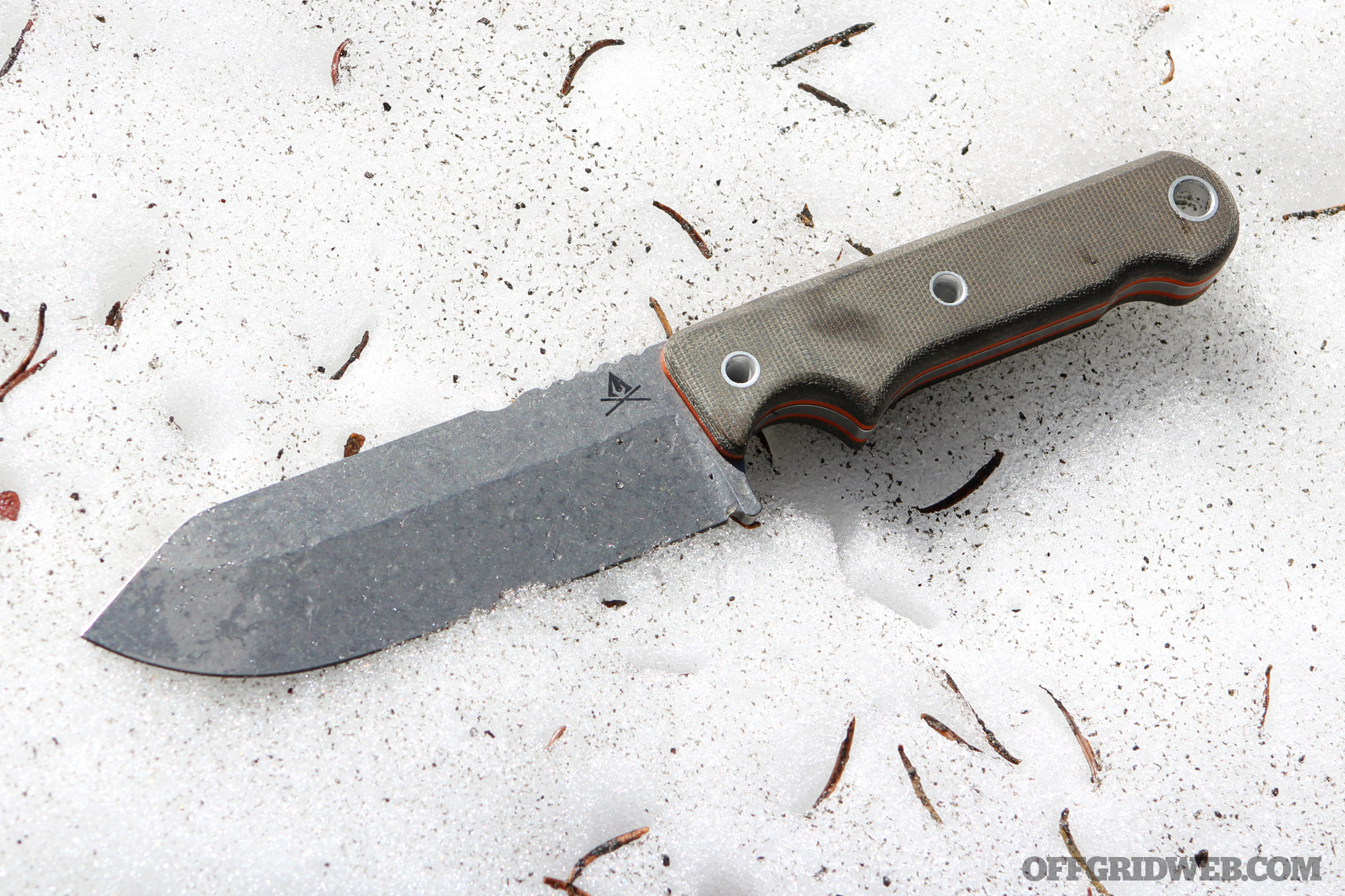
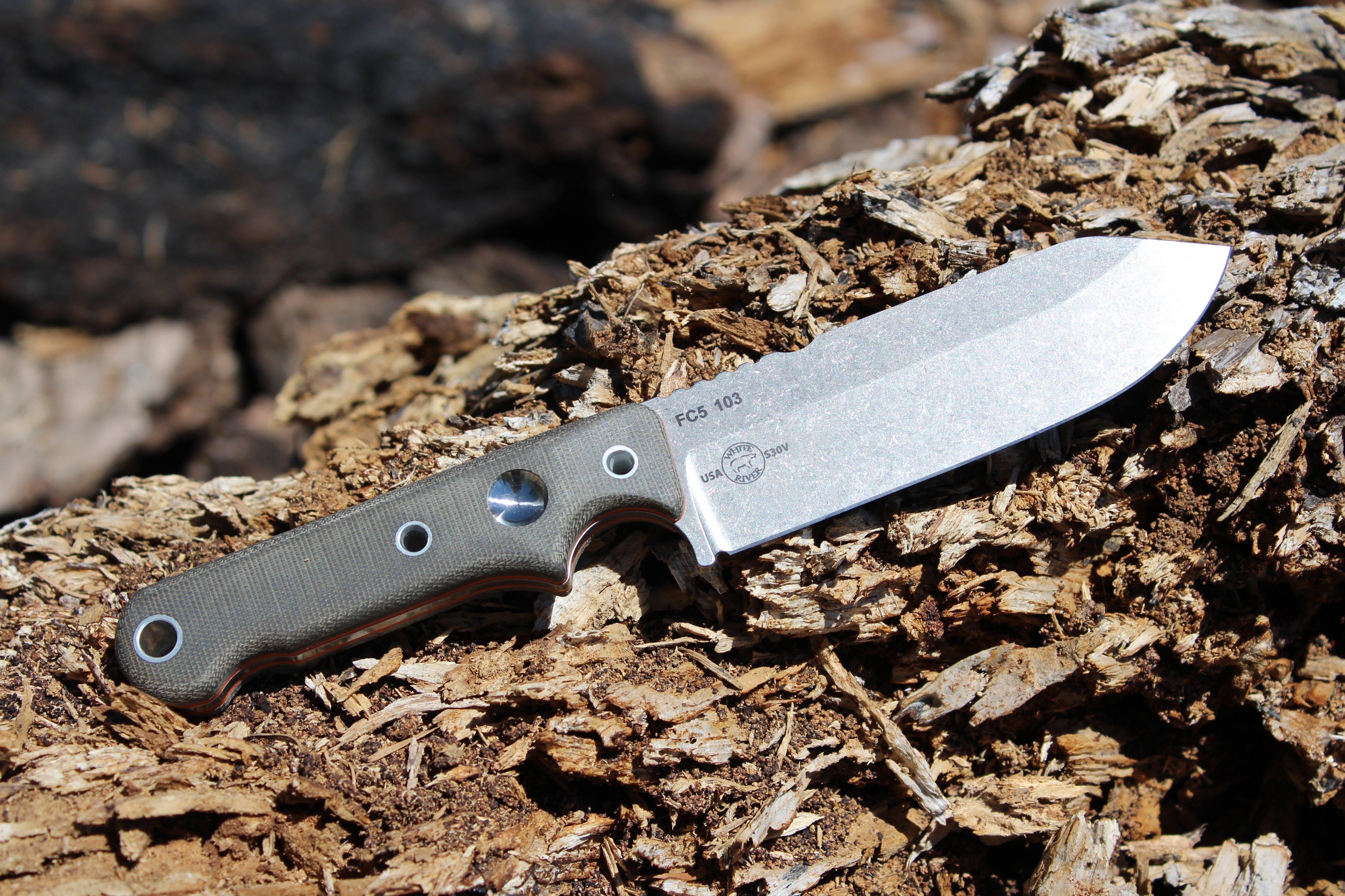
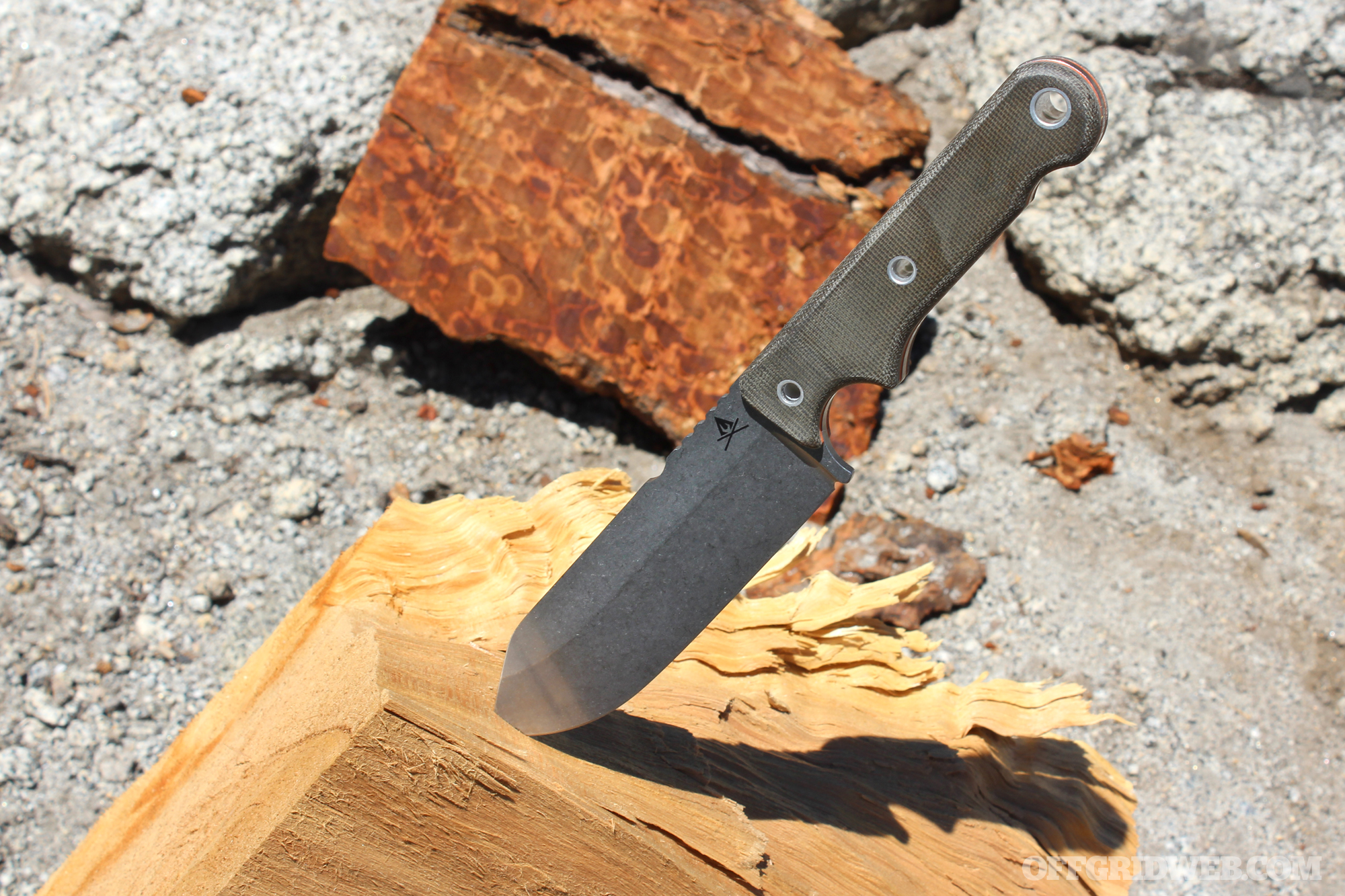
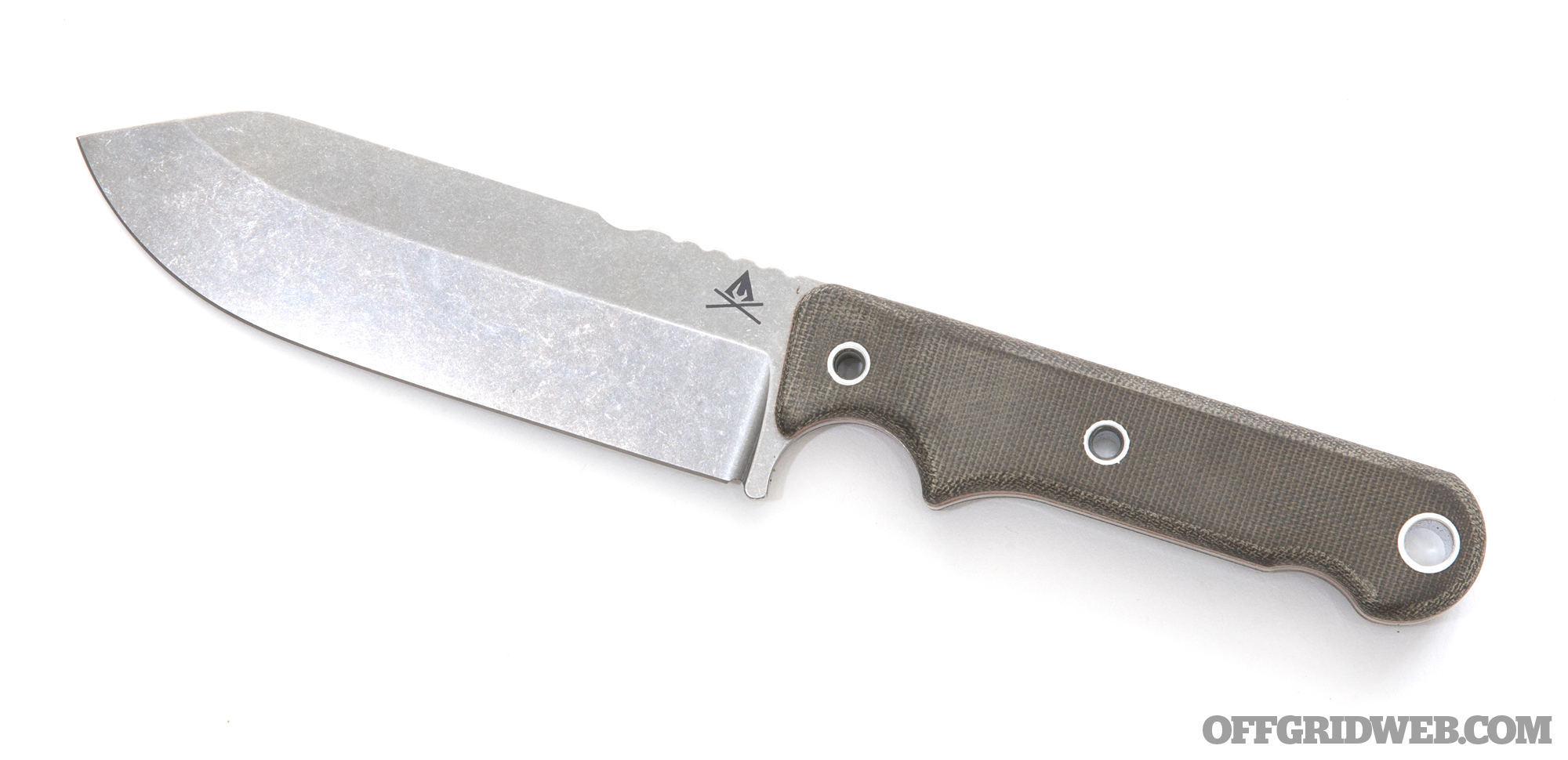
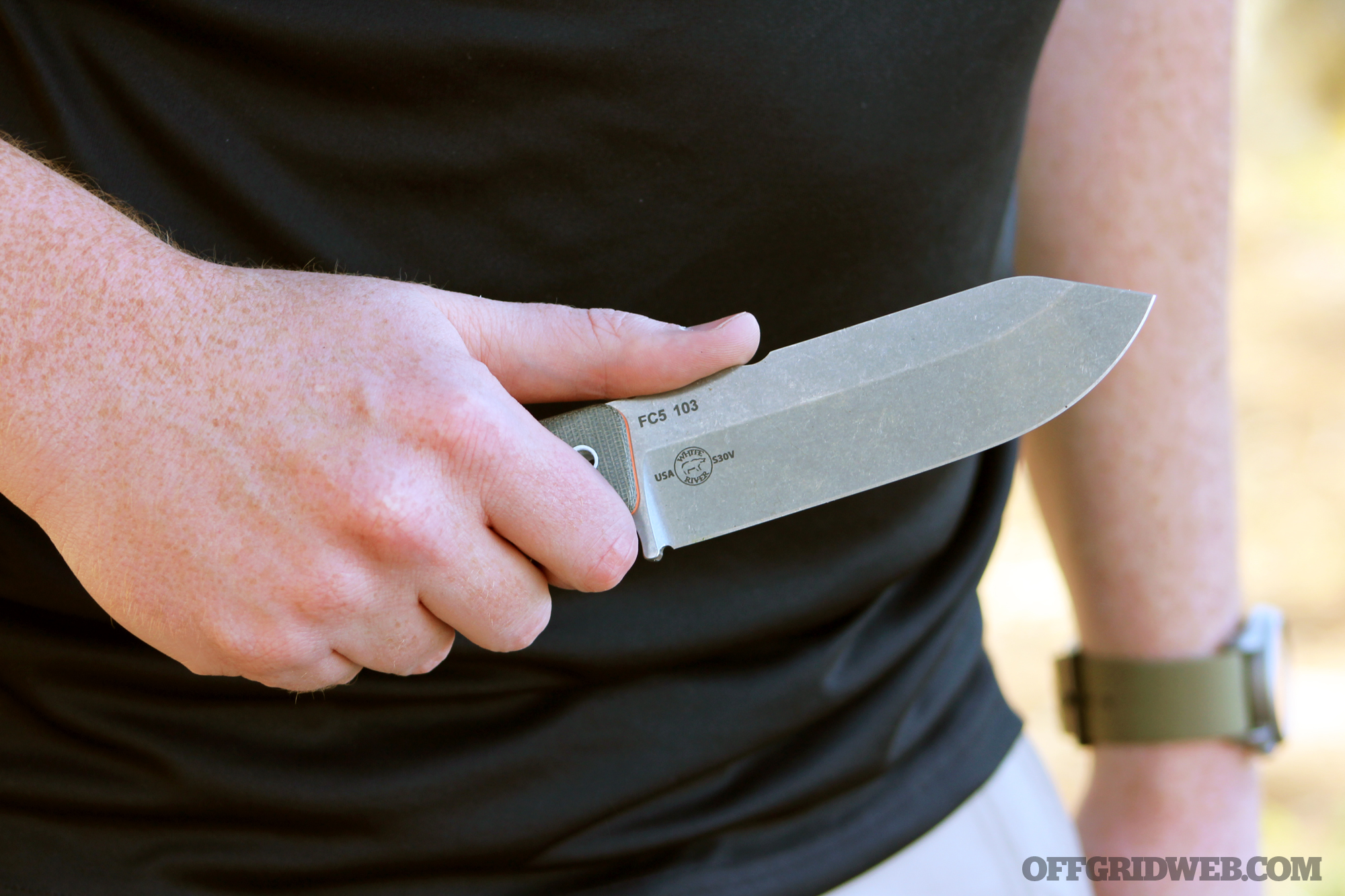
The White River Firecraft FC5 occupies the mid-range position between the smaller FC4 and larger FC7. This 10-inch knife features a broad 5-inch blade made of CPM S30V, a corrosion-resistant stainless steel infused with chromium and vanadium for added toughness. The blade is heat-treated to 59 HRC and wears a utilitarian stonewashed finish.
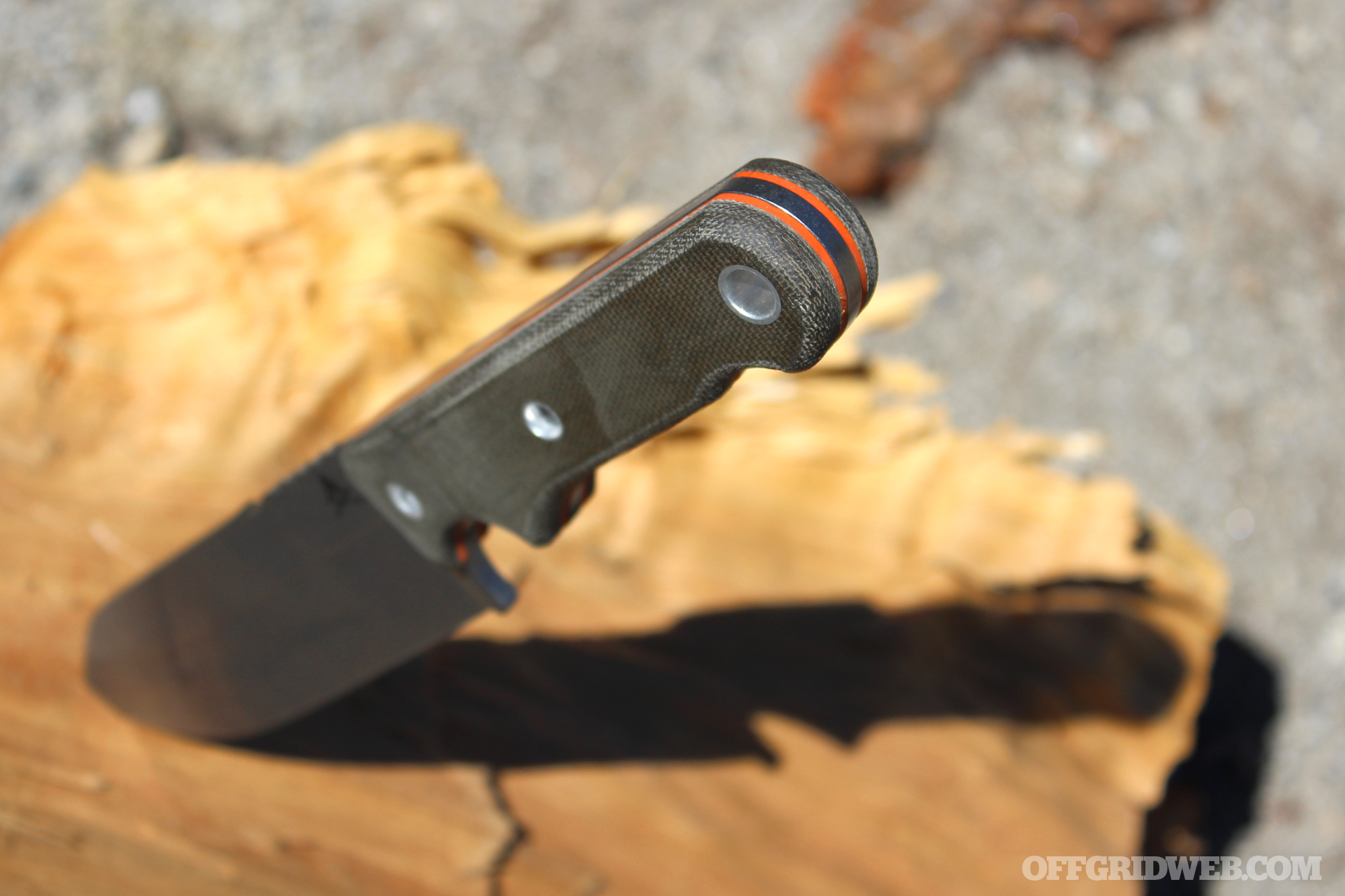
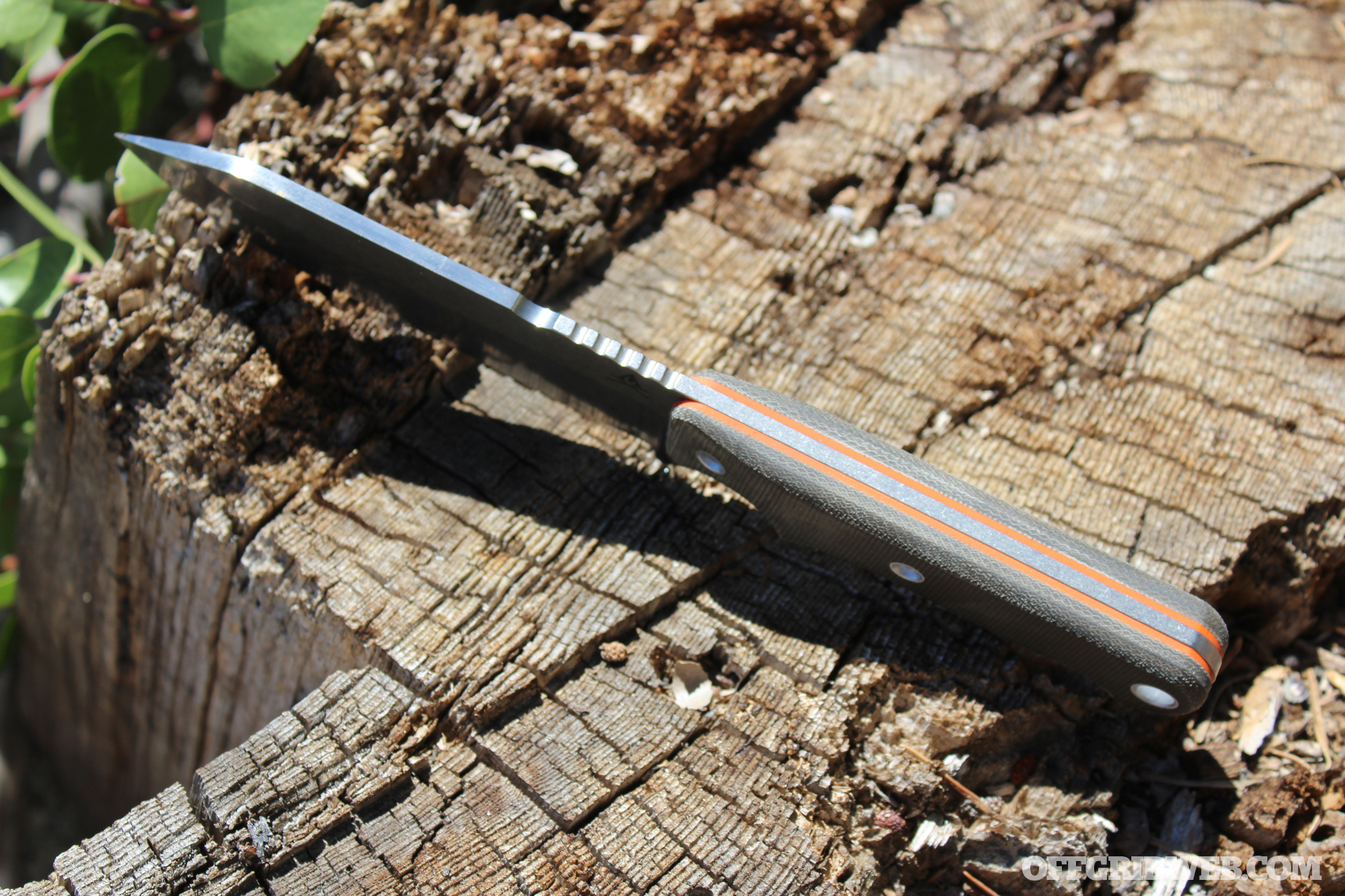
The Firecraft FC5 lives up to its name by providing two fire-starting resources. One of the notches along the spine offers a 90-degree edge for striking a ferrocerium rod (more on that shortly). There’s also a polished stainless divot on the right side of the handle that’s intended for stabilizing a bow drill.
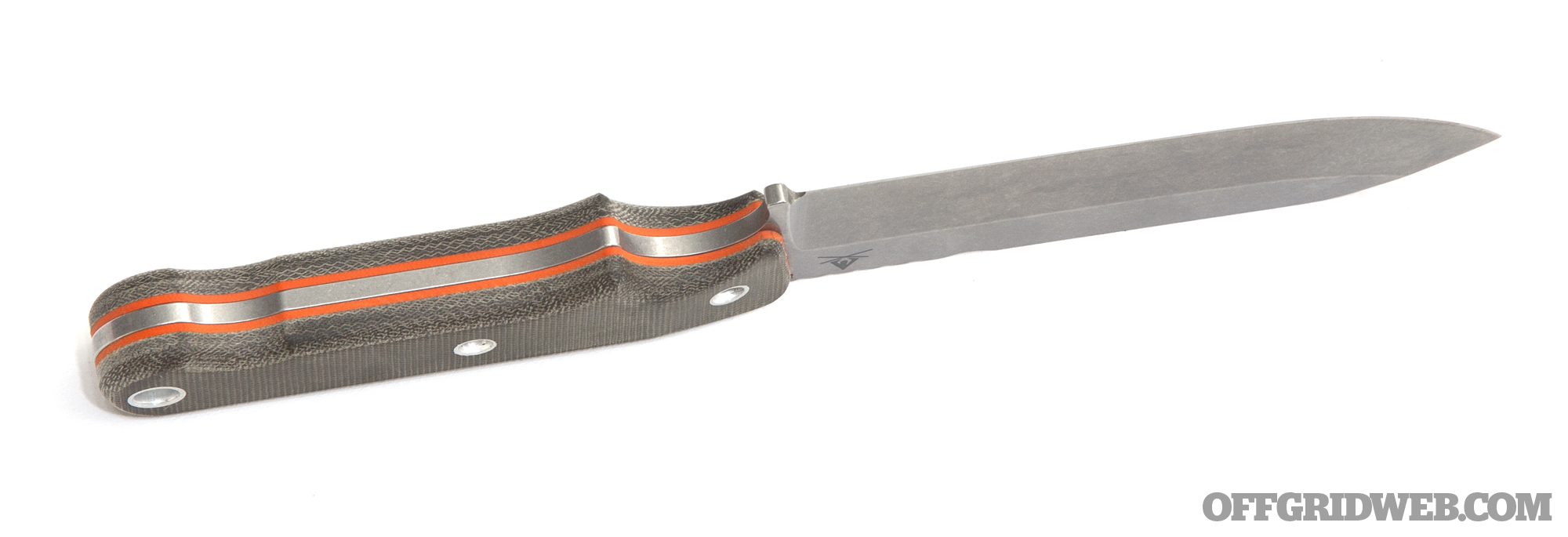
This knife’s full-tang design includes a large forefinger choil and additional contours for improved grip. Green canvas micarta scales and orange G10 spacers are attached to the tang via three hollow metal pins, with the third pin doubling as a lanyard hole.
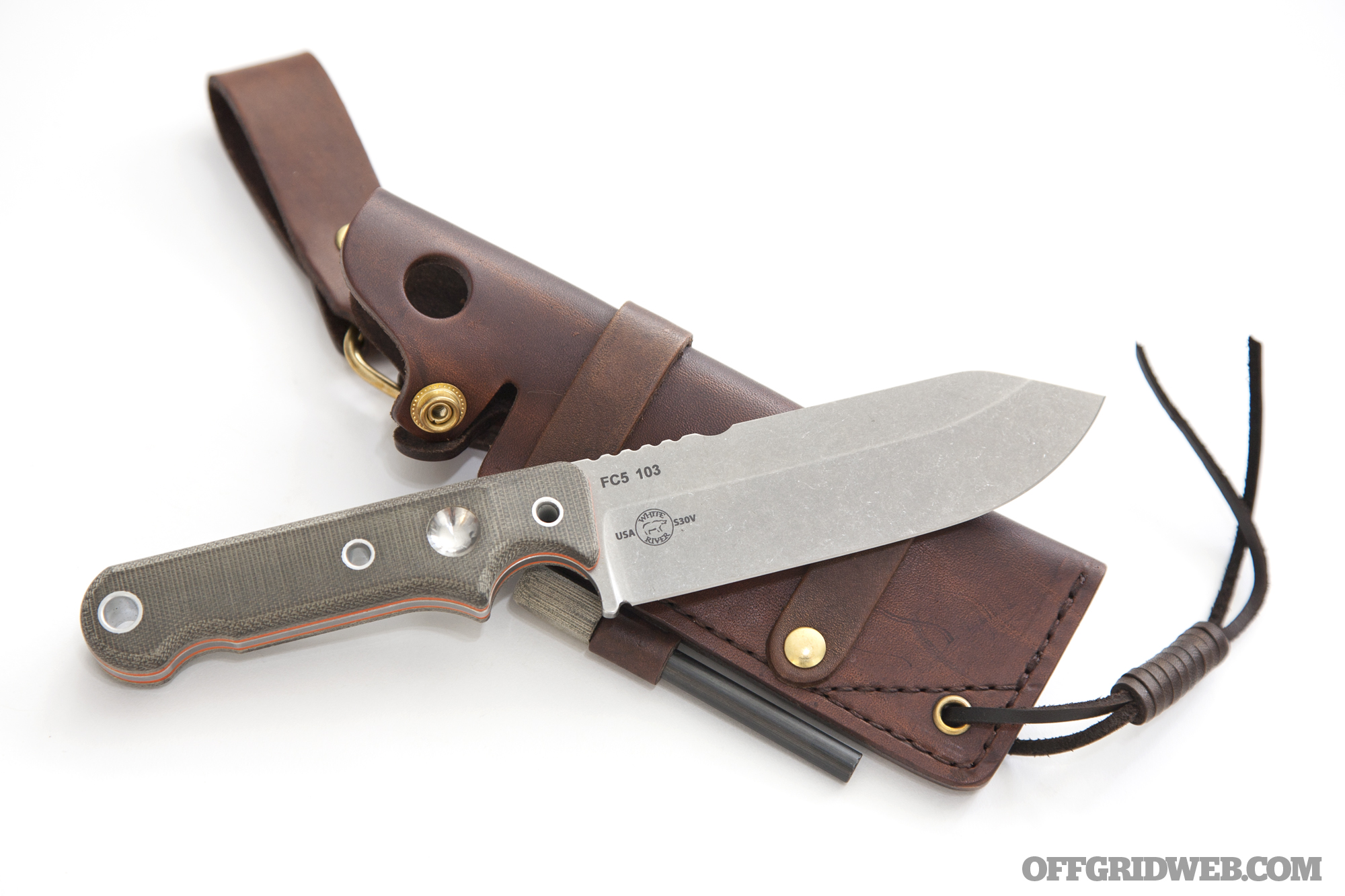
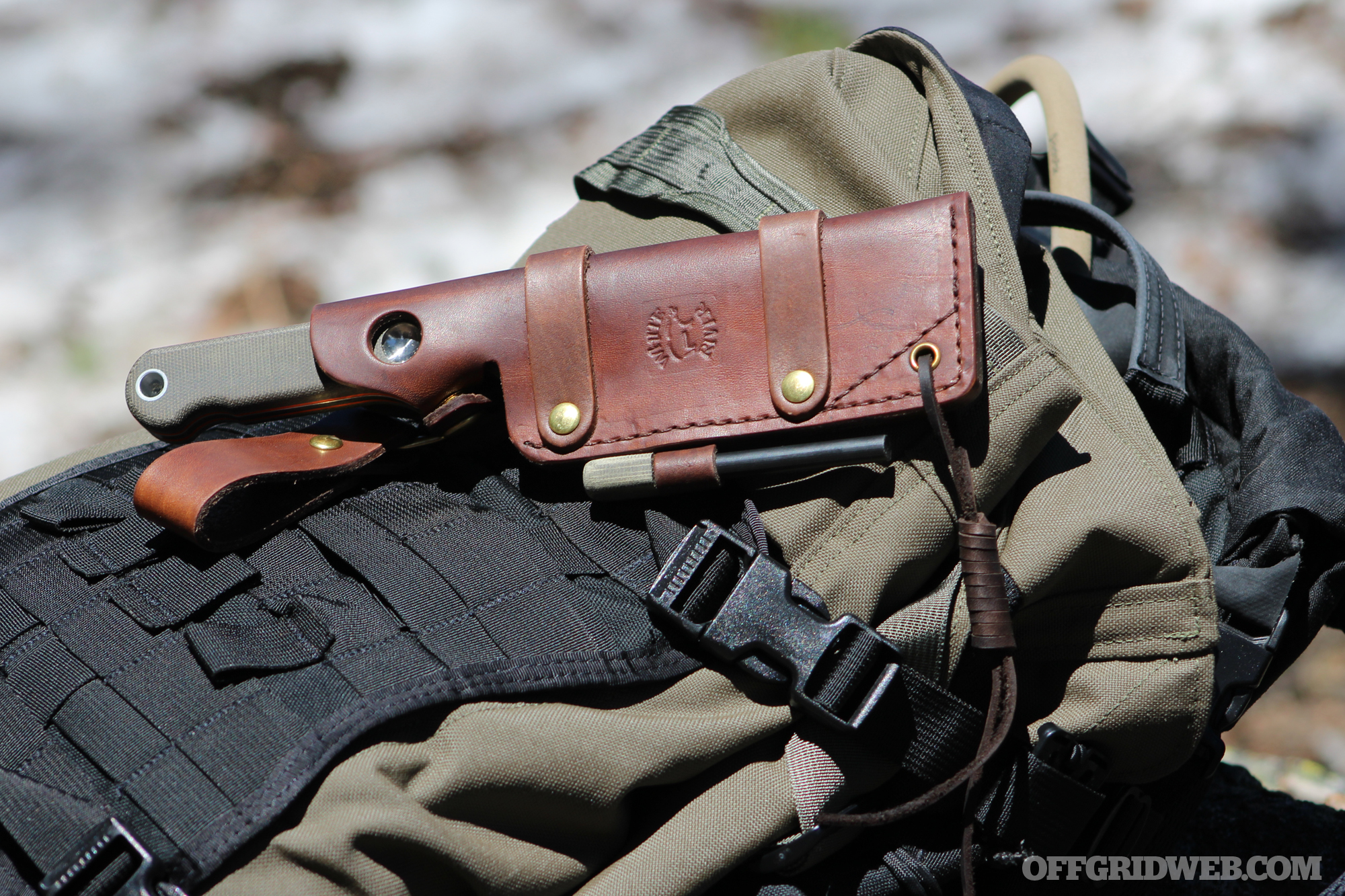
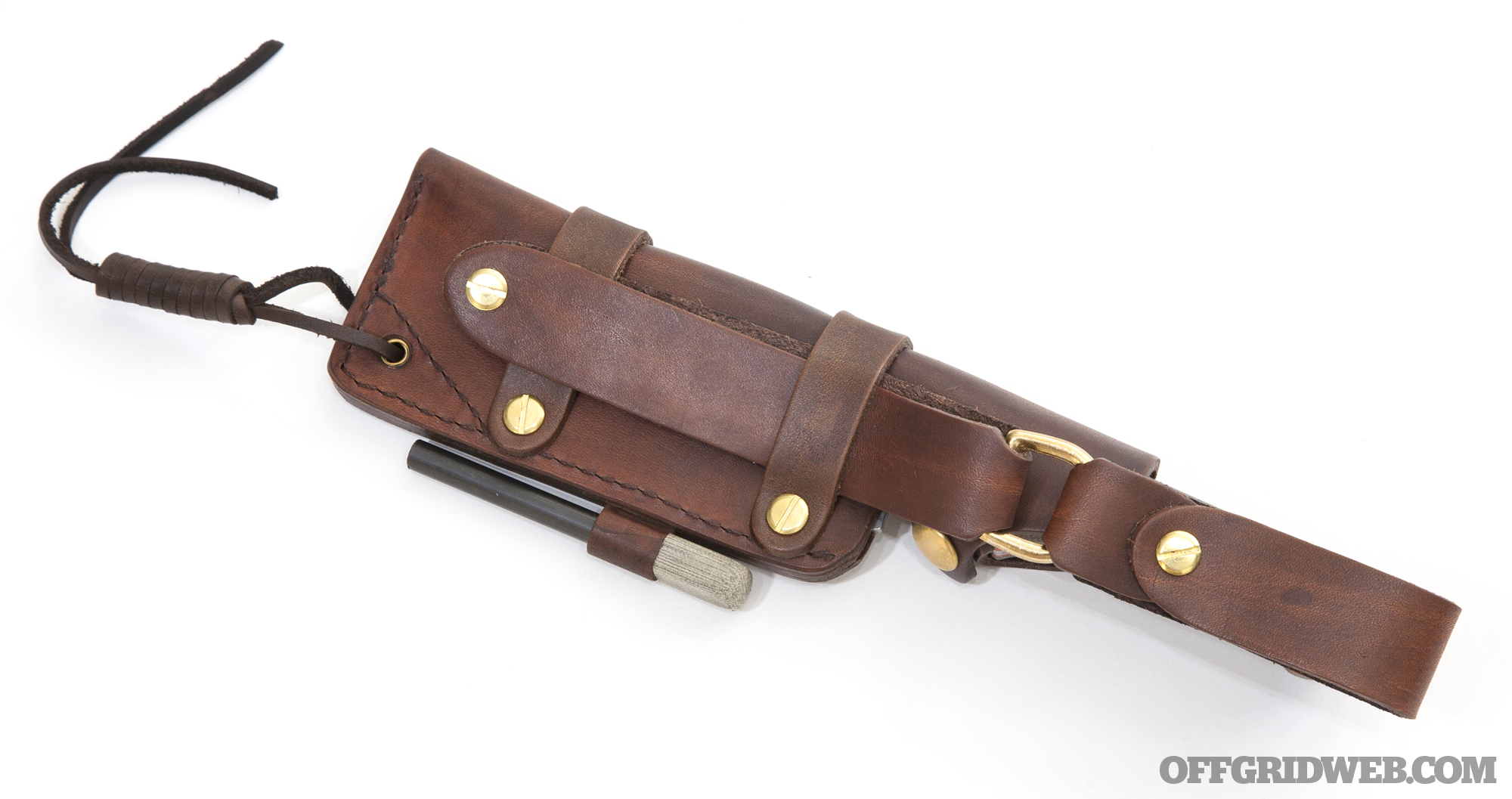
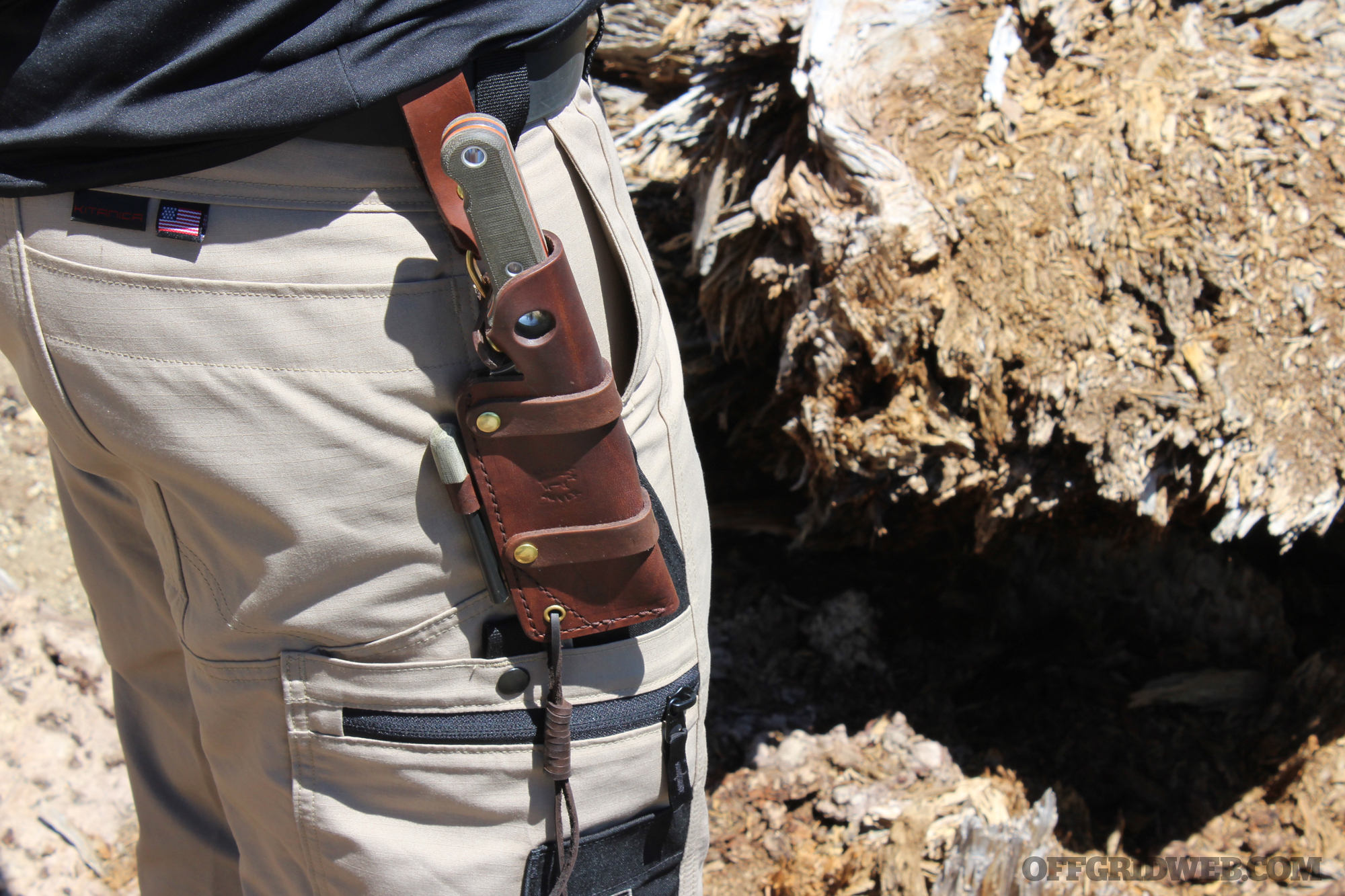
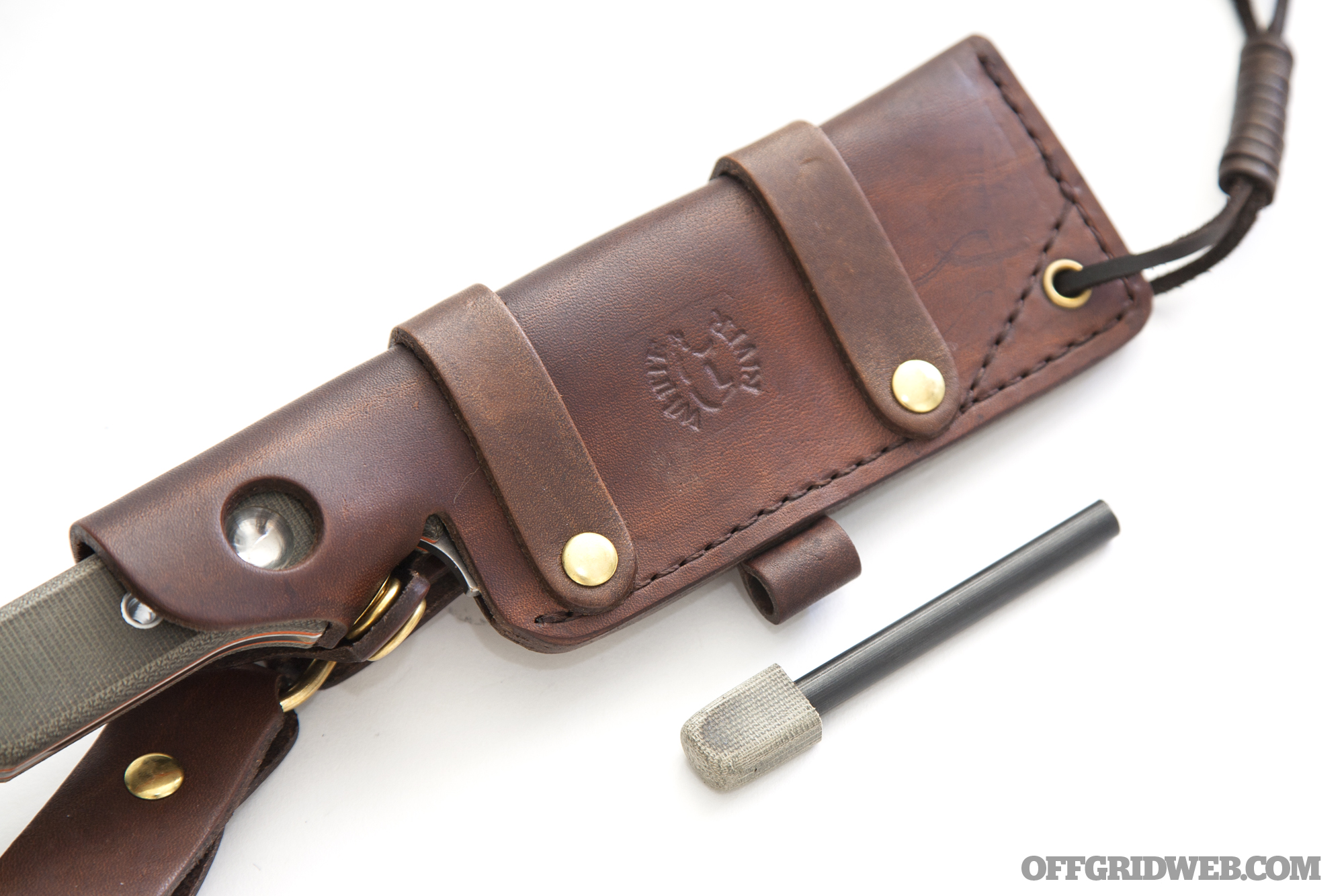
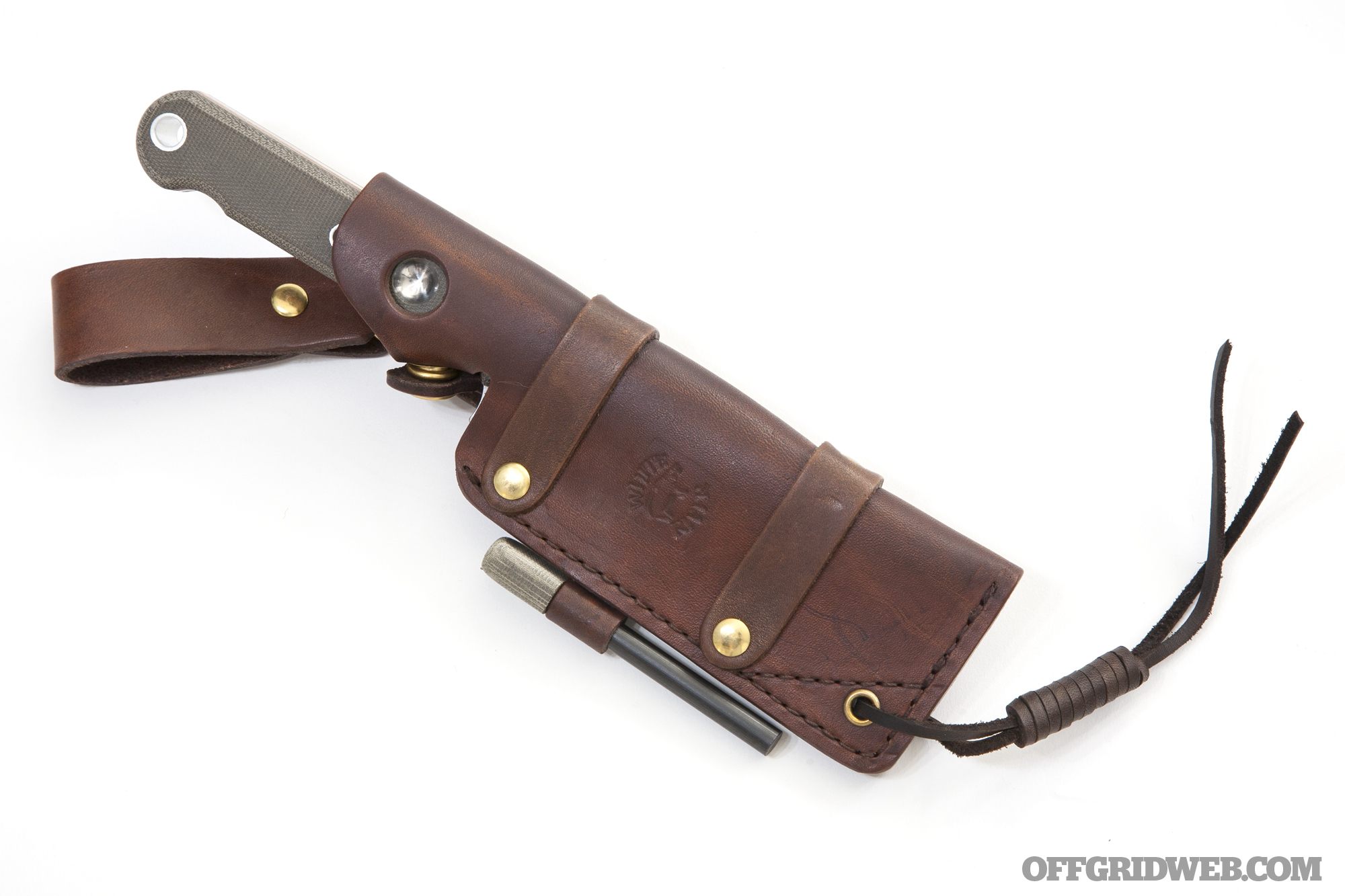
Each Firecraft knife includes an American-made leather sheath embossed with the White River bear logo. A series of leather bands and brass hardware attaches the drop-leg belt loop, while a leather strip and eyelet allow the sheath to be tied around the wearer’s thigh. If the drop-leg portion is unscrewed and removed, the sheath can also be worn in horizontal configuration on belts up to about 1.5 inches wide. (A 1.5-inch 5.11 Tactical belt worked in this configuration, but was a very tight fit.)
The knife is retained by a brass snap in the forefinger area, and its bow drill divot is still accessible when sheathed thanks to a circular cutout in the leather. A small loop on the edge of the sheath holds a 1/4-inch-diameter ferro rod, which is included with the knife and features a matching green canvas micarta handle.
Our Impressions
Before we even laid hands on this knife, we were impressed with the list of materials it employs. S30V is a great steel for every-day-carry blades, hence its use on EDC folding knives by the likes of Spyderco, Benchmade, and Zero Tolerance.
It’s somewhat of an unconventional steel choice for an outdoor fixed blade, since we’d usually expect something akin to 1095 high-carbon in a blade this size. However, S30V’s excellent edge retention and corrosion resistance make for a low-maintenance setup — unlike high-carbon steel, it won’t need to be cleaned and oiled frequently to keep the rust at bay.
Canvas micarta handle scales were another smart choice, since they tend to absorb moisture and provide improved grip in wet conditions. The orange G10 scale liners don’t affect functionality, but they do show attention to detail and make the knife more visually-appealing.
Upon unboxing the knife, we immediately noticed the quality of the sheath. It’s made of thick and tough American-sourced leather — none of that bonded pleather junk here. The brass fasteners and belt loop D-ring feel equally robust. We appreciate the inclusion of a leather thigh strap, since many knives skimp in this area.
Drawing the FC5 revealed one weakness of the sheath. Its retention snap keeps the blade secure and is easy enough to release, but the shape of the leather causes it to curve inward towards the blade. If you’re not careful to firmly push these flaps out of the way as you draw the knife, the leather can be accidentally sliced as the edge moves past. If this happens enough times, it could permanently damage the sheath’s retention flaps, so it’s worth being cautious as you draw.
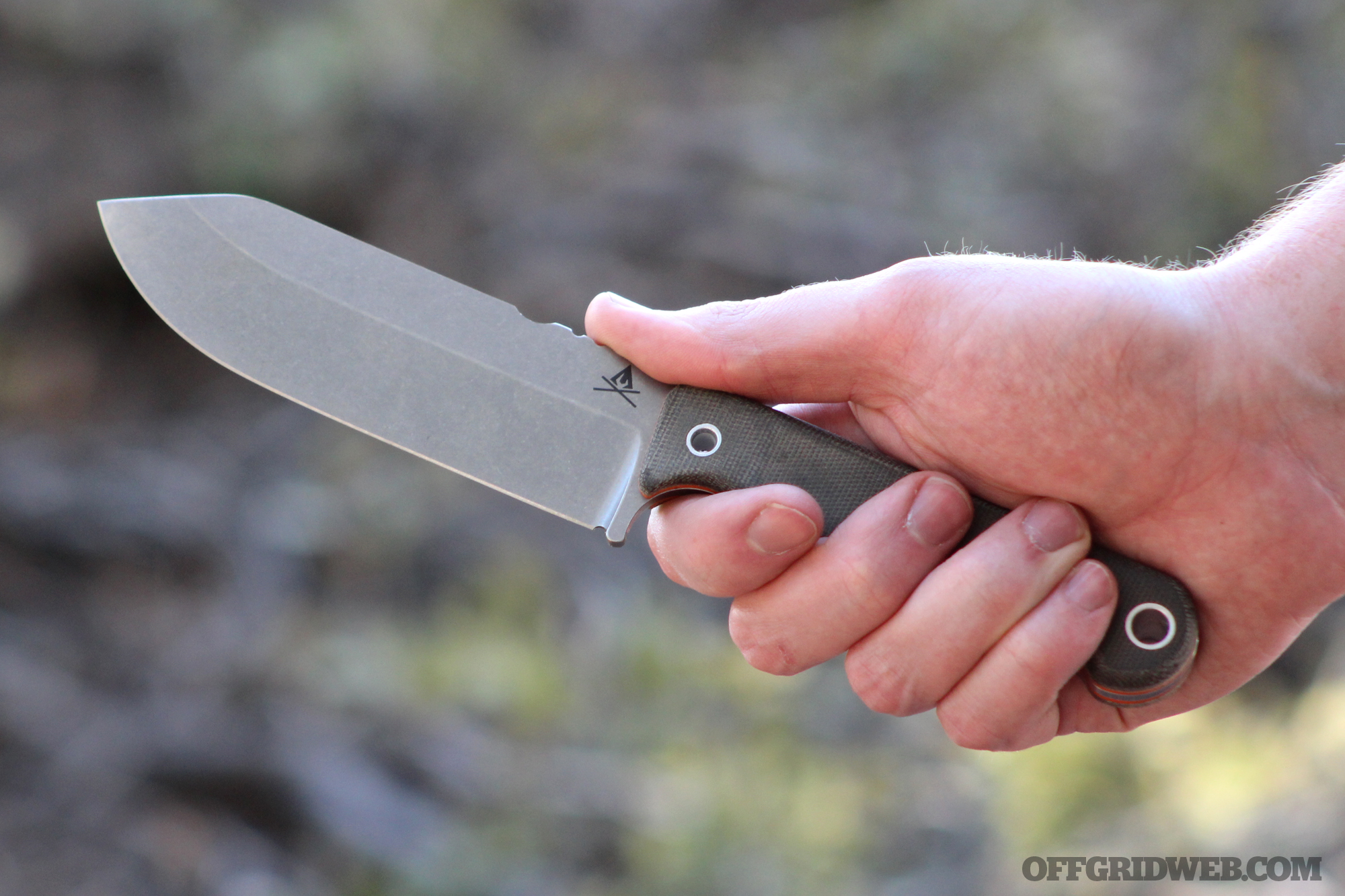
Once you get past the draw stroke, the Firecraft FC5’s ergonomic design is absolutely outstanding. The extra-large choil and slight taper on the front of the handle lock into your index and middle fingers, while a smaller groove near the butt yields a secure grip point for your pinkie finger. The handle is also just thick enough to feel substantial, even in this author’s large hands.
The micarta handle effectively soaks up sweat and moisture, but we would’ve been open to a slightly rougher texture on the faces of the scales. Even with the smooth finish, manipulating the FC5 is effortless. We might even say this is the best handle design of any survival knife we’ve used. It simply feels right.
Moving on to the business end, the Firecraft FC5’s blade design is just as efficient as that of its handle. The S30V blade is just over 1/8-inch thick and 1-1/2 inches wide. It has been sculpted into a distinctive profile penned by designer Jason Tietz — some might call it a modified drop point, while others may say it’s closer to a clip point or spey. Whatever you call it, it’s clearly designed for slicing and chopping rather than piercing, and that’s just what we’d want from a survival knife.
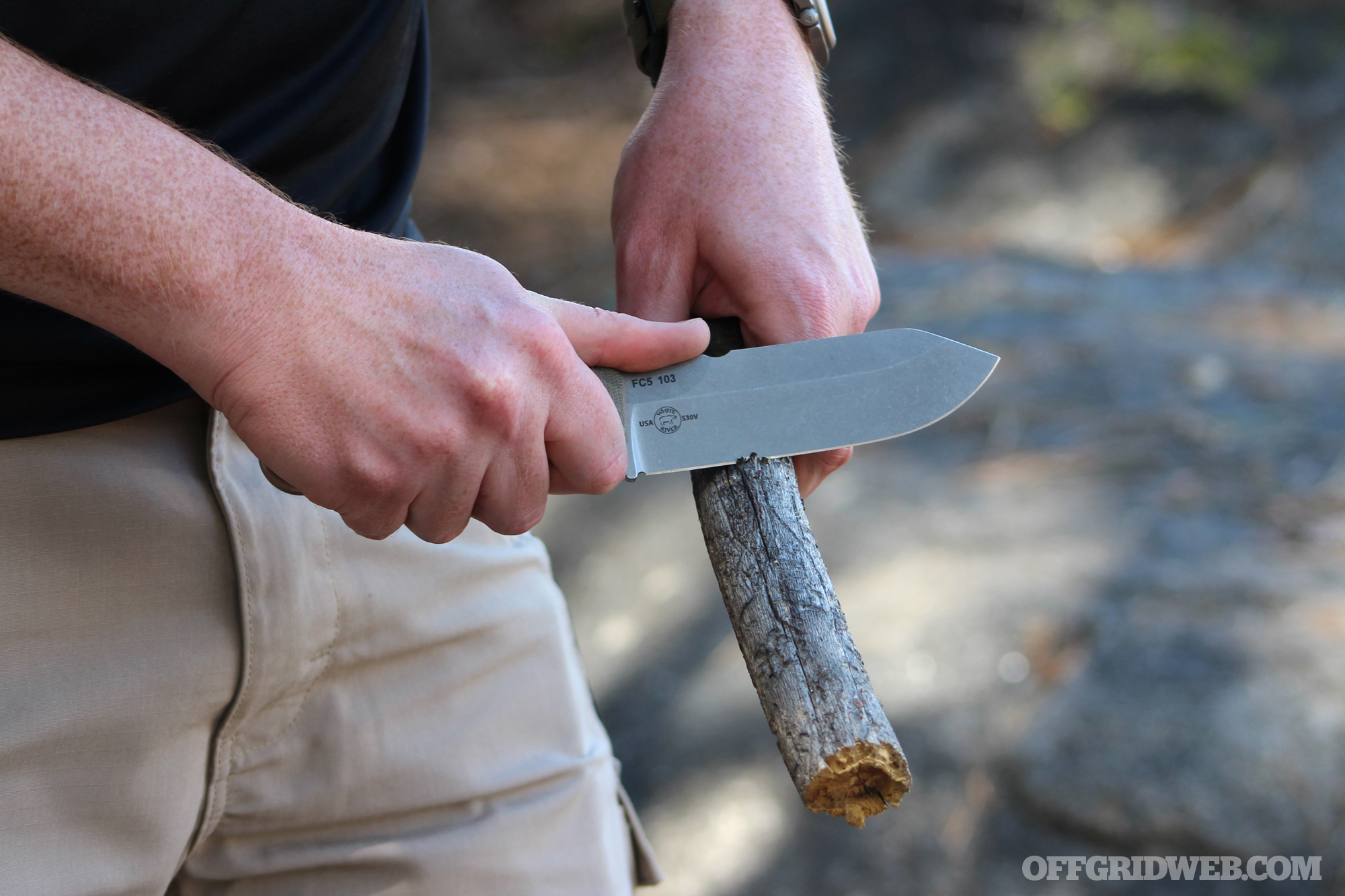
The deep primary flat grind on this broad blade culminates in a razor-sharp compound-ground edge. We used it to peel, whittle, baton, and hack through a variety of materials, and saw no chipping or deformation to speak of. Even if we had managed to break it, we recalled that White River Knives guarantees its products for life, no questions asked — that’s reassuring if you’re hard on your gear.
As for the fire portion of our Firecraft, we’re extremely appreciative of the 90-degree-edge notch in the spine. It’s perfect for striking the included ferro rod, and saves you from the cringe-inducing process of dulling your sharp blade edge on the ferrocerium. Far too many survival knives from major manufacturers omit this feature, so we’re glad White River didn’t forget it.
We usually view making a bow drill as a last resort due to the relative difficulty of starting a friction fire compared to other ignition methods. If you’ve got a lighter, matches, and ferro rod but jump at the chance to make a bow drill, you might be a bit of a masochist. But the included divot sure beats hunting for a dome-shaped palm rock, so we’re glad it’s present in case we ever need it.
Conclusions
So, does the White River Knives Firecraft FC5 tick off all the items on the “ultimate survival knife” checklist we mentioned earlier? No. It’s not perfect, and no knife ever will be — especially not for every survivalist and every scenario. That said, this is a superb knife, and it continually exceeded our expectations.
The materials are high-quality, and they’re sourced and assembled in America. We couldn’t ask for much more from the design of the FC5 — it has great balance and grip, cuts beautifully, and stayed sharp throughout our tests. It’s even aesthetically pleasing, with a handsome shape, nice stonewashed finish, and a classy leather sheath. It doesn’t look like something dug out of grandpa’s basement, but it’s not treading in the realm of tacticool mall ninjas, either.
Our critiques of this blade are relatively minor. The sheath retention snap takes getting used to, and we put a few nicks in it before learning to be more cautious. The S30V steel, while very good for most tasks, will be much harder to sharpen than a high-carbon variety once it eventually dulls. And we would’ve preferred a slightly rougher texture on the micarta handle scales.
There’s also the matter of price, as this knife will set you back $280 — that may sound like a lot to some, but remember it’s made in America, includes a leather sheath, and offers a no-questions-asked lifetime warranty. As long as you don’t lose it in the woods, this is a knife you might pass on to your kids someday.
Pros:
Outstanding design and ergonomics
Sharp, durable, and corrosion-resistant S30V steel
Ferro rod, striker notch, and bow drill divot assist with fire-starting
Includes nicely-crafted leather sheath
Made in the USA with a lifetime warranty
Cons:
Sheath retention snap may get in the way of the blade while drawing the knife
Handle scales could use a little more texture
S30V steel is durable but relatively hard to sharpen in the field
$280 MSRP may be a turn-off for some budget-oriented survivalists
For more information on the Firecraft FC5 and other White River products, go to WhiteRiverKnives.com.
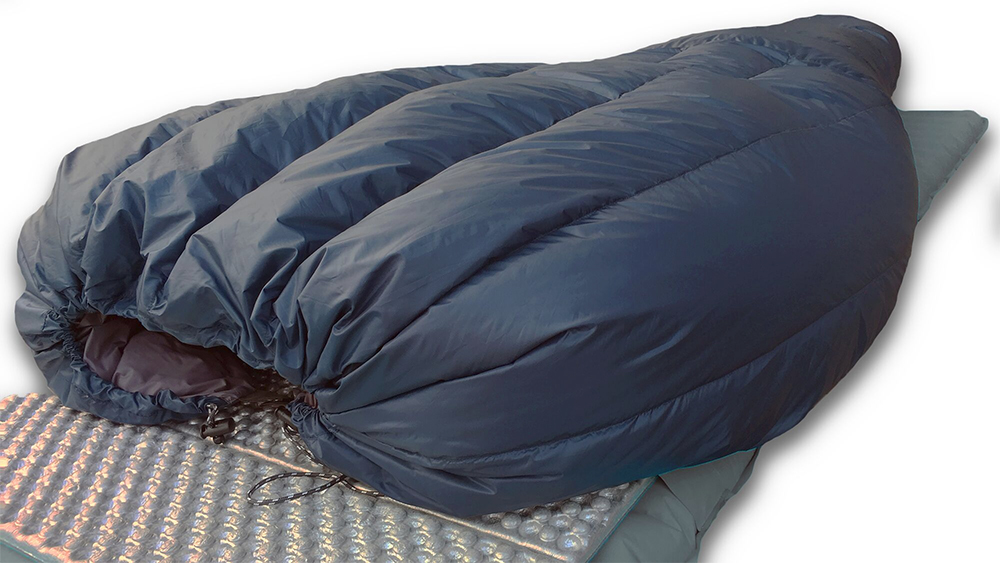
Those of you who read Issue 18 of our magazine may remember the NoZipp sleeping bag. Thanks to its simple and innovative magnetic closure system, we gave the startup company’s 15°F bag our “Top Bug-Out Pick” award in our cold-weather sleeping bag buyer’s guide. Rather than rest on its comfy laurels, NoZipp has expanded its product line with a new three-piece sleep system known as the Mobile Bed.
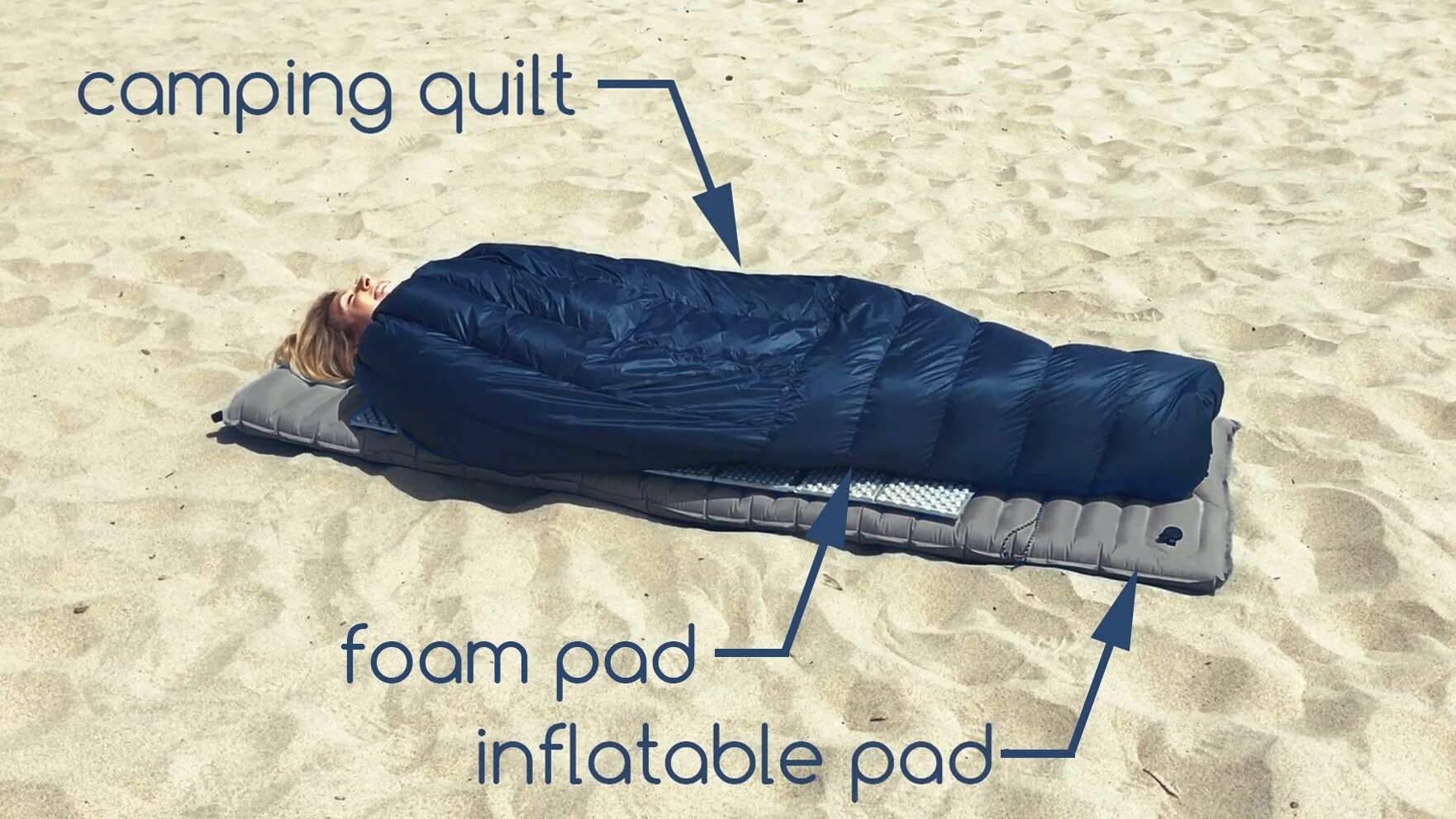
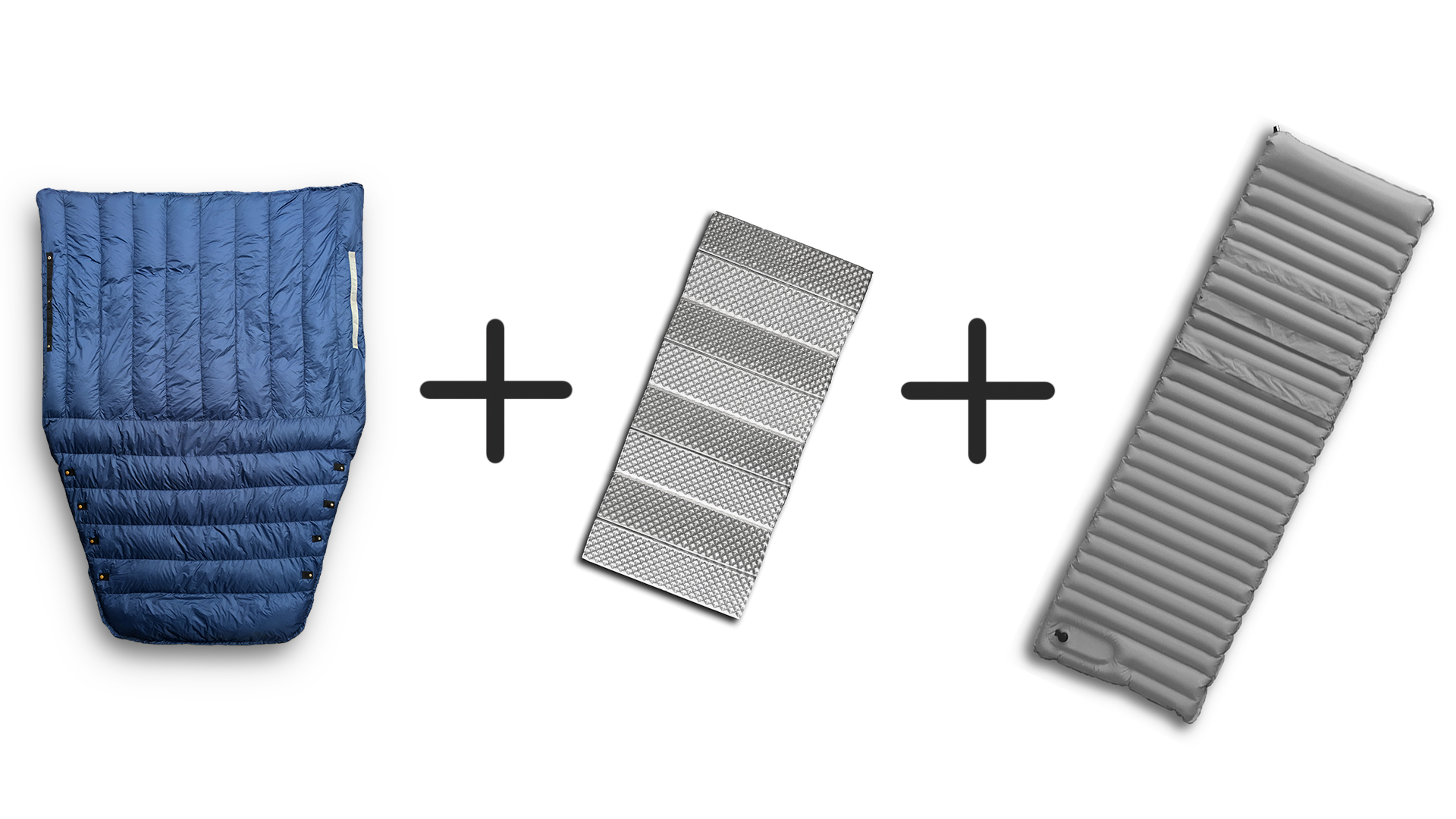
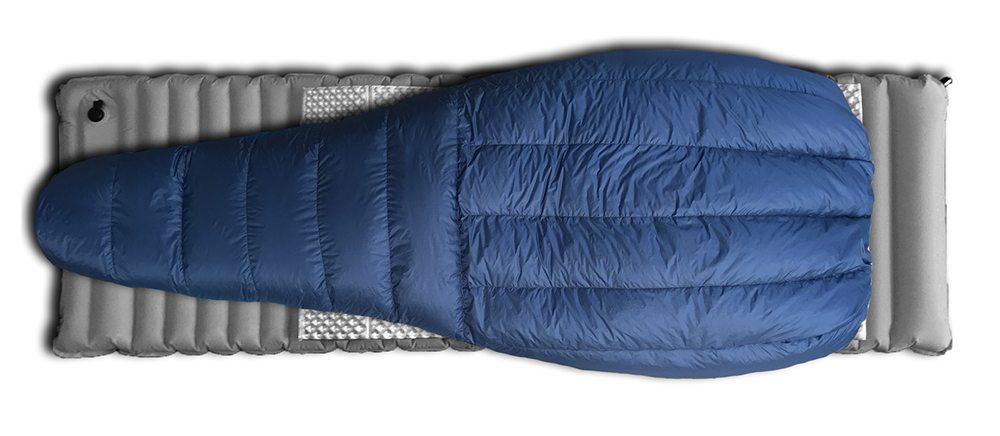
The new NoZipp Mobile Bed recently launched on Kickstarter, and company founder Taylor Henderson calls the system “all you need to sleep comfortably, anywhere”. It consists of three components. First, the 28-ounce down quilt can be used as an ordinary camping quilt, but it also features NoZipp’s integrated magnetic closures and a drawstring. This allows it to be transformed into a mummy-style sleeping bag.
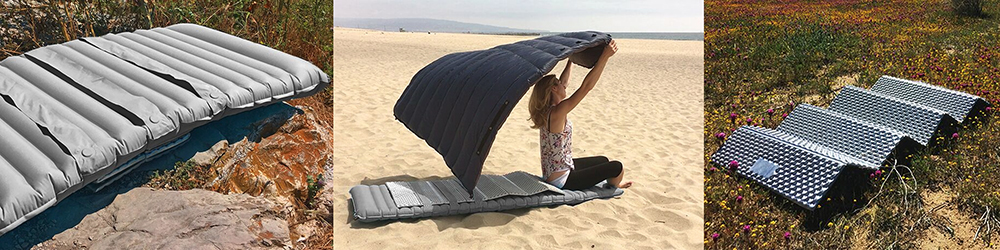
While the quilt can be used as a standalone item, its magnets are also designed to adhere to the next part of the system: an inflatable pad. The soft air pad weighs 20 ounces and keeps your body away from the cold, hard ground. But unlike ordinary sleeping pads, this pad features magnets which connect to the NoZipp quilt and keep it from shifting or slipping off while you sleep.
Three bands on the pad provide retention for the third and final component: the foam pad. This 8-ounce accordion-fold mat is made of thermally-reflective dense foam, insulating your body and preventing loss of heat. When paired with the air pad, the foam layer provides additional warmth and comfort.
The NoZipp Mobile Bed can be used as a complete system to keep you toasty in environments as cold as 25°F / -4°C. For warmer locations, you can use only the quilt and foam pad, or the quilt and inflatable. The entire Mobile Bed weighs 3.5 pounds, and it’s also available in a long size for users as tall as 6’6″.
Early bird backers will be able to order the system for $199 (regular) or $219 (long) through Kickstarter. Retail price after the Kickstarter will be $349 and $369, respectively. For more details on the Mobile Bed system, check out the Kickstarter project.
During a disaster, the value of currency is often diminished, but certain commodities become far more valuable. The law of supply and demand tells us that when supply of a desirable resource is low, demand skyrockets, and the worth of that resource increases. When polite society comes to a grinding halt and people are fighting for their lives, it’s reasonable to assume that food, weapons, and comfort items will be in high demand.
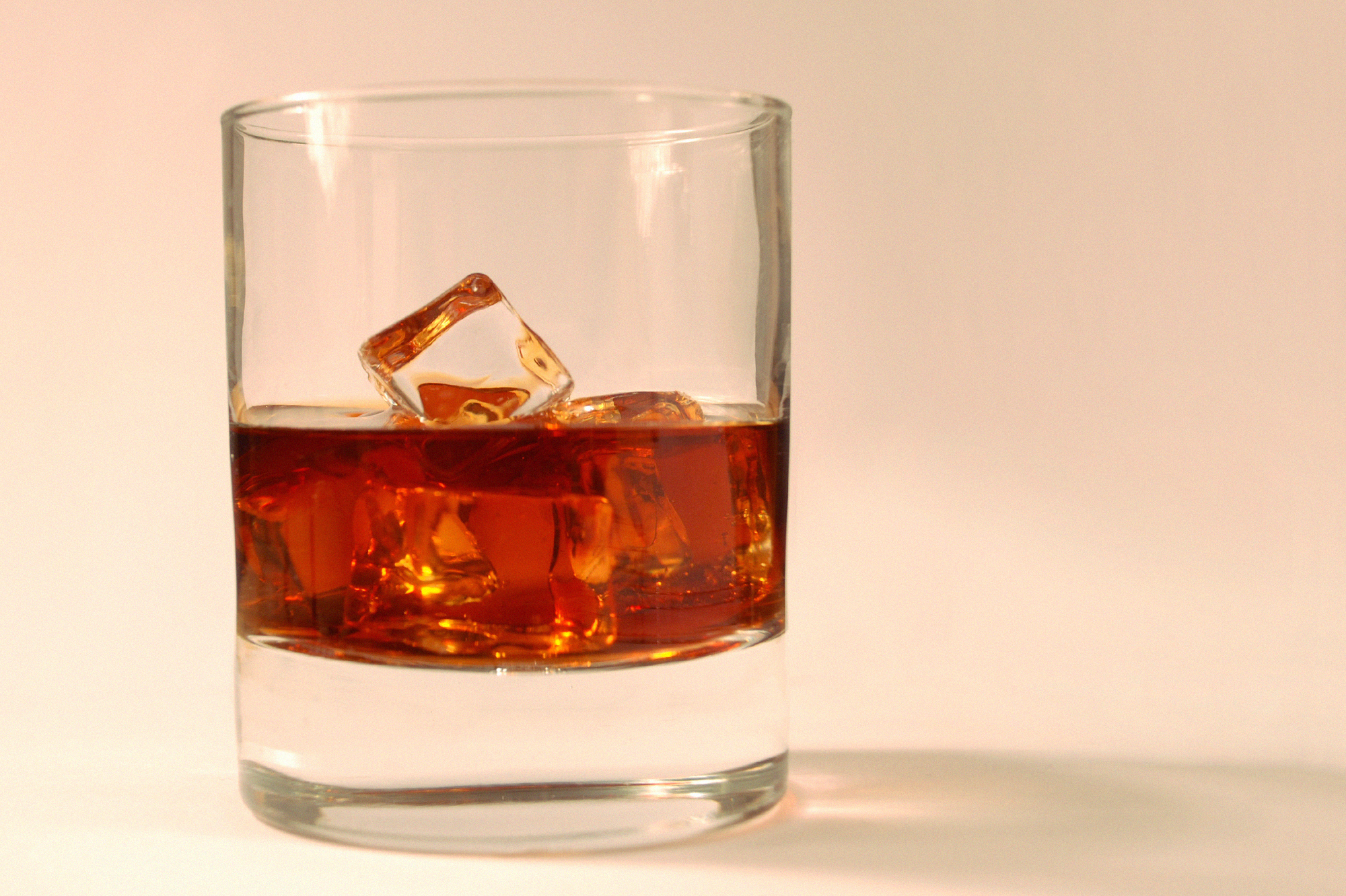
You may have already thought to stock up on freeze-dried food and ammunition, but have you considered that third category? Alcohol is a comfort item which may become an important bartering resource during emergencies, especially if major breweries and distilleries shut down. And if having a fully-stocked bar is valuable, knowing how to produce a continuous supply of liquor is even more valuable. With a little trial and error and the right ingredients, you can whip up a batch of booze that can be traded for other items you need.
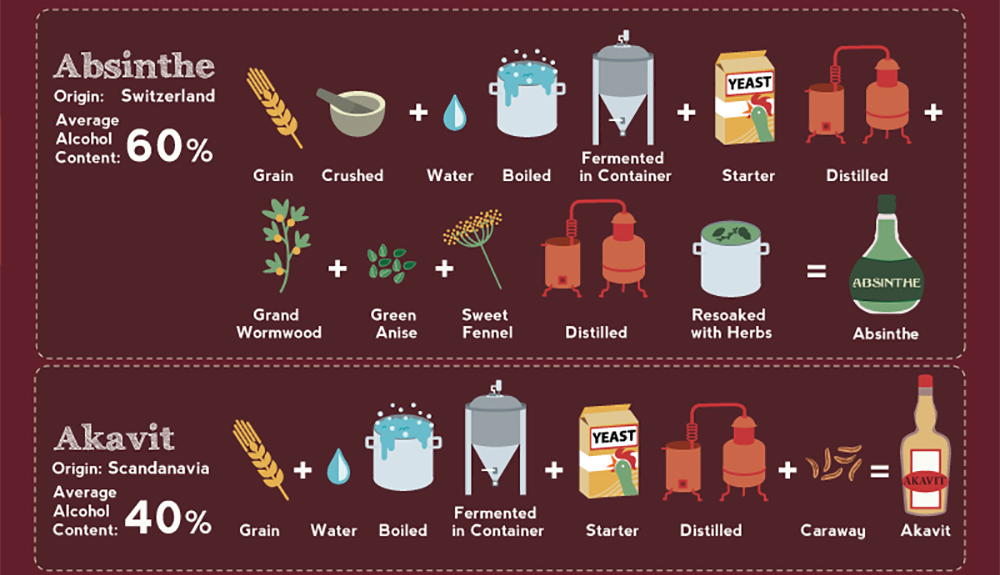
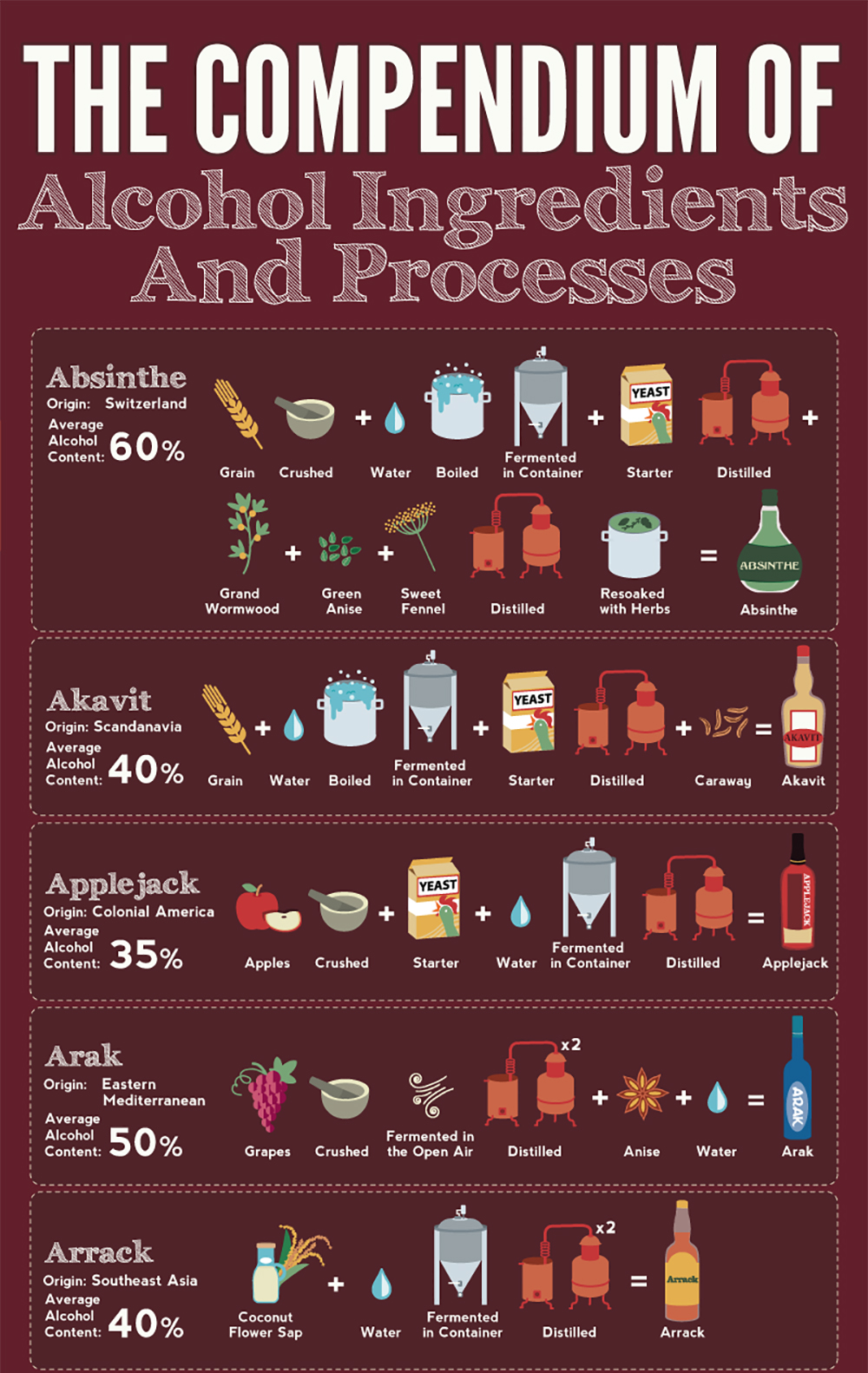
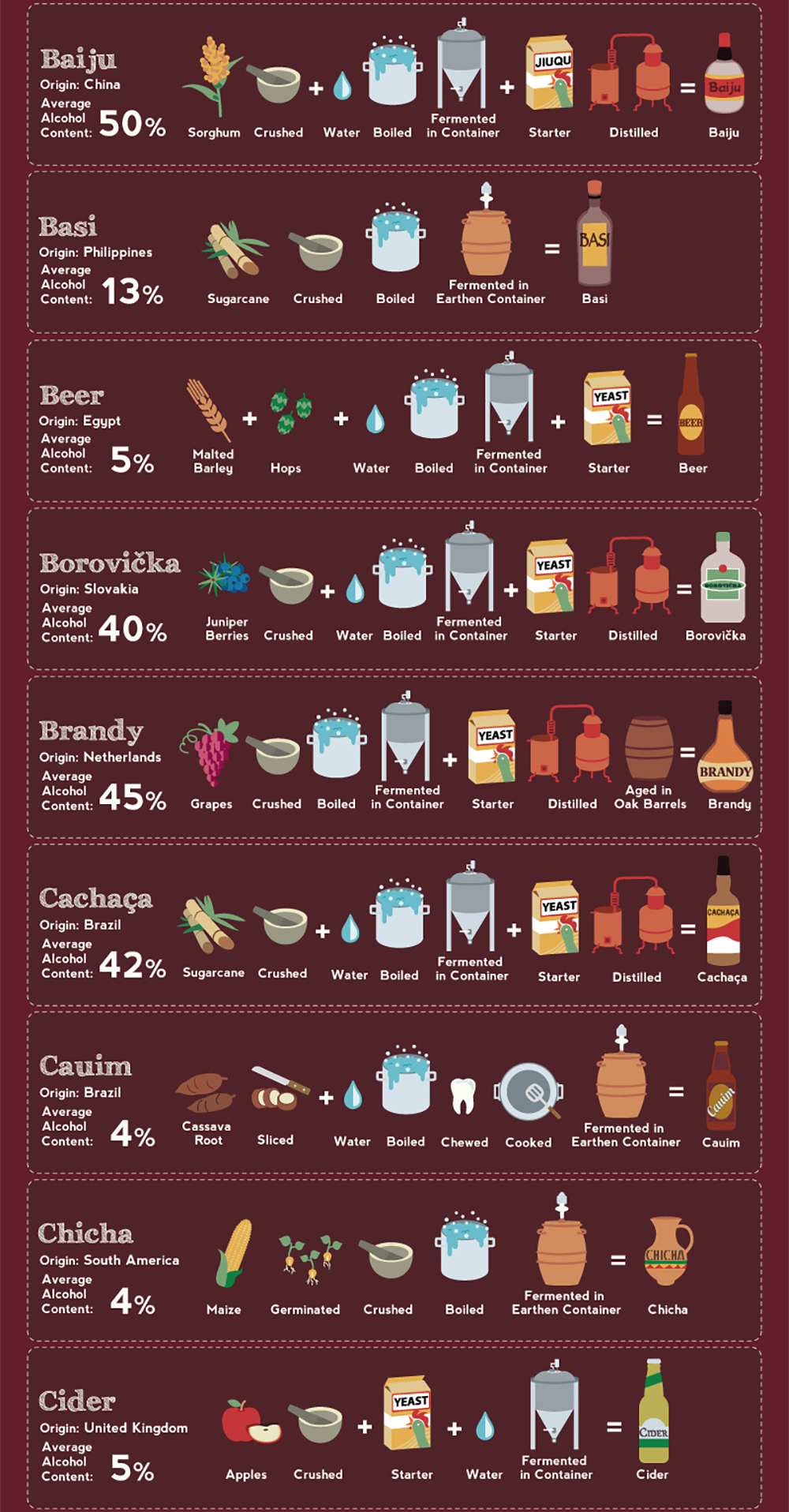
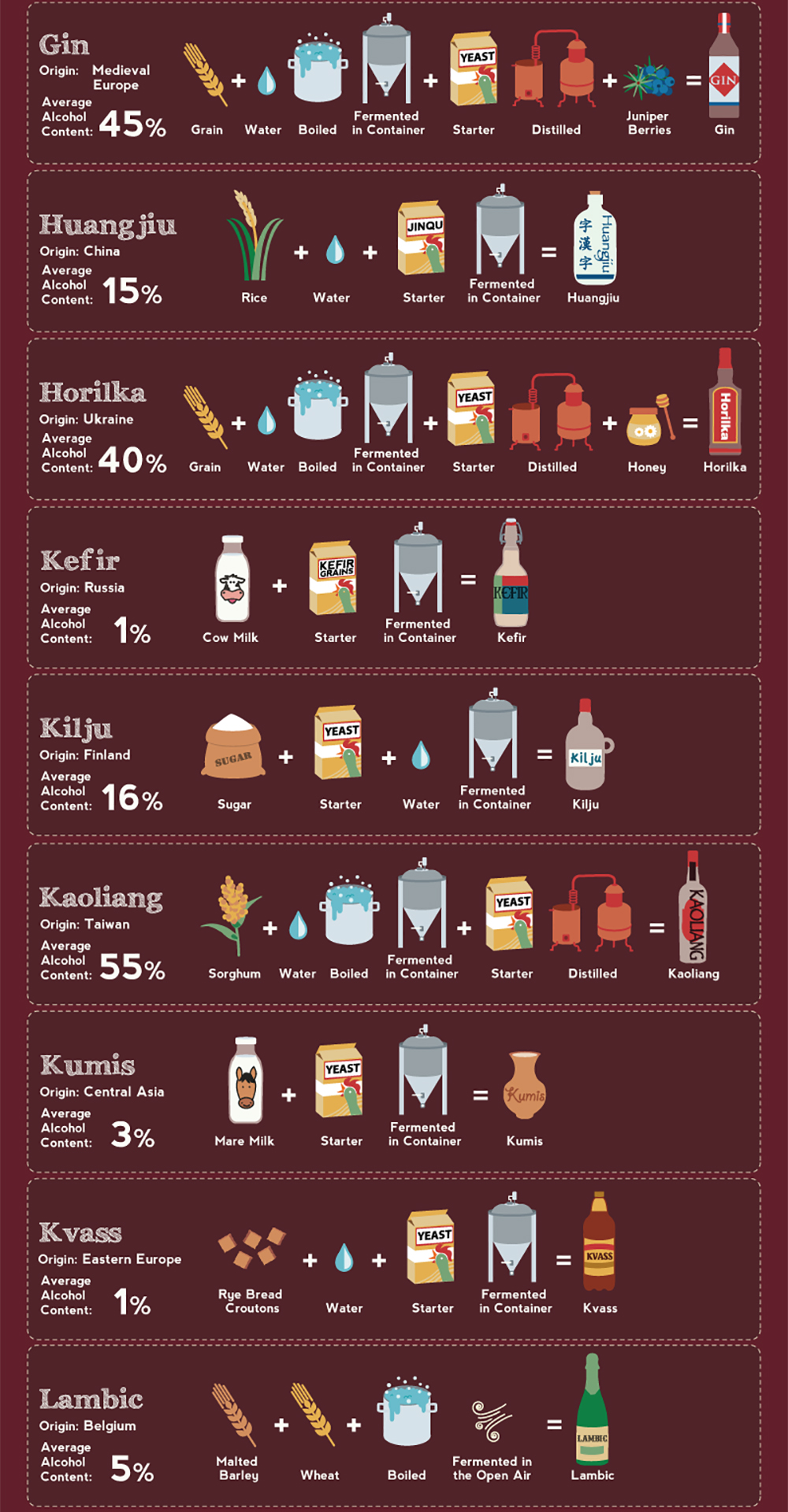
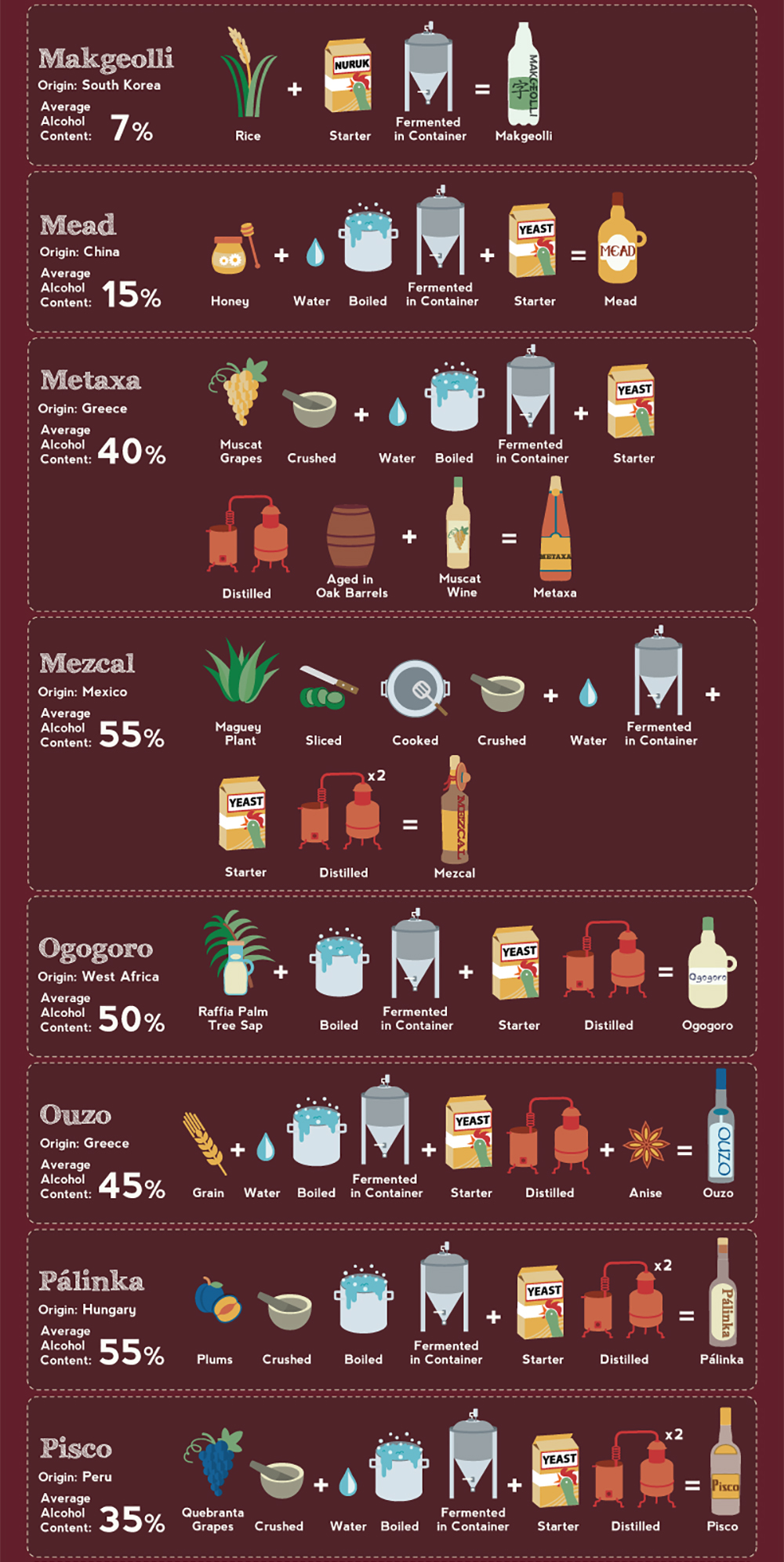
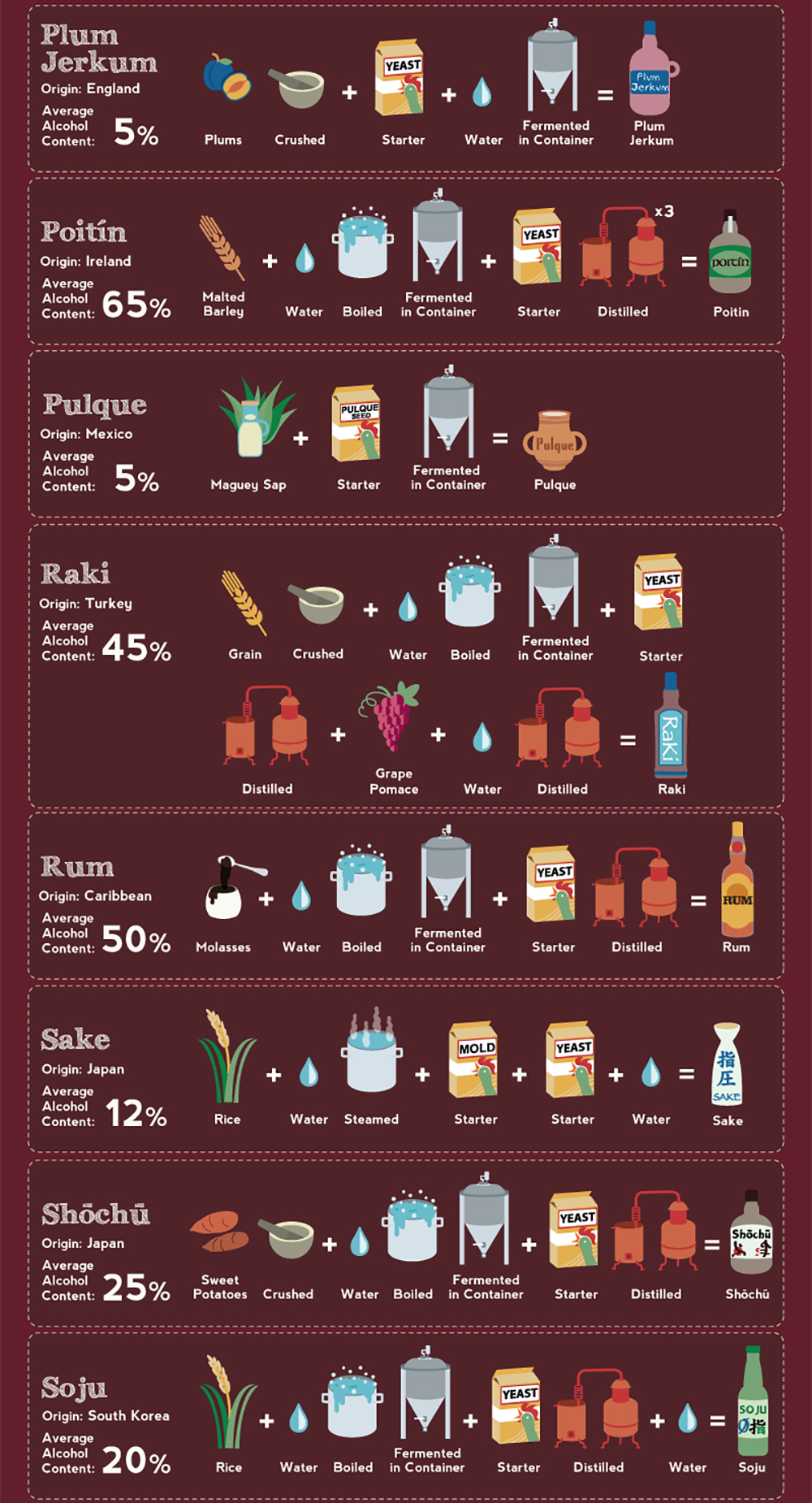
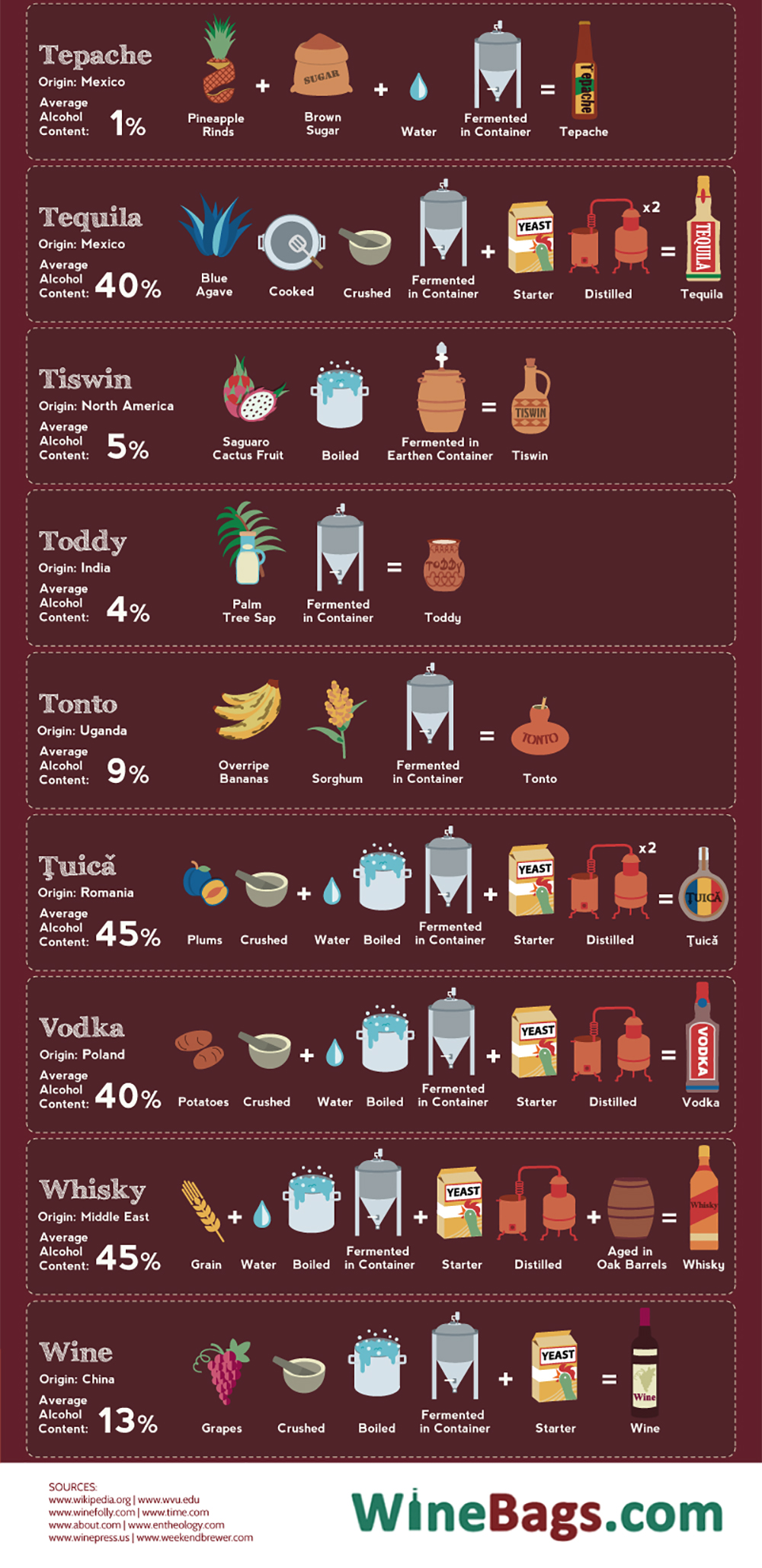
Fortunately, there are countless ways to make alcohol from a variety of simple ingredients. Even if all you’ve got is tree sap or stale bread, you can ferment these ingredients into alcohol. The following infographic from WineBags.com shows the ingredients and processes used to make 48 different types of booze.
Despite its length, this is by no means a complete guide. There are many, many more types of alcohol beyond this list — you can probably think of a few off the top of your head. It just goes to show that no matter the scarcity of raw ingredients and natural resources, humans will eventually find a way to make alcohol, and other humans will want to drink it.
A knife is a relatively simple tool — a piece of solid metal (or some other hard material) with a sharp edge and sometimes a piercing point. Other details such as the metal composition, heat treat, and blade profile will dramatically affect its durability and cutting performance, but at the end of the day it’s still a sharp piece of metal. However, over the years, a few designers have tried thinking outside the box to develop knives which can deal more damage to a specific type of target.
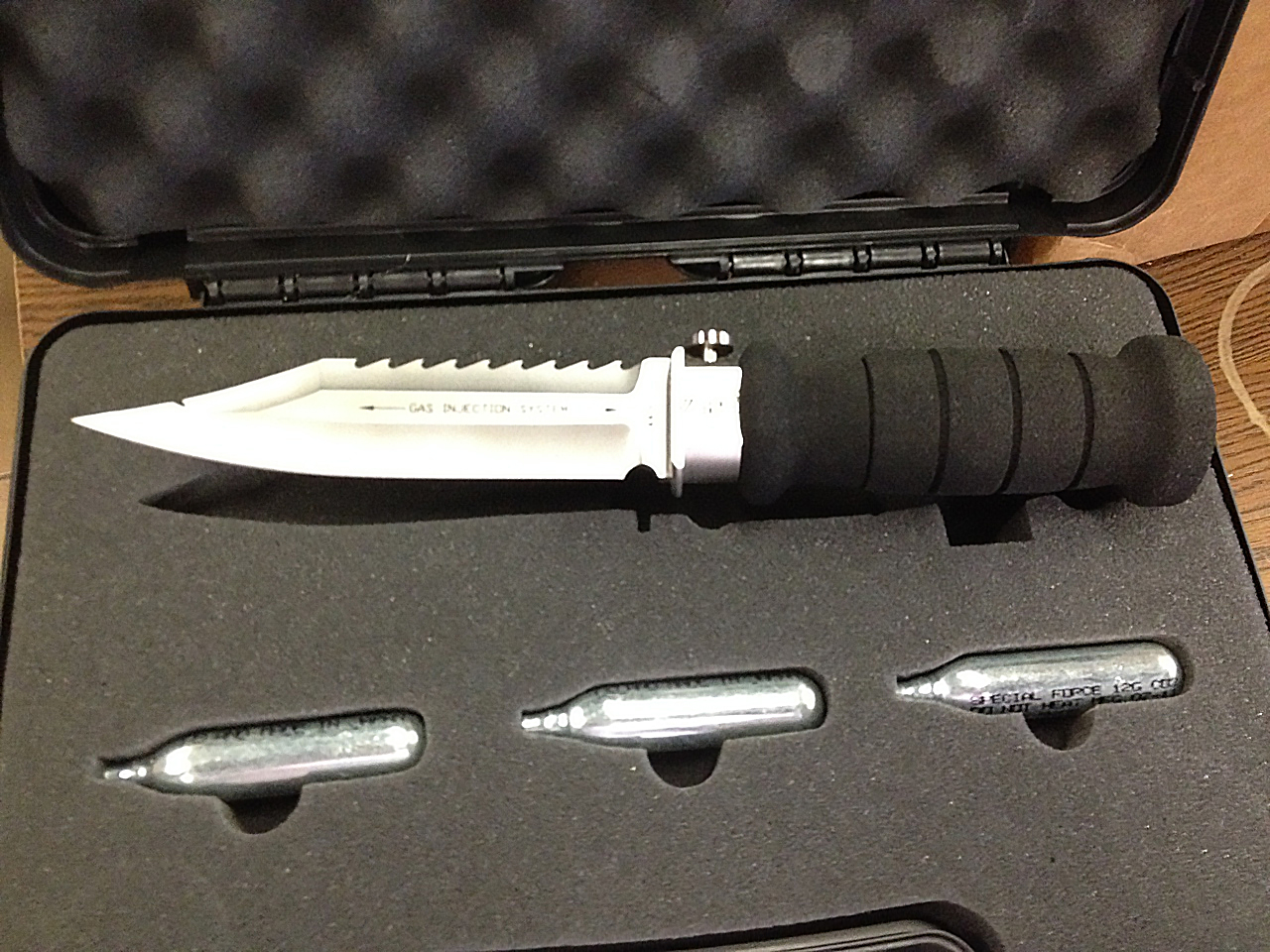
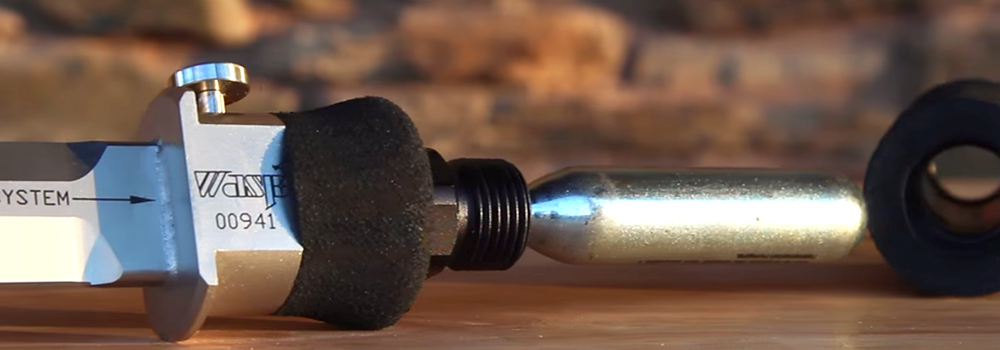
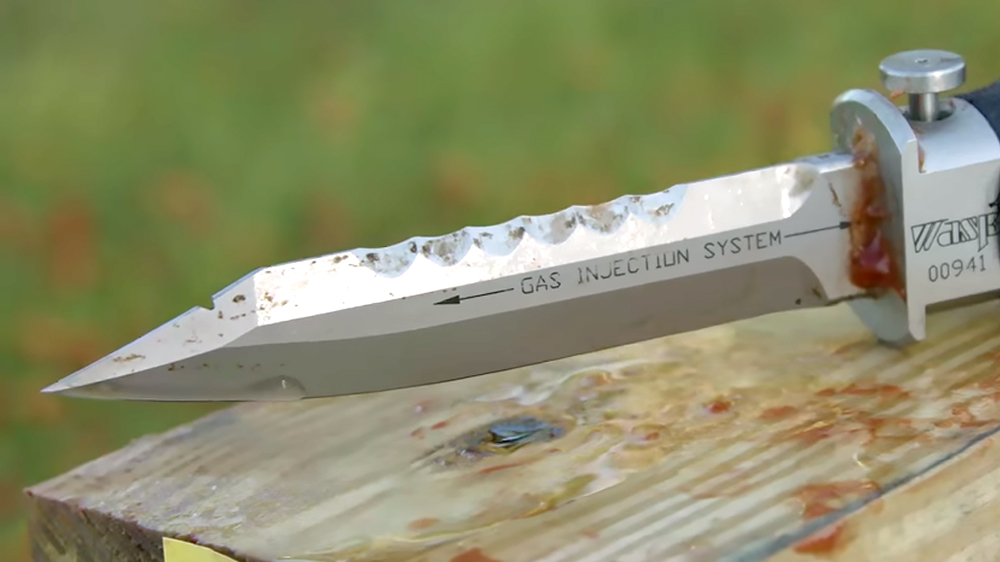
The WASP knife injects CO2 in an attempt to expand and freeze a wound cavity.
A few of these unconventional knife designs have utilized compressed gas. Ballistic knives, for example, have used compressed air or CO2 to fire a blade a short distance from the handle. Outside video games and movies, the effectiveness of ballistic knives is dubious to say the least. But there’s a second type of knife that uses compressed gas — the injection knife.
The WASP Injection Knife is designed to inject high-pressure gas into a wound cavity through a hole in the blade, rather than using gas to propel the blade forward. This is said to expand and freeze the wound, inflicting more damage to the target. On WaspInjection.com, the knife’s manufacturer states:
“This weapon injects a freezing cold ball of compressed gas, approximately the size of a basketball, at 800psi nearly instantly. The effects of this injection will drop many of the world’s largest land predators. The effects of the compressed gas not only cause over-inflation during ascent when used underwater, but also freezes all tissues and organs surrounding the point of injection on land or at sea.”
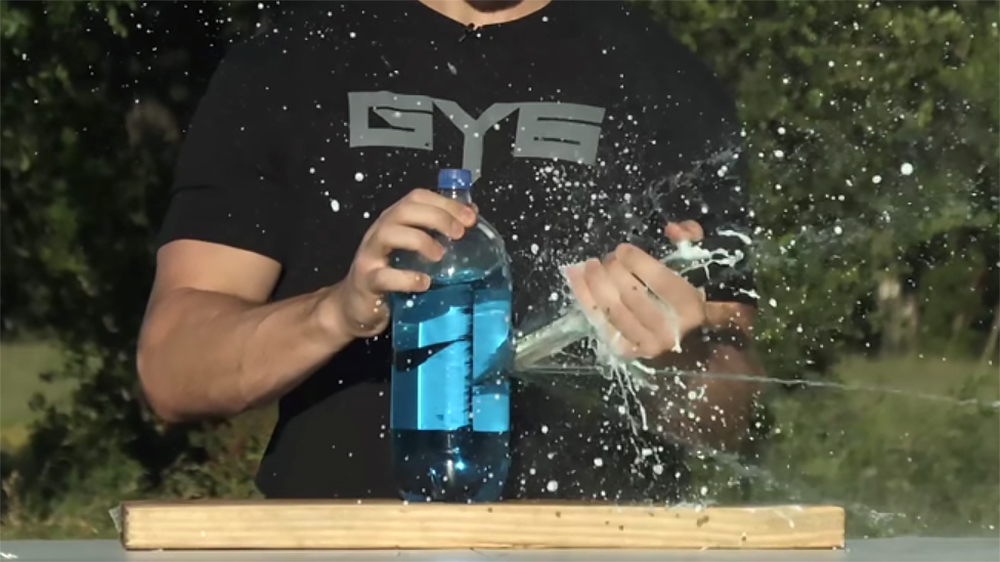
These are some bold claims, but how does the knife’s injection system fare in reality? Unsurprisingly, there doesn’t appear to be any video footage of SCUBA divers stabbing sharks with the WASP, but several YouTubers have tested the knife on ballistic gel, plastic bottles, and watermelons to show how the system works:
More videos of the knife in action are available here and here. One downside to this knife is that it can only inject CO2 once before the handle must be unscrewed and a new cartridge must be installed. Also, it’ll set you back $500 for standard models, or $600 for the larger WASP Bowie model.
So, what do you think of this unconventional injection knife? Tell us your opinion in the poll below.
Whether you’re surviving in the backwoods or simply camping for the weekend, a fire is essential for heat, light, water purification, and food preparation. Most of us build a campfire around a few large logs, but natural wood isn’t always an ideal fuel source. Wood may contain fire-stifling moisture or produce large amounts of smoke; burning some types of wood can even cause lung irritation or blindness.
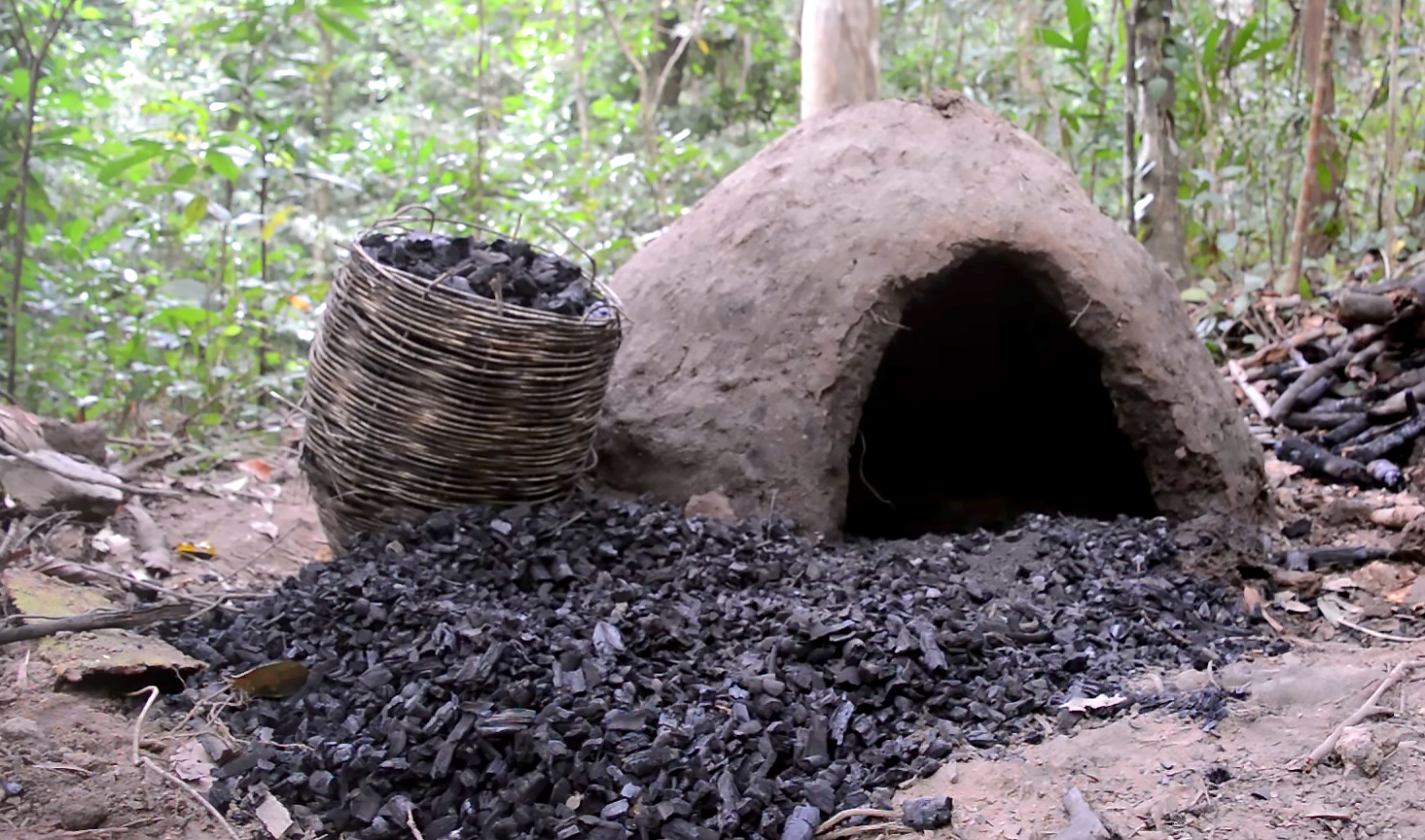
Charcoal contains minimal moisture, ignites easily, and burns energetically. It also burns hotter and gives off less smoke than raw wood. In a survival situation, you won’t be able to buy bags of charcoal briquettes at the grocery store, but with a little time and effort, you can make your own charcoal. You’ll just need to build a charcoal kiln.
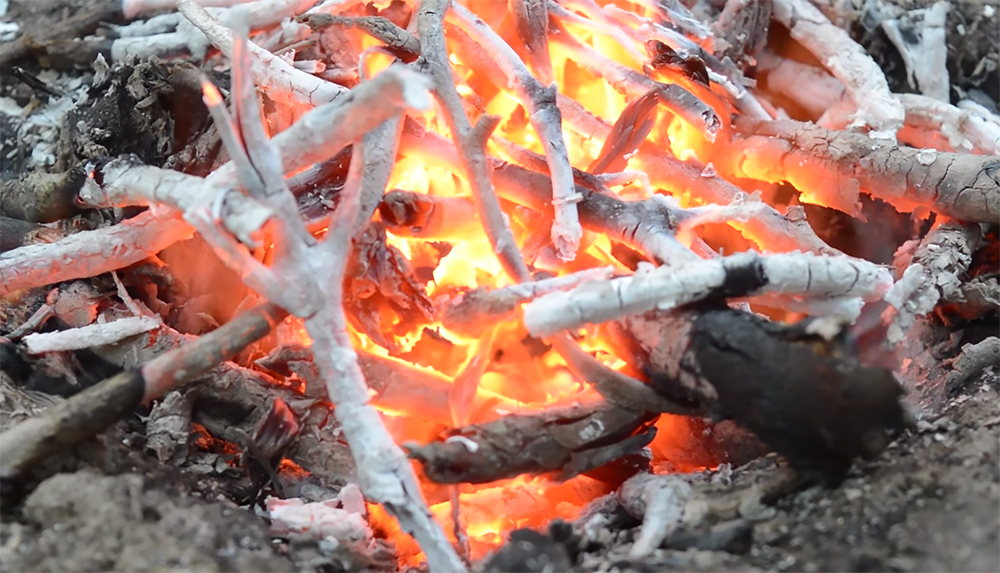
If you’re familiar with the process of making char cloth, the core concept remains the same for charcoal production. You need to expose organic material — in this case, wood — to intense heat inside a container which limits the flow of oxygen. This causes a reaction known as pyrolysis, and leaves a blackened and brittle charred byproduct that can be ignited easily.
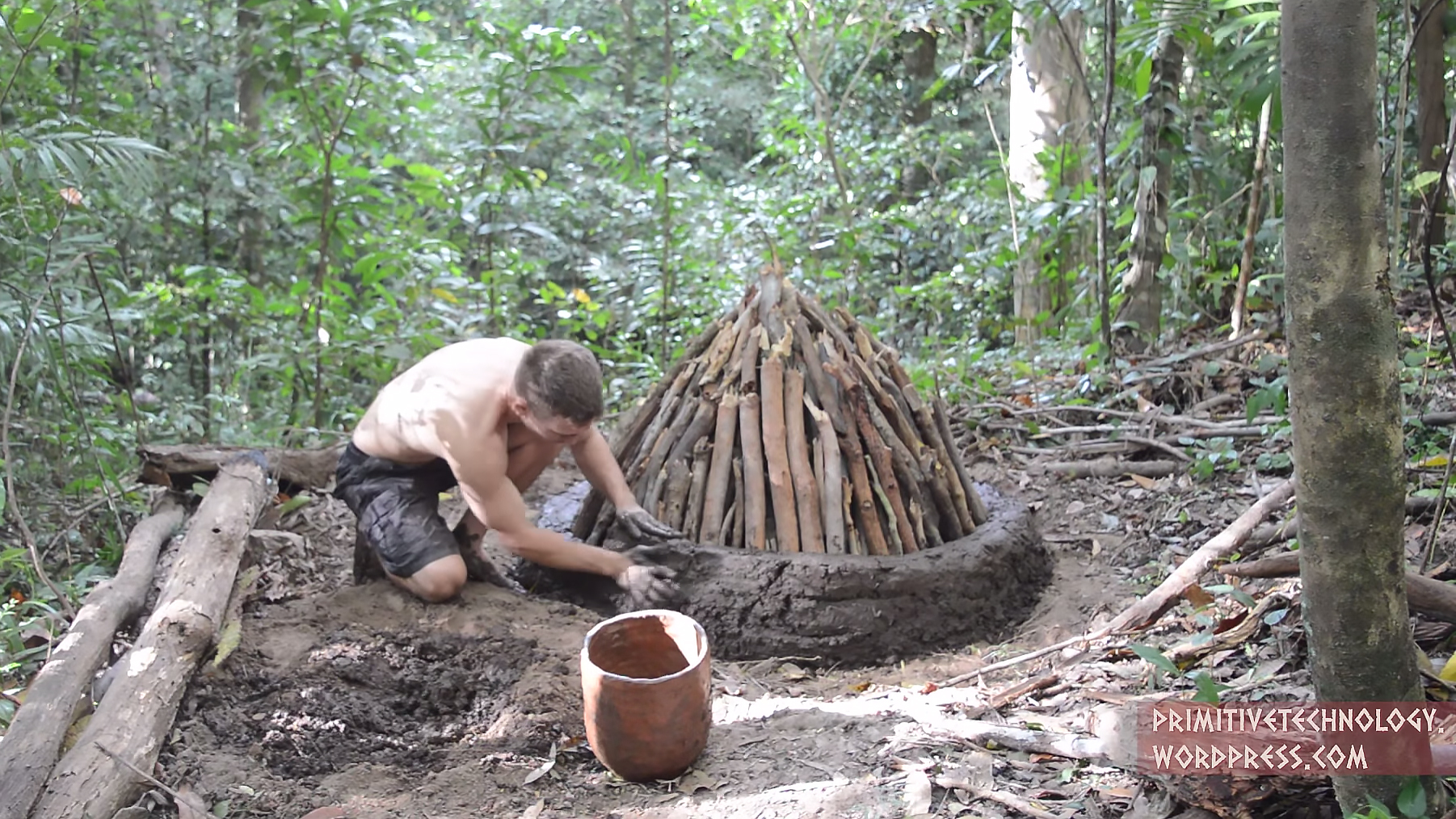
In the following video, the host of Primitive Technology shows how to build a simple charcoal kiln from mud. The kiln features eight small air intake holes around the base, and one exhaust vent at the top. The wood pile inside the kiln is ignited through the top hole, and each intake opening is sealed as the fire burns down towards ground level. Finally, the exhaust hole is sealed and the kiln is left to cool overnight. After carefully carving an opening into the side of the kiln, the charcoal can be broken down and removed.
WARNING! The concepts shown here are for illustrative purposes only. Seek professional training from a reputable instructor before attempting any techniques discussed or shown in this story.
Social collapse brings many problems. Thirst and hunger will slowly kill, but violence can end life in a heartbeat. It may be a gangbanger looking for an easy target, a bandit who likes your expensive-looking MultiCam bug-out bag, or one of the many unprepared souls who blocks your path because a disaster left him desperate. Threats come in 1,001 different flavors. How violence is served up is difficult to predict.
Naturally, having a force multiplier in the way of a firearm is highly desirable. Alas, we’re not always so lucky. There may be many reasons why a firearm may not be available outside the home (if at all). The most common one is simply that the majority of U.S. citizens (94.8 percent to be exact, according to Crime Prevention Research Center) don’t have a permit to carry a concealed handgun.
Enter the ubiquitous and humble everyday carry (EDC) knife.
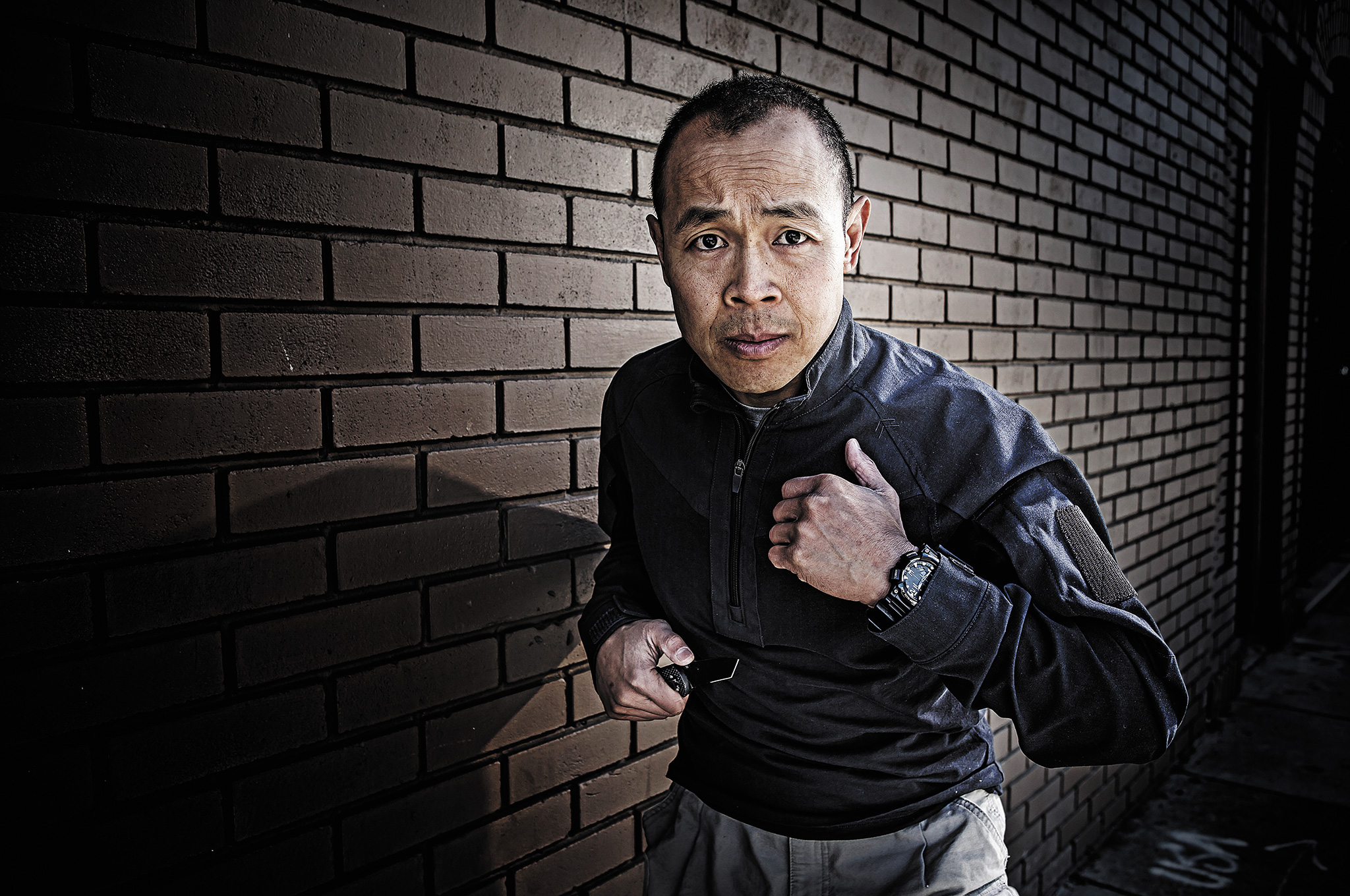
We already know many of you carry a folding knife, because besides coming in handy as a cutting instrument and potential survival tool, a folder can be used as a deadly weapon. Hence, we’re delving into what it really means to carry, deploy, and use a blade — especially when SHTF. Whether you’re an experienced knife handler looking for a review of fundamentals or a prepper adding to your self-defense arsenal, you’ll find helpful, and possibly life-saving, information here.
Gain an Edge
Having a folding knife as part of your EDC is a no-brainer. Folding knives can give you the following advantages over other self-defense weapons:
Good Things Come in Small Packages: Because the blade can fold, overall size is reduced, resulting in a comfortable and easy-to-carry package. This means you’re more likely to have it with you.
Socially Acceptable: Folding knives are like Starbucks — you can’t go anywhere in the USA without spotting one in spitting distance. Even in “nanny states” like New York and California, you’ll find thousands and thousands of people carrying folders. They’re so ubiquitous that they won’t attract undue attention.
Multitask: Some folders come with a seatbelt cutter, glass-breaker, or other features a fixed blade can’t provide.
Affordable: There are high-quality knives out there for a song. Even imported blades can be of high quality.
Widely Distributed: Knives can be purchased at any sporting goods stores and big-box stores like Walmart.
No License Required: Unlike for a concealed carry firearm, you need no license or special training to carry a folder.
Quiet: Firearms are loud. Not looking to let everyone in a ½-mile radius know your location? Use a knife.
Never Runs Out of Ammo: Knives can slice and puncture repeatedly without reloading, jamming, or going dry.
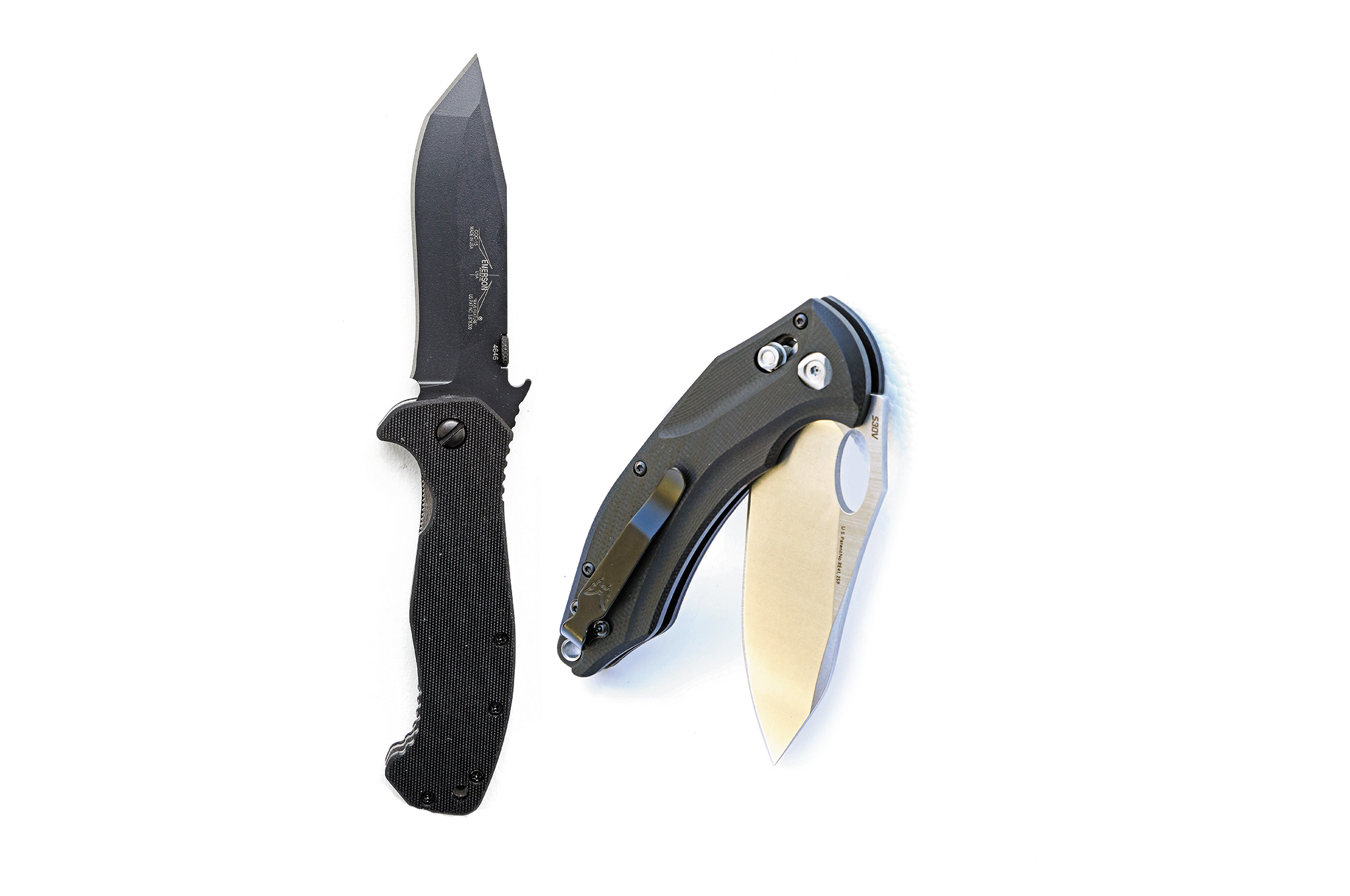
The Benchmade 808, right, and the Emerson CQC-15 are high-quality, everyday-carry knives that are also serious self-defense tools.
Drawback
Every advantage brings with it disadvantages. Below are drawbacks to be aware of when using a folding knife for defense.
Butter Fingers: Opening some blades requires fine-motor control, which can deteriorate quickly during a fight. Consistent practice is required to successfully deploy your blade during a SHTF scenario.
Slippery Grip: Without realistic training performed under pressure, the odds of acquiring a secure grip is greatly reduced. Have you ever practiced your draw while a training partner swings a crowbar full speed at your head? Trust us, it’s not as easy as you think. Also, a poor grip can lead to improper opening or, worse yet, to dropping the knife entirely. Add in rain, snow, or gloves, and things get dicey very quickly. Luckily, these issues can be mitigated with regular practice.
Fold Failure: Even with a sturdy locking mechanism (like a lock-back or frame-lock), there’s no guarantee that the knife won’t fold on you when in use. If the locking mechanism isn’t fully engaged, the knife can fold up like cheap lawn furniture and ruin your day really fast.
Breaker, Breaker: Folding knives have moving parts whereas fixed blades don’t. The extra joint is where the folder can fall apart. Screws can come loose, springs can wear out, and locking mechanisms can fail.
No Sheath: There’s always a safety concern when carrying a folder, because the blade is really not sheathed. If the blade is accidentally opened just a few degrees, there’s more than enough exposed blade to cut flesh when reaching for the folder. This concern is especially relevant with the tip-up carrying method (discussed later) or with automatic and pocket-opening knives.
Close-Quarters Weapon: Having a knife is definitely a step above going at it empty-handed. However, it’s not a lightsaber or a magic wand. Using the knife effectively against multiple opponents or against another weapon requires proper training to come out on top in any life-or-death encounter.
Carry On
It used to be that a folding knife was called a pocket knife because it was carried in the, well, pocket. (Some people with the money would kit up with a belt-attached pouch.) It wasn’t until 1981 that knife manufacturer Spyderco reportedly became the first to introduce the clothing clip into the designs of its knives. With a simple, yet ingenious little clip, folders can now be “clipped” in a variety of static positions. This allowed for easy carry and hereafter, the modern folding knife freed itself from the atrocities of pocket lint.
The Tipping Point
There are other locations to clip a knife, but for realistic self-defense, front-pocket carry and appendix carry are your best bets.
Carrying the knife with the blade tip up or tip down is something else to consider. Both carrying methods come with risks and rewards. Tip-down carrying with the blade toward the front is considered safer. When reaching to draw the knife in this position, you won’t be meeting the business end of the blade, if it accidently opens. “Safety first” is the motto of the tip-down camp. The downside is that it’s difficult to acquire a full grip on the handle when drawing the blade. Plus, you’ll have to readjust your grip before you can open the blade, so that the business side of the blade points away from you.
Carrying tip up with the blade to the rear gives a more solid purchase on the handle, making your draw-stroke smoother and more reliable. The shortcoming of this carrying method comes into play if the blade accidentally opens a few degrees (which can happen) — then the only thing you’ll be drawing is your own blood. If carrying tip up is your preference, reduce the chances of meeting the pointy end of the blade by seating the knife to the rear of the pocket. This will place the spine of the blade against the seam of the pocket, keeping the folder closed.
At the end of the day, the location of the clip and the design of the knife will often determine tip-up or tip-down carry. Some knives feature configurable clips, but others have fixed clips and must be carried the way they were manufactured. The majority of these pre-clipped knives are offered in the tip-down carry position.
The tip-up carry positions are often seen in knives with a catch or hook on the spine of the blade — think Emerson Knives’ “wave-shaped opening feature.” The hook or wave is designed to catch on the posterior of the pocket and opens the knife as you pull it out. [Editor’s note: For more on pocket-opening knives, see Issue 24 of our sister publication, RECOIL.] No matter the carry method, regular practice (of drawing, slashing, and stabbing) will keep your knife skills sharp.
Get a Grip
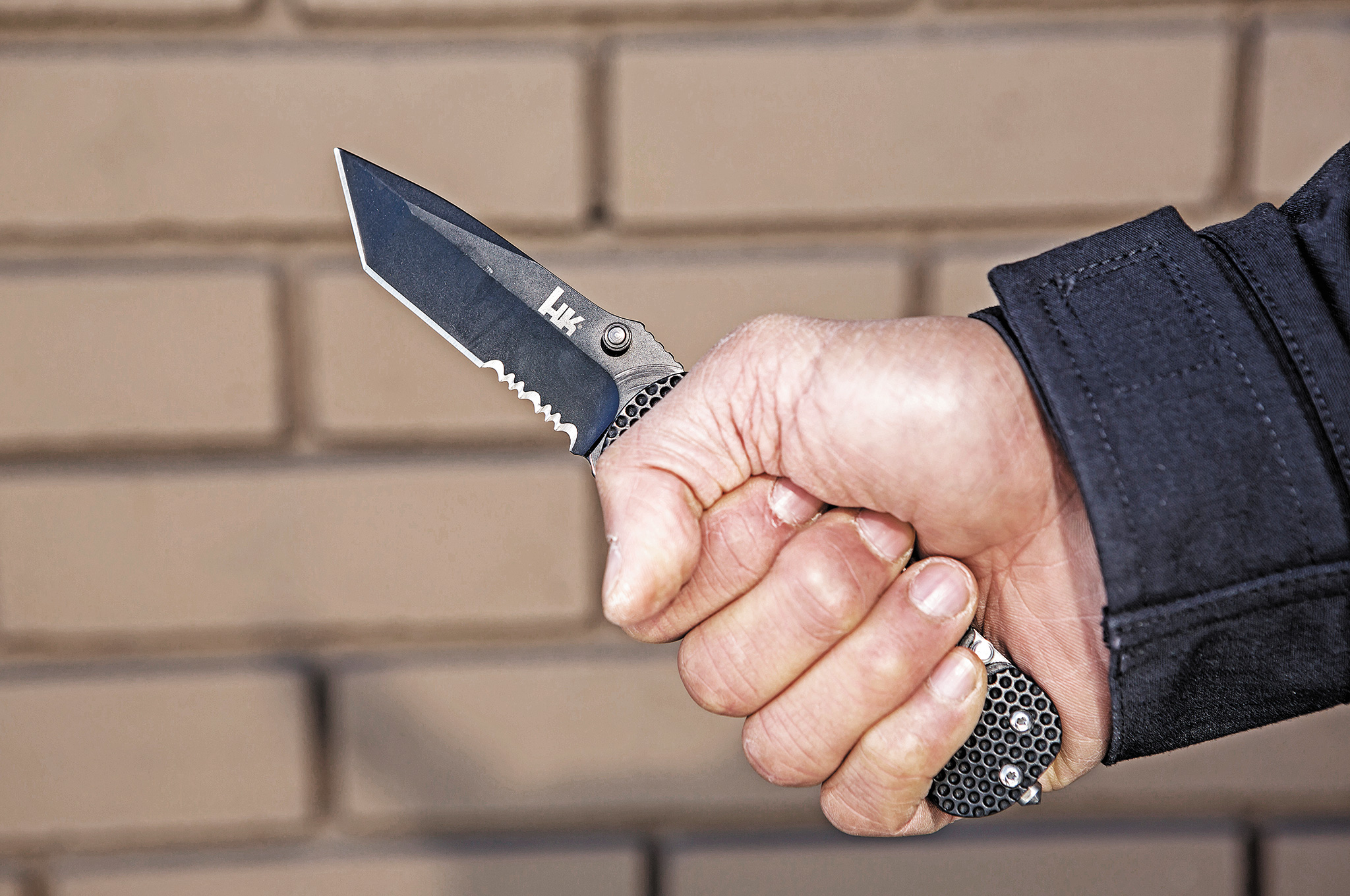
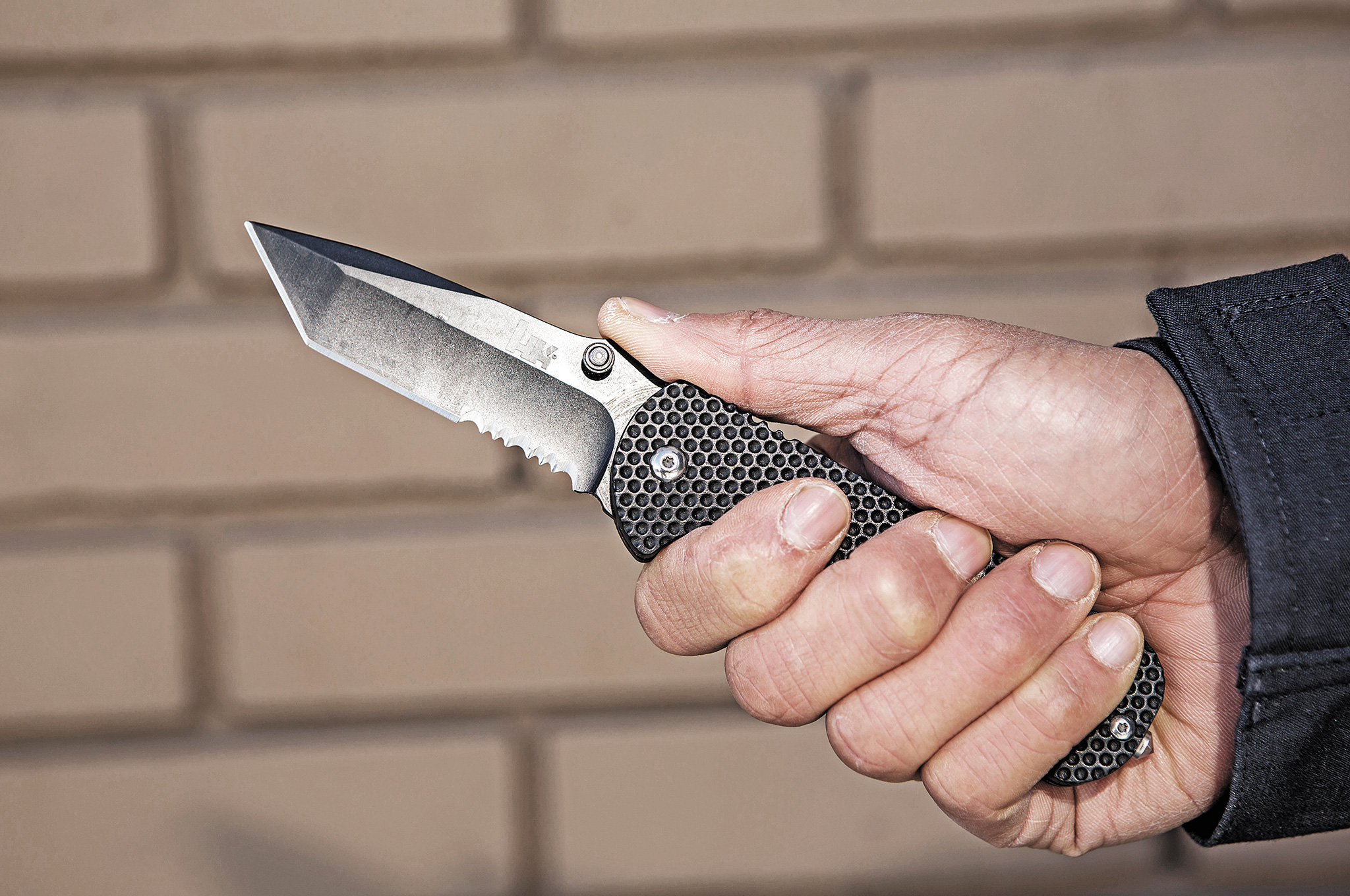
Gripping a knife is similar to gripping a firearm — you want as much surface area of your hand on the frame. While there are many variations, including reverse grip, beginners should focus on these two when using a folder: the hammer grip and the saber grip.
Hammer Grip: Just as it sounds, grab the knife like you’re gripping a hammer. Keep the wrist straight and get as much thumb on the frame as possible. This gives you the strongest purchase on the handle, making it the preferred grip of many knife users.
However, an increase in stability means a decrease in mobility. You’ll sacrifice reach and agility during cutting and stabbing motions.
Saber Grip: It looks similar to the hammer grip, but the pad of the thumb rests on the spine of the blade. Some knives have a small rise and with jimping (ridges) at the base of the spine to accommodate the saber grip. The wrist will slightly bend down (AKA ulnar flexion). A variation of the saber grip that’s popular among martial artists is the Filipino grip, which places the entire thumb on as much of the blade spine as possible; achieving this grip properly is dependent on whether the blade’s spine is completely straight.
The saber grip allows for a longer reach during cutting and stabbing. For many, this is a more natural grip. The disadvantage of this grip is that, with the thumb on the blade’s spine, more handle is visible. The result is reduced grip stability.
Folder Access Denied
Don’t be fooled. Drawing a knife during a violent encounter is no easy task. Trying to deploy a folding knife at the wrong time during a sh!t storm is a recipe for disaster. The following are situations in which whipping out your blade will lead to serious repercussions.
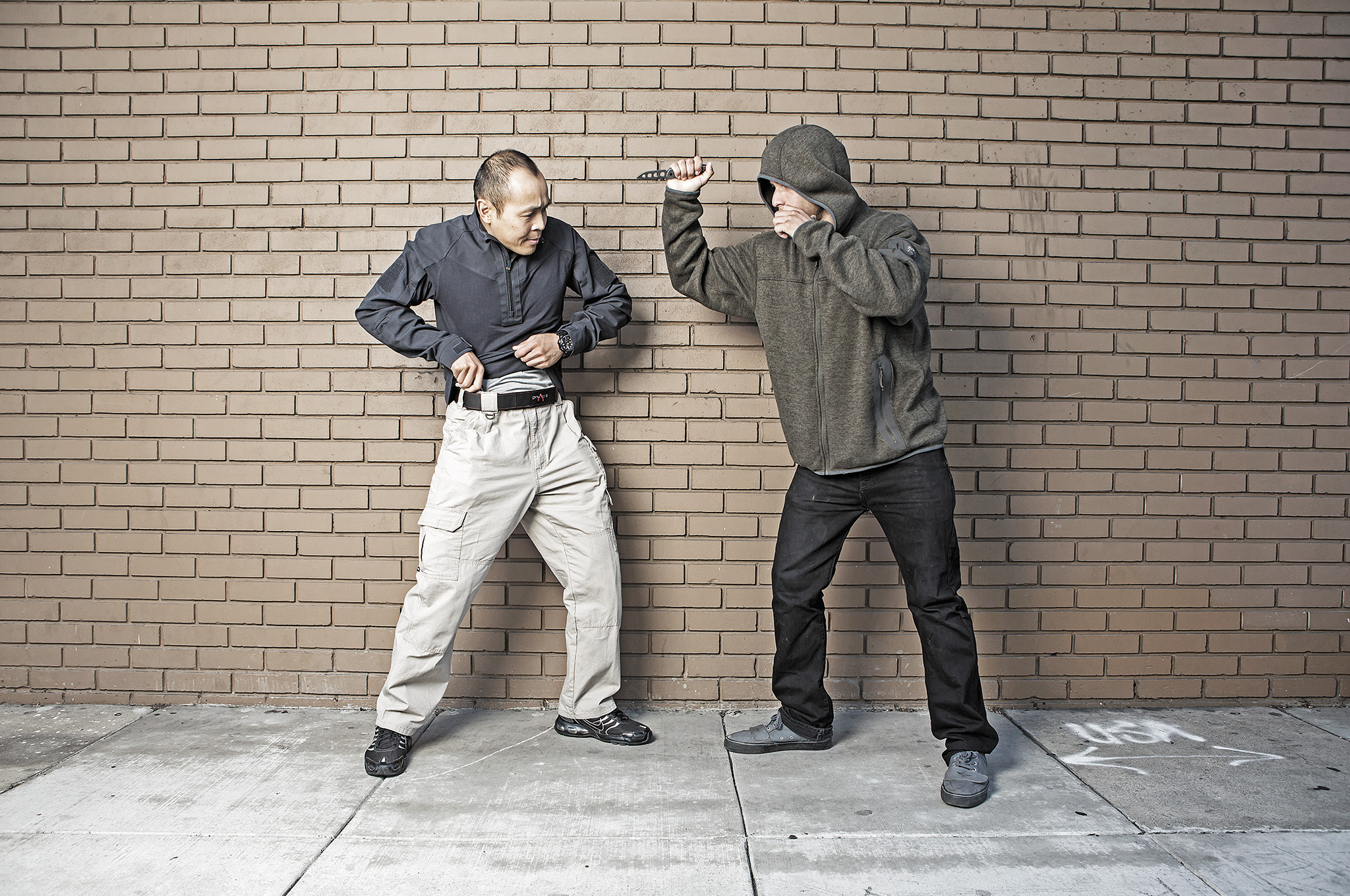
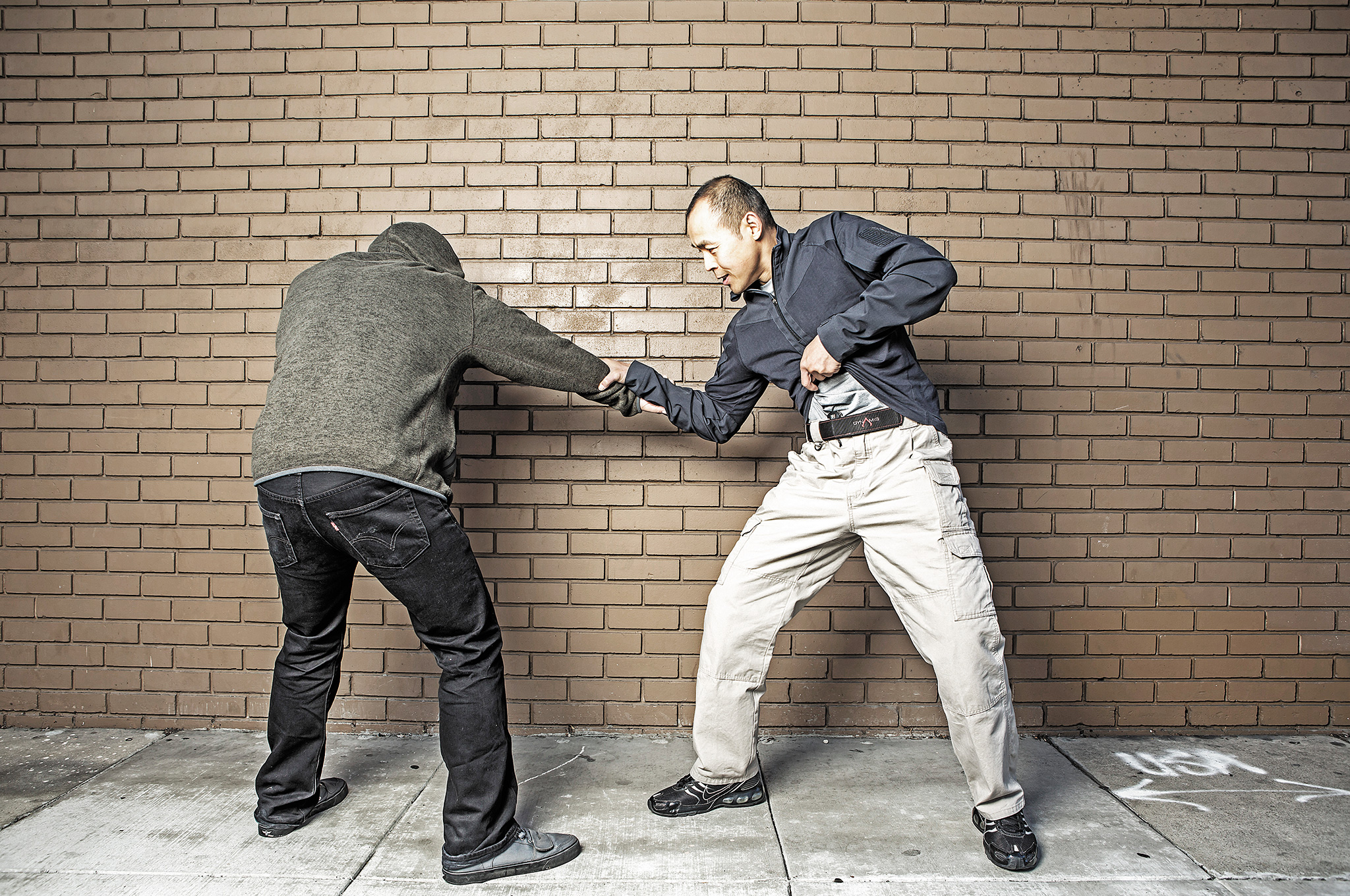
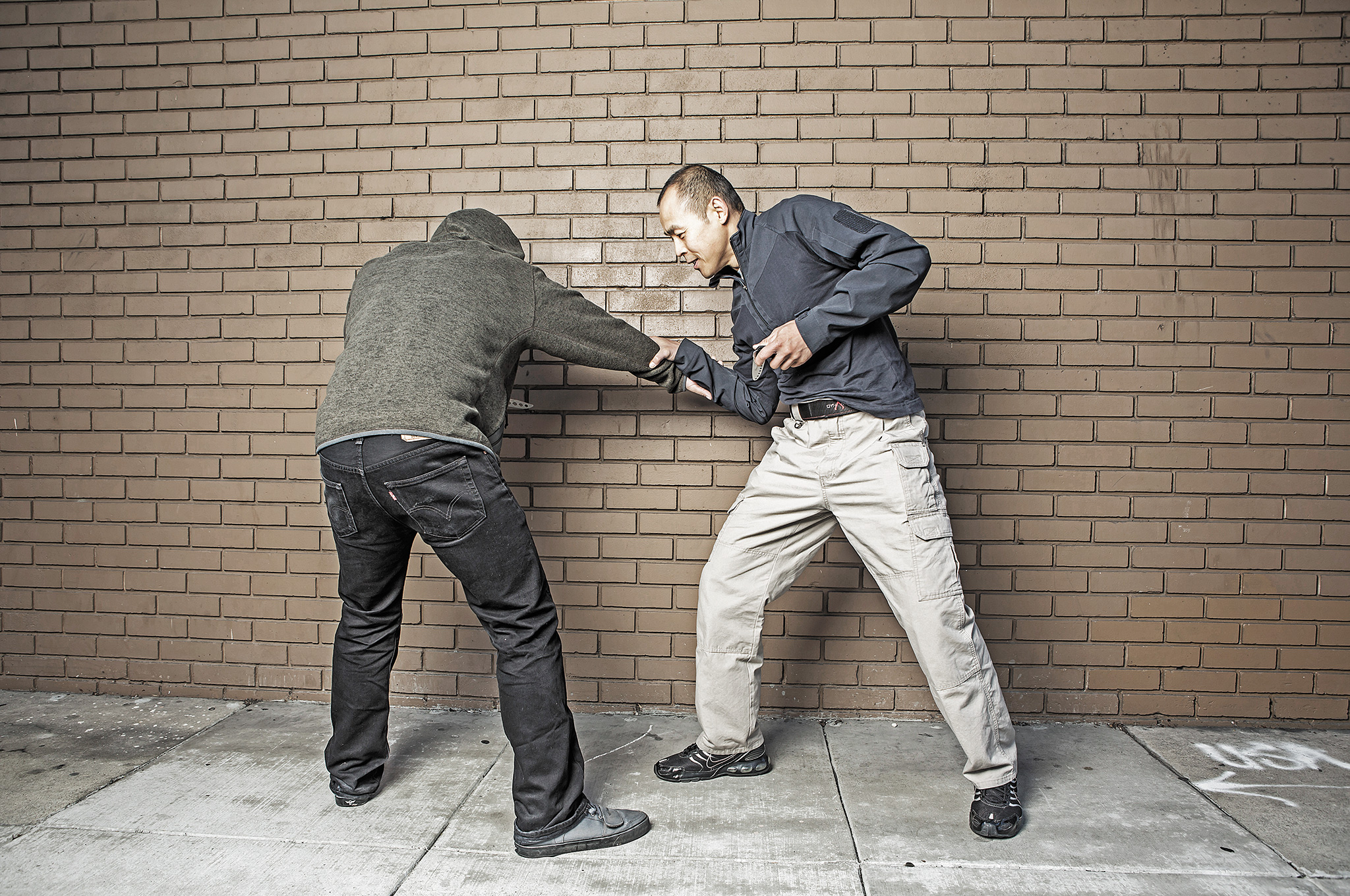
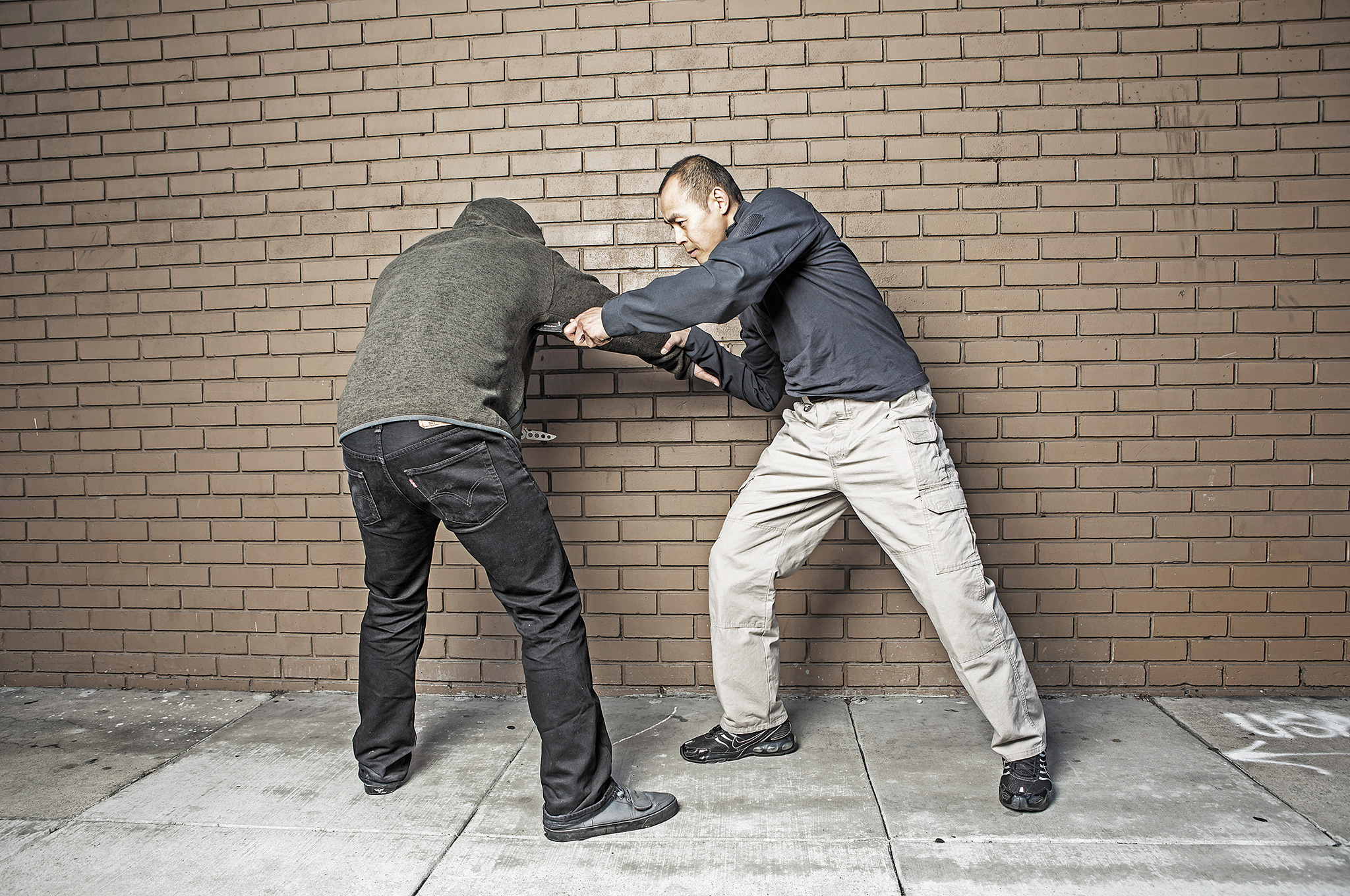
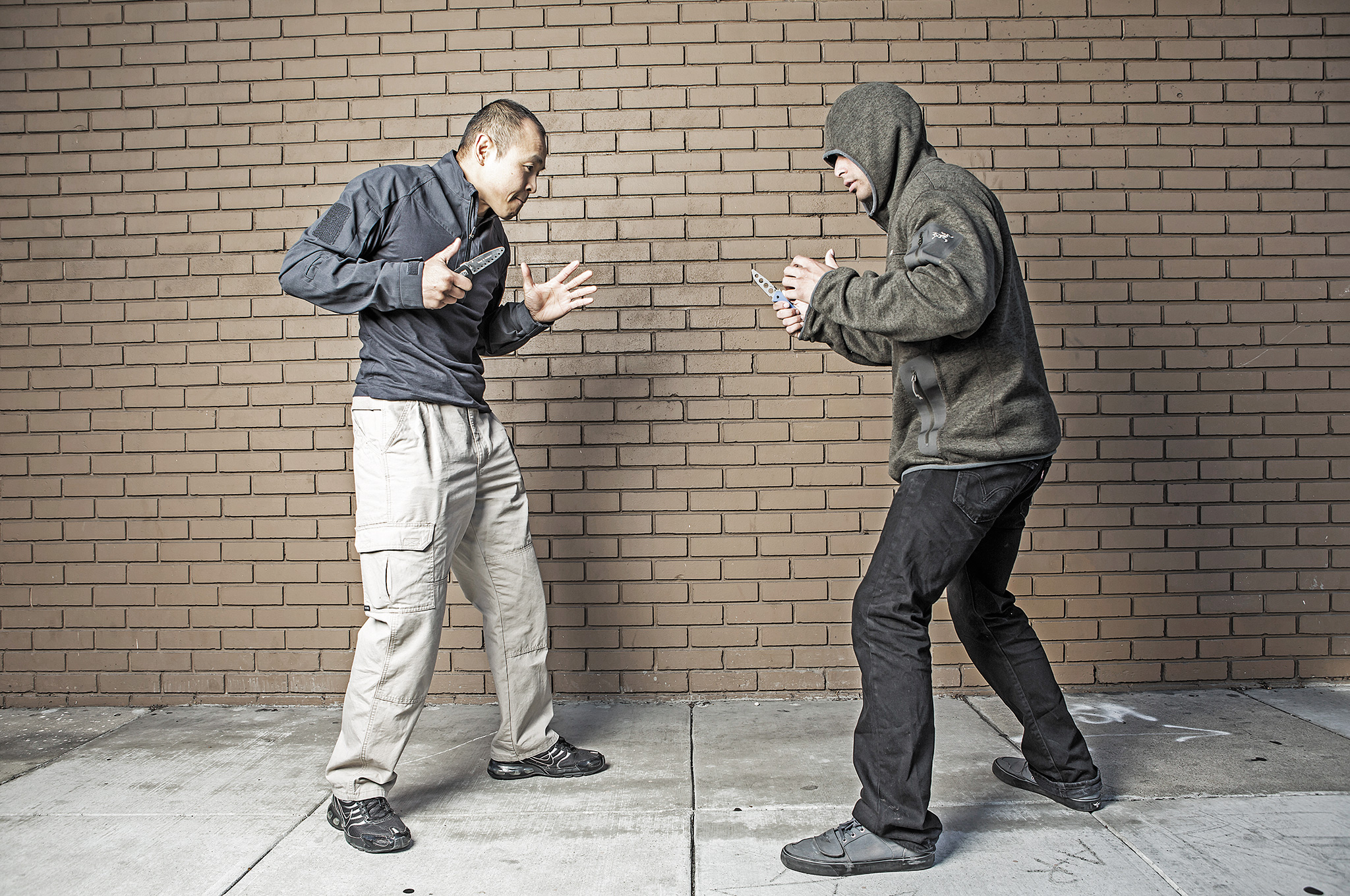
When the Threat is Immediate: Only deploy your weapon (whether blade or firearm) when you have enough space and distance between you and your assailant. How much space and distance? As much as possible. If a bad guy is within arm’s reach, the situation can go sideways in a blink, as your attention and hand are focused on drawing your tool rather than on the incoming attack. If the thug is too close or already on top of you, your first option should be to slow or neutralize the threat with your empty-hand skills before reaching for the weapon. The reality is empty-hand fighting skills are necessary in many situations.
Here Conrad Bui makes the mistake of drawing the knife while the bad guy is already within touching distance.
It’s Flipping Dangerous
Every prepper, hiker, and soldier knows that ounces equal pounds and pounds equal pain. So if you’re forced to go up SHTF creek without a paddle, the fewer but more functional the tools, the better. An EDC knife can serve many purposes in a crisis scenario, and chief among them is self-defense.
Any way you cut it (pun intended!), a folding knife is a deadly weapon. Only use your blade in a confrontation when your life is in danger, and when you’re willing to take another life to save your own or that of your loved ones. (See sidebar “Closed for Business” for use of non-lethal force.) No matter if you pocket carry or appendix carry, if you carry tip up or tip down, getting the correct training and regular practice is paramount in using your knife to save your life.
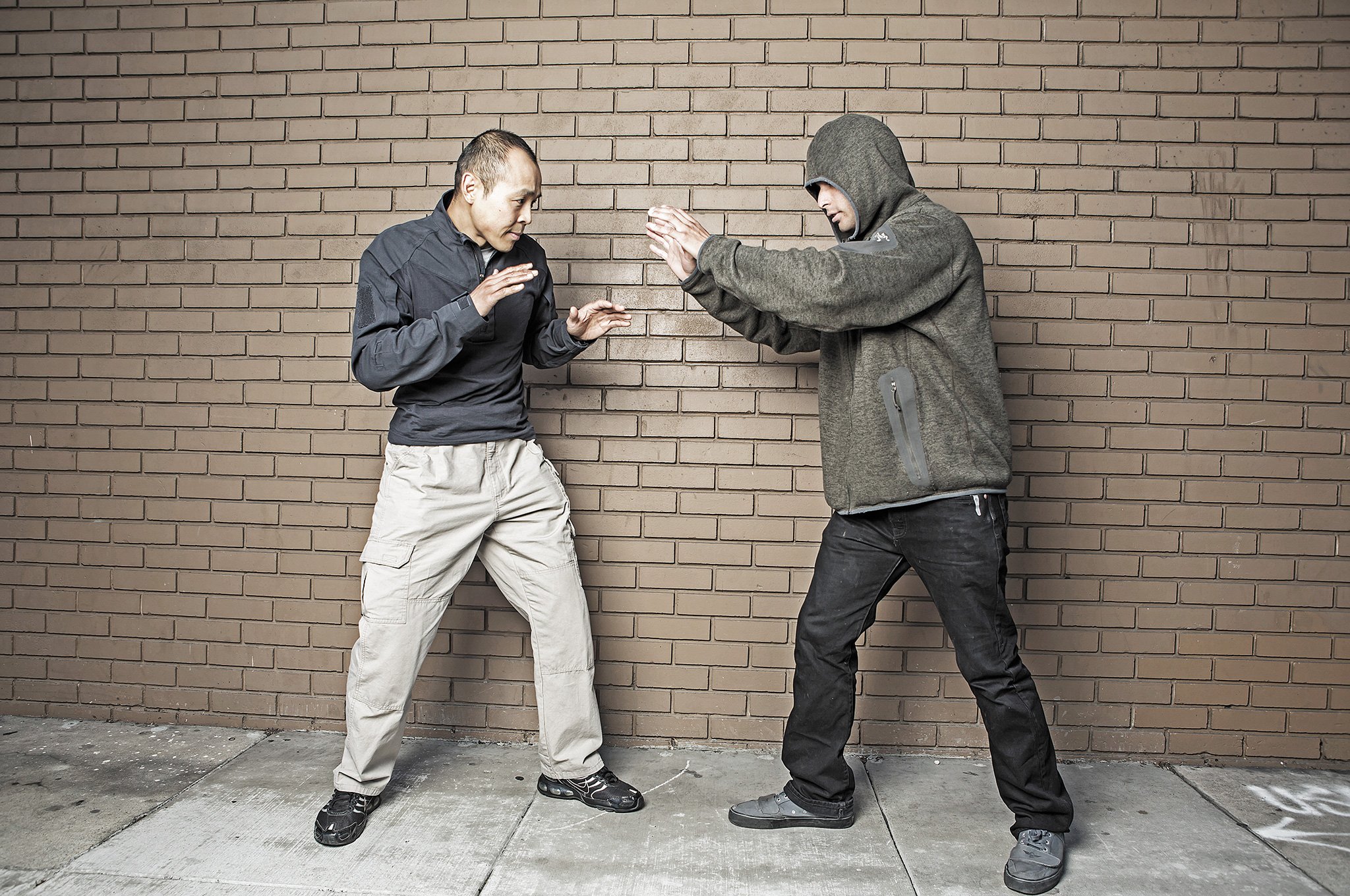
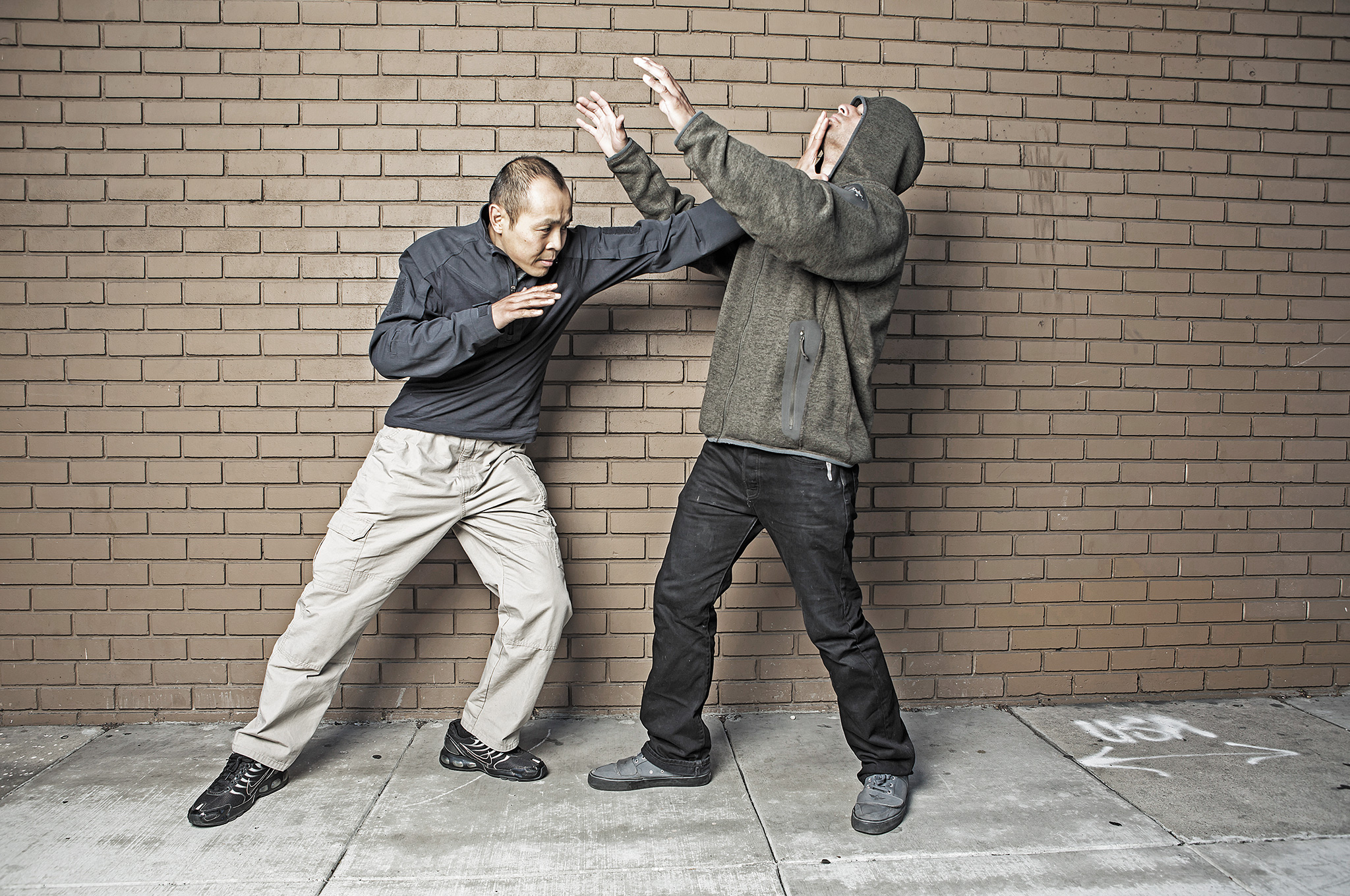
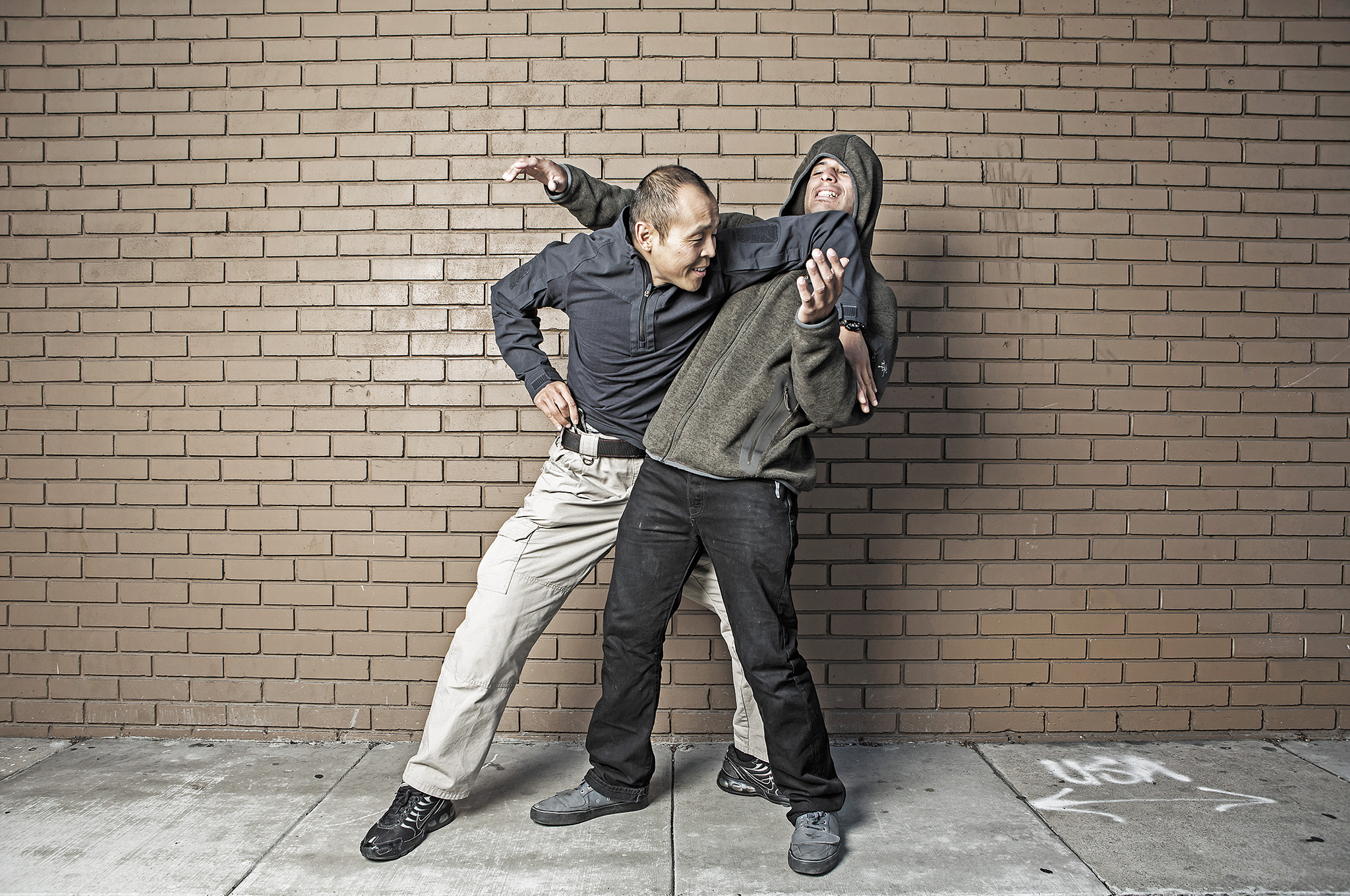
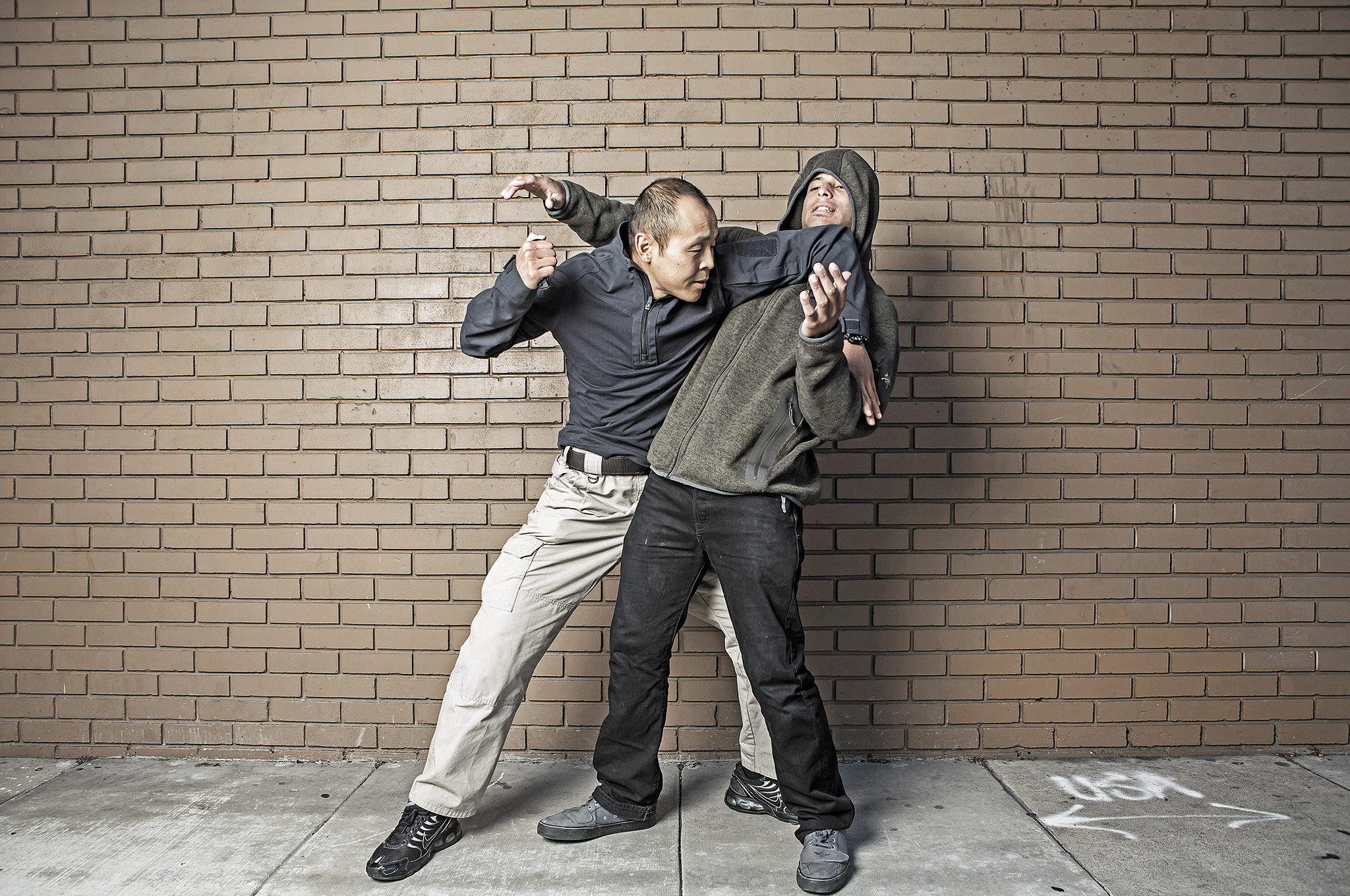
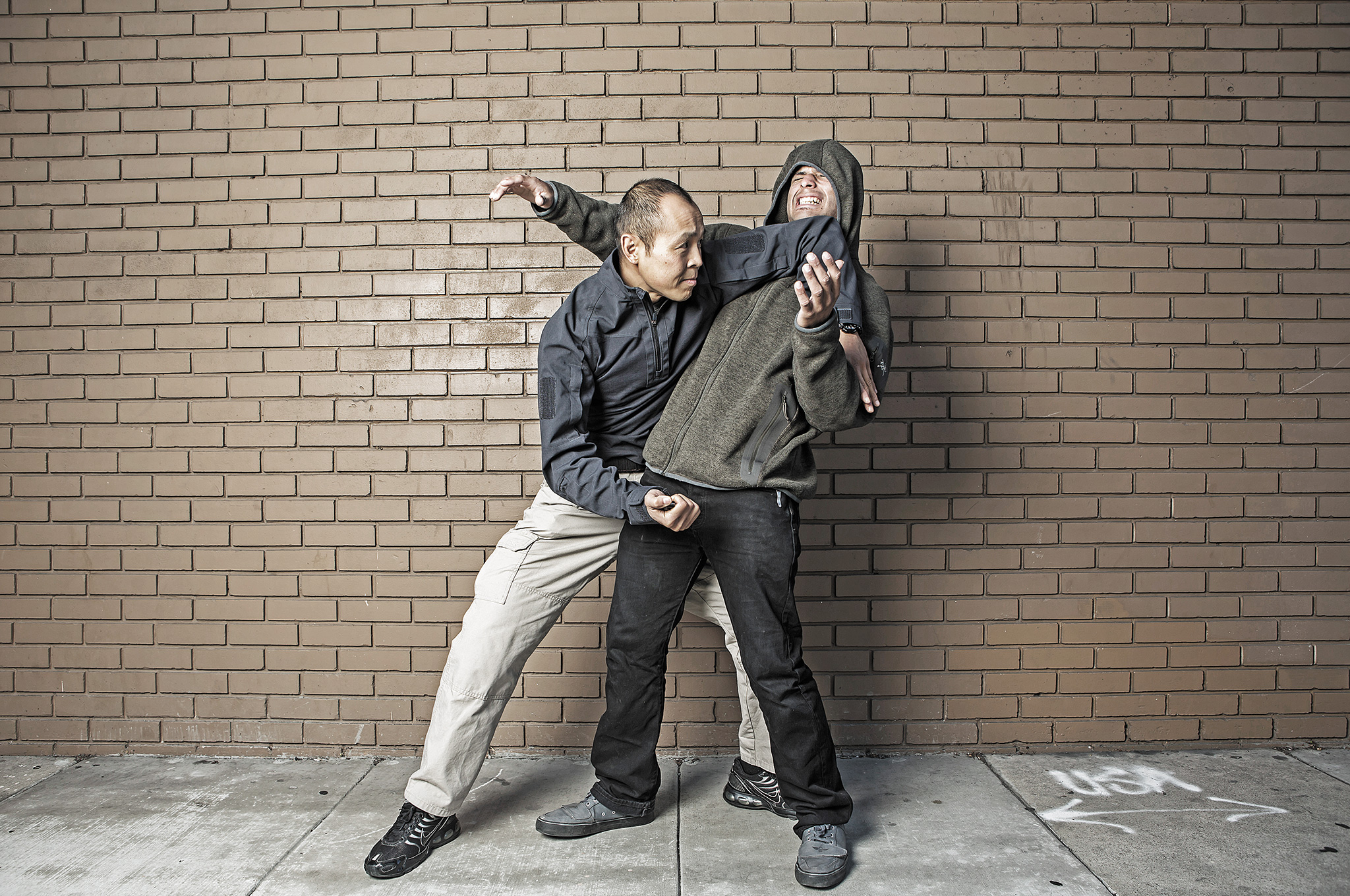
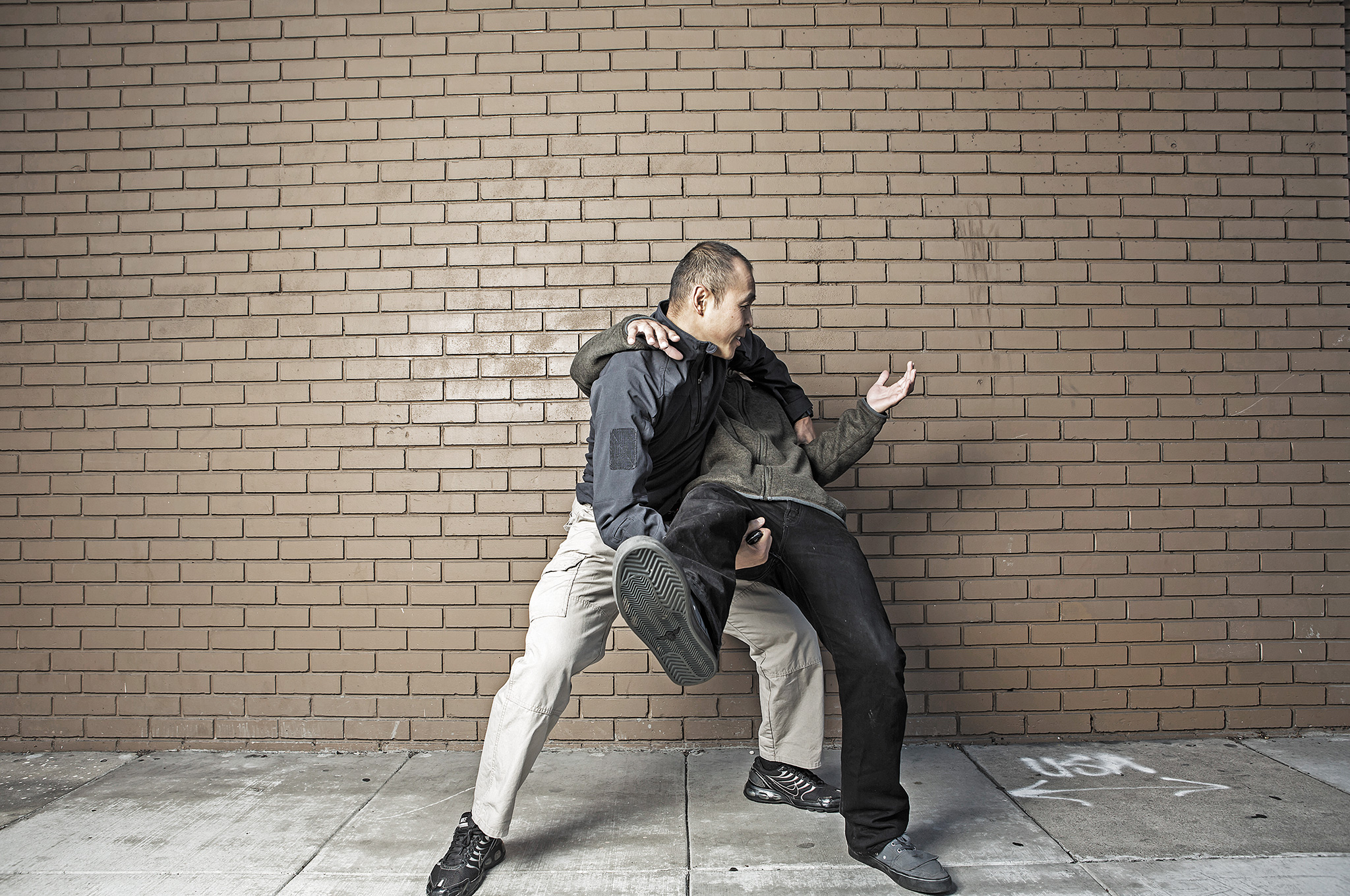
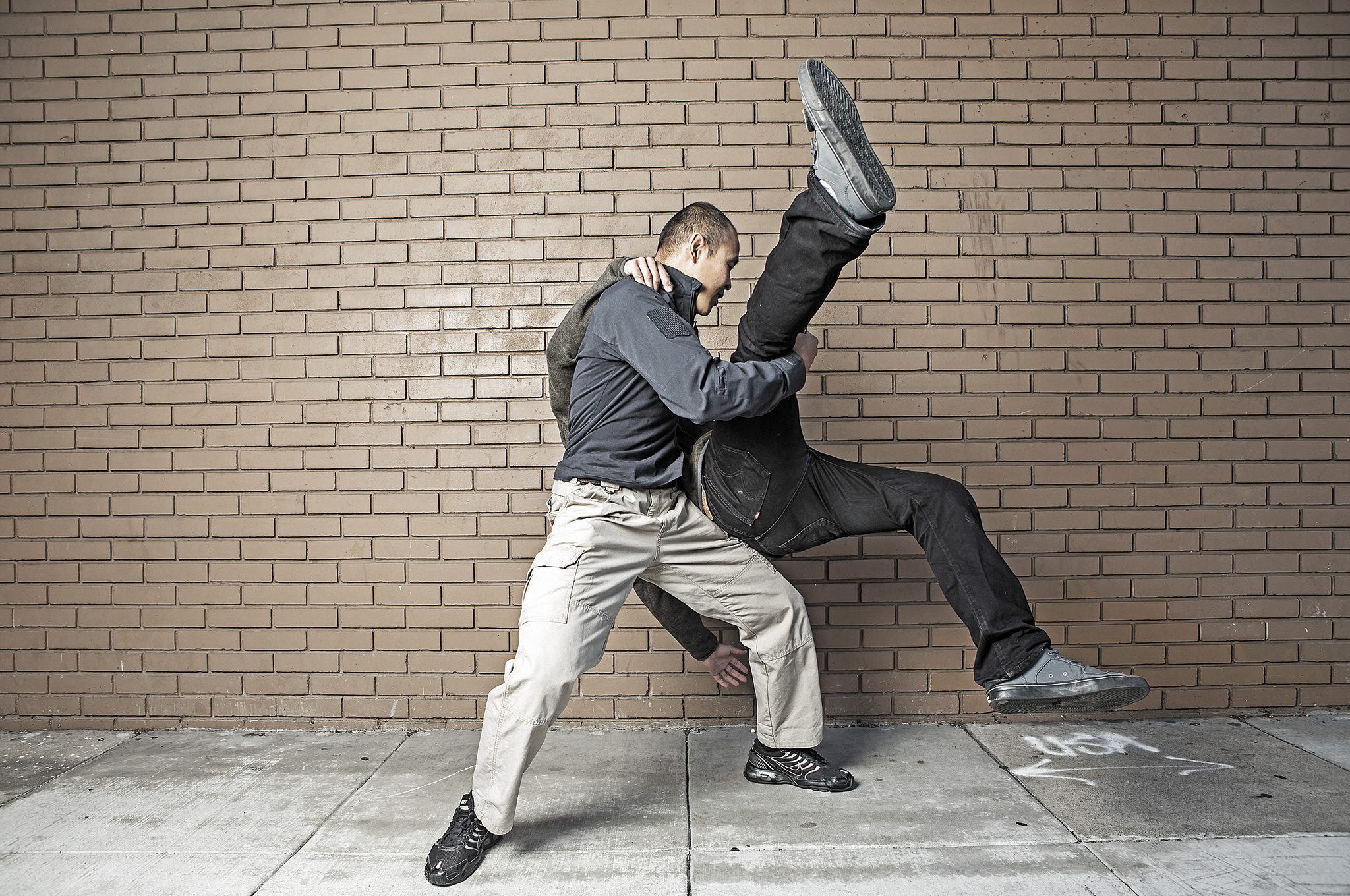
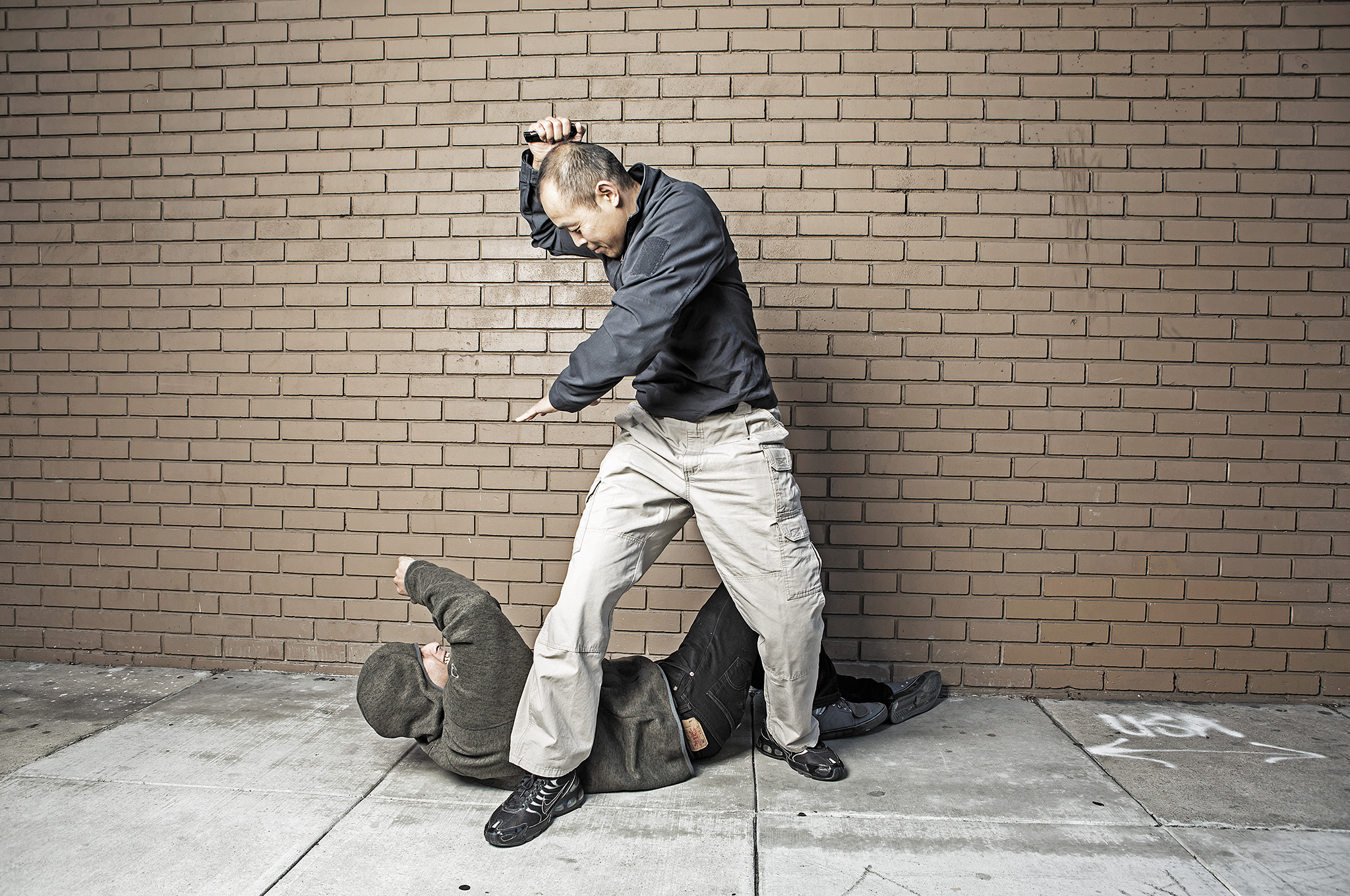
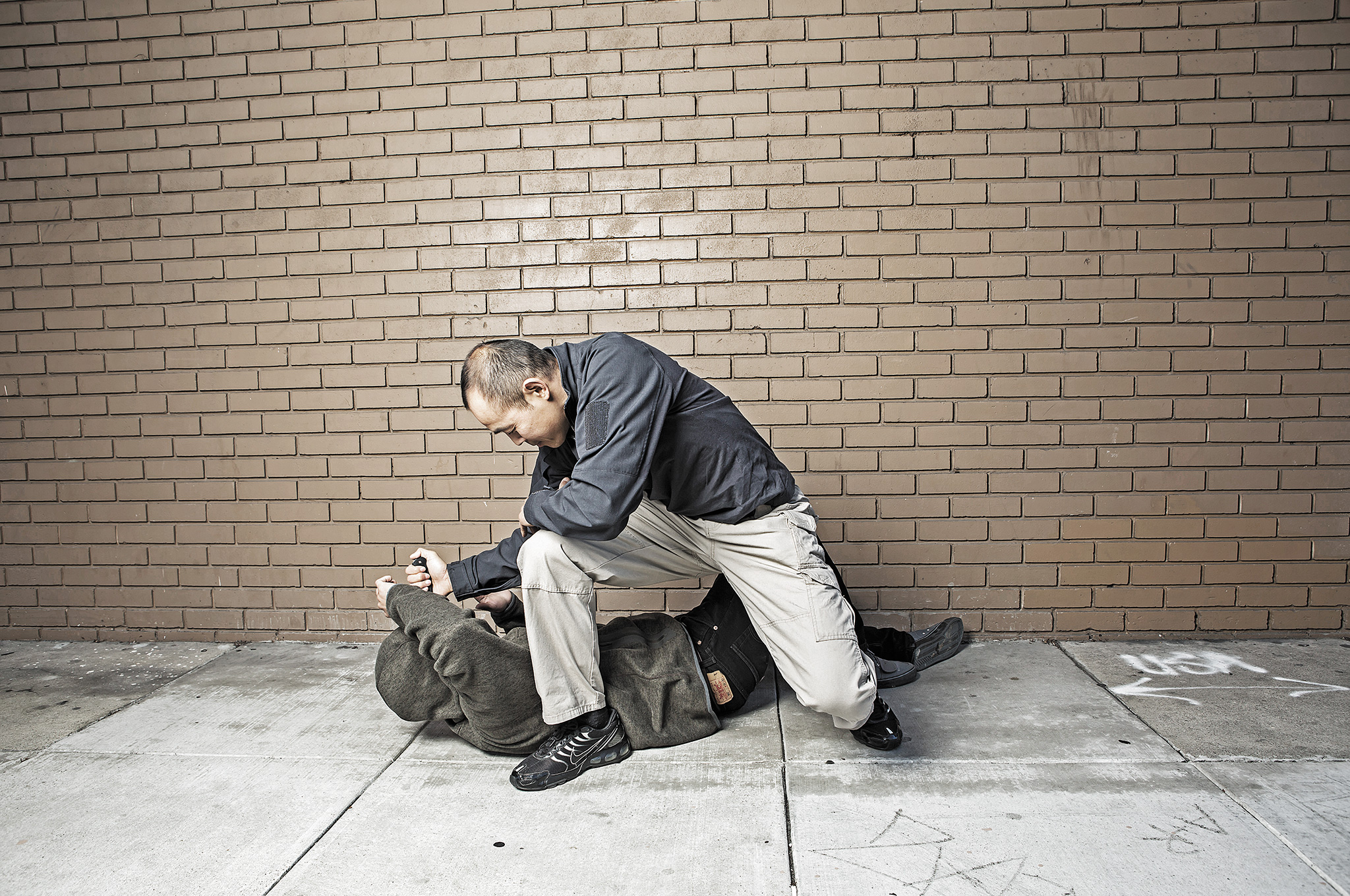
Conrad Bui has no time to draw his weapon when Michael Guadamuz goes for a choke. He buys time by eye jabbing and controlling Guadamuz before drawing his weapon. Bui keeps the blade closed and uses the handle to attack the groin. Then he executes a takedown followed by a butt-end strike to the face.
Front-Pocket Carry
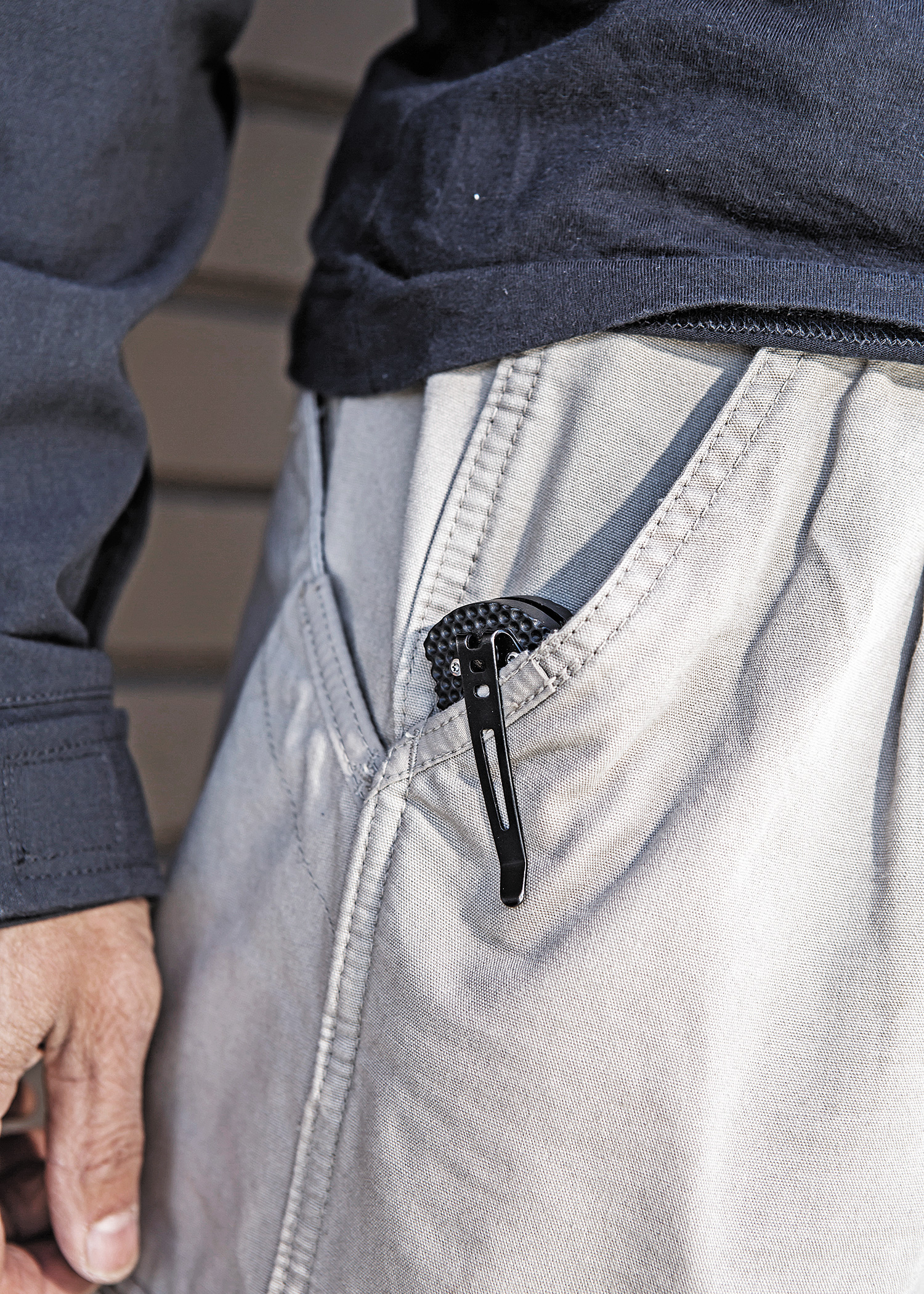
When utilizing the clip, there are two major carry positions, front pocket and appendix. Both positions are solid locations for a folder. Clipping your knife to the front pocket (on the side of your dominant hand), is the most common way to carry.
Pros:
Pocket carry places your tool in a location where your hand naturally hangs when you’re standing. This helps make it faster on the draw than other positions.
Clothes (like shirts and jackets) aren’t in the way of the draw-stroke. This helps reduce the “Oh fudge!” factor when deploying the weapon quickly.
Cons:
The clip, and oftentimes part of the handle, is visible. An attacker can prepare to immobilize your dominant side or look to take the knife away.
A clipped blade can be lifted rather easily in a crowded setting. A few bumps here and there, and the knife is gone. This will suck a lot if you spent a few C-notes on your blade.
Sitting, squatting, lifting, and bending can cause the knife to shift and become dislodged from the pocket. Also, reaching into the pocket for a wallet or loose change can unseat the knife and cause it to fall out inadvertently.
Appendix Carry
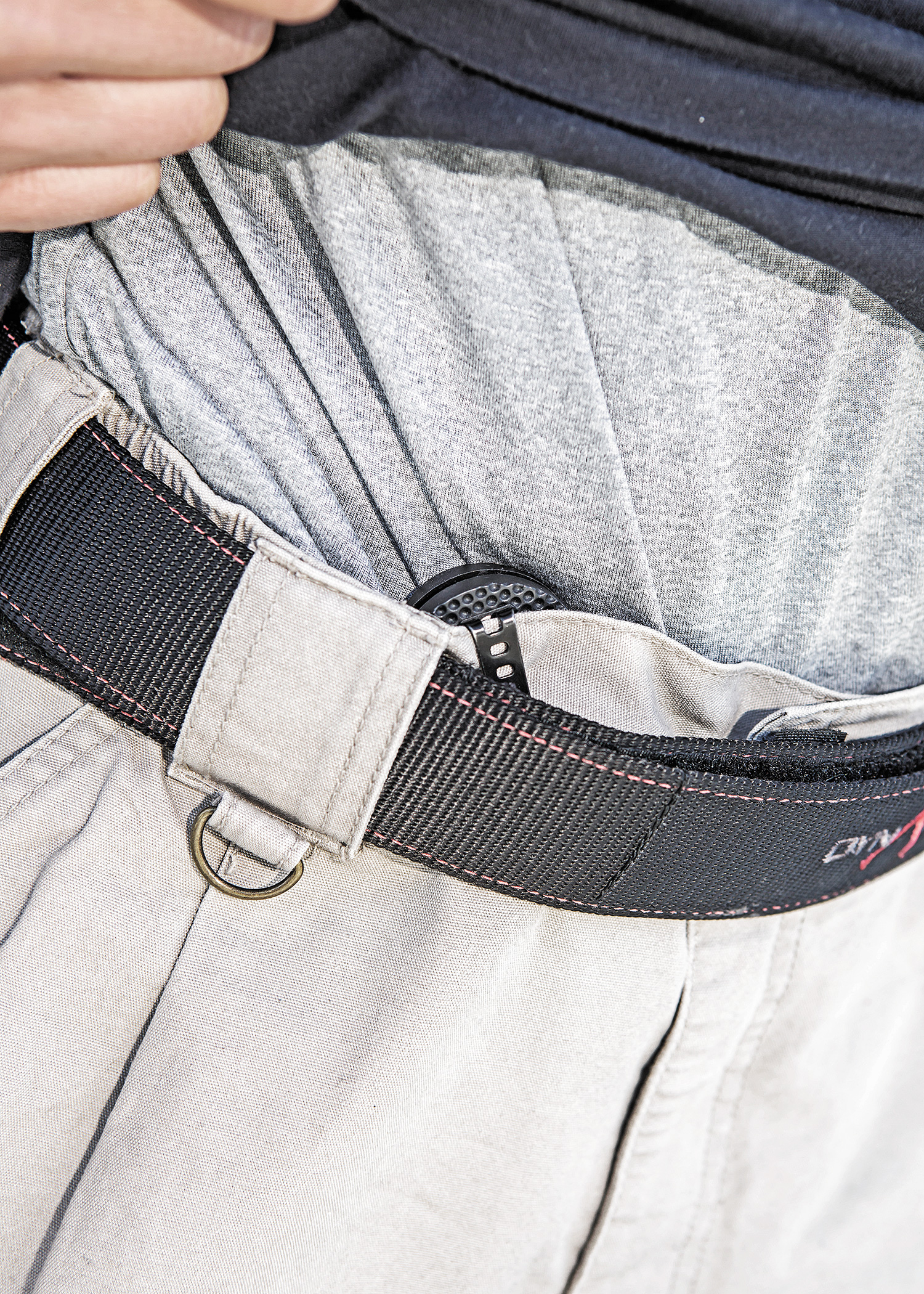
Also known as front-waistband carry, this method involves clipping the knife behind the front waistband, and angled along the line of the inguinal fold (angled toward the groin). The knife (depending on the carrier’s build) will be located at the 1 or 2 o’clock position if you’re right-handed or 10 or 11 o’clock if you’re a southpaw.
Pros:
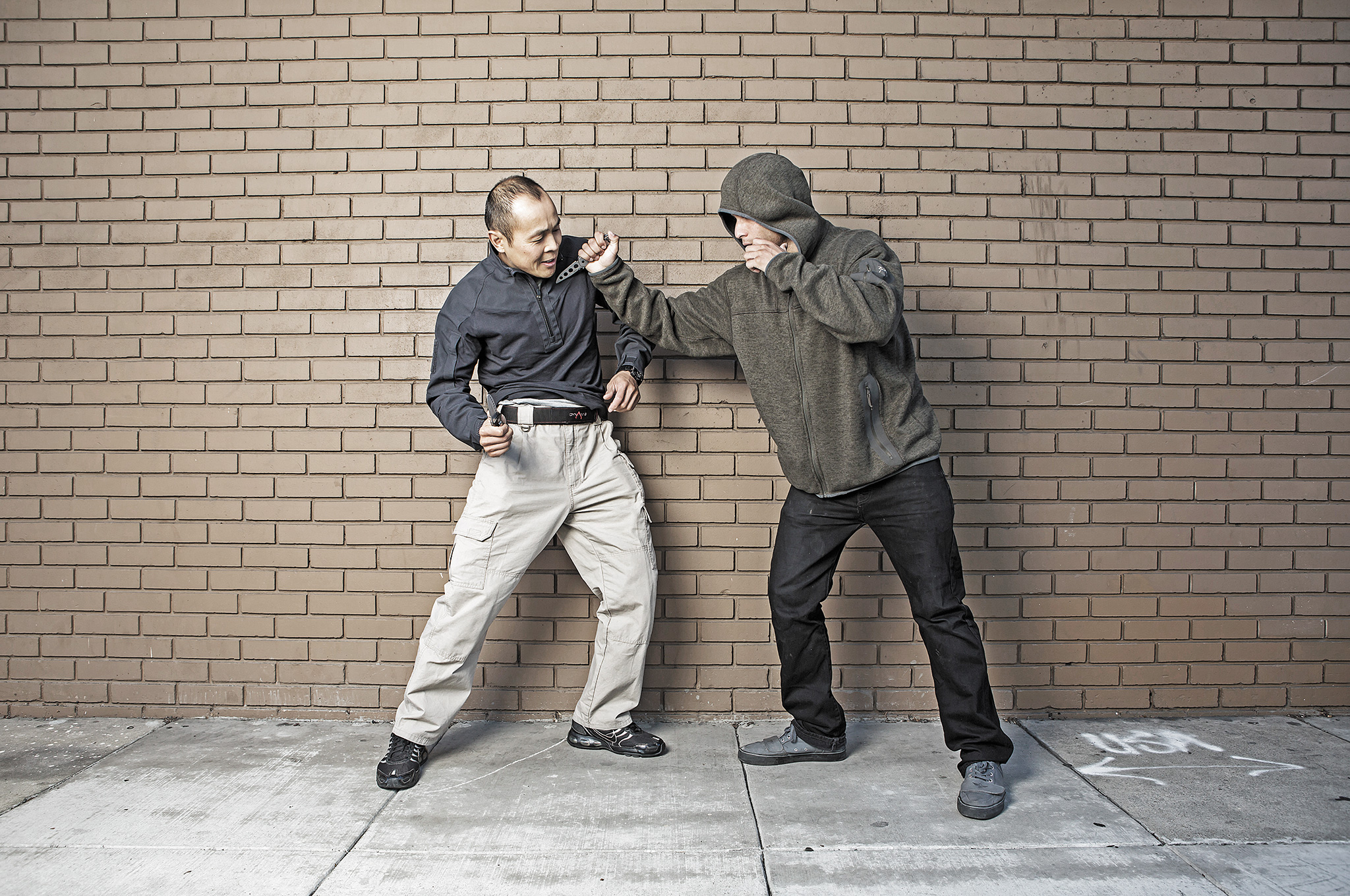
With the knife positioned more centrally, both hands will have access to the weapon — the greatest advantage of the appendix carry method. This lets you draw with your support hand even if your dominant hand is injured, grabbed by the bad guy, or busy (e.g. shielding a loved one or holding a child).
The appendix carry is almost impossible to detect if it’s concealed by an untucked shirt. Going stealth gives you the element of surprise against a bad guy and will draw less attention from people who are uncomfortable around weapons.
It’ll be pretty obvious if a thief is trying to swipe your blade because his hand has to reach much closer to your naughty bits.
Cons:
There’s a good chance your shirt will cover your knife in this position, requiring an extra movement to clear the shirt before drawing the knife.
The location might not work for all body types. If you’re lugging a spare tire above your beltline, this carrying method will be uncomfortable and difficult.
Is it legal in your area? Concealed-carry laws can vary by jurisdiction, so check your local, county, and state laws for compliance.
Here the author demonstrates the advantages of appendix carry as Michael Guadamuz grabs Bui’s dominant hand. Bui turns his right hand over, locking Guadamuz just long enough to draw with his support hand. This move is difficult to perform with front-pocket carry.
Closed for Business
Pulling out your knife doesn’t mean you must expose the blade. The blade is a deadly weapon and using the blade to cut should be reserved only for deadly encounters. Keeping the blade closed and using the handle as a pocket stick (AKA kubotan or yawara) is one advantage a folder has over a fixed blade. There are situations where a less lethal alternative should be used: You may have more buddies with you or the attacker may be smaller than you, intoxicated, or just having a bad day. In these situations, you may want to keep your folder closed, using it as a blunt tool instead.
How: To use your folder as a pocket stick, simply grasp the handle and cap the end with your thumb. You will use the weapon like a hammer, with the butt-end of the handle sticking out. Be extra careful if your knife has a glass breaker at the end, because this will cause more trauma. Raise your weapon up to your face level and drop the butt-end either straight down or at a 45-degree angle with a hammering motion. Make sure to put your body weight behind the strikes for power.
Where: Target the bony areas of the body with these strikes. The temple, jaw, collarbone, and carpal bones on top of the hand make excellent targets.
When Your Life Is Not at Stake: If you use a knife on someone, it should be for true emergencies only. Cutting up someone just because they pointed a finger at your chest or threatened to beat you up (but haven’t done anything) is not justified. Not only will you have to deal with your own conscience, you’ll have to explain yourself to the police and the courts.
To Threaten Someone: When you draw your knife, it should be to cut. Don’t draw your knife to threaten because, aside from possible legal ramifications, this will give away your tactical advantage. Sure, your blade may scare someone off, but it could just as well escalate the confrontation as well.
Defanging the Snake
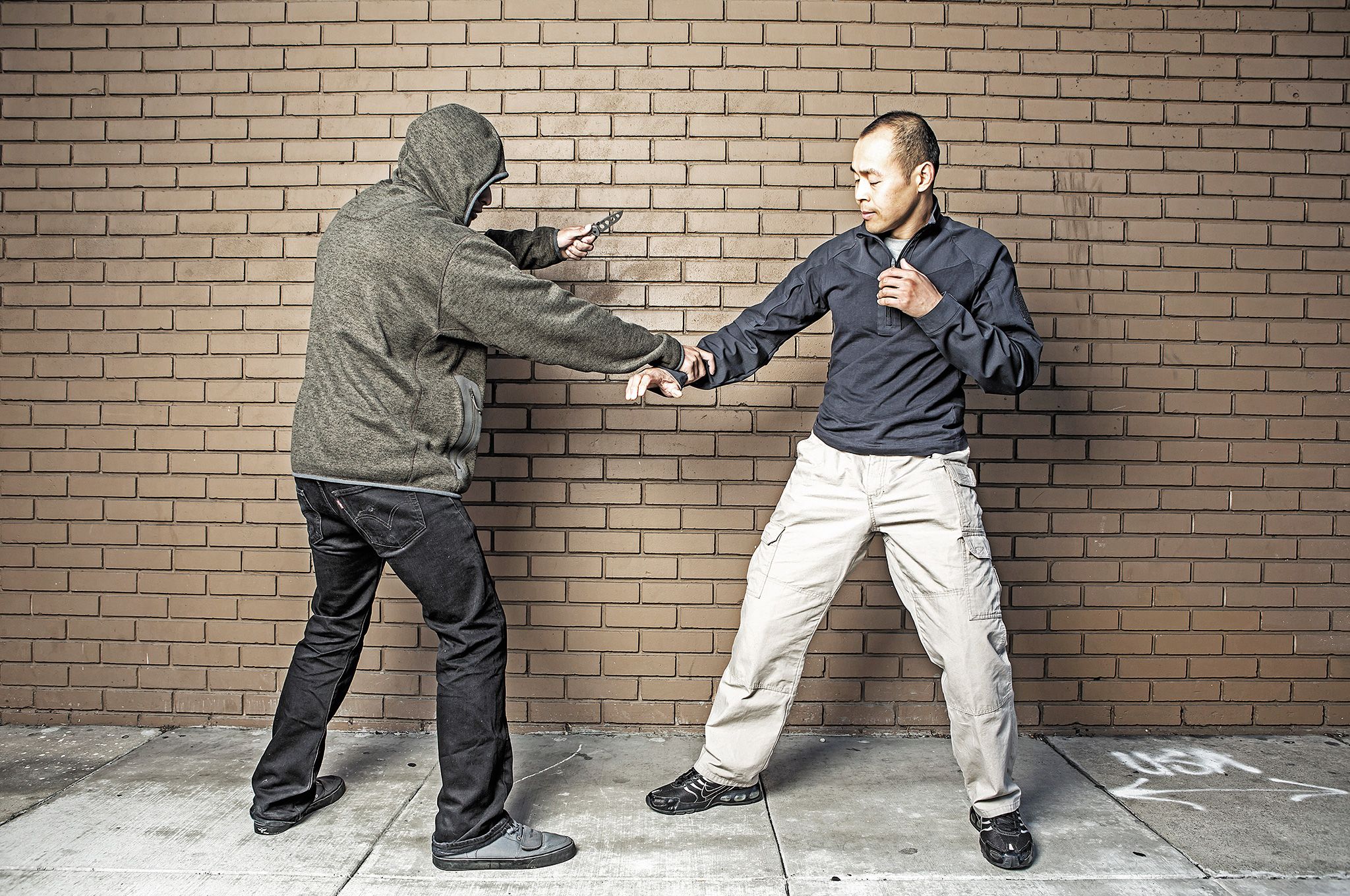
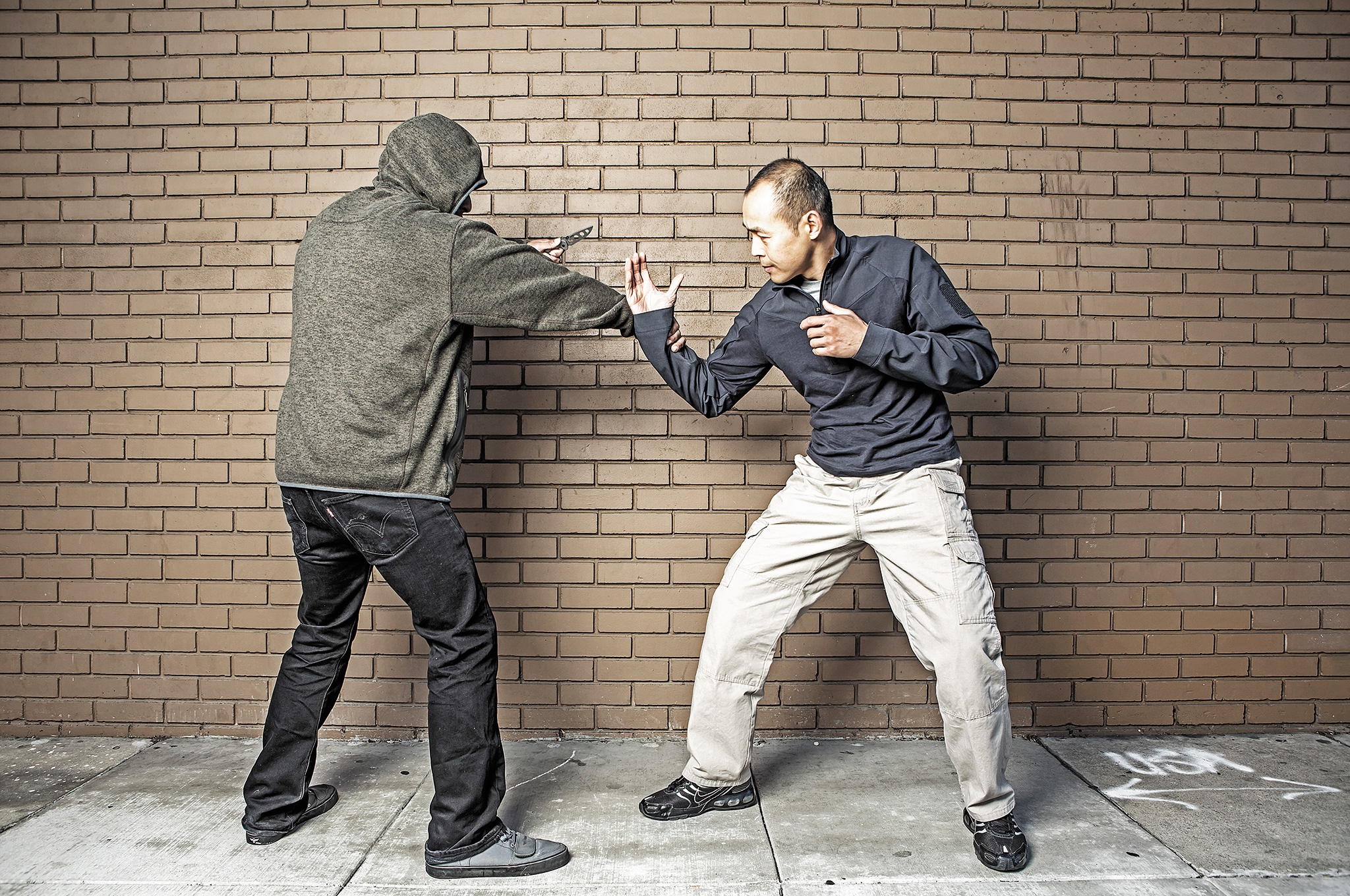
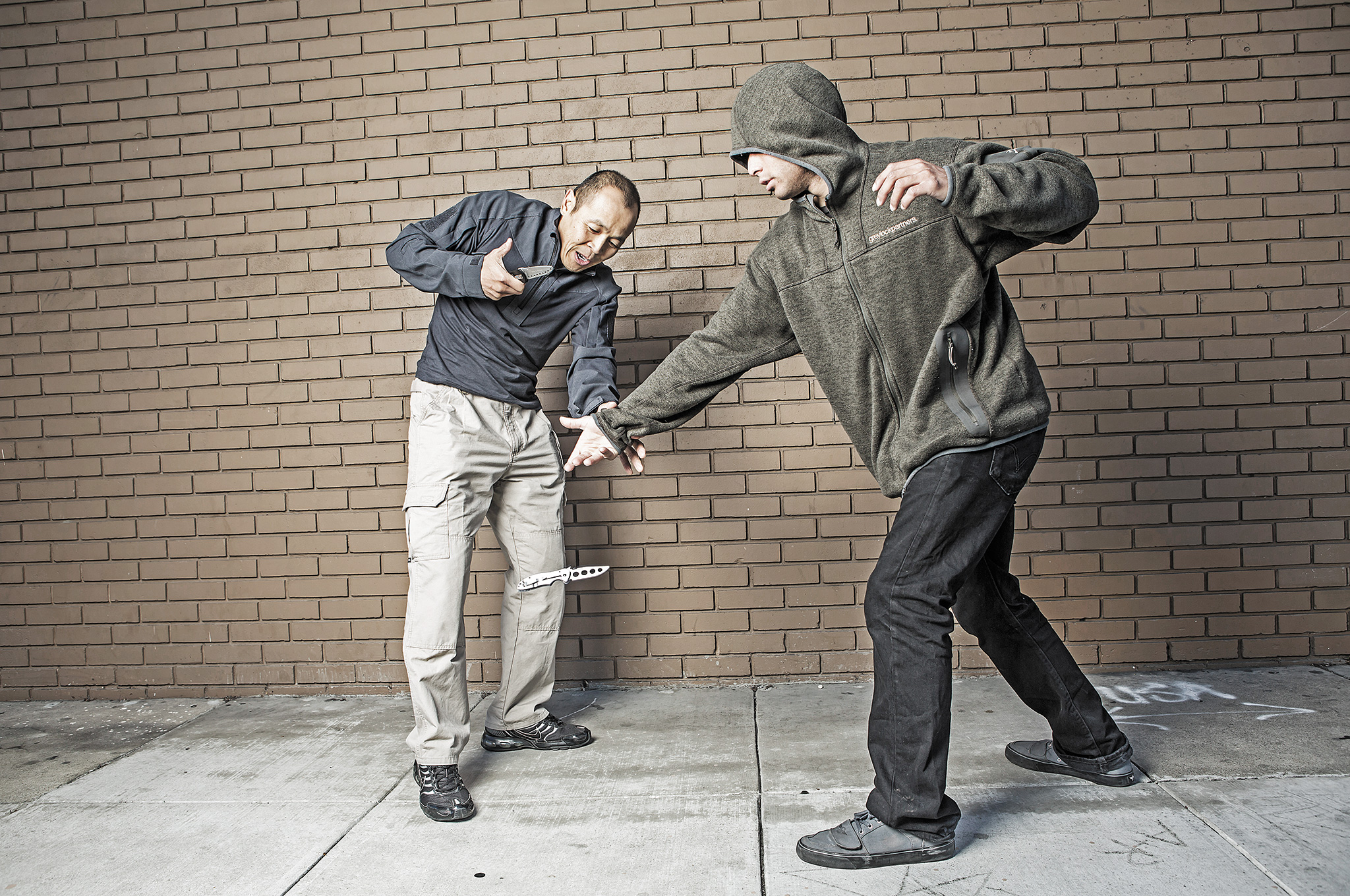
Your life is in danger, the blade is out, and you need to use it. Now what? For this we look to the tactic of “defanging the snake.” This principle, borrowed from the Filipino fighting art of kali, is simple: When a weapon or fist comes at you, simply attack the flesh that’s closest. Anytime a close-range weapon comes at you, there’s a hand attached to that weapon and an arm attached to that hand. Move your body part that is being attacked (most likely the head or torso) out of the way of the strike, and slash or stab away at the closest target, most likely the attacker’s hand or arm.
Aim at cutting the inner side of the wrist and forearm. This is where the tendons used to flex the fingers are found. With the tendons on the inside of the wrist or forearm cut, it’s difficult for the attacker to grip a weapon or make a fist. If the cut is high up the arm, the brachial artery might be severed and death could result in minutes.
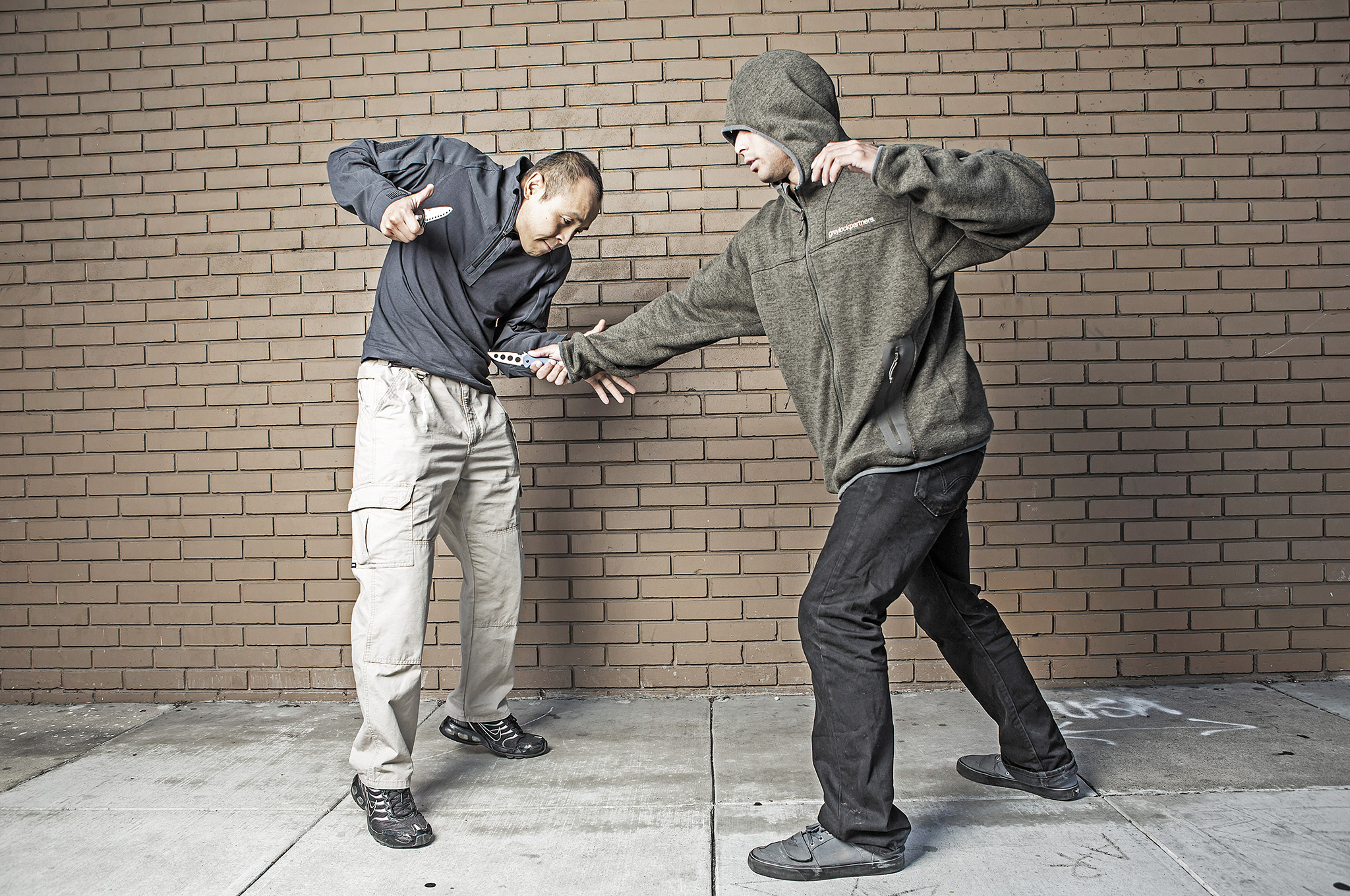
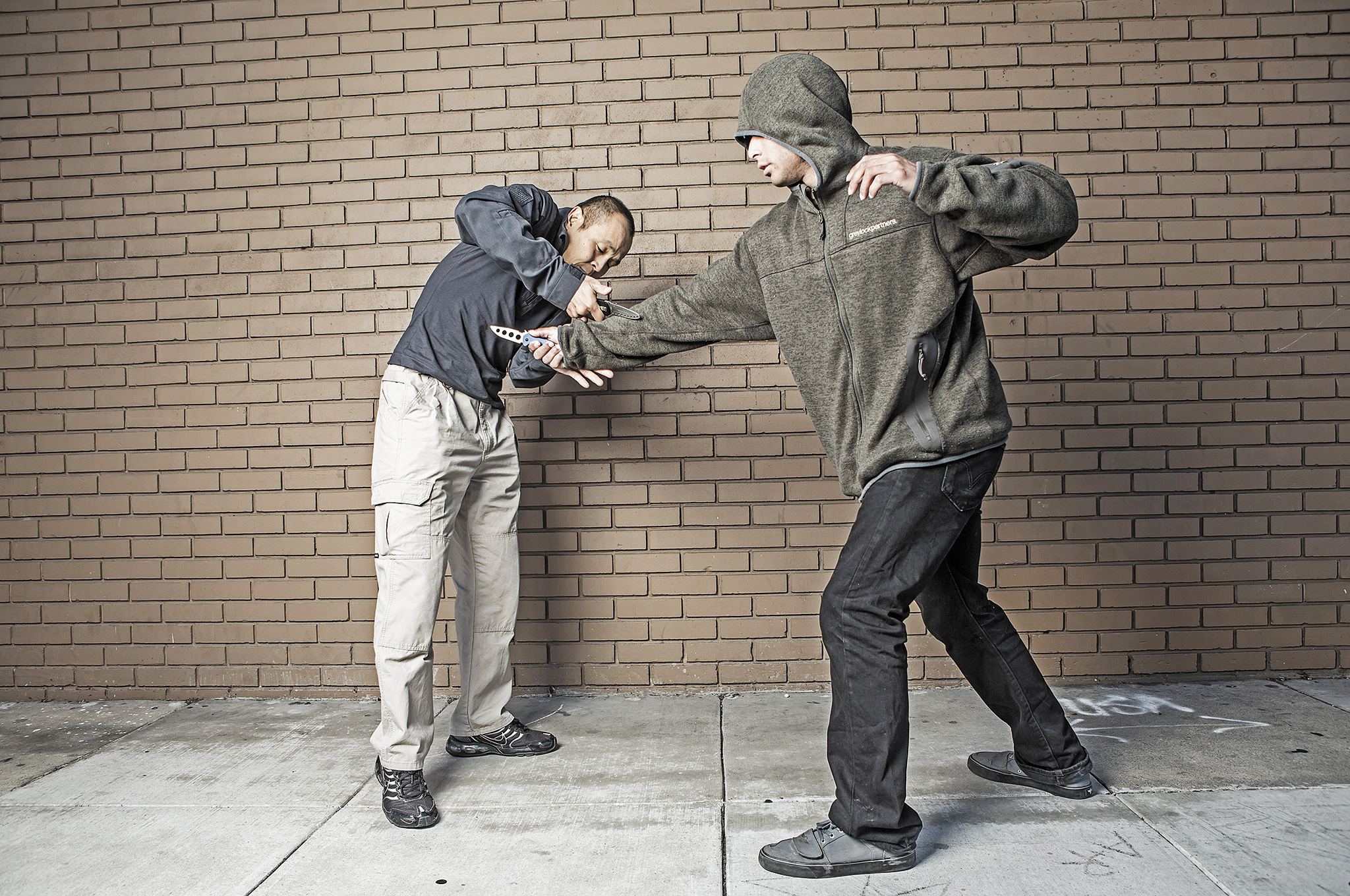
Michael Guadamuz looks to aerate his victim with a thrust to the gut. The author demonstrates the tactic of “defanging the snake” by simultaneously parrying the knife, moving his body out of the way, and slicing the tendons of his attacker’s forearm. With his flexor tendons cut, Guadamuz can no longer close his fingers and drops the knife.
About the Author
Dr. Conrad Bui is a San Francisco-based chiropractor with more than 30 continuous years of practice in the martial arts. He has “street” experience as a former bar bouncer and competitive experience in Tae Kwon Do, Muay Thai, and Brazilian Jiu-Jitsu. He is also a certified instructor in silat, kali, and kuntao.
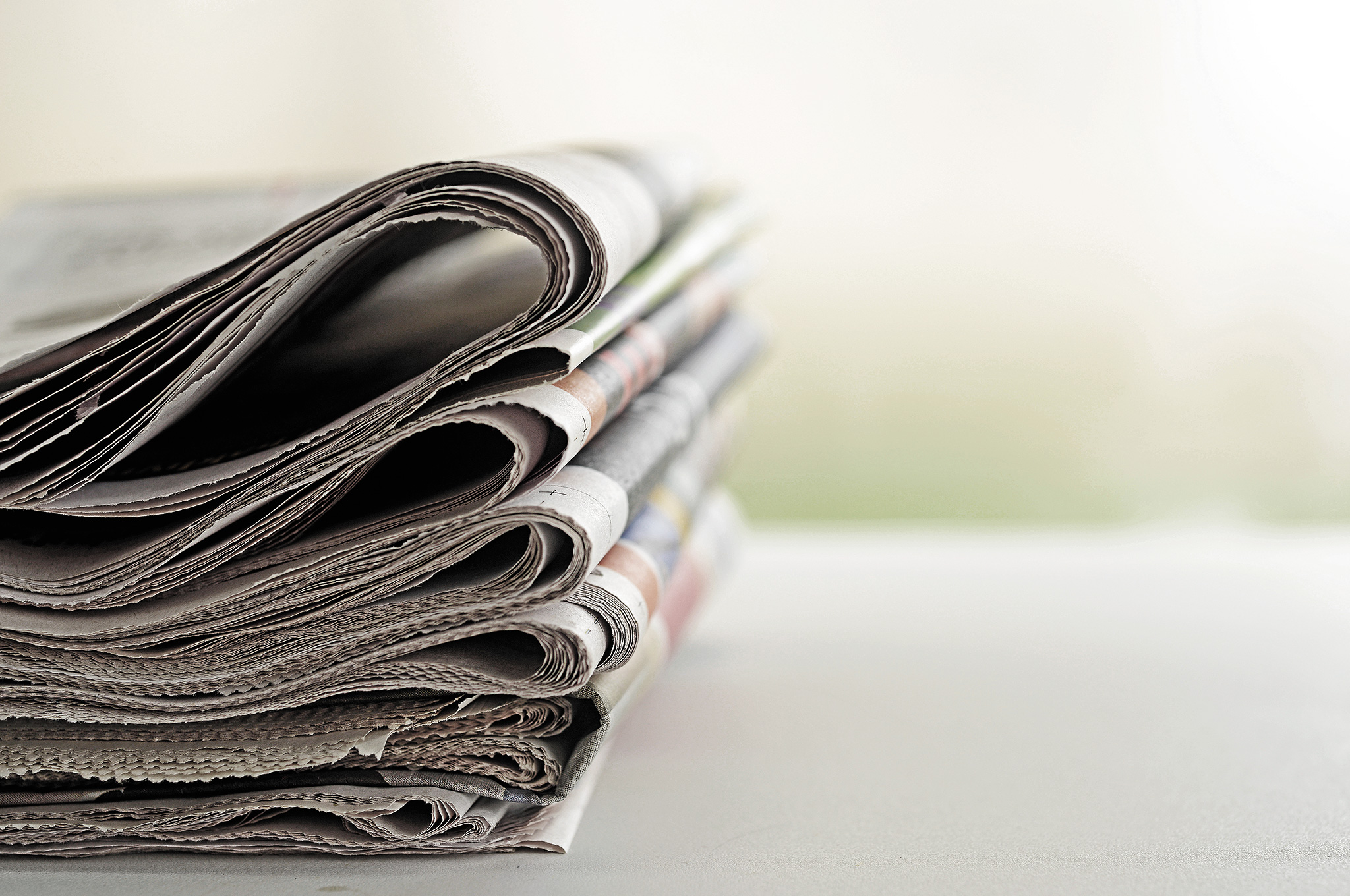
I don’t know anyone who doesn’t end up with a stack or two of newspapers or advertisements in their recycling bins each week. Even if you don’t subscribe to the daily paper in your area, odds are there’s at least one free newspaper that is delivered regularly along with a seemingly endless supply of ads, coupons, and classifieds. Some folks call this the local fish wrap. The point is just about everyone has unwanted printed matter lying around.
You could, and should, recycle what you don’t need. But in here we’re presenting some ways you can repurpose it around the house, focusing on survival or self-reliance–related purposes.
Before we get into the projects though, let’s talk for a moment about newspaper. Not all newspaper is created alike. There’s newsprint and there’s glossy paper. The glossy paper is what is typically used for advertising. Ya know, the shiny, full-color ads that are designed to draw you into the stores so you’ll buy more junk you don’t need or can’t afford. Toss that stuff right into the recycling bin. We have no use for it here. What you want is the actual newsprint.
If for some unknowable reason you’re that odd person who receives absolutely no newspapers at home, but you still want to try out some of these projects, you have a couple of options. You could ask a friend, relative, or neighbor to save some paper for you, of course. Or, you could head down to the local newspaper office and ask about “end rolls.” These are rolls of clean newsprint that only have a bit of paper left. Trust me, each end roll will have plenty for our purposes here. Some newspapers give them out for free, others might charge a small fee.
Incidentally, if you have kids or grandkids, roll out enough clean newsprint for them to lie on, then trace around their entire body and head. They’ll have a blast using crayons to draw life-size versions of themselves. It also makes for great wrapping paper for the holidays, just dress it up with some markers or stickers.
Plant Pot
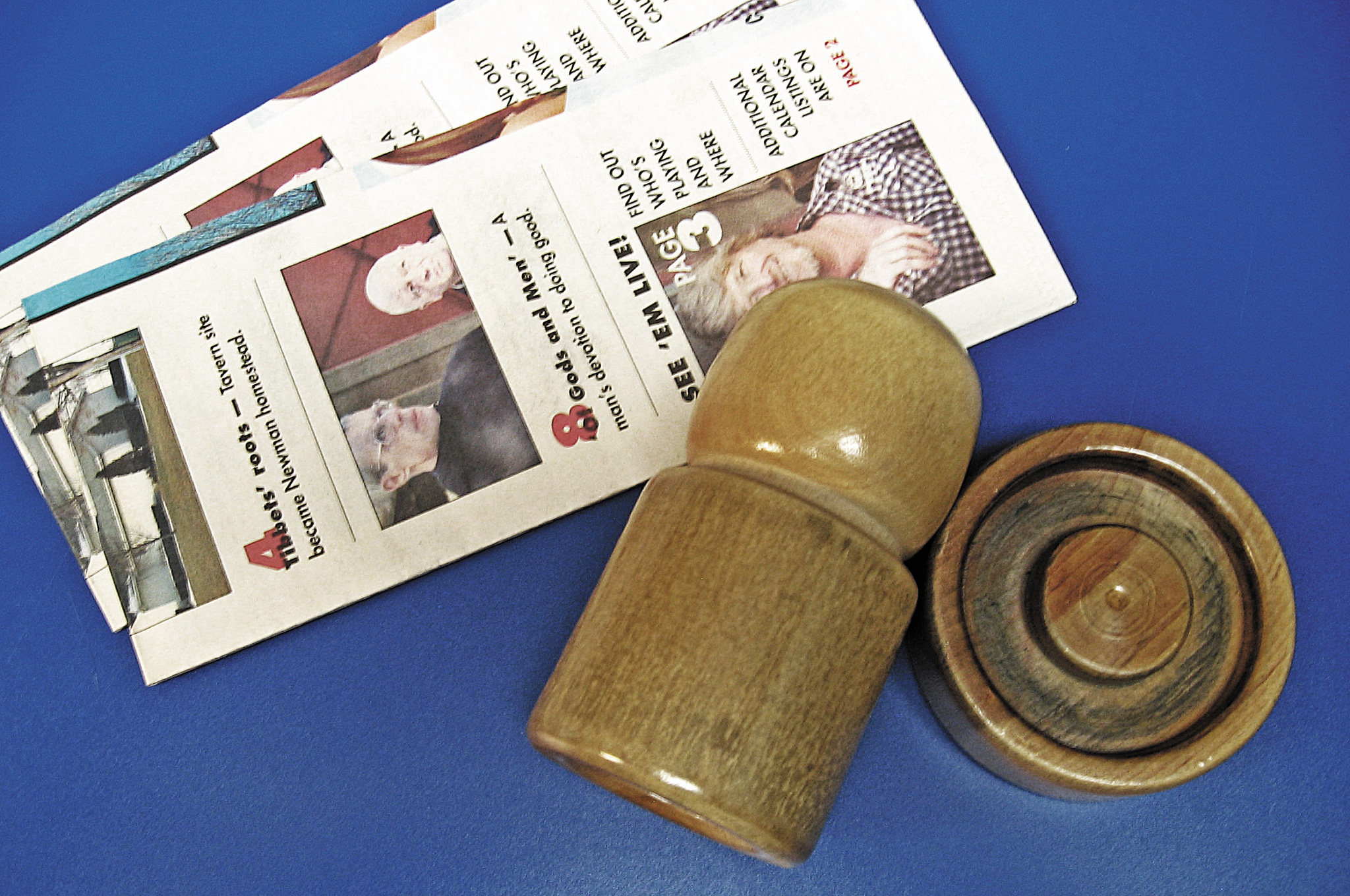
This is a great project for the kids to do on those days when they complain about being bored. It requires newspaper, a bottle, and soil. There is a product on the market called a Pot Maker that works outstandingly well for this project. I highly recommend it. The mechanics of the project are the same whether you use the Pot Maker or a bottle. A wine bottle works great, but if that’s not available, any bottle of similar size will work. The ideal bottle will have a concaved bottom.
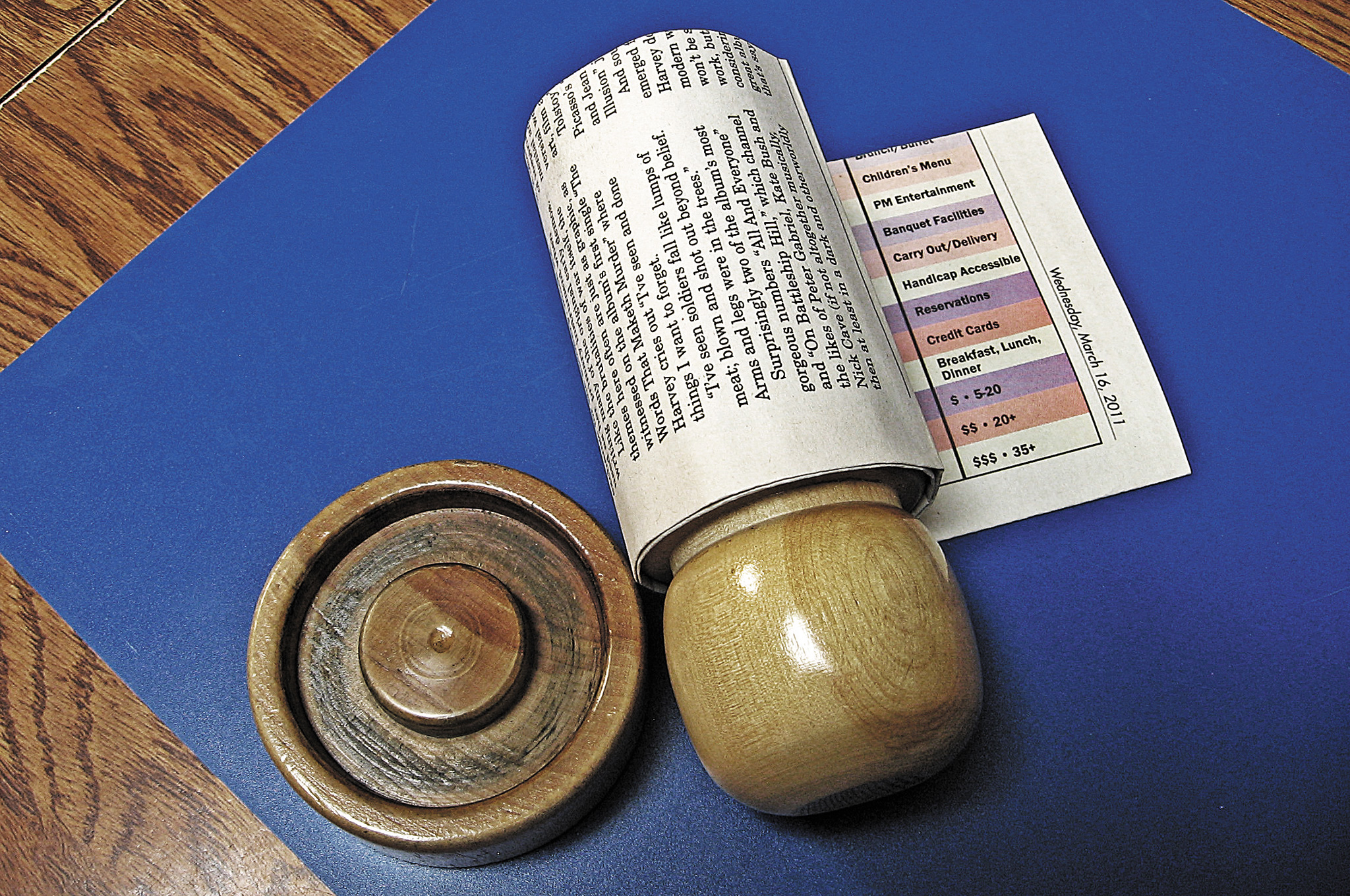
Cut the newspaper into strips about 6 inches wide. The length will depend upon the size of your bottle. The strip will need to wrap completely around the bottle twice.
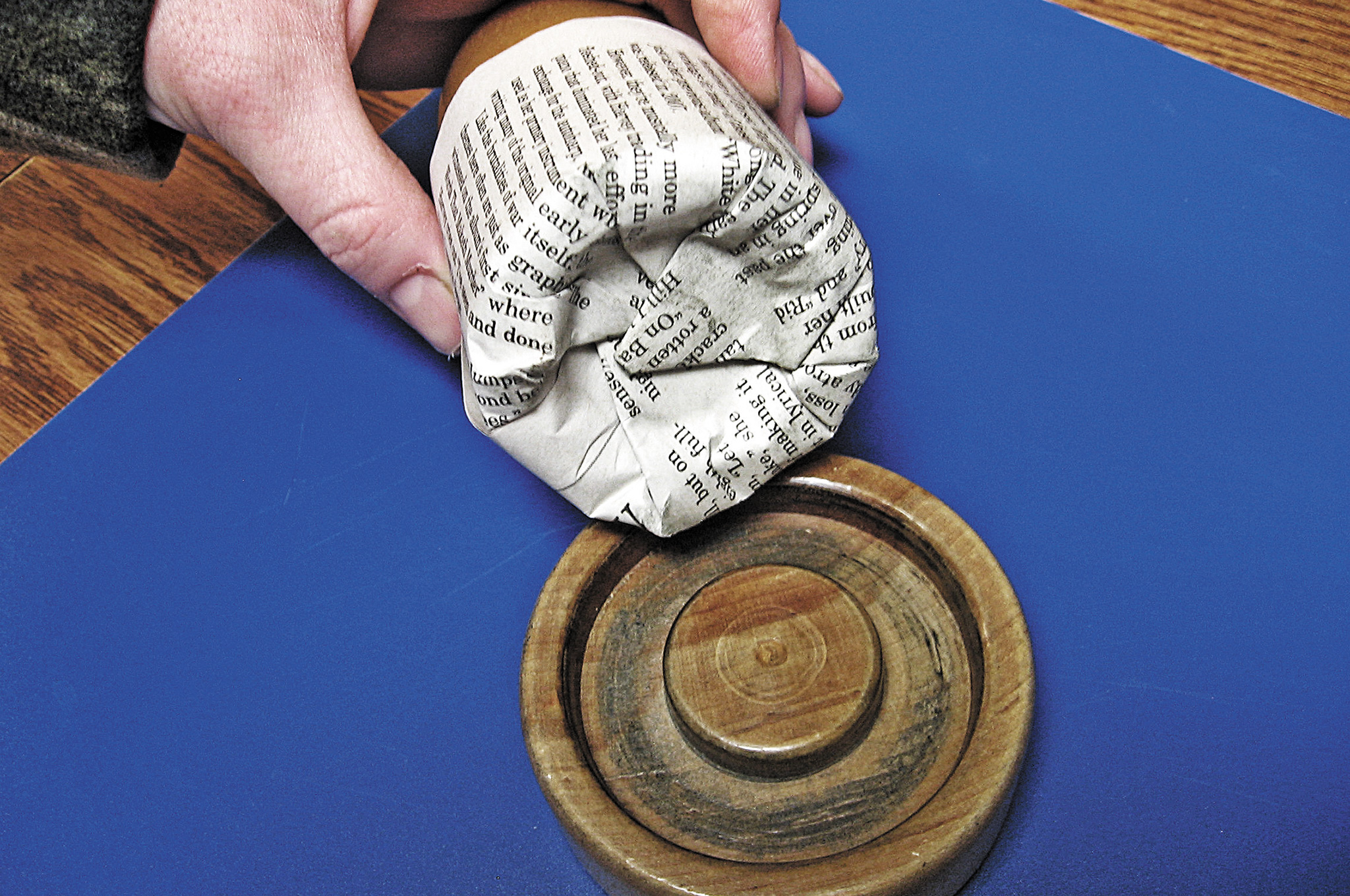
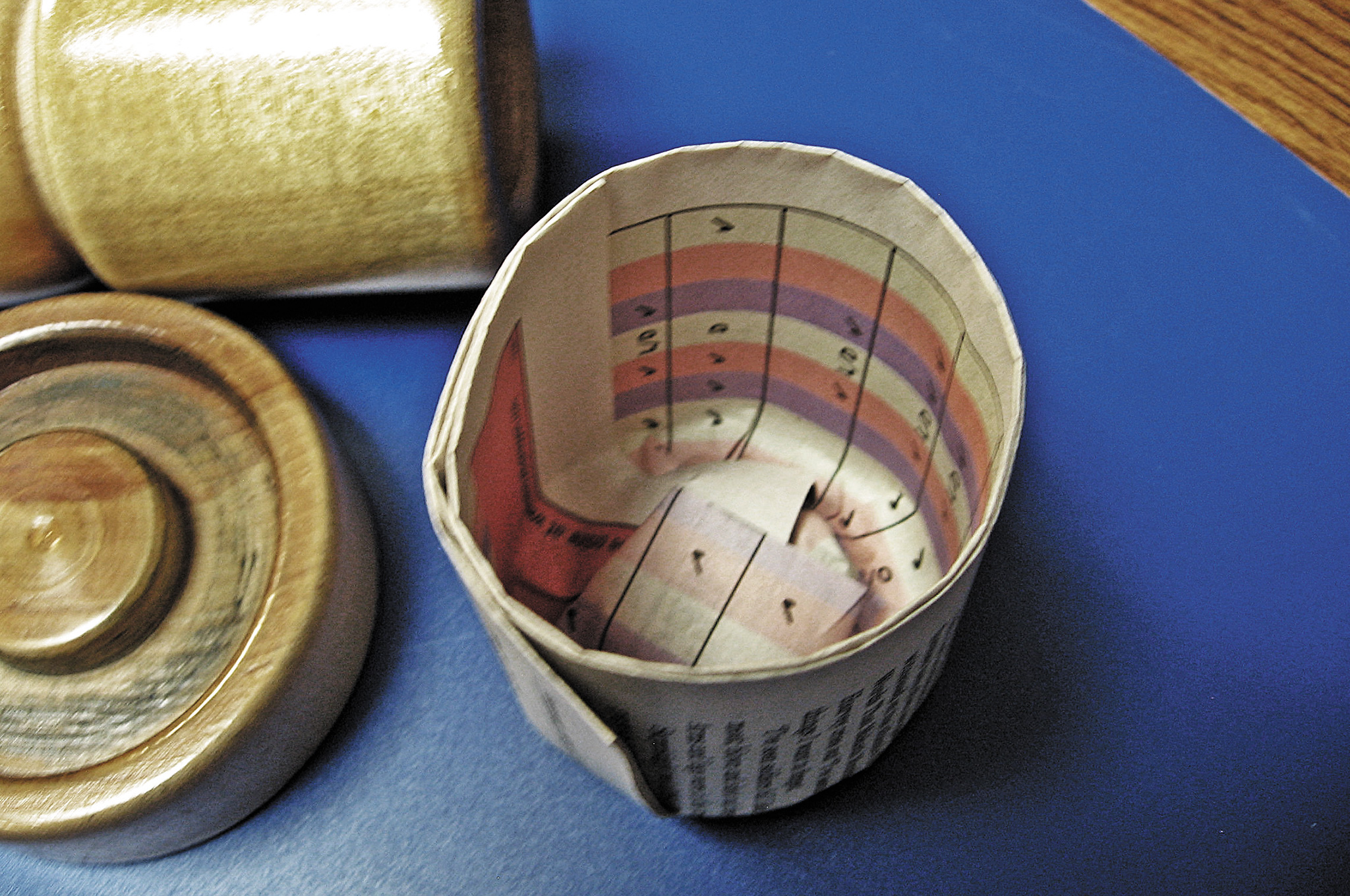
Wrap the strip around the Pot Maker twice. Fold that loose newspaper in and crimp the fold around the bottom edge of the dowel. Slide the pot from the dowel and fill with soil. The soil helps the pot keep its shape so be sure to fill the pots even if you don’t plan on using them right away.
Once the seedlings are ready to be transplanted outside, you don’t have to remove the pot. Just dig the hole and drop the whole thing in. The newspaper will decompose just fine.
A plant pot made of newspaper is cheap and easy to make. Plus, you don’t need to remove or replace it later because it’ll decompose.
Seed Tape
If you’ve ever planted carrots or lettuce, you know just how frustrating it can be to deal with those itty-bitty tiny seeds. We always just end up sprinkling the entire seed packet into a trench, resigning ourselves to the knowledge that we’ll just be thinning the seedlings once they sprout and thus wasting quite a bit of seed. But, with a little effort ahead of time, you can use newspaper to cut down on the amount of seed you end up using in a season, thus extending your supply. Plus, you won’t be doing nearly as much thinning as the plants grow.
Start by cutting the newspaper into strips about 1 inch wide. Length is up to you, but I find it easiest to work with strips no more than 18 inches long. Next, make a glue using 2 tablespoons flour and 1 tablespoon water. The mixture should be fairly thick.
Read the instructions on the seed packet to find out the recommended plant spacing. If you don’t have the original seed packet, do some research online. For our purposes, we’ll say it’s 1 inch. Lay out your newspaper strip and use a ruler and pencil to mark the seed spacing. Leave room on one end of the strip so you can label the strip.
Dip the tip of a toothpick into your glue, then use it to pick up one seed. One at a time, smear the glue and seeds on the strip at the spaced marks. Let the strip sit out until the glue has fully dried. Use a marker to label each strip with the type of seed. Roll up or fold the strips to store until needed.
To use, simply dig a trench in your garden to the appropriate depth, lay in your seed tape, and cover with soil. Water thoroughly, and you’re done!
Garden Bed
If you have the time to wait, newspaper can be a tremendous asset in creating a new garden bed. Put down a few layers of newspaper over the entire surface of the planned garden bed, weighing the paper down with rocks or logs. Let this sit for a season and all of the grass and weeds will die off. This makes it much easier to till up the ground and get things ready for planting.
Fire-Starter
Having a reliable way to get a fire going can be critical to survival. Sure, there are all sorts of fire-starters on the market today and most of them work rather well. However, if you have a stack of newspaper and a few old candles, you can make fire-starters that work just as well as some and even better than most.
Roll a few sheets of newspaper together so the end result is about 1 inch thick. Use jute twine or some other type of cordage to tie the roll together at several points. Cut the roll into sections, each a couple of inches long. Be sure you have at least one loop of twine around each of these sections.
Submerge each of these sections into melted wax, and then set out to dry for a few minutes. To use, simply light the jute twine as though it were a fuse. You could also scrape a bit of wax away from a corner and light the paper directly. These fire-starters burn a good long time.
Toilet Paper
It isn’t nearly as soft as Charmin, but it’ll do in a pinch — and far better than trying to decide if those leaves look like poison ivy or not. You can make the experience a little more tolerable by repeatedly crumpling up the paper so it softens the fibers a bit.
Fire Log
As should be obvious to just about everyone, newspaper burns quite well. It is, after all, just wood pulp. There are gadgets and gizmos out there that will turn shredded paper into bricks or logs for burning. That’s all well and good, but the method I’m going to describe requires nothing more than a small tub of water and a dowel.
Fill a basin or tub with warm water and just a squirt of dish soap. Separate the newspaper into sheets, then pile them in the water and let them soak for an hour or so. Drain the water and lay the sheets out in sections, overlapping them a bit. Begin at one end with the dowel and roll it along, wrapping the newspaper around the dowel. Keep adding paper until the log is about 4 inches thick or so. Slide out the dowel and your log is complete.
Lay the logs out to dry, which can take a few days to a few weeks depending on climate conditions. I wouldn’t suggest using these exclusively in your fireplace or wood stove, but they can help extend your supply of firewood by using them here and there. They won’t light right off a match, but will catch just fine off of some kindling.
These will produce a bit more ash than regular logs, but the benefit of increased fuel for the wood stove with little impact on your wallet will probably outweigh the inconvenience of one more bucket of ash to empty each week.
Improvised Weapon
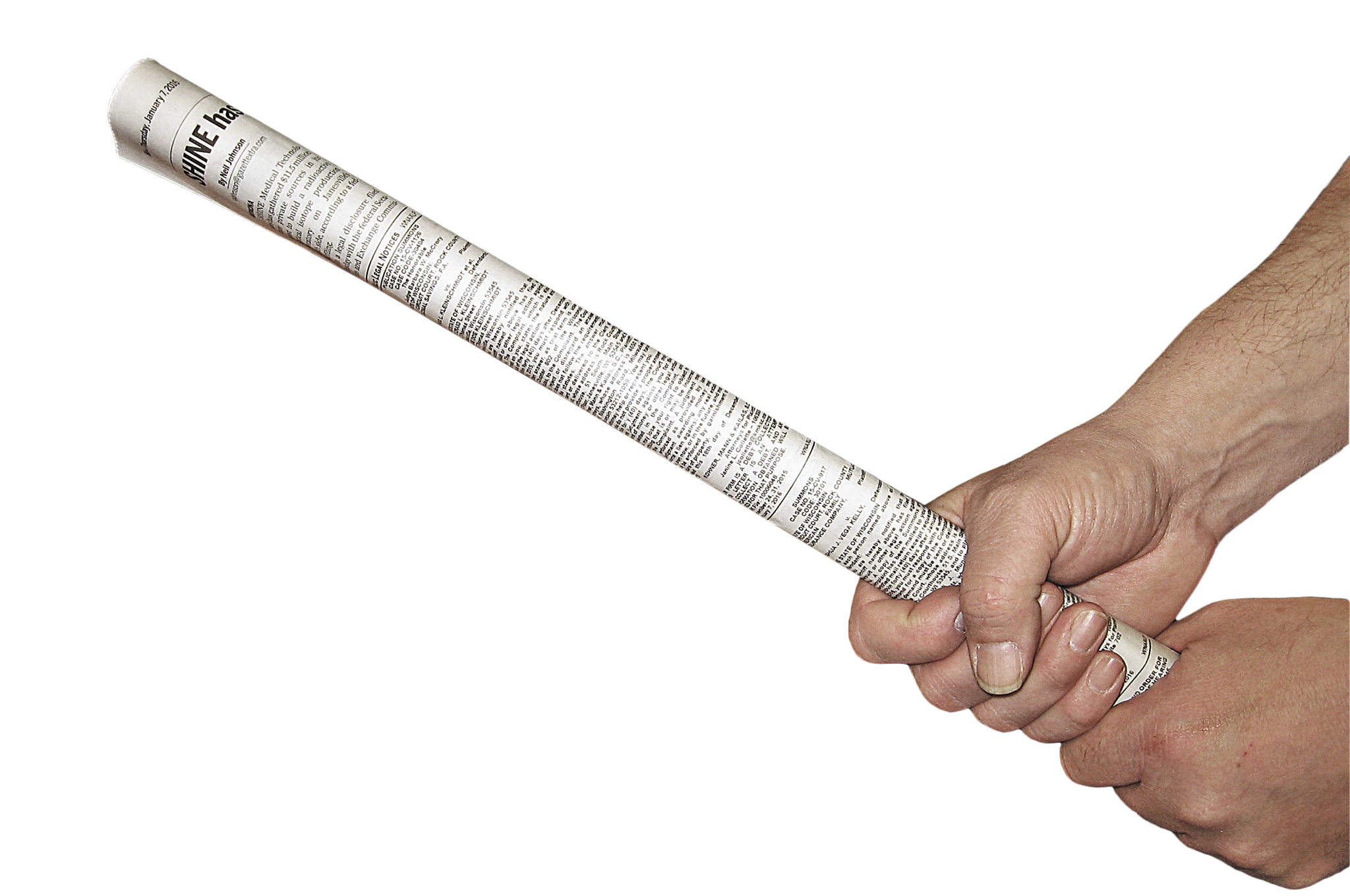
Newspapers for self-defense? What are you going to do, paper cut them to death? OK, newspapers wouldn’t be my first choice for a weapon, nor my second, third, or even fourth. But, as a last resort, it’ll do the job. How?
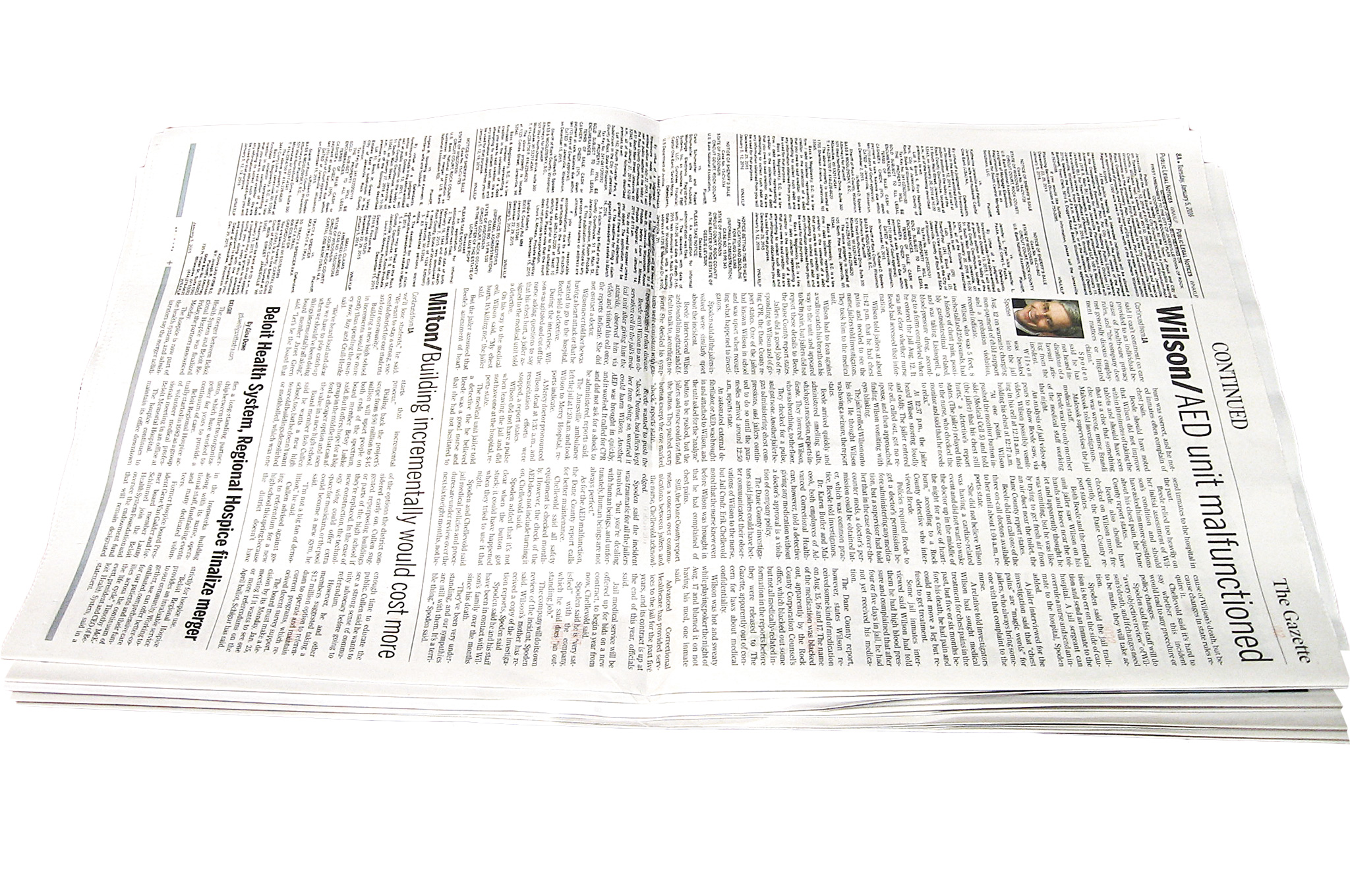
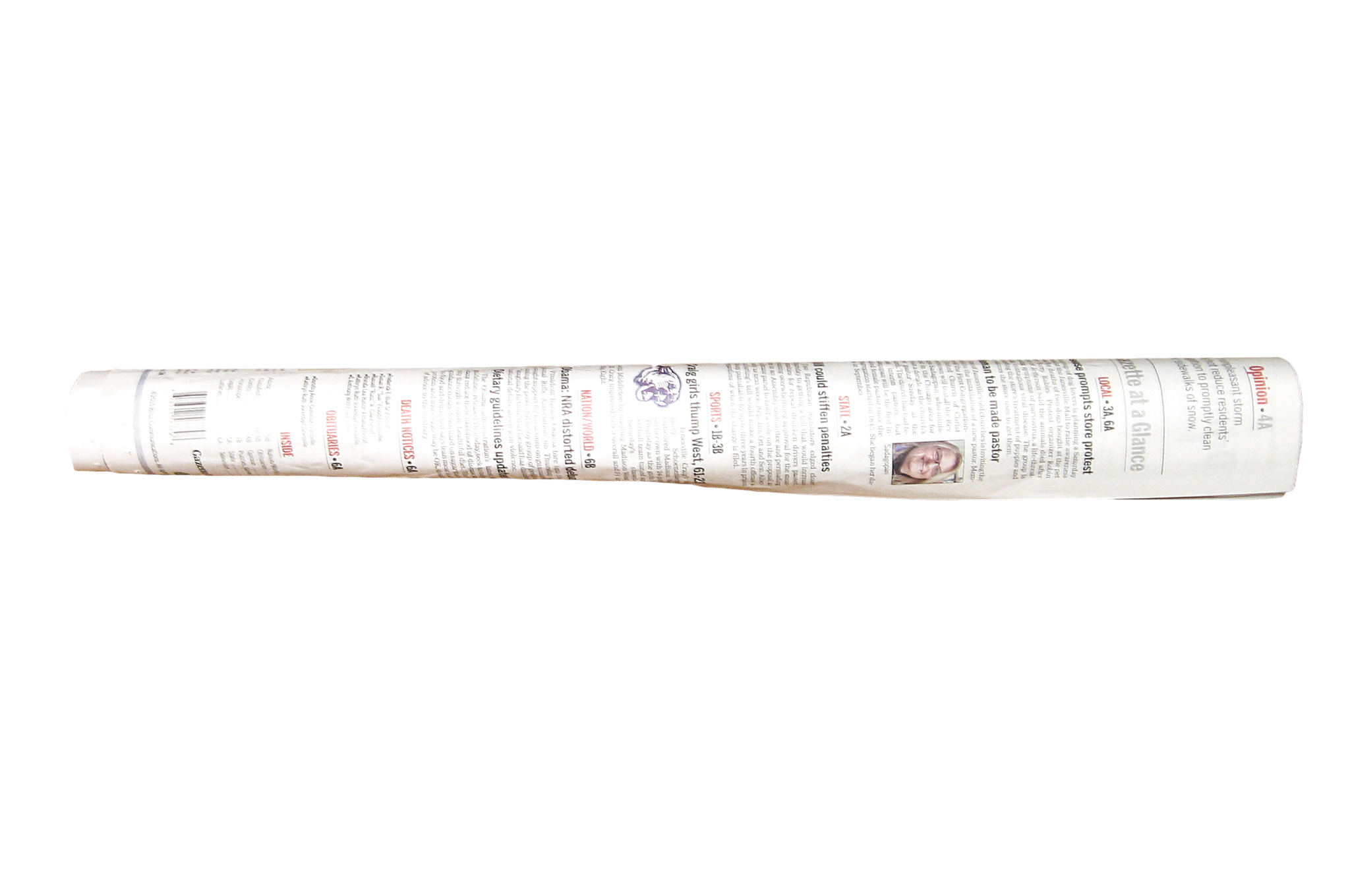
Take about five sheets of newspaper and roll them up as tightly as you can. The resulting baton will be strong enough to be used defensively against certain attacks. Offensively, you could swing it like a small club, but it’s way stronger at the ends. Better to thrust the baton’s tip into a bad guy’s eyes, throat, or groin, or use the butt-end to hammer on vulnerable areas. Either way, your newspaper baton will certainly get an assailant’s attention.
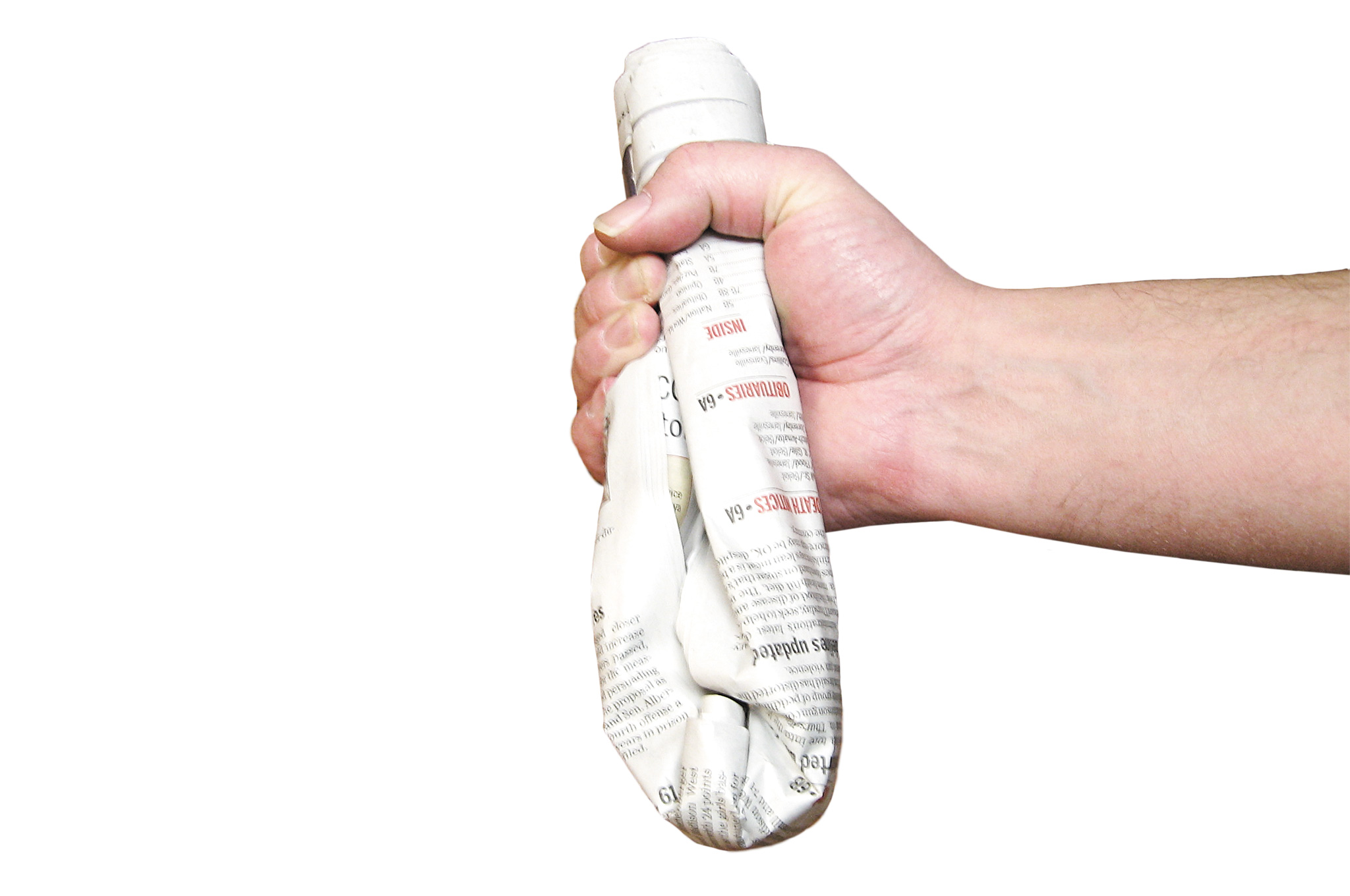
Sort of a variation on this theme is the Millwall brick. Roll the newspaper as before, then fold it in half. That’s it, you’re done. The striking surface is the fold. The more newspaper used, the harder and heavier the brick will turn out. You can make the weapon a little more lethal by adding a few nails to the business end of the brick.
This simple tool is the namesake of London’s Millwall Football Club, whose fans were notorious for hooliganism. In the 1960s and 1970s, they allegedly used Millwall bricks to raise hell because pretty much every other improvised weapon had been outlawed. Where there’s a will there’s a way, right?
As a last resort, a rolled-up newspaper (and its Millwall brick variation) can be a decent improvised weapon when thrust into a bad guy’s vulnerable bits like eyes and throat.
Insulation
You’ve no doubt seen the cliché in the movies of the homeless dude stuffing newspaper into his coat or pants, right? Guess what, it really does work to keep you warm. Newspaper, just like most of the puffy coat fillers you find on the market today, add dead air space between you and the outside chill. Your body heat warms that dead air, which is what keeps you from shivering. You may feel like the Stay Puft Marshmallow Man, but at least you’ll be warm.
Newspaper also works as an insulating material around the home. When you find a cold draft coming in from the side of a window or door, stuff the crack with newspaper. It might not look all that awesome, but it works. Keeping out the cold outside air can be very important if your only source of heat is the fireplace during a power outage.
If frozen pipes are a concern, wrap them with newspaper. You can also run the taps at a light trickle to help keep things from turning to ice.
Boot Dryer
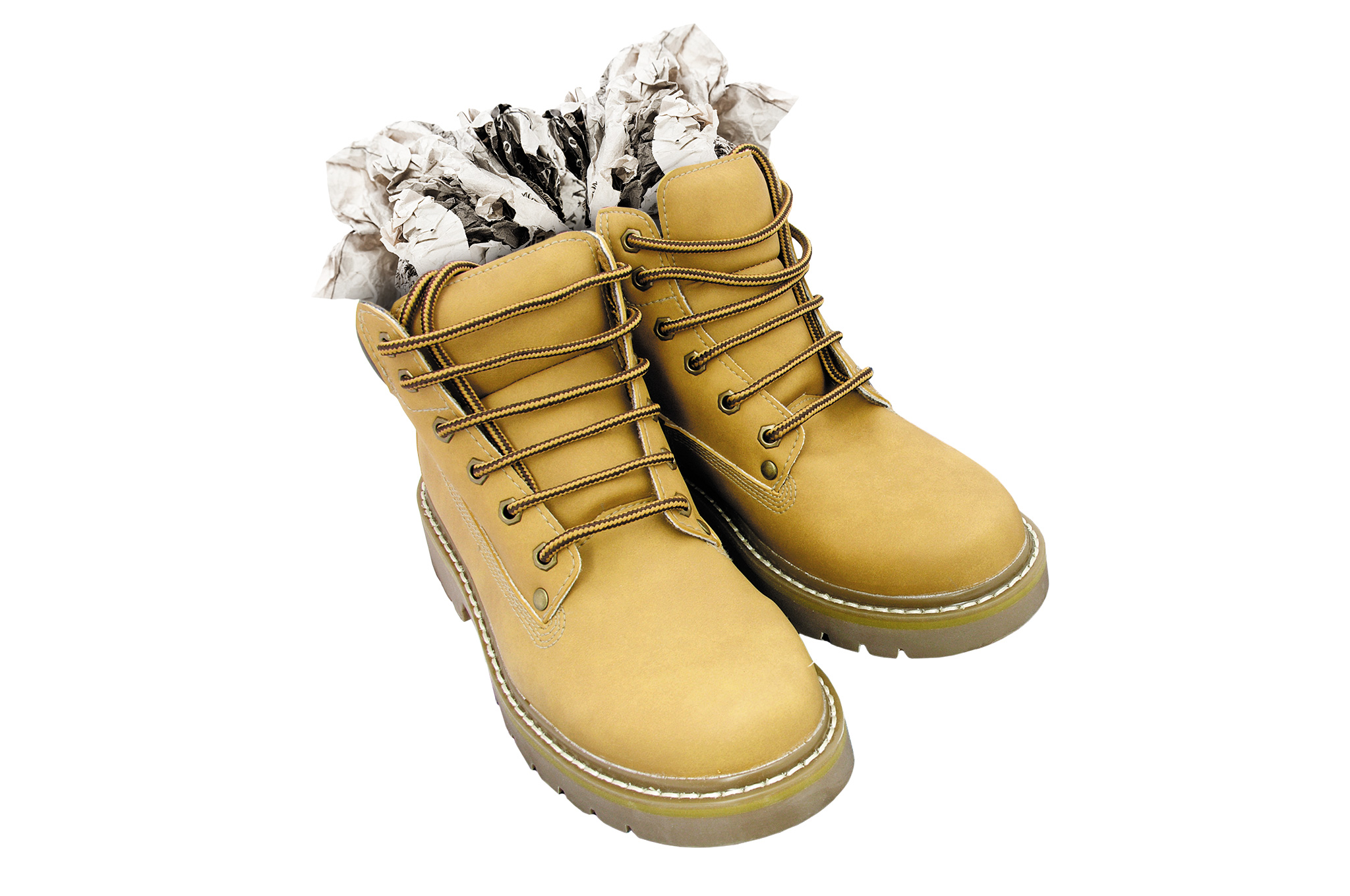
Wet footwear can be a serious issue and could lead to frostbite or worse in bad conditions. You can use newspaper to dry out your boots and shoes. Stuff loose crumples of paper into the boot until you can’t fit any more inside and let it sit overnight. If the boots are really soaked, replace the paper with dry crumples after a couple of hours, then let it go until morning.
Conclusion
Even though they rarely carry good news these days, there is little in life more ubiquitous than newspapers — even in this Digital Age. Newspapers are so common we often overlook it as a useful resource. The true survivalist, though, tries to utilize everything and anything to achieve his or her goals. The survival uses of newspapers don’t end here, as their limit is really just your imagination.
About the Author
Jim Cobb is a recognized authority on disaster preparedness. He has studied, practiced, and taught survival strategies for about 30 years. Today, he resides in the upper Midwest with his beautiful and patient wife and their three adolescent weapons of mass destruction. His books include Prepper’s Home Defense, Countdown to Preparedness, and Prepper’s Long-Term Survival Guide. Jim’s primary home online is www.SurvivalWeekly.com. He is also active on Facebook at www.facebook.com/jimcobbsurvival. Jim offers a consulting service as well as educational opportunities at www.DisasterPrepConsultants.com.