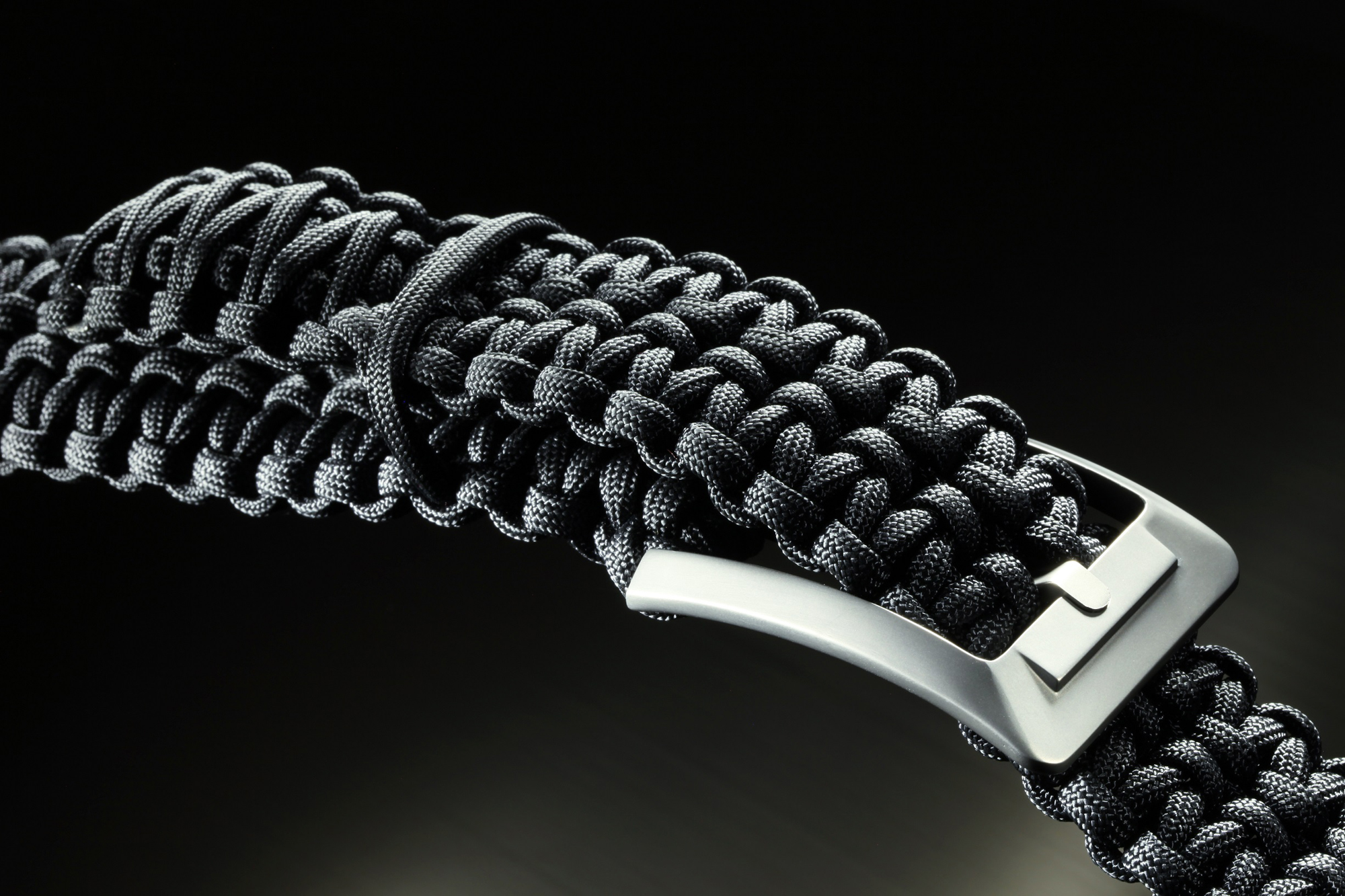
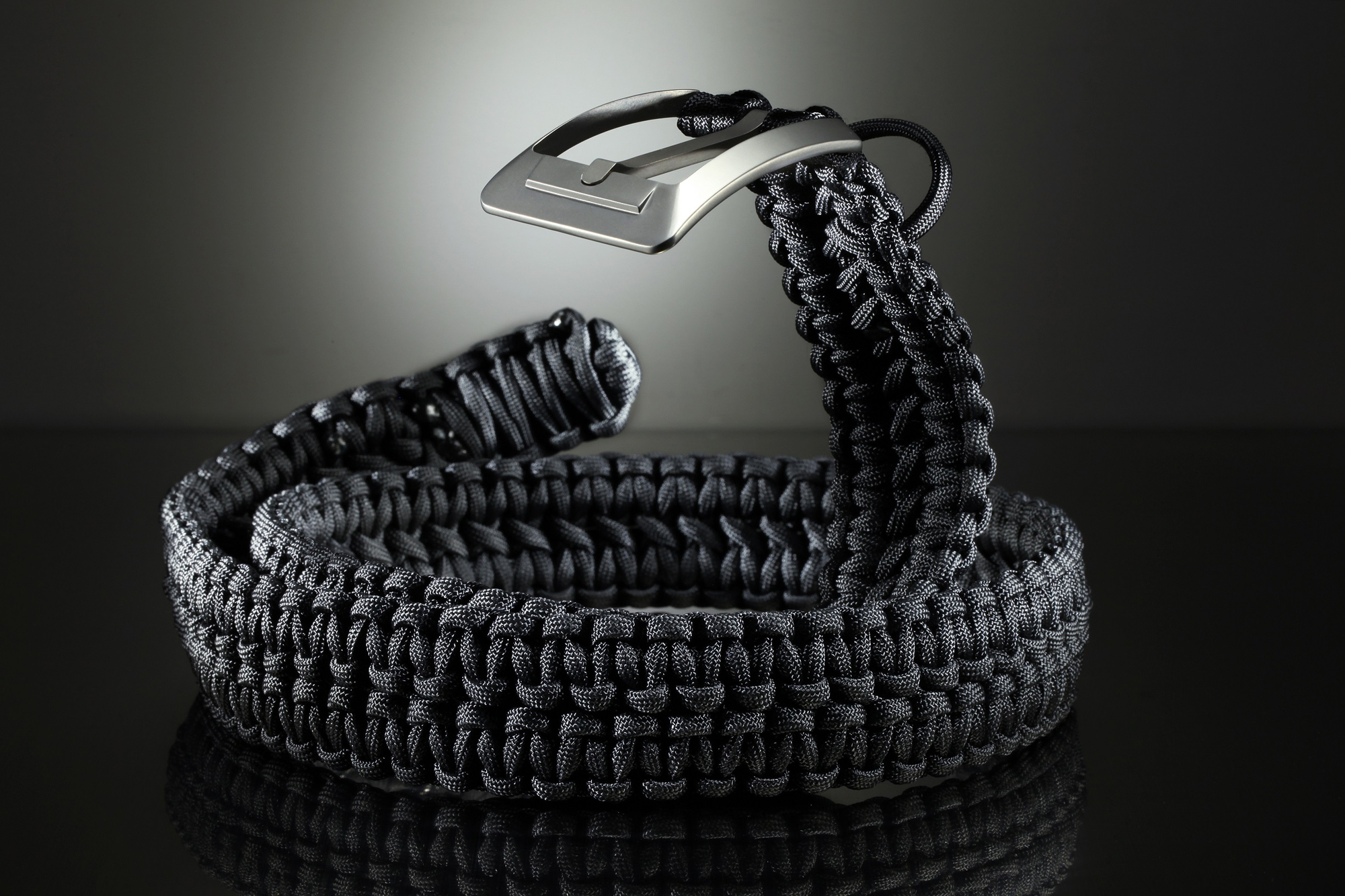
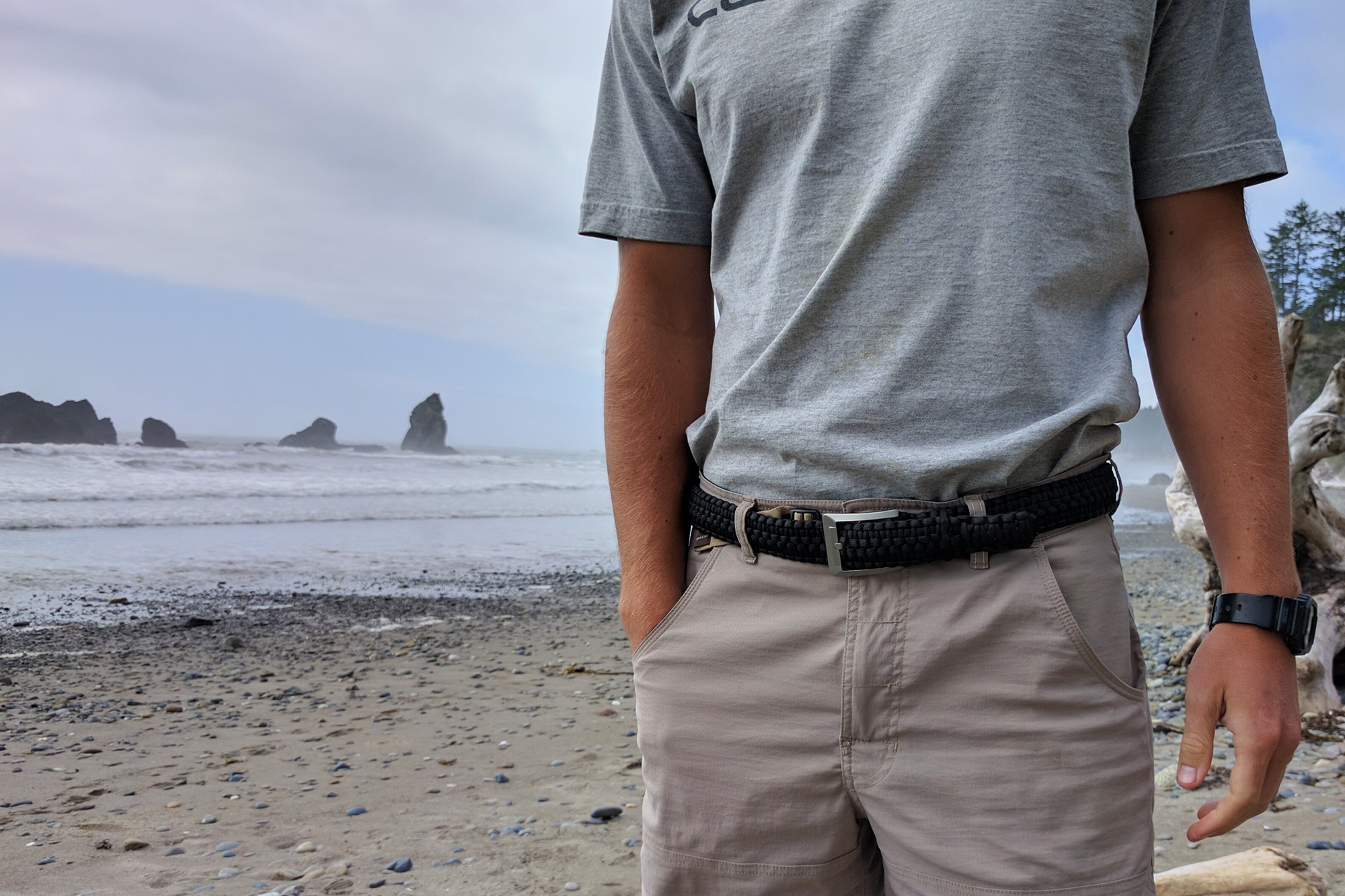
We’ve said many times how a supply of strong cordage can make or break your survival plans. With good quality 550 paracord, you can rig a tent, make a fire bow, set snares, go fishing, repair gear, and much more. There are many creative places to store paracord, including boot laces, a bracelet, and an axe handle wrap. However, none of these allow for storage of very large amounts of paracord. A line of belts developed by Rattlerstrap fulfill this purpose, while also replacing a piece of gear that you may otherwise take for granted.
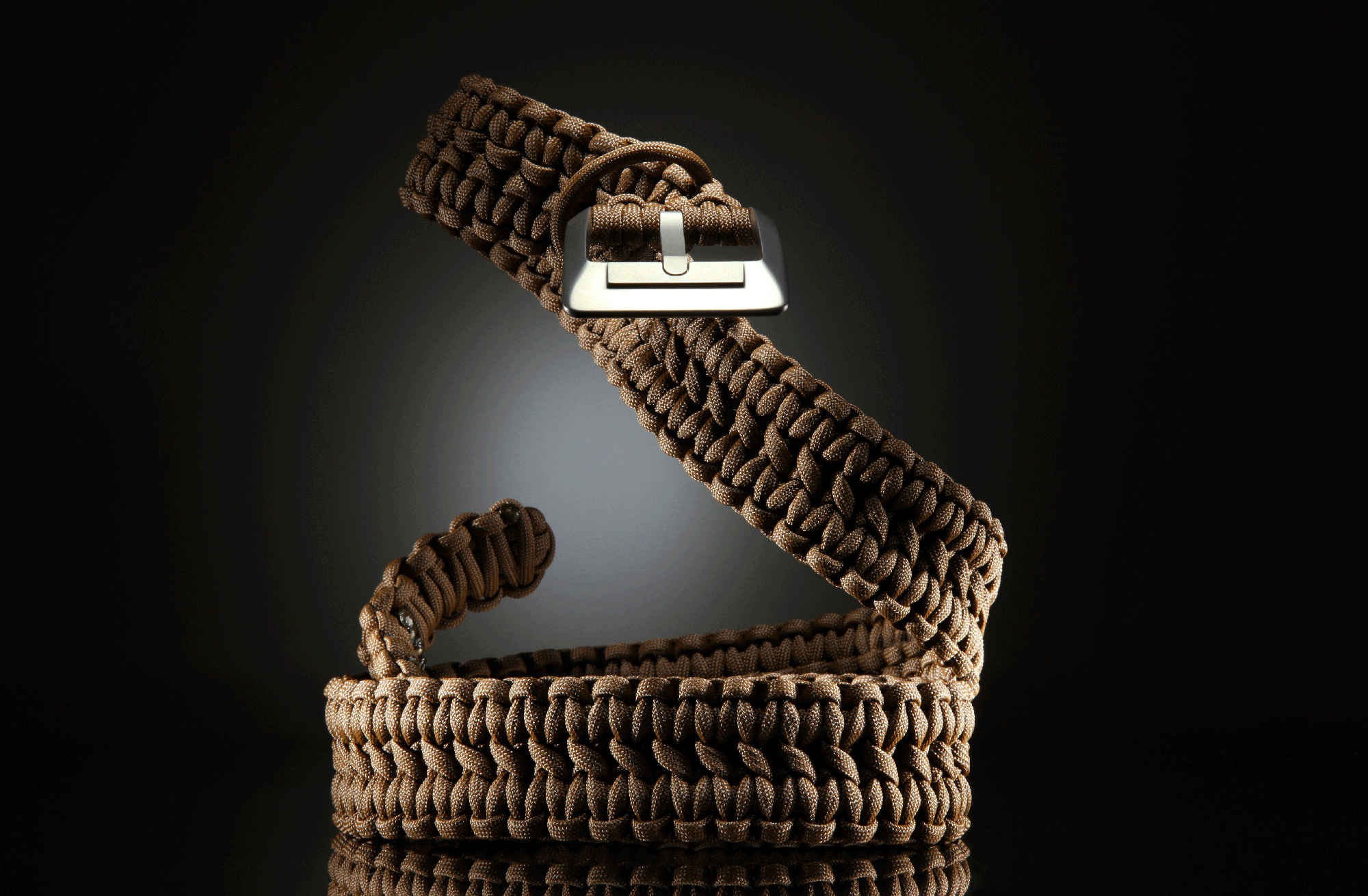
Each Rattlerstrap belt is handmade in the USA from 550 paracord, in your choice of black, brown, or camouflage finish. Depending on the size, it contains approximately 100 feet of paracord, or about 10 times the amount found in an ordinary paracord bracelet. The material naturally resists dirt, harsh weather, stretching, and warping. The buckle on the Titan Series seen here is made from satin-finished titanium, so it won’t break or weigh you down.
These belts are available in a range of sizes from Small (26-32″ waist) to XXXL (50-52″ waist). Rather than using a finite series of holes for the buckle, these belts offer extreme adjustability—just insert the buckle through any part of the woven paracord to lock it in place.
Now, you may be thinking, “That’s all well and good, but if I unravel this paracord, I’ll never be able to weave it back together again.” It’s a valid concern, since paracord weaving takes a lot of practice and patience, and it might make us think twice about unraveling this belt. Fortunately, Rattlerstrap has you covered there. The company offers a Rattlerstrap Guarantee that states: “If you need to use the paracord in an emergency situation, send us the buckle and we’ll remake your belt.”
The Rattlerstrap Titan Series retails for $94. That’s not an insignificant amount of cash, but the company says it’s justified by the functionality: “Our belts have made tourniquets, slings, and even towed a quad out of the Canadian wilderness. … If function were fashion, we would be Armani.”
For more information on the Rattlerstrap paracord belt, visit Rattlerstrap.com.
If you’ve ever used a computer, you’re probably aware of the term USB. The acronym stands for Universal Serial Bus, and for good reason—it’s found just about everywhere. This standard connector is present on virtually every desktop and laptop computer produced in the last two decades, as well as many other electronics, including TVs, car stereos, printers, and retail point-of-sale systems. Smaller versions of the port are found on portable electronic devices, such as smartphones, tablets, and digital cameras.
Ordinary flash drives or thumb drives are found almost everywhere, and don’t appear suspicious.
Looking at this situation from a security standpoint, it’s easy to see the vulnerability here. When almost every device uses the same universal connector, it’s easy for malicious individuals to exploit that crack in the armor to damage or destroy USB-compatible devices. A tool known as the USB killer has gained recognition for achieving this goal in seconds, and it looks just like any other ordinary USB thumb drive.
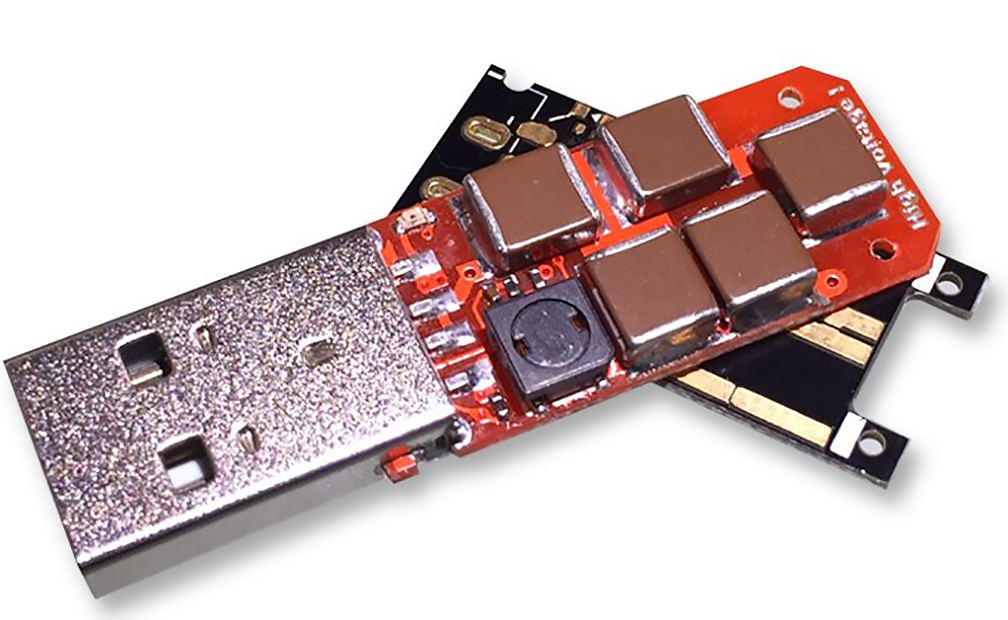
The USB Killer looks much like a regular USB thumb drive.
Disclaimer: This article is presented for educational and informative purposes only. USB kill sticks have many potentially harmful and illegal uses, which we obviously do not condone. Use this knowledge to protect yourself and your electronic devices from potential vulnerabilities.
This product was developed in 2015 by a Hong-Kong-based security research team, and is sold through USBkill.com for a mere $50. It looks like an ordinary USB flash drive or thumb drive, encased in a white plastic shell with only a vaguely-skull-shaped logo revealing its true purpose. Inside the plastic case, there’s a small circuit board that contains a network of capacitors, which are charged and discharged many times per second via the host device’s USB power. This delivers a series of instant 200-volt death blows to any connected device.
Here’s a video of the USB Killer in action. First, the presenter connects the device through a USB Killer Tester, to prove it works without damaging the computer. Then, once the tester is removed, the kill stick immediately shorts out the laptop’s motherboard, permanently disabling it:
The implications of such a device are clear: any exposed USB port is a potential attack vector. With an inexpensive and pocket-sized device, a malicious individual can destroy thousands of dollars of computer hardware in the blink of an eye.
The developers of this device recognize the problem, and passed out samples to computer hardware companies, so they could add protection against such an attack. However, according to the USB Killer team’s blog, these warnings have mostly been ignored:
“To this day, according to our testing, the only company that releases hardware protected against a USB power-surge attack is Apple, on their Laptop and Desktop ranges. This means – despite adequate warning, and time to respond – the majority of consumer-level hardware manufacturers choose not to protect their customer’s devices. We are disheartend [sic] by this lack of respect for customers.
As is standard in the InfoSec industry, we are releasing the USB Kill publically [sic], after one year of disclosure. We hope the attention will force manufacturers to respect a customer’s investment in their product, and work to resolve the issue.”
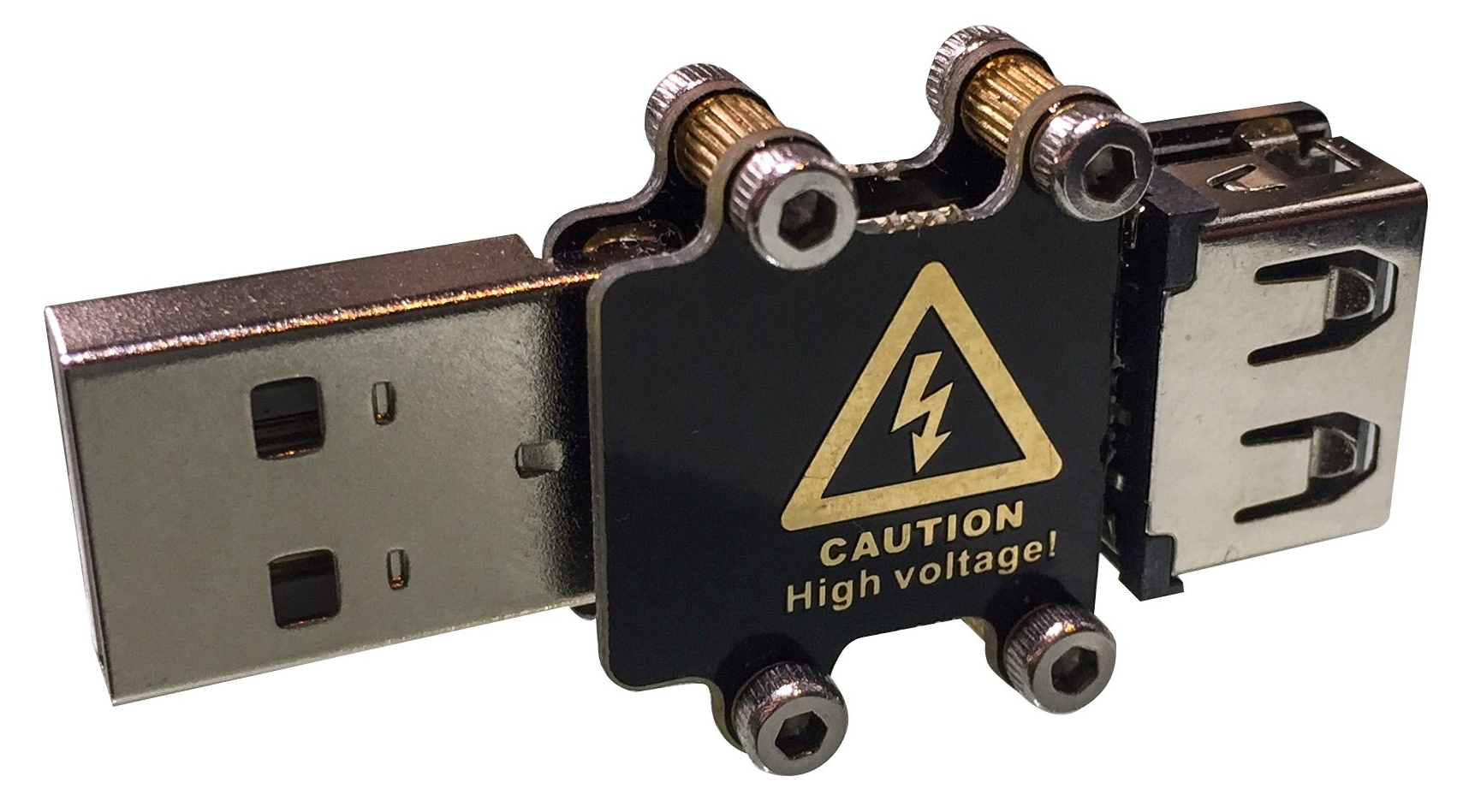
The USB Killer Tester is available for $14, and dissipates the Killer’s 200-volt charge.
For ordinary individuals, the USB Killer team makes the following recommendations:
Physically cap USB ports, similar to covering webcams
As others have mentioned: the vulnerability, like the tool, is a blunt instrument. Like any blunt instrument, it can be used constructively or destructively. Our stand-point: we strictly forbid abusive use of the tool.”
For more information on the USB Killer and how it works, visit USBkill.com.
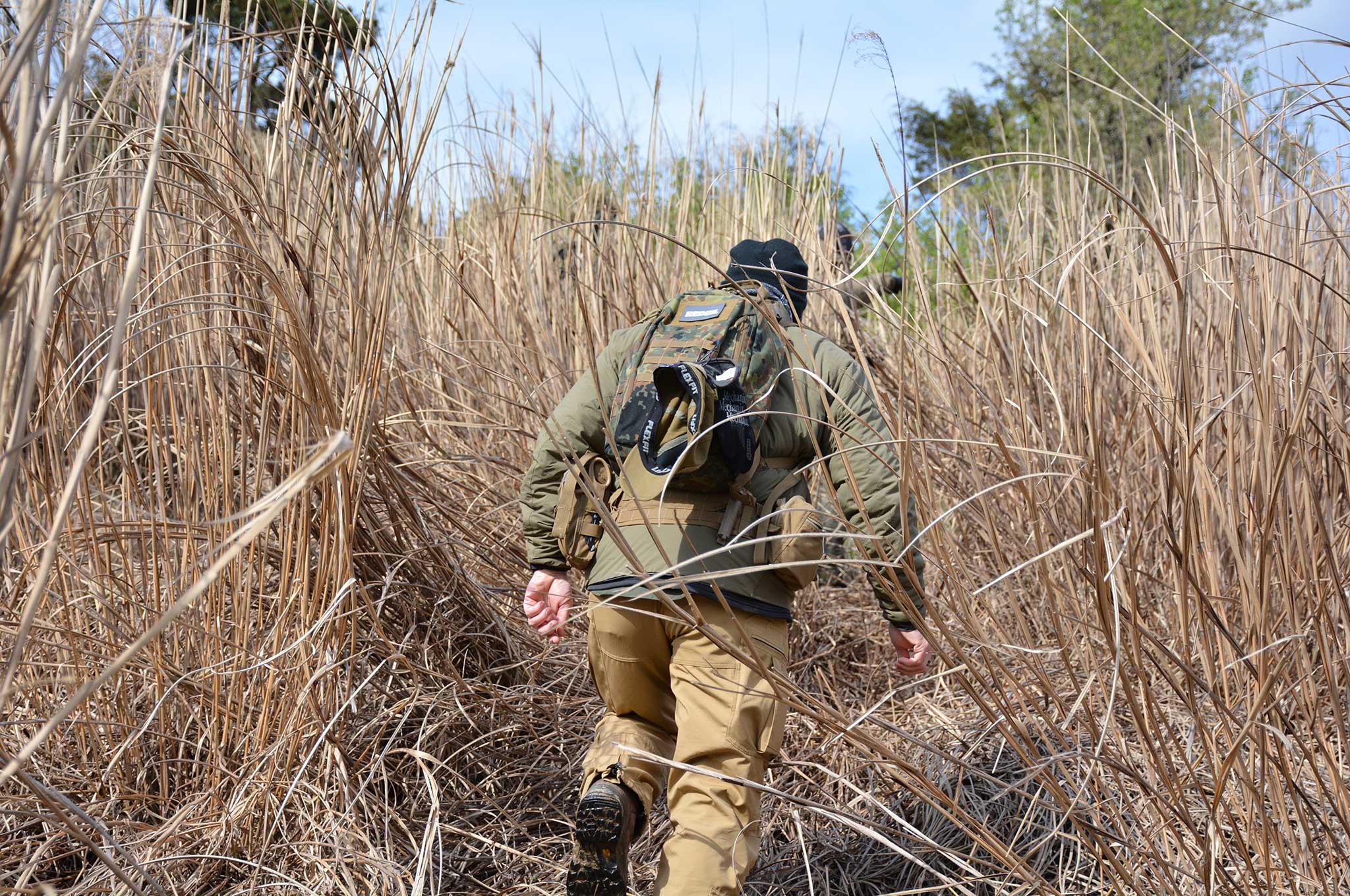
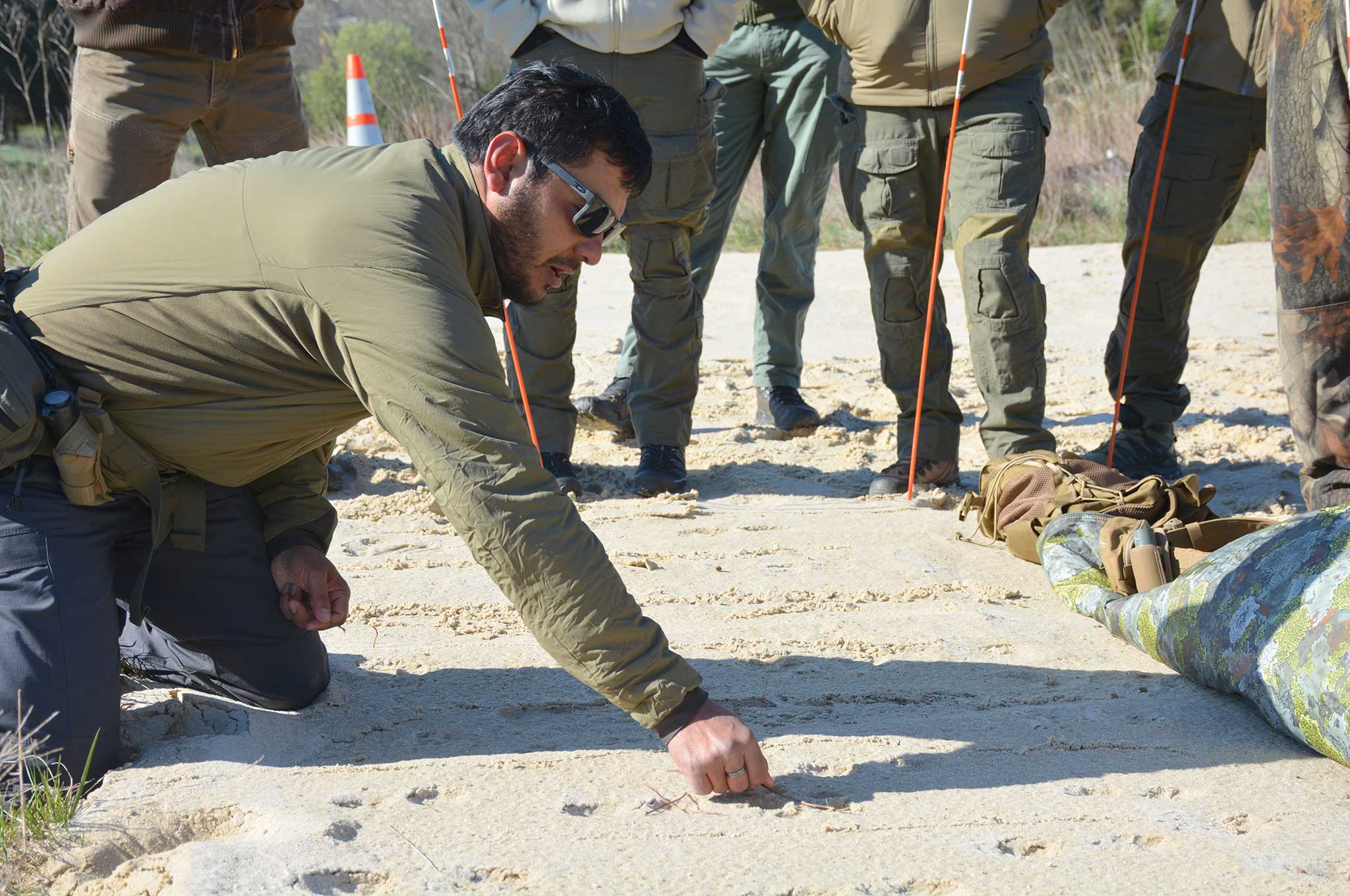
In a 20-foot-wide sandpit at an old landfill site in central Maryland, I joined a group of law enforcement professionals on a cold, windy morning to study the footprints that were just made by a second team. We saw one set of tracks coming into the pit at a walking pace. They stopped at a disturbed area then moved off in a different direction — with a greater distance between steps.
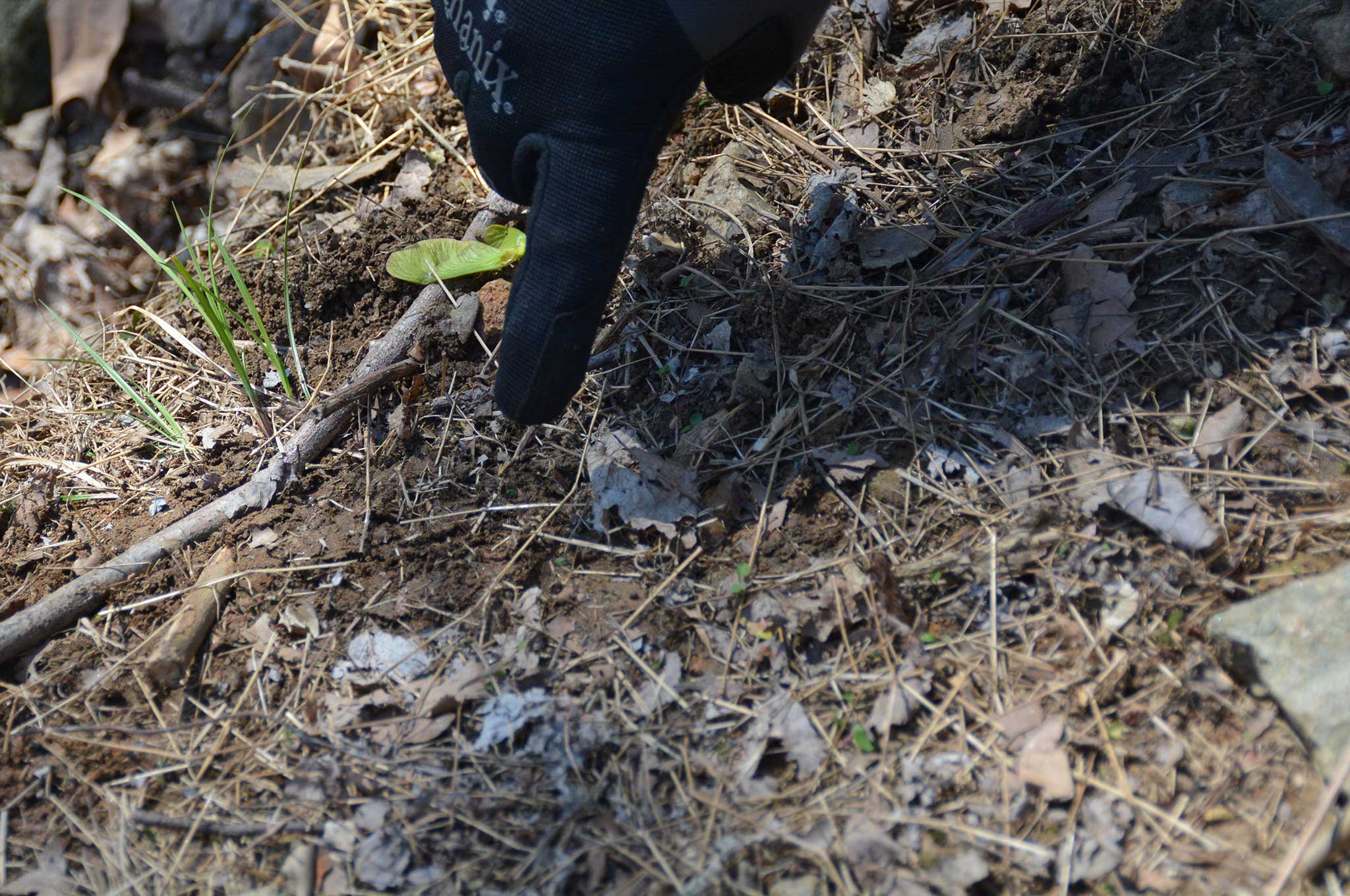
As we examined the disturbed area, we found partial prints with a different lug pattern. A second party had been involved in this story. Now we knew there were two players. As we peered harder at the trails, we found marks that looked like knees and elbows, as well as enough marks to show that someone had been lying at the ground at one point.
The head instructor of the tracking course stepped forward and asked the team leader what had happened here. The team leader surmised that one subject came into the scene and met another person, whereupon the subject shot the second man and ran away. The second man fell to the ground and then crawled away. Osuna praised the team, confirming they were correct. The first team had acted out a shooting scenario, without using any fake blood or dropping brass on the ground — and the second team read these actions perfectly from just a few footprints, scuffs, and compressions on the ground.
Thus began our first day of human tracking, and it only got better from there.
Today’s trackers are experts at finding anyone, be it lost hikers, fugitives, or enemy combatants. They’re so good that they can even tell if a subject is right- or left-handed just by looking at footprints! But how do you learn this kind of tracking, and who’s teaching it in the modern world? One of the best in the industry is Freddy Osuna from Greenside Training. A former U.S. Marine and a graduate of the USMC’s Scout Sniper School, he has more than 20 years of tracking experience.
Tracking doesn’t stop when the trees end and the pavement begins. This skill is about awareness, which should be applied in concrete jungles, too.
RECOIL OFFGRID received an exclusive invitation to attend a private course taught to local law enforcement and state officials in Rockville, Maryland. And in these pages you’ll find the most important concepts we learned from one of the nation’s top tracking experts, presented in ways that any survivalist or preparedness-minded person can apply to daily life.
At first blush, you might just think that tracking is the art of seeing footprints and paw prints, and maybe other signs like scat or dropped items. But tracking isn’t just about seeing. Anyone who’s not blind can see things. Tracking is about knowing what you’re seeing and what happened here. And this is how you can get started.
Tracking doesn’t stop when the trees end and the pavement begins. This skill is about awareness, which should be applied in concrete jungles, too.
Lesson 1: Tracking Is Awareness
The concept: The concept: Throughout the course, Osuna and his co-instructor David Reeder (the web editor for our sister publication, RECOIL) shared and extoled the values of awareness, as both a tool and a way of life. Through stories and teaching examples, they explained that tracking and awareness are many things to many people, but ultimately they’re a way to be more engaged in our lives and alert to the world around us.
The application: The ways you can use tracking (and the greater sense of awareness that it fosters) is almost limitless — and there are lessons you can apply from this in your own life every day. Being more cognizant of your surroundings is one of the primary ways you can counter predation in the modern world. This alert status makes you both safer and more lethal with the same attention to your environment. It makes your offensive and defensive capabilities more effective, and turns you from a sheep into a sheepdog. The phrase “weaponize your senses” was said more than once during this training course, and, in fact, Osuna teaches a class by that very title.
Lesson 2: Go With the (Easy) Flow
The concept: Most humans and animals share a trait that is very helpful to the tracker — they follow the path of least resistance. While it can be hard to get into an animal’s head to anticipate which way they’ll go next, it’s much easier to get inside the head of our fellow humans and look for easy paths to travel.
Tracking is a language unto itself, so don’t expect to become fluent overnight.
The application: If you want to figure out where the tracks are going to be, imagine that you’re the one making them. Are you part of a search party? Those who are lost will usually go downhill and will follow waterways, because both are easier to negotiate (especially when you’re scared, hungry, and dehydrated). They’ll usually only go uphill to signal or to look for a vantage point to assist in navigation. On the flip side, someone who is trying to sneak around will usually stick to cover, but they’ll still seek easy paths through the cover. Look for natural gaps, “gates” and “roads” in the landscape, and check them for tracks.
Lesson 3: Study the Soles
The concept: Sure, there are plenty of crisp edges in animal tracking, especially when dealing with hooved animals. But even hoof prints look organic and natural when compared to all of the crazy geometric designs used by today’s boot lug designers.
Sure, any rookie can distinguish shoeprints from animal prints … but which animals? Mistaking paw prints is part of the learning curve that could eventually help you find prey and avoid predators in the future.
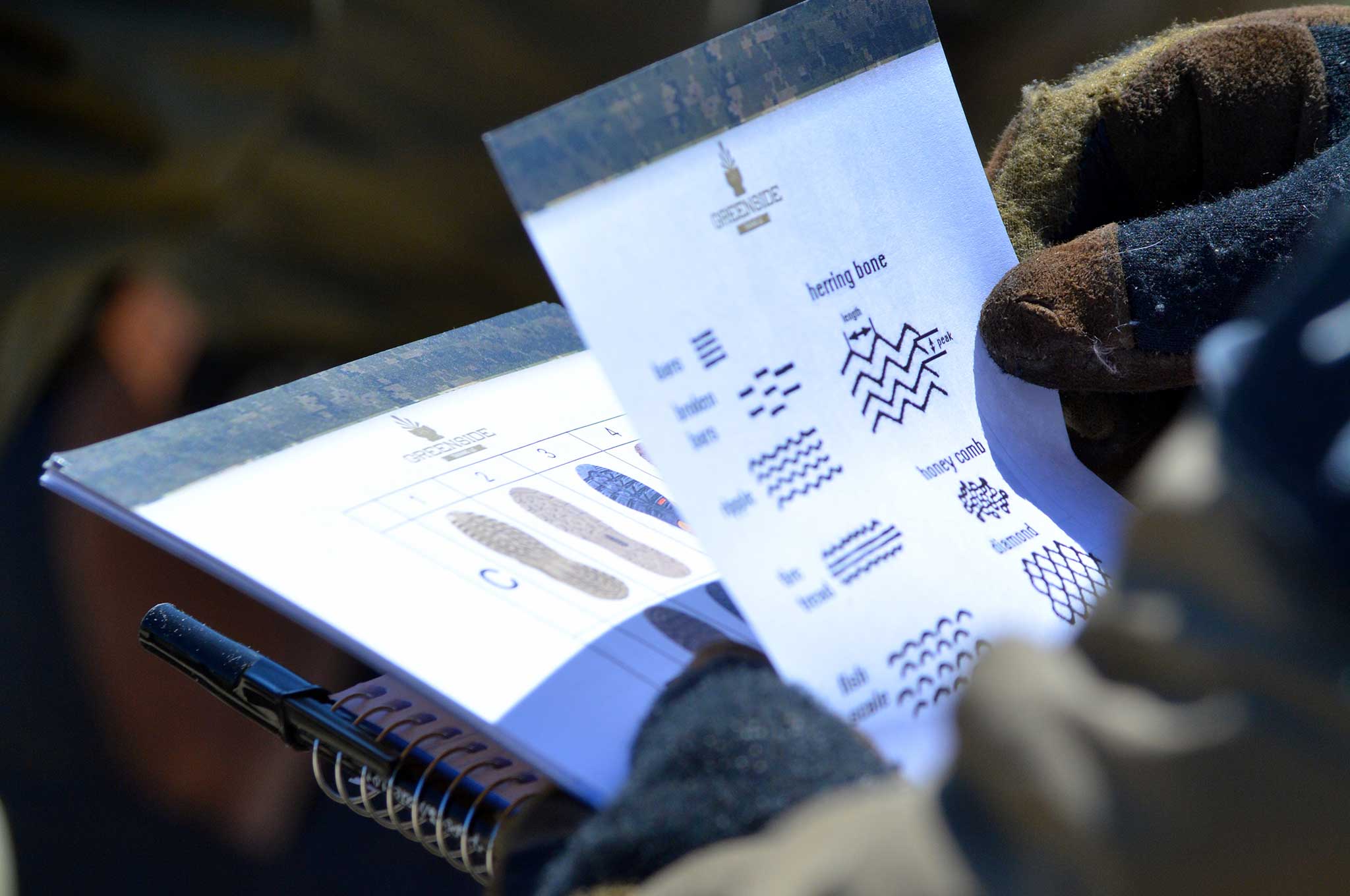
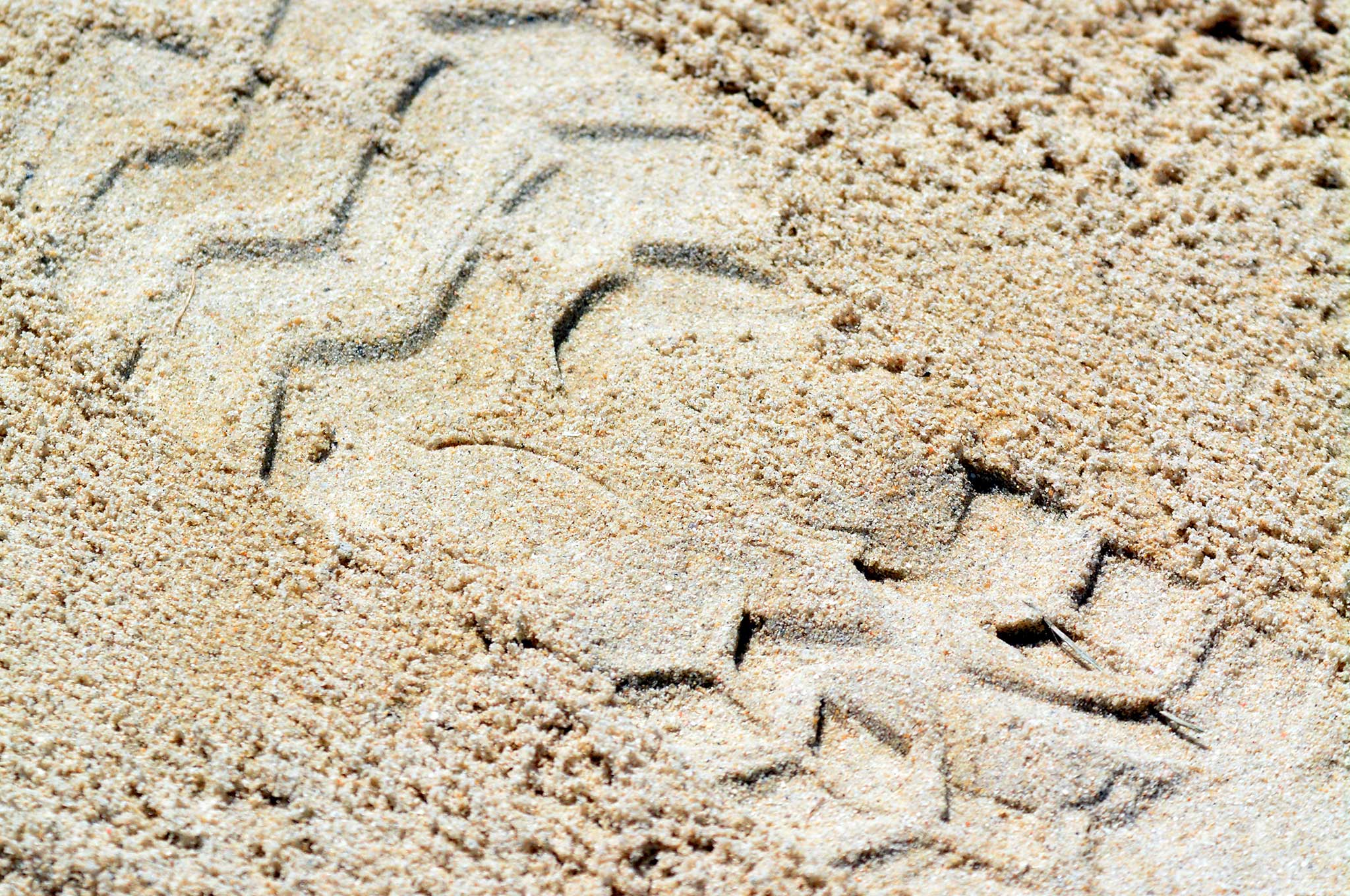
The application: Not only are you looking for a disturbance the size and shape of a person’s foot, you’re also looking for the boot lugs within that track. You can do a simple tracking exercise at home. Put on some boots, go to your backyard, and step in dirt or snow (if any has fallen). Now switch to dress shoes and repeat. Then again with sneakers. After doing this a few times, take a look at the soles of your footwear and then the prints they made. Look at the variety of tread patterns. Can you distinguish them? This is just a sampling of the diversity you’ll see in human tracking. By paying attention to different lug patterns in the field or in your neighborhood, you can start doing head counts on groups of people. For a more advanced exercise, see if you can follow a target subject after they’ve separated from the group.
Lesson 4: Anchor the Last Known Track
The concept: When human tracking, there are many different reasons you could lose a subject — and it’s inevitable. This is why it’s critical to keep a segment of your attention on the last known track.
When tracking, it’s easy to forget to look up. The focus should always be on what you’re tracking, lest you be caught unaware of whom or what is ahead and behind you.
The application: The last confirmed track you found — before you lost the trail — will act like an anchor. Even if the terrain changes and you’re not seeing tracks, that doesn’t mean that the subject floated over the area. It just means that the steps that he or she took didn’t make much disturbance and are hard to see. But if you keep sight of the last clear print, and consider the direction of travel, you should be able to get back on the track at some point. And if not, you’ll need to fall back onto your “lost spoor” procedure, which is a calculated approach to finding lost tracks.
Lesson 5: Stay Aware of the “Thing” at the End of the Trail
The concept: The tracks themselves are almost hypnotic, lulling us into a trance in which we can momentarily forget about the thing that made those tracks. These footprints are merely a shadow of the real thing, and the tracks themselves are harmless, but the quarry may not be.
The application: If you’re using your tracking skills to harvest an animal for food or avoid a predator, there’s a point in your pursuit where “tracking” ends and the hunt begins. But what if you’re following a trespasser on your property, or an armed felon during a manhunt? Tracking needs to be subordinate to your awareness of the surroundings and nothing should take your focus off your personal safety or the safety of your team.
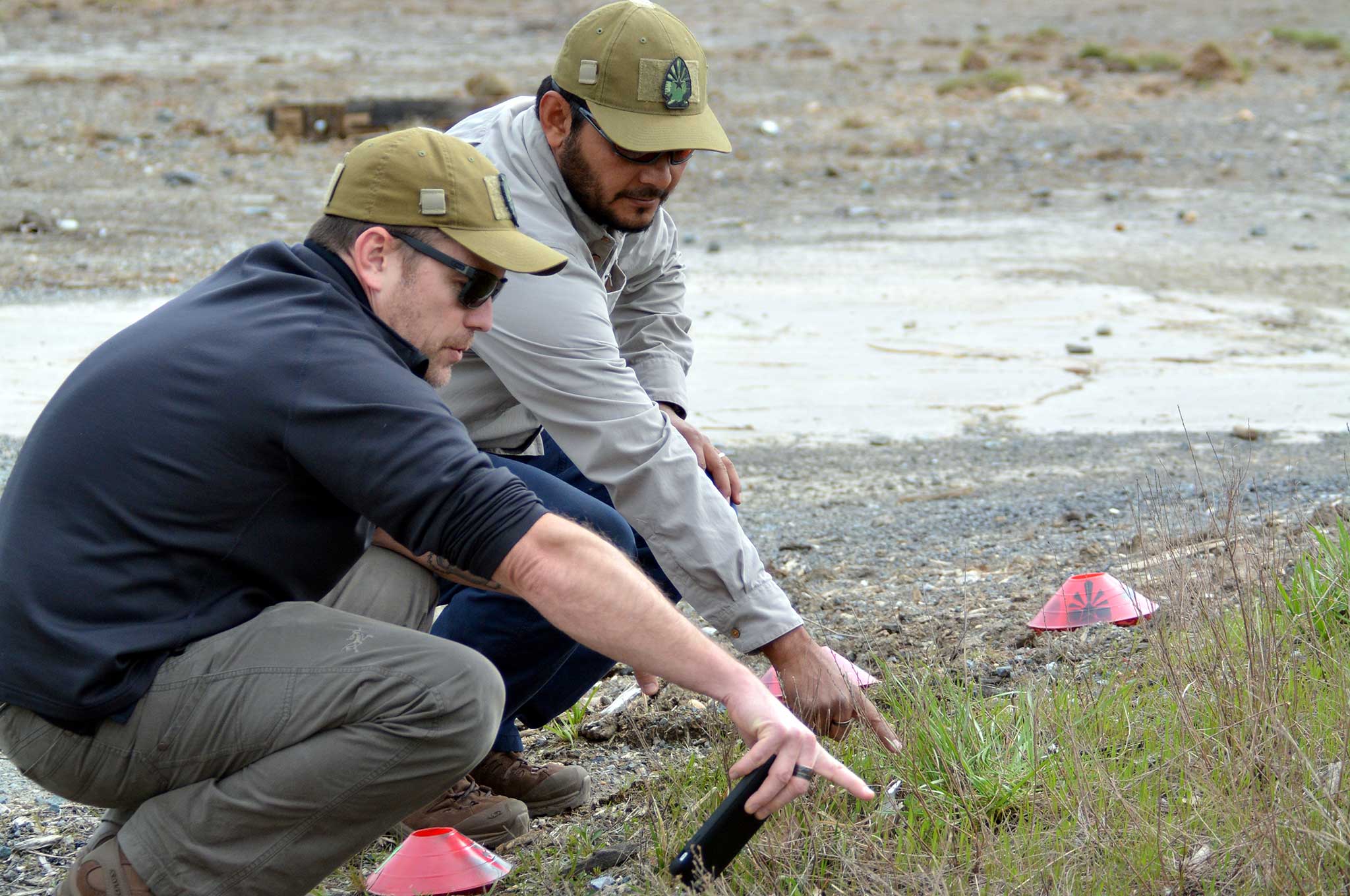
Freddy Osuna and David Reeder, left, point out some signs left behind by a subject during a tracking class for law enforcement in Maryland.
Where it All Began
During a quiet moment after the day’s training had wrapped, we asked Osuna why he tracks and why he chose to teach tracking to the military, law enforcement, and civilian world. Here’s what he had to say: “I teach tracking because I want to give others the ability to experience the world the way I do. Through a natural curiosity I have always had, I have developed identifiable, explainable, and reproducible methods, which can improve how my students process sensory input and overall perception.
“This will greatly enhance their everyday personal and professional performance as human beings. Have you ever walked through nature and felt a pull which beckons you to go further — ‘Just a little further,’ it whispers, ‘just over the next hill.’ Finally your conscience wins, and you pull away from this senseless endeavor heading back to camp. What were you looking for? What was it which drove you to keep going only to meet the all-too-familiar dissatisfaction you knew was coming?
“I believe there is a void in our lives that creates this phenomenon. This void is sensory atrophy, and it is happening to humans at a faster rate than ever in history. The void is the proverbial hole in our soul, which this strange walkabout is attempting to fill. Tracking and sensory awareness training I have found is what fills this hole. It gives me a sense of completeness with my world I never thought possible. It serves me with safety and peace in the woods and equally as much in the urban jungle. Tracking and awareness is power!”
Conclusion
So what is human tracking really about? The “low-hanging fruit” answer is that it involves the interpretation of signs that a person or group left behind, and possibly following these signs to find the individuals. But you’ve probably read enough about the subject now to see that man tracking is far more than just following footprints. In this Greenside Training field course, I learned many creative metaphors for man tracking. They told us that tracking is a “vehicle,” “gateway,” and a “road” that takes us to greater awareness in the world.
I agree with these concepts completely, but the one that really struck a chord with me was when Osuna called tracking a “language.” I couldn’t agree more. In fact, tracking may just be the first language, one written in the dirt, on the rocks, and in the vegetation — just waiting for us to learn to read its secret script and discover the hidden information that it contains.
Learning to track is part of your life’s story, and the tracks you leave behind you will continue your trail — until you make your final track in this world.
Beginner’s Mistakes
Nobody’s perfect, and when your subject isn’t standing there confirming “Oh, yeah. That’s my track, here’s where I stepped,” it’s only natural to wonder if you’re looking at a genuine track or you’re simply seeing what you want to see. Keep these common mistakes in mind as you track, and they’ll help you stay on the right “path.”
Overshooting the Last Known Track: You’re on a trail, you’re making great time, and you should be catching up to your guy, but then the tracks disappear. Going too fast and too far past the last known track can cause you to get off the trail completely, or worse, have you trampling all over valuable clues.
Forcing the Track: It’s easy to be guilty of this one. When you’re looking so hard for someone’s trail, it’s very common to start picking up signs from animal trails, especially when clear animal tracks aren’t present to help you differentiate. Don’t force the big game trail to start looking like a human’s trail. You need a mixture of humility and confidence to perceive what’s really there, and not make what’s there fit your imagination.
Don’t Just Look at the Ground: In plenty of tracking classes, most of the group has a stiff neck by the end of day one. This is the result of a major rookie mistake, which is walking around with all your attention focused on the ground. When this is the case in human tracking, it’s very likely that you’ll miss aerial signs, and it’s even possible that you might stumble onto your quarry (and they might not be happy to see you). A good tracker maintains situational awareness and frequently looks up from the trail.
Broken branches, bent vegetation, stones kicked from their beds, and snapped spiderwebs are all examples of aerial spoor. While they’re hardly as definitive as a set of shoeprints, these subtle signs shouldn’t be overlooked either. They can help you assess the age of the trail and help you find other spoor — like the footprints you’ve been after.
Meet the Tracker
Freddy Osuna is the founder and lead instructor of Greenside Training and a combat tracking expert. Author of Index Tracking – Essential Guide to Trailing Man and Beast, he also contributes to RECOIL, RECOIL OFFGRID, Breach Bang Clear, and various other publications. A former U.S. Marine, Osuna uses knowledge based on real-world deployments and formal combat tracking instructor experience with U.S. and allied militaries, as well as with federal, state, and municipal law enforcement entities. He harnesses his Native American and Marine Corps culture to deliver holistic, powerful, and scientific-based lessons steeped in North American tracker lineage. www.greensidetraining.com
A Quick Lesson in Counter-Tracking
We’ve all seen the movies and TV shows in which someone walks backward or uses a branch to “brush” away their trail. But here’s the part where reality sinks in. All of this goofy Hollywood nonsense is just that, nonsense. When the average person tries to walk backward in their own tracks, or brush them flat with a stick, they make a lot more disturbance than their original trail made and are even easier to follow (plus they lost valuable time). Here’s how it really should be done, based after the British counter-tracking method.
Freddy Osuna and David Reeder, left, point out some signs left behind by a subject during a tracking class for law enforcement in Maryland.
Don’t step on something you can step over
Don’t cut vegetation that you can break
Don’t break anything that you can just bend
Don’t bend what you can simply move
Don’t move what you can walk through without touching
Don’t step on soft ground when something hard is an option
Don’t walk through water; it actually makes more of a disturbance
When studying the firearm and blade designs of today, it’s hard to imagine creating an effective weapon without the use of any metal. Sure, you could snap the branch off a tree and use it as an improvised club, or throw rocks to defend yourself, but these methods seem hopelessly primitive when compared to even the most basic of edged weapons.
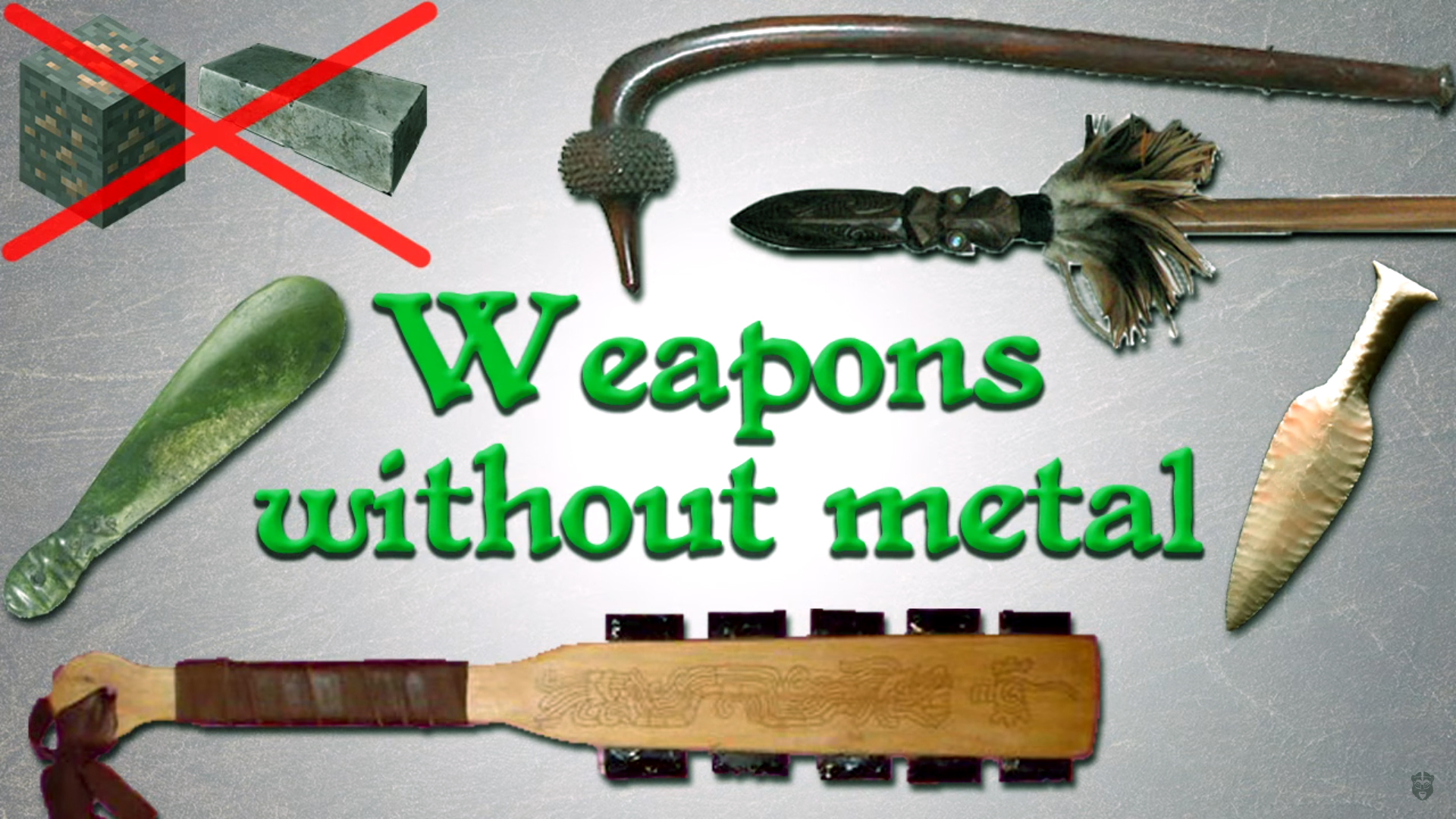
Looking back at history, however, so-called “primitive” weapons progressed far beyond sticks and stones. Thanks to centuries of development by neolithic cultures around the world, we have evidence of some extremely formidable weapons without metal. Civilizations such as the Maori, Samoans, Aztecs, and Incans crafted powerful weapons of war long before the spread of metallurgy. Through the use of jade, flint, obsidian, hardwood, and bone, these cultures developed many weapons that were incredibly effective in battle.
This video from YouTuber and weapon historian Skallagrim shows a few of these traditional non-metallic weapons:
Although the Samoan Culacula may look like it belongs in a pizza oven (or in a kayak), it was a force to be reckoned with in the hands of a skilled user. Even today, there are many uses for primitive weapons without metal. If your gun runs out of ammunition or you lose your knife, you should know how to construct an improvised weapon. Studying the weapon designs of indigenous cultures can give you an advantage if that day ever comes.
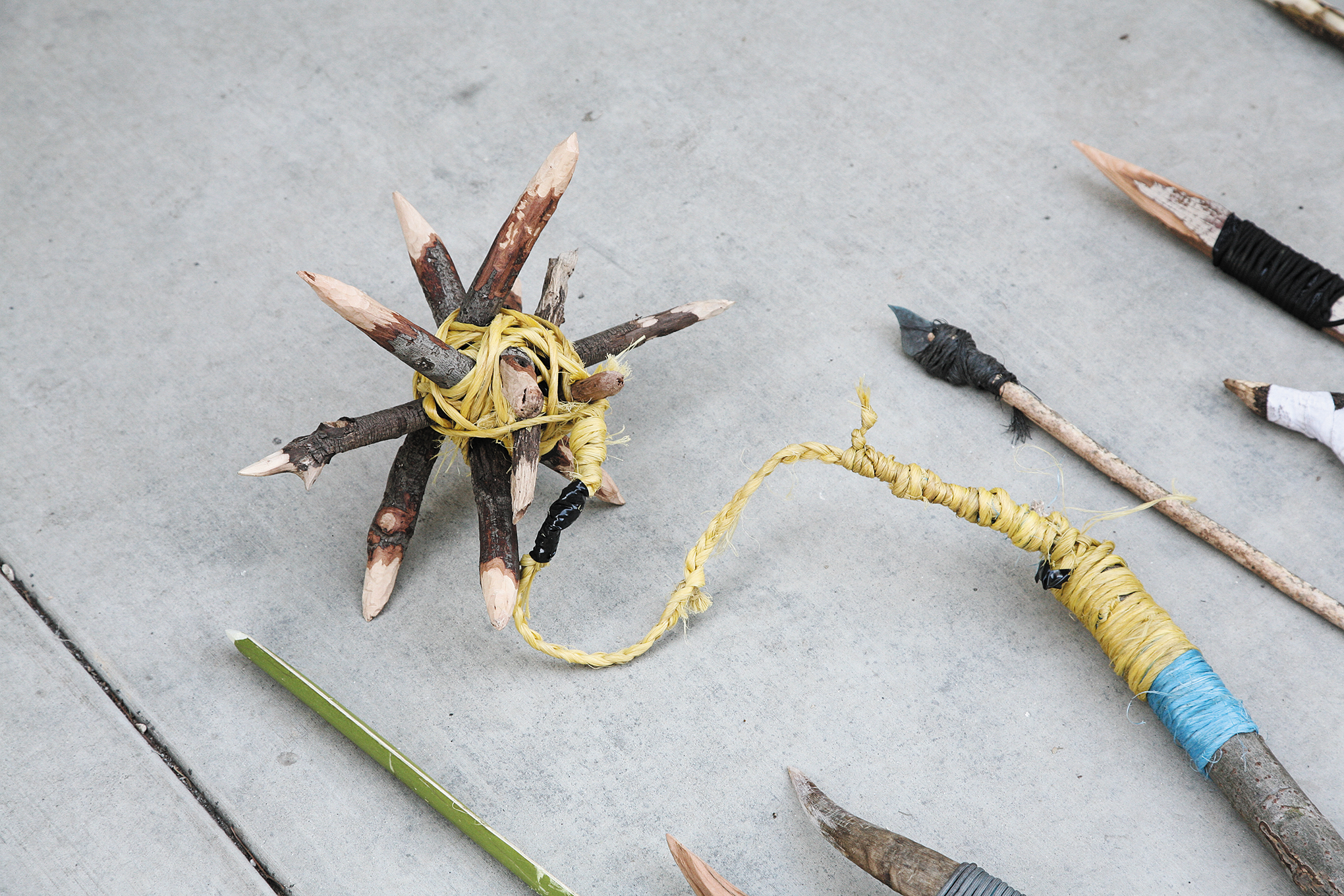
This improvised flail features sharp spikes lashed together and tethered to a handle, similar to metal designs used during the 15th and 16th centuries.
A great deal can be said about having quick access to intensely bright light. Whether you’re fending off an attacker in a dark alley by blinding him with a quick burst or searching for survivors of an office building collapse, sometimes only massive levels of illumination can get the job done adequately.
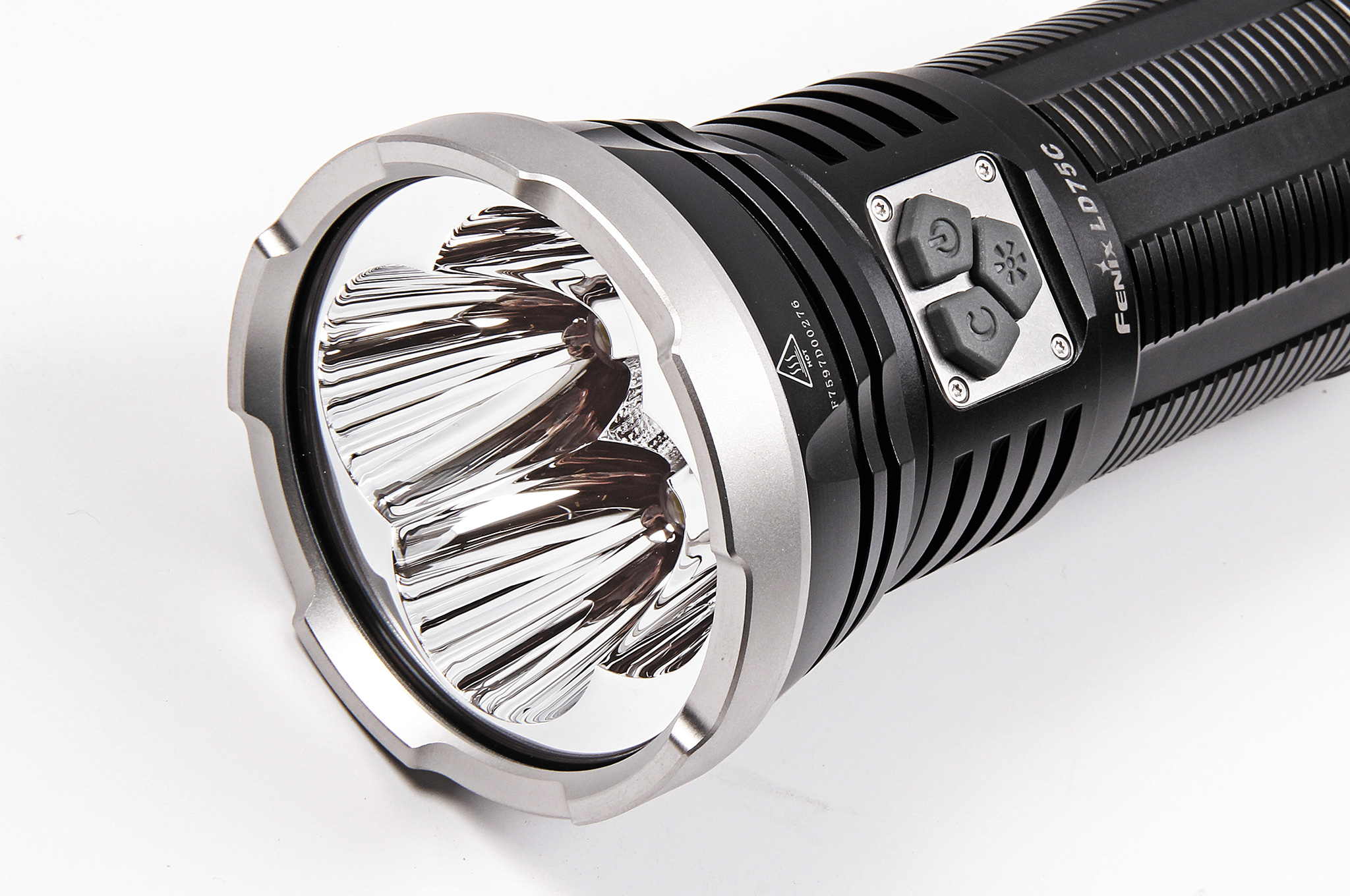
Eye-stinging devices come in all shapes and sizes. A spotlight mounted on a helicopter can definitely provide plenty of light for emergency uses, and even the high-intensity discharge headlamps of a vehicle could be a source of lighting in a pinch — but their lack of portability and their power requirements limit their practicality. Fortunately, there are high-lumen flashlights. These go-anywhere tools can be carried in a pocket, mounted on a belt, or stuffed into a pack to be used virtually anywhere. Plus, they use small disposable or rechargeable batteries that are readily available.
So what does “high lumen” mean? Lumens measure the amount of light produced by a light source. Generally speaking, the higher the lumen number listed for a flashlight, the brighter the light you can expect to see. There are some caveats to this rule, however.
There’s currently no uniform method of measuring and listing lumen ratings. Flashlight manufacturers each have their own means of measuring lumens; so don’t be surprised if a 700-lumen light seems to outperform one that is rated at 1,000 lumens. This is because, other than the lightbulb or emitter’s brightness itself, a flashlight’s reflector, delivered power, and lens quality can also affect how its beam of light is projected, perceived, and ultimately rated. For this reason, it’s recommended that you do your homework before committing big bucks to one.
Thanks to constantly evolving technologies, there is an ever-flowing parade of flashlights that are or are nearly pocket-sized yet can blast many hundreds (if not thousands) of lumens of light at the push of a button. As daily users and avid enthusiasts of flashlights ourselves, we understand that it’s easy to get caught up in the escalating lumen war that manufacturers are participating in. It’s a great time to be a flashlight user, isn’t it? Join us as we examine six portable flashlights that range in lumen rating from a squint-worthy 600 to a retina-searing 4,000.
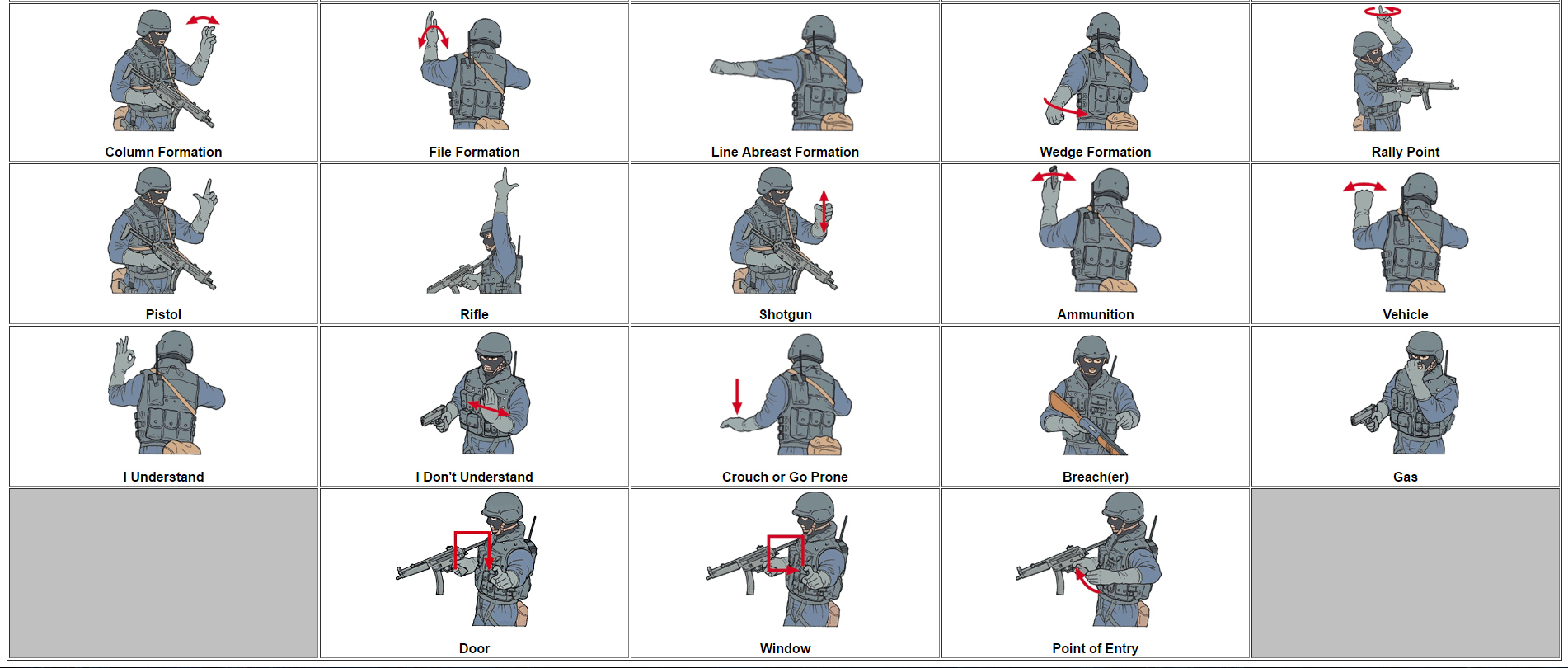
Communicating silently is a valuable skill for any survivalist, whether you’re in a tense environment facing off against armed thugs, or you’re simply trying to conceal your location from passersby. Hand signals are an excellent way of accomplishing this goal, but you’ll need to memorize these signals ahead of time. Otherwise, you’ll end up gesticulating wildly without getting any message across.
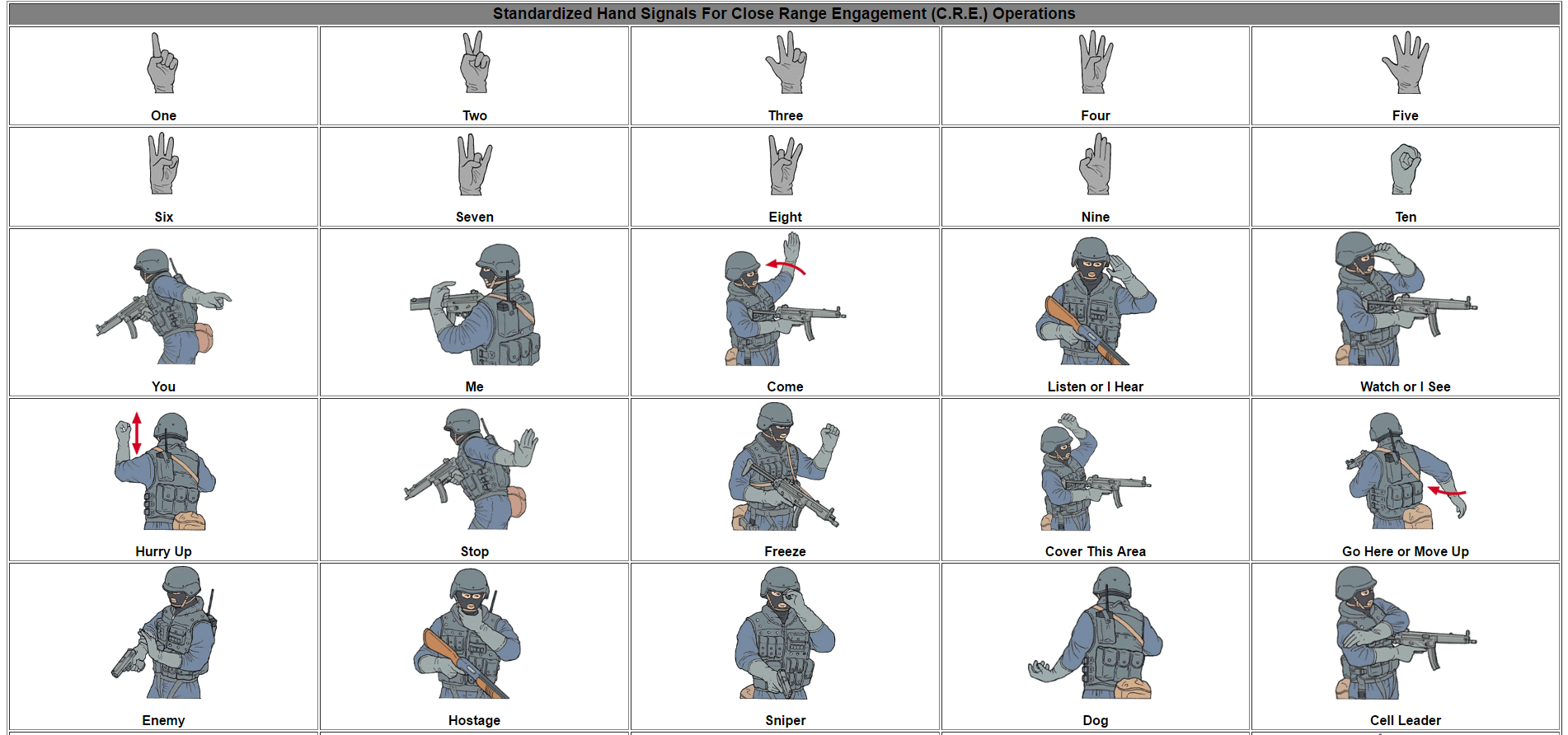
The following infographic shows one set of hand signals used by some SWAT teams and law enforcement agencies. It’s important to note that there’s no universally-accepted standard for these hand signals, and the signals may vary from one organization to the next. However, this guide should give you a good baseline of knowledge about some of the more commonly-used close combat hand signals.
For a larger version of these images, click the image, then click the “Download” button in the top right corner.
Of course, these signals could have completely different meanings, as seen in this hilarious parody version that has been making the rounds on the Internet for years. You never know when you might need to instruct your buddies to “aim for the ass”.
Seriously though, if you ever think you may find yourself in an armed standoff or home-defense scenario, consider studying these signals with your friends and family members. Hopefully you’ll never have to remember how to signal “six enemies, cover this area”, but it could prove valuable if that day ever comes.
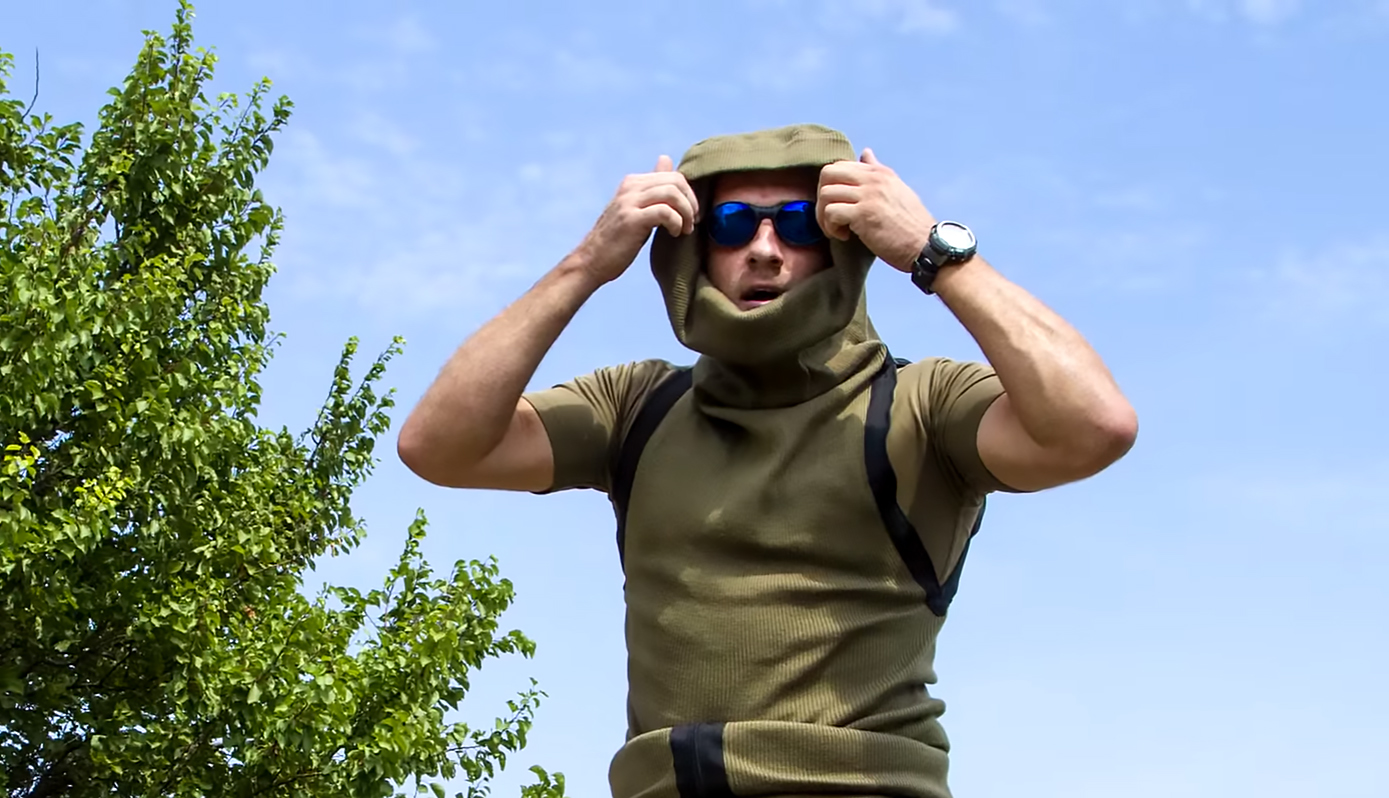
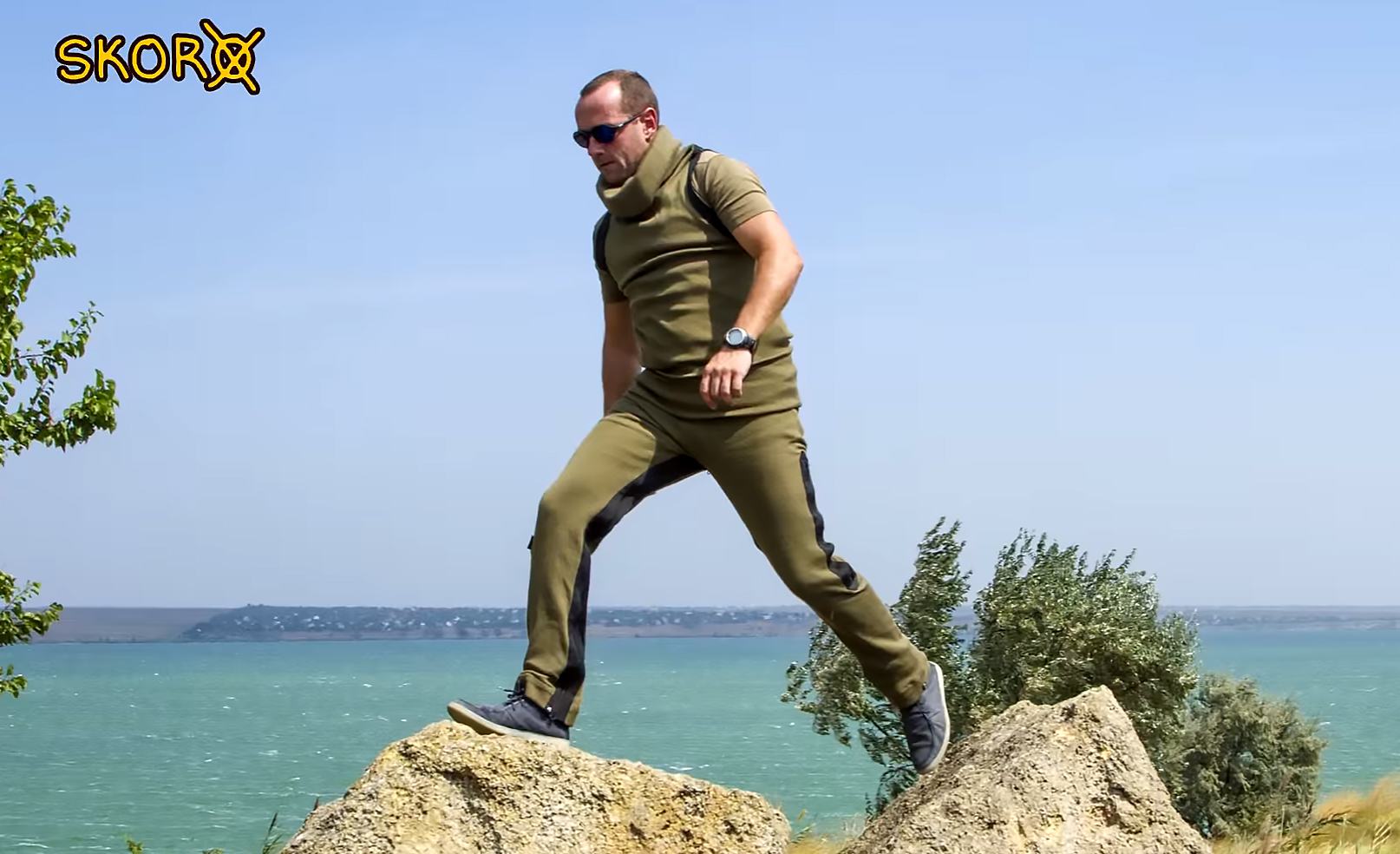
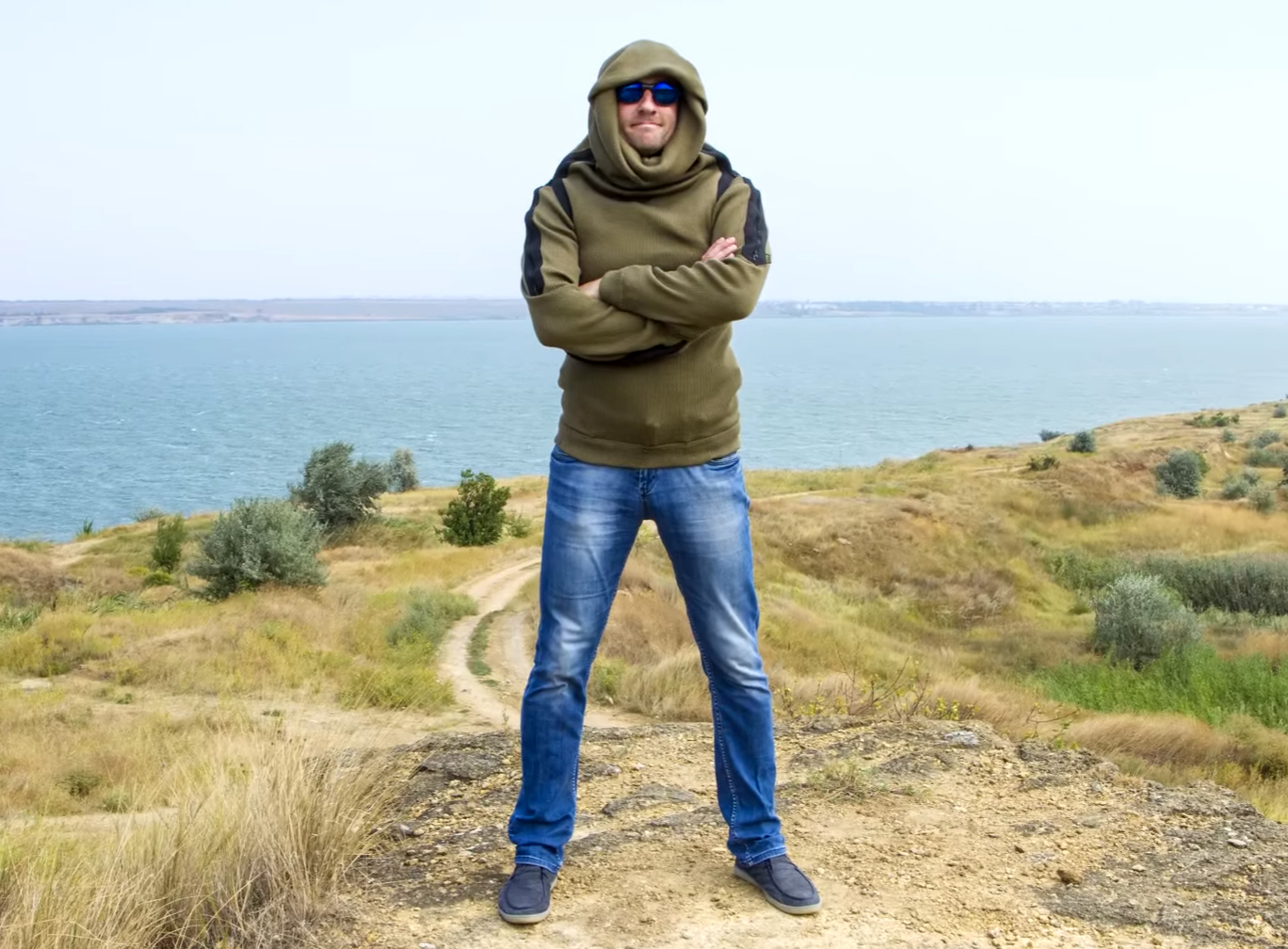
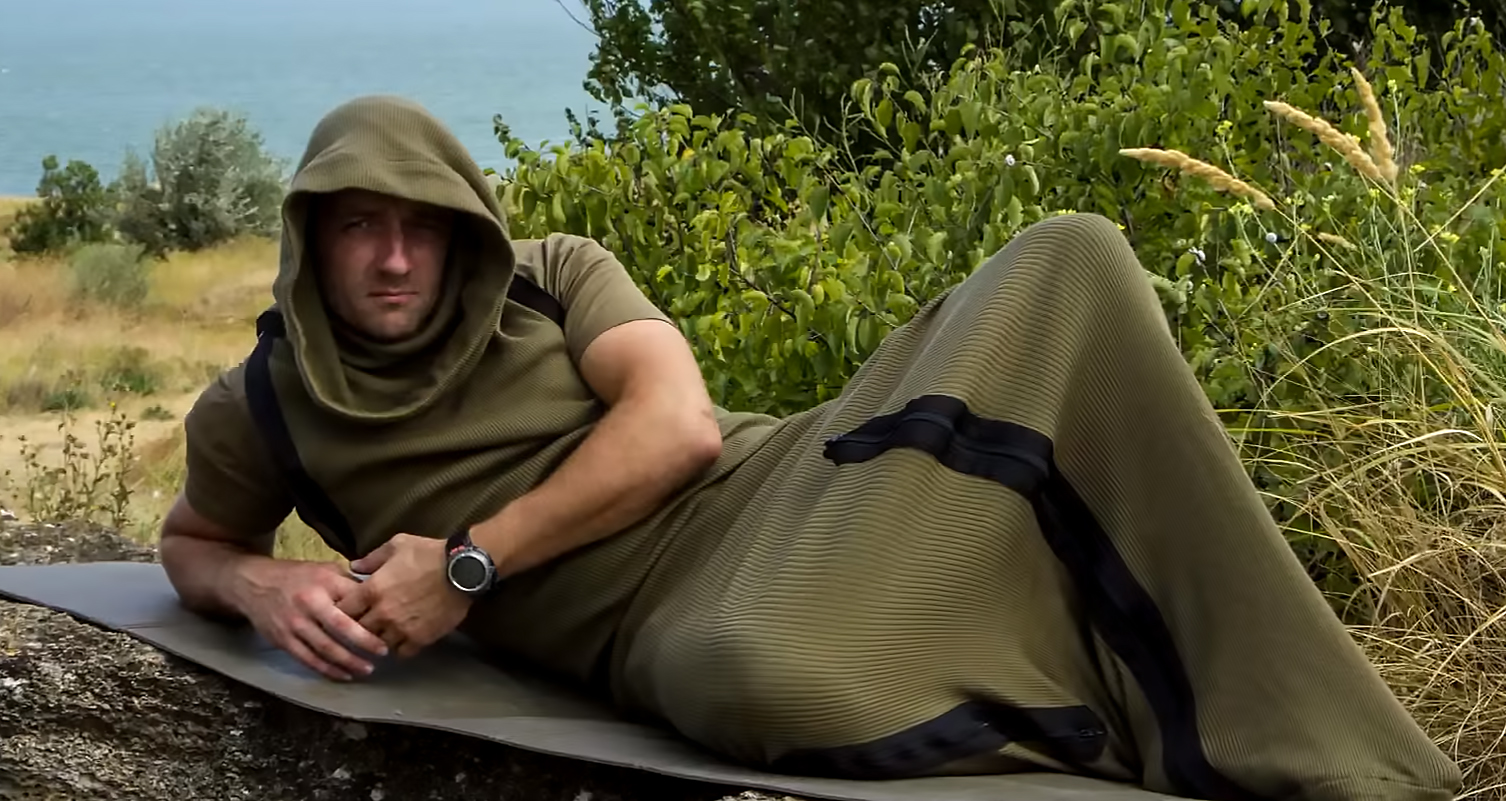
Some of you may remember our post back in March about an apparel product called Somnambula. This so-called “multi-functional extreme clothing” was designed and developed by Ukrainian survival instructor Gleb Skorobogatov. He’s the host of Ukrainian-language instructional video series called the Adapter Project, and an experienced survivalist who has spent a significant amount of time exploring his country’s remote forests and Soviet-era abandoned structures.
As Skorobogatov’s brainchild, Somnambula—named after somnambulism, the medical term for sleepwalking—is a form of re-configurable zippered clothing that can transform from a sleeping bag into various different types of apparel. In fact, this seamless and stretchy tube of acrylic fabric can be worn 35 different ways, including pants, a turtleneck shirt, a vest, a head scarf, and even some forms that resemble a kilt or a dress.
Here’s an English-subtitled video with Skorobogatov himself explaining the design considerations and features he incorporated into the Somnambula:
Last time we featured this product, we got some mixed opinions on social media—some loved the versatility, while others said it looks a little too “out there” to be taken seriously. No matter what you think of the product, we commend Skorobogatov for thinking outside the box and developing this unique form of survival apparel. Based on what we’ve seen so far, it appears to be tough gear that’s built to not just for looks, but for actual hard use.
If you’re interested in the Somnambula, we have some good news: the product has launched on Kickstarter, with an estimated delivery date of January 2017. This is the first limited production run, with a current early bird price of $160 on Kickstarter. Skorobogatov says, “After the successful Kickstarter campaign we expect to optimize the Somnambula manufacturing in order to put the product into mass production,” so we imagine the mass-produced version may be available at a lower price in the future.
Today marks the 15th anniversary of September 11th, 2001. The four coordinated attacks on that day ended the lives of almost 3,000 victims, and deeply affected America as a whole. Each one of us reacted differently to the events of 9/11, but there’s no doubt that it evoked powerful emotions within us all. We have not forgotten, and we will never forget.
Rather than recount the facts of what occurred, I’d like to instead share my personal recollections of the day, and how it changed my philosophy about emergency preparedness. I also reached out to our magazine’s head editor, Patrick Vuong, and invited him to do the same. Although neither of us were on the East Coast that day, perhaps our thoughts can provide some insight into how 9/11 affected our mindsets and how it eventually contributed to the development of this magazine.
September 11th, 2001
Patrick McCarthy: I vividly remember hearing about the attacks on the morning of the 11th. It was a seemingly uneventful Tuesday, and at 6:30am I had just gotten out of bed and started getting ready for school. While I know this reveals my age, I was in junior high at the time, and my mind was occupied with now-insignificant thoughts about pop quizzes and homework due dates. As I began preparing for the day, the phone rang in our kitchen, and my mom answered. I heard her say, “Hello?”, pause for a few seconds, and then gasp, “Oh god.”
Still on the phone, my mom walked into the living room and flipped on the TV. Images of black smoke billowing out of the two towers of the World Trade Center filled the screen. It was like something out of a movie, a fictional disaster that I thought couldn’t possibly be happening in real time. Yet there it was. Already, there was talk of how this couldn’t have been an accident, and who might be responsible.
We drove to my school without speaking a word, shortly after watching the towers collapse on live TV. I sat in homeroom with my classmates, listening as news anchors came to the realization that this had been a coordinated attack. An intentional strike by those who hated us. Looking back, I wasn’t old enough to fully comprehend the gravity of the situation.
Patrick Vuong: Shock was what I felt when I woke up to footage of two planes plowing into the World Trade Center. Who did this? I asked myself. What about all those people inside the buildings? Where could they have gone? How could have they escaped? Then I learned that two other planes had been hijacked, one plunging into the Pentagon and the other crashing in Pennsylvania after passengers fought back. F*cking terrorists.
Eventually, I realized that watching the TV reports all day long would make me either too angry or too emotionally numb. I had to do something. I had to be productive. So, I went to my college newspaper’s bullpen — I know I’m dating myself here — to do what I knew best at the time: report and write on the news. Upon arriving, I proudly saw none of my fellow student journalists had stayed home. We channeled our fears, grief, and sadness into producing one of the most heartfelt editions of our daily newspaper to date.
What We Learned
Patrick McCarthy: Watching the events on September 11th was a formative moment for me. As teenager who grew up in a safe neighborhood, I had little concept of the evil that exists in this world. Until that point, it seemed reasonable to me that if you kept out of trouble and stayed away from dangerous places, no harm would come to you at the hand of another human being. This naïveté was shattered as I watched thousands of civilians die on live national TV.
I realized then that there are people who not only wish harm upon innocents, but who willingly end their lives to make those wishes a reality. I can’t fathom that mentality, but its existence is a fact I have accepted. This has led me to be more analytical of the motives of those around me. I’d love to blissfully assume the best of everyone, but I also feel it’s often unrealistic to do so. I’ve been told this is a cynical viewpoint, and that may be true, but I think a bit of cynicism may not be such a bad thing these days.
I also realized on September 11th that disasters occur without warning. There have since been reports that a handful of analysts and intelligence organizations heard “chatter” of heightened terrorist activity inside the USA, but didn’t know the specifics or the magnitude of it, and lacked the inter-agency coordination to stop it. Hindsight is 20/20. The average American never could have seen it coming. Those killed that day woke up expecting an ordinary Tuesday, just as I did when I got out of bed that morning. This factor of unpredictability has caused me to advocate emergency preparedness as an everyday philosophy. Tragedies occur unexpectedly, so we must be proactive, not reactive.
At the same time, I feel there are some circumstances in which no amount of preparation can change the outcome. But rather than succumbing to fear of these circumstances, I choose to accept what may be inevitable, and do everything in my power to be ready for what may not be. We must not be paralyzed by fear of the unknown; rather, use it as a motivator to learn, grow, and prepare.
Patrick Vuong: The hijackings immediately changed my mindset, especially in terms of readiness while traveling or in public places. Having already studied and taught martial arts for several years up to that point, I started questioning my own abilities and preparations.
If I were there, could I have stopped them? I asked myself. And more importantly, Would I have had the courage to stop them?
To know definitively if the answer to the first question would be yes, I dove into self-defense training even more passionately after 9/11. I sought out the best teachers available to me and the most effective systems that would allow me to handle myself in common places, from a tight airplane aisle to an open food court. I made it a priority to study a wide range of weapons (conventional and improvised), because if a few box cutters could be used to overtake a plane, I’d better be ready to find a force multiplier in any setting. Also, I’ve since incorporated more reality-based drills that mimic the adrenaline-inducing stress of an actual crisis.
September 11th taught me that the unimaginable could happen, so I have to properly prepare and (just as importantly) practice. Whether it’s executing an effective self-defense tactic or packing the right gear for any possible incident, survival is a combination of knowledge, preparation, and experience – all of which will eventually give you the courage to act when SHTF.
Share Your Thoughts With Us
Where were you when you learned about the attacks on 9/11? How has that day affected you? Let us know in the comments below, or join the discussion on our Facebook page.
In case you haven’t heard, our friends and cohorts at RECOIL Magazine recently launched an all-new exclusive video channel known as RECOILtv. Some of this video content will be presented by our staff and directly related to SHTF/OFFGRID survival techniques, while the rest will cover topics related to firearms, transportation, training, and personal defense. To be honest, this has been an immense undertaking, so we’re really excited to see it come to fruition.
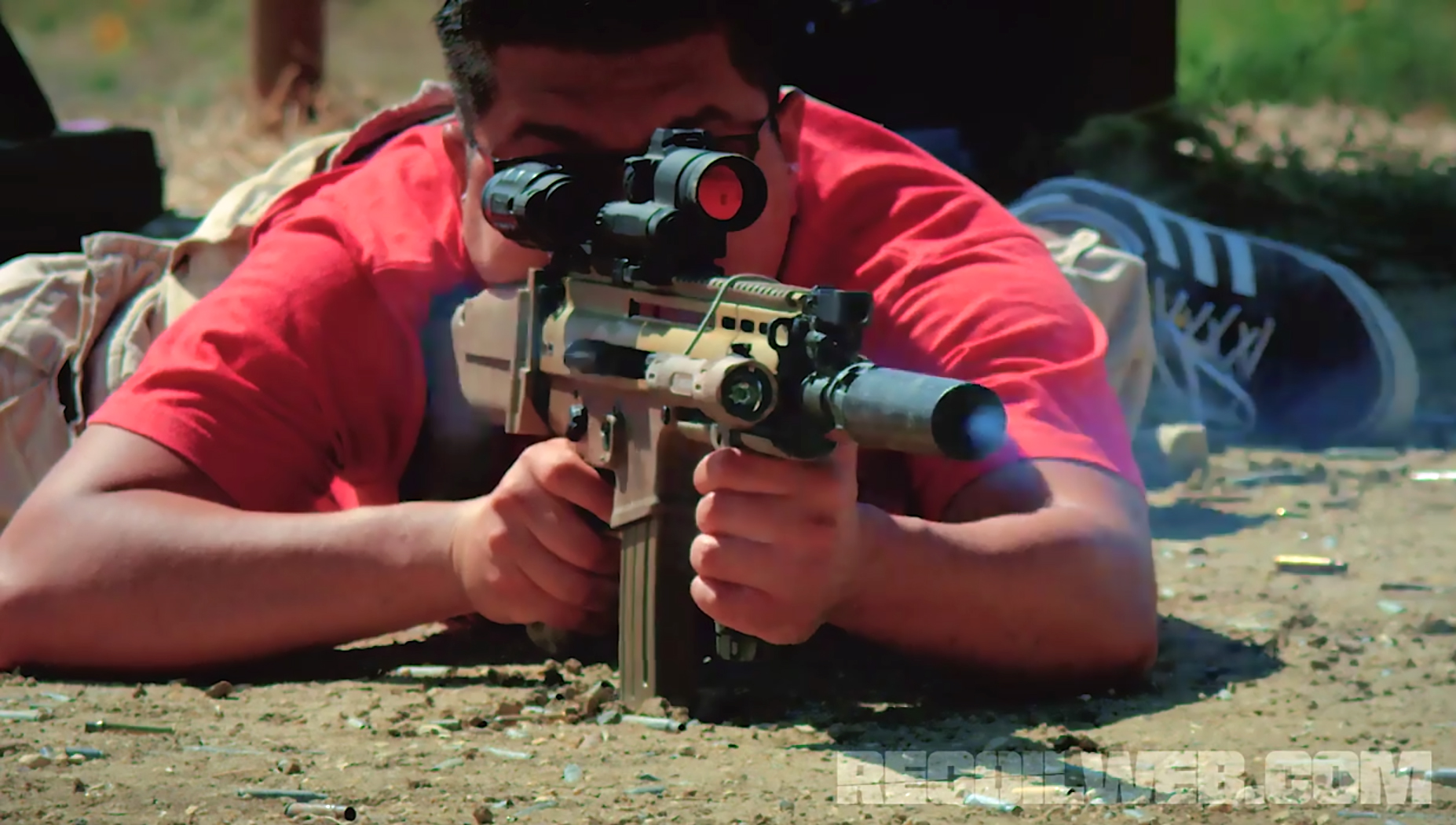
Phuc Long of Firepower United dispels some myths with an FN SCAR 16S.
One of our favorite videos so far is focused on busting some silencer myths. You’ve probably seen a movie that shows a silenced gun making almost no sound at all, or played a video game that dramatically reduces the damage of weapons fitted with silencers. Unfortunately, the general public has a lot of deep-seated misconceptions about what silencers can and can’t do in the real world.
With this in mind, Phuc Long of Firepower United spent some time with RECOIL staff at the range, and discussed how a silencer can reduce a gun’s sound signature. Rather than doing so in a cold and clinical manner, he took the topic in a humorous direction. Check it out:
“Come with me if you want to not die” sounds like a Terminator outtake. Then again, we bet Kyle Reese wished he had this kind of firepower to fend off the T-800. Movie references aside, it’s pretty hard to keep a straight face while watching a Sriracha-shirt-clad guy unload rounds into a ballistic gel Lego man.
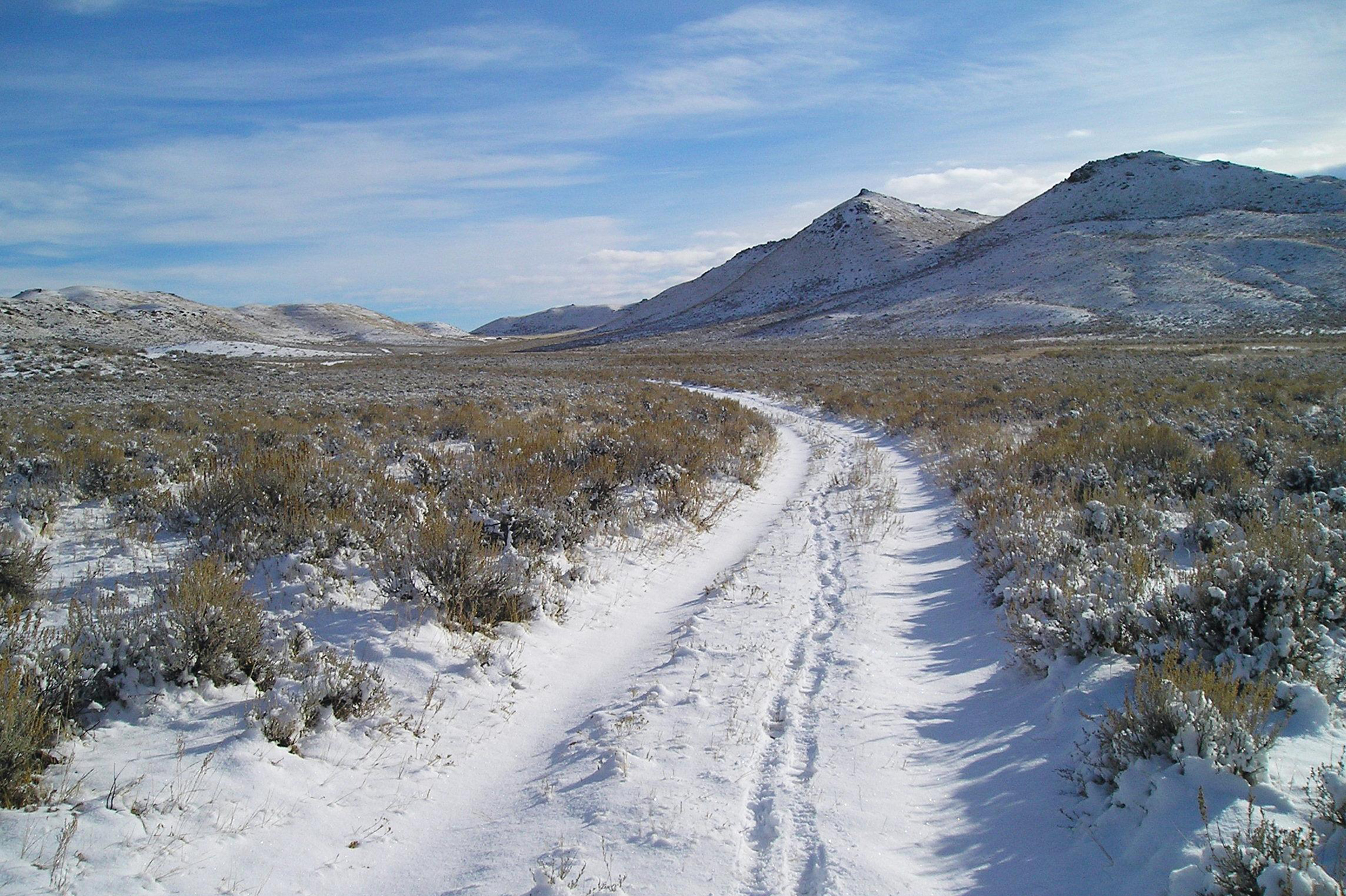
Whether we like to admit it or not, fall is just around the corner, and winter is coming in a few short months. No, we’re not making a Game of Thrones reference, we’re talking about the impending arrival of the colder seasons. If you’re smart, you’ll prepare for them now, while there’s still time.
One of the most important aspects of preparing for winter is to renew your supply of warm clothing, especially if you spend a significant amount of time outdoors. It’s crucial to keep your extremities insulated and protected from the elements, so a good pair of gloves is a must. Regardless of if you’re in a winter survival situation or just spending a cold 8-hour weekday shift outdoors, nobody wants to end up with wet, numb, frostbitten hands after a long day outside.
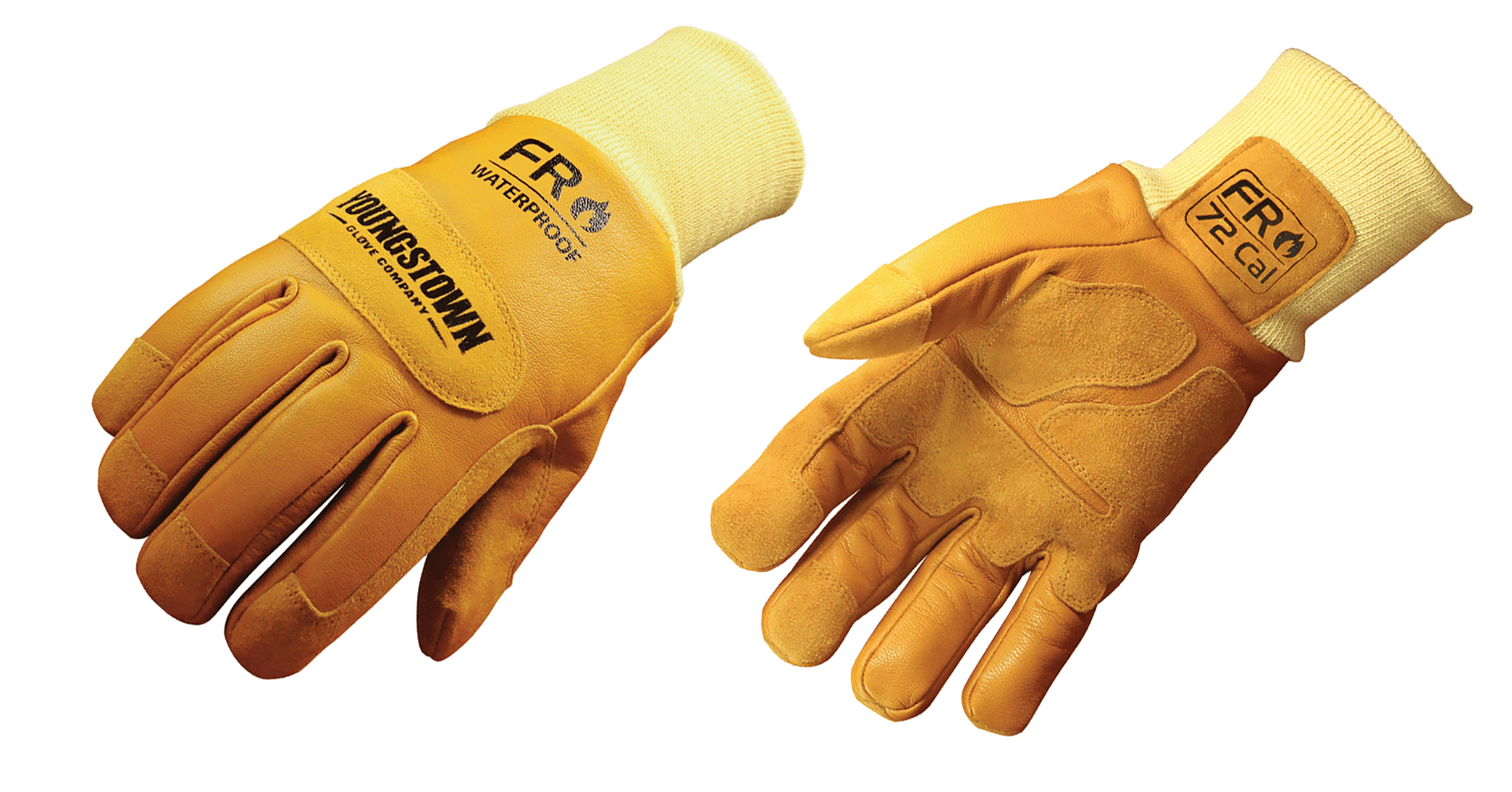
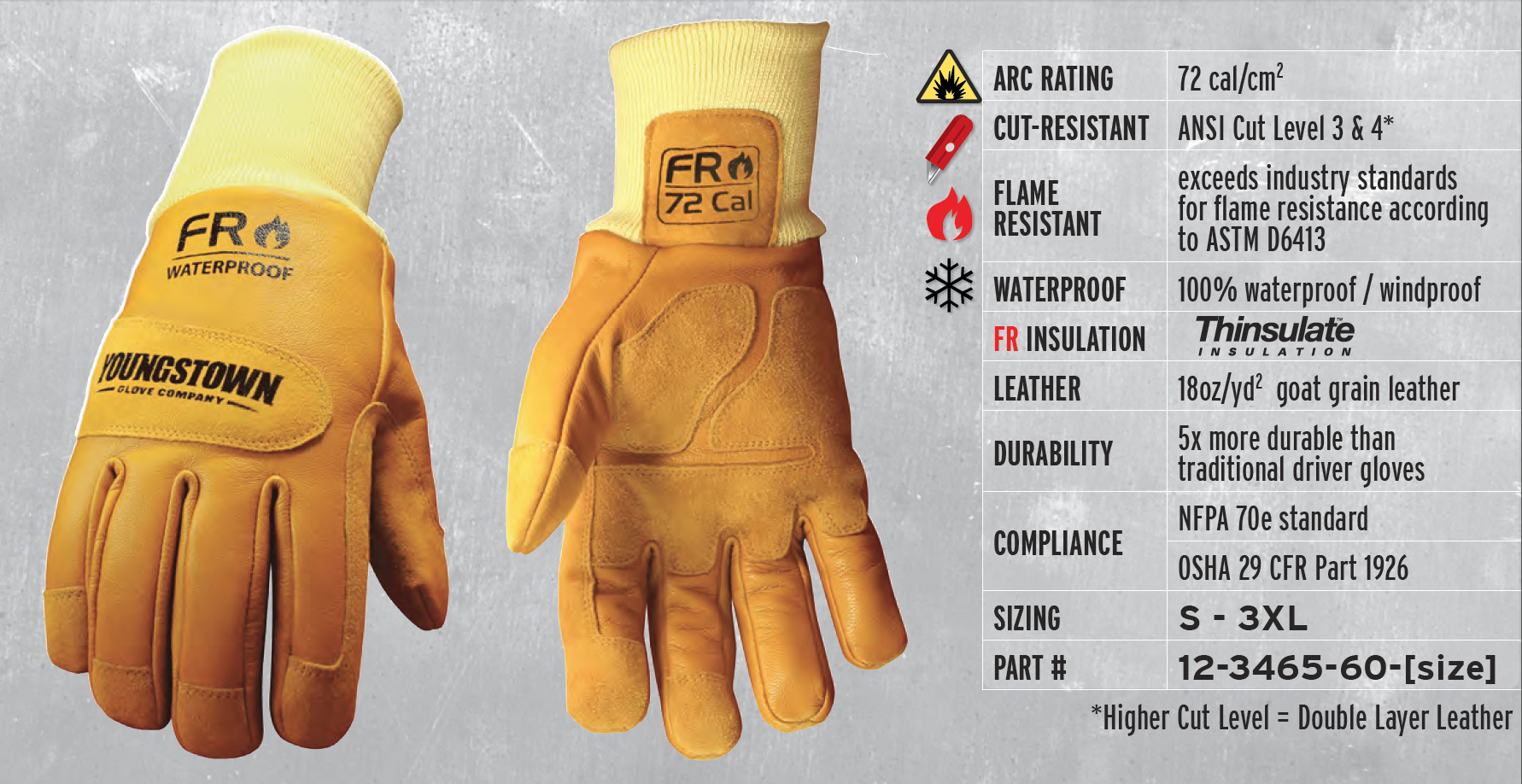
Youngstown Glove Company offers a winter-oriented model known as the FR Waterproof Ground Glove, and the design provides an impressive amount of protection—not just from the cold, but also from open flames, heat, cuts, punctures, wind, and water. These gloves are formed with a Kevlar wristlet and liner, and coated with double-layered goatskin. This combination is intended to provide maximum protection and manual dexterity.
Without getting overly technical, they also comply with established standards from the National Fire Protection Association (NFPA) and the Occupational Safety and Health Administration (OSHA), making these gloves a good choice for workplace applications. Even if your employer doesn’t require gloves that meet these standards, it’s good to know they have been thoroughly tested and proven.