Whetstone Sharpening a $1 Knife

A sharp knife is one of the most important tools in any survival situation, so it’s not something you should cheap out on. However, with the proper technique and tools, even the cheapest and dullest knife you can find can be sharpened into a razor-edged instrument. It’s just a matter of time, and in a long-term survival situation, that’s probably the one resource you’ll have more than enough of.

To prove the point that even an extremely inexpensive knife can be transformed into a precision cutting tool, a YouTuber known as Kiwami Japan purchased a $1 knife and set out to get it as sharp as possible. This “Galaxy” blade was purchased at Daiso, the Japanese equivalent to a dollar store, for 100 yen. That currently equates to 0.88 US dollars.

The video host then takes this cheap knife to a $300 professional-grade set of whetstones to produce a mirror edge. The process starts with 120 grit, then moves on to 220, 1000, 2000, 6000, 8000, 12,000, and finally 30,000 grit stones. After stropping the knife on the side of his apron, he shows off the extremely high polish of the edge and demonstrates several cutting tasks. The entire process took more than eight hours of continuous sharpening.

Obviously, using $300 whetstones for 8 hours on a $1 knife is overkill, but it proves the point that even a cheap knife can be made razor sharp with enough patience and skill. This process could be accomplished using one or two much cheaper whetstones, though the results would be less impressive.

Sharpening one dollar knife whetstone steel blade edge 3

It’s also important to note that the low-quality steel used on this knife may wear quickly and is likely to need frequent re-sharpening. A higher-quality steel would be much more effective for long-term use, but that would also drive up the price. So, when you choose a knife, remember to balance the price with the quality of its steel and heat treatment — if you’re skilled with whetstone sharpening, you can finish the rest by hand.


Poll: Emergency Currency

In any emergency, short-term or long-term, it’s essential to have liquid assets. We’re not talking about potable water stockpiles, though you should have those too — we’re referring to cash or other forms of easily-transferrable currency. Whether you need a little extra money for an everyday incident or you need to purchase some much-needed medicine after SHTF, you should never be without buying power during a disaster.

At the end of this article, there’s a pair of polls where you can let us know your preferred types of emergency currency, but we’ll start by discussing a few potential forms. This may help you rethink your options, or add a backup form of money to your disaster kit. It’s important to diversify, and to collect an amount that’s substantial enough to cover possible expenses.

Trayvax wallets money card EDC pocket tool 17

Cash
This is the most obvious option, and one of the easiest. As the saying goes, cash is king… as long as the economy is still somewhat functional or will be in the near future.

You probably already have some bills in various denominations set aside in your bug-out bag or get-home bag, and that’s always a good idea. Cash can come in handy for everyday emergencies, and it’s accepted everywhere. You’ll probably want at least a few hundred dollars, or possibly several thousand depending on your family size and needs.

After surviving two major hurricanes that wiped out his home, reader Bill Napier emphasized the importance of having cash on hand. Click here to read his story.

Decoy wallet for muggers 2

Cards
Credit and debit cards are powerful tools due to their high level of buying power under normal circumstances — if you need to drop $5,000 all of a sudden, a card is more secure than an envelope of cash. If your card is lost or stolen, you can cancel it or reverse charges, while you would have no such recourse with wads of cash. Some places, such as hotels, may require a credit card to cover incidental expenses.

For all these reasons, having an emergency credit or debit card set aside can be helpful in some cases.

However, these forms of payment rely on fragile electronic infrastructure. A widespread power outage would make these cards useless. Pre-paid gift cards are another option to consider, and unlike personal cards, they can be traded away for quick cash in an emergency.

Coin value money currency gold silver infographic 8

Precious Metals or Gems
Gold, silver, and even gemstones are often regarded as a fall-back currency independent of paper money. However, there are some drawbacks. They don’t have much intrinsic value outside their use as currency (or jewelry/decoration). You won’t be able to walk into most stores and spend these like you can cash. Also, if everyone in your area is starving and fighting over basic resources during a long-term disaster, gold will become much less valuable than MREs, tools, or medicine — that ties into our next point.

Survival uses for alcohol beer wine liquor 8

Bartering Goods
This is a large category, and includes any item that could become desirable in an emergency. For example, antibiotics, batteries, gasoline, or ammo. Obviously, you’ll want to stockpile extras if you plan to trade them away — if you only have one of a necessary item, you can’t exactly spend it. Even alcohol and pornography could become valuable resources for trading in a post-SHTF situation, and you could use that to your advantage.

The downside to bartering goods is that you probably won’t be able to use them under normal circumstances. If you don’t know what we mean, go walk into your local WalMart and try to pay the cashier with something other than cash or card — you’ll get laughed out of the store. That’s why we’d classify bartering goods as alternative currency for emergencies only.

So, what does your emergency buying power consist of? Let us know in the polls below.


Curated Offers: This Filtration Bottle Supplies Potable Water Anywhere

Water is a necessity for our bodies, but with harmful waterborne particles lurking, it’s important that we have access to clean water wherever we go. This is especially true when we are outside of populated areas, such as the woods, where natural water sources may be our only option. That’s where the 1HYDRO Series Filtration Bottle comes in handy, providing potable water through an internal filtration system.
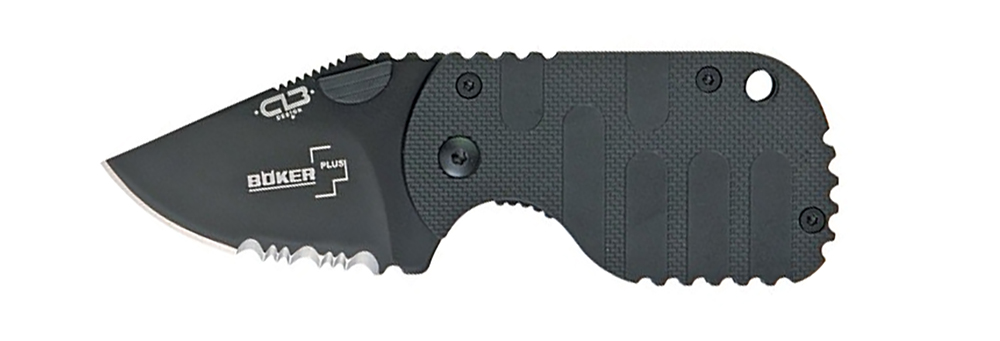
This cutting-edge water bottle makes use of a filter that attaches to the lid, safely removing up to 99.9% of harmful bacteria from any natural water source. It allows you to take water from the nearest stream, waterfall, or the like, and turn it into chemical-free, drinkable water. And with up to 1,500 liters of clean water per filter, you won’t need to change it for a while. Plus, each bottle comes complete with a nylon wrist strap to ensure grip, as well as a built-in compass, should you lose your way. Not to mention, each bottle is manufactured following eco-friendly processes. With a self-filtration water bottle, you can embark on your next adventure without worry.
A great gift for the family member or friend that spends a lot of time outdoors, you can grab a 1HYDRO Series Filtration Bottle for $29.99. That’s a savings of 76%. This water bottle is an essential for your next venture.


Infographic: 50 Animal Tracks of North America

While hiking, camping, or even walking around your own property, you may have come upon animal tracks you don’t recognize. A few are obvious, such as the split hooves of deer or the thumbed feet of oppossums, but others may not be as clear. Understanding these footprints can help you know which species occupy your surrounding area, in turn making it easier to find food sources and avoid predators.

Photo: Ozzy Delaney / Flickr

Photo: Ozzy Delaney / Flickr.com

While you’re not going to mistake a grizzly bear track for that of a horse, there are other tracks which can be easily confused with undesirable consequences. If you don’t know what to look for, you might mix up squirrel tracks with that of a skunk and end up with a stinky surprise. Or you could think a set of mountain lion footprints are those of a dog — these prints are a similar size, but cat prints rarely leave claw marks.

The following infographic from Alan’s Factory Outlet shows 50 different animal tracks from North-American species, and it’s worth studying before your next outdoor trek. You probably won’t spot most of these, but if you keep an eye out in the mud near streams or lakes, you might identify a few of the rarer animals in your area. Click here to download a full-size version of this graphic.

Infographic animal tracks footprints hunting trapping game 2Infographic animal tracks footprints hunting trapping game 3Infographic animal tracks footprints hunting trapping game 4


Catching, Cooking, & Eating Giant Grubs

In a survival situation, meal choices are not going to be between filet mignon and Maine lobster with drawn butter — menu options will be much more limited. Even if you’re prepared with a backpack full of MREs and freeze-dried food, it’s helpful to supplement your diet by hunting, fishing, and foraging. But at the end of the day, there may come a time when you need to eat something that’s less than appetizing to stay alive.

Eating giant grubs food hunting cooking survival 1

Insects are eaten regularly by cultures around the world. While we may find the idea of chowing down on creepy-crawly bugs revolting, they can provide an excellent source of protein and nutrients. Also, they’re often plentiful and easy to catch — you’ll spend many more calories trying to catch a rodent or hunt bigger game animals. This makes insects an excellent survival food.

Eating giant grubs food hunting cooking survival 3

In the following video, [ shows how to catch and cook one particularly large type of insect: longhorn beetle grubs. These beetle larvae, also called roundheaded borers, can be found eating their way through tree trunks and punkwood. Hansler describes their flavor as “woody, smoky, kind of like a jalapeno popper” and says “I guarantee you I’ve eaten worse off the Chili’s appetizer menu”.

Eating giant grubs food hunting cooking survival 2

To further enhance the flavor of the giant grubs, Hansler makes a dipping sauce from prickly pear fruit (also called tuna) and chile tepin (a naturally-growing form of hot pepper). The combination of spice from the pepper and sweet fruitiness from the prickly pear sounds pretty appetizing, even if its delivery vehicle is a bit less crunchy than a corn chip. Check out the full video below:


Video: Building a Siberian Log Fire

If there’s anyone who fully understands the difficulty of surviving extreme cold weather, it’s the residents of Siberia. This region of northern Russia is notorious around the world for its frigid sub-zero temperatures, and has served as a location for high-security prisons and Gulag forced labor camps due to its inescapable expanses of ice and snow. Even in parts of Russia with milder weather, the inhospitable conditions have contributed to the failure of multiple foreign invasions (including those of Napoleon and Hitler).

The military impact of Russia's cold weather on invading forces led to the nickname

The military impact of Russia’s cold weather on invading forces led to the nickname “General Winter”....

As a result of this hardship, Russians have come up with some pretty clever winter survival resources, from dugout shelters to off-road vehicles. We recently learned about another Russian survival technique known as the “Siberian log fire”. This structure uses one very large log and 5 to 7 smaller logs to create a fire that can burn all night with minimal tending or stoking.

Siberian log fire wood winter cold weather survival Russia snow 2

In the following video from Far North Bushcraft and Survival, host Lonnie shows how he builds a Siberian log fire in an Alaskan forest. A large folding saw is used to cut down one thick tree trunk and five thinner trunks — a large woodsman’s axe could be used instead, if no saw is available. These logs are stacked atop the largest log in a fanned-out shape, with the ends protruding slightly and almost touching each other.

Siberian log fire wood winter cold weather survival Russia snow 3

The Siberian log fire is built on the ground beside the large log, and burns upward to ignite the ends of the others. Maintaining the fire then becomes as simple as adjusting the gaps and feeding the logs forward as they burn. Check out the full video below to see it in action and learn more about its construction.


Review: Spartan Blades Formido

The founders of Spartan Blades, Curtis Iovito and Mark Carey, are two former Green Berets with a combined 43 years of military experience. Given this background, the duo formulated a straightforward objective: create blades that will meet the needs of professionals in the harshest environments.

At the New York Custom Knife Show, we stopped by the company’s booth and noticed a new fixed blade on display. We weren’t the only ones at the table and this knife — known as the Formido — was drawing quite a crowd. Spartan has had a long-standing lineup of tactical fixed blades, and this new offering fits between the size of their Phrike and Enyo models. Loyal customers wanted to see what all the buzz was about, and so did we.

Spartan Formido knife review survival bushcraft blade tool 1

Shortly after the show, we received a sample of the new Spartan Blades Formido to test out, and we put it right to work. Read on for our full report.

Design and Construction

Starting with a bar of CPM S35VN, the Spartan Blades Formido is cut and ground to shape. For those of you unfamiliar with this steel, it comes from Crucible Industries, a leading name in American-made steel that makes Crucible Particle Metals (CPM). S35VN is a martensitic stainless steel that is designed to give the end user more toughness over another one of the company’s popular products, CPM S30V.

Spartan Formido knife review survival bushcraft blade tool 12

We’ll skip the chemistry and metallurgy lesson, but it’s worth noting that the added elements in this steel give it excellent toughness without a loss in wear resistance. This translates to better edge retention and less risk of edge chipping. We’re cool with that.

The boys at Spartan don’t spare any expense with their blade heat treatment and deep cryogenic processing. A lot of makers skip the cryogenic bath but the leading names in the business know the extra step is worth it to create even more wear resistance and durability. Again, there is a lot of science behind the Spartan Blades heat treat process, but rest assured, this attention to detail is necessary to create a blade that won’t bend, roll, or snap under pressure.

Spartan Formido knife review survival bushcraft blade tool 11

After all the grinding, tempering, and quenching are complete, the Spartan Blades Formido is coated in one of the best coatings we’ve ever encountered on a blade. PVD, which stands for Physical Vapor Deposition, is the same coating used on many military machine guns and high-end firearms.

Spartan Blades claims this molecularly-bonded metallic compound will not stain, tarnish, chip or fade. Furthermore, it is extremely hard to scratch — the marks seen on our blade in these photos wiped right off. No exaggeration, our 4-year-old Spartan Blades Akribis folder (discontinued) looks brand new despite daily carry and hard use. We’ve beaten the snot out of it and you would never know by looking at the finish.

Spartan Formido knife review survival bushcraft blade tool 9

The finished blade combines clean computerized machining, a tough-as-nails finish and attention to detail in an extremely stout functional package. All corners on the Formido are beveled to dehorn the sharp angles. Even the weight-reducing triangular cut outs in the handle are chamfered for smoothness.

Spartan Formido knife review survival bushcraft blade tool 10

The blade has two subtle bevels below the saber grind; one from the plunge line to the belly and the other from the belly to the tip. These resemble traditional Japanese katana grinds but are not obvious unless you’re closely examining the blade.

Carry System

Spartan Formido knife review survival bushcraft blade tool 8

The sheath of the Spartan Blades Formido is minimalist in design. There is a rolled plastic/Kydex insert surrounded by nylon. There’s also hook-and-loop within the belt loop to reduce the size of the opening and prevent the knife from canting as you carry it.

Additionally, the guys at Spartan Blades designed the back of the sheath with a paracord grid that can be threaded in between PALS webbing for placement on a MOLLE-compatible plate carrier or pack. The retention on the sheath is provided by the friction fit against the blade, and there is a secondary retention strap that runs around the handle.

Spartan Formido knife review survival bushcraft blade tool 3

Overall, the sheath profile is sleek to prevent snagging on other gear. However, this also means its smooth front lacks expansion capacity for a pouch to house a fire starter, multi-tool, spare mag, flashlight, or sharpening stone.

In the Field

In case you’re wondering, the Formido will easily open up MRE pouches. We know you’ve read other reviews elsewhere where this may be the extent of cutting done. We stepped it up a notch knowing you deserve a much wider range of capabilities from a survival knife.

We easily cut through multiple layers of paracord, and then moved on to push cut through an old static rappelling line until the webs of our hands turned red. The Formido didn’t struggle with either task.

Next, we used it for fire prep for campfires and our home fireplace when the cold weather settled in. This involved batoning through seasoned but frozen wood and making feather stick shavings to catch a flame. At first, we thought we scuffed the PVD coating, but after wiping it down with some water from our canteen and giving it a little finger rub, the discoloration washed off and the finish appeared untouched.

Spartan Formido knife review survival bushcraft blade tool 2

We tested the tip penetration capability by pounding the Formido through heavy rawhide, puncture-resistant Kevlar fabric, and aluminum cans. In short time, we were able to run the Formido through the gauntlet with enough eager friends wanting to see what it could do. Some were disappointed the Formido didn’t come with a sharp 90 degree spine for scraping a ferro rod, but others weren’t miffed by this.

Spartan Formido knife review survival bushcraft blade tool 7

From our experience with other skeletonized blades, we weren’t expecting the Formido to be our top choice for extended cutting comfort. That’s the reality of thin-handled knives and we know that isn’t the purpose of this one. We were able to get around any discomfort by wearing gloves, wrapping the blade in paracord (we liked the Crosstac Grip-Cord the best), or even adding some athletic tape.

Spartan Formido knife review survival bushcraft blade tool 4

With the way the sheath is designed, we were still able to use the button snap even with the handle cord-wrapped around the triangular cut outs. We ended up using blaze-orange paracord for a handle wrapping after we realized how well the flat dark earth finish of the Formido blended into the ground.

The Spartan Blades Formido was a pleasure to carry. We wore it on our battle belts and plate carriers, as well as in the field attached to our day pack’s shoulder strap. The paracord lacing in the back of the sheath can take a while to get used to, but once it’s laced up properly, it’s not going anywhere. We found by dipping the ends of the paracord in fly-tying liquid cement (or your girlfriend’s clear nail polish), you can make the tips stiffer to push through the most stubborn MOLLE paneling.

Spartan Formido knife review survival bushcraft blade tool 6

The Formido disappears on your kit until you need it. To put the weight of the Formido into perspective, one of our loaded PMAGs jammed with 30 rounds of 5.56 ammo weighed in at 1.08 pounds while the Formido in its sheath registered only 0.49 pounds. It has a very slim profile — not quite as wide as an AR Mag pouch — and won’t get snagged easily on your rifle sling or other gear worn on your body while transitioning. Simply put, it’s a blade you’ll be glad you have on your person when you need it, but one you won’t constantly be reminded of when it’s not in use.

Spartan Formido knife review survival bushcraft blade tool 13

There is something reassuring about a knife with no moving parts. The Spartan Blades Formido gives the end user this fixed-blade strength for the weight of a tactical folder. Pair this blade with a good multi-tool and you’ll have an outstanding combination for the field. Mark and Curtis from Spartan intended to produce a blade meant for serious use in the field, and we believe they succeeded.

Specifications

Steel: S35VN
Blade Length: 3.85 inches
Overall Length: 8.75 inches
Thickness: 3/16 inch
Weight: 0.157 pounds (2.5 ounces)
Sheath: Kydex/nylon
MSRP: $215
URL: spartanbladesusa.com

About the Author

Ruck survival fitness backpack bag bugout medical 12

Kevin Estela is the owner/head instructor of Estela Wilderness Education, a bushcraft and survival school in New England. He is a Sayoc Kali Associate Instructor, Brazilian Jiu-Jitsu practitioner, and an avid marksman. As a “survival athlete” he can be found regularly testing his physical and mental limitations in the gym, woods, and urban landscape preparing for the fight.


Language Lessons: Accuracy Versus Precision

Let’s say you’re at the shooting range with a 2×2-foot target at 10 yards. You pick up your handgun and fire at the target 15 times, but your shots scatter unevenly across a 1.5×1.5-foot area on the target. Seeing this group, you might think you aren’t very accurate with that pistol. But ironically, your accuracy was flawless — your use of the word “accuracy” wasn’t.

NightStick TWM pistol tactical flashlight gun weapon 4

Before you go thinking that we’re just being pedantic grammar nerds, hear us out. Much like the terms MOLLE and PALS, accuracy and precision are words with two very distinct meanings. Using them interchangeably leads to confusion, and this can negatively impact your firearm training and performance at the shooting range. To become a better shooter, you need to be both accurate and precise, and understanding the meaning behind each of these words can help you learn how to correct problems with either.

Editor’s Note: The following article was originally published by our friends at Breach Bang Clear. It appears here in its entirety with their permission. For more from the Mad Duo and crew, go to BreachBangClear.com or follow them on Facebook or Instagram.


Accuracy precision pistol rifle shooting groups self defense 1

Today we’re taking a slight deviation from our normal format of Language Lessons and covering two different words. They’re so closely related that it’s very difficult to talk about one without bringing up the other — which is one of the reasons they’re so often confused and used interchangeably instead of independently. A thesaurus will even list them as synonyms. But in the context of firearms (and science) synonyms they are not, as you will soon see.

Terms: Accuracy & Precision

Category: Shooting Terminology

Application(s) of Use: Shooting of all kinds, and any projectile weapon

Definition (Accuracy): The closeness of a measured value to a standard or known value. I.E. How close a shot is to the desired point of impact.
Definition (Precision): The closeness of two or more measurements to each other. The closer together each measurement is, the more precise the instrument is. I.E. How close individual shots are to one another, regardless of point of impact.

Accuracy precision pistol rifle shooting groups self defense 2

Why it Matters: You can have high accuracy and low precision, vice versa, and everything in between. If you’re shooting for the smallest group possible (such as during initial zeroing of an optic), precision is what you’re looking for. You want a tight group with a clear median in order to determine the required adjustments to bring you to your desired point of impact. Actually hitting that target is accuracy.

Into the Weeds: High accuracy combined with high precision is definitely something to strive for, but what degree of each one needs is totally dependent on the desired or required outcome. A higher degree of both is needed for a sniper or long range shooter, versus what’s required of a machine gunner, infantryman, or artilleryman. For this reason snipers and long range shooters have rifles and ammunition capable of far more precision than your mass-issued M4 and M855A1. Similarly, a pharmacist requires a more precise and highly calibrated (accurate) scale for measurement of medication relative to what Rosie O’Donnell would use to track her [attempted] weight loss.

Accuracy precision pistol rifle shooting groups self defense 3

If your zero is off (which can happen for many reasons) you may well find yourself in a situation with high precision but low accuracy. Thankfully, this plight can usually be remedied with a re-zero, especially if you know your DOPE. Running down a bug regarding precision is the stuff of nightmares for long range shooters, as there are seemingly endless variables that contribute to its degradation.

In summary, precision and accuracy are closely related, but independent terms. Being high in both categories is always a positive, but not a requirement for all situations.


Pinhole Glasses: Improvised Corrective Eyewear for SHTF

If you had to give up one of your five senses, which one would it be? For most of us, eyesight would be at the bottom of the list. We rely on our sense of sight to walk, drive, read, write, recognize loved ones, and identify threats. If you suddenly lost your vision during an emergency, your odds of survival would undoubtedly be low.

Cell phone land navigation GPS map compass orientation 1

Learning to navigate blindly would be a real challenge during a survival situation.

Those of us who have poor eyesight know all too well how difficult it can be to go about daily life without corrective lenses — either glasses or contacts. In an emergency, these items can be lost, damaged, or become inaccessible. Disposable contact lenses will eventually be used up and thrown away. If you’re prepared, you’ll have backups of these items or will save up for laser surgery, but it’s still wise to have a fall-back plan in case things really go south and you can’t see clearly.

Pinhole glasses eyewear vision pin thumbtack medical 3

Unless you’re a trained optician with a full set of working equipment, it’s not exactly feasible to make a new set of lenses that match your eyes. However, there’s another much simpler option: pinhole glasses. Instead of concave or convex lenses, these glasses use tiny holes to allow through very narrow beams of light, much like the pinhole camera you probably made in elementary school science class. This effectively increases depth of field and gives you sharper vision.

Pinhole glasses eyewear vision pin thumbtack medical 2

Off-the-shelf pinhole glasses contain evenly-spaced pinholes in opaque plastic. Photo: Wikipedia

If you’re curious about the value of this pinhole effect, you can test it easily at home. Just grab a sheet of dark paper and poke a pinhole through it. Then take off your corrective lenses and hold the paper with the pinhole just in front of your eye. Your vision will be far from perfect, but you should still see a dramatic improvement. More pinholes will allow in more light and provide peripheral vision.

Another method of testing this pinhole effect is to form a loose fist, and hold it up to your eye like you’re holding an invisible telescope. Tighten your grip until only a pinhole of light is visible, and watch as once-blurry objects come into focus.

Pinhole glasses eyewear vision pin thumbtack medical 1

Like eyeglasses or contacts, pinhole glasses are only a temporary fix for poor vision. However, these are much easier to improvise in an emergency — just black out some cheap sunglass lenses and carefully punch some holes. You can even make them out of aluminum foil, as long as you don’t mind looking like a low-budget version of Cyclops from X-Men. Either way, improvised pinhole glasses can give you a fall-back option in case your glasses or contacts are unavailable in an emergency.


Video: Visualizing Blood Loss

For those of us who don’t work as emergency medical personnel, observing a traumatic injury can be completely overwhelming. Even if you don’t freeze up or suddenly become ill, it’s a natural human response to start to panic when there’s blood gushing everywhere. This panic is amplified exponentially when the one who’s bleeding out is a close friend or family member — it might even be your own blood splattering on the ground.

North American Rescue tourniquet blood loss medical video 4

Fortunately, by preparing yourself mentally for this physical trauma, you can snap yourself out of the panic and take action. Even if there’s a huge pool of blood surrounding the victim, there may still be time to save their life. The following video was posted by North American Rescue on Facebook, and shows a demonstration of just how much blood can be lost before the victim becomes disoriented or loses consciousness.

North American Rescue tourniquet blood loss medical video 3

You may have heard that a typical adult body contains roughly 5 liters of blood — that’s 10.5 pints. The instructor in this video demonstrates by filling five one-liter bottles with red liquid. As he pours out the contents, he describes what effects the victim will experience. When a full liter of blood loss has occurred, he says “it’s bad, but not as bad as you think.”

North American Rescue tourniquet blood loss medical video 1

Even after losing a full liter — that’s 2.1 pints, or 20% of total blood volume — the victim should still be physically able to focus, assuming the psychological shock doesn’t cause them to pass out. As blood loss increases past 1.5 liters, the instructor says vision will start to “tunnel in” and the victim may become unable to distinguish friends from foes.

Check out the full video below. It may help you keep some perspective if you ever witness a traumatic injury (or experience one firsthand). Of course, this also reinforces the importance of having a tourniquet on hand to stop the bleed ASAP. Note: This video contains some not-safe-for-work language.

Thanks to contributor Cameron Carden for letting us know about this video.