New: BioLite National Preparedness Month Bundles

Several gear companies are making the most of National Preparedness Month 2019 with special programs and promotions — we recently wrote about the free survival courses being offered throughout September at the 5.11 Tactical ABR Academy. BioLite is tapping in to NPM by offering limited-edition emergency bundles that include lighting, power, and water purification gear for households of various sizes.

BioLite’s emergency bundles will be available only during September, and are designed to help users cope with storms, power outages, and other common disasters. Given the company’s specialization, it’s not surprising that each kit is centered around lighting products, but they also include LifeStraw water filters. Three bundles are available:

Solo Kit — BioLite HeadLamp 330, SunLight area lamp, Charge 20 power bank, diffuser stuff sack (for using the HeadLamp as an area light), and a LifeStraw Classic filter. $130 MSRP (approx. $20 less than buying all items separately at MSRP).

Apartment Kit — SolarHome 620 system with wall charger, 2 SunLight area lamps, 2 HeadLamp 330s, 2 diffuser stuff sacks, and a LifeStraw Classic filter. $310 MSRP (approx. $50 less than buying all items separately at MSRP).

Family Kit — SolarHome 620 system with wall charger, 4 SunLight area lamps, 4 HeadLamp 330s, 4 diffuser stuff sacks, and a LifeStraw Family filter. $460 MSRP (approx. $75 less than buying all items separately at MSRP).

All kits include solar-powered SunLight area lights, which can be placed independently throughout the house in a blackout. The Apartment and Family kits also include SolarHome “microgrid” systems, which offer a control box that can toggle four area lights and charge USB devices.

Although a proper emergency kit should include much more than lighting/power and water filtration, these kits might be a good start for someone who’s just getting into preparation. They provide the ability to see clearly during power outages, without relying on candles or mismatched flashlights scattered around the house. For more info on the National Preparedness Month kits and individual products, go to BioLiteEnergy.com.


No Rain Delay: Fire-Starting Tips for Wet Weather

This article originally appeared in Issue 7 of our magazine.

There’s a lot of information out there about fire-starting in adverse conditions and inclement weather, but a lot of it assumes you’ll have certain (often unobtainable) necessities on hand to carry out said task. For instance, birch bark is great for helping to start a fire, but it doesn’t grow where we live, so we had to figure out how to get a fire going without it.

But let’s face it, as a survival-minded individual, you should never be empty-handed. So, in an effort to simplify things a bit, we’re going to assume three realistic things: 1) you have some basic fire-starting tools with you, 2) you have or can find materials to build a fire, and 3) the conditions aren’t so cold that you have lost some or all of your fine motor skills. While you’ll most likely have little to no control over the third assumption, the first one is well within your sphere of influence. Your everyday carry gear should always contain at least one way to spark a flame. For example, this author wears a paracord bracelet with a fire-starter in it and carries both a lighter and some lip balm (the latter is flammable). Plus, we’re almost always carrying a pocket knife and wearing something made of cotton. You can also keep a few cotton balls soaked in Vaseline in a small Ziploc bag.

And before we jump into the techniques, it goes without saying that you should actually practice every method of survival before you find yourself in the field scrambling to make a fire before you’re drenched or frozen like an icicle. This process might take a little time, so don’t rush. Remember, the most important tool you have available is a proper mindset, so give yourself a break, take your time, and get it right.

Locate and Gather

The first step to fire-starting in tough weather is to find a spot that has some cover from direct rain and provides a barrier to block enough wind. Once you have a decent place, you need to assess the flammables available around you. Of course, you’ll want as much dry material as possible, but that can be a huge challenge if you don’t know what to look for.

One great place to start looking is a fallen tree that has part of it still standing. This is called fatwood and can be a great source of dry wood. You can check the fallen part, but it will most likely be wet inside. The wood is fairly light and soft and can be manipulated easily. Break off a piece to see if it’s usable. If not, push over some of the trunk that’s still standing and tear off a portion at the new break. Cut out small pieces with your knife, while being very careful not to cut yourself. The last thing you need is a wound to tend to while trying to build a fire. Make sure to cut some of them into thin pieces, like drinking straws.

Next, find twigs and small branches that aren’t too wet. Gather up pine needles if they’re available because even if they’re wet, they’ll still burn. If birch bark is present, get some! With birch bark, there’s an outer layer, inner layer, and the stuff in between. The stuff in between the layers is what you want. It’s somewhat oily and is a great material to burn.

Keep some of the smaller kindling aside in case the fire starts to burn out unintentionally. After accumulating the required elements to get a fire started, look next for wood to keep the fire going and big enough to provide warmth and hot enough to cook. The larger pieces of fatwood are a good start, but you’ll need wood that’s dense as well.

Locate pieces of wood that aren’t completely wet that maintain their integrity and still have bark. Separate the bark from the wood to see how dry the branches on the inside are. When possible, find pieces that are partially split and finish splitting them with your knife or a sharp rock, again being careful not to injure yourself. The size of the pile of larger pieces of wood depends on how long you want the fire to burn.

Lastly, find a medium-sized rock that’s flat enough to put kindling on if the ground is very wet. It’ll help to turn it upside down and use the drier side and get it out of the wind. Once a fire-starting area has been established, separate the materials and make small piles in the order you’ll need them. Place pine needles closest and then thin pieces of dead grass or brush. Next, place the thin pieces of fatwood next to the pine needles. After that would be small twigs and larger pieces of fatwood or brittle branches, followed by the larger pieces of wood and branches. (Note: If you’ve found pine, avoid using the bark because it doesn’t burn well.)

Flame On

Now that you have all the ingredients ready, it’s time to get the party started. Take about five pine-needle bundles, hold them together next to the rock to block the wind, and light them with your lighter or fire-starter. It might take several tries to get them to ignite. Once there’s sufficient flame, hold a small piece of fatwood over the flame. Once that lights up, start adding more small pieces until you have a sustained fire.

The Cotton-Ball Backup: If you don’t have a lighter, you’ll most likely have to use an accelerant from your EDC gear or bug-out bag. The cotton balls soaked in Vaseline are the easiest to use. Simply tear the cotton balls apart into a fibrous little pile then use a striker and rod to ignite the cotton fibers. Add small materials first until you have a sizeable fire going.

The Lip-Balm Alternative: If you don’t have any Vaseline-soaked cotton balls, you can make a similar product out of small piece of T-shirt smeared with lip balm. First, put a thin coating of lip balm on the cloth, then fray it on the edges. The lip balm isn’t really an accelerant as much as it allows the material to burn longer and more evenly so you have time to ignite the cotton blend.

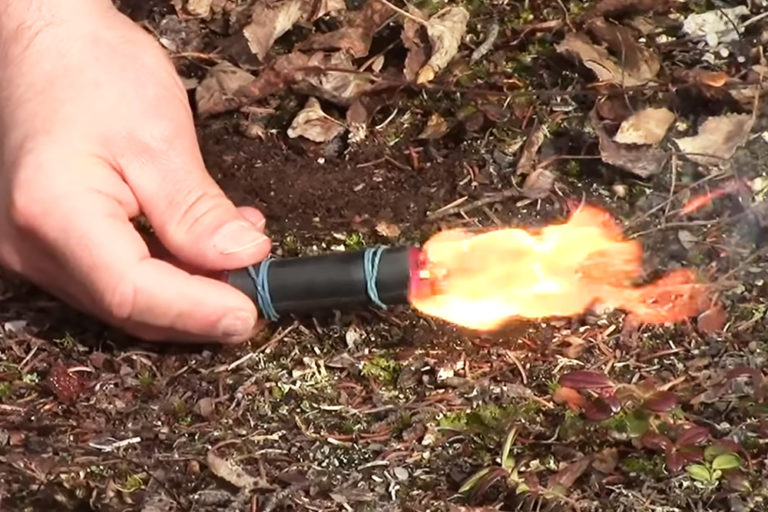
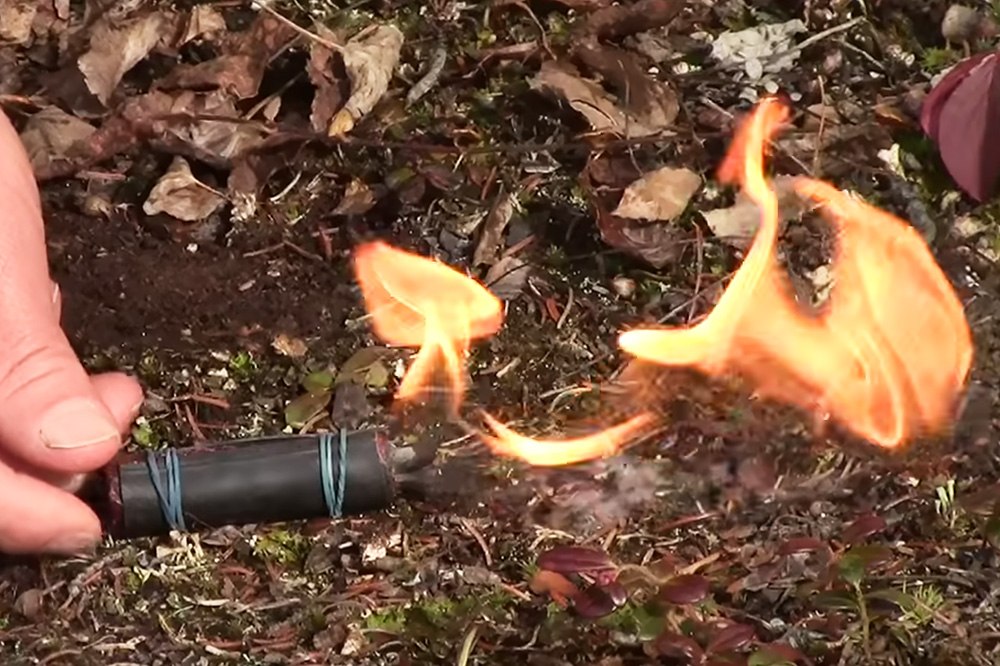
The Paracord Option: The patented 550 FireCord is very cool, too. It’s American-made 550 paracord with one slight difference: mil-spec paracord has an outer shield and seven inner yarns, but FireCord has an eighth yarn added. The eighth yarn is a color-coded, waterproof element that’s easy to ignite. However, because it’s inside the outer shield igniting it accidentally is unlikely. Simply cut an appropriate length of cord with your knife and pull the red yarn out of the center. Make a small pile with it. Sometimes you can take a small length of the FireCord yarn and wrap it around the tip of a small twig. Once you ignite the pile of FireCord yarn, place the wrapped tip of twig over the flame to get the twig to light. As soon as it’s lit, add additional pieces of small material to build up the fire.

Shredded pieces of the red tinder wick inside FireCord serve as weather-resistant tinder.

Add the larger pieces of wood once there’s a decent flame, being very careful not to smother the flame. Lean two twigs, 6 to 8 inches long, against each other over the flame like the beginning of a teepee or a cone. Add more pieces in a circular pattern around the flame with enough air between the bottom of the twigs and the top of the flame for it to continue burning. Once the shorter twigs are burning, repeat the same pattern with slightly longer and thicker twigs until you have enough flame to start adding pieces of branches or small logs.

If the fire begins to go out, use some of the smaller pieces of fatwood or twigs to get it burning hotter again. If it gets very low, you can use pine needles again by holding them almost vertically and placing just the tips in the flame or embers. Once they have ignited, rinse and repeat until there’s enough flame to start with the twigs and larger pieces again.

Sparking Your Preparation

The key to most things in life is focusing on the solution rather than the problem. In a survival situation this could be the most important thing to remember. Most people who are able to survive when things don’t go their way do so because they don’t defeat themselves. They identify the challenge and set forth to overcome it calmly and rationally. Fire-starting in wind and rain while you’re cold can be difficult, but it’s achievable provided you give yourself a chance to be successful — take your time and don’t get discouraged.

As the old saying goes, “It’s better to have it and not need it than to need it and not have it.” With as a mantra, it’s generally wise to have more than one way to start a fire with you at all times, just as you should have a multitool, knife, flashlight, and other items as well. Most importantly, the tool you should never leave home without is your will to live and a solution-oriented mindset. We don’t know everything or even close to it, but we do know that we love our families and want to see them again. They’re counting on us to make it, and so are yours. Stay focused.


Survival Scenarios: Short-Term Mobility vs. Long-Term Capability

If you’ve been reading our publications long enough and taking preparedness seriously, you’ve probably got a substantial cache of survival gear and emergency supplies at your home. While the U.S. government’s National Preparedness Month campaign is working to convince average Americans of the importance of stashing a few days worth of food, water, and medications, we shouldn’t need to tell you this. Once you reach a certain level of preparedness, the important question is no longer do I have enough supplies to survive? Instead, it’s which supplies are most important, and which can I do without?

This leads us to the delicate balance between mobility and capability in any survival scenario. On one hand, it would be unwise to cram your bug-out bag with 100 pounds of extra gear on the off chance you might need it, only to throw out your back after a few miles on the road. On the other hand, it’s obviously foolish to face a disaster with nothing but a pocket knife and an overconfident attitude, assuming you’ll be able to scavenge, improvise, or borrow whatever you need.

A large pack offers more room for supplies, but also slows your movement. (U.S. Army photo by K. Kassens)

In short, mobility usually means a decrease in the weight and bulk of your gear, allowing you to move quickly and escape or evade dangerous situations. Capability usually means an increase in the weight and bulk of your gear, ensuring you have the tools and resources to cope with a variety of situations. Go too far towards mobility and you’ll fall apart if all doesn’t go according to plan; go too far towards capability and you’ll be a sitting duck as the rest of the world passes you by.

A lightweight pack improves mobility at the expense of reduced capacity for long-term gear. (Photo: Grey Ghost Gear)

Each of these characteristics is beneficial under different circumstances. For a short-term disaster — a destructive storm, for example — leaning towards mobility might be a wise choice. It allows you to grab your gear and get out of Dodge at a moment’s notice, and react quickly to changing conditions. For a long-term disaster — such as a nationwide catastrophe or economic collapse — you’d want more gear, including extra food/water and backups for critical items. You might need to be self-sufficient for weeks or months, and resupplying may be difficult or impossible.

A disaster’s duration is an important variable, but it’s not always clear before the disaster happens.

Unfortunately, it’s not always easy to tell how long a disaster will last, or how much gear you’ll need as a result. A major storm could pass quickly, or lead to weeks of infrastructure repairs and supply chain interruptions. For this reason, we’ve made this the subject of today’s installment of our Survival Scenarios web series. As usual, we’ll pose a hypothetical survival situation below, and ask you to make a difficult choice regarding how you’d face it. You can submit your answer in the poll at the end of the article, and see how other readers responded.

The goal of this exercise is to get you thinking about the decisions you’d make in a real life-and-death event. If that day comes, you won’t have time to contemplate your choices.

Background Info

Yesterday, you began hearing reports of violent protests occurring downtown, about a 20-minute drive from your home. The city you live in has always been a political battleground, and it seems like there’s usually some kind of demonstration or rally happening, so this isn’t exactly abnormal. A large portion of the city’s population bears seething resentment towards law enforcement, claiming they’re corrupt and prone to excessive use of force. This sentiment reached a boiling point recently after an officer shot and killed a teenager — the official statement says he had a weapon, but circulating rumors claim he didn’t. Regardless of what really happened, angry crowds have filled the streets.

This morning while preparing for work, you turn on the TV to reveal live footage from a news helicopter. You can see some of the protesters on the street are carrying guns, and a few are lifting them in the air alongside hand-painted signs as they shout their message of protest. The camera pans to reveal police down the block, some with shields and tear gas canisters, others behind barricades with rifles at the ready. You’ve seen protesters cause chaos and block traffic in the past, but this is definitely reaching a new level of tension.

Suddenly, the helicopter’s camera jerks to one side and zooms towards a street corner. You realize several of the protesters are firing their guns, and police are returning fire. Most of the crowd scatters, but those that remain take cover to join the fight. This seems surreal, like a movie scene playing out on live TV. Within minutes, the newscaster reports incidents of violence in other parts of the city, including carjackings and arson. It seems this isn’t an isolated event. It’s spreading.

You get a text from your boss stating that your workplace (near the city center) is closing for the day, so you should “stay home and stay safe.” Things must be really out of control there for him to say that. You could easily lock up your doors and stay glued to the TV, but your girlfriend’s condo is only a few minutes from your workplace — not good. You decide to grab some supplies and go to her house immediately, then stay with her until the chaos dies down. That might be a few hours, but it could be significantly longer if things continue the way they have been.

(Flickr.com/deadhacker | CC BY-SA 2.0)

Your girlfriend never really gave a second thought to emergency preparedness until you started dating, but she’s been slowly accumulating some basic disaster supplies with your help. Still, she hasn’t stockpiled much food and doesn’t own any weapons yet. Knowing this, you’ll definitely be bringing some of your own gear — the only question is how much.

By default, you’ll have your carry gun, a 9mm with 10+1 and a spare 10-round magazine. You also have your typical pocket contents — phone, keys, wallet, folding knife, and flashlight.

Prioritize Mobility

Given the rapidly-accelerating nature of the chaos, you know that time is of the essence. You’ll choose your transportation and gear accordingly. The quickest option is your motorcycle, which you often ride to work to avoid rush-hour road congestion.

Your bike offers a proven method of getting through downtown traffic quickly. (Flickr.com/tortxof | CC BY 2.0)

If you grab your go-bag, get on your motorcycle, and leave immediately, you can be at your girlfriend’s house in less than 20 minutes — assuming there are no major traffic obstructions along the way. If there is traffic, the motorcycle gives you the option to cut between cars to find a faster route. If things get really bad, you can leave the bike and take off on foot in a matter of seconds. The lightweight backpack won’t slow you down.

Your pack has the items you usually carry on a daily basis:

  • Change of clothes and a light sweatshirt
  • Travel toiletries kit
  • Emergency cash ($100 in various denominations)
  • Handful of protein bars, some beef jerky, and a water bottle
  • Mini headlamp
  • USB power bank with charging cables
  • Multi-tool
  • Individual first aid kit

Although this minimal gear should allow you to get moving immediately, remain maneuverable, and reach your girlfriend’s condo ASAP, it has some downsides.

While you’re en route, you’ll be fast-moving but vulnerable — if you’re forced to stop for any reason, the bike offers zero physical protection against an angry mob. You have barely enough supplies for an overnight visit, much less hunkering down for a few days. It’s plausible that someone will try to break into the residence during the chaos, and your defensive capabilities are limited to a handgun with two magazines. Based on your girlfriend’s meager food supplies, it might be an uncomfortable few days if this scenario doesn’t end quickly.

Prioritize Capability

Your hatchback isn’t anything special, but it lets you carry a lot more gear. (Flickr.com/octopushat | CC BY-SA...

The other option would be to take a few extra minutes to fill your car with gear and drive that to your destination. It’s a small hatchback, but can easily hold enough gear to get you and your girlfriend through a prolonged period of civil unrest. You’ll load the following, taking several trips between your house and garage to load it:

  • Your go-bag, as described above
  • Large Rubbermaid bin full of emergency food (canned meals, dry staples, and dehydrated single-serve pouches)
  • Three cases of water bottles
  • Duffel bag with boots, a week’s worth of clothes, and toiletries
  • Family-sized first aid kit with a variety of medications and trauma care gear
  • Nylon belt with a Glock 17 and weapon-mounted light in an OWB holster, plus three 17-round magazines and an IFAK
  • AR-15 with weapon-mounted light
  • Plate carrier with rifle plates and five 30-round magazines
  • Two handheld GMRS radios with spare batteries

Freeze-dried meals will be preferable to scrounging through leftovers at your girlfriend’s place.

This is almost certainly more gear than you’ll actually need, but you’d rather have it and not need it. If multiple armed individuals try to break and enter the condo during the chaos, you’ll be able to protect yourself effectively, and you’ll have a spare pistol to give your girlfriend. Even if a firefight occurs, the plate carrier and substantial first aid supplies will increase your odds of making it out alive. You’ll have plenty of food and water to stay cooped up for multiple days, and the radios offer a backup communication option (as well as a tool for listening to emergency broadcasts).

You hope you won’t need it, but a long gun will greatly improve your ability to defend against armed intruders.

The downside to this plan is how much it’ll reduce your mobility. Driving a car offers a bit more immediate protection from the mob on the street, but it’s less maneuverable and more prone to getting stuck in gridlock. If you get halfway to the destination and end up boxed-in, someone could smash your windows and try to force you out of the car.

Also, this option will delay your arrival, so the situation could worsen by the time you get there. It’s going to take a few minutes to load the car, and the same amount of time to unload it at your girlfriend’s condo. She doesn’t have an attached garage, so you’ll be carrying these supplies from the parking lot — it’ll only take a few minutes, but if the wrong person sees you unloading a bunch of valuable gear, it could lead to a confrontation.

The Decision

In this scenario, it’s impossible to know how long the violence will last. It might be over within a few hours, or it may continue for days, with rioters looting for personal gain and destroying property to spite law enforcement. You always try to err on the side of caution, but there’s only so much gear you can carry on your motorcycle. Loading up your car will provide more long-term survival capability, but will also take longer and reduce your initial mobility.

So, would you take your motorcycle and go-bag in an effort to evade traffic and reach your destination quickly? Or would you pack more gear and drive your car, ensuring you have the supplies you’ll need for a prolonged disaster? Each choice has its benefits and risks.


Drones for Disaster Preparedness

This article originally appeared in Issue 7 of our magazine.

There are a few Latin phrases that speak perfectly to the prepping lifestyle. Probably the most applicable is “Praemonitus praemunitus,” which transliterates roughly to “forewarned is forearmed.” Essentially, it means that having advanced warning gives you a tactical advantage. The better your situational awareness, the more informed your decisions can be and the more likely you are to maintain your safety and security.

In a crisis event, using unconventional methods to increase your situational awareness and information-gathering abilities may become a necessity. What was that explosion? Was it a fuel tanker blast or a terrorist attack? Is the smoke toxic and which way is it blowing? How is it affecting my prearranged evacuation routes? Sometimes, those key questions can be answered quickly by Google or your local TV news station. But what if the grid’s down or you can’t get a mobile phone connection? This is where the use of a personal unmanned aerial vehicle (UAV) comes into play. We’re not talking about the big military drones that look like scaled-down fighter jets seeing hard use in the Middle East and around the world right now. Rather, we mean the thriving market of smaller drones that are more easily set up in any off-grid scenario.

We’re not advocating an overreliance on gadgetry when SHTF. After all, most of the content you find in OFFGRID centers on how to survive and thrive based on your skills and ability to adapt, not on the price tag of your kit. However, when it comes to getting a tactical advantage over a marauding horde who failed to prepare, we’re all in. And you’ll be surprised to find that some drones aren’t that expensive, don’t require much training, and in a survival situation can perform amazing feats that you couldn’t possibly do yourself.

Drone Utility

EdStock/istockphoto.com

Above: Coming in all shapes and sizes for a variety of uses, drones can be almost as long as a fighter jet or small enough to fit in the palm of your hand. Here, a German Army soldier prepares a EMT Aladin for a reconnaissance mission. 

First, let’s define what a drone is. Usually when someone says “drone,” a mental image pops up of a MQ-1B Predator or MQ-9 Reaper cruising at 20,000 feet, dropping bombs on terrorists. These models are fixed-wing aircraft with push propellers, almost the same size as fighter jets, operated remotely by Air Force pilots (who could be halfway across the world). But the personal drones we’re focusing on are almost miniature in comparison. They’re small multi-prop machines that fit into a 2-foot-square footprint, can be operated by a tech-savvy child, and never stray more than 1,000 to 1,500 feet away.

So, you might still be asking, “How does this figure into my SHTF plan?”

Well, most people’s emergency plan of action is often limited by how far you can see at any given moment. Putting a camera on a drone not only expands your vision to a bird’s eye view, it also allows you to build a defensive perimeter based on real-time reconnaissance. Without a camera-equipped drone in the air, the only way to increase your awareness is to send out a scout. That might not be a scary thing to do if your survival group is made up of former Marines, but what if your crew consists of only you, your wife, and your 10-year-old son? Do you put one of them in a potentially sticky solo situation, or do you leave them to fend for themselves at basecamp while you survey the land yourself? A tough choice either way in this scenario.

Above: Drones can be flown into caverns, over water, and into industrial complexes alike to search for help, victims, or supplies.

Your personal UAV can be also used to:

  • Get “eyes” on inaccessible locations
  • Monitor approaching weather
  • Summon aid when in distress or stranded
  • Deliver small supplies to remote areas more quickly than on foot
  • Observe in real time any approaching threats from other groups
  • Cover more area when searching for lost members of your group
  • Reduce your wandering time by helping you quickly and accurately locate sources of water and food

You’re limited only by your creative abilities to adapt this technology to any situation.

Off-Grid Considerations

OK, so we’re now sold on the true utilitarian value of what some might consider nothing more than the latest must-have tech toy. With more onboard computers, GPS integration, and other customizations suited to your specific needs, a commercially available drone is far from a trendy toy. And with the rising popularity of these vehicles — thanks to their use in Hollywood productions and companies like Amazon researching the technology for same-day (possibly even same-hour) deliveries — personal UAVs are quickly becoming more reliable and ready-to-fly options. The buyer is no longer relegated to figuring out the engineering and science of flying a camera 400 feet overhead.

Before getting into the specifics of each component, let’s shoot the elephant that’s sitting in the corner and squelch some of the naysayers:

Concern No. 1
But drones are electronics! What if the grid goes down?

Personal UAVs run on rechargeable batteries so, yes, you’ll need a means of recharging them. Fortunately, solar-powered charging kits are readily available, and a conventional generator will do the job. Besides, you have other emergency items that require rechargeable batteries (e.g. flashlights, walkie talkies, etc.), and these are no different.

Concern No. 2
If GPS satellites are offline, how is your drone going to fly?

The Global Positioning System is only necessary for a few functions, such as auto-pilot assist and mission route planning (see below). Every personal UAV can be flown manually without the aid of GPS.

Concern No. 3
By using a drone, you’re sending up a flag, disclosing your position to bad guys.

This is only a concern if you’re in a defensive position and there’s an imminent threat. Even then, being able to get a real-time broad picture of your surroundings puts you at a far greater advantage than hunkering down waiting, not knowing the magnitude and position of the threat. However, the large majority of crises don’t involve Hurricane Katrina-level looting and pillaging. Statistically, you’re more likely to use a personal UAV to search for food, help, or a clear bug-out path.

Drone Rules

As is often the case, innovations come first — then are followed by regulations. Just like many other emerging technologies, drones have developed exponentially in the past decade, but U.S. lawmakers are slow to catch up. It’s legal for civilians to own and use drones for recreational use, but there are certain restrictions (e.g. drones can’t fly higher than 400 feet and must be kept in view of the operator). To find out more information and to stay updated on the drone rules, visit www.faa.gov and www.knowbeforeyoufly.org.

Eye in the Sky

There are three key components to a personal UAV: the motor configuration, the camera/first-person-viewing system, and the GPS autopilot.

A) A quadcopter is a drone with four propellers.

B) The six-bladed drone is also known as the hexacopter.

C) Octocopters have eight propellers and are generally more stable in the air — but also weigh more and require bigger batteries.

The size and flight characteristics of the personal UAV are largely determined by number and configuration of the motors (each with a propeller). If there are four motors, it’s a “quadcopter,” six means it’s a “hexacopter,” and eight an “octocopter.” The rule of thumb is the more blades spinning, the more stable it is and the more weight it can lift. The flip side is that the aircraft will also be bigger and require a heftier battery.

Most commercial drones act as a platform for sending a camera skyward. The overwhelming king of “sky cams” is GoPro. Sure, there are other action cameras out there, but most everything in the market is set up for the GoPro. The camera is mounted to the drone via a gimbal. Without getting too technical, a gimbal keeps the camera still and absorbs any shakes or sudden changes in direction whenever the personal UAV is in motion.

Now you’re asking, “My camera is up there, and I’m down here. I don’t want to wait to download video from a card. I need real-time intel!” Luckily, there are a couple of options. GoPro has an app that lets you monitor what your camera sees. This is a short-range option, and sometimes the video is sketchy and the feed can be unreliable. Fortunately, there are many drones available with full first-person-viewing (FPV) functionality. That means you’ll see what the camera sees in real time, no delay, and in full color. Using FPV is critical in personal aerial surveillance. Unless you can have immediate visual feedback, you’re just buzzing around blind and gathering information that may be obsolete by the time your bird lands.

Air Traffic Control

These multi-copters aren’t just a hunk of plastic with a camera flying around aimlessly. These are sophisticated, but low-maintenance machines. You needn’t have any skill as a pilot to fly these babies. Each has a bevy of computers and sensors crunching out algorithms to keep you going flat and straight. Accelerometers adjust the speed of the props individually to keep your drone level in flight. If you feel like your flying is getting a little squirrely, just take your hand off the controller and the GPS system allows you to hover in one spot hands-free until the battery wears out. Still, it will behoove you to practice flying your drone and become familiar with it, lest you pilot it into a tree or building under the stress of a real-life situation.

Speaking of low batteries, most personal UAVs will return to the point of origin when the battery starts to run low. You can also recall your drone with the flip of a switch.

Drones such as this DJI Phantom 2 Vision+ pair easily with a smartphone app for mission planning and camera view.

The most useful Skynet-like feature of these machines is their ability to run a mission with no inflight input from a pilot. The autopilot works in conjunction with a smartphone or tablet. Since it’s a closed connection between the device and the drone, no cell service is required. An app that looks like an enhanced version of Google Maps calculates your current position via GPS (so the satellites have to be accessible). On the map you literally draw the area you want your personal UAV to fly in then tell it if you want it to fly along a specific route or perform a grid search, how high you want it be, and where the camera needs to be looking (all very intuitive menu-driven tasks). Once the UAV gives you the go sign, just step back, hit execute, and your personal UAV goes about its mission, leaving you hands-free so you can focus on the video feedback.

The only other thing needed is the means to power your multi-prop. Being as prepared as we know you are, you probably already have a power-replenishment plan in place for key electronics like flashlights and communication devices. Now, it’s just a matter of slipping your fly-boy into that plan, be it stocking up on the right rechargeable batteries, packing a solar-powered charger, or firing up your portable generator. Keep in mind, UAV batteries often have special connectors, but they do charge just like any other battery.
Closing Thoughts

The phrase “knowledge is power” is a cliché because it’s universally true. In this case, a drone can make you more powerful in a disaster when everyone else is powerless (figuratively and literally), scrambling around like headless chickens after the grid goes down. You could say that a bird in the air is worth two, maybe three, scouts in the bush. Even though it’s more expensive than other categories of survival gear, a personal UAV can provide priceless information and peace of mind.


Review: Goal Zero Yeti 400 Portable Power Station

This article originally appeared in Issue 15 of our magazine.

If you’re reading this magazine, there’s a good chance you’ve considered fortifying your food supplies and beefing up your home security. And if you’re a serious prepper, you’ve already done those things in addition to buying a backup generator for when the power cuts out. Usually powered by gasoline or diesel, a portable generator can provide electricity where a plugin isn’t available (e.g. a tailgate party) or if there’s a grid-down situation.

However, there are drawbacks. Portable generators give off poisonous carbon monoxide fumes, not to mention noise pollution that can attract unwanted attention (i.e. marauders or the desperate). Too bad there isn’t a silent, zero-emission generator that doesn’t require fuel to work. Or is there?

Enter Goal Zero, an industry leader in sun-powered illumination solutions. The Yeti 400 is the middle of three tiers in the company’s lineup of solar-powered generators, and we recently got hands on with it to see how effective it’d be at providing juice from a prepper’s point of view.

Goal Zero Yeti 400 Specifications

Dimensions
10.25 x 8 x 8 inches

Weight
29 pounds

MSRP
$450*

URL
www.goalzero.com

*Editor’s Note: In the time since this article was published, Goal Zero has also released a new Lithium series of Yeti portable power stations. The original AGM-powered Yeti 400 is still available, and MSRP has been reduced from the as-tested price of $660 to a current price of $450.

AGM Battery

In the heart of the beast lies a 12-volt, 33-amp/hour sealed lead-acid AGM battery. Developed for military aircraft where weight and safety are important, an Absorbed Glass Mat (AGM) battery contains a thin fiberglass mat, sandwiched between plates and saturated with battery acid. The mat and plates are slightly compressed, then welded in place.

AGM has very low internal resistance, is capable of delivering high currents on demand, and offers a relatively long service life — even when deep cycled. AGM batteries are maintenance free, reliable, and lighter than the flooded lead-acid type.

Goal Zero suggests that it remain connected to a power source when in storage and then nearly drained every three to four months.

Power In, Power Out

The Yeti can receive power from three input sources: a 110-volt wall adapter, a 12-volt car charger, and the 8mm plug ported to a solar array. When fully charged (it took a little over five hours to fully charge out of the box), the Yeti has a power capacity of 400-watt hours, meaning it can theoretically power anything from a 4-watt device for 100 hours to a 400-watt device for one hour, without taking into account power lost to the inverter or other system limitations. For example, it took 2 watts of output 16 minutes to charge an iPhone 6S from 88 to 100 percent. The Yeti is also designed to be chained together with other 12-volt batteries. It won’t increase the wattage, but it’ll increase the runtime.

The output ports are plentiful: 12-volt cigarette lighter-style port, two 1.5-amp USB ports, two 12-volt, 10-amp 6mm ports, and two 110-volt AC ports. After plugging in a device, push the associated button for that output port and the display comes to life. It’ll show you exactly how many amps are being used. The one-button display (backlit for nighttime) is simple to use. There’s an indicator for input, one for output, and a battery diagram that displays remaining power.

In the Field

Construction of the Yeti is straightforward, but strong. Basically, it’s a car battery with a tough carrying case and inverters for the output. It feels and looks like it can take a beating and still function. There are no buttons to break off, though the LED display could easily find a sharp rock if it tipped over. The handle is robust and sturdy and recessed into the top, and wide rubber feet keep it from sliding on smooth surfaces. Each corner has a slight indent for lifting the unit. Replacing the battery (which averages a four-year life span) is easy via the four Torx screws on the top.

The best feature is that it’s so simple to use. Breeze through the directions, then just plug it into the wall, charge it up, and start using it.

When the Yeti begins to beep or when the display reads around 20 percent left, plug it in again. It’ll provide you with hundreds of life cycles. As long as you don’t exceed the limits of the unit, you can plug in and power as many things as there are ports to do so. A note of warning: Don’t leave the AC button switched on if you’re not using it because the inverter draws 5 watts when idle.

The Drawbacks

Sitting next to the unit as it silently powered our gear, we realized it’s a misnomer to call it a generator because it doesn’t actually generate power by itself. Instead, it converts and stores power much more like a fancy battery. Without a source of electricity to replenish what has been used — whether solar or 110 volts from the wall — it would become useful as a doorstopper and not much else. If you’re going to get stuck out in the middle of nowhere, make sure to be stuck with solar panels or a really, really long extension cord. Need to power up your laptop? You’ve got only about 20 hours of use (three or four charges on a 50-watt/hour device).

But this is no flashlight battery. At 29 pounds, it’s hefty, and you’re not going to tuck it into the pocket of your pack and whip it out whenever your iPad goes dead. This sits in a closet of a cabin in the woods or in the trunk of your get-out-of-Dodge vehicle.

This is a dedicated survival/adventure tool to provide power when you need it. Best used for camping, emergencies, disasters, and those times when the local utility surprises you with rolling blackouts.

The Extras

Above: The Yeti 400 generator can be juiced up using Goal Zero’s Nomad 100 solar panel and pairs up nicely with the Light-A-Life LED lights below. (Both items are sold separately.)

Sold separately is the Nomad 100, a four-panel solar array that’s a plug-and-play unit, compatible with the 8mm input port on the Yeti. The Nomad 100, which can collect 100 watts of power on a bright, sunny day, will take about 12 hours to fully charge the Yeti. The supplied 8 feet of cable means you have to keep the Yeti and the Nomad in close company the whole time — not ideal in foul weather. Not to mention keeping the Nomad properly aimed at the sun for optimal charging. A downside of the Nomad, despite its canvas cover and the loops for securing it (or hanging it), the flap doesn’t snap closed, and there’s no carrying handle.

Also sold separately is the Light-A-Life 350 LED light, named for its 350 lumens of light. It can be converted from a spotlight to a lantern, has a built-in carabiner so it’s easy to hang, and has impressive reach with its retractable 8-foot cable. Most importantly, you can chain eight of these lights together, and they only use 4.5 watts each (on high mode). These are bright and energy-efficient.

Conclusion

By itself, the Yeti 400 is only useful as a temporary solution to your electronic problems. It needs to be renewed, and there’s no point in dragging it along if you don’t also bring a source of power (solar panels, etc.). There are plenty of other more portable solar-related devices that can charge your smartphone or tablet if you’re on the move.

This large power bank is best reserved for those items in your kit that can’t easily be powered or for when you’re hunkered down with no ambition to bug out — think blackouts or civil unrest.

Aside from bugging in, the Yeti 400 is ideal for adventures where electricity might be spotty or scarce, such on campgrounds, during an RV road trip, or while cruising on your boat. Depending on the gear you have and its watt/hours requirements, you’ve got 400 watt/hours to spread around, so do it wisely. And if you lost or forgot the solar panel, well, you could always use this generator as an anchor.
More From Issue 15

Don’t miss essential survival insights—sign up for Recoil Offgrid’s free newsletter today.

Read articles from the next issue of Recoil Offgrid: Issue 16

Read articles from the previous issue of Recoil Offgrid: Issue 14

Check out our sister publications on the web: Recoil | Gun Digest | Blade

Editor’s Note: This article has been modified from its original print version for the web.


Boilo – A Classic Campfire Cocktail

Whether you’re camping, hunting, or practicing survival skills in the backwoods, a few small comforts can go a long way towards a more enjoyable experience. That might mean camp coffee, a comfortable chair by the fire, paper-bag bacon and eggs for breakfast, or a nip of liquor from a flask. All these things could be considered luxuries, since they require extra preparation and space in your pack, but we’d say they’re well worth it. Camp cocktails such as boilo also fall into this category.

Like krupnik, the beverage that inspired it, boilo is often sweetened with honey.

Before you think we’re going to suggest you whip out martini glasses and tiny umbrellas on your next camping trip, this isn’t that kind of cocktail. Boilo originated from hardy Pennsylvania anthracite coal miners, who created it as a drink to keep them warm in the fall and winter. It’s allegedly a derivative of krupnik, an Eastern-European liquor that includes grain alcohol and honey, as well as various combinations of herbs and spices. Like krupnik, boilo is made using a wide variety of recipes, and some believe it has medicinal properties for treating cold, flu, or other seasonal maladies.
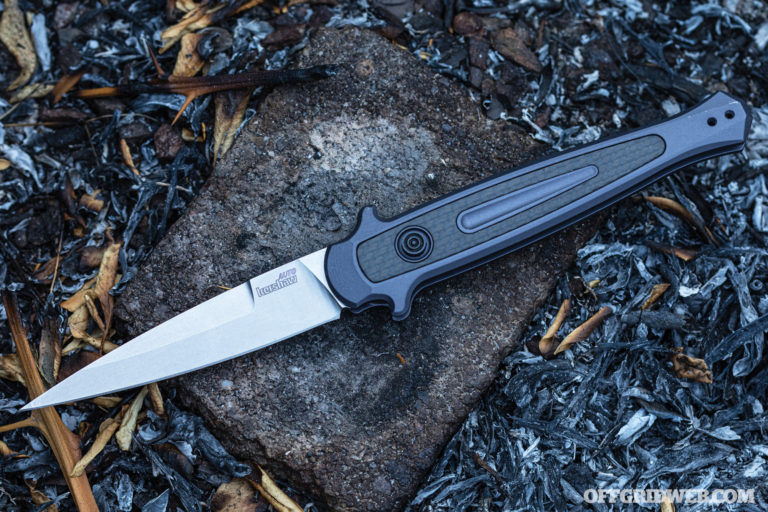
Dan Wowak of Coalcracker Bushcraft shared his family’s boilo recipe on his YouTube channel, and with fall only a few weeks away, now is a good time to check it out. Dan’s recipe contains honey, ginger ale, water, lemon, orange, cinnamon, black peppercorns, and Four Queens (an inexpensive 101-proof whiskey). The ingredients are simmered in a single pot over the campfire, then strained before serving:

In the early days, boilo would’ve been based on home-distilled Appalachian moonshine. Other variants might contain nutmeg, cloves, caraway, anise, mint, or fruits such as apples or peaches. However you make it, boilo offers an easy way to relax and boost your spirits by the fire after a long day outdoors.


Solo Stove Titan Wood-Burning Stove

Mini stoves are a great resource for camping or survival situations, since they’re a whole lot more efficient and portable than an open campfire. We often carry an isobutane rocket stove on backwoods trips — it’s incredibly fast and easy to get water boiling with the intense blue flame. However, the downside to gas- or liquid-fueled stoves is obvious: the fuel is limited. You can’t exactly whip some up in the field if you run out. Fortunately, there’s an intermediate option between a rocket stove and a full-fledged campfire — portable wood-burning stoves such as the Solo Stove.

These small wood-burning stoves are available in various sizes, from the type that’s ideal for heating a single cup of water using twigs and pine needles, to family-friendly models that accept larger pots and chunks of split kindling. In the latest RECOILtv Mail Call episode, Billy Birdzell gives a quick review of the Solo Stove Titan and matching 1800 pot. The stove nests into the pot for easy transport, and the whole set weighs less than 2 pounds (16.5 oz for the stove; 12.5 oz for the pot).

Operation of the stove is straightforward — just insert sticks through the top onto the wire grate and light them. The system of vent holes will draw air through to accelerate the combustion process, creating a secondary burn with more heat and less smoke. Ash is caught in the built-in tray, and the pot can be placed directly on the cooking ring, or suspended on a tripod or ridgeline for more precise temperature control.

MSRP for the Solo Stove Titan is $81, or $122 if bundled with the 1800 pot. The company also offers an adjustable pot-holder tripod for $30 extra. For more information, go to SoloStove.com.


Reader’s Tip: Preparedness Lessons Learned from Y2K

In Issue 33 of our print magazine, I wrote my “On the Grid” column about “the apocalypse that never was” — Y2K. It’s easy to look back at January 1st, 2000 with our 20/20 hindsight and feel convinced it was all a false alarm driven by a snowball effect of hype. However, many sources today will attest that if it weren’t for that hype and the billions of dollars in industry-wide computer system updates it motivated, Y2K could have been an extremely serious disaster.

While the fear surrounding Y2K led some people to irrational behaviors, such as the Hot-Pocket-hoarder I mentioned in my column, it served as a positive motivator for countless others. In fact, many people in the prepping community today took their first steps towards preparedness shortly before 1/1/2000. Even though that particular disaster never manifested in the way the mainstream media speculated, it created an environment that was more open to emergency preparedness — at least temporarily.

Unfortunately, after tremendous amounts of work and preventative measures averted the crisis, preppers were once again depicted as paranoid and irrational. A New York Times retrospective video lumped survivalists and gun buyers in with predatory scammers, calling them individuals who took “extreme measures in anticipation of the millennium.”

As a result of my Y2K column, I recently received an email from Micheal Kline, a reader who wanted to share some of the lessons he learned from that time period. His email contains some perspective on the atmosphere leading up to New Year’s Day 2000, as well as how it shaped his interest in preparedness over the next 20 years. I’ve shared it in its entirety below — read on to see what you can glean from Micheal’s account.


I was still in high school during Y2K and my memory is a little fuzzy, but I believe it was late 1996 or 1997 when I began to hear what Y2K was and the possible risks involved. We lived in North Florida, near Tallahassee, so we were used to preparing for hurricanes. We were used to being prepared for three or four days without power. We had some canned food, camp stoves, battery-powered lanterns, and candles. No biggie.

In the late ’90s, many critical computer systems had become outdated. (Flickr.com/jparise | CC BY-SA 2.0)

I have always been technical and computer-savvy. Knowing what SCADA systems were and realizing how our life depended on them showed me how thin of a razor blade our society walks on. It was described back then that society is a 3-legged stool. One leg is the banking industry; one leg is the power grid, and the last leg is the perceived economy. If any problem occurs any one of the legs, the stool (society) will collapse. Upon seeing this analogy, I knew I and my family needed to prepare. I had never heard of just-in-time delivery of food, didn’t know how to filter water, and had only been camping with my dad and with the Boy Scouts.

Family camping can be fun, but it’s not necessarily good practice for survival. (Photo: Klymit)

This began my prepping journey that I am still on today. My family and I began discussing what could happen if the power went out and never came back on. We were new and had only knowledge of being without utilities for a few days after a storm. We also thought about what could happen if the banking industry had an issue and we could not get any money. We began to think about how we would eat if stores were closed, how we would get clean water, shower, and flush toilets. How would we defend our supplies and home?

We laid out what we needed to fulfill our basic needs: water, food, shelter, and security. Since we had a Sam’s Club membership we bought bulk rice, sugar, flour, and beans as best we knew how. The term prepper was not popular yet, but we were becoming what we now know as preppers.

I, being the geek, began buying survivalist, preparedness, and Y2K-related magazines and visiting BBS sites, using alt.rec newsgroups, and any survival related websites. My little 28.8kpbs modem stayed busy. I learned about date codes on the bottom of cans, how to use bleach to purify water, and how to properly store food in buckets, and outdoor survival techniques. I poured over books, magazines, and the limited Internet.

The internet can be a source of valuable survival knowledge if you know where to look. (Flickr.com/jeroenbennink)

This is my first major lesson: study and learn about how to survive, but not from Facebook. Looking back, I had access to some great sources of knowledge. Those that were online were truly knowledgeable and willing to help. In today’s society, we have keyboard warriors that give a lot of people false or misleading information. If you want to learn how to survive, read a magazine or read a book. Don’t get your survival knowledge off of Facebook and Instagram. They are good to interact and ask about experiences, but don’t stake your life on it.

However, I digress; my family and I bought a small wood stove and installed it in the living room of our house. We bought a few cords of firewood and had it covered and elevated to protect it. During the winter of ’98, we used the wood stove to heat the room and cook on. This ensured we would have practice and know how the cooking times differed from a regular stove.

As Micheal learned, it’s wise to gather as much wood as you think you’ll need, then double or triple it.

We lived near a lake and buried a pipe down to the lake that connected to a pitcher pump. I bought spare leather parts and learned how to prime the pump. I learned really quick to put in a shut-off valve so the pump would not lose its prime so fast and require so much water to prime. Unbelievably, it did work and would pump about a 1/4-gallon per handle pump. After using it, I learned that it requires A LOT of strength to pump water 200 feet and up an 80-foot drop. I put a steel pipe next to the pump to act as a fulcrum and help me pump water when we practiced using it.

We bought a few 55-gallon water drums and filled them with treated water based on 2 gallons per person per day. I put in a primitive rain catch by using a plastic tarp attached to the underside of the roof that diverted down into a drum. We learned to let the water settle for about a day so the asphalt gravel would sink and the crud could be skimmed off. This rainwater was used partly for drinking once filtered through the Berkey.

Rainwater collection can be a great way to supplement your water stockpiles.

The other part of the water was poured into a gallon metal drum I put on concrete blocks that I then built a fire under. My dad and I put a water spigot on the side with a hose and shower sprayer. Since we lived on a hill, we built a small shower area down the hill from the ‘water heater’ to create decent water pressure. From this, we learned that you can have too much heat and it takes a lot of wood to heat 55 gallons of water. Fortunately, we learned that stirring the pot after about 20 minutes gave us water that was about 80-90 degrees. Not hot, but warm enough for all of us to shower with (and not so much that we used all of our wood).

That’s another thing — by practicing some of these things early on in ’98 and ’99 we worked out some kinks. We ended up buying a lot more wood for the stove and water heater. This lesson has stuck with me even today. It is great to have supplies and gadgets to assist in SHTF, but unless you practice using said equipment, you are going to be at a disadvantage. You need to walk the walk so to speak. You can have a subscription to Battle Box, but unless you actually get out in the woods and use those things you are going to be at a loss.

There are a lot of other things we learned and experienced, but too many to list here.

Y2K was a very ‘wing it’ type event. It was a good trial run of how to live off-grid. Had it actually come to fruition we would have been under-prepared. The good thing about Y2K was that it put the family in a state of what-if. Now, 20 some-odd years later my wife and I continually think about our creature comforts and what we need to keep those going. Because of the lessons learned in Y2K we are much better prepared for hurricanes, thunderstorms, or SHTF.

Although Y2K wasn’t the catastrophe it could’ve been, it certainly offered lessons for the future.

Major lessons learned from Y2K:

  • Two is one and one is none. Have a backup to your backup.
  • Don’t buy #10 cans of food unless you have a lot of people to feed. Buy them and break them down into smaller containers or just buy smaller cans so that it does not all spoil before you can use it.
  • Knowledge is power. Just make sure you get the right knowledge from the right sources.
  • Practice, practice, practice. Try cutting the power off in your house for a weekend and see how long it takes Murphy to show up.

Today, Micheal Kline is a dedicated advocate for emergency preparedness. His professional background includes work with commercial two-way radio systems, computer network administration, and collaboration with various emergency management organizations. He also hosts a free podcast known as Reality Check, which covers a wide range of topics, from defending your home and maintaining communication security to building a DIY latrine. You can listen to the podcast at prepperbroadcasting.com/reality-check or follow his Facebook page for the latest news.


Apple Off-Grid Radio Service (OGRS) Project Canceled

The original purpose of cell phones was to allow calls over the cellular network, but that purpose seems to have become a distant memory these days. Now most cell phones are used for sending text messages, checking social media, browsing the web, taking photos, or almost anything other than making calls. Given the substantial power of modern-day smartphones and their reliance on traditional cellular and WiFi networks, we’ve sometimes wondered why other emergency communication functions aren’t more prevalent.

Cell phones can be useful in off-grid settings, but external communication requires an active network. (Photo: onX)

Imagine if your smartphone could also work as a walkie-talkie, using radio waves to communicate in remote areas where cellular coverage and WiFi are unavailable. This would essentially fill in the gaps between those mainstream networks, and make cell phones vastly more useful in off-grid locations (or grid-down disasters). Although Motorola iDEN phones offer this feature, they’re not exactly common in the consumer market. Reports surfaced this week to indicate that Apple had been developing a text-based radio communication feature for the iPhone, but has now put it on hold indefinitely. The project was called Off-Grid Radio Service, or OGRS (pronounced “ogres”) for short.

According to a report by The Information, Apple’s OGRS would have used an Intel modem chip to transmit text messages from one iPhone to another over radio frequencies in the the 900-megahertz range. Based on the size and power limitations of the iPhone, it’s likely that this would have been limited to relatively short ranges, much like a handheld walkie-talkie — think 1 to 2 miles in typical conditions, or a few more miles over flat terrain with no obstructions.

Just like handheld walkie-talkies, OGRS range would have been reduced in mountainous terrain.

The cancellation of this project may have been a result of several factors. First, Apple recently signed a deal with Intel competitor Qualcomm for 5G modems for its next batch of phones — some analysts have speculated that the Off-Grid Radio Service may have relied on the Intel chip. Additionally, development of OGRS was reportedly spearheaded by Apple executive Rubén Caballero, who took a personal interest in implementing the feature. Caballero left the company in April.

Although there may still be a chance that this feature is re-implemented in the future, the future of OGRS is not looking good given these changes at Apple. Still, we hope it gets a second chance, since it would add substantial value to a cell phone for hiking, off-roading, or survival situations.

Thanks to Steven Kuo for the tip about this announcement.


National Preparedness Month 2019: Be Prepared, Not Scared

We’ve probably said it a thousand times, and we’ll say it again: emergency preparedness is valuable for everyone. If every man, woman, and child in America took a few basic steps towards becoming more prepared for disasters, we’d be much better off as a nation.

Even if you’re assured of your own family’s preparedness, it’s wise to encourage your friends, family, and neighbors to consider following in your footsteps. As much as we like to think of ourselves as independent, you’ll generally have an easier time overcoming hardships as a community than you would in total isolation. And, if nothing else, it’ll reduce the chances of your less-prepared acquaintances pounding on your door in a panic — or trying to take your resources by force — during an emergency situation.

In order to spread the message of preparedness far and wide, the U.S. government has designated September as National Preparedness Month. This year’s overarching theme is “Prepared, Not Scared.” As with previous years, this campaign is run by FEMA and Ready.gov with the ultimate goal of promoting “family and community disaster and emergency planning now and throughout the year.” National Preparedness Month is broken down into four weeks, each with a specific theme and associated educational materials:

A few examples of suggested practices from the National Preparedness Month campaign.

Week 1: Save Early for Disaster Costs
Are you financially prepared for a natural disaster? Learn how to make a plan with CFPB’s tips: https://go.usa.gov/xPbJv

Week 2: Make a Plan
Preparing your family for an emergency is as simple as a conversation over dinner. Get started today: www.ready.gov/plan

Week 3: Youth Preparedness
Teach children what to do in an emergency if they are at home or away from home. ready.gov/kids

Week 4: Get Involved in Your Community’s Preparedness
Every community has voluntary organizations that work during disasters. Visit https://www.nvoad.org to see what organizations are active in your community.

Although it’s a start, this recommendation strikes us as seriously insufficient.

Obviously, this campaign is targeted at those who haven’t already taken the value of preparedness seriously — if you’re a regular reader of our publication, that’s not you. So, some of the recommendations are woefully inadequate by our standards. The advised “at least 3 to 7 days” worth of food, water, and medications is nowhere near enough for any substantial disaster. That said, it’s better than nothing.

For more information on National Preparedness Month, go to Ready.gov/September. Even if you don’t use the materials provided there to support your case, now is a good time to bring up the subject with your loved ones. They may be skeptical at first, but it’s in everyone’s best interest to consider ways to become more prepared.