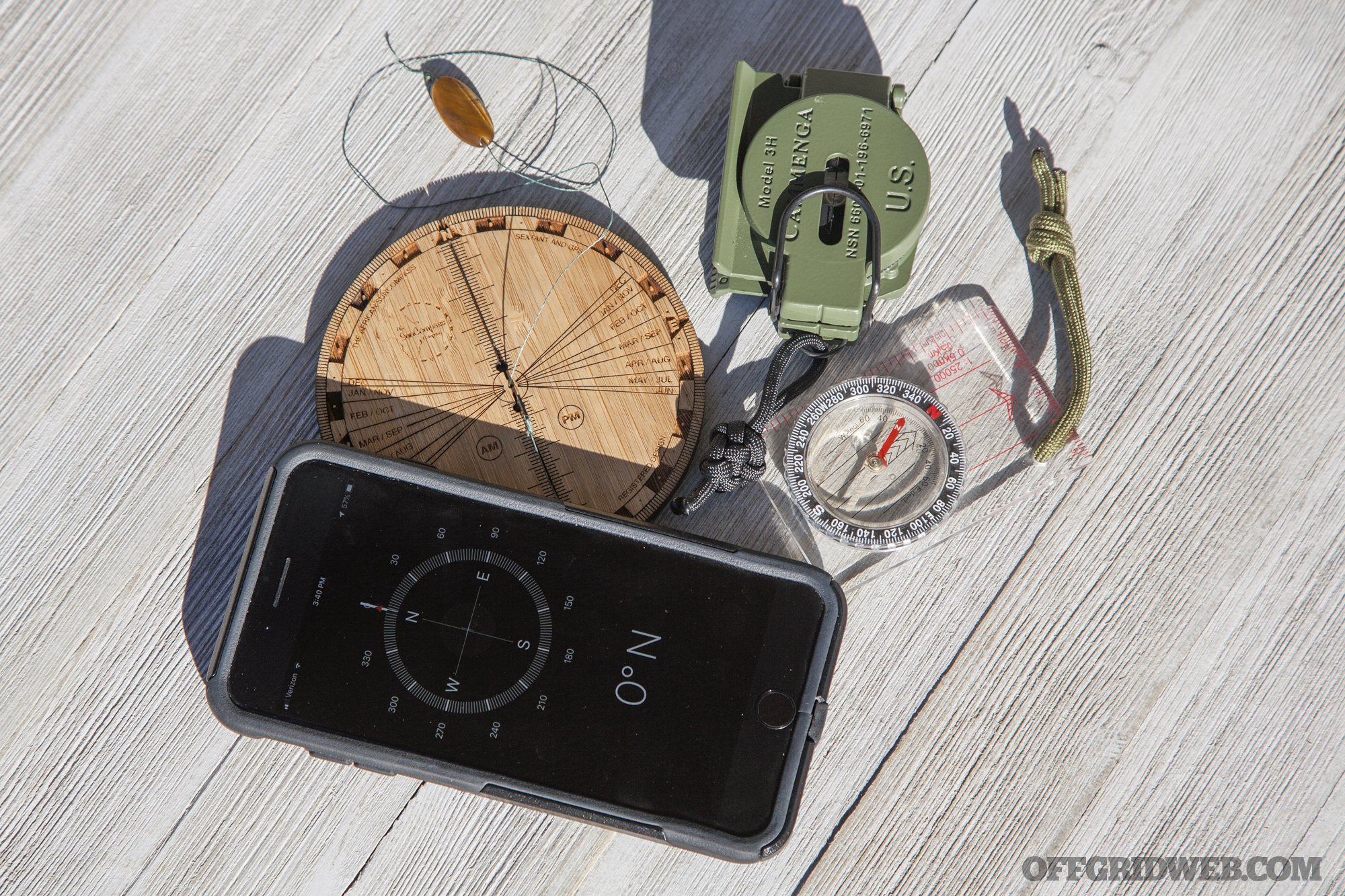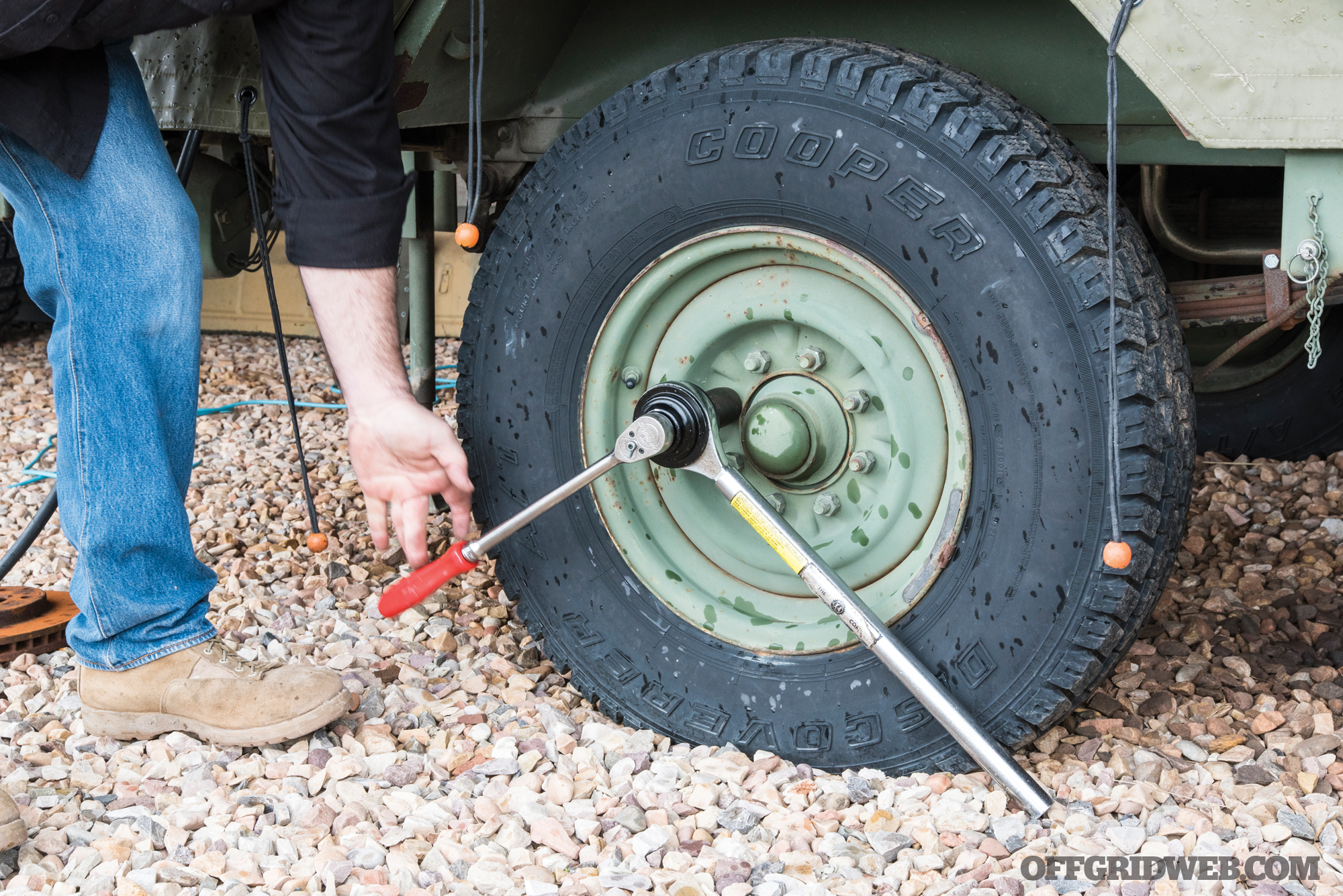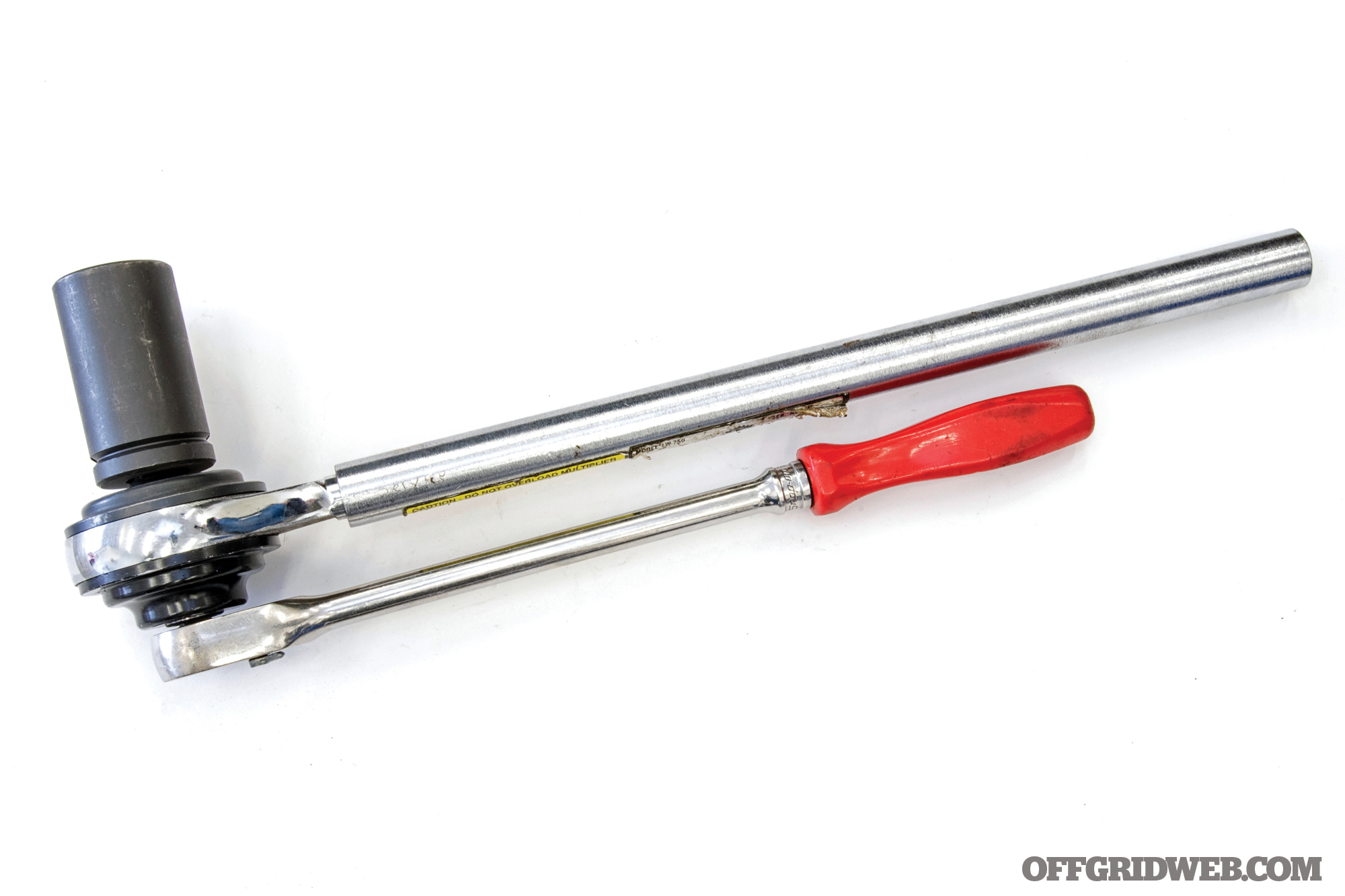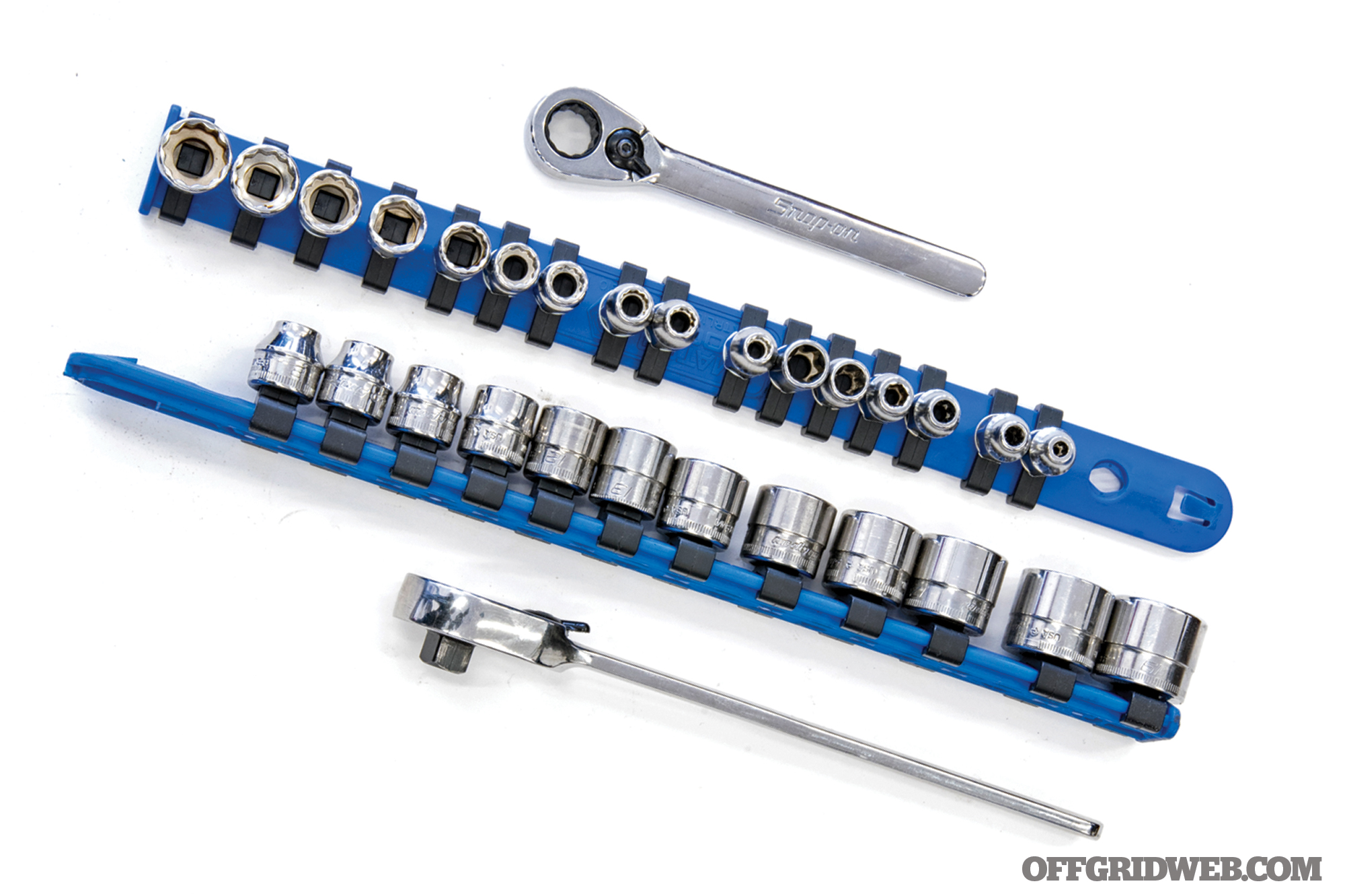
Power Grid Disaster Q&A – Ted Koppel, Author of “Lights Out”

Access to electricity is something we often take for granted in America, but it has become a critical part of our daily lives. The first thing we do in the morning is flip a light switch, and our use of electronic devices is near non-stop from that moment on — you wouldn’t even be reading this article without electricity. However, the power grid that supports our lights, computers, cell phones, point-of-sale terminals, hospitals, and transportation infrastructure (along with countless other services) may not be as bulletproof as many Americans assume. And if a purposeful attack was directed at the grid, it could leave our nation in a state of chaos.

Photo credit: Steven Biver

Photo credit: Steven Biver

Ted Koppel, the author of the NY Times Bestselling book Lights Out, studied the power grid and analyzed the consequences a targeted cyberattack could have on it. Penguin Random House provided the following Q&A with Koppel, where he discusses the grid’s vulnerability, potential avenues of attack, and his thoughts on how each of us can be prepared for a power grid disaster.


How likely is an attack on our power grid?

Ted Koppel: Very. When I posed that question to former Secretary of Homeland Security Janet Napolitano, she put the likelihood at 80 or 90 percent. General Lloyd Austin, who currently heads up the U.S. military’s Central Command, told me that it’s not a question of “if, but of when.” Former Defense Secretary Leon Panetta has warned of a cyber Pearl Harbor, and President Obama highlighted the threat to our power grid in his 2013 State of the Union address. In short, government and military leaders think it’s likely, and I found no compelling evidence to the contrary.

What could happen if our power grid was attacked?

TK: Depending on the sophistication of the attack it could take out all or part of a grid, of which there are only three in the entire United States. Under a worst case scenario, tens of millions of Americans could be without a normal supply of electric power for weeks or even months. The resulting shortages would, inevitably, lead to civil unrest, with the likelihood that large numbers of people would flee affected cities. The wealthy (assuming they could access their money) could relocate to unaffected parts of the country. Those without means would very likely be urged to keep moving.

You say the Internet should be viewed not only as an incredible tool, but also a potential weapon of mass destruction. That phrase has a lot of immediate connotations, specifically to nuclear weapons. Why use it here?

TK: Weapons of mass destruction are not limited to nuclear. There are biological and chemical weapons that are categorized as weapons of mass destruction. The definition depends on the number of people who could be affected. Using that as a measure, denying an urban population electric power (other than that produced by emergency generators) over an extended period of time would result in significant casualties: patients needing life support systems powered by electricity; the most vulnerable elderly, dependent on electric heating in the winter, cooling in the summer; and the unpredictable casualties that would result from civil unrest when food, water, and medicine are in short supply.

WMDs are not limited to nuclear, chemical, or biological agents.

WMDs are not exclusively nuclear, chemical, or biological agents. A digital WMD is a very real possibility.

Why is our power grid so vulnerable?

TK: The electric power industry is made up of more than 3,000 companies, many of them using old and difficult-to-repair equipment. The large power transformers, for example, which are crucial to the transmission of electricity across the country, are almost 40 years old on average. They are enormous, so they are not easily moved or replaced. They tend to be custom made, so they are not easily interchangeable. They are very expensive, so small companies don’t keep backups on hand, and most of them are built overseas and it takes more than a year to get a new one. The largest, most profitable companies have taken elaborate precautions against cyberattack; but they are interconnected with the smaller, less protected companies. Like any chain, the power grids are only as strong as their weakest link.

Who is most likely to mount a cyberattack?

TK: The Chinese and Russians are the most capable of launching an attack against one of our power grids, but because of their many interlocking interests with the United States they are less likely to do so. (As we’ve seen, of course, these ties haven’t stopped the Chinese from launching the biggest cyberespionage attack in history, vacuuming more than 21 million personnel files out of the U.S. government’s computers). The great danger of a catastrophic cyberattack comes from entities that have fewer common interests with the United States: countries like North Korea or terrorist groups like ISIS. There is a growing belief among U.S. intelligence specialists that independent groups already have, or will soon have, that capability.

What kind of plans are in place if the power does go out? What agencies would be responsible in that event?

TK: The only plans our government has in place are those created to deal with natural disasters, such as hurricanes or blizzards. A cyberattack on one of our power grids would be vastly different—its impact would be spread over a far wider area and the outage could last weeks or even months. FEMA and the Department of Homeland Security are the two agencies that have the greatest responsibility to prepare, but they disagree over the likelihood of such an attack and over how to respond.

Couldn’t people just evacuate?

TK: One area of disagreement is over the option of evacuating our urban centers. The deputy administrator (the number two man) at FEMA thinks evacuation is the right option. His boss, the
administrator, disagrees. He thinks there would be too many people involved, not enough time and not enough willing host destinations. Indeed, I found that in one small rural state, the governor has developed plans to keep refugees moving: give them a sandwich, a bottle of water, and a map indicating the nearest gas stations.

Who, if anybody, is best prepared for this kind of scenario?

TK: The Church of Jesus Christ of Latter-day Saints, the Mormons, have been conditioned throughout their history to prepare for one form of disaster or another. I devote three chapters to the Mormons and their extraordinary level of organization. It would be difficult for any other institution to duplicate, but there are measures Mormon families take from which the rest of us can learn.

Is there anything ordinary citizens can or should do to prepare for such a possibility?

TK: Preparing for the unexpected is always a tricky proposition. I spent my earliest childhood years in London during World War II. The British had gone to great lengths preparing for poison gas attacks, which never materialized. They evacuated well over a million people from their cities in anticipation of German attacks, but hundreds of thousands of those evacuees, as it turned out, preferred taking their chances at home to being refugees in someone else’s home. Past experience in preparing for the unexpected teaches us that, more often than not, we get it wrong. It also teaches that there is value in the act of searching for answers. Acknowledging ignorance is often the first step toward finding a solution.


The poster below summarizes some of the points Koppel covers in Lights Out. For more information on the book, go to TedKoppelLightsOut.com.

LightsOut_Poster_v3.indd


Review: 10 Emergency Apps for iOS and Android

WARNING: The materials provided are for illustration and/or informational purposes only. Any use of the information contained in this article shall be solely at the reader’s risk.

In 2017, natural disasters set many records around the globe. With monstrous wildfires, killer earthquakes, and super-strength hurricanes and floods, 2017 will also be remembered as one of the deadliest and most expensive years in recent history.

But the widespread devastation also highlighted the need for more effective and timely communications — before, during, and after a disaster. This includes not only exploring more efficient ways of identifying victims and allocating relief efforts, but also providing the average person with access to lifesaving resources and communications.

When things go sideways, obtaining accurate and timely information, or getting word from family and friends, can be difficult, if not impossible. But staying connected is a crucial part of surviving a natural or manmade crisis. Enter mobile applications.

In this article, we review 10 mobile applications that could potentially help you prepare for, and survive, a crisis or other public emergency.

Smart Devices and Mobile Apps

Smart devices have become an essential tool in everyday life. Mobile technology, social media, and apps have also started to play an increasing role in emergency/rescue efforts as tools for getting information to and from people in affected areas. Normally, these devices provide us with digital connectivity and round-the-clock access to a variety of information sources from around the globe. When a disaster strikes, however, our access to reliable communications and up-to-date information are usually among the first things to take a hit. Ironically, it’s usually during those difficult moments that our need to stay connected is even greater — from contacting others to sending out an urgent call for rescue.

The apps we considered for inclusion in this review all provide access to resources. They’re not necessarily “disaster” apps, but rather apps that could be useful before, during, and after a real-world crisis. For practical reasons we had to limit the review to 10 apps, but there were certainly many more that we could’ve included.

Your phone can do much more than just call people when service may be jammed. Some of these apps we reviewed here will...

What to Look For

In the 10 apps we reviewed, we sought to provide a practical mix. Each person’s situation is, of course, different, and the apps you choose should reflect your specific needs and circumstances. The following are some factors you may want to consider:

Ease of Use and Reliability: We looked for apps that were easy to download, set up, and use. We also prefer a clean layout, with easy-to-identify links, buttons, and fonts that are big enough for the average person to see clearly. If the app falls short in any of these areas, you’ll likely get frustrated, no matter how good the actual content may be. For many people, reliability is a must, especially during a crisis. Overall, the best apps are useful, fast, convenient, easy to use, consistent, and reliable.

Navigation and Design: Think of this as the layout of the various elements and functions and how easy and intuitive it is to navigate throughout the app. Important information should be conveniently placed. The user should notice that everything flows well. Getting around should be intuitive and easy, and you should be able to do so quickly, too. Functions that are slow and clumsy won’t get used; it’s that simple.

Cost: Many apps are free, and that’s great. But be careful; some of those “free” apps come at the cost of having to endure some very annoying ads. On the other hand, some folks don’t mind paying a few bucks for a great app to avoid seeing a bunch of ads. All the apps on our list are free, although some offer upgrades for a fee, or an option to pay to avoid seeing ads.

No Cell Service Needed: Smart devices have become the multitool of our age. There are literally hundreds of functions that can be performed on these devices. But while many functions don’t require connectivity, the majority require cell service or a Wi-Fi connection.

Many of the apps we reviewed come with pre-loaded content available to the user even without connectivity. This is important if you’ll be relying on that content in the aftermath of a disaster when cell service and/or internet service may be down.

What We Found

With these tips in mind, we took a look at 10 popular apps and put them to the test. While we couldn’t anticipate the real-world conditions that the apps might be subjected to, we looked at each through the lens of how they could be used before, during, and in the aftermath of a crisis. We also evaluated each for daily use and how they could be used in the absence of cell or Internet service. Here’s how they stacked up.

FEMA Mobile App

Seller/Developer
Federal Emergency Management Agency (FEMA)

Size
11 MB

Compatibility
iOS 9.0 or later. Compatible with iPhone, iPad, and iPod touch; Android 4.0.3 and up

Languages
English

Price
Free

Survival smartphone cell phone emergency apps map navigation rescue tech 9

Notes
The FEMA Mobile App packs lots of resources and information into an easy-to-use and navigate package that can receive real-time alerts from the National Weather Service for up to five locations. It also features emergency information and tips and ideas on what to do before, during, and after the crisis. The main menu is separated into four sections: Alerts, Prepare, Disaster Resources, and Share Disaster Photos.

Pros:

  • Resources for before and after a disaster/crisis
  • Relatively easy to use and navigate
  • The “Prepare” and “Disaster Resources” sections work without connectivity.
  • You can receive weather alerts for up to five locations.
  • Family sharing allows up to six family members to use the app.
  • Find Recovery Centers in your area to connect with FEMA representatives.
  • Call 911 directly from the app
  • Toggle between English and Spanish
  • Available for Apple and Android mobile devices

Cons:

  • While it does provide some summary level information, it shouldn’t be relied upon as your primary source of preparedness material.
  • The majority of features require connectivity.

First Aid: American Red Cross

Seller/Developer
American Red Cross

Size
63.3 MB for iOS/45 MB for Android

Compatibility
iOS 9.0 or later. Compatible with iPhone, iPad, and iPod touch; Android 4.0.3 and up

Languages
English & Spanish

Price
Free

Survival smartphone cell phone emergency apps map navigation rescue tech 7

Notes
The American Red Cross First Aid app features preloaded content and instant advice for everyday emergencies and basic first-aid tips and information. App also features instructive videos, step-by-step first aid tips/information, and interactive quizzes to test your knowledge. (Tip: The Red Cross also has a Pet First Aid app featuring first aid tips and information, preventive care, and a location finder for vet hospitals and pet-friendly hotels.)

Pros:

  • Easy-to-use, simple step-by-step instructions for many basic first-aid situations
  • 9-1-1 feature allows you to call for EMS directly from the app.
  • Safety tips, videos, and animations tackle a variety of scenarios.
  • Preloaded content ensures access to safety information with or without reception or internet connection.
  • Content is also available in Spanish by using a simple toggle switch.
  • App is ad-free and spam free.
  • Available for Apple and Android mobile devices

Cons:

  • Light gray text can be difficult to read.
  • Excessive number of notifications can distract users.

Emergency Alerts: American Red Cross

Seller/Developer
American Red Cross

Size
104.8 MB for iOS/45 MB for Android

Compatibility
iOS 10.0 or later. Compatible with iPhone, iPad, and iPod touch; and Android 4.4 and up

Languages
English & Spanish

Price
Free

Survival smartphone cell phone emergency apps map navigation rescue tech 8v2

Notes
This all-inclusive app from the American Red Cross will help you monitor more than 35 different severe weather and emergency conditions in your area so that you can be aware of approaching hazards. The app provides customizable real-time alerts to help you prepare for oncoming threats. App also features preloaded emergency content, providing instant access to help you even without connectivity.

Pros:

  • Monitor for earthquakes, tornadoes, hurricanes, flood, winter storms, extreme heat, wildfires, and severe weather
  • Connect with loved ones to share alerts
  • Customizable alerts and notifications
  • Preloaded content ensures access to safety information with or without reception or internet connection.
  • Map showing locations of Red Cross shelters
  • Step-by-step directions and guidance on making a family emergency plan
  • Toolkit with a flashlight, strobe light, and audible alarm
  • Content is also available in Spanish by using a simple toggle switch.
  • Available for Apple and Android mobile devices
  • Now supports Apple Watch OS 4.0 and above, and Android Wearables 2.6 and above

Cons:

  • Text can sometimes be difficult to read.
  • Excessive number of notifications can distract users.
  • You may receive notifications soliciting blood donations.

Mayday Safety

Seller/Developer
Ryan Cleckner

Size
50.6 MB for iOS/7.0 MB for Android

Compatibility
iOS 10.0 or later. Compatible with iPhone, iPad, and iPod touch; Android 5.1 and up

Languages
English

Price
Free, available upgrade packages

Survival smartphone cell phone emergency apps map navigation rescue tech 3

Notes
With Mayday Safety, you can send and receive emergency notifications. With a cell phone signal or Internet connection, the Mayday safety app allows users to send and receive emergency alerts to and from contacts on a worldwide basis. You can also share your precise location and other contact information. The Mayday Safety app alerts convey who needs help and where they are.

Pros:

  • Easy to use under stress — three presses of the Mayday button sends an emergency alert to Mayday Safety app users nearby
  • Simple and effective communications during emergency situations
  • Free for individuals, can be upgraded to include family members and organizations anywhere around the world
  • Safety checks with loved ones included in the family account upgrade
  • Possible upgrades, including Mayday Pro Dashboard, provides services on an organizational level and allows tracking, safety checks, notifications, locations, and a full view of emergency details to and from the entire organization or specific individuals on the interactive map dashboard.
  • Available for Apple and Android mobile devices

Cons:

  • Full functionality of the app requires upgraded account/subscription; packages start at $9.95 per month.
  • Continued use can dramatically decrease battery life

Medical ID

Seller/Developer
Medical ID App

Size
5.7 MB for Android/5.4 MB for iOS

Compatibility
Android 5 and up. iOS 8.0 or later

Languages
English

Price
Free, available upgrade

Survival smartphone cell phone emergency apps map navigation rescue tech 10

Notes
Use Medical ID app to store your important medical/health information. It’s similar to a physical medical ID bracelet, but with much more information. During an emergency medical situation, the Medical ID app provides first responders, medical staff, and doctors with instant access to your medical information, like allergies and medical conditions that may affect your treatment.

Pros:

  • Emergency call screen provides access to Medical ID information without unlocking the device.
  • Provides current location including address and GPS coordinates
  • Nearby hospital locator
  • Access to medical information without a cell signal or internet
  • Elegant design
  • Speaks for you, when you can’t speak for yourself
  • Call 911 directly from the app
  • Very easy to use, navigate, organize, and customize
  • Available for Android mobile devices (iPhones running iOS 8 or later already have Medical ID within the Health App).

Cons:

  • Full functionality of the app requires one-time upgrade at a cost of $5.99.

Viber

Seller/Developer
Viber Media SARL

Size
212.7 MB for iOS/35.15 MB for Android

Compatibility
iOS 9.0 or later. Compatible with iPhone, iPad, and iPod touch; and Android 2.3 or higher

Languages
English, and about 39 other languages

Price
Free

Notes
Viber is a free secure call, text, and video messaging app that can help you stay connected to contacts around the globe. Any person on your contact list who also has the app can be reached quickly and efficiently. It’s easy to set up and use, connections are reliable, and you even get a confirmation that your message was delivered. This is an app that people can use on a daily basis, especially to communicate with contacts in other countries without incurring international fees.

Pros:

  • Group chats, audio and video calls, including international
  • Instant voice and video messages
  • End-to-end encryption
  • According to Viber, nothing you share is ever stored on their servers once the message is delivered, and none of that private information will
    never be sold to third parties or advertisers.
  • Self-destruct timer automatically deletes messages from the recipient’s phone once it’s read.
  • Available for Apple and Android mobile devices

Cons:

  • Requires an Internet connection; Wi-Fi is preferred
  • In-App purchases can get expensive

Waze

Seller/Developer
Waze, Inc.

Size
151.2 MB for iOS /69.38 MB for Android

Compatibility
iOS 9.0 or later. Compatible with iPhone, iPad, and iPod touch; and Android 2.2 or higher

Languages
English, and approximately 41 other languages

Price
Free

Survival smartphone cell phone emergency apps map navigation rescue tech 1

Notes
Mobile app to help you plan your driving route based on real-time, crowd-sourced traffic information, detailing road congestion, accidents, construction, police activity, etc. Waze also provides information on alternative routes to help you avoid problem spots along your route and help you arrive at your destination faster. The app also allows you to see if your friends are also on the road and to see their location.

This is an app that people use on a daily basis to help manage their commute, but it can also be a very valuable tool during an evacuation or some other emergency situation that requires a quick departure and road travel to reach safety.

Pros:

  • User-friendly, easy to use, and information that’s constantly being updated
  • Real-time navigation and traffic data that allows you to make fast decisions to arrive at your destination faster.
  • Pop-up alerts on police activity, accidents, road hazards, and traffic jams
  • Gas price reports along your route
  • Waze claims more than 50-million users
  • Available for Apple and Android mobile devices

Cons:

  • The app may continue accessing your location even when it isn’t open, which may substantially decrease battery life.
  • User interface can be cumbersome to navigate.
  • Pop-up ads for local businesses may occasionally appear.

GasBuddy

Seller/Developer
GasBuddy Organization, Inc.

Size
190.7 MB for iOS/46.76 MB for Android

Compatibility
iOS 10.0 or later. Compatible with iPhone, iPad, and iPod touch; Android 4.4 and up

Languages
English

Price
Free

Survival smartphone cell phone emergency apps map navigation rescue tech 6

Notes
The GasBuddy App allows you to locate gas stations near you with the lowest price using gas price information provided by a community of 70-million users. While the app offers a number of other features, the ability to find gas stations before, during, and after a crisis can be a major advantage for motorists.

Pros:

  • Resources for before and after a disaster/crisis helping you find open gas stations, at home and while on the road
  • Filter search results by price, location, brand, and convenience store details
  • Provides price hike alerts
  • Works in USA, Canada, and Australia
  • Available for Apple and Android mobile devices

Cons:

  • The app may continue accessing your location even when it isn’t open, which may substantially decrease battery life and continue using data.
  • You should expect to see ads.

The Weather Channel

Seller/Developer
The Weather Channel

Size
141.8 MB for iOS/29.9 MB for Android

Compatibility
iOS 11.0 or later. Compatible with iPhone, iPad, and iPod touch; Android 4.4 and up

Languages
English, and over 30 other languages

Price
Free

Survival smartphone cell phone emergency apps map navigation rescue tech 12

Notes
Plan ahead with accurate, reliable weather forecasts for up to two weeks in advance no matter where you are. Includes fast-loading interactive radar maps and real-time alerts. Easy-to-find weather information using weather graphs, instant insights, and interactive tools to stay informed of all weather conditions.

Pros:

  • Live alerts and safety advice for extreme weather events, including floods and hurricanes
  • Air quality reports for the U.S., UK, Spain, France, Germany, Mexico, China, and India
  • Sleek, well-designed interface with new home screen and easy-to-use navigation bar
  • Hourly forecasts, including rain and snow alerts
  • Lightning alerts for your GPS location to advise you where lightning is striking nearby
  • Weather news, videos, and other informational content
  • Fast access to detailed weather information and individual conditions to see how they’ll change over the next hours or days
  • Available for Apple and Android mobile devices

Cons:

  • The app may continue accessing your location even when it isn’t open, which may substantially decrease battery life and continue using data.
  • Expect to see ads unless you pay a $3.99 single payment in-app purchase to remove the ads.

Zello Walkie Talkie

Seller/Developer
Zello, Inc.

Size
64.2 MB for iOS/18.68 MB for Android

Compatibility
iOS 8.0 or later. Compatible with iPhone, iPad, and iPod touch; Android 4.4 and up

Languages
English, and over 18 other languages

Price
Free, with premium channel upgrade for $0.99

Survival smartphone cell phone emergency apps map navigation rescue tech 11

Notes
The Zello app turns your smart phone into a walkie-talkie with a push-to-talk radio app. Talk to your contacts privately or join public channels. The app is free and works anywhere in the world as long as you have an internet connection.

Pros:

  • Live voice over any network or Wi-Fi connection (2G, 3G, or 4G mobile data)
  • Send photos, text, or your location to your contacts
  • Replay any messages you may have received, even if your phone was turned off
  • Shows availability of your contacts and text status
  • No ads
  • Available for Apple and Android mobile devices

Cons:

  • The app may access your location even when it isn’t open, and can significantly decrease battery life.
  • Requires an Internet connection or cell service

Wrap Up

Emergencies come in all shapes and sizes, and getting accurate, up-to-date information or communicating with others in the middle of a crisis or public emergency can be a huge challenge. But with today’s mobile technology and the right apps, you can provide yourself with a major advantage. Whether you live in the mountains or along the coast, there are apps that can not only provide timely and accurate emergency information, but can help you send out a distress signal, transmit your location in an emergency, or contact friends and family members.

More From Issue 29

Don’t miss essential survival insights—sign up for Recoil Offgrid’s free newsletter today!

Read articles from the next issue of Recoil Offgrid: Issue 30

Read articles from the previous issue of Recoil Offgrid: Issue 28

Check out our other publications on the web: Recoil | Gun Digest | Blade | RecoilTV | RECOILtv (YouTube)

Editor’s Note: This article has been modified from its original version for the web.


Review: Grey Ghost Precision Glock 19 Slide & Barrel

If you’ve spent any time browsing gun photos on Instagram or other social media platforms, you’ll know that so-called Gucci Glocks are all the rage these days. It seems like everyone and their mother is upgrading a Glock with fancy parts until almost nothing remains of the original gun, and that’s not even including the 80% builds that provide a blank canvas for customization. Although these projects may receive a deluge of likes on social media, we’re sometimes left wondering how many of them are just safe queens or temperamental range toys.

The Upgrade/Downgrade Conundrum

As preparedness-minded individuals, we like plinking at the range as much as any other red-blooded American, but we also prefer our weapons to remain practical and reliable for real-world defensive use. Form over function isn’t really our thing. We want to know that we can keep that weapon close at hand in case of emergency, and trust it to go bang every time we pull the trigger. Anything else is probably just an entertaining novelty item to flex on people with less disposable income.

Grey Ghost Precision Glock 19 slide barrel trigger review G19 gun pistol 17

So, what are some upgrades we can add to a plain-jane Glock 19 that will improve function without downgrading dependability? We started by looking at the slide and barrel, since these parts can easily be swapped out for the stock counterparts if we ever want to return to the original configuration. They offer more serrations for gripping the slide, tighter tolerances for improved accuracy, and they provide the ability to add an RMR or other micro red dot optic as well as a suppressor or compensator. And, of course, they make for a nice cosmetic change as well.

Grey Ghost Precision Glock 19 slide barrel trigger review G19 gun pistol 15

Grey Ghost Precision Glock Parts

You may recall our recent review of the Grey Ghost Gear Gypsy backpack. The guys at Grey Ghost have also been expanding more into the gun market with parts and even complete pistol and rifle builds under their Grey Ghost Precision brand. Relevant to our aforementioned search for G19 upgrades, GGP offers both slides and barrels for several Glock models. Stripped slides are available for the G17 Gen 3 and Gen 4, G19 Gen 3 and Gen 4, and G43.

Grey Ghost Precision Glock 19 slide barrel trigger review G19 gun pistol 10

The Grey Ghost Precision G19 slides are machined from billets of American-made 17-4 stainless steel, and feature tighter tolerances than the OE Glock slides. Each slide is finished in a durable black nitride coating. Each also includes an RMR red dot cut, and comes with a GGP-logo G10 blanking plate and mounting screws.

Grey Ghost Precision Glock 19 slide barrel trigger review G19 gun pistol 8

Two patterns are offered for these slides — V1 is composed of diagonal serrations with lightening cuts at the front, while V2 has a hexagonal “geoscale” texture. As we said previously, there are versions for Gen 3 and Gen 4 guns.

The two available patterns for Grey Ghost Precision Glock 17 and 19 slides.

Side-by-side comparison of the two available patterns for Grey Ghost Precision Glock 19 slides.

As for the barrels, they’re currently available for the G17 and G19. They’re constructed from 416R stainless steel, with tolerances of +/- 0.003″ and match chambers that meet Sporting Arms and Ammunition Manufacturers’ Institute (SAAMI) specifications. The barrels have a 1:10 twist rate, and can be had either uncoated or with a black nitride finish. For those who want to run a can or a comp, GGP offers optional 1/2 x 28 threads with an included thread protector.

GGP G19 Gen 4 V1 Slide

We decided to try out the V1 slide ($450 MSRP) for our Glock 19 Gen 4. It arrived in a neatly-packed foam case, along with the pre-installed blanking plate, two long screws for use with an RMR optic, and an assembly/installation guide. The manual also has a QR code that points to the slide assembly guide video:

Slide Completion Parts, Sights, & Trigger from Brownells

The Grey Ghost Precision slide is stripped, so we still needed completion parts before it’d be usable. Per the manual, you’ll need the following items to complete it:

  • Firing pin and spring
  • Channel liner
  • Complete extractor with LCI
  • Extractor plunger assembly
  • Spring cups
  • Safety plunger and spring
  • Recoil spring/guide rod assembly
  • Rear slide plate
  • Sights

Grey Ghost Precision Glock 19 slide barrel trigger review G19 gun pistol 4

We headed over to Brownells.com to pick up these items. The all-in-one Glock 19 slide completion kit ($80 MSRP) was out of stock at the time, so we filled our cart with the individual components we needed:

Grey Ghost Precision Glock 19 slide barrel trigger review G19 gun pistol 18

The anodized aluminum backplate from ZEV was a nice finishing touch for our slide.

Since it was so easy to swap, we re-used the original recoil spring assembly from our G19 rather than buying a replacement. We also selected a set of Trijicon HD night sights ($141 MSRP), with a combination of tritium and bright orange paint for visibility in all light conditions. It’s worth noting that you’ll need to be cautious when selecting sights for any aftermarket slide, since large-footprint sets like the TruGlo TFO may not fit with the RMR cut. The Trijicon set, however, worked perfectly.

Lastly, we knew that a heavy stock trigger would be out of place on this build, but we also didn’t want an ultra-light trigger for a gun we plan to carry. So, we chose an Apex Action Enhancement Kit ($123 MSRP) to reduce trigger pull by about 1 pound, eliminate excess travel, and smooth out the reset. This drop-in kit includes the trigger, connector, and safety plunger.

Grey Ghost Precision Glock 19 slide barrel trigger review G19 gun pistol 1

Using the process shown in Grey Ghost Precision’s video, we assembled the slide internals at home with a set of punches, and also installed the Apex trigger. A local shop easily pressed in the Trijicon sights, completing our slide.

GGP G19 Match Grade Barrel

Grey Ghost Precision Glock 19 slide barrel trigger review G19 gun pistol 14

The last piece of the puzzle was the barrel, and we chose one with black nitride finish and threading ($190 MSRP). It features machined GGP lettering, 9mm designation, and recesses on top that match those on the slide. The thread protector ring has a machined texture that provides a cool visual touch and offers plenty of grip for quick removal.

Grey Ghost Precision Glock 19 slide barrel trigger review G19 gun pistol 7

After installing the barrel and lubricating the gun, we could finally load up and head to the range.

At the Range

Grey Ghost Precision Glock 19 slide barrel trigger review G19 gun pistol 26

To check the reliability of our newly-upgraded G19, we ran through several boxes of our typical Federal 115gr FMJ range ammo. About 20 rounds in, we got a single nose-up failure to feed:

Grey Ghost Precision Glock 19 slide barrel trigger review G19 gun pistol 29

However, more than 100 rounds later we were unable to replicate this jam. Next we shot 20 rounds of Federal HST 147gr hollow-points, and the Glock ran smoothly with these as well. Aside from the isolated malfunction shown above, there was nothing unusual to report.

Grey Ghost Precision Glock 19 slide barrel trigger review G19 gun pistol 23

Although we didn’t conduct scientific testing, we noticed a slight improvement in groups which we attribute to a combination of the match barrel’s tighter tolerances and the improved Apex trigger. The high-vis Trijicon sights were also helpful for follow-up shot placement.

Conclusions

Grey Ghost Precision Glock 19 slide barrel trigger review G19 gun pistol 20

Overall, we felt our upgraded G19 ran great. The single failure to feed was worrying at first, but its early occurrence and our inability to replicate it later leads us to believe it may have been a break-in issue. We’ll continue to run the gun at the range with various ammo to further bolster our confidence in this conclusion, but for now we’re satisfied in its reliability. A pattern of jams would be a cause for concern; an isolated one on brand-new parts is not.

Grey Ghost Precision Glock 19 slide barrel trigger review G19 gun pistol 19

Racking the slide is easy thanks to its aggressive serrations, and its lightening cuts add a little visual flair without going into over-the-top space gun territory. There’s also the option to add an RMR, which we plan to do in the future. For now, we’re very pleased with the Trijicon HDs.

Grey Ghost Precision Glock 19 slide barrel trigger review G19 gun pistol 11

The GGP match barrel offers a slight improvement in accuracy due to its tight tolerances, but a bigger selling point for us is its threads. This provides the means to add a suppressor or compensator — we shouldn’t have to explain the many benefits of a suppressor, but if you’re curious about the benefits of carry pistol comps, check out this article by RECOIL’s Dave Merrill.

Grey Ghost Precision Glock 19 slide barrel trigger review G19 gun pistol 25

As for the Apex Action Enhancement Kit, we’d consider it a nice incremental upgrade for a carry gun. It maintains most of the weight of the trigger pull while smoothing the action and adding a crisper reset. We’ve shot enough Glocks with 2-pound triggers to know that’s not what we wanted, and so we’re glad we added the Apex kit to our Brownells order.

Grey Ghost Precision Glock 19 slide barrel trigger review G19 gun pistol 27

Though we may not have achieved full Gucci status without ostentatious frame work, brightly-colored magazine base plates, and a custom Cerakote job, we’re happy with our tuned-up G19. The total upgrade MSRP was $1,011 not including the gun, and many of you may prefer to allocate that kind of money to buying another pistol — an understandable choice. But if you’re looking to make your existing Glock even better without destroying its reliability, adding a few carefully-chosen parts is a good way to go. All those Instagram likes you’ll rake in are just a nice bonus.

Grey Ghost Precision Glock 19 slide barrel trigger review G19 gun pistol 16

For more information on Grey Ghost Precision Glock slides and barrels, or the company’s turn-key Combat Pistol, go to GreyGhostPrecision.com. For slide completion parts, sights, triggers, magazines, ammo, and other items you’ll need, check out what Brownells has to offer.


Point the Way: Survival Compass Buyer’s Guide

As survivalists, all of the gear we purchase or invest in is necessary, but some of it just isn’t that exciting. Water purification system? It’ll save you from contracting nasty parasites, but it’s not exactly a conversation piece you show off to all your friends. A lighter, stronger groundsheet to place under your tent? Meh. Other objects, thankfully, smack of high adventure and exploration, of manifest destiny and blazing a trail. The compass, clearly, falls into the latter category.

If you still question why you’d ever need a compass since your phone has Google Maps and GPS, then this probably isn’t the article for you. If, however, you’ve ever gotten lost in the woods because your phone (or handheld GPS) ran out of batteries, lost signal, or fell into a creek, then settle in and read up on the latest offerings we’ve collected.

Photo of an adult male backpacker sitting on the ground and reading his compass.

We explore six different compass models in this buyer’s guide, ranging the entire spectrum from basic backpacker to professional off-grid adventurer. Our hope is that this guide assists your decision-making process the next time you consider supplementing your survivalist land-nav tool belt. If you’re still wondering how exactly to use one, please refer to Ryan Cleckner’s article on land navigation from Issue 29.

Brunton Conventional Transit

Everything about this precision compass exemplifies high quality and durability — and for its stratospheric price, it’s about what we’d expect to see. From the oiled leather case that it arrives in to the heavy (nearly 1/2 pound) cast-aluminum body, it definitely looks the part of a tool designed for serious and long-term use.

Studio photo of the Brunton Conventional Transit compass.

Designed in 1894 by Canadian-born mining engineer David W. Brunton, the Transit is widely used to this day by professional geologists and engineers. The movement of the needle is smooth and very fast, with immediate dampening and ability to “lock on” to magnetic north faster than any other compass we tested. This is because rather than being filled with fluid like most compasses, the Brunton utilizes magnetic induction damping and a sapphire jewel bearing, contributing to smooth movement through 360 degrees.

Survival compass buyers guide review navigation declination map Brunton 3

Its locking clamshell design helps to protect its sensitive components; however, we found it could be difficult to open with shaky or cold hands, and impossible (for us) to open with gloves on. This drawback isn’t necessarily a deal breaker, but it’s indicative that it was designed more for use by professionals in relatively pleasant weather conditions — not so much for survival in frigid environments.

Unlike some of the other models we tested, the Transit has no tritium or glow-in-the-dark inserts; therefore it isn’t as easily readable in low-light conditions. Again, this isn’t really a design flaw since it was designed for professionals reading the compass during the day, at a time that’s convenient for them. However, for survival purposes we have to consider it a drawback.

Would we take it with us if our lives depended on it? Probably. Would we want to pay $400 for it? Not really. The product is basically unparalleled, but it may be a bit more than we really need or want to plunk down money for. Published accuracy +/- 0.5 degrees.

Survival compass buyers guide review navigation declination map Brunton 1

Pros:

  • Extremely high craftsmanship
  • Proven durability when cared for
  • Impressive to look at and hold

Cons:

  • Heavy
  • Expensive
  • Not useful for map reading

Materials

Aluminum

Weight
6.8 ounces

Dimensions
3.1 by 2.8 by 1.3 inches

MSRP
$440

URL
brunton.com

Cammenga 3H (M1950)

More than 60 years after its original design as specified by the U.S. Army, the Cammenga 3H is also known as the M1950 compass, which began production in 1950. It’s been relied upon by generations of soldiers through all environments, including the frozen Chosin Reservoir in Korea, the jungles of Vietnam, and present-day service in Iraq and Afghanistan. It took its design cues from lessons learned with the M1938 compass used in WWII. The Army liked the basic blueprint but wanted to give it a tougher and heavier housing as well as a damping mechanism to prevent wild swinging of the needle. With these modifications, a legend was born.

Survival compass buyers guide review navigation declination map Cammenga 1

Like the Brunton model, the 3H is made in the United States and uses a non-liquid filled needle housing. The movement of the needle is very smooth, although it doesn’t turn or settle in quite the same confident or reassuring manner as the Brunton. We liked that we were able to open and use the compass using our whole hand, not just our fingertips as with the larger Brunton. Opening and sighting was faster and more intuitive, and the seven tritium micro-lights assisted in low-light acquisition.

Survival compass buyers guide review navigation declination map Cammenga 2

From a durability standpoint, there’s no question that the 3H is hard to kill. It’s waterproof and shockproof, and tested in temperatures from -50F to 150F (-45C to 65C). The aluminum frame, although not quite as tank-like as the Brunton Transit, is still substantial and didn’t have a problem with being dropped or stepped on.

Even in 2018, any combat veteran who has actually had to rely on his or her gear will tell you that some of the Mil-spec articles they’re issued are complete junk. With a sterling track record and a more than half-century of abusive field testing behind it, the 3H is a well-loved exception. We wouldn’t hesitate to place our lives in its hands, and there aren’t many sub $100 tools we can say that about. Published accuracy: +/- 2.25 degrees.

Pros:

  • Basically the same compass your father (and/or grandfather) used
  • Unrivaled reliability record
  • All-temperature performance

Cons:

  • Without a clear baseplate, may not be quite as easy to read maps
  • Compass card divided into 5-degree increments; not as precise as some other compasses

Materials
Aluminum

Weight
5.3 ounces

Dimensions
3 by 2.25 by 1 inches

MSRP
$105 to $141

URL
cammenga.com


Coleman Engineer Lensatic Compass

Our first impression was that we’d found this as a “prize” in the bottom of a Cracker Jack box or it was the one Morgan Freeman bought at the pawnshop in Shawshank Redemption. The thin plastic housing felt like it might snap in two as soon as we opened the case.

Survival compass buyers guide review navigation declination map Coleman 1

After opening it, we worried that if we stepped on the compass it’d break, yet were pleasantly surprised that somehow it stood up to a 230-pound man putting all his weight on top of it (following the navigational testing, of course).

Trying to sight the liquid-filled compass wasn’t easy, but it was doable. The nail in the coffin, however, came when we couldn’t get the needle to align properly. No amount of tapping or cajoling would yield a consistent reading, and magnetic north consistently wandered between 10 to 20 degrees away.

Survival compass buyers guide review navigation declination map Coleman 2

Although this compass is inexpensive, $10 spent on garbage is still a waste. We wouldn’t even give it to a child as a learning tool, fearing that they might actually try to use it one day for real navigation. Its only real use would be as part of a Halloween costume. Coleman does offer some quality products, but this isn’t one of them. We can only hope that they put this product out of its misery before someone makes the mistake of relying upon it in a life-and-death situation.

Pros:

  • Low cost
  • Surprisingly durable
  • Compact

Cons:

  • Finicky needle with unreliable accuracy
  • Luminous letters aren’t very bright

Materials
Plastic

Weight
3 ounces

Dimensions
2.2 by 1.1 inches

MSRP
$10

URL
coleman.com


Silva 515 Ranger Compass

As with the Coleman compass, at first we were suspicious of the Silva because of its light weight. When we actually started reading bearings and using it with maps, however, we found the mirror design to be very well-thought-out and clearly marked. And although it’s very lightweight, the plastic is thick in the right places to prevent damage. Three scales, a map magnifier, clinometer, and declination adjustment were additional features that made its value stand out.

Survival compass buyers guide review navigation declination map Silva 2

In this product evaluation group, its closest competitor would be the Suunto MC-2, so let’s make some comparisons. The design on both of them is very similar, and their appearance, weight, and feel are very close. There are a few differences, as noted in the Suunto section which follows, but both designs have a solid reputation in the backcountry.

Pros:

  • Lightweight compass with precise 2-degree measurement increments
  • Affordable cost and good entry-level value

Cons:

  • Liquid-filled capsule may have issues in low temperatures.
  • Rotating bezel was overly loose.

Materials
Plastic

Weight
2.4 ounces

Dimensions
4 by 2.5 inches

MSRP
$50

URL
silva.se


Suunto MC-2 Compass

This design is quite lightweight, although tougher than what you’d initially expect. As with the Silva, both designs use a clear plastic backing, making it easier to quickly find where you’re going and chart a course on a paper map. They both utilize liquid-filled capsules, which can sometimes create problems when used in low temperatures.

Survival compass buyers guide review navigation declination map Suunto 1

Glow-in-the-dark (non-tritium) markings, which need to be “re-charged” with a flashlight in the dark, are also used on the faces of both compasses. The Suunto, however, features a thick, bright ring around the compass face as well as on the directional markings. This seems preferable, as it helped us to locate it in the dark and provided faster orientation in low light.

Survival compass buyers guide review navigation declination map Suunto 2

An informal polling of our wilderness search-and-rescue associates revealed their unanimous approval of this option from Suunto, although we still weren’t 100-percent sold. While both the Suunto and Silva retail for less than the Cammenga 3H, we’d still pick the Cammenga for its intuitive ease of use and unquestionable durability in all conditions. Published accuracy: +/- 2 degrees.

Pros:

  • Solidly built (for plastic) compass with proven field experience
  • Lightweight frame
  • Limited lifetime warranty

Cons:

  • Suunto logo blocks orientation arrows, making map use more difficult
  • Markings may need to be recharged in the dark

Materials
Plastic

Weight
2.6 ounces

Dimensions
2.56 by 3.98 by 0.71 inches

MSRP
$60

URL
suunto.com


UST High Visibility Folding Map Compass

Retailing for $10, the UST mirror compass is in the same price range as the Coleman Lensatic compass, but offers significantly better build quality. It’s also easily readable, even for laypersons who don’t have much experience using a compass. Even if you don’t use the mirror function and just use it for basic wayfinding, it’d still be worth the price of admission to keep on-hand as a backup.

Although the plastic snap closure isn’t as crisp as on the similar Suunto or Silva models, the UST compass still didn’t feel like a toy. The compass needle settled fairly quickly, and the day-glo green backing allowed us to find it quickly in or bag or locate it if dropped on the ground.

Survival compass buyers guide review navigation declination map UST 2v2

The metal pins which hold the plastic clamshell pieces together began to work their way out after a series of openings and closings, raising questions about its long-term durability when used in the field. However, as an affordable model for someone just learning to use a mirror type compass, it’s a worthwhile option.

Survival compass buyers guide review navigation declination map UST 1

Pros:

  • Very low cost
  • Decent functionality for entry-level users

Cons:

  • Lesser build quality than higher-priced models

Materials
Plastic

Weight
2.4 ounces

Dimensions
3.7 by 2.5 by 0.7 inches

MSRP
$10

URL
ustbrands.com


Related Posts

About the Author

Andrew Schrader is a licensed professional engineer and is certified by the U.S. Army Corps of Engineers as an Urban Search and Rescue (USAR) Structures Specialist. His company, Recon Response Engineering LLC, educates firefighters and search-and-rescue teams on the subject of urban search and rescue and building collapse. He was deployed on rescue operations for Hurricane Hermine in 2016 and Hurricane Irma in 2017.

More From Issue 29

Don’t miss essential survival insights—sign up for Recoil Offgrid’s free newsletter today!

Read articles from the next issue of Recoil Offgrid: Issue 30

Read articles from the previous issue of Recoil Offgrid: Issue 28

Check out our other publications on the web: Recoil | Gun Digest | Blade | RecoilTV | RECOILtv (YouTube)

Editor’s Note: This article has been modified from its original version for the web.


Old-School Navigation: How to Use a Map and Compass

How hard can it be? After all, if you want to go “up” on a map, you just follow the direction that your compass is pointing, right? Well, navigation is actually a bit more complicated than that.
There are three different “norths” — true north, magnetic north, and grid north.

True north refers to the very top of the globe (the North Pole), magnetic north is where the north-seeking arrow of your compass points, and grid north is the direction the vertical grid lines on your map point. Why are they different, and how does this affect your ability to navigate accurately? Follow along to find out.

True North and Magnetic North

True north and magnetic north are different because, despite what many believe, the North Pole isn’t magnetic and your compass doesn’t point there. Instead, your compass points to a giant ore deposit in Northern Canada. Therefore, depending on where you’re standing in the world, your compass may actually point off to the side of true north.

Compass map navigation survival shtf emergency hiking backpacking magnetic north grid declination 7

Above: True north (top of globe/earth) versus magnetic north (where your compass points). Compasses don’t actually point at the North Pole; instead they point at Northern Canada.

For example, in parts of Tennessee and Alabama, magnetic north and true north are in line with each other so there’s no perceptible difference between the two at that location.

However, the variance gets worse the further east or west you are. For example, in parts of Georgia, your compass will indicate a few degrees west of the North Pole. In Maine, your compass will be a staggering 16 degrees west of true north.

Going the other direction produces opposite results. In Louisiana, your compass will point a few degrees east of True North, and in Alaska, your compass might point a whopping 25 degrees to the east of true north. So if you’re in certain parts of America and want to walk to the North Pole by following “north” on your compass, you’ll never get there.

To make this more difficult, magnetic north actually shifts. Year to year, the location to which your compass points changes slightly. Therefore, it’s important to know the current values for your specific location. It doesn’t move much, so if you use information from last year it may not make much of a difference. But if you use data from 10 years ago, it may be enough of a change to cause you to miss your mark.

The difference between true north and magnetic north for a given location is called magnetic declination, measured in the number of degrees of variation and the direction (east or west). More on declination in a bit.

Compass map navigation survival shtf emergency hiking backpacking magnetic north grid declination 8

Above: These lines show how magnetic declination varies across the United States. The lines curve because a map, as shown, is flat but the Earth isn’t.

Grid North

Grid north refers to the orientation of the gridlines on a map and often diverges quite a bit from true north and magnetic north.

Why don’t the gridlines on a map point to true north? Well, let’s start with a fact that may upset some diehard conspiracy theorists — the Earth is spherical. If you’ve ever tried to cover a bowling ball with postage stamps (don’t ask), you’ll know that a bunch of square shapes don’t fit nicely on a sphere, especially toward the top and bottom. The same is true with trying to create a bunch of square representations (maps) of our Earth. Therefore, to keep our maps square, we have to fudge a bit on the orientation of gridlines.

Print

Above: Square maps might work around the equator, but notice how the shape changes closer to the poles.

The current system used for U.S. Geological Survey (USGS) maps is called Universal Transverse Mercator (UTM). That’s just a really fancy way of referring to the layout and number of gridlines on our globe. This methodology is very similar to the Military Grid Reference System (MGRS) used by the U.S. Armed Forces.

The UTM concept is metric-based, in that grids are broken down into tenths to determine a location on the map. Once you’ve learned it, it’s an incredibly powerful system that can utilize varying numbers of digits to signify different levels of accuracy. For example, a four-digit grid number refers to a square kilometer (1,000 meter square), while a 10-digit grid number is used for accuracy down to 1 square meter.

Understanding and using this system could easily be a subject for its own article, so we’ll leave it at that for now.

Why Should You Care About the Three Norths?

Well, if you look on a map and see a fresh water source or road you need to reach directly above your current position, it’s essential to know which north is “up” and how to make your conversions to get there.

Although we refer to these as the “Three Norths,” it’s really the three types of directions or azimuths. An azimuth is the direction of an object/location from an observer represented in degrees. Whereas, a bearing is the direction you’re traveling. For example, “I confirmed that the water tower was behind me at an azimuth of 90 degrees before I continued on my bearing of 270 degrees.”

Shooting an azimuth with a lensatic compass.

Shooting an azimuth with a lensatic compass.

It’s common to refer to an azimuth as “measured” when it was determined a map, and “shot” when it was determined from using a lensatic compass. Shooting an azimuth is accomplished by aiming at a visible landmark through the sights of a lensatic compass, much like you would with the iron sights of a gun. For example, “I measured an azimuth of 45 degrees from the map. I confirmed the direction of the hilltop by shooting an azimuth of 45 degrees.”

For example, there’s 90 degrees (east) on your compass (magnetic 90 degrees), a right turn from true north (true 90 degrees), and straight to the right on your map (grid 90 degrees).
That isn’t meant to confuse you or make it sound excessively complicated. Instead, it’s important to picture three different orientations of an entire 360-degree circle. Each circle’s north points to a slightly different location, and it’s important to know which system someone is referring to when they tell you to travel 5 kilometers with an azimuth of 180 degrees. If you’re in Acadia National Park in Maine and they gave you a grid north azimuth and you use a magnetic azimuth, you’ll end up almost 1.5 kilometers away from where you intended.

Declination

When using a map and compass, it’s often necessary to convert between a grid azimuth and a magnetic azimuth. Although we introduced the concept of the deviation of magnetic north from true north, it’s not very common to convert between them. The two norths you’ll likely be most concerned with are grid north and magnetic north because those are the two norths that correspond with the tools in your hand — the map is a grid while your compass is magnetic.

When converting from one to the other, you must either add or subtract the difference in degrees depending on whether magnetic north appears to the left or right of grid north from your current position.

Compass map navigation survival shtf emergency hiking backpacking magnetic north grid declination 5

On USGS maps, you’ll find a declination diagram at the bottom of the map (highlighted above). This diagram will represent the difference between each of the three norths from the center of the map on a certain date. Be sure to check the date! If it’s too old, you should look up the current declination numbers for that map.

Here’s an example from an older map of the Grand Canyon. From this diagram, we can see that our compass would point to magnetic north a little over 13 degrees to the right of “straight up” on the map (grid north). True north is represented by a star.

Compass map navigation survival shtf emergency hiking backpacking magnetic north grid declination 4

Above: For this example in the Grand Canyon, grid north (“GN”) differs from true north (the star) by 38 minutes and from magnetic north (“MN”) by another 13 degrees. Grid north is what you’d see on your map, and magnetic north is what your compass would indicate.

Note that the difference between magnetic north and grid north in this diagram is 13 degrees and 38 minutes (slightly over half a degree because there are 60 minutes in a degree). It’s 13 degrees from magnetic north to true north and then an additional 0 degrees and 38 minutes from true north to grid north.

For this example, I wouldn’t worry about the additional 0 degrees and 38 minutes. After all, I’d be planning to walk across terrain — I’m not surveying property lines. However, it’s important to note because it is a significant figure on some maps. Let’s just assume an even 13 degrees for the rest of this example.

Conversions

From any azimuth using this map, there’ll be a 13-degree difference between the azimuth on the map and an azimuth shot with your compass. There are a few mnemonics to help you remember when to add or subtract the difference (we’ll give you an example shortly). Also, some compasses have tools that help account for declination.

If you’d like to set the declination in your compass, follow the instructions for your particular model compass. By doing this, you can offset the direction the compass points in relation to where the magnetic needle points. This can be handy for many; however, there are good reasons to convert declination in your head and to leave the settings on your compass alone.

First, you’ll never forget your settings on your compass and accidentally use an old/incorrect declination setting. Second, many compass features involve perfectly orienting a map, aligning a compass edge for your path, and then aligning the needle within certain marks as a guide for your azimuth. This is a good way to use a map and compass. In fact, it’s probably the most recommended and taught method. However, I like to use a map and compass “on the go” and don’t always want to stop and spread everything out.

Also, I like to employ advanced techniques, such as intersection and resection, that require a good understanding of what’s going on. Using rotating bezels and guide marks to help you with your path are handy, but they often remove some of the important basics, such as understanding how to convert azimuths and what you’re actually doing.

A great mnemonic to convert for declination is “LARS,” which stands for “left add, right subtract,” because it’s simple and doesn’t require you to know whether you’re in an area with easterly or westerly declination (more on that next).

To use the LARS mnemonic, you simply look at, and use, the declination diagram on the bottom of your map. If you have a magnetic azimuth at the Grand Canyon and you want to convert that to a grid azimuth, place your finger on the magnetic north arrow and note that you’d need to move your finger left to get to the grid north arrow.

Using LARS, we know that going to the left means “add” — therefore we add the 13 degrees to convert from magnetic north to grid north. To convert from grid to magnetic, we’d move our finger to the right so we’d subtract the 13 degrees.

Let’s jump to an example to see how this works and also to see a real-world example of when you might need to do this.

Grid to Magnetic: Imagine that you know your position on the map, and you’d like to walk to a road intersection on the map that measures 35 degrees from your position. As you now know, you can’t just find 35 degrees with your compass and walk that way because you’ll be 13 degrees off-course … but which way? We have a measured grid azimuth of 35 degrees, but we need to shoot a magnetic azimuth for our compass. On this map, we move to the right to get from Grid North to Magnetic North on the declination diagram so we use the LARS mnemonic and know that we have to subtract the 13-degree difference for this location. We end up walking a bearing of 22 degrees with our compass to get to a point on our map 35 degrees from our location.

Magnetic to Grid: Now imagine that you’re sitting on a hilltop and see something in the distance. You use your compass and determine that the object is 270 degrees from your position, but you’d like to see where the object is on your map. Because you used your compass, you now have a magnetic azimuth and you need to convert to a grid azimuth. On our example map, your finger must move to the left as it transitions from the magnetic to the grid north arrows in the declination diagram, therefore using the mnemonic LARS tells us to add the 13-degree declination to our magnetic azimuth to get our grid azimuth of 283 degrees.

Compass map navigation survival shtf emergency hiking backpacking magnetic north grid declination

Above: Acadia National Park, Maine. The difference between magnetic north and grid north is 16.5 degrees; failing to account for this on a 5km trek will make you miss your target by
1.4 km. 

Another popular mnemonic is “west is best, east is least.” The trick here is to add the difference (best) with westerly declination and subtract it (least) for easterly declination. There are two reasons why we don’t recommend this one.

First, you need to remember that the declination is east on the west half of the U.S. and west in the east. Yes, you read that right. Second, you need to remember that this is only for converting from grid to magnetic (and not the other way around). The modified mnemonic “from map to field the proper yield is east is least and west is best” can help you recall this conversion, but even then, it’s ripe for confusion.

Drop the GPS

This may have been a lot to absorb. Apologies if it was. However, we hope that this encourages you to learn more about the critical skill of land navigation with a map and compass.

About the Author

Ryan Cleckner is a former special operations sniper and sniper instructor. Currently, he’s a firearms law attorney, best-selling author, university lecturer, Trigger Words podcast host, and entrepreneur. He runs RocketFFL, which helps people get an FFL and stay compliant, Mayday Safety, a software/app company that helps protect schools and other organizations, and his newest project, online firearms courses at GunUniversity.com.

More From Issue 29

Don’t miss essential survival insights—sign up for Recoil Offgrid’s free newsletter today!

Read articles from the next issue of Recoil Offgrid: Issue 30

Read articles from the previous issue of Recoil Offgrid: Issue 28

Check out our other publications on the web: Recoil | Gun Digest | Blade | RecoilTV | RECOILtv (YouTube)

Editor’s Note: This article has been modified from its original version for the web.


One-Man Timber Hauler

Anyone who has ever camped in a dense forest knows that finding an ideal campsite can be tricky. You need to look for a sufficiently-flat and spacious clearing between trees, and ensure that debris and fallen logs aren’t obstructing it. It’s simple enough to move small pieces of wood out of the way, even if it may be tedious. But what can you do if there’s a heavy log laying smack in the middle of your chosen location?

Photo: U.S. National Park Service / NPS.gov

In many forests, clear campsites are few and far between. Photo: U.S. National Park Service / NPS.gov

Most fallen timber can be moved with the help of some friends, but if you’re camping alone, you shouldn’t try to muscle it out of the way at the risk of throwing out your back. As the saying goes, work smarter, not harder. In the video below, Coalcracker Bushcraft demonstrates an easy technique for moving fallen timber with nothing but a piece of strong rope. It doesn’t even require any knot-tying knowledge.
Coalcracker Bushcraft one man timber hauler rope log forest wood 1

After determining the direction you want to move the log, find a sturdy tree and loop the rope around it. Then pull both ends of the rope under the timber, over it, and back to the tree. This provides an anchor point with a mechanical advantage that reduces the amount of strength you’ll need to roll the log out of the way. Check out the full video:

In addition to clearing campsites, this method could be used to move freshly-felled logs towards your camp for fire-making and shelter-building. Also, a word of caution: remember that the presence of fallen timber could be a sign of danger. Keep an eye out for widowmaker branches overhead, and avoid camping near the base of dead or dying trees.


Review: Veritas Tactical VT-16 5.56mm AR Pistol

Photos by Nick Robbs

The prospect of getting out of a bad situation under hostile conditions looms in the minds of most preppers. It seems that the more we enrich our life with children, pets, money, and other assets, the more we tend to think about what we’d do in a SHTF scenario. We also realize that time will be of the essence and that, in order to remain mobile and self-sufficient, storage space and load carriage is often at a premium.

One of the biggest considerations for bugging out is firearms selection. A reliable pistol is usually considered a must, with type, caliber, form, and fit all boiling down to shooter’s preference. What about a long-range hunting rifle? It might be a no-brainer if you have access to the skills and environment to harvest your own meat as part of a long-term survival plan.

Veritas Tactical VT-16 556 AR pistol review survival gun rifle caliber pdw 1

But what about a dedicated fighting gun? Something kept at the ready specifically for the off chance we run into, or are visited by, those “pack people” who want what we have? How do we deal with those? How do we address the intermediate range situation that may require a high volume of accurate fire, delivered quickly? There are many options that fit the bill, some that can pull double duty in the game-getter role. But a highly concealable weapon that offers aggressive ballistics, yet can be quickly and easily concealed, is an asset that can prove useful in both urban and backwoods scenarios — particularly those that may require movement through areas of varying or unknown risk.

The gun industry is, unfortunately, prone to gusts of profit-driven fads. To those of us in the off-grid community, who tend to be more driven by function, it can be very dizzying indeed. But once in a while we see that gust morph into a prevailing wind, and we must pay attention. The latest prevailing wind is the AR pistol with a brace — and for good reason. The AR pistol is a highly functional variant of the AR platform that allows increased deployability by way of its reduced size and weight. In our all-too-familiar scenario, this is an absolute key to survival.

Veritas Tactical is a small shop in Texas specializing in producing some of the most compact versions of the AR platform we’ve seen. The head shed at Veritas is made up of military veterans who have extensive experience in the private and executive protection community. That experience highlighted the need for an incredibly compact weapon that could bring rifle-caliber firepower into play in a hurry. Their short-barreled VT-15 and VT-16, available in both pistol and SBR form, answers the call for an emergency bug-out blaster.

Veritas Tactical VT-16 556 AR pistol review survival gun rifle caliber pdw 2v2

The VT-16’s compact size is equally at home in urban or underbrush environments.

RECOIL OFFGRID got the chance to run their VT-16 Executive pistol, a 5.56mm AR pistol with a 4.5-inch barrel. The rear end is finished with an SB Tactical brace coupled with a Law Tactical side-folding adapter. When folded, the entire gun is slightly larger than a men’s size 10 shoe. In a sudden-onset survival emergency, you may be required to cover long distance on foot, or in a tightly packed vehicle. Without reverting to the beat-to-death adage about pounds equaling pain, the VT-16’s attributes offer distinct advantages in the size and weight categories — we’ll discuss that more in a bit.

Under the Hood

Shrinking the AR platform down to the length of an average forearm requires far more than simply chopping the barrel and slapping on a brace. These are purpose-built weapons that require additional engineering and design work to keep them running smoothly and reliably. The biggest piece of redesign was the Micro Gas Tube. This tube, shorter even than an AR pistol-length gas tube, incorporates a unique combination of both the length and bend of the tube.

The other proprietary piece of the puzzle is gas port diameter. The gas port, or the hole in the barrel allowing propellant gas to bleed off and cycle the action, is a key part of an AR-type weapon’s reliability. If the port is too small, the weapon won’t cycle consistently. If it’s too large, the gun can be “over-gassed,” resulting in increased wear and tear on your action and increasing the need for frequent maintenance due to more rapid carbon buildup. So finding the just-right fit for gas port diameter is of utmost importance. Specifically, Veritas wanted the Micro Gas system to function with as many stock parts as possible. Whatever their secret recipe, they say that their Micro Gas Tube system will run with standard gas blocks, BCGs, buffer springs, and buffers. You may swap out an H or H2 buffer to tune the system to your preferred load, but no custom bolt or buffer parts are required. They say these guns will run suppressed or unsuppressed without the need for an adjustable gas block.
Veritas Tactical VT-16 556 AR pistol review survival gun rifle caliber pdw 6v2

Despite the use of some proprietary gas system components, the Veritas VT-16 utilizes standard carbine buffers and...

Besides the gas system, the rest of the VT-16 is standard AR fare. Receiver sets, fire-control parts, and sights/optics options may all be chosen from the rank-and-file of “regular size” AR accessories. The Law Tactical Folding mechanism, paired with an arm brace, is a perfect example of capitalizing on existing aftermarket products to minimize size and maximize potential. Our test gun was their VT-16 Executive, sporting an eyebrow-raising 4.5-inch barrel and a 5.25-inch house-made handguard. The barrel is topped with a Kaw Valley Linear comp. We were thankful for this choice, as it kept the blast directed away from the shooter.

Pocket Heater

The VT-16’s gift to those trying to make their way through a survival scenario is its ability to hide away in any space larger than the glovebox of your vehicle. We got it into the CCW compartment of a Vertx sling bag, the bottom of a Grey Ghost messenger bag, the laptop sleeve of an Oakley backpack, and into a Tyr Tactical Traveler’s bag, just to name the few we had on hand. If you don’t need the VT-16 on your person, it’ll fold up into a large shoebox that can be slid inconspicuously under your bed, into the back of your closet, or in the trunk of your car. For those concerned that an earth-tone sling bag will attract attention as being filled with tactical or survival gear, the VT-16 can be a true rifle-caliber “gray gun.” This capacity to blend in isn’t limited to storage, either. Utilizing a single-point sling, the gun can be folded and concealed under a windbreaker, baggy zip-fleece or raincoat.

Our test gun was from their Executive series pistol line, and included a number of upgrades, including custom Cerakote and Holosun red dot.

Our test gun was from their Executive series pistol line, and included a number of upgrades, including custom Cerakote...

This brings us to the theory behind the niche this weapon is intended to fill. As we said earlier, this gun was designed by an executive protection professional. The idea was never for this type of weapon to be a primary source of firepower. It’s not meant for assaulters, entry teams, or distant engagements across wooded fields. Veritas built the VT series specifically to be a last-ditch gun that could provide immediate and overwhelming firepower for a short period of time. In the suit-clad urban environment of the protection community, who must often enter high threat conditions without the law enforcement or military credentials required to carry bona fide submachine guns, this gun provides a unique answer to a specific problem.

But why does any of that matter to everyday people who simply want to be prepared for the worst potentials of an uncertain world? Protecting your loved ones and community could be considered similar to an executive protection scenario. You’re responsible for the health and safety of people who may not be able to take care of themselves, in an environment not conducive to the open carry and presentation of weapons, fraught with unknown and changing levels of immediate threat to safety and security.

The addition of the Law Tactical folding mechanism reduces the VT-16's length or a scant 15 inches when collapsed.

The addition of the Law Tactical folding mechanism reduces the VT-16’s length or a scant 15 inches when collapsed.

While some may fear or fantasize about a completely shattered western society where leather-clad bandits blasting death metal ride around in welded-together muscle trucks in a giant running gun battle, the most likely heuristic of a crisis or disaster scenario will probably be a lot more subtle. There may be power outages or shortages of supplies for a couple days at a time. Based on the results of recent weather disasters, it seems unlikely that large masses of people will go straight to plundering to get what they think they need.

In a lower-intensity scenario, walking around with a full-sized battle rifle slung across your chest might actually make things worse for you. People averse to firearms ownership or scared for their safety may think that you’re the bandit coming to pillage their home. Avoiding the perception of being an aggressor will enable you to seek help and resources more readily once they’re available. The Veritas allows you to keep rifle firepower close at hand without a brandished, overt show of force. If per chance you do come across the armed raiders, they might mistake you for an easy target, allowing you to disrupt their OODA loop and regain the element of surprise when that Law Tactical folder snaps into place and you loose that first burst of 5.56mm self-defense.

Not All Guns and Roses

We put roughly 600 rounds of 55-grain Lake City FMJ through the VT-16 over two days. We ran the test gun hard and fast, with a combination of standard capacity mags and Magpul D-60 drums. No stoppages or feeding issues of any kind were experienced. Targets were scattered from 7 to 50 yards at various points throughout our test and the Veritas VT-16 held approximately 1 MOA at all of those distances.

The only issues we encountered were two double fires — one during each of the two days we shot, with both occurring around the 200-round mark on each day. In both instances, we fired one round with another one going off immediately after despite only one trigger press. There are a couple different factors that could cause this. But, given the immense amount of heat getting pushed back into the chamber by the micro gas system, and how many rounds we’d put through the gun, we suspect that cook-off may be a factor here.

Fully extended, the VT-16 has the ability to bring rifle-caliber firepower almost anywhere, anytime.

Fully extended, the VT-16 has the ability to bring rifle-caliber firepower almost anywhere, anytime.

While the VT-16 is a quality weapon that makes a bold statement in a very particular niche of preparedness, there are some things to consider, based on our experience. First, the VT-16 is loud. Like, really loud. Ear popping, teeth-rattling loud. Even with hearing protection. And if you’re shooting it indoors or in a confined space, it can be potentially disorienting. Additionally, while the fireball that comes of out the Kaw Valley Linear Comp is thoroughly entertaining, it’s not at all discreet. Again, we acknowledge fully that this weapon is meant for rapid deployment after a bunch of smelly stuff has already hit the fan. But it’s a public service announcement worth making that there’s nothing subtle about this blaster when it’s time to go to work. Once it comes into play, everybody will know the fight is on. We’re curious to see how it fares with an effective flash hider like the Smith Vortex or the BE Meyers 249F, but we didn’t have an opportunity to test this.

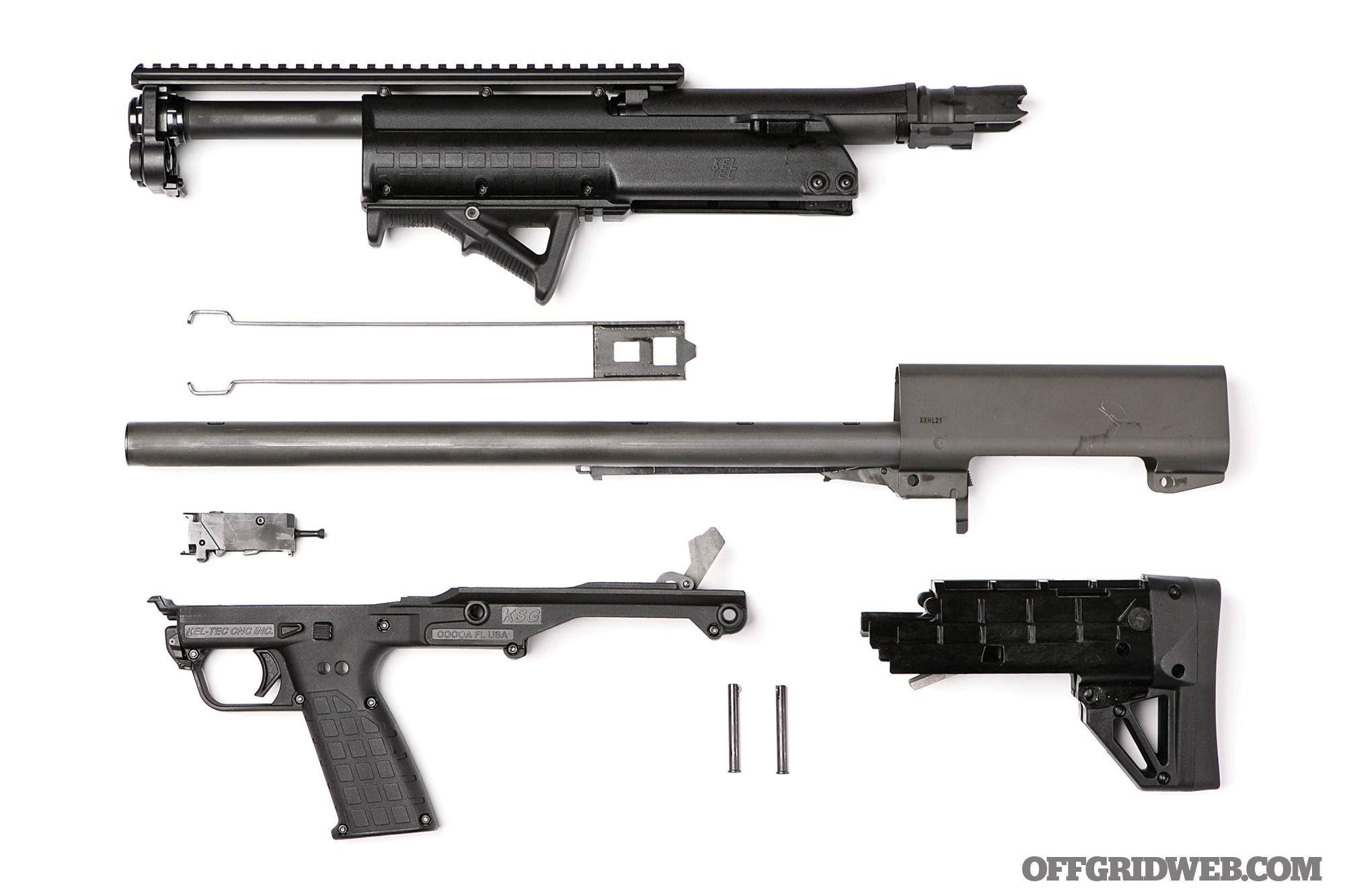
If you’re turned off by the idea of a roaring weapon, Veritas also makes integrally suppressed models in .300 Blackout that offer all the reduced-signature benefits of the cartridge in a weapon not much bigger than our test gun.

Additionally, make sure you’re incredibly careful where you place your support hand. A forward handstop is highly recommended when using this weapon. While we didn’t have any safety issues during our testing, it’s an increased and very real risk due to the short size. This is another area where the aforementioned heat transfer comes back into play. By the end of several hundred rounds, the handguard was incredibly hot. Too hot to touch without gloves, even. We’re not particularly surprised, with the high volume of gas traveling through an incredibly short tube. While it might be great for getting out of surprise scrapes, the VT-16 is probably not the ideal choice for a sustained firefight.

All in all, Veritas Tactical has brought a very interesting tool to the survival market. Designed with personal protection in mind, its small size and disproportionate offering of firepower might be just the semi-automatic security blanket that helps get you home.

Specifications

Veritas Tactical VT-16 Executive

Veritas Tactical VT-16 556 AR pistol review survival gun rifle caliber pdw 7

Caliber
5.56 NATO

Barrel Length
4.5 inches

OAL
22.5 inches (extended)
15 inches (folded)

Magazine Capacity
30 rounds

MSRP
$1,600

URL
www.veritastactical.com

Accessories
Holosun 515GT Red Dot optic

Price as Tested
$2,500

More From Issue 29

Don’t miss essential survival insights—sign up for Recoil Offgrid’s free newsletter today!

Read articles from the next issue of Recoil Offgrid: Issue 30

Read articles from the previous issue of Recoil Offgrid: Issue 28

Check out our other publications on the web: Recoil | Gun Digest | Blade | RecoilTV | RECOILtv (YouTube)

Editor’s Note: This article has been modified from its original version for the web.


Advanced Ax Skills

We’ll go out on a limb here and say the extent of most people’s ax education is probably a talk about the “safety circle” and a warning not to cut in the direction of anything you don’t want to cut off, like your leg. Just about everyone who has received some sort of formal education on using a hatchet or ax has heard about the “safety circle” — as long as you’re still using an ax, you probably still have all the body parts you started with. We get it; you’re not supposed to use an ax if you don’t have a safe place to swing it, and no one wants to get cut. It’s good advice. Unfortunately, too many people fear what the ax can do, and their lack of ax training and knowledge of the tool limit their ability.

ADVANCEDAX42.JPG

For many ax owners, the extent of their skill is splitting pre-cut campfire wood on a picnic bench at a private campground or hacking away at branches within reach. What we’ll show you are real skills that go beyond the “don’t cut yourself or anyone else” talk. If you aren’t comfortable with that, hold that ax at full extension, draw a circle in all directions, and practice that first. If you’re ready to see old-school skill, follow along as we show you some advanced techniques that can save your ass — or at least make your time in the backwoods a little easier.

Felling

Everyone wants to cut a tree down at some point. It’s almost an unwritten rule and rite of passage. Felling has practical purposes, including removing hazardous trees or clearing an area for a camp and accessing larger wood for fuel or building materials. To cut trees down, aka “felling,” you can’t just hack away at a standing tree. Some serious considerations and skill go into learning the nuances of it. Mistakes can be forgiven with smaller saplings, but apply the same sloppy technique to larger trees and you’ll be in a world of hurt.

Whenever you approach a tree you plan to fell, assess it first. Look all around to see if there are any dead or hung-up (widowmaker) branches hanging overhead. Many times, these dead branches will fall after getting rattled free with the first ax cut. This is why we recommend first using your hands to push against a tree while looking up. If part of it starts to break off, get your ass out of the way if it falls.

In your assessment, look for the pathway the tree will take when it falls; it should be clear. Trust us, it’s much more rewarding to watch a tree fall cleanly to the ground than get hung up on another tree that acts like a crutch. Part of your felling assessment should include thinking about the job after the tree falls. Ask yourself if you can drop a tree closer to camp and if you’ll be able to process it easily.

ADVANCEDAX37.JPG

Above: When felling a tree, make sure to anticipate which direction the tree will fall and be mindful of branches that may fall on you in the process. 

When you’re ready to cut that tree down, start with a good front cut on the same side in the direction the tree will fall. This front cut will serve as a hinge and prevent “barber chairing” when a tree will actually kick back as it breaks. On a large tree, this could kill you. To front cut, a 45-degree diagonal cut is made into a tree. On a large tree with the potential to hurt you as it falls, cut halfway through diagonally down and slightly diagonally across.

If someone tells you to cut horizontally across, they’re used to dropping trees with a chainsaw. In general, a good diagonal cut against the grain of wood will shear it instead of compress it like a cut made perpendicular to the wood. Once you have a good front cut, you can move to the other side and proceed to back cut. Another simple way of felling a tree is to cut four 90-degree angles around a tree. This works well with trees smaller in diameter than your ax head. Whichever way you choose, when it’s ready to fall, go ahead and yell, “timber” if you want, but get out of the way when it starts to move.

Limbing

If you want to process a tree you just dropped or some branches on a dead tree you’ve come across, the skill you need is limbing. Working from the bottom of the tree to the top, cuts are made to the underside of branches. Use caution when cutting pines and other resinous woods if the tree is extremely dry. Resin collects at the joints of branches and trunk and will harden to a point where it’ll actually damage some edges when struck. Hardened pine resin is the reason why seasoned axmen will cut around knots instead of through them.

ADVANCEDAX28.JPG

Above: To avoid striking through to the ground, the log you’re working with can be propped up on a stump and against an adjacent standing tree.  

When limbing, use a “golf swing” and keep the trunk of the tree between you and the ax head. Depending on the size of the tree you’re working with, either roll it over to access the branches on the other side and continue swinging in the same direction or switch hands if you’re competent working in more than one direction. Just make sure that if you’re limbing a tree on a hillside, you stay on the uphill side of the trunk. The remaining branches on the tree might be the kickstand preventing it from rolling downhill. A relatively small tree rolling in your direction can be forgiven, but a larger tree will hurt or kill you.

Bucking and Splitting

After every good storm, news reporters love to make reference to trees blocking roadways. It doesn’t take a very large tree to stop most traffic. It’s easy to clear with a good ax — the process of bucking, or cutting a tree into logs, can be done while standing next to the log or on top of it. We suggest you avoid mimicking the Stihl Lumberjack Challenge underhand buck competition until you burn some good reps bucking while standing next to the log first.

ADVANCEDAX64.JPG

Above: Without a chopping block, you’ll have to improvise. You can safely swing between your legs with a wide enough base and a clear follow-through. 

When using an ax to buck a log, think of chopping in thirds. That is, you want to cut the log three times, furthest from you, nearest you, and connecting the two in the middle, before you change your angle. Keep your cuts at about 45 degrees to prevent compressing the wood with too steep or too shallow of an angle that will cause your ax to glance. Make sure the kerf, the width of your cut, is at least as wide as the tree is thick around.

After you buck your tree into logs, you’ll notice your ax didn’t create any flat surfaces to stand up on for splitting the logs into pieces. Most beginners have no trouble learning how to split logs with flat surfaces. Splitting ax-bucked logs requires more skill to either exploit natural cracks in the wood grain with wooden wedges or to split the logs where they lay in different ways. For some logs, this will mean propping the log up on another log with the side lifted up to face you.

ADVANCEDAX19.JPG

Above: Bucking is the process of cutting through logs to create smaller lengths. Divide the log into thirds on each side of the kerf. This is how a smaller ax can be used to effectively process a thicker log. 

A strong vertical chop will split the log and the log it’s propped up on serves as a stop to your ax blade. An axman can also swing horizontally at the bucked logs and split them this way. If this is the preferred way, the logs should be positioned far enough away where they can still be reached with the ax, but a glance won’t cause the ax to cut into the axman’s leg. The safest way to split is to use a wooden baton on the pole of your ax. This can be done with the grain from either the end or the side of the log.

ADVANCEDAX21.JPG

Above: Your kerf, the cutting channel you’re working on, should be as wide as your log is thick. This will prevent binding. 

Creating Flats (Hewing Logs)

There may be a time or situation in an extended camp or overland trip when you’ll need to process round logs into squares. You may need to construct a more permanent camp in the woods with benches and walkways or a bridge to cross a gap. In both of these circumstances, flat surfaces are more comfortable to sit on and better for tires to roll across. Hewing logs is an advanced skill, but it isn’t a complicated process.

Much like the method one would use to buck up a log, the axman uses his ax to score a log along its length. If you had a saw, you could mark the clean-cut end with a square to use as your beam’s dimensions as you hew it. Without a saw, you need to eyeball the log from different angles to ensure it ends up square. The scoring cuts should be a uniform depth, or very close to it, for the flattest and straightest surface. Once the entire length of the log is prepped with these marks, the axman works from one end of the log, cutting away the remaining outer bark and wood along the same depth as the multiple scores until he reaches the end of the log. The flat surface created can be repeated to make square beams, and these are more easily joined with other flat beams in construction.

ADVANCEDAX14.JPG

Above: Hewing is the process of turning round logs into square beams. Using your ax, first start by creating scoring cuts along one side. Remove the remaining material between the scores to create a flat. Repeat the process until a 90-degree angle is made. Repeat again and again to create a square beam. 

Ax Habits

Lack of skill is a dead giveaway for ax inexperience; a shortage of good habits is another. If we are what we repeatedly do, we want to instill good ax habits in our routine. Rather than cutting any wood that you might find, learning which woods work the best for each application will save time and energy. Good hardwoods work well for producing the most BTUs, and certain softwoods are better suited for semi-permanent shelter building for insect resistance.

A good axman will know which wood is most seasoned and which wood is too punky and decomposing. In adverse weather, an axman should know to coat his blade with a protectant like linseed oil that leaves a clear coat on the blade and protects it from rust. He also knows how steel is affected by the extreme cold and will warm the blade slightly by a fire before use. He also knows not to heat it to excess, as that will take the temper out of the blade. Any good axman should also have a maintenance kit that includes files, a sharpening puck, and the other tools needed for handle repair and replacement. In this respect, what you carry speaks to your experience and knowledge of what could happen.

Advanced skills are acquired with plenty of time and a lot of elbow grease. Learn to use your gear, and it’ll take care of you, whether you’re casually camping in the forest or addressing your survival needs in the deep backwoods.

Ax Handle Replacement

Broken ax that has made its last job.

Broken ax that has made its last job.

If you use an ax long enough, chances are that you’ll need to replace a handle. The process is pretty easy in your garage with power tools, but what happens when you’re in the field? Misjudge your distance, accidentally strike the handle, and you may have a problem. How do you remove a wooden handle from the ax head? Follow these steps:

Replacement Handle: We highly suggest carving a replacement handle before you attempt to remove the existing broken handle. You may still be able to use what’s left of the broken handle as a stubby handle to cut your new handle with. When you find a suitable piece of wood to carve the replacement handle from, reassemble the broken handle to the best of your ability and use it as a stencil before carving.

Remove the Old Handle: When you have a rough new handle, it’s time to burn out the old one. Gather firewood and locate a safe place to build a ground fire. Wet the ground sufficiently before you start. This will help keep the ax edge cooler than dry ground. Bury the head in the wet soil and leave the wooden handle exposed. Light a fire and burn out the old head. It doesn’t need to burn to ash completely; sometimes, when it’s charred, the tolerances will give and it’ll push out with a dowel or log baton.

Fit the New Handle: This process can be done with a Swiss Army Knife equipped with a saw or with specialized gear like a rasp and a small folding saw. Fitting, aka “hanging,” an ax head on a new handle takes patience and time. Once you’re able to pass the new ax handle through the eye with some force, split the ax handle in line with the edge of the ax head with your saw. Use a wooden wedge carved from a good piece of hardwood to friction fit the handle in place. If the ax handle is properly hung, you won’t need to crack the wood grain with supplemental metal wedges.

Field-Ready Finish: Once your ax is handled, take the time to clean it up to make it more comfortable for use. Smooth it out by removing any knots or hot spots in the wood. If properly done, this handle will last you the duration of your trip.

Interview with Liam Hoffman

SIDEBAR02-01.jpg

Liam Hoffman of Hoffman Blacksmithing is one of the most in-demand blacksmiths in the country. Hoffman, 22, was the youngest champion of History Channel’s Forged in Fire when he was only 19. We asked him some questions readers surely would want answers to.

What are the top three tips you can give ax owners in regards to their use?
Always study the area in which you are about to use the ax. Clear it of tripping hazards or objects in the ax’s path. Examine what you are about to cut, and predict where the tree or log may fall after it is cut. Logging is a very dangerous profession! Don’t be afraid to get it dirty.

What are the top three tips you can give ax owners in regards to maintenance?
Carrying a small sharpening puck in the field with your ax is a convenient way to make a quick touch up on the edge. Regular and consistent maintenance is best. Oil the handle at least once a year, especially if it goes through a dramatic climate change. Wood is a natural material and can be subject to expanding and contracting. The best way to prevent rust and deterioration is using the tool regularly!

Hoffmanblacksmithing.com

About the Author

Kevin Estela has been a professional survival instructor since 2007, first at the Wilderness Learning Center as lead instructor and then with his own company, Estela Wilderness Education. Kevin is a ranked associate level instructor in Sayoc Kali, a purple belt in Brazilian Jiu-Jitsu under Sifu Chris Smith, and an avid firearms marksman and shooter. When not teaching outdoor skills, he’s a full-time high school history teacher and founder of the Estela Wilderness Education Fund. Follow him on Instagram/Twitter @Estelawilded or www.facebook.com/estelawildernesseducation


Eating a 1981 Mountain House Freeze-Dried Meal

You’ve probably heard that freeze-dried meals can last for decades as long as they remain sealed in a cool, dry environment. But have you ever wondered what it’d be like to travel 35 years into the future and see exactly how well these dehydrated meals stand the test of time? The iron-stomached YouTuber Steve1989MREInfo set out to answer this question. He got his hands on a Mountain House civilian MRE that was produced in 1981, opened it up, and sampled the contents.

You’ll find Mountain House freeze-dried meals in most camping/hunting/outdoor stores today, but you might not know that the company has been producing meals like these for more than 50 years. Mountain House has been supplying the U.S. Armed Forces with meals since the Vietnam War, and began offering similar meals to civilians in 1969.

Steve1989 MRE Mountain House freeze dried meal food survival prepper ration 1

The meal in the following video came in a plain bag labeled as “Meal 6 – Chicken Stew”. It contains the following items:

  • Freeze-dried chicken stew (2 servings)
  • Pilot bread crackers
  • Fig Newton cookies
  • Lemonade powder
  • Cocoa powder
  • Salt, pepper, a napkin, and a spoon

We’re frankly impressed that everything in this ration has held up so well despite its age. It’s one thing to hear Mountain House guarantee that its meals will remain fresh for 30 years, and another thing to see actual proof. That’s a good sign for those of us who’ve been stockpiling freeze-dried meals for emergencies.


Looking Back: Trucks, SUVs, and Jeeps of SEMA 2018

Earlier this month, we traveled to Las Vegas to join the annual pilgrimage of car and truck enthusiasts to the SEMA Show. This massive event is organized by the Specialty Equipment Manufacturers Association (SEMA), and claims the title of the world’s largest automotive trade show. In simple terms, it’s a gathering of thousands of the most elaborate custom vehicles you can imagine. Just about every car and truck manufacturer has a large booth at the show, along with countless smaller booths for companies that offer parts and accessories.

This industry-only show is not open to the public, so you’ll need to work in the industry or have approved media credentials to get in the door.  The good news is that we fall into the latter category, so we walked throughout the show snapping photos of the coolest — and strangest — trucks, SUVs, Jeeps, and other off-road or adventure vehicles we saw. Today, we present a mega-gallery of more than 200 photos from SEMA 2018. Slow internet connections be warned, this article is image-heavy.

Jeep

When it comes to off-roading, Jeep is one of the first names that comes to mind, and for good reason. Aside from the brand’s decades of pedigree in combat zones and rugged environments around the world, Jeep has produced many models with great built-in off-roading capacity and incredible aftermarket support. You might say the Jeep Wrangler is like the AR-15 of the automotive world — a capable platform that can be upgraded, modified, and rebuilt in countless ways. Below, we’ll share a selection we saw at SEMA 2018.

SEMA 2018 gallery Jeep trucks off road vehicles bugout survival 32

SEMA 2018 gallery Jeep trucks off road vehicles bugout survival 42

SEMA 2018 gallery Jeep trucks off road vehicles bugout survival 45

SEMA 2018 gallery Jeep trucks off road vehicles bugout survival 54 SEMA 2018 gallery Jeep trucks off road vehicles bugout survival 55

SEMA 2018 gallery Jeep trucks off road vehicles bugout survival 61 SEMA 2018 gallery Jeep trucks off road vehicles bugout survival 62

The following two new-body-style Wranglers from the American Expedition Vehicles booth were some of our favorites at the show as a result of their simple and functional design.

SEMA 2018 gallery Jeep trucks off road vehicles bugout survival 67 SEMA 2018 gallery Jeep trucks off road vehicles bugout survival 68

SEMA 2018 gallery Jeep trucks off road vehicles bugout survival 79

SEMA 2018 gallery Jeep trucks off road vehicles bugout survival 75

This survival-oriented build from 5.11 Tactical is known as the All Missions Vehicle (AMV). It features a supercharged engine, on-board solar panels with battery storage, and even a refrigerator. Check out this video for more info on the build.

SEMA 2018 gallery Jeep trucks off road vehicles bugout survival 81

There were plenty of classic Jeeps, too. Here’s a small selection of those we spotted:

SEMA 2018 gallery Jeep trucks off road vehicles bugout survival 87

Toyota

With a reputation for bulletproof reliability, simplicity, and easy maintenance, Toyota trucks are also hugely popular in the off-roading and adventure vehicle community. This popularity was reflected at SEMA with dozens of Toyota trucks and SUVs, both old and new.

One of our favorite trucks at the show was this Quicksand tan Tacoma found in the Injen booth.

SEMA 2018 gallery Toyota trucks off road vehicles bugout survival 02

SEMA 2018 gallery Toyota trucks off road vehicles bugout survival 05

SEMA 2018 gallery Toyota trucks off road vehicles bugout survival 25

SEMA 2018 gallery Toyota trucks off road vehicles bugout survival 18

SEMA 2018 gallery Toyota trucks off road vehicles bugout survival 14

SEMA 2018 gallery Toyota trucks off road vehicles bugout survival 13

SEMA 2018 gallery Toyota trucks off road vehicles bugout survival 26

The Toyota Hilux, a sibling to the Tacoma, is not available in the United States. However, that didn’t stop a few manufacturers from bringing them to the show to display parts for the European, Middle-Eastern, Asian, and South-American markets.

SEMA 2018 gallery Toyota trucks off road vehicles bugout survival 32

In addition to these mid-size models, there were also plenty of full-size Tundras, as well as 4Runner and Land Cruiser SUVs.

SEMA 2018 gallery Toyota trucks off road vehicles bugout survival 40

SEMA 2018 gallery Toyota trucks off road vehicles bugout survival 44

This kitted-out Land Cruiser in the Icon Vehicle Dynamics booth definitely caught our eye. You can learn more about this cool build here.

SEMA 2018 gallery Toyota trucks off road vehicles bugout survival 45

We certainly appreciate late-model Toyotas, but it’s always cool to see some old-school builds as well:

SEMA 2018 gallery Toyota trucks off road vehicles bugout survival 52

SEMA 2018 gallery Toyota trucks off road vehicles bugout survival 54

Ford

There was a very respectable showing of Ford trucks at SEMA 2018, with the F-150/Raptor, and Super Duty lines remaining popular as ever. The mud-splattered F-250 below was featured in the official Ford booth, and looks like it’d make a great overland or bug-out truck.

SEMA 2018 gallery Ford trucks off road vehicles bugout survival 12

SEMA 2018 gallery Ford trucks off road vehicles bugout survival 21

SEMA 2018 gallery Ford trucks off road vehicles bugout survival 23

We also saw quite a few of the 2019 Ford Ranger pickups, which are finally making a long-overdue comeback to the U.S. market to compete with the Toyota Tacoma and Chevy Colorado. No matter your preference, competition breeds innovation, so it’s a good time to be shopping for a new mid-size truck.

This “Ranger X” from the Ford booth had a cool setup, including a toolbox bed, spare tire carrier, and fabricated winch bumper.

SEMA 2018 gallery Ford trucks off road vehicles bugout survival 01

SEMA 2018 gallery Ford trucks off road vehicles bugout survival 03

SEMA 2018 gallery Ford trucks off road vehicles bugout survival 10

SEMA 2018 gallery Ford trucks off road vehicles bugout survival 30

Chevrolet

For fans of the Bow Tie, there were many mid-size and full-size trucks to look at. The Colorado seemed to be the most popular Chevy truck platform at this year’s show, but there was no shortage of Silverados (both gas and diesel-powered variants).

SEMA 2018 gallery Chevrolet trucks off road vehicles bugout survival 57 SEMA 2018 gallery Chevrolet trucks off road vehicles bugout survival 58

SEMA 2018 gallery Chevrolet trucks off road vehicles bugout survival 62

SEMA 2018 gallery Chevrolet trucks off road vehicles bugout survival 65

SEMA 2018 gallery Chevrolet trucks off road vehicles bugout survival 72

SEMA 2018 gallery Chevrolet trucks off road vehicles bugout survival 74

Dodge / Ram

Ram trucks were slightly less plentiful than the other brands, but this relative lack of quantity was made up for by an impressive level of build quality. There were several Rams and older Dodge models we’d love to take out for a weekend on the trail.

SEMA 2018 gallery Dodge Ram trucks off road vehicles bugout survival 91

SEMA 2018 gallery Dodge Ram trucks off road vehicles bugout survival 92

SEMA 2018 gallery Dodge Ram trucks off road vehicles bugout survival 94

SEMA 2018 gallery Dodge Ram trucks off road vehicles bugout survival 93

SEMA 2018 gallery Dodge Ram trucks off road vehicles bugout survival 98

SEMA 2018 gallery Dodge Ram trucks off road vehicles bugout survival 99

It wouldn’t be SEMA without some oddball builds, so here’s a purple and yellow Challenger riding on a set of oversized mud tires.

SEMA 2018 gallery Dodge Ram trucks off road vehicles bugout survival 01

Side-By-Sides & Other Vehicles

One other brand that deserves an honorable mention is Honda. You might associate the company with economical commuter cars rather than off-roaders, but Honda surprised us with this one-of-a-kind Rugged Open Air Vehicle Concept. It’s powered by a 3.5L V6 motor and features 4-wheel-drive, 33-inch tires, and a weatherproofed interior. You can read more about the Rugged Open Air Vehicle on HondaNews.com.

SEMA 2018 gallery other trucks off road vehicles bugout survival 75

SEMA 2018 gallery other trucks off road vehicles bugout survival 83

SEMA 2018 gallery other trucks off road vehicles bugout survival 82

Side-by-sides and UTVs are always popular, so we saw quite a few of them throughout the Las Vegas Convention Center.

SEMA 2018 gallery other trucks off road vehicles bugout survival 89

SEMA 2018 gallery other trucks off road vehicles bugout survival 84 SEMA 2018 gallery other trucks off road vehicles bugout survival 85

SEMA 2018 gallery other trucks off road vehicles bugout survival 92

SEMA 2018 gallery other trucks off road vehicles bugout survival 94

We’ll bring our gallery to a close with some of the builds that didn’t fit anywhere else, including this insane Mercedes Sprinter van designed for traversing arctic terrain.

SEMA 2018 gallery other trucks off road vehicles bugout survival 96

SEMA 2018 gallery other trucks off road vehicles bugout survival 01

SEMA 2018 gallery other trucks off road vehicles bugout survival 00