As the saying goes, an ounce of prevention is worth a pound of cure. If you change the oil in your truck regularly, make sure there’s plenty of air in the tires, and top off the fuel tank when the opportunity arises, it’s much more likely to get you to your destination reliably than a vehicle that has been neglected. This is common sense, and the same logic applies to other important tools — routine maintenance is especially important for critical items that get used every single day.
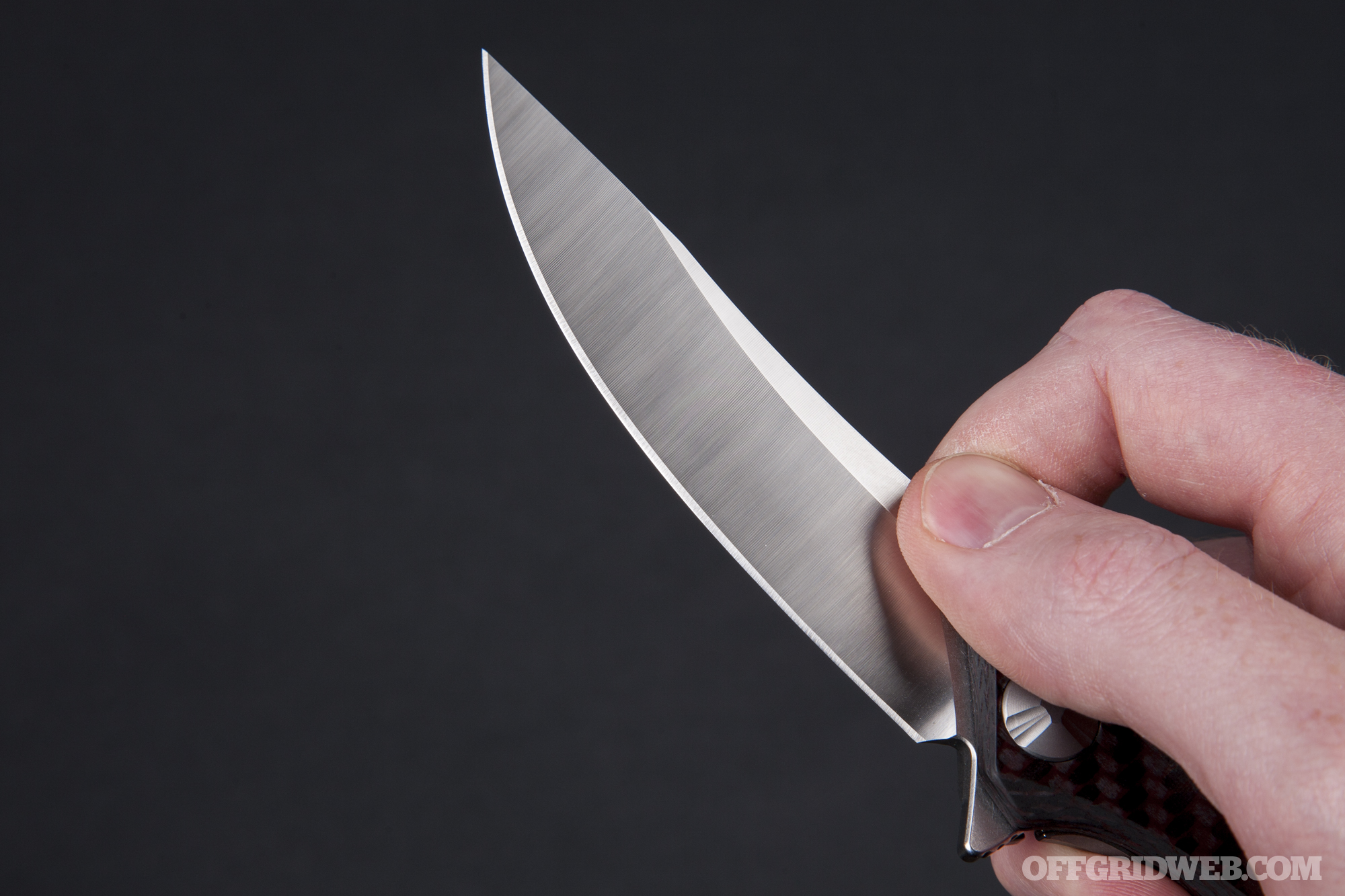
That said, when was the last time you maintained that folding knife in your pocket? Most of us remember to periodically sharpen the edge at home with whetstones, diamond rods, or some other tool. But unless you’re extremely diligent, months might pass between sharpenings, and the edge on that blade may become dull and ineffective. Microscopic chips and rolls on the edge can impede its performance, forcing you to work harder with each cut and open yourself to serious injuries.
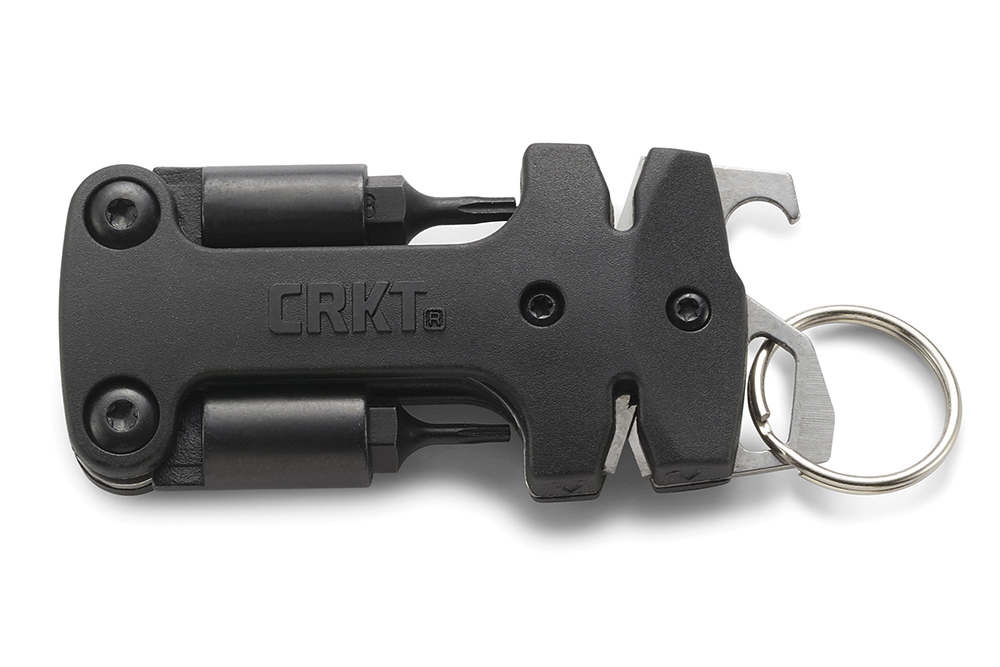
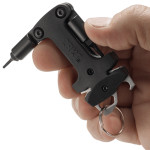
Columbia River Knife & Tool (CRKT) recently introduced a new pocket tool that’s designed specifically to keep your knife performing like new. The CRKT Knife Maintenance Tool can be carried on a keychain or in a pocket, and includes six helpful functions.
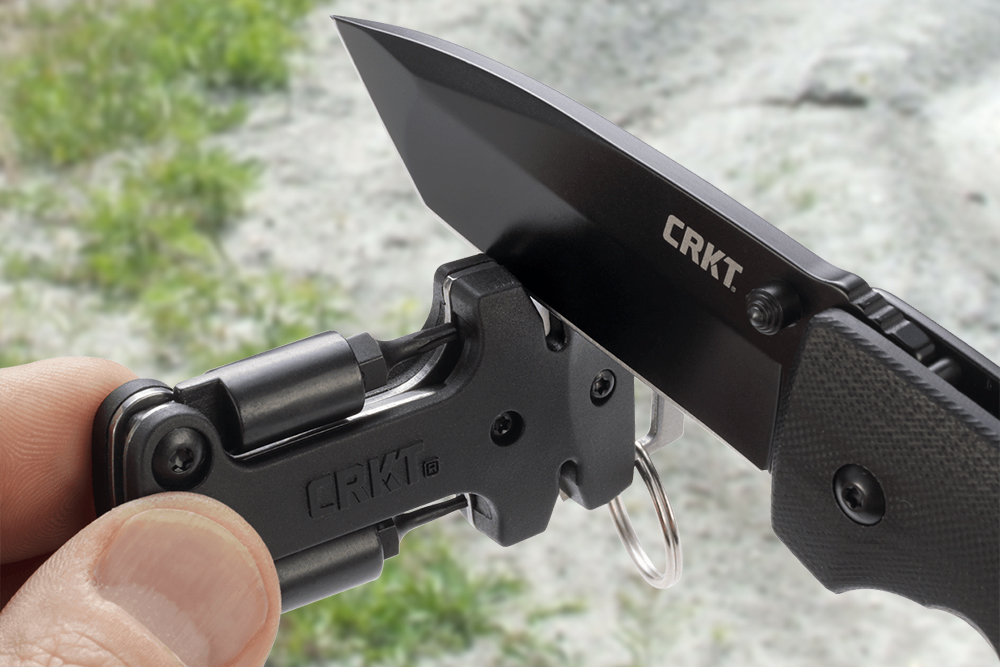
The Knife Maintenance Tool features a tungsten-carbide sharpener to grind away chips and larger blade defects, as well as a gentler ceramic honing edge that can remove microscopic burrs and fine-tune the edge. These will work well with CRKT knives, but the company says they’re also “compatible with nearly every folding knife in existence”.
In addition to the sharpener and hone, the Knife Maintenance Tool has two fold-out bit drivers, which contain T6 and T8 Torx bits. These can be used to tighten the hardware on pocket clips, handle scales, thumb studs, and other folding knife parts. There’s also a flathead screwdriver on the end that can double as a mini prybar or scraper, a bottle opener, and a keyring loop. The tool is flanked on each side with tough fiberglass-reinforced nylon scales emblazoned with the CRKT logo.
The CRKT Knife Maintenance Tool is available at an MSRP of $30. For more info on this item, go to CRKT.com.
Our friends at RECOIL saw the writing on the wall, and have already taken a step in the opposite direction with RECOILtv, which launched back in 2016. This streaming video platform exists free of the restrictive YouTube ecosystem, and has already served as a home for gun-, gear-, and training-related content created by our staff. More recently, RECOILtv has created a Partner Content section to host videos from other noteworthy gun channels who are looking for an alternative to YouTube.
Currently, the new RECOILtv Partner Content offers videos from the following creators:
InRangeTV – A collaboration between Ian McCollum (of Forgotten Weapons) and Karl Kasarda, with a wide range of videos about modern and historic weapons.
C&Rsenal – Learn all about guns from around the world with these videos covering in-depth firearm history.
Of course, this is just the beginning. RECOIL is working to expand the partner content lineup in the future and help more gun-related video creators find a better platform to share their work. To see the latest third-party gun videos on RECOILtv, go to videos.recoilweb.com and click the Partner Content button.
It’s every carnivore’s nightmare — imagine suddenly finding out that you’re unable to eat any form of red meat without a severe allergic reaction. This unfortunate condition is not only possible, it’s a growing phenomenon.
The alpha-gal allergy, also known as Mammalian Meat Allergy (MMA), is an immune system reaction to the carbohydrate galactose-alpha-1,3-galactose. This molecule is found in the cells of almost all mammals, including beef, pork, and lamb meat. In rare cases, traces of alpha-gal can also be present in dairy products, such as milk, cheese, and ice cream. Individuals with the alpha-gal allergy may experience severe itching, hives, upset stomach, trouble breathing, dangerous drop in blood pressure, and even life-threatening anaphylaxis after consuming red meat or dairy containing alpha-gal.
This allergy is also unusual and especially dangerous due to its delayed onset. Unlike most food allergies, which present symptoms 5 to 30 minutes after exposure, symptoms of the alpha-gal allergy generally appear 3 to 6 hours after red meat consumption. Dean Metcalfe, M.D., of the National Institute of Allergy and Infectious Diseases (NIAID) said, “this unusually long time gap between a meal and an allergic reaction is probably a big reason that alpha-gal allergies are often initially misdiagnosed.”
A bite from Amblyomma americanum, also known as the lone star tick, can cause red meat allergies.
Now, you might be thinking that you’re in the clear because you weren’t born with this allergy, but that’s not the case. The red meat allergy can be caused by tick bites — specifically those from the lone star tick in the United States, the castor bean tick in Europe, or the paralysis tick in Australia. The tick bite transmits alpha-gal into the victim’s skin through its saliva, causing the victim’s immune system to overreact with a release of antibodies that lead to the allergy.
The lone star tick is present throughout the eastern half of the United States, from Maine to Texas. However, this range is expanding, leading to an increase in cases of red meat allergy. Dr. Scott Commins, an allergist and associate professor of medicine, told NPR, “We’re confident the number is over 5,000 [cases], and that’s in the U.S. alone.”
There is no known cure for red meat allergy, but there are some tidbits of good news. First, it doesn’t require you to become a full vegetarian, since poultry and fish will not trigger the reaction. Second, although there’s no guarantee, it may diminish or disappear over time provided that the patient doesn’t get bitten again by another Lone Star tick.
Communication is the foundation of human society — without it, we’d never be able to collaborate and organize anything productive. Party games like telephone and charades show how impeded communication can lead to confusion, and while the results are humorous in that context, failure to communicate can be frustrating or downright catastrophic when the circumstances are dire. In any survival situation, the ability to signal for help or instruct family members where to meet can save lives.
These days, we often think of communication as taking place wirelessly — cell phones, internet, and radio, for example. Then there’s the obvious face-to-face communication we use on a daily basis. However, there are plenty of options beyond these, and some of the methods we consider outdated can be valuable for survival purposes. We’ve previously discussed the potential of landline phones, Morse code, and smoke signals when other forms of comms are interrupted.
The following infographic from Mobile Text Alerts gives a recap of 10 important communication methods and their historical origins. Although reverting to dial-up modems and carrier pigeons might not be the most practical for survival situations, some of the other options can serve as a reminder that humans have found ways to communicate effectively since long before the dawn of social media. Click here to download a full-size version of this infographic.
For more off-the-grid communication techniques, check out some of our previous articles below:
In the backcountry, a pack full of tools will undeniably make your life easier. At the very least, it’s wise to bring along the “5 Cs” of survival essentials — cutting, combustion, cordage, container, and cover. However, even if you find yourself without the most basic items, you can get by with some knowledge and ingenuity.
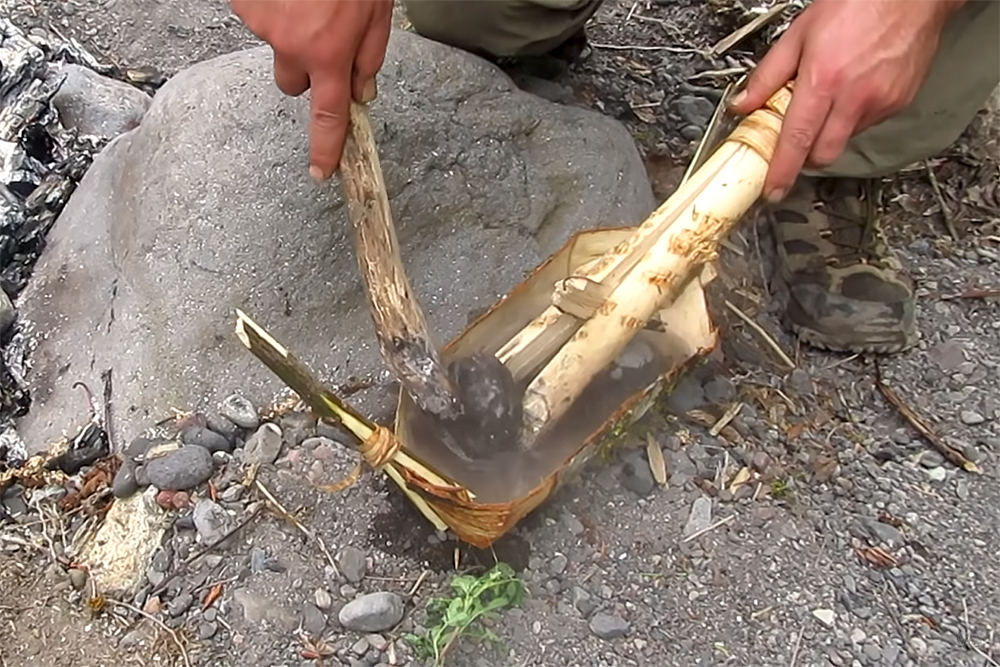
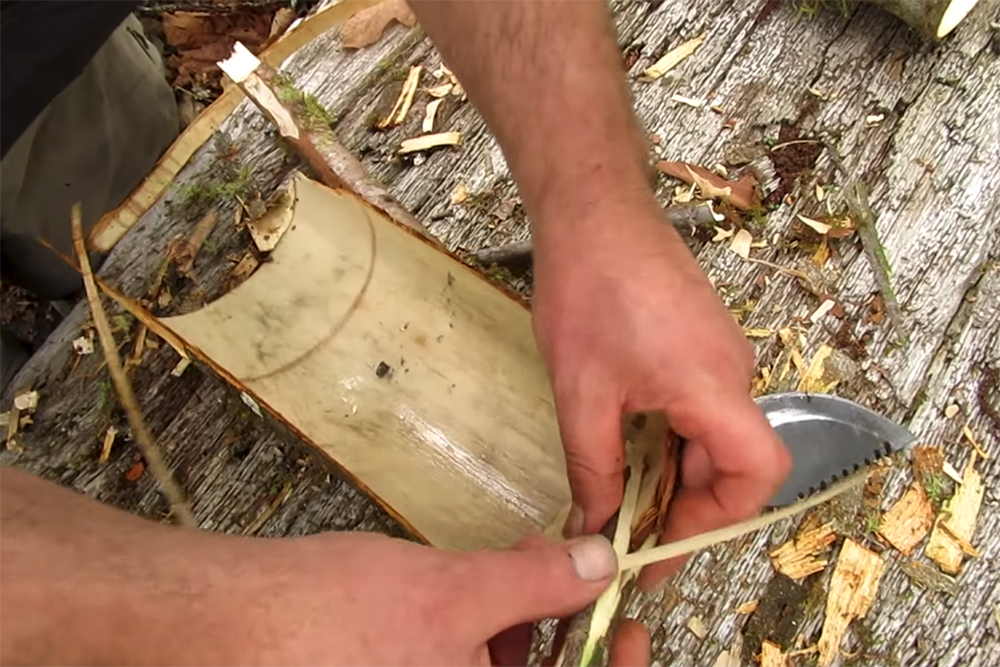
The following video shows how bushcrafter NW Primate tested his survival skills with only one of the 5 Cs: a cutting tool. He uses nothing but a Tom Brown Tracker knife to make cordage for a bow drill, gather tinder and kindling, start a fire, make a water vessel, and boil water for drinking and cooking.
His water vessel is made from a large section of tree bark, carefully stripped from a maple tree, soaked, folded, and clamped together with split sticks at each end. He writes, “I have seen several demonstrations and designs for bark containers that will hold water and initially intended to make a variation of a canoe bailer that was used by the indigenous people of the Pacific Northwest.” This vessel was used in conjunction with the hot rock boiling method to heat and purify water from a nearby stream. Finally, he kicked things up a notch by using some of his water to prepare a box of mac and cheese over hot coals.
A quick reminder: always be very cautious with hot rock boiling, since porous rocks that contain moisture may explode and send sharp fragments flying. Protect your eyes and stand back whenever possible — few things will ruin your day faster than a face full of shrapnel from a fractured stone.
For more info on the details of this water vessel, click “Show More” under the description on the YouTube video.
Much like the ill-fated predictions that we’d all be driving hovercars and fighting cyborgs armed with laser blasters by the early 2000s, we’ve often heard it said that modern technology is bound to make the wristwatch obsolete. Despite this claim, watches seem to be alive and well. In fact, we’d even say that there has been a resurgence in their popularity in the last decade. Some of this may be due to the convenience of knowing the time without pulling out a cell phone, and some can be attributed to appreciation for the visual style of a nice timepiece.
While we can understand the appeal of high-tech smart watches with Bluetooth and internet connectivity, we tend to lean towards simpler designs for every-day carry and use on outdoor adventures. Specifically, field watches offer some distinct advantages for use in the backcountry.
A standard-issue A-11 field watch, one of the most iconic designs of the WWII era. Source: Crown and Caliber
Field watches are simple, easy-to-read analog watches inspired by vintage military wristwatch designs. As a result of this origin, they offer slim cases, high-visibility markings, and tough fabric or leather straps designed to withstand years of hard use. If a smart watch is analogous to a 30-function multi-tool, a field watch is like your grandpa’s WWII-issue Ka-Bar — it’s built for one primary purpose, and it does it well.
For more info on the history of standard-issue field watches, check out our previous review of another Bertucci watch, the A-4T Vintage Yankee.
The Origin of the GMT Watch
Although most field watches offer nothing more than a hour, minute, and second hand with high-contrast markings, some designs have a few more advanced features. Twelve- and twenty-four-hour numbering is common, making it easier to tell time in the standard civilian and military formats. A date function is also useful for tracking the day of the month at a glance.
One of the most significant upgrades seen on field watches is referred to as GMT. You may recognize this abbreviation for Greenwich Mean Time, which is the mean solar time measured at the Royal Observatory in Greenwich, London. Time zones around the world are often referred to as GMT +X or GMT -X, where X is a certain number of hours offset from the standard time in London. For example, the time zones in the United States are as follows (not including Daylight Savings Time adjustments):
Eastern Standard Time (EST) – GMT -5
Central Standard Time (CST) – GMT -6
Mountain Standard Time (MST) – GMT -7
Pacific Standard Time (PST) – GMT -8
When it comes to analog watches, a GMT function means that the watch has a fourth hand. When set and adjusted correctly, this enables the wearer to check the current time with the standard three hands, and simultaneously read the fourth hand to see the time in another zone.
The GMT watch feature originated in the 1950s, as a result of pilots who needed to keep track of time both at home and in the current destination. The fourth hand in these GMT watches operates on a 24-hour movement, making one 360-degree rotation each day, as opposed to the regular hour hand, which operates on a 12-hour movement and makes two full rotations each day. There are two ways to use this fourth hand, which we’ll explain below.
How to Use and Set a GMT Hand
If you’re not traveling, the GMT hand can simply be set to provide the 24-hour time in your current location. This makes it easy to instantly read the time in either 12- or 24-hour format without doing any mental math.
If you are traveling outside your home time zone, the fourth GMT hand can be set to your home time, and the primary hour hand can be set to the time in your current location. It’s also useful if you work or frequently communicate with people outside your time zone — just keep the GMT hand set to their time zone so you won’t mix up the scheduled time for an important conference call.
The video below from World of Watches shows the basics of how to set a 24-hour GMT hand:
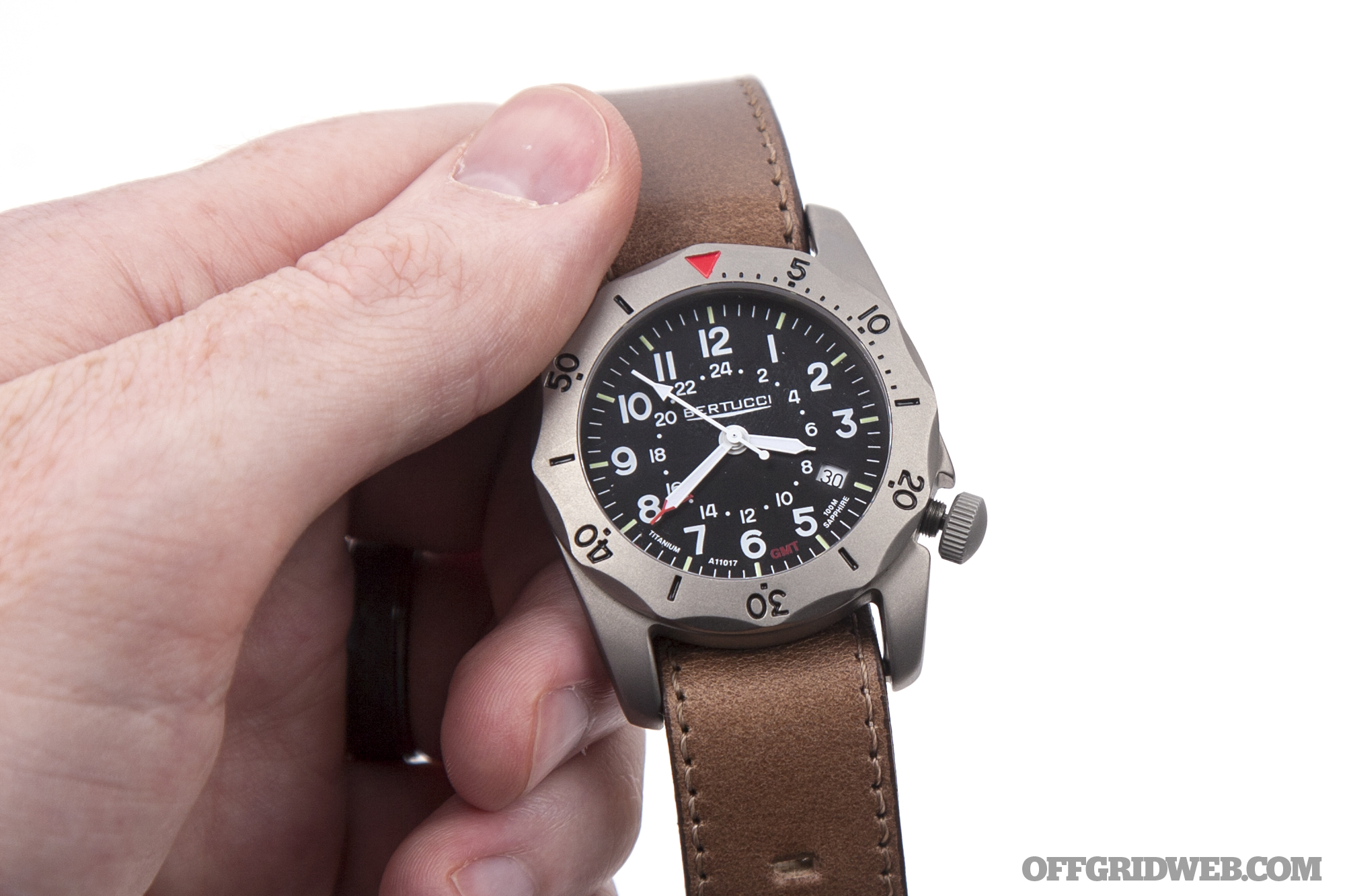
Bertucci A-2TR Vintage GMT
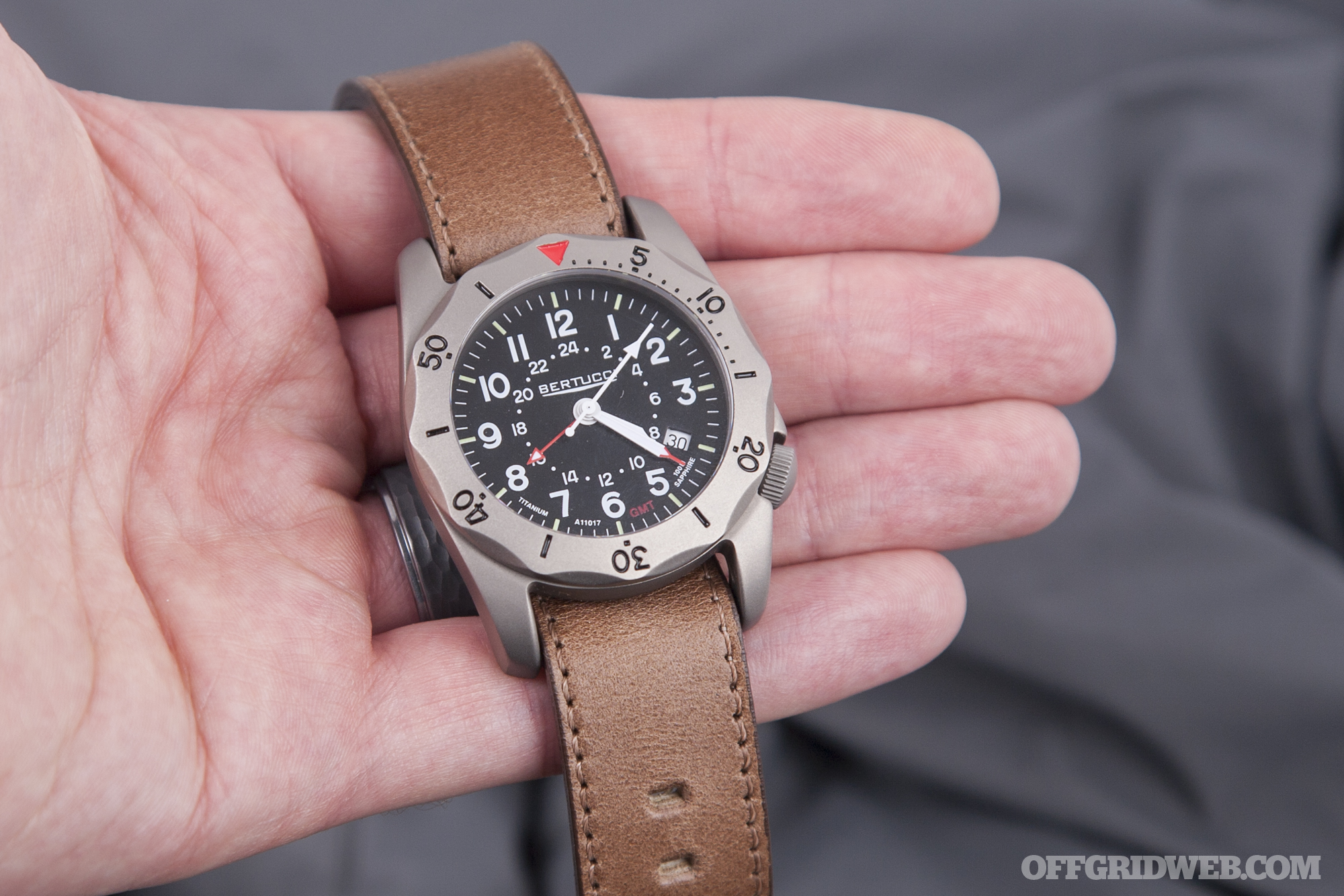
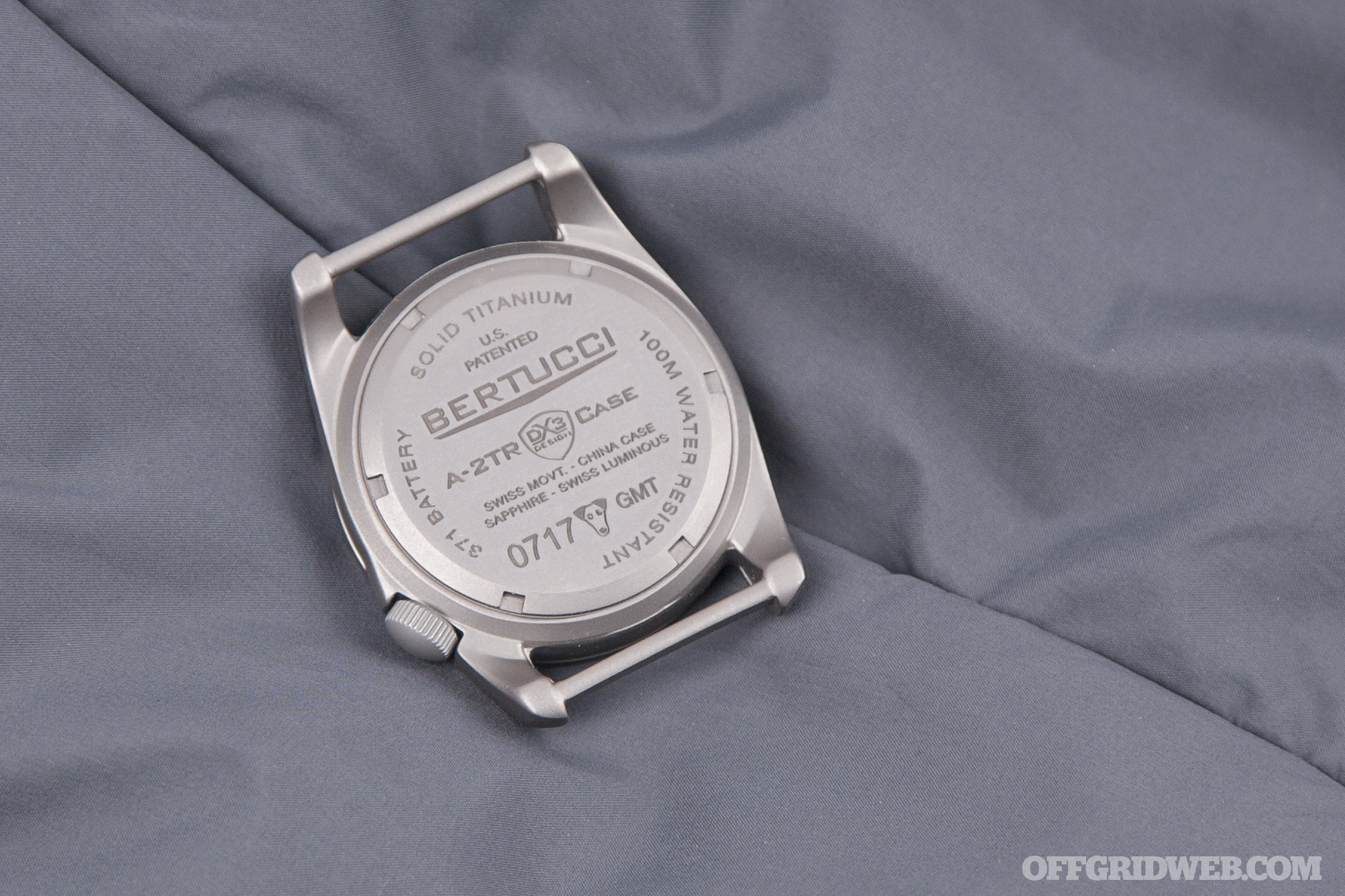
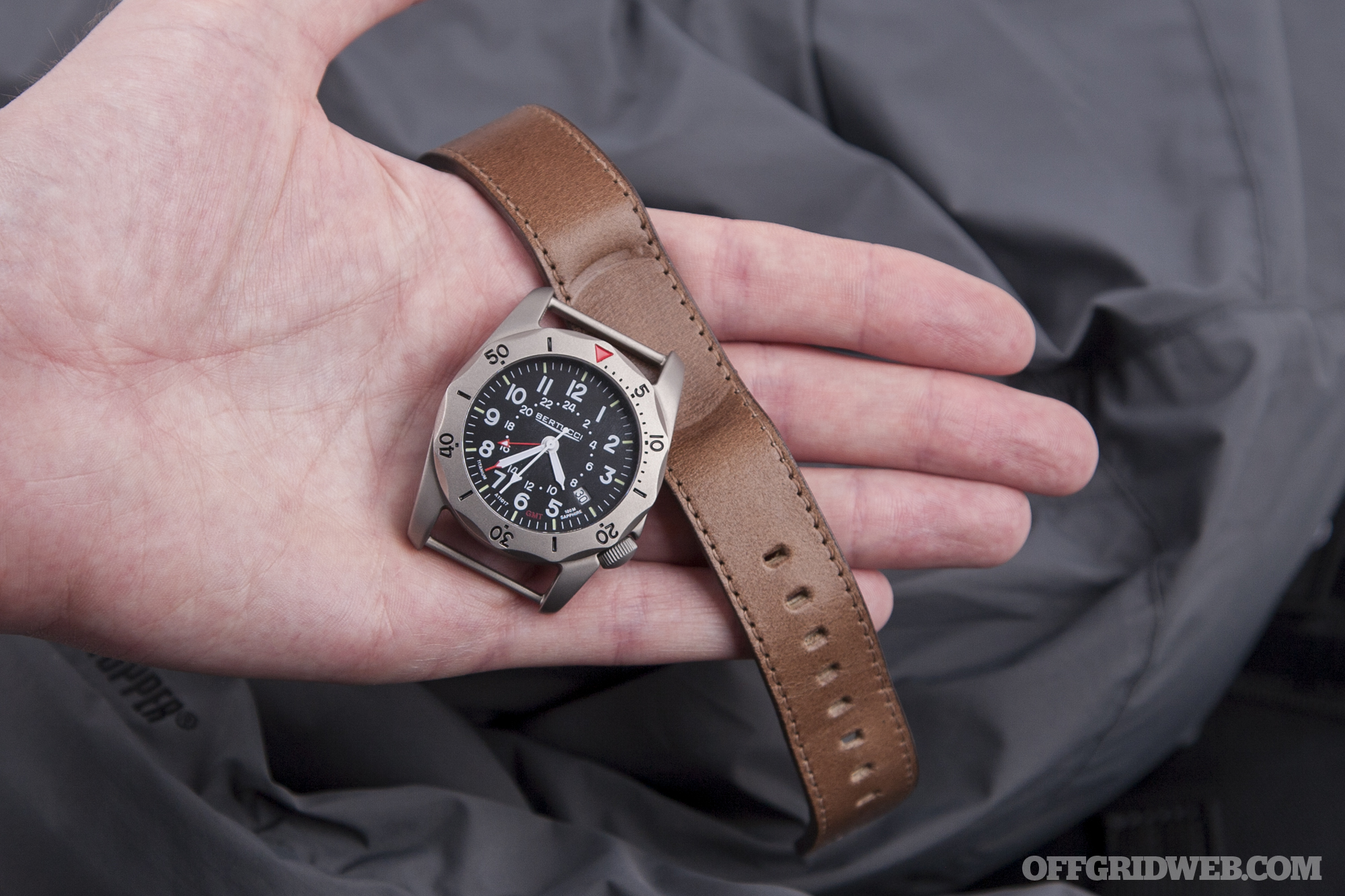
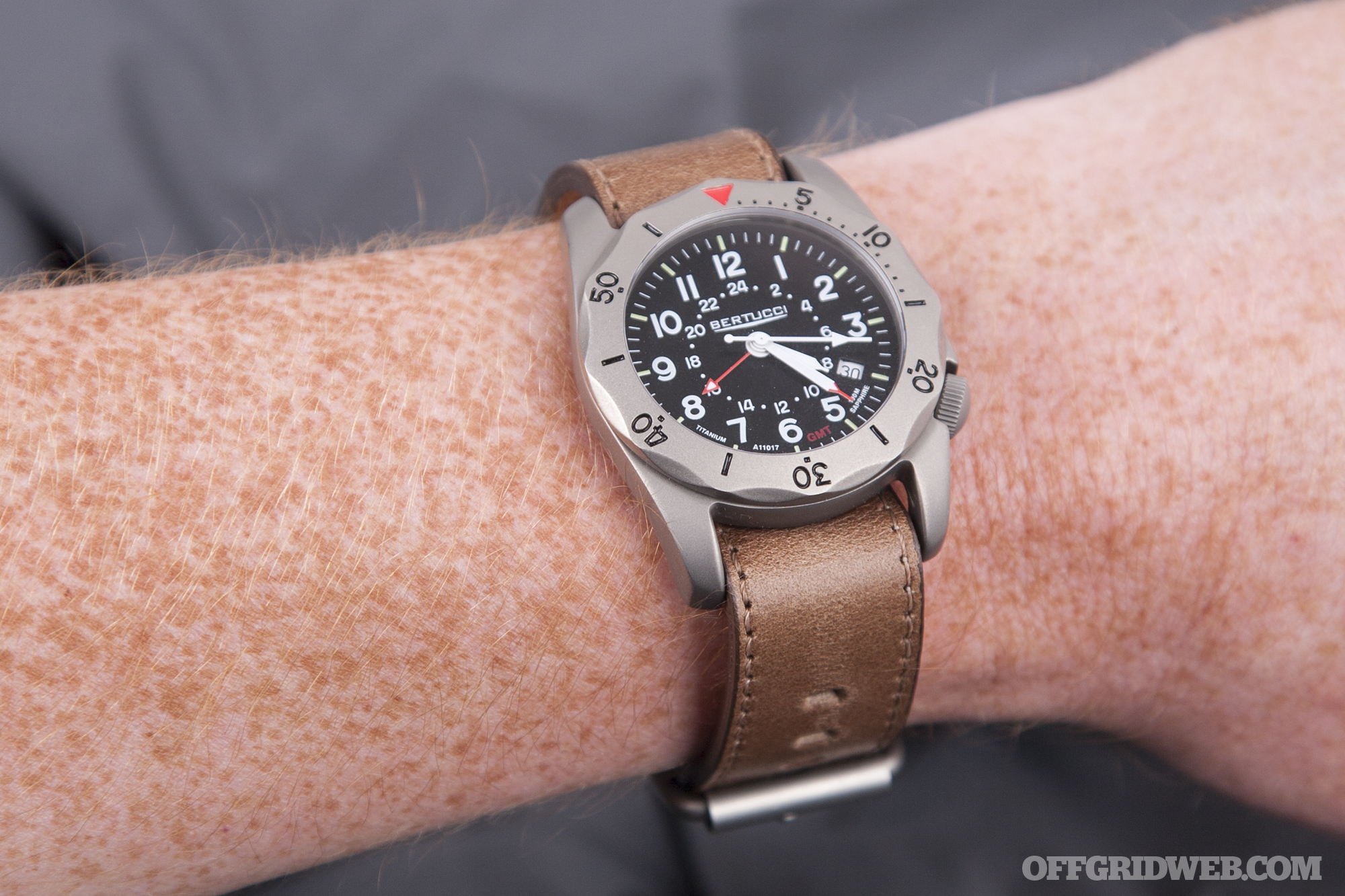
We frequently wear the Bertucci A-4T mentioned earlier in this article, so we were pleased to hear about the release of its new sibling: the Bertucci A-2TR Vintage GMT. Like the A-4T, the A-2TR features the company’s patented solid titanium case with built-in band lugs and a matte finish.
The A-2TR has a slightly smaller case diameter (40mm) and narrower band (7/8″) than the A-4T, although this size is still substantially larger than the 30mm field watches of the 1950s — those appear tiny by today’s standards.
The A-2TR also features a Swiss-made quartz movement, hardened sapphire crystal, and 100-meter water-resistance as a result of its screw-down crown. These features provide the sort of durability we expect from an outdoor-oriented watch, and ensure it’ll hold up to the inevitable bumps and scrapes of daily use. The hands and face markings are treated with Swiss Super Luminous material that provides passive glow after exposure to light from the sun or indoor bulbs.
Our watch features the optional Horween Montanaro leather band, which is made in the USA , water-resistant, and fitted with a stainless steel buckle and loop. Bertucci also offers this watch with heavy-duty nylon NATO straps in black, olive green, or coyote tan. With the leather band, this watch is priced at $290. With a nylon band, it’s $270. These bands are sold separately, and their straight-through design makes them a breeze to swap out, so you can always get a few options if you’re indecisive.
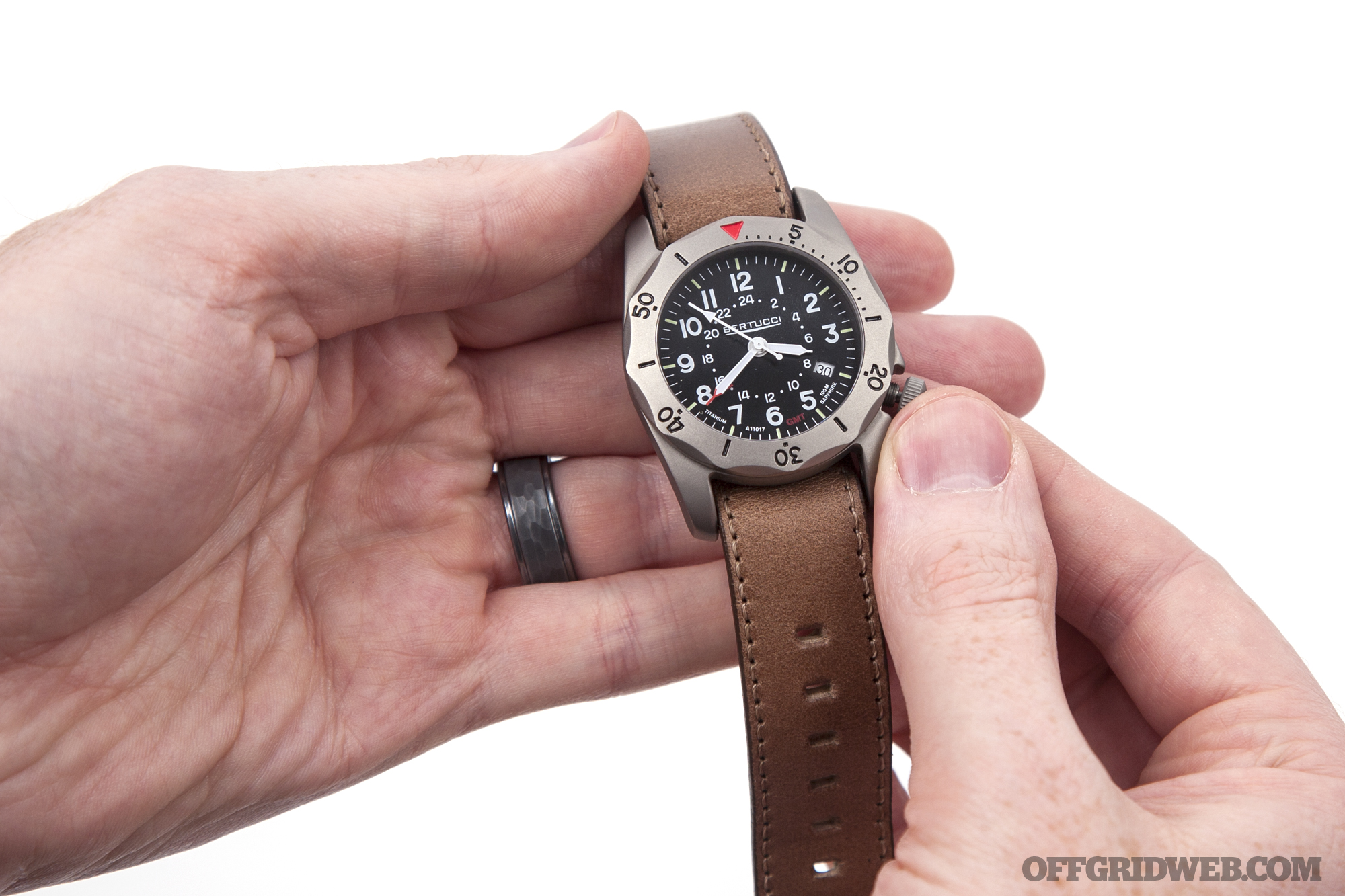
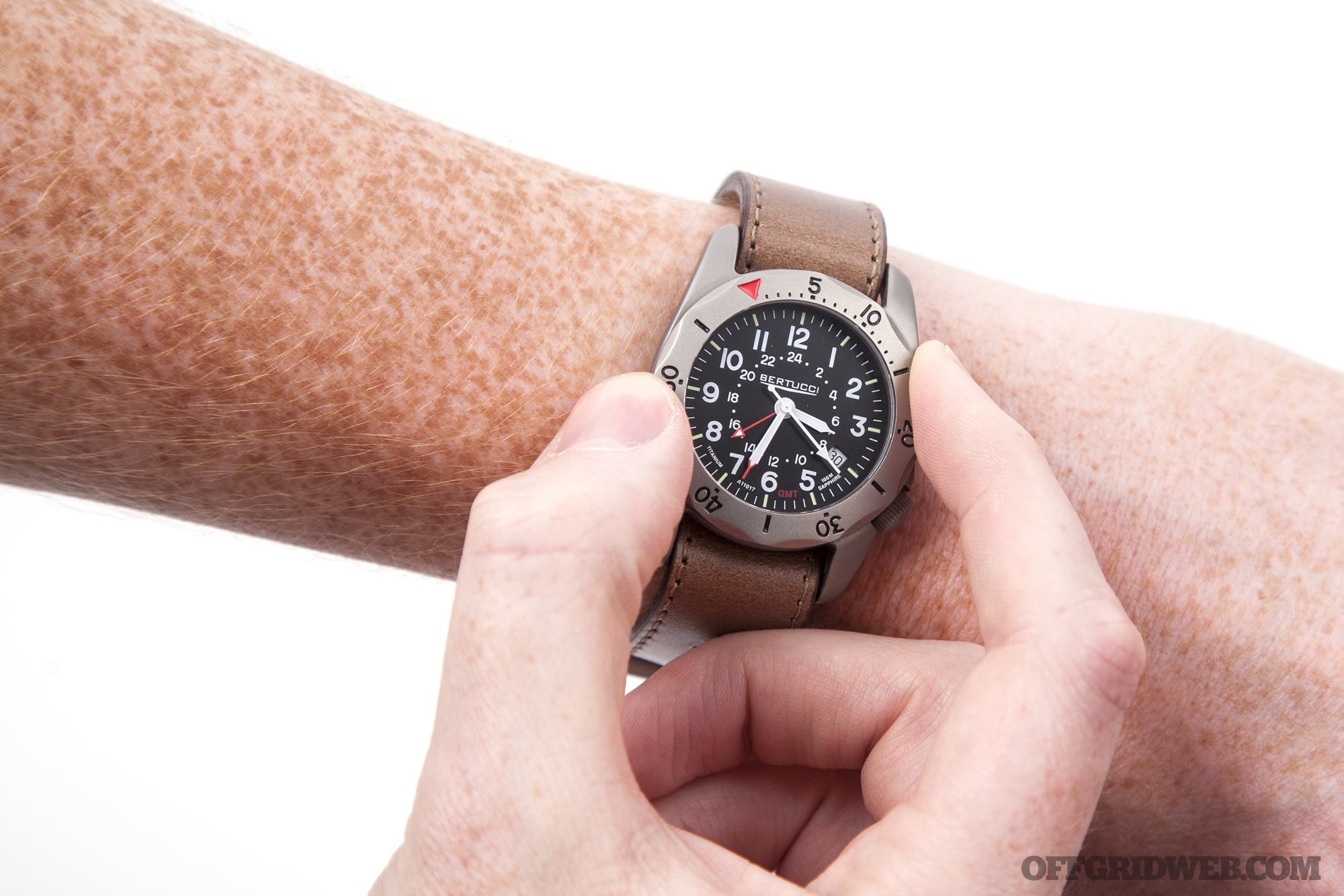
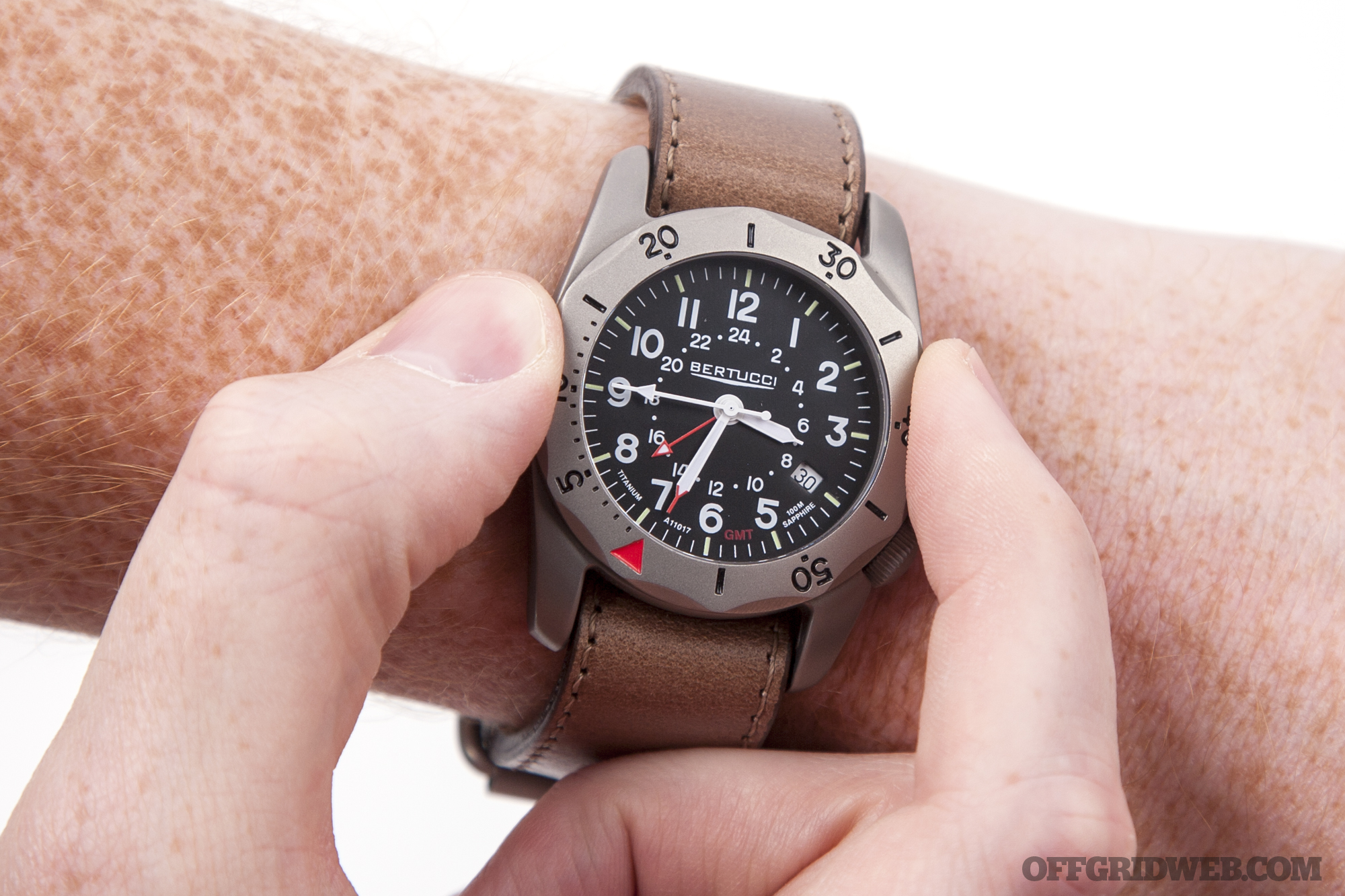
As expected from a GMT watch, the A-2TR features a fourth hand (a red arrow) that moves on a 24-hour rotation. Numbers on the inside of the face indicate 24-hour time. The GMT hand is set by loosening the screw-down crown, pulling it out to its first position, and turning counter-clockwise. Turning the crown clockwise at this position adjusts the date function, and pulling it out to its second position allows adjusting the primary hands.
Rotating Bezel Functions
Another notable feature of the A-2TR Vintage GMT is its rotating bezel, indicated by the R in its model name. The bezel rotates counter-clockwise with 60 positions, each indicated by a positive click of the ratcheting bezel mechanism. This bezel offers two valuable functions for use in the outdoors:
Elapsed Time
The main function of the rotating bezel is to help you track elapsed minutes or seconds, similar to a stopwatch. To track elapsed time, rotate the bezel counter-clockwise until the large red triangle aligns with the minute hand.
As the minute hand moves, the markings around the bezel will show the number of minutes that have passed. There are markings for 1-minute increments up to 15 minutes, then 5-minute increments for the rest of the hour. If you need to time more precisely, you can align the bezel with the second hand. In this case, you’ll have to mentally keep track of the elapsed minutes after the first 60 seconds.
Breaking down challenging projects into smaller increments has been shown to improve productivity, so this is one way we use the timer bezel. It’s also helpful for tracking how long you’ve spent walking a path, cooking food, brewing coffee or tea, or working on any other task.
Improvised Compass
The other advantage to a rotating bezel is the ability to use it as a navigational aid.
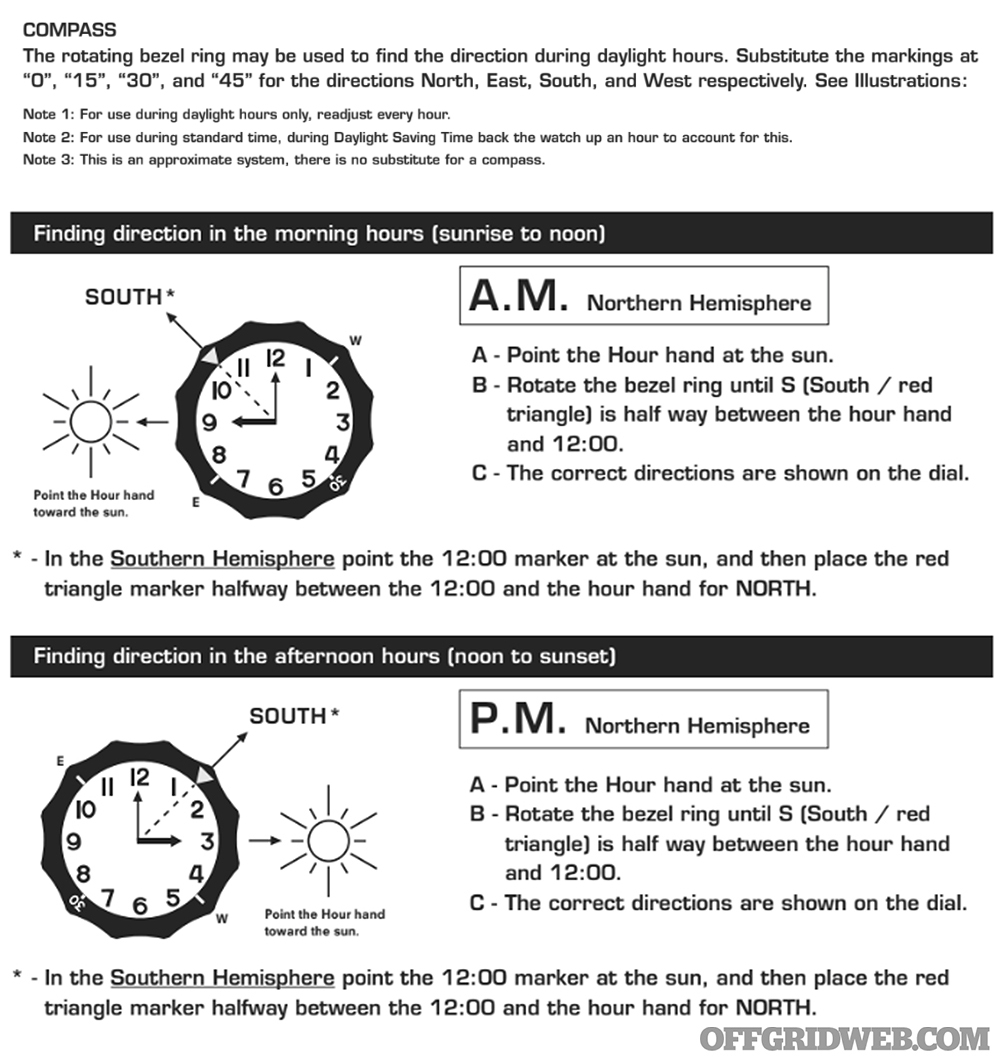
During the day, you can aim any analog watch’s hour hand at the sun and split the angle between it and the 12:00 mark to find a north-south line. The end of this line furthest from the sun will be north, assuming you’re in the northern hemisphere. For a more detailed explanation, refer to our previous article on how to use a watch as a compass.
A rotating bezel will help you use this technique more precisely. Once you’ve pointed the hour hand at the sun, turn the bezel ring until the “30” mark is halfway between the hour hand and 12:00 on the watch face (i.e. south). The red arrow is now indicating north, the 15 mark will indicate east, and the 45 mark will indicate west. The other increments can be used to orient yourself more precisely to the northwest, southeast, and so on. The ring should be adjusted every hour to reflect changes in the sun’s position.
The rotating bezel on your watch is a little less precise than a compass, but it can help you stay on course.
Once you’ve established the N/E/S/W cardinal directions, bezel ring can be rotated again to shoot an azimuth, much like you’d use the bezel ring on a real USGI lensatic compass.
See the Bertucci manual excerpt at the end of this article for more details about rotating bezel compass use.
Conclusions
The new Bertucci A-2TR Vintage GMT is a modern-day homage to the classic field watches of the 1950s. The integration of features such as a date function, a 24-hour GMT hand, and a rotating bezel add value without diminishing the watch’s reliable simplicity and old-school style. The strong titanium case, sapphire crystal, and water-resistant screw-down crown subtly modernize this design.
As with the previous Bertucci watch we reviewed, the interchangeable bands are a nice touch, since they make the watch more versatile and very easy to clean. As much as we like the Horween leather band, we’ll probably switch it for one of Bertucci’s Tridura synthetic bands in the future, since the band on our A-4T has proven surprisingly resistant against moisture, dirt, and abrasions.
During our time with the A-2TR, it has made a nice addition to our EDC gear rotation, and it has been hard to find fault with any aspect of its design or construction. However, the included documentation could use some improvement — despite Bertucci’s site stating details on the use of the rotating bezel as a compass can be found in the owner’s manual, we found no mention of this feature there. The manual also makes no mention of adjusting the GMT hand, but this was easy enough to figure out. Our manual is dated 1/2017, so perhaps a future revision will add more instructions.
Update: Bertucci let us know that, as we suspected, we mistakenly received an old version of the watch manual. They sent us a PDF of the correct A-2TR-specific manual, and we can confirm that it includes information on how to set the GMT hand and use the rotating bezel. We’re told all future orders will include this corrected manual. See below for a sample of the rotating bezel compass instructions:
For more information on Bertucci field watches and the A-2TR Vintage GMT, go to BertucciWatches.com.
The Utility Task Vehicle (UTV), also known as a side-by-side, offers a number of advantages for survivalists — it’s nimble enough to overcome rough terrain, small enough to fit down narrow paths, offers seating for two or more people, and can carry a large payload of gear. We addressed many of these advantages, as well as some UTV-specific driving techniques, in our recent article “Off-Grid Driver’s Ed: Learning to Drive a UTV”.
Traditional off-road UTVs are usually powered by a small gas motor connected to a transmission, transfer case, and front and rear differentials to send power to all four wheels. This is a tried-and-true formula, but we’re always interested to see new designs that could provide some additional improvements. With the recent growth in the electric car and truck market, it’s no surprise to see some of this tech make its way into the UTV world.
Nikola Corporation, named as a nod to famous electrical engineer and inventor Nikola Tesla, has developed a new electric off-road UTV known as the Nikola NZT. The NZT is 100% electric-powered, with a low-mounted lithium-ion battery pack and four direct-drive electric motors (one at each wheel). Nikola says this setup can produce up to 590hp and 722 ft/lbs of torque. Unlike a gas-powered engine, the electric motors produce peak torque immediately off the line, so they’re capable of propelling the NZT from 0 to 60mph in 3.5 seconds.
The Nikola NZT offers a claimed range of 90 to 150 miles under “hardcore riding conditions”. Nikola says it can be recharged in 3 hours with the company’s proprietary 400V charger, 8 hours with a 240V charger, or 18 hours with a standard 110V wall outlet charger. An optional 4 kW solar charger will be available in the future for off-grid charging.
Although the NZT is designed for off-road use, you may be able to use it on public roads depending on your state’s laws. It will include mirrors, fenders, turn-signals, and other commonly-required features. It also comes with a slew of helpful off-road features, such as 4,500-pound-capacity front and rear winches, electronic power steering, knobbly kevlar-reinforced 33-inch tires, Method Racing beadlock wheels, and 3″ FOX Racing internal bypass shocks.
Most images we’ve seen of the Nikola NZT are 3D-rendered mockups of the final bodywork, and the video above shows what appears to be an unfinished development mule, but the platform has us interested.
The NZT is currently available for no-cost pre-purchase reservations, and the company says it will “begin delivering the UTVs in the first quarter of 2019”. The final production vehicles will start at $28,900, and upgraded models can reach $45,900 before adding options or accessories. For more information, go to NikolaMotor.com.
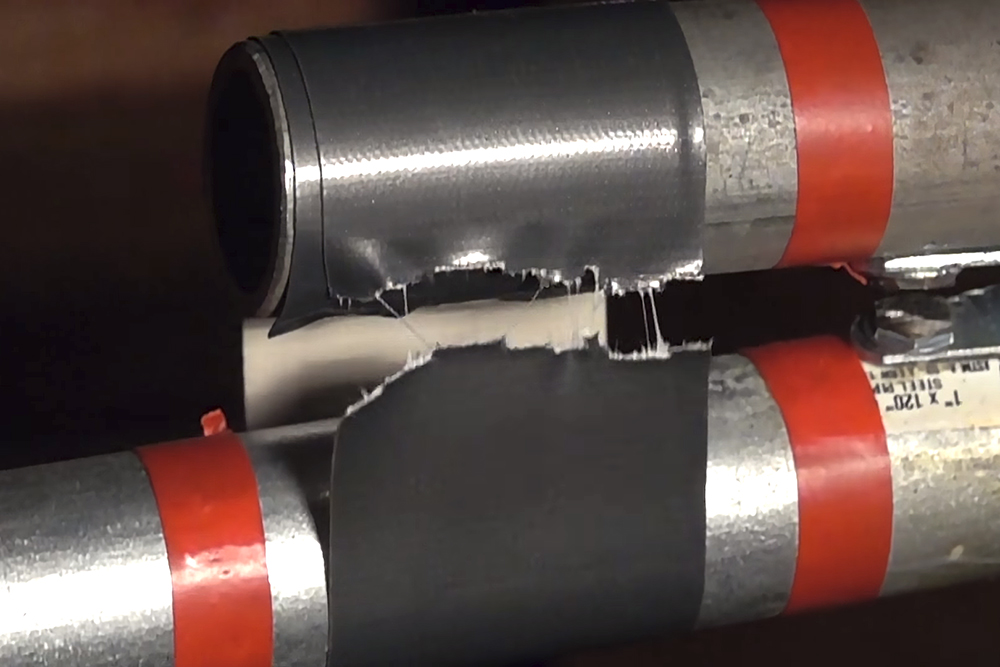
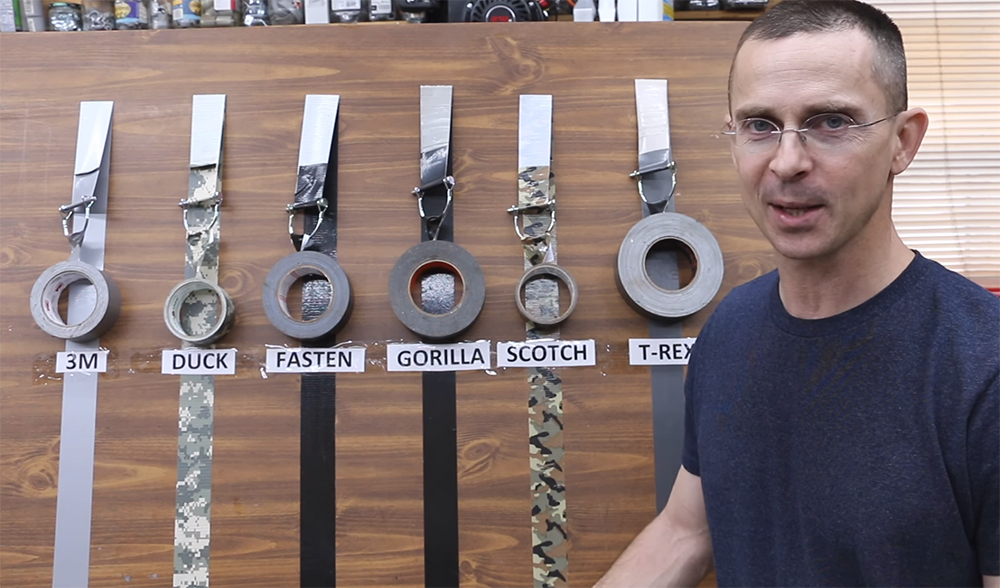
Ah, duct tape. It’s one of the most universal and helpful consumables in any toolbox, and we’d consider it part of the holy trinity of quick and dirty repairs alongside zip ties and superglue (or epoxy). Whether you’re lashing together gear, patching a leak, or even bracing a broken limb, there’s a seemingly-infinite list of uses for this super-sticky fiber-reinforced tape.
However, as anyone who has walked down that aisle at the hardware store can tell you, there’s an overabundance of duct tape styles and brands to choose from. This can make choosing a roll of tape confusing, and it might mean you’ll end up with tape that looks decent but underperforms in the real world. You might even be overspending for high-end tape that performs the same as a lesser-known brand.
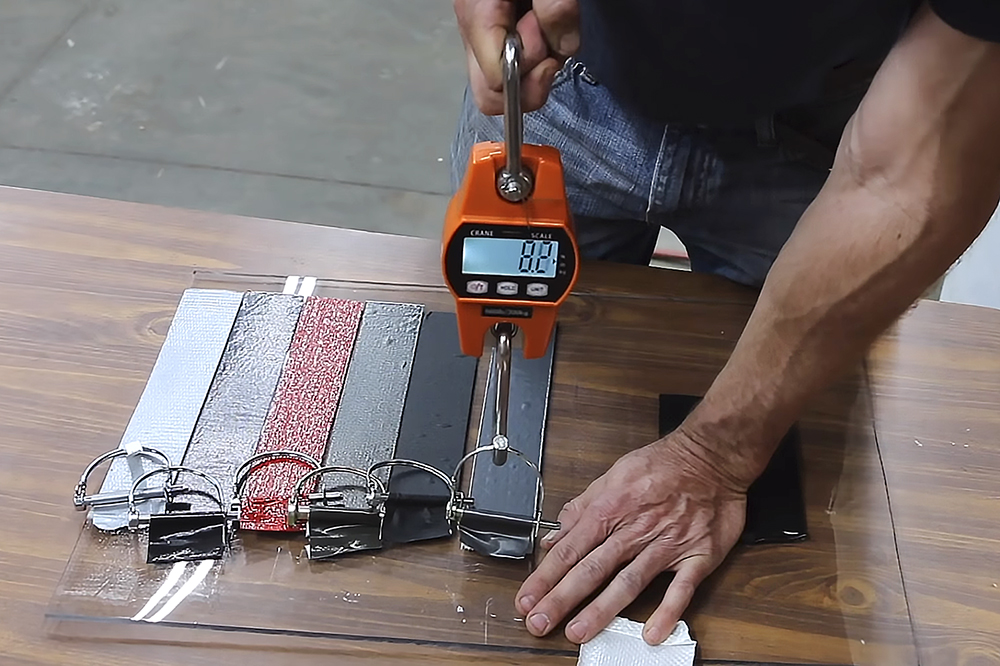
In the two videos below, the YouTuber known as Project Farm set out to test a variety of duct tape brands to find out which ones can take the most abuse. We appreciate that he uses a consistent method to avoid skewing the results, even going as far as to press the tape onto a surface using a fixed weight and rollers. He also states, “I don’t have anything to sell, and I’m not sponsored by any manufacturer or company”, so it’s nice to know these tests are not thinly-veiled advertisements or paid promotional content.
The first video shows an assortment of duct tapes ranging from affordable to heavy-duty; the second video focuses exclusively on the higher-end varieties, and also includes rubberized Flex Tape, which differs in construction from normal fibrous tapes. Check out the videos below, and consider the results before your next trip to the hardware store. Keep in mind that there’s no single “best” duct tape for every use — as Project Farm concludes, some excel in one area but struggle in others. Your tape choice will always depend on the task at hand.
Editor’s Note: The following article was originally published by our sister publication RECOIL, and appears here in its entirety with permission. For more articles on guns, training, and gear, go to RECOILweb.com.
There’s an adage in the military “If it ain’t raining, we ain’t training.” This is more or less an attempt at jovial acceptance of the fact that training needs to occur no matter what the weather is doing. After leaving the Army a few years ago, one of my contentions was that I didn’t want to ever be cold and wet at the same time again. It’s miserable.
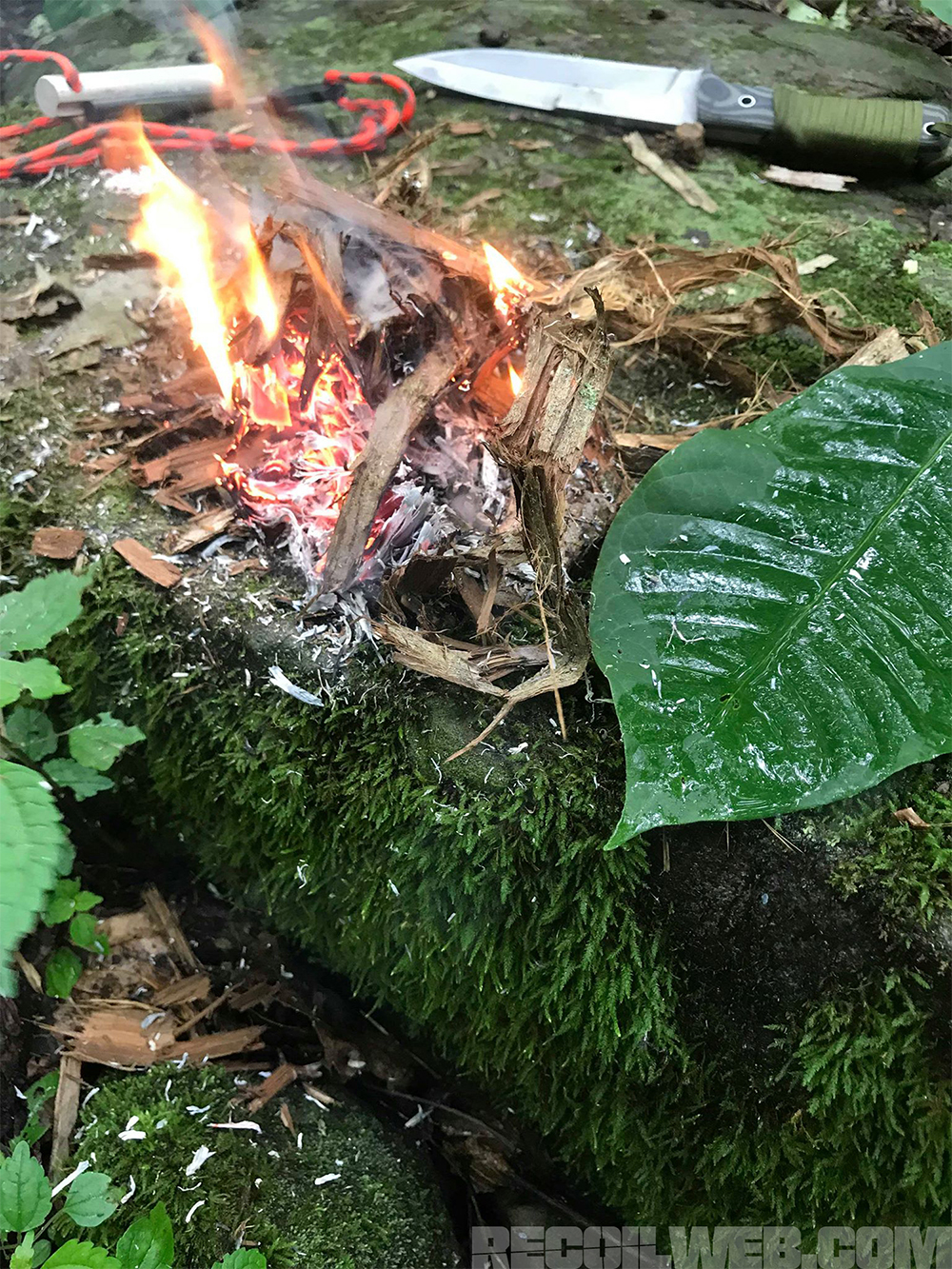
Today’s plan was to take a much-needed trip to the woods, practice some survival skills, do a bit of writing, and relax in the way that only being by myself in the forest can allow. I was looking forward to this almost as much as a kid longs to open their presents on Christmas morning. I woke up early feeling anxious to get away for a bit and stepped outside to drink my first cup of coffee. Then I saw it. Rain. My old nemesis. My heart sank as I looked at the weather for the rest of the day and realized that it wasn’t going to be the beautiful day I had imagined. A part of me thought about just going back to bed.
Most people choose to train in the best conditions possible more often than not because it’s comfortable. Whether that be going to the range, practicing survival skills, or working out; we as humans generally prefer comfort over misery. But it’s a disservice to take the easy road. It’s much easier to chalk up the day as a loss than to drag ourselves outside to go train. All too often we make excuses and end up losing out on an opportunity to get better. And isn’t getting better the whole point of training in the first place?
You will never get to choose the conditions that surround a life or death situation.
Read the previous line again and consider the implications. Choosing to go out and train in adverse weather increases the effectiveness of your training significantly. If I can get a fire going in the middle of a thunderstorm, then I feel even more confident that I can do the same task on a sunny day. If I can hit a target in 10-15 mph wind, then I’ll be able to hit it when the wind is calm. Finding ways to work around the elements increases both your skills and your confidence. The opposite is, of course, true as well. When we condition ourselves to be “fair weather” warriors, the slightest adversity may cause the wheels to fall off. Coupled with the stress of being in an emergency situation, this could very easily mean the difference between living and dying.
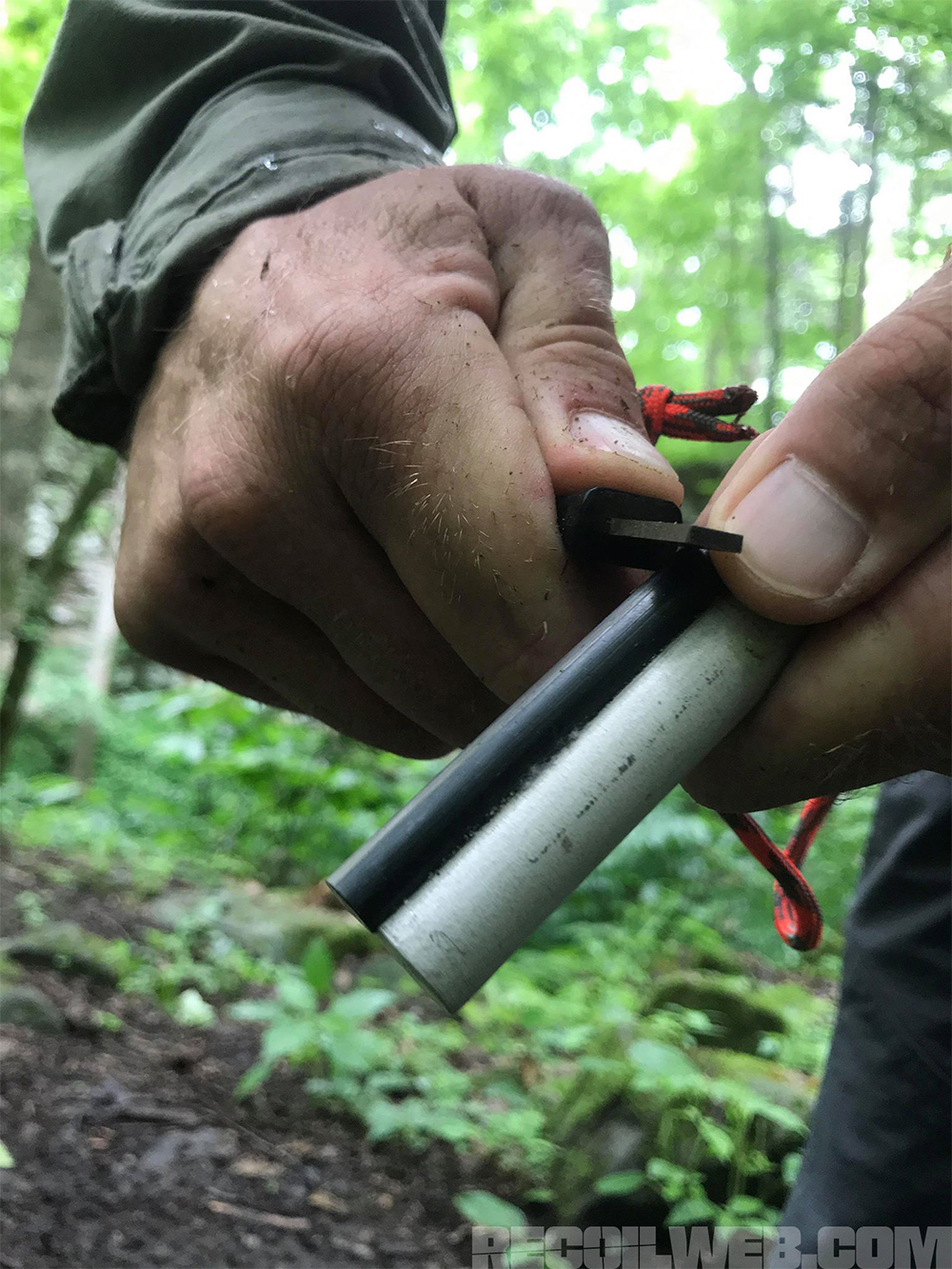
So what am I doing on this rainy day? Training. I’m in the woods practicing a skill that may keep me alive. Fire making. Ask yourself “when do you NEED a fire?” Do you need a fire on a warm sunny day? Maybe not unless you’re using it to cook or boil water to drink. You need a fire when you’re at risk of hypothermia though, and you need it quickly. And the conditions that cause hypothermia generally involve being cold and/or wet. If I can’t start a fire when it’s only raining, then I’ll probably fail when my hands and body are shaking uncontrollably. It doesn’t matter at that point if I’ve made a million fires in the past, the one that I’m making now is all that is important.
This mentality should be in all types of training. Adjust your mindset into accepting horrible weather as an opportunity rather than a nuisance. Be happy to see rain, snow, wind, etc. on training days because it affords the chance to practice skills in an environment that may be the same as when we depend on those skills to work.
Training when it’s tough makes you better than everyone else who chose to stay on the couch. Embrace it because you are now more prepared to take whatever life throws at you. While you may not thank me while you’re freezing and soaked, I guarantee you will if tough training brings you back home safe from a catastrophe.
ABOUT THE AUTHOR
Justin Vititoe has over 20 years firearms and survival experience, 17 serving as an Infantryman in the United States Army, including 4 combat tours in both Iraq and Afghanistan. More than half of his career has revolved around sniper skill sets, to include; three years instructing at the U.S. Army Sniper School and Long Range Marksman course and two combat tours as a sniper team and section leader. Justin is an expert in marksmanship, survival, surveillance, counter- surveillance, and almost any hand-held weapon. He has instructed military personnel and civilians all over the world in survival, marksmanship, camouflage, tracking, small unit tactics, planning, land navigation and numerous other skills. Justin was also a participant of season 2 of History’s ALONE series, where he survived by himself with minimal gear for 35 days.
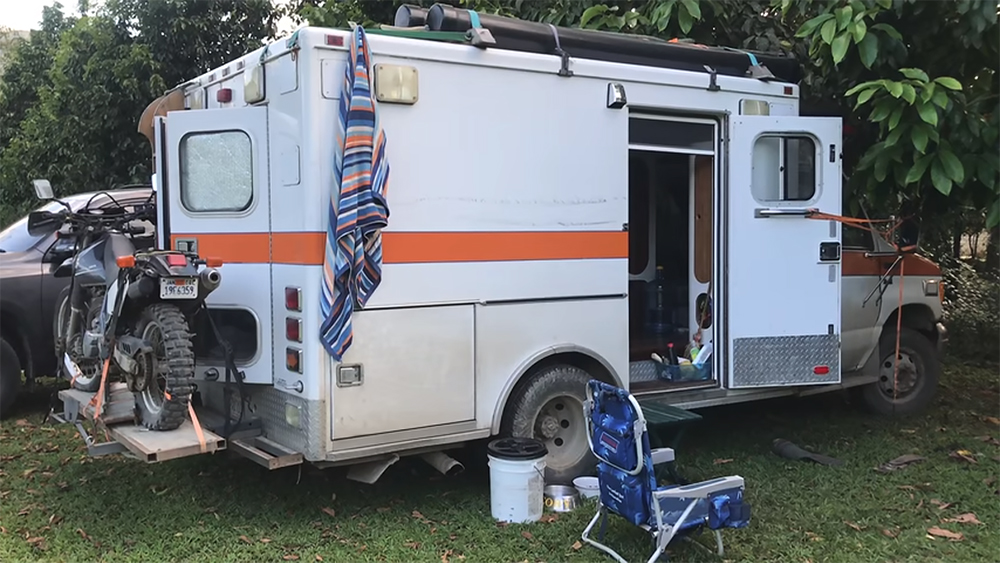
If you love the outdoors, it’s easy to see the appeal of an adventure vehicle. These trucks and vans are designed to traverse long distances over potentially rough roads, carry a large assortment of gear, and also provide a home on wheels. If you’ve got deep pockets, you can always turn to a builder like Earthroamer or AEV for a seriously capable rig. But if you can’t afford to drop a few hundred thousand dollars, it’s possible to build your own DIY RV for substantially less money.
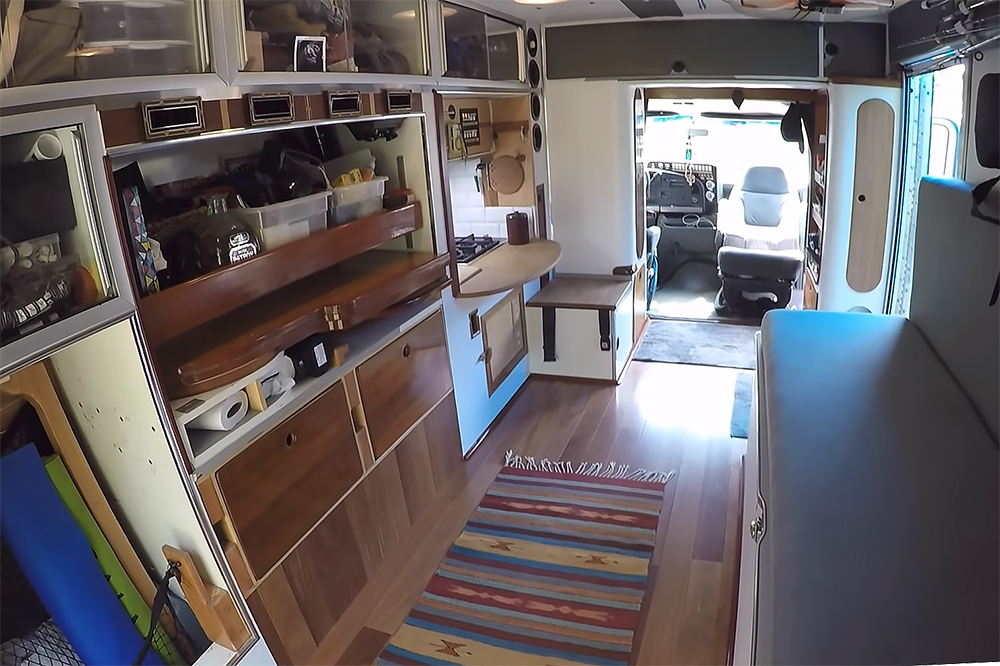
Ian Dow recently shared some videos of his custom adventure vehicle project, which is based on a decommissioned Ford E-350 ambulance. Starting with this platform instead of a regular panel van provided a number of advantages — a large living area, plentiful storage cabinets, preexisting wiring and switches, heavy-duty suspension and brakes, exterior lights, and even a functional P.A. system.
Ian heavily modified the ambulance to add a stowable queen bed, kitchen with sink and magnetic dish rack, hardwood dining table, exterior shower with propane water heater, and many other comforts of home. He also added a carrying platform for his Suzuki dirt bike, and an above-cab roof rack with spare wheels and tires for both the van and bike.
Check out the first video compilation below, then refer to the second video for a much more detailed tour of all the ambulance adventure vehicle has to offer. Ian has already been driving around Mexico and Central America with the van, surfing, fishing, and enjoying the sights.