As much as we love working on the printed version of RECOIL OFFGRID magazine, we also recognize that there are certain things that print publications just can’t do as well as the web. Video content is one advantage of our internet presence—although a few magazines have tried embedding video screens into their pages, current technology makes this effort expensive and ungainly. The other big advantage of the web is that it gives us the freedom to write as much as we’d like to about a topic. There’s no cost-per-page limitation to worry about in the digital space.
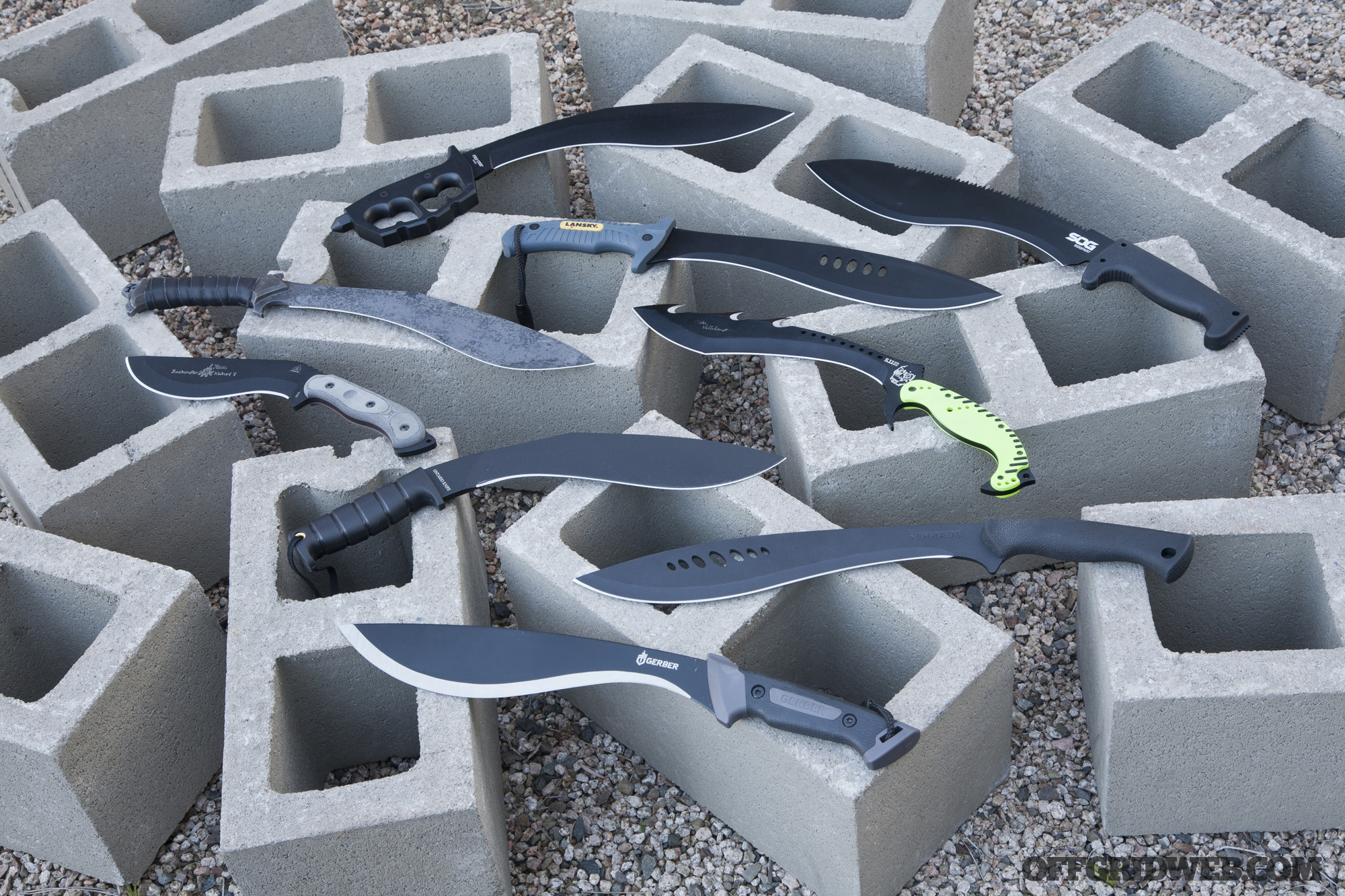
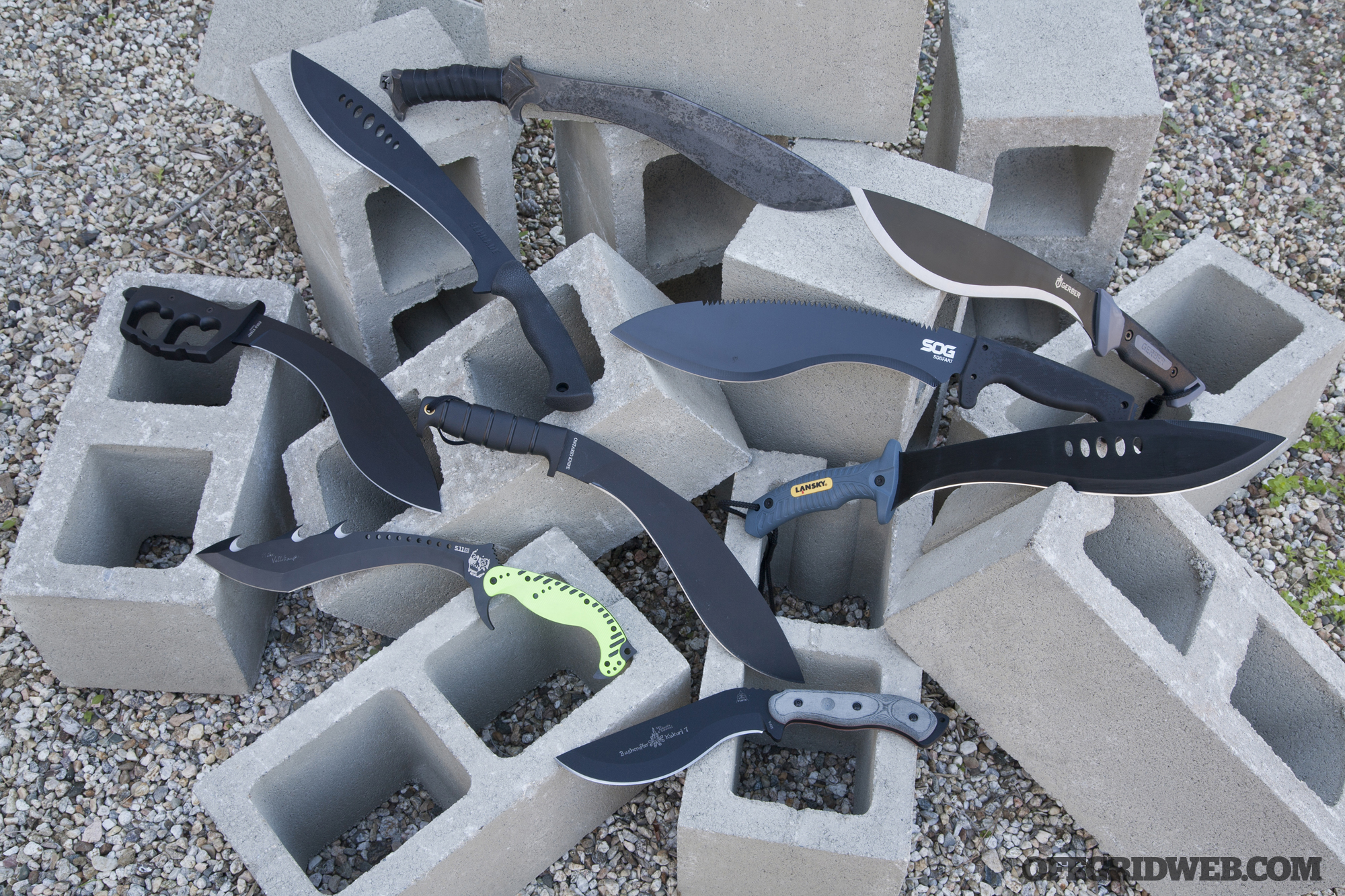
So, given these two advantages, we’re going to take the opportunity to share some extra content that we couldn’t fit into the latest edition of our magazine—Issue #14, which goes on sale June 10th. In that issue, we compiled a buyer’s guide all about the specialized blades known as kukris. The full buyer’s guide is titled “Ahead of the Curve”, and it shares our thoughts on each of nine blades we tested.
“Ahead of the Curve” Background
If you arrived here from the link in our print article, welcome to OFFGRIDweb.com! We hope you enjoy this bonus content, and encourage you to have a look around our site. There are tons of other product reviews and buyer’s guides to be found on our Gear page, or you can bookmark our home page for the latest urban survival and preparedness news each day.
For those who haven’t read our kukri buyer’s guide article yet, we’ve included the introduction below, so you can understand the bonus content we’ll be sharing here. However, if you want to see our complete reviews of the nine blades seen here, pick up a copy of the magazine or click here to read the buyer’s guide online.
“Large, sharp, and curved. You might not know what it’s called or where it comes from, but one look tells you it’s to be respected …and feared. The kukri (pronounced “cook-ree” and often spelled khukuri or kukuri) is a large knife designed for slashing in the field—and defending one’s life on the battlefield.
These blades are somewhat similar to machetes, but feature a distinct forward-facing curvature, often accompanied by a kink in the blade’s spine. This distinctive shape provides added chopping leverage, and makes the kukri ideal for clearing thick brush, breaking down firewood, or even felling small trees. Think of it as a tool that’s halfway between a machete and a hatchet, and you’ll begin to understand why the kukri is an excellent multipurpose blade for survivalists.
However, the kukri is also much more than a simple utilitarian knife. Its design dates back thousands of years, and is intertwined with the history of Nepal. The kukri was used by farmers in this small Asian nation wedged between India and China to harvest crops and slaughter animals—but it also doubled as a weapon for combat.
A Gurkha commander holding a kukri in his left hand and a sword in his right, circa 1814. Source: Wikipedia
Nepalese soldiers, known as Gurkhas, used kukris to resist the British East India Company in the 1800s, often running headlong into battle with their curved blades held high. The Gurkha motto, “better to die than be a coward,” explains this spirit of extreme fearlessness.
Gurkha troops showing their kukris at inspection during WWI. July 1915. Source: Wikipedia
As a result, the kukri became infamous in the Western world. This reputation would continue throughout WWI and WWII, as Gurkha soldiers later serving alongside the British military continued to use their kukris in trench warfare, devastating their enemies in close combat. Even today, all Gurkha troops in Nepal are issued two kukris: one for ceremonial use, and the other for duty use. This blade has proven itself in battle for centuries, and is certainly not to be taken lightly.”
To read the complete specs, pros, and cons of each blade, pick up a copy of RECOIL OFFGRID Issue #14.
Kukri Testing Procedures
As we work on each of our buyer’s guides for the magazine, we always make a point to thoroughly test each item we review. Obviously, this is a necessary step to understand the ins and outs of each product—but we’d be lying if we said it wasn’t a lot of fun, too. We get to come up with creative ways to test the products in our guides, and then incorporate the results of this testing into our articles.
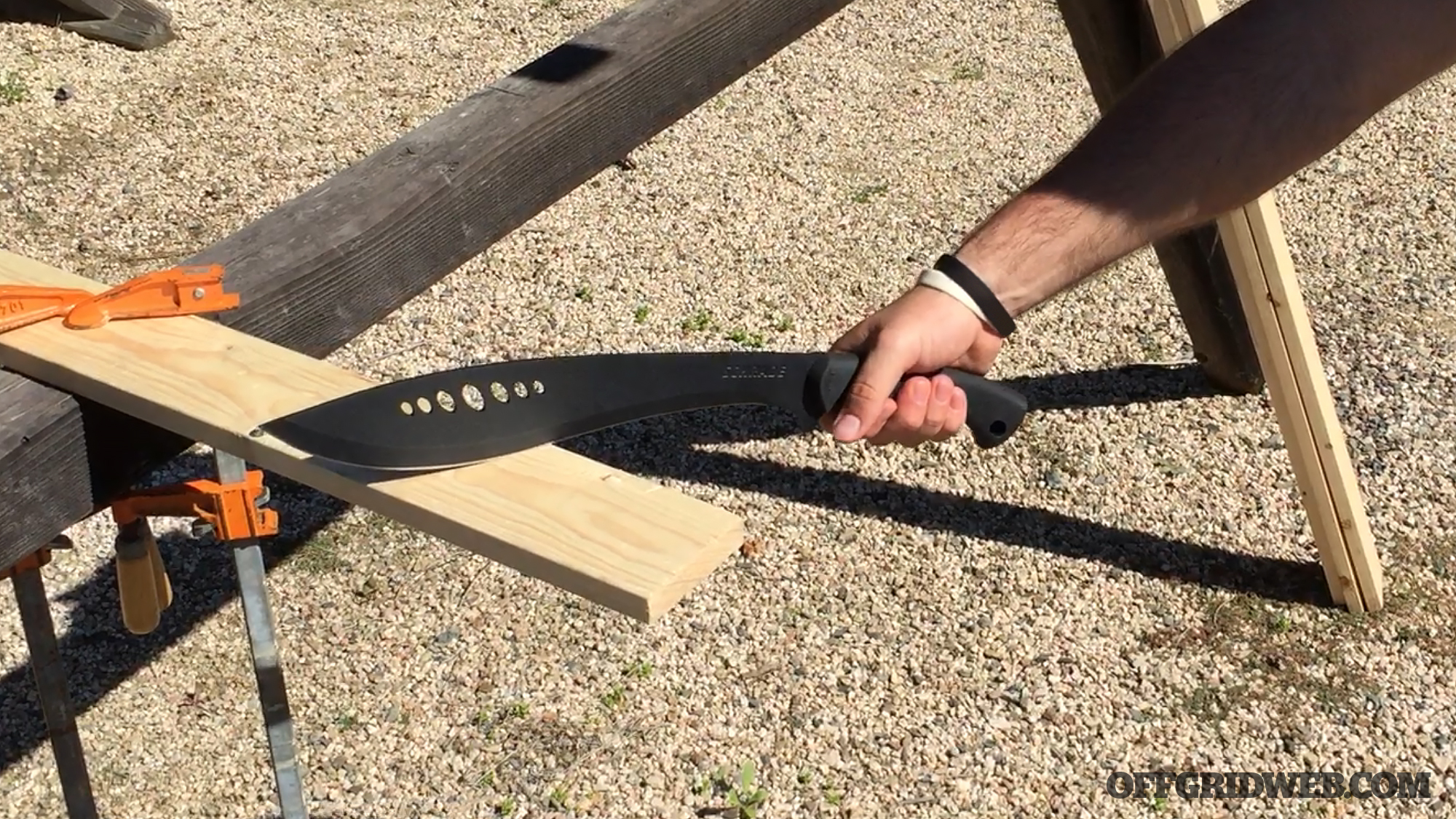
A solid wood board was positioned horizontally, then chopped repeatedly using an overhead motion.
In the case of these kukris, we wanted to test for toughness and durability by chopping some solid wood, so we set up two testing stations. First, we chopped down vertically into a flat wood board, in an axe-like motion. We continued hacking away until the blade made it all the way through the board. This test examined how each blade fared as a brute-force tool for breaking down lumber.
Next, we placed a 1.5-inch wooden dowel vertically in the ground, and supported it with some cinder blocks. Since kukris are typically used in a diagonal slashing motion, this is how we tested the angular chopping abilities of each blade. After both these tests, we inspected the blade edge for dulling or other damage, and checked the finish for chips and scratches that may have occurred. We also sliced through paper to see how sharp each kukri had remained.
Finally, we decided to have some fun on camera, and make use of the slow-motion feature on our smartphones. We filled some empty plastic water bottles with tap water, and added a few drops of red food coloring for flair. Then we suspended these bottles in the air at chest height, and slashed through them like liquid-filled pinatas (minus the blindfold, of course). Not only did this look cool on film, it also showed how cleanly each blade sliced through the target, and how easy each was to use accurately.
Scroll down to check out our video clips of the nine kukris in action, and read more of our thoughts on the blades’ performance.
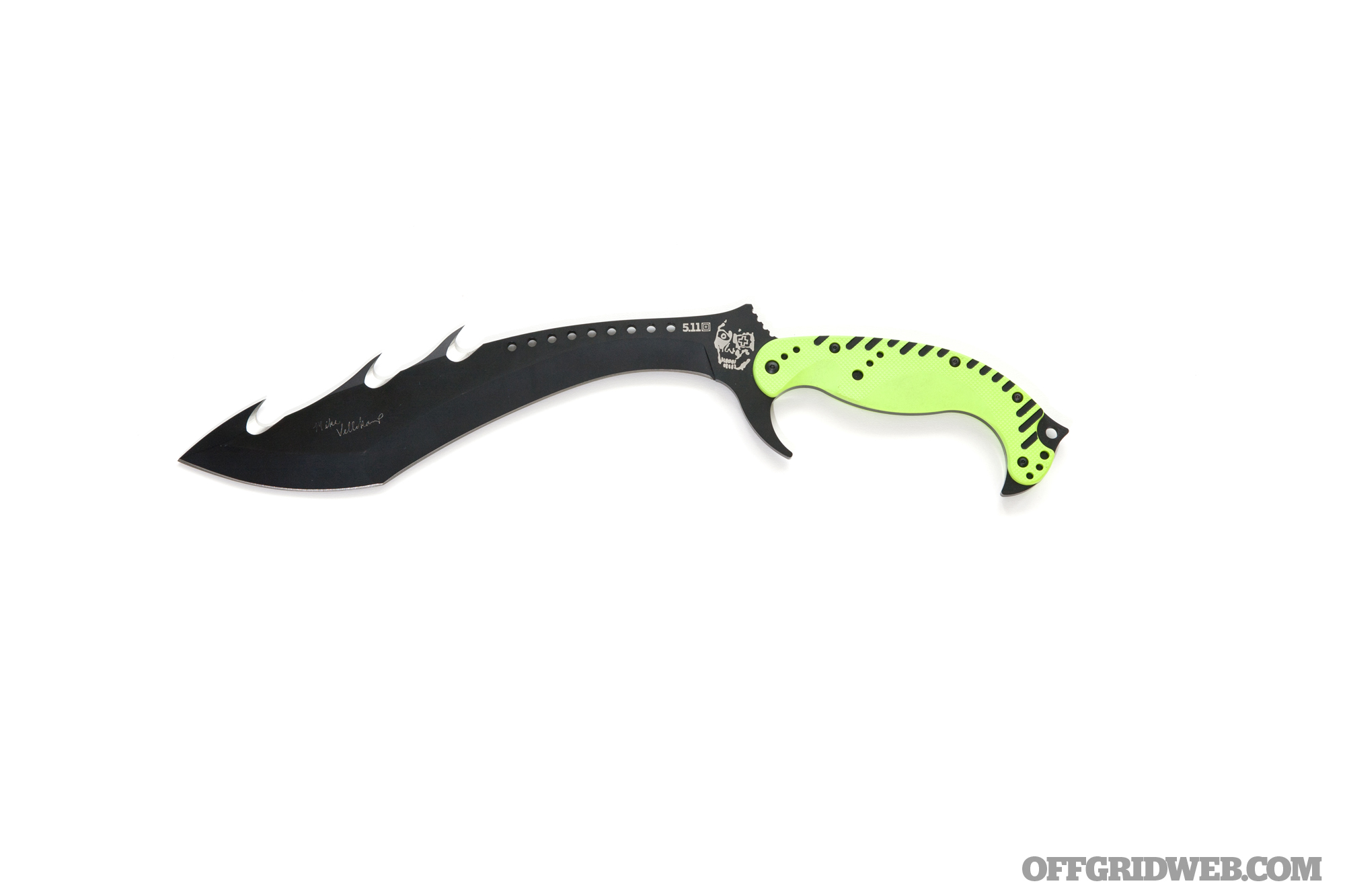
5.11 Tactical Kold Khukri
The Kold Khukri from 5.11 Tactical is certainly the flashiest design of the bunch. The tanto grind wasn’t optimal for either of our wood-chopping tests, but it sliced through the water bottle with little resistance.
Cold Steel Chaos Kukri
The Chaos Kukri from Cold Steel has a hefty weight and lots of reach. This made it a good choice for heavy chopping, and we barely even felt the bottle as we sliced it in two.
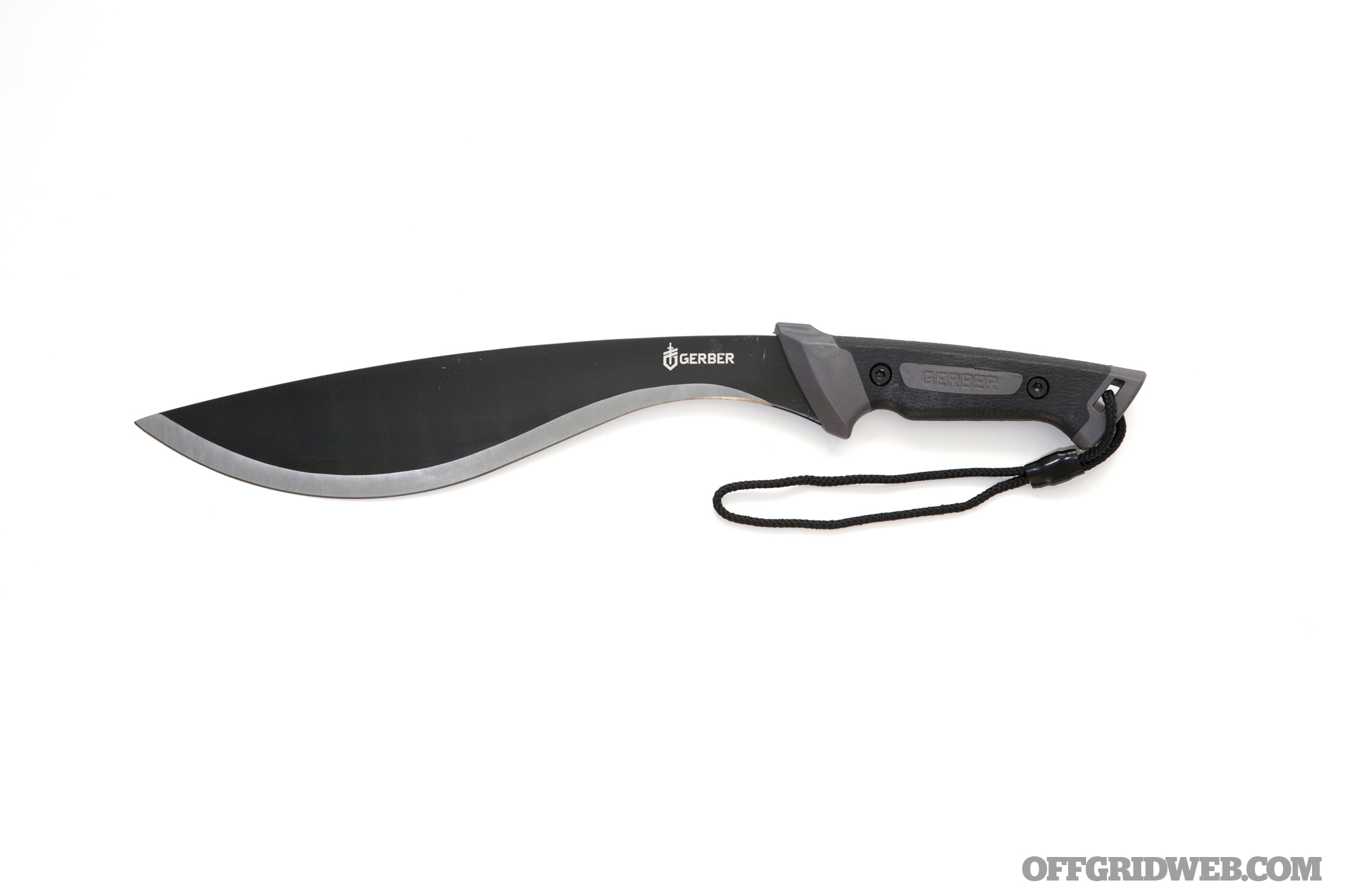
Gerber Gator Kukri Machete
The Gerber Gator Kukri did relatively well when chopping through the wood plank and dowel, but its edge wasn’t as sharp as we had hoped. This made it the only kukri that didn’t slice easily through the water bottle. We figured this may have been a fluke, so we reset and tried the test again. Both times, it failed to cut through the plastic cleanly.
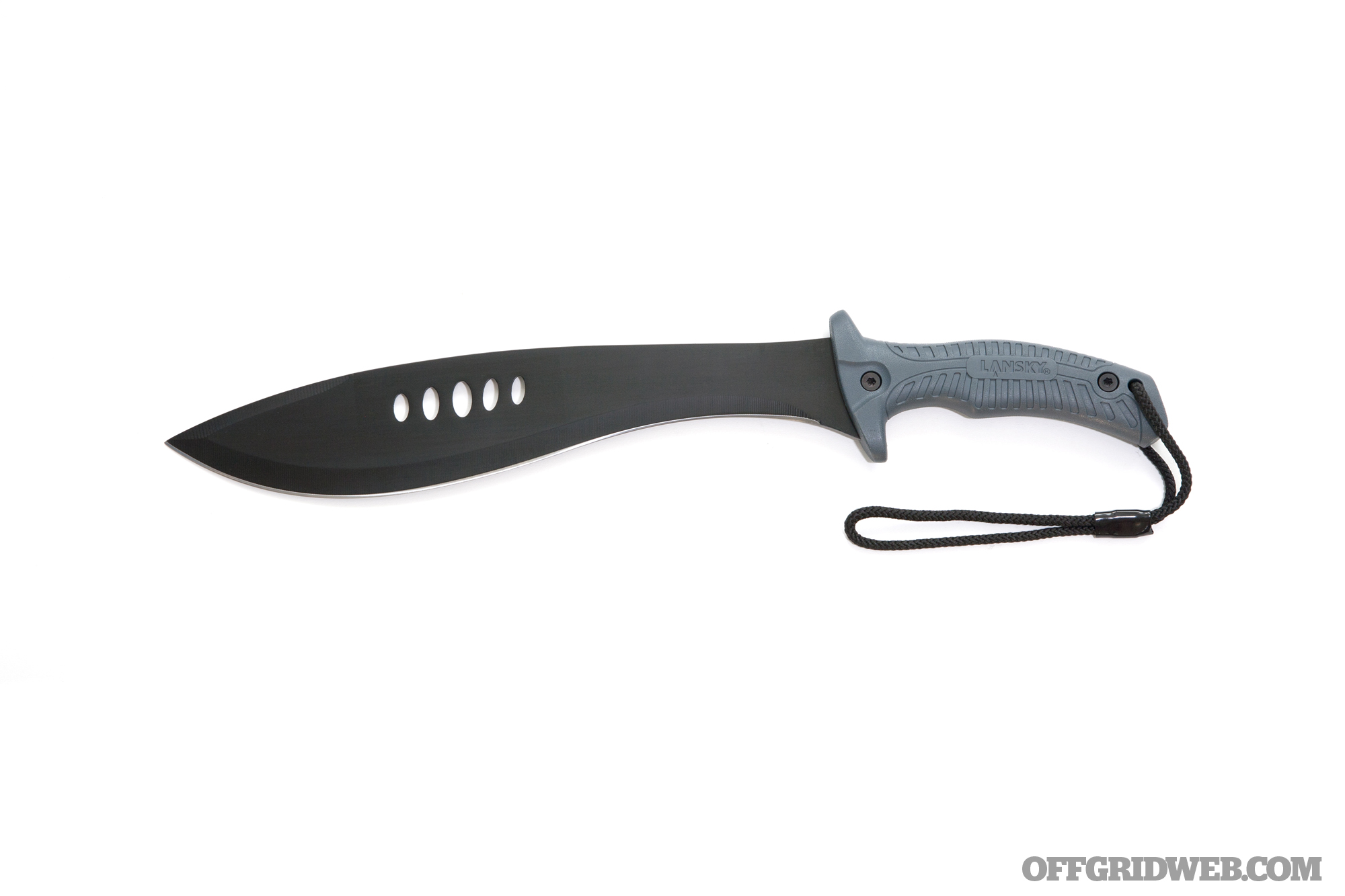
Lansky Kukri
The Lansky Kukri features a compound bevel, which allowed it to chop and slice with ease. However, the hard nylon handle left us wanting a pair of padded gloves after a few chops.
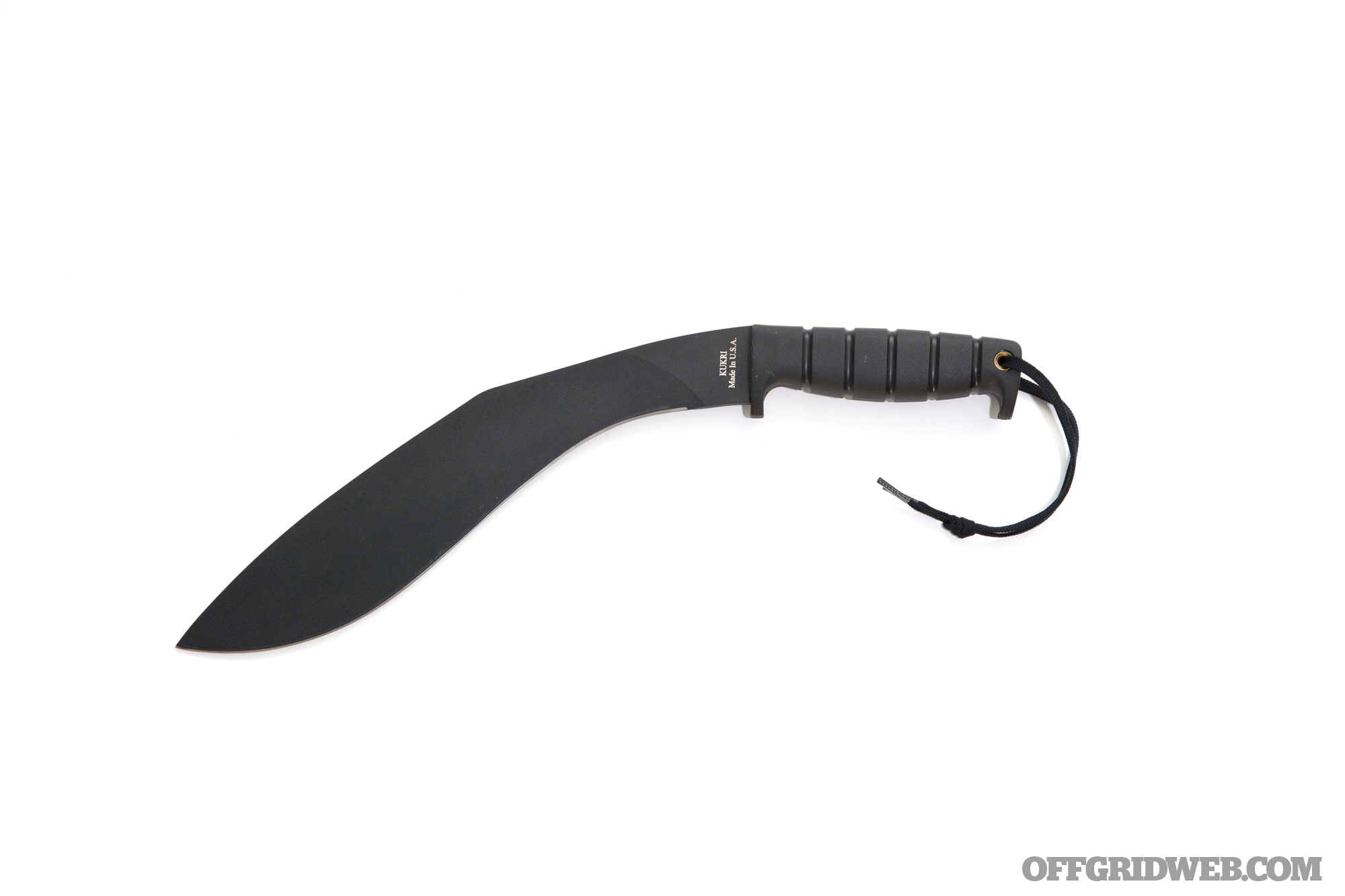
Ontario Knife Company Kukri
Ontario Knife Company’s Kukri exhibited excellent balance and control. Its strongly curved blade made quick work of the wood, and it split the water bottle easily.
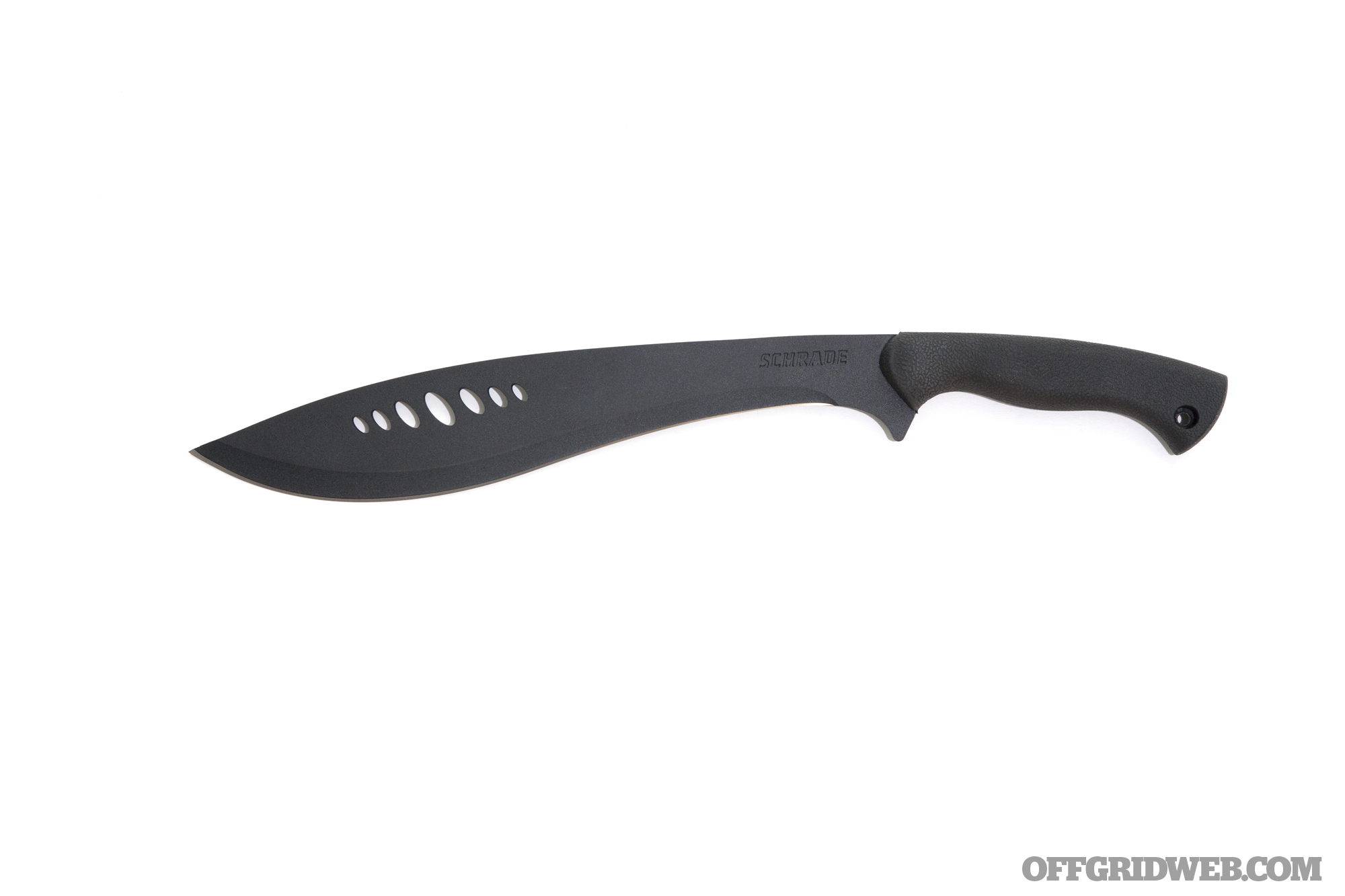
Schrade Large Kukri Machete
The Large Kukri Machete from Schrade offers a long reach and lots of leverage. We were pleased with its performance across the board.
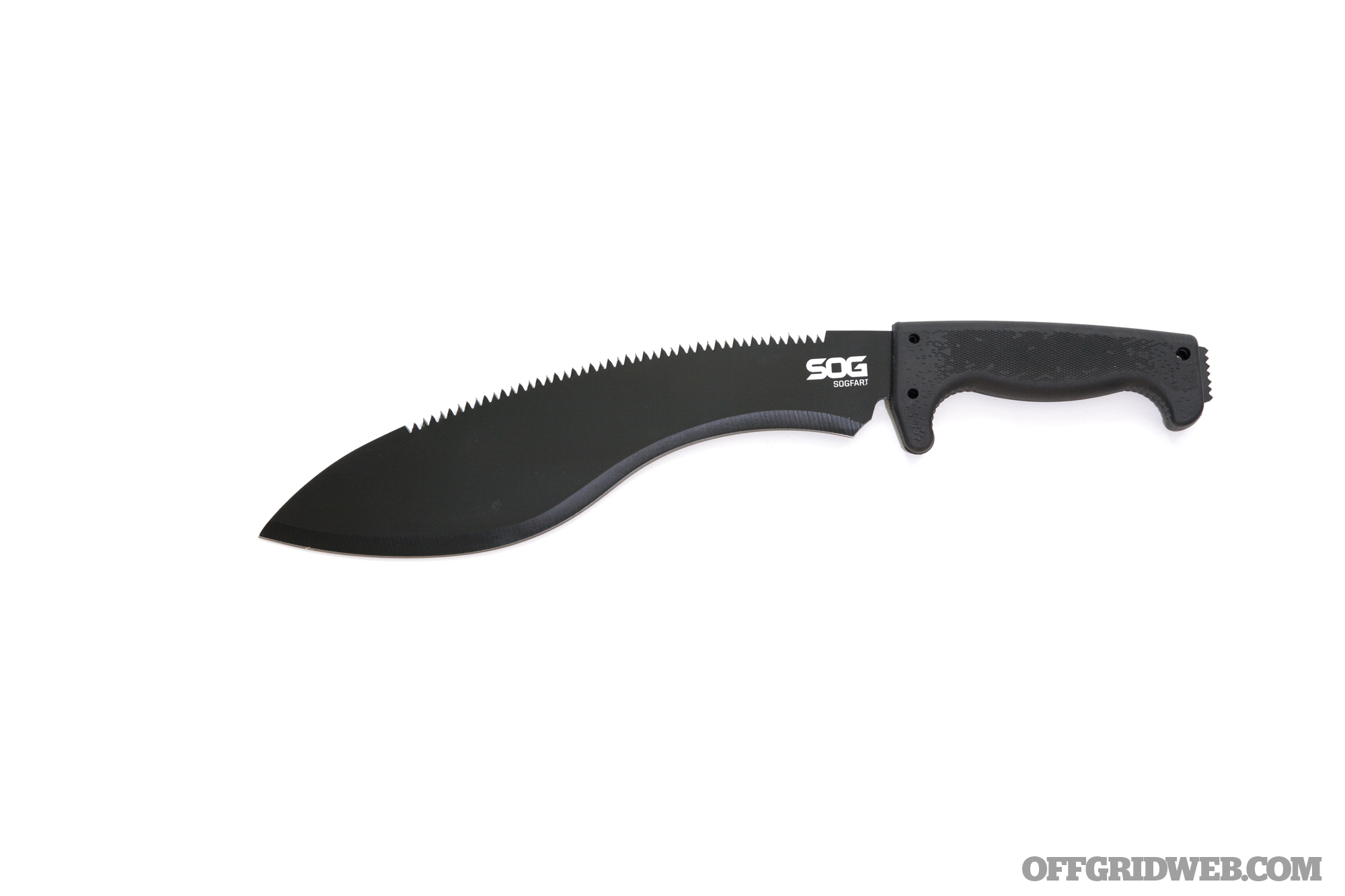
SOG SOGfari Kukri Machete
The SOGfari Kukri Machete was light and easy to swing, but the blade edge showed some serious wear after we were done testing it. This blade will likely need frequent maintenance to stay sharp.
TOPS Knives Bushcrafter Kukuri 7.0
We didn’t know what to expect with the small TOPS Bushcrafter Kukuri, but it surprised us. Its heavy weight helped it chop surprisingly well, and it slashed the water bottle cleanly (although we did have to step a little closer to our target).
Zombie Tools Vakra
The Zombie Tools Vakra kukri went through the water bottle so cleanly, we barely felt the impact. It also made quick work of the wood in our other tests. The biggest drawback we can see with this one is the price.
Many of us would love to be able to take a few weeks off and travel to a remote, privately owned forest where we can practice wilderness survival skills without fear of violating a city ordinance or, perhaps worse, incurring the wrath of our homeowners association. The reality, though, is that unless we’re somehow picked for the next round of contestants on some goofy reality show, we’re not going to be doing a lot of primitive camping any time soon. We simply don’t have the time for an extended trip. And if we did, most of us can’t afford it (not all of us have the scratch to fly to Jasper National Park in Canada or the rain forests of Costa Rica).
Fortunately, these skill sets don’t require a background of towering pines and the gurgle of a babbling brook to be successfully learned. Many of them can be practiced right in your own backyard. Doing so has a milder impact on your wallet — plus, if things go awry, help is likely just a scream away.
Fire-Making
The ability to reliably make fire under both ideal and adverse conditions is one of the most important survival skills to master. Plus, you earn massive field cred when you’re able to get a fire going where others have failed.
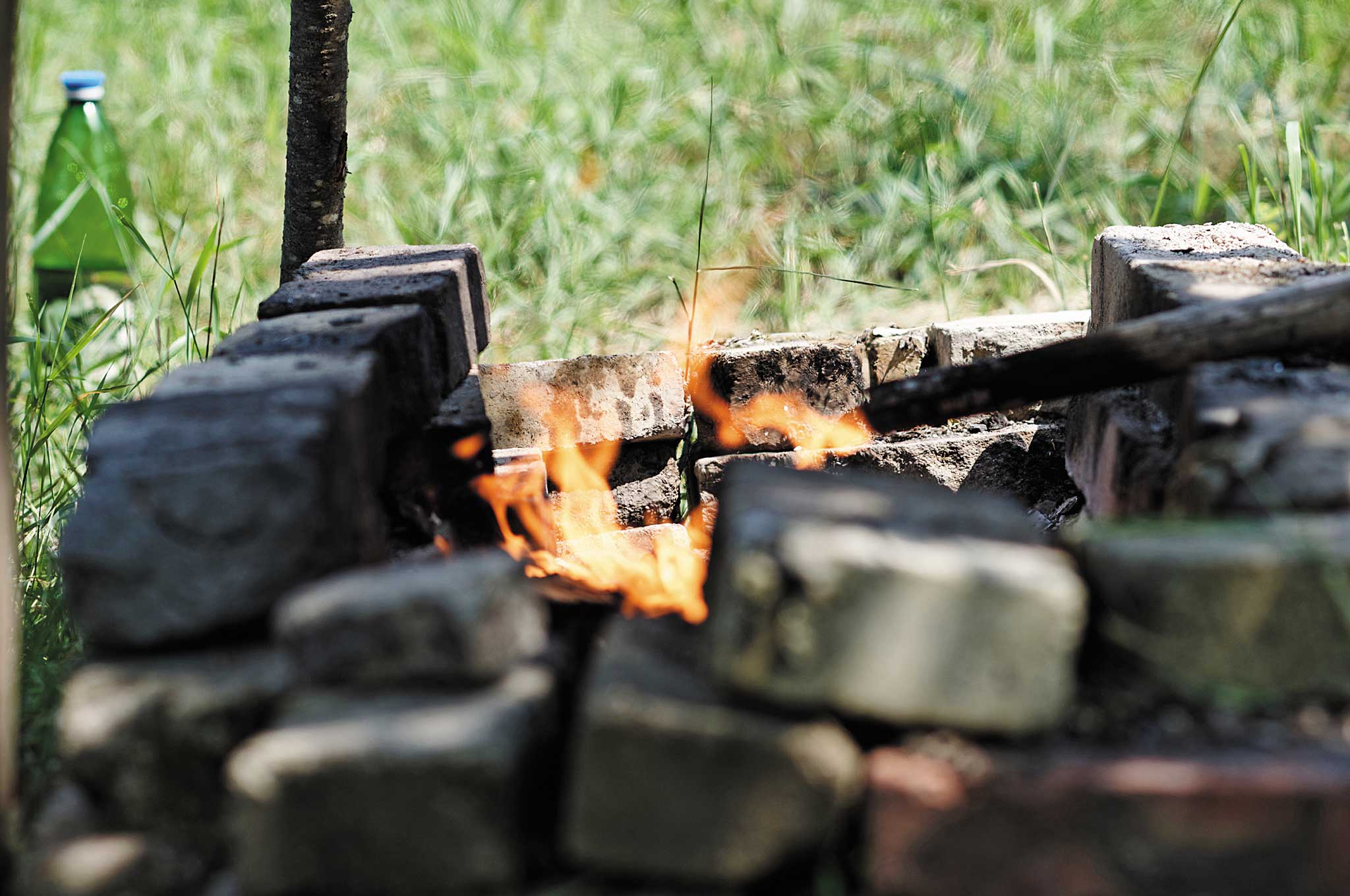
Backyard Bonfire: Even if there are city restrictions on what you’re allowed to burn and when, I doubt there are any rules at all dictating how the fire is started. Many homeowners have invested in some sort of patio fire pit in recent years, whether it is a permanent brick structure or just a metal bowl that gets moved off to the side when the kids are playing basketball. Either way, they work great for practicing your pyrotechnic talents.
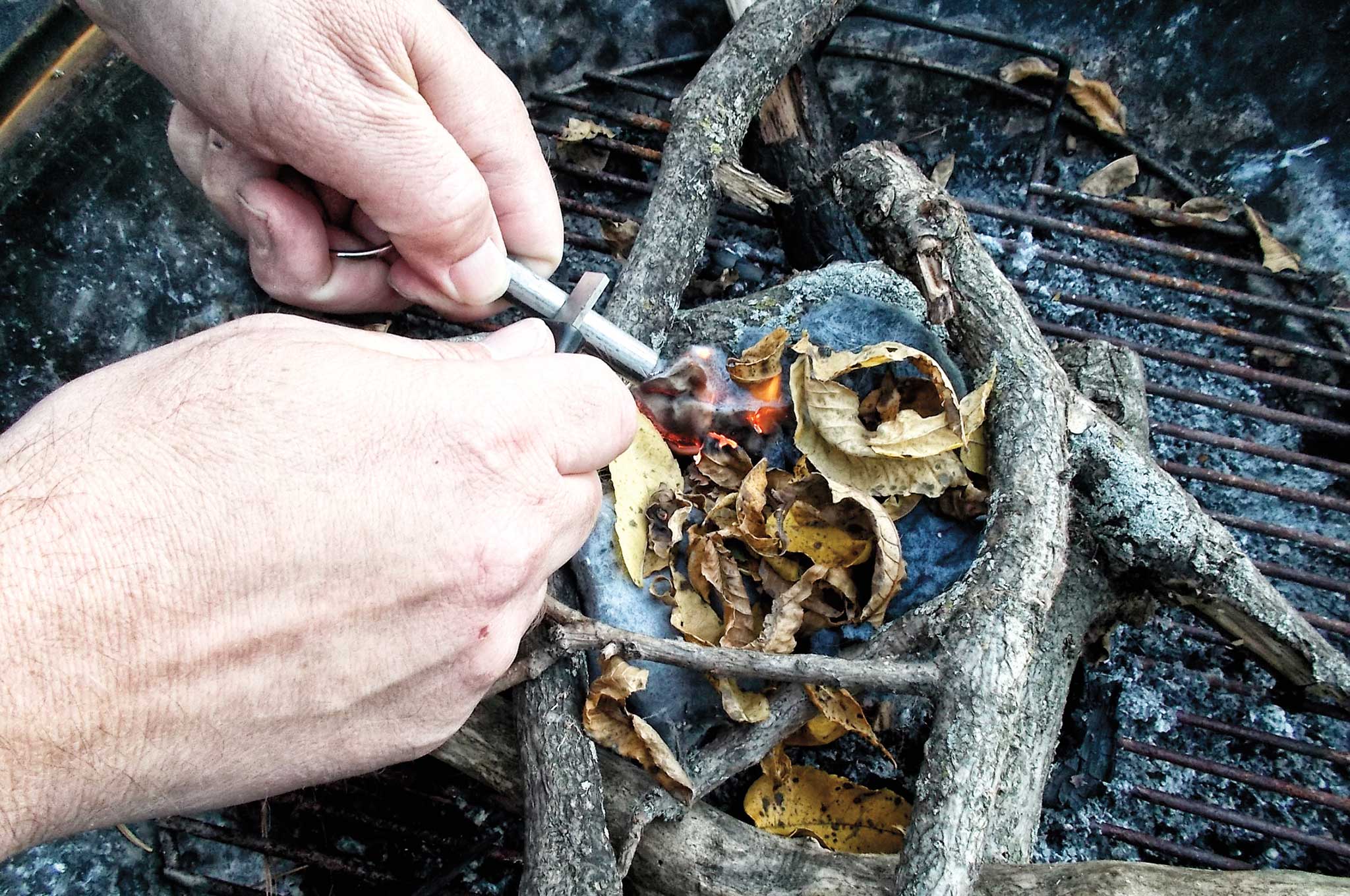
Spark Selection: Try using a variety of different fire-starting tools and techniques, from the reliable butane lighters and strike-anywhere matches to ferrocerium rods and perhaps even the bow drill. Don’t overlook the magnifying glass or the fire piston, either. Practicing these techniques in the backyard is a great way to learn which are easiest for you to use and under what conditions each seems to work the best.
Tinder Finder: If you lack natural materials to use as tinder, mimicking what you’d find out in the field, search for “Michigan Wildfire” on Facebook. Their fire kit consists of about a dozen different types of natural tinder, a full pound of it total, along with a custom-handled ferrocerium rod. The materials, such as birch bark and chaga fungus, are all separated and labeled, making it a great tool for learning how to use varied materials in fire-making.
Fuel Placement: Try out different fire lays, too. Most of us are familiar with the teepee fire lay, where you build a cone of sorts out of kindling over the tinder bundle. How about the Dakota fire hole? You won’t be able to use your patio fire pit for it, but it can be very useful out in the field. Dig a hole about 10 inches deep and maybe a foot in diameter. Dig another hole the same depth but half the diameter, about 18 inches from the first one. Then, dig a tunnel to connect the two holes.
Sounds like a lot of work, I know, but it’s worth it in the end. Build your fire in the larger hole. Once it starts burning well, it will draw air through the second hole, causing the fire to burn hotter and consume the fuel more efficiently. This results in far less smoke being generated, making the Dakota fire hole a great option for keeping things on the down low. Plus, it is quite easy to lay a few green branches across the fire hole, on which you can place your pot or pan for cooking.
Off-Grid Cooking
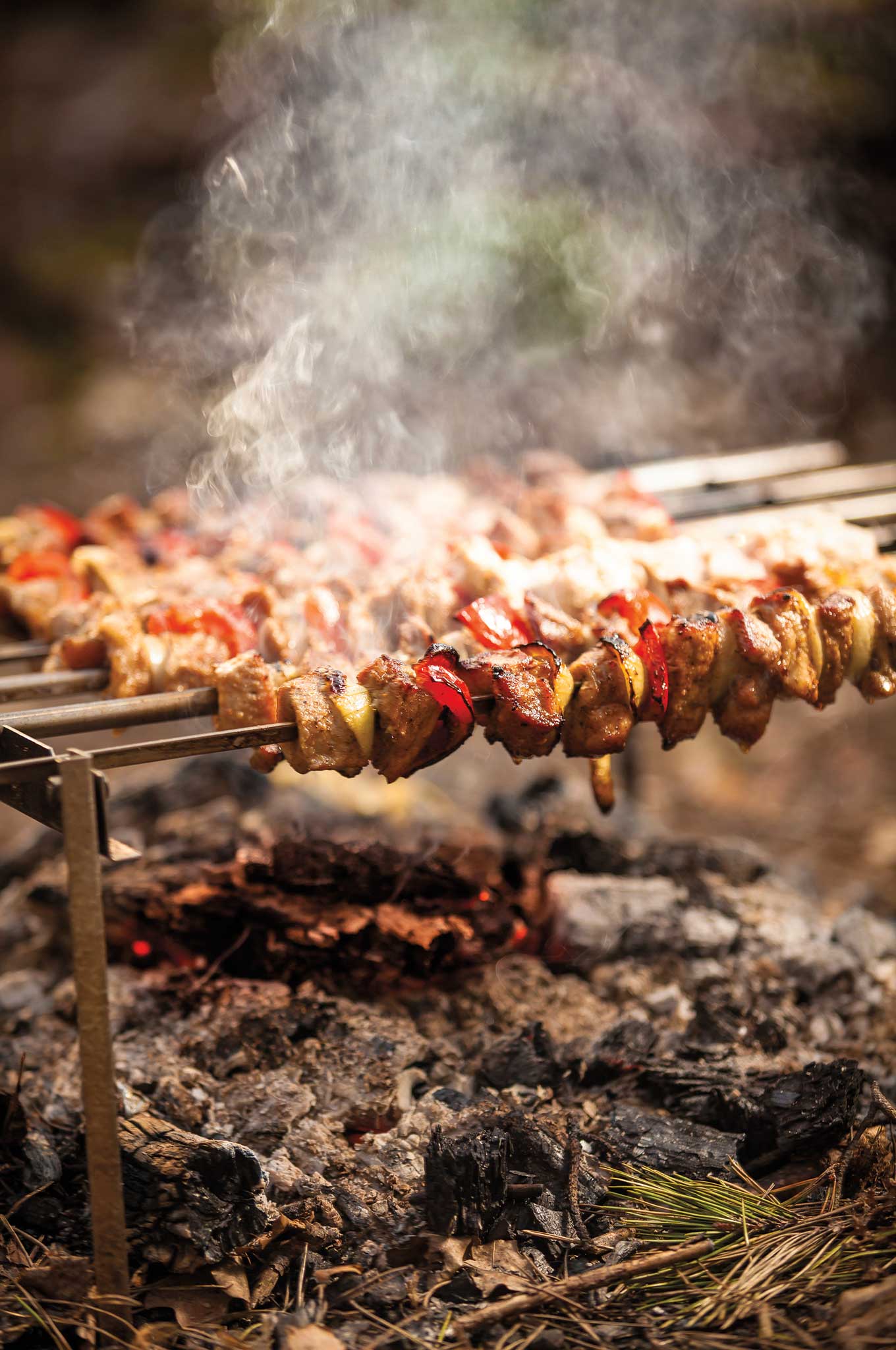
Make no mistake, cooking over an open flame outdoors is as much art as it is science. While campfire cooking traditionally means impaling something on a stick and holding it over the fire until it burns, with the right tools and some practice you can cook just about anything. The following are some considerations.
Coal Cooking: First things first, though. You don’t cook over the actual flames, you cook over the coals. Those provide a much more consistent temperature. Flames will reach up and scorch the food, leaving the outside burnt to a crisp and the inside cold and raw. What experienced camp cooks will do is get a good fire going, then once it dies down, scrape the coals to the side for cooking.
Side Burner: Another thing to keep in mind is that most grills, unless they have a side burner, are horrible when it comes to boiling water. They are very inefficient because the heat kind of goes everywhere rather than focusing on the bottom of the pot. You folks who sprung for the side burner feature, though, are good to go.
In theory at least, anyone can heat up a can of soup over a campfire. But, if your outdoor cooking experience tops out at turning hot dogs into briquettes, you have some practice ahead of you.
Cookware: For potentially long-term situations, consider investing in at least a couple of cast-iron pots, such as a deep skillet and a small Dutch oven. While you can sometimes get by with using your normal kitchen pots and pans, they typically aren’t made to withstand the higher heat generated by a campfire. They may warp or bend, and plastic handles will almost certainly melt. Good cast iron isn’t cheap but, if cared for properly, it will last several lifetimes.
Wild Edibles
I will readily admit that I am a die-hard carnivore. A meal just isn’t a meal unless something had to bleed before it hit my plate. That said, if I’m hungry and the only food available has leaves on it, I’ll be filling my plate with greens and possibly coming back for seconds.
Being able to not only recognize wild edibles in your area, but knowing how to properly use them can be a crucial life-saving skill. Rather than trying to properly identify a whole ton of plants most of the time, concentrate on being able to identify a short list of plants all of the time. The goal here is to learn what you can put into your belly to stop the missed meal cramps, not give a botany lecture.
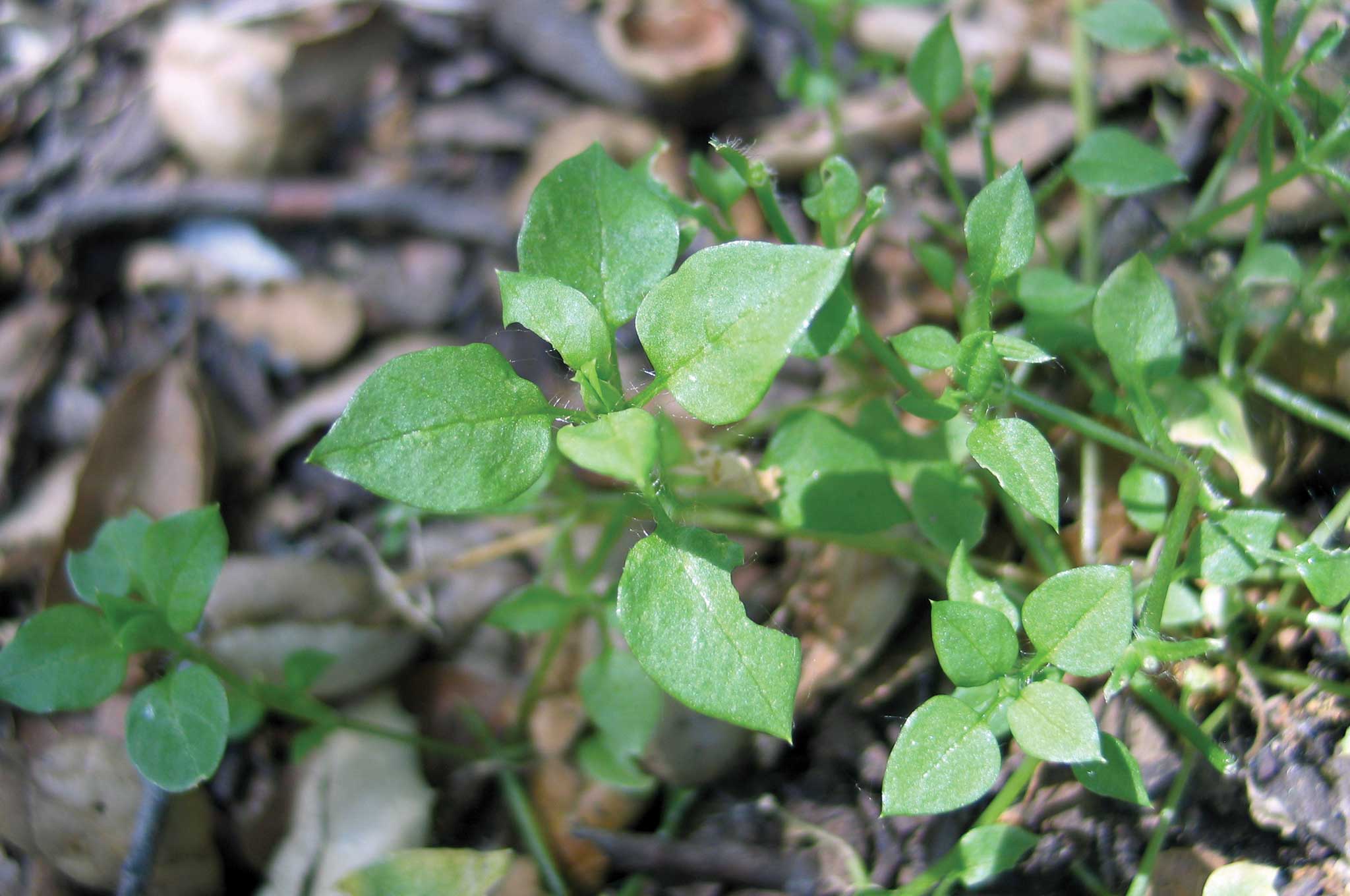
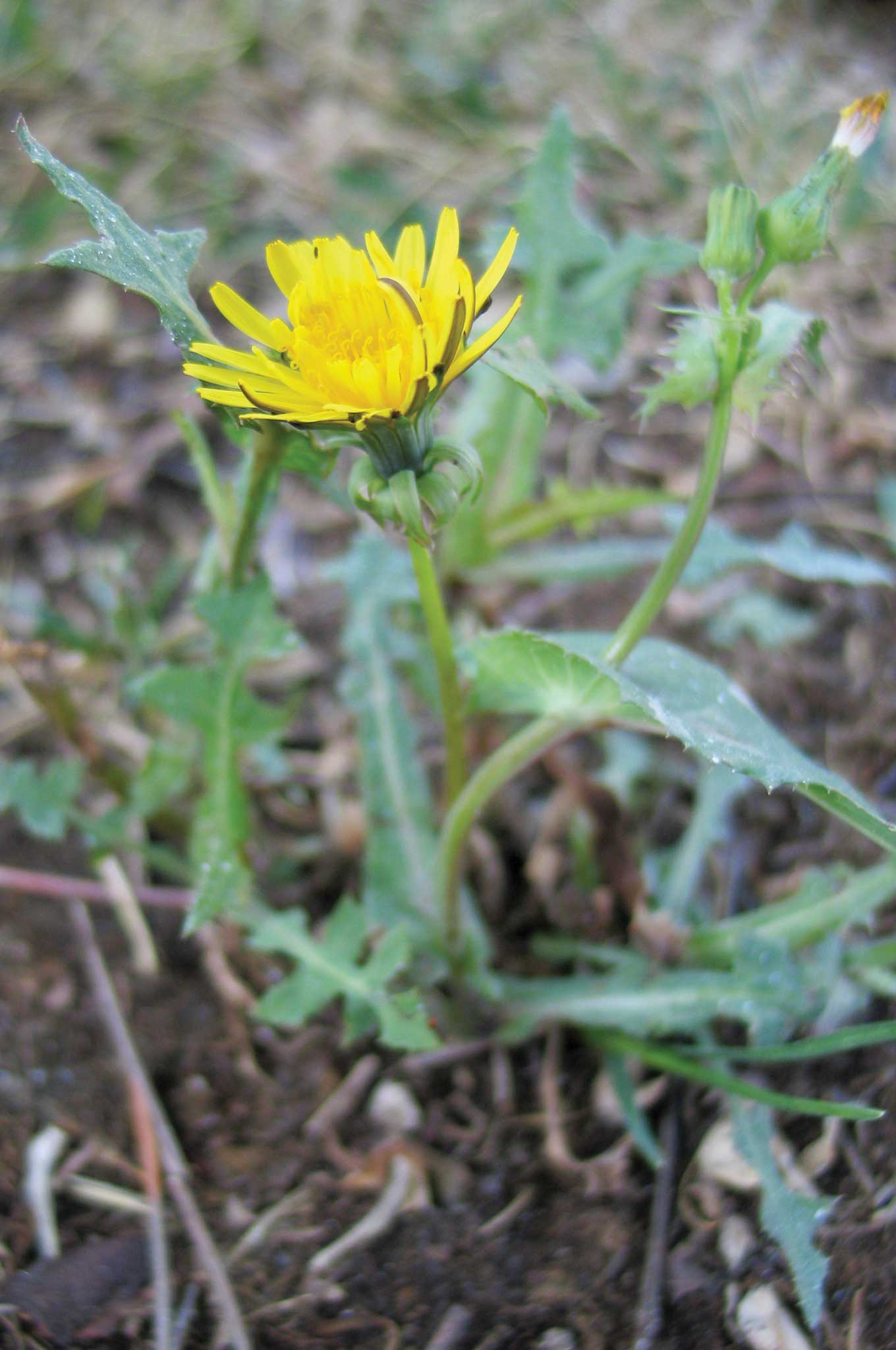
You’d be surprised at what you’ll find in your backyard once you know what to look for.
Edible Education: Start by visiting your local library for a few books on wild edibles in your area. Two references I highly recommend are the Peterson Guide to Edible Wild Plants by Lee Allen Peterson and The Forager’s Harvest by Samuel Thayer. See also “Urban Foraging” in Issue 8. An important thing to remember is you’ll need to be able to identify the plants at various stages of their development. Many guides only show what the plant looks like when it is ready for harvest. By knowing what the plant looks like as it grows, you can spot it earlier and note the location for later.
Plant Compatibility: Another important aspect of wild edible gathering and use is that just because the plant is edible doesn’t mean it will necessarily agree with you. We all have certain foods that just don’t get along with our digestive systems. I’m not talking about being lactose intolerant or having issues with gluten. I’m referring to the fact that many of us are no longer able to wolf down Taco Bell at 3 a.m. without some serious repercussions. The same basic principle applies with wild edibles. Each person’s body is different, and the body changes over time. Learn what you can eat safely now, when medical help, as well as working indoor plumbing, aren’t issues.
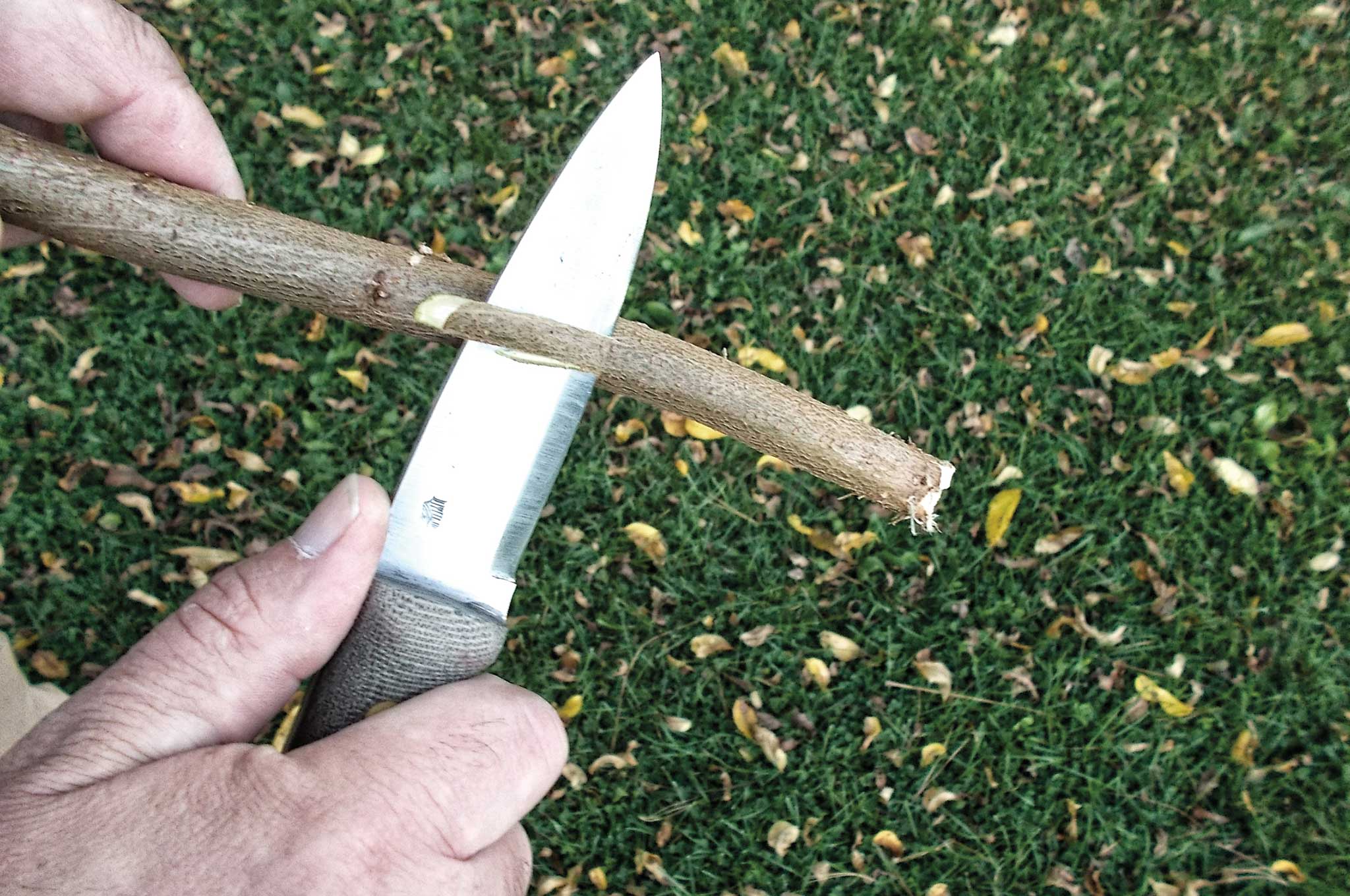
Learning how to use a knife effectively is a survival requisite.
Continuing Education: Another possible learning resource is your local county extension office. They are the folks who manage the Master Gardener programs. Reach out to them and find out if they have someone who is well versed in wild edible identification who could work with you for an afternoon or two. You might be surprised — there could be existing classes you could join.
Tracking
Animal Analysis: Identifying animal tracks is a great way to learn what animals are living in your area and thus would be available as a potential food source, should the need arise. Back to the library you go, this time for a couple of books on animal tracks. The Peterson Field Guide to Animal Tracks is a good place to start, but don’t overlook the children’s section of the library, too. Many of the advanced guides have so much information it can be overwhelming. You probably aren’t interested in the mating habits of the Eastern Humped Whatsit; you just want to know what made the tracks that lead to and away from your upended garbage cans.
Get Outside: One great thing about winter is that snow allows for easier tracking. Rather than just staying bundled up by the fireplace, only venturing outside when your paycheck is threatened, take some time to get out there and practice tracking. Learning to identify prints is just the first step — you need to practice following the trail as far as you can. This is something you can read about, sure, but you’ll never be any good at it unless you spend some time outside.
Physical Fitness
As he recalled later, this is right where he lost most of his readers. I know, exercise isn’t all that high on the fun list for most people. But, the fact is, poor physical conditioning will be a hindrance in a true survival situation. I’m not saying you need to be a fiend about lifting weights and running laps until you are in such good shape that you cause professional wrestlers to stop in their tracks. But, if you can’t walk from the kitchen to the upstairs bathroom without getting winded and there’s no underlying health issue at work, you need to get your heart rate up a bit every now and again.
Get a Checkup: Before embarking on any sort of exercise routine, you should probably get the all-clear from your physician. The last thing you want to do is end up hurt or worse when you’ve finally decided that while a sphere is indeed a shape, it isn’t the shape you want to be in any longer.
Move Your Butt: If it’s been years since you put on gym shorts, start small by walking the perimeter of your yard. Or, do a few jumping jacks on your back patio — anything that will get you up off your butt and working up a little sweat. (Check out the Health column in this and every issue of OG for more fitness ideas.) You don’t need to invest in a fancy workout machine or even a set of free weights. Join your kids in a game of tag. Play catch with your family.
Dust off the weights and kettlebells: You can’t survive a calamity if you can’t climb the stairs without getting winded.
Grab a length of clothesline and start jumping rope. If your neighbors look at you funny, remind them that if the zombies do come, you don’t need to outrun the brain-eaters, you just need to outrun the neighbors.
No matter what your living situation might be, you should be able to find some space for practicing some survival skills every now and again. It might require some creativity on your part, but being able to think outside the box is a survival skill in and of itself. Don’t get wrapped up in finding reasons you can’t do these things. A true survivor never gives up.
A Simple Recipe
An easy dish to make while you’re camping — whether off the grid or in your backyard — is something this author likes to call “campfire potatoes.” Here’s the recipe:
Tear off a sheet of aluminum foil about 18 inches long. Spray the inside with nonstick spray.
Wash a few red potatoes, then leave the skins on, and dice them into roughly 1-inch cubes or so. Lay those in the center of the foil.
Add a couple of pats of butter and sprinkle with salt, pepper, and garlic powder to taste.
Bring up the long sides of the foil roll them together down to the potatoes. Roll up the ends to make a nice, tight little package of goodies.
Toss this on hot coals for about 10 minutes, then flip for another 10.
Remove from the coals and carefully unwrap the foil. If the potatoes aren’t tender, wrap it back up and put it back on the coals for a bit longer.
Add some hamburger, peppers, and other goodies before tossing it on the coals, and you have a meal fit for a grid-down king.
Grid-Down Grub
If it’s truly a long-term grid-down situation, you’re going to want to try to salvage the refrigerated and frozen foods as best you can. It might turn out that the best thing to do is to cook as much of it as possible and have a little feast. That’s preferable over letting it all just go to waste, right?
Meat can be cooked on the grill, of course. Invite the neighbors over and have a cookout. Hopefully they’ll have buns that match what you’re serving. Hot dogs can be sliced for hamburger buns, but burgers on hot dog buns is troublesome.
Frozen Fries: Many of us have one or more bags of frozen French fries in our freezers. Here is one way to make use of those fries before they defrost: Take a sheet of foil, lay it on a counter, and spray one side with nonstick cooking oil. Toss a few handfuls of fries on the foil, then wrap them up. Cook this over hot coals for about 20 minutes or so, moving it around every now and again to shake up the fries so they don’t get burnt. Once the fries are about done, open the foil and pour a can of your favorite chili over the fries, then sprinkle with cheese. We always have a bag of cheddar or Colby mix on hand for quesadillas and such. Wrap the foil closed again and put back over the coals for five to seven minutes. When the cheese is melted and the chili is warmed through, unwrap the foil and grab a fork.
Frozen Veggies: Of course, you can always make vegetable soup with all of your frozen beans, peas, and such. Add some pasta noodles to boiling water, toss in chicken bouillon and veggies, then simmer until the pasta is tender. If you cook up a chicken breast and dice it for the soup, so much the better.
Premade Dough: Refrigerated dough, such as the kind that scares your mother-in-law when you pop it open, can be cooked over the fire, too. Take the dough and roll it into a snake, then wrap said snake around the end of a stick that is roughly an inch thick. Hold it over the coals and turn it slowly to avoid burning.
Dairy: Milk should be consumed before it goes bad. Eggs will last a fair length of time without refrigeration so put those toward the bottom of the “Need to cook before it might kill you” list.
Take a peek in your freezer and refrigerator today. What foods do you routinely have on hand that you’d want to cook up before they go bad? How would you prepare them?
Common Backyard Edibles
Dandelions are universal. There just aren’t too many places where dandelions don’t grow, at least not in the United States. The entire plant is edible, despite the general “milky sap means bad” rule of thumb.
Garlic mustard is the bane of oh so many homeowners. It is extremely invasive and will take over a flower bed in no time at all. A great way to get rid of it is to eat it. All parts of the plant are edible. The leaves have something of a bitter taste so some folks like to cook them or at least mix them with other vegetables rather than just eating them raw and alone.
Clover can be eaten raw, though the taste is improved a bit by boiling. Up to you whether you want to check for any having four leaves before munching them.
Many plants tend to get bitter as they grow and plantain is no exception. The leaves are best when fairly young.
Wood sorrel grows almost everywhere. The roots make a good alternative to potatoes after boiling. The leaves are typically eaten raw.
As you research wild edibles in your area, don’t be surprised if you find out a fair number of them are usually thought to just be invasive weeds. That works in our favor, though. The gardening rule of thumb has always been if it pulls up hard, it is a plant. If it pulls easy, you’re holding a weed.
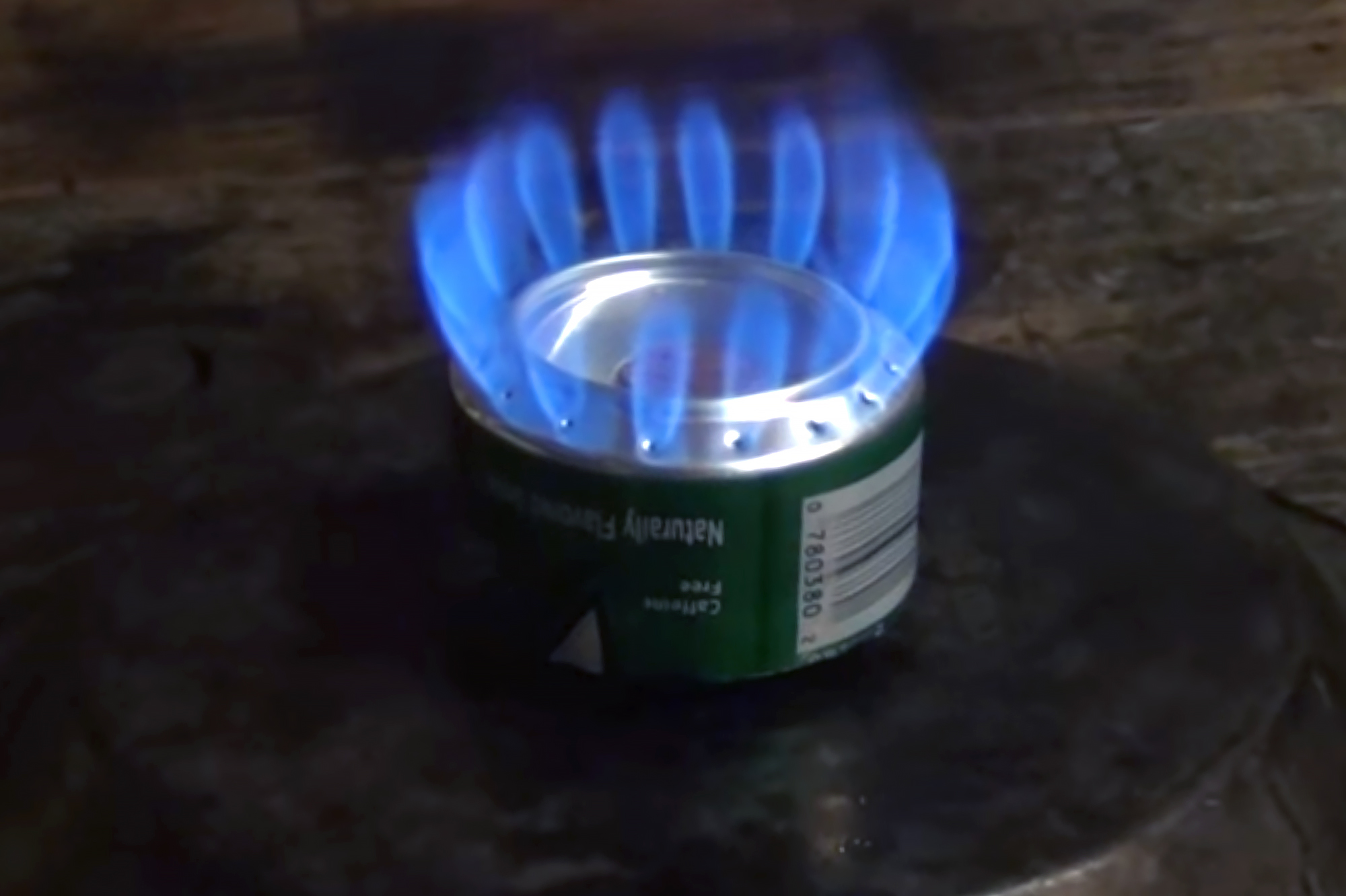
“One man’s trash is another man’s treasure.” This common saying is true for the general populace, but it’s absolutely essential for survivalists. It serves as a reminder that garbage and often-discarded items can be re-purposed into valuable resources. We’ve seen this in the past through life-hacks like constructing a hobo stove from a tin can, and making cordage from plastic water bottles.
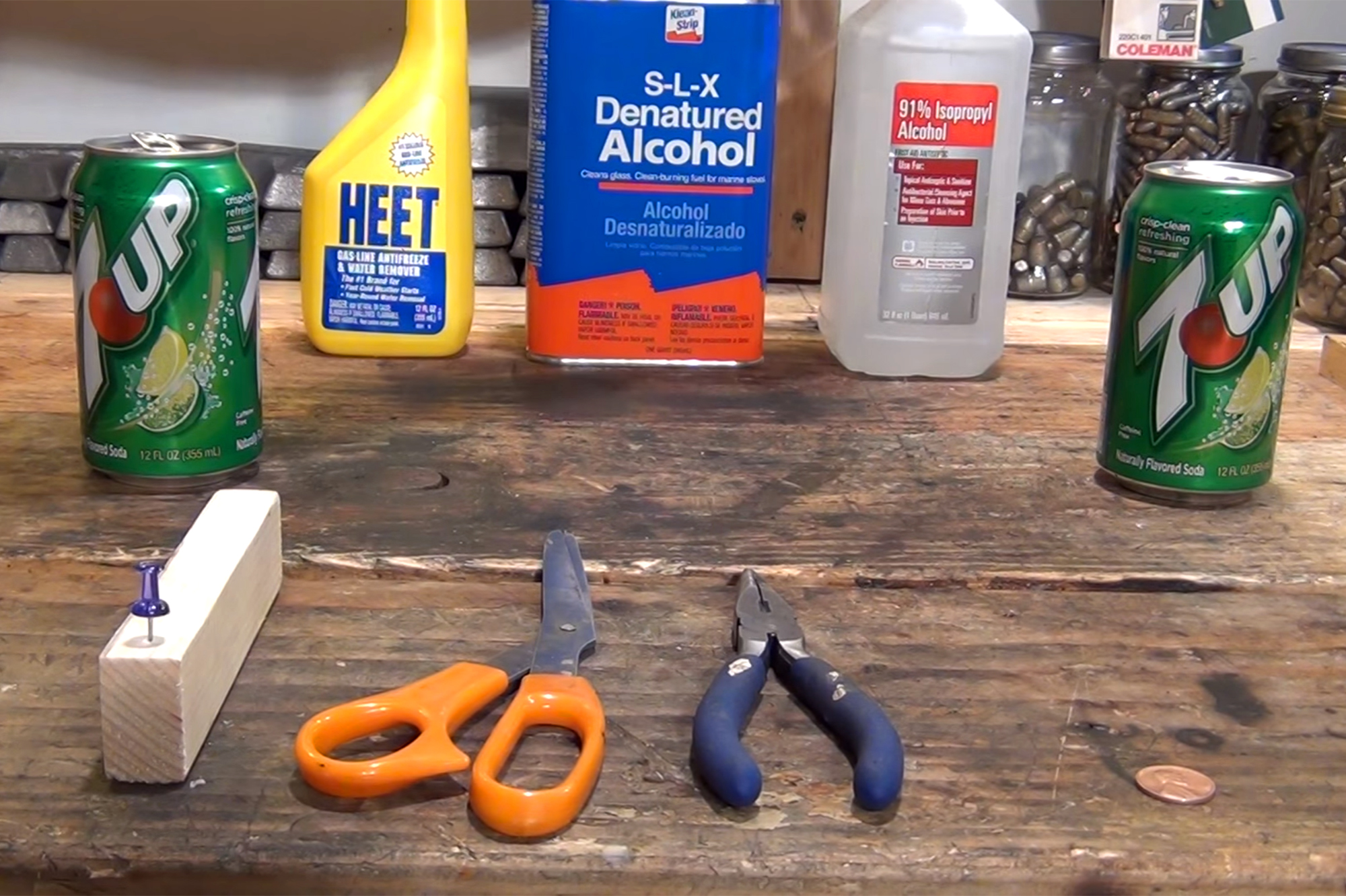
The materials necessary for a tin can stove. Any of the three fuels pictured will work.
This “trash into treasure” philosophy also holds true for the penny stove—a device that’s built from nothing more than a few soda cans, a copper penny, and some alcohol for fuel. The penny is positioned atop the stove, and it acts as a fuel pressure regulator, preventing the alcohol fuel from escaping too quickly and burning out. It’s important to use a 1982 or earlier penny for this stove, as later coins have much higher zinc content and may melt more easily.
Here’s a list of the materials you’ll need for a penny stove:
Two empty, clean soda cans or beer cans
Pre-1983 penny or other copper coin
Push-pin, small nail, or drill with 1/16″ bit
Ruler, book, or block of wood (to use as a measurement device)
Survival is about much more than dealing with a disastrous event in the heat of the moment. While it’s essential to stay alive in the minutes and hours immediately following a disaster, true survival is defined by how you deal with the ongoing effects of an adverse event. This may mean changing your entire lifestyle to adapt to your new circumstances.
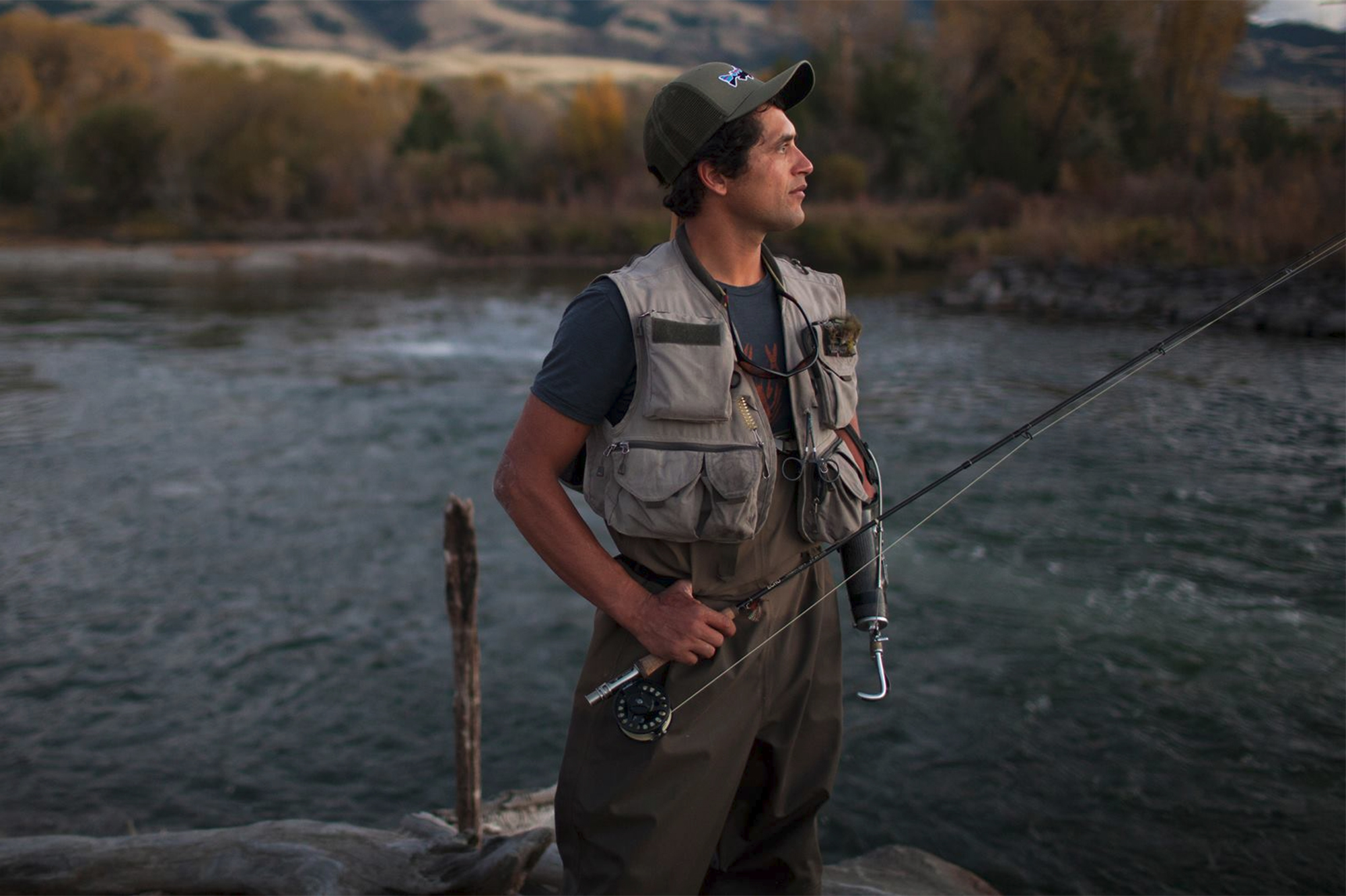
The story of Eduardo Garcia is an excellent example of what it means to be an ongoing survivor. Eduardo, a successful chef with a promising career ahead, was hiking in the Montana backwoods and spotted a bear carcass. He walked over to investigate, drawing his knife as he approached the bear’s remains. However, he had no idea that the bear’s body was lying on top of a live power source.
A massive electrical surge of 2400 volts coursed through Eduardo’s knife on contact, knocking him out and leaving him badly burned. However, Eduardo was not one to give up. He stood up and walked three miles to a nearby road, where he was rescued and transported to the hospital.
Eduardo lived through the event, dealt with a difficult recovery process, and learned to adapt to the loss of his left arm. Now, he continues to live life to the fullest, spending time in the outdoors despite his disability.
We heard about this story through YETI, as the company has announced that it will be supporting an upcoming documentary about Eduardo. This feature-length film is called “Charged”, and it will be released in 2017. For more information about the Charged film, visit ChargedFilm.com or check out the documentary’s Facebook page. We’re big fans of survival documentaries, so we’ll definitely be watching this one when it comes out.
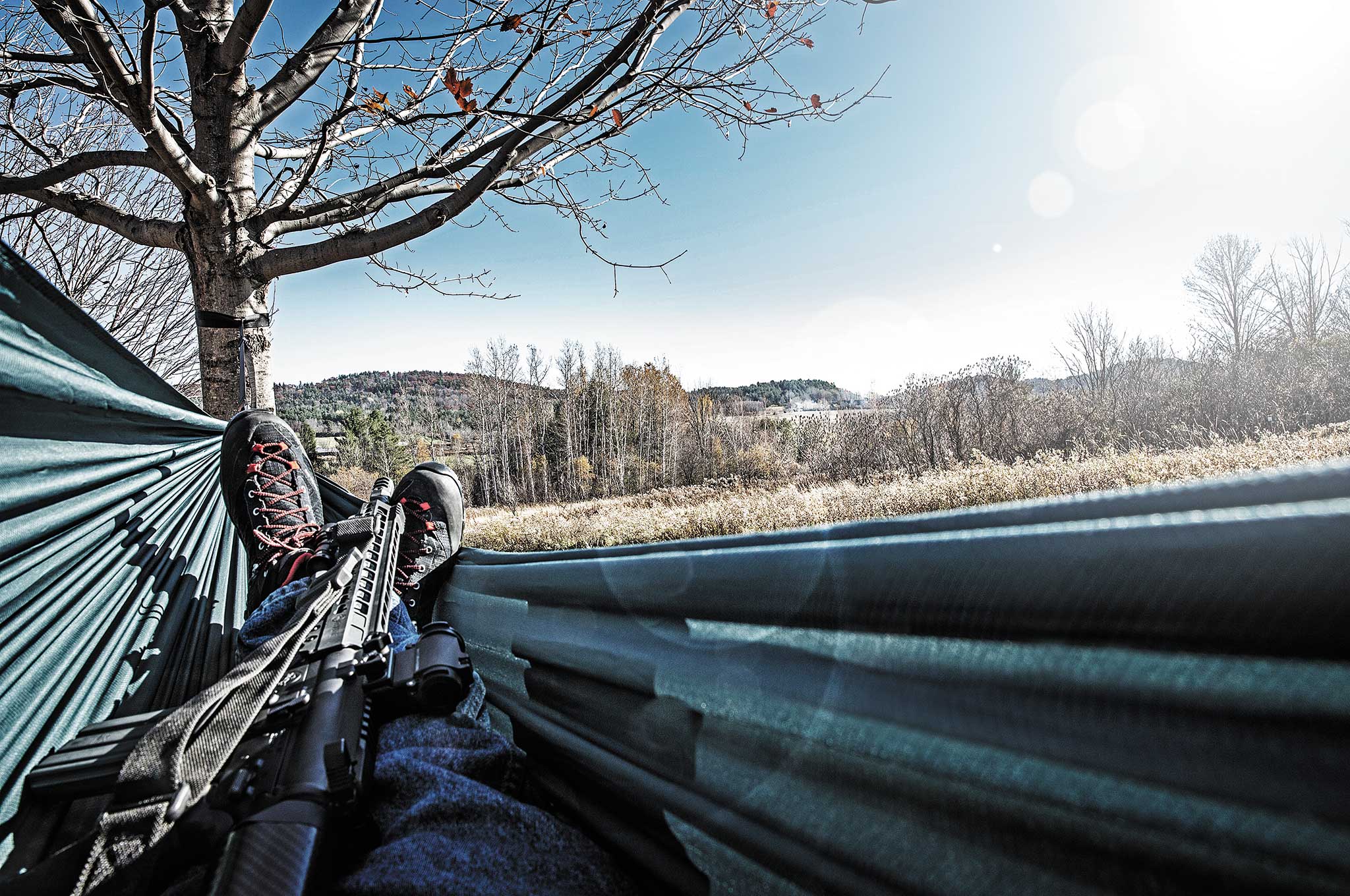
Sleeping outside is an incredible nocturnal communion with nature. Wind, animal, and insect unite in a subtle symphony that’s easily mistaken for cacophony by the sore-backed and restless.
It doesn’t matter how many times we’ve set up a campsite, there are always those sites that defy comfort and waste our time. Aside from the injured sleep resulting from a rogue root beneath a ground pad or the slope we didn’t sense while setting up our tent, there’s the time it takes to set up the tent. Time on the trail is precious, and if we find a way to get five more minutes of meal prep, or better, a little more Z’s time, then we’re all over it.
Hammocks check both boxes, in this case. We can set up a simple hammock in under three minutes without much practice. Some of the more feature-rich designs can take longer, but compared to pitching most one-man tents, hanging a hammock is almost always faster. But, more importantly, a hammock delivers exactly the same sleeping surface every time, regardless of the ground beneath it.
We know. You don’t believe us. Hammocks are for sailors and island-time naps, not overland travel, you say? Read on.
Architecture
Hammock designs range from a simple sheet of suspended fabric to modular sleep systems.
There are dozens of hammock styles out there. We’re going to break hammock designs into three families for this article: unstructured hammocks, structural ridgeline hammocks, and spreader bar hammocks.
Unstructured hammocks are fixed at each end and hang with the tension provided by the anchors and the body lying within. This is the simplest hammock design and is hard to fall out of once inside.
Integral ridgeline hammocks are the same as unstructured hammocks except they add a structured line across the top that connects the endpoints of the hammock. This creates a tensioned ridge that suspends bug netting and rain flies above the occupant and also maintains a uniform droop regardless of the length and angle of the support ropes. These are also tough to fall out of.
Spreader bar hammocks use a bar or pole at each end to support the hammock from center to edge along its short axis. This makes the hammock feel more like a mattress and keeps the edges from rolling in. But, it also makes for a tippier feeling hammock.
Speed
The hardest part of setting up a hammock may be finding a pair of suitably spaced trees. Once we’ve found a couple of stout trees spaced about 12 to 18 feet apart, set up is fast. A simple hammock can go up in seconds. Adding mosquito netting, if not integral, and guying out fly lines adds a couple minutes, if needed. We can hang the Hennessy Hammock Jungle Explorer with its integral bug net and fly and being toes-up in about three minutes on a good evening. Morning get-out is fast, too. Untie one side and stuff it in a bag as you walk. By the time you’ve reached the other tree, you’re ready to roll.
Knots
Don’t worry, if you don’t want to learn knots, then plan on shelling out a few extra bucks for some daisy chain webbing and a couple of carabineers. The longer the webbing, the more options for hanging the hammock. Just keep in mind, the longer the run from tree to hammock, the more droop will be introduced.
Temps
The ground is a heat-sucking beast. In the height of summer, the earth can help cool us off. But, more often, it’ll draw too much heat in temperate environments and wake us up with a predawn chill, which is why we always haul a ground pad, even when the weather’s warm.
Sleeping suspended in the air with only a few millimeters of fabric to buffer the ambient temperature means a more comfortable sleep in hot weather. But, anywhere other than the tropics will leave you wanting some insulation since that thin layer of fabric and a slight breeze is a recipe for convection cooling that’ll turn your lips blue on a summer night in New England. Laying an inflatable ground pad inside a hammock is one way to do it, but an underquilt is a more packable solution.
Bugs
A mosquito can bite through fabric. The weave of thicker fabrics can form a labyrinth that will blunt a syringe-like stinger, but even tightly woven, ultralight fabrics used in hammocks will offer mediocre protection from biting and stinging insects. The best protection is a double bottom. This isn’t two tight layers of fabric, but a layer that you lay on with a looser layer of fabric that forms an air space too great for an insect’s stinger to span.
A bonus of this design is insulation. Empty, the space provides a buffer between you and the ambient air. But, packing a lofty blanket in there, or a thin reflective pad (the kind used inside a car’s windshield to prevent faded dashboards in the summer) adds an effective layer of uncompressed insulation without needing to carry an inflatable pad.
Once you have your ass covered, you’ll want to have something overhead to keep the biters at bay. Some hammocks have built-in bug netting, some offer it as an accessory that wraps around the hammock. Both work. One offers speed of setup/breakdown, the other modularity.
Rain
Keeping the rain and sun at bay in a tent isn’t that different than it is on a tent. Both use a rain fly. Some flies are a breeze to set up, hooking to the hammock that’s already guyed out. Some are more involved and require ground stakes.
Fight the Bowl
Lying in a hammock invites visions of curled-back sailors swaying in the breeze. Not so in modern hammocks. All of the hammocks we present are made to accommodate a diagonal sleeping position. If the hammock straps are 12 and 6 o’clock, then you’re laying across the hammock with your head at 1:30 and your feet at 7:30. Lying this way, the hammock is nearly flat. No bowl bottom.
Ditch the Tent?
If all of the above doesn’t allay your fears of sleeping suspended, we haven’t even talked about the practical aspects of a hammock when living rough in uncertain times. A hammock has a tiny footprint compared to a tent. It also leaves a smaller signature after it’s removed. There’s no big square area of crushed brush highlighting your passage when your tent is a hammock.
Oh, the downside? Well, there’s very little storage inside a hammock. Some have pockets in the ridgeline or on the edge. But, your pack and other gear is on the ground, under the fly. If you hang the hammock low, it’s like a huge tent atrium. So, it’s not bad. But, if you’re used to laying stuff around you in a tent, you’re going to have to adjust.
The only other issue that comes to mind when comparing camping hammocks to tents is the amount of people you can fit in them. There’s no such thing as a party hammock. Well, not one that we’ve heard of. You can find a double hammock, but it’s not for the unromantically involved to share.
All things equal, and depending on the location you’re planning to visit, you can replace a tent with a hammock system and never look back. If you’ve got a hammock system and trees, you’re in business. Forget the tent. You’ll never miss it. Lighter, faster, smaller. Hammocks are it.
Inspired by the scrap metal drive programs that existed during World War II, the National Rifle Association has started a vehicle donation system called NRA Cars for Freedom. Under this new program, the NRA is accepting old vehicles in almost any condition—running or not. Rather than writing a check, you can choose to support the NRA by signing over your car, van, truck, RV, motorcycle, boat, jet-ski, or even snowmobile. These donations are quick, easy, and tax-deductible to the full extent of the law.
How does it work? Well, check out the short video below:
As stated in the video, you can simply visit NRACarsforFreedom.com or call 1-866-NRA-GIFT to start the donation process. A towing company will then contact you within one business day, and schedule a time to come get your vehicle. Then, you can turn over the title and deduct the donation when you file your taxes. The NRA states that funds generated by these donations will be used to educate our country, and protect the freedoms of firearm owners.
Even if you can’t donate at this time, you can help the cause by using the hashtag #CarsforFreedom on social media, or by sharing the video above.
Cool leaves of yellow and red pelted my face and hands in the autumn breeze. The wind was in my face, blowing from my quarry toward me. Good, I thought, one more advantage. He wouldn’t be able to smell me. I waited for my prey to move clear of the vegetation, as one stray vine or branch could send my arrow careening off target. The shot was lining up perfectly. It was as if I were watching this happen to someone else. I was detached, emotionless, and simply allowing things to happen.
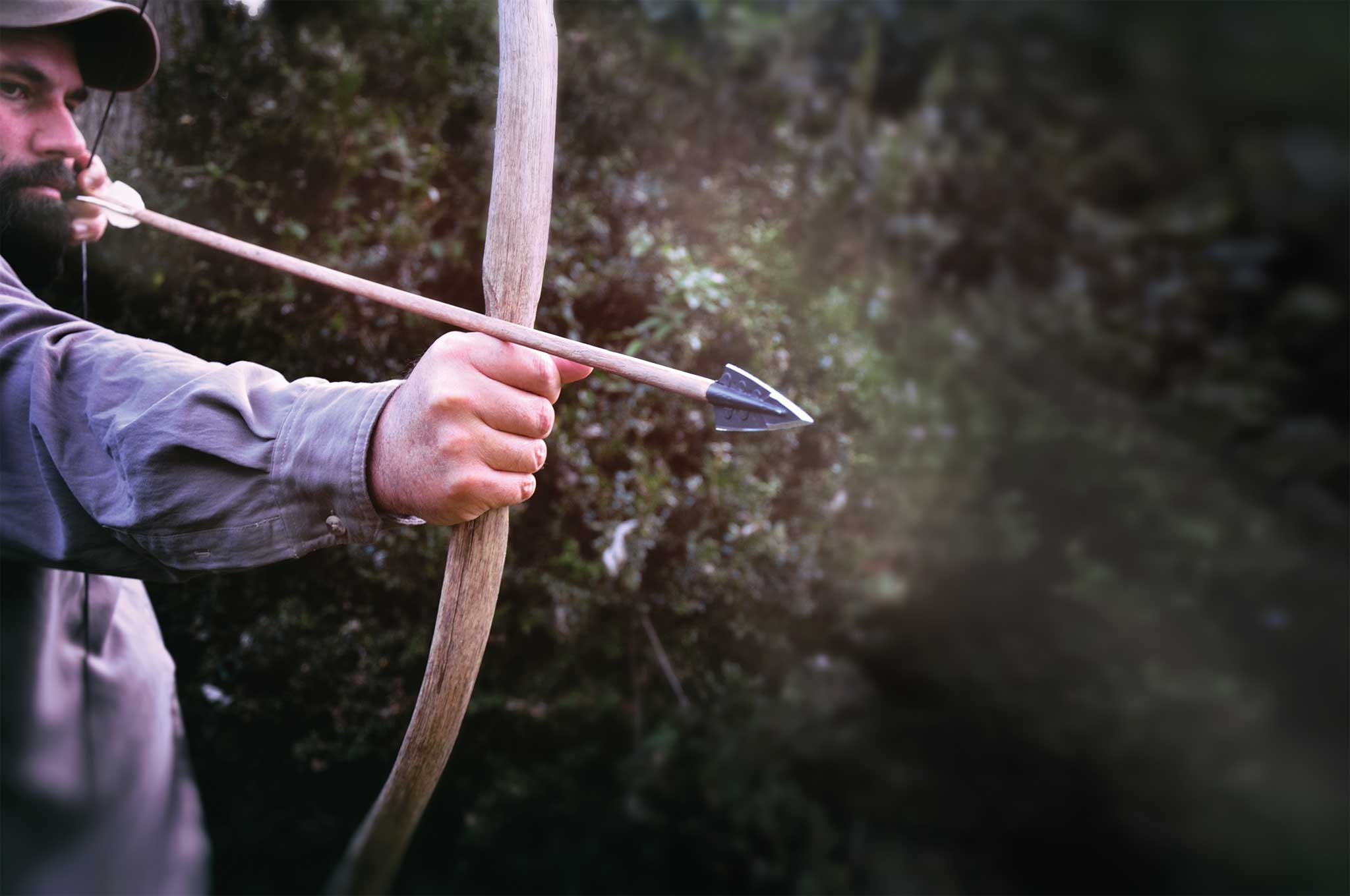
Age-old instincts took hold, and I began to draw the bow. My camouflage was perfect, right down to the bark still clinging to the back of my field-built bow. I drew the nock of the arrow to the right corner of my mouth. Then, to my dismay, the wooden bow made a sound like the “tick” of some large clock. My prey, a fat gray squirrel, looked right at me and bolted faster than my arrow could follow. I muttered a curse under my breath, and then fixed myself on the same thought that my ancestors must have thought on 10,000 failed hunts before me: next time…
It’s entirely true that a field-built bow has a lot of quirks, ticks, and actual ticking sounds as you break-in the wood fibers (or actually break them). But if you don’t have access to a bow after wolfing down the last of your emergency food supplies and firing your last round, it’s nice to know that you can build your own bow just as our forebears once did. The natural materials for the archery tackle haven’t changed at all in 10 millennia — all you need is wood, fiber, glue, feathers, and a sharp point for each arrow.
So maybe you’re a hunter, looking to take things to the next level by building your own equipment. Or perhaps you’re a serious prepper, interested in yet another backup method of food procurement. Or maybe you just watched the movie Predator one too many times as a kid and want to build an alien-slaying primitive bow, worthy of Arnold himself. Whatever the motivation, we’re glad you’re here. Bow making is an ancestral art form dating back thousands of years and appears in almost every traditional culture on earth. It’s a means of hunting for food and fighting back against predatory animals and similarly motivated humans.
Making your own bows, arrows, and archery tackle are also a confidence builder and quite a bit of fun. Read along, and we’ll give you the beginner’s guide to the tools, materials, and techniques for survival bow making.
The Setup
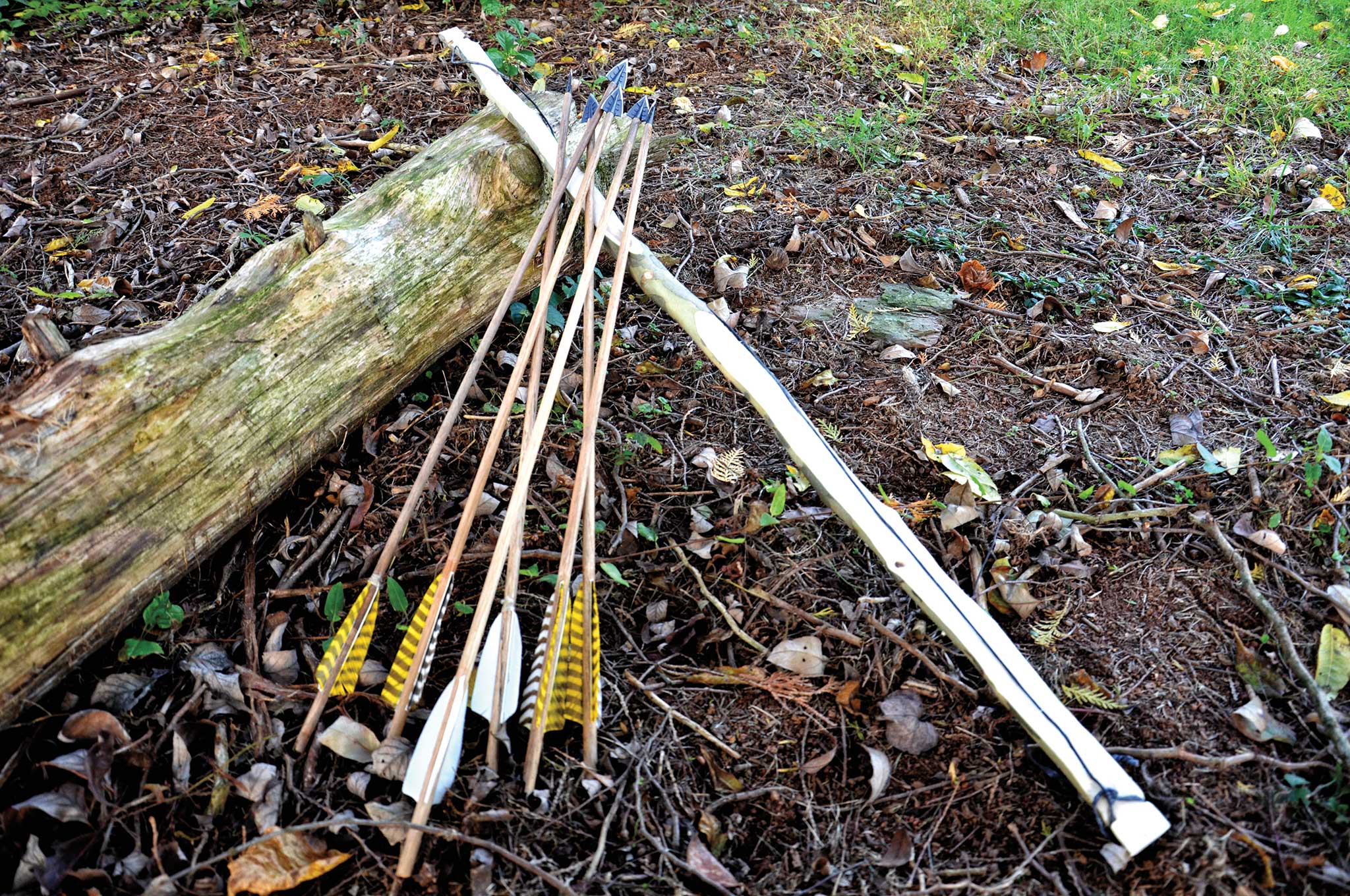
You may imagine that you’d need an entire woodworking shop to build a wooden bow, and certainly, that wouldn’t hurt. But you can also do all of the important work with a fixed-blade knife, a multitool, and a billet to strike the spine of the fixed-blade knife that will baton your way through the wood (see “Firewood Fundamentals” in Issue 10 of OG). The knife and multitool could be part of your normal everyday carry gear, and to finish off your bow-making toolkit, carry a few bow strings, some thread, a few fletchings, and some arrowheads.
Modern “glue-on” broad heads or “trade blank” points can be bought from specialty catalogs and websites, and are similar to the ones that were once traded to native cultures by Europeans. If you’re particularly handy, you could chip arrowheads from stone or glass. You could also improvise your own bow strings from 550 cord, but a word of caution: 550 cord is a bit too elastic for the job of bowstring, even after stretching and twisting.
Arrowheads are modern glue-on broad-head, trade blank metal point, a stone point, and a beer bottle point.
Finally, you’ll need the bow stick (also called a stave or billet, respectively). This can be a recently deceased sapling or branch from a larger tree. You’ll want it dead and dry (but not rotten) for same-day use. If you can wait a few weeks, you could also cut a live sapling and allow it to dry in the shade, ideally with any cut ends sealed with paint or glue to prevent cracking. Do a bit of research to find out about the favored bow woods used by the native peoples of your area. Chances are good that those are your top choices.
In the East, I go out of my way to get hickory and black locust. I’ve also used ash, oak, maple, and other local hardwoods with good results. For those in the Midwest, look for osage orange, which is excellent. Midwesterners can also try more flexible species of juniper. And for the West Coast, try your hand with yew and cedar.
And while you’re assembling your supplies, treat yourself to a strip of leather for an armguard. This may save you from a nasty bruise or large blister if you are shooting with bare forearms. A pencil is handy too, though a chunk of charcoal will suffice. A piece of 100-grit sandpaper and a tape measure will finish out your supplies for your first bow.
The How-To:
Step 1: Pick your Stave
This is where you begin striding down the golden path to glory, or the nature trail to hell. You need to select a suitable bow wood species, and it needs to be a good specimen. Start with one of the woods listed above, such as hickory or black locust. Osage orange is a little finicky for beginners. The bow we are creating here is a “quickie” stick bow. It will be more forgiving if the finished bow is longer, rather than shorter.
Start with a dead branch or sapling that shows no sign of rotting (no fungus, and the bark is tightly attached). It could be 6 or 7 feet long when cut in the field, and worked down to 5 or 6 feet long for the finished bow. Pick a stave that’s relatively straight and free of knots, side branches, and twists. It should also be about 2 inches in diameter at the thicker end.
Again, if you plan to work the wood later, cut a live sapling and dry it for a few weeks, preferably a few months.
Step 2: Plan Your Bow’s Shape
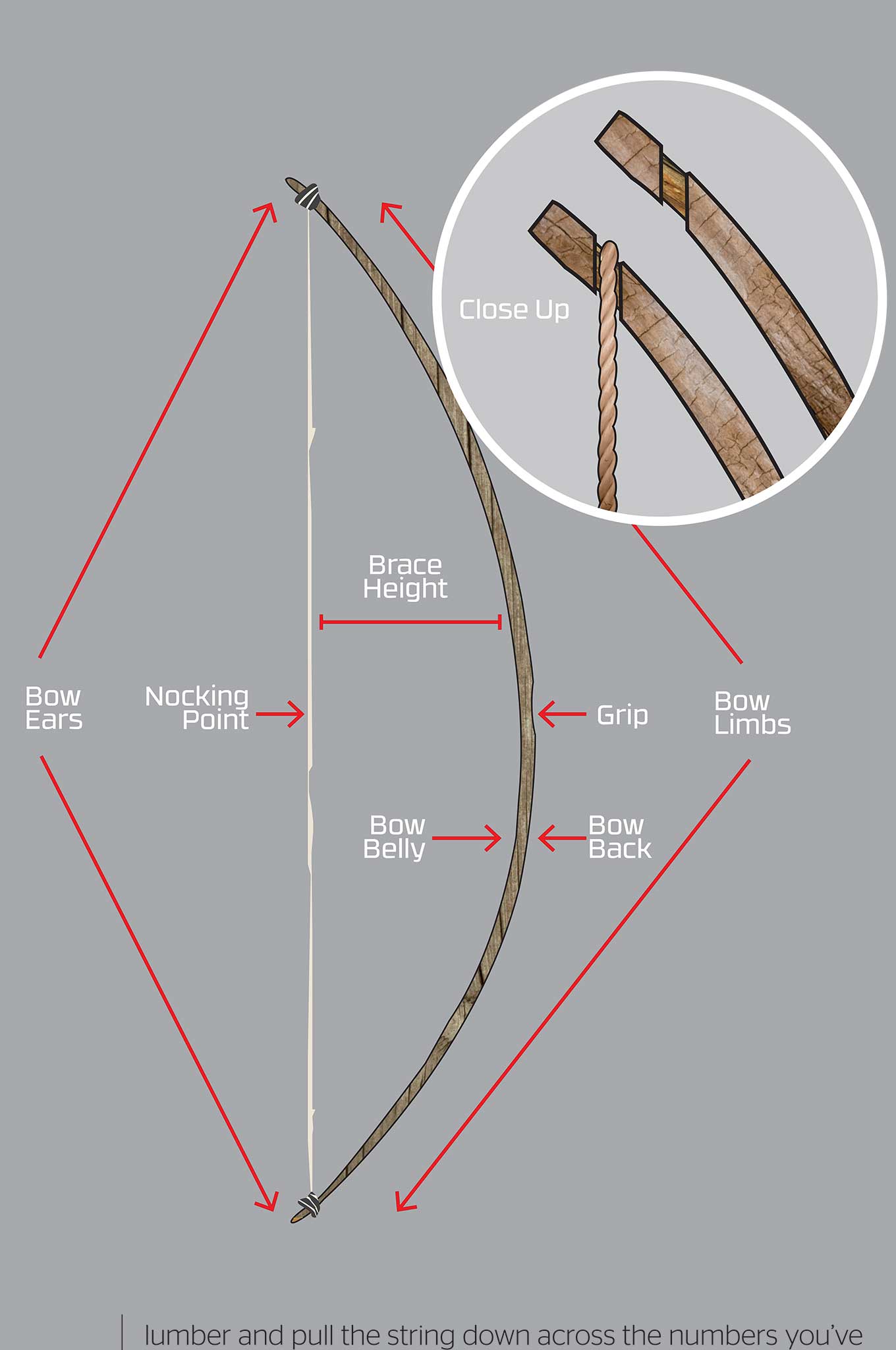
This means that you’ll need to find the bow’s belly, back, grip, and lay out the limbs. Start by figuring out which way the stick “wants” to bend. Hold the bow stave upright, with one end on the ground. Generally, this is the thicker end on the ground, in the orientation that the sapling once grew. Grab the top of the stave loosely with one hand and push on the middle of the stave. The stick should naturally swivel to indicate its tendency to bend. The outside of the bend is known as the “back” of the bow, and it is the side of the bow that faces your target. The inside of the curve is called the “belly,” and it faces the archer.
Be careful not to mix up these terms (or sides) as you work. Since the back receives the tension when the bow is drawn, damage to the outer growth ring on the back can cause the bow to break. Don’t carve, hack, or saw into the back of the bow.
Finally, figure out where your grip will be. Find the middle point of the stave and mark out a 6-inch grip area in the middle. The belly area of the grip will remain unworked (for now). The wood above the grip is called the upper limb, the wood below is the lower limb.
Step 3: Shape the Belly
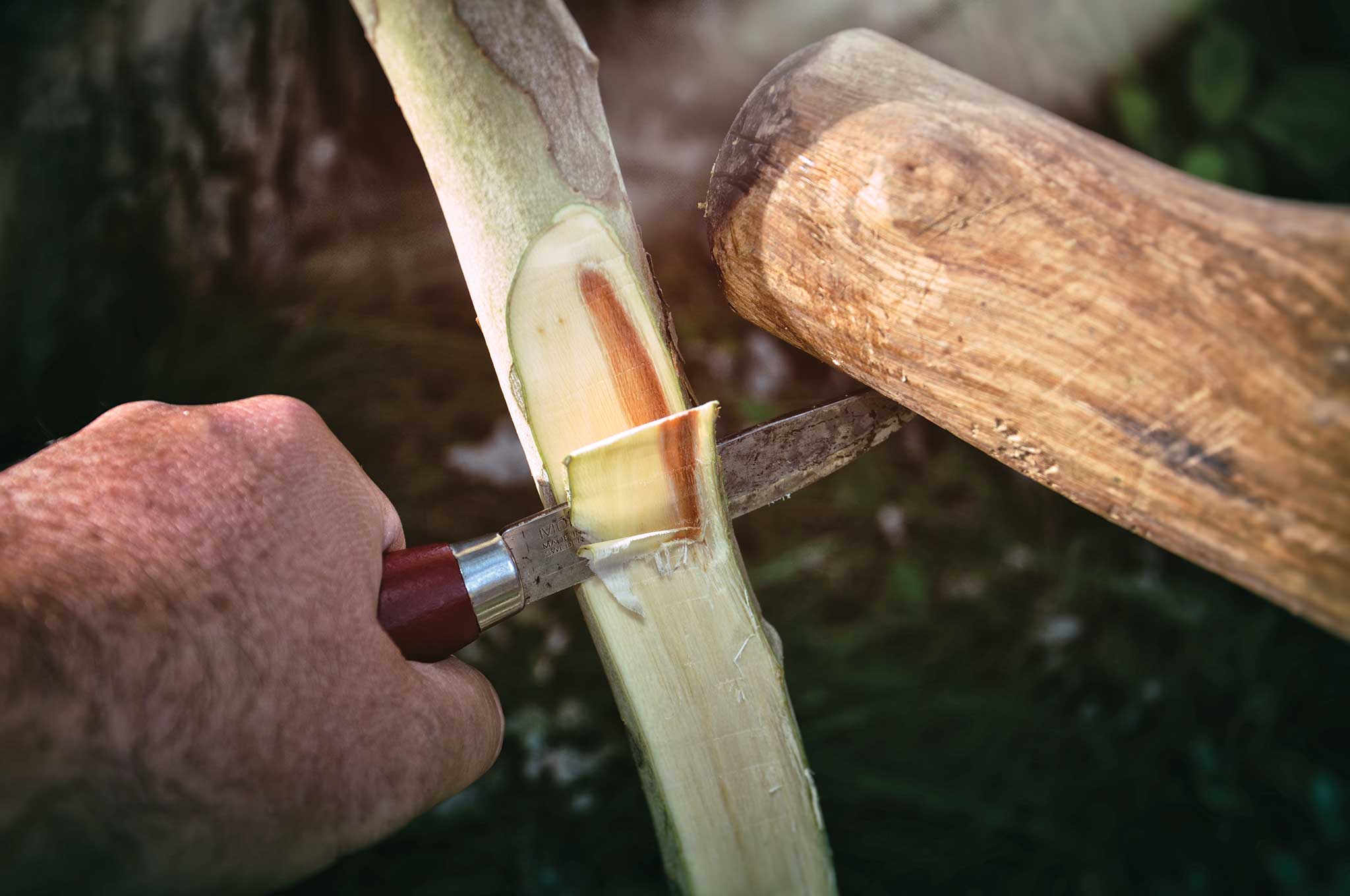
Bend your prospective bow again, pushing on the grip area from the belly side of the bow. Do this repeatedly and study the way that the upper and lower limbs bend. Generally speaking, the thicker limbs don’t bend as much and will require more carving than the thinner limb. Look for areas that bend and spots that don’t. Mark the areas that don’t bend. Rest the bow stave against a tree, ideally in the fork of a tree. Use your fixed-blade knife and a baton to begin removing wood from the belly of the bow where you have marked them as stiff. Thin down the areas that don’t bend, and for now, leave alone the sections that do bend.
Your goal for this rough shaping process is to leave the back of the bow untouched, and to get the limbs to bend equally by thinning down the belly of the bow. Go slowly and bend the bow often to check your progress. The grip and limb tips (ears) shouldn’t bend at this point. Once the stave is bending equally and looking a bit like a bow, you’re ready to put a string on it to more accurately see its action. Remember that thick staves require a significant amount of carving, but they typically yield stronger bows. And conversely, slender staves may only need a little belly shaping, but they’re often weak bows.
Step 4: Cut Your Notches (Carefully!)
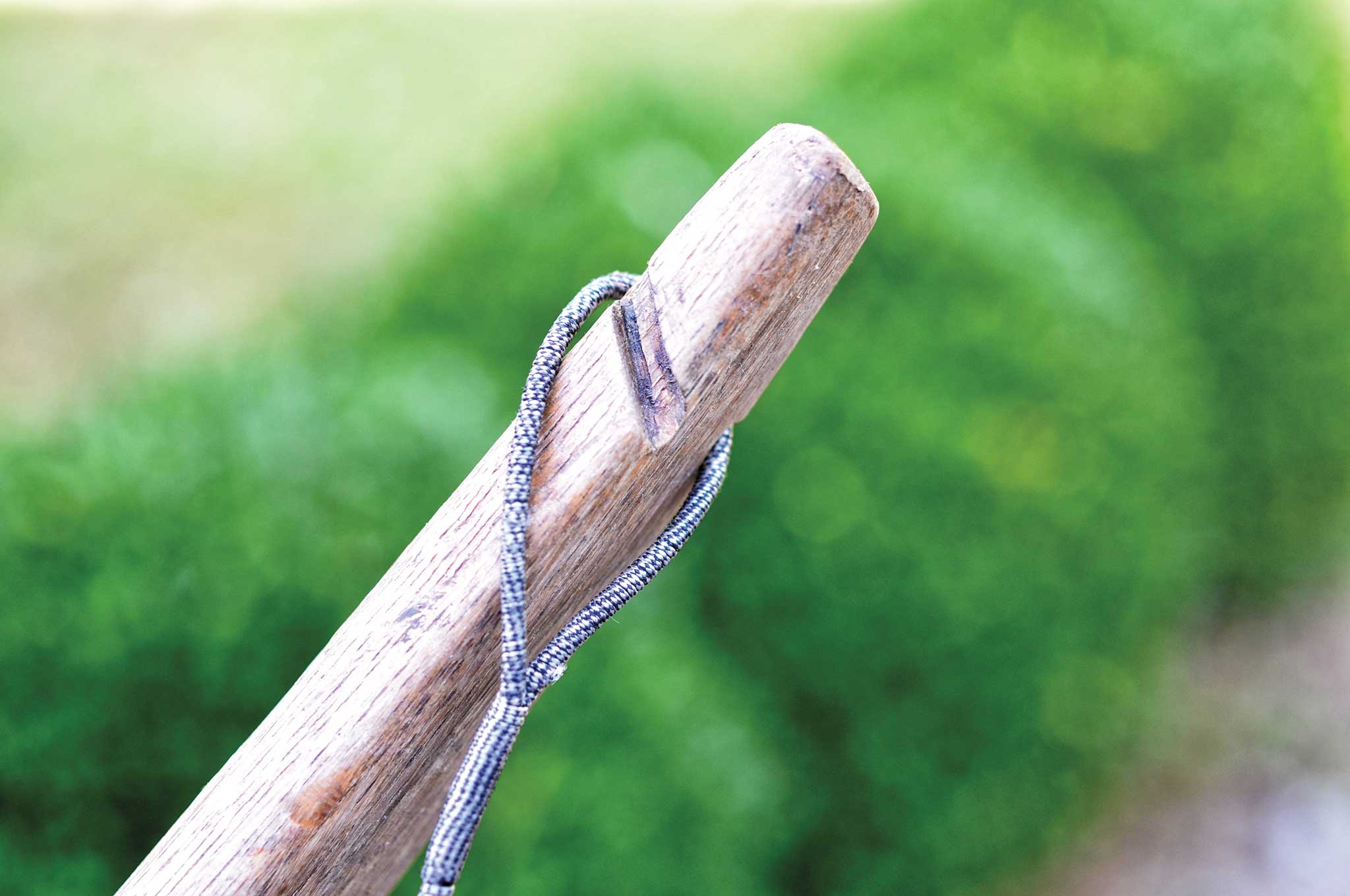
This can be the part were neophyte bowyers destroy all of their hard work. Notch cutting on the bow ears must be done carefully. Use the saw on your multitool to cut small matching notches on the both sides of each bow ear. Cut them on an angle, thinking about the direction the string will pull from each ear toward the grip. Do NOT saw into the back of the bow, just cut into the sides. These cuts should be shallow, just enough to seat the bow string. Attach your string to both ears. It doesn’t need to be tight yet; this is simply for testing. Don’t be tempted to do your best Hunger Games pose yet either, drawing a rough-shaped bow is a great way to shatter it!
Step 5: What the Hell Is Tillering?
Chances are good that you’ve never heard the word “tillering” before. It’s simply a word that means thinning and shaping, usually in the context of woodworking. And that’s what we are doing next.
Cut off a nearby tree branch, about head height, leaving a stub. You could also use some similar way to affix the bow grip. Pull downward on the bow string, gently at first. Carefully study how the limbs bend. You want to see each limb bending equally across its full length. You also want to make sure that the limbs bend equally — compared to each other. The two limbs should look like a mirror image of each other when bent. Use your pencil again to mark areas that are not bending enough. I like to shade them in aggressively, then carve away the marks completely, yet cautiously. It’s best to take your string off when carving, so you don’t accidentally nick it or cut it.
Tillering may take a while, perhaps hours, but this is how you make a bow. Recheck your strung bow frequently, and continue tillering until you feel you are pulling the string nearly to your draw length. Draw length is measured by holding a bow and pull the string back as if to fire and arrow. Measure the length between the grip and your jaw. Most draw lengths are around 28 to 30 inches for adults. Shorter folks and kids have shorter draw lengths, taller folks have longer ones.
Step 6: Finishing
Continue tillering, checking your limb bend and checking your draw length until you are feeling confident that your bow feels like a real bow. Sand down or carefully carve the belly of the bow to smooth it and remove any “chop marks” from your baton work. This is critical to eliminate weak points. Chop marks tend to create hinge points in the belly, which lead to breaks in the bow back. If you’re curious about the poundage of the bow, you can test it now by getting a 5-foot piece of 2×4 lumber.
Use a tape measure and pencil to mark the inches on the lumber, up to 30 inches. Stand the lumber vertically on a standard bathroom scale. Set the bow grip on top of the lumber and pull the string down across the numbers you’ve marked. When you’ve pulled down on the string to a full draw length, check the scale reading for a good estimate of your draw weight. You can use a 25- to 35-pound draw weight bow for small-game hunting and target practice. You’ll need a 40- to 60-pound draw weight for bigger game animals.
Conclusion
Bow-making and arrow-making are some of the most challenging feats of craftsmanship you can take on during a survival situation, but they are also proven and vetted game changers. The skills of bow and arrow making, and archery itself, could make you an invaluable member of your team or group. With a serviceable bow and a few well-built arrows, it’s possible to take down a variety of game animals (some of which are almost impossible to take without projectile weapons).
After taking small game like rabbits, opossums, and raccoons, you can feed yourself for a day. By taking deer and large game, you can feed yourself for a month or provide for a whole camp of people for many days. In darker times, archery could even be used as a means of self-defense, but let’s all hope it doesn’t come to that.
Archery and bow-making, like many skills, carry a big learning curve, so it’s best to start working on them now, rather than later. And despite all the blisters, splinters, and tears, this can be an immensely rewarding pursuit and quite possibly — your new favorite hobby!
Build Your Own Arrows
As you’ve seen, there’s quite a bit of detail involved in the construction of seemingly simple survival stick bows. You’ll have to pay close attention to craftsmanship if you’re planning to build bows for the next Katniss Everdeen or some kind of dystopian Robin Hood. But now it’s time for a bombshell. The bow isn’t the hardest thing to make. At the end of the day (or the end of civilization), the bow is just a bendy stick with a string on it. That’s all it is, a stick and a string.
The part that really takes some skill to create is the projectile, better known as the arrow. A great bow won’t help us to survive without a proper set of arrows to fire from it. And if you thought bow making was hard, try crafting aerodynamic arrows from scratch — out in the woods. Arrow-making is where your biggest challenge lies. But don’t let me scare you off. I’m just adjusting your expectations. Our ancestors built fine arrows from raw materials in the wild, and so can we. Here are the basic steps:
Step 1: Find slender and straight saplings, reeds, cane, or bamboo that are already arrow shaft diameter (5/16 inch underneath the bark for hardwood, a little thicker for hollow things like cane). Let nature do the work growing the perfect materials. Don’t waste your time trying to whittle a log into an arrow shaft.
Step 2: Trim and straighten the arrow shafts. You’ll need to trim, carve, or sand off anything that is not contributing to the perfect dowel shape. Cut the shafts a little longer than you think you’ll need. Finished arrows should span from the nock to about 2 inches past your knuckles at full draw. The material should be dead, but not rotten. Straighten any curved or crooked spots by warming the spot over a fire, bending it a little beyond straight, and holding the spot in that position until cool. This heating (holding) cooling process helps the woody materials to retain a new shape, which could be “straight” if you do it right.
Step 3: Saw the notch and add the fletching. Carefully saw a notch (aka nock) about 1/2-inch deep into the end of the shaft (a multitool saw blade is usually the right size for this). It should match the width of your bow string. If using a hollow material, use a wooden plug and an insert and cut the notch in the solid wood — not the hollow shaft (unless you want to see the string cut the arrow in half). Then plan where your feathers will go in relation to the notch. Two feathers will need to line up with the notch, parallel to it. With three feathers, the feathers will need to be equidistant from each other, with one feather perpendicular to the notch cut. These fletchings can be hard to accomplish without glue, even harder if you don’t have a dead bird to provide a good assortment of feathers. Your feathers should match on each arrow. Use all right-wing feathers on one arrow, for example. Keep left wing and tail feathers together as well. Trim the fletching, apply glue if you have any, and tie them tightly in place with whatever string you can scrounge. Make sure the front edge of the fletching (toward the arrowhead) is smooth and well secured, or else it may scratch your hand as it glides across when fired.
Step 4: Attach your point. Small flat metal arrowheads would be a wonderful thing to add to your bug-out bag, along with a few proper bow strings. Saw a notch in the front of your arrow, then carve a slight tapering to the end of the shaft for better penetration. Glue the arrowhead in place, and bind it tightly with string. If you don’t have metal points, try to make some or use stone or glass points you have chipped into a triangle shape. Failing all that, simply carve a point on the wooden shaft or leave it blunt to strike small game.
Anatomy of a Bow
Back: This is the side of the bow that faces away from you as you pull on the bow string. The back of the bow is toward the target. If a bow breaks, the back will often produce splinters of wood, as the back is under tension due to the wood fibers pulling away from each other.
Belly: The belly of the bow is on the inside of the bow, facing you as you pull the bow string. If a bow breaks, the belly may hinge or fold while breaking due to the fibers being compacted in the belly. In modern archery, the belly is now called the “face.”
Bowyer: A person who makes bows.
Brace height: The distance from the grip to the string when the bow is strung. The Old English term is “Fistmele,” which is the length of your hand when giving a “thumb’s up.”
Ears: Each end of each limb is referred to as an ear, basically the last couple of inches on each end of the bow.
Grip: The grip is the middle of the bow where you actually grip it.
Limb: Each end of the bow is considered a limb, so every bow has two limbs, even though it may be made from one limb of a tree.
Stave: A solid stick of wood that will be made into a bow, also referred to as a “bow stave.”
Take Aim and Fire!
We could write a whole book on traditional bow marksmanship and aiming … and still not cover it all. But if you can stay alive long enough to get in lots of practice, you can learn a lot through observation and experience. So, to keep you alive that long (hopefully), here are the bare-bones basics.
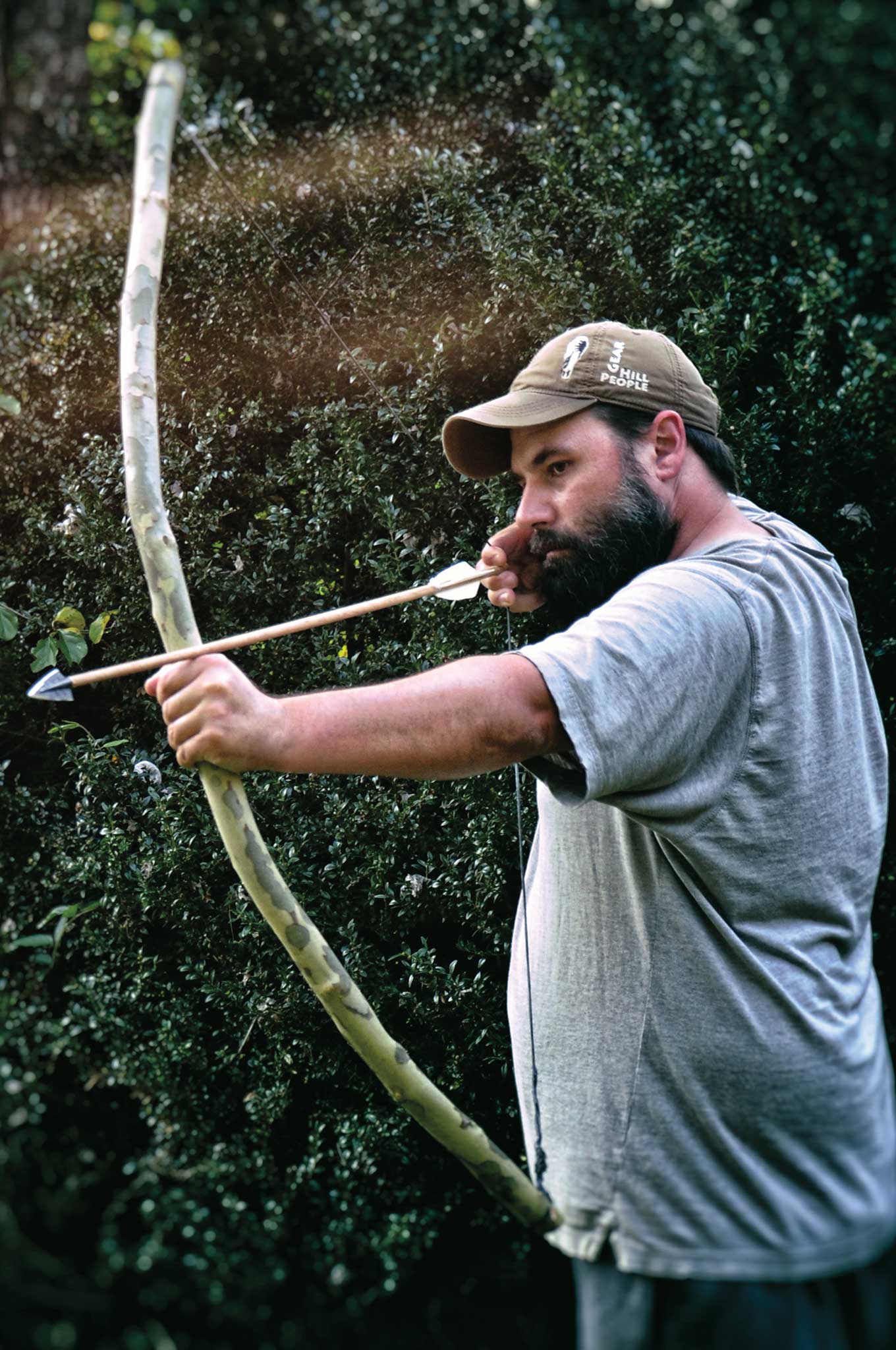
First, you’ll need to figure out your dominant eye. You can use the same trick that many early shooters use. Outstretch your arms, make a triangle or circle with both hands, and pick a distant object to look at through your hand opening (both eyes open). Take turns closing your right eye and left eye, to see which one is still looking at the distant object. The eye that’s still on target (or sort-of on target) is your dominant eye. If you are right-eye dominant, hold the bow grip in your left fist and shoot across your left knuckles. If you are left-eye dominant, hold the bow grip in your right hand and shoot across your right knuckles. This puts your dominant eye looking right down the shaft. I’m right handled, but left-eye dominant. As such, I’ve been working on my “southpaw” shooting. Let me tell you without hesitation, eye dominance matters more than hand dominance.
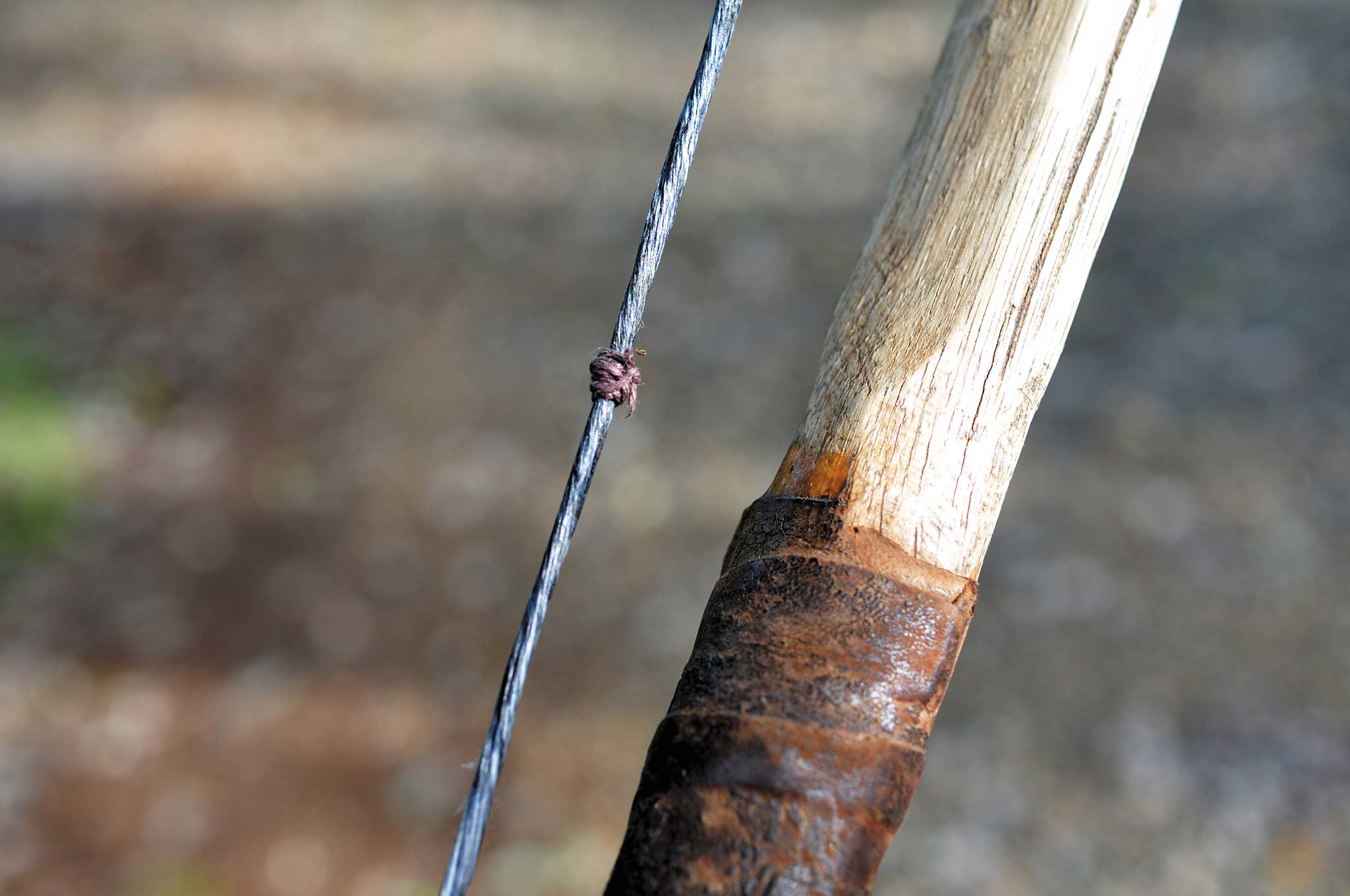
Next, eliminate the variables. Make a mark on your bow grip so your hand always grasps the exact same spot. Then tie a wad of thread around your bow string to create a nocking point that matches the top of your grip. Don’t tie your bowstring itself into a knot to create this lump in the string. That’s too much stress on the bow string. Use a separate string tied in place.
Then start shooting the bow at a soft target, like a decaying stump. See whether you are more accurate with your arrow nock over or under the nocking point on the string, and try different finger placements. And for safety, wear a glove on the hand that is holding the bow, so that rough fletchings don’t scratch up your hand.
Finally — practice, practice, and practice. Make certain that you draw the bow to the same spot for each shot. Try to keep your back “flat” when you are at full draw, and parallel to the target and arrow’s path. And then practice some more.
Making Bows = Breaking Bows
It’s been said by wiser bowyers than me, that a fully drawn bow is a stick that’s almost broken. This is an unpleasant thing to imagine, especially when you have to invest so much time and labor into the process of bow-making. Yes, the lovely bow that you have carefully crafted could break at any time. It could be a hidden flaw in the wood, or more likely, an error in craftsmanship. But there are a few ways to prevent untimely breaks and cracks in your finished stick bow:
Never over-draw your bow (bending it farther than it was meant to bend).
Don’t cut through the growth rings on the back of the bow.
Taper the belly of the bow smoothly. Abrupt changes in the bow’s thickness create “hinges.” These are spots where the bow limb literally folds and creases, leading to breakage.
Protect the finished bow from dings, cuts, scrapes, and scratches. Don’t use the bow as a tool, pry bar, walking stick, digging stick, etc. Damage to the bow’s surface creates weak points, and weak points lead to breakage.
Oil the bow with grease from your first kill. Wipe some warm animal fat into the bow limbs to keep them supple, prevent cracking and prevent moisture from soaking into the bow. A dry bow is a snappier bow, while a damp bow is more sluggish.
Some people like to bird-watch, peering through binoculars to spot rare avian species. Now, there’s nothing wrong with bird-watching, as it’s a great way to understand the wildlife in your surrounding area, but we prefer to apply this skill set to a different hobby: military vehicle spotting. It’s fun to be able to quickly identify various pieces of hardware we come across, whether that’s a Humvee, APC, tank, or even a helicopter. Driving by Camp Pendleton in southern California, we practice this skill frequently.
Here’s an easy one. Can you identify this helicopter? Photo: Wikipedia
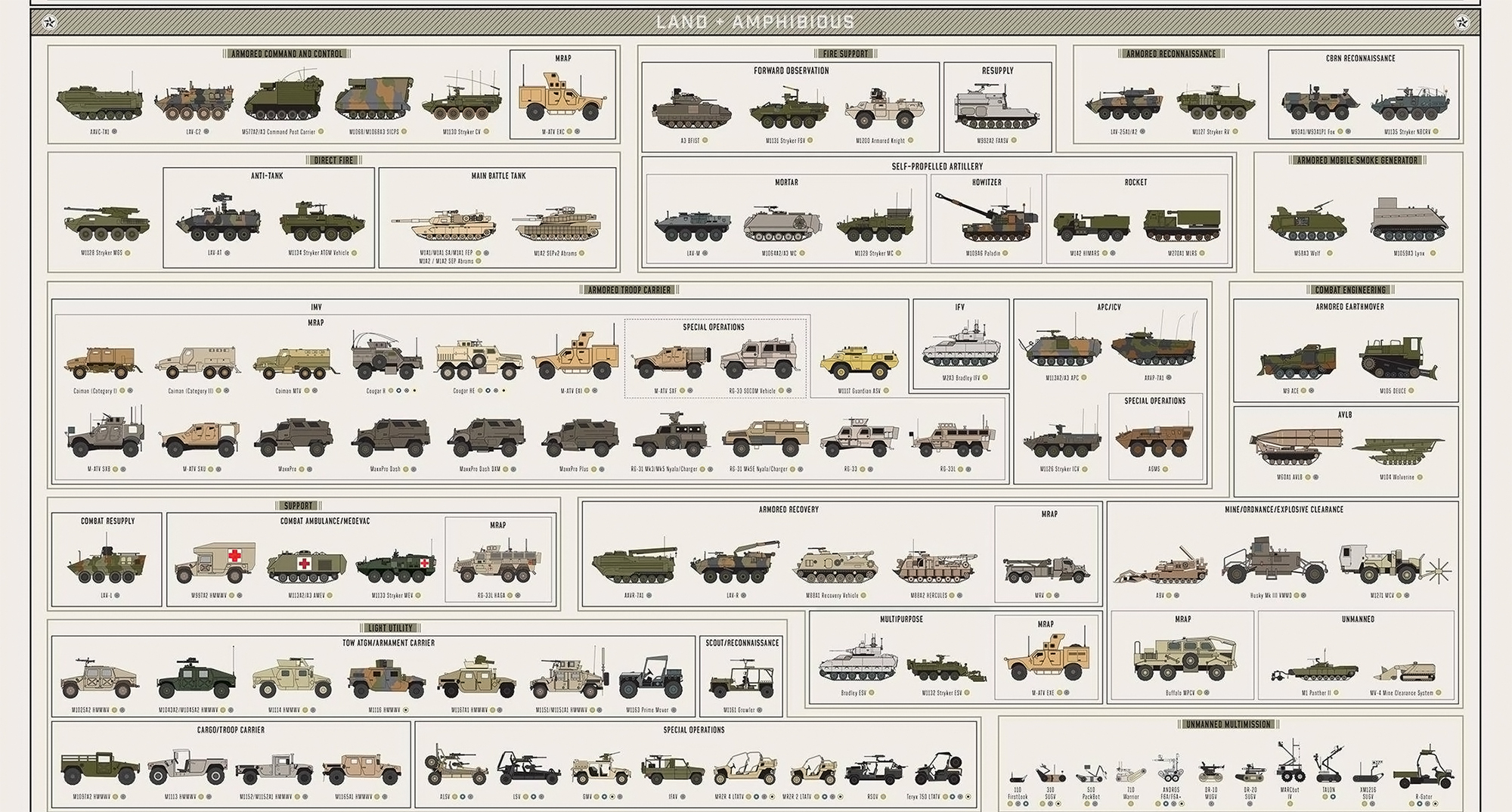
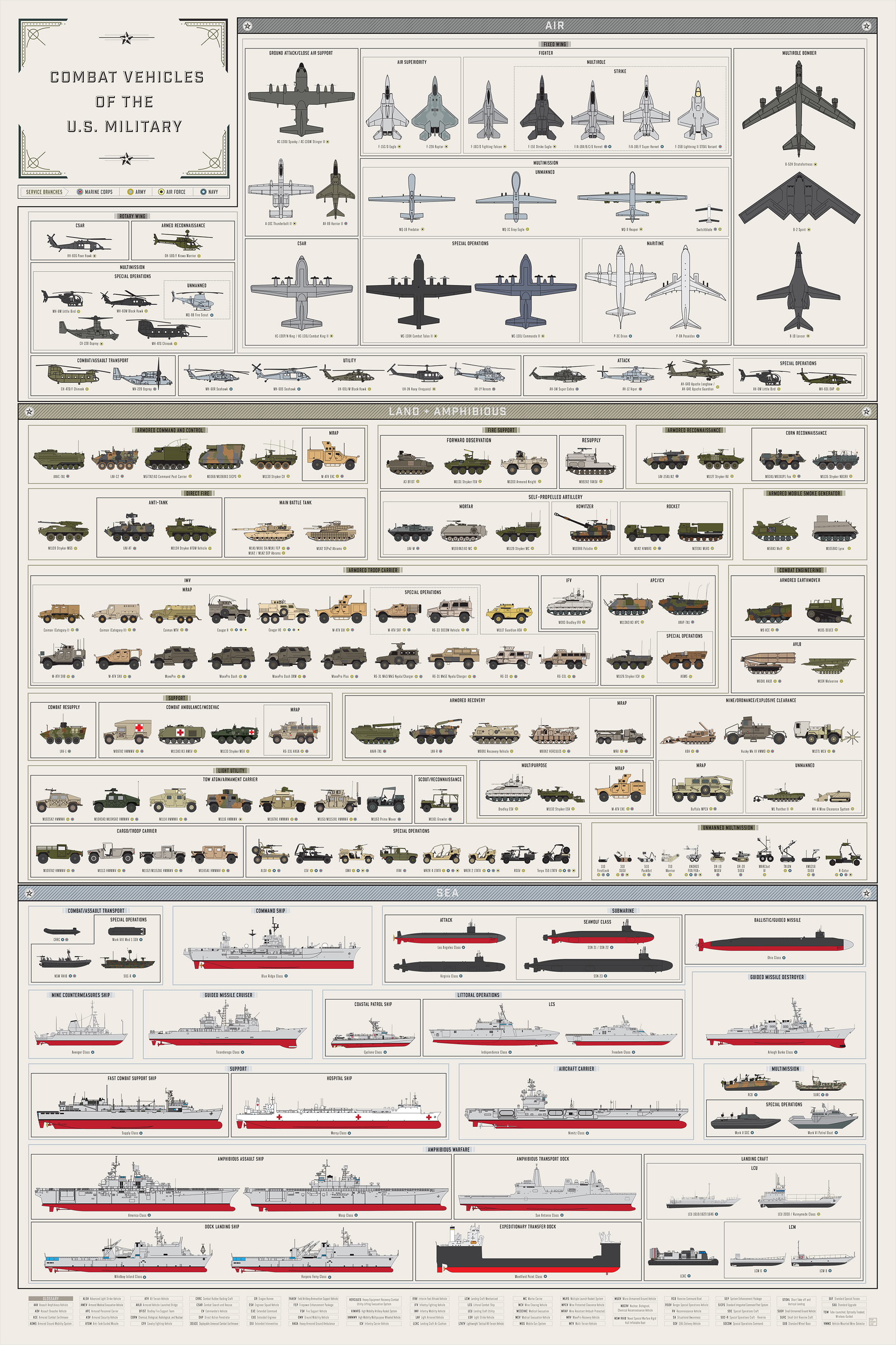
Bird watchers often use a guide book or chart to determine the species they’ve spotted. So, as military gear spotters, we also see the usefulness of a reference chart. Browsing the internet recently, we came across this cool chart from Pop Chart Lab, called “Combat Vehicles of the US Military”. It shows illustrations of almost every vehicle currently in use by the US military—land, sea, and air.
For a larger version, click here to view it, or click the image below and hit “Download” in the top right corner.
If you like this guide, you can buy a large poster of it from Pop Chart Lab. We’d say it could make a cool addition to an office or man cave, and can help you memorize these vehicles each time you glance at it. Knowing the difference between an Apache and a Super Cobra might seem geeky to some, but we think it’s a useful skill and a fun hobby.
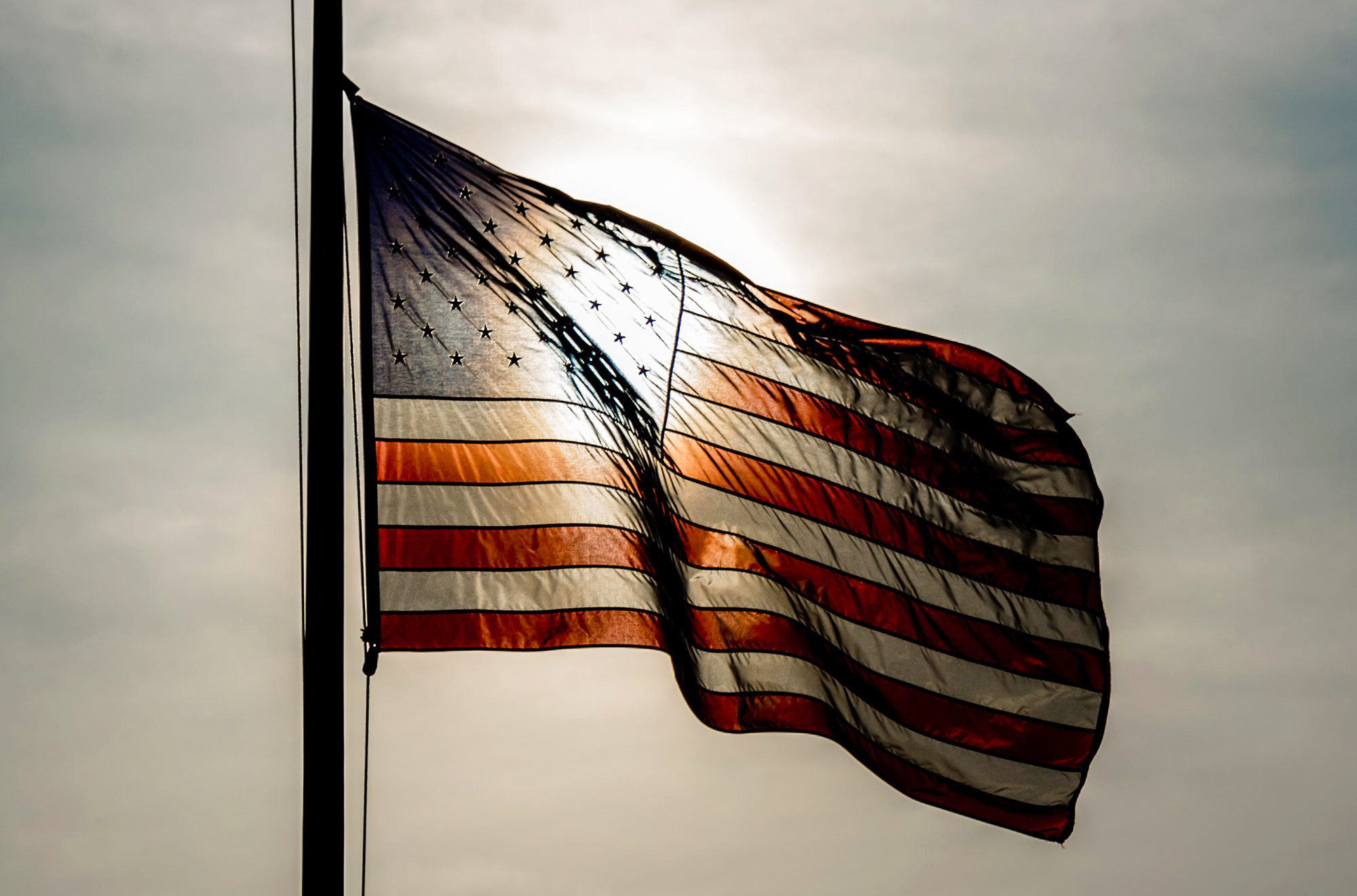
Today is Memorial Day. While many of us will be enjoying a day off of work, spending much-needed time with our families, and celebrating the unofficial start of summer, it’s essential that we never forget the real reason behind this somber national holiday. This is a day to honor and remember all who have died while serving in the United States military. Those men and women sacrificed everything for our sake, and they deserve our utmost respect.
The tradition of a day of remembrance for fallen members of the US military began in 1868, under the name Decoration Day. On May 30th, 1868, people throughout the US used flowers to decorate the graves of those who had died in the Civil War. Over the years, the name Memorial Day became more commonly used, and it was declared the holiday’s official name in 1967.
If your home or business has a flagpole, please observe Memorial Day by flying the flag at half mast until noon, then raising it to the top of the pole for the remainder of the day. Aside from this simple gesture, we can all take a moment today to remember those who gave their lives while serving in our nation’s Armed Forces. Without their ultimate sacrifice, we would not enjoy the freedoms we do today.
Imagine you’ve been out hiking all day in the summer heat, sweat dripping off your brow with each step. Your throat is dry and parched, but you’ve got just the thing to lift your spirits. You set down your backpack, and reach inside, feeling the touch of steel against your fingertips as they grasp a stainless water bottle. Unscrewing the cap and bringing the rim to your lips, you prepare to be refreshed as you take a gulp of… steaming hot water.
Ordinary single-walled water bottles have almost no insulation, and will change temperature rapidly.
That doesn’t sound very refreshing at all, now does it? When temperatures reach triple digits, a sip of cool water can put a smile on your face, but hot water will do just the opposite. Alternatively, when it’s freezing cold outside and you’re chilled to the bone, you certainly wouldn’t ask for a nice cup of ice water. What you’ll really want is a beverage that’s the opposite temperature of your surrounding environment—that is to say, a cold drink when it’s hot outside, and a hot drink when it’s cold.
However, this isn’t an easy task. Left unobstructed, mother nature will inevitably alter the temperature of any beverages you have to match the ambient temperature. The scientific principle of thermodynamics tells us this transfer of heat energy must happen—it’s only a matter of time.
Insulated Water Bottles
Fortunately, humans have developed a way to fight this natural process: insulation. Insulation dramatically slows the transfer of heat , keeping hot things hot and cool things cool. When applied to water bottles, insulation can maintain the temperature inside for hours or even days, no matter its surroundings.
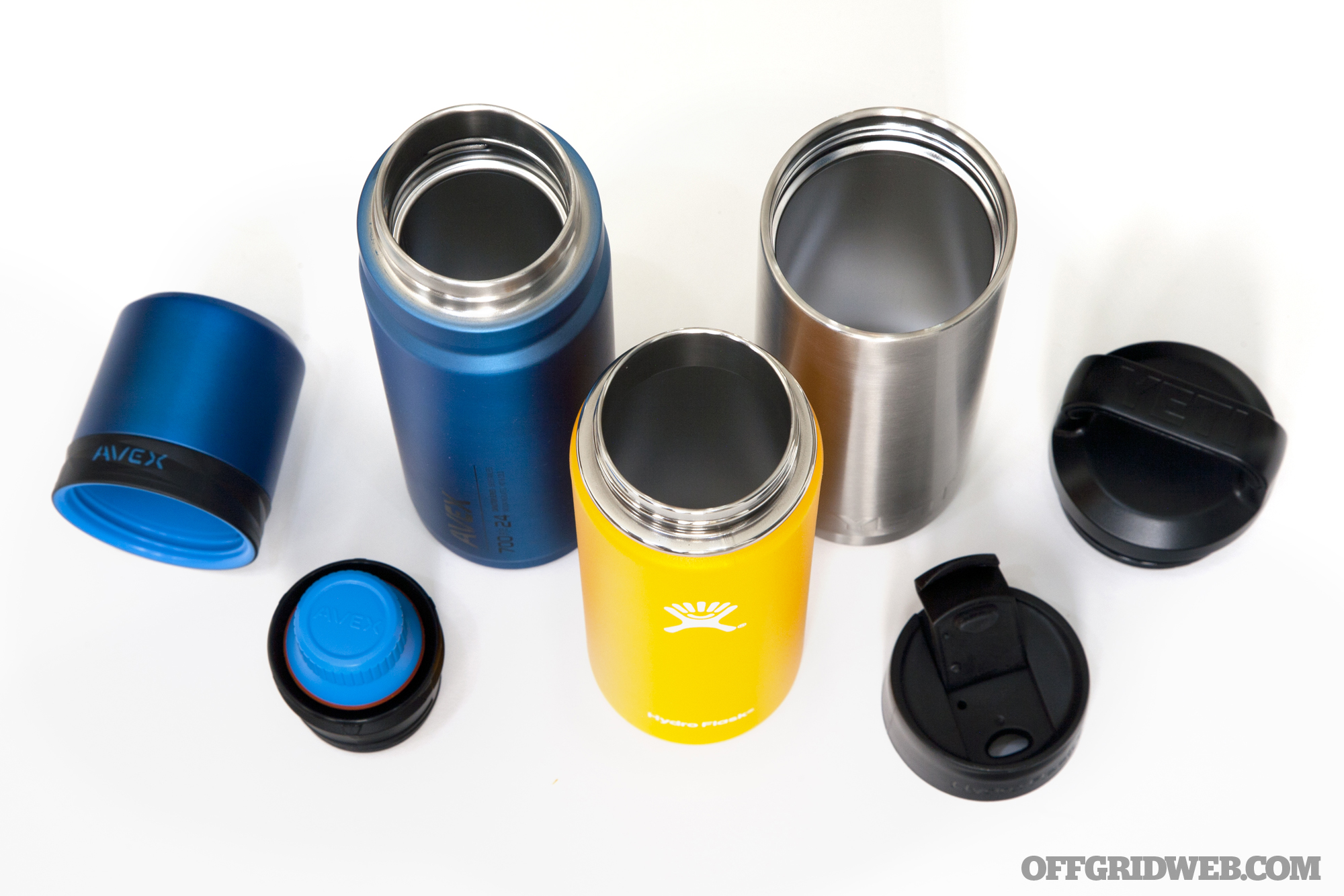
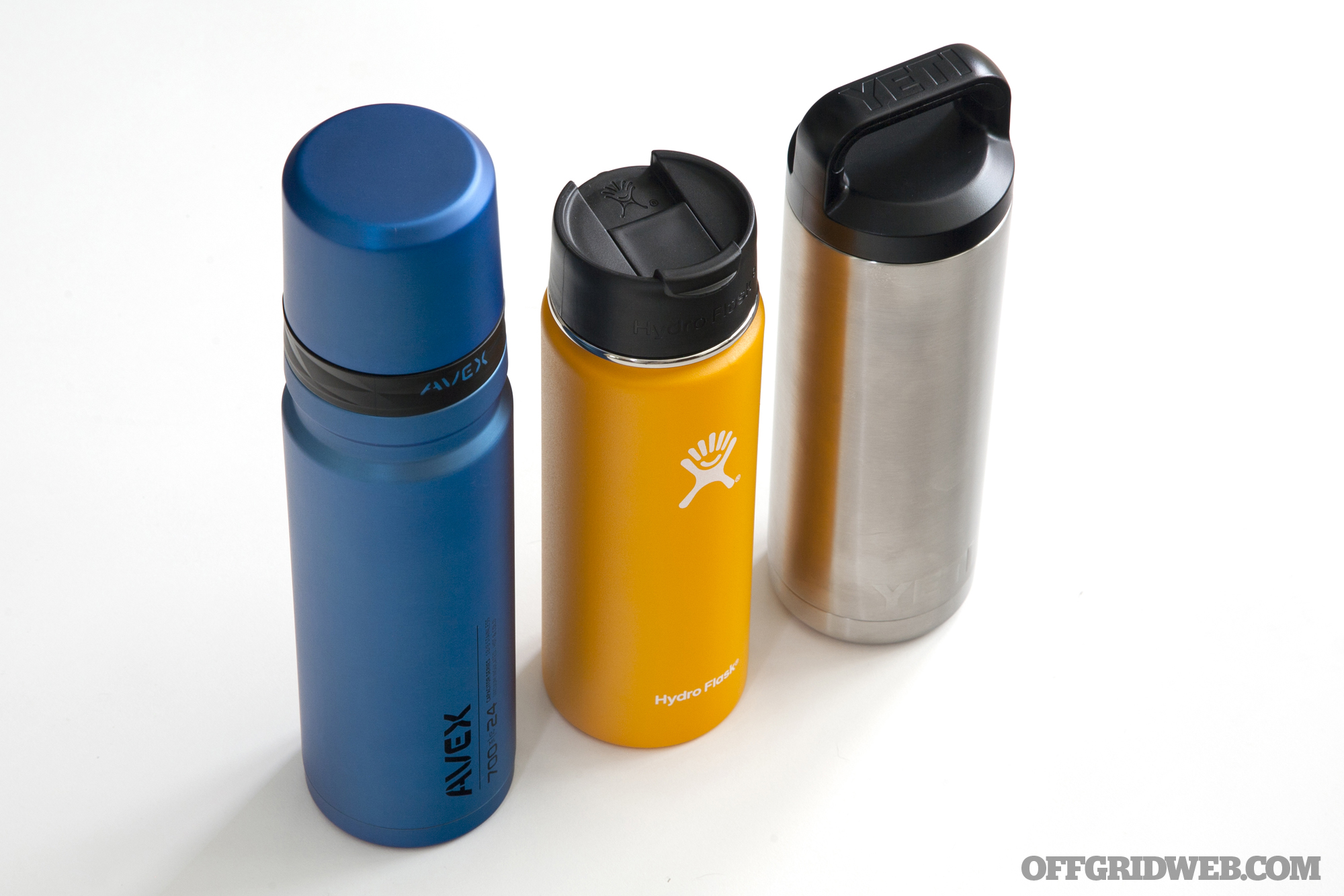
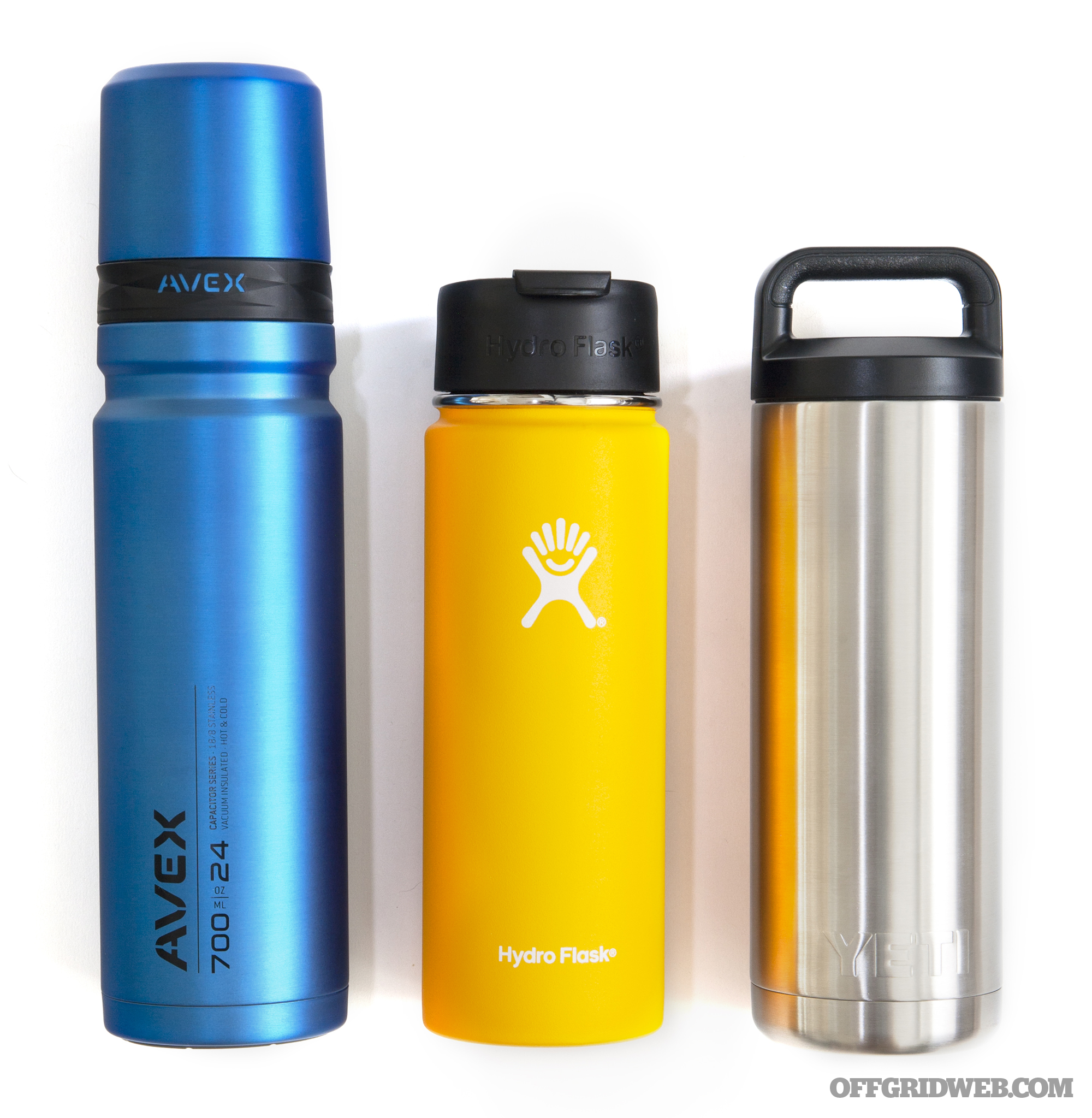
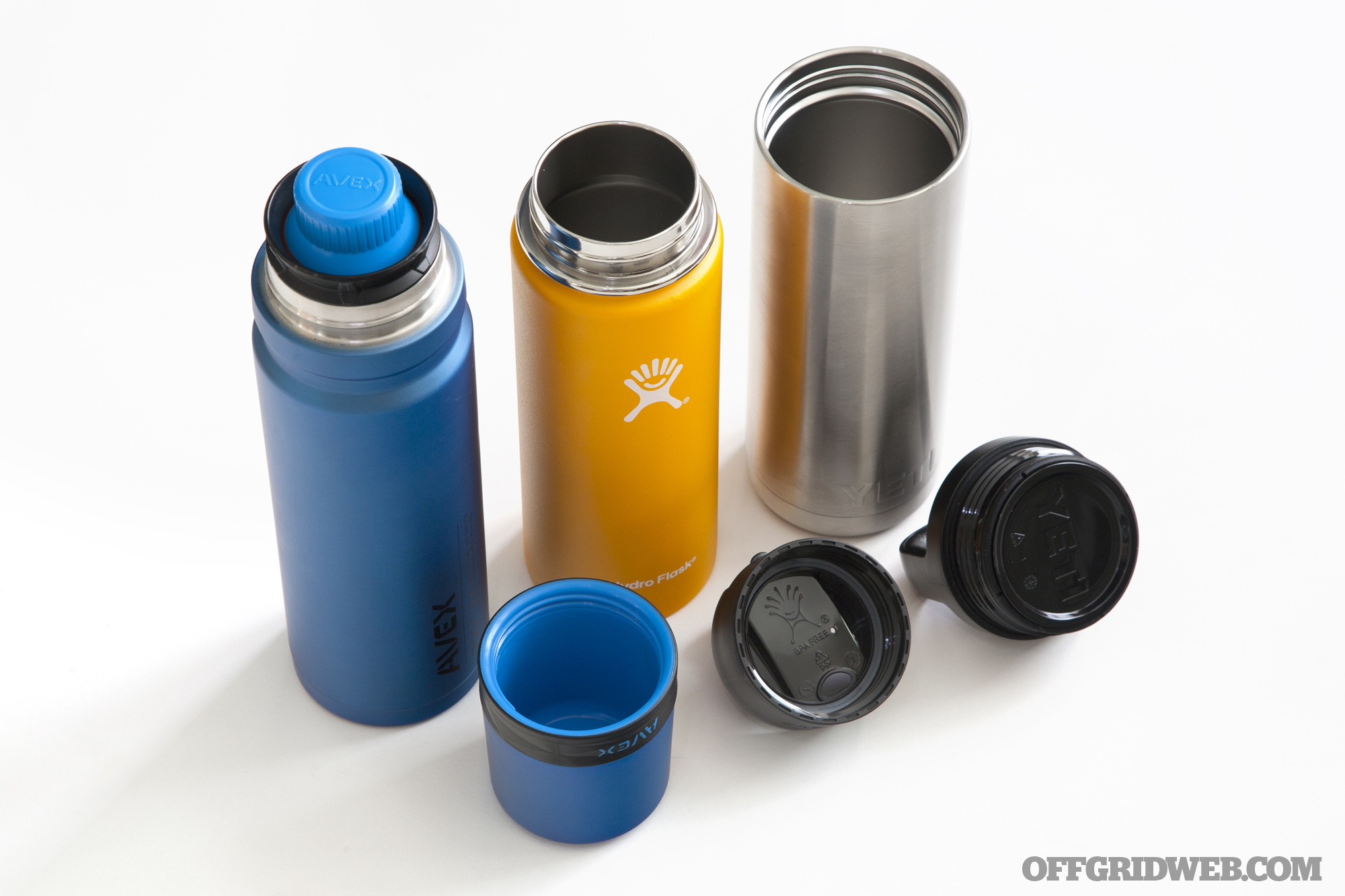
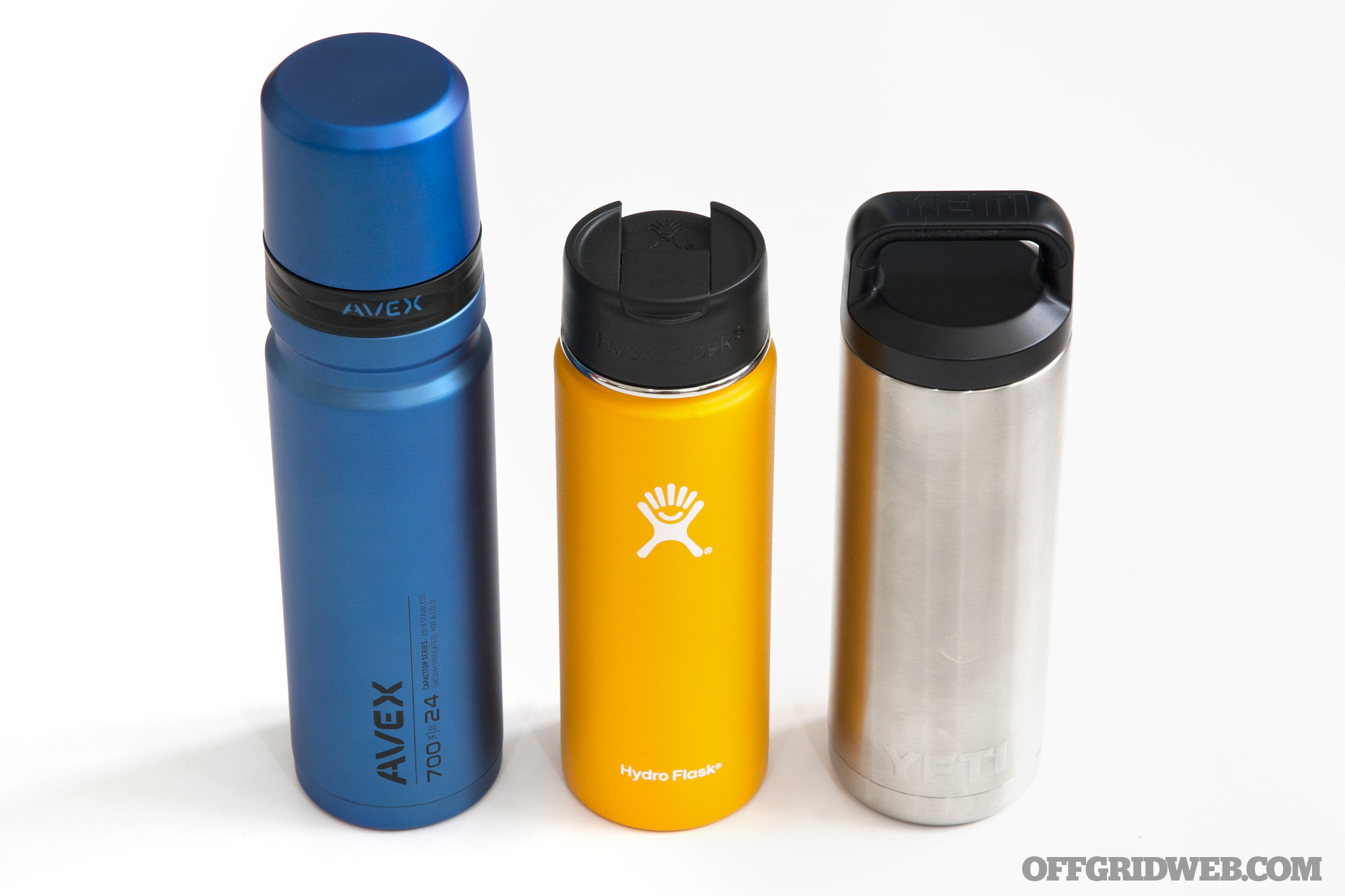
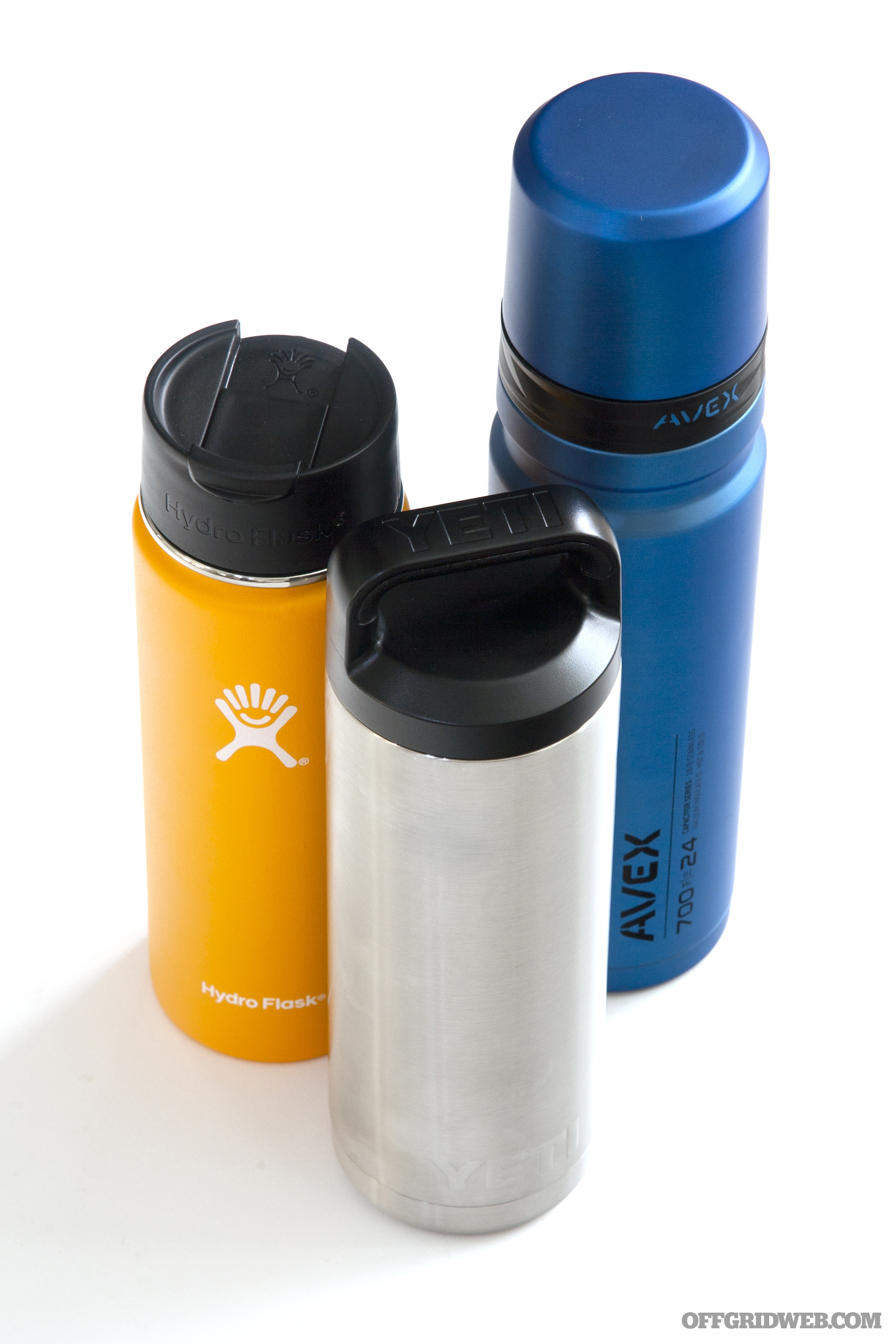
There are many varieties of insulated water bottles on the market, so we decided to test three leading brands to compare the pros and cons of each. In addition to carrying and using each bottle on a daily basis, we performed a hot water test to see how well they actually insulate their contents in a refrigerator. For the purposes of this guide, we selected bottles that would fit a typical large cup of coffee (18 to 20 fluid ounces at most coffee shops). Here are the three bottles we tested:
Read on to hear our thoughts on each bottle, and see how they fared in our testing.
AVEX 3Sixty Pour
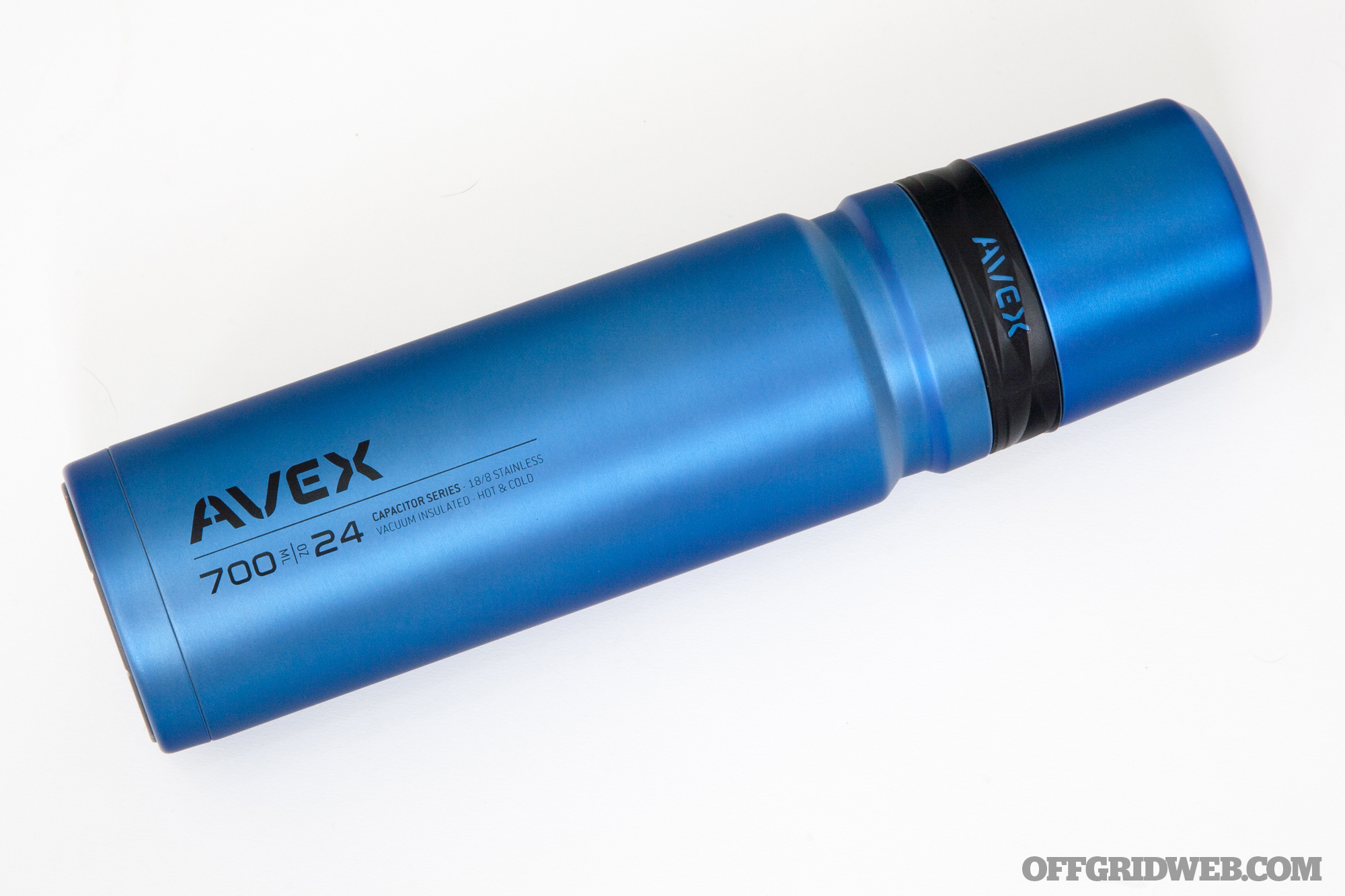
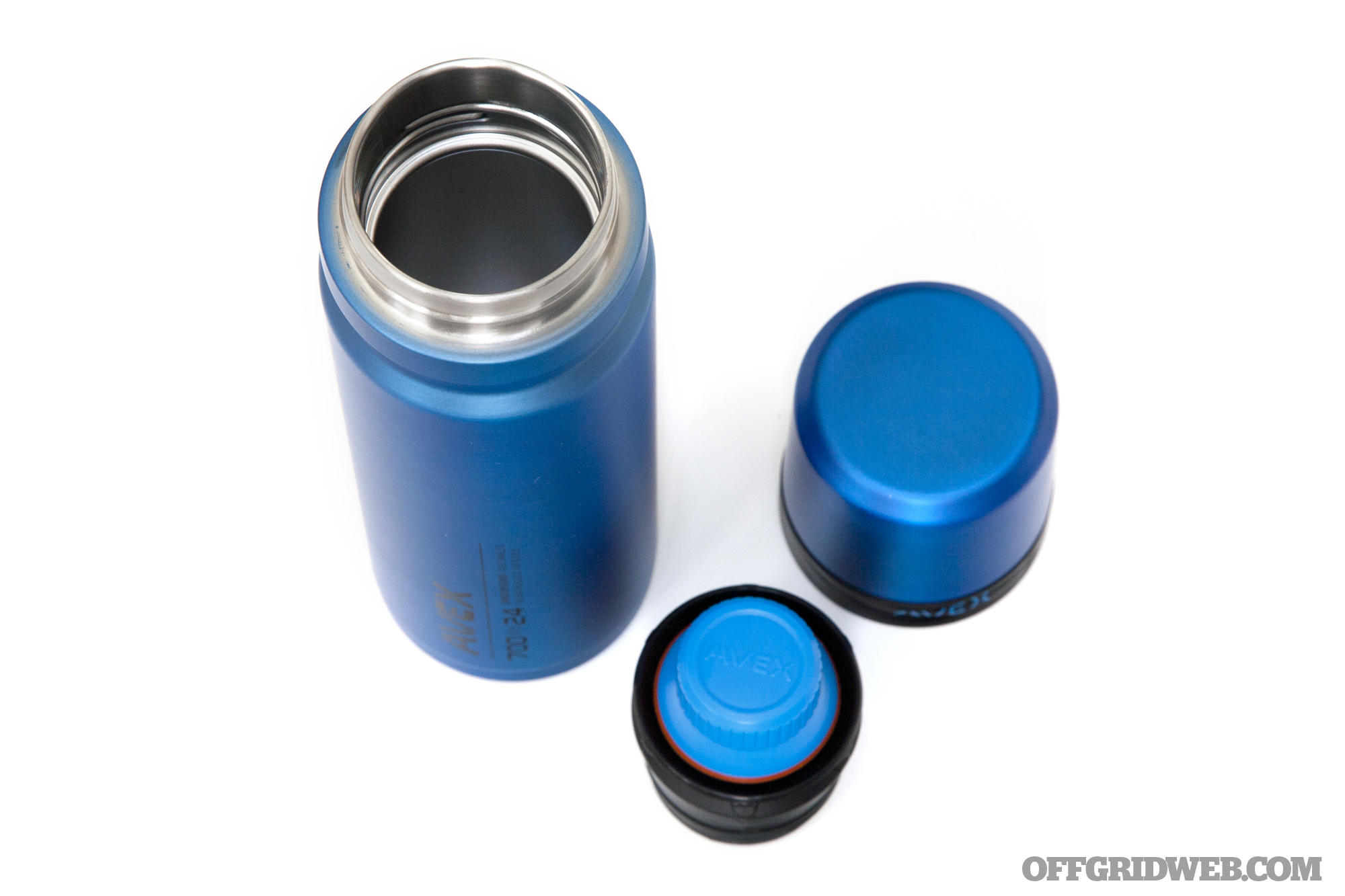
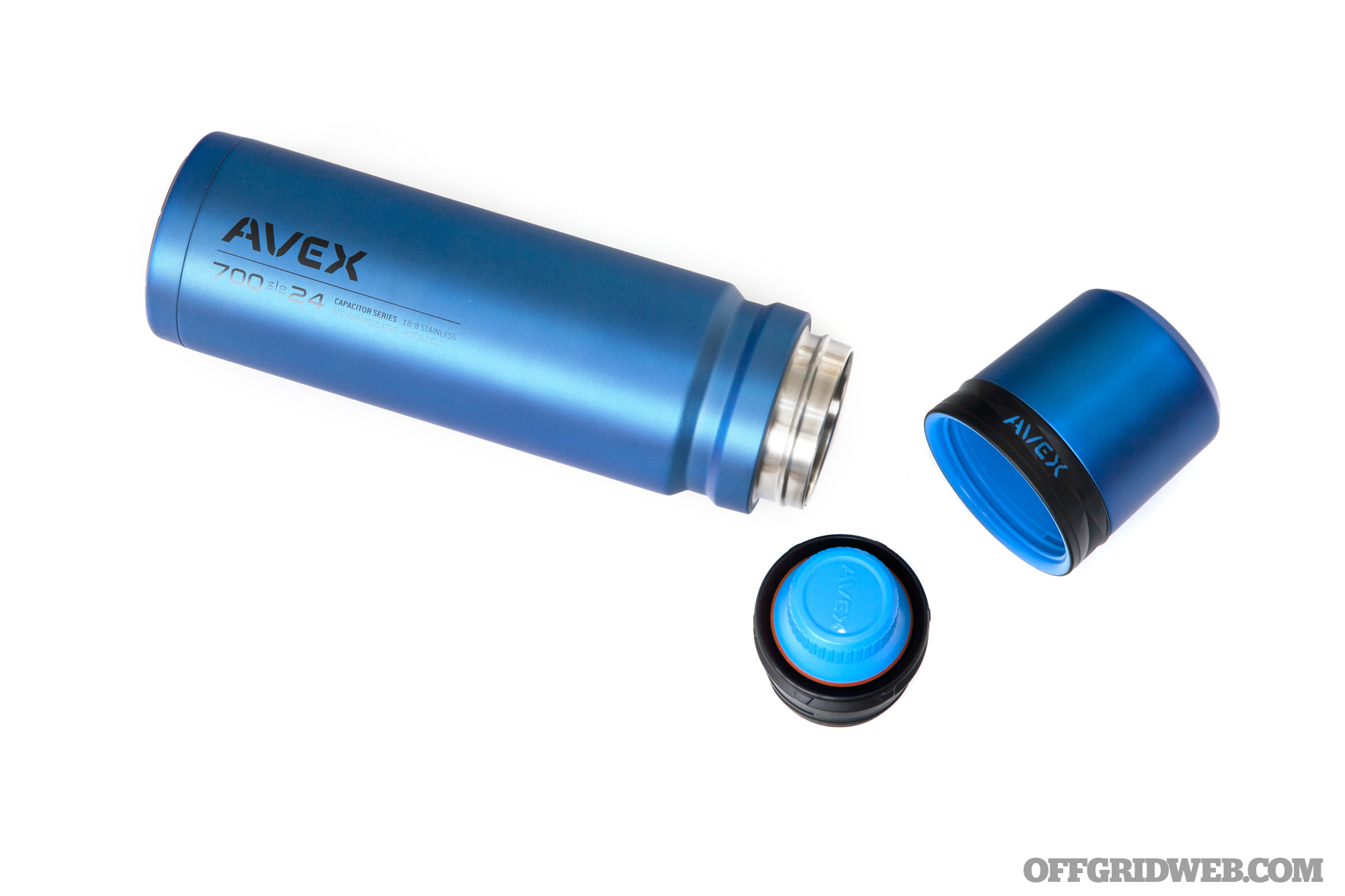
AVEX produces a wide range of beverage cups and bottles, both with and without insulation. This particular thermally-insulated model is called the AVEX 3Sixty Pour. Here are its key specifications:
Capacity: 24 fl oz.
Dimensions: 11.4″ tall, 3″ diameter
Dry Weight: 16.3 oz.
Construction: 18/8 Stainless Steel
Finish: Blue/Black (also available in Black/Green)
Special Features: 360-degree pour spout, insulated cup lid
Claimed Maximum Insulation: 16 hours hot, 30 hours cold
MSRP: $30
The AVEX bottle is the largest of the three, both in internal capacity and external dimensions. It’s nearly a foot tall, but provides some unique advantages as a result.
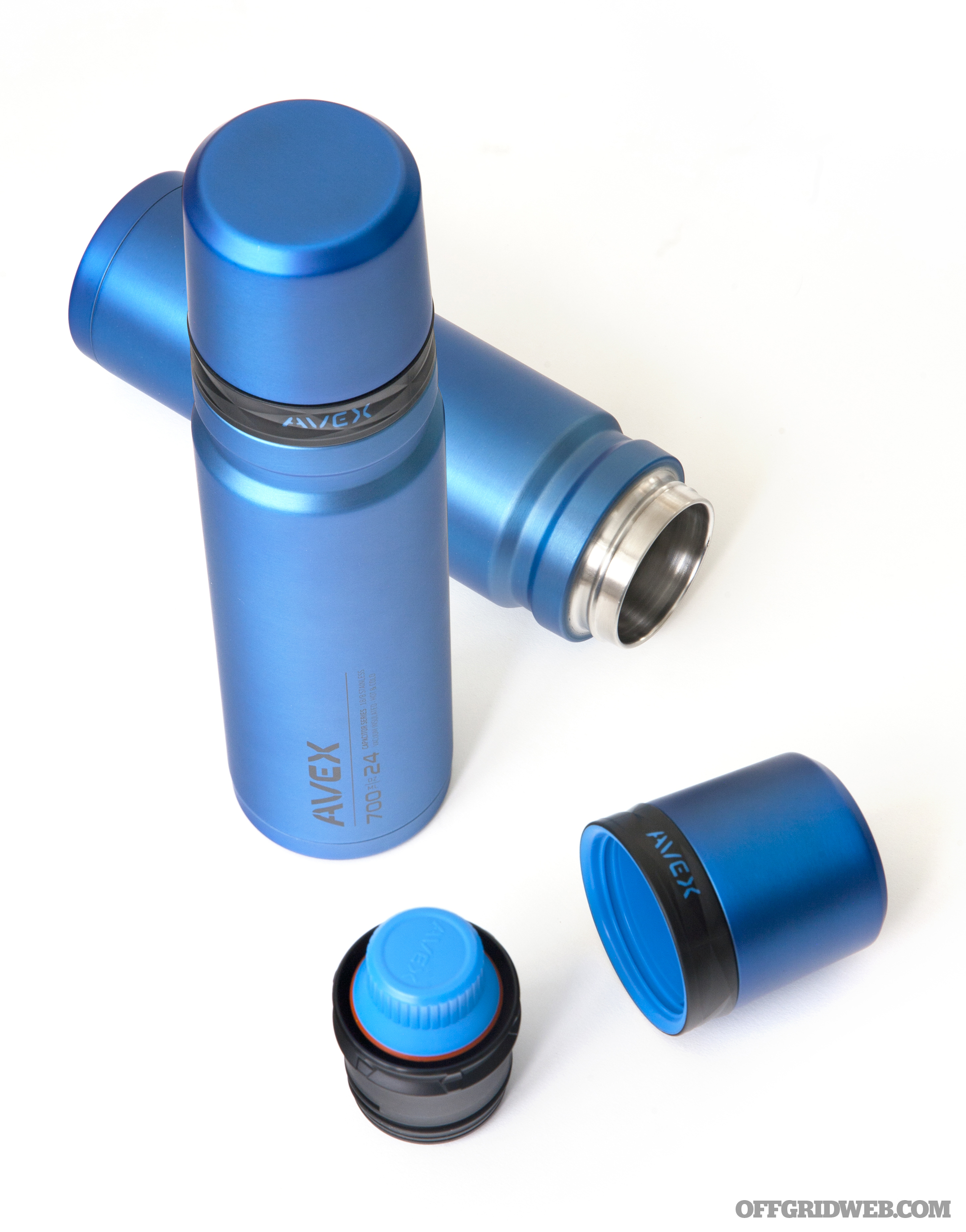
Unscrewing the top of the bottle reveals an insulated cup that can hold 6 ounces of your beverage of choice. Underneath the removable cup is AVEX’s 360-degree pour spout, which provides a leak-proof seal. Twisting the pour spout one half-turn conveniently lets liquid flow from any direction the bottle is tipped.
The pour spout can be removed and disassembles into two parts for cleaning. However, AVEX says you shouldn’t leave the spout at home, since the bottle will not seal fully with the cup lid alone. If you’re planning to primarily use the bottle to dispense drinks, this is not a problem, but it makes drinking directly from the 3Sixty Pour difficult. You’ll need to remove the cup, set it aside, unscrew the pour spout, set it aside, and then drink from the bottle and re-assemble.
Fortunately, the pour spout can be swapped for an AVEX ReCharge AutoSeal flip-top lid, if you’re so inclined. That lid is sold separately by AVEX for $6.
Overall, we liked the AVEX bottle, and felt its vibrant blue color is quite appealing. The non-slip matte finish also helped us keep it firmly in hand. We’d probably end up buying the optional flip-top lid for daily use, since we prefer drinking straight from the bottle, but the spout-and-cup system is very good in its own right.
Pros:
Kept liquid hot the longest of the 3 bottles we tested (see results chart below)
Convenient built-in cup and easy-to-use pour spout
Attractive vibrant matte blue finish
Cons:
Cannot be used with only the cup lid, requires pour spout to seal fully
Difficult to drink directly from the bottle, unless an optional lid is purchased
Hydro Flask Wide Mouth Coffee
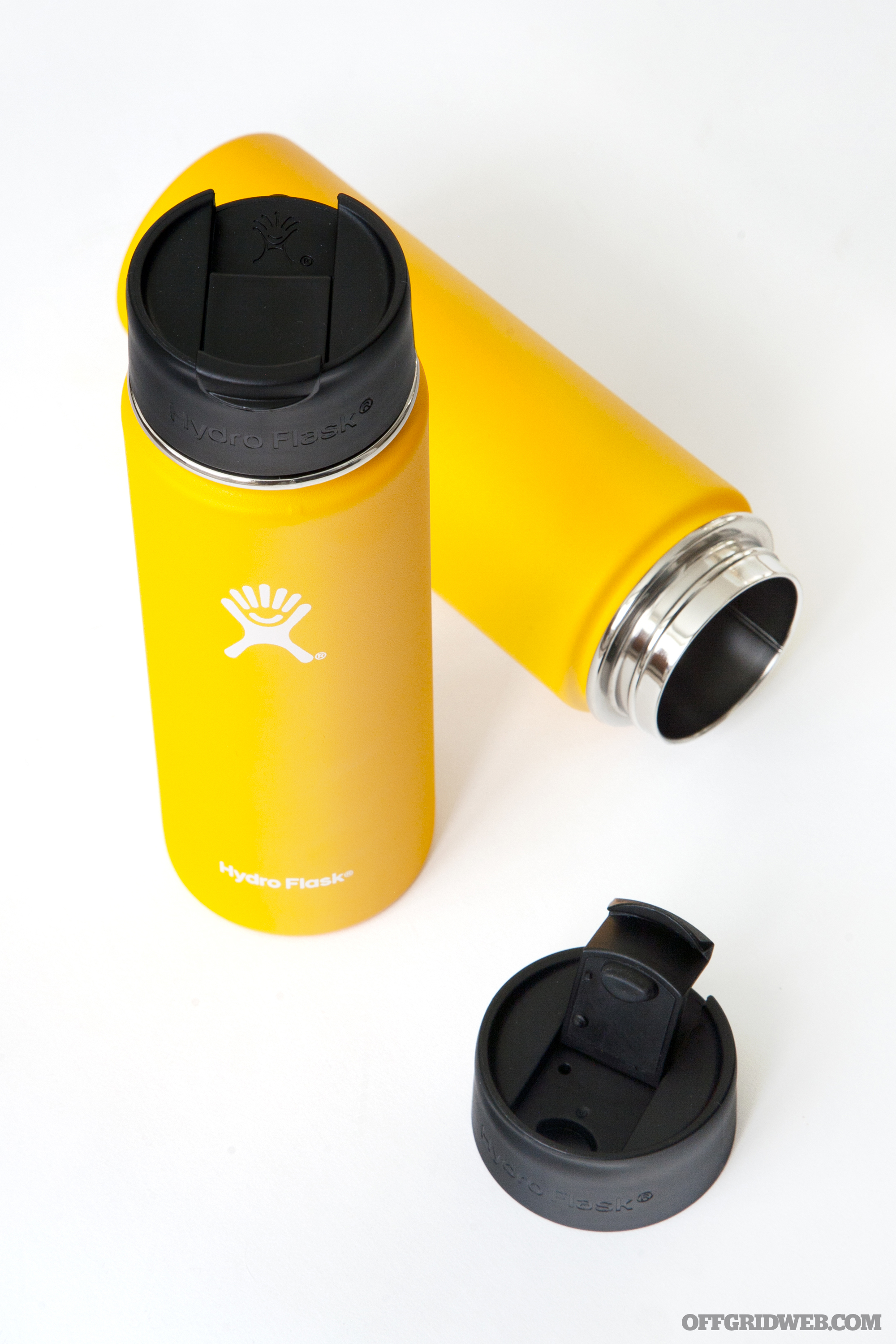
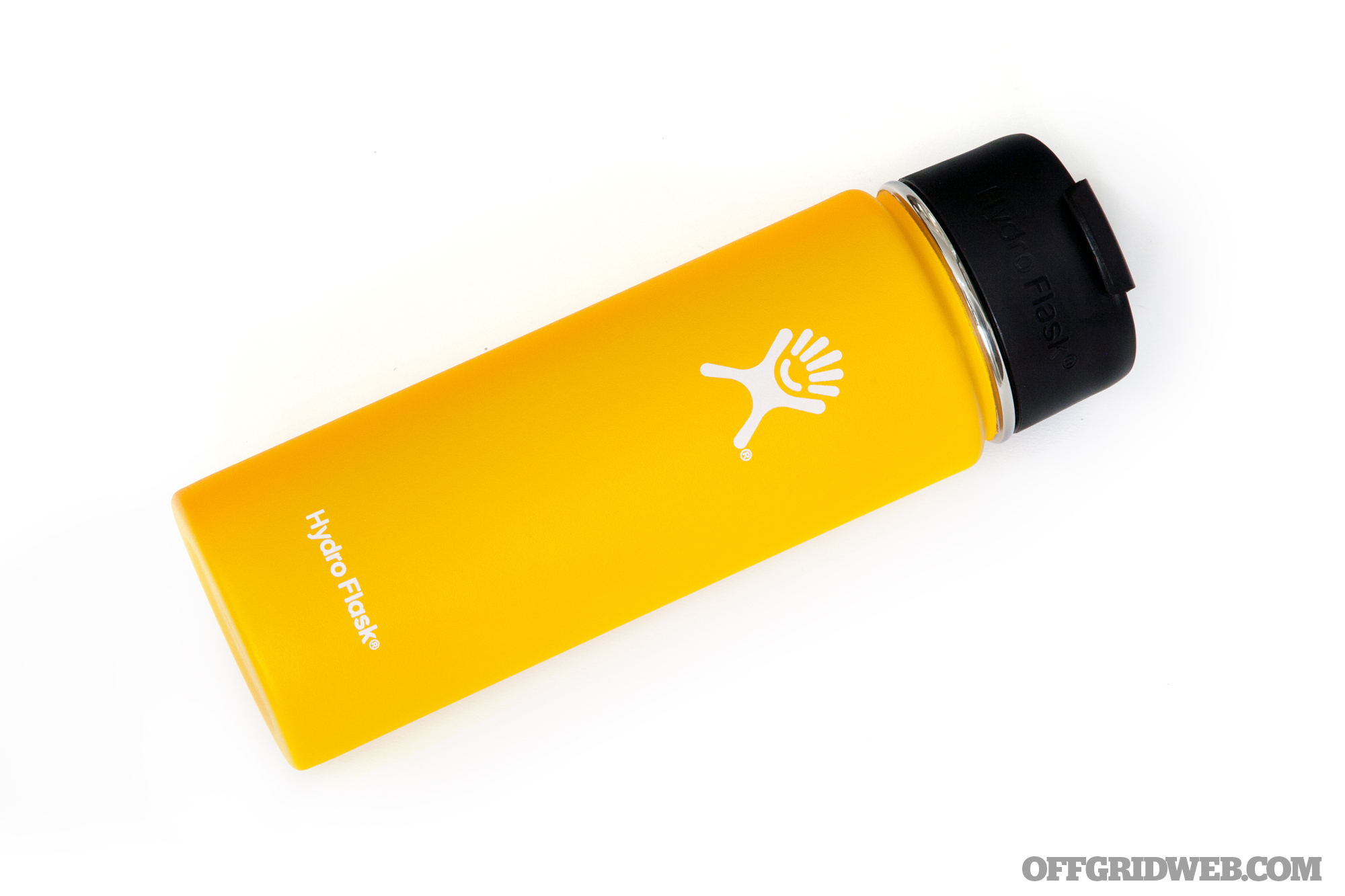
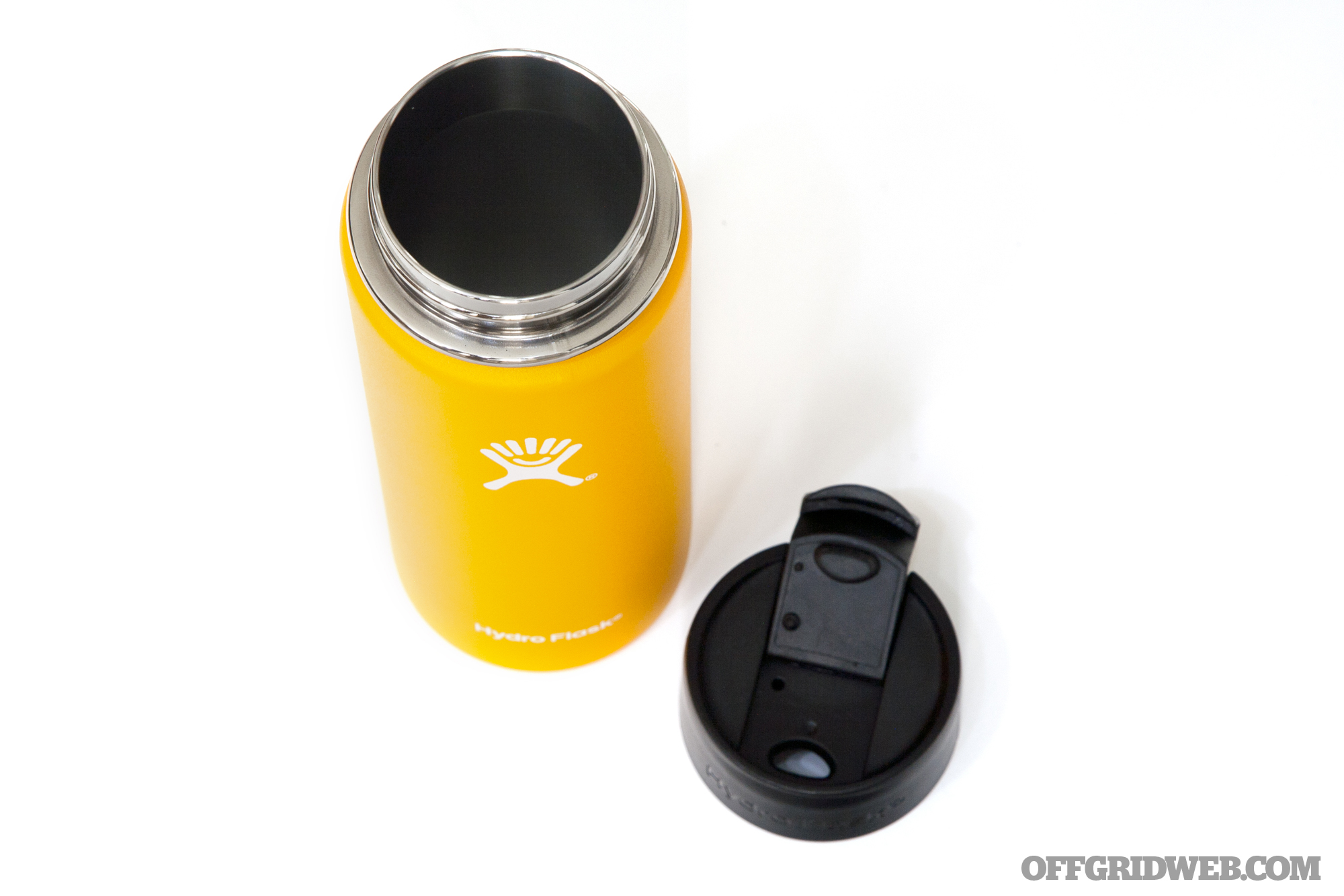
Hydro Flask is a well-known name in the insulated bottle market, and its products can be found in many large outdoor goods stores. We tested a Wide Mouth Coffee bottle, which comes with a flip-top lid for quick sips of coffee or tea. Here are its key specifications:
Capacity: 20 fl oz.
Dimensions: 9″ tall, 2.9″ diameter
Dry Weight: 10.8 oz
Construction: 18/8 Stainless Steel
Finish: Mango (also available in brushed stainless or 5 other colors)
Special Features: Flip-top lid, sweat-free powdercoat finish
Claimed Maximum Insulation: 6 hours hot, 24 hours cold
MSRP: $28
The Hydro Flask Wide Mouth Coffee is appropriately-named, since it’s specifically designed for coffee drinkers. Its 20-ounce capacity is just right for a large cup of Joe, such as a Starbucks Venti. Also, its compact size and light weight make it a great choice for travel. It fits nicely into a car’s cupholder, and isn’t so tall that it gets in the way.
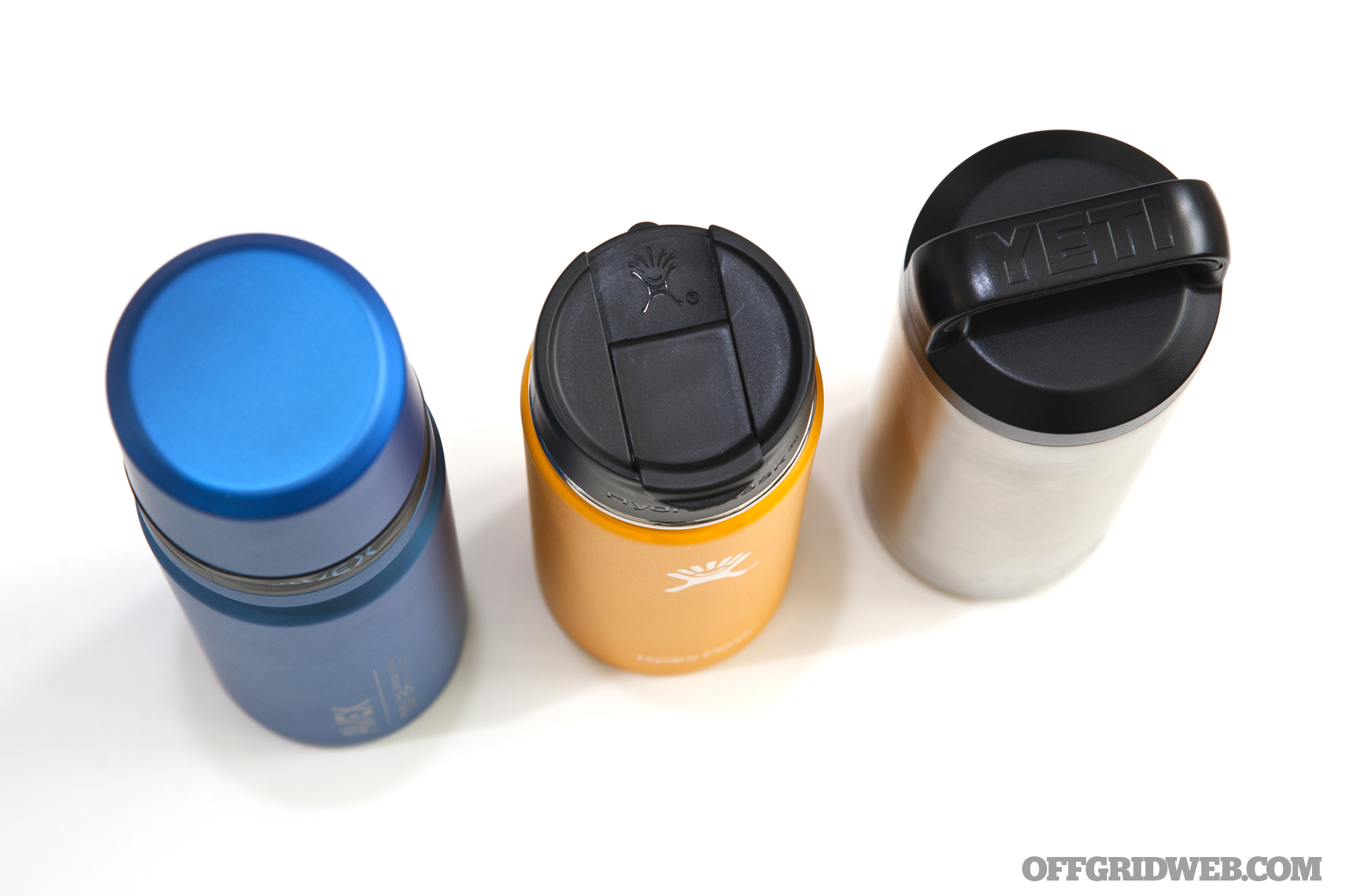
The Hydro-Flip lid design makes one-handed drinking a breeze—just apply a little pressure with your thumb, and it pops right open. No unscrewing a tight lid, and no separate parts to worry about losing or dropping.
The only downside to this lid is that it seems to affect the bottle’s insulation capabilities. With this lid installed, water in our Hydro Flask ended up about 30 degrees cooler than the other two competitors, after sitting in a fridge for 12 hours. We’ve noticed from previous experience that the screw-on Wide Flat Cap lids Hydro Flask offers for $9 are much better at retaining heat for long periods.
Hydro Flask offers tons of customization options to choose from—many capacities, mouth types, lid types, and color options. If you want a bottle in bright purple, or a tiny size for your kids to use, or even a huge 64-ounce insulated beer growler, they can accommodate.
The Hydro Flask Wide Mouth Coffee is a good little insulated bottle for various uses. It may not retain heat for a full day in frigid conditions, but it does offer a lot of all-around convenience in a light and durable package.
Pros:
Quickest bottle to drink from, with a simple flip-top lid design
Compact and lightweight
Lots of size, color, and lid options to choose from
Cons:
Didn’t retain heat as well as the other two bottles we tested, likely due to the flip-top lid
YETI Rambler
YETI became successful with their famous line of “grizzly bear proof” coolers, and branched out into tough insulated cups and beverage containers. This model is a new addition to that line, called the Rambler. Here are its key specifications:
Capacity: 18 fl oz.
Dimensions: 9.5″ tall, 3″ diameter
Dry Weight: 15.9 oz
Construction: 18/8 Stainless Steel
Finish: Brushed
Special Features: “Over the Nose” ultra-wide mouth, TripleHaul 3-finger carry handle
Claimed Maximum Insulation: No claims made by YETI
MSRP: $40
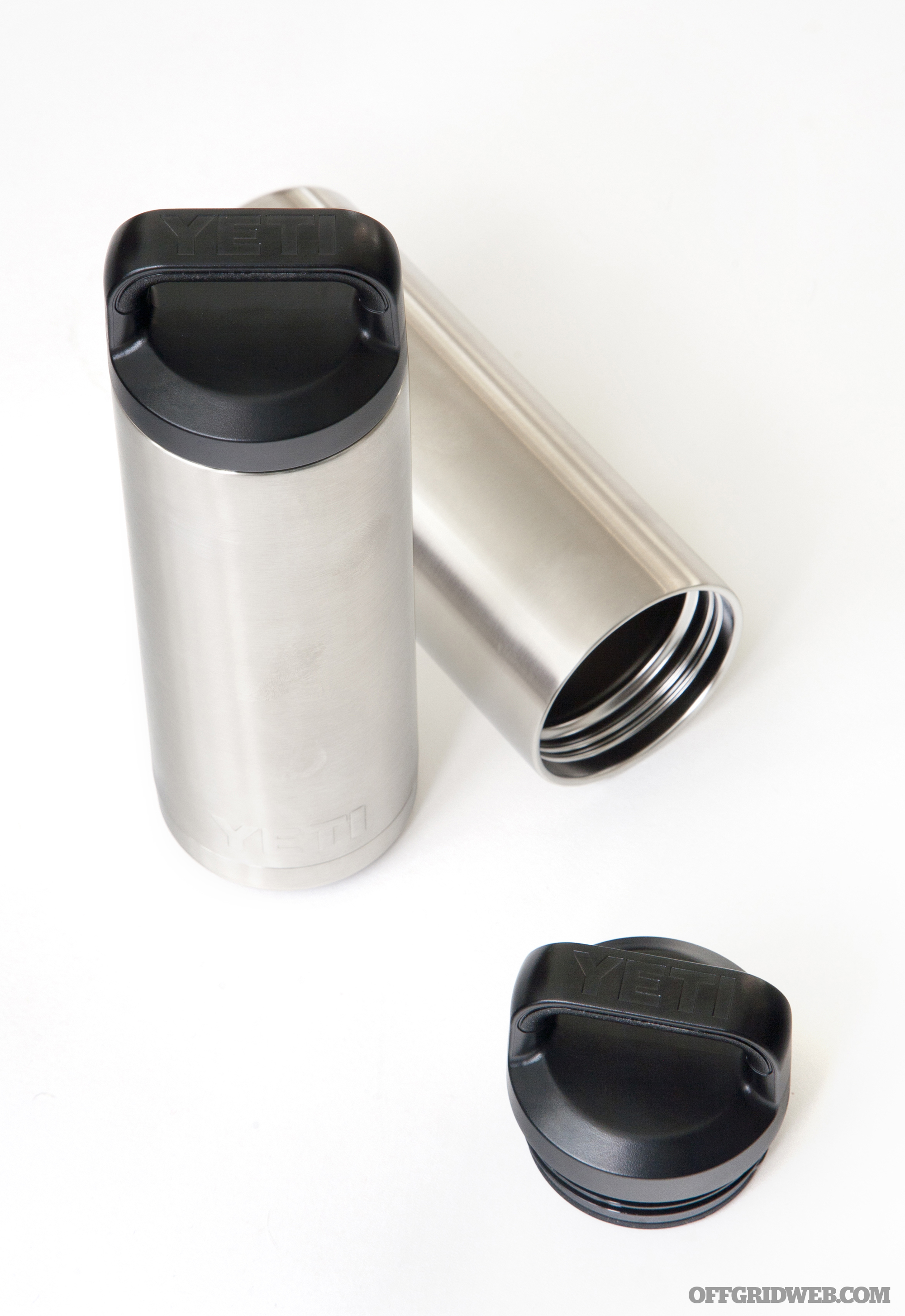
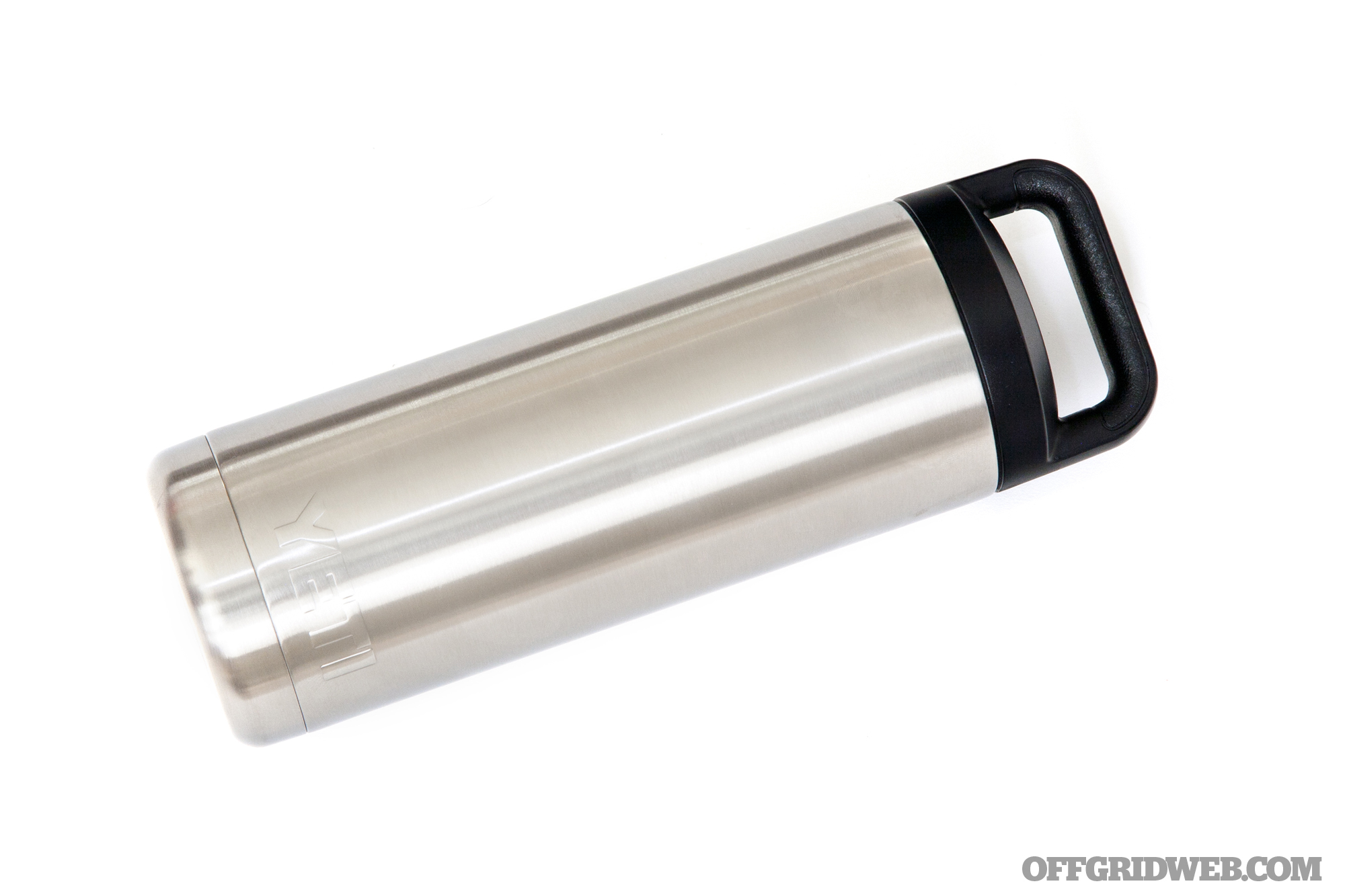
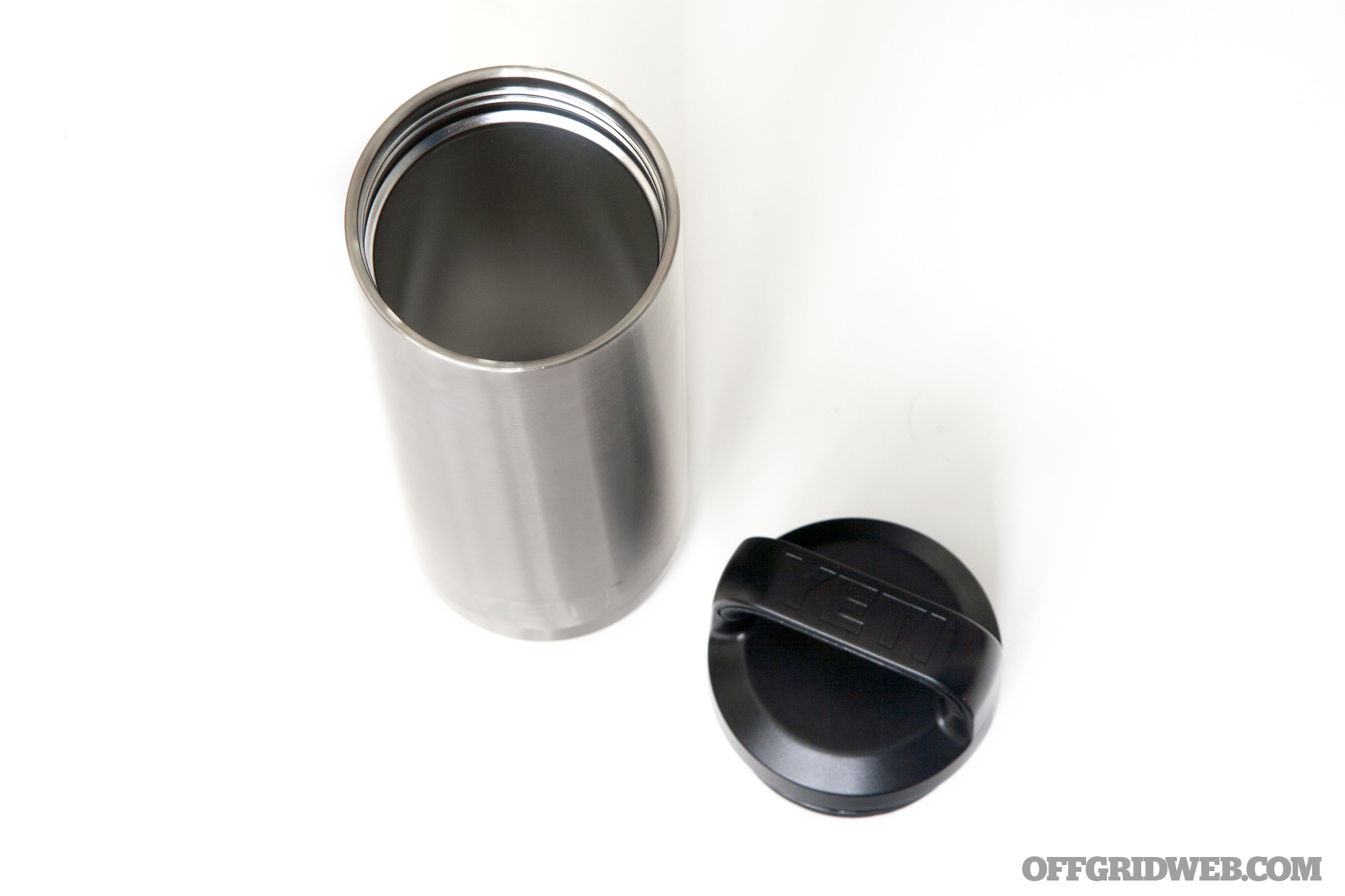
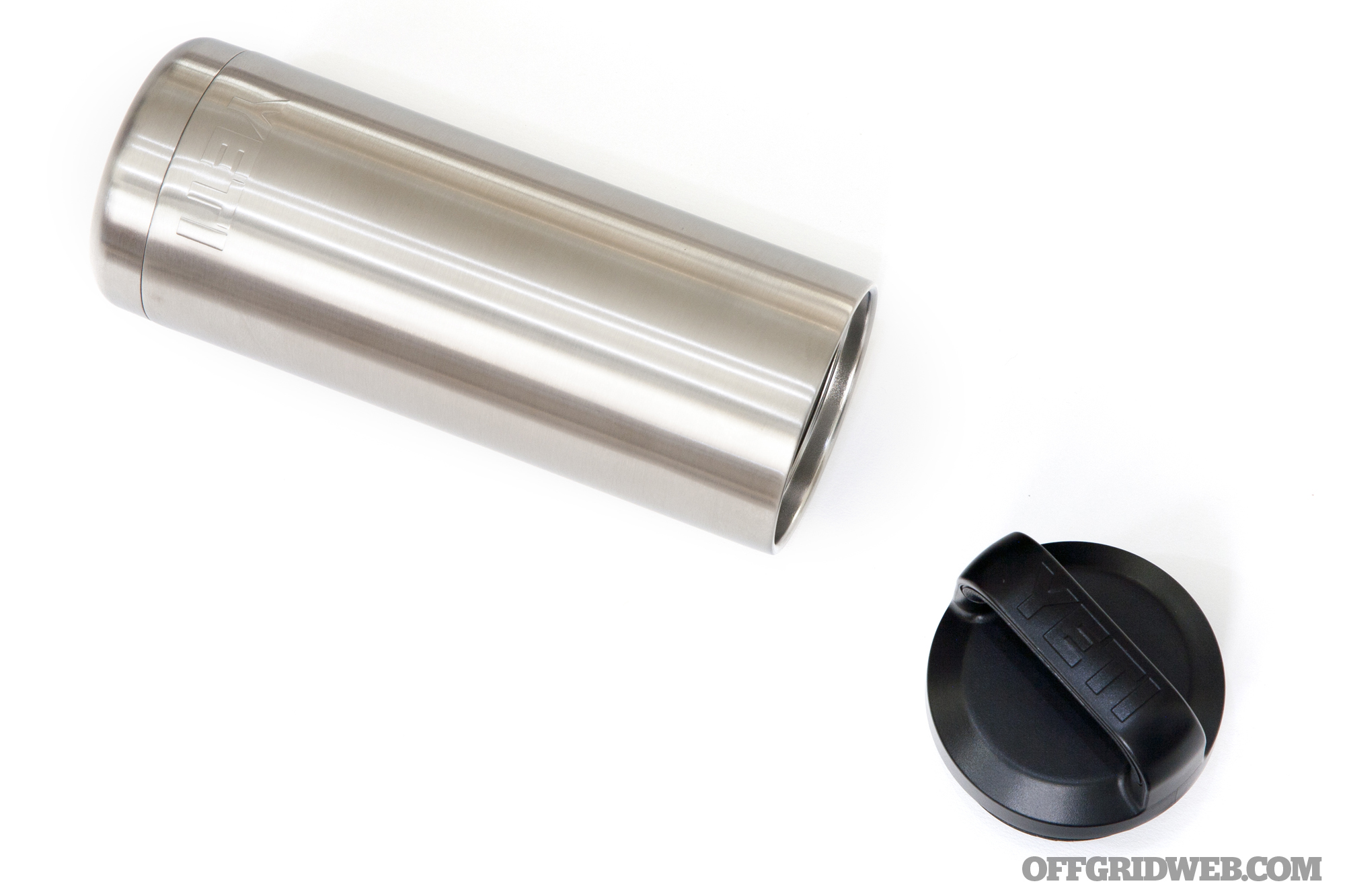
The YETI Rambler is a simple insulated bottle with a no-frills design. It may only come in one color, and it may only offer one lid option, but it’s very good at what it does. Featuring a solid stainless design with a brushed exterior, this bottle is unquestionably tough. It also held its own in our insulation test, retaining over 60% of its heat after 12 hours in a refrigerator.
The Rambler’s business end is topped off by an insulated TripleHaul cap, named accordingly due to the fact that it’s designed to be carried with a three-finger grip. We also liked its “Over the Nose” wide mouth, which prevents you from bumping your nose or tilting your head back awkwardly with each sip. This design makes cleaning easy, too.
One downside to the Rambler is its price, about $10 higher than the competitors here. At 18 ounces, it’s also slightly too small to pour in some large-size coffees. This wouldn’t be a big deal if YETI offered a slightly bigger size, but the next size up is twice as large (36 ounces).
As long as the lack of color choices, lid options, and size variety doesn’t bother you, the YETI is a solid choice. It did a great job retaining heat, ending up only a few degrees cooler than the dual-capped AVEX, and if it’s anything like YETI’s coolers, it’ll be serving us well for years to come.
Pros:
“Over the Nose” wide mouth makes it easy to drink from
Very good heat retention
Simple, no-frills style
Cons:
No optional extras or color choices, and only three size choices
A bit more expensive than the other bottles
Insulation Comparison Test
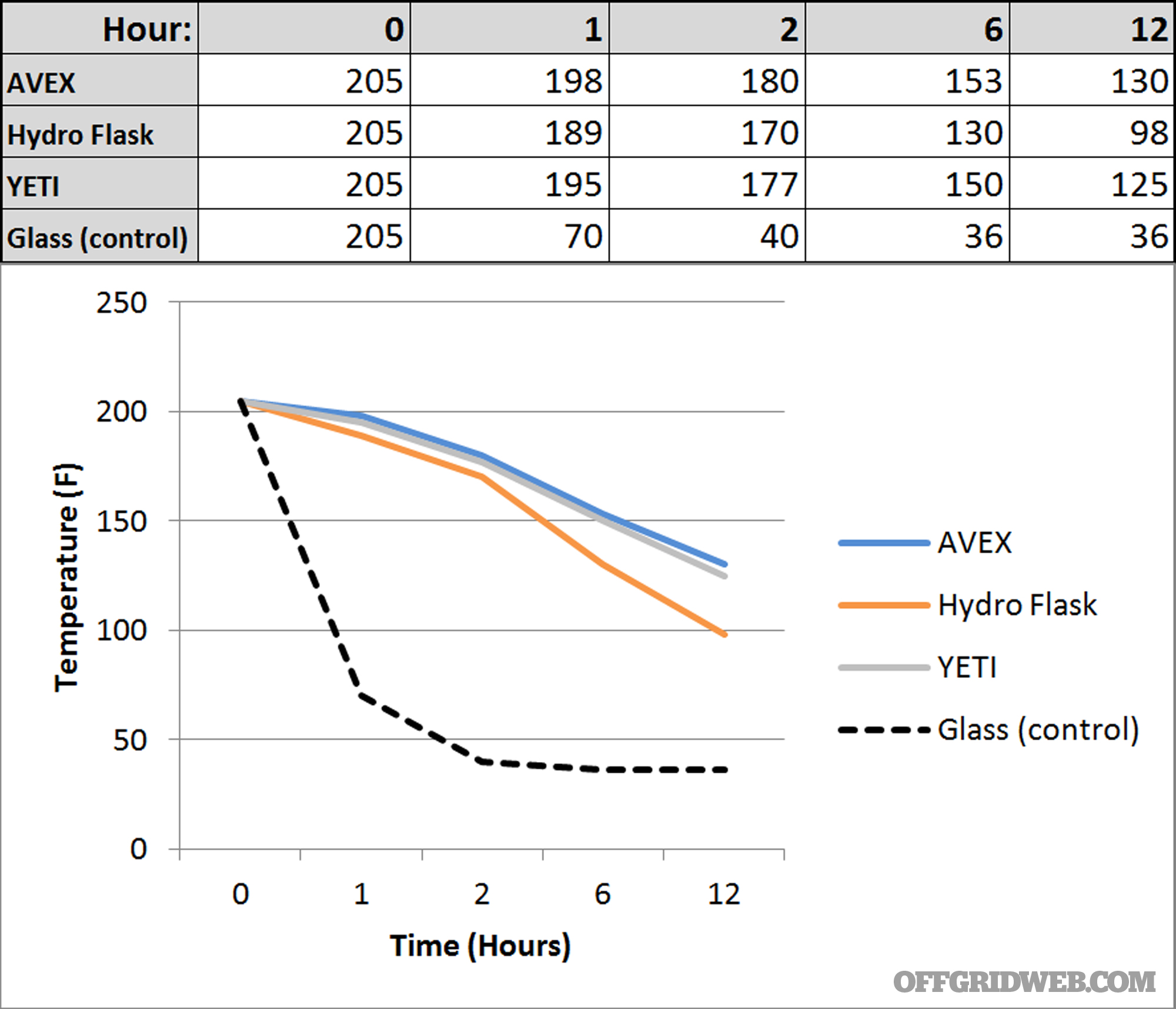
To compare the insulation abilities of these bottles, we poured equal amounts of boiling water into each, and then placed them inside a 40-degree refrigerator for 12 hours. After pouring from the kettle into the bottles, the water temperature started out at 205 degrees. We then checked the temperature of each bottle’s water at several intervals: 1 hour, 2 hours, 6 hours, and 12 hours. Here are the results of our test:
The water we started with is approximately the temperature of a freshly-brewed pot of coffee—just under boiling. A cup of hot coffee is generally considered ideal for drinking at temperatures in the 120 to 140 F range. So, all our bottles can keep coffee piping hot for at least 6 hours, even in sub-40F outdoor temperatures. This is impressive considering how fast the temperature of our control glass of water dropped—it was barely room temperature after an hour, and ice cold after less than two hours.
By the 12-hour mark, the water in our Hydro Flask was still quite warm, but not what we’d consider hot. This actually exceeds Hydro Flask’s claim that the bottle can keep beverages hot for 6 hours. We’d say it kept water hot for at least 8 hours. The AVEX and YETI were neck and neck until the very end, when the AVEX’s contents remained 5 degrees hotter.
Overall, we’d say each of these bottles has its advantages. If you prefer drinking from a cup instead of a bottle, and want a little extra capacity to get through the day, the AVEX is a great choice. Anyone looking for a light and versatile bottle could be well suited by the Hydro Flask. And the YETI is simple and tough with very good insulation properties. Whether it’s hot or cold outside, any of the three will help you pack a drink that’s just the right temperature.