Shooting Over, Under, and Around Vehicles

Effective self-defense is essential in any emergency — you’ve likely already considered tactics for defense against home invasion, but have you thought about how you’d respond if someone attacked your vehicle in a bug-out scenario? If you’re forced to stop in the road, you may not have the luxury of taking cover behind a building or solid barricade, so it’s likely that you’ll need to use your vehicle as cover. However, doing so incorrectly can leave you needlessly exposed.

Recoiltv shooting around vehicles truck bugout self defense rifle tactics 1

RECOIL met with Dan Brokos, and filmed a three-part video series demonstrating some ways to effectively return fire from over, under, and around a vehicle. Dan’s techniques include laying the gun on its side across the hood and shooting left-handed behind the rear bumper — these methods leave you less visible and less vulnerable.

Recoiltv shooting around vehicles truck bugout self defense rifle tactics 2

In part one, Dan shows how to shoot over the hood of a car or truck. This position provides more physical cover by positioning your body behind the engine block and front axle (although as Dan will mention later, these parts shouldn’t be considered impenetrable).

In part two, Dan discusses shooting underneath a vehicle. As seen in the previous segment, it’s still wise to stay behind the engine, but getting low to the ground and bracing against a forearm may allow you to get a clearer shot at the threat.

In part three, Dan demonstrates how to shoot from around the front or rear of the vehicle. This may require switching your weapon to your off hand in order to stay behind cover.

For more shooting tips, techniques, and news, follow our other publications at RECOILweb.com.


Palm Frond Blower & Charcoal

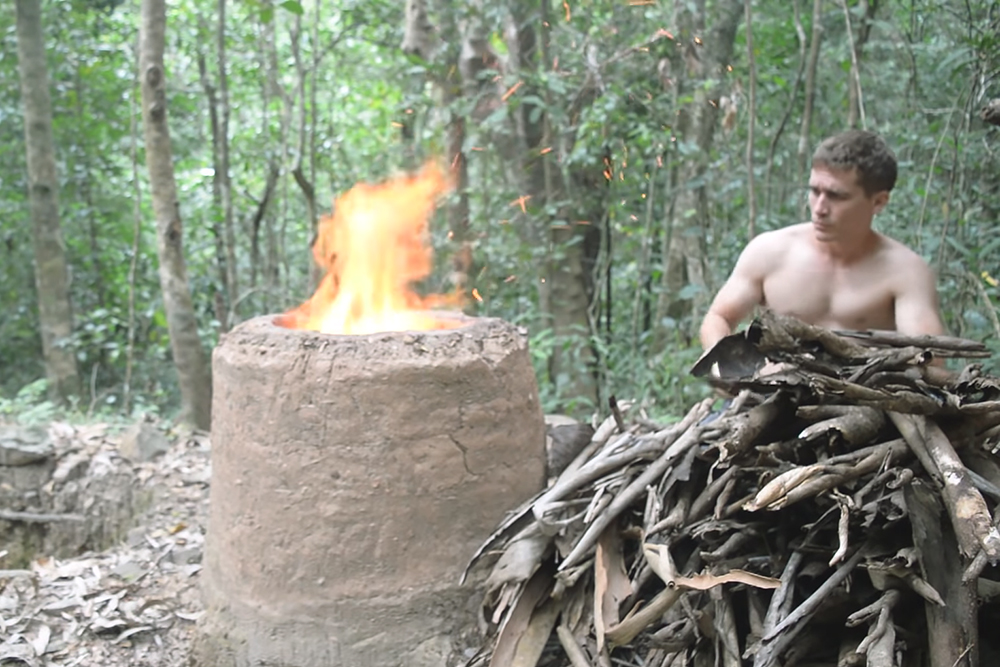
Palm trees are an excellent resource in survival situations. The fronds can be used for roofing material or woven into containers, the bark fibers can be used for fire-starting tinder, and some varieties provide edible coconuts or dates. However, the latest video from Primitive Technology demonstrates another use of palm fronds. The dry fronds are inserted into a split stick, and surrounded by a clay housing to create a blower.

Primitive technology palm frond blower fire furnace charcoal pottery 3

This palm frond blower acts like a bellows or powerful fan, forcing quick blasts of air onto a fire to increase its intensity. This is helpful for a variety of tasks including firing clay pottery, forging metal, and — as shown in the video below — making charcoal. The host of Primitive Technology explains that firewood found in his area is often wet, rotten, or poor quality, so he decided to use his new blower to enhance it.

Primitive technology palm frond blower fire furnace charcoal pottery 2

The charcoal produced by this process burns energetically, and can be stoked back into a fire repeatedly using the blower. This means it’s much more efficient than continuously gathering natural wood to feed the fire. The charcoal can also be used in a forced-air furnace for more advanced projects.

Primitive technology palm frond blower fire furnace charcoal pottery 4

Watch the full video below to see how the blower and furnace were constructed.


Pocket Preps: Identification Lights

Compared to other members of the animal kingdom, humans have a major deficiency: poor night vision. As ambient light fades, our eyes struggle to perceive even the faintest outlines of objects in our immediate vicinity. This poses a safety risk during nighttime group activities such as hiking and cycling, since it’s easy to get disoriented and separated when you can’t clearly see your friends. It’s also a hazard in urban environments, because motorists may struggle to see you from a distance. And in a SHTF situation, a persistent light source provides the means to signal for rescue after dark.

A flashlight or headlamp can illuminate your field of view, but these directional light sources aren’t ideal tools for making others aware of your position (at least not without temporarily blinding them). Enter the identification light, a device designed to attach to your gear and provide a source of long-lasting, clearly visible light. Identification lights are typically compact, lightweight, and durable — some are even intended to be disposable one-time-use items.

Pocket Preps identification lights flashlight clip light LED chemlight glow stick 1

The most commonly known ID light is the chemlight, also called a glowstick. These flexible plastic tubes contain a glass ampoule that can be snapped to mix two chemicals, inducing a reaction known as chemluminescence. This reaction can be calibrated by the manufacturer to glow dimly for a long period or brightly for a short while, but either way, the stick’s light will gradually fade after a few hours. Chemlights are still commonly used today, but technological advancements have made ultra-compact LED lights a viable alternative. LED identification lights can be reused and often feature multiple output colors or modes.

We collected and evaluated seven compact lights that are ideal for nighttime identification, or for use in situations where only a small amount of diffuse light is needed, such as reading a map or illuminating the inside of a tent. Consider one of these lights as a supplement to your current flashlight or headlamp.

Streamlight ClipMate USB

OFGP-180800-POCKET-19.jpg

Claimed Maximum Brightness
70 lumens

Claimed Maximum Runtime
65 hours

Dimensions
3.1 by 2 by 0.7 inches

Weight
1.9 ounces

Battery Type
Built-in lithium-polymer rechargeable

Controls
Push-button switch

Output Modes
low/high red, low/high white

MSRP
$55

URL
streamlight.com

OFGP-180800-POCKET-21.jpg

Notes
With a flexible neck and slim rectangular body, the ClipMate USB is just the right size for a shirt pocket. Its strong metal clip also fits nicely on PALS webbing loops, 1.5-inch belts, or a hat brim. When light is needed, the segmented neck can be aimed precisely in any direction, casting a dense spot beam. The ClipMate includes red and white output modes, which can be accessed by either a short-press or long-press of the top-mounted power button (short-press turns on the last-used mode). This light is also USB-rechargeable via a hidden charge tab that enables the user to plug it directly into any USB outlet or computer port. Streamlight says it can be fully charged in 2.5 hours, and it’s rechargeable up to 300 times.

Pros:

  • Flexible neck allows for targeted hands-free illumination
  • Red light is directly accessible, preserving the user’s night vision

Cons:

  • Tight spotlight beam pattern is too focused for identification purposes
  • Integrated charge tab hangs the light precariously on a USB port while charging and blocks nearby ports. Its cover is also easily dislodged, allowing for ingress of water and dust.

Nite Ize TagLit

OFGP-180800-POCKET-13.jpg

Claimed Maximum Brightness
Unlisted

Claimed Maximum Runtime
70 hours

Dimensions
2.2 by 1.6 by 0.5 inches (folded)

Weight with battery
0.5 ounces

Battery Type
CR2032 lithium (one, included)

Controls
Push-button switch, press repeatedly to change modes

Output Modes
Green flashing or constant-on

MSRP
$10

URL
niteize.com

OFGP-180800-POCKET-15.jpg

Notes
This magnetic LED marker light features a folding design with two strong neodymium magnets that can adhere to the edge of any shirt, jacket, hat, headlamp band, or even a dog collar. The TagLit is available in three high-visibility colors: red, pink, or neon yellow. The former two feature four red LEDs, and the latter features four green LEDs; all include stripes of reflective silver for an additional boost in visibility. A hidden pressure switch under the power symbol turns the light on and cycles between its two modes. Nite Ize doesn’t advertise an exact lumen output for this light, but we’d guess it’s around 5 — plenty to alert motorists of your position during a nighttime jog. Clipped to the brim of a ball cap, this light can also be used for map reading and other low-light tasks.

Pros:

  • Magnetic clasp attaches securely to clothing and other gear
  • Bright color and reflective accents increase visibility

Cons:

  • Weather-resistant but not waterproof
  • Slightly too wide to fit into PALS webbing loops

Princeton Tec Amp 1L

OFGP-180800-POCKET-16.jpg

Claimed Maximum Brightness
90 lumens

Claimed Maximum Runtime
72 hours

Dimensions
5.1 by 1.4 inches (including cone)

Weight with battery
2.2 ounces

Battery Type
AAA (two, included)

Controls
Twist head

Output Modes
On-off only

MSRP
$20

URL
princetontec.com

OFGP-180800-POCKET-18.jpg

Notes
The Maxbright LED in the Amp 1L produces 90 lumens and gradually ramps down brightness to yield a 72-hour run time from its AAA batteries. Twisting the rubberized bezel turns on the light, and pressing on the included cone diffuser attachment scatters the beam into a broad lantern-style pattern. The light can then be attached to a tent loop or ridgeline with a carabiner to illuminate your campsite, or used as an ordinary flashlight with the cone removed. Half of the light’s polymer body is rubberized for extra grip, and it’s fully O-ring-sealed for an impressive waterproof rating. The loop at the tail end of the Amp 1L also features a bottle opener tab in case you need a way to open a cold beverage. Made in the USA.

Pros:

  • Bright, diffuse light works great as a mini-lantern
  • With the cone removed, it works equally well as a spotlight
  • IPX8 waterproof to 100 meters

Cons:

  • Bottle opener seems like an afterthought, and can’t be used when the light is attached to a carabiner
  • The cone attachment is held in place by friction alone
  • Single output mode limits versatility

Nitecore NU05

OFGP-180800-POCKET-10.jpg

Claimed Maximum Brightness
35 lumens

Claimed Maximum Runtime
20 hours

Dimensions
1.2 by 1.2 by 0.6 inches

Weight with battery
0.4 ounces

Battery Type
3.7v 120mAh lithium-ion rechargeable

Controls
Push-button switch, press repeatedly to change modes, press and hold for lockout

Output Modes
Red LED indicator, slow flash, or fast flash; white LED slow flash or constant-on

MSRP
$20 with headlamp/bike kit, $15 for light only

URL
nitecore.com

OFGP-180800-POCKET-12.jpg

Notes
Nitecore calls this tiny light a “headlamp mate” due to its ability to be used in tandem with a full-size headlamp, either clipped to the back of the head strap or worn elsewhere on the body. As a result, the NU05 is tailored to identification purposes. It features a total of five LEDs — two white, two red, and one low-output red indicator light — each of which includes a flashing mode. The NU05 also features one 35-lumen constant-on setting that can be paired with an optional head strap and bike mount bracket kit to provide emergency illumination. The built-in battery will last just one hour when used this way but can be quickly recharged via a micro-USB port. We noted that this light is the perfect size to clip onto a single loop of PALS webbing, making it a valuable accessory for nighttime hiking or backpacking.

Pros:

  • Tiny size and light weight make it an ideal backup for emergency use
  • For an extra $5, the head band and bike mount kit add versatility.
  • IP66 waterproof

Cons:

  • Short battery life when used in constant-on mode
  • Lacks constant-on mode for red LEDs

COAST HX4 Cliplight

OFGP-180800-POCKET-04.jpg

Claimed Maximum Brightness
80 lumens

Claimed Maximum Runtime
3 hours 45 minutes

Dimensions
3.1 by 1.8 by 1.2 inches

Weight with battery
1.8 ounces

Battery Type
AAA (two, included)

Controls
Push-button switch, press repeatedly to cycle through modes

Output Modes
White constant-on, red constant-on

MSRP
$18

URL
coastportland.com

OFGP-180800-POCKET-06.jpg

Notes
This new LED light is available in a variety of color configurations that include white plus red, blue, green, and/or ultraviolet. The HX4 features a spring-loaded pocket clip that allows the light to be easily attached to the hem of a pocket, PALS webbing on a MOLLE-compatible pack, or the brim of a hat. Four small magnets are also attached to the corners of the clip, providing more hands-free mounting options. COAST says the light’s head rotates 180 degrees, but we’d say it’s closer to 220. Combined with the wide flood beam, this makes the HX4 ideal for illuminating a workbench while mounted on your shirt pocket or lighting your path while mounted on your belt. Pressing the large rubberized power button turns it on in white mode; pressing again cycles through other colors.

Pros:

  • Wide beam pattern provides a smooth wash of light for your work area
  • Clips onto gear in a variety of locations, and can be aimed easily by rotating the head

Cons:

  • White light must be turned on before other colors, potentially impacting night vision.
  • An additional low-output mode would’ve been helpful to extend run time.

Fenix CL09

OFGP-180800-POCKET-07.jpg

Claimed Maximum Brightness
200 lumens

Claimed Maximum Runtime
150 hours (90 with included battery)

Dimensions
3.1 by 0.9 inches

Weight with battery
1.8 ounces

Battery Type
ARB-L16-700U rechargeable (one, included) or CR123A (not included)

Controls
Twist tail cap, twist on and off repeatedly to cycle through modes

Output Modes
Low, medium, high, turbo, red, red flashing, green

MSRP
$45

URL
fenixlight.com

OFGP-180800-POCKET-09.jpg

Notes
Serving as a hybrid between an identification light and a miniature lantern, the CL09 can sit upright on any flat surface, hang from a small carabiner, or slide securely into PALS webbing. There’s also a magnet in its tail cap, making it a good hands-free work light. This light includes Fenix’s ARB-L16-700U battery, which features a micro-USB charging port, but it also accepts more common rechargeable CR123A (aka 16340) and standard CR123A batteries. Twisting the tail cap repeatedly cycles through a total of seven modes, with a white light that ranges from 1 to 200 lumens, as well as 5-lumen red and green. The anodized aluminum body is available in either black or gray finish.

Pros:

  • White setting works great as a mini-lantern for your campsite; red and green modes can be used for identification or signaling.
  • Magnetic tail cap adds versatility
  • IP68 waterproof to 2-meter immersion

Cons:

  • Red and green light modes aren’t directly accessible
  • Included Fenix battery has a convenient charging port, but offers 40-percent shorter maximum run time than a standard CR123 (90 hours versus 150 hours).

Blue Force Gear MARCO Marking System

OFGP-180800-POCKET-01.jpg

Claimed Maximum Brightness
Unlisted

Claimed Maximum Runtime
4 hours at maximum intensity, more than 24 hours total glow time

Dimensions
6 by 3 by 0.75 inches

Weight
3.8 ounces

Battery Type
None

Controls
Push forward to partially eject a marking stick, then bend upward to snap and activate light

Output Modes
Available in red, green, blue, or infrared

MSRP
$65

URL
blueforcegear.com

OFGP-180800-POCKET-03.jpg

Notes
This system was originally designed to identify cleared rooms inside a building. Instead of carrying a handful of loose chemlights, the MARCO enabled quick access to dozens of smaller marking lights. The system has many non-combat applications, such as marking a trail or tracking downed game animals. The MARCO’s tough polycarbonate dispenser features a spring-loaded follower that feeds 30 2-inch sticks to the top one at a time. These sticks can be activated one-handed by bending them upward with your forefinger as they’re dispensed. Various optional storage pouches are available. Made in the USA.

Pros:

  • Easy to activate and deploy several light sticks with one hand
  • Ideal for identifying multiple items or individuals
  • Color options increase versatility

Cons:

  • No built-in way to attach the sticks to gear, although we found sandwiching one behind the edge of a Velcro patch works well.
  • You’ll need to use all 30 lights in a short time frame, since the active chemicals begin degrading as soon as the dispenser is unwrapped.
  • Each dispenser is designed as a single-use item.

More From Issue 26

Don’t miss essential survival insights—sign up for Recoil Offgrid’s free newsletter today!

Read articles from the next issue of Recoil Offgrid: Issue 27

Read articles from the previous issue of Recoil Offgrid: Issue 25

Check out our other publications on the web: Recoil | Gun Digest | Blade | RecoilTV | RECOILtv (YouTube)

Editor’s Note: This article has been modified from its original version for the web.


Issue 26 Gear Up

OFGP-180800-GEARUP-PROMETHEUS-01.jpg

Make & Model
Prometheus Design Werx Raider Pant

Colors
Dark Arid Earth (shown), Dark Leaf Green, Machine Mineral Gray

MSRP
$129

URL
prometheusdesignwerx.com

Notes
We’re sick of poorly designed cargo pants being labeled as either technical or tactical pants. Fortunately, the Raider Pant has arrived to blow away its competition with superior protection, comfort, and versatility. It has a double seat reinforcement, diamond-shaped gusset panel, reinforced and articulated knees, and triple needle stitching on major seams — all of which spell durability and flexibility while you’re hitting backcountry trails or the firing range. Made from Mil-spec cotton-nylon ripstop, this pant has dedicated EDC tool pockets, hidden pocket for cuff key or cash, horizontal hand pockets that clear padded belts or backpack straps, and many more smart features. Yet, the Raider Pant has a modern regular fit with a streamlined appearance so you’ll look good strutting down the street or hiking through the backcountry.

OFGP-180800-GEARUP-511-01.jpg

Make & Model
5.11 Tactical Cascadia Windbreaker Jacket

Colors
Black, Curry, Lake, Stampede, TDU Green (shown)

MSRP
$80

URL
511tactical.com

Notes
Whether you’re camping overnight, hiking to higher elevations, or need backup apparel in case of a bug-out scenario, outerwear is a smart thing to have regardless of the season. After all, clothing is the first form of shelter. The Cascadia Windbreaker Jacket is a lightweight option that matches most everyday clothes, but can also serve as a shield against the elements. When not in use, it can be packed into the chest pocket and (thanks to an internal hanger loop) attached to a hook, branch, or carabiner. The 100-percent polyester shell features YKK zippers and soft brushed tricot lining on the chin guard and hand pockets. Speaking of which, the pockets have an internal pass-through, allowing you to access your concealed-carry pistol.

OFGP-180800-GEARUP-ARCTERYX-02.JPG

Make & Model
Arc’teryx Norvan LD Shoe

Sizes
Men’s: 7 to 13
Women’s: 5 to 10

MSRP
$160

URL
arcteryx.com

Notes
Wearing sandals during a fast-moving disaster is like wearing wingtips to the beach. A pair of off-road-worthy footwear is good not just for hiking or trail-running, but also for hauling ass in a SHTF situation. The Norvan LD lineup makes the ideal low-cut bug-out shoe because they’re designed for maximum comfort on long trail runs. Lightweight yet supportive, it’s built on a Vibram Megagrip outsole that has grippy treads for handling tough terrain, yet is comfortable on pavement. The shoe is also breathable, regulating foot temperature by allowing moisture vapor to escape when things heat up. It comes in various colors for both men and women.

OFGP-180800-GEARUP-WAZOO-01.jpg

Make & Model
Wazoo Survival Gear Blackticool Cache Cap

Number of Pockets
Six

MSRP
$30

URL
wazoosurvivalgear.com

Notes
Wazoo’s original Cache Cap soon became a fan favorite thanks to its six hidden pockets that can be used to stash everything from cash and credit cards to a 2-inch firesteel and water purification tablets. After a couple of years of listening to customer feedback, Wazoo is now releasing an all-black tactical version of its baseball hat that’s made of lightweight ripstop, has a buttonless top for use with helmets and ear protection, and houses a front patch area with edgeless embroidery to show off your favorite morale patch. And like its predecessor, it has a half-dozen covert pockets that can hold small tools and accessories.

OFGP-180800-GEARUP-COPPER-02.JPG

Make & Model
Copper Basin Takedown Firearm Backpack

Dimensions
23 by 13 by 5 inches

MSRP
$100

URL
copperbasingear.com

Notes
When it comes to firearms, many survivalists advocate for a takedown-style rifle for portability, among many other reasons. But discreetly carrying one is just as important as owning one in a post-SHTF scenario. This Copper Basin backpack is dimensioned specifically for popular takedown-style guns, such as the 10/22 Takedown, KRISS Vector, and AR pistols. The exterior is devoid of PALS webbing and looks similar to common hiking packs, but the interior has sections and pockets to house a disassembled rifle with mounted rail accessories, magazines, ammo, and other gear. To haul all that kit the pack has padded shoulder straps, adjustable sternum strap with a whistle buckle (for signaling), and a padded breathable backing with lumbar support, among other features.

OFGP-180800-GEARUP-NOCTURNA-02.JPG

Make & Model
Nocturna Ltd. Sentinel

Range
Up to 50 meters (54.7 yards)

MSRP
$300

URL
nocturna.us.com

Notes
The flashlight is one of the best tools you can have on hand. You can use it as an improvised weapon in addition to illuminating dark places and signaling for help. But that last benefit can be a disadvantage if you want to stay as hidden as possible, yet still be able to identify a threat. Enter the Nocturna Sentinel. It’s a handheld infrared camera that lets you see up to 50 meters in the dark through a 2.4-inch monitor. With a simple on/off button, this lightweight night-vision device is easy to use; just point and click. The Sentinel is most ideal for home or basecamp protection.

OFGP-180800-GEARUP-BROWNING-03.JPG

Make & Model
Browning Speed Load Saw

Overall Length
18.125 inches

MSRP
$40

URL
browning.com

Notes
The Speed Load Saw is half folding knife, half pole saw. It combines the teeth, extension, and functionality of the latter with the portability of the former. The goal of this tool is to have a powerful camp and big-game saw that’s simple to use, quick to pack up, and easy to stow. For example, you can use it to cut tree limbs to build a shelter or to process a kill that’s too heavy to drag back to basecamp whole. And using its locking wood screw on the butt-end of the handle, you can connect it to a right sized branch to turn it into a high-reaching pole saw. The saw comes with a nylon belt sheath, which has sleeves for storing the included extra blades.

OFGP-180800-GEARUP-WHITE-02.JPG

Make & Model
White River Knife & Tool FC 3.5 Pro

Overall Length
7.75 inches

MSRP
$135

URL
whiteriverknives.com

Notes
While big production knife companies are garnering a lot of attention for churning out the same old designs just with new steels and different names, White River quietly produces some of the most innovative survival knives on the market. It’s time to shine the spotlight on this Michigan-based company, especially its FC 3.5 Pro. The smallest knife of its Firecraft series has a 3.5-inch S35VN stainless steel blade above the textured but comfortable G-10 scales on its full-tang handle, which has a safety ring at the end for increased retention. Meanwhile, on the blade’s spine is a notch for striking the included ferro rod, making this survival knife ideal for camping, hunting, or backpacking. Comes with adjustable Kydex sheath.

More From Issue 26

Don’t miss essential survival insights—sign up for Recoil Offgrid’s free newsletter today!

Read articles from the next issue of Recoil Offgrid: Issue 27

Read articles from the previous issue of Recoil Offgrid: Issue 25

Check out our other publications on the web: Recoil | Gun Digest | Blade | RecoilTV | RECOILtv (YouTube)

Editor’s Note: This article has been modified from its original version for the web.

Looking Back: Traversing the Colonial Parkway

Preparedness is universal — no matter who you are, we can all benefit from staying mentally and physically active to be ready for whatever challenges the future may pose. Case in point: we’ve stayed in touch with a reader named Russ who emails us with feedback after receiving each new issue. Russ is a 68-year-old Army veteran, and rather than retiring to a sedentary lifestyle, he makes a point to continually improve his fitness and survival skills. We always enjoy hearing his thoughts on our latest articles.

Reader recap Virginia colonial parkway preparation survival hike trek trail 7

This month, Russ embarked on a 23-mile journey across the entirety of the historic Colonial Parkway in Virginia. He had originally planned to make the journey with a friend, but two days prior to departure, his friend became ill and was hospitalized (fortunately, we’re told he has recovered). Instead of calling off the trip, Russ headed out solo. When he completed the trip and returned home, he sent us some photos and a brief recap of some of his preps and lessons learned:

A map of the Colonial Parkway route from Yorktown (left) to Jamestown (right).

A map of the Colonial Parkway route from Yorktown (right) to Jamestown (left). Source: U.S. National Park Service

“The parkway trek was interesting. One day cold north wind and 50°F; the next 86°F and 75% humidity. I’m glad I went when I did; we have tropically-originated rain this week, almost 2 inches last night. Then again, that’s better than being on the Big Island with a volcano — that would be a good “What If?” scenario for an issue.

I made this trip alone, but the National Park Service had a ranger keep track of me as I progressed along the route. It had fairly flat terrain along the York and James rivers, through some original woodlands, and passing through Williamsburg.

Reader recap Virginia colonial parkway preparation survival hike trek trail 4

As I was on exposed stone pavement, it was easy to hear traffic approaching. Still, you have to be alert for anything from bicycles to trucks with campers. No commercial vehicles allowed. There was also no wildlife to fear, only deer and the occasional raccoon or possum.

Powhatan Creek

“Powhatan Creek”

I have put several hundred miles on a pair of Salomon Quest boots. They do break in quick and hold up well from woodland trails to the mountains. I can attest they grip a rock face like they have suction cups. Their weatherproof properties and a good pair of SmartWool socks do the job well. As far as the laces go, I double knot them as was my habit with my Army boots years ago.

I don’t have a GPS. I did print out and laminate a map and mark check points. Left a copy a home and with a friend. As I hit a point; I texted my progress. In addition I arranged an extraction be standing by if needed. As far as lessons learned, it was mostly common sense sort of things:

Mill Creek

“Mill Creek”

Pre-hydration / hydration, no matter the weather. I usually carry about a gallon of water and pre-hydrate with Gatorade. Rations also — even for short distances at least a PB sandwich, an apple, and a tangerine. My water supply is run through a LifeStraw bottle, and the hydration bladder from my pack has an in-line Sawyer Mini filter. Hiking in the coastal plains and swampy areas doesn’t leave a whole lot of water options as most are salt or at best brackish water.

A photo of Russ from his days in the Army.

A photo of Russ from his days in the military.

I carry an old Gerber multitool that I bought in the Army in the previous century. The kind the demo folks used to prep charges. Also have a Hunter model Swiss Army Knife and a tiny little fold up tool from Sears; one of those in each jacket pocket. Always Be Ready! Preparation for insect hazards like deer and dog ticks is also necessary. DEET is a good pre-treatment.

Resting in the shade and nice breeze

“Resting in the shade and nice breeze.”

Attached a couple of pics so you can get a feel for the land. Yup, that’s me chillin’ under a pine around midday. Fairly flat country with a bit of roll and elevation.

Just a note, I am at my age with a 30-pound ruck, still moving about the forests and the mountains in Virginia on the Blue Ridge this year. I discovered GORUCK and participated in the Green Beret Foundation fundraiser back in October. Looking forward to one of their events this year. Being retired Army, it’s a good fit.

Reader recap Virginia colonial parkway preparation survival hike trek trail 6

Regarding Issue 25, thanks for the timely concerns to family/child safety. I am planning a hiking day trip with my 10-year-old grandson this summer. We have always done a day-out picture before we move out. The other safety tips mentioned are part of life with children/family.

All in all, thank you, keep up the excellent work at OFFGRID. Standing by for Issue 26. See ya in the hills. — Russ”


As we’ve told Russ, we definitely aspire to be this active and prepared at his age — if he can do it, so can you and I. We’re also glad to see him sharing his knowledge with future generations, and teaching his grandson the value of preparedness.

Have you learned any survival- or preparedness-related lessons on a recent hiking, backpacking, hunting, or camping trip? If so, we’d like to hear about them. You can contact me directly via email to tell me your story, or to share your thoughts on our magazine and/or web site. I read every message I receive from readers, and correspond regularly with some of you. I might even publish your story here on the site.

For more lessons learned and preparedness advice submitted by OFFGRIDweb readers, check out some of our past articles:


New: Updated CRKT Woods Chogan Tomahawk

A tomahawk is a handy tool to have for a variety of outdoor tasks, from heavy chopping and delicate cutting to use as a thrown weapon for hunting. Unlike axes or hatchets, a tomahawk generally has a straight and slender handle, making it easy to throw consistently. Modern “tactical” tomahawks have also become popular with law enforcement, military, and search-and-rescue organizations due to their versatility.

We wrapped the handle of our older Woods Chogan T-Hawk model in paracord.

We wrapped the handle of our older Woods Chogan T-Hawk model in paracord (tutorial link below).

Bladesmith and designer Ryan Johnson of RMJ Tactical is well-known for his tomahawk designs, but these high-end tools also bear a high-end price. In order to produce a more-affordable ‘hawk, Ryan teamed up with Columbia River Knife & Tool and released the CRKT Woods Chogan T-Hawk back in 2014. We own one of these original models — you can read about it here.

The new Black Woods Chogan T-Hawk is available directly through CRKT.

The new Black Woods Chogan T-Hawk is available directly through CRKT.

CRKT has released an updated version of the Woods Chogan T-Hawk, and it’s exclusively available through the company’s web site. The 1055 carbon steel head now has a corrosion-resistant magnesium-phosphate coating, which produces a black finish. The Tennessee hickory handle has been charred to bring out the grain and produce a darker look. It’s then sealed with a durable coat of lacquer to repel moisture and preserve the finish.

CRKT Woods Chogan tomahawk ax black leather tool wood survival 4

Another update is the inclusion of a leather sheath that secures to the head with three snaps and protects the sharp edge.

CRKT Woods Chogan tomahawk ax black leather tool wood survival 2

Other than these changes, the Woods Chogan remains functionally the same. It still has the hammerhead opposite the blade, a feature we’ve found handy for pounding in tent pegs. Overall weight is just under 2 pounds; length is 19.1 inches. MSRP for the Black Woods Chogan and leather sheath is $70 — that’s the same as the old version, which didn’t include a sheath.

CRKT Woods Chogan tomahawk ax black leather tool wood survival 1

For more information on the new Black Woods Chogan Tomahawk, go to CRKT.com.


Can You Spot the Signs of a Phishing Scam?

Imitation is a powerful skill, and one that malicious individuals will use to their advantage. In the security world, the strategic use of manipulation techniques for criminal purposes is known as social engineering — you can read more about social engineering and its sub-categories in our previous article, Social Engineering: 5 Manipulation Techniques. Phishing is one common technique in which criminals attempt to steal sensitive information from unsuspecting victims by imitating a trusted person or organization.

Phishing cyber security tech infographic 2

In phishing scams, attackers will often set up elaborate email campaigns, web sites, or phone systems that closely resemble those used by legitimate entities. These can include popular tech companies like Facebook or Google, banks, or government organizations like the IRS. The victim often thinks they’re communicating with the real deal, but every username, password, or credit card number submitted through these digital facades is immediately taken and exploited. This can result in severe financial losses or stolen identities.

Fortunately, with a healthy dose of skepticism and an eye for detail, it’s often possible to detect these attacks before you fall victim to them. If you want to test your skills, check out the email image below and count how many phishing red flags you can spot:

Infographic phishing spyware scam digital security computer internet safety 1

There are at least 9 potential warning signs in this screenshot that should make you skeptical. For an explanation, check out the following infographic from Varonis. It lists the signs in the phishing email, and also shows some of the things to look for on a malicious landing page (i.e. the fake web page you’d end up on if you clicked the link in the email above). Click here to download a full-size version of this infographic.

Infographic phishing spyware scam digital security computer internet safety 3

Infographic phishing spyware scam digital security computer internet safety 4

Infographic phishing spyware scam digital security computer internet safety 5

For a much more detailed explanation of these phishing tactics, and other information about digital security, check out this blog post from Varonis.


Rural Refreshments: Drinking Water from Non-Tropical Plants

Disclaimer: This article is meant to be a quick overview and not a detailed guide on identifying and consuming edible plants. Seek guidance from a trained botanist before attempting to eat any plants. Any attempt to consume plants shall solely be at the reader’s risk.

For those familiar with tropical survival techniques, you already know that water-rich jungle climates are home to many species of vines and plants that yield safe drinking water. But what happens if you find yourself in North America, staring down the barrel of dehydration? With only your surroundings as a resource, can you stay hydrated from plant water sources?

The Myth

Photo: flickr.com/18702768@N04

Photo: David Sawyer | flickr.com/18702768@N04

You’ve seen the cartoons. Just chop the top off a cactus and it will be full of drinkable water. The only problem is, we’re not in a comic book and that cactus is full of bitter, gelatinous pulp. There’s a myth in the survival community (likely started by disillusioned cactus choppers), that you can only extract drinking water from plants in tropics. But that’s not true.

The Reality

Tap a Tree: In late winter and early spring, numerous trees produce drinkable water. Tree tapping is a simple operation, if you get the timing and the species identification right. With a knife, drill, or similar tool, bore a hole into the tree trunk. It should go through the bark and a few inches into the wood. Insert a tube or some other item to channel the sap flow into a waiting container, and wait for the sap to start dripping. It typically flows best on days that are above freezing that follow a sub-freezing night. Try different tree sizes and locations of your chosen tree species.

A young strong tree may produce more sap than an older tree. It’s also best to tap the sunny side of the tree, above a large root or below a large limb. In mid to late winter, sycamore trees (Platanus spp.) will have a very irregular sap run. These trees are found in the east, as well as California and Arizona. In late winter, you can also tap maple trees (Acer spp.), which are found throughout the country. Maples can produce heavily; up to a gallon per day per tap during the peak of the sap run.

Photo: Barney Moss | flickr.com/barneymoss

Photo: Barney Moss | flickr.com/barneymoss

Walnut (Juglans spp.) and hickory (Carya spp.) will produce around the same time as maple. Birch (Betula spp.) is typically the last tree to have a sap run. Walnut, hickory, and birch species are found throughout the continent. But a word of caution, don’t drink any sap from unfamiliar trees. There are more than a few toxic trees in North America. Use a field guide!

Slice a Vine: After the sap run ends in usable trees, you have another chance to collect sap for drinking water. Grape vines (the genus Vitis) can be used on warm spring days. Chop the vine on an angle, place the pointed end into a container and collect the water. Due to the higher tannic acid level and low sugar content, grape sap will taste a little bitter and astringent, but it is perfectly drinkable. Vines less than a ½ inch in diameter will drip for a few hours before they stop, while larger vines will gush water like a faucet. Like tree tapping, this is all about timing. There’ll be days when the water will flow, and days when it won’t. You’ll only know for sure when you try. Again, make certain that the vine really is a grape, as there are some toxic vines with sap that wouldn’t be safe to drink.

The Alternatives

Boil Down Syrup: If you’re lucky enough to have trees producing sugary sap you can boil off the water to make your own syrup. All of the trees mentioned in this article can produce sweet syrup (except the grape vine). Maple has the taste you already know and love. Hickory is similar, with a hint of pecan. Walnut is sweet, with walnut essence. Birch and sycamore have their own special flavors. One quart of sap will boil down to a spoonful of delicious syrup. This is well worth the trouble, especially if you have a fire going anyway for warmth.

Berries as a Beverage: One frequently overlooked source of hydration is the juice from edible berries. Blackberries, raspberries, blueberries, mulberries, and other edible berries are found throughout North America. These edibles are at their most plentiful in the summertime and ripe ones have a high water content. You could, of course, eat them for solid food and moisture. But when you lack water, it’s not wise to eat anything. Digesting food and passing waste are both processes that require water. Your best option is to positively identify the edible berries, wrap them in a piece of clean cloth, crush them and wring out the juice. This juice will provide much needed hydration, with accompanying sugar, vitamins, and minerals.

Claim the Cactus: Remember the cactus pulp we discussed earlier? It’s not completely worthless. If you’re able to improvise some distillation equipment, the cactus pulp can be added to your other raw water sources. Whether you’ve built a still from a vessel and some condensation coil, or you’ve dug a solar still pit in the ground, cactus pulp will increase your water output. Use a local plant ID guide to ensure that you’re not using any toxic greenery.

More From Issue 25

Don’t miss essential survival insights—sign up for Recoil Offgrid’s free newsletter today!

Read articles from the next issue of Recoil Offgrid: Issue 26

Read articles from the previous issue of Recoil Offgrid: Issue 24

Check out our other publications on the web: Recoil | Gun Digest | Blade | RecoilTV | RECOILtv (YouTube)

Editor’s Note: This article has been modified from its original version for the web.

“Arctic” Movie with Mads Mikkelsen

We always enjoy a good movie, so we’re glad to see the “survival thriller” genre growing in popularity through films such as The Revenant, The Mountain Between Us, and Jungle. Although these movies may not always be entirely realistic in their portrayals of survival scenarios, they’re often entertaining and can provide the impetus for viewers to consider how they might survive in similar situations. We’ve definitely walked out of theaters thinking about the survival techniques depicted in these films, whether ridiculous or surprisingly viable.
Arctic Mads Mikkelsen movie survival snow plane crash film 2

Later this year, a new survival film known as Arctic will debut at the Cannes Film Festival in France. It stars Danish actor Mads Mikkelsen playing a pilot known only as Overgård. The synopsis explains: “A man stranded in the Arctic is finally about to receive his long-awaited rescue. However, after a tragic accident, his opportunity is lost. He must then decide whether to remain in the relative safety of his camp or to embark on a deadly trek through the unknown for potential salvation.”

Arctic Mads Mikkelsen movie survival snow plane crash film 1

Deciding whether to stay put and await rescue or head out to reach safety is a challenging question we have written about in the past, so we’re interested to see how it pans out on screen. We’re also fans of Mikkelsen’s wonderfully-creepy performance in the TV series Hannibal. The teaser trailer below has also raised our hopes that this will be a character-driven story rather than a more typical action-packed Hollywood approach to the genre. See for yourself:

Early reviews of the film seem positive. Variety writes, “it lets survival look like the raw experience it is.” Collider writes, “Mikkelsen impressively carries the film on his back as well as shoulders, freezing hands, and feet when he needs to.” The film will debut to the public on December 5th, 2018 in Cannes.


Government Response to Disease Outbreaks

It’s a deeply rooted fear in the psyche of our culture. What would happen if a large-scale, deadly disease outbreak occurred in close proximity to where we live? Our minds quickly run to scenes from films like Outbreak, Contagion, or I Am Legend as far as how the public would react and what the government would do to intervene.

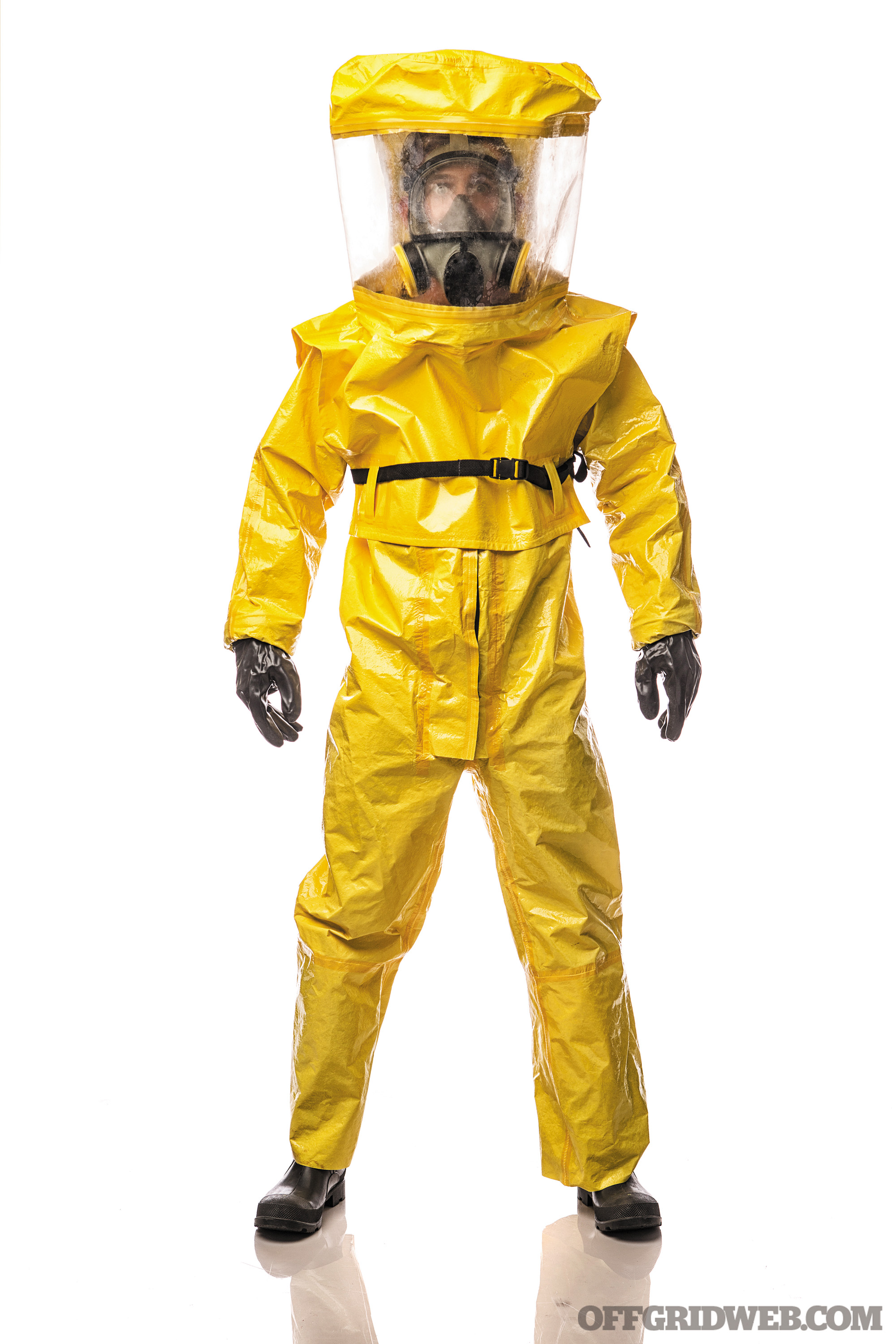
After we stopped hyperventilating about the possibility of roadblocks being set up, curfews being implemented, and soldiers in hazmat suits herding infected people into quarantine zones, we asked ourselves, “Are these realistic situations, or are we victims of Hollywood lore?” We were curious ourselves about what government protocol is for dealing with outbreaks and went to the experts to find out.

What is an Outbreak?

Actually this term is somewhat subjective and unfortunately gets thrown around, particularly by the media, without proper context. However, there are some terms with which the Centers for Disease Control and Prevention (CDC) describe disease levels, and the term “outbreak” is synonymous with “epidemic.” The CDC doesn’t have epidemic thresholds for every disease, but are always monitoring disease levels throughout the world. These terms defined by the CDC can help shed some light on the amount of pathogens present in a population at any given time.

Endemic: The constant presence and/or usual prevalence of a disease or infectious agent in a population within a geographic area. (For example, Ebola is endemic to West Africa, but not the United States.)

Epidemic: Increase, often sudden, in the number of cases of a disease above what is normally expected in that population in that area.

Outbreak: Same definition as epidemic but is often used for a more limited geographic area.

Pandemic: An epidemic involving several countries or continents, usually affecting a large number of people.

Health Emergency Response

(Photo by Joern Pollex/Getty Images)

(Photo by Joern Pollex/Getty Images)

A health emergency in itself is a complex thing with many variables. Although the CDC, the World Health Organization (WHO), and Council of State and Territorial Epidemiologists mandate that when certain pathogens are diagnosed at the local level that they be reported to higher authorities, such as the Ebola discovery in Texas, it doesn’t necessarily mean a public health emergency will be declared or federal involvement is automatically triggered.

A disease outbreak has certain elements that determine the appropriate response. How fatal is the pathogen? What ways is it communicable? How many are believed to be infected? Are vaccines or treatments available to deal with it? These are all factors that determine the best methods for treatment and containment when first identified.

“There is not a single protocol for responding to a public health emergency,” says Jason McDonald, spokesman for the CDC’s Office of Public Health Preparedness and Response. “As you can imagine, a disease outbreak is handled differently from a natural disaster. Even among disease outbreaks, none are handled the same.”

As examples, the recent discovery of E. coli linked to Chipotle restaurants would warrant a different response than the SARS outbreak first reported in Asia in 2003. SARS is an airborne contagion, but E. coli is not transmitted person to person and is usually linked to contaminated food.

Calls to Action

A number of guidelines at the local level, as defined by the Office of Assistant Secretary for Preparedness and Response (ASPR) and the CDC, would be implemented to handle highly infectious diseases like Ebola when they’re initially discovered. Once the infection is reported and confirmed, the state health department would report it to the CDC, which collaborates with WHO. They start monitoring the number of cases recorded through a database of hospital admissions and discharged patients to track the trend. Local agencies ultimately make the determination if more help is needed for treatment and containment based on the number of cases they are seeing.

(Photo by Stephen Morton/Getty Images)

(Photo by Stephen Morton/Getty Images)

States have their own public health emergency plans, usually available to view on state health department websites. There are some federal programs built to deal with the consistencies that all emergencies share, but there are also different programs for different purposes.

“There are public health emergencies that do not involve diseases,” says Elleen Kane, who handles strategic communications at U.S. Department of Health and Human Services (HHS). “Most public health emergencies are declared for natural disasters, not diseases. It’s not so much of a hierarchy as it is a collaboration.

“Federal public health emergency response is led by HHS. The ASPR is the primary advisor to the HHS Secretary on matters of bioterrorism and other public health emergencies and, on behalf of the Secretary, ASPR usually coordinates federal resources for emergency response. The National Response Framework (NRF) guides emergency response in general and, in that framework, HHS leads the federal public health and medical response to emergencies.”

In this issue’s What If? article on page 20, we fictionalized some elements of a pneumonic plague outbreak and response for dramatic effect to see how our subject-matter experts would react to those circumstances. However, there are so many variables, it’s impossible, even in the event of a pathogen that serious, to predict the exact level of federal involvement that would take place in real life.

“There are cases of plague that occur every year. They’re noteworthy, but there’s not a federal team that gets called in every time a case is identified,” says Dr. Stephen Redd, director of the Office of Public Health Preparedness and Response. “There might be circumstances where the likelihood of the normal route of exposure was not something that’d be the leading hypothesis, and it might be some intentional exposure release where different groups would come into play, including law enforcement. That would be something where the federal involvement would occur more quickly than a natural case of plague.”

Just so we’re clear on departments, the Federal Emergency Management Agency (FEMA) is an agency within the Department of Homeland Security (DHS). The CDC is an agency within the HHS. All public health and medical support for a state is handled by HHS. Within the HHS, the CDC is typically the lead operational element in disease outbreak situations. Just like the FBI or the DEA, their roles are different, but they all work together when called upon to respond to emergencies and investigations.

The National Response Framework

Created in 2008, the NRF was developed by the DHS and is managed by FEMA. It builds upon the National Incident Management System (NIMS), which basically serves as a guide to help government and nongovernmental organizations structure their resources to work together to prepare for, respond to, and recover from domestic incidents. It’s written in such a way that it’s always in effect.

NRF uses NIMS to create a framework for coordination among federal, state, local, and nongovernmental organizations, but it’s intended to be used by the whole community. NIMS coordinates the response structure at emergencies, and NRF governs resources used during and after the designated event or incident. The NRF is mandated and applies to all federal departments and agencies that may be requested to provide assistance. It integrates prevention, preparedness, response, and recovery into one comprehensive plan.

outbreak-national-response-framework-diagram

Since no threat exists in isolation and often involves collateral damage, the overall goal is to save lives, protect property and the environment, and restore essential services and infrastructure to help communities return to normal.

In an effort to illustrate how this would look on a macro level, we created a graph to illustrate the likely domino effect a major outbreak or public health emergency might trigger as it relates to the National Response Framework.

Public Health Emergencies

A public health emergency (PHE) can be declared in preparation for, or in response to, a potential public health crisis to deliver necessary resources. This was done in 2009 for the flu pandemic and could include anything from a natural disaster to a bioterrorist attack — or anything else the president or HSS secretary believe represents a threat to public health. It lasts for 90 days and can be renewed or terminated early if deemed necessary.

The president or HHS secretary can make the declaration independent of each other, but the president may only do so under the Stafford Act, which authorizes financial assistance for the response or mitigation efforts. Presidential disaster or emergency declarations are separate and distinct actions that don’t have the same conditions as a public health emergency. Unlike disaster or emergency declarations that typically require the request of a governor (if he or she feels the magnitude of the emergency goes beyond the state’s capability to handle it), a public health emergency can be activated without a governor’s request. A presidential declaration may be required to grant the HHS secretary certain authorities.

Quarantines

If you travel, especially internationally, you’ve probably seen literature distributed about pathogens to be aware of while at your destination or wherever you may be returning from. Monitoring ports of entry is vital to defend against the introduction of potential health threats into our communities.

A quarantinable diseases list is contained in a presidential executive order. It’s amended periodically, but it grants officials federal quarantine and isolation authority to apprehend, examine, or conditionally release someone who’s known or believed to be infected with a disease on the list. States are responsible for controlling the spread of a disease within their borders. Their laws vary on the topic, but can also authorize the detainment of individuals to prevent the spread of disease.

As there are differences between the two, it’s important to differentiate isolation from quarantine:

  • Isolation is the practice of separating and restricting movement of ill persons found to be infected with a quarantinable disease. This is standard procedure in hospitals with diseases such as tuberculosis.
  • Quarantining is the separation or movement restriction of a well person believed to have been exposed to, or possibly carrying, a quarantinable disease in its communicable or pre-communicable stages.

At ports of entry in particular, the CDC serves the primary role for implementing measures to control the spread of diseases. Public health authorities at the state, local, or federal level may request assistance from law enforcement to impose a public health order. The U.S. Customs and Border Protection (CBP) and Coast Guard are required, under the Public Service Health Act, to assist the CDC in enforcing quarantine regulations. The CDC, or agencies required to assist in enforcing their regulations, may detain the travel of someone thought to be ill for purposes of examining the cause of their illness and whether it’s communicable.

Military Intervention

National Guard members have expertise in critical areas, such as emergency medical response, nuclear response and planning, and decontamination. The NRF states: “The governor may activate elements of the National Guard to support state domestic civil support functions and activities. The state adjutant general may assign members of the Guard to assist with state, regional, and federal civil support plans.”

In other words, if the situation calls for it, the military can and will be used to protect human life. This doesn’t necessarily mean martial law or things seen in movies will automatically be activated. For instance, as we talked about domino effects disasters tend to create, the National Guard, Coast Guard, CBP, and various other auxiliary organizations were all called upon to assist in different tasks during the aftermath of Hurricane Katrina and support local law enforcement. Although there isn’t an official threshold for military involvement, it may be deemed necessary.

Planning and Reliable Information

If you start hearing gossip of an outbreak on the news, you should also turn to the experts to gather more info and precautionary advice than what you may first be hearing. “Although it’s thought of as an enhancement of our ways to communicate, the Internet and social media can be very detrimental in these circumstances,” says Dr. Robert Quigley, senior vice president of medical assistance for International SOS. “In a matter of seconds, information can be disseminated and a lot of it can be fictional and not factual, and that doesn’t help us.”

The government will use whatever means they can to disseminate news regarding public health threats, but one should also confirm what they are hearing through conventional outlets to ensure it’s legit. Websites such as www.phe.gov and www.cdc.gov provide reliable, substantiated information.

The HHS and the CDC have other resources to educate yourself on health concerns as well. Training and education centers for Ebola and other disease have been set up and the CDC’s Journal of Emerging Infectious Diseases is a free monthly publication that anyone can sign up for (wwwnc.cdc.gov/eid/subscriptions). Clinician Outreach and Communication Activity calls and webinars are also available to participate in through the CDC website.

Awareness and Prevention

“The virus that has the potential to be highly transmissible and has a high degree of severity is pandemic influenza,” Redd says. “That would be an influenza that is transmissible the way seasonal influenza is, but has a different genetic structure, so we don’t have an immunity to it. If that causes a severe disease that’s slowly transmissible, that would be a big problem.

“That’s basically what the H1N1 pandemic was — a virus that hadn’t been seen in people before that was readily transmissible. Fortunately that virus didn’t have a high hospitalization or mortality rate, but a different virus could be much more severe.”

As mentioned in the article “Condition Red” in our Winter 2015 Issue, there are common-sense hygienic practices people should engage in if they’re traveling. If you’re home and an outbreak is reported, visit the previously mentioned information sources, be conscientious of your own health, and take care not to spread something if you’re sick or become infected. Wash your hands often, stay home if you’re sick, get any available vaccinations before you become ill, and seek medical attention if you feel sick, particularly if its symptoms are consistent with any illnesses reported in public health alerts.

You may also want to double down on receiving health alerts and advice by aligning yourself with an assistance company such as International SOS, which provides up-to-date notifications and support to travelers and businesses domestically and internationally.

The first line of defense begins with the public and their willingness to stay informed and responsible.

“Because of ease of travel and globalization of our workforce, we’re always going to be at risk of someone introducing an infectious disease from an area where it’s endemic,” Quigley says. “It’s another reason why companies should have pandemic plans, business continuity plans, best practices of infectious disease controls in place, and if they’ve done all of the above, the likelihood of infectious diseases coming into our community and spreading into anything more than a minimal outbreak will be limited.”

Health security starts with you.

Federal and International Plans

You can check out these plans created by the following organizations in their entirety by visiting these links.

FEMA

ASPR

CDC

WHO

More From Issue 12

Don’t miss essential survival insights—sign up for Recoil Offgrid’s free newsletter today.

Read articles from the next issue of Recoil Offgrid: Issue 13

Read articles from the previous issue of Recoil Offgrid: Issue 11

Editor’s Note: This article has been modified from its original print version for the web.