More Hotel Security Q&A

In RECOIL OFFGRID Issue 34, on sale October 29th, we interview two travel experts regarding important considerations for hotel security. Whether you’re traveling internationally for business or domestically to visit family, trips require a different approach to security than you might rely on while at home. However, by taking a few simple precautions and heightening your awareness, you’ll be able to maintain your safety, security, and privacy wherever you go.

William Echo (a pseudonym necessary for his current career) is a corporate security professional and former law enforcement officer with more than a decade of experience in developing, implementing, and testing protective security protocols. Opposite him is Micah Dalton, a true modern-day nomad who has spent the better part of the last decade roaming the planet in search of good whiskey and great adventure. Along the way, he has made himself a perpetual student of street lessons, and trained with some very specialized experts, including OFFGRID contributor Ed Calderon. While he doesn’t have any “uniformed” career experience, the sheer volume of his practical street wisdom is nearly unmatched, even among our own cadre.

Due to limited page real-estate, we weren’t able to fit everything we discussed with William and Micah in the print article. So, we’ve published a few additional questions from our interview exclusively here on OFFGRIDweb. Read on for some hotel security and travel safety tips, and keep an eye out for more advice in The “Baits” Hotel in Issue 34, available later this month.

Compared to staying at a hotel, what are the security pros and cons of AirBnB?

William Echo: Cost may be a pro sometimes, and having a full-fledged residence — a full kitchen with utensils, multiple bathrooms, and so on. With that being said, there are no standards for how clean the place is kept (franchise compliance/quality assurance, health department, etc.) and you won’t know if it’s up to your standards until you get there. Most people don’t have a backup plan. Another advantage is that, if hotels in the area are all booked up, AirBnB may be a good option.
Now for the negatives. You have to assume that at least two or three sets of keys (at minimum) are floating around that have 24/7 access to where you’re staying. Alarm system? The owners have the master code, even if they gave you a personalized one during your stay.

Internet? Wired or WiFi? Is it secure? Even if it’s password-protected, is the router (or another device in the home) monitoring and/or hijacking your traffic? The passwords to your bank account? Your work email password? Your Amazon account? Better have a damn good VPN with a full tunnel.

CCTV? If so, do you know where all the cameras are? Sure, you noticed a Ring doorbell on the front porch and maybe a camera on the driveway, but what about the bedrooms? The bathroom? The walk-in closet you changed clothes in? The owners have had time to set things like this up. Can the same thing happen in a hotel? Sure, but it’s more difficult to set up, more likely to get caught, and there are far less places to hide cameras.

Did anyone do a background check on the owners? The majority of hotel staff have a background check conducted prior to hiring. No one hired the owners of the house you’ll be staying at. Are you comfortable with that, especially with everything listed above? I know I’m not. It has happened before and it will happen again. In my opinion, there’s too much risk for AirBnB.

Micah Dalton: My personal favorite aspect of staying in an AirBnB is the gray man factor. Walking out of a hotel onto a city street, you can clearly be seen as a traveler, tourist, or outsider. This immediately makes you an easier target in any environment. But if you’re staying in someone’s house or apartment, it’s much easier to seamlessly blend into the local environment. If keeping a low profile is a priority, AirBnB is a great way to go.

Another great thing is the price point, especially for big or expensive cities. A lot of times it’s cheaper to stay in an inexpensive hotel you found on Hotwire or Agoda. But do your research, because depending on the place, sometimes an AirBnB can be a much better deal. You often get more space than a hotel room for a lower price.

Depending on what type of traveler you are, using your AirBnB host as a resource can be a huge advantage. They are locals, they live there, and know all the best and worst places. Make a connection with them, and they will usually be more than willing to share insider knowledge about their city.

An obvious downside to staying in a house, is that it’s not a hotel. You’re staying in someone else’s home and they usually have a small set of house rules. You have a little more responsibility for the place you’re staying in versus a hotel, but as long as you’re respectful it usually isn’t an issue.

The biggest issue with AirBnB, however, is the safety aspect. You don’t know this person, they may or may not be present during your stay, and you’re on their turf. This goes back to checking reviews. I usually won’t stay in an AirBnB that is brand new or has only a couple mediocre reviews. You don’t want to put yourself in a bad situation, so weigh the pros and cons and listen to your gut.

What can you do to keep your vehicle and its contents safe during your stay?

Photo: Flickr.com/marufish

WE: Park in a lit section of the parking lot close to the main entry doors, if possible. If there are cameras you can see, then park accordingly. If you follow my advice on where to park (near your nearest stairwell) then this response can be confusing. Ultimately, it comes down to weighing the calculated risk for each scenario. If the risk for parking near a stairwell is equal to that of parking near the main entrance, go with the stairwell entrance. More capability, less visibility of outsiders.

Make sure all valuables — including your Oakley sunglasses, work ID cards, loose change, or even your morning breakfast bar — should be stowed out of sight. If you have a rental car that places placards and visible ads on the license frames or windows, make sure to hide those also. Rental cars can mean business travelers, and business travelers mean laptops and money. If you leave a suitcase or bag in an obvious rental car, hiding them from view won’t do much good. You’ve simply just provided an easier transportation method for your adversary. There are no guarantees, but removing temptation and increasing the likelihood of being detected can deter many adversaries. Combine this with the fact that many others won’t be as diligent, and you become the hard target, causing the adversary to find another victim.

MD: A good rule to always follow, no matter where you are, is to make sure there is nothing visible inside your car. If you have a trunk or locking glovebox that isn’t open to the rest of the car, use it. Don’t leave a backpack or duffel bag in the backseat where anyone can see it. If you have valuables that you are planning to leave in your car, move them to your trunk ahead of time. You don’t want anyone who may be watching to see every one of your valuables being moved into the trunk — if they see something they like, they now know where to get it.

Another thing to remember is to park your car where it will be within your sight line. Try to get a room facing the hotel parking lot, and park within view of your window. If you can’t, parking anywhere upfront near an entrance and in a high-traffic area will deter thieves. At night, park under a lamppost or somewhere well-lit. If they know they can be seen, they may be less inclined to even bother.

We’ve heard about hidden cameras found in hotels, such as the recent incident in South Korea where live-streamed footage of 1,600 hotel guests was sold online. What are some ways to scan or manually search for hidden audio or video recording devices?

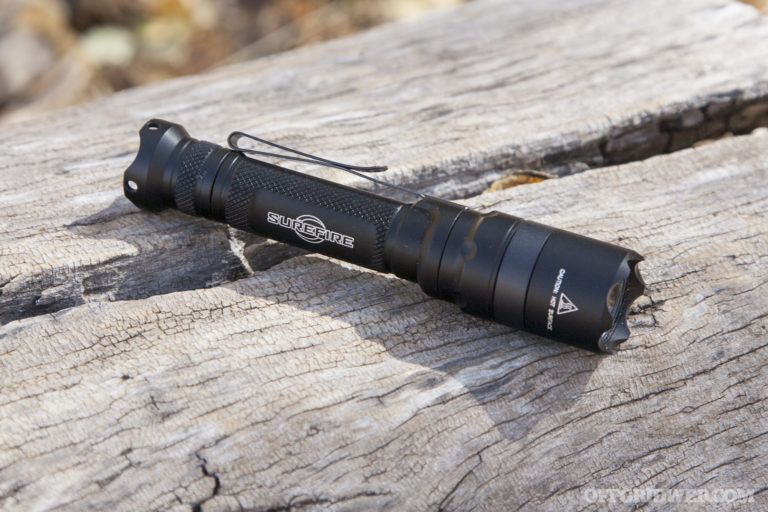
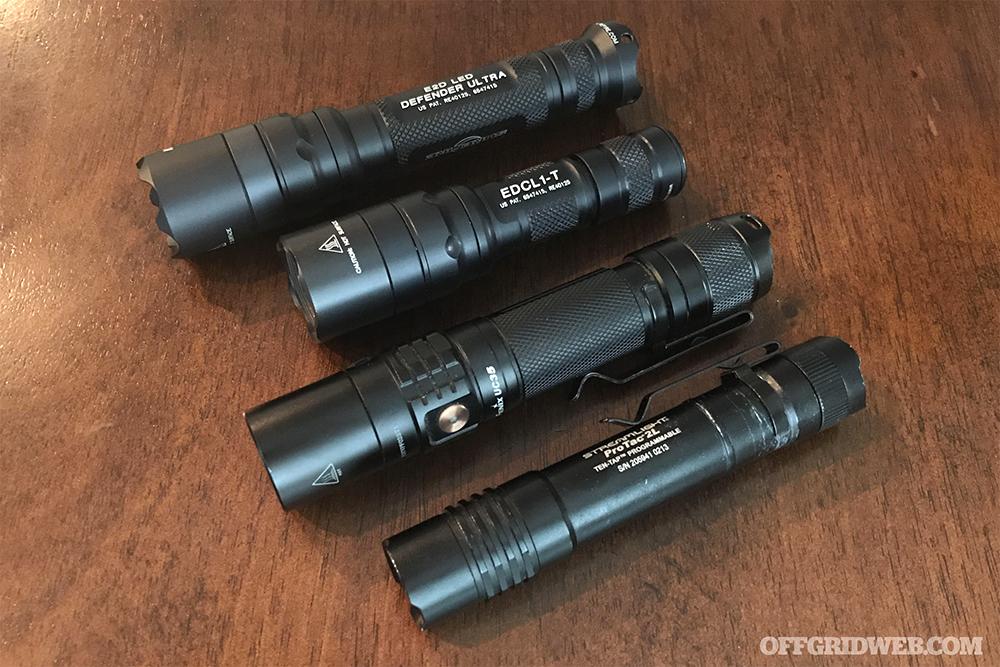
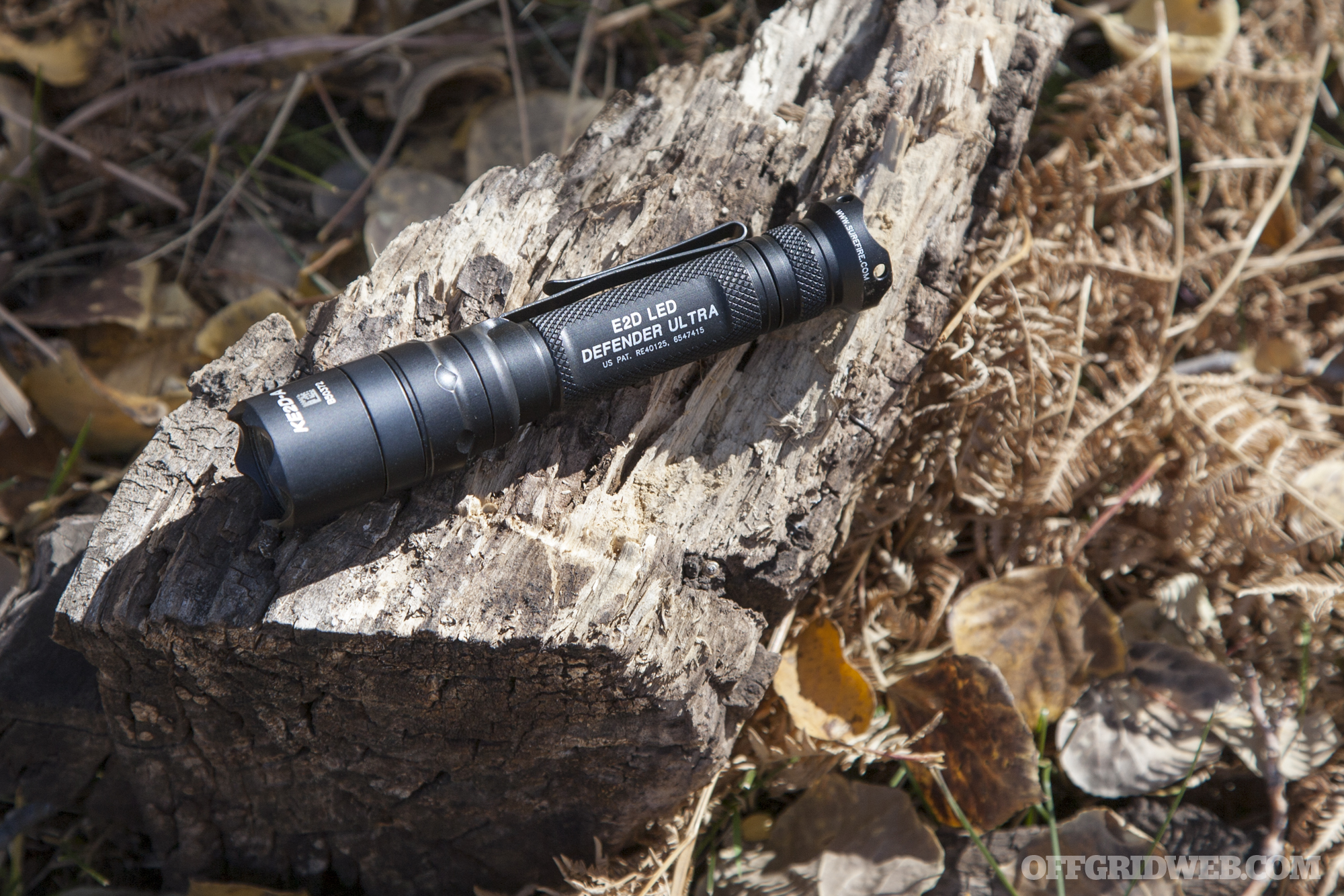
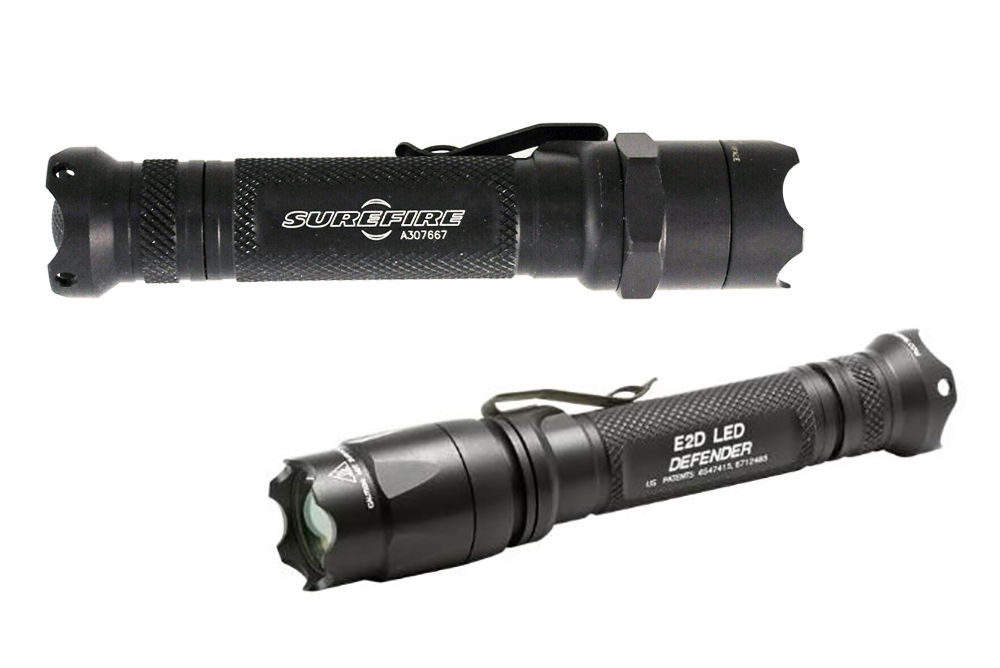
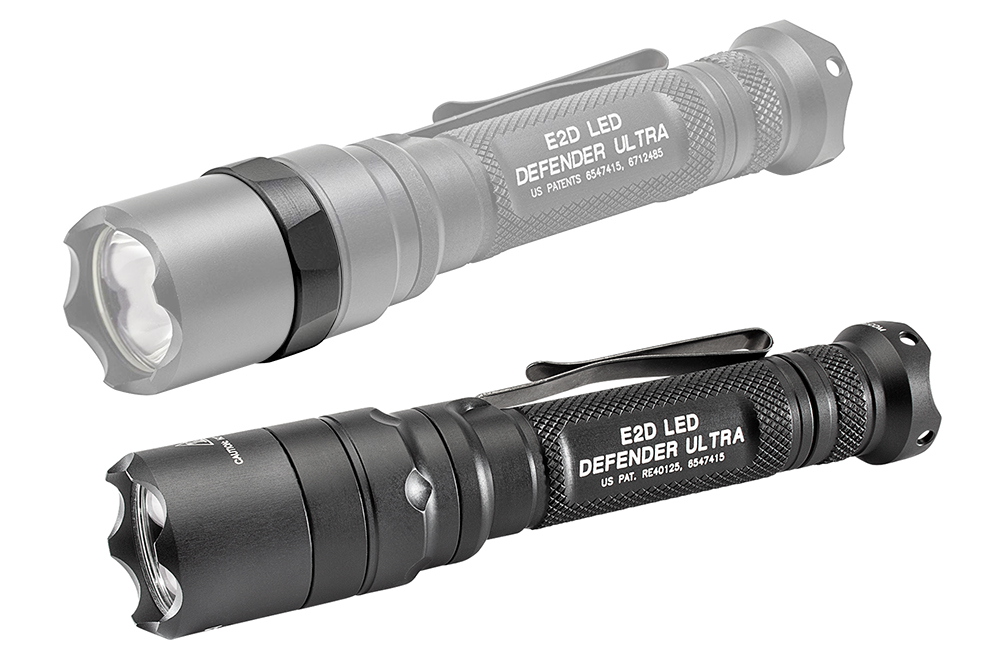
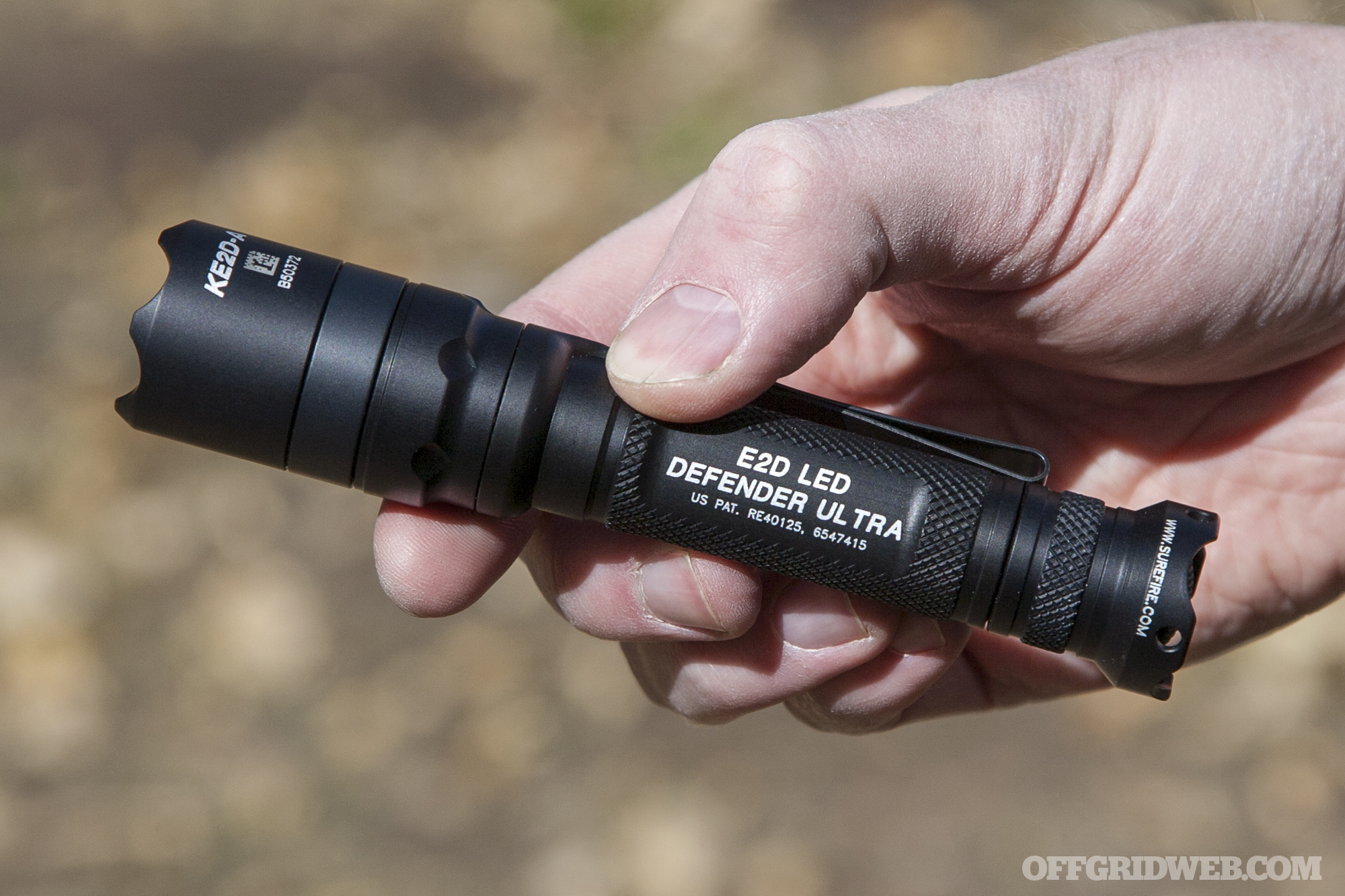
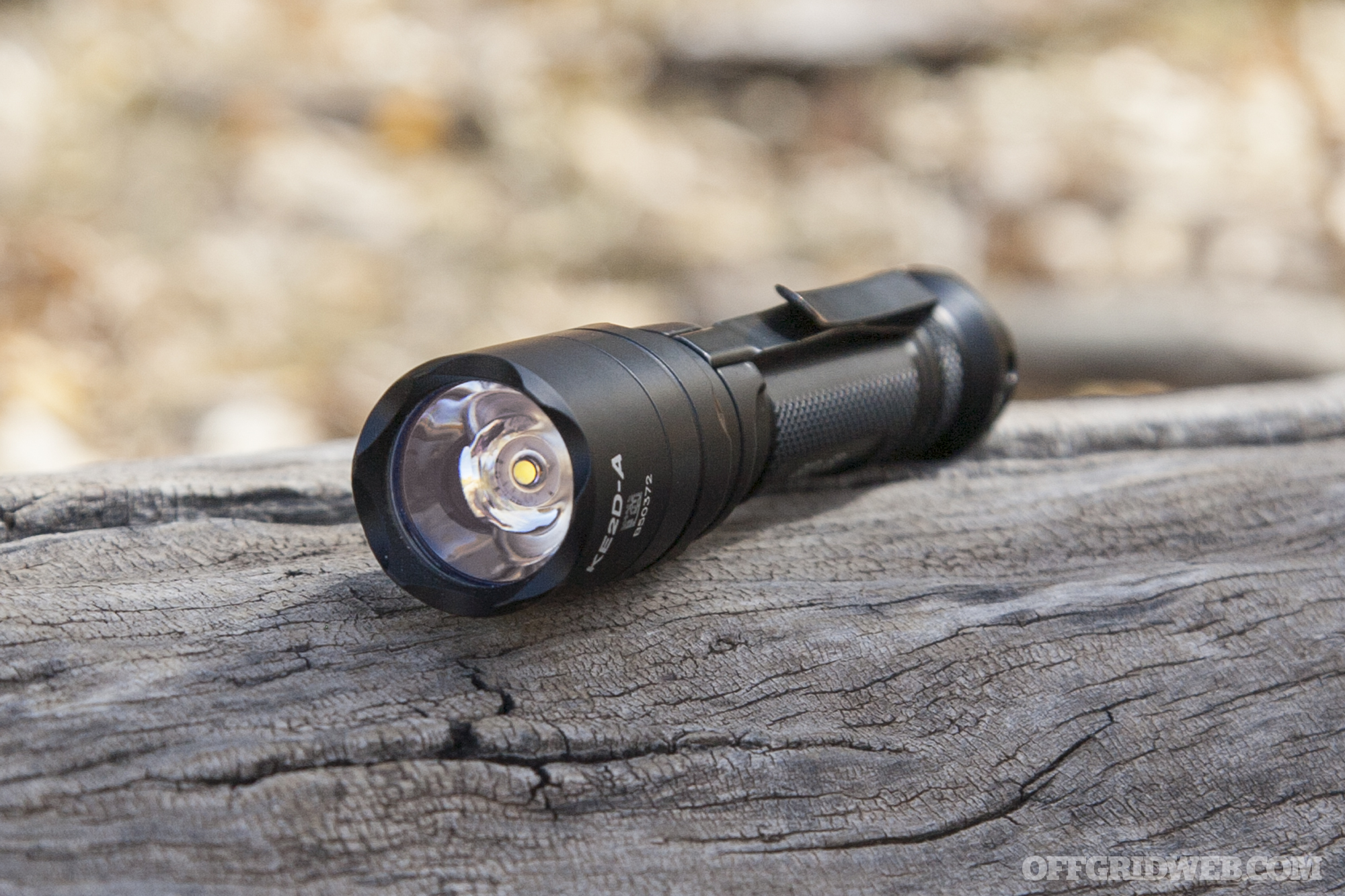
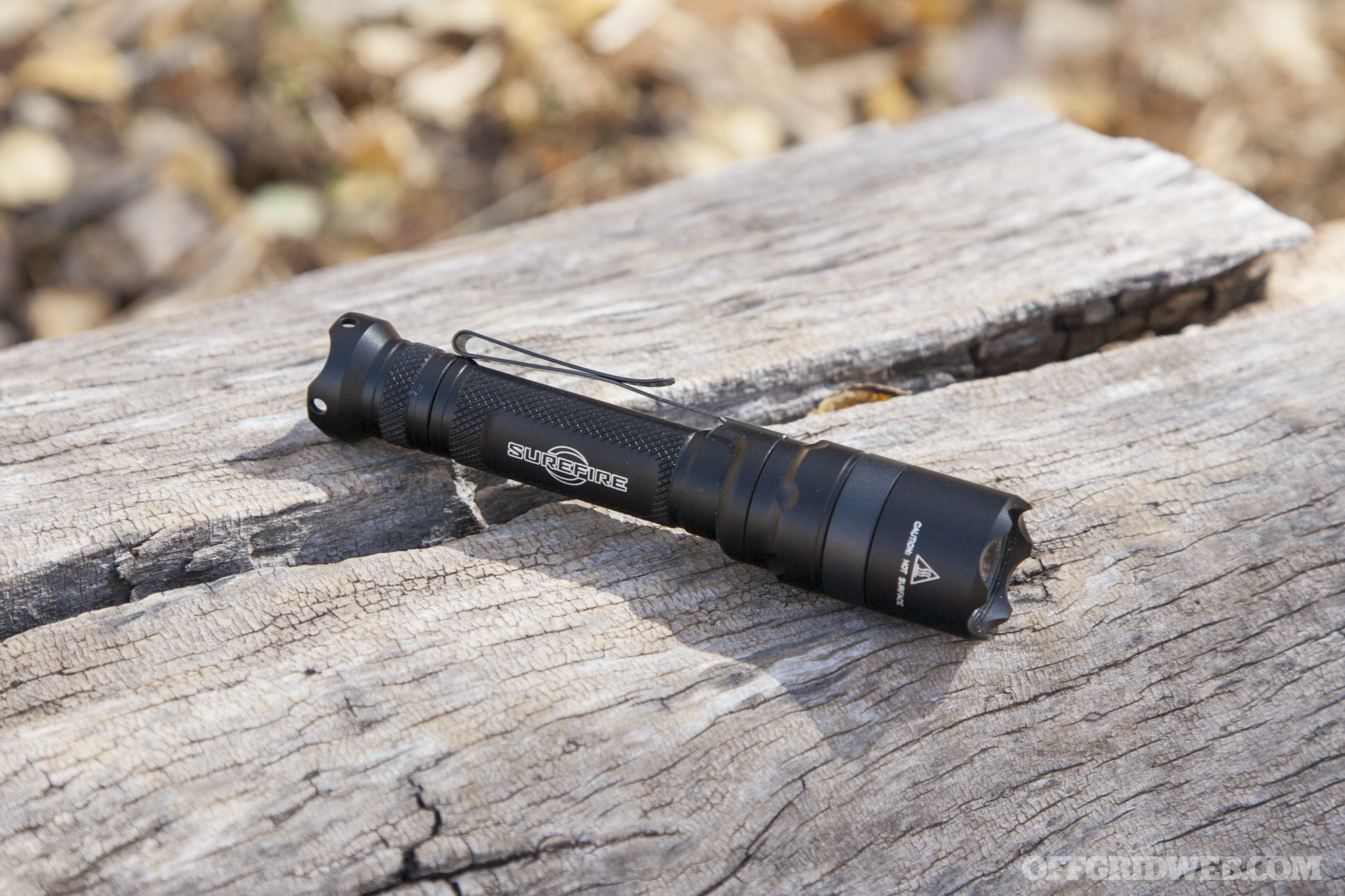
WE: Most of these devices are on WiFi. A WLAN scanning application can be very helpful to find suspicious network devices — I use FING for iPhone. Check in A/C vents and any area of the apartment/condo that’s elevated, like a shelf above the kitchen cabinets. Use your EDC flashlight to scan around the room and look for a lens reflection. I’ve used these methods for years and still do.

Check the specs on your cellphone cameras (front and rear) and see if they filter infrared light. Many spy cams utilize IR light to see in the dark — if your camera doesn’t filter that light spectrum, you can use this method to detect hidden cameras. If you’re unsure if your camera will detect IR, just point your TV remote at the camera in a dark room and press a button. If you see the LED light up when you press a button, your camera doesn’t filter IR and you’ll be better equipped to detect hidden cameras.

MD: In terms of room safety, look for cameras with a laser detector or a flashlight as previously mentioned. A lot of hotels now have smart TVs which are super easy to hack, so cover the camera with tape. Also check out clocks and smoke detectors in your room to make sure they don’t look odd or out of place.

What can you do to keep your internet and phone communications secure?

WE: All phone calls should be executed via cellular. Only use WiFi calling if you have a fully encrypted VPN tunnel. Only use the courtesy phone to contact hotel services, or as a last resort for local calls. Internet communications — either wired or wireless — should be conducted over a Full-Tunnel VPN. Use Apple Pay or a similar secure application whenever possible. In the event that you have to swipe your credit or debit card, make sure to give the card reader a good pull and wiggle to check for skimming devices. Also, never use a straight USB charger on an unfamiliar port. Either carry a USB power bank, your USB-to-wall-outlet adapter, or a charging cable “condom” for your device. The condom will allow you to plug your charging cable directly into a wall, alarm clock, or desk lamp USB socket and have power pass through to charge the device, but all data transfer will be disabled.

A few examples of USB condoms, which attach between your device and a public port.

MD: It doesn’t matter whether you’re a first-time traveler or a veteran digital nomad — your devices and data are most vulnerable when you travel. Here are a couple things that I have learned after years of travel.

If you aren’t using a USB Condom, stop reading this article and go to Amazon and buy two. Don’t worry I’ll wait. It’s that important for a traveler, or anyone charging their phone in public. USB doesn’t just transmit power, it sends data as well. Remember that’s how you update your phone or transfer photos.

Of course a regular USB charging port isn’t designed to access your phone’s data. But there’s nothing stopping one from trying after you plug in a USB cable. A compromised charging port could access all the data on your phone or download a digital STD that could infect anything else you connect to. Bad news bears.

In the age of social media, it blows me away when people travel and tag exactly where and when they are at a location. Stop it. As a rule of thumb, always upload and post after you have left the location — or better yet, the next day. You don’t know who’s following you online or in real life.

Buy the data package for your phone and use that. Stay off WiFi in public places and in your hotel room. If you decide to use it, never make transactions or disclose sensitive data. Do you know what a WiFi Pineapple is? You should. This $99 portable device allows any amateur hacker to create a spoofed network that steals passwords and other information from anyone who connects.

Use a virtual private network (VPN) service at all times.


Video: Eating Whip Scorpions as a Survival Food

In a wilderness survival situation, finding food is a never-ending task. In some cases, you may be able to rely on fishing or trapping to stave off starvation. In others, you may have to turn to less appealing food sources. Fish, squirrels, rabbits, birds, and other conventional game animals have a prey mindset, so they’re alert and cautious of their surroundings. Their primary defense mechanism is to escape quickly. However, animals that rely on alternate defense mechanisms tend to be less evasive, and therefore easier to catch. Whip scorpions fall into this latter category — they’re slow-moving and edible, as long as you can stomach them.

Whip scorpion illustration via The Royal Natural History / Wikimedia Commons

Whip scorpions, also known as vinegaroons or uropygids, aren’t what you think of when you picture a scorpion. Like true scorpions, they’re arachnids, but they lack a venomous stinger. Instead, they have a whiplike tail and defend themselves by discharging a smelly liquid that contains acetic acid (the same chemical compound present in vinegar). Because most animals are deterred by this smell, whip scorpions are less concerned with running and hiding from predators. Unfortunately for them, humans aren’t like most predators.

In the video below, survival instructor Bob Hansler cooks and eats whip scorpions he caught near his home in Texas. After his first bite of head and claws, he describes the taste as “bacony, woody” and likens it to “the shellfish of the desert.” It looks gross, but that’s mostly a mind-over-matter problem. The second bite includes the acetic acid gland in the abdomen, and we definitely shuddered on his behalf.

Survival food isn’t always pretty or appetizing, and this example is neither. But, as Hansler correctly explains, every type of food that you know about is going to increase your odds of survival. It also prompts an important question — how far would you go to find calories in a survival setting? No matter the answer, we wouldn’t blame anyone for putting whip scorpions near the bottom of their snack list.


Book Review: “Lights Out” by Ted Koppel

The Premise: The notion that the American power grid system is vulnerable to a cyberattack or an electromagnetic pulse device, launched by terrorists or a foreign nation, is a frightening premise. In Lights Out: A Cyberattack, A Nation Unprepared, Surviving the Aftermath, Ted Koppel, one of the nation’s most experienced and well-known journalists, outlines the realities of an attack on the American power grid, the vulnerabilities plaguing the defense systems which protect it, and the preparations that Americans can take now to prepare for an unthinkable grid-down scenario.

The 411: Koppel uses his proven skills in journalism to thoroughly explore not only the vulnerability of an aging power grid system, but also the politics that envelop hardening the system itself. The first few chapters offer an in-depth analysis of how the American power grid functions and the vulnerabilities attached to it. It can be technically difficult to follow at times, however, Koppel paints a compelling picture through several interviews with leading security experts on the potential impact that an attack on the nation’s power grid could have on everyday living. The remainder of the book explores individuals who have either developed contingency plans for long-term power outages, or currently live entirely off the grid. The book warns that our worst fears are grounded in plausibility, and that the failure to acknowledge the threat could be our biggest concern of all.

The Verdict: If a nationwide blackout occurred, it’s easy to imagine it could last for weeks to months. For those without prior preparations, tens of millions of Americans would face the loss of running water, sewage, refrigeration, and light. Communities would live an existence devoid of creature comforts, and many might acquiesce to rudimentary forms of survival, such as looting. Koppel paints a vivid picture of this scenario and lays out a technical but comprehensible map on how it could actually occur. Lights Out is both an acknowledgement of the power grid’s vulnerability, as well as a call to action to for the government and its citizens. While the federal government may be underprepared to aid citizens in a grid-down scenario, Koppel traverses the nation to find those who have exemplified personal preparedness measures for a myriad of disaster scenarios, including the decimation of the national power grid.

While the first several chapters of the book involve a large amount of technical jargon, they paint the picture that our nation is vulnerable to a large-scale cyber or electromagnetic pulse attack. It’s here that Koppel’s journalistic instincts shine as he interviews the nation’s top security experts and explores our level of readiness, both nationally and individually. The end result is a thesis that’s both sobering and hopeful, warning us that our worst fears may be grounded in reality and enlightening us at the same time. Ted Koppel hopes to provoke readers to prepare for a catastrophe that could potentially destroy modern civilization and succeeds in doing so.

The question of whether our nation can withstand the potential destruction of a cyberterrorist attack on its power grid, be it through rogue organizations or by state sponsorship, is an important one. Ted Koppel effectively delivers a book that raises more questions than it answers, but poses the kind of questions that elicit true discussion amongst our national security advisors as well as average families. Lights Out is alarming, but rife in purpose and relevance to all who read it, making a significant contribution to the mindset of any prepared individual.

Book & Author
Lights Out: A Cyberattack, A Nation Unprepared, Surviving the Aftermath
by Ted Koppel

Publisher
Broadway Books

MSRP
$16

URL
tedkoppellightsout.com

Pages
288

Rating
>Thrive
Survive
Die


OFFGRID Library of Recommended Books


New: THYRM DarkVault Gear Cases

Under normal circumstances, pockets are great for carrying small items like your keys, phone, cards, and cash. However, there are times when pockets are definitely not the optimal place to store these valuables. If you’re running, jumping, climbing, wading, or generally getting knocked around in a high-activity outdoor setting, the contents of your pockets are likely to get lost, soaked, or pulverized. THYRM recently relased a new product designed to protect your EDC items while keeping them close at hand — the THYRM DarkVault.

The DarkVault is available in OD green, FDE, rescue orange, and black.

At first glance, you’ll notice the DarkVault is a gasket-sealed, hard-sided polymer clamshell case — that isn’t exactly a new concept. We’ve used similar cases to stash small electronics and first aid gear in packs in the past. Measuring 7.2 by 5.4 by 1.7 inches, it fits most cell phones, including larger “phablets” such as the Galaxy Note 10 and iPhone XS Max.

However, there are some interesting features that set the DarkVault apart from traditional gear cases. First among these is the quick-detach MOLLE-compatible mount. This bracket attaches to webbing on backpacks, chest rigs, plate carriers, and other gear. When mounted vertically, such as on the front of a plate carrier, it serves as a fold-down tray table for your phone or GPS unit. Adjustable hinge friction prevents the lid from flopping open and dumping your gear on the ground.

Speaking of electronics, the standard DarkVault features 90+ dB of signal reduction between 300 and 1500 mHz. This blocks common signals from cell towers, Bluetooth, GPS, and many handheld radio frequencies, and offers the ability to take your devices off the grid temporarily. Alternatively, if you want to protect your electronics without losing connectivity, THYRM offers the DarkVault-Comms — the same case without signal-blocking.

The THYRM DarkVault also features holes for straps, latches, or locks to prevent tampering. Internal and external Velcro panels are included to prevent gear from sliding around, or to attach your favorite morale patches. The signal-blocking DarkVault retails for $90; the non-blocking DarkVault Comms retails for $60. For more information, go to THYRM.com.


Still Relevant? 31 Days of Online Security Tips

We’ve written a few articles recently about cybersecurity because we feel this area is often neglected by otherwise security-conscious individuals. Even if you’re not a tech expert who spends most of the day working with computers, the internet has become an inseparable part of our daily lives, and a violation of your online security can be just as serious as a home burglary. In some ways, it might even be more serious, since the signs of a digital break-in may be much less obvious than a smashed window or kicked-in door. Someone halfway across the world could be rifling through your financial records or other personal data, and you might not know it’s happening.

Flickr.com/jeroenbennink

Fortunately, it’s not very difficult to improve your online security. There are many basic steps you can take to build layers of protection around your online presence, so even if one layer is breached, you’ll still be able to recover. Two-factor authentication and account activity alerts are great examples of these layers — they may be as easy to set up as clicking a check box in your account settings.

The following infographic from Delta Risk offers 31 days of simple online security tips that can increase your protection against cybercrimes. Although you could easily do all these things in one day, this format breaks the process down into chunks that should only take a few minutes. Don’t forget to reinforce all these points with every member of your family, since the cybersecurity chain is only as strong as its weakest link. Click here to download the full-size graphic.


Home Defense with an Offensive Mindset

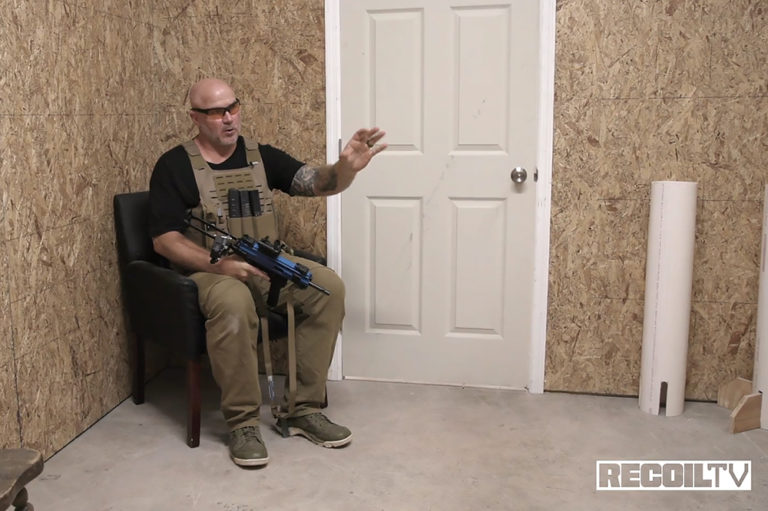
We’ve all considered the uncomfortable scenario where something goes bump in the night — maybe it was your dog knocking something off a table, one of your kids sneaking out, or an armed home intruder looking to victimize your family. Whatever the case may be, you’ll be faced with two options. Option A is to assume there’s a threat, barricade yourself in your bedroom, and call for help. Option B is to actively clear the house to ensure there’s no threat, or find and eliminate the threat before it finds you. In the latest RECOILtv Training Tune Ups video, Dan Brokos discusses the latter option — applying an offensive mindset to home defense.

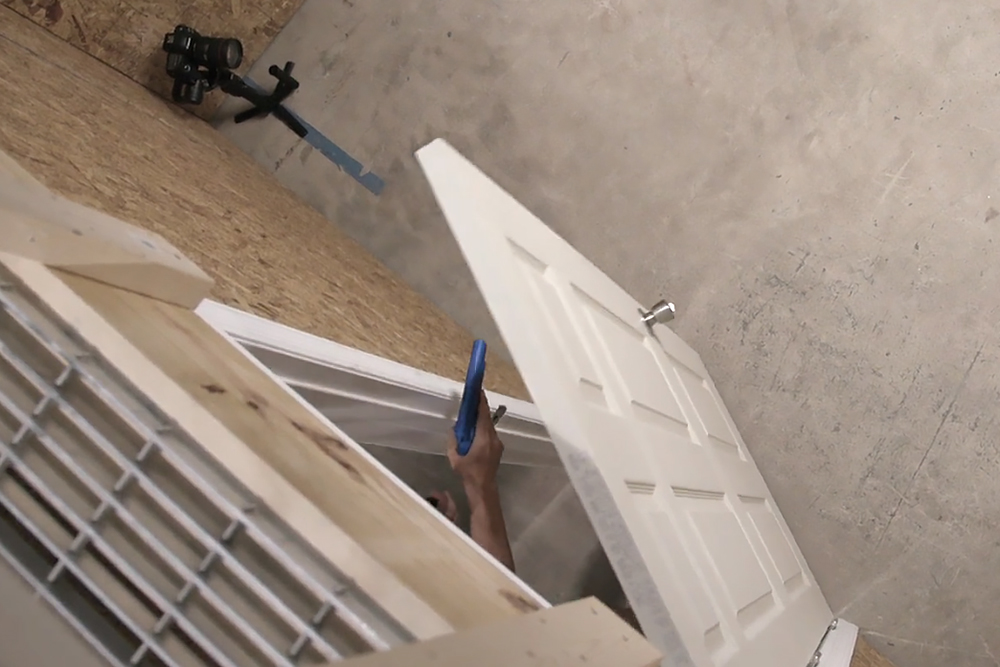
If you want to clear your house safely, you shouldn’t be stumbling haphazardly into rooms and spinning around. You should be methodically checking corners before moving into each room. There are a few ways to accomplish this, as Brokos explains. First is the Deliberate Pie method, which slowly “slices the pie” while moving around a doorway to slowly check all angles. Second is what Brokos calls Eating the Door, a method that’s faster and more dynamic but relies on the same corner-center-corner progression.

As the saying goes, there are times when the best defense is a good offense. If you think someone just broke into your home and poses an imminent threat to your family, there may be no time to wait for law enforcement to arrive. In that case, clearing rooms quickly and methodically can help you stay safe as you ensure your home is clear.


Test Your Cybersecurity Senses with this Phishing Quiz

Congratualtions! Youve just won a free luxury cruise too Bahamas. You must urgently reply to this e mail with your complet creditcard information in the next 24-hours to collect your prize. — Most sincerely, His RoyalHighness, King of Nigeria

You’re probably rolling your eyes at this obvious example of a scam email — you’d never be gullible enough to fall for something like that. These information-soliciting scams (commonly known as phishing) are extremely common on the internet today, especially in email form. Although most of them are easy to spot, we should never allow this to lull us into a false sense of security. More advanced phishing attacks can be difficult to detect, and many of them are targeted “spear phishing” attacks that leverage knowledge of the victims to appear more convincing.

One of the keys to detecting phishing attacks is attention to detail. Emails from unknown senders filled with obvious misspellings, like the example above, are easy to spot. An email that closely imitates a legitimate message will be much more difficult to spot. In order to teach users how to distinguish legitimate emails from dangerous ones, Google created a short interactive quiz at phishingquiz.withgoogle.com.

Ironically, the phishing quiz begins with a form that asks for a name and email address. At first we thought this was a sneaky trick question, since it’d be a perfect opportunity for someone imitating Google to collect data under the guise of a quiz — a true double-cross. However, it clearly says you can use a made-up name, and we know from past experience that the domain this site is hosted on (withgoogle.com) is legitimate. Feel free to enter “John Smith” to start the quiz, and then see how you fare against the 8 examples.

For more information on phishing attacks and how to avoid them, refer to our previous article, Can You Spot the Signs of a Phishing Scam?


Behind the Scenes at Rowen Manufacturing, Home of ESEE Knives

Man’s need for tools is as old as the species itself. Early man found usefulness in sharp stones and discovered the ability to knap flint for arrowheads, axes, and knives. Over time man has used copper, iron, and eventually steel to produce blades of all shapes, sizes, and purposes. Today a knife is as much a tool as it is an expression of the user. We take pride in the knives we carry, from actual day to day use to simply showing our friends for bragging rights. Many of them are even passed down through generations.

We recently had the opportunity to visit Idaho Falls, Idaho and take a tour of the Rowen Manufacturing facility, home of ESEE Knives.

About Rowen Manufacturing

Rowen Manufacturing didn’t start out in the knife business — this facility has been making various types of machined parts for over 17 years. During the first five years, it produced auto parts such as superchargers. The last 12 years have been dedicated to crafting some of the best outdoor/survival knives on the market. Rowen is a family affair made up of Shawn Rowen, his wife, three sons, a daughter-in-law, and Gus the shop dog. In total, Rowen operates with around 20 employees.

Cody Rowen explaining how the ESEE Izula is made.

Quality and attention to detail are clear priorities at Rowen Manufacturing. Every step of production is meticulously performed and hand-inspected. All ESEE knives are made from 1095 carbon steel, a material that has several benefits for hard-use tools. It has a long history of use in blademaking thanks to its durability and ease of taking an edge.

As anyone who has studied blademaking knows, the heat treat is a pivotal step — it can elevate a good steel to greatness or quickly degrade it to worthless scrap. Properly heat-treating 1095 can be tricky, and it’s something Rowen/ESEE has invested a lot of time into. We were allowed to witness the heat treat process, but photos were prohibited and some questions were dodged, much to our dismay. It’s understandable that the company is secretive about this procedure — it’s a big part of ESEE’s reputation for exceptional toughness. Most knives made by ESEE come in around 55-57 HRC.

Some argue against 1095 carbon steel because of its propensity to corrode and rust. This is a founded concern, but one that’s mostly alleviated by finishes like powder coat or black oxide. With a durable coating and proper knife care, users shouldn’t have to worry about a tarnished piece.

The Knifemaking Process

Loading a sheet of steel into the laser cutter.

Rowen cuts blade blanks from sheets of rolled steel, which are fed into a large laser cutting machine. The laser causes the metal to heat up during the cutting process, so each blade is hand-checked and inspected for warping. Those that don’t make the cut are corrected by hand with an arbor press when possible, and the worst offenders are scrapped.

A bin full of scraps and blanks ready to be recycled.

Carefully straightening a blade to correct a warp.

Once the basic knife shape is cut, Rowen has grinding machines that are hand-fed. Depending on the model, knives take roughly 25 seconds of grinding to shape the cutting edge. After grinding, each blade is dumped into a tumbler to smooth the edges and prepare for the secret heat treatment.

Knives are tumbled to smooth the edges.

After heat treat, knives are sent to coating. ESEE knives are offered in powder coat or black oxide finish, depending on the model. Both finishes are applied off-site — the only part of the process not performed by Rowen. Once the coated knives return to the factory, they are laser-engraved and sent to sharpening. Again, each is inspected for quality.

Every ESEE knife is sharpened by hand.

As previously mentioned, 1095 carbon steel knives generally take an edge relatively easily. Each ESEE knife is sharpened by hand to a 40-degree-inclusive flat grind. Employees rotate stations regularly, so each feels responsible for the entire process. This keeps eyes fresh and quality high. The flat grind is utilized because it keeps the blade strong while offering an excellent cutting edge that can be maintained by even a novice user.

Several stacks of finished Izula II knives.

Blades are set up in small batches for sharpening and then transferred to the buffing station for an Instagram-worthy smooth surface. The buffed knives are all given a rust preventative coating and inspected one more time. Some are finished and ready for packaging at this point, while others are fitted with Micarta composite handle scales. The Micarta scales are machined in-house using custom-produced jigs, and hand shaved to the correct tolerances. Spacers are also created and used to ensure proper fit within sheaths.

Finished knives receiving a rust preventative coating.

The Finished Product

At the end of the tour, we were all given a choice of blades to assemble. The author chose the JG5, from ESEE’s camp-lore line. The JG5 is a “Nessmuk” style blade designed by James Gibson. The design is heavily influenced by George Washington Sears, who wrote under the pen name Nessmuk. He was an early pioneer of outdoorsmen and adventurers alike, and designed a blade that he deemed best for outdoor use.

Soon after this article, the author’s JG5 saw use during a bushcraft class.

Gibson is a prominent survival and primitive skills instructor located in Tennessee, and also produces his own line of knives at his home shop. Gibson collaborates with ESEE/Rowen on a few designs for mass production. The newest addition is the Gibson Axe, a purpose-built bushcraft axe made to be taken along on any adventure due to its compact size and versatility.

Every ESEE design stemmed from a need for a specific type of tool. Many of the staff at ESEE and Rowen are adventurers at heart, so the designs have stemmed from their own personal needs and experiences. Patrick Rollins, lead instructor for Randall’s Adventure Training, designed the PR4 based on his time in the jungles of South America and all over the United States backcountry.

Rowen’s facility is an example of fine American craftsmanship. Each member of the team is proud of their work, and stands behind every knife that leaves their stations. ESEE has developed a loyal following in the survivalist community, and after our tour of the company’s manufacturing line, it’s easy to see why.


Full Auto Glock with a Stock

Most of our guns were bought for practical purposes — defense, hunting, target shooting, and so on. However, a few were chosen simply because they’re a ton of fun to take to the range. The subject of RECOIL’s latest Full Auto Friday video is a perfect example of the latter category. This full auto Glock 17 is, as Dave “FlagrantBeard” Rhoden puts it, “practically fun” even if it’s not necessarily practical.

RECOIL Features Editor Dave Merrill met up with Rhoden to test the Glock at the range. They used it with and without a removable stock, and blew through several 32-round magazines quickly thanks to the autosear that replaced the original back plate. This gives the gun select-fire capability, similar to the original Glock 18 that was developed for the Austrian police unit EKO Cobra.

For the record, we should be clear about a few things. First, the full auto G17 in this video is a registered machinegun — you can read more about what that means in this RECOILweb article. Secondly, before you go looking for a stock (or pistol brace) to add to your own Glock, be aware of the legalities of doing so. Check out RECOIL’s Glock stock and pistol brace buyer’s guide for information on that subject.

Watch the full RECOILtv episode below, and head over to the Full Auto Friday channel for more grin-inducing blasters.


Staying Sharp: Spencer Frazer of SOG Knives

SOG Specialty Knives was born from a single cell. Over the past 30 years, it’s evolved into a successful company that’s grown steadily since its founder, Spencer Frazer, designed its first product, a hardworking reproduction of the Vietnam War-era SOG Bowie knife back in the ’80s.

SOG isn’t a traditional knife company. Frazer, and the company he started, has always been a designer, not a manufacturer. He graduated from UCLA with degrees in math and science, then spent years working in the design and R&D fields. His first taste of entrepreneurship was starting a company with a friend making high-tech speakers. He left that enterprise to work on stealth projects behind the top-secret curtain at aerospace contractor Northrop.

Frazer would later find himself in the aisle of a Southern California gun show, indulging his curiosity in Vietnam War-era tiger stripe camo patterns, when he’d come across a knife that would captivate him. The Joint Services Special Operations unit or the Military Assistance Command, Vietnam Studies and Observations Group was a shadowy cousin of our nation’s special operations forces. It was a secret multi-service unit set up to run covert military operations before and during the Vietnam War.

The unit commissioned its own unique knife for its members’ use in the punishing Southeast Asian jungle environment. The SOG Bowie, as it was called, encapsulated the mystery and wonder Frazer came to hold for the unit.

Above: One of the rare, original SOG Bowie knives along with an original SOG Command and Control, Central patch from Frazer’s collection.

This knife ignited his mixture of passion for design, knife-making, and history. The resulting combustion drove Frazer to commission his own take on the SOG Bowie, the SOG S1 Bowie, propelling the growth of a company that would ultimately help usher in a period of innovation in knife-making across the industry.

Wood and leather-clad knives of the time gave way to SOG’s satin finishes, rubber grips, composites, and resin-impregnated materials. SOG’s compound-leverage multitools (inspired by the gears of a child’s toy) and the Arc Lock mechanism for folding knives still hold their own today in a crowded market.

SOG extended an exclusive invite to RECOIL OFFGRID to meet with the company’s founder, Spencer Frazer, to see and hear how the brand has grown from one guy in his pajamas to 50 employees making gear that helps their customers prepare for anything, from the everyday to the grievous. Walking into the company’s headquarters and design studio in Lynwood, Washington, we noticed the very shape of the building displays the reverence for design the company was built on.

Interview with Spencer Frazer of SOG Knives

RECOIL OFFGRID: We noticed the SOG office building has some unique architecture. The peak above your office is reminiscent of a knife blade?

Spencer Frazer: That was my plan from the get-go. At one point, early in the design process for the building, we actually had a piece of steel that was going to hang off the edge of it and we go, “Oh my god, someone is going to run into it, and we’re going to get a lawsuit.” Do you remember the L.A. hot dog place that’s shaped like a giant hot dog, Tail o’ the Pup? I remember reading a story about a woman suing them after she hurt herself after running into the end of the building. So no knife edge on the front of our building. But we did build our own building, and we wanted it to be conceptual. It was ’96, and this was the last wooded lot in Lynwood.

Since you’re not really an architect, was that stressful?

SF: Everything I do has a sense of design and sophistication of design and that’s how I work. Working with the architects, we came up with something that’s unusual, and it won some award for the best build-to-suit in the city because it did reflect exactly who we are. Funny story: I ended up struggling over the paint combinations. I drew parts of the building in CAD and then I colored in the different sections. I worked on that for weeks. So, finally they came in and painted the whole building the base color to start, and it looked like a whorehouse. Instead of a really nice gray, it turned out a fleshy tan. I left that day with a migraine headache going, “We’re ruined. It’s, like, the worst it could ever be.” And there’s four or five colors, so they put the next color on and I go, “It’s horrible.” And, then they put the next color on and I say, “It’s terrible.” And, then they put the final color on and I said, “It’s genius!” Because colors are funny that way — they play off one another and create different perceptions.

Above: Dave Ditto, repair tech, sharpens knives. SOG welcomes its customers to bring their blades in for a check up and a renewed factory edge.

This wasn’t SOG’s first home, was it? The company began in California?

SF: When we moved up from Santa Monica to Seattle, there were a bunch of reasons. But one was that we — my wife at the time and I — wanted to buy a house and couldn’t afford one in California. This was a pro-business area. So we bought a three-bedroom, 1950s house in Edmunds overlooking Puget Sound. It was a split-level, and we had the business in the basement. We were there several years, and there was one time I realized I was still in my pajamas and it was three days later. You know, I would work all night, maybe take a nap on the couch, but that was when I said, “We’ve got to get an office.” So we found this little office in downtown Edmunds. It was tiny; there was room for a desk, a small table, and some racks. We grew a bit and took over the adjoining space, then we ran out of room and moved down the street, moved again …. We grew out of that and moved downtown to the waterfront and got a legitimate office with a warehouse behind it and stayed there for quite a few years before coming here. That was in Edmunds, at a place called Harbor Point. There was a rat breeding operation next door. When it was hot we could smell the rats through the wall. It was bad.

What’s your favorite product?

SF: The favorite one is always the next one.

Above: Spencer Frazer, left, and mechanical design engineer Alex Hwang confer over the shape of a new product. SOG’s knives and tools are designed, prototyped, and tested in Lynwood, Washington.

Have you been emotionally attached to any particular product?

SF: Most of them. They’re my children. Especially the early days when it was just me designing them and putting them in the marketplace, creating a story about them and having them sell. It was an amazing experience. I’m still very charged up about that. I love designing, but I love designing where it’s accepted in the marketplace and ultimately rings the cash register. And that was a focus of mine early on, and it kind of separates me from a lot of designers who are pure designers. How do I make something successful and sellable? I developed a pretty good sense of what would work and what wouldn’t. Over the years, we haven’t had that many dogs.

What product taught you the most?

SF: The original Team Leader. It was our first folder. It was based on the SOG Bowie, and we wanted it to be kind of like a yawara stick. It’s symbolic in that it has the bolster and the guard, kind of, and the big Bowie blade. It’s just a monster. I wasn’t sure about it, and I was working with another guy at the time. We were working with Japan, and they misinterpreted the drawings and scaled it up a bit, too. It was a boat anchor. I think we sold something like 350 of them. I sent it to Cutlery Shop, who was pretty astute at knives, and he said to me, “That’s just terrible.” And he was right. It was too big and weighty. But that’s the thing, now — big knives. Now it’s highly collectable.

Above: The original wooden prototype showing SOG’s patented compound leverage hinge system that came to Frazer as he watched the gears of this child’s toy spin together. 

Tell us about the SOG Bowie.

SF: The SOG Bowie was the origin. When I first saw that knife, I was just taken by it. It was a magical thing. I first saw it at the gun shows. I used to go to the gun shows pretty regularly. I was collecting Vietnam-era tiger stripe prints. They were all hand silk screened, so it became this art form that I was intrigued by. I didn’t serve; the draft ended on my 18th birthday. So there are all these different types of uniforms and patterns for triple canopy, the marshlands, you know, and they are all different. I was in my late 20s in the early ’80s.

I was fascinated by tiger stripes, and they helped me discover SOG; the Studies and Observations Group, or Special Operations Group. It was a fascinating time in military history. These guys could pretty much do whatever they wanted, and they created their own equipment, their own uniforms, knives, everything. The coolest thing to come out of SOG, and I’ve been looking for one, was a dog turd seismic sensor. They put them on the Ho Chi Minh trail, and they could tell from the air if anyone was walking on the trail. But that I never got. I’ve seen very few references to it.

But when I saw the original SOG knife … it’s so historical, it’s got such provenance and soul. Where was it, what did it do?

So were you into knives from a young age?

SF: You know, knives make us feel good; they make us feel prepared and competent. They make us feel cool. I liked knives from when I was young but hadn’t really thought about them; I wasn’t really a collector or anything. And then years later I saw the SOG Bowies and began collecting them. There were these plum ones. They were an accident; bluing gone bad. English browning, they call it sometimes. So, that was rare, and had about 10 or 14 other ones. There were a lot of counterfeits, so I wasn’t sure about some of them, so I started researching them. You couldn’t find any historical information about them — nobody really knew who made them.

So, you decided to make a replica of the original SOG Bowie knife, your first product, the S1 Bowie?

SF: The big thing was how do we manufacture this and where. So, I started doing research, reading Blade Magazine. I saw this guy, Beau Randall, in Florida. He was one of the famous custom knife-makers and had semi-production. He’s still making knives today, and he’s back-ordered four years. So, I called him up and said I want to reproduce this knife and he said he could reproduce it if I wanted to give him an order for, like, a couple hundred. I said, “How fast could I get them?” And, he said, “Well I could start delivering them in about … four years.” That wasn’t going to work.

So, he tells me to call up this good old boy in Arkansas named A.G. Russell because he’s got ways to produce things. So, I call him up; a legend in our business. He started the knife-makers guild and has been around forever; one of the authorities on knives in the world. He says, “I know some people in Japan.” And, that’s how we met Bob Nanri, a sort of [knife manufacturing] agent, and got started in Japan.

Bob Nanri had this idea to create a quality [knife] market out of Japan. Up until then Japanese goods were considered junk. Cars from Japan were, like, junk metal back then. But, Japan had an incredible history with samurai swords and steel making, so he was right to do it, and he single-handedly created a high-end market for Japanese cutlery.

So, we got in with Mitsuboshi Cutlery, in Seki City, Japan, that used subcontractors. They gave us Hattori Hamono, one of the most famous knife-makers in Japan. And Hattori Hamono told me his father had been the original producer of the Vietnam SOG Bowie! So it was very serendipitous that we found through this circuitous effort one of the original factories that produced those old knives.

What was it like starting the company?

SF: I date myself, but it was so different running a business back then. Information was hard to come by and communication was difficult. In the beginning, when we worked with Japan, I would send them a letter to ask them a question. It was like, “Can you shorten this knife by a quarter inch? Here’s my sketch.” So, it’d take two weeks to get there, they’d answer, and it’d take two weeks to get it back. Then Bob Nanri, said there’s this new invention called the fax machine. He said, “You use this thing, and you send a message and get an answer back within a short period of time.” I asked how much it cost, and he said it was like $850. My God, this was in the late ’80s, so that’s like $8,000 today. But, I got one.

Did you ever learn about the origin of the SOG Bowie?

SF: There’s an article about it by Greg Walker, a writer and an old friend of mine. He found Ben Baker. He was a quartermaster or something in SOG or Special Forces. Greg found the original guy somehow, who had never wanted to talk about the project because he felt he was still under some kind of secrecy requirement. But, Greg got him to talk and he pulled out all the original data. Greg calls me and says, “You’re not going to believe it, but I found the original guy. He has all the drawings and some of the original knives.” Then we really found out the numbers of different versions of the original knives there were.

Baker took, I think, the Bowie, the KA-BAR, and the Randall and he incorporated different design features into the knife that he felt were best for [his unit’s] application. There was some science in developing the different style of blade. He did a lot of meat testing, you know cutting, penetrating, twisting, and stabbing.

Have you ever gotten into the politics of knives?

SF: There are two organizations. American Knife and Tool Institute — which is more of an industry group — we’ve been a big supporter of for 15 years or so, and our CEO is a member of the board. Then there’s Knife Rights, more of a consumer group. We support them as well. I was part of the contingent that went to Washington when we changed the federal laws for one-handed knives, which was something we never dreamt could ever be done.

When Congress added “the bias toward closure” language to the Federal Switchblade Act, it became the new definition of a switchblade. At that point, we were worried that all one-hand openers were going to be switchblades. And there are now more than 30 states where you can possess switchblades. We are working with AKTI and Knife Rights who are working to rewrite knife laws and add preemptive laws at the state level.

Spencer Frazer, SOG Knives founder and chief designer

You’re careful to point out you didn’t serve in the military. Is it difficult being an aficionado? How do you maintain brand authenticity without going over the line in your marketing?

SF: It’s something I was cognizant of from the beginning. For one, we never said we were anything we weren’t. We were honest about it. I think that’s what helped us get through it. I remember one time this Navy SEAL guy came up to our table at a Soldier of Fortune show and he was looking at one knife we named the Trident. He was really upset about it. He says, “How can you take something that is so key to who we are when you’ve never been there or done that.” And then later was another incident when a SEAL plank holder came to us and was really upset about the Trident name, but it turns out it was because he wanted to use that name on a knife of his own. We always did straight business. We were trying to do justice by the guys who had been there. I wanted to create a great product that was a tribute, and that was our intent and it carried through, even all the way to today.

More From Issue 17

Don’t miss essential survival insights—sign up for Recoil Offgrid’s free newsletter today!

Read articles from the next issue of Recoil Offgrid: Issue 16

Read articles from the previous issue of Recoil Offgrid: Issue 18

Check out our other publications on the web: Recoil | Gun Digest | Blade | RecoilTV | RECOILtv (YouTube)

Editor’s Note: This article has been modified from its original version for the web.